Tag Archives: Wally Frank pipes

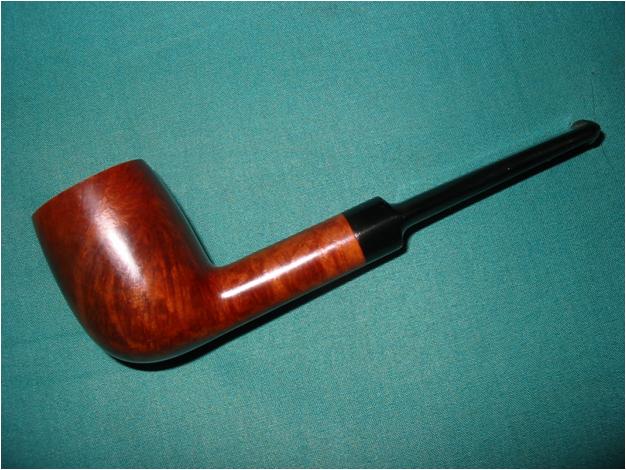
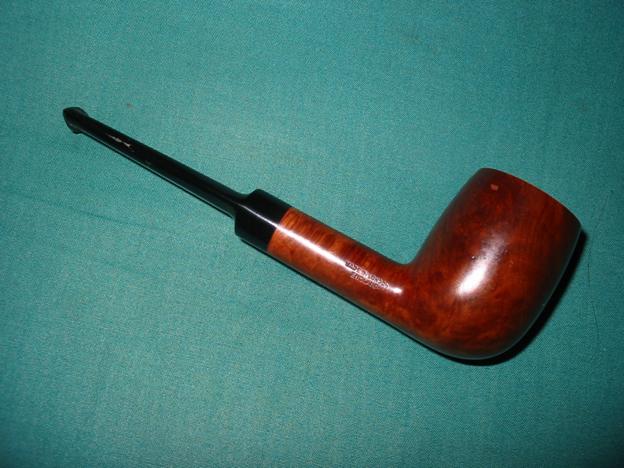
New Life for a Wally Frank Super Delicious Billiard


Blog by Steve Laug

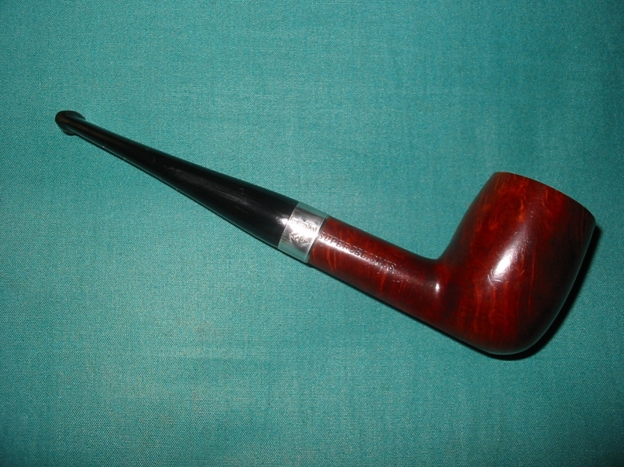
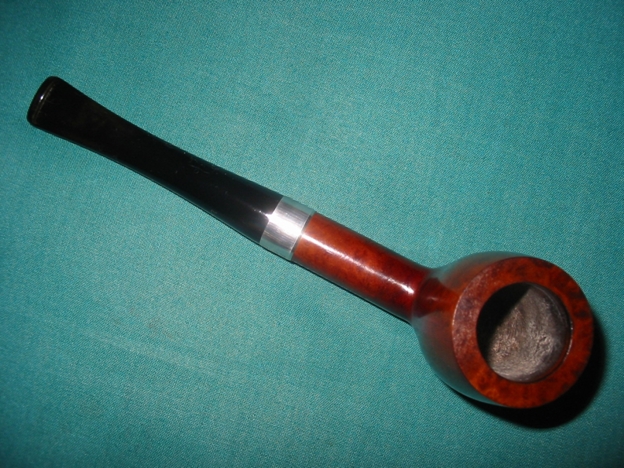
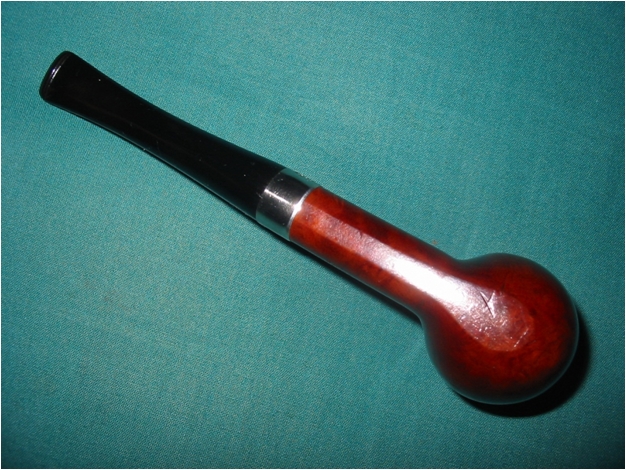
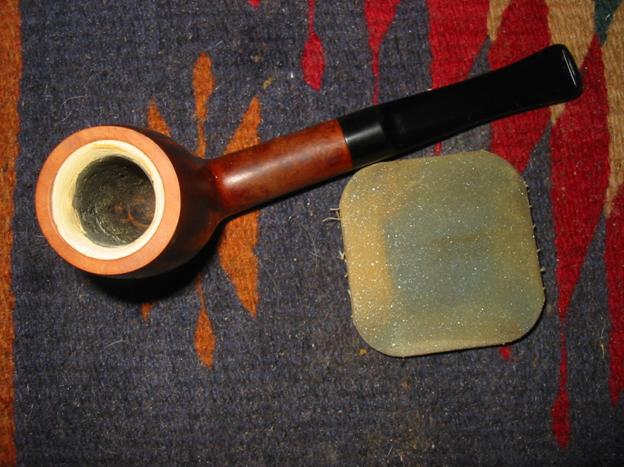
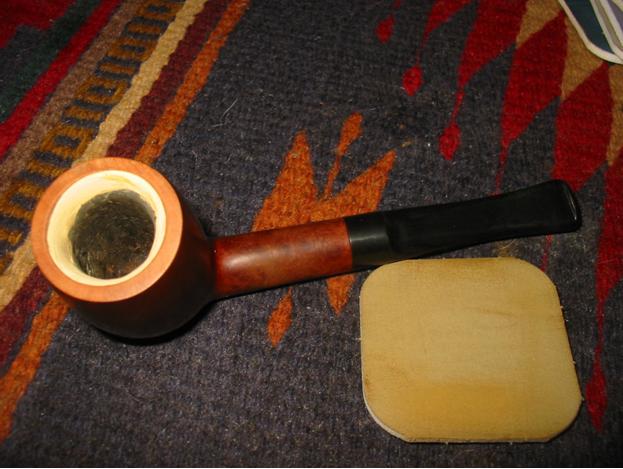
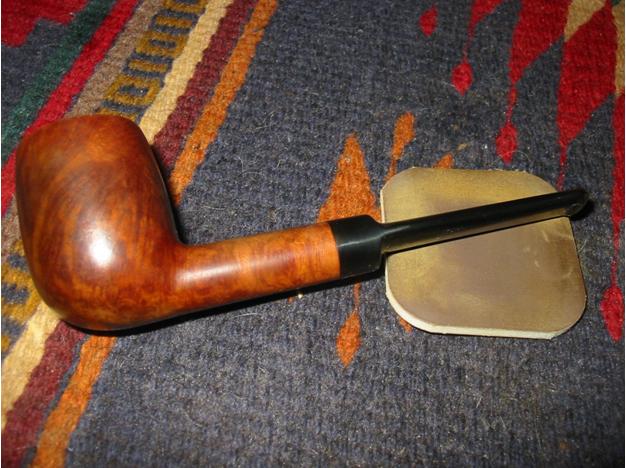
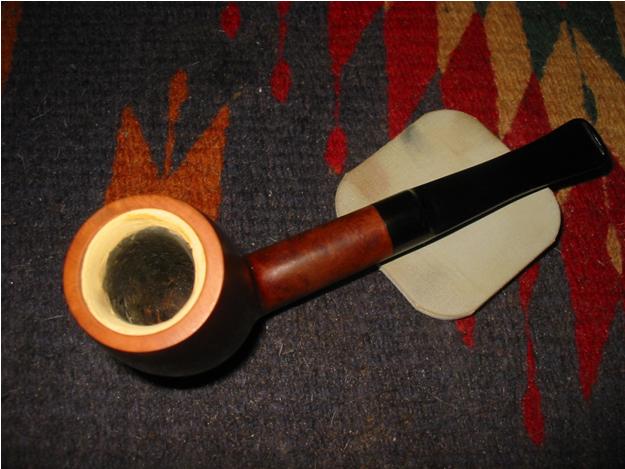
I have become familiar with many of the Wally Frank lines of pipes but this was one I had not heard of before. It almost sounds like something to eat rather than smoke. It is stamped Wally Frank Ltd on the left side of the shank and on the right Super Delicious – interesting stamping indeed. The pipe was one of the bowls that I had in my box needing to be restemmed. It also had a cracked shank that was present before I matched a stem to it. Often a shank will crack like this if a tenon that is oversized is forced into the shank. That obviously had happened to this old pipe sometime in its life. I found a stem that fit the shank and inserted it enough to show the crack in the shank for the first photo below. The crack approximately ½ inch long and was in a portion of the shank where it was thinner than the other side. One of the challenges in restemming these older pipes is the fact that the shank is very often out of round and the stem has to be shaped to match it accordingly. The bowl has some nice grain on it and was well worth restoring. The remaining three photos in the first group of four show the grain and shape of the pipe. Note that rim was not only darkened but was worn on the front edge of the outer rim.
super1

super4

super3

super2
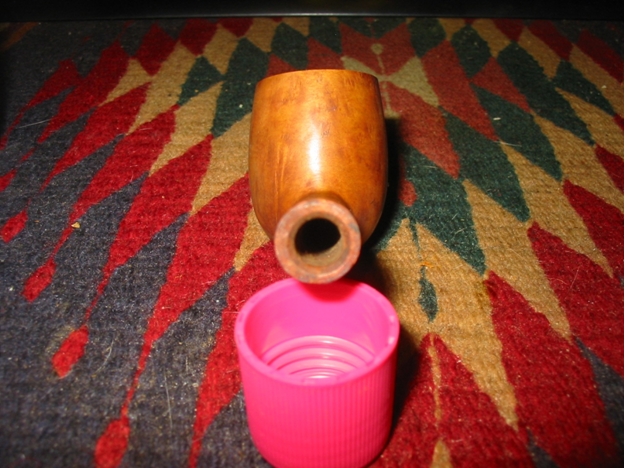
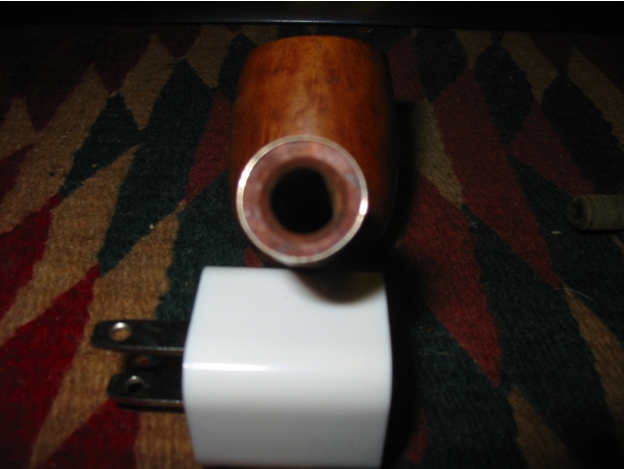
I reamed out the bowl and removed the cake that was present only in the top half of the bowl. It seemed that the lower portion of the bowl was not even broken in. The top of the bowl needed to be topped to even out the flat top of the bowl. The way the angle was after the tars and grime were removed was d a slight slant toward the front of the bowl and the front edge was rounded from tapping out the bowl repeatedly on a hard surface. I used the board and sandpaper to top the bowl and even out the top. I also made certain that the bowl was held against the board to even out the angle and make the top smooth and flat. The first photo below shows how out of round the shank is in proportion to the mortise. Notice the difference in thickness all around the shank diameter. The crack in the shank is at about 3 o’clock on the shank. The next two photos show the bowl after it has been topped and is even with no slant toward the back or front of the bowl.
super5

super7

super6
After I had topped the bowl and evened things out I wiped the entirety of the bowl down with acetone on a soft cotton pad to remove the grime and the remaining finish on the bowl. It came off almost black when I was finished cleaning it. I then needed to band the crack shank. I opened it with the stem and then dripped a bit of superglue in the crack before pressure fitting the band in place. The first photo below shows the shape of the shank and makes the thin area very clear. This would require quite a bit of shaping to make the stem fit the shank correctly. The next two photos show the banded stem and how it fits on the shank. I kind of like the look of the band against the natural colour of the briar.
super8

super10

super9
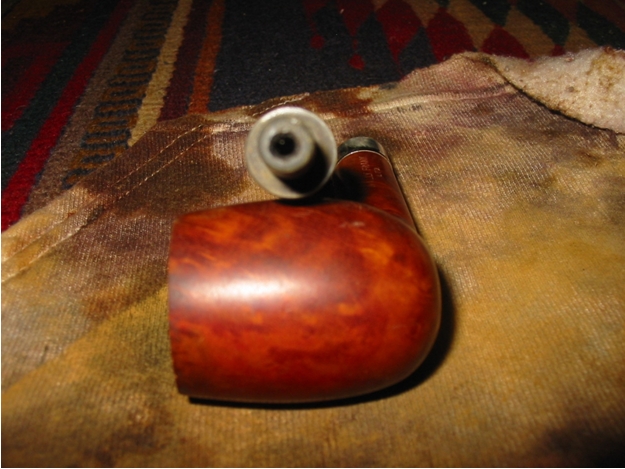
The next two photos below show the stem shape after I had removed much of the material at the top left corner of the picture. The stem is round at this point but the tenon is no longer in the center of the stem. It is proportionately toward the top left of the picture and on the top bottom when it is in place in the shank.
super11

super12
At this point in the process I restained the bowl with a dark brown aniline stain that I thinned with isopropyl alcohol so that it would match the colour of the bowl. My goal was to match the rim that I had topped and was raw briar to the natural patina of the bowl and shank. I mixed the stain until it was the colour I was aiming for and then stained the entire bowl with multiple applications of the stain to the rim. I flamed the stain and reapplied it to the rim, flamed it again and then took the pipe to the buffer. I buffed the bowl and stem with Tripoli and White Diamond. Once I was done with that I buffed the bowl and shank with multiple coats of carnauba wax to bring depth to the shine and also to blend the rim and bowl together.

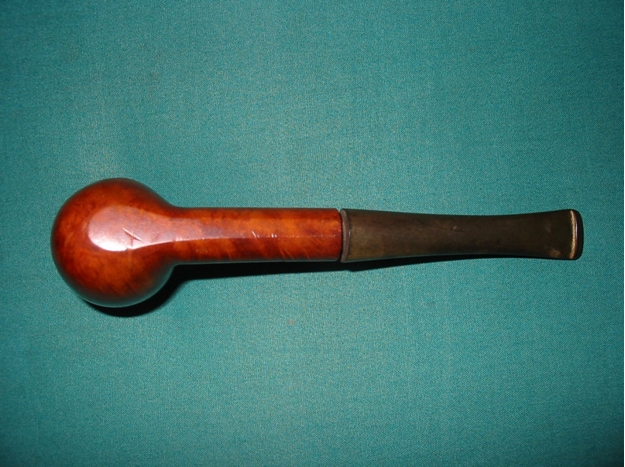
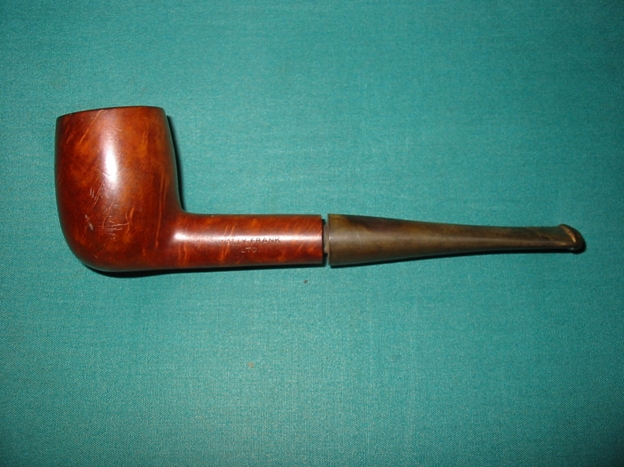
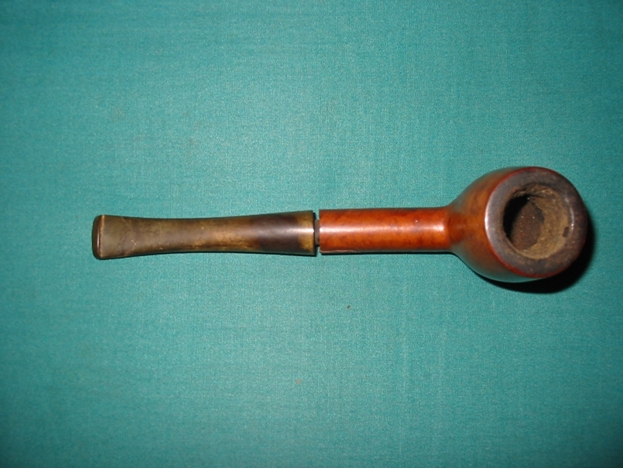
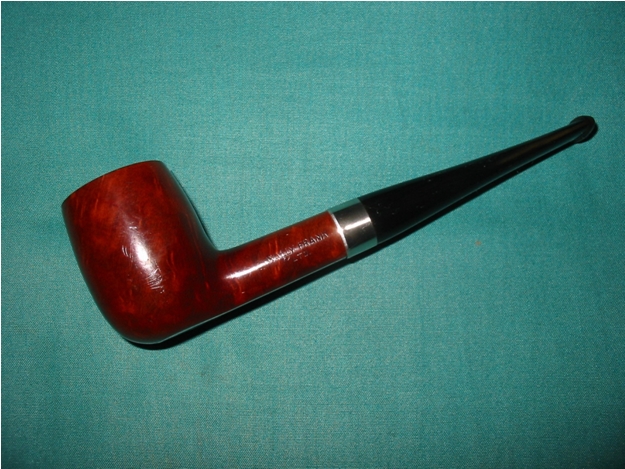
I then worked on the oxidation of the stem. I had shaped it to fit the shank with my Dremel and when it fit well I sanded the stem from front to button with 280 grit sandpaper and then 400 and 600 grit wet dry sandpaper to remove the oxidation and scratch marks from the Dremel. Once it was smooth I progressed through the micromesh sanding pads from 1500-12,000 grit. In between 4000 and 6000 grits I polished the stem with Maguiar’s Scratch X 2.0 and then finished sanding with the micromesh. I finished the stem with a coat of Obsidian Oil and then multiple coats of carnauba wax to give it shine. The next series of four photos show the finished pipe. It is shined and ready to smoke.
super13

super14

super15

super16

An Interesting Weatherproof Wally Frank “Pepper Shaker”


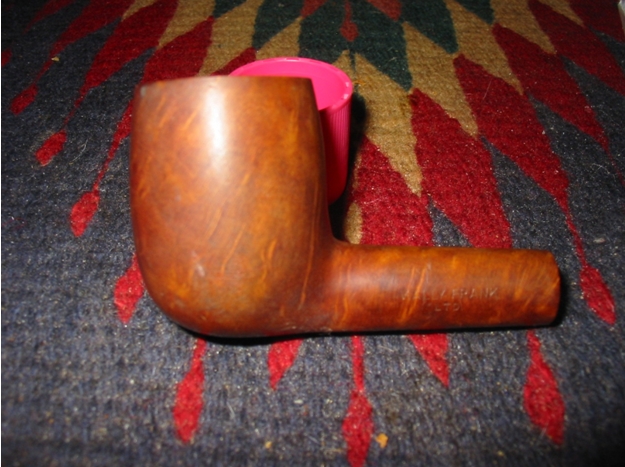
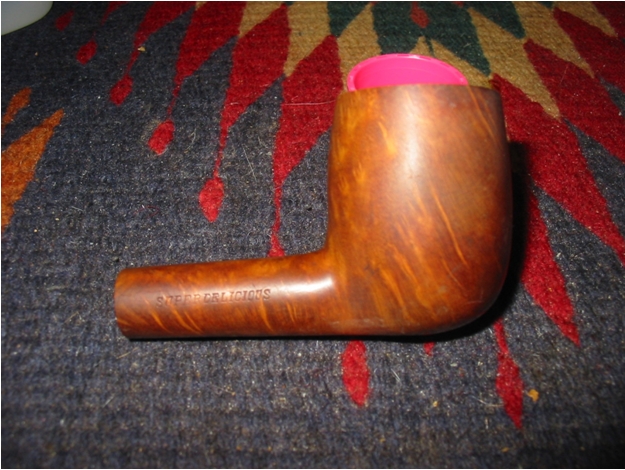
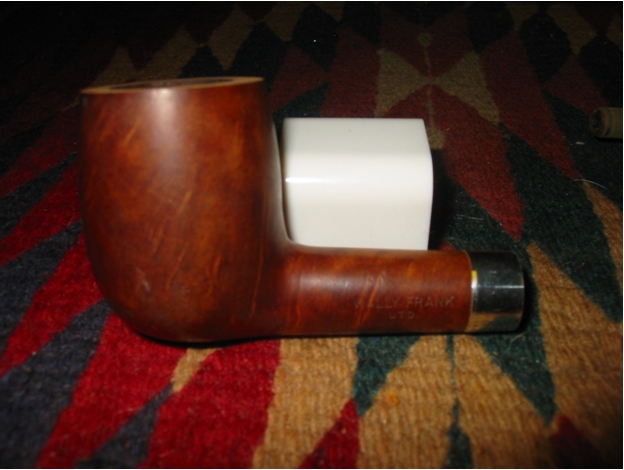
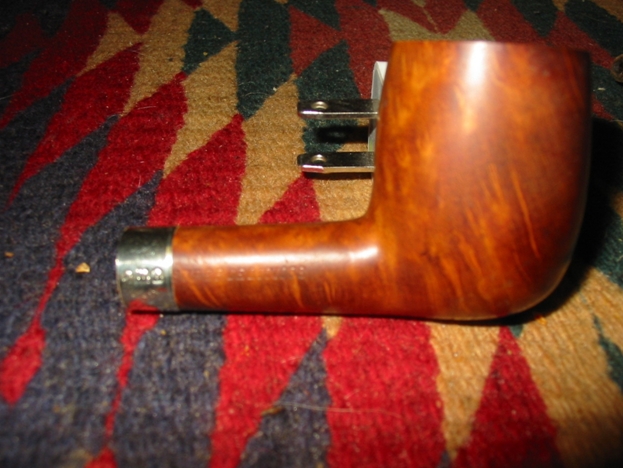
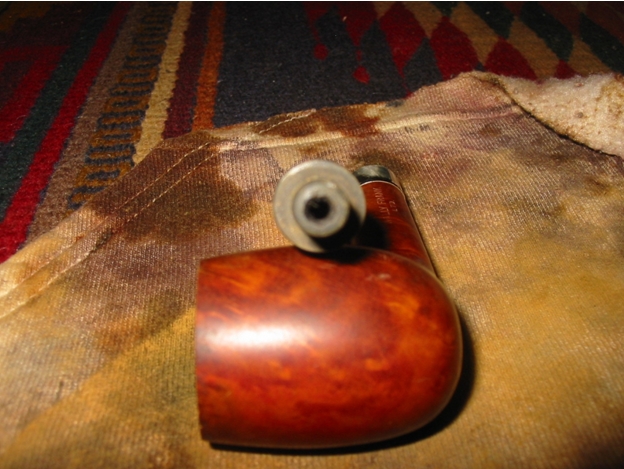
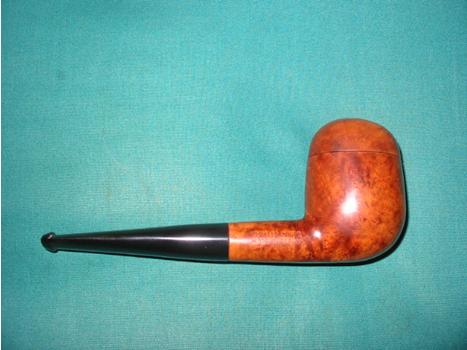
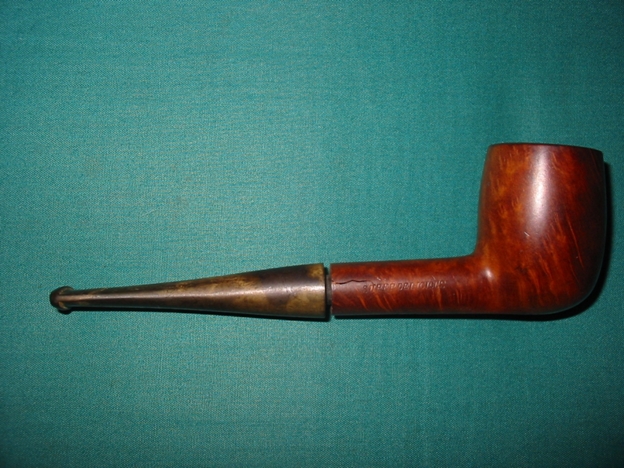
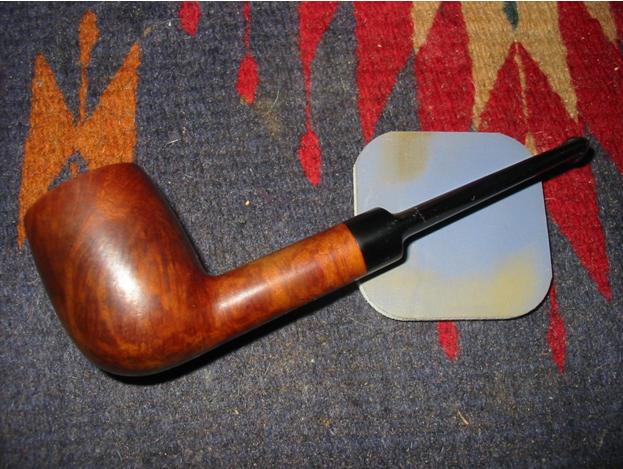
I picked up this interesting piece of tobaciana somewhere though I no longer remember where it came from. It is an oval bowled pipe by Wally Frank and it has a briar wind cap that is attached via a brass peg. To me it looks like a Pepper shaker so that is what I have named it. I have a few other ones like this but the cap is made out of Bakelite and is on a side pin that allows it to flip forward. This one spins to the side or can be removed should the pipeman not want to use it covered.

It came to me unsmoked and clean on the inside. The finish was very poorly done. There was a coat of varnish or lacquer on the pipe. It was spotty and in some places seemed to have bubbled or ran when it was applied. The stain that was underneath obscured the grain on the pipe. I decided to refinish the bowl and give it a new stain. I soaked it in an alcohol bath and then wiped down the bowl with acetone to clean the finish off. Once it was removed I sanded it with micromesh pads to get it smooth. I restained it with a nice cherry aniline stain. I flamed the stain to set it in the grain and then buffed the bowl to remove the excess and surface stain. The stem and pipe were buffed as a whole with white Diamond and then several coats of carnauba. Here is the finished product.
Frank1

Frank2

Frank3

Frank4

A Journey from Oxidation to Shine – Refurbishing a Wally Frank Meerlined Billiard


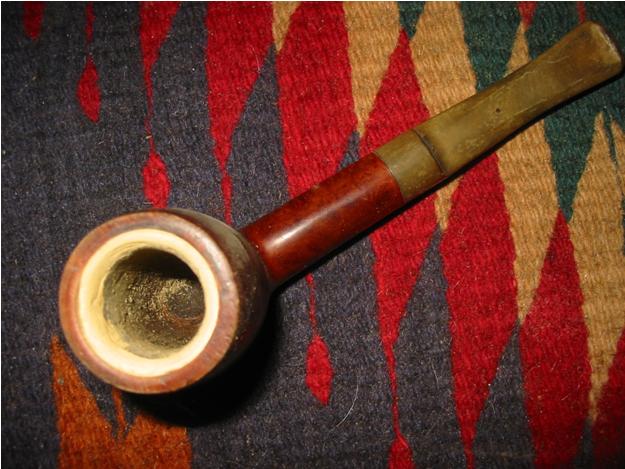
I have had this old meerlined billiard in my box for refurbishing for quite awhile. The stamping on it says Made in London England on the right side of the shank. On the underside of the shank it is stamped Wally Frank Limited. The finish on the bowl was cloudy from many coats of wax and there was a gummy substance on the front of the bowl from a sales label. The rim was dented and the inner edge of the meer lining was damaged. There was a heavy buildup of cake on the meer. The stem was badly oxidized.
ox1
ox2
ox3
ox4

ox5 I decided to work on the interior first so I used a plumbers wire brush (used for smoothing the edges of a newly cut pieces of pipe or tubing). It is a ¾ inch brush (see the photo to the left of this text) and I have found that if it is used carefully it is good at removing the initial cake build up on the interior of a meerlined bowl. I say carefully because too much and the brush scratches the meer lining. In this case I ran it through one time and then dumped out the ash and carbon buildup. The two photos below show the brush inserted in the bowl and give an idea of the tool itself.
ox6
ox7

Once the brush has done its work I use a blunt edge letter opener/knife to smooth out the rest of the cake that is still present. The next photo gives a clear picture of the pipe bowl after I have used the brush in it and just inserted the knife. There was still some stubborn cake left that I used the knife to scrape away. The second photo below shows the bowl after I have finished with the knife. Once the bowl was at this point it was time to use sandpaper in the bowl to smooth out the edges and rough spots.
ox8

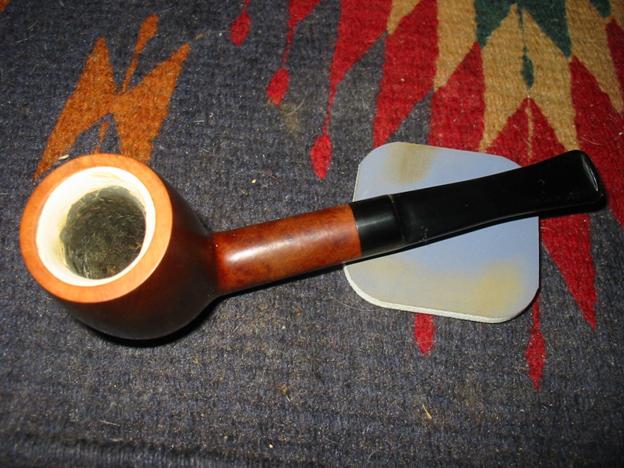
The next photo shows the bowl after the initial sanding on the cake. I had lots more to sand at this point but I wanted to document the process. At this point in the process I removed the stem and put it in a jar of Oxyclean to soak and soften the oxidation while I continued to work on the bowl.
ox9

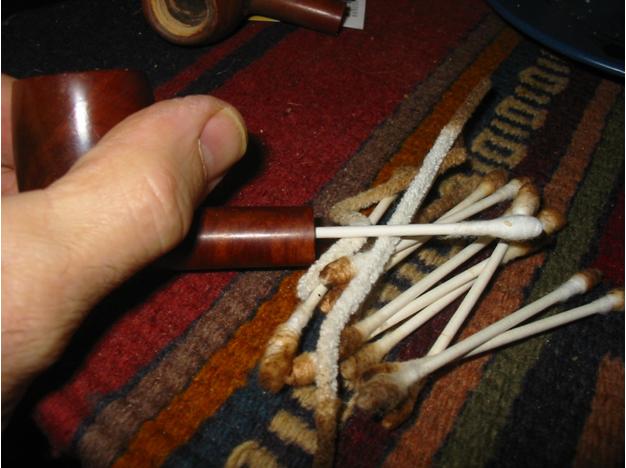
I used many cotton swabs on the inside of the bowl to remove the sanding dust and to clean out the inside of the shank once the stem was removed. The mortise had a thick coating of tars and the airway into the bowl was constricted with tars as well. It took many swabs and about the same number of pipe cleaners to get the interior clean. I dipped the swabs and pipe cleaners in 99% Isopropyl alcohol and washed out the inside. The first swabs came out almost black with the tars. I did some more sanding on the rim and the inner edge of the rim and meer lining. The rim was quite dented and had some chunks missing so I topped it lightly using the methods I have written about in other articles on the blog. I also used a folded piece of sandpaper to bevel the edge of the meer lining inward to take care of the damaged edge of the meer.
ox10

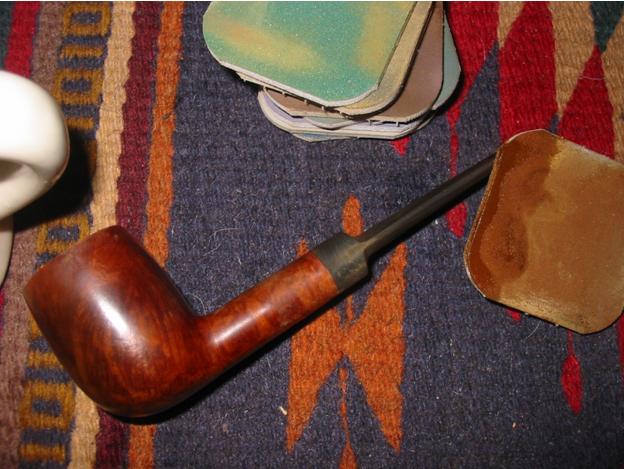
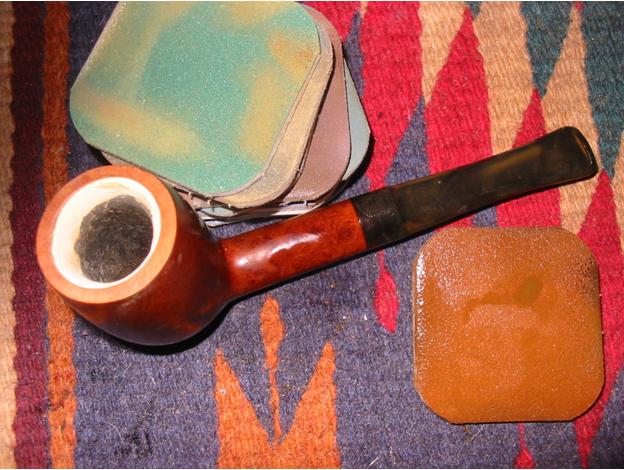
Once the bowl was finished I wiped it down with some acetone on a cotton pad to remove the wax buildup and give me a clean surface to work with. I took the stem out of the soak and went to work on it. I wiped it down with a soft cotton cloth to dry it and to remove the softened oxidation. I then filled a cup with warm water and began to work on the stem with the micromesh sanding pads 1500-12,000. I took pictures of each successive micromesh pad and the result of using it to show the progression of the polishing.

The first four pictures below show the stem after wet sanding with the 1500 rust coloured sanding pad. You can also see the inner rim and bowl top after my work on them as well. The first sanding took what remained of the majority of the oxidation off the stem and gave it a dull matter finish. I wet the sanding pad down and sanding with it wet. I repeated the sanding of the stem repeatedly until the oxidation was gone. Then I wiped it down before the picture to show the progress.
ox11

ox12

ox13

ox14

Once I was satisfied that the majority of the oxidation was gone I move on to the green 1800 grit micromesh sanding pad. I also used this pad with water and wet sanded the stem repeatedly. You can see the remaining oxidation still showing up on the wet sanding pad in the two photos below. The two photos show the stem after multiple sanding. I wiped it down with a soft cloth to dry it off and wipe away the grime left behind by the wet sanding. The stem is beginning to take on a bit of a shine. The matte finish of the 1500 grit is getting a polish.
ox15

ox16

The next two photos show the 2400 grit micromesh disk (grey coloured). I used this pad without water to polish and shine away some of the scratches. I found on the left side of the stem near the button there was a fairly deep scratch on the edge. I used some 280 grit sandpaper to remove this scratch and then repeated the 1500 and 1800 grit micromesh sanding. Once finished I gave the entirety of the stem a sanding with the 2400 grit pads to smooth out the finish. I also used the pad to sand the top of the bowl and the edge of the meer lining.
ox17

ox18

A 3200 grit micromesh pad (tan coloured) was used next. I also dry sanded the stem with this one the first few times I sanded it. The last time I wet sanded the stem. The next two photos show the stem after the sanding. I wiped it down with a soft cotton cloth to remove the dust and residue from the wet sanding.
ox19

ox20

Once I got to this point I decided to try some Mequiar’s Scratch X 2.0 fine scratch and blemish remover that I picked up at an auto parts store. It is used to polish headlight lenses. I applied the polish to the stem and let it dry a short time before wiping it down and polishing the stem with the cotton cloth. The first two photos show the application of the white polish. The last two show the result of the polish on the stems at this point in the process.
ox21

ox22

ox23

ox24

At this point in the process I decided to continue with the micromesh sanding pads. I wanted to take them through the 12,000 grit pad and document the progressive shine that comes alive in the stems. The next two photos show the wine/brown 3600 grit sanding pad and the results. I sanded the entirety of the stem repeatedly before wiping it down for the photos below. I dry sanded with this grit pad and also with the remaining micromesh pads.
ox25

ox26

A 4000 grit Teal coloured micromesh pad was next. I also dry sanded with this pad. The next two photos show the shine starting to come alive on the stem.
ox27

ox28

A 6000 grit Purple coloured micromesh pad was next. I dry sanded with this pad as well. The next two photos show the shine after I repeatedly sanded the stem.
ox29

ox30

An 8000 grit Royal Blue micromesh pad was the next in line to be used. The difference in shine between the 6000 and the 8000 grit is quite remarkable. The shine takes on a depth that the early grits did not bring out in the vulcanite. The next two photos show the stem after sanding several times with this grit pad.
ox31

ox32

The final micromesh pad to be used was the Grey coloured 12,000 grit pad. I also dry sanded with this pad. I sanded the stem several times until the vulcanite shine had a depth that was visible. The two photos below show the result of the final sanding.
ox33

ox34

At this point in the process I once again wiped the stem down with the Meguiar’s polish and buffed it off by hand with a soft cotton cloth. I then took it to the buffer and gave it several coats of carnauba wax. I also buffed the bowl with White Diamond and then carnauba wax as well. The finished pipe is in the four photos below.
ox35

ox36

ox37

ox38