Tag Archives: vulcanite stems

Refurb on an old AD pipe from 1909


Blog by Steve Laug

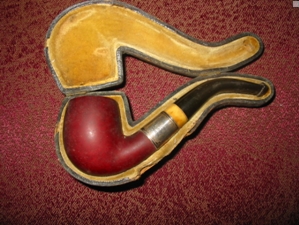
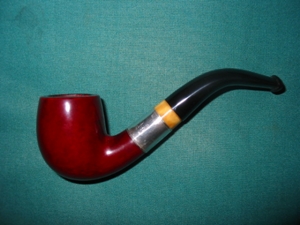
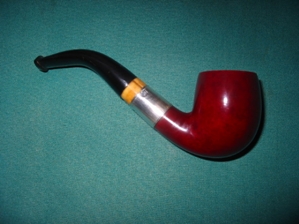
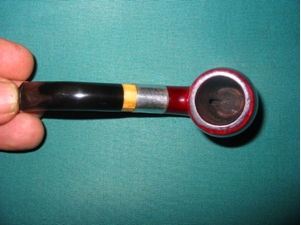
I finished refurbishing this old timer. I love the looks of it and wanted to share it with you all. It is a bit of a mystery in that it has no stamping on the bowl. The only marking is a hallmark that dates it to 1909 and the letters stamped in the silver of the band AD. The pipe is a cased little thing – just 4 inches long. The stem has a bone tenon but a slotted button instead of the orific hole on most pipes of that era. The ivory band is part of the stem and it inserts into the metal band. The bowl is stained an oxblood red. I reamed and cleaned bowl and shank. I cleaned the threads and the inside of the stem with a shank brush, bristle pipe cleaners and fluffy cleaners. The silver band was polished with tarnish cleaner and a silver cloth. The stem was sanded to remove chatter and then I used Micromesh pads 1500,1800, 2400,3200 4000 and buffed with Tripoli and White Diamond. I rubbed down the case with some leather renewer and it definitely looks better.

The book, Who Made that Pipe attributes the AD stamping to Alfred Dunhill. The Silver Hallmarks site dates it as Birmingham Silver 1909 and the Makers Marks identify the work as being done by Arthur Downing Ltd. That sounds correct to me. The final attachment photo is the clip from the Hallmarks Site. So the mystery remains – is it a Dunhill or is it a nice older pipe banded by Arthur Downing Ltd? Who knows but it smokes great.

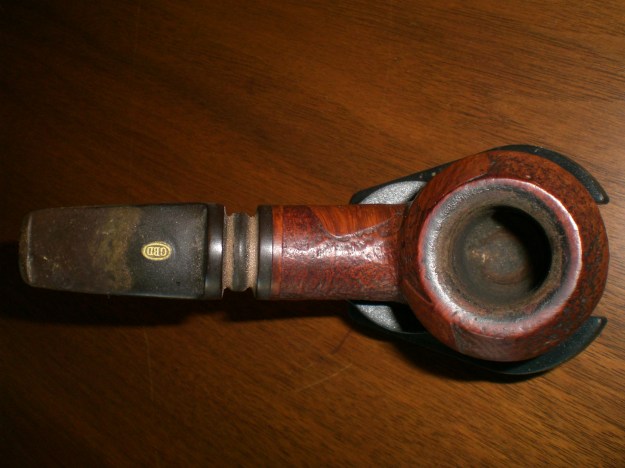
Here are the pictures of the pipe before I worked on it
AD1
AD2

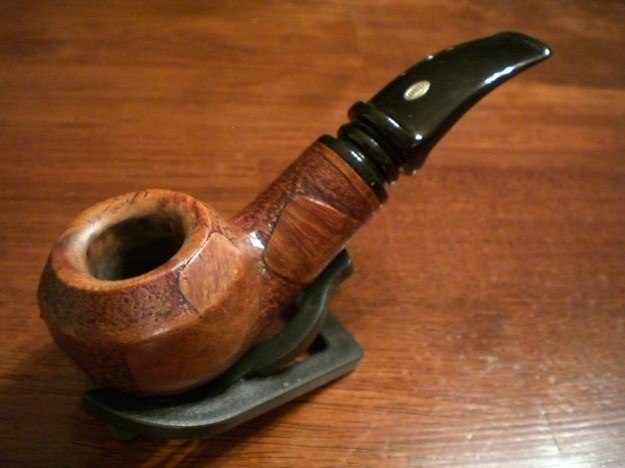
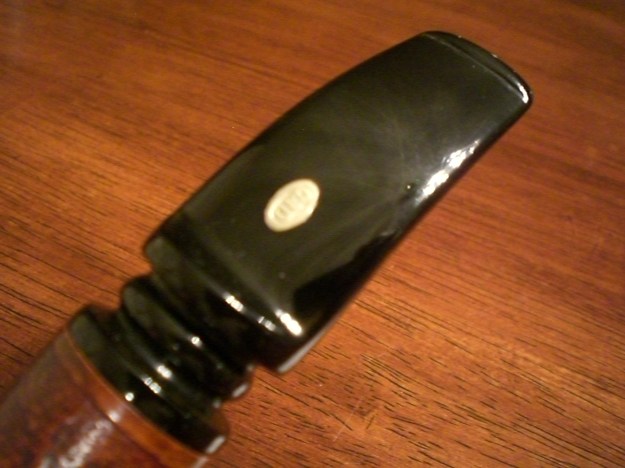
Here are some pictures of the finished pipe.
AD3
AD4
AD5

And here is a picture of the logo on the silver band as found on the British Hallmarks site. It matches the stamping on the silver band exactly.
Image

GBD 9438 Tapestry Refurb


Blog by Al Jones

I am truly honored that forum owner, Steve, asked me to write a guest article on his wonderful blog. Just a little over one year ago, I made the transition from occasional cigar smoker to an avid pipe smoker/collector. Pretty early on, I discovered that access to better quality pipes could be had through the estate market. It was also about that time I found the SmokersForums.uk forum and quickly made that venue my go-to spot for pipe information. While reading the “Restoration & Maintenance” section, it became apparent to me that even finer estates could be found if I was willing to put in a little elbow-grease and restore them. If one reads the “Stickies” in that section, pipe restoration techniques can be quickly learned thru contributions from professionals and amateurs. I was fascinated and dove in.

My tools evolved from simple sandpaper and some buffing wheels mounted in a hand drill to a bench mounted buffer, micromesh sanding papers, reamers, needle files etc. Making some of the tools to save a few bucks was all part of the fun and learning process. I favor Vulcanite stems, so occasional maintenance will be a part of my pipe smoking experience.

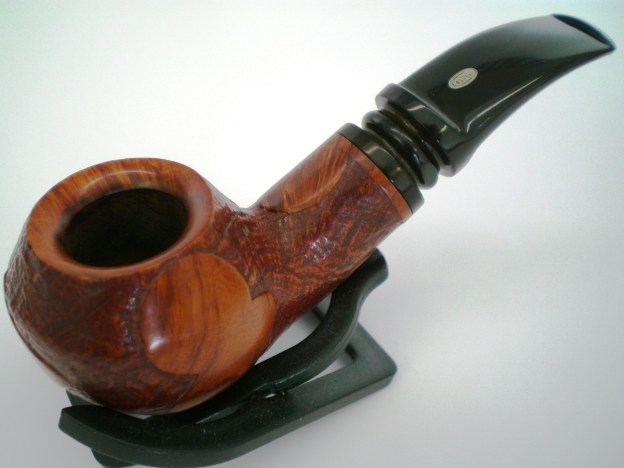
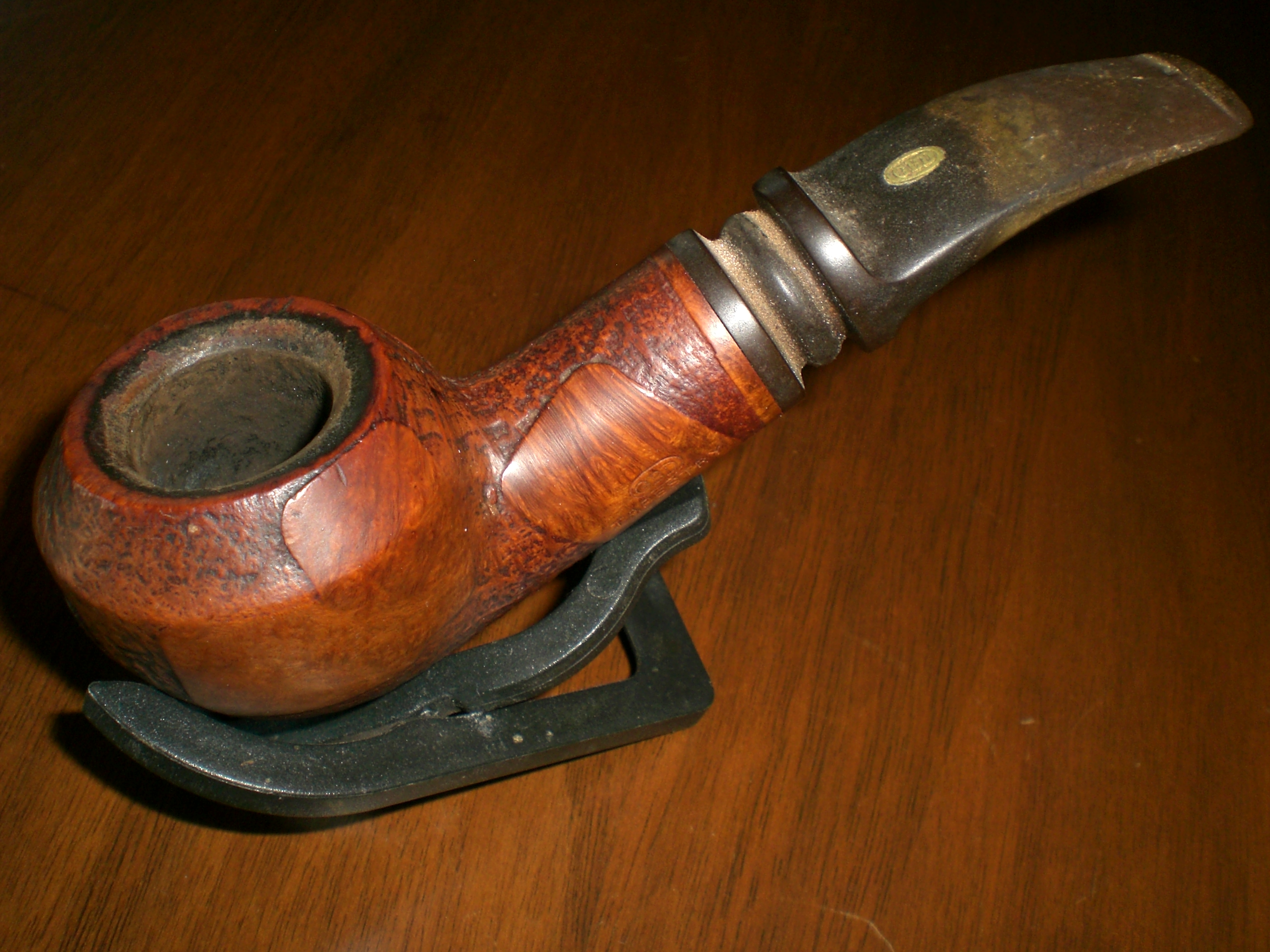
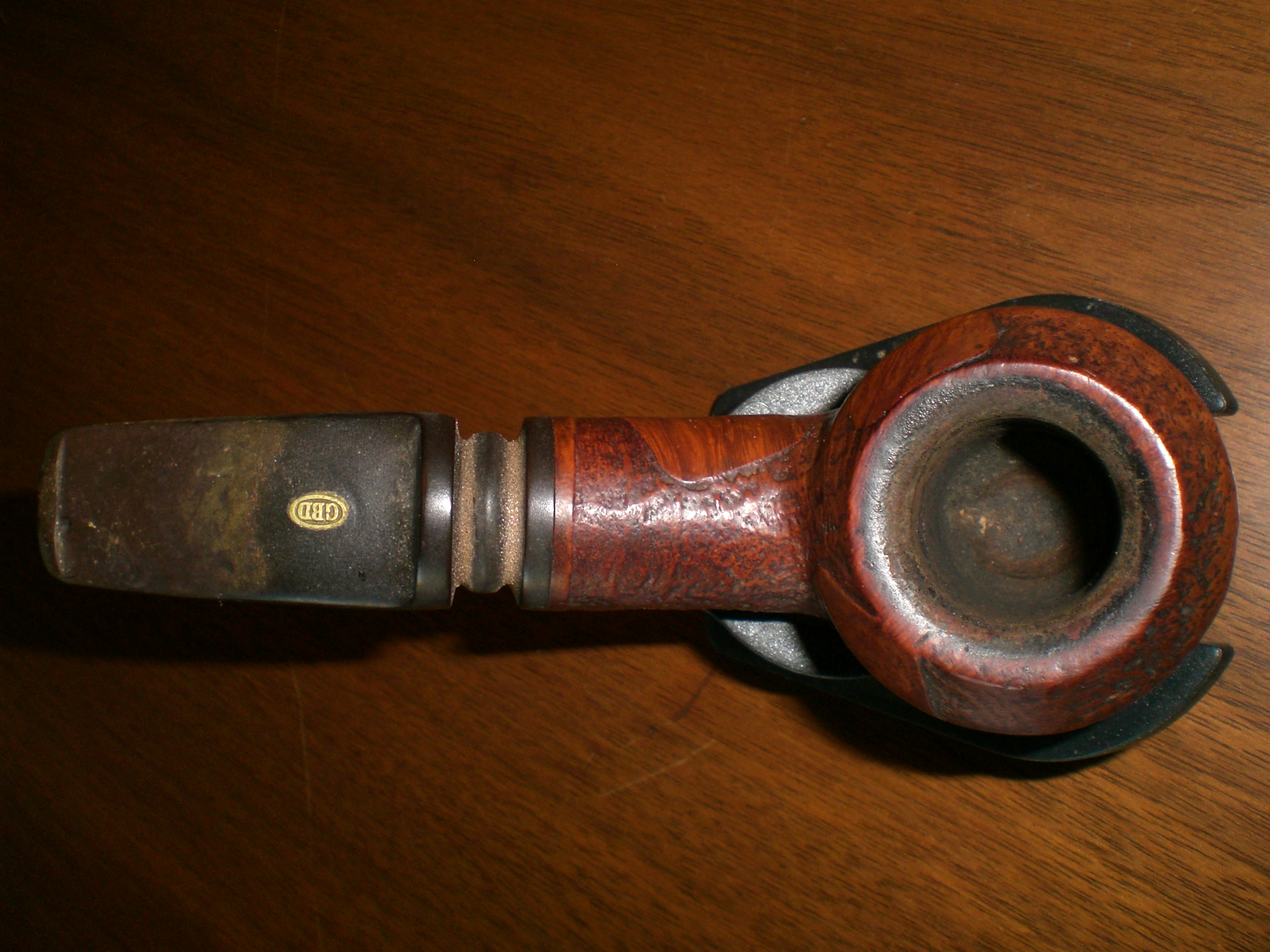
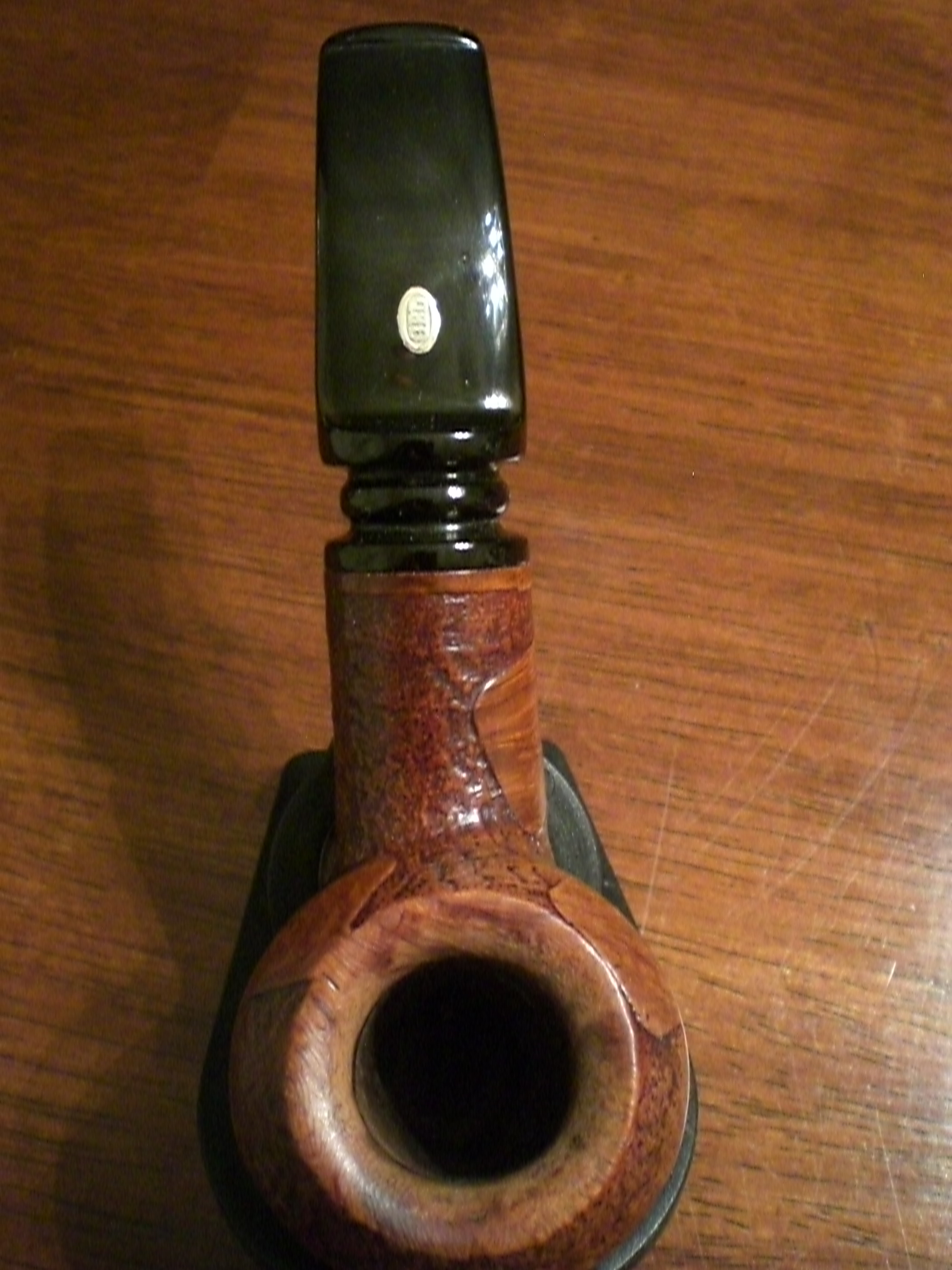
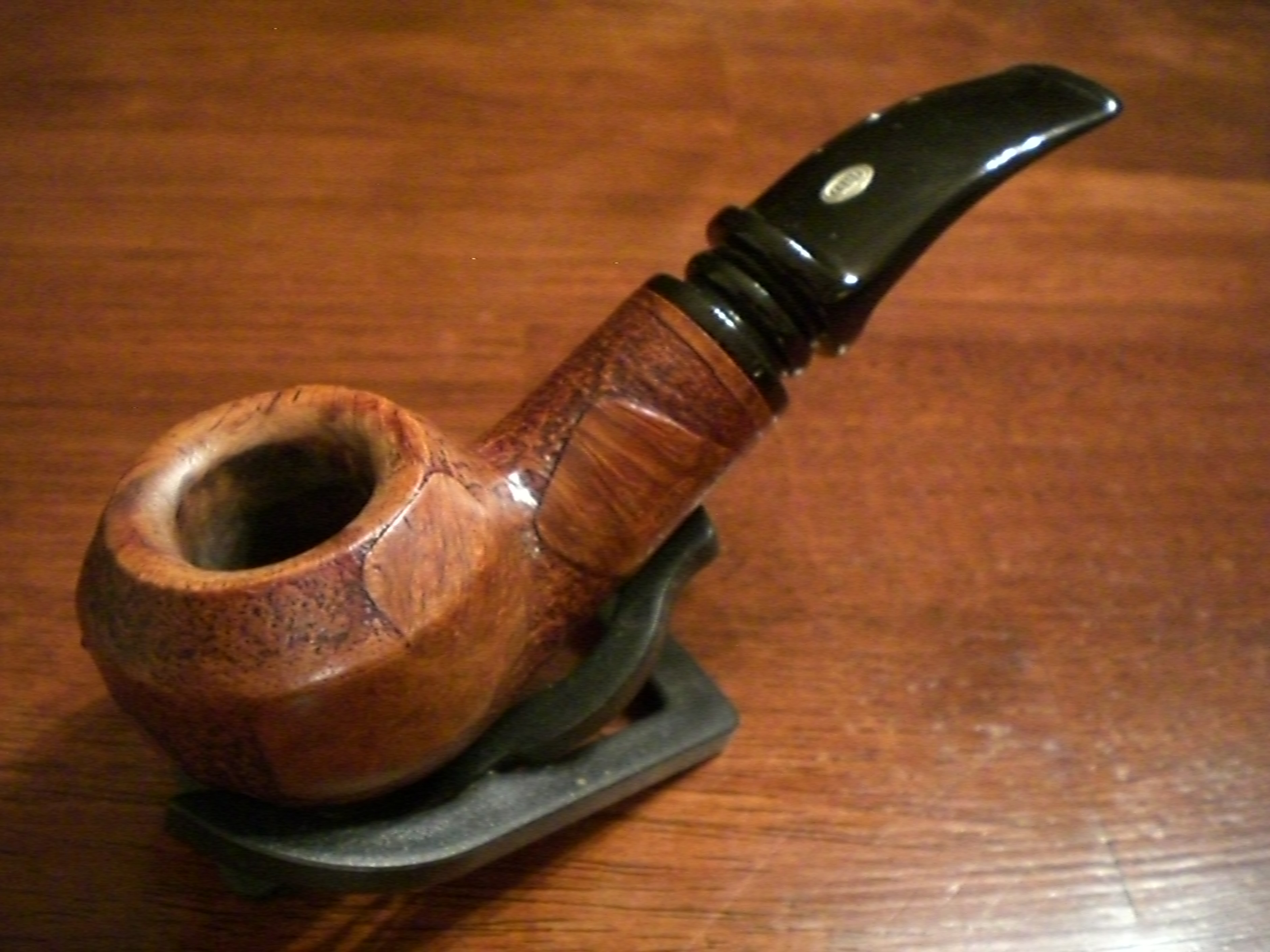
Due to my Welsh heritage, I’m a big fan of anything British, primarily cars and motorcycles. So, it seemed natural to be attracted to the classic shapes produced by the British masters. I’m a fan of GBD brand pipes and those estates can be readily found at reasonable prices thru Ebay, etc. The 9438 Author shape is a particular favorite and I have several models of that shape. The pipe I chose to document in this article is in Tapestry finish. I was intrigued by the turned stem and after a little research, I found it was a “chair-leg” stem used on certain Tapestry models. My joy in finding this pipe quickly evaporated when I opened the box and saw the level of oxidation on the many curves and crevices. I tend to purchase estates with saddle stems, but this one ramped the difficulty notch up significantly. Indeed this stem proved to be the most difficult I’ve encountered.

Some “before” shots of the pipe:
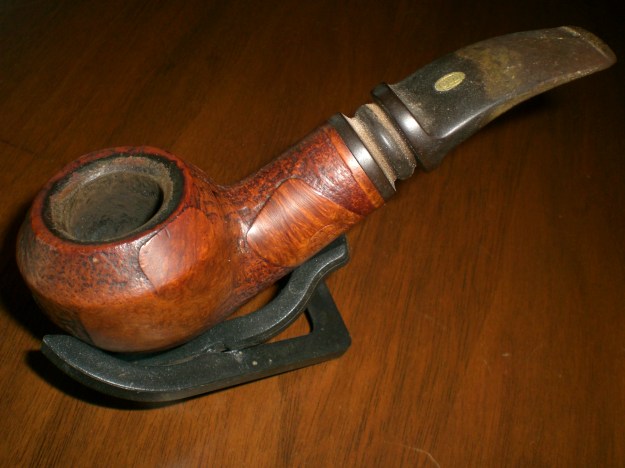
Typically, it takes me about an hour or so to restore a stem. This one took nearly twice that long. Fortunately, the previous owner had left no teeth indention issues to resolve. I soaked the stem in a mild Oxyclean solution as the first step. In badly oxidized stems, I think this step pays off in removing oxidation from the inside of the stem as well. Next up, I used some 1500 and than 2000 grit wet paper until the brown was removed. Getting oxidation from the chairleg creases was frustrating and finger aching. I almost gave up at one point, but sitting the project down for a few hours strengthened my resolve. I’m always eager to smoke an estate I’ve cleaned up, so there is always that pot at the end of the rainbow. I found wrapping the sandpaper around a thin kitchen knife allowed me to get the oxidation from those thin crevices. Next up, was a polish with each of the final four grades of “micromesh” (4000, 6000, 8000 and 12000). Micromesh comes in pads and sheets. I found the larger, 6” x 2” sheets last longer and are easier to fold into creases, etc. Following the micromesh, the stem had a deep, black shine that I enjoy on my mostly Vulcanite stems.

The next step was to buff the stem lightly with some White diamond and then “Blue Magic Plastic Polish”, each product getting it’s own cloth wheel. The Blue Magic product is made for the automotive industry and available at most autoparts stores (Megiuars also makes a similar product). Some folks are adverse to putting an automotive product on their stems, but so far, I’ve found no adverse tastes, etc. I do think the product helps “seal” the Vulcanite as oxidation seems to either not occur or very slowly. James Upshall pipes are noted for their fast oxidation, but so far my restorations using this product has kept my collection shiny. I also gave the pipe a light coat of “Obsidian Stem Oil”.

The bowl wasn’t in bad shape, but had the usual tobacco/tar buildup on the bowl top. I used my Castleford reamer set to remove the thin cake than soaked the bowl with Sea Salt and Everclear for a few hours. This was done while I was working on the stem. Following the soak, the draft hole was thoroughly cleaned with a series of bristle pipe cleaners soaked in Everclear. I’ve had success eliminating ghosts by cleaning this area of the pipe until the cleaners come out nearly white. I gave the bowl a light buff on the wheel with some white diamond, then Carnuba wax. A hand polish with Paragon wax completed the briar clean up. The wood on the bowl top was a little lighter in color, but I knew smoking it would even out and darken that area. (plus I was not looking forward to prepping and staining the mixed “Tapestry” finish..)

The completed pipe:
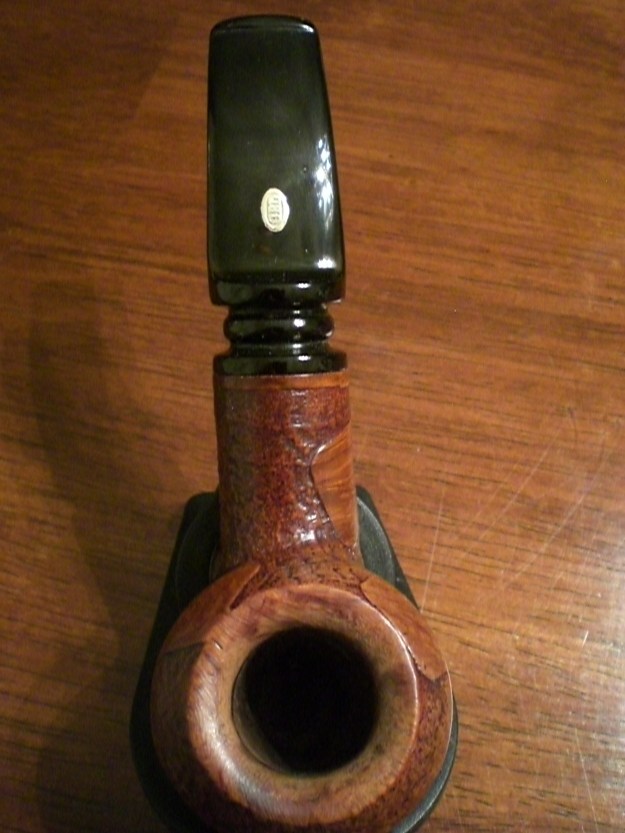
It may be a combination of the pipe shape and the effort required to refurbish it, but this particular pipe has become a favorite. I swore that I’d never purchase another chairleg stemmed pipe, but won an Ebay auction last night for another GBD Tapestry pipe with a chairleg stem……

Smoke safe!
Al Jones

Lifting Tooth Marks in an old Charatan Stem with a Heat Gun


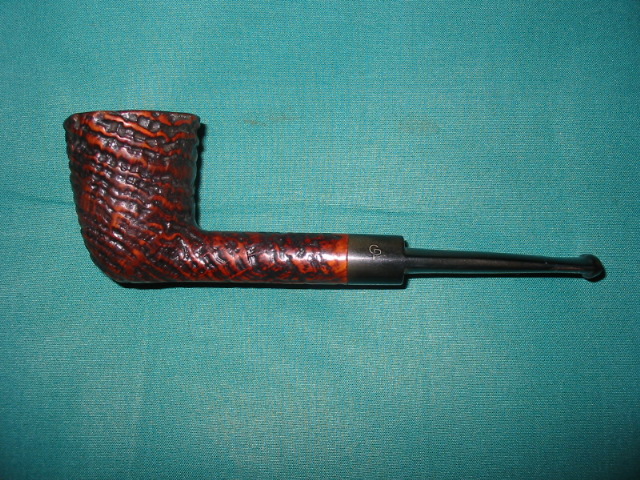
I picked up this old Charatan 33X Bell Dublin off of EBay in the 90’s and refurbished the bowl and rim and gave it a good polishing with some Halcyon 2 wax. I find that the wax works very well on sand blasted and rusticated surfaces. This one turned out to be a great smoking pipe.  The briar is extremely lightweight and has a nice deep blast to it. Charatan does this shape like no one else and it is a favourite of mine. I liked everything about this old pipe but… it had some incredibly deep tooth marks on the stem.

Image

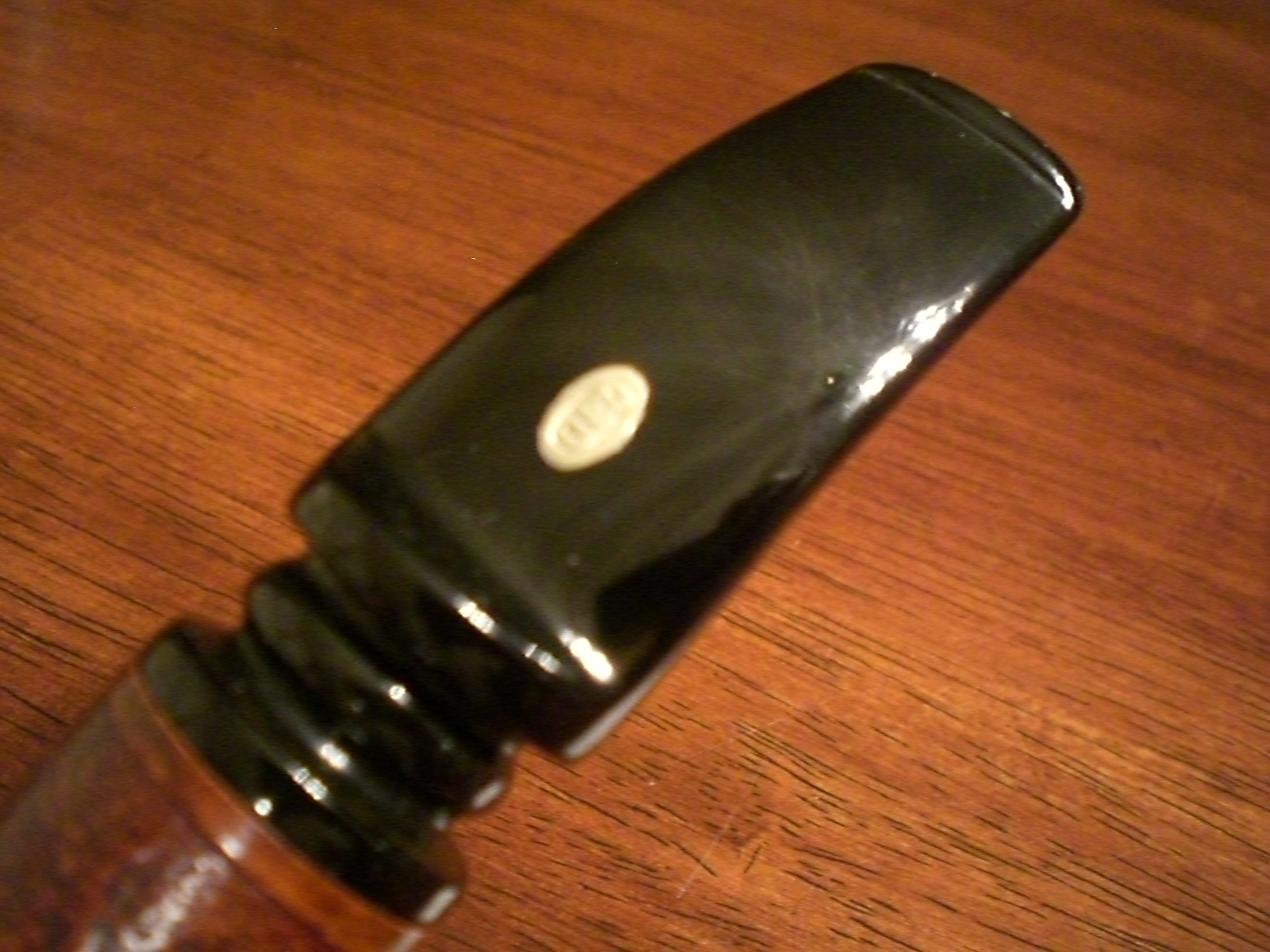
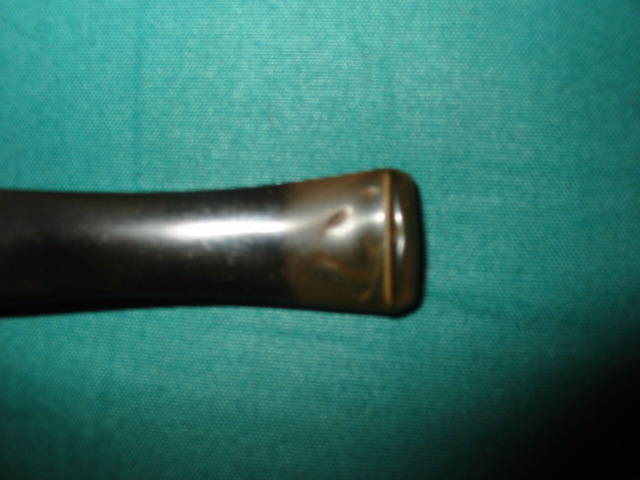
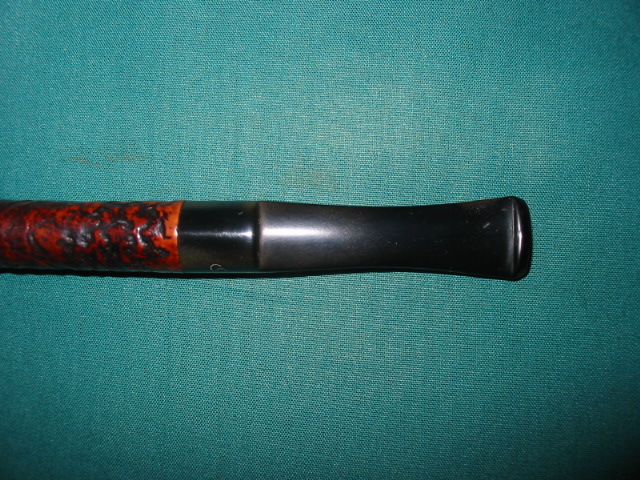
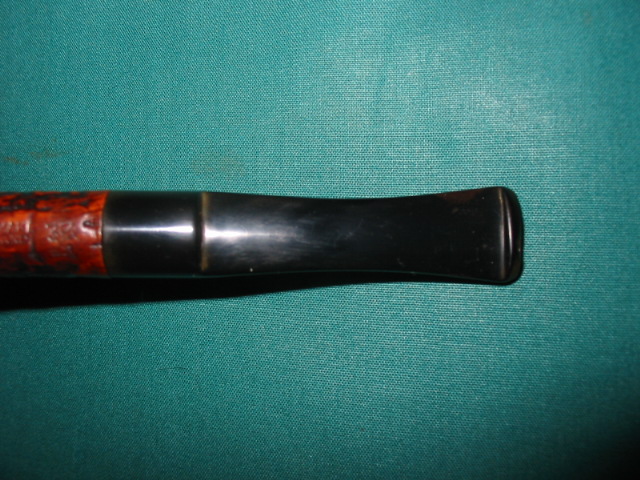
The two pictures below show the depth of the marks (Please forgive the poor quality of the photos, though they are a bit blurry they communicate the problem. Know that it was far worse than the pictures show). They arc across the stem just in front of the button and extend about a half inch into the stem. The top photo shows the top of the stem and the second photo the underside. I covered them for the longest time with a rubber softee but really did not like the feel of that in my mouth so I decided to experiment with lifting the tooth dents using my heat gun.

Image

Image

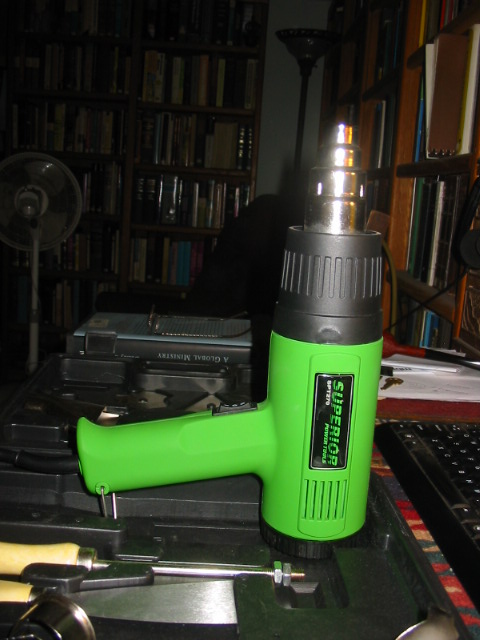
I scrubbed the tip to clean it of any slurry that had built up under the rubber softee tip. There seems to always be a white calcification under the rubber guard. I cleaned that up with my buffer and some sandpaper. The photos above show the stem after I had cleaned it and it was ready to be heated.  I have a heat gun that I can stand on its end pointing upward. It has a wire stand built into the handle that stabilizes the gun in this position (see the picture below). Having the gun positioned in this manner allows me to control and manipulate the stem with both hands over the heat. I set the heat gun on low heat as I have found that high setting can too easily burn the vulcanite. I learned that painful lesson on some precast stems that I was trying to bend. I had used the heat gun to bend my stems for quite some time but had not used it to lift the tooth marks from the stem until I used it on this stem.

Image

The trick I have learned in the process is to keep the stem about 4-6 inches above top of the gun tip as it allows it to thoroughly heat the vulcanite but not burn it. I move the stem constantly back and forth across the heat. I kept the stem on the pipe this time and used the bowl as a handle. In this instance I worked to just keep the first inch of the stem from the button forward in the heat. I stopped frequently to check on the progress and see if there was any blistering on the stem. The blistering can easily happen and is a pain to deal with. It can be sanded out but it is a case of creating a problem while solving another one – kind of like how plumbing repairs always work out for me. It did not take long for the heat to do its magic. Vulcanite has memory so with the heat it returned to its original smoothness. I have found as long as the bite marks are not actually cuts but dents they will lift out with persistence and heat.

Once the surface was smooth again I took it off the heat and cooled it by dipping the tip in some running cool water to set the vulcanite in its new position. It is the same principle that is used in bending the stems. You heat and get it bent to the position you want and then dip in cold water to set it. I figured it would work the same in this instance and it did indeed work. I dried off the tip and then sanded the area with 400 and 600 grit wet dry sandpaper (with water on the stem as I sanded) and then moved through the grades of micromesh pads – 1500, 1800, 2400, 3200, 4000 and 6000 grit. By the 3200 grit micromesh pad I found that the stem was beginning to get a smooth and glossy finish. The final two grades of the pads really polish the stem and give it a glassy finish. To finish the work on the stem I took it for a final polish on the buffer with White Diamond polishing compound. It really shone when that was done.  The work was finished after I gave it a good coating of carnauba wax.

Here are some pictures of the top and the underside of the finished stem.

ImageImage

An Interesting Wellington Straight Billiard


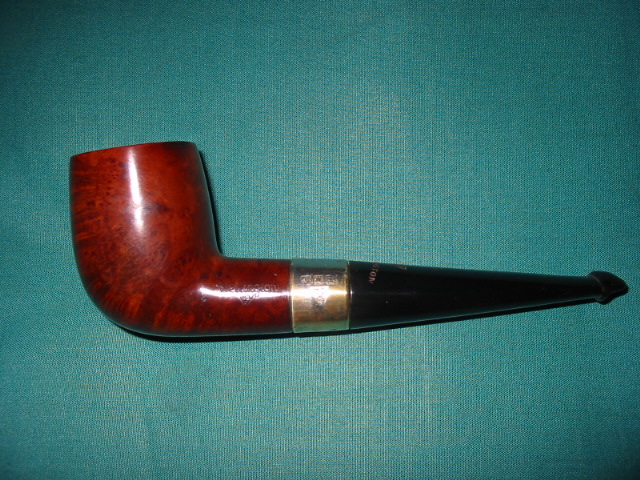
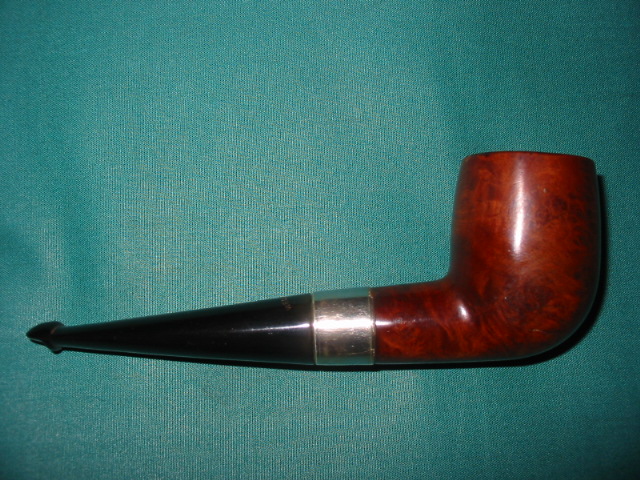
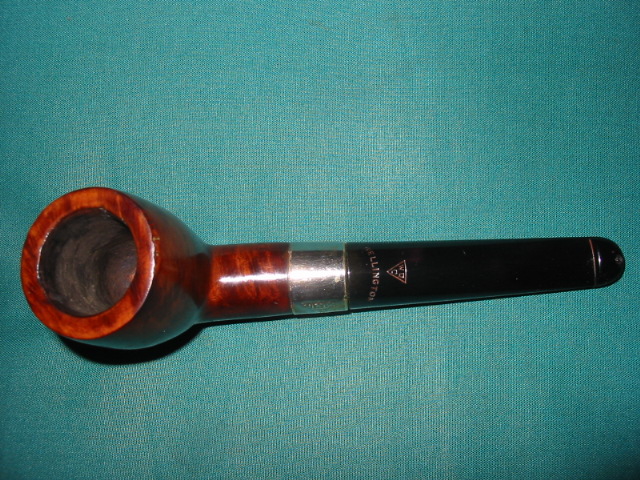
Just finished researching a bit on WDC Wellington Pipes. Yet in all of the research I cannot find the one that I picked up. It is a straight billiard. It is chunky and 5 1/2 inches long. It is a system pipe like the Wellington Bent pictured below but it is a standard P-lip stem with a regular tenon. The band is sterling silver and has the WDC triangle and hallmarks stamped in it – an anchor, a five point star, and an eagle. The shank is also stamped WDC in a triangle under a script Wellington. The stem is stamped the same way. The bowl is U shaped with draft hole at the shank side as usual. From there it drops down into the shank where there is a chamber – a bit different than the well in the picture below. It is more of a wide open chamber that tapers a bit to receive the end of the tenon. Very interesting design.

It was rough so I reamed and cleaned the bowl. Cleared out the reservoir and the shank with pipe cleaners folded in half and then gave the bowl an alcohol bath. I left it in for about a 1/2 hour and then took it out and cleaned it again. It did not need to be re-stained as it retained its colour. I buffed it with White Diamond and then gave it a coat of carnauba wax. The stem needed a buff as well. It was a bit oxidized. The stem is unique as well in that the tenon end is very open and tapering back to the whole in the Plip. Here are the after pics.

ImageImageImage

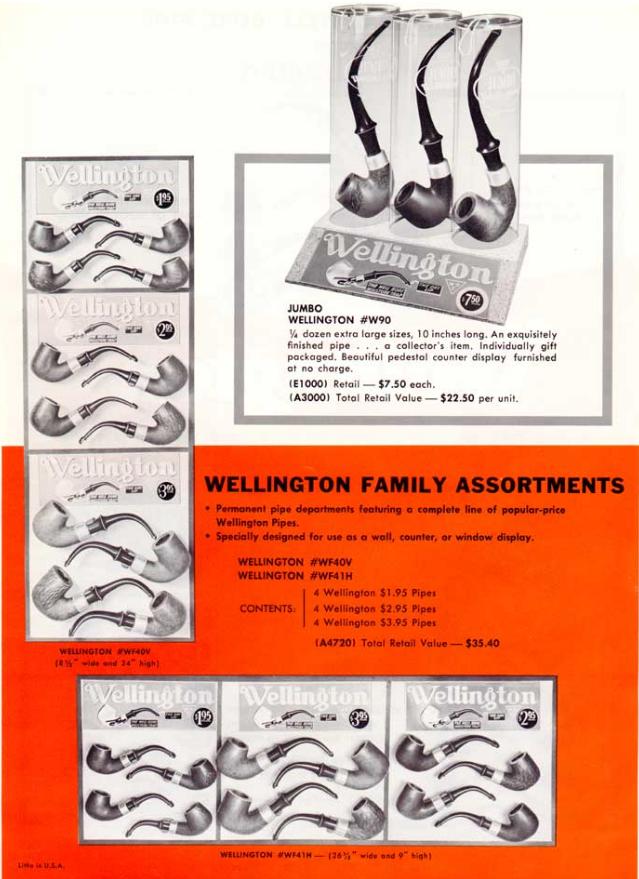
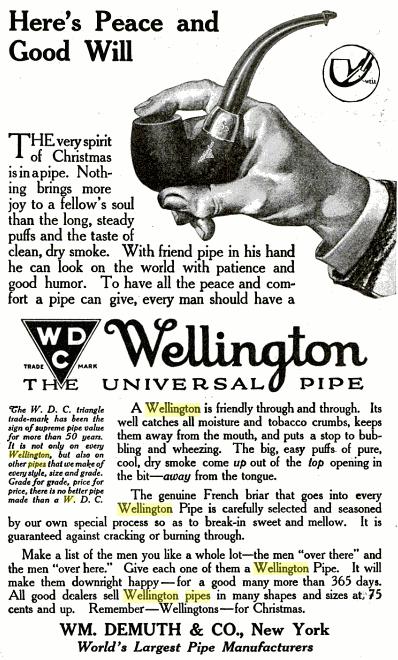
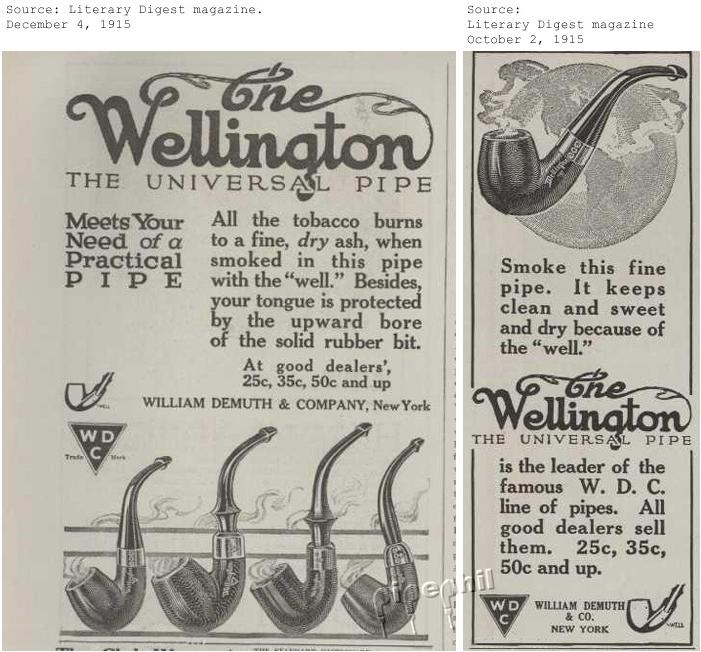
I have also included a couple of adverts that I came on that are interesting bits of history of the brand.

ImageImageImageImage