
Blog by Steve Laug
The next pipe I chose to work on is another one from Bob Kerr’s estate and is part of his collection of Danish made pipes. I have worked on the restoration of others in this collection which include a Stanwell Jubilee Shape 118 (https://rebornpipes.com/2019/08/11/another-bob-kerr-estate-a-stanwell-jubilee-1942-1982-shape-118/); a Stanwell de Luxe Shape 812 (https://rebornpipes.com/2019/08/10/back-to-bob-kerrs-estate-changing-up-and-working-on-a-danish-made-stanwell-de-luxe-812-billiard-regd-no-969-48/); a WO Larsen (https://rebornpipes.com/2019/01/13/restoring-pipe-17-from-bob-kerrs-estate-a-w-o-larsen-super-15-bent-stack/); a Danish Sovereign Bulldog variation (https://rebornpipes.com/2019/08/11/another-bob-kerr-estate-a-danish-sovereign-305-bulldog-variant/) and a Danmore Deluxe Volcano (https://rebornpipes.com/2019/08/20/restoring-a-petersons-dunmore-70-bent-apple-sitter-from-bob-kerrs-estate-2/).
To this list of Danish pipes I am adding the next – a Svendborg Danish Handmade Bark Brandy shaped pipe. Like the others it is part of Bob’s estate that the family asked me to clean up and move out to others who will carry on the trust that began with Bob. In the collection there were BBBs, Peterson’s, Dunhills, Comoy’s and Barlings as well many others – a total of 125 pipes. This is the largest estate that I have had the opportunity to work on. I created a spread sheet to track the pipes, restoration and sales. This job would take a fair amount of time to clean up. I could not pass up the opportunity to work on these pipes and help the family.
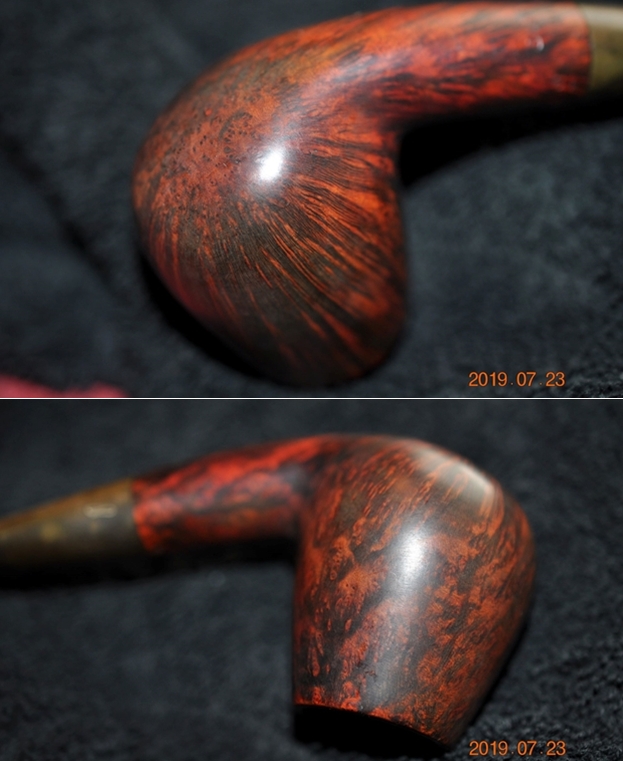
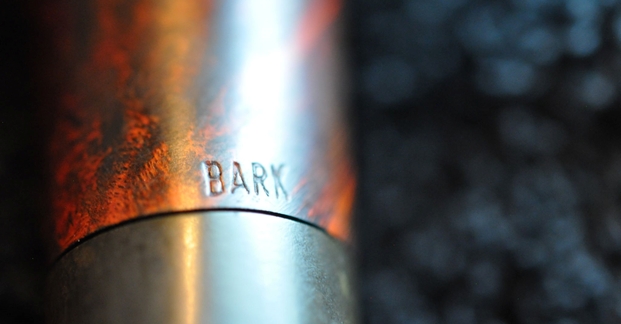
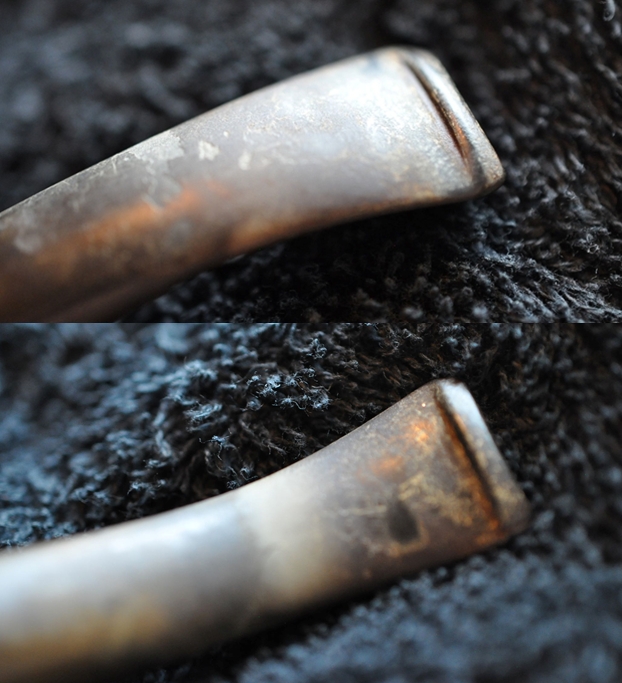
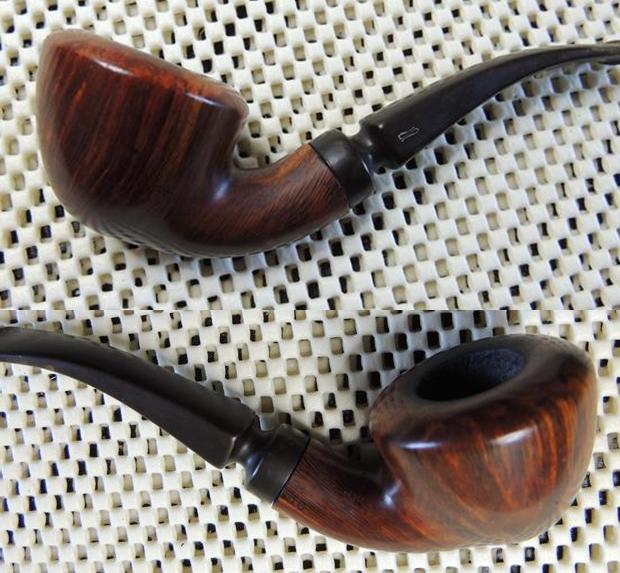
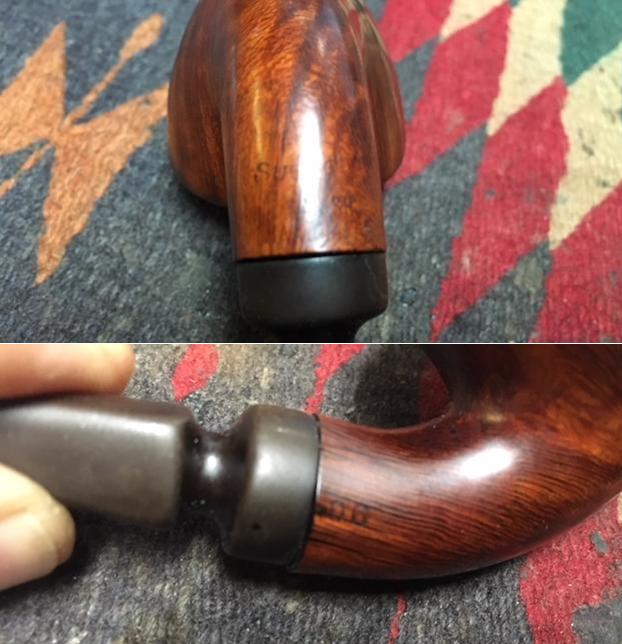
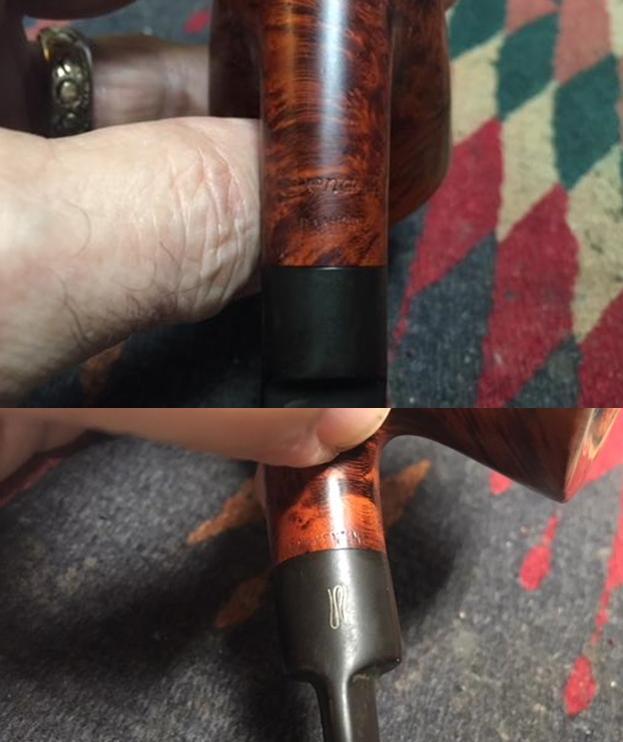
When I took Svendborg Brandy shaped pipe out of the box of cleaned up pipes that Jeff sent back I could see that it was a beauty. It was stamped Svendborg over Danish Handmade on the underside of the shank next to the stem. On the topside of the shank it was stamped Bark at the stem/shank junction. On the right side near the junction it was stamped with the shape number 19. It has swirls of straight, flame grain around the sides of the bowl and shank with birdseye on the heel and the top of the bowl. The finish was very dirty like the rest of the pipes in this estate. There was a thick cake in the bowl with remnants of tobacco stuck on the walls. There was an overflow of lava on the rim. The top and edges of the rim were dirty. I could see a beautiful pipe underneath all of the grime and buildup of years of use. The stem was oxidized with tooth chatter on both sides. There was an squat S shaped swirl on the left side of the taper stem. Surprisingly it had none of the deep tooth marks that I have come to expect from Bob’s pipes. Jeff took photos of the pipe before he started his cleanup work on it.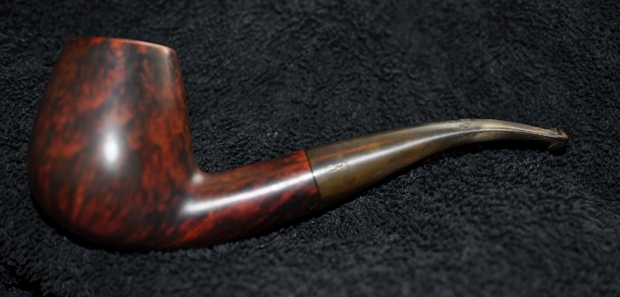
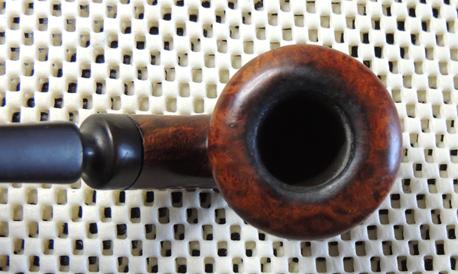
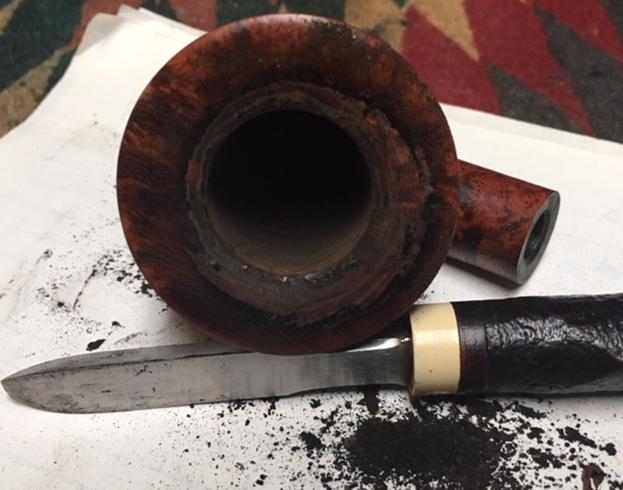
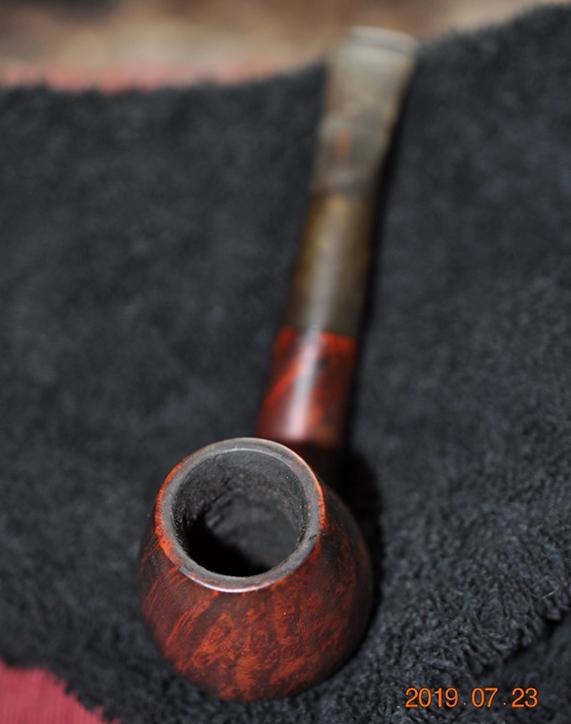 Jeff took photos of the bowl and rim top to show the cake in the bowl and the lava build up on the edges of the bowl. It was thick and hard but hopefully it had protected the rim and edges from damage. The edges look pretty good.
 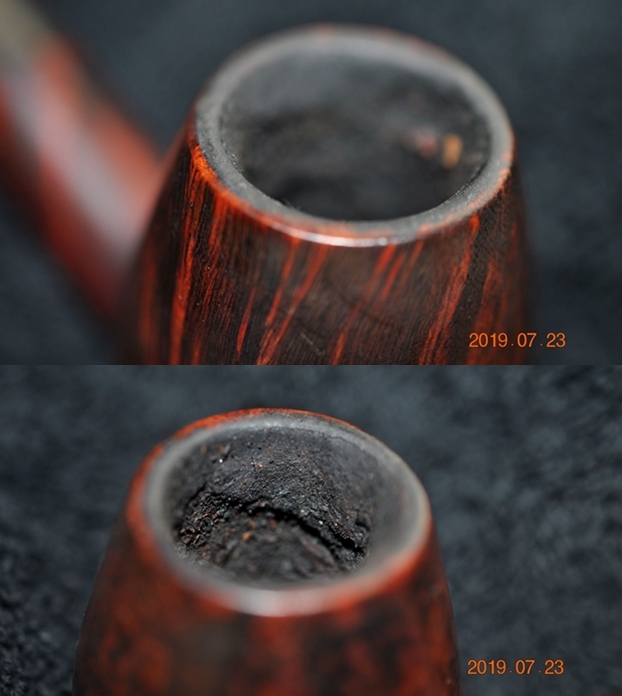 Jeff took photos of the sides and heel of the bowl to show the condition of the finish. You can see the beautiful straight and flame grain on the side of the bowl and the swirls of the birdseye on the heel. There is a lot of dust and grime on the surface of the briar.
  Jeff took photos of the stamping on the underside of the shank. The stamping was readable as you can see from the photos. It read Svendborg Danish Handmade. On the topside it reads Bark. There is a shape number 19 on the right side of the shank but I do not have a photo of it at this time.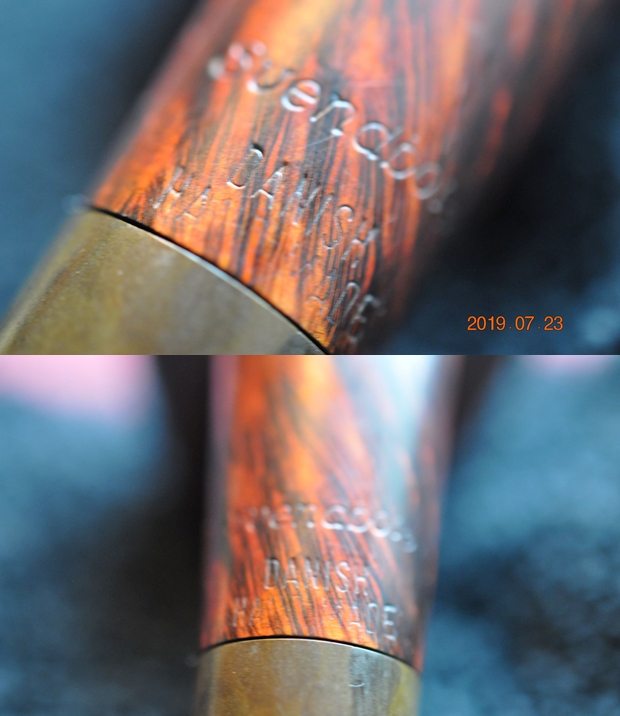
 Jeff took photos of the top and underside of the stem showing the tooth chatter, scratching and oxidation on the stem surface and wear on the edges of the button.
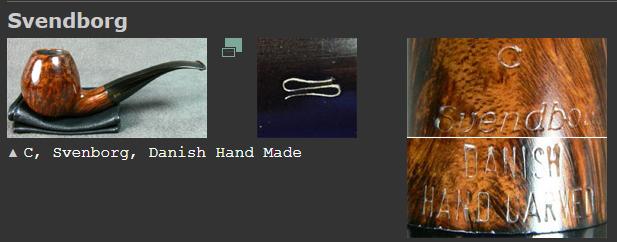
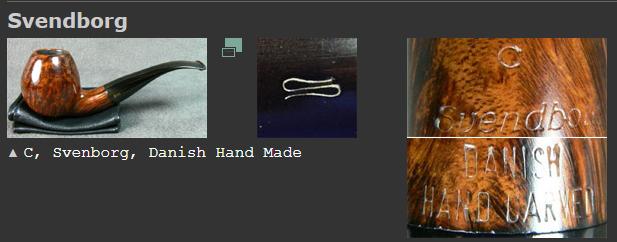
  I turned first to Pipephil’s site to get a quick idea of the Svendborg brand and the carver who made the pipes (http://www.pipephil.eu/logos/en/logo-s14.html). I quote what I found there.
The brand was founded in 1970s by Henrik Jørgensen, Poul Ilsted and Tao Nielsen. They bought an old factory (Nordisc Pibefabriker) in Svendborg on Funen Island. Poul and Tao gradually bow out from machine manufactured pipes (1982) and Henrik Jørgensen manages the brand until its take over by Design Berlin (D) in the late 90ies. Kaj C. Rasmussen jointed the firm for several years. 17 employees worked for this brand under Henrik Jørgensen direction.
I did a screen capture of the section on pipephil’s site for ease of reference.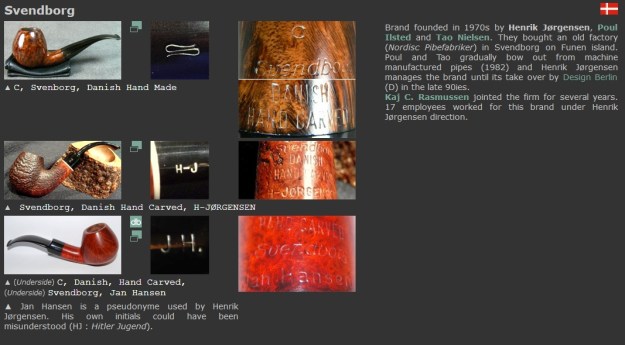 I also turned to Pipedia’s article on Svendborg and read some more about the history of the brand and the carvers noted on pipephils site. It is a great read in terms of the history of the brand (https://pipedia.org/wiki/Svendborg).
Jens Tao Nielsen and Poul Ilsted Bech met each other when working together for Erik Nørding and soon became close friends. Both felt a bit tired to make nothing but bizarre fancy shapes and agreed they wanted to produce pipes of more style and more classicism. They decided to establish their own brand “Tao & Ilsted” – But how to do it?
A good fortune brought them in contact with Henrik Jørgensen, a passionate pipe lover and a wealthy Copenhagen banker who was willing to retire from bank business and change his career to become a pipemaker. The trio joined in 1969 and decided to start a new pipe brand together. Nielsen and Ilsted started to search for a suitable workshop while Jørgensen took care of the finances. In early 1970 the partners found an old, closed down pipe factory in Svendborg on Funen, and bought it shortly after for a mere 16.500 Danish Kroner. It was the earlier Nordic Pipe Factory – Nordisc Pibefabriker – maybe the oldest Danish pipe factory. And now it became the home of Svendborg Piber.
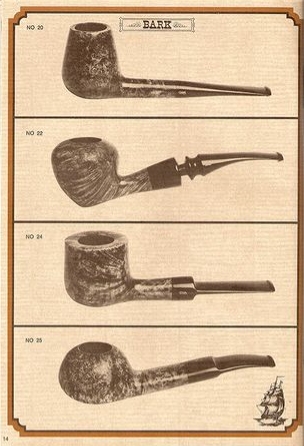 Included in the article was a catalogue courtesy of Doug Valitchka. I did a screen capture of the the pertinent part of the catalogue that showed the Bark line that this pipe belonged to. The top shape – the straight brandy is the same shaped bowl as the bent brandy that I am working on. The smooth finish on the Bark line in a rich reddish brown colour is a contrast to rusticated or sandblast finishes done on Bark pipes made by others. The beautiful stain combination makes a rich looking pipe.
With that information in hand I knew what I was dealing with in terms of the stamping and the rough age of this pipe. I knew from the information from Pipephil and Pipedia that the pipe was most like made in the 70s or 80s. Most of Bob’s pipes were purchased between the 50s and late 60s early 70s so my guess is that this pipe fits that time frame. Now it was time to work on the pipe.
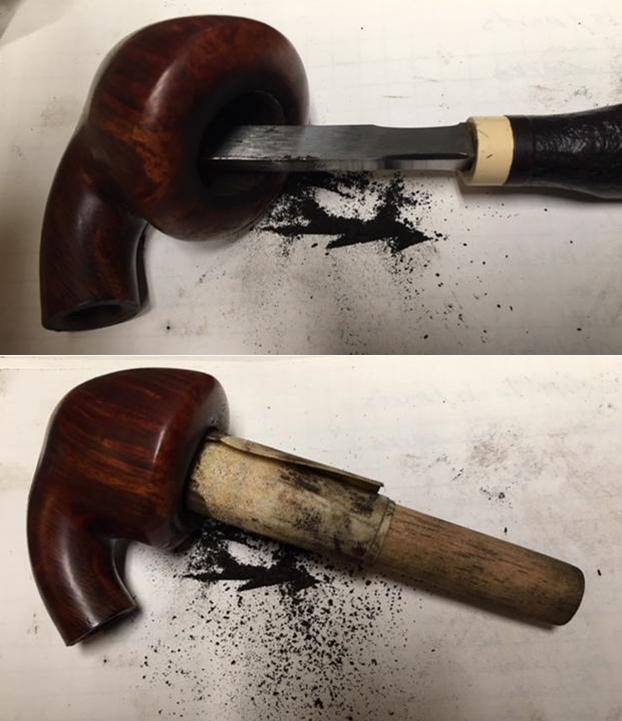
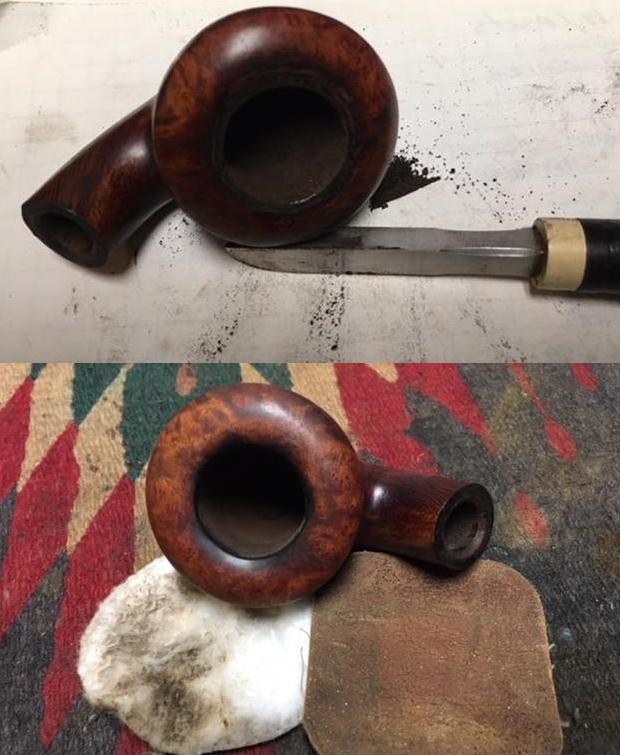
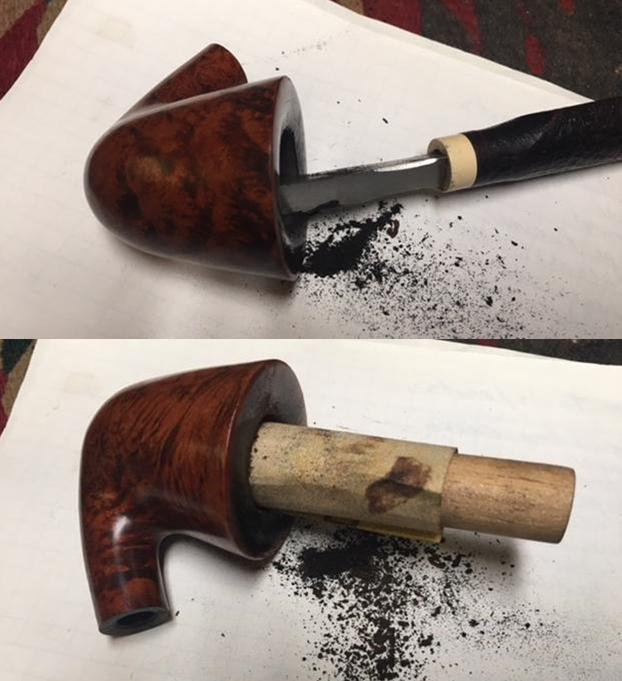
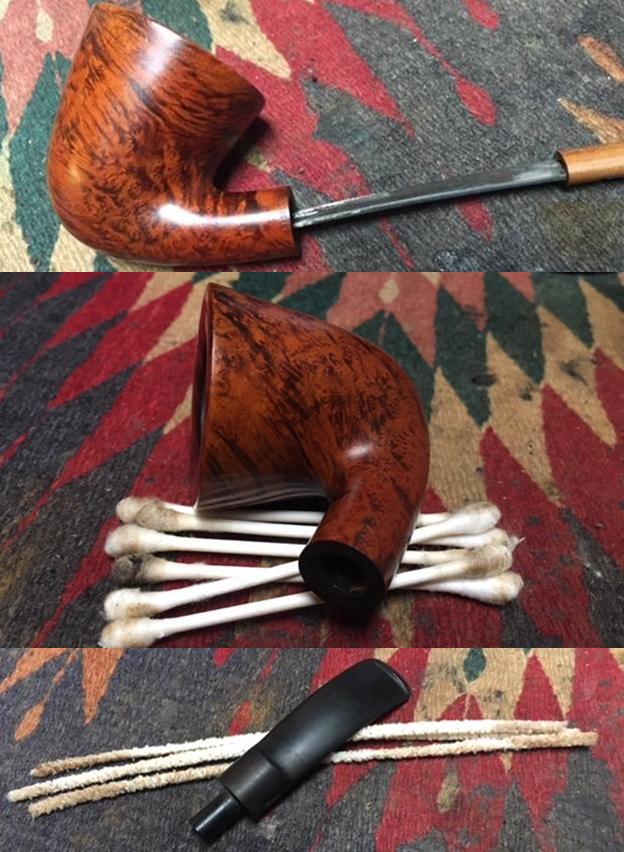
With over 125 pipes to clean from Bob’s estate it was taking me forever to clean and restore them by myself. I enlisted Jeff’s help with the cleanup. He cleaned over half of the pipes for me. He cleaned up this pipe with his usual penchant for thoroughness that I really appreciate. It was a real mess and I did not know what to expect when I unwrapped it from his box. He reamed it with a PipNet pipe reamer and cleaned up the reaming with a Savinelli Fitsall Pipe Knife. He scrubbed out the internals with alcohol, pipe cleaners and cotton swabs until the pipe was clean. He scrubbed the exterior of the bowl with Murphy’s Oil Soap and a tooth brush to remove the grime and grit on the briar and the lava on the rim top. The finish looks very good with good looking grain around the bowl and shank. Jeff soaked the stem in Before & After Deoxidizer to remove the oxidation on the rubber. When the pipe arrived here in Vancouver for the second stop of its restoration tour it looked very good. I took photos before I started my part of the work. 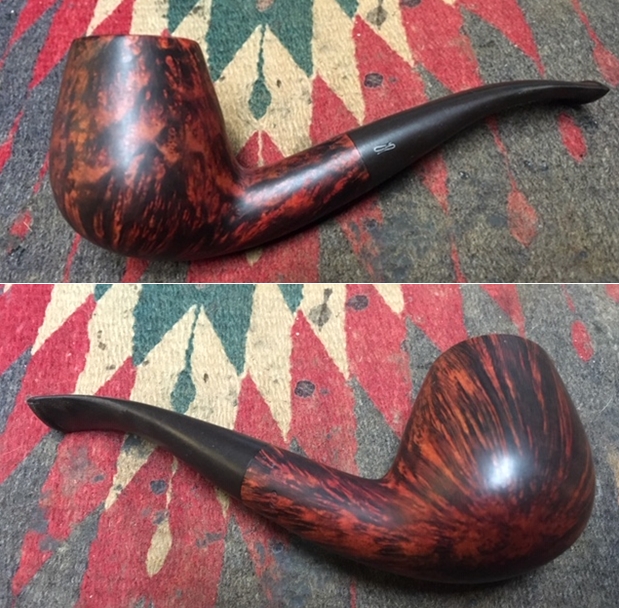
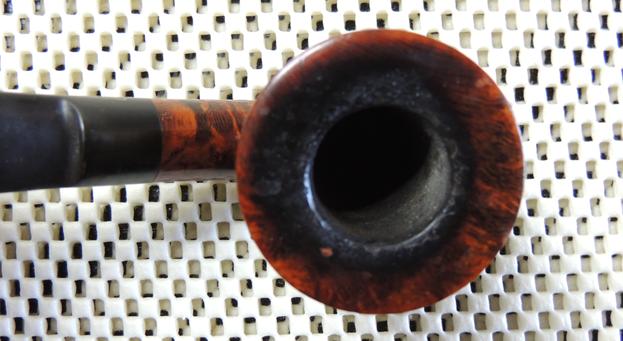
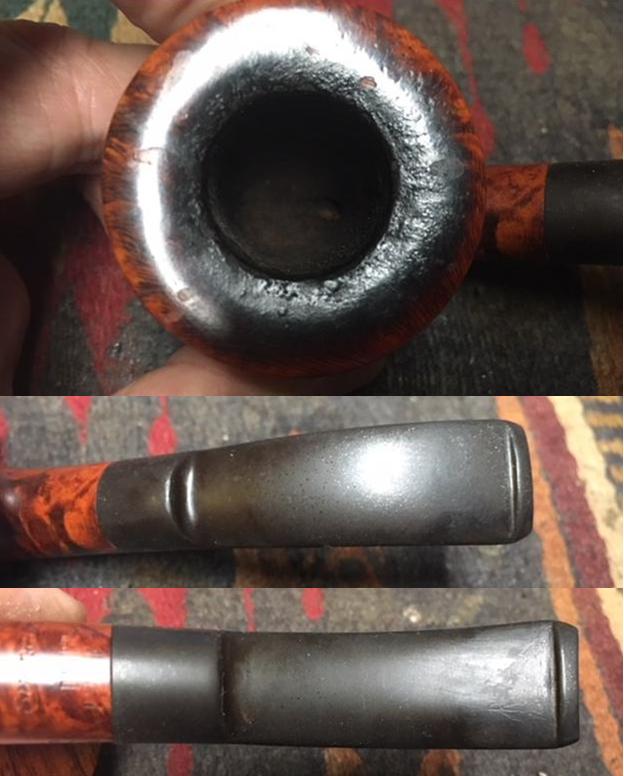
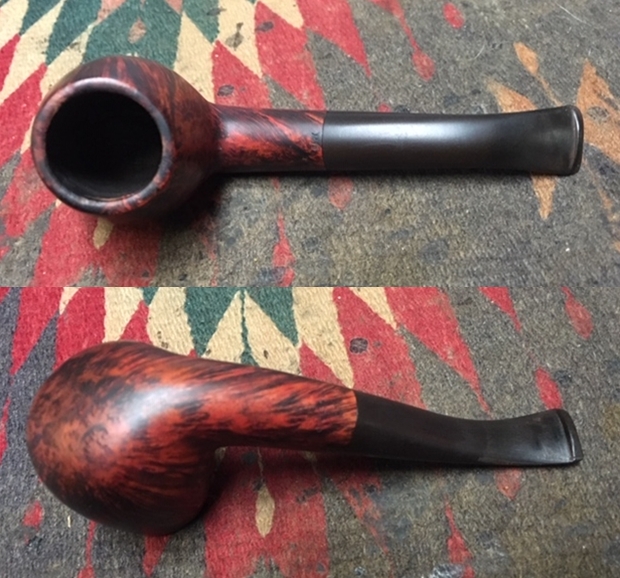 I took some close up photos of the rim top and also of the stem surface. I wanted to show what an amazing job Jeff did in the cleanup of the rim top. The rim top looks very good. The finish is dull, but still is in great condition. The bowl looked very good. I also took close up photos of the stem to show the light tooth marks, chatter and the remaining oxidation on the stem surface.
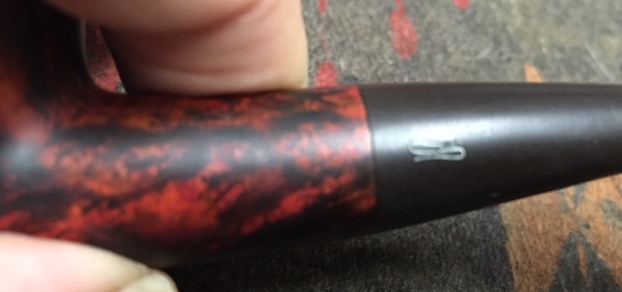
 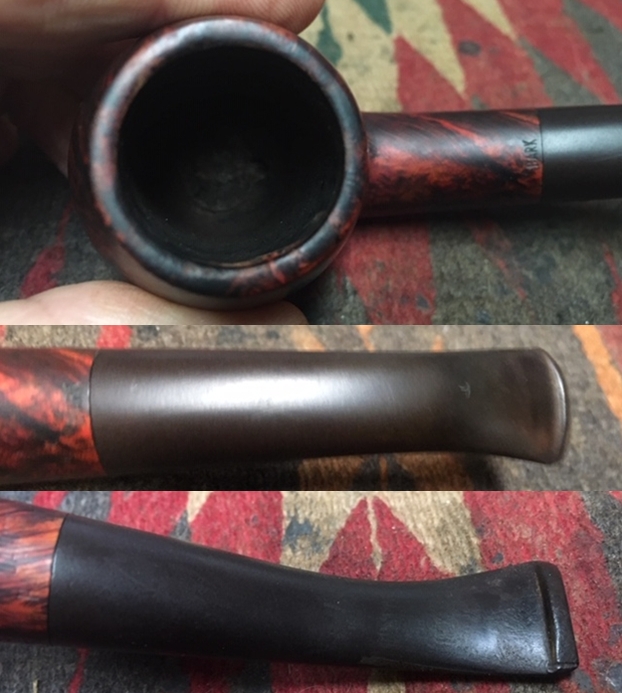 One of the things I appreciate about Jeff’s cleanup is that he works to protect and preserve the nomenclature on the shank of the pipes that he works on. The stamping on this one was faint to start with so I was worried that it would worsen with the cleanup. He was not only able to preserve it but it seems to be clearer than shown in the earlier photos. I took some photos to show the clarity of the stamping. You can also see the condition of the squashed S on the left side of the tapered stem. I have noticed that many restorers are not careful to protect the stamping during their cleaning process and by the end of the restoration the nomenclature is damaged or lost. I encourage all of us to be careful to preserve this critical piece of pipe restoration!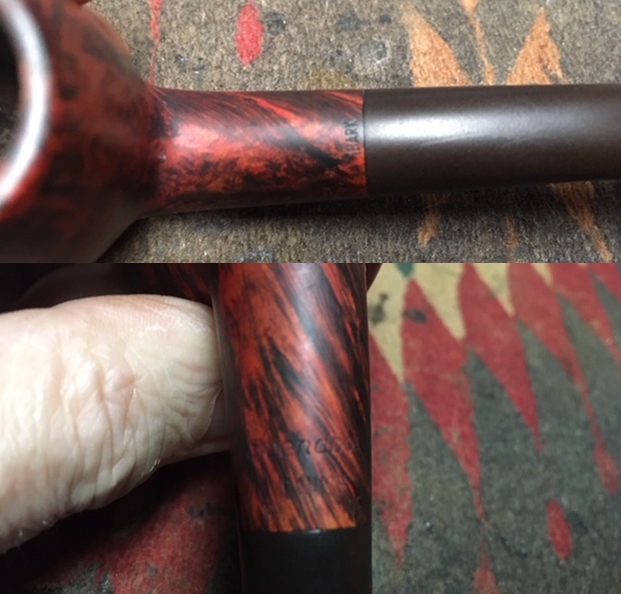
 Since this is another pipe Bob’s estate I am sure that some of you have read at least some of the other restoration work that has been done on the previous pipes. You have also read what I have included about Bob Kerr, the pipeman who held these pipes in trust before I came to work on them (see photo to the left). Also, if you have followed the blog for long you will already know that I like to include background information on the pipeman whose pipes I am restoring. For me, when I am working on an estate I really like to have a sense of the person who held the pipes in trust before I worked on them. It gives me another dimension of the restoration work. I asked Brian if he or his wife would like to write a brief biographical tribute to her father, Bob. His daughter worked on it and I received the following short write up on him and some pictures to go along with the words including one of Bob’s carvings. Once again I thank you Brian and tell your wife thank you as well.
I am delighted to pass on these beloved pipes of 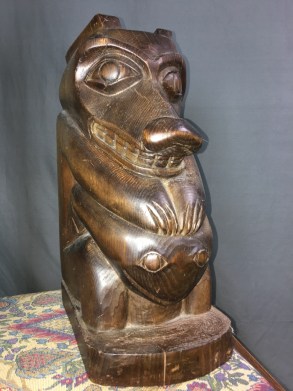 my father’s. I hope each user gets many hours of contemplative pleasure as he did. I remember the aroma of tobacco in the rec room, as he put up his feet on his lazy boy. He’d be first at the paper then, no one could touch it before him. Maybe there would be a movie on with an actor smoking a pipe. He would have very definite opinions on whether the performer was a ‘real’ smoker or not, a distinction which I could never see but it would be very clear to him. He worked by day as a sales manager of a paper products company, a job he hated. What he longed for was the life of an artist, so on the weekends and sometimes mid-week evenings he would journey to his workshop and come out with wood sculptures, all of which he declared as crap but every one of them treasured by my sister and myself. Enjoy the pipes, and maybe a little of his creative spirit will enter you!
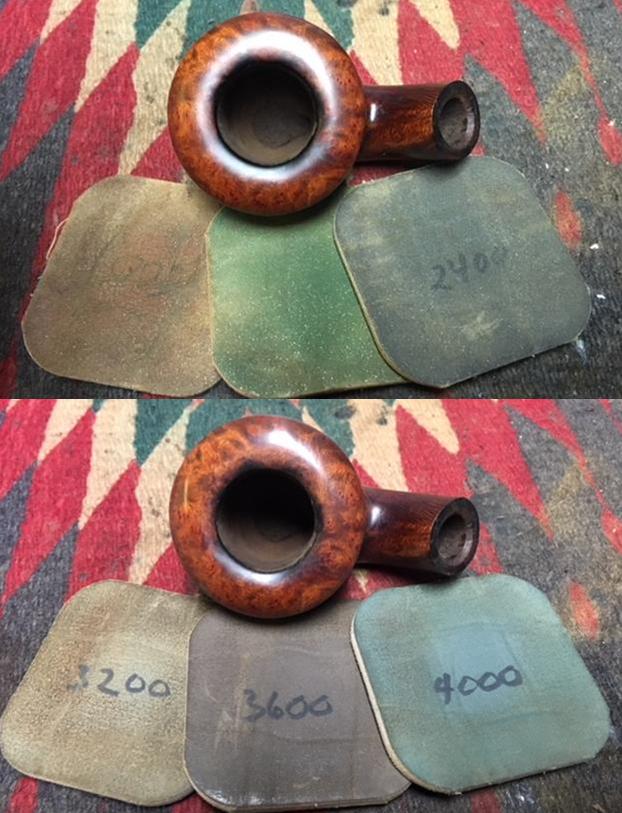
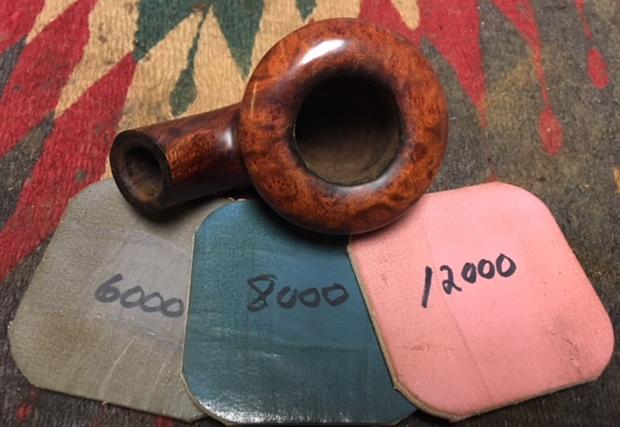
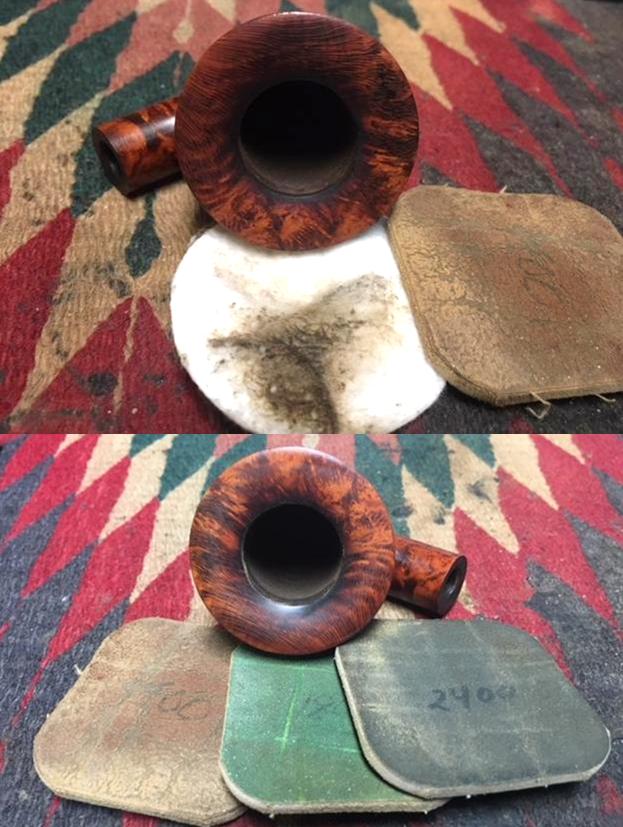
Now on to the rest of the restoration on this beautiful Svendborg Brandy 19! I decided to begin the restoration of the bowl by polishing the briar with micromesh sanding pads to blend in the stain and to polish the briar and remove the scratches in the surface of the bowl, heel and shank. I wet sanded with 1500-12000 grit pads and wiped the bowl down between each pad with a damp cloth. 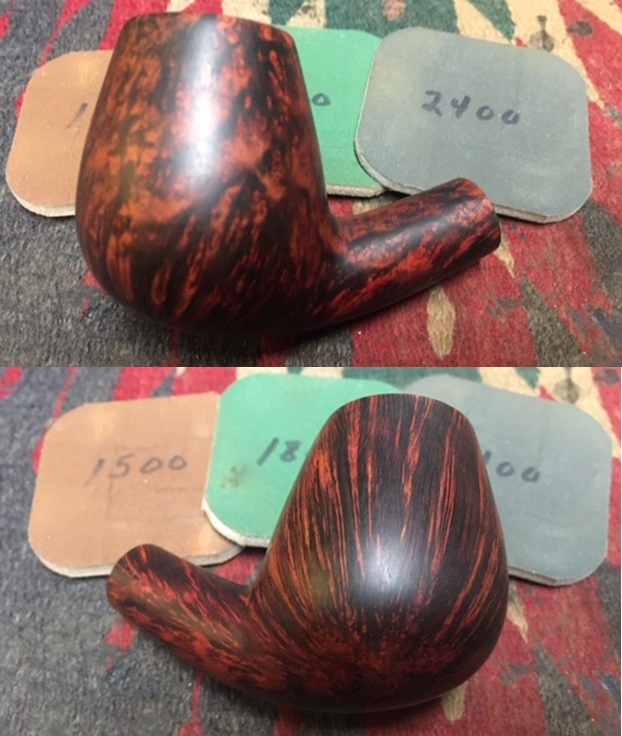
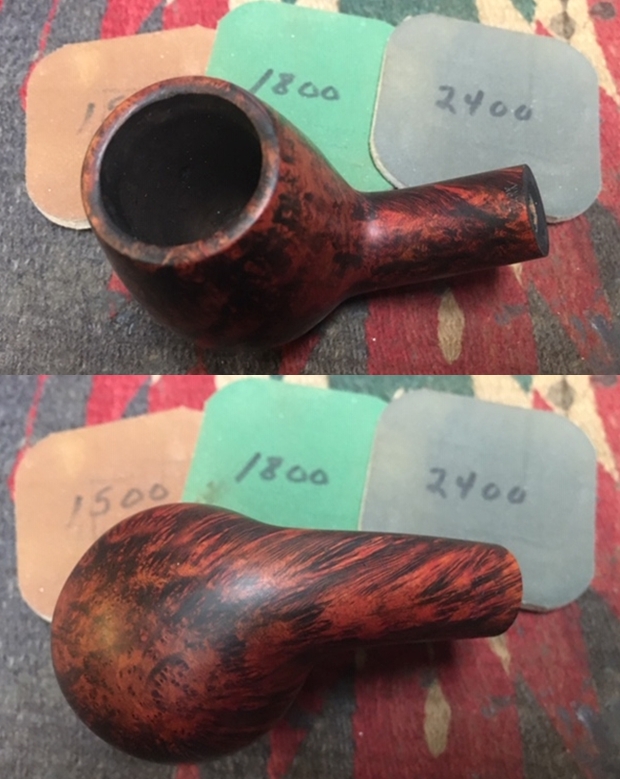
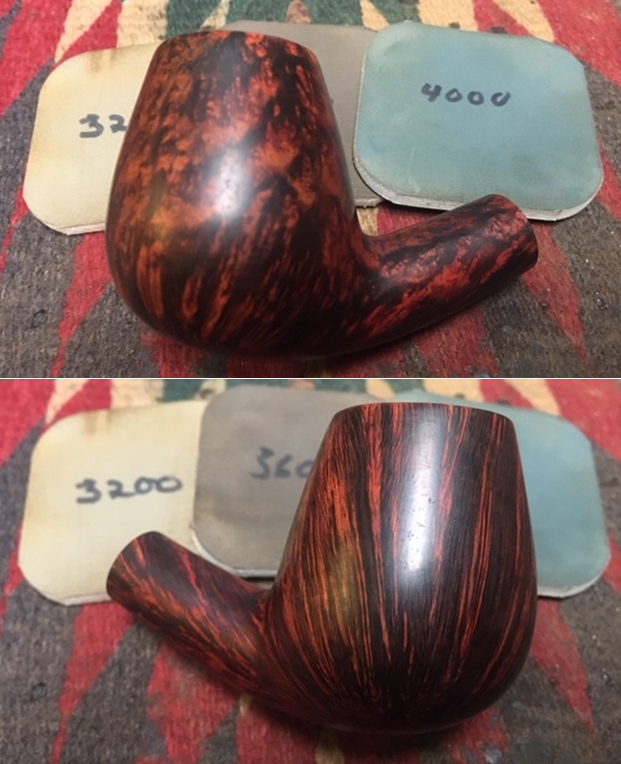
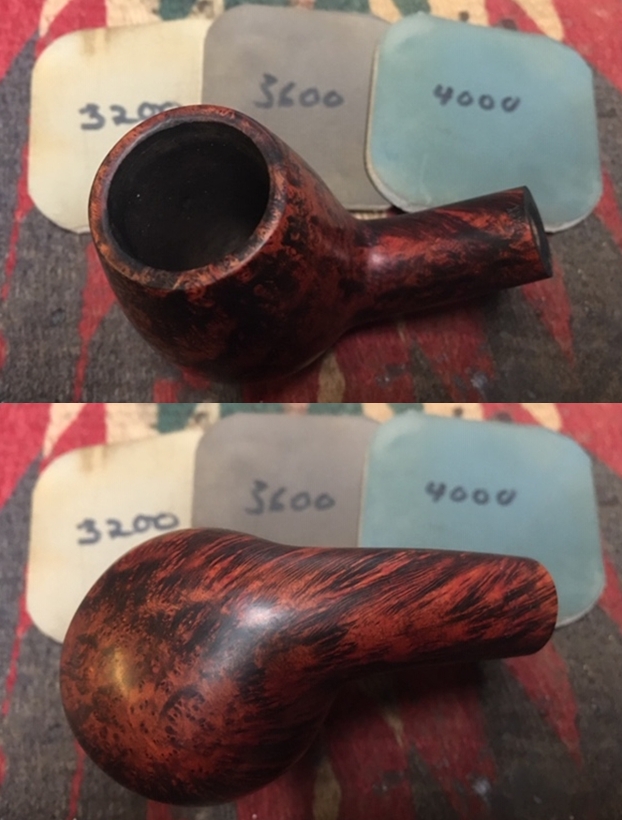
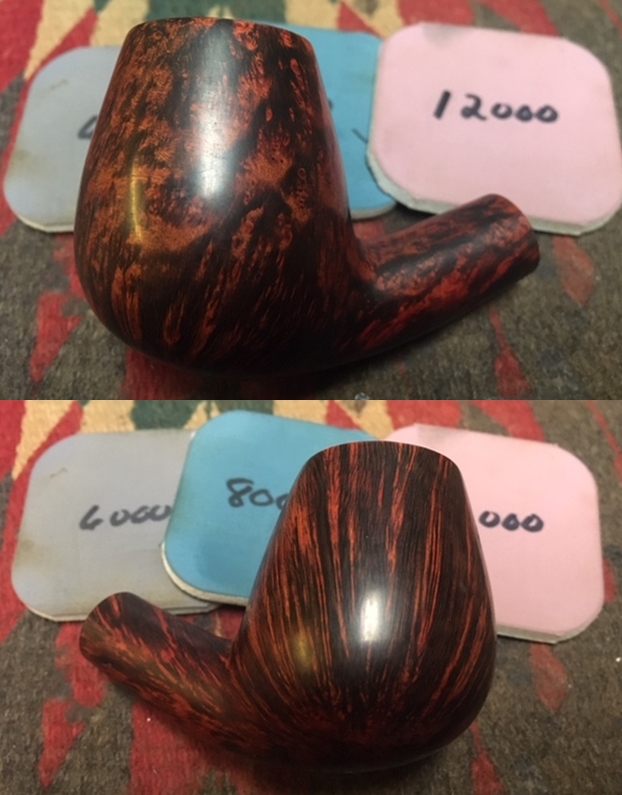
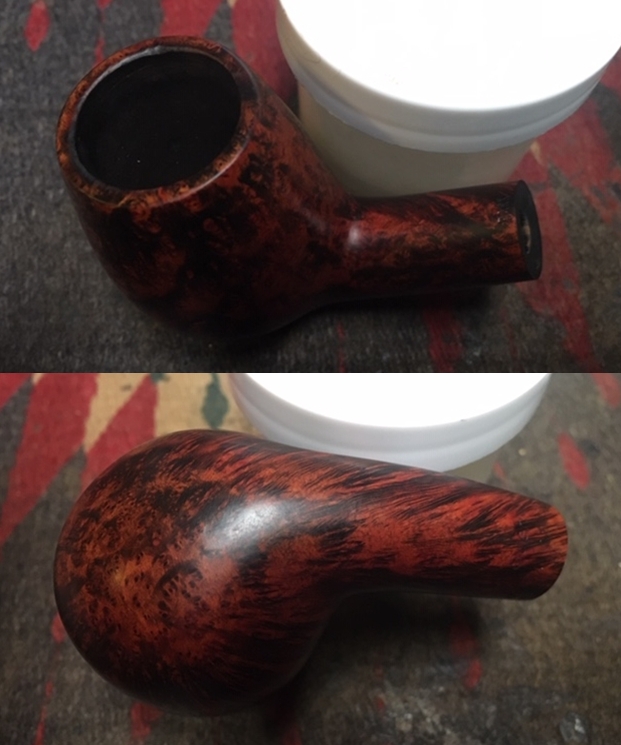
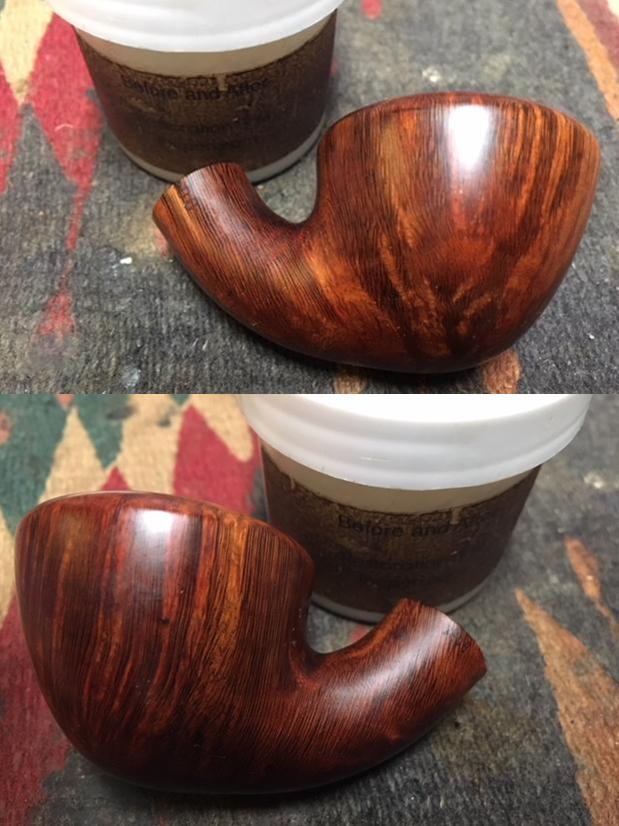
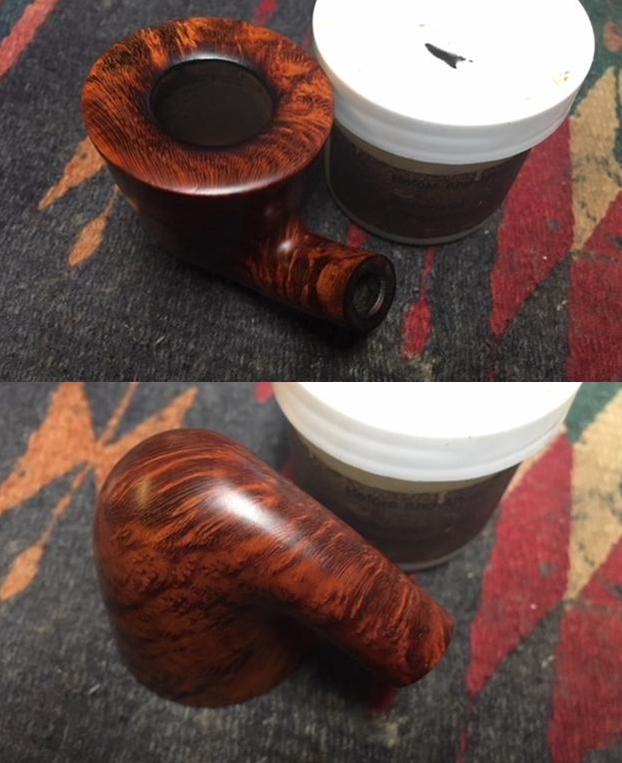
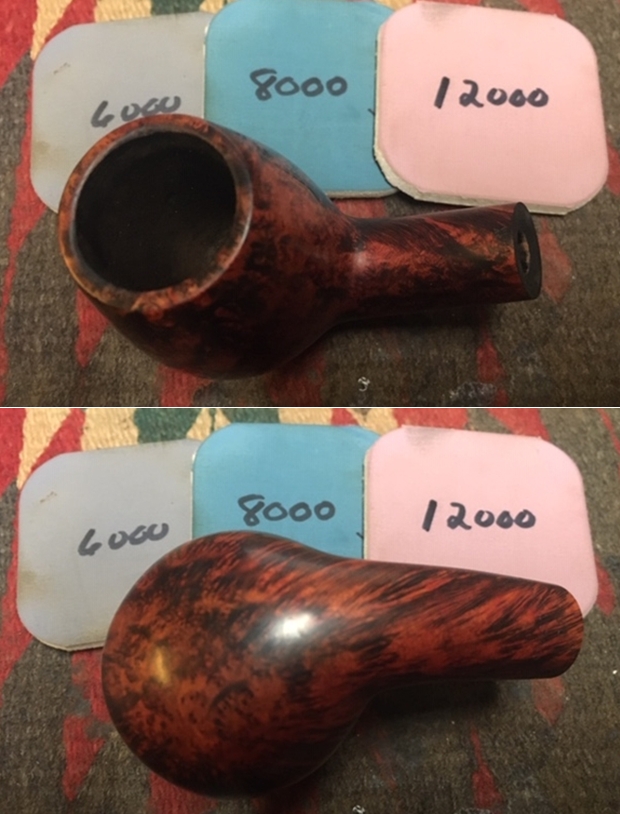 I rubbed the bowl down with Before & After Restoration Balm. I worked it into the surface of the briar with my fingertips to clean, enliven and protect it. I let the balm sit for a little while and then buffed with a cotton cloth to raise the shine. Mark Hoover’s Balm is a product that I have come to appreciate and one I use on every pipe I have been working on.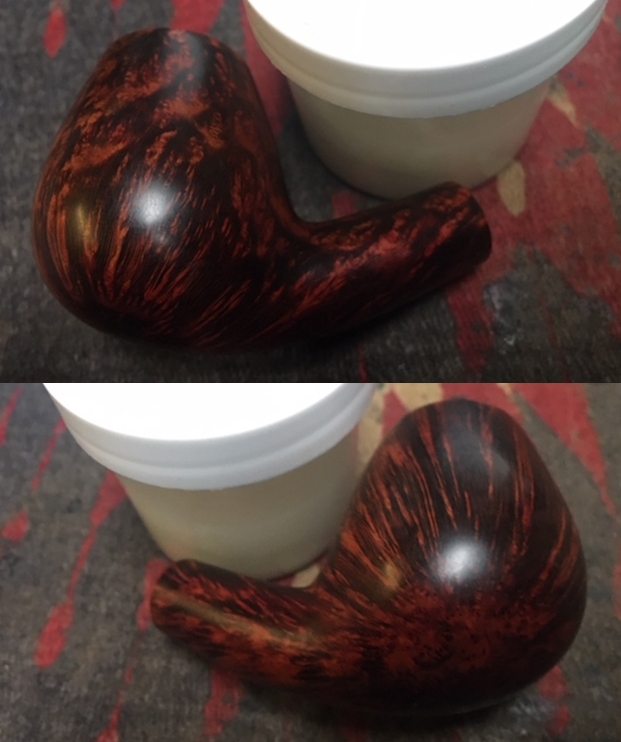
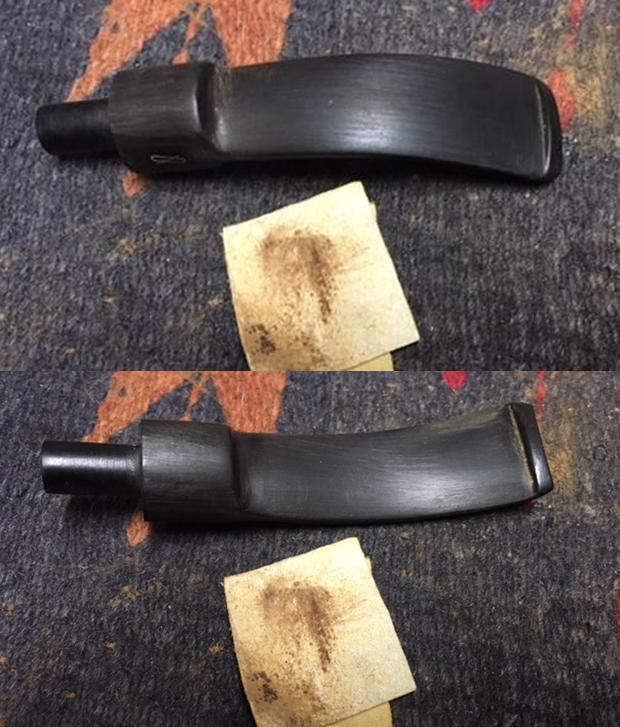
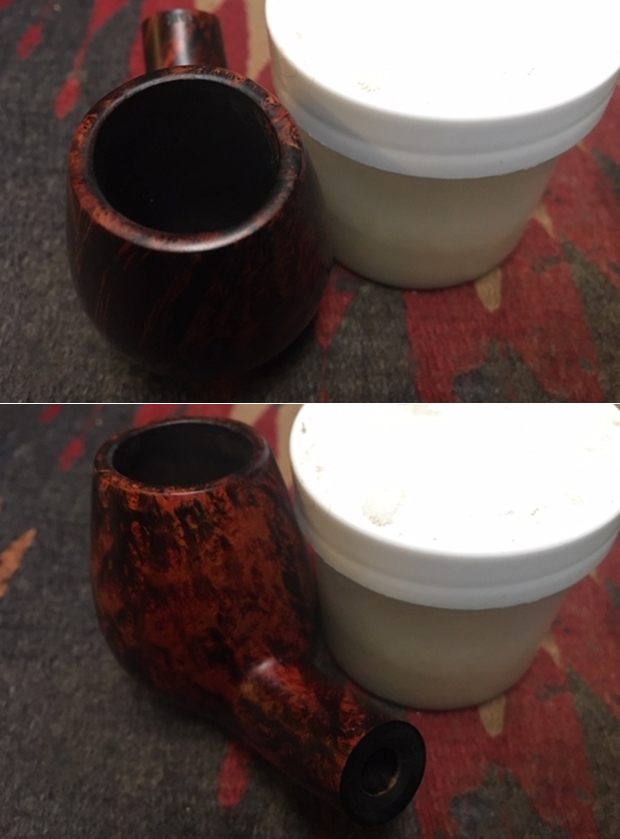 I set the bowl aside and turned my attention to the stem. I “painted” the surface of the stem with the flame from a Bic lighter to lift the dents and tooth marks on both side. I was able to lift them all so that I could do the rest of the stem work with sandpaper.
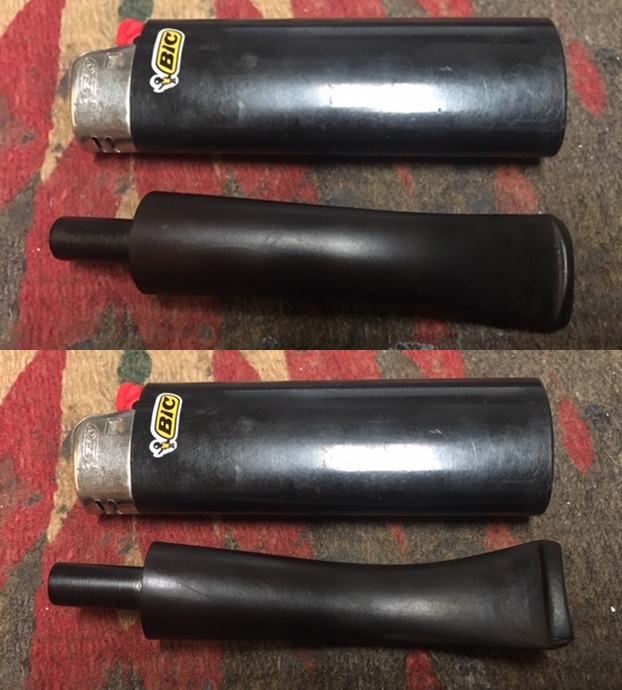 I sanded the stem with 220 grit sandpaper to break up the oxidation. I started the polishing with 400 grit wet dry sandpaper to remove the scratching. It is starting to look good. I carefully worked my way around the squashed S stamp.
 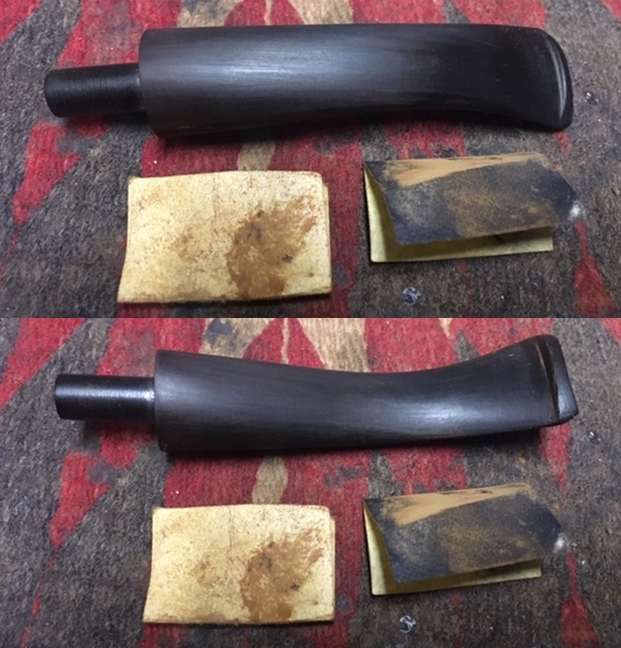 I rubbed the stem down with Denicare Mouthpiece Polish. I have a few tins of this laying around so I am trying to use them up. It does a pretty good job polishing the stem.
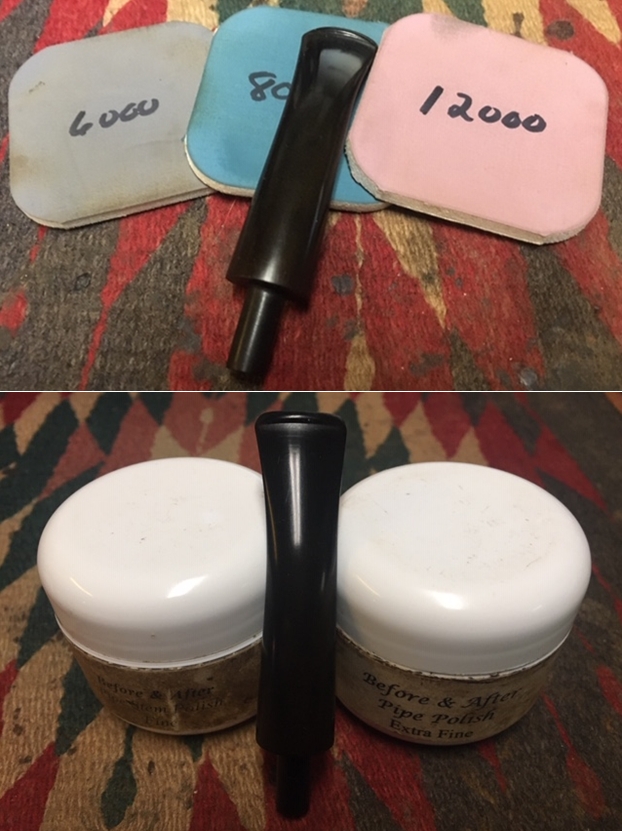
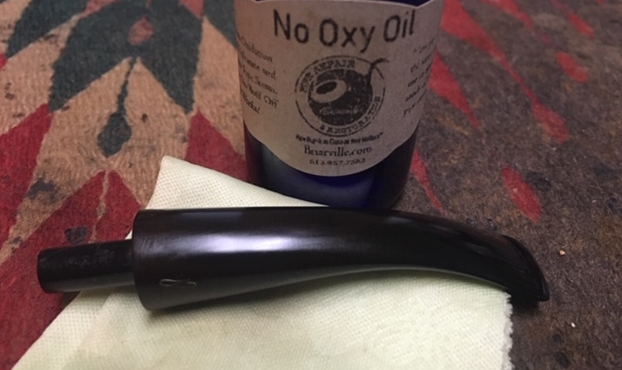
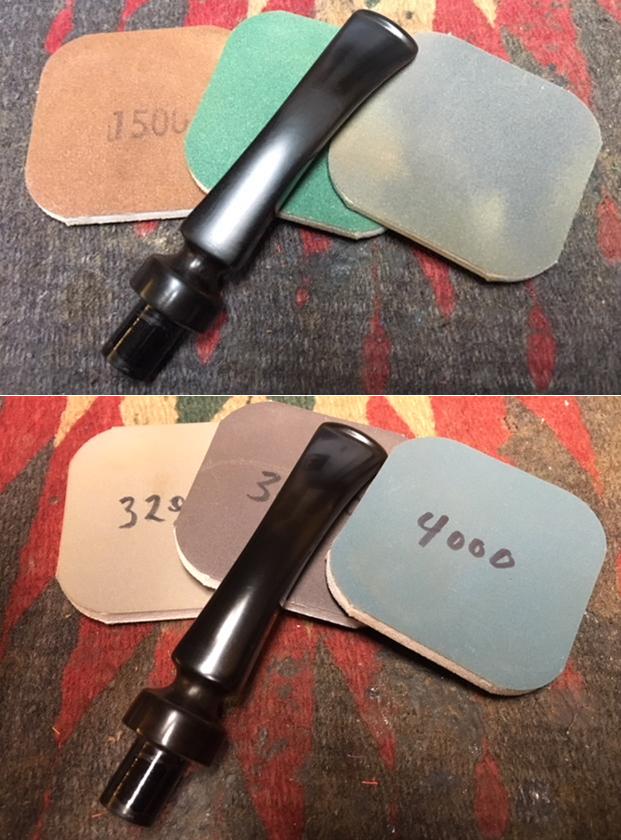
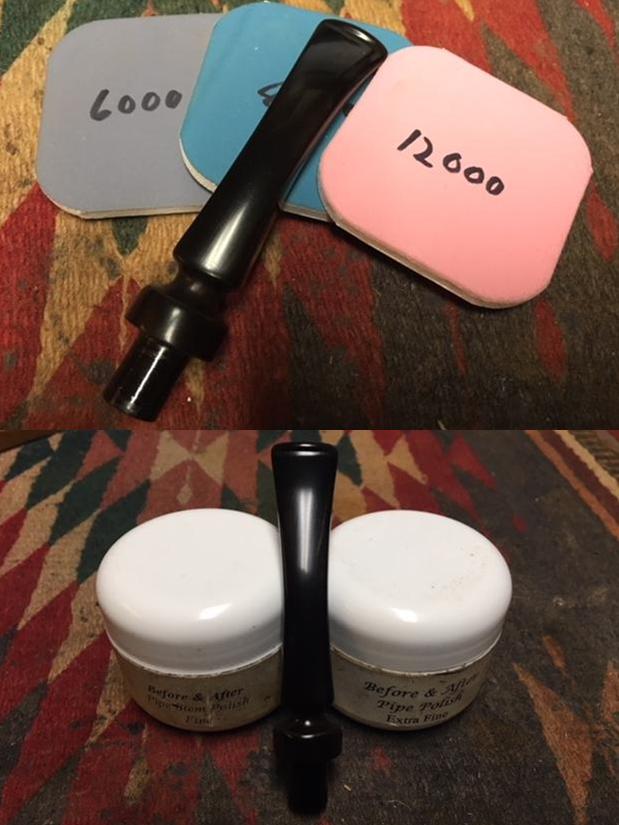
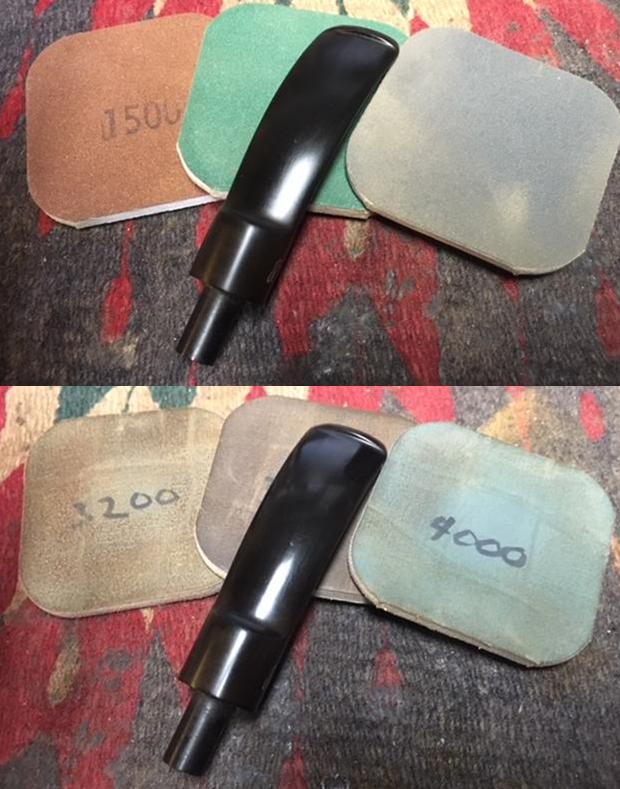
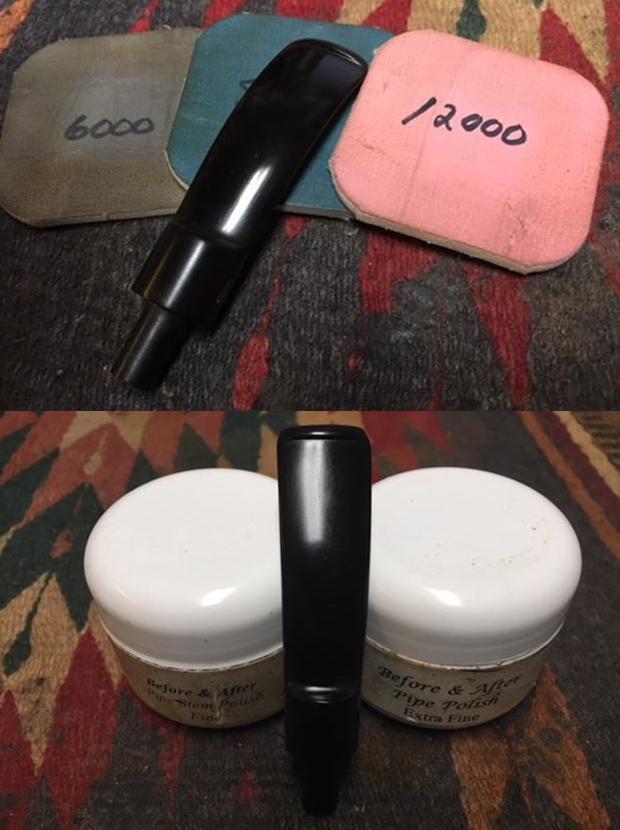
 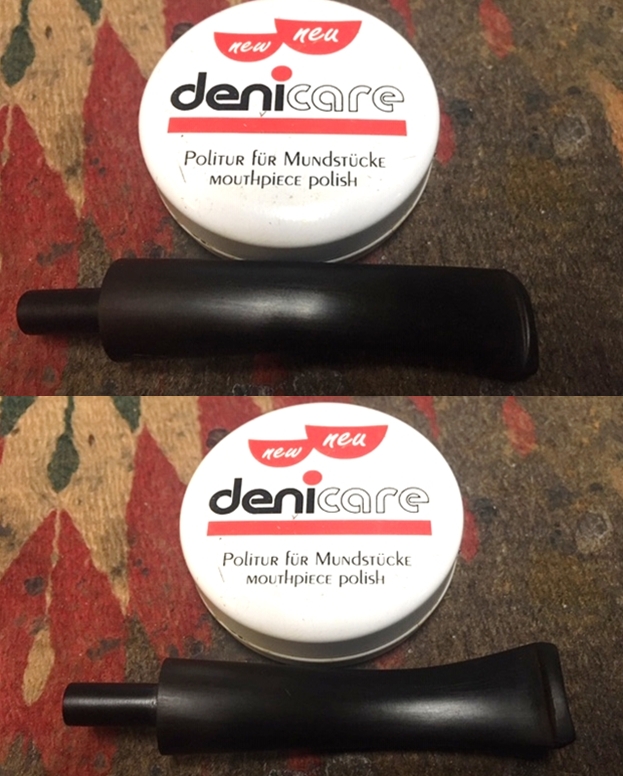 I polished the stem with micromesh sanding pads – wet sanding with 1500-12000 grit pads. I wiped the stem down after each sanding pad with Obsidian Oil. I polished it with Before & After Pipe Stem Polish – both Fine and Extra Fine. Once I had finished the polishing I gave it a coat of “No Oxy Oil” developed by Briarville. I am experimenting with this product on the pipes I am restoring.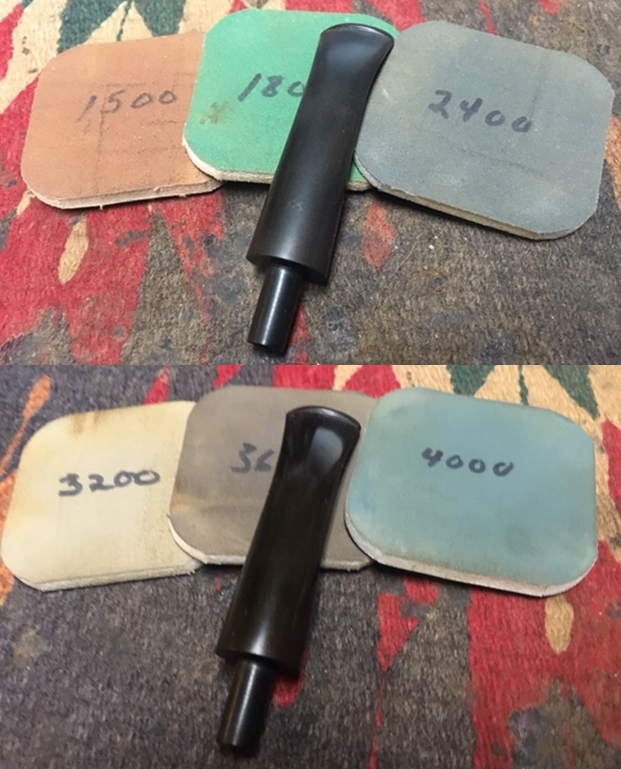
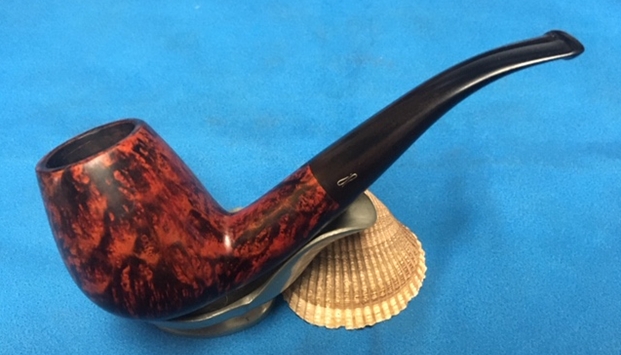
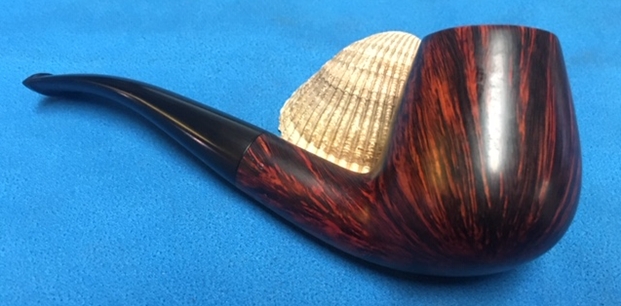
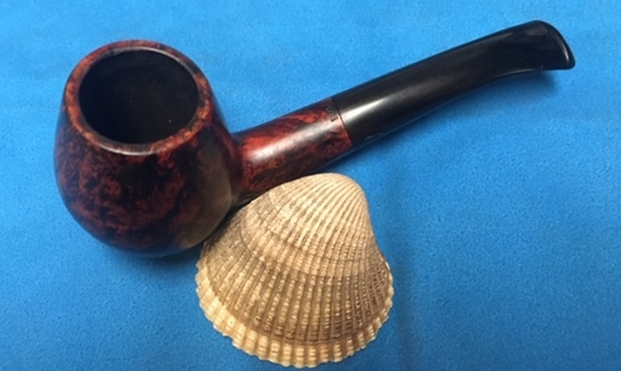
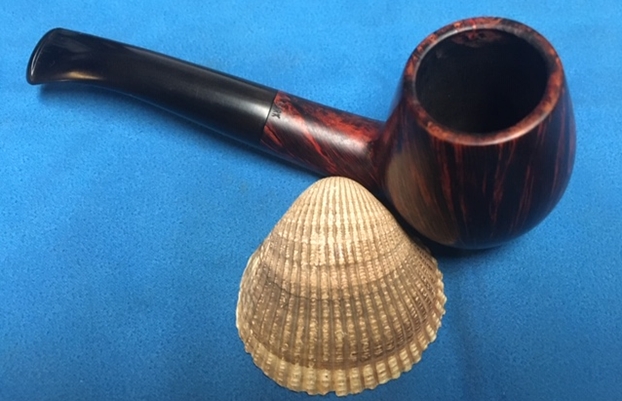
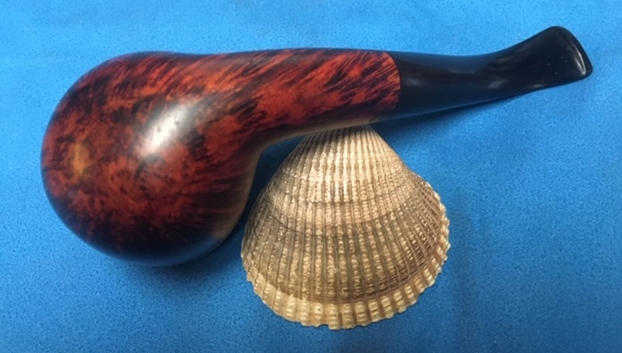
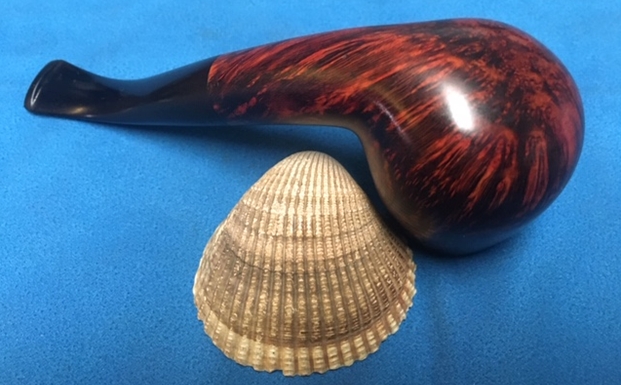
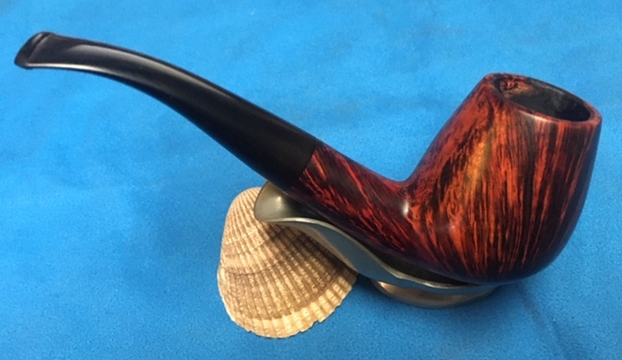
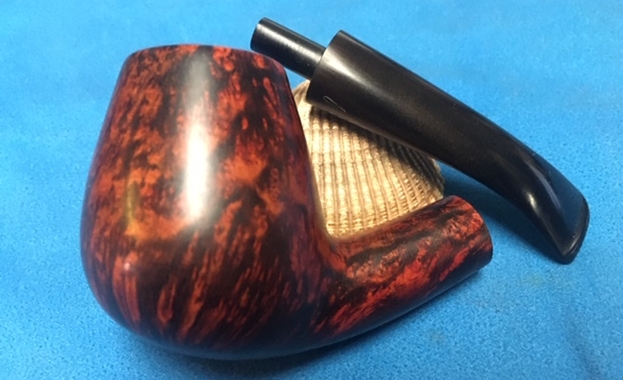
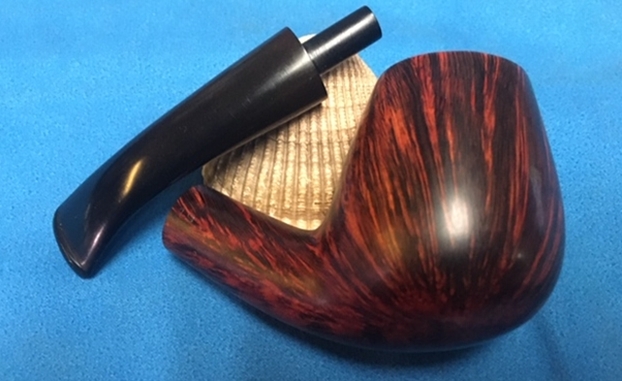
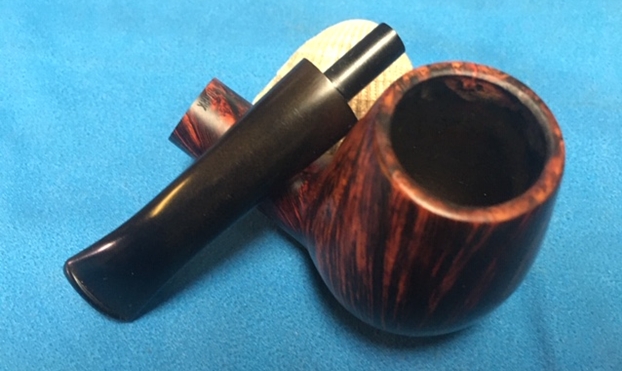
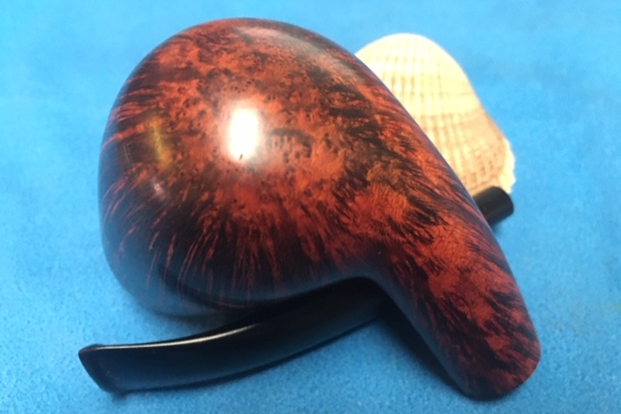
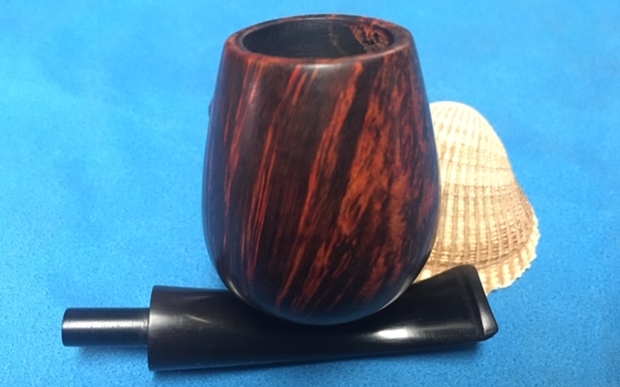
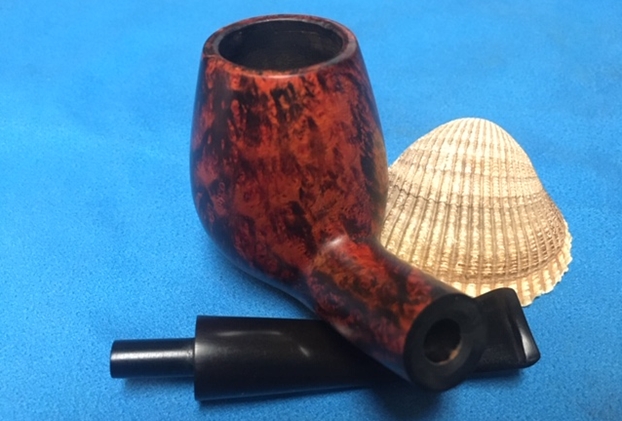
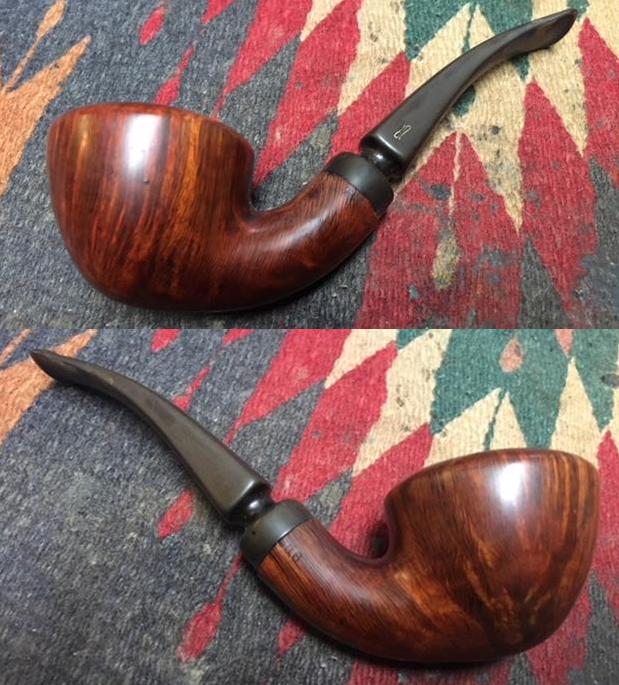
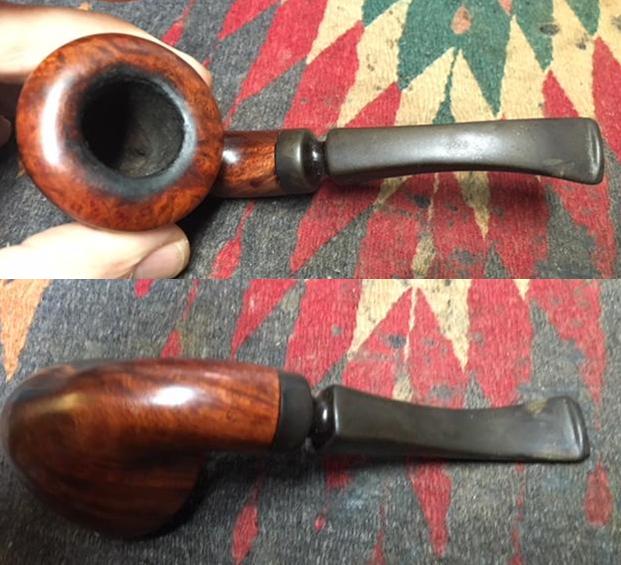
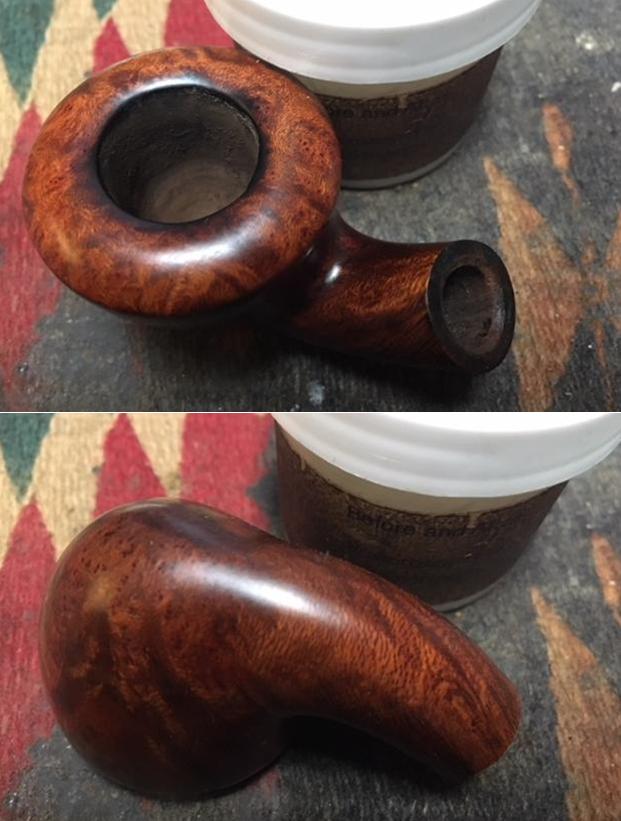
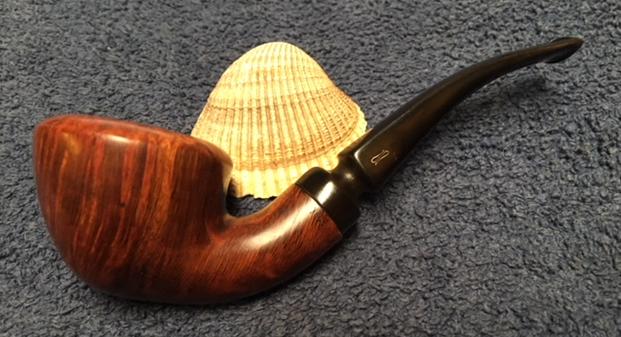
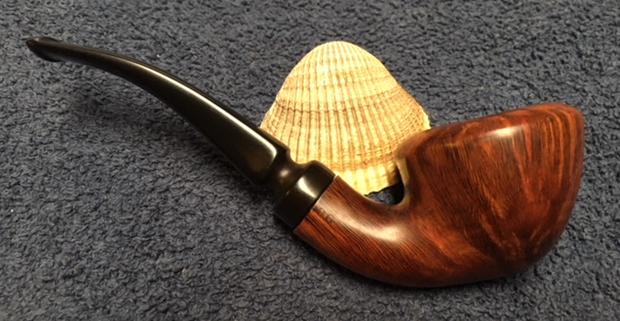
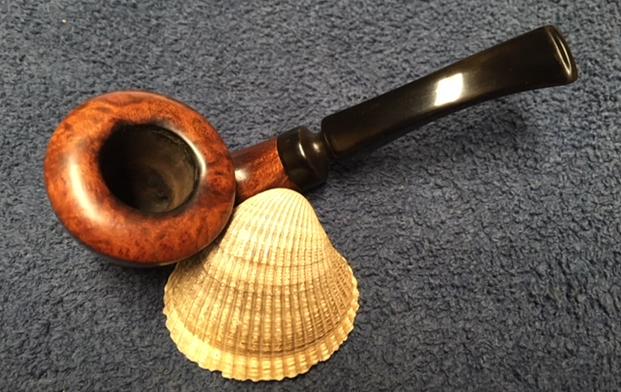
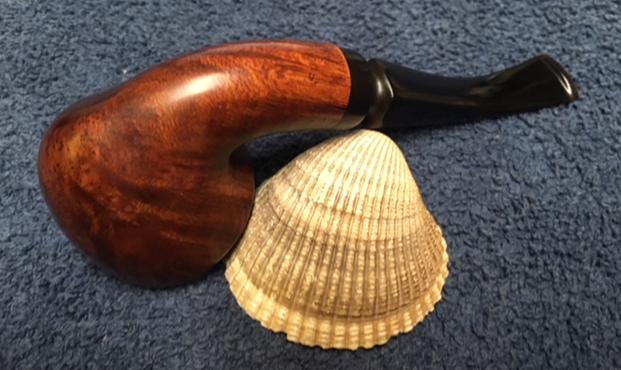
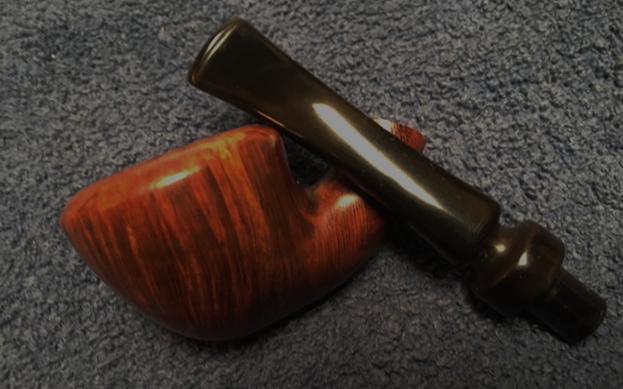
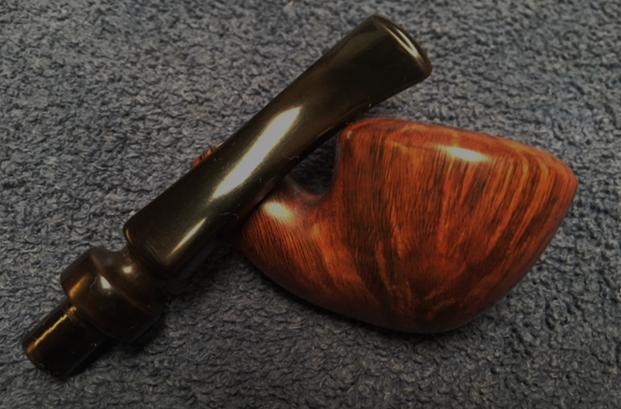
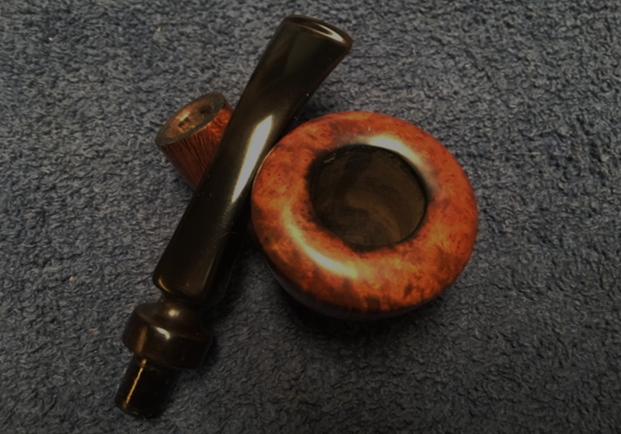
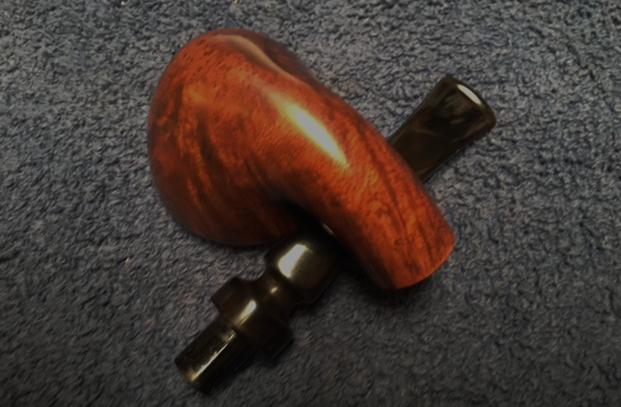
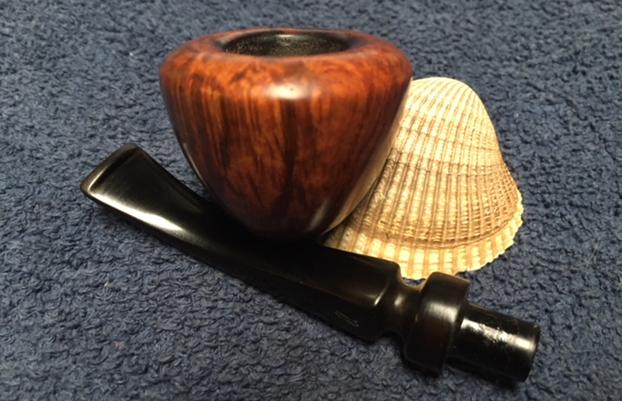
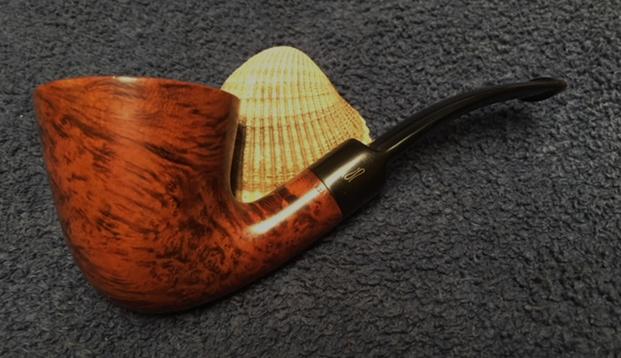
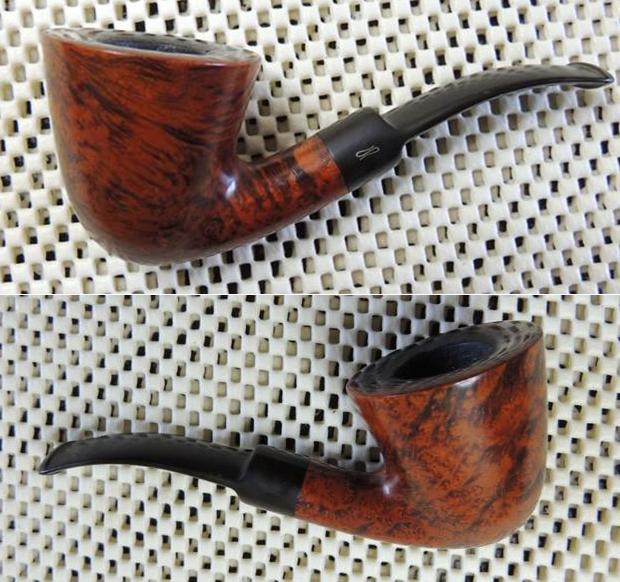
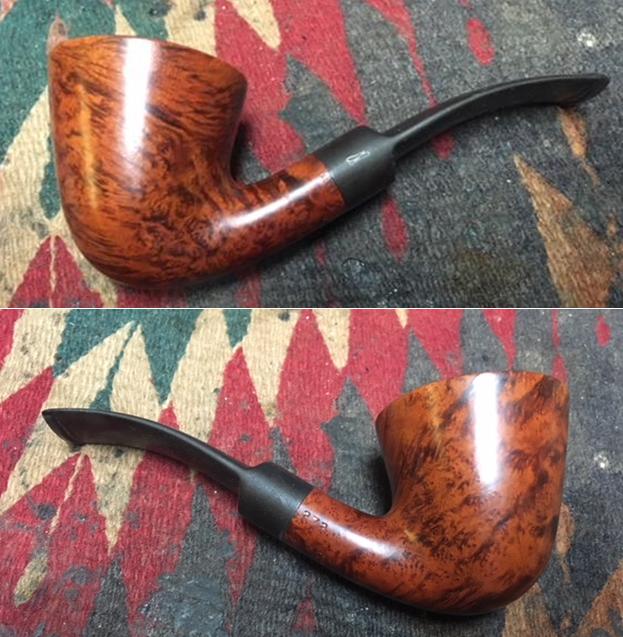
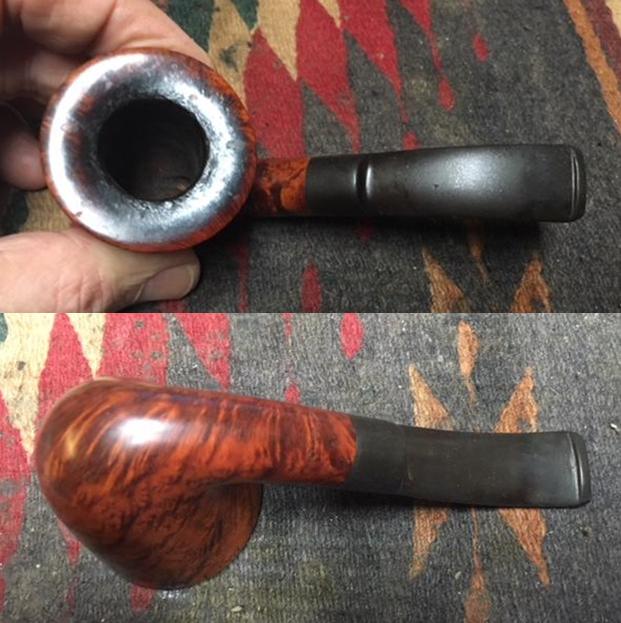
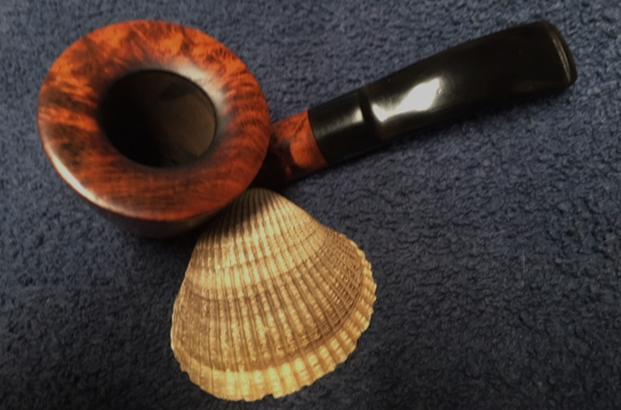
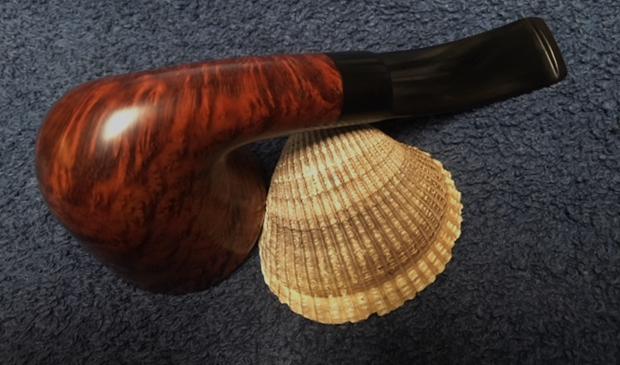
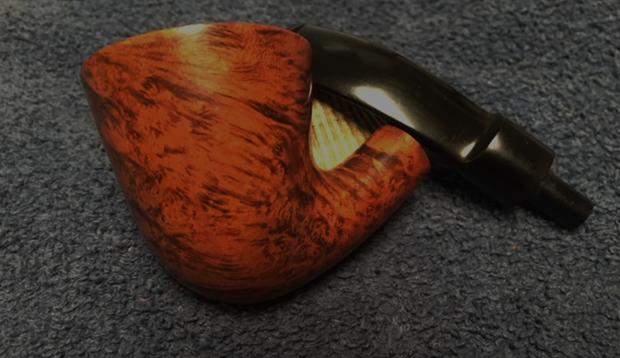
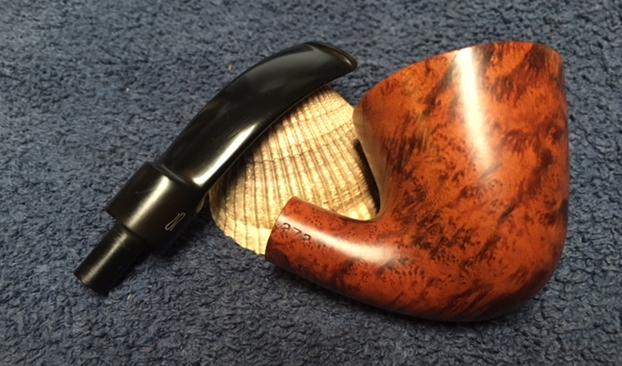
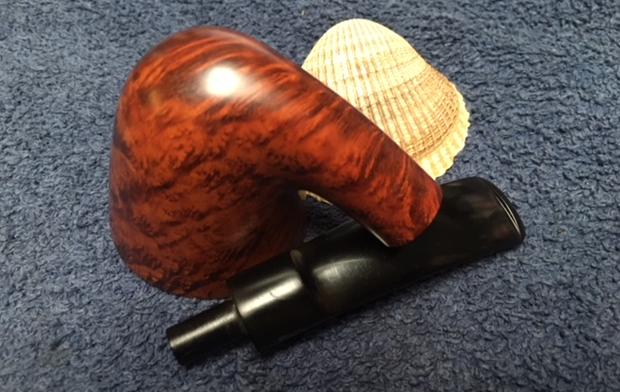
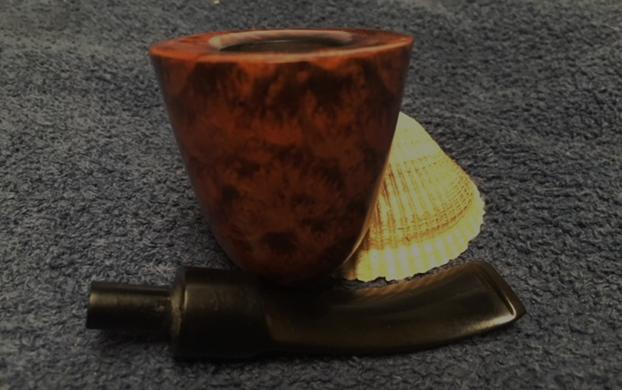
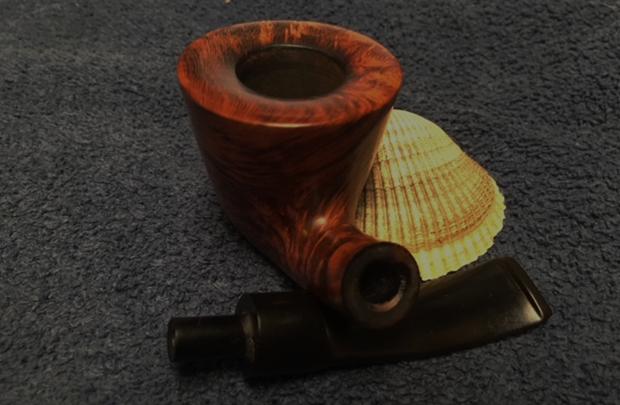
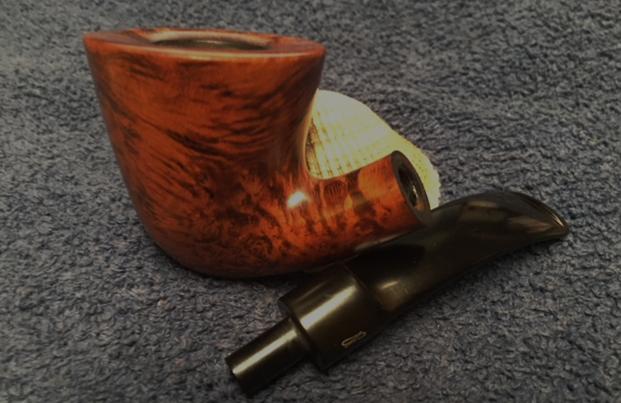
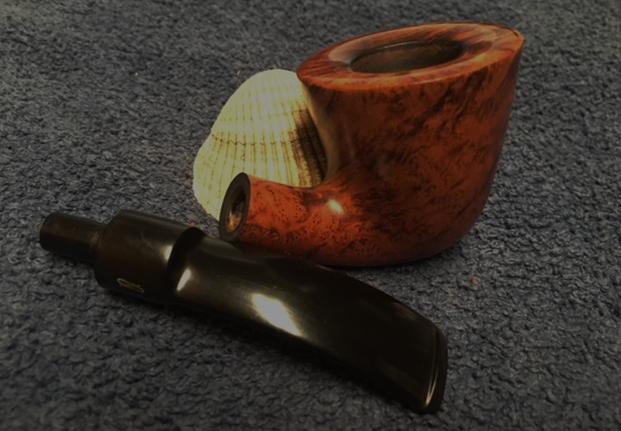
 Once again I am excited to be working on another one of Bob’s pipes. This is the part of the restoration part I look forward to when it all comes back together, polished and waxed. I put the bowl and stem back together. I polished the bowl and stem with Blue Diamond to polish out the scratches in the briar and the vulcanite. I gave the bowl and the stem multiple coats of carnauba wax. I buffed the pipe with a clean buffing pad to raise the shine. I hand buffed it with a microfiber cloth to deepen the shine. The pipe polished up pretty nicely. The straight and flame grain around the smooth finish look really good with the polished black vulcanite. This Svendborg Danish Handmade 19 Bark Brand was another fun pipe to work on thanks to Jeff’s cleanup work. It really has that classic Danish look that catches the eye. The combination of various brown stains really makes the pipe look attractive. It is another comfortable pipe to hold in the hand. The finished pipe is shown in the photos below. The dimensions of the pipe are Length: 5 ½ inches, Height: 2 inches, Outside diameter of the bowl: 1 1/8 inches, Chamber diameter: ¾ of an inch. If you are interested in carrying on Bob’s legacy with this pipe send me a message or an email. I have a lot more to work on of various brands. Perhaps one of those will catch your attention. Thanks for reading this blog and my reflections on the pipe while I worked on it. This is an interesting estate to bring back to life.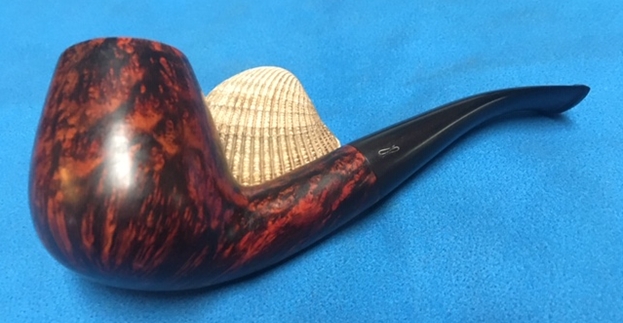








 rebornpipes