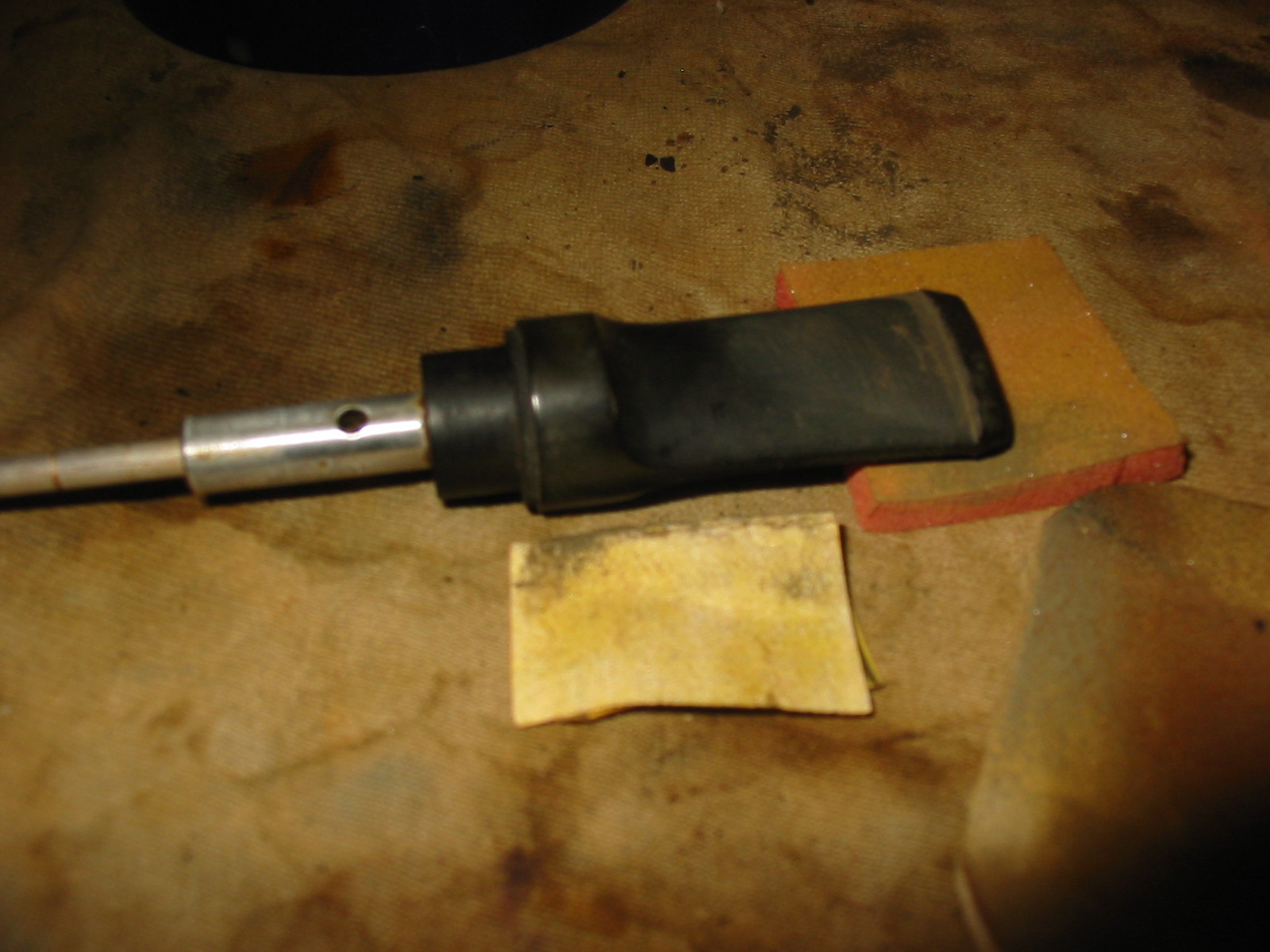
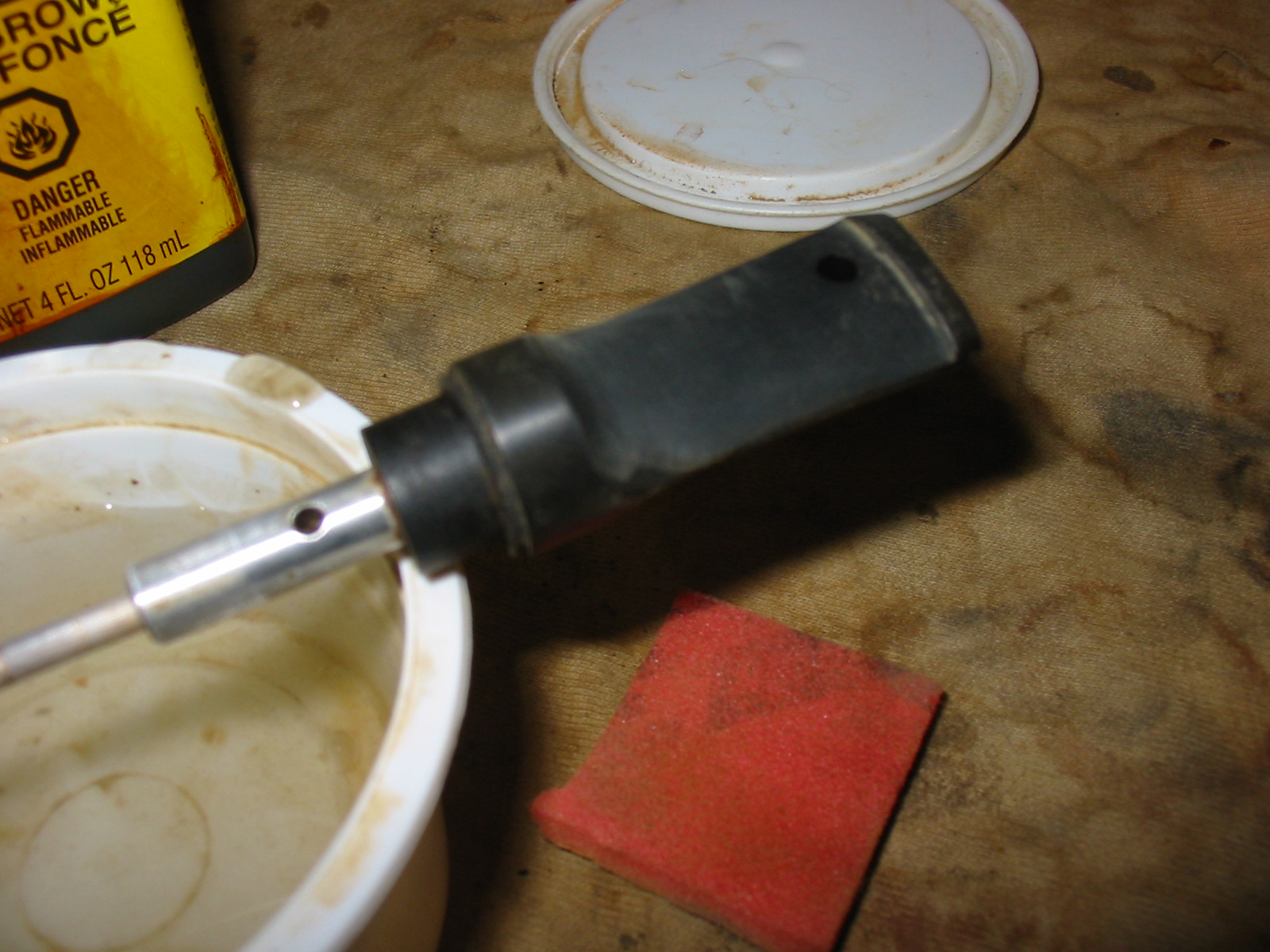
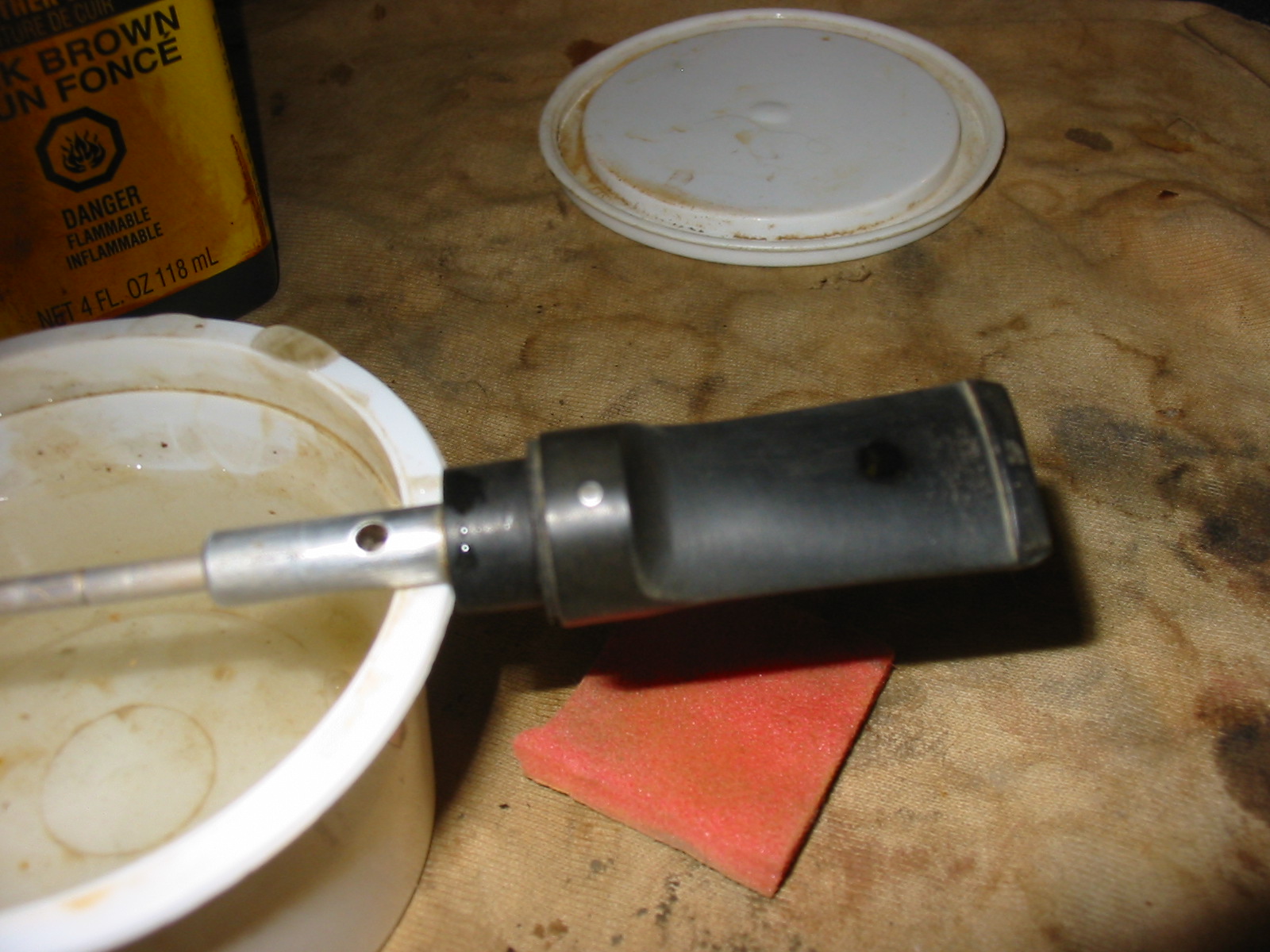
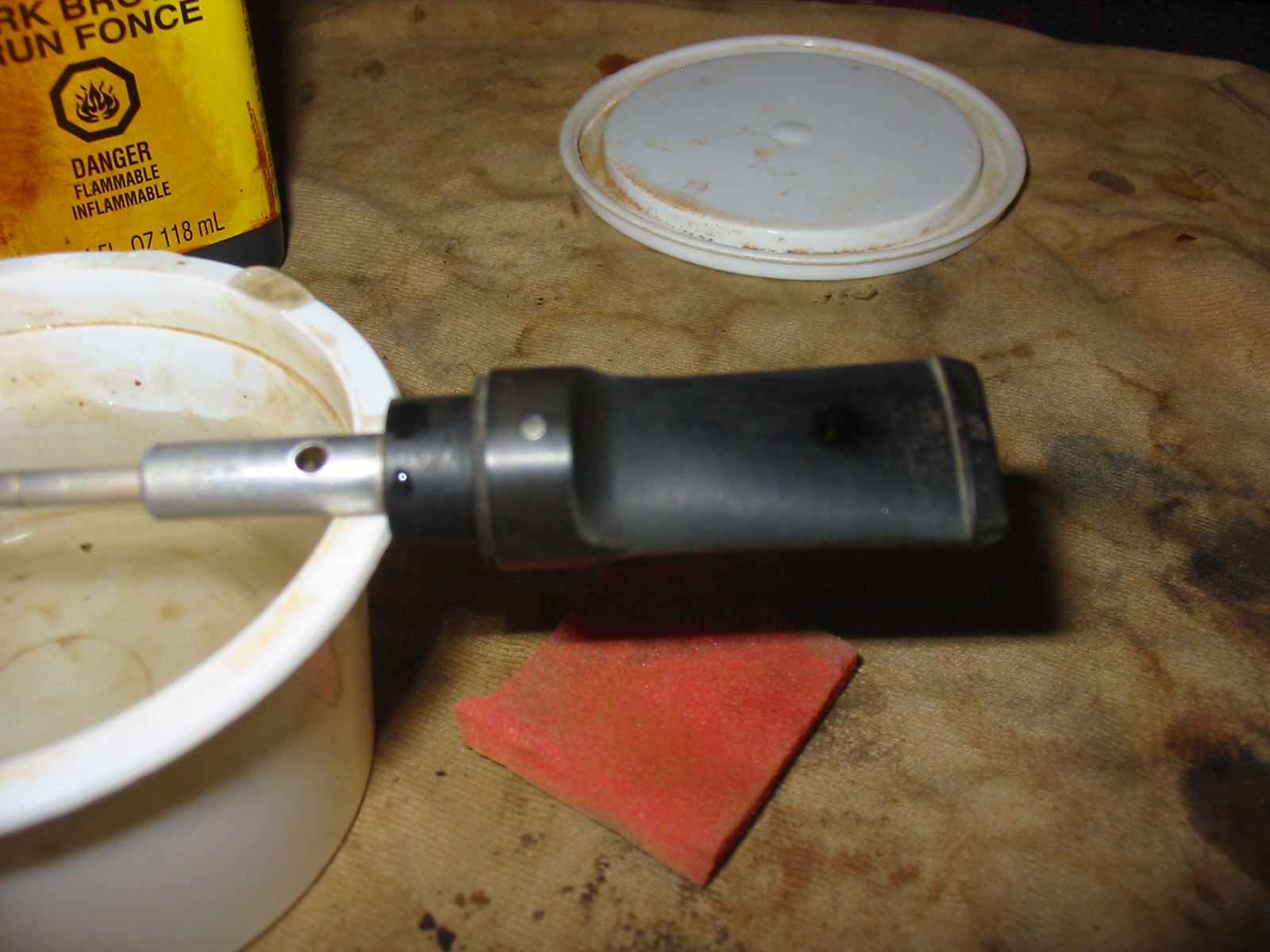
Tag Archives: superglue patches on the stem

A Pre-Republic Peterson System Standard Reborn


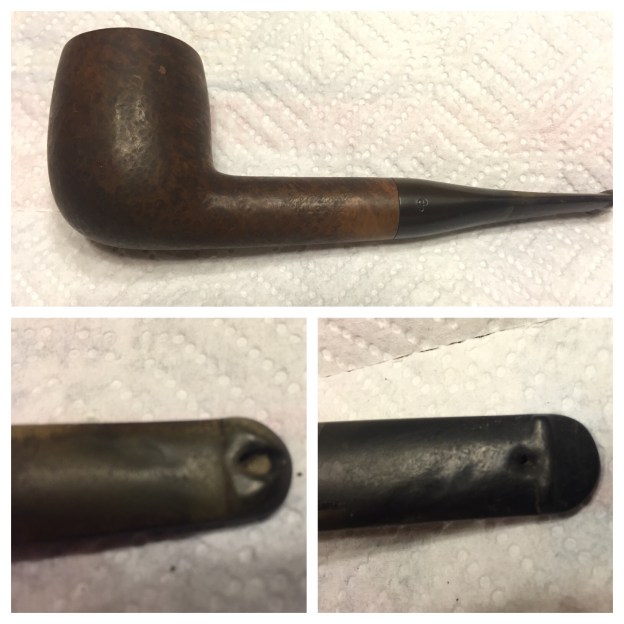
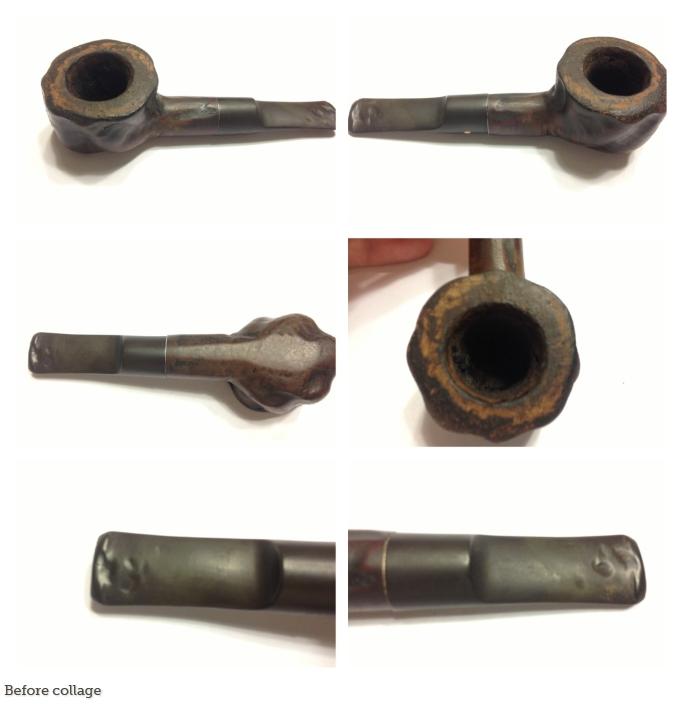
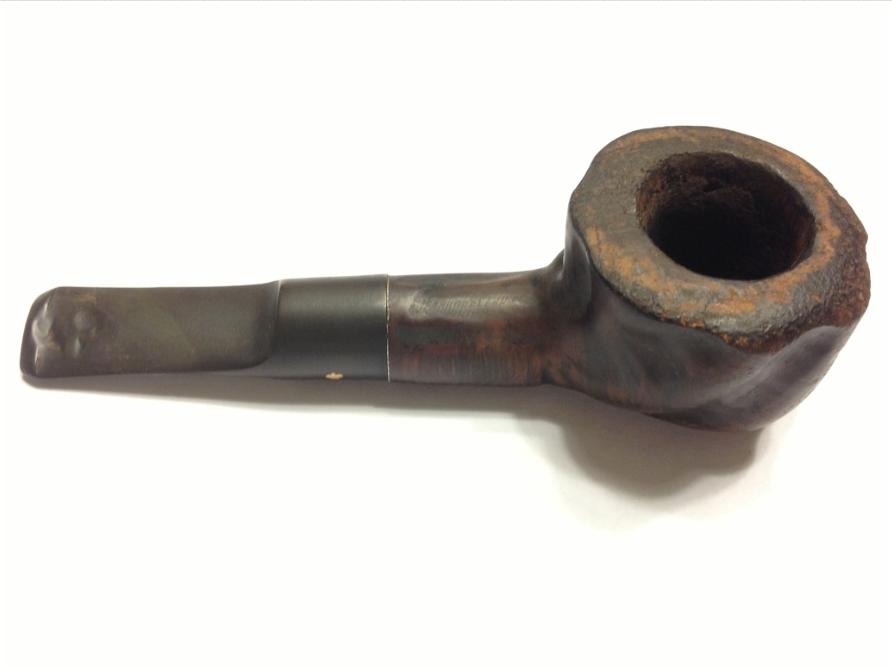
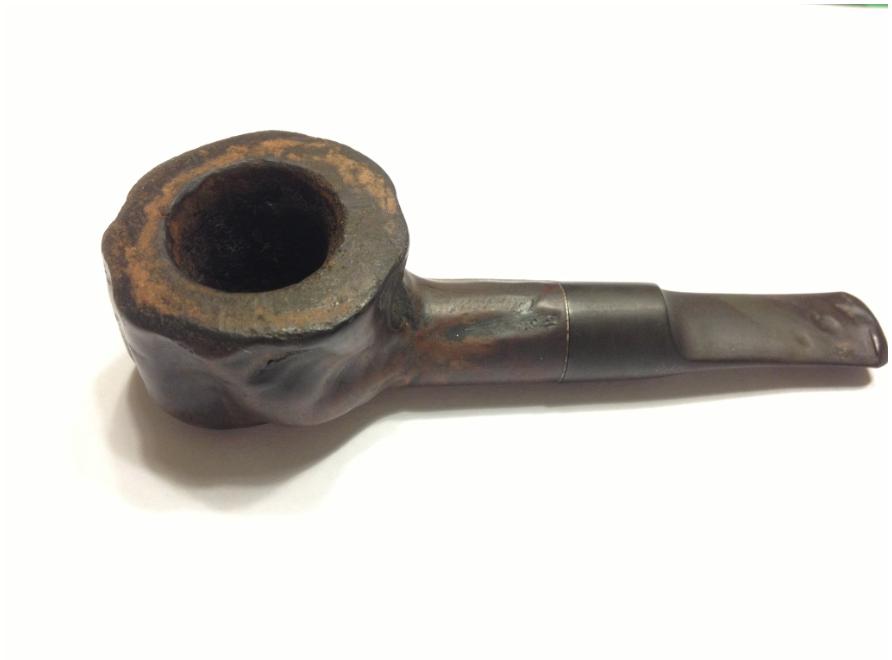
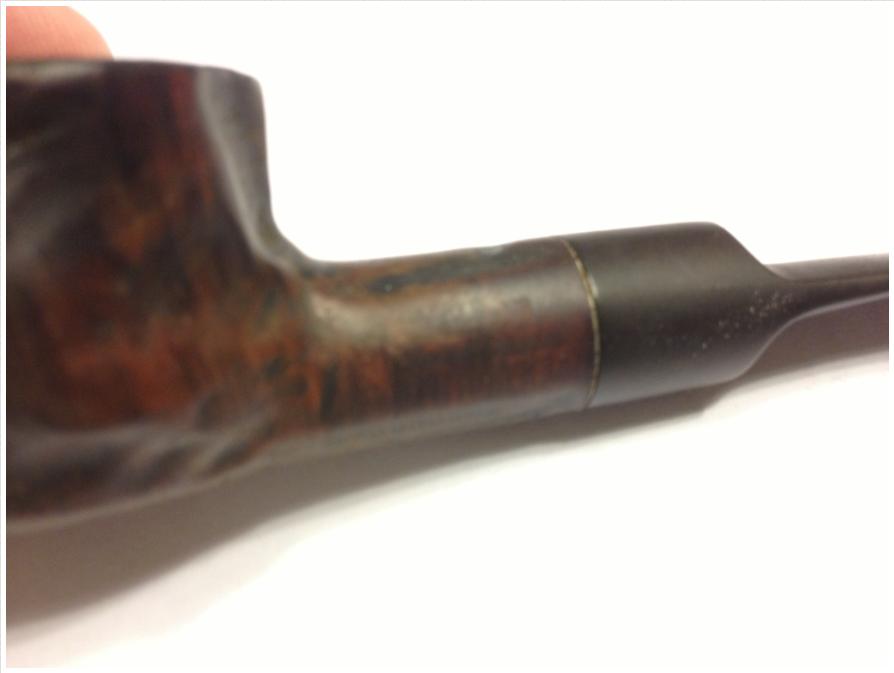
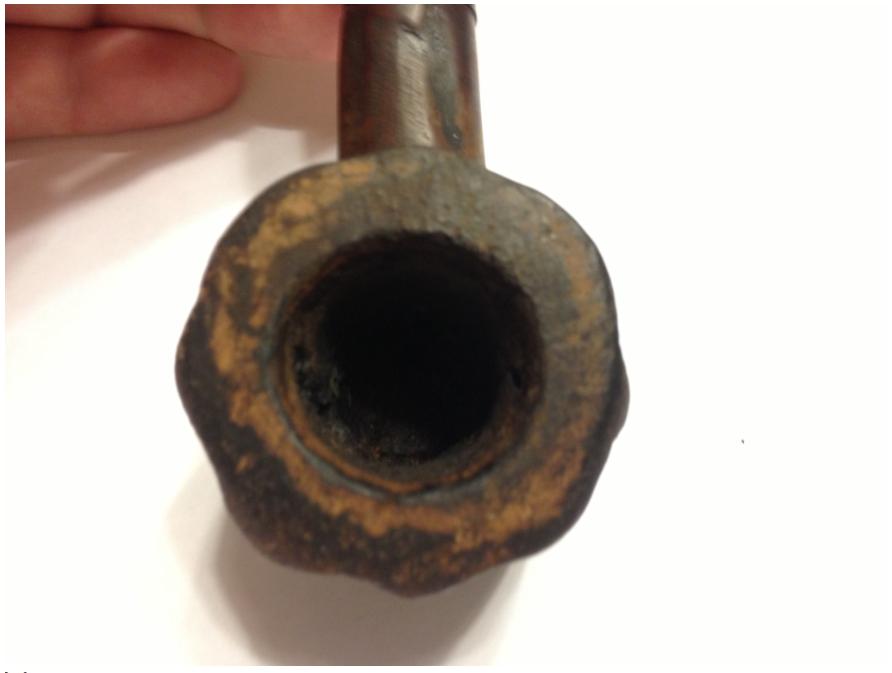
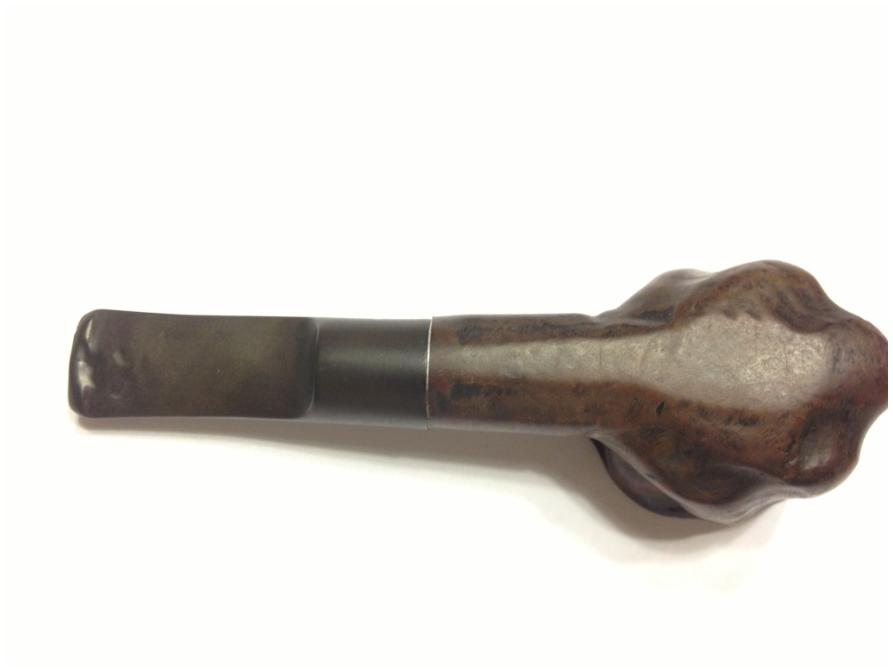
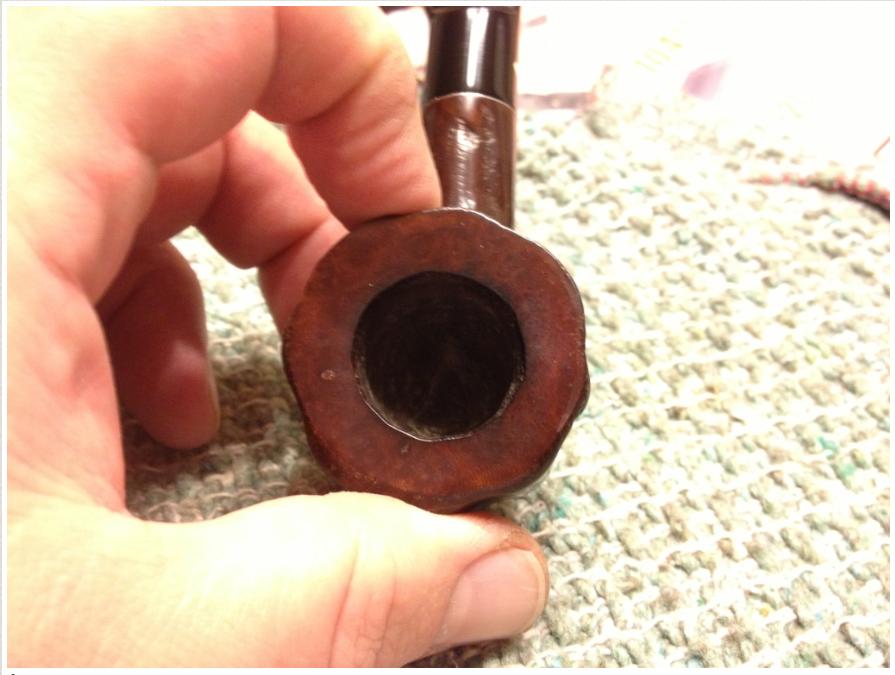
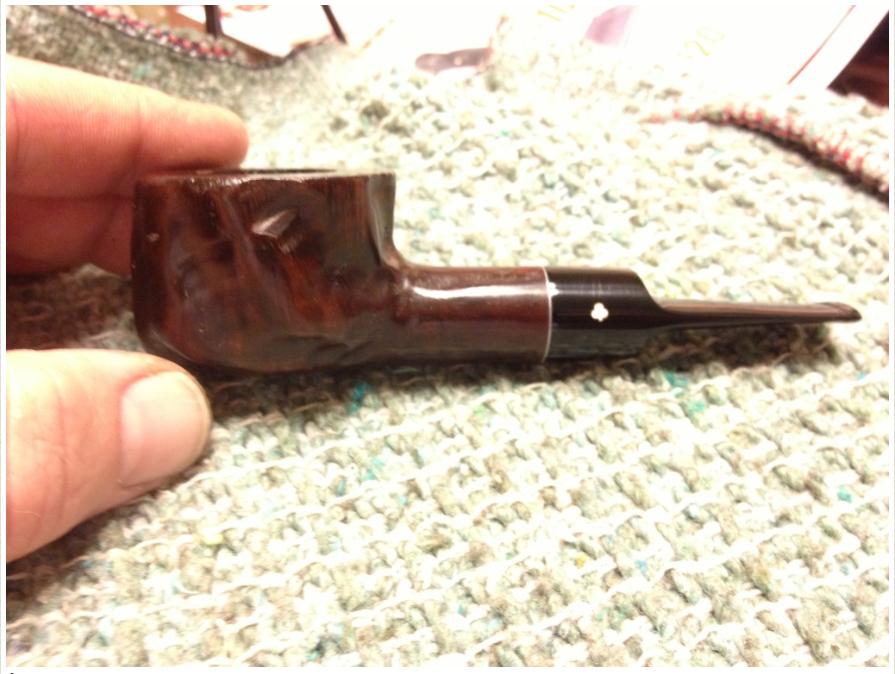
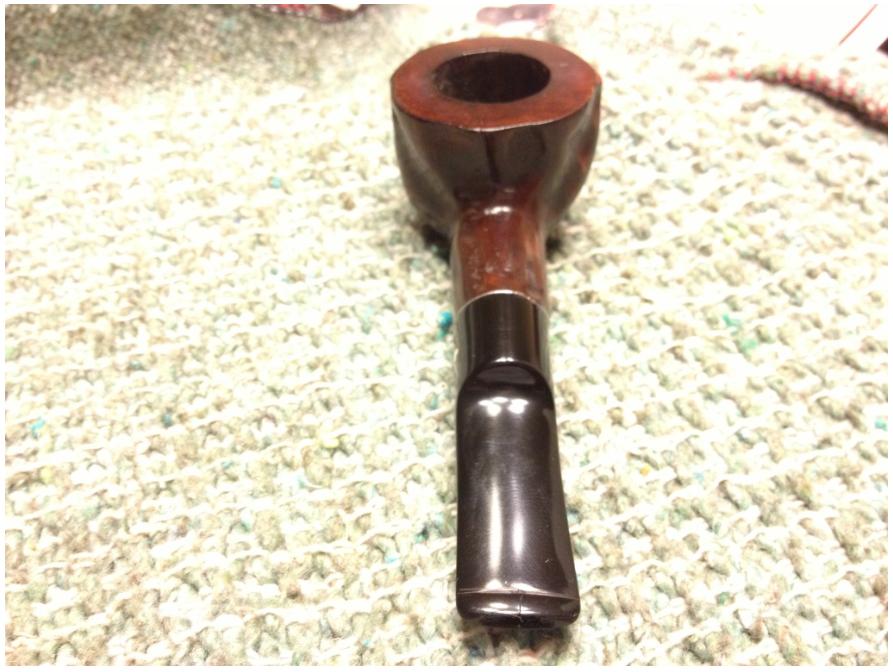
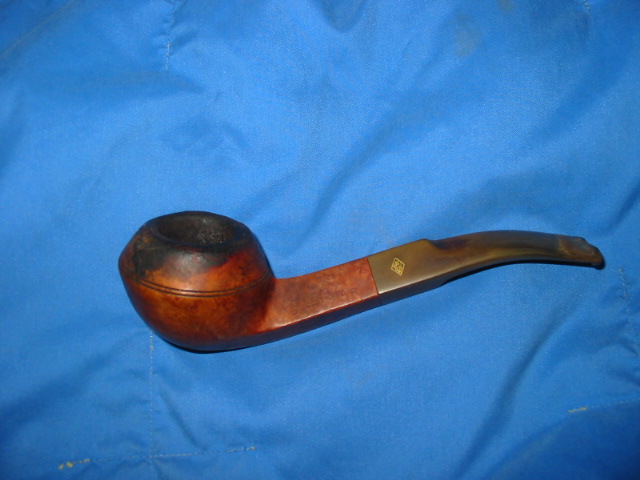
A month or so ago I was trolling eBay and ran across what I thought might be a Pre-Republic Peterson System 313.  I am not very learned in the different eras of many pipe companies but was fairly certain if I read the no-so-clear nomenclature right this was indeed a Pre-Republic era Peterson. Here are the photos the seller provided:

The pipe looked to be in pretty good shape so I thought I would take a shot at it. The seller had a Buy It Now or best offer price on it so I submitted my offer and went to do some research on the nomenclature in case my offer was accepted.After searching on Pipepedia and Pipephil I was sure that the pipe was indeed a Pre-Republic model. (The following photo shows the nomenclature and the small defect in the briar that probably kept it from being a higher grade pipe. The stamping reads “Made” on the top of the circle, “Ireland” in the bottom, and “in” in the center. These photos were taken by me after the restoration.)

A few hours later I received a counteroffer from the seller which I accepted. The seller was in Peru so now it was time for the dreaded wait.

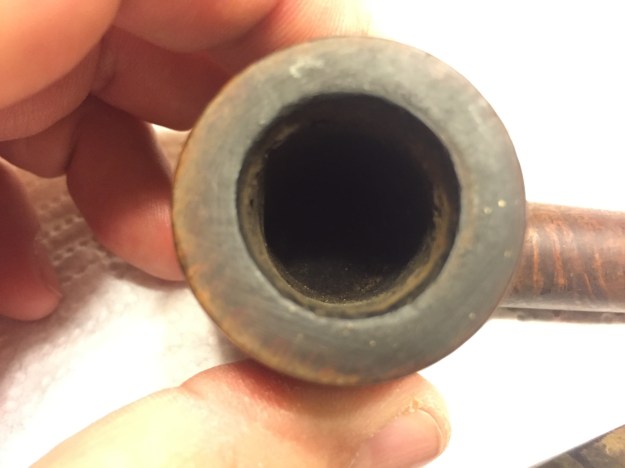
When the pipe finally arrived I was eager to tear into the box to see what I had! When I took the pipe out of the protective wrapping my first thought was “Wow, this thing is tiny!”. I have one over System pipe that is an XL315, a pretty large pipe. I didn’t realize the 313 was going to be comparatively diminutive in size! I was pleased to see that the nomenclature was stronger than I expected it to be and that the pipe was in pretty well as-shown condition; there was a deep burn on the front, inside of the bowl that I didn’t make out in the photos. Here are a few pictures I took upon getting the pipe unpacked.

I dropped the stem in a warm Oxiclean bath while I began to clean the dirt and grime from the stummel. As I removed years worth of crud with cotton pads and both alcohol and acetone I began to really like what I was seeing! There were a few issues showing up now, but not anything too major: the rim cleaned up well but was burned worse than I thought, the nickle band had loosened over time and move up a little and was stained with tars (I think). All of these things were in my mind a good trade-off for the better than expected stamping though.

When I took the stem from the Oxiclean bath I scrubbed it down with a magic eraser to take off the loosened oxidation. Here’s what the pipe looked like at his stage; you can see the line where the band has moved over time.img_0207It was now time to start cleaning the internals of both the stem and stummel.

As I mentioned, this pipe has a rather small bowl; my smallest cutter on my PipNet set wouldn’t fit inside the bowl to ream it! The cake was hard but not terribly thick so I used the blade on my Sheffield pipe tool and some 320 wet/dry paper to ream back to bare briar. while I was doing the reaming I found was the burn on the rim was soft and would require more than just topping it. I decided to finish the internals before turning my attention to this problem.

I took a cotton swab soaked in alcohol and ran it through the stem; the P-Lip stem has a graduated airway, starting out very open and narrowing as it get closer to the button. As I turned the stem over to scrub the inside with the cotton swab a horrible goo ran out of the P-Lip!img_0200Needless to say, the pile of cotton swabs and pipe cleaners were only a representative sample of what it took to get the stem clean. And the well/mortise and airway of the pipe was equally nasty’ I really hadn’t expected this given the maintained cake in the bowl. I stuffed a cotton ball in the bowl and a cotton swab in the air hole, filled the bowl with alcohol and left it to sit over night. I completed cleaning inside the stem before going to bed.

The next day I removed the tar-stained cotton ball and swab from the stummel and  began to work on the burned rim issue after the pipe had dried an hour or two. I began by topping the bowl with 320 wet/dry sandpaper, checking my progress often. There was another smaller darkened area I wanted to remove, too, if I could, but I didn’t want to remove more briar than I had to.When the smaller spot was gone and the worse spot was improved I wiped the bowl down with alcohol to clean any remaining dust from it’s surface and began to polish it with micro mesh. I got up to about 2400, I think, and decided the burn was still too noticeable. I went back to work on the rim with a folded piece of 320 grit paper and worked a bevel on the inner edge of the bowl, then repeated polishing with micro mesh as before. The results were much better to my eye.

I moved on to the stem now, setting the bowl aside for later. The stem wasn’t in particularly bad shape, mostly just oxidized, as some of the previous photos show.There was a couple of deeper tooth marks on the bottom and top near the button that had to be filled. I sanded the oxidation off using 320 grit paper then cleaned the stem well with alcohol on a cotton pad. I picked at the deepest dents and the button “steps” with a small “toothpick” knife I have to make sure all the oxidation was out of the dents and grooves. After giving the areas a spray of CA glue accelerator I applied clear CA glue to both spots, gave it another spray and then let it sit a few hours to cure well; I didn’t want the glue to run while it cured or I might have skipped the accelerator altogether. (I didn’t remember to take many photos during this process.) After the glue cured I used needle files and sandpaper to smooth and better blend the patches, after which I polished the stem with the full range of micro mesh pads, 1500-12000.

Now that the stem and stummel were fully ready, I moved to the downstairs workshop for the finishing touches on everything. I began with my heat gun, warming the band to expand it and press it back in place; I pressed it into an old buffing wheel, using the center hole to help fix the slight out-or-roundness that had gotten in the band, too.

Next I used a dark brown stain pen to re-stain the bowl. I covered it entirely, as evenly as possible, twice and let it dry for a little while before using another alcohol dampened cotton pad to wipe off some of the excess to allow the grain to shine through. Next up was buffing with the Dremel. I used brown Tripoli on the stummel and nickle band first and then white diamond and blue compound on both the stummel and stem. I finished up with a few coats of carnauba wax on the entire pipe and a hand buff with a micro fiber clothe to raise a nice shine. I am really pleased with how the pipe came out overall and think the beveled rim idea to fix the burned area blended in very well. Before you see the finished pipe I must confess the first bowl I smoked in it was horrid! I had to go back and do a second alcohol treatment and I soaked the stem in alcohol and cleaned it again, too. The second cotton ball was even more tar-stained than the first! I had to re-wax and buff the whole pipe, too. But the next bowls proved it was well worth the effort as the pipe now smokes dry and sweet!

Peterson Kildare Marathon Restoration


This year has been a roller coaster ride for me; between added responsibilities of watching our new grandson, health issues, and a flair up of my spinal stenosis that put me down for almost two months, I have been unable to do any of my hobbies. Unfortunately this has put a couple of friends that I have pipes to work on in a state of limbo waiting on me. They are not easy clean-ups and they knew going in I am slow – but still I feel badly about it.

This Peterson Kildare 106 billiard had been in my possession for ages it seems to me at least. I have worked on it off and on, loosing track if my progress (and many of my notes and photos) of the process. It went out in the mail today I am happy to say (and the owner is probably happier to hear!).

I knew the pipe needed stem work mostly but when it arrived at my home it was in worse condition than I had anticipated. The stem was really badly gnawed on, with an extra hole bitten through on the bottom. The pipe was very dirty and there was a fill that had partly fallen out; that didn’t really bother the owner, as I recall, but it made me nuts! Here is a look at what the pipe looked like when I got it.

I began cleaning the internals which weren’t bad as it turns out. I cleaned the stummel with alcohol and cotton pads, removing the grime, exposing the missing fill even worse; I knew I had to deal with that as I went along. But first I began to ream the bowl while the stem soaked in an OxiClean bath. img_5027

The OxiClean bath and a scrubbing in clean, warm water with a green Scotch pad left the stem clean and free of oxidation. The amount of work the stem needed was even more apparent now; not only did the bit need a lot of work, there were some very large dents in the stem. I tried to raise the dents with heat but that really made no difference. So I decided to start the process of building the bit up (P-lip, a new for me repair) and filling in the dents with black CA glue and charcoal powder. This took many layers over many days (which turned into months); I had to raise, shape, repeat, over and over to get the P-lip back and to fill the extra hole in the bottom of the stem and the deep divots.

During the interim times I worked on the fill that was partly gone and one other dent that stream wouldn’t raise. I used coarse briar dust from filing not sanding (which I think takes dye better and is less apt to just be a black spot) and CA glue to fill the two spots (the worst one is visible in the very first photo in this post). I accidentally over did the fill, costing myself a lot of extra time. However the patch ended up blending in great in the end. After a lot of working the patch to blend I stained the pipe with a diluted Brown Fiebing’s leather dye, two coats, flamed on, if I remember right. After buffing with brown-Tripoli the stummel looked nice but too dark to see the really nice grain (birds eye and flame) so I wiped it down with alcohol on a cotton pad until it let the gain show through and re-buffed with brown-Tripoli. Now the stummel looked good to me. Back to the stem…

This P-lip drove me to the brink of insanity! Not having a P-lip on hand to compare it to made it more difficult. Filling the bottom hole (that wasn’t supposed to be there) was easy but shaping that top and bottom lip/ridge was a chore. The deep divot just did not want to be filled; the patch shrunk over and over. The huge, dented  draft hole on the top of the stem was a bother, too; I can’t tell you how many times I glued it shut trying to get that button rebuilt! In the end it came out pretty good; there are some tiny scratches visible if you look real close. But all things given, the owner was happy with that, especially since with the holidays and even more babysitting duties for me on the horizon, who knows when I would be able to finish it (again).
After finally getting the work done I finished the pipe off with a few coats of carnauba wax. I want to mention that I followed the instructions, more or less, for Dremel buffing for the stem and the waxing of the stummel. I currently can’t use my buffer so I wanted to give this option a try and am very pleased with the results. Mine is a variable speed Dremel and I used 5,000 RPM for the compounds and 10,000 RPM for the wax.

Hopefully with the new Dremel techniques I’ve learned (thanks again, Dal and Steve) and with some luck (and no small amount of “okay” from my wife) I will find a way to down size my work-needs to be able to work from my kitchen instead of my basement workshop, allowing me to work more when my mobility issues keep me from the stairs.

Restoring a Bryson Metal Pipe with Two Bowls


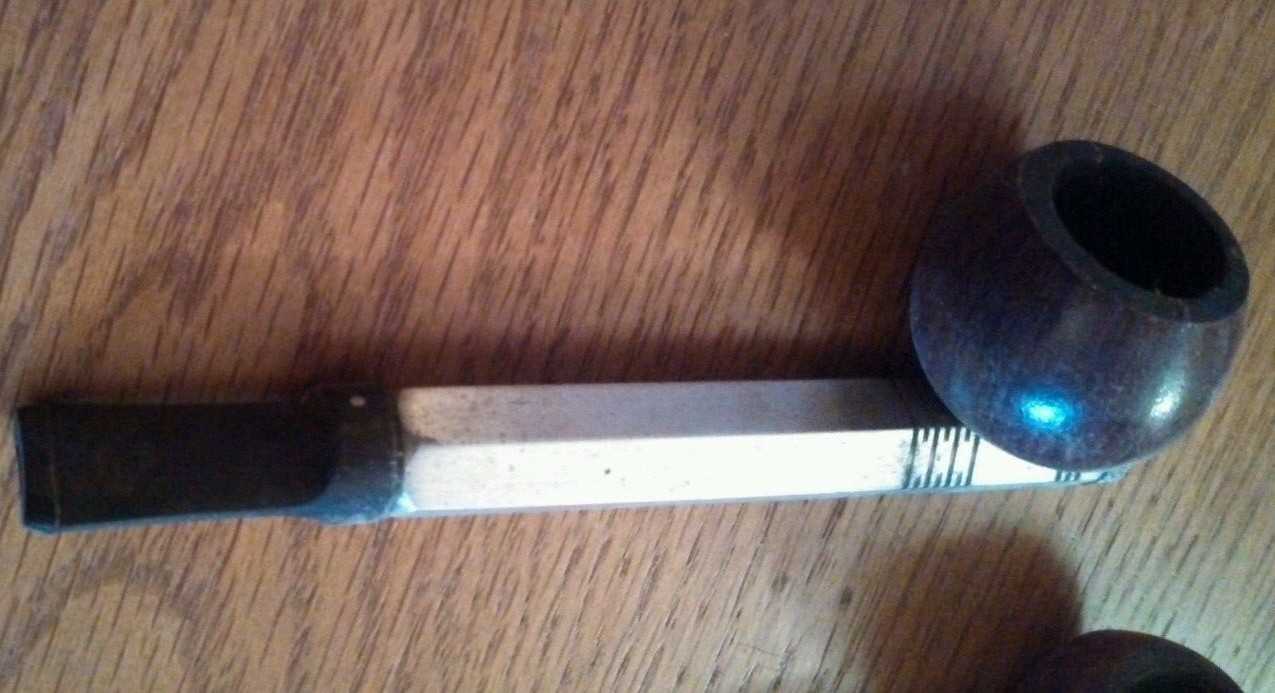
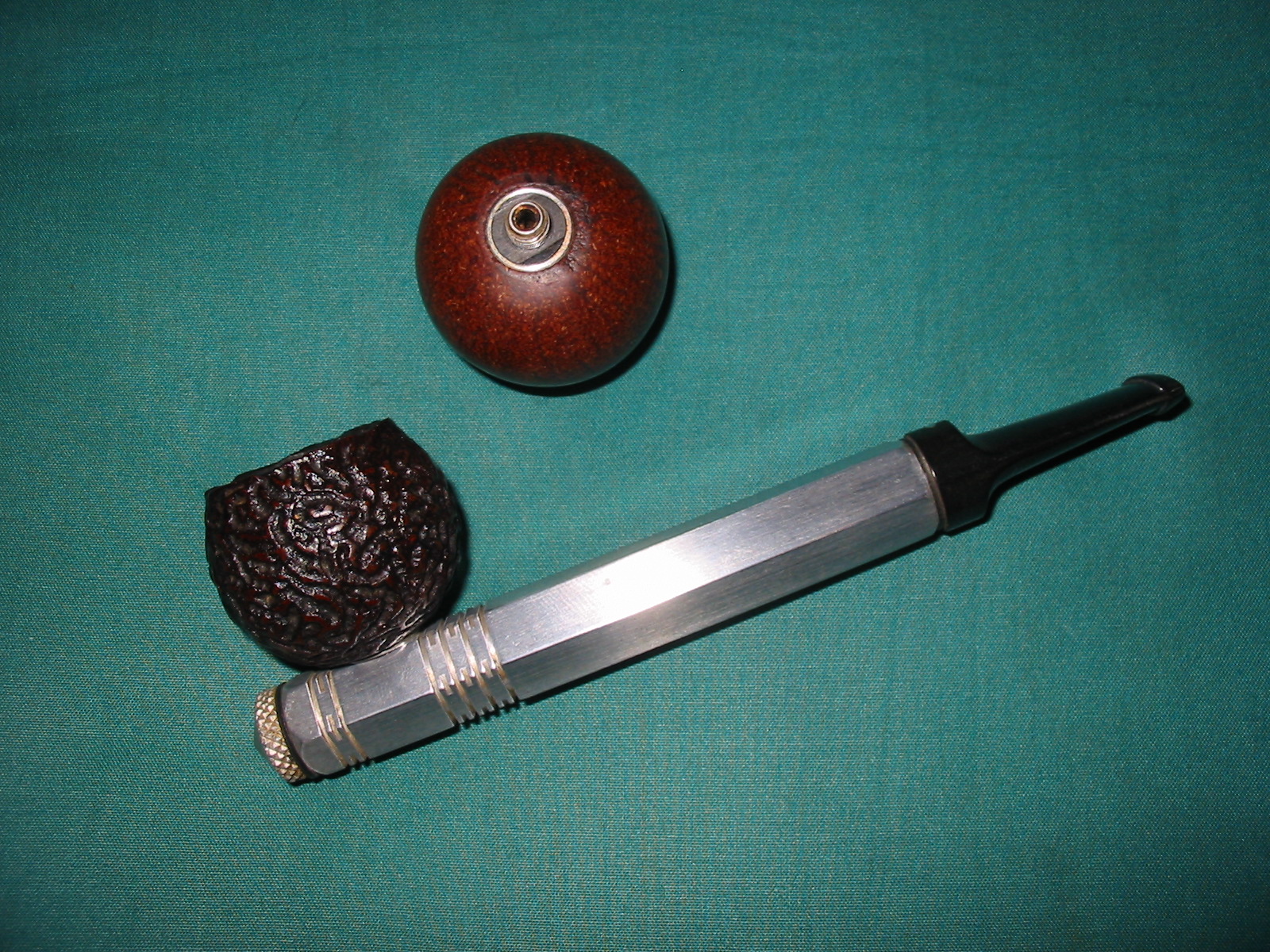
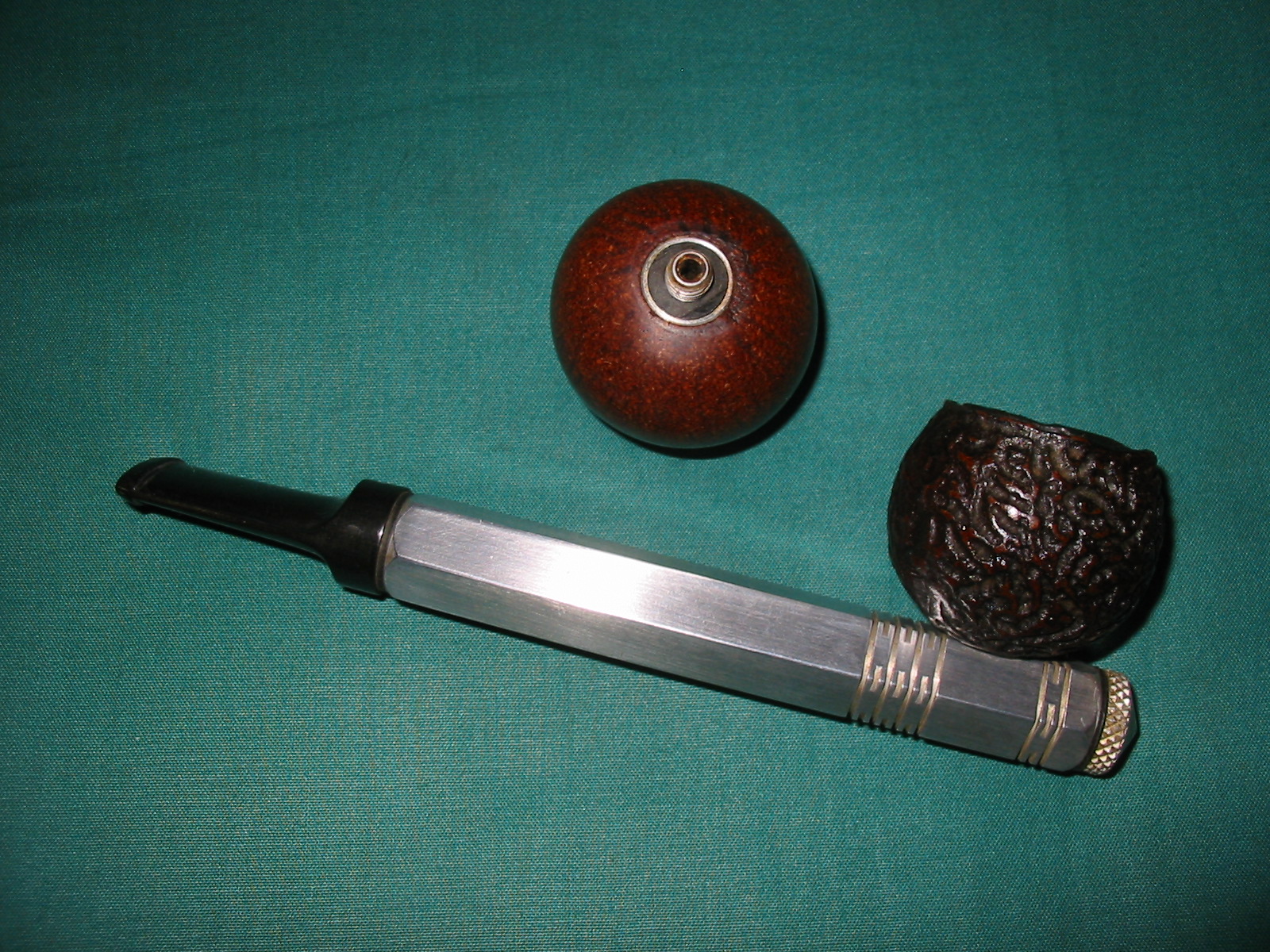
I picked up this metal pipe with two bowls in an eBay lot recently. The shank shape and the two bowls intrigued me. I had no idea who had made the pipe but I bid on it because of some other items in the lot.
pipes4

pipes5

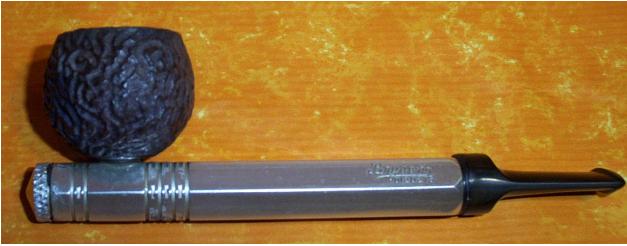
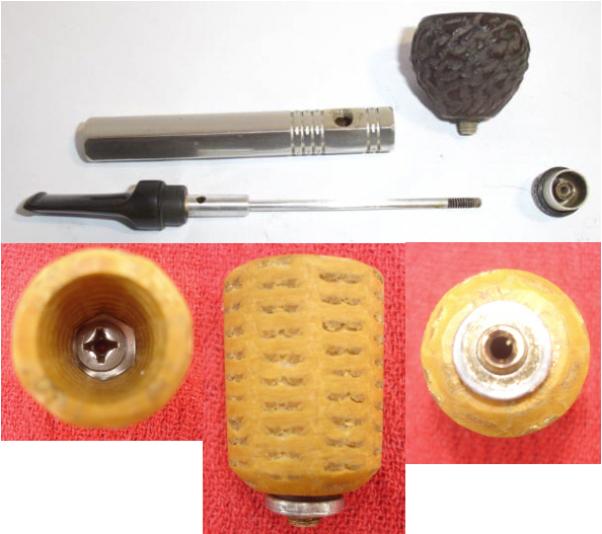
I decided to do a bit of research on the metal pipe on the great Smoking Metal website. It is a gift to the pipe smoking community looking for information on particular metal pipes that they come across or may have in their collection. The web address is: http://www.smokingmetal.co.uk/pipe.php?page=57
This is what I found out about the metal pipe pictured above: (credit given to the site above)

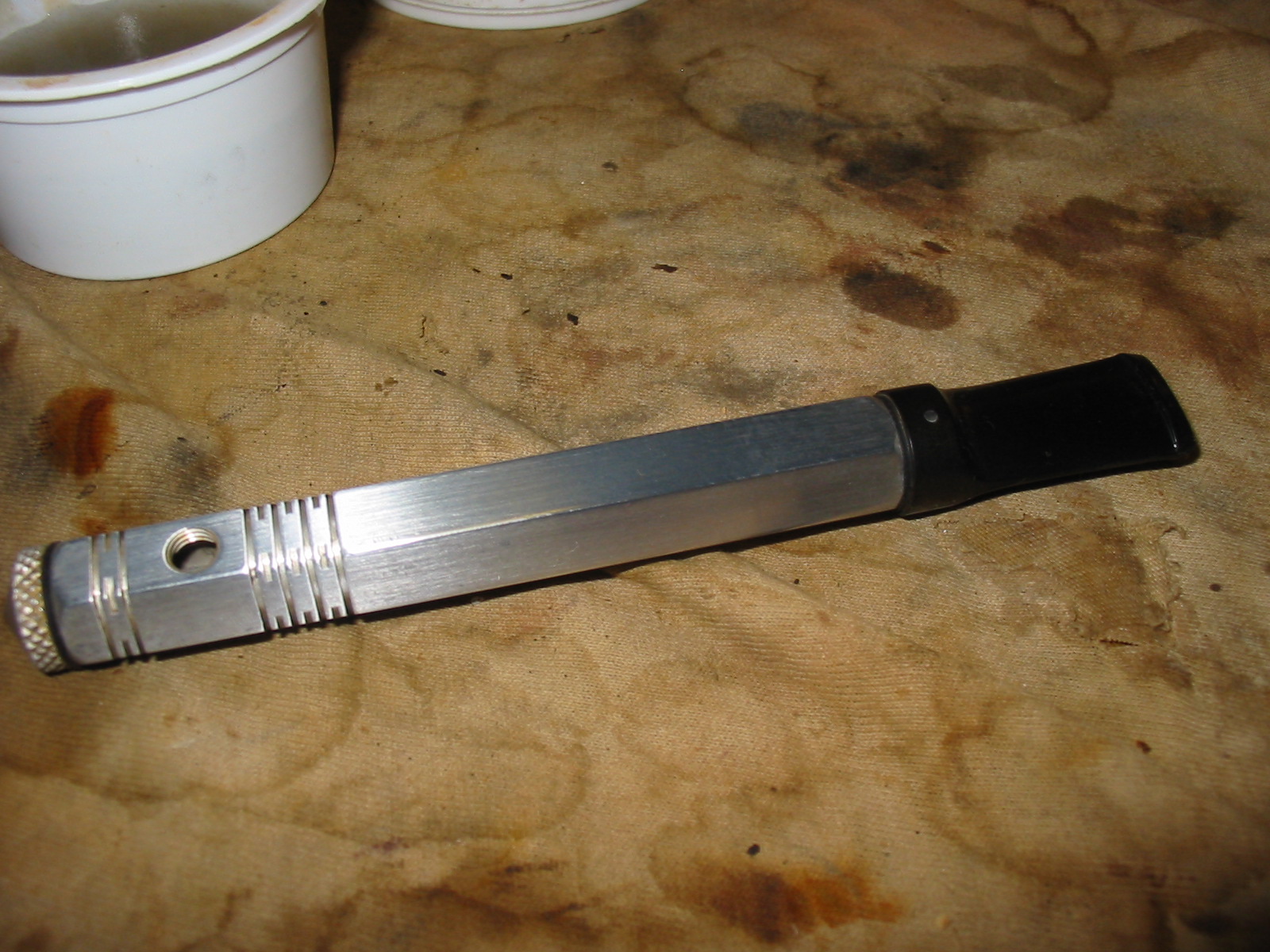
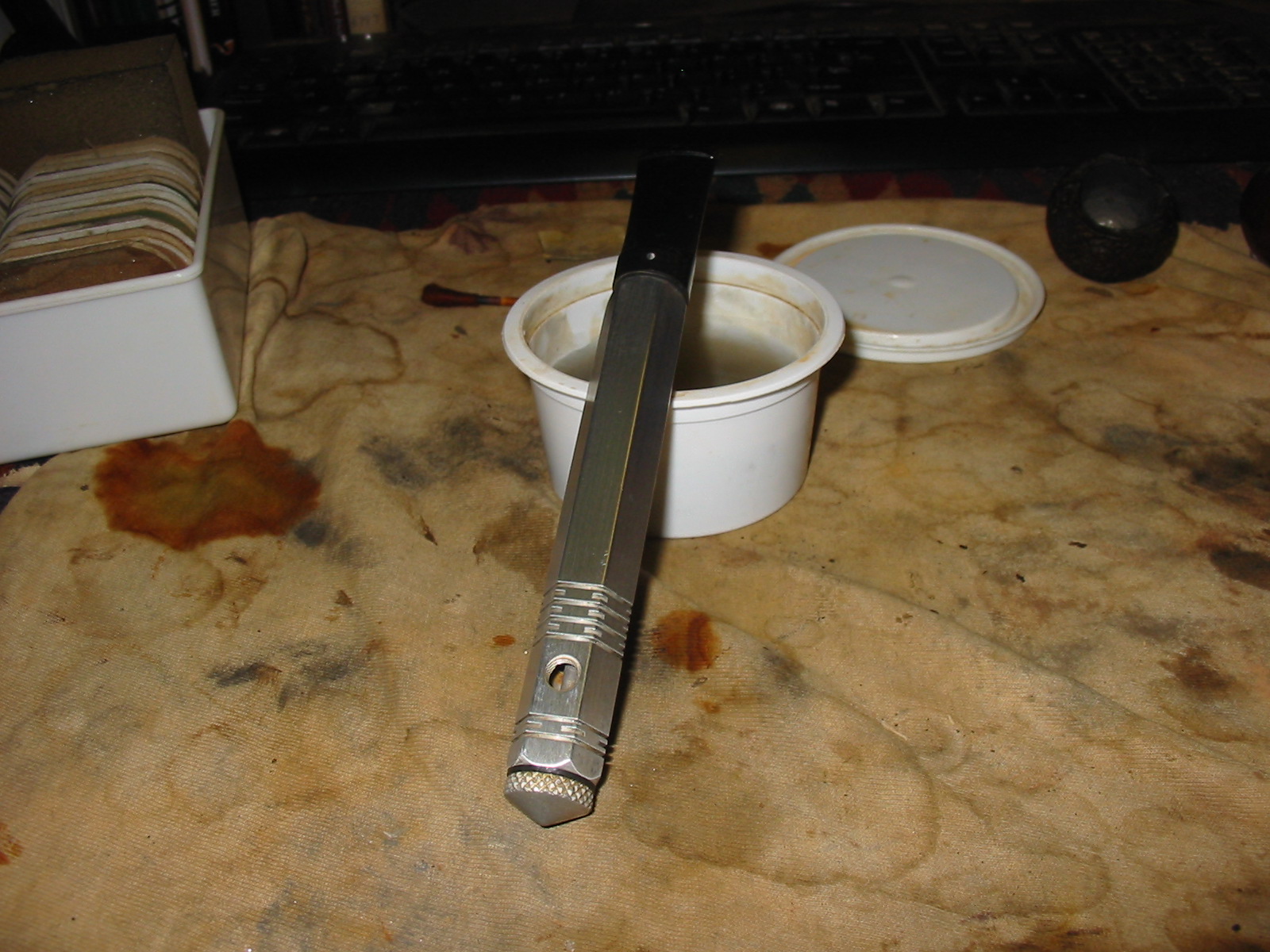
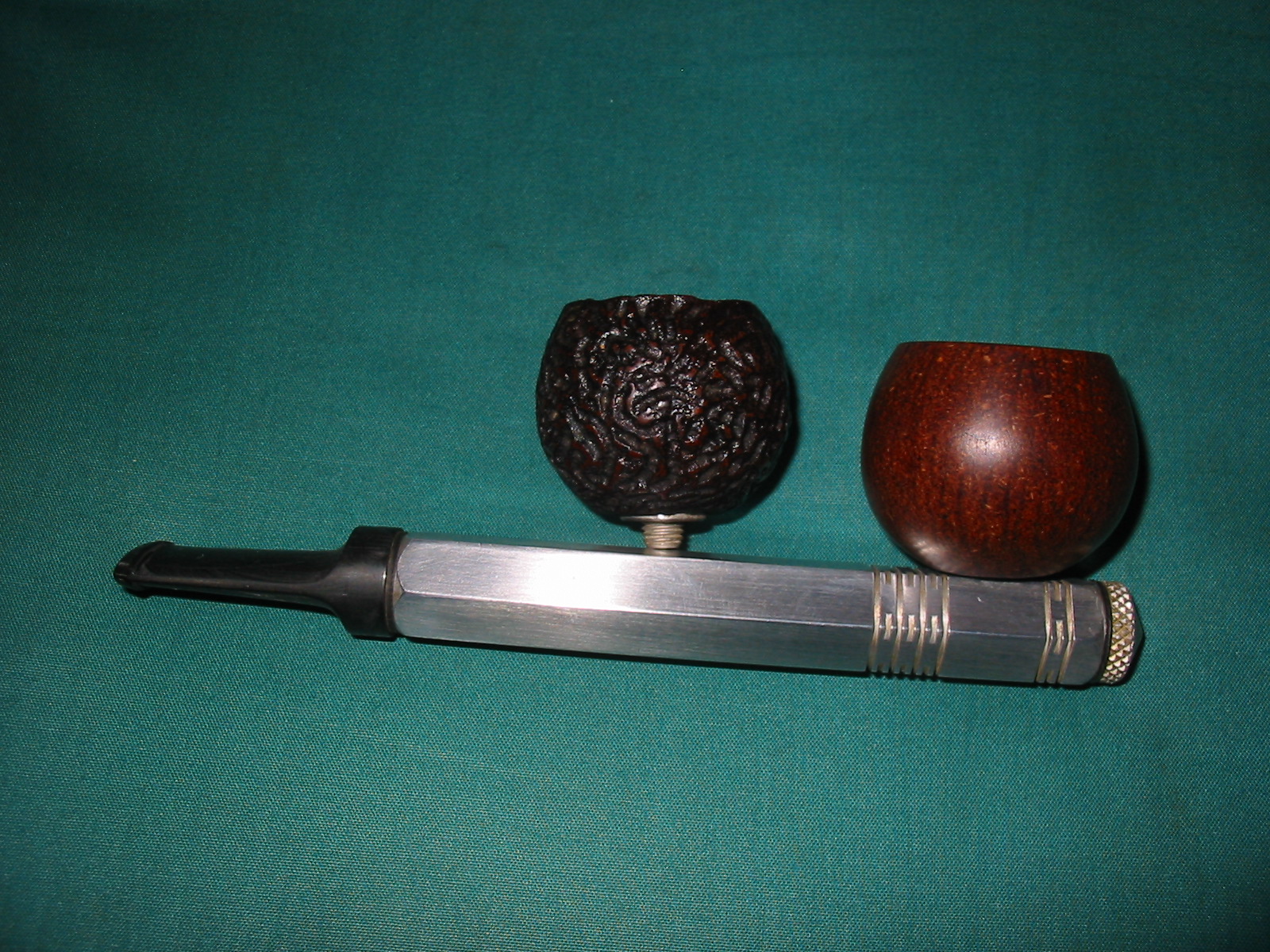
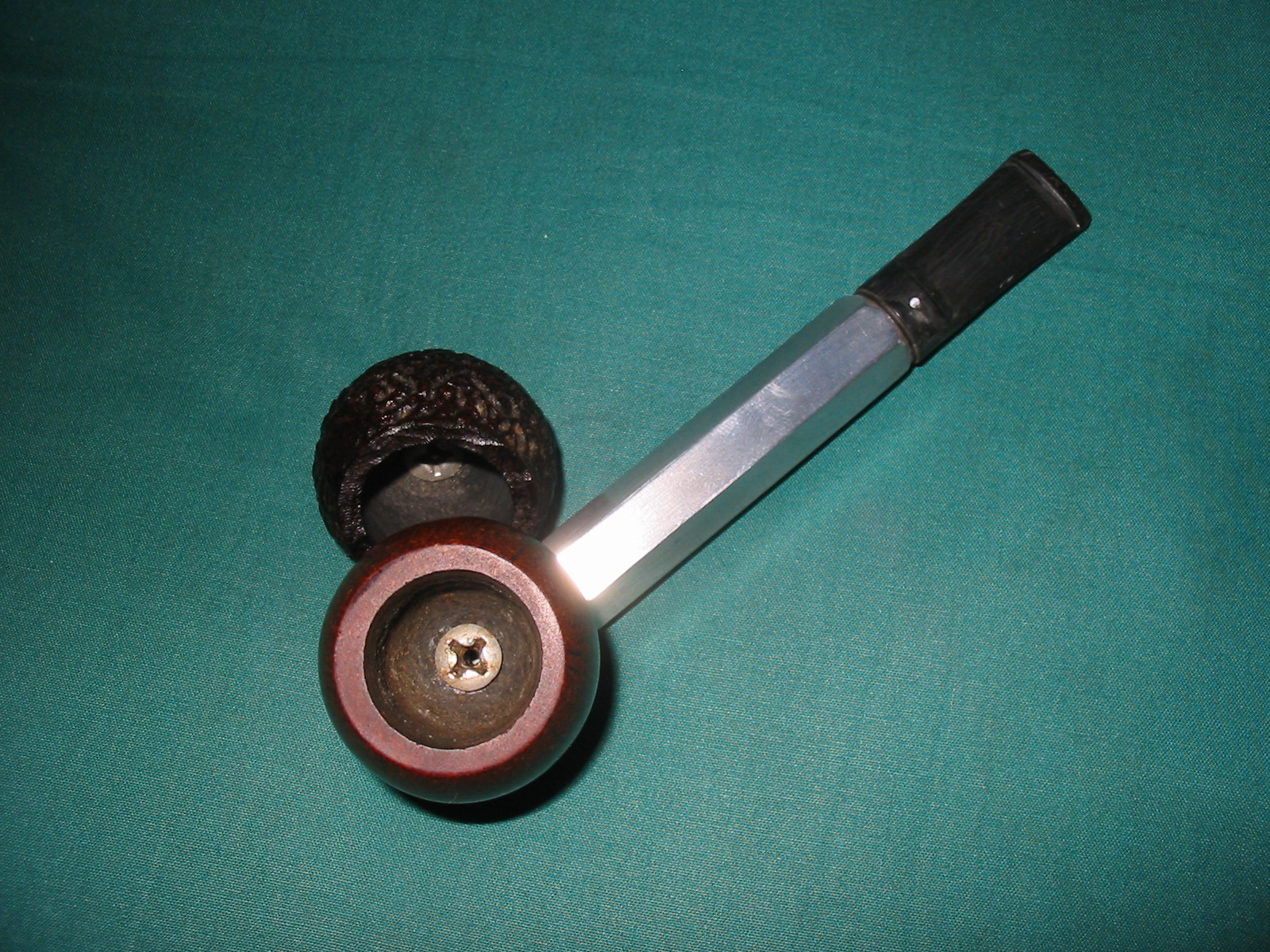
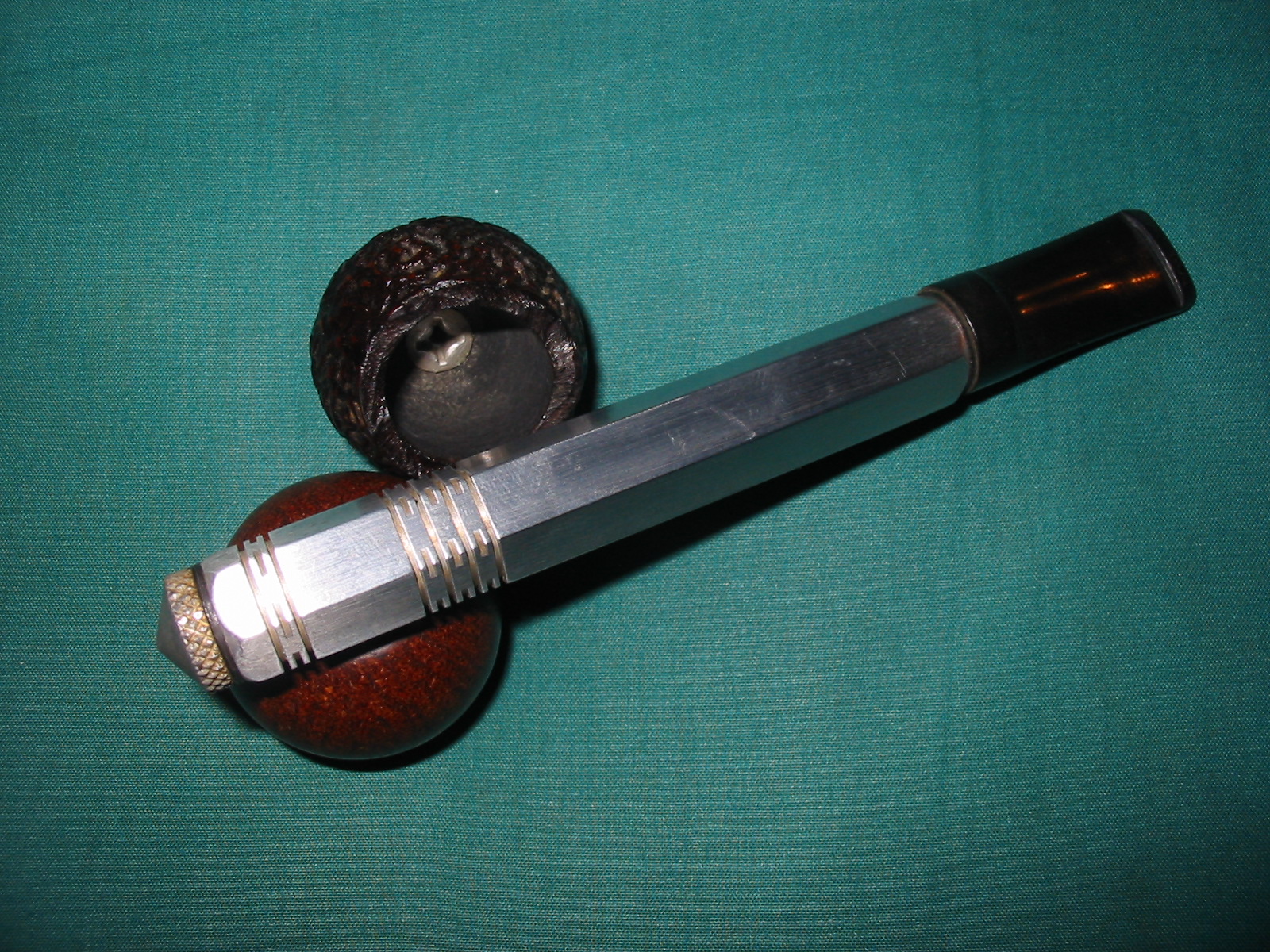
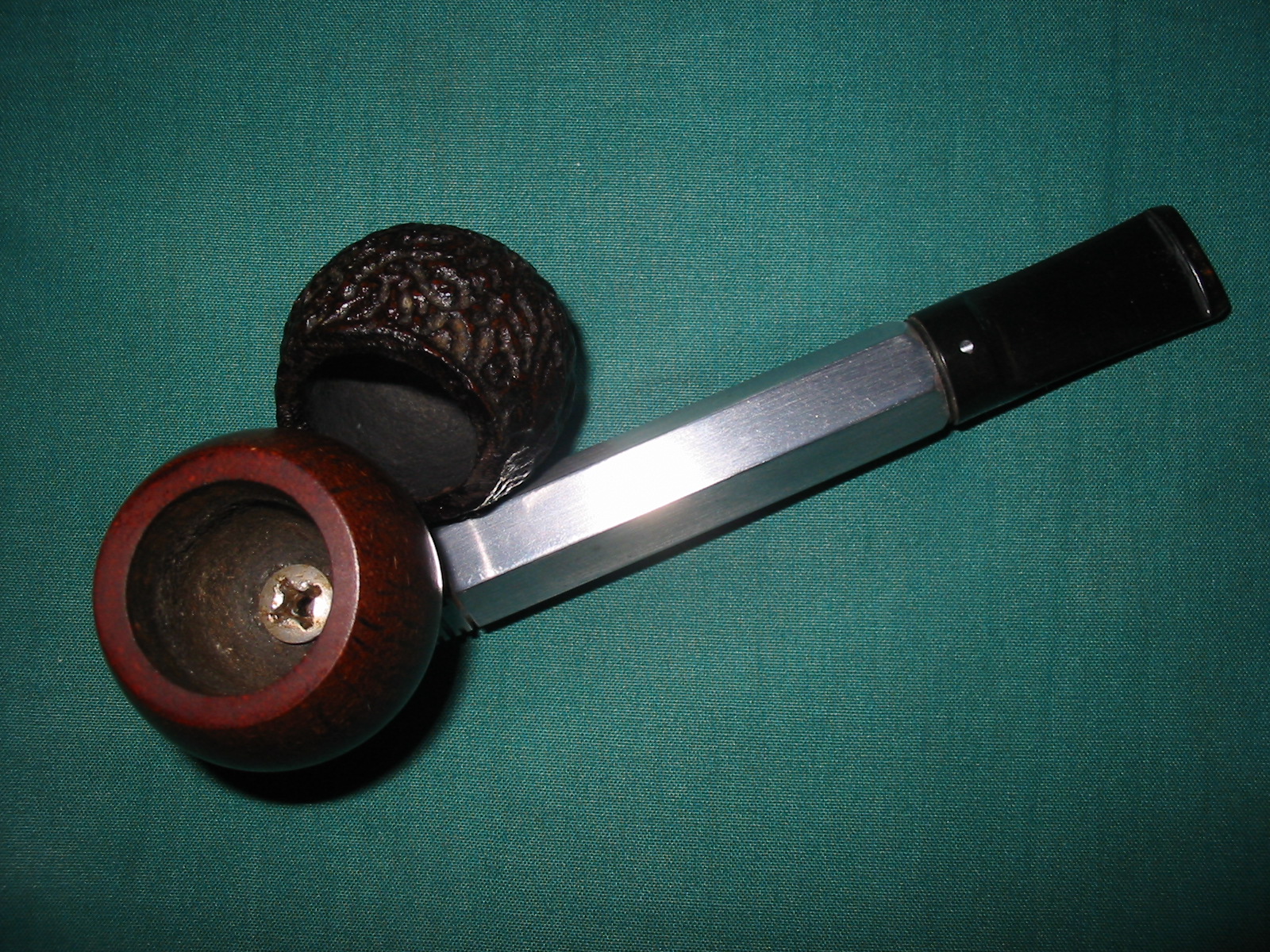
“This pipe was made by the Briarwood Corporation, Palo Alto, California; the BRYSON has number D120275 under the Bryson name on the pipe stem. There is a crosshead screw to attach the briar bowl to the stem. The end cap attaches to the mouthpiece by means of a rod through the length of the pipe, in which the air hole is close to the mouth piece. The stem is of polished duraluminum and hexagonal in cross-section.

The bowls are unusual in that they are not briar turned on a lathe, but briar wood, ground to a powder and compressed under very high pressure (no glue, heat or plastics are used, just pressure. It is claimed this produces a perfect bowl of aged briar every time with increased porosity. The varnished finish on the smooth bowl however is often very badly crazed.

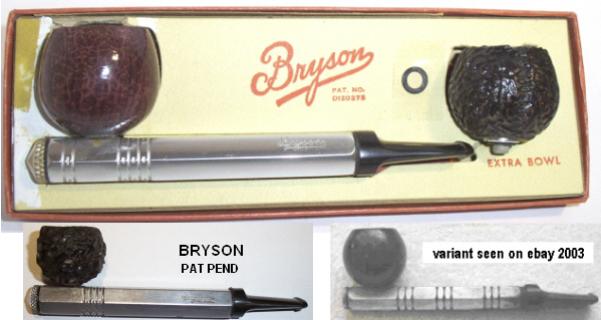
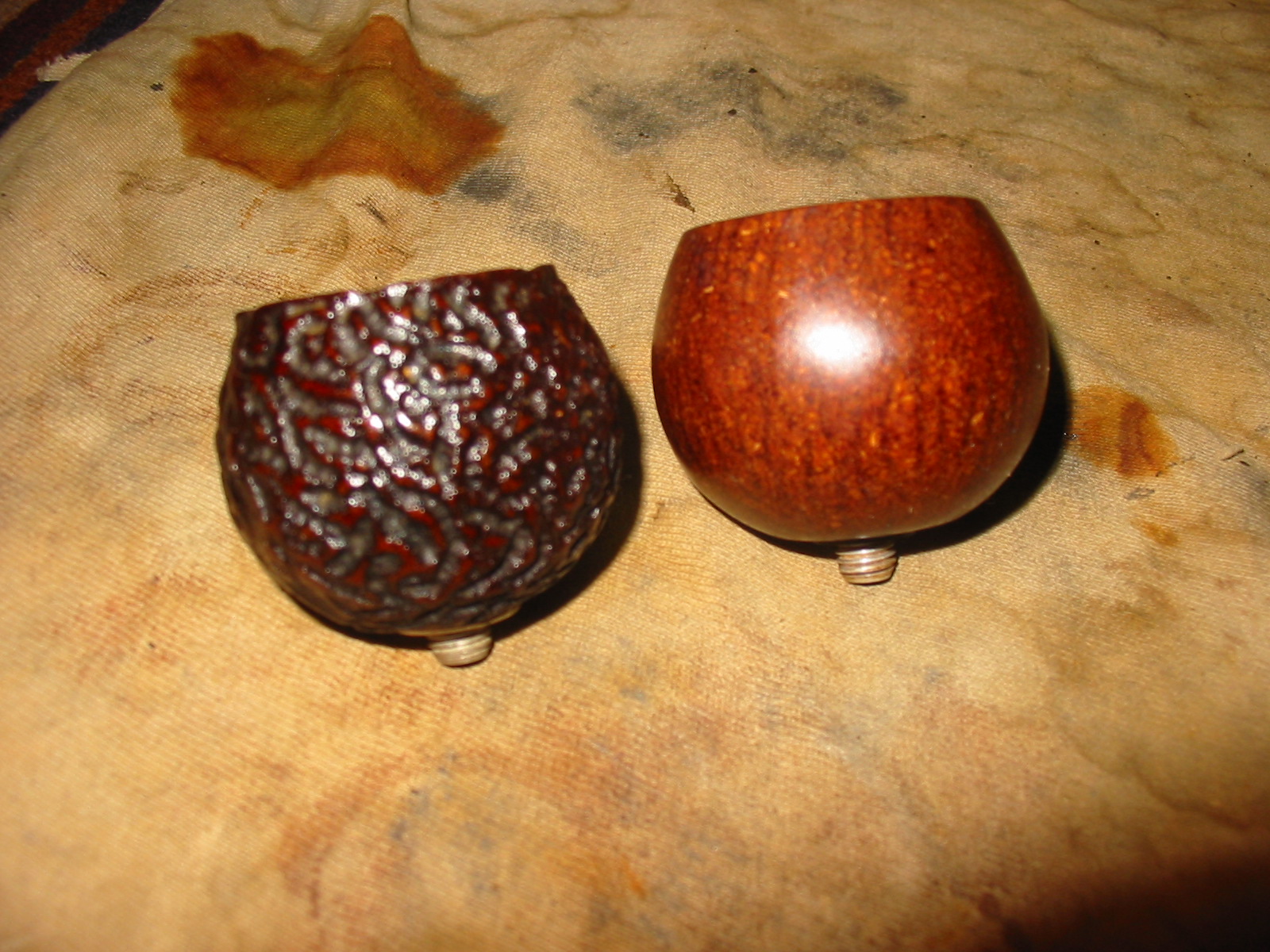
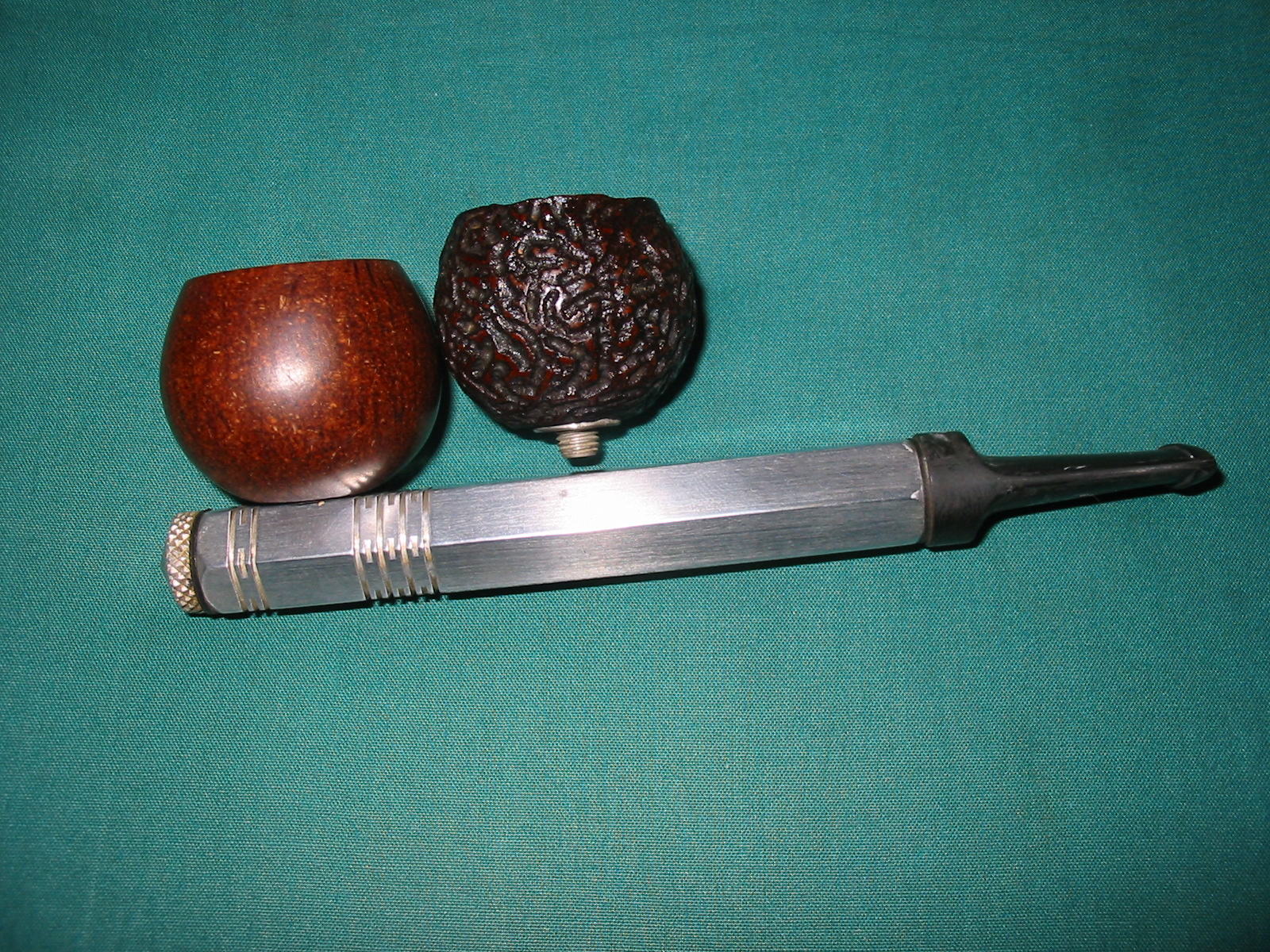
Two bowls, one smooth and one rusticated, were supplied with the new pipe. The bowl retaining screw is ‘locked’ onto the bowl by a gasket and metal collar, enabling rapid replacement of the bowls without the need of a screwdriver. The corn cob bowl, in centre image, is another version, not sure if this was manufactured by Bryson, or a home workshop job.

The set here shown was available for $3.50 new, but in what year? Below that are pictures of adverts seen from 1946 magazine. The last photograph was of a possible derivative on eBay in 2003, although US patent D122042 seems to be this pipe, invented by Max Bressler, Chicago Ill 1940.

There are also other derivatives without the Bryson name stamped in the metal and variations on the shape and grooving of the stem. The pipe pictured with Pat Pend under the Bryson name has no grooves forward of the bowl and the front end cap is a larger thread than the other models, including my version with no name. 30 April 1940 US patent # D120275 Inventor Charles Rothman, Cleveland Heights, Ohio, assignor Briarwood Corp, also of Cleveland Ohio at that time.”
Bryson1

Bryson2

Bryson3

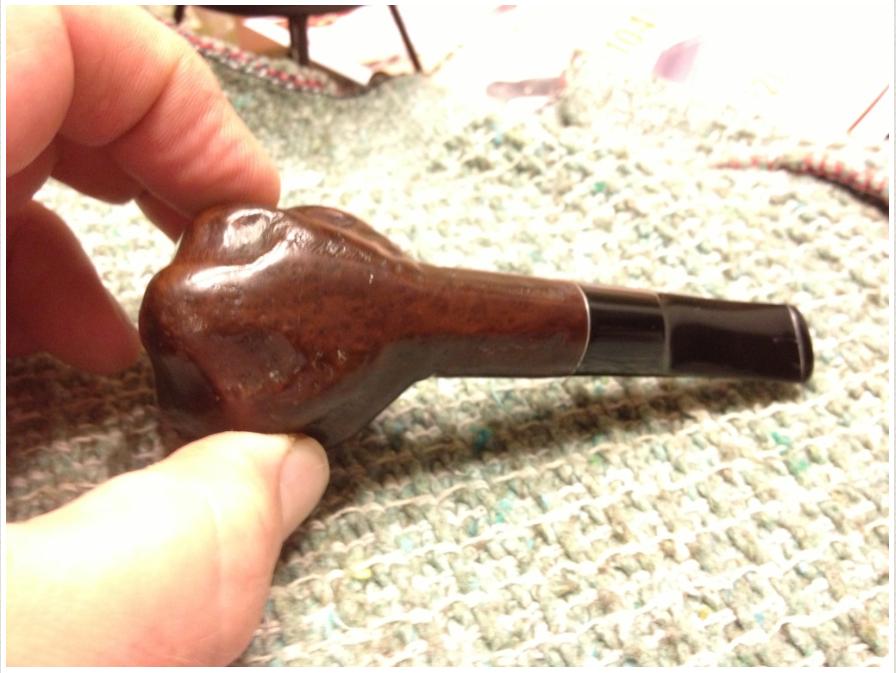
When the pipe arrived it was in pretty rough shape. The aluminum was oxidized on the barrel and the bowls were both very dirty and filled with cobwebs and built up grit. The rusticated bowl had not been smoked very much so it was clean on the inside underneath the dust and webs. There was no cake or tars. The smooth bowl was the exact opposite. The bowl was caked and the top of the rim was tarred and dented. In examining it I notice that the grain on the smooth one was peeling and fading in places – it was a decal and not truly grain. I could also see the composite make up of the pipe bowl as described above. This was strange looking material – similar to my Medico Brylon but also a lot like particle board that is used in building. This was going to be a fun piece to clean up and restore. The metal barrel was unstamped but the lines on the barrel match the photos above perfectly.

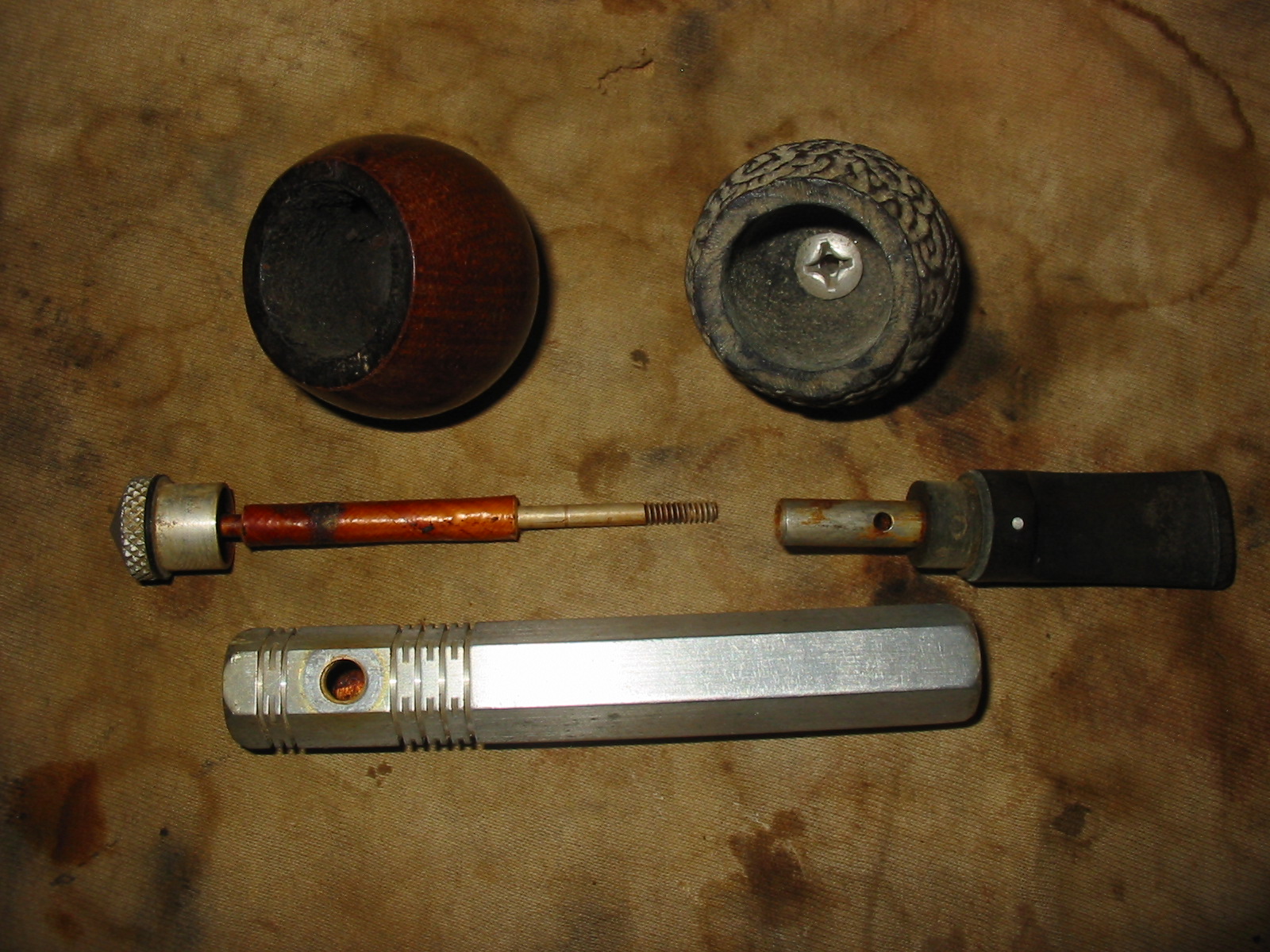
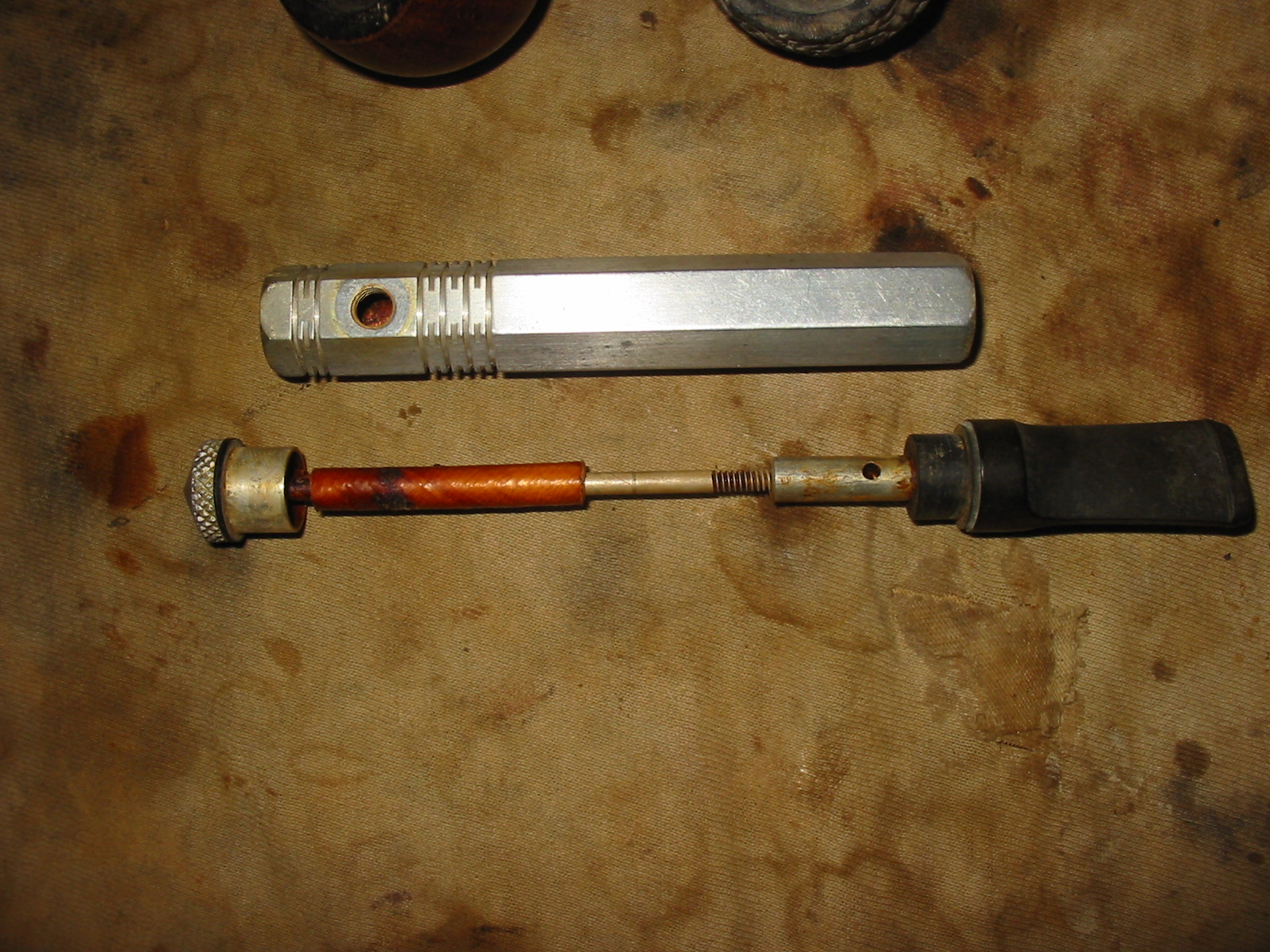
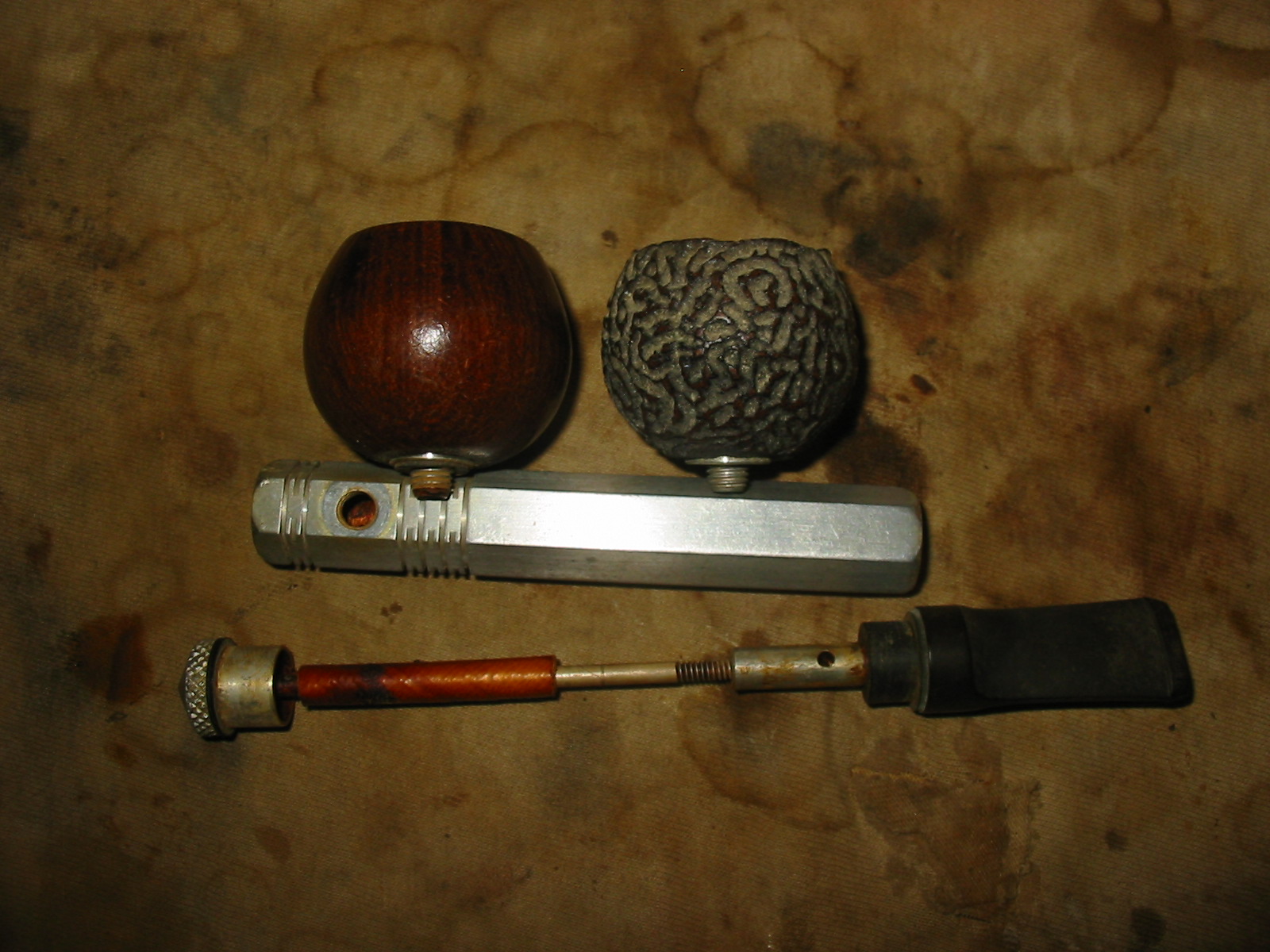
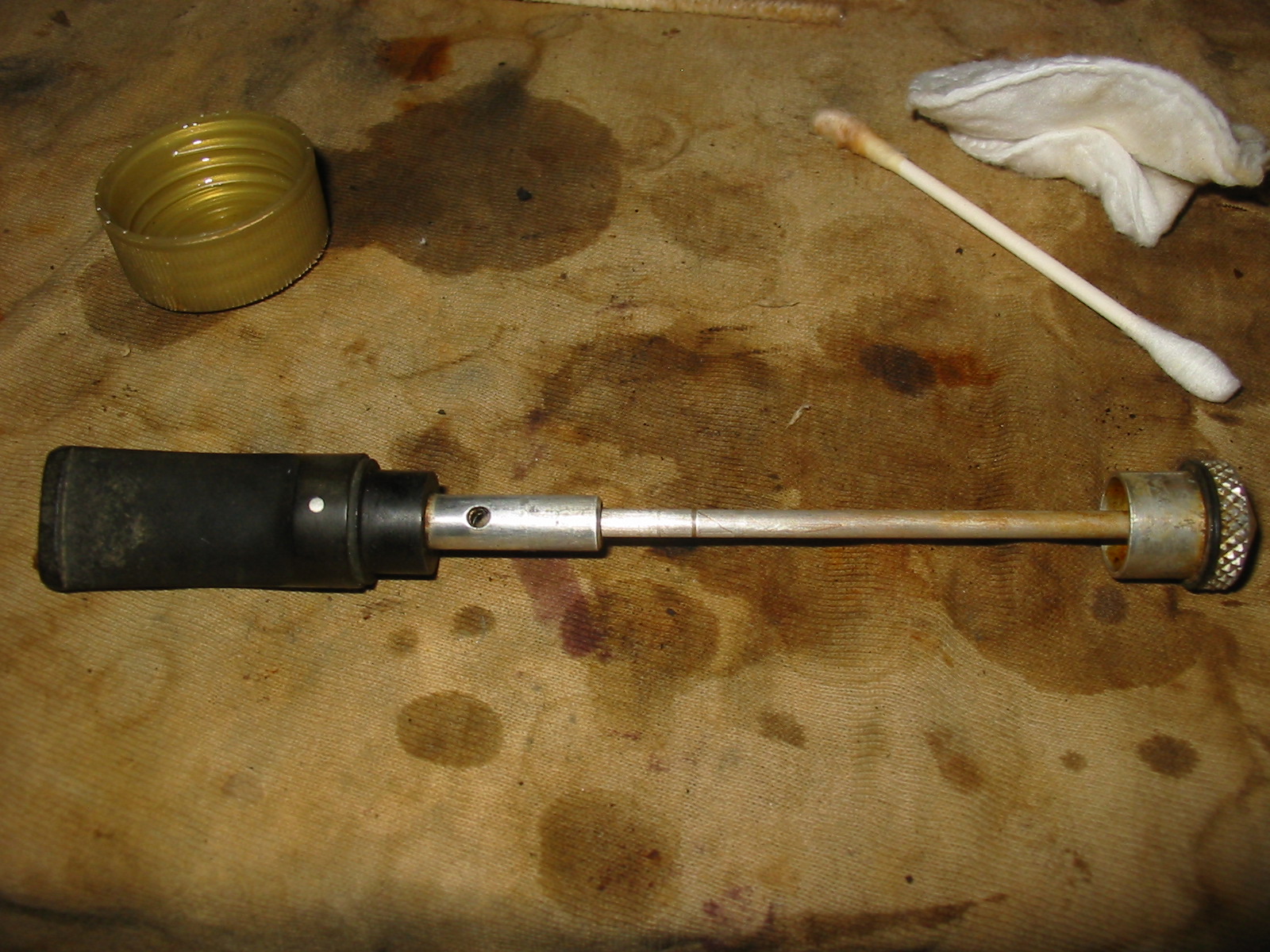
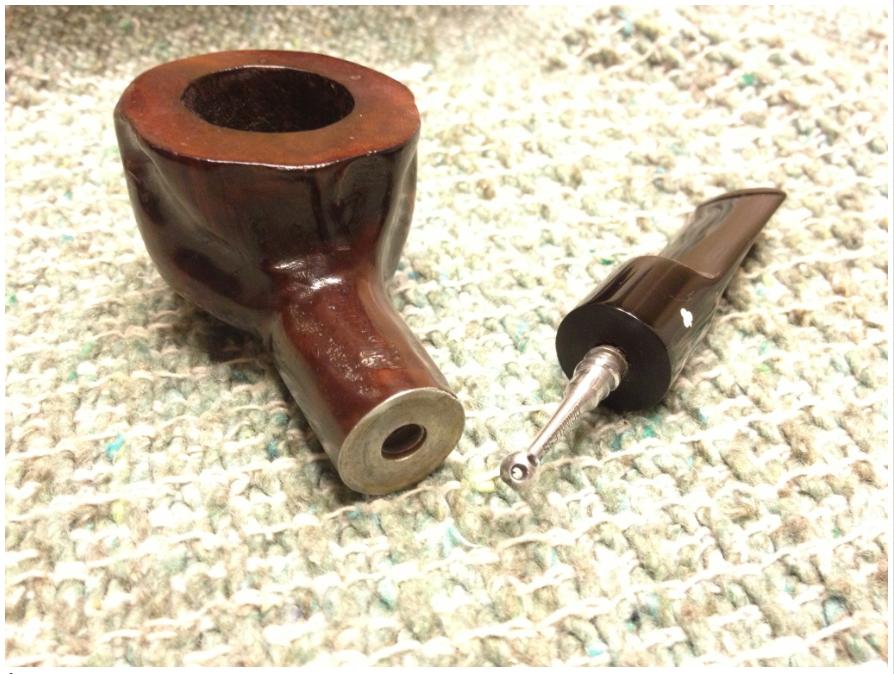
I was able to take it apart, which sounds normal but I have found that on these metal pipes that are in this condition the end cap and bowl are often welded together with tars that make breaking it free and taking it apart virtually impossible. The four photos below show the state of the parts once the pipe was disassembled. The bowl each had a screw in the bottom of the bowl with a hole in the center and a cap on the bottom of the bowl that was inset. The bowls thus could be quickly interchanged. The apparatus on the inside consisted of an end cap, a long pin that was threaded on both ends – into the cap and into the tenon on the stem, a nylon stem and in this case a paper filter slid over the pin. The pin was not hollow but acted as the connection that held the stem in place in the aluminum barrel. The end cap was inserted on one end with the pin extended the length of the barrel and the stem screwed onto the pin and tightening against the barrel. Without the end cap and pin in place the stem did not stay in place.

The inside of the barrel had a dark lacquer of tobacco juices that had hardened on the walls. The pin and inside the cap and tenon the same dark amber lacquer was hardened. This was going to be a challenge to clean up. The pressed briar bowls would also not be easy to clean as I was afraid of using alcohol on them for fear of decompressing the material with moisture.
IMG_2378

IMG_2379

IMG_2380

IMG_2381

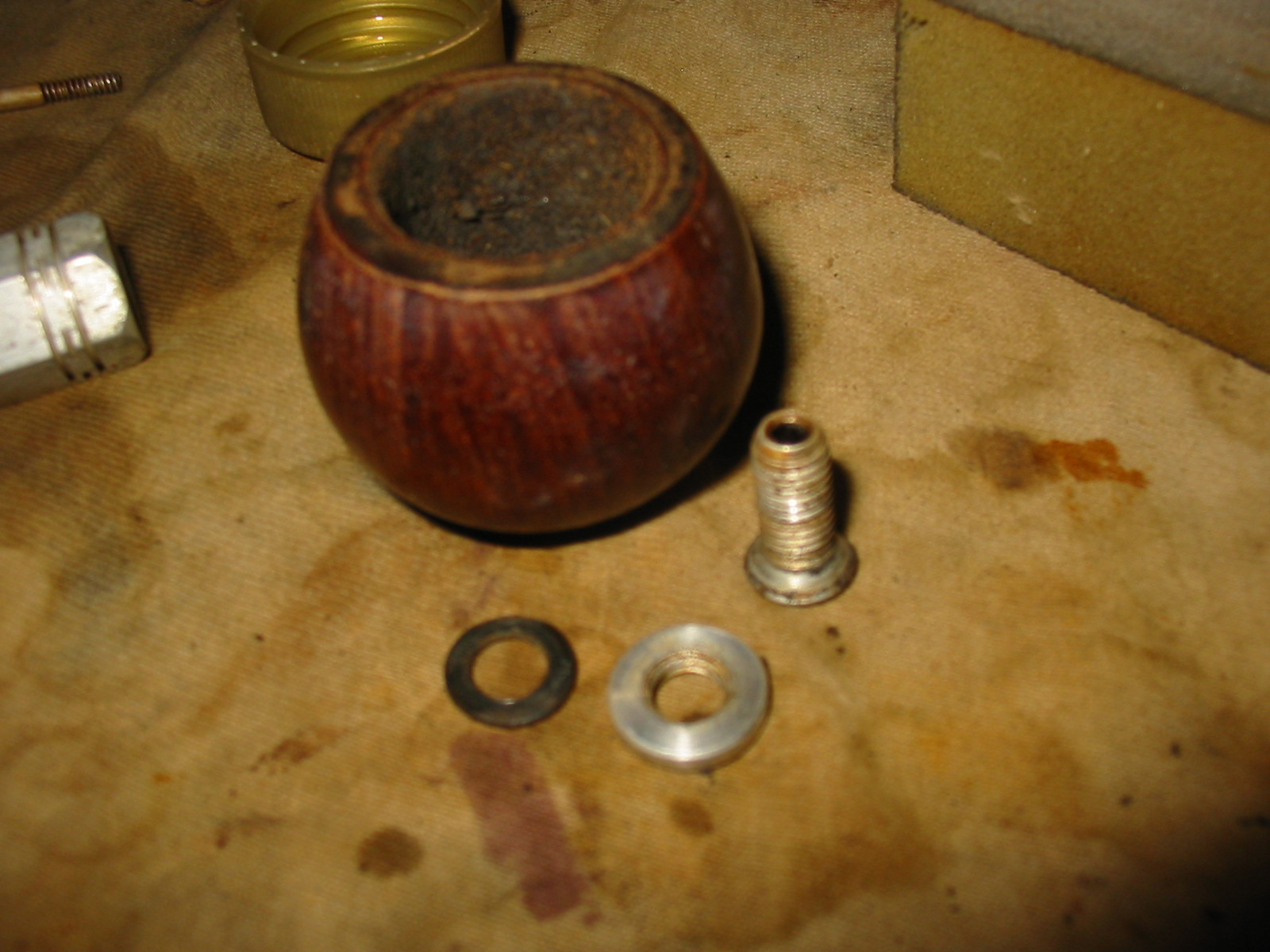
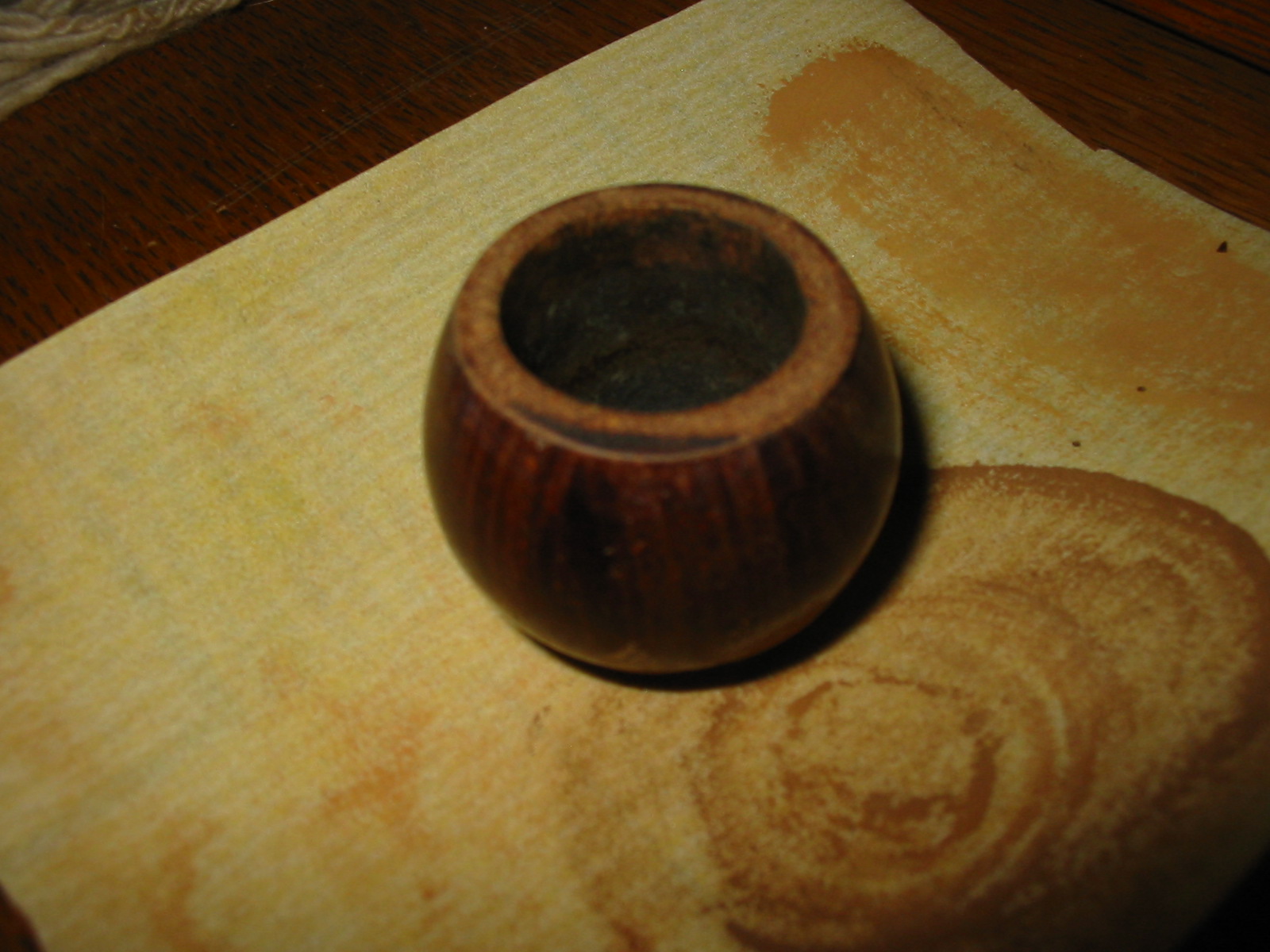
I took apart the smooth bowl in order to ream and clean it. The next two photos show the parts of the bowl. You can see the hollow screw, the insert cap and a small washer. From all appearances the washer was an addition to the set up done by the previous owner. I appeared to me that the bowl had been over tightened and the cap pressed to deeply into the bowl for a tight fit. The washer took up the excess space and allowed the bowl to be tightened. In the second photo the top edge of the rim can be seen with the dents and damage visible.
IMG_2383

IMG_2384

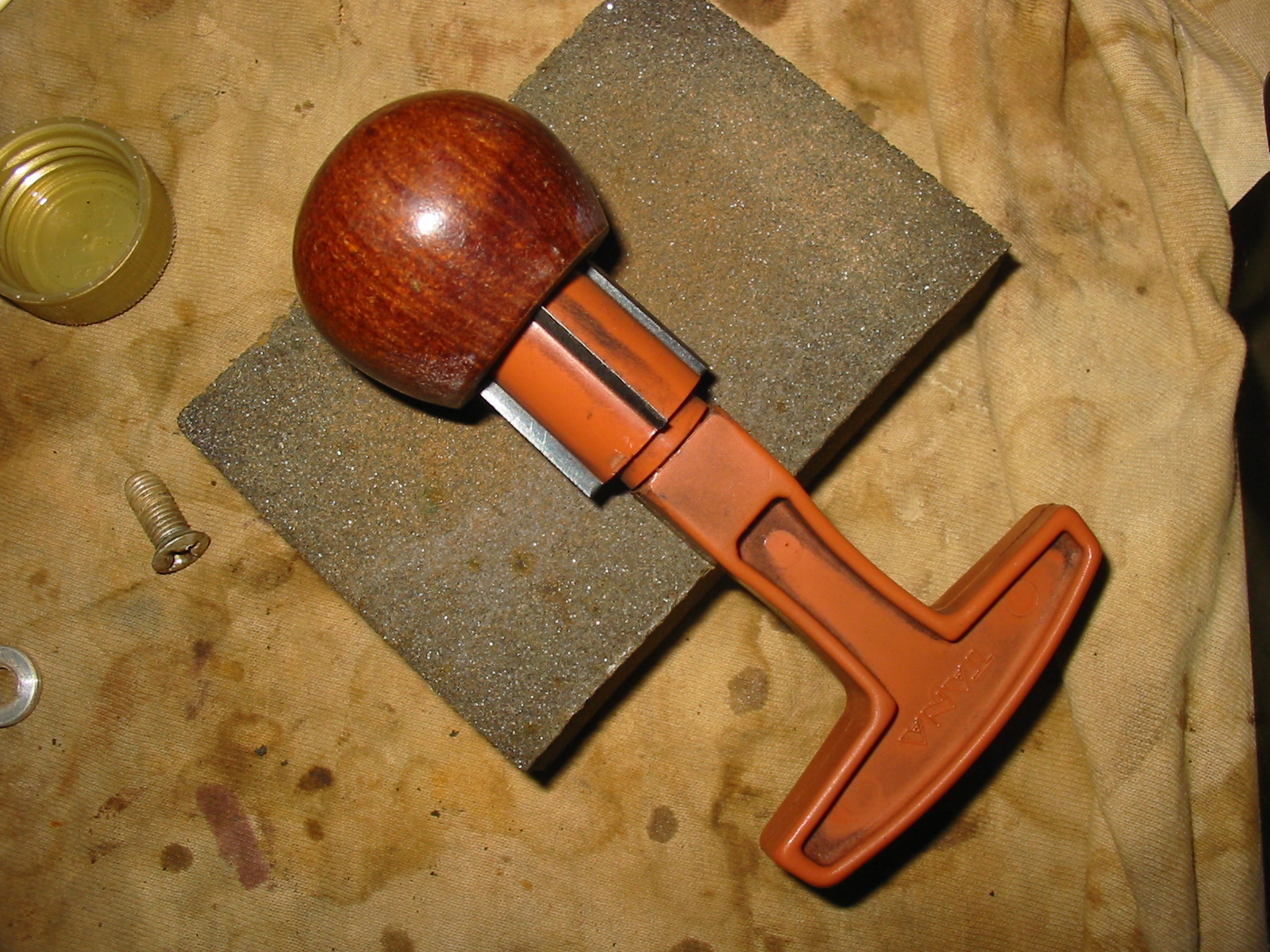
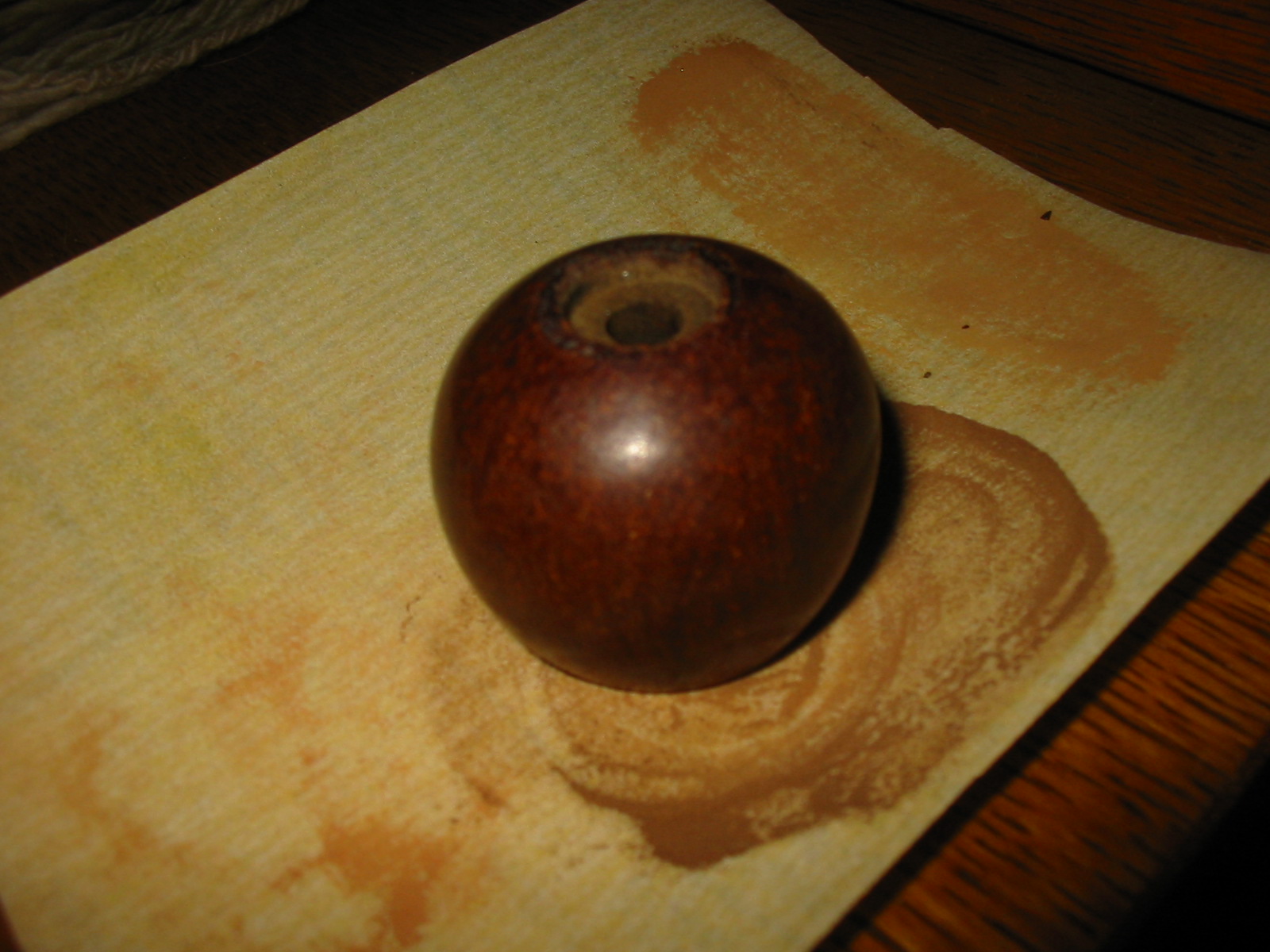
I cleaned the screw and the washers with Everclear and cotton swabs to remove the lacquer buildup. I reamed the bowl with the largest cutting head of the PipNet reamer set as the bowl is quite large. In the first photo below the damaged finish is also visible. Once I had reamed the bowl I topped it with my usual method – a piece of sandpaper on a flat board. I twisted the bowl surface against the sandpaper until the damage was removed. Once done the composite nature of the bowl material was very visible.
IMG_2385

IMG_2386

IMG_2388

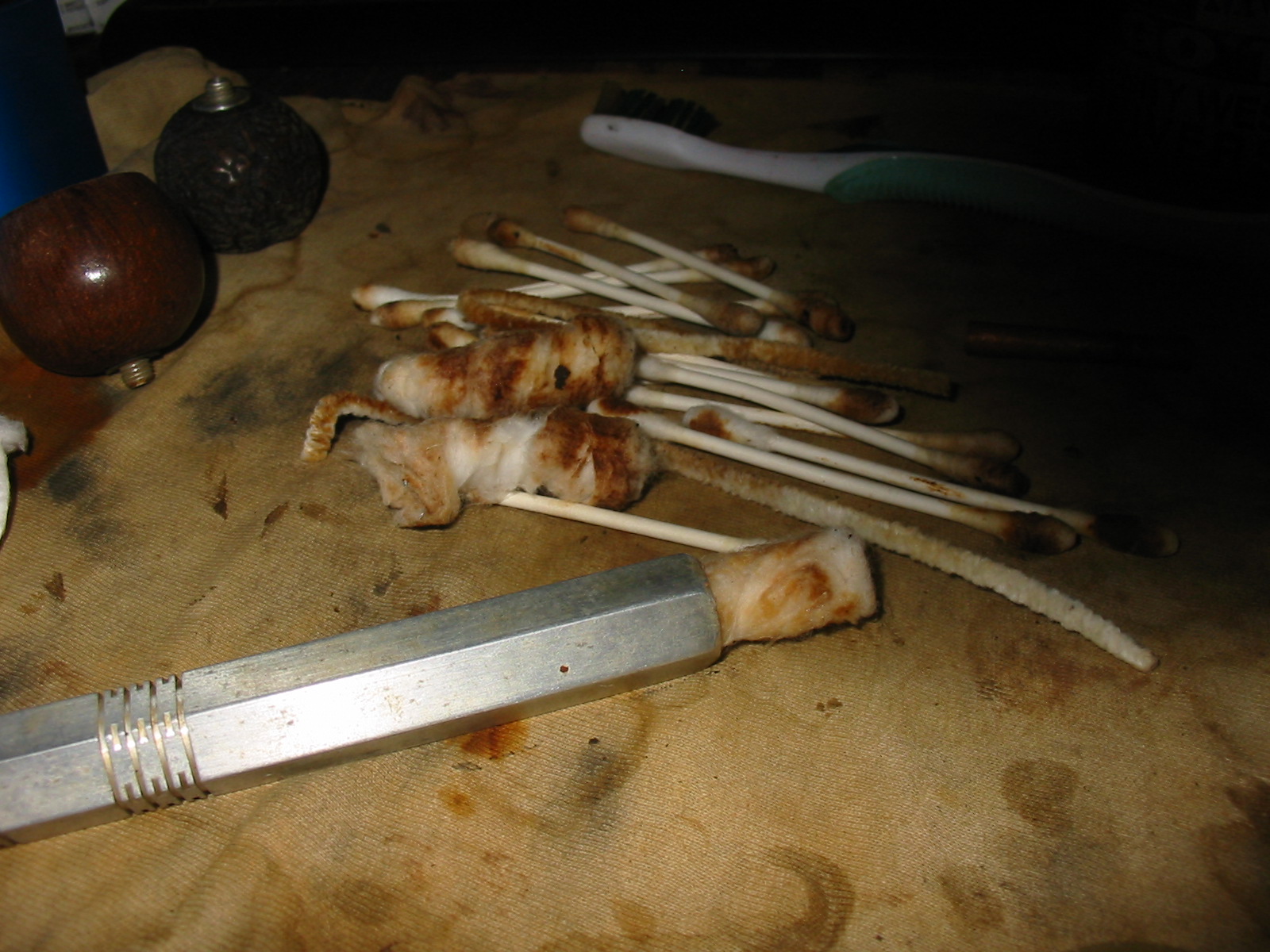
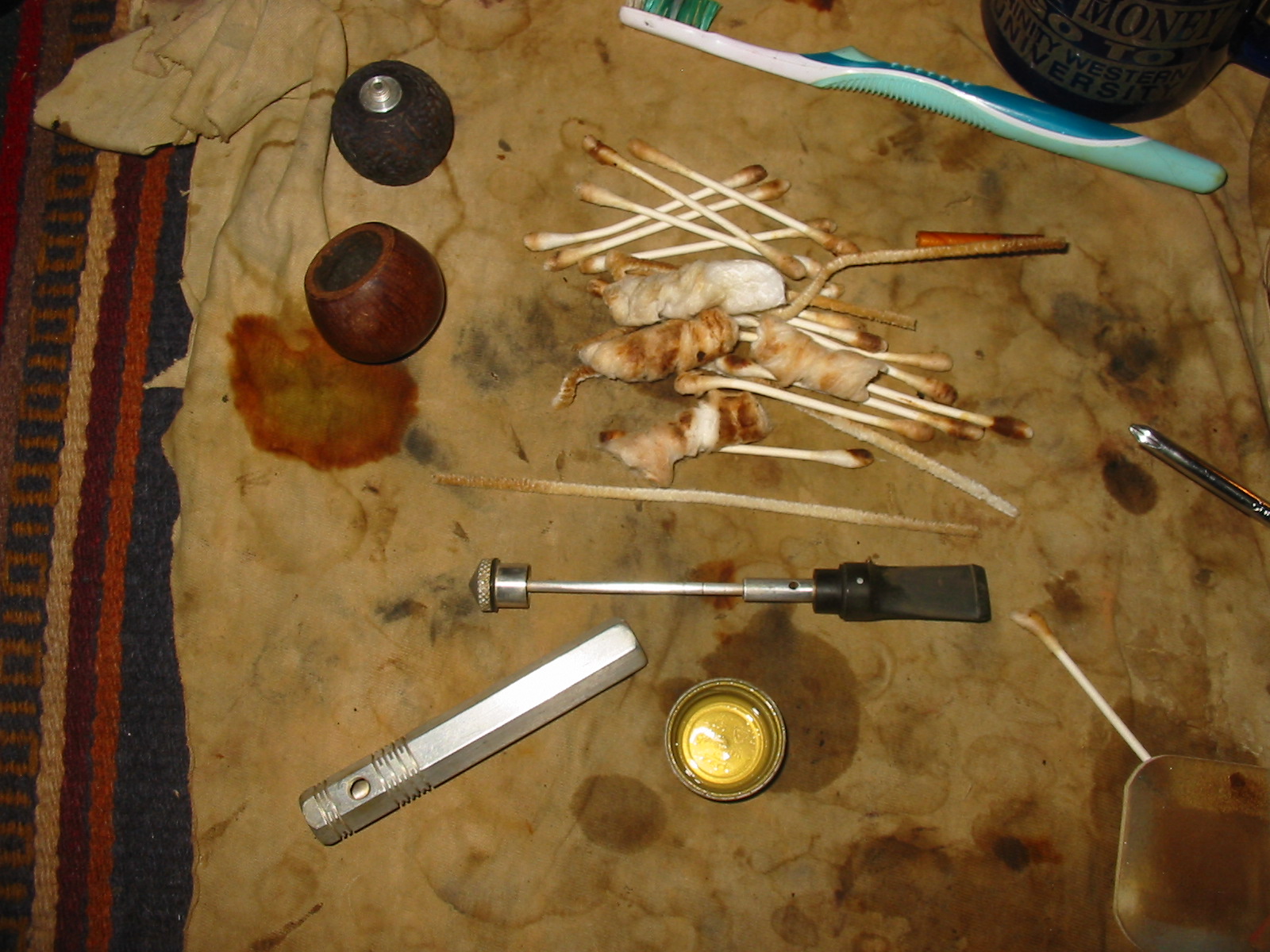
Cleaning out the barrel and all of the metal internals was labour intensive. It took many pipe cleaners, cotton swabs and Everclear to get the pipe barrel clean. I used cotton bolls that I twisted into plugs, dipped in Everclear and rammed through the barrel – just like cleaning a rifle. In the photos below you can see some of the plugs and swabs that were used. Once I had scrubbed the surfaces clean inside the barrel I worked on the pin, tenon and end cap. I used 0000 steel wool to clean the aluminum surface and brighten it.
IMG_2389

IMG_2391

IMG_2392

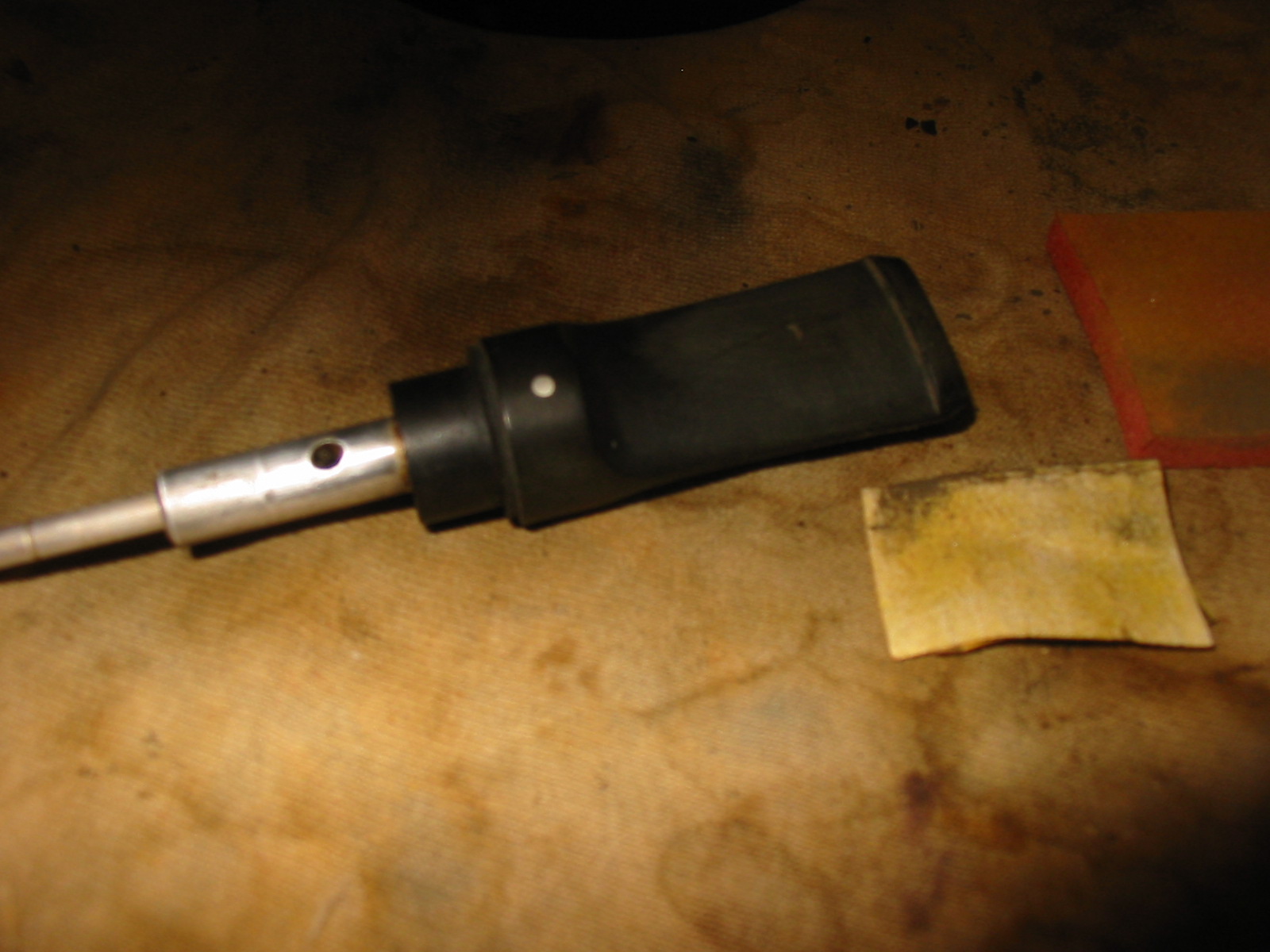
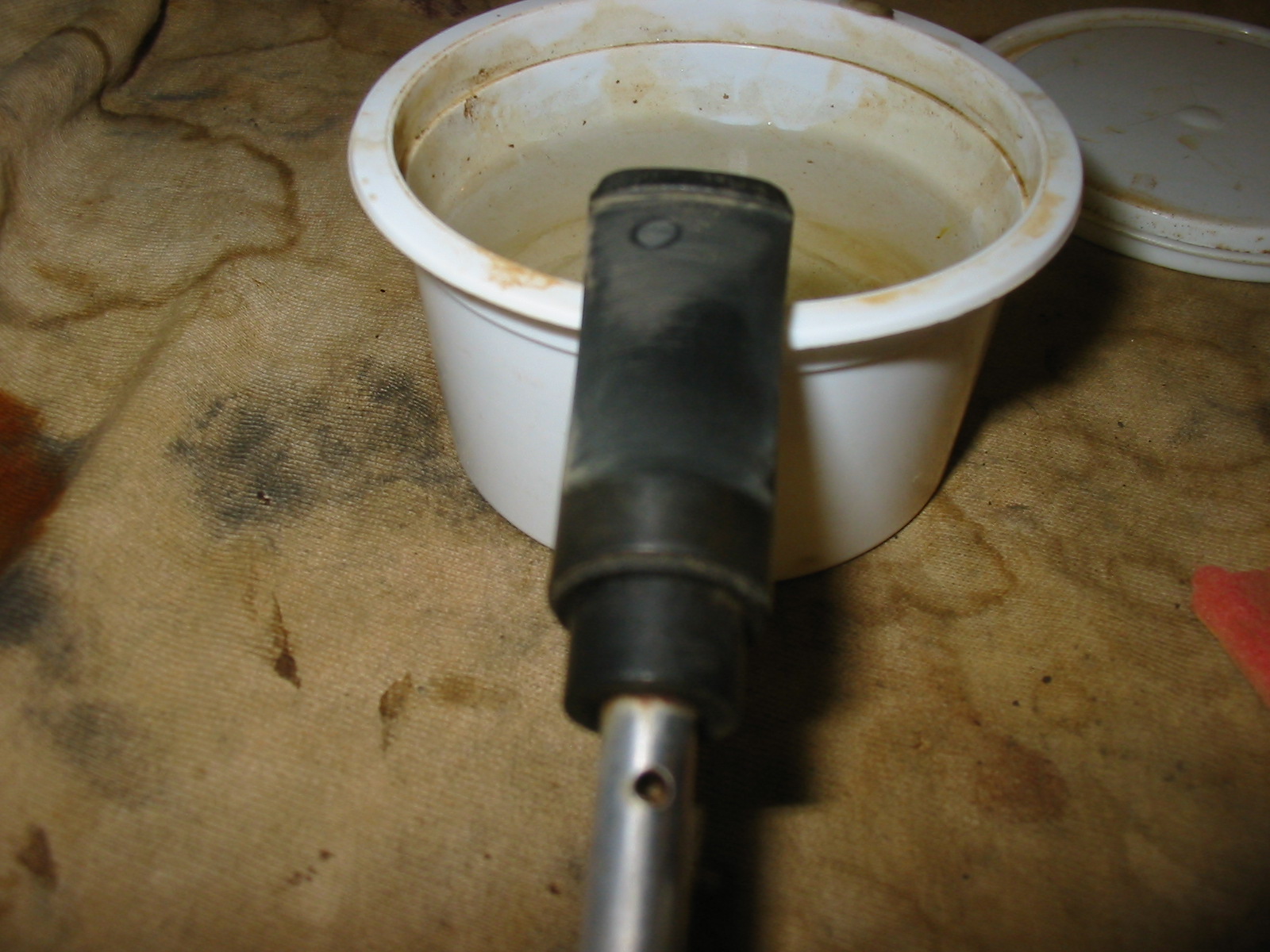
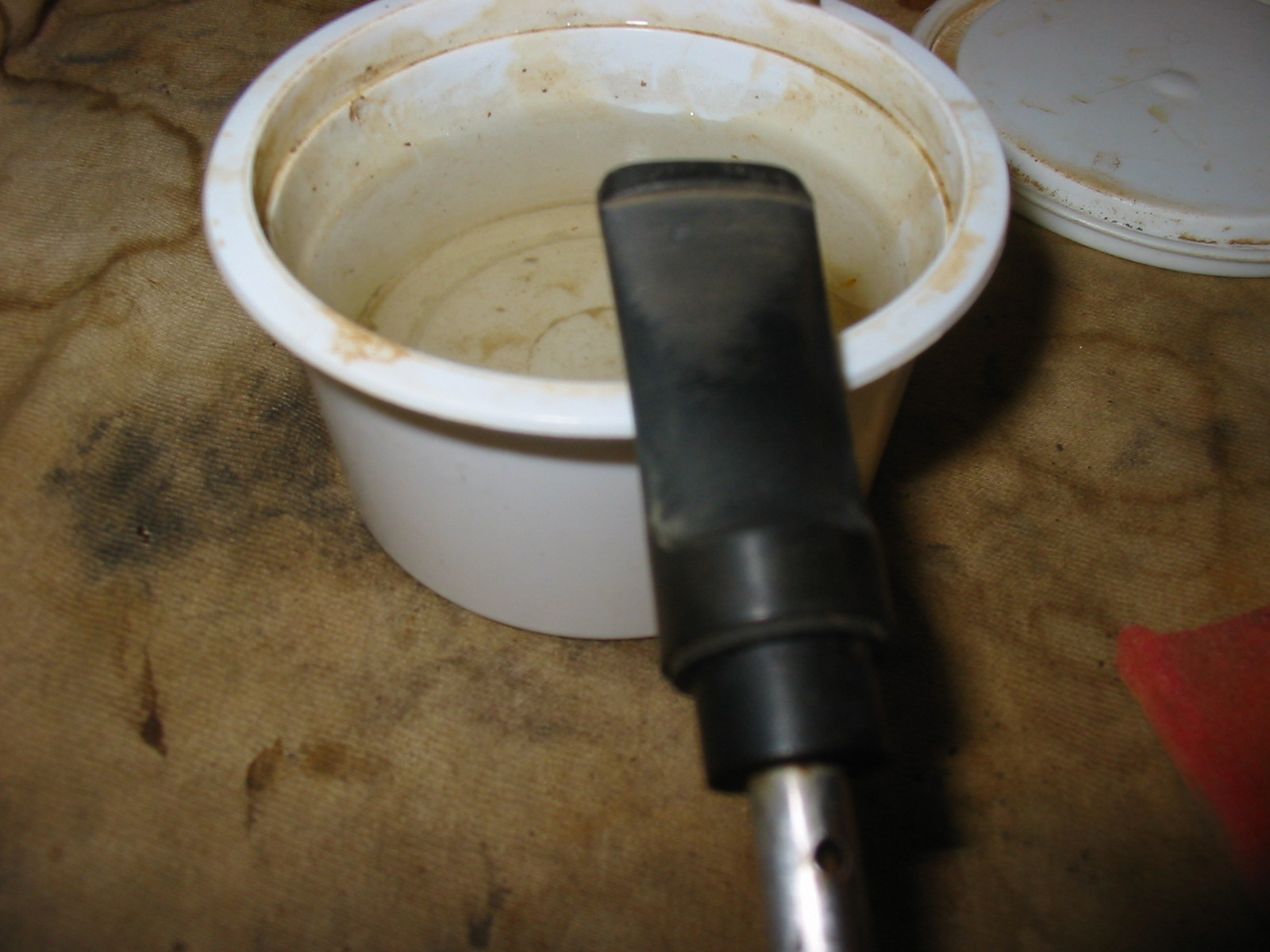
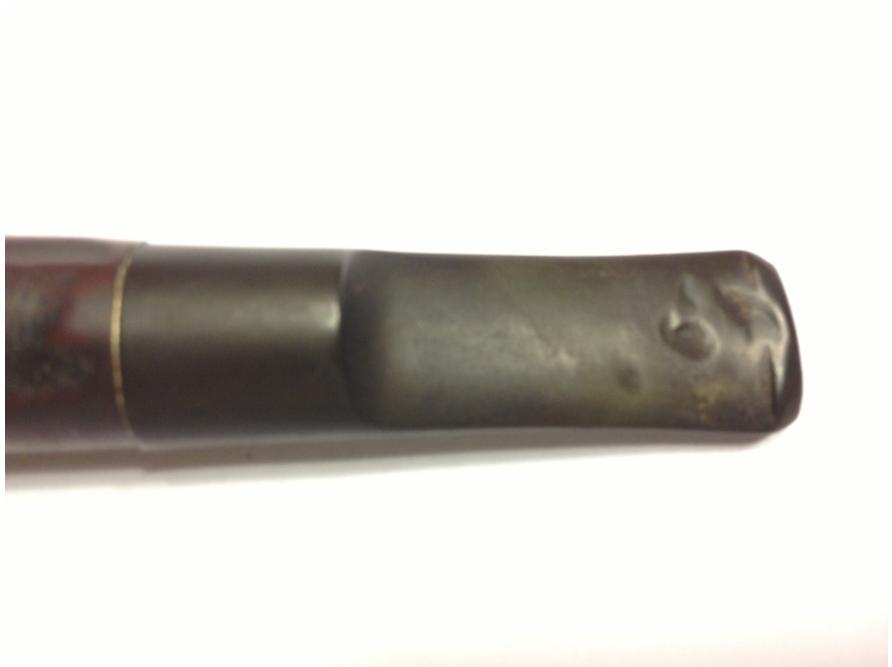
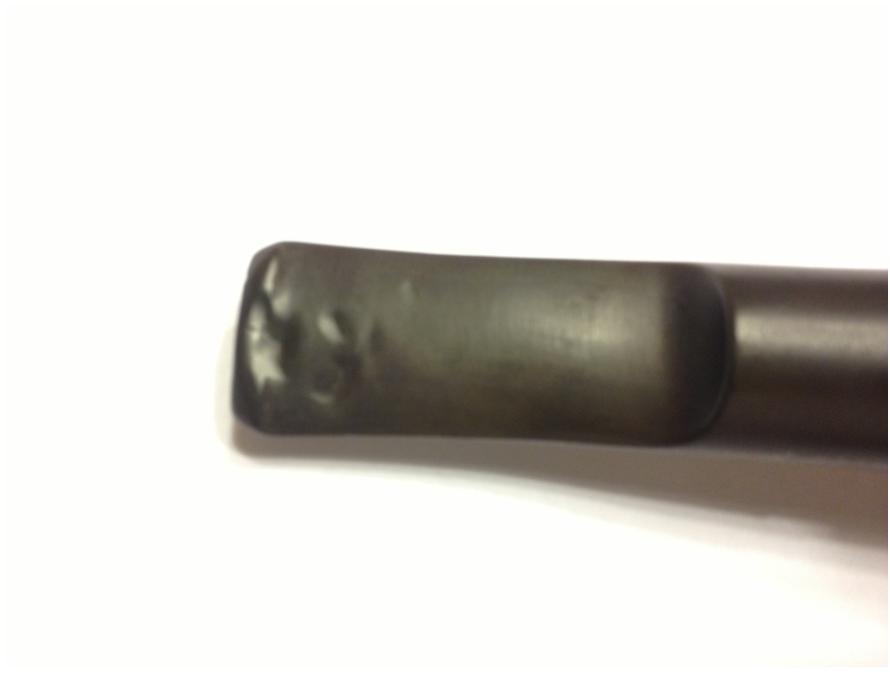
The nylon stem had a deep tooth mark on the top and on the underside of the stem. I sanded the stem with 220 grit sandpaper and then a medium grit sanding sponge to remove the tooth chatter and the calcification on the stem. I wiped it clean with Everclear to remove the sanding dust, cleaned the inside with Everclear and picked out the debris in the tooth dents. Once they were clean and dry I patched the dents with a drop of clear superglue. Because the colour of the stem is more of a grey black the black superglue did not match. The clear superglue was transparent and when dried and sanded was invisible.
IMG_2393

IMG_2394

IMG_2395

IMG_2396

IMG_2397

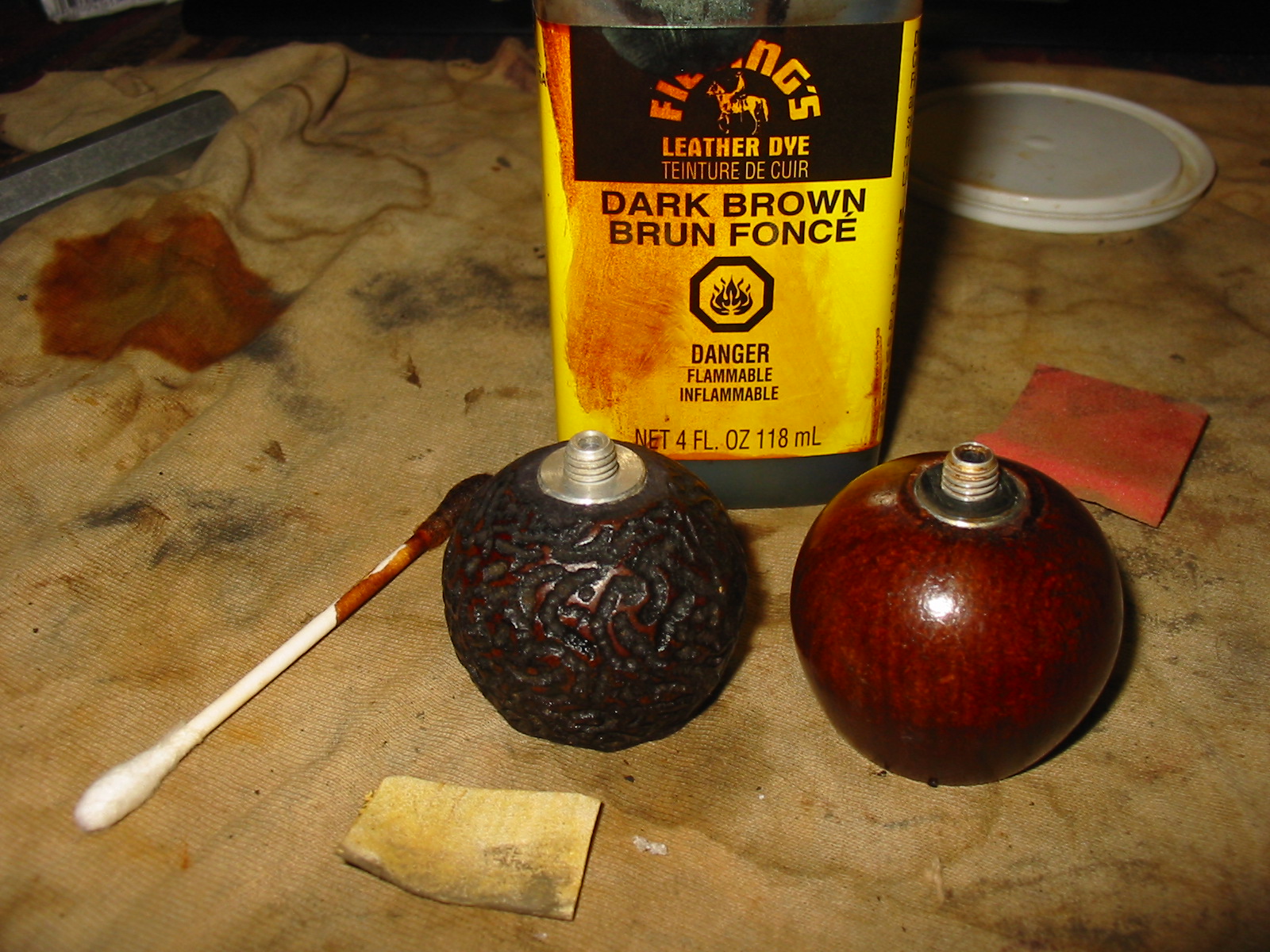
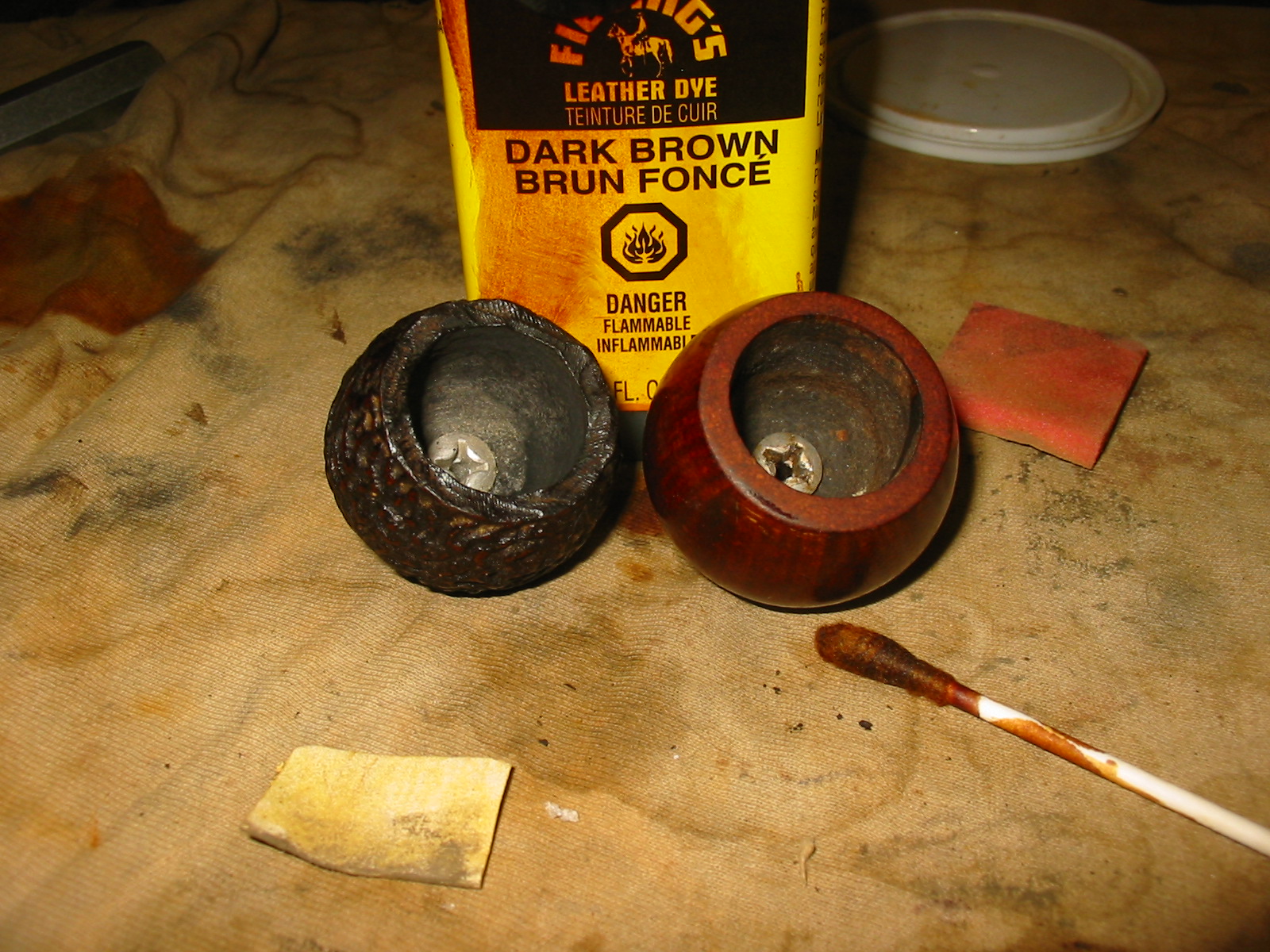
I set the stem aside to let the superglue spot patches to cure before I sanded them smooth. While it was drying I restained the bowls with a dark brown aniline stain applied with a cotton swab. I applied it and flamed it to set it. I was not sure the stain would take on the smooth bowl as it seemed to have a varnish coat on the surface and the grain pattern was a decal. Once it was dry I would give it a light buff and see if it took.
IMG_2399

IMG_2401

I set the bowls aside and worked on the superglue patches on the stem. I sanded them smooth with 220 grit sandpaper and then followed that by sanding with a medium grit sanding sponge. The next series of four photos show the process of blending in the repair.
IMG_2402

IMG_2403

IMG_2404

IMG_2405

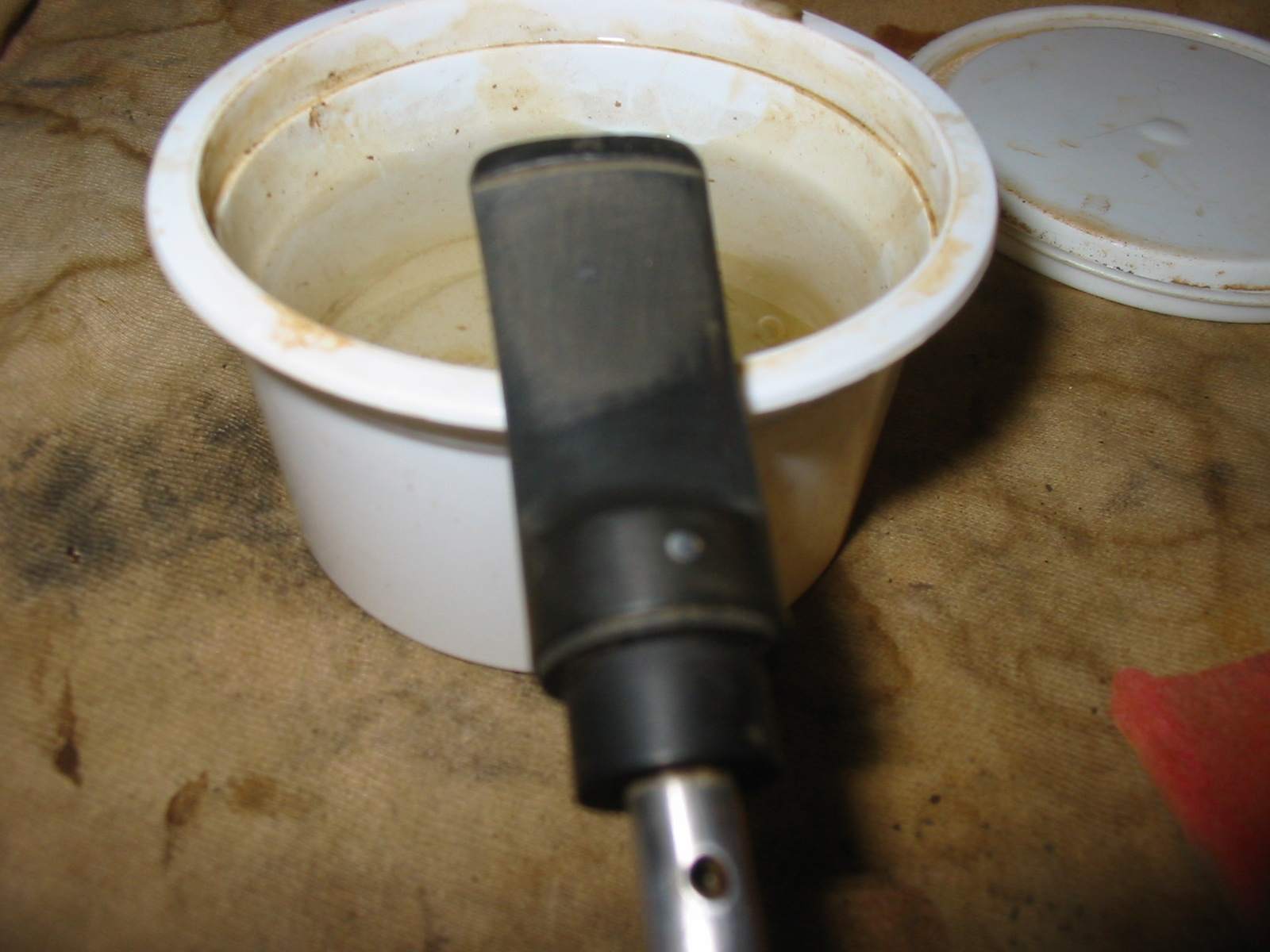
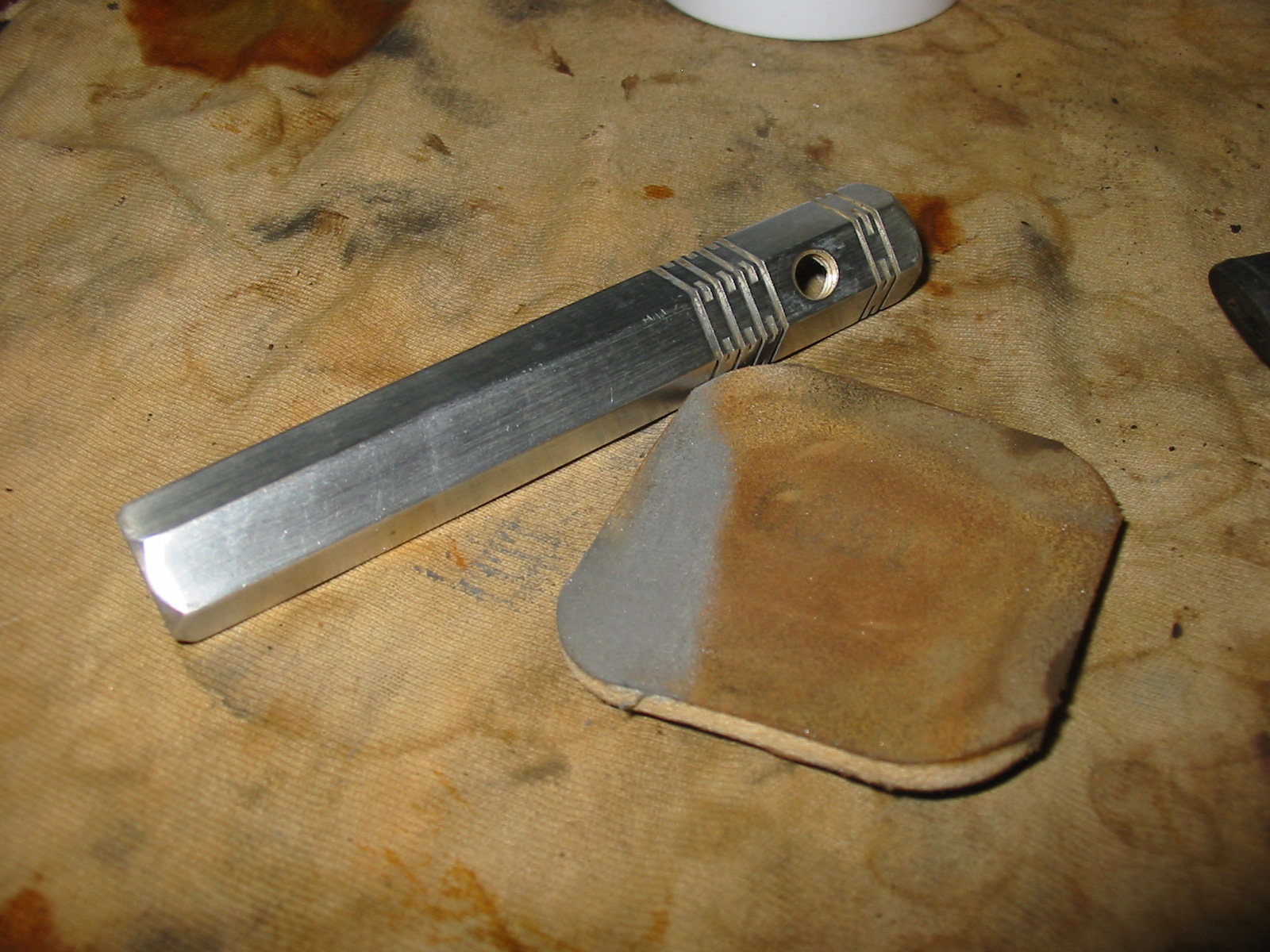
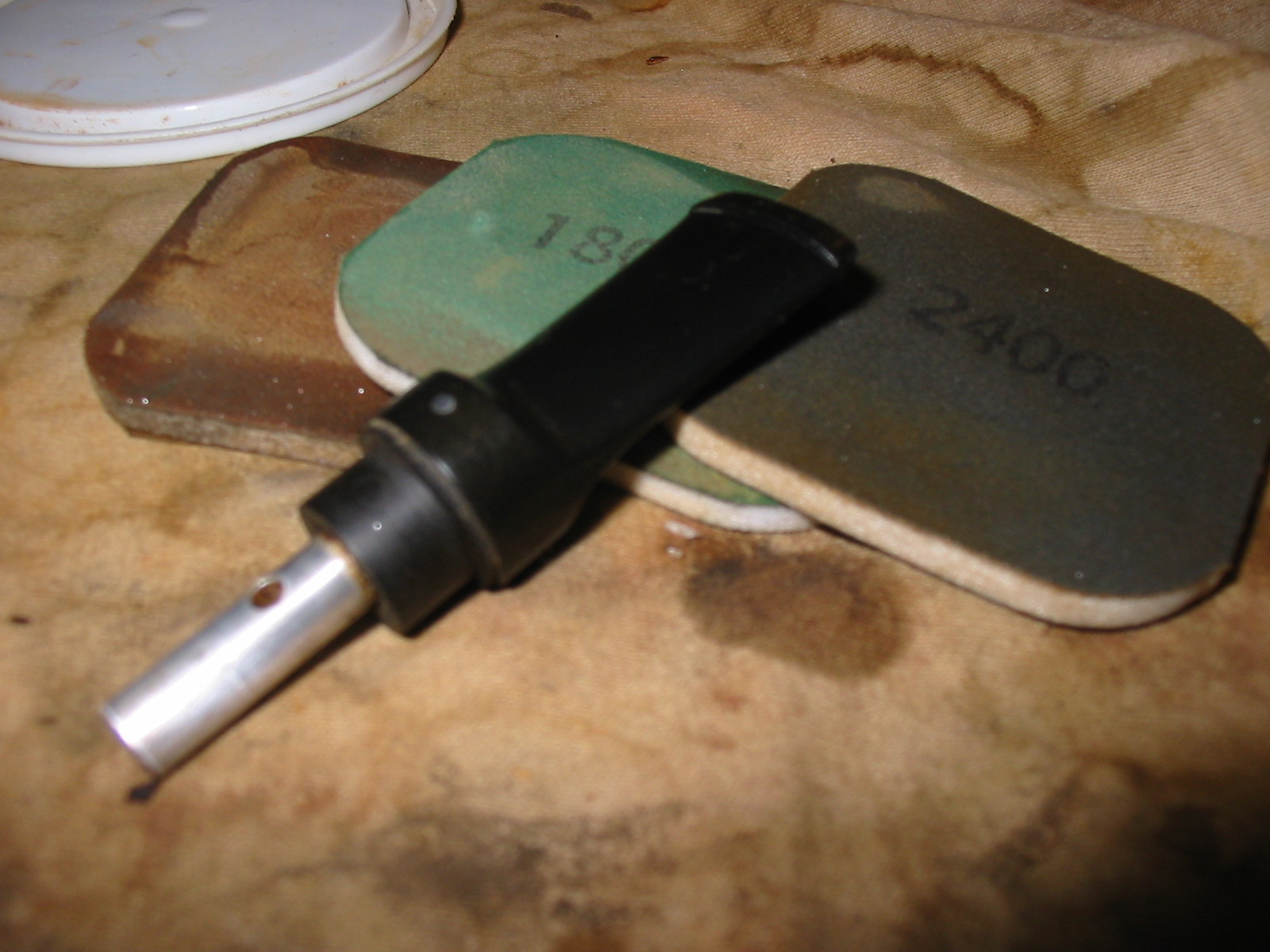
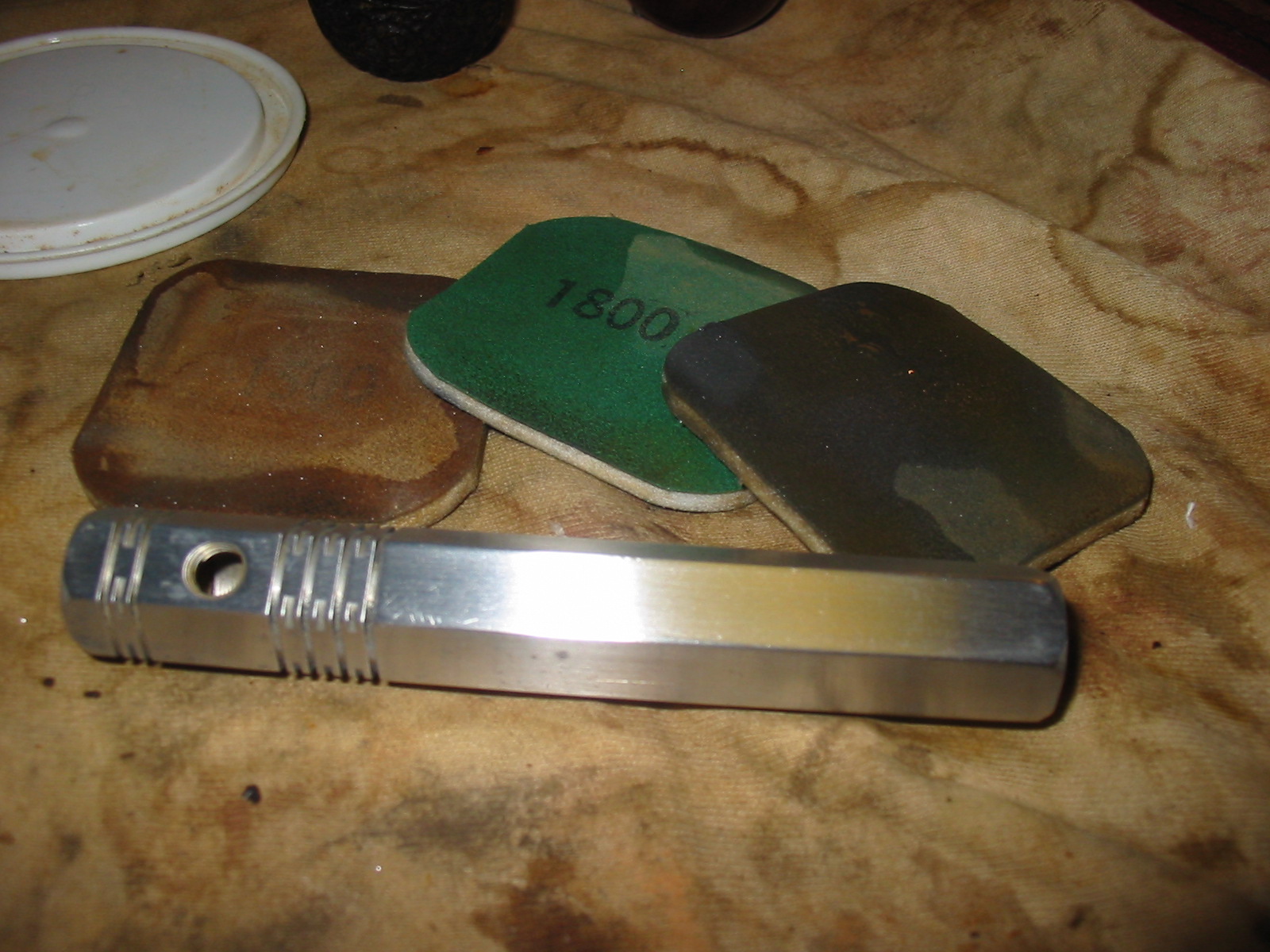
Once I had blended the patch into the surface of the stem it was time to sand it with the micromesh sanding pads from 1500-12,000 grit. I decided to sand both the stem and the aluminum barrel at the same time. I wet sanded with the 1500—2400 grit pads to minimize the scratching on both and then dry sanded with the remaining grits. By the end of the process the patch was invisible and both the stem and the barrel shone.
IMG_2406

IMG_2407

IMG_2408

IMG_2409

IMG_2410

IMG_2411

IMG_2412

Once I had finished with the micromesh sanding pads I reassembled the internals, stem and the barrel. I gave it a light buff with White Diamond. A light touch is necessary in order not to turn the buffing pads black with the metal as it is polished. I took it back to the work table and hand applied wax and hand buffed it with a soft towel. The next two photos show the finished barrel and stem.
IMG_2413

IMG_2414

When the bowls had dried I buffed them with White Diamond as well. The rusticated bowl worked well and the shine came up on it with no problem. The smooth bowl was another story altogether. As I buffed it the finish came off in pieces. The varnish coat lifted and along with it the decal. The grain coat disappeared. I then gave it a clean buff with red Tripoli to remove the coat in its entirety. I hand sanded the bowl with the medium grit sanding sponge. Once the surface was clean I wiped it down with an alcohol dampened cotton pad. I then used a permanent black marker to draw grain lines on the surface of the bowl. These looked horrible after I had applied them but with some sanding with micromesh sanding pads and the sanding sponge I was able to lighten them and they began to look more natural. I then restained the bowl with some linseed oil and cherry stain. The photo below shows the finished surface of both bowls.
IMG_2415

When the bowls had dried I tried screwing each bowl to the barrel to make sure they fit well. I coated the rusticated bowl with Halcyon II wax and gave it a light buff with a clean flannel buffing pad. The smooth bowl I coated with carnauba wax and lightly buffed with the flannel buff as well. The finished pipe is pictured below with each of the bowls in place. I am pleased with how it turned out. In evaluating the amount of work to keep it clean, I am not sure I will ever smoke this one. It may well end up in the display cupboard as part of my oddities collection.
IMG_2416

IMG_2417

IMG_2418

IMG_2420

IMG_2421

IMG_2422

IMG_2423

IMG_2424

A Kaywoodie Handmade Brought Back to Life – Greg Wolford


Blog by Greg Wolford

Greg is one of the blog’s readers and comments often on various posts. He contacted me about writing an article for the blog. He sent me the following article. I want to thank Greg for documenting his work on this old Kaywoodie Handmade. It is great to be able to read and see what others are doing as they work on restoring old pipes to their former glory. Here is a brief biography of Greg that he has written. (I invite others who have been reading the blog to do the same. Send us pictures and documentation of the work you have done and are doing.)

In June of last year I saw a bunch of old pipes, filthy and dirty, wasting away in an antique store. Thoughts of my former hobby of working with wood flooded my brain, as did the romantic idea of bringing new life to these old relics. I purchased the whole lot of 25-30 pipes and pieces and began to research how one goes about restoring these wonderful pipes to at least enjoyable and useable condition, if not to their total and complete former glory. Much help and advice has been shared with me in this short period of time; I have learned a tremendous amount from this blog, its founder and contributors. I am honored to have the opportunity to share some of my work here and to, hopefully, repay some of the kindness shown to me when I began and as I continue to learn this restoration-side of our pipe hobby.

I picked up this old Kaywoodie last month at an antique mall. It was in poor, filthy shape when I found it but I knew her potential. The stamping is not very strong but identifies it as a Kaywoodie Handmade, which I’ve seen and owned before. But this is one of the oversize models, a style that I’ve not yet had.

ImageImageImageImageImageImage

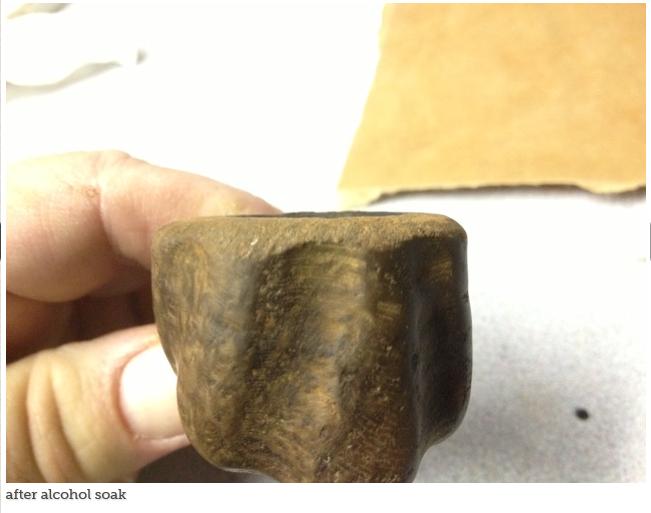
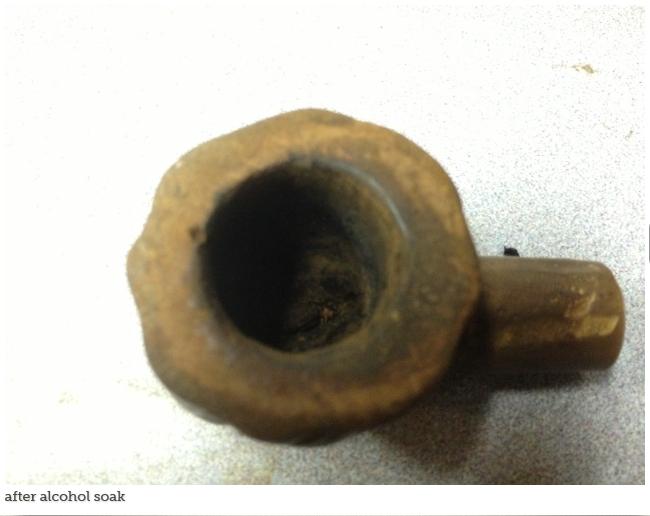
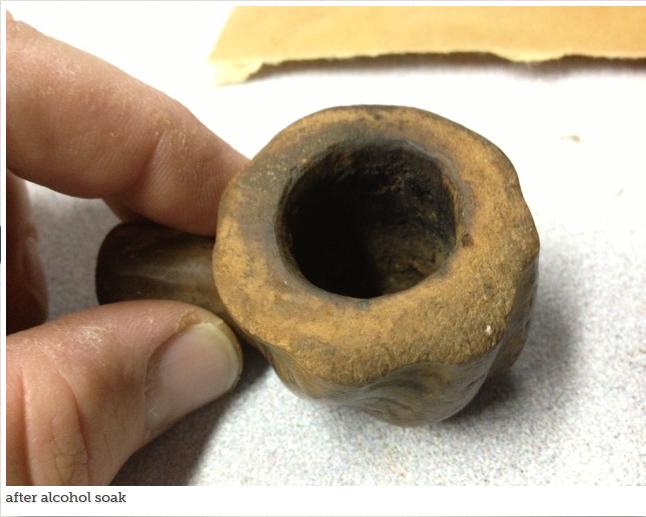
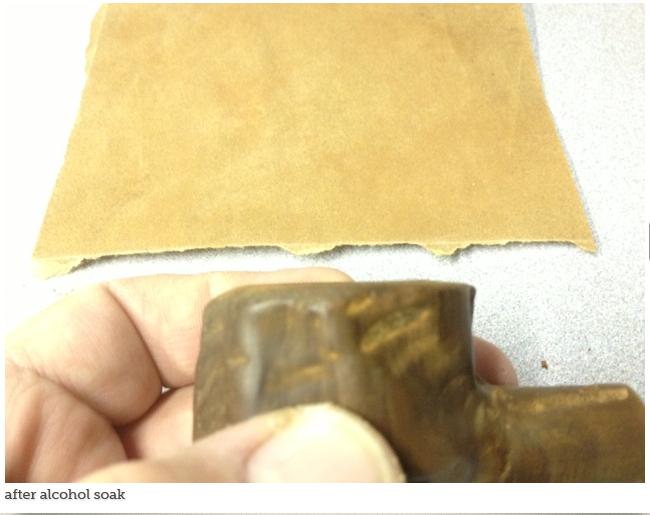
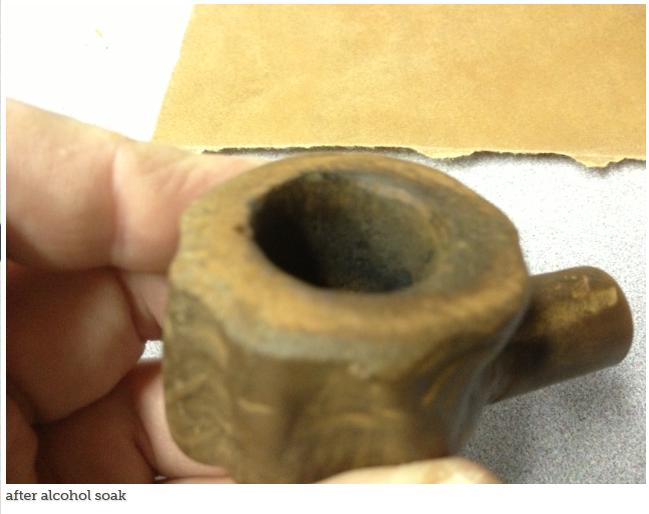
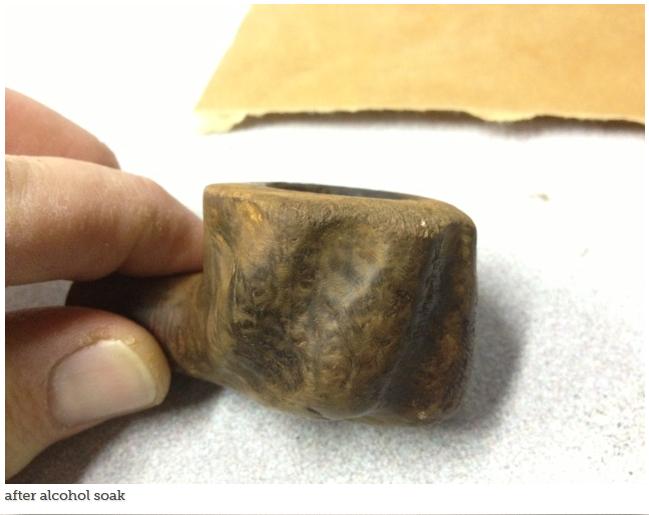
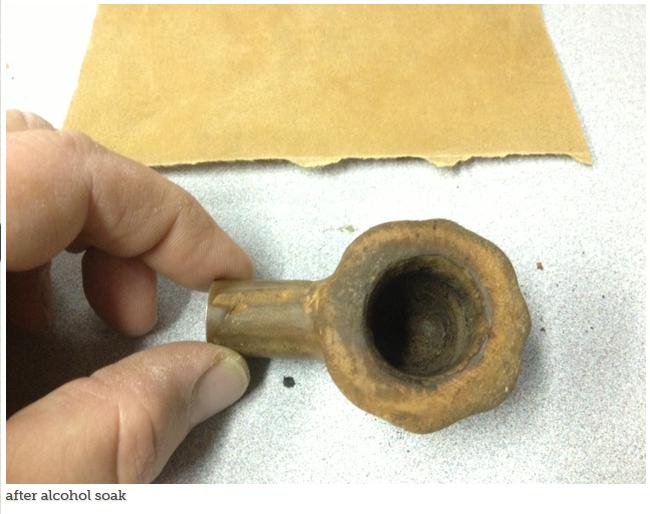
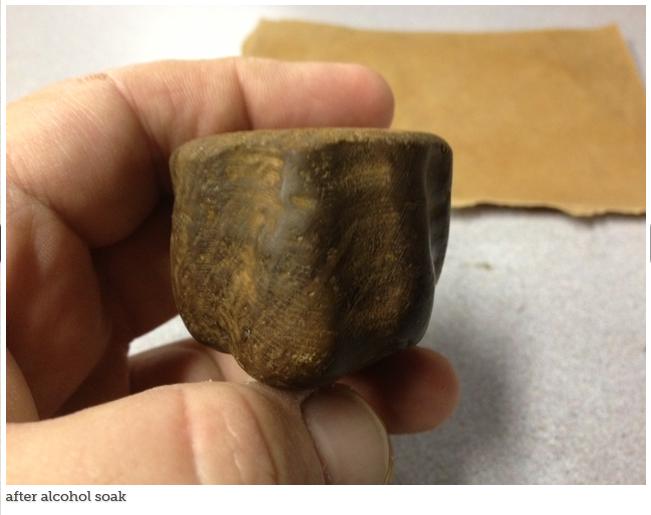
I began with an overnight alcohol soak and allowed a few hours dry time before I began working in the briar. She had a few scratches and a bit of whitish “mold” that I wanted to get rid of.

ImageImageImage

The previous owner must have had the dreadful habit of knocking the rim of the bowl to empty the pipe on a hard surface; the front was beaten down by probably 1/8th of inch, give or take a bit, giving it a terrible “frontal slope” (visible in the photos above and below). This seemed like the best place to start working on the briar. Before starting, I put the stem in a warm OxyClean soak so it would be ready when I was. 

ImageImageImageImageImage

It took a lot of steaming and some topping to get the bowl back to even. I alternated steaming and topping until I was happy with the shape. The only thing I was unhappy with was finding a sand pit in the new top of the rim; I filled it with briar dust and dropped a little Super Glue into it to make a fill. The fill is somewhat visible but should fade with use as patina develops (I hope). 

ImageImage

For the scratches and left over “mold”, I lightly sanded with 400 grit wet dry paper. It didn’t take too long on the scratches since they weren’t deep. The carved areas where the whitish substance was took more time but came off fairly easily.  I then stained it with Fiebing’s Dark Brown leather dye, cut about 50/50 with 91% isopropyl alcohol. I applied, flamed, buffed with an old t-shirt by hand and repeated. Then I took the pipe to the buffer for a treatment with Tripoli, white diamond, and finally a few coats of carnauba wax. For the final buffing I used my cordless drill with a “mushroom” buffer attachment. I find the shape of the mushroom allows me to get into every crevice with relative ease. Lastly, I cleaned with stinger by buffing it with blue rouge several times, bringing it back up to a nice, new shine. I then set the bowl aside to work on the stem. 

ImageImage

When I took stem out of its bath I rinsed it well and used a Miracle Eraser to remove some of the loosened oxidation. To my surprise I found that the bit was cracked under all the crud, something I had not dealt with before. I then took a fluffy pipe cleaner and dipped the first 1.5 inches or so into Vaseline and then inserted it into the stem.  I dripped some Super Glue into the crack and let it sit a while until it had hardened through. (This was my first time fixing a crack with super glue and was happy with the outcome and learning curve.) The stem was really deeply marked dents and scratches and took a lot of time and work. I began with some heat from a candle to raise what I could of the dents. Then I used various needle files, wet/dry sand paper in grits from 220-800, micro mesh 1500-4000, plastic polish and carnauba wax on it. I actually started over twice, at different points, to get it as nice as possible.

Here are photos of the finished pipe.ImageImageImageImageImageImage

Stem Repair and a Makeover on a BBB Bulldog


Blog by Steve Laug

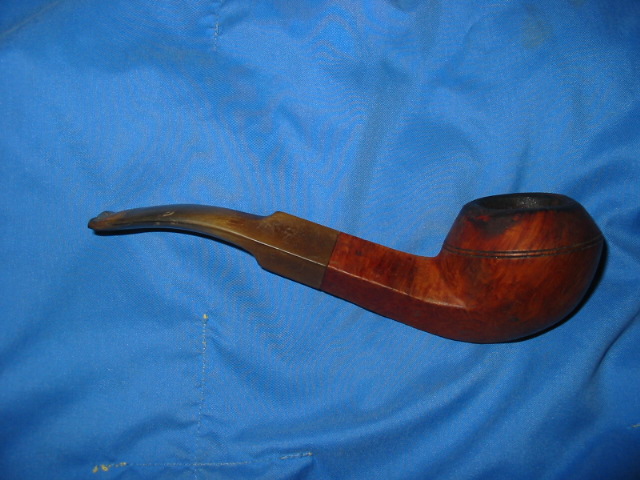
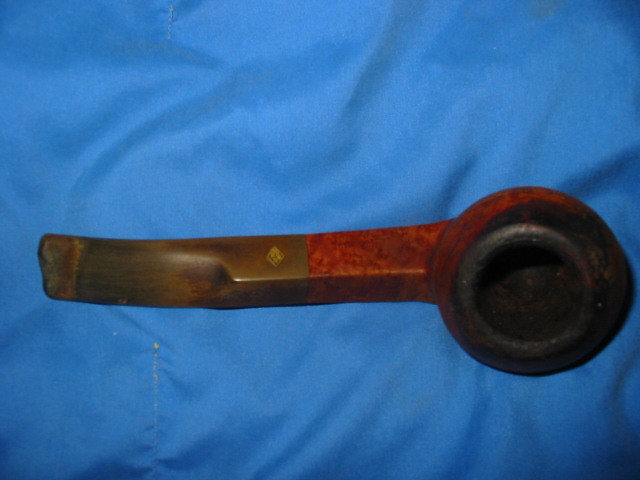
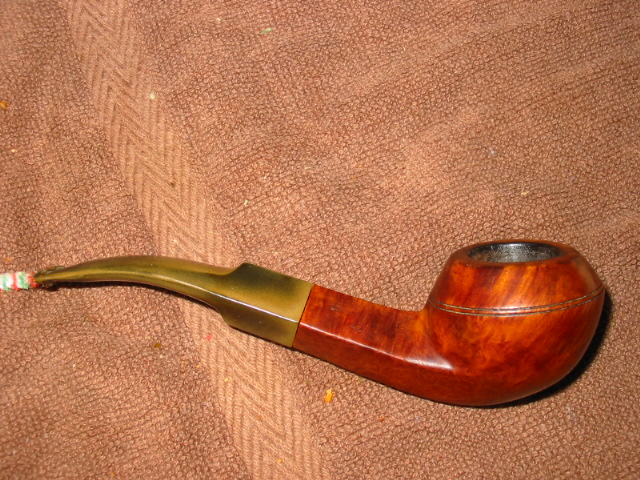
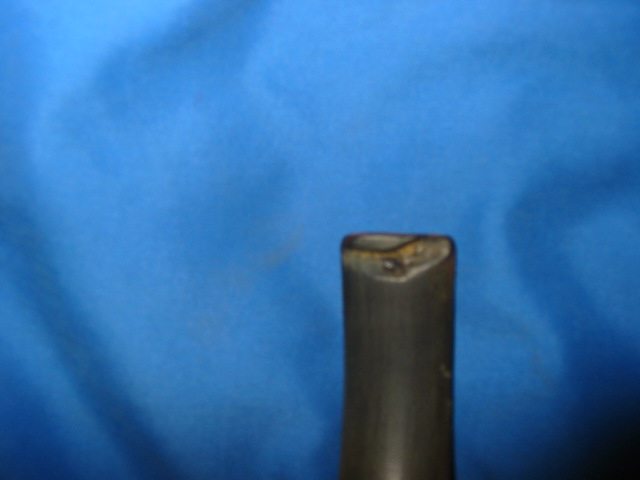
When I saw this old Bulldog on EBay I could not pass it up. It had several things about it that I enjoy – it was a BBB pipe, it was older, and it looked like a challenge as the stem was badly chewed but still retained the shape. In the first three pictures below you can see the overall state of the pipe. The bowl was badly tarred and the finish was ruined, both from the tars and from what appeared to be some water marks. The rim looked to be in bad shape – much buildup of tars and carbon. But as I inspected it I found that there were no dents in the rim. The grain on the pipe showed some promise. The stem fit well and had the stepped down tenon that is on the older BBB’s. The brass logo in the diamond was still pretty clear, a bit worn but still very distinguishable. The button was non-existent and was badly dented by teeth. There was one small bite through on the underside of the stem and the rest were large deep dents. The stem was badly oxidized and in places had a white lime like substance on it. ImageImageImage

I began the clean up by reaming the bowl and then giving it a thorough scrub with Murphy’s Oil Soap and a soft bristle tooth brush. This one took a lot of scrubbing to remove the grime from the rim and the edges of the slop on the bulldog. I also cleaned out the grooves around the bowl with a dental pick. Once the bowl was cleaned I did the inside of the shank and the stem. This took many pipe cleaners and cotton swabs with alcohol as well as a shank brush to scrub it out. I then greased a pipe cleaner with Vaseline and inserted it in the stem and flattened it in the slot so that the whole slot was filled. Once that was done I was ready to start rebuilding the button and the stem surface. ImageImage

The next two photos show what remains of the button and the deep channels gnawed in the underside (first photo) the top of the stem (second photo). I heated the stem with my heat gun to raise the dents as much as possible but truly they were cut and deep so the heat did very little to remedy the situation. ImageImage

With the pipe cleaner and Vaseline inserted in the slot I used super glue to build up the bite marks. The first photo below shows the underside of the stem (remember the bite through and the deep groove in the picture above). I layered in the super glue until the hole and the groove were filled and the button also built up. I rebuilt the top edge as well with the superglue and repaired the button on that edge as well. It was not nearly as damaged as the underside so it took less work to rebuild it with the glue. Image

The next photo shows the patch on the underside once it was dry and I had sanded it with 240 grit sandpaper to remove the ridges and the excess of the super glue. Image

I continued sanding the surface on the underside of the stem and recut the button with my needle files. The photo below shows the underside of the stem after the work is basically finished cutting the button and smoothing the surface of the stem. Image

With the top of the stem I also sanded it with 240 grit sandpaper and worked through the 400 and 600 wet dry sandpaper and water to smooth the surface and rebuild the button. I used the needle files to cut the lip on the button and sharpen the profile in the same manner as the underside photos above. Somehow the photos I took of the top side of the stem did not turn out so they are not included in the article. Suffice it to say that the work was the same on both the top side and the underside of the stem.

The next series of three photos shows the pipe when it was completed. The bowl was restained with a medium brown aniline stain and flamed to set it. Then it was buffed with Tripoli and White Diamond to polish it. The stem was cleaned with Oxyclean and sanded with 400, 660 and 1200 wet dry sandpaper and water. I left the area around the stem logo as I did not want to damage the metal logo. The work done on this stem was done before I “found out” about micromesh sanding pads. I will have to rework the stem when I take this pipe out the next tim and clean it up around the logo with the micromesh pads. They are perfect for the angles of the logo and it should be much simpler to clean up. Notice the top of the stem in the third photo and the profile of the button on the first two photos. The stem is fully functional and smokes absolutely great. The button is comfortable in the mouth and the bites and dents are not visible. ImageImageImage