
by Steve Laug
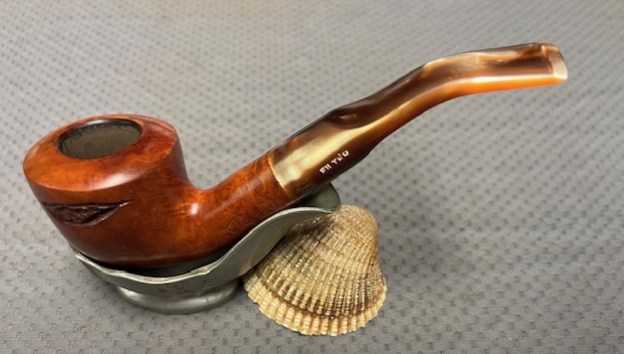
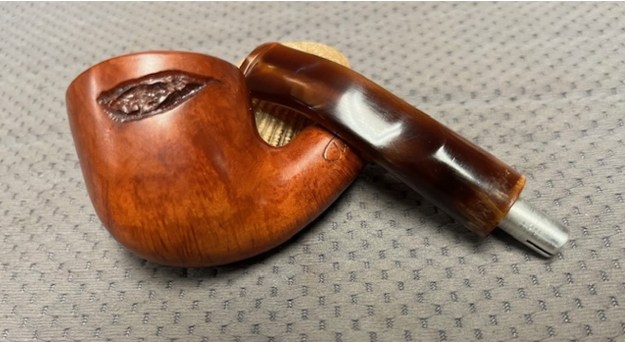
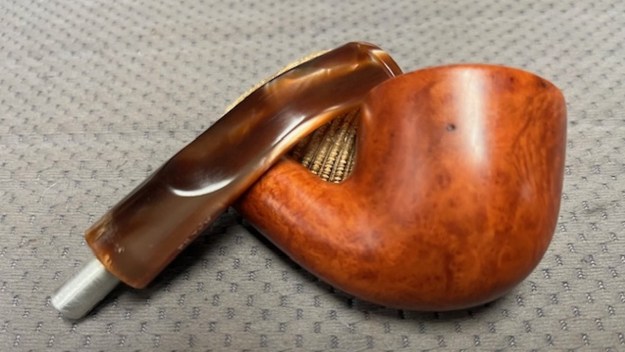
The next pipe is a Canadian Made Paradis Pipe. I purchased it from a seller in Ontario, Canada along with the John Calich pipe I restored already and wrote a blog about the restoration. Here is the link (https://rebornpipes.com/2026/03/12/resurrection-of-a-calich-hand-made-7-rusticated-billiard/). This Paradis pipe was in far better condition than the Calich and was not in need of as extensive a resurrection as that pipe. The Paradis had a moderate cake in the bowl and a light overflow of lava on the rim top. There was darkening on the top and around the inner edge of the rim. The finish was coated with a shiny coat of urethane (seems to be something I am dealing with lately!). It was peeling on the top of the rim and inner edge. It would all need to go. The pipe was stamped on the left side and read Paradis in script. The right side of the shank was stamped with the shape number 5 10. The pipe had a rusticated leaf pattern on the left side of the bowl. The bent acrylic saddle filter stem had a lot of tooth chatter and marks on both sides ahead of the button. It was stamped with the word, FILTER on the left side of the stem.
Before I started my clean up work on the pipe I wanted to remind myself of the brand and the information that was available. I knew Paradis Pipes was a Canadian pipe company, based in Montréal. I also knew that Kenneth had done a similar restoration on a Paradis Filter pipe (https://rebornpipes.com/2024/01/31/cleaning-up-an-interesting-paradis-star-freehand-pot/). I quote from his work below:
… I turned to Pipedia and Pipephil (http://www.pipephil.eu/logos/en/logo-p1.html) to seek out more information. Here’s some of what I found (after correcting the many spelling errors):
Paradis Pipes is the Canadian brand of the brothers Gilles and Fernand Paradis. In 1922 the Paradis family moved to the USA, when Lucien Paradis (1906-1979) was 16 years old. It was at this age that he started as an apprentice at his uncle’s pipe factory: Joseph B. Desjardins, maker of (JD) pipes, in Fall River, MA. Joseph Desjardins was issued two patents during this period, one for a new machine for making pipe stems and another for a new design of pipe reamer. The company employed 60 workers at one stage. In 1930, due to the Great Depressions, Lucien lost his job and returned to Quebec to work in the agricultural machine industry. In his spare time, be made pipes, selling them door to door. Three years later the rest of the family joined him, and Lucien founded a pipe factory with two of his brothers. The company eventually employed 18 workers and in the 1960s produced over 50,000 pipes a year, under brads like JBL, Dr. Thomas, Fernand Gignac, S.C. Pipes, New London Golfer, and Jo Thomassin. Paradis was founded in 1978, at the Salon of Quebec Artisans, and is available in tobacconists all over the country today. The brand produces 8,000 pipes a year (400 “handmade”), with Greek briar. (I have also included a screen capture of the section on Pipephil.)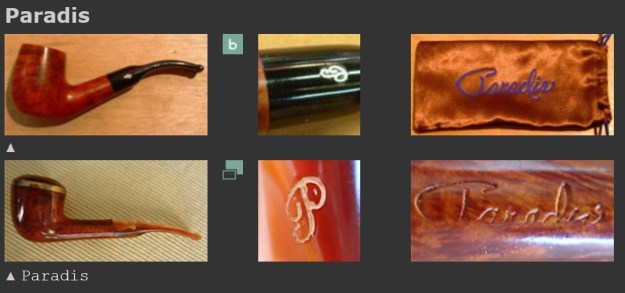 The pipe was in decent condition. It had been well-smoked, and the bowl and shank were fairly dirty. The bowl had some cake on the inside and a bit of lava on the rim. The crowned rim top was spotty but in decent condition other than being dirty. Meanwhile, the stem was relatively dirty. It was made of acrylic, so no oxidation to speak of, but there were tooth marks and chatter on the bit. Fortunately, no dents and no filter. I am including two photos sent to me by the seller.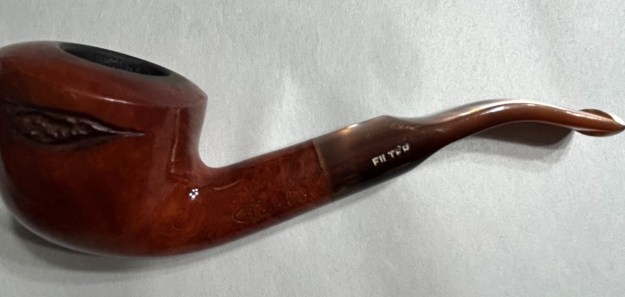
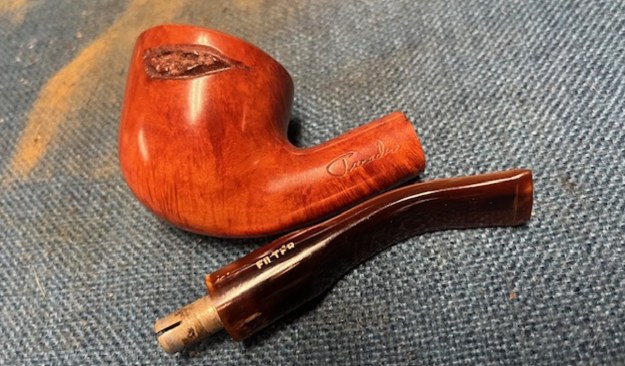
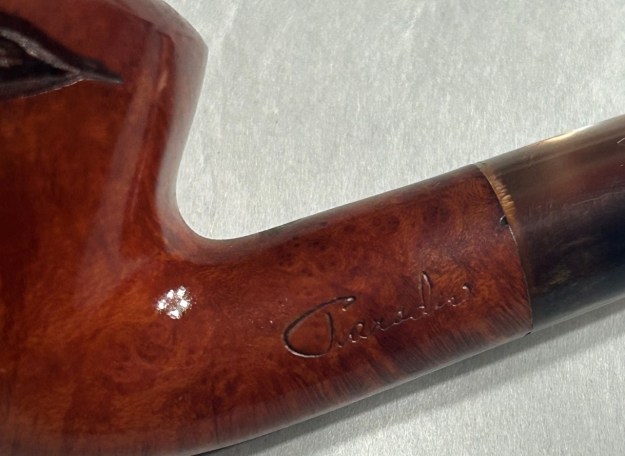 When the pipe arrived I took some better photos to try and capture the damaged rim top and edges as well as the dirty rustication on the leaf carved on the left side of the bowl. I think there is still the bones of a beautiful pipe under the dirt and damaged shiny coat.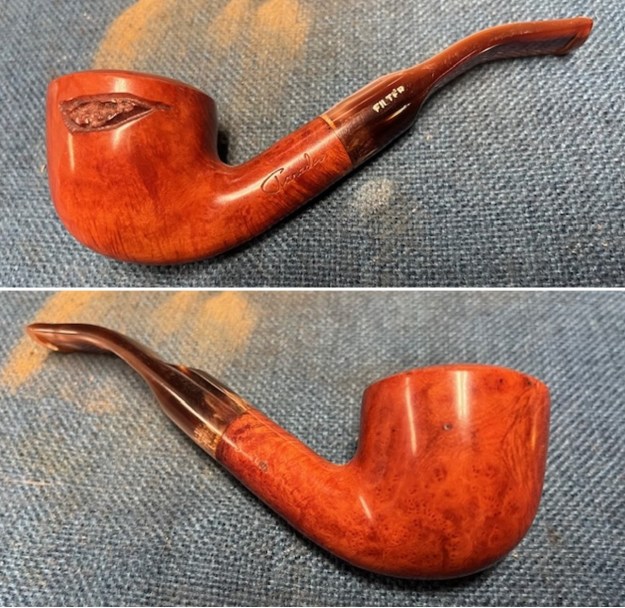
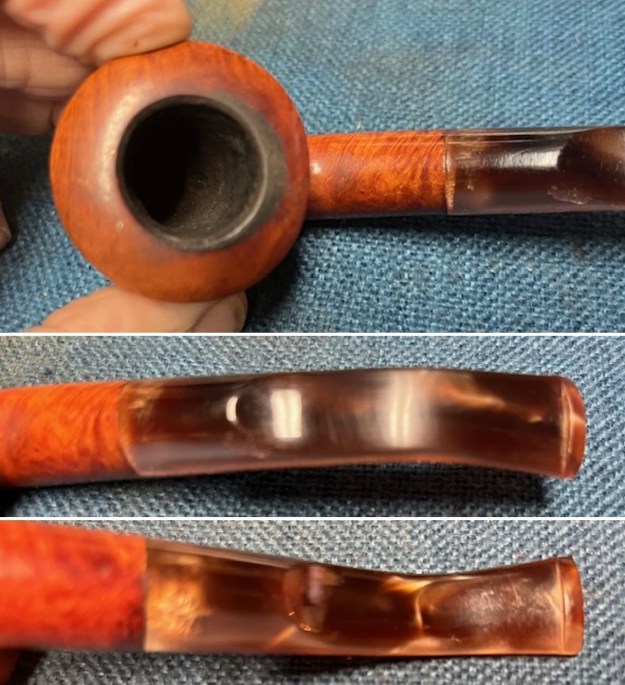
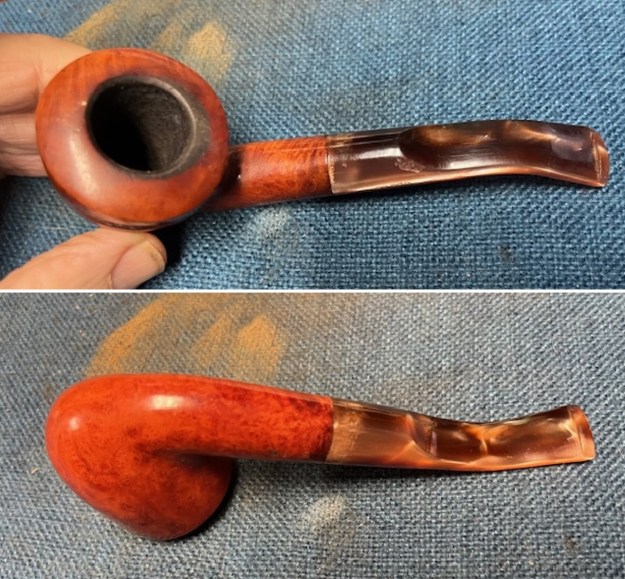 I took a close up photo of the rim top to show the lava build up and darkening on therim top and the inner edge. You can also see the cake in the bowl. The crowned rim top looks very good under the lava coat. The stem is dirty with tooth marks and chatter on both sides of the ste ahead of the button.
 I took photos of the stamping on the sides of shank and the Filter stamp on the left side of the saddle stem. It is clear and readable as noted above.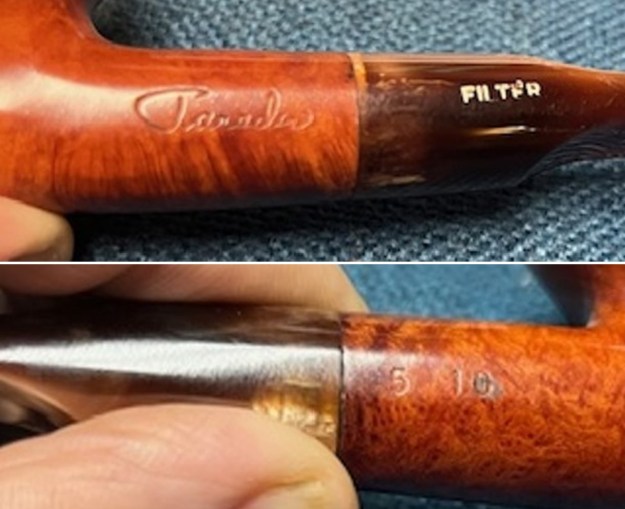
 I sanded the bowl and rim top with 320-3500 grit 2×2 inch sanding pads to remove the shiny coat of urethane and the lava build up on the rim top and the inner edge of the bowl. I wiped the briar down arfter each sanding pad and the bowl began to look very good.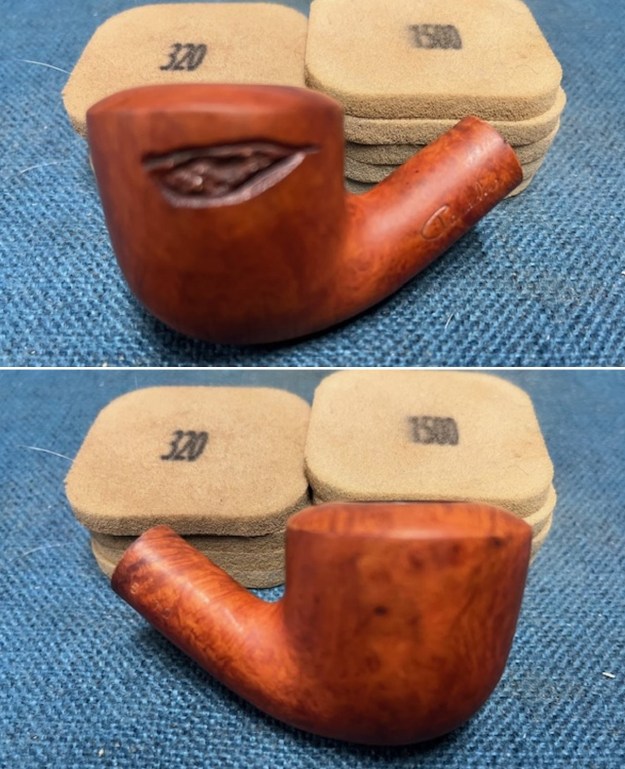
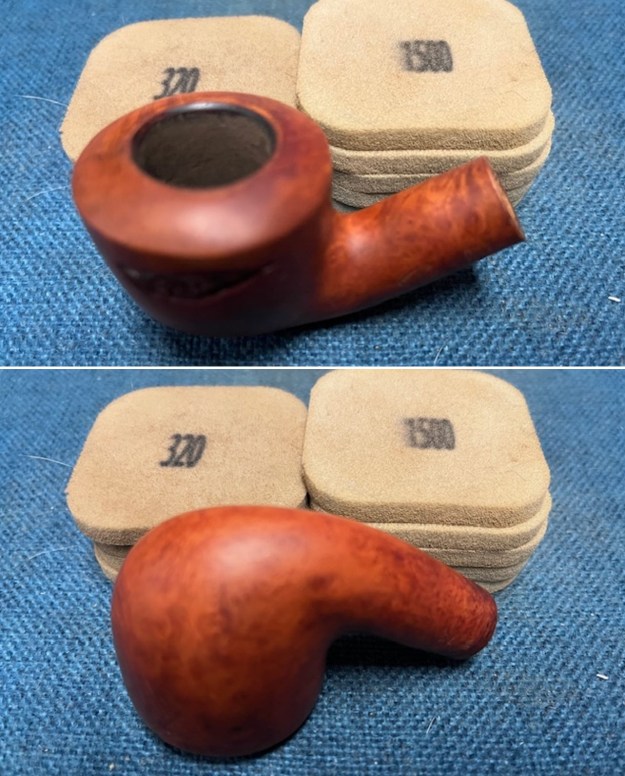 I reamed the bowl with a Savinelli Fitsall pipe knife. I sanded the bowl walls with 220 grit sandpaper wrapped around a dowel. The bowl began to look very good.
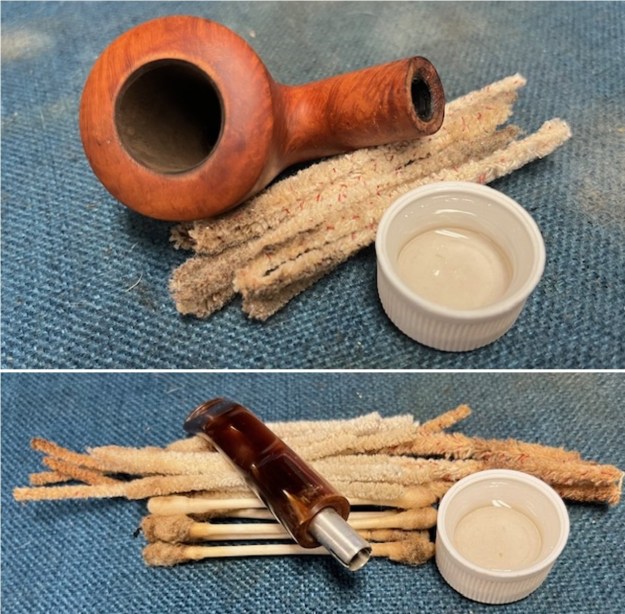
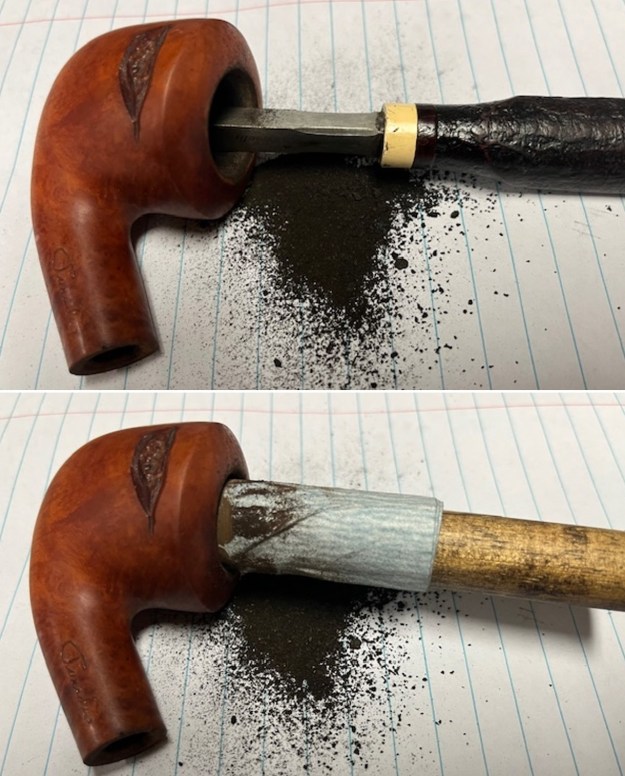 I cleaned out the inside of the pipe – the shank, airway in the mortise and the stem with pipe cleaners, cotton swabs and alcohol. It was quite dirty. I find that the metal filter tenons are typically very dirty.
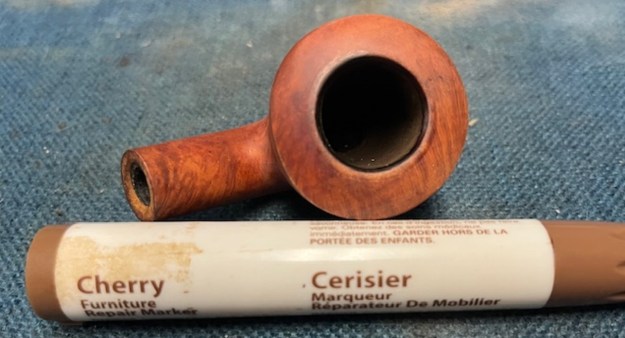
 I touched up the inner edge of the rim with a Cherry Stain pen to match the rest of the stain around the bowl and rim. It looks very good.
 I polished the briar with 1500-12000 grit micromesh sanding pads to smooth out the scratches and marks on the briar and rim top. I wiped the bowl down with a damp cloth after each sanding pad to remove any sanding debris. It was looking very good.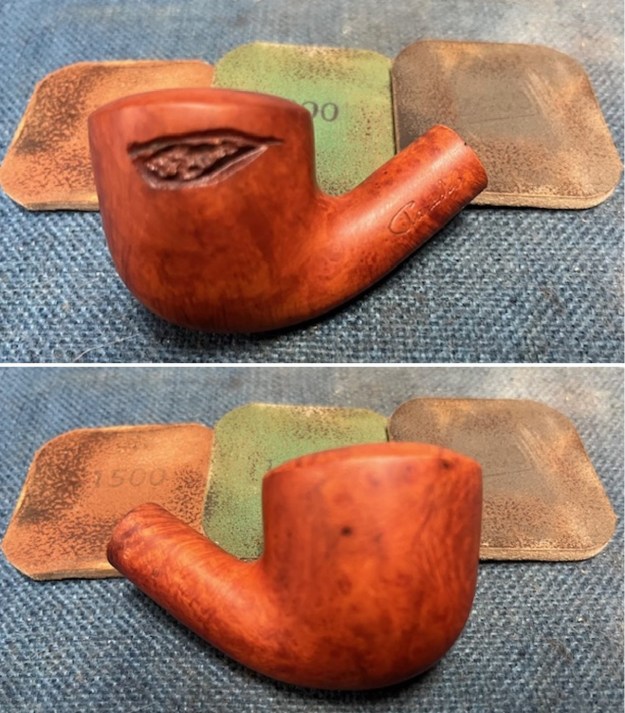
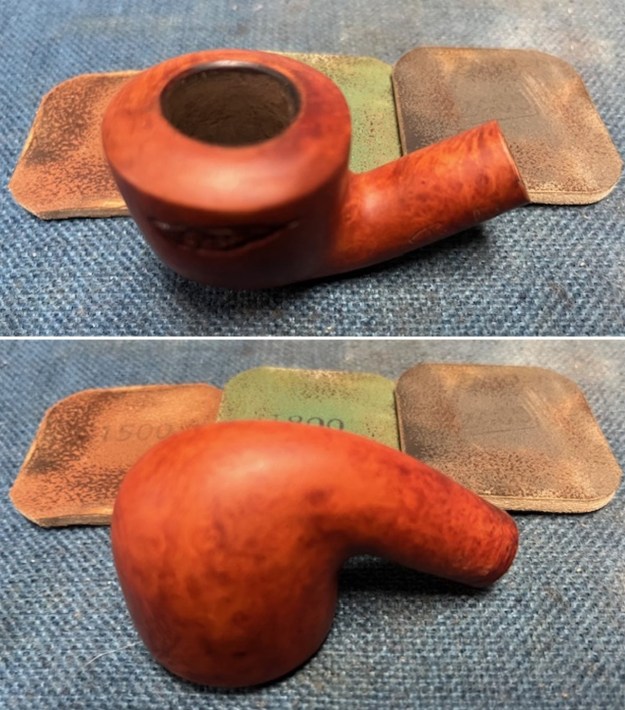
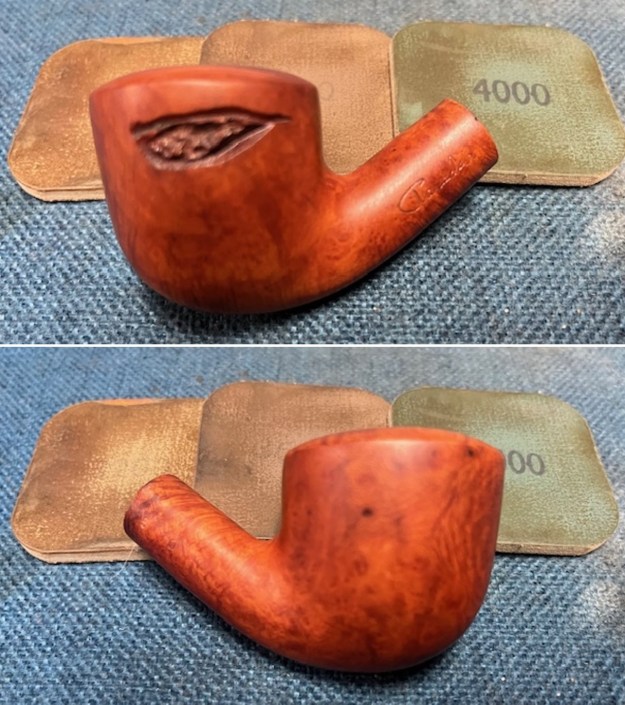
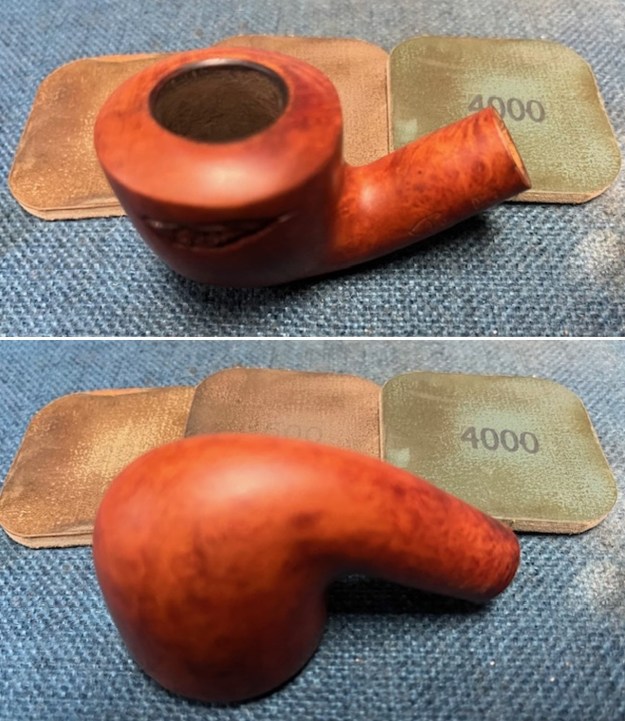
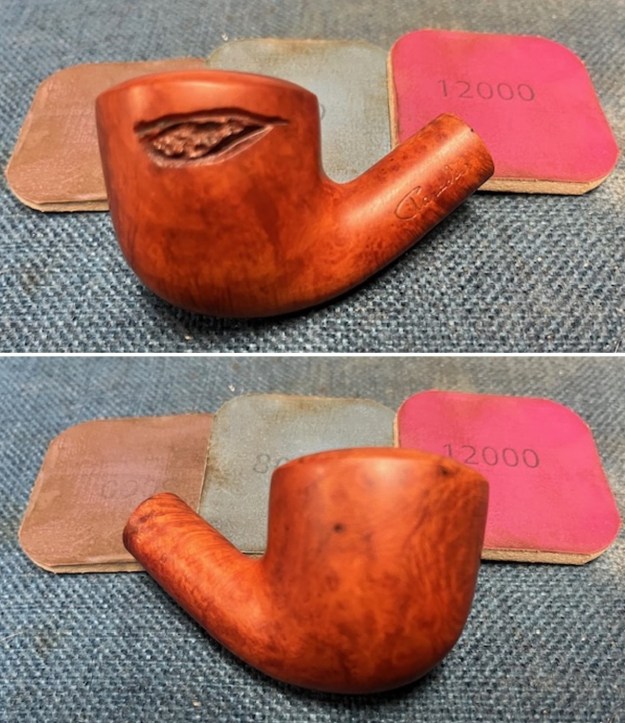
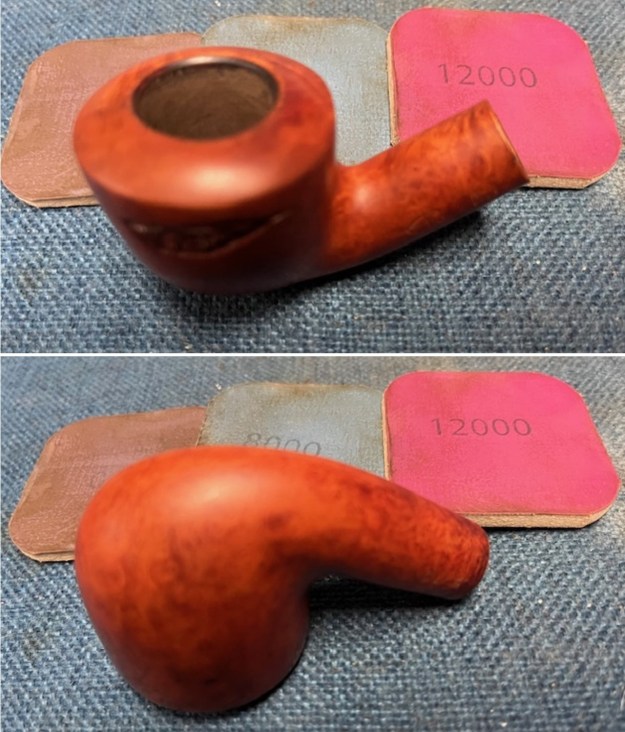 I rubbed the bowl surface with Before & After Restoration Balm and worked it into the briar with my fingertips. The products works to deep clean, enliven and protect the briar. I let it sit on the briar for 10 minutes then buffed it off with a soft cloth. It looks beautiful with the polish.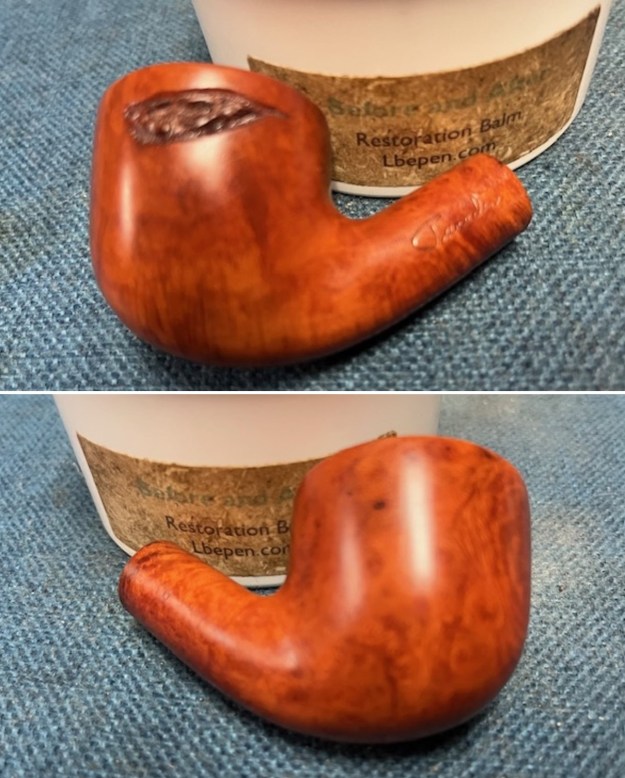
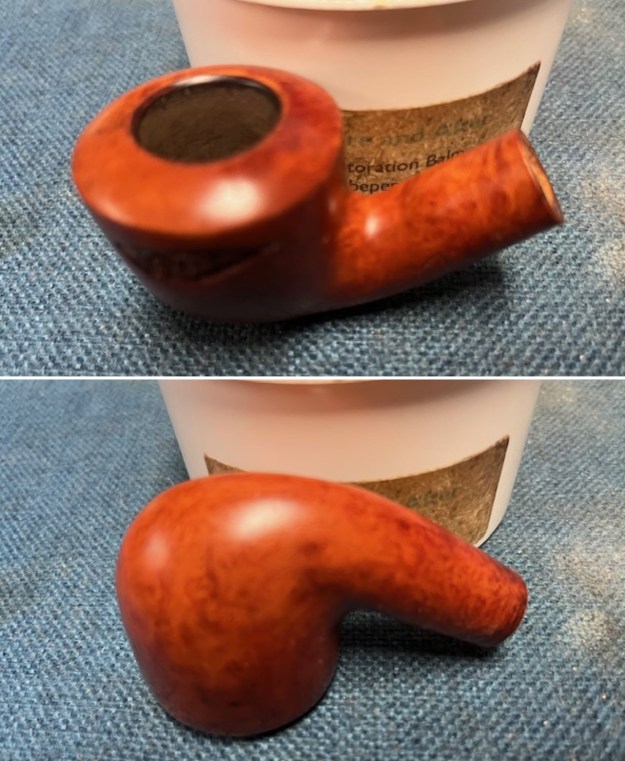
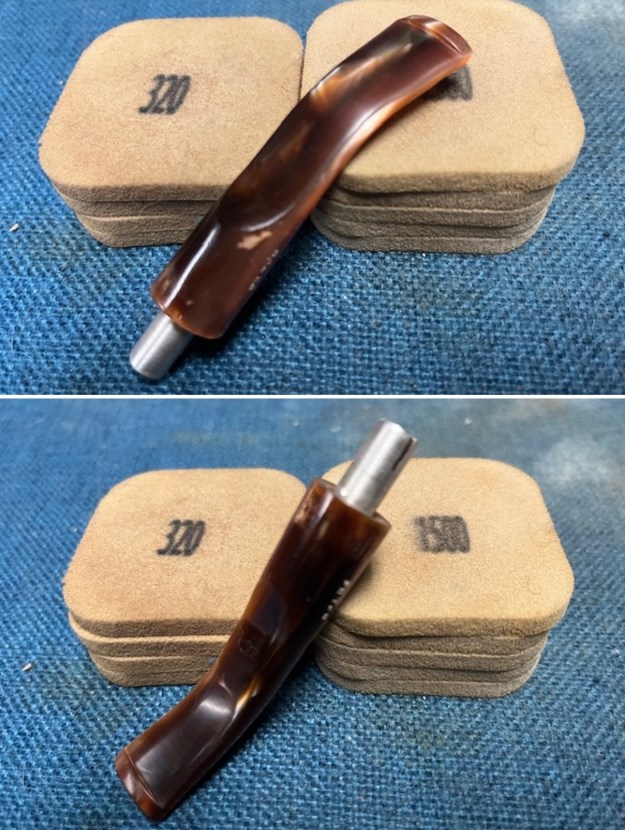
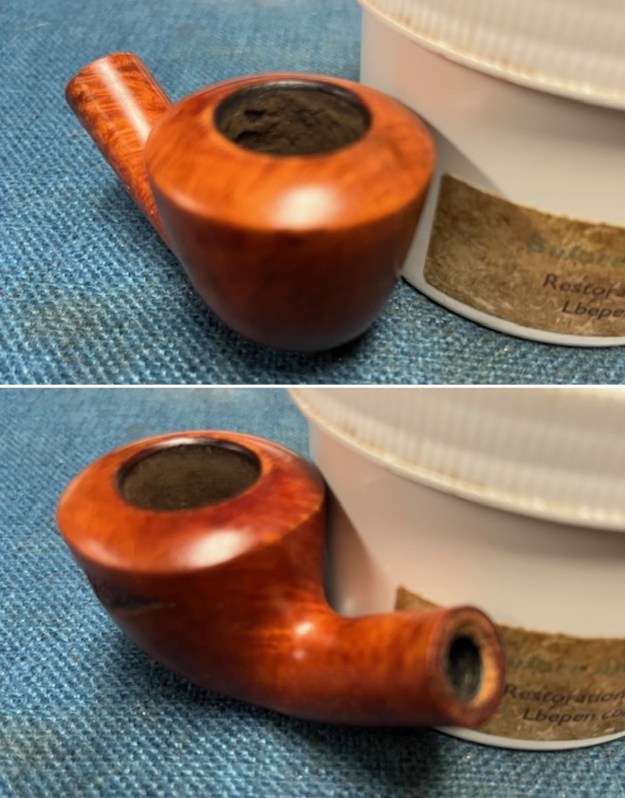 I set the bowl aside and turned my attention to the stem. I sanded out the tooth marks and chatter on the top and underside of the stem ahead of the button with a folded piece of 220 grit sandpaper. It removed them and made the surface smooth once more.
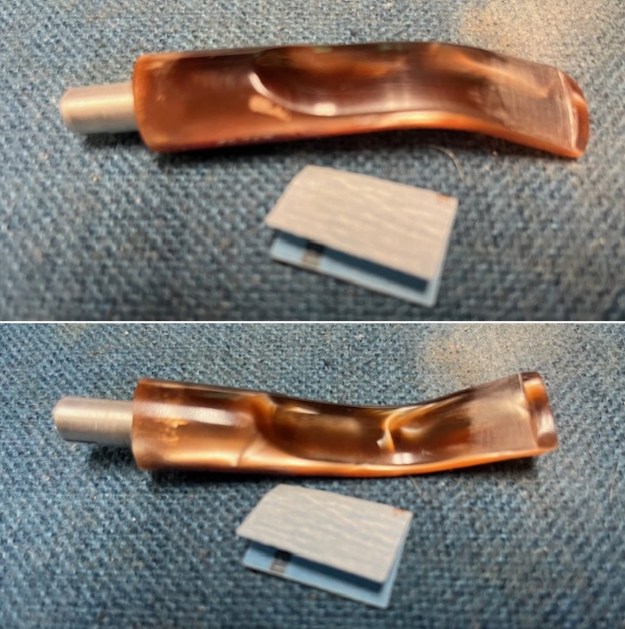 I sanded the oxidation on the stem with 320-3500 grit 2×2 inch sanding pads. I wiped it down after each sanding pad with a cloth impregnated with Obsidian Oil. The stem began to take on a shine.
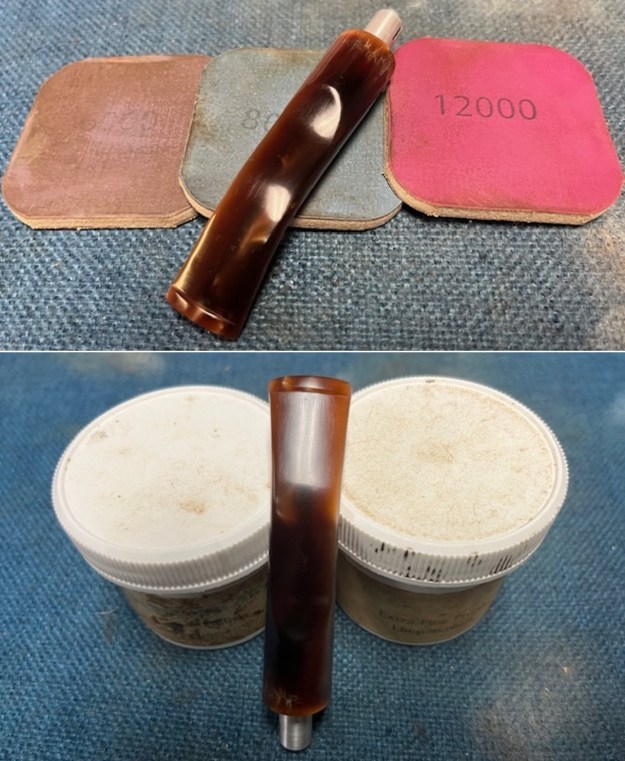
 I set the bowl aside and turned my attention to the stem. It was in great condition after the cleanup so I polished the stem with micromesh sanding pads – dry sanding it 1500-12000 pads. I wiped it down with Obsidian after each pad to remove the dust and polishing debris. I polished it with Before After Pipe Polish – both Fine and Extra Fine. I gave it another coat of Obsidian Oil.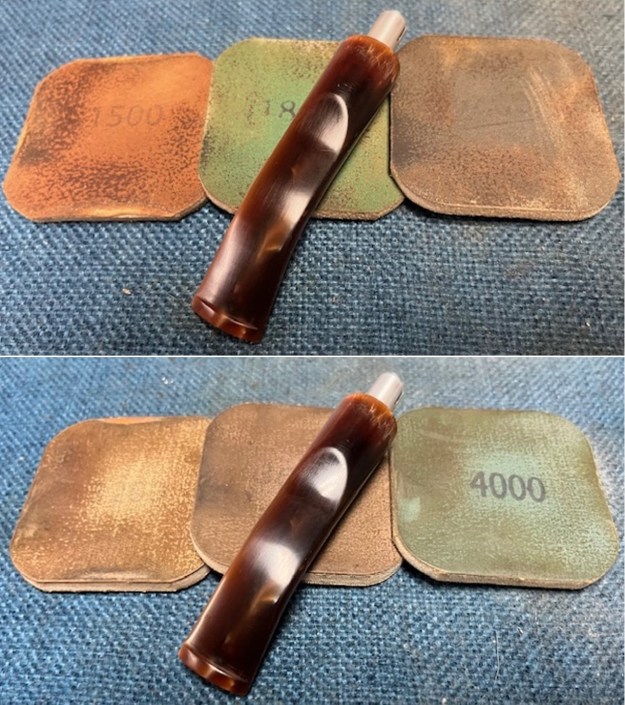
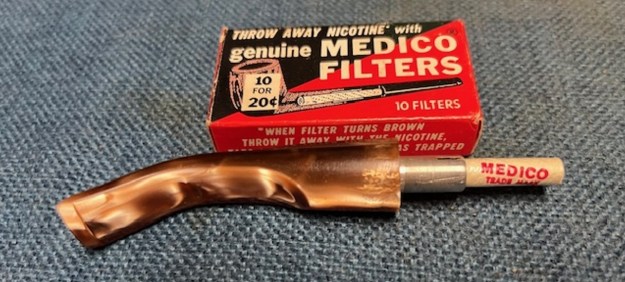
 I fit the stem with a Medico paper filter and it worked well with the metal tenon on the pipe.
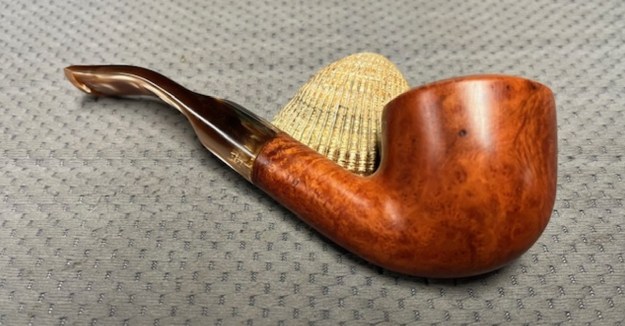
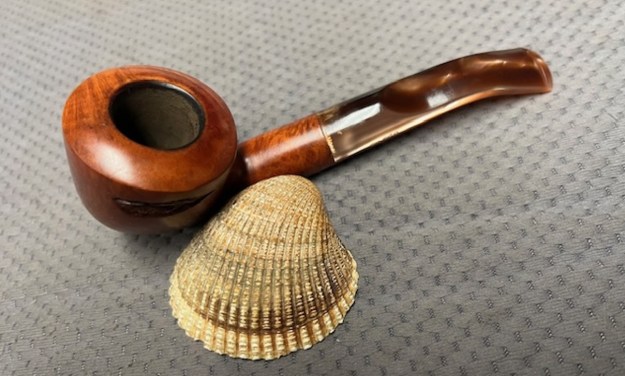
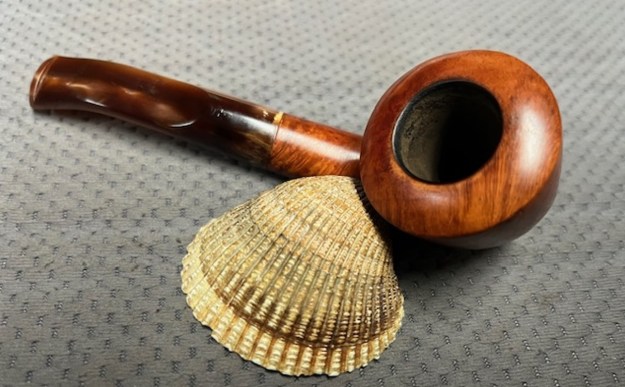
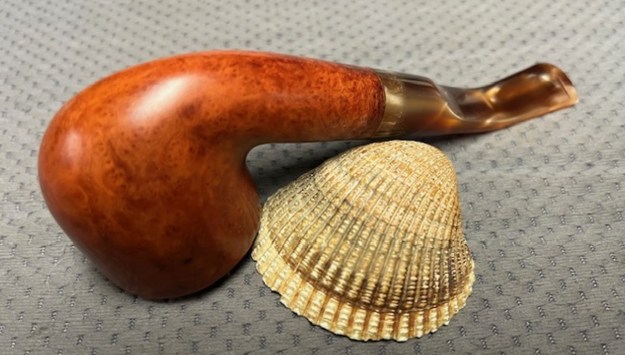
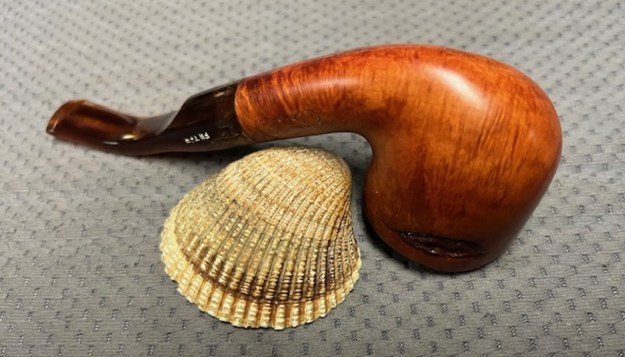
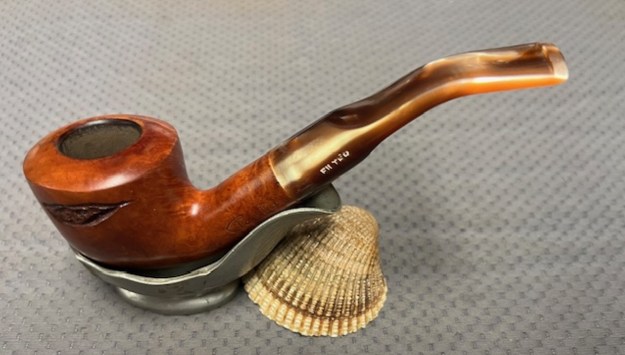
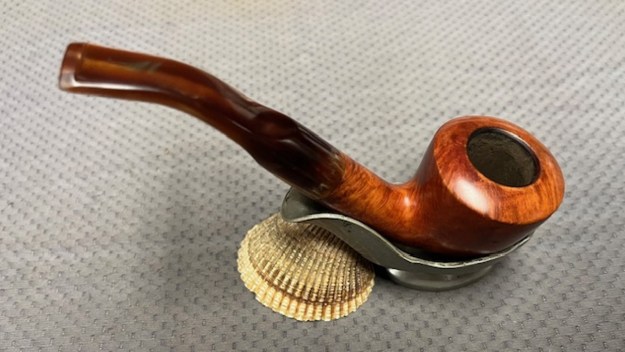
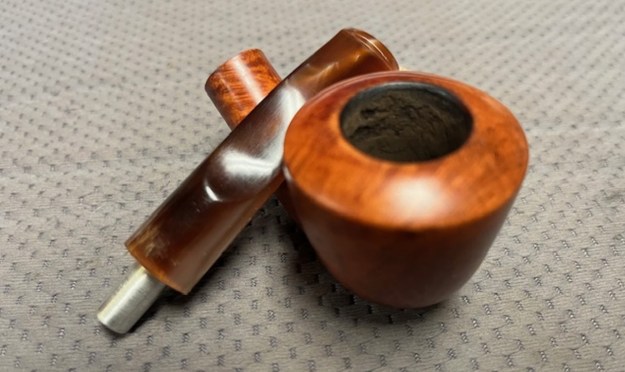
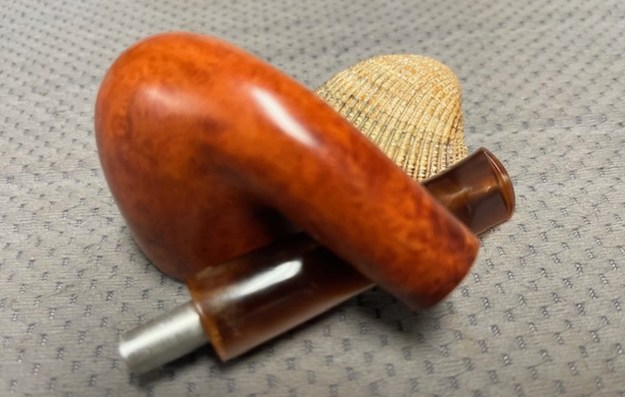
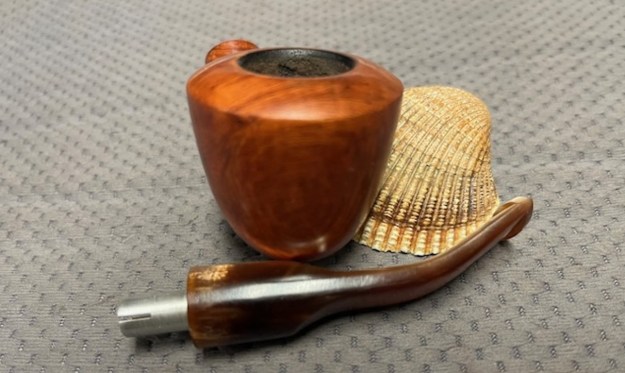
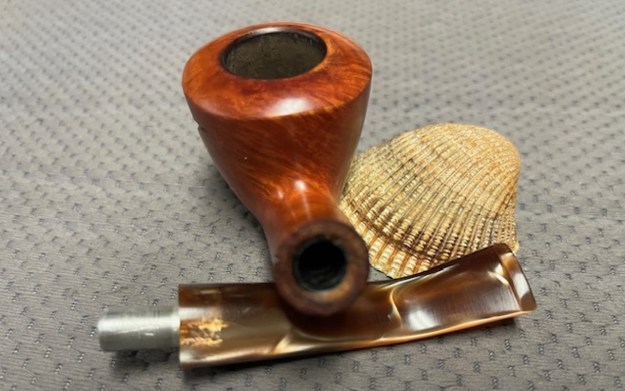
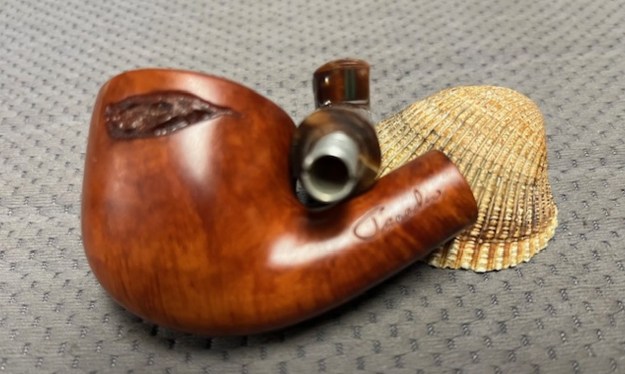
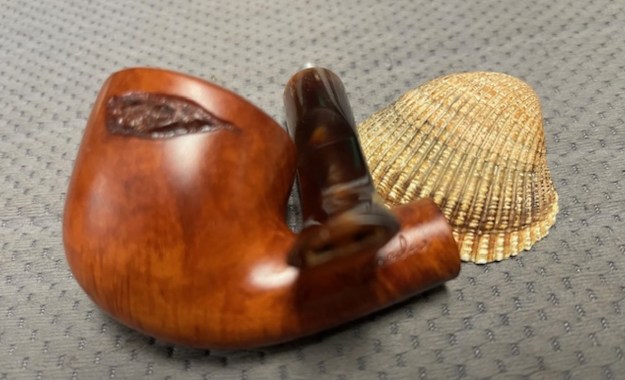
 This restored Paradis Filter Bent Dublin turned out to be a nice looking pipe. The rich medium brown stain on the pipe worked really well with the polished acrylic fancy saddle stem. I put the stem back on the bowl and carefully buffed the pipe with Blue Diamond on the buffing wheel. I gave the bowl and stem multiple coats of carnauba wax on the buffing wheel keeping a light touch on the buffing wheel for the bowl. I followed that by buffing the entire pipe with a clean buffing pad. I hand buffed the pipe with a microfiber cloth to deepen the shine. The finished Paradis Bent Billiard is shaped to sit comfortably in the hand. Give the finished pipe a look in the photos below. The dimensions of the pipe are Length: 5inches, Height: 1 ¾ inches, Outside diameter of the bowl: 1 ½ inches, Chamber diameter: ¾ of an inch. The weight of the pipe is 1.45 ounces/41 grams. Now that it is cleaned up I will be putting it on the rebornpipes store in the Canadian Pipe Makers Section. If you are interested in adding the pipe to your collection let me know. Thanks for reading this blog and my reflections on the pipe while I worked on it.
Thanks for walking through the restoration with me as I worked over another beautiful pipe. Remember we are not pipe owners; we are pipemen and women who hold our pipes in trust until they pass on into the trust of the next generation. 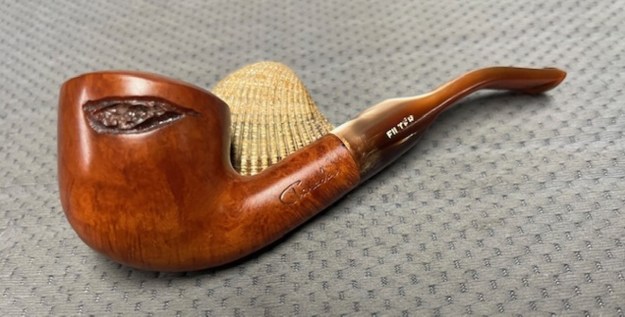
 rebornpipes