
by Steve Laug
I have been working lately replacing tenons on bowls in my own work box. After 6 of them I am ready for something different. While I was in Florence, Italy I had received and email from Jack regarding some pipes that he had that needed some work. Here is his email.
I have a Dunhill from unknown era, a Hardcastle, and possibly a third pipe that could use your workmanship. If you’d like, I can send you pictures of the pipes so you know what condition they’re in. Please let me know the necessary details! — Jack
We chatted about that and I suggested he email me when I returned to Canada. He wrote back and asked me to work on not three but four pipes. He listed what he had and I thought these would be an interesting diversion from tenon replacement work.
Are you still willing to entertain restoring/refurbishing a few pipes? I have four in various stages of need, and I’ve attached pictures of each for your evaluation. I would be very grateful for anything that you could and would be willing to do.
- 1992 (?) Dunhill
- Bertram 80
- Hardcastle – This pipe looks very clean except for some pitting? fissures? in the chamber.
- Dr. Grabow Supreme – This poor pipe… well, it’s a doozy.
Thank you very much! – Jack
I agreed and asked that he send them to me. Interestingly they arrived the day I finished the last of the tenon replacements. I unpacked them and they were indeed as interesting as his email had led me to believe. I decided to work on the third pipe listed in the foursome next – the Dunhill that he lists as a possible 1992. Here are the photos he sent to me of that pipe. I will give my evaluation of the work that will need to be done on the pipe as I walk through the photos with you.
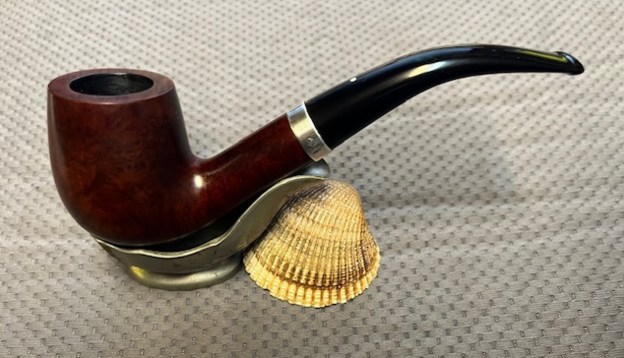
The first two photos that Jack sent show the overall condition of the pipe. You can see from these photos that the bowl and rim top look very good. There is not a cake in the bowl and it makes me wonder if it is smoked much at all. The finish is dull but not terribly dirty. The stamping on the left side of the shank has a shape number 932 next to the bowl shank union. That is followed by dunhill in an oval. On the right side of the shank it is stamped Bruyere [over] Made in England with the date stamp – a superscript 35 after the D of England. Next to the bowl shank junction there is a circle with perhaps a 4 in the center [over] 9MM. The stem is a 9MM filter stem with an adapter making it a regular tenon. It has the Dunhill White Spot on the topside. I turned to a silver hallmark chart for Birmingham to unpack the stamping on the band (https://www.silvermakersmarks.co.uk/Dates/Birmingham/Cycle%201975-1999.html).
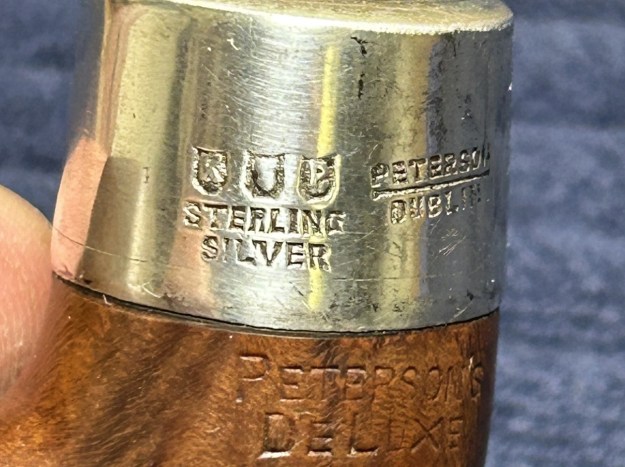
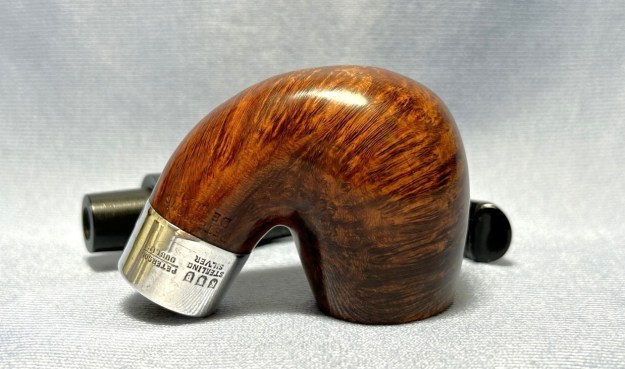
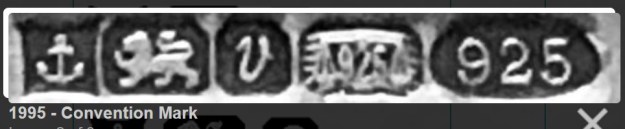 The silver band is stamped AD in a Diamond [over] three hallmarks – an Anchor meaning Birmingham, a rampant Lion meaning it is Sterling Silver and a date stamp of an italic V dating it to 1995. Underneath that is an assay beam followed by .925 for the quality of Sterling Silver.
Jack included these photos of the pipe for me to have a look at. You can see what I noted in the paragraphs above. It is a nice looking pipe to be sure.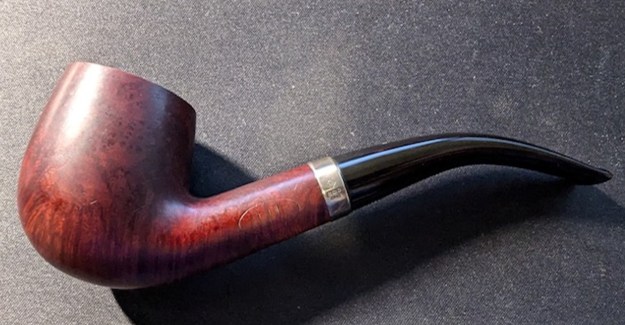
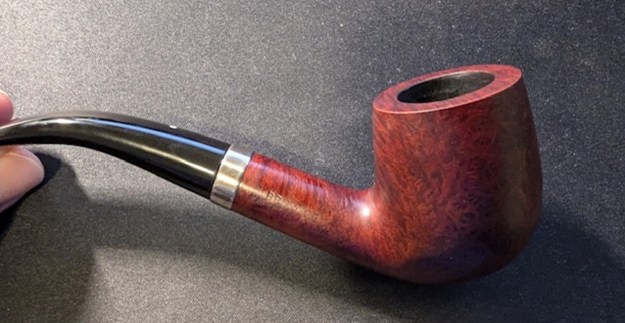 The next two photos affirm my evaluation of the lack of cake in the bowl and the clean rim top. The bowl looks to be lightly smoked.
 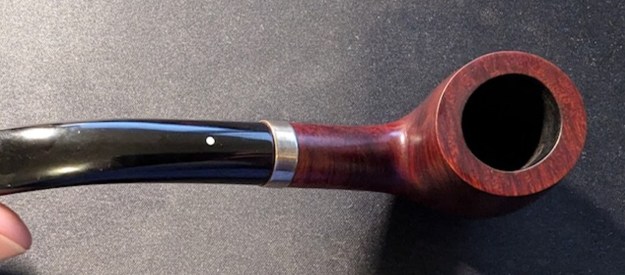 I unpacked the pipes when they arrived on Thursday and went over each one. As I examined this one my observations based on the photos were confirmed. The one thing that was better was that the finish actually looked better in person than in the photos. There was some nice grain around the bowl that was a bit dull looking. The bowl was very clean as I had expected. The stamping on the shank was faint but readable. The stem looked as noted above. It had a few small scratched in the surface but was very clean. The classic white spot on the top of the stem was in excellent condition. Have a look at the photos below.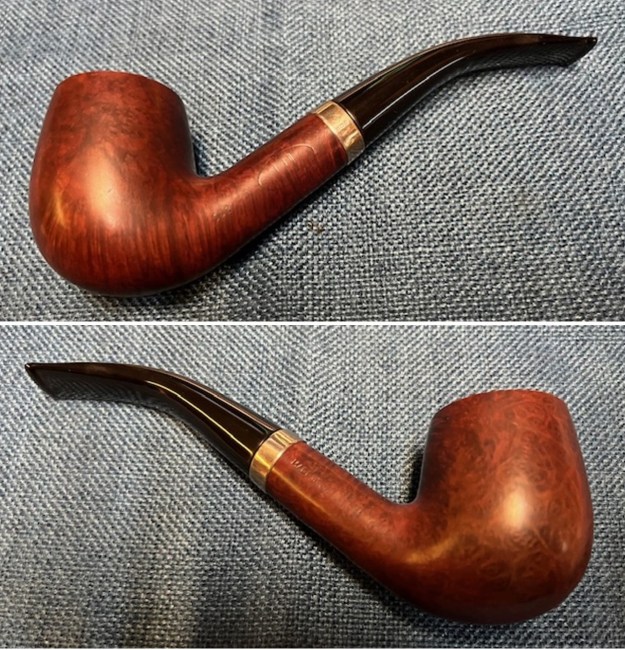
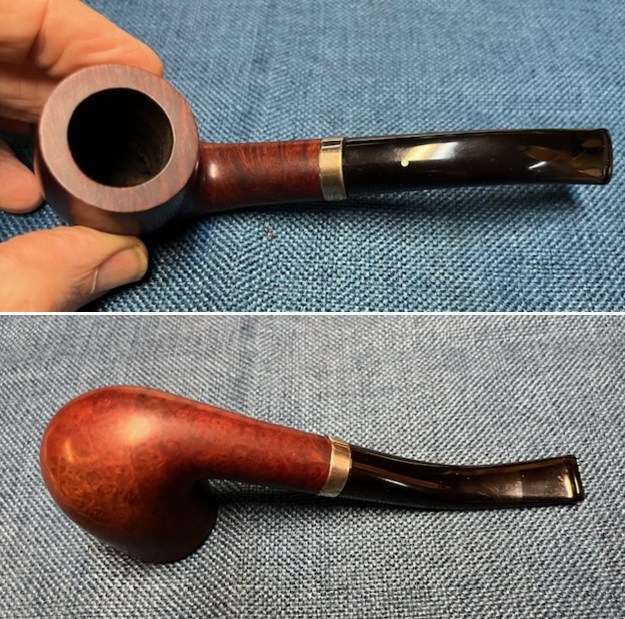 I took close up photos of the bowl and rim top to show the condition of both. The bowl and rim top look very good. There is no damage to the edges – either inner or outer. The stem is in great condition with just a few scratches on the underside. It does not have any tooth marks or chatter on either side.
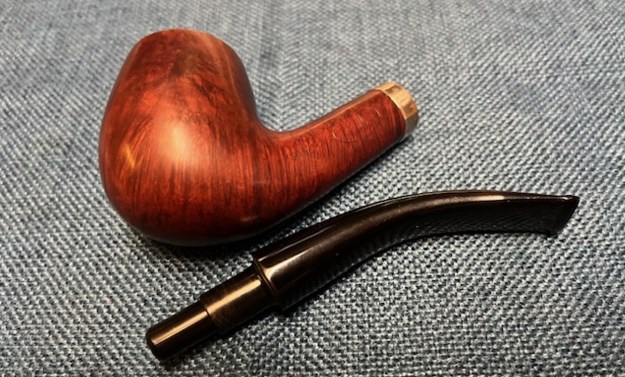
  I tried to capture the stamping on the shank to show their condition before my work. They are but readable as noted above. I also took a photo of the band to capture the stamping on the silver. It reads as noted above. I removed the stem from the bowl and took a photo of the parts to give a sense of the symmetry of the pipe. It is a beauty.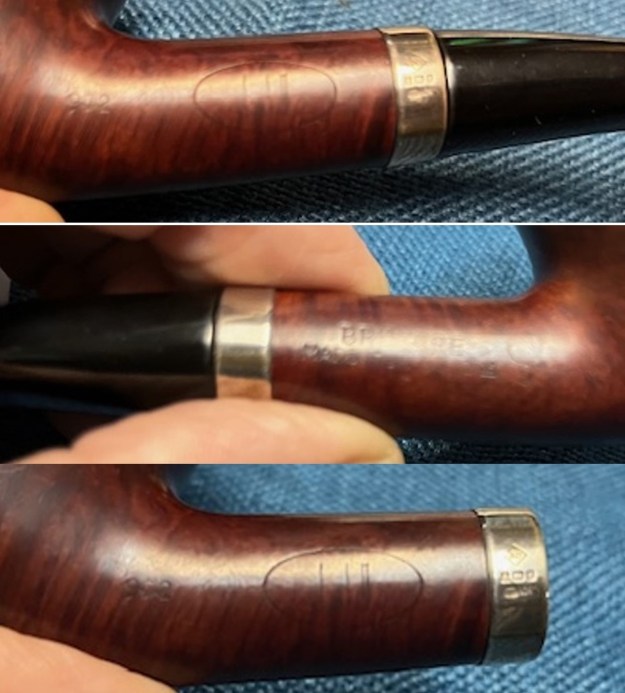
 I turned to Pipedia’s section on Dunhill Root Briar Pipes to get a bit of background on the Dunhill finishes (https://pipedia.org/wiki/Dunhill#Root_Briar). I quote:
Bruyere
The original finish produced (usually made using Calabrian briar), and a big part of developing and marketing the brand. It was the only finish from 1910 until 1917. A dark reddish-brown stain. Before the 1950s, there were three possible finishes for Dunhill pipes. The Bruyere was a smooth finish with a deep red stain, obtained through two coats, a brown understain followed by a deep red.
There was a link on the above site to a section specifically written regarding the Bruyere finish (https://pipedia.org/wiki/Dunhill_Bruyere). I turned there and have included the information from that short article below.
Initially, made from over century-old briar burls, classified by a “B” (denoted highest quality pipe); “DR” (denoted straight-grained) and an “A” (denoted first quality), until early 1915. After that, they became a high-end subset to the Dunhill ‘Bruyere’. The DR and B pipes, a limited production, they should be distinguished as hand-cut in London from burls as opposed to the Bruyere line which was generally finished from French turned bowls until 1917, when the Calabrian briar started to be used, but not completely. Only in 1920 Dunhill took the final step in its pipe making operation and began sourcing and cutting all of its own bowls, proudly announcing thereafter that “no French briar was employed”.
Bruyere pipes were usually made using Calabrian briar, a very dense and hardy briar that has a modest grain but does very well with the deep red stain.
“Before the 1950s, there were three possible finishes for Dunhill pipes. The Bruyere was a smooth finish with a deep red stain, obtained through two coats, a brown understain followed by a deep red. The Shell finish was the original sandblast with a near-black stain (though the degree to which it is truly black has varied over the years). Lastly, the Root finish was smooth also but with a light brown finish. Early Dunhill used different briars with different stains, resulting in more distinct and identifiable creations… Over the years, to these traditional styles were added four new finishes: Cumberland, Dress, Chestnut and Amber Root, plus some now-defunct finishes, such as County, Russet and Red Bark.”
There was also a link to a catalogue page that gave examples and dates that the various finishes were introduced (https://pipedia.org/wiki/File:Dunnypipescatalog-1.png). 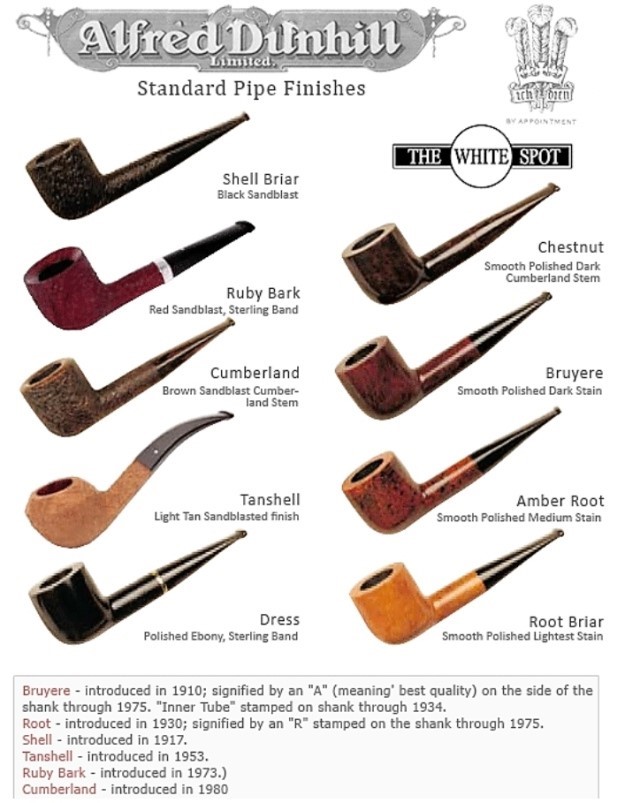 I turned to Pipephil’s dating guide to show how I arrived at the date of manufacture for this pipe (http://www.pipephil.eu/logos/en/dunhill/cledat-en1a.html). I am including the chart that is provided there for the dating a pipe. I have drawn a red box around the section. Since the pipe I am working on has a suffix 35 I followed it to the 1960 line on the chart below. I chose the column suffic [1…4] or [11…39]. It also gave me the formula for dating the pipe – 1960 + suffix 35 = 1995.
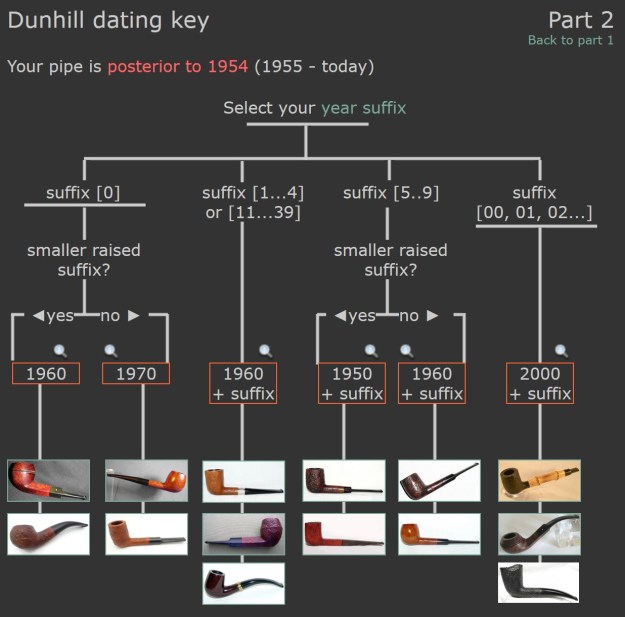 I now knew that I was working on a Bruyere that came out in 1995. The shape of the pipe was one of many Bent Billiards that Dunhill put out and that the shape #932 was a bit of an oddity. It seems that there are several different shapes that bear that number.
I scrubbed out the internals with pipe cleaners (normal & bristle), cotton swabs and alcohol to remove the tars and oils in the shank between the mortise and the entrance of the airway into the bowl. I removed the adapter from the 9MM tenon and cleaned inside of it and underneath it.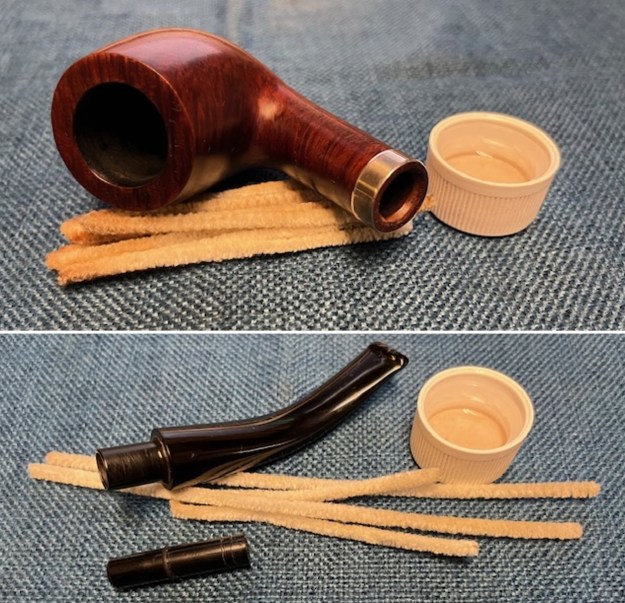 I polished the rim top and bowl with micromesh sanding pads – dry sanding with 1500-12000 grit sanding pads. I wiped it down with a damp cloth after each sanding pad to remove the dust and debris. The grain stood out more with each set of pads.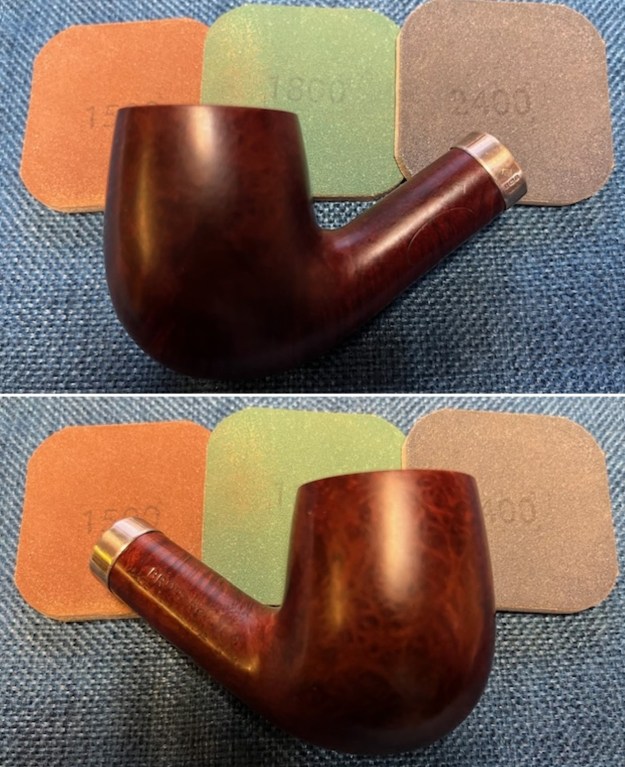
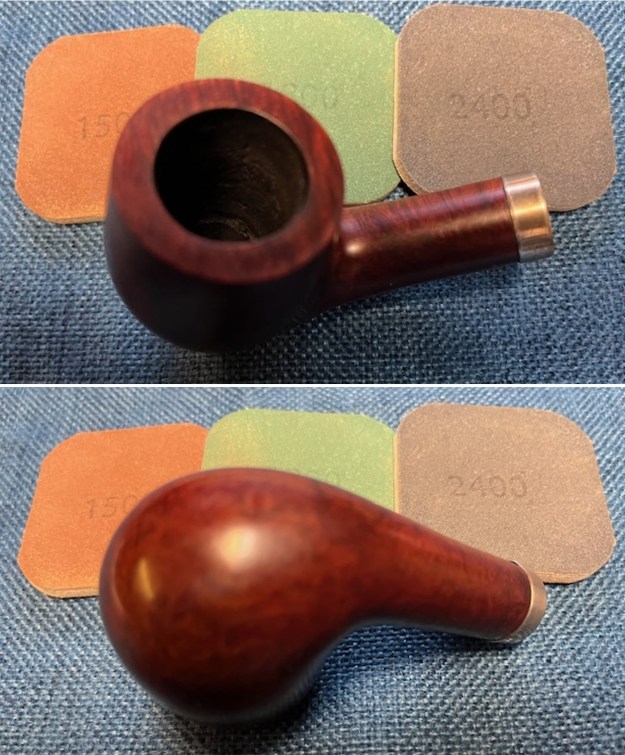
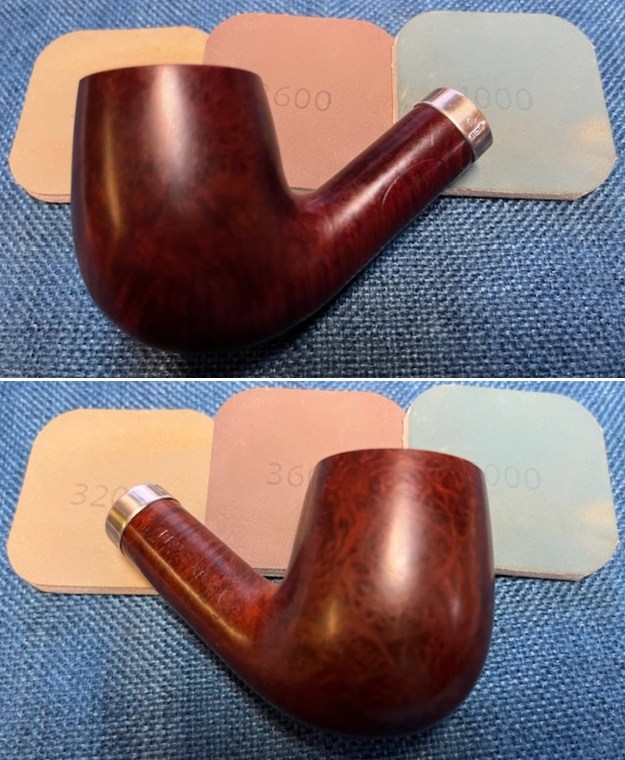
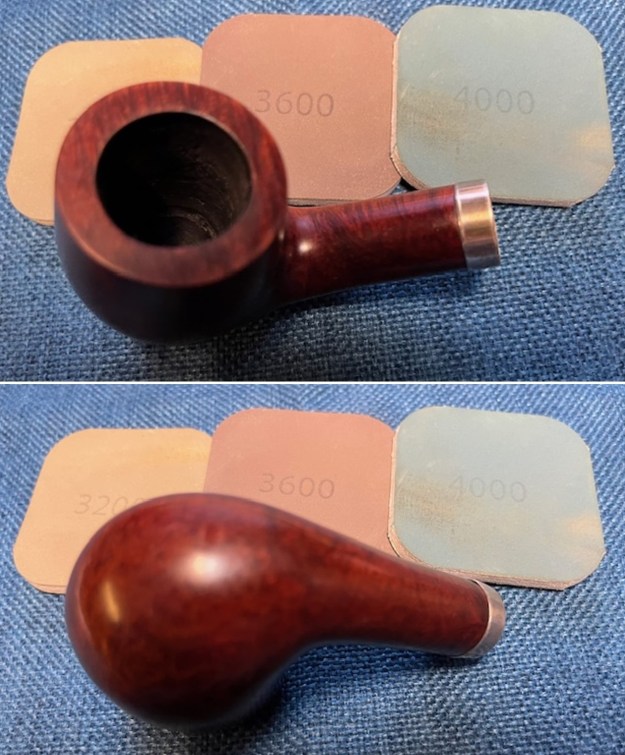
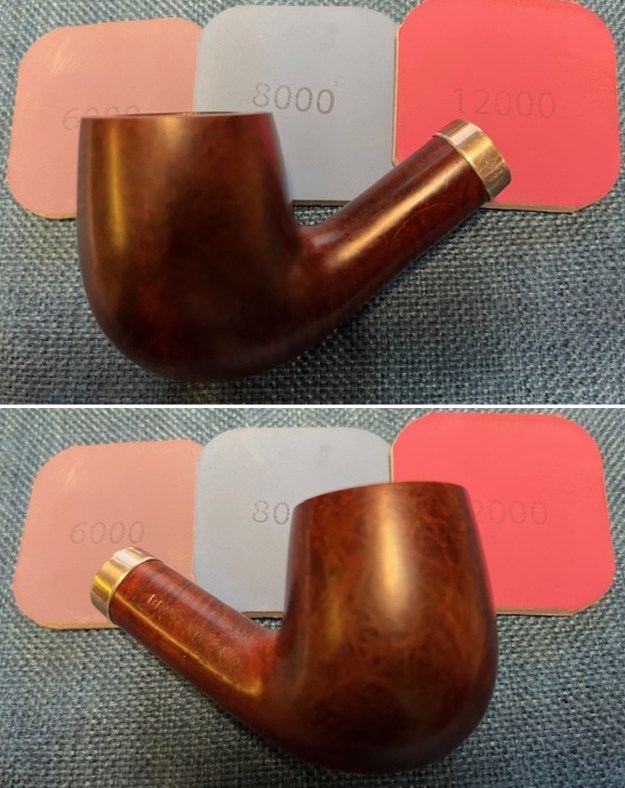
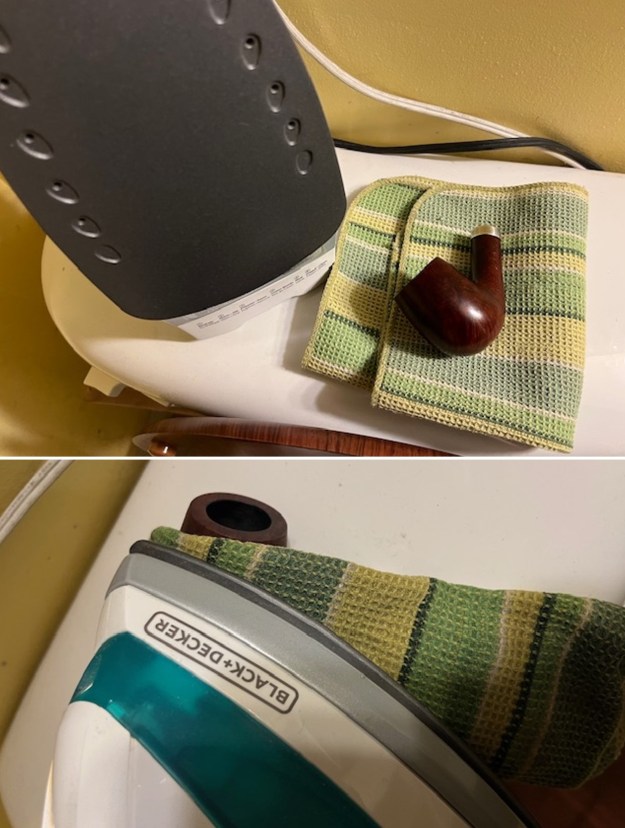
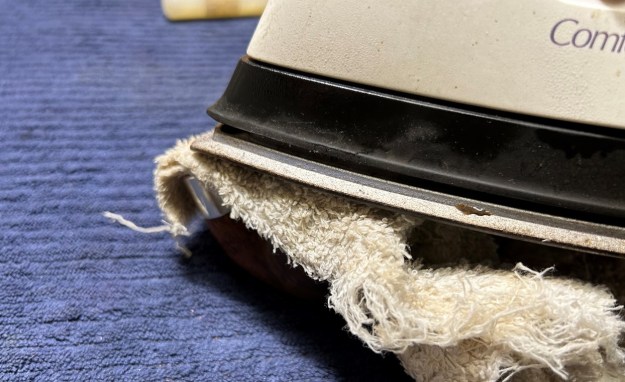
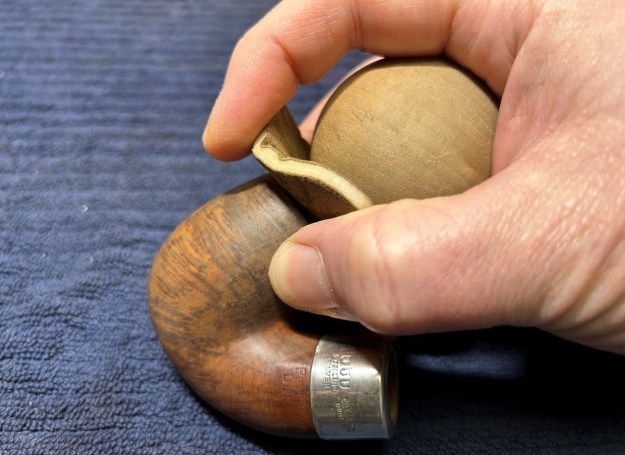
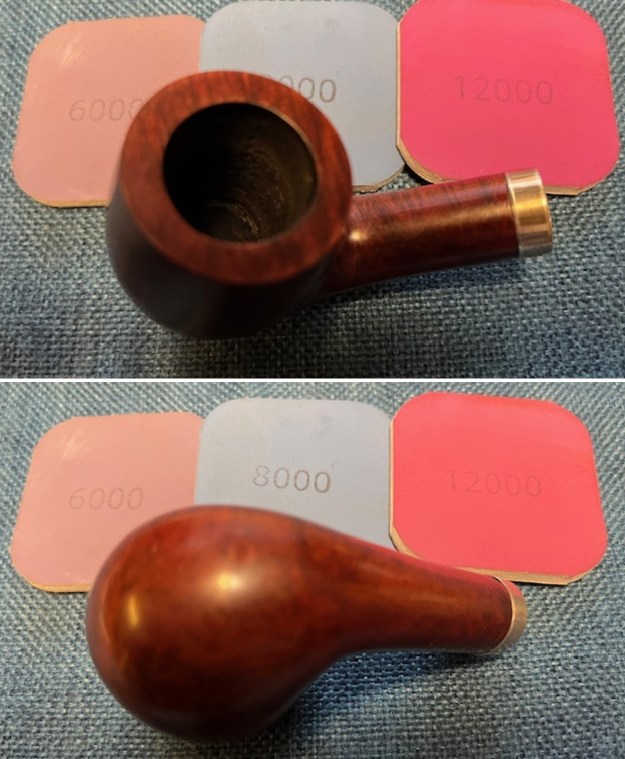 Once I finshed the polishing I examined the briar with a light and a lens. I was shocked to see the many fine scratches an marks in the briar. It looked like the bowl had been carried in a pocket and bumped against coins and such. I could not leave it that way. I used an iron and a damp cloth to steam the dents out on the briar. I put a damp cloth on each side of the bowl and applied the hot iron to the surface. I was able to lift the majority of them. Only a few of them remained but it looked much better when I was finished. I would need to buff it to raise a shine once again. I would also need to rub it down with Before & After Balm to lift and protect the grain.
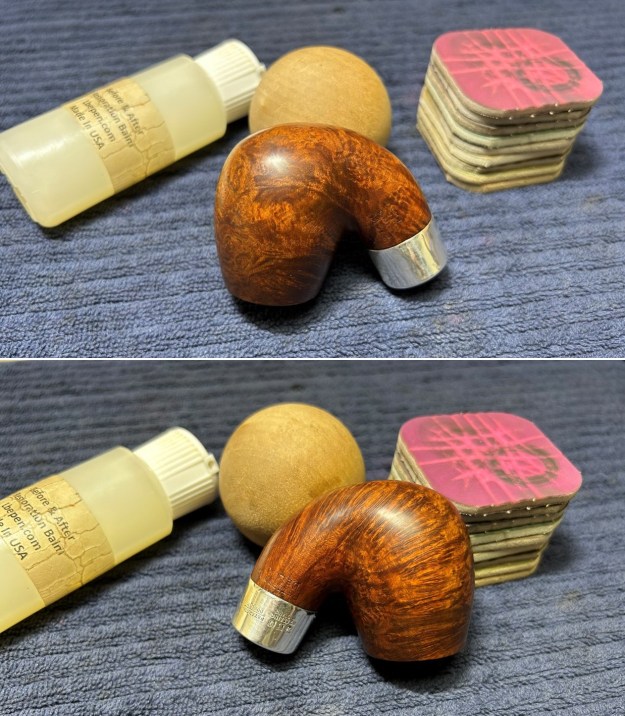
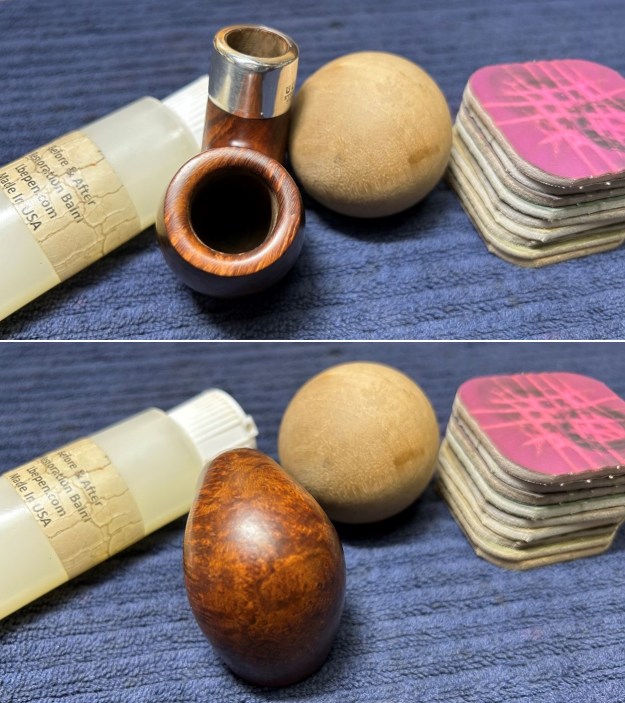
 I worked some Before & After Restoration Balm into the finish of the bowl, rim top and shank with my fingertips to clean, enliven and protect it. I find that the balm really makes the briar come alive again. I let the balm sit for 15 minutes and then buffed with a cotton cloth to raise the shine. The bowl really looks good at this point.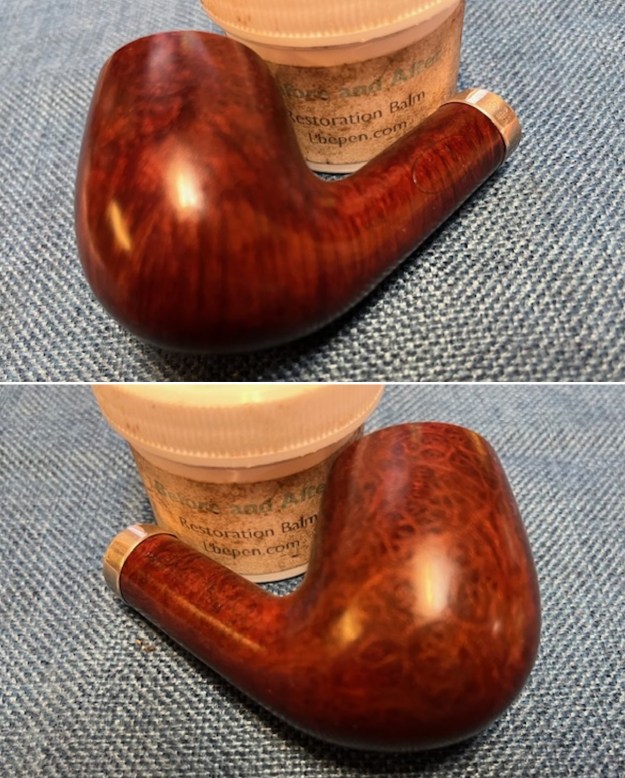

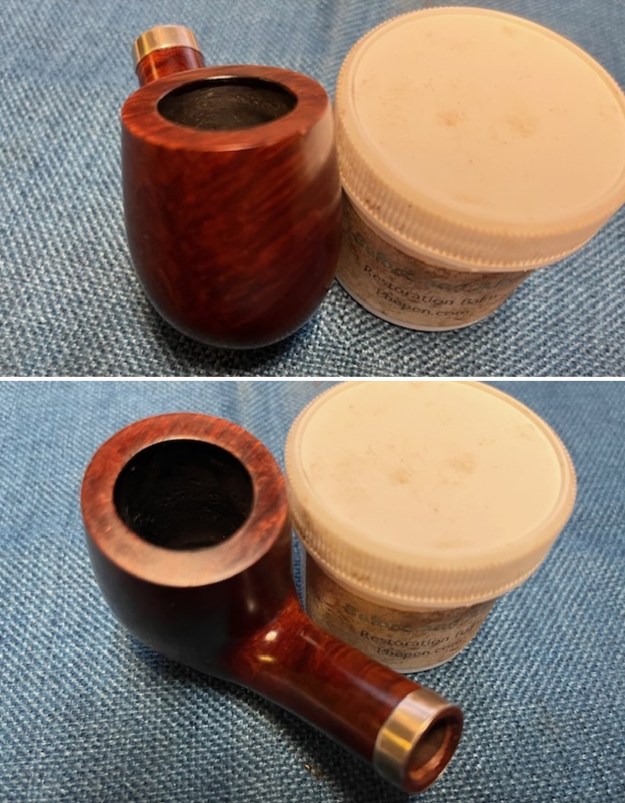 I polished the silver band with a jeweller’s cloth to remove the tarnish and polish and protect the silver. It looks very good at this point in the process.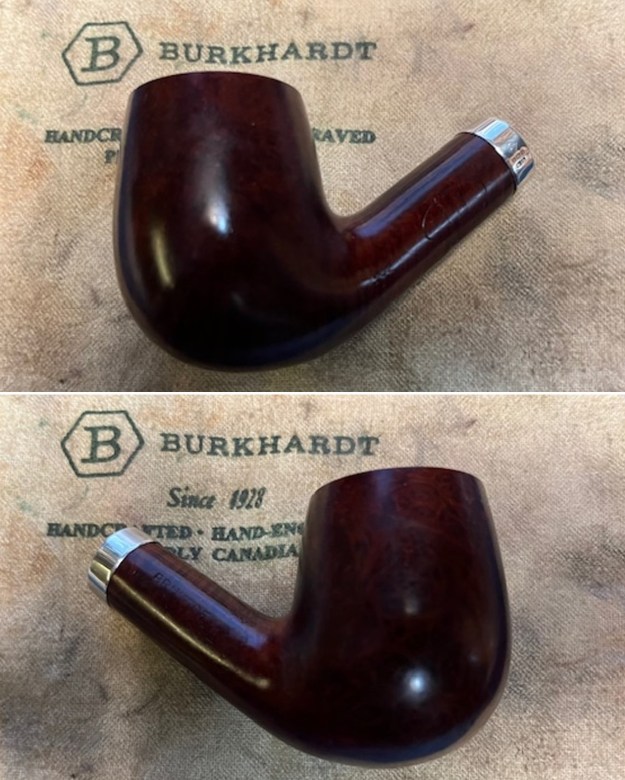
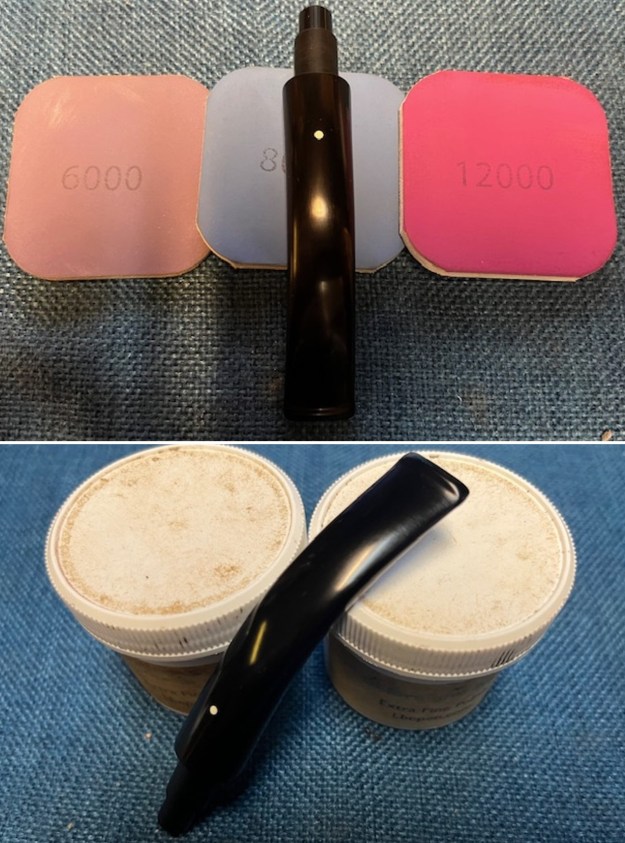
 I polished the stem with micromesh sanding pads – dry sanding it with 1500-12000 grit pads. I polished it further with Before & After Pipe Stem Polish – both fine and extra fine.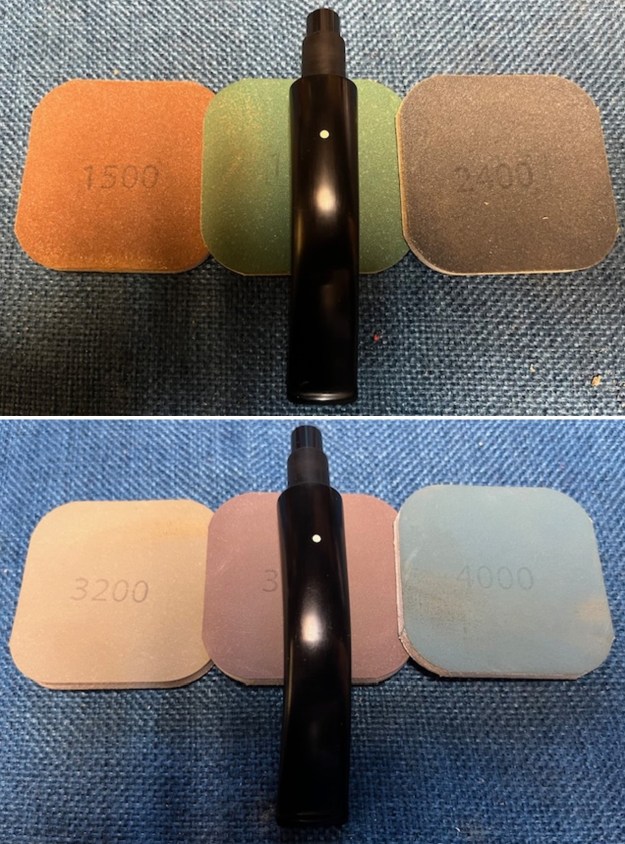
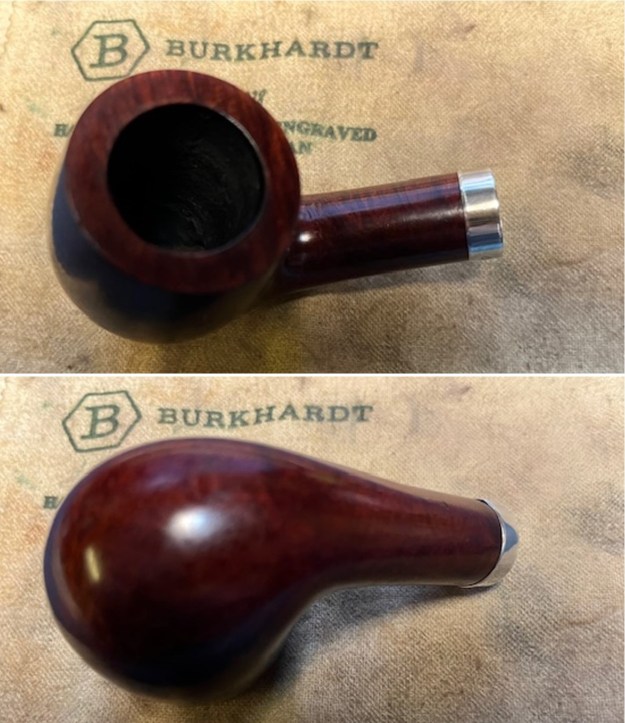
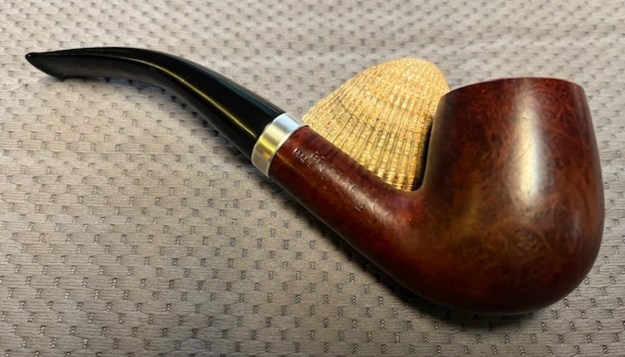
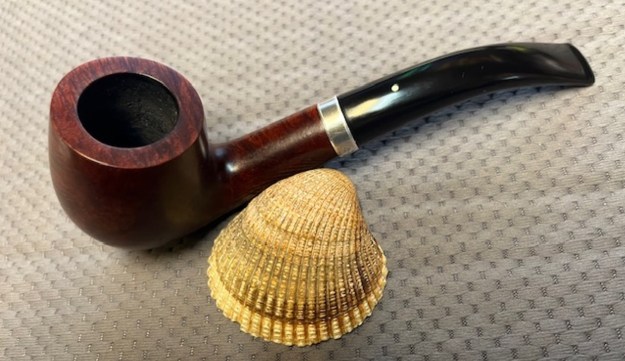
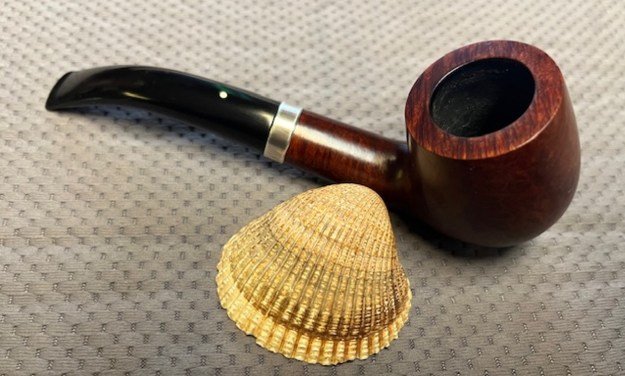
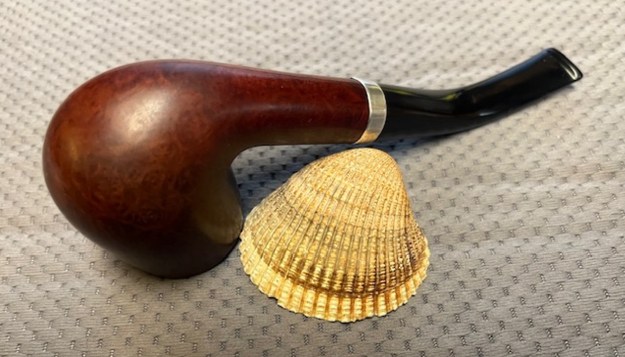
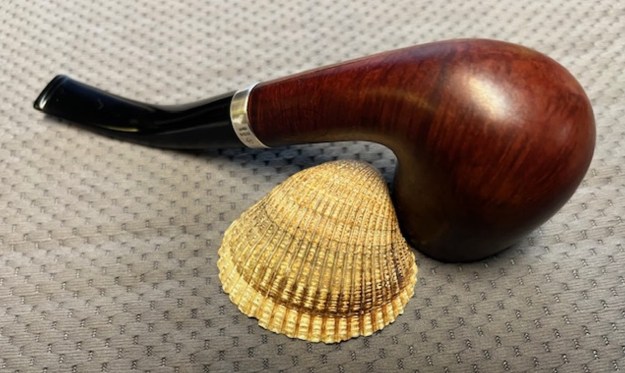
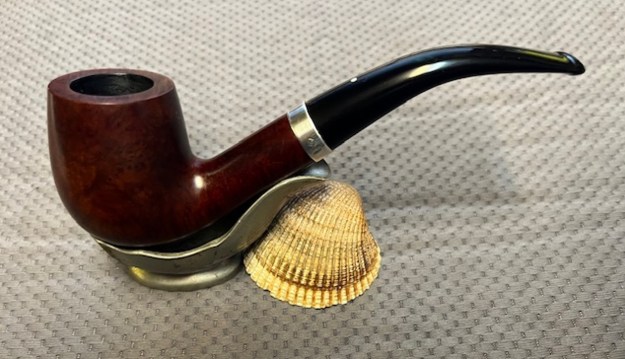
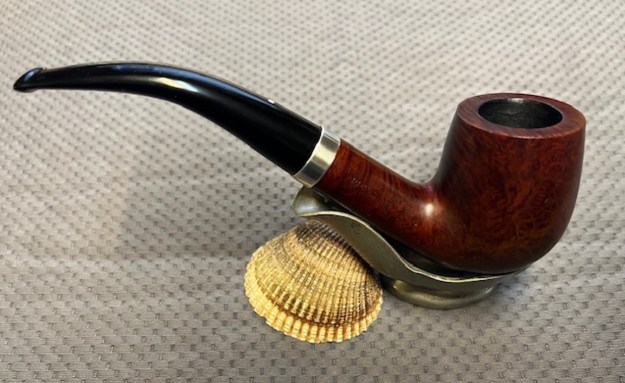
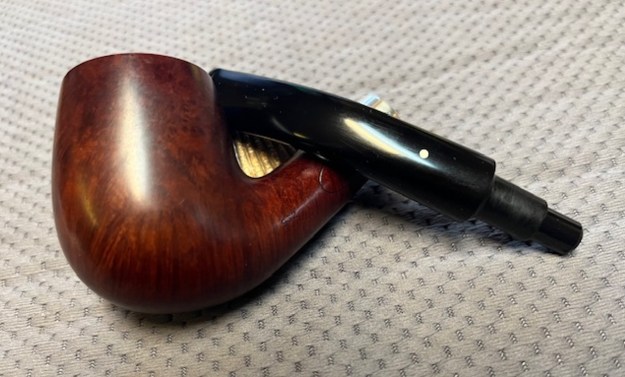
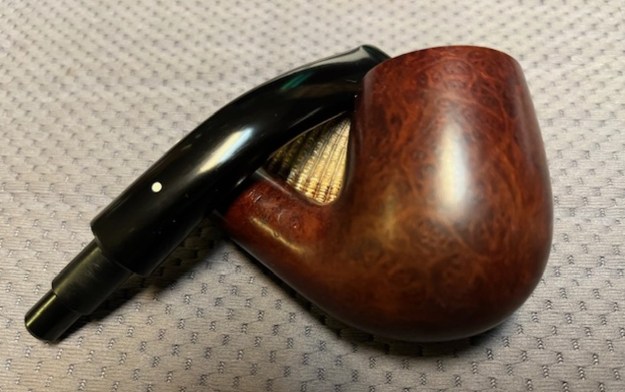
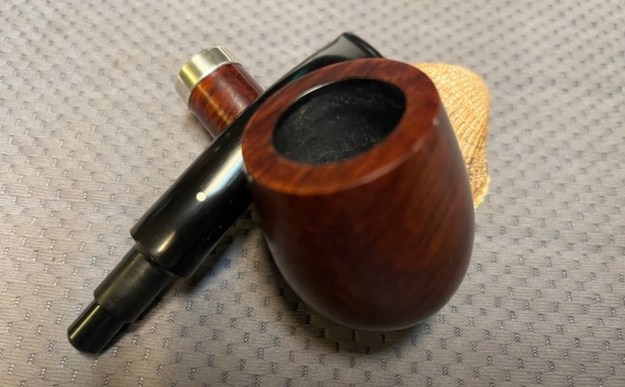
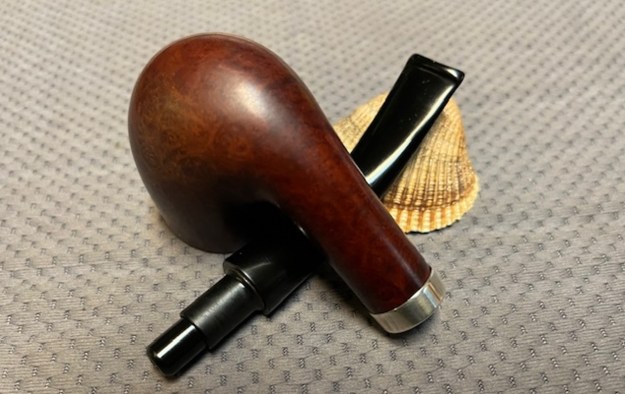
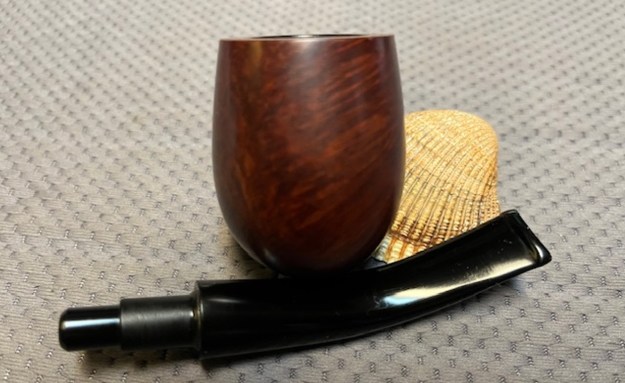
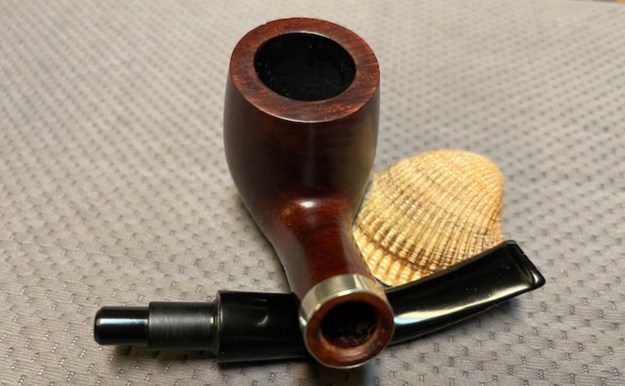
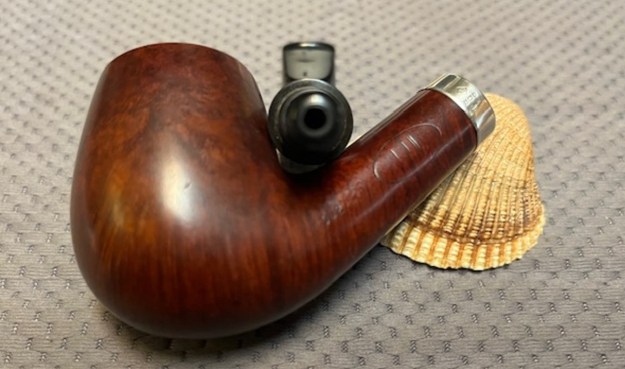
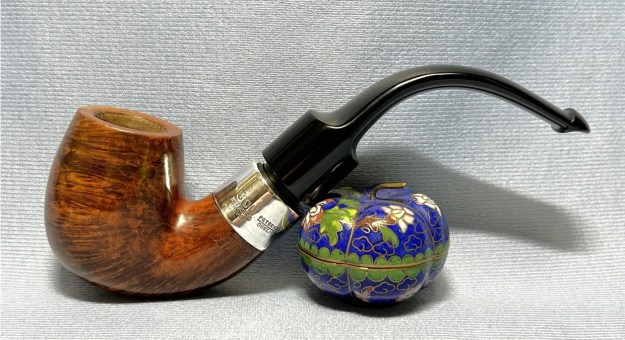
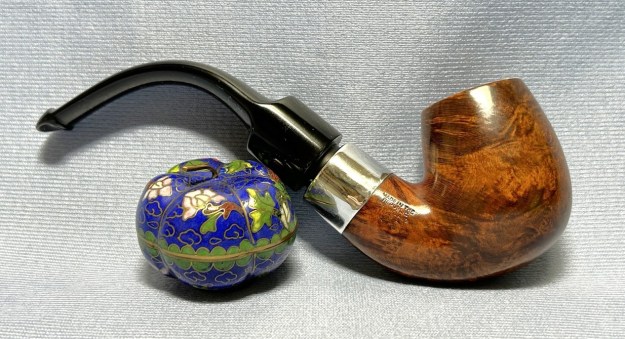
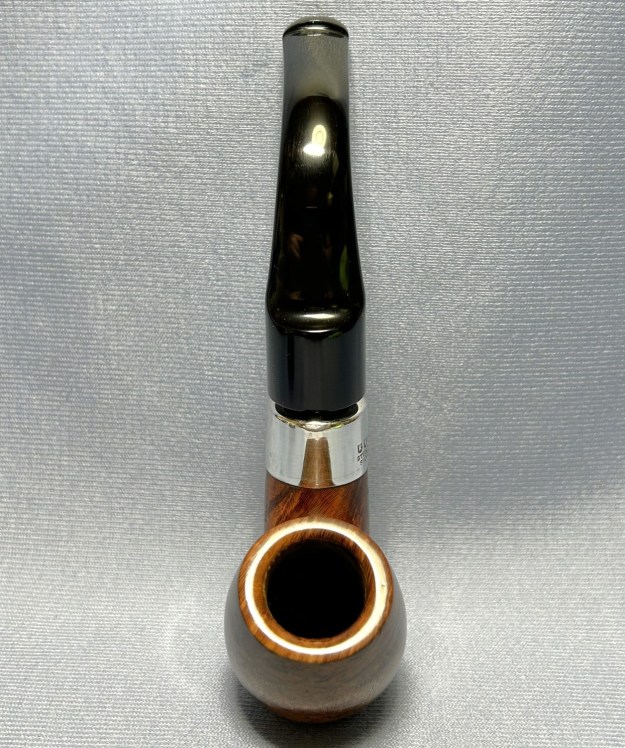
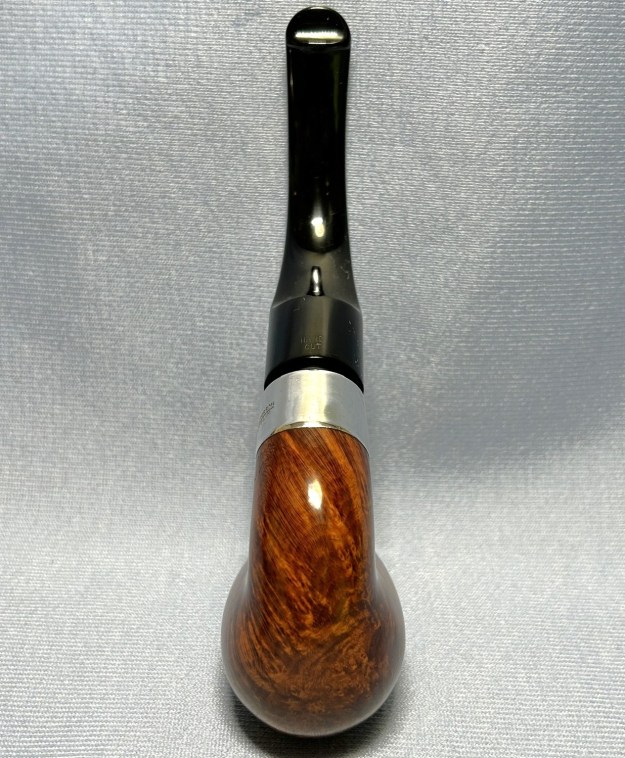
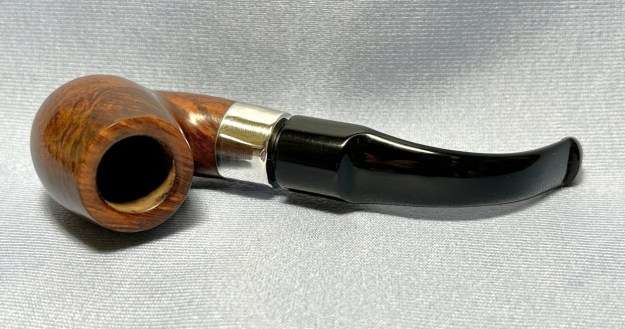
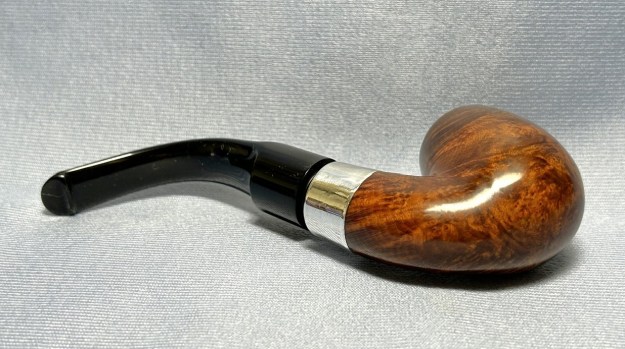
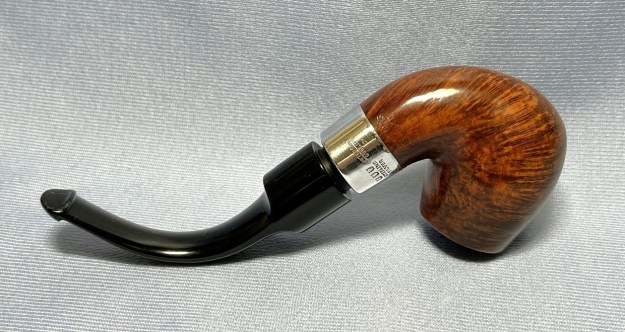
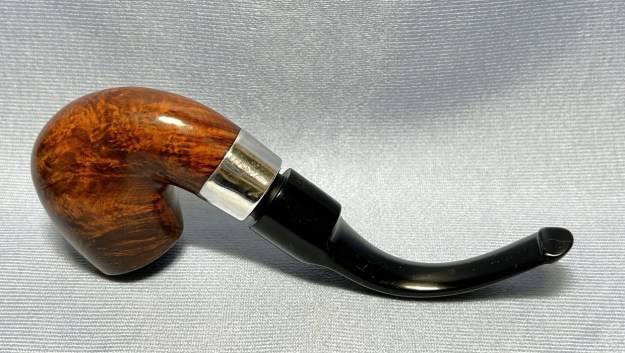
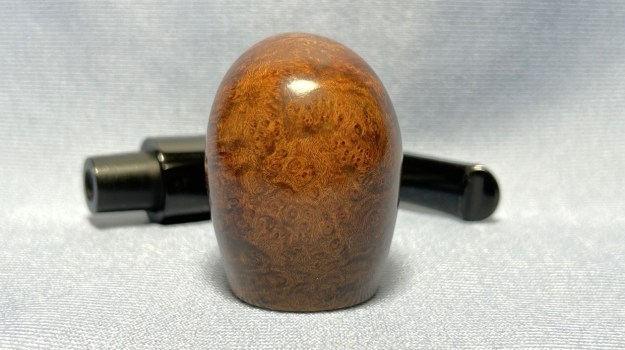
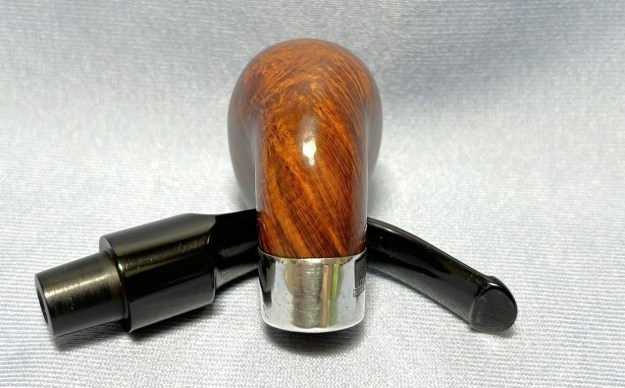
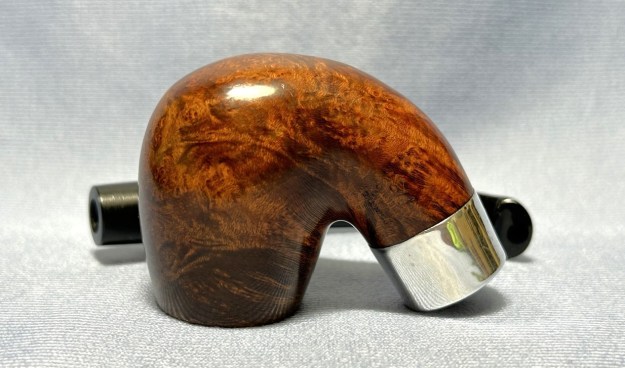
 This Dunhill Bruyere 932 Group 4 Bent Billiard from 1995 is a beautiful looking piece of briar that has a shape that follows grain. It is a great looking pipe that came out looking even better after the cleanup. The Bruyere is an early finish that Dunhill specialized in making. The finish on the pipe is in excellent condition. The red and brown stain on the bowl works well to highlight the grain. The polished silver band and the black vulcanite taper stem adds to the mix. With the scratches and dust gone from the finish of the bowl it is an eye catching beauty. I put the stem back on the bowl and buffed the pipe with Blue Diamond on the buffing wheel being careful to not buff the stamping. I gave the bowl and the stem multiple coats of carnauba wax on the buffing wheel and followed that by buffing it with a clean buffing pad. I hand buffed the pipe with a microfiber cloth to deepen the shine. The finished Dunhill Bruyere 932 Bent Billiard with a 9MM filter stem is quite nice and feels great in the hand. Give the finished pipe a look in the photos below. I can only tell you that like the other pipes I am working that it is much prettier in person than the photos capture. The dimensions of the pipe are Length: 6 inches, Height: 2 inches, Outside diameter of the bowl: 1 ¼ inches, Chamber diameter: ¾ of an inch. The weight of the pipe is 54 grams/1.90 ounces. It is the third pipe from the lot that Jack sent me to work on. I have one left to finish and then I will pack the up and send them back to him. Thanks for walking through the restoration with me as I worked over another beautiful pipe. Remember we are not pipe owners; we are pipemen and women who hold our pipes in trust until they pass on into the trust of the next generation.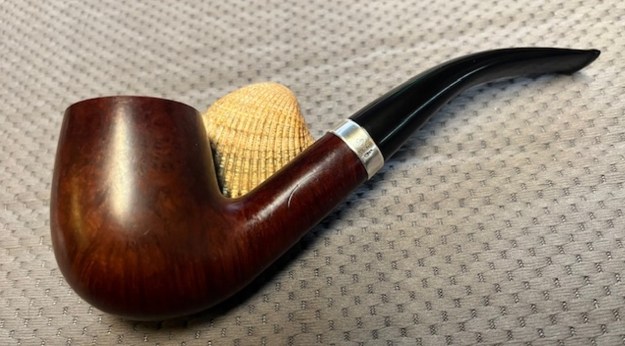
 rebornpipes
