Blog by Steve Laug
Once again time to get back to Jennifer’s Dad’s pipes. The next pipe on the worktable is from the estate of George Rex Leghorn. You may not have read about this estate before, so I will retell the story. I received an email from Jennifer who is a little older than my 64+ years about whether I would be interested in her Dad’s pipes. My brother Jeff and I have been picking up a few estates here and there, so I was interested. Here is the catch – she did not want to sell them to me but to give them to me to clean up, restore and resell. The only requirement she had was that we give a portion of the sales of the pipes to a charity serving women and children. We talked about the organization I work for that deals with trafficking and sexual exploitation of women and their children and she decided that would be a great way to carry on the charitable aspect of her Dad’s character. With some great conversation back and forth she sent the pipes to Jeff and he started the cleanup process on them. Once he had finished cleaning them all he sent them to me to do my work on them.
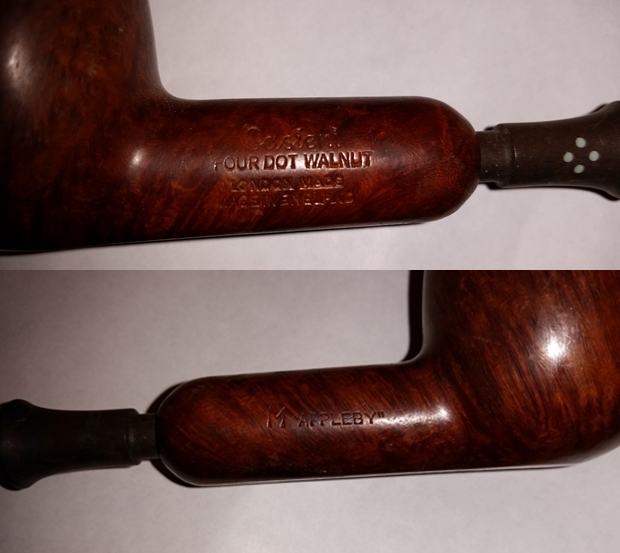
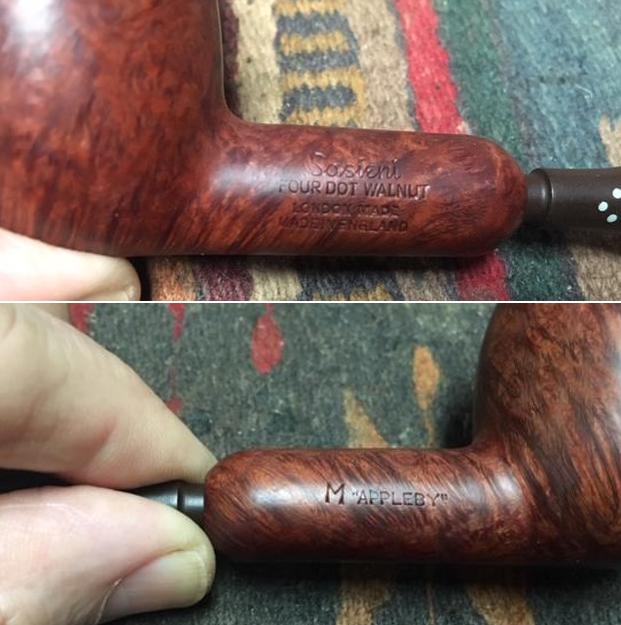
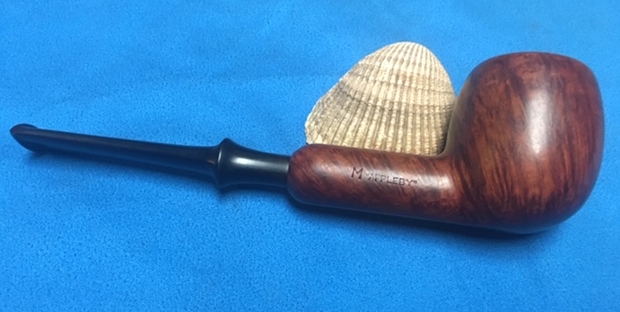
The next pipe I chose to work on from the lot was an interesting Apple shaped Sasieni with a military type bit. The pipe is stamped Sasieni in script over FOUR DOT WALNUT over London Made over Made in England on the left side of the shank. On the right side it is stamped M “APPLEBY”. It has some beautiful flame and straight grain mixed with birdseye grain around the bowl sides and shank. It had a rich reddish brown stain but it was dirty and hard to see the colour well. There was a thick cake in the bowl and it had overflowed with lava was dirty and tired looking. There was some burn marks and lava on the rim top. The stem was badly oxidized with tooth marks and chatter on the top and underside near the button. The button was in excellent condition. There were four blue dots on the left side of the saddle stem. It had been sitting in boxes for a lot of years and it was time to move ahead with the restoration. Jennifer took photos of the pipes she was sending. I have included three she included from this pipe. 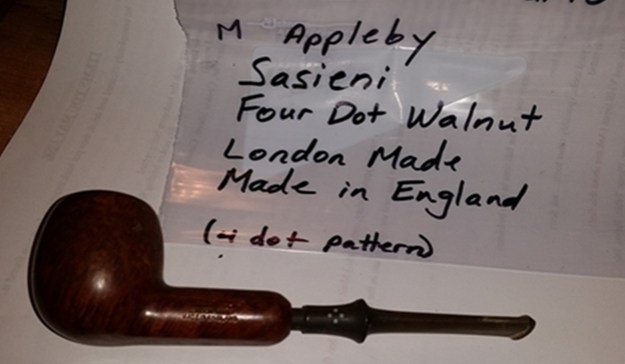
 When the box arrived from Jennifer, Jeff opened it and took photos of each pipe before he started his cleanup work on them. This interesting looking Sasieni with a round rim top and shank end was different from any that I have worked on in years past. This is a classic shape with a twist. The stem is faux military bit that sits tight against the rounded end of the shank. The pipe appeared to be in good condition underneath the grime and oxidation on the bowl and stem. The finish looked intact under the grime. The bowl had a thick cake that had hardened with time. The lava overflow on the rim but it could very well have protected the rim from damage. We won’t know what is under it until Jeff had cleaned it off. The stem was worn looking with a lot of deep oxidation and scratches in the vulcanite on both surfaces. There was some tooth chatter and bite marks on both sides at the button.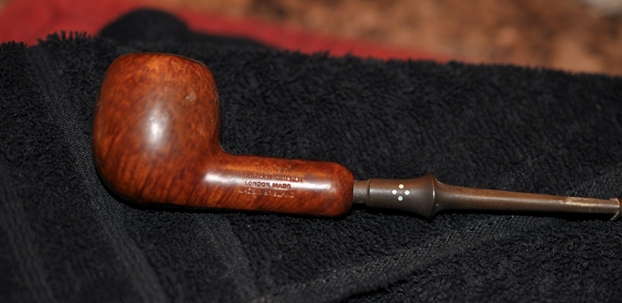
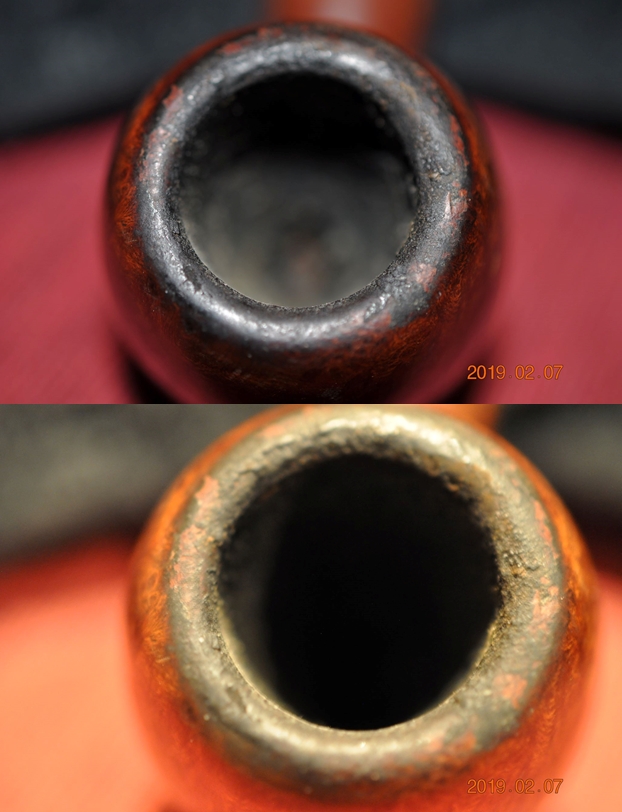
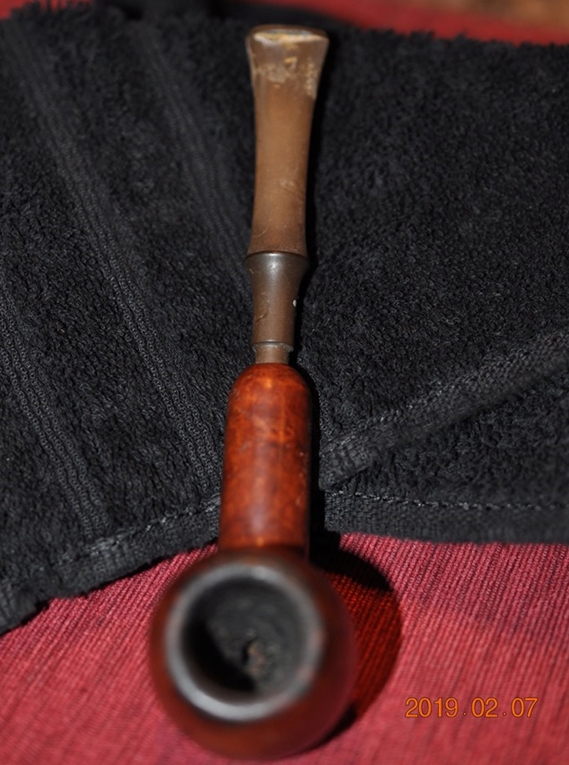 Jeff took photos of the bowl and rim top to show the cake in the bowl and the lava build up on the edges of the bowl. It was thick and hard but hopefully it had protected the rim and edges from damage. The lava coat looks horrible and it points to a well-used good smoking pipe.
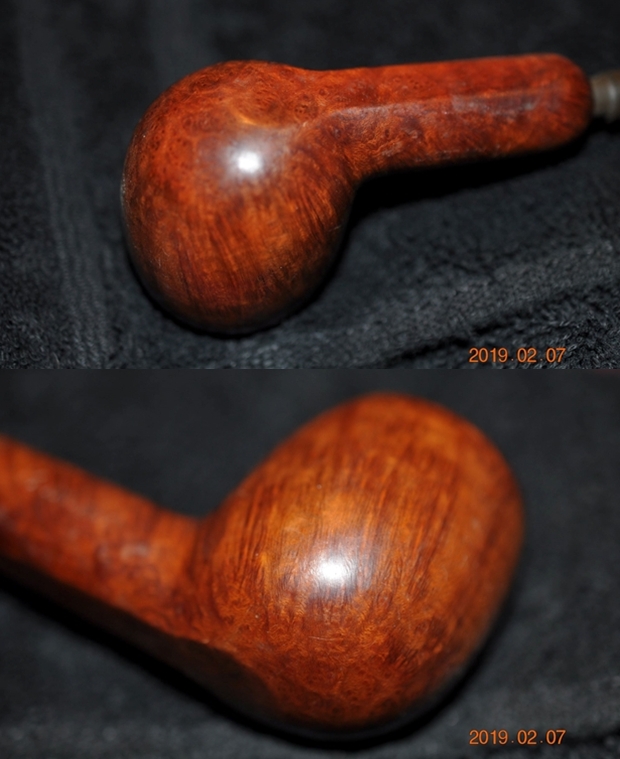
 Jeff took photos of the sides and heel of the bowl to show the condition of the finish – the grime and grit all over the sides and flat bottom of the bowl. It is a dirty pipe.
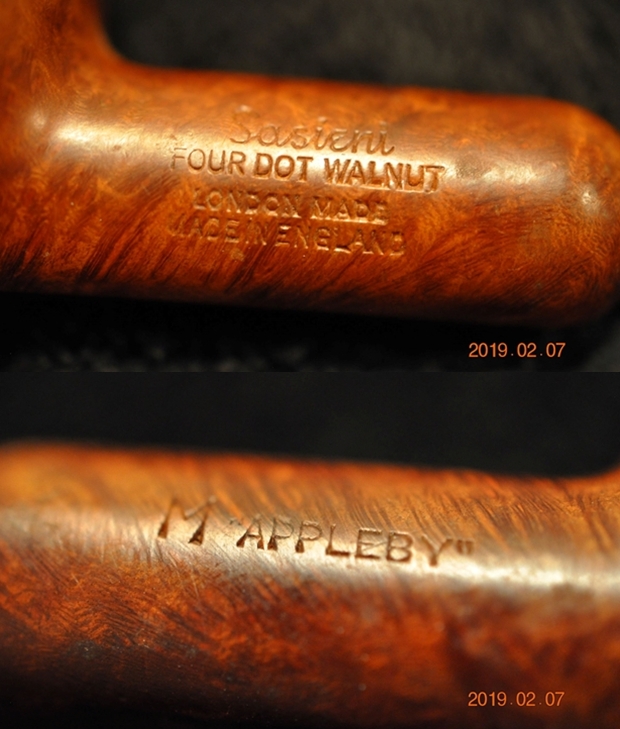
 Jeff took photos of the stamping on the left and the right side of the shank. The stamping was very readable. On the left side of the shank it read Sasieni in script over FOUR DOT WALNUT. Under that it reads London Made over Made in England. On the right side it read M “Appleby”.
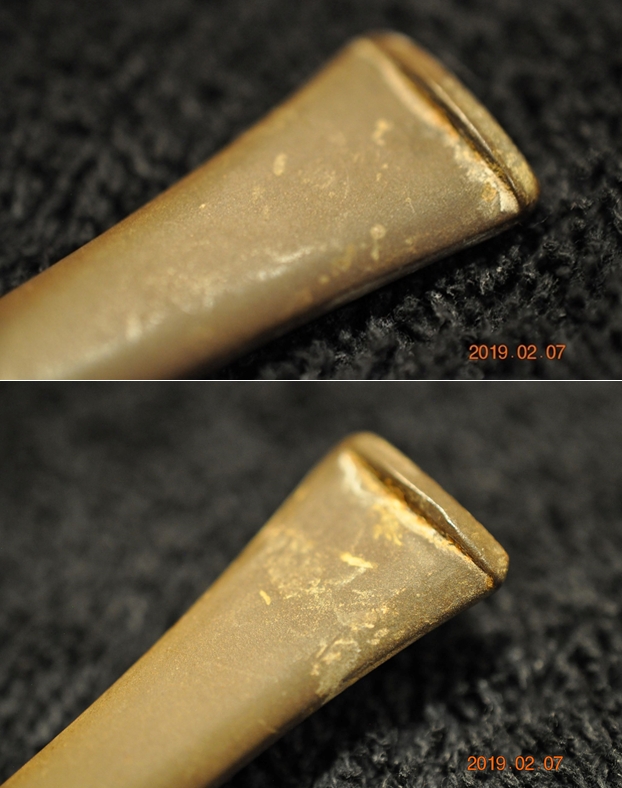
  Jeff took photos of the top and underside of the stem showing the scratching, oxidation and light tooth damage to the stem surface and slight wear to the edges of the button.
  I looked on the Pipedia website to see if I could get a bit of background information on the Sasieni Four Dot Walnut (https://pipedia.org/wiki/Sasieni). I quote from that site the pertinent information on the brand:
Once Alfred took over the company in 1946, these elements changed in fairly rapid succession. The first thing to be changed was the nomenclature itself. In place of the elaborate “Sasieni” stamp of pre-war pipes, a simpler, though still script style, “Sasieni” was used. This can be seen on patent pipes which have the small, old style dots.
Soon after, Sasieni enlarged the dots themselves, and they formed an equilateral rather than an elongated diamond. My pet theory on this is the dots were enlarged to make up for the fact there were no longer eight of them, but I can’t prove it. Finally the patent number was discontinued, and the words “Four Dot” were added. The shank thus read:
Sasieni
Four Dot
London Made.
Somewhat later still, this was modified to reflect the finish, e.g. Four Dot Walnut, or Four Dot Natural. All these changes seem to have been made in the years between 1946 and 1950. Therefore a pipe with new style dots and old style stamping almost certainly has a replacement stem.
This system changed little if at all in the ensuing thirty years. When the company was sold in 1979, one of the first things the new owners did was to eliminate the town names from the shanks. The dots were enlarged yet further, and the Sasieni name, though still done in script, was larger, as was the rest of the shank nomenclature, which in all other ways was similar to the Pre-Transition nomenclature. While these pipes are not as collectible as the family made pipes, they were made with care and are high quality.
The pipe in my hand is stamped with four lines on the left side. Under the London Made stamp it reads Made in England. The left side could be a town name – M “Appleby”. This would date the pipe being made between 1946 and 1979. Sometime shortly after 1946 the words FOUR DOT were added. That gives a rough time frame for the making of this pipe.
I wrote to Al Jones (upshallfan here on rebornpipes) and asked what he knew about the brand. He sent back this response this morning. He confirms what I had figured out from the Pipedia article. He adds information that I could not find in terms of the M stamp.
That’s a beauty! Four Dot with town name (Appleby), made between 46-79. The Appleby is usually a tapered stem, but the M stamp indicated a military stem, a bit unusual. Great pickup. Four Dot’s have been one of the few pipes that are still currently holding their value… — Al
Now I had the information that I was searching for. The Sasieni that I have is an interesting Four Dot Sasieni with a military stem. Al says it is a bit unusual and I would concur having never seen one like this before. Thanks Al.
Before I get on to cleaning up the pipe I thought I would once again include the tribute that Jennifer wrote to her Dad for the blog. She also sent some photos and an article that her Dad wrote for Jeff and me to be able to get a feel for him. I have included those below. Note in each of them that he is holding a pipe in his left hand. I asked her to also send me an email with a brief tribute to her Dad. Here is her tribute from an email to me.
Steve, I want to thank you again for accepting my dad’s pipes. They were so much a part of my dad’s life that I could not simply discard them. But as his daughter, I was not about to take up smoking them either. *laughing* I think my dad would like knowing that they will bring pleasure to others. I know that I do.
I’m not sure what to say about his pipes. I always remember Daddy smoking pipes and cigars.
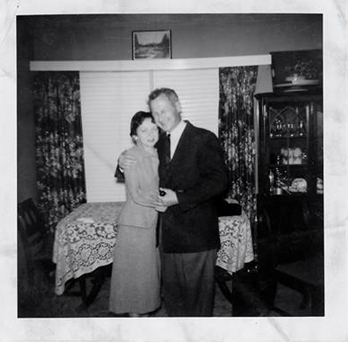 First a bit about my dad. Though my father, George Rex Leghorn, was American (growing up in Alaska), he managed to join the Canadian Army at the beginning of WWII, but in doing so lost his American citizenship. He was fortunate to meet a Canadian recruiting officer who told him the alphabet began with “A” and ended with “Zed” not “Zee”, and also told him to say that he was born in a specific town that had all its records destroyed in a fire. When the US joined the war my dad, and thousands of other Americans who had made the same choice*(see the link below for the article), were given the opportunity to transfer to the US military, and regain their citizenship.
After WWII, my dad, earned his degree at the University of California Berkeley and became a metallurgist. There is even a bit about him on the internet.
He loved taking the family out for a drive, and he smoked his cigars on those trips. (As a child, those were troubling times for my stomach.)
I most remember my father relaxing in his favorite chair with a science fiction book in one hand and a pipe in the other… Sir Walter Raleigh being his favorite tobacco… and the pipes themselves remind me of him in that contented way. If I interrupted his repose, he’d look up, with a smile on his face, to answer me.
It seemed he smoked his Briarwood pipes the most, though he had others. At the time, it was only the Briarwood I knew by name because of its distinctive rough shaped bowl. And it was the Anderson Free Hand Burl Briar, made in Israel, which I chose for his birthday one year, because I thought he might like that particular texture in his hand.
At least two of his pipes, he inherited from his son-in-law, Joe Marino, a retired medical laboratory researcher (my sister Lesley’s late husband)… the long stemmed Jarl (made in Denmark), and the large, white-bowled, Sherlock Holmes style pipe. I believe Joe had others that went to my dad, but Lesley was only sure about those two.
The Buescher, corncob pipe my older sister Lesley bought for Daddy while on one of her travels around the States.
A note on the spelling of my sister’s name… 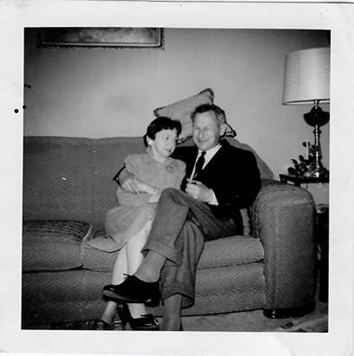
My dad met my mother, Regina, during WWII and they married in Omagh, Ireland. My mother was English and in the military herself. The English spelling of Lesley is feminine, and Leslie masculine, in the UK… just the opposite of here in the United States. I guess my mom won out when it came to the spelling of the name.
I’ll send you photos of my dad soon, along with his WWII experience story.
Jennifer
*https://www.thestar.com/news/world/2013/10/22/the_americans_who_died_for_canada_in_wwii.html
Jeff cleaned the pipe with his usual penchant for thoroughness that I really appreciate. This one was a real mess and I did not know what to expect when I unwrapped it from his box. He reamed it with a PipNet pipe reamer and cleaned up the reaming with a Savinelli Fitsall Pipe Knife. He scrubbed out the internals with alcohol, pipe cleaners and cotton swabs until the pipe was clean. He scrubbed the exterior of the bowl with Murphy’s Oil Soap and a tooth brush to remove the grime and grit on the briar and the lava on the rim top. The finish looks very good with mixed grain around the bowl and shank. There was still some darkening on the front and rear edge of the rim. The briar was rough in those two places. He soaked the stem in Before & After Deoxidizer to remove the oxidation on the rubber. When the pipe arrived here in Vancouver for the second stop of its restoration tour it looked very good. I took photos before I started my part of the work.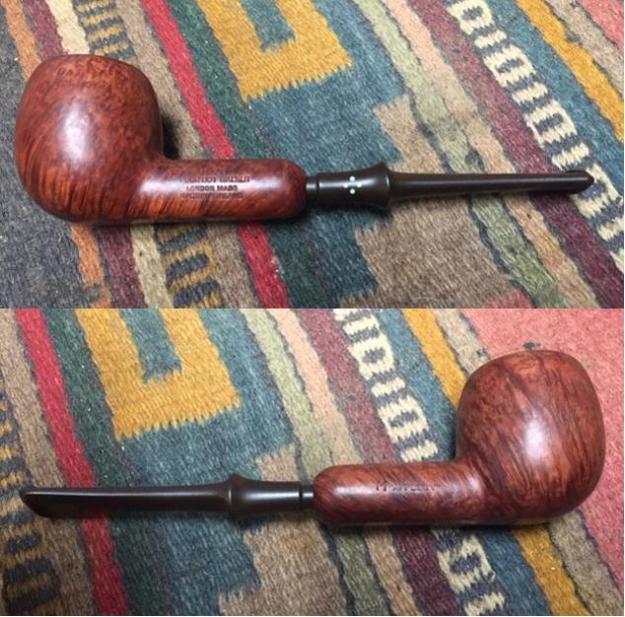
 I took some close up photos of the blackened areas of the rim top and also of the stem surface. I wanted to show what an amazing job Jeff did in the cleanup of the rim top. But I also wanted to clearly show the damage that remained on the surface of the rim top. I also took close up photos of the stem to show the tooth marks and chatter in front of the button on both sides.
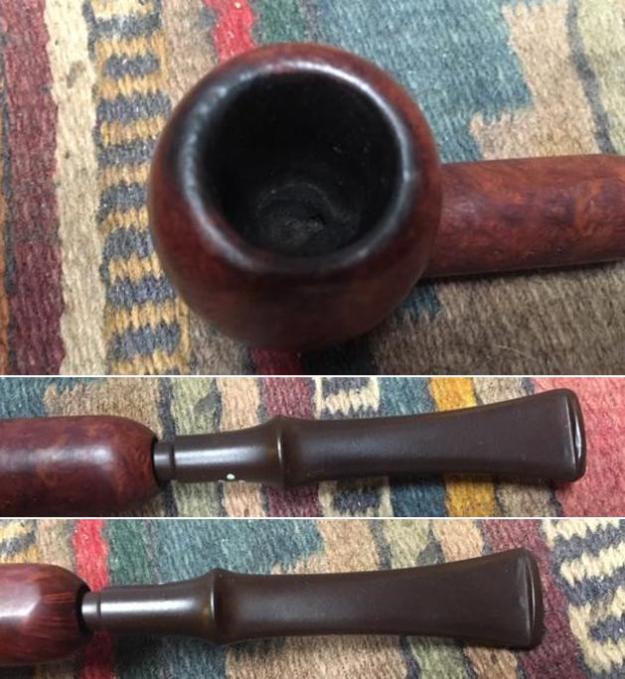 I also took photos of the stamping on the pipe on the underside of the shank. It read as noted above.
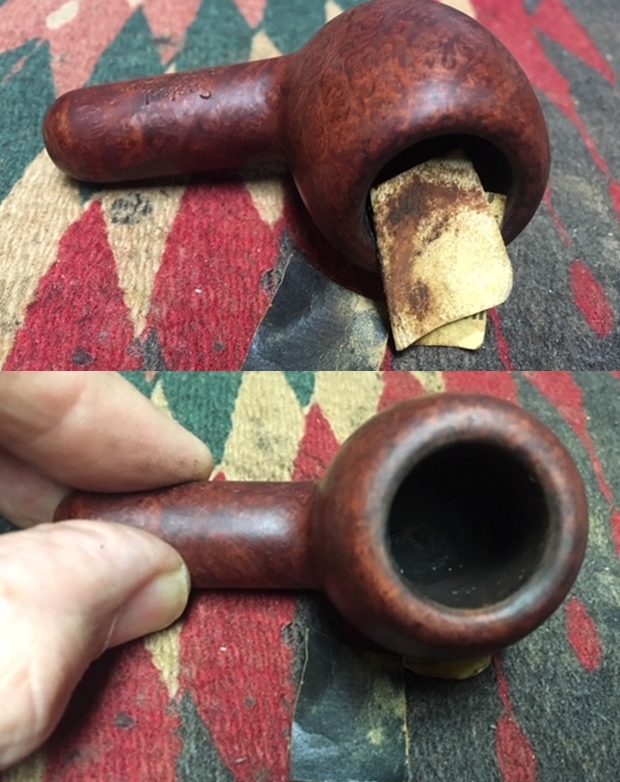
 The next series of photos show the rim top when we received the pipe (photo 1), after Jeff had cleaned the lava off leaving some damage (photo 2) and my work on it (photos 3-4). I worked over the top and edges of the rim with a folded piece of 220 grit sandpaper followed by a piece of 400 grit wet dry sand paper (photo 3). One I had finished the rim looked very good. I was able to remove much of the damage and leave a clean rim (photo 4).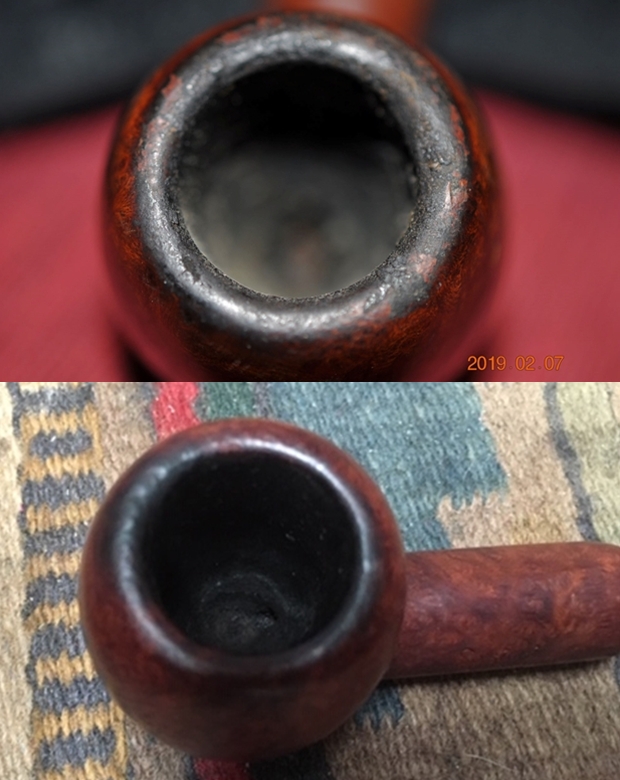
 I polished the bowl and rim with micromesh sanding pads. I wet sanded it with 1500-12000 grit pads and wiped it down between pads with a soft cotton cloth. You can see the progress in the shine as you go through the photos.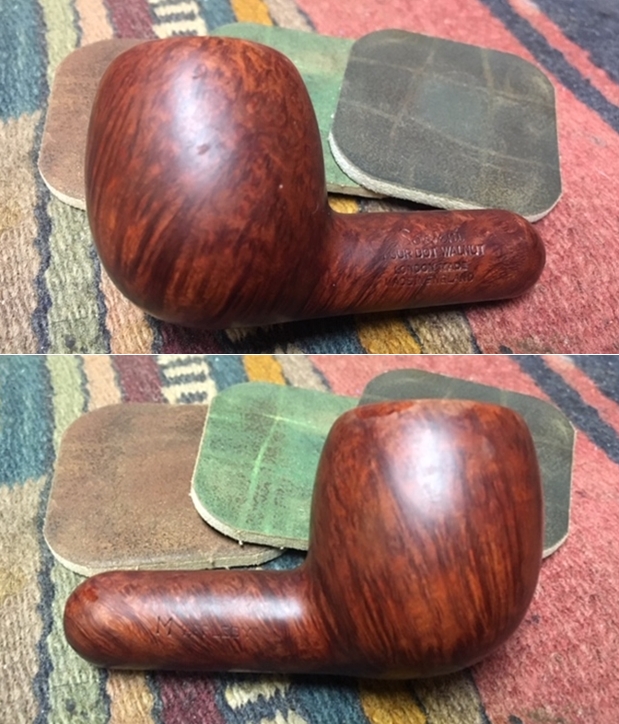

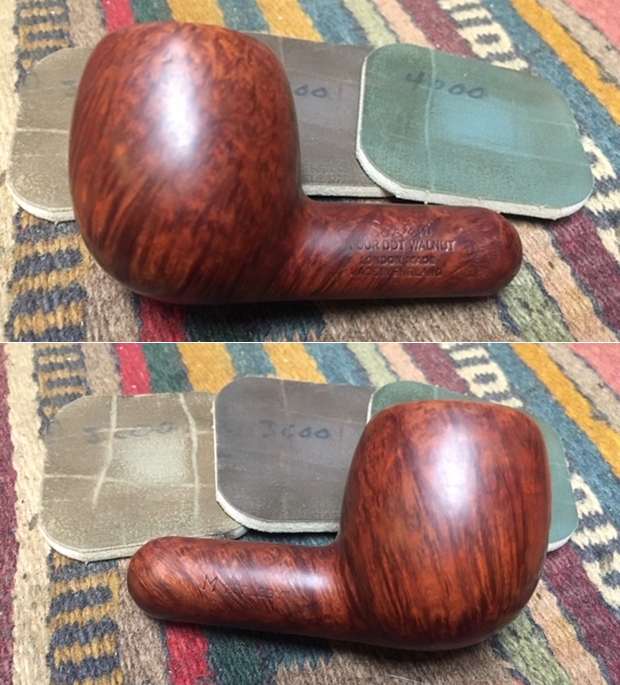
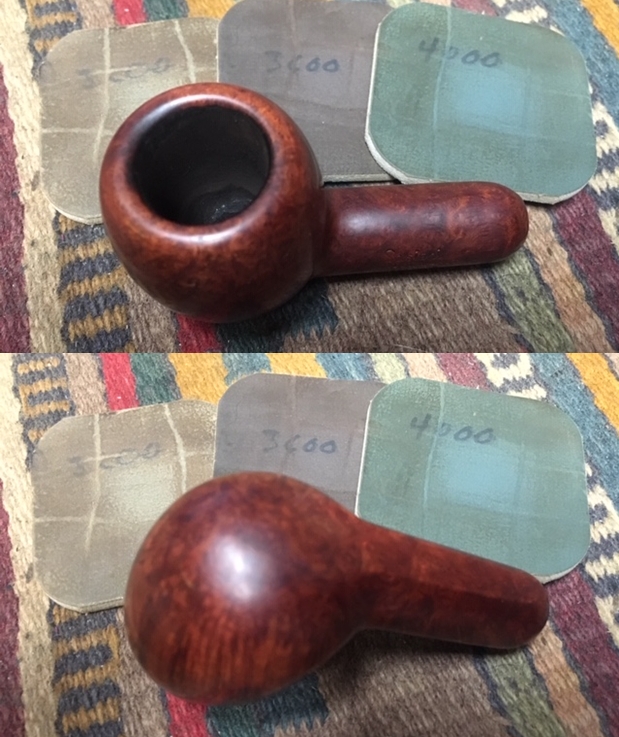
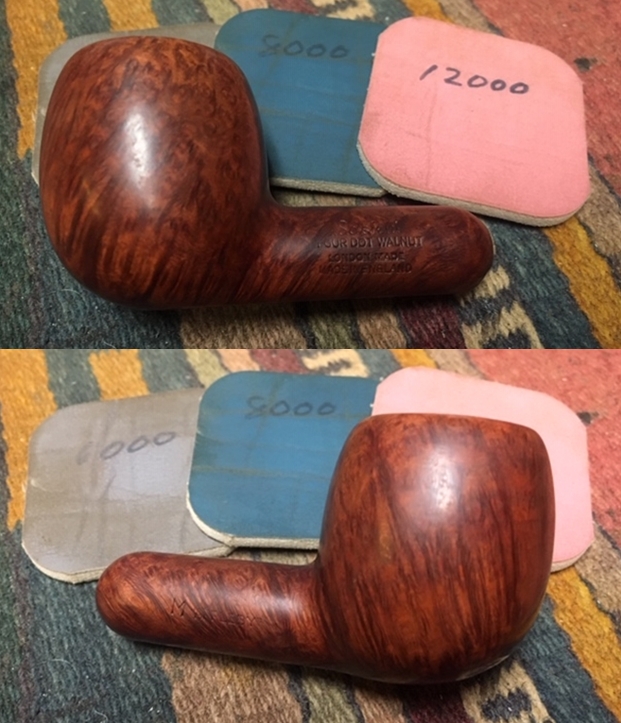
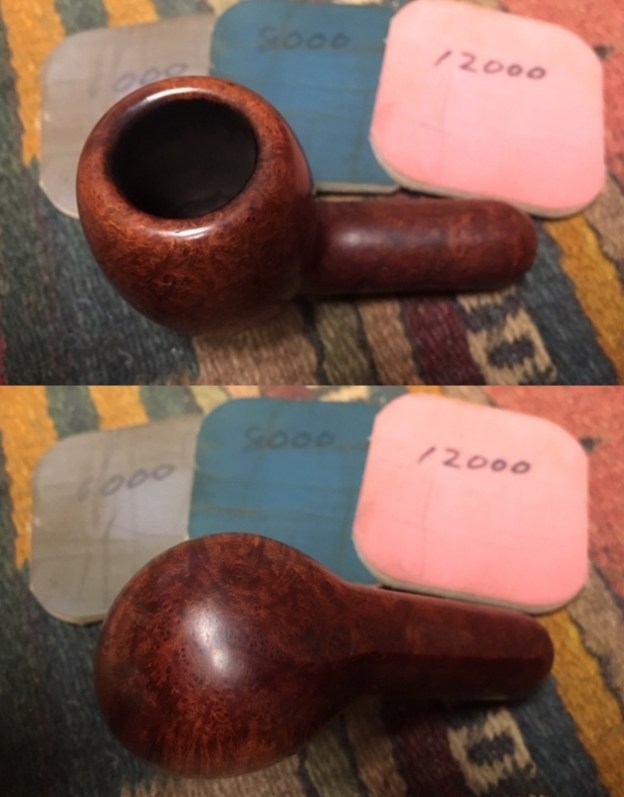 I worked some Before & After Restoration Balm into the finish of the bowl and the rim top with my fingertips to clean, enliven and protect it. I find that the balm really makes the briar come alive again. The contrasts in the layers of stain really made the grain stand out. I let the balm sit for a little while and then buffed with a cotton cloth to raise the shine. The pipe really looks good at this point. I am very happy with the results.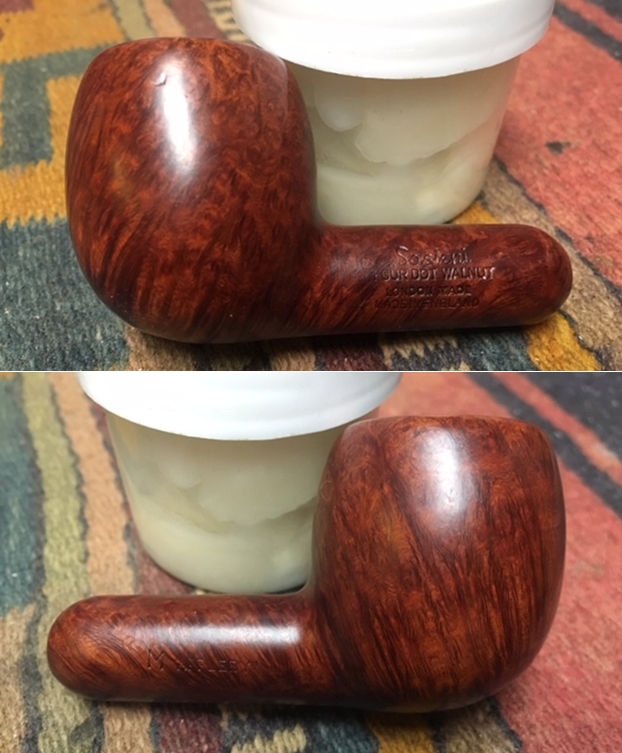

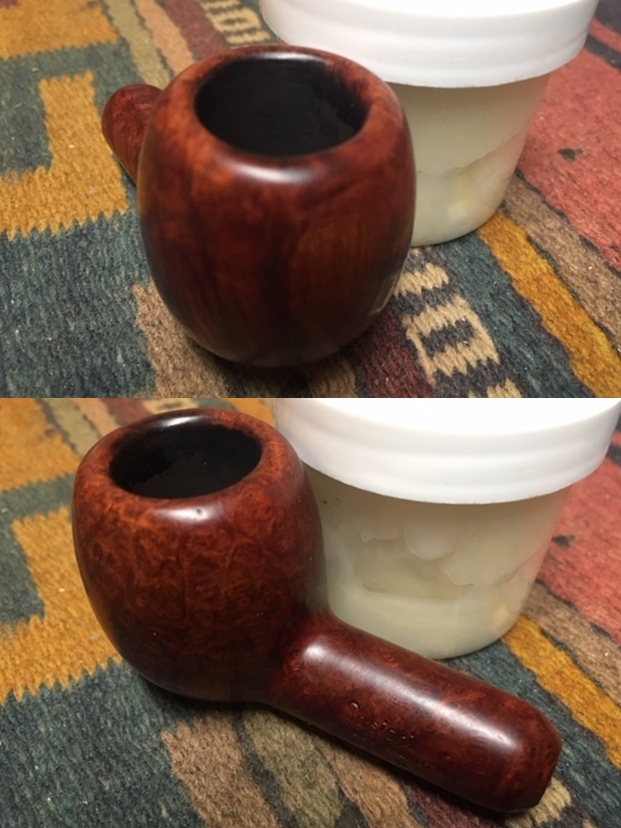 I painted the surface of the stem with the flame of a Bic lighter to raise the tooth marks in the surface of the stem on both sides. I was able to raise some of them but some still remained. I sanded the remaining tooth marks on the stem with 220 grit sandpaper to blend them in and to remove some of the oxidation. I was able to remove much of the damage to the surface. What remained I filled in with clear super glue. I set the stem aside to let the repairs cure.
 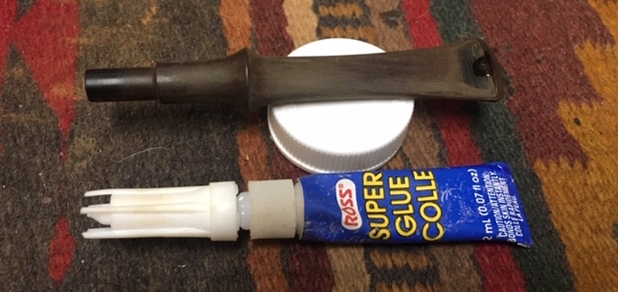 Once the glue had cured I sanded the repairs smooth with 220 grit sandpaper until they were blended in to the surface of the stem. I wiped the stem off with a damp cloth to remove the sanding dust. I put the stem into a bath of Before & After Deoxidizer to let it do its magic on the oxidation that remained deep in the vulcanite. I let it soak for several hours.
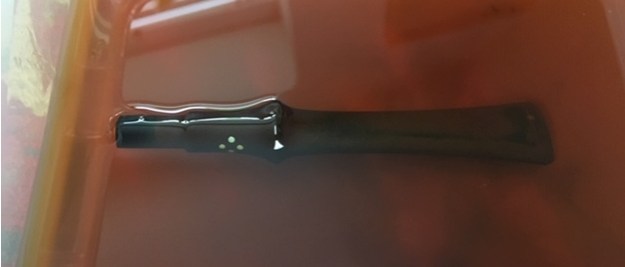 I took the stem out of the bath and rinsed it in warm water. I blew air through the stem to clear the airway and ran water through it as well. I dried it off with a microfibre cloth and buffed it dry to remove as much remaining oxidation as I could. I ran pipe cleaners and alcohol through the stem to further remove traces of the bath.I took photos of the stem at this point to show its condition.
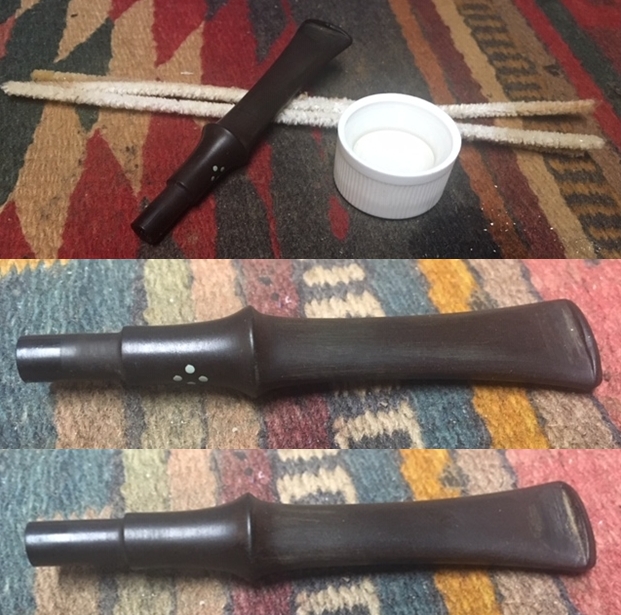 I polished the stem with Denicare Mouthpiece Polish and a cotton pad to scrub off remaining oxidation on the stem surface particularly around the curves. I buffed it with a microfibre cloth to raise a shine and check out the issues remaining.
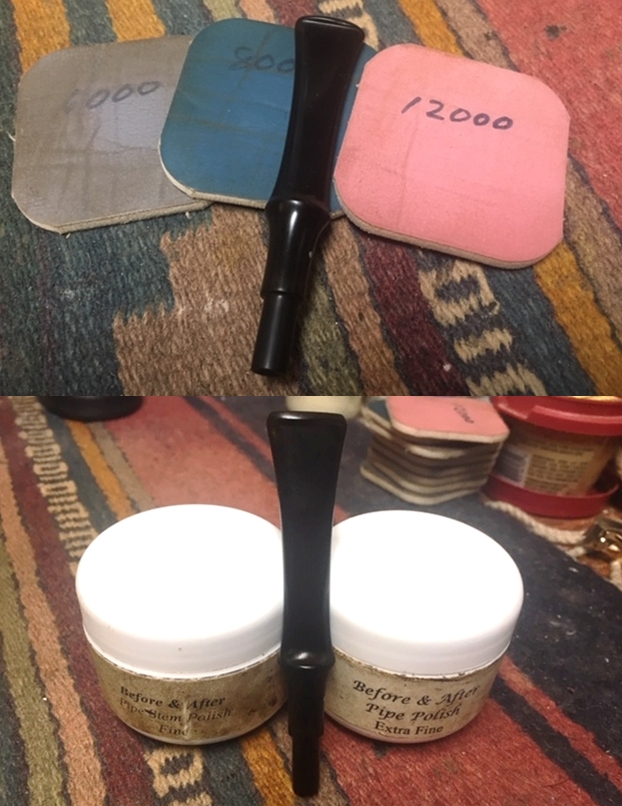
 I polished the stem with micromesh sanding pads – wet sanding it with 1500-12000 grit pads. I polished it further with Before & After Pipe Stem Polish – both fine and extra fine. I finished by wiping it down with Obsidian Oil after each pad and set it aside to dry.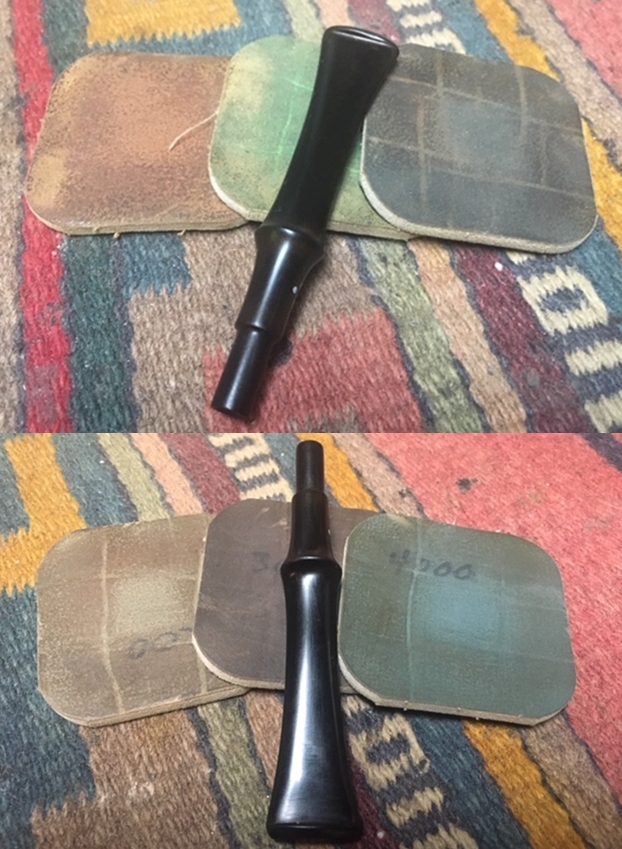
 I put the stem back on the bowl and polished the bowl and stem with Blue Diamond polish on the buffing wheel. I gave the bowl and the stem multiple coats of carnauba wax. I buffed the
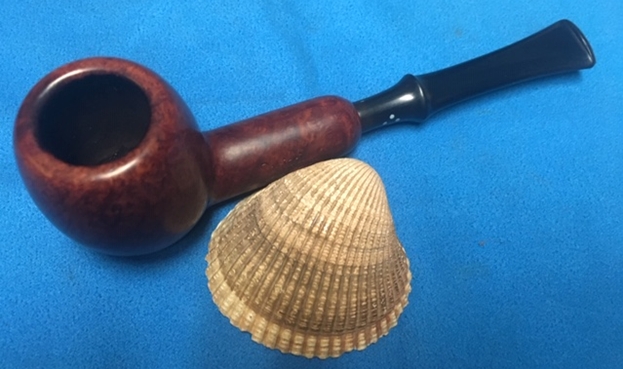
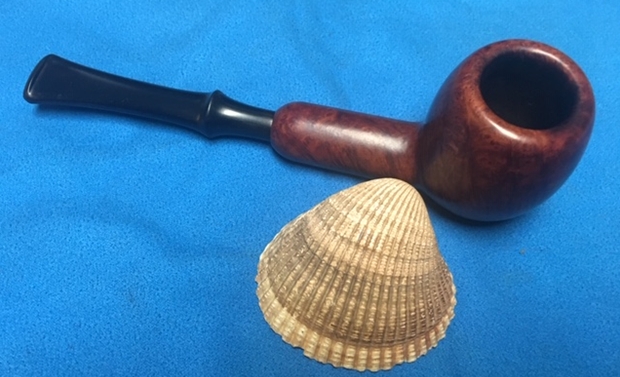
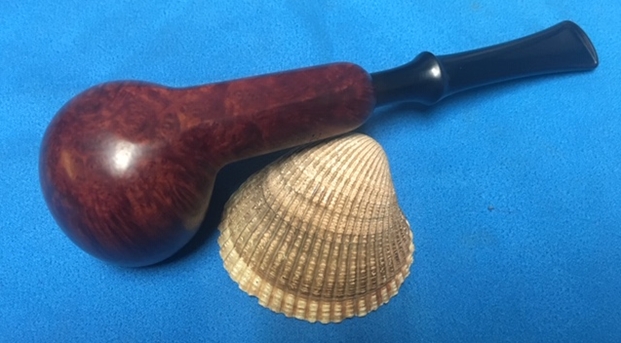
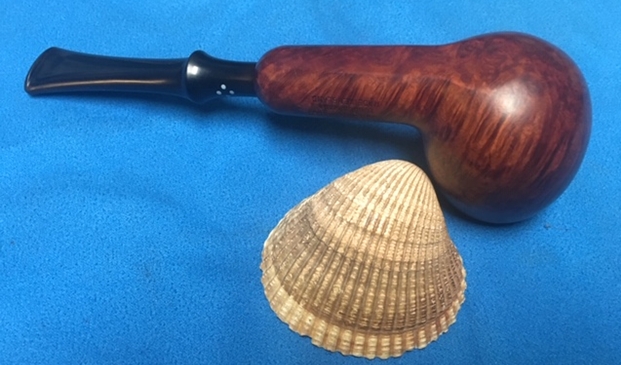
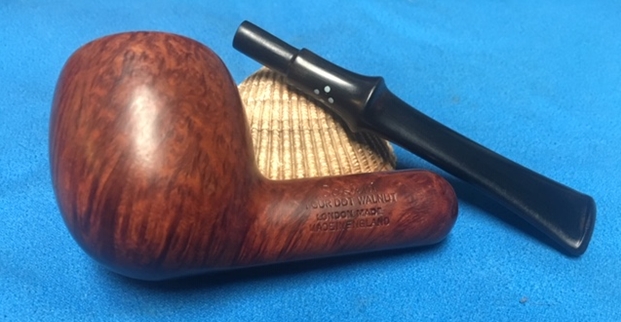
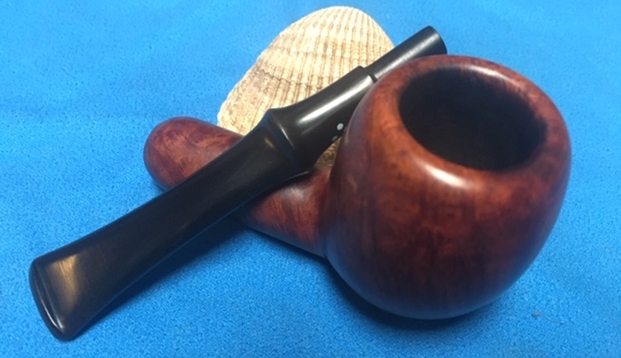
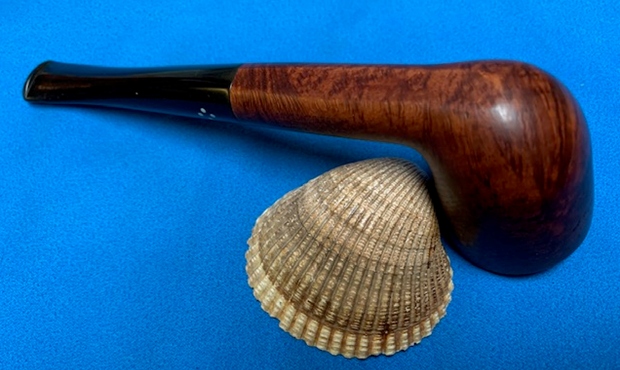
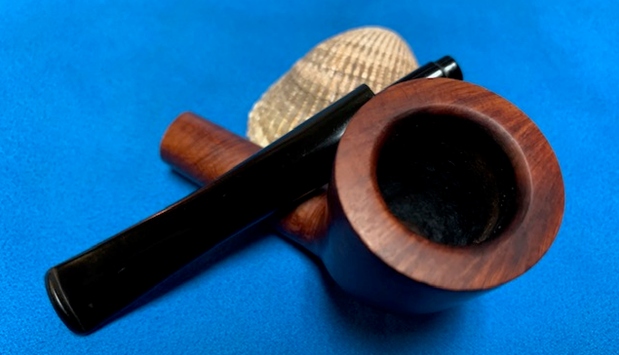
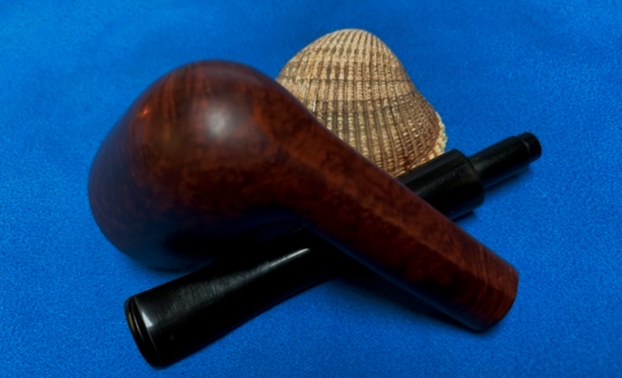
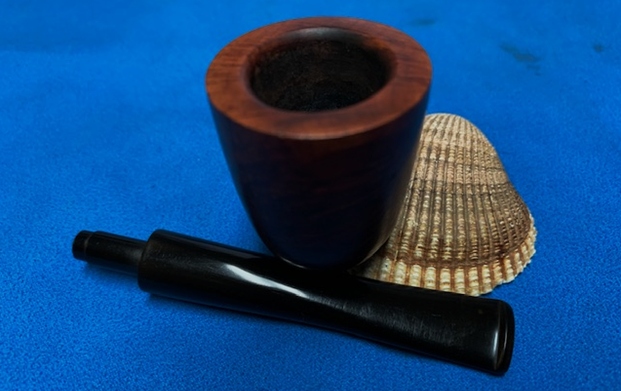
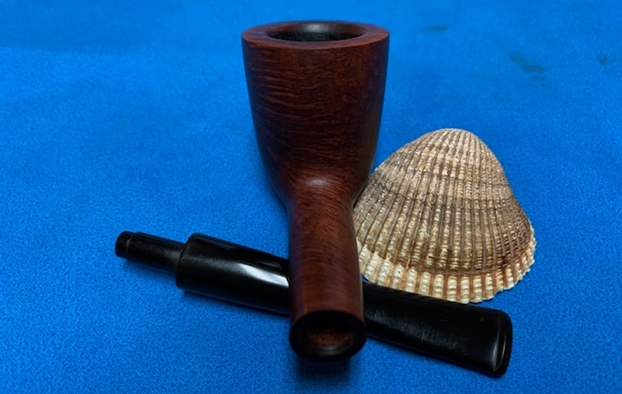
  pipe with a clean buffing pad to raise the shine. I hand buffed it with a microfiber cloth to deepen the shine. The stain and the smooth finish on this briar combine well with the grain. The shine on it makes the variations of colour really pop. The pipe polished up really well. The polished black vulcanite military bit seemed to truly come alive with the buffing. The apple shaped pipe feels great in my hand and when it warms with smoking I think it will be about perfect. It must have been a fine smoking pipe judging from the condition it was when we received it from Jennifer. There should be a lot of life left in this Sasieni Four Dot Walnut “Appleby”. Have a look at it with the photos below. The dimensions are Length: 6 inches, Height: 1 3/4 inches, Outside diameter of the bowl: 1 1/4 inches, Chamber diameter: ¾ of an inch. This is one that will go on the rebornpipes online store shortly. If you want to carry on the pipe trust of George Leghorn let me know. Thank you Jennifer for trusting us with his pipes. Thanks to each of you who are reading this blog. Remember we are not pipe owners, we are pipemen and women who hold our pipes in trust until they pass on into the trust of the next pipeman or woman.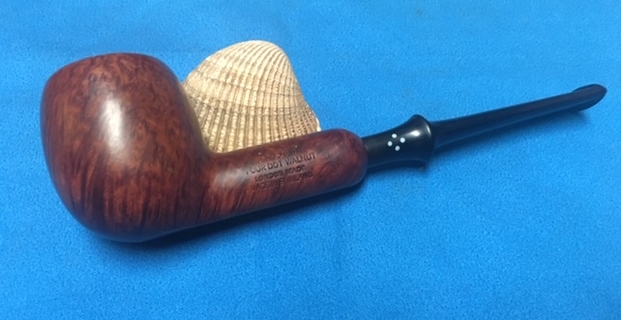

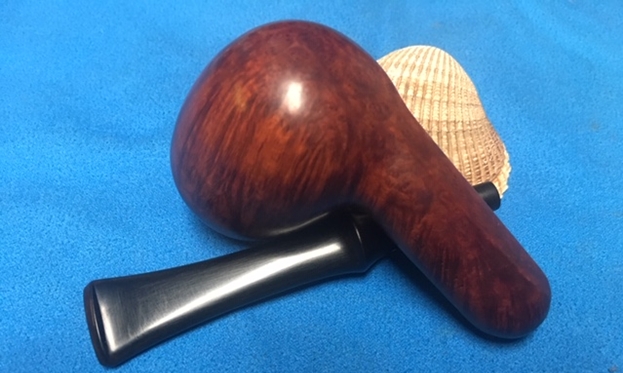
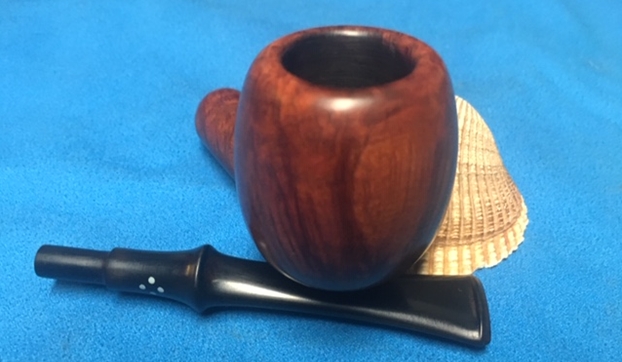
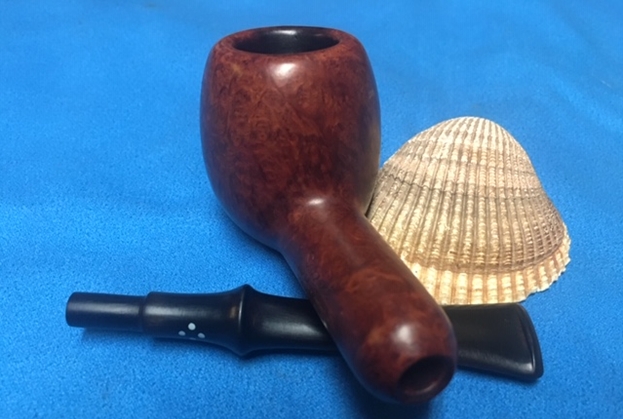

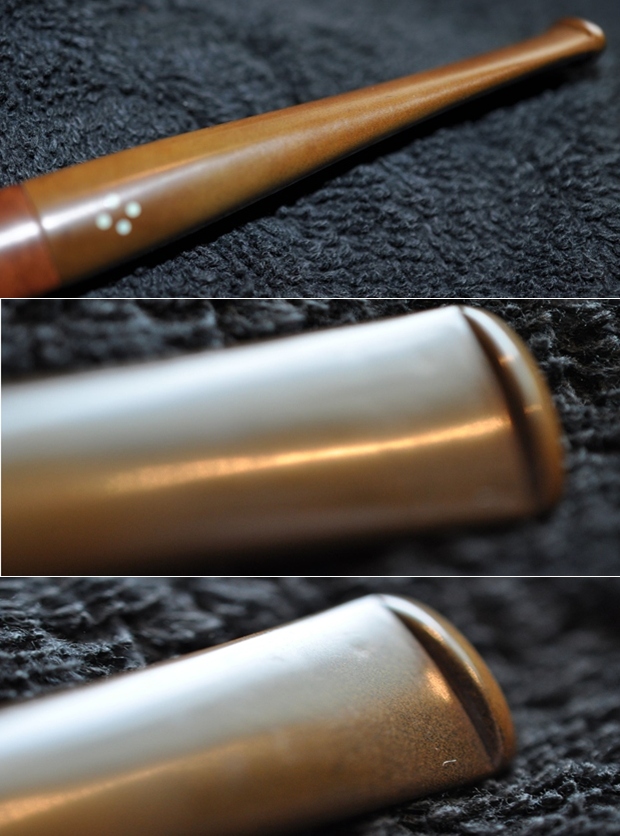
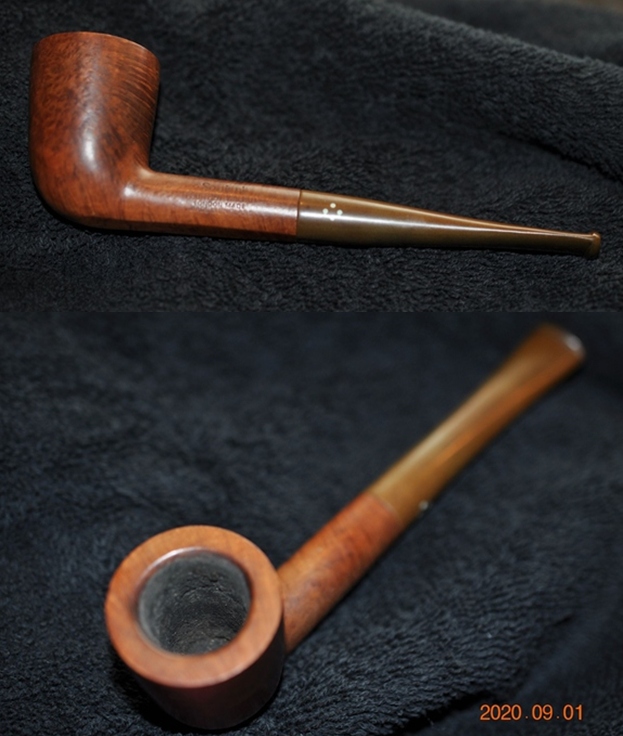 He took photos of the rim top and bowl to give a clear picture of the thickness of the cake and the inner edge of the rim. He also took photos of the top and underside of the stem. The photos show the overall condition of the stem. The stem had four light blue dots on the left side of the taper.
 Jeff took photos of the sides and heel of the bowl to give a picture of what the briar looked like. It truly has some nice sandblasted grain around the bowl and shank.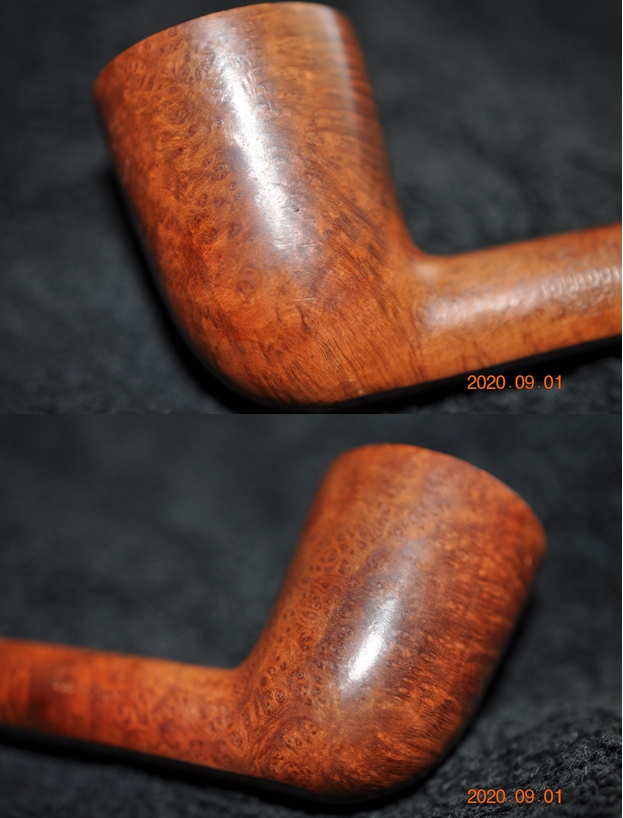
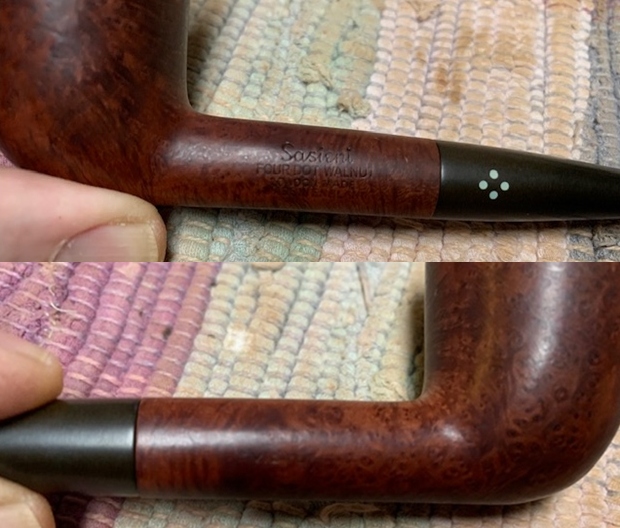
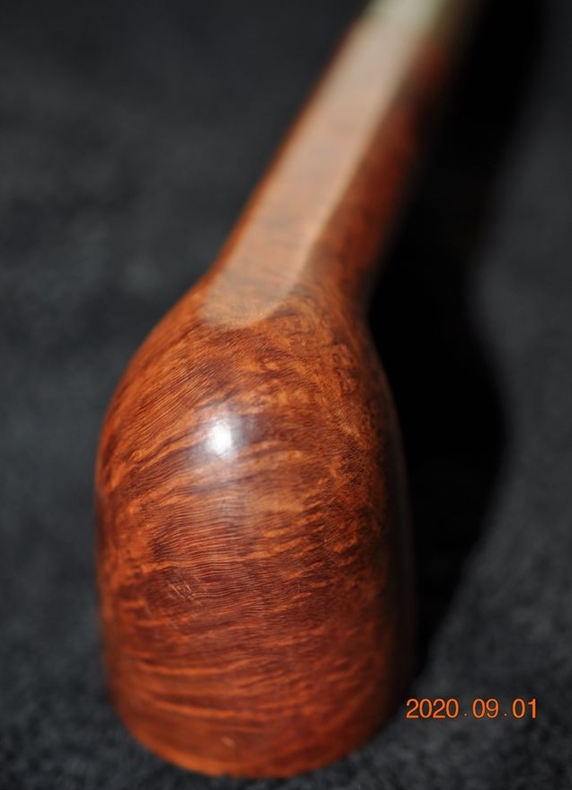 The stamping on the sides of the shank is clear and readable and read as noted above. The four light blue dots are in a diamond pattern as noted above.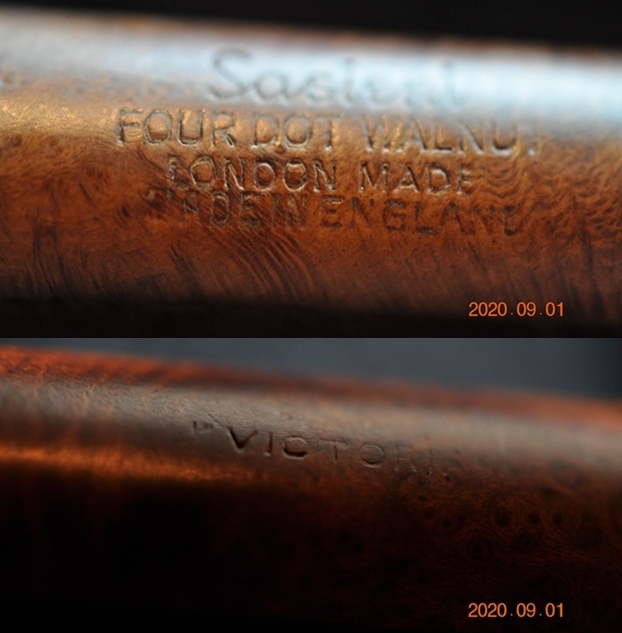
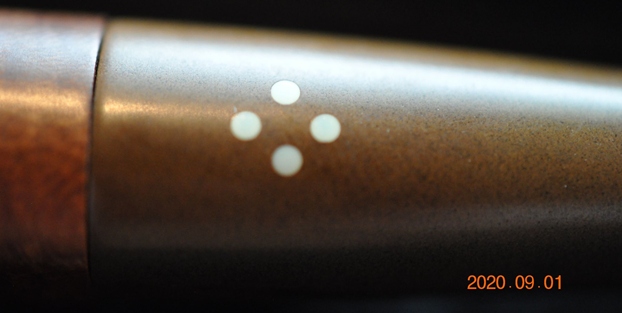 I turned to Pipephil (http://www.pipephil.eu/logos/en/logo-sasieni.html) to get a quick view of the Sasieni Four Dot pipes. I did a screen capture of the site’s information on the Four Dot line. There was nothing on the “Victoria” pipe but the data provided by the site helped understand the stamping.
  It appears that the pipe I am working on is a Pre-Transition pipe (1946-1979). It is stamped Four Dot Walnut ( Walnut is the name for the rich finish). The stamp “Victoria” is the name of a town and is also the shape name for the Dublin.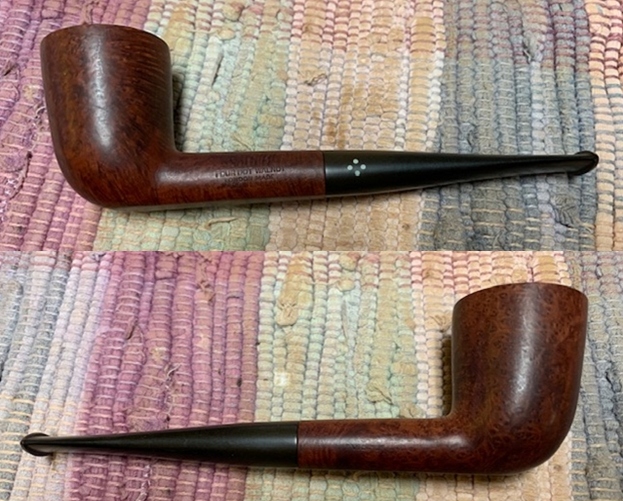
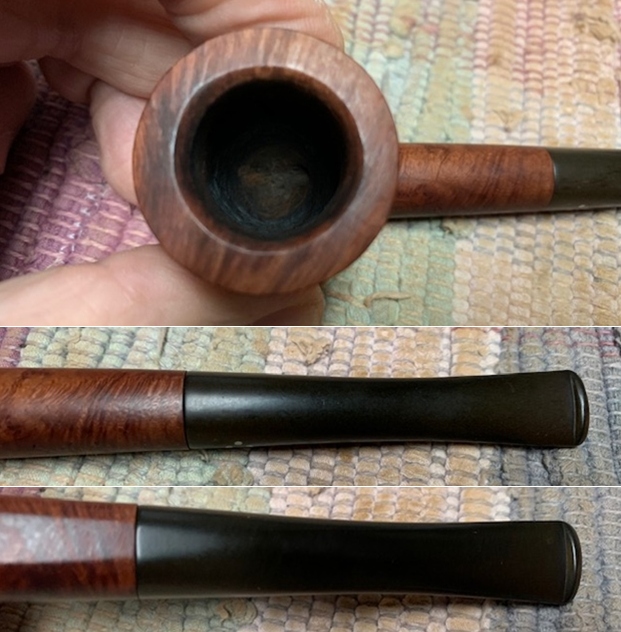
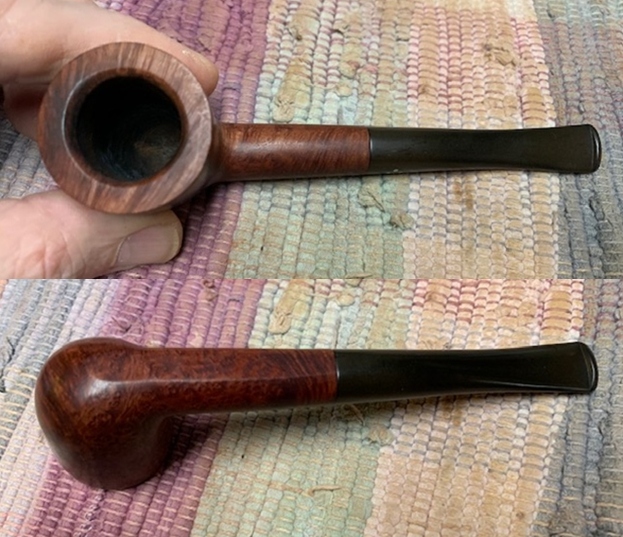 The rim top cleaned up really well. The rim top, inner and outer edge of the bowl is in excellent condition. The stem surface looked very good with a few tooth marks and chatter on both sides near the button. There was also some remaining oxidation.
  The stamping on the shank sides is clear and readable. It is stamped as noted above.
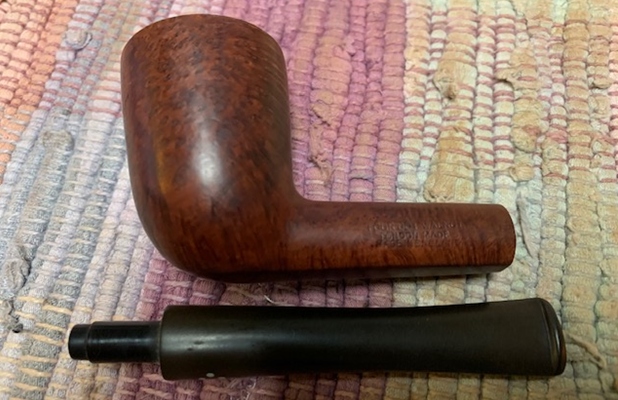
  I removed the stem and took a photo of the pipe to give a sense of the whole. The taper stem is nice and the photo gives a sense of what the pipe looks like.
  I started my work on the pipe by polishing the briar with micromesh sanding pads. I dry sanded the bowl with 1500-12000 grit pads and wiped the bowl down with damp cloth after each pad. The briar really took on a shine by the final pads.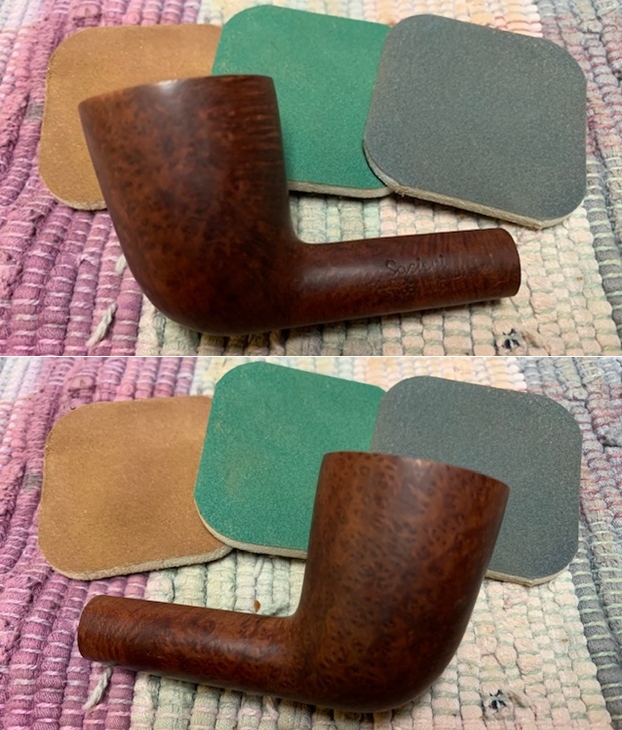
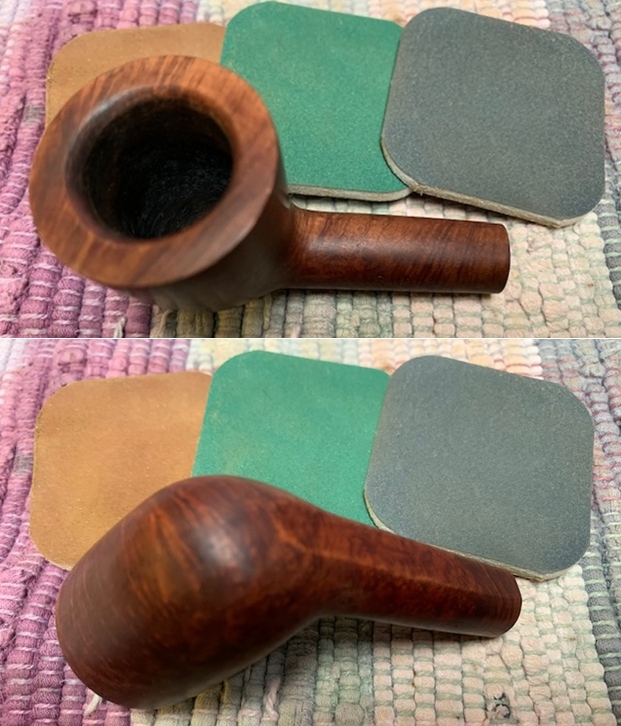
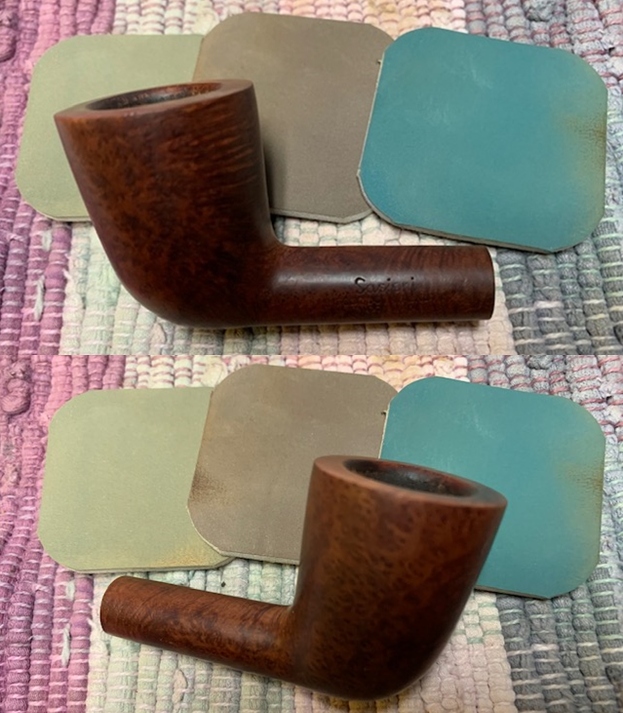
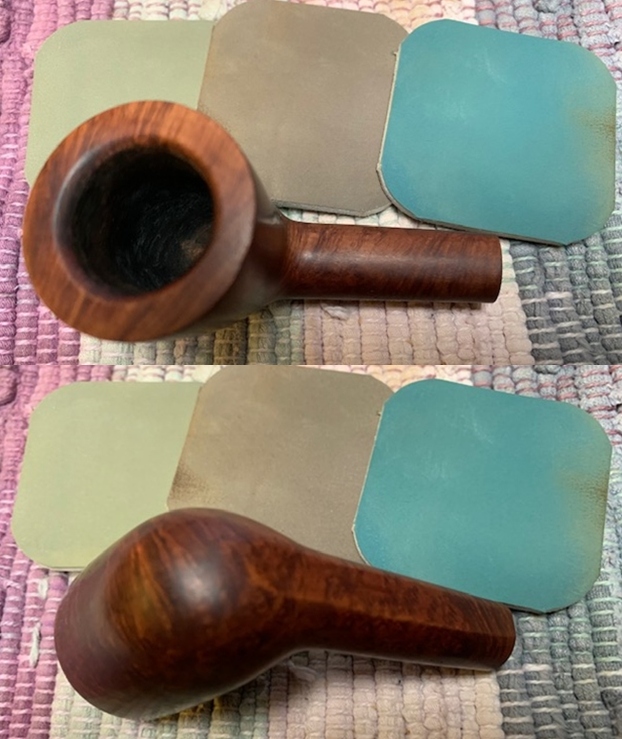
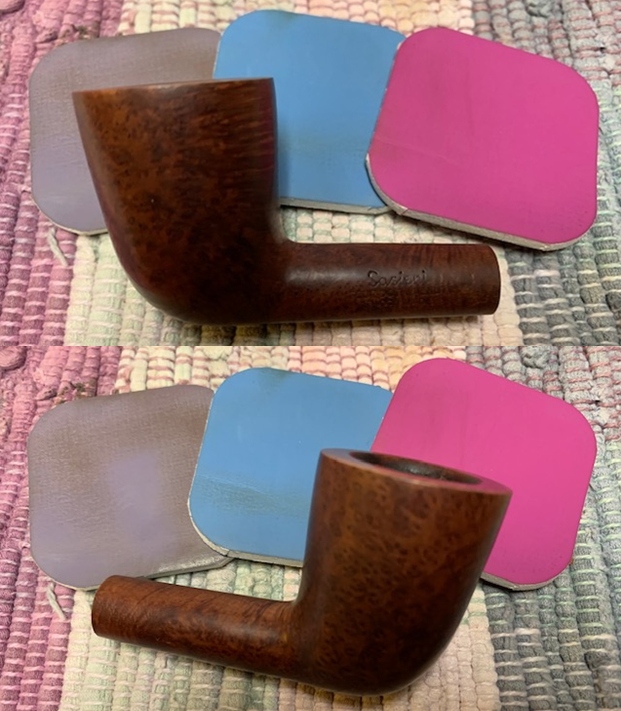
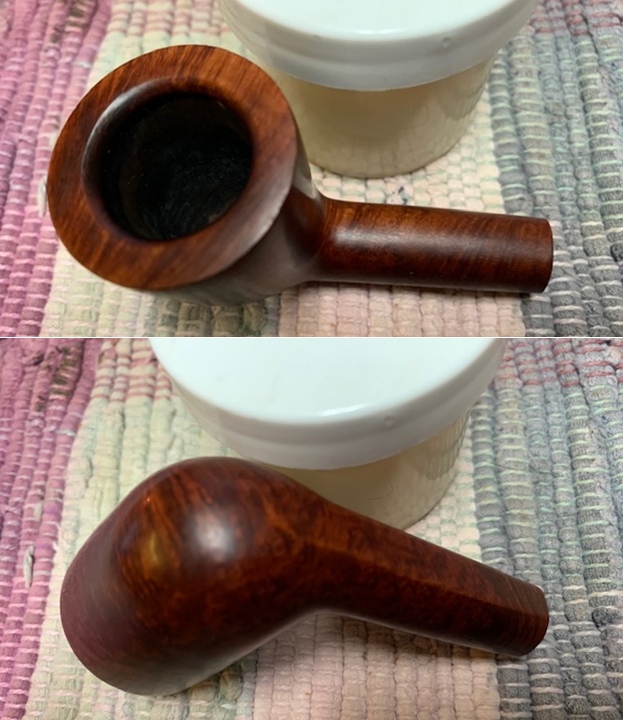
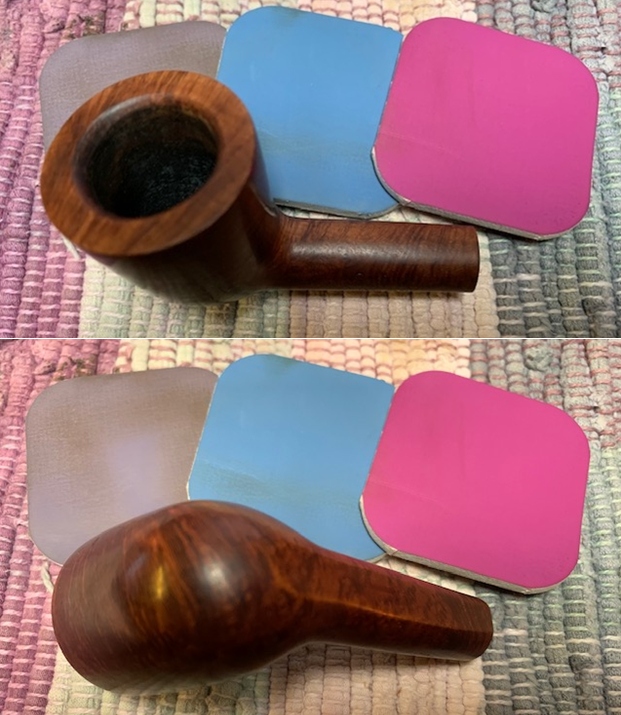 I rubbed the bowl and shank down with Before & After Restoration Balm. I worked it into the surface of the bowl sides and shank with my fingertips to clean, enliven and protect the briar. I let the balm sit for about 10-15 minutes and buffed with a cotton cloth to raise the shine. The grain came alive and the fills while visible look better than when I began.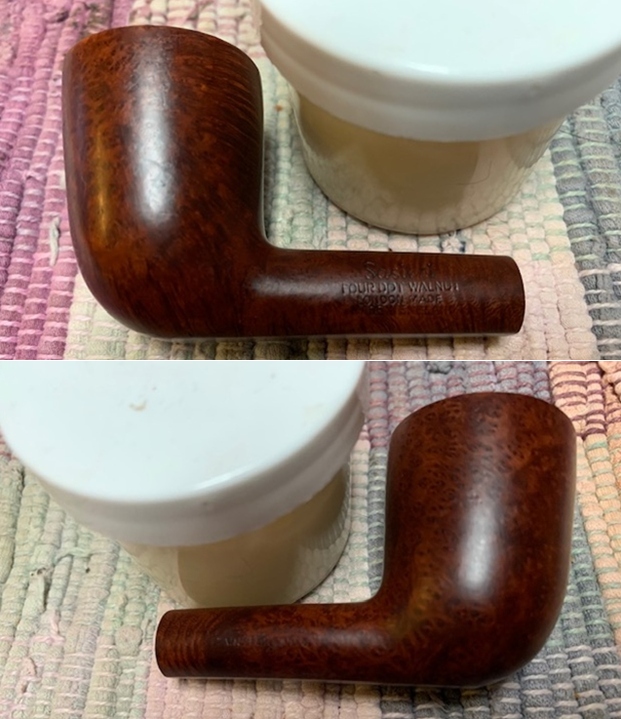
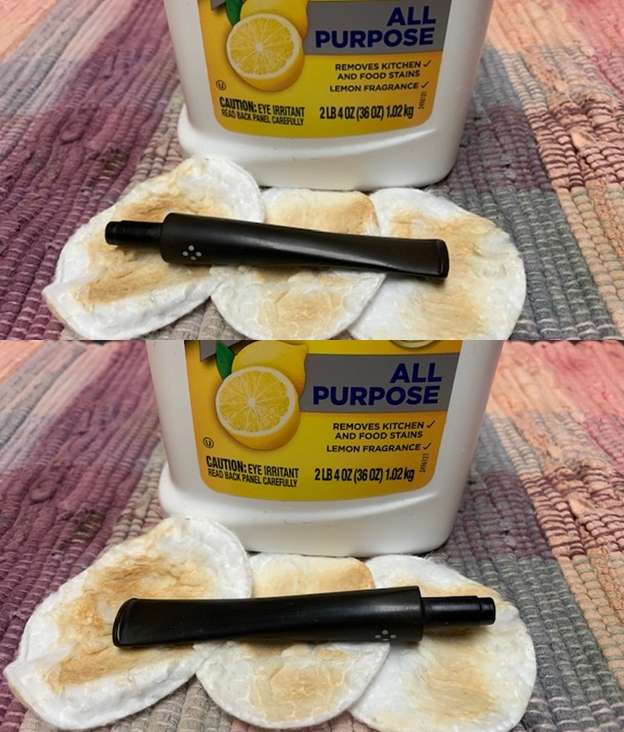
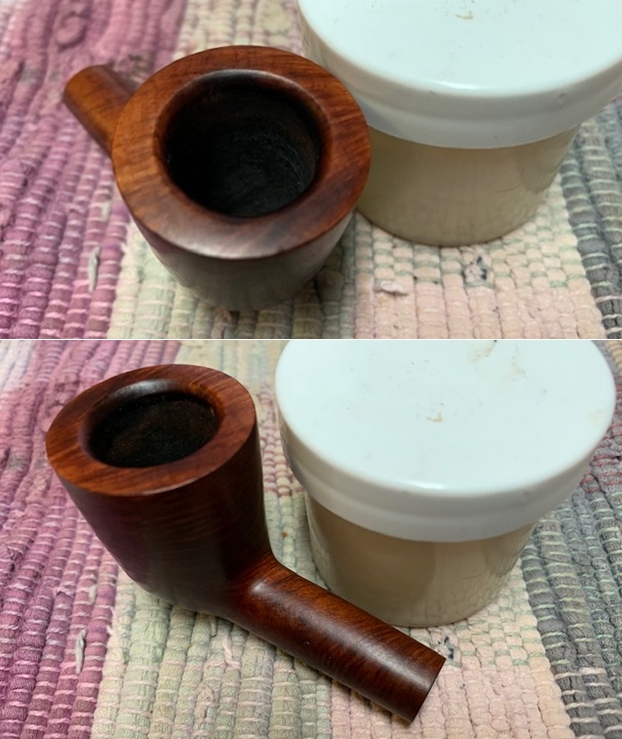 I set the bowl aside and turned to work on the stem. I scrubbed the stem with Soft Scrub All Purpose cleanser to remove the remaining oxidation. I have found that a good scrub with this product removes the oxidation left behind by the other methods. You can see it on the cotton pads underneath the stem.
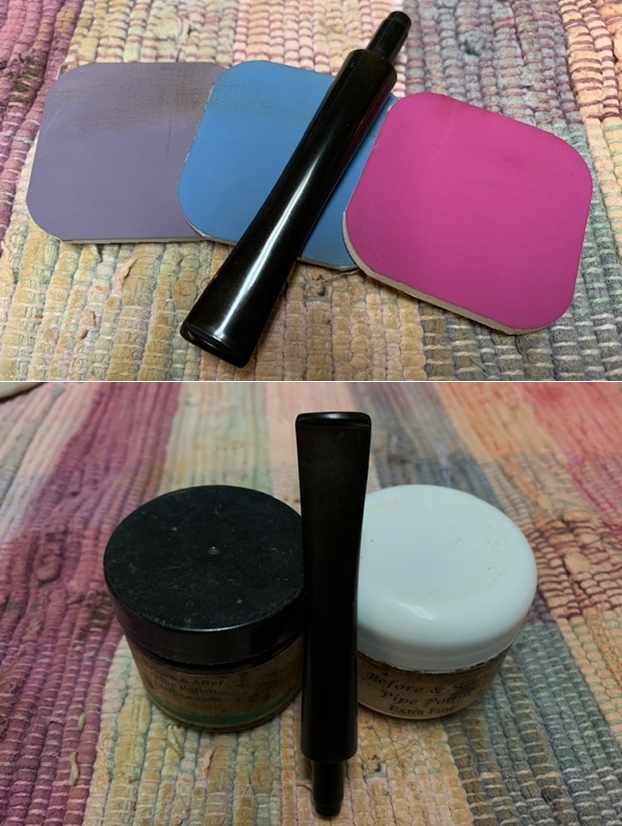
  I polished the vulcanite stem with micromesh sanding pads – 1500-12000 grit pads. I wiped it down with Obsidian Oil after each sanding pad. I used Before & After Pipe Polish – both Fine and Extra Fine to further polish the stem.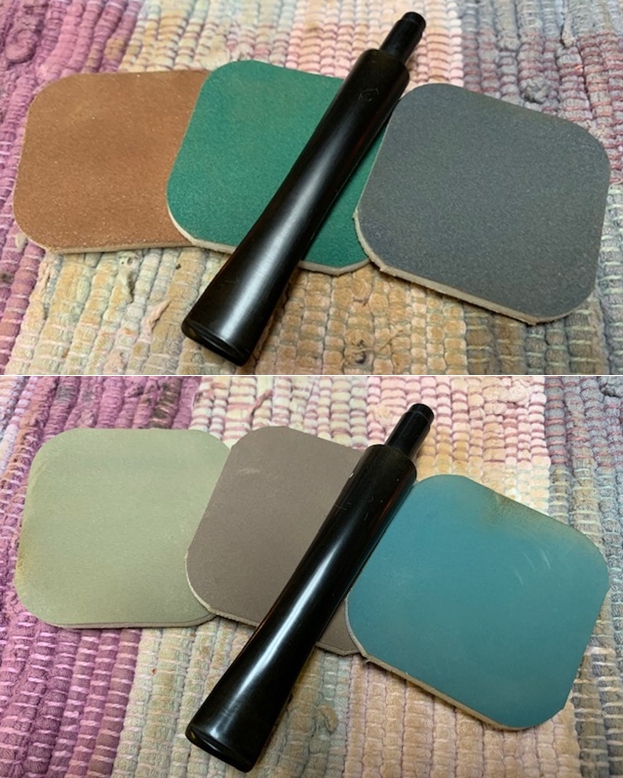
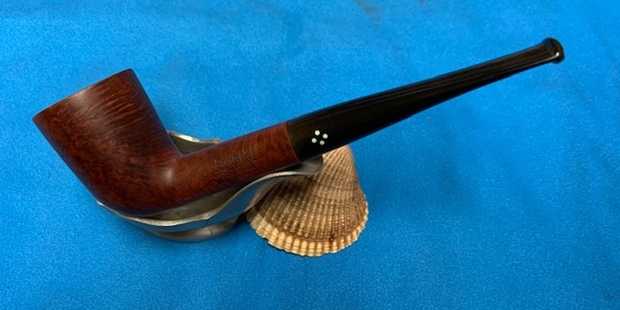
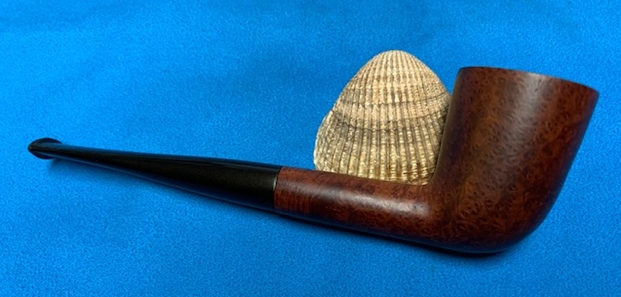
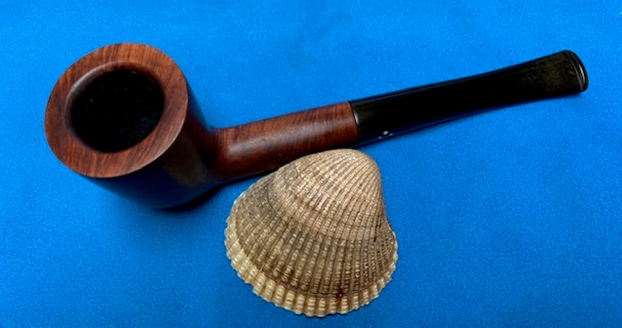
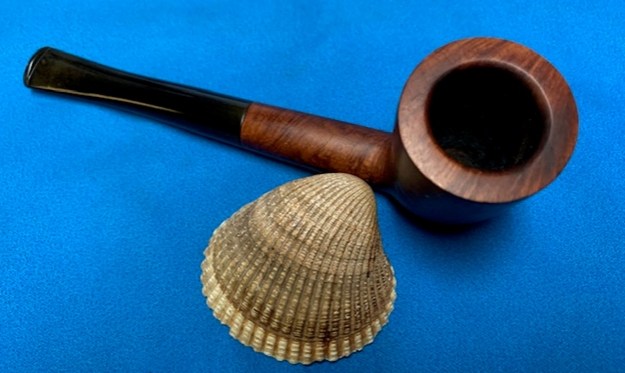
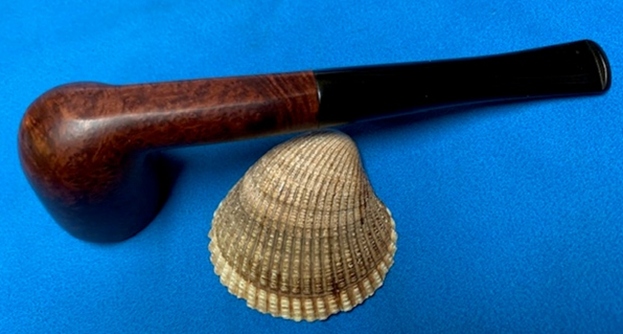
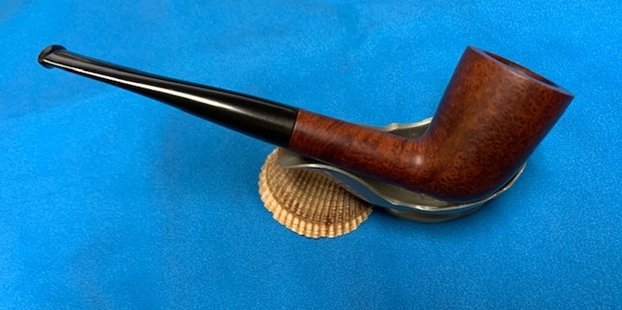
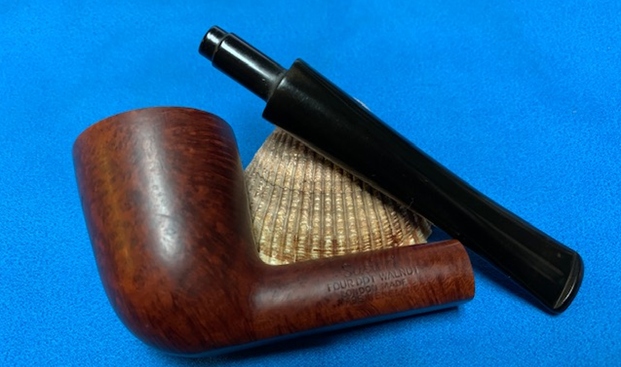
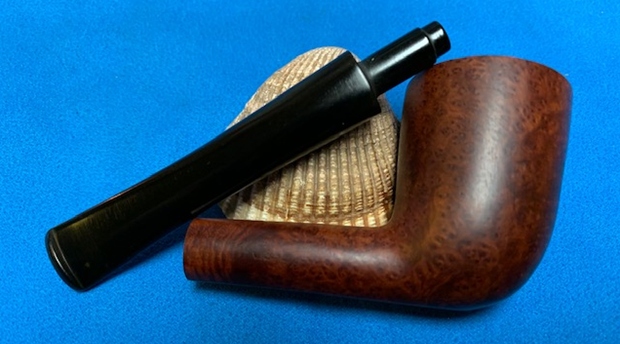
 This Sasieni Four Dot Walnut Victoria Dublin is a great looking pipe now that it has been restored. The sandblasted finish gives the shape an elegant look. The flow of the bowl and stem are well done make for a great hand feel. I put the stem back on the bowl and carefully buffed the pipe with Blue Diamond on the buffing wheel using a light touch on the briar. I gave the bowl multiple coats of Conservator’s Wax and the stem multiple coats of carnauba wax on the buffing wheel. I buffed the entire pipe with a clean buffing pad. I hand buffed the pipe with a microfiber cloth to deepen the shine. The finished Sasieni Four Walnut Victoria fits nicely in the hand and feels great. Give the finished pipe a look in the photos below. The dimensions of the pipe are Length: 5 ½ inches, Height: 1 ¾ inches, Outside diameter of the bowl: 1 3/8 inches, Chamber diameter: ¾ of an inch. The weight of the pipe is 30grams/1.06oz. It is a great looking and light weight pipe. I will be putting it on the rebornpipes store shortly. If you are interested in adding this pipe to your collection send me a message or an email. Thanks for reading this blog and my reflections on the pipe while I worked on it. There are many more to come!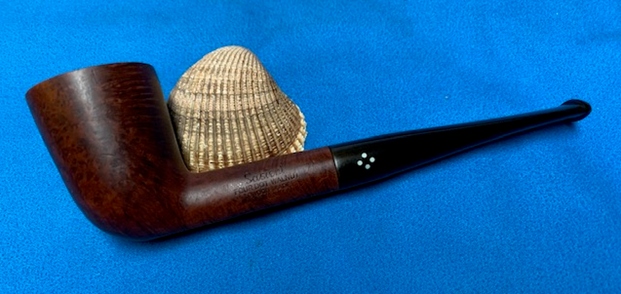
 rebornpipes