Tag Archives: sanding stems

BBB Diamond shank billiard


Blog by Steve Laug

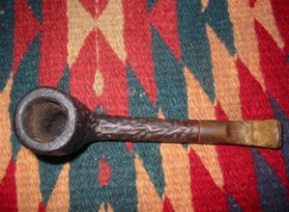
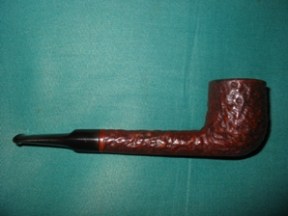
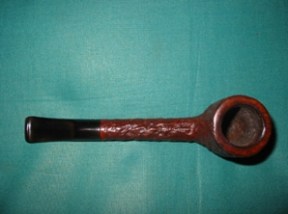
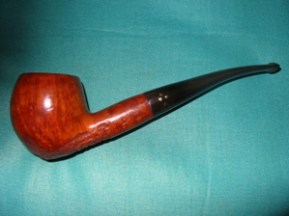
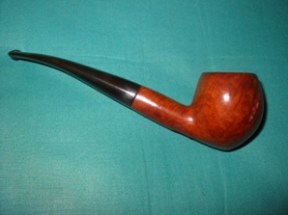
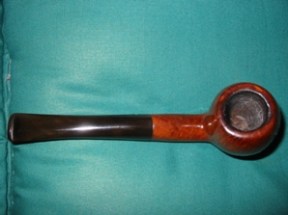
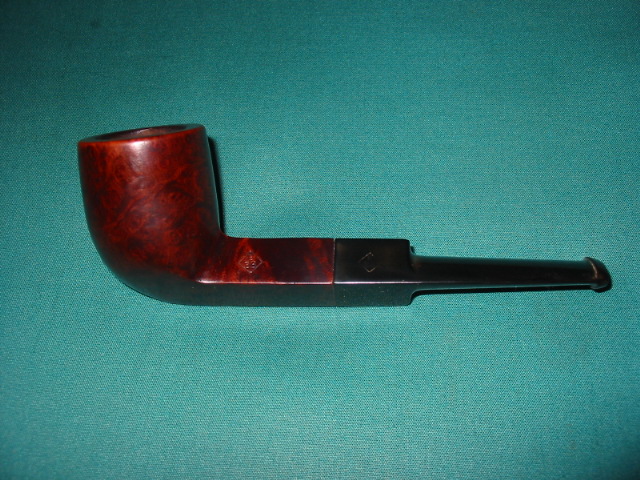
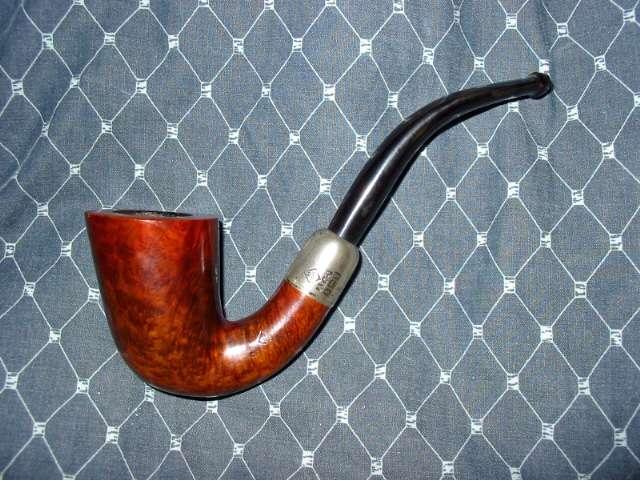
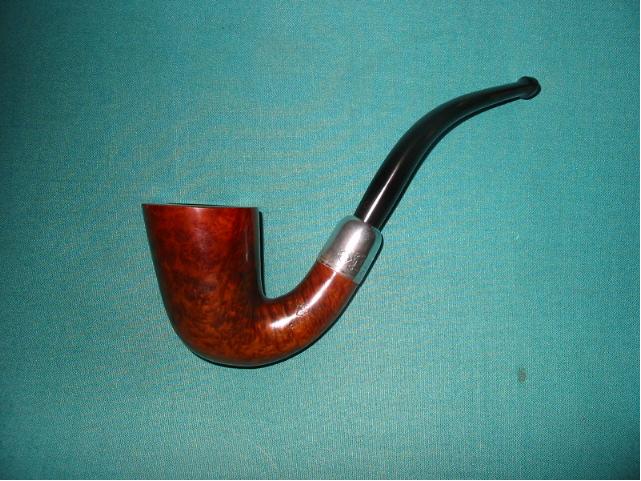
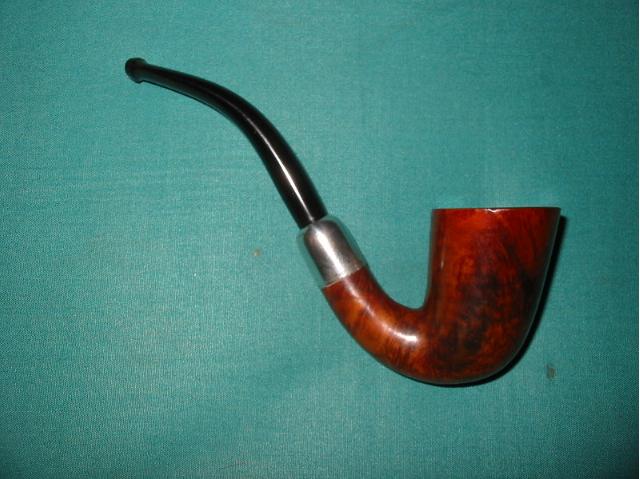
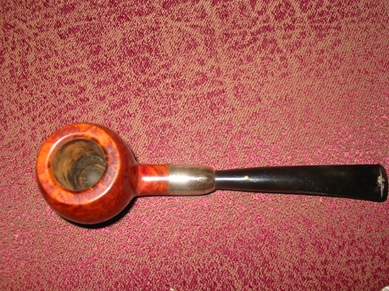
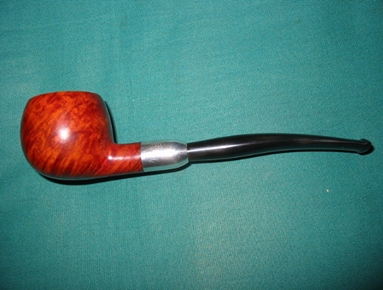
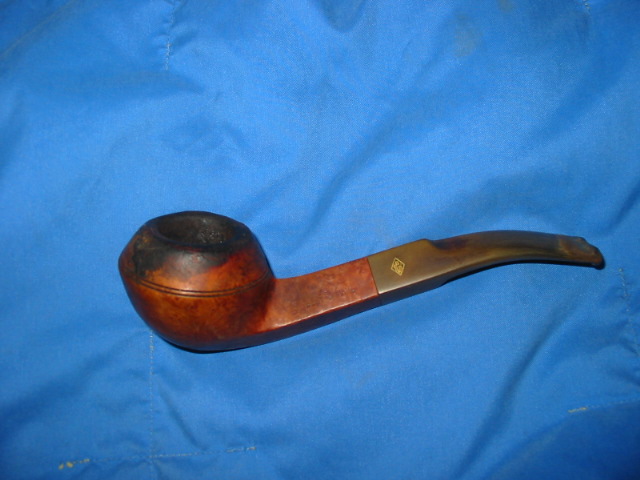
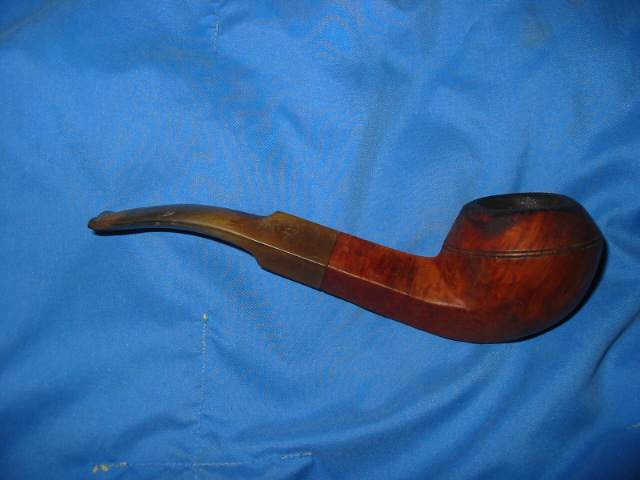
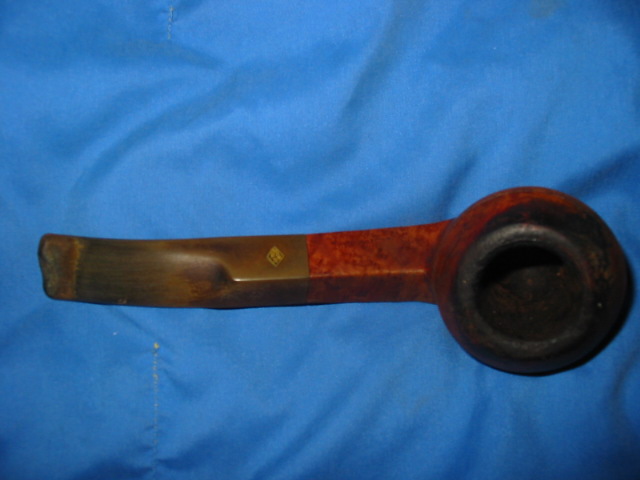
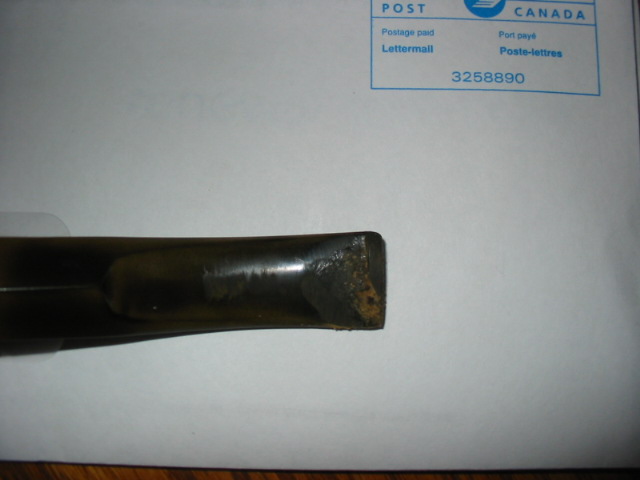
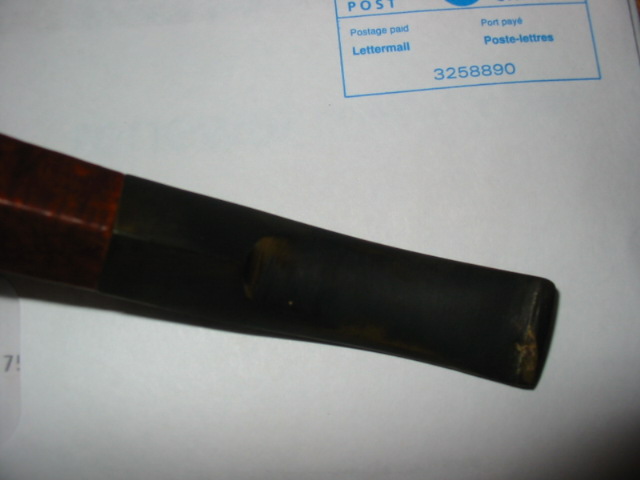
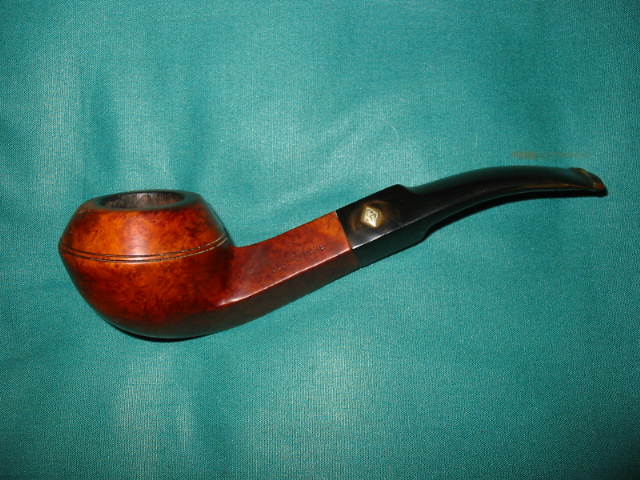
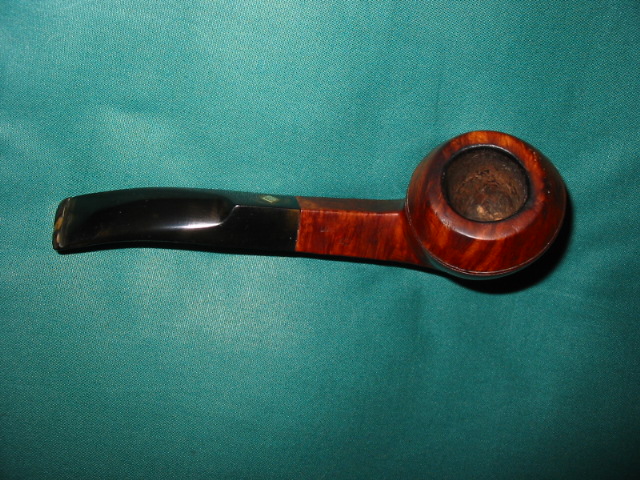
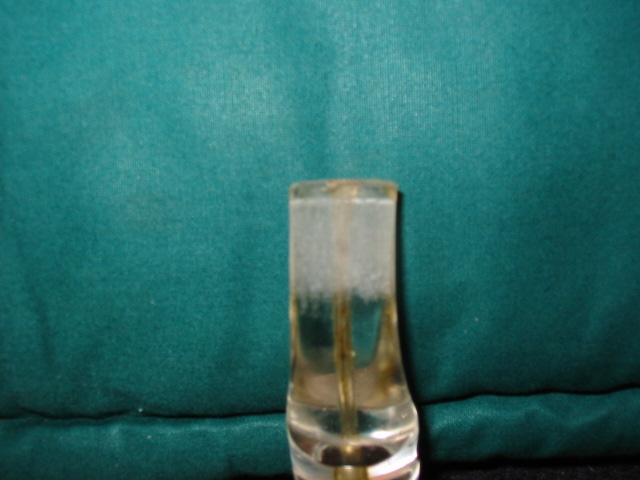
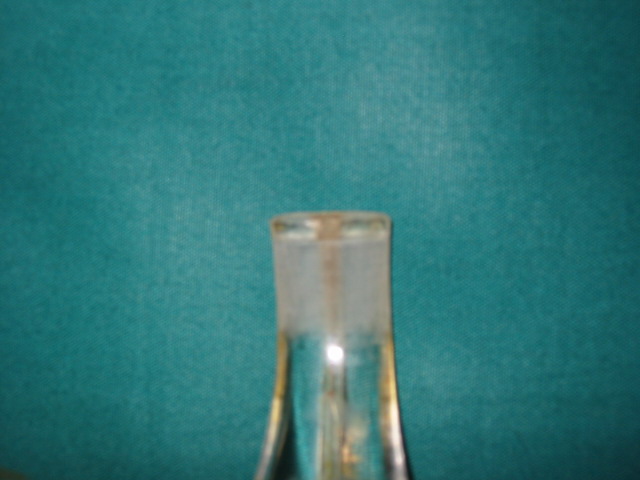
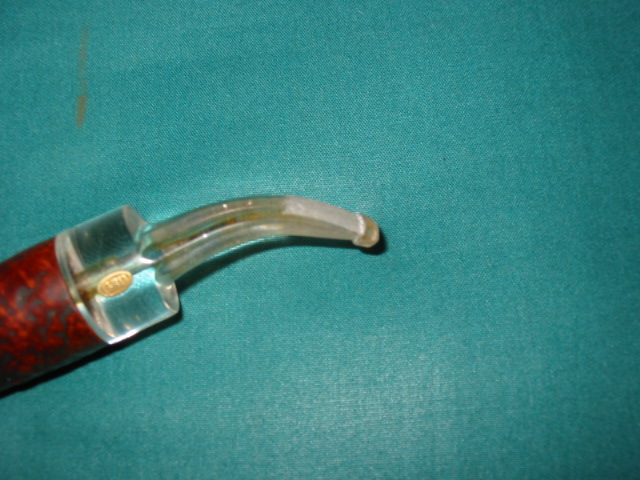
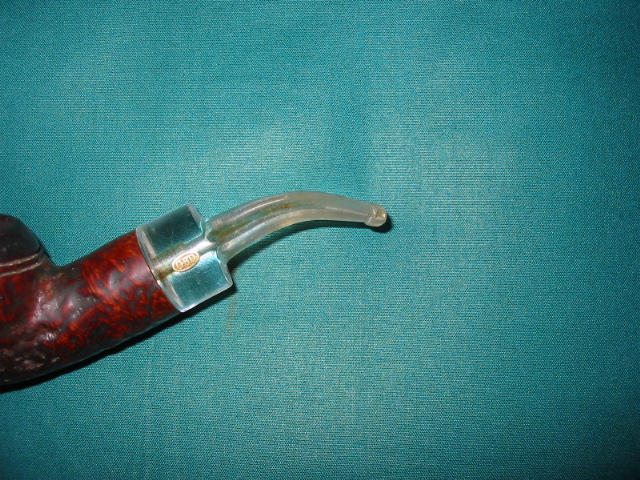
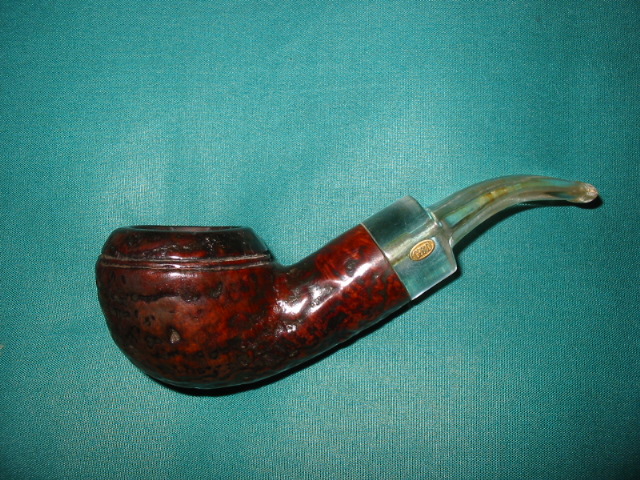
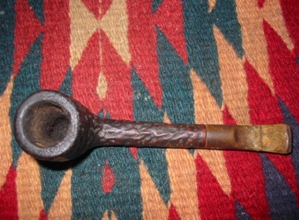
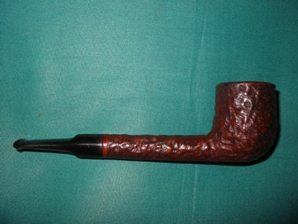
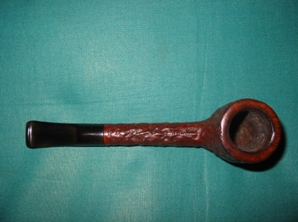
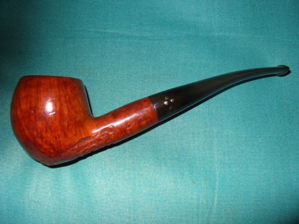
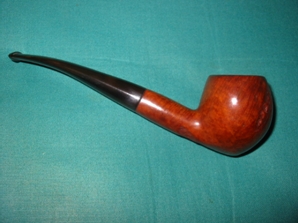
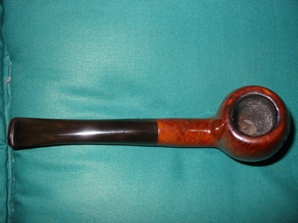
This older BBB Diamond Shank billiard was a pleasure to bring back to life. I love the older BBBs and this one has a place in my collection. It is only stamped BBB in the diamond on both the shank and the stem. There are no shape numbers of other features. I have no idea on what its age is but love the shape. The diamond shank and the way it flows into the bowl make it a unique among my BBB billiards. It is stained in a rich oxblood colour and it is a clean little pipe. When I picked it up off EBay it appeared to be pretty clean other than a bit of oxidation on the stem. Sure enough, when it arrived it was very clean. The bowl only needed a slight ream to be ready to smoke. I wiped down the outside of the bowl with a damp soft cloth dipped in Murphy’s Oil soap lightly so as not to disturb the finish but remove the grime. The top had some darkening and tar that came off easily with the Murphy’s Soap. I coated the bowl with several coats of carnauba wax and set it aside.

To deal with the oxidation on the stem I sanded it with 400 and 600 grit wet dry sandpaper dipped in water to give it a bite. I finished that with micromesh pads – 1500, 1800, 2400, 4000 and then I took it to the buffer for Tripoli and a bit of White Diamond before giving it several coats of carnauba wax. It has a wide open bowl and draw.

ImageImageImage

One of my favourite refurbs – 1919 BBB Bent Calabash


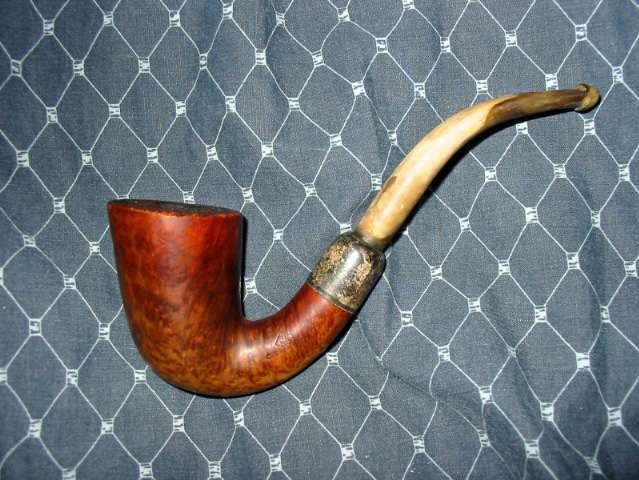
I was going through some old pictures on my hard drive the other day and found this one that I bought on EBay for a very reasonable price early in 2008. I finished refurbishing it in March of 2008. It was and is one of my favourites. You can see from the picture below what kind of shape it was in when I got it. In the pictures on EBay it looked worse than it does in the picture below. I opened the box when it arrive expecting far worse. I bid on it because I liked the shape of the pipe and I figured it would be a challenge.

The stem was oxidized to the brown white coloration that appears below. It almost appeared to be a horn stem – but it was not. When I removed it from the shank – which took a bit as it was stuck by the goop in the shank and the oxidation that portion was black. I put it in the freezer for a short period of time to cause some expansion and contraction in the stem that would loosen it from the shank. When I took it out of the freezer it was easily removed. I went to work on the inside of the stem with shank brushes and pipe cleaners, both bristle and fluffy dipped in alcohol. I worked on the stem until the cleaners came out white and clean.

I then mixed a batch Oxyclean and soaked it in the solution overnight to soften the oxidation. I find that the Oxyclean solution (warm water and a half scoop of Oxy in a pint jar) works wonders in softening the oxidation. It does not remove it but it made it easier to remove. Once I took it out of the solution the next morning to work on it I used 240 grit sandpaper to remove the oxidation. It worked well to take off the brownish white coating on the stem. Once that was finished it was a dull brown and I continued to work on it with the 400 grit wet dry sandpaper until it was a dull black. I then progressed to 600 grit wet dry sandpaper to further remove the grime. I used both of these sandpapers with water as I find it gives the grit more bite on the stem. I had not discovered micromesh at this time so I used 800 and 1000 grit sand paper and continued to sand the stem clean. By the time I used the 1200 grit wet dry sandpaper the stem was looking like new. I took it to my buffer and used the Tripoli and White Diamond to finish the job.

While the stem was soaking in the oxy I reamed and cleaned the pipe bowl and shank. I worked on it until the pipe cleaners came out clean. It took many bristle cleaners and many fluffy one to get it clean. I also used cotton swabs in the shank to remove the tars and build up there. I scrubbed the outside of the bowl and rim with Murphy’s Oil Soap to remove the grime and deep seated dirt on the bowl. After I finished the scrub and clean I put the bowl in a bath of Isopropyl alcohol to remove any remaining dirt and grime and the badly damaged finish on the bowl. That was the first night of my working on the pipe. I went to bed that evening with both the bowl and the stem soaking in their separate baths.

Image

The next morning I finished up the stem and set it aside as I described above. I turned my attention to the pipe bowl. I removed it from the alcohol bath and dried it off. I used a wet cloth and a butter knife heated over a flame to raise the dents in the outer rim of the pipe and the sides of the bowl. The process is quite simple. You wet a cloth, wring it out so it is not dripping wet yet still wet. Then fold it and put it over a dent. Heat the knife (I use our gas stove to do it but have also used an alcohol lamp). I then lay the flat blade of the knife on the dent. You will hear a hiss as the heat causes steam to rise from around the blade. The steam causes the dent to rise. I applied the blade repeatedly until the dents were minimized. Then I took it to my work table and used a flat board and a piece of sandpaper to top the pipe just enough to remove the remaining dents and damage. I do that on a flat surface to maintain the flatness of the rim without changing the angle. When that was finished I wiped down both the bowl and rim with an alcohol damp cloth to remove any residual sanding dust.

I then used an aniline stain, in this case medium brown as I had researched and found that the colour matched the colour of the pipe when it was new. I used the dauber that came with the stain and applied it to the rim and the body of the pipe. I started at the bottom of the bowl and worked my way up to the rim. The rim always the last part I do. Once it was completely covered with stain I ignited it with my lighter to set the stain. The process is called flaming the stain (at least that is what I call it.) I let it dry while I put a coat of wax on the stem.

When the stain was dry I took the bowl to my buffer and gave it a buff with Tripoli and White Diamond to remove the top coat of the stain and the opacity of the stain. The result can be seen in the picture below. I also used some silver polishing compound applied with a soft cloth to remove the tarnish on the end cap. I finished that process with a silver polishing cloth to give it a good shine. When that was completed I gave the bowl and cap a good buff with carnauba wax then reinserted the stem and gave the entire pipe an extra coat of wax for a finish.

Image

I still smoke it today and it delivers proudly! The last two pictures below show what the pipe looks like today after 4 years of use. It has developed a deep patina to the bowl and the warmth of the medium brown stain has mellowed into a richness that is really nice. Repeated waxings over the years have helped mellow the finish and also deepen the black of the vulcanite stem. This is one of my favourite old pipes. It truly is a reborn pipe. In 7 years it will be 100 years old. Some days I wish it could talk because I can’t even begin to imagine the stories it could tell.

ImageImage

Stem Bite through repair – Savinelli Punto Oro Prince


Blog by Steve Laug

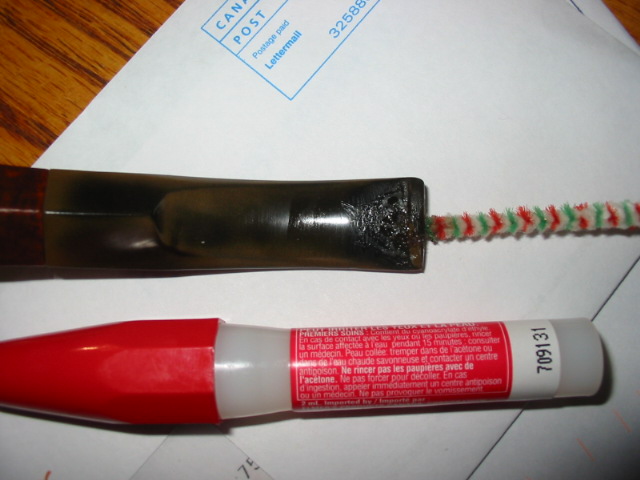
I picked up this little Savinelli Prince because I really like the shape of the pipe and the spigot style stem. I bid knowing full well that the stem had a bit through on it. Once it arrived I could have replaced the stem but decided to do a stem patch on it. The pipe itself was in great shape other than the bite through near the button on top of the stem. The underside of the stem was clean with no tooth marks or chatter. As I examined it I also noticed that the previous owner seemed to have done a halfway patch on it and in the process had broken a chunk out of the button and repaired with white glue. The white glue may have been applied by the seller to keep the pieces together while he sold it. I will never know for sure, but the glue would not hold for long as it is water soluble. The two pictures below show the extent of the damage in the stem and give a good idea of the state of the pipe as a whole. It was a great pipe with some unfortunate damage to the stem.

ImageImage 

I cleaned off the broken chunk with a dental pick, which was surprisingly easy and makes my above assertion about the seller doing a quick patch up more likely. I cleaned off the debris on the chunk (it was not very big, but was an essential piece of the button). I washed it with Isopropyl alcohol. Then I re-glued it with clear super glue. I purposely over filled the crack and pushed the piece in place until it held. I would sand off the excess glue once I had dealt with the bite through on the stem.

The bite through was a mess as well. There was oxidation in the hole as well as some built up dust and dirt. I picked the hole clean with the dental pick (by now you know that this is one of my indispensable tools in the refurbishing process). I wiped it down with a cotton swab and Isopropyl alcohol to get a good clean hole. By this point it was black and clean. I used a small round needle file to clean up the rough edges on the hole as I wanted a solid surface to work with. I washed it yet again with the alcohol to remove the grit from filing.

This time, instead of using the greased pipe cleaner in the slot I used a small nail file that fit the slot perfectly and gave a base to the glue. The hole was too big for just a pipe cleaner to provide the coverage. I greased both surfaces of the file and inserted it in the slot in the button. I gradually built up the hole with repeated applications of super glue. I let the layers dry before adding a new coating of glue. I have found that if I build it slowly around the edges it gives a better repair. Once it was built up I over filled the hole to make sure it is well covered and the hole is no longer visible. On this particular pipe I used clear super glue because I was out of the black super glue. Both versions work exceptionally well but the black has the benefit of being the same colour as the stem and is a little less visible.

After the glue was dried I used the flat blade needle file to rework the button back into shape and give it the nice sharp edges that it should have. I sanded the stem smooth, removing the excess glue and the roughness of the glue. I went on to sand it with 400 and 600 wet dry sandpaper and a bit of water to remove the scratches left by the 240 grit paper. Then I used the full range of micromesh pads, 1500, 1800, 2400, 3200, 4000 and 6000 grit to smooth it out. As usual I had a bowl of water near at hand to dip the pads as I sanded and to wash them of the slurry that comes as I sanded. Once they were smooth and shiny, the last three grits of micromesh really do a nice job giving the stem a sheen, I took the pipe to my buffer I finished it with White Diamond polishing compound.

ImageImageImageImage

I have been asked in the past how long the stem patches hold up and the durability of the patch. I have no long term proof of their durability but I have had this pipe for about two years and have smoked it quite a bit and the patch shows no sign of giving way. I clean it as I would any other pipe with pipe cleaners after use and then periodically breaking it down to give it a thorough cleaning inside and out. I would say that is a pretty good track record for a patched pipe. Time will tell but in the meantime it is very smokeable and looks great in my opinion.


Rebuilding a Button on a BBB Bulldog


Blog by Steve Laug

I picked up this older BBB Bulldog on EBay because I liked the shape of it. The bowl definitely needed some work as the lava had erupted over the front rim and down the contours of the pipe. The pictures below show the state of the bowl when it arrived. But that was not why I am writing about this pipe. That kind of refurbishing is part and parcel of buying older pipes on EBay. They always are pretty much in the state that this one was in. All of them require the same kind of procedures to clean them up and return them to a state of readiness for the new owner. But have a look at the button on the last three pictures below. It was virtually gone. I could have fit a new stem on the pipe but I wanted to retain the brass BBB logo and did not want to move it to a new stem. I also wanted to try to build up the button and see what I could do with it.

ImageImageImageImage

I have used Super Glue or Krazy Glue to repair bite throughs in the stem but had not use it to do repairs this extensive. I love the process of trying to devise a workable fix and so I decided to give it a go. I greased a fluffy pipe cleaner with olive oil and inserted it in the airway at the button. I do this so that the glue does not fill the airway and grease it so that the pipe cleaner is not a permanent feature of the stem as the super glue will stick to anything including your fingers if you get it on them. (By the way there is a solvent that is available should that happen to you.) The surface of the button was dirty and oxidized so I cleaned that with my dental pick and some acetone. I clean the surface before putting in the glue. I also sanded it to roughen the surface so the glue would bond well. In the top picture of the stem you can see that the top of the button is indented and the lip is worn smooth. The second stem photo shows the underside and you can see the major dent that needed work and the lip that was pretty well gone. I filled the hole on the underside first so that it would bond. Then I gradually built up the dent, letting it dry between applications of the glue. I believe it took 5 or 6 applications of the glue. Once it was filled I added more to build it up so that I could re-cut the button. In the picture below the patch is clear. It is a very rough surface but it is ready for the sanding and filing that will go into restoring the stem to normal. I built up the deep dent and also built up the missing portion of the button. On the top side of the stem I also built up the button in the same fashion.

Image

I set the stem aside to dry until the glue patch was very hard and turned my attention to the bowl. You can see in the pictures below that I took off the lava and tars on the top and cleaned the inside and outside of the entire bowl. By the time I was finished with the exterior of the bowl and shank and cleaned out the bowl and the inside of the shank with pipe cleaners and a reamer the stem was ready to work on. I reassembled it for the picture below.

ImageImage

You can see from the two profile pictures above that the button is present once again. The idea is to build up the end of the stem to the degree that the profile shows the button as it would have been on a pipe of this age. It took a layering process with the super glue to get it to the point it is in the above pictures.

The two photos below show the bottom of the stem as I worked on it with the files and the sandpapers. I used my small files, both the flat and the wedge file to cut away the material that I had built up to give a sharp button edge as differentiated from the surface of the stem. In the first picture you can see the initial cuts and the smoothing that I did to the surface of the stem with the files. I used 220 and 240 grit sandpaper to remove the rough surface of the glue on the stem and bring it to the right profile. The glue is very hard and it takes quite a bit of sanding to smooth it out. In the second picture you can see the final shaping that was done to the button and the surface of the stem is once again smooth. From this point all that remained was to sand it with 400 and 600 grit wet dry sand paper and then use the micro-mesh pads 1500, 1800, 2400, 3200, 4000 and 6000 grit on the stem. As usual I kept a bowl of water next to me to keep the pads wet as I sanded the stems. Each progressive grit polished the stem and button to a more clean and shiny stage. I also reworked the surface of the entire stem. Once that was done I took it to the buffer and used the Tripoli buff followed by the White Diamond buff to bring it to a sheen.

ImageImage

The last three pictures show the finished pipe – both the bowl which had been cleaned and polished with White Diamond and a light touch and then finished with some carnauba wax to complete it. The stem is completed in terms of bringing back the button and the stem profile. The area around the logo on the stem will need to be worked on with the edges of the micro-mesh pads to get in close and remove the remaining oxidation. Then the entirety will need to be lightly buffed and waxed. The main reason I posted these pictures is to show that the profile is now clear and the new button is clearly visible. The last picture shows the top of the stem and the button is clearly visible. There is a bit of oxidation in the button that I will need to work on with the pads as well but at least the old BBB Bulldog is now very smokable.

ImageImageImage

Refurb – A pair of Astleys 68s


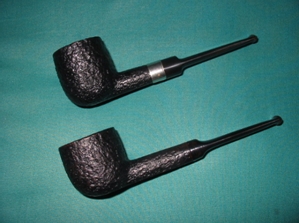
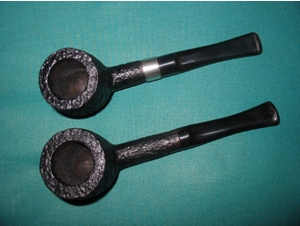
Just finished the final buff on these two and thought I would post them. In researching the net for information on these pipes I found a 1968 catalogue that showed that they originally had saddle stems. I sorted through my stem box and found two saddle stems for these Astleys bowls. I fit these stems to the bowls. They are stamped Astleys 68 which is a pot shape. They also have the address on Jermyn Street London stamped on them. The bowls were reamed and cleaned. I then restained them with black stain, fired the stain to set it and then buffed with white diamond lightly before waxing with Halcyon wax.

The pipe with the band had a crack in the shank that I repaired and pressure fit with the nickel band. The blast on this pair is nicely done. Astleys called this their Crusty Briar line. Here are the pics. Thanks for looking.

ImageImageImage

Reworking the button on a Perspex Stem on a GBD Prehistoric


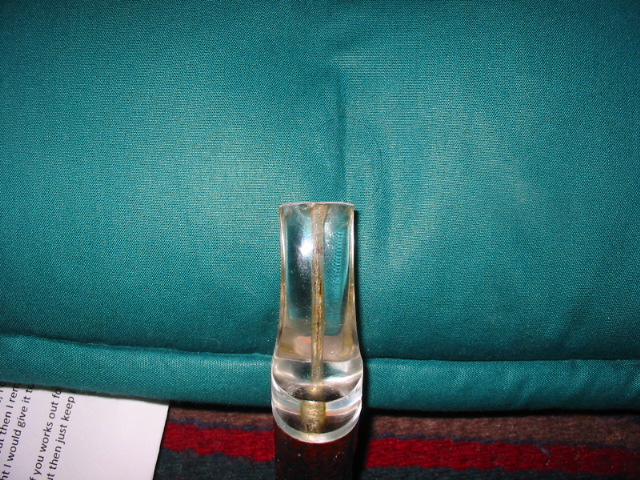
I was gifted this older GBD Prehistoric by a good friend who knows I like working on seeming irreparable pipes.  He knows that I enjoy the challenge and that I work to get them back to a workable condition. The stem was truly a mess as can be seen from the photos below. It had bite through holes on both the top and the bottom of the stem. The button was destroyed by the bite marks. This one would prove to be a bit of a challenge. My usual method of repairing bite throughs with Super Glue would not work as the hole was on both sides of the stem. You can tell by the three pictures below the size of the hole. I included even the blurry ones to show the extent of the problem that needed to be addressed.

ImageImageImage

After carefully picking at the holes with my dental pick I could tell that the surrounding Perspex material around the holes was compromised and pieces continued to come off with very little pressure on the dental pick. It was clear then that I would have to shorten the stem back to the point on the stem where there was solid material to work with. To do this involved cutting off almost a ¼ inch of the stem. The two photos below show the stem after the material has been removed. I used my Dremel with a sanding drum on it to take back the stem to this point. Care must be exercised to keep the finished surface straight and level. But I have found that this is fairly easy to do with the Dremel set at the lowest speed.

ImageImage

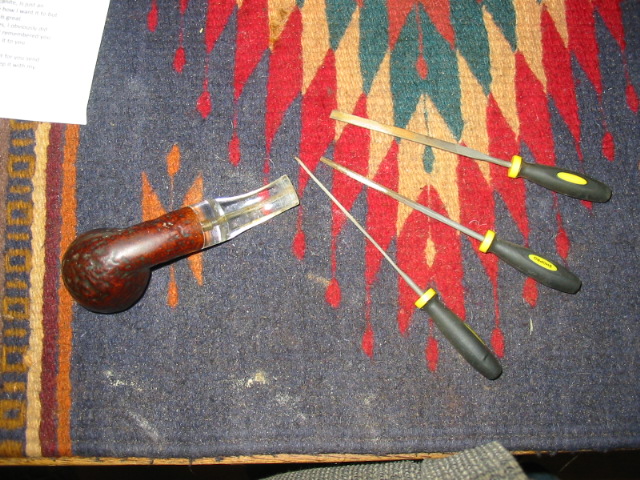
Once the stem is cut back to the solid material a new button has to be carved. I use a series of needle files to do this. Note in the picture below the three files that I used the most. The top one is a flat rectangular one that does a great job on the top and bottom of the stem to cut a straight 90 degree edge into the Perspex. The oval and the round file I used to open the slot in the button to match the shape of the one I cut off. Once the stem has been cut the airway at the end is merely a round hole or as in this case was barely flared. I like an oval slot in the button and the files do a great job in that process. I have two sets of needle files that I use. I clean the teeth on the files with Isopropyl alcohol and a brass tire brush. It keeps them from getting clogged with the Perspex dust.

Image

In the three pictures below you can see the button that has been cut in the stem. I also used sandpaper to thin the stem profile forward of the button to give it the proper slope and give the button some depth. Note the rough surface of the stem is caused by the use of 240 grit sandpaper to accomplish this task. The top photo is the top side of the stem at the button, the second is the underside of the stem and the bottom photo is a profile shot to show the look of the button. When the stem was at this point it still needed quite a bit of sanding to smooth out the new button and shape the stem. The edges in the profile are a bit sharp and needed to be rounded to match the part of the stem that remained untouched. I rounded the edges with the 240 grit sand paper to match the shape of the stem.

ImageImageImage

The next two photos below show the stem after that reshaping has been done. I then had to polish the stem to get it back to it clear sheen. I started that with some 400 and 600 grit wet dry sandpaper that was used with water to give it the bite to cut through the scratches of the files and the sandpaper. The first photo shows the pipe next to another GBD Rhodesian for comparison sake. You can see in that photo how much of the Perspex stem I removed to cut the new button. The second photo shows the shaping and flow of the stem once I have finished with the polishing with the wet dry sandpaper.

ImageImage

The last three photos show the finished pipe. The bowl was polished and the polishing on the stem was done with the micromesh pads through the 1500, 1800, 2400, 3200, 4000 and 6000 grits soaked in water to facilitate a good polish. Each grit level of micromesh took out more of the scratching that remained after the sanding. By the 3200 grit the surface was smooth and shiny. The last two grits gave it a thorough polishing and then I finished it on the buffer with White Diamond and carnauba wax.

You Just Found a Pair of Dad’s Old Pipes?


Blog by Steve Laug

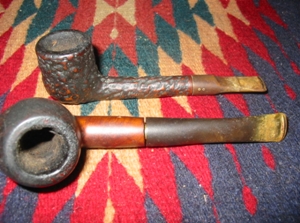
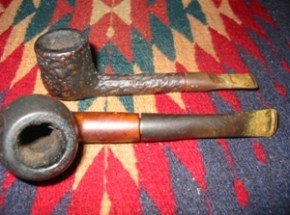
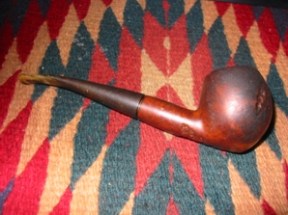
They are both in very rough shape and need help but you want to keep them anyway. There is dried out old tobacco in both and the finish is about shot. The rims and sides of the bowls are both covered with dark grime and the mouth piece, or stem, is covered with bite marks and hard white lime like crust. The rest of the family tells you they are not worth saving and should just be thrown out but something inside you rebels against that. You still have memories of your father smoking those pipes and the associated feelings and smells still linger for you. It is hard to let go of these pieces of history. Something inside you wants to restore them but you just don’t know where to start. If this sounds like your situation, then you have come to the right place.
Image

You have already begun the first step in the process of refurbishing and that is to respect what you hold in your hands. These pipes are a piece of family history that can be passed down through future generations and when cleaned up and maintained, will last longer than any one of you. If they could speak to future generations can you imagine the stories they would tell? But if you listen to the wood, the old tobacco in the bowl, the dents and dings and the smells that still linger in it you will hear it speak. It will tell you what your Dad smoked. It will tell you how much he loved that old pipe and it still held the half smoked bowl of the last tobacco he smoked in it. It will tell you in the decimated finish where his fingers curved around the bowl. As you remember, you will know the stories that give meaning to dents – one from the fishing trip you took, one from the dash on the car when he laid it down and it hit the gear shift before bouncing off to the floor. All those bits and pieces add to the myth that surrounds story of a family. Be sure to take some photos of the old timers before you go to work on it. You will be amazed at the transformation that still respects the history of your Dad’s pipes.

The first step in the process is to do what I call field dressing of the pipe. It starts by laying out some newspaper on a table top where you can work on the pipe. Sit down with the pipe and begin to clean it. Use a small screw driver, ice pick or a dental pick, if you have one, to clean out the remnants of tobacco in the bowl. Put it to the side on the paper. You can purchase a pipe reamer on eBay for reaming the bowl or you can carefully use a knife with a rounded end to scrape out the old carbon. If you use a knife be sure to proceed slowly and carefully to ensure that bowl stays round. Scrape slowly, bit by bit, until you have a thin even cake all around the bowl. Once that is done you can wrap a piece of dowel with some sandpaper and use it to sand the bowl back to smooth. Use a paper towel or a soft cloth and some Isopropyl alcohol to wipe down the surface of the bowl and remove the dirt and oils of the past. This should also help to soften the remaining finish on the bowl. This cleaning will go deeper as we progress through the process but start with a cleaning of the outer surfaces of the bowl and the stem of each pipe. I have learned that it is always more pleasant to work with a clean pipe than one that is oily and tarred.

The stem needs to be separated from the shank. This may sound like an easy thing to do, but sometimes with the amount of tars and use the pipe has seen, the stem will be stuck in the shank. Put the pipe in the freezer. You don’t need to bag it or tag it, just sneak it in when the family is not paying attention and leave it there for an hour or so, long enough to sip a coffee and relax a bit. The different materials in the stem and bowl of the pipe make them contract at different rates and I have found that when I remove it from the freezer the stem is easily removed. If it is still stuck then put it back for another cup of coffee.
ImageImageImage

Once the stem is removed I fill a jar with Isopropyl alcohol and place the pipe bowls in it and let them soak for awhile. The length of time depends on the depth of the grime. I put the lid on the jar and give it a bit of a shake to churn the alcohol through the pipe. I leave it and turn my attention to the stem.

The stem will take a bit of work and will take the better part of a couple of hours to get back into shape. I clean the inside of the stem with pipe cleaners and cotton swabs until they come out clean. I dip them in the Isopropyl and run them through to remove all the grimes from inside the stem. Once I have it clean then fill a bowl with some water and put it in the microwave and set it to boil. I dip the end of the stem with the bite marks in the boiling water repeatedly to lift the bite marks a bit. Vulcanite, which is the material the stem is made of is said to have memory and will return to its original state. This method does wonders in lifting the bite marks. When they have raised as much as they are going to dump the water and take the stem back to your table. Using 240 grit sandpaper, remove the brown oxidation and calcified white stuff that are on the stem. Be careful as you sand to not round the sharp edges on the stem at the mouth end (button) or the pipe end (tenon). You want to leave a good tight fit with sharp clean edges when you are finished. You will find that the sandpaper scratches the surface but do not worry about it as the goal at the moment is to return it to a dull black. Once it is clean of the browns use 400 grit and then 600 grit wet dry sandpaper to smooth out the scratches and remove any remaining oxidation.

The stem should be a dull or flat black once you have finished with this step in the process. Now you have a choice to make. There are several steps that can be taken next depending on what choices you make. You can either use repeatedly higher and finer grades of wet dry sandpaper or you can use micromesh sanding pads – I use 1500, 1800, 2400, 3200, 4000 and 6000 grit pads to finish the stem to a gloss. These pads are readily available at woodworking shops or online – just Google Micro-mesh pads. If you use the sandpaper it works well but is a bit more labour intensive. After you have the stem restored to a gloss you can use a bit of olive oil to polish it – wiping it on and then off or you can use some softened beeswax or carnauba wax. I have even used Kiwi Neutral shoe polish which is a carnauba based wax.

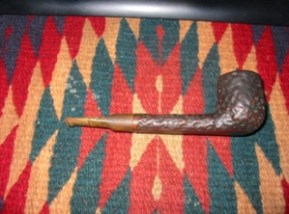
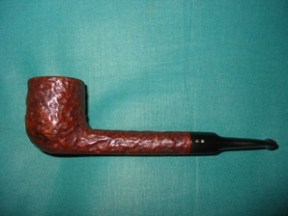
I then set the stem aside and retrieve the bowls from the alcohol bath. Before I take them out I use the alcohol in the bath to scrub the bowls using an old tooth brush as it just gets into the cracks and crevices and gets the dirt out of the surface. Once that is done I dry off the pipe with a soft cloth and get to work on the finish. For the rough surfaced ones like the smaller pipe in the picture I will often use the tooth brush repeatedly to remove all the grime on the pipe. With the smooth pipes like the second pipe in the picture I wipe it down with alcohol dampened cloths until it is clean. I then sand the smooth one with either the 400 and 600 grit sand paper or the Micro-mesh pads to smooth out the finish. If the top is rough you will need to decide what to do with it. I have posted on the blog how I repair those issues so have a look on there for the article on topping a pipe bowl.

When both bowls are clean and free of dirt and tars I wash them down with a fresh alcohol cloth and then they are ready to stain. I use Feibings Shoe Dye for the stain and have found that the Medium Brown dye works well and matches most of the stains on these old pipes. Both pipes in the pictures were stained with the same Dye. I use the dauber that comes with the Dye (the dye is available at most shoe repair shops for about $4-$5). I coat the bowl while holding the stem. As the stain will turn your hands brown, wear rubber gloves for the staining. Once it is stained light the stain on fire with a match to set it. You will think I am nuts in suggesting this and think you will catch things on fire but like the alcohol in Baked Alaska it only burns blue for a short while and really sets the stain into the grain of the wood.

Set the pipe aside over night to let it thoroughly dry. The next day use the 600 or higher grit wet dry sandpaper to remove the excess stain on the exterior of the smooth bowl. Wipe it down regularly with a damp cloth to see what it is looking like. With the rough surfaced pipe I use a piece of flannel fabric and buff the surface until it glows. Once both pipes are finished and look acceptable to you give them a good coat of wax or polish. Some folks use Pledge on the bowls and have done so for years without ill effect. This gives them a rich glow. The only thing left to do is join the family heritage by smoking a bowl of your own tobacco in the pipe. When you are done with that smoke, wipe the pipe down with a soft cloth and clean it inside with a pipe cleaner. With a little care the finish that you have done will last until you own grandchildren need to refinish it once again. But take delight in smoking a piece of the family history and adding another generation’s story to the life of this old pipe. Enjoy.

If you have any questions on the process feel free to post a response or question here.

Here are the same pipes after finishing the process I laid out above.
ImageImageImageImageImageImage