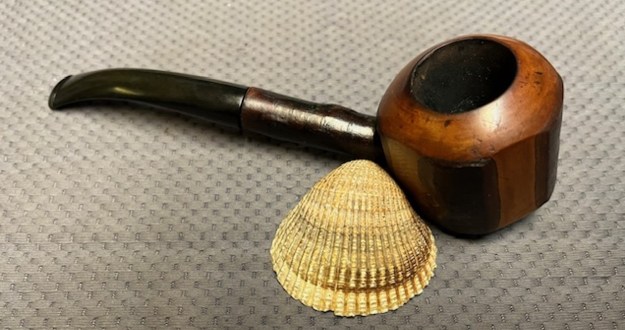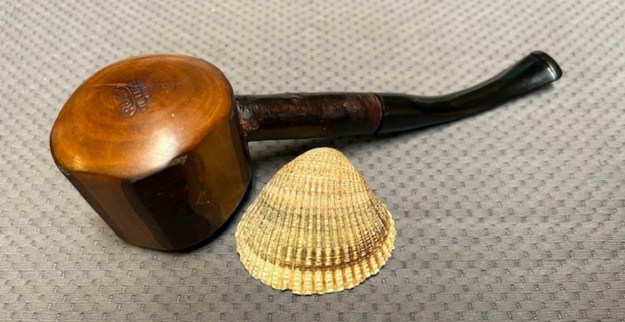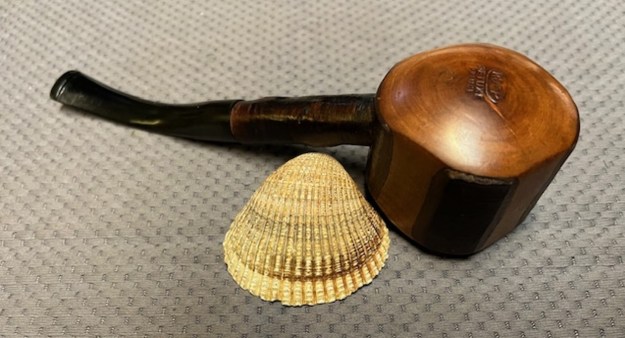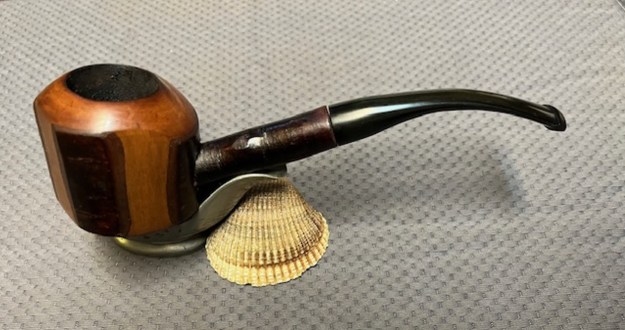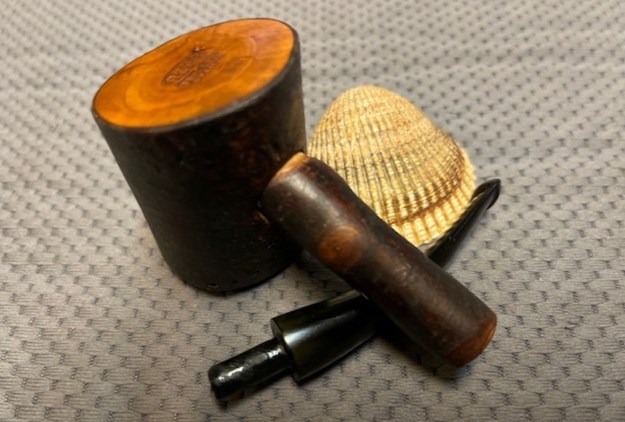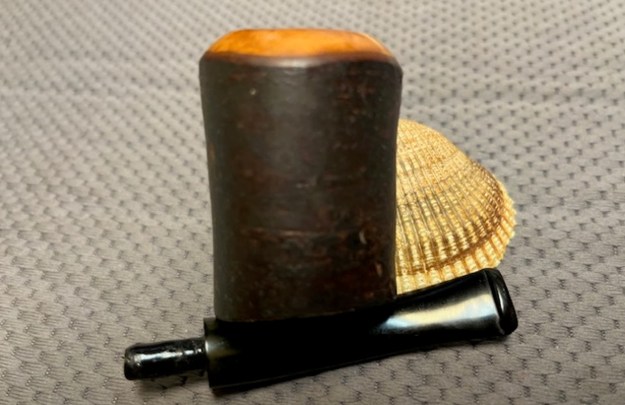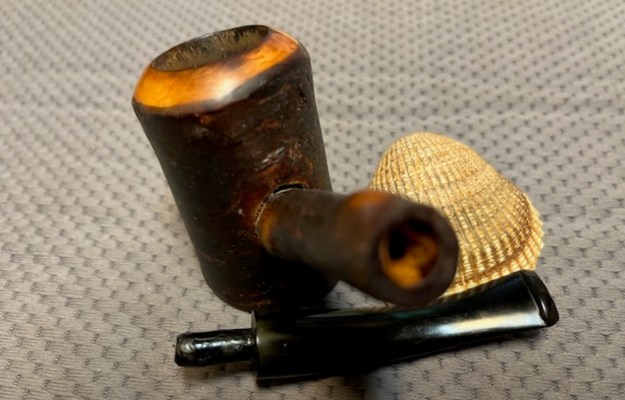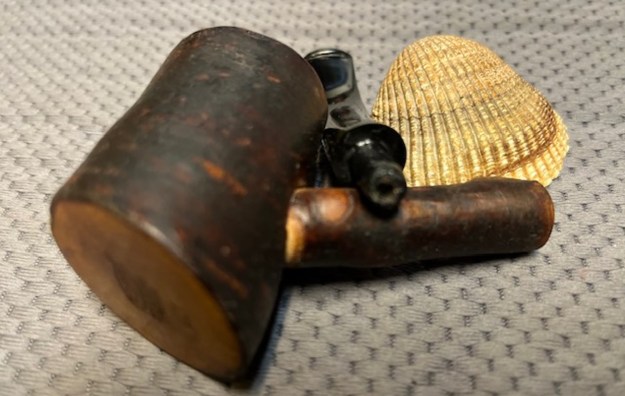
Tag Archives: Ropp De Luxe Cherrywood pipes

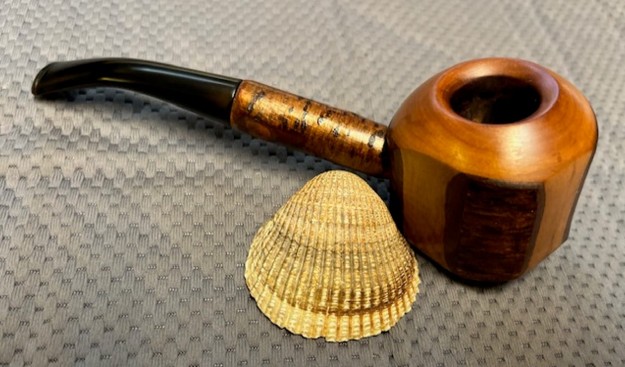
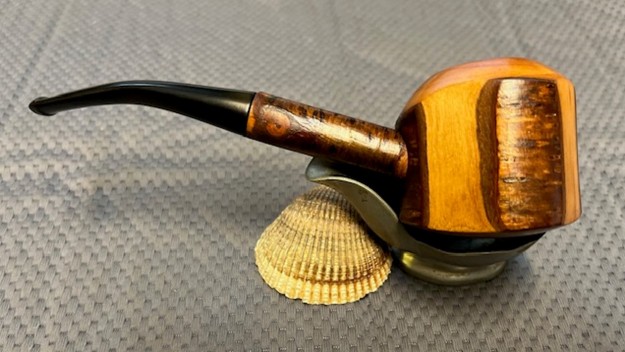
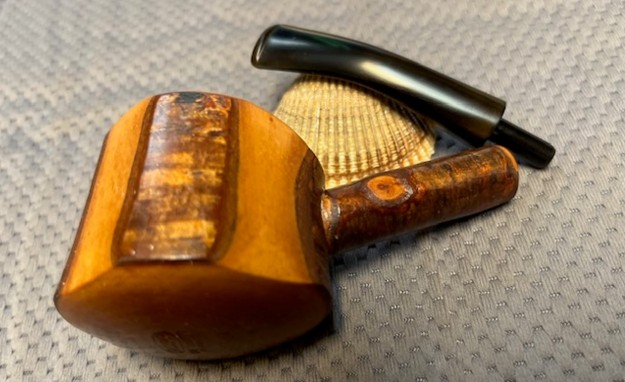
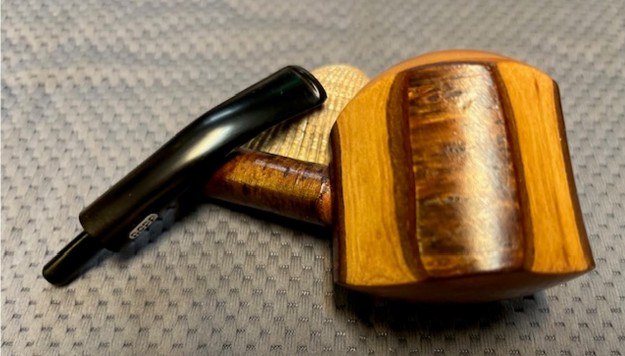
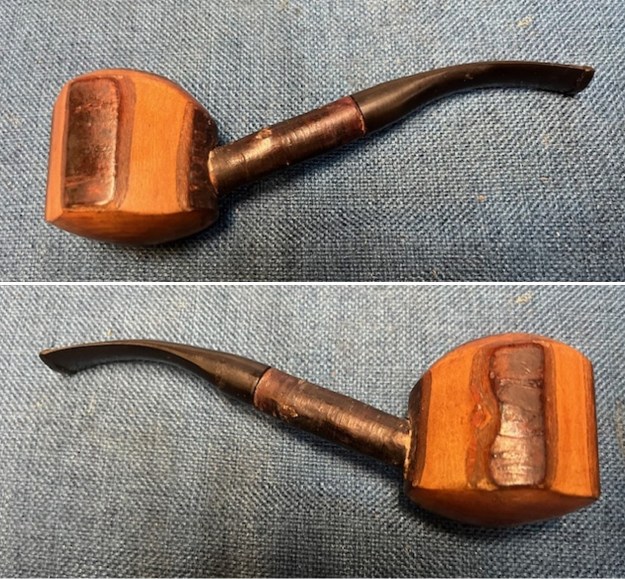
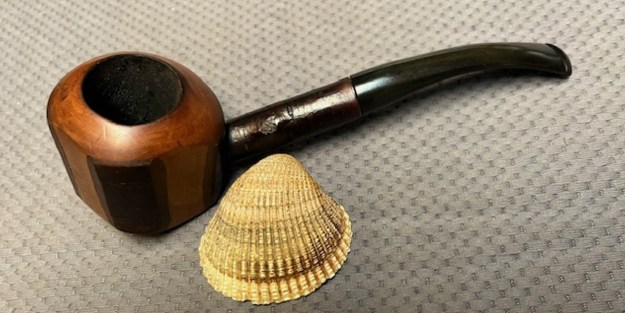
Cleaning and Restoring the sixth of a lot of 12 pipes – A Ropp 804 Bent Octagonal Billiard


by Steve Laug

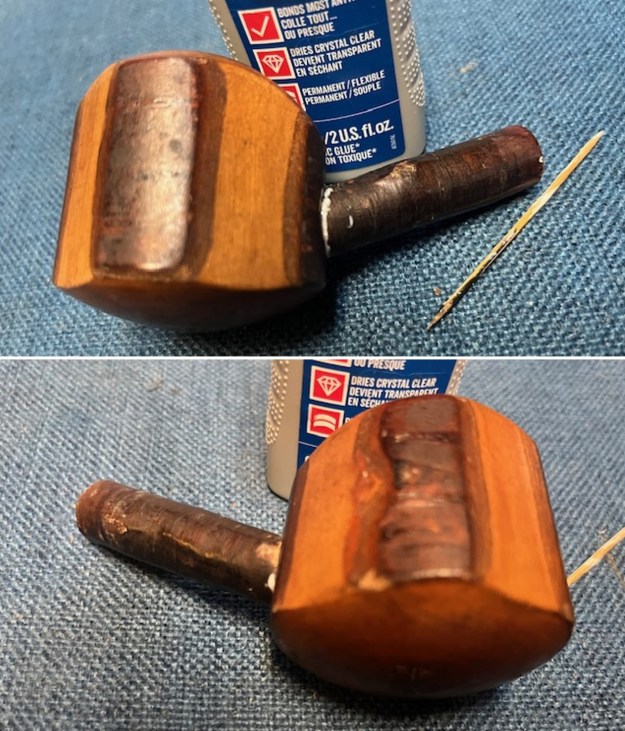
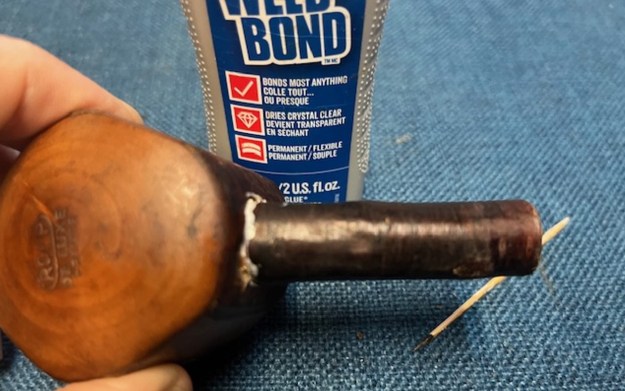
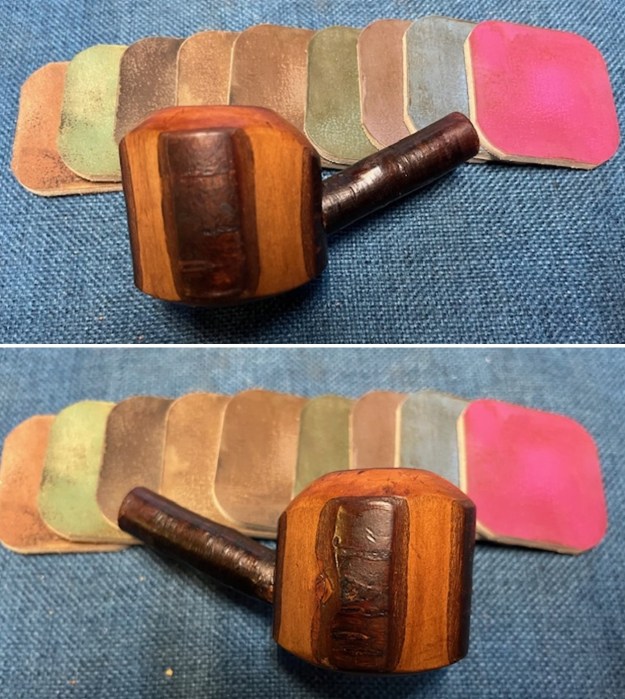
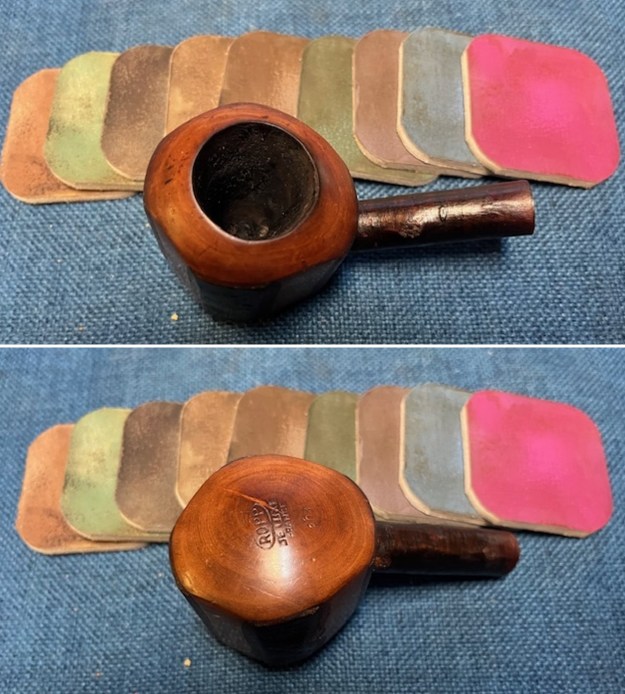
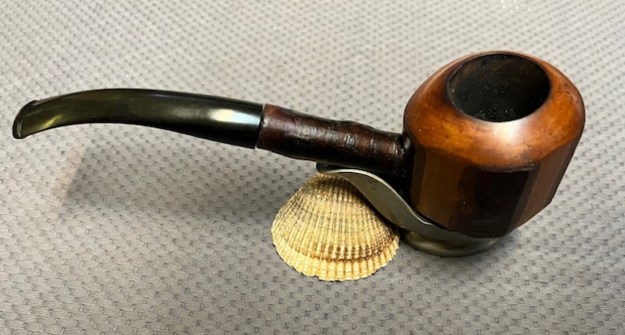
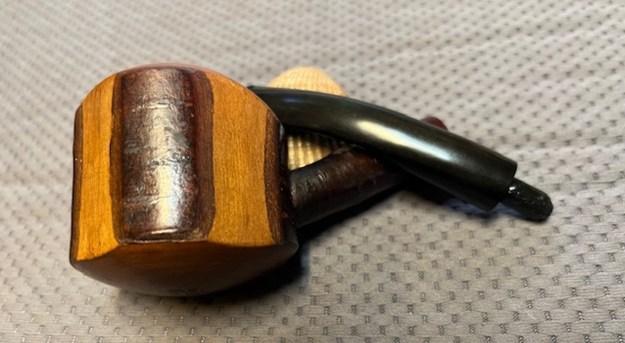
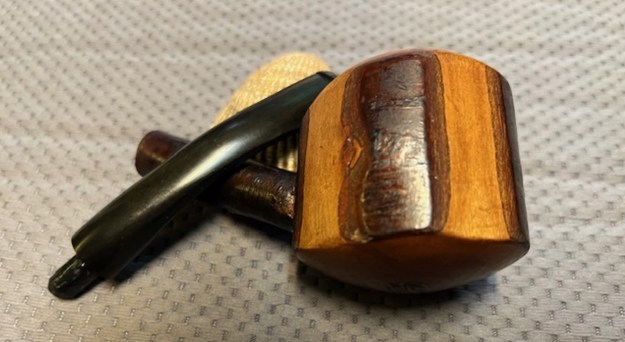
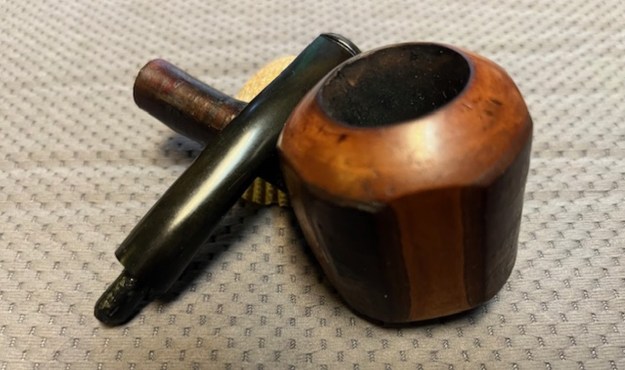
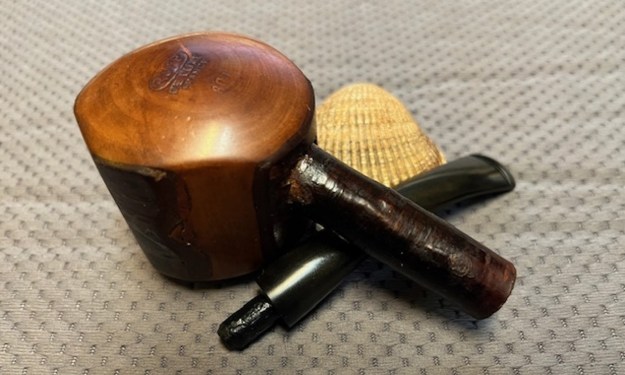
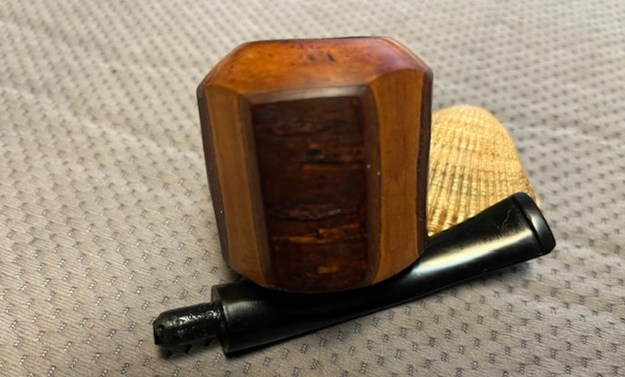
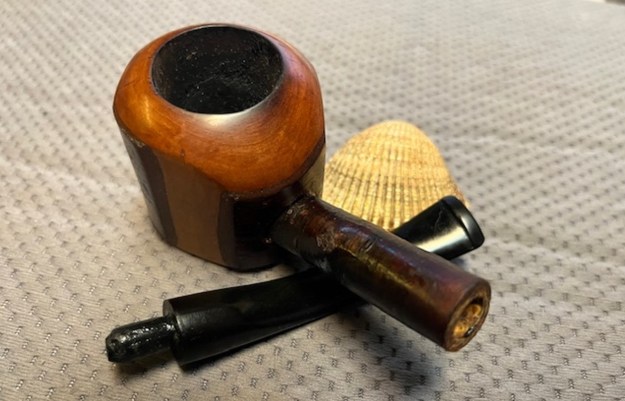
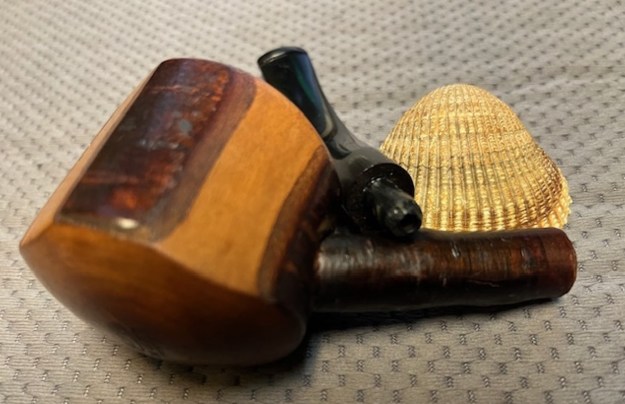
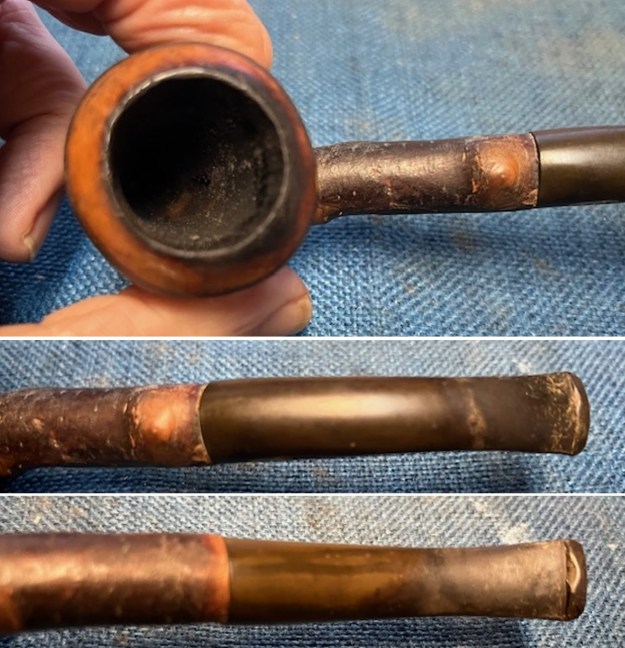
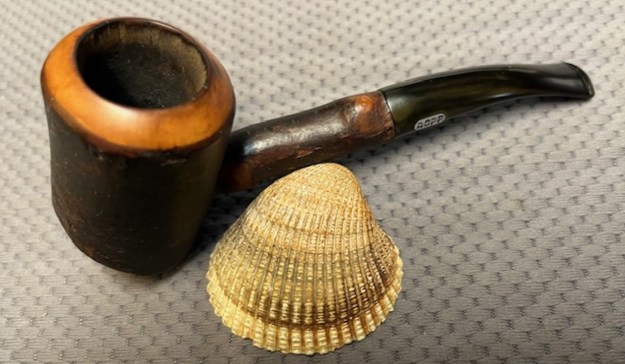
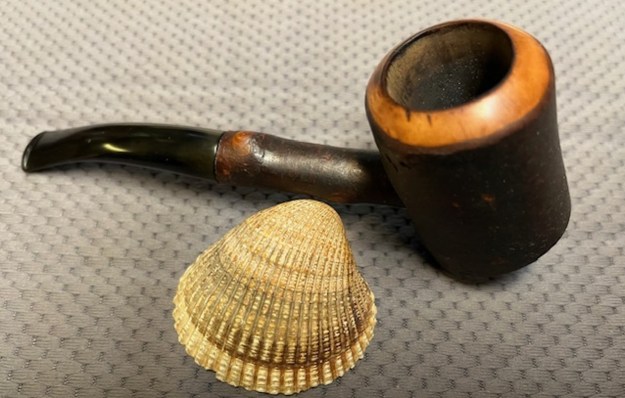
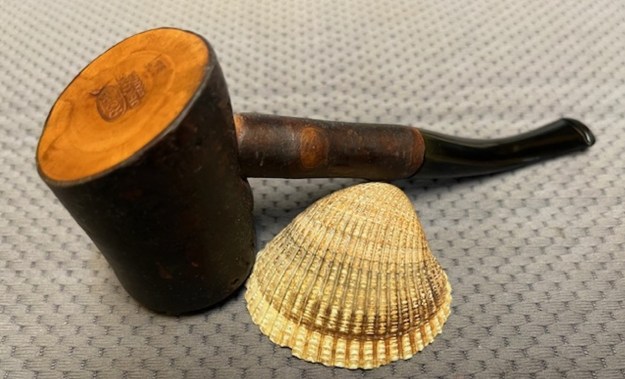
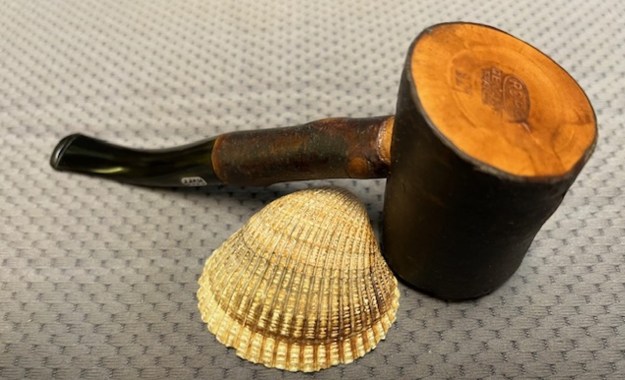
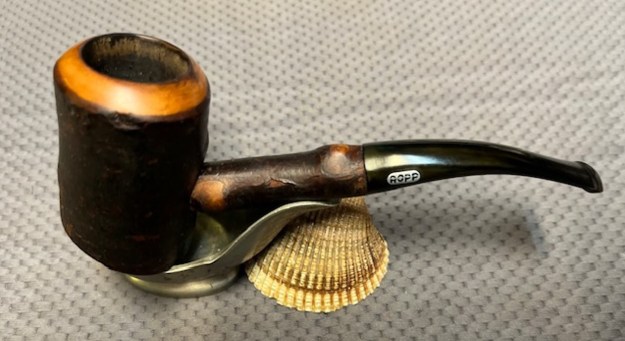
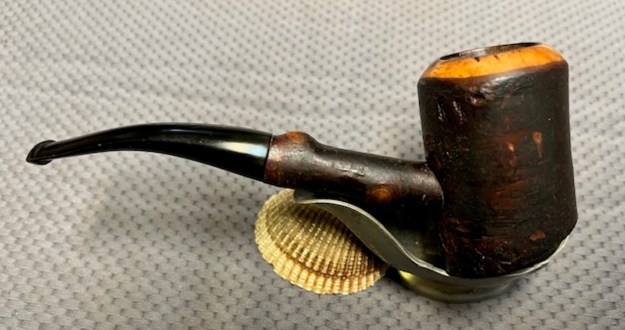
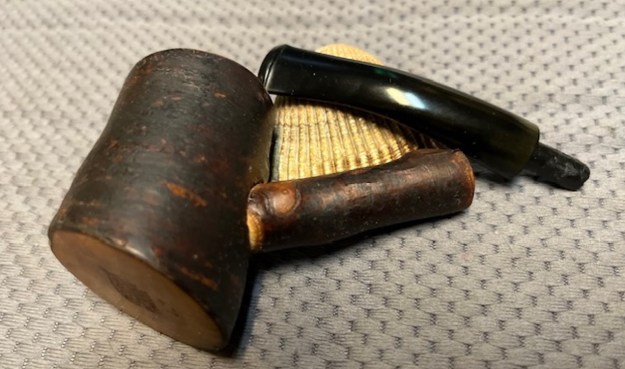
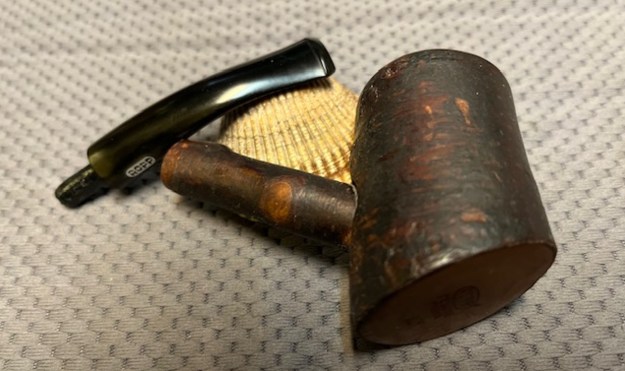
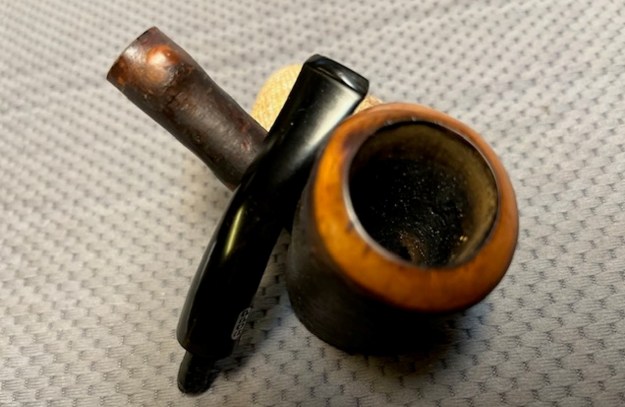
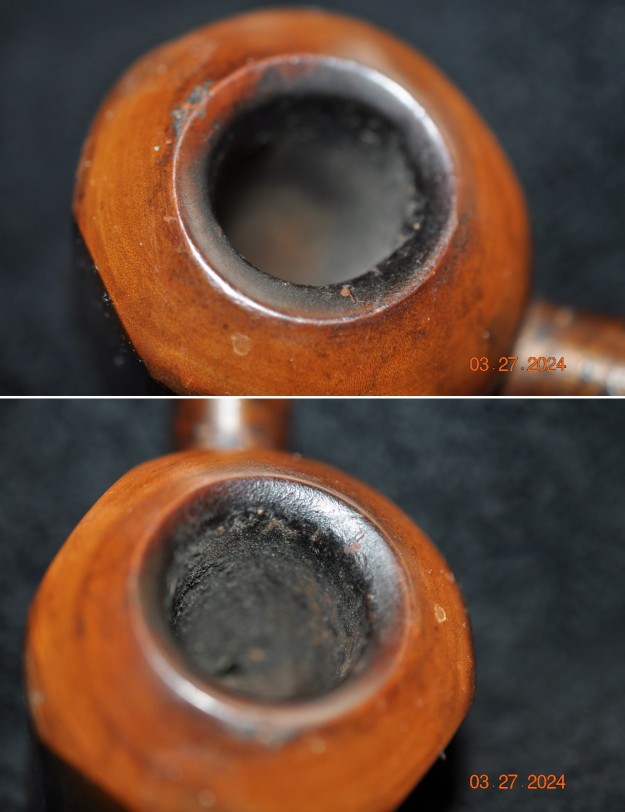
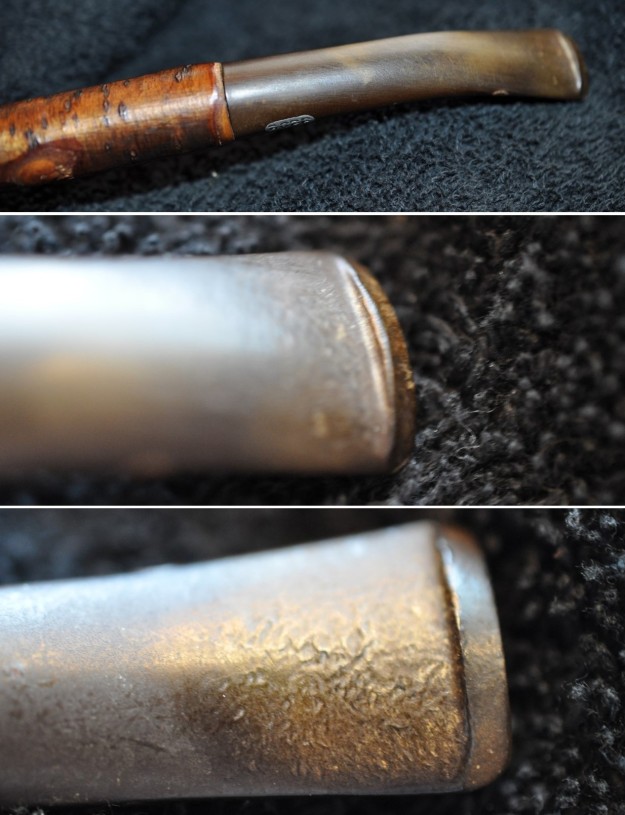
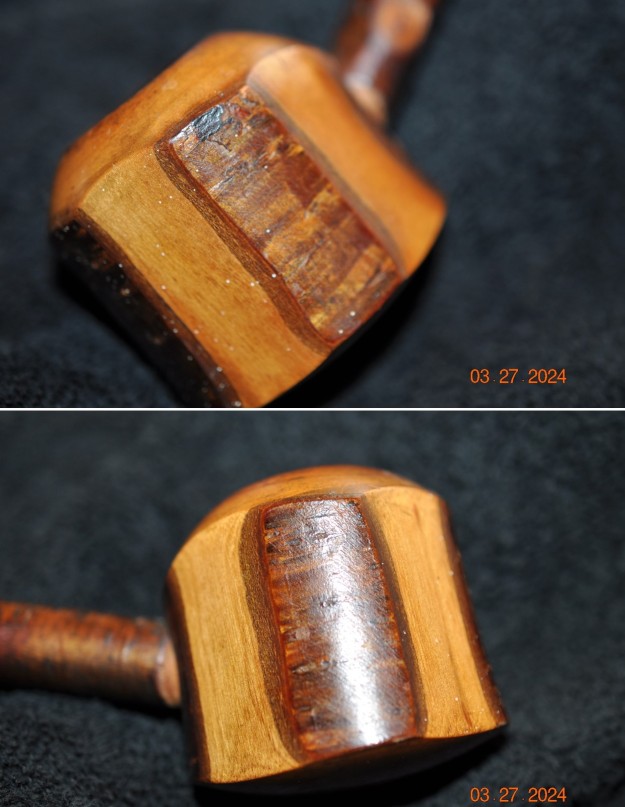
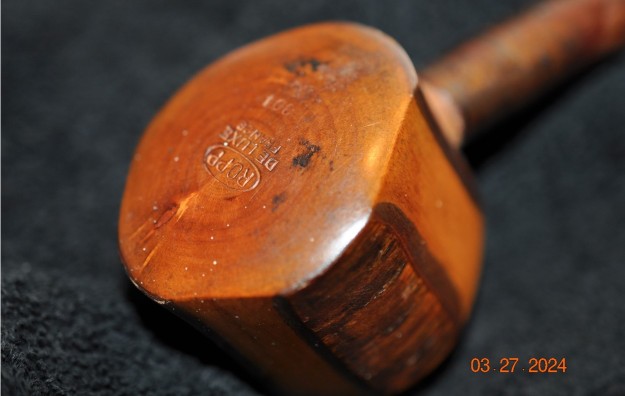
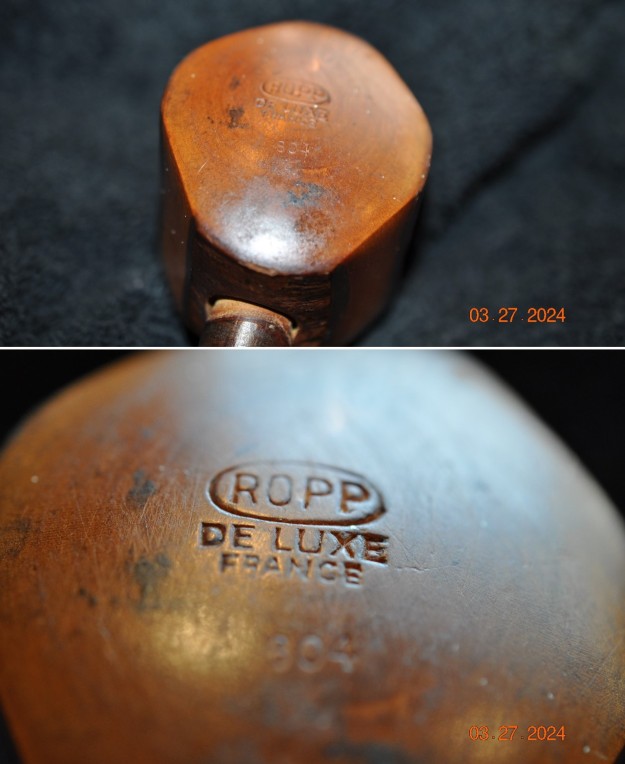
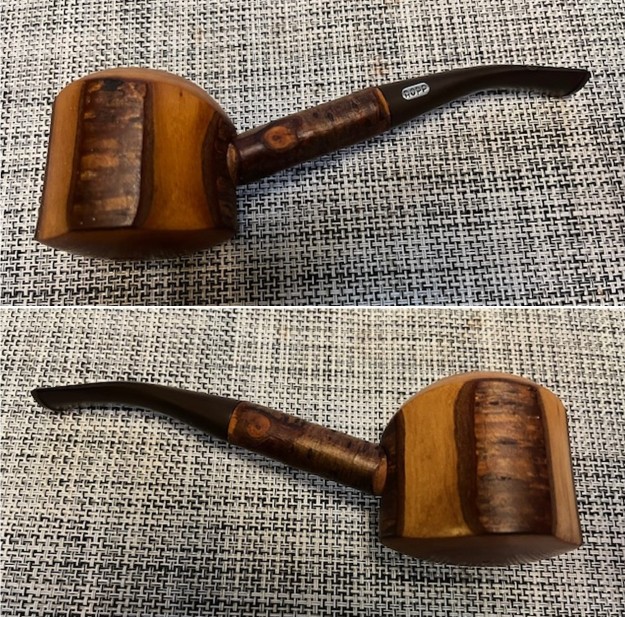
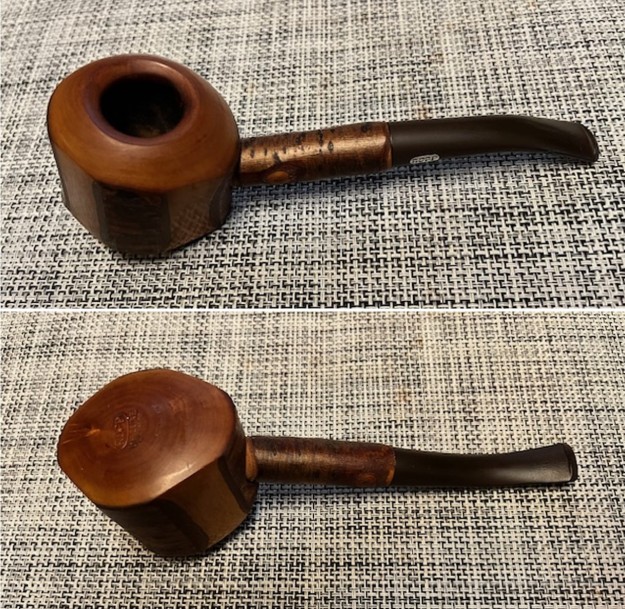
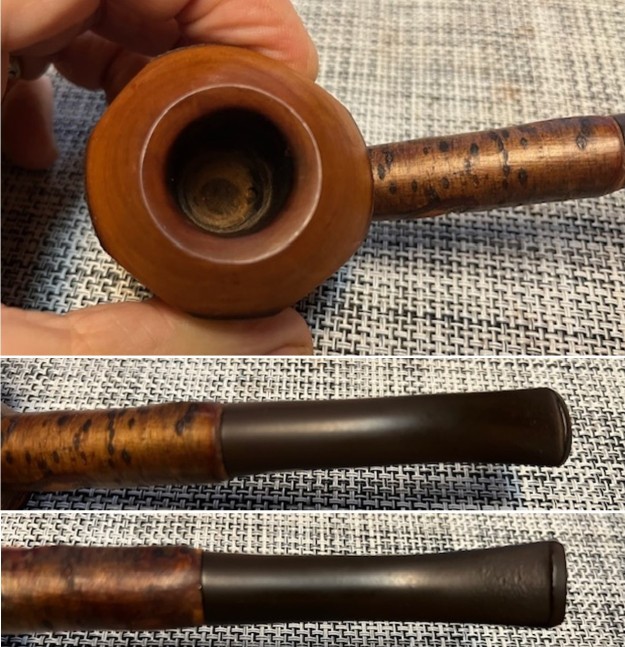
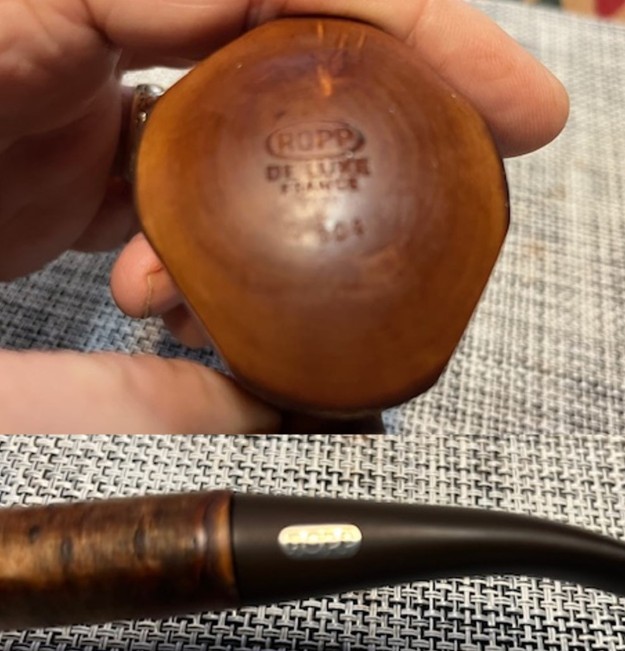
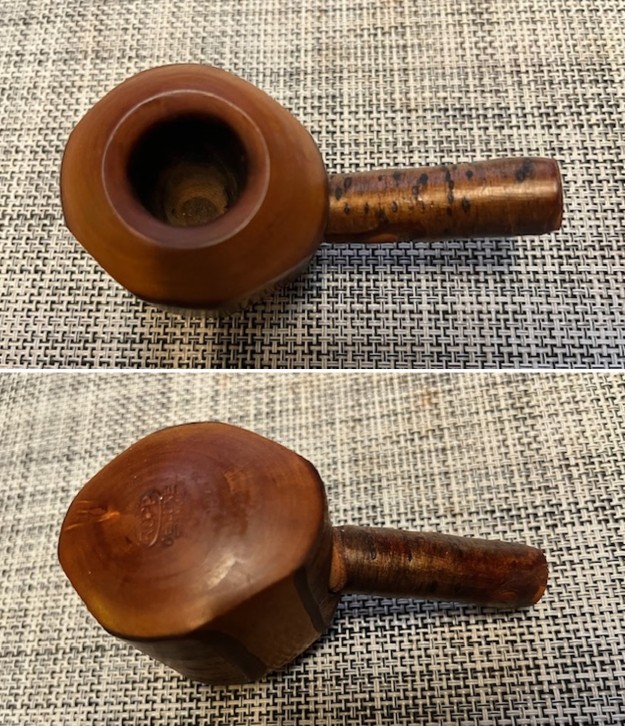
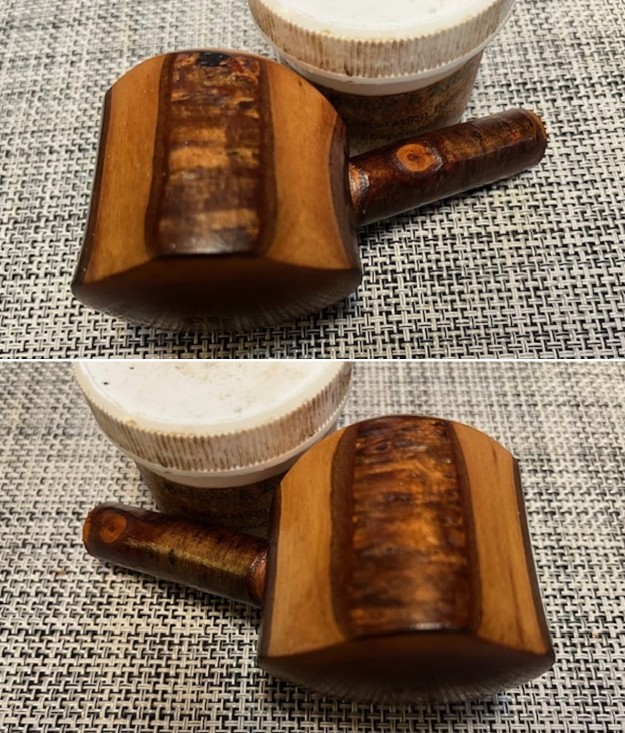
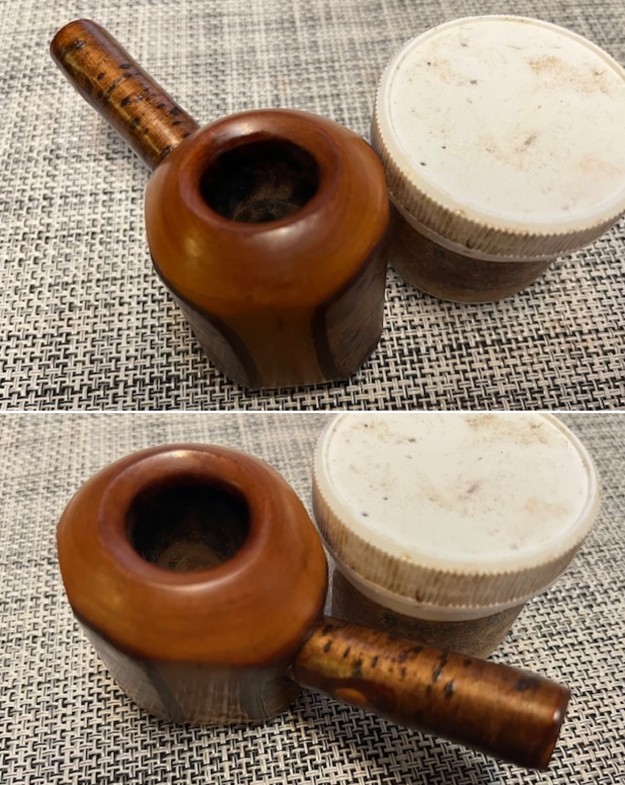
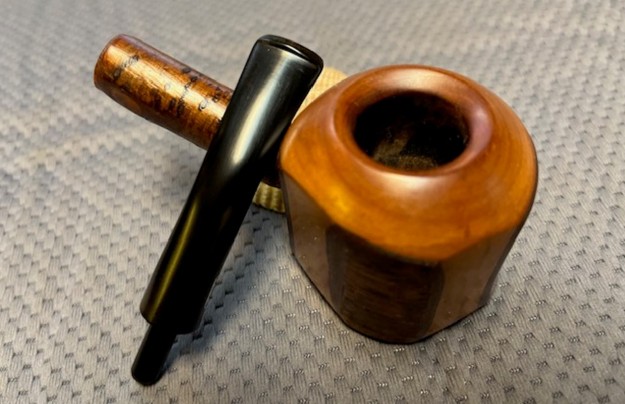
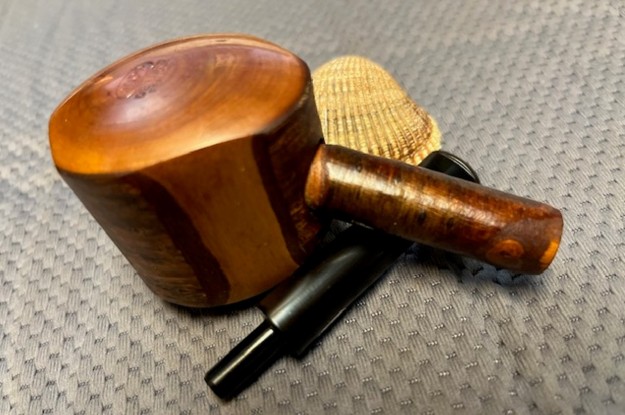
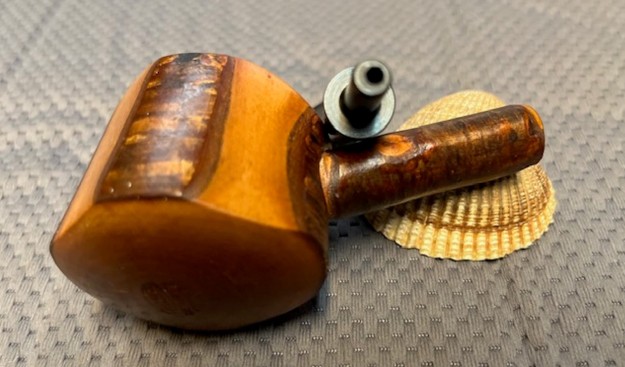
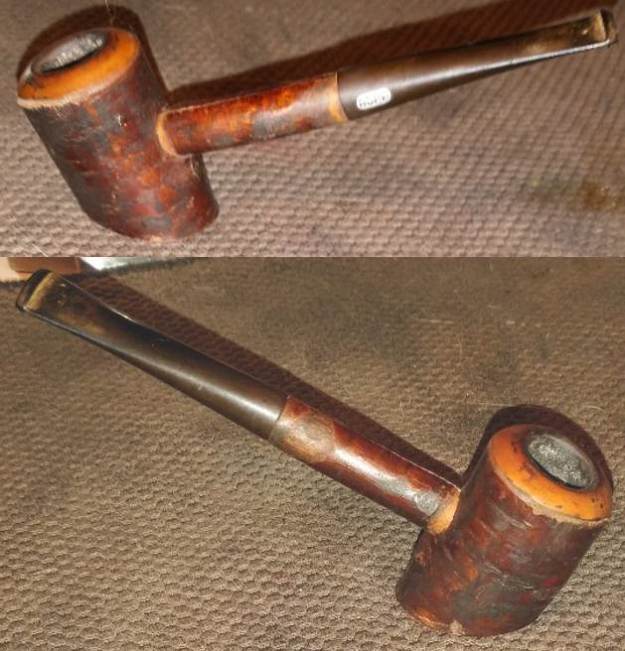
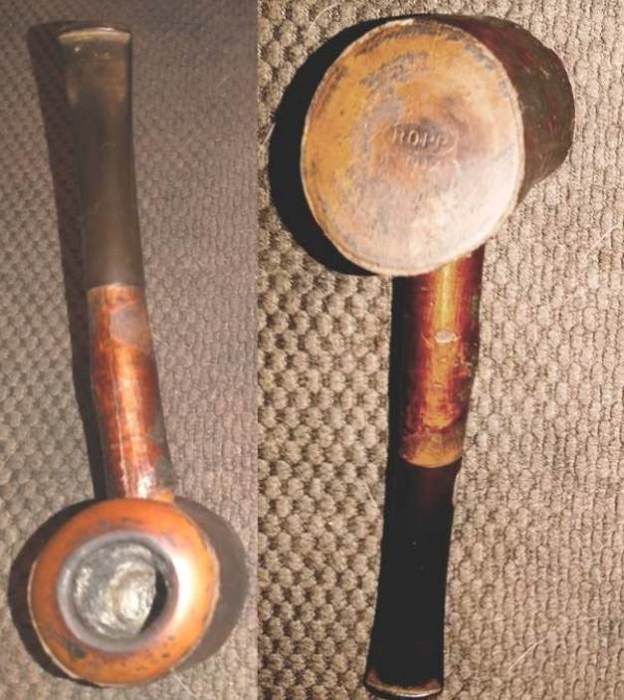
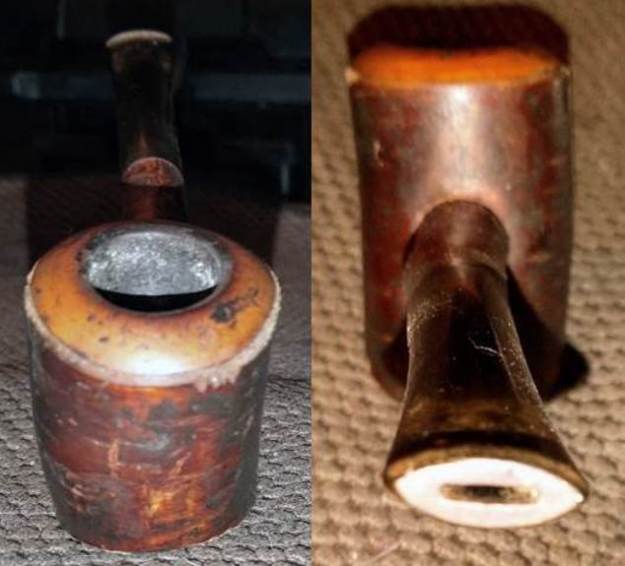
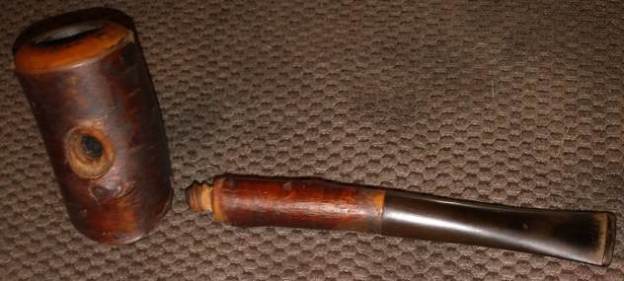
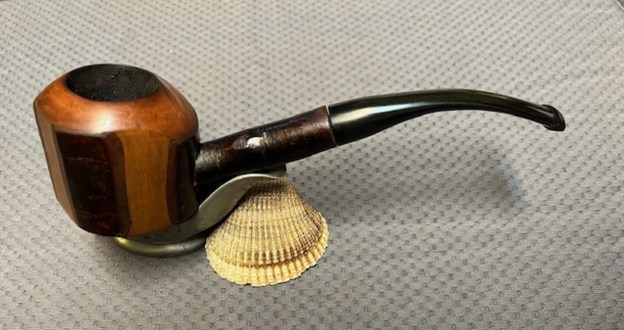
Back in January I received an email from Robert with a group 12 pipes that needed to be restored in various ways from cleanup to restemming. I chose to work on the second of the Cherrywood pipes next. It is a nice-looking Cherrywood Bent Octagonal Bowled Billiard. The bowl and shank had bark on the outside. The bowl has peeled striped around the octagon on every other flat side. The rim top and the base of the bowl were both smooth without bark. The bowl had been reamed at some time so there was no cake in it. The rim top had an overflow of lava on it and some darkening around the inner edge. The underside of the bowl was dirty but it was stamped ROPP [over] De Luxe [over] France. Underneath that what the shape number 804. The stem had no logo on it. It had light tooth marks and tooth chatter on the top and underside ahead of the button. I took some photos of the pipe to show its condition before I started my work on it.The relatively clean bowl looks quite good. There was some thick lava on the rim top and some lava build up on the inner edge of the bowl. It looked to be in good condition other than the lava and darkening. The vulcanite taper stem was dirty, lightly oxidized and has light tooth chatter and marks on both sides. I took photos of the bowl, rim top and the stem to show the condition of both.There was stamping on the heel of the bowl that was clear and readable. It read as noted above. I took a photo of the pipe with the stem removed to show the proportion of this pipe. It is a classic Ropp Cherrywood.I wanted to refresh my memory on the brand so I turned for a short, quick summary to Pipephil (http://www.pipephil.eu/logos/en/logo-ropp.html). I have included the pertinent information from that site below:
Brand created by Eugène-Léon Ropp (1830 – 1907) and continued throughout 3 generations. “GBA Synergie” run by Bernard Amiel (†2008) bought back Ropp in 1988 and owned it until 1991. The company was taken over by Cuty-Fort Entreprises (Chacom, Vuillard, Jean Lacroix…) in 1994.

I also turned to Pipedia to see if there was any additional information that would be helpful (https://pipedia.org/wiki/Ropp). I quote the portion of the article on the Cherrywood pipes.

Eugène-Léon Ropp (1830 – 1907) had acquired a patent for a cherrywood pipe (wild cherry, lat.: Prunus avium) in 1869. In 1870 he established a workshop to manufacture such pipes in Büssingen (Bussang, Vosges mountains). Around 1893 the business moved into the former mill of Sicard (part of the community of Baume-les-Dames – Département Doubs, Upper Burgundy – from 1895 on)… Even though cherrywood pipes were the mainstay of Ropp until the company finally closed down in September 1991. The company was taken over by Cuty-Fort Entreprises (Chacom, Jeantet, Vuillard, Jean Lacroix…) in 1994.

The pipe thus was made in France sometime prior to the closure in 1991. It is made from wild cherry and was a specialty of Ropp. I have worked on quite a few over the years but I had forgotten all the dates and information. Now it was time to work on the pipe.

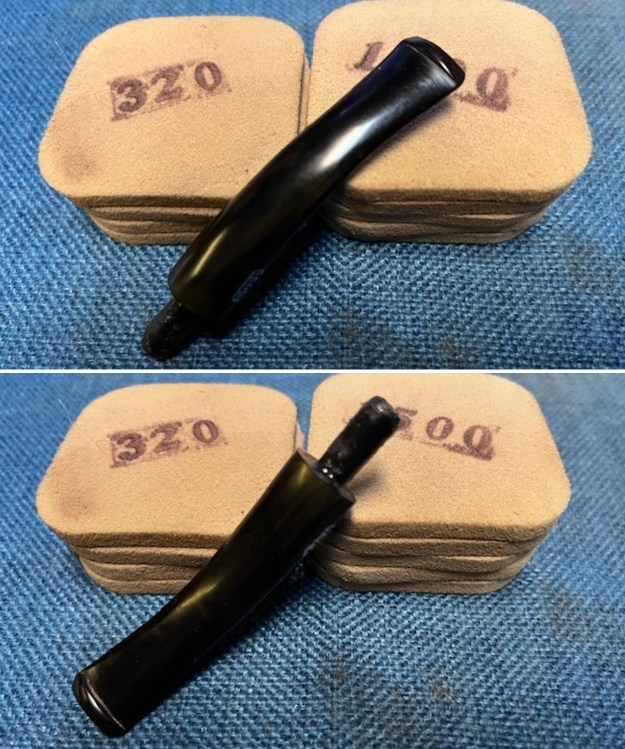
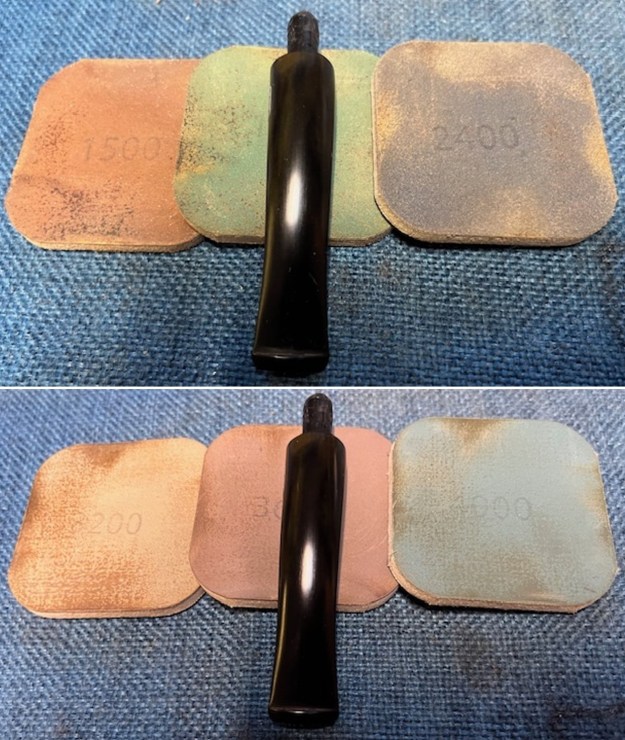
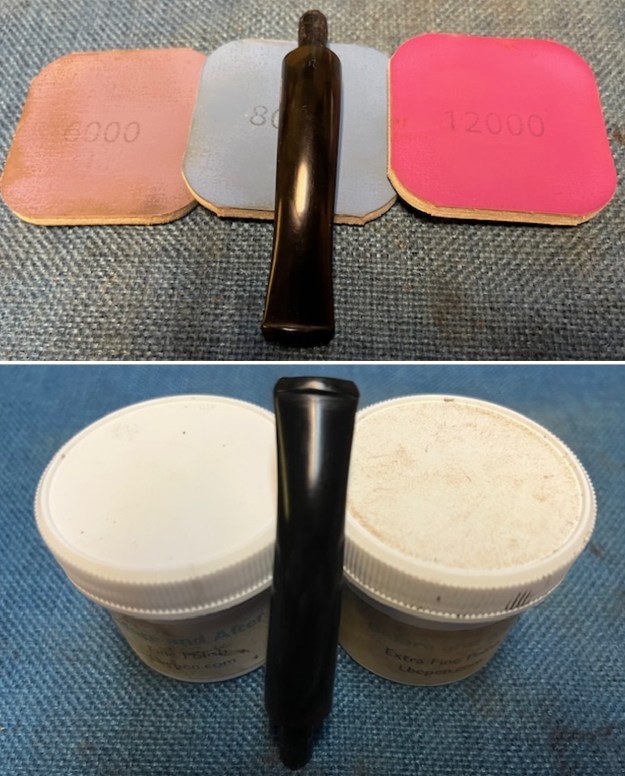
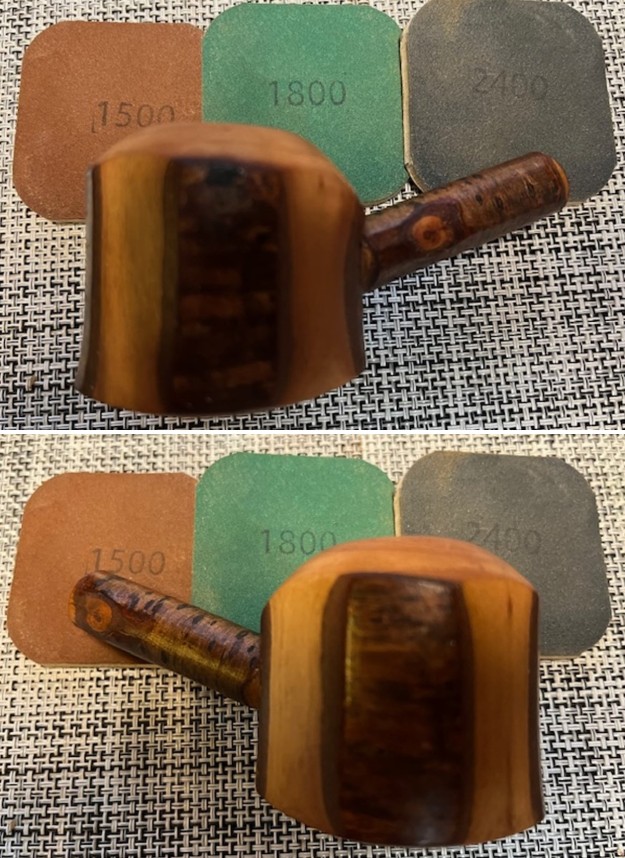
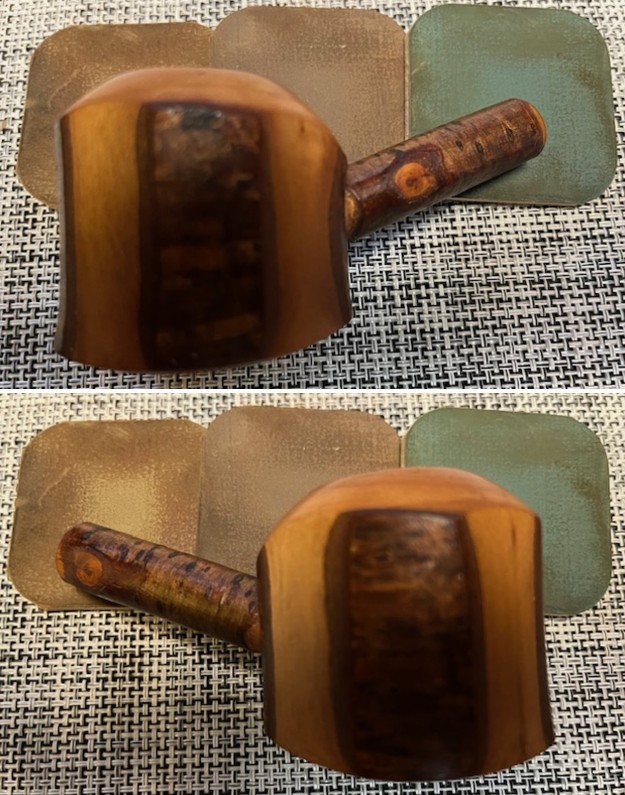
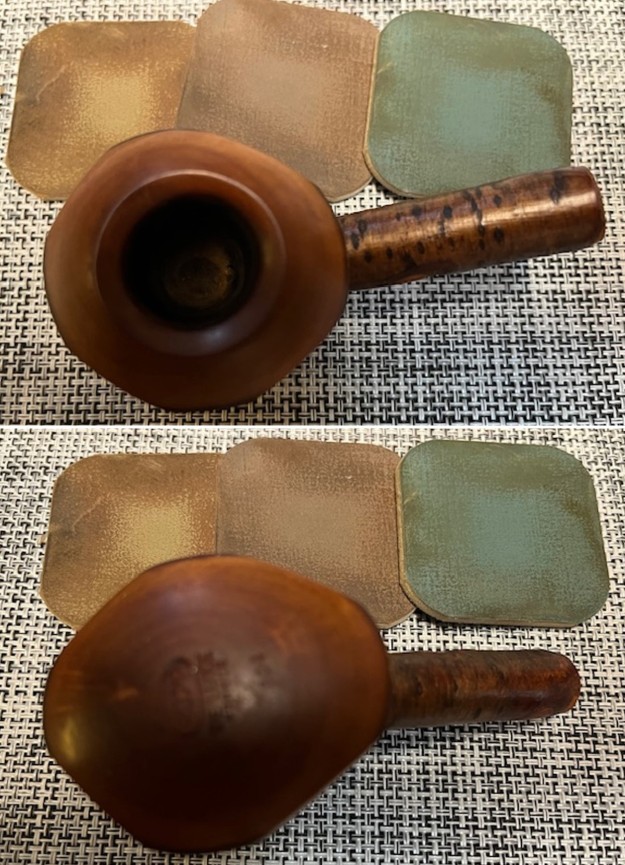
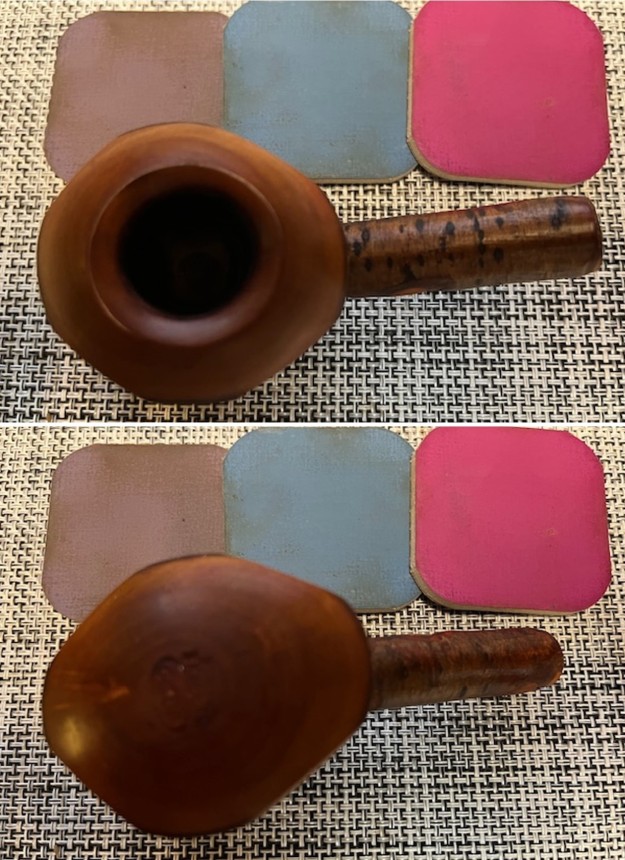
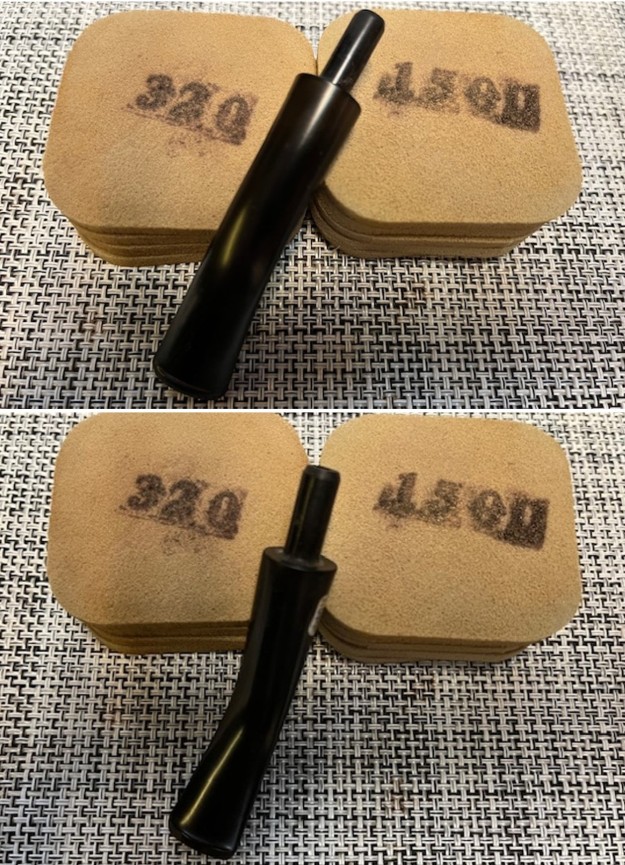
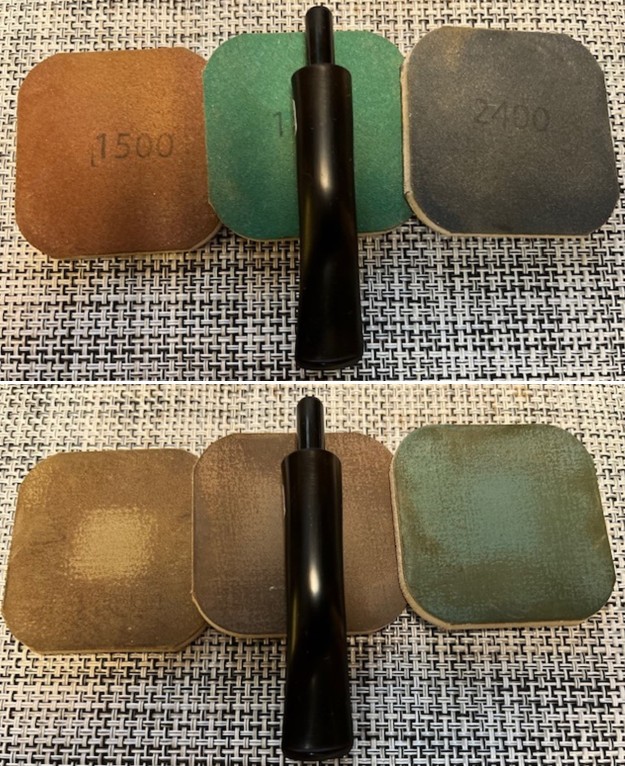
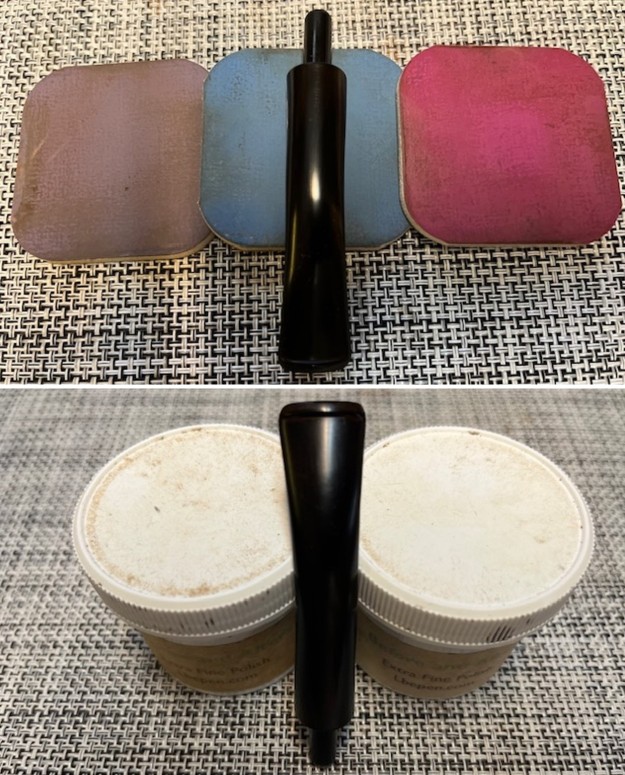
I turned to work on the pipe itself. The shank was loose in the bowl so I reglued it with all purpose white glue. I used a tooth pick to press it into the grooves around the junction and set it aside to cure. I worked over rim top and inner edge of the bowl. I used a folded piece of 220 grit sandpaper to smooth out the damage and darkening on the smooth rim top and inner edge of the bowl. It looked much better once the debris was removed. I sanded the walls of the bowl smooth with a piece of dowel wrapped with a piece of 220 grit sandpaper. The walls smoothed out very well.I scrubbed the bowl exterior with a tooth brush and undiluted Murphy’s Oil Soap to clean the debris and oils and tars in the cherry bark finish. I rinsed it with clean warm water and dried it off with a soft cotton cloth. I polished the smooth rim top, four panels on the sides and heel of the bowl with 1500-12000 grit micromesh sanding pads. It smoothed out the finish very well and removed much of the damage on the rim top, smooth panels and the scratching around the stamping on the heel. I cleaned out the mortise and airway in the shank and the stem with alcohol, cotton swabs and pipe cleaners. I was able to remove the grime and oils in the shank and the airway in the stem.I worked some Before & After Restoration Balm into the surface of the bowl and shank with my fingertips to clean, enliven and protect the wood. I let the balm sit for 15 minutes and then buffed it off with a cotton cloth to raise the shine. The photos show the bowl at this point in the restoration process. I set the bowl aside and turned my attention to the stem. I sanded the stem with 320-3500 grit sanding pads to further blend in the remnants of the tooth marks and chatter on the stem and to remove the residual light oxidation. I am happy with the way that it looked at this point.I polished the vulcanite with micromesh sanding pads – 1500-12000 grit pads. I wiped it down with Obsidian Oil after each sanding pad. I used Before & After Pipe Polish – both Fine and Extra Fine to further polish the stem. This Ropp De Luxe Cherrywood 804 Octagonal Bent Billiard with a vulcanite taper stem has a cherrywood bark finish with a smooth rim top and bowl heel. The bark covered Cherrywood pipe is what makes Ropp pipes stand out. I put the stem back on the bowl and buffed the pipe with Blue Diamond on the buffing wheel being careful to not buff the stamping. I gave the bowl and the stem multiple coats of carnauba wax on the buffing wheel and followed that by buffing it with a clean buffing pad. I hand buffed the pipe with a microfiber cloth to deepen the shine. The finished Ropp De Luxe Cherrywood Octagonal Billiard is quite nice and feels great in the hand. Give the finished pipe a look in the photos below. The dimensions of the pipe are Length: 6 ¾ inches, Height: 2 inches, Outside diameter of the bowl: 1 ¾ inches, Chamber diameter: 1 inch. The weight of the pipe is 2.36 ounces/66 grams. Thanks for walking through the restoration with me as I worked over another beautiful pipe. I will be sending it back to Robert once I finish the other 6 pipes he sent me to restore. I look forward to hearing what he thinks of this beauty. Thanks for your time.

Cleaning and Restoring the third of a lot of 12 pipes for a customer – a Ropp Cherrywood 921


by Steve Laug

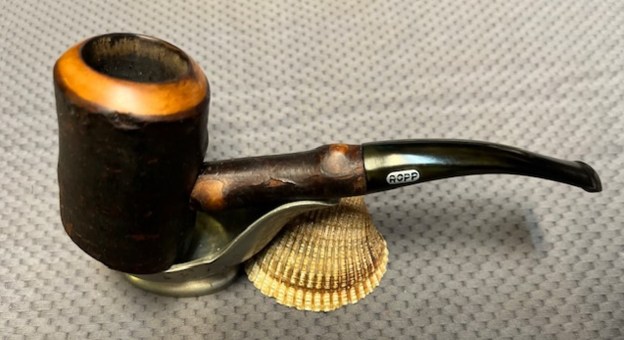
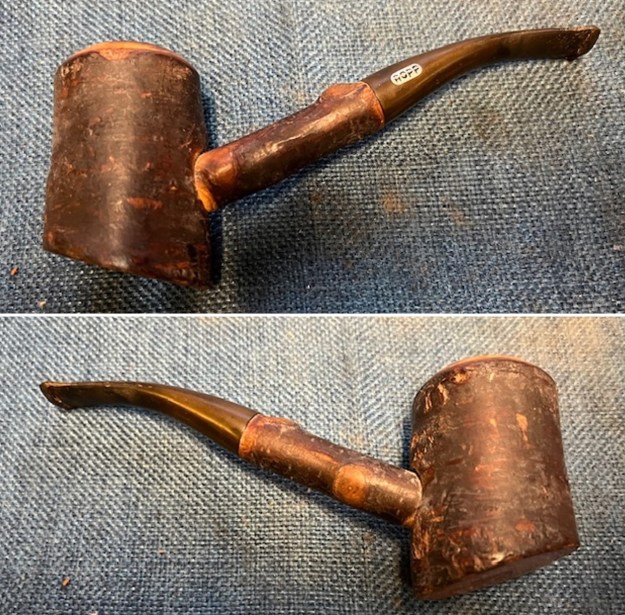
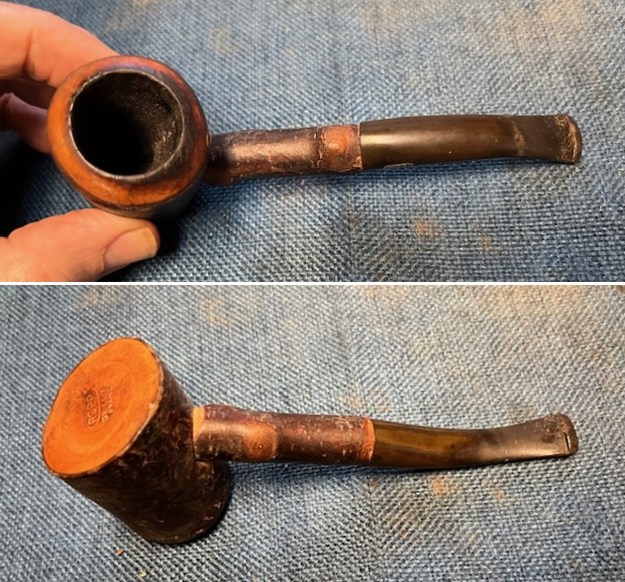
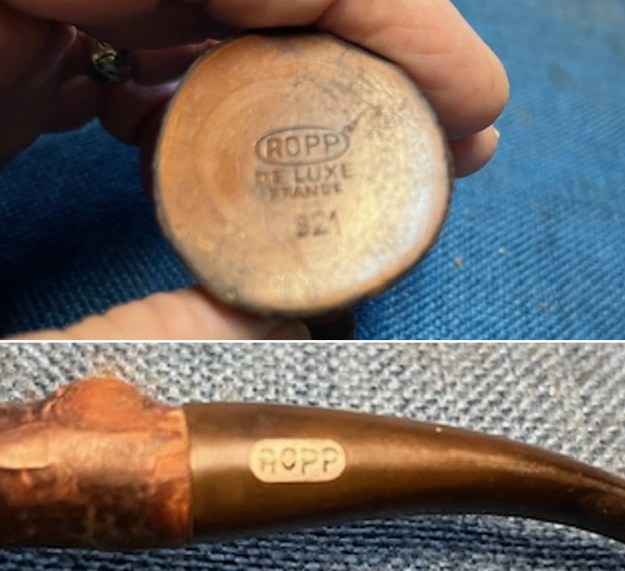
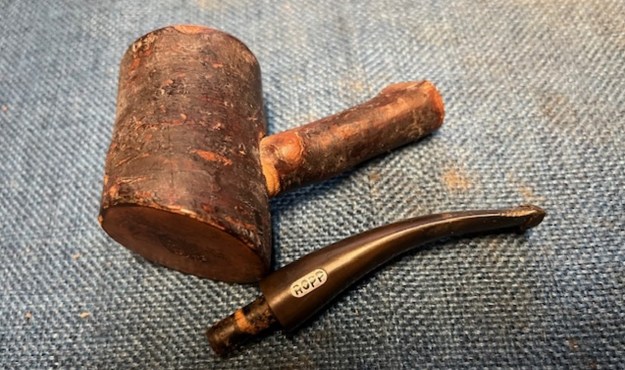
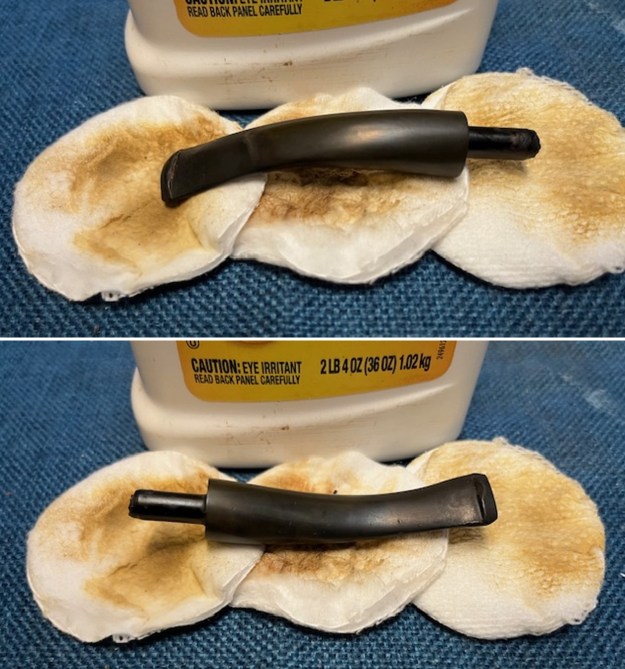
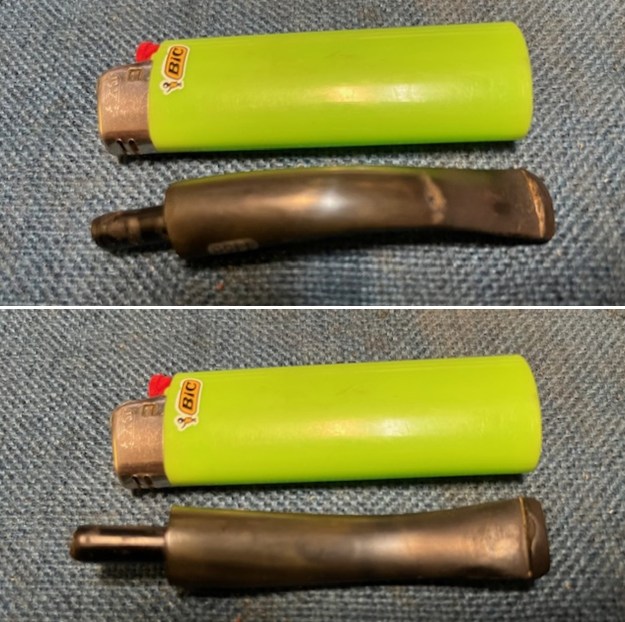
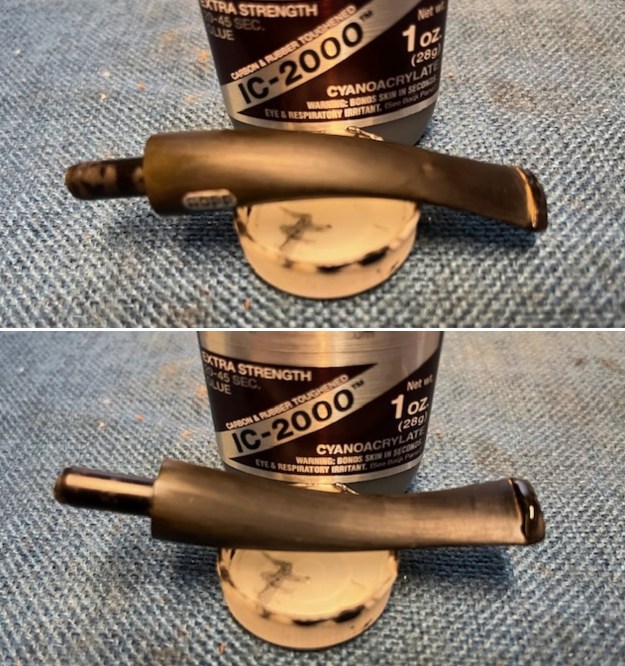
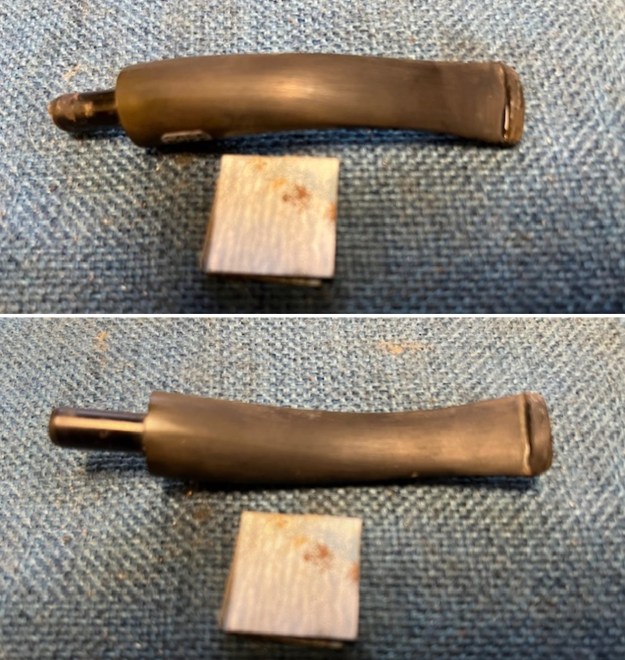
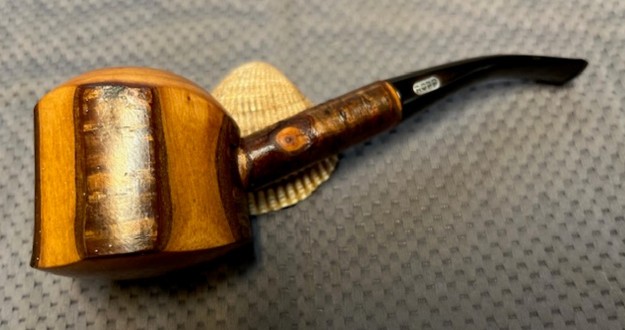
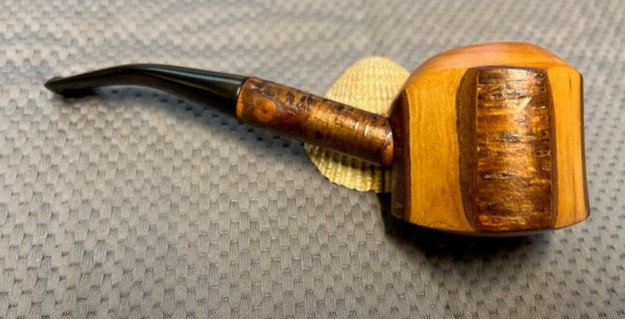
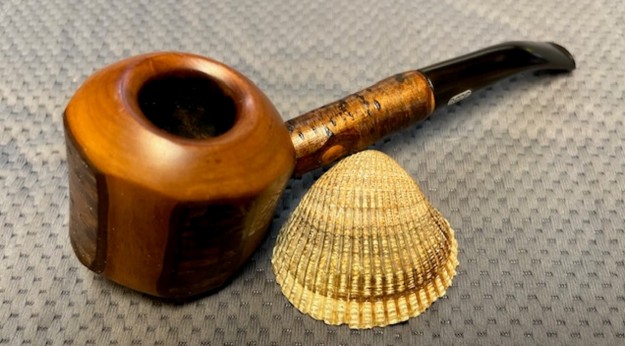
Back in January I received an email from Robert with a group 12 pipes that needed to be restored in various ways from cleanup to restemming. I chose to work on one of the Cherrywood pipes next. It is a nice looking Cherrywood Bent Poker. The bowl and shank had bark on the outside. The rim top and the base of the bowl were both smooth without bark. The bowl had been reamed at some time so there was no cake in it. The rim top had an overflow of lava on it and some darkening around the inner edge. The underside of the bowl was dirty but it was stamped ROPP [over] De Luxe [over] France. Underneath that what the shape number 921. The stem had tooth marks and tooth chatter on the top and underside ahead of the button. I took some photos of the pipe to show its condition before I started my work on it. The relatively clean bowl looks quite good. There was some thick lava on the rim top and some lava build up on the inner edge of the bowl. It looked to be in good condition other than the lava and darkening. The vulcanite taper stem was dirty, lightly oxidized and has tooth chatter and marks on both sides. I took photos of the bowl, rim top and the stem to show the condition of both.There was stamping on the heel of the bowl that was clear and readable. It read as noted above. I also took a photo of the inlaid silver logo on the left side of the taper stem. I took a photo of the pipe with the stem removed to show the proportion of this pipe. It is a classic Ropp Cherrywood. I turned to work on the pipe itself. I worked over rim top and inner edge of the bowl. I used a folded piece of 220 grit sandpaper to smooth out the damage and darkening on the smooth rim top and inner edge of the bowl. It looked much better once the debris was removed. I sanded the walls of the bowl smooth with a piece of dowel wrapped with a piece of 220 grit sandpaper. The walls smoothed out very well. I scrubbed the bowl exterior with a tooth brush and undiluted Murphy’s Oil Soap to clean the debris and oils and tars in the cherry bark finish. I rinsed it with clean warm water and dried it off with a soft cotton cloth. I sanded the smooth rim top and heel of the bowl with 320-3500 grit sanding pads. It smoothed out the finish very well and removed much of the damage on the rim top and the scratching around the stamping on the shank.I cleaned out the mortise and airway in the shank and the stem with alcohol, cotton swabs and pipe cleaners. I was able to remove the grime and oils in the shank and the airway in the stem.I worked some Before & After Restoration Balm into the surface of the bowl and shank with my fingertips to clean, enliven and protect the wood. I let the balm sit for 15 minutes and then buffed it off with a cotton cloth to raise the shine. The photos show the bowl at this point in the restoration process. I set the bowl aside and turned my attention to the stem. I scrubbed the surface of the stem with cotton pads and Soft Scrub. I was able to remove the debris on the stem and the oxidation on the surface. It looked much better.I “painted” the surface of the stem with the flame of a Bic lighter to lift the tooth marks. I was able to lift them all considerably. I filled in the two deep marks – one on each side of the stem just ahead of the button – with black rubberized CA glue. Once it cured, I sanded the repairs with 220 grit sandpaper to blend them into the surface. It looked significantly better at this point. I sanded the stem with 320-3500 grit sanding pads to further blend in the remnants of the tooth marks and chatter on the stem and to remove the residual light oxidation. I am happy with the way that it looked at this point.I polished the vulcanite with micromesh sanding pads – 1500-12000 grit pads. I wiped it down with Obsidian Oil after each sanding pad. I used Before & After Pipe Polish – both Fine and Extra Fine to further polish the stem. This Ropp De Luxe Cherrywood 921 Bent Poker with a vulcanite taper stem has a cherrywood bark finish with a smooth rim top and bowl heel. The bark covered Cherrywood pipe is what makes Ropp pipes stand out. I put the stem back on the bowl and buffed the pipe with Blue Diamond on the buffing wheel being careful to not buff the stamping. I gave the bowl and the stem multiple coats of carnauba wax on the buffing wheel and followed that by buffing it with a clean buffing pad. I hand buffed the pipe with a microfiber cloth to deepen the shine. The finished Ropp De Luxe Cherrywood Poker is quite nice and feels great in the hand. Give the finished pipe a look in the photos below. The dimensions of the pipe are Length: 5 ½ inches, Height: 2 inches, Outside diameter of the bowl: 1 ½ inches, Chamber diameter: 7/8 of a inch. The weight of the pipe is 1.66 ounces/46 grams. Thanks for walking through the restoration with me as I worked over another beautiful pipe. I will be sending it back to Robert once I finish the other 9 pipes he sent me to restore. I look forward to hearing what he thinks of this beauty. Thanks for your time.
Restoring a Ropp Deluxe Octagonal Cherrywood 804


Blog by Steve Laug

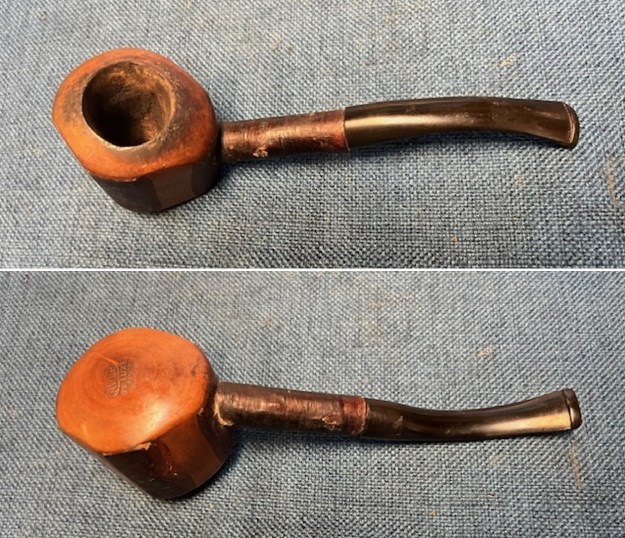
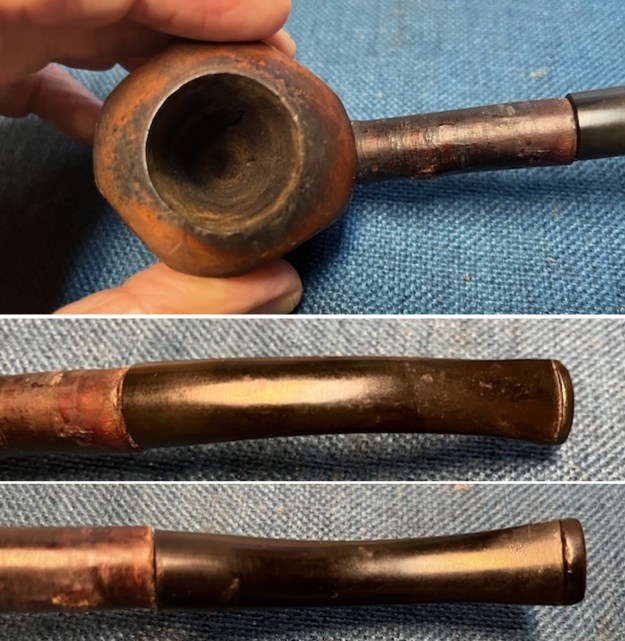
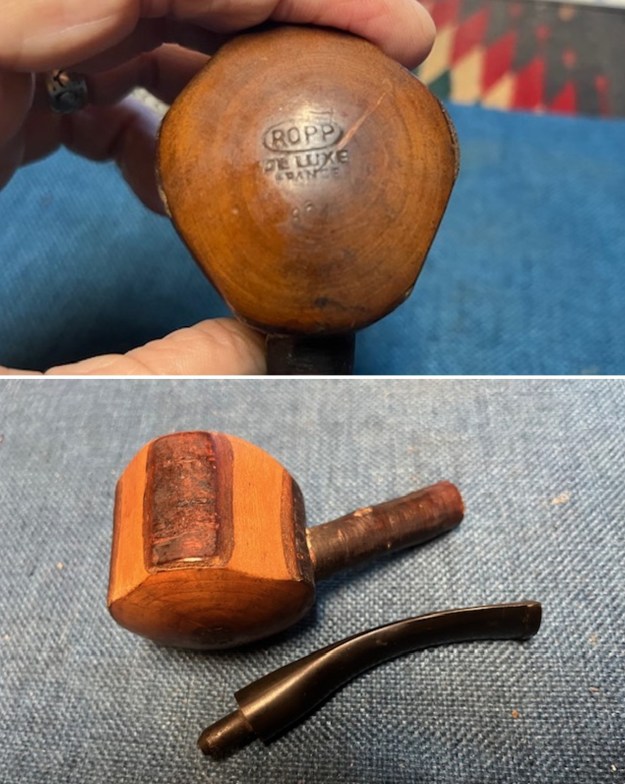
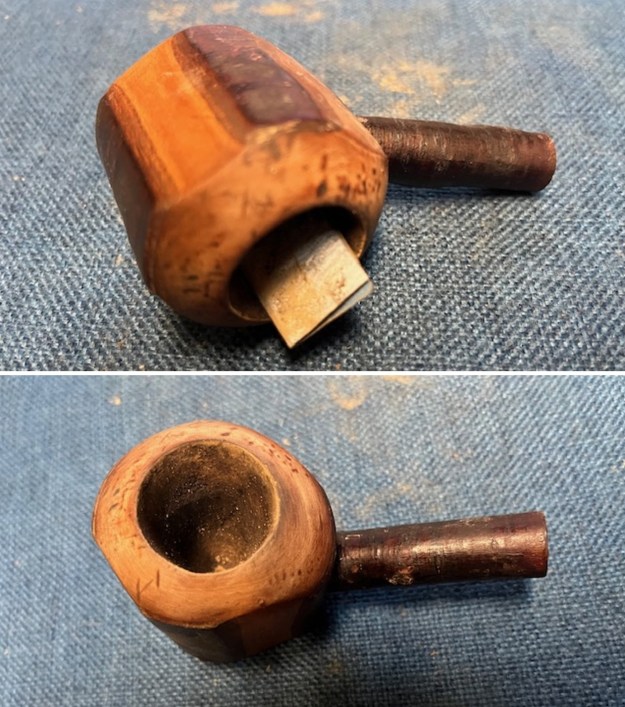
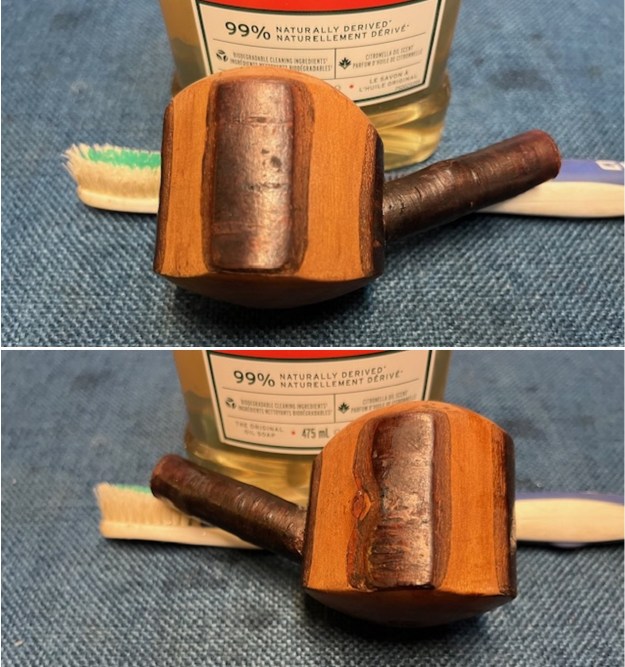
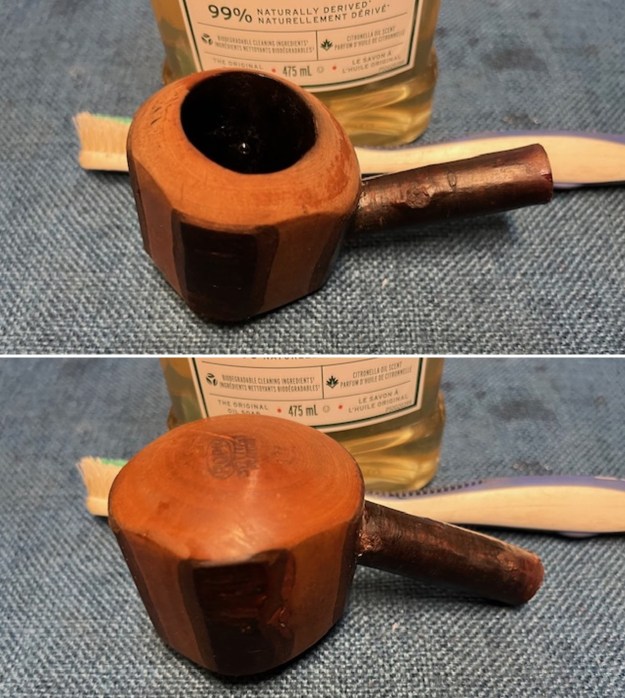
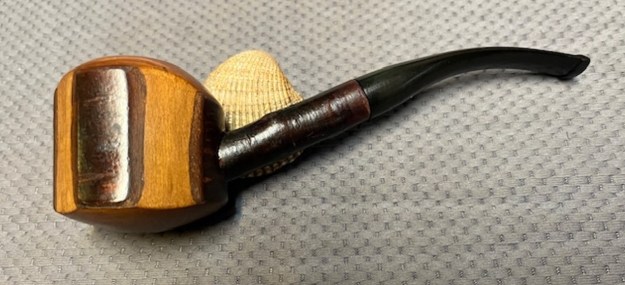
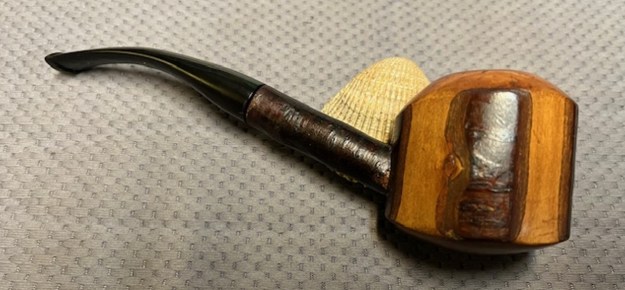
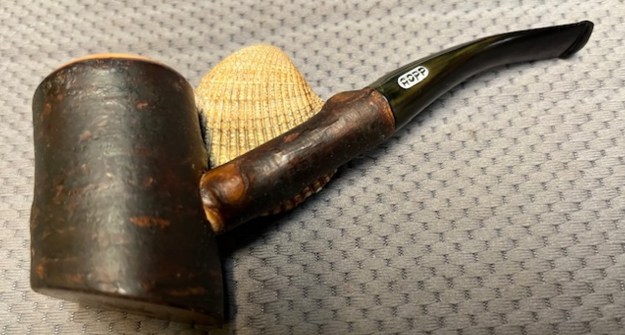
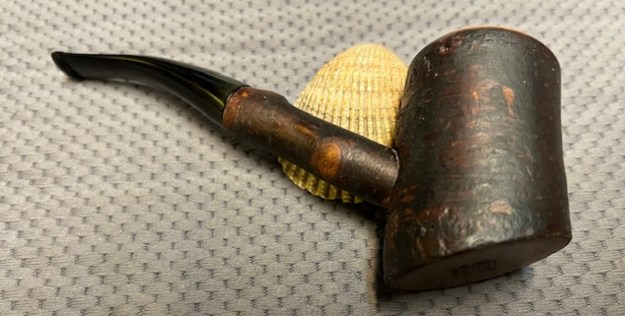
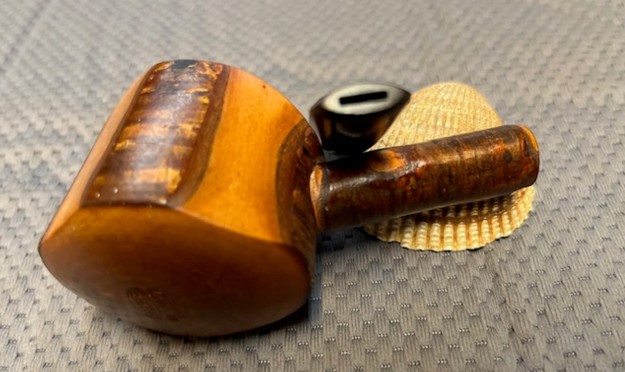
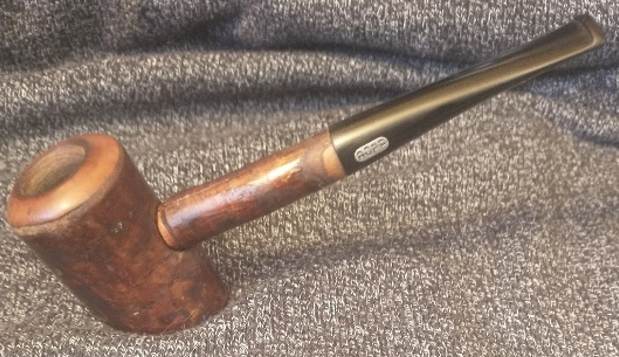
The next pipe on the work table is an interesting and classic looking Cherrywood pipe with smooth and bark covered panels. It is stamped on the heel of the bowl and reads Ropp in an oval [over] De Luxe [over] France [over] 804 the shape number. It came from a lot we purchased from a seller on eBay on 03/21/2024 from an estate in Oregon City, Oregon, USA. It is very well shaped octagonal bent poker with a vulcanite taper stem. The bowl has a thick cake and some lava overflow on the rim top and bevelled inner edge. The finish looked quite good in terms of no tears or worn spots in the bark portions of the finish. It is dirty with grime and hand oils in the finish. The stem had a silver Ropp oval inset on the left side of the taper. It is dirty and has tooth chatter and tooth marks on both sides ahead of the button. Jeff took photos of the pipe before he started his cleanup. He took photos of the pipe’s bowl and rim top to show the cake in the bowl and the lava coat overflowing onto the top. It is another dirty pipe. He also took photos to capture the tooth marks on the top and underside of the stem near the button. He took photos of the sides and the heel of the bowl to give a sense of bark and smooth portions of the finish. There are some paint flecks on the finish but it still is a beauty! Jeff took photos of the stamping on the heel of the bowl and it is clear and readable as noted above. The metal inserted Ropp logo on the left side of the stem is in good condition. I wanted to refresh my memory on the brand so I turned for a short, quick summary to Pipephil (http://www.pipephil.eu/logos/en/logo-ropp.html). I have included the pertinent information from that site below:
Brand created by Eugène-Léon Ropp (1830 – 1907) and continued throughout 3 generations. “GBA Synergie” run by Bernard Amiel (†2008) bought back Ropp in 1988 and owned it until 1991. The company was taken over by Cuty-Fort Entreprises (Chacom, Vuillard, Jean Lacroix…) in 1994.

I also turned to Pipedia to see if there was any additional information that would be helpful (https://pipedia.org/wiki/Ropp). I quote the portion of the article on the Cherrywood pipes.

Eugène-Léon Ropp (1830 – 1907) had acquired a patent for a cherrywood pipe (wild cherry, lat.: Prunus avium) in 1869. In 1870 he established a workshop to manufacture such pipes in Büssingen (Bussang, Vosges mountains). Around 1893 the business moved into the former mill of Sicard (part of the community of Baume-les-Dames – Département Doubs, Upper Burgundy – from 1895 on)… Even though cherrywood pipes were the mainstay of Ropp until the company finally closed down in September 1991. The company was taken over by Cuty-Fort Entreprises (Chacom, Jeantet, Vuillard, Jean Lacroix…) in 1994.

The pipe thus was made in France sometime prior to the closure in 1991. It is made from wild cherry and was a specialty of Ropp. I have worked on quite a few over the years but I had forgotten all the dates and information. Now it was time to work on the pipe.

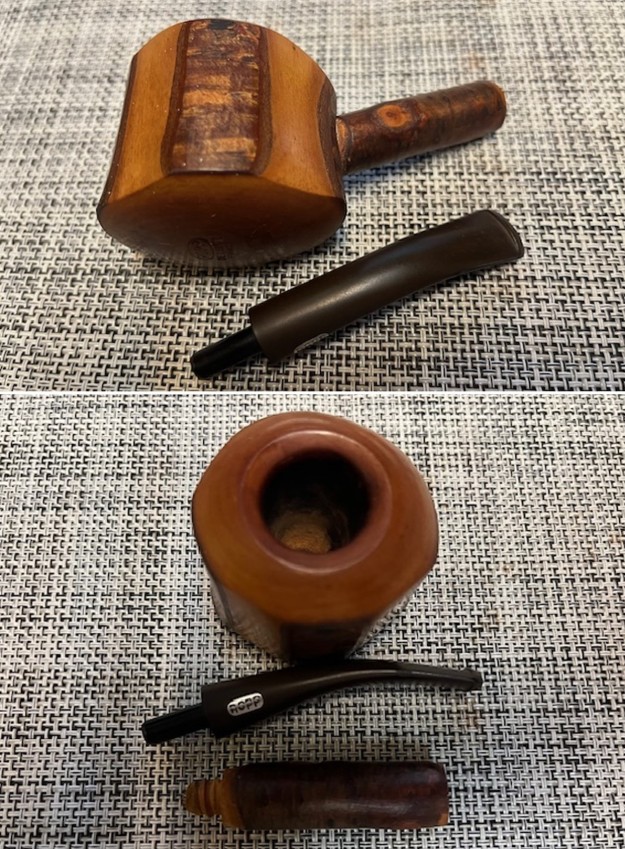
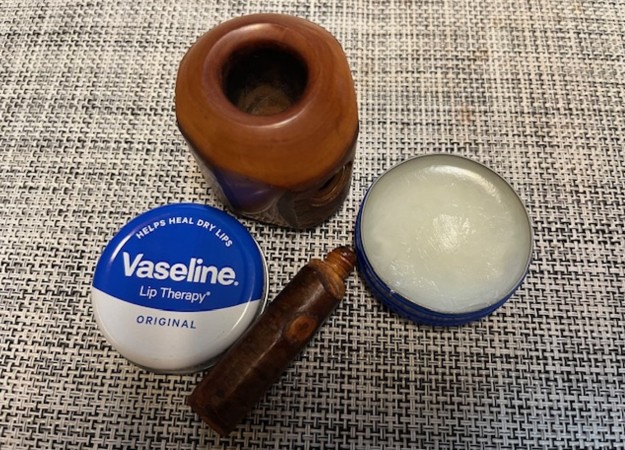
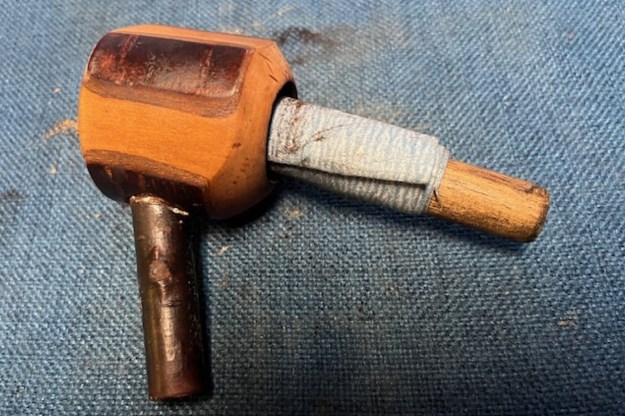
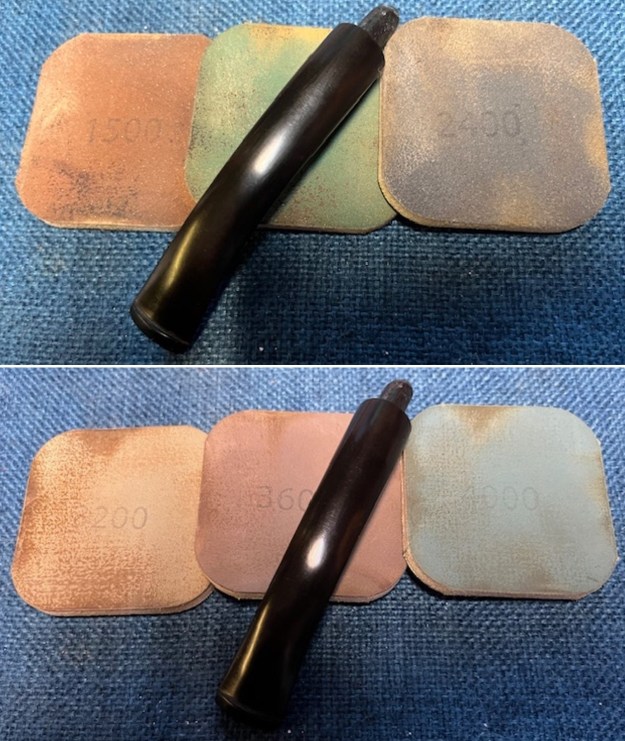
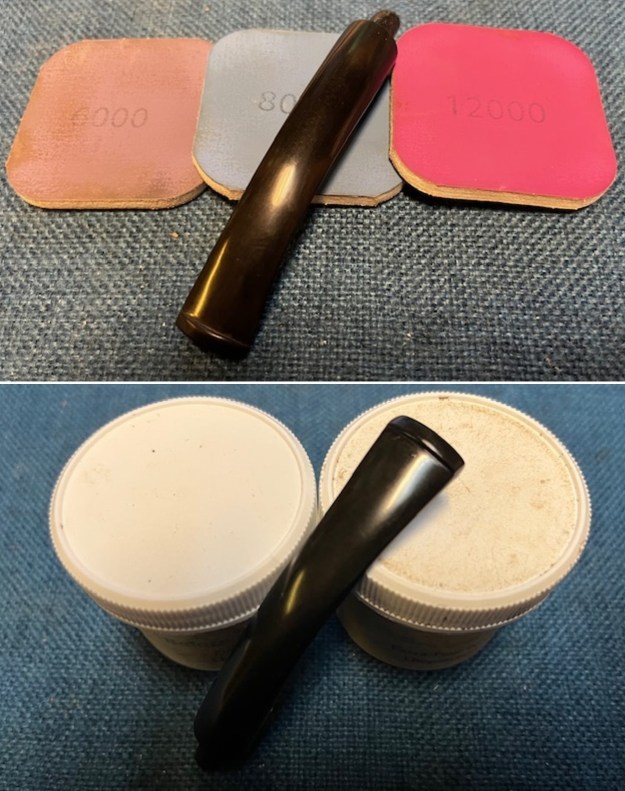
I turned to work on the pipe itself. Jeff had done an amazing cleanup of the pipe. He reamed the cake with a PipNet reamer and cleaned up that with a Savinelli Fitsall Pipe Knife. He scrubbed the internals of the bowl and stem with alcohol, cotton swabs, pipe cleaners and shank brushes. He scrubbed the externals with undiluted Murphy’s Oil Soap and rinsed the bowl off with running water. He soaked the stem in Briarville’s Pipe stem Deoxidizer and once it had soaked rinsed it off with warm water to remove the residual solution. He dried it off and rubbed it down to remove any oxidation that was still on the stem. The pipe looked better when I received it. I took a photo of the rim top to show the condition. It looks good with the tars and oils removed from the rim top. The condition of the bowl and rim top were very good. The stem came out looking quite good with some light tooth marks and chatter on both sides ahead of the button. I took a photo of the heel of the bowl to show the stamping. The stamping is very clear and reads as noted above. I also took a photo of the logo insert on the left side of the taper stem.I carefully took the pipe apart. The shank and stem unscrewed as a single unit from the bowl. I checked the fit of the stem in the shank and from my memory of other Ropp pipes I was pretty certain it was a push stem. I removed the stem from the shank and took a photo of the pipe parts to show what I was working with. Everything looked good both inside the mortise and on the tenon. It is a well shaped and was a nice looking pipe.With the bowl and shank cleaned it was time to put those parts back together. I have learned that the threaded tenons on the Cherrywood work better when lubricated with some Vaseline Petroleum Jelly. It makes it easy to turn them together without damaging or cracking the shank or bowl. I screwed it into the bowl and took photos of the pipe at this point. I wet sanded the rim top and the smooth portions on the bowl sides with micromesh sanding pads – 1500-12000 grit sanding pads. I wiped the bowl surface down with a damp cloth after each sanding pad to remove the sanding dust. Once I finished the bowl looked good. I rubbed the Cherrywood bowl and shank down with Before & After Restoration Balm. I worked it into the surface of the Cherrywood with my fingertips to clean, enliven and protect it. I let the balm sit for a little while and then buffed with a cotton cloth to raise the shine. Mark Hoover’s Balm is a product that I have come to appreciate and one I use on every pipe I have been working on. I set the bowl aside and turned my attention to the stem. I sanded out the light tooth marks and the remaining oxidation with 320-3500 grit sanding pads. I wiped the stem down with a damp cloth after each sanding pad.I polished the stem with micromesh sanding pads – wet sanding it with 1500-12000 grit pads. I polished it further with Before & After Pipe Stem Polish – both fine and extra fine. I finished by wiping it down with Obsidian Oil and buffing it to a shine.  I always look forward to this part of the restoration when all the pieces are put back together. I put the Ropp De Luxe Cherrywood 804 back together and carefully buffed the stem with Blue Diamond on the buffing wheel. I gave the bowl multiple coats of Conservators Wax and the stem multiple coats of carnauba wax. I hand buffed the pipe with a soft cloth to raise the shine. It is fun to see what the polished bowl looks like with the smooth Cherrywood set off by the strips of bark contrasting well with the black vulcanite stem almost glowing. This Ropp De Luxe 804 Cherrywood is nice looking and feels great in my hand. It is one that could be clenched and smoked while doing other things as it is very light weight and well balanced. It must have been a fine smoking pipe judging from the condition it was when I received it. Have a look at it in the photos below. The dimensions are Length: 6 inches, Height: 2 inches, Outside diameter of the bowl: 2 inches, Chamber diameter: ¾ of an inch. The weight of the pipe is 2.57 ounces/73 grams. I will be putting it in the French Pipemakers Section of the rebornpipes store soon. This will make a great addition to someone’s pipe collection. Thanks to each of you who are reading this blog. Remember we are not pipe owners; we are pipemen and women who hold our pipes in trust until they pass on into the trust of the next pipeman or woman.

A Ropp De Luxe Cherrywood and My Mojo Reborn


by Robert M. Boughton

https://www.facebook.com/roadrunnerpipes

Ever tried.  Ever failed.  No matter.  Try again.  Fail again.  Fail better.
— Samuel Beckett

Try not.  Do, or do not.  There is no try.
— Yoda

A series of unfortunate events during the past two years led me to an unaccustomed crisis of confidence.  There was the COVID-19 stay at home order from the governor here, followed by the temporary suspension of my pipe sales, as I now choose to think of it.  A brief time later, five thugs surrounded me outside of a convenience store on my way home from a friend’s, and a fight ensued.  Although I fended off four of them, the boss punk got in multiple blows with a steel-balled sap to my head and the rest of my body before I could retreat to my car and point the gun that I should have kept on me through the window at the young man with the sap.  He and his followers fled, and I drove to the university hospital ER.

Eleven hours later, the doctor told me I had suffered a coup-contrecoup concussion, and there was blood on my brain.  I had passed the night in the waiting room except for the MRI and CT scans, the latter with and without contrast, and never even saw him before then.  After that, unable to do the things that made me happiest – and I had always taken for granted – I gave up pipe restoring, my website, blogging and more or less everything else.  The worst part was that I could not even smoke my pipes because of the exponential sharpening the nicotine added to the already crushing, blinding, paralyzing headaches the good ER doctor told me I could expect, but that there was nothing he could give me to alleviate my misery other than Gabapentin and the max dose of Ibuprofen.

I had fallen off the grid and into a hell of my own inner space.  As Austin Powers said, “Crikey!  I’ve lost my mojo!!”  Little white tablets zap the chronic migraines I have suffered since early childhood.  The only cure for the more recent variety of explosive agony was time for my traumatized brainpan to begin healing, as it continues to do.  I am fortunate that my skull turned out to be as thick as my dad always said it was.

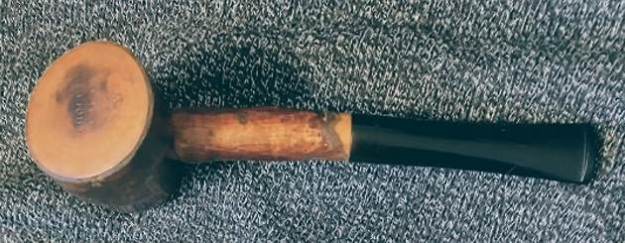
Pipes had piled up, waiting to be reborn.  I saw them now and then when I pawed through the mess on a worktable for something else.  As the excruciation ebbed and made clearer thinking possible, more and more I pondered what could be done with them.  The best plan seemed to be giving them to someone like Steve who could make them whole again.  Just the thought made me feel awful.  (No offense, Steve!) Taking another look, the synapses fired in my brain and provided a memory of both of the quotes I cited at the beginning, which I heard in the pilot to Criminal Minds.  There were six pipes in the eBay lot below, the other two being the Ropp in this blog and an Imported Sterling Briar that’s finished also and coming up next.  Below, top to bottom: no-name, Made in London, England; no-name; King, and a stemless GBD New Standard #1451.  I’m quite sure the GBD was the only reason I bought the lot.

There are more from my roommate, who is trying to cut back on his tobacco bonging (from 12000 grams per month!)  and gave me some of his pipes to do with as I wish, and a few of my own that need work.

What follows is the old college try.

RESTORATION
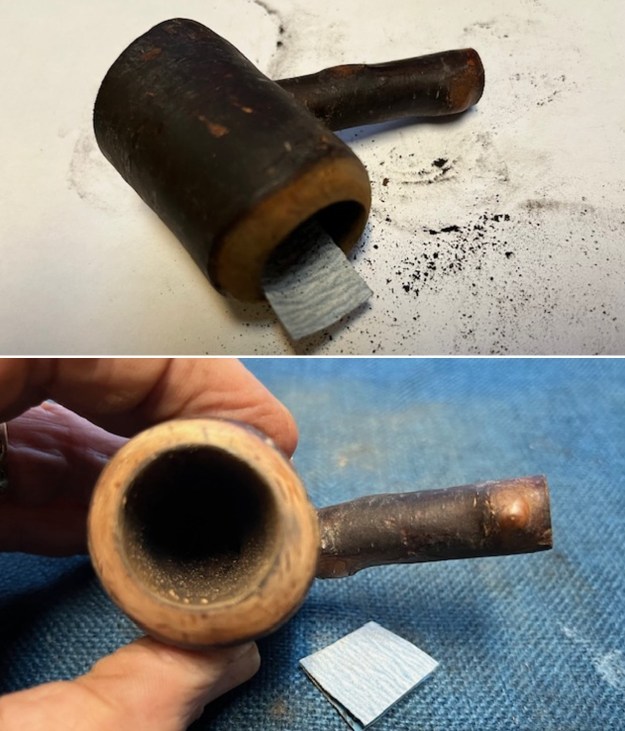
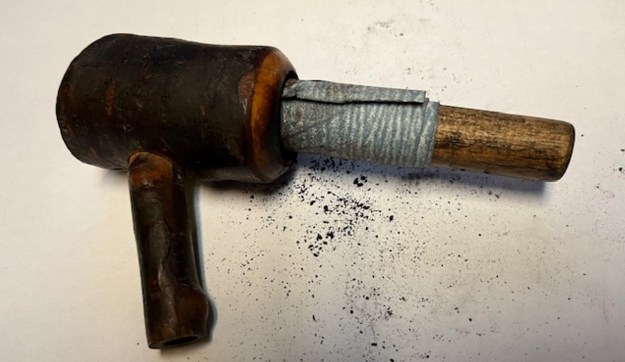
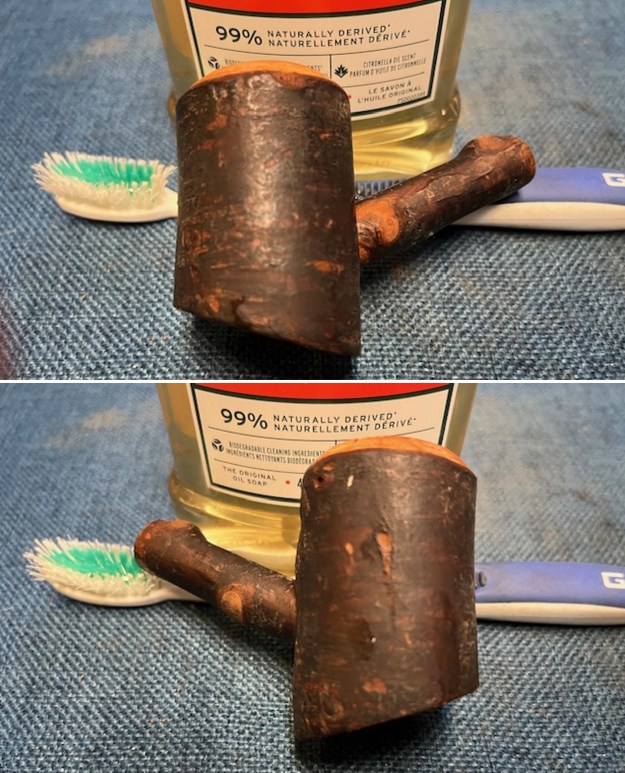
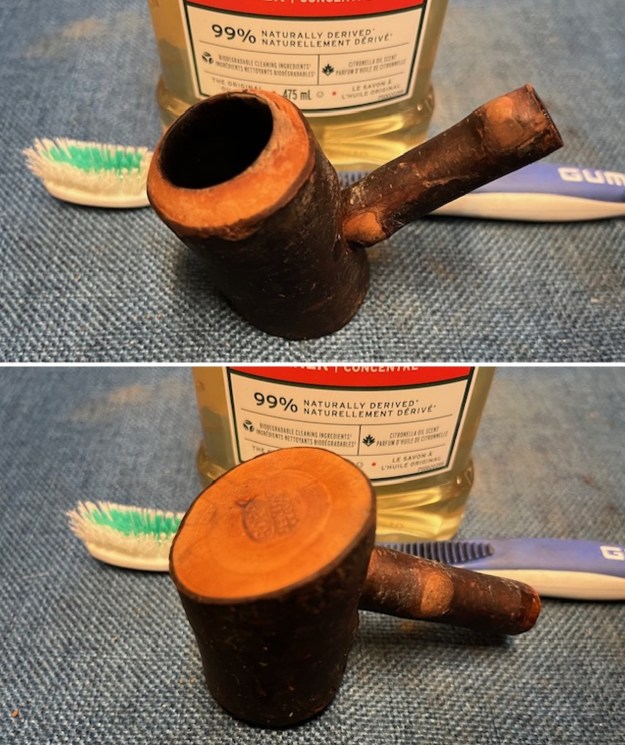
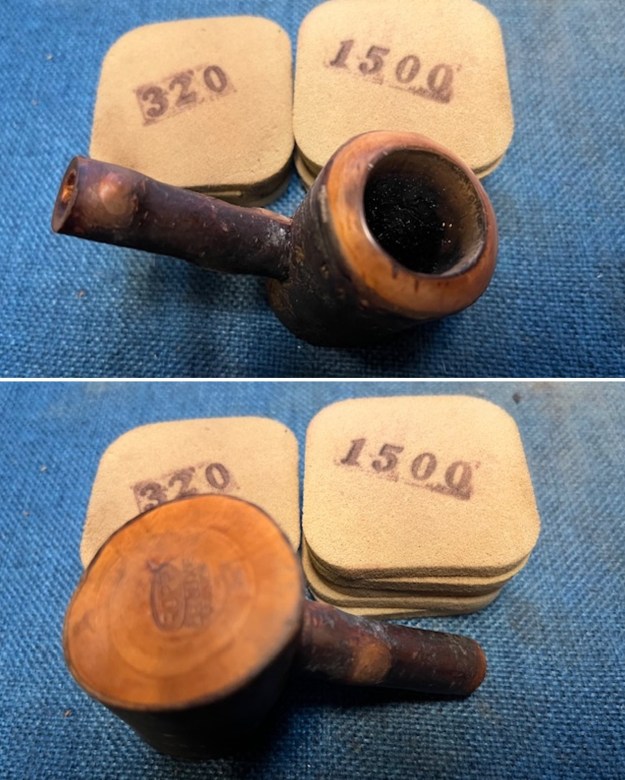
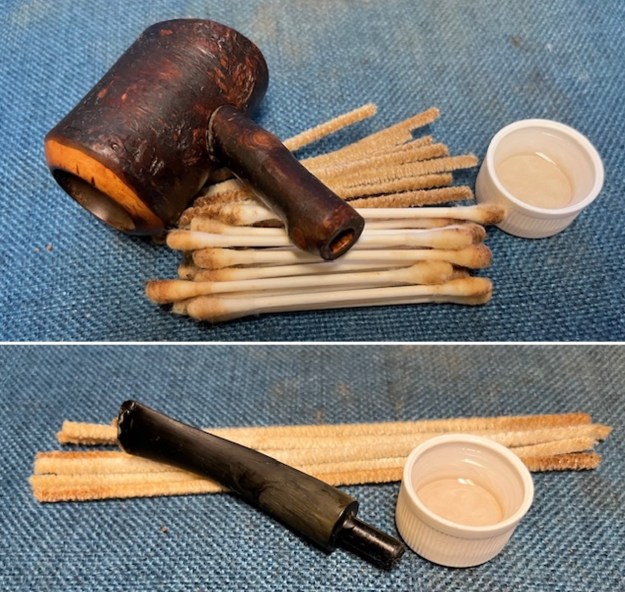
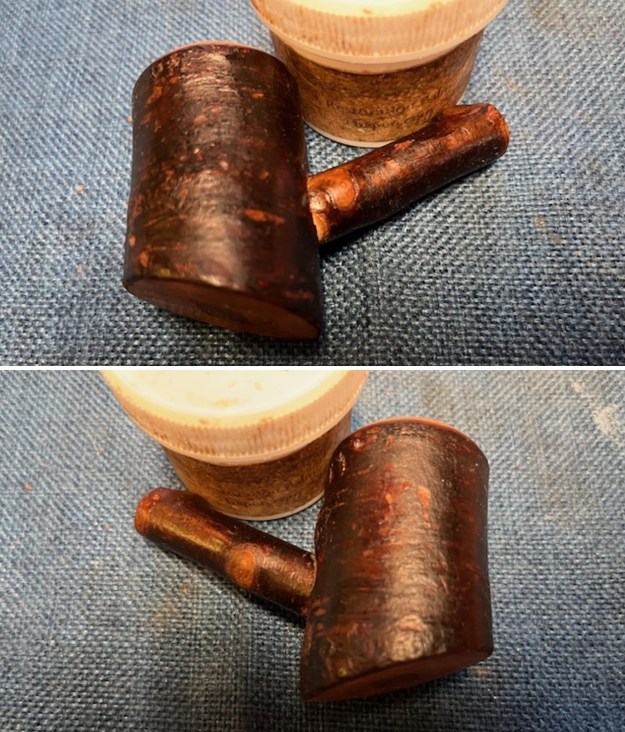
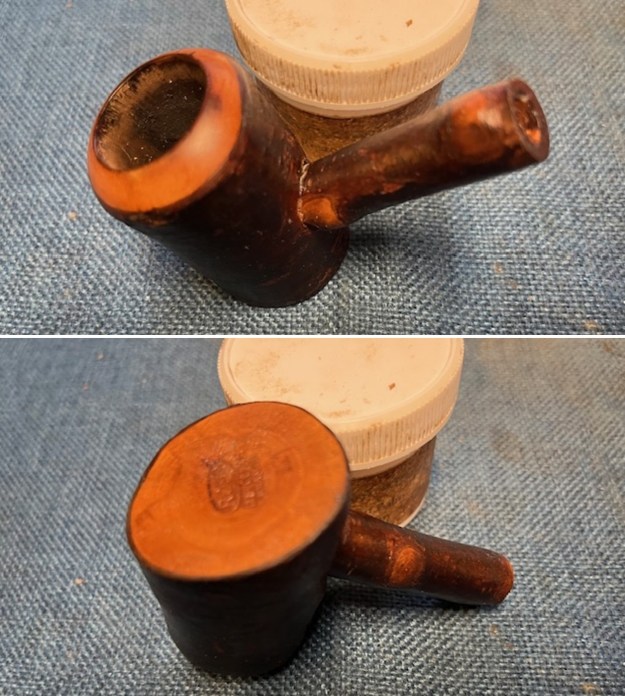
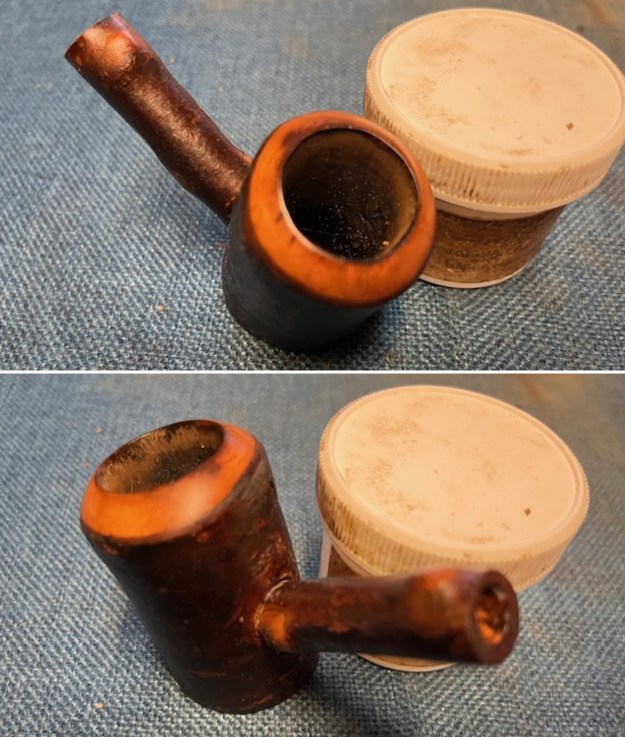
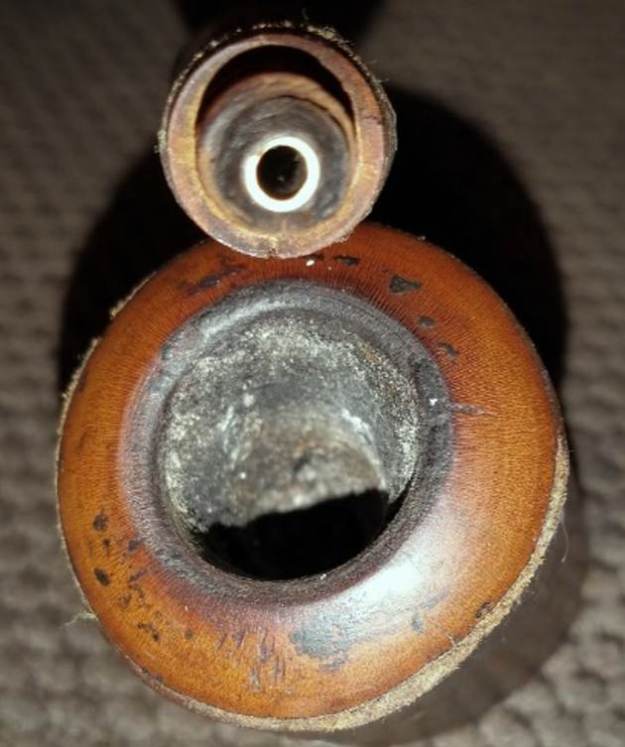
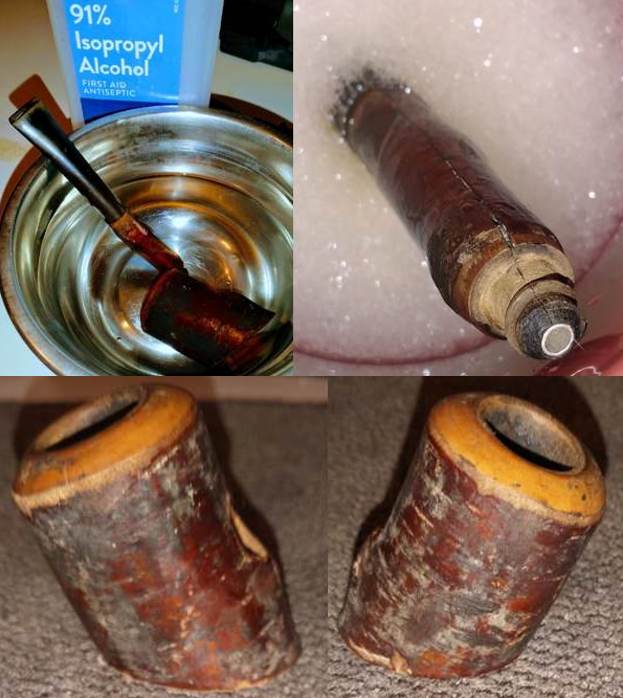
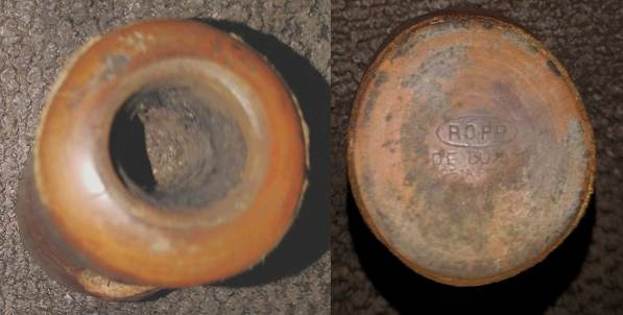
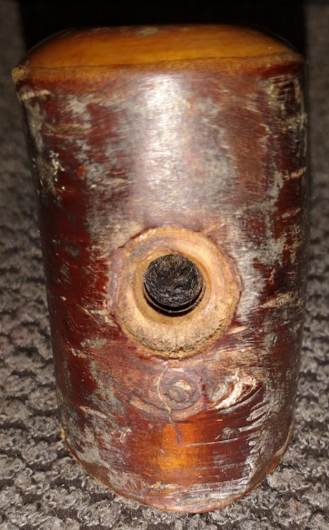
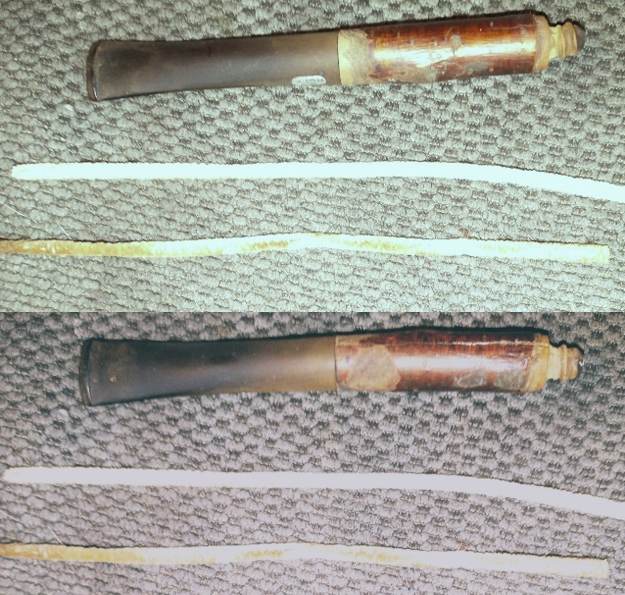
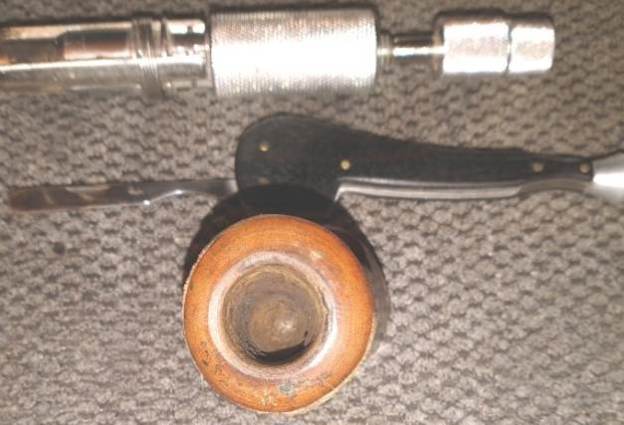
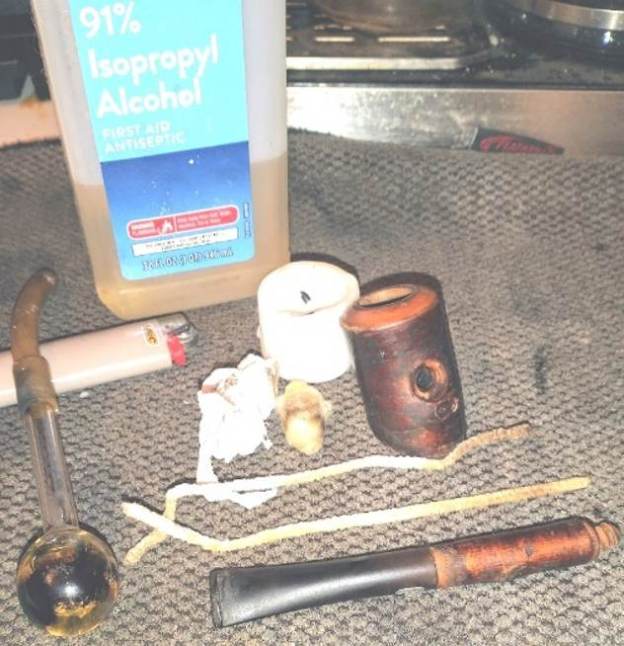
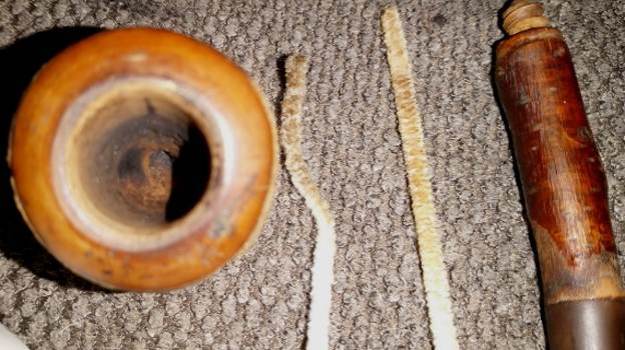
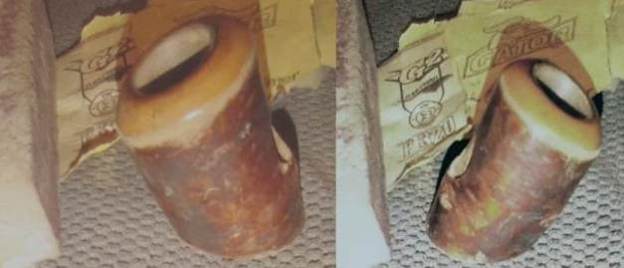
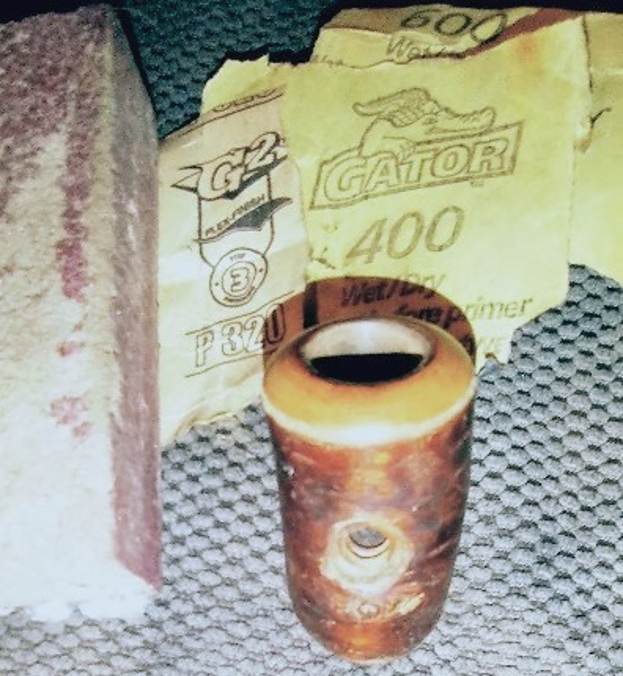
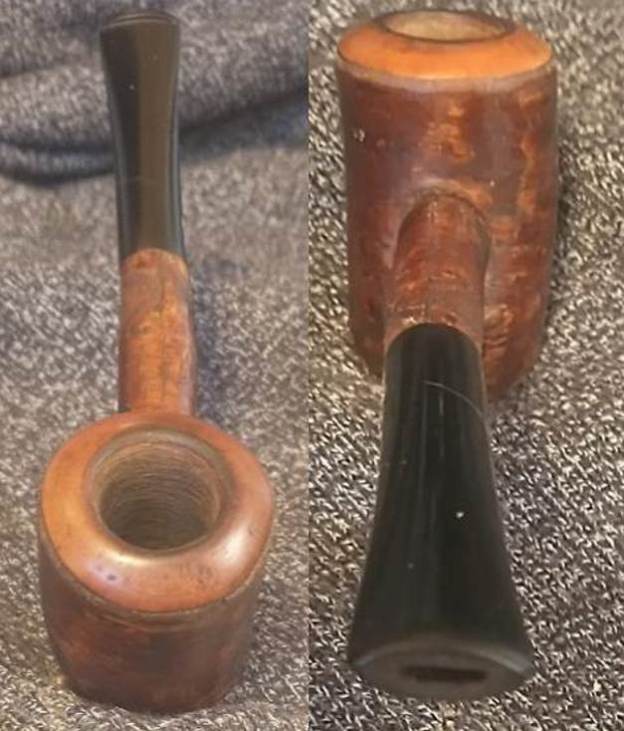
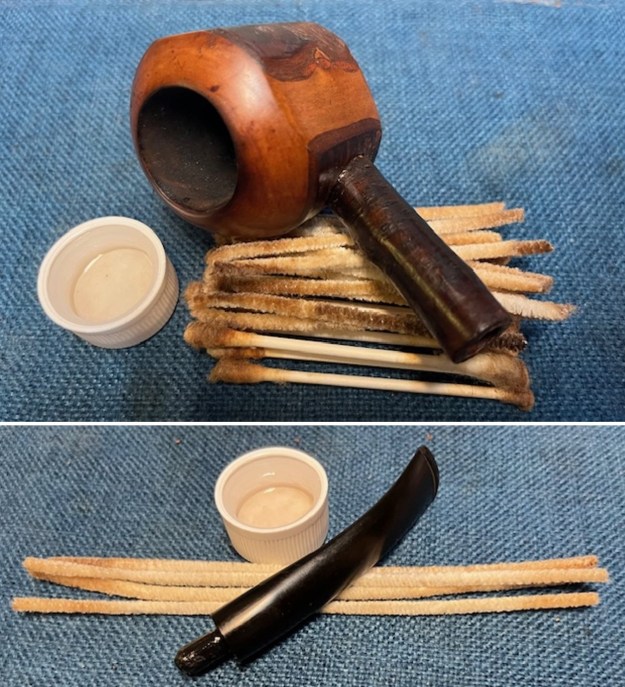
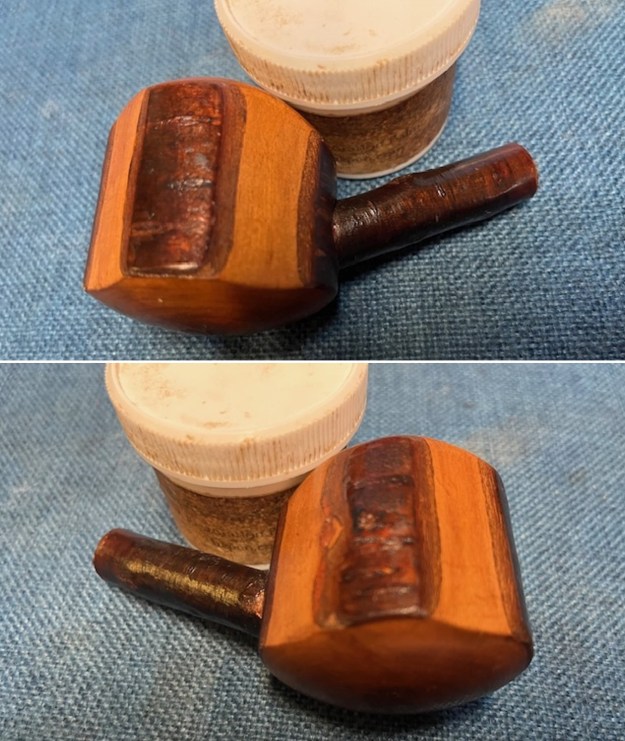
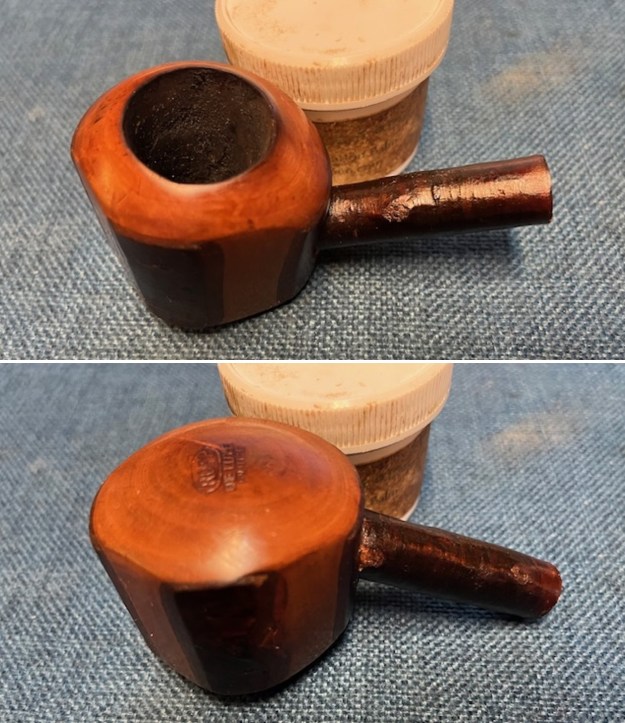
The cherrywood wasn’t in bad shape except for the nomenclature on the bottom, which was fuzzy from wear and tear and a rough area just below the rim that I attribute to shoddy work by Ropp. I gave the stummel an alcohol soak and the stem, which is a permanent part of the shank, an OxiClean bath. The chamber was tiny enough without the accumulated cake, so I cleaned it up with my Senior Reamer and Peterson scraper and gave the pipe a retort. By definition, a cherrywood natural is supposed to be rough, but this was a little much. I used 320, 400 and 600 paper. It needed more work, such as smoothing and staining the area under the rim with Feibing’s brown leather dye, and micro meshing the whole thing.  I seem to have lost track of that part as far as pictures go.

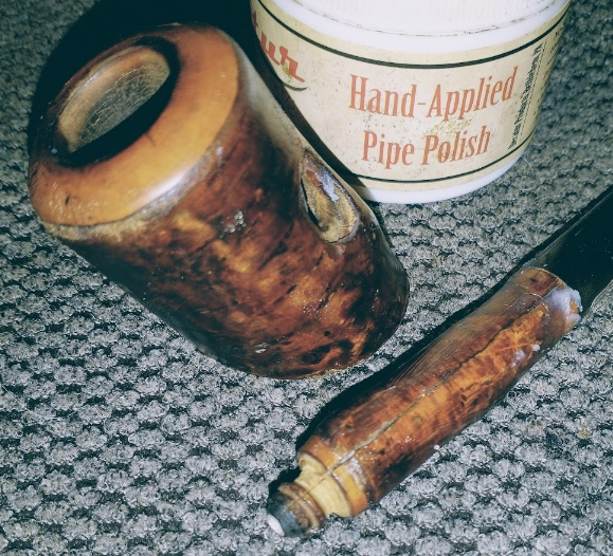
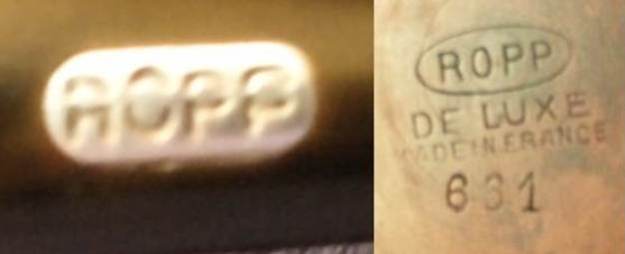
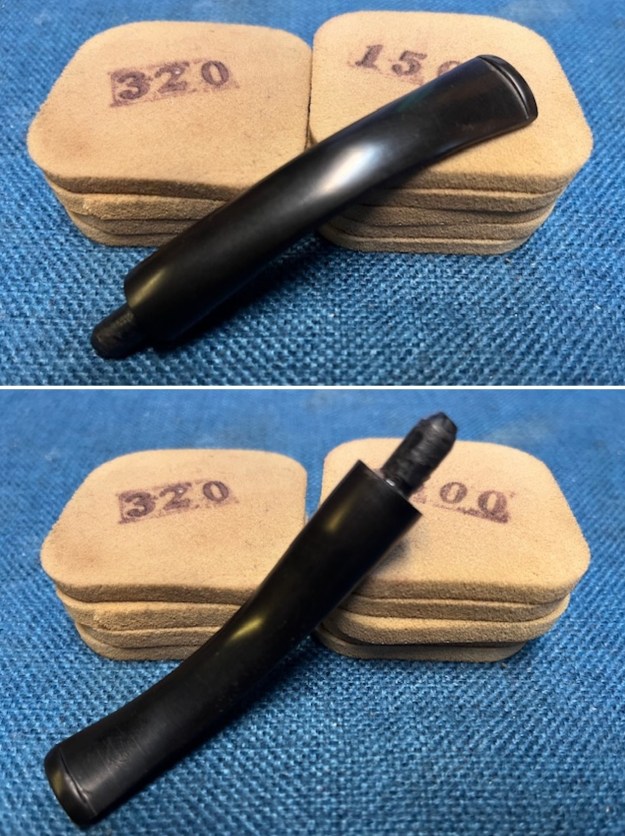
The stem was easy, needing only 400 and 600 paper and dry and wet micro mesh.Decatur Pipe Polish is great for sandblasted, carved and natural finishes, so that’s what I did.All that was left was a spin on the wheels with red Tripoli and carnauba for the stem. The best thing about this project was that I did it – and got my mojo back!  After that, I really enjoyed bringing back the clarity of the nomenclature. It went from illegible to clear enough that I had to correct the folder name in my PC to reflect the actual shape number.