
by Steve Laug
In November I received an email from Mario about working on some of his Dad’s pipes. Here is what he wrote to me.
I am desperately seeking help restoring and repairing some of my dad’s smoking pipes. I have tried reaching out to the only two known pipe repair establishments I could find in the entire country but one is not currently taking repair orders and the other said she didn’t want to try to repair these pipes without having even seen them. Would you be willing to take on the repairs or can you recommend anyone? Thank you much!!!—Mario
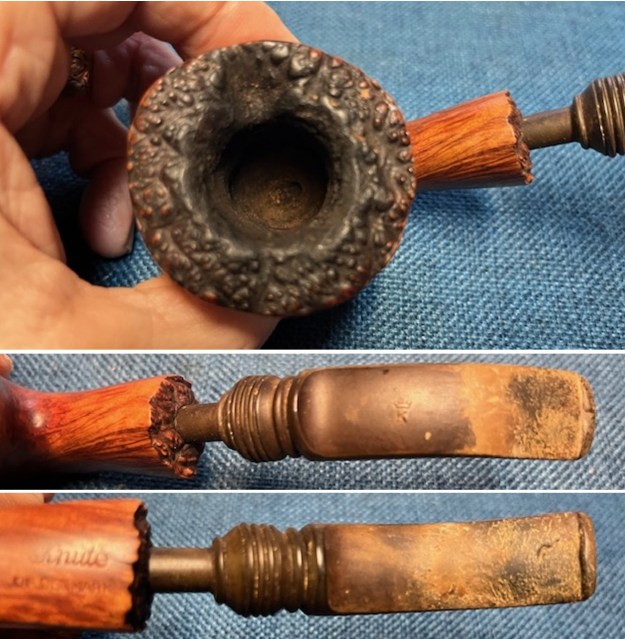
I wrote him back and asked him to send me photos of the pipes. He sent some single photos of the meerschaum bowl and stem, several of the leather clad Canadian and the photo of the rack and six pipes shown below. I looked through the photos and this is what I saw. There were two leather clad pipes a Canadian and a Pot. Both of them were cracked on the shanks and had been self-repaired with wire to hold the cracked shank together. The leather cladding was torn and the stitching was rotten and broken around the bowl. To me they were both unrepairable. There was a lovely older Meerschaum figural with a horn stem that needed a good cleaning and repairs to the horn stem. There were two Knute Freehand pipes with original stems that were dirty but fixable. The plateau on the smooth one had a large chunk of briar missing. There was a Wilshire Dublin with a chewed and misfit stem. Finally, there was a billiard that had been restemmed with a fancy GBD saddle stem on it. They were a messy lot but I told him to send them on to me. They arrived yesterday and the condition of the pipes in the photos was confirmed. They were a mess and needed much work. I have included Mario’s group photo below to show the lot. 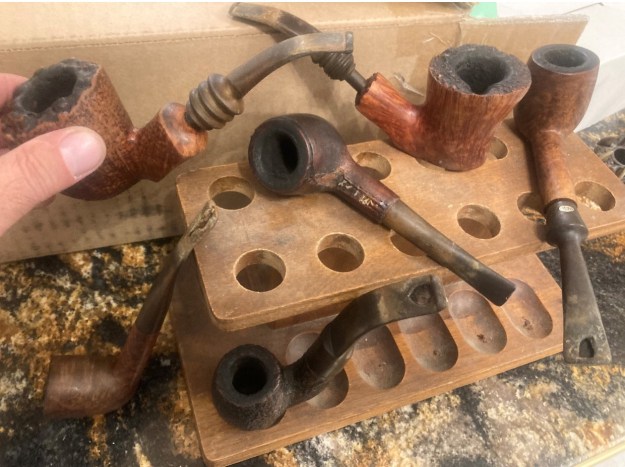 This afternoon I decided to start working on the final of the six pipes from Mario – a Knute of Denmark smooth freehand. It had a plateau rim top and shank end. The bowl had a thick cake on the walls and a heavy lava coat in the plateau rim top. There was a missing chunk of briar or perhaps a fill that had come loose in the plateau finish on the right side running from the inner edge almost to the outer edge. The finish was dirty and had grime ground into the sides of the bowl. The stamping on the underside read Knute [over] of Denmark. There was a hairline crack on the underside of the shank extending from the shank end over the K in the Knute stamp. It had a fancy turned, vulcanite saddle stem that had lots of tooth marks and chatter on both sides near the button. There was a split on the top side of the stem and on the button. I took photos of the pipe when I unpacked it to examine it. I have included those below.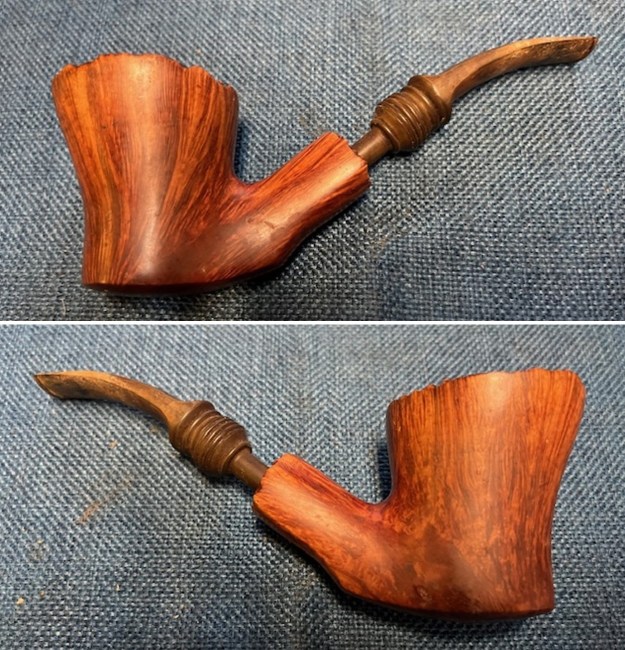
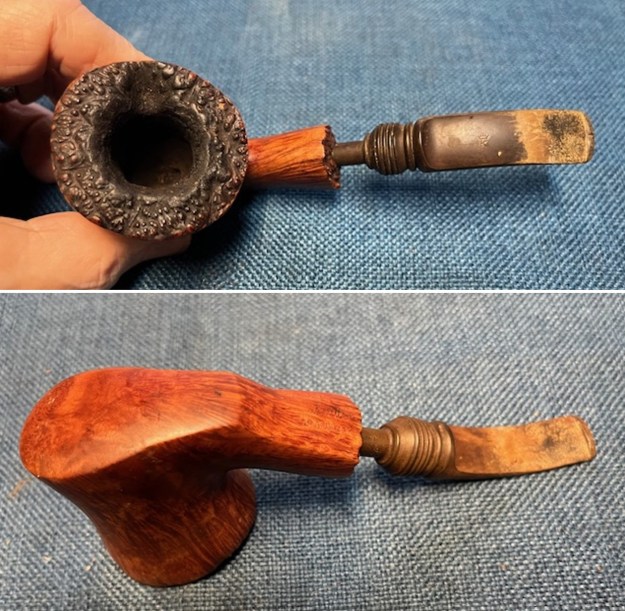 I took a photo of the bowl and rim top to show the condition of both. You can see the debris in the bowl and lava in the plateau surface of the rim top. The missing chunk on the right topside of the bowl is also very visible with debris and lava in the hole. I also took photos of the heavily oxidized and calcified stem showing the heavy tooth marks and chatter on both sides ahead of the button. There was also a hairline crack in the topside of the stem from the button edge forward.
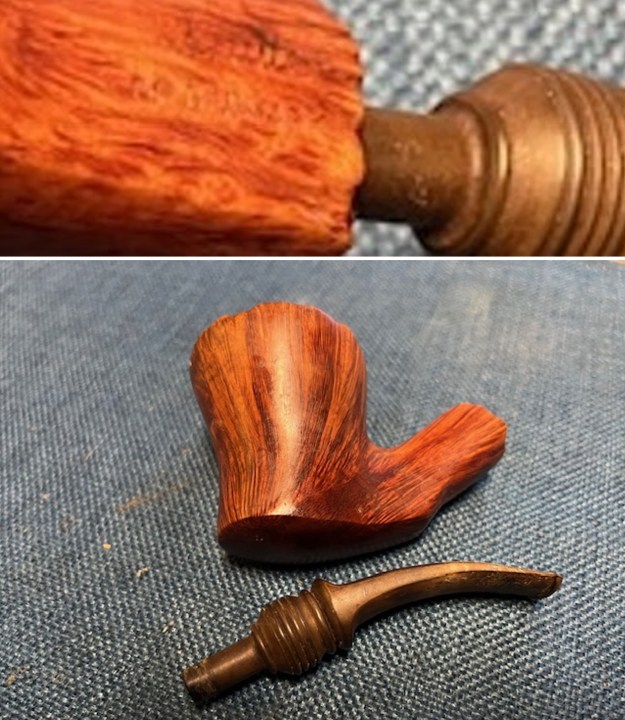
 I took a photo of the stamping on the underside of the shank. It is clear and readable as noted above. I took a photo of the bowl with the stem removed to give a sense of the proportion and appearance of the pipe without the stem.
 Before I started my work on the pipe I wanted to remind myself of the provenance of the pipe. I remembered that it was linked to Karl Erik as I have worked on quite a few Knute Freehands. I wanted to know where this pipe fit into the Karl Erik lines so I turned to the first of two sites that I always check to gather information on a brand. I turned to the first source of information site – Pipephil’s (http://www.pipephil.eu/logos/en/logo-k3.html) got a quick overview on the brand once again connecting it to Karl Erik.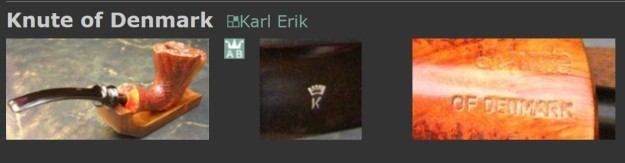
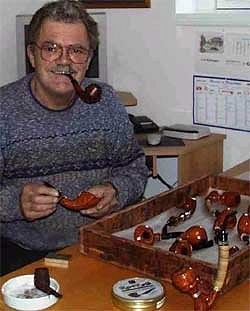 I turned to Pipedia (https://pipedia.org/wiki/Karl_Erik). Pipedia had this great picture of Karl Erik Ottendahl and I decided to include it here as a reminder of the artisan who first carved and released this pipe. Reminded of the tie to Karl Erik, I knew a bit about the pipe at hand. I turned to address the pipe itself. There it is clearly identified and linked to Karl Erik Ottendahl. It is designated as a second and frequently having rustication. The interesting thing is that his pipe does not look like a second at all and I wonder if the Knute is a line of Karl Erik’s rather than a second. Who knows? This one is a beautifully grained smooth Freehand pipe. Now it was time to work on the pipe and bring it back to life. The large pit in the plateau rim top and the crack in the shank needed to be repaired and the bowl brought back to life.
I started my work on the pipe by starting the process of cleaning the pipe. I carefully reamed the bowl with a PipNet Pipe Reamer remove from the bowl leaving bare briar. I cleaned up the remnants of cake with a Savinelli Fitsall Pipe Knife and removed the remaining debris. I sanded the bowl walls smooth with a piece of 220 grit sandpaper wrapped around a piece of dowel. I scraped the lava coat off the rim top – both the rusticated portion and the smooth ring of the meerschaum bowl top with the Savinelli Pipe Knife and removed all of it.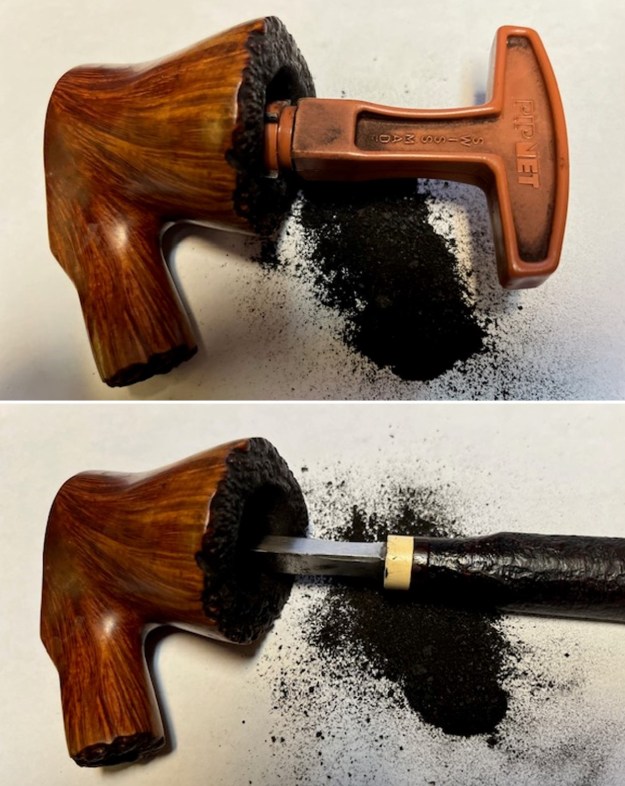
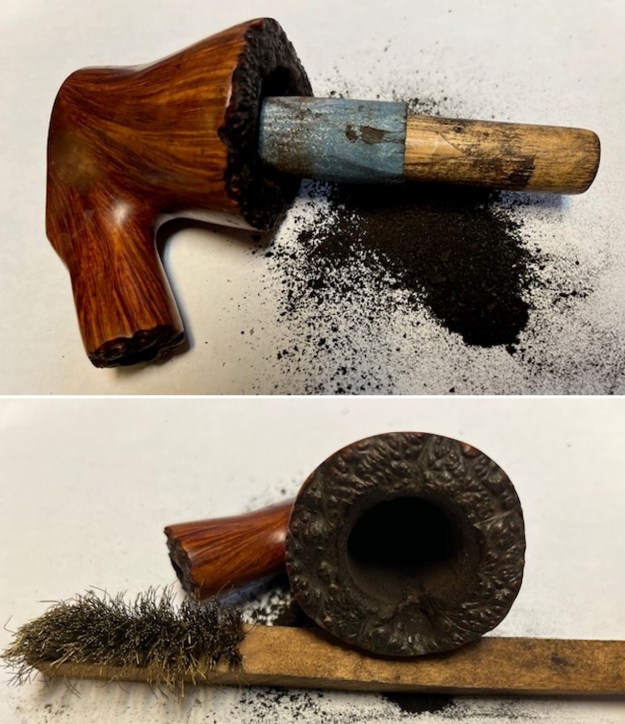 I scrubbed the exterior of the bowl with a tooth brush and undiluted Murphy’s Oil Soap. I scrubbed the rim top with a brass bristle wire brush to clean off the lava and debris in the plateau. I rinsed it off with warm running water and dried it with a soft towel. It looked much better and the rim top looked clean. The grain stood out clearly.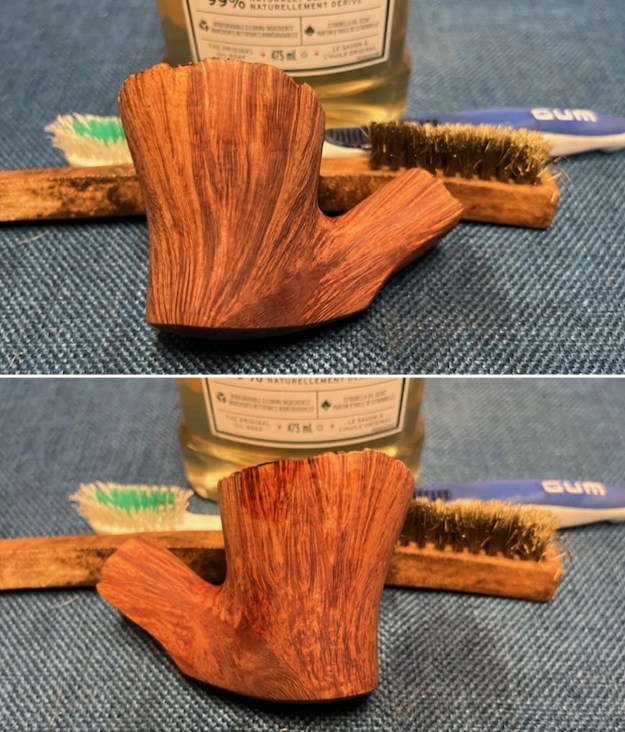
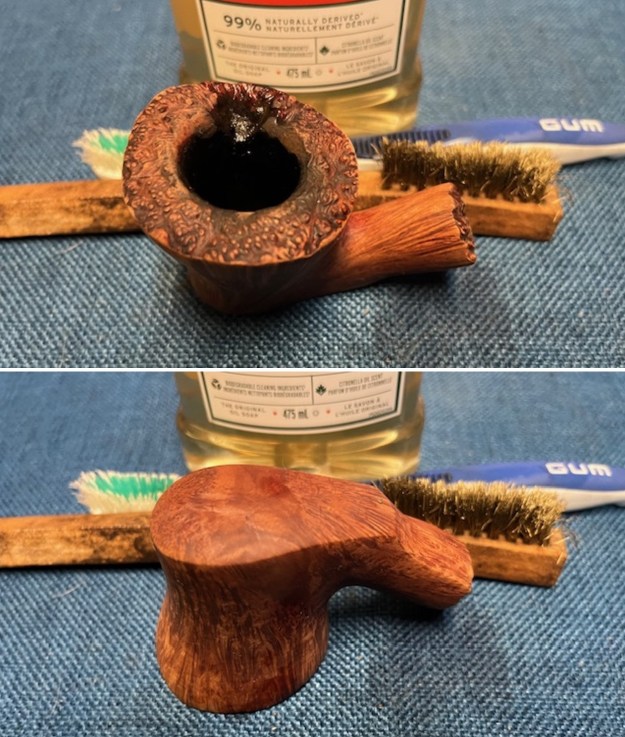 I cleaned out the deep pit in the rim top. It appeared that the hole was original a fill that had fallen out. I used qtips and alcohol to clean out the grime in the hole in the plateau.
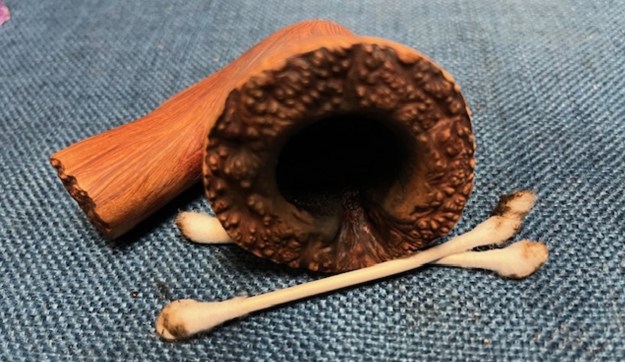 I rebuilt the missing fill with clear CA glue and briar dust. Once it was in place I used a brass bristle wire brush to give it patterns like the rest of the rim top.
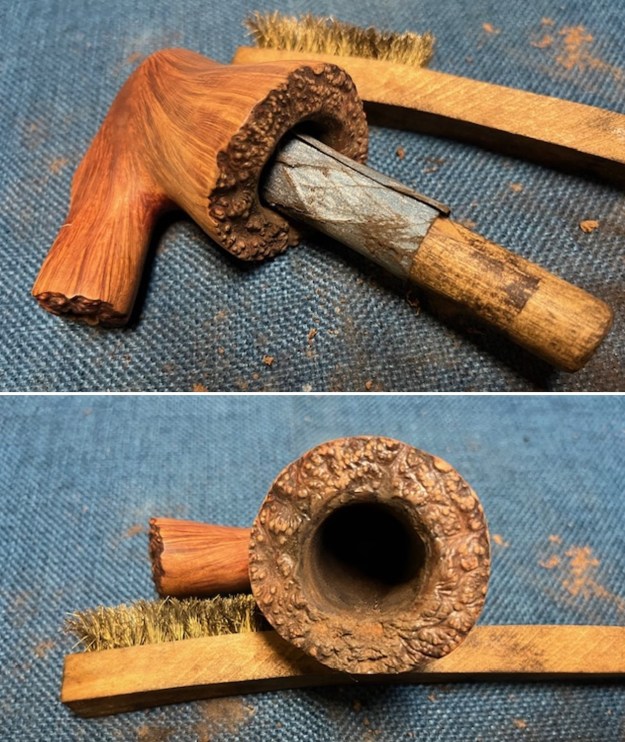
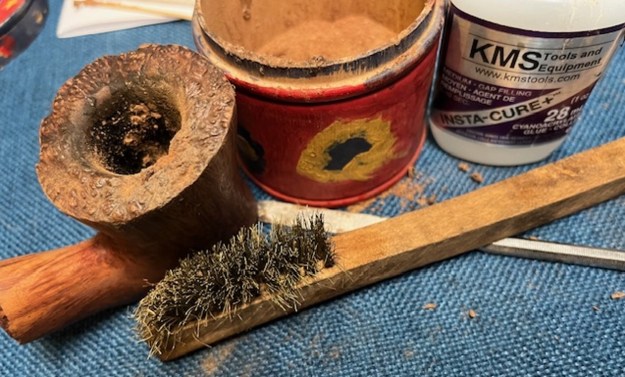 I sanded out the inner edge of the bowl with a dowel and 220 grit sandpaper to smooth out the repair on the edge and round out the edge. I went over it again with the brass bristle brush and blew off the dust. It was looking quite good.
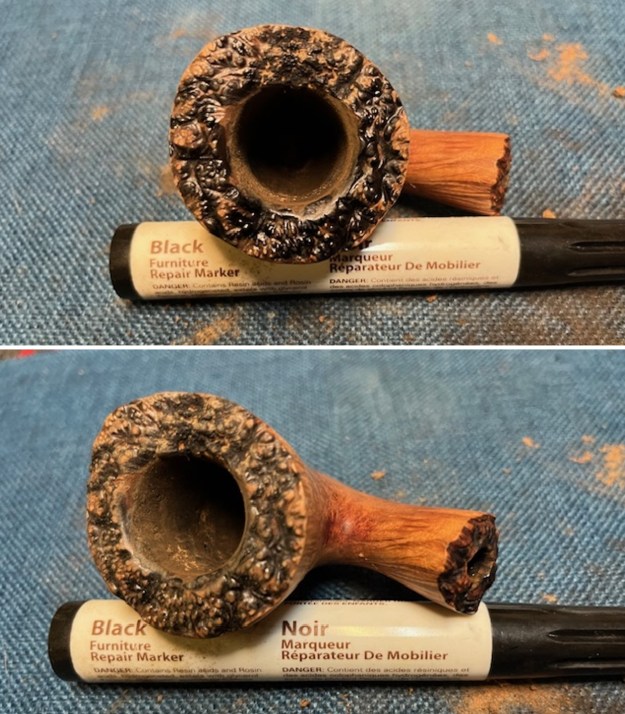
 I used a black stain pen to fill in the valleys in the plateau on the rim top and on the shank end. The black will give depth to the finish once it is sanded and polished.
 I repaired the hairline crack in the shank underside with clear CA glue and held it closed until the repair cured. Once it hardened it was ready to be sanded. I carefully sanded it around the stamping so as not to damage it.
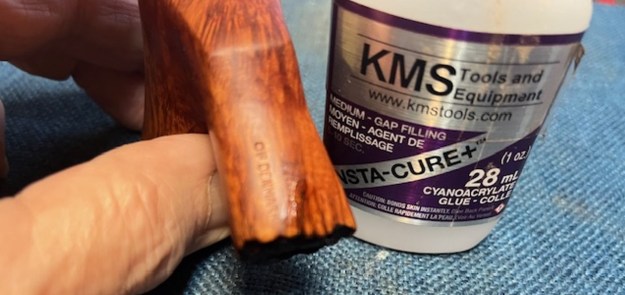 I sanded the smooth briar and the high spots on the plateau with 320-3500 grit sanding pads. I wiped the briar down between each sanding pad. The briar took on a rich shine and the grain stood out in all its glory.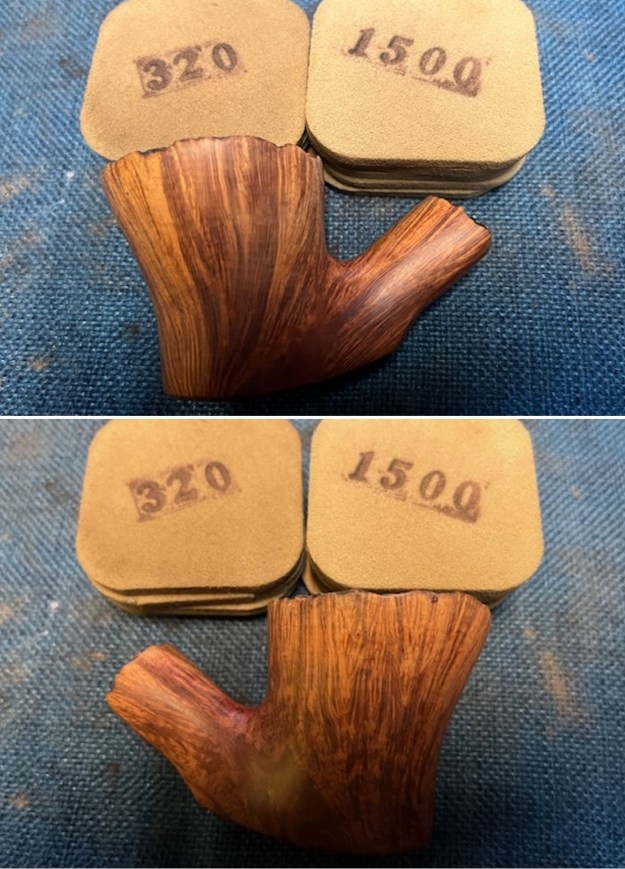
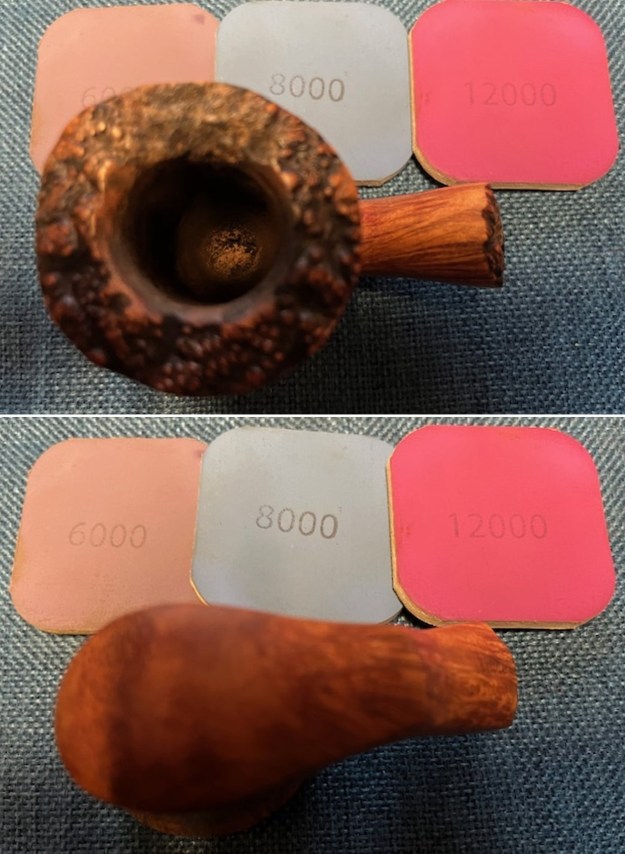
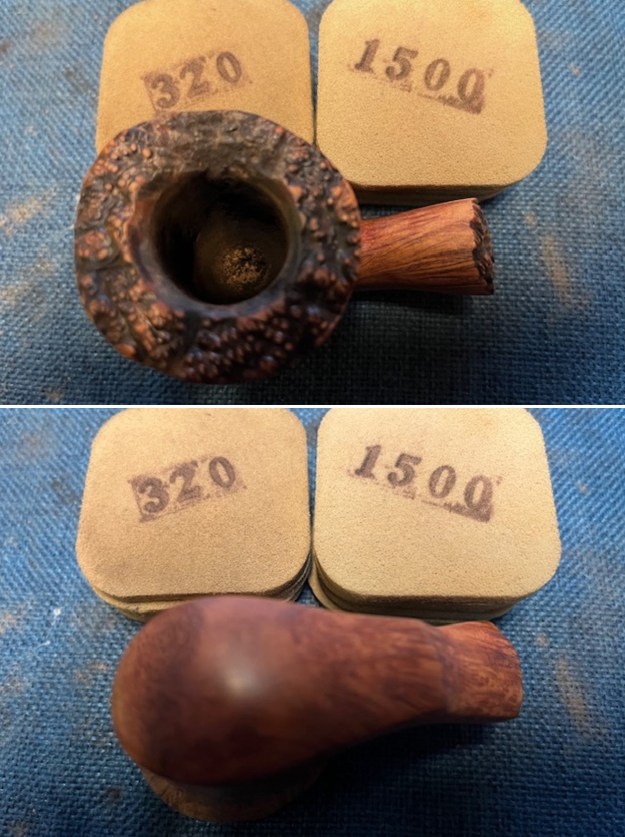 I polished the briar with micromesh sanding pads – dry sanding with 1500-12000 grit pads and wiped it down the bowl after each sanding pad. Some of the photos of the sanding are a bit out of focus but overall the bowl took on a shine.
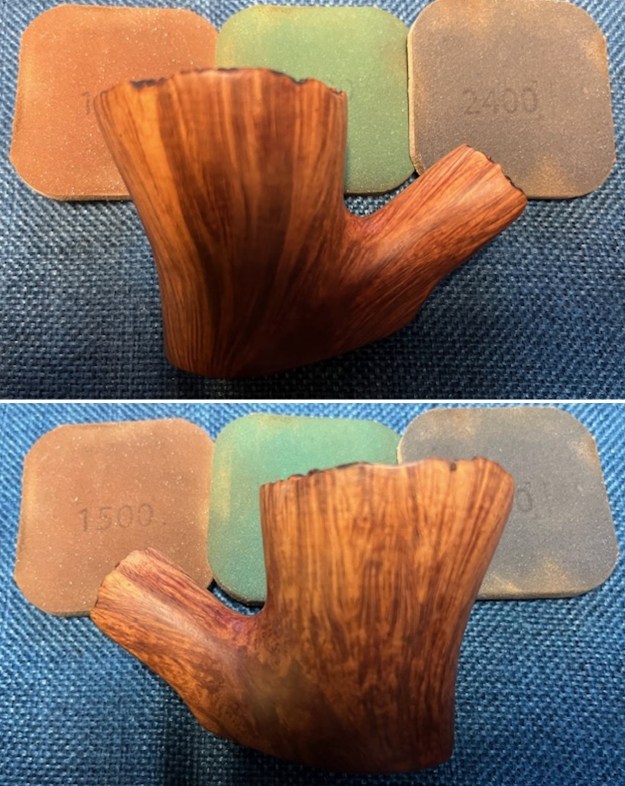
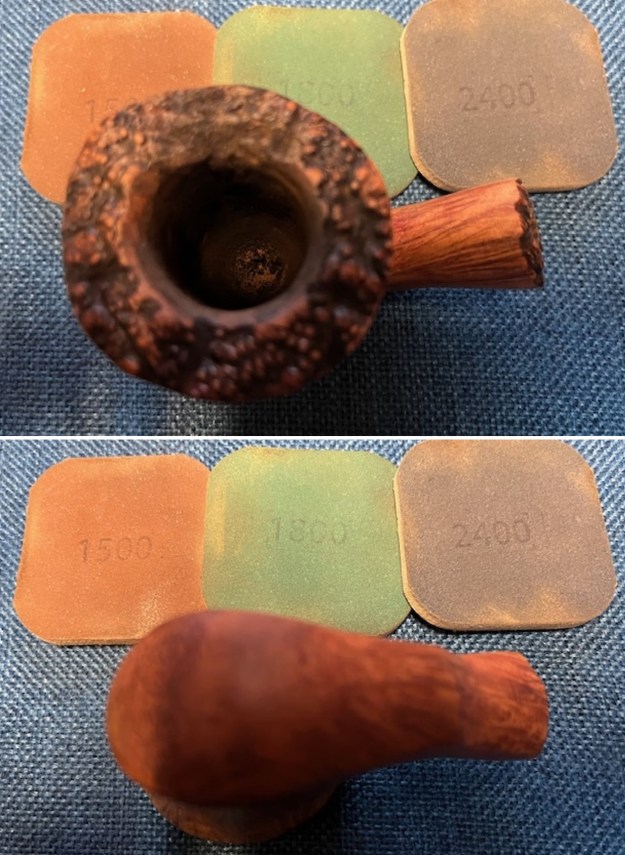
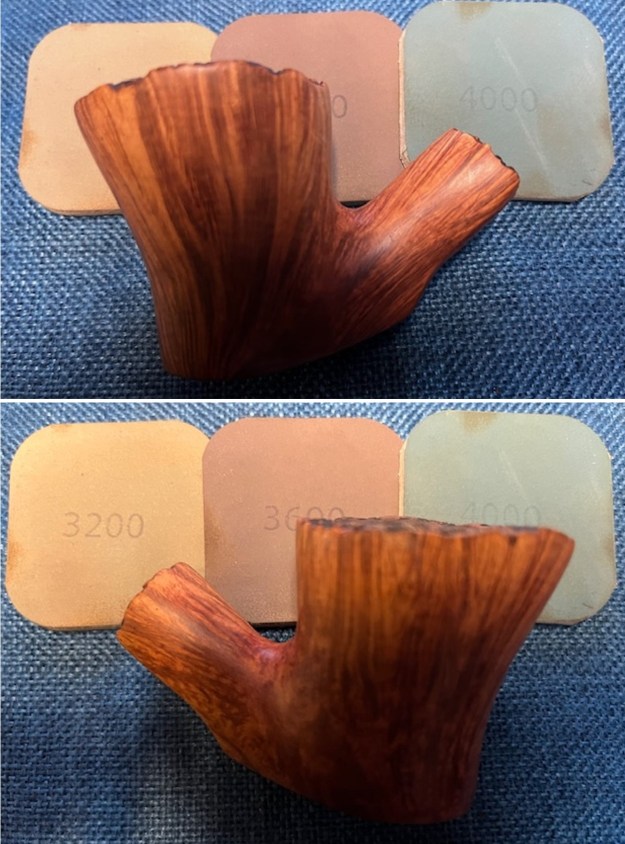
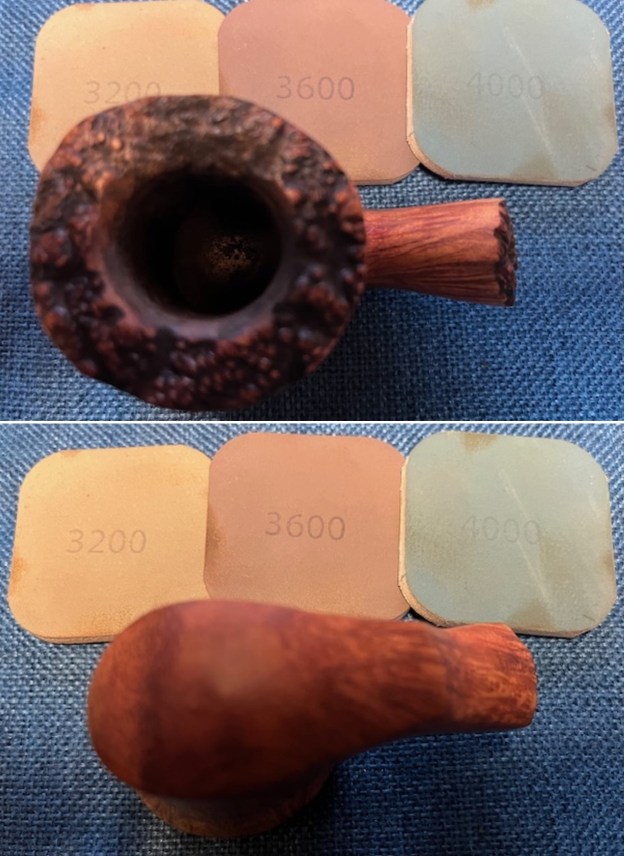
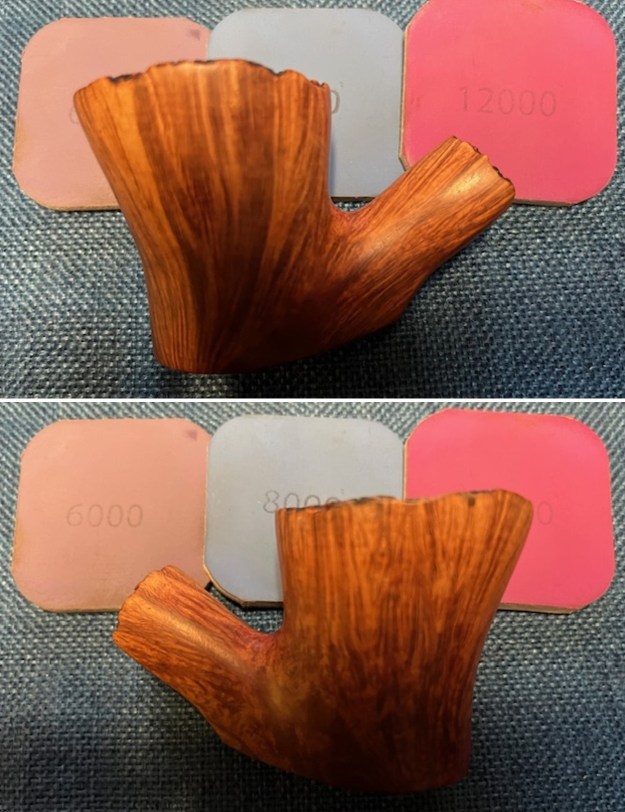
 I rubbed the bowl and shank down with Before & After Restoration Balm. I worked it into the surface of the bowl sides and shank with my fingertips to clean, enliven and protect the briar. I worked it into the nooks and crannies in the plateau on the rim top and the shank end with a horsehair shoe brush. I let the balm sit for a little while and then buffed with a cotton cloth to raise the shine. The Balm did its magic and the grain stood out.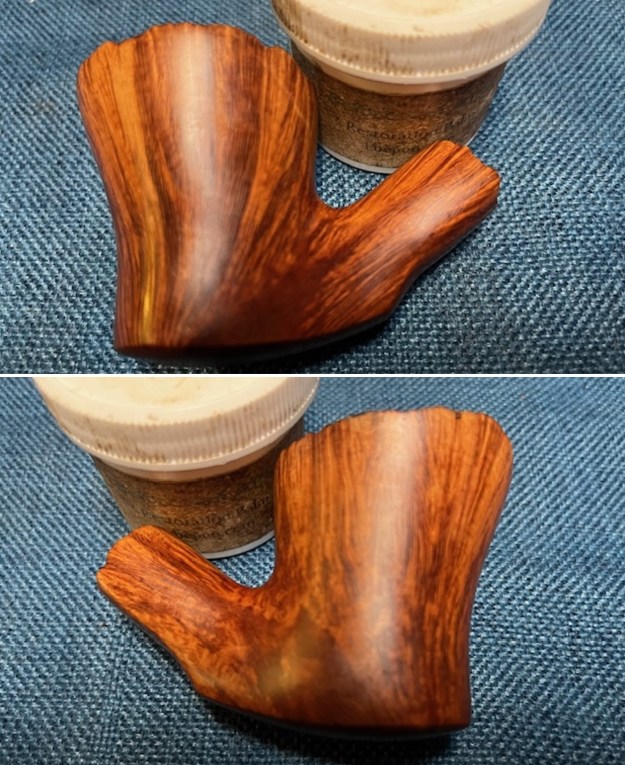
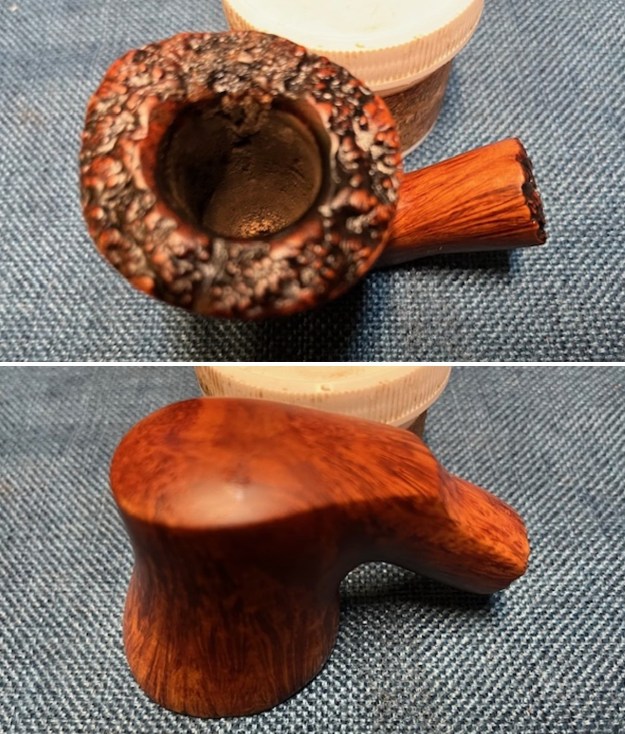
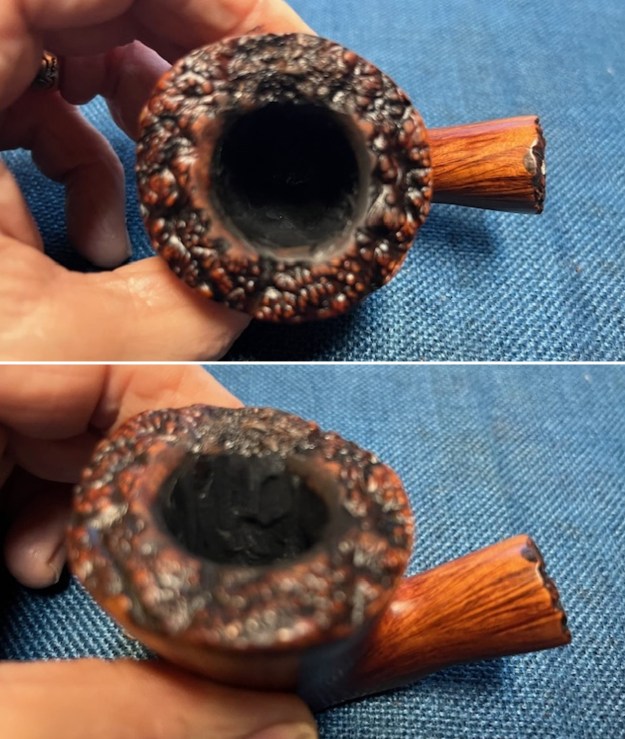
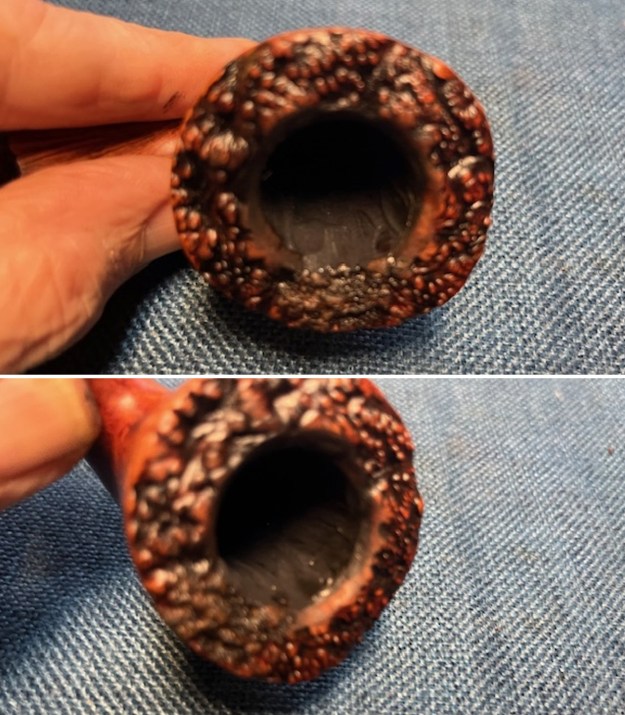
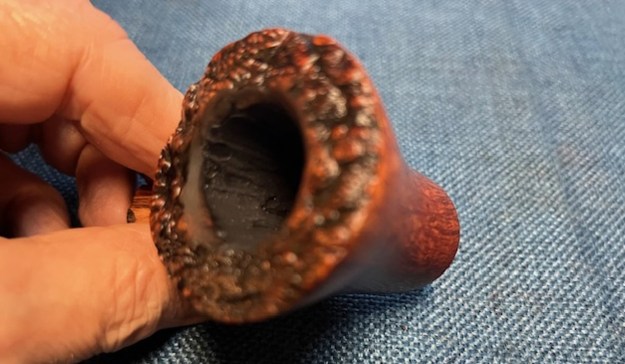
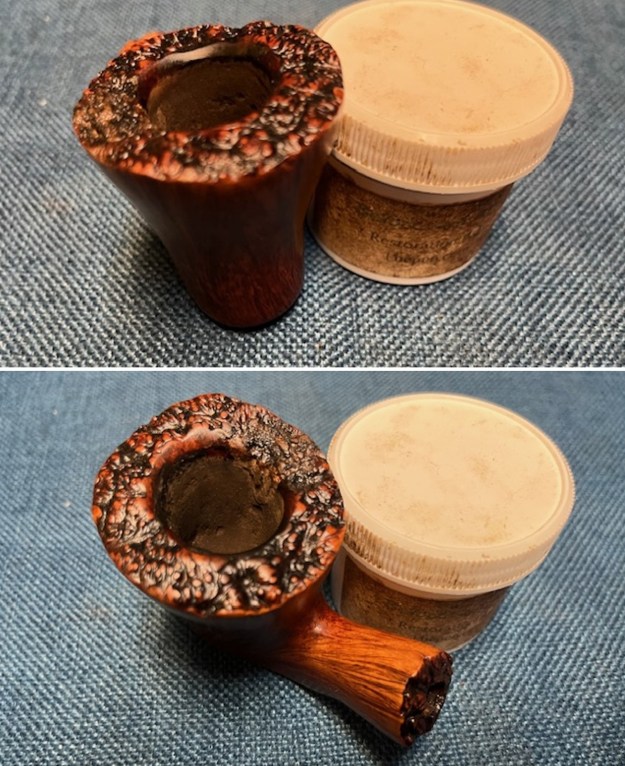 I mixed a bowl coating with activated charcoal powder and sour cream. I put a pipe cleaner in the shank and applied the mixture to the walls of the bowl with a folded pipe cleaner. I wanted to protect the bowl repair while Mario enjoyed smoking it again. I set it aside to cure overnight.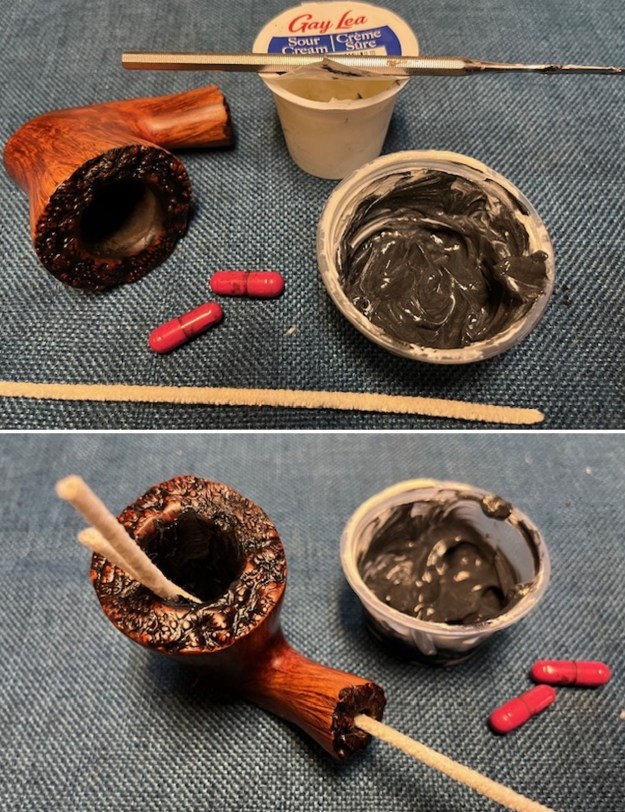
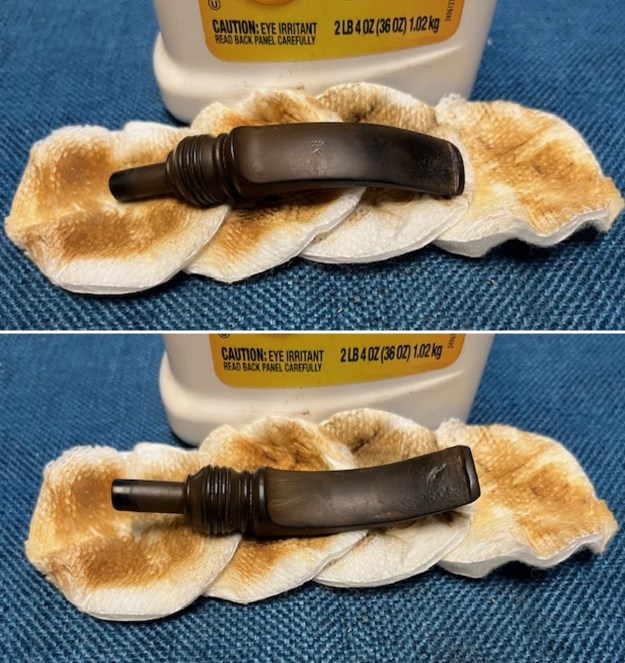
 I set the bowl aside and turned my attention to the stem. I scrubbed it down with Soft Scrub to deal with the oxidation and calcification on the stem surface. It looked much better once scrubbed and on the centre of the stem it had a Crown K logo that was often on Knute of Denmark pipes.
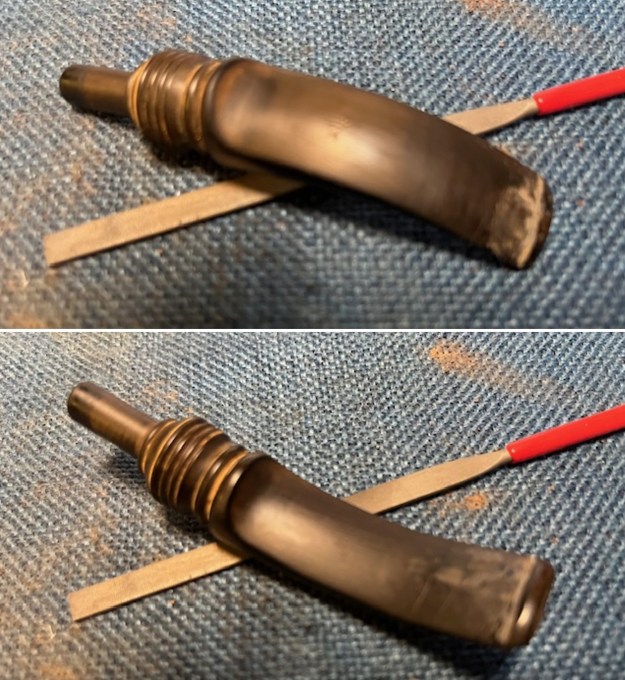
 I filled in the deep bite marks on the top and underside of the stem with black CA glue. It is strengthened with charcoal powder and rubber. I let the glue cure and flattened the repairs with a small needle file. I reshaped the button and it began to take shape and look much better.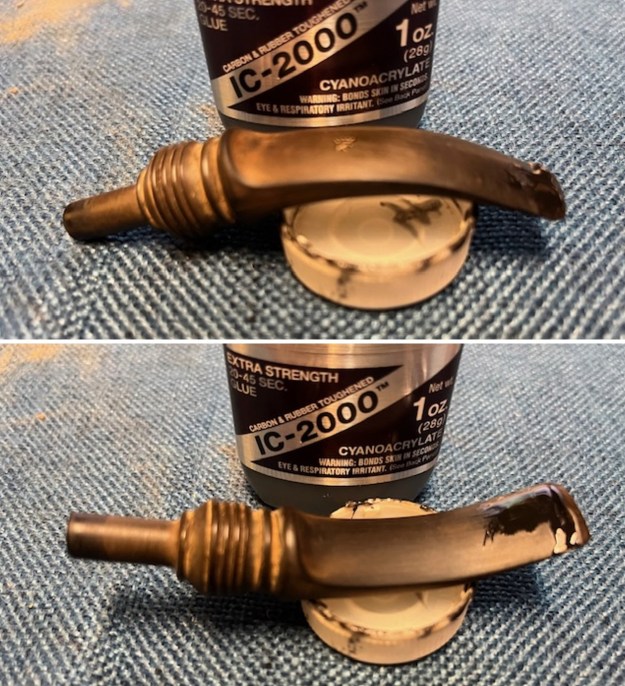
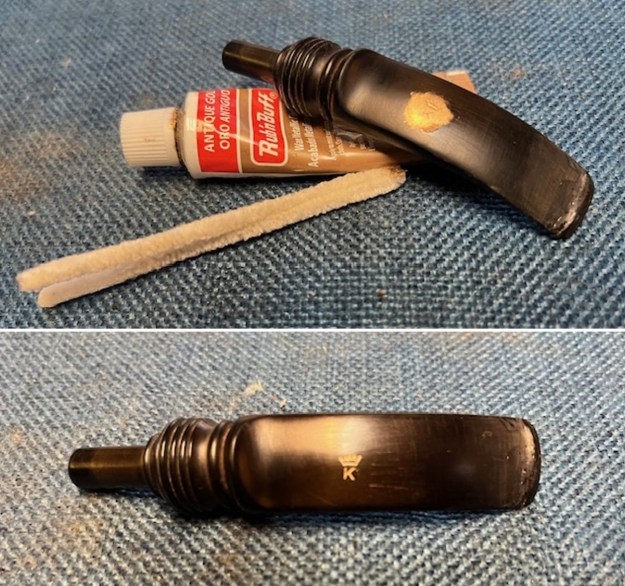
 I paused the process and touched up the Crown K on the stem top with Rub’n Buff Antique Gold. I worked it into the stamp on the stem and then rubbed it off with a soft cloth. I followed that by wiping the stem down with an Obsidian Oil cloth. The stem looked better and the stamping was clear and readable.
 I sanded the repairs with 220 grit sandpaper to smooth out the stem surface and also remove more of the oxidation in the stem surface.
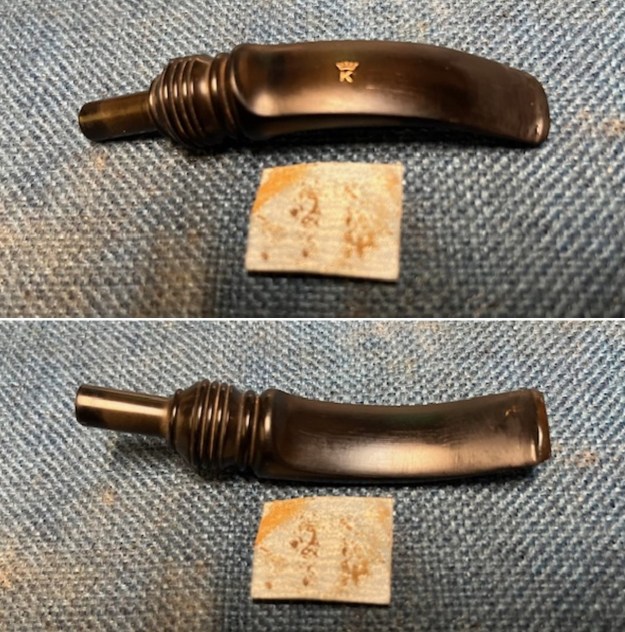 I sanded the stem to smooth it out with 320-3500 grit sanding pads. I wiped the stem down after each pad with an Obsidian Oil cloth. It was beginning to look very good.
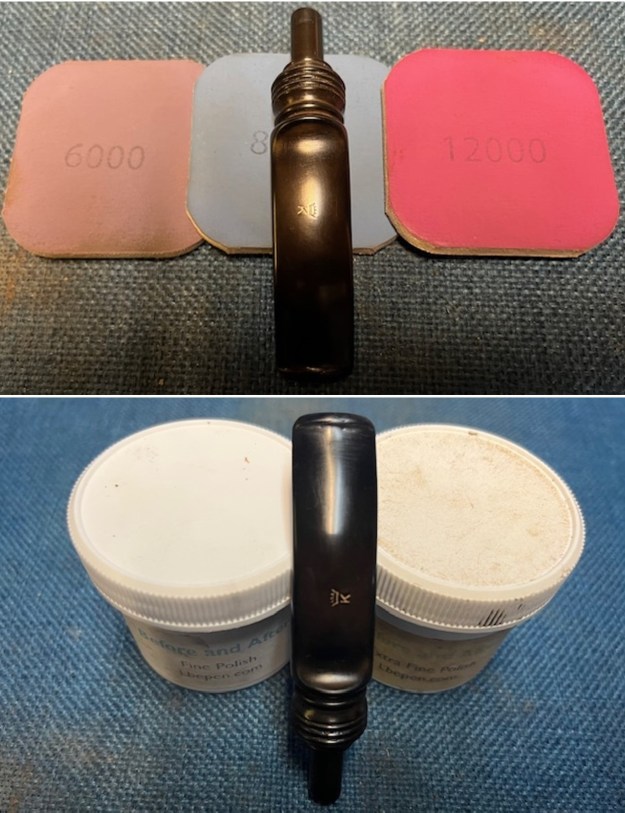
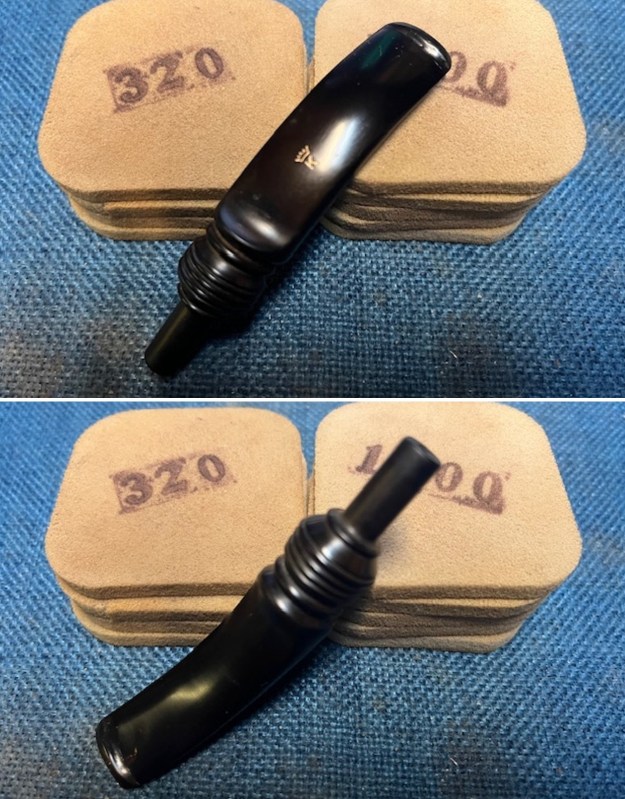 I polished the stem with micromesh sanding pads – 1500-12000 grit pads. I wiped it down with a damp cloth after each sanding pad. I used Before & After Pipe Polish – both Fine and Extra Fine to further polish the stem. I gave it another rub down with Obsidian Oil and let it dry.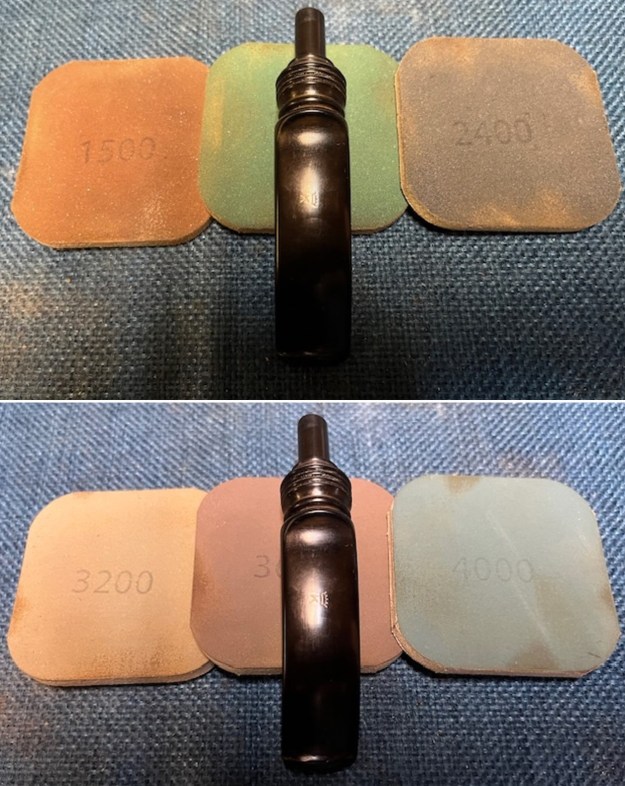
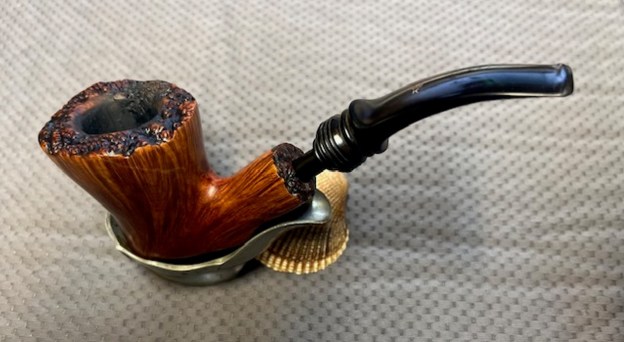
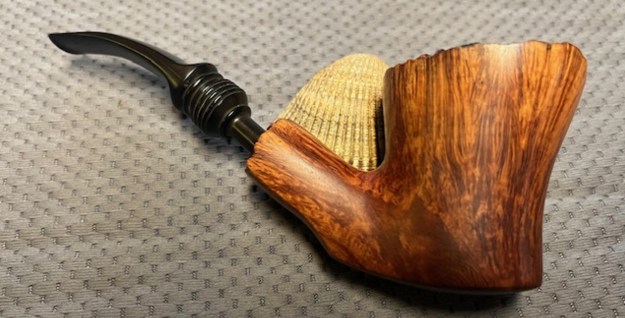
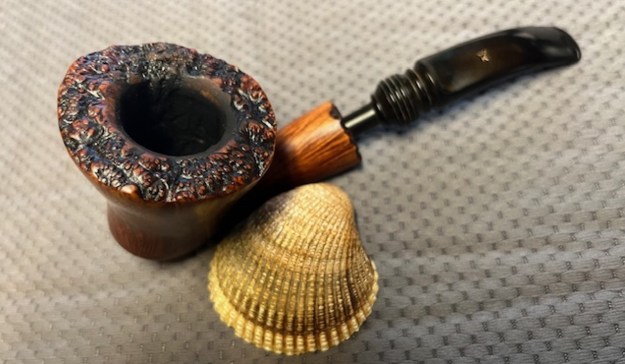
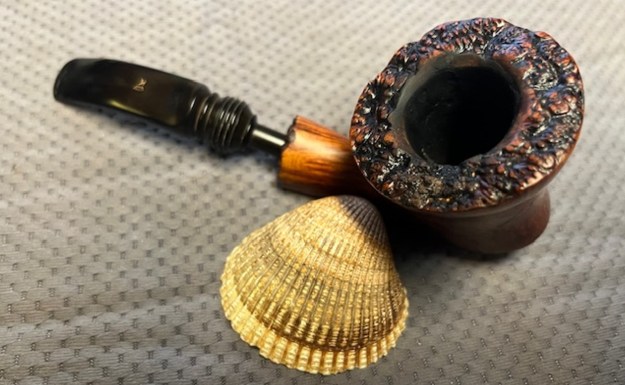
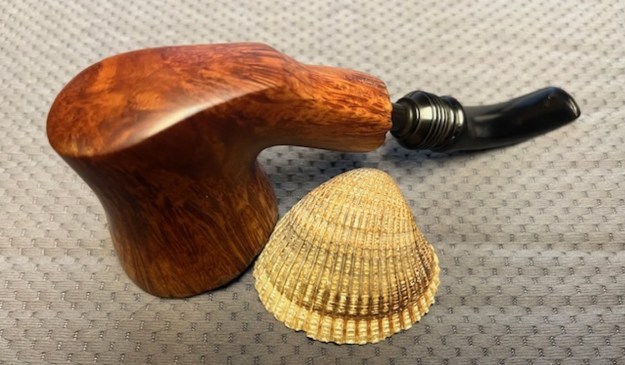
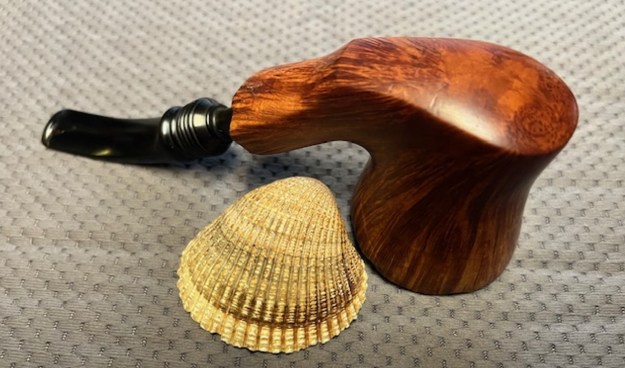
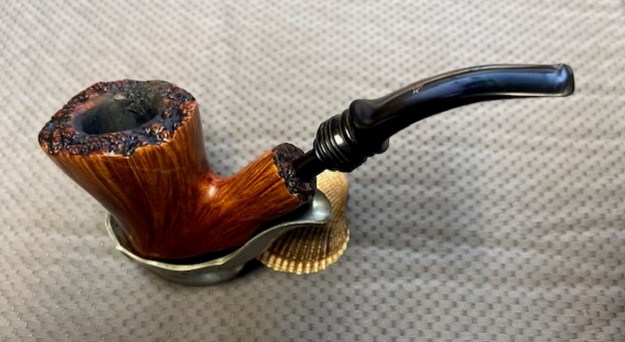
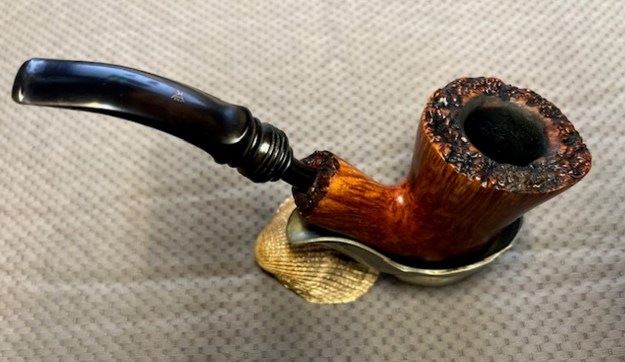
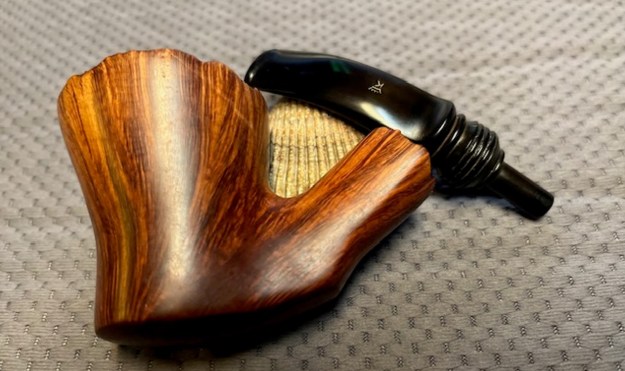
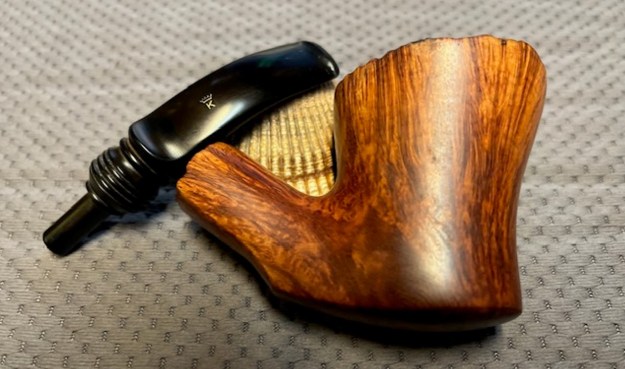
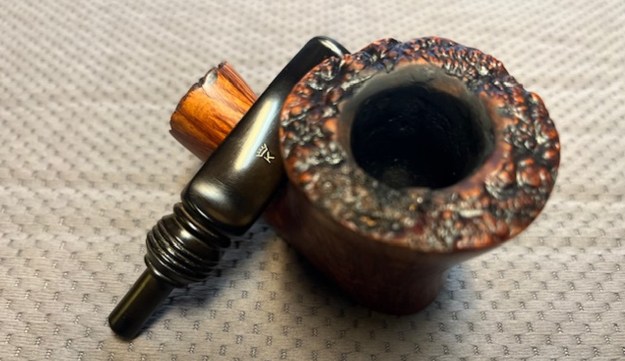
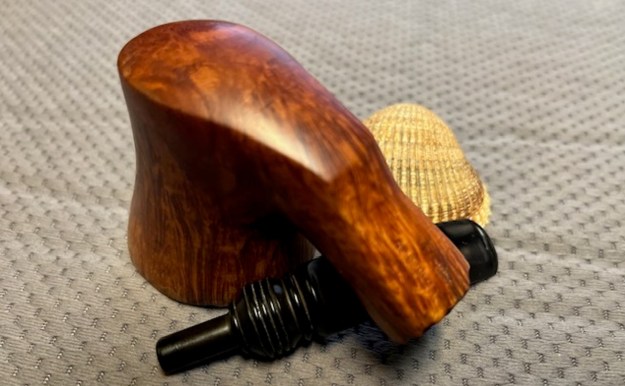
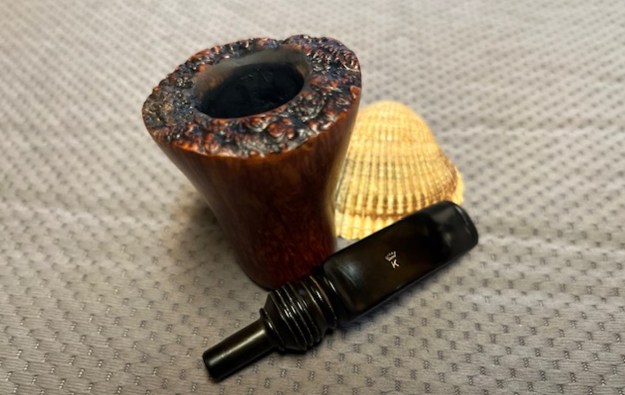
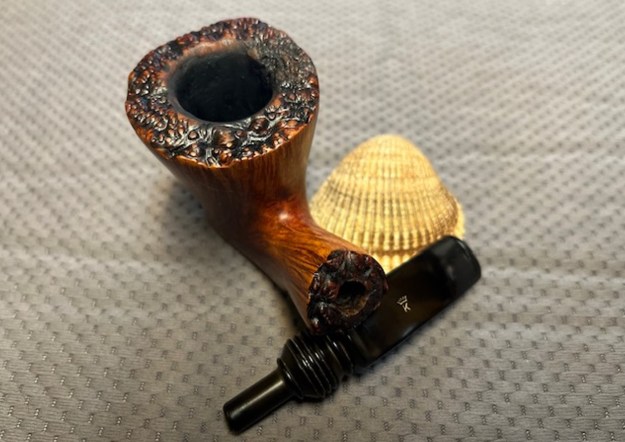
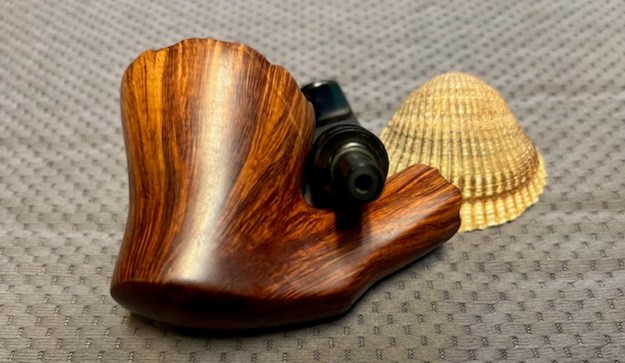
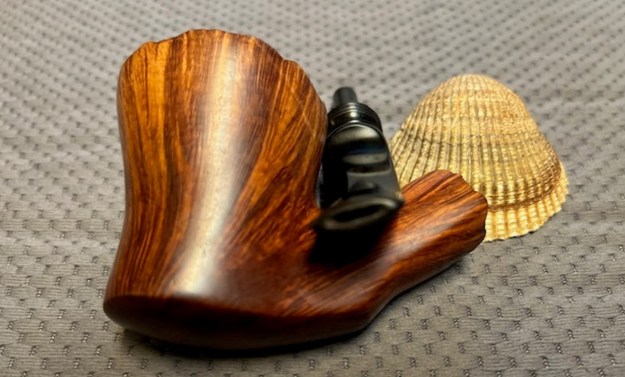
 I put the stem back on the Knute of Denmark Smooth Freehand Sitter pipe and took the pipe to the buffer. I buffed the bowl and stem with Blue Diamond to polish the briar and the vulcanite. Blue Diamond does a great job on the smaller scratches that remain in the vulcanite. I gave the bowl and the stem several coats of carnauba wax and buffed the pipe with a clean buffing pad to raise the shine. I hand buffed it with a microfiber cloth to deepen the shine. The pipe polished up really nicely with a great contrasting stain look to the briar. The finished pipe is shown in the photos below. This is a beautiful Karl Eric Made Knute of Denmark Freehand – the fancy turned stem and plateau rim top and shank end give the pipe a great look. The dimensions of the pipe are Length: 6 inches, Height: 2 ¼ inches, Outside diameter of the bowl: 1 ¾ inches wide x 1 7/8 inches long, Chamber diameter: 7/8 of an inch. The weight of the pipe is 2.22 ounces /63 grams. This is the final pipe of 6 pipes that am restoring for Mario from his Dad’s collection. I look forward to hearing what he thinks of this newly restored pipe. Later this week I will pack them up and send them home to him. Thanks for reading this blog and my reflections on the pipe while I worked on it!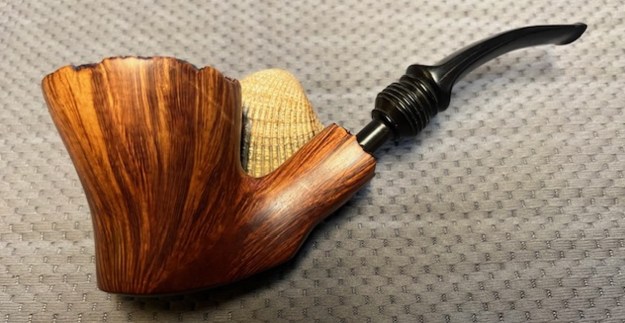
 rebornpipes