Tag Archives: Radice pipes

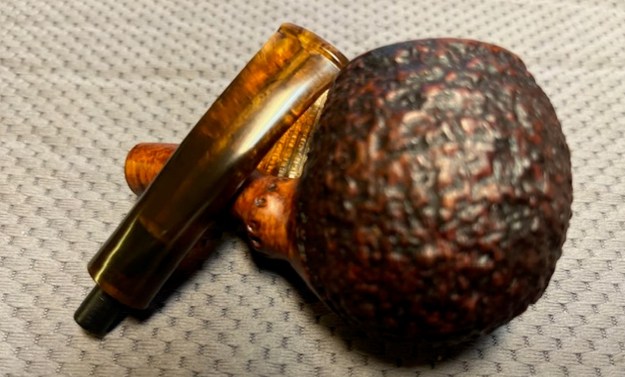
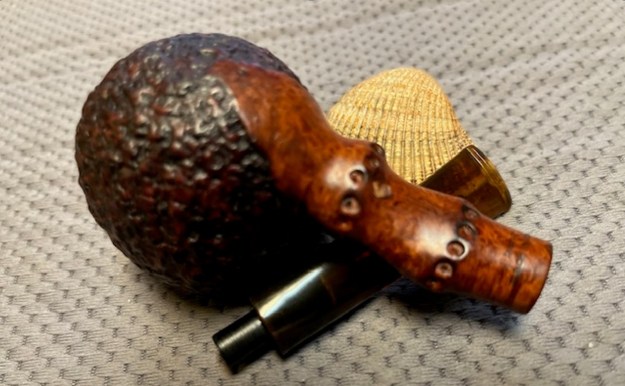
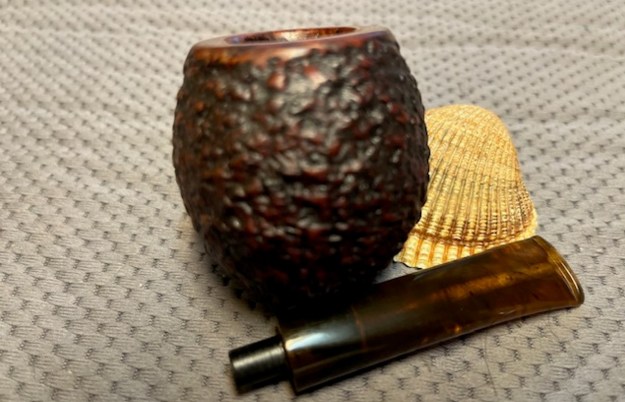
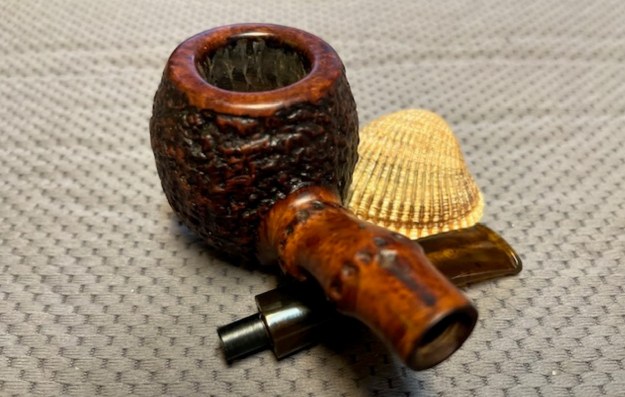
Breathing Life into a Radice Rind Hawkbill with a Faux Bamboo Shank


by Steve Laug

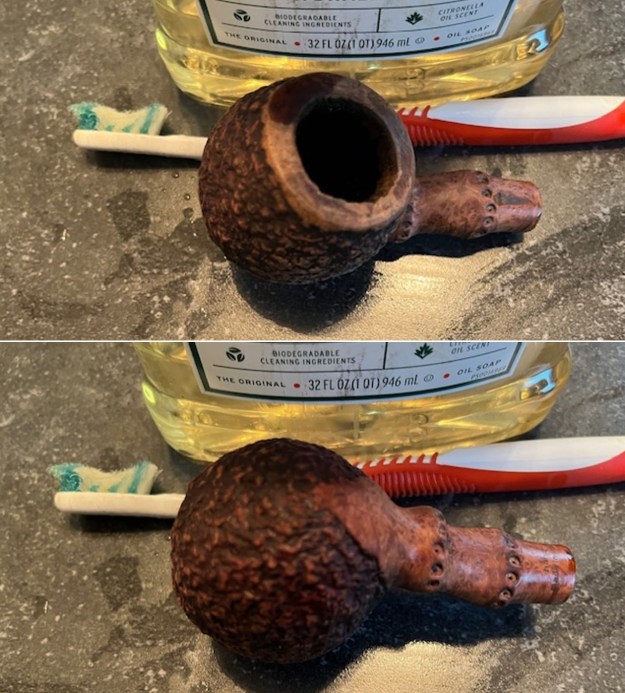
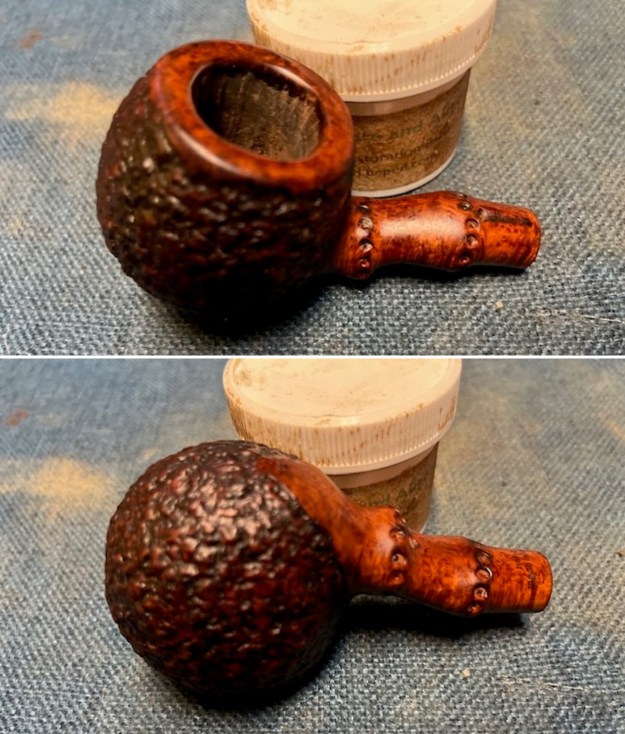
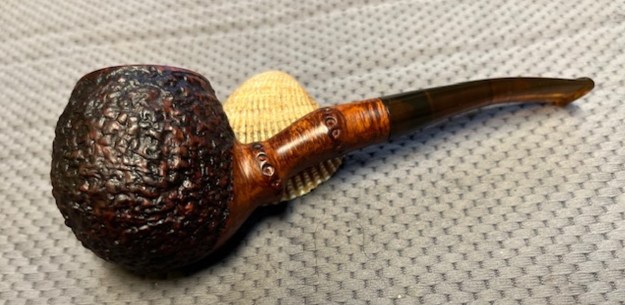
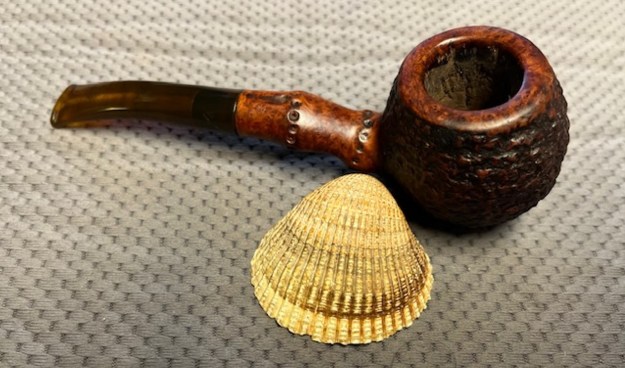
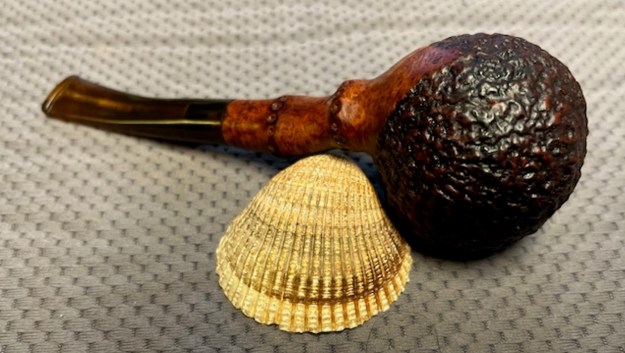
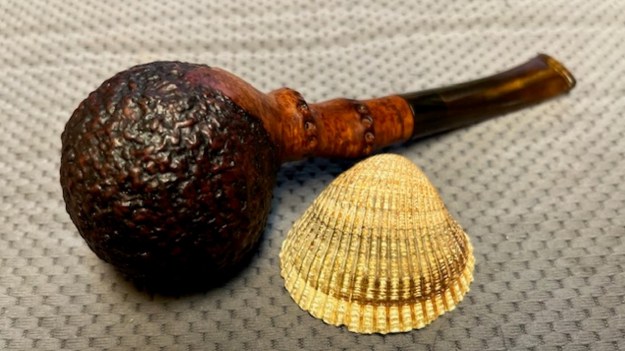
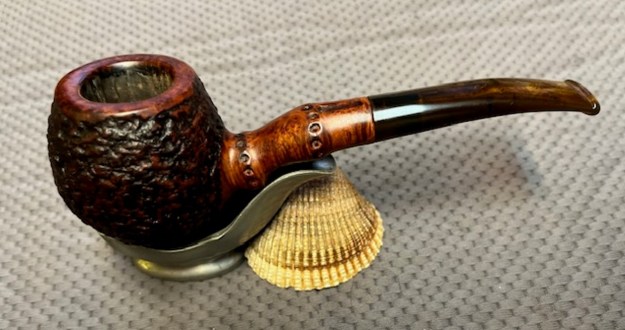
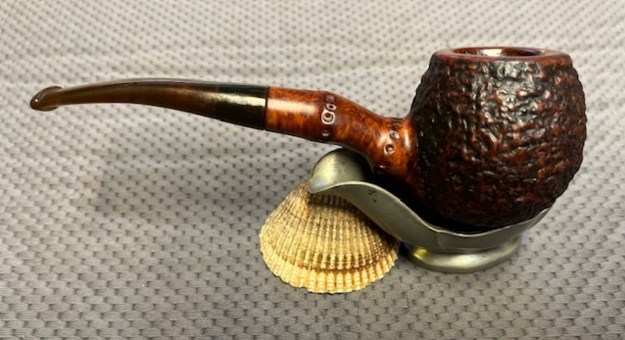
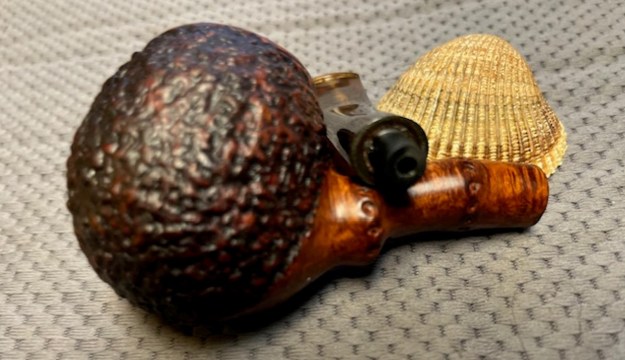
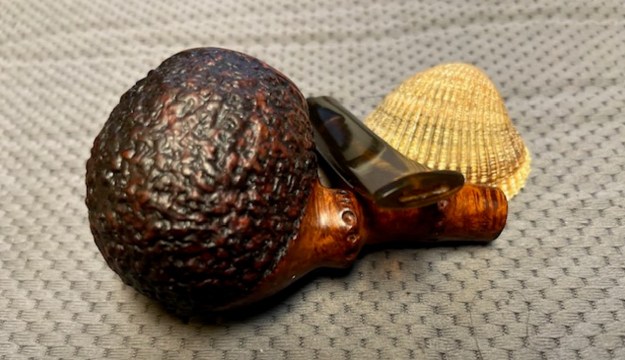
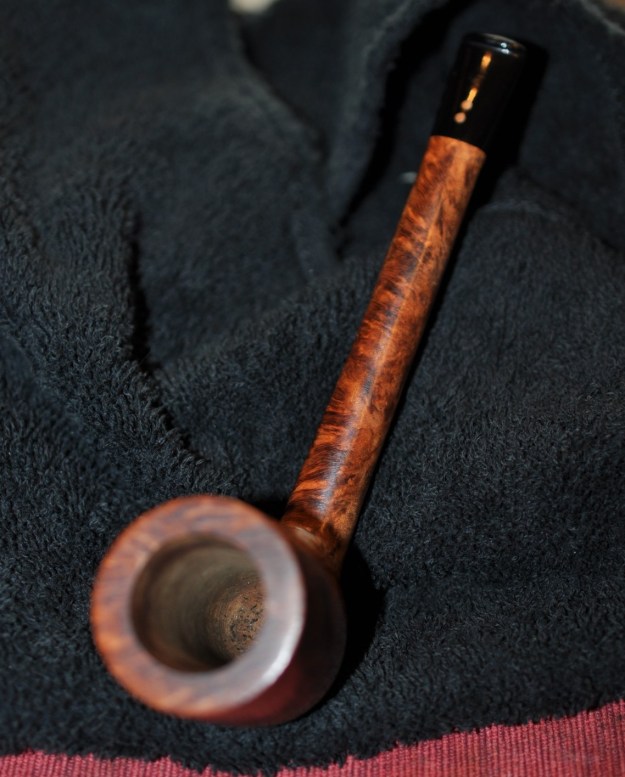
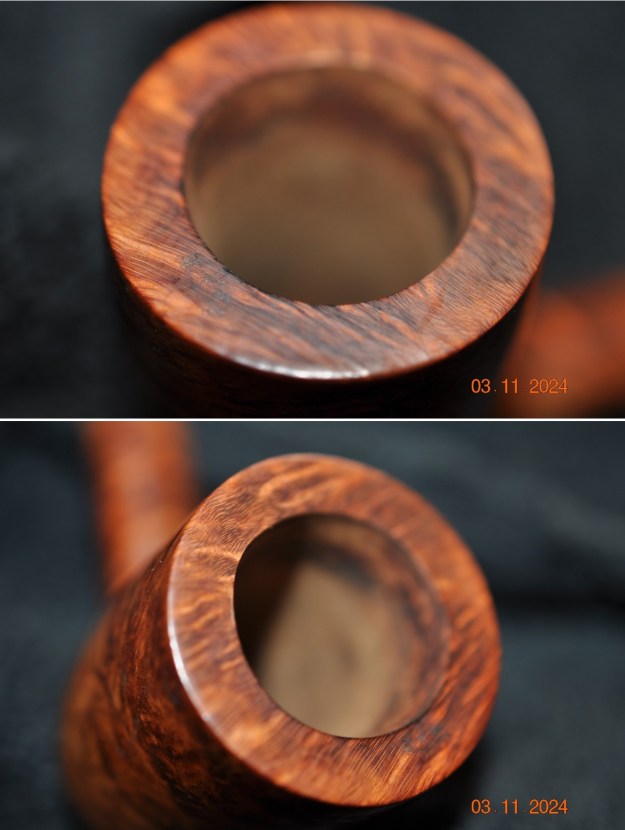
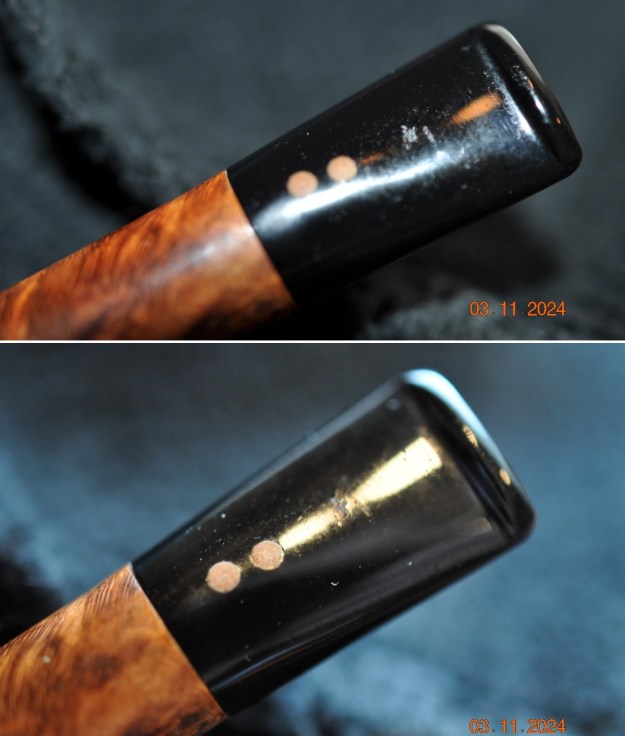
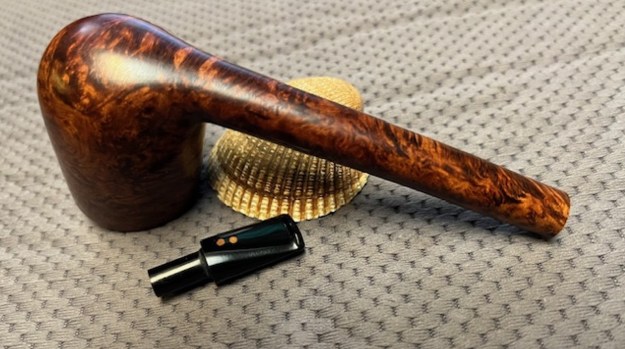
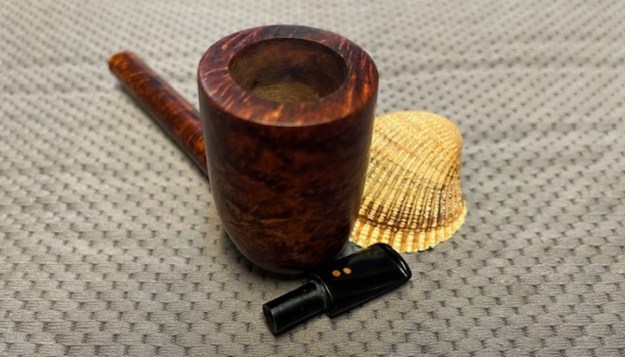
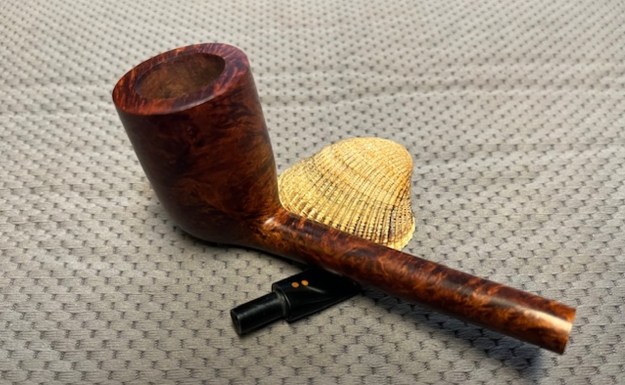
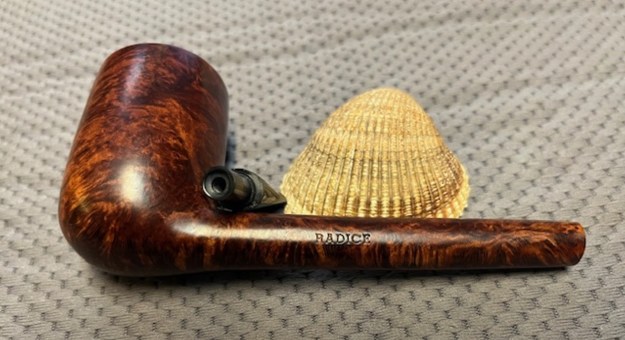
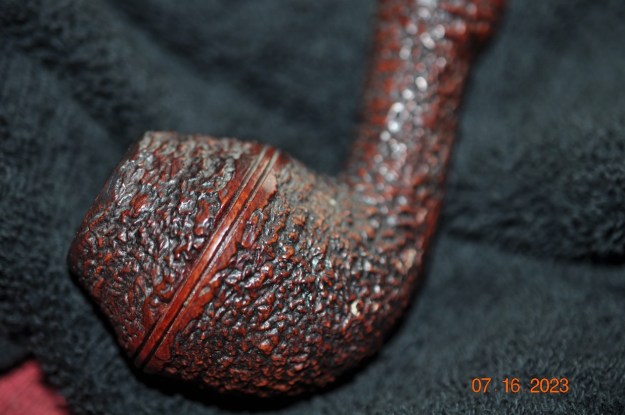
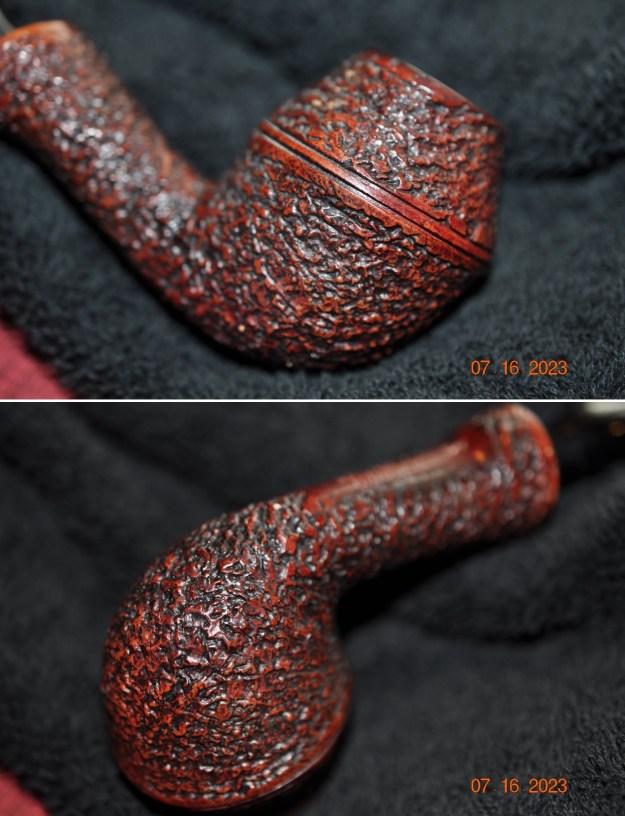
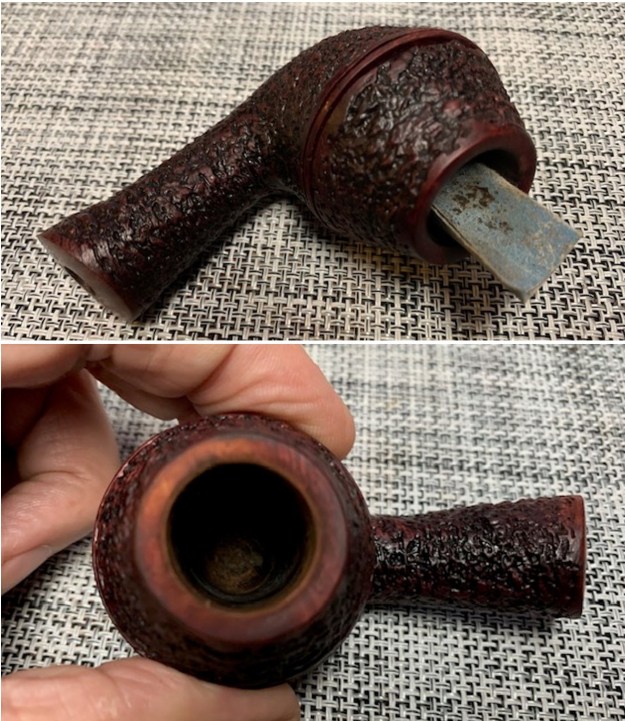
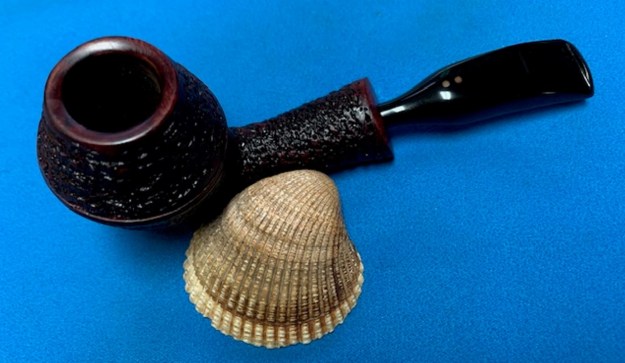
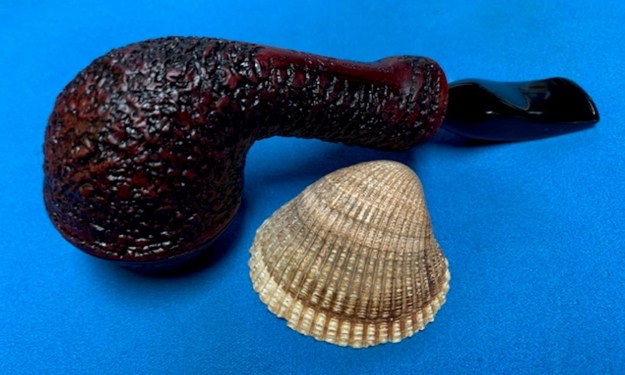
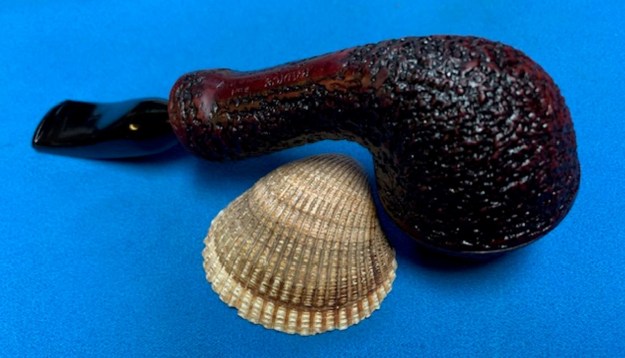
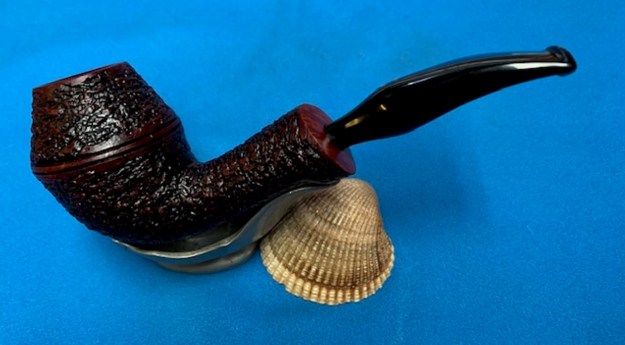
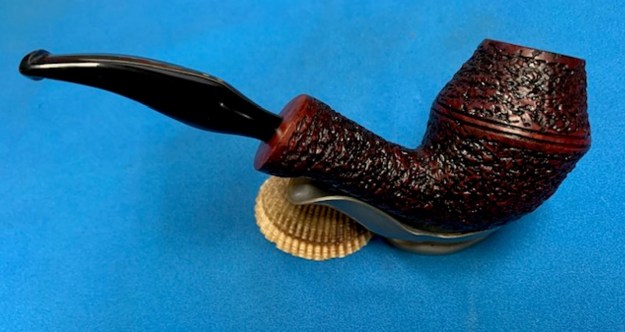
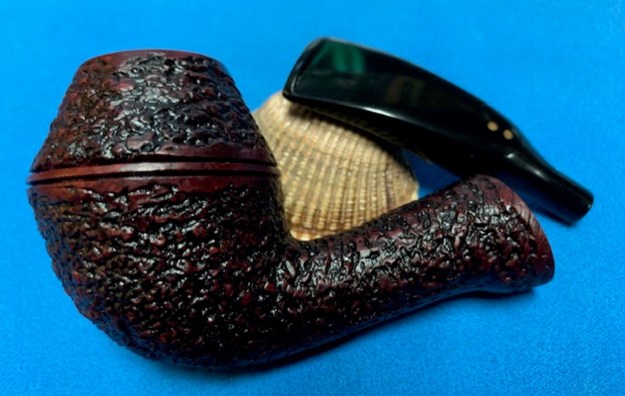
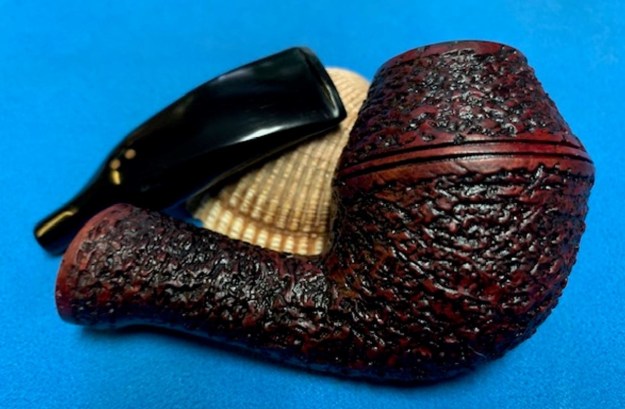
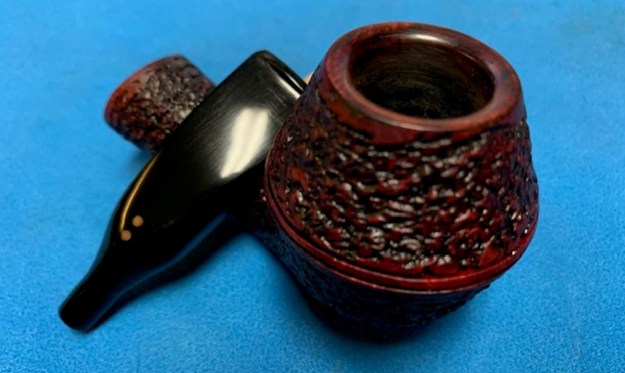
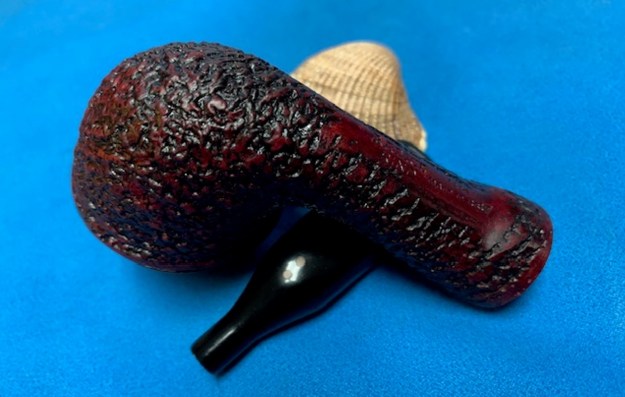
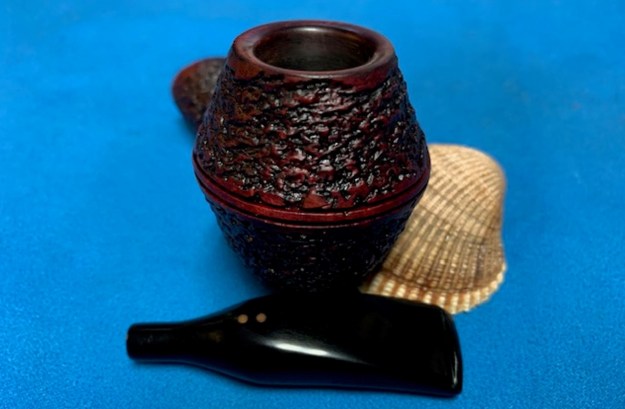
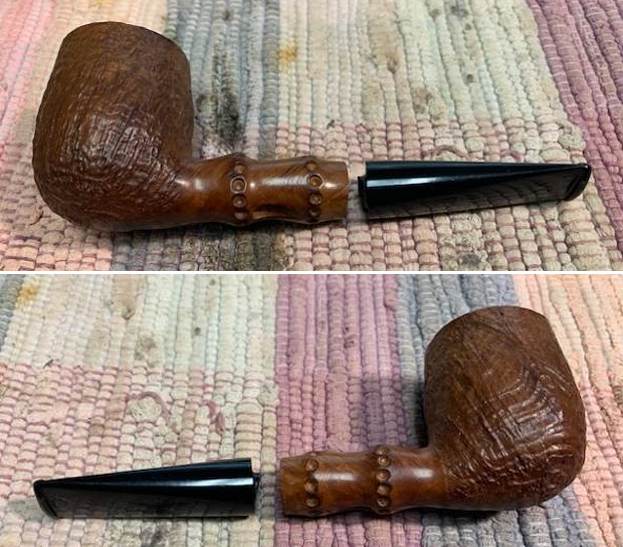
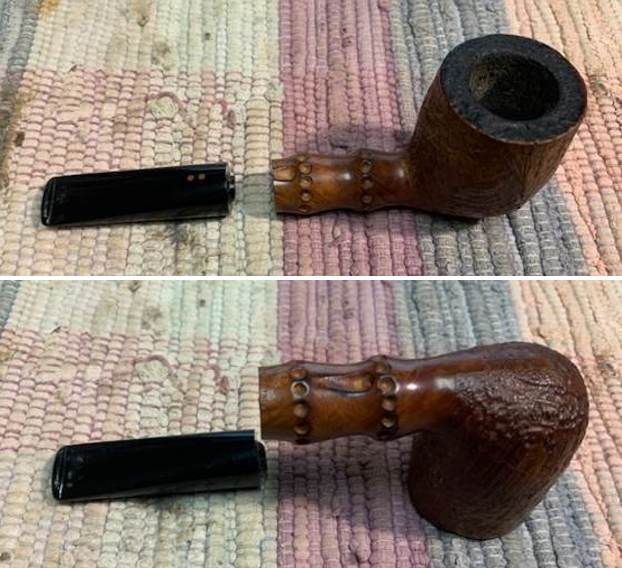
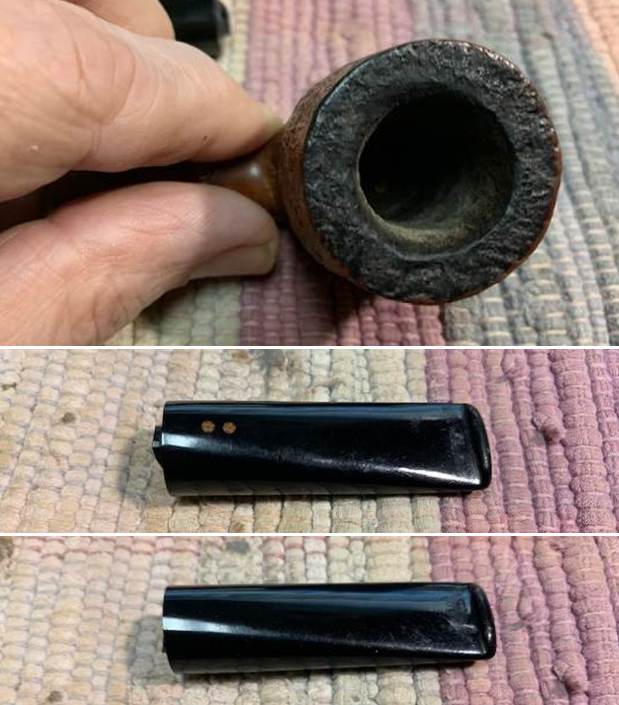
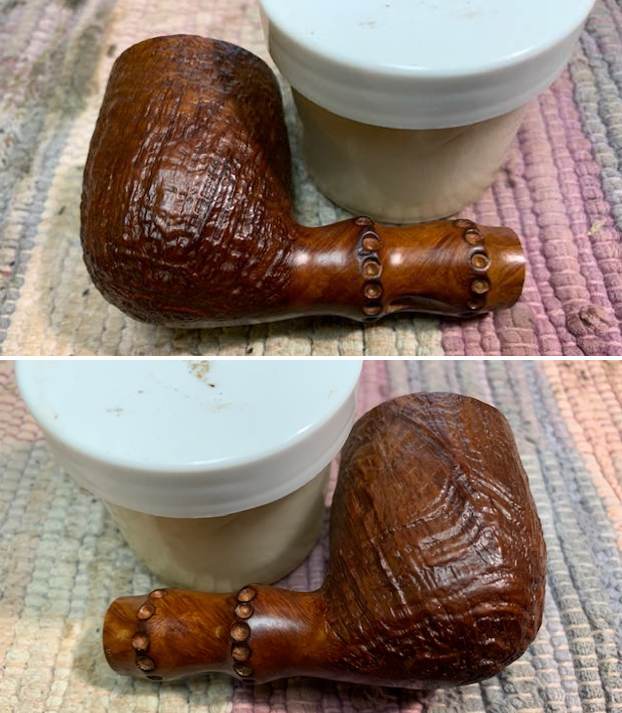
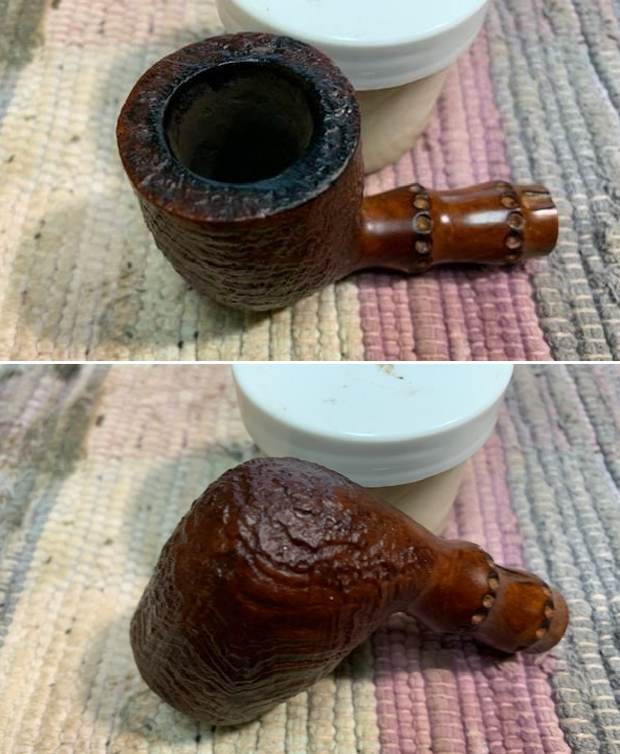
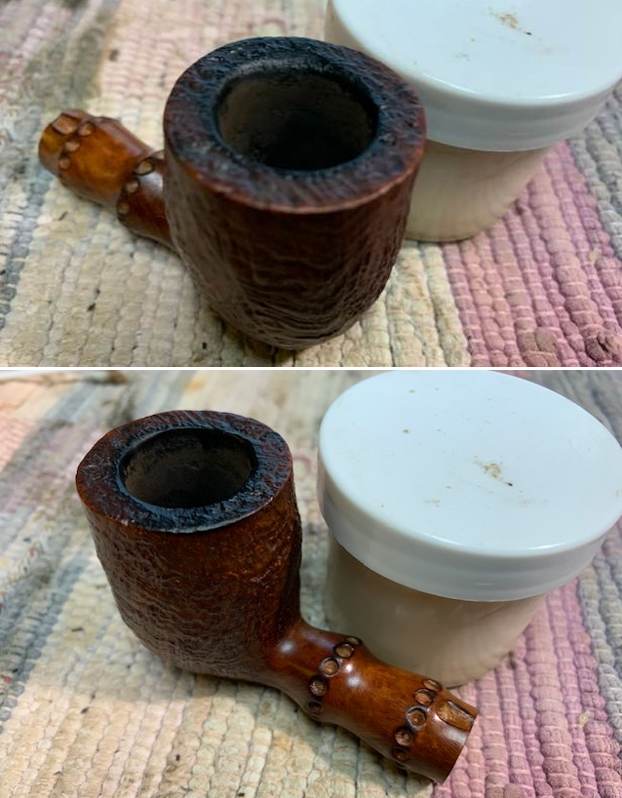
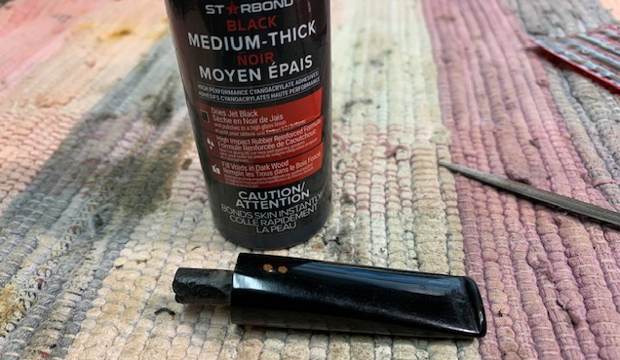
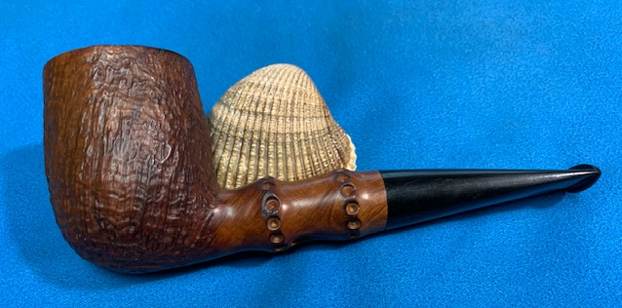
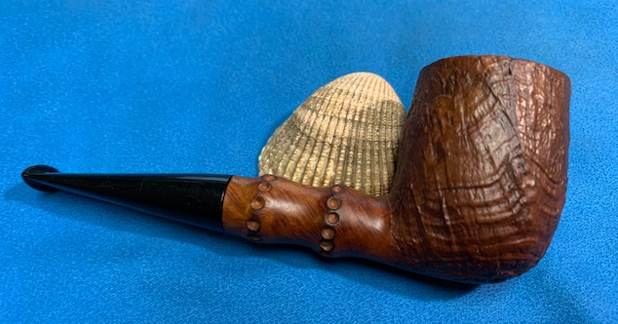
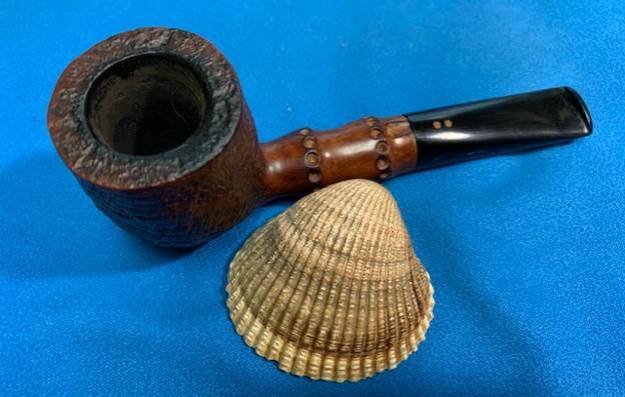
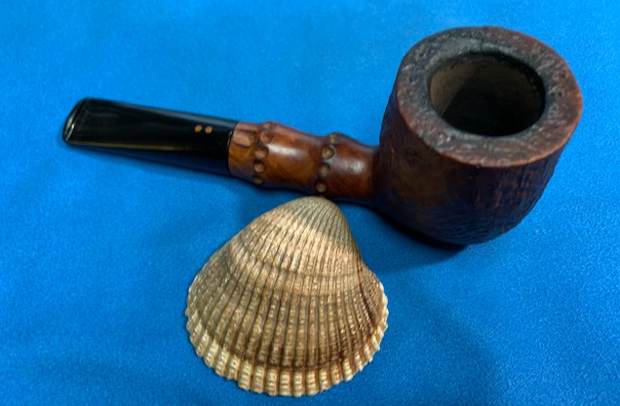
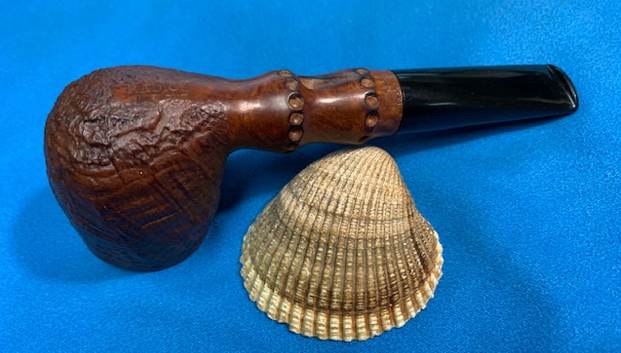
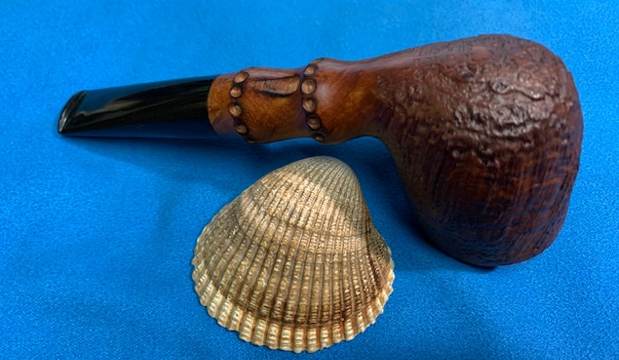
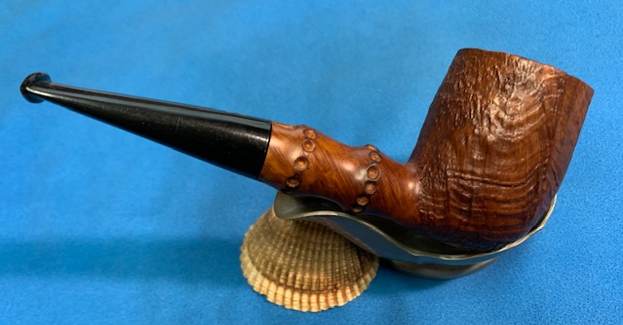
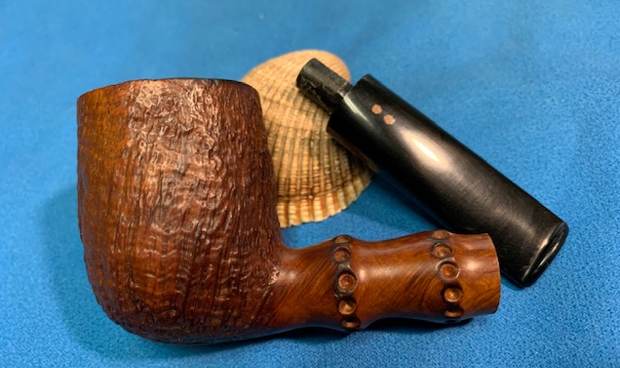
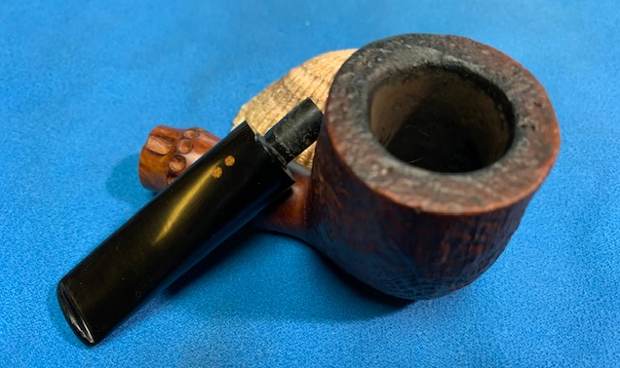
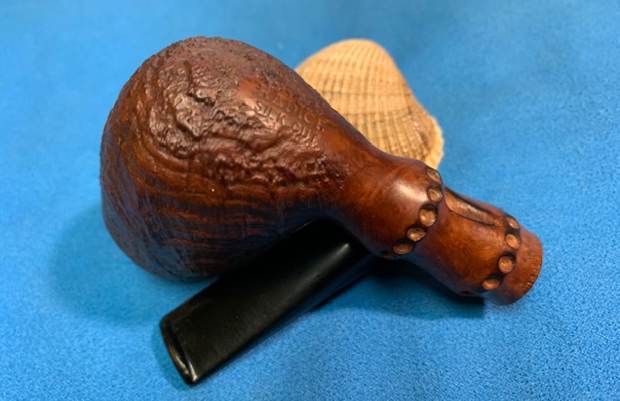
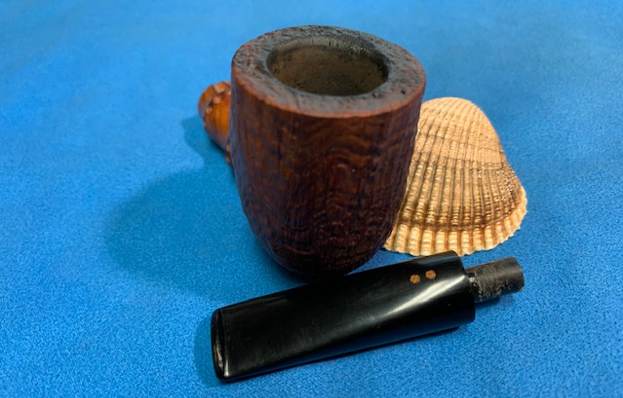
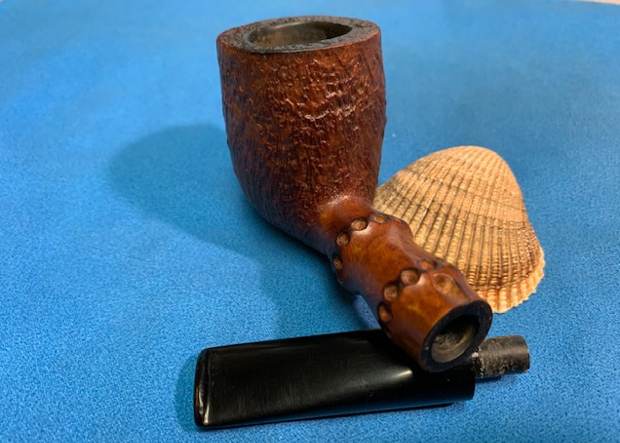
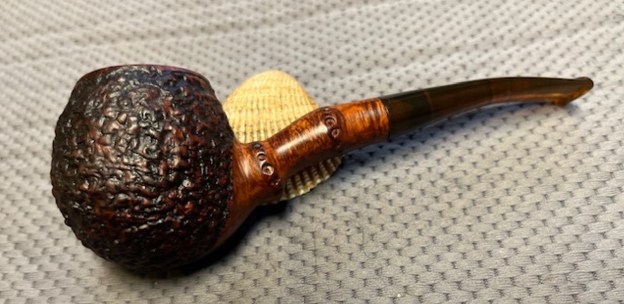
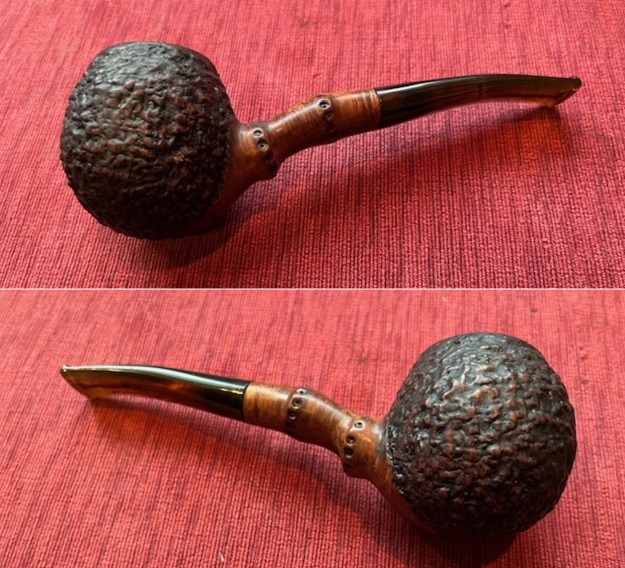
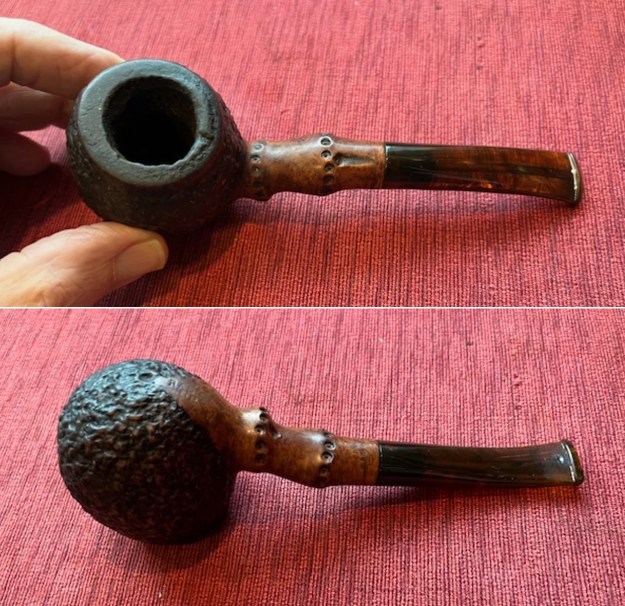
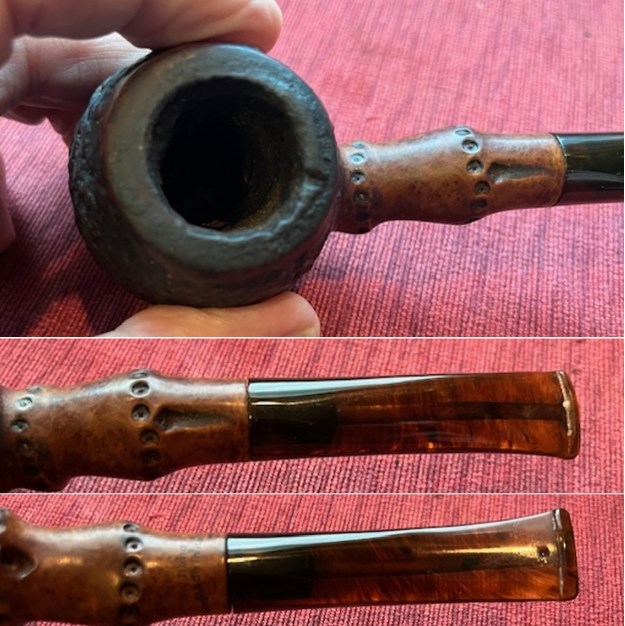
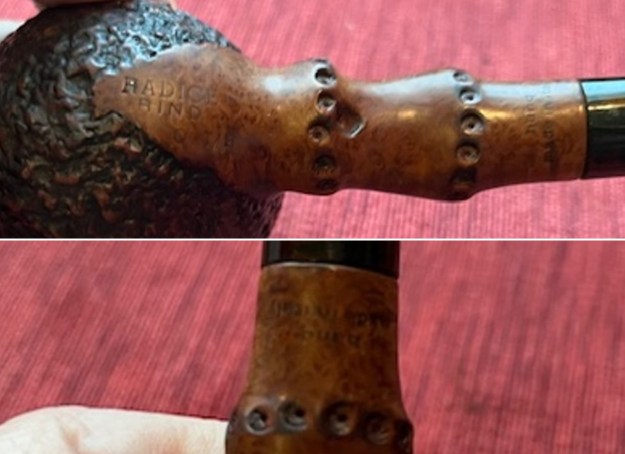
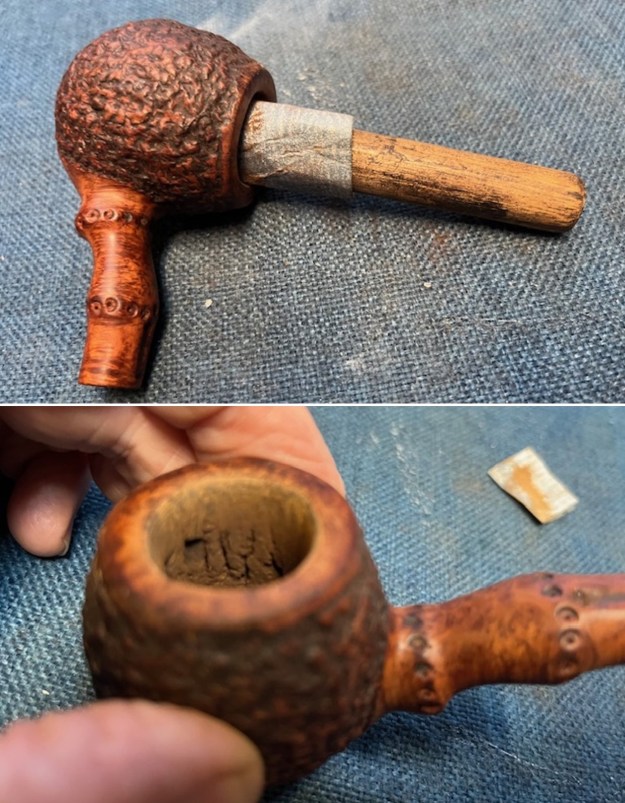
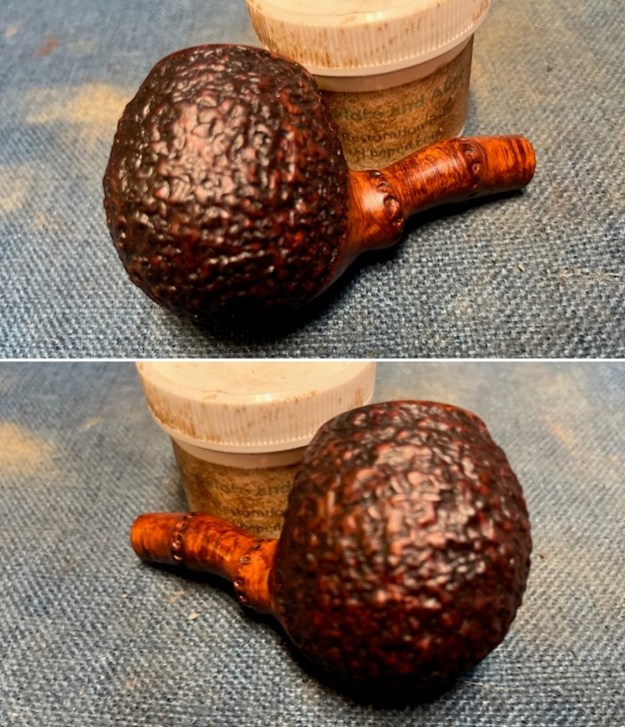
The next pipe is one I also worked on while I was at Jeff’s place in Idaho. I brought it home to finish it. We picked the pipe up from a seller in Macon, Georgia, USA on 03/08/2025. I would call the pipe a Hawkbill shaped pipe with a faux bamboo shank and amber acrylic taper stem. It is stamped on the heel of the bowl and reads Radice [over] Rind [over] 0 T/B. Against the shank end it is stamped hand [0ver] made in Italy. The “Bamboo” shank has the nodules and grooves well carved into the briar. The bowl had a heavy cake and a thick coat of lava on the rim top. The finish was dirty and dusty in the valleys of the rustication and the nodules of the “Bamboo” shank. The shank was black, tarry and oily. The acrylic amber stem sat well against the shank. It was dirty with oil and tar in the airway from the tenon to the button. There were deep tooth marks and chatter on both sides ahead of the button. There was no logo or identifying marks on the stem. I took some photos of the pipe before I started my work on it. I took a photo of the bowl and rim top to show the cake in the bowl. The rim top had a thick coat of lava overflowing on top with some possible damage around the top and inner edge. I took photos of the top and underside of the stem showing the tooth marks and chatter on the acrylic taper stem surface.The stamping is very clear and readable in the photo below. It reads as noted above. I removed the stem from the shank and took a photo of the parts to show the parts of the pipe. The finish on the pipe is very worn and tired looking. I started my search on the brand by looking on Pipephil’s site to see if there was any information on the Radice Rind line (http://www.pipephil.eu/logos/en/logo-r1.html). The line was not included there but there was some information in the side bar on the dating of the pipes. It was helpful as the pipe in hand is stamped Hand Made in Italy.
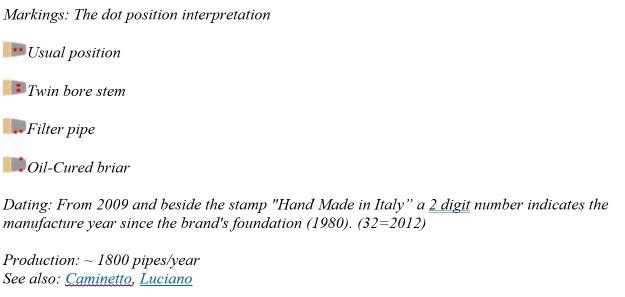
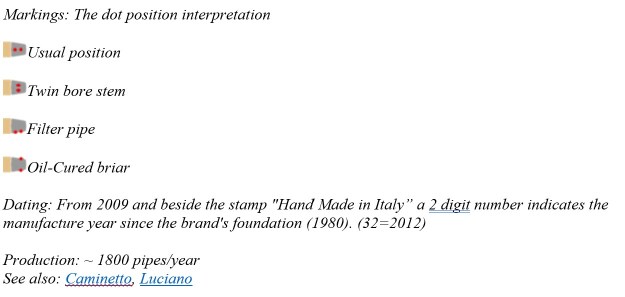
Dating: From 2009 and beside the stamp “Hand Made in Italy” a 2 digit number indicates the manufacture year since the brand’s foundation (1980). (32=2012). Production: ~ 1800 pipes/year. See also: Caminetto, Luciano

I turned to Pipedia to the article on Radice pipes and the birth and development of the brand (https://pipedia.org/wiki/Radice). I have included the information that I found there below.

Luigi Radice, born 1939, took a piece of briar in his hands for the first time in 1961, when he was employed at Carlo Scotti’s Castello in nearby Cantu.

After lengthy experience, he founded, together with Peppino Ascorti, the famous “Pipa del Baffo”, the “Caminetto” which through 1974 and 1975 made wealth with the precious cooperation of Gianni Davoli, Milanese distributor.

In 1980 Luigi undertook a new adventure, founding his own brand: the Pipa Radice. From the beginning his son, Gianluca, joined the workshop, together with Luigi’s father, Paolo Radice, who helped in some basic steps of production.

Only later my brother and I started working together with our father, trying to learn the secrets and the mastery to be able to create a pipe which could join artisanal estrus(?) to functionality.

We have always trusted the professionalism of Italian briar cutters to obtain the raw material. We season the briar in our workshop for at least three years. We believe that it is enough to produce a perfect pipe.

Our shaping is pretty diversified. A distinguishing feature is the use of various options, like the faux-bamboo shank or silver band or save-rim, hand engraved by Luigi.

About pipes for completely dedicated collectors, we would like to mention the several variations of pieces made using buffalo, moufflon, deer or roe horn.

The creative idea and the study of the technical side, lead us to invent pipes with a twin bore mouthpiece, coupled with a special production of oil cured pipes, taking inspiration from old English skills.

We have recently introduced the use of ebonite(vulcanite) mouthpieces, to satisfy the requests of our fellow pipesmokers.

Radice is a pipe which is continually evolving, keeping alive the treasured experience of 50 years of pipemaking of our father Luigi.

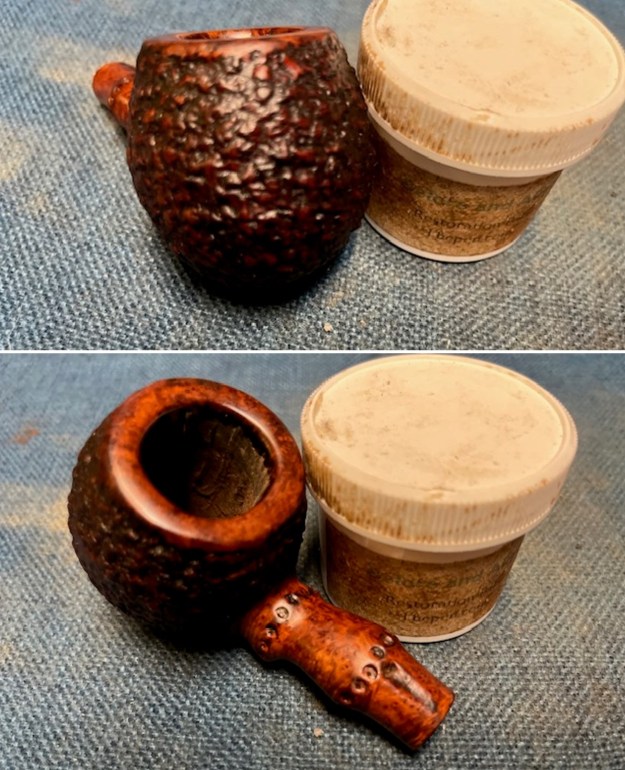
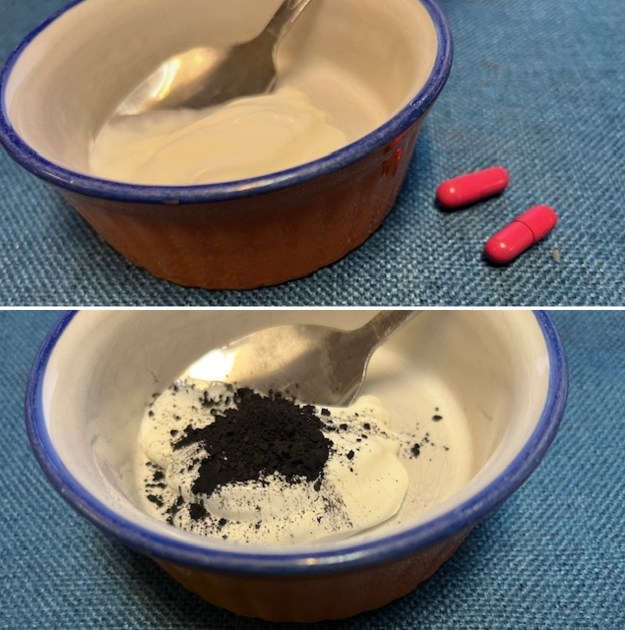
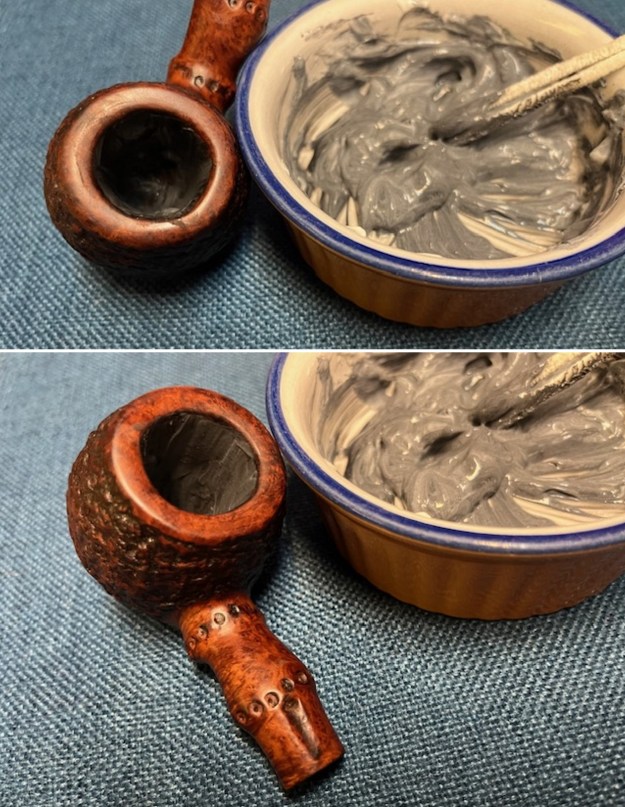
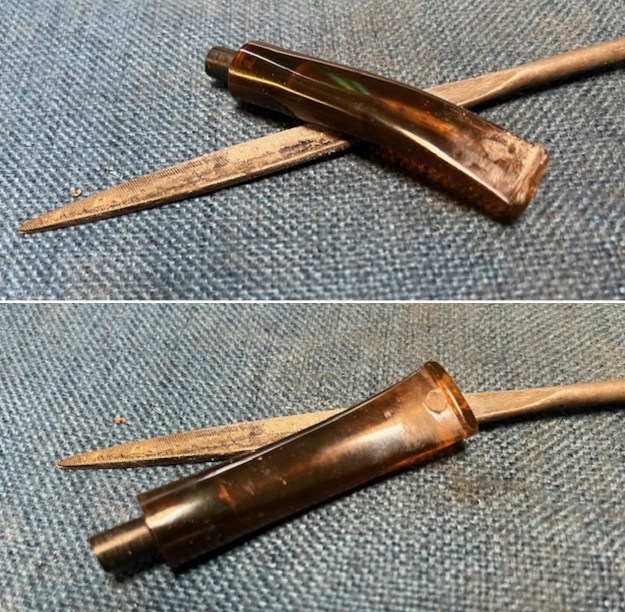
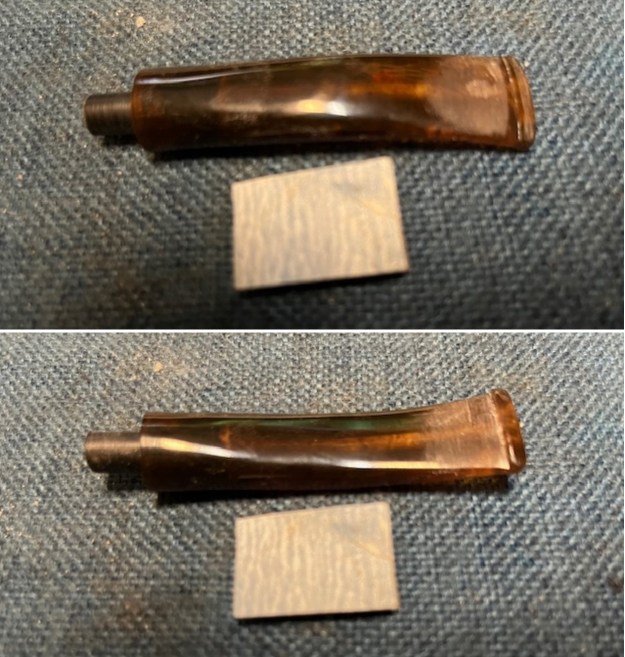
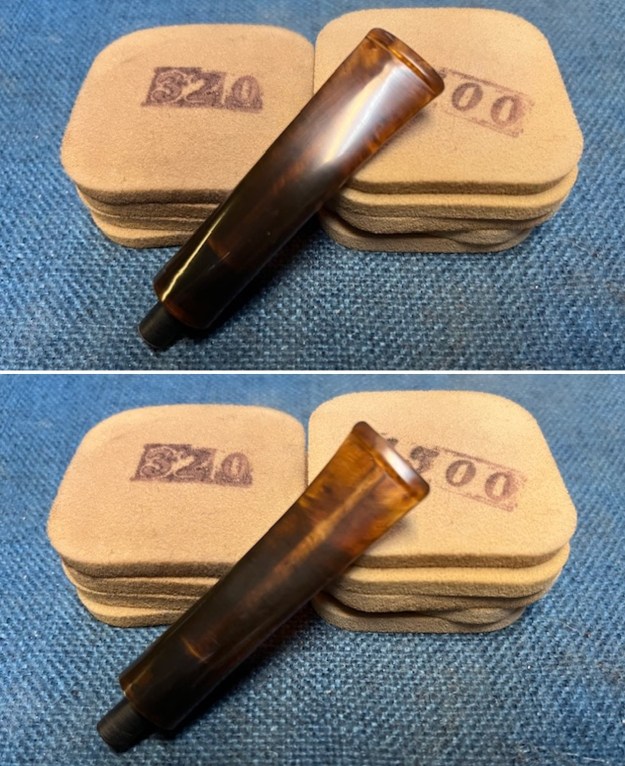
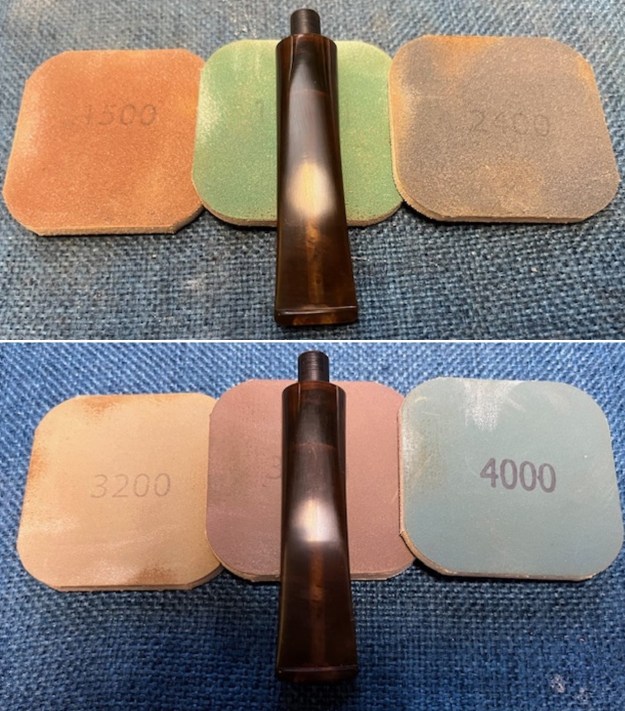
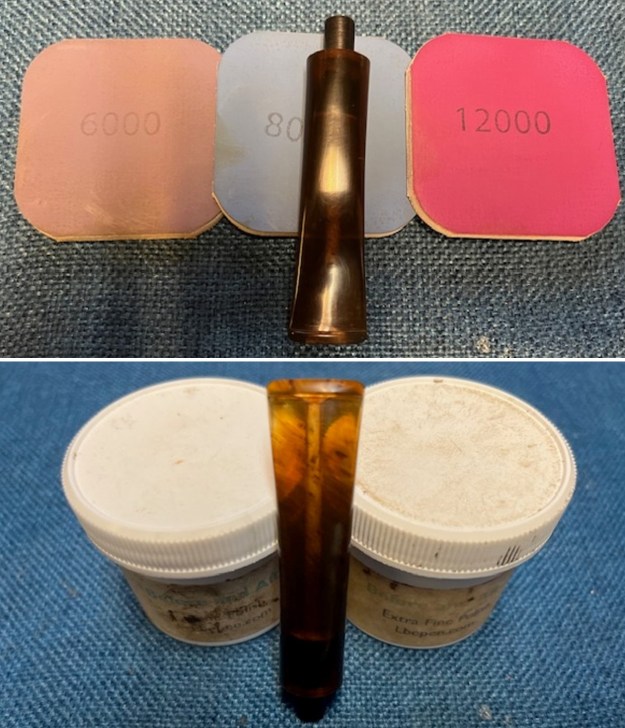
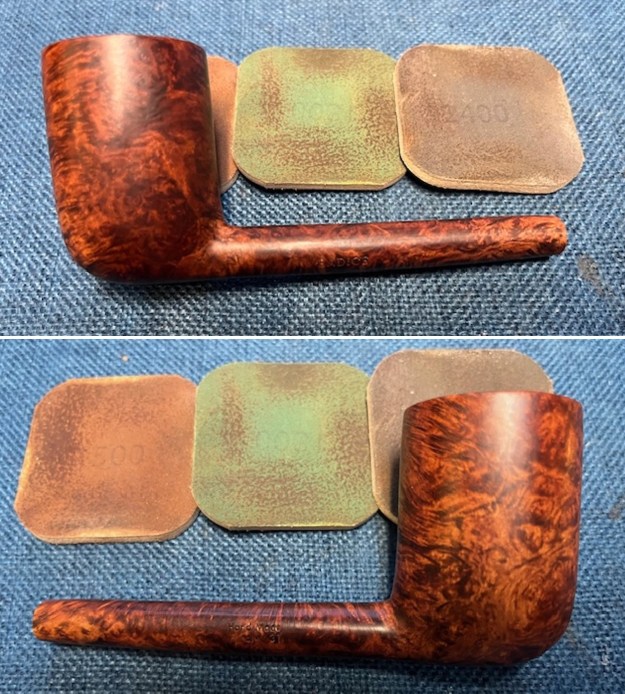
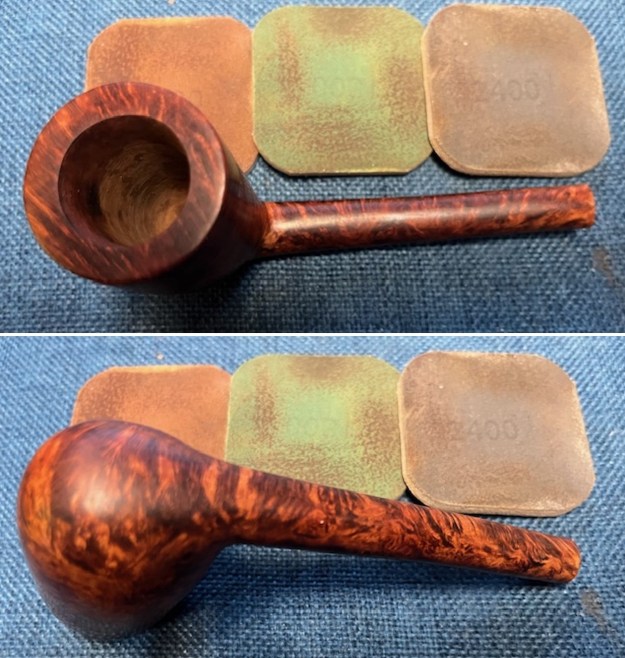
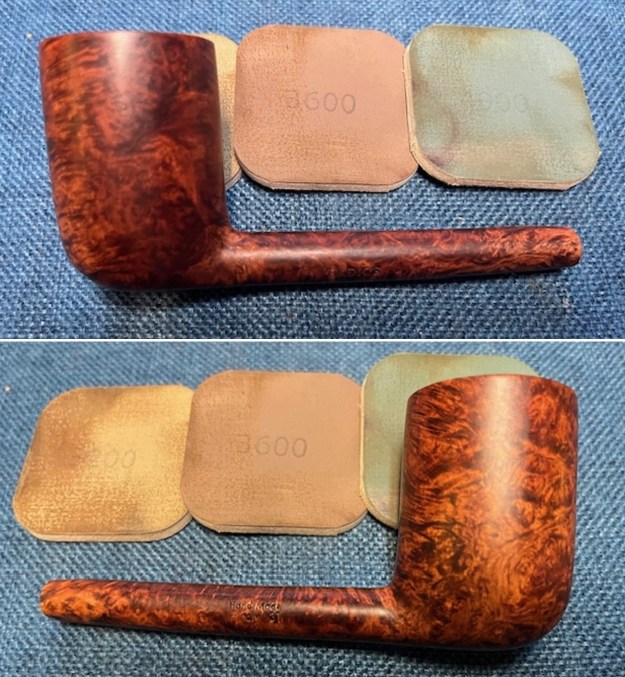
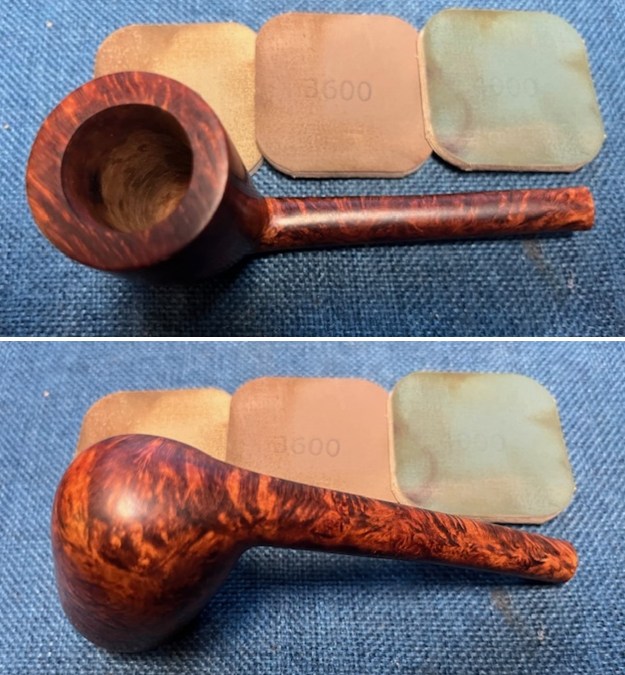
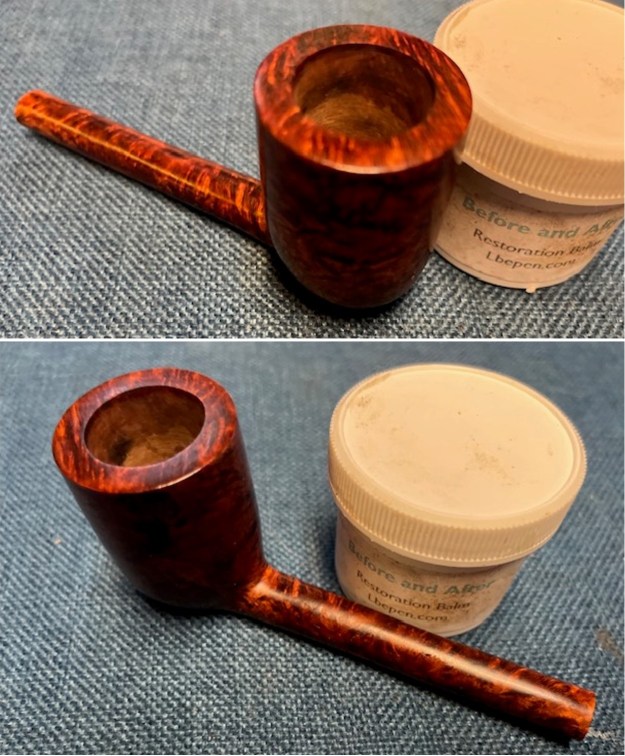
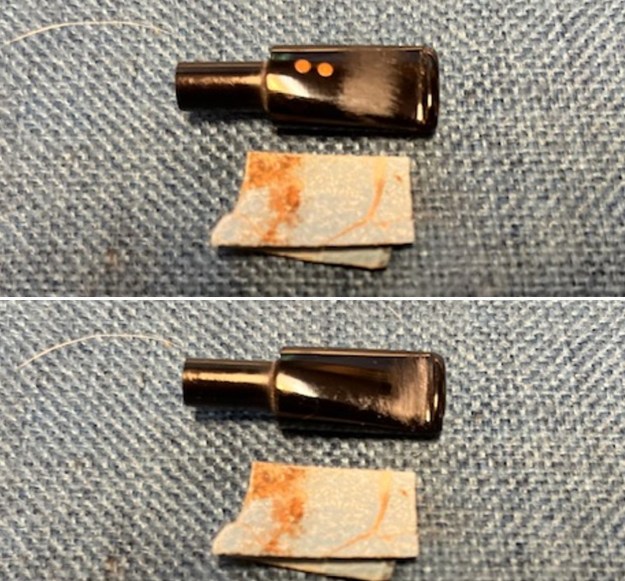
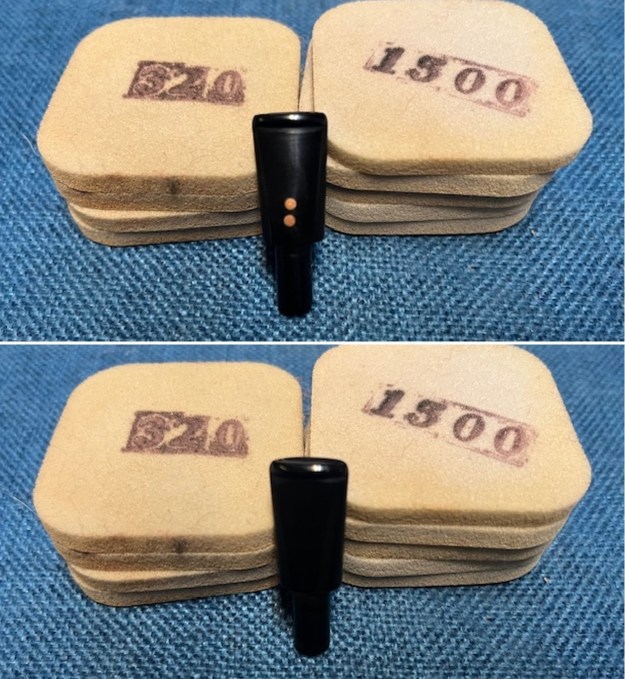
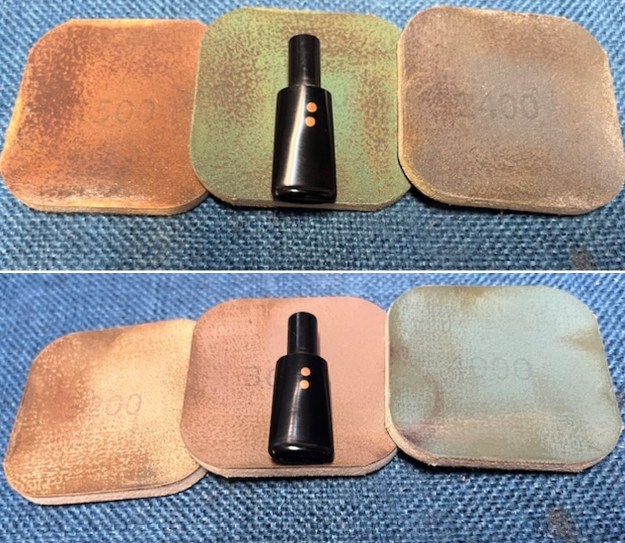
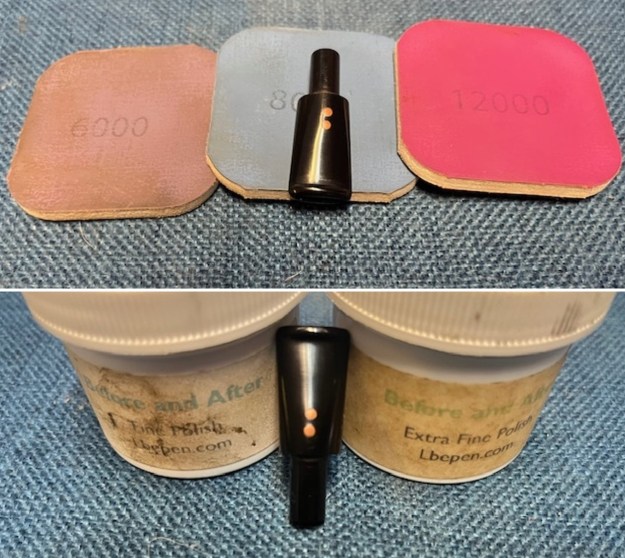
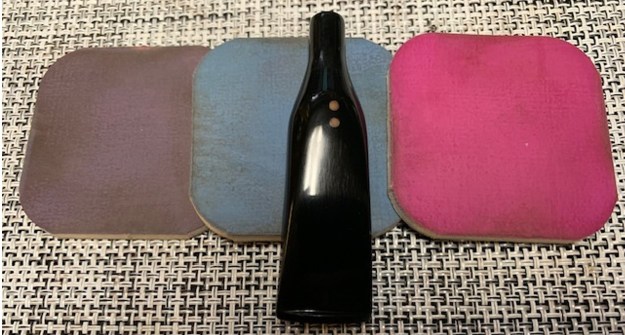
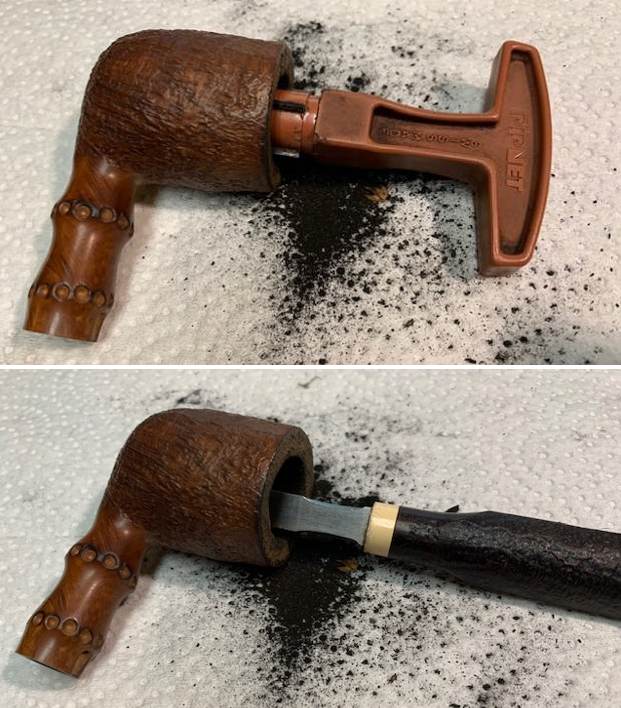
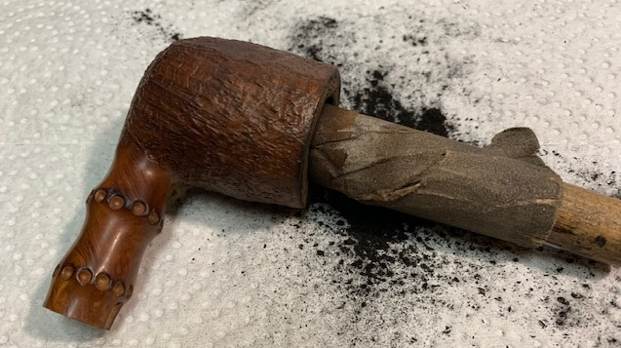
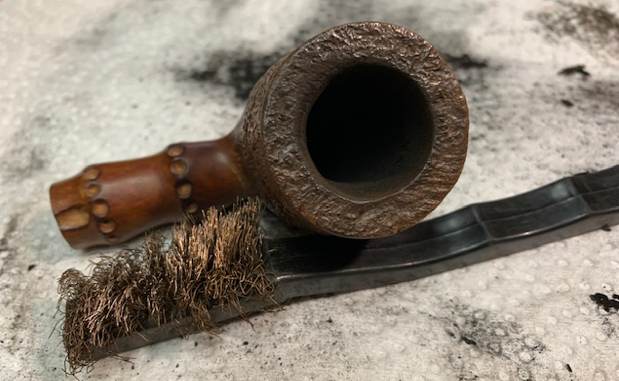
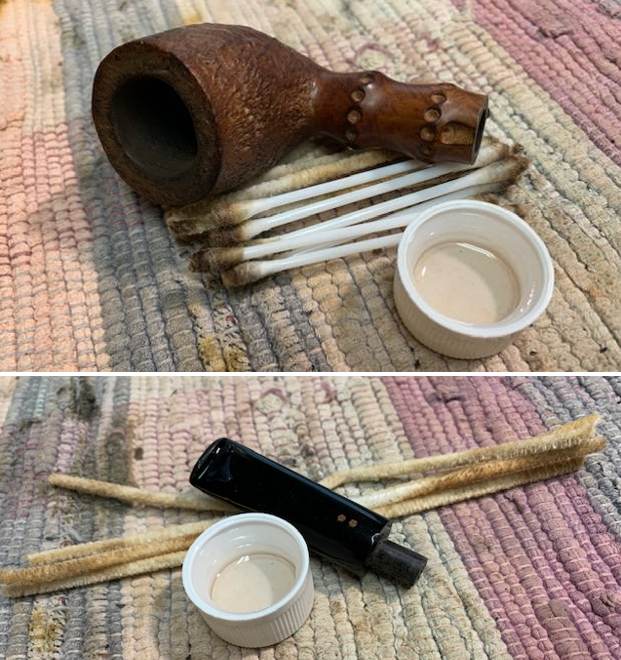
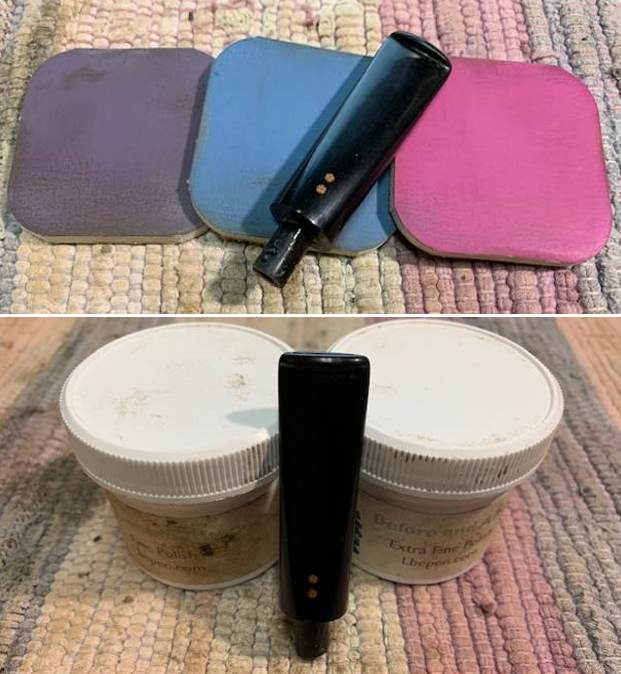
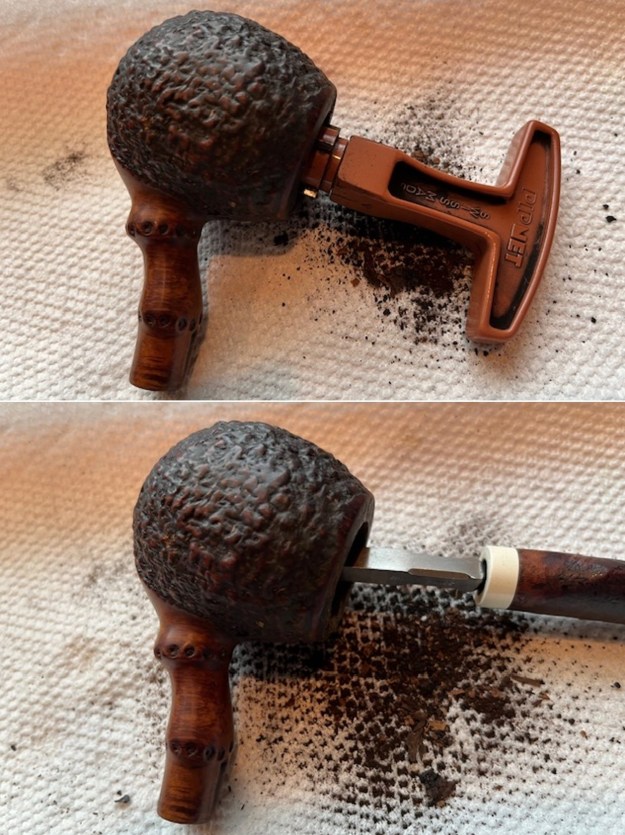
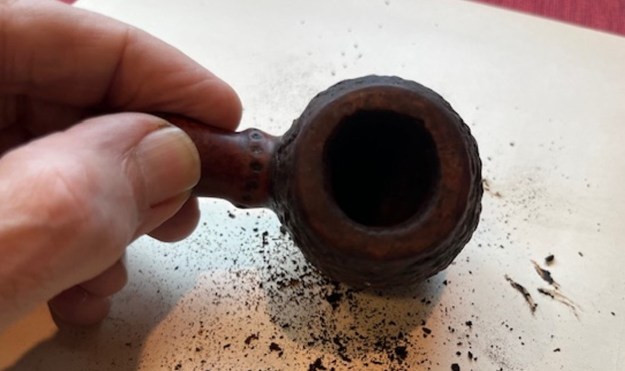
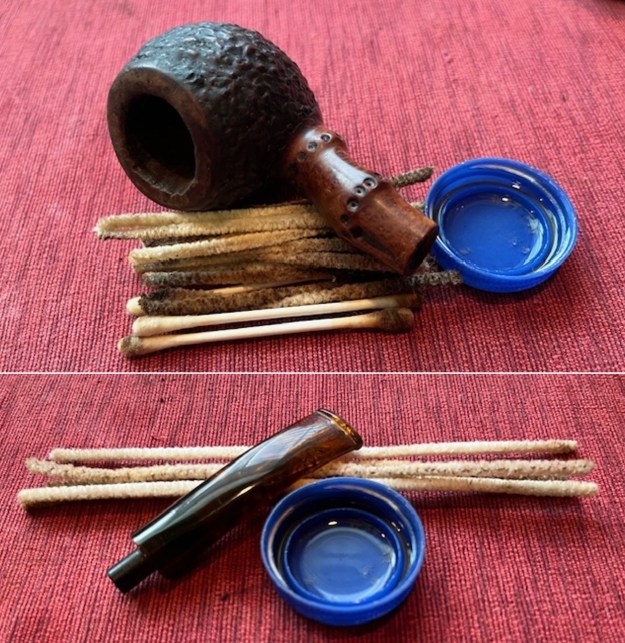
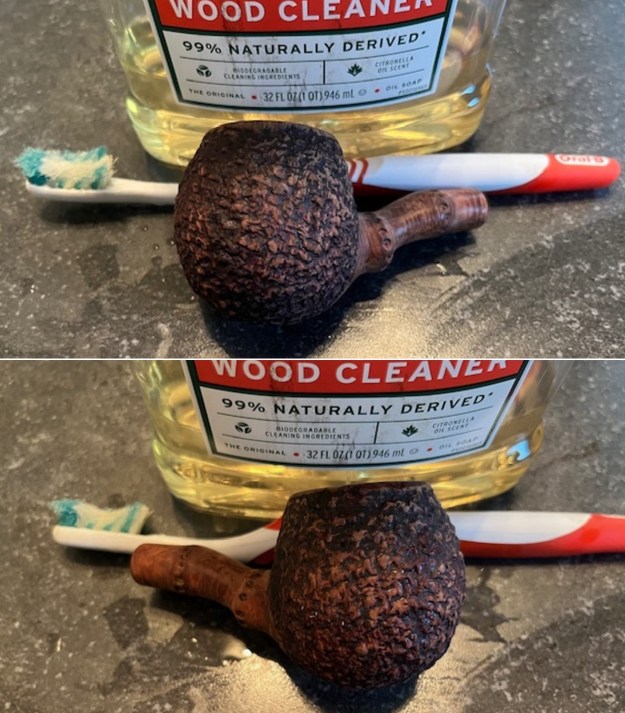
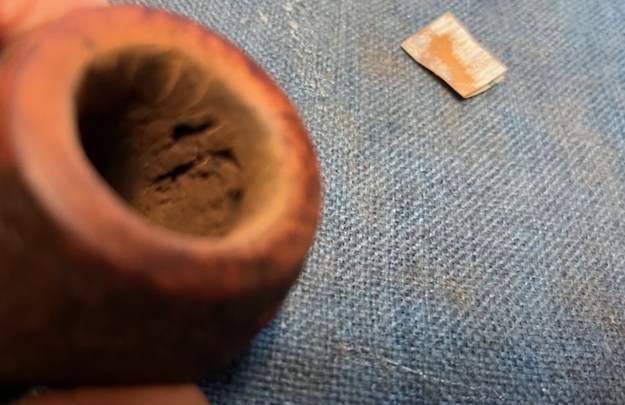
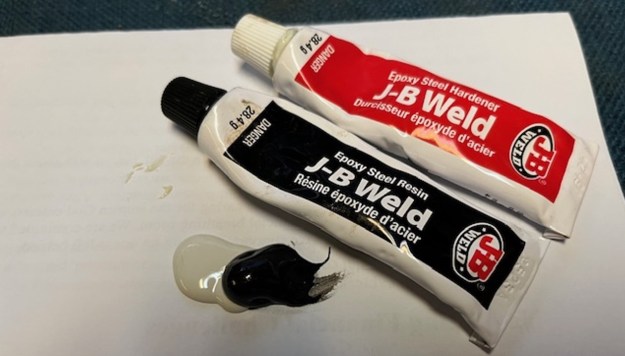
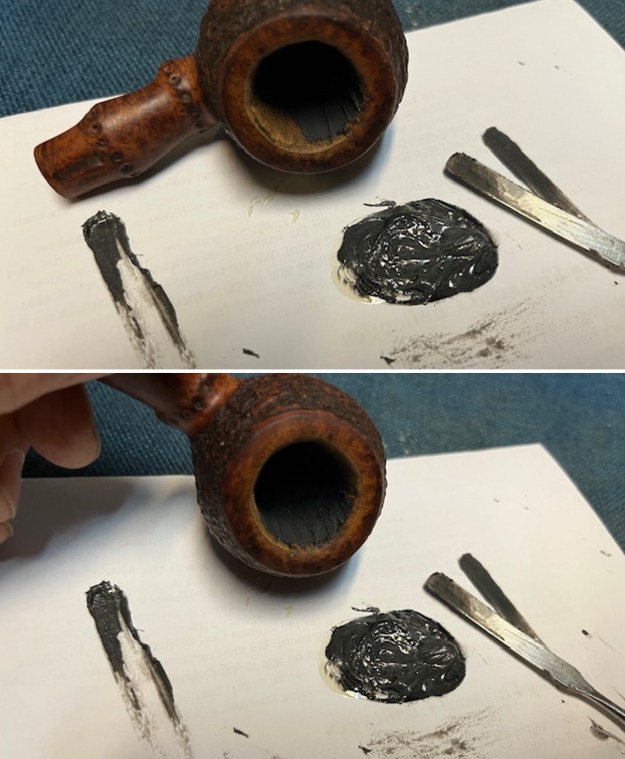
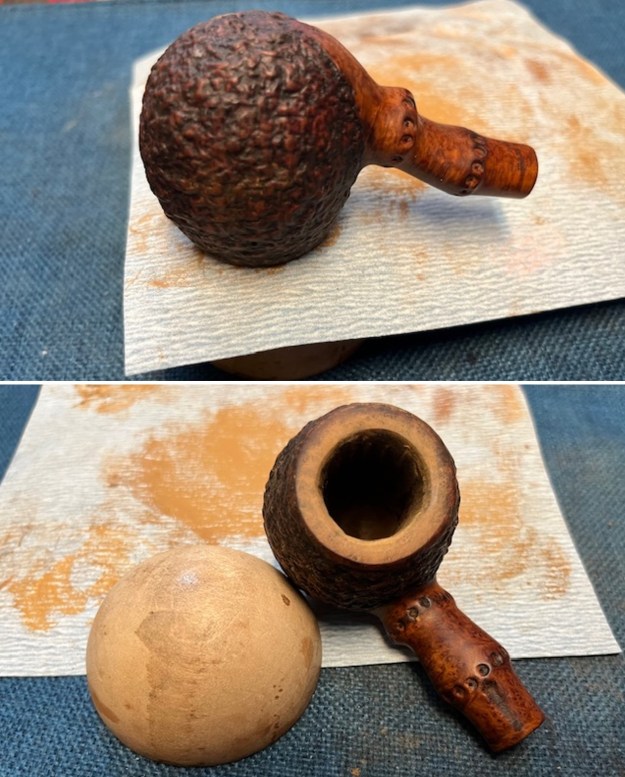
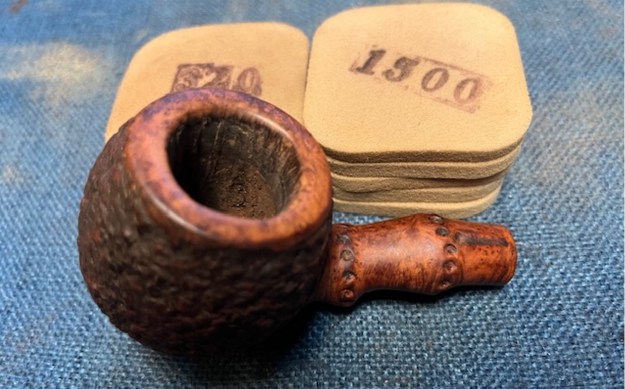
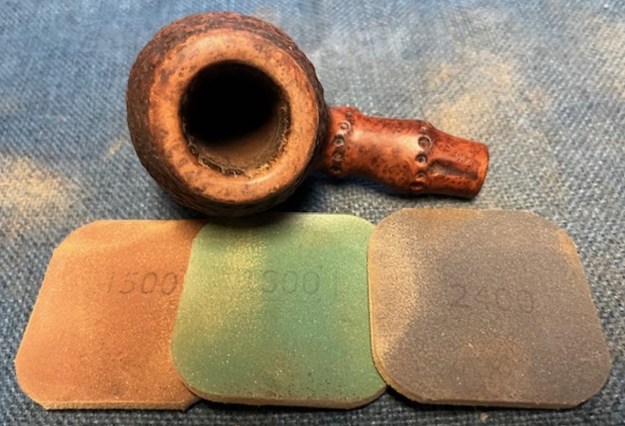
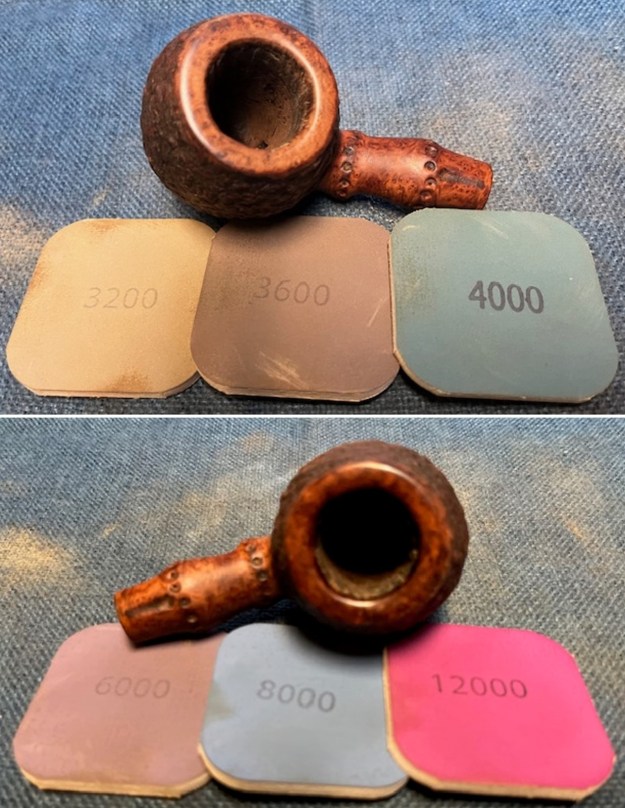
Now it was time to work on the pipe. I started my work on the pipe by reaming it with a PipNet pipe reamer and cleaning up the reaming with a Savinelli Fitsall Pipe Knife. I scraped the lava built up on the rim top with a small blade. It looked much better after the clean up. I cleaned out the inside of the shank and the airway in the stem with alcohol, pipe cleaners and cotton swabs. I removed the tars and oils with the cleaners and the alcohol. I scrubbed the rusticated surface of the bowl and shank with a tooth brush and undiluted Murphy’s Oil Soap to remove the debris and dust in the depths of the rustication. I rinsed it with warm water. I dried off the briar with a soft cloth. It looked very good at this point in the process. I sanded the walls of the bowl with a piece of 220 grit sandpaper wrapped around a piece of dowel. I smoothed out the walls and noticed that there were some deep gouges in the walls of the bowl. They were no burn marks or damage just deep gouges. I cleaned up the bowl walls and then mixed a batch of JB Weld and pressed it into the gouges in the walls of the bowl with a dental spatula. Once the repairs had cured I sanded the spots smooth again with the sandpaper and dowel. It looks much better. I would later coat it with a bowl coating after the repairs had cured several days. I used a folded piece of 220 grit sandpaper to work on the rim top and the inner edge of the bowl. I also used a wooden sphere and piece of sandpaper to reshape the inside edge of the bowl and bring it back to round. Once finished I smoothed the edge some more with the sandpaper to give the rim top a slight bevel on the inner edge. I sanded the rim top and edge with 320-3500 grit 2 x 2 inch sanding pads to remove the scratches and marks in the surface.I polished the rim top with 1500-12000 grit micromesh sanding pads to give it a deep shine.I wiped it down after each sanding pad. I worked some Before & After Restoration Balm into the surface of the briar with my fingertips and a horsehair shoe brush to clean, enliven and protect it. I let the balm sit for a little while and then buffed with a cotton cloth to raise the shine. The photos show the bowl at this point in the restoration process. After I finished polishing the pipe and rubbed it down with Before & After Balm. I checked to see that the repairs had cured. They were hard and I sanded the walls once again and wiped it down to clean it. I mixed a batch of bowl coating using charcoal powder and sour cream. I mixed it until the mixture was black/grey. It was a solid colour. I applied it to the repaired bowl walls with a folded pipe cleaner. I set it aside to cure. Now back to the stem. I filled in the deep tooth marks in the acrylic with a clear CA glue. Once the repairs cured I used a small file to flatten the against the surface and clean up the sharp edge of the button. I sanded the repaired areas with a folded piece of 220 grit sandpaper to further flatten and blend them into the surface. I sanded the stem further with 2×2 inch sanding pads to smooth out the stem surface. I wiped it down with a damp cloth after each sanding pad. I took photos of the stem after the sanding.I polished the stem with micromesh sanding pads – wet sanding with 1500-12000 grit sanding pads. I wiped it down after each sanding pad with some Obsidian Oil. I finished polishing it with Before & After Pipe Stem Polish – both Fine and Extra Fine and buffed it off with a cotton cloth. This Radice Rind 0 T/B Hand Made in Italy Hawkbill with an amber acrylic taper stem is a great looking pipe now that it has been restored. The beautiful rusticated finish really works well with the shape and the polished finish is stunning. The carved bamboo style shank and smooth rim top work well with the pipes. I put the stem back on the bowl and carefully buffed the smooth portions of the bowl and the stem with Blue Diamond on the buffing wheel. I gave the bowl multiple coats of Conservator’s Wax and the stem multiple coats of carnauba wax on the buffing wheel and followed that by buffing the entire pipe with a clean buffing pad. I hand buffed the pipe with a microfiber cloth to deepen the shine. The finished Radice Rind Hawkbill fits nicely in the hand and feels great. Give the finished pipe a look in the photos below. The dimensions of the pipe are Length: 6 inches, Height: 2 inches, Outside diameter of the bowl: 1 ½ inches, Chamber diameter: 7/8 of an inch. The weight of the pipe is 74 grams /2.61 ounces. I will be adding this to the rebornpipes store in the Italian Pipemakers Section soon. If you would like to add it to your collection let me know by email or message. Thanks for reading this blog and my reflections on the pipe while I worked on it.
As always, I encourage your questions and comments as you read the blog. Thanks to each of you who are reading this blog. Remember we are not pipe owners; we are pipe men and women who hold our pipes in trust until they pass on into the trust of those who follow us.

Restoring a Radice Pencil Shank Stack/Liverpool 31


by Steve Laug

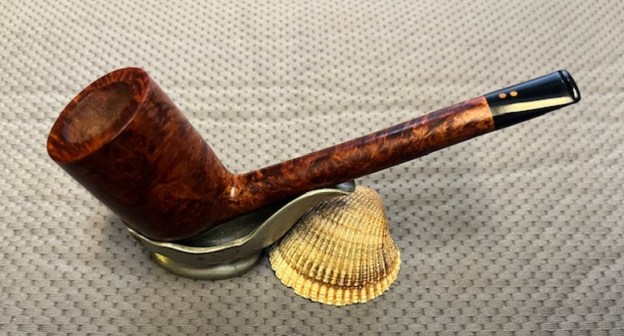
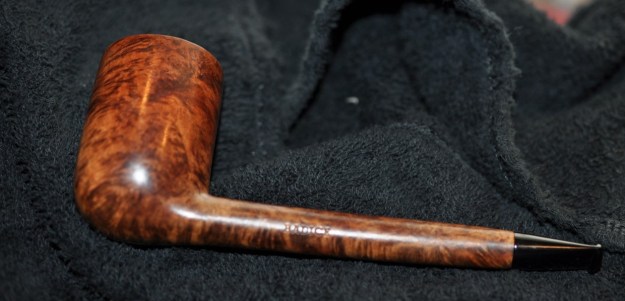
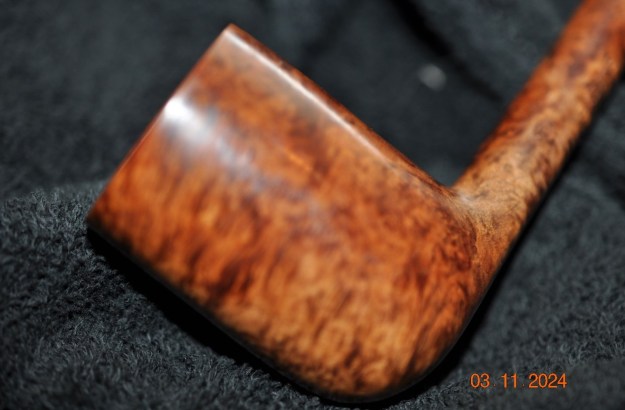
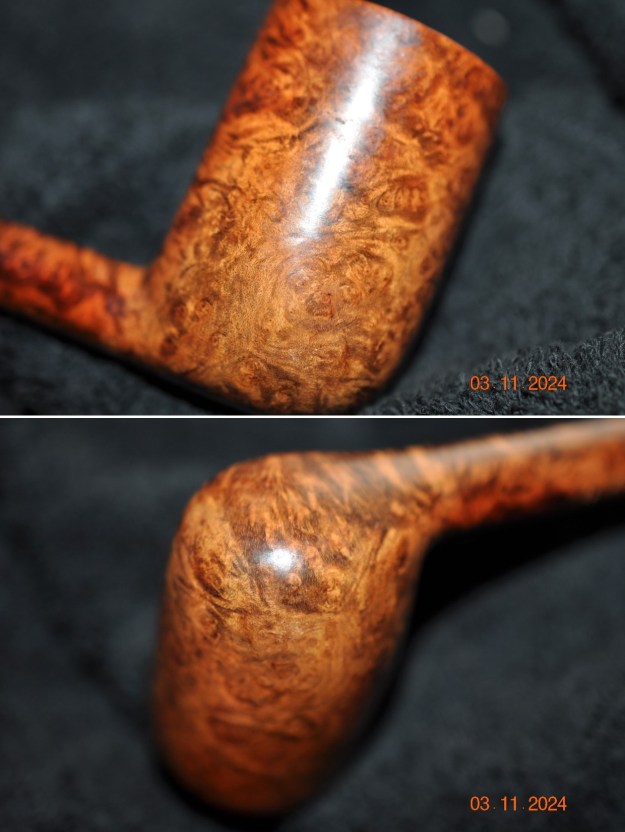
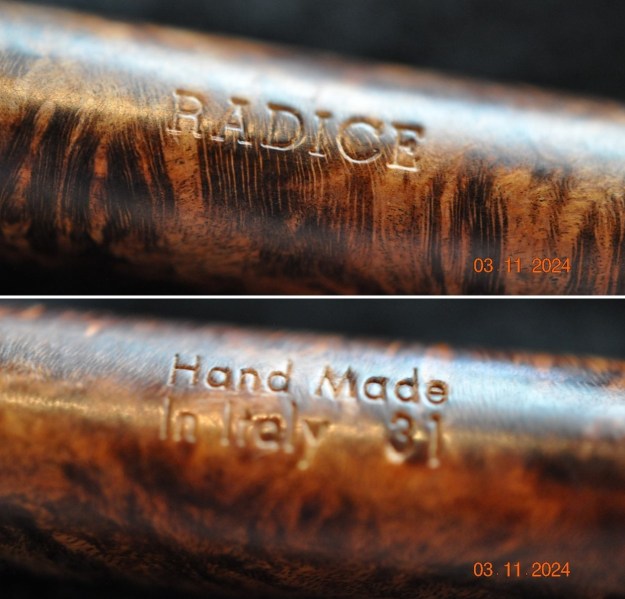
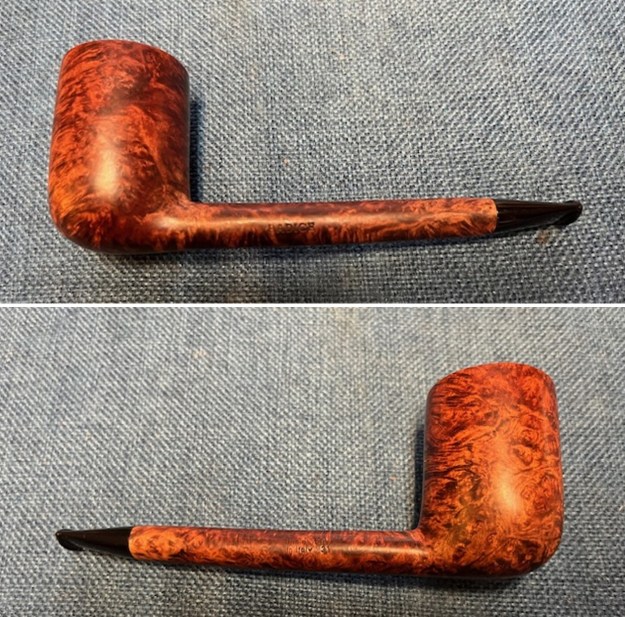
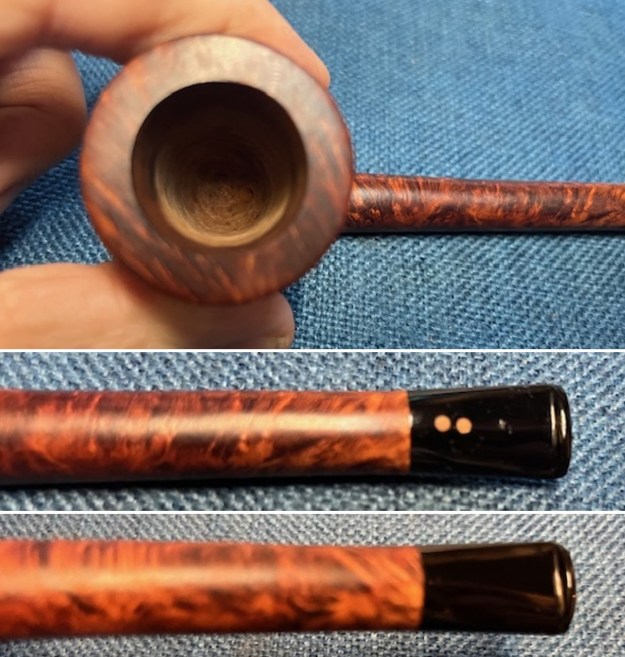
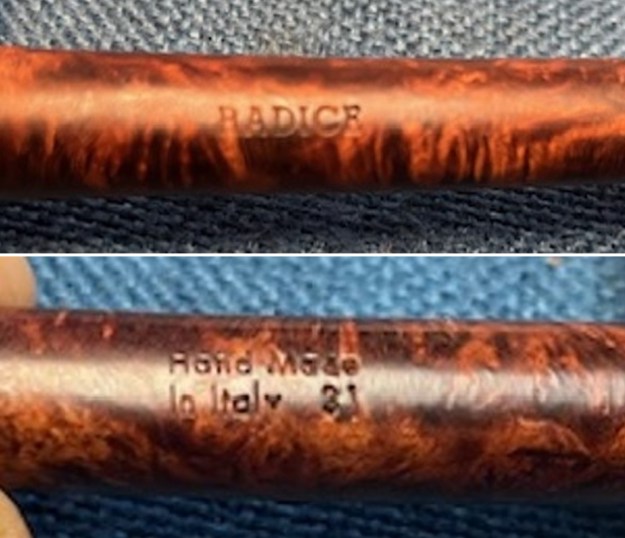
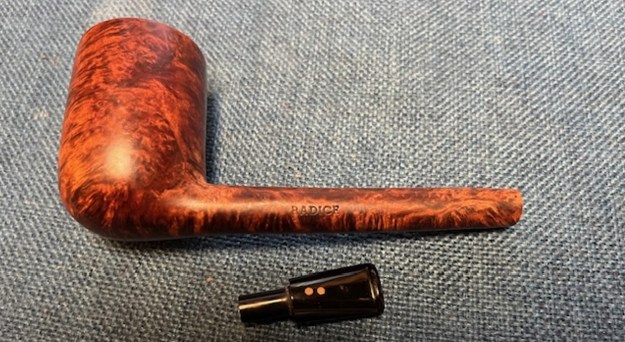
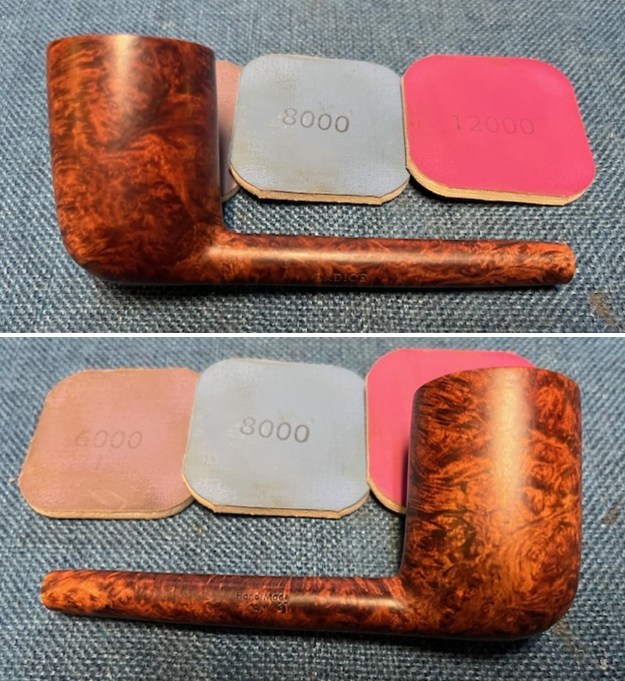
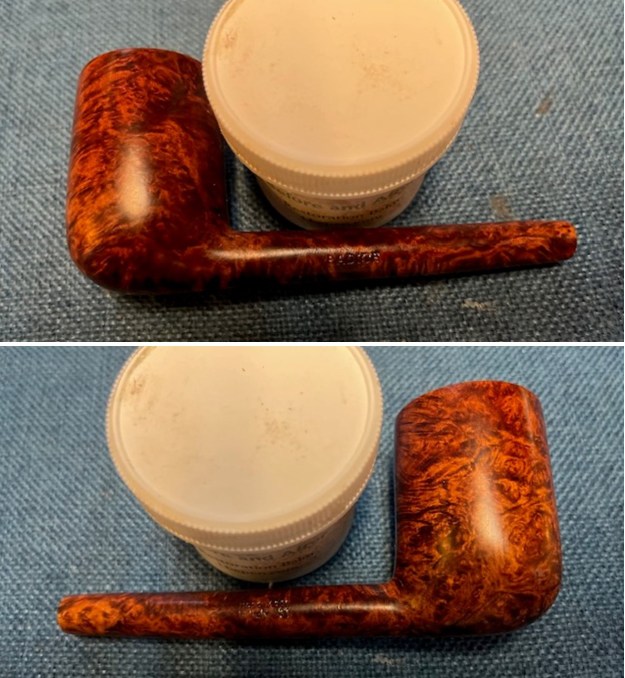
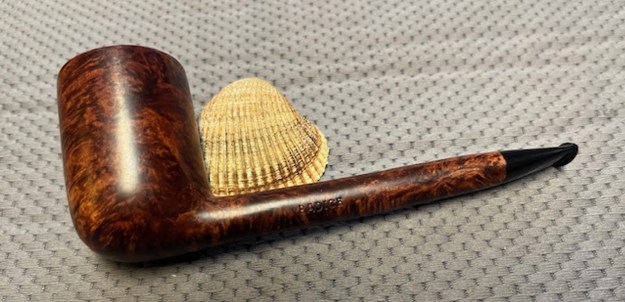
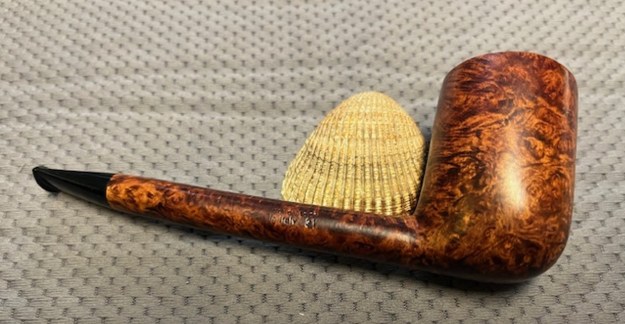
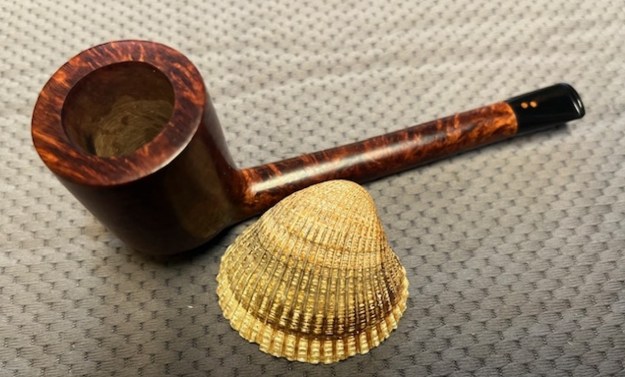
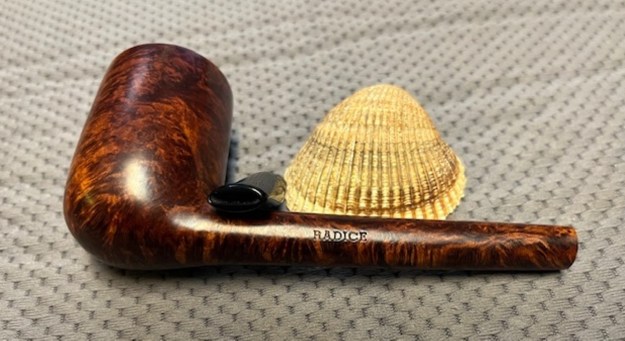
The next pipe on the table is one that we picked up in the lot from a good friend in Barrington, Rhode Island, USA on 08/22/2024. The smooth finish on this Italian made pipe and the Radice stamping are what caught our eye. It is stamped on the left side of the shank and reads Radice. On the right side it is stamped Hand Made [over] In Italy with the shape number 31 next to it. It has a classic Walnut Brown stain on the smooth finish that is a stark contrast to the short, stubby acrylic stem. It combines a tall stack shape bowl with a long, round Liverpool style shank and a taper stem. The bowl was clean and appears to have been recently reamed. It was a lightly smoked and well cared for pipe. The inner edge and the top look good though there is some darkening and some light lava on the top. The stem looks very good and has two small tooth marks and light chatter on the top and underside ahead of the button. The Radice inset Briar two spot logo is on the topside of the stem and looks to be in good condition. Jeff took some photos of the pipe to show the general condition of the pipe before he started his clean up. He took some photos of the rim top and bowl from various angles to give me a clear picture of the condition of the rim top and bowl. It is quite clean and the inside of the bowl is very clean and shows that the pipe has been lightly smoked. He included photos that show the top and underside of the stem. It is as described above. Jeff took some photos of the sides and heel of the bowl to show the condition of the finish on the pipe. The photos showed some great grain around the bowl and shank even with the grime in the finish. It is a great looking piece of briar. He took photos of the stamping on the sides of the shank. It was clear and readable as noted above.I started my search on the brand by looking on Pipephil’s site to see if there was any information on the Radice Handmade brand (http://www.pipephil.eu/logos/en/logo-r1.html). The line was not included there but there was some information in the side bar on the dot position on the stem and how to interpret them. It also gives some helpful information on the number stamp on the right side of the shank. I have included that portion below.From the information above I learned that the dot position is the usual position for the brand. That matched the stem well. The number on the shank side – 31 – actually turns out to not be a shape number at all. Rather it is a date number. Using the formula above – 1980+31 = 2011. The pipe in hand was made in 2011.

I turned to Pipedia to the article on Radice pipes and the birth and development of the brand (https://pipedia.org/wiki/Radice). I have included the information that I found there below.

Luigi Radice, born 1939, took a piece of briar in his hands for the first time in 1961, when he was employed at Carlo Scotti’s Castello in nearby Cantu.

After lengthy experience, he founded, together with Peppino Ascorti, the famous “Pipa del Baffo”, the “Caminetto” which through 1974 and 1975 made wealth with the precious cooperation of Gianni Davoli, Milanese distributor.

In 1980 Luigi undertook a new adventure, founding his own brand: the Pipa Radice. From the beginning his son, Gianluca, joined the workshop, together with Luigi’s father, Paolo Radice, who helped in some basic steps of production.

Only later my brother and I started working together with our father, trying to learn the secrets and the mastery to be able to create a pipe which could join artisanal estrus(?) to functionality.

We have always trusted the professionalism of Italian briar cutters to obtain the raw material. We season the briar in our workshop for at least three years. We believe that it is enough to produce a perfect pipe.

Our shaping is pretty diversified. A distinguishing feature is the use of various options, like the faux-bamboo shank or silver band or save-rim, hand engraved by Luigi.

About pipes for completely dedicated collectors, we would like to mention the several variations of pieces made using buffalo, moufflon, deer or roe horn.

The creative idea and the study of the technical side, lead us to invent pipes with a twin bore mouthpiece, coupled with a special production of oil cured pipes, taking inspiration from old English skills.

We have recently introduced the use of ebonite(vulcanite) mouthpieces, to satisfy the requests of our fellow pipesmokers.

Radice is a pipe which is continually evolving, keeping alive the treasured experience of 50 years of pipemaking of our father Luigi.

Now it was time to work on the pipe.

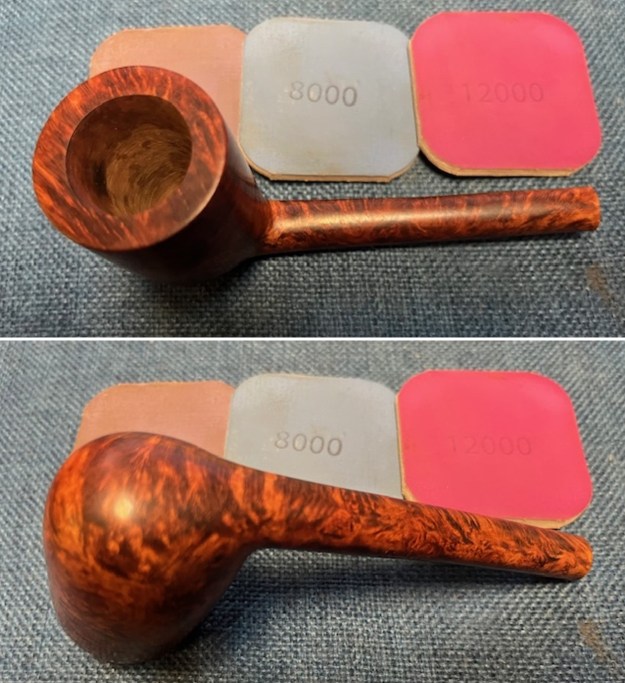
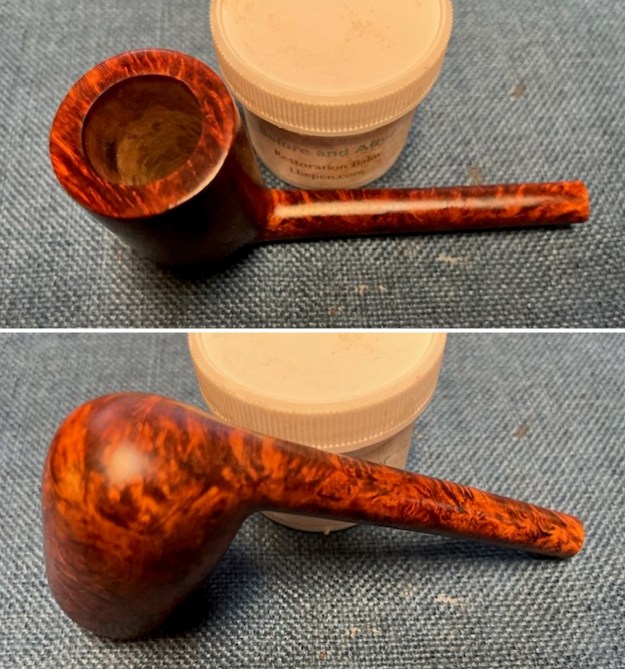
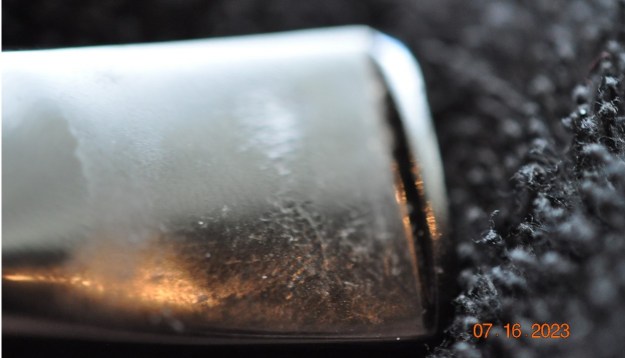
Armed with that information I turned to work on the pipe itself. Jeff had done a great job cleaning up the pipe as usual. He cleaned up the inside of the bowl with a Savinelli Fitsall Pipe Knife. The rim top and the inner edge of the bowl are in excellent condition. The bowl walls looked very good. He scrubbed the interior of the bowl and shank with shank brushes, pipe cleaners, cotton swabs and alcohol to remove the tars and oils. He scrubbed the exterior of the pipe with Murphy’s Oil Soap and a tooth brush to remove the grime from the finish. He scrubbed the inside of the stem with alcohol and pipe cleaners. He scrubbed the exterior with Soft Scrub and then soaked it in Briarville’s Pipe Stem Deoxidizer. He washed it off with warm water to remove the deoxidizer. The stem looked very good. I took photos of the pipe before I started working on it. I took close up photos of the bowl, rim top and stem to show how clean the pipe was. The bowl was clean and the rim top and the inner edge look beautiful. The stem was clean and the tooth marks on the topside are visible. The chatter is light and hardly visible.I took photos of the stamping on the sides of the shank. It is very clear and readable and read as noted above. I also removed the stem from the shank and took photos of the pipe to show the look of the parts. I polished the bowl and shank with 1500-12000 grit micromesh sanding pad – dry sanding it with the pads. I wiped the bowl down with a damp cloth after each pad. It began to take on a deep shine. The exterior of the bowl look better after sanding. I worked some Before & After Restoration Balm into the briar with my finger tips. I let it sit on the bowl for 10 minutes and then buffed it off with a paper towel and soft cloth. The product is a great addition to the restoration work. It enlivens, enriches and protects the briar while giving it a deep glow. It is a product I use on every pipe I restore. It was ready for the next step. I used a folded piece of 220 grit sandpaper to sand out the tooth marks and chatter on both sides of the stem. It did not take too much sanding and they were gone.I sanded the stem further with 320-3500 grit sanding pads and wiped the stem down after each pad with some Obsidian Oil on a cloth. The shine is coming back beautifully.I polished it with micromesh sanding pads – dry sanding with 1500-12000 grit pads and wiping the surface down with Obsidian Oil after each sanding pad. It is really shining. I polished it further with Before & After Stem Polish – both Fine and Extra Fine. I gave it another coat of Obsidian Oil to finish this step. This Radice Hand Made in Italy Stack/Liverpool with an acrylic taper stem is a great looking pipe now that it has been restored. The beautifully grained finish really works well with the shape and the polished finish is stunning. I put the stem back on the bowl and carefully buffed the bowl and the stem with Blue Diamond on the buffing wheel. I gave the bowl and the stem multiple coats of carnauba wax on the buffing wheel and followed that by buffing the entire pipe with a clean buffing pad. I hand buffed the pipe with a microfiber cloth to deepen the shine. The finished 2011 Radice Stack/Liverpool fits nicely in the hand and feels great. Give the finished pipe a look in the photos below. The dimensions of the pipe are Length: 5 ½ inches, Height: 2 inches, Outside diameter of the bowl: 1 3/8 inches, Chamber diameter: ¾ of an inch. The weight of the pipe is 41 grams /1.45 ounces. I will be putting it on the rebornpipes store in the Italian Pipe Makers Section shortly. Let me know via email or a message if you are interested in adding this pipe to your collection.

As always, I encourage your questions and comments as you read the blog. Thanks to each of you who are reading this blog. Remember we are not pipe owners; we are pipe men and women who hold our pipes in trust until they pass on into the trust of those who follow us.

New Life for a Radice Rind Rusticated Rhodesian Style Freehand


Blog by Steve Laug

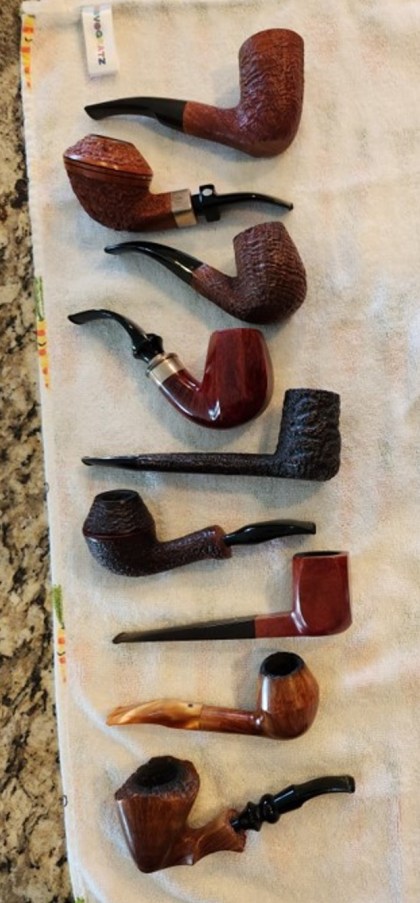
A few weeks ago I was contacted from a fellow in Montana who was selling his pipes as they had not been used for quite a few years. I asked him for a picture and he sent me the one to the left. It included the following brands (from the top to the bottom of the photo): Savinelli Autograph 5 Freehand, Mastro de Paja Ciocco 0C Bulldog, Mastro de Paja Media 1C Bent Billiard, Ser Jacopo Delecta Octagonal Bent Billiard, Caminetto Business KS118 Canadian, Radice Rind Rhodesian, Dunhill Bruyere ODA 836 Panel Billiard, Barontini Straight Grain B3 Freehand and a Ben Wade Martinique Hand Made in Denmark Freehand.

Almost all of them were higher end pipes and all were hand made pipes. They were a mix of finishes – smooth, sandblast and also rusticated. They were a mix of shapes as well and the majority of them were Italian Made other than the Dunhill and the Ben Wade Martinique. They were beautiful pipes and after exchanging quite a few photos of the pipes from various angles to get a sense of what was there we struck a deal. We sent him the payment and the pipes arrived in Idaho a few days after I left for Vancouver.

Jeff cleaned the all and today I received them in Vancouver and I am impressed with the way they cleaned up and the beauty of the brands. They truly are some beautiful pipes. I just need to put the final touches on each of them and address minor issues on the bowl rims and the stems and they should be good to go. I am really looking forward to working on each of them in the days ahead.

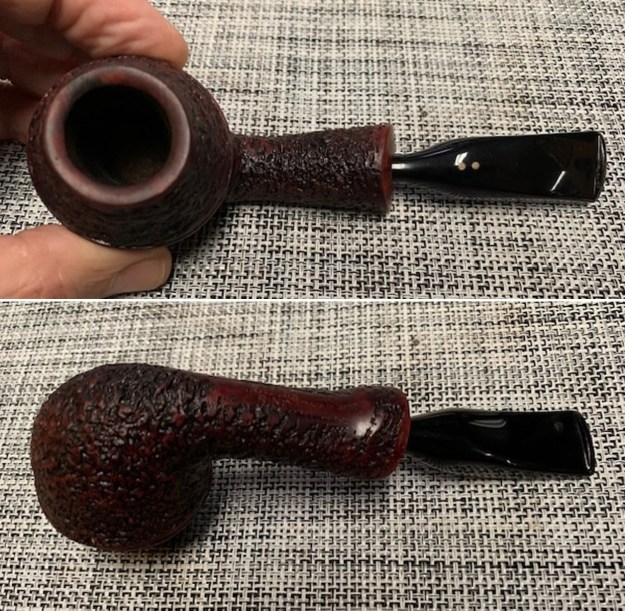
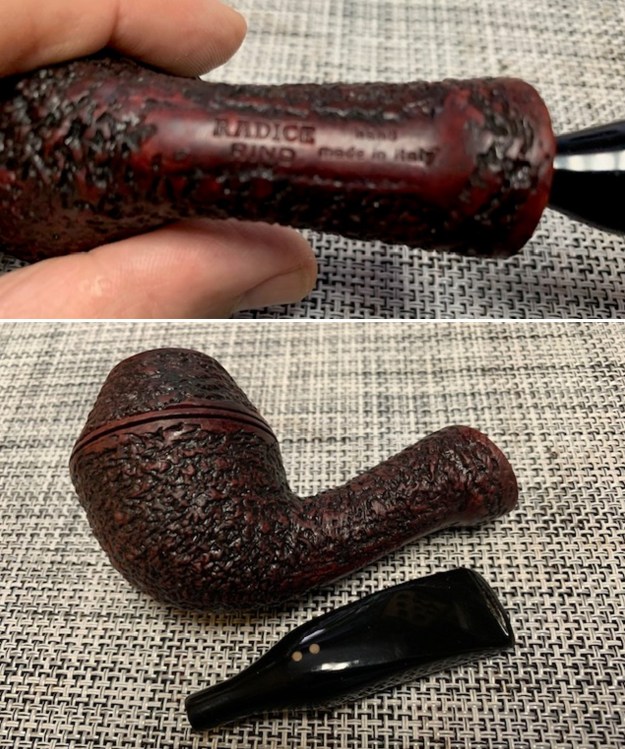
This evening after work I decided to start on the lot. I chose to work on the Radice Rind Rhodesian. It is a rusticated classic shaped Rhodesian with an Italian twist. The rustication is very dirty with grime and grit. It is a unique and well executed rustication that is a hallmark of the line. The pipe has twin smooth rings around the cap of the bowl. Under the thick coat of lava there appears to be a smooth rim top with an inward bevel. The bowl has a very thick cake that overflows on to the rim top. The shank end also has a smooth band around it and a smooth shank end with beautiful grain on it. The pipe is stamped on a smooth panel on the underside of the shank. It reads RADICE [over] RIND followed by Hand Made in Italy (in lower case) in two lines. The stamping is clear and readable. The rim top was dirty and had a burn on the right front of the inward bevel and what appeared to be some darkening around the inner edge of the bowl. The stem is acrylic and was dirty with light tooth marks and chatter on both sides ahead of the button and on the button itself. There two brass dots inlaid vertically on the topside of the fancy saddle stem. Jeff took photos of the pipe before he started his clean up work on it.Jeff took photos of the bowl and rim top to show what they looked like before the clean up. You can see the darkening and light lava on the inner edge and top of the rim. He also took some photos of the stem to show the condition of both sides. You can see the light marks on the top and underside next to the button. The photos of the sides and heel of the bowl show the style of the rustication around the bowl and shank. The stain adds depth finish on the pipe. Even under the grime it is a real beauty. The stamping on the underside of the shank is shown in the photo below. It is clear and readable as noted above. The Radice two dot stack on the stem is clean and readable.I started my search on the brand by looking on Pipephil’s site to see if there was any information on the Radice Rind line (http://www.pipephil.eu/logos/en/logo-r1.html). The line was not included there but there was some information in the side bar on the dot position on the stem and how to interpret them. I have included that portion below.I turned to Pipedia to the article on Radice pipes and the birth and development of the brand (https://pipedia.org/wiki/Radice). I have included the information that I found there below.

Luigi Radice, born 1939, took a piece of briar in his hands for the first time in 1961, when he was employed at Carlo Scotti’s Castello in nearby Cantu.

After lengthy experience, he founded, together with Peppino Ascorti, the famous “Pipa del Baffo”, the “Caminetto” which through 1974 and 1975 made wealth with the precious cooperation of Gianni Davoli, Milanese distributor.

In 1980 Luigi undertook a new adventure, founding his own brand: the Pipa Radice. From the beginning his son, Gianluca, joined the workshop, together with Luigi’s father, Paolo Radice, who helped in some basic steps of production.

Only later my brother and I started working together with our father, trying to learn the secrets and the mastery to be able to create a pipe which could join artisanal estrus(?) to functionality.

We have always trusted the professionalism of Italian briar cutters to obtain the raw material. We season the briar in our workshop for at least three years. We believe that it is enough to produce a perfect pipe.

Our shaping is pretty diversified. A distinguishing feature is the use of various options, like the faux-bamboo shank or silver band or save-rim, hand engraved by Luigi.

About pipes for completely dedicated collectors, we would like to mention the several variations of pieces made using buffalo, moufflon, deer or roe horn.

The creative idea and the study of the technical side, lead us to invent pipes with a twin bore mouthpiece, coupled with a special production of oil cured pipes, taking inspiration from old English skills.

We have recently introduced the use of ebonite(vulcanite) mouthpieces, to satisfy the requests of our fellow pipesmokers.

Radice is a pipe which is continually evolving, keeping alive the treasured experience of 50 years of pipemaking of our father Luigi.

Now it was time to work on the pipe.

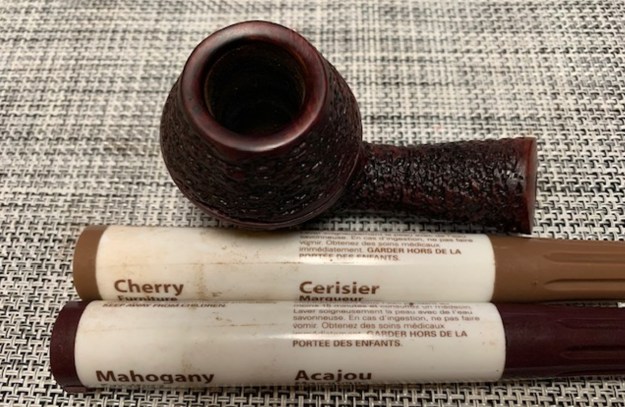
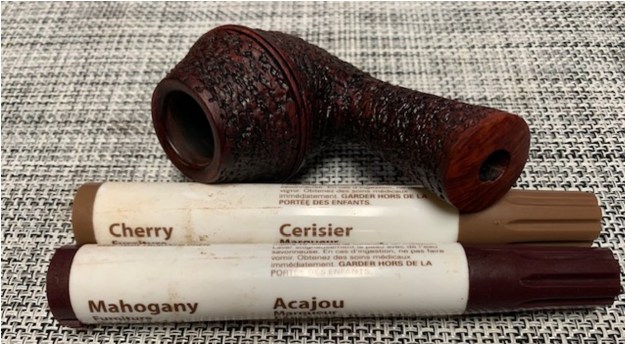
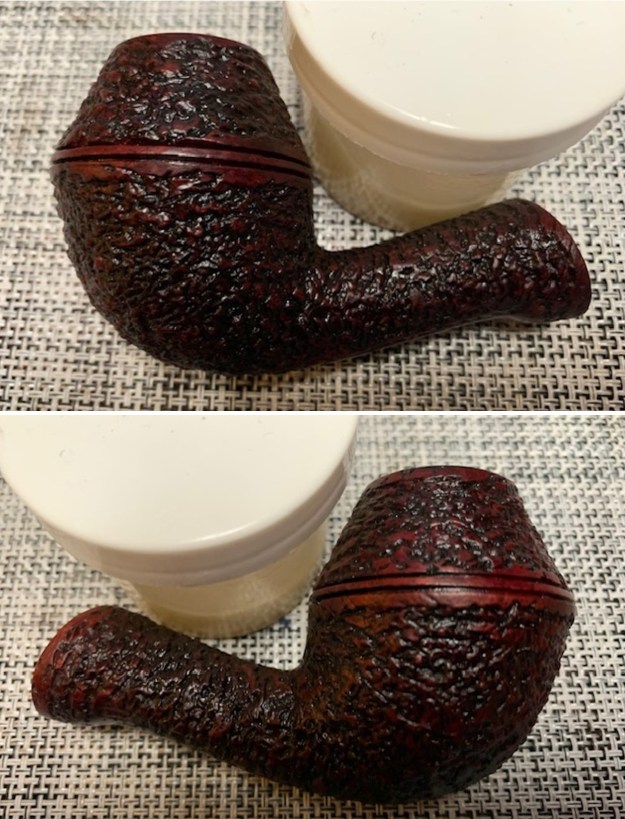
Jeff had cleaned up the pipe with his usual thoroughness. He reamed the pipe with a PipNet Pipe Reamer and cleaned up the remnants with a Savinelli Fitsall Pipe Knife.  He scrubbed the bowl with undiluted Murphy’s Oil Soap with a tooth brush. He rinsed it under running warm water to remove the soap and grime. He cleaned out the inside of the shank and the airway in the stem with alcohol, cotton swabs and pipe cleaners. He soaked the stem in Before & After Deoxidizer and rinsed it off with warm water. I took photos of the pipe once I received it. I took close up photos of both the rim top and the stem. Jeff had been able to get the grime and lava off of the rim top and it looked pretty incredible. Even the darkening and marks on the rim top on the right side look much better. The stem looked very clean. The tooth marks and chatter were minimal and predominantly on the underside near the button. They should be easy to remove. The stamping on the shank side was readable as noted above. I also took a photo with the stem removed to give an idea of the perspective and design of the pipe.I started my work on the pipe by addressing the slight darkening on the top and the edge of the bowl with a folded piece of 220 grit sandpaper. I was able to remove the damage and the darkening. Over all the rim top and edges looked much better. I polished it with 1500-2400 grit micromesh sanding pads and wiped off the debris. I touched up the stain on the rim top with a Cherry and a Mahogany stain pen to blend it into the surrounding bowl colour and particularly the smooth shank end. It worked very well. I worked some Before & After Restoration Balm into the finish of the bowl and shank with my fingers and a horsehair shoe brush. I want the product to go deep into the finish because it works to clean, enliven and protect the briar. Once I was confident that it was deeply worked into the finish I wiped it off and buffed it with a soft cloth to polish it. The pipe really began to have a rich shine. I took some photos of the bowl at this point to mark the progress in the restoration. The finish on the pipe is beautiful in the photos below. I set the bowl aside and turned to work on the stem. I sanded out the tooth marks and chatter on the surface of the stem with 220 grit sandpaper. I started polishing it with 600 grit wet dry sandpaper.I polished the acrylic stem with micromesh sanding pads – wet sanding it with 1500-12000 grit pads. I wiped it down with Obsidian Oil after each sanding pad. I finished polishing it with Before & After Pipe Polish – both the Fine and Extra Fine polishes. I gave it a final coat of oil and set it aside to dry.This Radice Rind Hand Made in Italy Rhodesian Freehand with an acrylic saddle stem is a great looking pipe now that it has been restored. The beautiful rusticated finish really works well with the shape and the polished finish is stunning. The flared shank and smooth freehand style shank end is a great addition. I put the stem back on the bowl and carefully buffed the smooth portions of the bowl and the stem with Blue Diamond on the buffing wheel. I gave the bowl multiple coats of Conservator’s Wax and the stem multiple coats of carnauba wax on the buffing wheel and followed that by buffing the entire pipe with a clean buffing pad. I hand buffed the pipe with a microfiber cloth to deepen the shine. The finished Radice Rind Rhodesian fits nicely in the hand and feels great. Give the finished pipe a look in the photos below. The dimensions of the pipe are Length: 6 inches, Height: 2 ¼ inches, Outside diameter of the bowl: 1 ¼ inches, Chamber diameter: ¾ of an inch. The weight of the pipe is 66 grams /2.33 ounces. I will be keeping this one here for awhile. I have been wanting a Radice Rind and this one ticks all my boxes. I am looking forward to enjoying it. Thanks for reading this blog and my reflections on the pipe while I worked on it.

As always, I encourage your questions and comments as you read the blog. Thanks to each of you who are reading this blog. Remember we are not pipe owners; we are pipe men and women who hold our pipes in trust until they pass on into the trust of those who follow us.

Replacing a tenon and restoring a Radice Silk Cut Billiard


Blog by Steve Laug

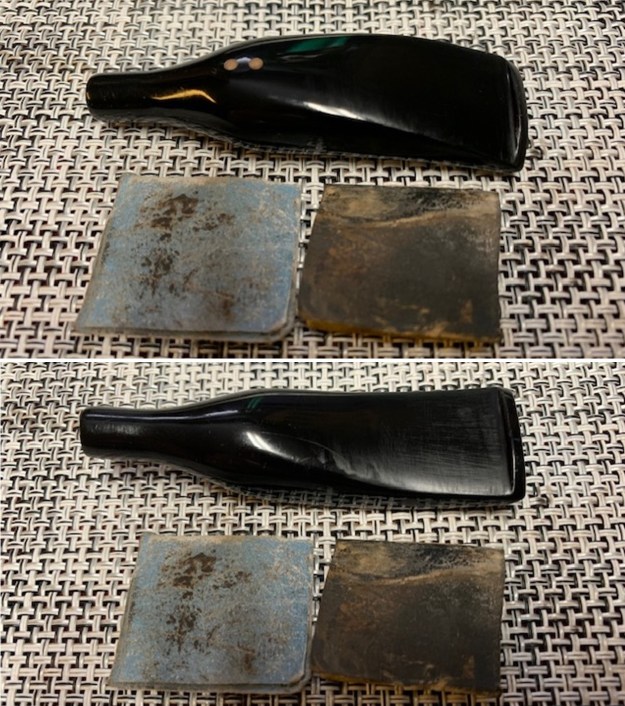
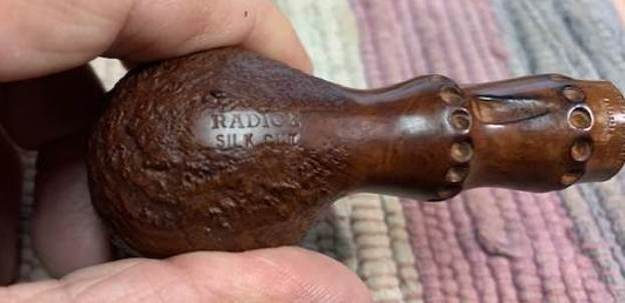
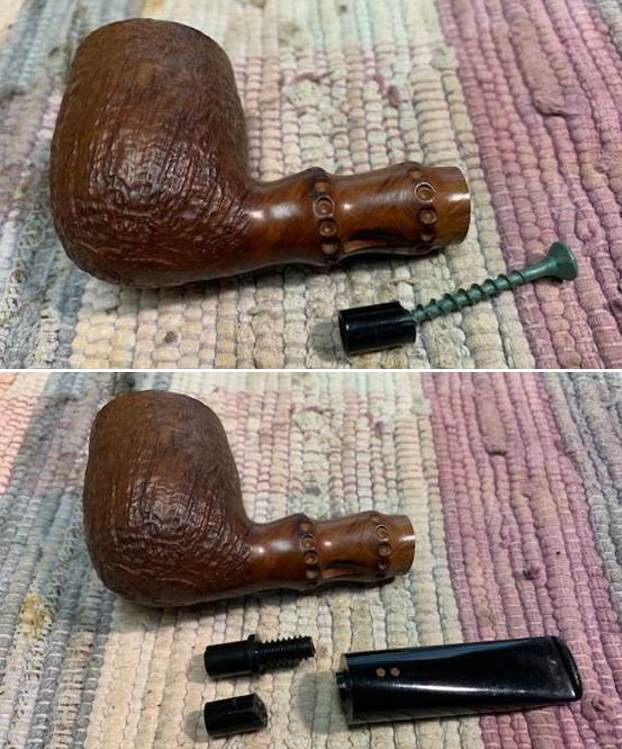
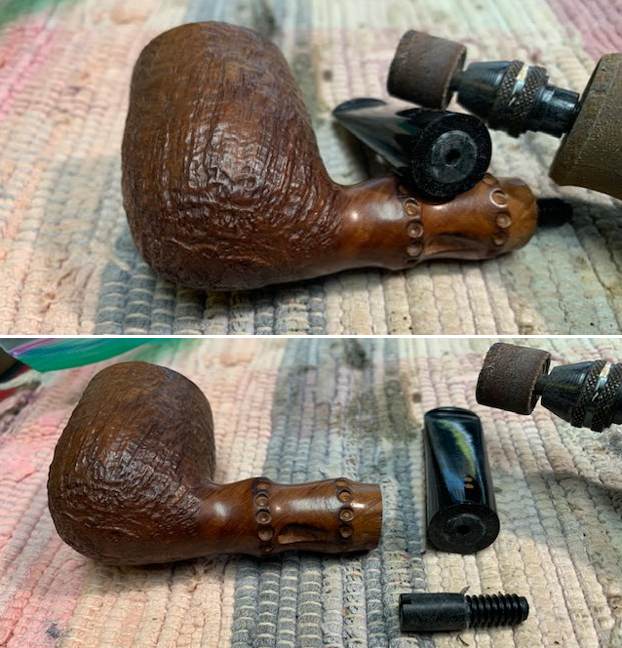
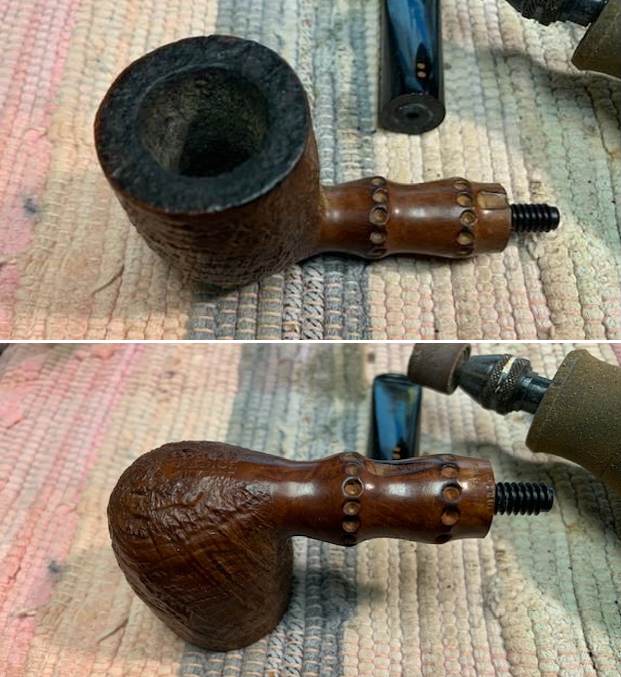
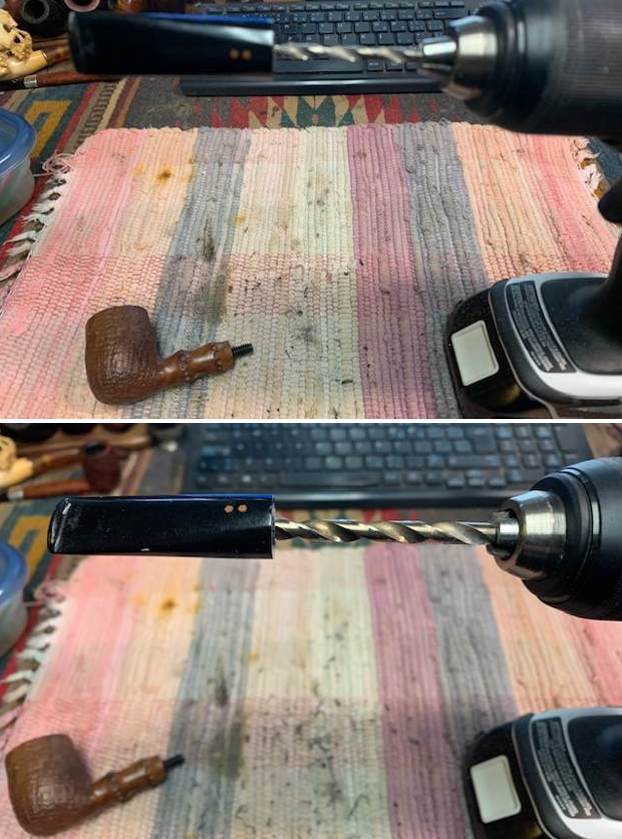
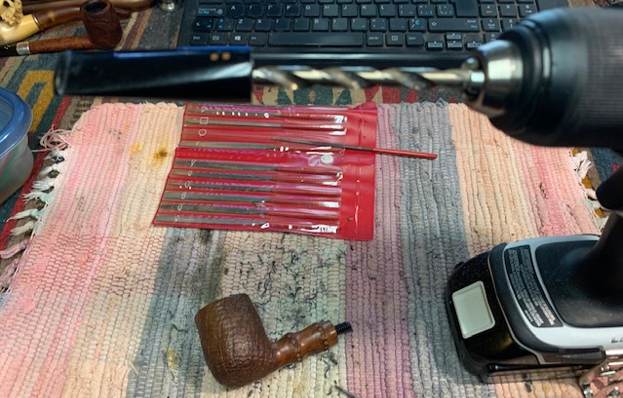
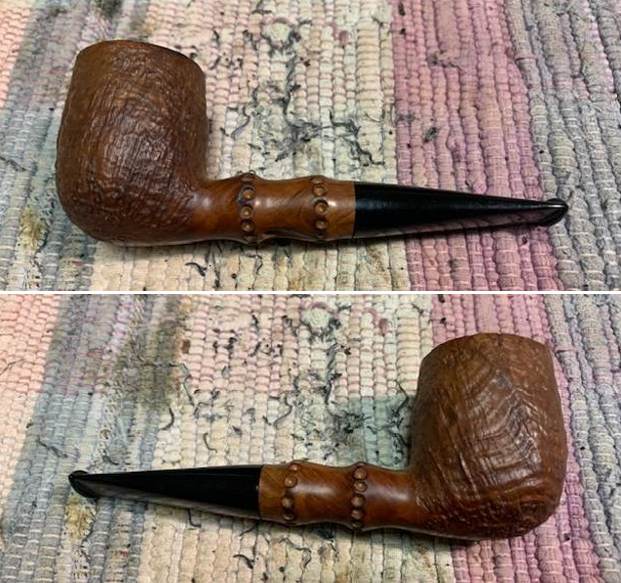
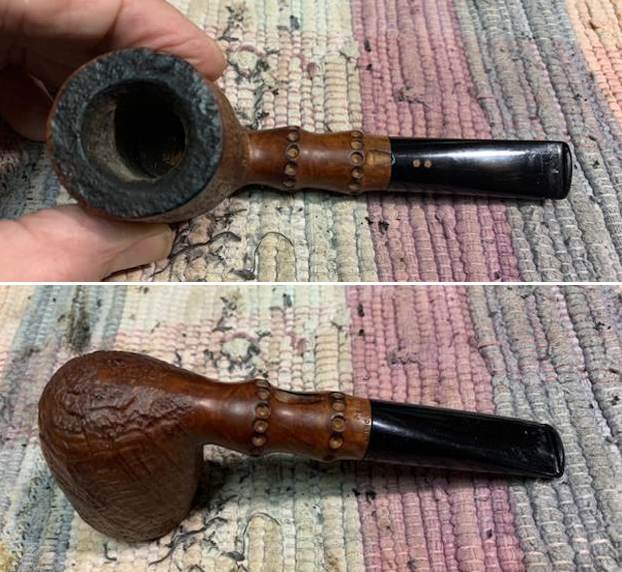
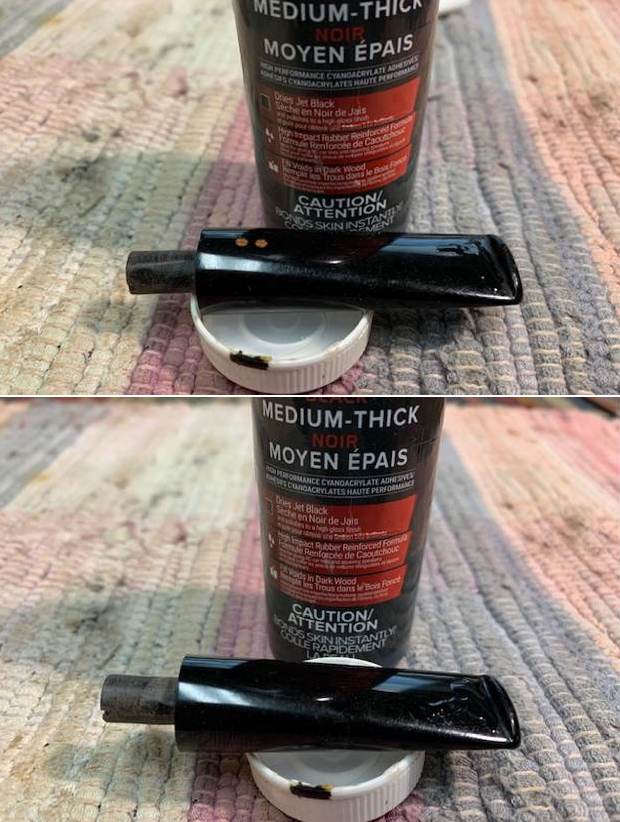
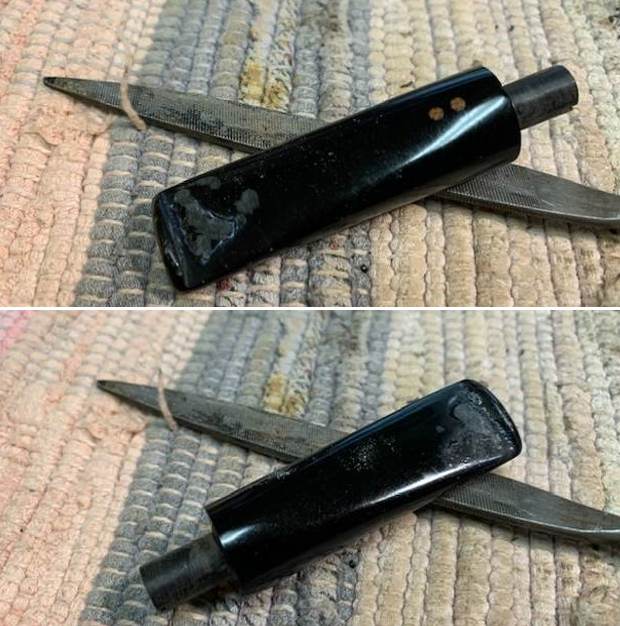
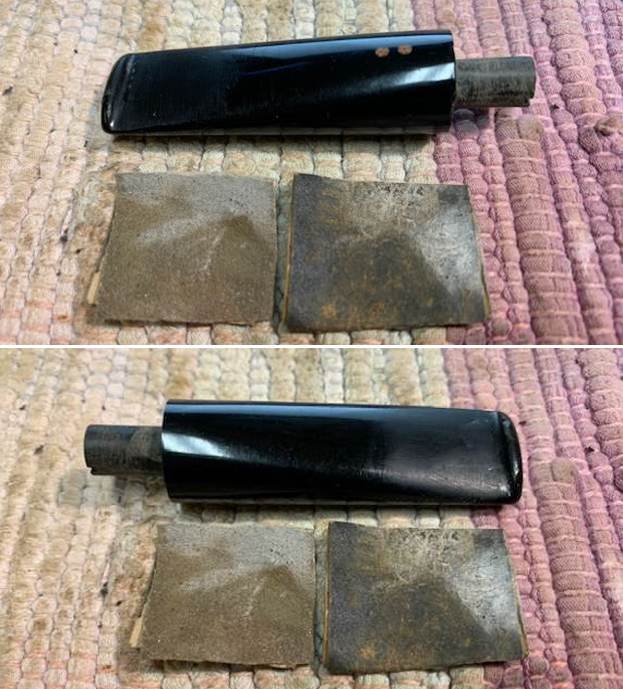
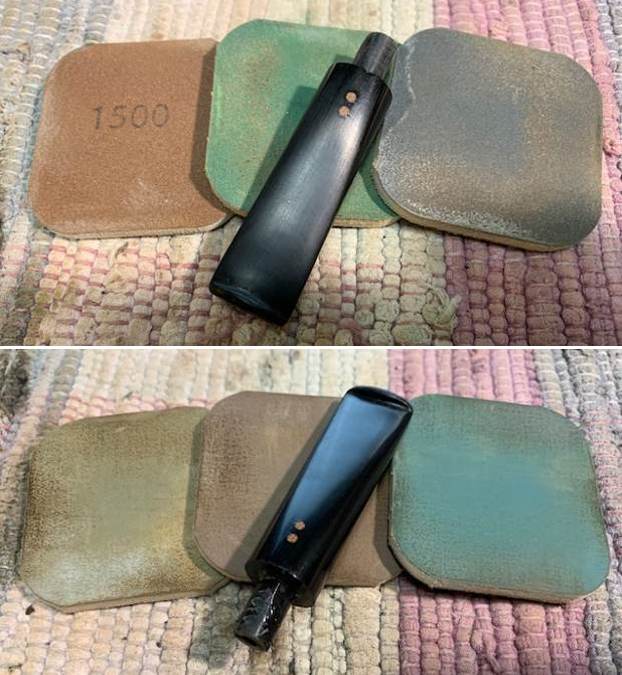
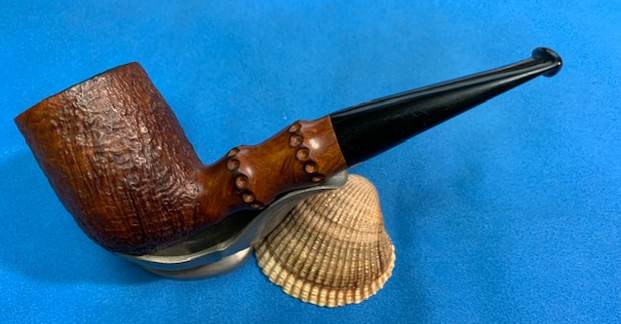
The next pipe on the table is a Radice Sandblast Billiard with a faux Bamboo shank. The briar has been carved to look like a piece of Bamboo but is actually briar. The pipe is stamped on the heel and reads Radice [over] Silk Cut and on the underside of the shank end it reads Hand [over] Made in Italy. It really is a beautiful pipe and the combination of “Bamboo” and the sandblast works really well the tapered acrylic stem. The fellow who sent it to me is a previous customer and in his box were two pipes with a snapped tenon – the Radice and a House of Robertson. This one was quite dirty with a thick cake in the bowl and overflowing onto the rim top. There was some burn damage on the inner edge of the rim at the back of the bowl and the pipe was dull and dusty. The tenon had snapped off cleanly at the shank end with no damage to the briar. The stem had tooth marks on both the top and underside ahead of the button and was also dirty. I took some photos of the pipe before I started my work on it. I took a close up photo of the rim top to show the condition of the bowl and inner edge. You can see the damage on the back inner edge of the rim. It will become more evident once the bowl has been reamed and cleaned. The photos of the stem show the tooth marks and chatter on both sides near the button.I took photos of the stamping on the heel of the bowl and the shank end to capture how it looked.I began my work on this pipe by pulling the broken tenon from the shank. I generally use a dry wall screw and twist it into the airway of the broken tenon and wiggle it free. This one came out quite easily. I went through my replacement tenons and found one that would work on this stem.I sanded the broken end of the tenon remaining on the stem with a sanding drum on my Dremel. I also sanded the diameter of the new tenon at the same time to get a good fit in the shank. I took photos of the tenon in the shank at this point to show the fit. I drilled out the airway on the stem with successively larger drill bits to accommodate the threaded end of the tenon. The last bit was ¼ inch which is perfect for the tenon. I slipped the stem over the tenon and took photos of the pipe at this point. It looks very good. With that done I turned my attention to the bowl. I reamed it with a PipNet reamer and took the cake back to briar. I cleaned up the remnants with a Savinelli Fitsall pipe knife. I sanded the bowl walls with a piece of dowel wrapped with 220 grit sandpaper. I cleaned up the rim top with a brass bristle wire brush to remove the lava in the sandblast and a bit of the burn damage on the back inner edge of the bowl.I cleaned out the internals on the stem and shank with pipe cleaners, cotton swabs and alcohol until they were clean.I rubbed down the bowl with Before & After Restoration Balm to clean, enliven and protect the briar. I worked it into the blast with a horsehair shoe brush. I let it sit and do its magic for 10 minutes and then buffed it off with a soft cloth. I set the bowl aside and turned my attention to the acrylic stem. I glued the tenon in the stem with Black Super Glue. While it cured I worked on the tooth marks in the stem.I cleaned up the tooth marks with alcohol and a cotton swab. I filled them in with black super glue and set it aside to cure.Once it had cured I flattened out the repairs with a small flat file. I sanded them with 220 grit sandpaper to further flatten them out and blend them into the surrounding area. I started polishing the stem with 400 grit wet dry sandpaper. I polished the acrylic stem with micromesh sanding pads – dry sanding with 1500-12000 grit pads. I wiped the stem down after each pad with a damp cloth. I finished the polishing with Before & After Stem Polishes – both Fine and Extra Fine. I wiped the stem down with a cloth impregnated with Obsidian Oil to protect and give the deep shine to the stem. I was happy to be finished with this beautiful Radice Silk Cut Billiard. The stem fit well and looked good with the rich finish of the sandblast bowl and faux bamboo shank. I buffed the pipe with Blue Diamond on the buffing wheel and gave the bowl and shank multiple coats of Conservator’s Wax. I buffed it with a clean buffing wheel to raise the shine. I hand buffed it with a microfiber cloth to deepen the shine. The Radice is a great looking pipe that ticks all of my boxes. The dimensions of the pipe are Length: 5 inches, Height: 2 inches, Outer Diameter of the bowl: 1 ½ inches, Diameter of the chamber: 7/8 of and inch. The weight of the pipe is 48 grams/1.69 ounces. I will be packing it up to send back to my friend in Idaho once I finish the second pipe he sent. Thanks for reading the blog.

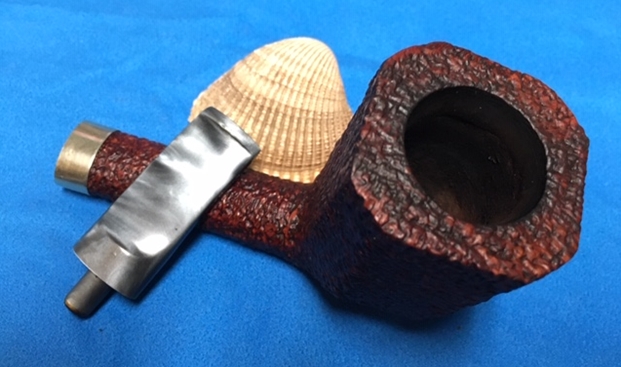
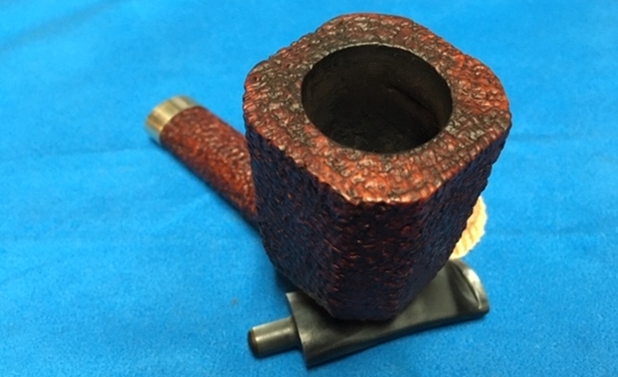
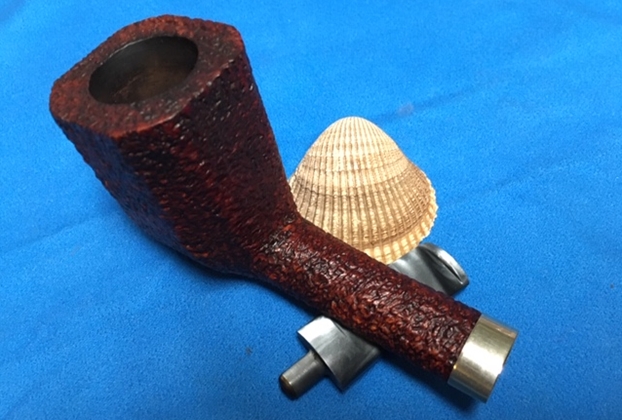
New Life for a Hand Made Radice Rind GT Panel


Blog by Steve Laug

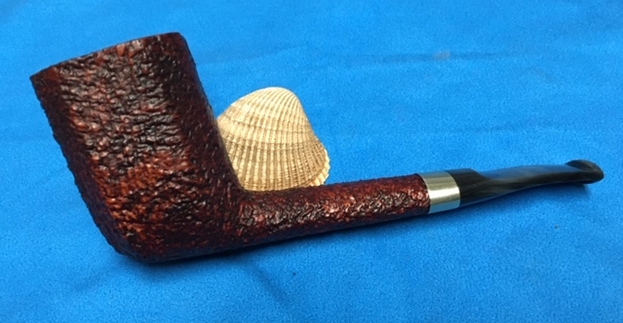
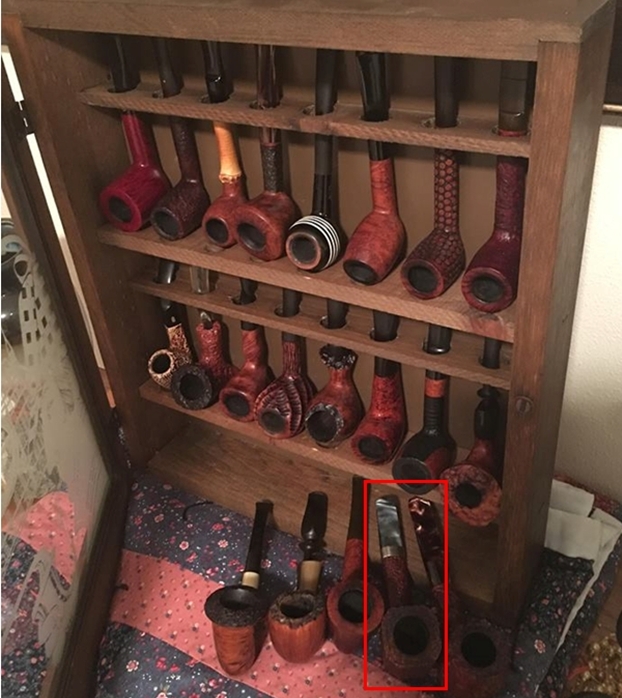
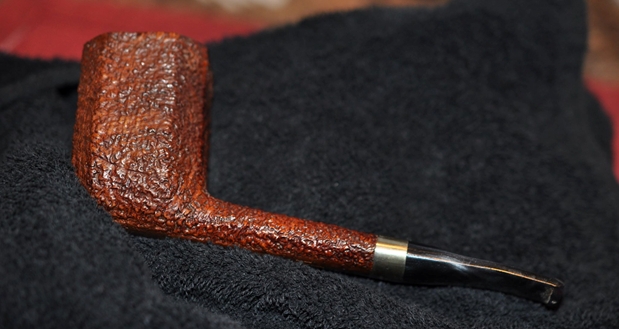
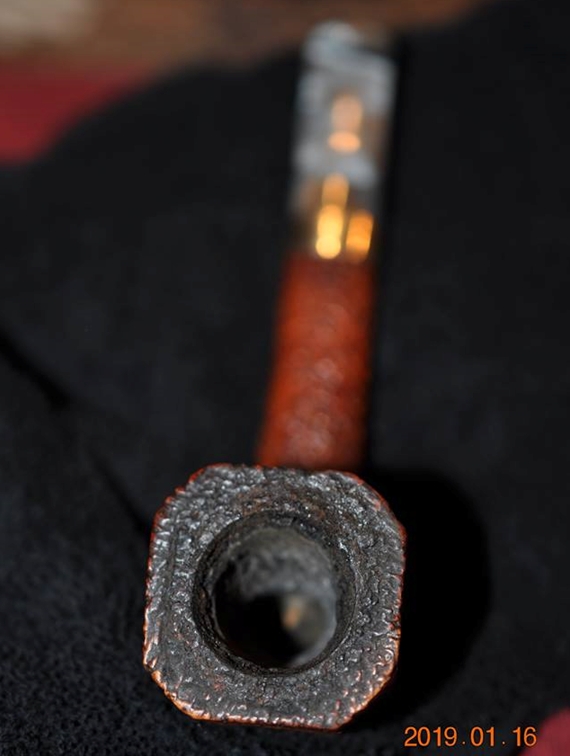
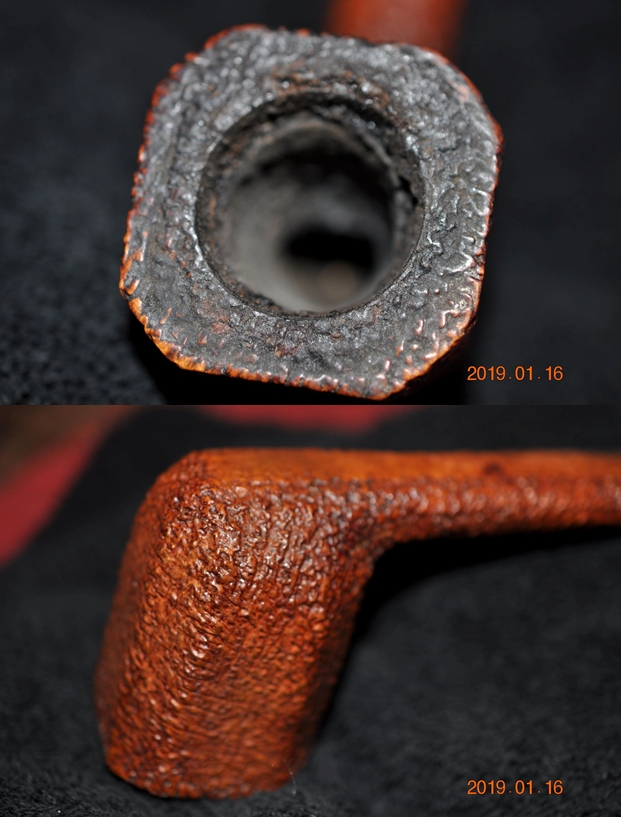
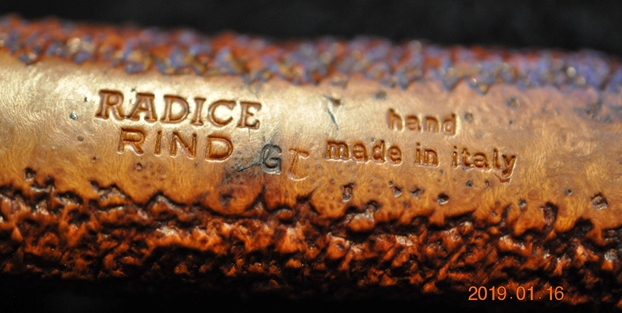
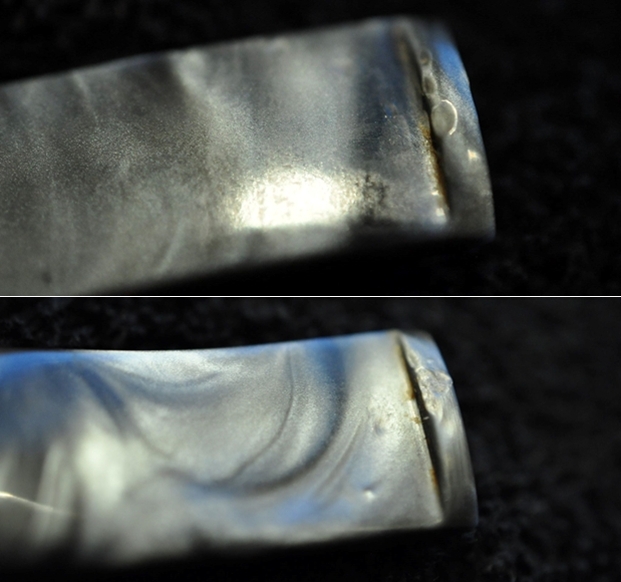
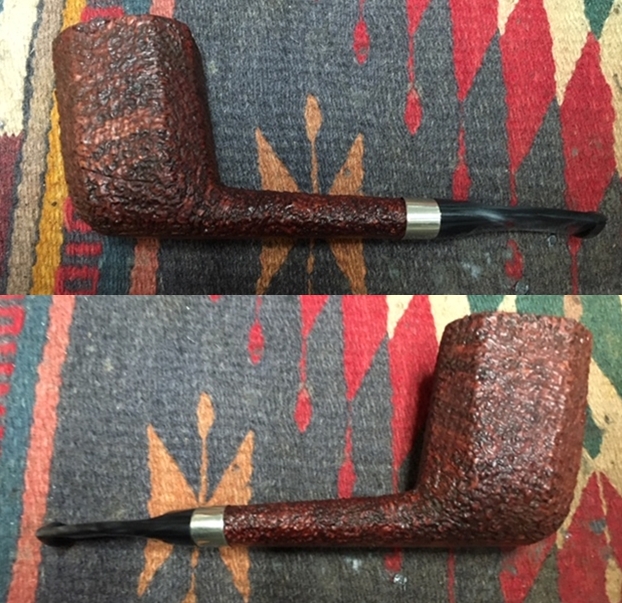
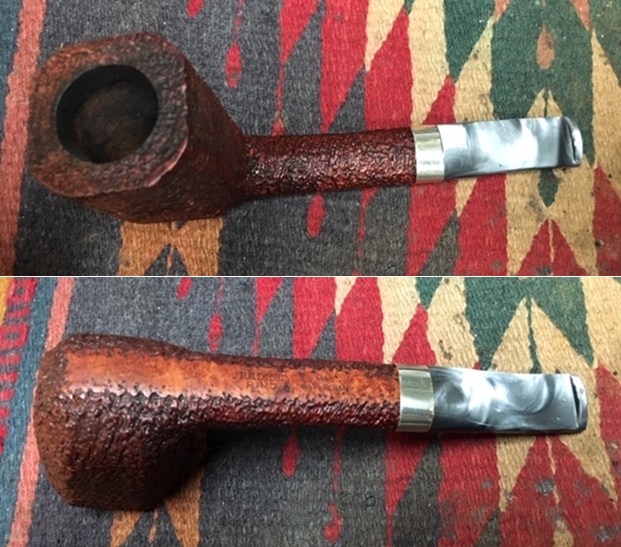
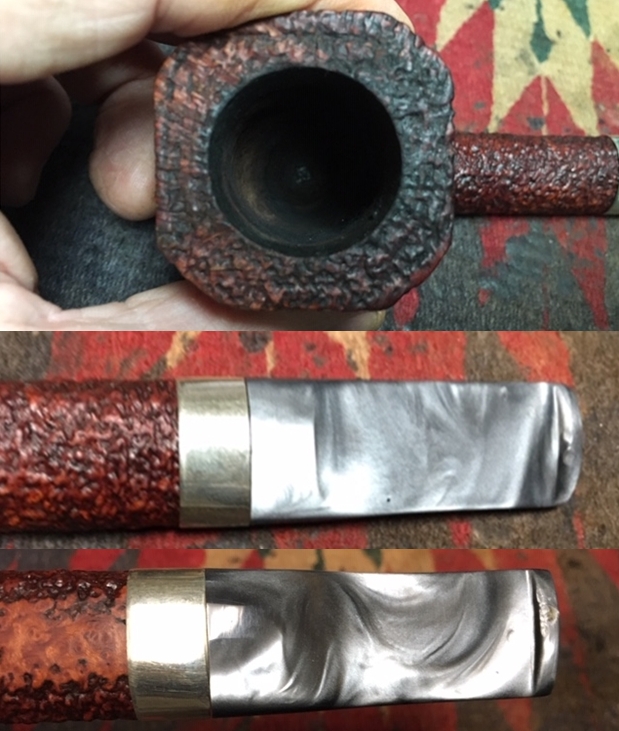
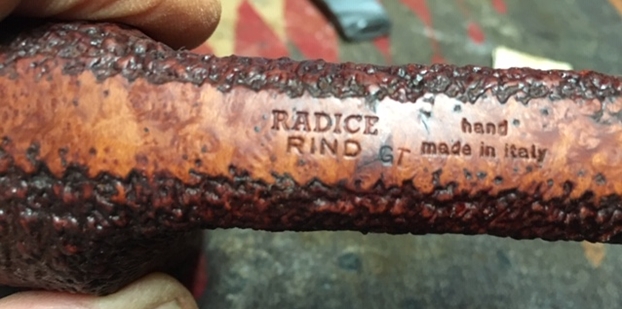
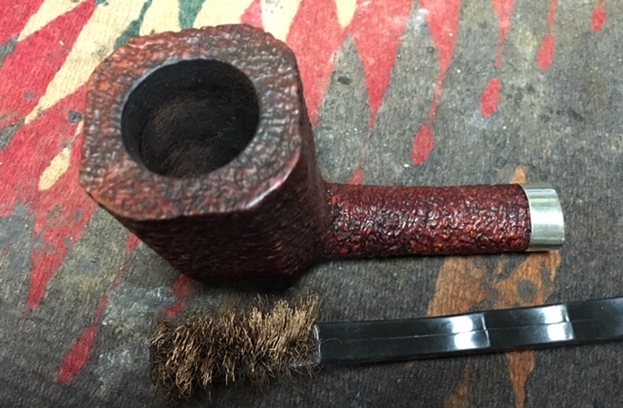
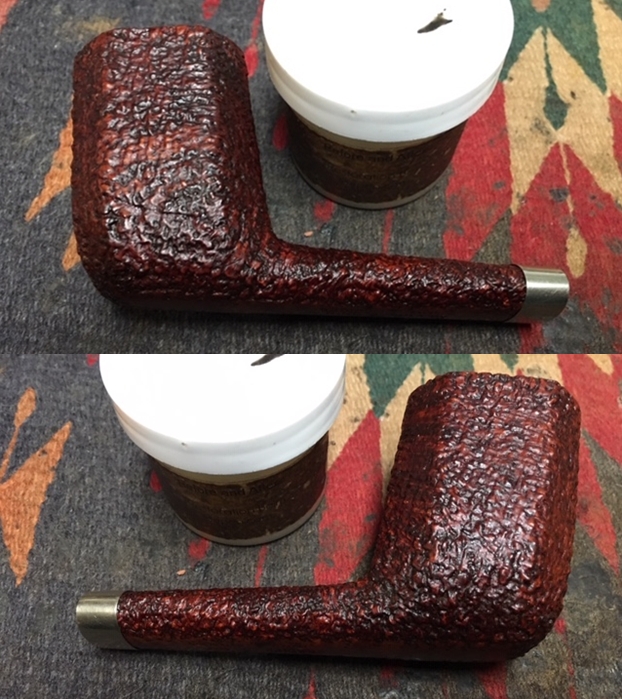
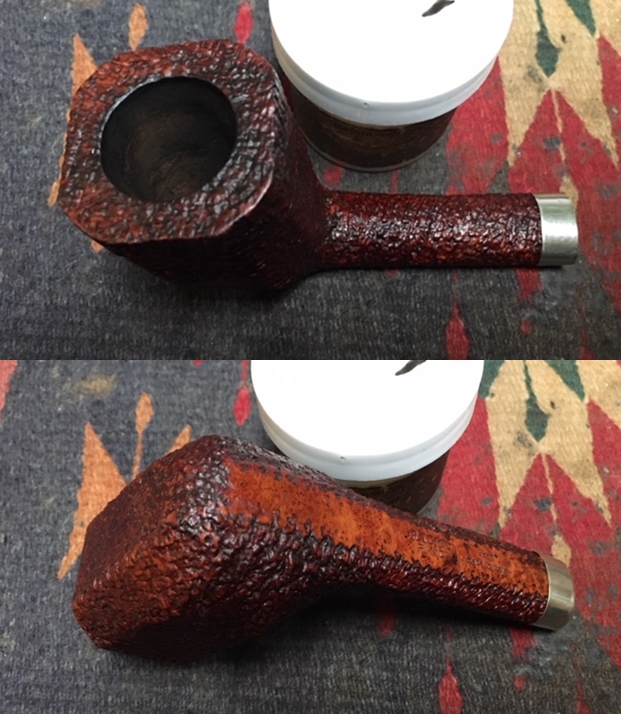
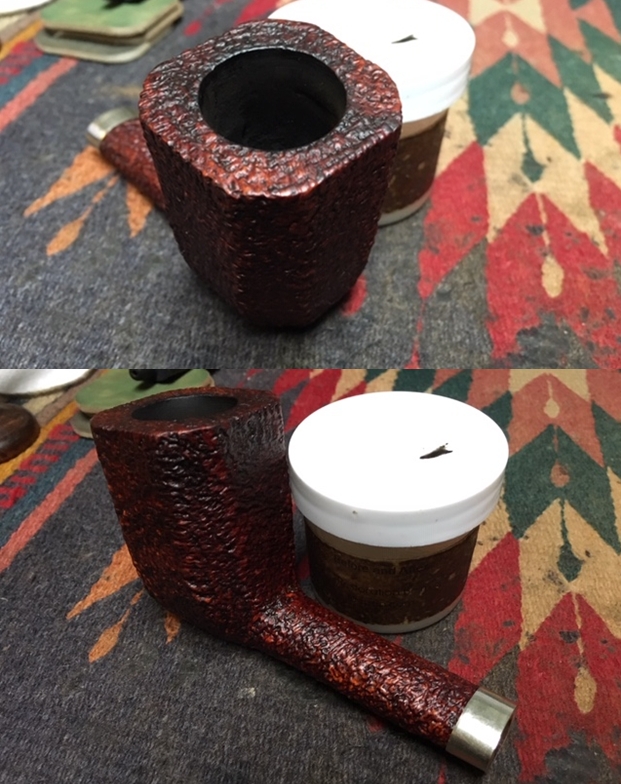
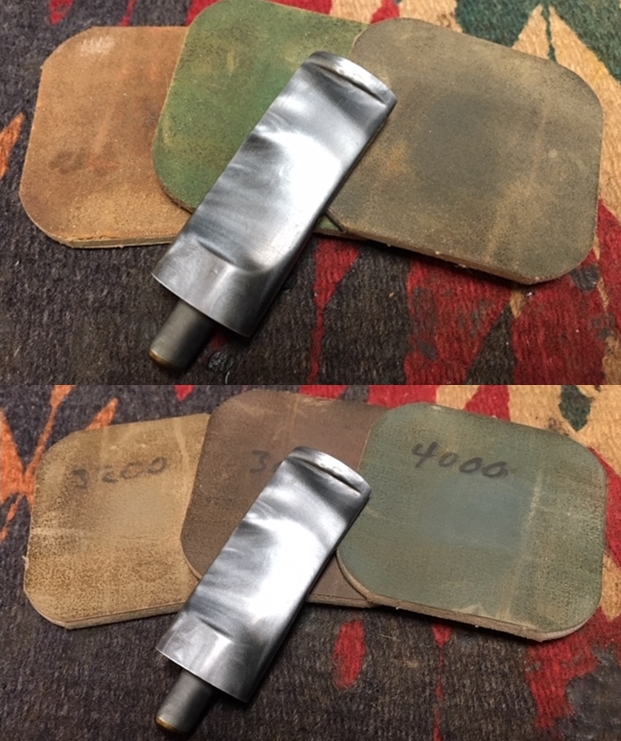
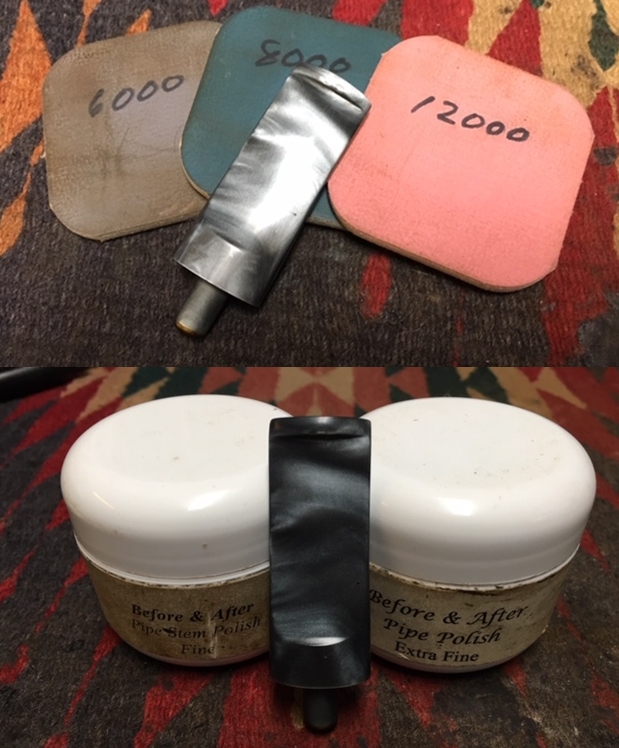
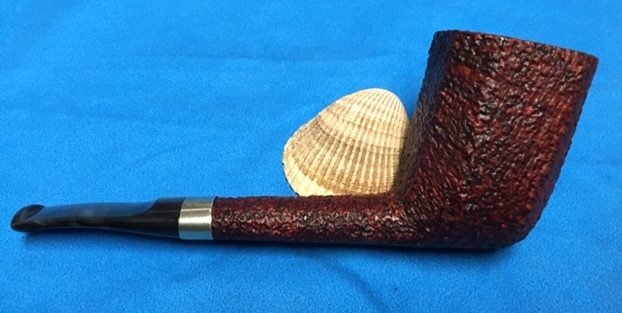
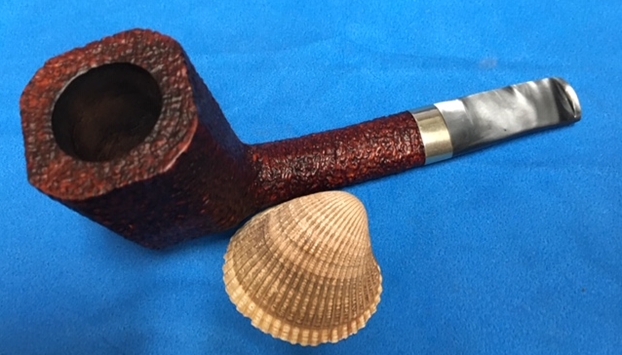
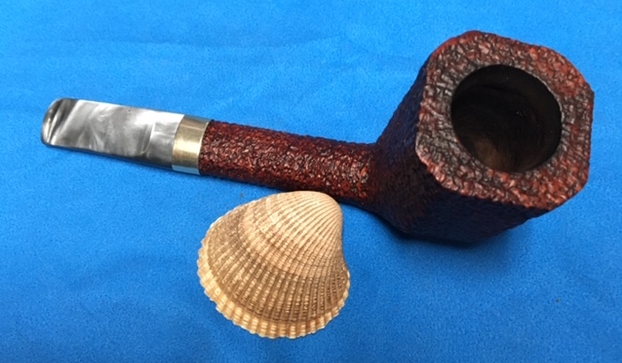
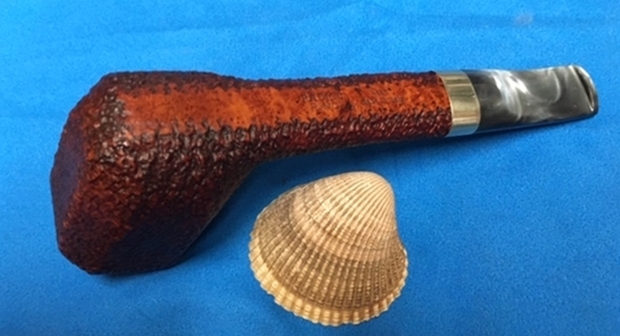
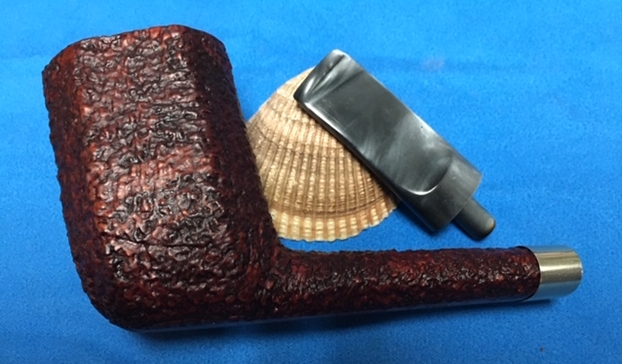
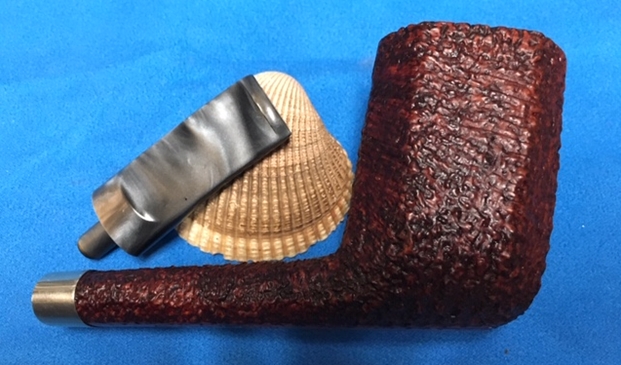
The next pipe on the work table is another relatively new acquisition from a collection Jeff and I purchased from Michigan. It included a pipe cabinet and 21 pipes that is pictured below. There were some nice pipes in that collection and some that I have never seen before.In looking over the pipes in the collection the next pipe I chose to work on an interesting large Paneled pipe. I don’t know what to call the shape – a Panel Canadian with a saddle stem? It has an oval shank but a slight saddle stem. The band is for bling and not for repair and the stem is a swirled or marbled Lucite. The rustication on the bowl is almost sandblast like and quite nice. The grain shows through the blast and the contrast of brown colours is quite stunning. It is shown in the photo of the rack above – it is identified at the bottom of the rack by the red border around it. The pipe is stamped on a smooth panel on the underside. It reads Radice over Rind with a subscript GT after Rind. Next to that it is stamped Hand Made in Italy. It was quite dirty, like the rest of the pipes in this collection. There was a thick cake in the bowl and a heavy lava overflow on the rim top. The inner and outer edges of the bowl looked very good. The stem had some tooth marks and chatter on both sides near the button and some tooth damage to the sharp edge and top of the button. Jeff took photos of the pipe before he started his cleanup process. The next photo is a close up of the bowl. You can see the thick cake in the bowl and heavy overflow of lava on the rim top. He also took photos of the side and bottom of the bowl to highlight the condition of the pipe and the beauty of the rustication and finishing. It was a dirty pipe and obviously it was someone’s favourite pipe because it is so dirty and caked. The next photo shows the stamping on the underside of the shank. You can also see some grim and dirt in the letter G of the GT stamp. I wondered if it was a crack when I saw it. Once the pipe was cleaned up I would know better. The close up photos of the stem show the tooth marks in the surface near the button and the damage to the button itself on both sides.If you have been a reader of the blog for a long time or maybe even a short time you probably could write the next part of this restoration. Jeff and I follow a pattern that rarely changes in the cleanup of pipes we work on. I include it here for new readers so that you can have a sense of that pattern. Jeff reamed the bowl with a PipNet pipe reamer and followed up with a Savinelli Fitsall pipe knife to remove the cake. He scrubbed out the mortise and the airway in the shank and the stem with alcohol, cotton swabs and pipe cleaners. He scrubbed the exterior of the bowl, rim, shank and stem with a tooth brush and Murphy’s Oil Soap to remove the oils and tars on the rim and the grime on the finish of the bowl. He rinsed it under running water. He dried it off with a soft cloth. He was able to remove the lava build up on the rim top and you could see the slight darkening at the back of the rim. I took photos of the pipe to show its condition before I started my work on it. I took close up photos of the bowl and rim top as well as the stem. You can see the condition of the rim top and bowl in the first photo. Jeff was able to remove all of the tar and oils and all that remained was some darkening toward back of the rim top and some deep lava in the rustication at the back of the rim. The Lucite stem had tooth chatter and some tooth marks on the top and underside of the stem near and on the button surface. The tooth marks are quite prominent and will need to be addressed on both the stem surface and button but otherwise the stem looked very good. The swirled grey Lucite looked good with the band and the variegated browns of the briar.After the cleanup, the darkening around the G of the GT stamp on the underside of the shank looked better. I probed it with a dental pick and the area is solid. That was good news to me.I remembered that Radice, the carver had started with Castello but could remember little else about the brand or the carver. I turned to Pipedia to refresh my memory of the brand and get some feel for the pipe I was working on (https://pipedia.org/wiki/Radice). I quote from there showing the connection not only to Castello but to Ascorti and Caminetto pipes.

Luigi Radice, born 1939, took a piece of briar in his hands for the first time in 1961, when he was employed at Carlo Scotti’s Castello in nearby Cantu.

After lengthy experience, he founded, together with Peppino Ascorti, the famous “Pipa del Baffo”, the “Caminetto” which through 1974 and 1975 made wealth with the precious cooperation of Gianni Davoli, Milanese distributor.

In 1980 Luigi undertook a new adventure, founding his own brand: the Pipa Radice. From the beginning his son, Gianluca, joined the workshop, together with Luigi’s father, Paolo Radice, who helped in some basic steps of production.

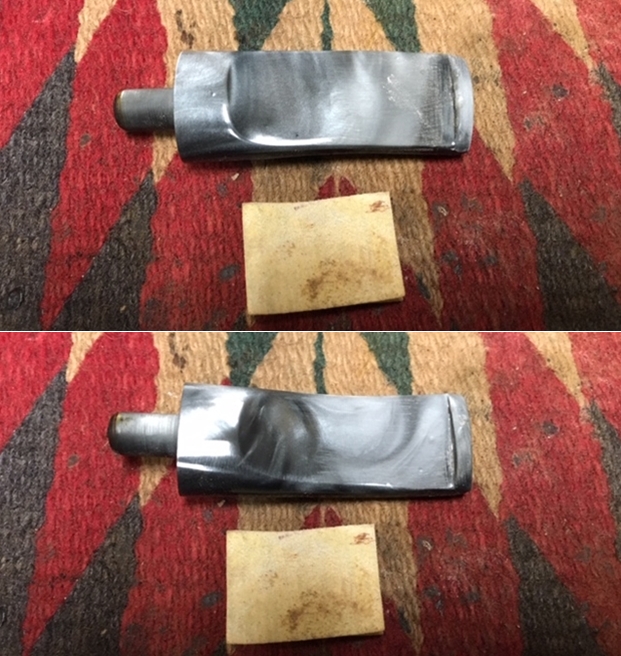
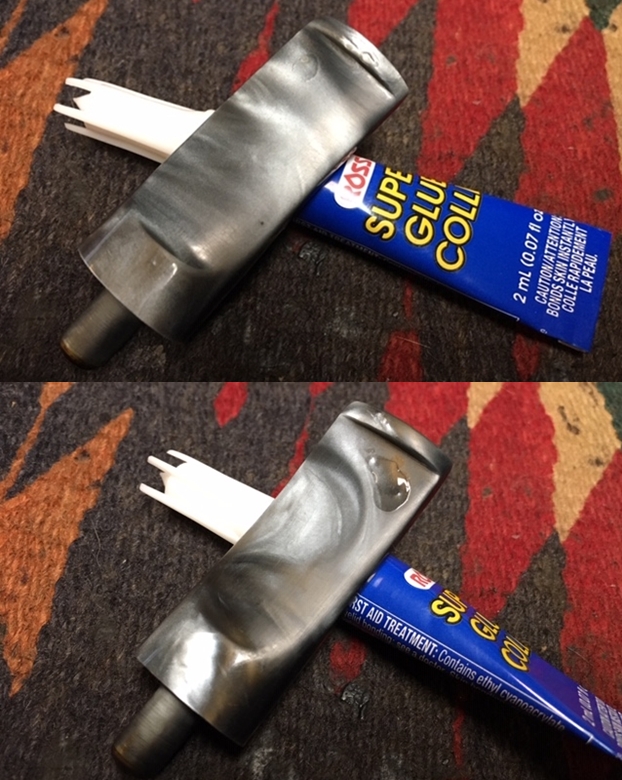
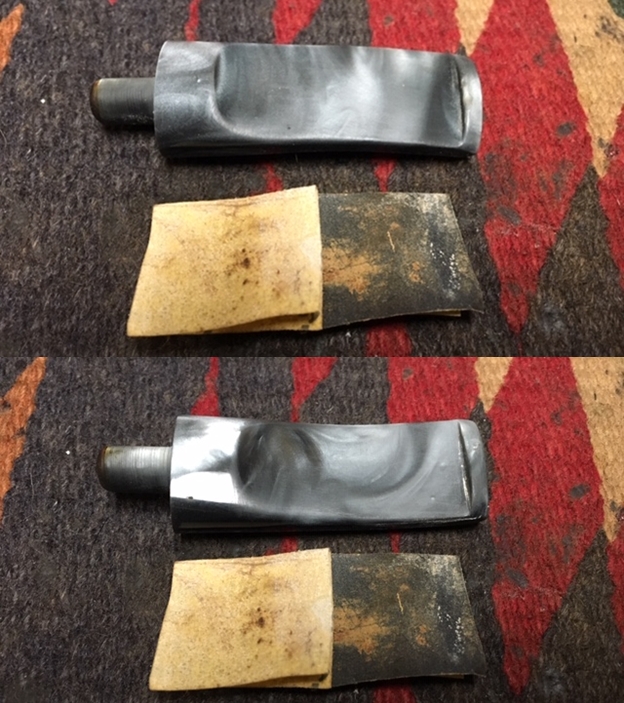
With that reminder of the maker and the brand I turned my attention to the pipe. I decided to start with the bowl as it was already so clean and the work would be minimal. I worked over the rim top with a brass bristle wire brush to clean out the remaining lava and to remove the darkening at the back of the rim. It had appeared that it was surface and the brush proved that to be true. The rim top looked really good once I had finished. Once the rim top was clean, I worked some Before & After Restoration Balm into the rusticated surface of the briar with my fingertips to clean, enliven and protect it. It took some time to really get it into the grooves and valleys of the rustication but I was able to work it in. I worked it in with a shoe brush. I let the balm sit for a little while and then buffed with a cotton cloth to raise the shine. The following photos show the bowl at this point in the restoration process. The rim top looks really good and the darkening and lava are gone. I am very happy with the results. I set aside the bowl at this point and turned my attention to the stem. I reshaped the button surface and edges with 220 grit sandpaper. I also sanded out much of the tooth chatter. All that remained of the damage were three tooth marks (two on the underside and one on the topside) and some damage to the edge of the button. I repaired the damaged areas on the edge of the button and filled in the tooth marks with clear super glue. Once the glue cured I sanded the repairs with 220 grit sandpaper to blend them into the rest of the stem surface. I polished the sanding marks with 400 grit wet dry sandpaper. The photos tell the story. I polished the Lucite stem with micromesh sanding pads – wet sanding with 1500-2400 grit sanding pads and dry sanding it with 3200-12000 grit sanding pads. I wiped it down after each sanding pad with a damp cloth. I polished it with Before & After Pipe Stem Polish and wiped it down a last time with the damp cloth. This large, panel Radice Canadian is a real beauty. I polished stem with Blue Diamond polish on the buffing wheel. I gave the bowl multiple coats of Conservator’s Wax and the stem multiple coats of carnauba wax. I buffed the pipe with a clean buffing pad to raise the shine. I hand buffed it with a microfiber cloth to deepen the shine. The pipe polished up pretty nicely. The multi-coloured grain shining through the rustication came alive with the buffing. The rich contrasting brown colour works well with the polished swirling grey Lucite stem. The finished pipe is a beauty and feels great in the hand. Have a look at it with the photos below. The dimensions are Length: 6 ½ inches, Height: 2 1/2 inches, Outside diameter of the bowl: 1 3/4 inches, Chamber diameter: 1 inch. I will be putting this Radice on the rebornpipes online store soon. It may well the kind of large, tactile pipe you have been looking for so have a look. Thanks for walking through the restoration with me on this interestingly shaped Radice.