Tag Archives: polishing acrylic stems

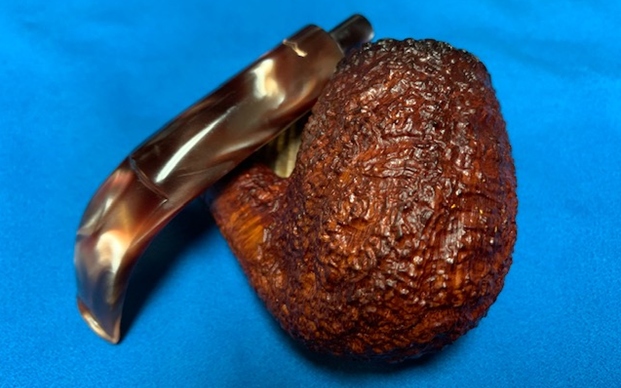
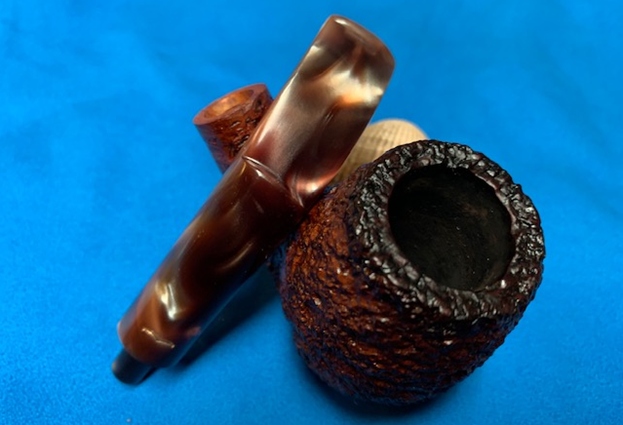
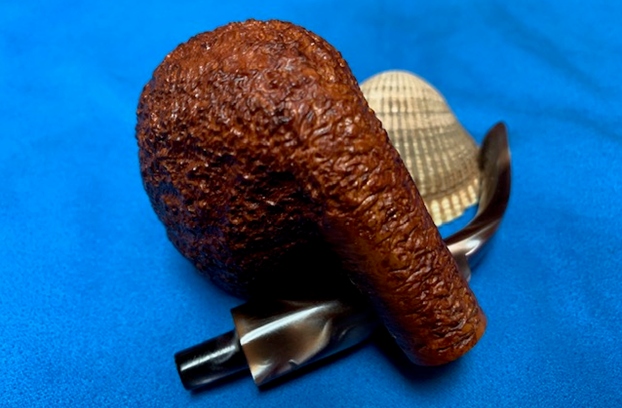
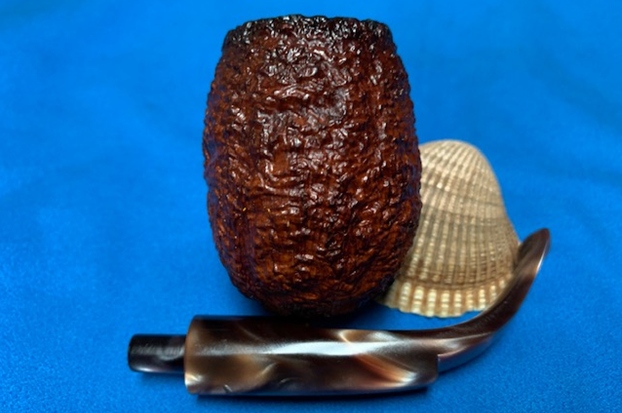
New Life for a Carlo Scotti Castello Natural Vergin KKK 16  Saddle Stem Billiard


Blog by Steve Laug

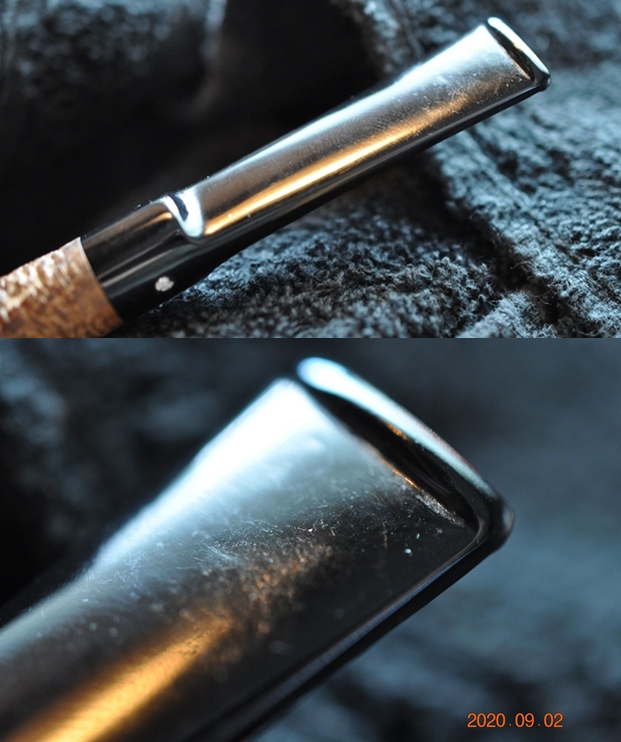
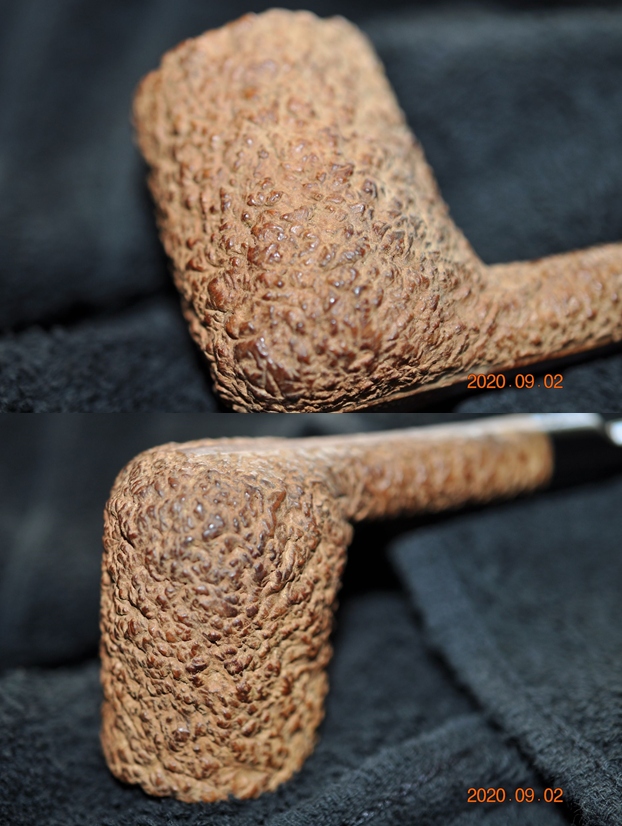
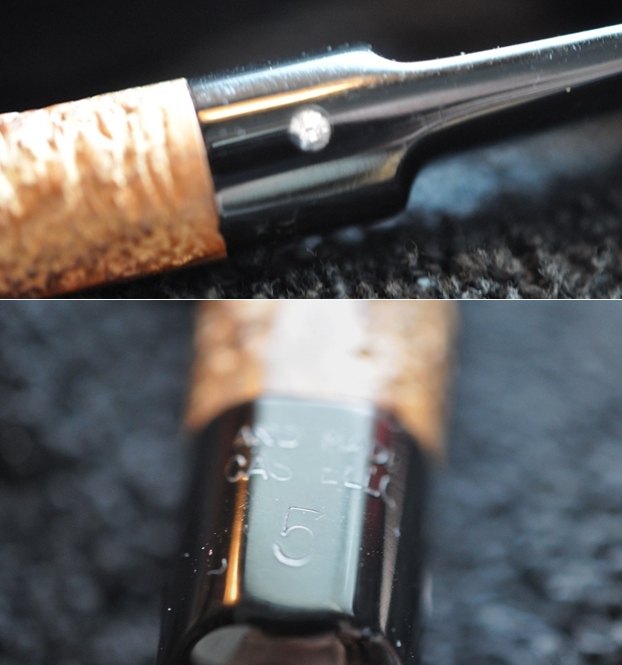
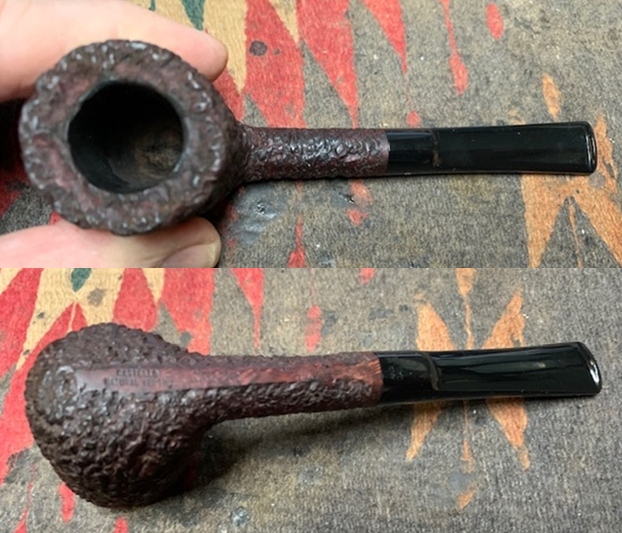
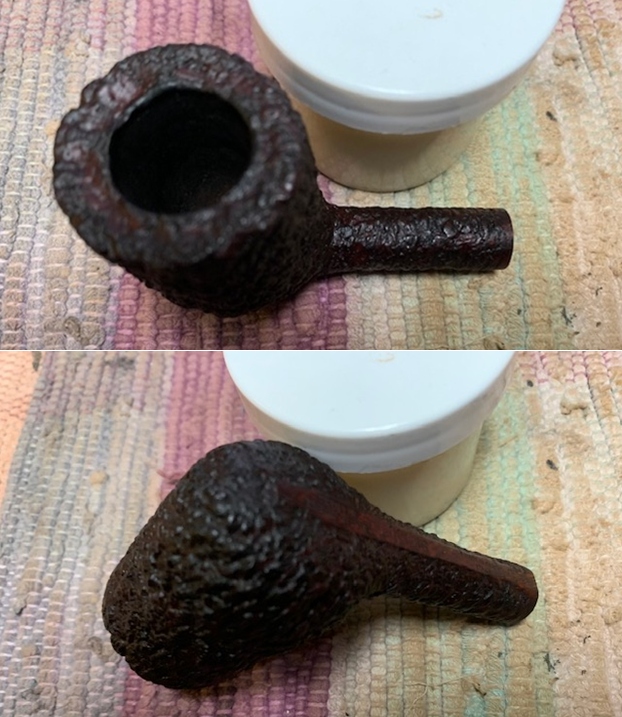
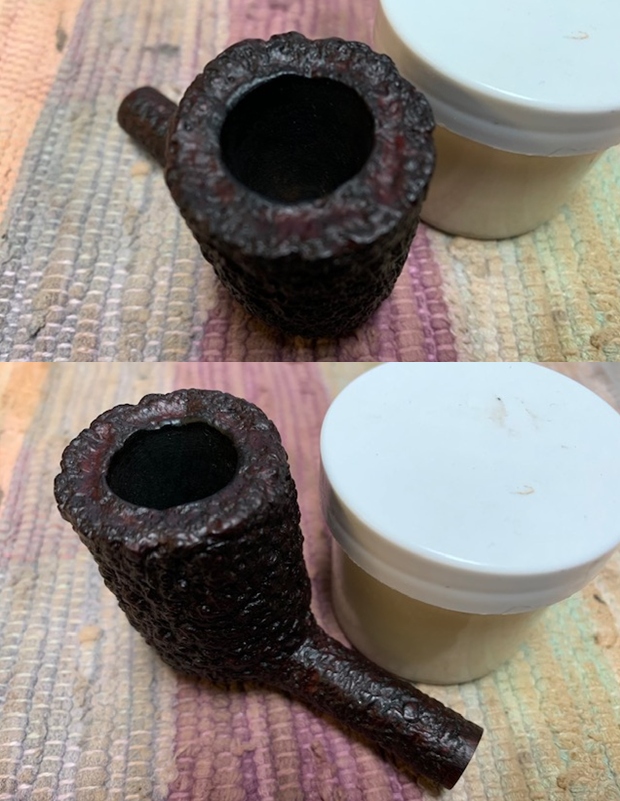
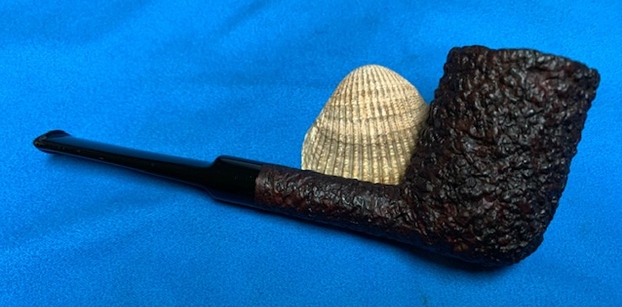
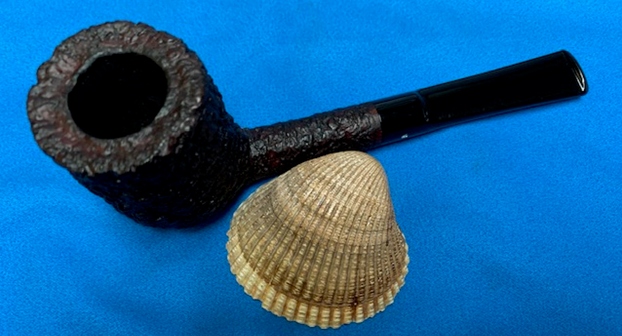
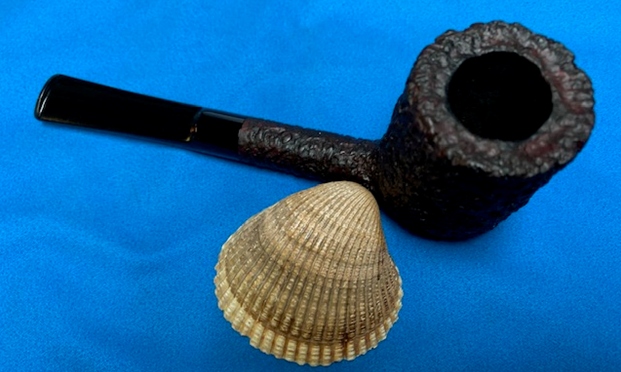
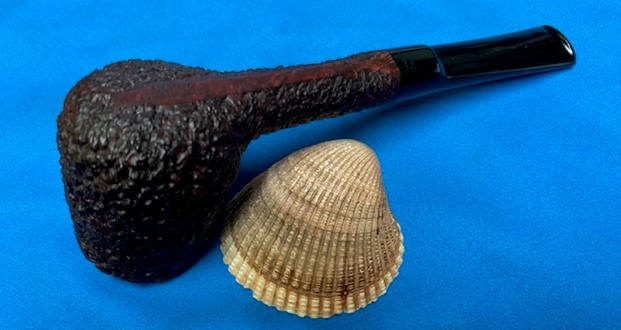
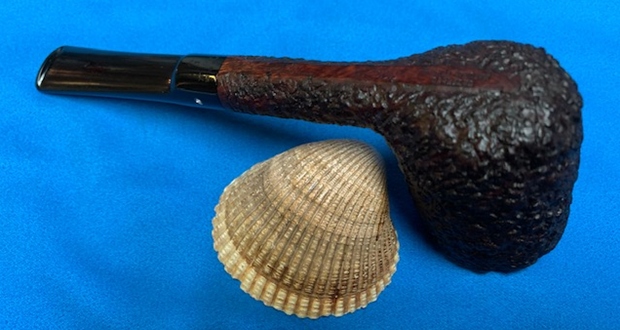
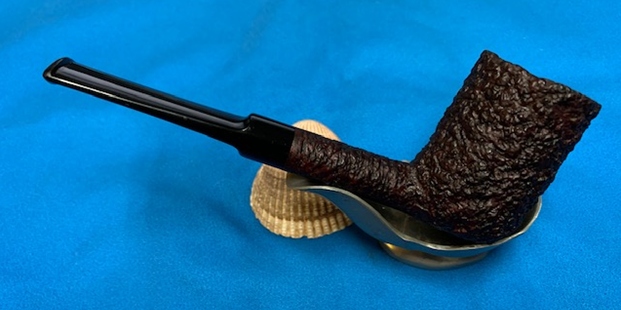
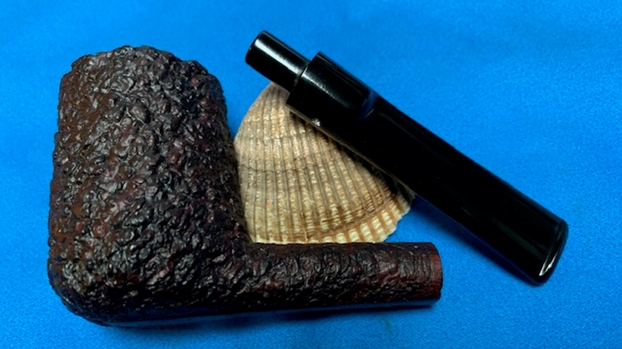
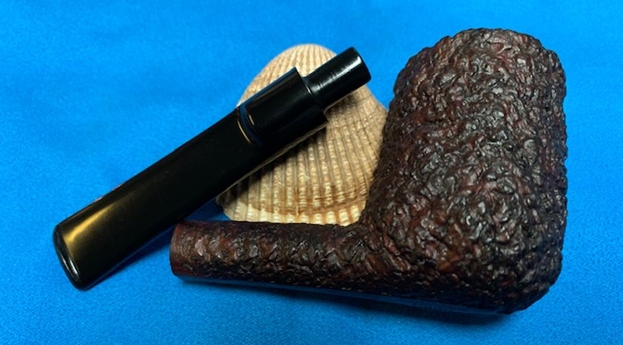
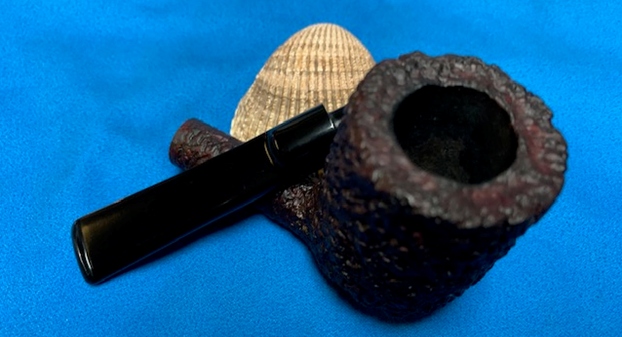
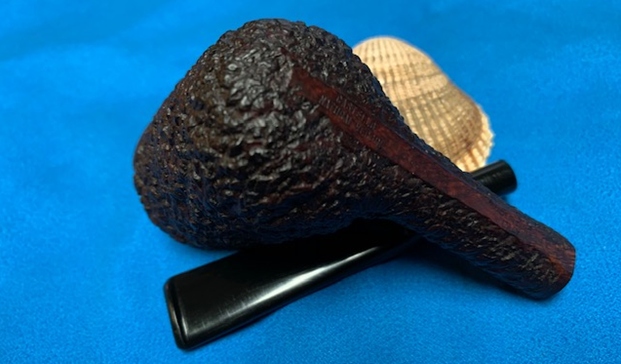
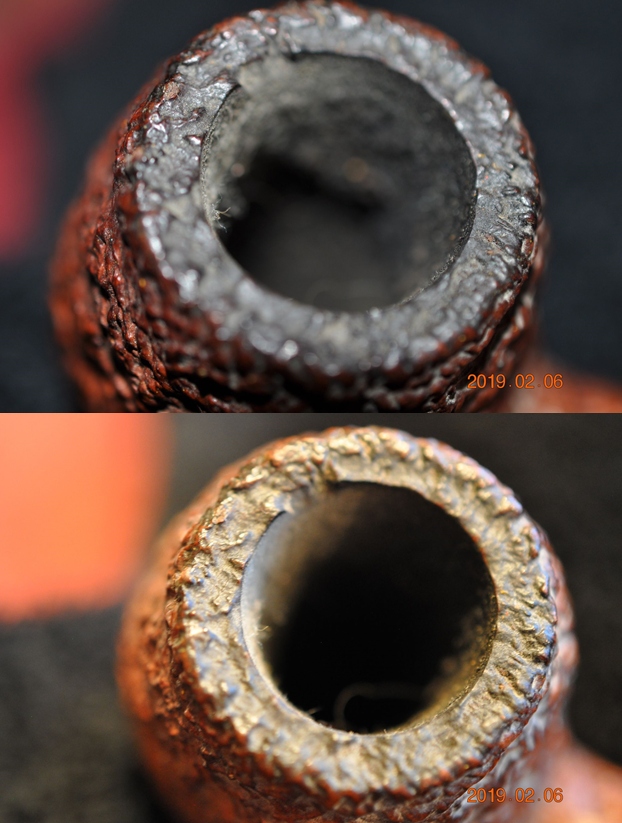
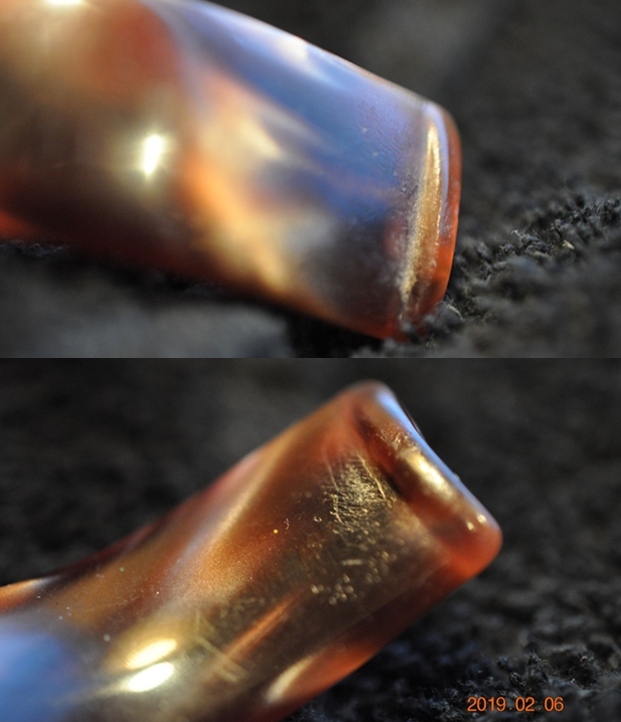
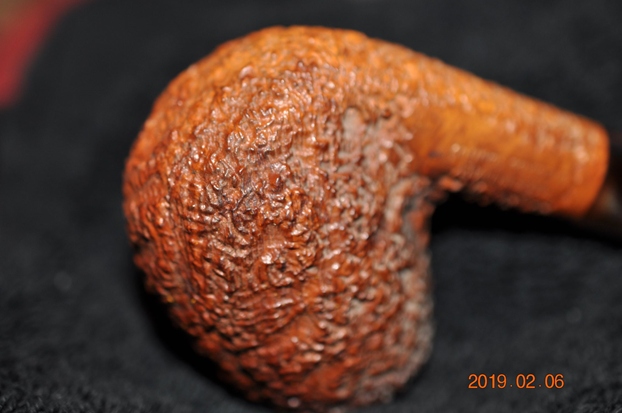
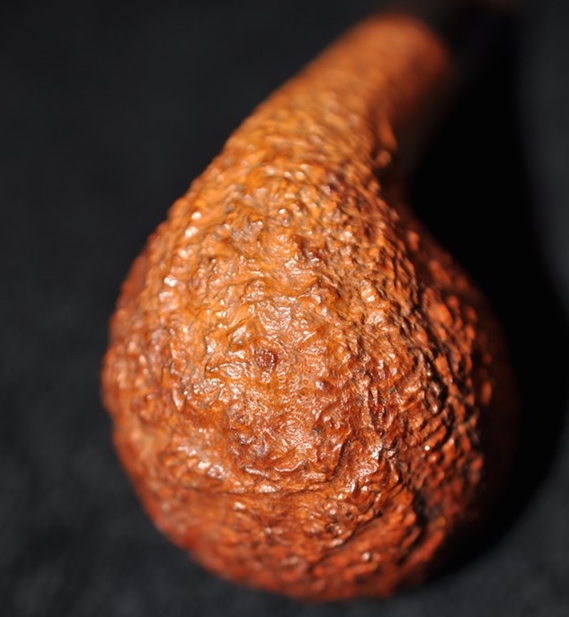
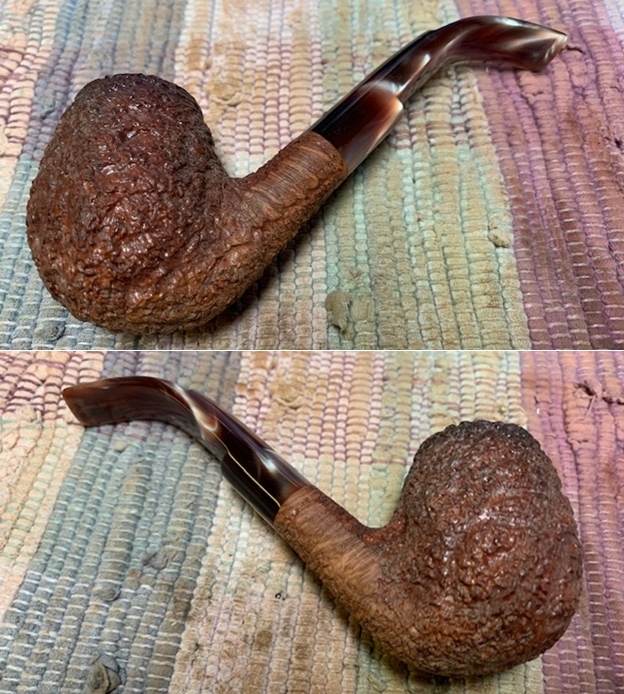
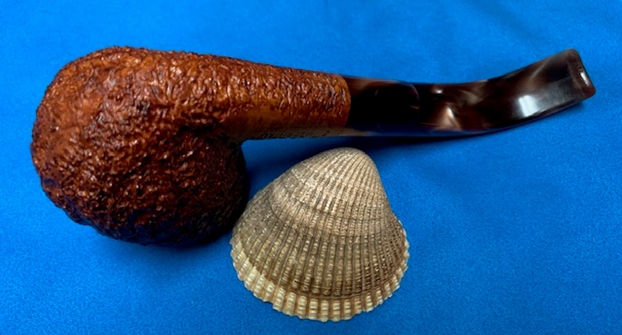
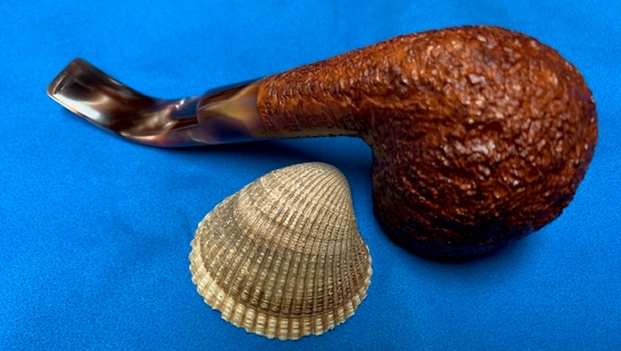
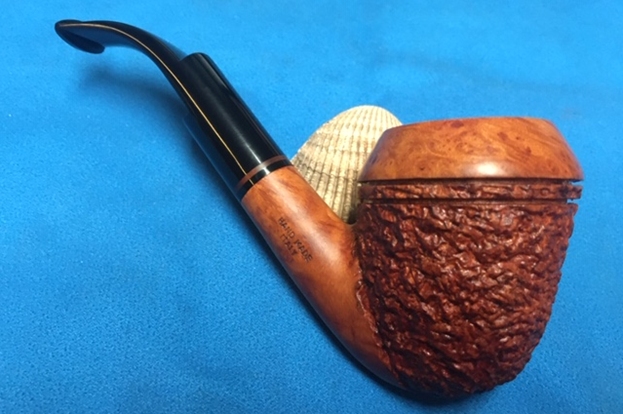
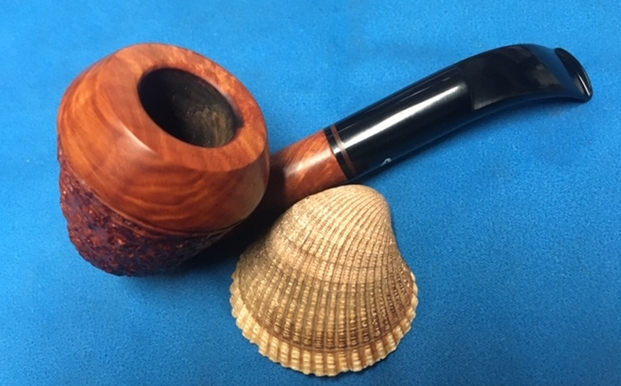
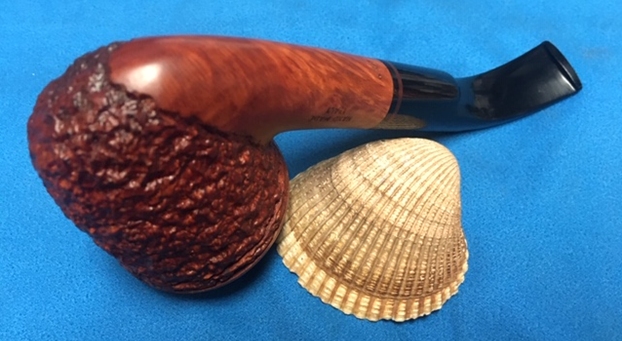
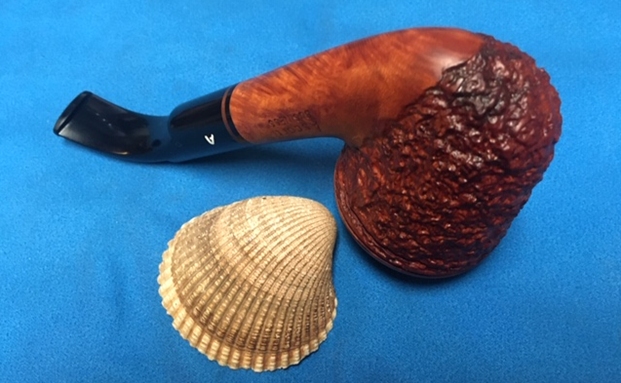
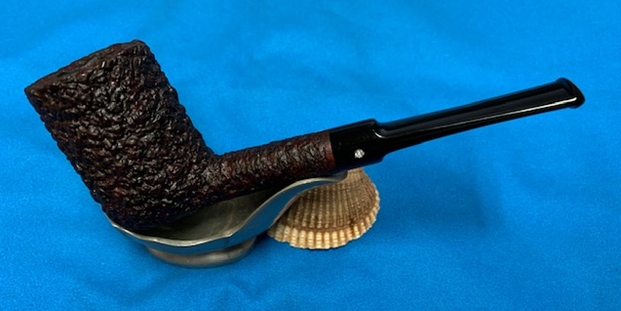
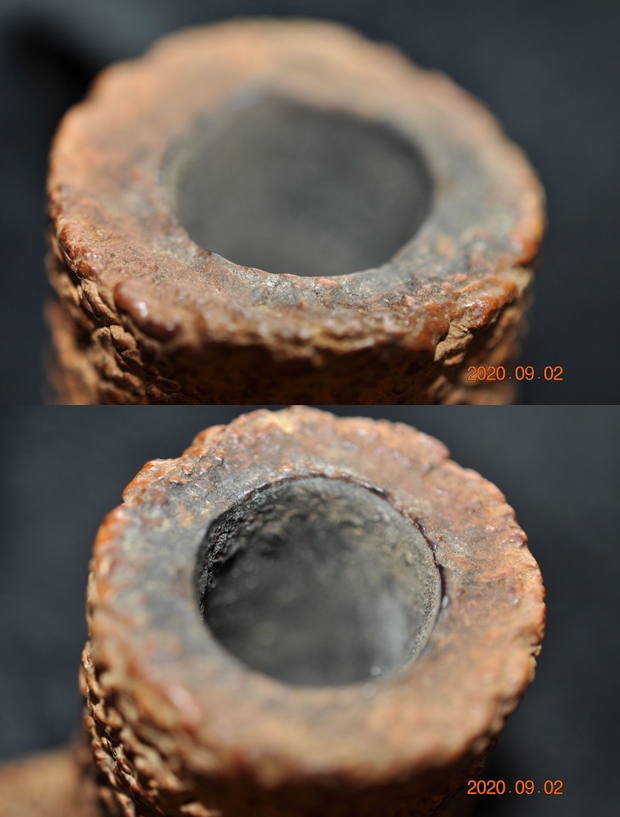
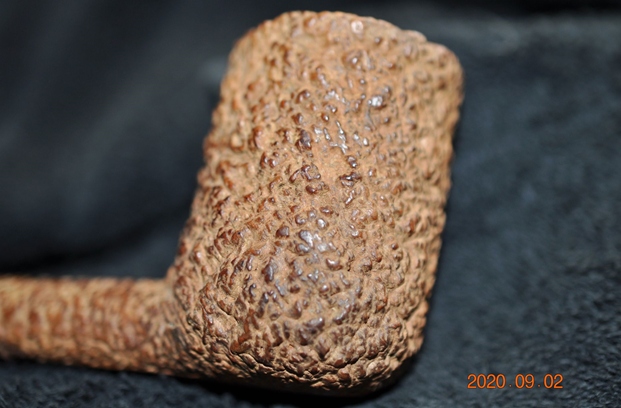
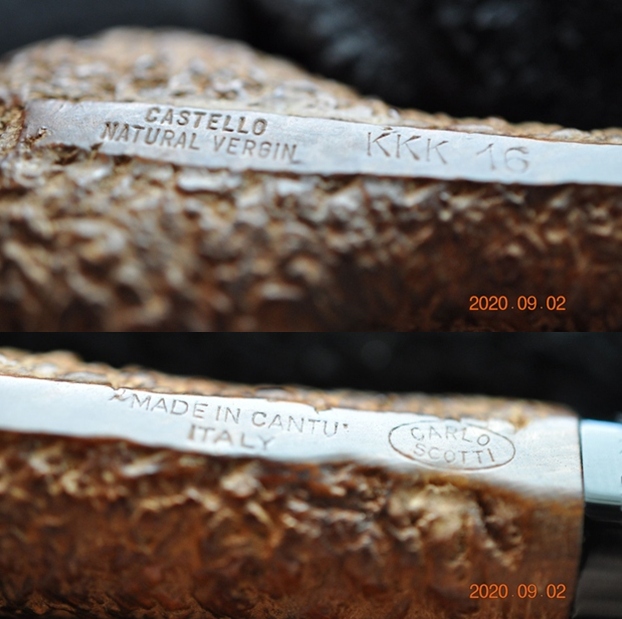
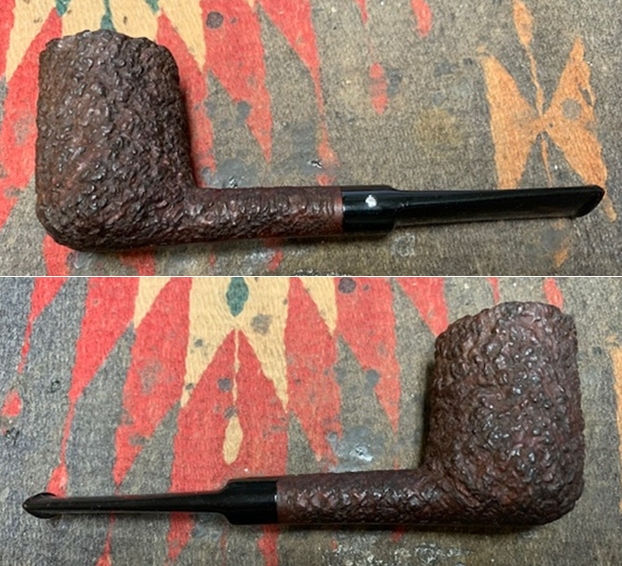
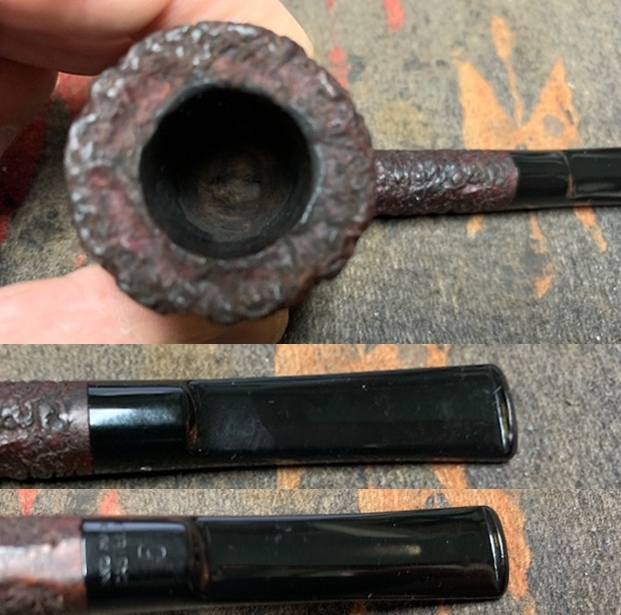
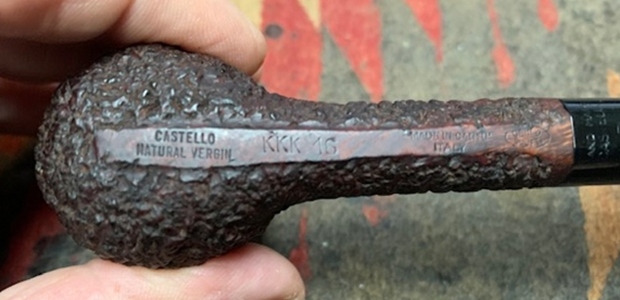
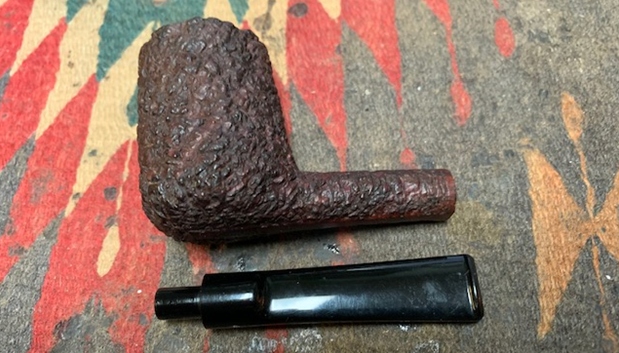
Summer is pretty much over in Vancouver and today was another rainy, cold fall day. It is a day off so I had time to work on a few pipes. My wife and kids are convinced it is an illness but at least it keeps me out of their way! This next pipe on the table is one that I may have a hard time letting go of when I am finished. It is a Castello Natural Vergin and it is a saddle stem billiard two pluses in my book. My brother Jeff picked this pipe up from an antique mall in Utah, USA. It is stamped on the smooth heel of the bowl and the shank bottom and reads Castello [over] Natural Vergin. Next to that is stamped KKK 16. That is followed by Made in Cantu [over] Italy followed by an oval containing the name Carlo Scotti next to the stem shank union. The Castello “diamond” inset is on the left side of the saddle stem. On the underside of the stem it is stamped Hand Made [over] Castello [over] 5 It was in pretty filthy looking condition with oils ground into the briar around the bowl side leaving dark patches when he got it but still showed promise. He took the following photos of the pipe before he worked his magic on them. The pipe must have been another terrific smoker because the bowl was heavily caked with lava flowing over the rim top. In its condition it was going to take some work to clean out that bowl and be able to see what the rim looked like underneath the layer of lava. The acrylic/Lucite stem was in good condition. It was dirty and had light tooth chatter a deep tooth marks in the top and underside of the stem just ahead of the button.  The rest of the bowl looked dirty but the photos give an idea of what Jeff saw before his cleanup revealed the condition of the pipe. The next photos try to capture the stamping on the flat panel on the underside of the shank. It read as I have noted above. The stem also bears a Hand Made Castello 5 stamp on the underside. Jeff cleaned the pipe with his usual penchant for thoroughness – reaming the bowl with a PipNet pipe reamer and cleaning up the remnants with a Savinelli Fitsall Pipe Knife. He scrubbed the internals of the bowl, shank and stem with alcohol, cotton swabs and pipe cleaners. He scrubbed the exterior with Murphy’s Oil Soap to clean off the dust and grime on the rusticated Natural Vergin finish. The rusticated rim top looked very good under the thick lava coat. The inside of the bowl itself looked great. The finish had darkened with the cleaning but the dark oily spots on the bowl sides were gone. The stem was in great shape other than the tooth marks on both sides. I took photos of the pipe when it arrived here. I took some close up photos of the rim top, bowl and stem to show what they looked like after Jeff’s cleanup. It is a startling difference. The rim top looks very good. The stem will take a bit of work to remove the deep tooth marks on both sides and give it a deep shine.    The stamping on the shank looked very good. It is clear and readable as noted above. I removed the stem from the shank and took a photo of the pipe to show the proportions of the bowl/shank and the stem length.As usual I cannot seem to retain the details on Castello pipes in my head for long for some reason. The stamping on them – Castello and the Reg. No. and the Carlo Scotti stamp left me with some questions that I need to answer before I began to work on the pipe. I turned first to the Pipephil site (http://www.pipephil.eu/logos/en/logo-castello.html) because of the general quick summary of information I get there. I quote:
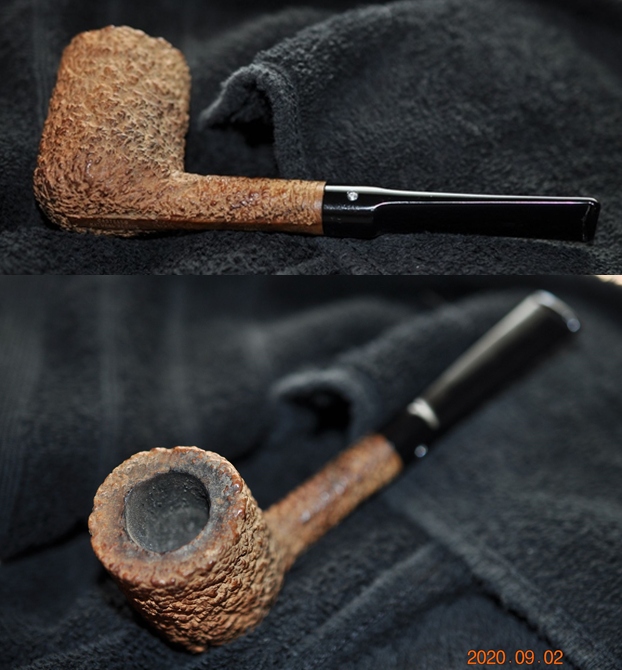
Castello PIPA CASTELLO di Carlo Scotti & C. was founded in 1947 by Carlo Scotti († 1988). Franco Coppo (AKA “Kino”) who married Carlo Scotti’s daughter Savina, manages (2012) the corporate since 1985.

The site also gave a good summary of the grading and sizes of the pipes. I quote that in full.

Sizes (ascending):

1K to 4K, G (Giant) and GG (Extra large)

Rusticated grading: SEA ROCK, OLD SEA ROCK, NATURAL VERGIN,

Sandblasted grading: ANTIQUARI, OLD ANTIQUARI

Smooth grading (ascending): TRADEMARK, CASTELLO, COLLECTION

Other stampings: Great Line (Non-standard or freestyle) Fiammata (Straight grain)

Production (2012): ~4000 pipes / year

I also found a note on the page that the Rhinestone logo was originally on pipes for the US market. It is occasionally used now.

I turned then to Pipedia for more information on the brand (https://pipedia.org/wiki/Castello). The majority of the information was what was already quoted above in abbreviated form. However there was a link to an article by Bob Hamlin that gave some interesting bits of information that I found helpful (http://www.pipes.org/BURST/FORMATTED/196.016.html). I quote in part from that article.

SEA ROCK [Carved Black or dark brown]:  This is the lowest grade of the Castello line and is the most common in the USA.  Sea Rocks are produced by taking a smooth bowl that has not been “final finished” and surface carving the finish with tools. This “carved” finish is then evened out using a steel wire brush, stained and then waxed. The Natural Vergin carved finish is left unstained and unwaxed as a rule, although we have seen waxed and partially waxed “Vergins”.

All carved Castello pipes are graded by the number of K’s that are stamped on each piece and are K-graded by SIZE.  1K is the smallest and fairly rare, 2K is small to medium, with 3K or 4K being the most common and ranges from medium to medium large. Large pieces are stamped “G” for giant and extra-large pieces are stamped “GG” for double giant.  In addition to the number of K’s on a carved Sea Rock piece the shape number is almost always added.  As a rule a Sea Rock Castello is stained Black, although recently there have been quite a few coming in stained deep brown and still stamped “Sea Rock”.  American Logo’d Sea Rocks are all priced the same to the consumer, although most are 2 or 3 K’ed models.  G/GG models are charged at a higher price on American pieces and are basically the same as their European counterparts.

The Castello Natural Vergin KKK 16 I was working on was definitely made for the American Market with the Rhinestone in the stem. It had the natural finish that darkened with cleaning.

Pipedia also gave a link to Mike’s Briar Blues site for help in dating and determining shapes (http://www.briarblues.com/castello.htm).

Shape numbers. Shape numbers are all 2 digits. A 2 in front indicates a “fancy” interpretation, a 3 in front means that the carving is somehow unique. I don’t know when the change was made, but currently, a π symbol is used instead of the 3xx. I’ve only seen this on Sea Rocks, but that doesn’t mean anything…

Now I had more information to work with. The Castello Natural Vergin in my hands was 3K graded. That told me that it is a mid-sized pipe. The number 16 makes it a straight billiard.

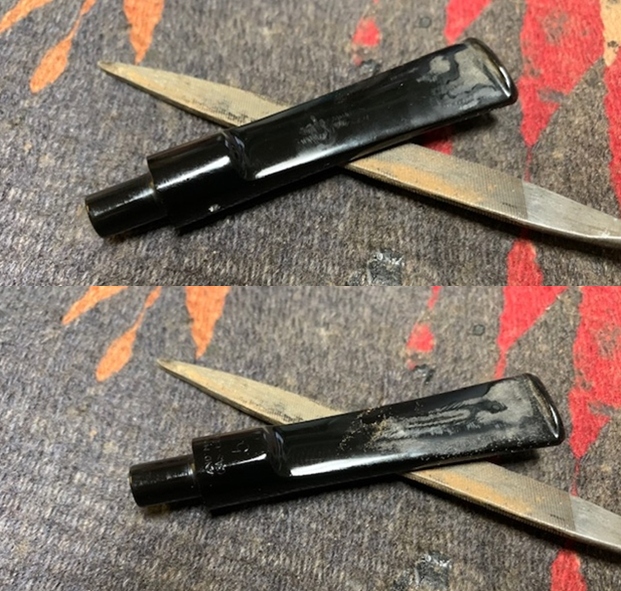
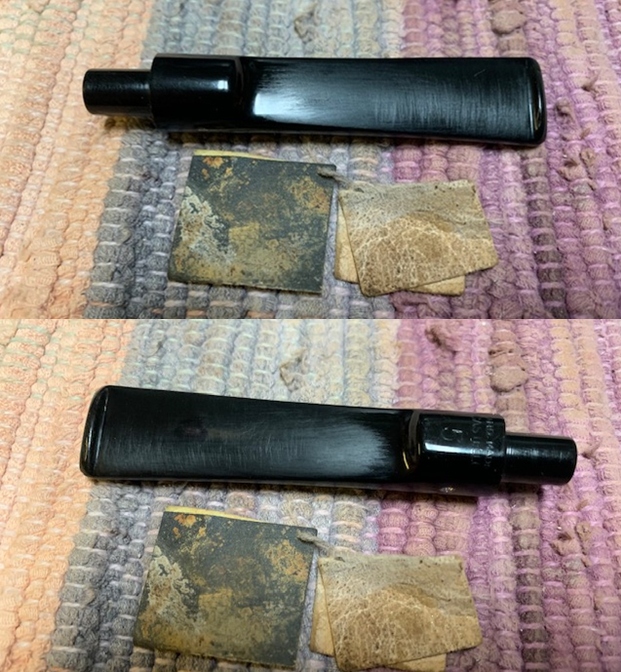
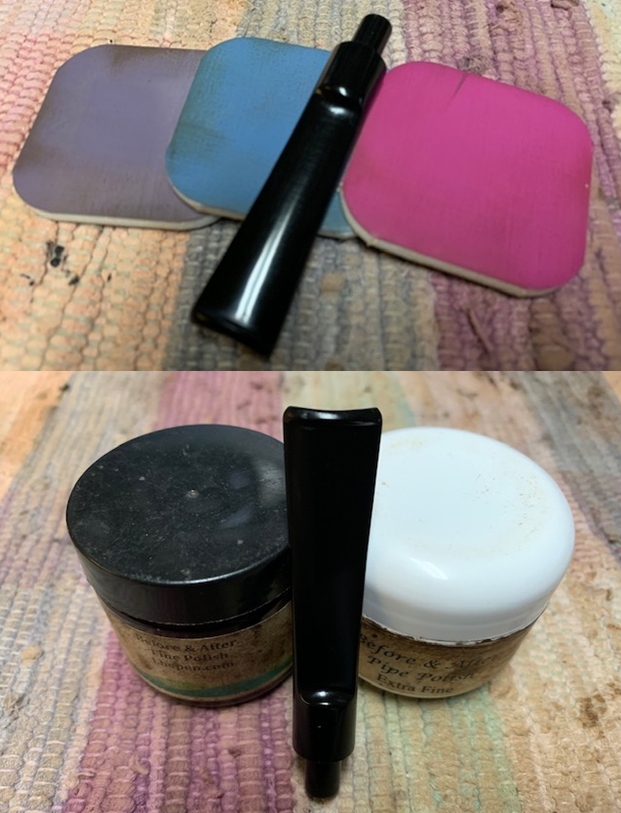
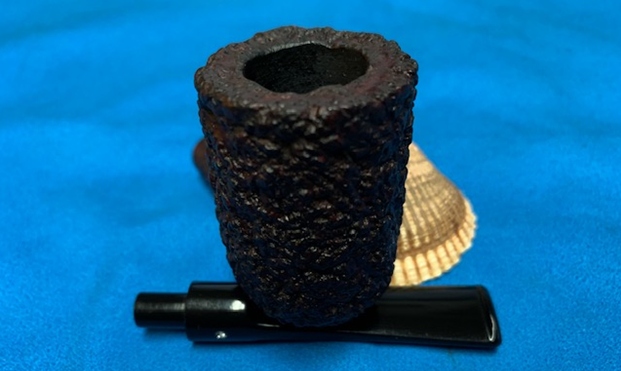
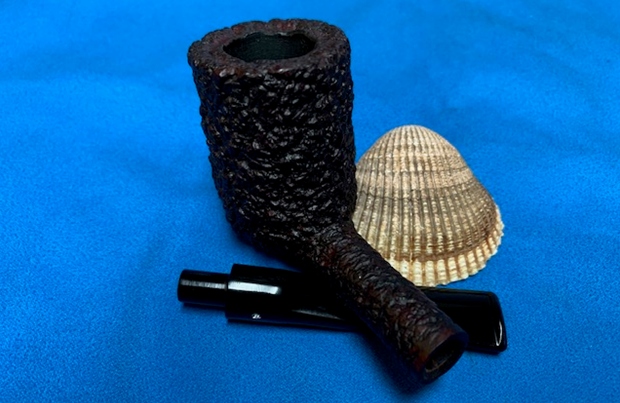
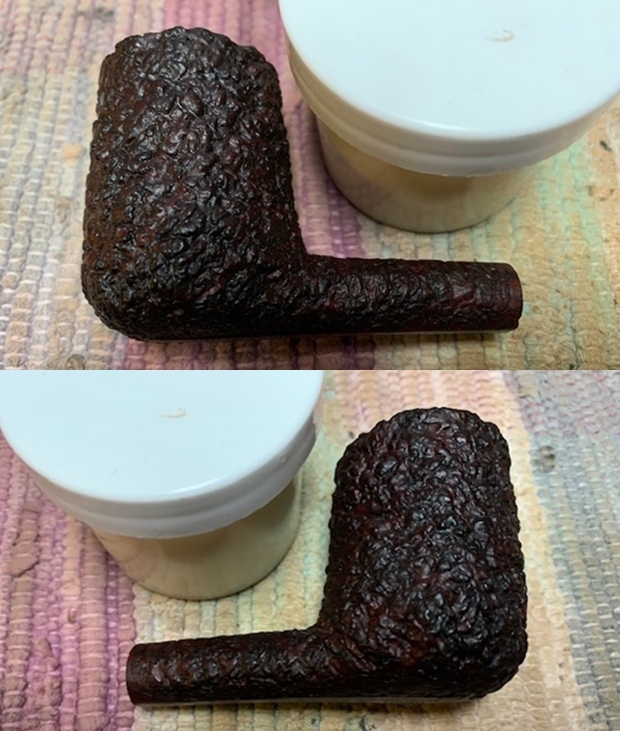
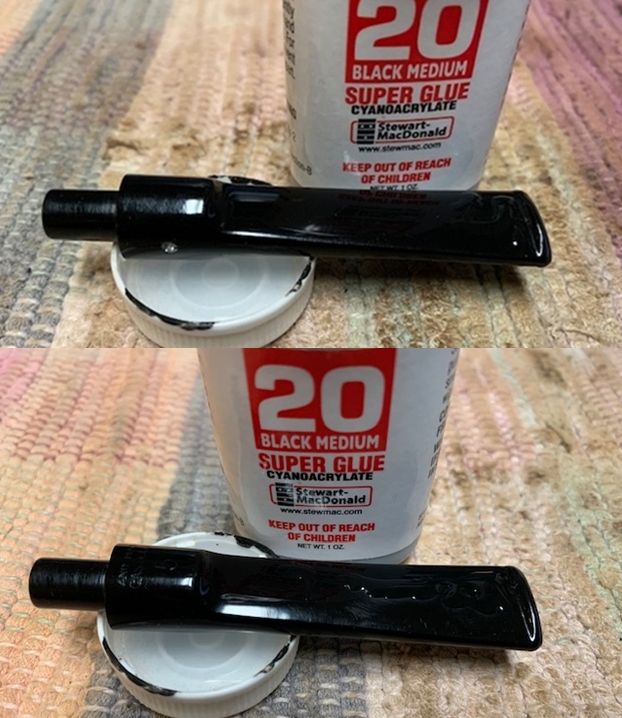
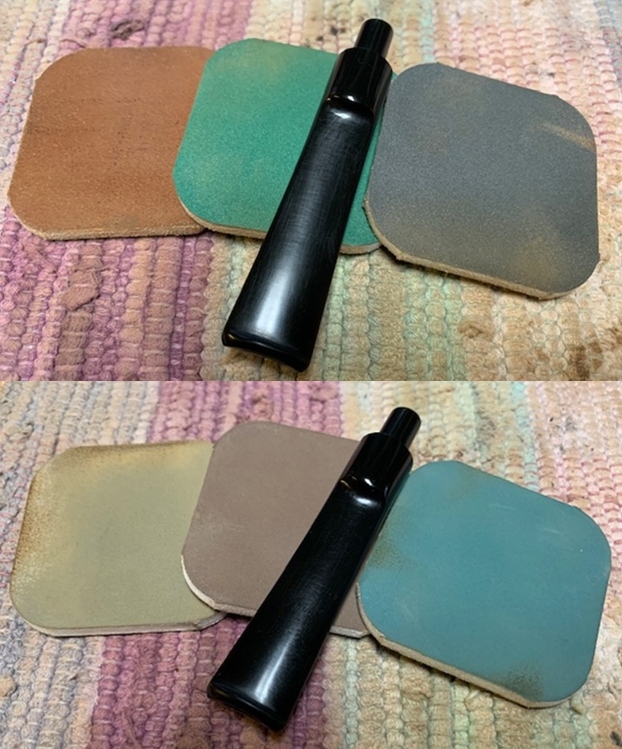
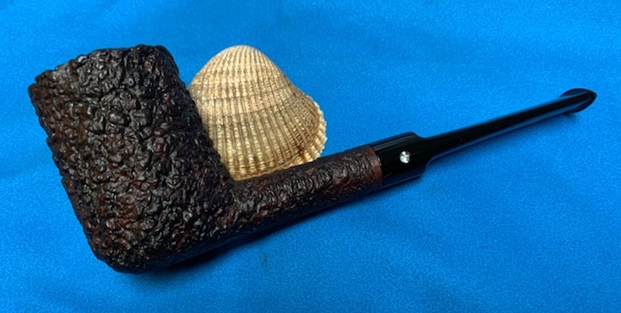
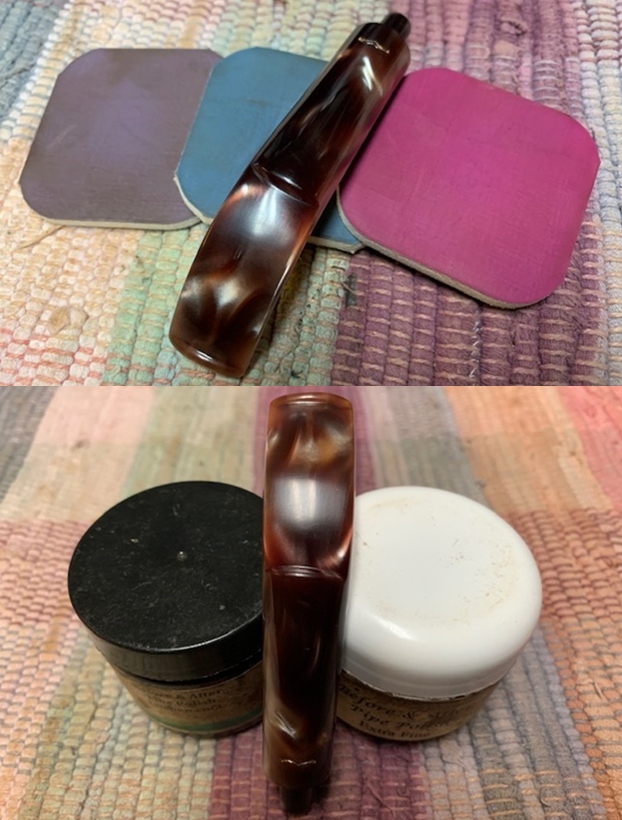
The bowl was in such good condition that I worked some Before & After Restoration Balm into the rusticated Sea Rock finish on the bowl and the rim top. I worked it into the surface of the briar with my fingertips to clean, enliven and protect the wood. I used a horse hair shoe brush to work it into the crevices and keep from building up in the valleys and crevices of the finish. Once the bowl was covered with the balm I let it sit for about 20 minutes and buffed it off with a soft cotton cloth and the shoe brush. I polished it with a microfiber cloth. It is definitely darker than the dirty raw briar look but it is pretty close to the oil finish that was sometimes used. I took photos of the pipe at this point in the process to show what the bowl looked like at this point.   I set the bowl aside and worked on the stem. I filled in the tooth marks with black super glue and set it aside to cure. Once it cured I flattened the repairs with a file and sanded them with 220 grit sandpaper to blend them into the surface. I started polishing the stem with 400 grit wet dry sandpaper.   I continued to polish the stem with 1500-12000 grit pads. I dry sanded it with the pads and wiped it down with a damp cloth after each sanding pad. I finished polishing the stem with Before & After Pipe Polish – both Fine and Extra Fine polishes. I wiped the stem down with a damp cotton pad afterwards and buffed it with a soft microfiber cloth. I put the bowl and stem back together on this beautiful Castello Natural Vergin KKK 16 Saddle Billiard. I polished the stem with Blue Diamond to polish out the scratches in the Lucite. I gave the bowl multiple coats of Conservator’s Wax and the stem multiple coats of carnauba wax. I buffed the pipe with a clean buffing pad to raise the shine. I hand buffed it with a microfiber cloth to deepen the shine. The pipe polished up pretty nicely. The contrast of the oil treated briar with the polished black acrylic/Lucite is quite stunning. The coral like rustication around the bowl and shank is quite remarkable and gives the pipe an incredible tactile presence that only improve as it heated from a smoke. The finished pipe is shown in the photos below. The dimensions of the pipe are Length: 5 ½ inches, Height: 2 inches, Outside diameter of the bowl: 1 3/8 inches, Chamber diameter: ¾ of an inch. This Natural Vergin Billiard will soon be on the rebornpipes store if you are interested in adding it to your collection. Thanks for walking through the restoration with me. I always enjoy working on Castello pipes. Cheers. 
Breathing Life into a Caminetto Business 143KS Bent Egg


Blog by Steve Laug

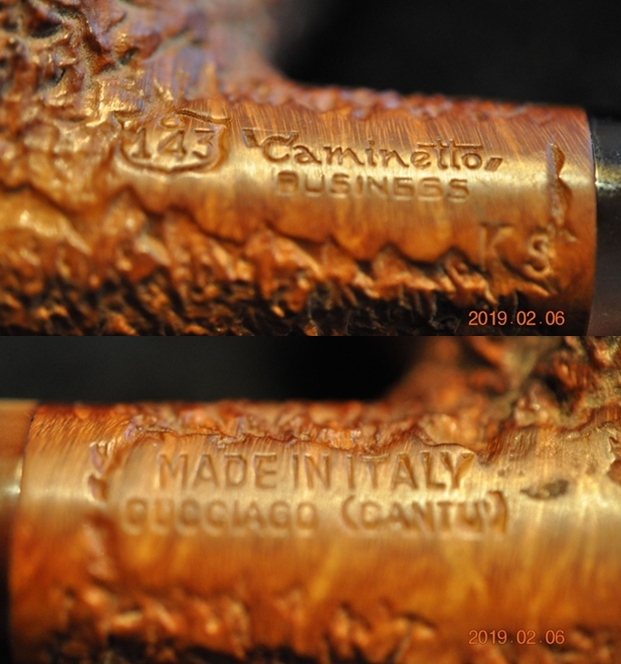
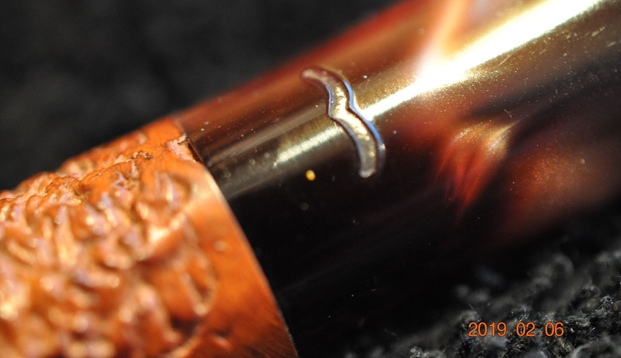
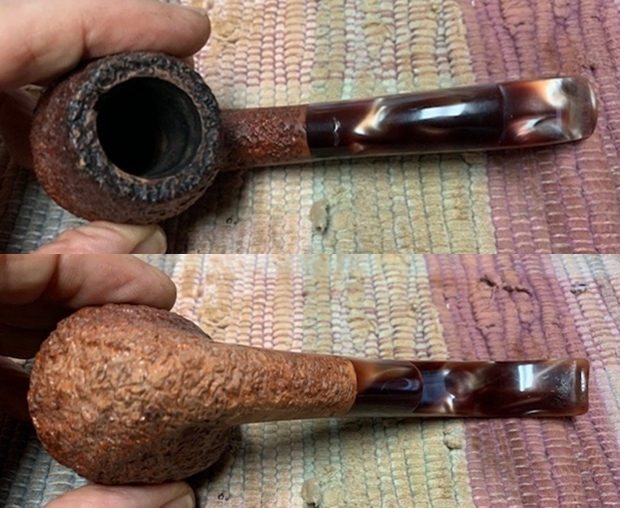
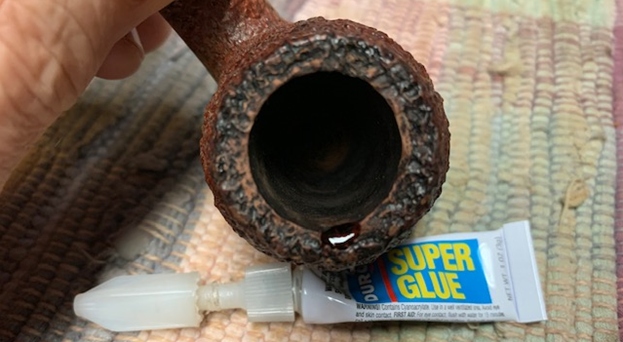
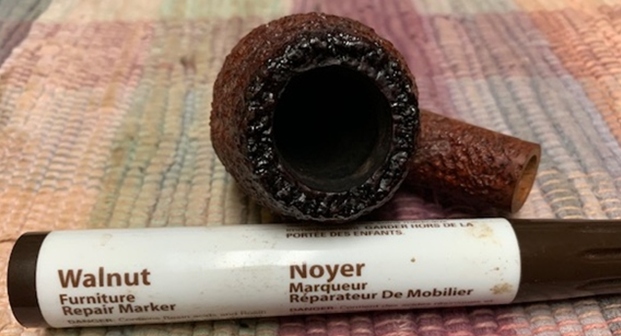
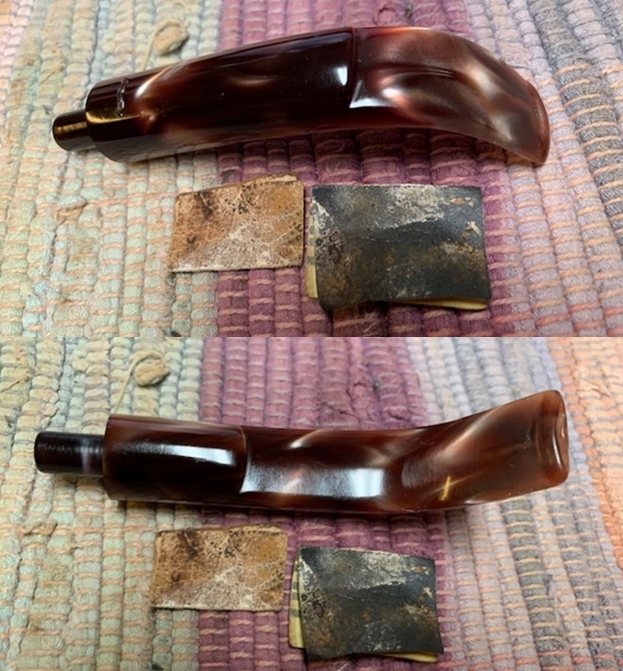
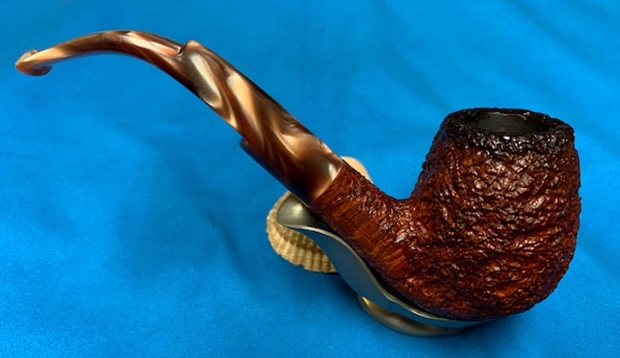
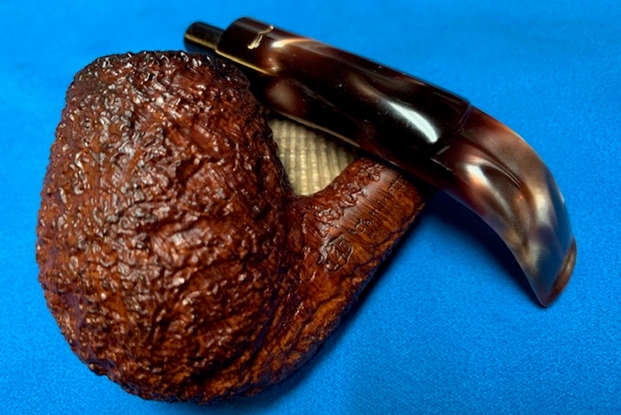
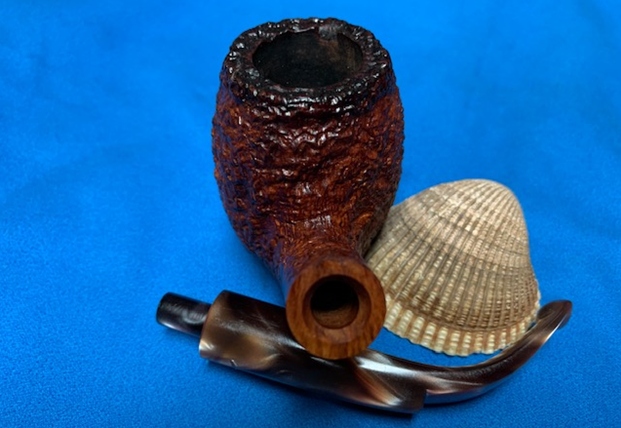
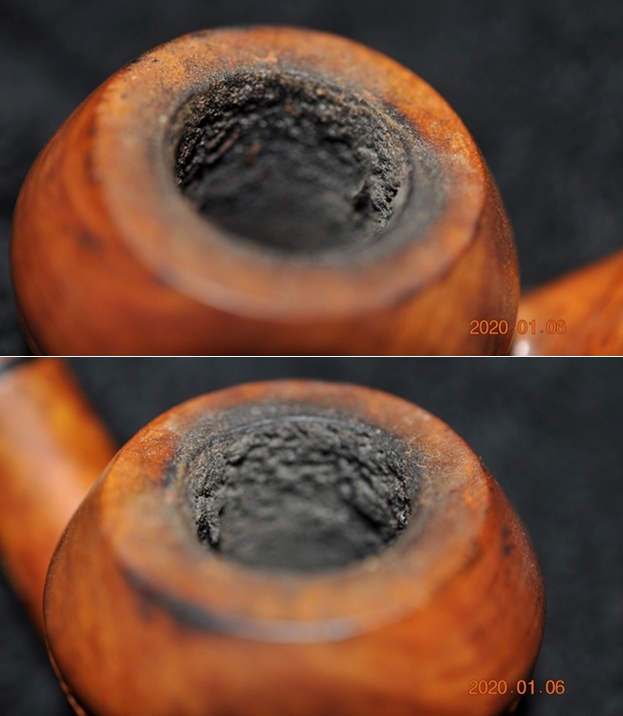
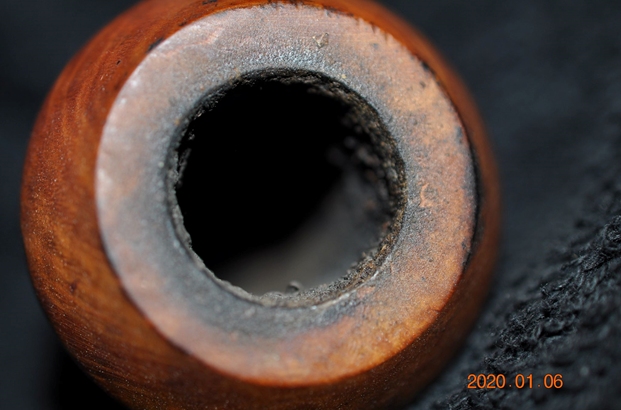
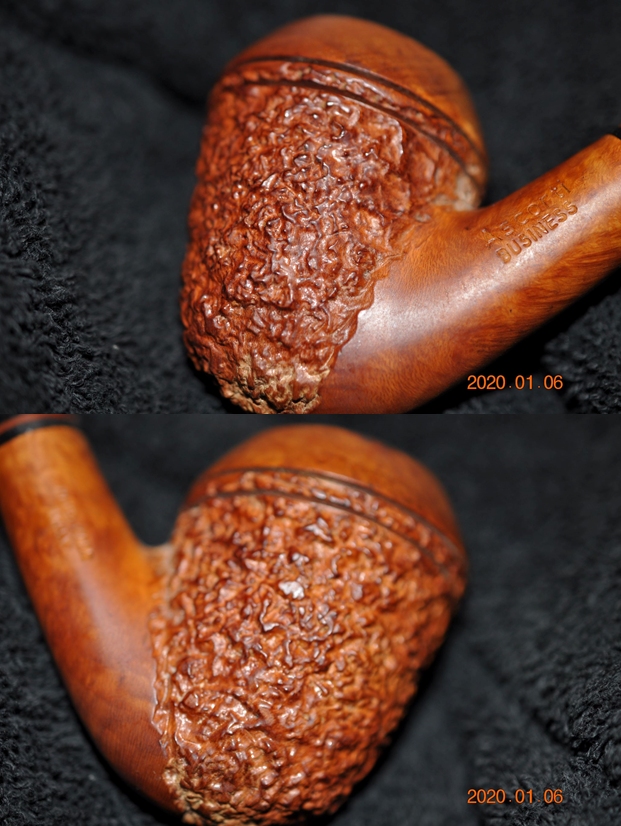
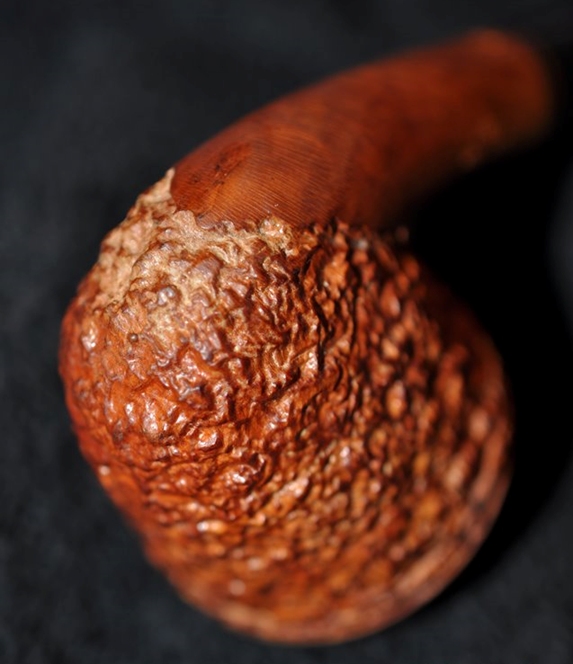
The next pipe on my worktable is a Caminetto Business pipe. Lately I have worked on a few of these and have been impressed by the craftsmanship. The pipe has a rugged rusticated finish and a stepped variegated brown acrylic saddle stem. It had come to us through an auction from Pekin, Illinois, USA. It was a filthy pipe with grime and oils ground into the rusticated finish on the bowl. The pipe had some rustic beauty shining through the dust and debris in the valleys of the rough finish. The rustication covered the rim top, bowl and shank with a smooth panel on each side of the shank. The finish was dull and lifeless and dirty from sitting around. There was a very thick cake in the bowl with lava flowing out of the bowl and over the rim top. The lava had filled in the deeper grooves of the finish on the rim top. The inner edge of the rim appeared to be in good condition under the lava coat other than a nick on the front right edge. The stamping on the left side of the shank read Caminetto in script over BUSINESS. To the left of that toward the bowl was the shape number 143 in a cartouche and to the right of the stamp it read KS. On the right side of the shank it was stamped MADE IN ITALY [over] CUCCIAGO (CANTU). The stepped saddle stem was variegated brown and had the classic Caminetto Mustache on the top of the saddle. The surface was dirty and there was light tooth chatter and marks on both sides near the button. Jeff took the following photos before he started his cleanup work on the pipe.He took close-up photos of the bowl and rim top from various angles to capture the condition of the bowl and rim top edges. You can see the lava overflow and debris in the rustication of the rim top. You can see the cake in the bowl. This was a dirty pipe but it was the finish was in great condition. The stem is also very dirty with tooth marks and chatter on both sides near the button. He took photos of the sides and heel of the bowl to show the beautiful incredibly deep rustication around the bowl. It is the same kind of rough finish that I really like on Castello Sea Rock pipes. You can see the oil, dust and debris in the finish on both sides of the bowl. Jeff took a photo of the stamping on the shank. It reads as noted above. The stamping is clear and readable. I have worked on several Caminetto in the past so I turned to one of the restorations on the rebornpipes blog and reread the background information on the brand. I am including that info here with this restoration (https://rebornpipes.com/2020/04/19/pretty-tired-and-dirty-messy-restoration-of-a-caminetto-business-tomahawk-182/).

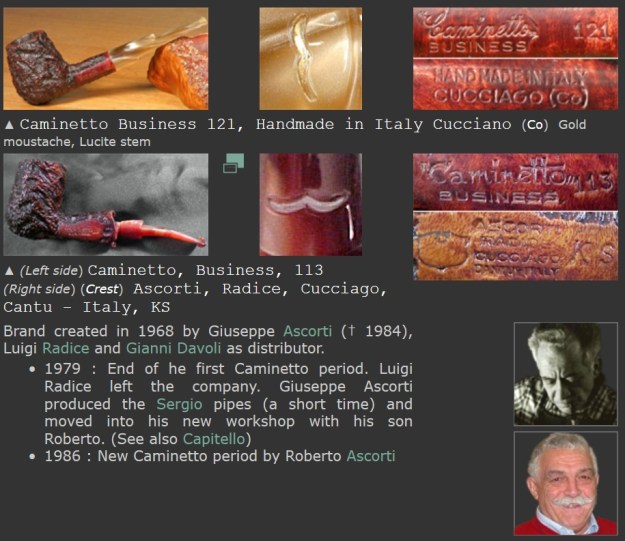
When the pipe arrived I turned to Pipephil (http://www.pipephil.eu/logos/en/logo-c1.html) to see if he included not only information on this Caminetto Business 182. He gave some interesting information about the brand. It was created in 1986 by Guiseppe Ascorti, Luigi Radice and Gianni Davoli as the distributor. It states that in 1979 the first Caminetto period ended with Luigi Radice leaving the company. Guiseppe Ascorti continued making the pipe with his son Roberto. In 1986 the New Caminetto period began by Roberto Ascorti.I turned to Pipedia for more information on the Caminetto and how to date the pipe I had in hand (https://pipedia.org/wiki/The_History_of_Caminetto_(shapes,_stamping,_articles,_etc.). I quote a pertinent paragraph:

Stampings and dating: First off, dating earlier Caminetto’s is nearly impossible. Nevertheless, there were three phases, some in which were much earlier, of development that occurred in the stamping process of Caminetto. Before that though, every pipe had the stamp of Caminetto in one of two ways: Caminetto in script or Caminetto within quotation marks in block letters (I do not know how it was decided which pipe got which stamp, as I have had EARLY Caminetto’s with both)…

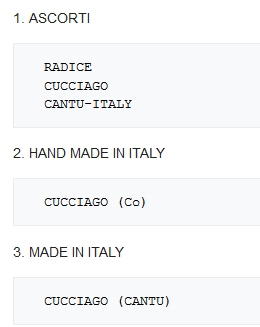
The stampings are shown in the photo to the left. The stamping on this pipe is like #3.

…Now, the question is which stamps are earlier and more likely to have been made by Ascorti and/or Radice. The answer is #1. The differences in #2 and #3 seem to be minute, as Cucciago is simply a suburb of Cantu. Pipes stamped like #1 are the most valuable Caminetto’s as they are the earliest production of the brand, as well as what some would claim the most perfect of Ascorti and Radice’s work. The last tidbit is, of course, debatable…

… There is also another factor in stamping, that is, which series the pipe falls in. The majority of Caminetto’s one sees are those of the “Business” series, which are stamped such with their collective shape (see photo of shapes below). Another stamp that sometimes follows the “Business” one is “KS,” which from what I know means “King-size” (this could be wrong, as there are pipes stamped with KS1, KS2, and KS3).

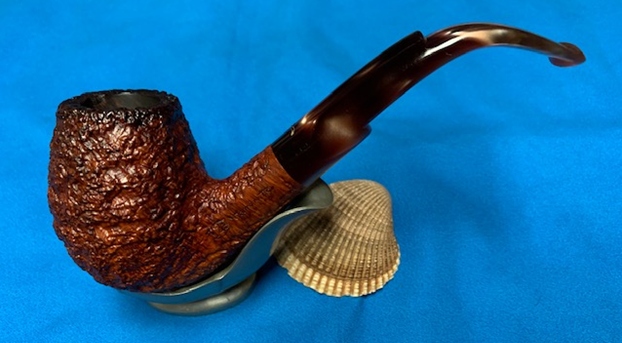
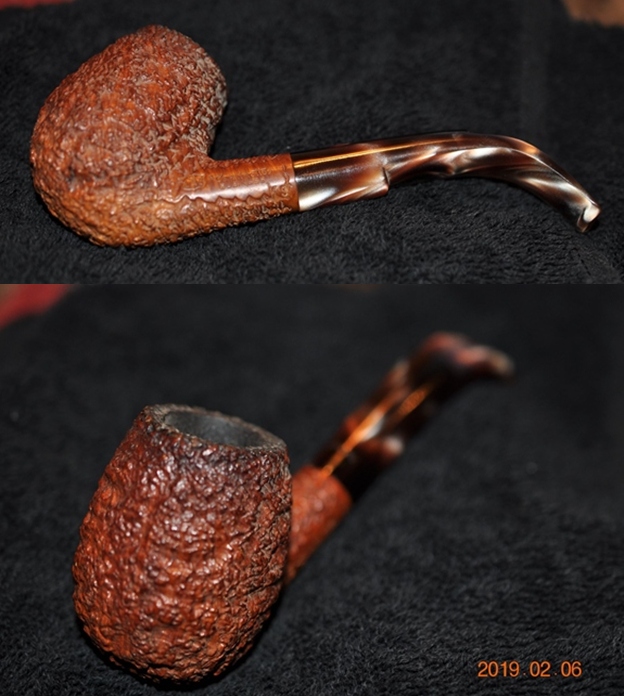
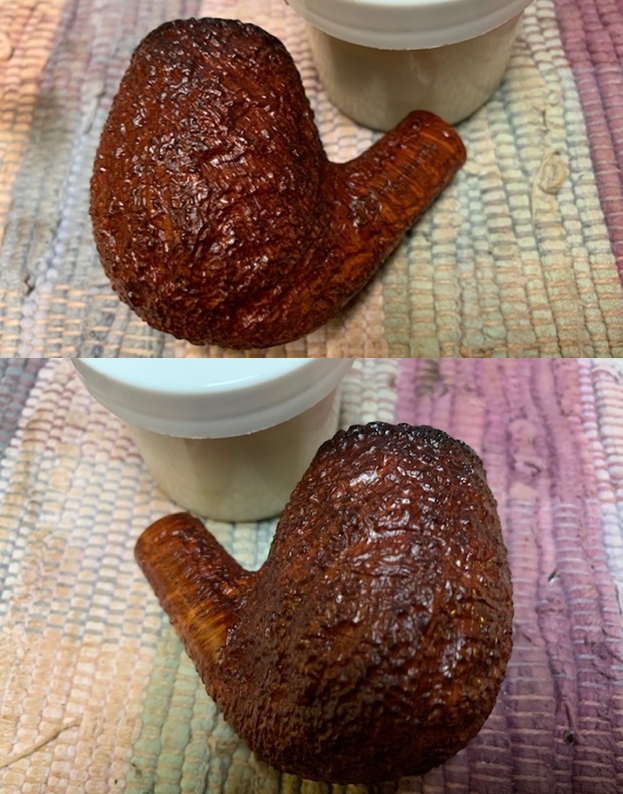
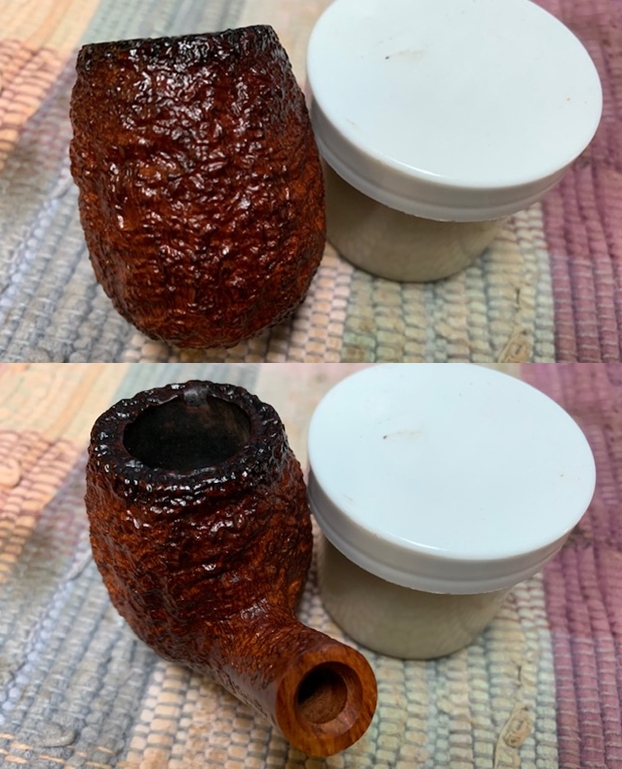
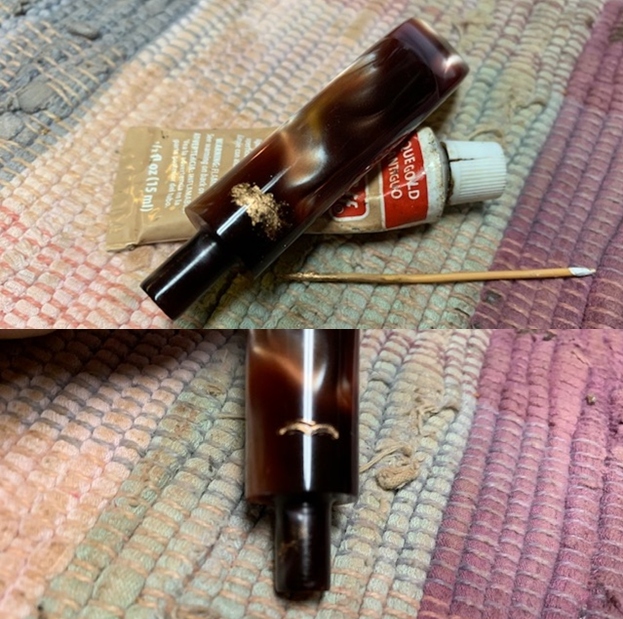
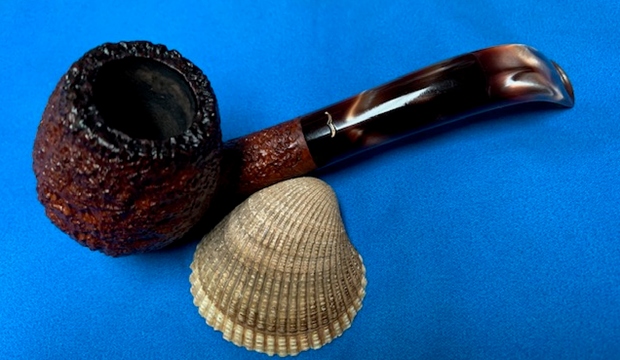
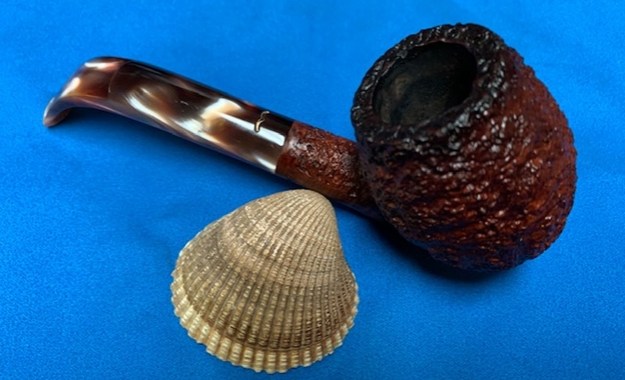
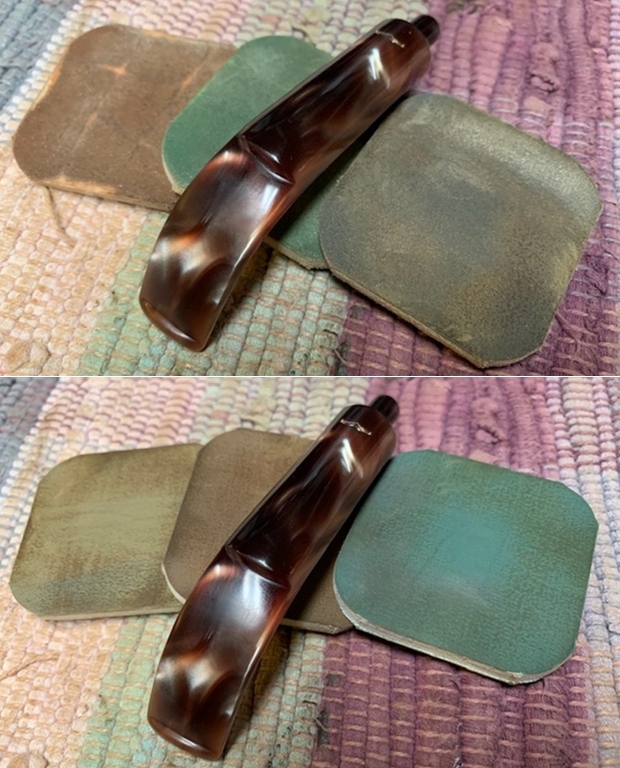
Now it was time to look at it up close and personal. Jeff had done an amazing job in removing all of the cake and the lava on the rim top. He had reamed the bowl with a PipNet Pipe Reamer and cleaned up the remnants with a Savinelli Fitsall Pipe Knife. He took the cake back to bare briar so we could check the walls for damage. He scrubbed the exterior of the bowl with Murphy’s Oil Soap and a tooth brush to remove the grime on the bowl and rim and was able to remove the lava and dirt. He cleaned out the interior of the bowl and shank with pipe cleaners, cotton swabs and alcohol until they came out clean. He cleaned the stem with Soft Scrub to remove the grime on the exterior and cleaned out the airway with alcohol, cotton swabs and pipe cleaners. I took photos of the pipe before I started my part of the restoration.  To show how clean the rim top and stem really was I took a close-up photo of the rim and stem. The bowl was clean and cake free. The rim top is very clean with no residual lava in the sandblast finish. The inner edges of the bowl look good and the nicked area on the right front is clean. The variegated brown acrylic saddle stem looks cleaned up nicely. The surface had some light tooth marks but the button edge looked really good.I took the stem off the bowl and took a picture of the pipe to give an idea of the look of the rustication and the stem. It is going to be a pretty pipe.I used a drop of super glue to fill in the chipped edge on the right front inner edge of the bowl. Once the glue repair cured I smoothed out the inner edge of the bowl with 220 grit sandpaper.I roughed up the repaired area on the rim top with a wire brush to knock of the debris from the repair. Once it was clean it matched the edges of the rest of the bowl. I knew that the original Caminetto Business 143KS  pipe had a flumed rim top and runoff down the top ½ inch of the bowl sides. I found a photo of the same pipe online and flumed the bowl on the one I had accordingly. I used a Walnut stain pen to touch up the rim top and give the bowl a slight flume around the top edge. Once I treated the pipe with Before & After Restoration Balm the flumed part would flow better with the surrounding briar.The bowl looked very good so I did not need to do any further work on it. I rubbed the bowl and shank down with Before & After Restoration Balm to deep clean the finish on the bowl and shank. The product works to clean, enliven and protect the briar. I worked it in with my fingers and with a horse hair shoe brush to get it into the nooks and crannies of the deep rustication of the finish on the bowl and shank. I let it sit for about 20 minutes to let it do its magic. I buffed it with a soft cloth. The briar really began to have a rich shine. I took some photos of the bowl at this point to mark the progress in the restoration.   The bowl was finished so I set it aside and turned my attention to the stem. I sanded out the light tooth marks and chatter with 200 grit sandpaper and started to polish it with 400 grit wet dry sandpaper. I touched up the mustache stamp on the topside of the saddle stem with Rub’n Buff Antique Gold. I rubbed it into the stamp and pressed into it with a toothpick. I buffed it off with a soft cloth and left the gold in the mustache to bring it back into place.   I polished the stem with micromesh sanding pads – dry sanding with 1500-12000 grit sanding pads. I wiped the stem down after each sanding pad with a damp cloth I finished polishing it with Before & After Pipe Stem Polish – both Fine and Extra Fine and buffed it off with a cotton cloth. This Caminetto Business 143KS Bent Egg is a real beauty and has a lot of life left. I put the bowl and stem back together again and buffed the bowl and the stem with Blue Diamond on the buffing wheel. I used a soft touch on the rusticated bowl so as not to fill it in with the polishing product. I gave the bowl several coats of Conservator’s Wax and the stem several coats of carnauba wax. I carefully buffed the entire pipe with a clean buffing pad to raise the shine. I finished buffing with a microfiber cloth to deepen the shine. The finished pipe looks very good. The rustication is very tactile and feels great in the hand. It is comfortable and light weight. The finished Caminetto Business Bent Egg is shown in the photos below. The dimensions of the pipe are Length: 6 inches, Height: 2 ¼ inches, Outside diameter of the bowl: 1 ¼ inches, Chamber diameter: ¾ of an inch. This great looking rusticated Caminetto turned out very well. It should be a great pipe. It will be going on the rebornpipes store shortly if you are interested in adding it to your collection. Thanks for reading this blog and my reflections on the pipe while I worked on it.
A Fresh Start for a Davidoff Straight Apple


Blog by Steve Laug

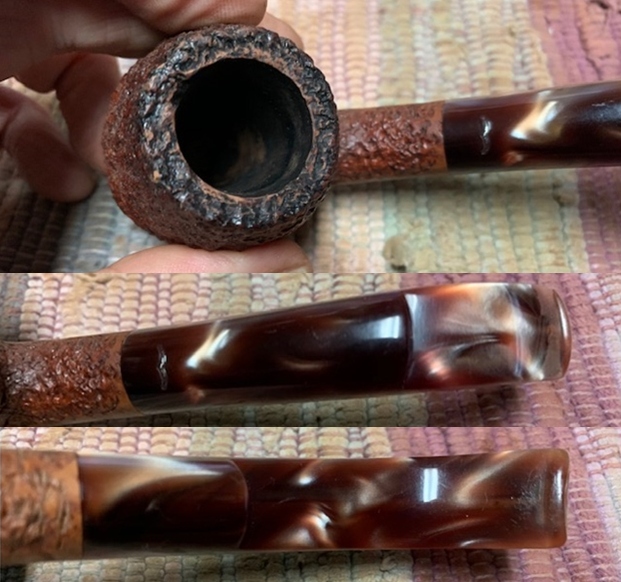
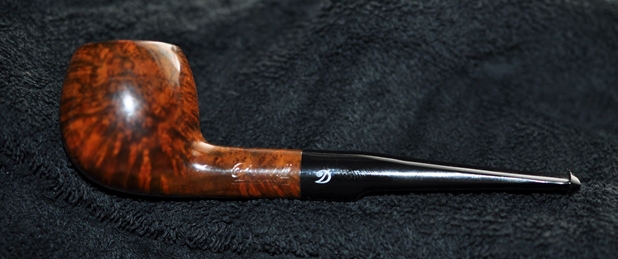
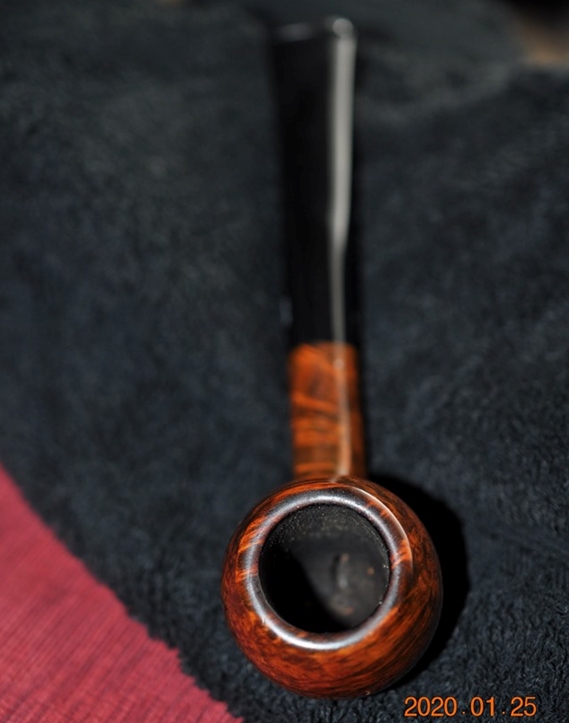
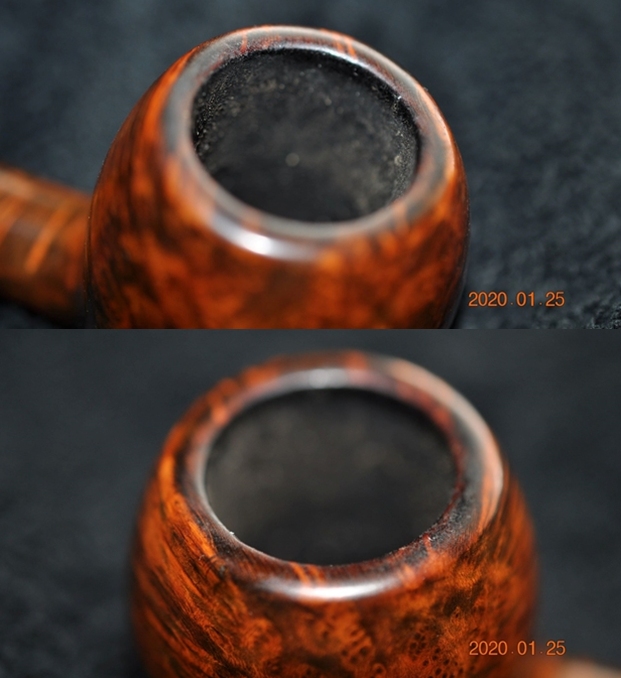
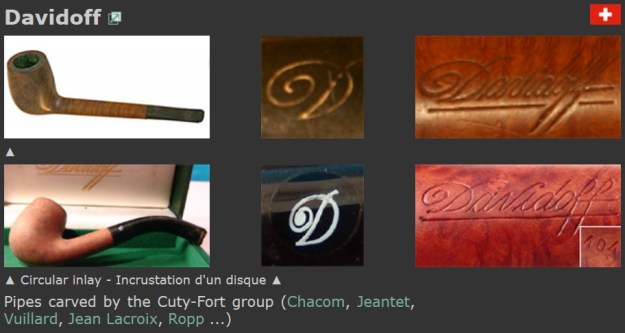
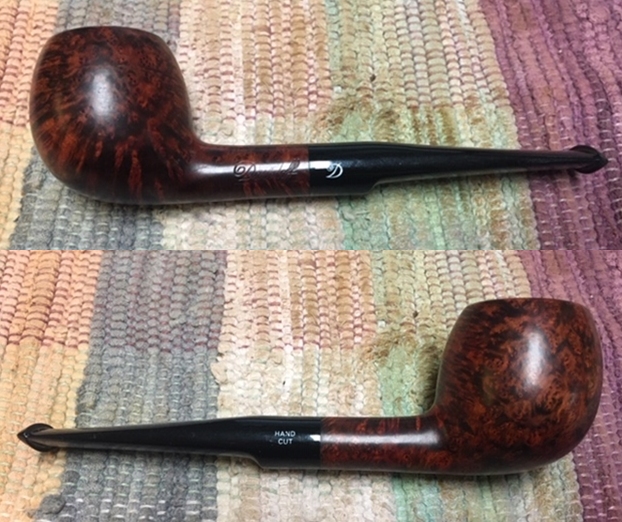
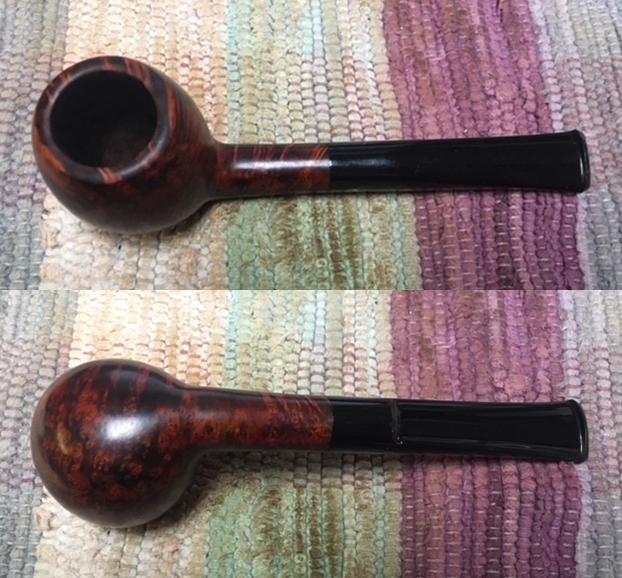
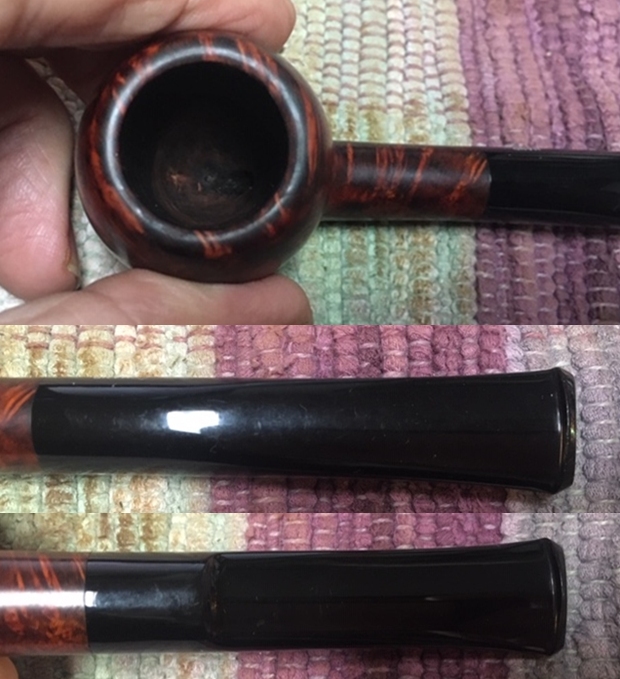
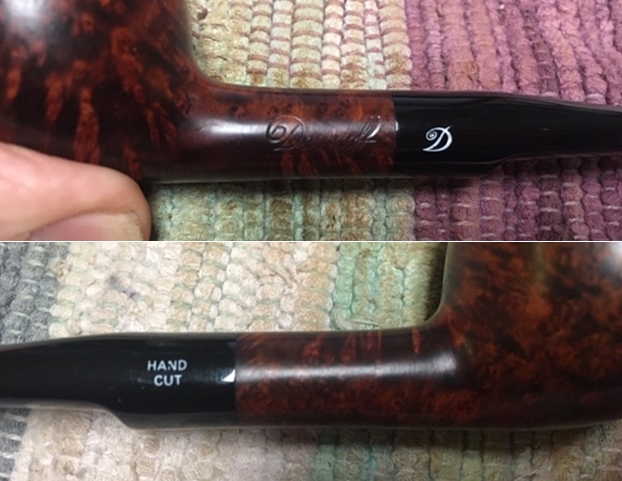
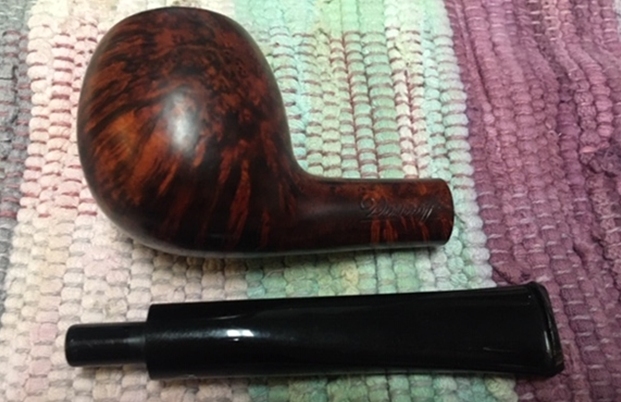
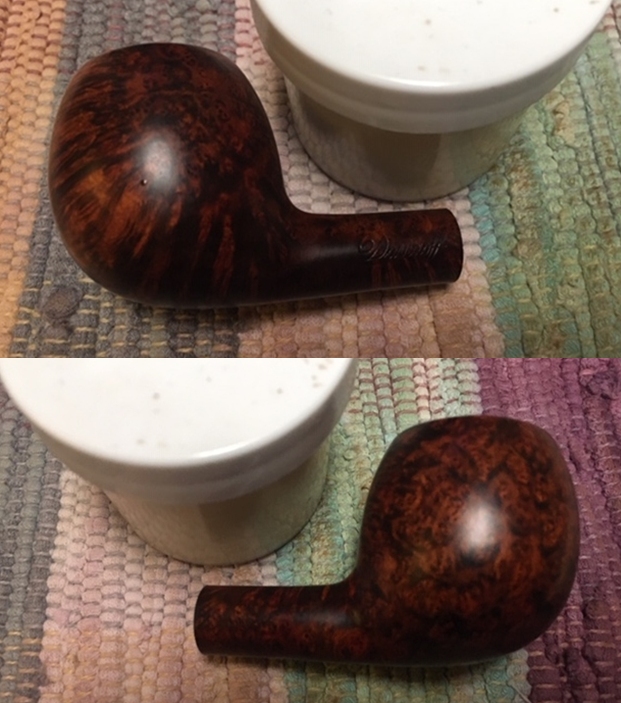
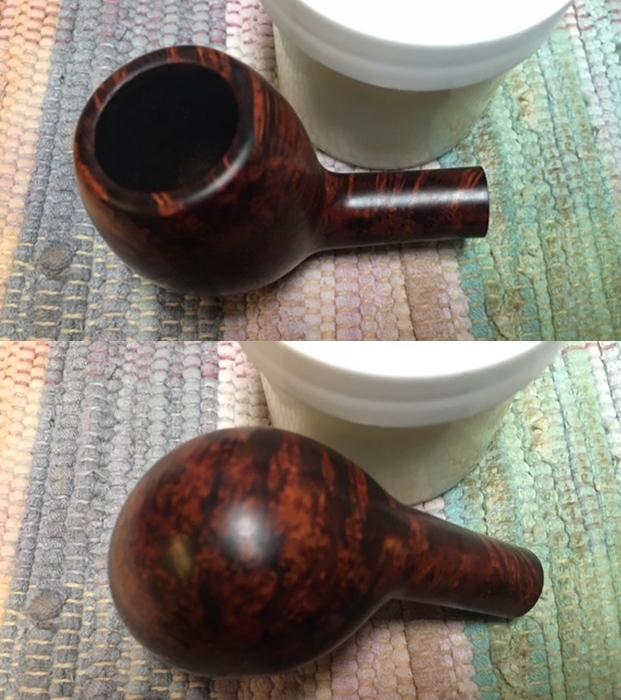
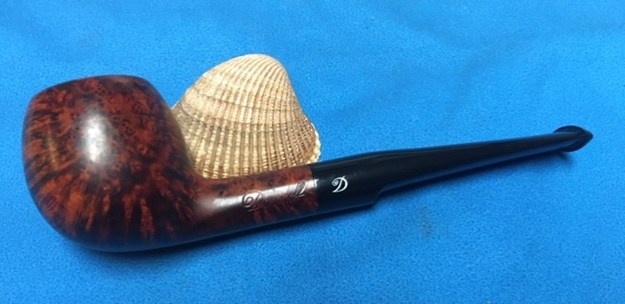
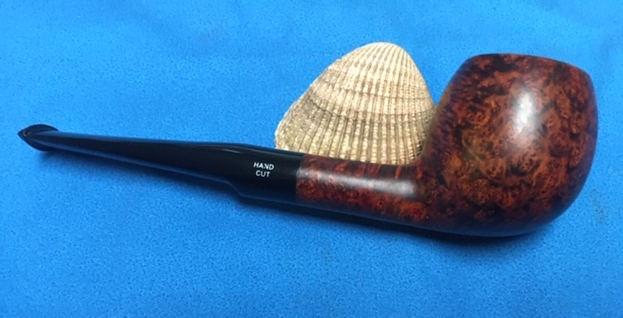
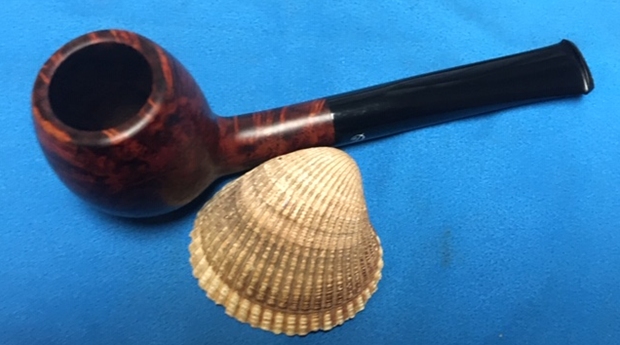
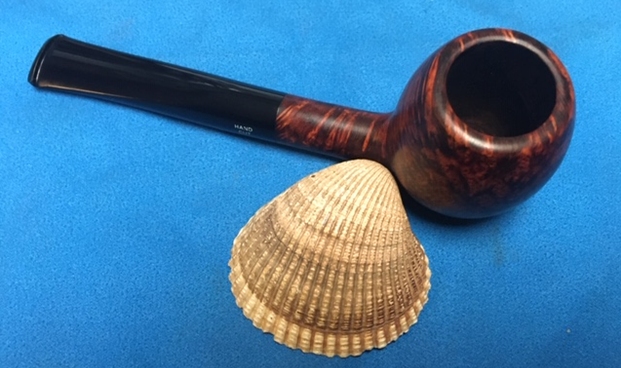
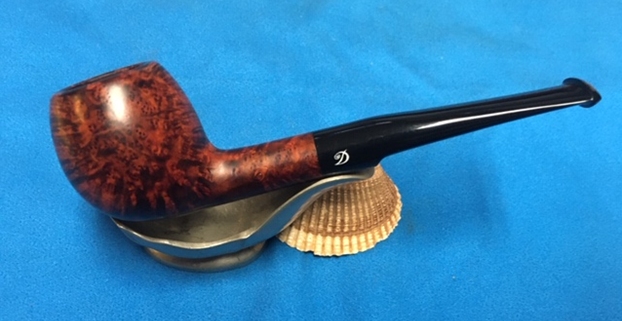
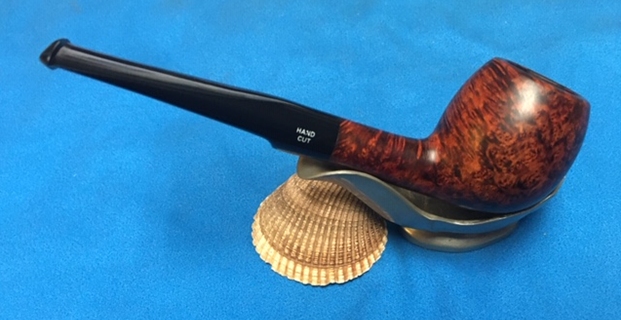
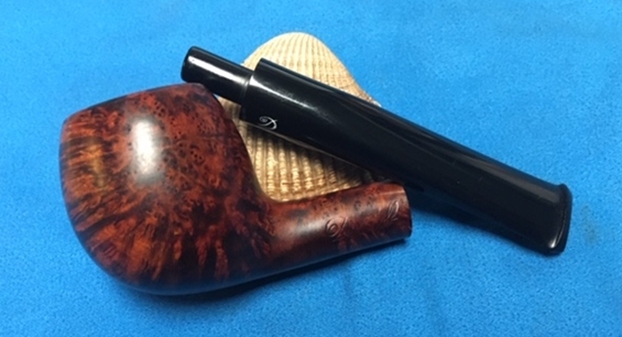
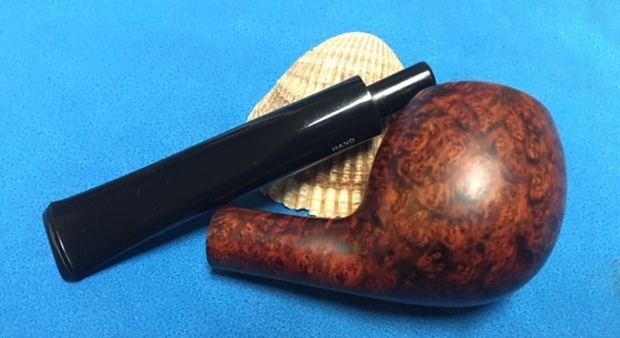
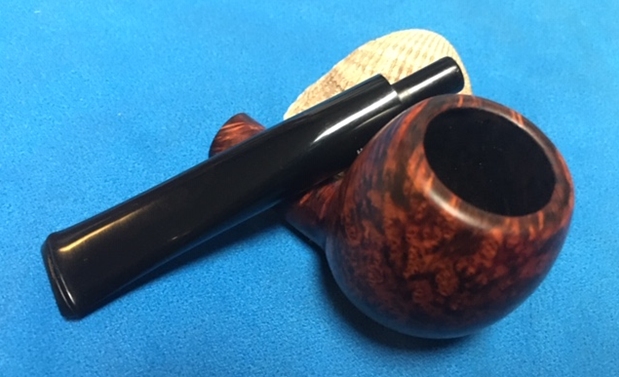
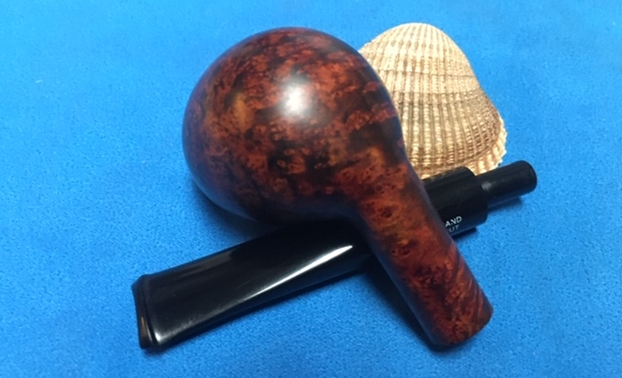
One thing about having so many boxes of pipes to work on surrounding my work table is that I can always find one that grabs my attention to work on now! There are two Davidoff pipes in the box and I had passed over them both a few times in the past weeks but this morning I decided that the apple shaped pipe would join the days queue. It is a nice looking Apple shape pipe stamped Davidoff on the left side of the shank. The name is underlined and the D has a flourish both on the stamping and on the logo on the left side of the stem. It was dirty and was another well-loved pipe when we received it. The bowl had a moderate cake and the lava overflow on the back side of the rim edge. It was hard to know the condition of the inner edge of the bowl. The pipe had a walnut stain on the bowl that highlighted some nice grain on the bowl sides under the grime and the finish appeared to be in good condition. A lot would be revealed once Jeff had worked his magic on it. The acrylic stem was in good condition with light tooth chatter and marks on both sides ahead of the button and on the button surface itself. Jeff took photos of the pipe before he started his cleanup work. Jeff tried to capture the condition of the bowl and rim top with the next series of photos. You can see the work that is ahead of us there. The grain around the bowl is quite stunning. Jeff took some great photos showing what is underneath the grime and debris of time and use. He captured the stamping on the left side of the shank and both sides of the half saddle acrylic stem. They are clear and readable. It read Davidoff in script underlined with a Script D on the left side of the stem and Hand Cut on the right side of the stem.The photos of the stem show the stem surface. It is dirty and has light tooth marks and chatter on both sides ahead of the button.While I have visited the Davidoff store in several cities I don’t believe I have worked on a pipe from there. I turned to Pipephil to get a quick overview on the brand so I knew a bit about the pipe I was working on (http://www.pipephil.eu/logos/en/logo-d3.html). I have included a screen capture of the pertinent section below. It seems that for awhile anyway the pipes were carved by the Cuty-Fort Group (Chacom, Jeantet, etc.).I turned to Pipedia to fill in more of the gaps and found that the article quotes Jose Manuel Lopes whose book I have on my shelf ( https://pipedia.org/wiki/Davidoff) I quote:

From Pipes, Artisans and Trademarks, by Jose Manuel Lopés’

Davidoff started in 1911 as a family run tobacconist located in Geneva. Henri Davidoff, a Russian emigrant, was the founder. The shop was located in Geneva. His son, Zino Davidoff (1906-1994), concentrated on the tobacco business, starting in 1924, and revolutionized the conservation of quality cheroots throughout Europe.

Davidoff became World famous, and the company was acquired in 1970 by the Oettinger group, and expanded into numerous accessories for men. For Zino, the pursuit of pleasure was a constant, two of his maxims being: “Take pleasure from everything in life, without excess” and “the pipe is a valuable companion, the essence of tranquility and must be smoked with respect”.

Davidoff’s first pipes date from 1974 and were commissioned by various companies, notably Butz-Choquin and the Cuty Fort Group. The brand offers 14 classic shapes, in three finishes and with acrylic stems.

It appears the pipes are now made in Italy, as the website states the following about their pipes:

Creation of the Davidoff Pipe entails a meticulous, detailed process performed by only the most skilled Italian pipemakers. This dedication is why the Davidoff Pipe upholds a standard of quality and design found in no other pipe in the world. Made of the finest and carefully selected briar, each Davidoff Pipe features a flawless, hand-finished bowl and perfectly fitted, hand-cut acrylic stem. The Davidoff Pipe is available in three beautiful designs and finishes — sandblasted black, red brilliant and natural light brown.
With that information in hand I knew what I was dealing with either a French made or an Italian made pipe. I have been working on a lot of each lately and the pipe in hand had the feel of a French made Chacom pipe rather than an Italian. I would work with that assumption. I had no idea of the age of the pipe but it was time to work on the pipe itself.

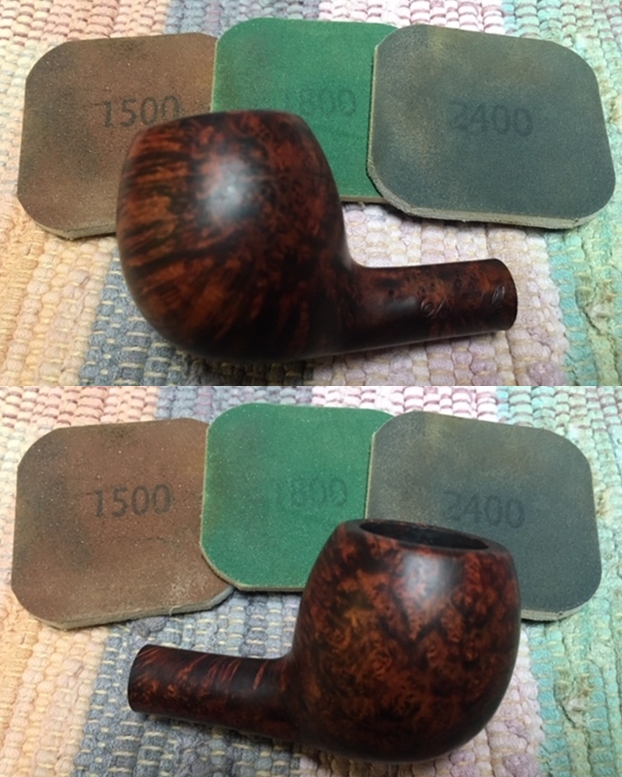
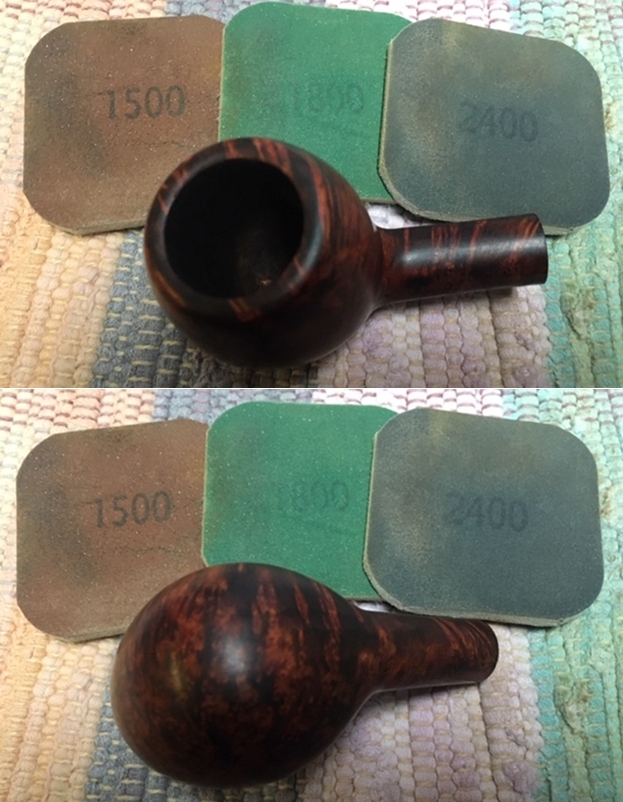
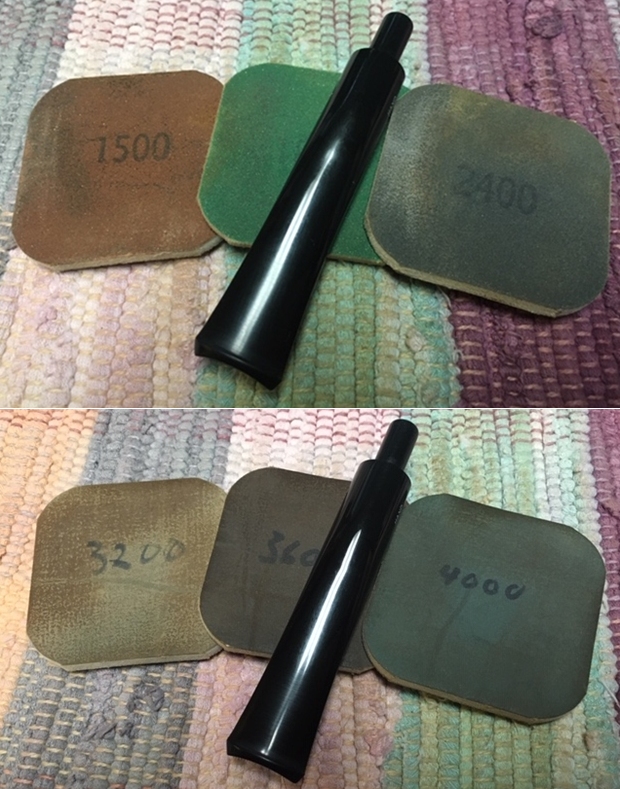
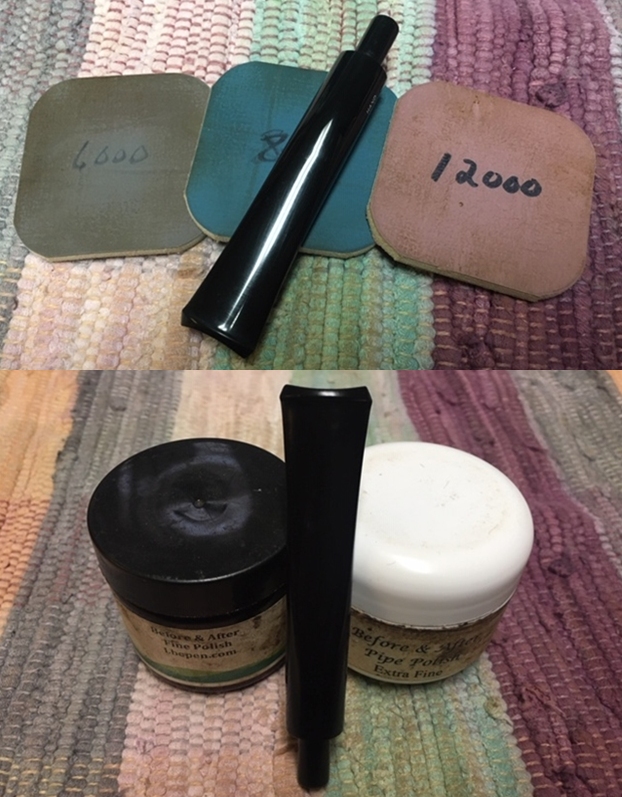
Jeff cleaned the pipe with his usual penchant for thoroughness that I really appreciate. This one was a real mess and I did not know what to expect when I unwrapped it from his box. He reamed it with a PipNet pipe reamer and cleaned up the reaming with a Savinelli Fitsall Pipe Knife. He scrubbed out the internals with alcohol, pipe cleaners and cotton swabs until the pipe was clean. He scrubbed the exterior of the bowl with Murphy’s Oil Soap and a tooth brush to remove the grime and grit on the briar and the lava on the rim top. The finish looks very good with good looking grain around the bowl and shank. Jeff soaked the stem in Before & After Deoxidizer to remove the oxidation on the rubber. When the pipe arrived here in Vancouver for the second stop of its restoration tour it looked very good. I took photos before I started my part of the work. I took some photos of the rim top and stem. The crowned rim top looks very good. There is no damage on the inner edge of the bowl. The close up photos of the stem shows that is it very clean.I took photos of the stamping on the stem and shank of the pipe. It is clear and readable.I took the stem off the shank and took a picture of the pipe. It really is a nice looking pipe with great lines.I started my part of the restoration work on the pipe by polishing the briar with micromesh sanding pads – dry sanding with 1500-12000 grit pads. I wiped the bowl down after each pad with a damp cloth. The grain really began to stand out and the finish took on a shine by the last sanding pad. The photos tell the story! I worked some Before & After Restoration Balm into the surface of the briar with my fingertips. The product works to clean, enliven and protect the briar. I let the balm sit for about ten minutes and then buffed with a cotton cloth to raise the shine. The photos show the bowl at this point in the restoration process. I laid the bowl aside and turned to deal with the stem. The tooth marks and chatter on the stem were not deep. I polished the stem with micromesh sanding pads – dry sanding with 1500-12000 grit sanding pads. I wiped it down after each sanding pad with a cloth containing some Obsidian Oil. I finished polishing it with Before & After Pipe Stem Polish – both Fine and Extra Fine and buffed it off with a cotton cloth. The pipe came together quite well. The finish on the pipe is in excellent condition and the contrasting stains work well with the black acrylic stem. With the grime and debris gone from the finish and the bowl it was a beauty and the grain just pops at this point. I put the stem back on the bowl and buffed the pipe with Blue Diamond on the buffing wheel. I carefully avoided the stamping on the shank and stem during the process. I gave the bowl and the stem multiple coats of carnauba wax on the buffing wheel and followed that by buffing it with a clean buffing pad on the buffer. I hand buffed the pipe with a microfiber cloth to deepen the shine. The finished Davidoff pipe is quite beautiful and is a lovely apple shaped pipe. The finish on the bowl combines various stains to give it depth. It is very well done. Give the finished pipe a look in the photos below. I can only tell you that it is much prettier in person than the photos capture. The dimensions of the pipe are Length: 5 ½ inches, Height: 1 ½ inches, Outside diameter of the bowl: 1 ¼ inches, Chamber diameter: ¾ of an inch. I really like this Apple shaped pipe and it really does remind me of a Chacom pipe. This is a great looking pipe in great condition. Thanks for walking through the restoration with me as I worked over another beautiful pipe. I will be adding it to the rebornpipes store soon. If you want to add it to your collection send me an email or a message! Thanks for your time.
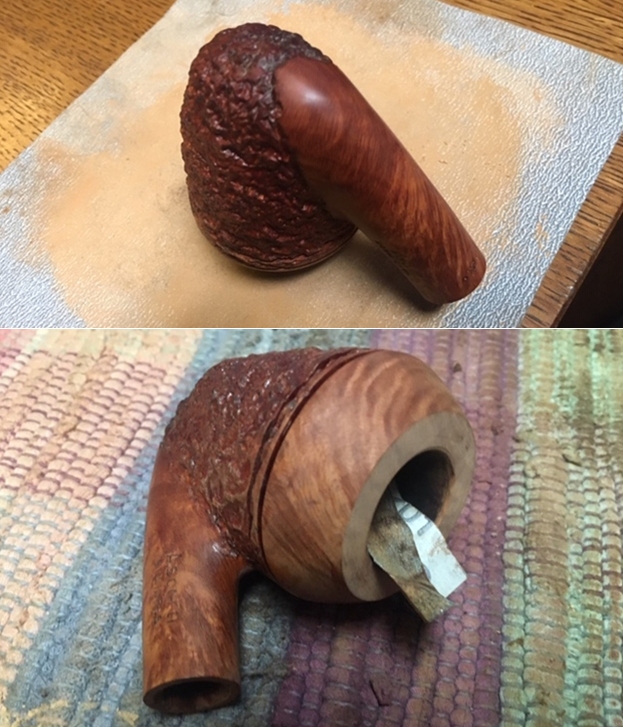
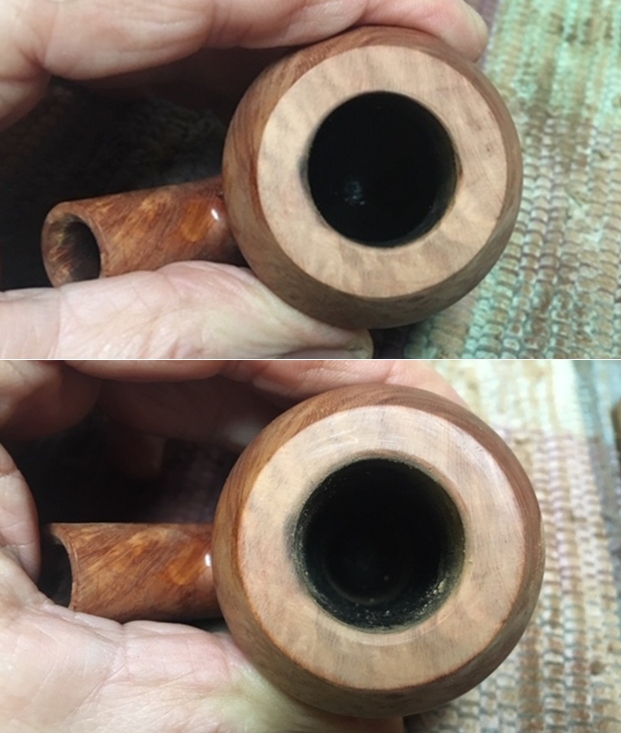
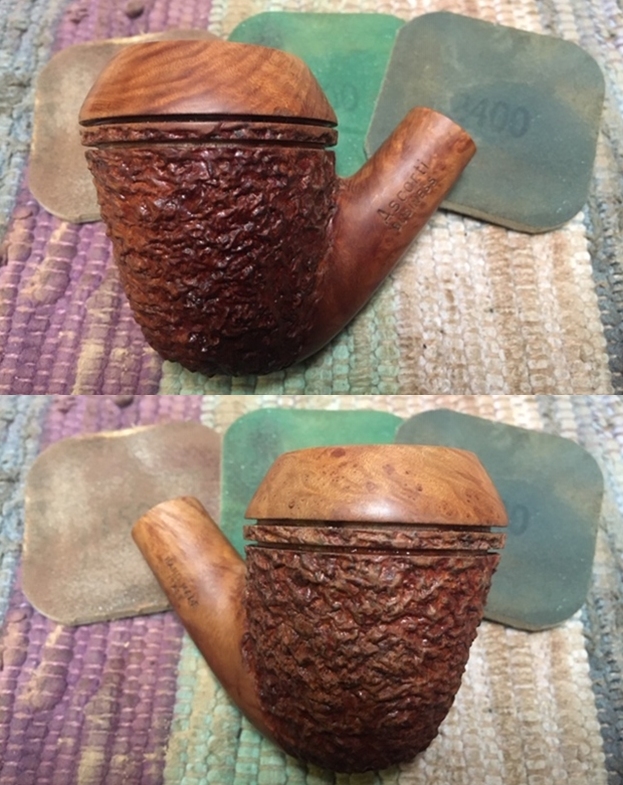
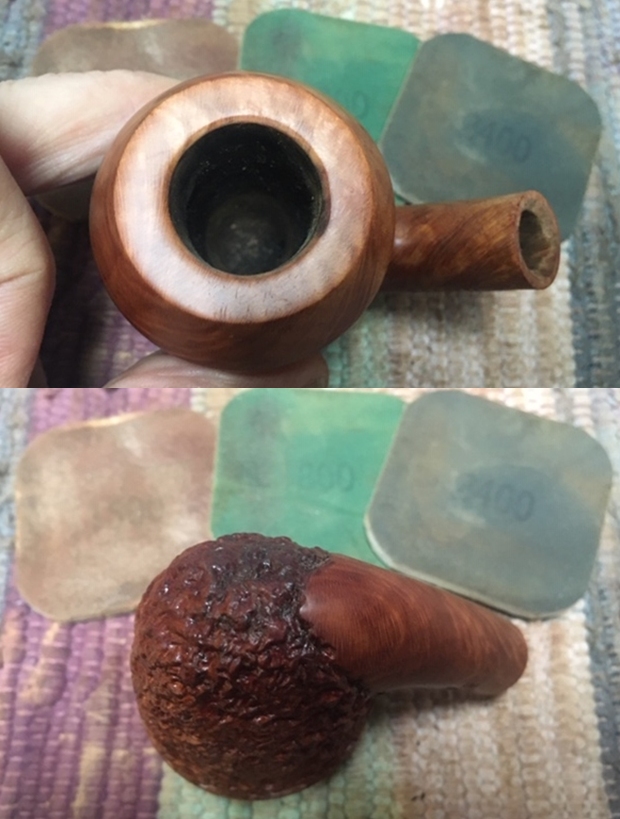
This Ascorti 01 Business Hand Made Must Be a Great Smoking Pipe


Blog by Steve Laug

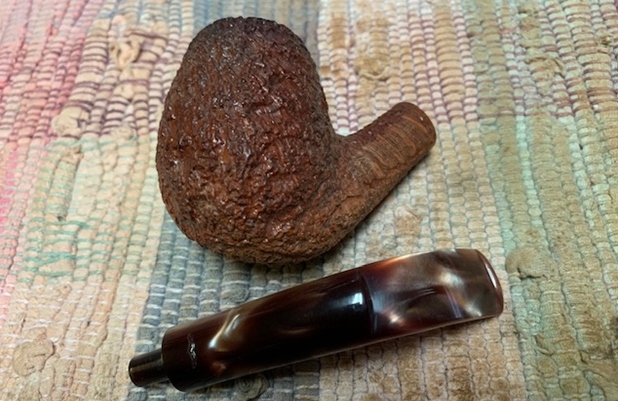
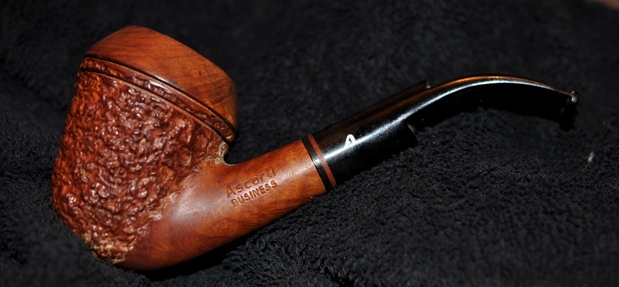
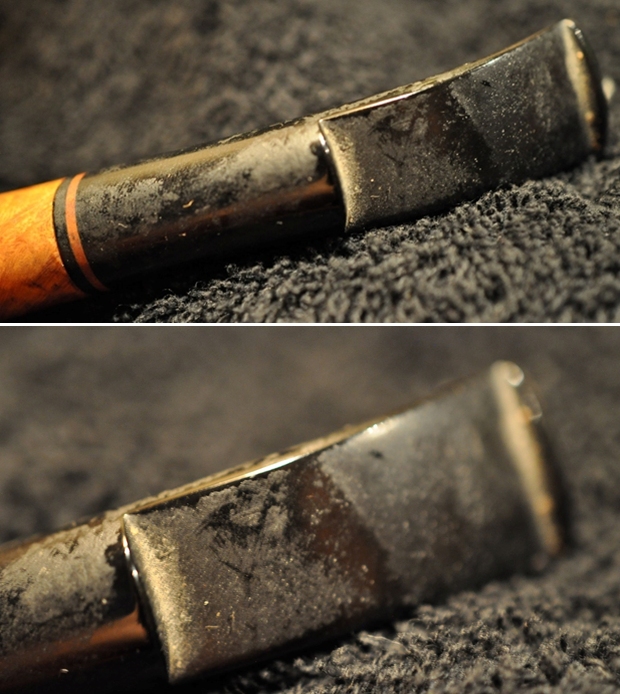
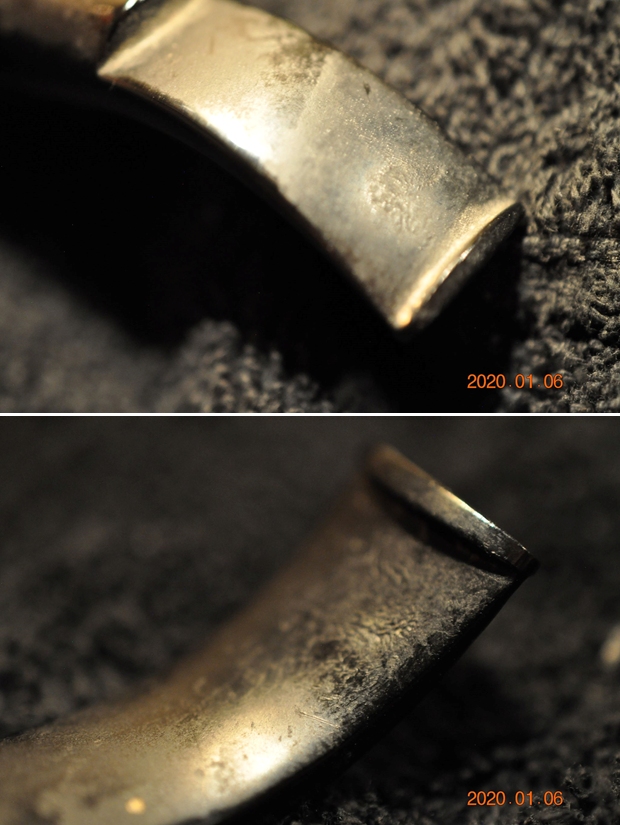
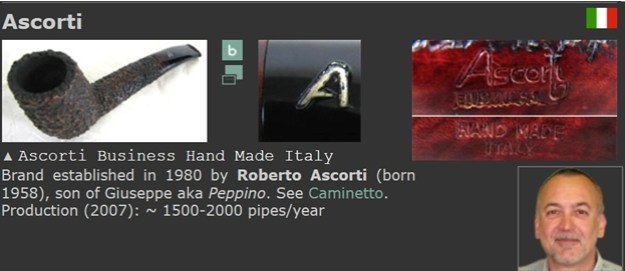
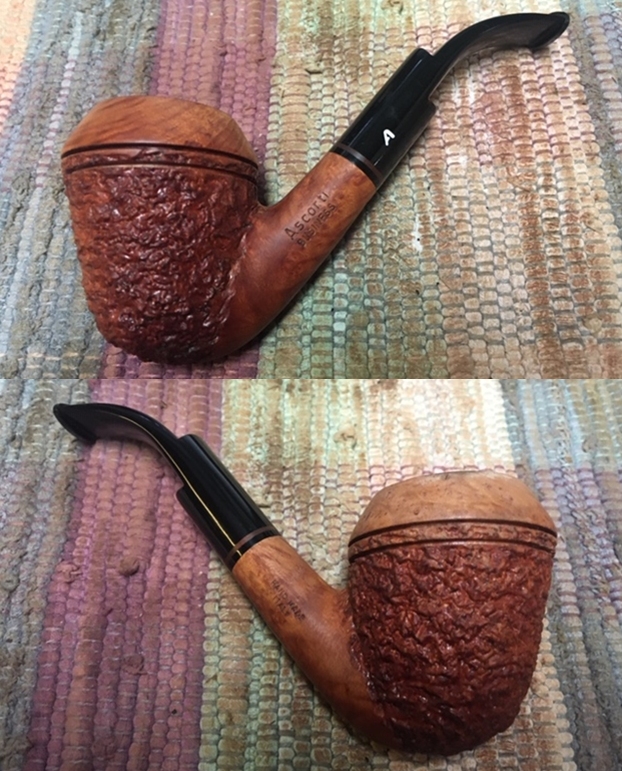
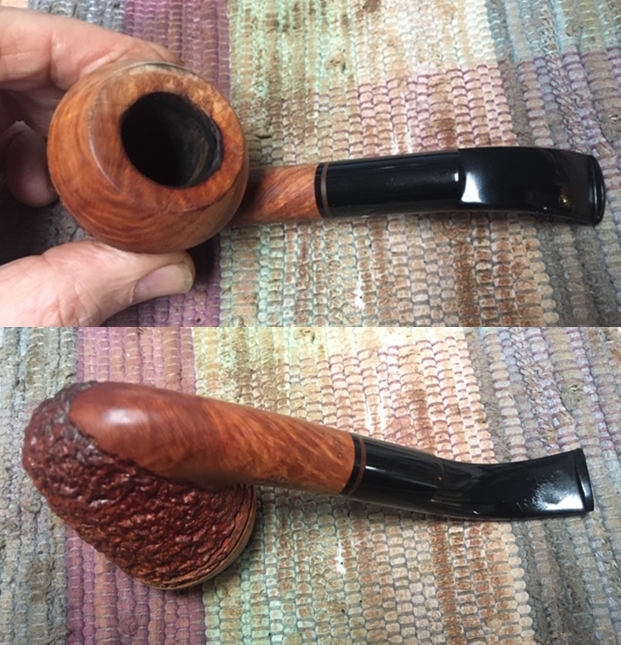
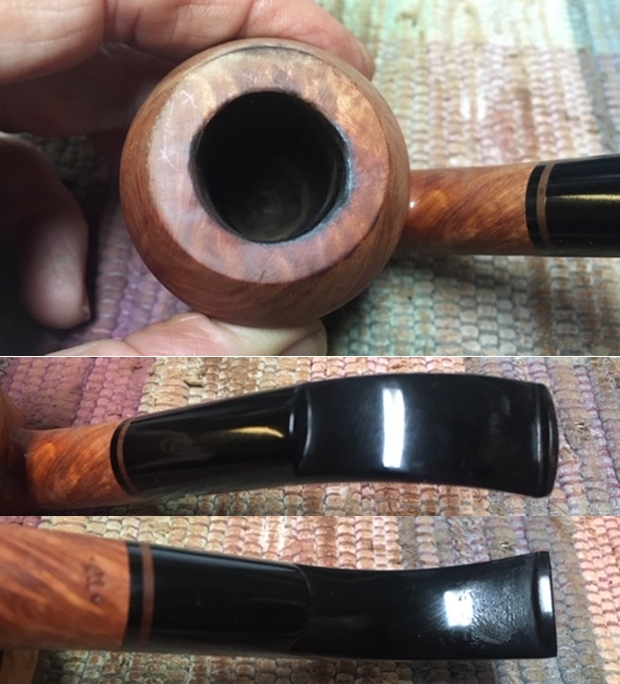
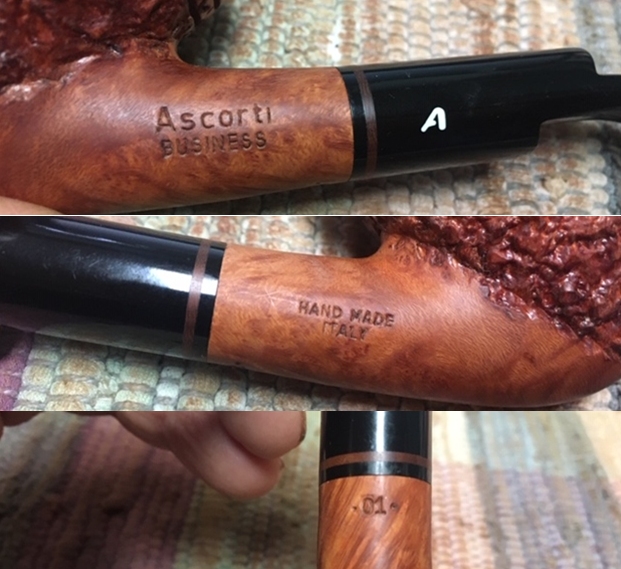
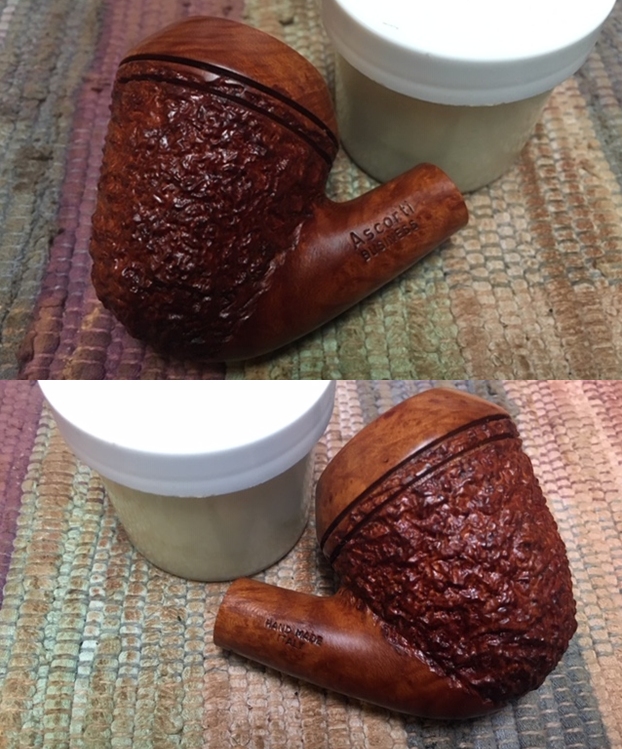
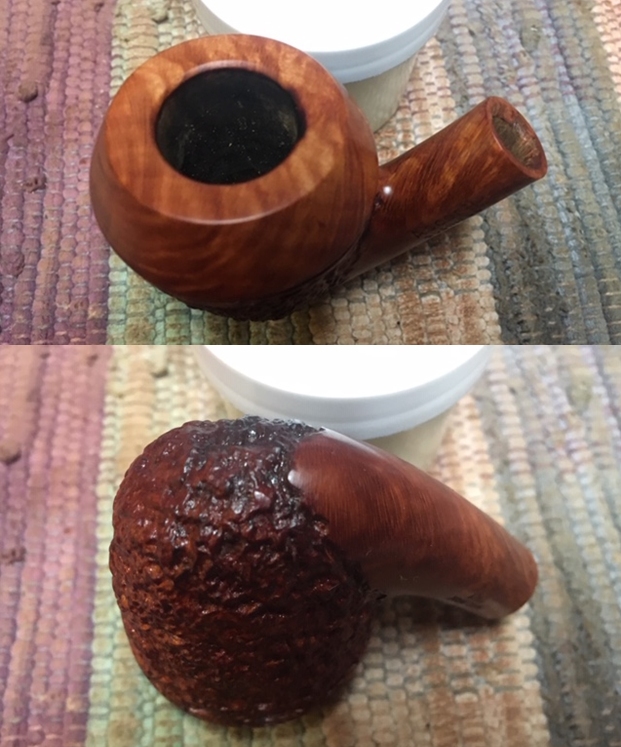
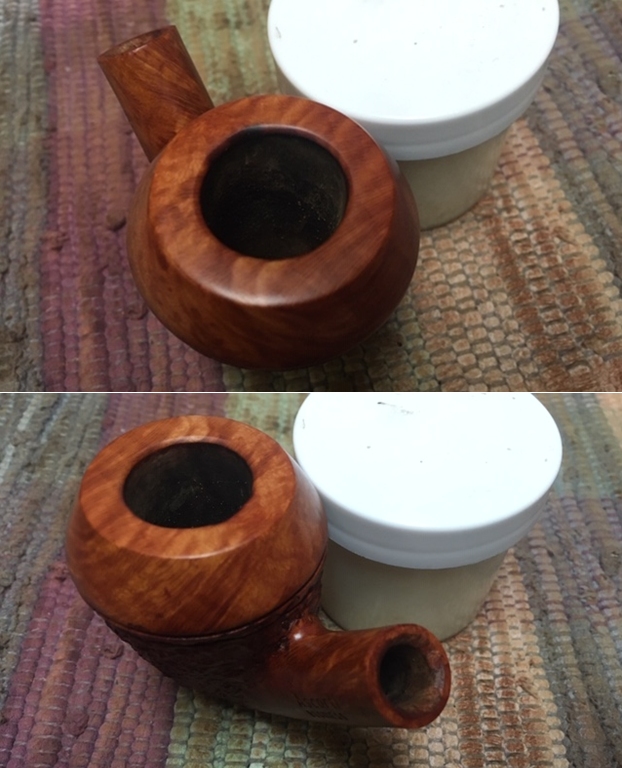
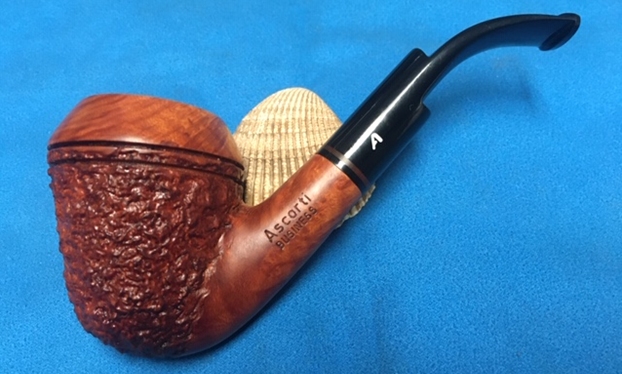
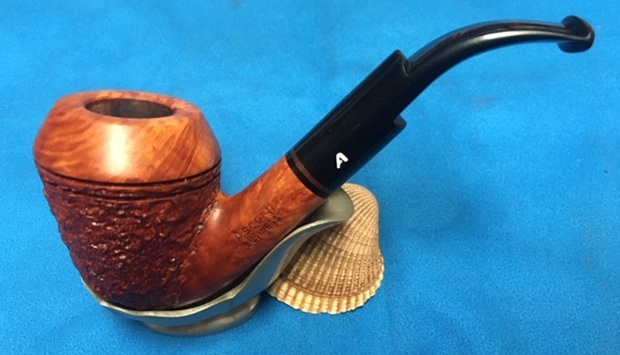
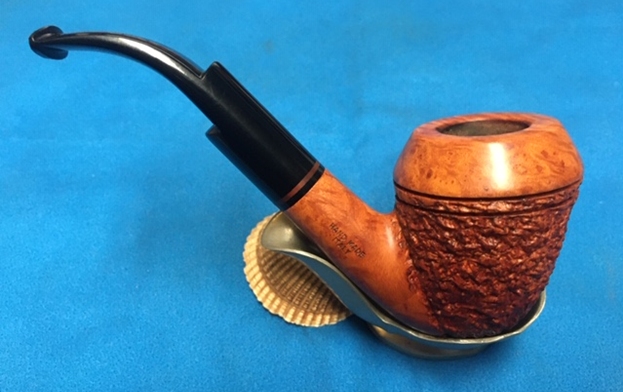
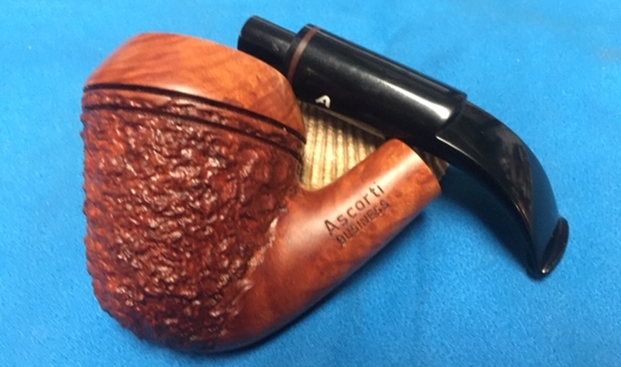
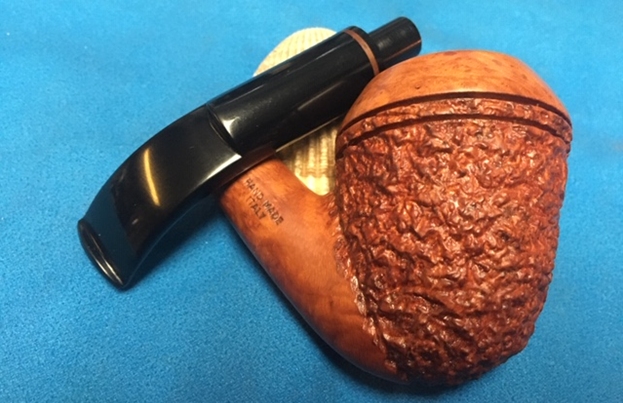
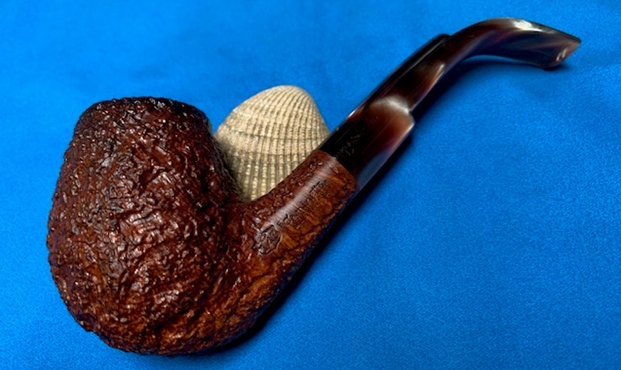
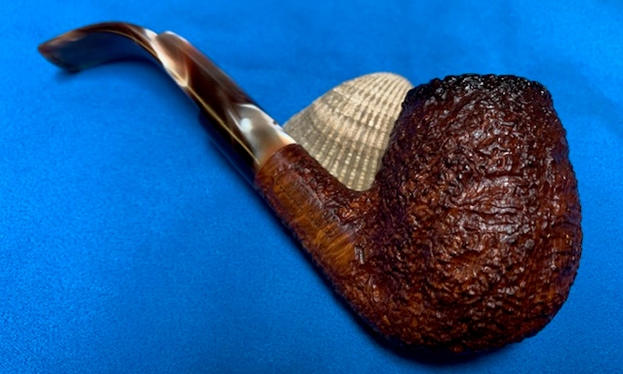
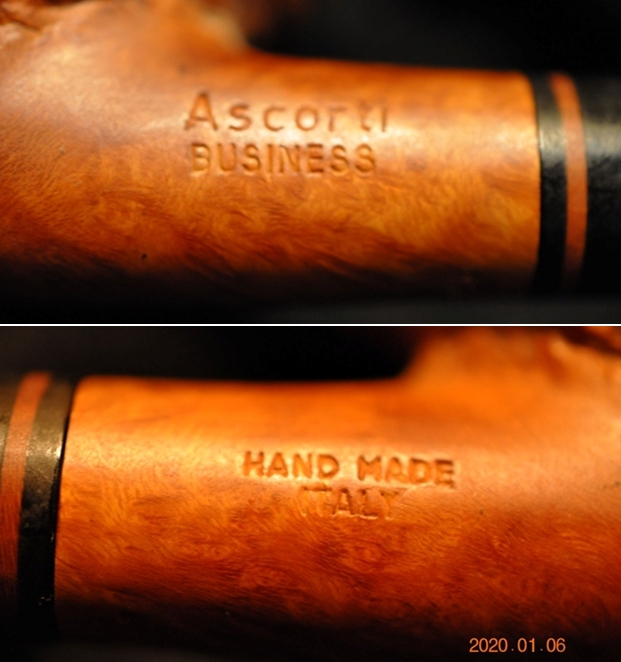
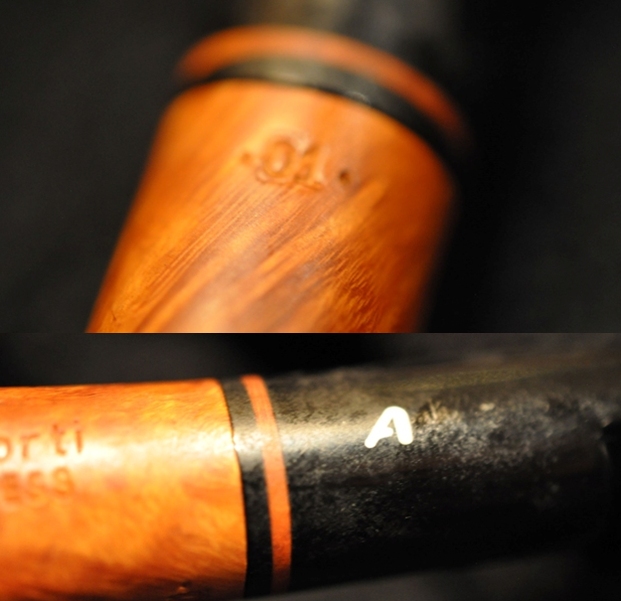
The next pipe on the work table is an interesting Ascorti Business Bent Bulldog. I had passed over this one a few times in the past weeks but this morning I decided it would join the days queue. It is a great looking and obviously well-loved pipe from the previous pipeman. It was a really filthy and had some damage on the rim top and edges when we received it. The bowl had a thick cake and the lava overflow on the rim made it impossible to see in the inner edge of the bowl. The outer edge had damage and burns on the right side of the rim cap. The bowl was rusticated in the typical Ascorti Business rustication but the camp and shank were smooth. The finish had a lot of dust and debris in the deep pockets of the finish and some stains as well on the surface. The twin rings around base of the cap were also filled in with debris and dust. The smooth portions had some nice grain on them under the grime and the finish appeared to be in good condition. A lot would be revealed once Jeff had worked his magic on it. The stem was very dirty and had heavy tooth chatter and marks on both sides ahead of the button. The button surface appeared to be unharmed. Jeff took photos of the pipe before he started his cleanup work. Jeff tried to capture the condition of the bowl and rim top with the next series of photos. You can see the work that is ahead of us in the photos. It was obviously a well-loved and oft enjoyed pipe! Jeff took some great photos of the sides of the bowl and heel showing what is underneath the grime and debris of time and use. He captured the stamping on the sides of the shank and the left side of the tapered stem. They are clear and readable. The left side reads Ascorti over Business. On the right side it reads Hand Made over Italy. On the underside of the shank it is stamped 01 next to the shank/stem junction. The last photo below shows the Ascorti logo “A” on the left side of the saddle stem. The photos of the stem show the thick grime on the stem surface as well as the tooth marks and chatter on both sides ahead of the button. It was probably one of the filthiest stems I have seen in a very long time. I have worked on a few Ascorti Business pipes in the recent months – two straight billiards so I turned to a blog on one of them to refresh the background information before I started my part of the work (https://rebornpipes.com/2020/03/18/repairing-banding-and-restoring-a-damaged-hand-made-ascorti-business-billiard/). I quote from that blog:

Before I started my part of the repair and restoration I wanted to have a clear picture of what the stem logo looked like on the Ascorti Business pipe. I turned to Pipephil as he often has some photos that give me the information that I am looking for (http://www.pipephil.eu/logos/en/logo-a8.html). Sure enough he had a photo showing the rough stamped A on the stem. It is white and it is rough which is exactly how this one looks. Hopefully in the restoration process I can get it back a bit. I did a screen capture of the picture on the site and include it below.With that information in hand I knew what I was dealing with in terms of the stamping and the age of this pipe. I knew from the information from the section above that the pipe came out after 1980 when the company started. I could not get the date more focused so it was time to work on the pipe.

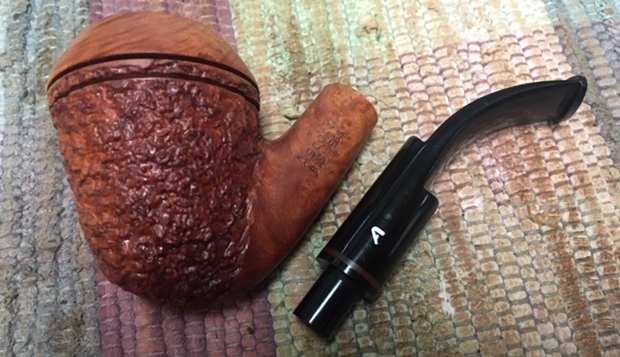
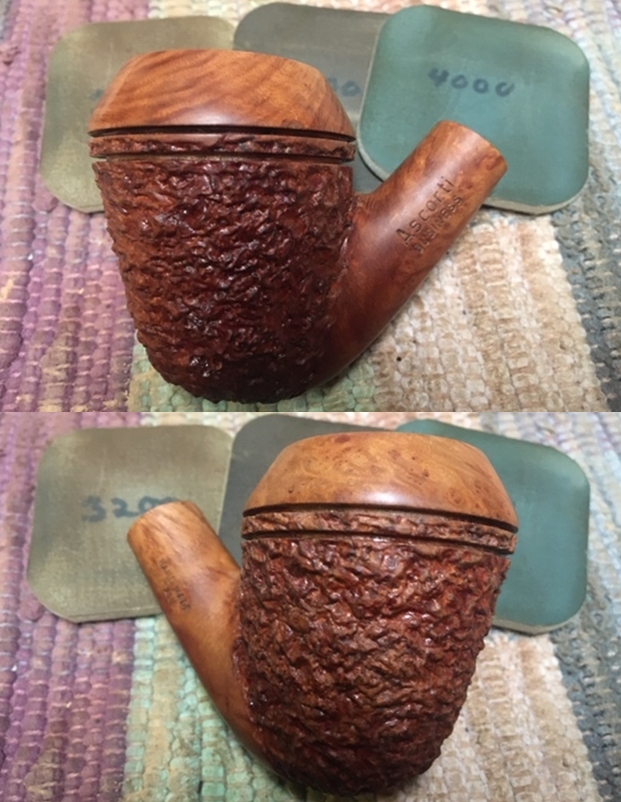
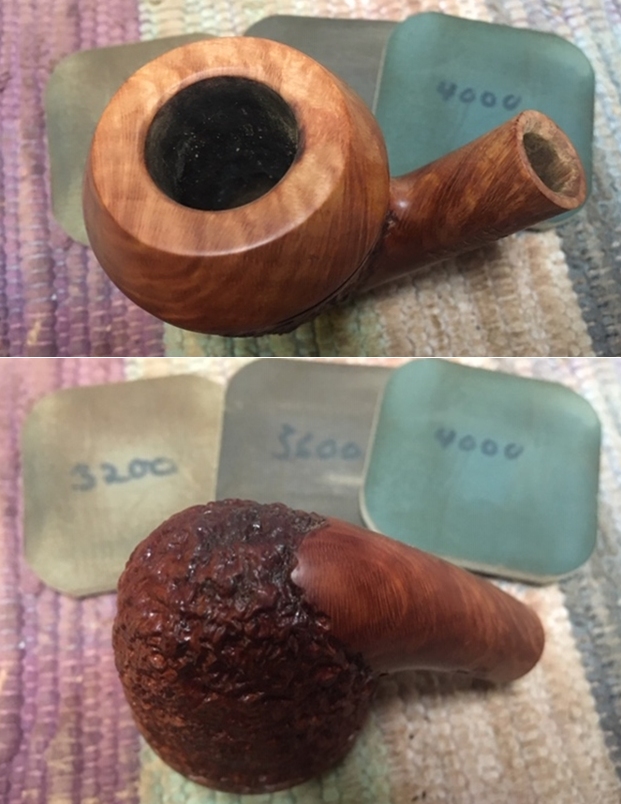
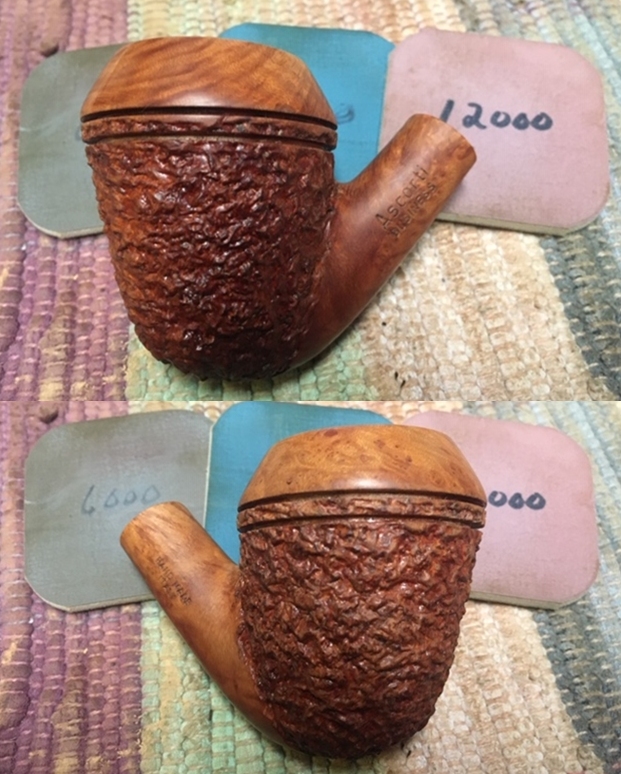
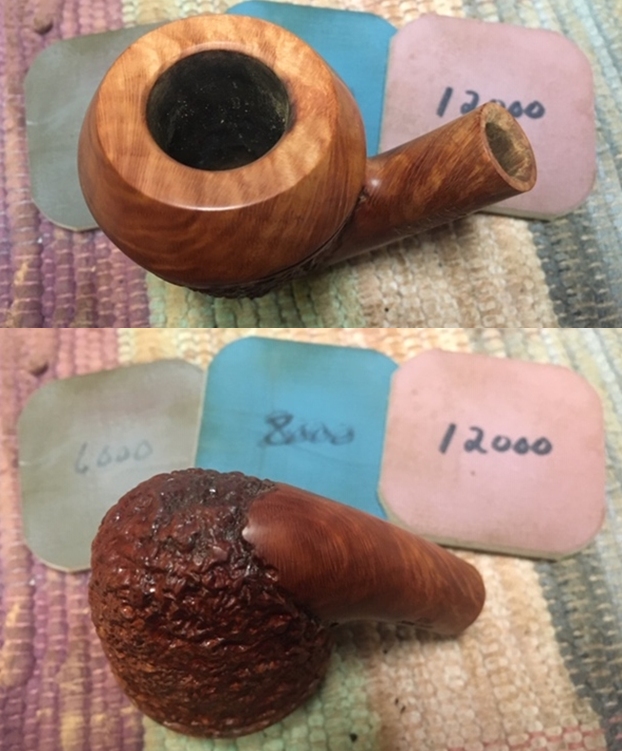
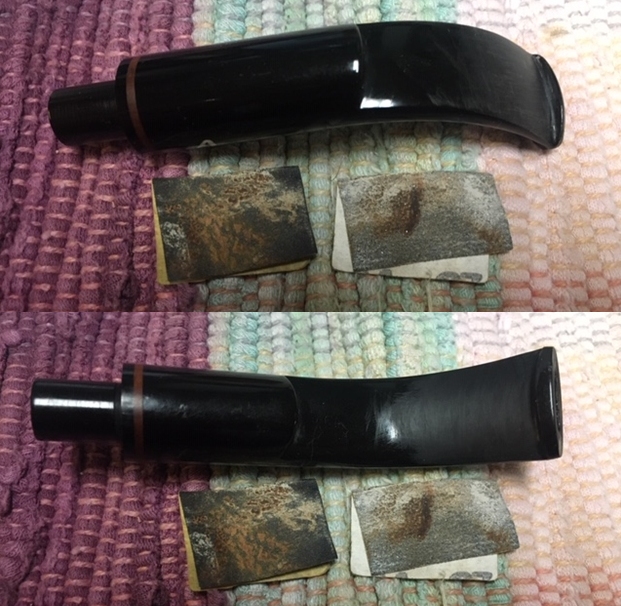
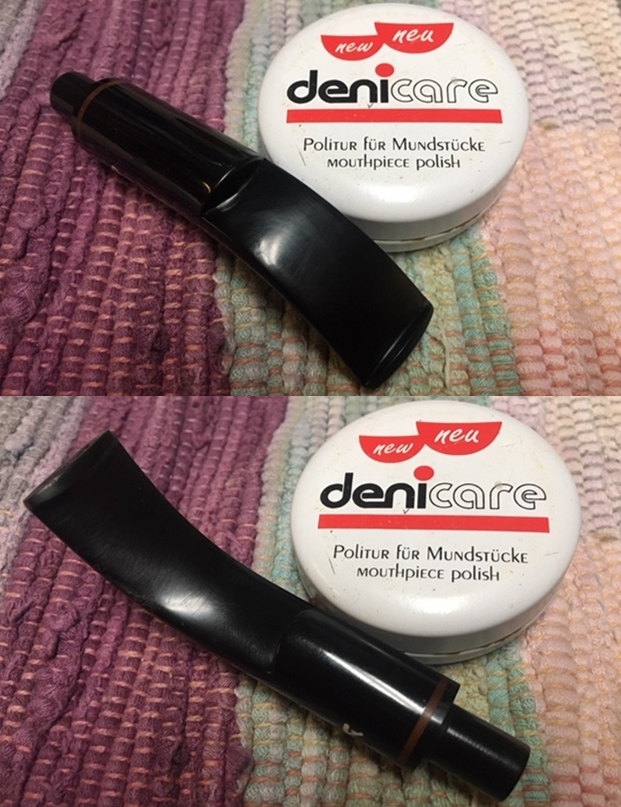
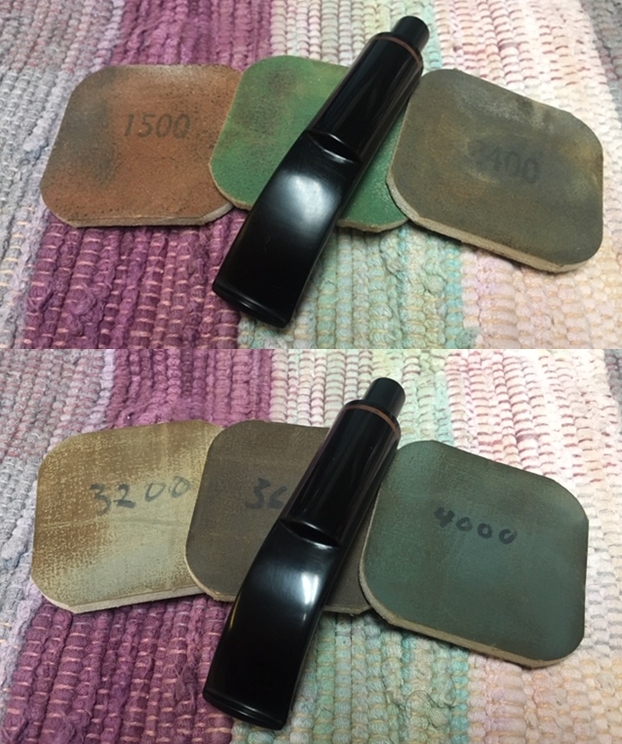
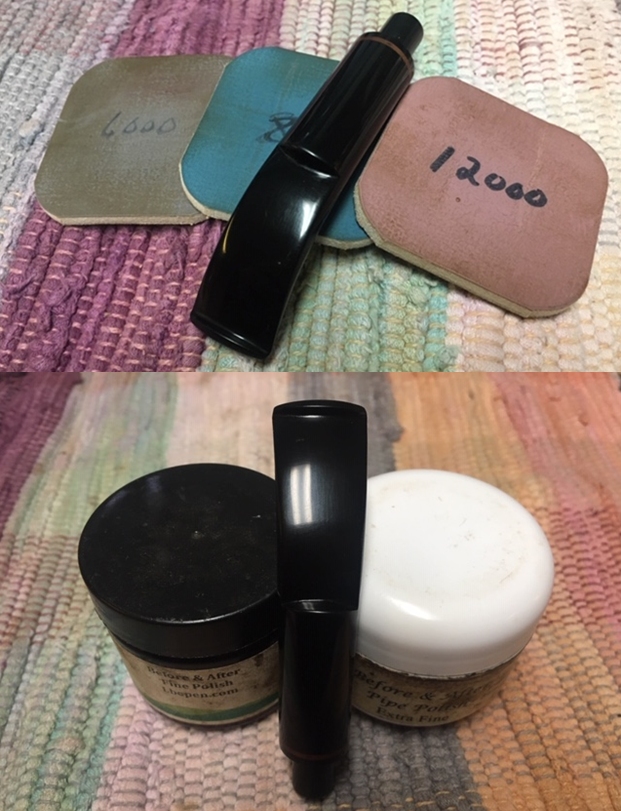
I was seriously wondering how this beast would clean up as it was such a mess. I was not sure Jeff would be able to get all of the grime out of the rustication and the rings. It really was in bad shape. But I should not have even worried about it. Jeff cleaned the pipe with his usual penchant for thoroughness. When I took it out of the box I was amazed at how good it looked it really looked like a different pipe. He reamed it with a PipNet pipe reamer and cleaned up the reaming with a Savinelli Fitsall Pipe Knife. He scrubbed out the internals with alcohol, pipe cleaners and cotton swabs until the pipe was clean. He scrubbed the exterior of the bowl with Murphy’s Oil Soap and a tooth brush to remove the grime and grit on the briar and the lava on the rim top. The finish looks far better than I expected and the rim top/cap damage was less than I thought it would be. Jeff scrubbed the stem with Soft Scrub to remove the grime and it came out looking far better. There was definitely tooth damage to address but nothing otherwise. When the pipe arrived here in Vancouver for the second stop of its restoration tour it looked very good. I took photos before I started my part of the work. I took some photos of the rim top and stem. The inner edge shows some damage on the back right side and on the outer edge and top on the right side. The close up photos of the stem shows that is it very clean but you can see the tooth chatter and marks in the acrylic.I took photos of the stamping because they also cleaned up very well.I took the stem off the shank and took a picture of the pipe. It really is a nice looking pipe with great lines.The major issue with this pipe was the burn damage on the rim top and the inner and outer edges of the bowl. I started my restoration work on the pipe by addressing that damage. I topped the bowl to remove the burn damage on the top of the cap and to try and minimize the damage to the inner edge. I then used a folded piece of 220 grit sandpaper to smooth out the inner edge and bring the bowl back to round. I gave the inner edge of the rim a slight bevel to further mask the damage. The rim top looks much better and will polish out pretty well with the micromesh. I polished the smooth briar of the rim cap and the shank with micromesh sanding pads – dry sanding with 1500-12000 grit pads. I wiped the bowl down after each pad with a damp cloth. The grain really began to stand out and the finish took on a shine by the last sanding pad. The photos tell the story! I worked some Before & After Restoration Balm into the surface of the smooth and rusticated briar with my fingertips and a horsehair shoe brush. The product works to clean, enliven and protect the briar. I let the balm sit for about twenty minutes and then buffed with a cotton cloth to raise the shine. The photos show the bowl at this point in the restoration process. I laid the bowl aside and turned to deal with the stem. I sanded the tooth marks and chatter on the stem with a folded piece of 220 grit sandpaper to blend them into the surface of the stem and started polishing with 400 grit wet dry sandpaper.   I polished the stem with some Denicare Mouthpiece polish – a red gritty paste that feels a lot like the texture of red Tripoli. It works well to polish out some of the scratches. I find that it does a great job preparing the stem for polishing with micromesh sanding pads.I polished the stem with micromesh sanding pads – dry sanding with 1500-12000 grit sanding pads. I wiped it down after each sanding pad with a cloth containing some Obsidian Oil. I finished polishing it with Before & After Pipe Stem Polish – both Fine and Extra Fine and buffed it off with a cotton cloth. This Ascorti Business Bulldog was a pipe I was looking forward to seeing what it looked like when I put it back together. The change in condition and appearance of the pipe was remarkable. With the grime and debris gone from the finish and the bowl it was a beauty and the grain and rustication just pop at this point. I put the stem back on the bowl and buffed the pipe with Blue Diamond on the buffing wheel. I carefully avoided the stamping on the shank and stem during the process. I gave the bowl multiple coats of Conservator’s Wax and the stem multiple coats of carnauba wax on the buffing wheel and followed that by buffing it with a clean buffing pad on the buffer. I hand buffed the pipe with a microfiber cloth to deepen the shine. The finished pipe is quite beautiful and is a lovely bent Bulldog shaped pipe. The variegated finish on the bowl combines various stains to give it depth. It is very well done. Give the finished pipe a look in the photos below. I can only tell you that it is much prettier in person than the photos capture. The dimensions of the pipe are Length: 5 ½ inches, Height: 2 ½ inches, Outside diameter of the bowl: 1 ½ inches, Chamber diameter: ¾ of an inch. I really like the way that Ascorti combines the rusticated finish with the smooth shank and rim cap. This is a great looking pipe in great condition. Thanks for walking through the restoration with me as I worked over another beautiful pipe. I will be adding it to the rebornpipes store soon. If you want to add it to your collection send me an email or a message! Thanks for your time.

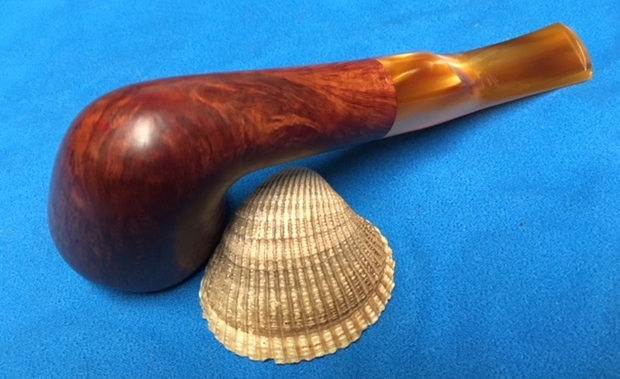
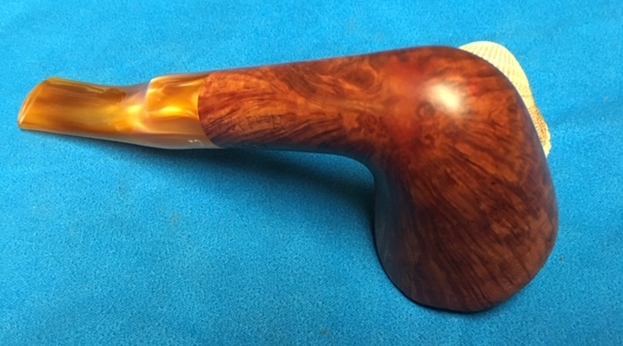
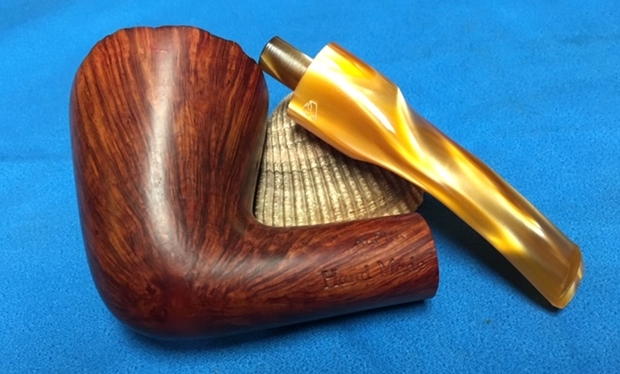
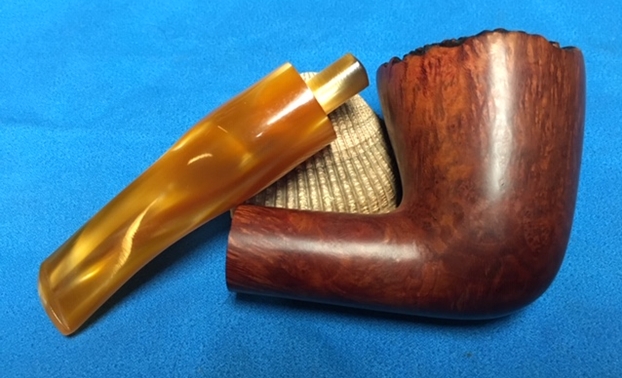
Restoring an Alpha Hand Made Pipe from Israel


Blog by Steve Laug

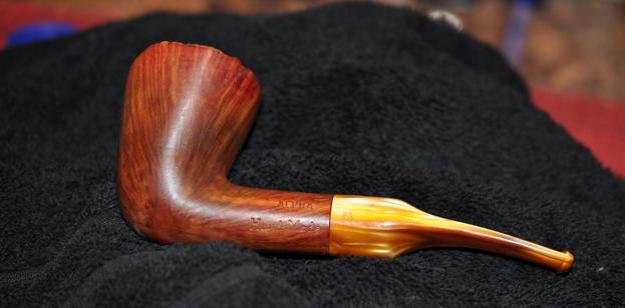
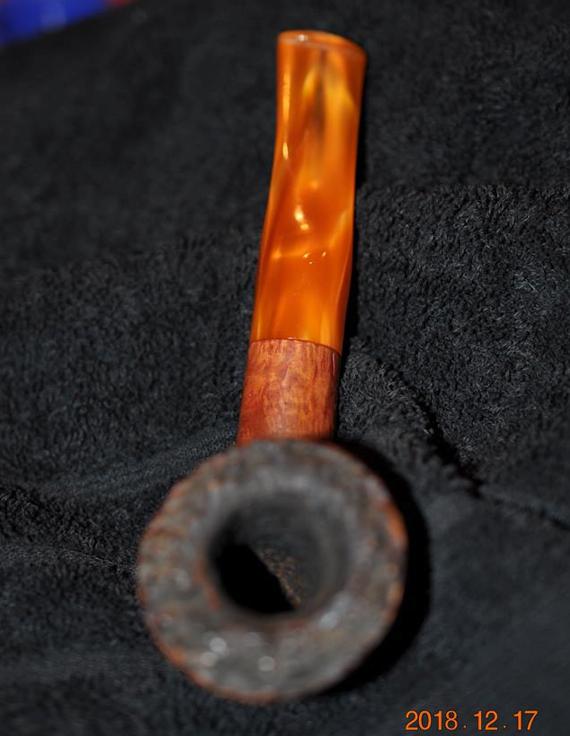
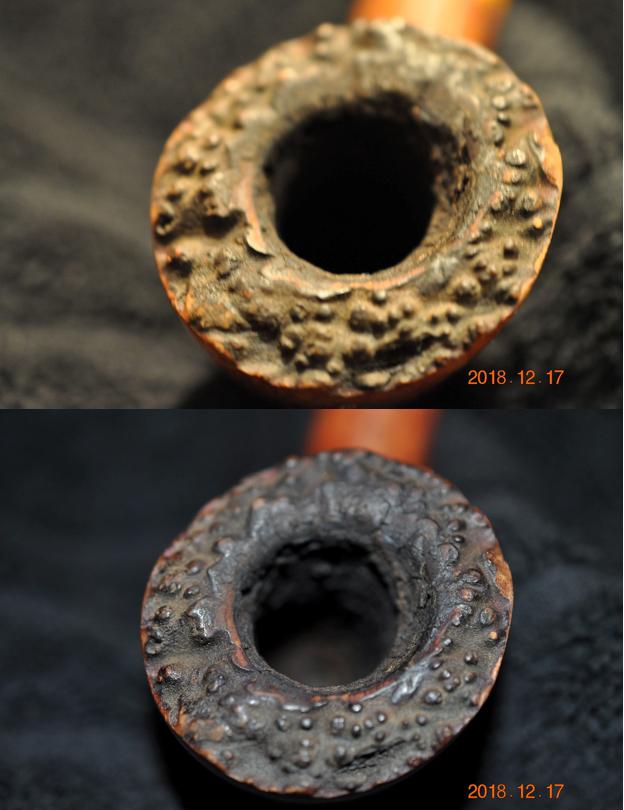
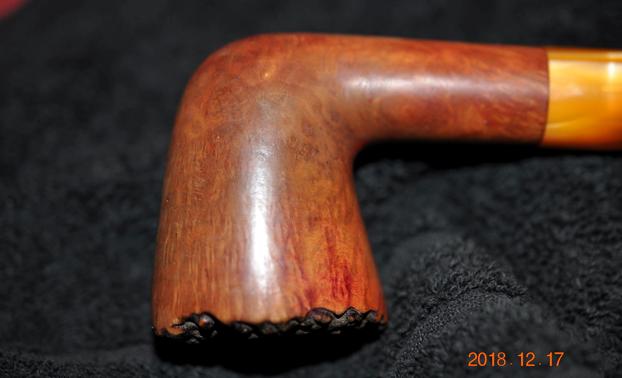
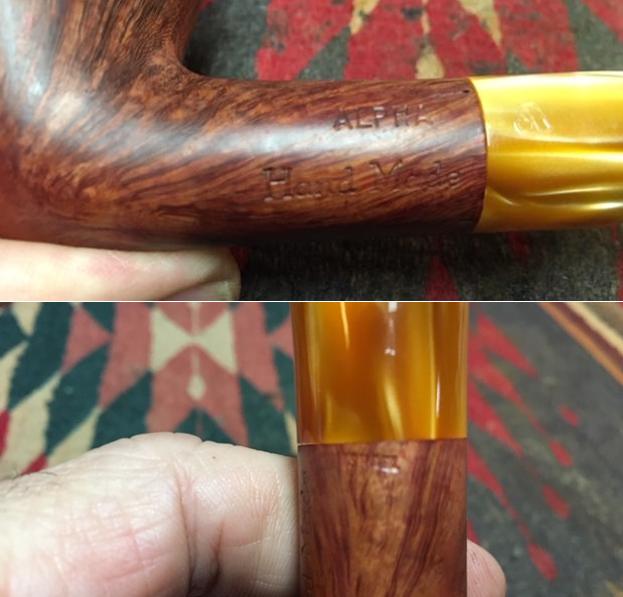
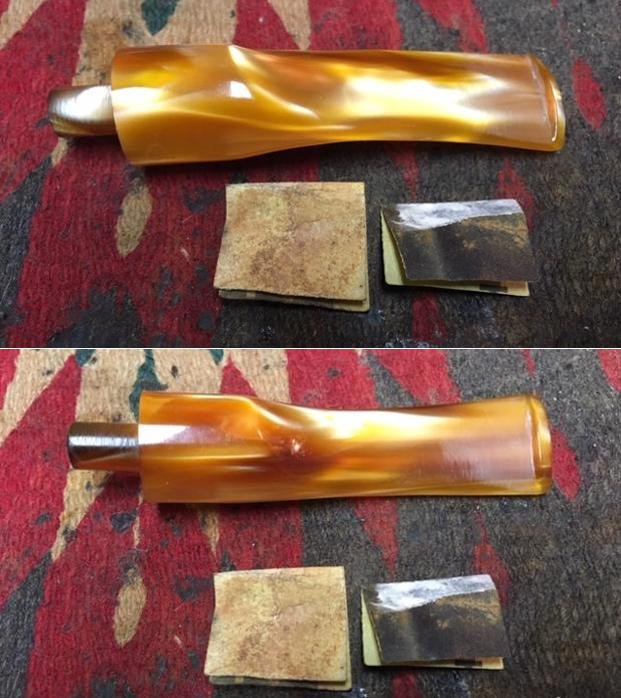
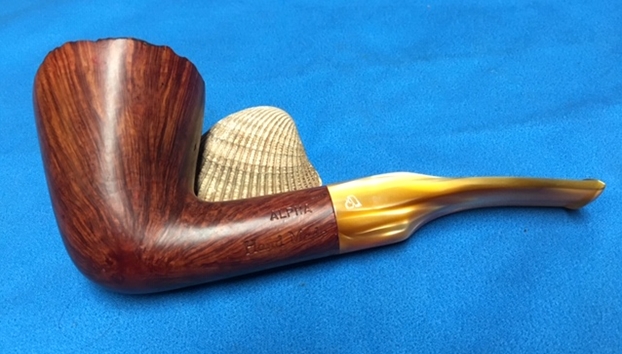
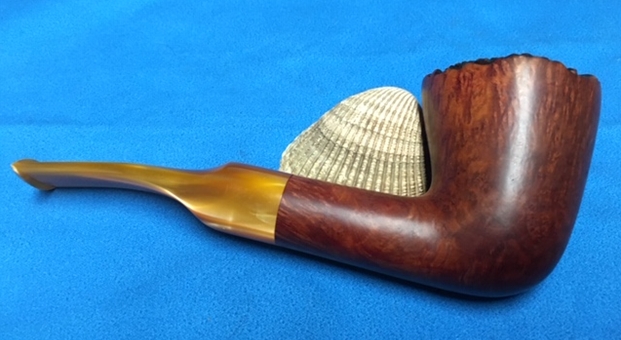
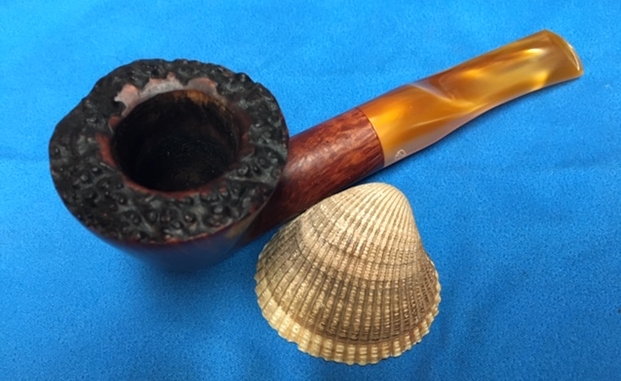
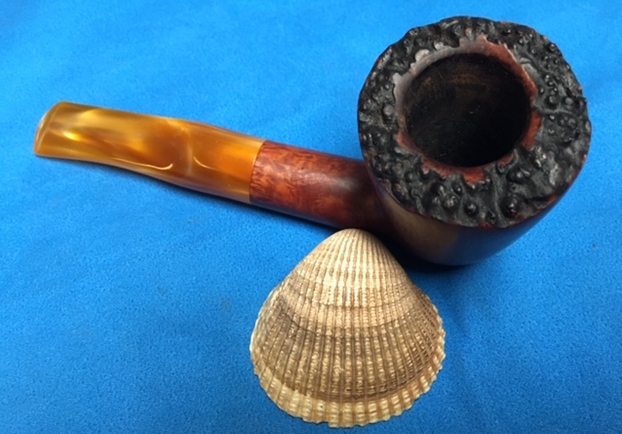
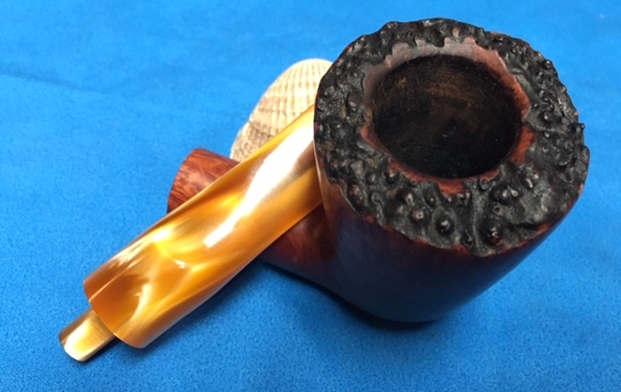
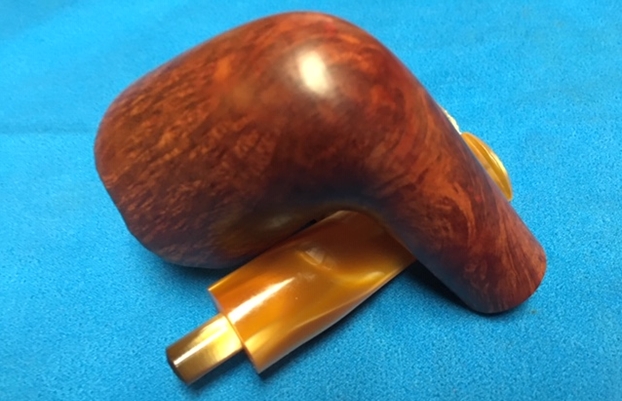
It was time to turn back to a couple of pipes that Jeff and I purchased recently. We had picked up some pipes from a guy in Fredericksburg, Virginia. I pulled one of those pipes out of my “to be restored” bin and brought it to my worktable. This one is a large freehand with beautiful grain and a plateau rim top. It has some smooth beveled areas on the inner edge of the rim and a flush mount acrylic stem. It is stamped on the left side of the shank Alpha over Hand Made and there is an A logo stamped in the left side of the tapered, acrylic stem. We seem to pick up some really dirty pipes and this pipe was no exception. It was very dirty with a thick cake in the bowl and a heavy layer of lava overflowing on to the rim top filling in the crevice of the plateau. It was hard to know what the inner edge of the rim looked like because of the lava and cake. From the photos it appeared that the inner edge was in good condition. Other than being dirty the finish also appeared to look very good. The gold variegated acrylic saddle stem was in excellent condition with some light tooth chatter on both sides at the button. Jeff took some photos of the pipe before he started working on it so I could see what he was dealing with. I am including those now. He took photos of the rim top to show the thick cake in the bowl and the overflow of lava. The cake is thick and hard and the lava overflow is a thick band around the bowl. The bowl is a real mess. This must have been a great smoking pipe.The next photo shows the right side of the bowl and shank to give a clear picture of the beauty of the straight and flame grain around the bowl of the pipe. It is a beauty.Jeff took a photo of the stamping and logo on the stem to capture the clarity of it even under the grime. The acrylic stem looked very good and though the photos are a little out of focus the stem appeared to be in good condition. There looked like there were some light tooth marks and chatter on the stem was light that should not take too much work to remedy.Before I started my work on the pipe I wanted to refresh my memory of the Alpha brand I remembered that somewhere along the line it was sold to Grabow in the US. Since Alpha was the first good pipe I owned I was interested in revisiting the history a bit. I turned first to Pipephil’s site and the information was brief so I went to Pipedia hoping to find more. I looked up the brand there (https://pipedia.org/wiki/Alpha). I was reminded that the brand was made by the Shalom Pipe Factory. I quote in full:

Alpha was originally a brand of the Shalom Pipe Factory in Israel, owned by Bernard Hochstein, former CEO of Mastercraft. The Alpha line was made exclusively for export to the United States. They were made in Israel from the 1970s into the 1980s, at which point the name was sold to Mastercraft, and later to Lane, Ltd., who produced very few Lane Alpha pipes at the end of the 1990’s. Lane Alphas were sold in five finishes, each denoted with a Greek letter. After Lane, Mastercraft again marketed the Alpha, under the name Alpha USA, with finishes named Sierra, Delta, Mark V, Blue Ridge, Sabre, and Big Boy, some of which were not stamped with the Alpha name. Among others, the Israeli made Alpha pipes were available in a line marketed as “Citation”.

So I now had a date for the pipe – 1970s and into the 80s at which point the brand was sold to Mastercraft (not Grabow as I remembered). I also knew that it was made in Israel for the US market.

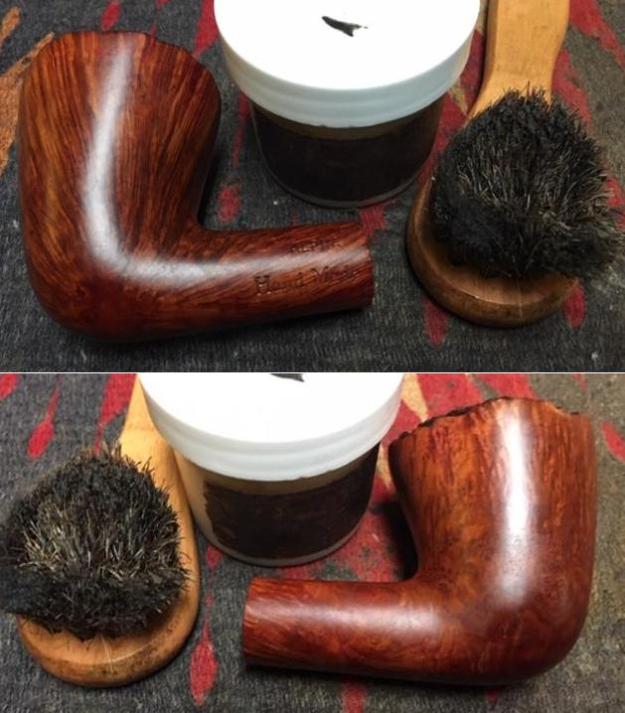
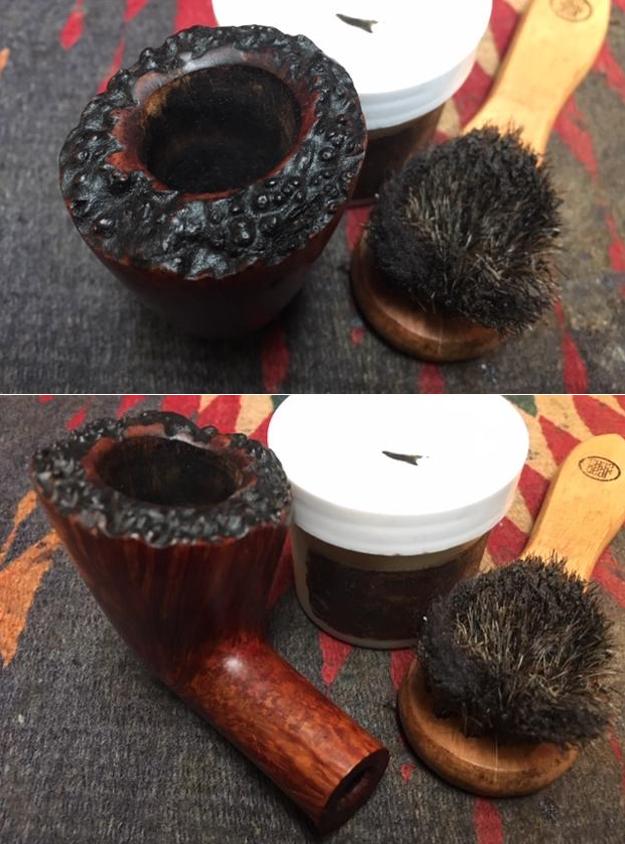
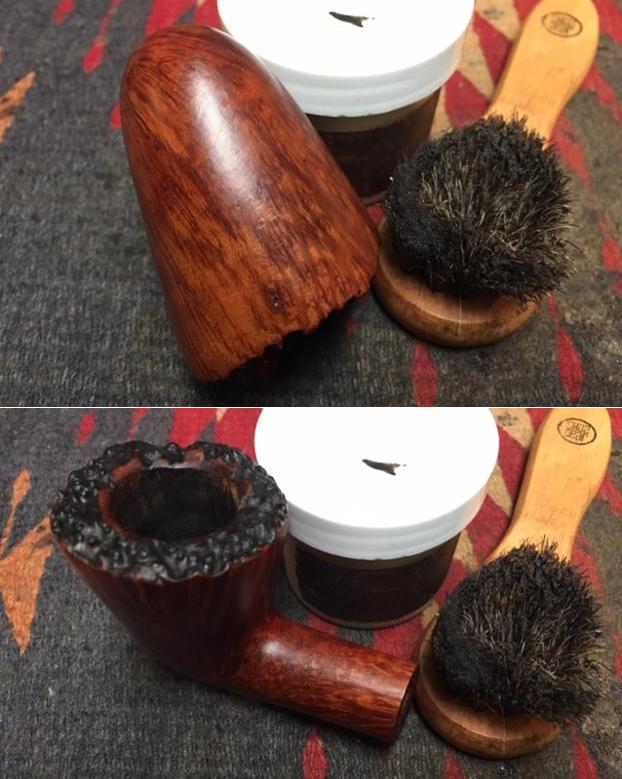
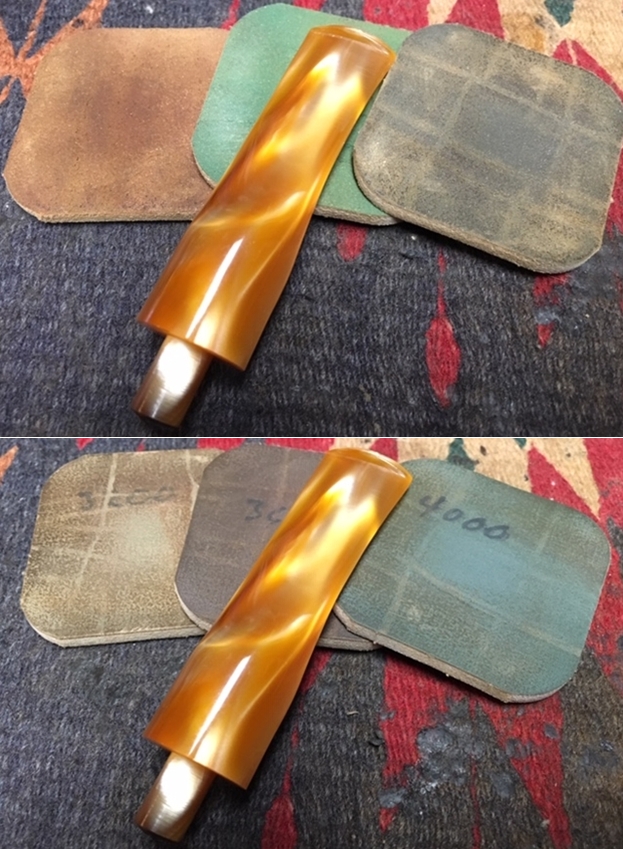
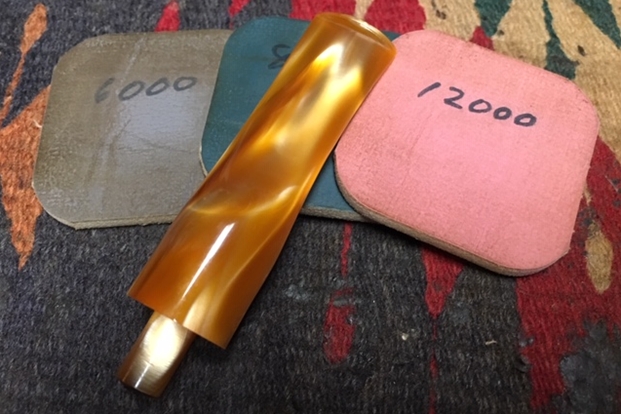
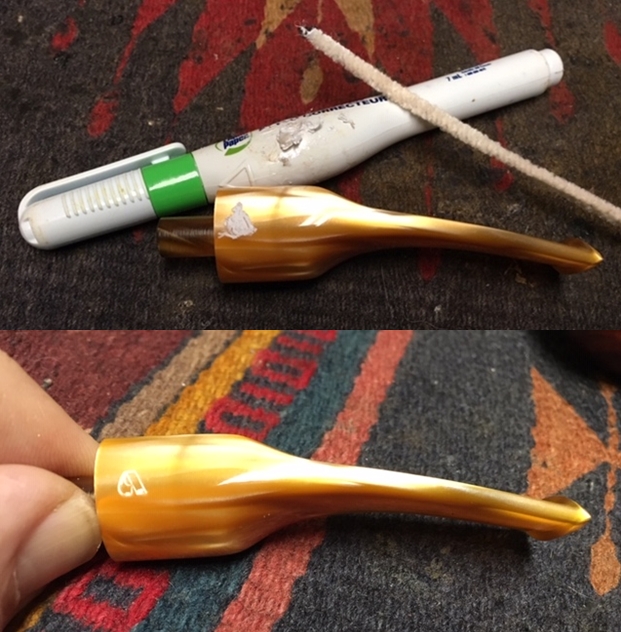
Armed with that information I turned to address the pipe itself. Jeff had already cleaned up the pipe before sending it to me. He had reamed the bowl with a PipNet pipe reamer and cleaned it up with a Savinelli Fitsall Pipe Knife. He scrubbed the exterior with Murphy’s Oil Soap and a tooth brush to clean off the grime off the finish and the heavy overflow of lava on the rim top. He cleaned up the internals of the shank, mortise and stem with pipe cleaners, cotton swabs and alcohol to remove all of the oils and tars in the pipe. When it arrived here in Vancouver it was a clean pipe and I knew what I had to work with. I took photos of it before I started my part of the restoration. I took photos of the rim top and the stem to show their condition. Jeff was able to clean up the incredibly thick cake and lava overflow that was shown in the rim and bowl in the earlier photos. He was also able to get rid of the grime and grit in the surface of the briar. The rim top looked really good. The inner edge of the bowl was in good condition and there was a smooth bevel on the surface of the rim edge.I took a photo of the left side of the shank to show the stamping on the pipe. It read as noted above – Alpha Hand Made. You can also see the A stamp on the left side of the saddle stem. The second photo below shows the ISRAEL stamping at the stem/shank junction.The bowl was in excellent condition. I touched up the edges of the plateau briar with a black Sharpie pen. It blended those areas into the rest of the plateau finish. After it was finished I rubbed the bowl and shank down with Before & After Restoration Balm to deep clean the finish on the bowl and shank. I worked it into the plateau surface with my finger tips and buffed it in with a horsehair shoe brush. The product works to clean, enliven and protect the briar. After it sat for a little while I wiped it off and buffed it with a soft cloth. The briar really began to have a rich shine. I took some photos of the bowl at this point to mark the progress in the restoration. It is a beautiful bowl. I set the bowl aside and worked on the stem at this point in the  process. I sanded tooth chatter and the remaining oxidation on the stem with folded pieces of 220 to remove the marks and the light brown colouration on the stem surface. I sanded them with 400 grit sandpaper until the marks were gone and the oxidation was gone.I polished the Lucite stem with micromesh sanding pads – wet sanding with 1500-2400 grit pads and dry sanding with 3200-12000 grit pads. I wiped the stem down after each pad with a damp cloth to remove the sanding dust. The stamped A on the left side of the stem was originally white in colour but the colour had been faded or wiped away. I used a white correction pen and pipe cleaner to work the white into the stamp. Once it had dried I scraped it off with my nail and buffed the area with an 8000 and 12000 grit micromesh sanding pad.I put the stem back on the pipe and the pipe to the buffer. I worked it over with Blue Diamond to polish out the remaining small scratches. I gave the bowl and the stem several coats of carnauba wax and buffed the pipe with a clean buffing pad to raise the shine. I hand buffed it with a microfiber cloth to deepen the shine. The pipe polished up really well and the beveled rim top looked good. I was happy with the look of the finished pipe. The photos below show what the pipe looks like after the restoration. The freehand shape reminds me of some of the American made freehand pipes that I have restored. It was a bit of a blast from the past for me to pick up and Alpha again and work on it – taking me back to one of my first pipes a little Alpha author. The polished variegated, gold Lucite stem looks really good with the browns of the briar and the darker plateau on the rim top. The dimensions of the pipe are Length: 6 inches, Height: 2 ½ inches, Outside diameter of the bowl: 2 inches, Chamber diameter: 7/8 of an inch. This is another pipe that I will be putting it on the rebornpipes online store shortly, if you are interested in adding it to your collection. The thick shank and tall bowl look and feel great in the hand. This one should be a great smoker. Thanks for walking through the restoration with me on this beauty!