
Blog by Steve Laug
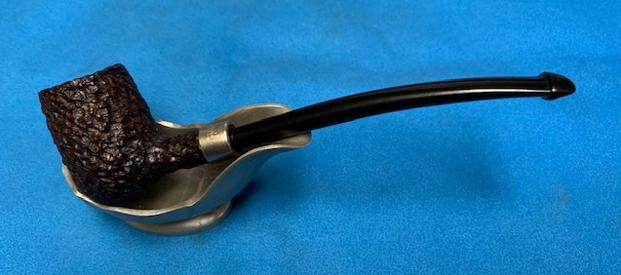
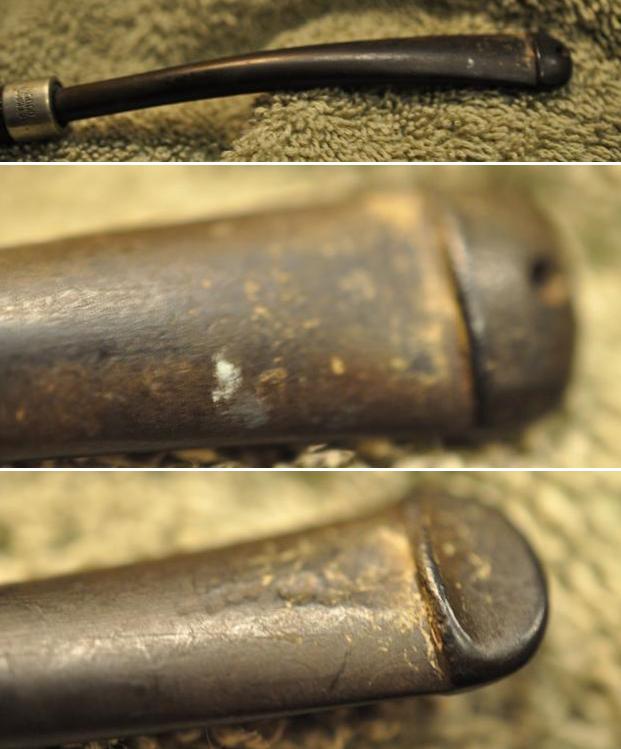
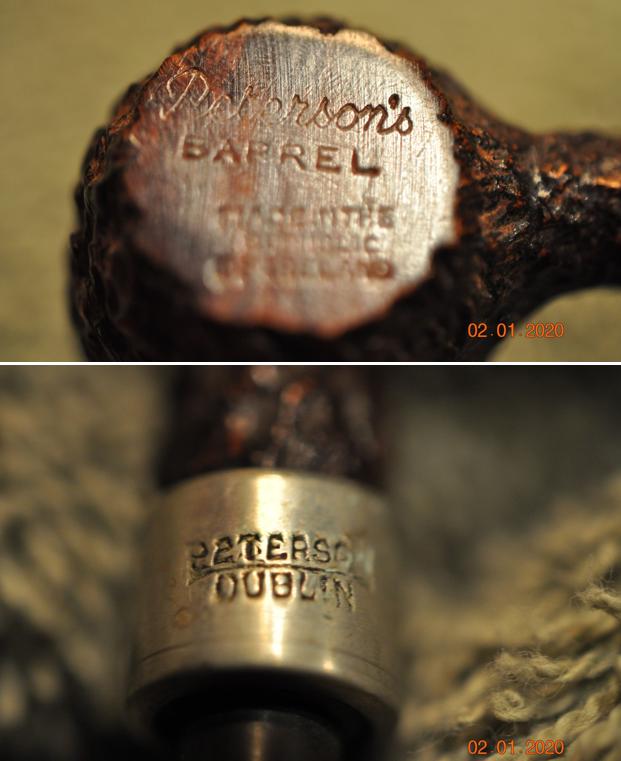
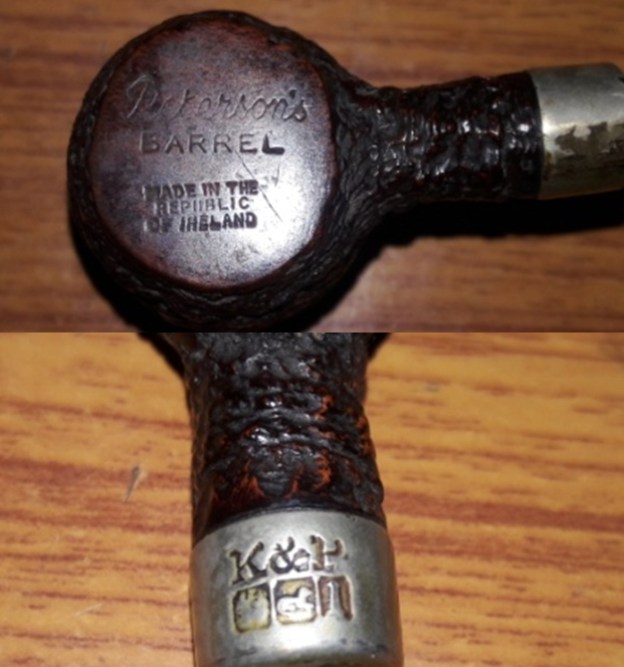
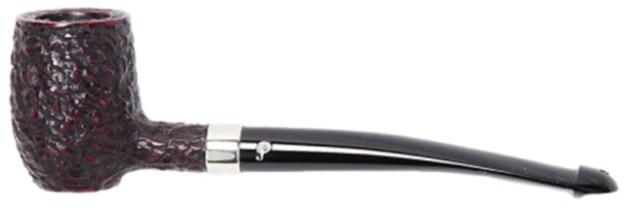
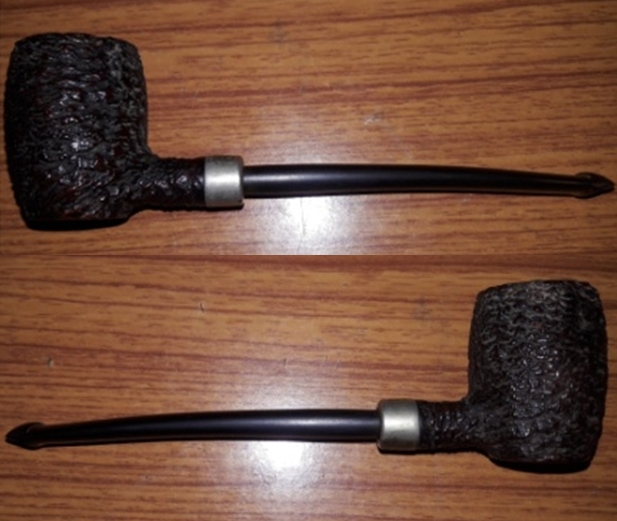
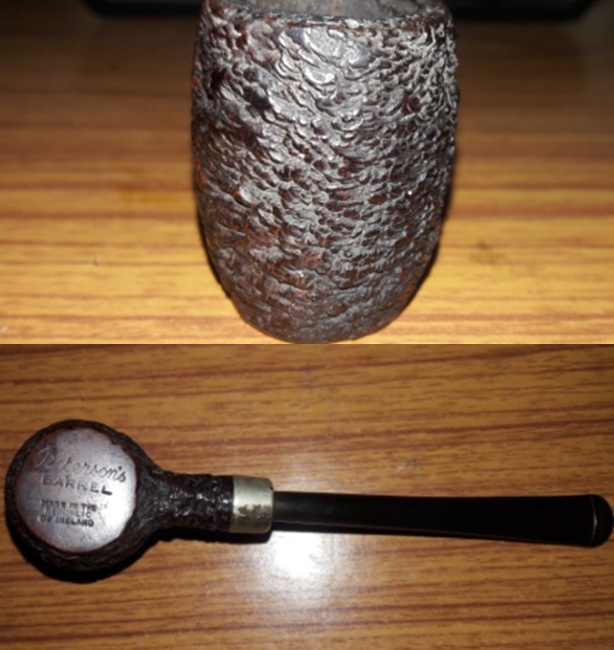
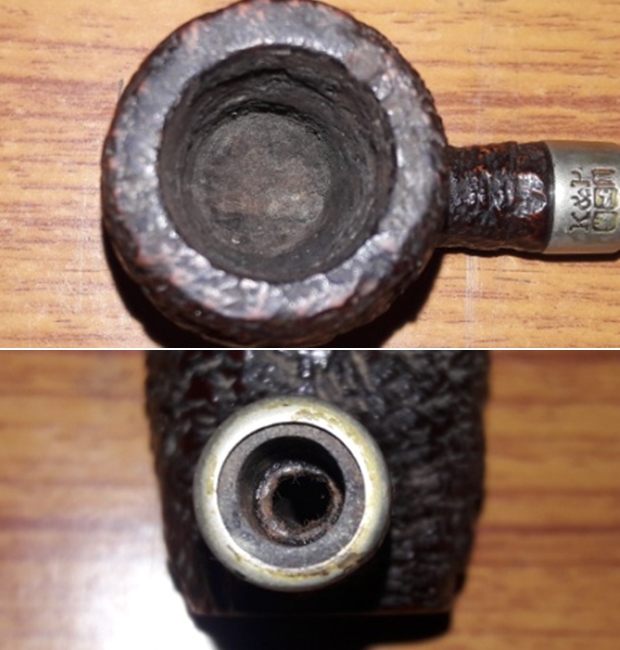
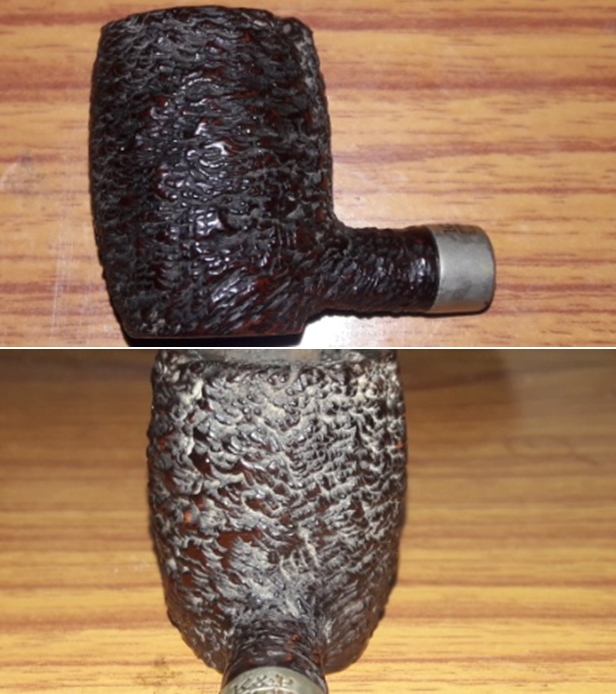
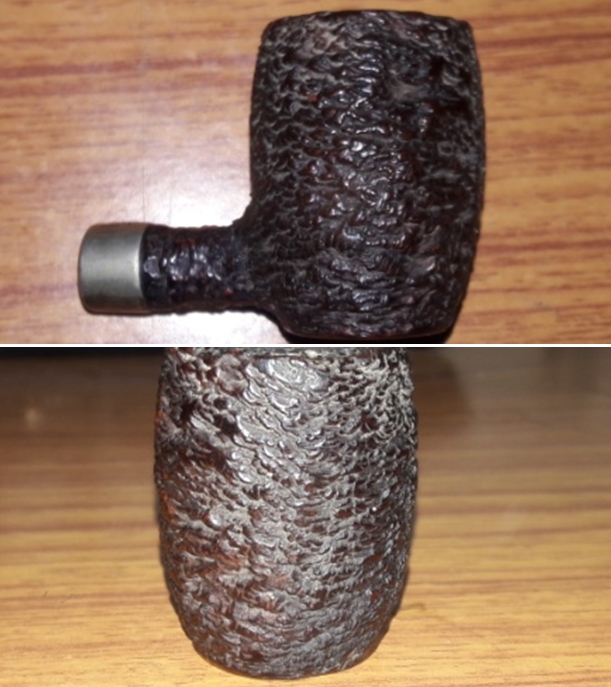
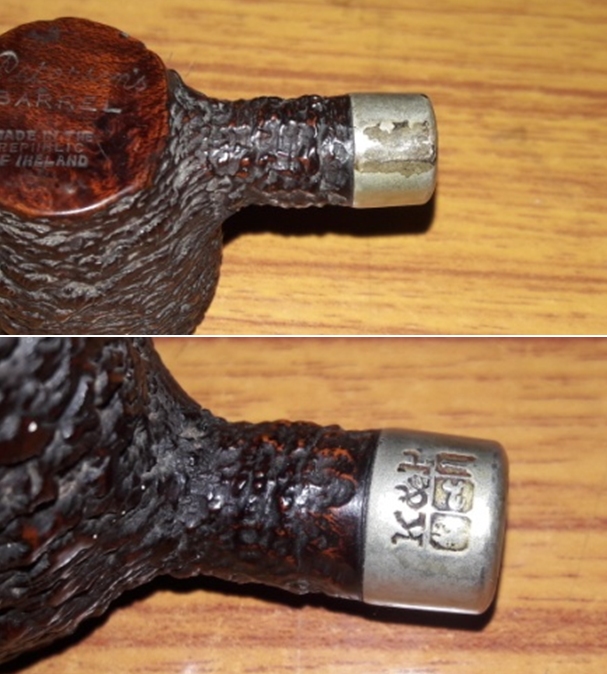
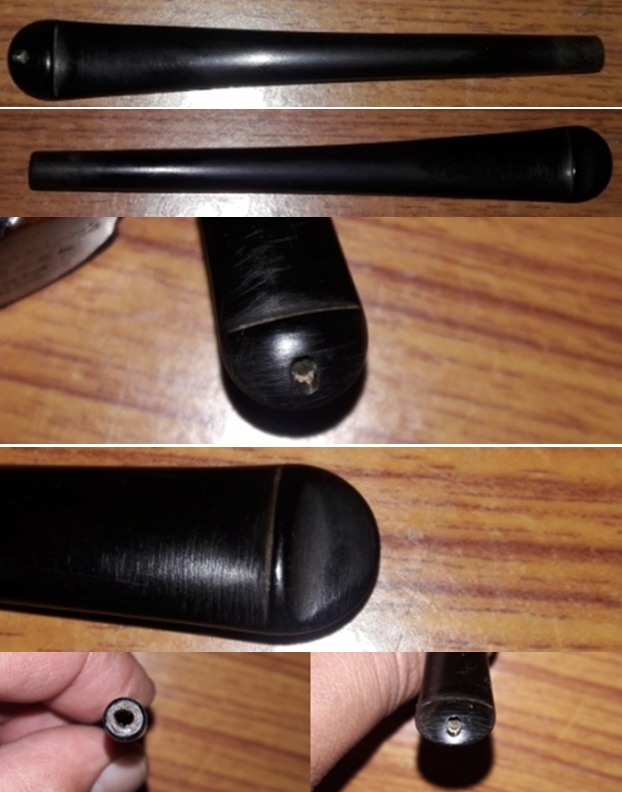
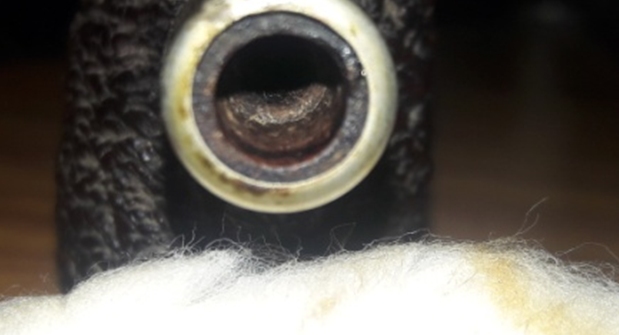
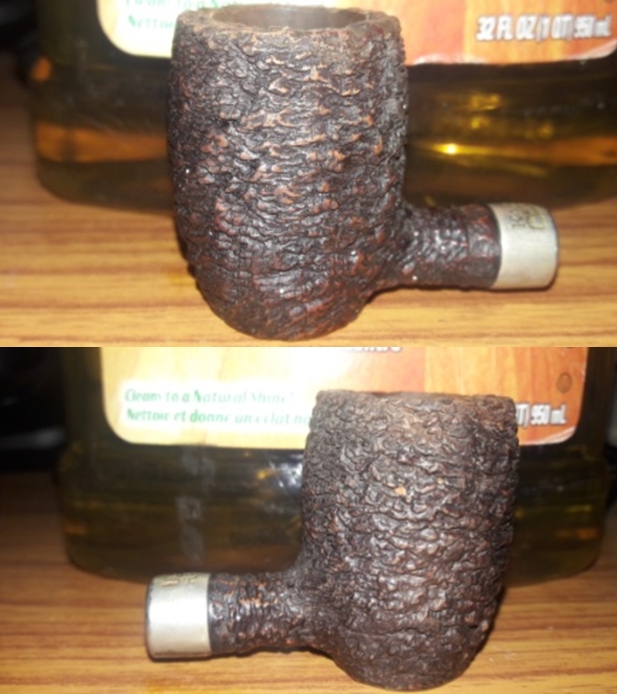
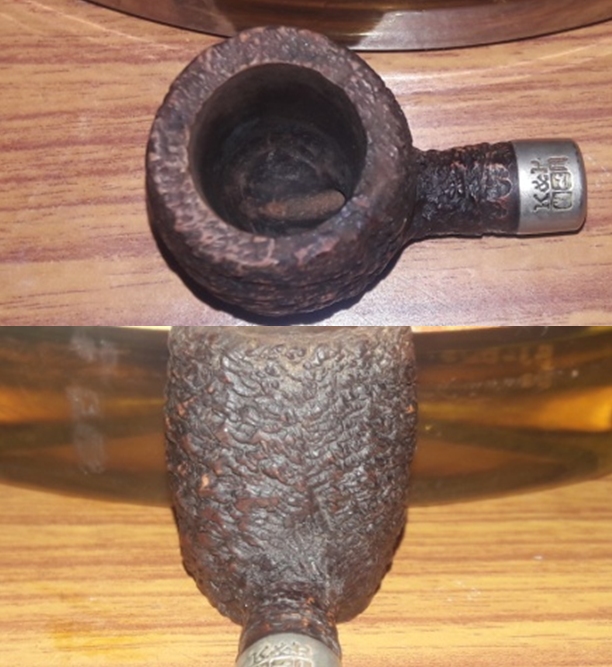
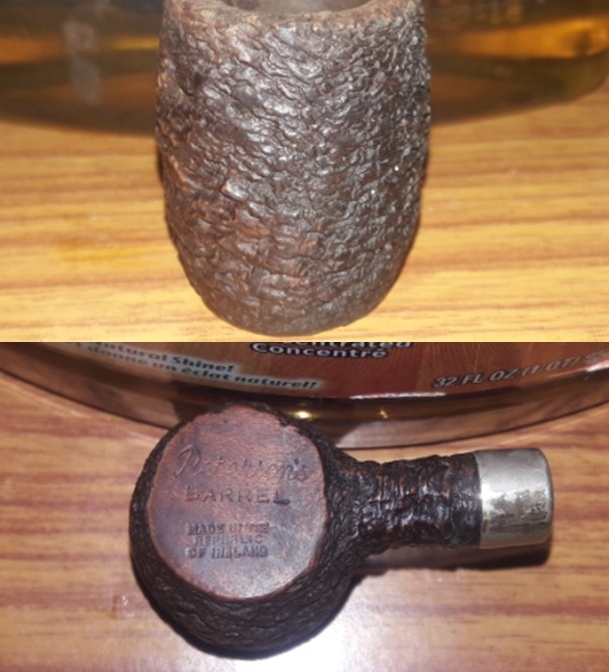
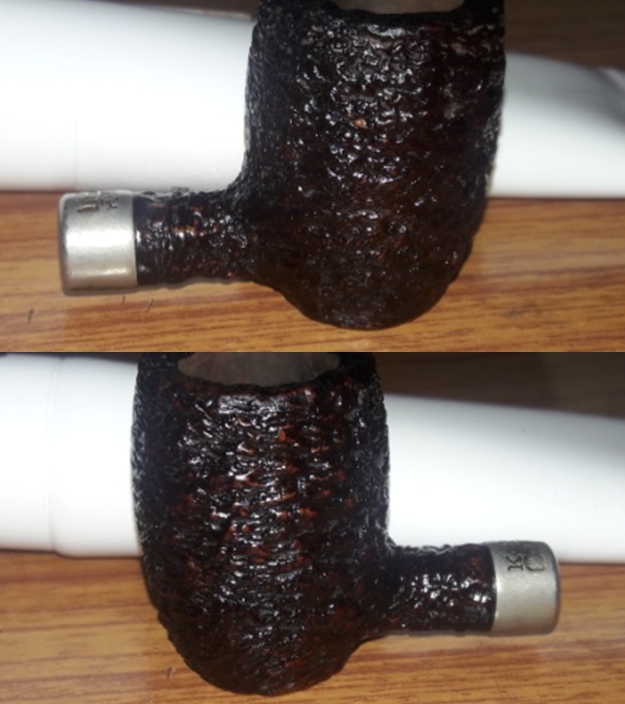
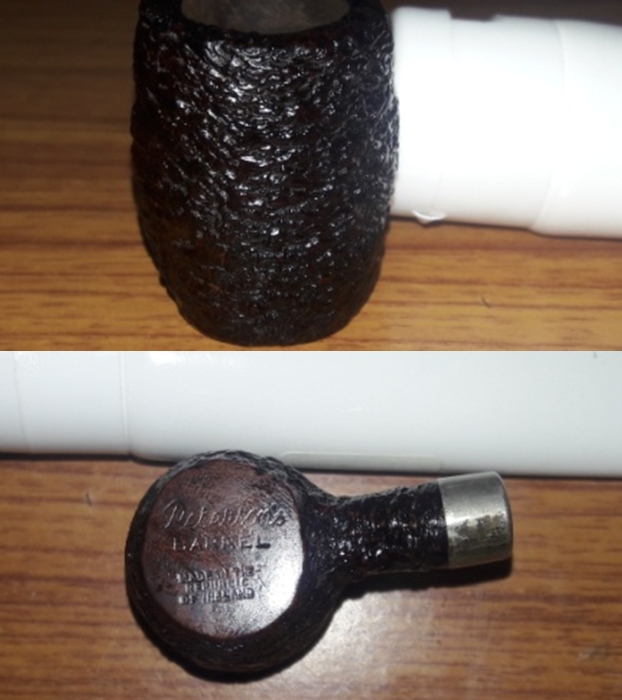
I have a chosen few more Peterson’s pipes to work on next. The pipe I have chosen is a Republic Era Peterson’s Rusticated Barrel pipe with a military mount stem. This Barrel has a mix of black and brown coloured stains on a very rustic finish around the bowl sides and short shank. It is also incredibly dirty. It also came to us from the estate of Anglican minister that was a great friend of mine here in Canada. The Barrel had a nickel ferrule on the shank that was in great condition. The finish on the bowl sides was dirty. It was stamped on the heel of the bowl and read Peterson’s [over]Barrel [over] Made in the Republic of Ireland (3 lines). The ferrule is stamped Peterson [over] Dublin. There was a moderate cake in the bowl and light spattering of lava on the rim top and the inner edge of the bowl. The stem was lightly oxidized and had light tooth marks and chatter on the top and underside on and near the button. Jeff took photos of the pipe before his cleanup work. They tell the story and give a glimpse of the promise that we see in this pipe.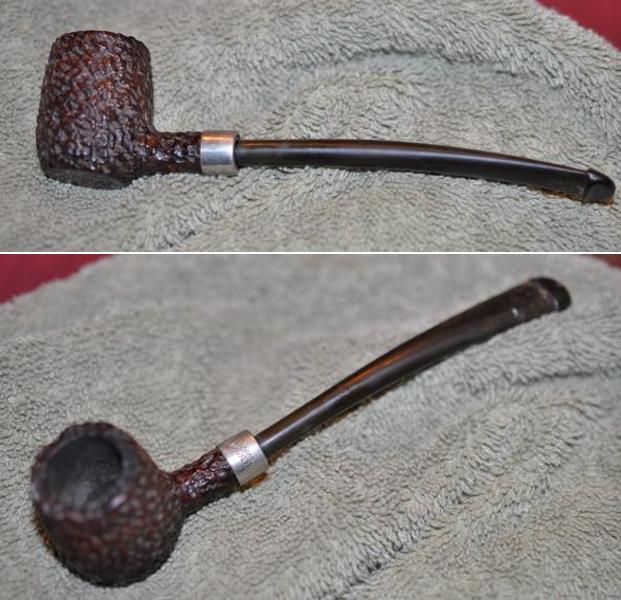 Jeff took photos of the rim top and stem to show the general condition of the pipe. The bowl is lightly caked and the rim top and edges have some light lava overflow. The stem is lightly oxidized and has light tooth marks on the top and underside near the button.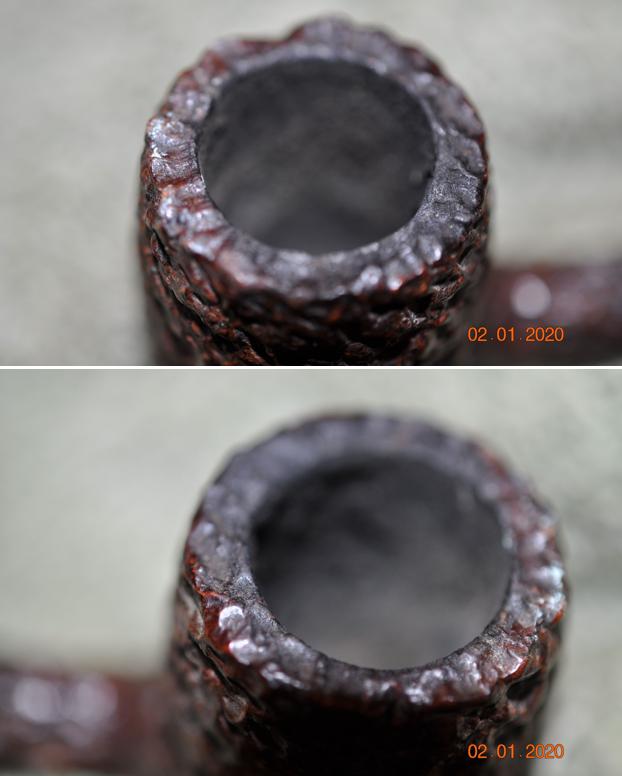
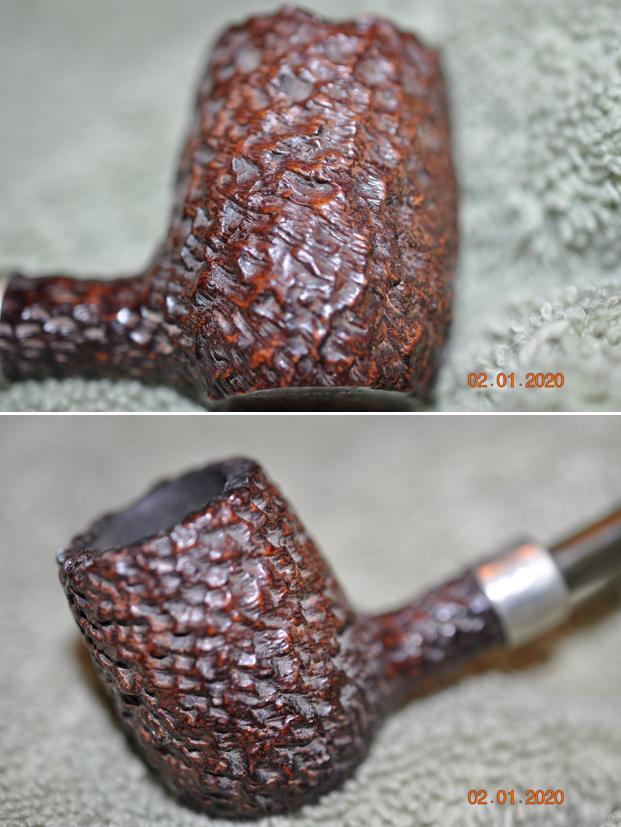
 Jeff took some photos of the bowl sides and heel to show the amazing grain that was around this bowl. It is a nice looking pipe.
  He took a photo of the underside of the shank to show the stamping. The stamping reads as noted above. He also took a photo of the stamping on the ferrule.
  I am including the information from Pipedia’s article on Peterson pipes. It is a great read in terms of the history of the brand (https://pipedia.org/wiki/Peterson). I have included a bit of the pertinent history here.
1950 – 1989 The Republic Era – From 1950 to the present time, the stamp for this era is “Made in the Republic of Ireland” in a block format generally in three lines but two lines have been used with or without Republic being abbreviated.
During the 1950’s and 60’s the Kapp & Peterson Company was still in the ownership of the Kapp family. However 1964 saw the retiral of the company Managing Director Frederick Henry(Harry) Kapp.
I turned to “The Peterson Pipe” by Mark Irwin and Gary Malmberg to get some background on the Barrel Pipe. On page 313 it had the following information what they called the Specialty Briars. I have summarized the various pipes that were part of the Specialty Briars below and have also included the description of the Barrel itself.
The Barrel pipe was part of a line of Specialty Briars (1945-) which was a term used to describe the following lines: Lightweight, Junior, Churchwarden, Barrel, Tankard, Calabash, Belgique and Giant.
Barrel (1945-) P-lip or fishtail mouthpiece, smooth or rustic finish, sandblast offered in 1970
I knew that I was dealing with a pipe from the Specialty Line of Briars made between 1945 and the present. Now it was time to work on the pipe.
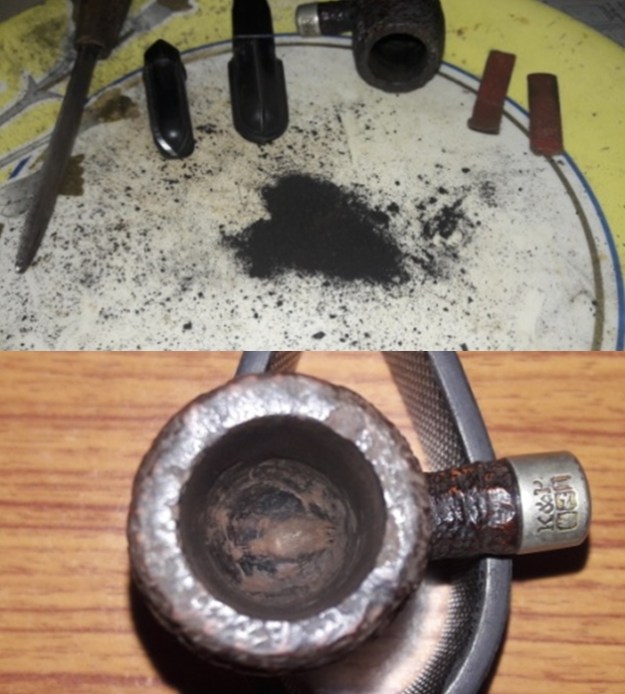
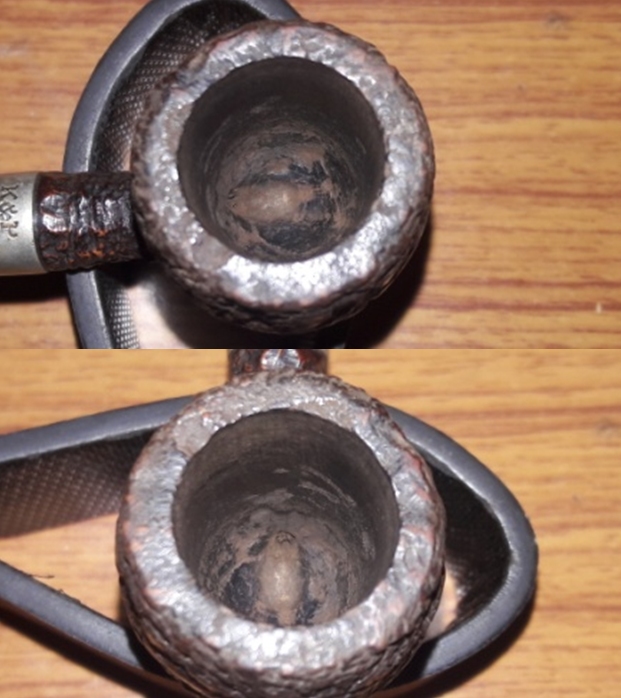
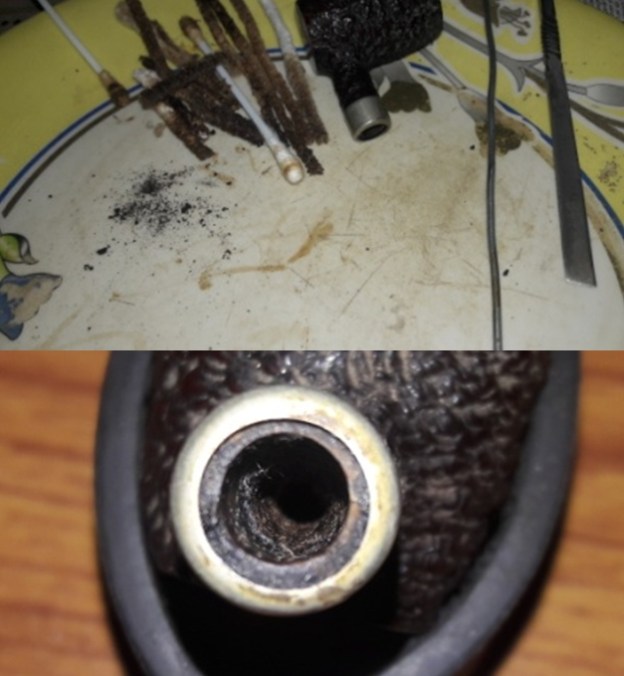
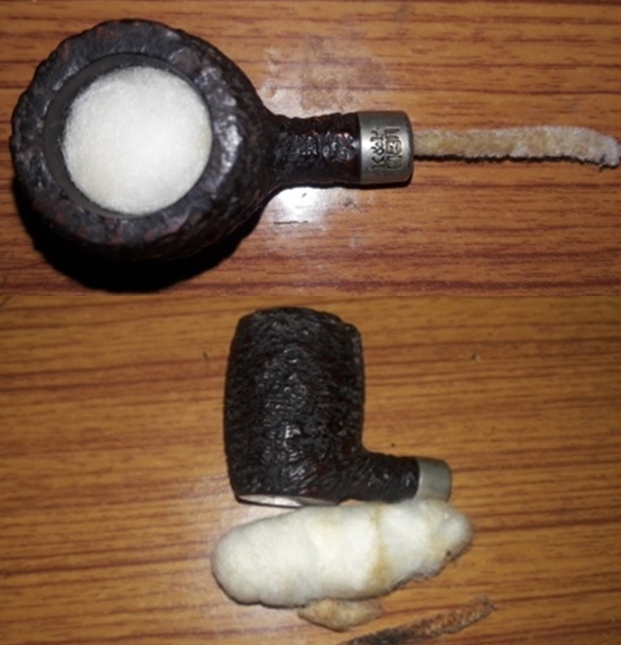
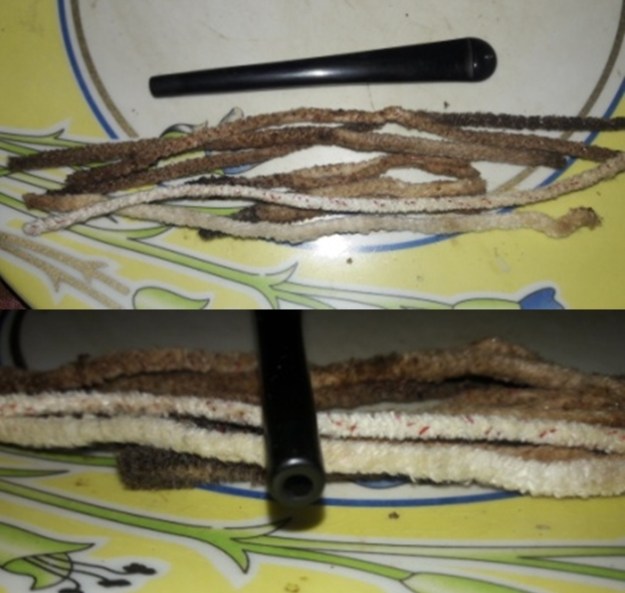
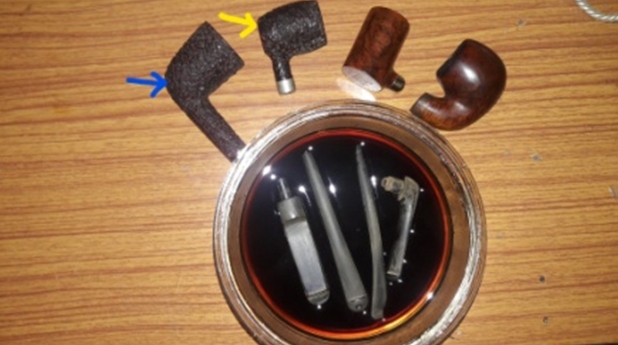
Jeff had done a great job cleaning up the pipe as usual. He reamed the pipe with a PipNet reamer and cut back the cake back to the bare briar. He cleaned up the walls with a Savinelli Fitsall Pipe Knife. He scrubbed the interior of the bowl and shank with pipe cleaners, cotton swabs and alcohol to remove the tars and oils. He scrubbed the exterior of the pipe with Murphy’s Oil Soap and a tooth brush to remove the grime from the finish. He worked on the rim top lava and darkening with the soap and tooth brush. He scrubbed the inside of the stem with alcohol and pipe cleaners. He scrubbed the exterior with Soft Scrub and then soaked it in Brairville’s Pipe Stem Deoxidizer. He washed it off with warm water to remove the deoxidizer. The pipe looked far better when it arrived. 
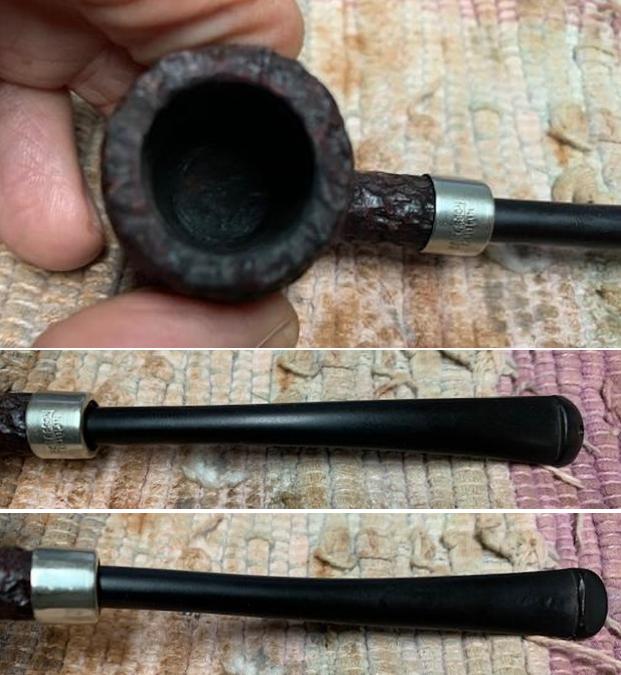
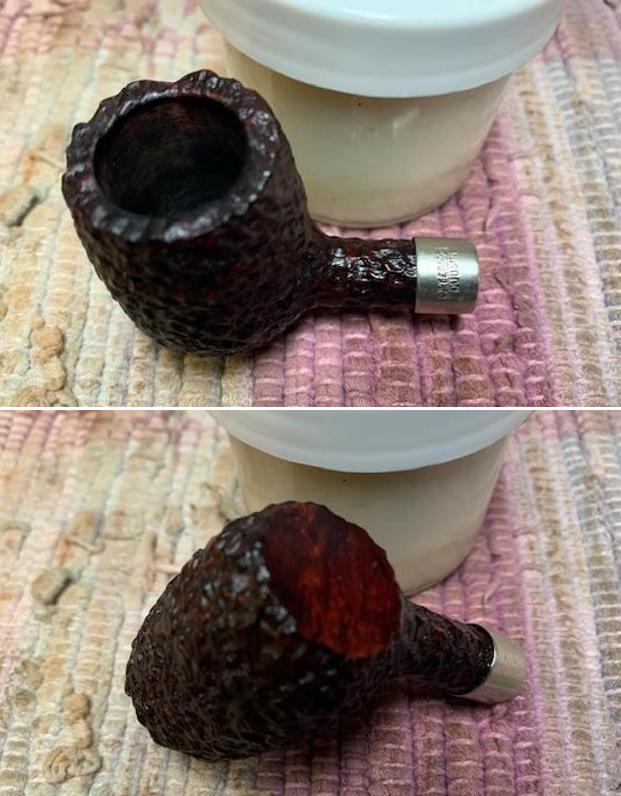
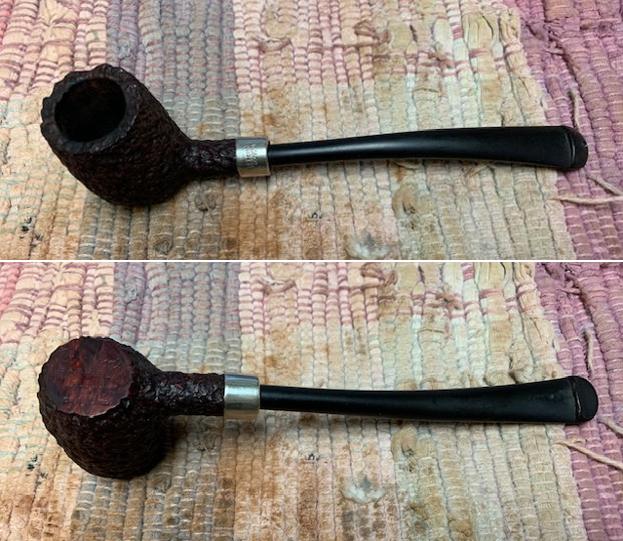 I took some close up photos of the rim top and also of the stem surface. I wanted to show how well it had cleaned up. The rim top looked very good. I also took close up photos of the stem to show the tooth marks on the surface of the underside near the button.
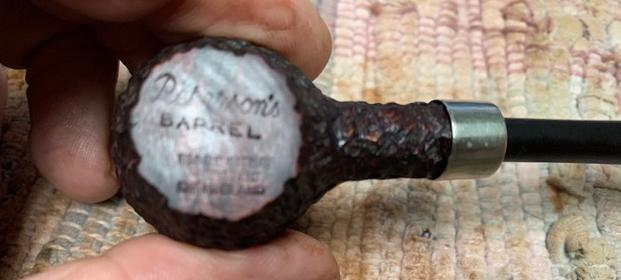
  I took a photo of the stamping on the heel of the bowl. You can see that it is stamped as noted above. It is clear and readable.
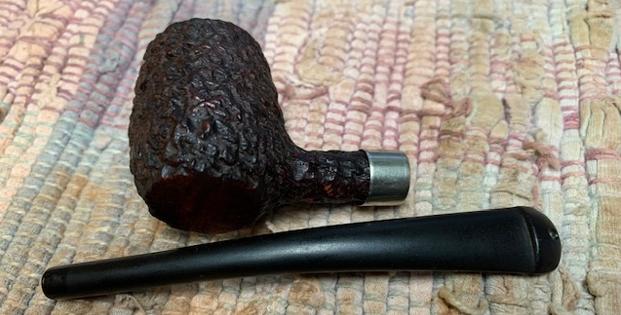
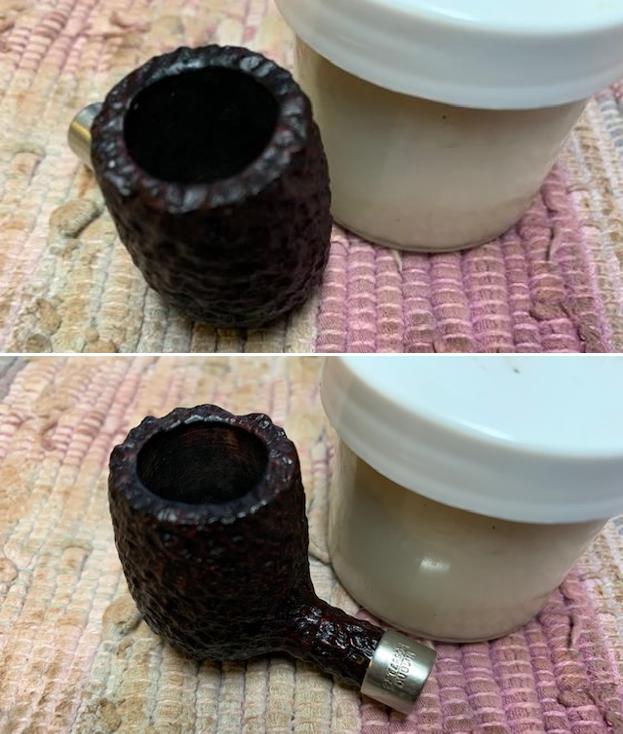
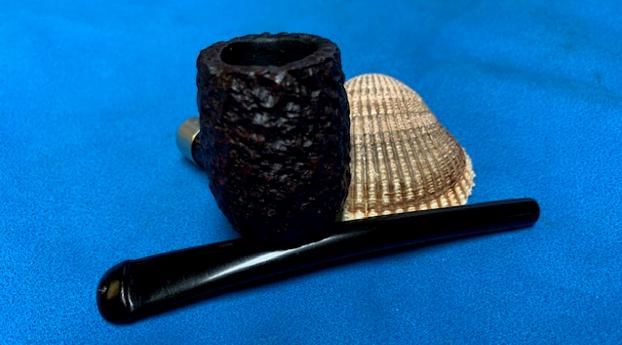
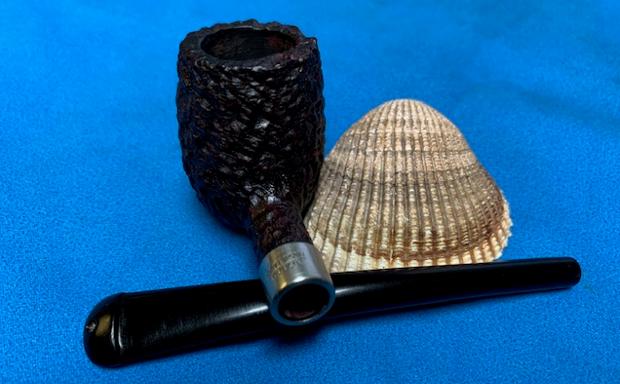
  I took the pipe apart and took a photo of the pipe. It is a good looking pipe and has a rugged rustication around the bowl.
  I worked some Before & After Restoration Balm into the surface of the briar with my fingertips and a horsehair shoe brush to clean, enliven and protect the briar. I let the balm sit for 15 minutes and then buffed with a cotton cloth to raise the shine. The photos show the bowl at this point in the restoration process.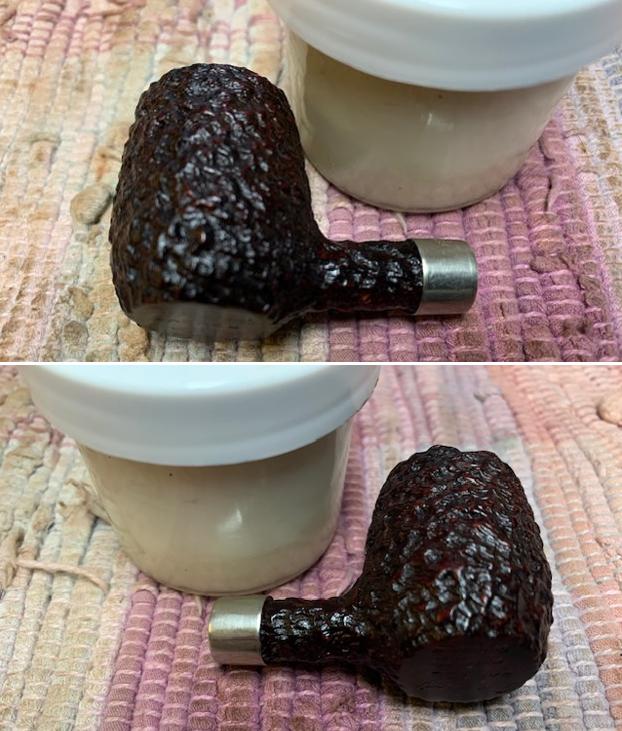
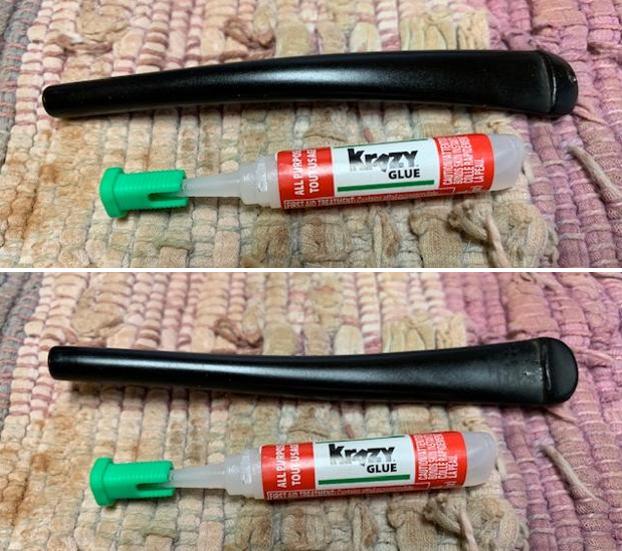
 I “painted” the stem with the flame of a Bic lighter to lift the tooth marks on the underside of the stem. I filled in the remaining marks with clear CA glue. Once the glue cured I sanded the stem smooth with 220 grit sandpaper and started the polishing the stem with 400 grit wet dry sandpaper.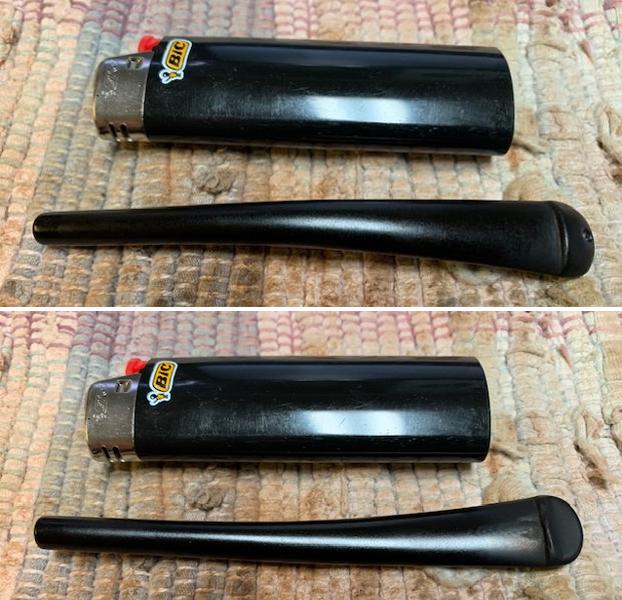
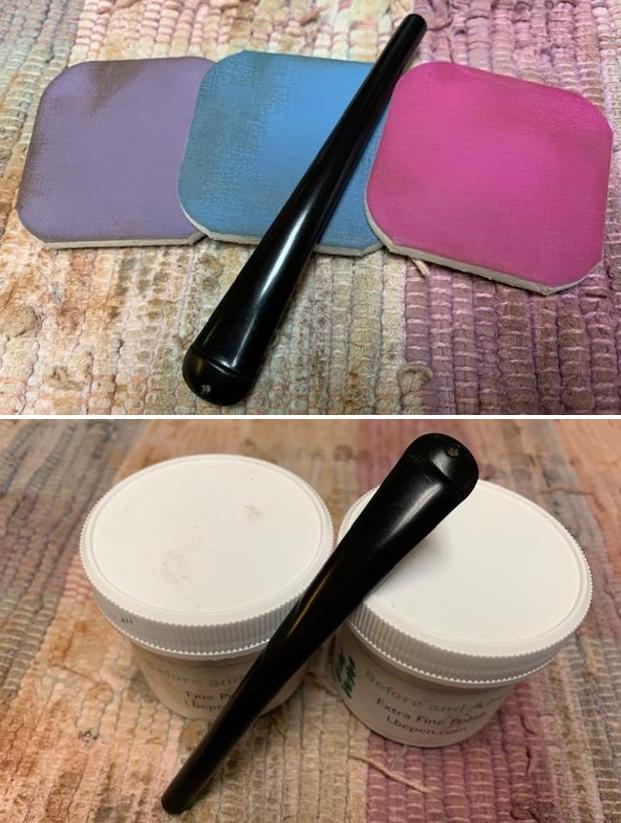
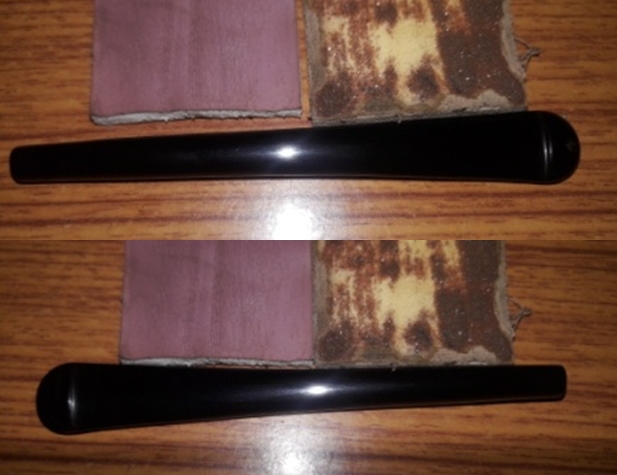
 I polished out the light tooth marks on the stem with micromesh sanding pads – wet sanding with 1500-12000 grit sanding pads. I wiped it down after each sanding pad with Obsidian Oil. I polished it with Before & After Pipe Stem Polish – both Fine and Extra Fine.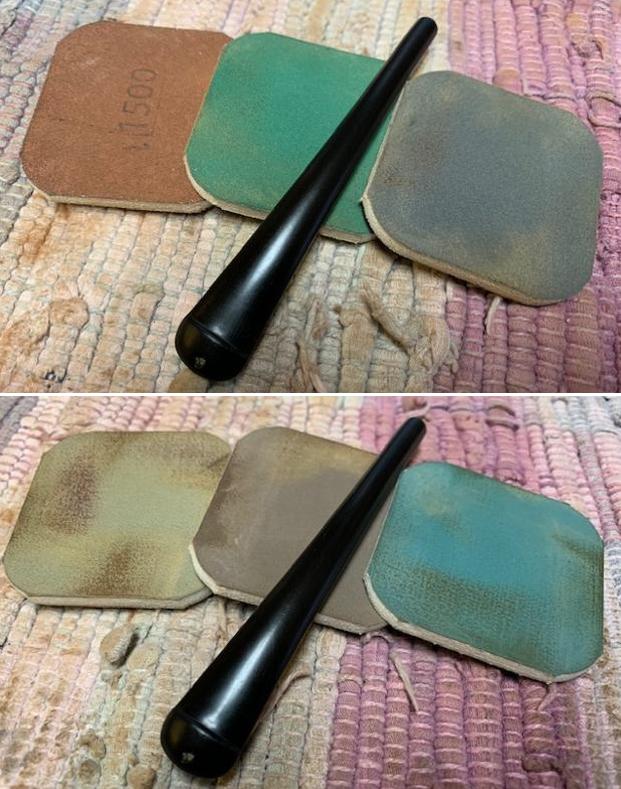
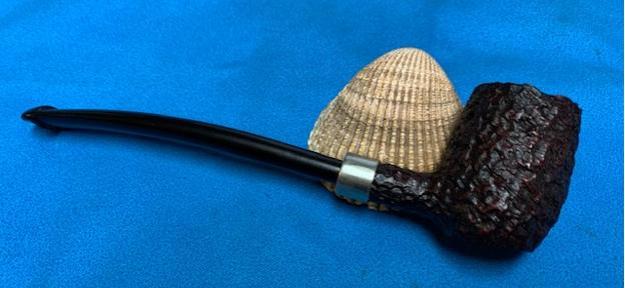
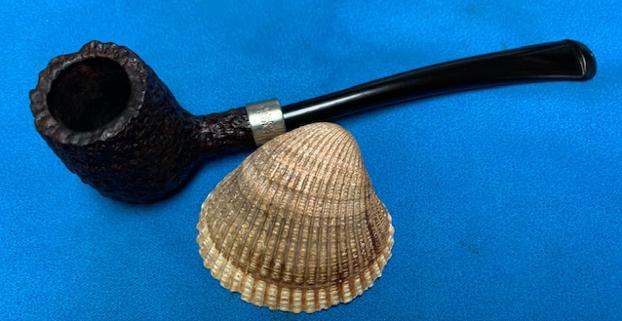
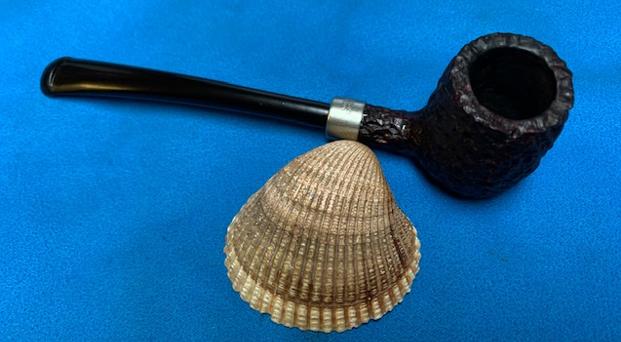
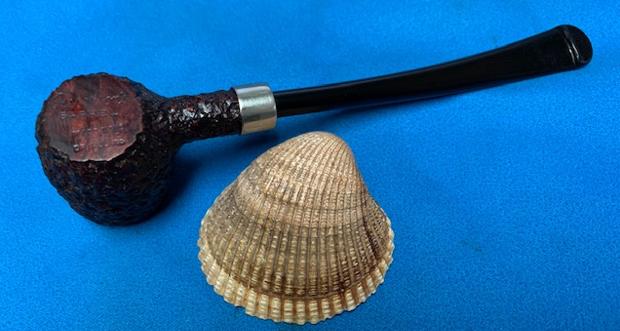
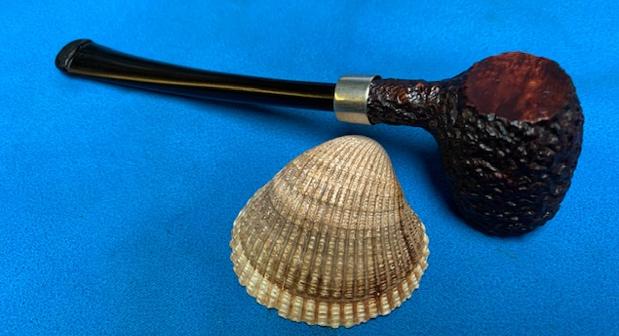
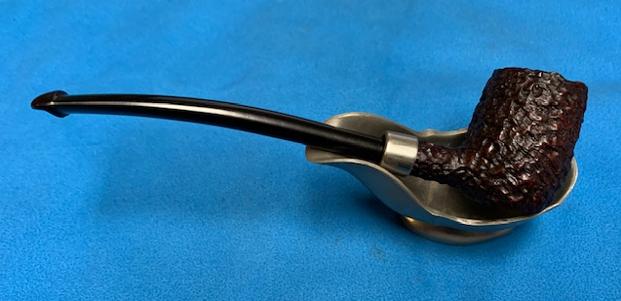
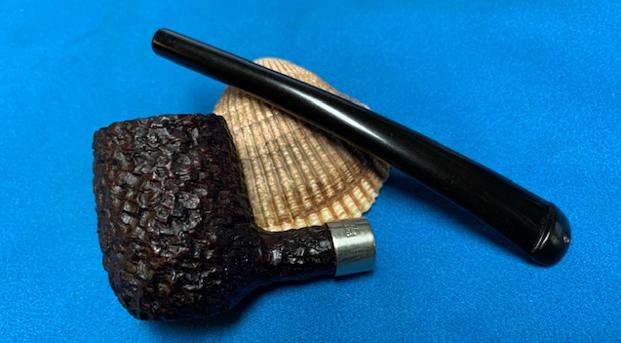
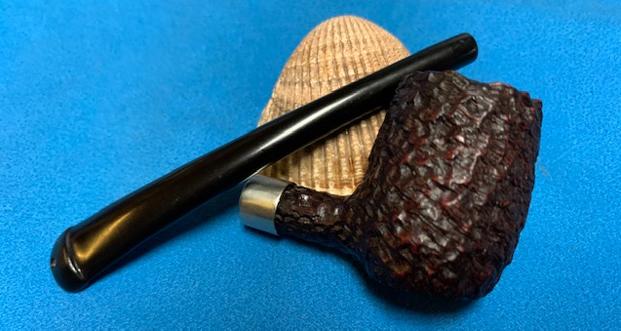
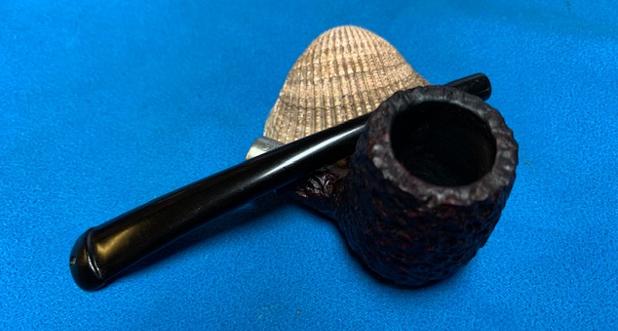
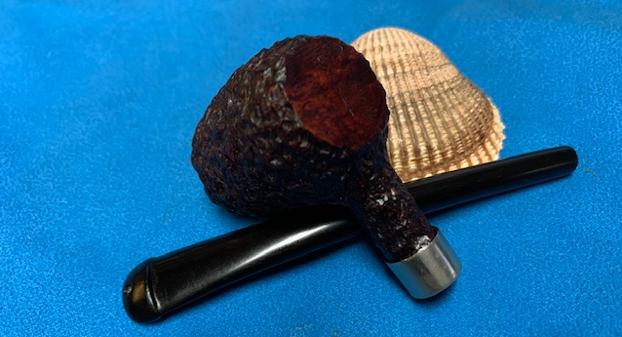
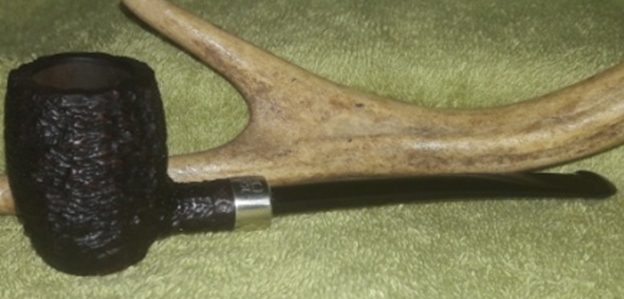
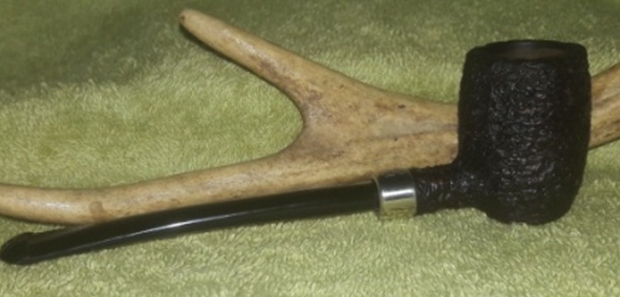
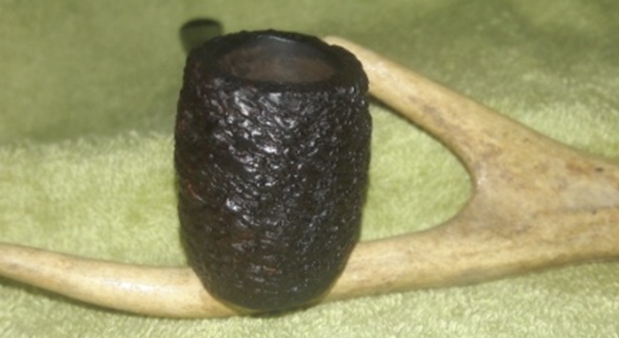
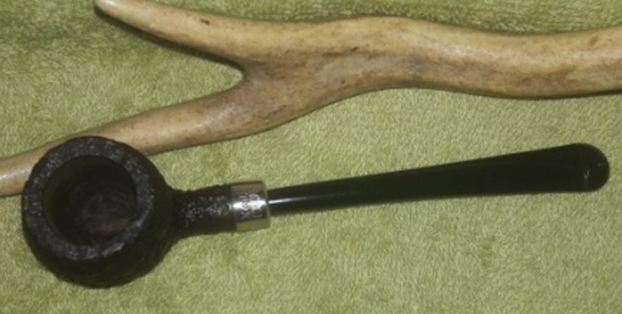
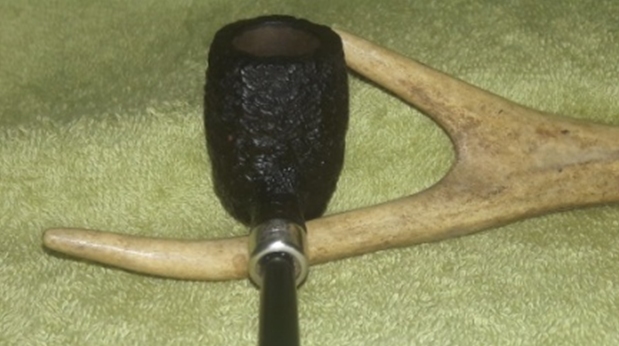
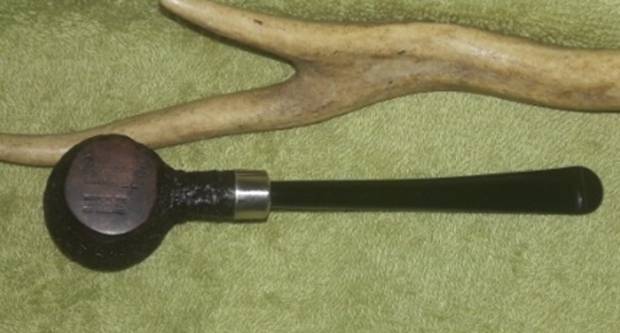
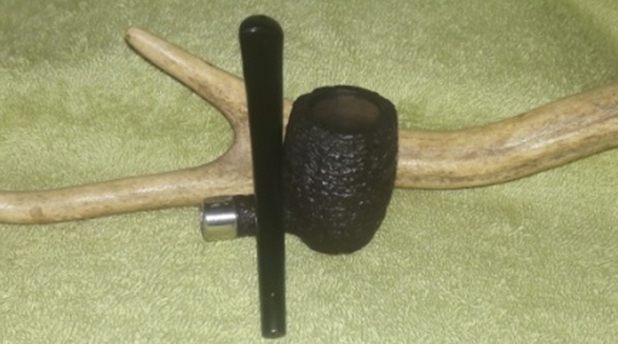
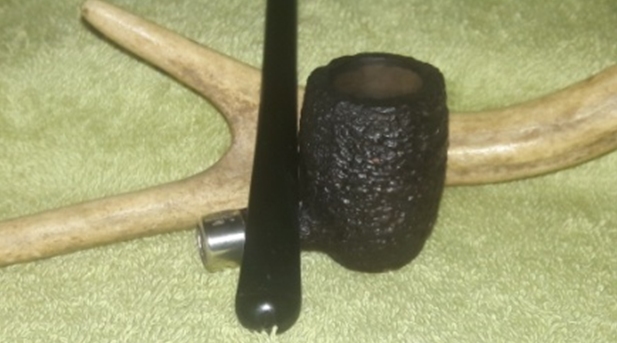
 I am excited to finish this Peterson’s of Dublin Special Series Rusticated Barrel with a Military Bit Stem. I put the pipe back together and buffed it with Blue Diamond on the buffing wheel. I gave the bowl multiple coats of Conservator’s Wax and the stem multiple coats of carnauba wax. I buffed the pipe with a clean buffing pad to raise the shine. I also hand buffed it with a microfibre cloth to deepen the shine. It is fun to see what the polished bowl looks like with the rugged rustication all around it. Added to that the polished nickel ferrule and the black vulcanite stem was beautiful. This rugged Classic Peterson’s Rusticated Barrel is nice looking and the pipe feels great in my hand. It is light and well balanced. Have a look at it with the photos below. The dimensions are Length: 5 ¾ inches, Height: 1 ½ inches, Outside diameter of the bowl: 1 inch, Chamber diameter: 5/8 of an inch. The weight of the pipe is 21grams/ .74oz. It is a beautiful pipe and one that I am going to hold on to in memory of my good friend and smoke in his memory. Thanks for walking through the restoration with me as I worked over this pipe. Thanks to each of you who are reading this blog. This is another beautiful pipe that will be put on the rebornpipes store. If you are interested in adding it to your collection let me know.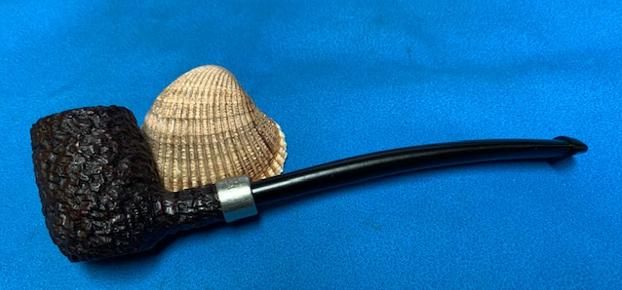


 rebornpipes