
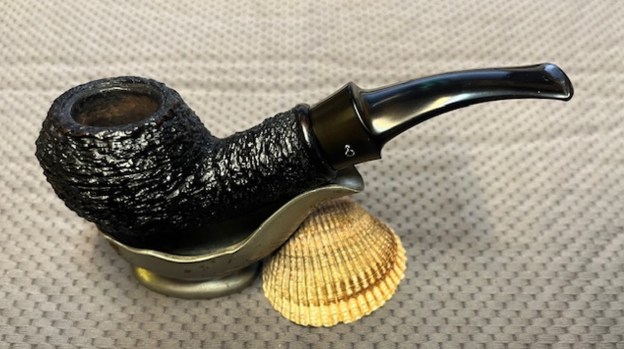
by Steve Laug
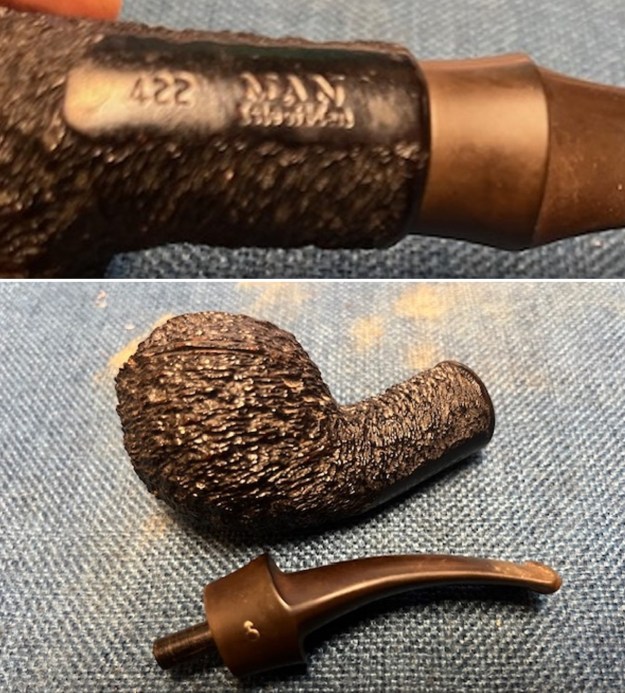
The next pipe on the work table is the last of three sent to me by a fellow near Vancouver for restoration. It is a rusticated meerschaum from the Isle of Man. It is stamped on the underside of the shank and reads Man [over] Isle of Man. The bowl was surprisingly clean with just a little cake. The rim top and inner edge of the bowl was very clean. There was an inset on the rim top that was smooth. There was an acrylic band on the end of the shank that served as a smooth face for the saddle stem. The finish was dusty and dirty but otherwise in great condition. The vulcanite saddle stem was lightly oxidized and had deep tooth marks and chatter on both sides ahead of the button. There was a circle with an arrow symbol on the left side of the saddle. It should be a straightforward clean up. I took photos of the pipe before I started my cleanup work. 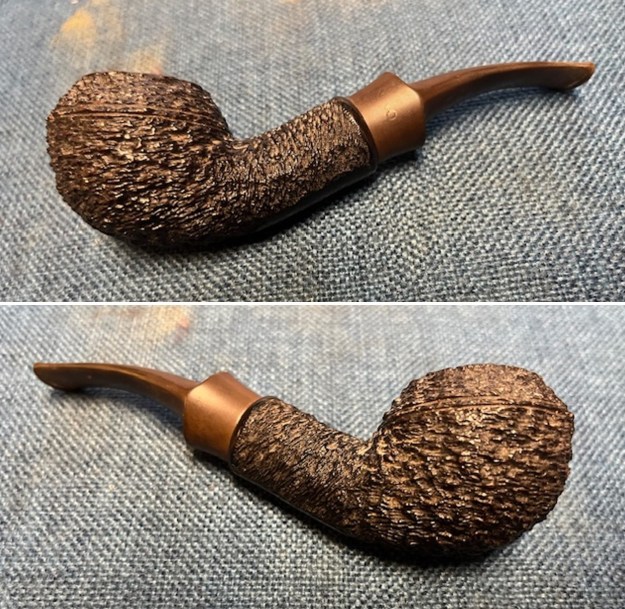
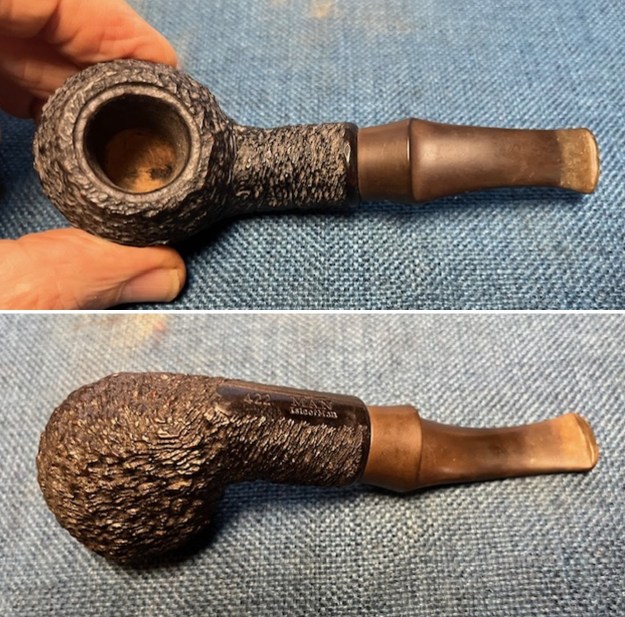 I took a close-up photo of the rim top to show the construction and the condition of the bowl and inner edge of the bowl and the stem. The bowl looks good with minimal cake on the bowl walls. The stem photos show the tooth marks on both sides ahead of the button.
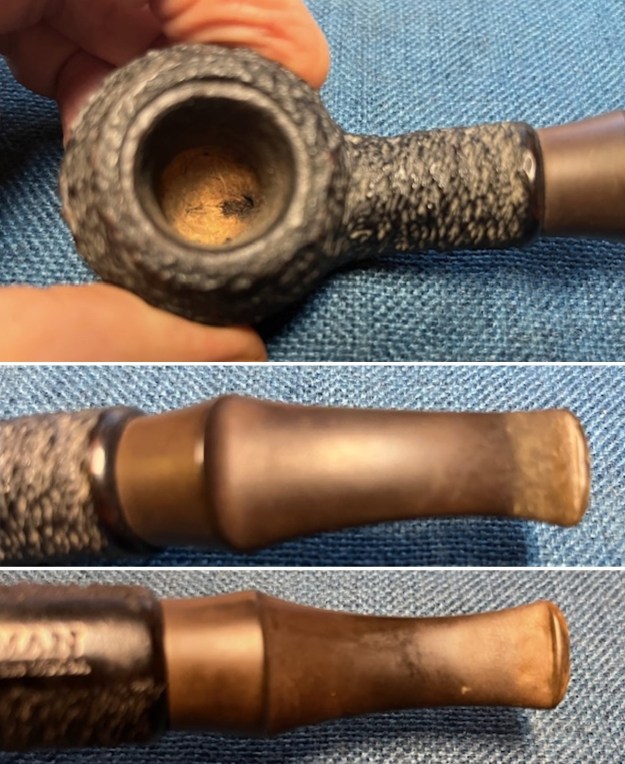 I took a photo of the stamping on the sides of the shank. It is clear and readable as noted above. I removed the stem and took a photo of the parts of the pipe. I have to say it is one of the first Isle of Man pipes that I really like the shape. It reminds of the GBD 9438.
 Before I started working on it I turned to Pipephil to see what I could find out about the Man stamp (http://www.pipephil.eu/logos/en/logo-m1.html). I have included the screen capture of the information there. It has the same logo as the one I am working on. I also included the sidebar information below the photo.
 A brand of MANXMAN PIPES Ltd, The Quay, Old Laxey, Isle of Man, British Isles. The meerschaum used for these pipes usually was of Tanzanian origine (like Kiko or Twiga pipes).
See also: Manx Meerschaum, Pioneer
From there I turned to Pipedia and looked under the Laxey Pipes Ltd listing as they made all of the Manx pipes (https://pipedia.org/wiki/Laxey_Pipes_Ltd.). I quote a pertinent portion below:
Laxey Pipes Ltd. resided in a historical 19th century four-storey Man stone building at The Quay, Old Laxey, Isle of Man, which thankfully has been preserved.
The company specialised in the production of meerschaum pipes using the Meerschaum mined by the Tanganyika Meerschaum Corporation in the Amboseli basin in Tanganyika (since 1964 part of the United Republic of Tanzania).
Please note: you may often find names like “Manx Pipes Ltd.”, “Man Pipe Co.” and others more, but there is no indication of another Isle of Man pipe producer other than Laxey Pipe Ltd. at any time!
Laxey Pipes Ltd. marketed own brands like “Manxpipe”, “Manxman”, “Manxland” e.c. Names like “John Bull”, “White Knight” (unwaxed), “Domino” (black, or lined) indicated some shapes / colours of Laxey’s own series. The stems either showed the astronomical sign for “male” or “man” (circle + arrow), or the crest of the Isle of Man, the 3-legged X in a circle. Manxpipes and Laxey’s other brands were available through pipe retailers in general, but also were sold (mainly) to tourists through their own shop in Laxey.
Furthermore Laxey Pipes Ltd. manufactured the meer bowls for Peterson, Barling, Nørding and others from the later 1960’s until 2001. Man Pipe e.g. was a brand distibuted by Comoy’s. The bowls usually showed no nomenclature indicating the orderer. “Genuine Block Meerschaum” was engraved frequently. Often, just the stems were different, while bowls were the same.
From the above I was able to discern that the pipe was indeed made by Laxey and that the Man Pipe brand was distributed by Comoy’s. That is something I was unaware of until reading this.
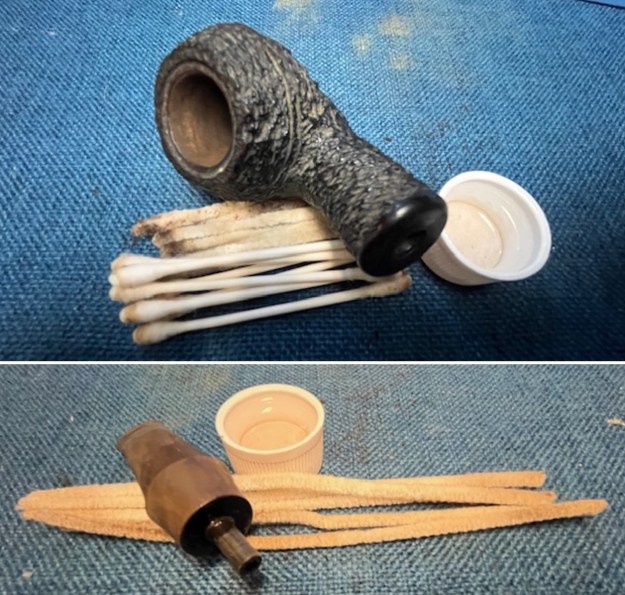
Now it was time to work on the pipe. Since the bowl was only lightly dirty I decided to sand the bowl walls. I sanded the bowl with a piece of dowel wrapped with 220 grit sandpaper. It looked much better at this point.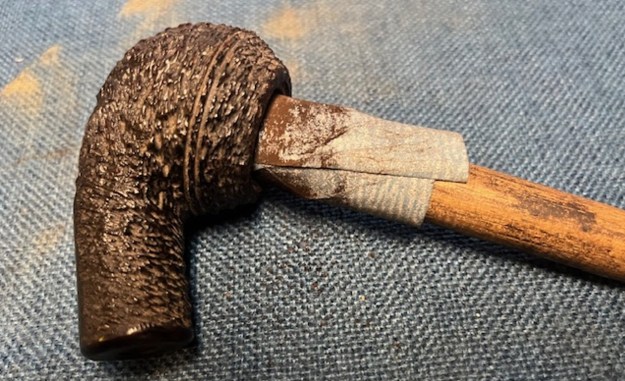 I moved on to clean up the internals. I cleaned out the airway and mortise with pipe cleaners, cotton swabs and alcohol. I cleaned out the airway in the stem at the same time. It was a dirty pipe but after this cleanup it was much better.
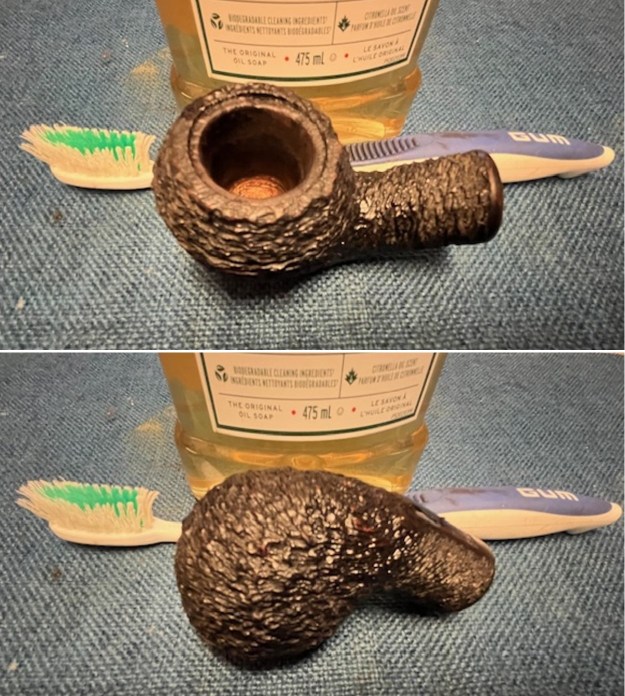
 I scrubbed the externals of the pipe with undiluted Murphy’s Oil Soap and a tooth brush to remove the grime in the finish and on the rim top. I worked on it until it looked much better and then rinsed it off with warm water. I dried it off with a soft cloth.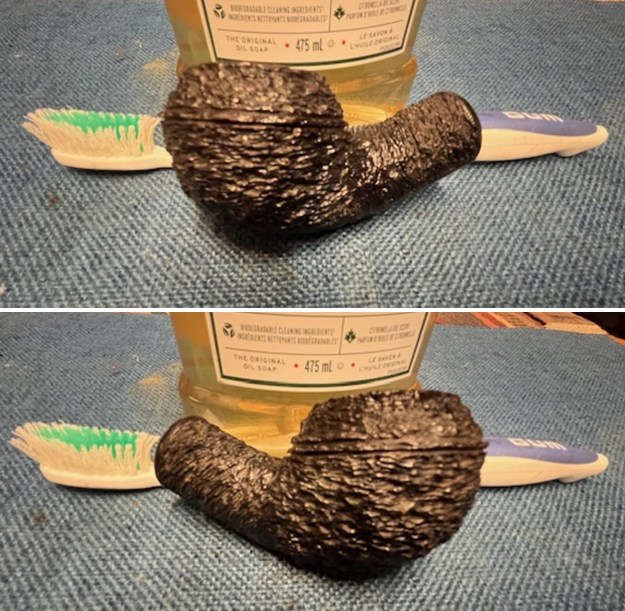
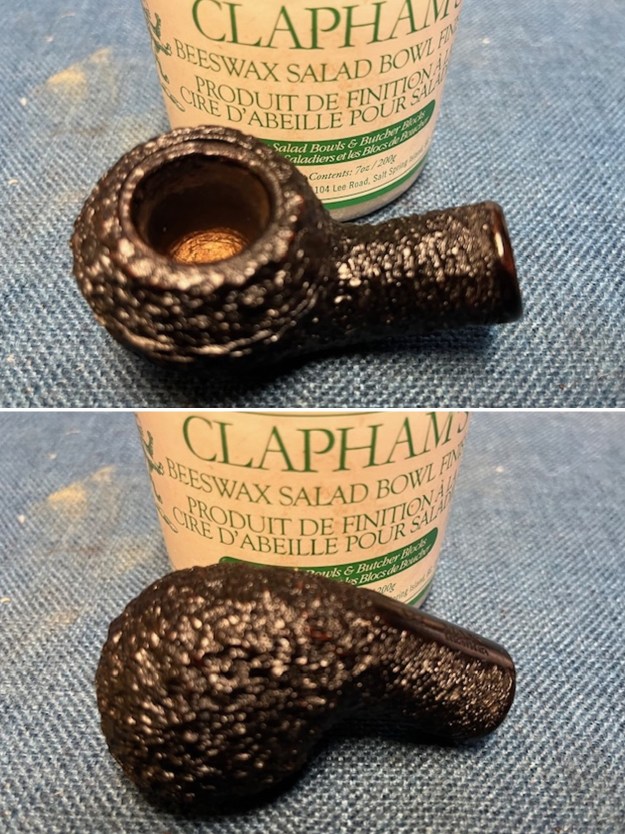
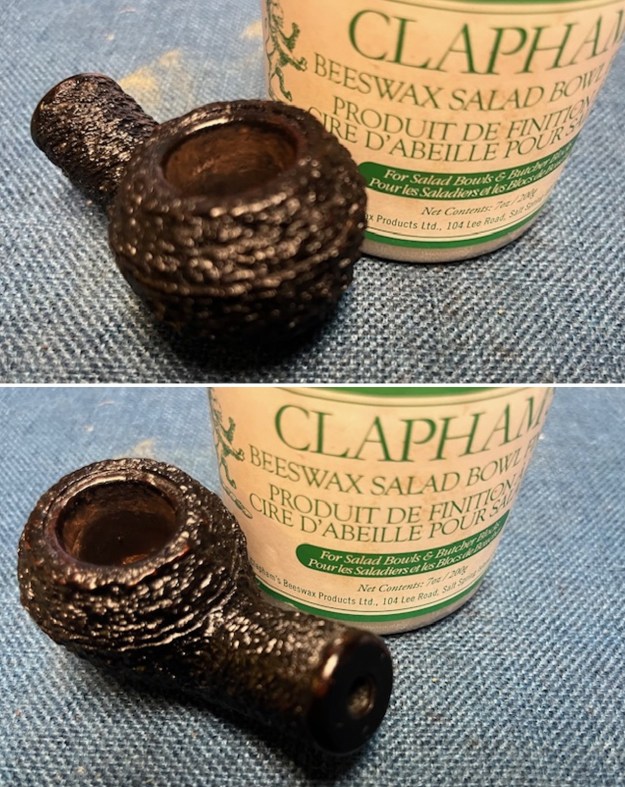
 The exterior of the bowl looks after the cleaning. I worked some Clapham’s Beeswax/Carnauba wax mixture into the rusticated meerschaum with my fingertips and a shoe brush. I let it sit on the bowl for 10 minutes and then buffed it with a soft cloth. The product is a great addition to the restoration work. It really brought the meerschaum alive and it is an easy product to use as it is a soft wax.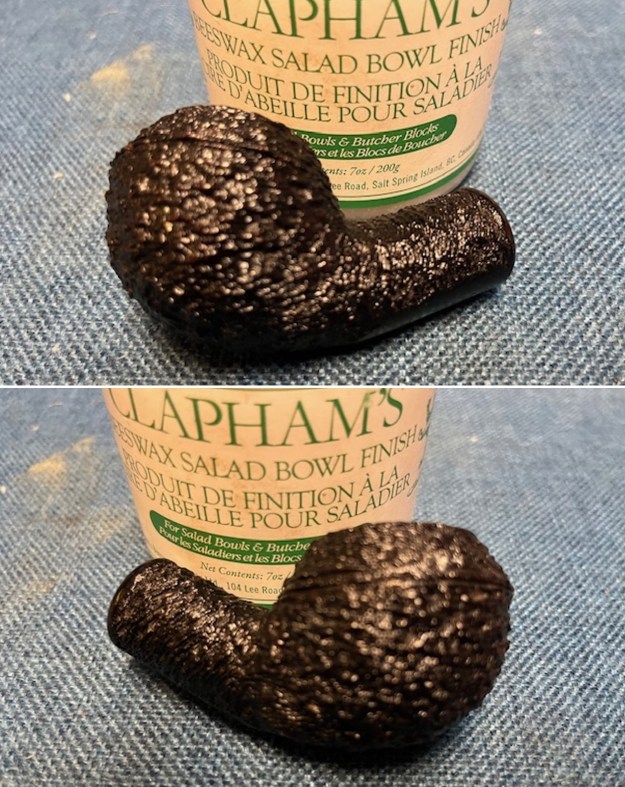
 I set the bowl aside and turned my attention to the stem. I “painted” the stem surface with the flame of a lighter to lift the tooth marks. I was able to lift some of them. I filled in the remaining tooth marks with black rubberized CA glue. I set it aside to let the repairs cure.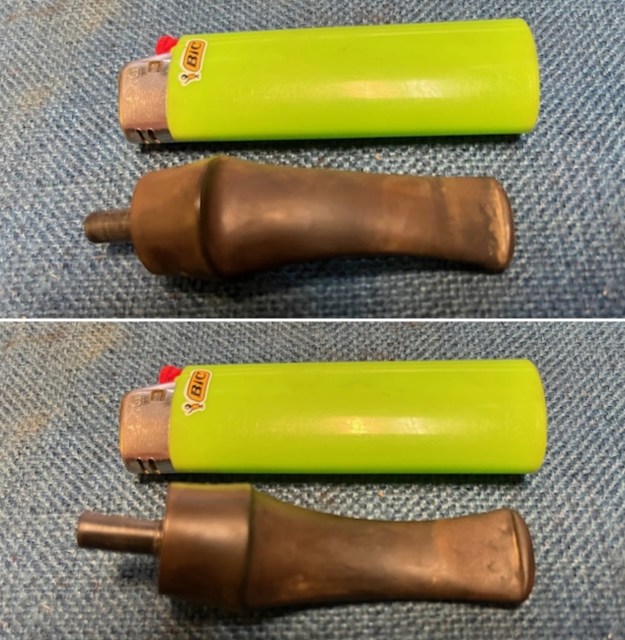
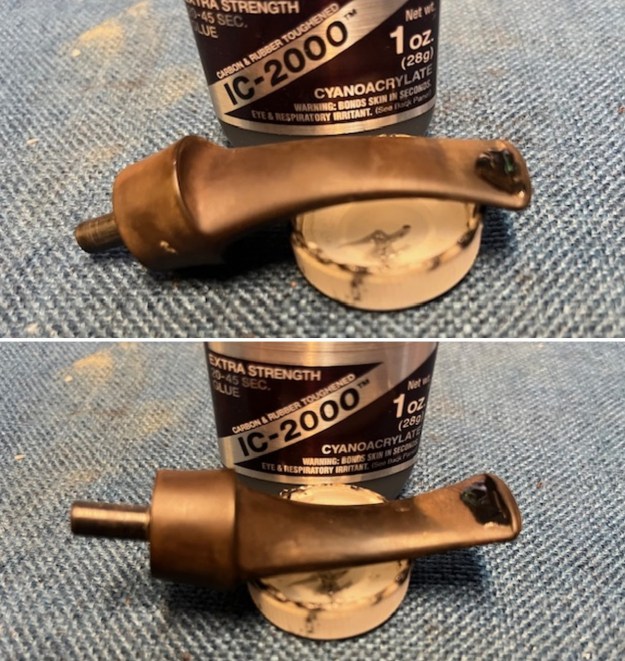 Once the repair cured I flattened it with a small flat file. I sanded the repairs smooth with a folded piece of 220 grit sandpaper.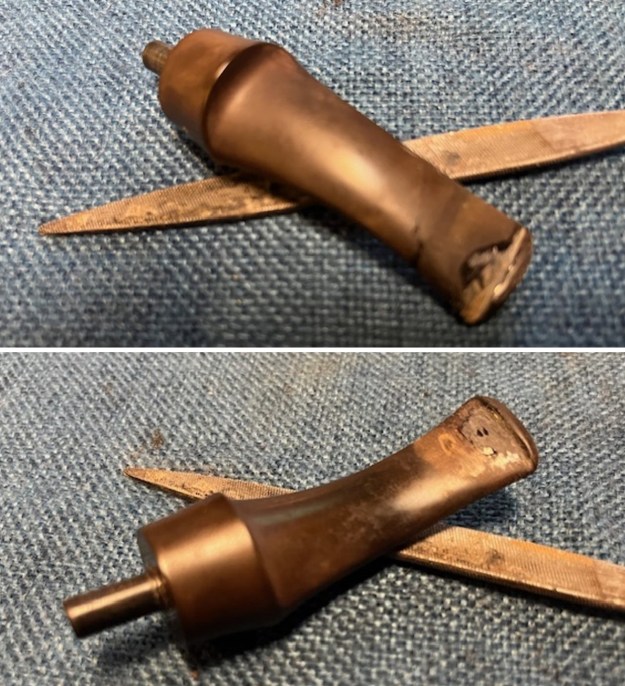
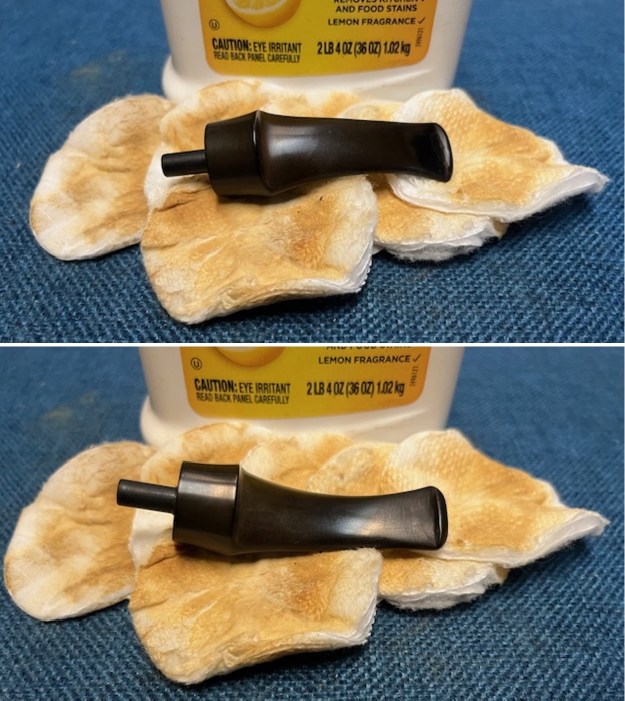
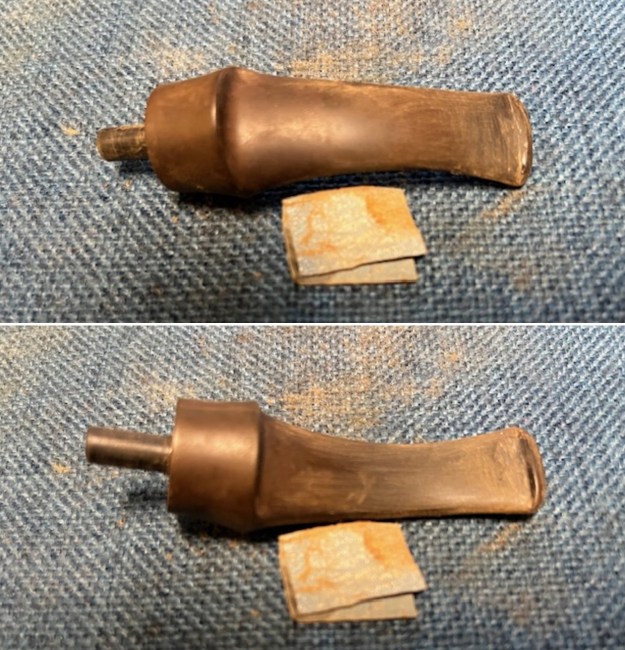 I scrubbed the stem with Soft Scrub to break down the oxidation on the stem. I scrubbed it with cotton pads and removed a lot of oxidation. The stem is looking much better at this point in the process.
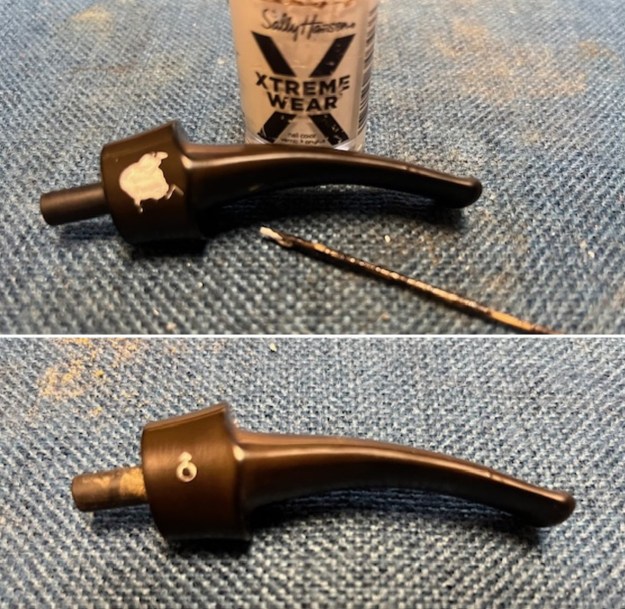
 I touched up the Man logo on the left side of the saddle with white acrylic nail polish. I pressed it into the stamping with a tooth pick. I scraped off the excess and the logo looked very good.
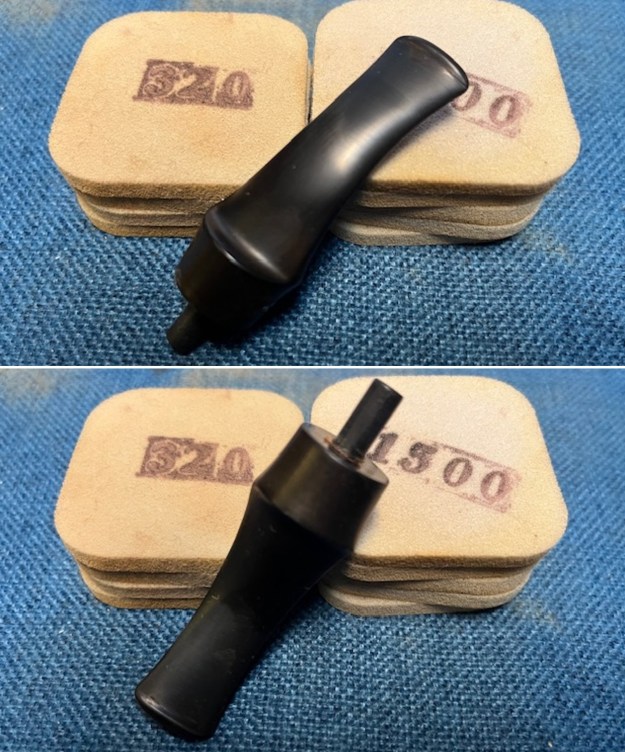
  I sanded the stem with 320-3500 grit sanding pads and wiped it down with Obsidian Oil to remove the sanding dust.
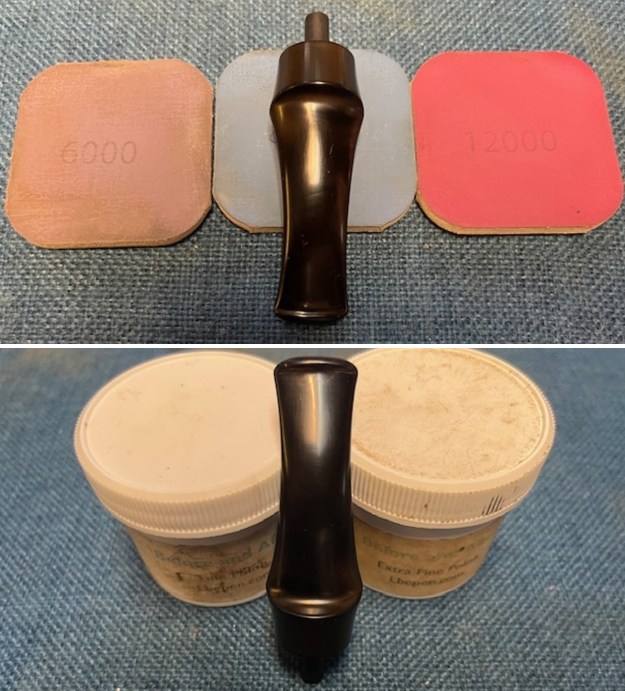
 I polished the stem with micromesh sanding pads – dry sanding with 1500-12000 grit pads. I wiped the stem down after each sanding pad with Obsidian Oil to further protect the vulcanite surface. I finished the polishing with Before & After Pipe Stem Polish – Fine and Extra Fine. I wiped the stem down a final time with Obsidian Oil and a cloth. It really looks very good.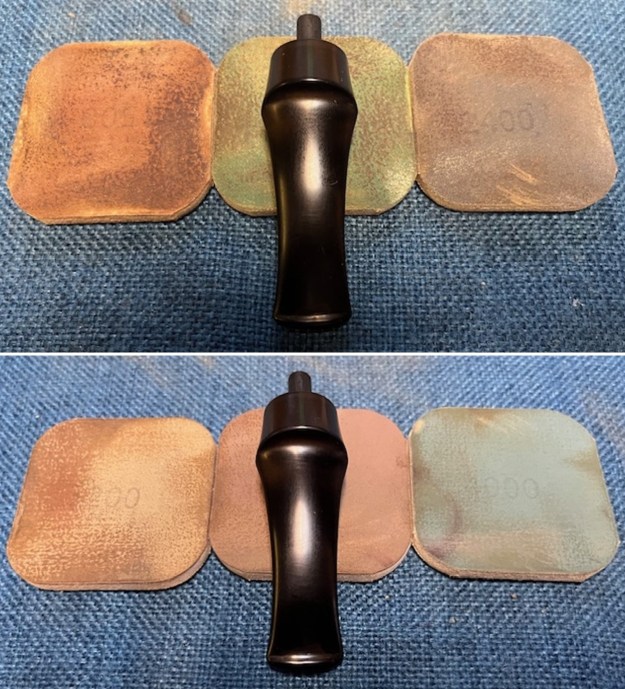
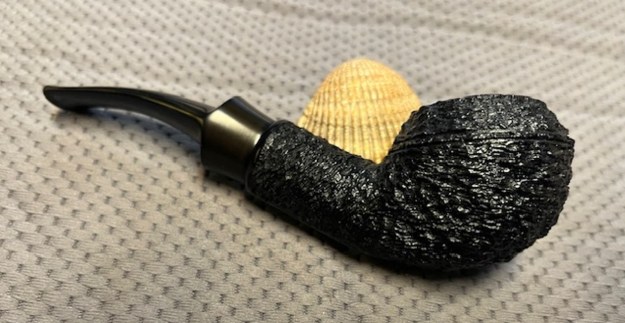
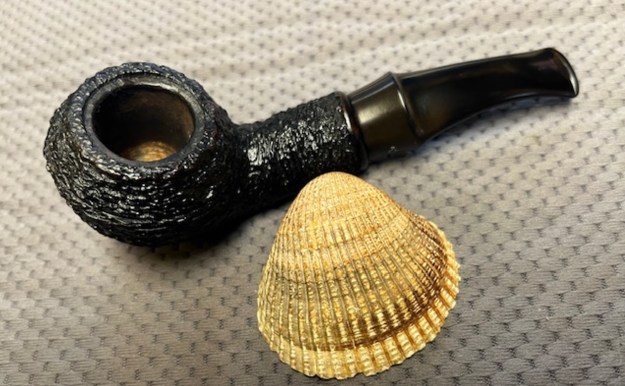
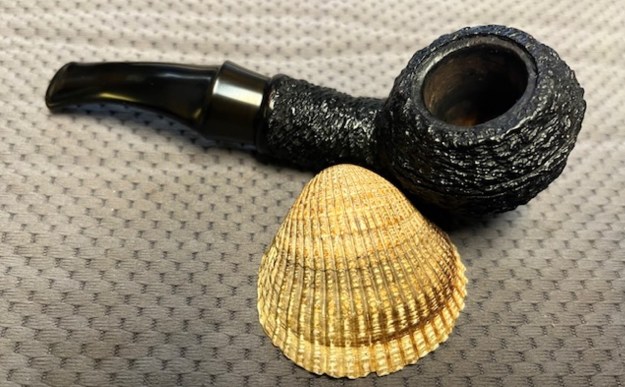
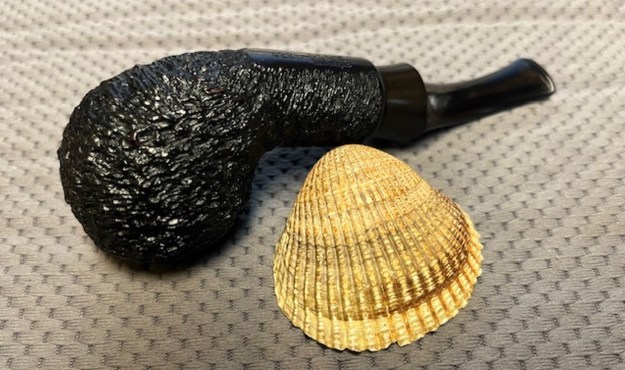
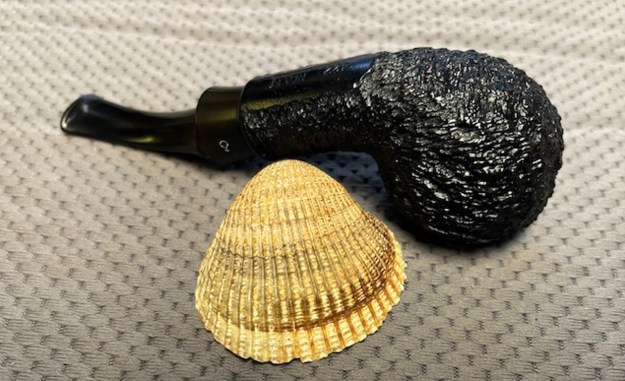
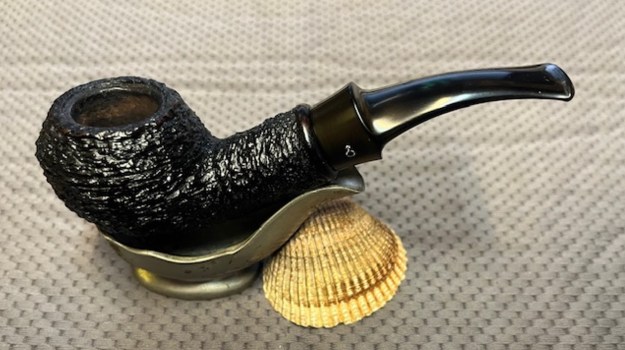
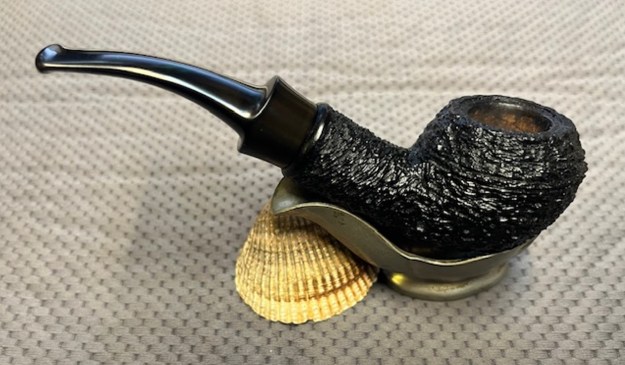
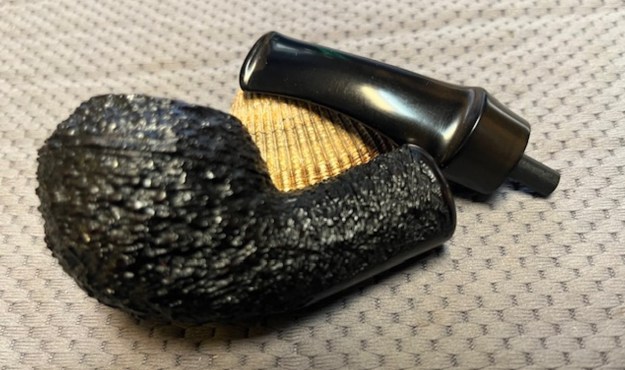
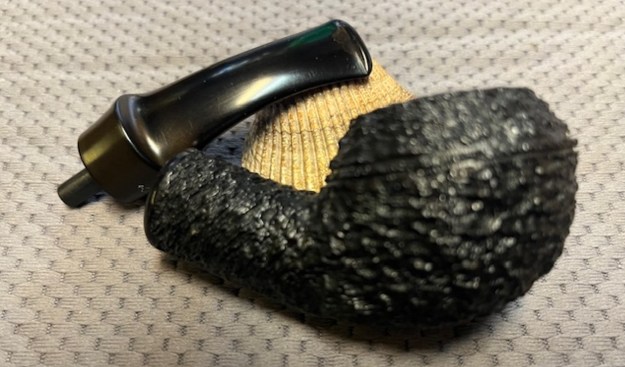
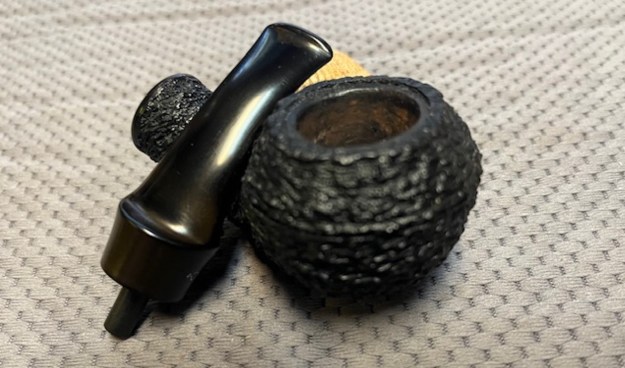
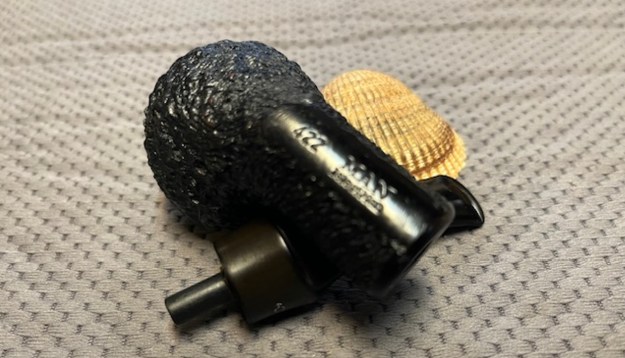
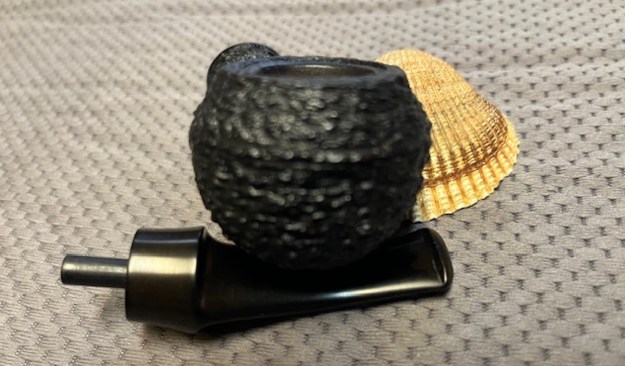
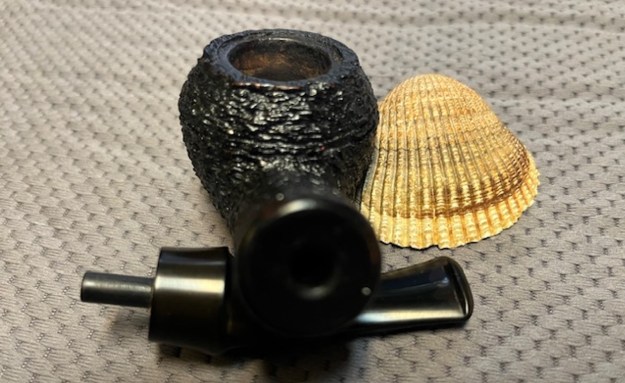
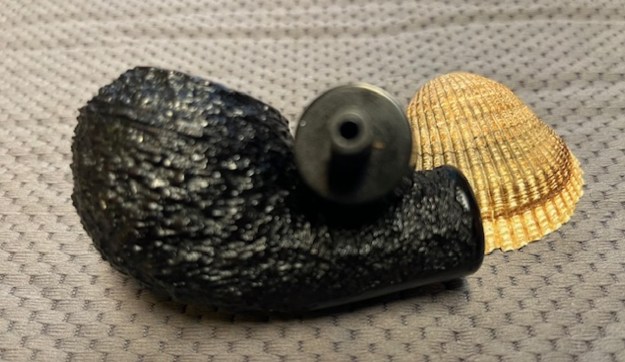
 I am always excited to finish working on a pipe. This Isle of Man Meerschaum Man Rhodesian is no exception. I put the pipe back together and buffed it with Blue Diamond on the buffing wheel. I gave the bowl and the stem multiple coats of carnauba wax. I buffed the pipe with a clean buffing pad to raise the shine and hand buffed it with a microfibre cloth to deepen the shine. It is fun to see what the polished bowl looks like with the black vulcanite taper stem. This Classic looking Meerschaum Man Rhodesian feels great in my hand. It is light and well balanced. Have a look at it with the photos below. The dimensions are Length: 5 ½ inches, Height: 1 ½ inches, Outside diameter of the bowl: 1 ¼ inches, Chamber diameter: ¾ of an inch. The weight of the pipe is 54 grams/1.94 ounces. Since this is the third of the three pipes I worked on for the fellow here in Vancouver, I will be packing them up and sending them back to him this week. Thanks for walking through the restoration with me as I worked over this pipe. Thanks to each of you who are reading this blog.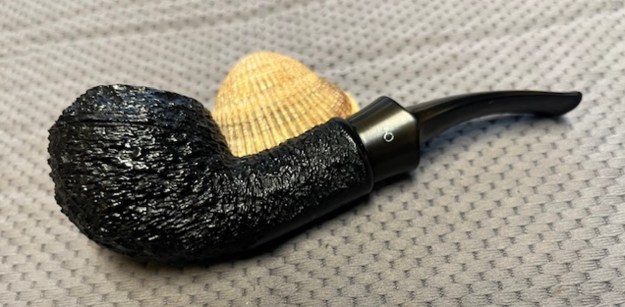
 rebornpipes