by Steve Laug
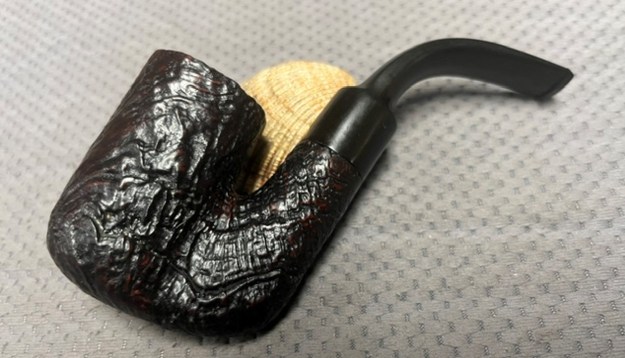
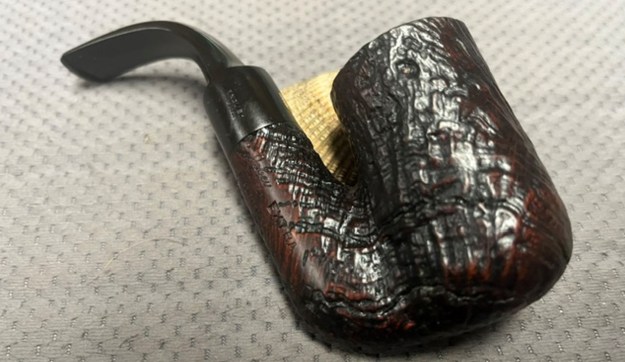
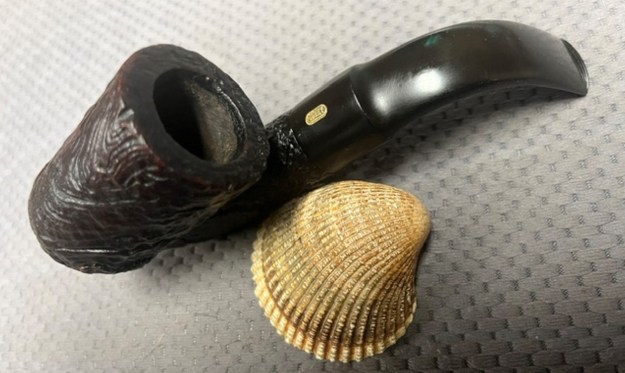
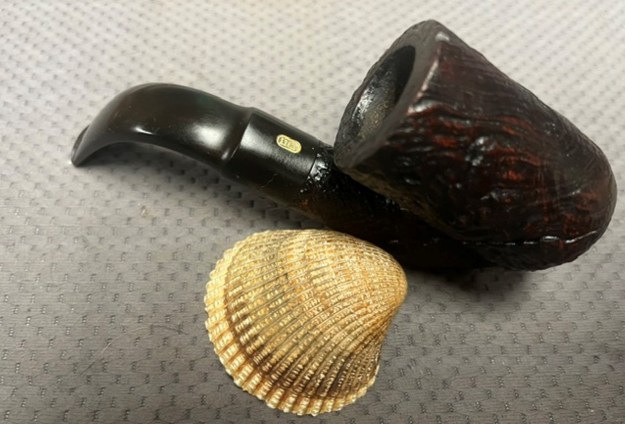
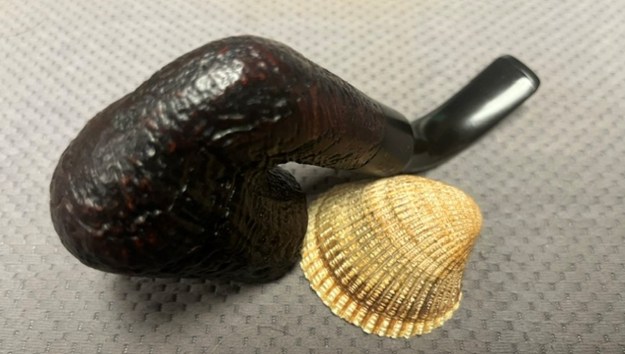
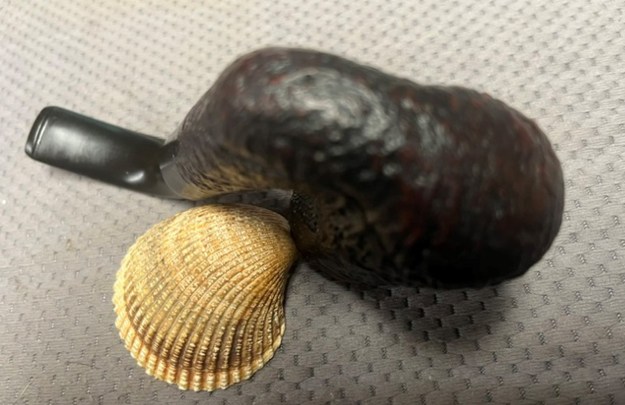
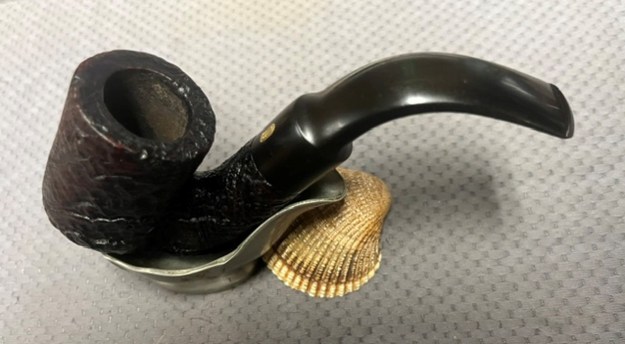
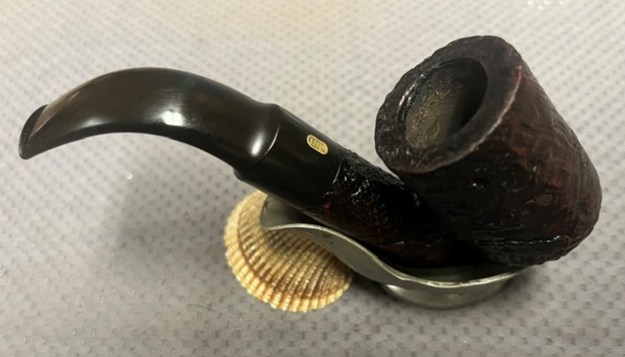
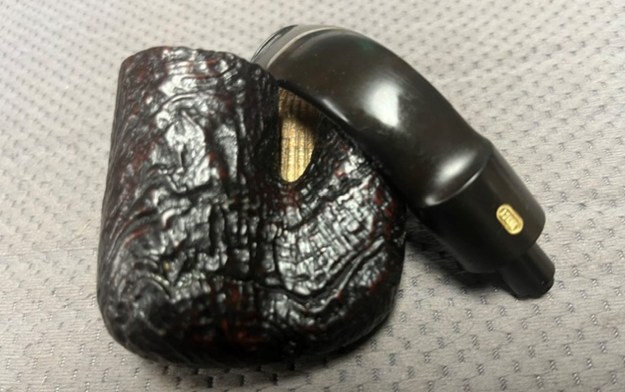
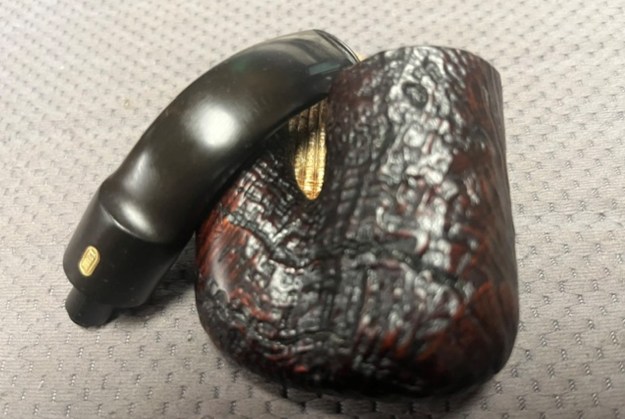
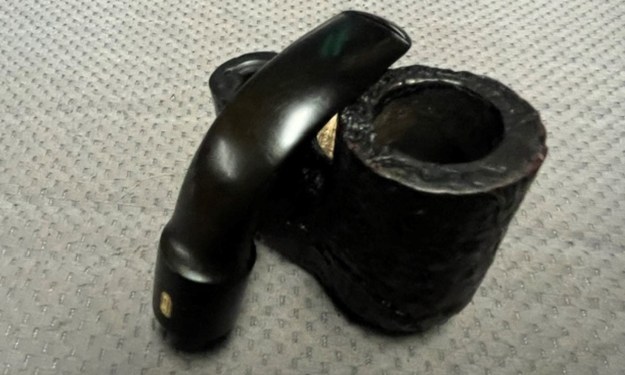
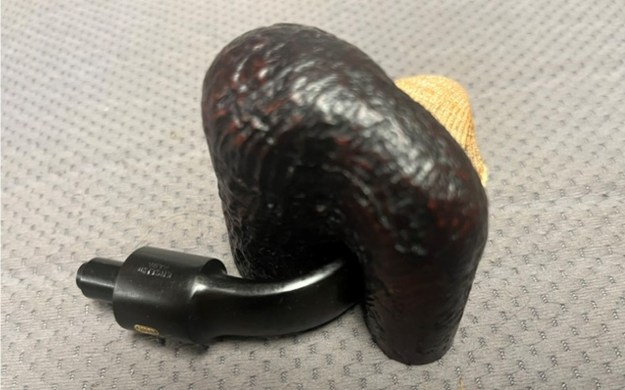
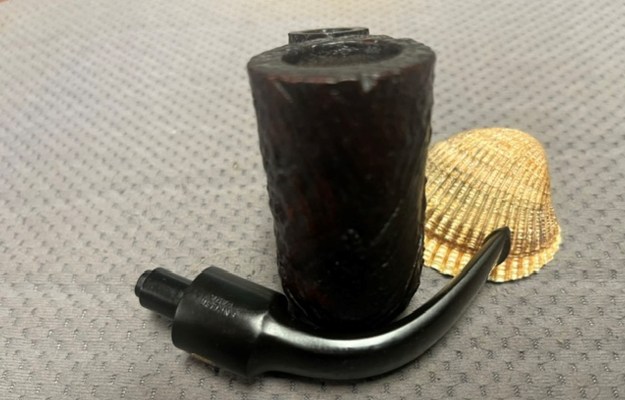
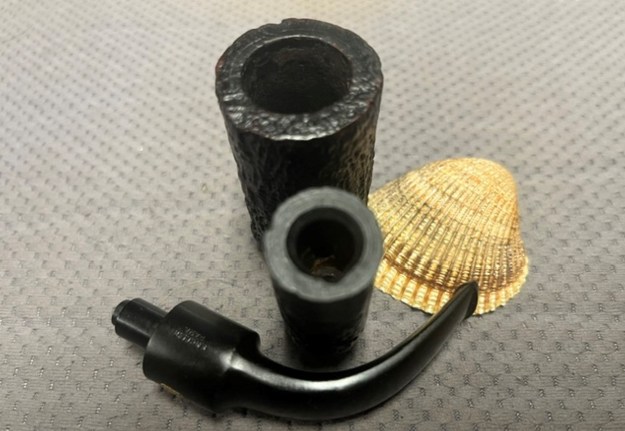
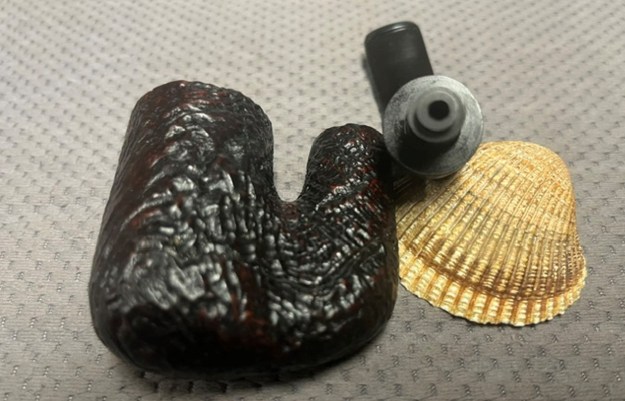
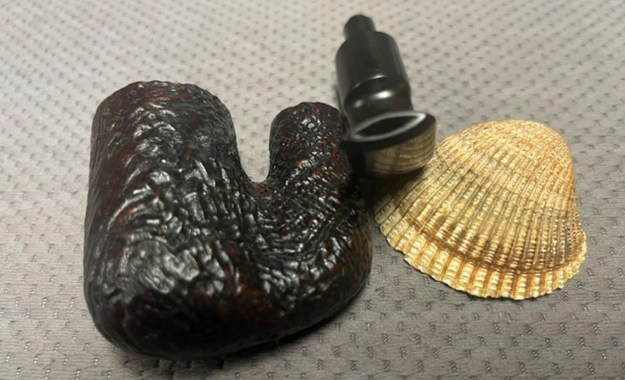
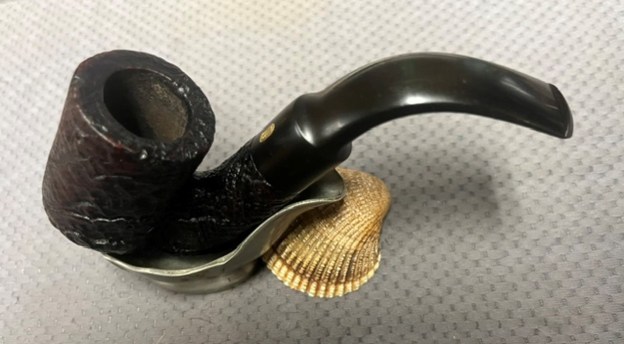
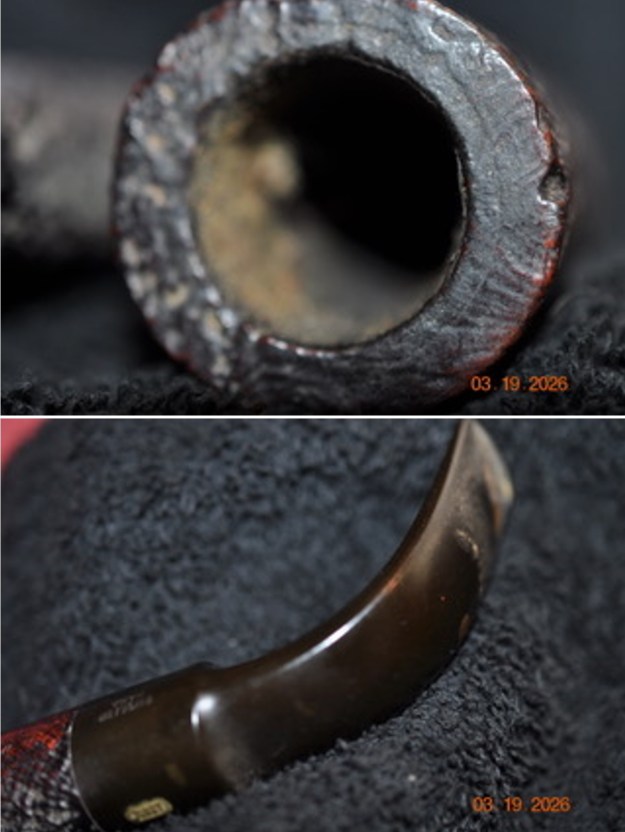
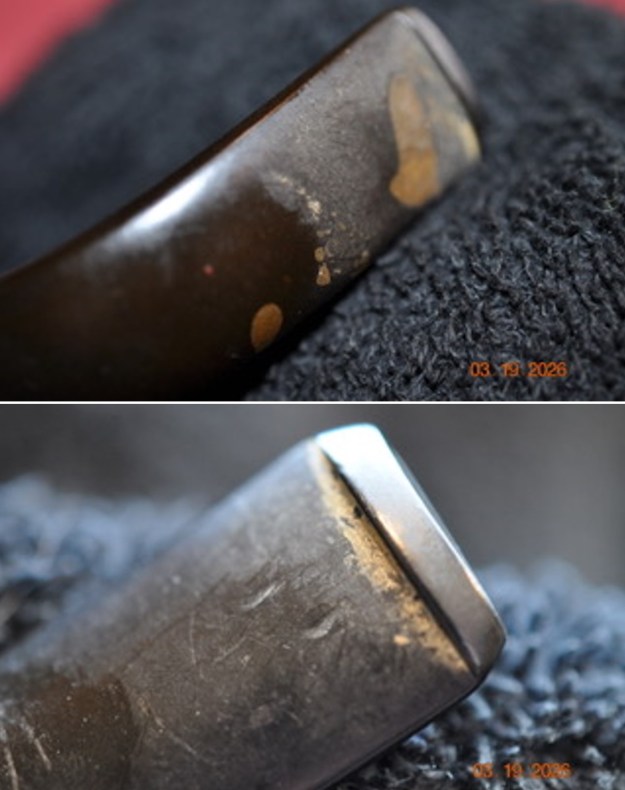
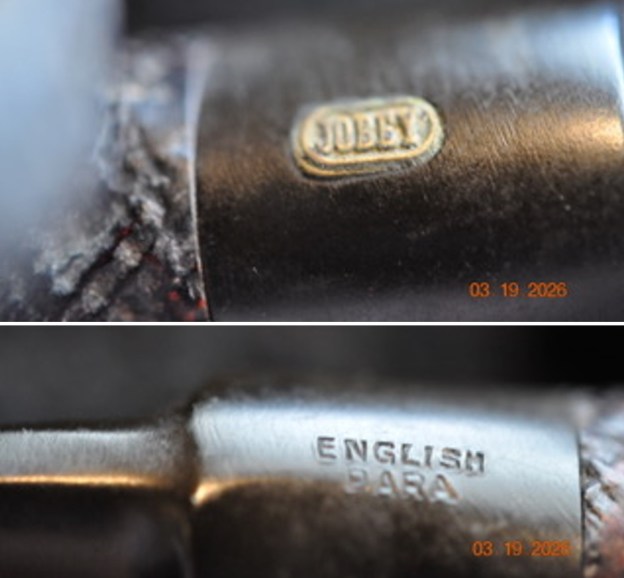
This sandblast finished bowl with a saddle stem was purchased on 01/20/2026 from a Facebook seller in Quaker Town, Pennsylvania, USA. It is a great Full Bent Oom Paul with a rich dark brown sandblasted finish on the bowl and shank. The stem is a vulcanite saddle stem. The bowl is stained with a mix of browns that highlight the blasted grain around the bowl and shank. It has a sandblasted rim top. It is stamped on the right side of the shank and reads Jobey in script [over] Shellmoor followed by EXTRA. Underneath this it is stamped Imported Briar. The bowl had a thick cake and some tobacco debris on the walls. There was an overflow of lava on the rim top that was heavier toward the back of the bowl. There was grime ground into the finish which left it looking quite dull. The vulcanite saddle stem has a gold Jobey logo oval on the top of the saddle. There was some light oxidation on the surface and some light tooth marks and chatter on both sides of the stem ahead of the button. Jeff took photos of the pipe before he started his work on it.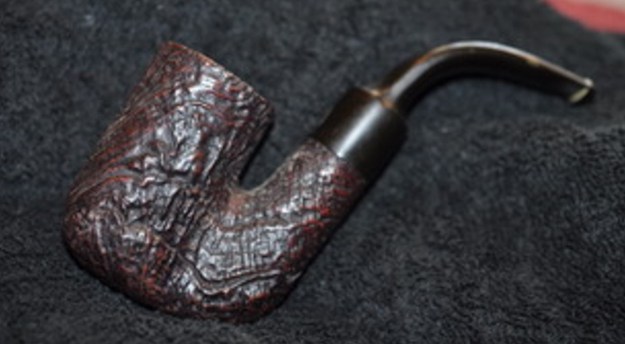
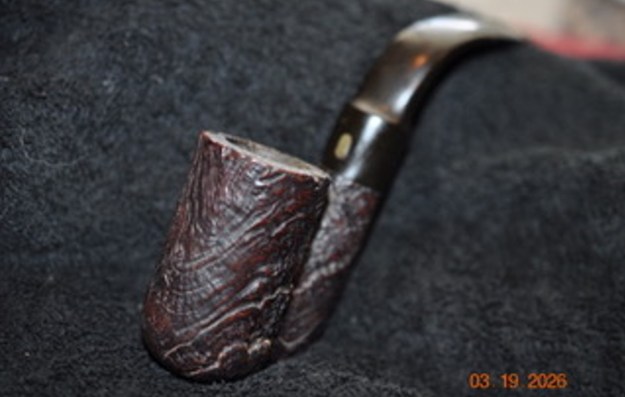 He took photos of the rim top and bowl to show the current condition. The inner edge and the rim top showed spots of lava as mentioned above. The photos of the bowl show the cake on the walls. The stem photos show the oxidation and light marks on the rim top on both sides.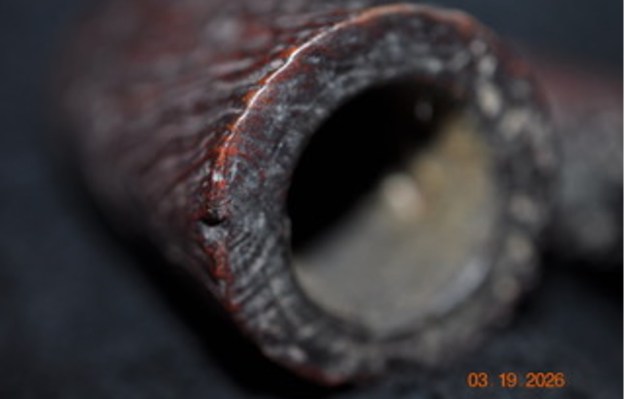
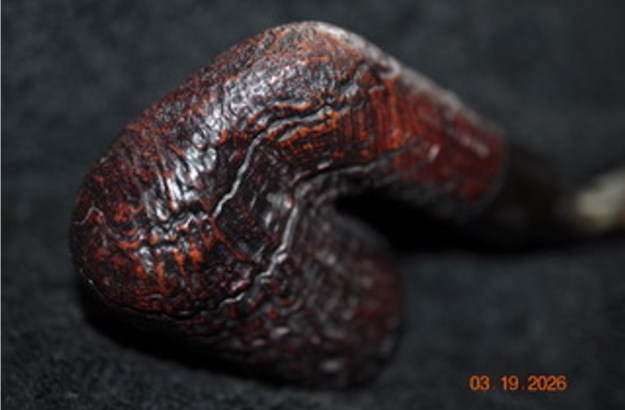
 Jeff took photos of the sides and heel of the bowl to give a sense of the condition of the bowl and the rugged sandblast around the bowl.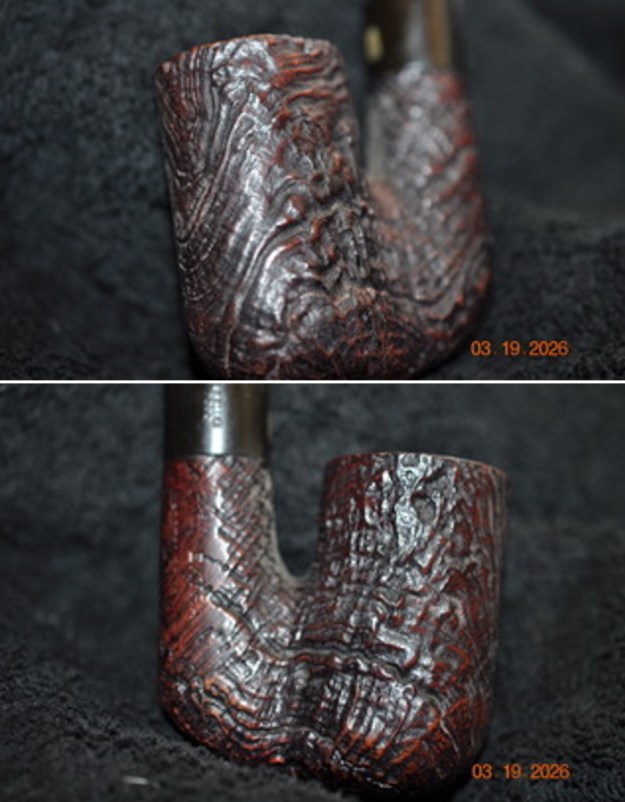
 He took photos of the right side of the shank to capture the stamping. It is clear and readable as noted above. He also captured the brass Jobey logo on the top of the saddle stem and English Para on the left side of the stem.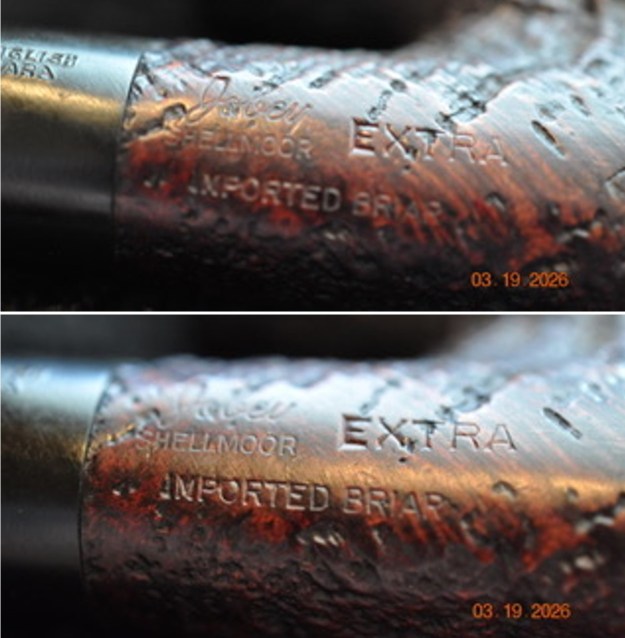
 Before I started my work on the pipe I turned to Pipephil’s site to see if I could find any info on the brand and on a Jobey Shellmoor Extra (http://www.pipephil.eu/logos/en/logo-j3.html). The information on Jobey was helpful there is a screen capture below showing the Shellmoor sandblast. I have included the sidebar information.
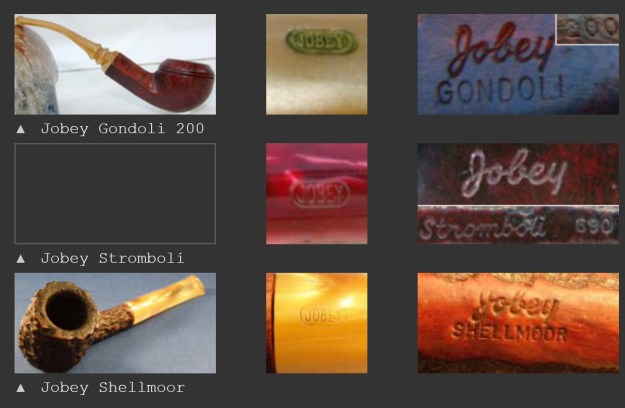 These pipes are made in St Claude (France) by Butz-Choquin (Berrod-Regad group) since 1987. Before this date some were manufactured in England and Denmark (Jobey Dansk). Jobey’s seconds: Shellmoor
I followed the link above on Shellmoor to another page on Pipephil’s site to see what I could find (http://www.pipephil.eu/logos/en/logo-s6.html#shellmoor). I have included a screen capture of that section below.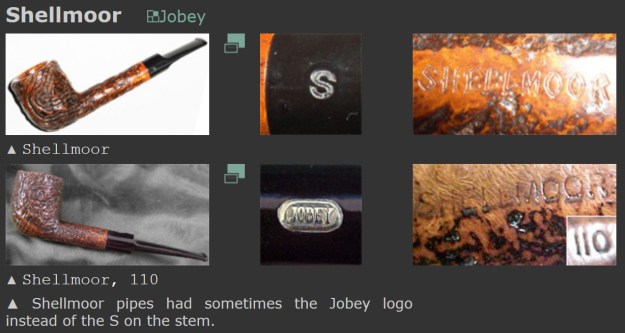 I turned next to Pipedia (https://pipedia.org/wiki/Jobey). To deepen my understanding of the information of the brand. It was helpful in helping to understand the mess of where Jobey pipes were made and who made them. I have included the amount below.
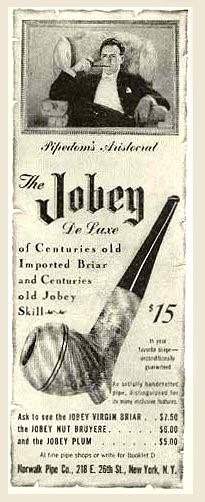 English – American – Danish – French… Sadly, solid information about Jobey is scant.
Probably established in England around 1920(?) the brand hiked into the USA later. In the course of time owner, distributor and manufacturer changed repeatedly. As far as is known the following companies have been involved with the brand:
- George Yale Pipes & Tobacco, New York (1942)
- Norwalk Pipe Co., New York (1949)
- Arlington Briar Pipes Corp., Brooklyn (when?)
- Hollco International, New York (1969).
- Weber Pipe Co., Jersey City, NJ (1970’s)
- Tinder Box, (1970’s – 80’s).
Throughout decades Jobey pipes were mainly sold in the USA, Canada and England but remained almost unknown in continental Europe. The bulk of Jobeys were predominantly made according to classical patterns and mainly in the lower to middle price range. The predominant judgment of the pipe smokers reads: “A well made pipe for the price.” So, there is hardly anything very special or exciting about Jobey pipes although a flyer from ca. 1970 assures: “The briar root Jobey insists upon for its peer of pipes is left untouched to grow, harden and sweeten for 100 years. […] Jobey uses only the heart of this century old briar and only one out of 500 bowls turned measures up to the rigid Jobey specifications.” 99.80% of cull… that makes the layman marvelling!
This is an interesting collection of companies and countries where Jobey pipes were made. Take time to read about them. I am sure there is more available but now it is time to work on the pipe.
Now it was time to work on the pipe. Since Jeff always follows the same pattern of work in his cleanup we do not include photos but rather a simple summary. Jeff reamed the bowl with a PipNet pipe reamer and followed up with a Savinelli Fitsall pipe knife to remove the cake. He scrubbed out the mortise and the airway in the shank and the stem with alcohol, cotton swabs, shank brushes and pipe cleaners. He scrubbed the exterior of the bowl, rim, shank and stem with a tooth brush and Murphy’s Oil Soap to remove the oils and tars on the rim and the grime on the finish of the bowl. He rinsed it under running water. He dried it off with a soft cloth. He was able to remove the lava build up on the rim top and you could see that the edges of the rim looked good. He scrubbed the stem with Soft Scrub and then soaked it in Briarville’s Pipe Stem Deoxidizer. He rinsed it with warm water to rinse off the residue. The stem was clean and the oxidation was gone. I took photos of what the pipe looked like when I brought to my worktable.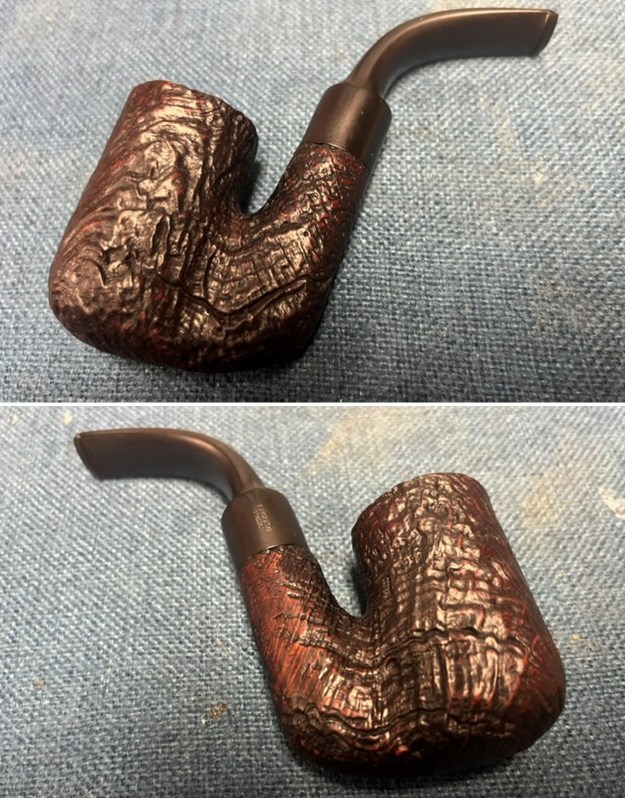
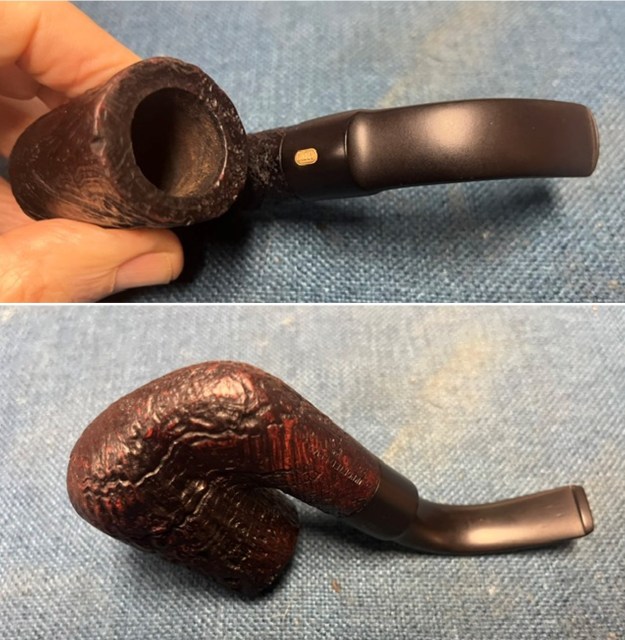 I took close up photos of the bowl, rim top and stem to show how clean the pipe was. The bowl was clean and the rim top and the inner edge looked good. The stem was clean and there were light tooth marks on the top and underside of the stem.
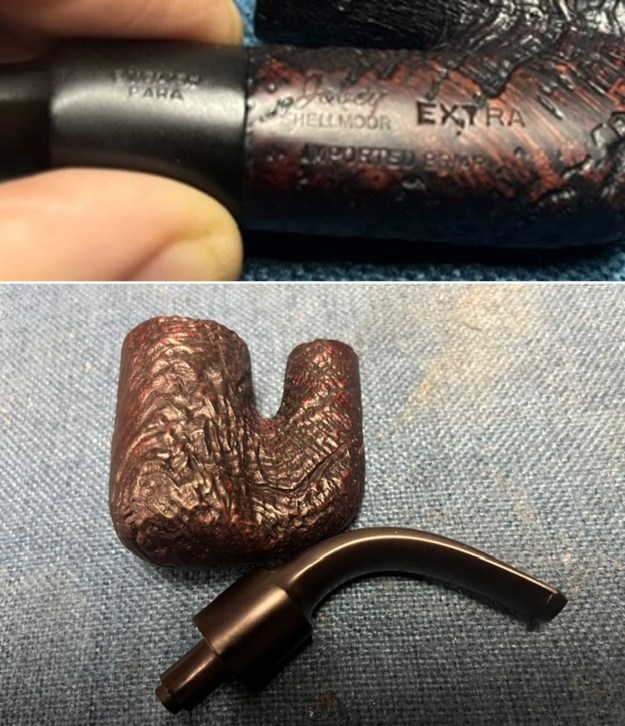
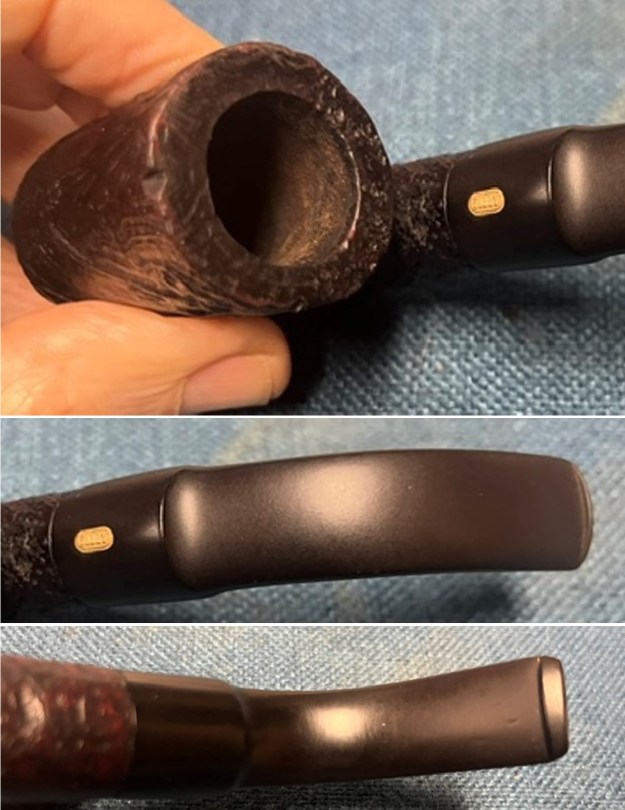 I took a photo of the stamping on the right side of the shank. It is clear and readable and read as noted above. I also removed the stem from the shank and took photos of the pipe to show the look of the parts.
 The briar was in excellent condition and needed to be introduced to some Before & After Restoration Balm. I worked it into the surface of the briar with my fingertips to clean, enliven and protect the briar. I let the balm sit for 15 minutes and then buffed with a cotton cloth to raise the shine. The photos show the bowl at this point in the restoration process.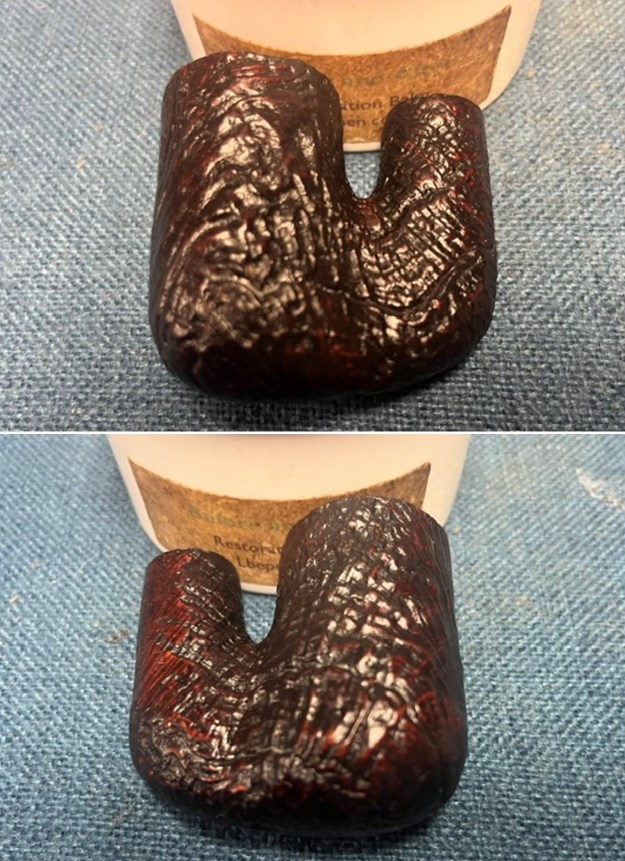
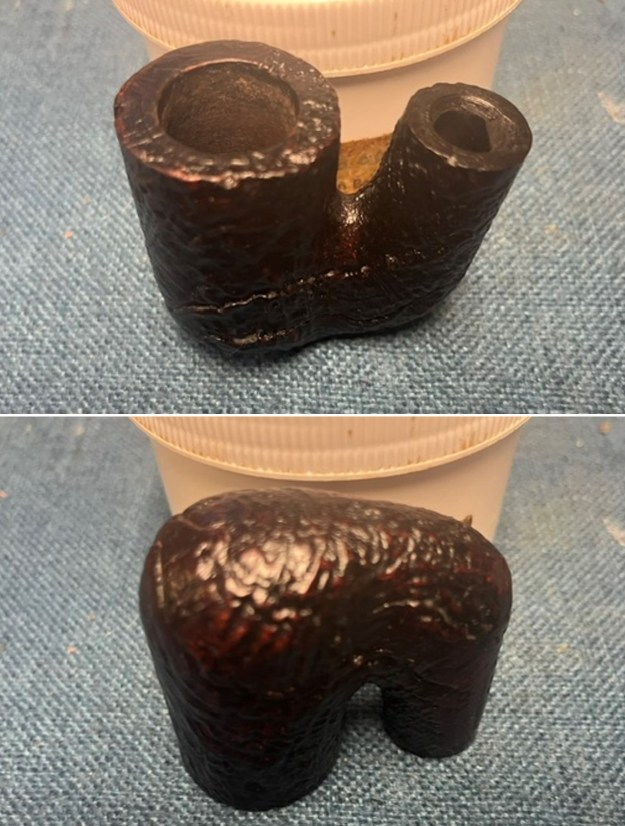
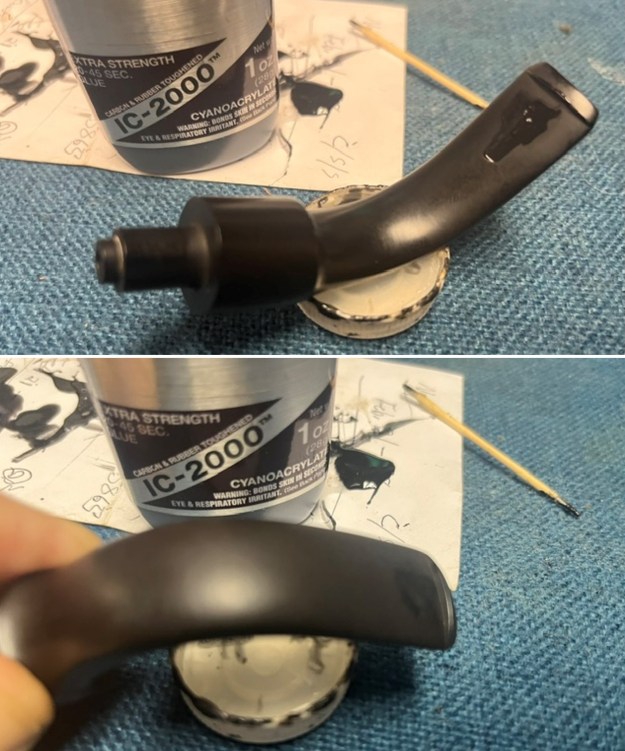
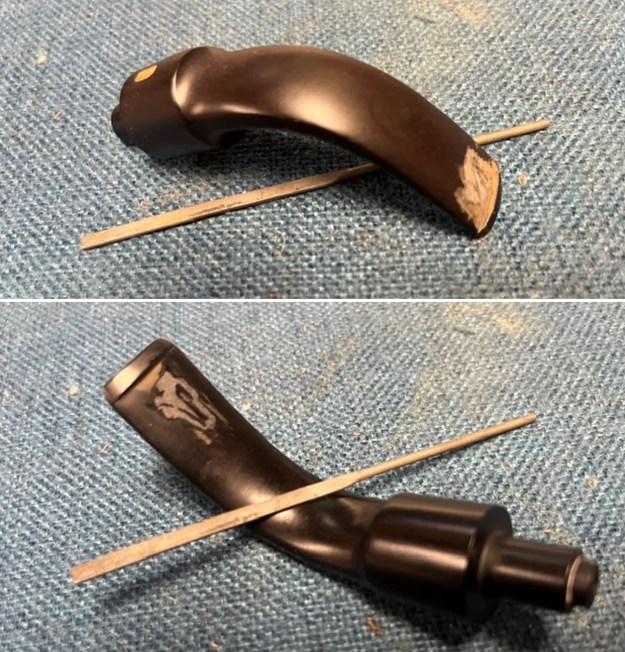
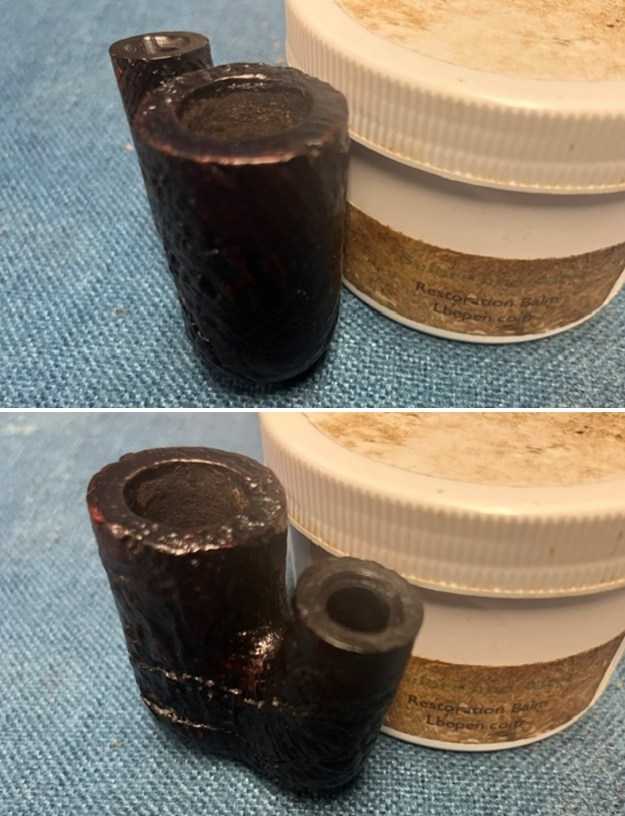 I set the bowl aside and turned my attention to the stem. I “painted” the tooth marks on both sides with the flame of a lighter and was able to lift them to some degree. I filled in what remained with extra strength rubberized CA glue. Once the repairs had cured I smoothed them out with a flat file and blended them into the surface with a folded piece of 220 grit sandpaper. They began to look very good.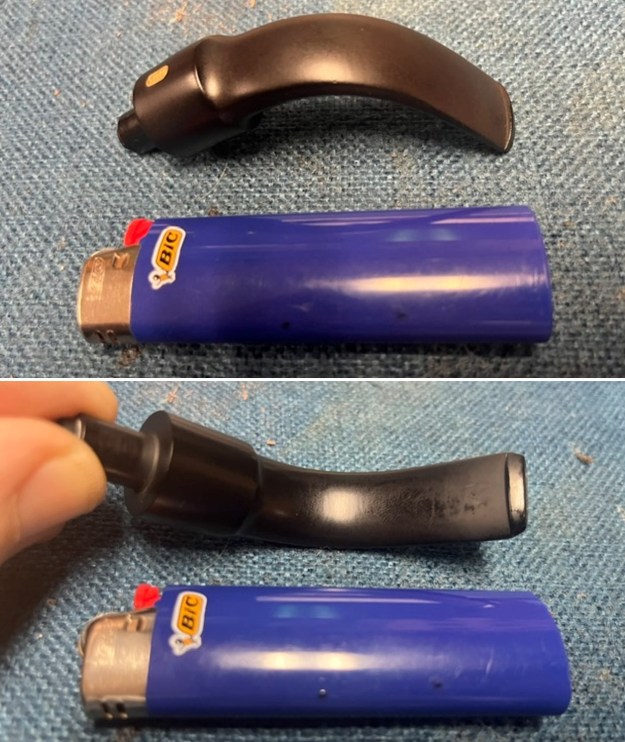
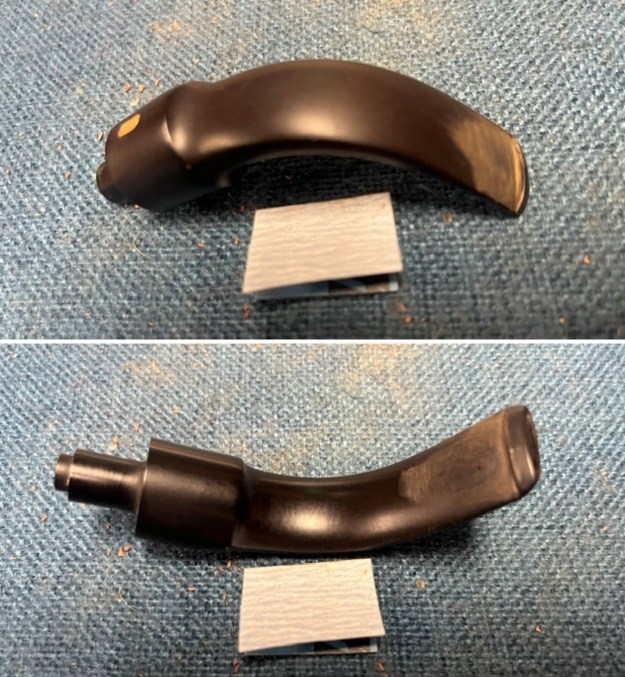 I sanded the stem with 320-3500 grit 2×2 inch sanding pads. I carefully avoided the stamping as I did not want to damage it. I wiped the stem down with an Obsidian Oil cloth to wipe of the sanding debris.
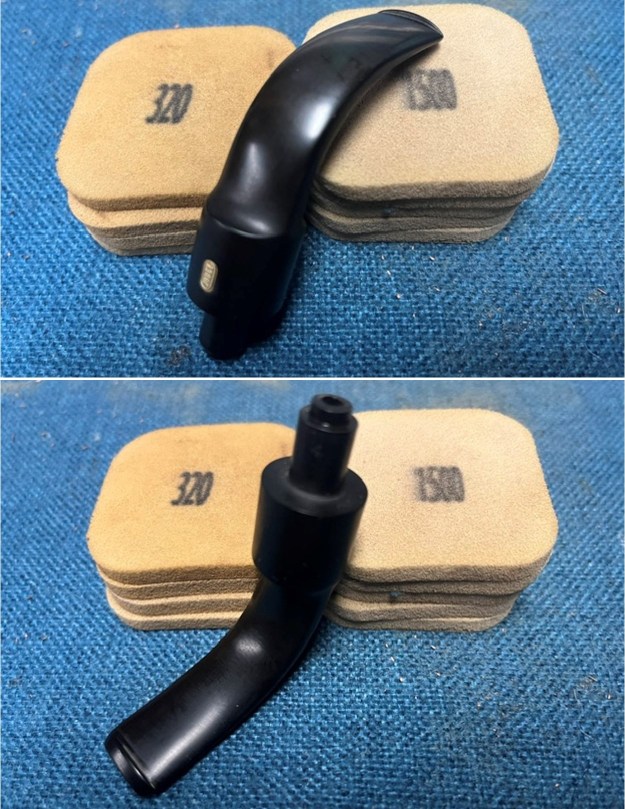 I set the bowl aside and turned to the stem. I polished the stem with micromesh sanding pads – wet sanding with 1500-12000 grit pads. I wiped the stem down after each sanding pad with Obsidian Oil. I polished it with Before & After Pipe Stem Polish – both Fine and Extra Fine. Once I had finished the polishing I gave it final coat of oil and set it aside to dry.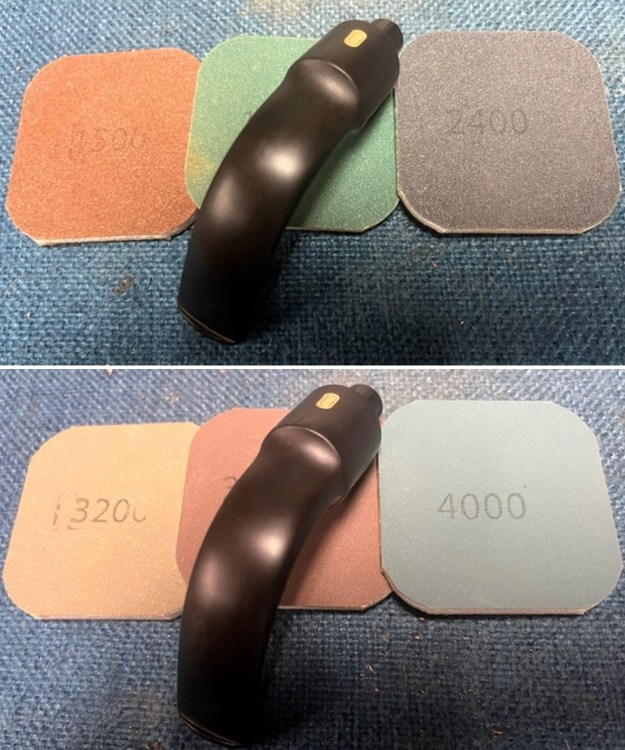
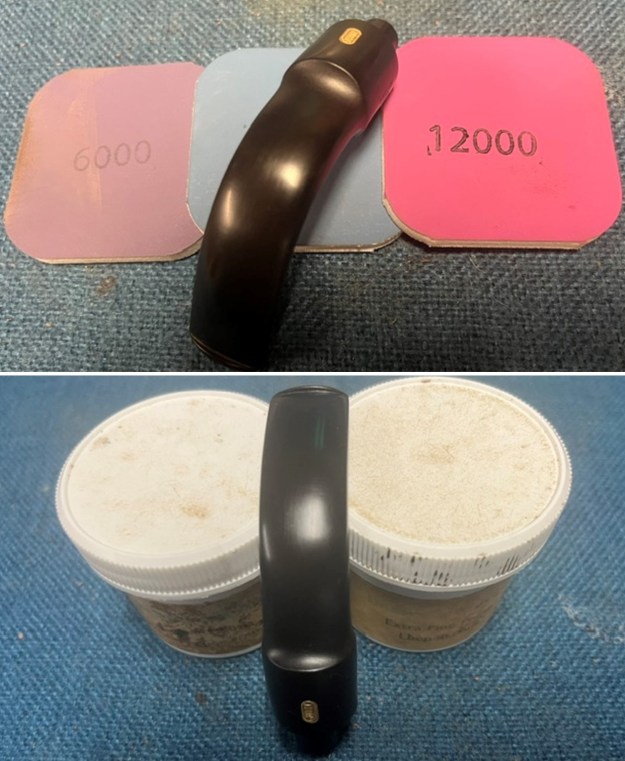 I finished with the Blue Diamond and moved on to buffing with carnauba wax. Once I have a good shine in the briar and vulcanite I always give the bowl and the stem multiple coats of carnauba wax. I have found that I can get a deeper shine if I following up the wax buff with a clean buffing pad. It works to raise the shine and then I follow that up with a hand buff with a microfiber cloth to deepen the shine. It is always fun for me to see what the polished bowl looks like with the polished vulcanite stem. This Jobey Shellmoor Extra really is a beautiful pipe. The sandblast finish around the bowl sides and shank highlights the mix of grain shining through the rich brown stains of this Jobey Shellmoor Extra Oom Paul. The finished pipe feels great in my hand. It is light and well balanced. Have a look at it with the photos below. The dimensions are Length: 5 ½ inches, Height: 2 ¼ inches, Outside diameter of the bowl: 1 ¼ inches, Chamber diameter: ¾ of an inch. The weight of the pipe is 2.05 ounces/58 grams. It is a beautiful pipe and one that I will be putting on the rebornpipes store in the American (US) Pipe Maker section.