
by Steve Laug
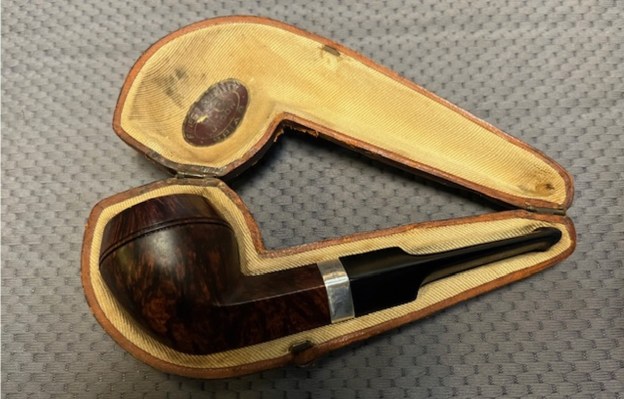
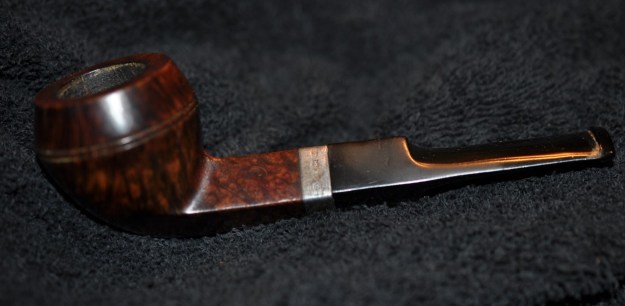
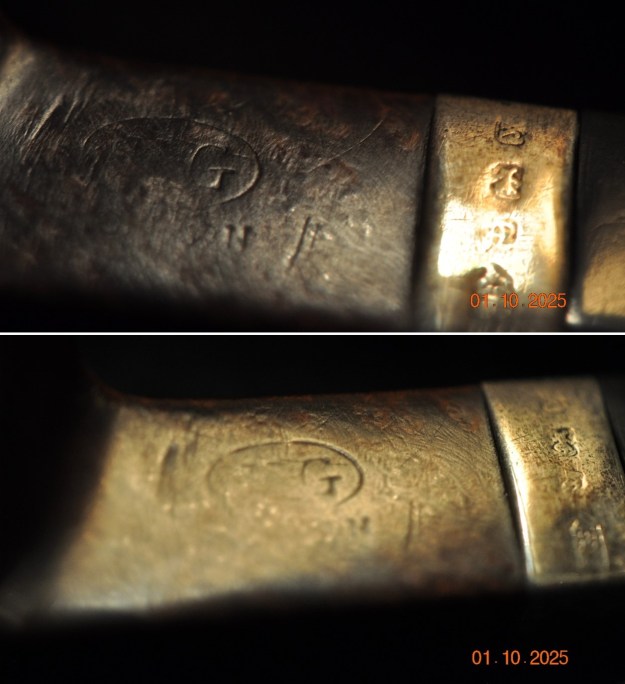
One of the things I love about pipe hunting – whether in person in a shop or online at a sale. This is one of those interesting pipes that we picked up on 12/09/2024 from a seller on Facebook Pipe Exchange. It came from Wellsville, Kansas, USA. It is a smooth Bulldog with a Sterling Silver Band on the shank. It is faintly stamped on the top left side of the diamond shank and reads H.G. in an oval [over] London. The silver band is stamped H.G. in a lozenge followed by three hallmarks. The first cartouche holds an anchor which is the mark for Birmingham. The second cartouche holds a rampant lion which is the mark for Sterling Silver. The third cartouche holds a lower case y which gives the date of the pipe. The pipe was in good condition in terms of the finish on the bowl. The bowl had been reamed quite recently and there was some slight checking on the bowl walls. The rim cap was quite clean with some wear around the top and on the inner edge. Otherwise it was a beautiful pipe. There vulcanite saddle stem had light oxidation on the surface and some tooth marks and chatter on the surface. Jeff took photos of the case which bears a stamp that reads Finest Quality Briar in the outer ring of the oval. On the inside of the oval it is stamped H.G. He also took photos of the pipe before he started his clean up to capture the condition of the pipe when it arrived. It is a real beauty.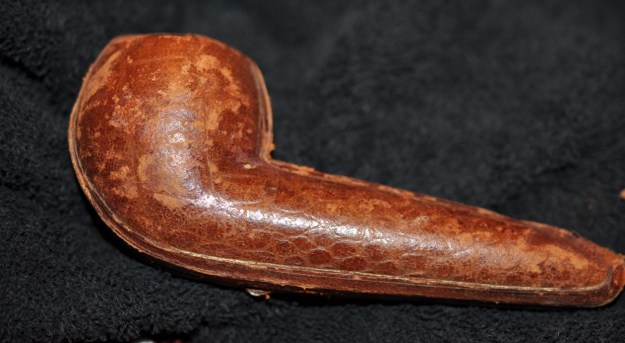
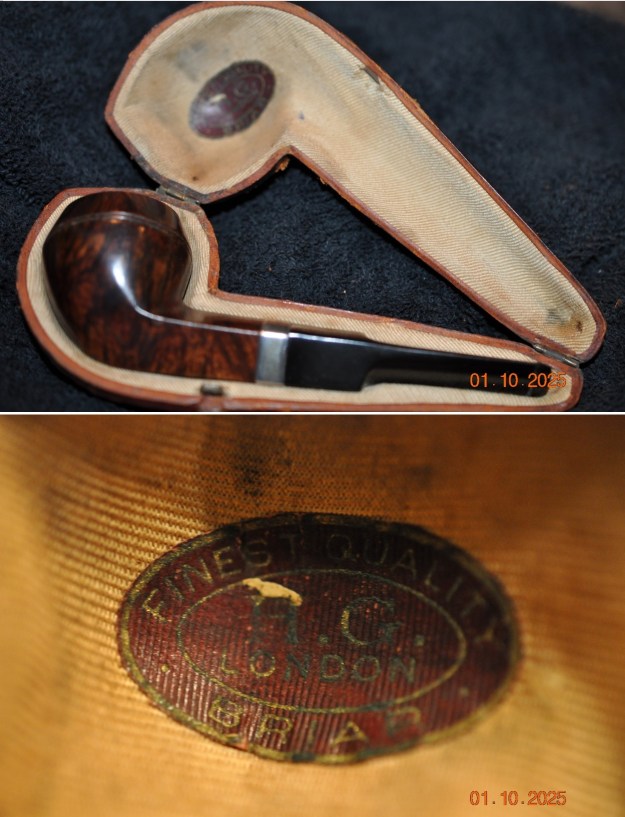
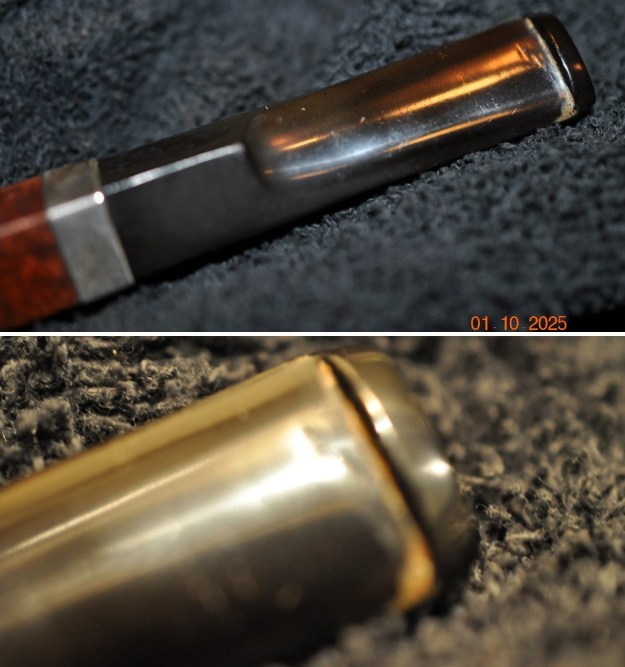
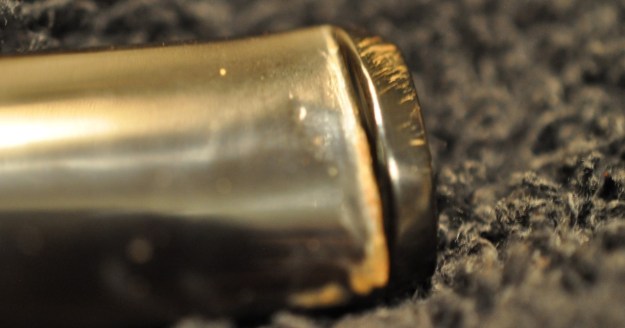
 He took photos of the bowl and rim top to show the damage on the top and inner edge of the bowl. It looks like a combination of burn damage and over reaming damage on the front and back mid bowl. The stem was very dirty with grime and sludge build up from the button forward on both sides of the stem.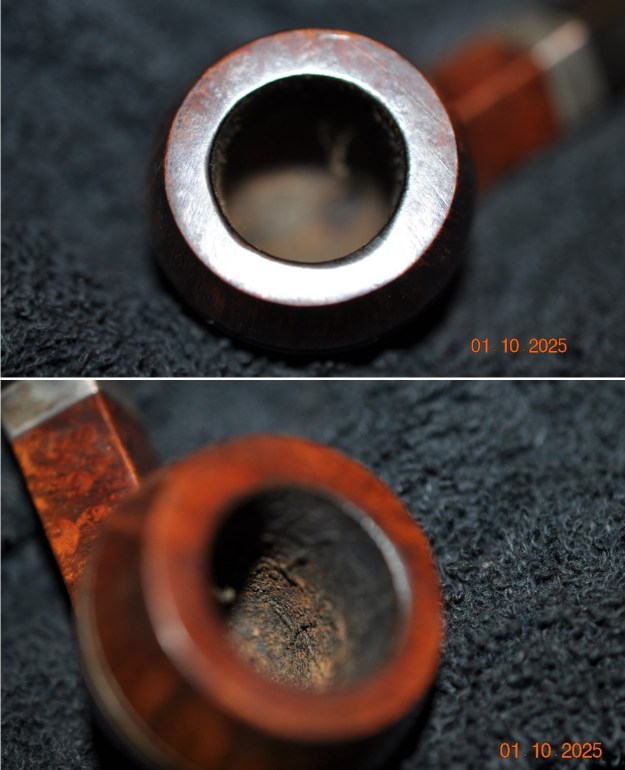
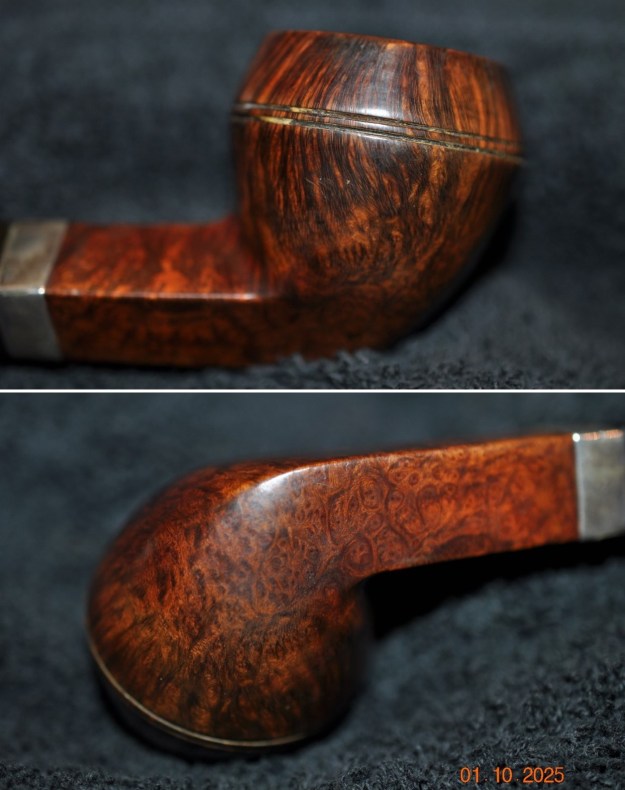
 Jeff captured the smooth finish around the bowl sides of the bulldog and it is stunning. There are twin bands below the rim cap. The bowl shows some great grain.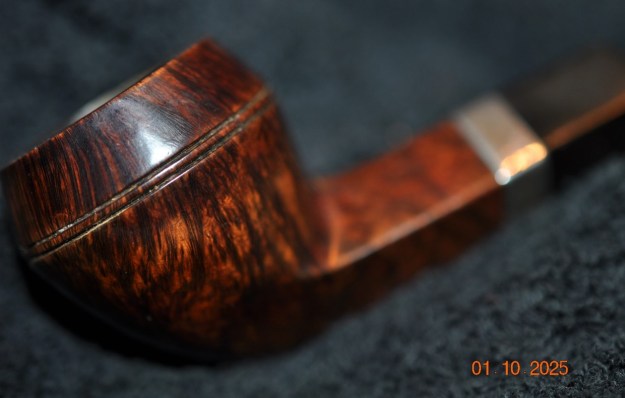
 He captured the stamping on the top left side of the shank. The stamping is faint but readable. It read as noted above. He took a photo of a the silver band on the shank with the hallmarks that I noted above.
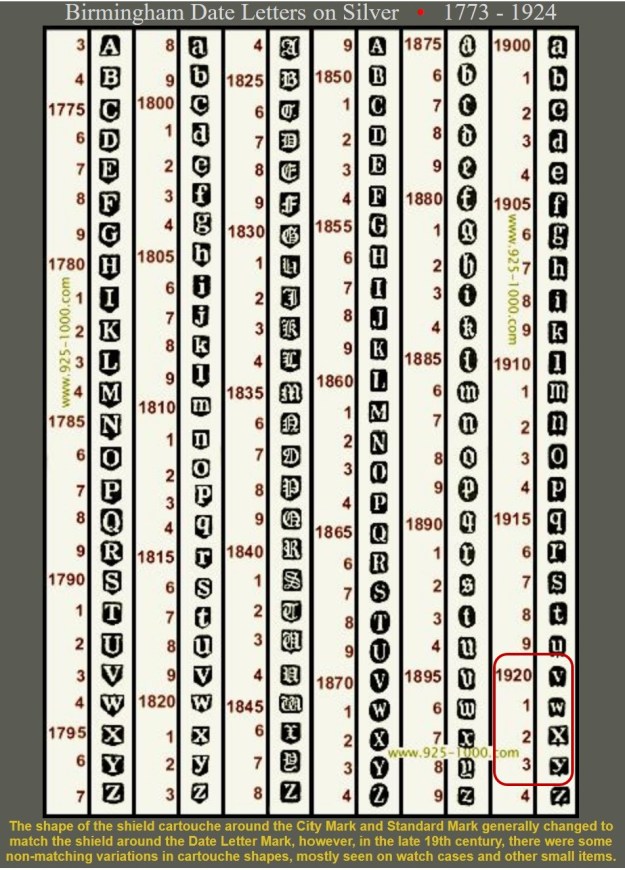
 I did some checking online on Pipedia and Pipephil for the HG brand and could not find anything about the stamping. I did however, find a silver Hallmark chart. I have included that below. I drew a red box around the section that includes the year stamp “y” on the band. It identifies the date as 1923. This is an old timer.
 Armed with that information I turned to work on the pipe itself. Jeff had done a great job cleaning up the pipe as usual. He cleaned up the inside of the bowl with a PipNet reamer and a Savinelli Fitsall Pipe Knife. The bowl walls looked very good. He scrubbed the interior of the bowl and shank with pipe cleaners, cotton swabs and alcohol to remove the tars and oils. He scrubbed the exterior of the pipe with undiluted Murphy’s Oil Soap and a tooth brush to remove the grime from the finish. He worked on the rim top lava and darkening with the soap and tooth brush. He scrubbed the inside of the stem with alcohol and pipe cleaners. He scrubbed the stem exterior with Soft Scrub and then soaked it in Briarville’s Pipe Stem Deoxidizer. He washed it off with warm water to remove the deoxidizer. The pipe looked far better. I took photos of the pipe when I received it before I started working on it.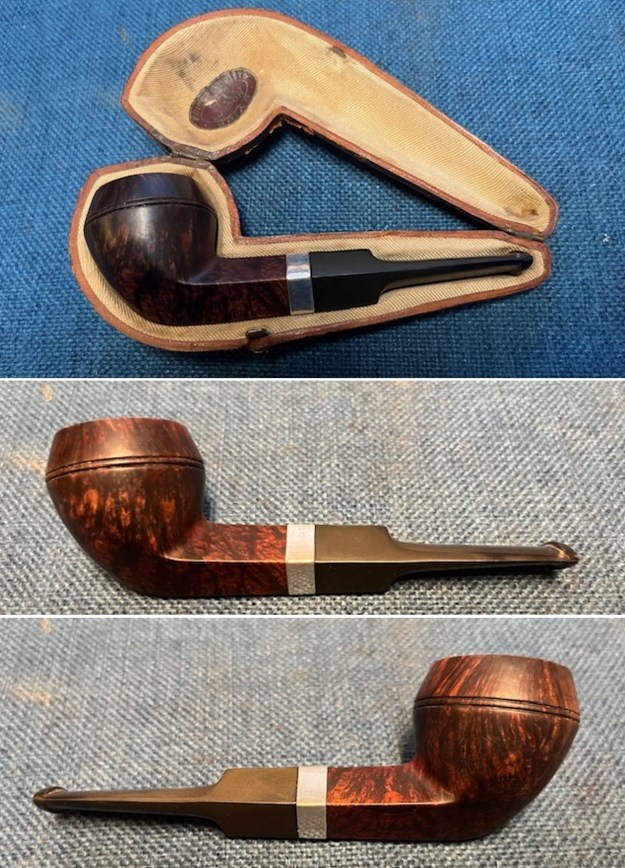
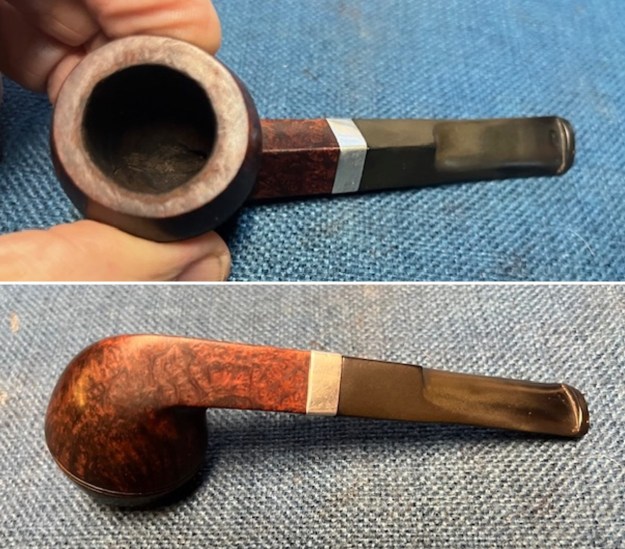 I took photos of the bowl and rim top to show how clean it was. The top and the inner edge of the rim show the damage that I mention above. It definitely has burn damage and also reaming damage on the front and back inner edge. The stem looks clean of debris and grime. The tooth marks and chatter are clear in the photos of each side ahead of the button.
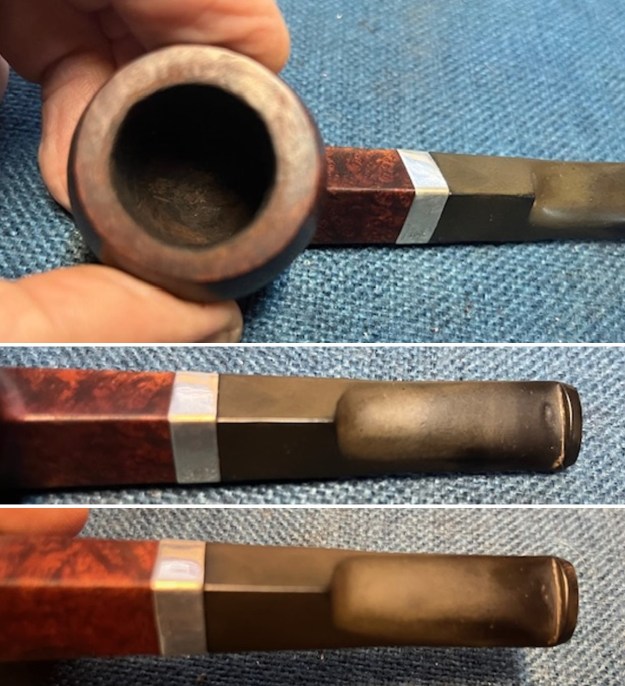 I took photos of the stamping on the top left side of the shank – it was faint but it read as noted above. I removed the stem from the shank to show the look of the pipe.
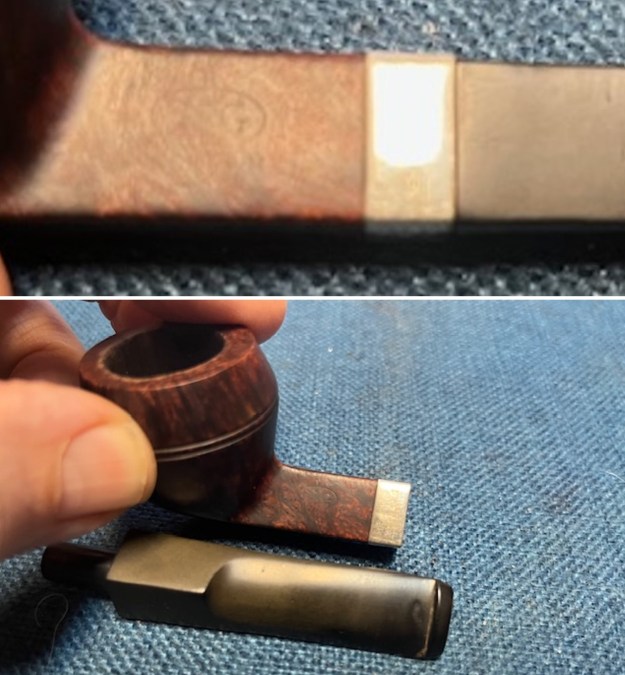 I set the stem aside and started working on the bowl. I used a folded piece of 220 grit sandpaper to smooth out the nicks on the inner edge of the bowl and the top of the cap. It was looking better when I finished.
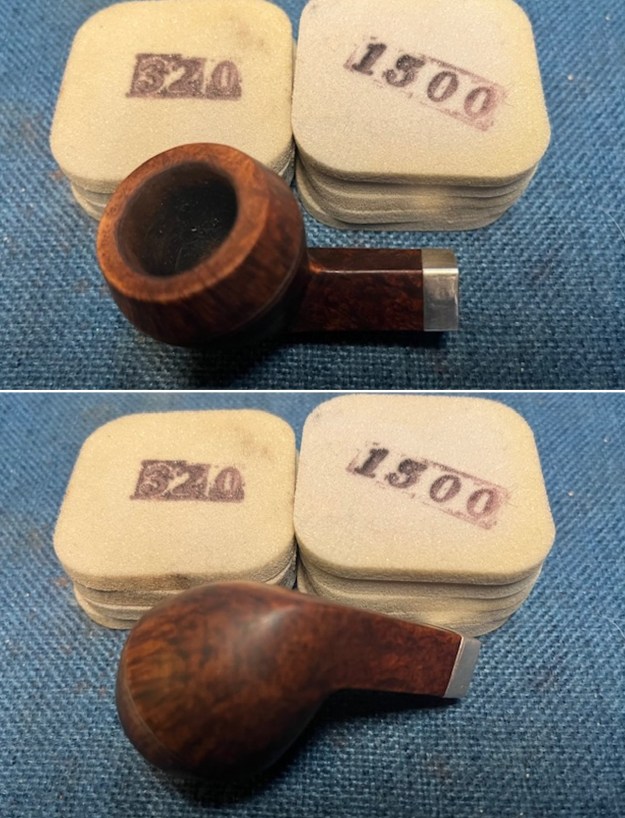
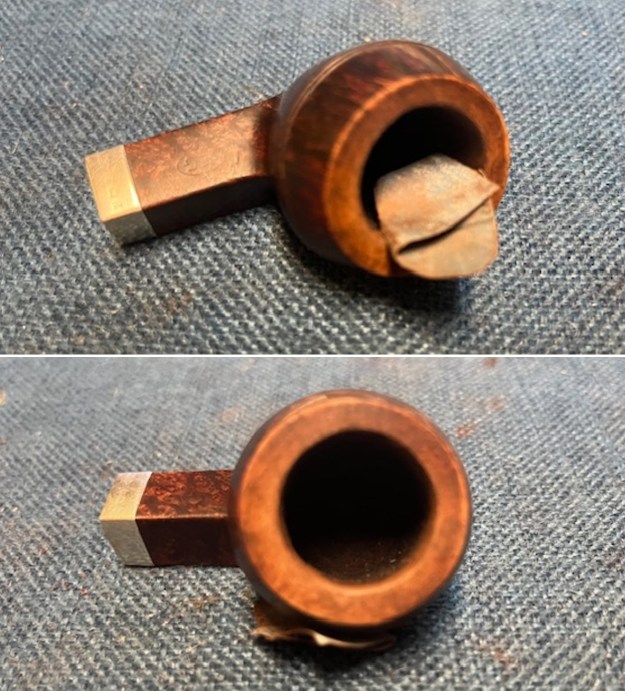 I sanded briar bowl with 320-3500 sanding pads. I wiped the briar down with a damp cloth after each sanding pad. It began to look very good.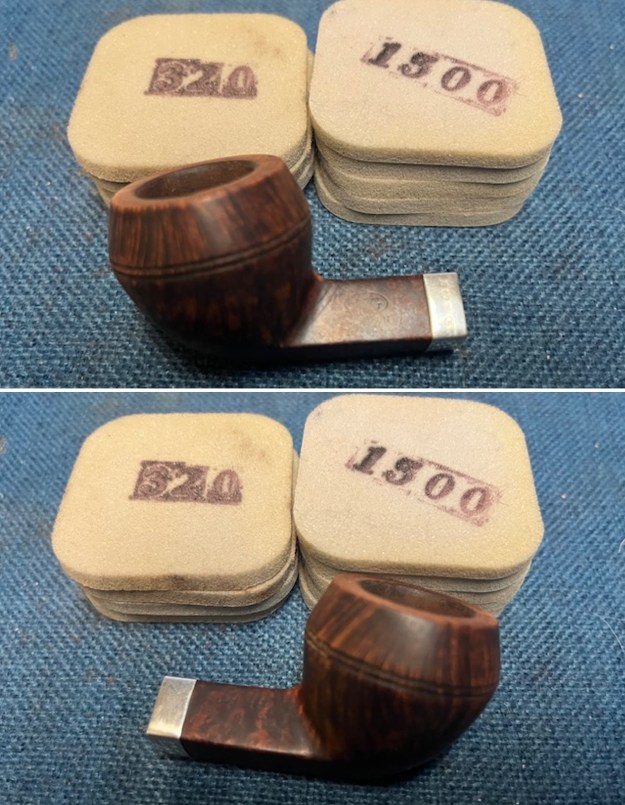
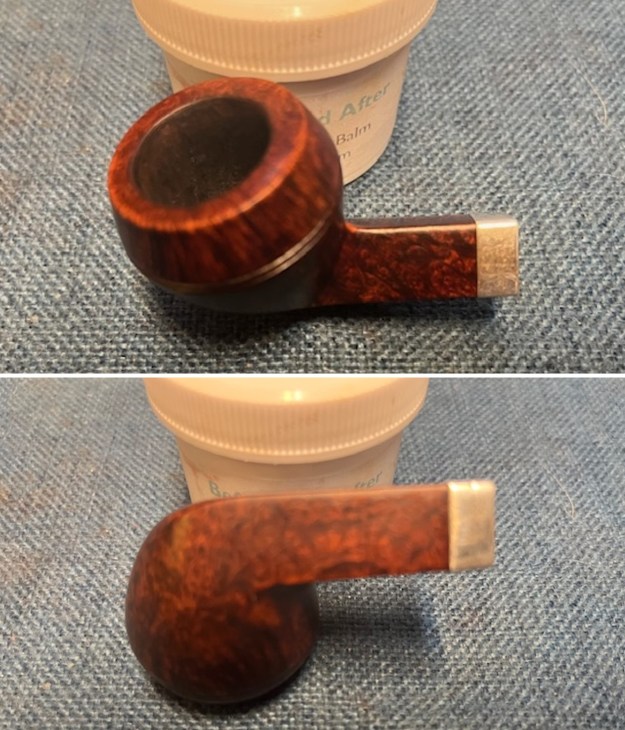
 I polished the bowl with micromesh sanding pads – wet sanding with 1500-12000 grit pads and wiping it down after each sanding pad with a damp cloth. The grain of the briar began to shine.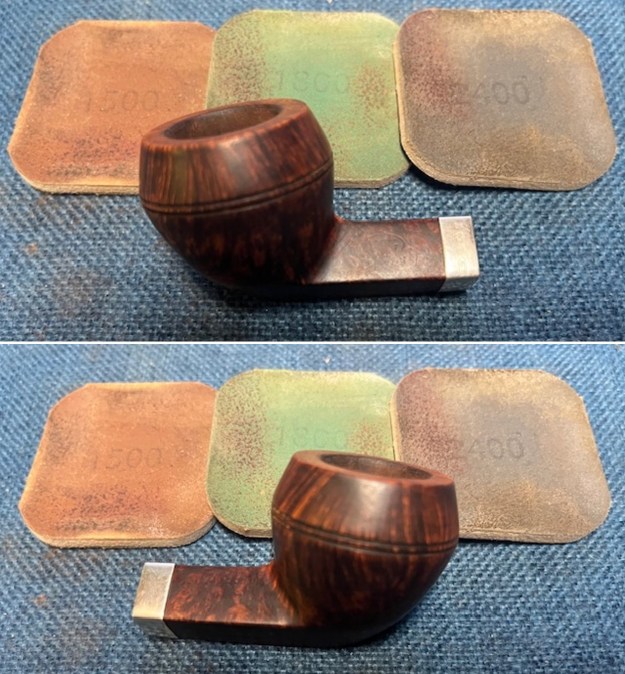
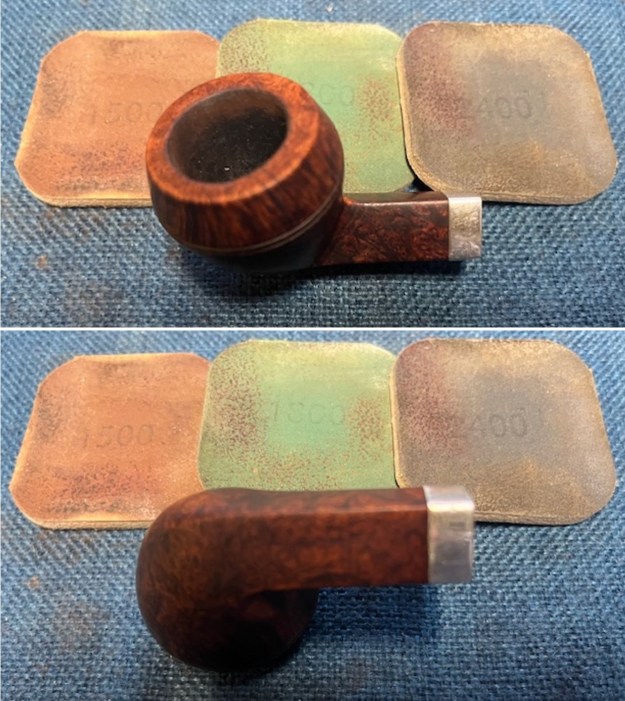
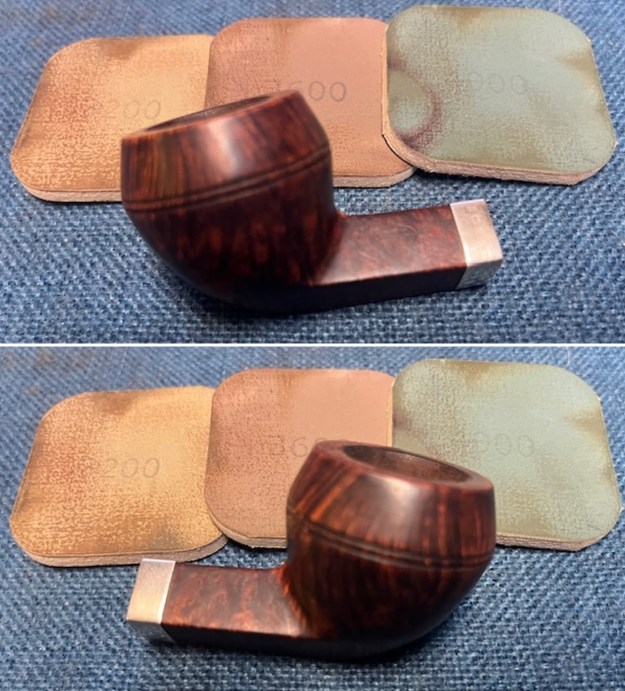
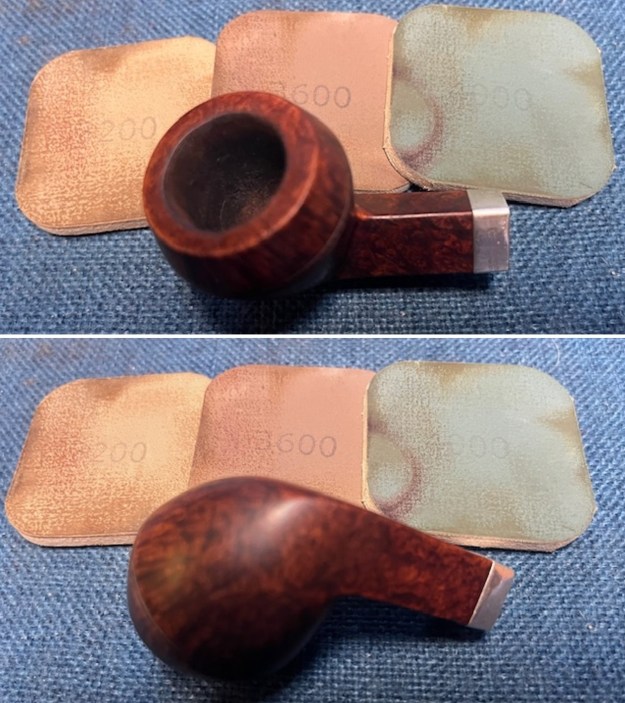
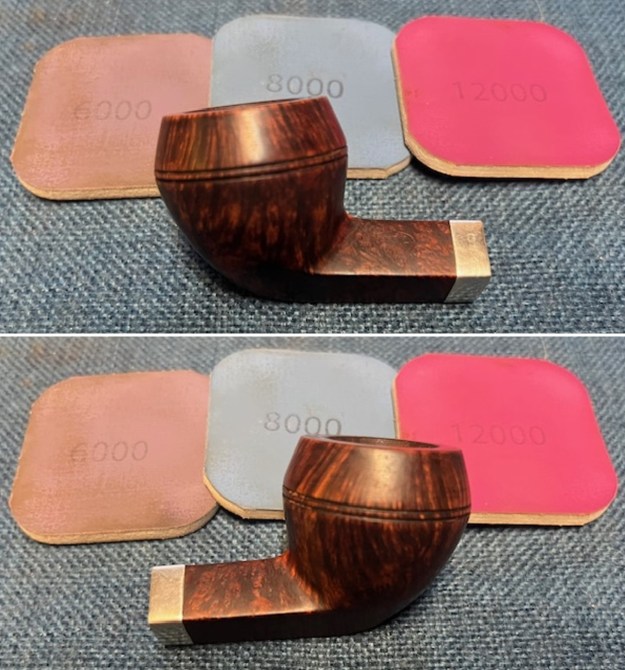
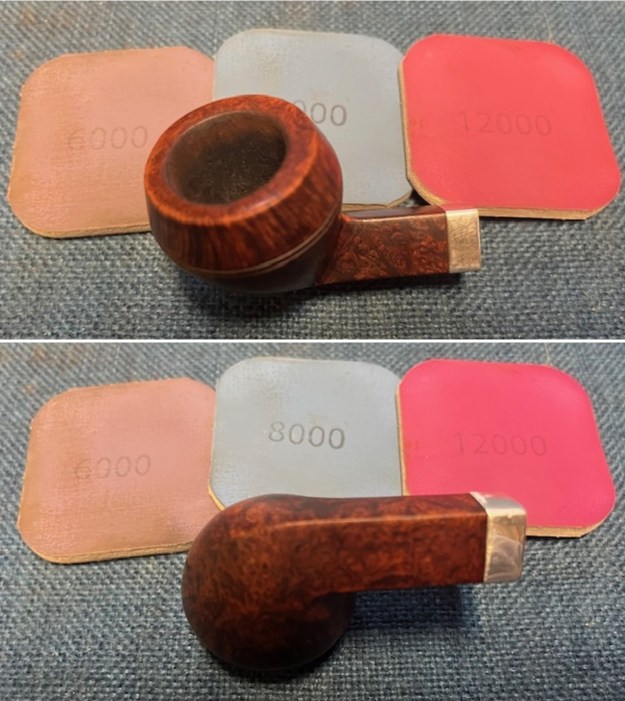 I worked some Before & After Restoration Balm into the surface with my finger tips. I let it sit on the bowl for 10 minutes and then buffed it off with a paper towel and soft cloth. The product is a great addition to the restoration work. It enlivens, enriches and protects the wood while giving it a deep glow. It is a product I use on every pipe I restore.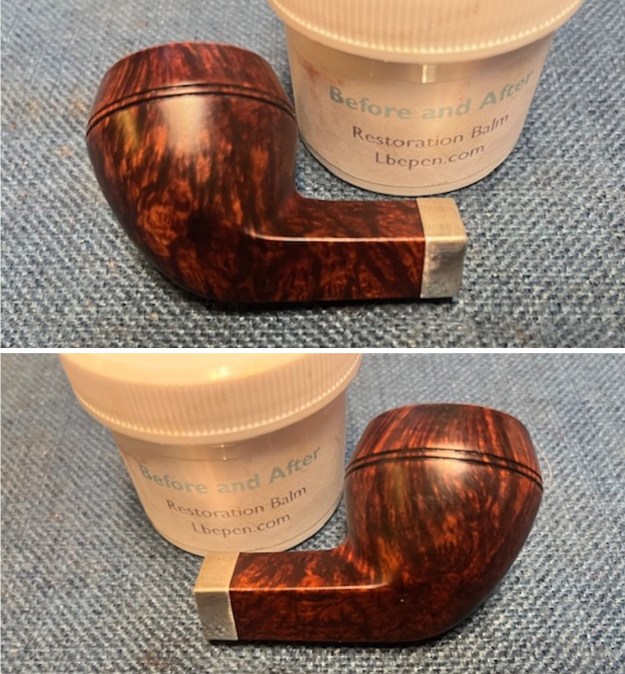
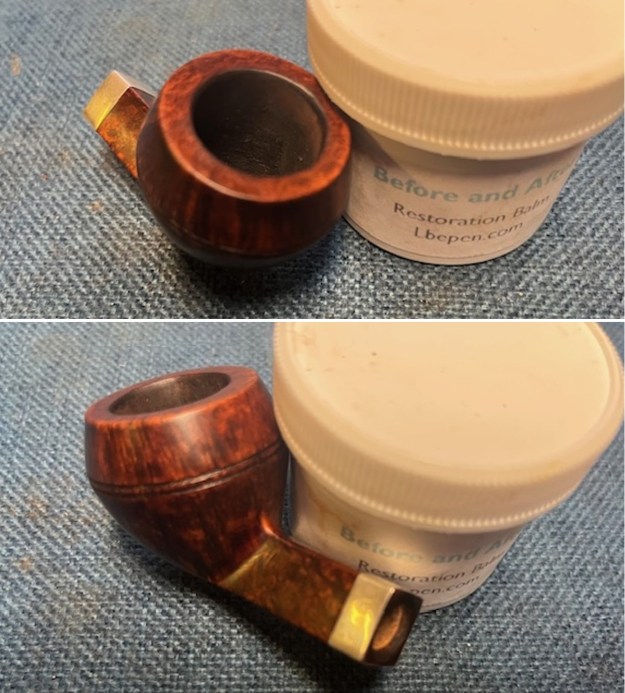 I set the bowl aside and worked on the stem. I “painted” the tooth marks with the flame of a lighter to lift them. They come up very little. I filled in the remaining two deep marks with black rubberized CA glue and set it aside to cure. I recut the button edge with a small file and sanded the repairs smooth with a folded piece of 220 grit sandpaper.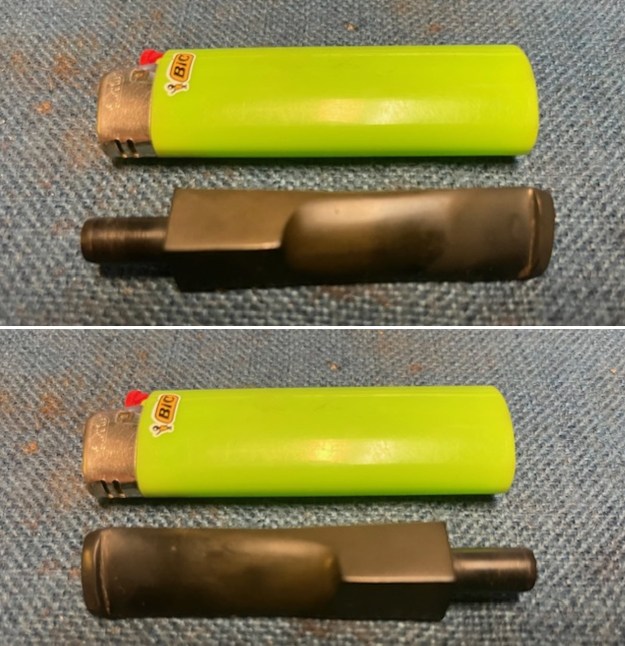
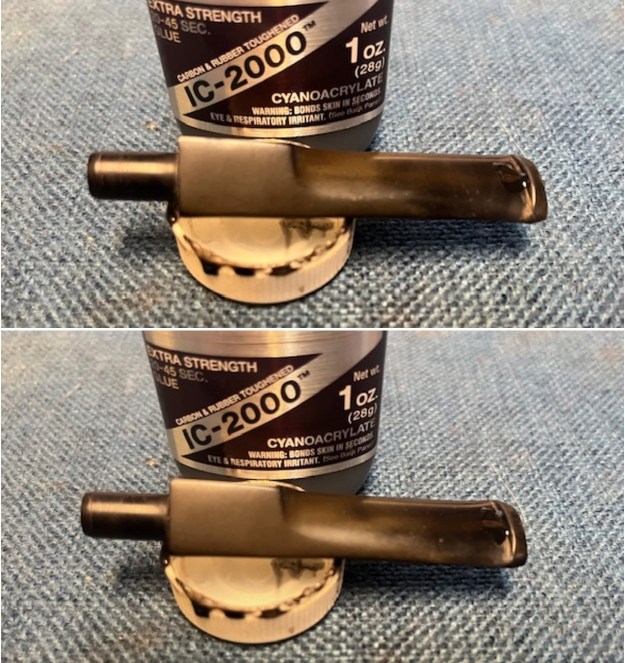
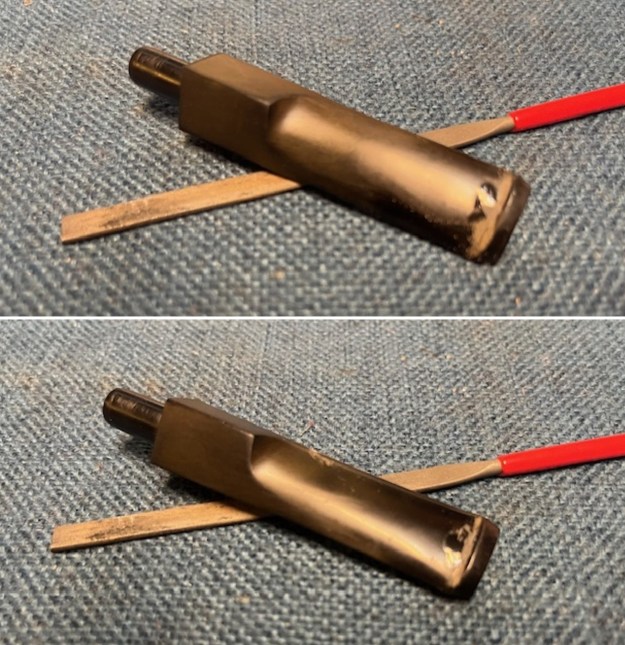
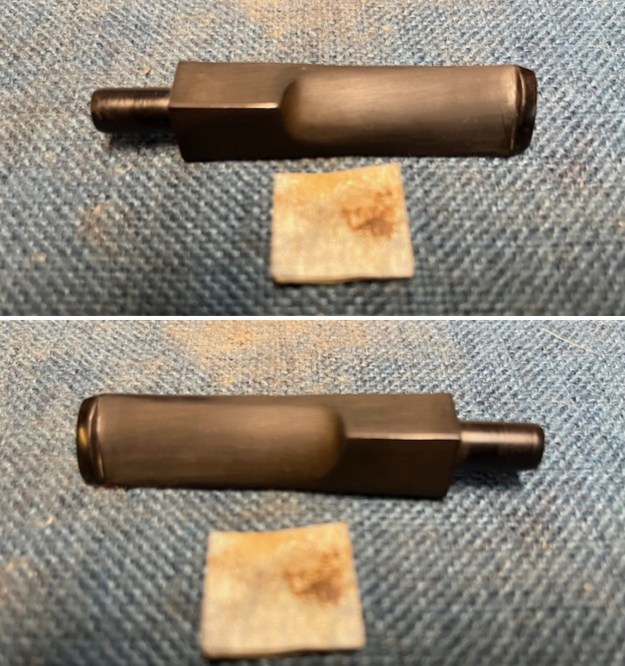 I continued to sand the stem with 320-3500 grit sanding pads. I wiped the stem down with an Obsidian Oil cloth after each sanding pad. The stem looked better at this point.
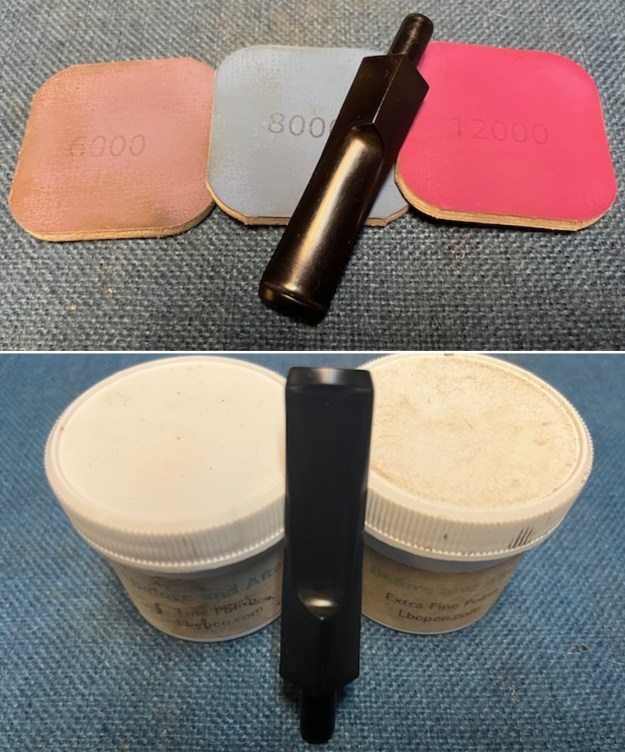
 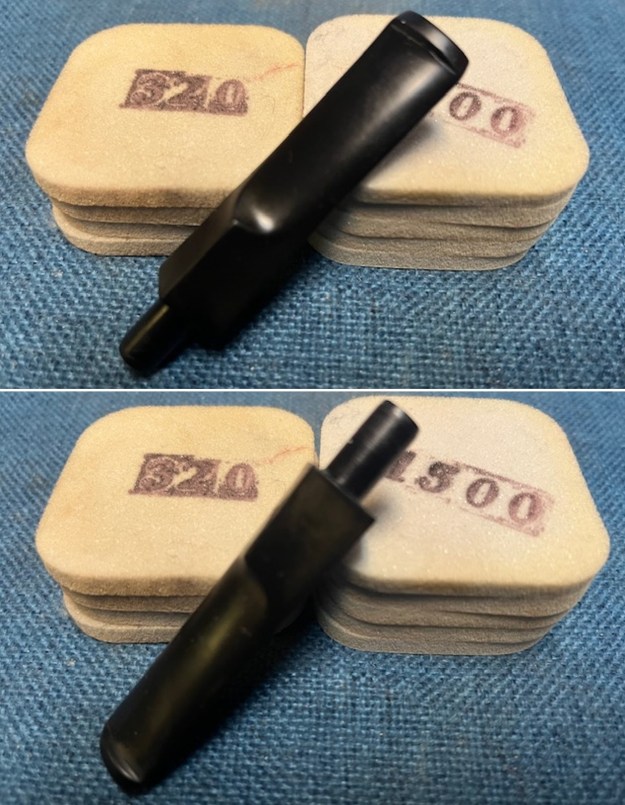 I polished the stem with micromesh sanding pads – wet sanding with 1500-12000 grit sanding pads. I wiped it down after each sanding pad with Obsidian Oil. I polished it with Before & After Pipe Stem Polish – both Fine and Extra Fine. I buffed the stem with a soft cloth to raise the shine. I gave it a final wipe down with Obsidian Oil to protect the stem from UV and slow down future oxidation.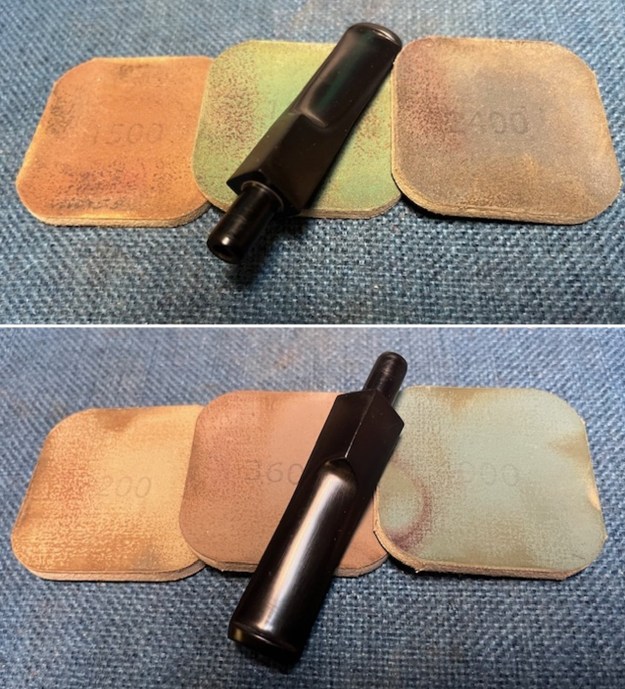
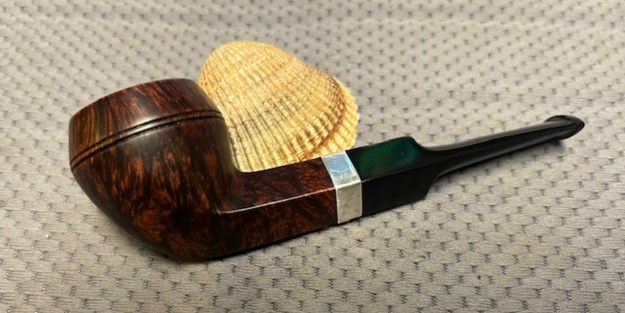
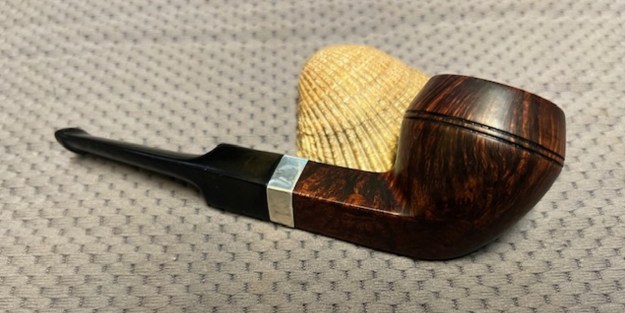
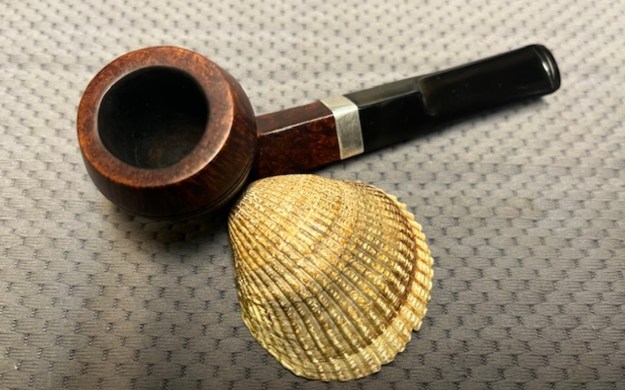
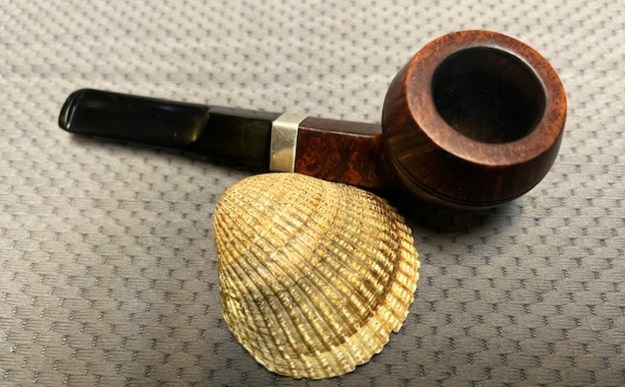
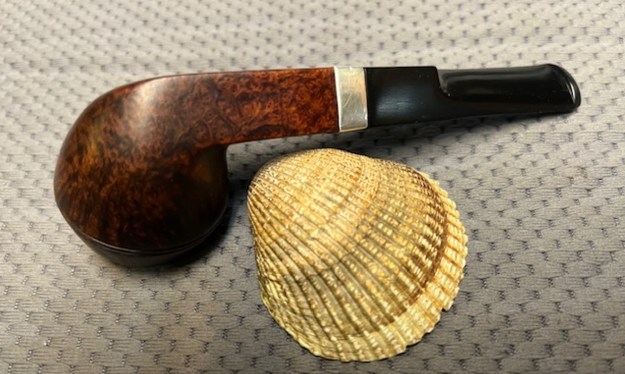
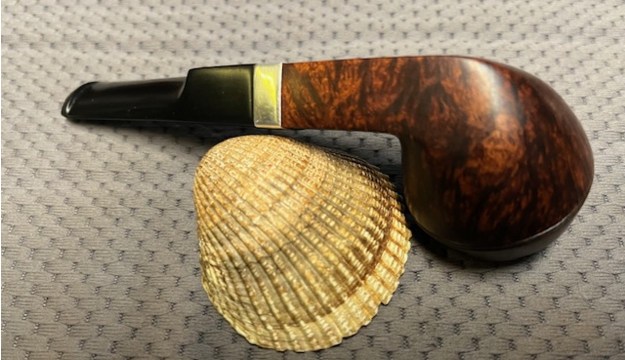
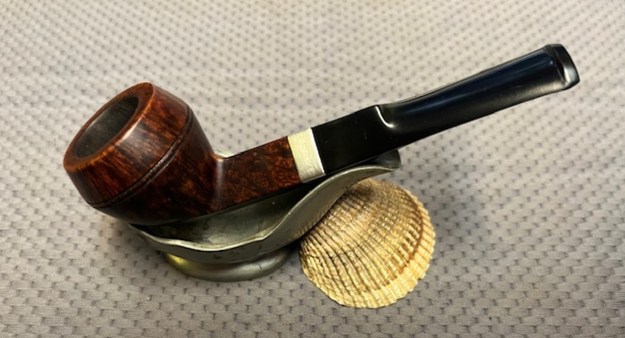
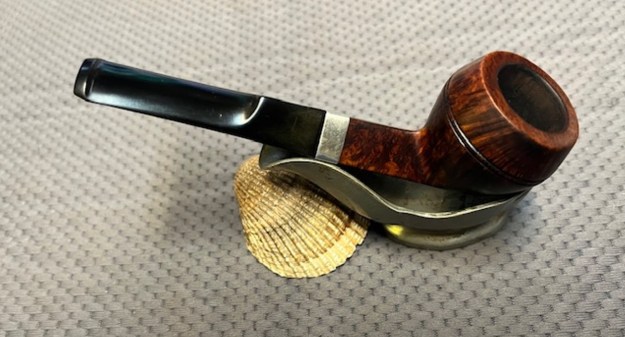
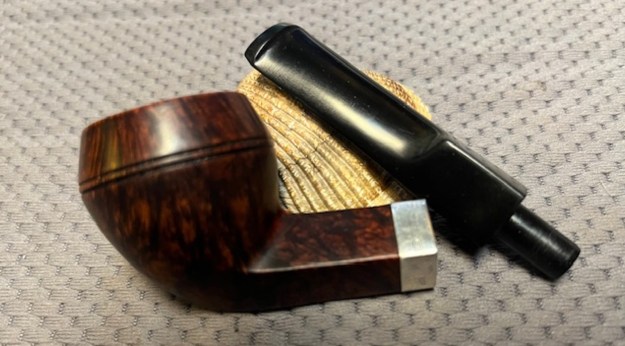
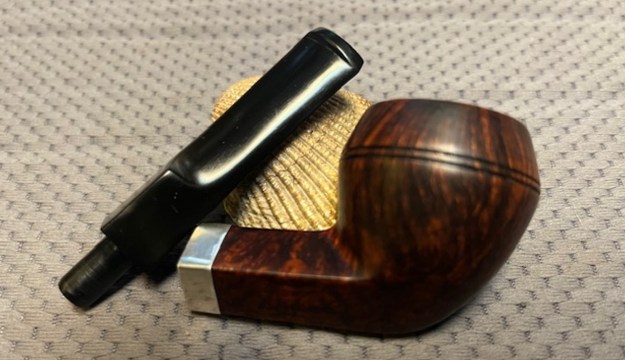
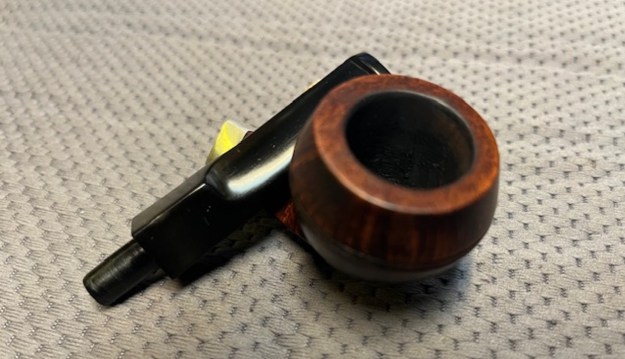
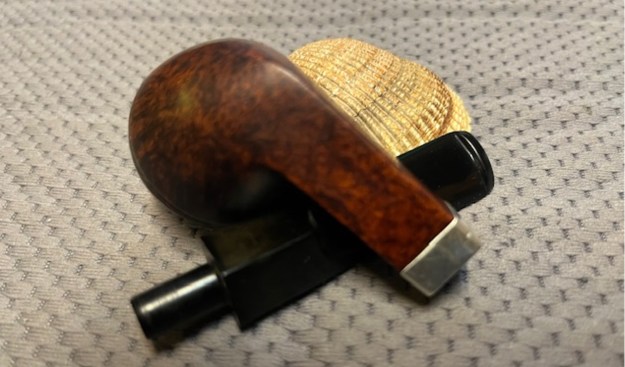
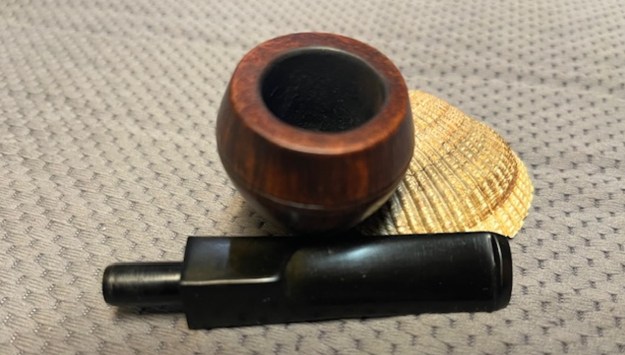
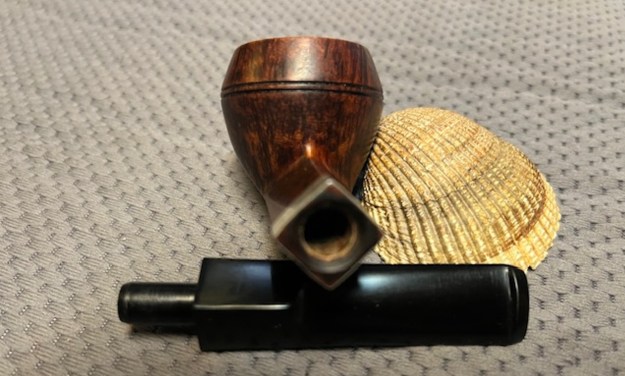
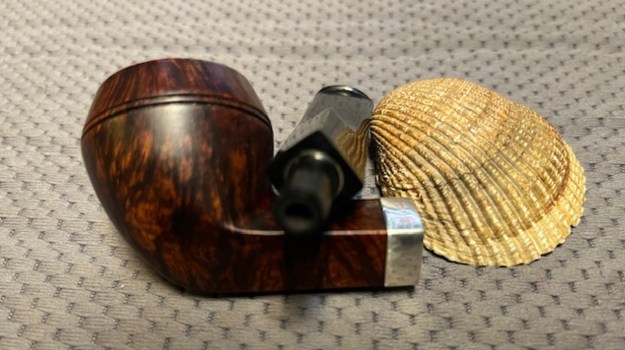
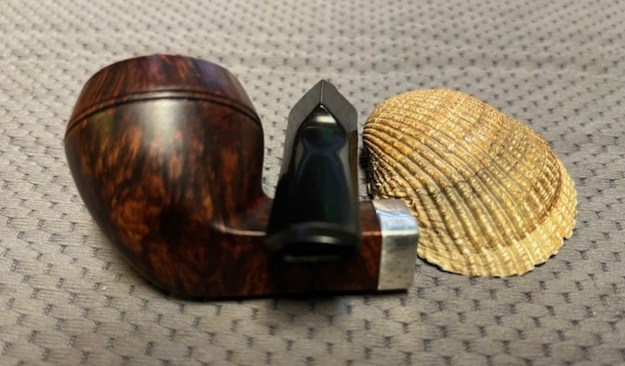
 I don’t know what it is about finishing a restoration but I have to tell you that it is my favourite part of the process. It is the moment when everything that I have worked on comes together. I can compare it to where I started and there is always satisfaction that it does indeed look better than when we picked it up. As always, I put this Cased 1923 H.G. London Finest Quality Briar Bulldog back together and buffed it with Blue Diamond on the buffing wheel. I gave the bowl and the stem multiple coats of carnauba wax. I buffed the pipe with a clean buffing pad and hand buffed it to raise the shine. It is fun to see what the polished bowl looks like along with the polished clear acrylic stem. This 1923 H.G. London Bulldog is a great looking pipe and I am sure that it will be comfortable in hand when smoking as it is light and well balanced for a pipe of this size. Have a look at it with the photos below. The dimensions are Length: 5 inches, Height: 1 ¾ inches, Outside diameter of the bowl: 1 ¼ inches, Chamber diameter: ¾ of an inch. The weight of the pipe is .92 ounces/26 grams. It is another beautiful pipe and one that will be on the rebornpipes store soon. You can find it in the section of Pipes by British Pipe Makers. If you are interested in adding it to your collection let me know. Thanks for walking through the restoration with me as I worked over this pipe. Thanks to each of you who are reading this blog.
As always, I encourage your questions and comments as you read the blog. Thanks to each of you who are reading this blog. Remember we are not pipe owners; we are pipe men and women who hold our pipes in trust until they pass on into the trust of those who follow us.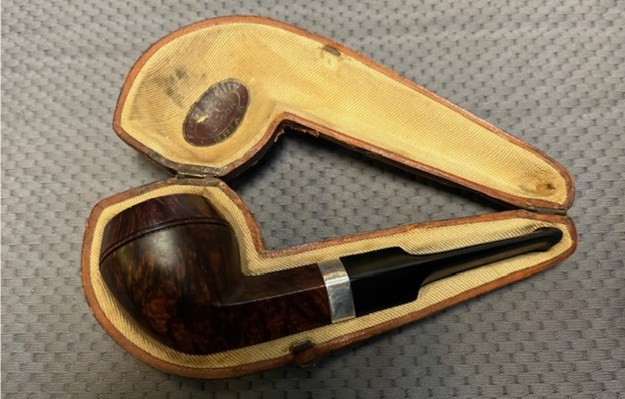
 rebornpipes