
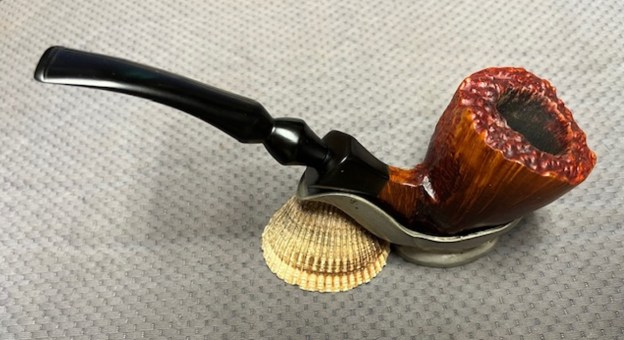
by Steve Laug
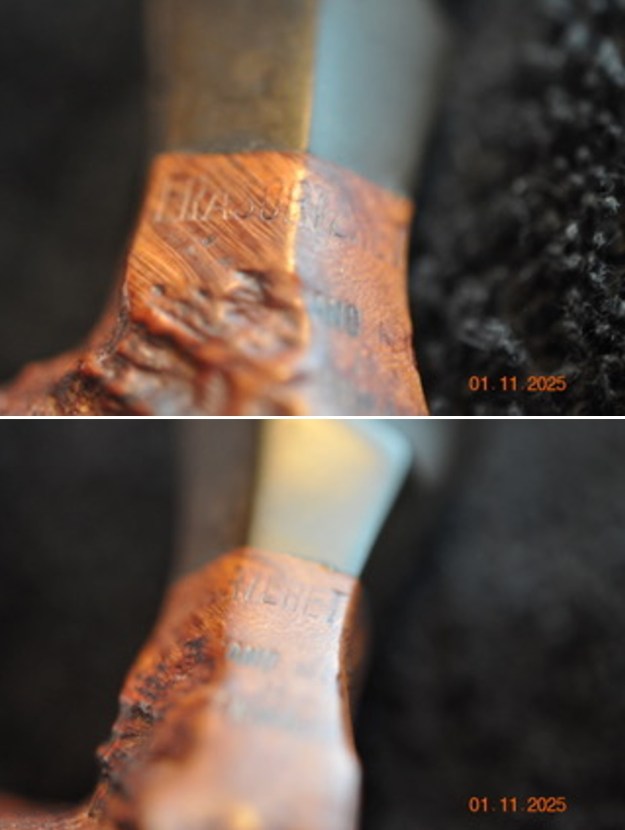
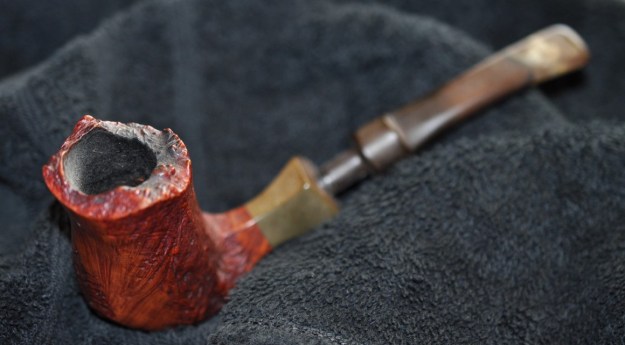
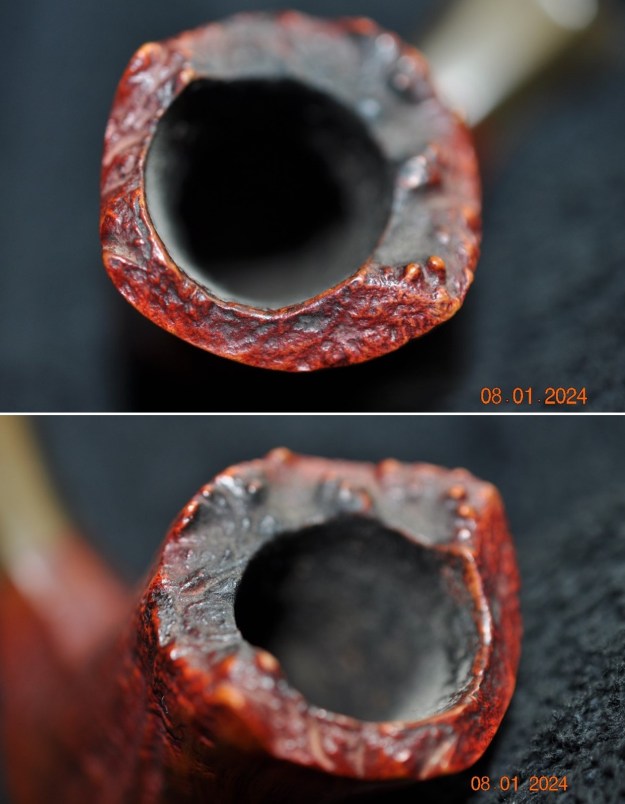
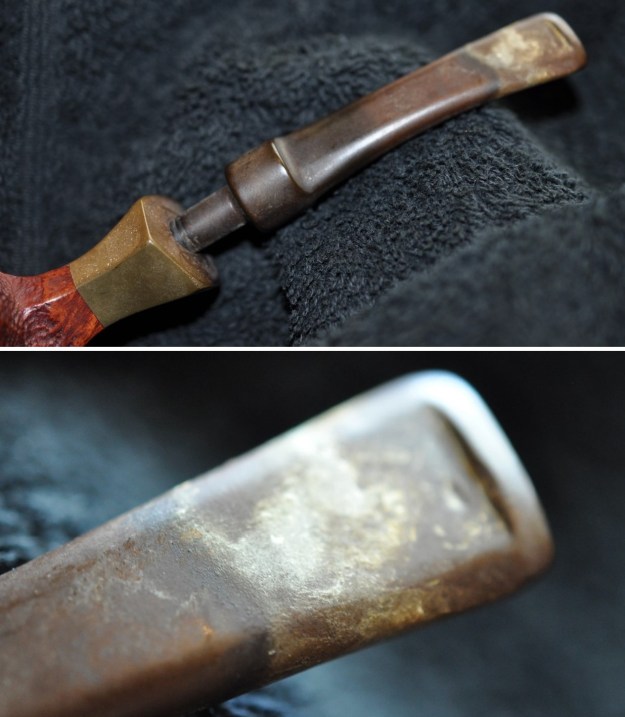
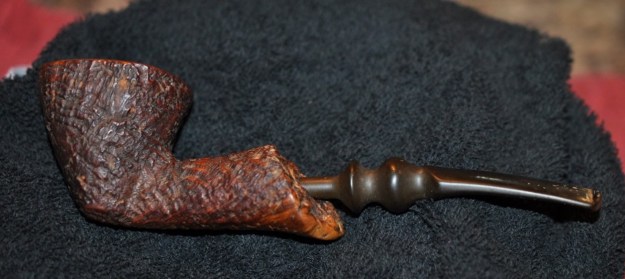
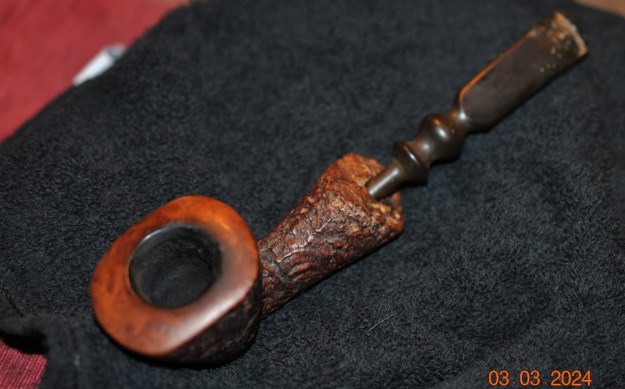
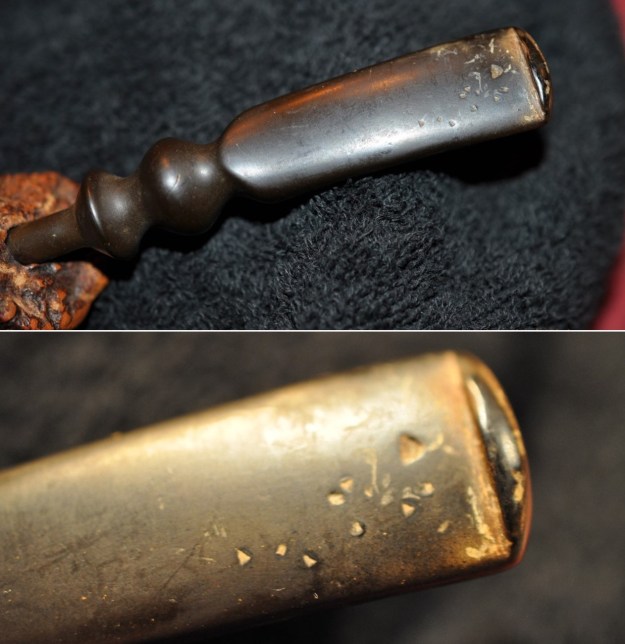
This interesting Freehand with both smooth and sandblast finishes came to us from an estate we purchase from Santa Cruz, California USA on 05/28/2024. It is a unique looking pipe that took some work to figure out the stamping. With some digging and comparing we knew that the stamping on the underside of the shank just ahead of the shank read Frasorteret [over] Hand Made [over] In [over] Denmark. You might well ask why we had to figure it out. That is simple in the half of the name line was hidden by the sandblast. The finish is dirty with dust and oils in the sand blast portions on the bowl sides. The smooth portions are also dirty with oils and dirty ground into the finish. The plateau rim top has some darkening toward the back of the bowl as well as thick lava filling it the grooves in the finish. The bowl has a heavy cake. The vulcanite shank extension is oxidized and also dirty. The stem is actually a poor replacement that is a saddle stem for a straight shank. The pipe would have originally had a fancy freehand style military style stick stem that sat in the extension. It will need to be replaced. Jeff took some photos of the pipe before he started his work on it.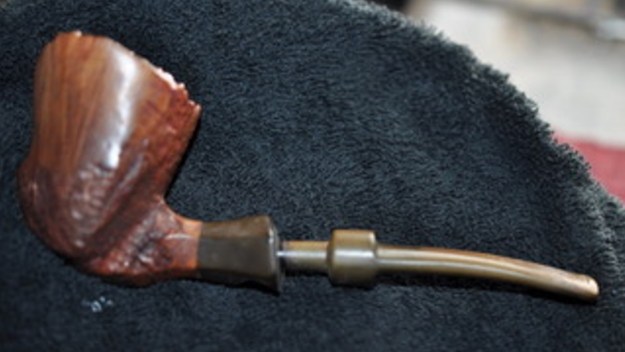
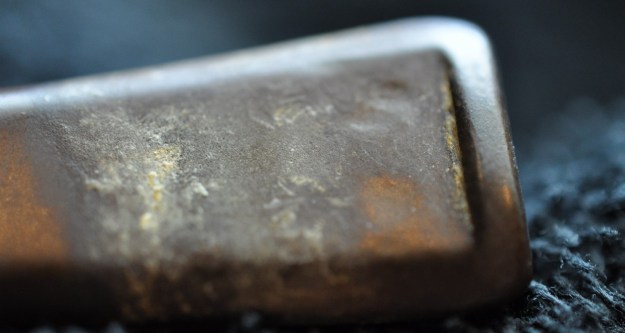
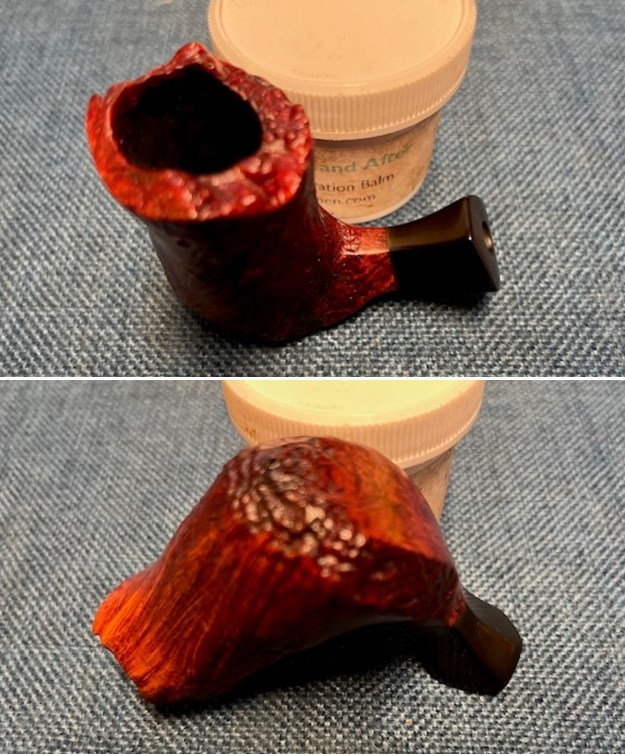
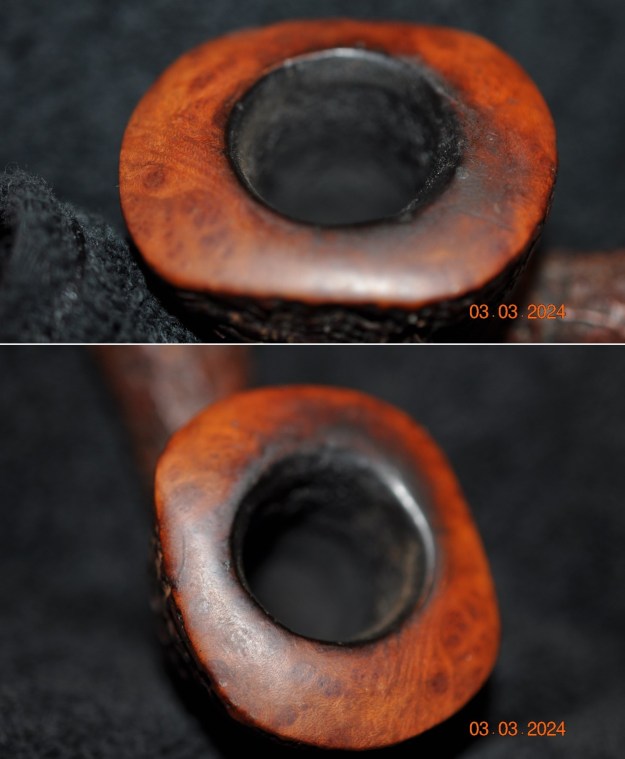
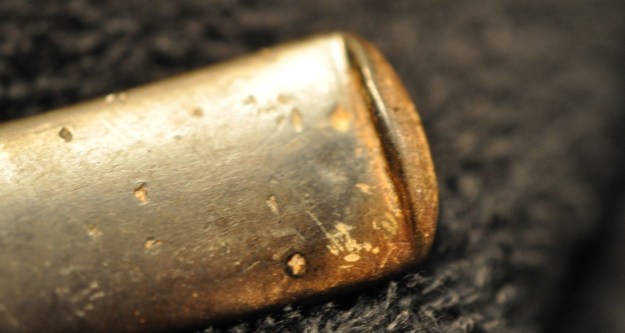
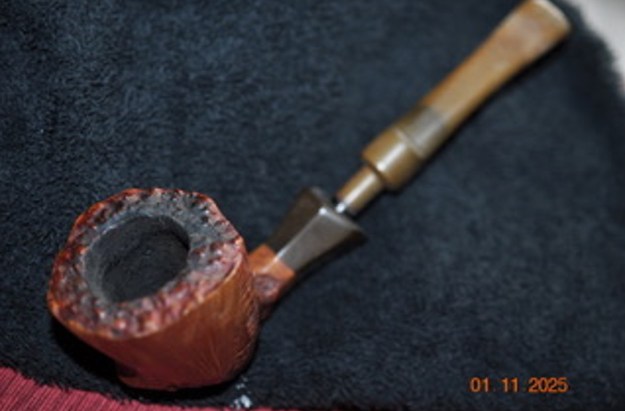 He took photos of the rim top to show the cake in the bowl and the thick lava coat and debris in the plateau finish on the rim top. You can see that it basically fills in the grooves of the finish. The shank extension is also oxidized and dirty. He took photos of the stem to show the oxidation and calcification on it but at some level it does not matter as it will be replaced.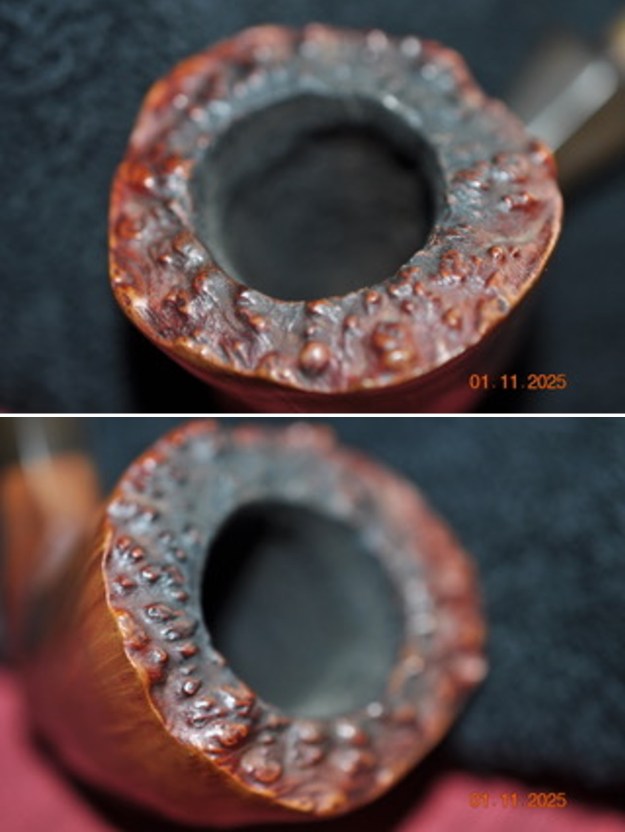
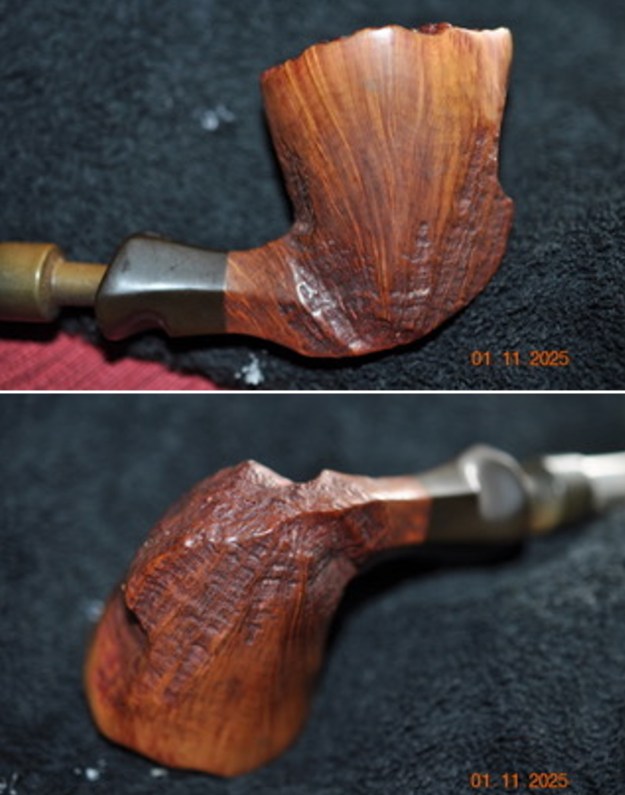
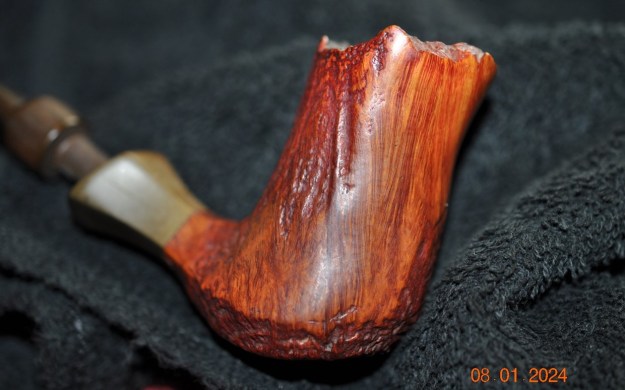
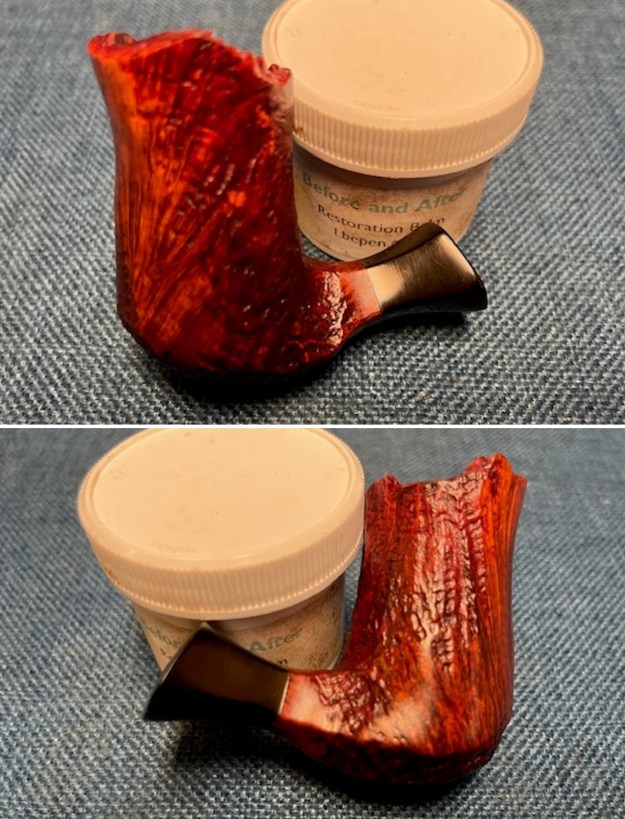
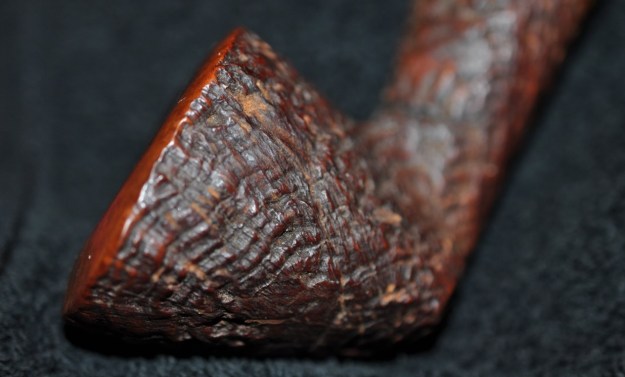
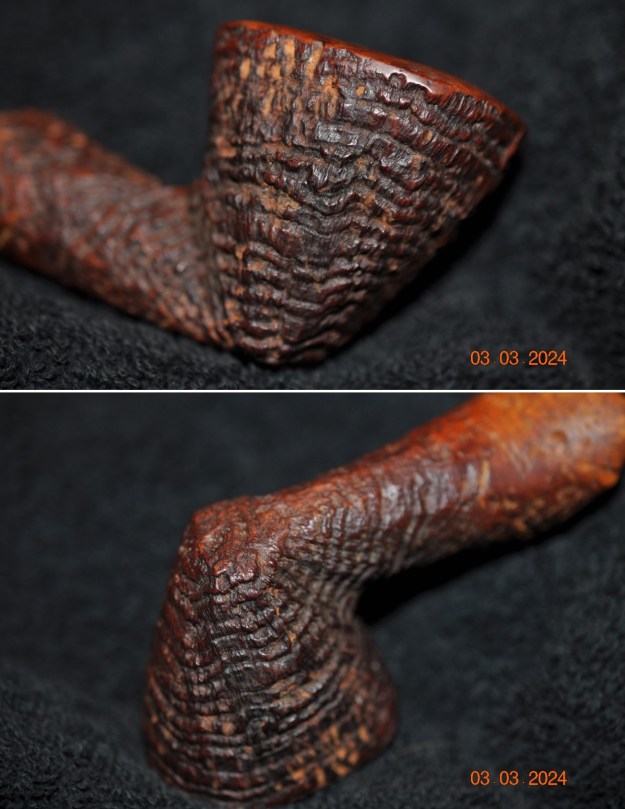
 Jeff took photos of the sides and heel of the bowl to give a sense of the finish on the bowl sides. It is really a beautiful pipe with great grain in the smooth portions.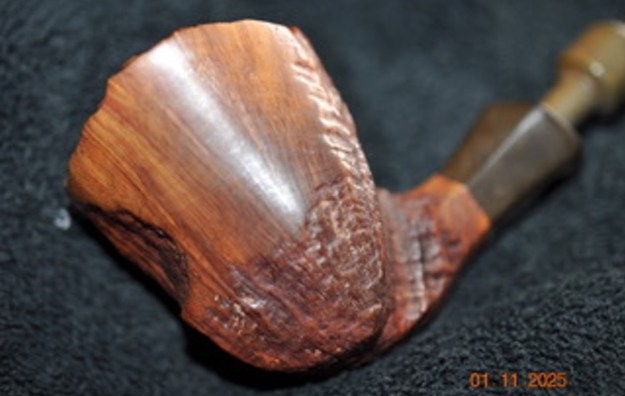
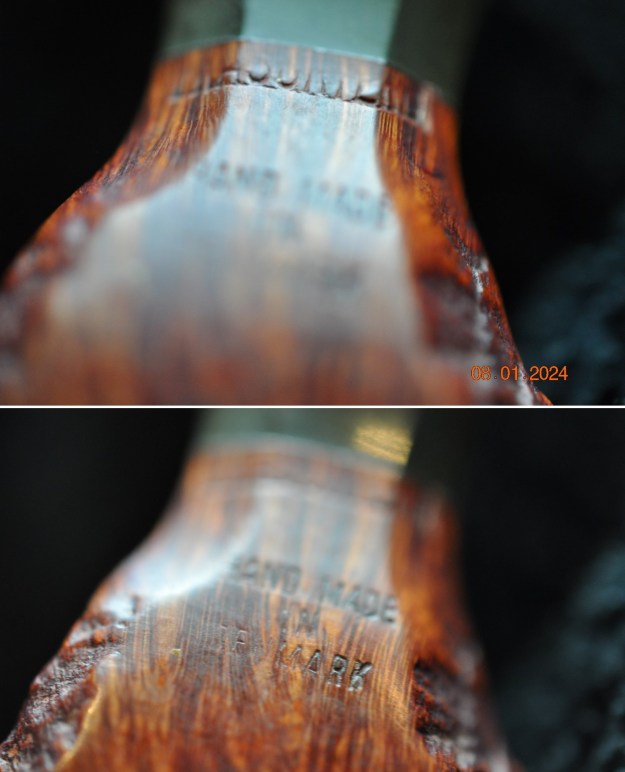
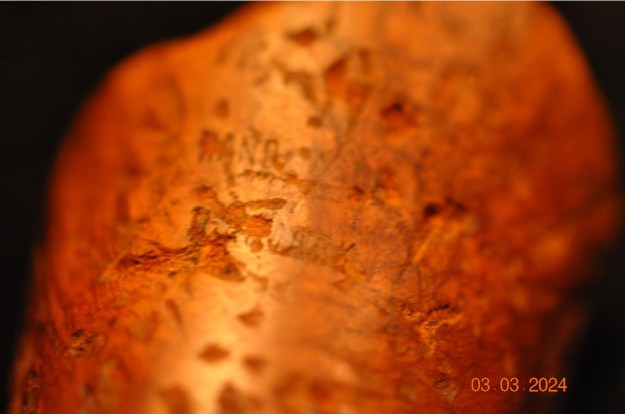
 He captured the stamping as best as possible on the underside of the shank next to the vulcanite shank extension. It reads as noted above.
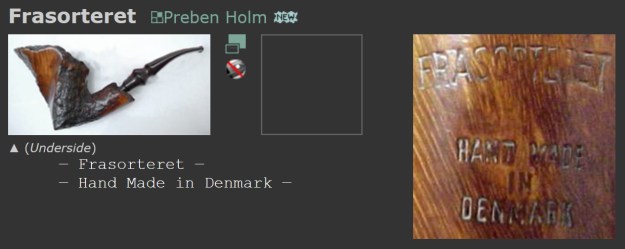
 It seemed to me that Frasorteret pipes came from the creative carving of Preben Holm so I wanted to confirm that memory. When you get a certain age memory can fool you! I turned first to Pipephil’s site (http://www.pipephil.eu/logos/en/logo-f4.html). It tied the line to Preben Holm but there was not too much more information at this point.
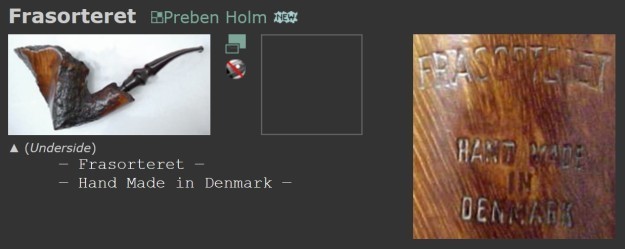 I turned to Pipedia (https://pipedia.org/wiki/Frasorteret) to gather further information. There the information was scant but none the less made the connection to Preben Holm very clear. Here is the information.
The Frasorteret line of pipes were made by Preben Holm and were nearly identical to his normal line of pipes but for fills and pits and the like. The pipes were stamped Frasorteret Made in Denmark.
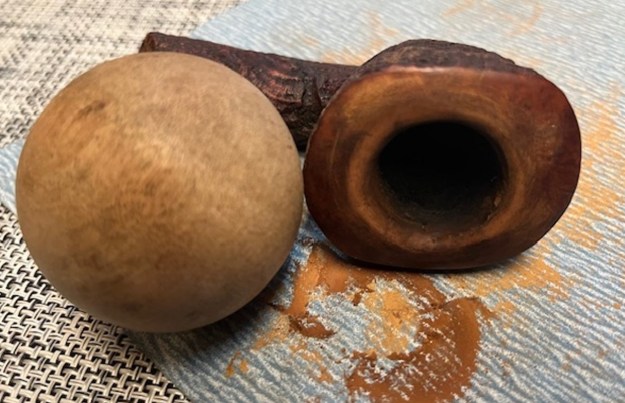
Now I had the background I needed. I was ready to start working on this pipe. As usual, Jeff had thoroughly cleaned up the pipe. I probably don’t say enough about how much I appreciate him doing the hard clean up work before I even get the pipes. He does an amazing job. He had reamed the pipe with a PipNet pipe reamer back to bare briar and removed the remnants of the cake with a Savinelli Fitsall Pipe Knife. He used a small blade to pick out the thick lava on the rim top. He scrubbed the bowl with undiluted Murphy’s Oil Soap and a tooth brush. He rinsed it under running warm water to remove the soap and grime. He cleaned out the inside of the shank and the airway in the stem with alcohol, cotton swabs, pipe cleaners and shank brushes. He soaked the stem in Briarville’s Pipe Stem Deoxidizer and rinsed it off with warm water. I took photos of the pipe and the stem that came with it before I started my part of the restoration work. Preben’s Holm’s magic is very visible in the shaping of the pipe.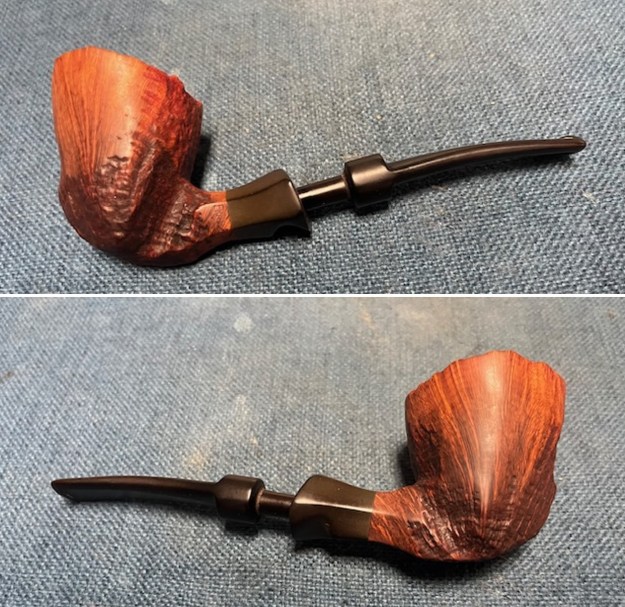
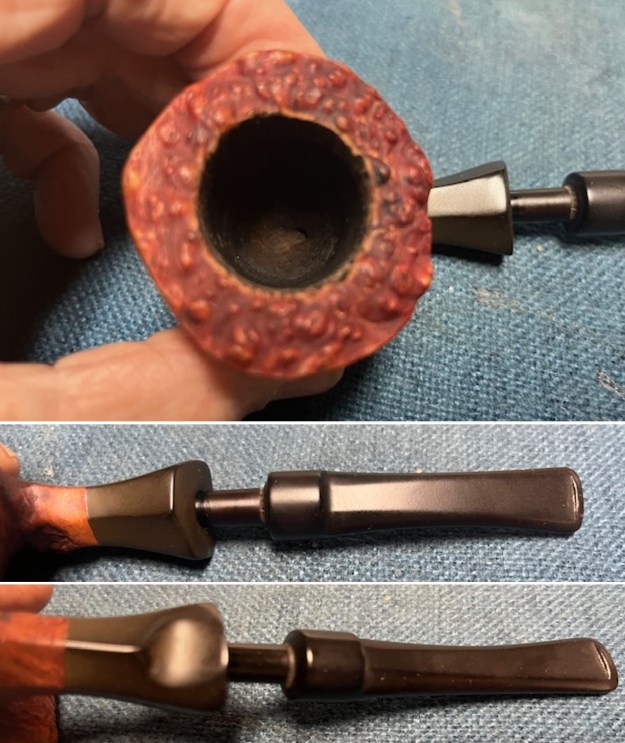
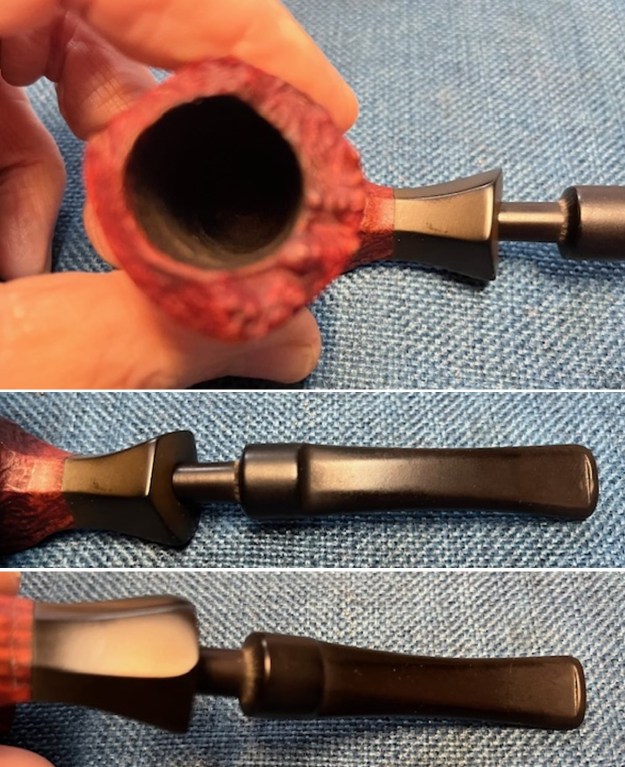
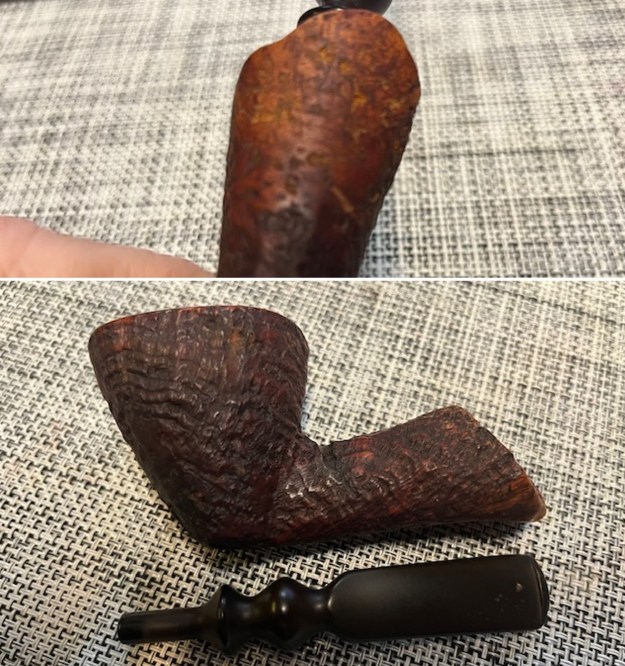
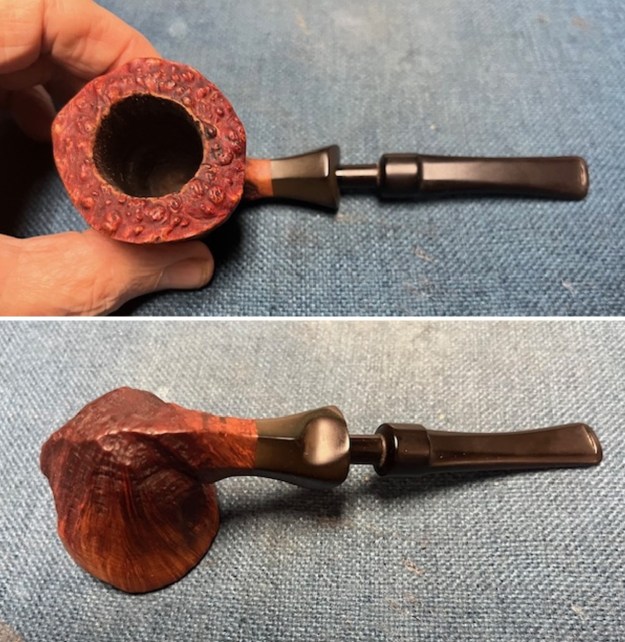 I took photos of the bowl and rim top to show the clean condition. The bowl walls look very good. The replacement stem looks very clean and will be a good addition to my can of stem options.
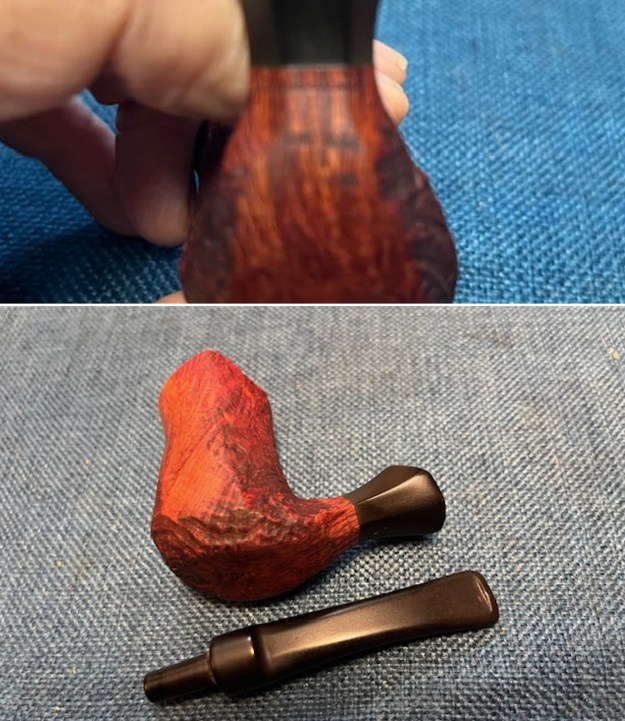
 I tried to capture the stamping on the shank underside. It is a bit blurry but it is still very readable and clear as noted above. I took a photo of the pipe with the replacement stem removed. It really makes it clear to me that it is a replacement.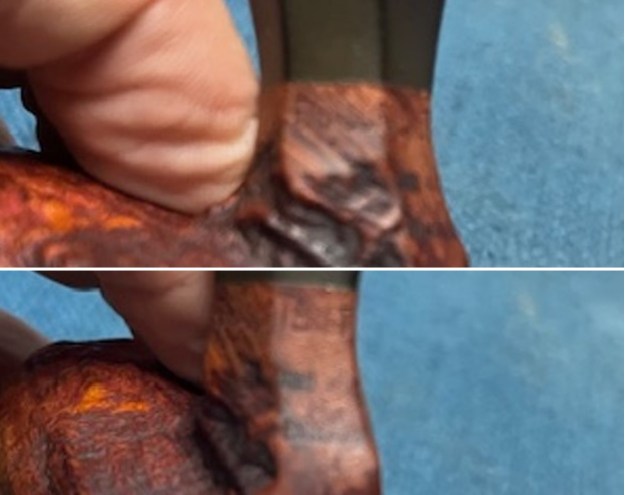
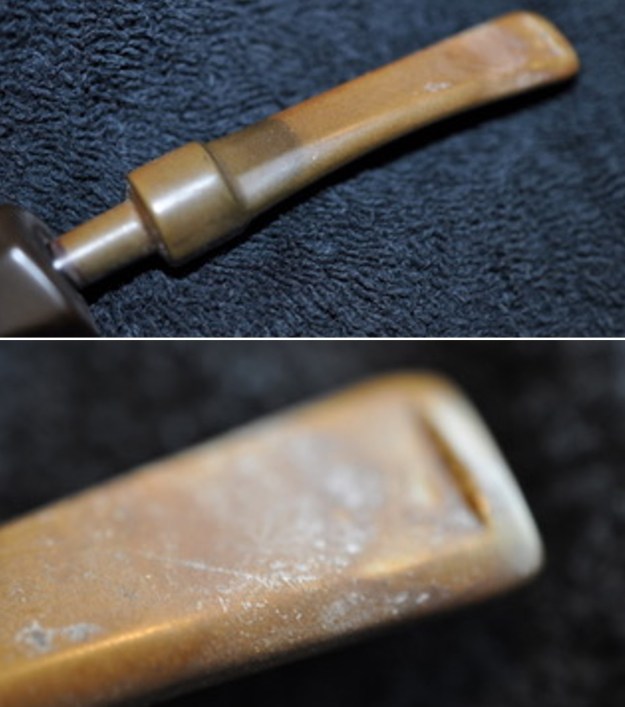
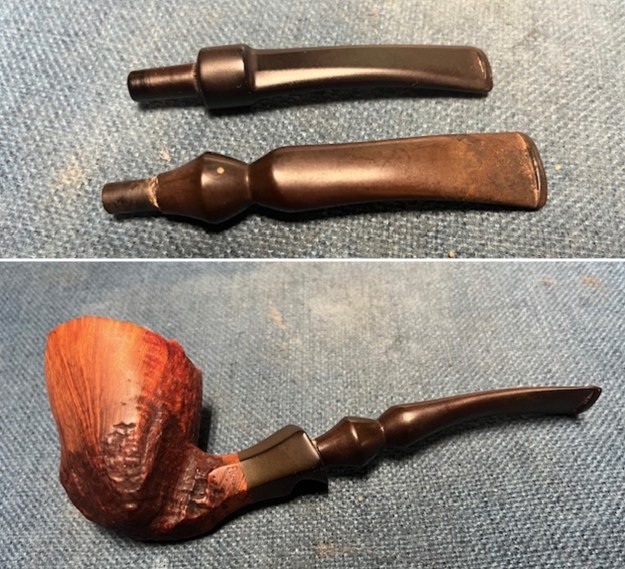
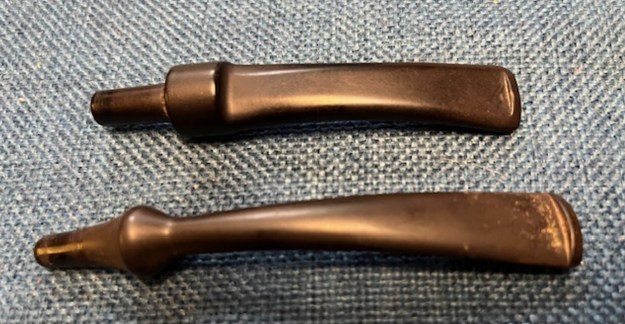
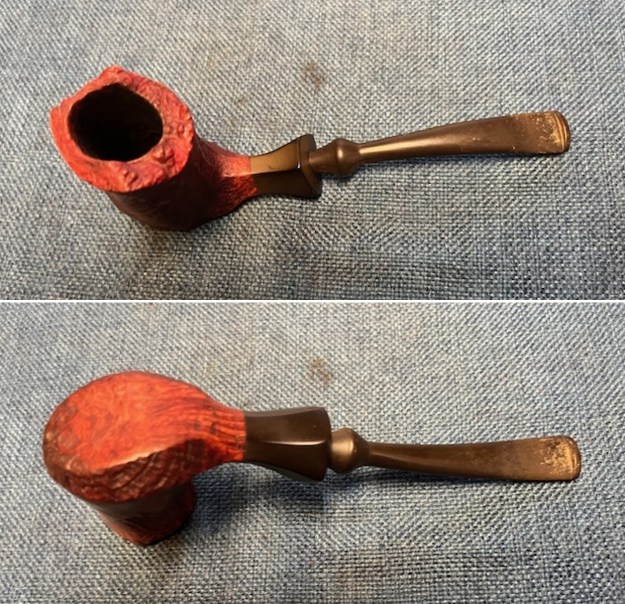
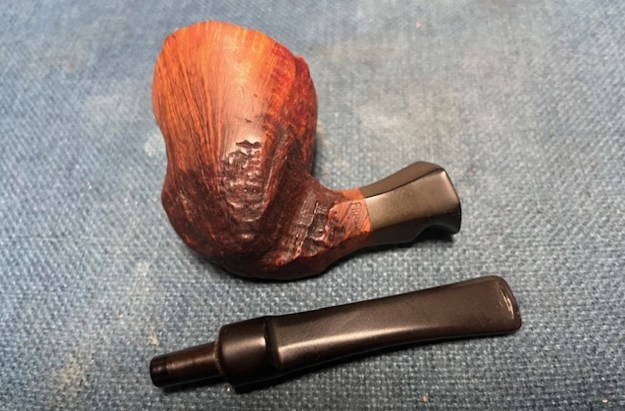 The pipe was ready for me to work on but I decided first to go through my stems. I went through both vulcanite and acrylic stems which may sound easy but I have several hundred stems to sort through. I was looking for something that flowed with the delicate shape of the bowl and shank and was simply weightless looking. I found what I was looking for and took a photo of the stem I found. I put the new stem in the shank and took a photo, I like the looks of the new choice.
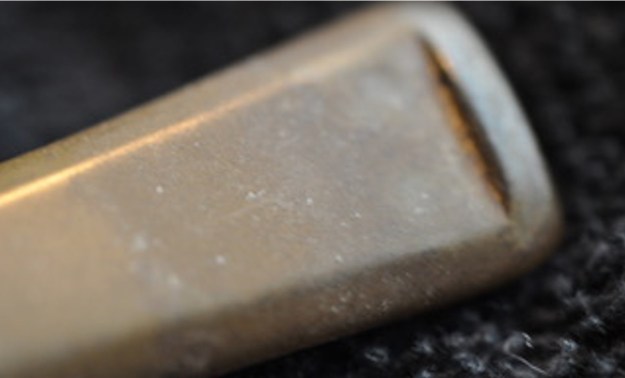
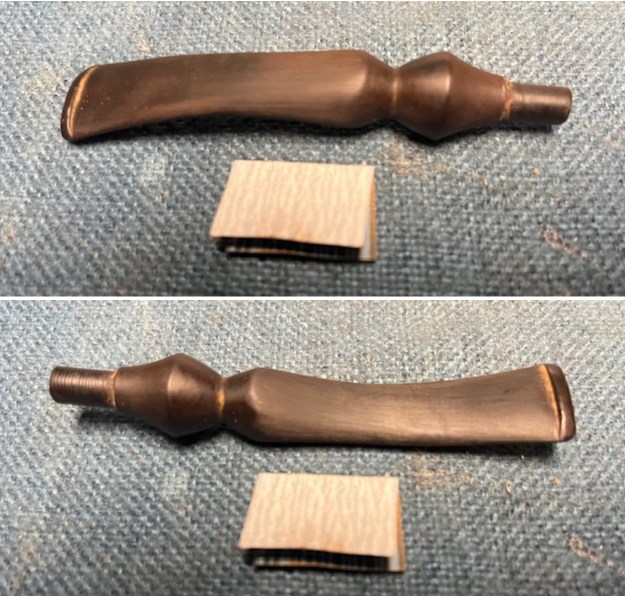
 What to do next? I figured I might as well continue working on the stem since I had already started. I sanded out the tooth chatter on the stem end and worked on the oxidation with a folded piece of 220 grit sandpaper.
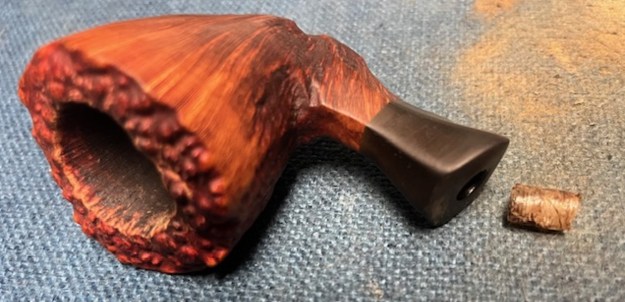
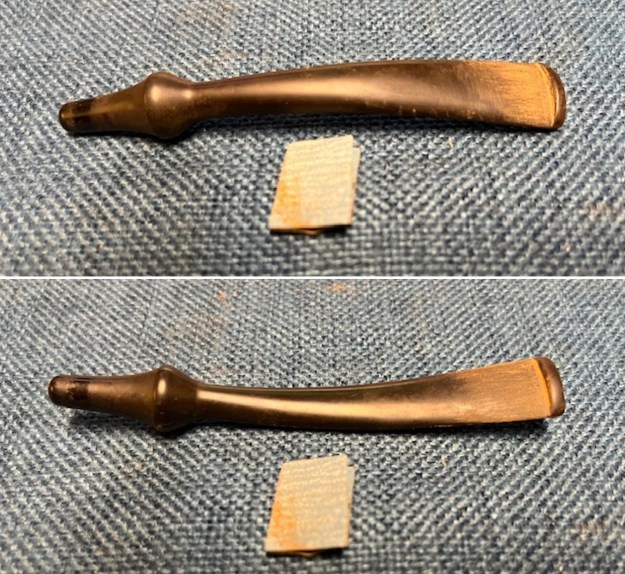
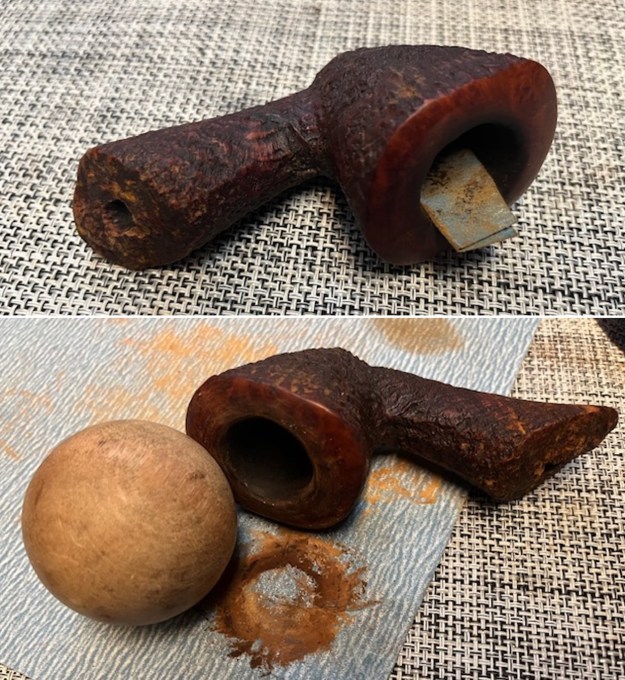
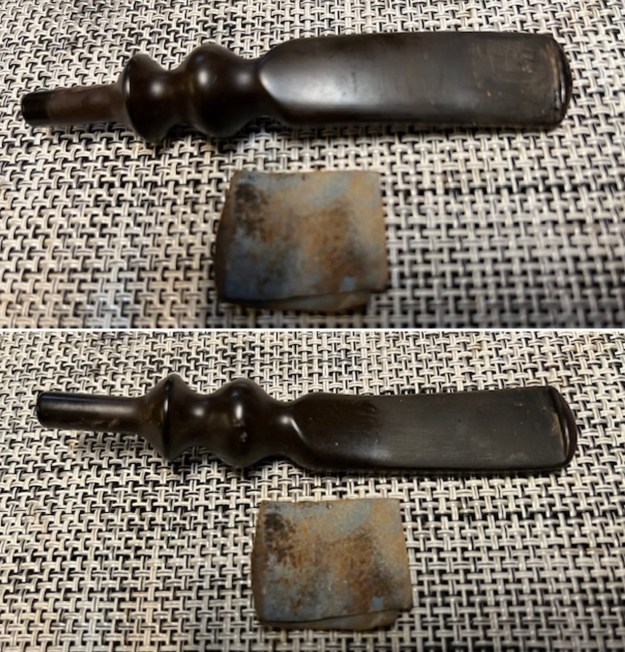
 I fit the cleaned stem into the shank of the pipe and it was an odd fit. When I pulled it out this piece of scotch tape came out with the tenon. That is yet another testimony to the stem being a replacement. The tape would have been around the tenon to snug the fit in the shank. I cleaned out the shank with pipe cleaners and alcohol to remove the residual gum from the tape. Much better and the stem fit!
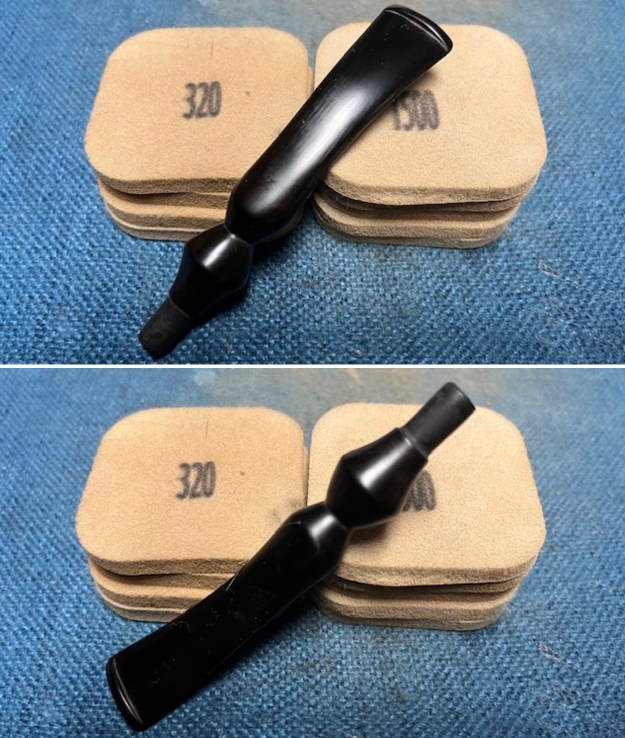
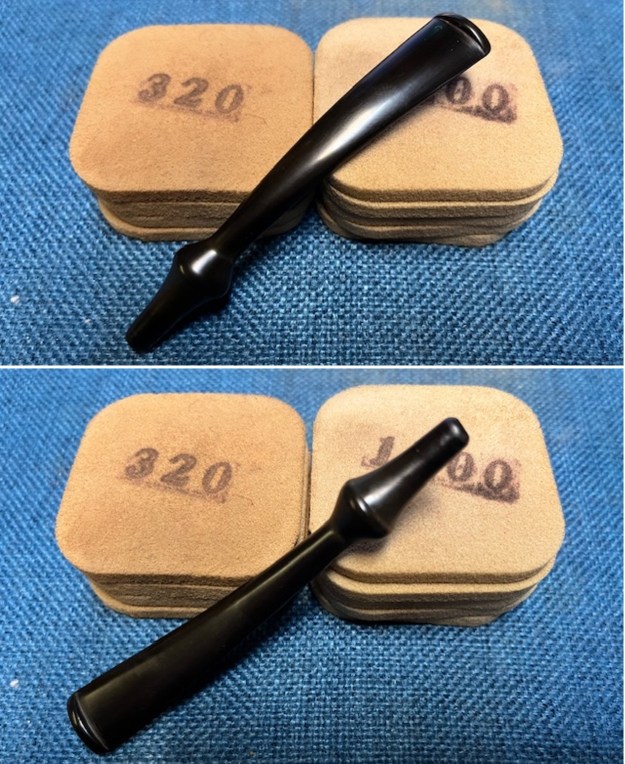
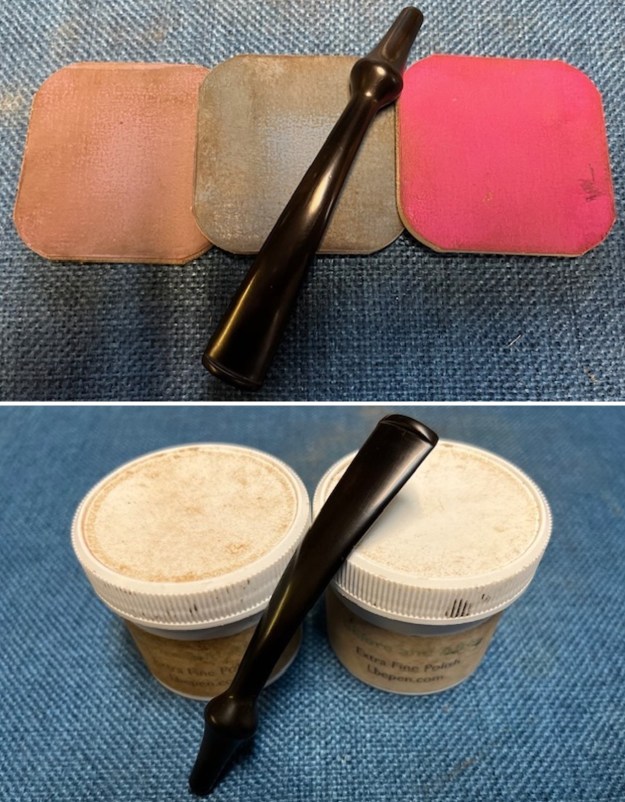
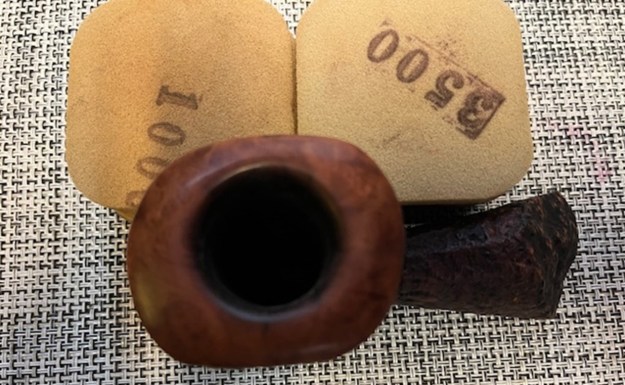
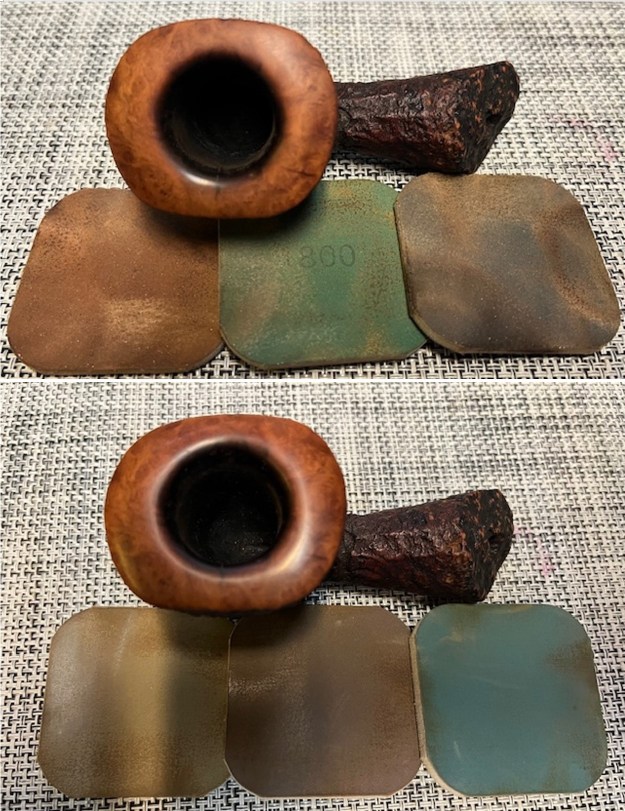
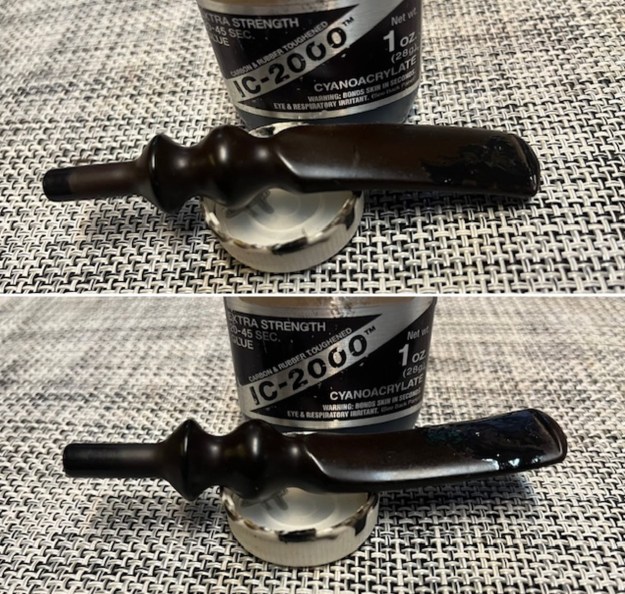
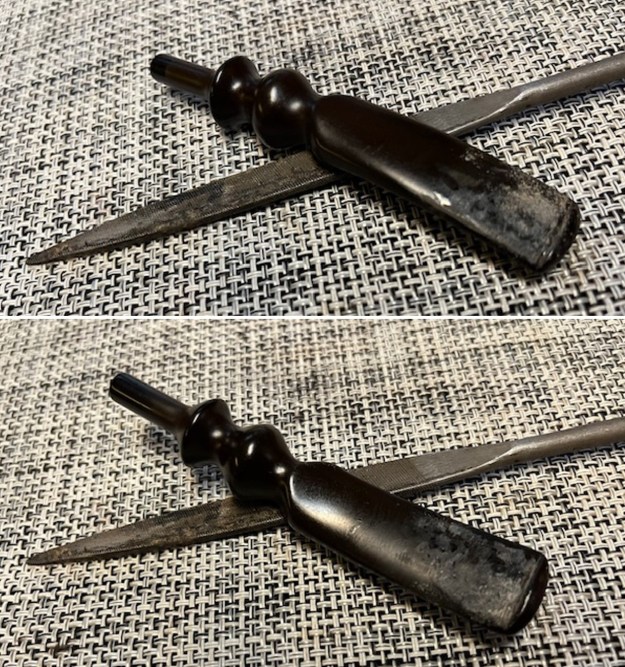
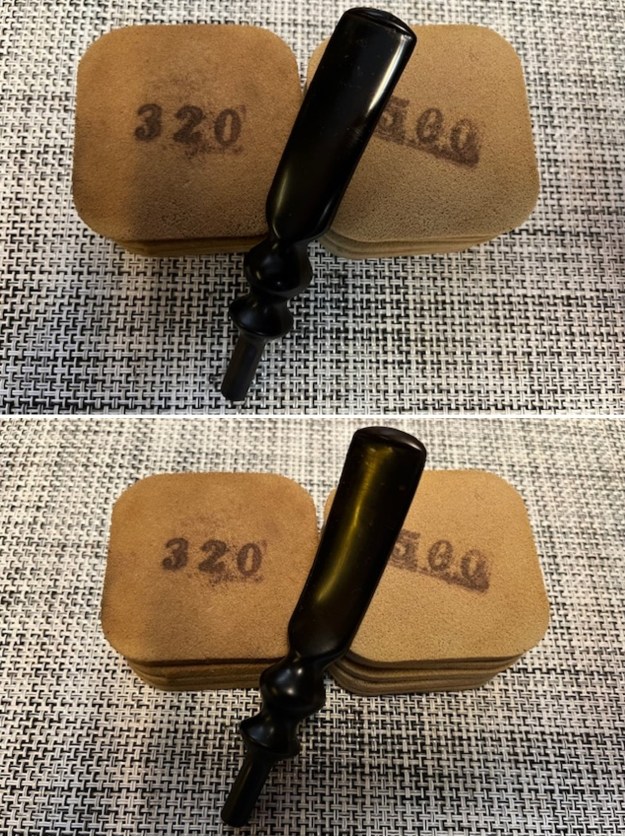
 I sanded the stem with 2×2 sanding pads – 320-3500 to start the polishing process and further remove the oxidation and marks. I wiped the stem down after each sanding pad with Obsidian Oil. It was beginning to look very good.
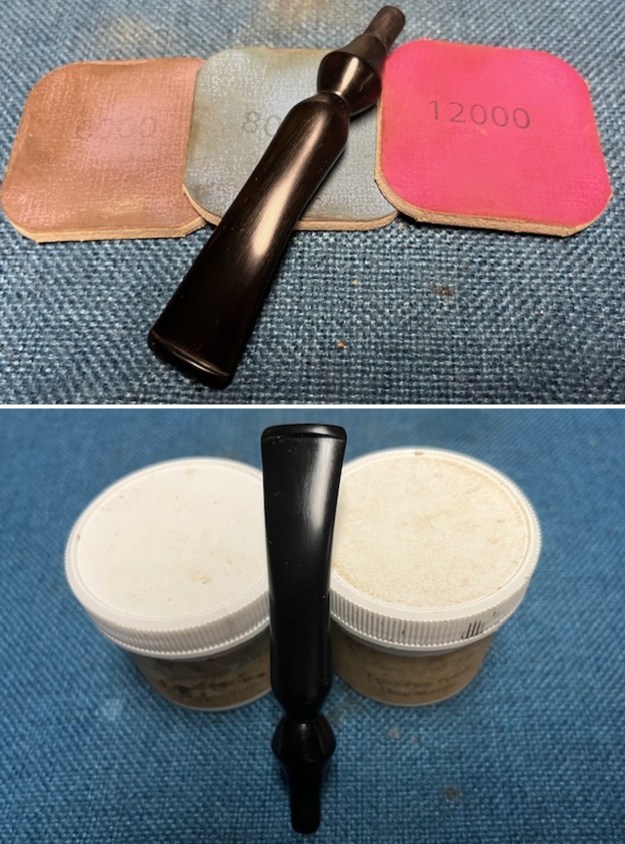
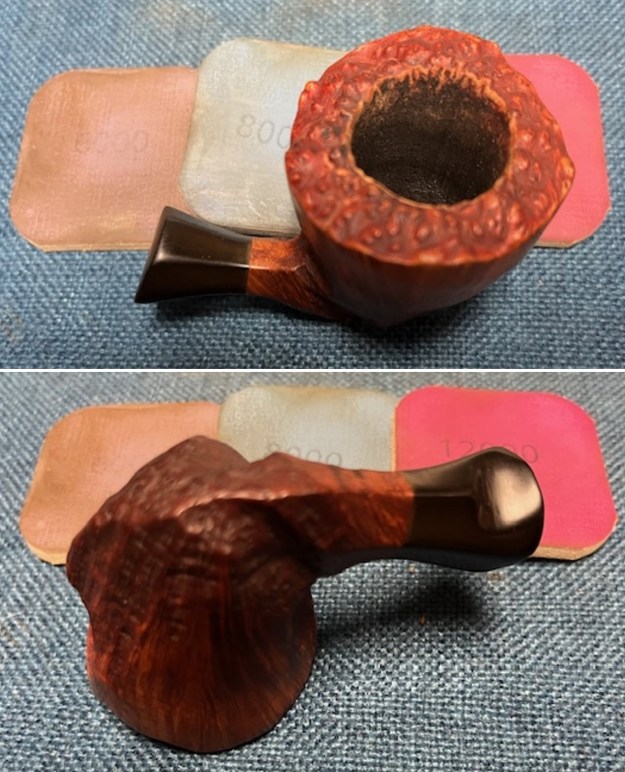
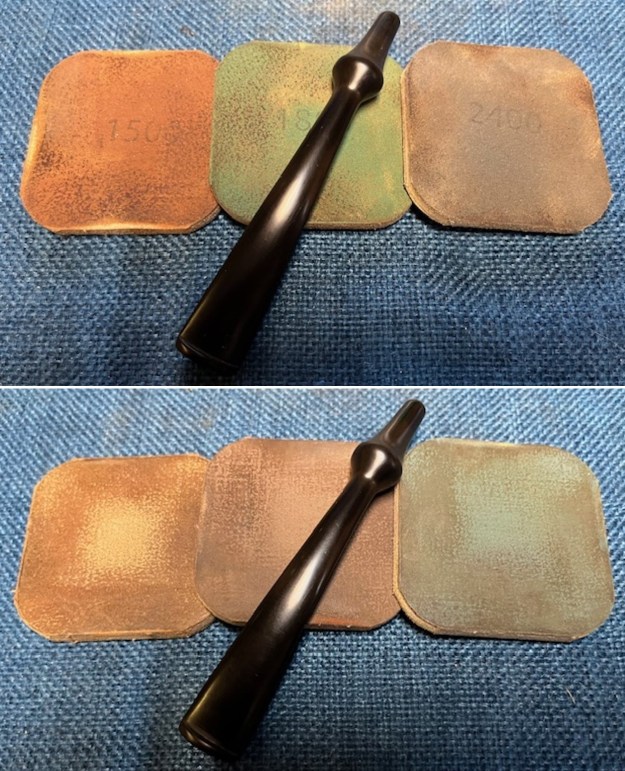
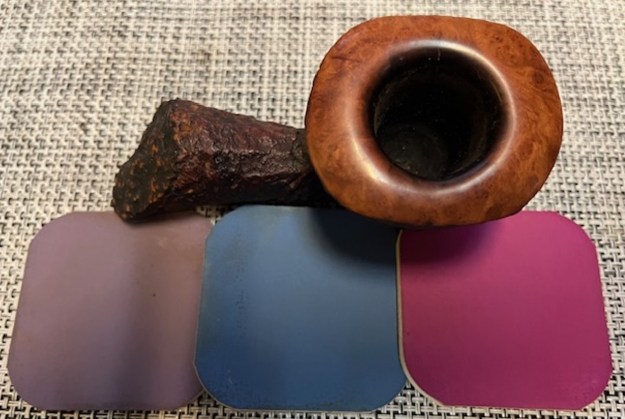
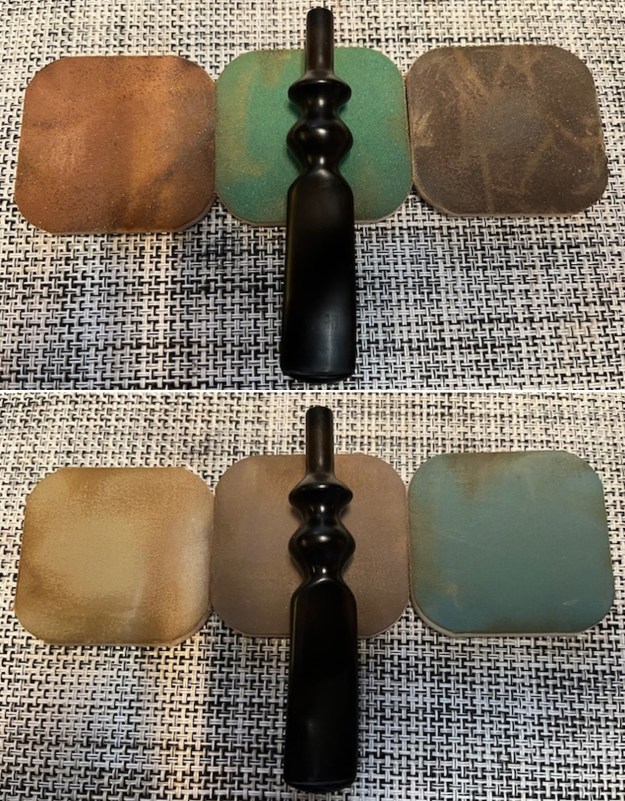
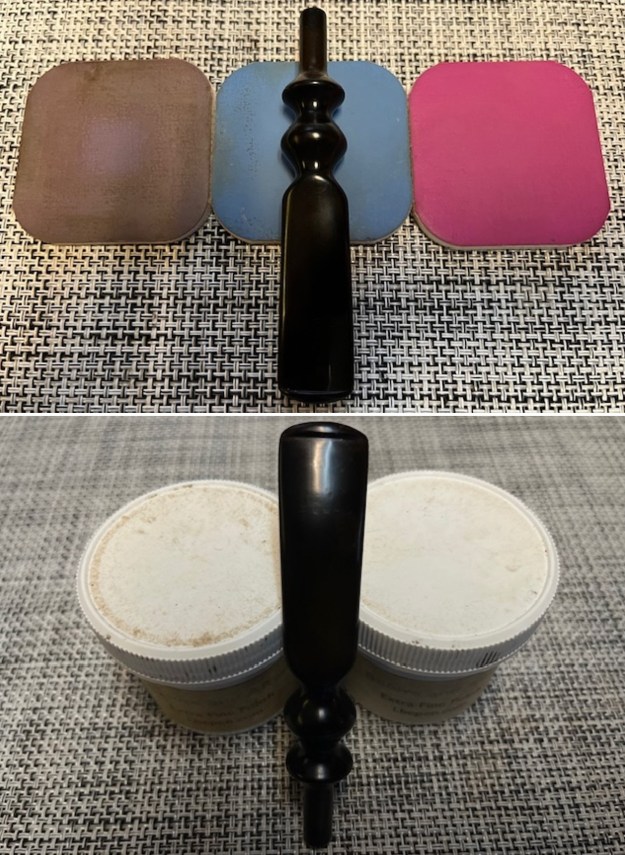
 I love watching the shine develop on the vulcanite as I polish it with micromesh sanding pads – dry sanding with 1500-12000 grit pads. I wiped it down after each pad with Obsidian Oil. I finished this part of the polishing by using Marks Hoover’s Before & After Pipe Stem Polish – both Fine and Extra Fine. I wiped it off with a soft cloth and gave the stem another coat of Obsidian Oil.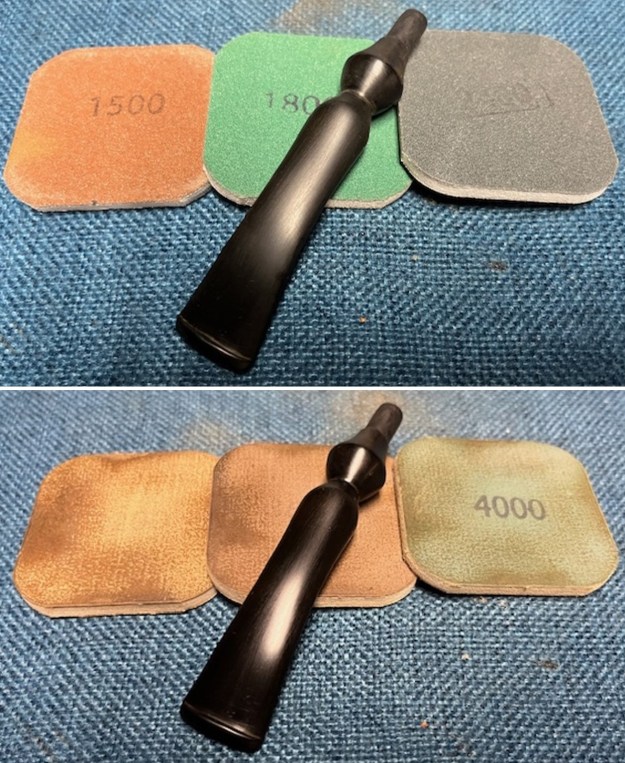
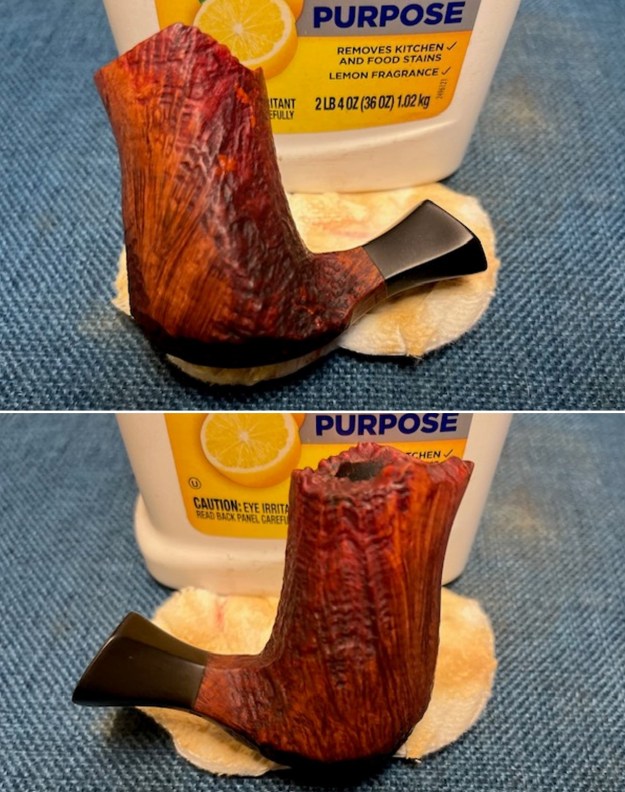
 I set the stem aside and turned my attention to the bowl. I sanded the shank extension with 320-3500 2×2 inch sanding pads. I wiped the vulcanite extension down with Obsidian Oil after each sanding pad. It began to look better.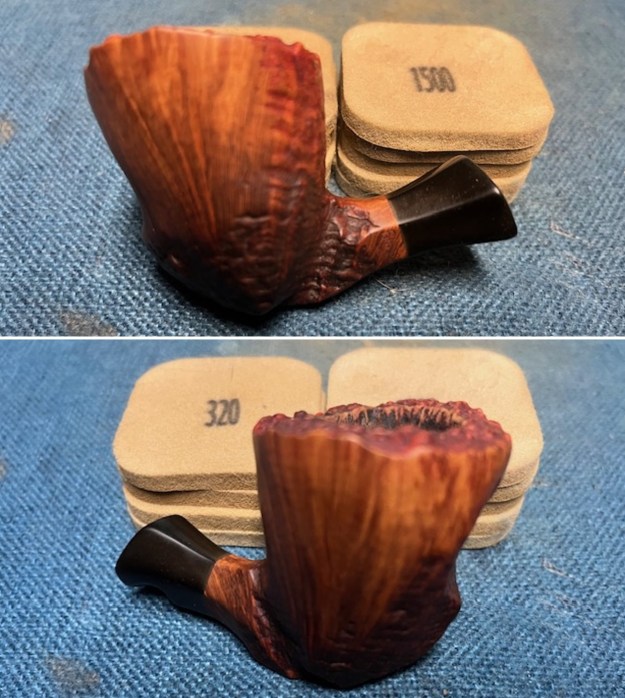
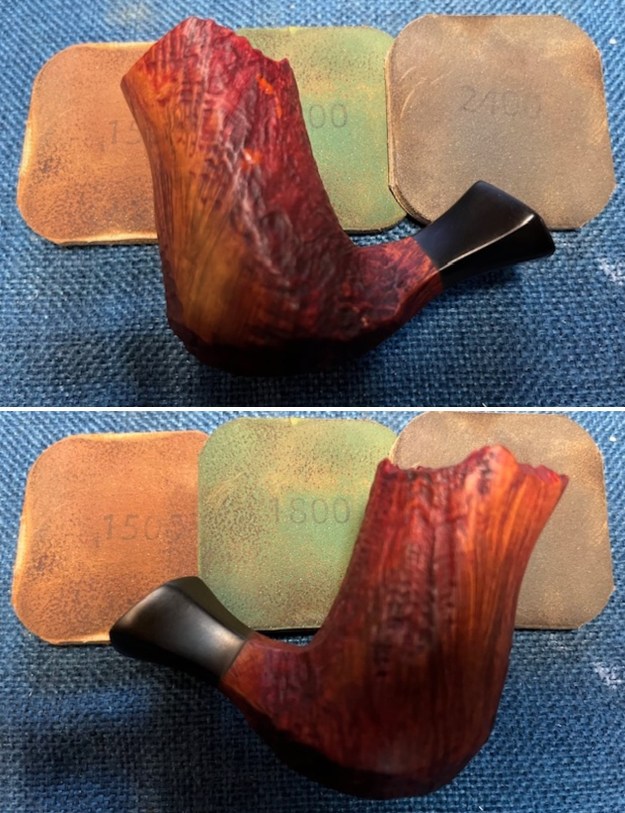
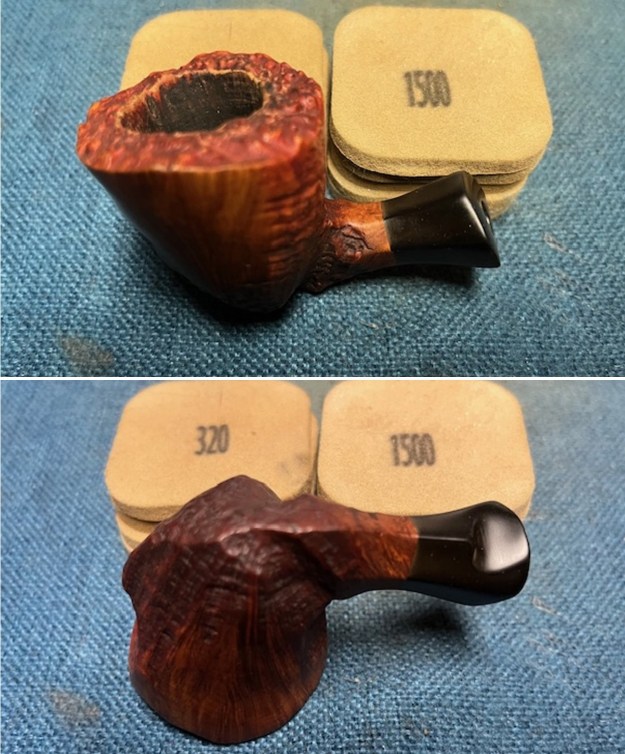 I polished the smooth portions of the briar and the vulcanite shank extension with micromesh sanding pads – dry sanding with 1500-12000 grit sanding pads. I wiped the bowl down with a damp cloth after each pad. I wiped the shank extension down with Obsidian Oil. I finished this part of the polishing by using Marks Hoover’s Before & After Pipe Stem Polish – both Fine and Extra Fine. I wiped it off with a soft cloth and gave the stem another coat of Obsidian Oil. Once again, by the end of the process it looked quite good.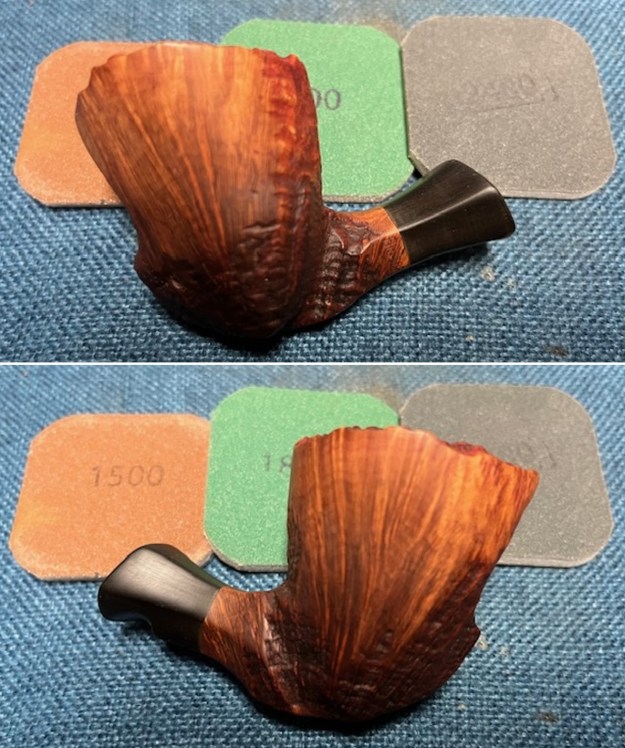
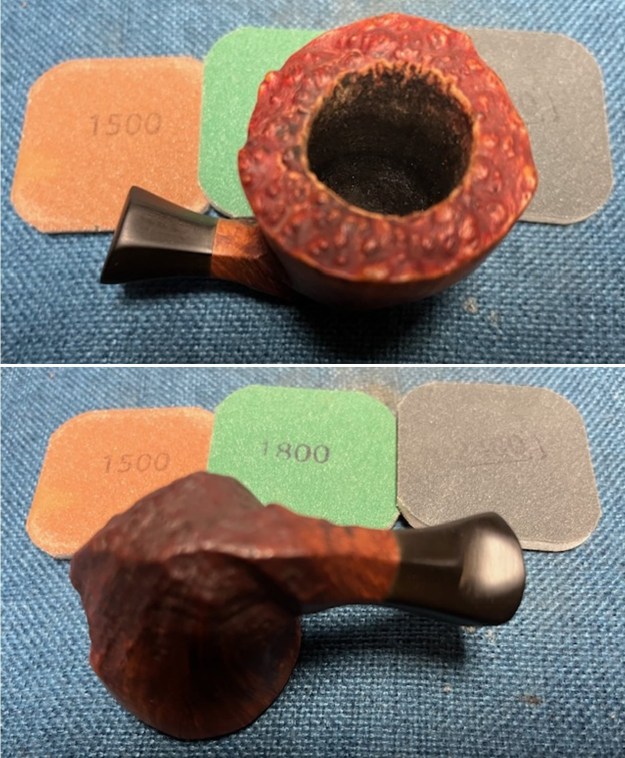
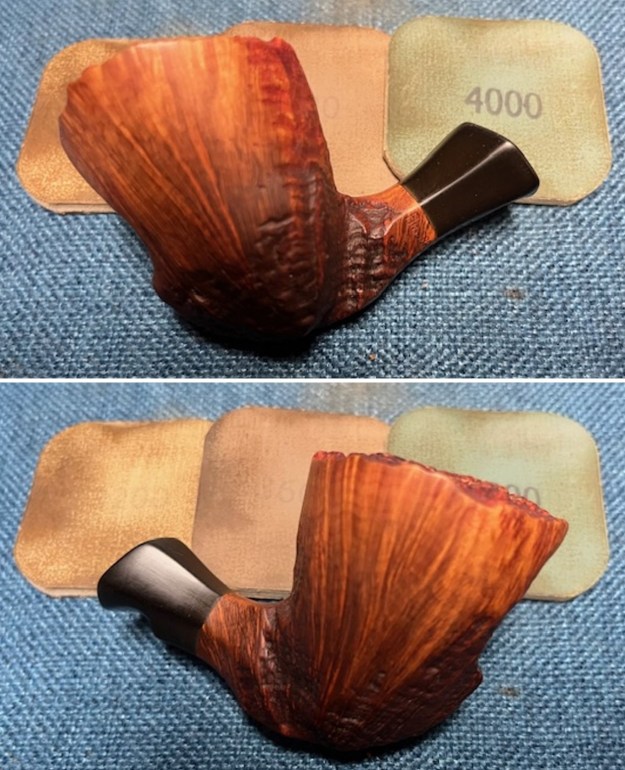
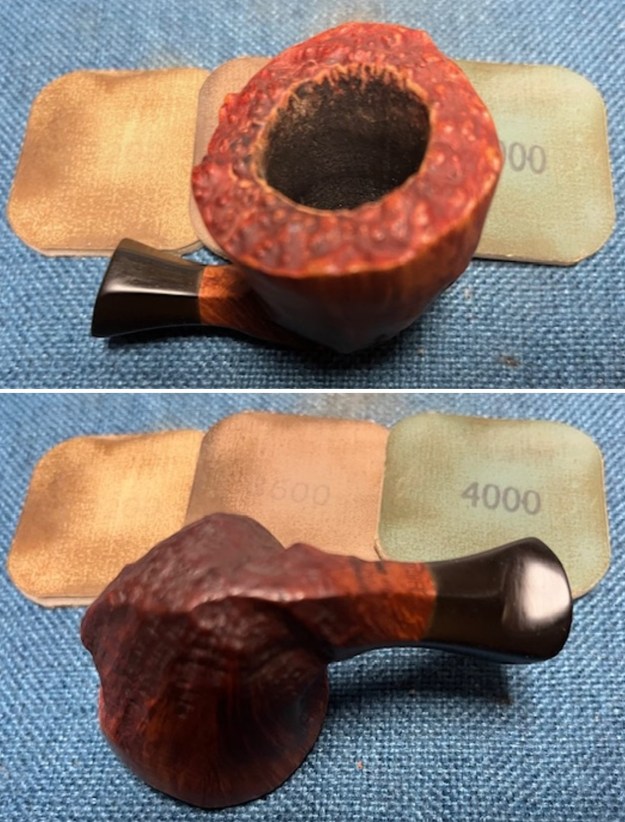
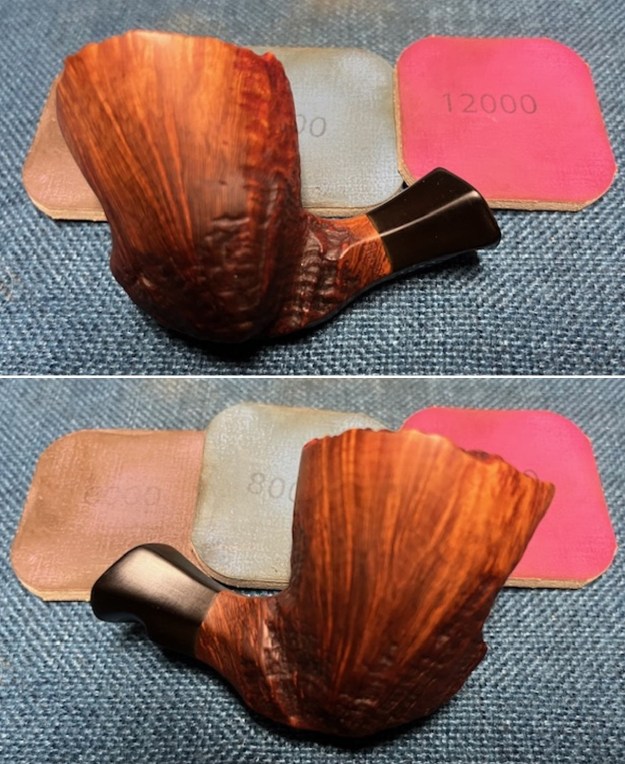
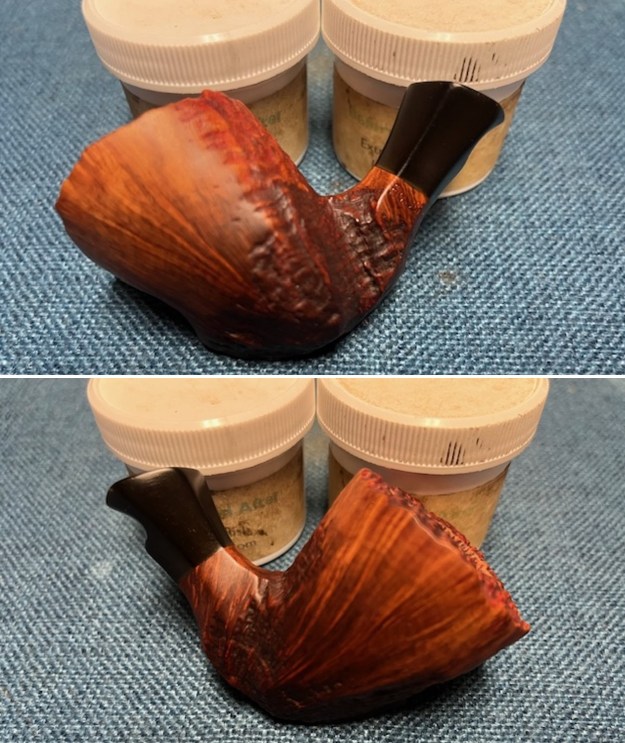
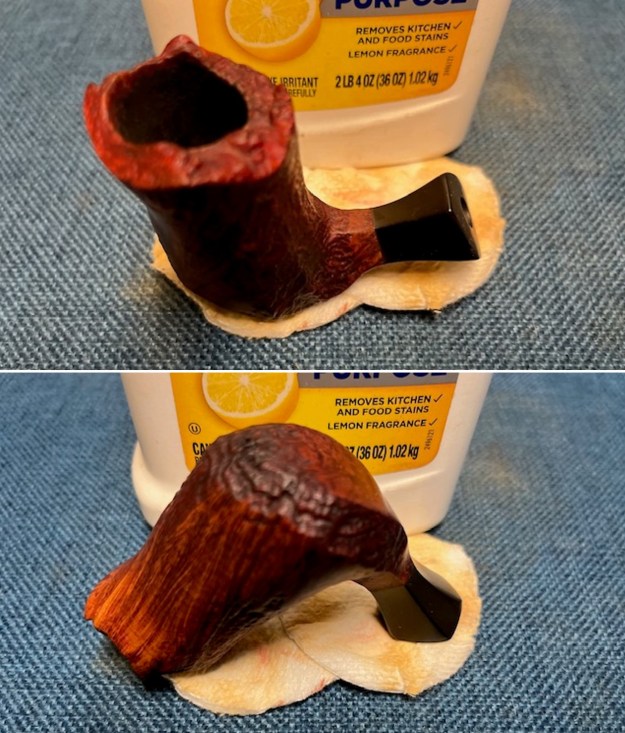
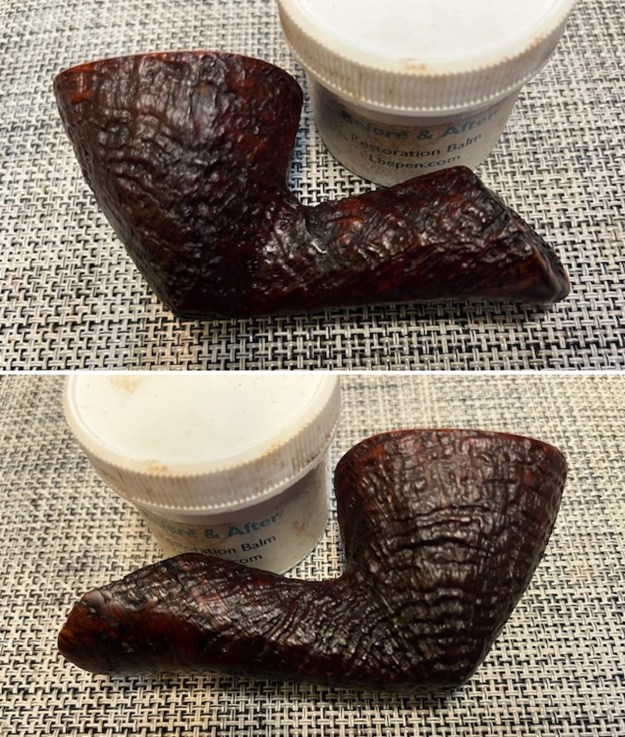
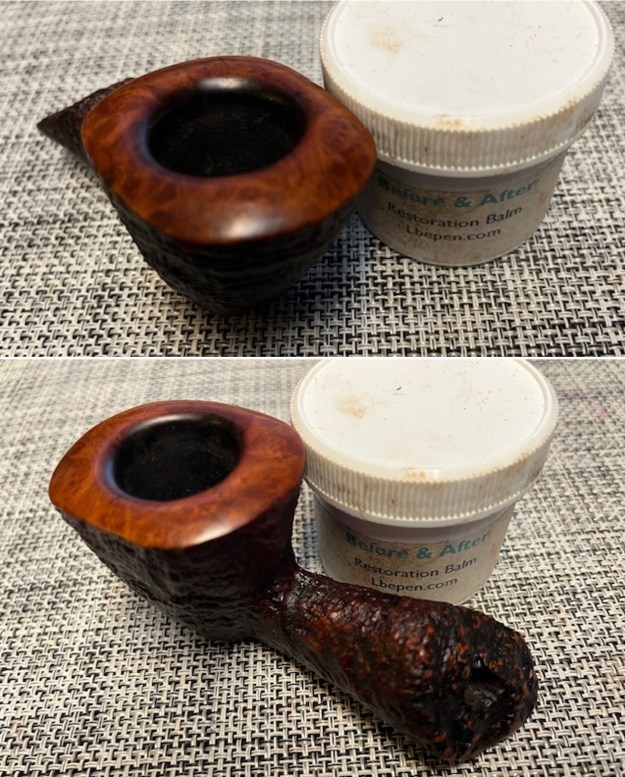
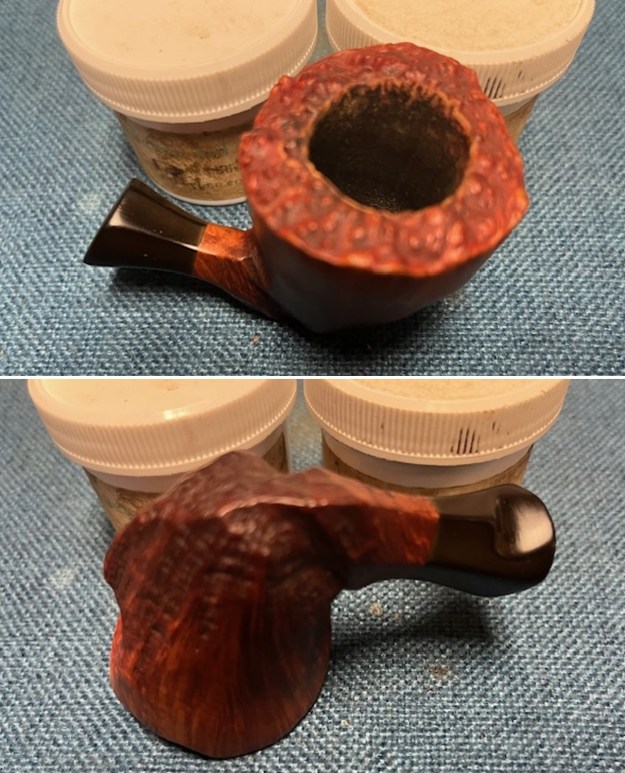 I rubbed the bowl and shank down with Before & After Restoration Balm. I worked it into the surface of the bowl sides and shank with my fingertips. I worked it into the plateau finish with a shoe brush. It works to clean, enliven and protect the briar. I let the balm sit for 15 minutes and buffed with a cotton cloth to raise the shine. The grain came alive.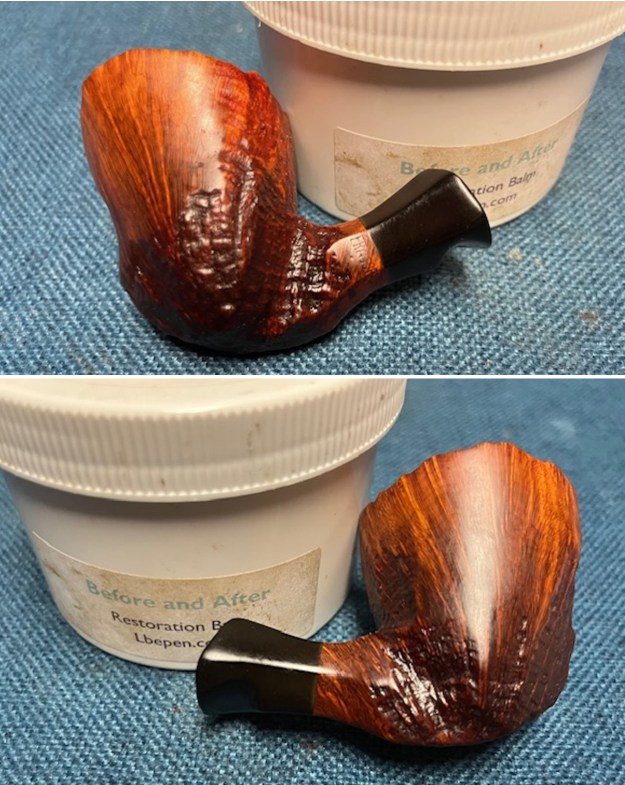
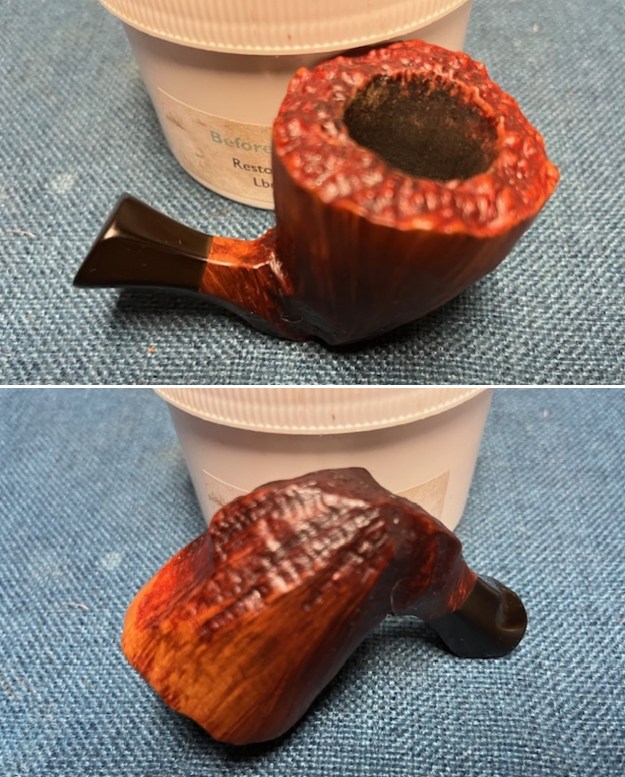
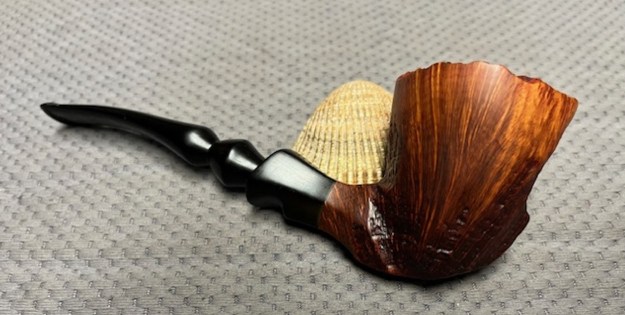
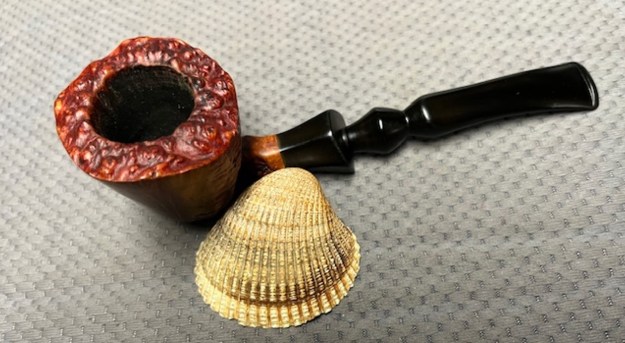
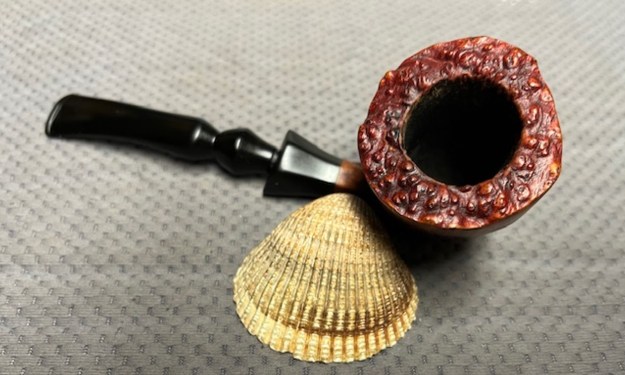
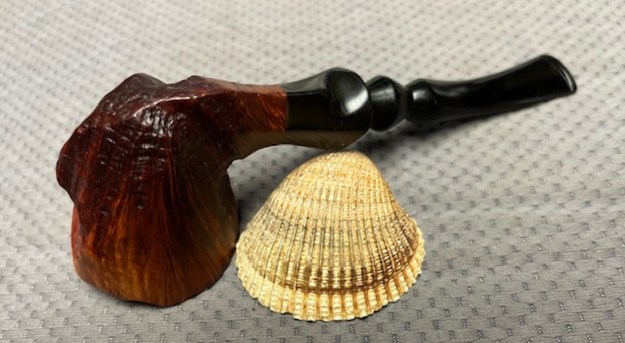
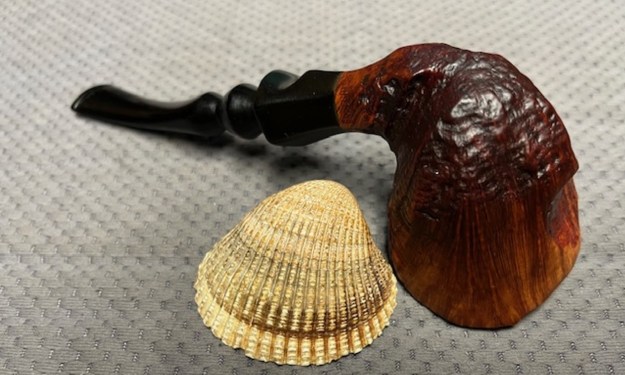
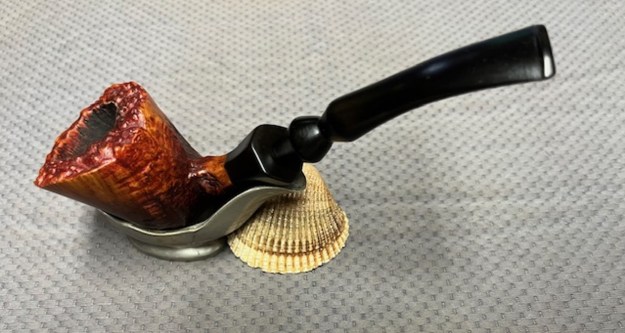
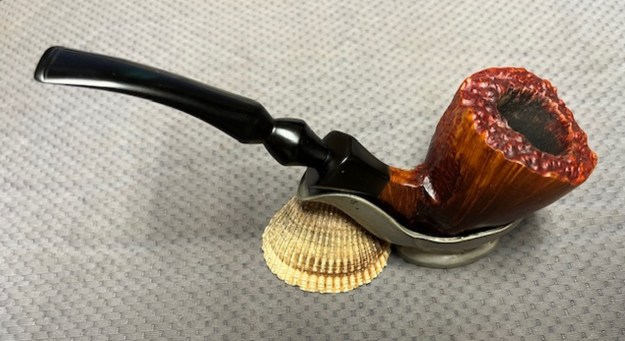
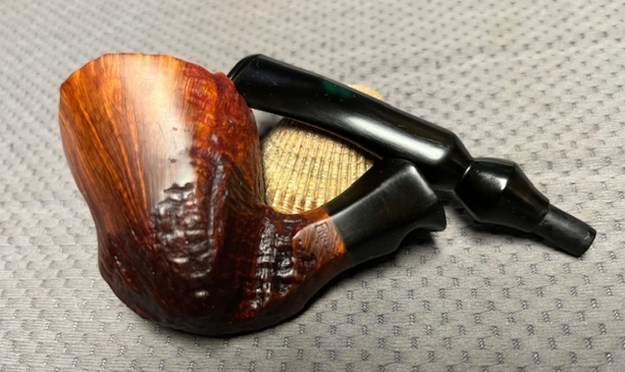
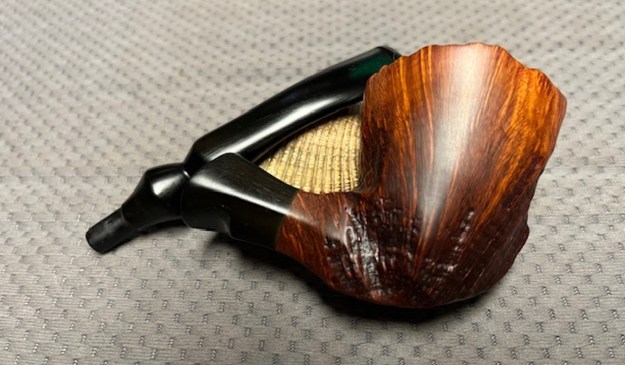
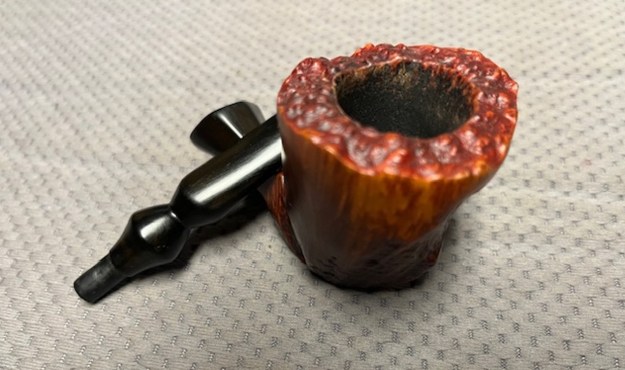
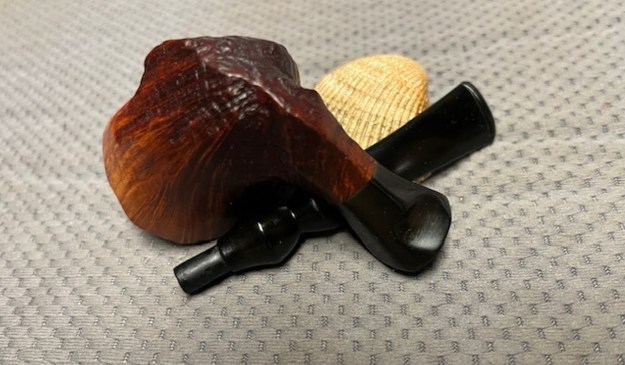
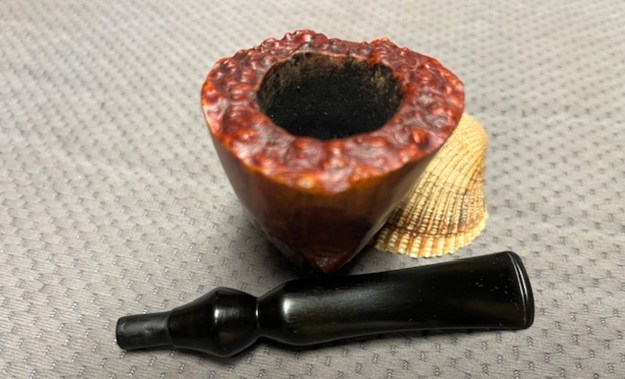
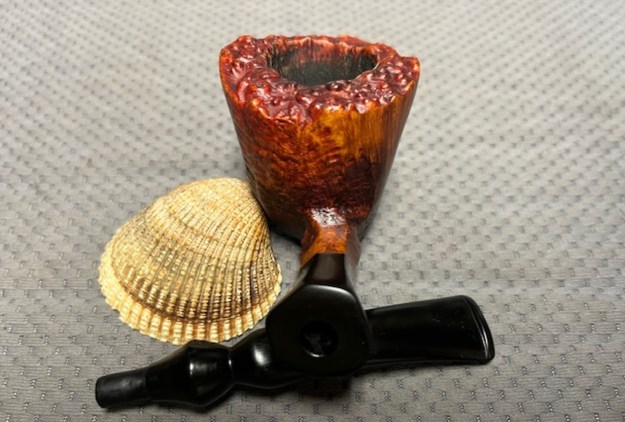
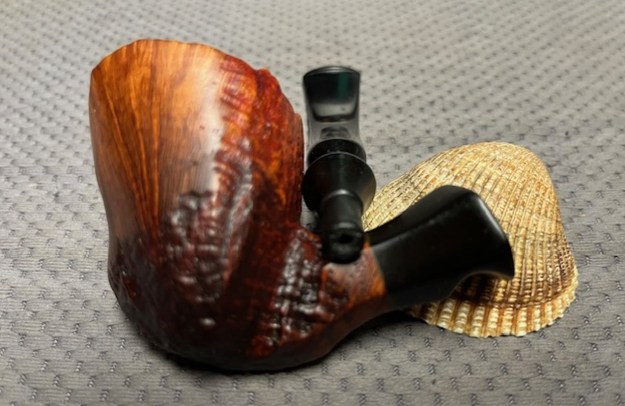
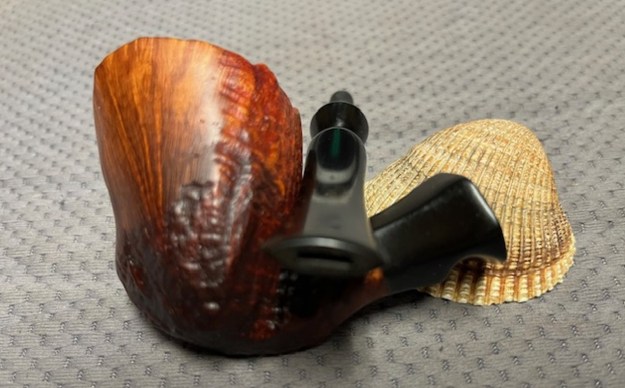
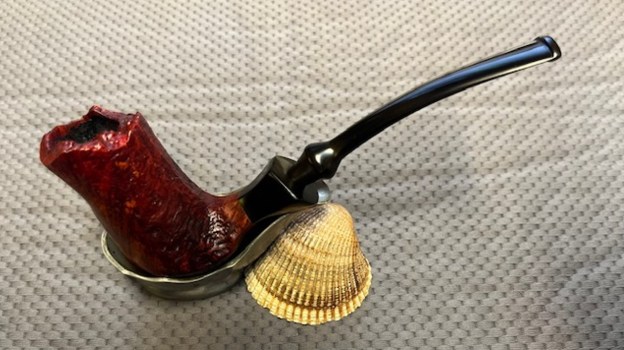
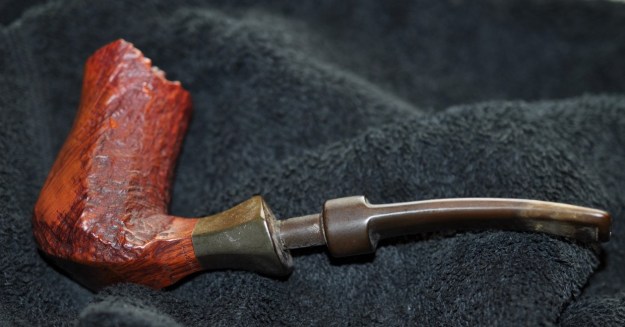
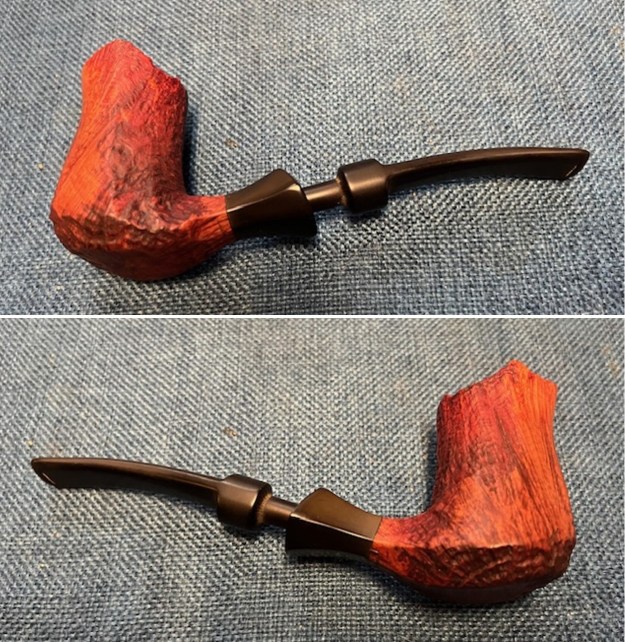
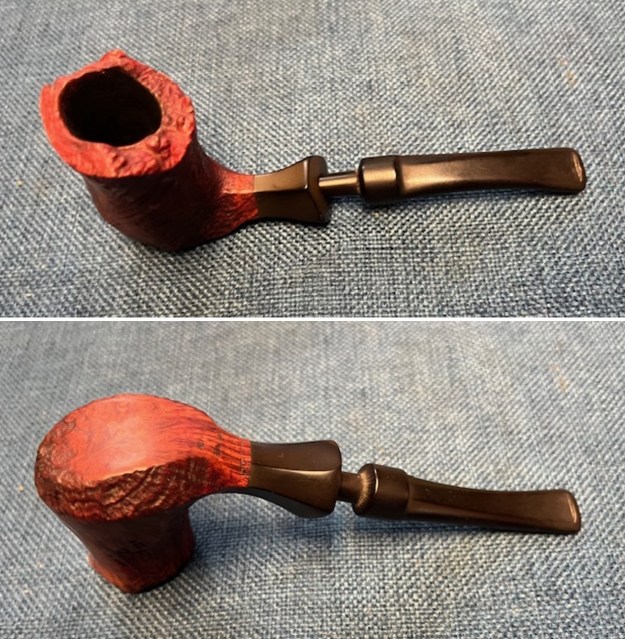
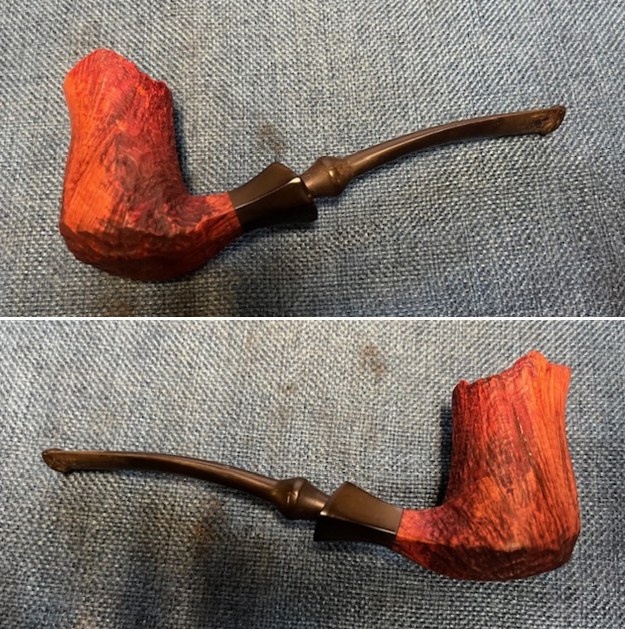
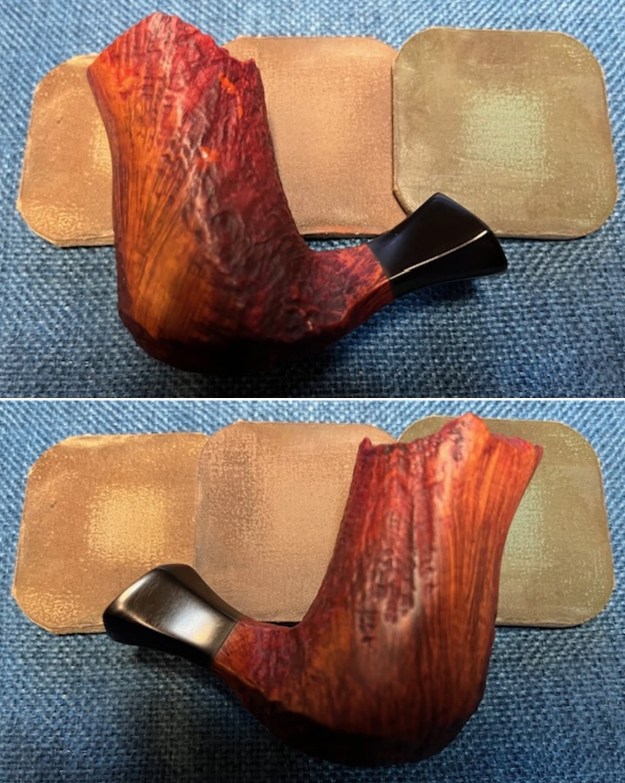
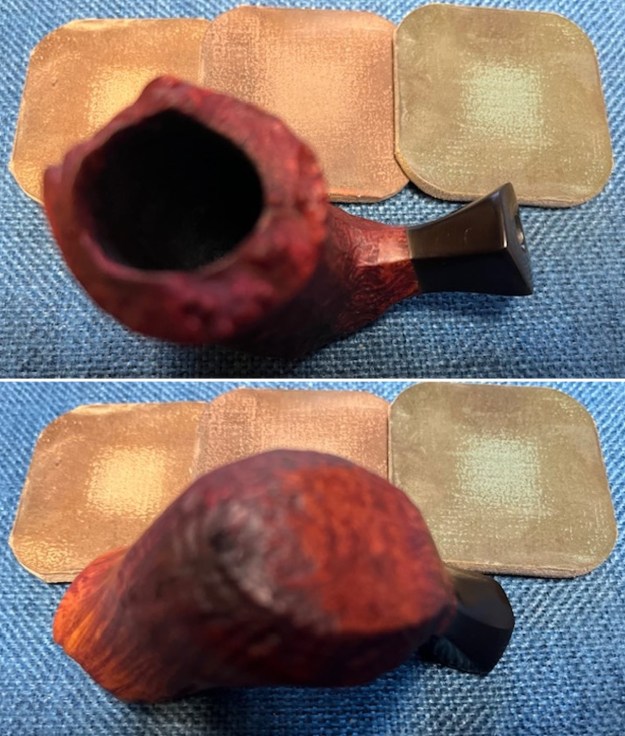
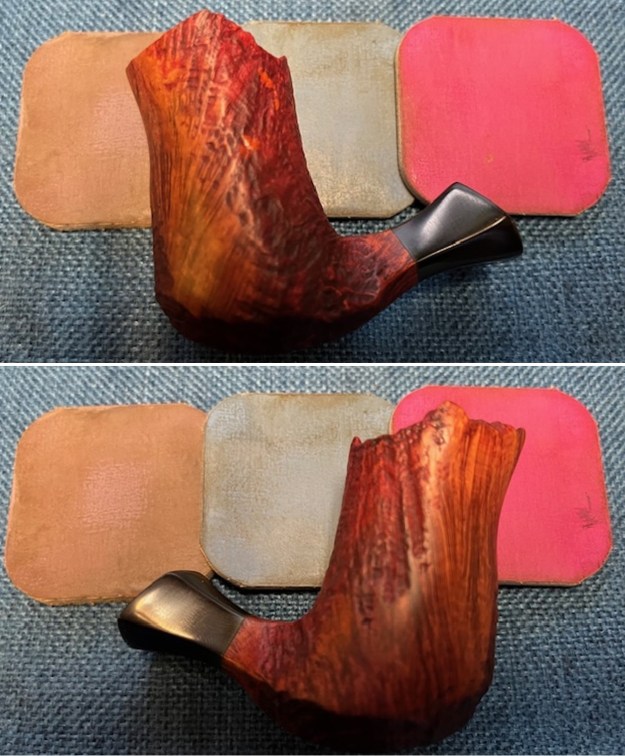
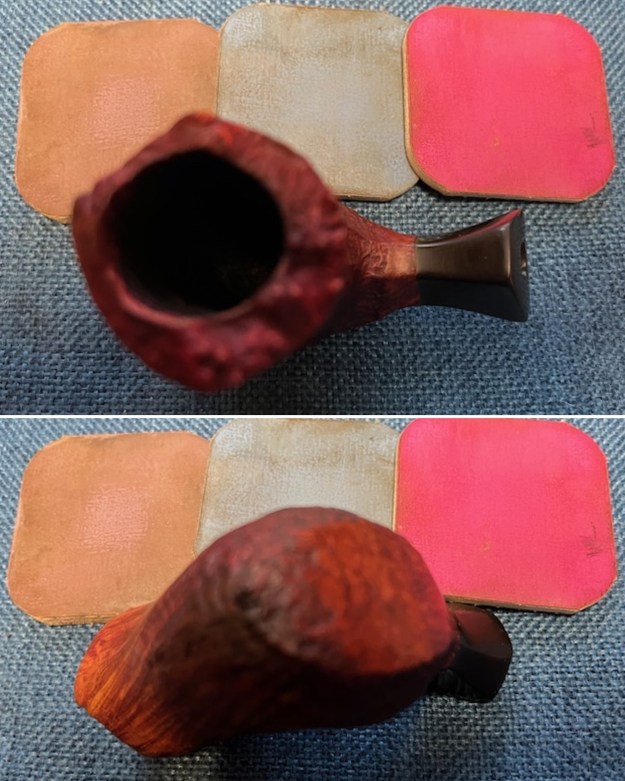
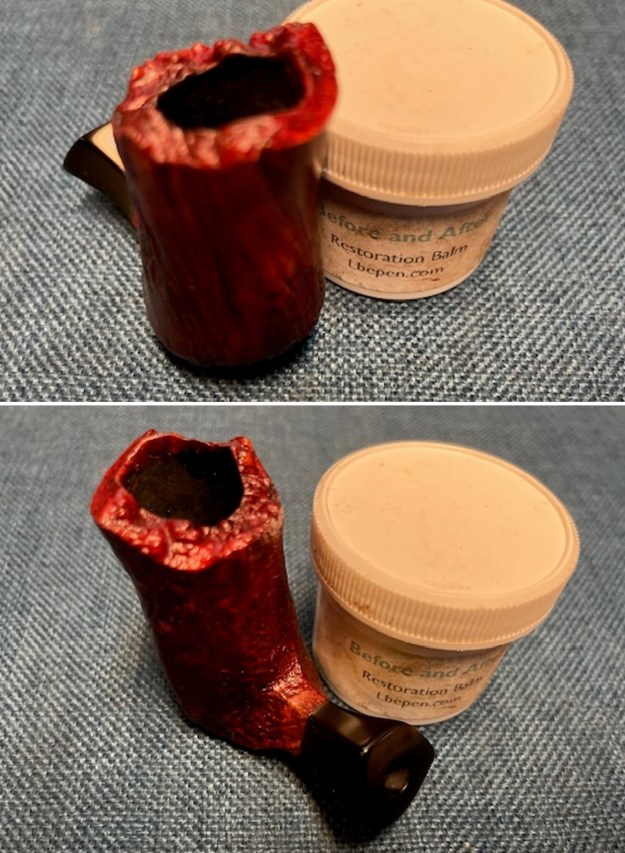
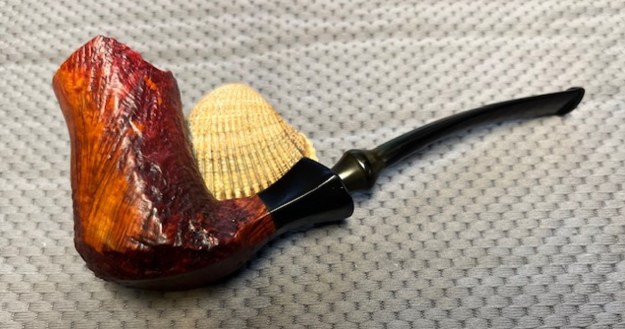
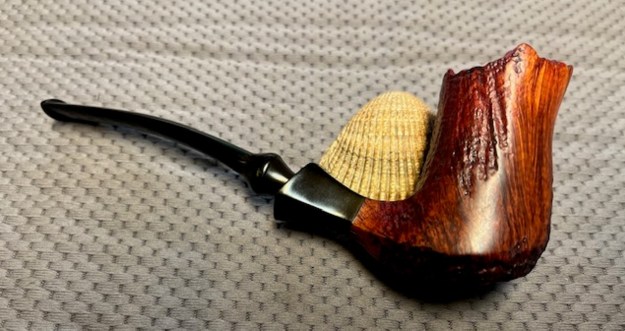
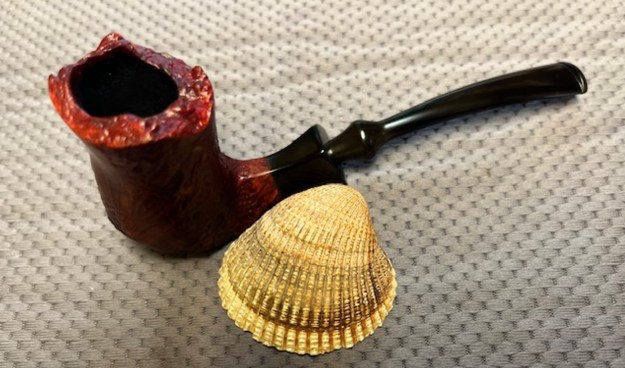
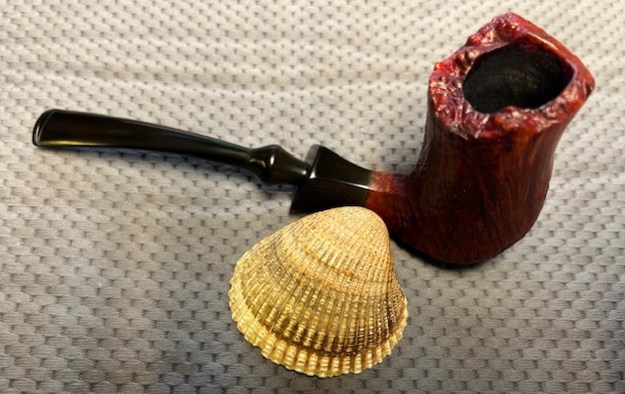
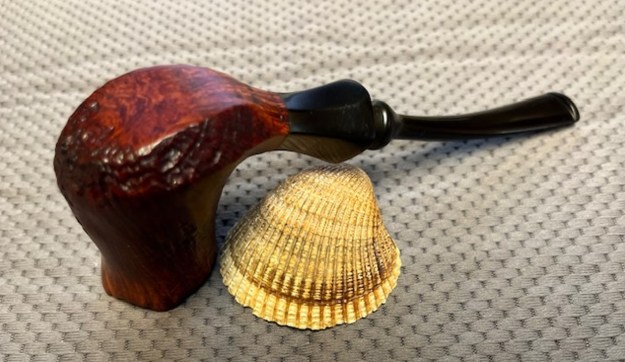
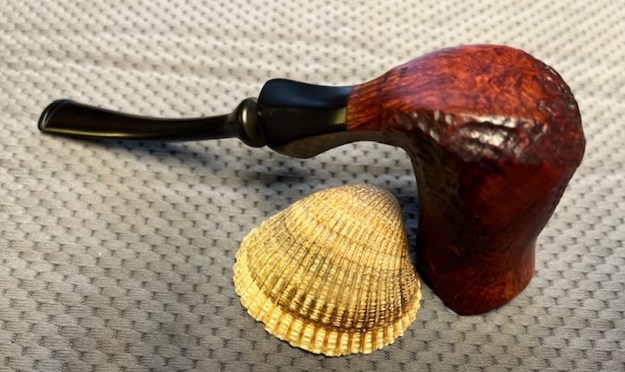
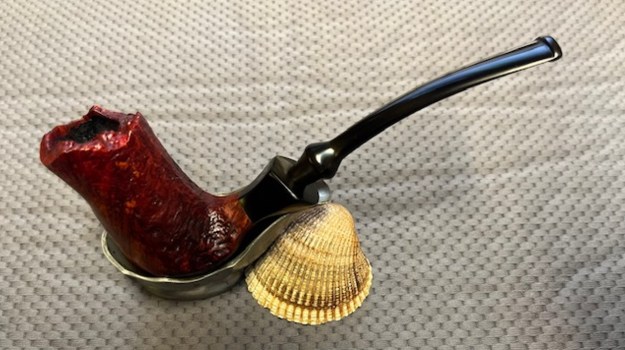
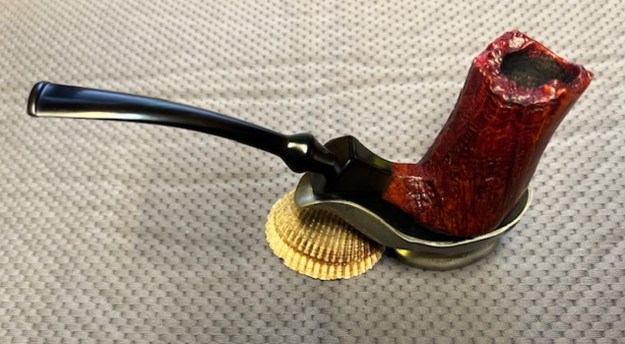
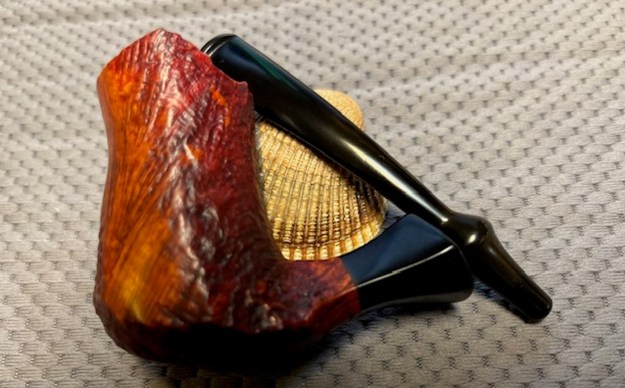
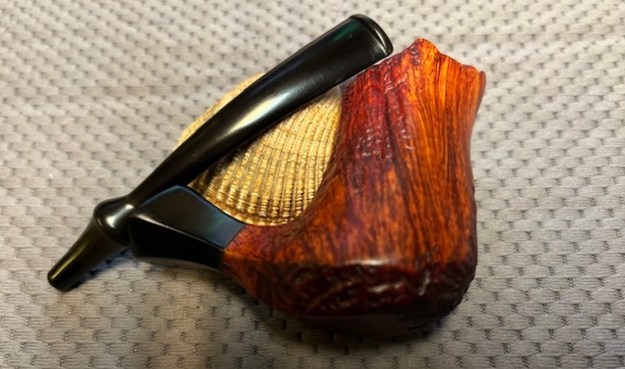
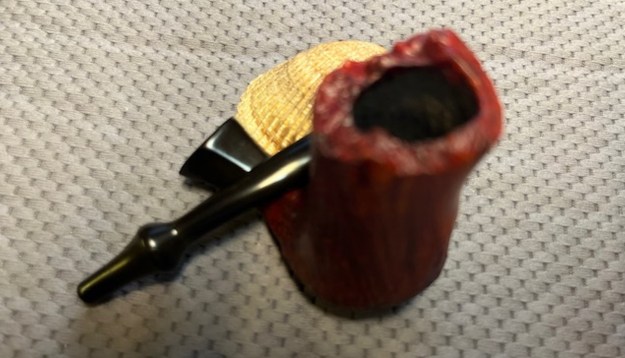
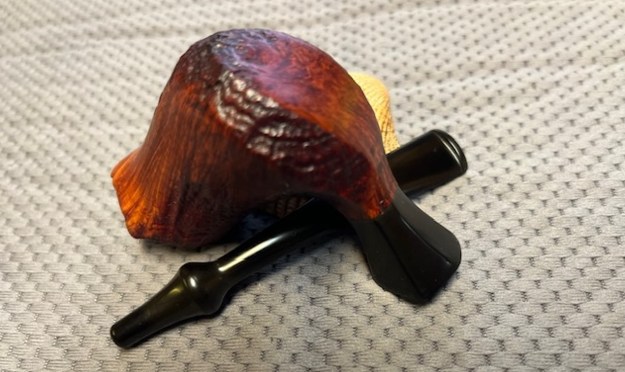
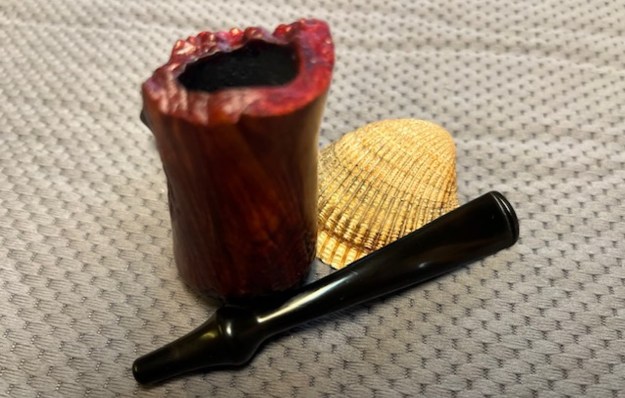
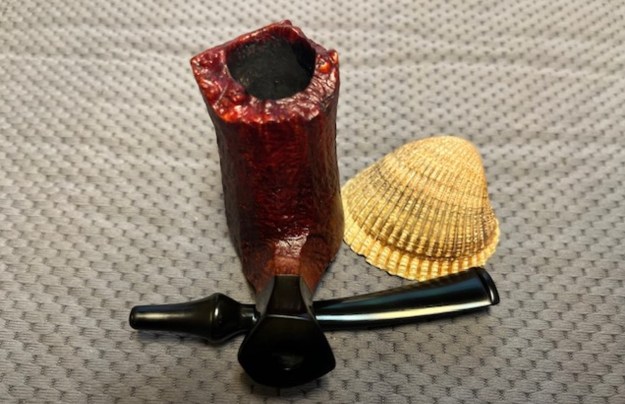
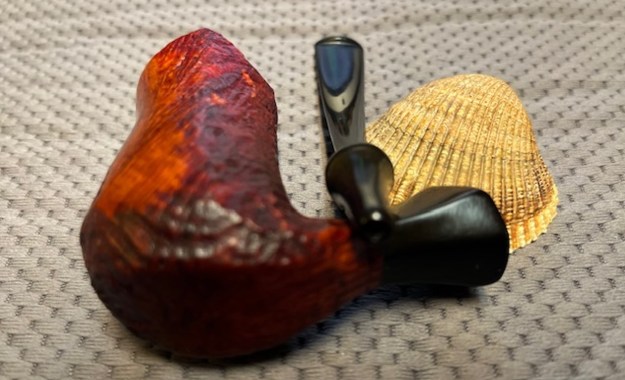
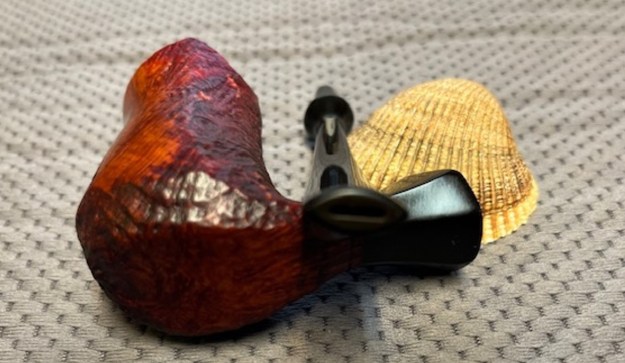
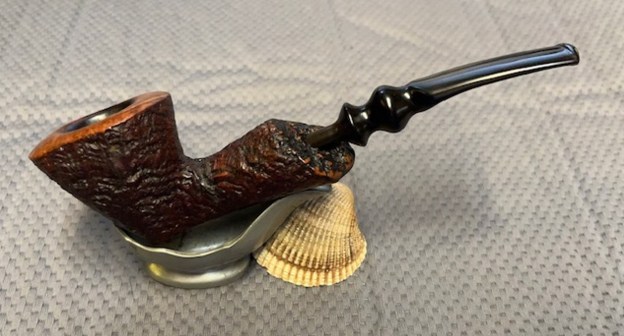
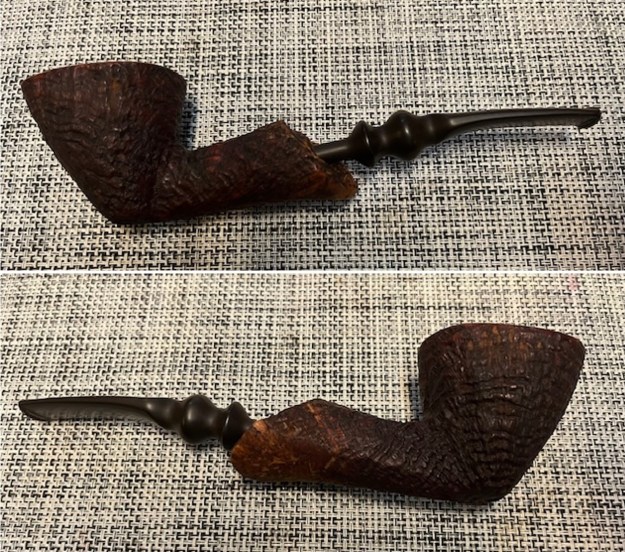
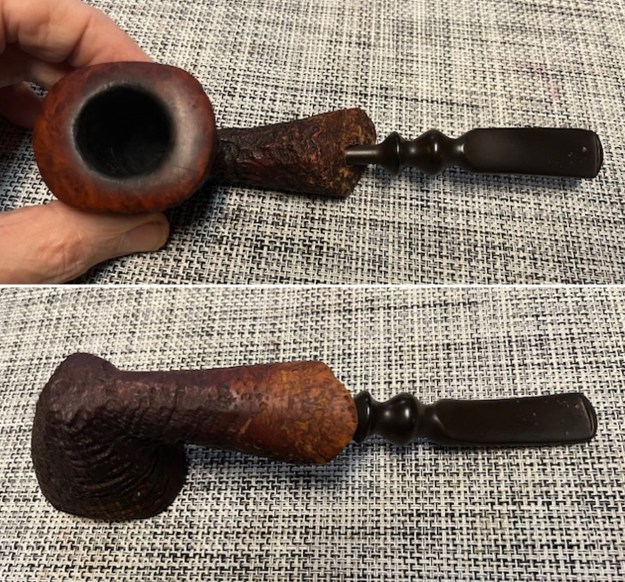
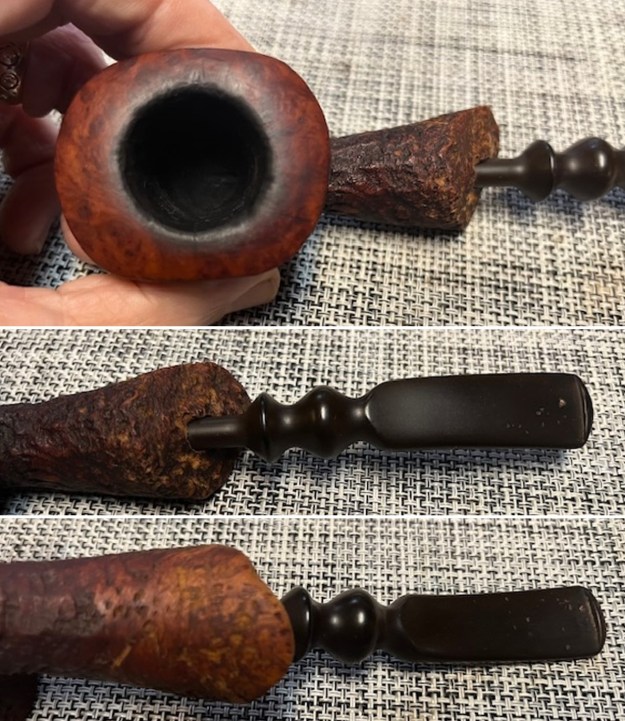
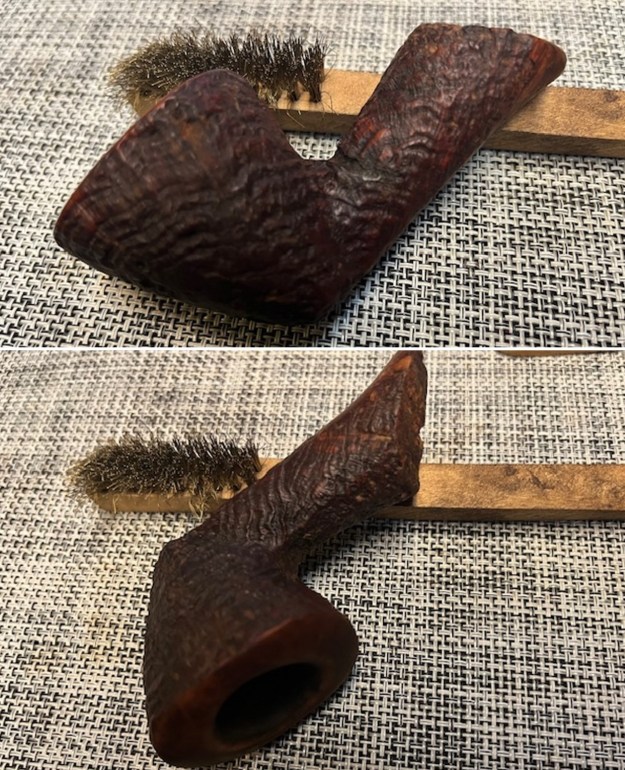
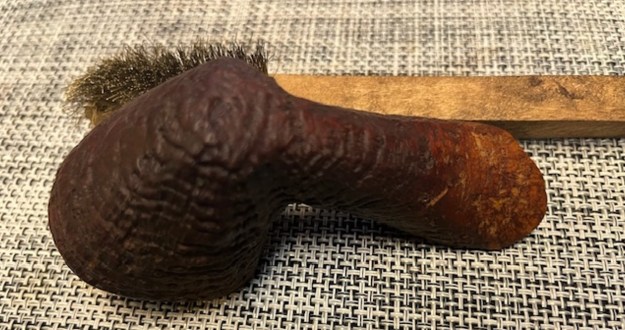
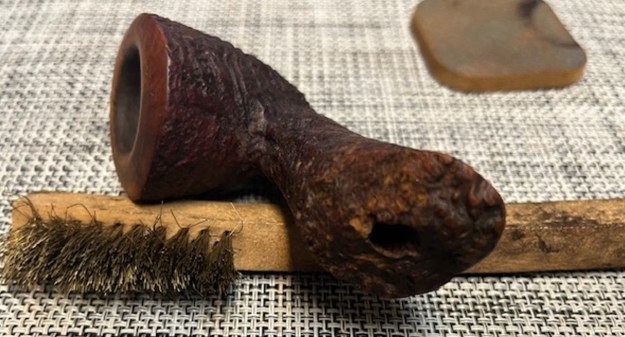
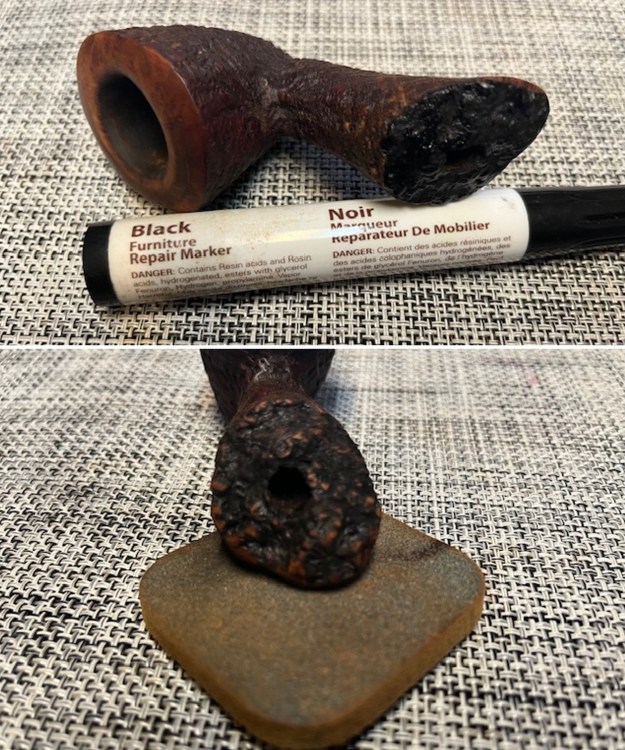
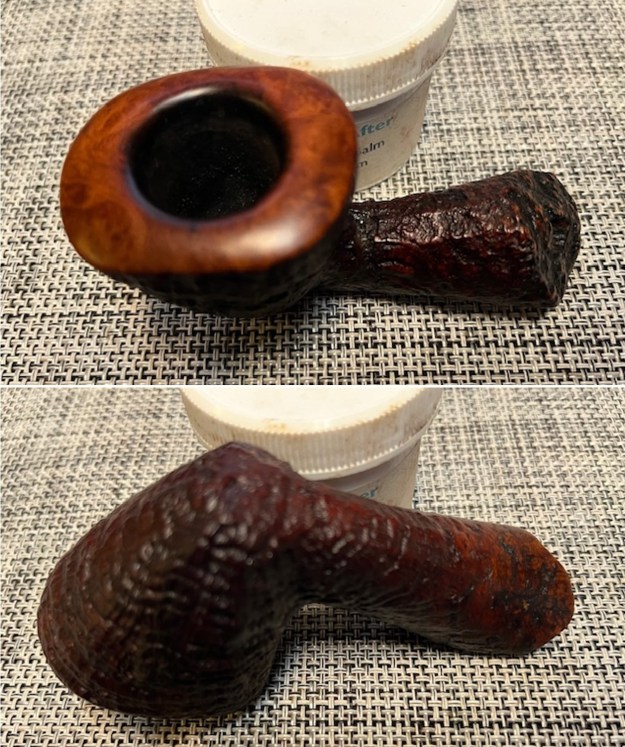
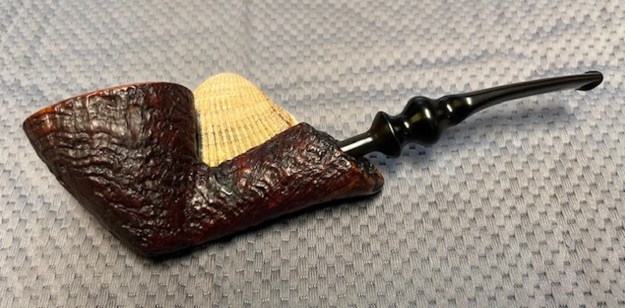
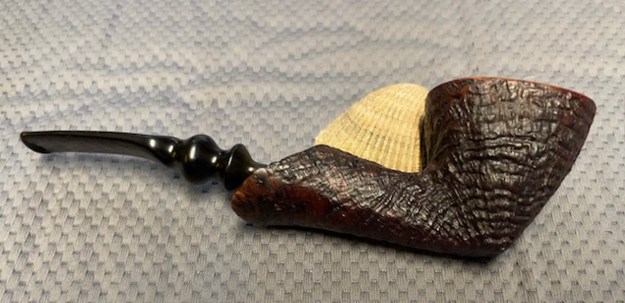
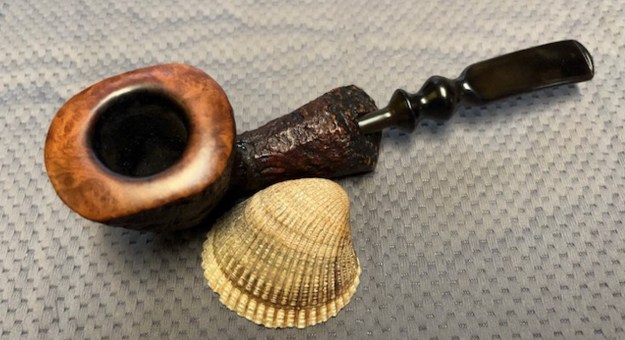
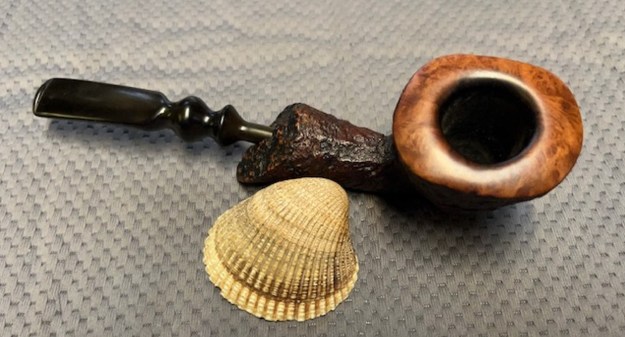
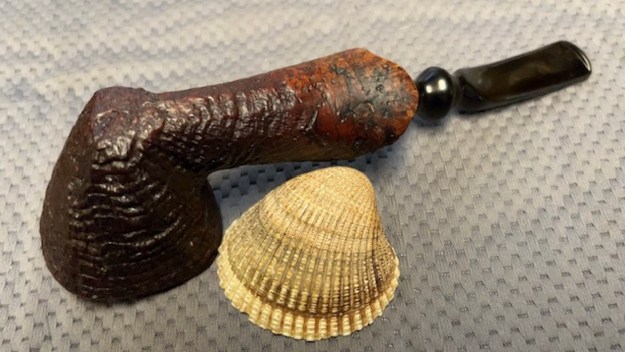
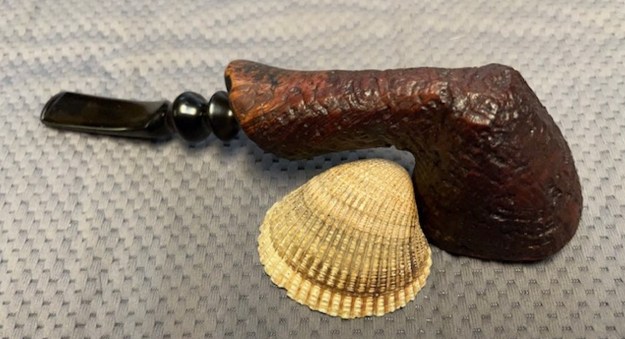
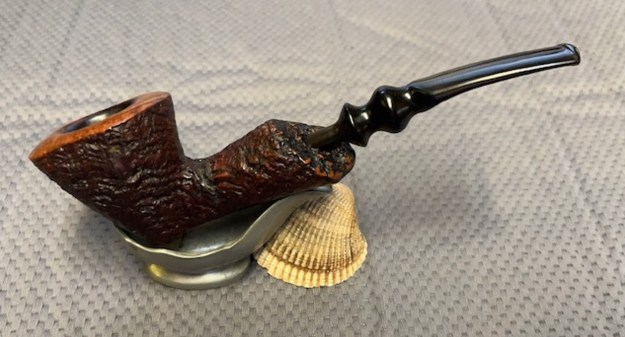
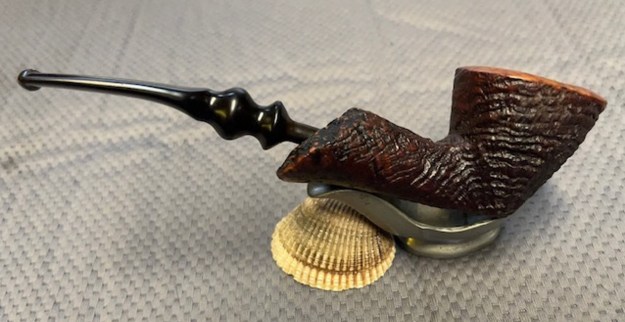
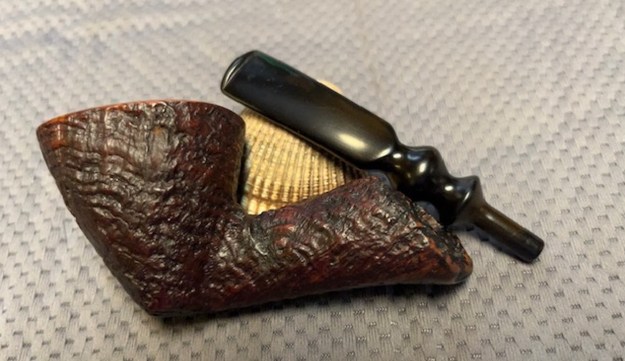
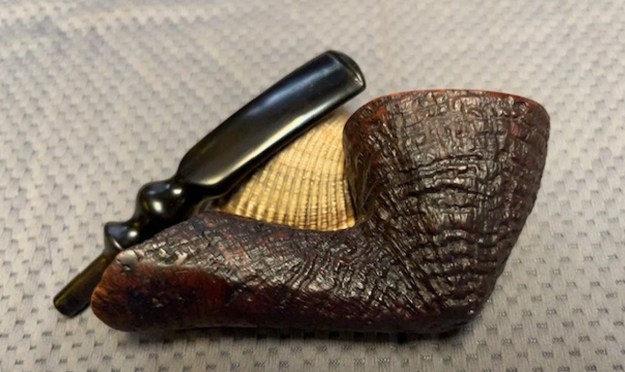
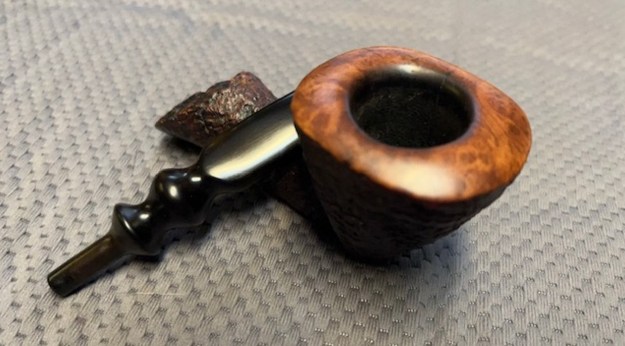
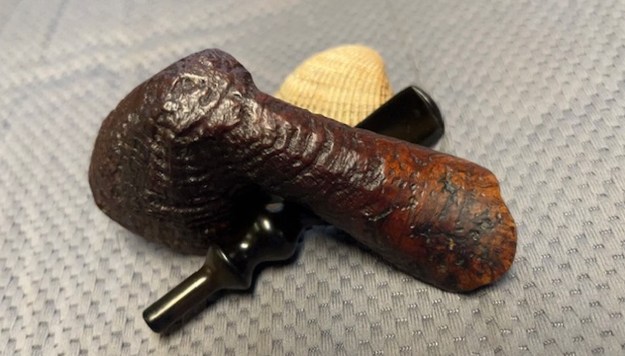
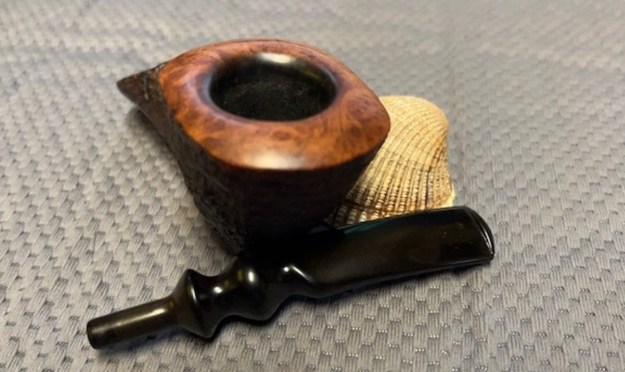
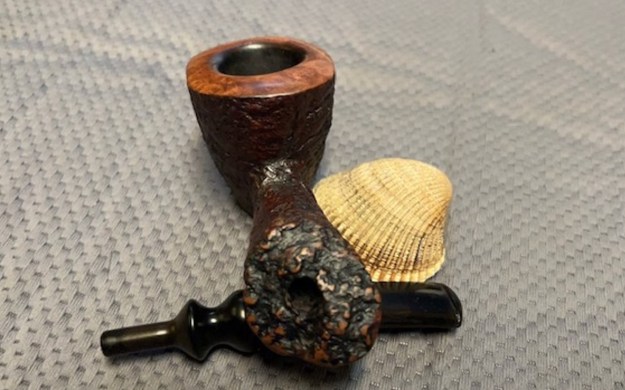
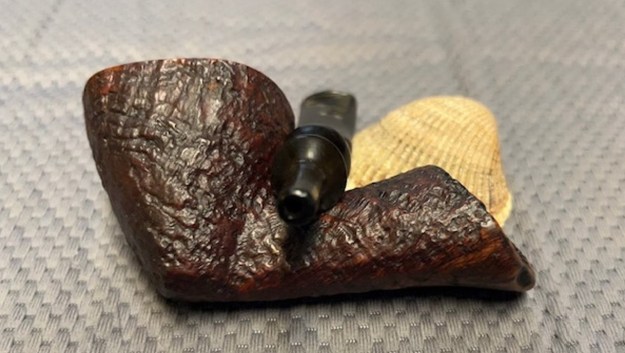
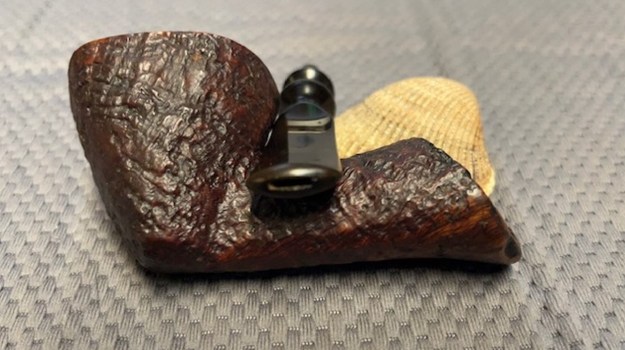
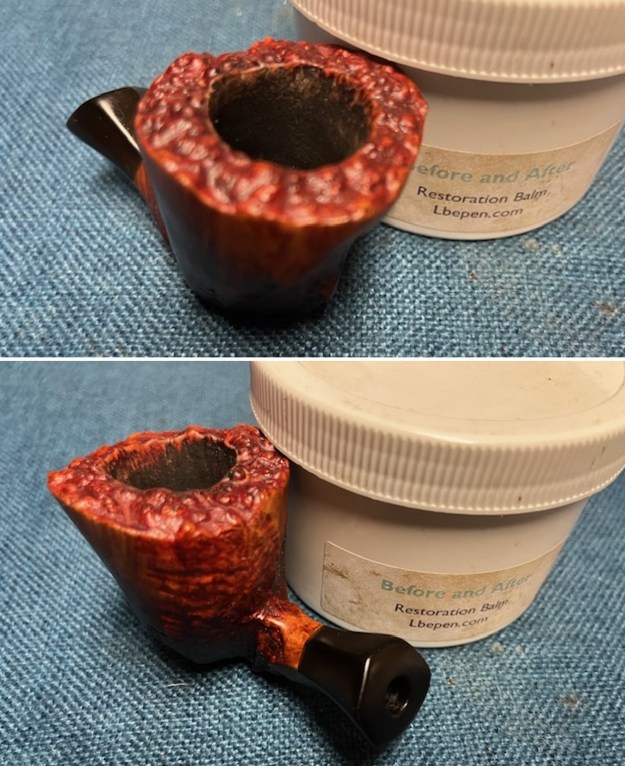 This newly restemmed Frasorteret Hand Made in Denmark Freehand is a great looking pipe with some interesting shaping around the sides of the bowl and vulcanite shank extension. You can easily see the handiwork of Preben Holm in the shaping of the pipe. The beautiful grain around the smooth portions and sandblast on the other portions of the bowl is quite stunning and works well with both the shape and the polished vulcanite shank extension and the fancy vulcanite saddle stem. I put the new stem back on the bowl and carefully buffed the pipe with Blue Diamond on the buffing wheel using a light touch on the briar. I gave the bowl and the stem multiple coats of carnauba wax on the wheel and followed by buffing the pipe with a clean buffing pad. I hand buffed the pipe with a microfiber cloth to deepen the shine. The finished Preben Holm Hand Made Frasortert Freehand fits nicely in the hand and feels great. Give the finished pipe a look in the photos below. The dimensions of the pipe are Length: 6 inches, Height: 2 ¼ inches, Outside diameter of the bowl: 1 ¾ inches, Chamber diameter: 1 inch. The weight of the pipe is 49 grams/1.69 ounces. I will be putting it on the rebornpipes store in the Danish Pipemakers Section shortly. If you wish to add this interesting pipe to your rack it is a great addition. Send me a message or an email. Thanks for reading this blog and my reflections on the pipe while I worked on it. I appreciate your support and time!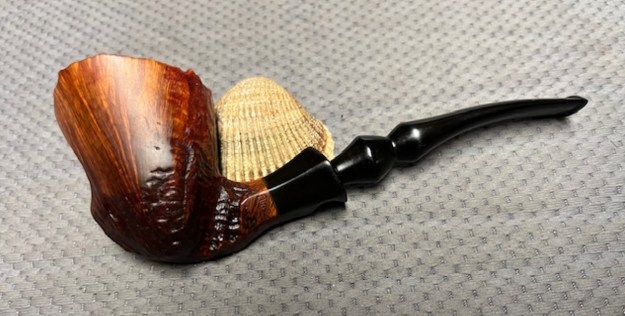


 rebornpipes