by Steve Laug
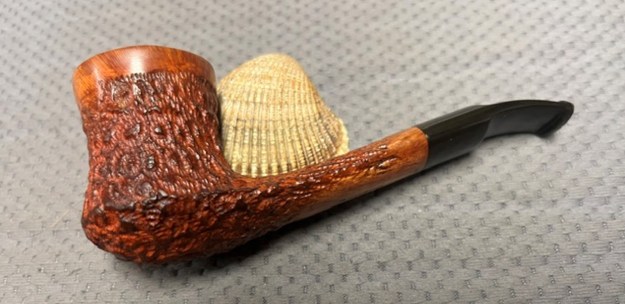
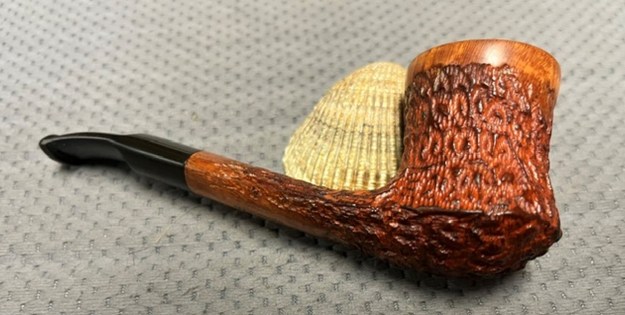
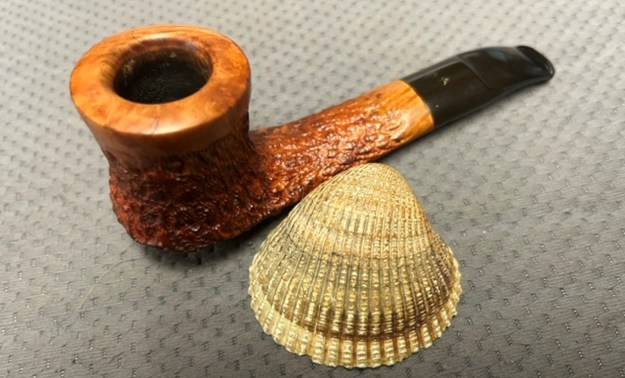
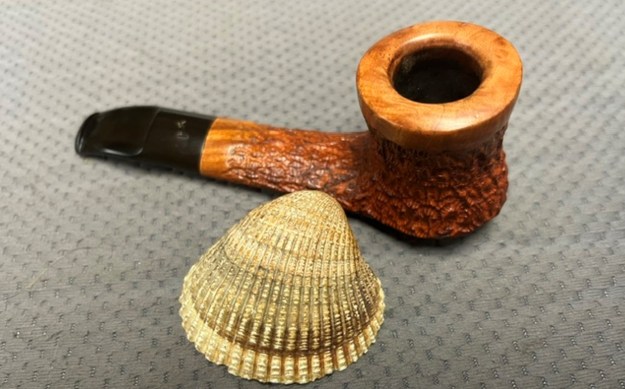
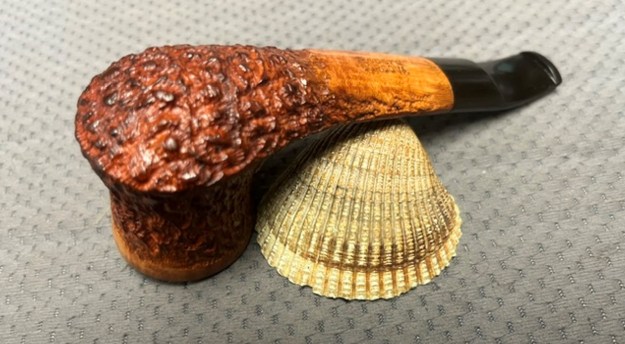
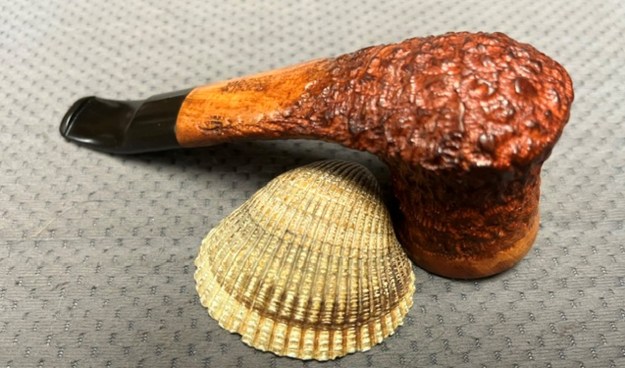
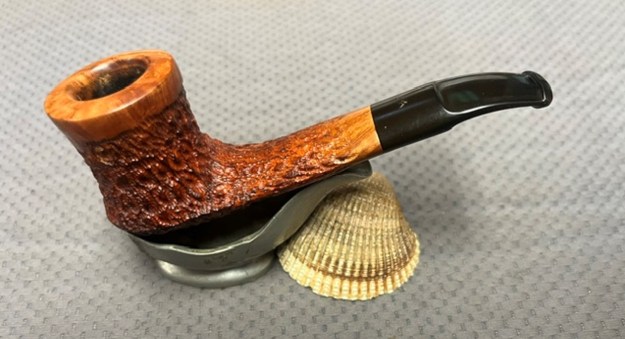
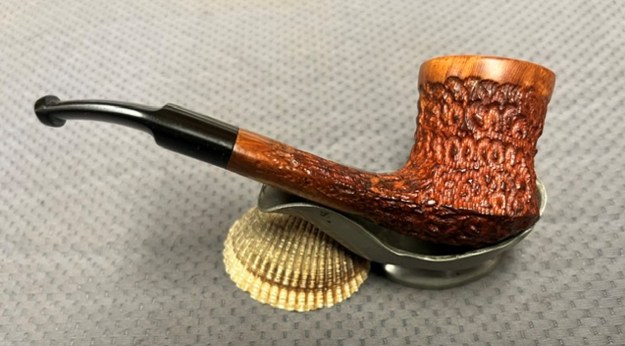
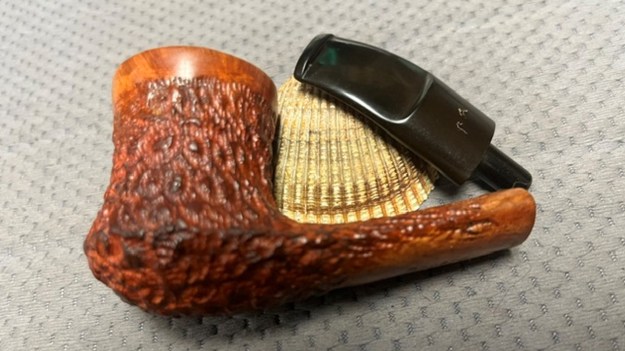
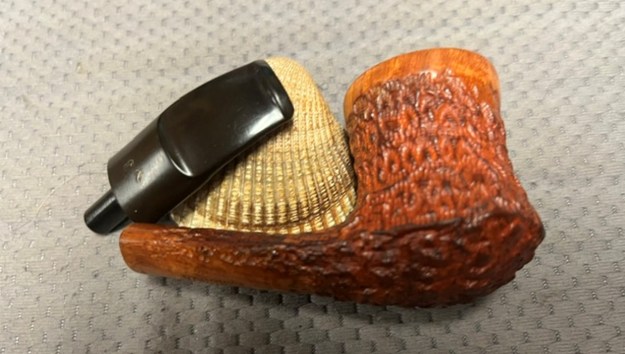
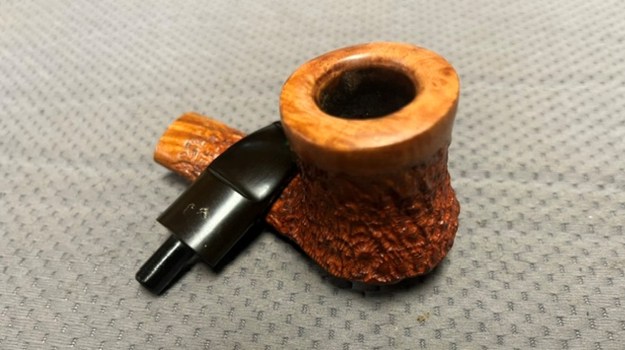
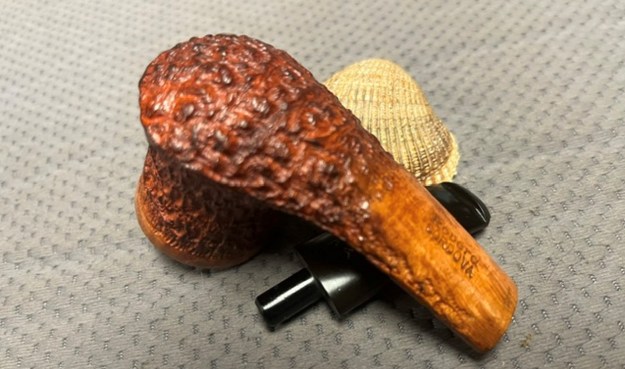
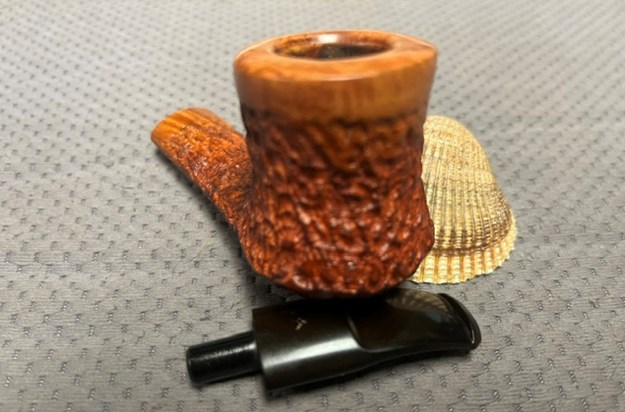
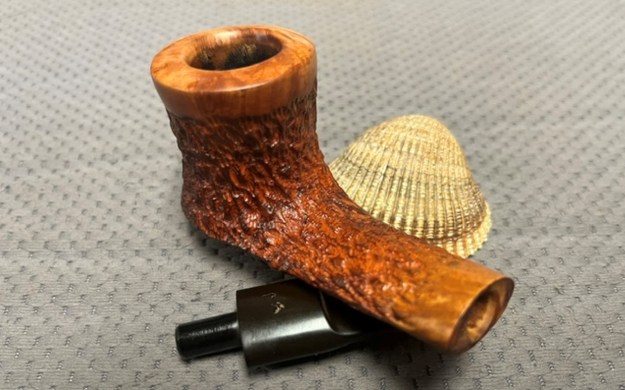
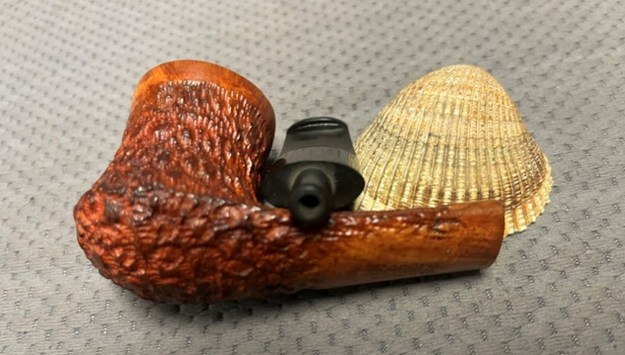
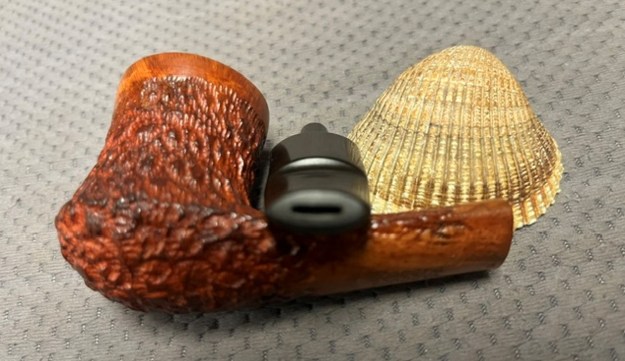
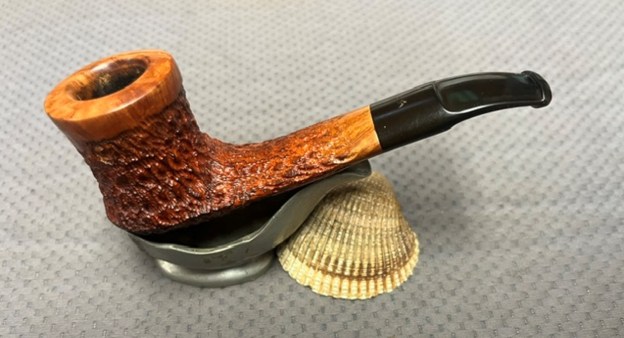
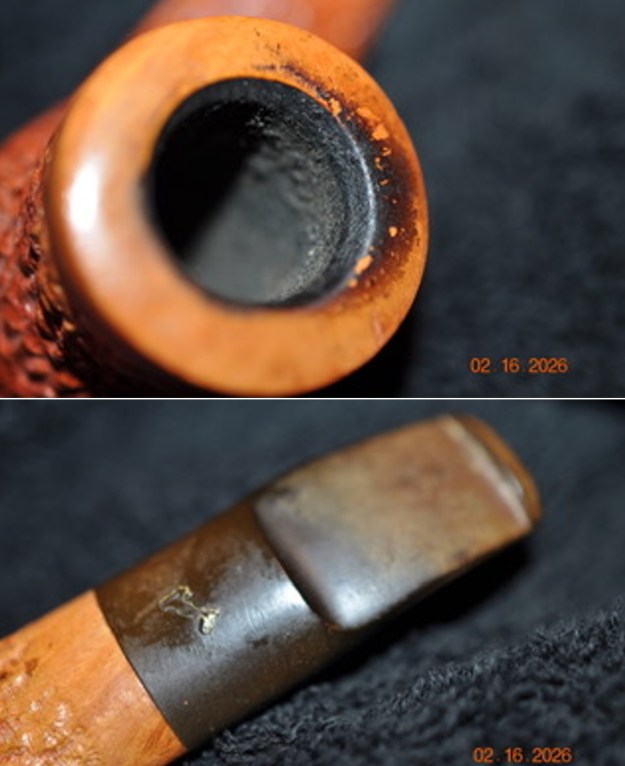
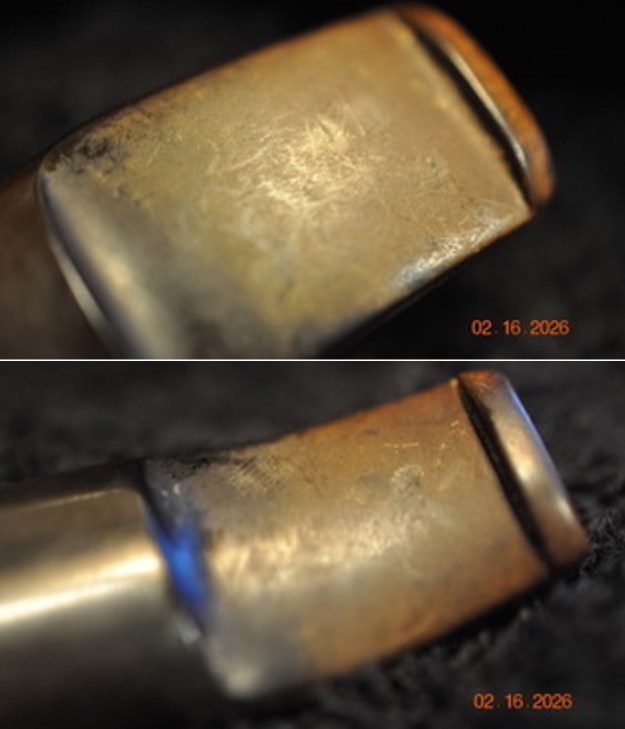
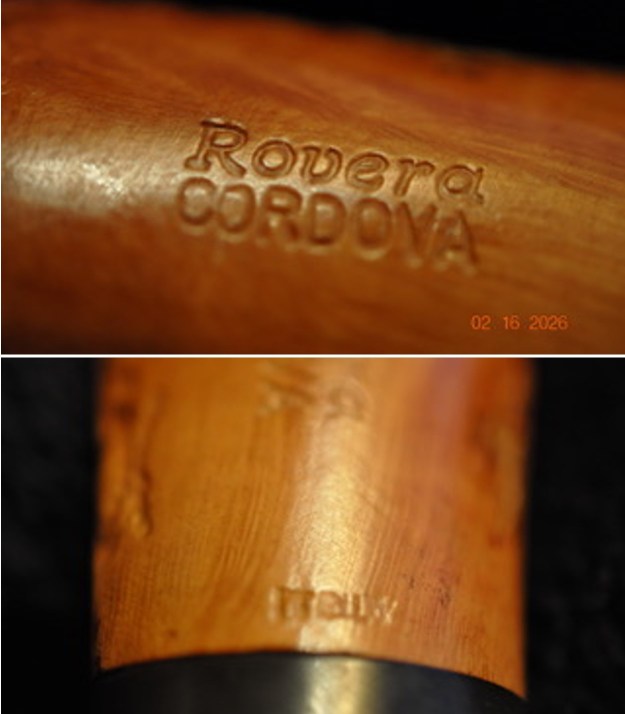
This rusticated finished bowl with a short saddle stem was purchased on 01/20/2026 from a Facebook seller in Quaker Town, Pennsylvania, USA. It is a great oval shank Cherrywood like Sitter with a rich brown rusticated finish on the bowl and shank. The stem is a vulcanite saddle stem. The bowl is stained with a mix of browns that highlight the grain around the bowl and shank. It has a smooth rim top and ring around the bowl and shank end. It is stamped on the underside of the shank and reads Rovera [over] Cordova. On the shank end next to the stem/shank junction and is stamped Italy. The bowl had a thick cake and some tobacco debris on the walls. There was an overflow of lava on the rim top that was heavier toward the back of the bowl. There was grime ground into the finish which left the finish looking quite dull. The vulcanite saddle stem has a map of Italy in gold on the top of the saddle. There was some light oxidation on the surface and some light tooth marks and chatter on both sides of the stem ahead of the button. Jeff took photos of the pipe before he started his work on it. 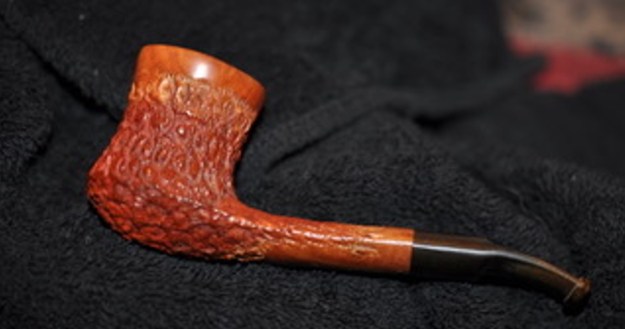
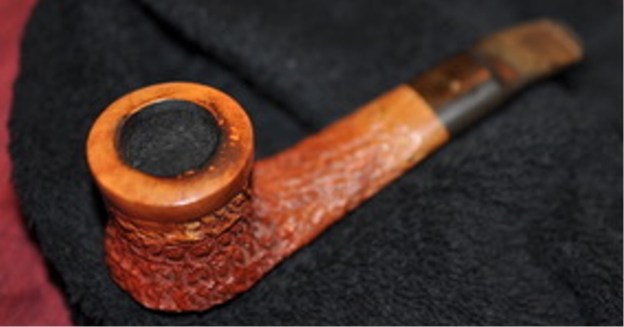 He took a photo of the rim top and bowl to show the current condition. The inner edge and the rim top showed darkening and spots of lava as mentioned above. The photos of the bowl show the cake on the walls. The stem photos show the oxidation and light marks on the rim top on both sides.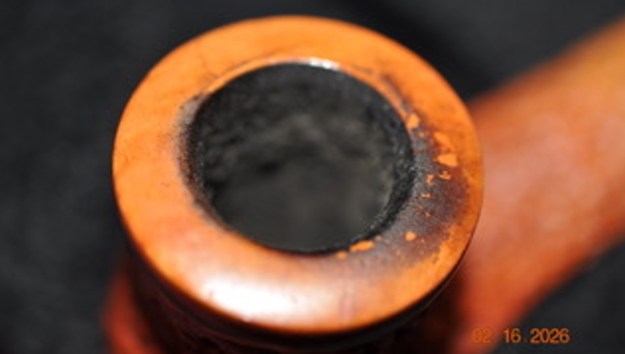
 Jeff took photos of the sides and heel of the bowl to give a sense of the condition of the bowl and the grain around the bowl.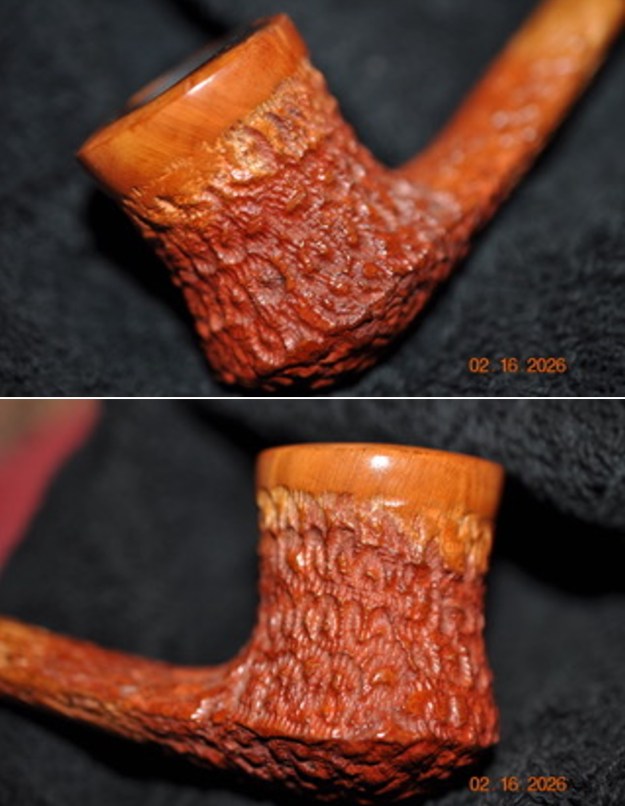
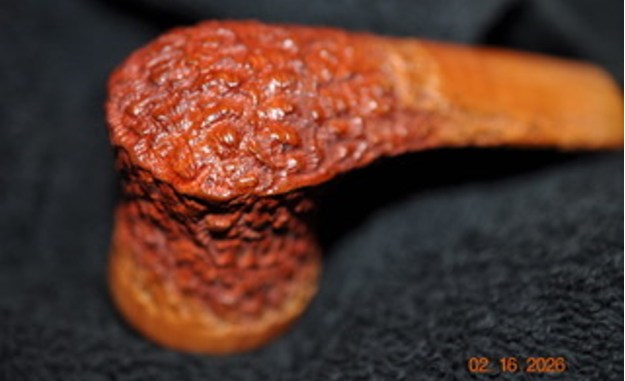 He took photos of the underside of the shank to capture the stamping. They were clear and readable as noted above.
 Before I started working on the pipe I did a bit digging into the brand. I turned first to Pipephil’s site (http://www.pipephil.eu/logos/en/logo-r5.html). The information in the screen capture below shows the same stamped logo as on this pipe in the second pipe pictured below. I included the side bar information below the screen capture below.
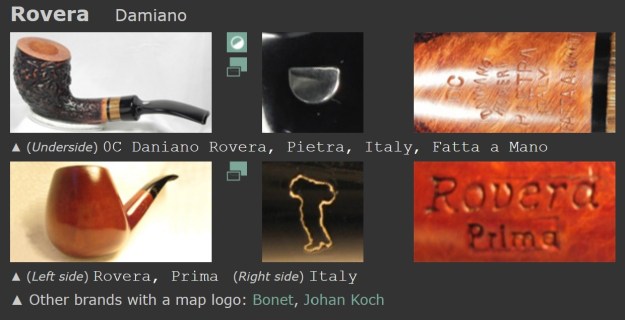 Artisan: Damiano Rovera is the son of Dorielo (See also Ardor and Angelo).
From there I turned to various entries on the Rover on Pipedia. I found some information on the listing for Roverart (https://pipedia.org/wiki/Roverart). I have included some information found there and also a great advertising flyer that I have included.
RoverArt pipes are made by Dorelio and Damiano Rovera, makers of the Ardor line, at a rate of approximately 500-800 pipes a year.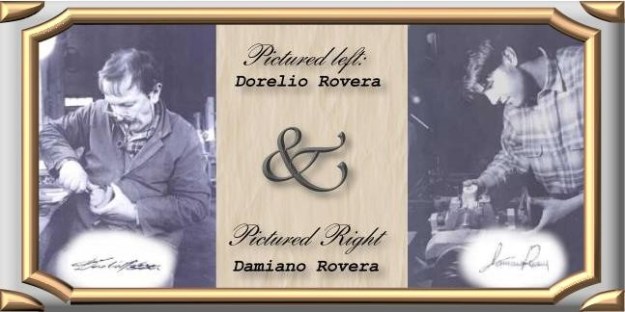 Courtesy Doug Valitchka
They are available in seven different styles, including the Armony, finished with a light walnut stain, the Sinfony, finished in dark mahogany, the Ricciolo, with carved curls, the Ritmica, a rusticated pipe with red accents, the Tuba, a carved pipe with a bamboo shank, the Sax, a rusticated black pipe with a screw in bowl, and the Cornetta, a large horn with a briar shank. The Roverart line contains some of the less conventional pipes made by the Roveras. For more information see Ardor.
This is an interesting family of pipemakers. Take time to read about them. I am sure there is more available but now it is time to work on the pipe.
Now it was time to work on the pipe. Since Jeff always follows the same pattern of work in his cleanup we do not include photos but rather a simple summary. Jeff reamed the bowl with a PipNet pipe reamer and followed up with a Savinelli Fitsall pipe knife to remove the cake. He scrubbed out the mortise and the airway in the shank and the stem with alcohol, cotton swabs, shank brushes and pipe cleaners. He scrubbed the exterior of the bowl, rim, shank and stem with a tooth brush and Murphy’s Oil Soap to remove the oils and tars on the rim and the grime on the finish of the bowl. He rinsed it under running water. He dried it off with a soft cloth. He was able to remove the spotty lava build up on the rim top and you could see the marks on the top and edges of the rim. He soaked it in Briarville’s Pipe Stem Deoxidizer and rinsed it with warm water to rinse off the residue. The stem was clean and the oxidation was gone. I took photos of what the pipe looked like when I brought to my worktable.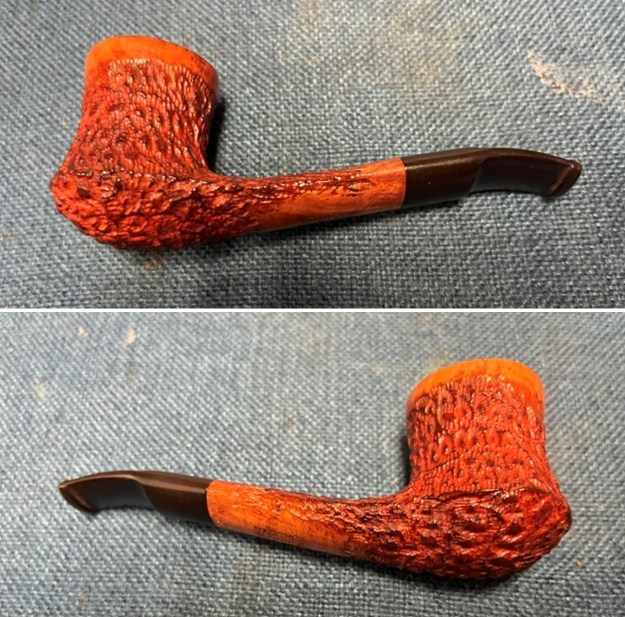
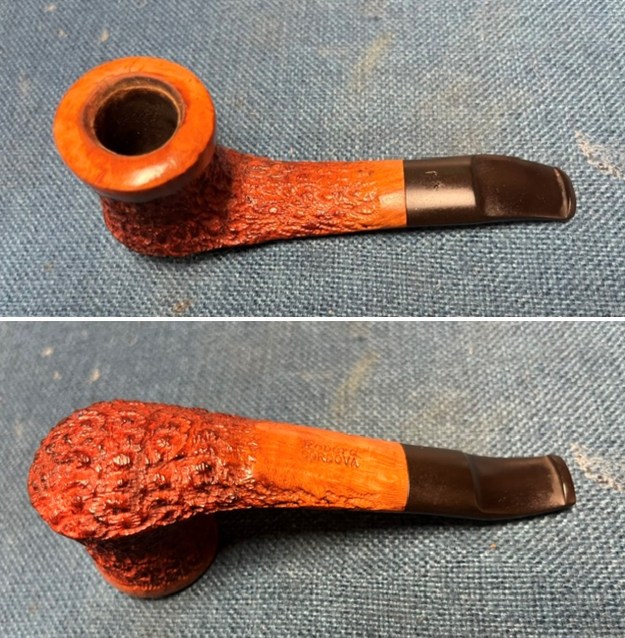 I took close up photos of the bowl, rim top and stem to show how clean the pipe was. The bowl was clean and the rim top and the inner edge looked good. There was some darkening in spot on the rim top and the inner edge was also darkened. The stem was clean and there were light tooth marks on the top and underside of the stem.
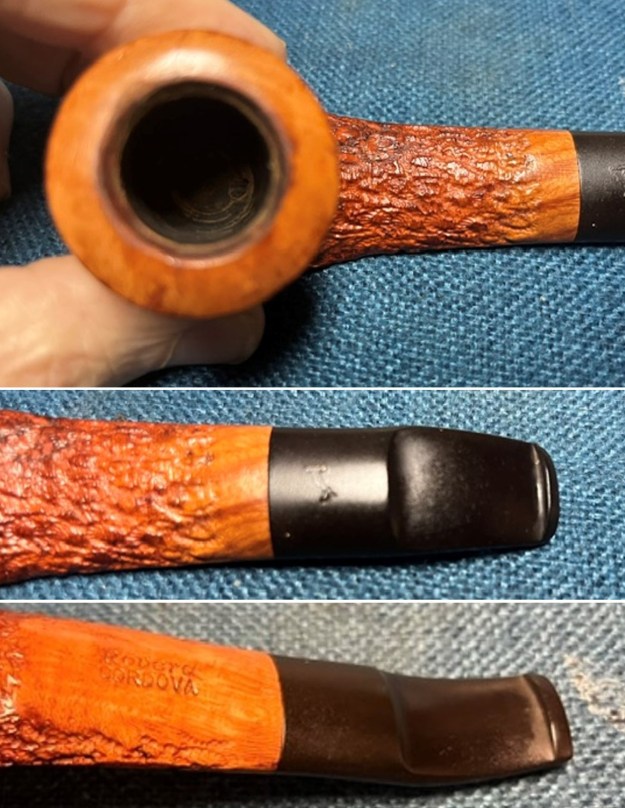 I took a photo of the stamping on the underside of the shank. It is clear and readable and read as noted above. I also removed the stem from the shank and took photos of the pipe to show the look of the parts.
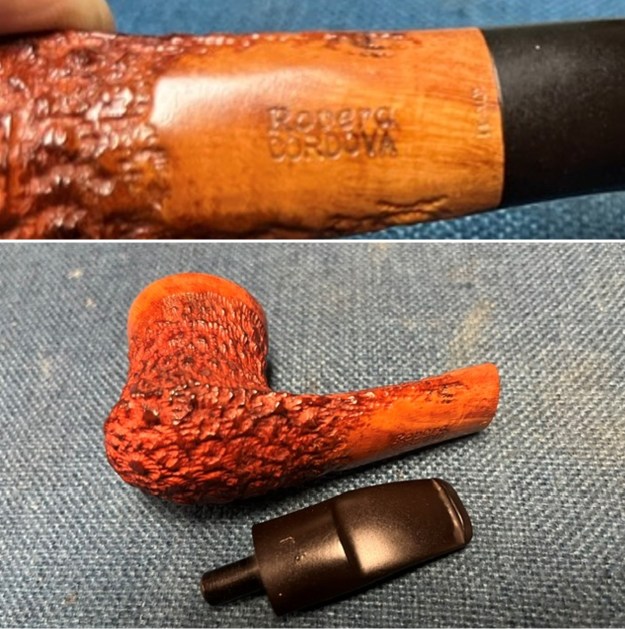 I worked on the inner bevelled edge and rim top with a folded piece of 220 grit sandpaper. I was able to remove the darkening on both. It is looking much better.
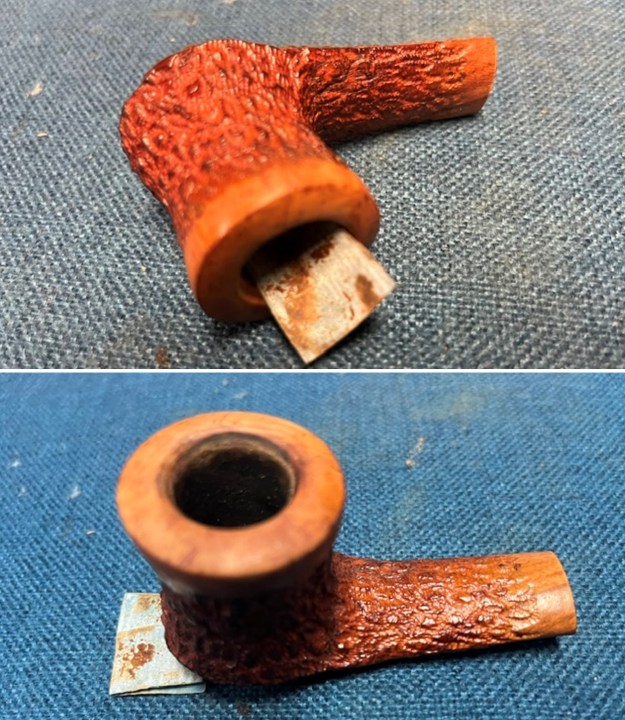 I sanded the edge and rim top with 320-3500 grit 2×2 inch sanding pads. I wiped it down with a damp cloth after each pad to remove the sanding debris. It began to look very good.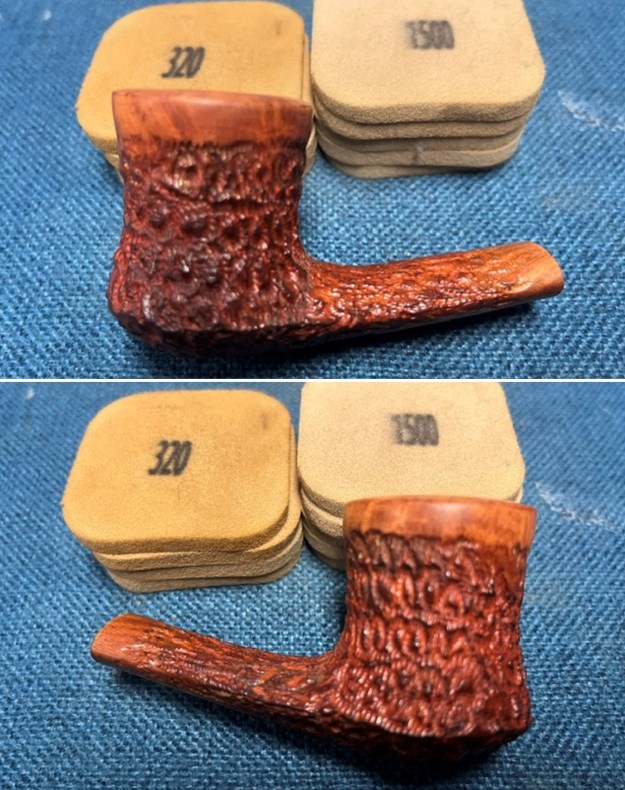
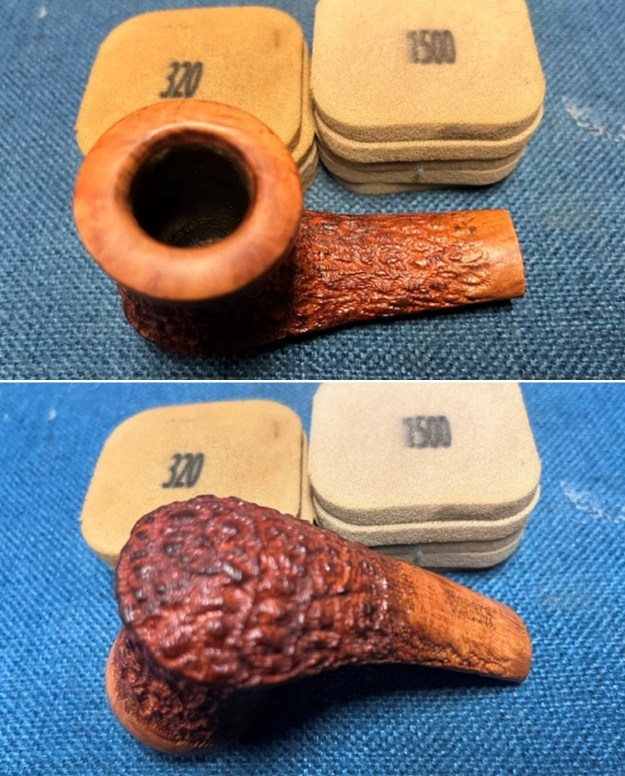 I polished the smooth rim top and ring around the bowl top and shank end with micromesh sanding pads – 1500-12000 grit sanding pads. I wiped the bowl surface down with a damp cloth after each sanding pad to remove the sanding dust. Once I finished the exterior of the briar was clean and the grain really stood out.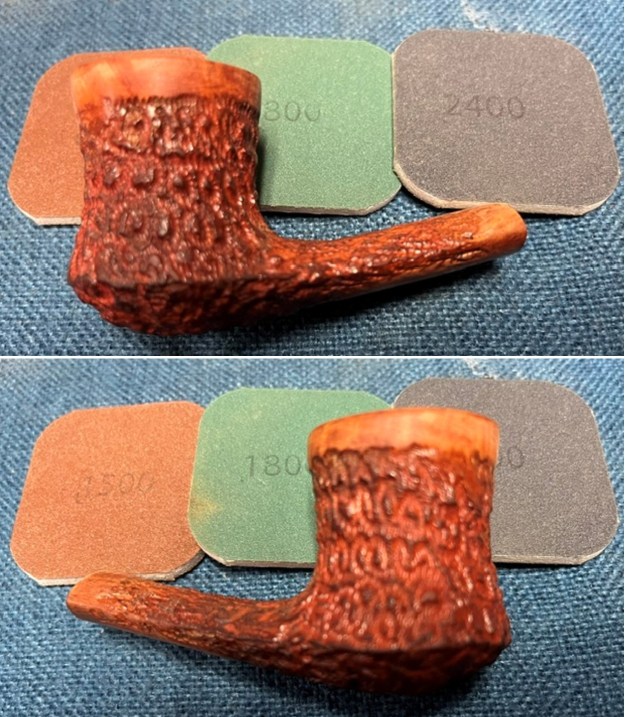
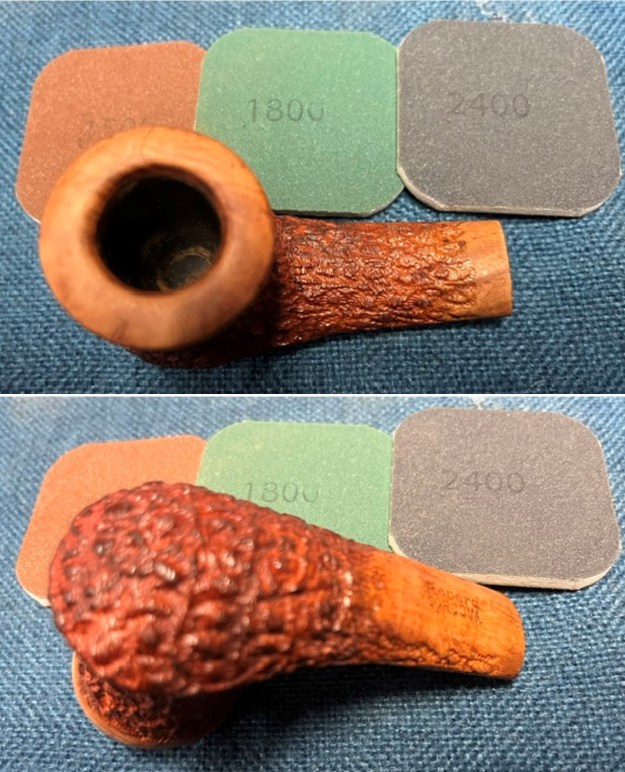
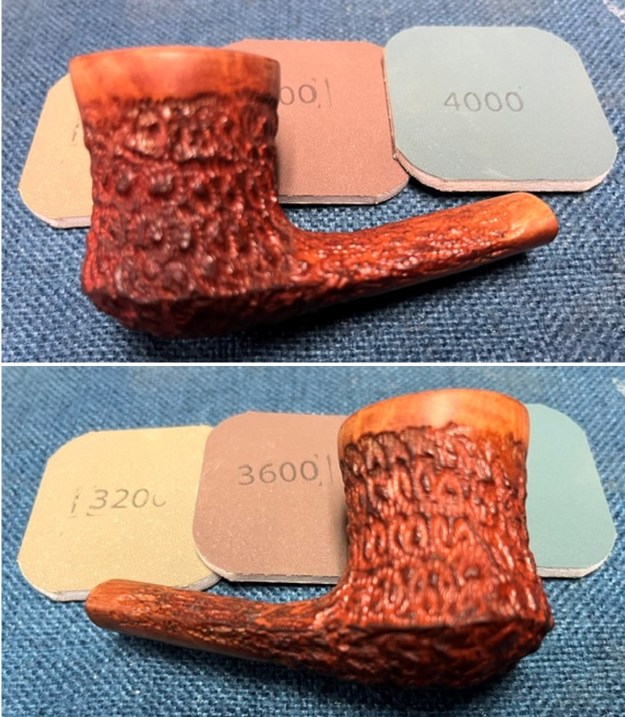
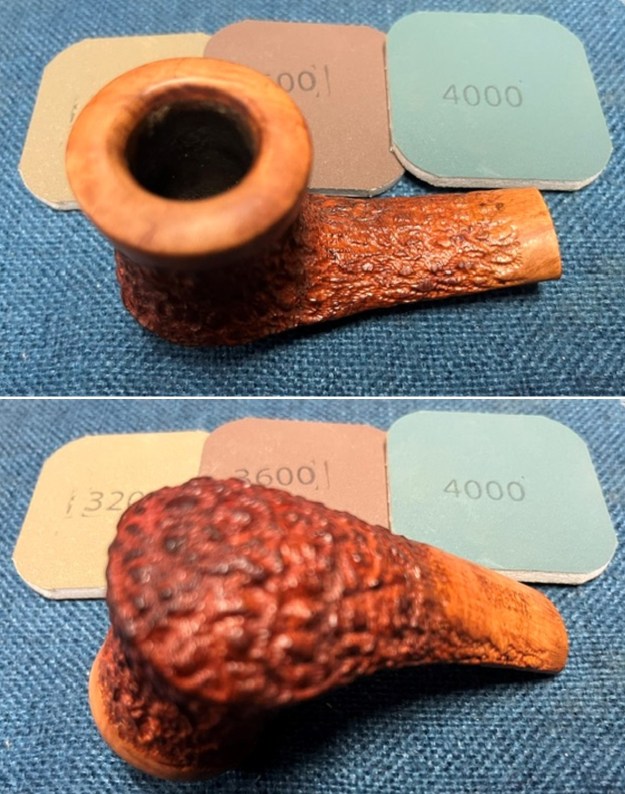
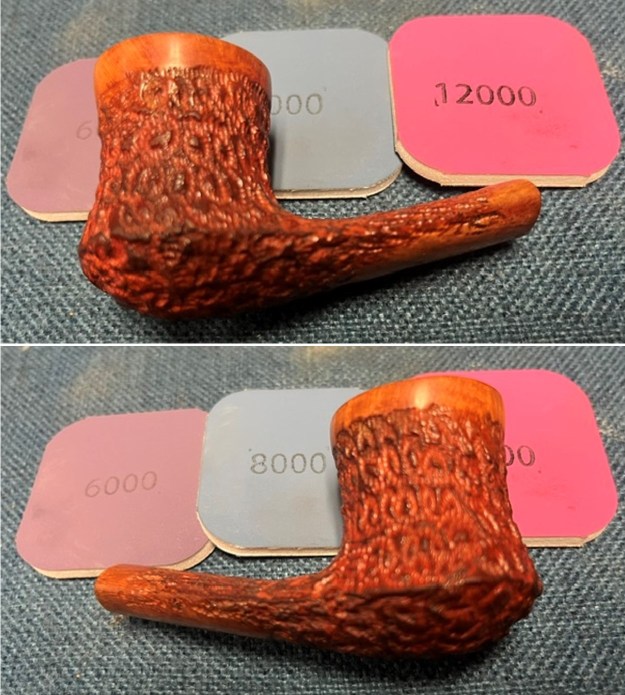
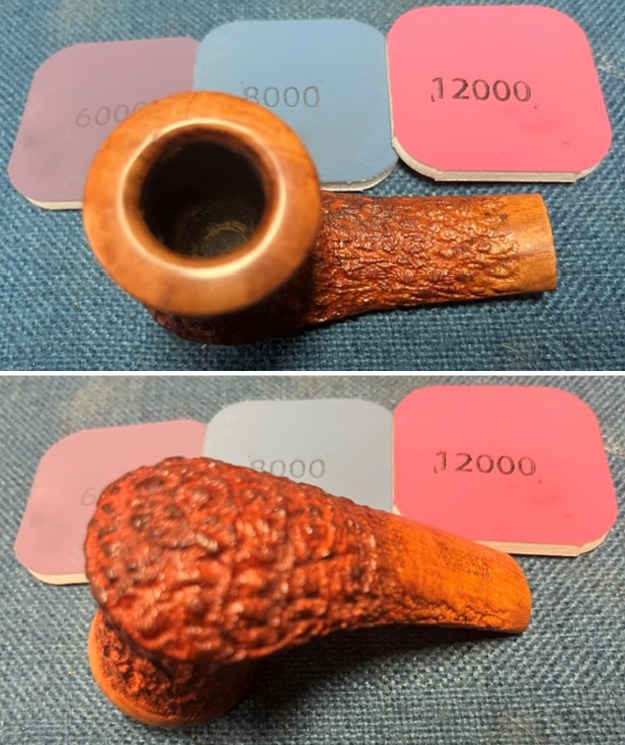 I worked some Before & After Restoration Balm into the surface of the briar with my fingertips to clean, enliven and protect the briar. I let the balm sit for 15 minutes and then buffed with a cotton cloth to raise the shine. The photos show the bowl at this point in the restoration process.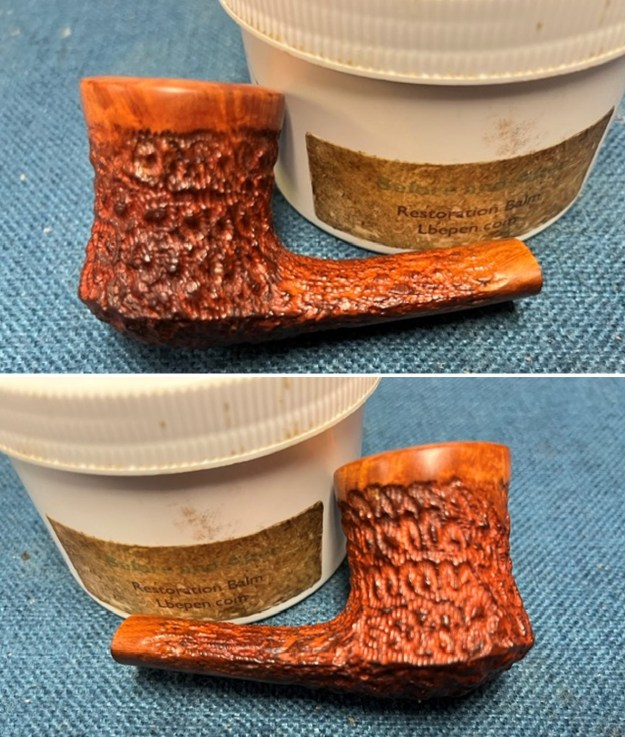
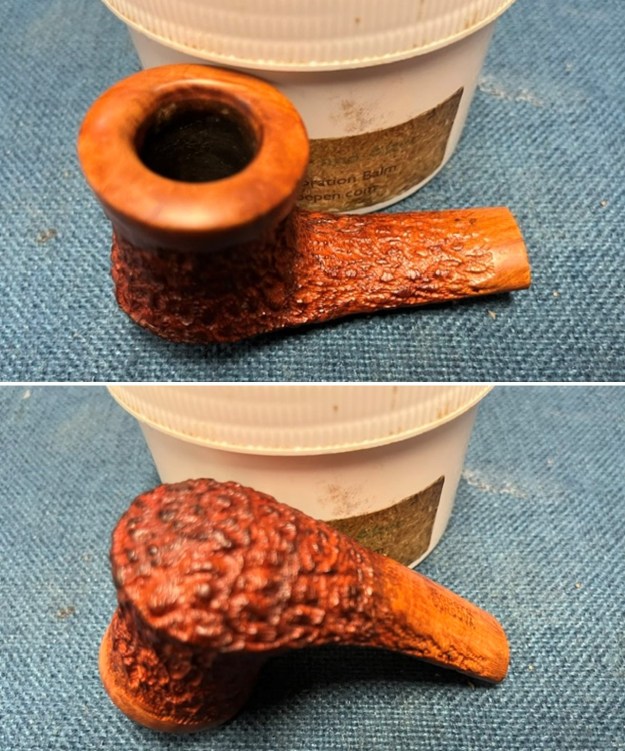
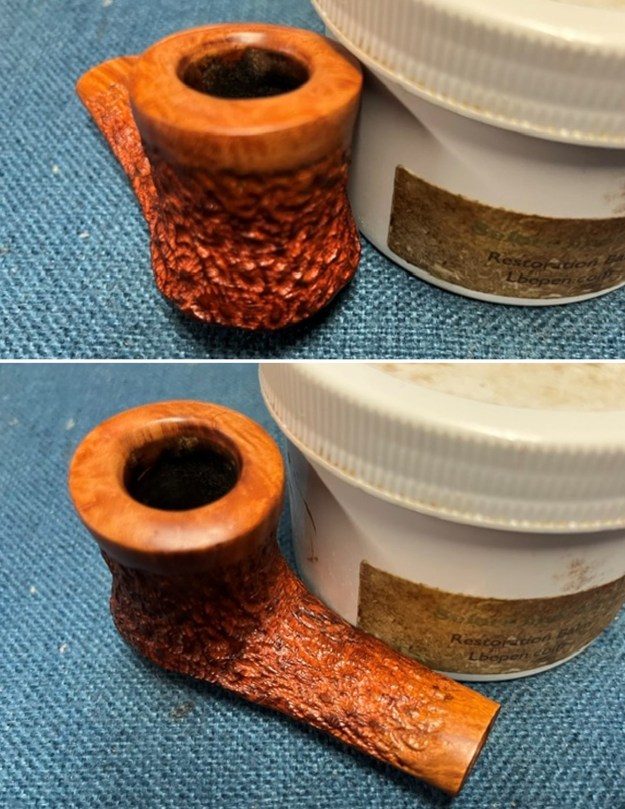 The stem was clean and ready to work on. I set the bowl aside and touched up the stamp on the topside of the saddle. It was a map of Italy. I worked the Rub’n Buff Antique Gold into the stamp and polished off the excess.
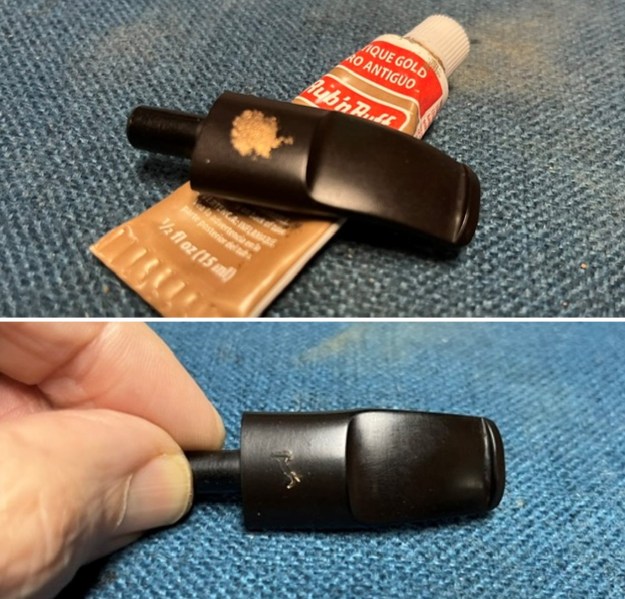 I sanded the stem with 320-3500 grit 2×2 inch sanding pads. I carefully avoided the stamping as I did not want to damage it. I wiped the stem down with an Obsidian Oil cloth to wipe of the sanding debris.
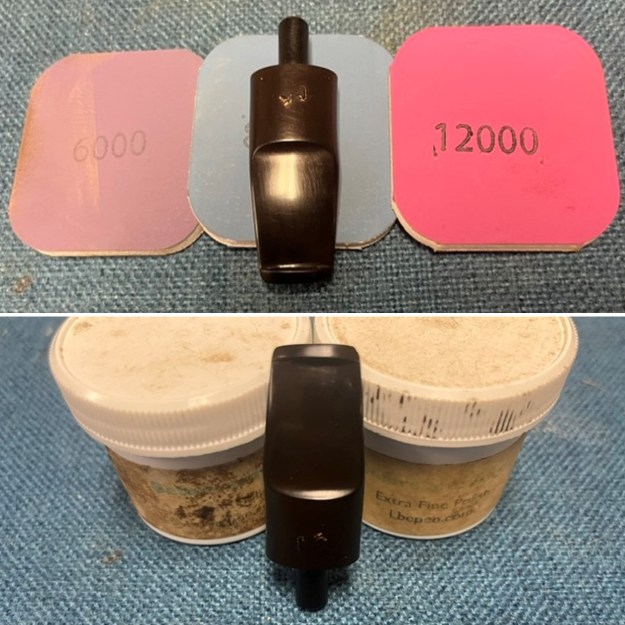
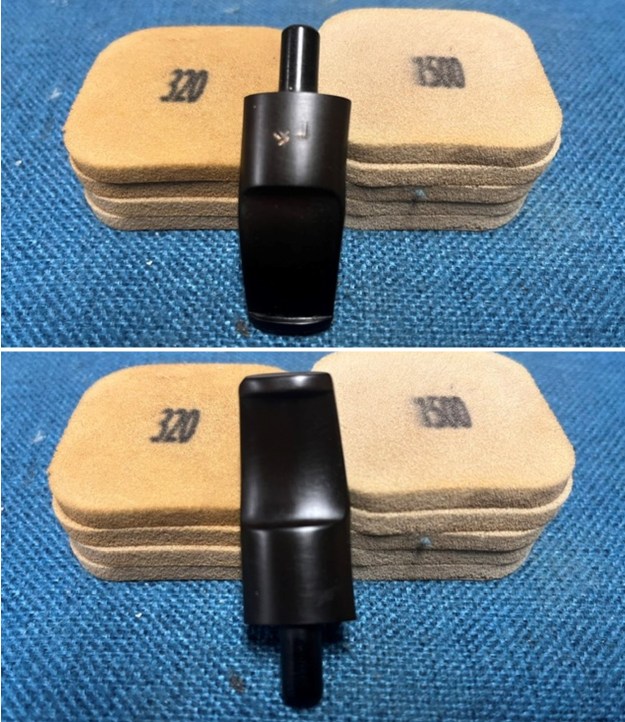 I set the bowl aside and turned to the stem. I polished the stem with micromesh sanding pads – wet sanding with 1500-12000 grit pads. I wiped the stem down after each sanding pad with Obsidian Oil. I polished it with Before & After Pipe Stem Polish – both Fine and Extra Fine. Once I had finished the polishing I gave it final coat of oil and set it aside to dry.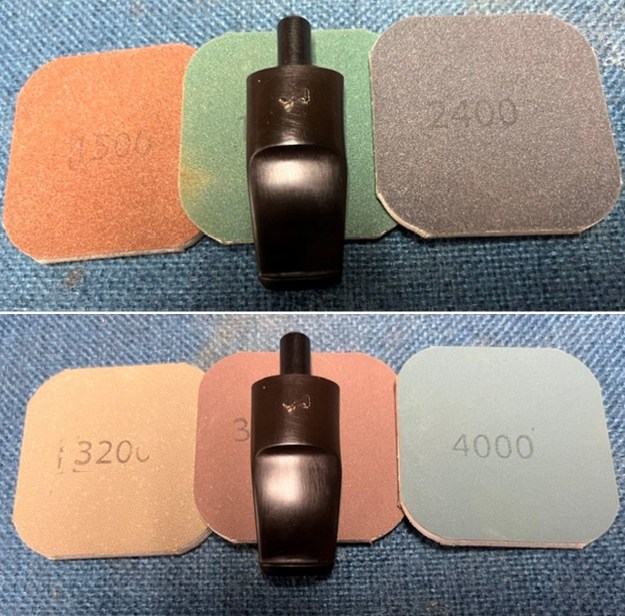
 I am excited to finish this Rovera Cordova Italy Rusticated Oval Shank Sitter with a vulcanite saddle stem. I put the pipe back together and buffed it with Blue Diamond on the buffing wheel. I gave the bowl and the stem multiple coats of carnauba wax. I hand buffed the pipe with a clean buffing pad to raise the shine. It is fun to see what the polished bowl looks like with the mix of grain on the sides of the bowl. Added to that the black vulcanite saddle stem was beautiful. This smooth Rovera Cordova Italy Rusticated Sitter is great looking and the pipe feels great in my hand. It is light and well balanced. Have a look at it with the photos below. The dimensions are Length: 5 inches, Height: 2 inches, Outside diameter of the bowl: 1 ½ inches, Chamber diameter: ¾ of an inch. The weight of the pipe is 39 grams /1.38 ounces. It turned out to be a beautiful pipe. I will be putting it on the rebornpipes store in the Italian Pipe Makers section. If you are interested in adding it to your rack let me know by message or by email to slaug@uniserve.com. Thanks for your time reading the blog. I appreciate it.