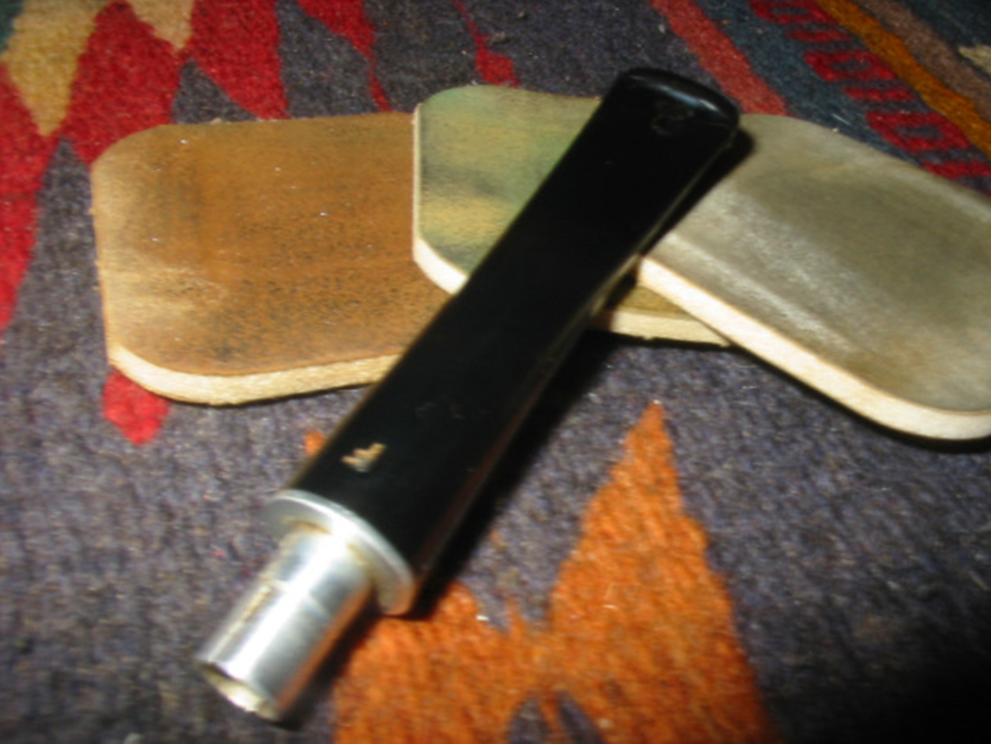
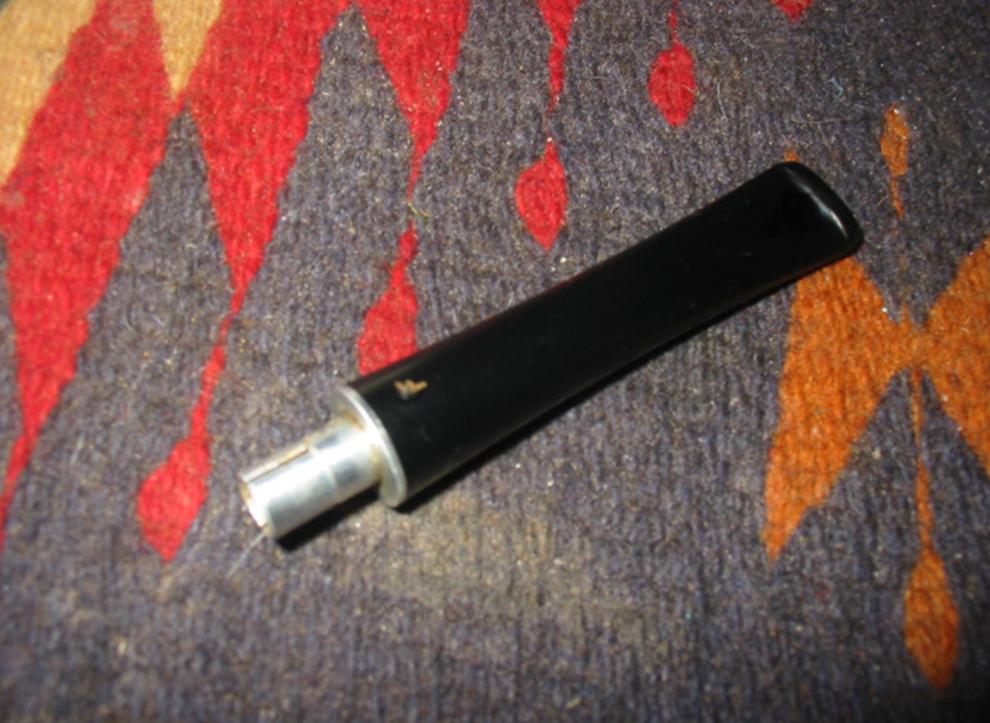
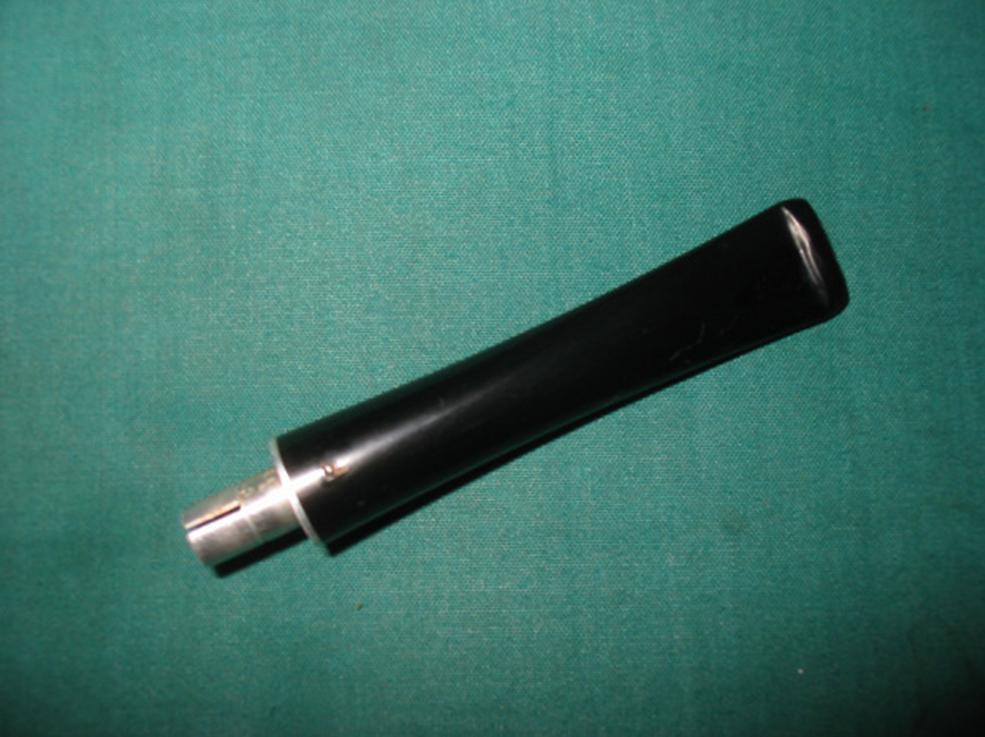
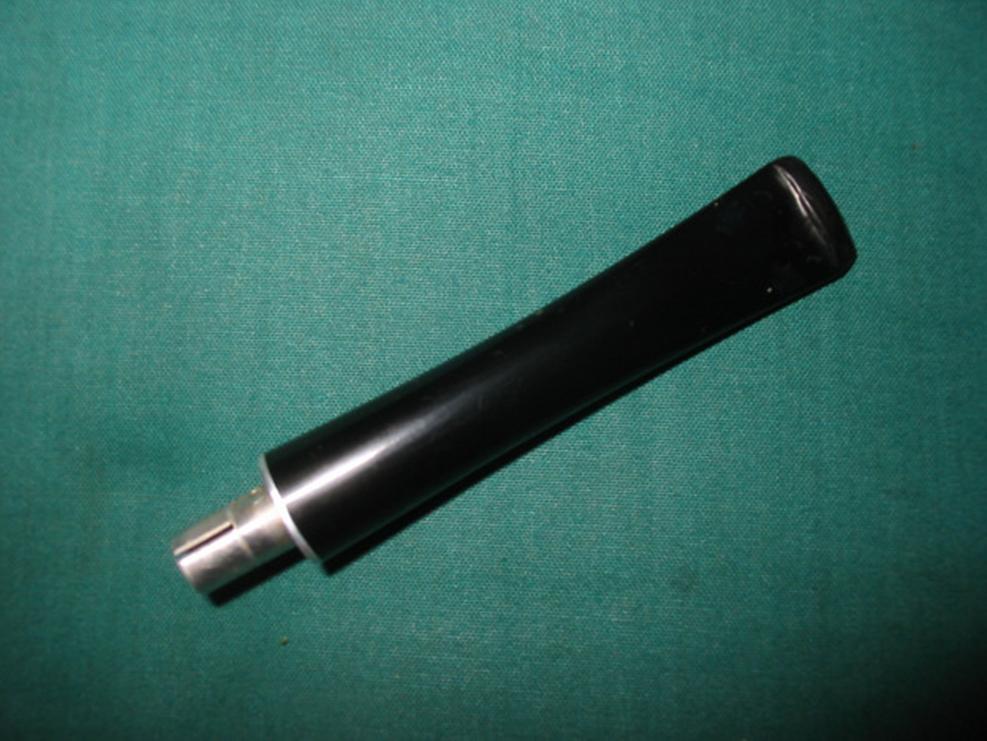
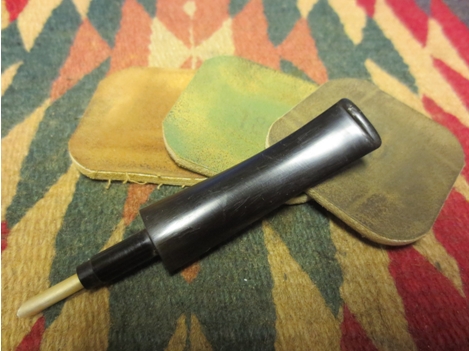
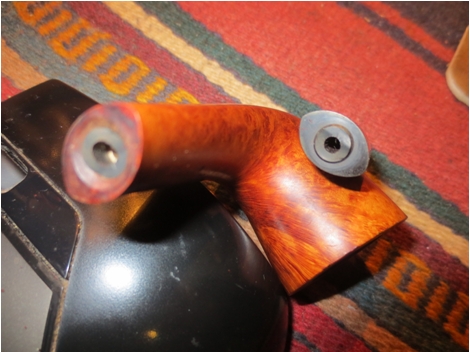
Tag Archives: Cutting back a broken stem

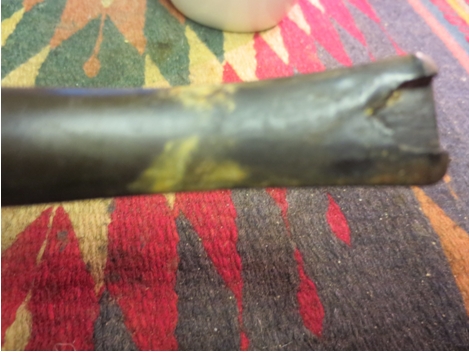
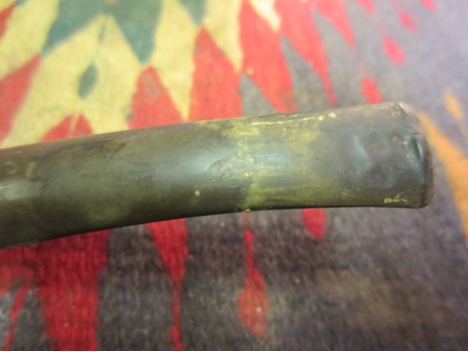
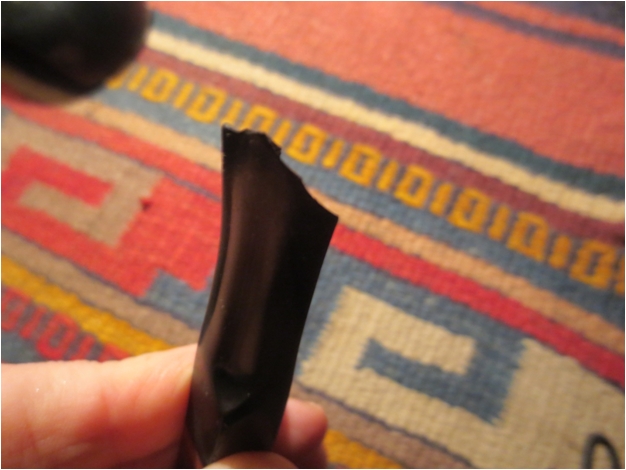
What are the options for repairing a damaged stem?


Blog by Steve Laug

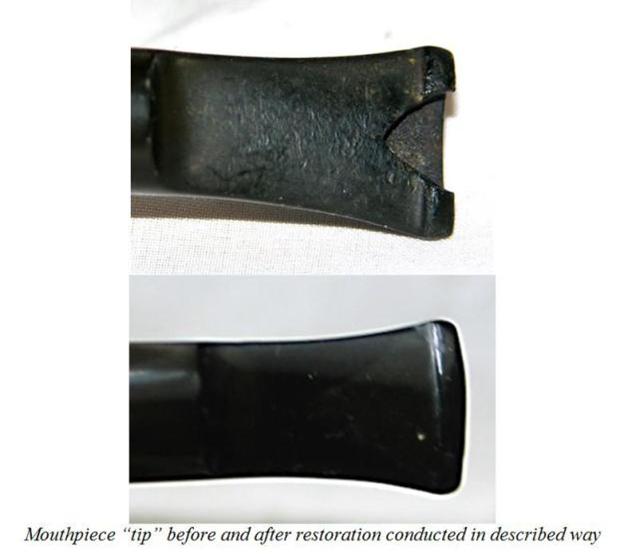
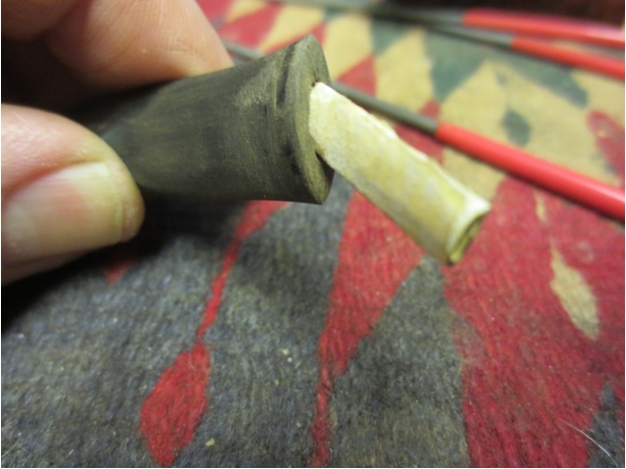
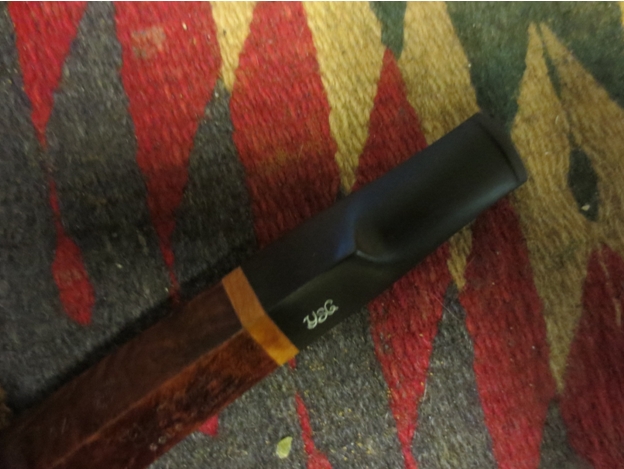
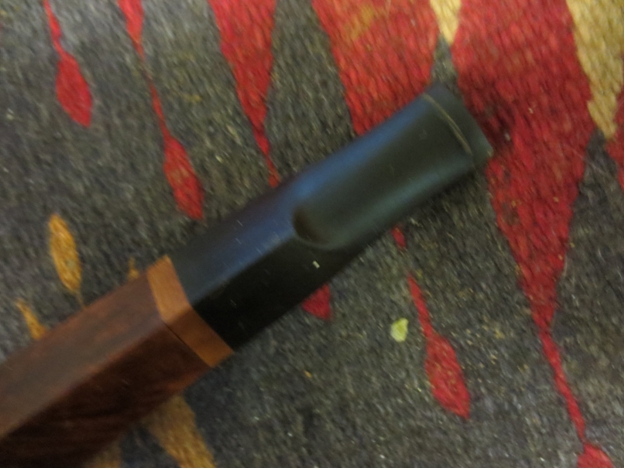
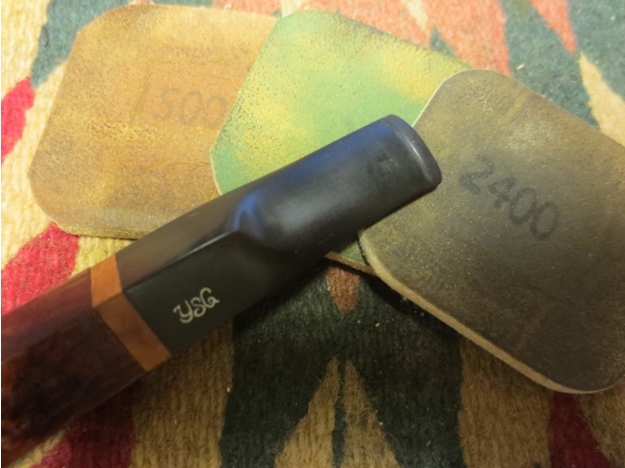
Over the years that I have been working on pipe restoration I have found that when working on badly damaged stems I have 4 basic choices on how to deal with the damage. They are stated in the form of a simple list below but each one will have to be detailed out to understand the implications of the choice.
1. Cut it off
2. Build it up
3. Splice it
4. Replace it

Choice #1 – Cut it off

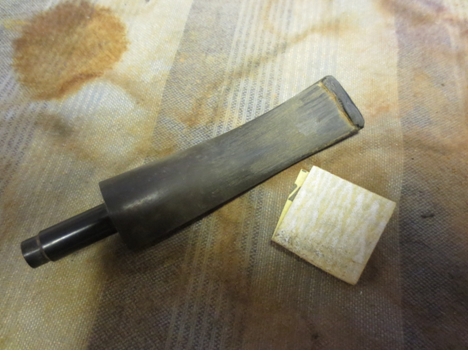
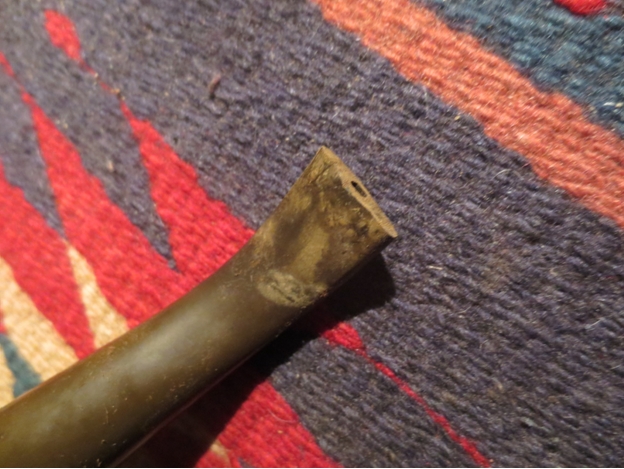
This sounds pretty brutal but it really is a pretty easy repair to work on the chewed stem. I generally see how far back I have to go to get enough stem material on the top and bottom of the stem to shape a new button. Once I have a pretty clear idea of that I put a piece of cellophane tape on the stem to get an idea of how it will look with that bit of stem removed. Sometimes the new stem length just does not work. If it is too short it is awkward. If not then it can be reworked and still look acceptable. I have even cut back badly broken billiard stems and crafted a Lovat shaped pipe that looked really good. The decision is yours and cannot be reversed without making a new stem for the pipe.

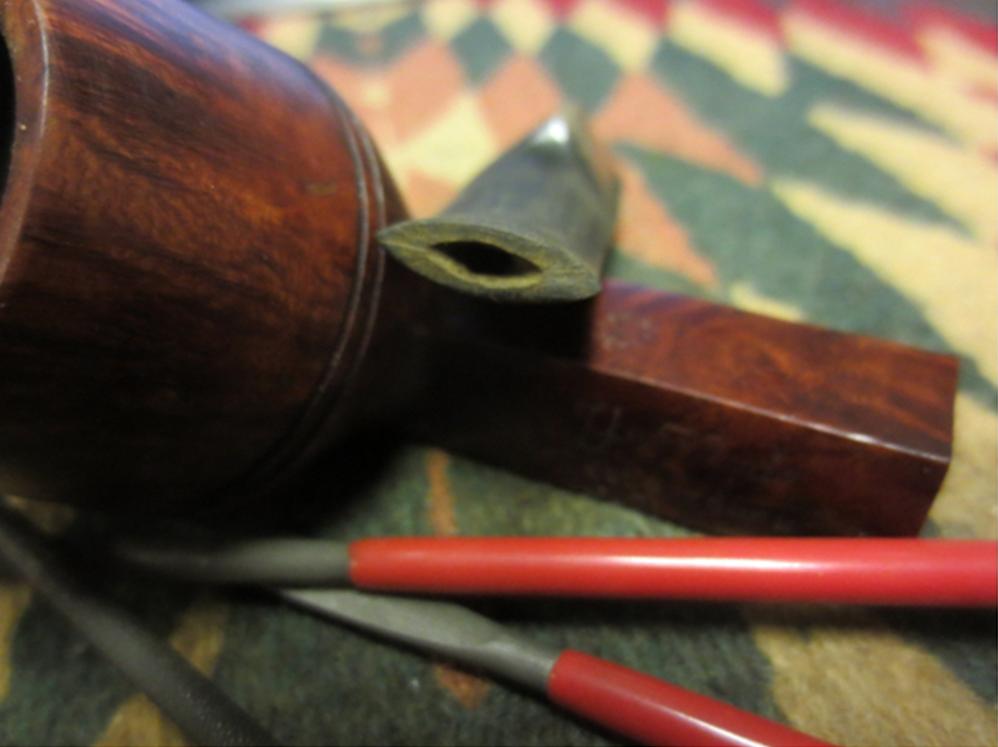
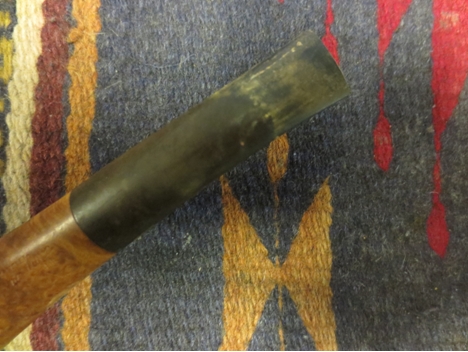
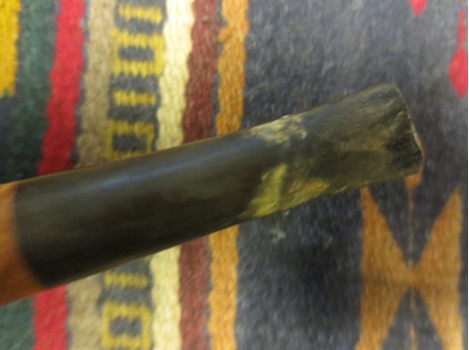
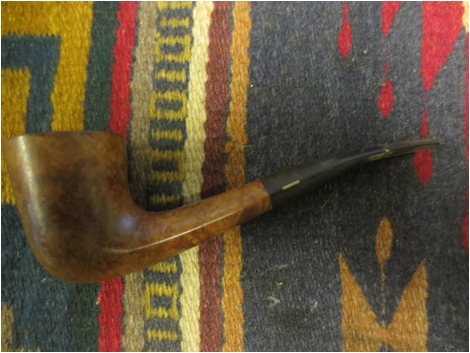
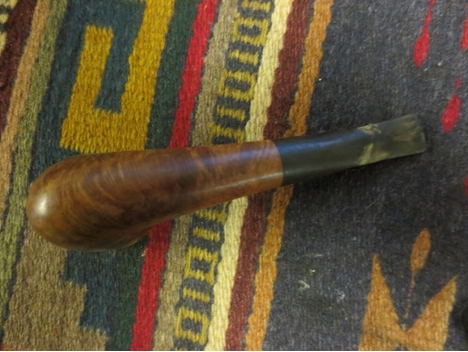
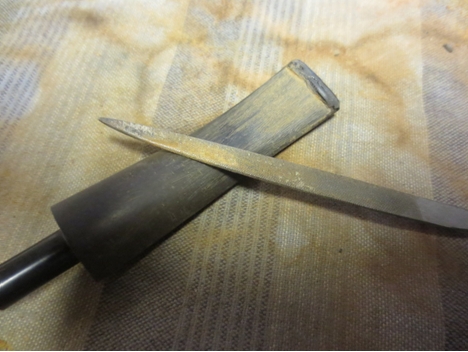
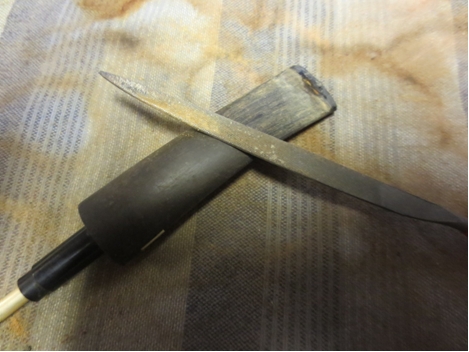
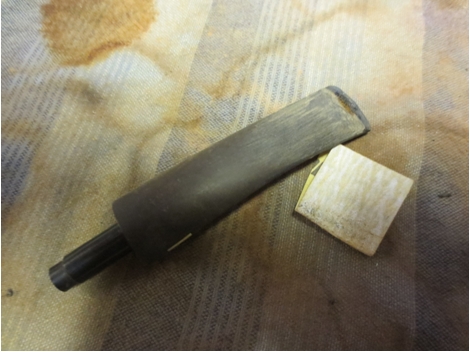
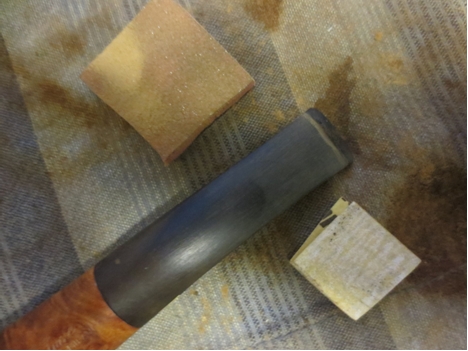
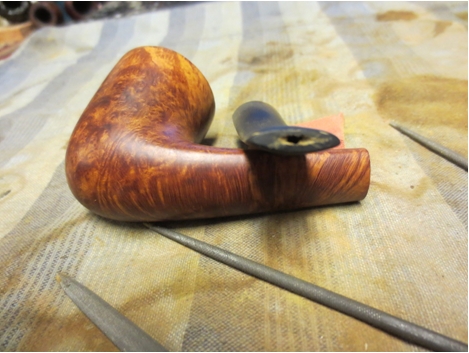
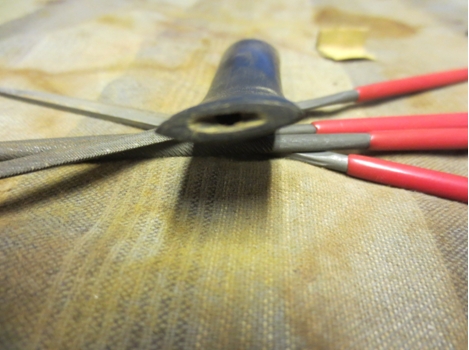
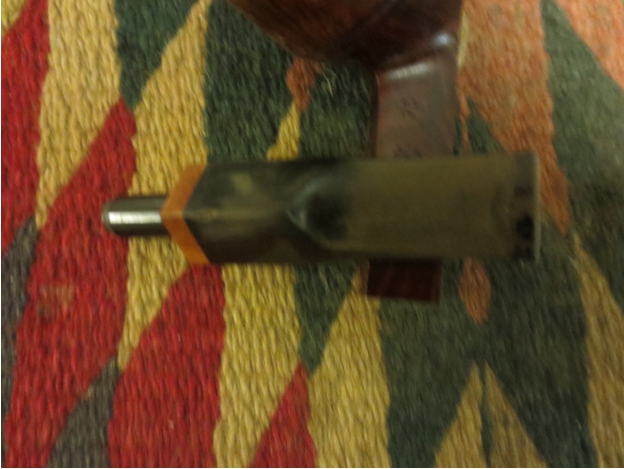
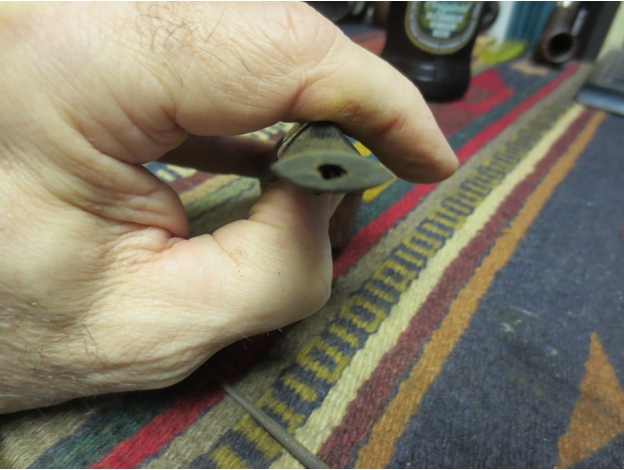
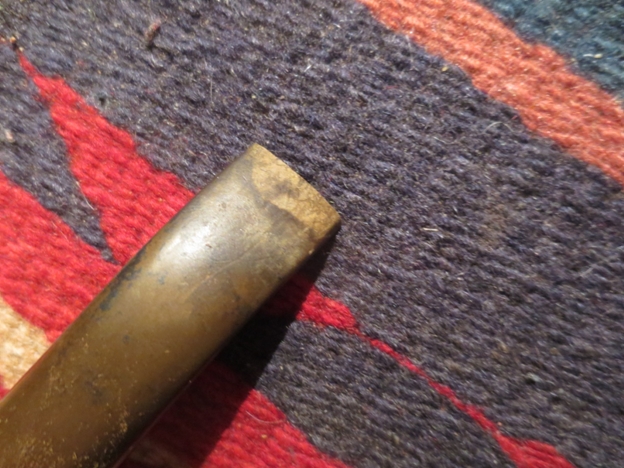
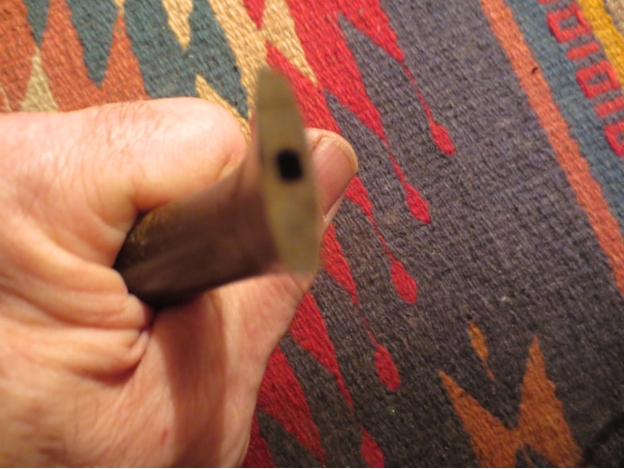
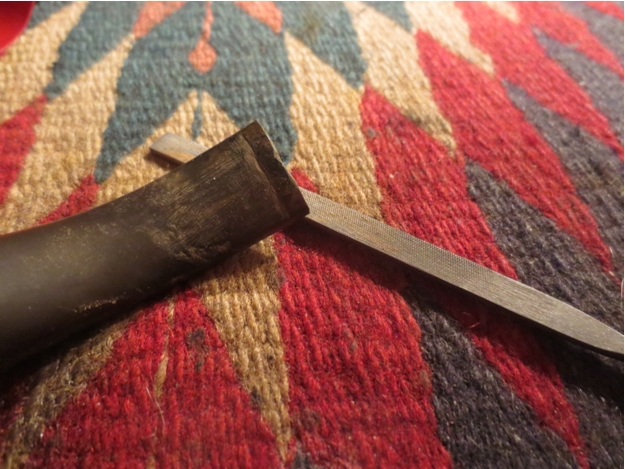
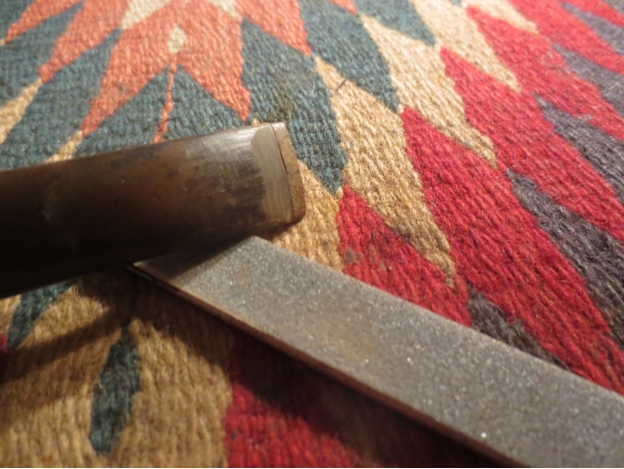
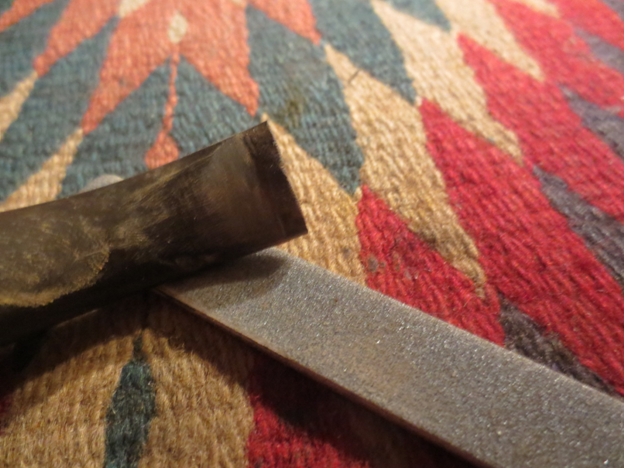
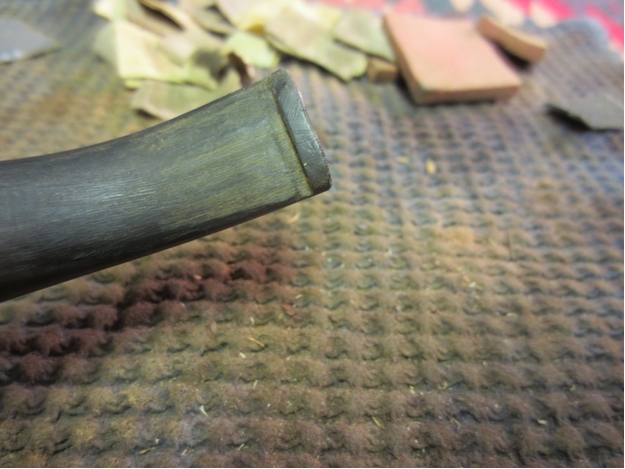
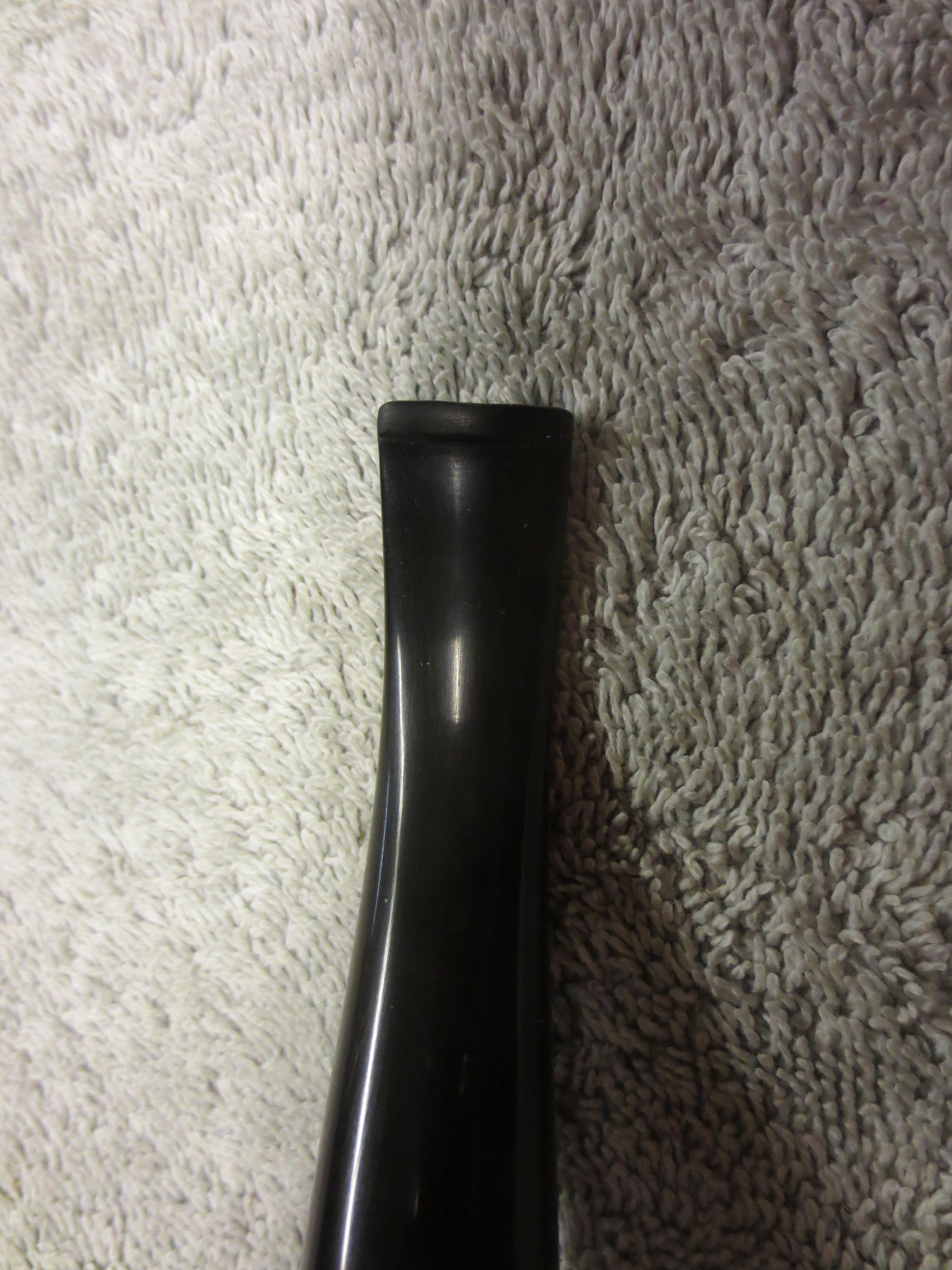
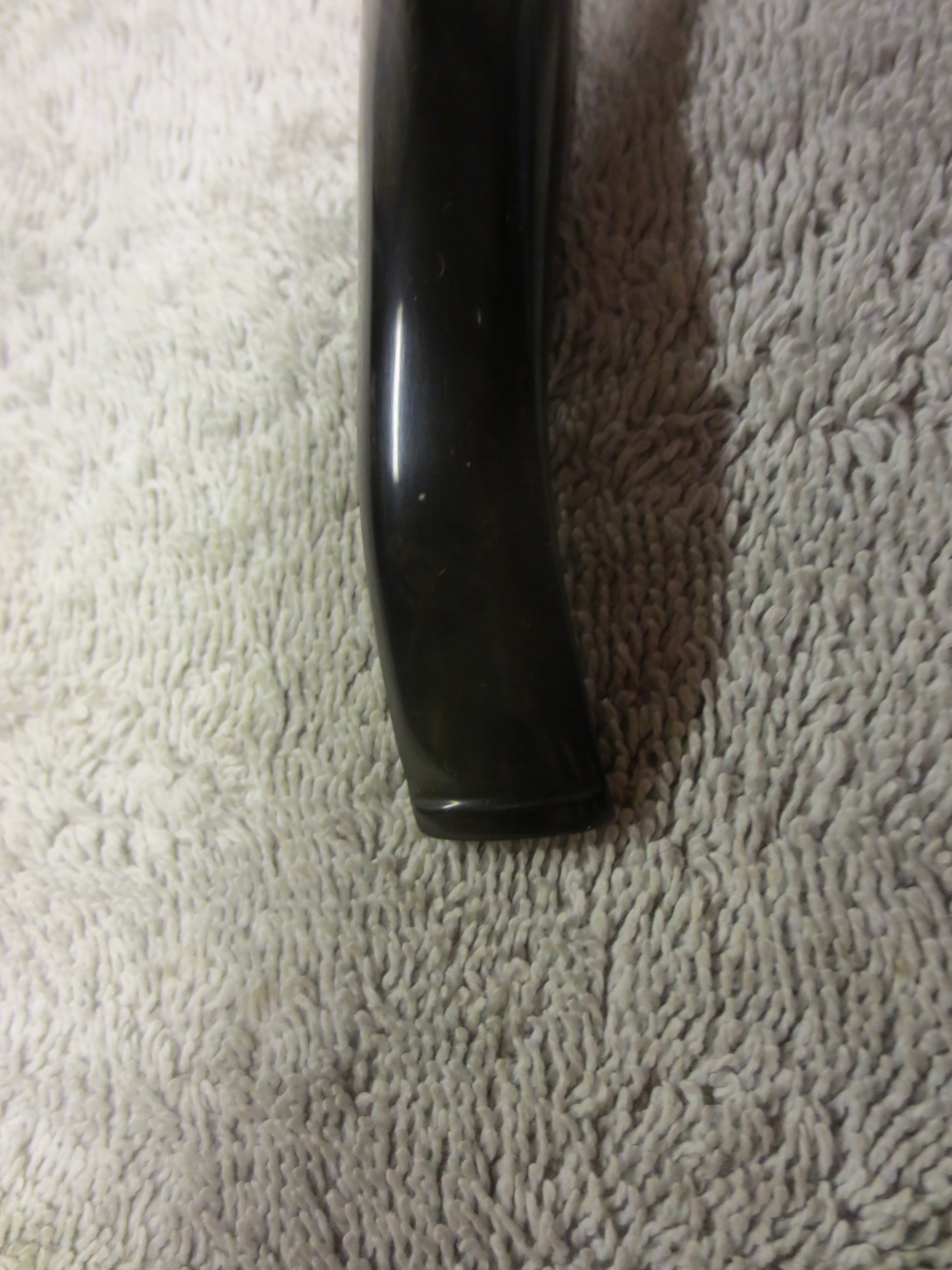
The process is quite simple. Once I have marked the part of the stem I plan to remove I use a Dremel with a sanding drum to remove the damaged portion. It works quite quickly. The only caution is to keep the line straight as you are removing the broken part of the stem. This line is not only the horizontal one across the surface of the stem but also the vertical one looking at the pipe from the end. Others use a coping saw or hacksaw to remove the broken area. I prefer a Dremel. With the end removed the stem is ready for reshaping. I use needle files to cut a new button on the stem. I do that by filing a straight line across the top and bottom of the stem making sure that they align.Broken1
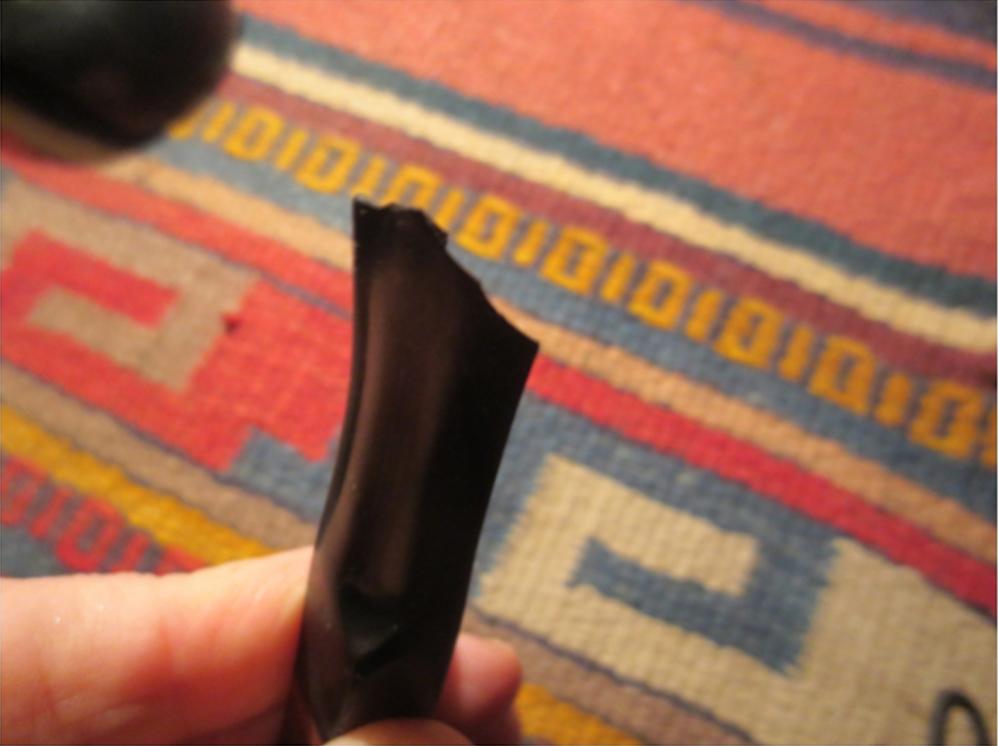
Broken2

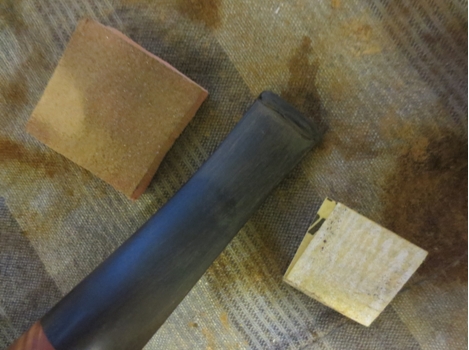
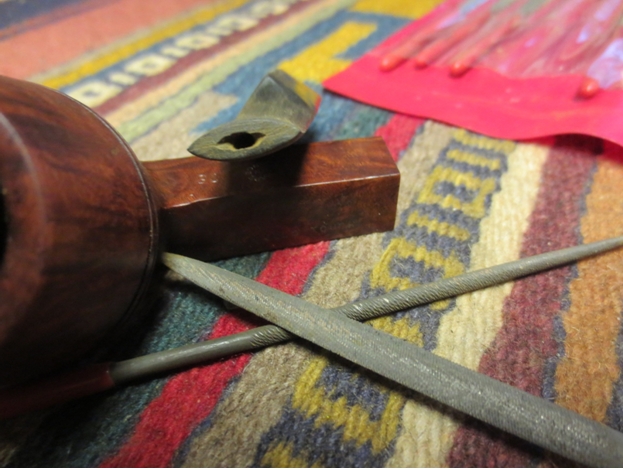
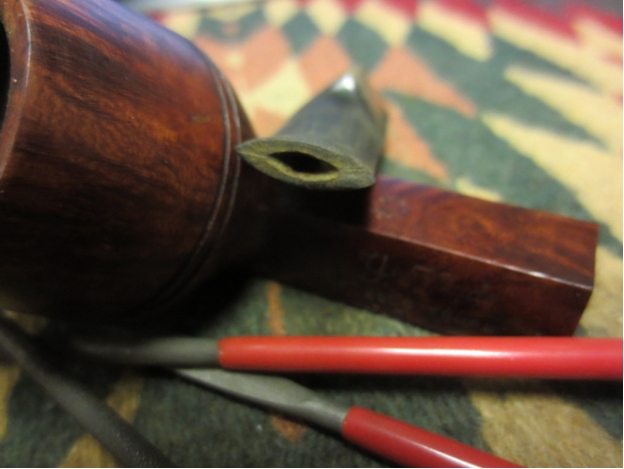
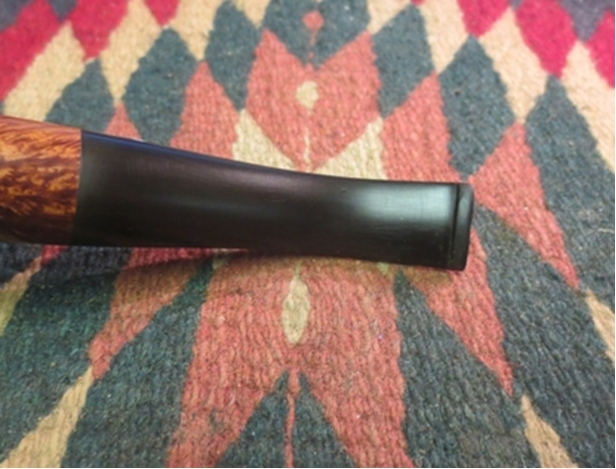
Broken3 Once the new button line is in place I use a flat needle file to file back the slope of the stem to the button line. I am careful not to go to deep but judge depth by the amount of material above the opening in the stem end. Once I have the slope set and the button more defined I use the flat needle file to clean up and define the edge of the button. I want a good sharp edge on the inside of the button to catch behind the teeth. I use 220 grit sandpaper to clean up the slope and smooth out the file marks.Broken4
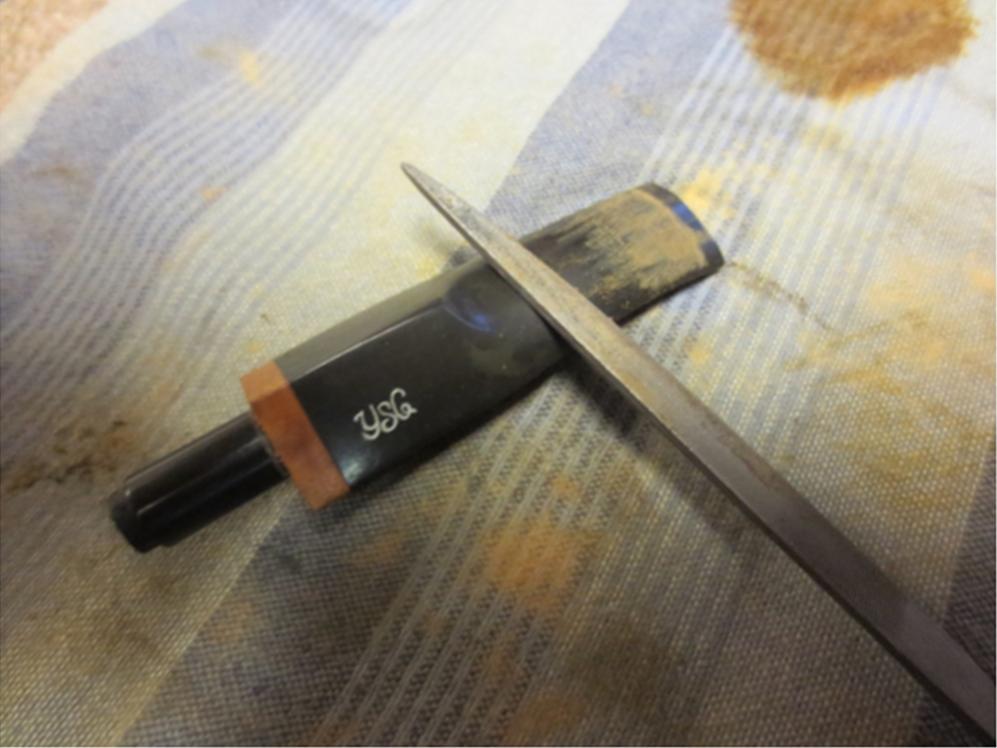
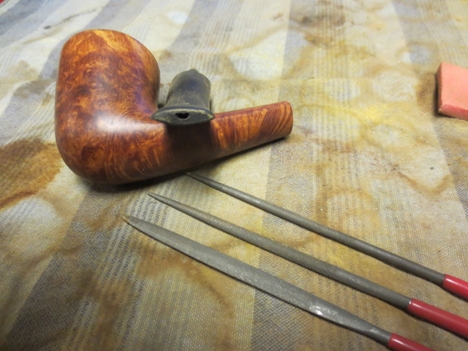
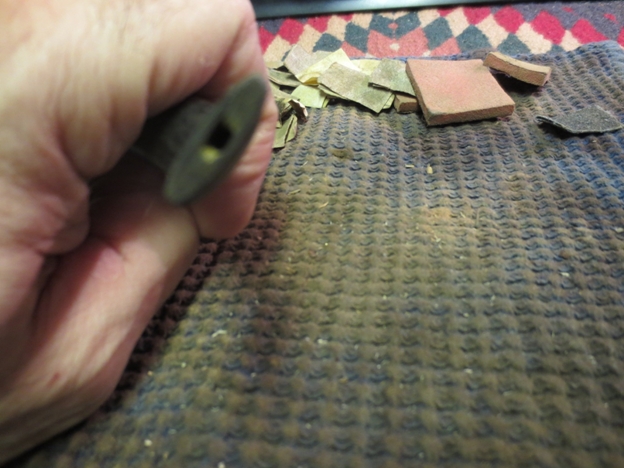
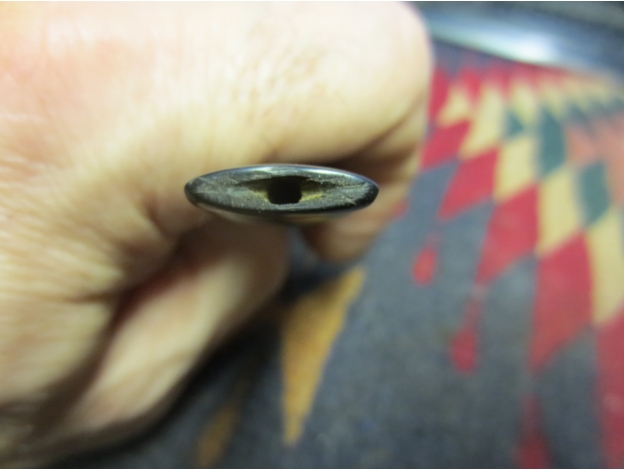
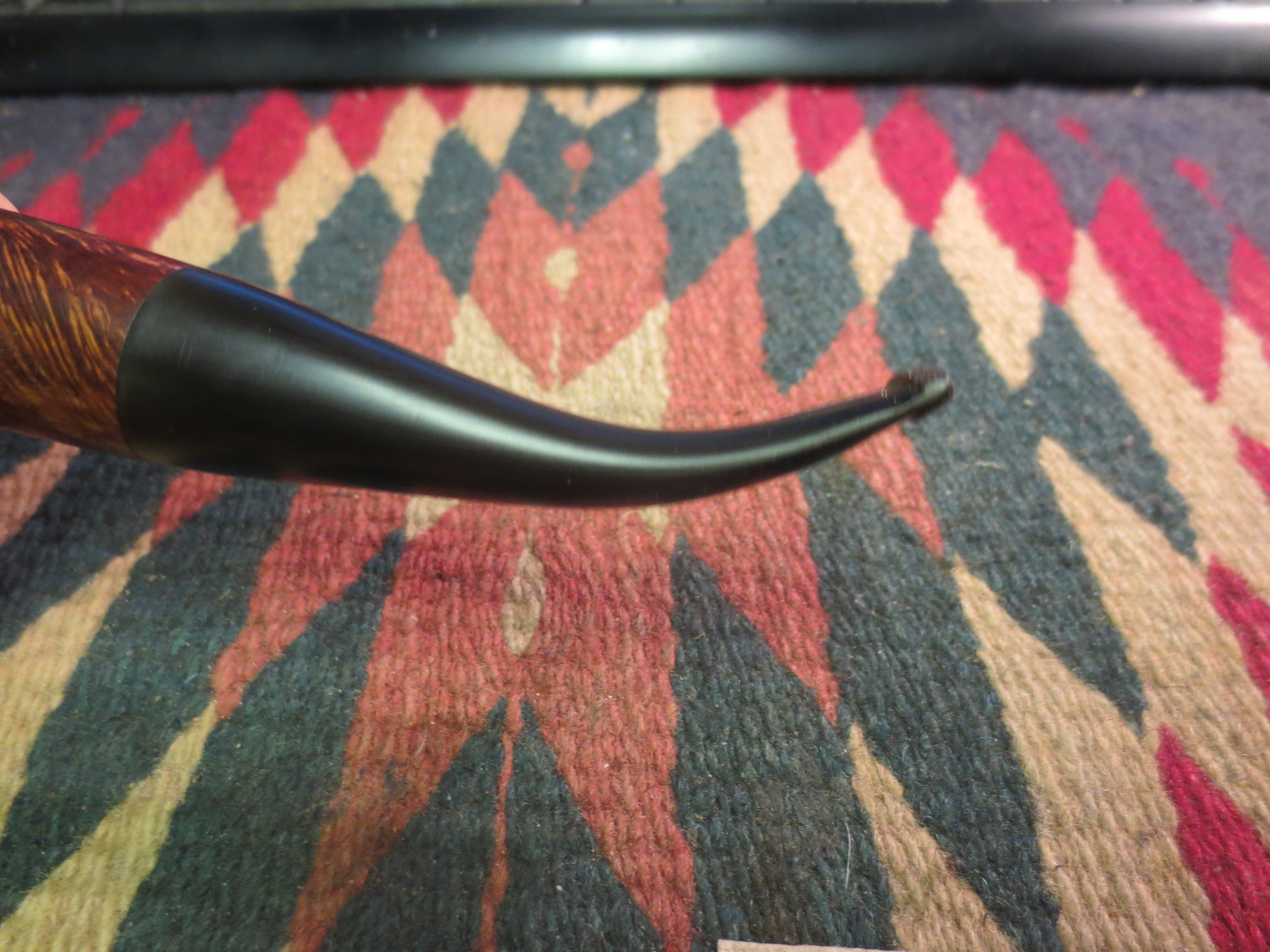
Broken5 When I get the stem shaped the way I want it I then move on to the shaping of the button. I like a button that is shaped like an oval that tapers outward to the edges on both sides. I sand and file and file and sand to shape it. When I have the shape correct I also slope the button backward toward the airway on the stem end. I generally am working the button to look as much as possible like the one that was originally on the stem. I use pictures of the stem from the internet or from the camera that I took to get the look just right.Broken6 After the button is shaped I work on the airway in the end of the button. I want it to be a slot. I use the needle files to open the airway. I flair it from the opening like a Y. The idea is to create an opening that is funnel shaped. I start with a flat file and work toward a round and an oval needle file I shape the ends of the slot to match the shape of the button as much as possible. When I finally have the slot open I fold a piece of sandpaper and work on the inside of the slot to smooth out the file marks.Broken7
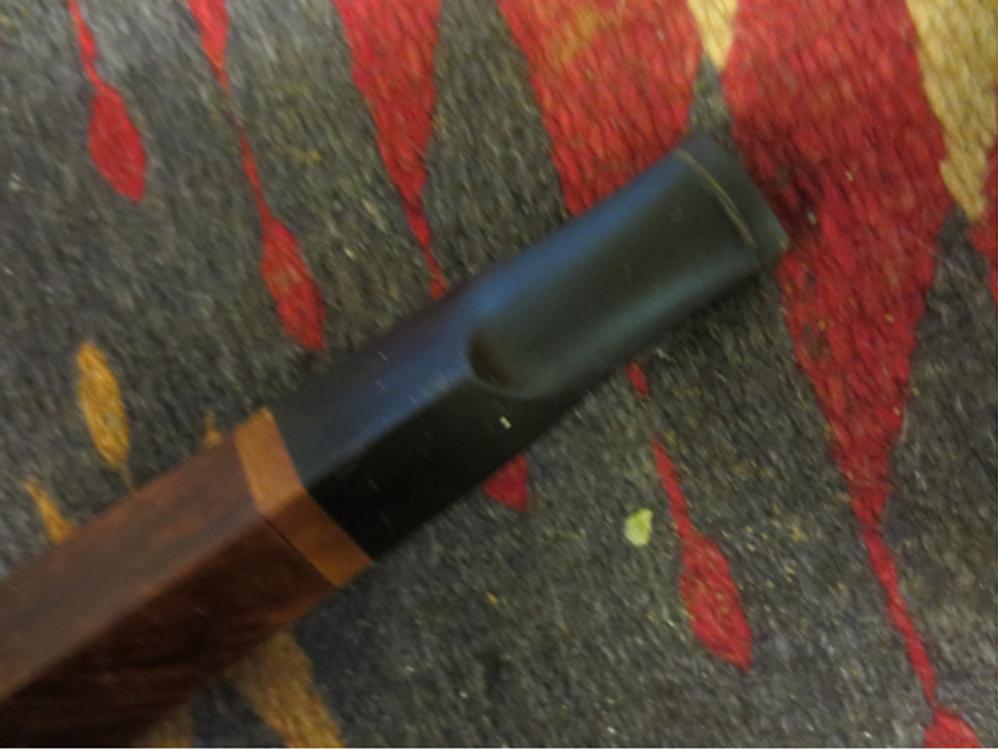
Broken8

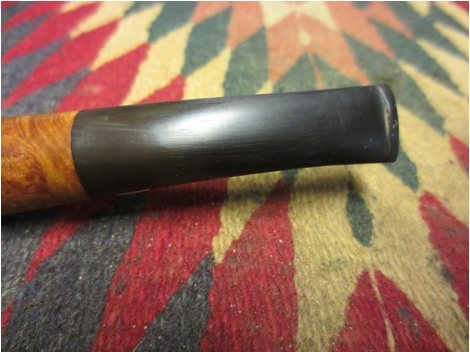
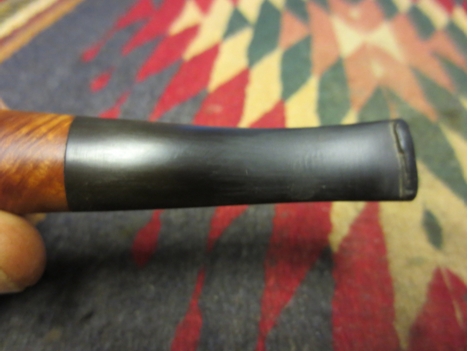
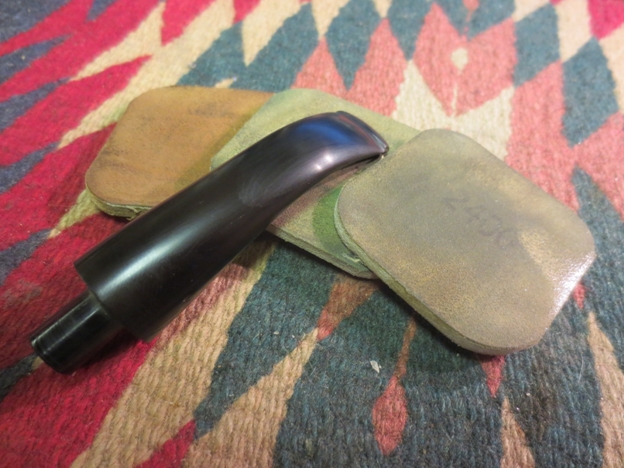
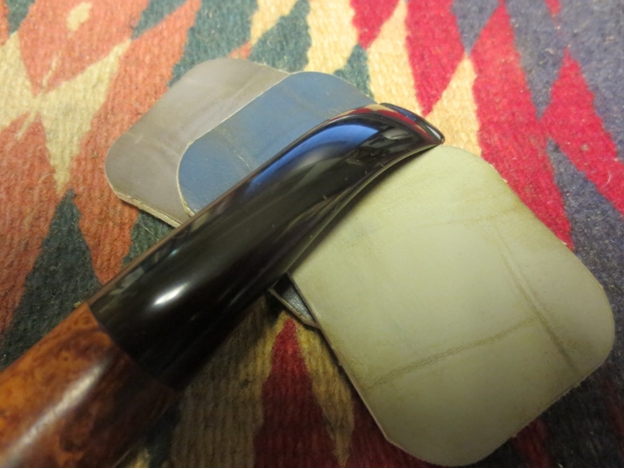
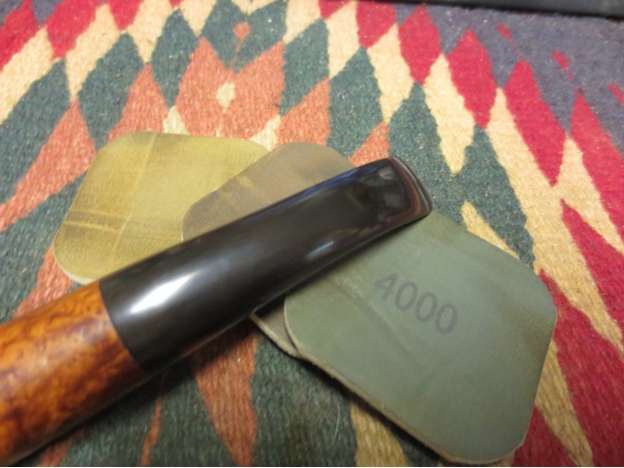
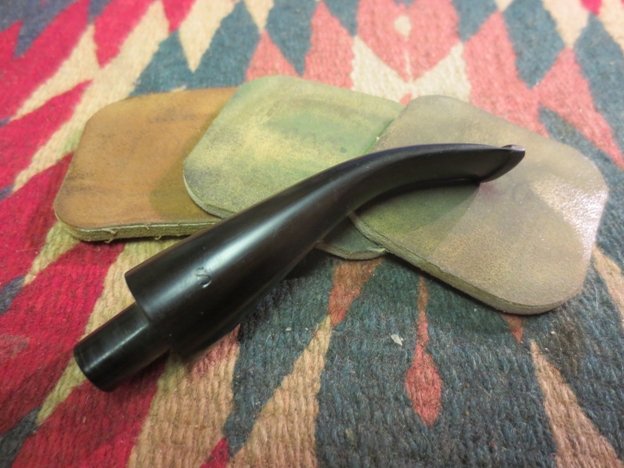
Broken9 I finish by sanding the stem with micromesh sanding pads and polishing it to give it a shine. Here are some photos of the finished stem.Broken10

Broken11
Choice #2 – Build it up

I have used this method quite a bit with variations. I have used it repair bite marks and bite throughs on stem. The basic procedure is to clean up the affected area on the stem with alcohol and sandpaper to prepare it for the buildup. I leave the area slightly roughened to give the repair something to grab on to. Once all loose debris, sanding dust and oxidation is removed you are ready to begin the patch. The stem I am using to illustrate the process had holes on both sides of the stem and both were large. Alongside both sides there were also many tooth dents that needed to be addressed as well. In this case those dents would provide a strong base for what would be a large patch.Broken12
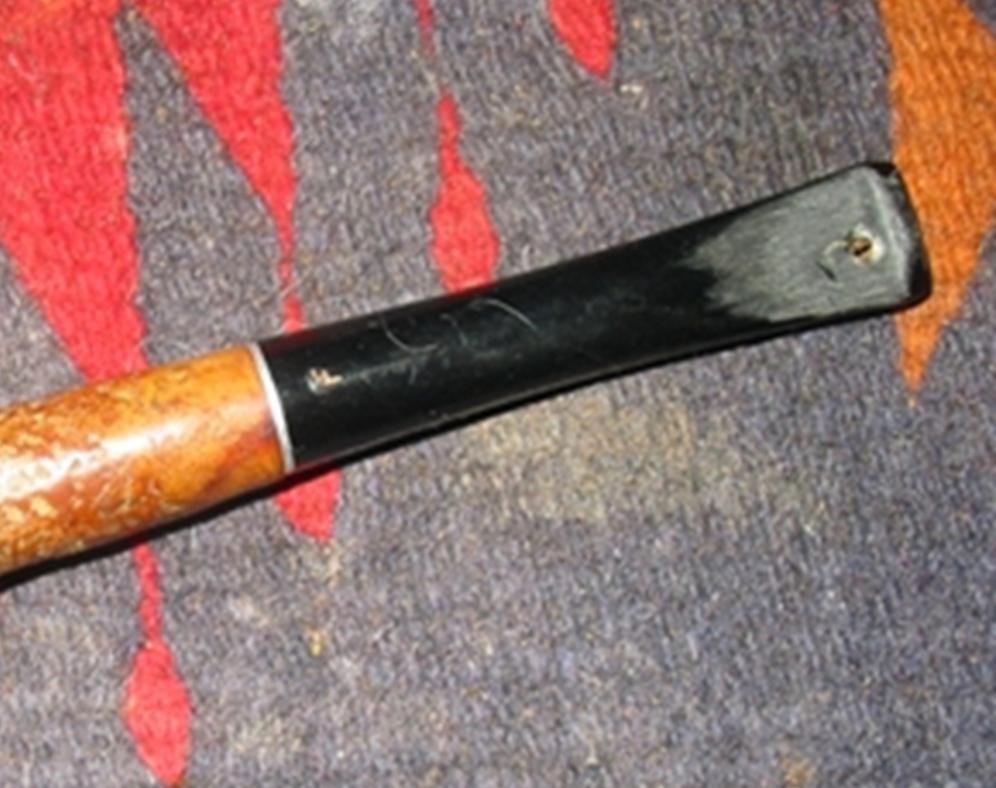
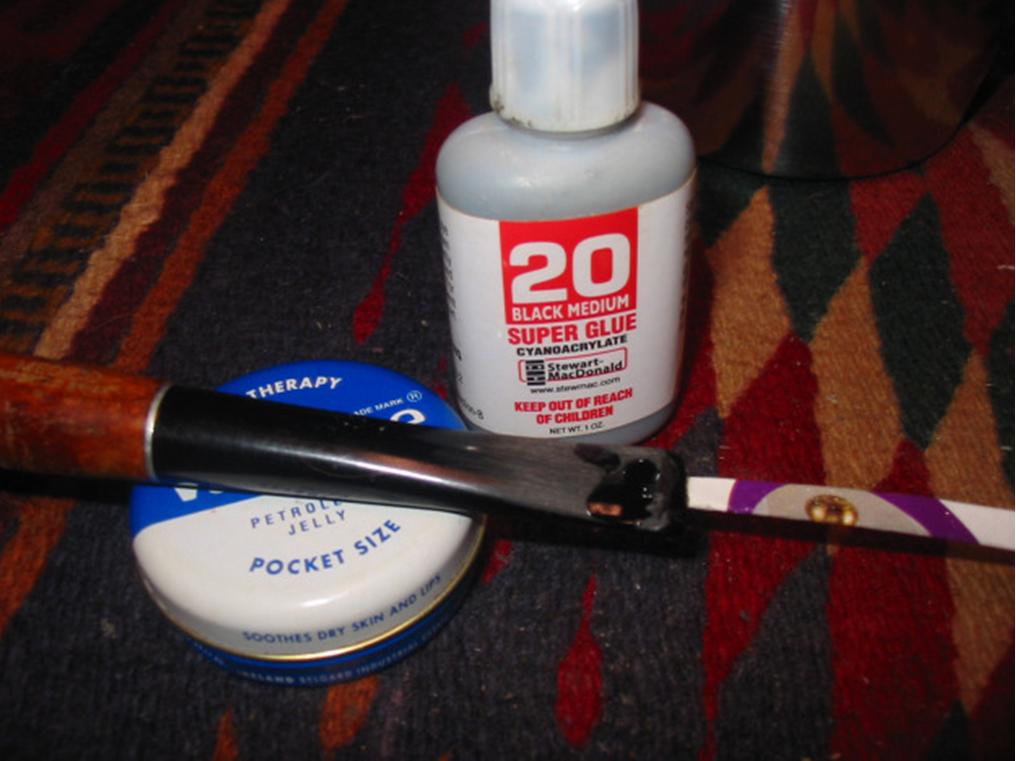
Broken13 I grease a piece of folded paper or a nail file with Vaseline and insert it into the slot on the stem. I want to have a slick base for the glue to sit against but not fasten to. I also do not want to close off the airway and this method has worked well for me for many years.Broken14
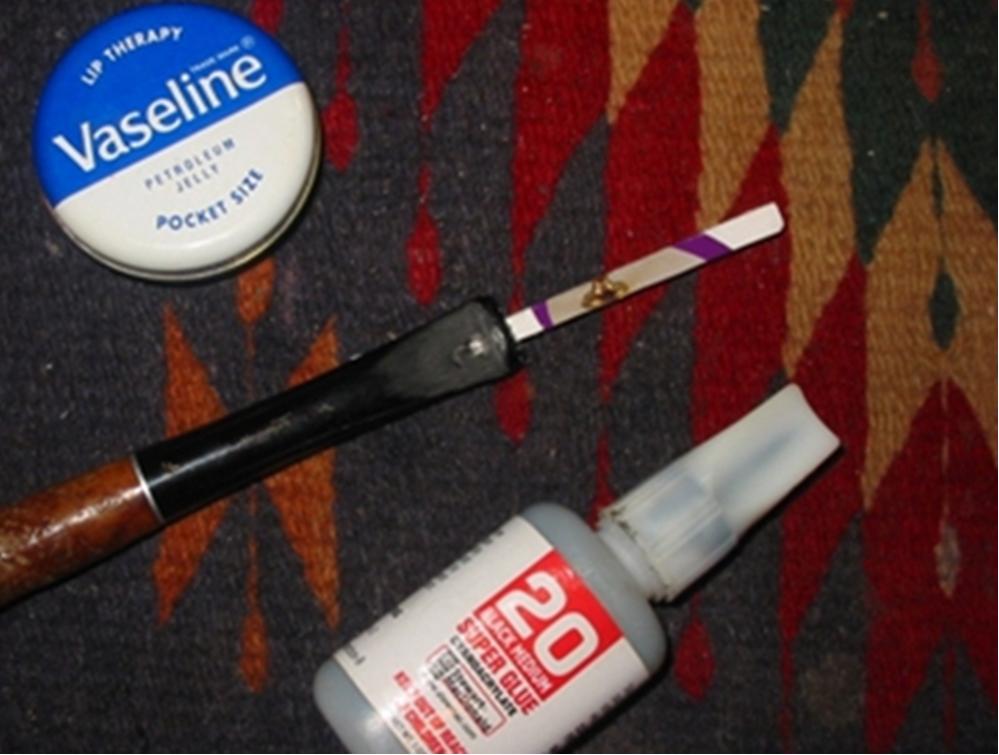
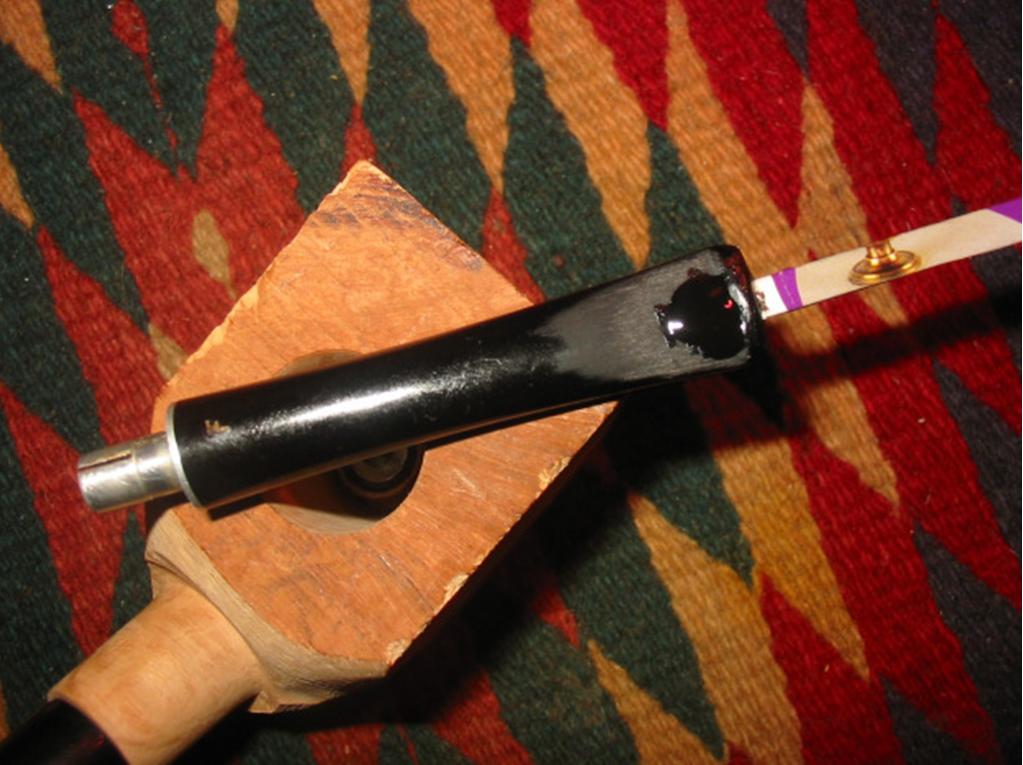
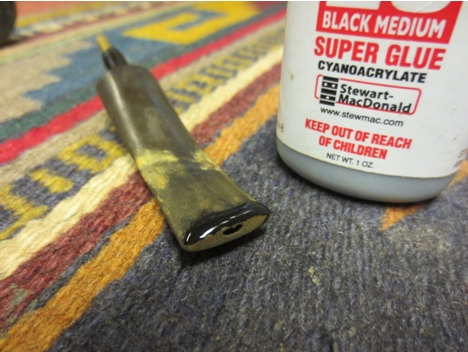
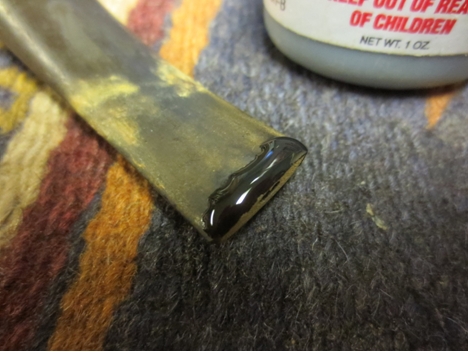
Broken15 With the folded paper inserted it is time to begin to build up the repair. I use medium viscosity black super glue that I get from Stewart MacDonald online. I build up the edges of the repair first. Some folks will use an accelerator at this point to speed up the process. I have also done so but find that the glue is more brittle and I have had patches fail after using it. So I have learned to “patiently” wait for the glue to harden. Others mix in fine charcoal powder or grit with the superglue and feel that it gives a stronger patch. I have done that as well but did not choose to use that on this stem repair.Broken16
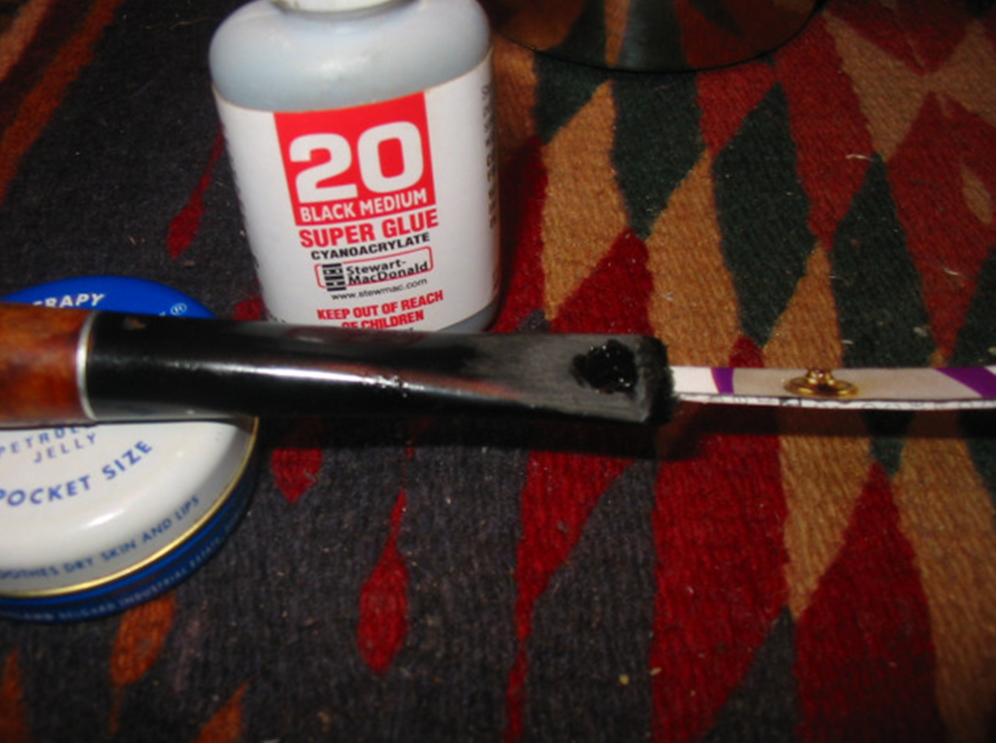
Broken17 As the first layer of glue dried I continued to build the patch inward to the middle and thicken it as well. The process took several days and included at least four layers of glue.Broken18
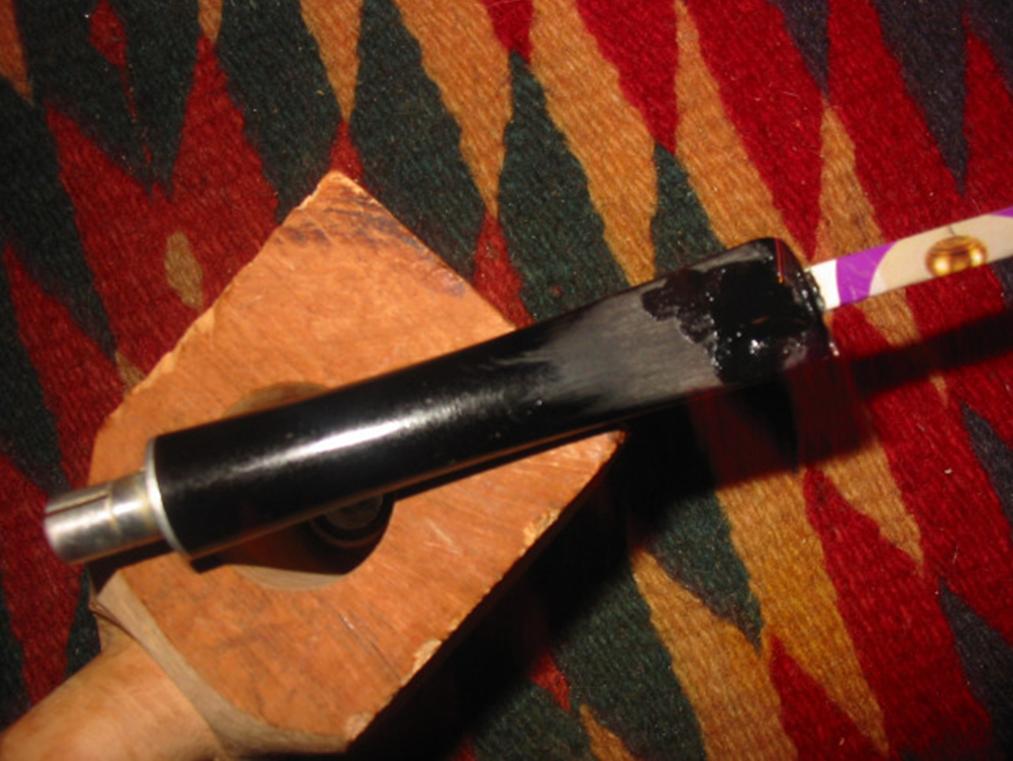
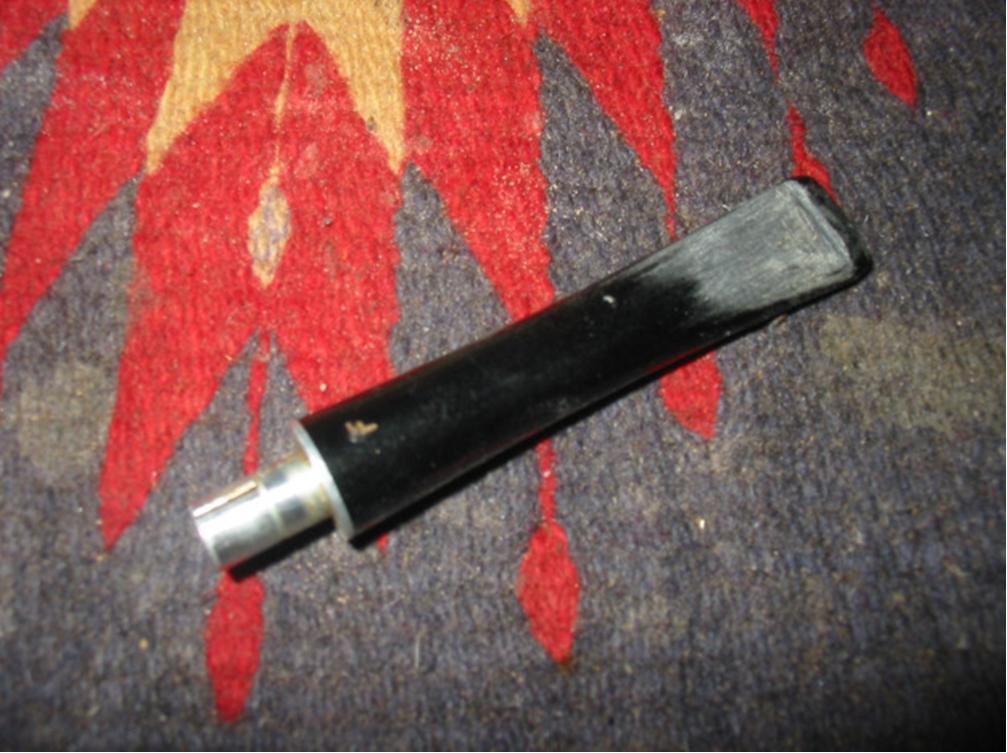
Broken19 Once the last layer of the patch was finished I set the pipe aside to cure for several days. When it was dry I sanded it with 180 grit sandpaper and then 220 grit sandpaper to level out the patch and the surrounding stem.Broken20
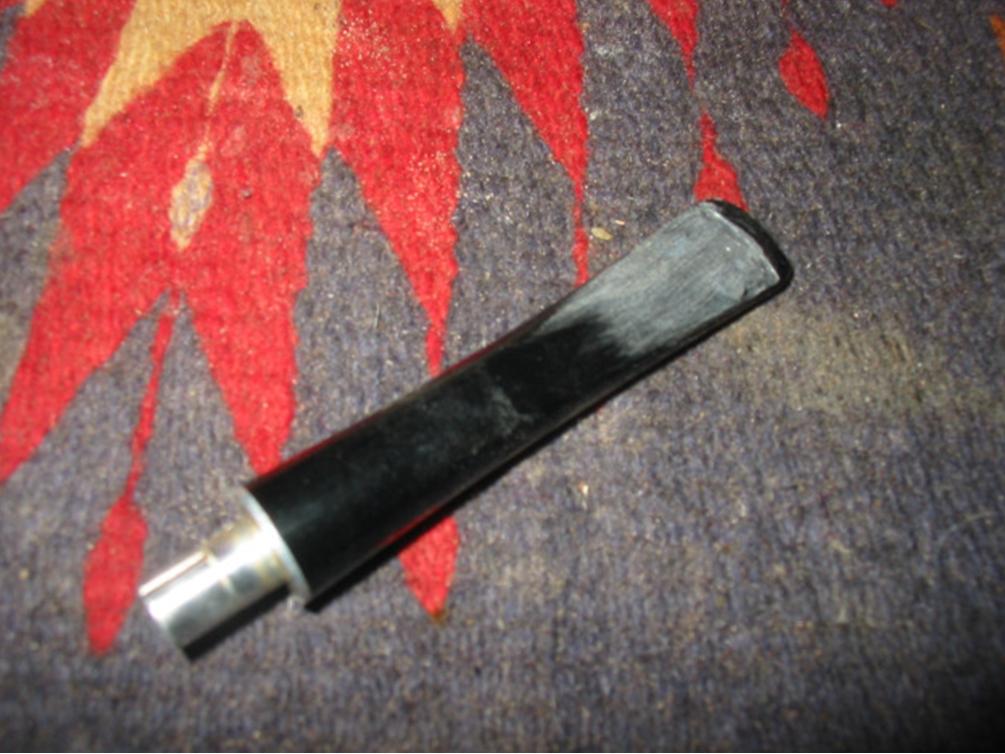
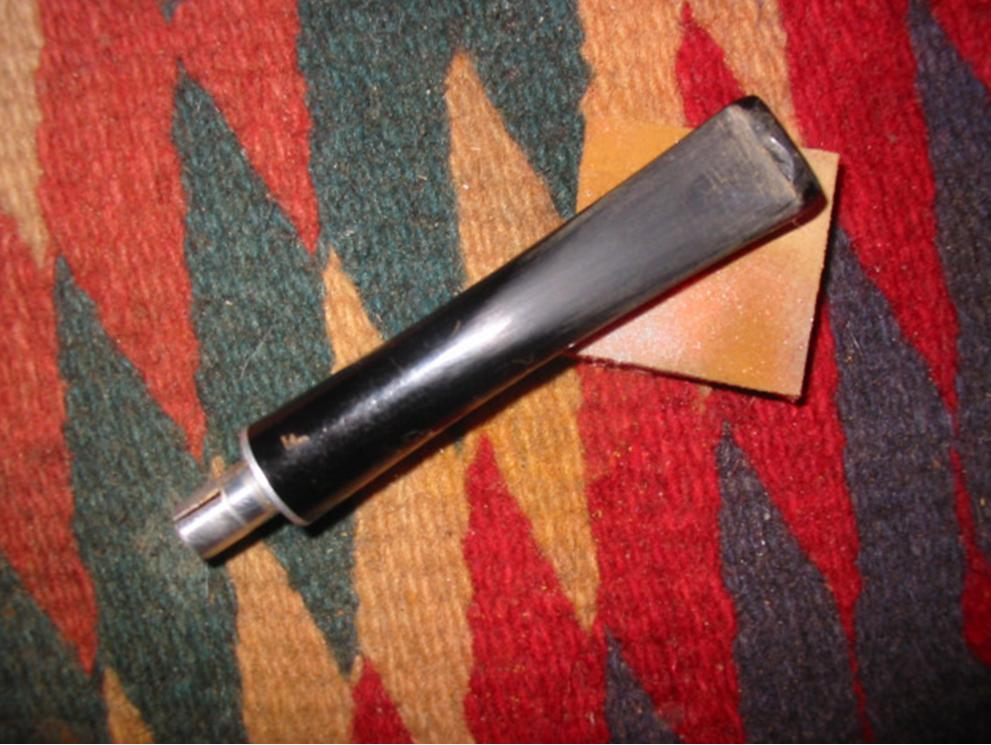
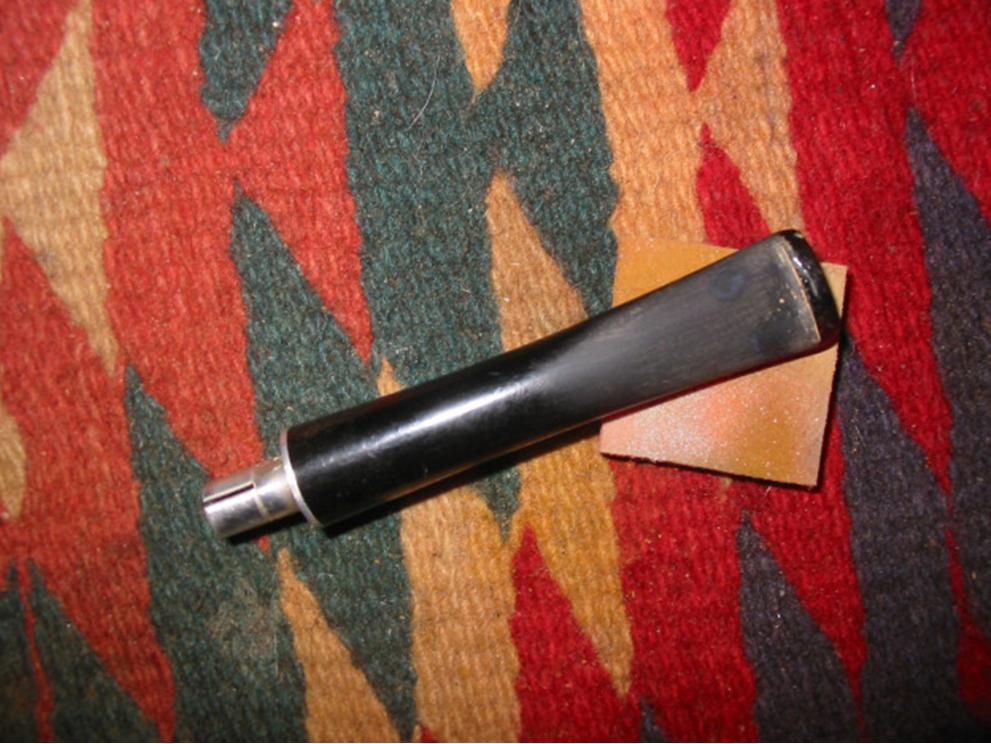
Broken21 I used needle files to sharpen and define the edge of the button. I sanded it with a medium and a fine grit sanding sponge. The patches show up still in the surface of the stem as a slightly different colour but once the stem is sanded with micromesh they begin to disappear.Broken22
Broken23

Broken24

Broken25 The finished stem looks like new.Broken26

Broken27
Choice #3 – Splice it

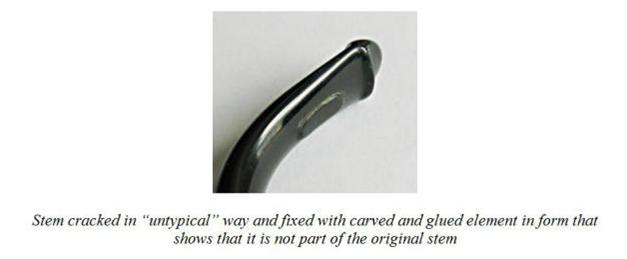
On the blog, Jacek Rochacki has written of splicing a repair and reshaping the stem. I am inserting his procedure at this point to explain the choice he uses.
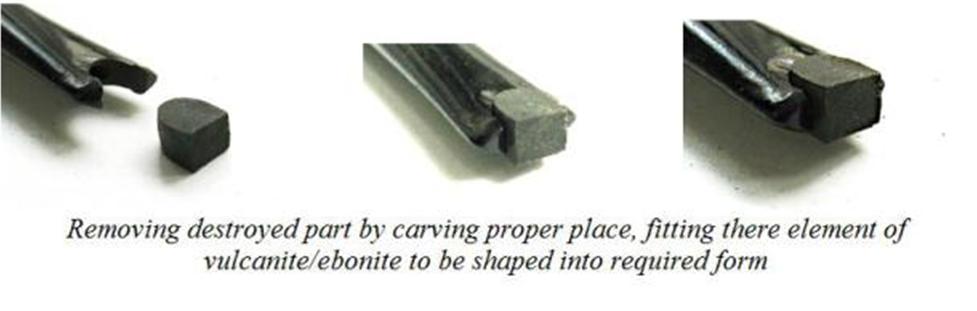
Instead of cutting/removing the damaged part and carving the lip/button of what is left, I would proceed in different way. Keeping in mind my wish of keeping original dimension, proportions, form, I would try to reconstruct damaged stem/mouthpiece as following:

By using sharp cutting tools – engravers/burins, scrapers or in case of better equipped “workshop corner” – cutters, like those used by jewelers for stone settings, or even a sharp pocket knife, a frame saw and needle files I would work on the damaged area making it a proper shape a piece of the same material carved that I will later shape/carve to fit what is missing. The words “making it of proper shape”, may be a subject for another longer text. But as sort of inspiration may be the different ways dentists use to “elaborate” holes in teeth so that the filling will be kept securely in place. In a stem the situation is easier as we have good binding glues and are binding together the same kind of materials – vulcanite/ebonite to vulcanite/ebonite.

When the newly carved material is fixed into the missing area with glue, I work with files and drill bits to achieve desired missing shape. Then I proceed with finishing techniques. Let us look at the pictures:Broken28
Broken29

Broken30 Others have actually cut off the broken portion of the stem after matching it to a similar style and shaped stem. The also cut off the replacement stem so that the undamaged areas match perfectly. A small stainless steel tube can be used to join the two pieces of stem together and black superglue can be used to hold it together and to fill in the joint of the two stems. Once the glue has cured then the repair can be sanded and blended together so that it does not show at all.

Choice #4 – Replace it

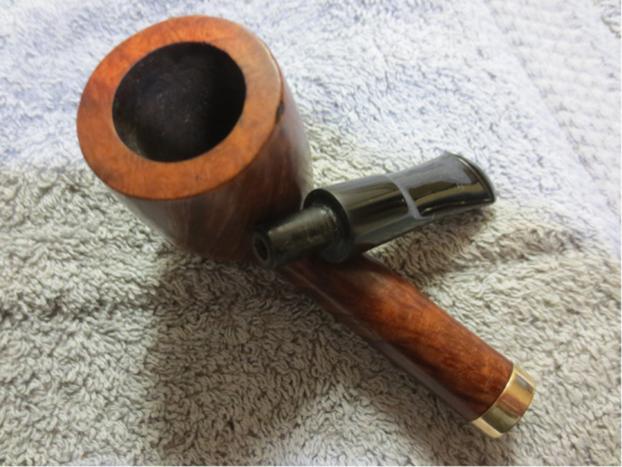
The fourth option is to fit a replacement stem on the pipe or make one from vulcanite or Lucite rod stock. I do not have a lathe so I usually use precast stems and do a lot of shaping and fitting and improvements on the blank. The photos below show a new stem that I fit to a Lovat pipe for a friend. I used an old saddle stem that I had here so I did not need to use a precast one. This one just needed adjustment and fiddling to make it work well.
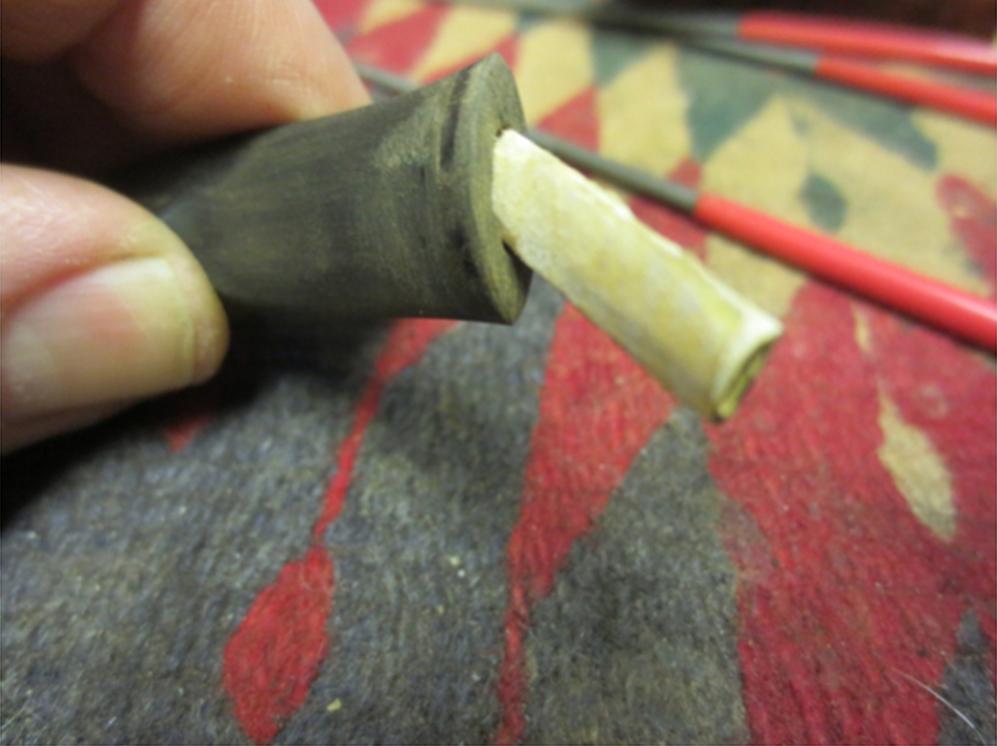
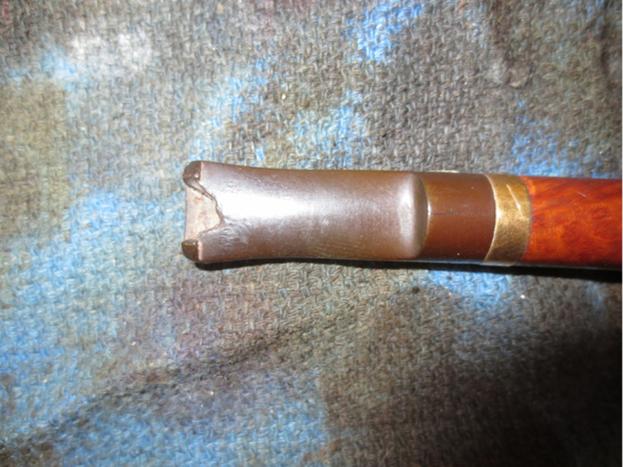
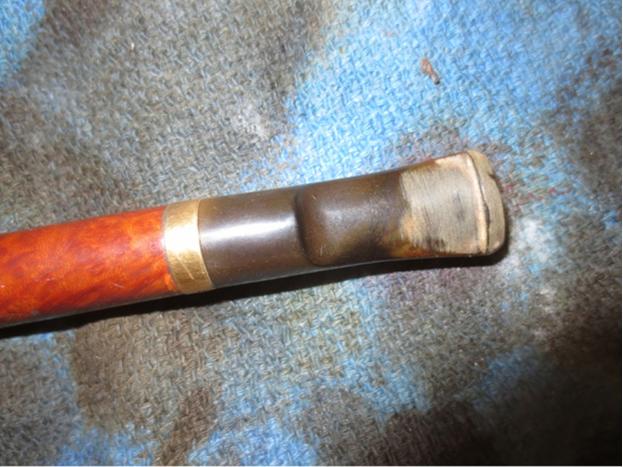
The original stem had a large bite out of the end of it the underside next to the button.Broken31 I choose a stem that is similar in shape and style that was the same length. It had a slightly larger saddle portion on the stem but I liked the look of it and figured it would work. I turned the tenon down slightly to make for a snug fit in the mortise.Broken32 In this case I sanded the stem down to remove the oxidation from the surface and also to remove the slight tooth marks and tooth chatter that was there.Broken33
Broken34 After sanding with the 220 grit sandpaper I used a medium and a fine grit sanding sponge to clean up the stem further and remove scratches.Broken35
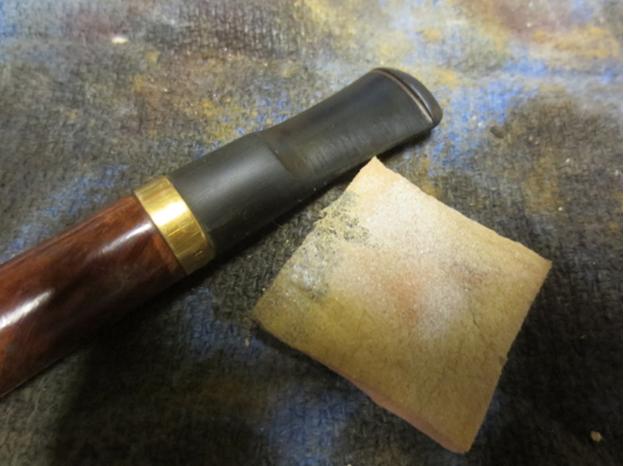
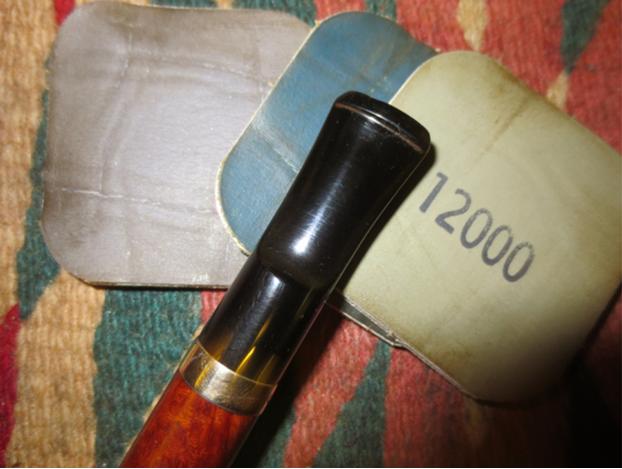
Broken36 I sand the finished stem with micromesh sanding pads to polish it.Broken37 After sanding with the 12000 grit pads I buffed it with Blue Diamond Plastic Polish and then with carnauba wax and a soft flannel buffing pad. The finished stem is shown below.Broken38
Broken39

A Savinelli de Luxe Milano 431KS Reborn Twice – PART 1: reshaping a broken stem.


Blog by Steve Laug

You will see by the end of this blog why I say the pipe was reborn twice. Suffice it to say in this opening paragraph that a near pipe repair tragedy occurred when I had all but finished the first rebirth.When I picked up the pipe it was one of two that I found while on a pipe hunt in Bellingham, Washington with a friend. The other pipe was a Custom Bilt that I have already blogged about. The grain on this pipe attracted my attention and made me want to see what I could do with it.Sav When I brought the pipe to the work table most of the issues were with the stem. The bowl had originally had a natural finish so it was dirty but not stained. There was no finish on it or varnish that needed to be removed so the clean up would be quite simple. The rim was caked with a thick tar and oil buildup that was shiny and hard. The bowl had a cake of the same material and had the sweet smell of an aromatic – lots of vanilla. The main issue with the stem was twofold. The top surface of the stem from the button up the stem about 1 inch there were many dents and bite marks. The underside of the stem had a large piece of vulcanite missing from the stem and the airway had been clamped down by biting. It also was oxidized and calcified. The fit against the shank was fairly decent with a slight gap on the left side, top and bottom at the shank.Sav1

Sav2

Sav3

Sav4 The next two close up photos of the stem show the damage to the top and bottom side of the surface next to the button. The underside is the most damaged with a huge chunk missing. The second photo shows the top of the stem with the many tooth marks and bumps that created a thin surface on the top of the stem.Sav5

Sav6 I took the next photo to show the rim. All edges are intact but the surface is coated with a thick, hard coat of oils and tar.Sav7 The tenon had an inner tube insert in it. I have had several of these Savinellis but never had one with the tube. It would turn out to come in handy later.Sav8 I weighed my options with the stem for several days before I decided to cut off the damaged portion of the stem. I used my Dremel with a sanding drum and took the stem back to solid material.Sav9

Sav10 The next four photos show the look of the pipe with the shorter stem. Personally I like the more compact look of the stem as it seems to fit proportionally well with the pipe.Sav11

Sav12

Sav13

Sav14 I decided to work on the button on the pipe before turning to the bowl. You can see from the photo below that the underside of the area where I would cut the button was quite thin. I did not want to cut back the stem any further so I built up that area with black super glue. I applied the glue and set the stem aside to cure. It would take several coats before the button was built up.Sav15

Sav16

Sav17 While the glue cured and hardened I worked on the bowl. I reamed it with a PipNet reamer starting with the smallest cutting head and working up to a head that would cut back the cake to bare briar.Sav18

Sav19 With the bowl reamed back I could tackle the top of the bowl. Even using the reamer did not chip or crack the buildup on the top of the rim. It was like rock. I scrubbed the rim with oil soap and a tooth brush. I picked at it with a dental pick and was not able to break through the rock. I decided to lightly top the bowl to remove the buildup. The idea was not to remove any briar but merely to take of the rock hard tars on the rim. I used my topping board and 220 grit sandpaper and worked the rim carefully to ensure that I only took the rim down to briar. Once I broke through the rock I took several more turns on the sandpaper to finish up the rim.Sav20

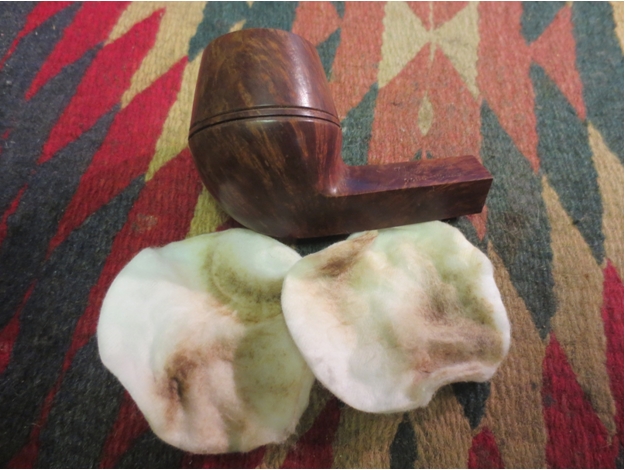
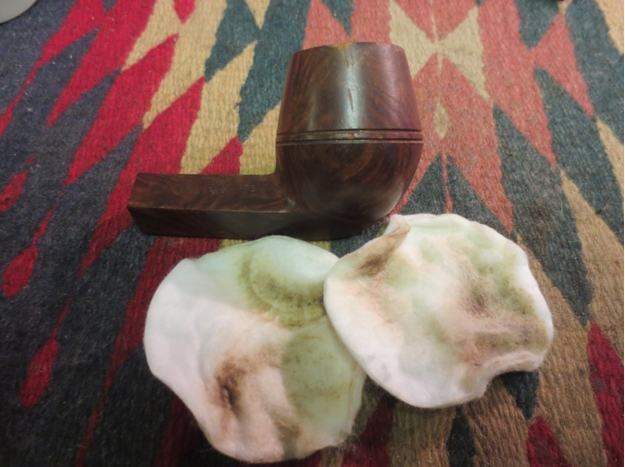
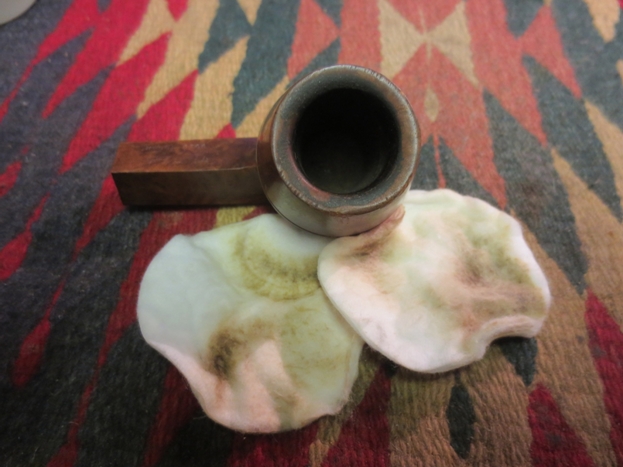
Sav21 I scrubbed the bowl with acetone on cotton pads to remove the soiling and oils in the briar. It did not take much to bring the briar back to its natural state.Sav22

Sav23

Sav24 I decided to rub down the bowl with a light coat of olive oil to protect the briar and give it some life. I applied the oil with a paper towel and rubbed it in and rubbed it off. It also served to highlight the grain and make it stand out.Sav25

Sav26

Sav27

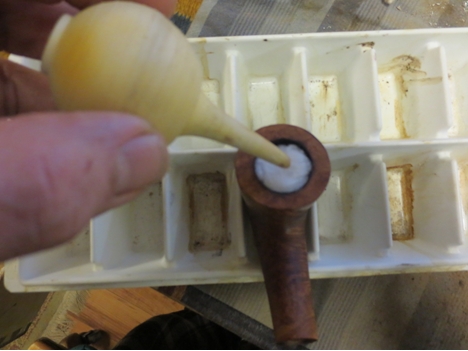
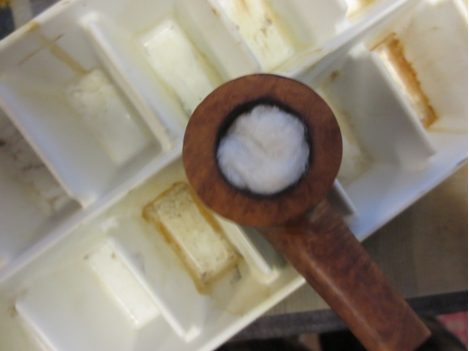
Sav28 I cleaned out the shank with cotton swabs, pipe cleaners and isopropyl alcohol until they came out clean. For the amount of build up of tars and oils on the rim the shank was quite clean.Sav29 I decided to use a cotton ball and alcohol soak on the bowl to remove the sweet smells of the aromatics that had been smoked in the bowl. It had a thick vanilla smell that needed to go in my opinion. I set the stuffed bowl in an ice cube tray and used an ear syringe to fill it with alcohol. I let the bowl soak overnight to leach out the oils in the wood.Sav30

Sav31

Sav32

Sav33 By the time I had finished setting up the bowl I called it a night and went to bed. The next morning I worked on cutting and shaping the new button on the stem. I used my usual knife blade file to make the initial cuts and shave back the slope of the stem.Sav34

Sav35 When I had the slope and look right I sanded the newly shaped button and stem with 220 grit sandpaper. I then repaired some of the low spots with clear super glue. I recut the button with the needle files and sanded it with 220 grit sandpaper to clean up the edges.Sav36

Sav37 With more sanding and shaping I had it where I wanted it and then sanded the stem with a medium and a fine grit sanding sponge to clean up the scratches in the vulcanite.Sav38

Sav39 With the button shaped in I worked on the slot in the airway. I used my usual three needle files – a flat oval, an oval and a round file to work on the slot. I always start with the flat oval and work to the round file.Sav40

Sav41 I used a folded piece of sandpaper to smooth out the inside of the slot.Sav42 At this point I worked some more on the surface of the button. It still was too rough to my liking. I sanded and filed it to reshape it. The next two photos show it before I worked it over with files and papers.Sav43

Sav44 Once I had the button shaped to my satisfaction I sanded it with micromesh sanding pads. I wet sanded with 1500-2400 grit pads, rubbed down with Obsidian Oil and then set it aside to dry. I was pleased with the overall effect of the new button and could not wait to finish polishing it. This is where I made the first mistake in this repair.Sav45

Sav46 Instead of leaving it on the work table and calling it a night I brought the pipe upstairs with me from the basement work area. I wanted to show the girls in my family the result of my work. I know that they are not that interested but they attempt to humour the old man. I stopped at the fridge to get some water and that is when the disaster struck. I could not believe it. The pipe simply slid through my fingers and hit the hardwood floor in our kitchen. I can’t tell you how many times that has happened with no issues. But this time there was going to be a major issue and it came with a vengeance. When it hit the floor, really only 2 feet as I was bending over, I heard the awful click and the stem and bowl separated. The tenon snapped at the shank.Sav47 All that work done and now what to do? I was sick with the thought of starting over. I carried the broken pipe down the stairs to the work table and left it in the dark and went to bed – just a tad frustrated. If you are interested in seeing what I did to try and redeem this disaster make sure to read Part Two of the work on this pipe.

Cutting off a broken stem and reshaping the stem on an Yves Saint-Claude #75 Bulldog


Blog by Steve Laug

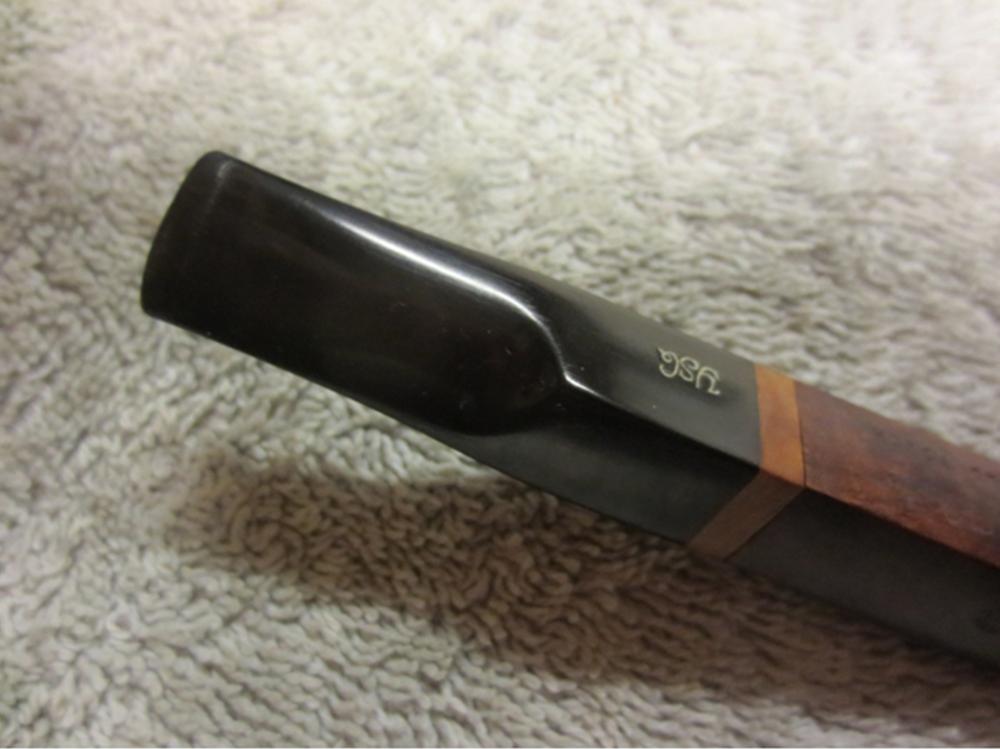
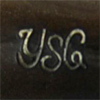
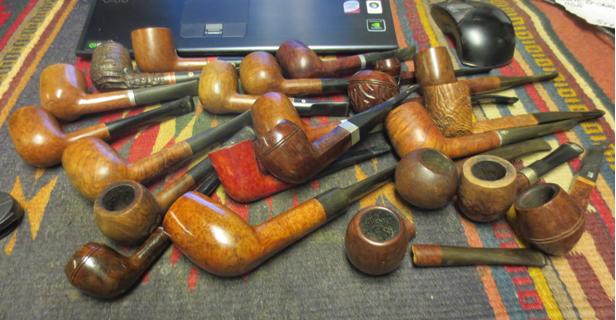
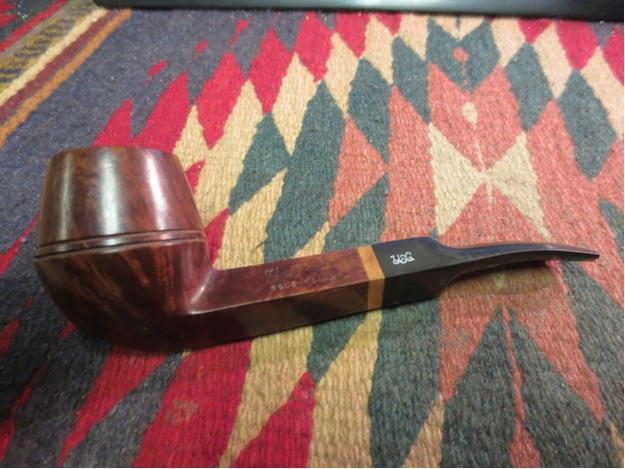
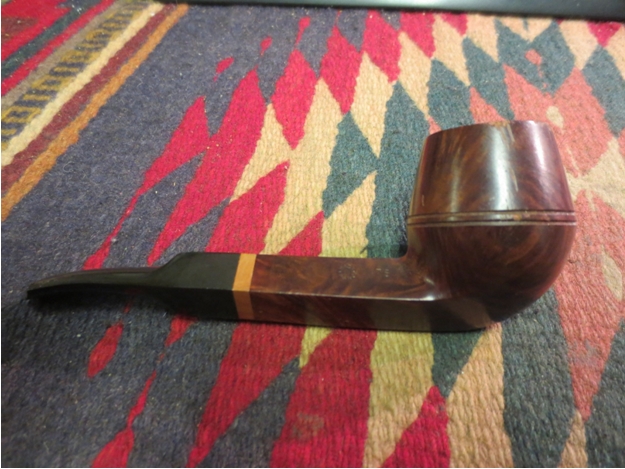
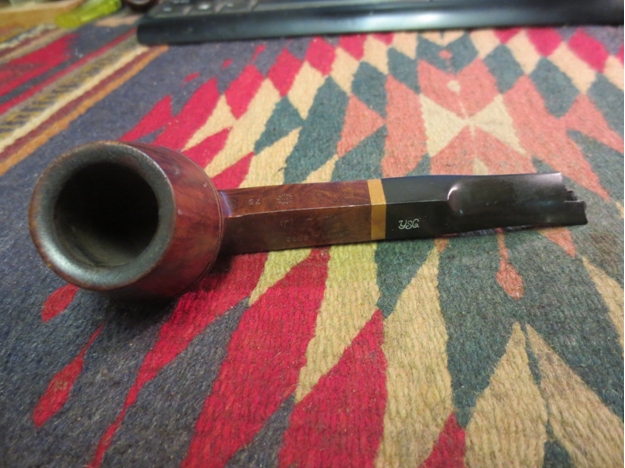
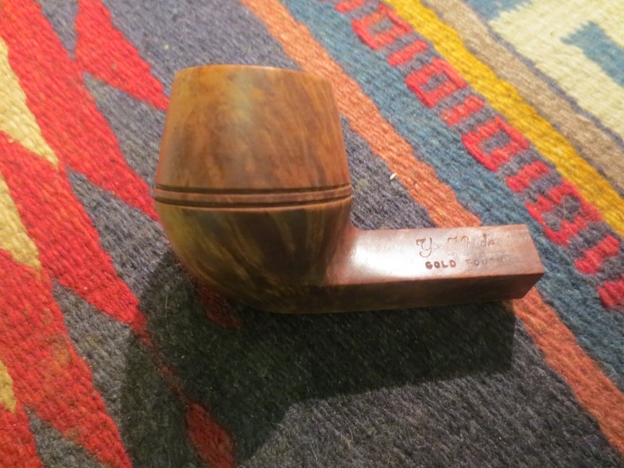
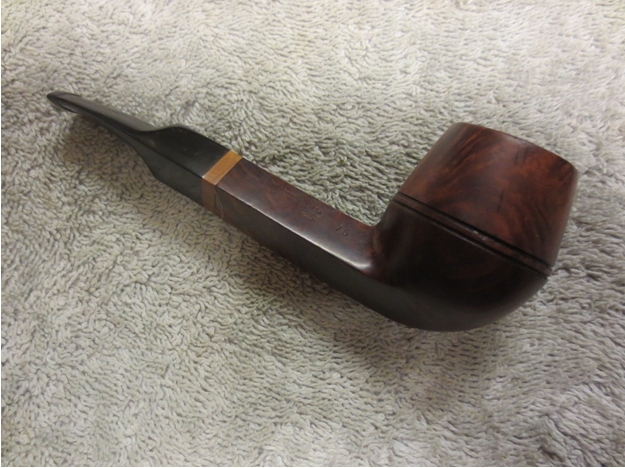
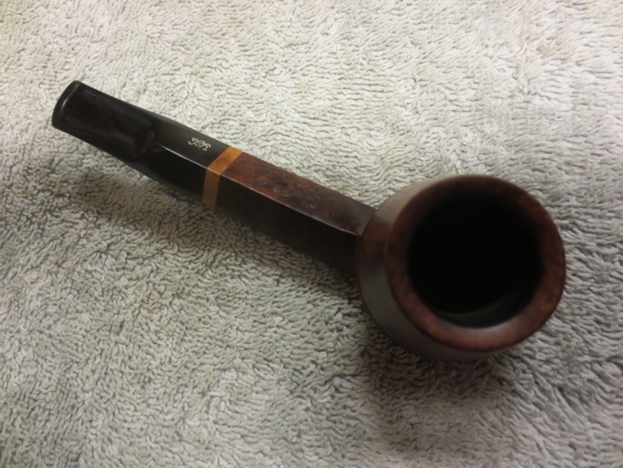
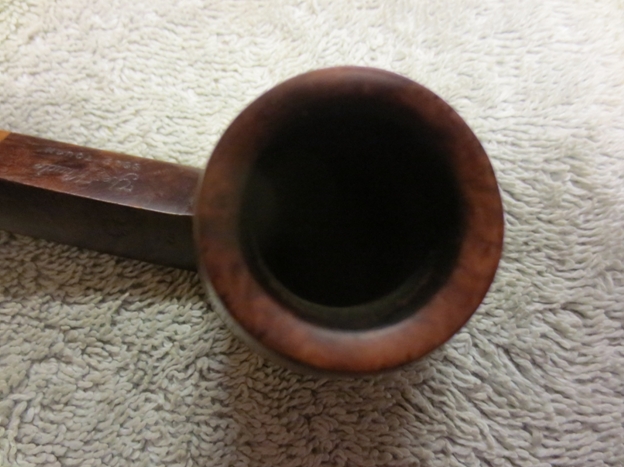
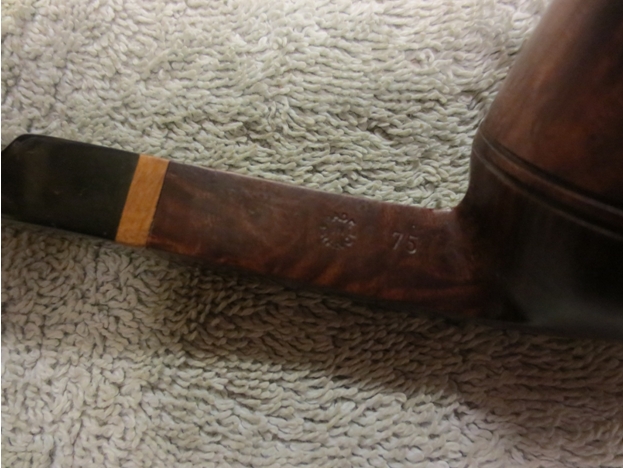
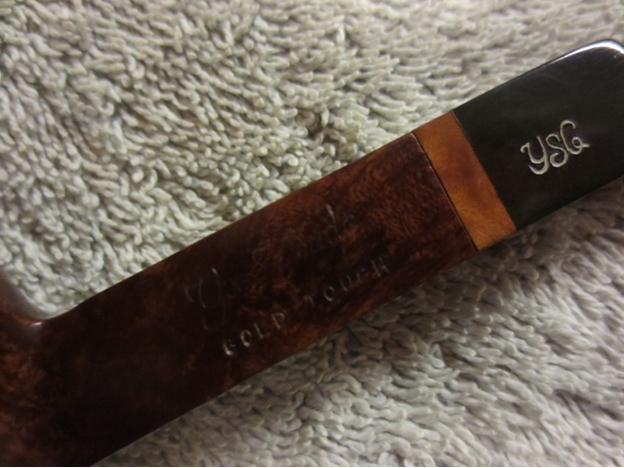
yvessaintclaude2aIn the gift box of pipes I received (shown below) there was one pipe that kept calling out to me to have a look and see what I could do with it. It is shown in the photo below – it is the bulldog in the bottom right corner. It is stamped Yves St.Claude GOLD TOUCH on the left side of the shank and on the right side it has the shape stamp 75 and Made in France in a circle similar to the Comoy’s Made in England Stamp. “Made” and “France” make up the outside of the circle and “in” is in the centre. On the stem it bore a script stamp of YSC and also a light golden coloured wooden stem adornment. I think this is the “Gold Touch”. I have done a bit of research on the net and have found several other examples of the Gold Touch and all have had this wooden stem adornment. The stem was broken off at an angle from the button forward about one inch.boxadditions In searching the web I found several references to Yves Grenard, trained in Comoy’s England purchasing the Chacom plant in St. Claude. He managed the factory and it passed on to his son afterward. I am pretty certain that this Yves St. Claude pipes was made by Chacom in France with the stamping bearing Yves name.

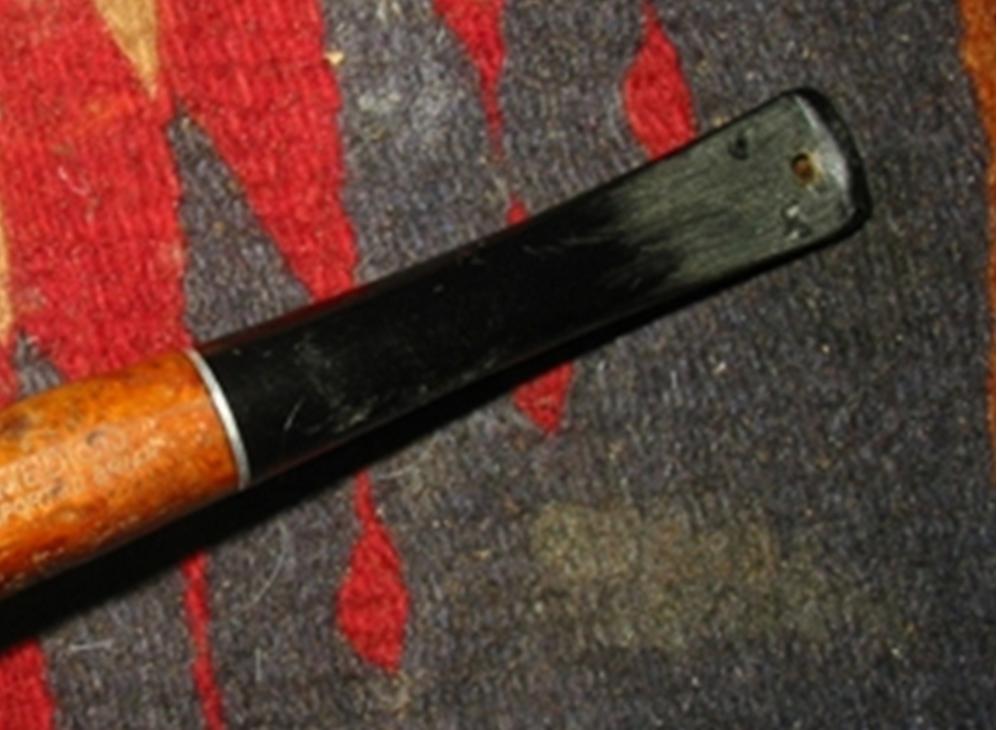
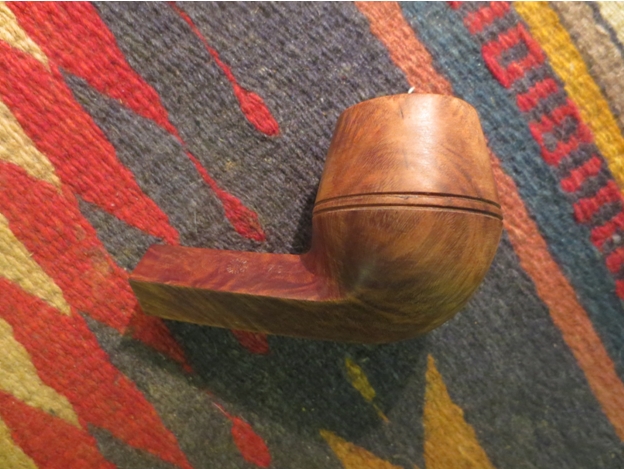
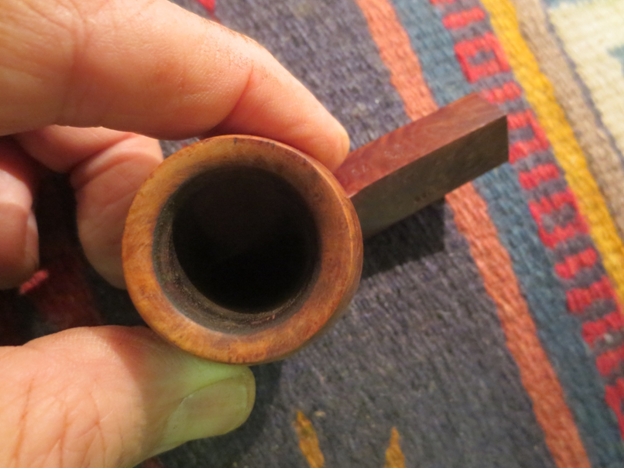
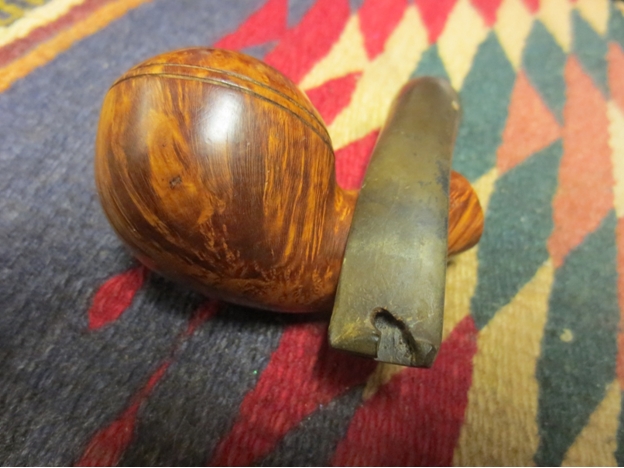
I took the pipe to my worktable and took the following photos. They are a little dark but give a pretty clear picture of the condition of the pipe. The finish was clean but had a lot of damage. There were dings and scratches that cut deeply into the sides of bowl on both sides. On the right side there were vertical scratches on the bowl. The centre of the two rings had several places where it was chipped and damaged. The outer edge of the rim had dents on it from tapping the pipe out on hard surfaces. The top of the beveled rim had a build up of tars and oils. The inner edge was clean and undamaged. The bowl was quite clean and did not need reaming. The stem had light oxidation but the major problem with the stem was that it was broken. The bottom edge of the diamond stem had several cuts and dents in the vulcanite that would be a challenge. I would need to decide what to do with it – should I cut it back and reshape it or replace it with another saddle stem. The problem with replacing it would be that I would lose the stamping on the saddle and the nice wood stem adornment. Shortening it would not be hard to do but I was not sure what it would look like. So I was faced with a decision.YSG1

YSG2

YSG3

YSG4 The next two photos are close up shots of the stem to show the damage. The first photo is the underside of the broken stem and the second is the top side.YSG5

YSG6 I scrubbed the bowl with acetone on cotton pads to remove the finish and grime from the surface of the bowl. I wanted to have a clean surface to work with when I repaired the deep scratches on the sides of the bowl and also the damaged ring around the bowl.YSG7

YSG8

YSG9 I scrubbed it until the bowl and rim were clean. I filled the deep scratches and sharp edged dents with clear super glue and then sanded them until they blended into the surface of the bowl. Once I had sanded them down they virtually disappeared into the grain. This was one of those times that the patches literally disappeared into the briar. The next photos show the bowl stripped of its finish and cleaned and repaired.YSG10

YSG11

YSG12

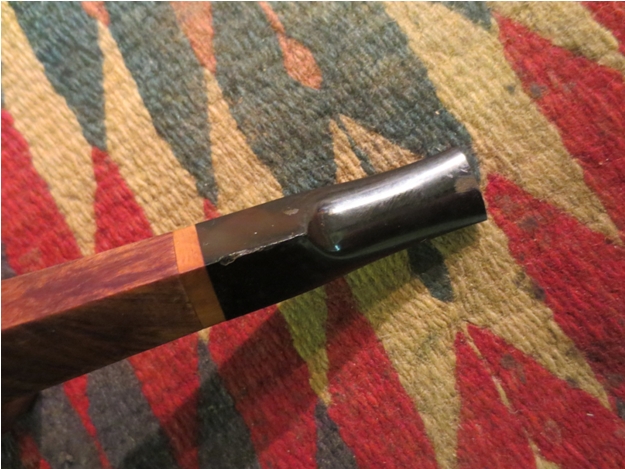
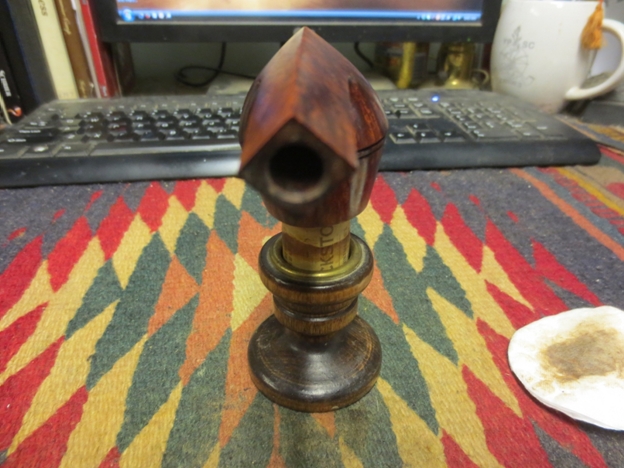
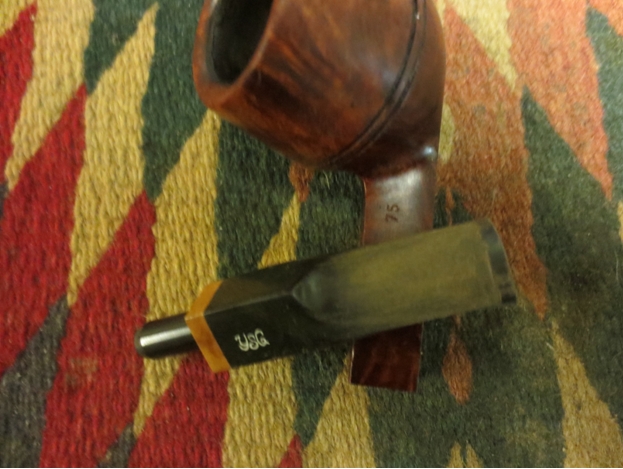
YSG13 I decided to cut back the stem and reshape it. I figured that if it did not look right I could make a new stem. I used my Dremel with a sanding drum to cut away the damaged portion of the stem. I took it back until the remaining stem was solid and the damage was gone. Fortunately the airway was absolutely centered in the stem. Once I had it cut off I kind of liked the look of the shorter stem and I thought that I could reshape it so that it would look natural. It reminded me of some of my older WDC bulldogs that had an elongated shank with a short stem. I think that it works because of the wooden stem adornment which gives the shank a longer look.YSG14

YSG15

YSG16

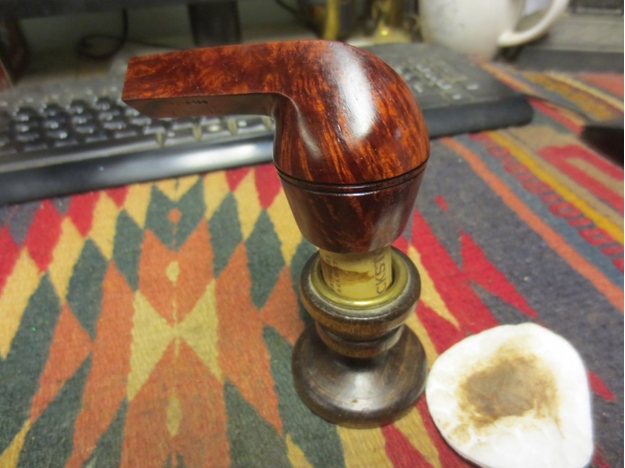
YSG17 Below I have included a photo of the entire pipe with the shorter stem to show the new look. I like it!YSG18 I decided to stain the pipe bowl and set it aside to dry while I worked on the stem. I use an old candle stand with a wine cork that fits into the bowl of the pipe as a drying stand for the bowl. It works very well to keep all surfaces exposed to the air. I used a walnut aniline based stain to bring out the grain on the bowl.YSG19

YSG20

YSG21

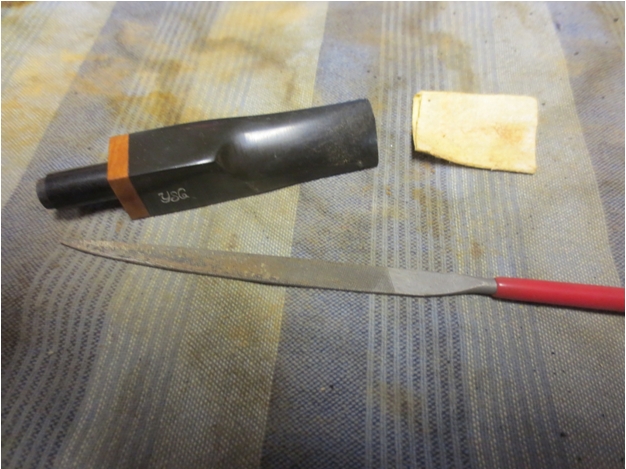
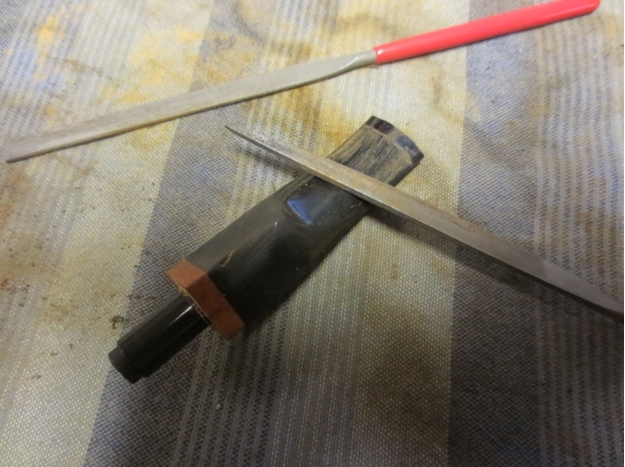
YSG22 While the bowl was drying I turned my attention to cutting a new button on the stem. I use several needle files in the process followed by a folded piece of 220 grit sandpaper to work the new sharp edge. I start with a knife blade needle file and use the straight edge to define the line of the button. Once that is done I use the curved edge to carve away the surface of the stem ahead of the new button line. I continually refine the sharp edge in the process with a flat rectangular blade needle file that has a straight edge. It does not have the teeth to cut the edge at the beginning like the first file.YSG23

YSG24

YSG25 Once I have the general button cut I sand the stem surface with the 220 grit sandpaper folded. I use the folded edge to get right up against the new button. I work the sandpaper to get rid of the file marks. The next two photos show the newly shaped button and the smoothed out stem surface.YSG26

YSG27 I then worked on the slot in the button. For this I use three different needle files – a flat oval, an oval and a round file. I work them interchangeably as I open and flair the airway. I start with the flat oval to spread out the opening and the other two to widen the gap.YSG28

YSG29

YSG30 Once the slot was opened I used a folded piece of 220 grit sandpaper to shape the edges and to smooth out the opening of the oval slot.YSG31 Once the slot is opened and smooth I sand the stem with a medium and a fine grit sanding sponge to further shape the stem and also to remove the scratches.YSG32

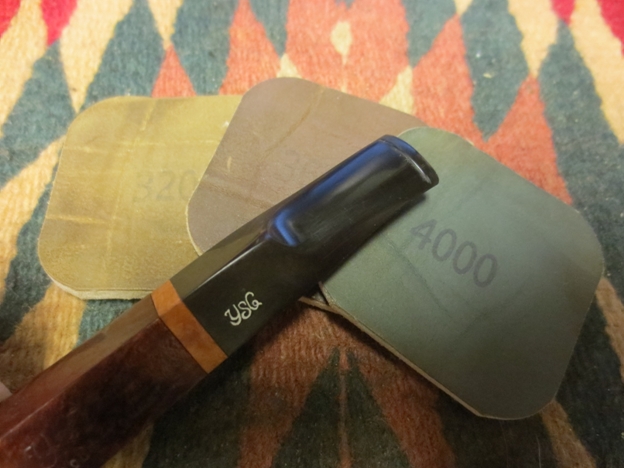
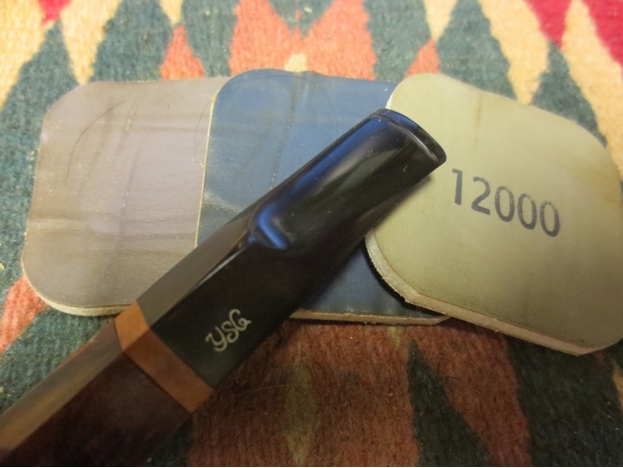
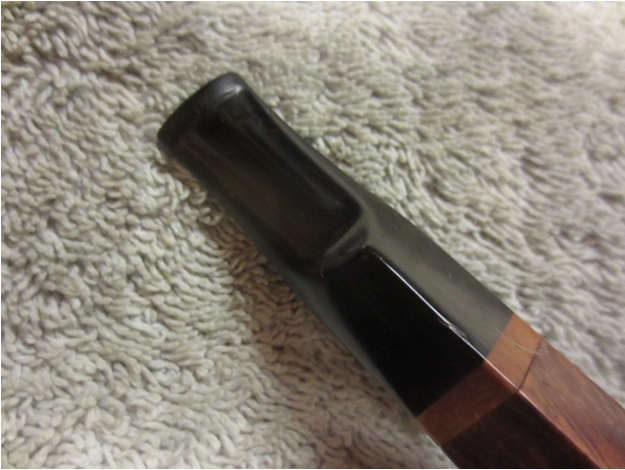
YSG33 I then used my usual array of micromesh to sand and polish the stem. I wet sanded with 1500-2400 grit sanding pads and dry sanded with 3200-12,000 grit pads. I rubbed the stem down with Obsidian Oil between each set of three pads. After the 12,000 grit pad I rubbed it down a final time and let the oil soak into the vulcanite.YSG34

YSG35

YSg36 I buffed the stem with White Diamond and then gave the bowl and stem multiple coats of carnauba wax. I buffed it with a soft flannel buff to raise the shine. YSG37

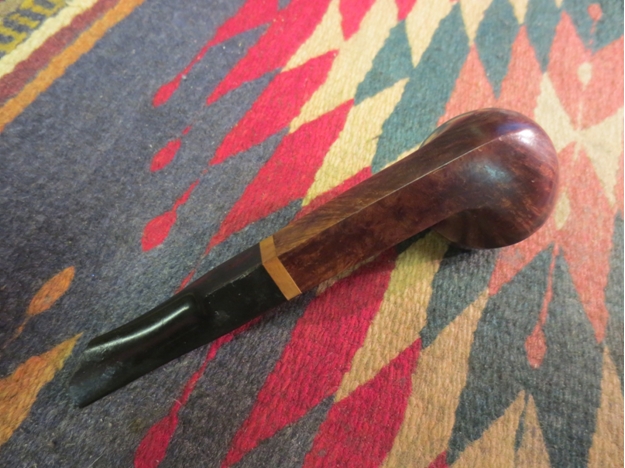
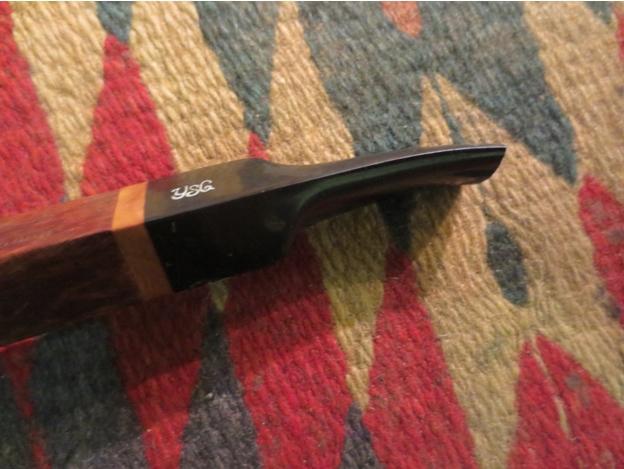
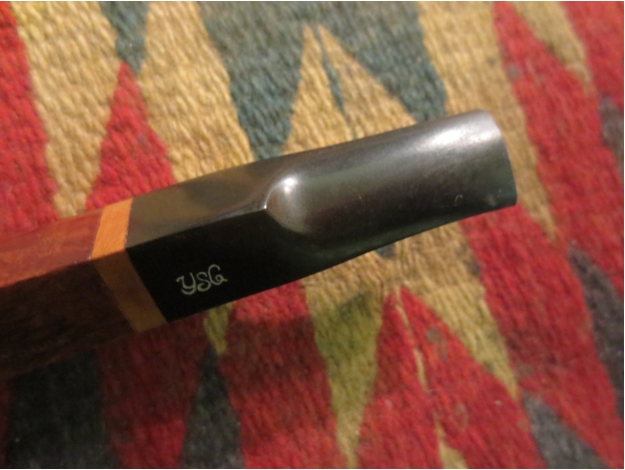
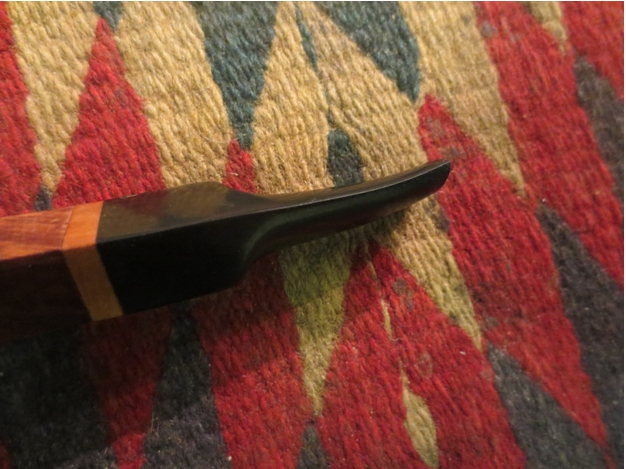
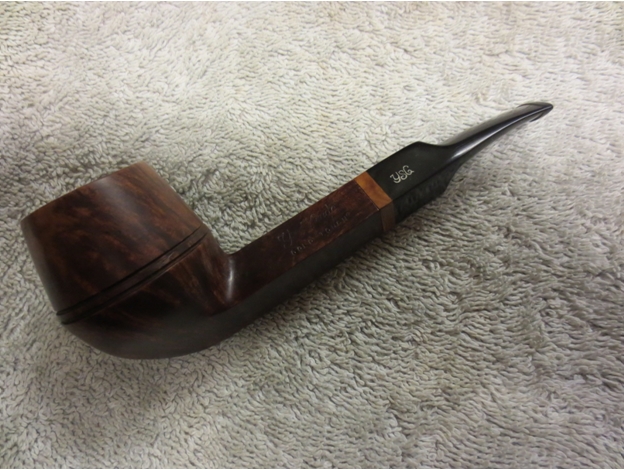
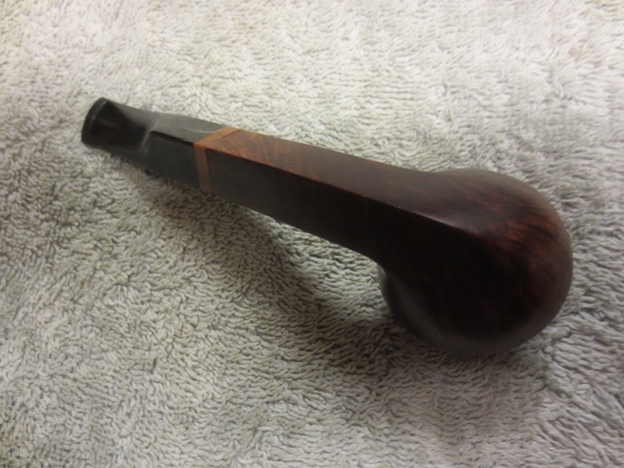
YSG38 The finished pipe is shown in the photos below. I like the shortened stem and how it looks on the pipe. The overall look of the pipe with the newly shaped stem has both a Danish flair and a look of days gone by. I think I will be enjoying some good smokes in this one.YSG39

YSG40

YSG41

YSg42 I have also included a few close up photos of the rim and the stampings on the shank and stem. It is truly a beautiful pipe.YSG43

YSG44

YSG45

Cutting back a broken stem – rescuing a potential cast off


Blog by Steve Laug

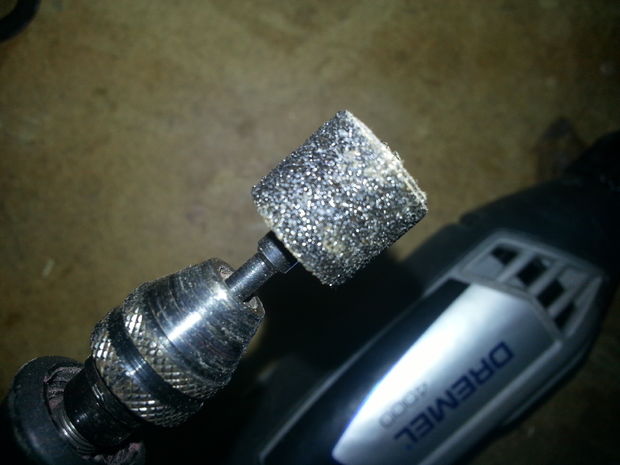
When I recut the button on a recent Peterson Shamrock stem I thought I would use the opportunity to go into more detail on how I cut back the stem and shape a new button on the end of the cut off. The photo below shows the state of the stem when I received it. While I had other options in terms of repair of the stem I decided to cut it back.Shamrock7 I have a Dremel that is my go to tool for cutting off a stem. Others use a saw – coping or hack saw, but I use the Dremel. The photo below shows the sanding drum that I use. It is pretty coarse sandpaper and makes short work of trimming back the vulcanite or Lucite of a stem. The trick is to hold the stem and the Dremel steady while you work the end of the stem against the sandpaper.F2DF829HZI92Z2B.MEDIUM Over time I have learned to hold it steady and work the cutting line straight. I take off all of the damaged material so that I have some thickness on the top and bottom of the stem that will accommodate a new button without making the stem too thin in the process. In this case I removed the funneled portion of the airway in the button and what remained was the round airway that would need to be reshaped. The line across the stem is pretty straight considering I do it by eyeballing it rather than using a straight edge.Shamrock13

Shamrock14

Shamrock15 The next step in the procedure is to cut a straight line equidistance on the top and the bottom of the stem that will be the sharp edge of the button. The outer edge is slightly rough in the photos but that does not matter as that edge will be bevelled toward the airway in the shaping process. I use a flat blade needle file with a square edge for this initial cut.Shamrock16

Shamrock17 Before I put the flat blade needle file away I use it to shave some of the material that is directly ahead of the sharp line of the button and begin the tapering process. I follow that up with an emery board to get a feel for the look of the stem and to assess how much material I will remove in the process.Shamrock18

Shamrock19 The next step in the process is to shave more of the material away and adjust the angles of the stem to the button. I use a needle file with a knife shaped blade and draw it across the stem toward the button edge. As I draw the file toward the button it peels the material away. I work it from the point on the stem that I have picked as the place where the new taper will begin. I lightly draw it across the upper portion and deepen the cuts the further I go down the stem. I clean up the sharp edge with the straight file once again. I cut a groove in the material next to the button edge that sets the depth of the bottom of the taper. I work the stem angles until they taper directly into the button and the groove disappears. I used 220 grit sandpaper to clean up the file marks and smooth out the transition of the angles to the button. At this point the definition of the button is finished. All that remains is to shape the button and clean up the marks on the material.Shamrock20

Shamrock21 I used the oval needle file to open and flare the edges of the airway to open the airways. Once I have the funnel cut I use a folded piece of sandpaper to clean up the file marks in the slot and smooth out the end of the button. I also use the sandpaper to shape the button and taper and round the edges to make the button oval and smooth.Shamrock22

IMG_3126 I worked the curve of the underside of the stem to make a smooth and clean angle that matched the curve of the bottom of the bowl of the pipe. I used 220 grit sandpaper, medium and fine grit sanding sponges to reshape the curve. The next two photos show the curve and the shape of the button on the cut off stem.Noname

IMG_3073 Once the shaping was finished I sanded the stem with micromesh sanding pads. I sanded the blade and the button and slot area of the stem at the same time. I wet sanded with 1500-2400 grit sanding pads and dry sanded with 3200-12,000 grit pads. I polished the stem with red Tripoli and White Diamond on the wheel and then gave the stem multiple coats of carnauba to polish and raise the shine.Shamrock31

Shamrock34

Shamrock33

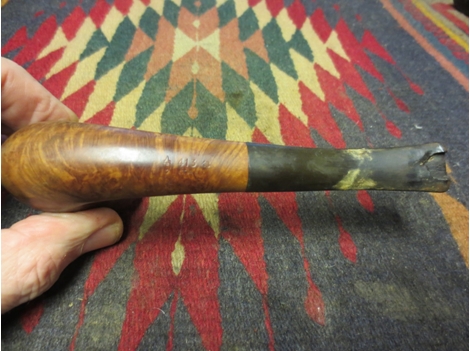
Shamrock32 The finished stem is shown below. The goal in the process is to return the stem as near as possible to its original shape and condition. The button shape is determined by photos or by the remnant of the stem prior to being cut off. The buffed and polished stem should look as close as possible to a factory cut stem. While I have done many of these I still feel like I am in the process of learning. The key to the whole thing is to move slowly, carefully and methodically until the stem is finished. Then sand some more and polish some more… I can’t tell you how many times I have gone back after several months of smoking the pipe and doing a bit more reworking until I am happy with the feel in the mouth.IMG_3091
IMG_3092