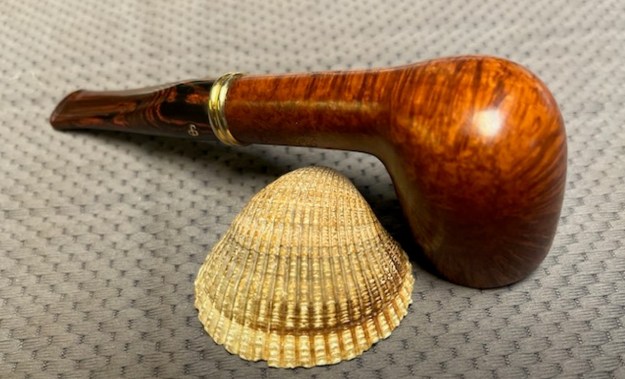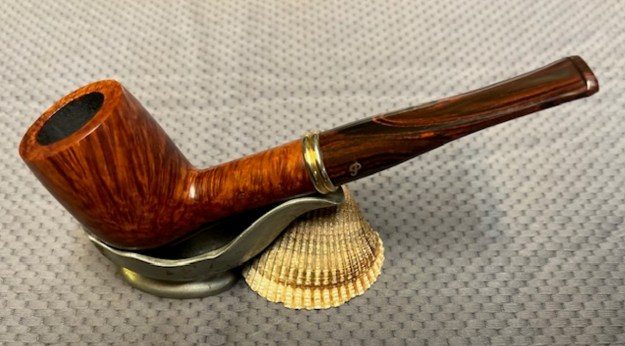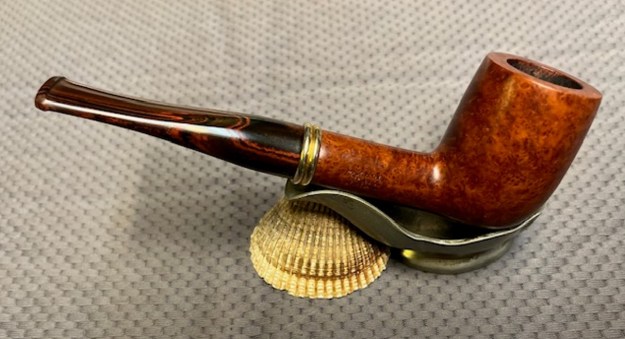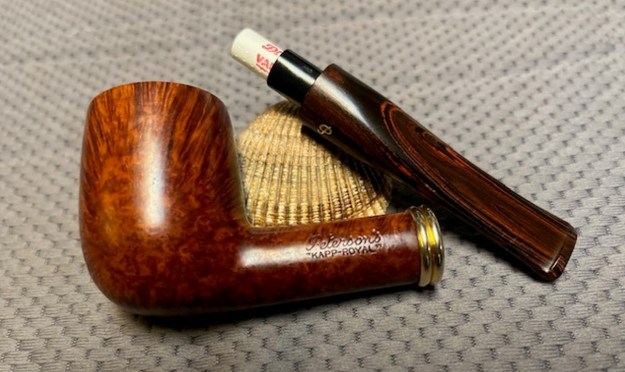
Tag Archives: Cumberland

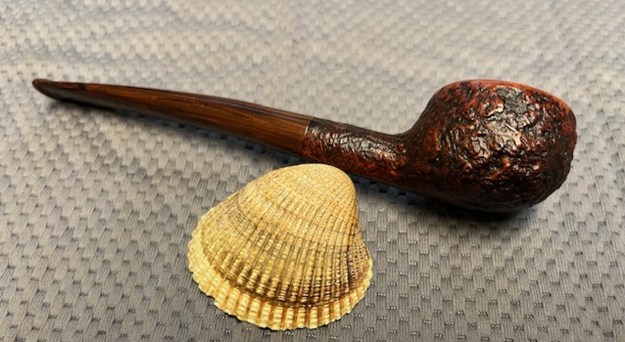
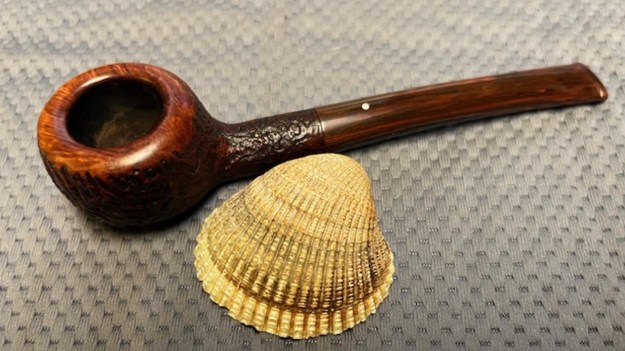
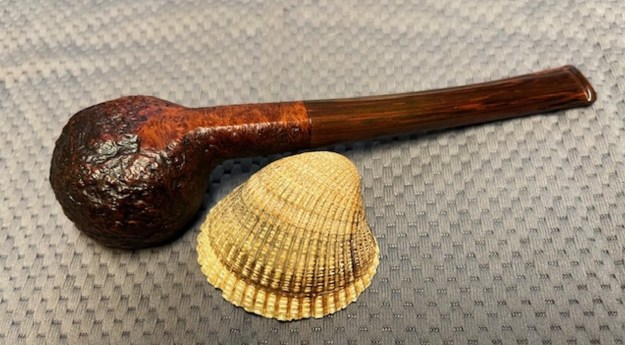
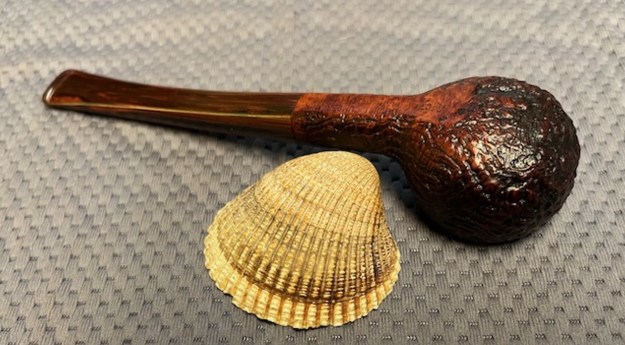
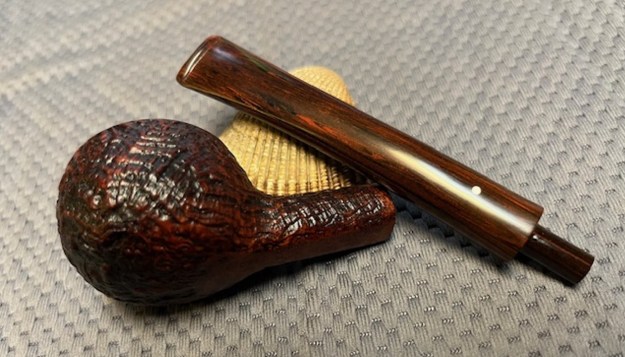
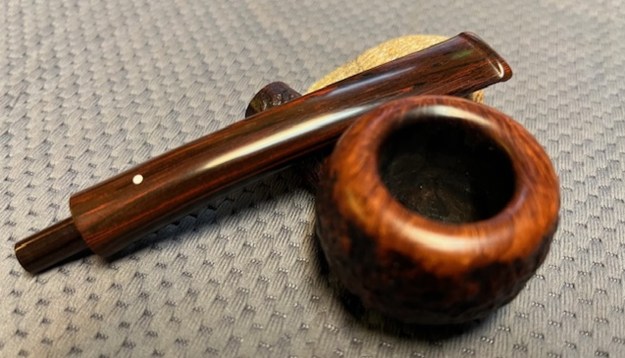
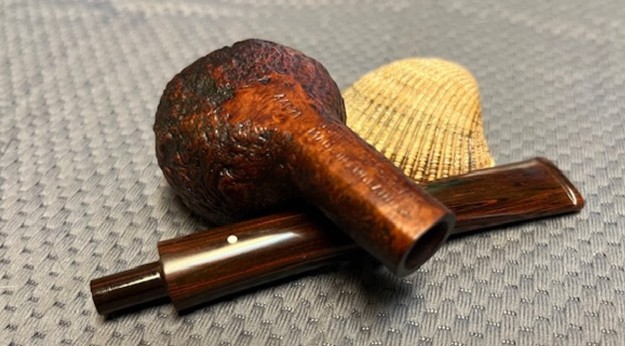
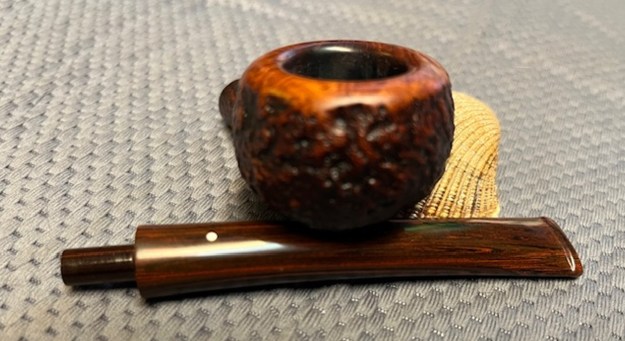
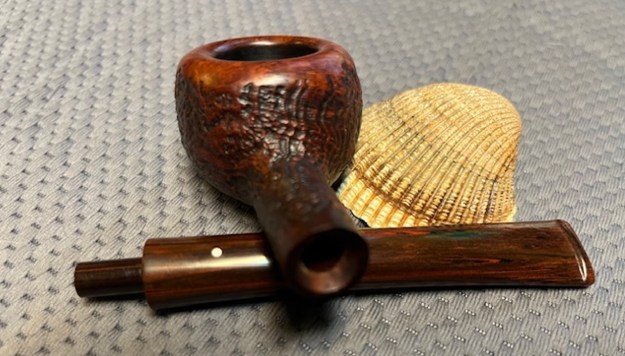
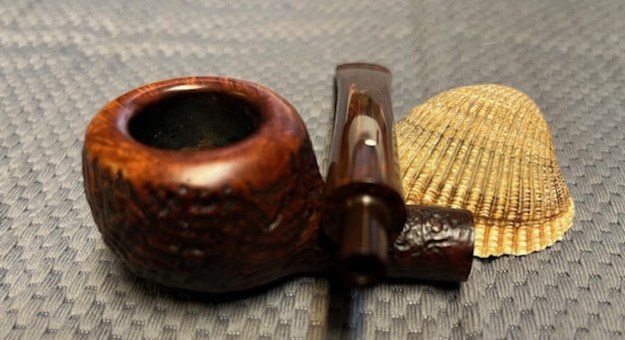
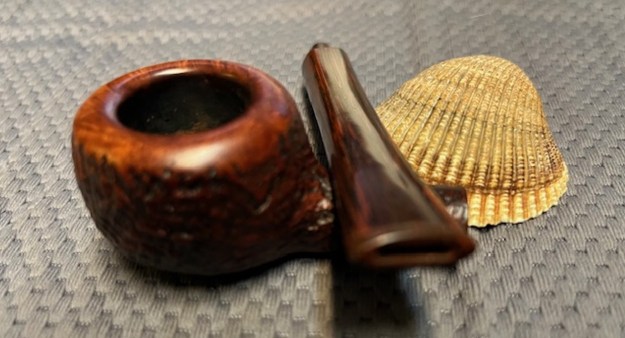
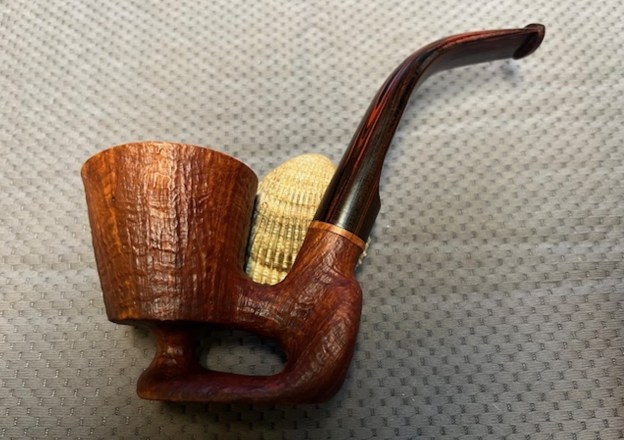
Completing a Byron Harwood Sandblast Dublin Pedestal Sitter with a Cumberland Stem


by Steve Laug

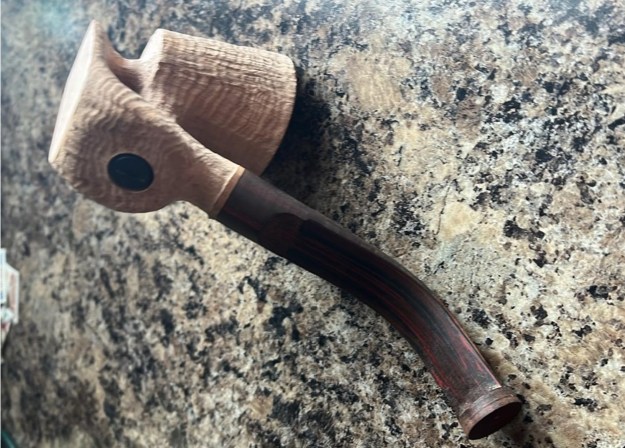
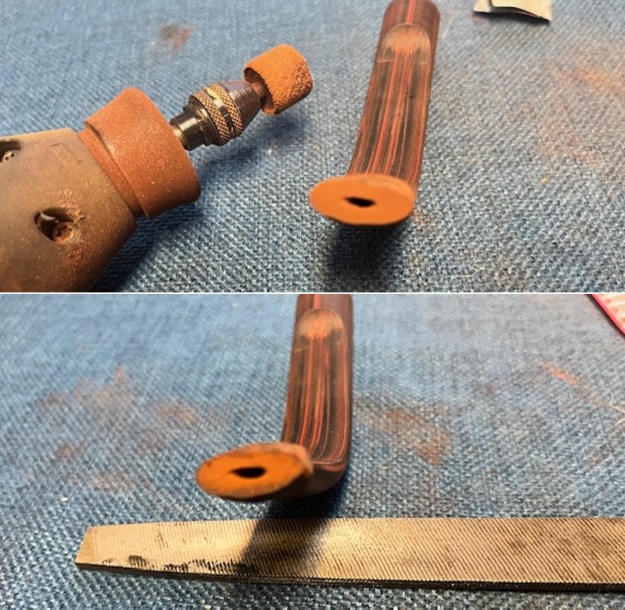
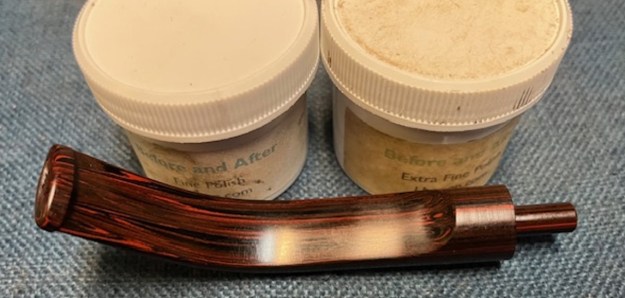
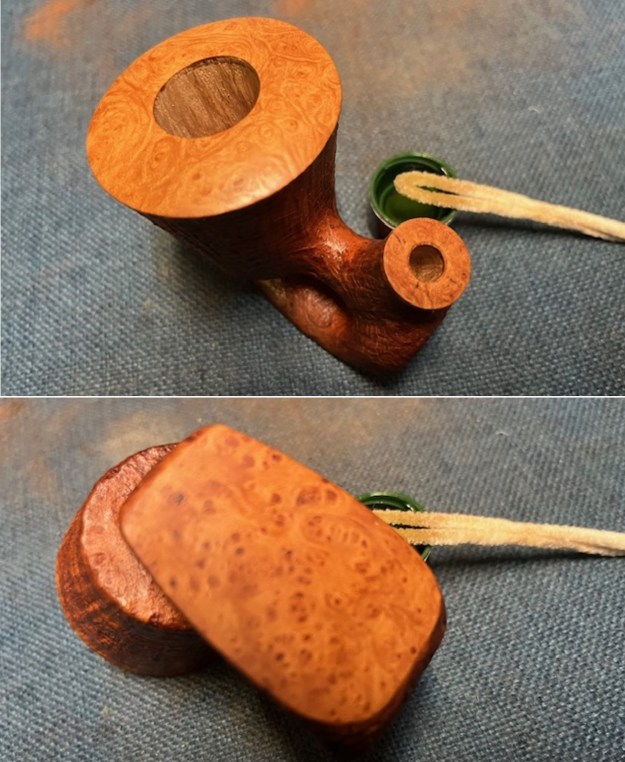
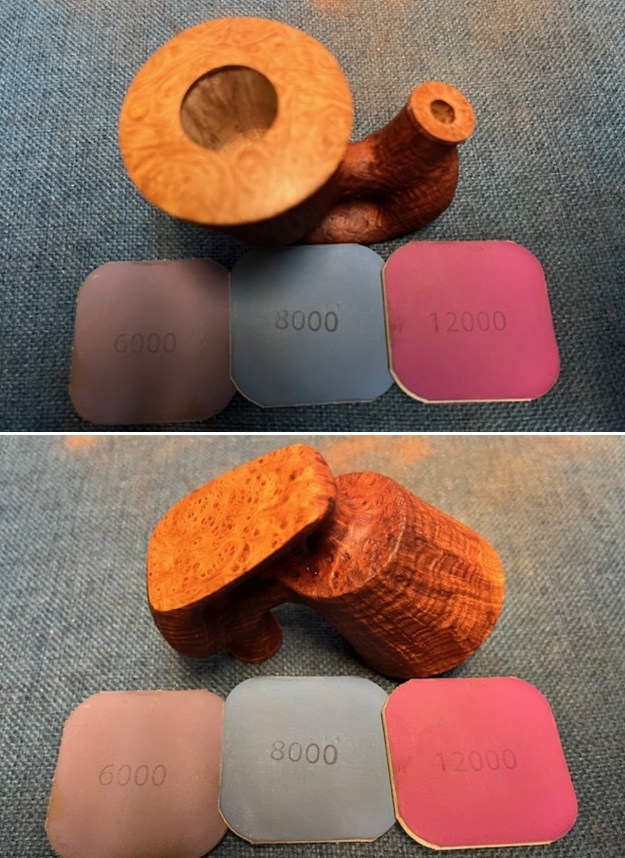
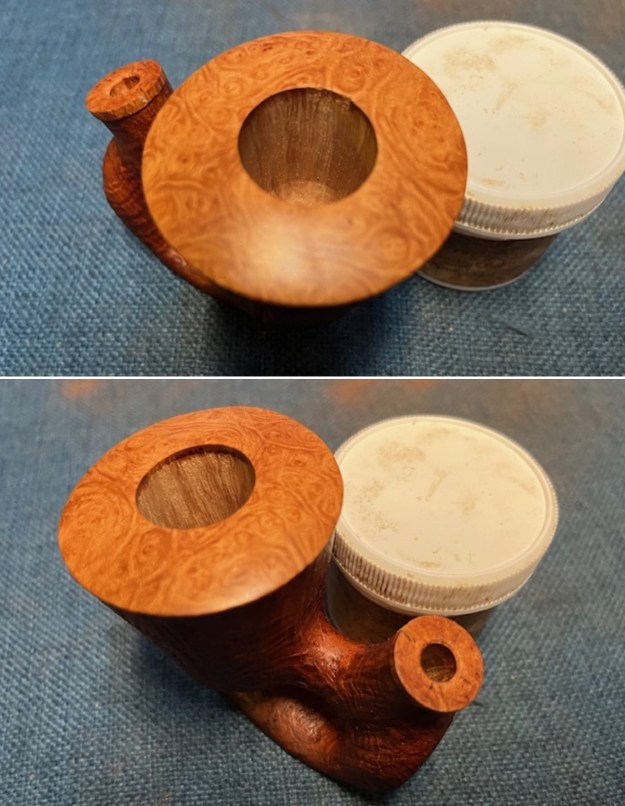
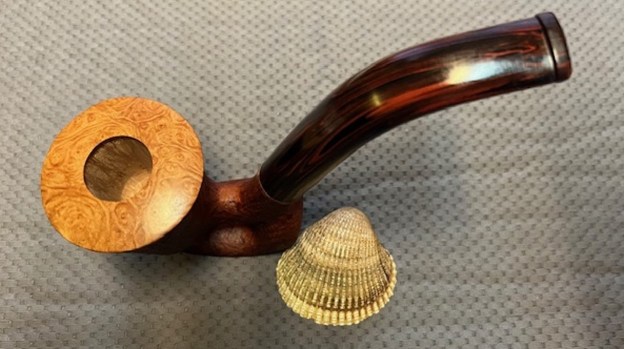
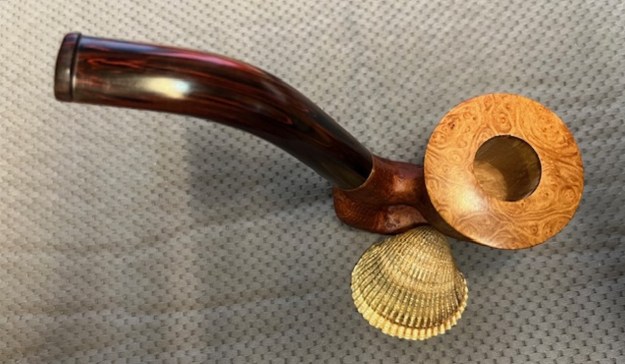
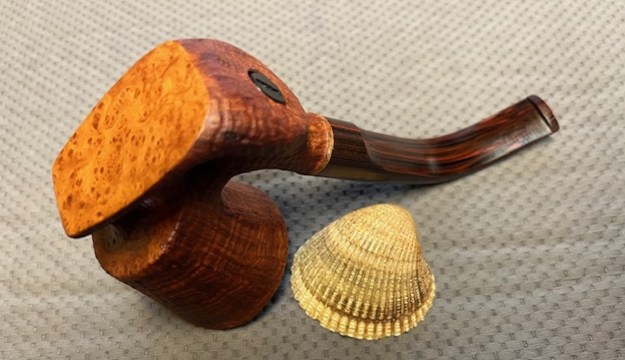
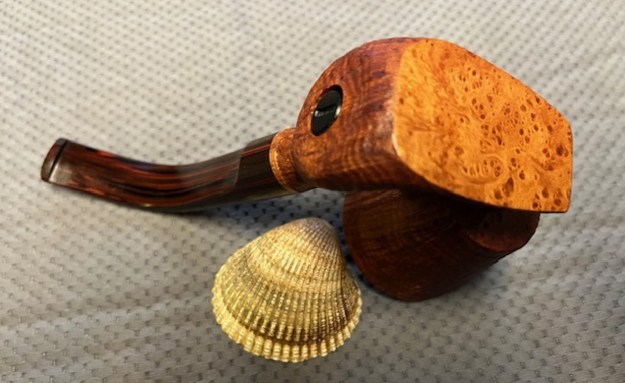
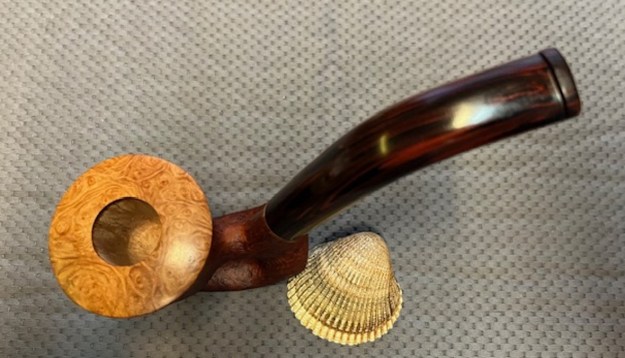
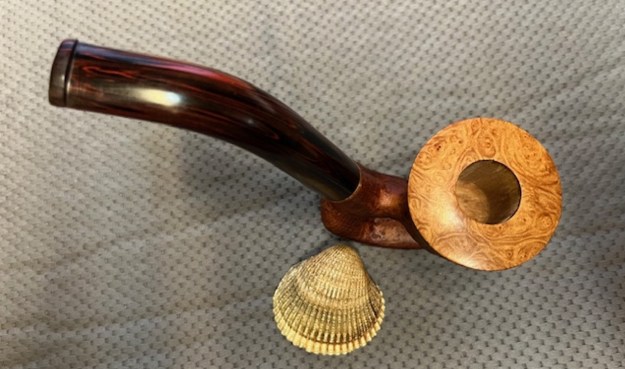
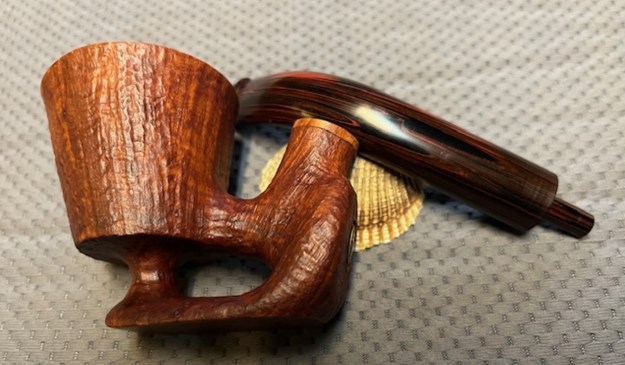
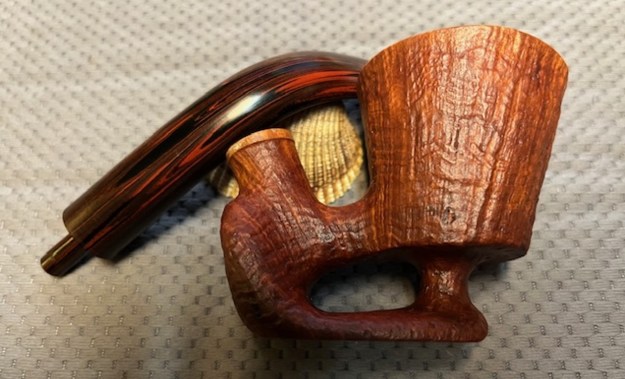
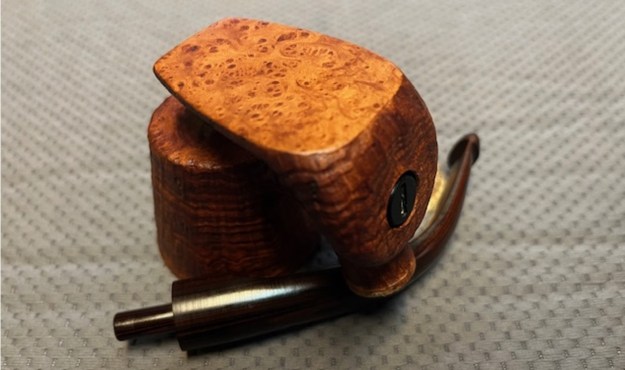
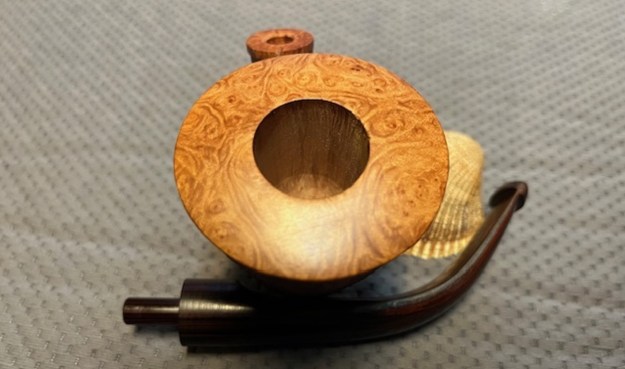
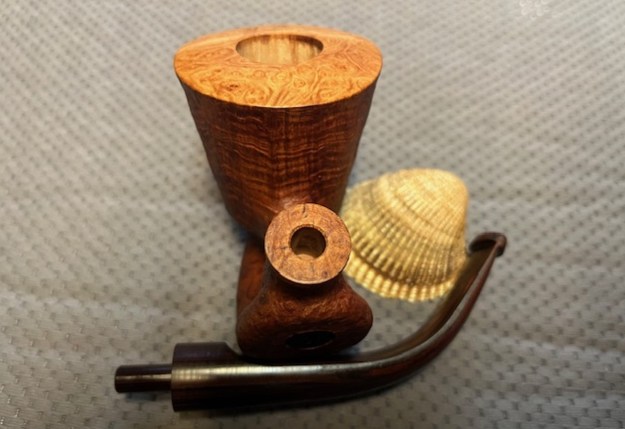
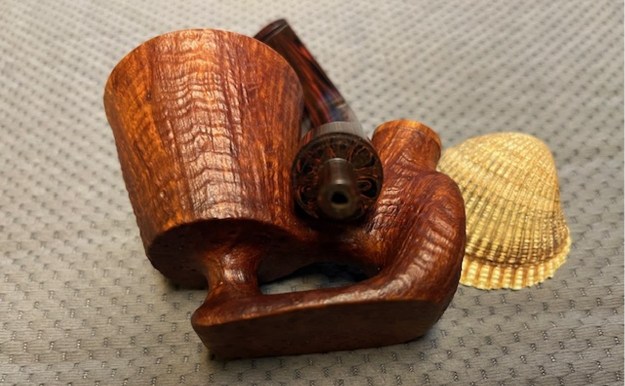
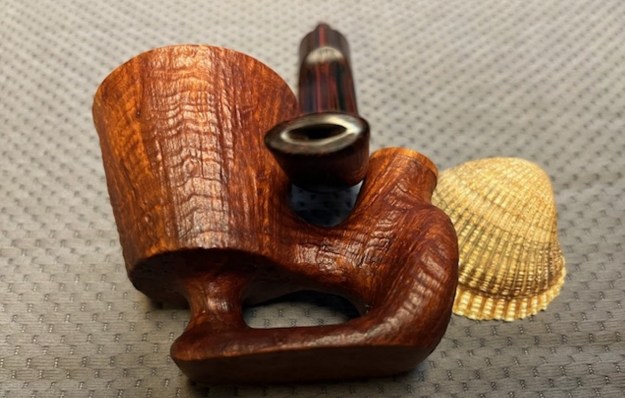
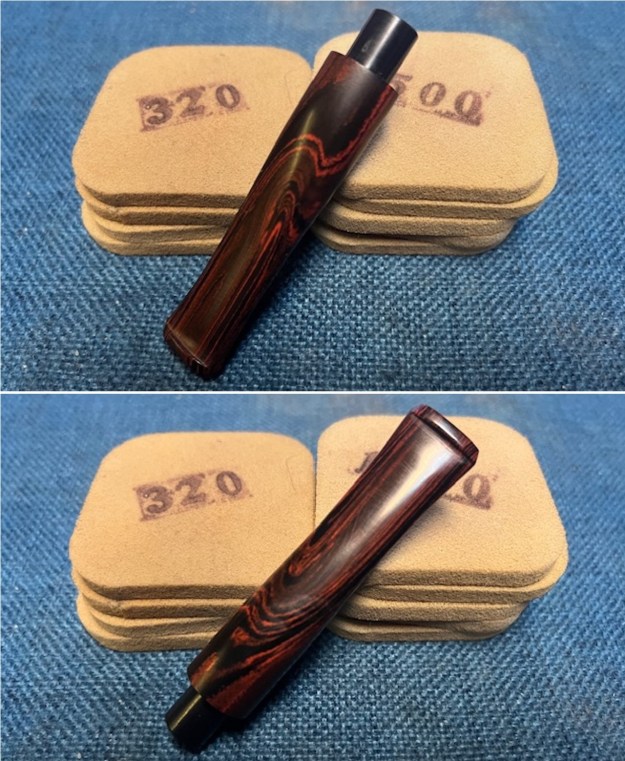
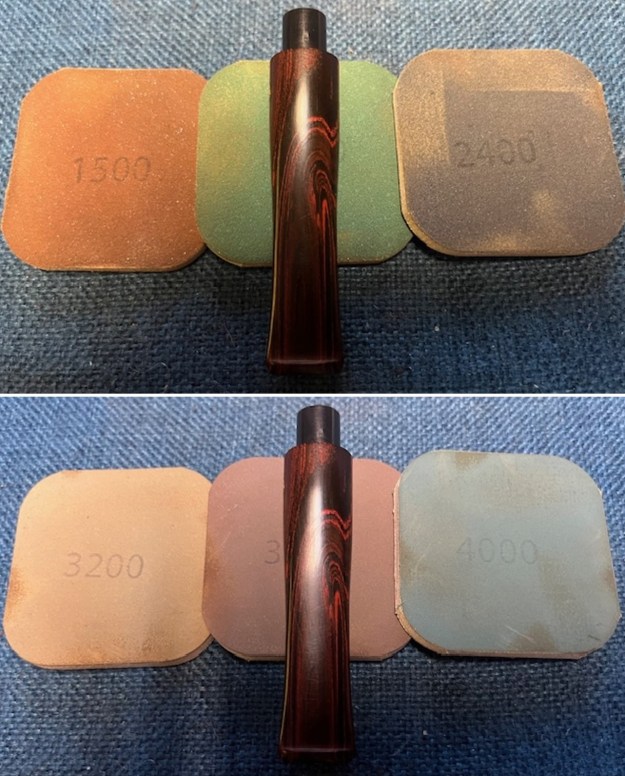
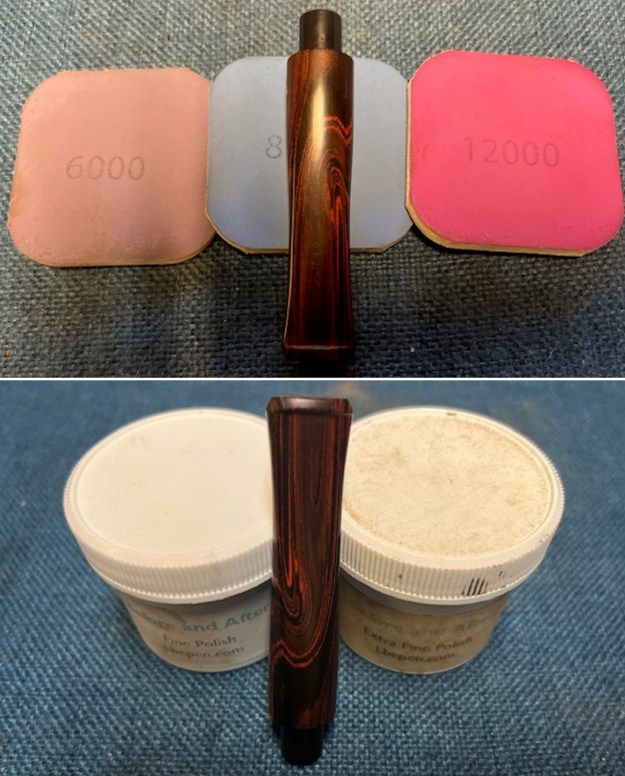
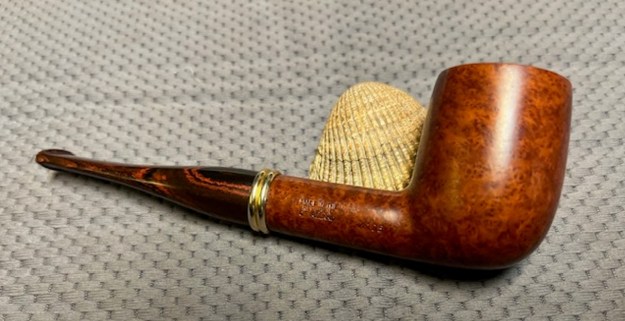
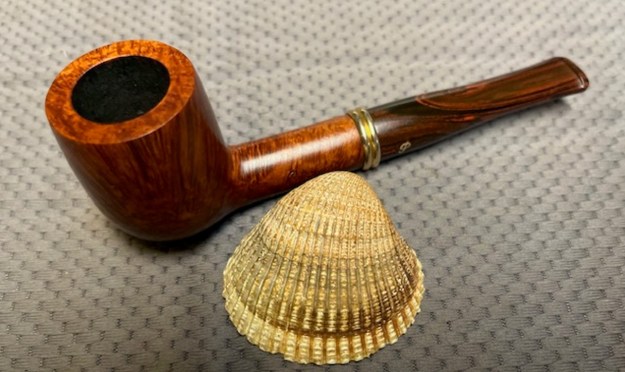
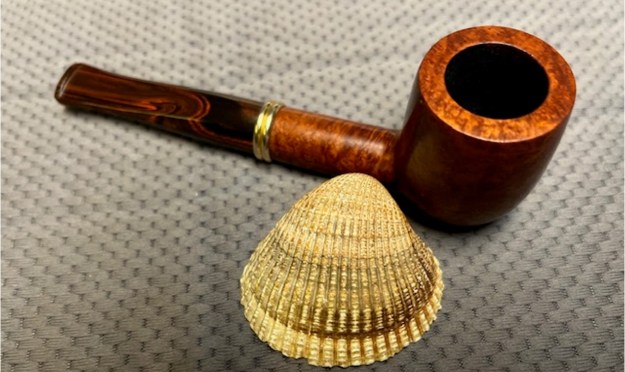
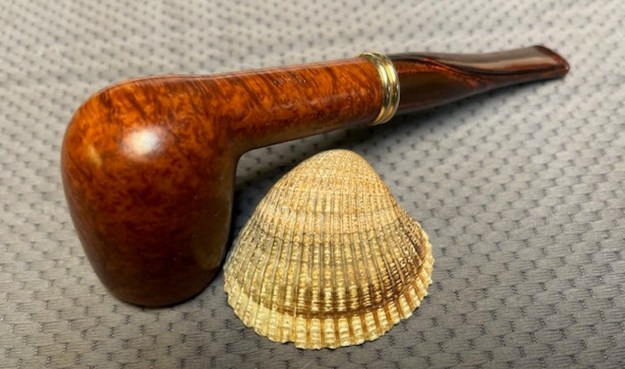
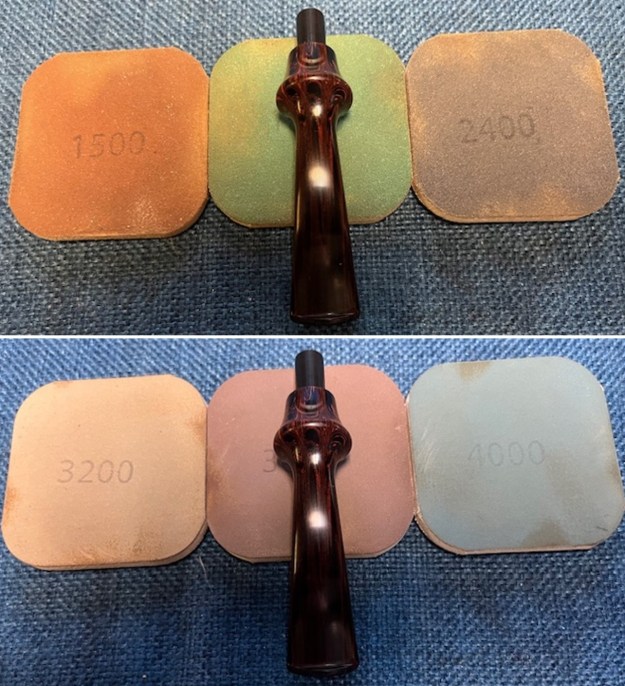
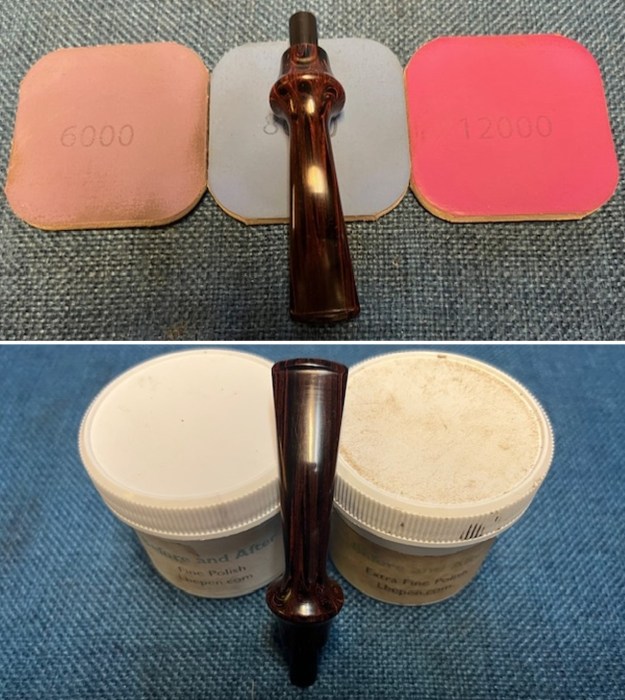
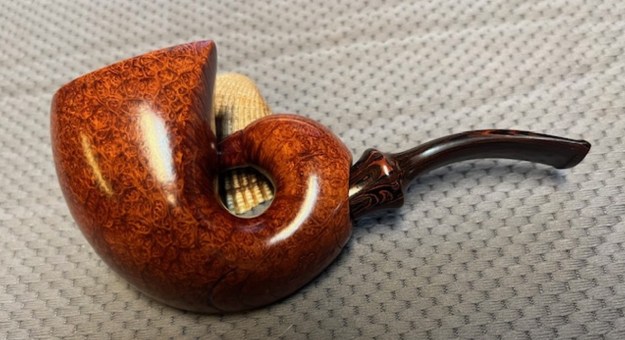
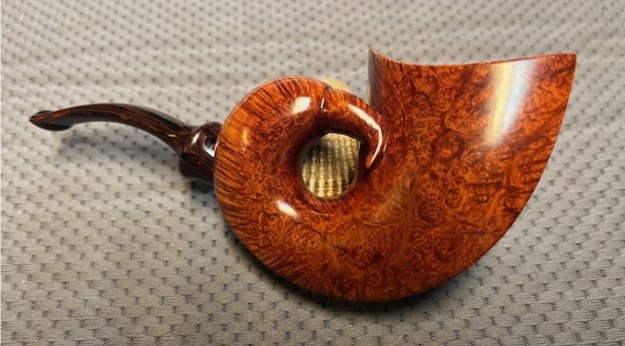
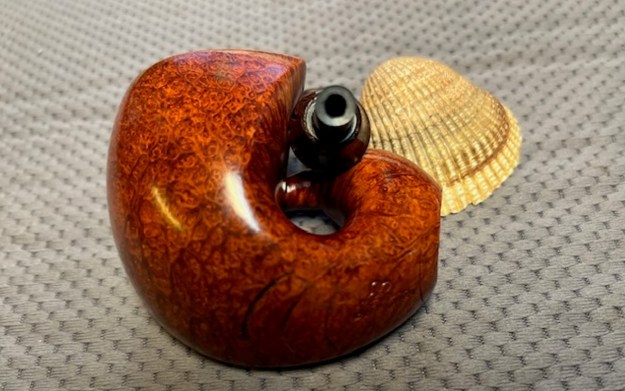
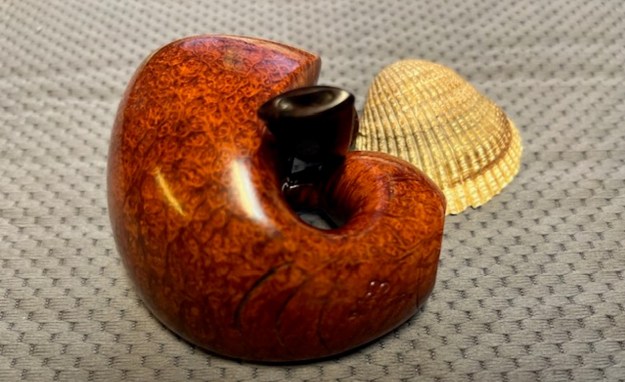
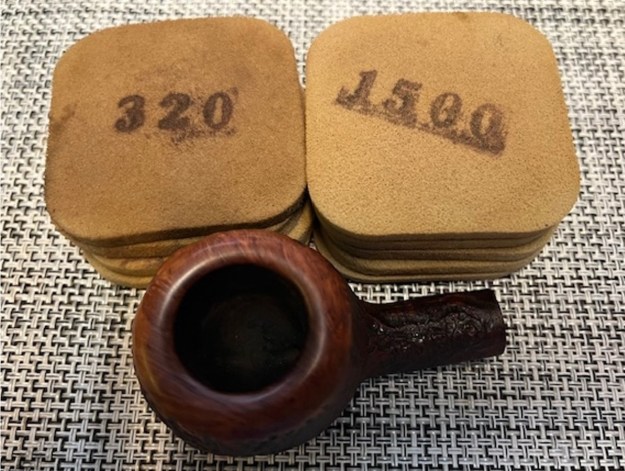
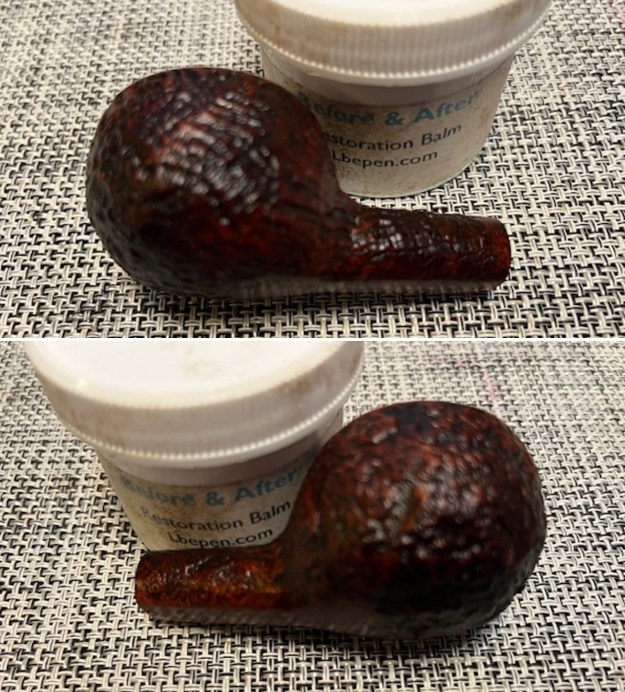
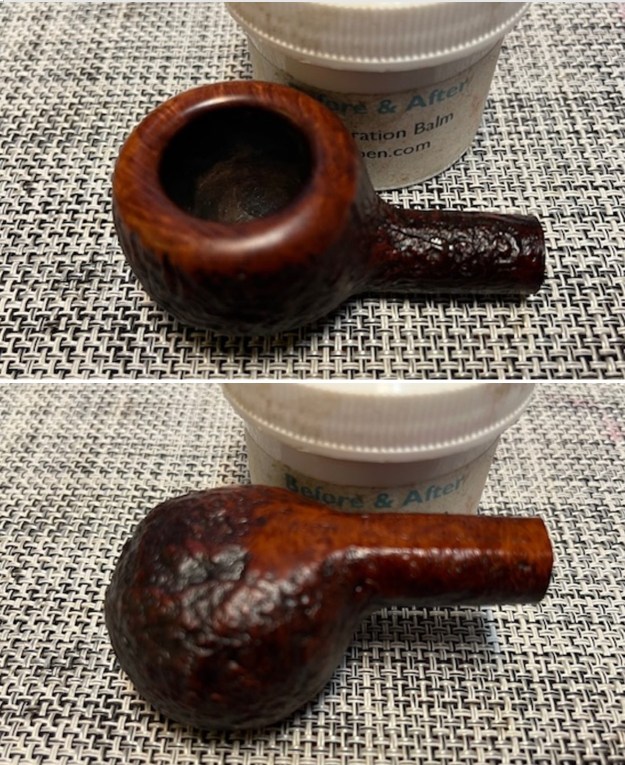
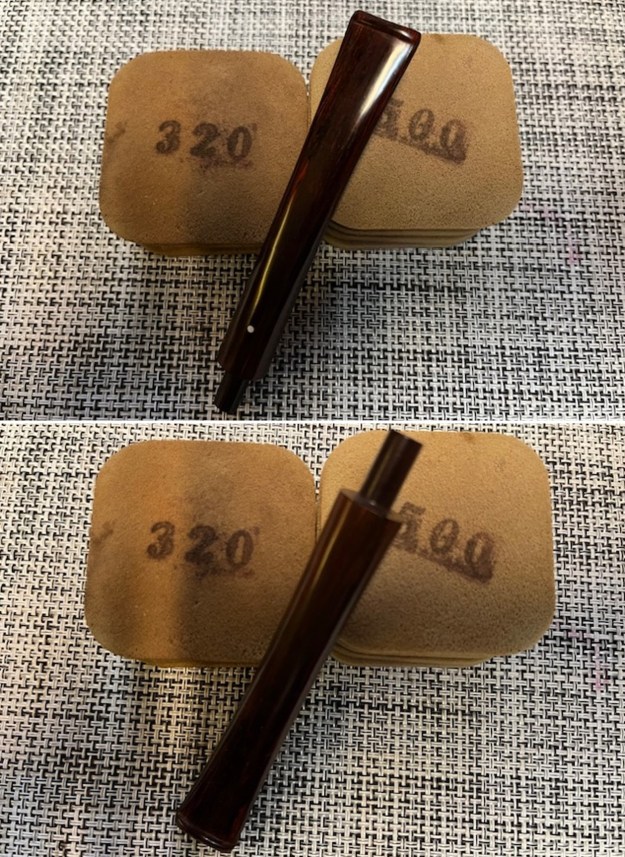
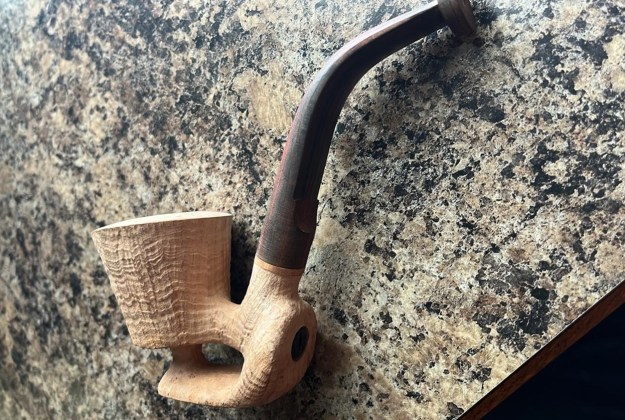
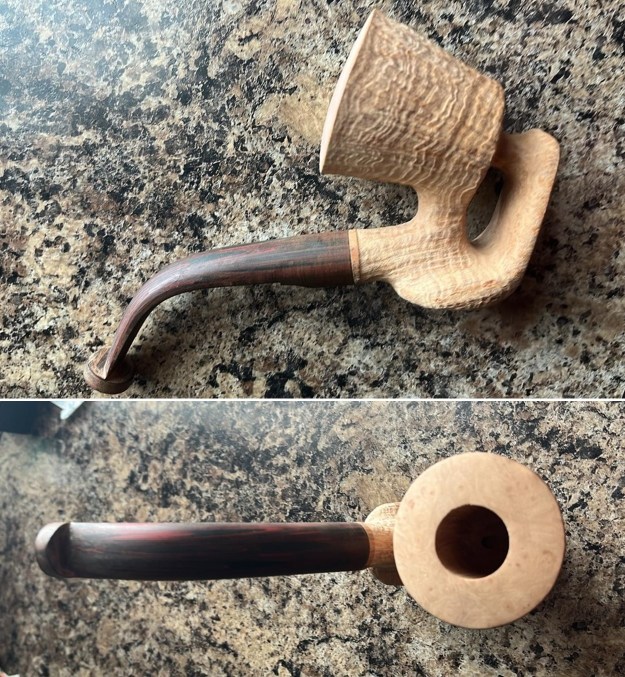
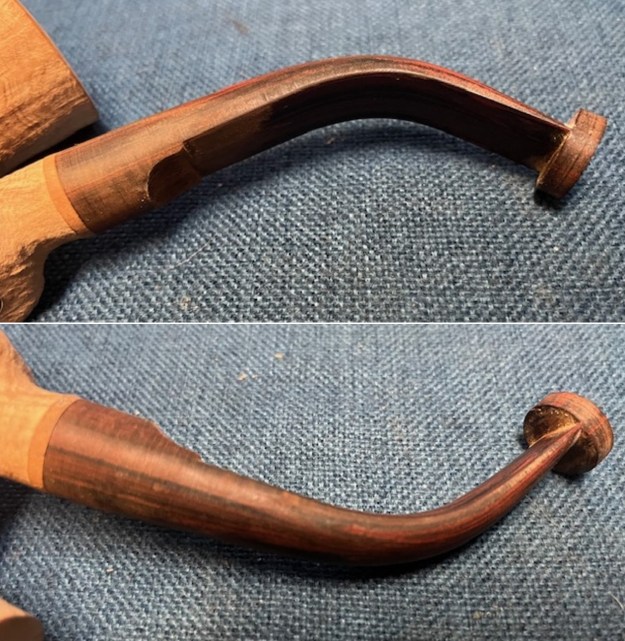
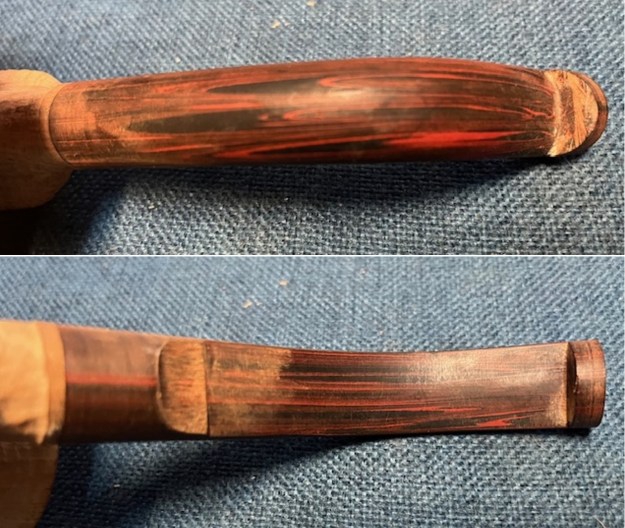
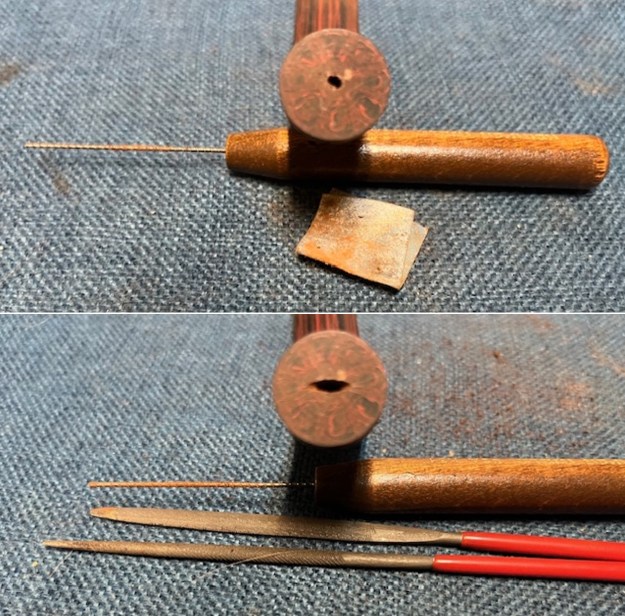
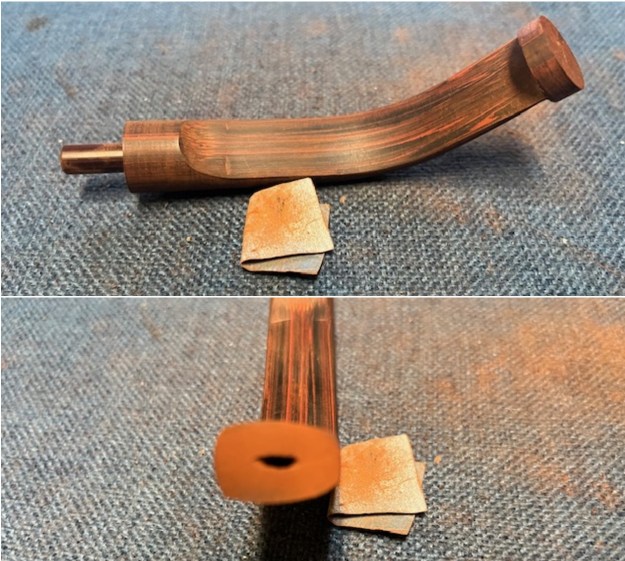
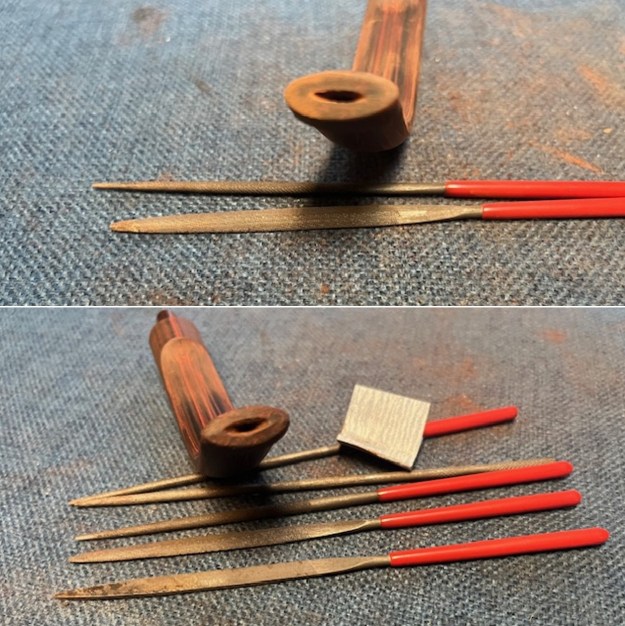
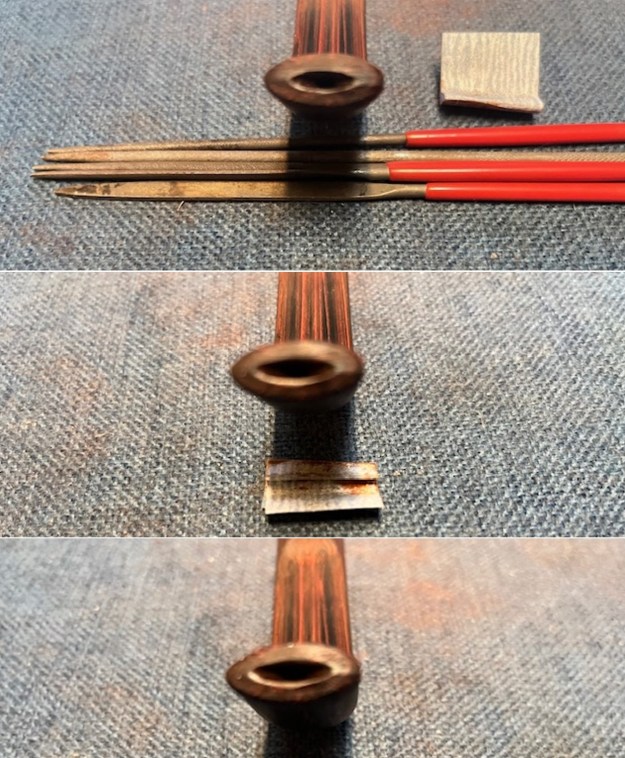
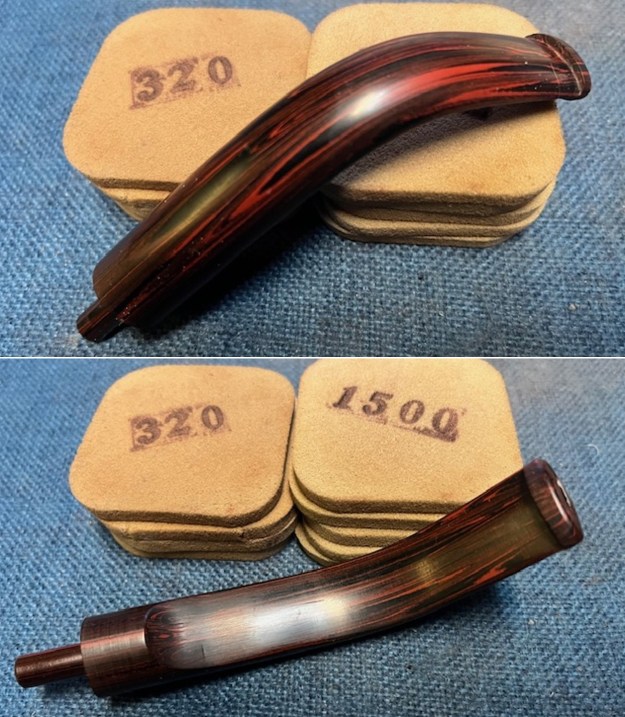
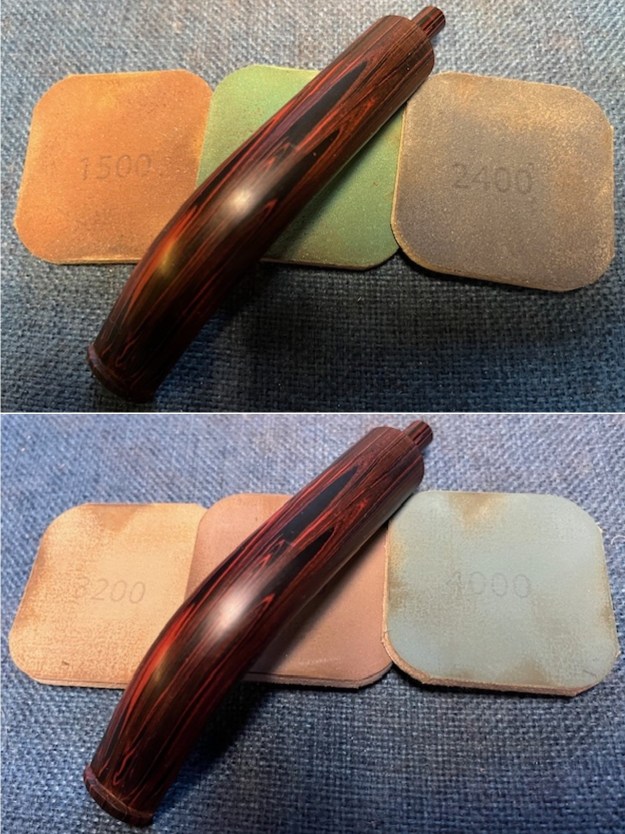
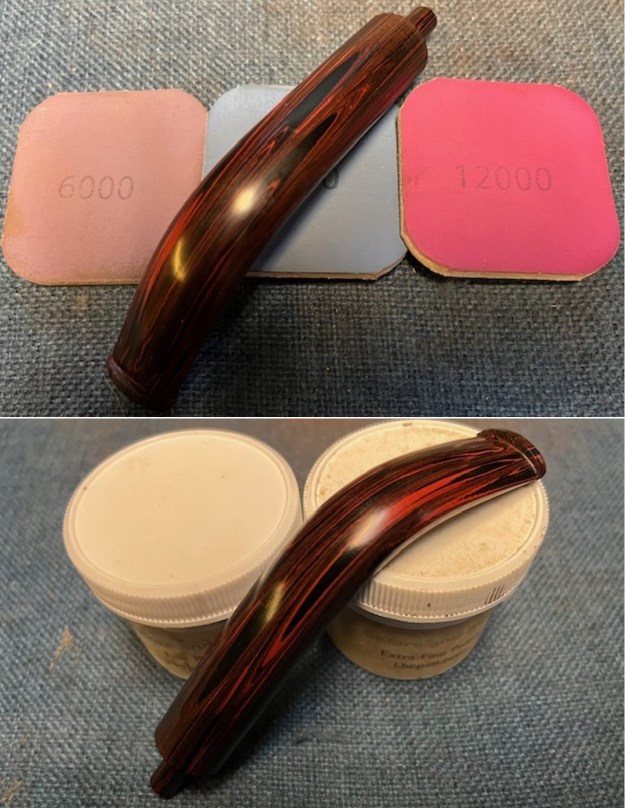
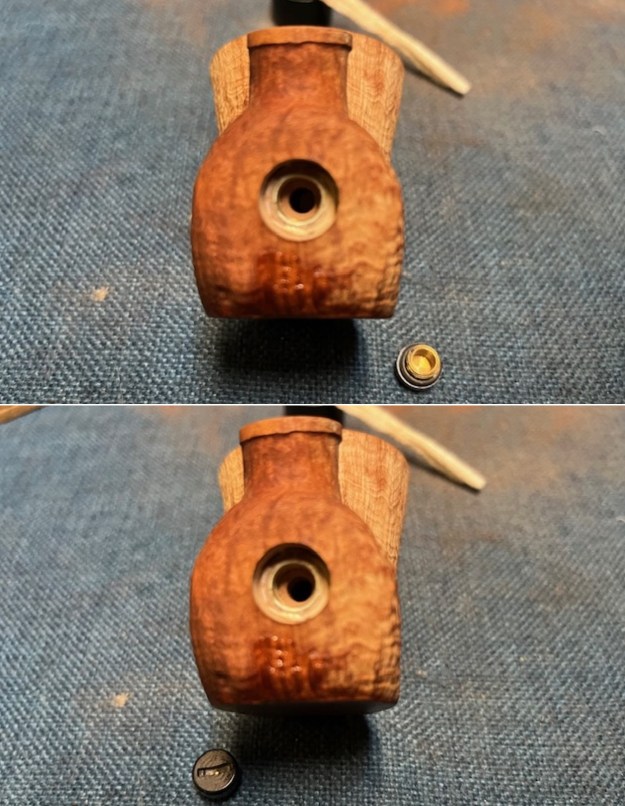
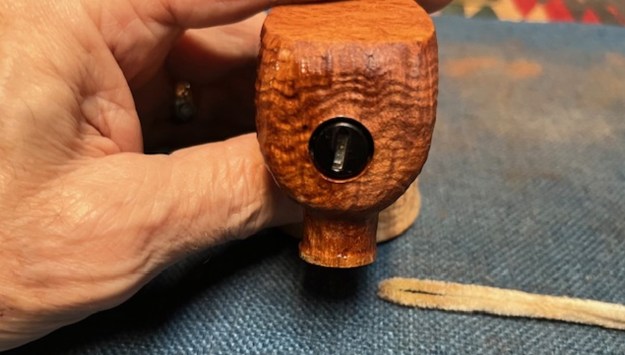
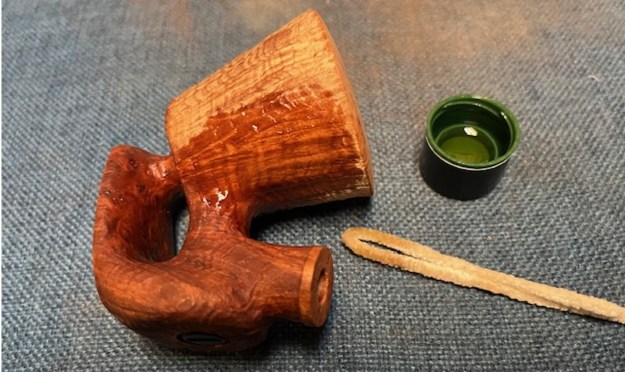
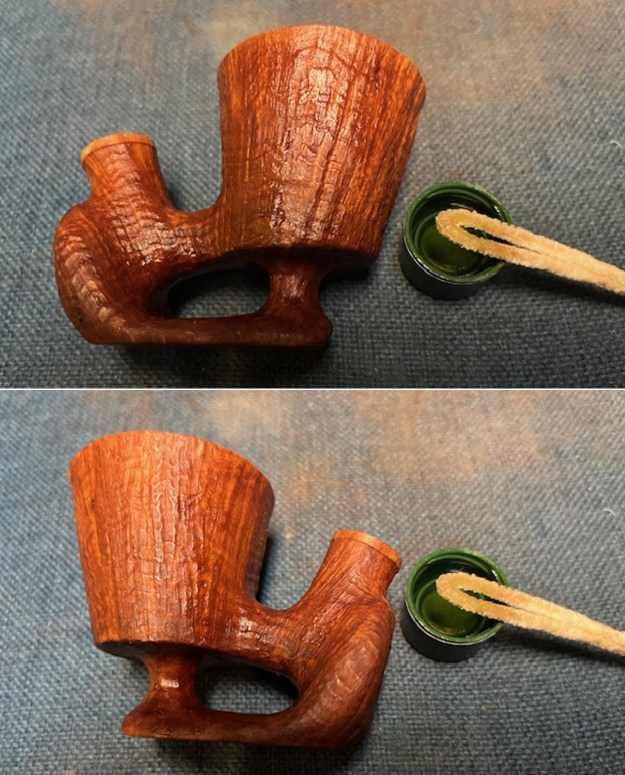
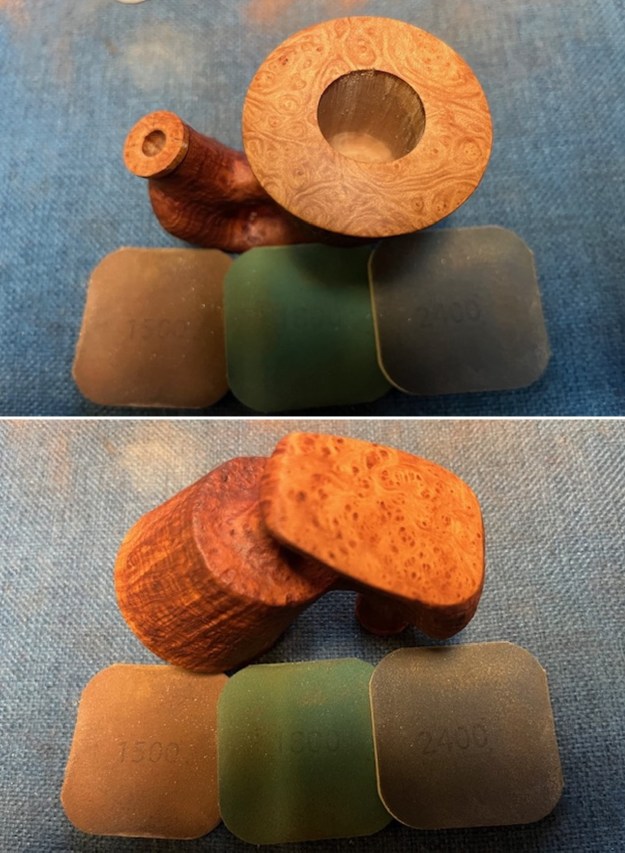
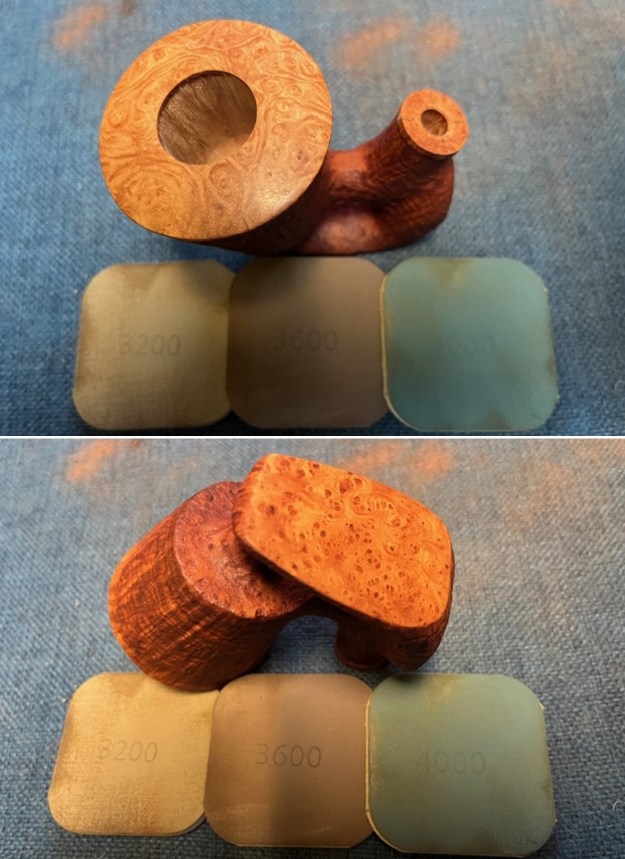
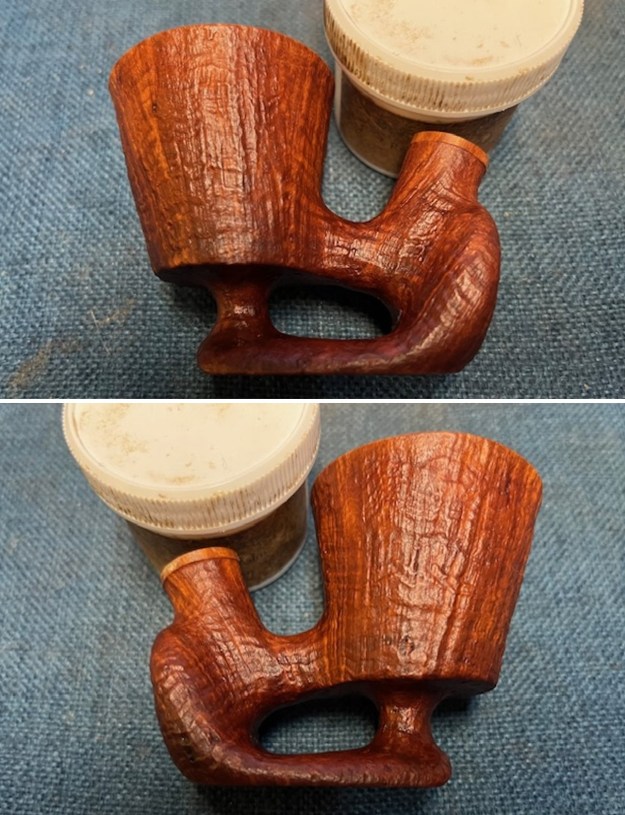
The next pipe I chose to work on was one that we purchased on 12/28/2024 from as part of an estate that belonged to a pipeman and carver, Byron Harwood from Missoula, Montana, USA. This unfinished pipe was one of Byron’s own handmade pipes. It is a lovely piece of briar that was shaped with a Dublin bowl, a pedestal and briar foot or base. The bowl and shank had been sandblasted and the rim top, a ring around the shank and the bottom of the foot are smooth and great looking grain. The sandblast really reveals ring grain around the bowl sides and shank. The end of the foot has a threaded metal plug and a rubber cap that covers where the airway was drilled into the shank and bowl. The airway in the mortise is above the airway in the shank. It is well executed and the draught is very good. The stem is unfinished Cumberland. It has a great fit to the shank, has been bent to fit the angles of the pipe. The underside of the stem is a half saddle. The button was not shaped or finished and was essentially a disk. The pipe was quite large but there was a charm to it that just called out to me to finish it! Here is what it looked like when Jeff received it. I decided to start working on this pipe by shaping the stem and button. I took photos of the stem before I started. You can see the unfinished half saddle portion on the underside of the stem. There is a bump/ledge and also some scratches and grooves. You can also see the scratch marks around the shank end but the fit against the shank is well done. The bend is also correct. The unshaped button/disk will need a lot of shaping. I began my work on the stem by developing and shaping the button. I began with what is known as a slot saw to open up the sides of simple single hole in the end. Once I had extended the opening I used a variety of round and oval needle files to begin shaping the opening in the stem end.I lightly sanded the underside of the stem to smooth out the marks in the half saddle stem. I was able to remove many of them but more work would need to be done. I used a Dremel and sanding drum to shape the button edges and remove the disk like shape of it. I wanted the button edges to be more oval and closer to the surface of the stem/button junction so I continued with the sanding drum and a file to shape and reduce the surface.I continued to shape both the button and the slot with small needle files and was getting closer to what I was looking for in terms of shape. I also flattened the end of the button to reduce the depth of the button edge into the stem surface. I like a thinner more comfortable button so that is what I was aiming for. I also worked on the slot to open it up and give it a more pronounced “Y” shape using a series of round and oval files. I smoothed out the slot with a folded piece of 220 grit sandpaper. It really is looking quite good at this point. I sanded the Cumberland with 320-3200 grit sanding pads to smooth out the scratches and marks in the surface. I further shaped the button and face of the stem and the slot edges at the same time. It is really beginning to take on a rich shine and show the patterns in the Cumberland.I polished the stem with micromesh sanding pads – dry sanding with 1500-12000 grit sanding pads. I wiped it down after each sanding pad with Obsidian Oil. I polished it with Before & After Pipe Stem Polish – both Fine and Extra Fine. I gave it another coat of Obsidian Oil. I buffed the stem with Blue Diamond on the buffing wheel and polished it with Carnauba Wax. I buffed it with a clean buffing pad. The Cumberland took on a rich shine. It is a beauty. I set the stem aside and turned my attention to the bowl. I unscrewed the plug on the shank end to show the clean drilling from there to the bottom of the bowl. It was well drilled and very smooth. I used a pipe cleaner and olive oil to paint the oil around the shank end and then screwed the plug back into the shank and aligned it. I painted the entire bowl with the EVO (Extra Virgin Olive Oil) and a folded pipe cleaner. The sandblast and the smooth potions of the bowl began to take on a rich shine. The sand blast really showed depth and variations in colour on the finish. I polished the smooth portions of the pipe on the rim top and the underside of the bowl with 320-3500 grit sanding pads. The rich birdseye really began to stand out on both portions of the briar sanded. It looked very good.I polished the briar with micromesh sanding pads -1500-12000 grit pads. I wiped it down with a damp cloth to remove the sanding debris and dust of the process. The smooth portions of the pipe really began to take on a shine and a rich sense of depth. I worked some Before & After Restoration Balm into the surface of the smooth briar of the rim top and the bottom of the foot with my fingertips to clean, enliven and protect the briar. I used a shoe brush to work the balm into the sandblast around the bowl on the rim top. I let the balm sit for 15 minutes and then buffed with a cotton cloth to raise the shine. The photos show the bowl at this point in the restoration process. As usual at this point in finishing process of the shaping of a new pipe I am excited to be on the homestretch. I look forward to the final look when it is put back together, polished and waxed. I put the Byron Harwood Handmade Dublin Pedestal Sitter back together. I polished the rim top and base of the bowl and stem with Blue Diamond to polish out the scratches in the briar and the vulcanite. I gave the bowl multiple coats of Conservator’s Wax and the stem multiple coats of carnauba wax. I buffed the pipe with a clean buffing pad to raise the shine. I hand buffed it with a microfiber cloth to deepen the shine. The pipe polished up pretty nicely. The grain really pops with the wax and polish. The shiny Cumberland stem is a beautiful contrast to the rich natural browns of the oiled bowl. This Byron Harwood Handmade Dublin was a great pipe to finish shaping and working on the stem. It is a large pipe but is very comfortable pipe to hold in the hand. The finished pipe is shown in the photos below. The dimensions of the pipe are Length: 6 ½ inches, Height: 2 ¾ inches, Outside diameter of the bowl: 2 ¼ inches, Chamber diameter: 7/8 of an inch. The weight of the pipe is 104 grams/3.70 ounces. This pipe will be staying with me as it is a style and look I have never seen or worked on before. I am going to enjoy breaking it in and enjoying one of Byron’s Handmade pipes. Thanks for reading this blog and my reflections on the pipe while I worked on it.
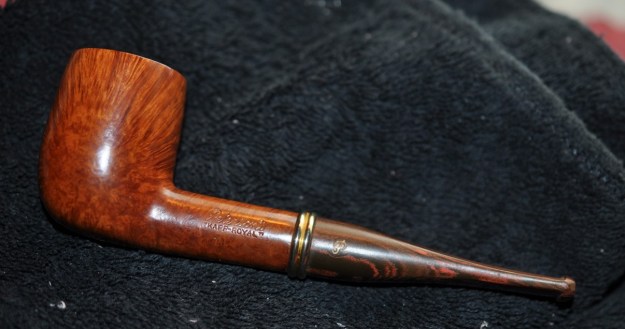
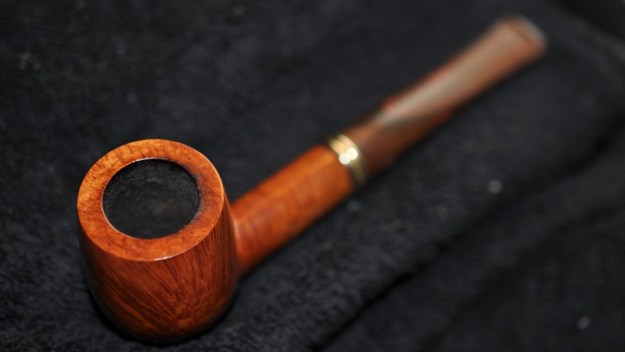
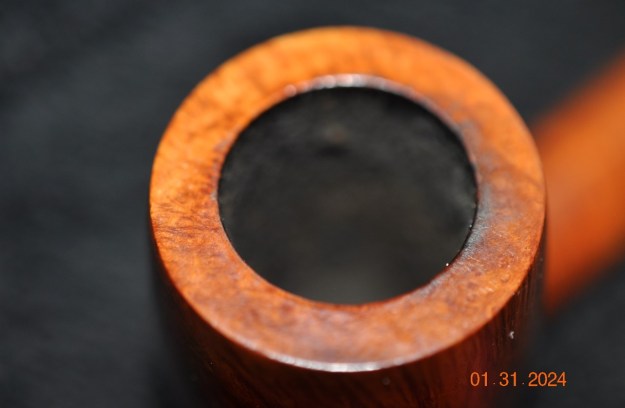
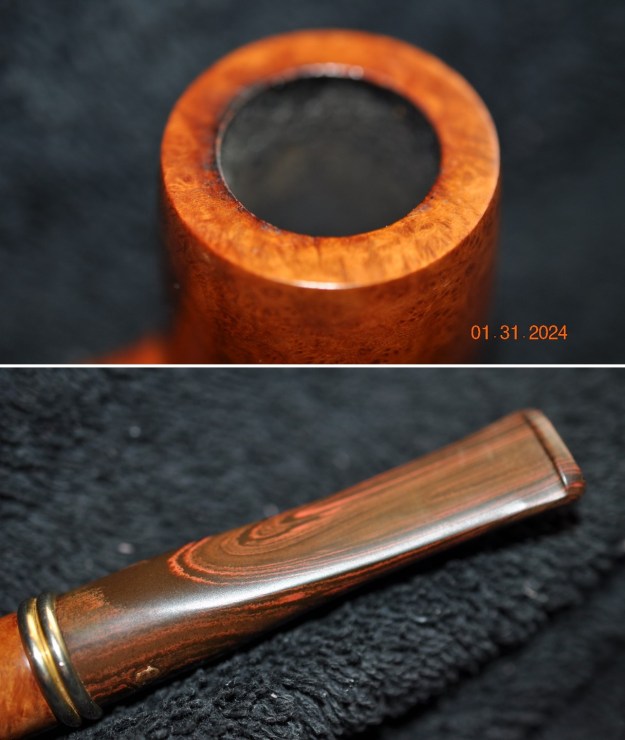
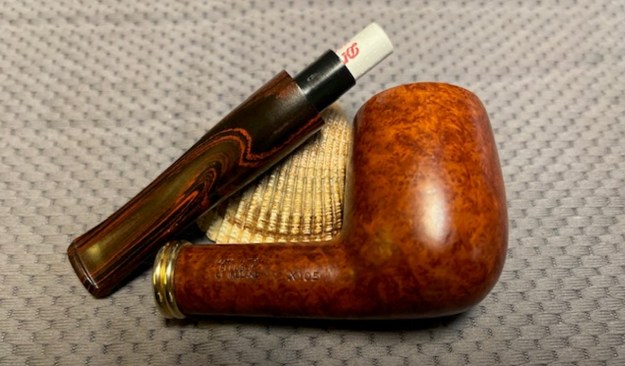
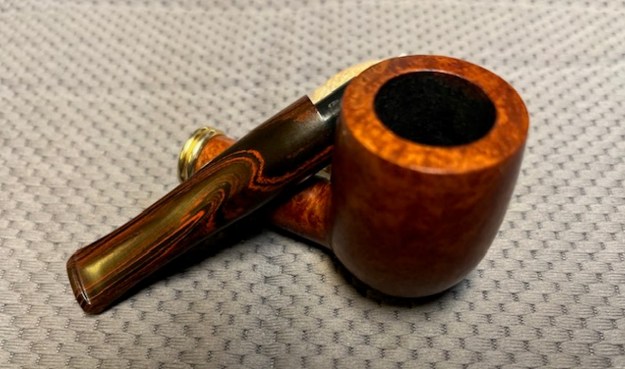
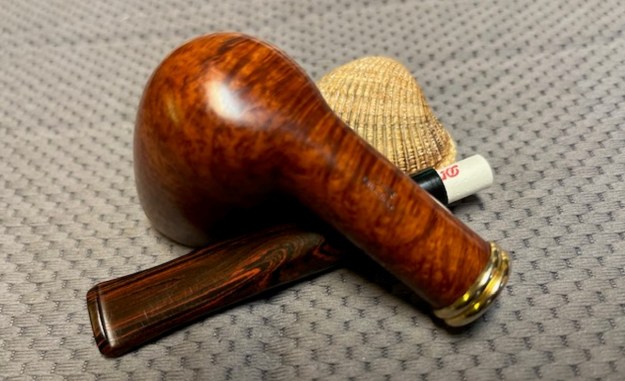
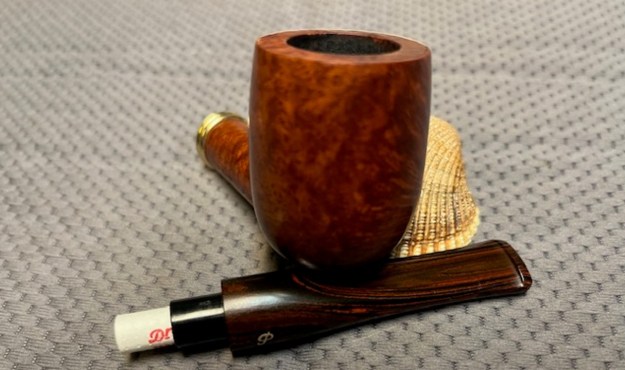
Restoring a Lovely Peterson’s “Kapp-Royal” X105 Billiard with a Cumberland 9mm Filter Stem


by Steve Laug

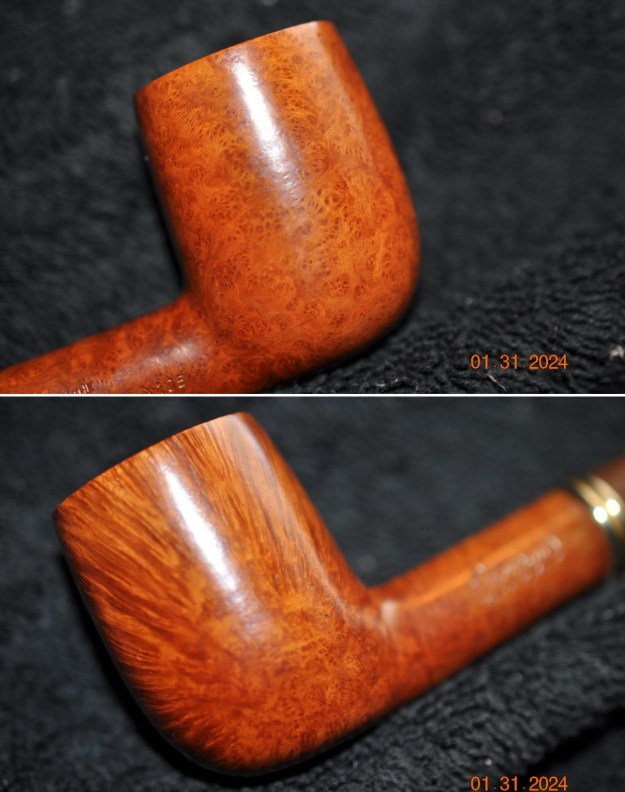
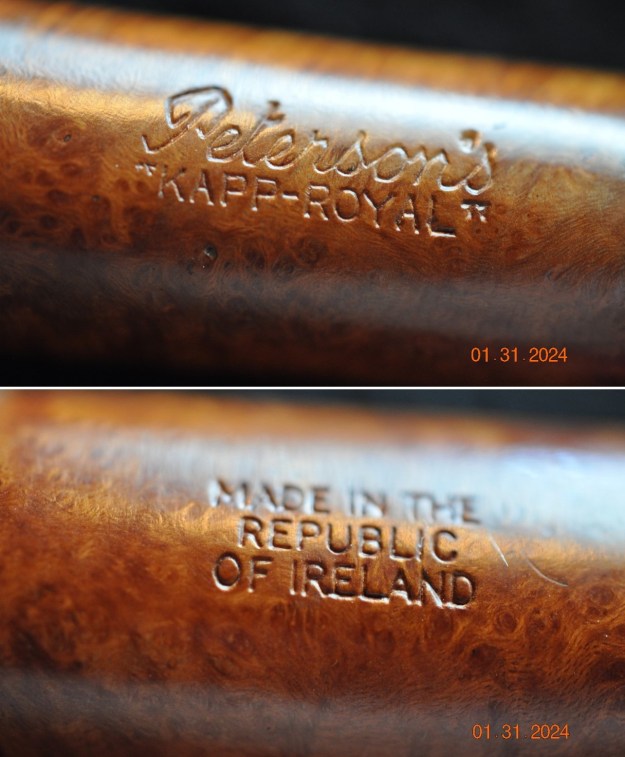
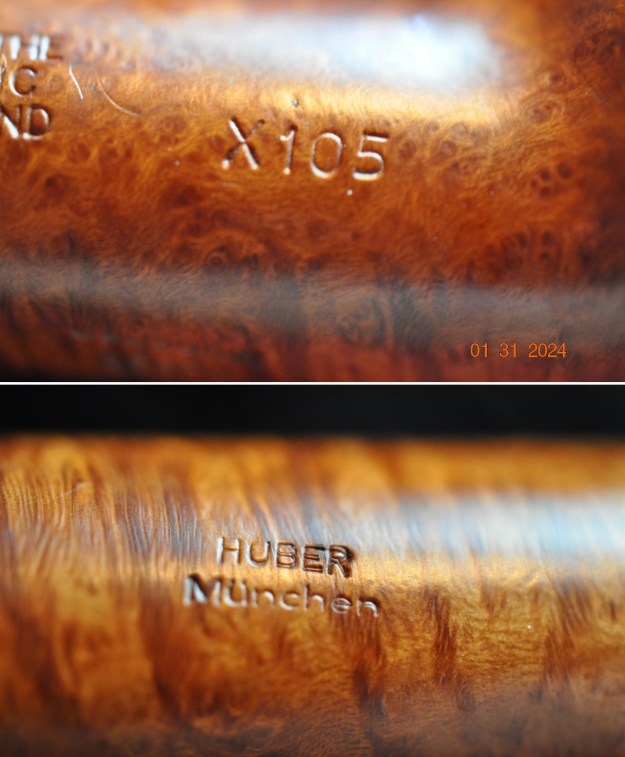
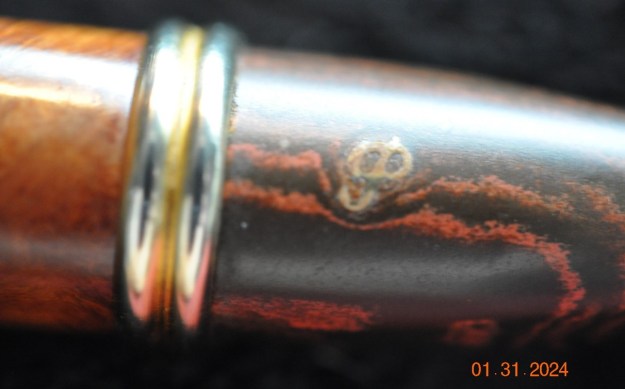
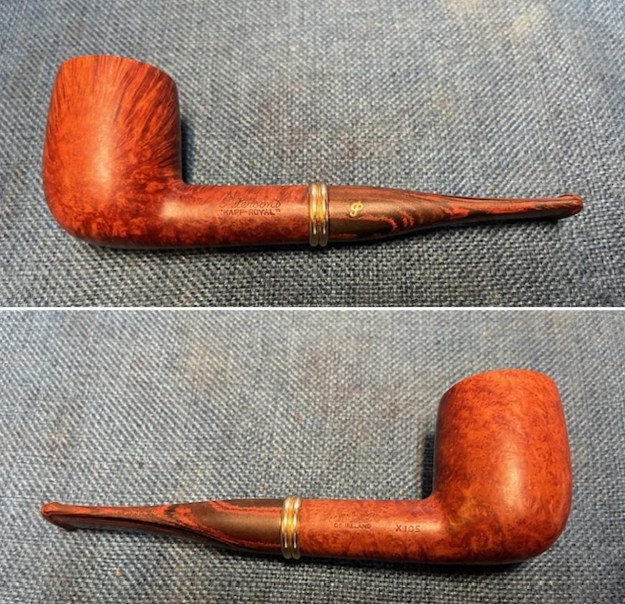
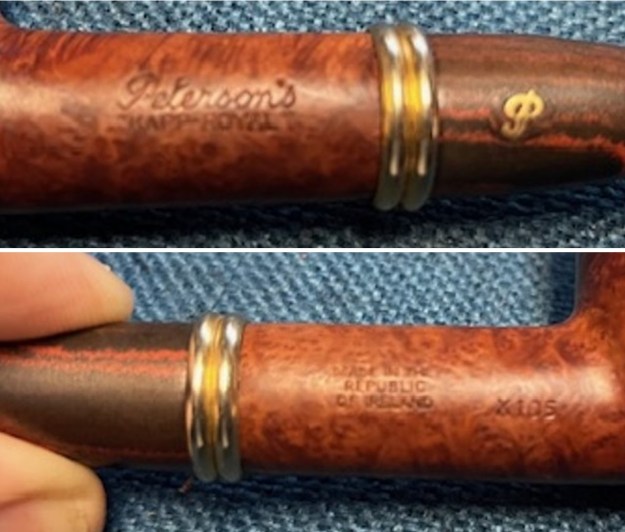
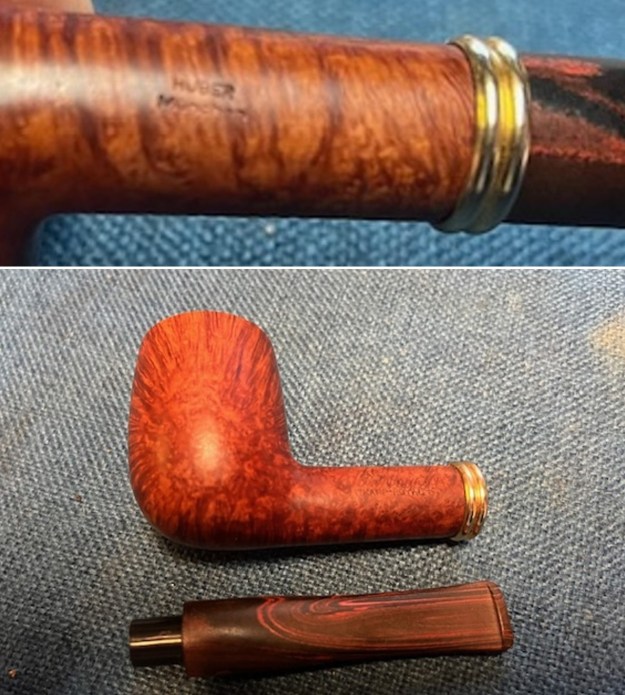
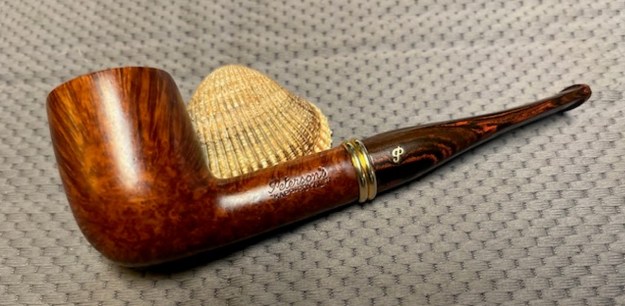
The next pipe was a mess and one that obviously had been the previous pipe smoker’s favourite pipe. The finish and condition were abysmal. It was definitely a stranger to any cleaning! This one is a smooth Billiard that has a rich coloured finish around the bowl sides and shank under the grit and grime of years. The shank end had a double brass band separating it from the stem. This pipe was purchased on 12/09/2023 from our contact in Copenhagen, Denmark. The finish is shiny but is also so dirty it was hard to know what to expect once it was cleaned. It was stamped on the left side of the shank and read Peterson’s [over] “Kapp-Royal”. It was stamped to the right of the shank and reads MADE IN THE REPUBLIC OF IRELAND (three lines) with the shape number X105 next to the bowl. The underside of the shank was stamped Huber over Munchen. It was filthy when Jeff brought it to the table. There was a thick cake in the bowl and lava on the back of the rim top and the inner edge of the bowl. The outer edge looked good. The Cumberland stem was oxidized and had light tooth marks and chatter on the top and underside on and near the button. Jeff took photos of the pipe before his cleanup work. Jeff took photos of the rim top and stem to show the general condition of the pipe. The bowl is heavily caked and there was a light lava overflow on the back of the rim top and the inner edge. The stem is oxidized and grimy. It has some light tooth marks on the top and underside near and on the surface of the button itself. Jeff took photos of the bowl sides and heel to show the grain that was around this bowl. The grain is quite beautiful around the sides of the bowl and shank. It is a nice looking pipe.He took photos of the sides of the shank to show the stamping. The stamping is readable in the photos below and is as noted above. There is a golden “P” inlaid logo on the left side of the taper stem. I am including the link to the Pipedia’s article on Peterson pipes. It is a great read in terms of the history of the brand (https://pipedia.org/wiki/Peterson). There was a short note toward the bottom of the page about the series. It is definitely referring to the newer line that came out later. I quote:

Kapp Royal Series: The Kapp Royal series is a relatively new one, but has a well establish history in Europe. They are a handsome colourful series with a good quality natural stain briar and bright orange Lucite stems and occasionally Cumberland.

I turned to “The Peterson Pipe” by Mark Irwin and Gary Malmberg to get some background on the Peterson’s Kapp-Royal Pipe. On page 306 it had the following information.

Kapp-Royal (1969, 1976-79, c1988, 2004) First appearance as a line introduced 1969. In 1976-79 Iwan Ries catalog offering identical with non-System Dunmore line. Second appearance in the late eighties as a high-grade Italian market line with briar band inset into the mouthpiece. From c.2004, Italian line available in US as high grade, orange finish, sterling band, amber-colored acrylic fishtail stem or sometimes vulcanite, embedded aluminum P.

Judging from the description above, the pipe I am working on is probably one of the first appearing series that came out in 1969. As noted in Red above it came with an occasional Cumberland stem. The Made in the Republic of Ireland stamp on the right side of the stamp puts it in the Republic Era 1950-1989.

On the underside of the shank it is stamped Huber [over] Munchen. From a past restoration (I have included the link) [https://rebornpipes.com/2023/10/14/petersons-kildare-special-hg-republic-of-ireland-10-canadian/]. I turned to page 300 of “The Peterson’s Pipe” by Mark Irwin and Gary Malmberg as noted by him in the previous blog and found a great paragraph on the stamping. I quote in full.

GH Retailer’s Monogram (c. 1960s) George Huber of Munich, Germany, a Peterson distributor and retailer for decades, stamped their monogram on pipes sold in their store, G overlaid on H. Peterson shared in the 1988 commemoration of Huber’s 125th year in business by producing a special pipe with a sterling rim cap, stamped HUBER over CELEBRATION.

The pipe I have is one that does not bear that monogram and does not appear to have ever had the sterling rim cap and was not stamped HUBER over CELEBRATION. It was however, stamped Huber and Munchen – the city where the shop was located. With that information I turned my attention to working on the pipe.

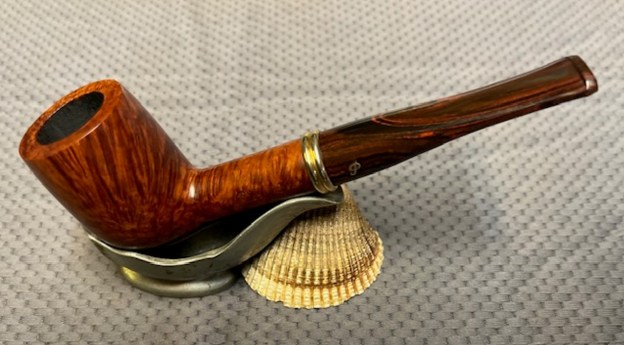
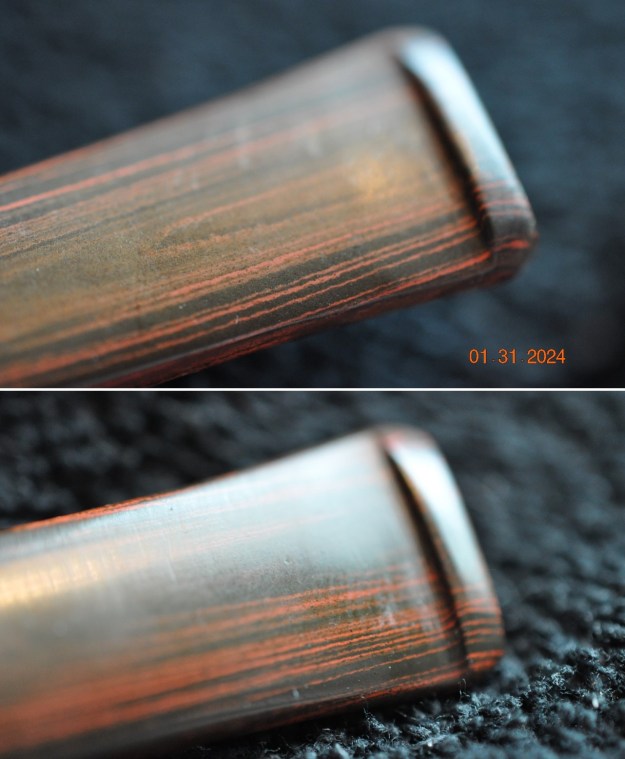
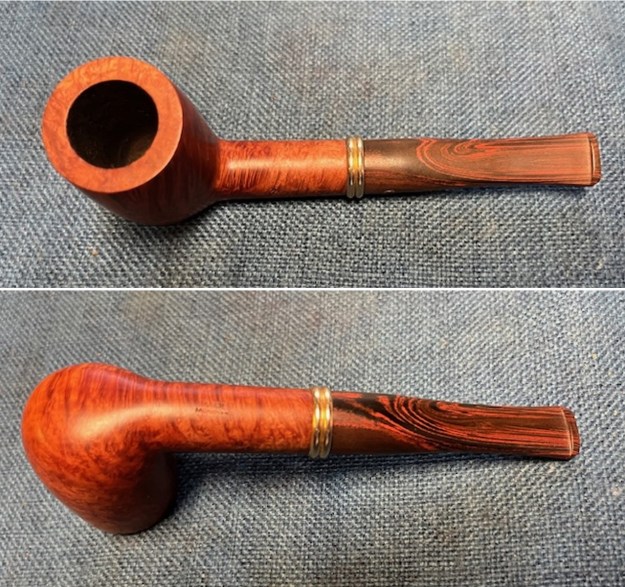
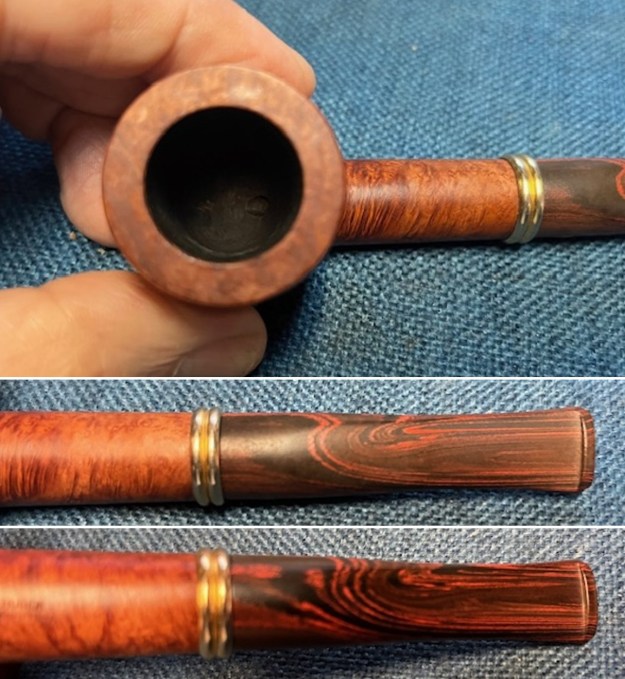
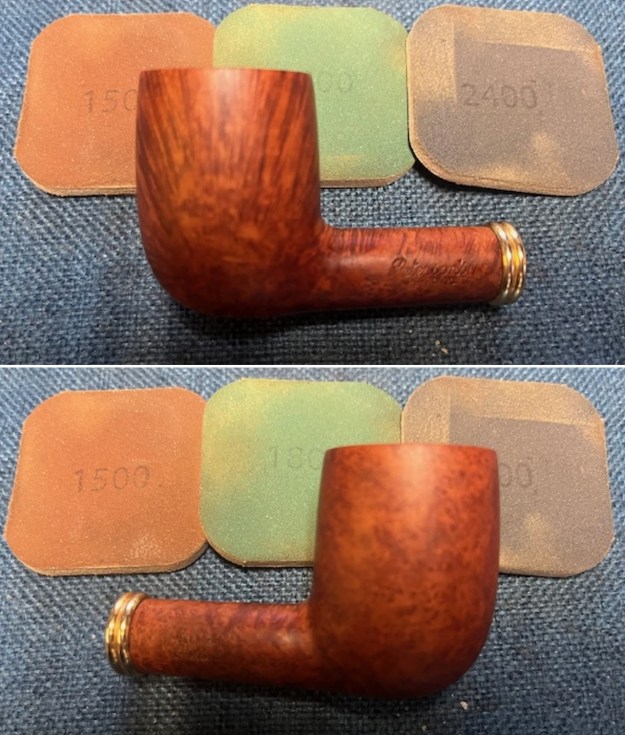
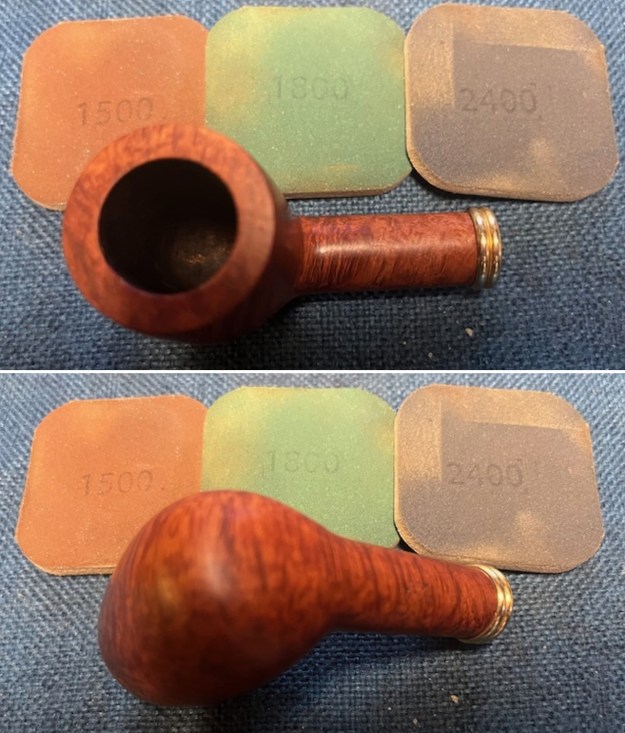
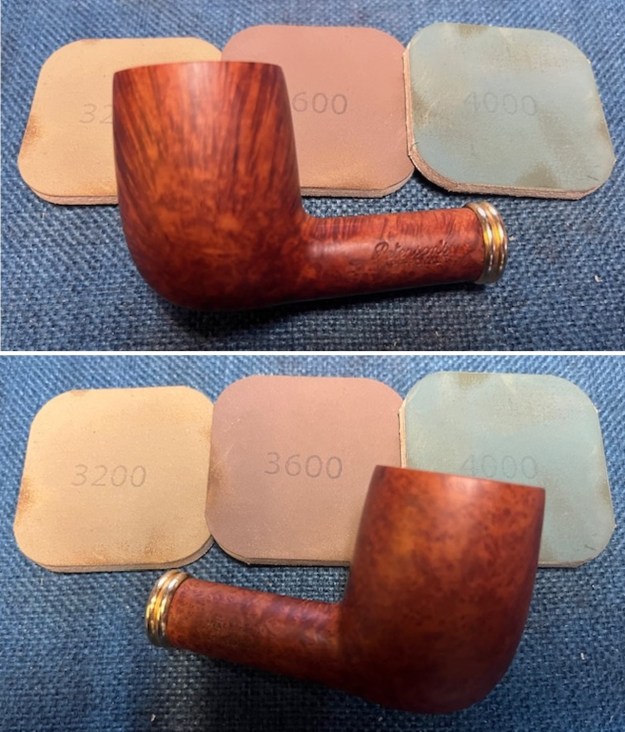
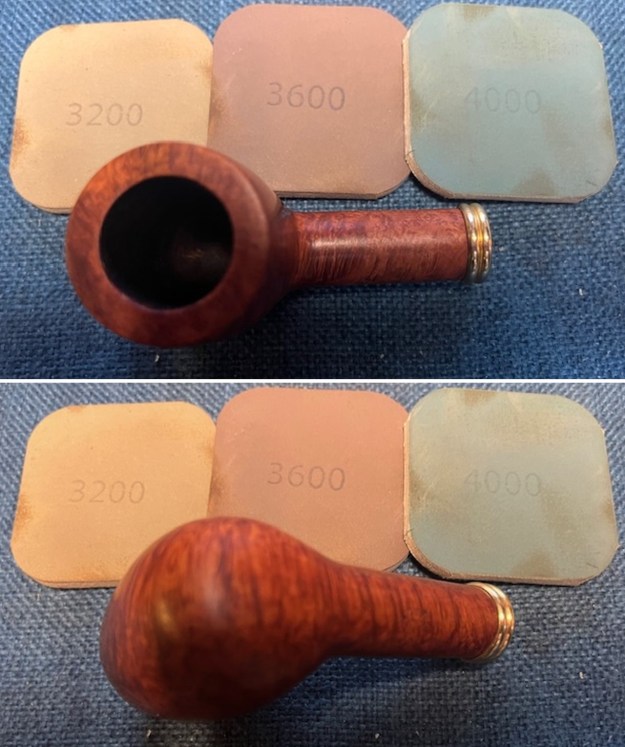
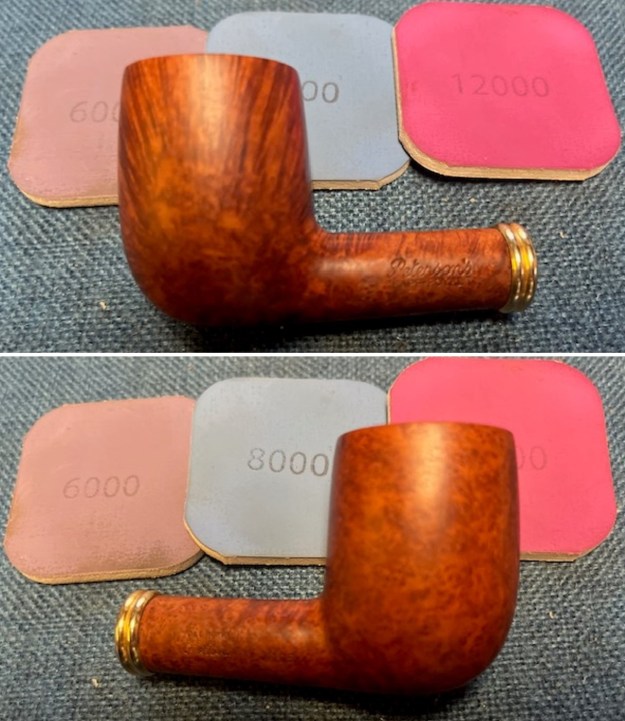
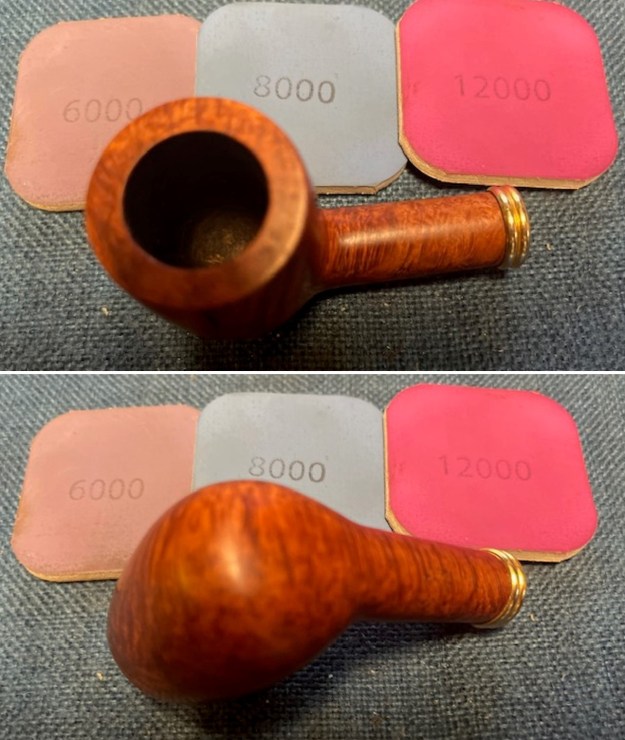
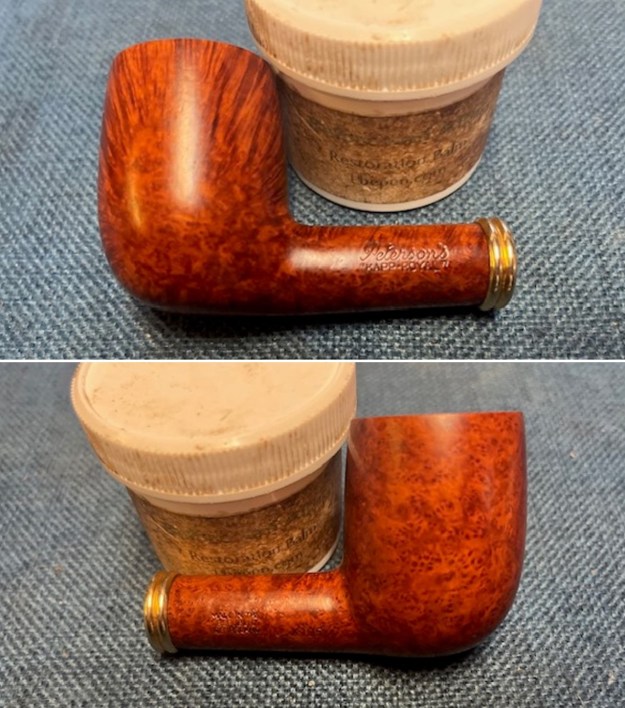
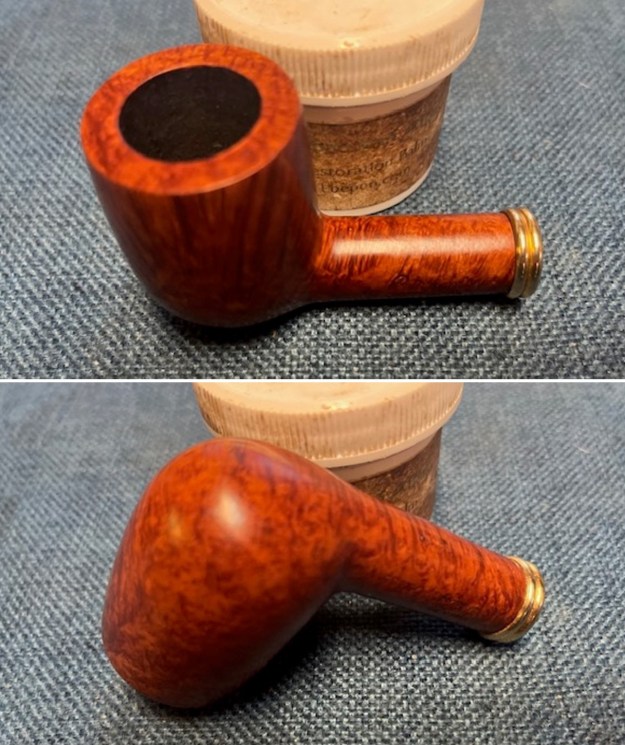
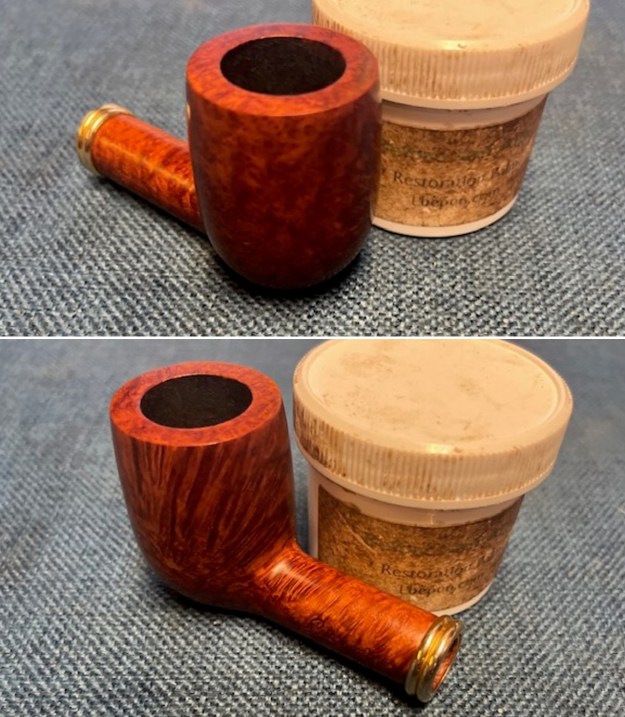
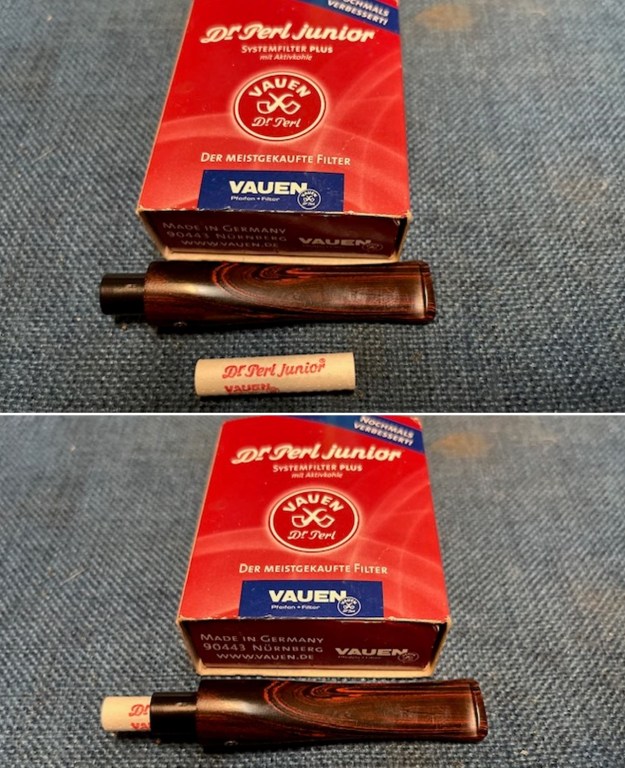
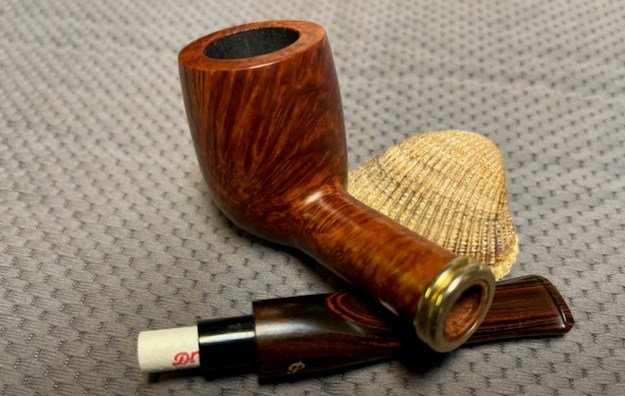
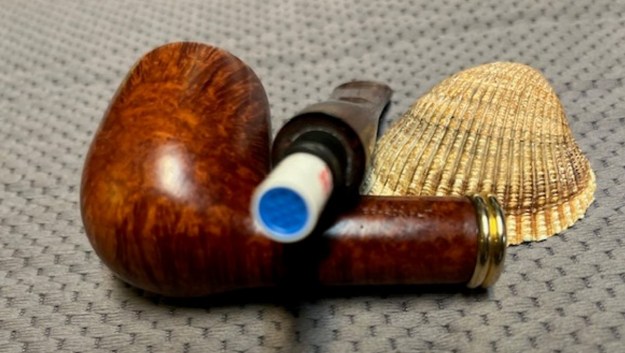
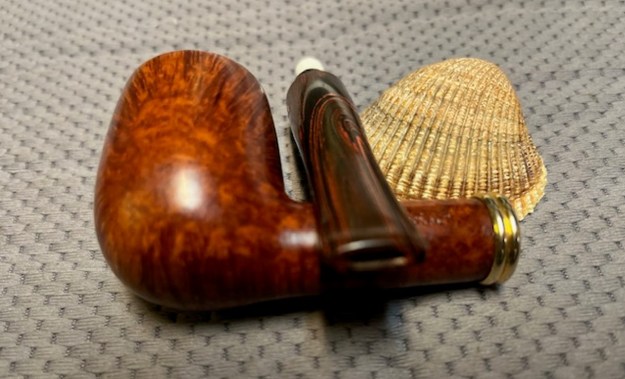
I was utterly surprised when I took this pipe out of the box and compared it to the before photos. Jeff had done a great job cleaning up the pipe as usual. He reamed the pipe with a PipNet reamer and cut back the cake back to the bare briar. He cleaned up the walls with a Savinelli Fitsall Pipe Knife. Surprisingly the walls looked unscathed from the heavy cake. He scrubbed the interior of the bowl and shank with pipe cleaners, cotton swabs and alcohol to remove the tars and oils. He scrubbed the exterior of the pipe with Murphy’s Oil Soap and a tooth brush to remove the grime from the finish. He worked on the rim top lava and darkening with the soap and tooth brush. He scrubbed the inside of the stem with alcohol and pipe cleaners. He scrubbed the exterior of the stem with Soft Scrub and then soaked it in Briarville’s Deoxidizer. He washed it off with warm water to remove the Deoxidizer. The pipe looked far better when it arrived. The cleaned up rim top looked very good around the edges and the top. I took a closeup photo of the rim top and edges to show how well it had cleaned up. I also took close up photos of the stem to show the light tooth marks on the surface near and on the button itself.I took photos of the stamping on the sides of the shank. It is clear and reads as noted above. I also captured the gold insert P on the left side of the Cumberland stem. It looked great. I removed the stem and took a photo of the pipe to have a look at the parts and overall look. I started my work on this pipe polishing the briar with micromesh sanding pads – dry sanding with 1500-12000 grit sanding pads. I wiped the bowl down with a damp cloth after each sanding pad. I worked some Before & After Restoration Balm into the surface of the briar with my fingertips to clean, enliven and protect the briar. I let the balm sit for 15 minutes and then buffed with a cotton cloth to raise the shine. The photos show the bowl at this point in the restoration process. I set the bowl aside and worked on the stem. The stem was clean and the light tooth marks were minimal. There was pitting on the topside of the stem that left it feeling rough. I sanded the stem with 320-3500 grit sanding pads to smooth out the pitting and marks in the Cumberland. Once finished it was greatly improved.I polished the stem with micromesh sanding pads – wet sanding with 1500-12000 grit sanding pads. I wiped it down after each sanding pad with Obsidian Oil. I polished it with Before & After Pipe Stem Polish – both Fine and Extra Fine. I wiped it down with another coat of Obsidian Oil. I put a new 9mm filter in the tenon on the stem. It fit well and looked great. I used Vauen filters as they are easily accessible here and on Amazon.com.I am excited to finish this beautifully grained Peterson’s Kapp-Royal X105 Billiard. I put the pipe back together and buffed it with Blue Diamond on the buffing wheel. I gave the bowl and the stem multiple coats of carnauba wax. I hand buffed the pipe with a clean buffing pad to raise the shine. It is fun to see what the polished bowl looks like with beautiful mixed grain all around it. I polished the twin golden bands on the shank with a jeweller’s cloth. This smooth Classic Peterson’s Kapp-Royal X105 Billiard is great looking and the pipe feels great in my hand. It is light and well balanced. Have a look at it with the photos below. The dimensions are Length: 5 ½ inches, Height: 1 ¾ inches, Outside diameter of the bowl: 1 ¼ inches, Chamber diameter: ¾ of an inch. The weight of the pipe is 45 grams/1.59 ounces. It turned out to be a beautiful pipe. I will be putting on the rebornpipes store in the Irish Pipe Makers Section. If you are interested in adding this pipe to your collection send me a message or an email. Thanks for walking with me through this restoration.
Best of the Lot an Unsmoked Manuel Shaabi Handcut Scorpion with a Cumberland Saddle Stem


by Steve Laug

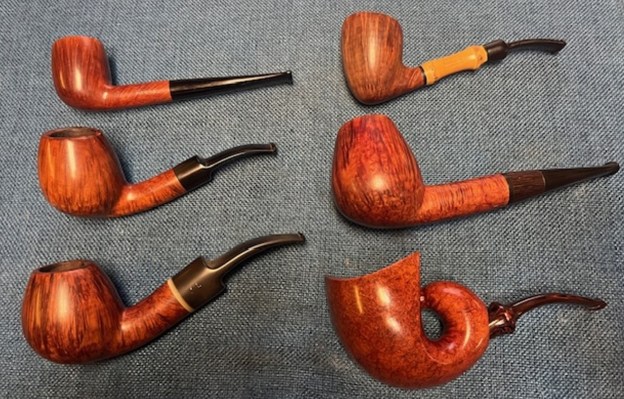
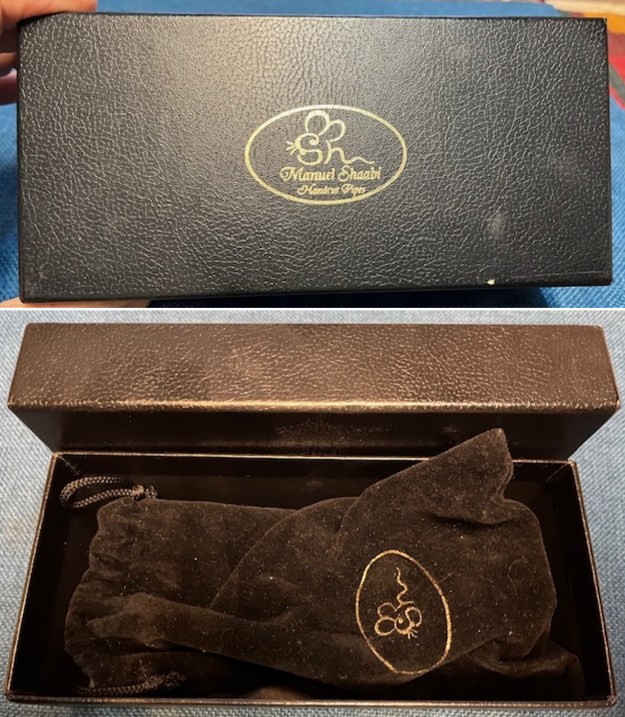
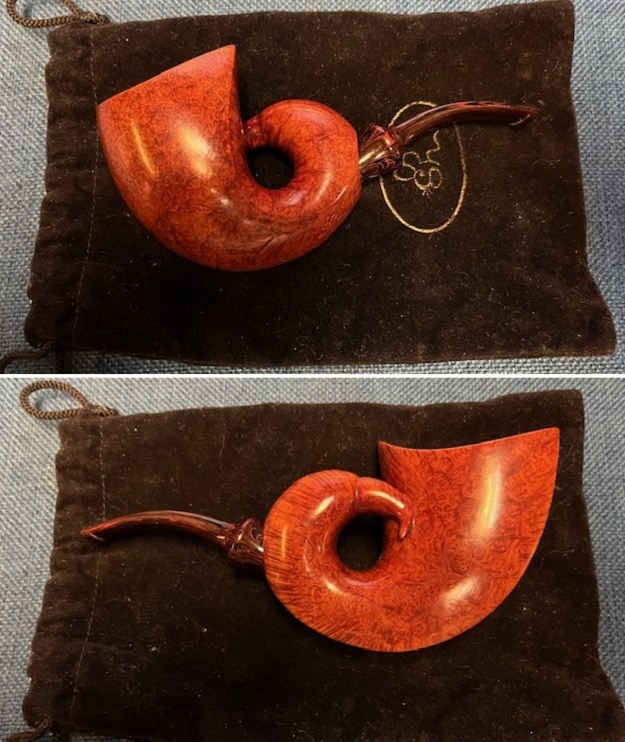
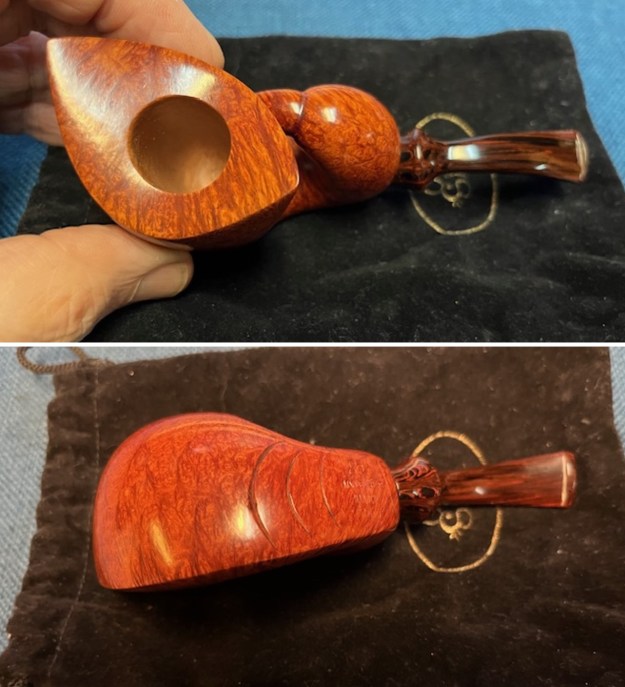
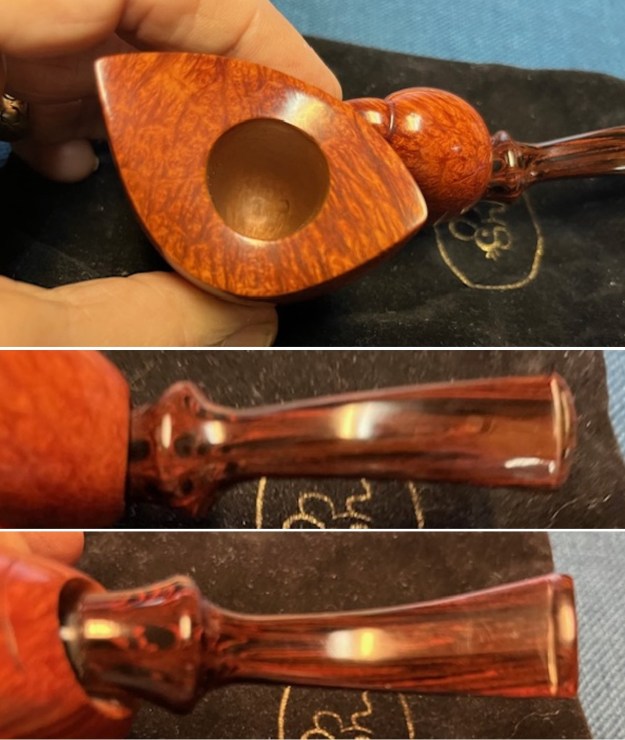
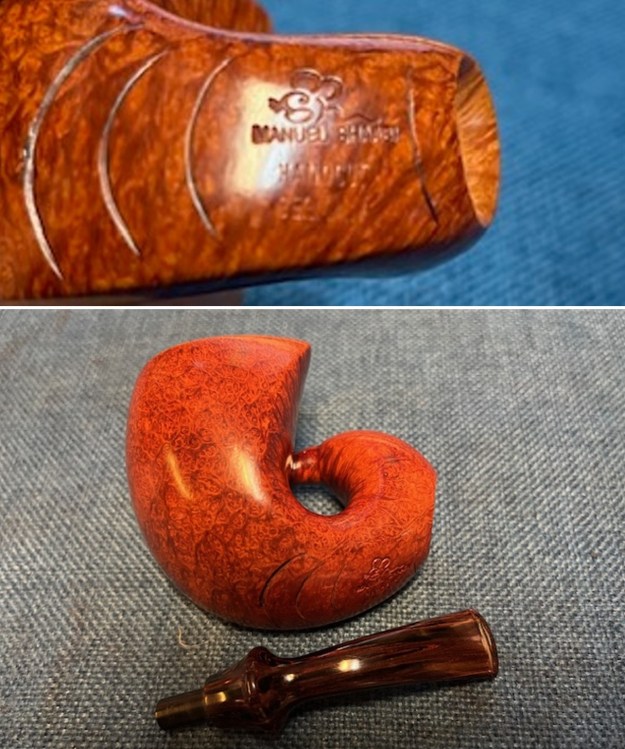
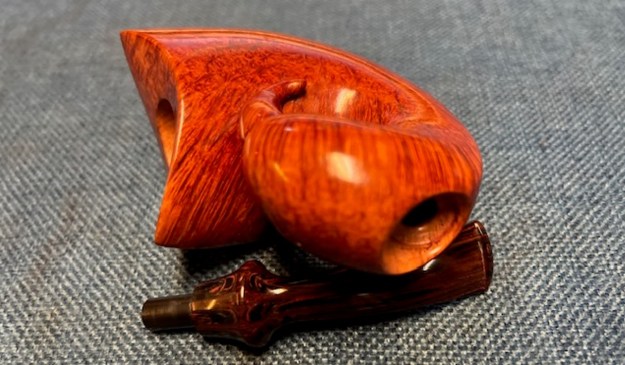
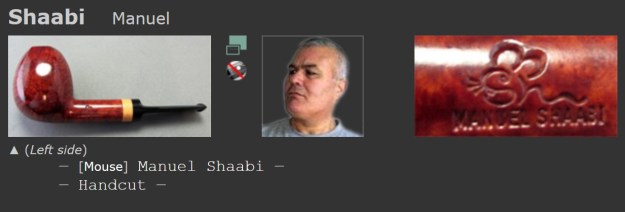
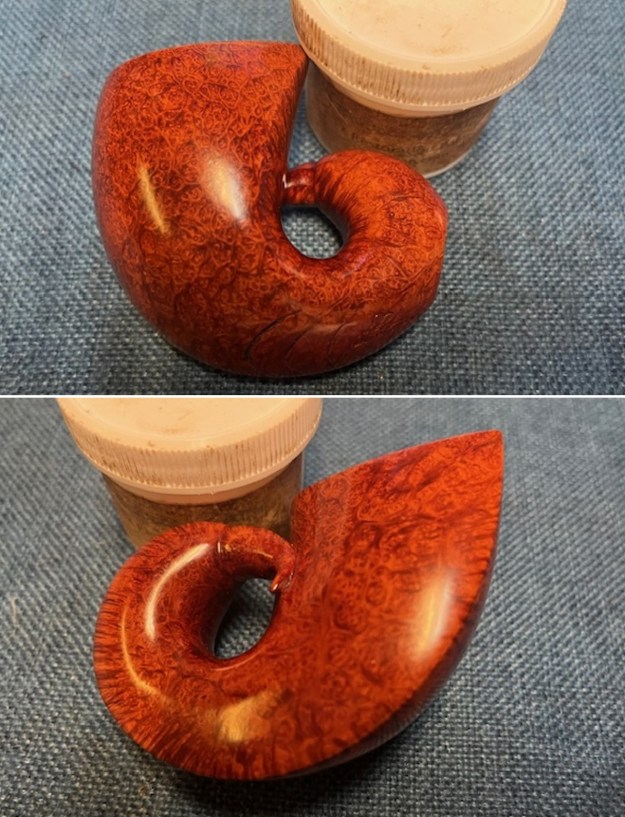
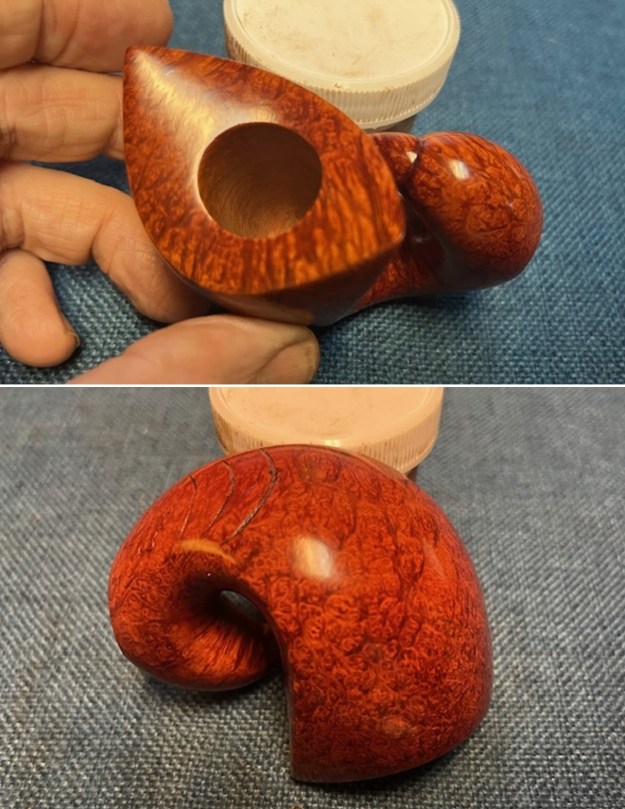
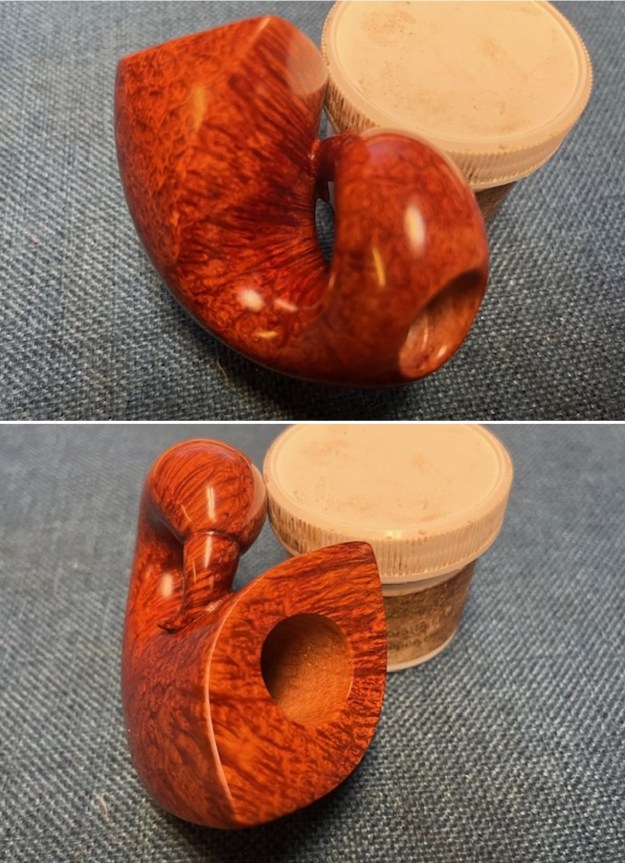
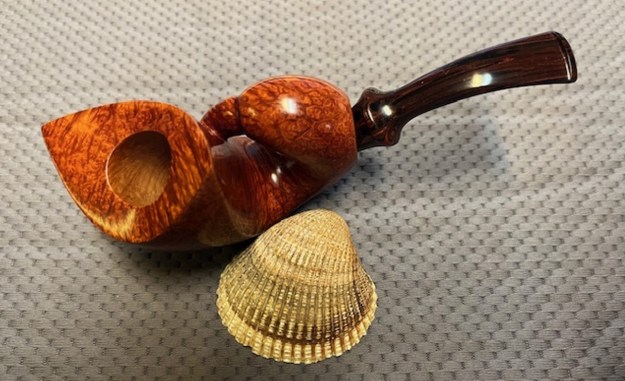
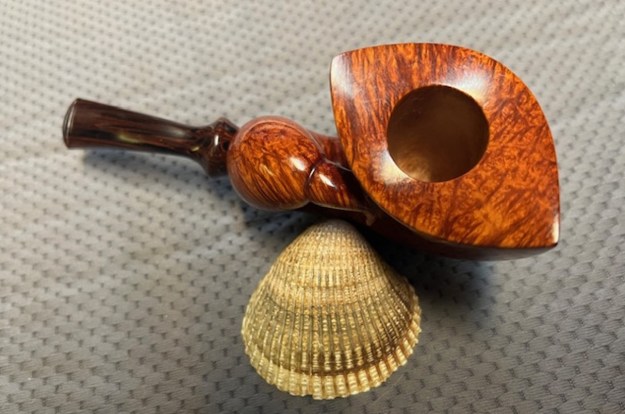
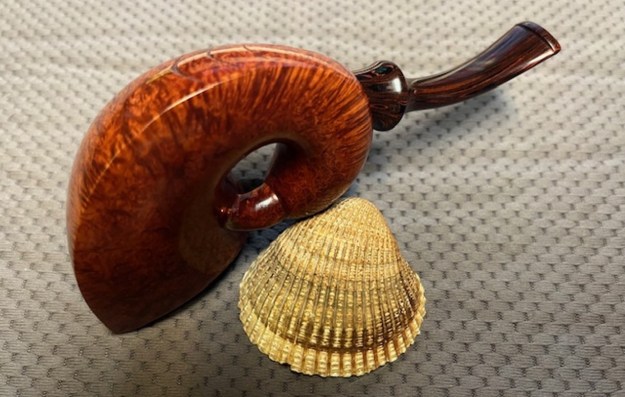
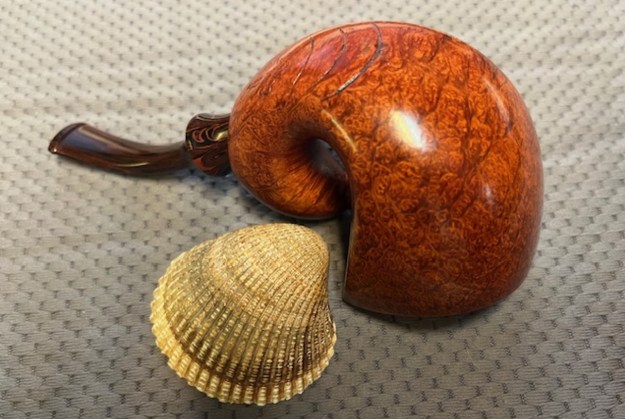
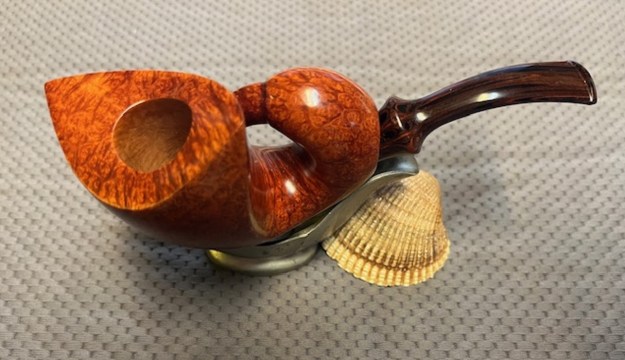
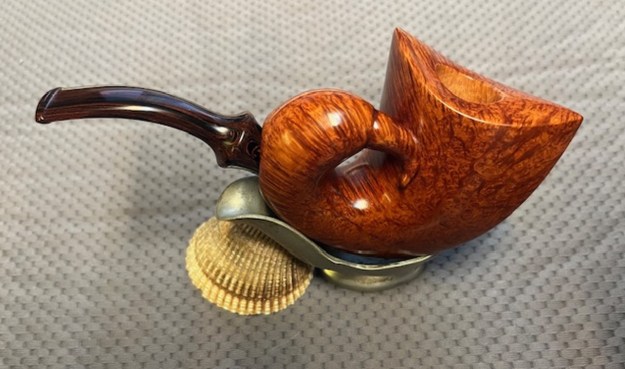
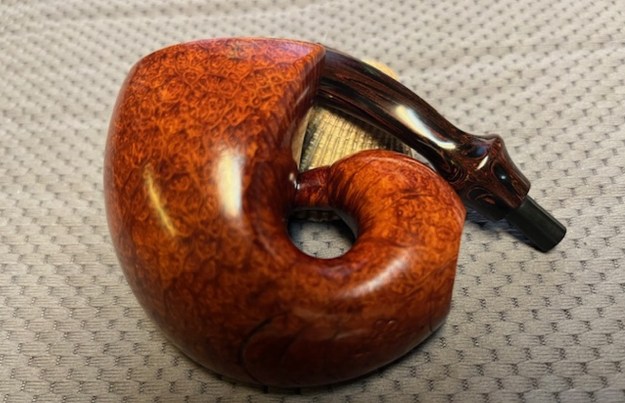
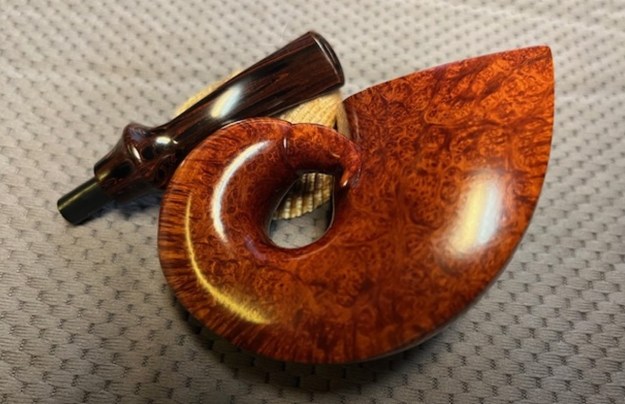
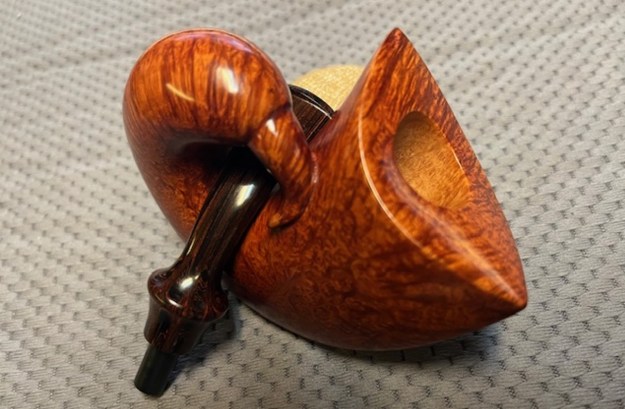
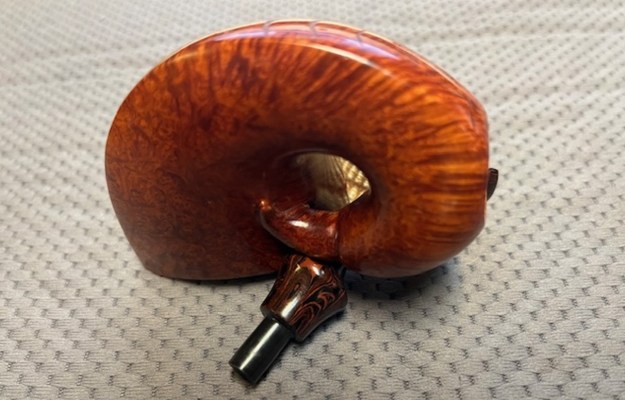
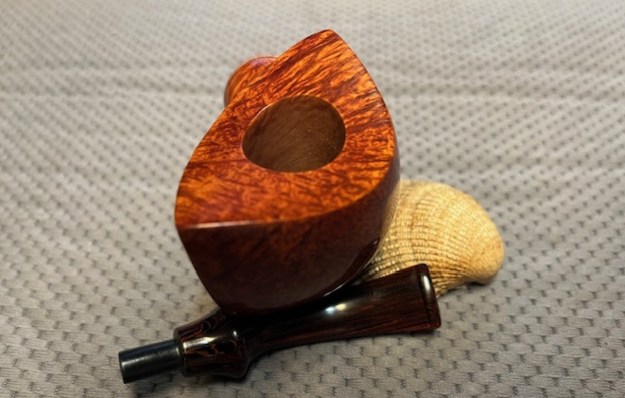
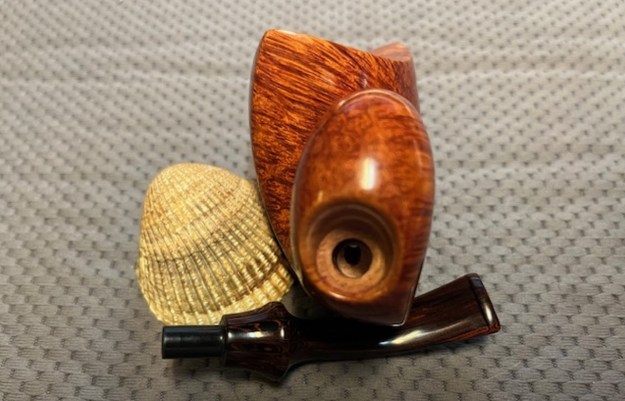
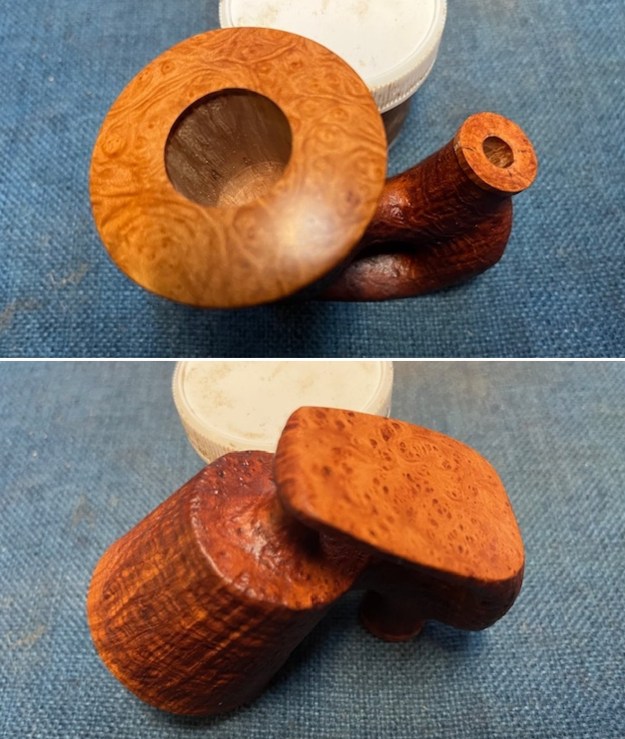
I was recently contacted by a fellow here in Vancouver about some pipes he had. He was referred to me by a local pipe shop. I was unclear if he wanted them cleaned or exactly what. When he came on the weekend he brought six pipes in two pipe boxes for me to have a look at. I spoke with him about the cost of restoring them. It finally became clear to me (I guess I am slow) that he wanted to sell the pipes. He was tasked with the job by his sister in law as the pipes were from her late husband’s collection. As I unpacked them it was clear that they were some nice pipes and some were higher grade. All but one was smoked and had the heavy smell of fruity aromatics to them. Some had cake in the bowl and lava on the rim. Of the six, four of them had significant rim damage – bowls out of round, burn marks, cut marks. The saddest part is that the damage was most significant on the higher end pipes. Most of them had tooth marks in the stems. Obviously, they had been his late brother in laws favourites and he had enjoyed them. He left them with me and I went over them, researched the brands and wrote up an offer for him to present to his sister in law. By the end of the day we had a deal. The six pipes now have a new home and five of them had fruity smell needs to be exorcised! The Curled looking one is unsmoked.I turn my attention to the last of the six pipes I purchased. The bottom right pipe of the six is unsmoked. It is another beautiful looking pipe that is the most unique of the lot. It is a Scorpion shaped Bent pipe stamped on the underside of the shank and has a Mouse logo with an MS as part of the stamp [over] Manuel Shaabi [over] Handcut [over] Germany. To the left of the stamping moving up the bowl are three lines like waves. The bowl had beautiful birdseye grain around sides and cross grain on the eye shaped rim top and underside of the shank. The shape is impeccably done. The finish was absolutely beautiful and unblemished. The bowl was unsmoked and there was no cake or lava to worry about anywhere around the bowl. The inner edge of the bowl was flawless and round. The inside of the bowl was polished smooth. The fancy turned saddle stem was Cumberland and no tooth marks or chatter on the stem. The tenon was Delrin and the fit was perfect. The shank had been drilled and the stem was inset in the shank. There was no stamping on the stem. The pipe came with the original Shaabi box and soft felt pipe sock with the Shaabi logo on it. I took photos of the bowl and rim top to give you an idea of what I see. This is a uniquely carved and beautiful looking Scorpion pipe. The unsmoked condition and the pristine Cumberland stem on the pipe make a gorgeous pipe!I took a photo of the stamping on the underside of the shank. It is clear and readable as noted above. I took a photo of the bowl with the stem removed to give a sense of the proportion and appearance of the pipe. To help me understand the pipe and its maker a bit more I turned to Pipephil’s site and read what it said about Shaabi’s Handcut pipes (http://pipephil.eu/logos/en/logo-s6.html). I have included a screen capture of the section below as well as the side bar information below the capture. Artisan: Manuel Shaabi (born 1950 in Lebanon) was a cabinet maker when he decided in 1993 to learn pipe carving. He started as professional pipemaker in 1998.

Next, I turned to Pipedia for more information and detail (https://pipedia.org/wiki/Shaabi_Pipes). I find that the articles there often fill in some more information on the relationships and history of a given brand. In this case I found that also true. I quote it in full below.

Manuel Shaabi was born in Lebanon in 1950. He apprenticed as a wood sculptor and cabinet maker. In 1979, he left, because of the Lebanese civil war, for Bavaria, Germany. There he worked making one a kind furnishings and restoring old sculptures and figurines in churches and cathedrals.

In 1984 he moved to Hamburg, Northern Germany because of his daughter’s asthmatic condition. Unfortunately, he couldn’t find enough work, so he went back to school and completed his professional training. His final test was to make a trunk. He made such a fine trunk that he was offered a position at the school as an instructor.

In 1993, having won numerous awards for his cabinet making, he gave it up as it didn’t satisfy his creative needs. He started over at Dan Pipe learning to repair pipes. He quickly mastered the art of pipe making and in 1998 left to start his own studio.

Shaabi’s’ pipes have an unheard of degree of hand craftsmanship. He feels a drill doesn’t cut true for the tobacco chamber so he uses a special knife. His draft holes are 4mm. “The draft hole should meet the tobacco chamber just a little bit above the the bottom”. He believes this prevents tobacco residue coming up through the air hole and stem.

Manuel Shaabi is probably the only pipemaker who combines the skills of a wood carver, cabinetmaker and pipe smith. His pipes combine the best of European design with a Middle Eastern aesthetic. He has secured some of the best wood on the planet and they smoke as good as they look. Each pipe has an individually hand cut Lucite stem…

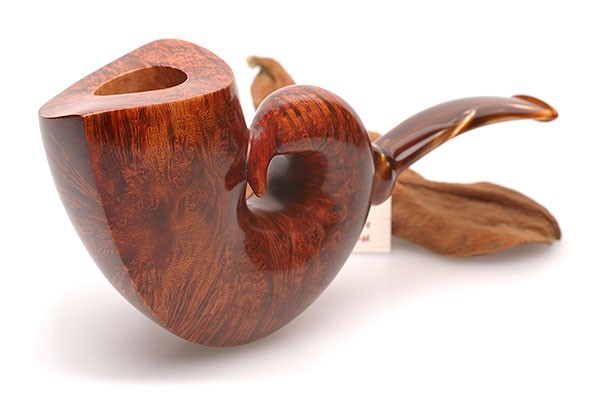
I did a Google search for the Manuel Shaabi Nautilus as that is what I thought it was in terms of the shape. Instead of a Nautilus it came up with quite a few pipes that were very similar in shape. One of them was the same style pipe as this one on Esterval’s Pipe House (https://www.tecon-gmbh.de/product_info.php?manufacturers_id=50&products_id=10834). That link gave me the name of the pipe shape that Shaabi called a Scorpion. I have included a photo of the pipe that was on the site.

Now I knew what I had in hand – a Handcut Manuel Shaabi Scorpion that was a real beauty. Knowing that it was new and unsmoked was a bonus. In terms of the six pipes I had purchased in the lot this unsmoked beauty was very high end.

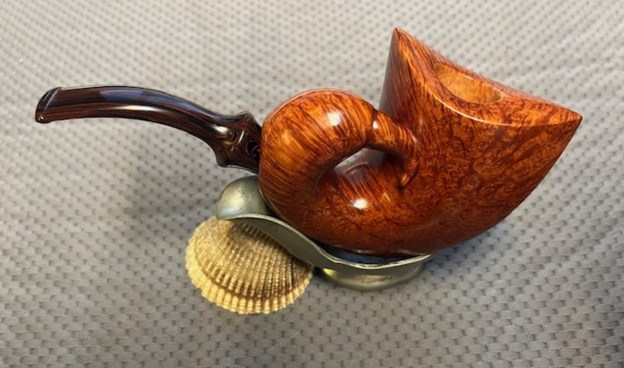
I rubbed the bowl and shank down with Before & After Restoration Balm. I worked it into the surface of the briar with my fingertips to clean, enliven and protect the briar. I let the balm sit for a little while and then buffed with a cotton cloth to raise the shine. The Balm did its magic and the grain stood out. I polished the stem with micromesh sanding pads – 1500-12000 grit pads. I wanted to remove the light oxidation on the stem surface and bring back the shine. I wiped it down with a damp cloth after each sanding pad. I used Before & After Pipe Polish – both Fine and Extra Fine to further polish the stem. I put the German Made Manuel Shaabi Handcut Scorpion and its fancy Cumberland saddle stem back together. The rich browns and blacks of the contrasting stain makes the grain come alive with the polishing and waxing. I carefully buffed the pipe with Blue Diamond on the buffing wheel using a light touch on the briar. I gave the bowl and the stem multiple coats of carnauba wax on the buffing wheel and followed that by buffing the entire pipe with a clean buffing pad. I hand buffed the pipe with a microfiber cloth to deepen the shine. The finished Manuel Shaabi Handcut Scorpion really is a beauty and fits nicely in the hand and looks very good. Give the finished pipe a look in the photos below. The dimensions of the pipe are Length: 5 ½ inches, Height: 3 inches, Outside diameter of the bowl: 1 ½ inches wide x 2 ¼ inches long, Chamber diameter: ¾ of an inch. The weight of the pipe is 2.93 ounces/83 grams. This pipe will soon be on the Pipes From Various Makers Section of the rebornpipes store if you would like to add it to your collection. Send me a message or an email. Thanks for reading this blog and my reflections on the pipe while I worked on it.
Breathing New Life into a Dunhill Cumberland Prince 44071 Made in England 23


Blog by Steve Laug

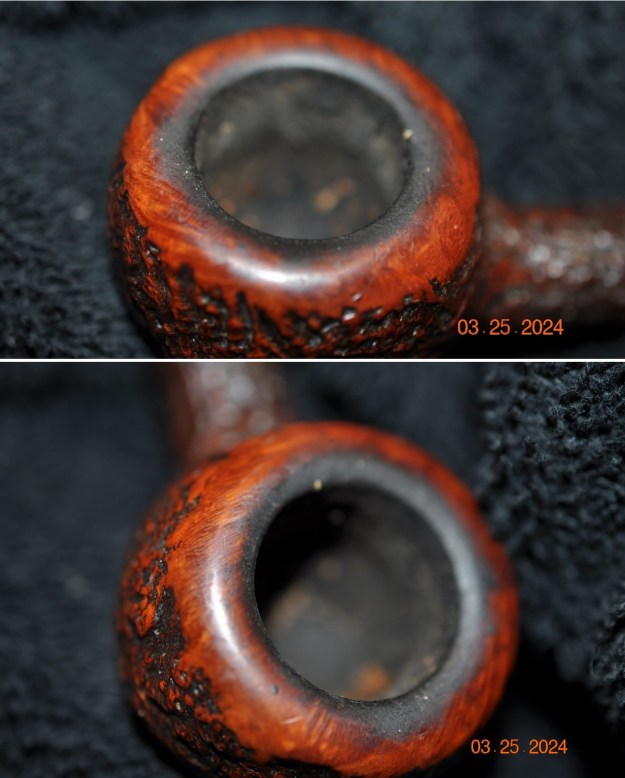
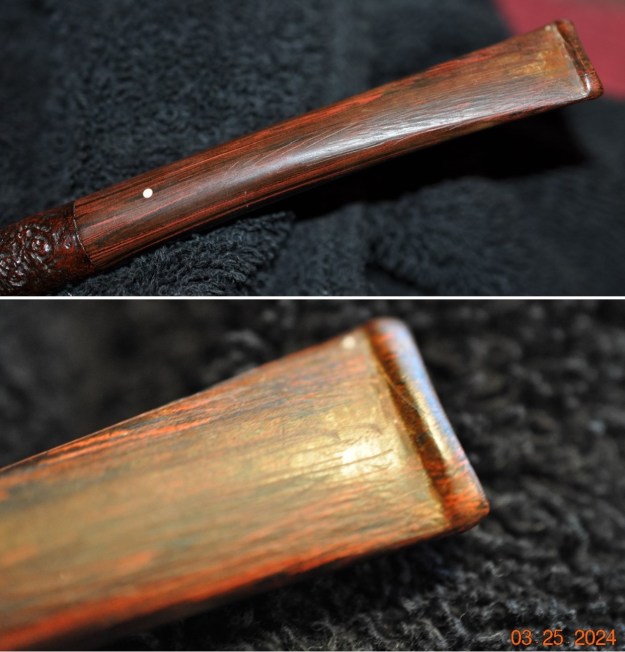
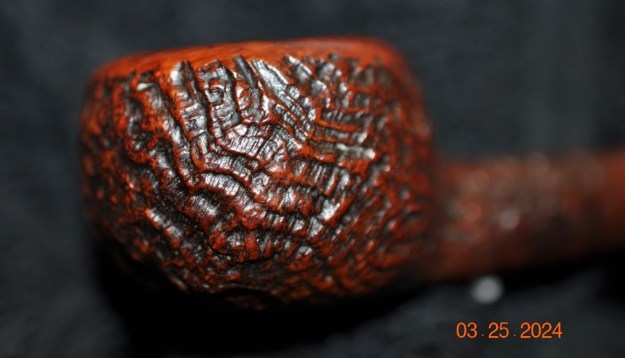
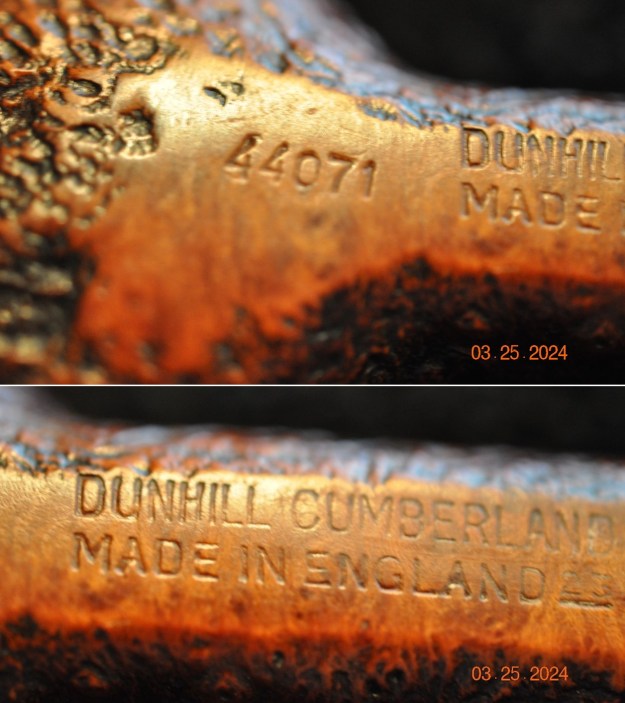
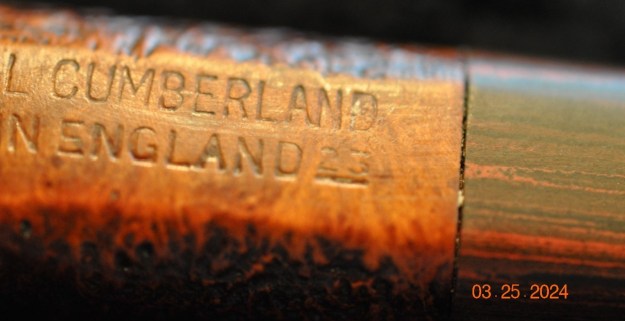
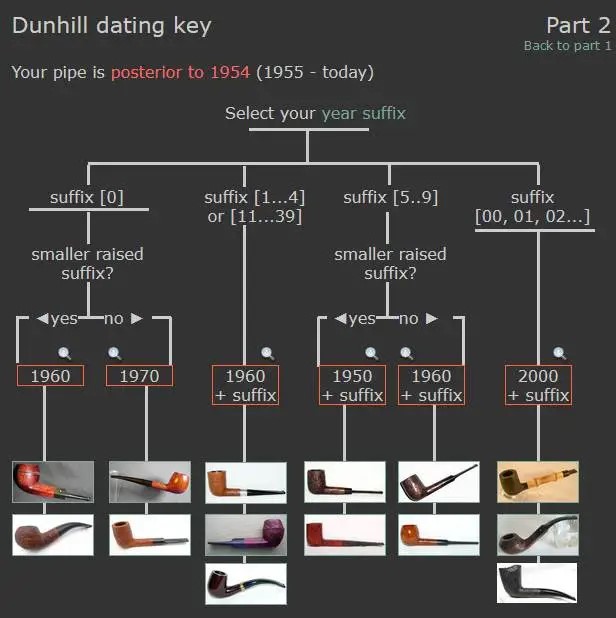
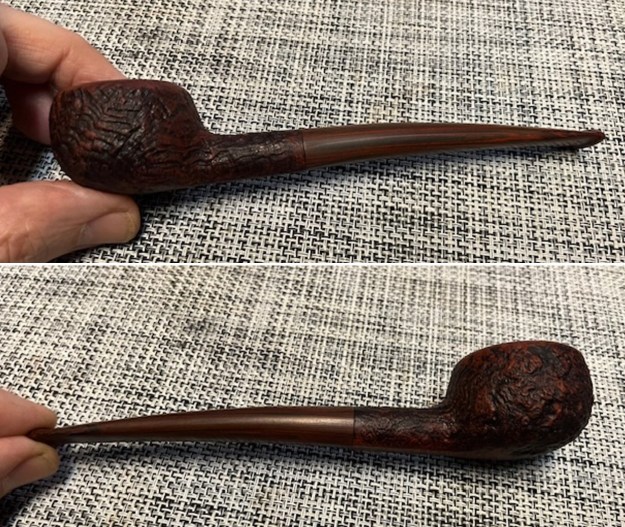
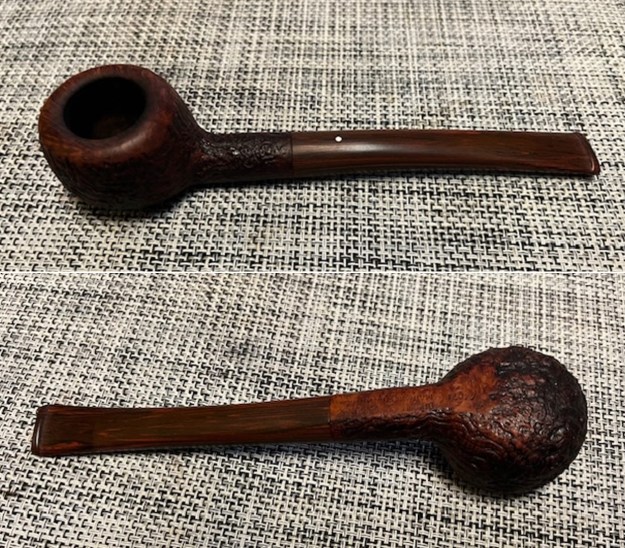
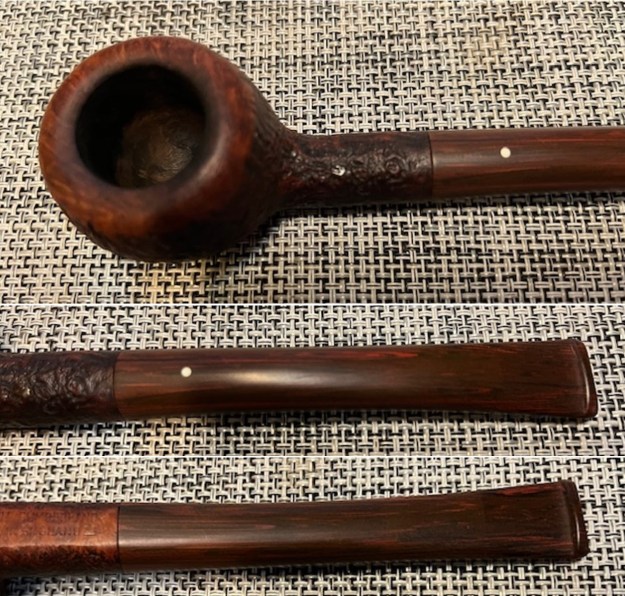
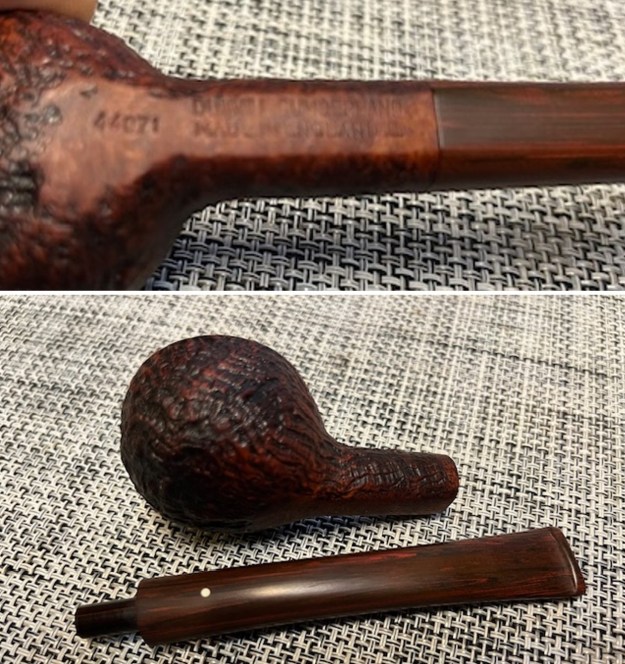
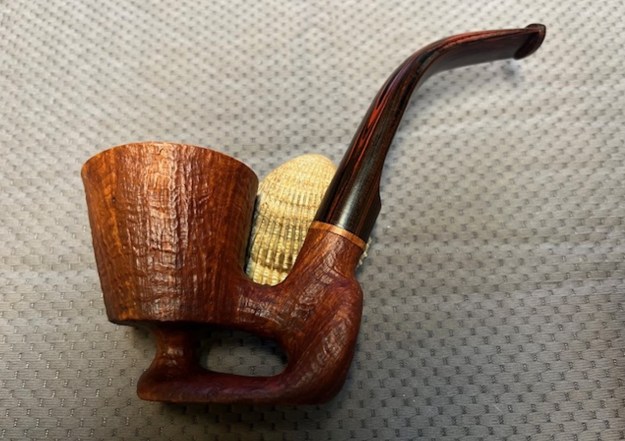
The next pipe on the table is a sandblast Dunhill Prince with a smooth crowned rim. It had a taper, Cumberland stem with a white spot. We purchased it from a seller who was selling an estate in Oregon City, Oregon, USA on 03/21/2024. The seller said that the pipe came from his father in Indiana, a long-time pipe dealer who had retired many years earlier. His father had originally purchased it from a friend of his who also was also a pipe dealer. The pipe is stamped on the heel of the bowl and on the underside of the shank. On the heel of the bowl it is stamped with the shape number 44071. That is followed with stamping on the shank that clearly reads Dunhill Cumberland[over] Made in England23. The rim was in good condition other than lava overflowing from the thick cake in the bowl onto the smooth rim top It is hard to assess the condition of the inner edge of the rim due to the cake and lava overflow. There may be some darkening or damage at the top and rim edge but I cannot be sure. There were oils and grime ground into the bowl sides gives the finish a flat look. The Cumberland stem is oxidized, calcified, and dirty with grime and grit on the surface. There were also scratches and tooth marks on both the top and underside of the stem just ahead of the button. Jeff took photos of the pipe before he started his clean up work. I have included them below. He took photos of the pipe’s bowl and rim top to show the cake in the bowl and the lava coat overflowing onto the top. It is another dirty pipe. He also took photos to capture the tooth marks on the top and underside of the stem near the button. He took photos of the sides and heel of the bowl to show the grain around the bowl and the amount of grime ground into the surface of the briar.   He took photos of the stamping on the underside of the shank. It is clear and very readable as noted above. I wanted to unpack the Dunhill stamping on the shank and work to understand each element of the stamp. I generally use the Pipephil site to gather as much initial information as possible (http://pipephil.eu/logos/en/dunhill/cumber1.html). The stamping is interpreted as follows: The number 44071 is the shape number that unpacks as follows: the 4 is the bowl size, 1 is the identifier for a taper stem, 07 is the shape designation – a Prince. The additional 4 does not have any clear information though I wonder if it could be a designation for a Cumberland stem. The Cumberland stamp refers to the finish. The superscript 23 following the D of England would give the date the pipe.Pipephil also has some helpful dating keys on the site that are basically flow charts that you can walk through to date your pipe (http://pipephil.eu/logos/en/dunhill/cledat-en1.html). I turned to Part 1 of the Dating Key and followed the chart. This pipe has a superscript 23 following the D in England. There was no patent number so that took me to the section on the chart below (column one) which instructed me that the pipe could be dated as being made “posterior to 1954”. I followed the link under “Your pipe is posterior to 1954. Narrow down your dating”. That took me to Page 2 of the dating key (http://pipephil.eu/logos/en/dunhill/cledat-en1a.html). The second column (suffix 1…4) or (11…39) led me to the section with a 23 after the D in England. There was a directive for dating the pipe spelled out as follows: 1960 + suffix which gives the pipe a date of 1983 (last digit hidden by the band). From that I knew that the pipe was made in the 1983.I then turned to Pipedia’s section on Dunhill Cumberland to get a bit of background on the Dunhill finishes (https://pipedia.org/wiki/Dunhill#Root_Briar). I quote:

Cumberland

Introduced in 1979. Cumberland is another sandblast with a brown stain and a brindle stem (the material is more commonly called ‘Cumberland’ these days, thanks to Dunhill’s influence and the success of the finish over the past quarter-century). Originally, the Cumberland always featured a smooth brown rim, but in the current production the rim is sometimes smooth, sometimes sandblasted. Occasionally, a straight grain blast is finished with a Cumberland stain and a “Shilling Grain,” similar to the “Ring Grain,” resulting in a new variation on the traditional sandblast. The Shilling series is named for the British coin: the sandblast looks like a stack of shillings. Named after the warehouse on Cumberland Road. The old pipes that inspired this finish were found there.

I have also included a chart from the site from Dunhill spelling out the Standard Pipe Finishes and giving short information and a timeline. You can see that the Cumberland Finish was introduced in 1980 so this is definitely from the early releases of that finish from the factory.I turned to work on the pipe itself. Jeff had done an amazing cleanup of the pipe. He reamed the light cake with a PipNet reamer and cleaned up that with a Savinelli Fitsall Pipe Knife. He scrubbed the internals of the bowl and stem with alcohol, cotton swabs and pipe cleaners. He scrubbed the externals with undiluted Murphy’s Oil Soap and rinsed the bowl off with running water. He soaked the stem in Briarville’s Pipe stem Deoxidizer and once it had soaked rinsed it off with warm water to remove the residual solution. He dried it off and rubbed it down to remove any oxidation that was still on the stem. The pipe looked very good when I received it. I took a photo of the rim top to show the condition. It looks pretty good with the tars and oils removed from the rim top. You can see the clean bowl. The stem came out looking quite good. There are some scratches, light tooth marks and chatter on both sides ahead of the button. I took a photo of the underside of the shank to show the stamping. The photo shows the stamping and is actually more readable in person. I removed the stem from the shank and took a photo of the pipe parts to show what I was working with. It is a nice looking pipe. I sanded the rim top and edges with 320-3500 grit sanding pads. I wiped it down after each sanding pad with a damp cloth. By the final 3500 grit sanding pad the rim top had a shine.I polished the cleaned up rim top and edges with micromesh sanding pads – dry sanding with 1500-12000 grit pads and wiping the bowl down with a damp cloth to remove the dust. The rim top came out looking very good. I rubbed the briar down with Before & After Restoration Balm. I worked it into the briar with my fingertips and a horsehair shoe brush to work it into the nooks and crannies of the sandblast finish. The product works to clean, enliven and preserve the briar. I let it sit for 10 minutes then I buffed it with a cotton cloth to deepen the shine. The briar really comes alive with the balm. I set the bowl aside and turned to address the stem issues. To address the scratches and marks in the surface of the Cumberland I sanded it with 320-3500 grit sanding pads. I wiped it down after each sanding pad with a damp cloth. By the final 3500 grit sanding pad the rim top had a shine.I polished the Cumberland with micromesh sanding pads – 1500-12000 grit pads. I wiped it down with Obsidian Oil after each sanding pad. I used Before & After Pipe Polish – both Fine and Extra Fine to further polish the stem. This 1980s Era Dunhill Cumberland 44071 Prince with a Cumberland taper stem has a beautiful, unique Dunhill Sandblast finish that is very deep and craggy. The rim top is smooth and crowned. The Cumberland reddish brown finish highlights some great grain around the bowl and shank. It has a unique sandblast that Dunhill specialized in making. The polished Cumberland taper stem adds to the mix. I put the stem back on the bowl and buffed the pipe with Blue Diamond on the buffing wheel being careful to not buff the stamping. I gave the bowl multiple coats of Conservator’s Wax and the stem multiple coats of carnauba wax on the buffing wheel and followed that by buffing it with a clean buffing pad. I hand buffed the pipe with a microfiber cloth to deepen the shine. The finished Dunhill Cumberland 44071 Prince is quite nice and feels great in the hand. Give the finished pipe a look in the photos below. The dimensions of the pipe are Length: 6 ½ inches, Height: 1 ¼ inches, Outside diameter of the bowl: 1 ½ inches, Chamber diameter: 7/8 of an inch. The weight of the pipe is 1.27 ounces/36 grams. Thanks for walking through the restoration with me as I worked over another beautiful pipe. This one is already sold and it will soon go out to the new steward in Illinois. Thanks for your time.