Tag Archives: Charatan’s Make London England pipes

Restoring a Sandblast, Lane Era Charatan’s Make London England 90X Dublin


by Steve Laug

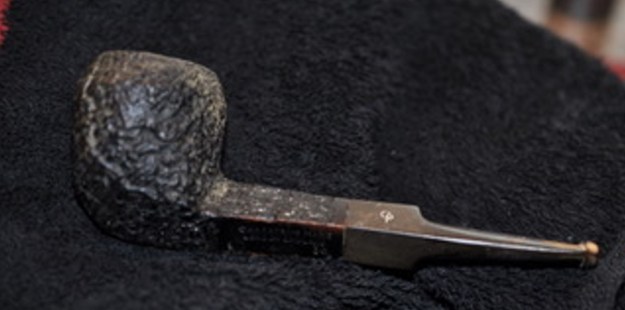
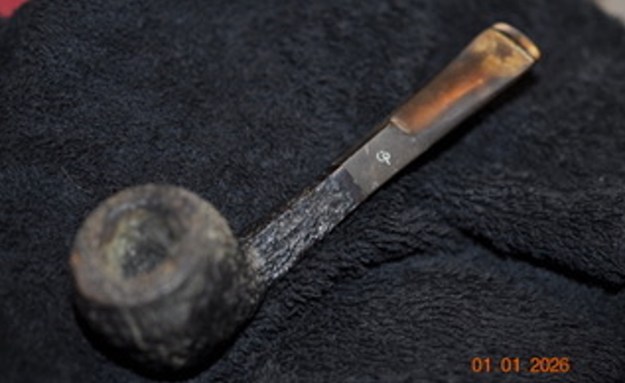
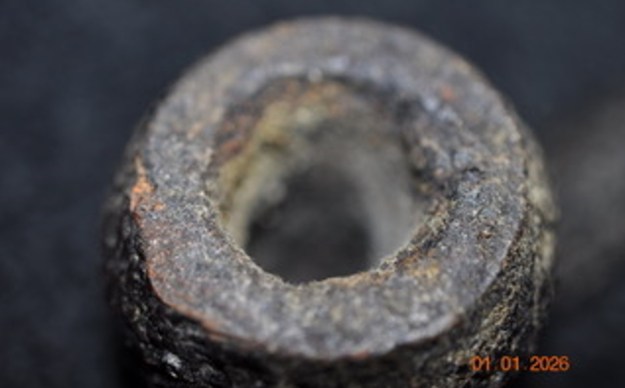
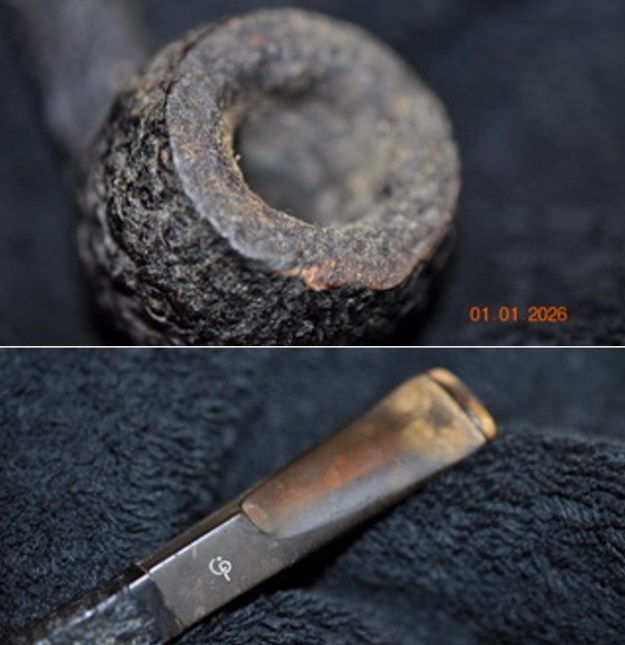
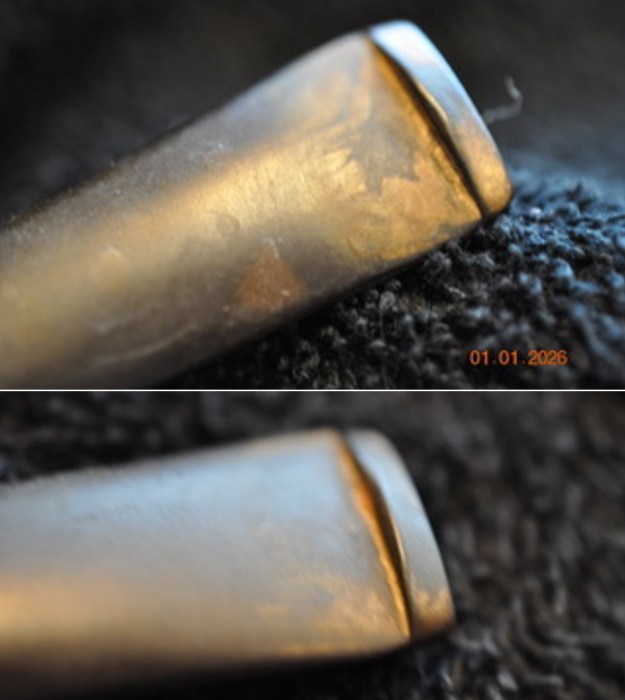
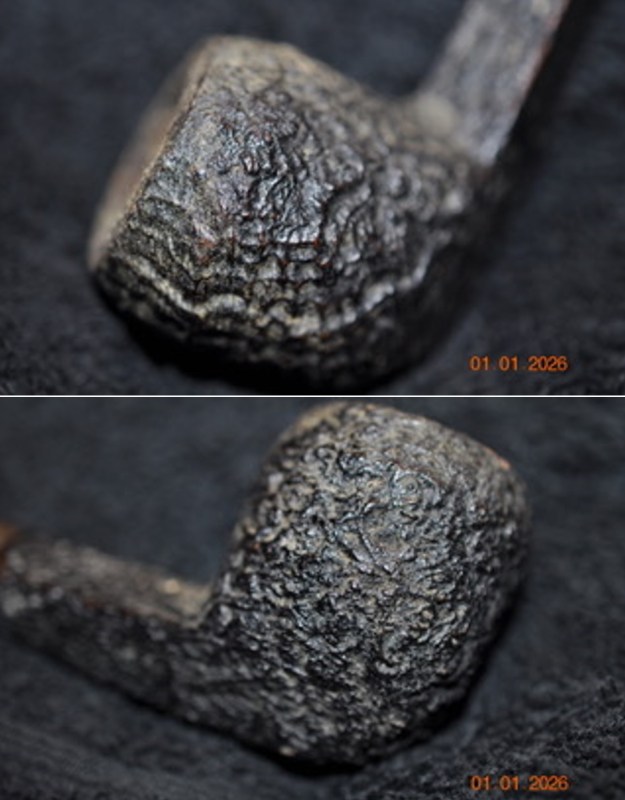
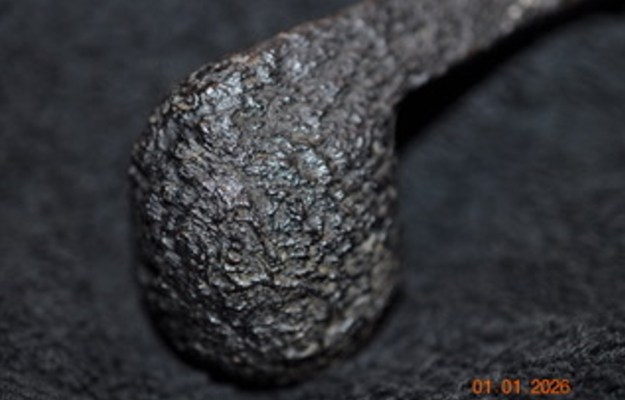
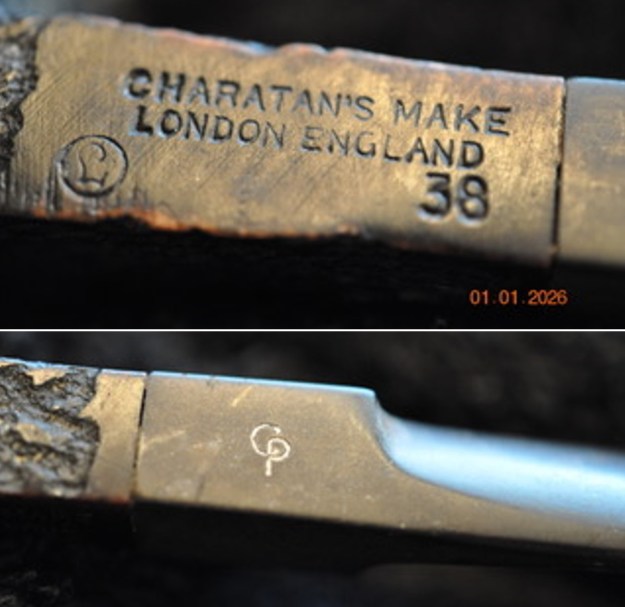
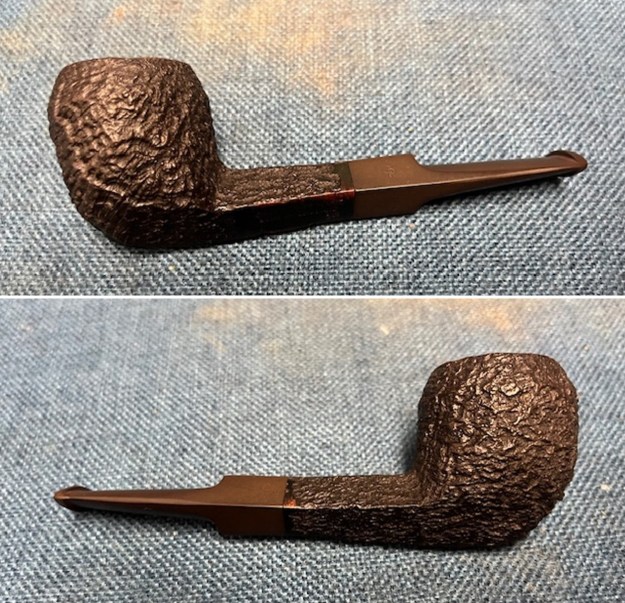
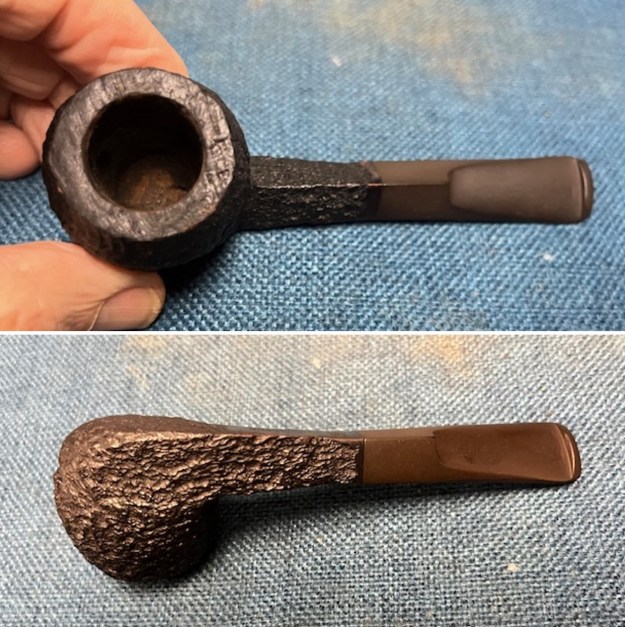
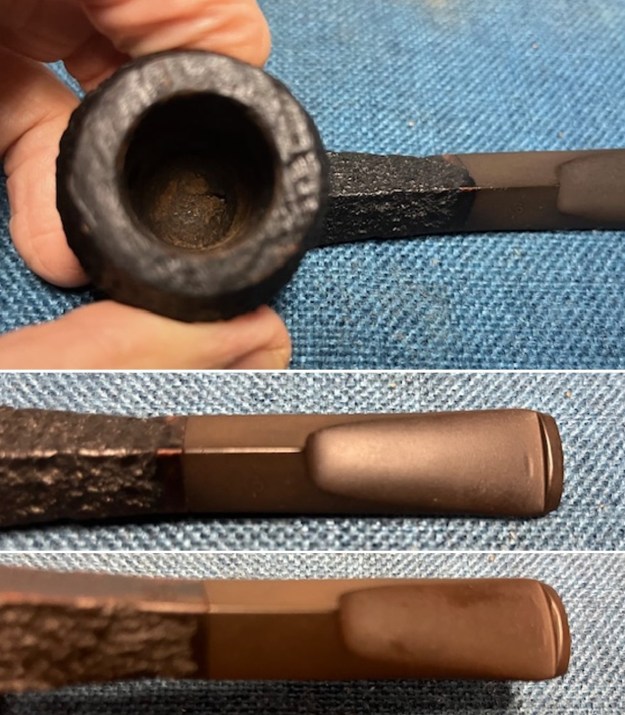
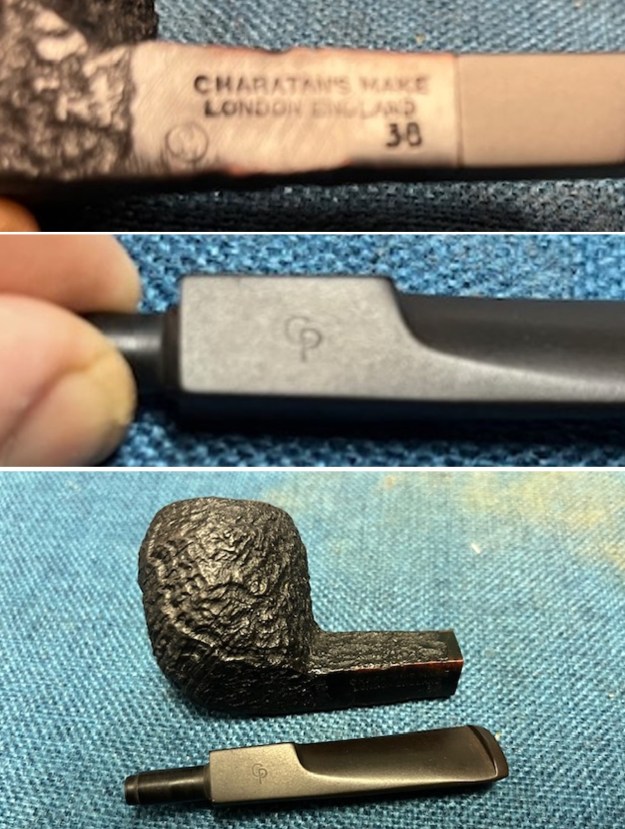
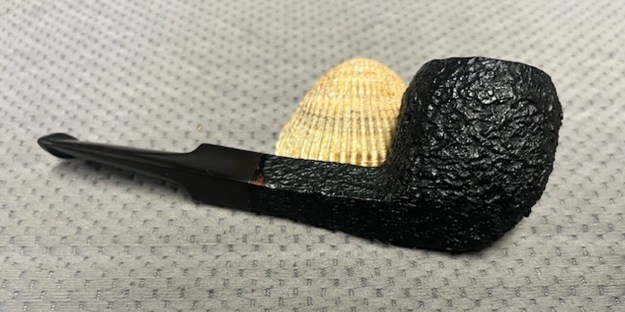
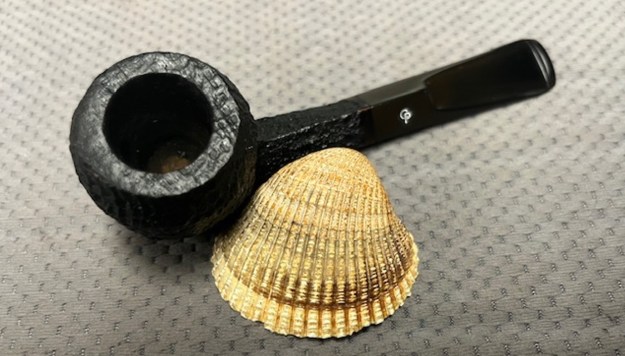
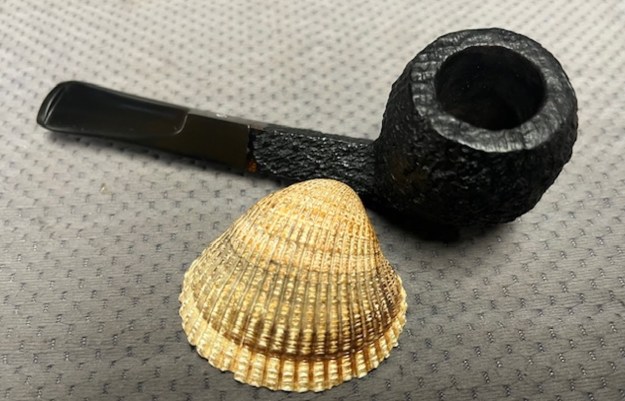
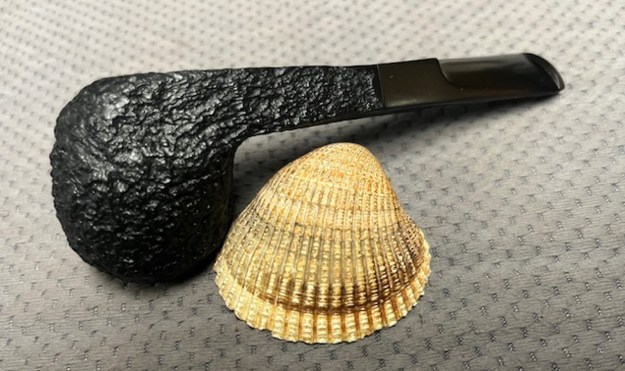
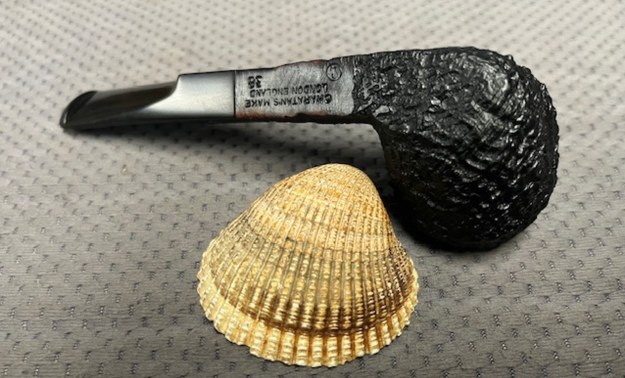
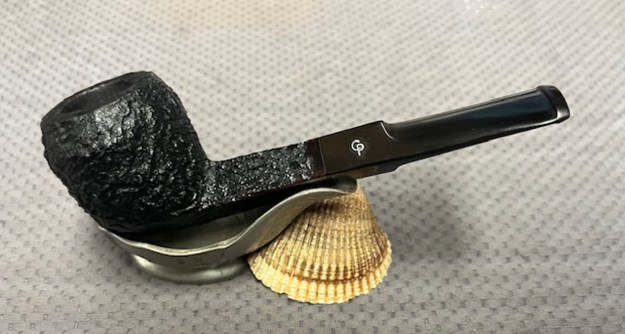
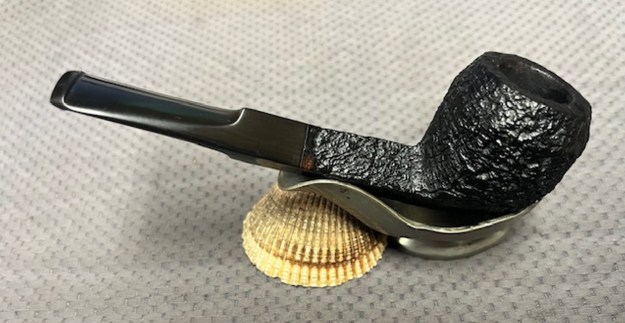
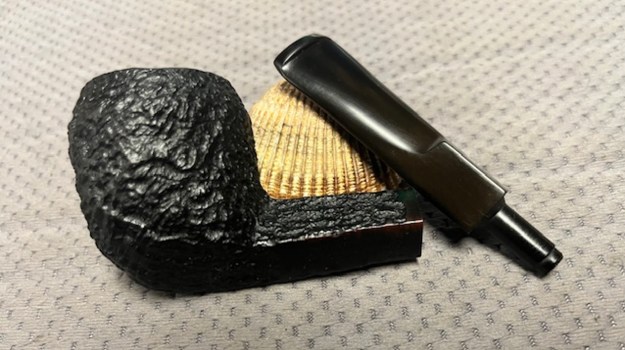
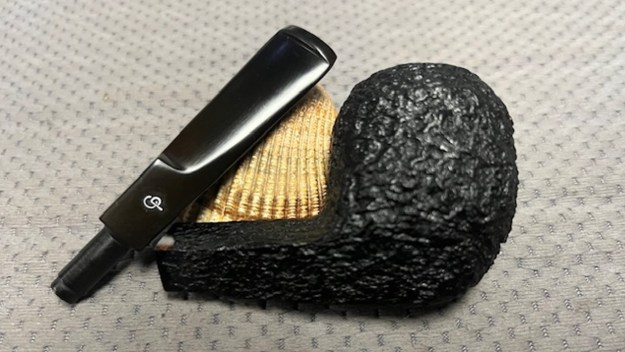
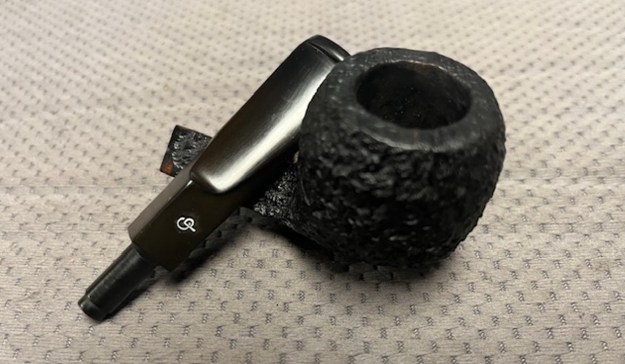
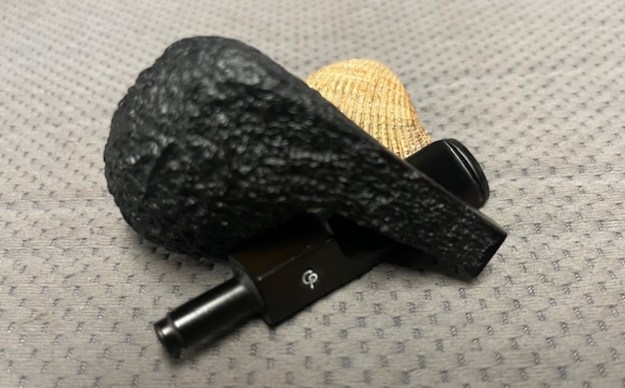
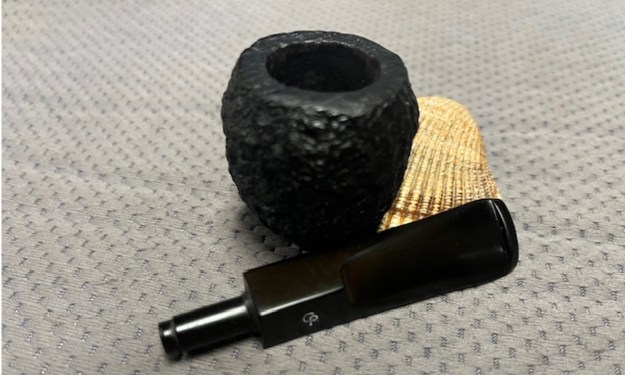
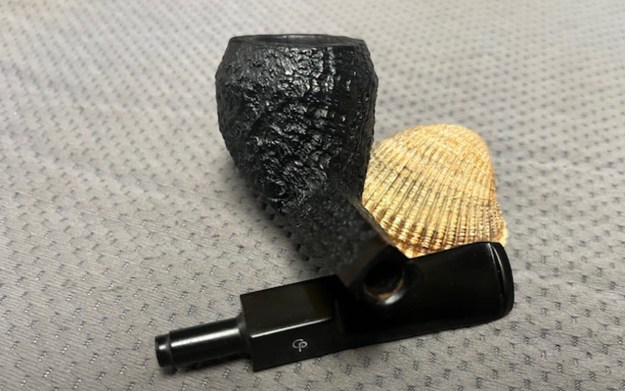
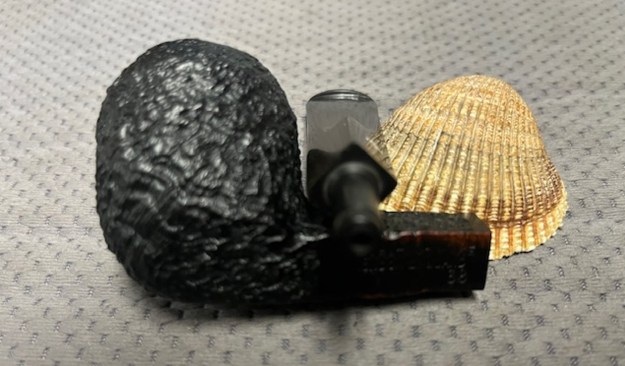
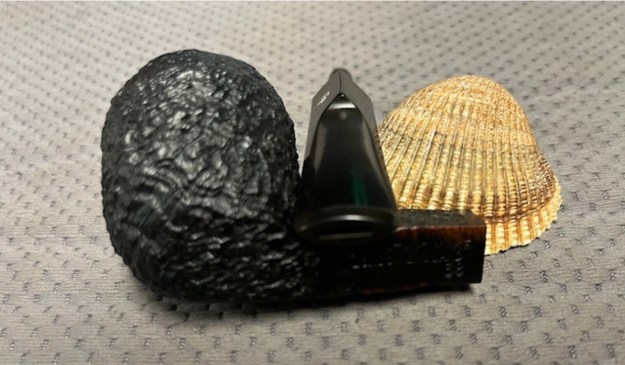
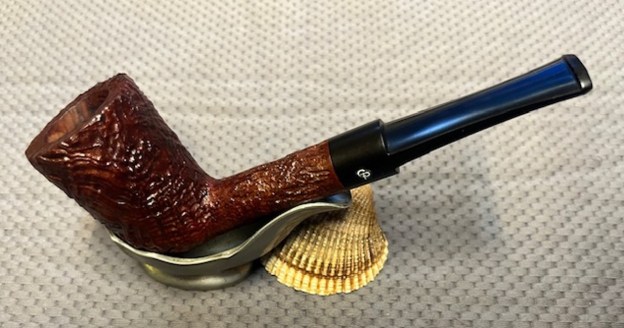
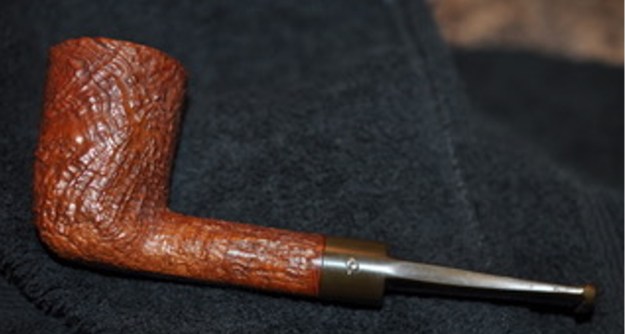
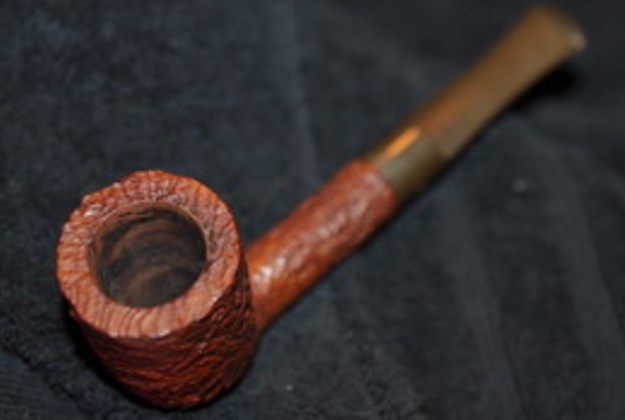
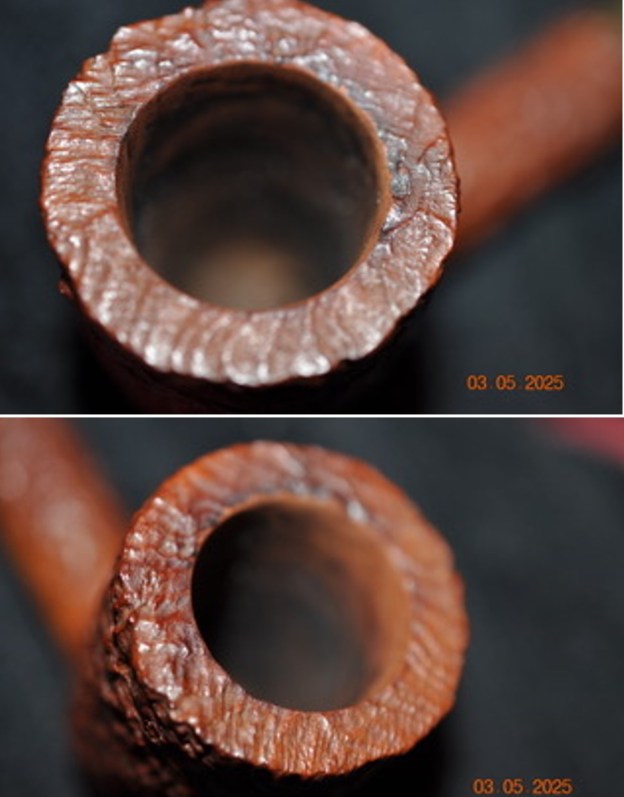
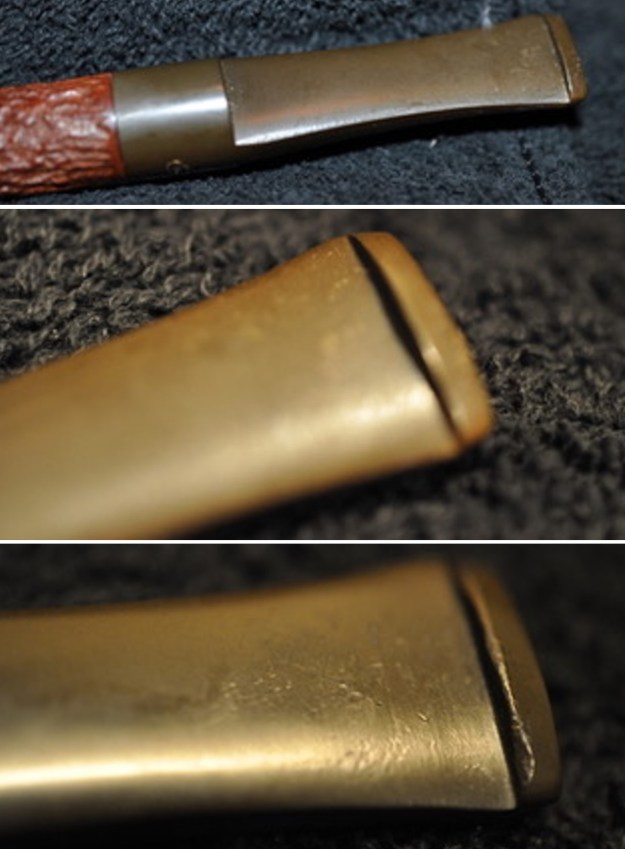
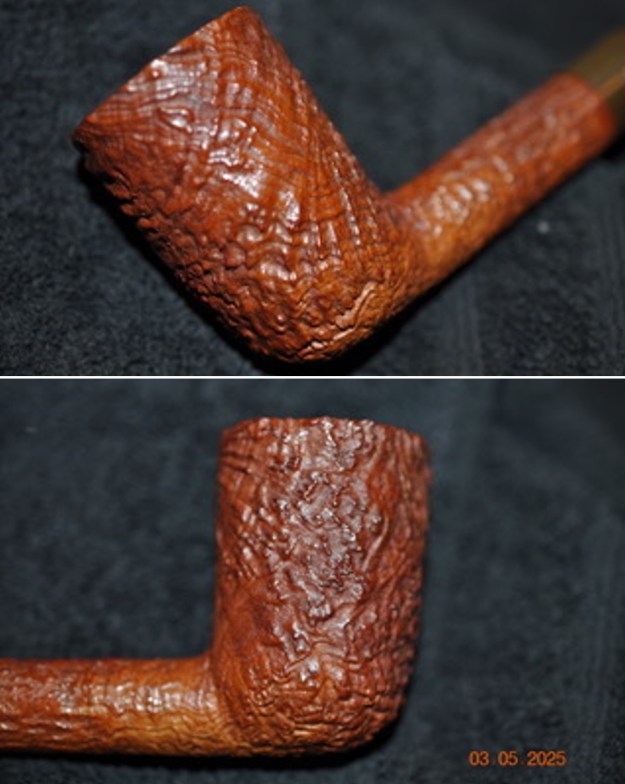
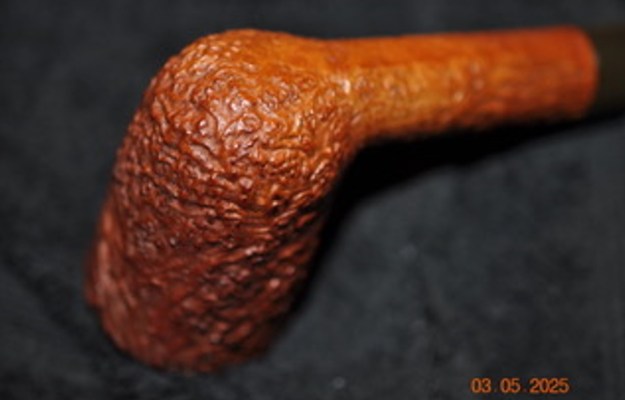
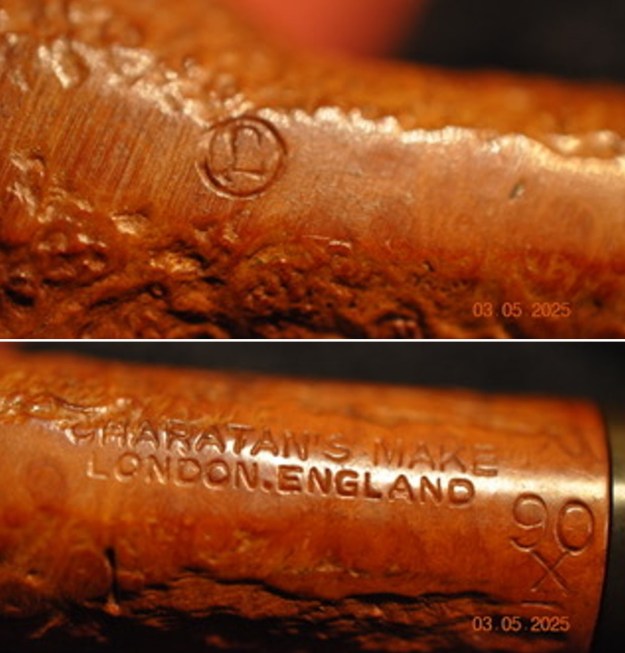
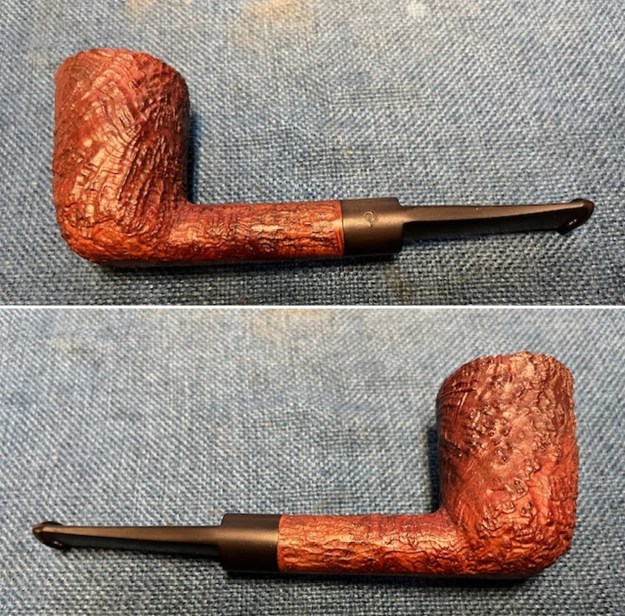
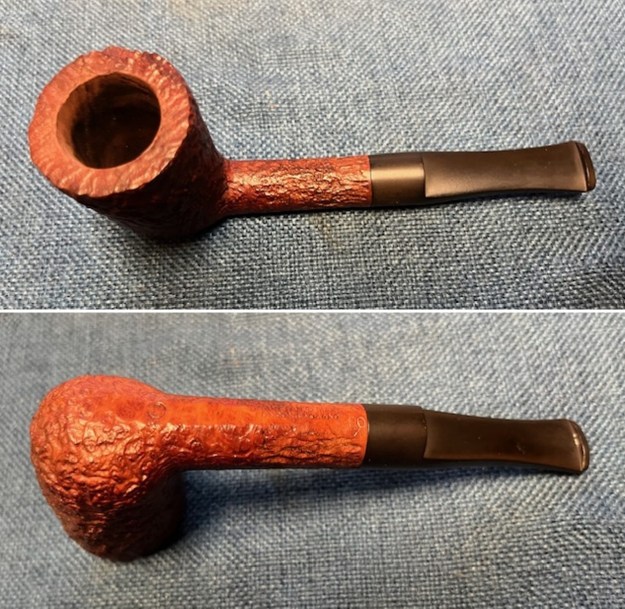
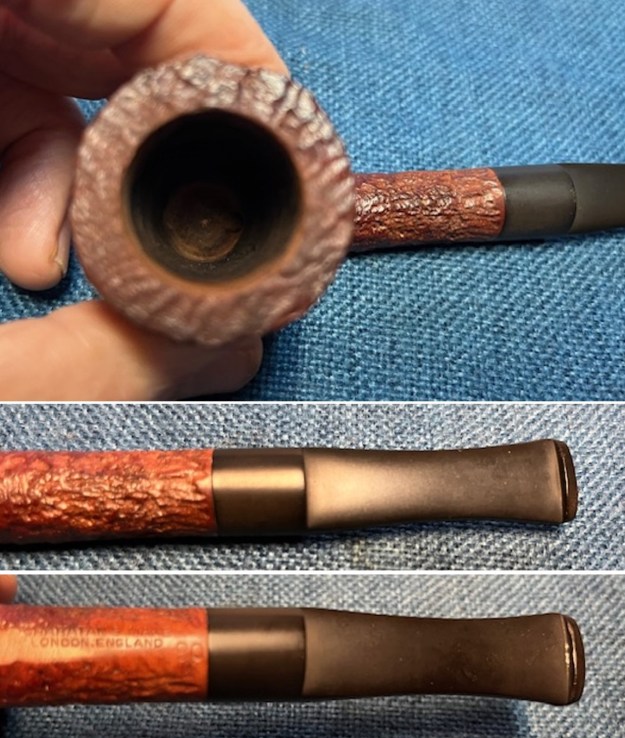
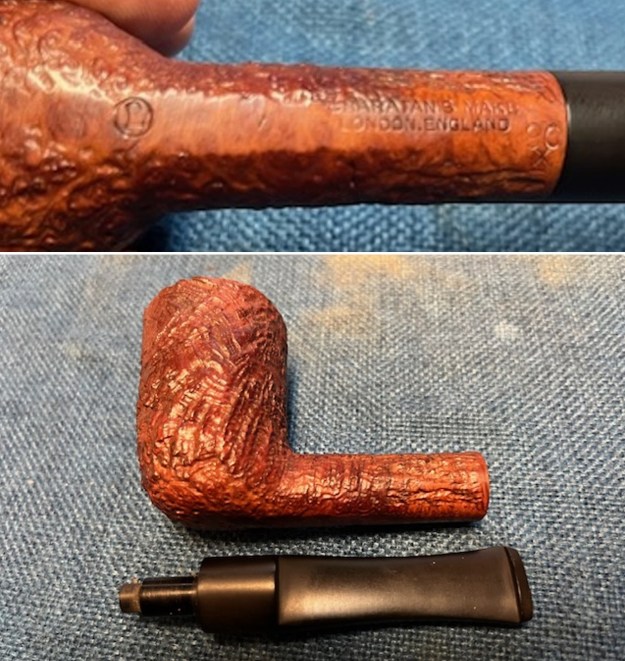
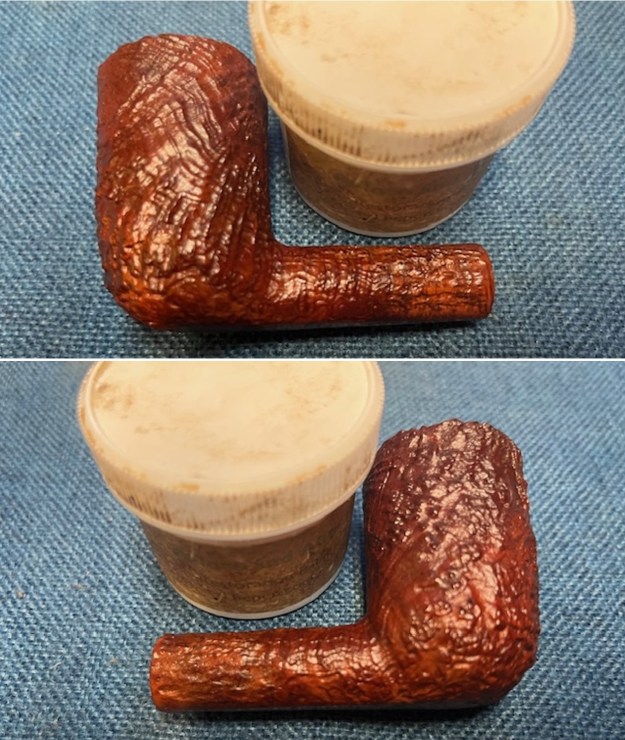
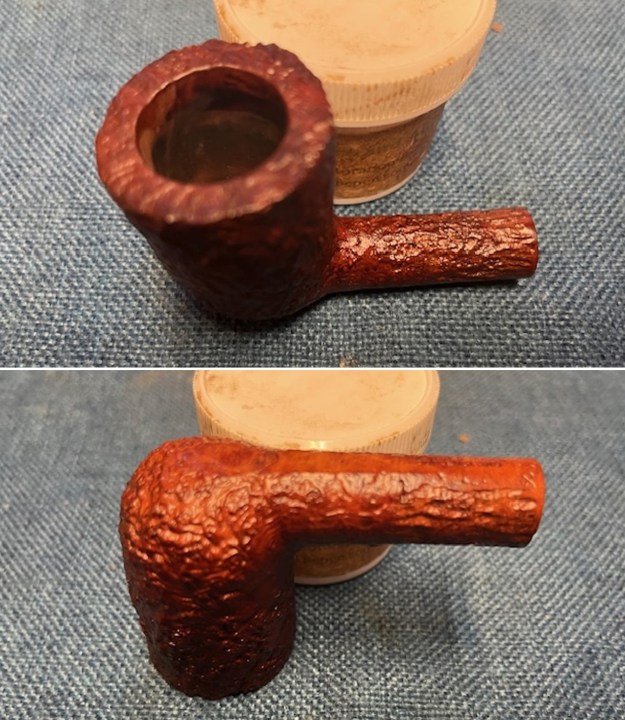
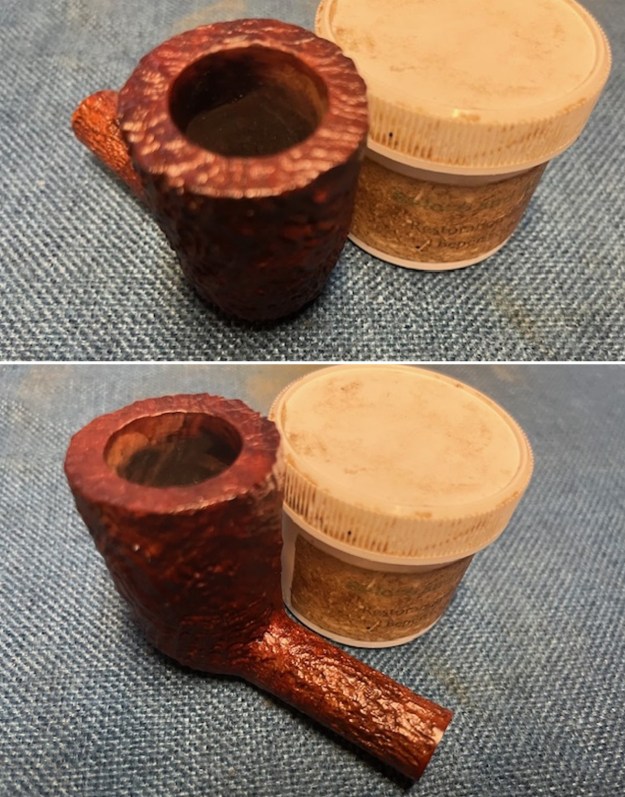
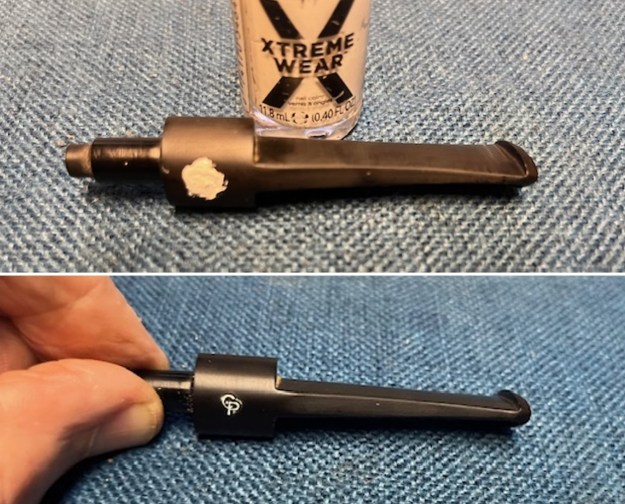
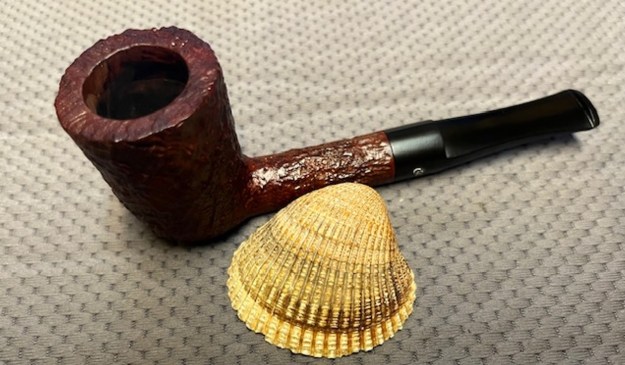
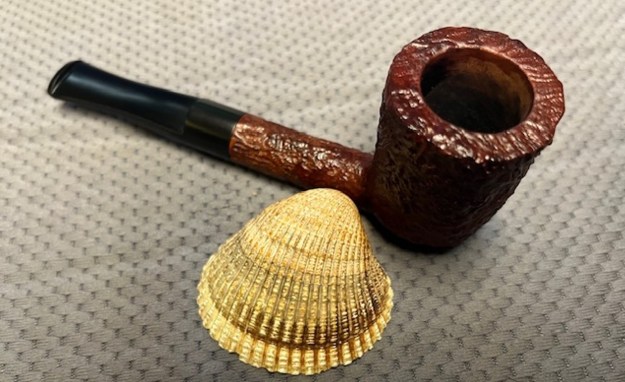
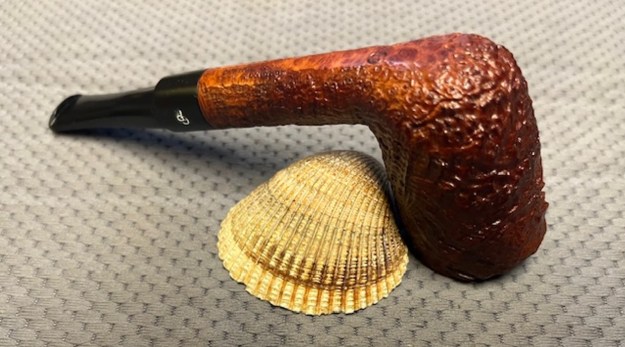
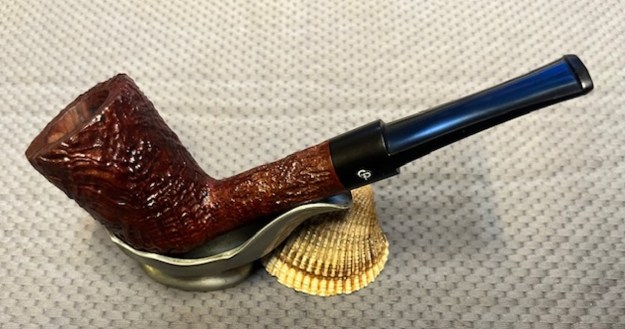
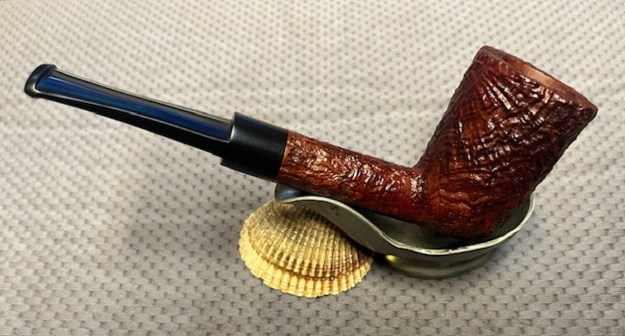
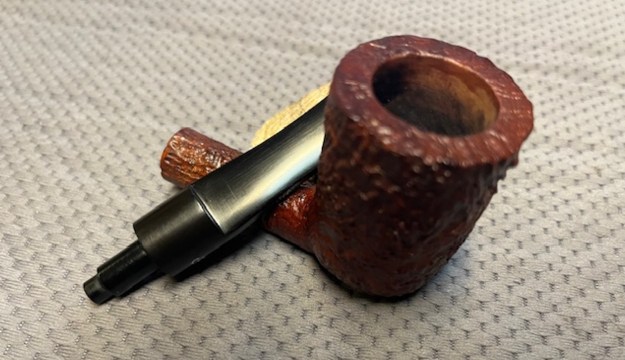
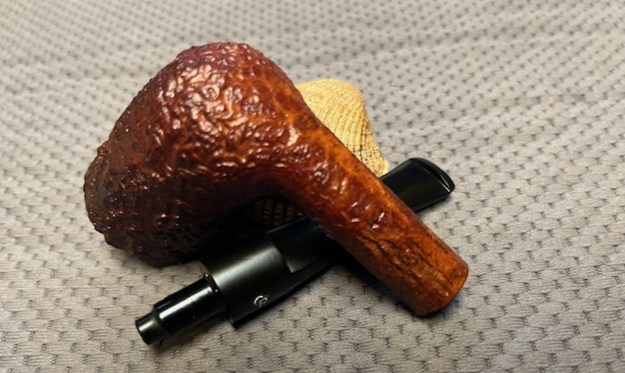
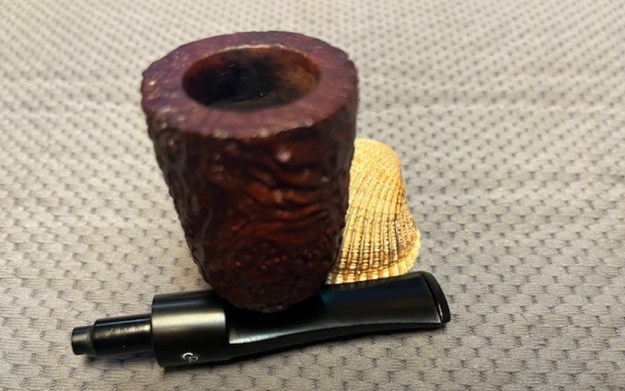
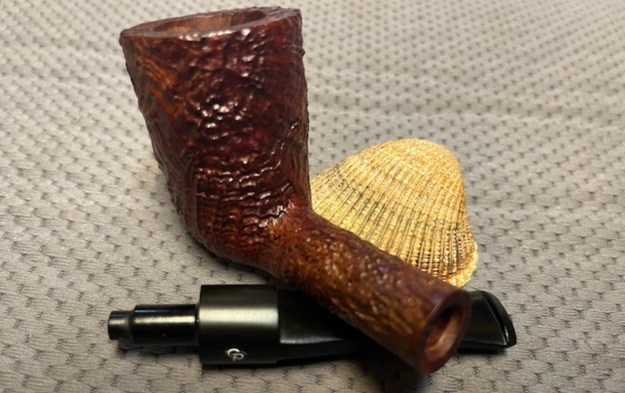
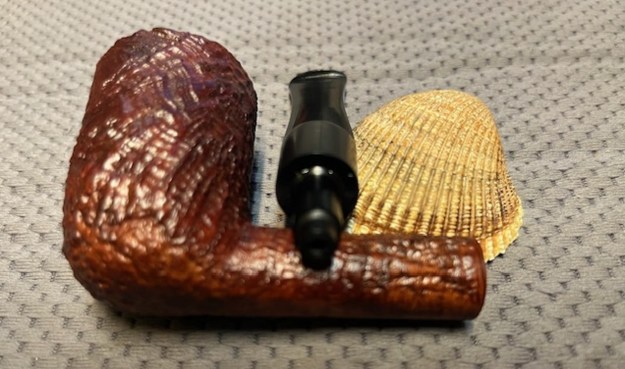
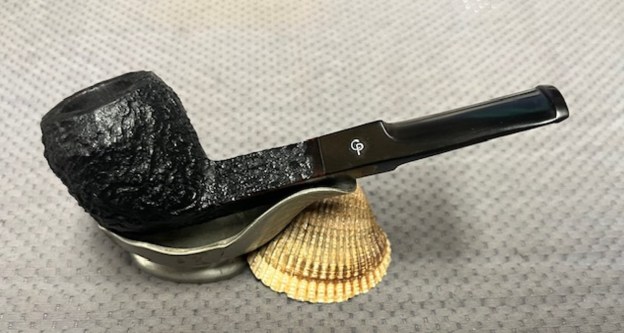
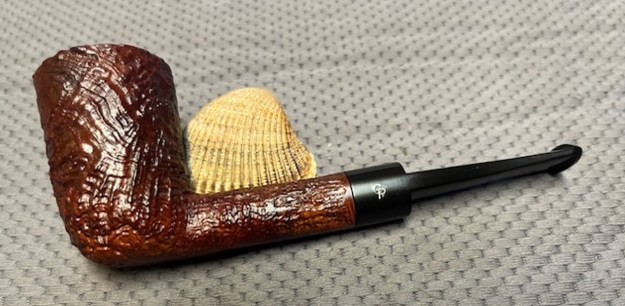
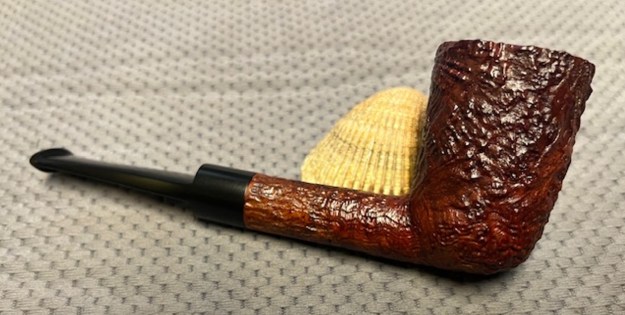
The next pipe on the table is one that we picked up in the lot from a seller in Barrington, Rhode Island, USA on 08/22/2024. The classic Charatan Dublin shape caught our eye and we bought it along with some other pipes. It is stamped on the underside of the shank and reads C (cursive in a circle) [followed by] Charatan’s Make [over] London, England [followed by] the shape number 90X. It has a Dark Tan to Medium Brown stain on the sandblast finish that is a stark contrast to the vulcanite saddle stem with the CP stamp on the left side of the saddle. The bowl had been recently reamed and cleaned. The seller told us that he had cleaned it before selling it to us. The inner edge and the top look good. The stem is oxidized. It shows some light tooth marks or chatter on the top and underside ahead of the button and damage on the button edge on both sides. Jeff took some photos of the pipe to show the general condition of the pipe before he started his clean up. He took some photos of the rim top and bowl from various angles to give me a clear picture of the condition of the rim top and bowl. The outside of the bowl and rim is quite clean and the inside of the bowl is very clean. He included photos that show the top and underside of the stem. It is as described above. Jeff took some photos of the sides and heel of the bowl to show the condition of the finish on the pipe. The photos showed some great grain showing through the deep sandblast around the bowl and shank. It is a great looking piece of briar. He took photos of the stamping on the underside of the shank. The stamping was clear and readable as noted above. An added part of pipe restoration for me is to try to gather as much background on a brand and maker as I can find. With Charatan that is an enjoyable web to untangle. There is a lot of information and it can lead to understanding what era a pipe was made in. To try to figure out the era of the Charatan’s pipe I was working on I turned to the Pipephil website, Logos and Stampings (http://www.pipephil.eu/logos/en/logo-charatan.html). There is some really helpful information on each of the lines of Charatan’s Make pipes that entered the market. There was not a sandblast stamped like the one in hand. The site did give a short history of the brand. I quote the portion that is most pertinent.The brand was founded in 1863 by Frederik Charatan. When his father retired in 1910, Reuben Charatan took over the family business. All the pipes were handmade until 1973. The brand name has been overtaken by Dunhill in 1978 and sold in 1988 to James B. Russell Inc.(NJ, USA). During the period 1988-2002 Charatans were crafted by Butz Choquin in St Claude (France). Dunhill re-purchased Charatan brand name in 2002 and Colin Fromm (Invicta Briars, Castleford) followed up on freehand production.

Next, I turned to Pipedia to see if I could find more information on the brand and possibly a link to a sandblast finished Dublin (https://pipedia.org/wiki/Charatan) but once again in the general article it was not listed. It did give a little more historical information. I quote the pertinent parts that give information on this particular pipe. In 1950 Herman G. Lane, striving to expand his business in Great Britain, made contacts with the Charatan family. Apparently, Lane got a certain influence soon, but it was not until 1955 that Lane Ltd. became the sole distributor for Charatan’s in the United States superseding Wally Frank. This can be documented in a “biography” written for Herman G. Lane titled “Leaves from a Tobaccoman’s Log”.

Thanks to Herman G. Lane’s dedicated labor Charatan became hugely popular in the States. As reported by Ken Barnes in an interview with Rick Newcombe, Reuben Charatan passed away in 1962, and his widow sold the firm to Herman Lane 1 or 2 years after his death.[1] In the early 1960s Charatan pipes were the first to overstep the $100 Dollar line in US pipe sales. In 1978 Lane’s heirs sold the Charatan company to Dunhill. The Prescot Street factory was closed in March 1982. Thereafter the fame and quality of the make declined.

The pre-Lane period (prior to 1955) and the Lane era pipes (1955 to until sometime between 1979 – 1984) are of primary interest the collector. The Lane era is often quoted as beginning about 1950.

Charatan records are almost non-existent before Lane due to a factory fire, making it difficult to date pre-Lane pipes. Charatan used 4 basic grades prior to 1950: Supreme, Selected, Executive, and Belvedere. After 1950 Herman Lane’s influence began, and the grades started to expand. In 1955 Lane took over sole distributorship of Charatan in the US. In 1957 he introduced the Supreme S. Most of his other introductions were from the 1960s and early 1970s.

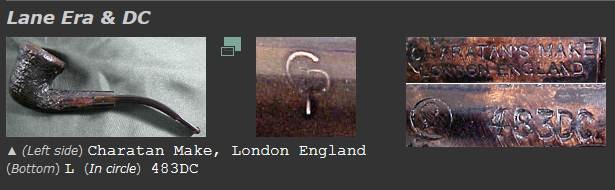
From this I am fairly certain I am dealing with a Lane pipe made after 1955. There is also a circle L script mark that is a Lane stampings on the pipe which also supports this.

I continued digging further into the dating of the pipe, but what I had found above was a good start for me. If some of you would like to try your hand at dating it more accurately as to the time period it came out you might want to check out the article on Pipedia on Dating Charatans (https://pipedia.org/wiki/Dating_of_Charatans).

I also reread the article on Pipedia by the Italian fellow who contributed some really helpful information on the brand (https://pipedia.org/wiki/Charatan_-_Milan_2014). I quote the section on the Second period: Reuben Charatan 1910 – c. 1962. I have highlighted a portion of the section on the shank in red to point out some more helpful dating information.

– In 1962 Herman Lane took over the business from the Charatan family, although he had already influenced production from the 1950s.

– The pipes were mostly larger than the previous ones and corresponded in size to Dunhill group 5. These are slightly less rare, but still difficult to find.

– Stem: Usually in ebonite, saddle shaped or tapered, bearing a fine “CP” stamp, underbore system (see below) used when necessary.

– Shank: The shape code is stamped on it together with the nomenclature “CHARATAN’S MAKE LONDON ENGLAND” arranged in two lines. From 1955 onward on the models marketed for the USA there is also a serif and circled capital “L” (but not all models bear this) which resembles the pound sterling symbol. The “L” is for Lane, the importer.

From 1958, Lane changed the nomenclature for models marketed for the US to clarify the message: “MADE BY HAND”.  In this period the underbore was introduced. Its manufacturing period ranged between 1920 and c.1930. This model was equipped with a duralumin plunger trap fitted in the stem, which served to clean the residue more easily. This particular model bore a special stamp on the stem, and also had its own catalogue…

QUALITY GRADES…The stem did not only display the stamps mentioned above. Another stamp that can help dating is the one referring to the quality of the pipe. Until Herman Lane arrived on the scene there were four quality grades. Starting with the lowest: Belvedere, Executive, Selected, and Supreme. Lane went on to add higher grades from time to time: Supreme S, Supreme S100, S150, S200, S250, S300, Coronation, Royal Achievement, Crown Achievement, and Summa Cum Laude; these last three are extremely rare and almost impossible to find. He also invented other, different grades, even changing the previous pipe classification standards. We will not go into detail here, but it means that if we find an S100 or Coronation the pipe was manufactured following Herman Lane’s acquisition. In particular, the FH mark, or Freehand pipe was commissioned to the famous Danish craftsman, Preben Holm.

Nomenclature – The Lane Trademark serif and circled L indicates the pipe is from the “Lane Era” (approx. 1955 to 1979 -1984?), however it appears that both the English factory or Lane themselves sometimes, or perhaps even often forget to stamp the L on a pipe. The Charatan factory was known for inconsistencies, especially in stampings. Therefore, although an L on the pipe definitely defines it as a Lane Era pipe, the lack of it could simply mean the pipe missed receiving the stamp from the factory. The lack of the trademark could also mean the pipe was destined for the European market.

Charatan pipes were not well distributed prior to the Lane Era, so very few pre-Lane pipes exist today. Herman Lane greatly grew the brand in the U.S., which caused corresponding growth in Europe.

Generally, when the pipe is stamped with the BLOCK letters “MADE BY HAND” it means the pipe was probably made between 1958 and 1965”

Generally, block letters “MADE BY HAND” and some of the other nomenclature in script (i.e. City of London or Extra Large next to the MADE BY HAND) means the pipe was made sometime between 1965 and the mid 1970s. The total script nomenclature “Made by Hand in City of London” evolved over this period of time, so many pipes had variants, such as Made By Hand in block letters and City of London in script, or some other variation of the terms or stampings.

It is believed the FH was used on Charatan pipes between 1957 and 1967-68. Three different sizes were used. The Charatan Logo (CP) on the pipe bit was changed over the year

Now I knew I was working on Lane pipe which actually means it was between 1955 and 1988 as shown by the stamping.

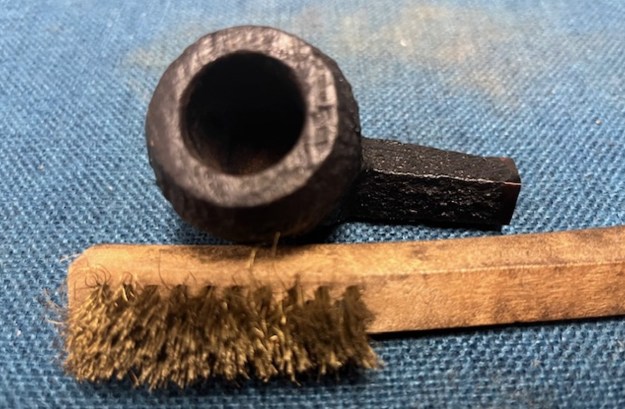
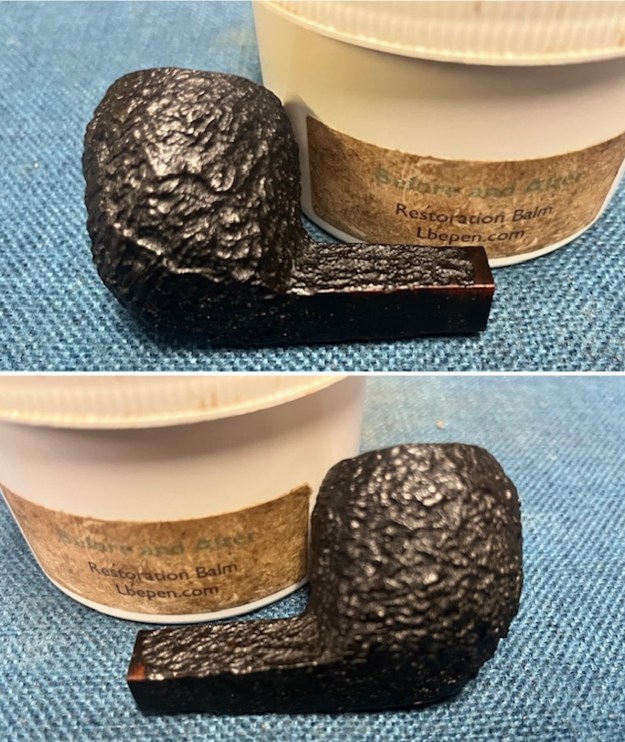
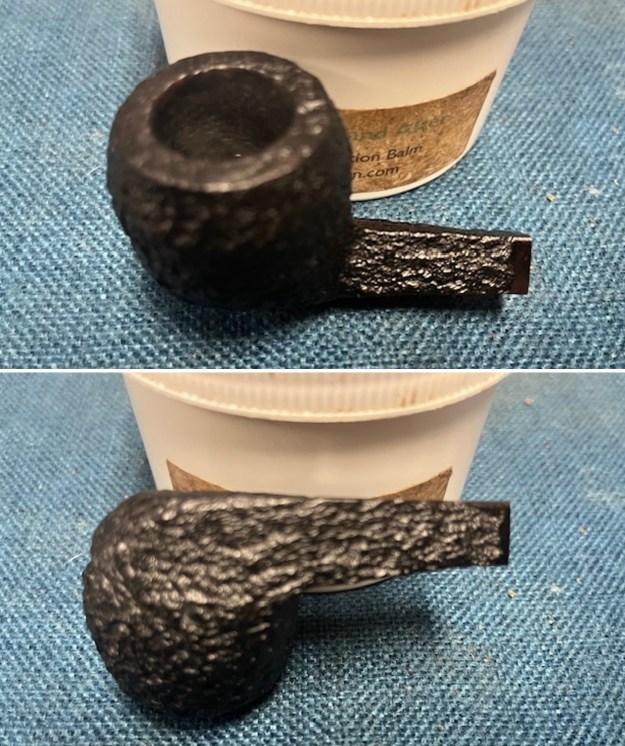
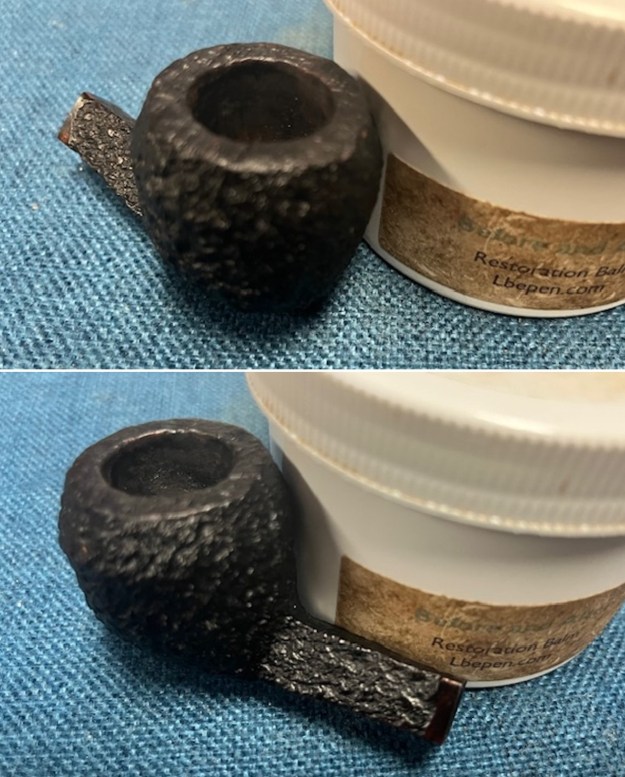
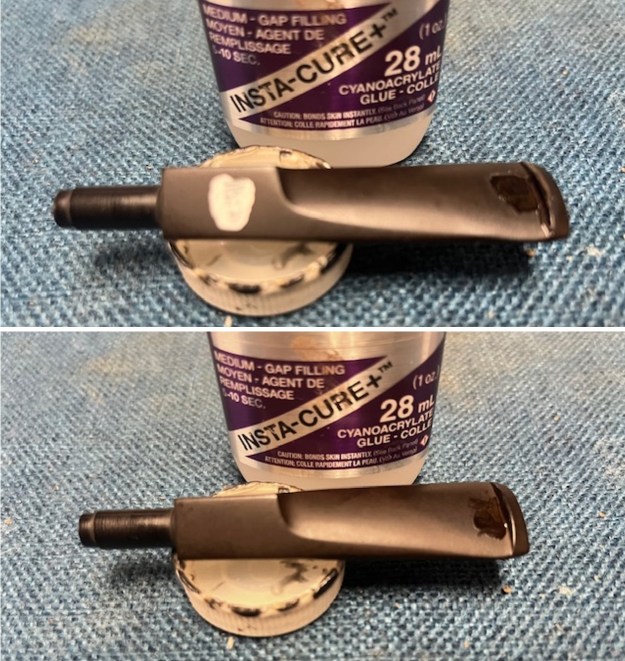
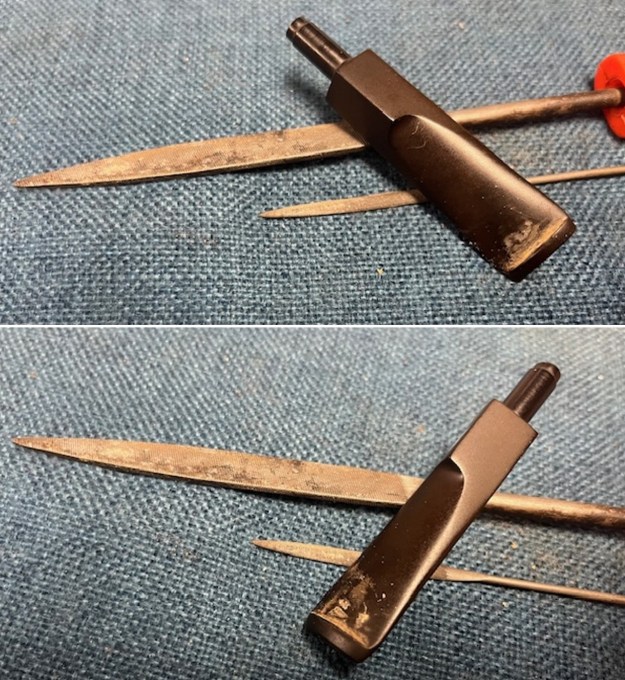
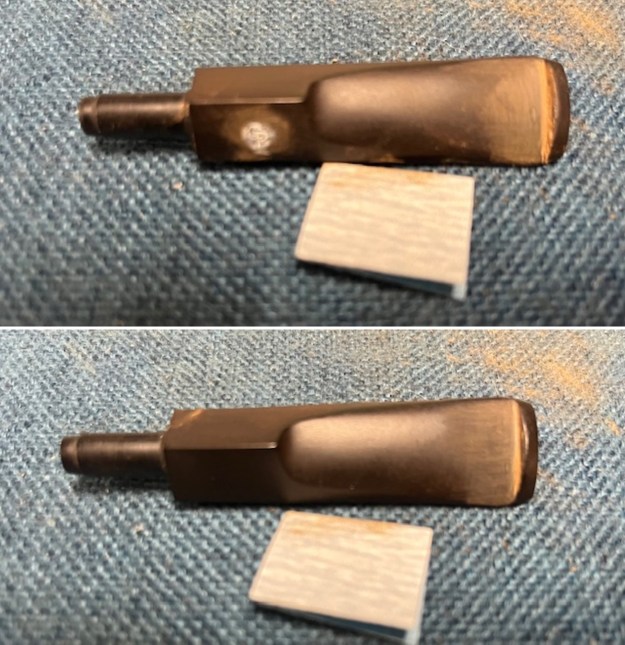
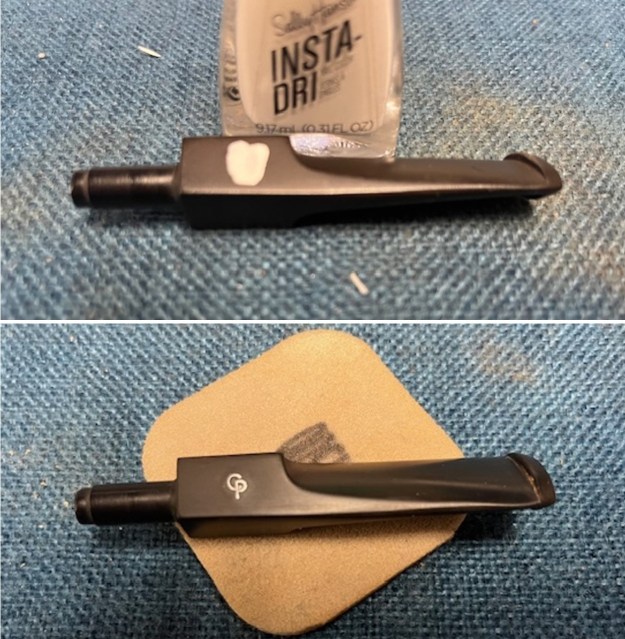
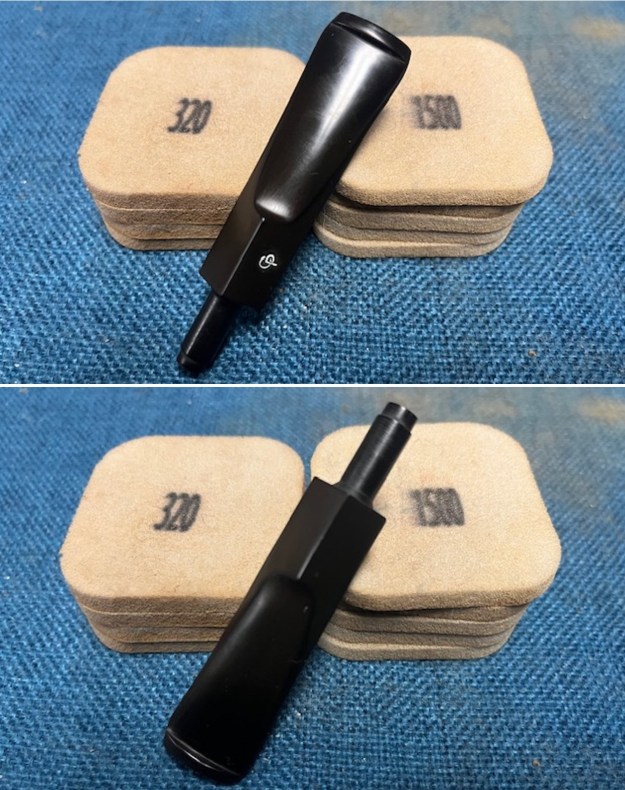
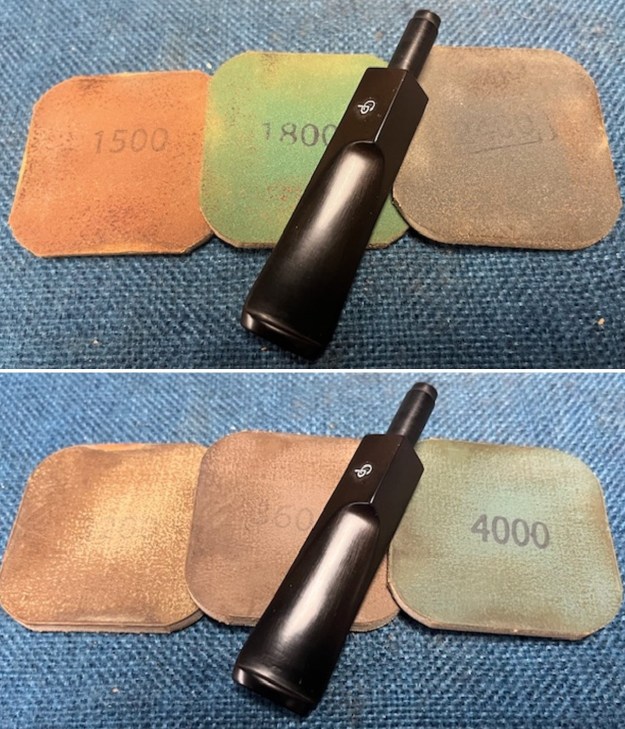
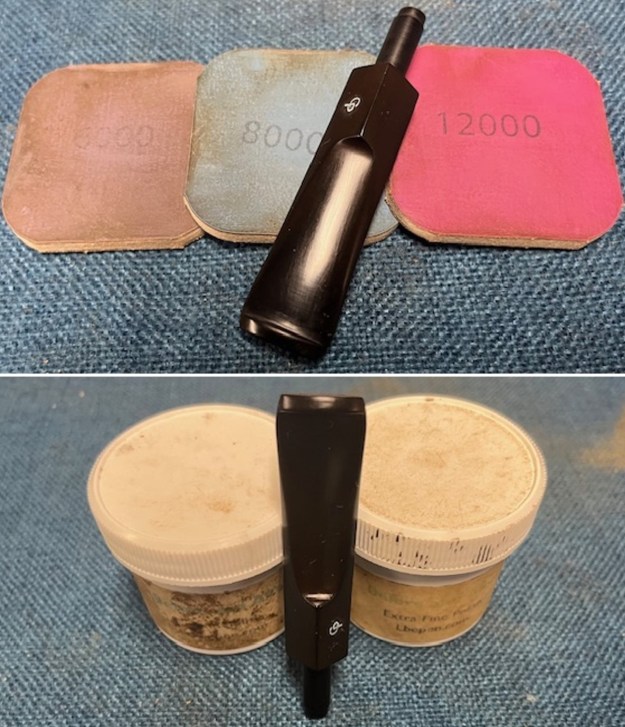
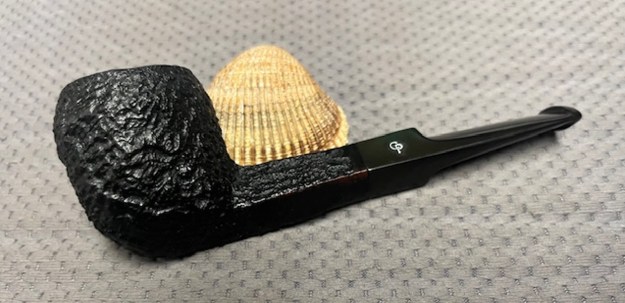
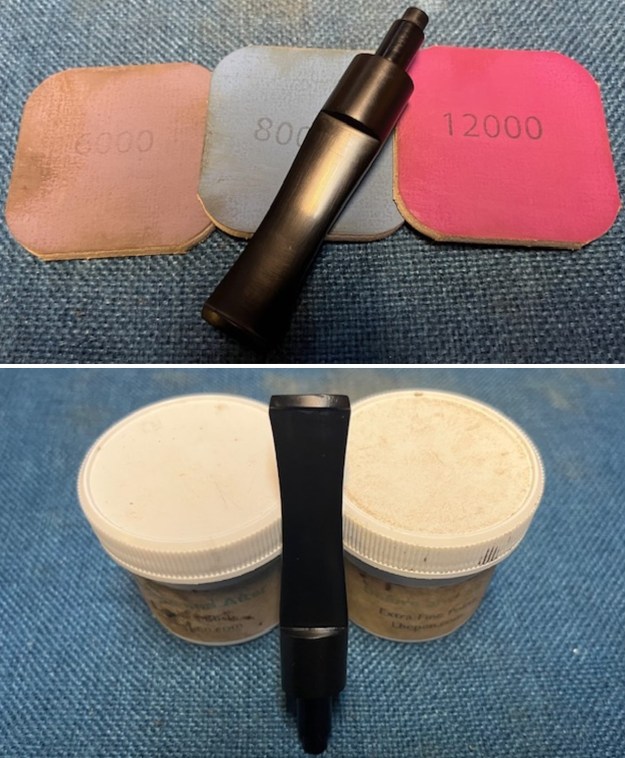
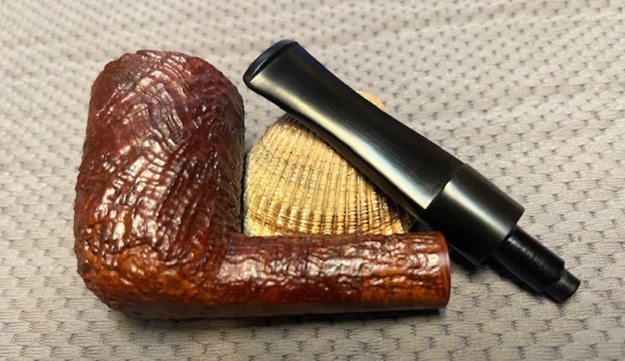
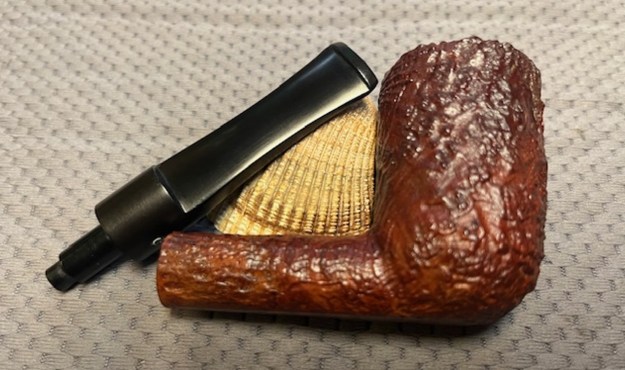
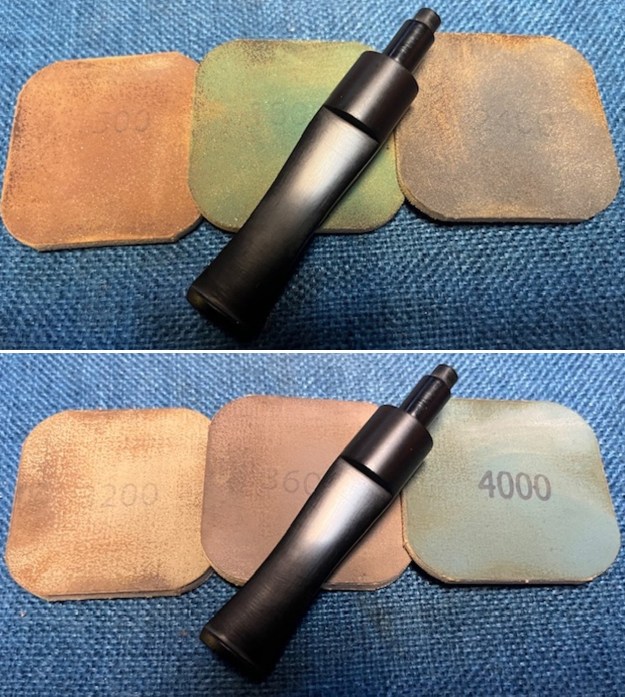
Armed with that information I turned to work on the pipe itself. Jeff had done a great job cleaning up the pipe as usual. He cleaned up the inside of the bowl with a Savinelli Fitsall Pipe Knife. The rim top and the inner edge of the bowl are in excellent condition. The bowl walls looked very good. He scrubbed the interior of the bowl and shank with shank brushes, pipe cleaners, cotton swabs and alcohol to remove the tars and oils. He scrubbed the exterior of the pipe with Murphy’s Oil Soap and a tooth brush to remove the grime from the finish. He scrubbed the inside of the stem with alcohol and pipe cleaners. He scrubbed the exterior with Soft Scrub and then soaked it in Briarville’s Pipe Stem Deoxidizer. He washed it off with warm water to remove the deoxidizer. The stem looked very good. I took photos of the pipe before I started working on it. I took close up photos of the bowl, rim top and stem to show how clean the pipe was. The bowl was clean and the rim top and the inner edge look beautiful. The stem was clean and showed light tooth marks or chatter.I took a photo of the stamping on the side of the shank. It is very clear and readable and read as noted above. I also removed the stem from the shank and took photos of the pipe to show the look of the parts. I worked some Before & After Restoration Balm into the briar with my finger tips and a shoe brush to get in the nooks and crannies of the sandblast. I let it sit on the bowl for 10 minutes and then buffed it off with a paper towel and soft cloth. The product is a great addition to the restoration work. It enlivens, enriches and protects the briar while giving it a deep glow. It is a product I use on every pipe I restore. I set the bowl aside and turned my attention to the stem. I touched up the Charatan logo CP stamp on the left side of the saddle stem with white acrylic fingernail polish. I scraped the excess when it had cured. I removed more of the excess with a worn 1500 grit micromesh sanding pad. It looked very good.It was ready for the next step. I polished it with micromesh sanding pads – dry sanding with 1500-12000 grit pads and wiping the surface down with Obsidian Oil after each sanding pad. It is really shining. I polished it further with Before & After Stem Polish – both Fine and Extra Fine. I gave it another coat of Obsidian Oil to finish this step. It was great to finish this Charatan’s Make 90X Saddle Stem Dublin. I put the pipe back together and buffed it with Blue Diamond on the buffing wheel. I gave the bowl multiple coats of carnauba wax. I buffed the pipe with a clean buffing pad to raise the shine. I hand buffed the pipe with a microfiber cloth to deepen the shine. It is fun to see what the polished bowl looks like with deep sandblast all around it. Added to that the polished black, vulcanite, saddle stem was beautiful. This Charatan’s Make 90X Dublin is great looking and the pipe feels great in my hand. It is light and well balanced. Have a look at it with the photos below. The dimensions are Length: 5 ½ inches, Height: 2 inches, Outside diameter of the bowl: 1 ½ inches, Chamber diameter: ¾ of an inch. The weight of the pipe is 42 grams/1.48 ounces. It is a beautiful pipe and one that will soon be on the rebornpipes store in the British Pipe Makers Section. If you want to add it to your collection let me know. Thanks for walking through the restoration with me as I worked over this pipe.

As always, I encourage your questions and comments as you read the blog. Thanks to each of you who are reading this blog. Remember we are not pipe owners; we are pipe men and women who hold our pipes in trust until they pass on into the trust of those who follow us.

Refurbishing An Inherited Charatan’s Make Deluxe “Special ‘S’ ”


Blog by Paresh Deshpande

The next pipe that caught my attention was a CHARATAN’S which was in one of the three very large boxes of pipes which I had inherited. Working on these inherited pipe is what I love the most because of the intrinsic connect I have with these pipes and the fact that once I pass away, these will be passed on to my kids as remembrance that their father had worked on restoring each of these vintage and priceless collection of pipes.

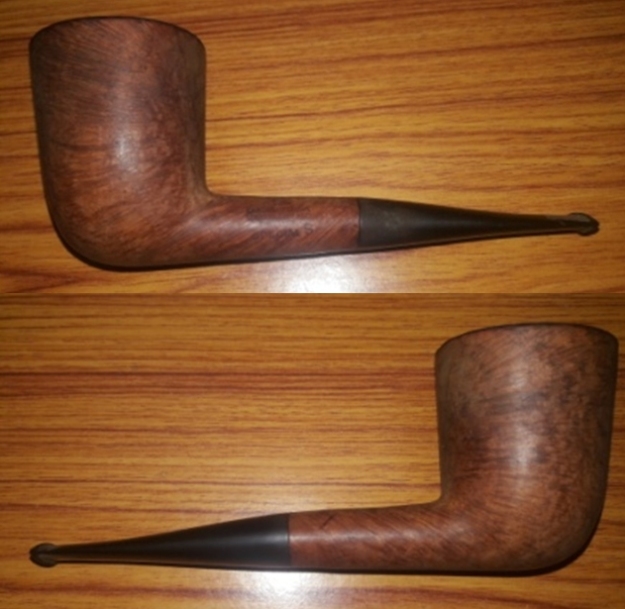
This Dublin had beautiful densely packed cross grains on the sides and also along the shank with some stunning bird’s eye grains to the front and back of the bowl. The bowl delicately flares up towards the rim top and together with the straight tapered vulcanite stem, lends this pipe a lovely Dublin shape with a charm and grace that can be seen on a well crafted pipe from this quality brand!! The overall large size of the pipe in general and the stummel in particular, lends this pipe a nice heft and fills up the palm nicely.The pipe is stamped as “CHARATAN’S MAKE” over “LONDON ENGLAND” over “DELUXE” over “SPECIAL” in block capital letters on the left side of the shank. It is also stamped with the letter “S” just forward of “SPECIAL” after letter L. The left side of the tapered stem is stamped with “CP” logo, with the lower half of the “C” embedded within the letter “P”. The stem logo is very delicate but crisp. The stampings on this pipe are crisp and easily readable. I searched Pipedia for more information about the brand and also to try and accurately date this pipe. Here is the link for the readers interested in history of Charatan’s and also in viewing a 1951 catalog (https://pipedia.org/wiki/Charatan).

In 1863 Frederick Charatan, a Russian / Jewish immigrant, opened a shop in Mansell Street, located in the borough of Tower Hamlets, London E1, where he began to carve Meerschaum pipes.

Charatan was the first brand to make entirely hand-made briars from the rough block to the finished pipe including the stems. The nomenclature “Charatan’s make” refers to this method of production and was meant to differ Charatan from other brands who “assembled” pipes from pre-drilled bowls and delivered mouthpieces.”

Here is another link from the same page which takes the readers to an absolutely well researched page on Dating of Charatan’s (https://pipedia.org/wiki/Dating_of_Charatans).

I have reproduced the relevant portions which had helped me in roughly dating this pipe.

The first step on dating a Charatan is to carefully look to some details:

  1. a) Shape of the mouthpiece
  2. b) Marking on the mouthpiece
  3. c) Engraving on the shank
  4. d) Shape and position of shank engraving/writing

This is because you can make the following conclusions:

  1. a) From 1863 to 1960 the mouthpieces have a normal shape, saddle or tapered. From 1961 they use the ‘Double Comfort’ style still used today. By the way there are some saddle bits (without the double comfort) used in pipes that date after 1960 but these models are always characterized by an X (in the place of the DC) engraved after the shape number on the shank. This means that if a pipe has a tapered mouthpiece instead of a double comfort one, it is definitely a pre-Lane pipe before 1960. While if a pipe has a normal saddle bit stem, it could belong to every era. Nevertheless the pipe is pre 1961 if the shape code does not include an X, and is a pipe from after 1960 if the X is engraved.
    Finally any pipe with the double comfort stem is definitely after 1960.
  2. b) The CP logo on the stem is stamped in a different shape according the era it was used. Some differences are less obvious than others; however the glaring differences are detectable in 4 phases. The CP till the 1960 is very fine, the C penetrates the P.

From 1961 to 1977 the CP logo is more pronounced and the C penetrates the P.

I visited rebornpipes for clarification on the following issues which did not find mention on pipedia.org:

(a) The lack of shape code on this pipe.

(b)  Grading/ hierarchy of this pipe in the line of Charatan’s offering. The relation between “DELUXE” and “SPECIAL” also did not find any explanation on pipedia.org.

(c) Lastly, the significance of the letter “S”!

There is a very informative article that Steve had re-blogged on Charatan’s Models & Shape Information for the Collector. Here is the link for this article; (https://rebornpipes.com/2018/08/22/charatan-models-shape-information-for-the-collector/).

I have reproduced relevant information from the above link

Charatan’s make “Apprenticeship” standard shape grades
Special
Relief Grain (tan)
Relief Grain (dark)
Belvedere
Perfection  

From the above information, I assume that this particular piece dates from prior to 1960. The reason why I am not sure is that there is no shape code anywhere on the shank and the presence of the letter “S” without numerals 100, 200 etcetera, finds no explanation in all the eras that I read through. The stamp of “DELUXE” finds no explanation anywhere that I had searched. Well, the grey areas with respect to dating and grading this piece are too many and as always, may I request our esteemed readers to share any information that they have for the benefit of our piper community.

INITIAL VISUAL INSPECTION
The bowl is heavily caked with an equally heavy overflow of lava on to the rim top. The rim top surface has darkened   considerably. The inner and outer rim edges appear to be damaged with a number of dents, dings and chipped edges, caused probably by banging the rim top against a hard surface to rid the chamber of all the dottle. The internal condition of the bowl can only be ascertained after the process of reaming is completed.The stummel and the shank are covered in grime and dust from years of use and subsequent storage, giving it a dull and a lackluster appearance. The stummel surface has taken on a nice patina which I intend to preserve. Through all the dirt and grime, beautiful bird’s eye grains peek out from the front and back of the stummel while tightly packed cross grains are seen to the sides and over the shank. A nice clean and polish will further accentuate this play of grains over the stummel surface. Air did not flow easily through the pipe and required some lung power to do so. The mortise is clogged with oils, tars and grime of all the yesteryear. This needs to be cleaned out.The stem is tapered vulcanite that is heavily oxidized. Heavy calcification can be seen on either stem surfaces in the bite zone. Apart from the calcification, both the upper and lower surfaces has a mysterious grey black patch extending for about an inch from the button edge. This, I suppose, would have to be some sort of a repair patch. Well, I shall get a closer look at it during the process of stem repairs. The horizontal slot and the tenon end are clogged with residual oils and tars and gunk, making air flow through the stem, laborious.All said and done, this pipe is in great condition given its appreciated age and the ruthless handling that it had survived at my grand old man’s hands. The large size, perfect heft, beautiful grains and the mysteriousness that surrounds its stamping, makes for an interesting project.

INITIAL CLEANING BY ABHA…
The initial cleaning on this pipe was done by Abha, my wife (she has cleaned up around 40-50 pipes and these have now reached me for further restoration). She reamed out the complete cake and further smoothened out the chamber walls with a folded piece of 220 grit sand paper. She further cleaned out the internals of the shank with pipe cleaners and alcohol and cotton buds. She followed the internal cleaning of the shank with external cleaning of the stummel using Murphy’s Oil soap and hard bristled tooth brush and dried it with paper napkins and cotton cloth.

Next she cleaned out the internals of the stem air way and immersed it in “Before and After Deoxidizer” solution along with the stem of other pipes in line for restoration. Once the stem had soaked overnight, she cleaned the stem under running warm water and scrubbed the raised oxidation from the stem surface using Scotch Brite pad. She further removed the oxidation by scrubbing the stem with 0000 grade steel wool and applied a little olive oil to rehydrate the stem. This time around she clicked a few pictures of the processes… ONCE THE PIPE IS ON MY WORK TABLE…
The cleaned up pipes presents a very clear picture of what needs to be done to restore this pipe to a pristine and smoke worthy condition. I really cannot thank Abha, my wife, enough for all the help and support that she extends me in my pursuance of this hobby. A clean pipe also helps in clearly identifying the work that would be required to restore a pipe. The pictures shows the condition of the pipe when it reached me after being cleaned. The stummel is solid without any flaws or fills. There are no dents or dings or chips to the stummel surface. The briar has taken on a nice deep colored patina which I shall endeavor to preserve. A nice polish and the beautiful grains should pop out and be on display in all their glory. The briar feels really solid and of high quality and the craftsmanship is also top notch. The smooth rim top surface is where the maximum damage is on this pipe. The outer rim edge is peppered all around with dents and dings and chipped edges. However, the damage to the outer edges in a 6 o’clock and 12 o’clock directions (both enclosed in red circles) is the most severe. The inner edge is also not spared of similar damage which is most severe in the 6 o’clock and 9 o’ clock directions. The rim top surface has considerably darkened around the inner edge; however, thankfully it is not charred. These issues will need to be attended to. The chamber has strong ghost smells. The thick chamber walls are solid without any signs of damage. The mortise and shank internals are also nice and clean now. The seating of the stem tenon into the mortise is snug and sits flush with the shank end.The oxidation on the tapered vulcanite stem has been removed, thanks to all the efforts put in by Abha. The slot, tenon end and stem internals are all clean and fresh. The large patch of grey on either surfaces of the stem is the only eyesore on this high quality vulcanite stem. If these are repair patches, then I must concede that though they are not aesthetically pleasing to the eye they are but rock solid!! I intend to sand them down to the vulcanite surface and if damaged, repair it using mix of activated charcoal and clear CA superglue which blends perfectly in to the surrounding stem surface.THE PROCESS
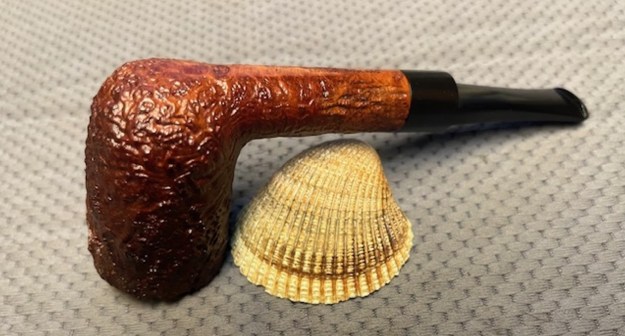
I start the refurbishing of this pipe with the stem repairs. With a folded piece of 220 grit sand paper, I sand down the grey patch from either surfaces of the stem. True enough, as anticipated, the bottom of the patch revealed a hole at the button edge. My guess is that it had been a through hole as a similar hole was revealed on the lower stem surface too.While I was sanding the patch, simultaneously, I worked the entire stem surface with the same piece of sand paper. I was very diligent and careful with the sanding around the stem logo. I further sand the entire stem with a 0000 grade steel wool. This helps to even out the deep scratches caused by the coarser grit sand paper. I wipe the stem with Murphy’s Oil soap on a cotton swab. This helps to clean the surface of all the dust and loosened residual oxidation from the stem surface. Once the stem surface is ice clean and dry, I insert a regular pipe cleaner coated in petroleum jelly through the slot end in to the airway. This prevents the glue from seeping into the airway and blocking it while helping in the smooth extraction of the pipe cleaner once the mix has cured. Thereafter, I mix a small quantity of activated charcoal and superglue and apply it over the holes and set the stem aside to cure. With the stem fill set aside to cure, I decide to address the issues on the stummel surface. I start by addressing the rim top surface damage. I top the rim on a piece of 220 grit sand paper, checking frequently till I am satisfied that the darkened surface is addressed to a great extent and the rim top surface is nice, smooth and even. The inner and outer edges are still uneven, though much better than before topping, and shall be addressed subsequently. The following pictures show the progress being made and improvements to the inner and outer rim edges. At this stage in refurbishing, I realize that the odors from the chamber are still strong and hence decide to address the issue of ghost smells by subjecting the chamber to a salt and alcohol bath. I wrap some cotton around a folded regular pipe cleaner, keeping the tip of the pipe cleaner free of wrapped cotton as this would be inserted through the draught hole in to the chamber. This would form the wick for the shank. I tightly pack the chamber with cotton balls and fill it with 99% pure isopropyl alcohol using a syringe and set it aside. By next day, the cotton and alcohol had drawn out the tars and oils from the chamber and max from the shank. With tools at my disposal, I scrap out the entire loosened gunk from the mortise and the airway leading to the draught hole. The stummel now smells fresh and is thoroughly clean. With a folded piece of a 220 grit sand paper pinched between my thumb and forefinger, I create a slight bevel on the inner and outer edges of the rim top surface. This helps to mask and address the minor dents and dings that had remained on the rim edges after topping. I am careful so as not to alter the profile of the stummel by excessive topping or creation of the bevels. I am pretty pleased with the appearance of the rim top and edges at this stage. This is followed up with the micromesh polishing cycle. I dry sand the stummel going through with 1500 to 12000 grit pads. I wipe the stummel with a moist cloth after every three pads as this helps firstly, to remove the sanded dust and secondly, gives an idea of the progress being made and areas which need more attention. The stummel has taken a beautiful sheen and looks good. Discerning readers must have noted that I did not sand the stummel surface with a sand paper and have resorted to dry sanding with the micromesh pads. This is done so as to maintain the old patina which I want to preserve. I rub some “Before and After” restoration balm over the stummel surface with my fingers. This product has been developed by Mark Hoover and it helps to enrich and enliven the briar. For me it is an absolute “must have” item in my list of items for pipe restorations. I rub this balm in to the briar and set it aside for some time. The transformation is almost immediate and the stummel positively looks amazing. With the stummel nearly completed, I turn my attention back to the stem. The fill has cured nicely and with a flat head needle file, I sand the fill to achieve a rough match with the surrounding surface. To achieve a perfect match, I sand the stem with a 220 grit paper, progressively moving to 600 and 800 grit sand papers. As expected, a clean and neat looking stem stared back at me. I rub a little Extra Virgin Olive oil into the stem surface to hydrate it and set it aside to be absorbed in to the vulcanite. Unfortunately, I missed out on taking pictures of this step. Suffice to say, I am very happy with the blending of the fill with the rest of the stem surface. I highlight the stem logo by filling it with a whitener pen and once it has dried, I carefully wipe out the excess with a cloth. The logo is now crisp and prominent.I finish the stem reconstruction by polishing the stem with micromesh pads, wet sanding with 1500 to 12000 grit pads. I apply a small quantity of Extra Virgin Olive oil to the vulcanite stem and rub some “Before and After” restoration balm before setting it aside.To apply the finishing touches to the pipe, I mount a cotton cloth buffing wheel on to my hand held rotary tool and apply a coat of Blue Diamond to the stummel and the stem to polish out the minor scratches. With a cotton buffing wheel that I use for carnauba wax, I apply a coat of carnauba wax and continue to work on it till the complete coat of wax had been polished out. I mount a clean cotton cloth buffing wheel and give the entire pipe a once over buff. I finish the restoration by giving the entire pipe a rigorous hand buffing using a microfiber cloth to raise the shine further. The finished pipe looks beautiful and is ready to join my collection of the British pipes that I have inherited. The finished pipe looks robust yet elegant, the pictures speaking for themselves. P.S. First, this pipe bears some of the strangest stampings that I have come across on a Charatan’s to date. The absence of shape code, presence of both Deluxe and Special stamping and the letter S without any numeral like 100, 200 etc is truly baffling. I would be singularly thankful if any of the esteemed readers can shed some light over this aspect.
Thanks to all readers of rebornpipes who have spared a moment of their invaluable time in reading through this write up and as is always, your suggestions and advice are always welcome as this would not only help me but may also help the new pursuers of this art.