
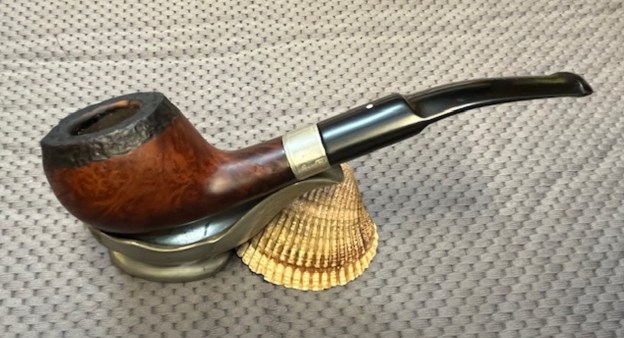
by Steve Laug
Earlier this month I received an email from Kathleen regarding one more Calich pipe for her husband. Here is here email.
… another abused Calich pipe that he had shamefully squirrelled away…
…About the poor abused Calich… a lovely pipe but he has two torch burned damage areas on a rusticated band around the top of the bowl… it might make more sense to cut it down below the rusticated band but I absolutely defer to your wisdom in the matter.
All Calich pipes deserve to be saved. — Kathleen
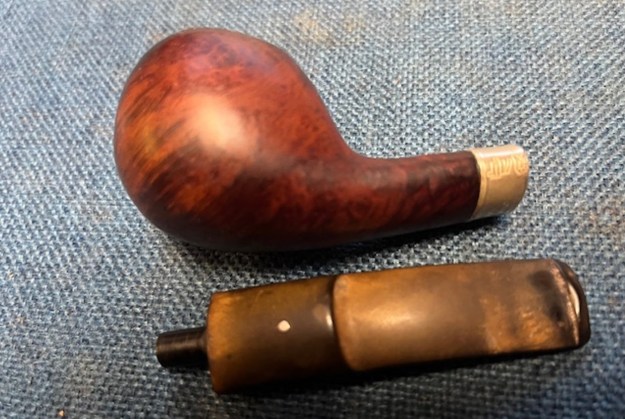
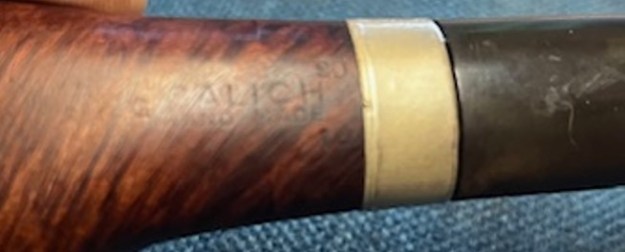
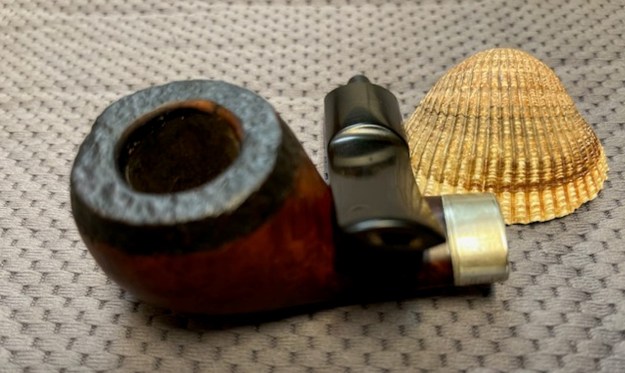
I agreed with her and I replied to Kathleen and invited her to send the pipes to me in Vancouver. They arrived just this week. I put on the Billie Holiday Disc and went through the package. Next to the four CDs there was a carefully bubble wrap bag with a pipe inside. It is by far the worst of the damaged pipes that I have worked on for this fellow. This one is an oval shanked apple shape pipe. It is stamped on the underside of the shank and read G followed by CALICH [over] Hand Made [over] 10 and above that 90. The rim top and the first ¼ down is rusticated in typical Calich style. The rest of the bowl was smooth as was the shank. The pipe had a very thick cake in the bowl and there was a lava overflow and burn damage on the top. There was some major burn damage under the lava on the mid-front edge of the bowl as well as a deep burned area on the left side toward the back of the left side. The burn marks on both were like a large bite out of the briar as can be seen in the photos. The shank had a thick coat of tars and oils and the stem had a thick tar build up as well so its fit in the shank was very sticky and dirty. The saddle stem itself is vulcanite with a single silver dot on the topside. It was heavily oxidized and had light tooth marks and chatter on both sides of the stem just ahead of the button. There were overflowing tars on the smooth shank end around the fit of the tenon in the mortise. There was a nickel repair band on the shank end that was oxidized and looking at the shank end there were some cracks in the shank. The finish was very dirty and oily but the grain I could see through the grime and tars appeared to be quite nice. A lot would be revealed once I had cleaned it. I took photos of the pipe before I started my cleanup work. 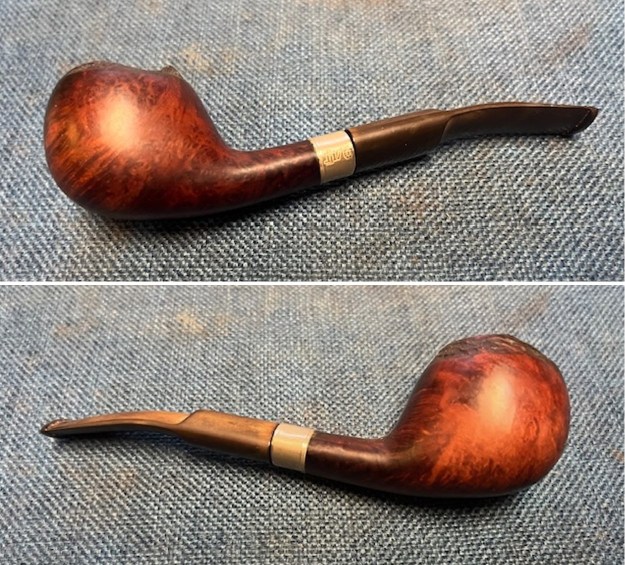
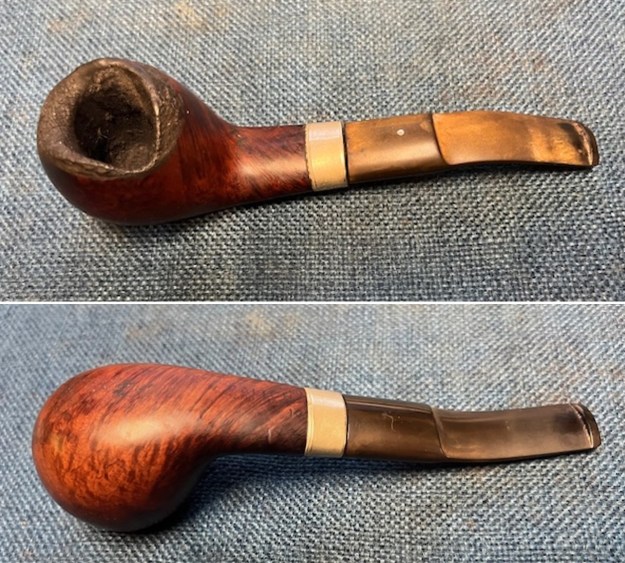 I took a close-up photo of the bowl and rim top to show its condition. The inside of the bowl was heavily caked with a wet, oily tars up the sides and over the rim top. The rim top had damage on the front and on the back-left side. It is the worst as it is quite thin and is like a deep bite mark down the sides of the bowl. It left a mess for me to clean up. The stem was also is a mess. There was some light tooth marks and chatter on the top and underside ahead of the button. There was a thick coat of calcification and oxidation on the stem. The silver dot on the stem top was tarnished but very visible. I took a photo of the bowl with the stem removed to show the look of the pipe.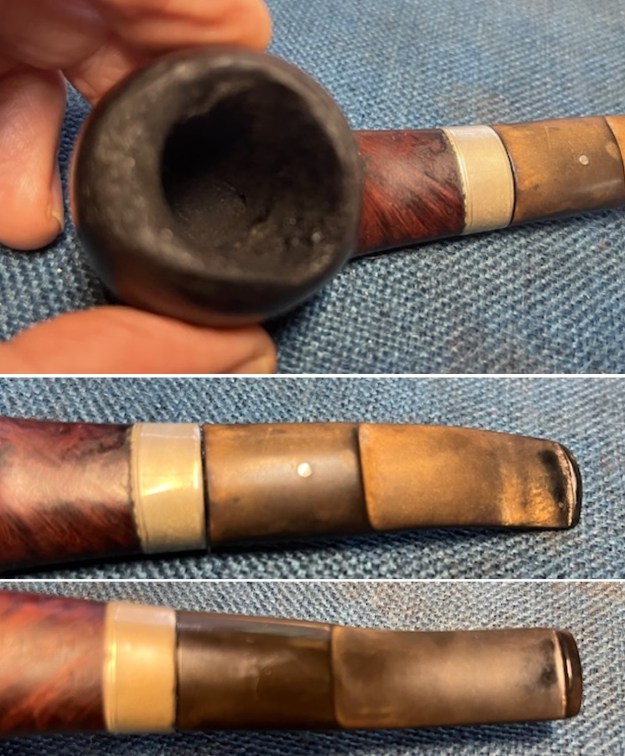
 I took a photo of the stamping on the underside of the shank. It is clear and readable as noted above.
  I am once again including information about John Calich the pipemaker as I have loved John Calich’s pipes for over 25 years now and have collected a few of them. I have restored quite a few of them and written blogs about them that can be read if you are interested in seeing the kind of pipes that John made. They are unique and beautiful. Each of his pipes are a work of art to me. I am including the links to the previous blogs that have written about his pipes.
https://rebornpipes.com/2015/03/03/one-of-my-john-calich-pipes-a-calich-ee-billiard/
https://rebornpipes.com/2019/01/23/i-am-the-happy-owner-of-an-unsmoked-pipe-by-the-late-john-calich/
https://rebornpipes.com/2015/03/03/one-of-my-john-calich-pipes-a-calich-ee-billiard/
https://rebornpipes.com/2014/03/21/reflecting-on-my-collection-of-john-calich-pipes/
Each of the blogs reflects on John’s pipes if you want to get a feel for them take a few minutes and read them.
When John was living I spoke with him several times via phone and had him make some new stems for some of his pipes that I picked up off eBay. He was a very kind gentleman and was always helpful when I spoke with him. He was always ready with encouragement and when I needed to know how to do something when I was first learning to repair pipes he was willing to help. He was one of the old guard of Canadian Pipe makers. I miss him. I am including a short piece from Pipedia on John to give details on his work and the grading of his pipes. The second paragraph below is highlighted in blue as it gives some information on the Grade 10 Apple that I am working on with the single silver dot now. I am also including a photo of John Calich, courtesy Doug Valitchka
 John Calich was one of Canada’s finest carvers. He died in July 2008. John was a full-time pipe maker for the last 40 years. Calich pipes were mostly traditional shapes. His signature style is rustication and smooth on the same pipe along with his unique skill to stain a pipe in contrasting colors. He used only top-quality Grecian and Calabrian briar. The mouthpieces are hand finished Vulcanite “A”. Each pipe was entirely made by hand. John Calich was featured in the summer 2005 issue of Pipes & Tobacco.
His pipes are graded 3E – 7E. Retail prices range from$ 145.00 to $ 500.00 Each pipe is stamped “CALICH” 3-8E, his earlier pipes were graded from 3-14, and a single, tiny silver dot is applied to the top of the stem (https://pipedia.org/wiki/Calich).
I summarize the dating information from those blogs now: From my research and conversations I learned that John’s later pipes were graded 3E – 8E. The retail prices for them ranged from $145.00 to $500.00. Each pipe was stamped “CALICH” and given an E grade. His earlier pipes were graded from 3-14 and had a single, tiny silver dot applied to the top of the stem. More information can be found at the Pipedia article above. All of this information told me as expected that the pipe I had was an earlier one.
Armed with the information about John’s grading system I knew that the pipe in hand was an earlier Calich Hand Made Grade 10 Oval Shank Apple pipe and the 90 told me it was made in 1990. Now it was time to work on the pipe. I reamed the bowl with a PipNet reamer using the 2 and 3rd cutting heads to remove the cake back to bare briar. I cleaned up the reaming with a Savinelli Fitsall Pipe Knife to scrape back the remaining cake. I sanded the bowl with some 220 grit sandpaper wrapped around a piece of dowel to smooth out the walls of the bowl.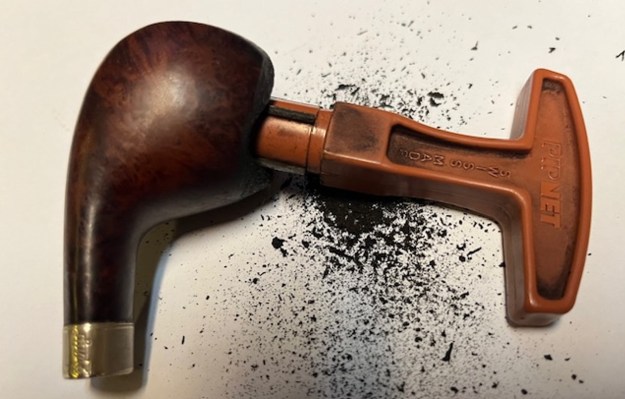
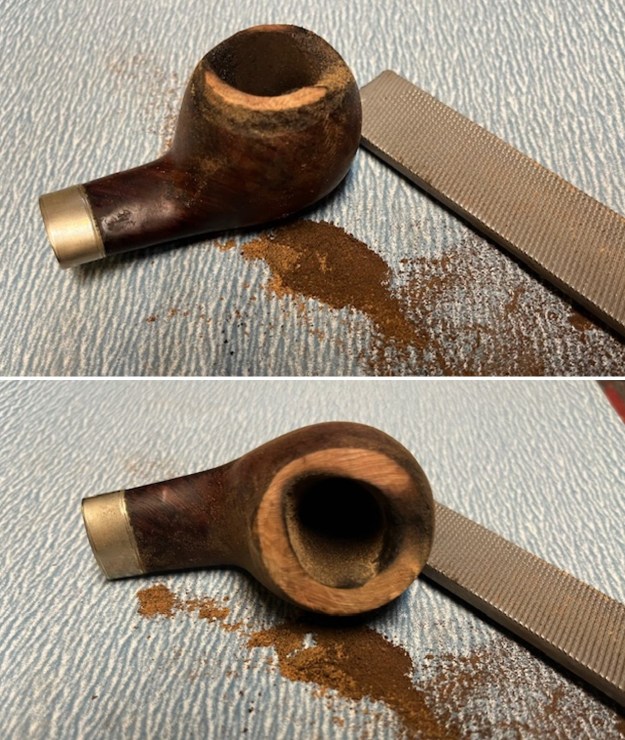
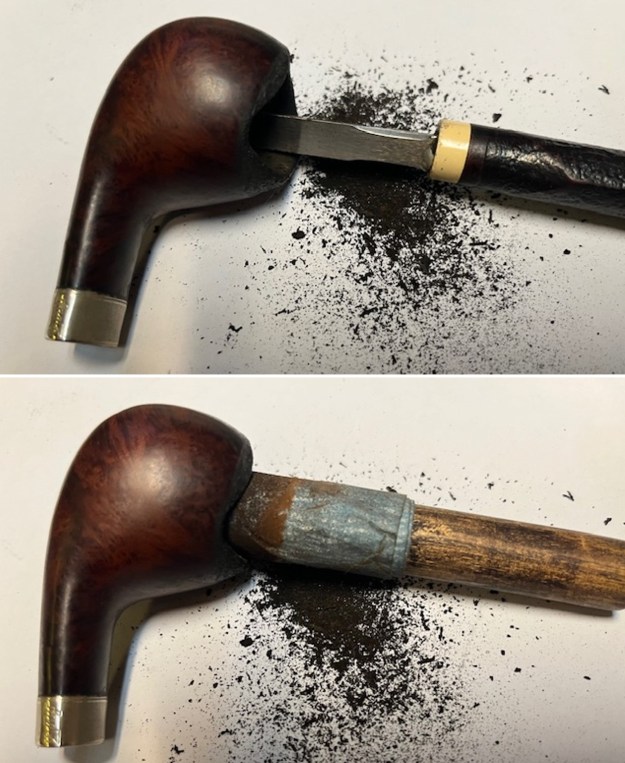 Once it was clean I turned my attention to the rim top. There was so much damage to the rim top that I decided to use Kathleen’s suggestion and trim off the damaged areas. I flattened out the damaged areas with a wood rasp to take it down so the sides were even. I used a Dremel and sanding drum to even it out and then topped the bowl with 220 grit sandpaper on a topping board to give the rim top a smooth surface. It looked better but the inner edge is rough on the left side and the outer edge is bad on the front side.
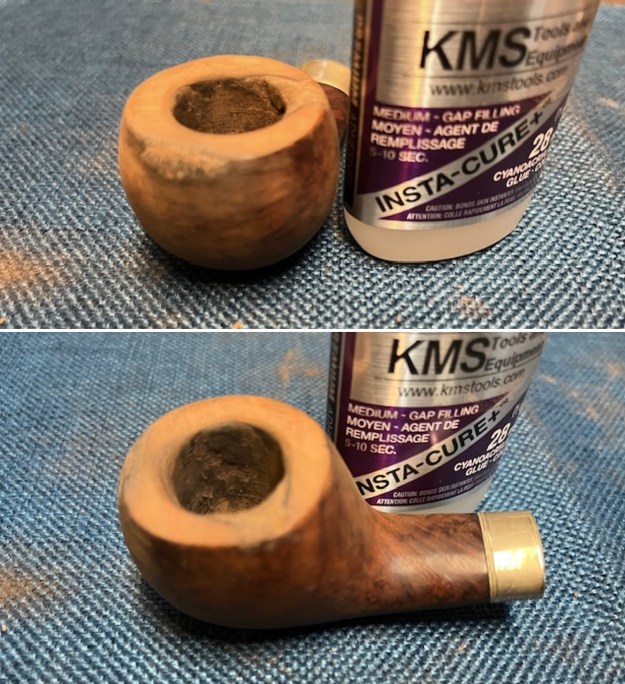
 I built up the outer edge damaged area on the front of the bowl with clear CA glue and briar dust. I did the same on the left side inner edge and rim top. Once finished it really looked like a mess.
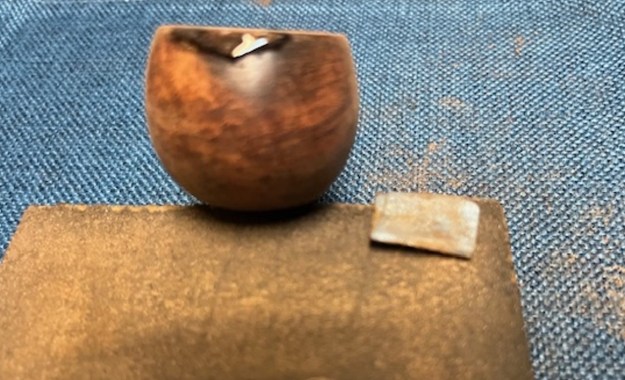
 I used a folded piece of 220 grit sandpaper and a medium grit sanding sponge to flatten the repaired areas on the exterior of the bowl. I also used the folded 220 sandpaper to smooth out the inner edge a bit. Later I would do a better job on that but I was just trying smooth it out for the next step.
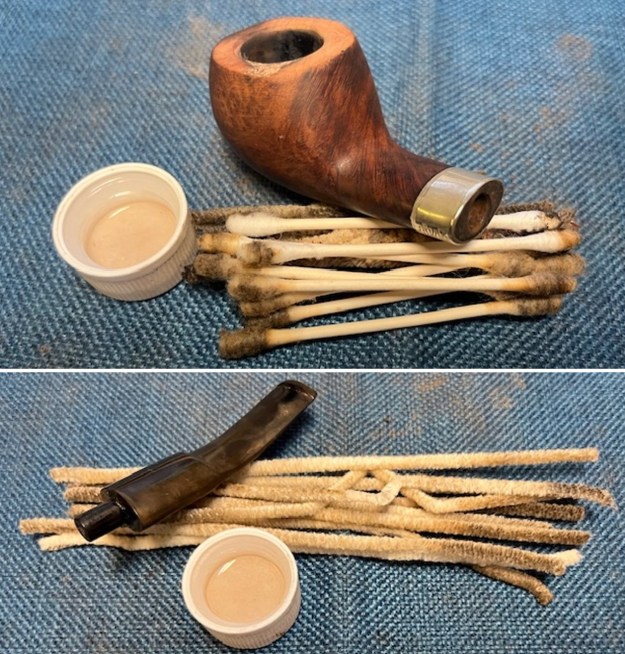
 I scraped the shank with a penknife to remove the thick build up of tar and oil. The knife let me take it back to the briar without damaging the walls of the shank and mortise. I scrubbed the inside of the mortise, shank and airway in the shank and stem with alcohol, cotton swabs and pipe cleaners.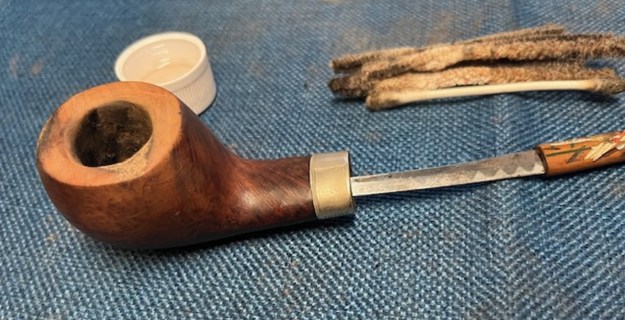
 Before I called it a day I stuffed the bowl with three cotton bolls until it was almost even with the rim top. I used a rolled cotton boll to plug the shank end. I used an ear syringe to fill the bowl with isopropyl alcohol. I set it aside in a pipe rest to let the alcohol leach out the oils into the cotton. I turned out the lights and let is sit overnight. In the morning I turned on the lights and this is what I found. The cotton was a dark brown both in the bowl and shank end. I removed it and took photos of the cotton with the tars.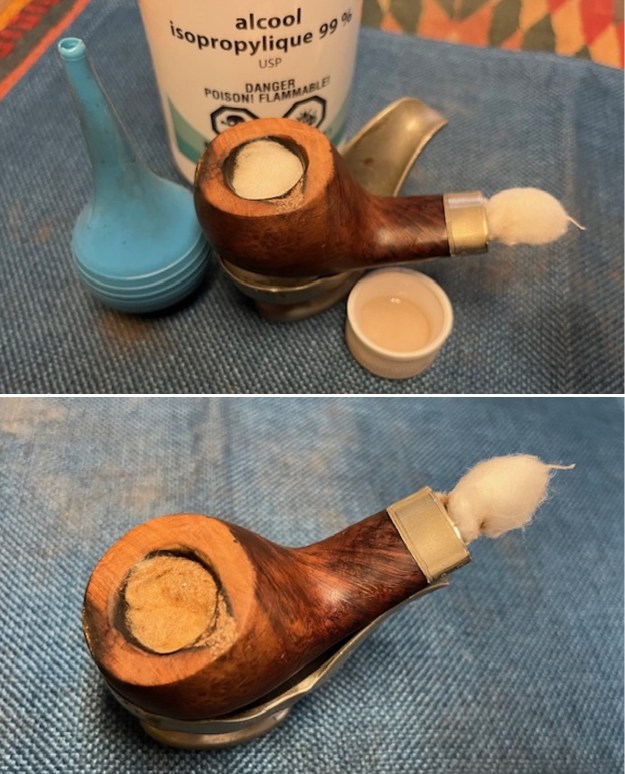
 I used a piece of 220 grit sandpaper and a wooden sphere to give the inner edge of the bowl a bevel. Once it was finished it looked much better. Last evening I had come to a decision to rusticate the rim top and down the bowl side about ¼ inch around the sides. But to start I wanted it smooth.
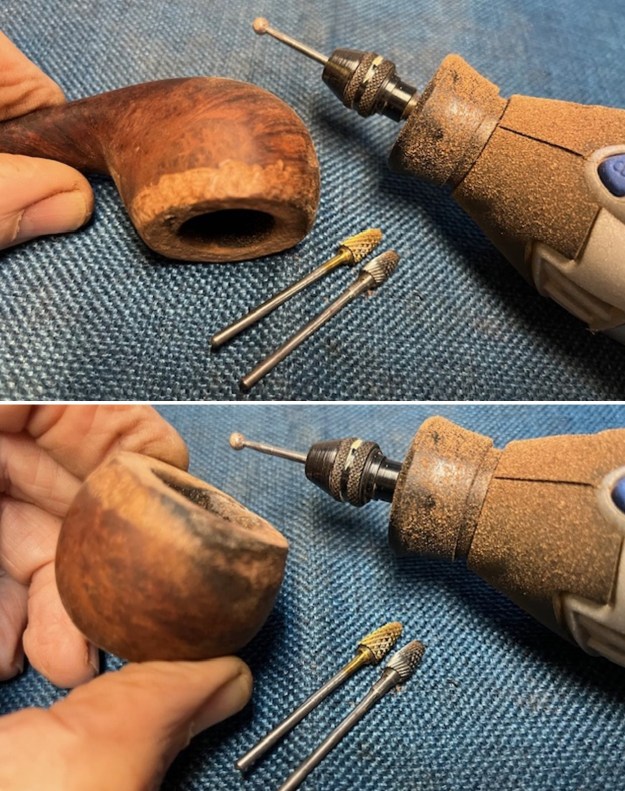
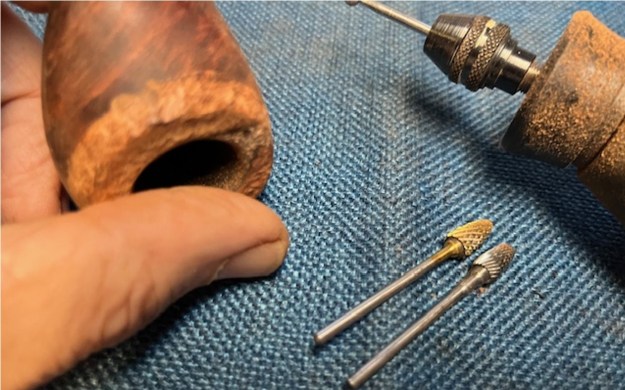
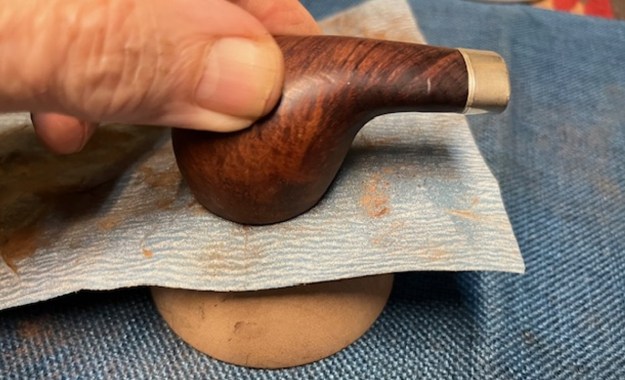 With the rim top smooth I used a series of burrs on my Dremel to rusticate the surface of the bowl and edge. It began to take on shape.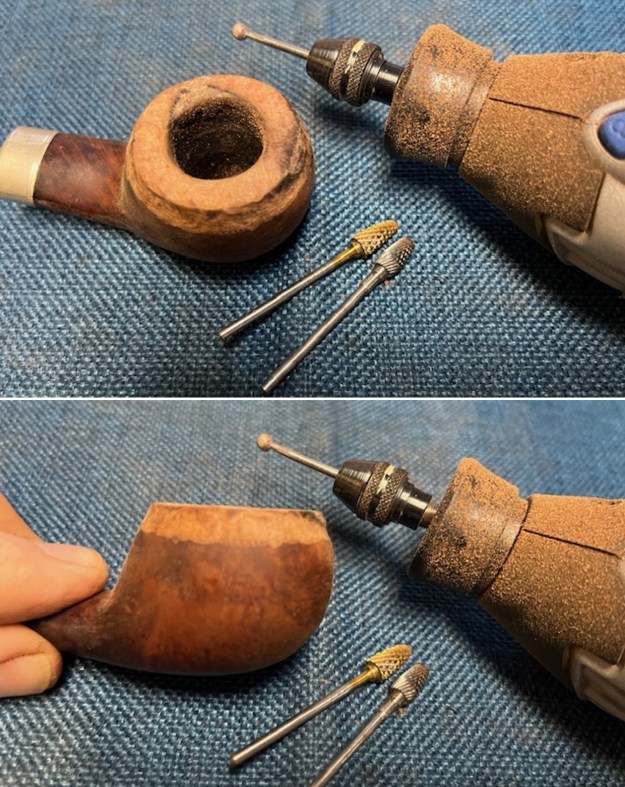
 I used a black stain pen to stain the rusticated portion of the bowl and rim top. The rustication was very similar to what I have seen on a lot of Calich pipes. The contrast was going to be nice once I finished working on the smooth portion of the bowl.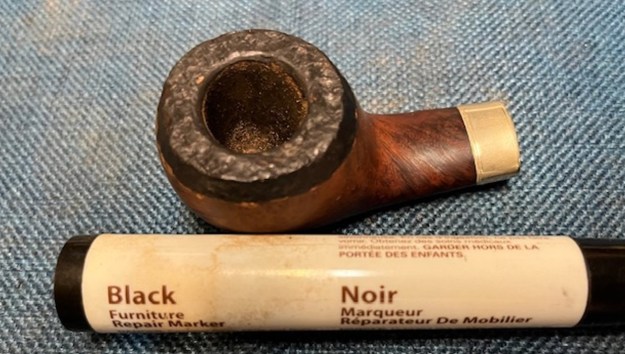
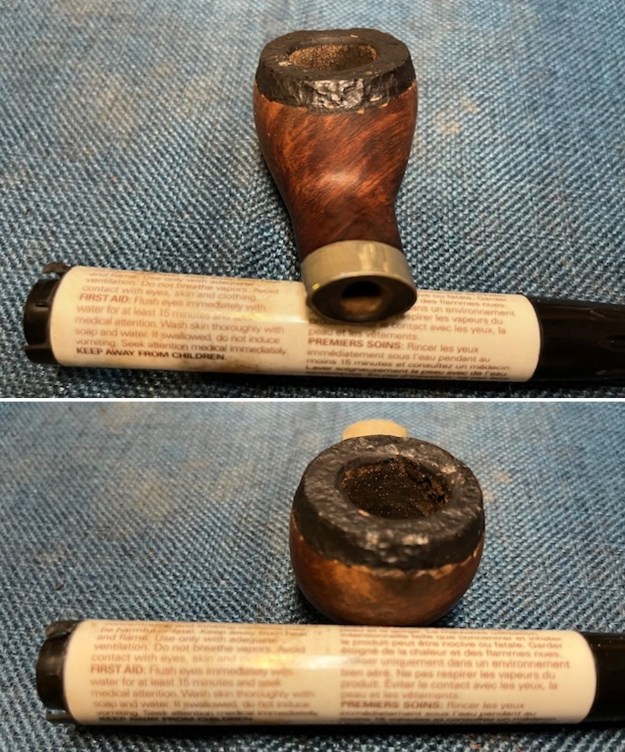 I worked over the rustication with a brass bristle wire brush to clean off the burrs and debris on the rustication. Once I knocked it off I took photos of it to show the look of the bowl at this point.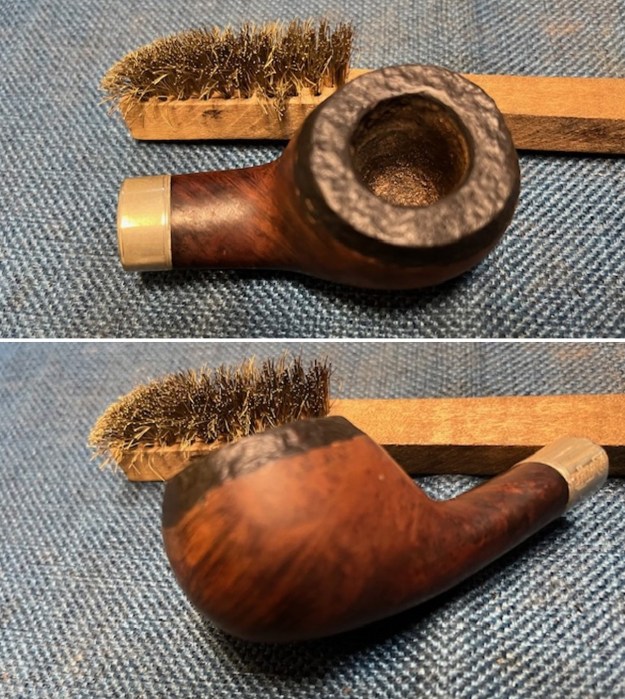
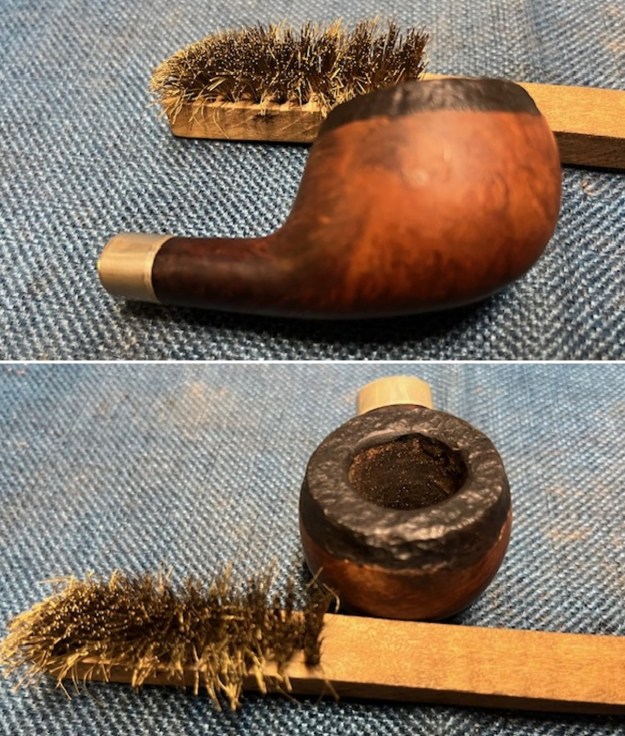 I polished the smooth bowl sides and shank with micromesh sanding pads – dry sanding with 1500-12000 grit sanding pads. I wiped it down with a damp cloth after each pad. It looked very good with the rusticated portions.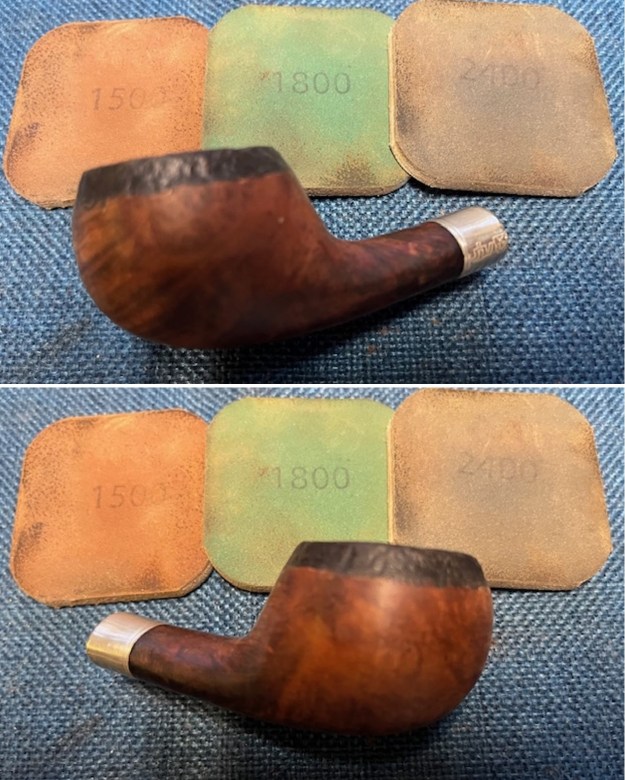
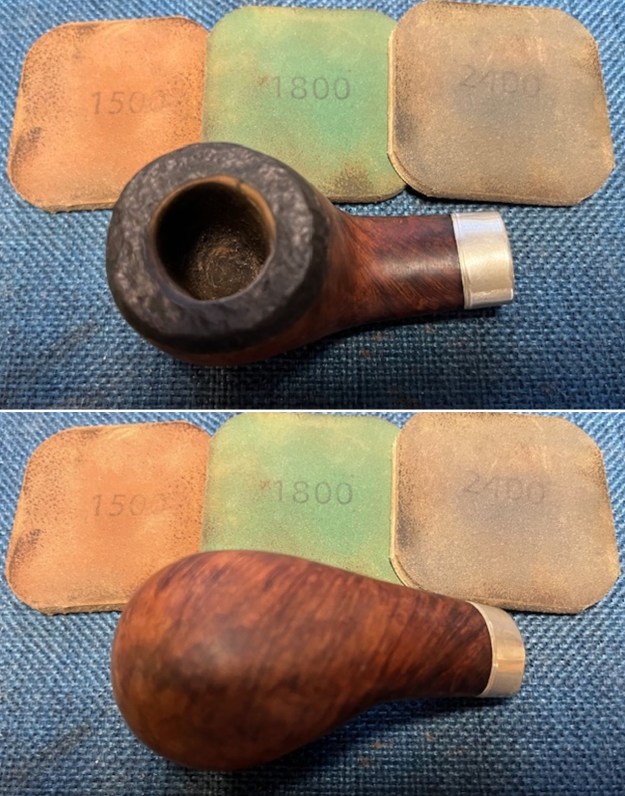

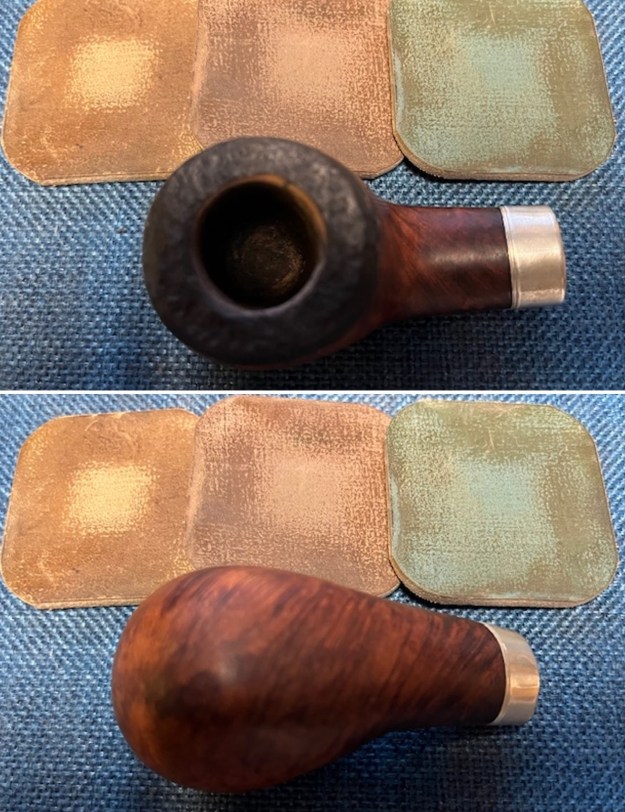
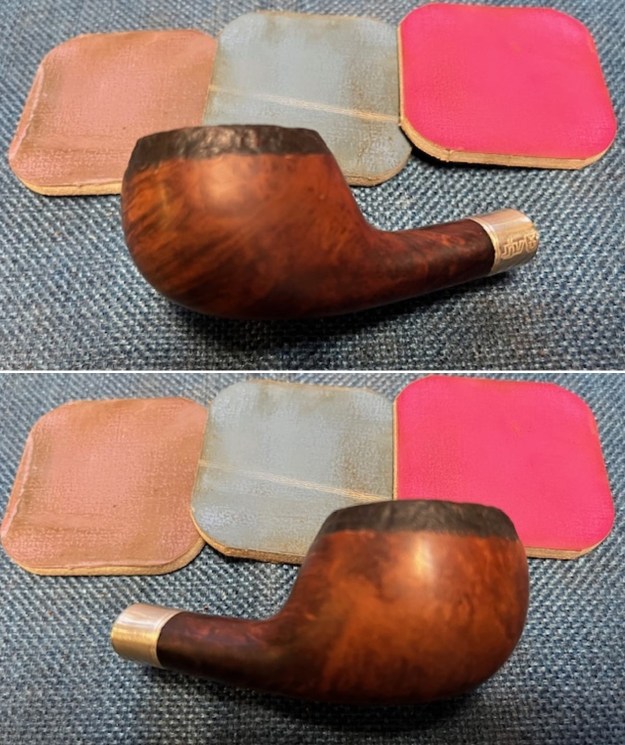
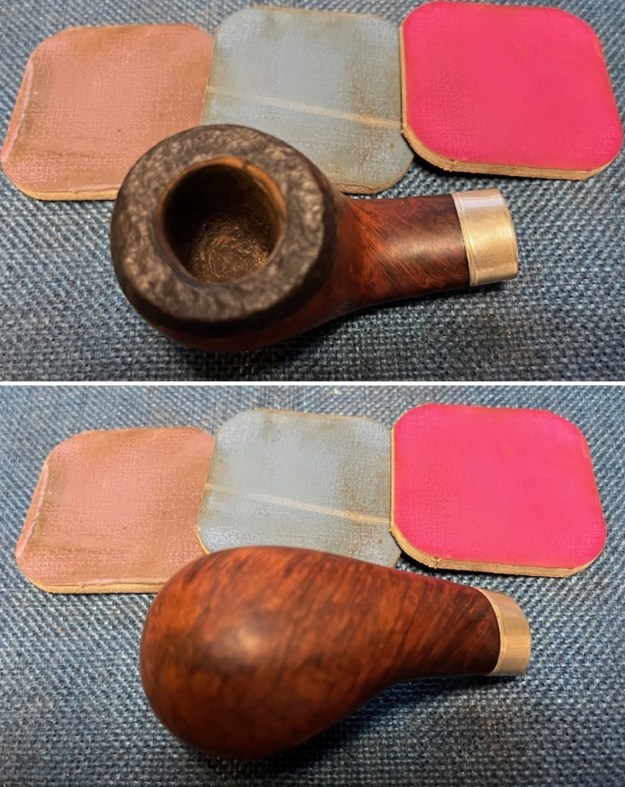 I rubbed the bowl down with Before & After Restoration Balm. I worked it into the surface of the smooth and the rusticated briar with my fingertips and a shoe brush to clean, enliven and protect it. I let the balm sit for ten minutes then buffed with a cotton cloth to raise the shine. Mark Hoover’s Balm is a product that I have come to appreciate and one I use on every pipe I have been working on.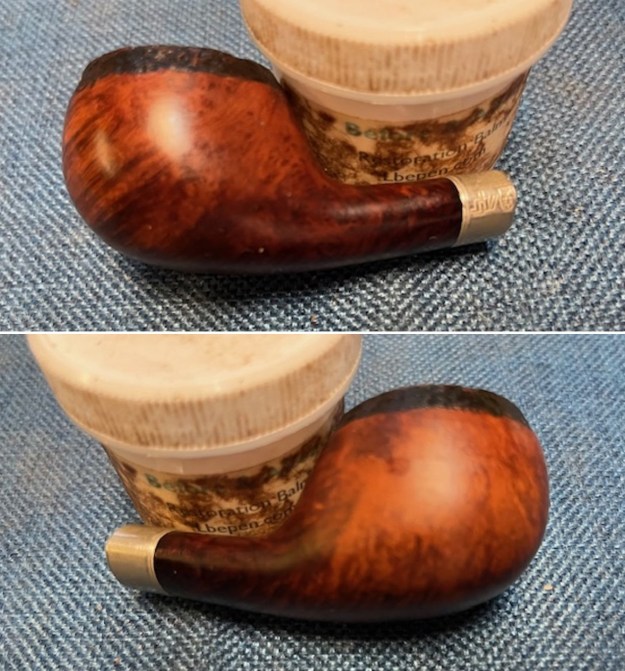
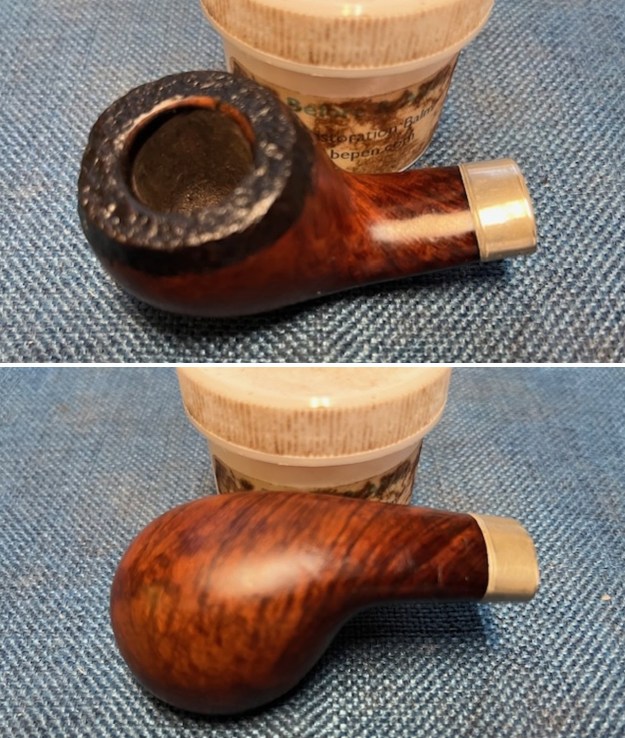
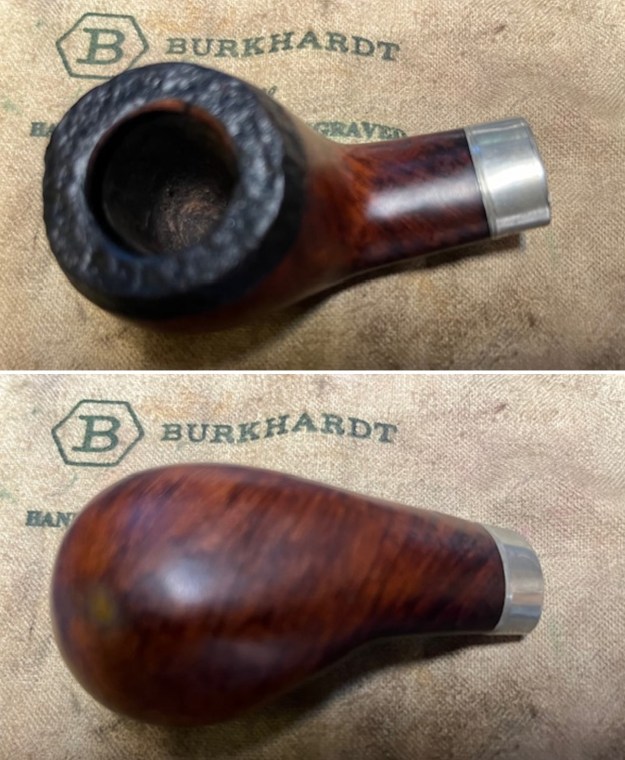
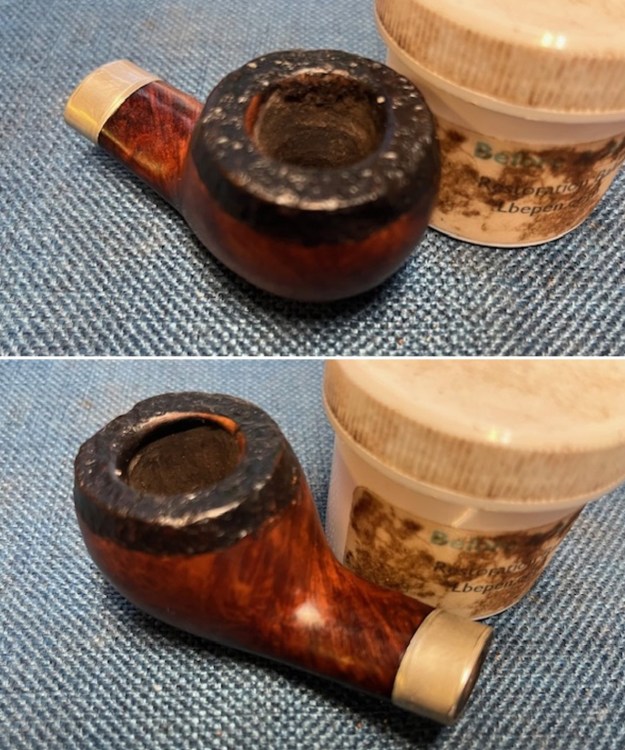 I polished the nickel band on the shank end with a jeweller’s cloth to remove the oxidation and protect the metal from reoxidizing as quickly. It took on a good shine.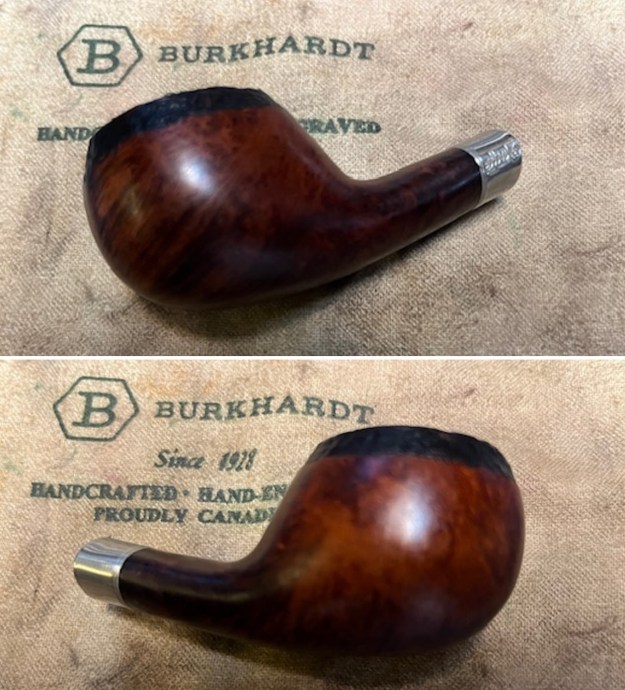
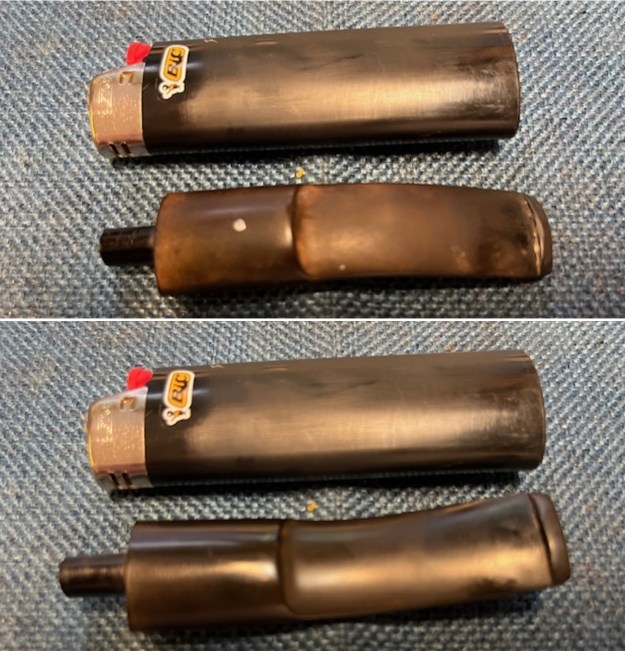
 I set the bowl aside and turned my attention to the stem. I “painted” the stem surface of the stem with the flame of a Bic lighter to lift the tooth marks and chatter on the surface. I was able to remove them all.
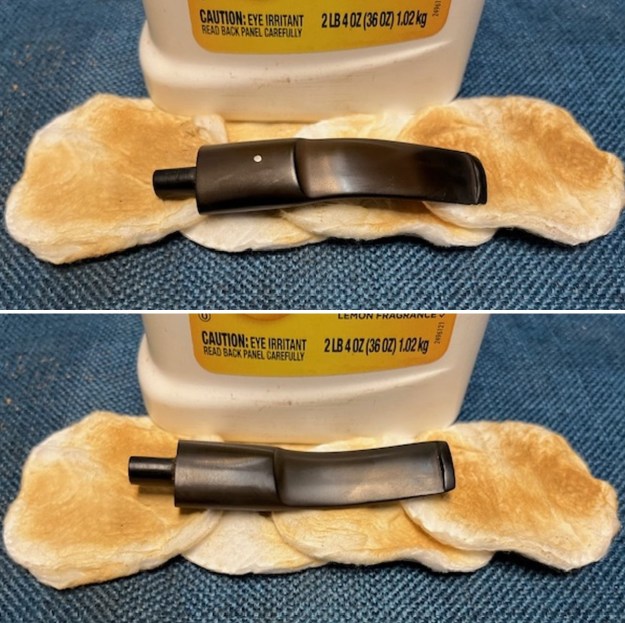
 I scrubbed the oxidation on the stem surface with Soft Scrub and cotton pads and was able to remove the majority of it. The cleaning was progressing and it was looking better.
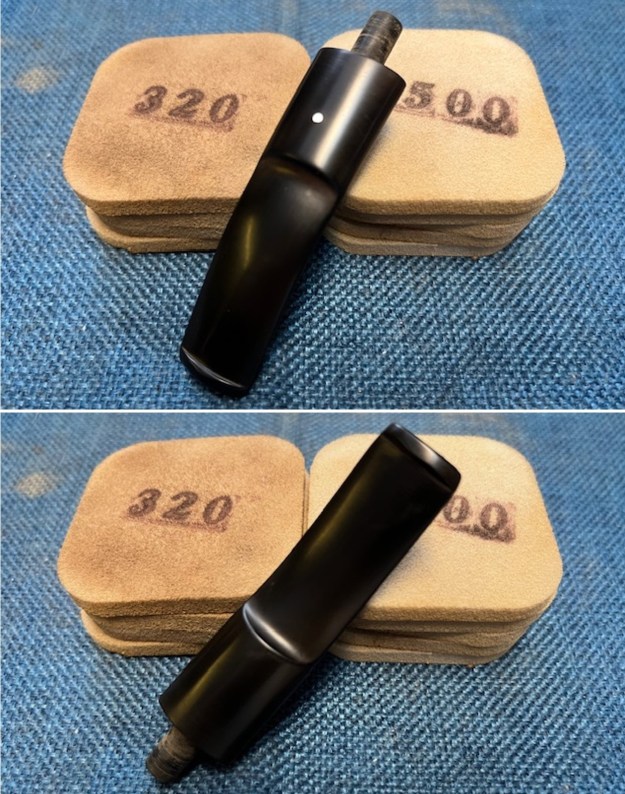
 I sanded the stem with 320-3500 grit sanding pads to break up the remaining oxidation. I wiped it down after each sanding pad with a soft cloth. It began to take on a shine.
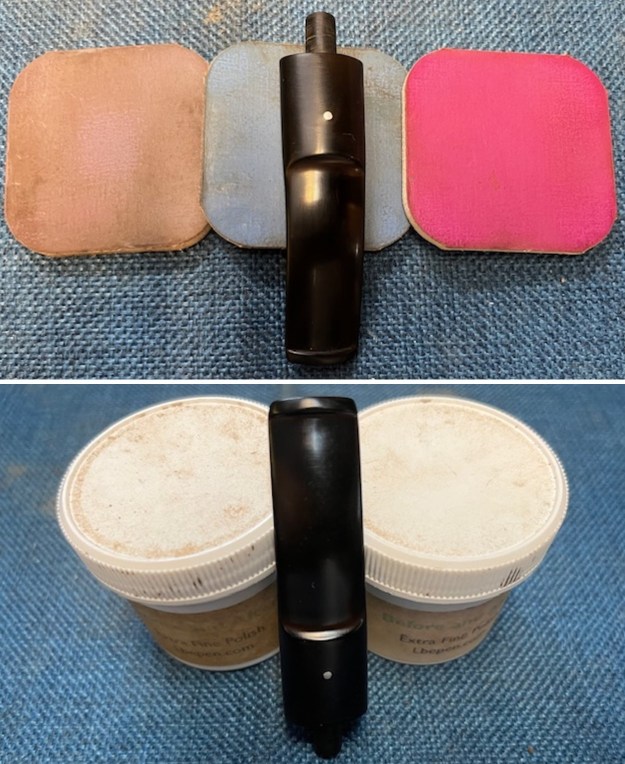
  I polished the stem with micromesh sanding pads – dry sanding with 1500-12000 grit pads. I wiped the stem down after each sanding pad with Obsidian Oil. I polished it with Before & After Pipe Stem Polish – both Fine and Extra Fine. Once I had finished the polishing I gave it final coat of Obsidian Oil and set it aside to dry.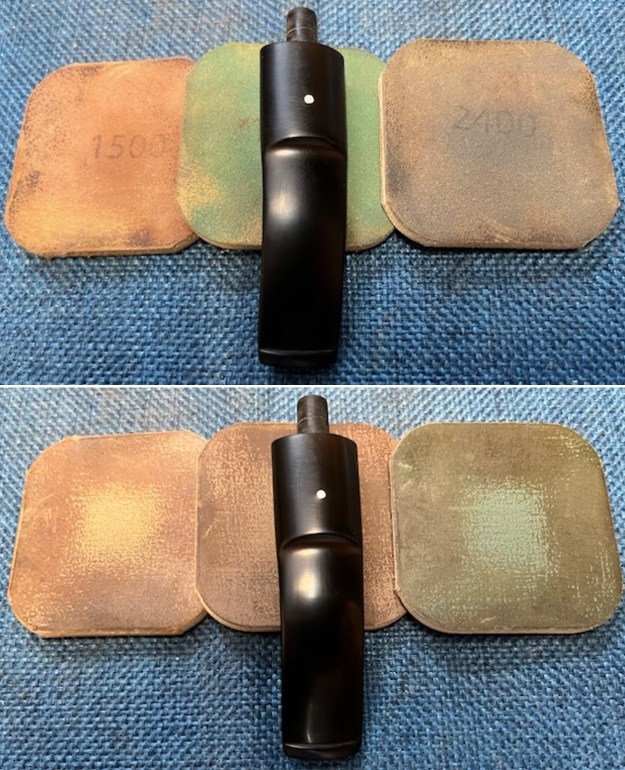
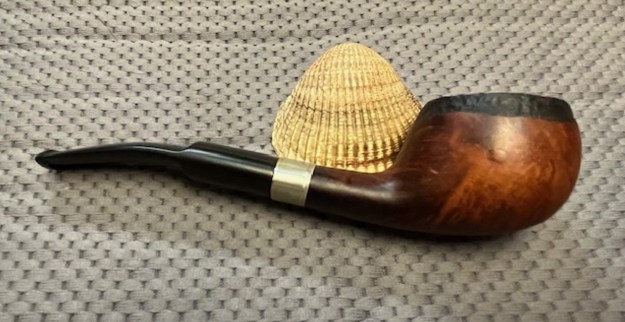
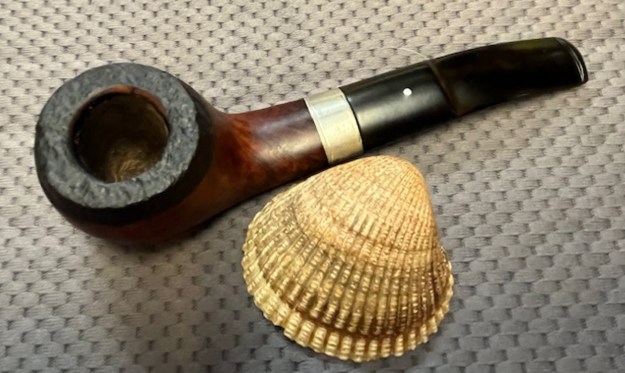
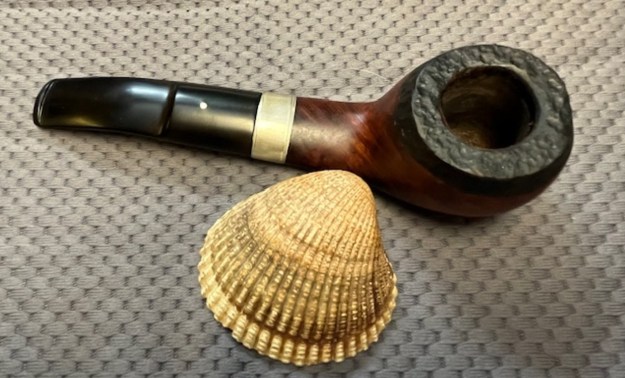
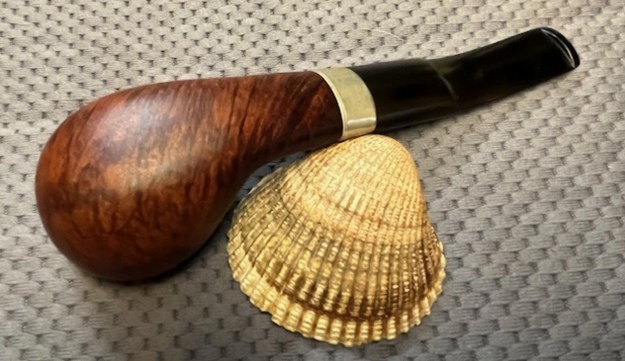
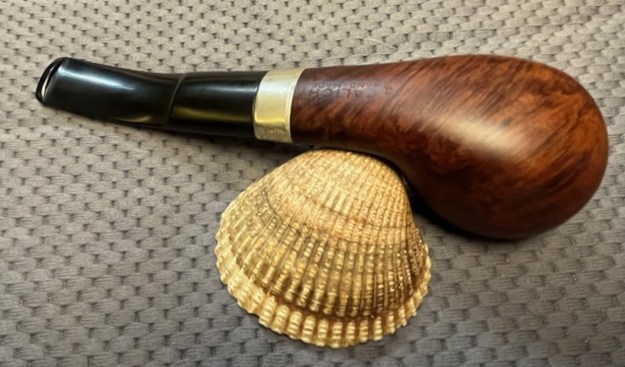
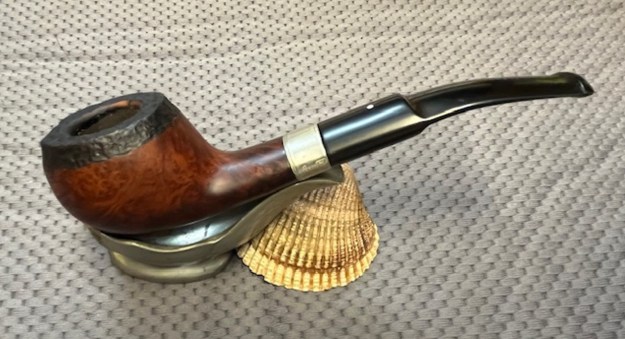
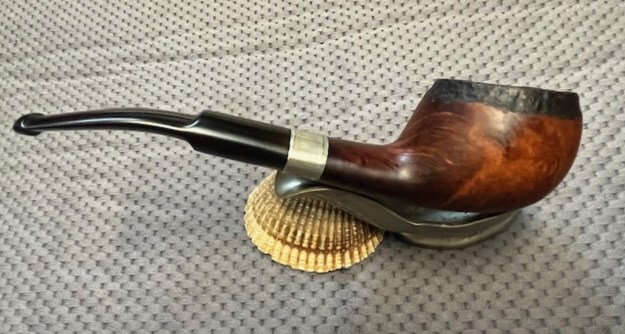
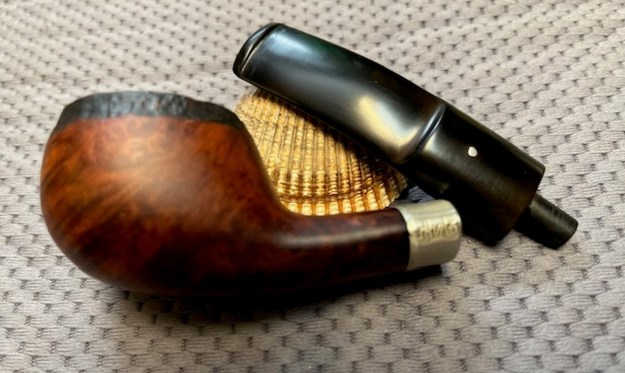
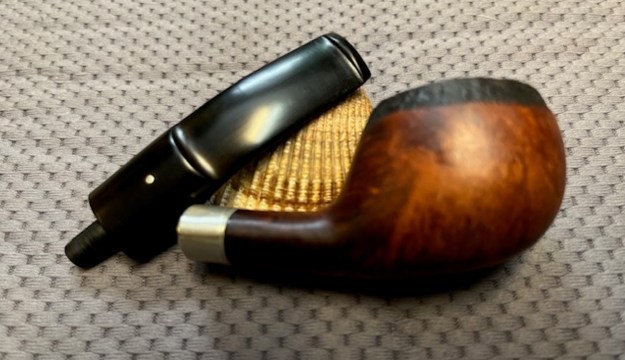
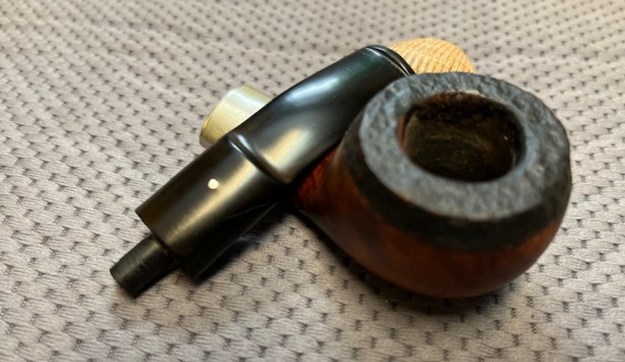
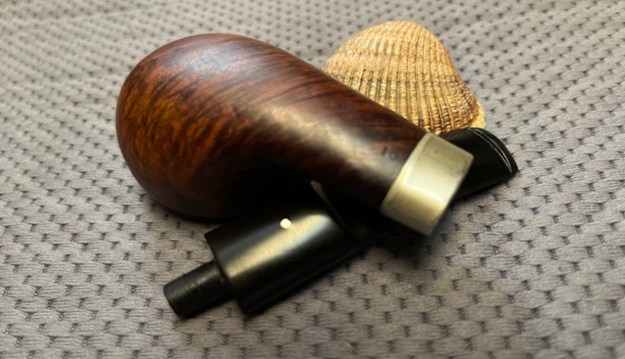
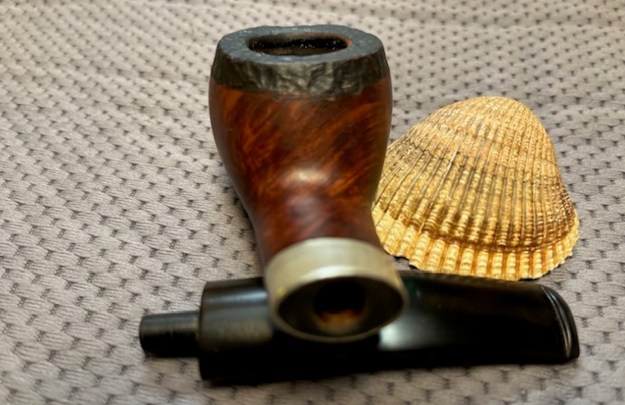
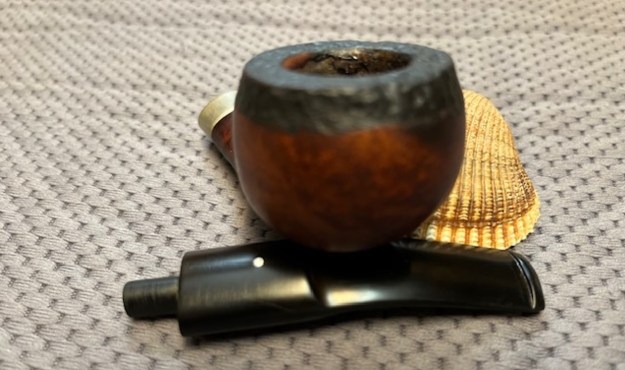
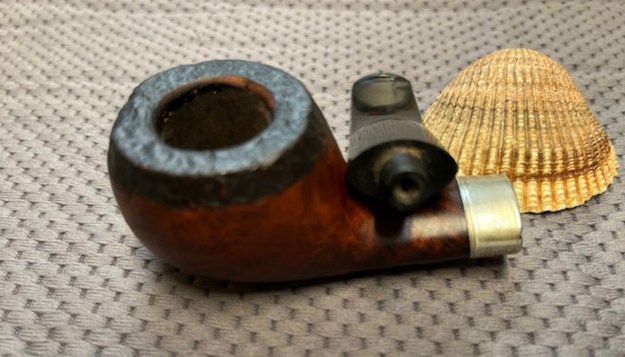
 This is another pipe from Kathleen that I am working on. It is another beautifully shaped 1990 John Calich Hand Made Grade 10 Apple Pipe. It has the kind of beauty I have come to expect from John’s pipes with a rusticated rim top and first ¼ inch of the bowl side. I put the bowl and stem back together. I polished the bowl and stem with Blue Diamond to polish out the scratches in the briar and the vulcanite. I gave the bowl and the stem multiple coats of carnauba wax. I buffed the pipe with a clean buffing pad to raise the shine. I hand buffed it with a microfiber cloth to deepen the shine. The pipe polished up pretty nicely. The rusticated finish is well done and the polished smooth finish on the shank end and rim top look really good with the black vulcanite stem. This Calich Hand Made Apple was a challenging pipe to bring back to life. It is a comfortable pipe to hold in the hand. The finished pipe is shown in the photos below. The dimensions of the pipe are Length: 5 ½ inches, Height: 1 ¼ inches, Outside diameter of the bowl: 1 ½ inches, Chamber diameter: ¾ of an inch. The weight of the pipe is 42 grams/1.48 ounces. Thanks for reading this blog and my reflections on the pipe while I worked on it. I will be sending it back to Kathleen later this week for her husband to enjoy.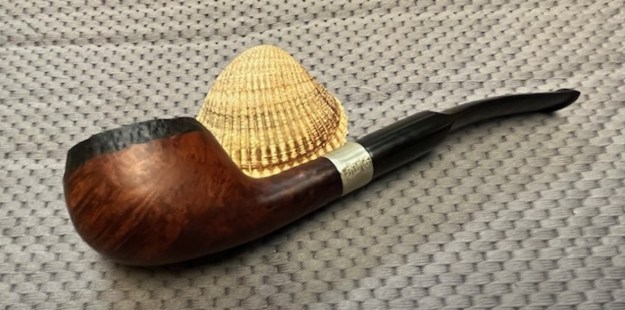
 rebornpipes