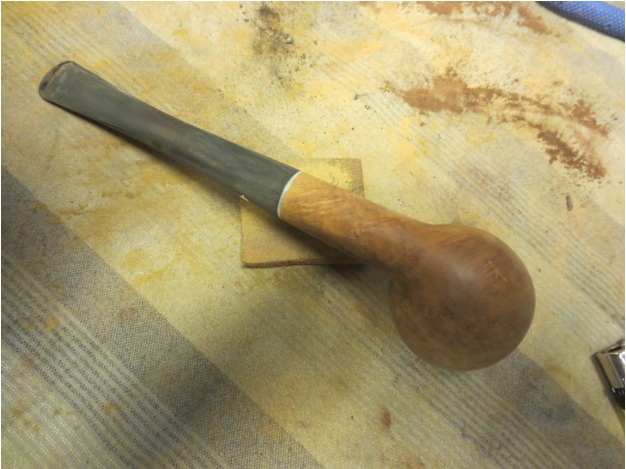
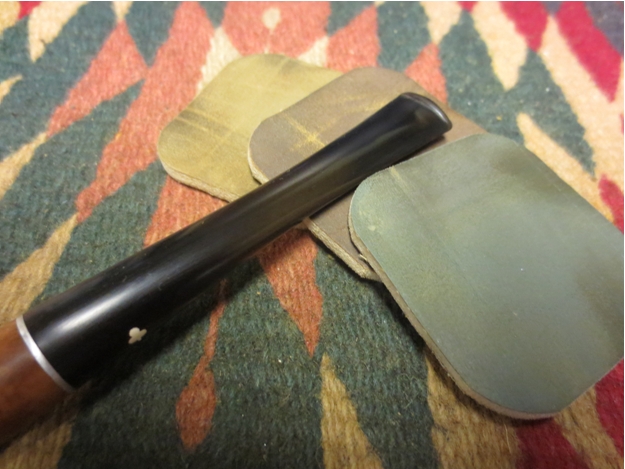
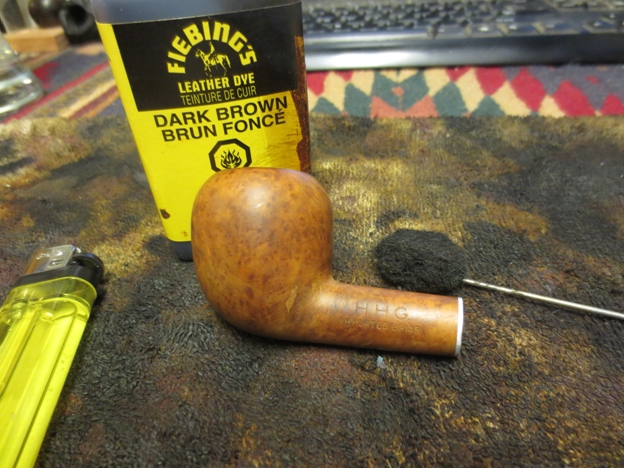
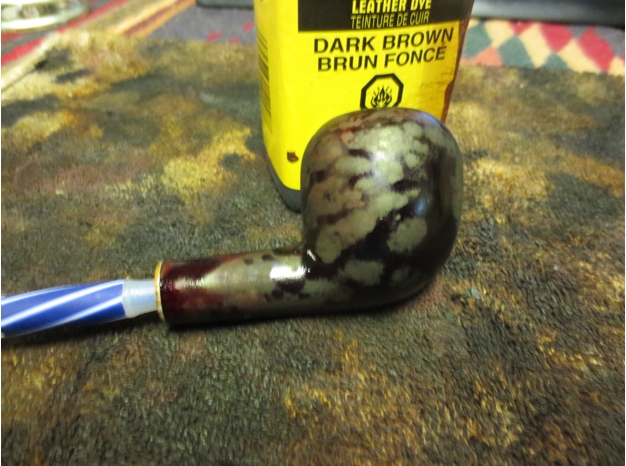
Repairing a Hole in an Acrylic Stem


Blog by Greg Wolford

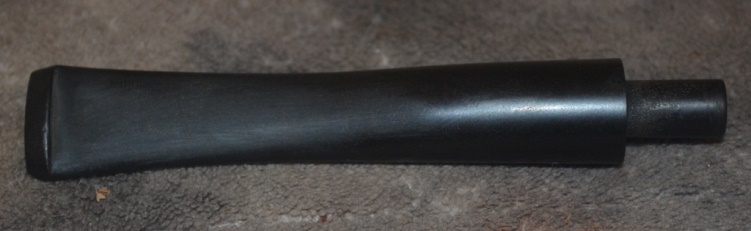
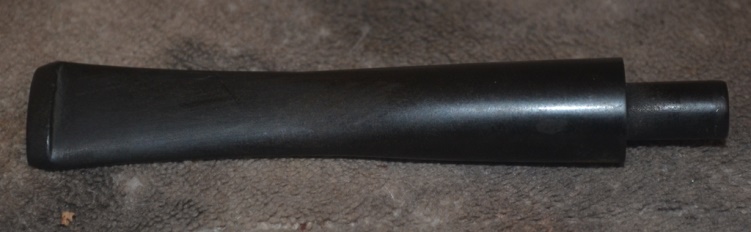
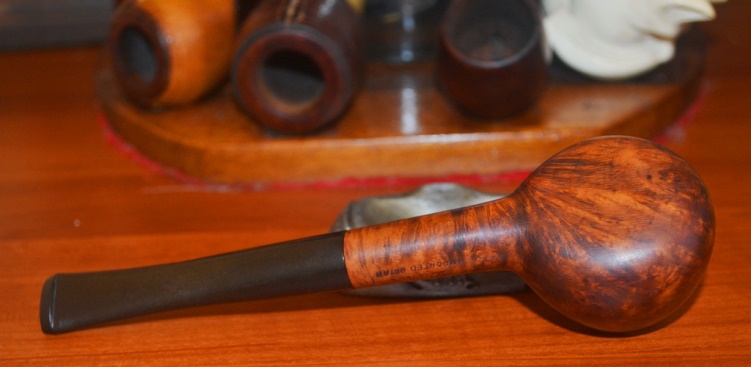
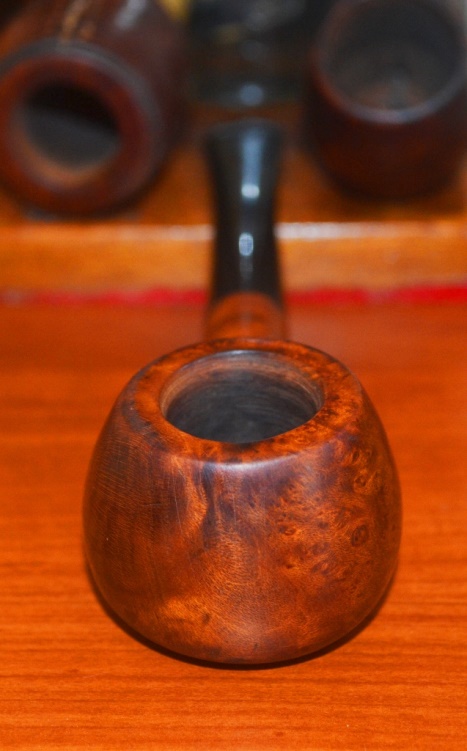
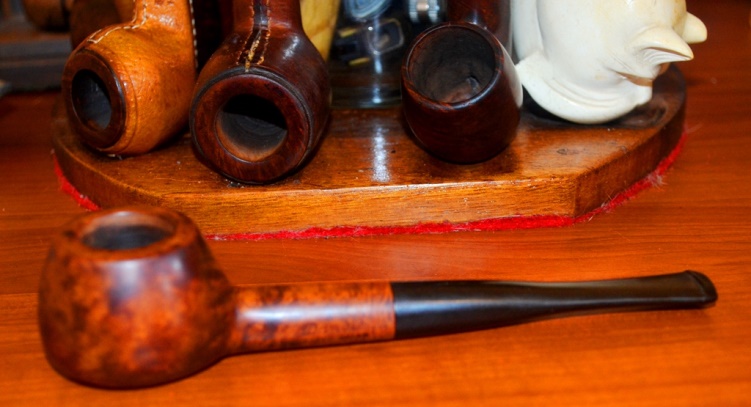
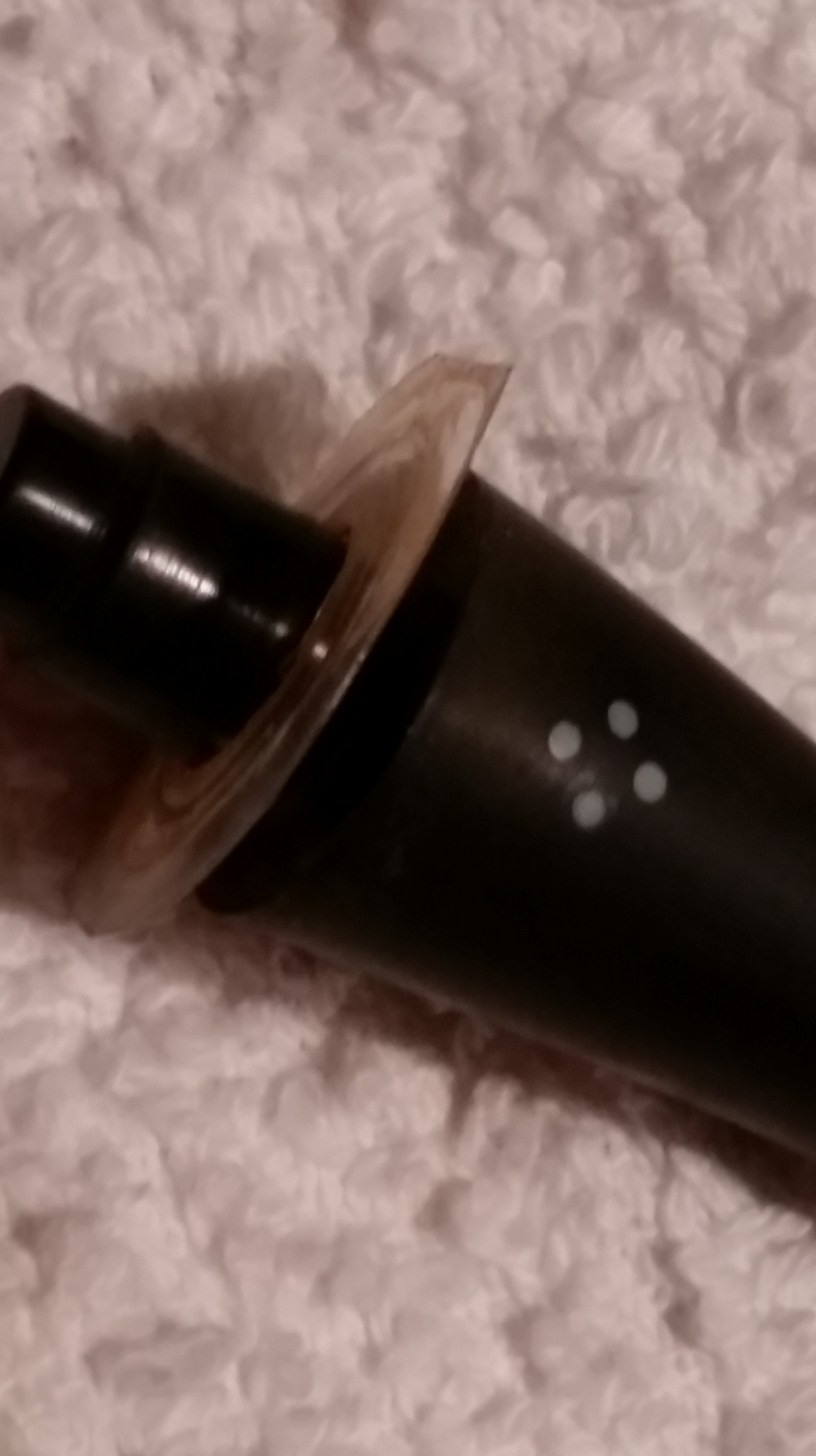
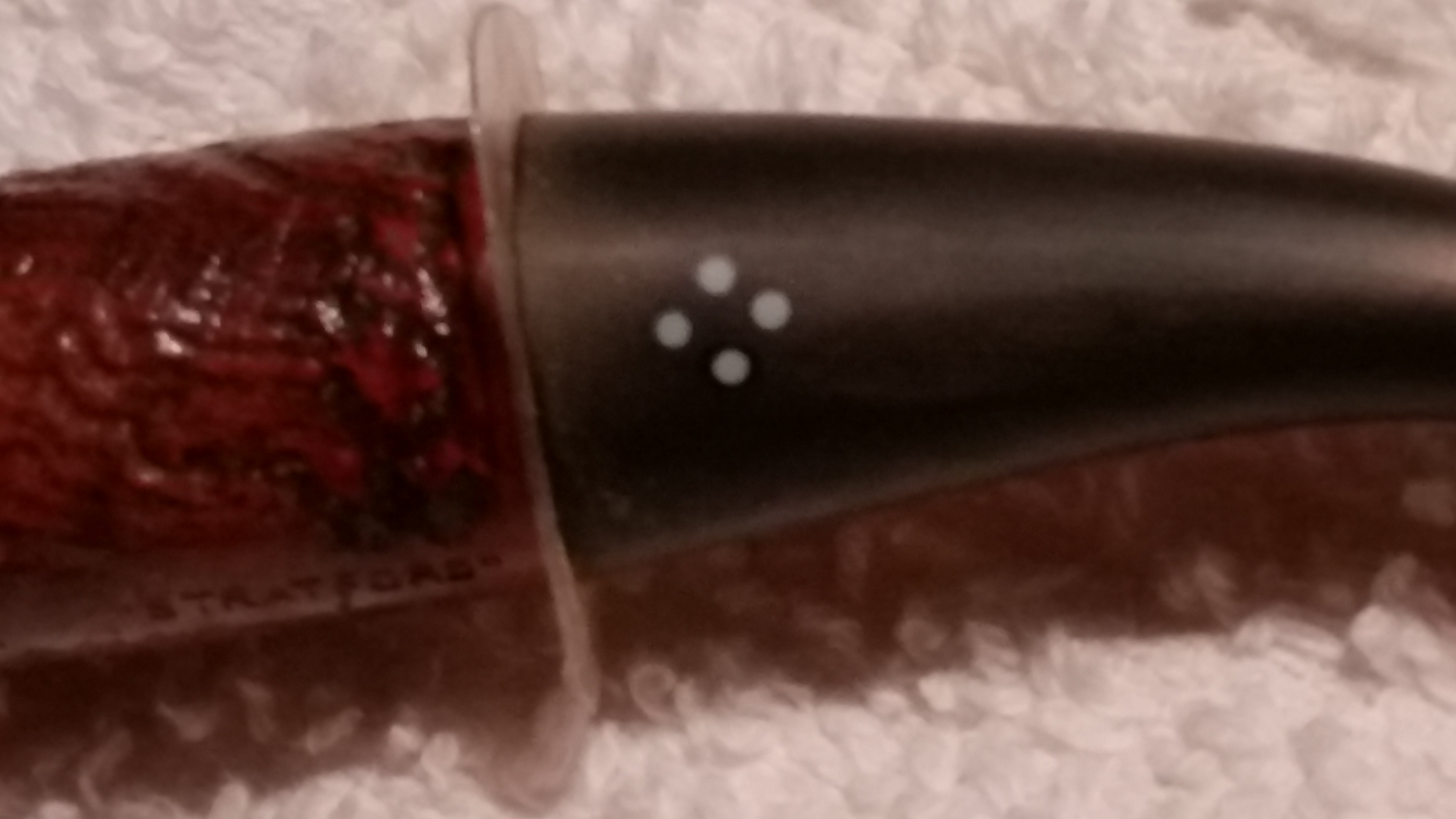
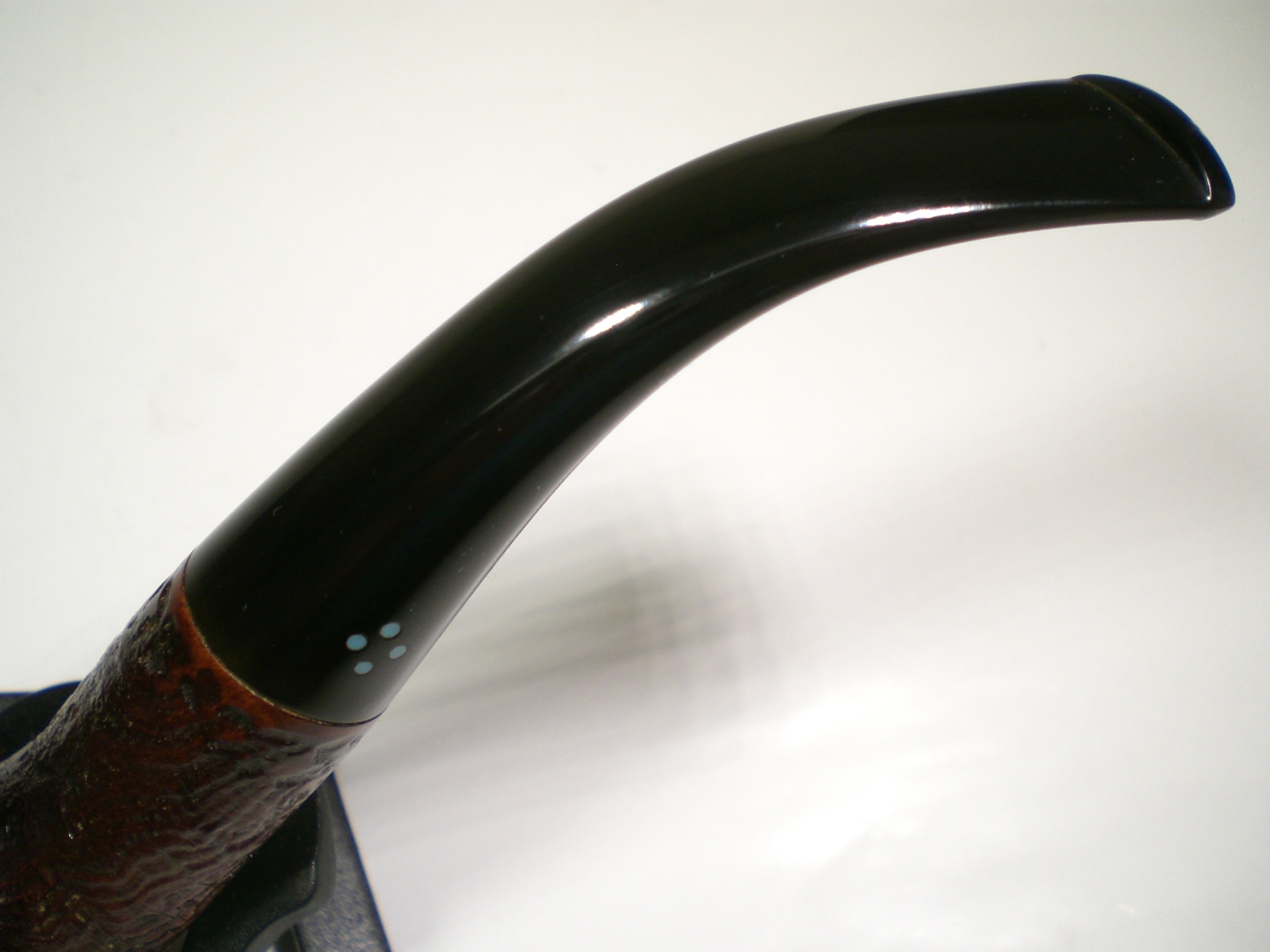
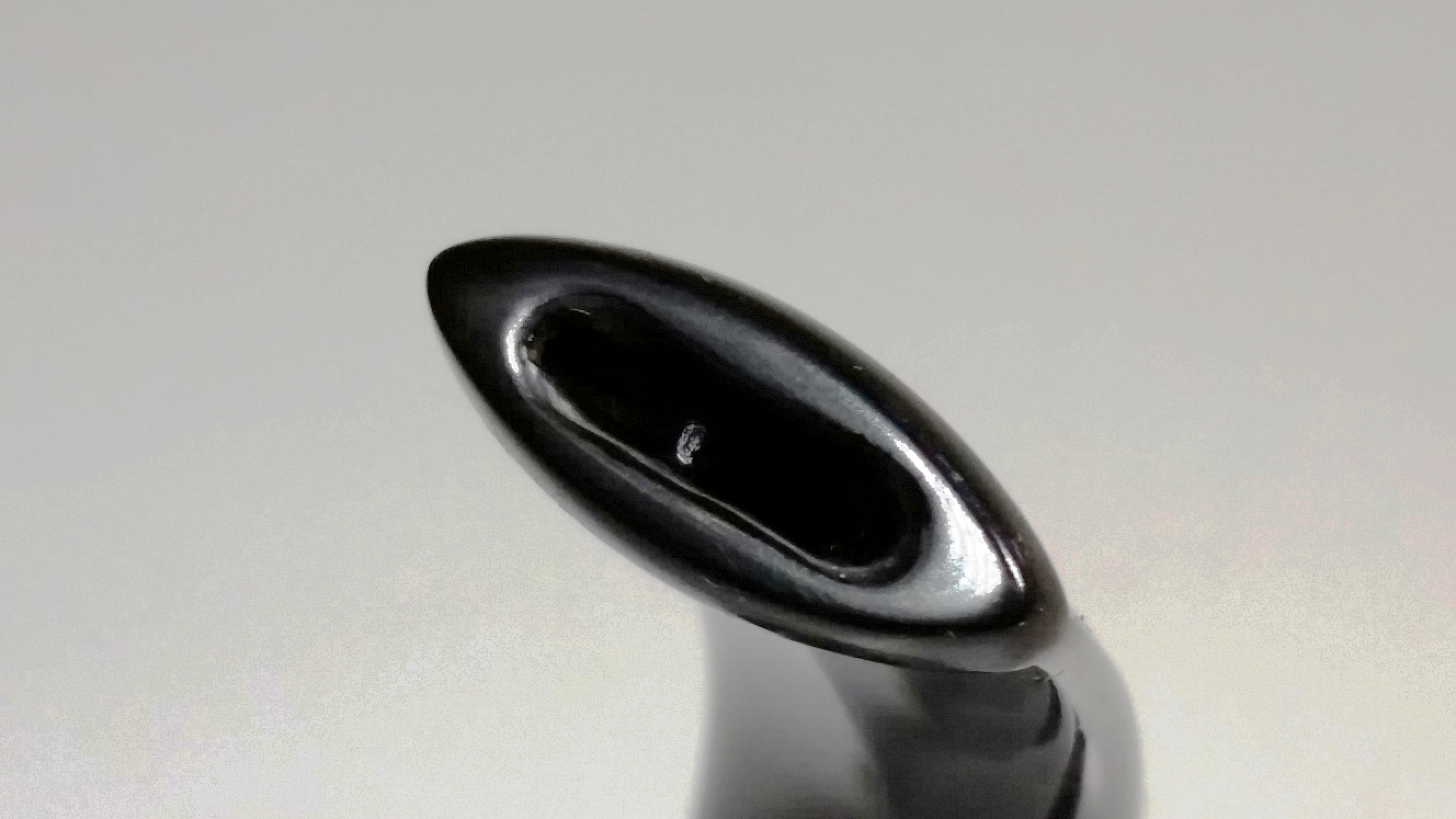
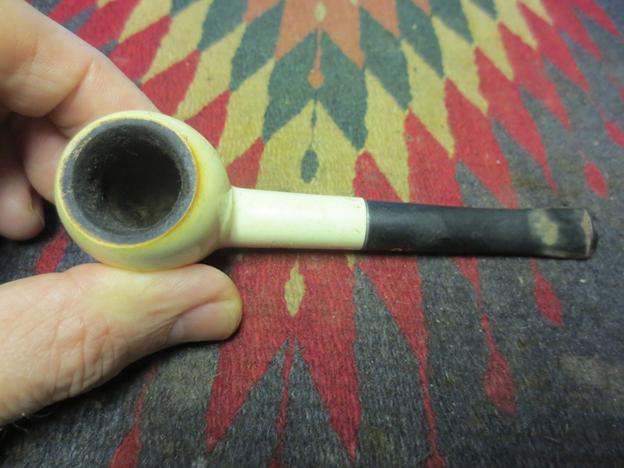
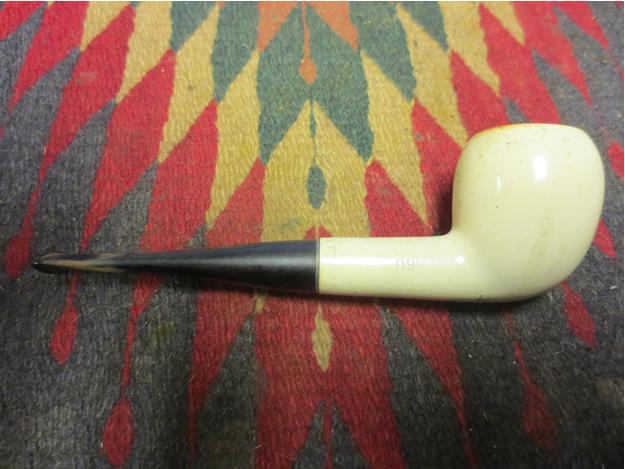
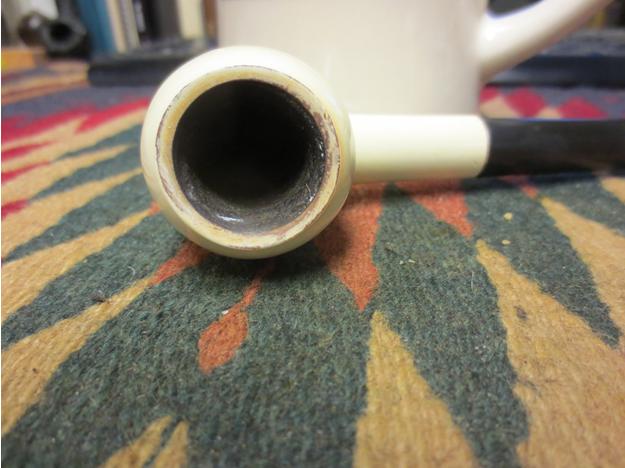
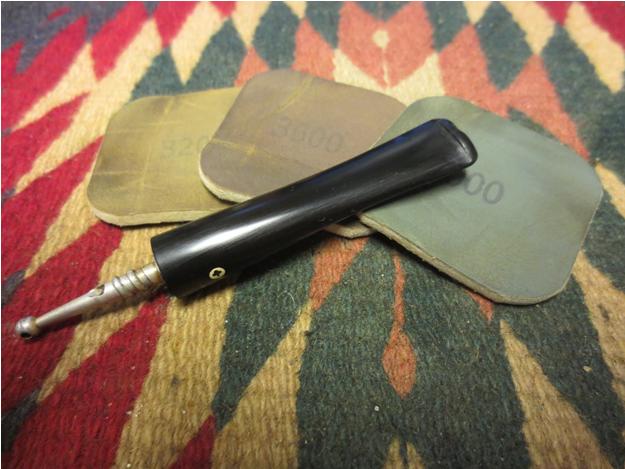
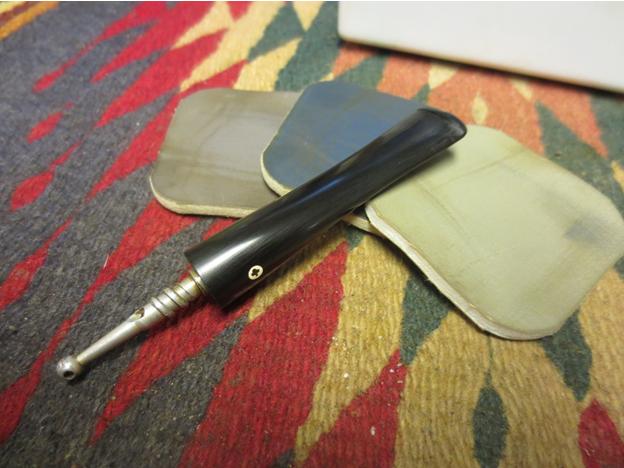
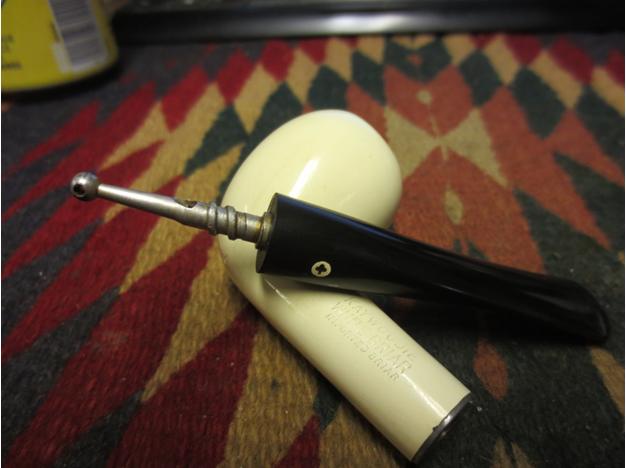
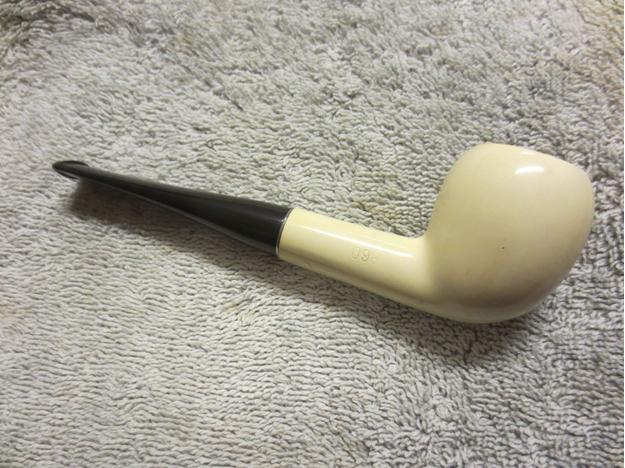
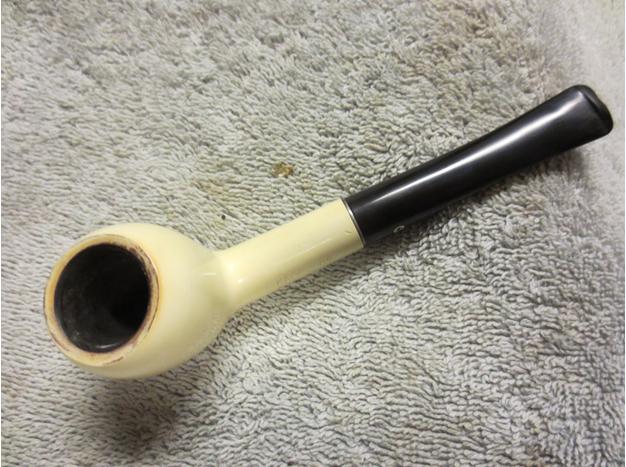
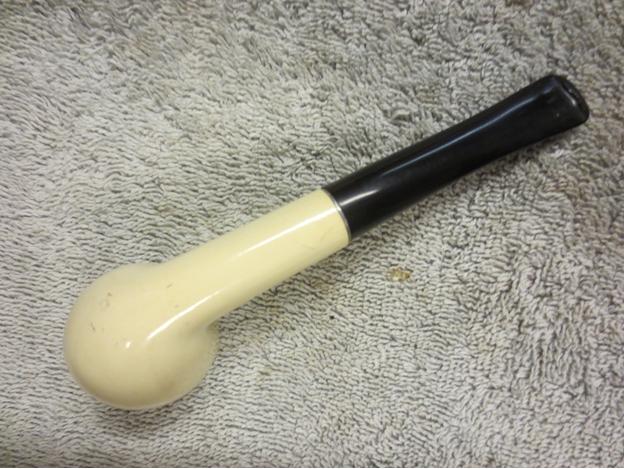
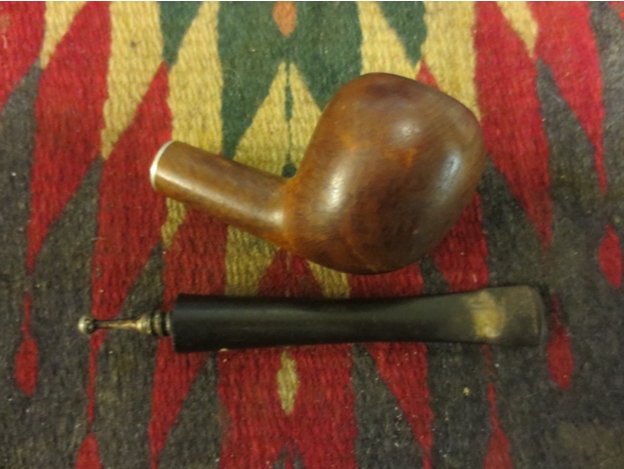
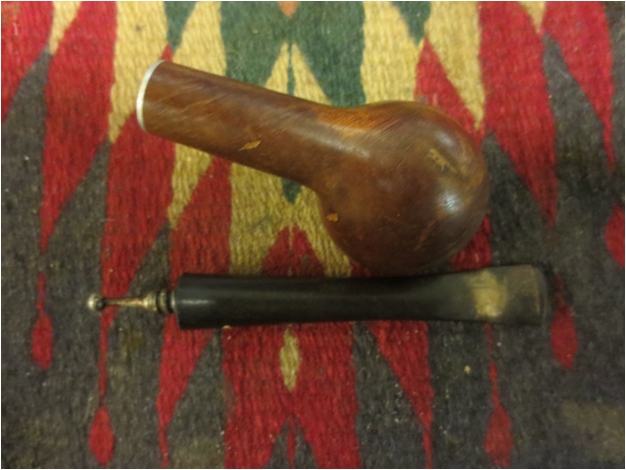
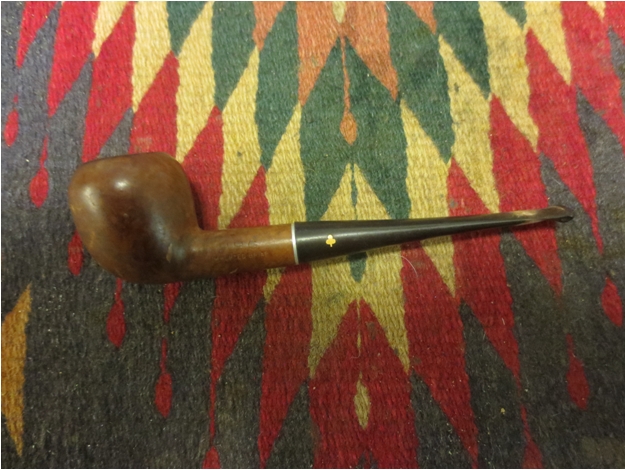
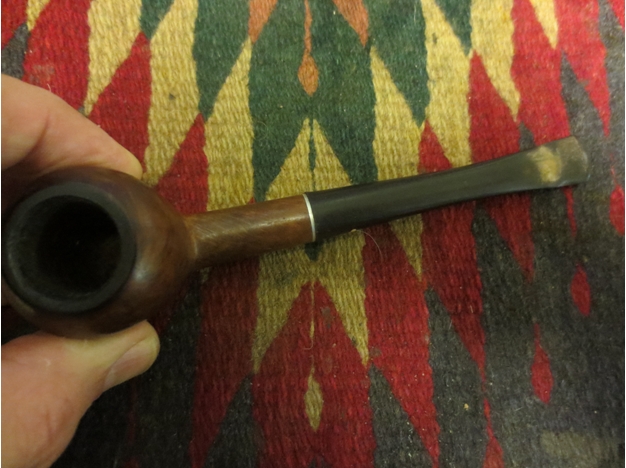
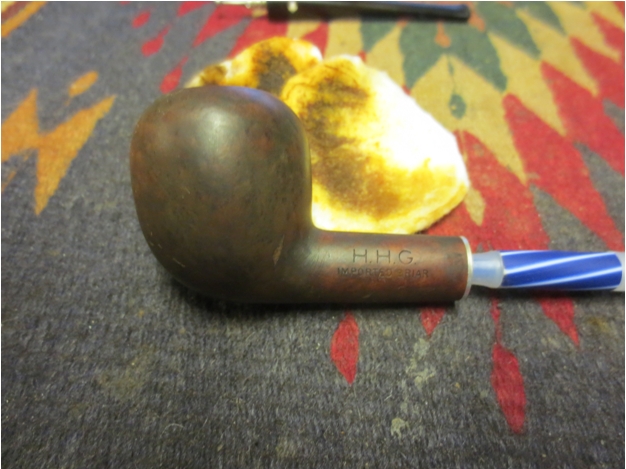
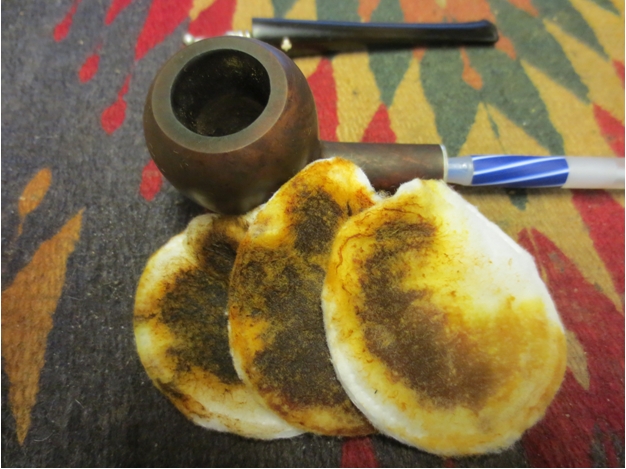
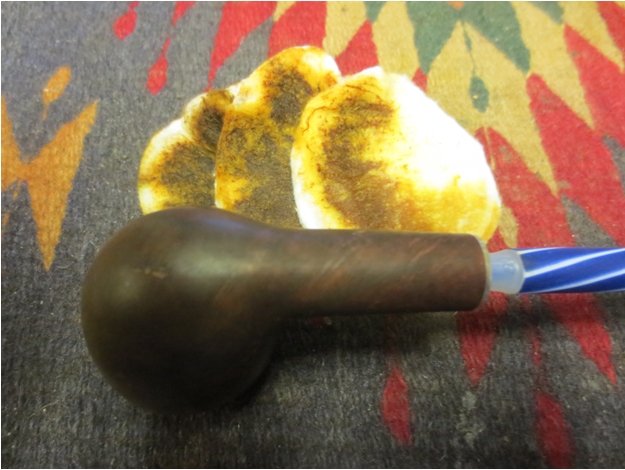
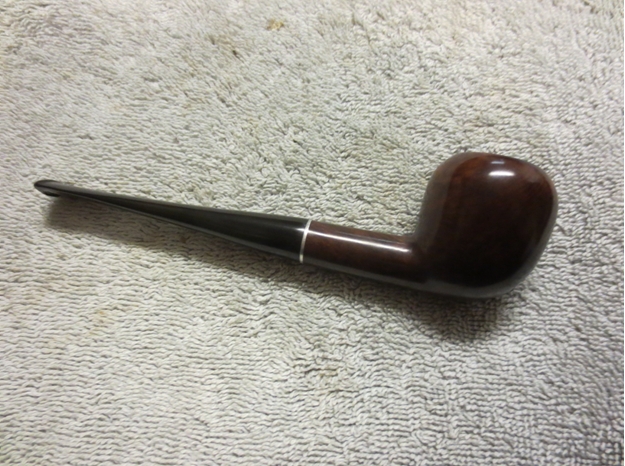
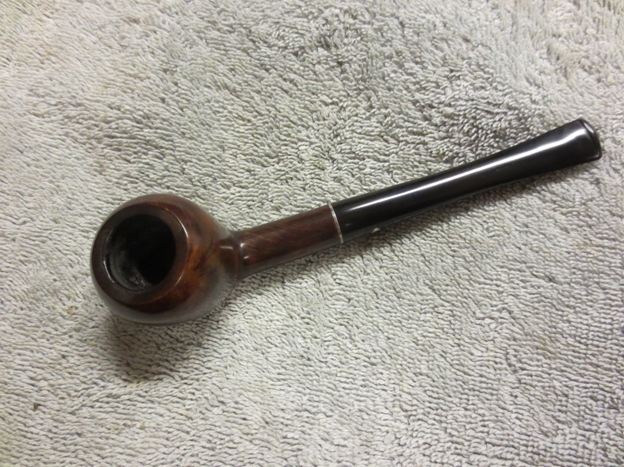
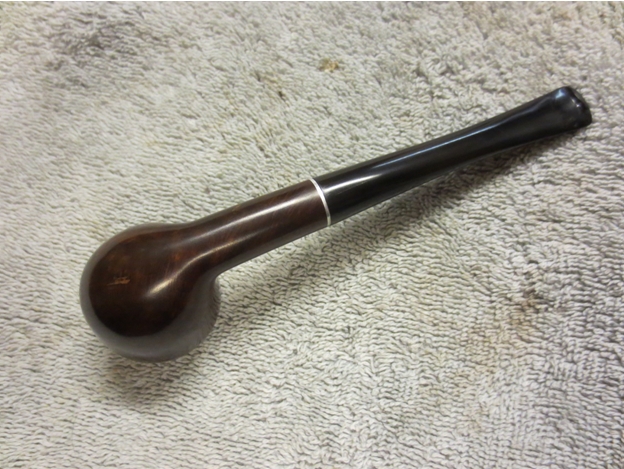
A couple of weeks ago I received an IM from a Facebook friend; he’s a pipe collector and reseller. He attached the following photos of an acrylic stem with a hole in the underside.
IMG_1623.JPG

IMG_1622.JPG

IMG_1624.JPG

He had seen photos of some of my work bad wanted to know if I could repair this stem for him; he said the top of the stem and the stummel were pristine and this was the only problem with the pipe. I said I could fix it so he told me the stem would be in the mail in a couple of days.

A week later I found a box in the mail from a sender I didn’t recognize and I wasn’t expecting any packages so I was eager to see what was inside. When I opened the box I found a beautiful large Radice (I forget the model name and didn’t remember to photograph it) inside – with a big hole in the stem; apparently the seller sent the pipe directly to me first and, after repairing it, I would forward it to my friend.

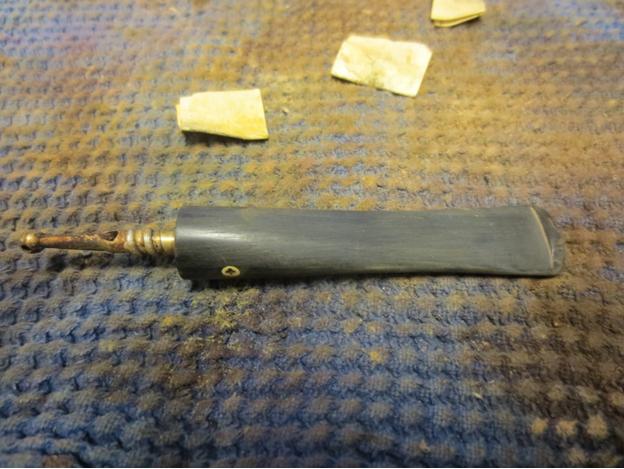
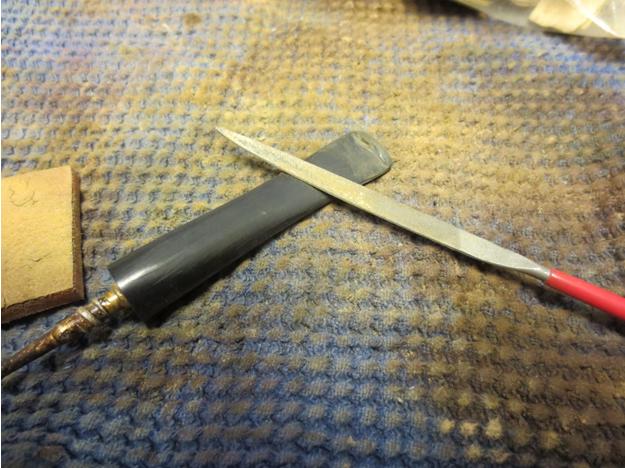
The hole was larger than it appeared in the pictures. And it was a bit “ragged”, too. So I picked it with my dental pick and smoothed it with a round needle file to have a good surface to work with. I bent a pipe cleaner to make it triple-width to fit the slot and greased it with vegetable shortening; I’ve had trouble with petroleum jelly in past not keeping the glue in place real well and have started using the shortening instead.

I began by applying a drop or two of black super glue to the hole an pd then setting it aside to cure; it was going to take several layers to fill this hole so it would be a waiting game. Later that evening I applied a few more drops and left it overnight to cure.

In the morning I found the patch had shrunken, as expected, and needed more glue. I applied two more patches that day, once in the morning and another that evening and allowed it to cure overnight again.

It was at this point I began to have some fairly dramatic vision problems due to diabetes, which I’d been recently diagnosed with. (More on that can be found here if you are inclined to read about it.) So I sent my friend a message telling him what was going on and it might be several more days before I could finish the repair. His reply was no problem, make sure I took care of me first.

Several days later my son and I stopped into the local Hobby Lobby to pick up some new micro mesh pads. As we browsed I found a small “spray bottle” labeled adhesive accelerator; I immediately wondered what kind of adhesive it was for and began to read the label, with my son’s help, since my vision was still not clear. It was for most glues so I thought it might be a similar product to Stewart-McDonald’s super glue accelerator – but only $3.99 – so I bought it. I was now even more anxious to work on that Radice stem!

I experimented on an old stem, vulcanite, with a large hole first, not wanting to “play” with someone else’s pipe. The results were great: the super glue set up hard in about 15 minutes and it looked just like it normally would, with no adverse effects from the overspray. Next I’d try it on the Radice.

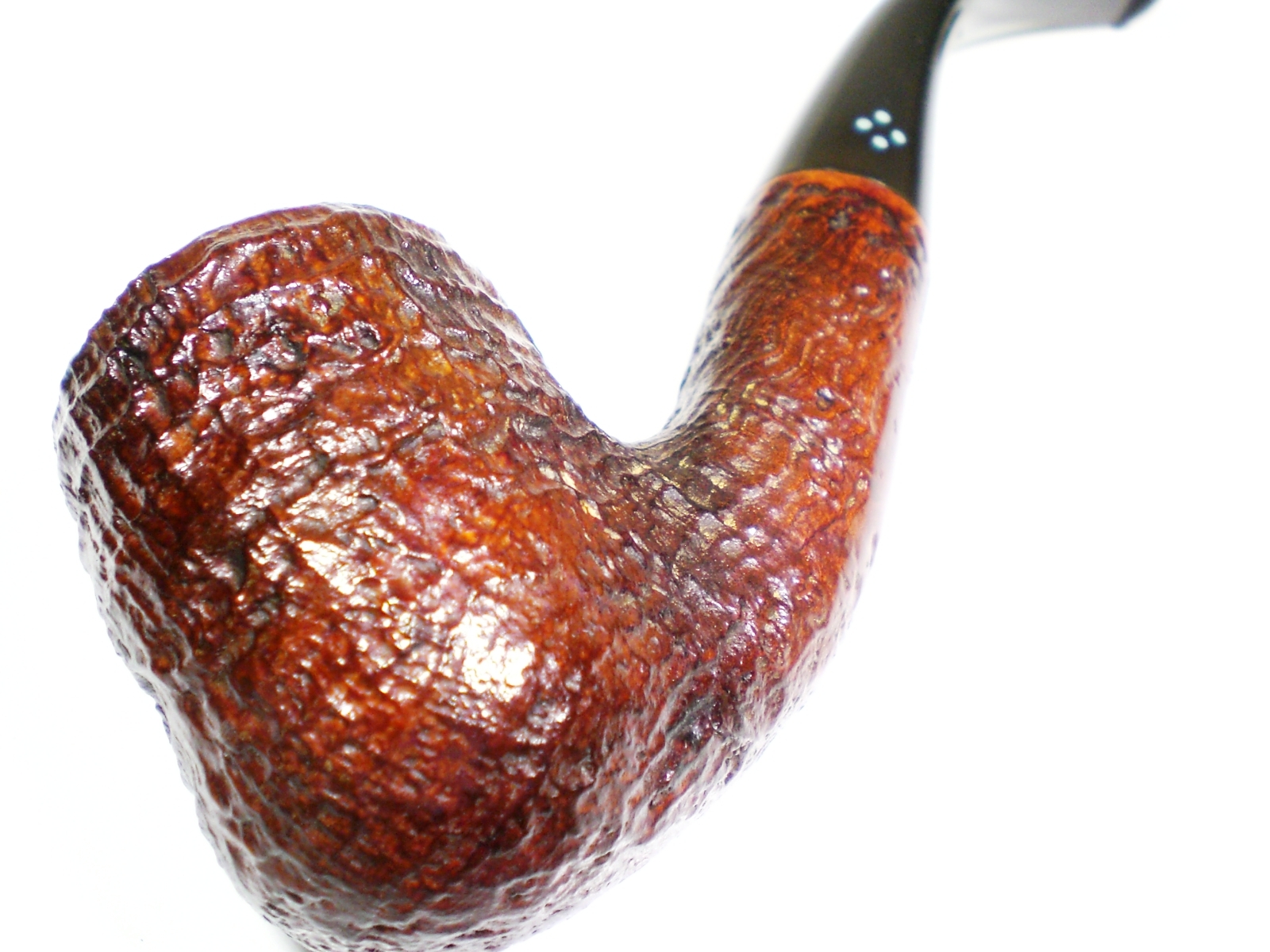
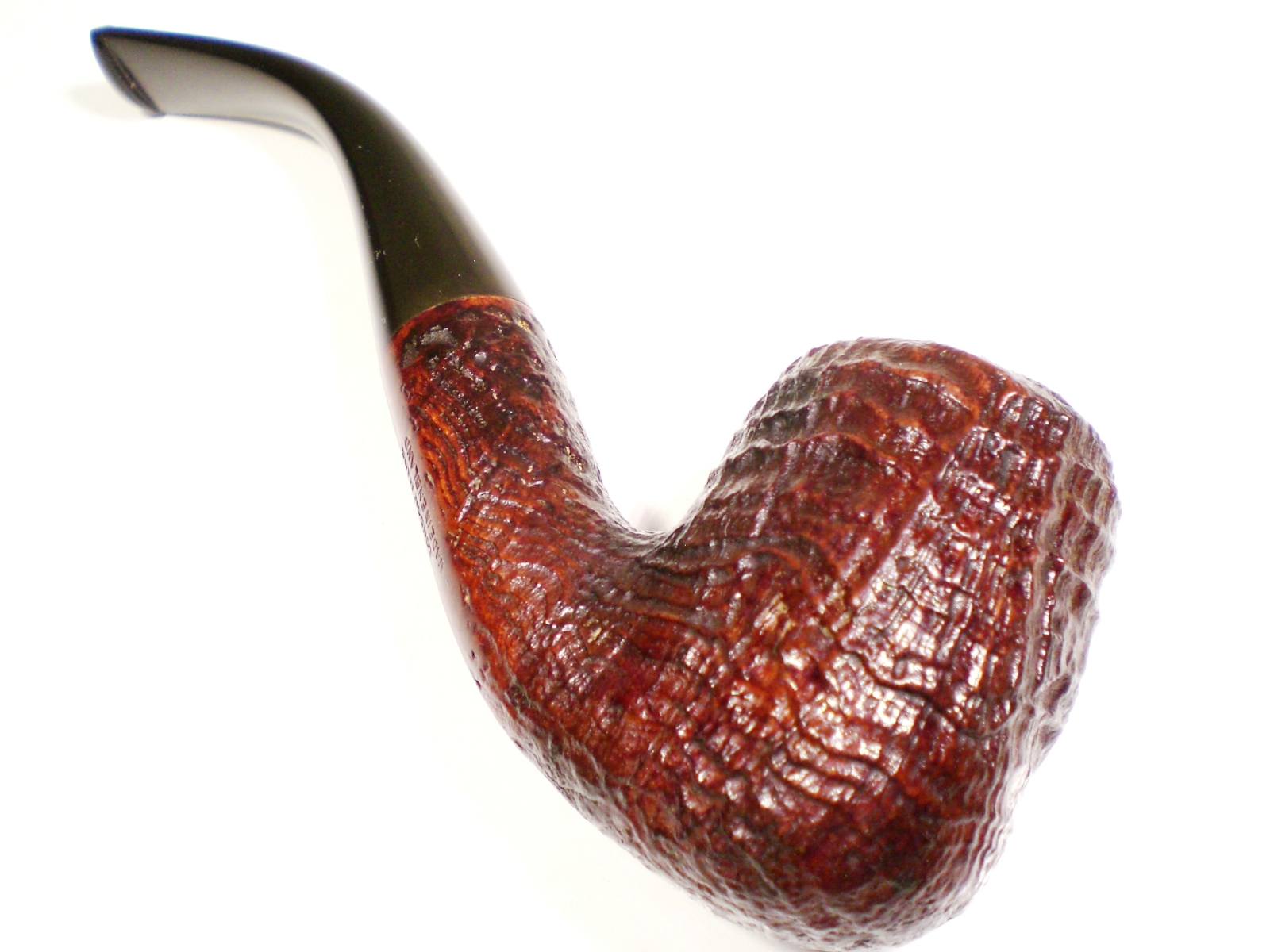
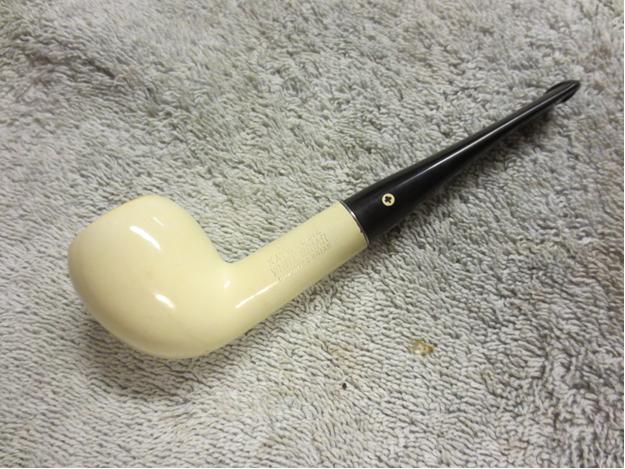
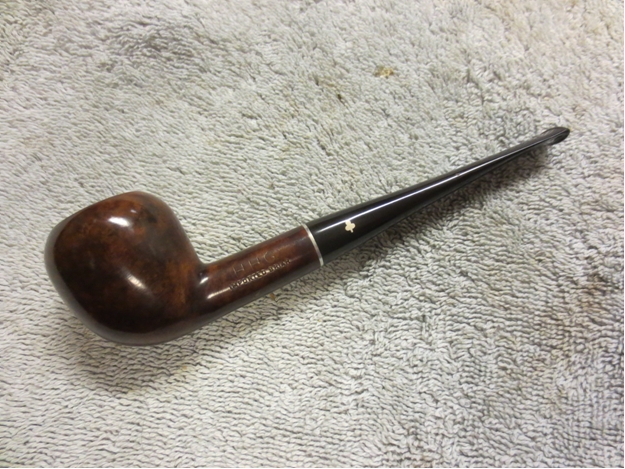
It was, indeed, a few more days before I could see well enough, long enough to work on the repair. I sprayed the patch with the accelerator, applied the final drips to the patch, sprayed it again and set it aside for 30 minutes. I then filed, sanded (220/320/400/600 grits) and wet-polished with micro mesh 1500-12,000 grits, a final polish with McGuire’s Scratch X 2.0 and hand waxed and buffed the stem with Halcyon II wax; I don’t like buffing acrylic stems, especially when they aren’t mine and are expensive! This is the final repair:

IMG_1620.JPG

IMG_1621.JPG

He is thrilled with the results, as am I. And I’m even happier to find a local source, and less expensive alternative, for the accelerator. If you have a Hobby Lobby nearby you, I highly recommend you grabbing a bottle and giving it a try; you’ll save yourself a lot of time and a few bucks to boot.

IMG_0258.JPG

What is a Mountain Root Pipe with a Glasschaum Bowl?


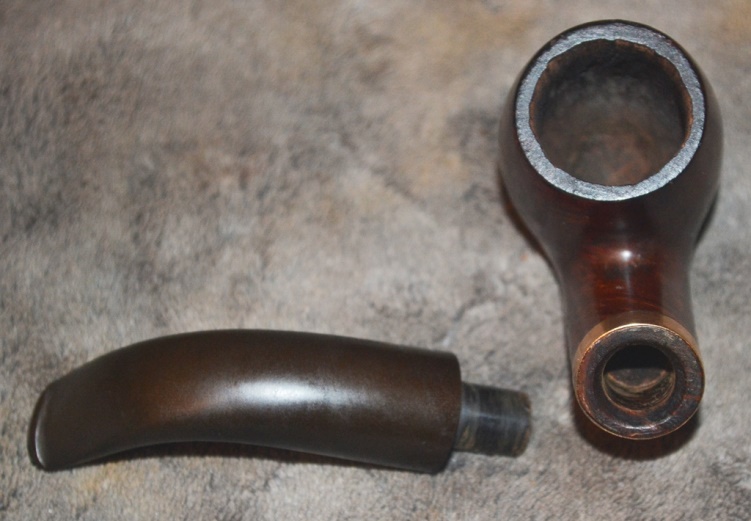
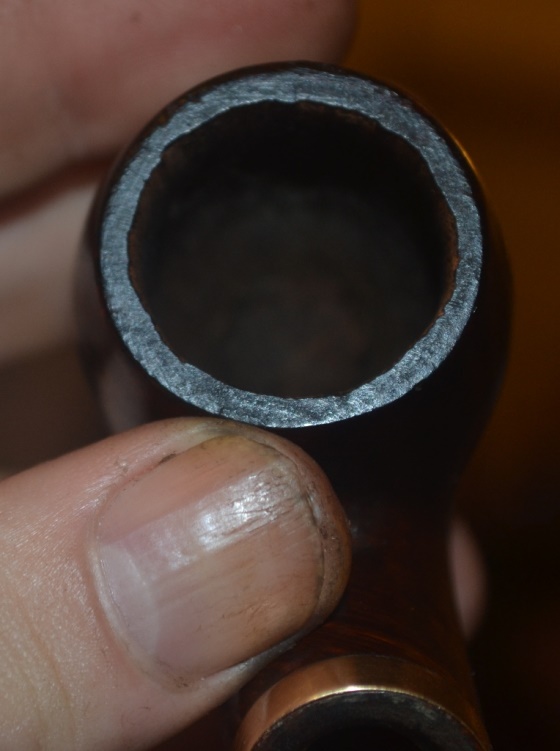
Another of the gift bowls that I received was an apple-shaped bowl stamped Mountain Root on the left side of the shank and on the right side Glasschuam Bowl. The Glasschaum Bowl stamping had remnants of silver paint in the indentations. The finish was rough with many scratches in the briar. The shank internally was very black and tarry. The bowl inside was dirty with a thin build up of cake. The internal edge of the meerschaum lining was chipped in several places but there were no cracks in the bowl. IMG_1879 The Mountain Root stamping and the Glasschaum Bowl stamp were both new to me. I looked in “Who Made That Pipe” for the Mountain Root brand and found nothing with that stamping. PipePhil did not have it on his site either, so I looked further on the web and found several posts on the brand on the Grabow forum. The link is: http://drgrabows.myfreeforum.org/about4008.html&highlight=

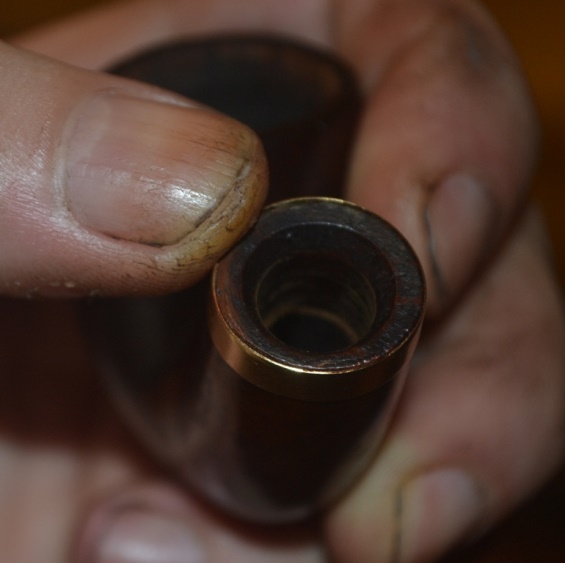
At that site a pipeman had posted about a pipe he purchased on Ebay: “I purchased this “Mountain Root” pipe on Ebay. Right shank is stamped “Glasschaum Bowl” and the inside of the bowl is lined with something similar to how Yello-Boles are lined with a yellow colored coating. The stinger is wooden and the stem inlay is a white or faintly yellow ring on top of the stem similar to Yello-Bole stem rings of the ’40’s except for the color.”

My pipe bowl looked just as he described though I would have said it had a meerschaum like bowl insert rather than the yellow coating on the Yello-Bole pipes. It was significantly thicker than the yellow painted coating. Mine also came without a stem so there was no wooden stinger apparatus or yellow ring on the stem.

He went on to inquire if anyone could help him with information on the brand. He received quite a few helpful replies to his query. One that summarized the lot is included below.

“Mountain Root probably refers to Mountain Laurel. That was one alternative wood used in WWII for pipes, when briar was not available or in very short supply. The wood stinger also suggests that era.”

This coincided with what I was thinking in terms of the link to Mountain Laurel and the WWII era pipes. I was not alone in thinking that I was dealing with a pipe from that era made from Laurel. The confirmation of that was not 100% certain and the next details make me wonder about that. I looked up Glasschaum Bowl pipes online and found that Ben Leibowitz, an American pipe maker marketed the Glasschaum pipe in 1941 and quickly disappeared off the scene. This reference was also confirmed in Who Made That Pipe. If it was indeed a Liebowitz pipe it would have been stamped Glasschaum Pipe with no other stamping. This one however had the Mountain Root stamping as well and it led me to believe I was dealing with something other than an American made Leibowitz pipe. Further digging was necessary.

I often turn to EBay to see if I can find a particular brand of pipe for information when it does not show up other places. In looking through the various pipes on EBay that bore the Glasschaum Bowl stamping I found several that had the identical stamping on the right side of the shank. glasschaum 1 Some of them had Mountain Root (1st photo below) on the left side the same as the bowl I have, while others were stamped Gordon Deluxe in a Diamond on the left (2nd photo below). glasschaum 2 glasschaum 3 I looked in “Who Made That Pipe?”and found that Gordon pipes were made by Villard & Strauss as well as Dan Jacobs/Comoy’s/R. Jack & Sons and Samuel Gordon (1918), all in made in England. There was also confirmation that The Samuel Gordon pipes had Gordon in a diamond logo. The fact that these were English made pipes made me question the Mountain Laurel wood comment above. The bowl also did not look like the wood on other Mountain Laurel pipes that I have in my collection so I am not at all certain of the assessment.

The information I had found made me lean toward the maker of this pipe being Samuel Gordon a London pipemaker. That meant that the pipe was English made. I don’t have a clear idea of the date of the pipe but looking at others on EBay that had the same stamping of the Gordon Deluxe stamping my thinking is that the pipes came from the 40s or 50s.

I went through my can of stems and found one that fit well in the shank with minimal sanding. When I chose the stem I had not done the research on the brand and found that the stem had a light yellow O on the top of the stem and the one I chose had a brass O on the top. Such is the one of the happy coincidences of the repair. IMG_1877 IMG_1878 IMG_1880 IMG_1881 I lightly sanded the tenon of the stem until it fit snugly in the shank. I cleaned out the stem with alcohol and pipe cleaners before beginning the shaping. The diameter of the stem was larger than the diameter of the shank. I used a Dremel with a sanding drum to remove the majority of the excess vulcanite on the stem. I carefully do this with the stem in place and try to get as close as possible to the same diameter as the shank. I try not to nick the shank while I am working on it. IMG_1885 IMG_1886 IMG_1887 IMG_1888 I used a sharp pen knife/letter opener to scrape the inside of the bowl. I wanted to remove the carbon build up around the middle of the bowl particularly and also on the upper sides of the bowl. The bottom half and the bottom of the bowl were quite clean. IMG_1884 IMG_1883 After scraping the bowl clean the chips around the edges of the rim were visible. They were deeper on the back side of the bowl at about 5 and 7 o’clock. I needed to top the bowl to remove the damaged areas on the rim and bring the top closer to the edge of the meerschaum insert. I set up a topping board and 220 grit sandpaper and sanded down the rim. IMG_1882 IMG_1889 With topping of the rim done the chipped areas were very clear. I sanded the inside edge of the rim with a folded piece of sandpaper to smooth out the areas that were not chipped and to bank the inner edge slightly. With this done the repairs to the insert edge would be quite simple to do. IMG_1890 IMG_1891 Once I had the stem diameter close I took it back to the table and hand sanded it with 150 grit sandpaper until the angles and flow of the stem was also correct. I worked so that there was not a bulge or hip at the junction. I also sanded the button on the stem as it was very thick. I sloped it toward the end of the stem. When the fit and flow were close to what I wanted I removed the stem from the shank and sanded in long strokes from the tenon end to the button to smooth out potential scratches.

I put the stem back on and sanded with 220 grit sandpaper to remove the remaining excess and some of the heavier scratches. At this point I also sanded the shank of the pipe at the same time to make sure that the transition between the briar and the vulcanite was smooth and seamless. This took quite a bit of sanding. I did not want to remove too much briar as I did not want to change the look of the shank or the diameter of the shank. I was more concerned with getting the flow and lines smooth. I sanded it with a medium and a fine grit sanding sponge once I had the fit perfected. IMG_1892 IMG_1893 IMG_1894 I wiped the bowl down with acetone on cotton pads to remove the finish from the bowl and shank. I have found that this makes staining the rim and shank much easier to achieve and matching the stain is not a problem as it is all quite light. IMG_1895 IMG_1896 IMG_1897 IMG_1898 I wiped down the inside of the bowl edges with a wet cotton pad to remove loose particles of the liner and also any dust that was present from the sanding. I mixed a small batch of Plaster of Paris to work on the chipped edges of the insert. I mixed it into a thick mud consistency that was still wet but did not clump. I pressed into the chipped areas with the cuticle tool that I cleaned up. The curves on the spoon end are perfect for pressing the mud into the chipped areas of the bowl. The next two photos show the repaired area of the bowl insert. I purposely put the plaster on heavier than necessary and then shaped it with the spoon end of the tool. I set it aside to dry. IMG_1899 IMG_1900 When the plaster was dry to the touch I cleaned out the shank with cotton swabs, pipe cleaners and isopropyl alcohol. There was some paper stuck to the inside of the shank from what appeared to be a washer that some previous owner had used to hold the stem tightly in place. IMG_1901 I sanded the bowl and shank, carefully avoiding the stamping with micromesh sanding pads – 1500-3200 grit to smooth out some of the scratches that were on the surface of the briar. I wiped it down with alcohol on a cotton pad to remove the dust from the finish. Looking at the bowl in this unfinished state it is clear that this is a piece of briar and not a piece of Mountain Laurel. The birdseye and cross grain are quite nice. I cleaned up the top of the bowl and left the inside edge untouched at this point. I wanted the plaster to cure over night before I sanded it and cleaned it up on the inside. IMG_1902 IMG_1903 IMG_1904 The next series of three photos show the work I did on the repair to the edge of the insert. The first shows the repair after it dried over night. It was hard and quite thick. The second photo shows the area after I sanded it with a folded piece of 220 grit sandpaper to smooth it out, bevel it slightly to match the rest of the rim edge and feather it into the surface of the bowl. The third photo shows it after the bowl has been wiped down with a damp cloth to clean up the dust from the sanding. The bright white areas are the repaired portions. After a few smokes this will blend in very well with the rest of the insert and will be unnoticeable. IMG_1905 IMG_1909 IMG_1911 I wiped the bowl and stem down with olive oil on a paper towel. I wipe it on and wipe it off again to give me a clear picture of areas of the bowl that still need work. It shows the scratches very clearly and also gives some colour and life to the bowl highlighting the natural grain. I am still undecided as to whether or not I will give it a coat of a light brown stain. IMG_1906 IMG_1907 IMG_1908 IMG_1910 I sanded the stem with micromesh sanding pads – wet sanding with 1500-2400 grit pads and dry sanding with 3200-12,000 grit pads. In between each set of three grits I wiped the stem down with Obsidian Oil and when dry continued sanding the stem. I buffed it with White Diamond and gave it a final wipe down with Obsidian Oil before setting it aside to work on the bowl. IMG_1912 IMG_1913 IMG_1914 I wiped down the bowl with alcohol on a cotton pad and then gave the bowl a light coat of Danish Oil and walnut stain. I wiped it on the bowl and then wiped it off and set it aside to dry over night. IMG_1915 IMG_1916 IMG_1917 IMG_1918 In the morning when it was dry I lightly buffed it with White Diamond on the wheel and then put the stem in place and repeated the buffing. I gave it several coats of carnauba wax and buffed it with a soft flannel buff. The finished pipe is shown in the photos below. It is restored and ready to be smoked. It should last for many more years ahead and provide a typical meerschaum lined smoke for the pipeman who smokes it next. IMG_1919 IMG_1920 IMG_1921 IMG_1922 IMG_1923

Restoring a Dr. Grabow Meerschaum-Lined Stack


Blog by Steve Laug

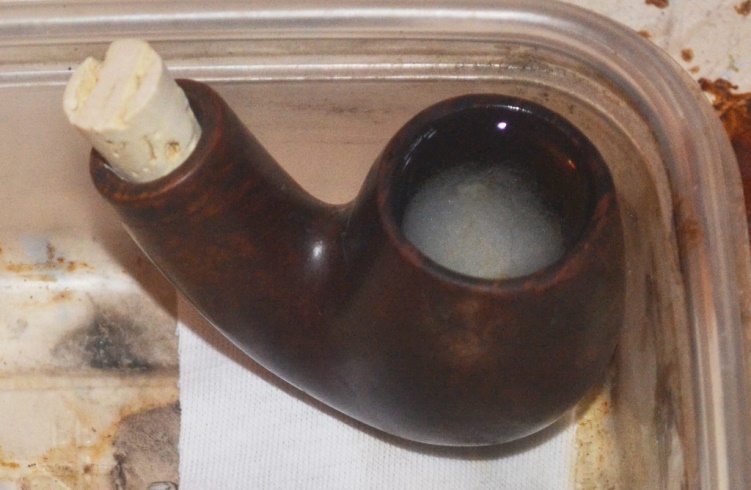
Another of the bowls I was gifted was a tall Meerschaum lined rusticated stack with a smooth spot on both sides of the bowl and the end of the shank. It is stamped on the underside of the shank, MEERSCHAUM-LINED over Dr. Grabow. The bowl exterior had some darkening on the back side of the bowl and the grooves of the bowl were caked. The rim had damage and the meerschaum lining was rough on the inside edge of the bowl. There were cracks in the meerschaum bowl insert on the rim. The bowl itself was cracked and missing from about mid bowl to the bottom of the bowl. The meerschaum pieces were lying in the bottom of the bowl and there was no stem for the pipe.

I did not know anything about the meerschaum lined Dr. Grabows and this one had a distinct look of an Italian made pipe. I went to my source on line for Grabow information the Dr. Grabow Forum (http://drgrabows.myfreeforum.org/sutra238.php). There I found a post on the meerlined pipes. It read in part as follows… “Meerschaum lined pipes were originally imported from M. Gasparini in Italy for Grabow. Sparta finally figured out how to do them and only imported the “plugs”. Early Grabow Meerschaum lined pipes were stamped Italy with no spade. After 1989 Dr. Grabow got rid of Italy and added the spade.” So, my sense of it being Italian was correct. It also dates this pipe as pre-1989. IMG_1848 IMG_1849 IMG_1850 IMG_1851 I had an old stem in my can of stems that would be a good fit for this pipe. I needed to sand the tenon slightly to get a snug fit against the shank. The diameter of the stem was slightly larger than the diameter of the shank and would need to be sanded down to make a matched fit. IMG_1852 IMG_1853 I used a pen knife to clean up the inside of the bowl. There was carbon build up on the lower part of the bowl about mid bowl that was holding together the broken pieces of the meer lining. I scraped away the carbon and removed the broken pieces of meerschaum that remained on the lower edge of the bowl insert. IMG_1854 I topped the bowl with a topping board and 220 grit sandpaper to remove the damage to the rim and the lining top. IMG_1855 I did not remove much of the bowl top but took off enough to make the bowl top and the rim top flush and smooth. In the photo below the cracks in the bowl insert are visible around the top edge of the bowl. IMG_1856 I used clear superglue to fill the cracks on the top edge of the insert and sanded them down. I mixed a batch of plaster of Paris and used the dental pick, the cuticle tool that I was gifts and a pipe nail to build up the interior of the bowl and replace the bottom half of the insert that was missing. I inserted a pipe cleaner in the shank and then packed in the plaster around the airway and tamped it in place on the bottom with the pipe nail and on the sides with the cuticle tool. I used one of the stain pens that I have to stain the rim to match the bowl. IMG_1857 IMG_1858 IMG_1859 I inserted my damp index finger into the bowl and rubbed down the sides of the bowl to smooth them out. I also pushed the plaster on the bottom of the bowl to more thoroughly pack it in place. I sanded the stem with 150 grit sandpaper to reduce the diameter of the stem and then 220 grit sandpaper to smooth out the stem. IMG_1860 I scrubbed the bowl down with acetone on a cotton pad to remove the finish and clean up the exterior of the bowl. I then rubbed it down with olive oil and let it soak into the finish. I also rubbed down the stem with the oil as I find that it makes sanding the stem easier to do. IMG_1861 IMG_1862 IMG_1863 IMG_1864 I sanded the stem with micromesh sanding pads – wet sanding with 1500-3200 grit pads and dry sanding with 3600-12,000 grit pads. I wiped it down between each of the sets of three pads with Obsidian Oil. Once it was dry I buffed the stem with White Diamond and then with carnauba wax. IMG_1865 IMG_1866 IMG_1867 I put the stem back on the pipe and buffed it with White Diamond. I lightly buffed the bowl with carnauba wax and the stem more heavily. I finished by buffing the pipe with a soft flannel buffing pad to raise the shine. The finished pipe is shown below. The thin shank and the thin diameter of the stem give the pipe a delicate look. It is very light weight and fits well in the hand. I am going to let the plaster of Paris repair dry and cure for several days before I load a bowl and give it an inaugural smoke. IMG_1868 IMG_1869 IMG_1870 IMG_1871 IMG_1872 IMG_1873
UPDATE: I just smoked this one after it had cured for two days. I loaded a bowl of The Malthouse Founder’s Reserve in the bowl and smoked it to the bottom of the bowl. It smoked cool and dry. The plaster of Paris is darkening nicely and will soon match the rest of the meer lining of the bowl.
IMG_1874 IMG_1875 IMG_1876

Finding Out Who Created GBD – Story of a Pipe Brand – Jacques Cole


I have had this article by Jacques Cole saved on my hard drive for a long time now. I have read it many times but last evening I read it again and thought it would be good to put on the blog. It gives a concise history of the brand and the mergers that went on to bring the brand to what it is today.It is a quick read for the GBD pipe collector and lover. This is the kind of information I am always on the lookout for because of the historical connection it gives to the pipes I smoke, collect and refurbish. It was printed in TOBACCO July 1982, pp.16-17. I formatted it to fit in a Word document, added some photos of old advertisements and done minor editing in terms of punctuation. – Editor

A number of pipe brands owe their introduction and continuation to craftsmen who gave the family name to their product and were followed for several generations by their descendants.
GBD however was not quite the same. The founders did give their names, but the ‘family’ was a partnership of men of similar skills and equal purpose of mind. They created a brand which became strong enough to gather its own momentum. The creators were no doubt wise to choose initials rather than one of their names.

Who were these creators? Ganneval, Bondier and Donninger were three ‘Master Pipemakers’ who got together in Paris in 1850 to manufacture meerschaum pipes. It was a bold decision as these were troubled times in France. Charles Louis-Napoleon Bonaparte has returned after the 1848 revolution and become President of the Republic. Following a coup d’etat in 1851, he made himself Emperor Napoleon III in 1852. He was incidentally a keen pipesmoker and may well have owned one or more early GBDs.

Ganneval is a known, if not common name in the Saint-Claude district of France and he seems to have been a native of these parts, where he learnt his craft. The name Bondier is still found in Saint-Claude, but may originally have come from Paris. One Bondier is known to have fled from Paris during the 1789 Revolution and settled in Geneva. Some of his descendants returned home eventually via Saint-Claude where our Bondier worked in the local industry learning the skills of the wood-turners and making stems for the clay and porcelain pipe industries. Donninger was probably of Swiss or Austrian origin, having gained experience in Vienna, the home of meerschaum pipes.

Of the three founders, Bondier was to survive 30 years longer than the others, but new partners took their places. The official name of the firm also changed, showing a succession of partners: Bondier Ulnch & Cie, then Bine Marechal & Cie and finally A Marechal Ruchon & Cie. Auguste Marechal and Ferdinand Ruchon saw the firm into the 20th century, their name being used as a company for well over 50 years. GBD MRC The intention of the creators of GBD was to make meerschaum pipes. Details of their early production is scarce, but they made carved heads,‘simpler’ models which included a fair proportion of bents of traditional meerschaum style, and similar shapes to the then familiar clay pipes, which we would recognise as Dublins or Belges, with a sprinkling of early Bulldogs.

The founders had early registered their mark and were able to fight off any infringement. A proof of the rapid growth and importance of the brand is shown by the findings of the Court of Chancery in London in 1874 in favour of GBD against someone using the name illegally. Many other ‘cases’ were won by GBD in various countries.

GBD understood at once the advantage of briar when this was discovered in the 1850s to be an ideal material for pipe making. The close contacts already established with the industry in Saint-Claude helped to provide the raw material. While briar helped the simplification of pipe shapes, meerschaum production went hand in hand with briar and we can see in surviving carved briar pipes the influence of Vienna that came with Donninger. Briar soon became the main material.

MEDAL AWARDS

Business and reputation developed quickly and there is no better indication of this than the record of 15 medal awards gained at international exhibitions in nine cities all over the world during the first 40 years of GBD.

The partners must have been busy: they show the brand establishing itself in Europe, the USA, Canada and Australia. South Africa was to come later.

At the start of the ‘briar age’, GBD used only the best quality although after a time a second slightly lower quality became necessary to meet rapidly growing demand.

The need for a wider price range was solved by the variety of fittings. Amber, horn, ivory and even quill were used for mouthpieces, followed by vulcanite towards the end of the 1870s. Various types of silver and gold bands were greatly in demand and so were pipes in fitted cases, plain or carved.

FINE COLLECTION

GBD was offering towards the end of the century 1500 ‘models’, bearing in mind that a shape offered with three different mouthpieces was listed as three different models. This made a really fine collection. A shape chart of 1886 shows a basic 125 shapes (the actual total was 1600 which included 12 Billiards, 36 Bents and 46 Dublins/Belges) many with heels. These formed the core of the collection shown in Amsterdam in 1888. One of the principal features of GBDs was the slimness of their stems.Some 20 years later, the balance had somewhat changed: still 36 Bents;
Billiards gaining in popularity (36); 32 Dublins/Zulus, a few still with heels; but the Belge, cousin to the clay pipe, down to two small models.

On the other hand Bulldogs had risen to 15 shapes. In the first ten years of this century, amber and amberoid were still used, but vulcanite and horn mouthpieces were the most popular mouthpieces. Another ‘trend’ was the inclusion of some 30 models in various shapes fitted with
‘Army Mounts’. The range had by now taken on a more British aspect,and for good reasons: GBD had become British.

Charles Oppenheimer had started his successful General Merchant business as an import-export house in 1860. He was joined by his brothers David and Adolphe and brother-in-law Louis Adler. Briar pipes were among the earliest lines handled and the connection with GBD Paris started in 1870, being most important customers. A. Oppenheimer & Co were appointed exclusive agents in 1897. Adolphe Oppenheimer took a keen interest in the pipe side of the business, and most important, James Adler, son of Louis, was to take a major part in the ‘change of nationality’. GBD Oppenheimer With other interests in Saint-Claude, Oppenheimer acquired A. Marechal Ruchon & Cie, in 1902 and it became A Marechal Ruchon & Co. Ltd., a British company with four directors, two British and two French, namely, Adolphe Oppenheimer and James Adler in London, and Auguste Marechal and Ferdinand Ruchon in Paris, with the latter as the first chairman of the new company.

FAMILY INVOLVED

The Adler family is still very much involved with GBD. The head office was in London with the main, now enlarged factory in the Rue des Balkans. Paris, while a large factory was being built in Saint-Claude. Although perhaps envisaged at that stage, manufacturing in London did not get underway until the 1914/18 War when it is recorded that in 1916, the bowl turning facilities in Saint-Claude shipped some 27,000 dozen bowls to GBD Paris of which 18,000 dozen went to the London Works. After the War, GBD production continued in both London and Paris. London Made went mainly to the then British Empire and the USA, while Paris supplied the French and
European markets. Later the products of both countries were to be seen on occasion side by side, particularly to satisfy special requirements.

The siting of factories has a bearing on our story, so we must jump ahead a little to record that in 1952, the manufacture of French GBDs was transferred from Paris to Saint-Claude, together with all services, to the benefit as it turned out of GBDs on the French market in particular. GBD French We have seen that early Briar GBDs were made in only one, later two qualities and the need to mark the difference did not arise. There were few finishes but towards the end of the 19th century demand was changing, for instance the UK had a “penchant” for the darker finishes.
Qualities were therefore sub-divided and we see the introduction of the GBD XTRA (note the spelling). The GBD Speciales were as the name implied, special models, finishes and fittings. GBD XTRAs were the cream, being mostly straight grains. The ‘ordinary’ quality was simply stamped GBD.

Demand after the First World War called for further identification starting with GBD ‘London Made’ which became ‘Standard London Made’, followed by GBD ‘New Era’, top of the range in 1931 at 12/6d! GBD ‘Pedigree’, although first thought of around 1926, was well established in the late 1930s. GBD ‘New Standard’ was created to give a boost to the ‘Standards’ of the 1920s and a newly introduced sandblast was called GBD ‘Prehistoric’, still bearing a small GBD ‘Xtra’ stamp. GBD New Era French made GBDs followed more or less the same ideas; still however using ‘Xtra’ and ‘Speciale’ while in the late ’20s a metal system GBD was introduced under the name GBD ‘Extra Dry’.
The 1920s also saw an important development with the introduction of the metal GBD inlay on mouthpieces which gave the pipes that extra ‘touch of class’. This inlay has been used on GBDs for nearly 60 years.

After the closing of the Paris factory, GBD ‘Standard’ was used on a basic fine range with an appropriate finish to fill the lower price range. Both the London and the St Claude factories continued to supply top quality ‘Straight Grains’ and cased pipes were still in demand up to the
1950s. In the 1960s the Jamieson shapes from London equaled or even headed the best in the very specialised field of handmade pipes.

GBD of course, keeps up with the times, and while the steady ‘Pedigrees’ and ‘Standards’ keep going, the need for innovation has produced a new series: GBD ‘Gold Bark’ fitted with a gold ‘bark’ band, GBD ‘Jetstream’ with a modern mouthpiece design, and GBD ‘Champagne’ with a high quality acrylic mouthpiece.

We cannot leave GBD without mention of an important line just below the GBD quality — often referred to on the French market as the ‘petite’ GBD — the ‘City de Luxe’ range first registered in 1922. The distinctive metal star on the mouthpiece was introduced at the same time as the GBD inlay. ‘Citys’ are made in both London and France. GBD City STRONG POSITION

GBD is in a strong position on the world’s markets and is known to all discriminating pipesmokers. The families now involved with its success are the Oppenheimers and the Adlers of London. It was the late Alan Adler who coined the phrase ‘having the Holy Fire’ which sums up the feeling in the GBD organisation, his son John being head of the firm.

Older readers will remember Jack Cole, who left London in 1919 for a’short stay’ in France but went on to remain there up until his death over 50 years later, and for a time had his sons with him. They and the many others who have contributed to the GBD story have a great affection for the brand. Back in 1850, Ganneval, Bondier, and Donninger really started something.

Rejuvenating a Willard Straight Rhodesian


Another of the bowls from the gift box was this Willard Rhodesian. It was in pretty good shape other than being dirty and stemless. The bowl had a broken cake at the top of the bowl and remnants of tobacco left in the bowl. The rim was dirty and lightly caked with some damage caused from tapping the rim on something. The outer and inner edges of the bowl were undamaged. The interior of the shank was dirty. The shank was fitted with a threaded mortise that would take a threaded stem. I had a stem in m can of stems that fit well in the shank, was overturned but workable. The diameter of the stem was larger than the shank. The photo below shows the stem on the pipe in the middle of the threesome. IMG_1750 I set up a heat gun and held the stem about three inches above the heat. The first photo below shows the stem in place. To heat it I removed it from the bowl and heated the metal tenon. When it was warm I screwed it back in place and twisted it. I had to reheat it several times to get the alignment correct. The second photo shows the aligned stem. IMG_1752 IMG_1755 I sanded the stem with 150 grit sandpaper to reduce the diameter of the stem. I also sanded the slope to the button to highlight the tooth marks on the stem. IMG_1809 IMG_1810 IMG_1811 I used a needle file to sharpen the inner edge of the button and make the angles more distinct. IMG_1812 I wiped down the bowl with acetone to remove the grime and clean up the finish. I did not want to lighten the finish as much as to clean off the light coat of varnish on the briar. IMG_1814 IMG_1813 I lightly topped the bowl to clean up the rim damage. I used a sanding board and 220 grit sandpaper to remove the damaged briar and then followed that by sanding with a medium and a fine grit sanding block. IMG_1815 IMG_1816 I continued to sand the stem to match it to the diameter of the shank. I used 220 grit sandpaper to finish the sanding and shaping of the stem. I worked on the tooth marks on the top side and underside of the stem with 220 grit sandpaper until they were no longer visible. IMG_1817 IMG_1818 IMG_1819 IMG_1820 I reamed the bowl with a PipNet pipe reamer beginning with the smallest cutting head and working up to the one that was the same diameter as the bowl. I reamed the bowl back to bare wood. IMG_1821 IMG_1822 I sanded the stem with a medium and fine grit sanding sponge to reduce the scratches left behind by the 220 grit sandpaper. IMG_1823 There was one stubborn tooth mark that I could not get out on the underside of the stem next to the button. I cleaned the area with alcohol and then used clear super glue to repair it. I sprayed the path with an accelerator so that I could sand the patch sooner. IMG_1824 IMG_1825 IMG_1826 IMG_1827 I sanded the stem with micromesh sanding pads – wet sanding with 1500-3200 grit pads and dry sanding with 3600-12,000 grit pads. I rubbed down the stem with Obsidian Oil between each group of three micromesh sanding pads and then when I finished sanding with the 12,000 grit pad I buffed it with White Diamond. IMG_1828 IMG_1829 IMG_1830 I buffed the bowl and shank with White Diamond and then gave it a coat of Danish Oil and walnut stain to protect and preserve the finish. When it was dry I buffed the pipe with White Diamond and then gave it several coats of carnauba wax. IMG_1835 IMG_1836 IMG_1837 IMG_1838 The finished pipe is shown in the photos below. The new stem fits well. In fact it looks like it came with the pipe. The repairs to the stem are not visible. The bowl itself dried well and buffing the finish gave it a softer look. The finished pipe was given several more layer of carnauba wax and then buffed with a soft flannel buffing pad. It is now ready for many more years of service to another pipeman. IMG_1844 IMG_1845 IMG_1846 IMG_1847
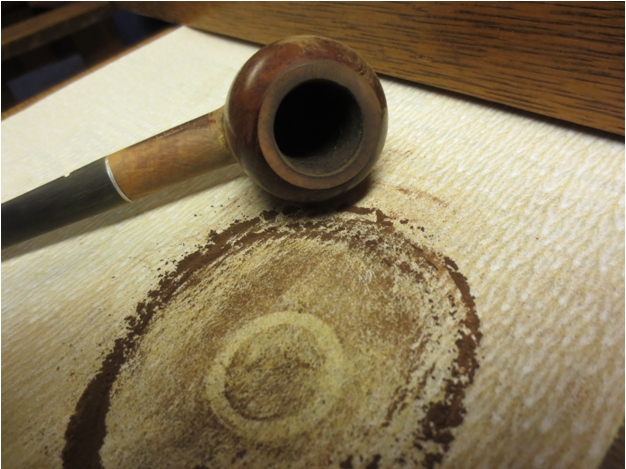
Kaywoodie Flame Grain 99B Restored (pre-1955)


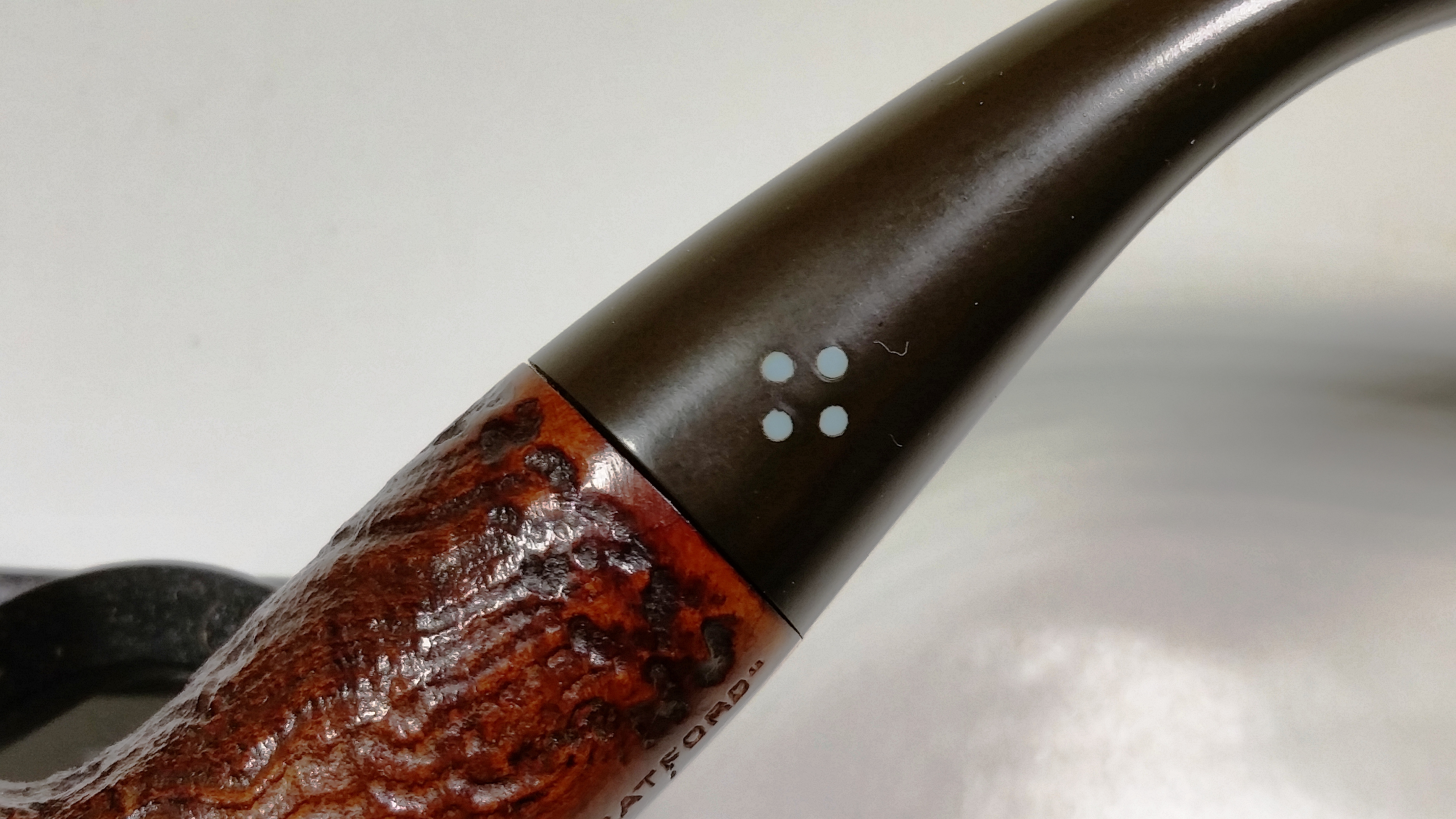
I love older Kaywoodies, with the four-hole stinger and have several Super Grain models. This is my first Flame Grain, in the tapered stem bulldog shape, 99B.

This is one of the older Flame Grains as that stamping is over Kaywoodie. The stinger is a four-hole and the Flame Grain stingers were not stamped “Drinkless”. The four hole stinger was dropped in the early 1950’s. Kaywoodie collector Tony Soderman recently posted a similarly stamped pipe on Ebay and the ad said this about the age.

“This Flame Grain dates from the LATE 1940’s. It has a 2-Digit Shape Number so it is made after 1937 but “Flame Grain” is OVER “KAYWOODIE” in the Nomenclature, and it has a LARGE BALL, 4-HOLE “STINGER” (without the word “DRINKLESS” on the shaft of the “Stinger”)!!! These features come together after World War II and prior to 1950. So it is easily dated to the LATE 1940’s!!! (Tony Soderman ad)

The bowl had a heavy cake and there was even some old tobacco in the bottom of the bowl. Somehow, the stem was in terrific shape, only oxidized with nary a tooth mark. Flame Grain pipes had the reverse cloverleaf logo.

Kaywoodie_Flame_Grain_99B_Before

Kaywoodie_Flame_Grain_99B_Before (5)

Kaywoodie_Flame_Grain_99B_Before (2)

I reamed the bowl and discovered the previous owner had at some point reamed the pipe and apparently used a penknife as there were some irregular gouges inside the bowl. The rim was sightly out of round. I soaked the bowl in sea salt and alcohol. The shank was very difficult to clean and took nearly an hour with an assortment of brushes and alcohol. The four holes on the stinger ball were completely caked with build-up.

I remove the oxidation on the stem first with some 800 wet paper, than 1000, 1500 and 2000 grades. I then used the 8000 and 12000 grades of micromesh. The stem was mounted and then lightly buffed with white diamond rouge.

The grime revealed a very nice grain pattern and some birdseye on the bowl top. I’ll look forward to adding this one to my rack of older Kaywoodies.

Kaywoodie_Flame_Grain_99B_Finished

Kaywoodie_Flame_Grain_99B_Finished (10)

Kaywoodie_Flame_Grain_99B_Finished (1)

Kaywoodie_Flame_Grain_99B_Finished (3)

Kaywoodie_Flame_Grain_99B_Finished (9)

Kaywoodie_Flame_Grain_99B_Finished (11)

Kaywoodie_Flame_Grain_99B_Finished (12)

Update:
This pipe had an issue with the stem fitment that I had not yet encountered on a screw-stem Kaywoodie. The stem insert was off by a few degrees. Steve suggested trying to tweak the insert using a pair of needle-nosed pliars, but I couldn’t budge it and getting a grip without damaging the briar was just about impossible. I was ready to give up, but wondered if one of the bits in a Matco screw-extractor set would remove the stem completely. I thought perhaps then I could screw it back to the correct orientation. The screw-extractor is a reverse thread so it grips and I did successfully remove the insert. Here you can see the insert partially removed and the extractor.

Kaywoodie_Flame_Grain_99B_Stem-Fix

When I screwed the fine threaded insert back into the briar, it would not screw in all the way and the alignment was way off on the other side. I removed it again and cleaned the threads on the insert and in the briar (just blew out some debris). I added a little lithium grease to the first couple of threads. This allowed the insert to fully and squarely seat against the briar. This was truly nerve-wracking work but a good result.

Kaywoodie_Flame_Grain_99B_Stem-Fix (1)

Kaywoodie_Flame_Grain_99B_Stem-Fix (2)

Beall Wood Buff System Modified & Used – Eugen Schlaak


Many years ago now, I was searching for information on the Beall Wood Buff System and came across this article by Eugen Schlaak, a woodworker from Niagara Falls Ontario Canada written August 15, 2006. I devoured his article on the system and on the modification he made to it for his own use. I found his write-up on the various supplies he used also helpful. I remember hunting down the Beall system and gathering supplies based on Eugen’s recommendations. While they are written for wood turners and hobbyist bowl makers the principles and tools are very applicable to those of us who work with the restoration of pipes for a hobby. The article below is the complete text of Eugen’s article. Enjoy the read! – Editor

Many systems always existed for polishing properly sanded work produced on the wood-turning lathe, but all components required to achieve good end results had to be assembled by the wood turner and in many cases also had to be purchased from different sources.

Some years ago the BEALL Tool Company started marketing a kit with all the necessary components, such as the wheels, buffing compounds and the hardware required to fix the different wheels to the lathe output shaft or a freestanding motor.

This kit is called “The Beall Wood Buff” system and is an easy, three-step wood polishing system which produces astonishing results on bare or oiled wood. It mainly consists of three graded polishing wheels, Tripoli compound, White Diamond compound and Carnauba wax.
The buffing system can be used on any surface finish, not only on penetrating finishes, but extreme care has to be taken that the heat created by the buffing wheel does not melt the finish previously applied to the surface, such as on a lacquer finish.

I have been using this system since its inception with much success, but I added another additional step to the polishing routine, by using a coat of “Renaissance” brand micro-crystalline wax as the final step. This product is marketed as a furniture conservator’s wax which protects any surfaces against finger marks and airborne pollutants, as well as providing some moisture resistance. This particular brand is manufactured by Picreator Enterprises Ltd, in London England and is available through many woodturning supply stores in Canada and the USA. This combination of micro-crystalline waxes (petrochemical based) is also widely used by art galleries and museums all over the world on many other surfaces besides wood, such as on leather.

The major components, including a keyless chuck are shown in Figure 1.

Figure 1

Figure 1


There are many ways to mount these polishing wheels to the lathe and/or motor shafts and all components for this task are included in the kit produced by Beall Tool Company.

In my shop I have used a keyless chuck with an attached # 2 Morse taper shaft adapter in my head stock spindle and properly inserted this assembly will not come loose during usage, as is evident in later illustrations.

A model “SUPRA “, 5/8” capacity keyless chuck produced by “RHOEM” in Germany (shown in the photos), including the adapter, can add as much as $ 200.00 to your tool inventory, if you purchase this chuck intended to be used for the machine shop environment and metal work. But this one is very accurate easy to tighten and will last forever.

But for use on the wood-turning lathe there are many less expensive chucks available produced off shore.

A keyed chuck will also suffice, but considerable time can be saved using a key less chuck when the buffing wheels are changed frequently. Fig. 2 shows a typical assembly using the heavy duty “RHOEM” chuck. A slight tap with a soft mallet may be required to seat the Jacobs taper securely in the lathe drive spindle at the headstock.

Figure 2

Figure 2


In addition to the standard 8” diameter buffing wheels, ball type goblet buffs as shown in Fig.3 are also available from Beall and smaller buffing wheels can be purchased from other manufacturers, the smallest ones are available from companies supplying tools for the denture and jewelry industry and are shown in Fig. 4 together with a ¼” drill rod extension for reaching into deeper hollow vessels.
Figure 3

Figure 3

Figure 4

Figure 4

Over the years I have collected a wide assortment of different size wheels and the most common wheel buffs used in my daily routine are stored within easy reach of my lathe, Fig 5. A fairly new set of wheels at 8” diameter is shown and my first set I purchased which is almost worn down to 6” diameter. I addition to the standard wheels shown in the photo, there is a wheel of very soft cotton to polish the final coat of micro-crystalline wax at low speed.

It is also a good idea to permanently mark each wheel for the procedure it is intended for, because the factory applied descriptions are hard to read.

Figure 5

Figure 5

So much for the tools you need to purchase, let me describe the process as suggested by the Beall Tool Company in their instructions supplied with the buffing system:

While most woods may be buffed bare, a more durable finish will be achieved if a sealer or penetrating oil finish is applied first. Sand your work to at least 220 grit, but I power sand to 400 grit, which of course results in a higher gloss on the buffed piece.

After sanding I apply one or more coats of a good quality penetrating oil finish such as “Minwax” Antique Oil, “Watco” Clear Danish Oil or tung oil. When the oil is completely dry the buffing process can begin.

The process begins with the all-linen Tripoli Wheel and the red Tripoli Compound, Figure 6.
Apply a generous amount of compound to the spinning wheel and begin buffing the work piece. You must hold it tight and position it slightly below the center of the wheel, so the wheel cannot “grab “ the piece. You will be surprised how much damage can be caused to your prize winning turning if it leaves you grip. I have heard of turners placing a heavy padded blanket on the lathe bed and behind it, to avoid too much damage just in case you lose your grip, especially on irregular shaped pieces or items which have a ragged rim, which easily can be caught by the revolving wheel.

Several applications of the compound maybe required if you work on a larger item.

Figure 6

Figure 6

On a new wheel a heavier application of the compounds may be necessary, than later, when the wheel is loaded.

The next step requires the softer, linen-cotton blend White Diamond Buff and the harder, drier White Diamond Compound. Only a relatively small amount of this compound is applied to the revolving wheel and the work piece is buffed lightly. If there is any residue left from the Tripoli, it will be removed at this time during the final polishing. Fig. 7 shows the inside of a larger bowl being polished. Again: HOLD ON TIGHT, when the wheel gets near the rim!

At this stage I want to point out that I do not like an arrangement where all the polishing wheels are mounted on one shaft. As is evident from this photo that a large bowl like the one shown could not be polished on the inside with all wheels spaced and mounted on one shaft. But it could be time-saving if turnings only require to be polished on the outside.

Figure 7

Figure 7

The final step in polishing is applying the pure Carnauba wax, known as one of the hardest waxes available and the third wheel, an all-flannel wheel, is used. Once the wheel has been charged with the yellow carnauba wax a few times, only VERY SMALL additional applications will be needed. Just touching the wheel for a second will deposit enough wax to polish.

If the wheel gets loaded with too much wax, streaks of melted wax will appear on the surface being polished and at times it is almost impossible to remove these blemishes by additional polishing.

This last step of buffing the work piece very lightly on the wax wheel will quickly produce a beautiful protective sheen, Fig 8.

Figure 8

Figure 8

As mentioned previously, I add an additional step by lightly covering the surfaces with a coat of micro-crystalline wax. This type of wax is available from various suppliers to the wood-turning trade and can be used sparingly and a small tin will last for a long time. Only a light polishing at a low-speed is required after this wax has dried for a short time and after the surface does not feel sticky to the touch any more.

I use a dedicated clean soft cotton flannel wheel for this last polishing step.

From the steps described above it is evident that buffs with different compositions are used: The Tripoli Wheel is a somewhat stiff all-linen fabric, the White Diamond Wheel has linen plies interspersed with softer cotton ones and the Wax Wheel is very soft all cotton flannel fabric.

Many turners advocate assembling their own system by searching and buying the individual components and therefore save some money. I have tried this method, but in the end the cost was about the same and I was never 100% sure I had the right wheels for composition, diameter and thickness. So at this point I suggest for a beginner turner to purchase a fully assembled kit.

Other turners are suggesting to have dedicated motors for each wheel with about 1750 rpm. That seems to be a good idea, but we turners already have the “Motor”, the wood-turning lathe, why not make use of it? The biggest advantage of doing this is that most lathes have some sort of speed control, which is very advantageous when polishing inside hollow vessels or forms of various diameters. Whilst a buffing wheel at full rotational speed cannot be inserted into a vessel, which has an opening smaller than the wheel itself at a low-speed the wheel can be squeezed and forced into the opening and all the steps of polishing can be achieved safely, but at a slightly slower speed, see Fig.9 and 10.

Figure 9

Figure 9


Figure 10

Figure 10

For smaller type turnings or goblets, smaller type wheels or ball type goblet buffs as shown in Fig. 3 and 4 can be utilized. But I find that the goblet buffs with the special tapered mounting pins are filling up quickly with compound or wax and become very stiff in a short time. These buffs, made by the Beall Tool Company, require frequent cleaning with a nail type rake or coarse wire brush to keep them “fresh”.

The use of such a buff is shown in Figure 11.

Figure 11

Figure 11

Because of the different construction of each buffing wheel, it is most important to change wheels between each step in the buffing process.

The White Diamond and wax wheels never require cleaning or washing. Once they are loaded, only fresh compound or wax are needed as required. They are actually getting better with age, but a bit smaller in diameter!

If the Tripoli compound becomes too built-up on the all-linen wheel it has to be cleaned. In order to do this, simply back a piece of coarse grit sandpaper with a piece of scrap wood or use a fine wire brush and hold it up against the spinning wheel until the built-up is removed. I find that I have to this only on very few occasions.

A bit of a safety advice when using the polishing wheels:
Always wear eye protection and a suitable dust mask. The Tripoli Compound contains silica quartz and may cause temporary irritation of eyes, ears, nose and the respiratory tract and prolonged excessive inhalation may result in a respiratory disease.

Do not wear loose clothing while performing any polishing procedure, but that applies of course to any work around the woodturning lathe

I have attempted to describe a finish and polishing process, with which I am very familiar. I have used it for many years in addition to other finishes, such as lacquers etc. For simplicity and speed in any wood-turning shop, it is hard to beat the system described here, not necessarily the assembled Beall system but any system using the same components from various suppliers.
Many of the instruction shown here are gathered from the clearly written operating instructions, which accompany every kit supplied by the Beall Tool Company.

Figure 12 shows some typical bowls finished and photographed for this article and I welcome any comments and/or corrections with regards to the above described procedures.

Figure 12

Figure 12

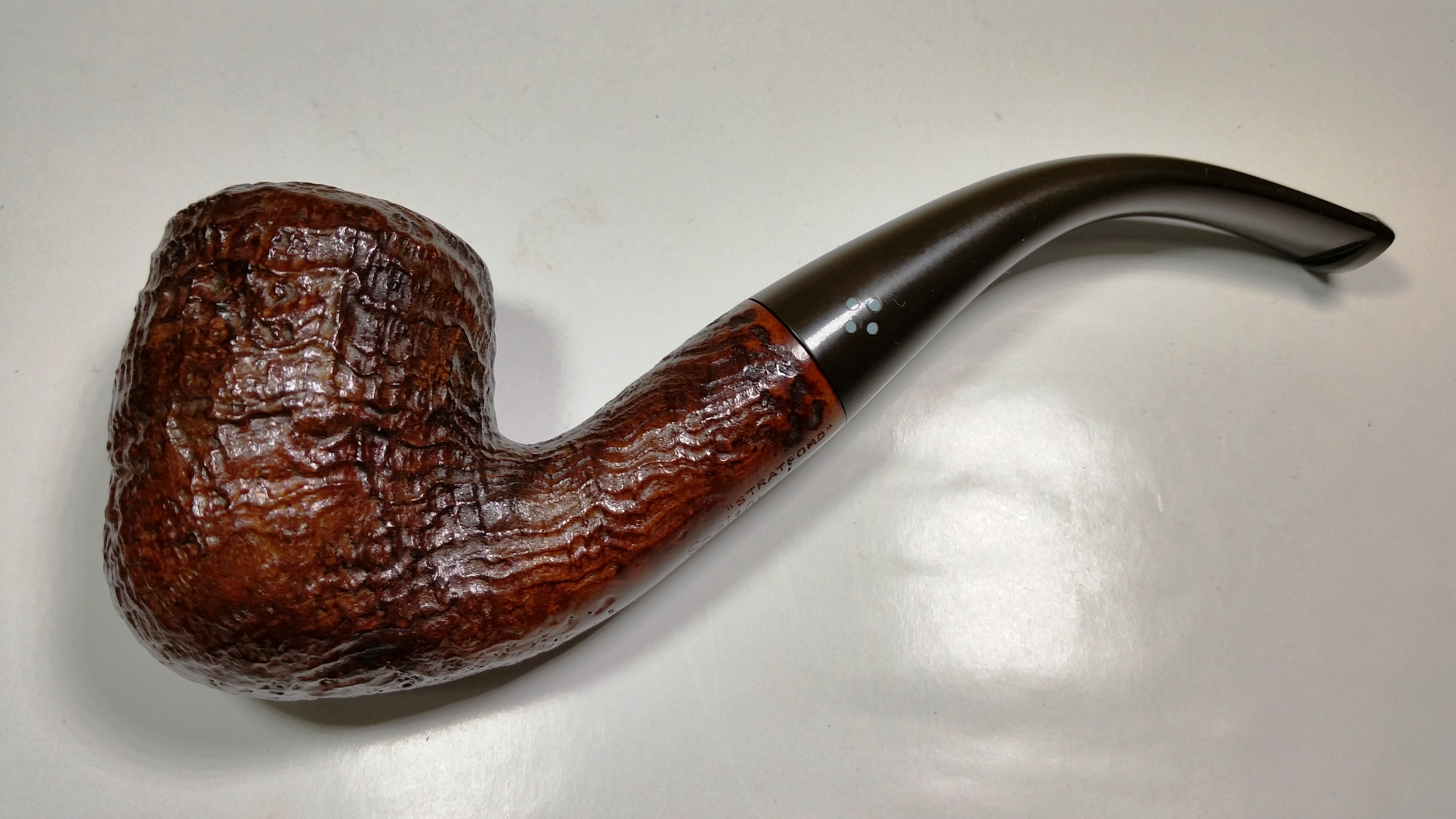
Kaywoodie Drinkless Bent


Another refurb by reserectedpipes – a Bent Kaywoodie. Nicely done

ReserectedPipes's avatarReserectedPipes

Recently I won a pair of Kaywoodie Bents on eBay. When they  arrived they were in pretty good shape. Here is the first Reserection of the pair.

I gave it a light ream with my Castelford ream set followed by a nice alcohol cleaning and cleaned the rim with some saliva and alcohol. The stem had some chatter at the bit and I sanded it out with wet pads from 1200-4000 grit and dry sanded it through 12000 grit.

Using a black stain I redid the rusticated areas and then with a dark brown stain I went over the rest of the bowl. Lastly I gave it a ride on the buffing wheel and used some Brebbia Stem Polish on the stem to bring it back up.

View original post

A unique pipe tool that arrived in the bottom of my gift box


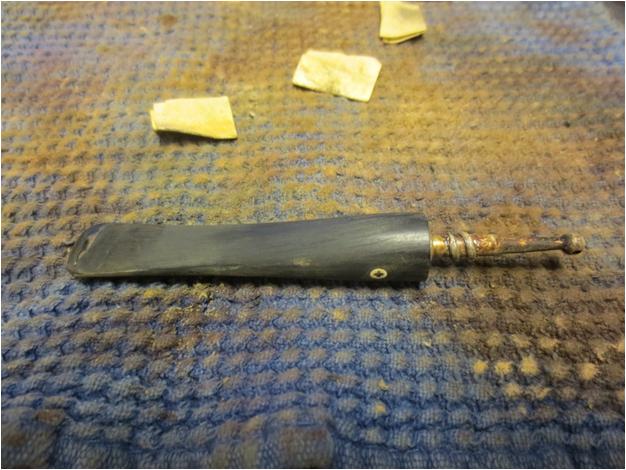
In my gift box from Jim there was a small pipe tool in the bottom of the box. It has an amberoid handle that is flat and very translucent. The amberoid material has flecks and pieces in it that are almost like real amber. It has a beautiful handle. The handle is flat and thin – the same thickness as the blade on the spoon end of the tool. It is very lightweight. The spoon end and shaft are chrome and polished up very nicely. The blade is fixed in the handle. It works amazingly well as a tool to clean out dottle in a bowl and also to gently scrape estate pipes that I am cleaning up. The spoon end is curved and fits against the curved wall of the bowl perfectly. The edges are thin but not sharp so it is not a scraper in the true sense of the word but works on soft cake and the crumbly cake in some estates.

Top side of the scraper

Top side of the scraper


Side view of the scraper with top up

Side view of the scraper with top up


IMG_1793
The handle had a few damaged spots or nicks along the edge that needed to be repaired. They were rough to the touch and I was afraid of them breaking further. I cleaned the handle with alcohol on a cotton pad and then repaired the nicks with clear super glue. I sanded the glue smooth with 220 grit sandpaper and then a medium and fine grit sanding sponge. I finished by sanding the handle with micromesh sanding pads – wet sanding with 1500-2400 grit pads and dry sanding with 3200-12,000 grit pads. I buffed the handle carefully with White Diamond and then rubbed it down with Obsidian Oil and gave it several coats of carnauba wax to polish and protect it.
IMG_1794
IMG_1795

view of the handle of the scraper


The final photo below shows the handle with light shining through it. The amber colour and dark flecks give it a very attractive look. The tool has already found its way into my refurbishing tool kit and I use it regularly now to clean out the bottom of a bowl that I have just reamed. I also have used it to apply pipe mud and find the rounded back of the spoon works perfect to press the mud into the sides and bottom of the bowl.
IMG_1796

close up view of the handle of the scraper


I have no idea if the tool was originally designed to be used with pipes or not but it certainly works for me and will remain a usable tool for as long as I do refurbishing work. Thanks Jim.