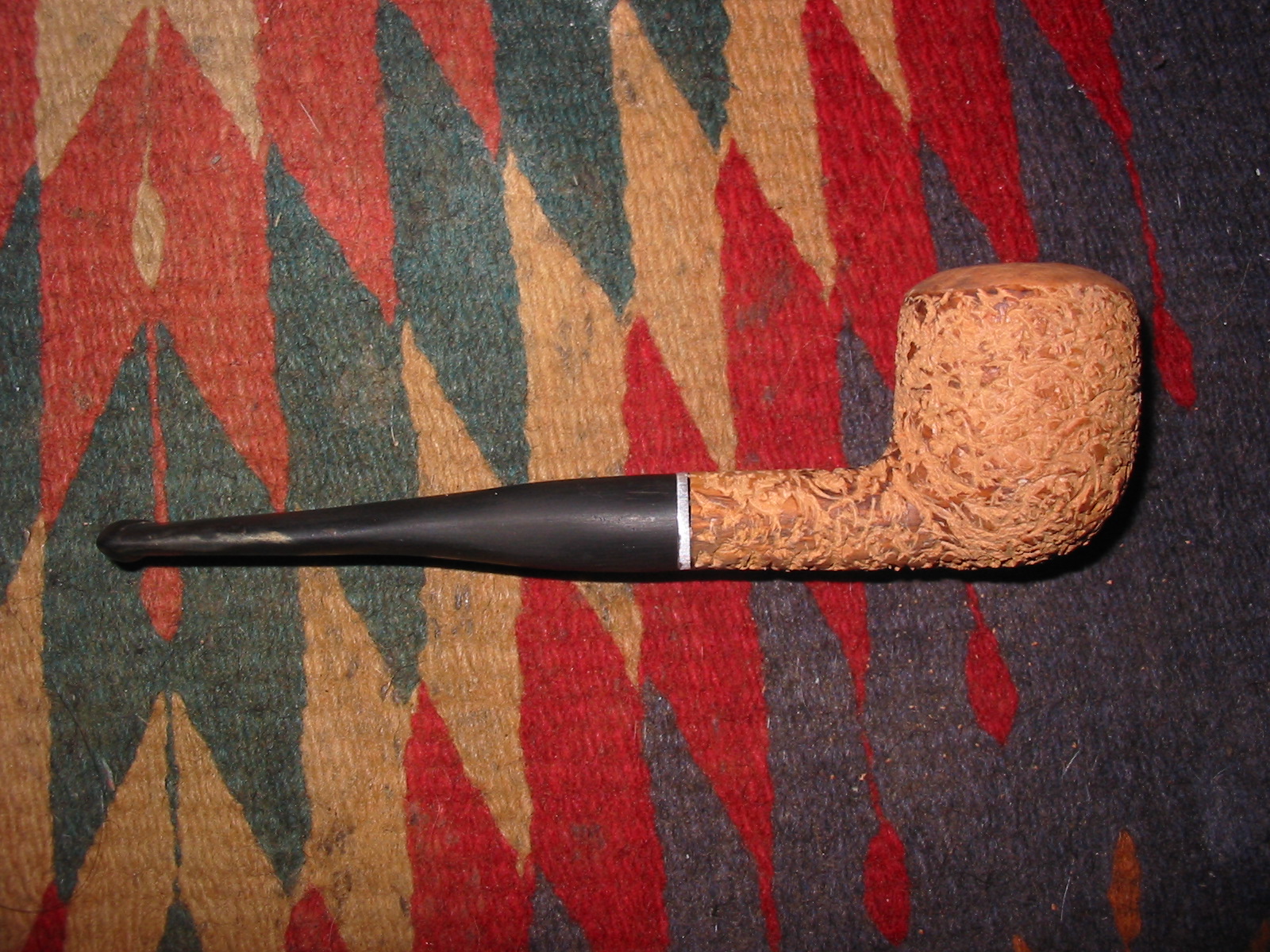
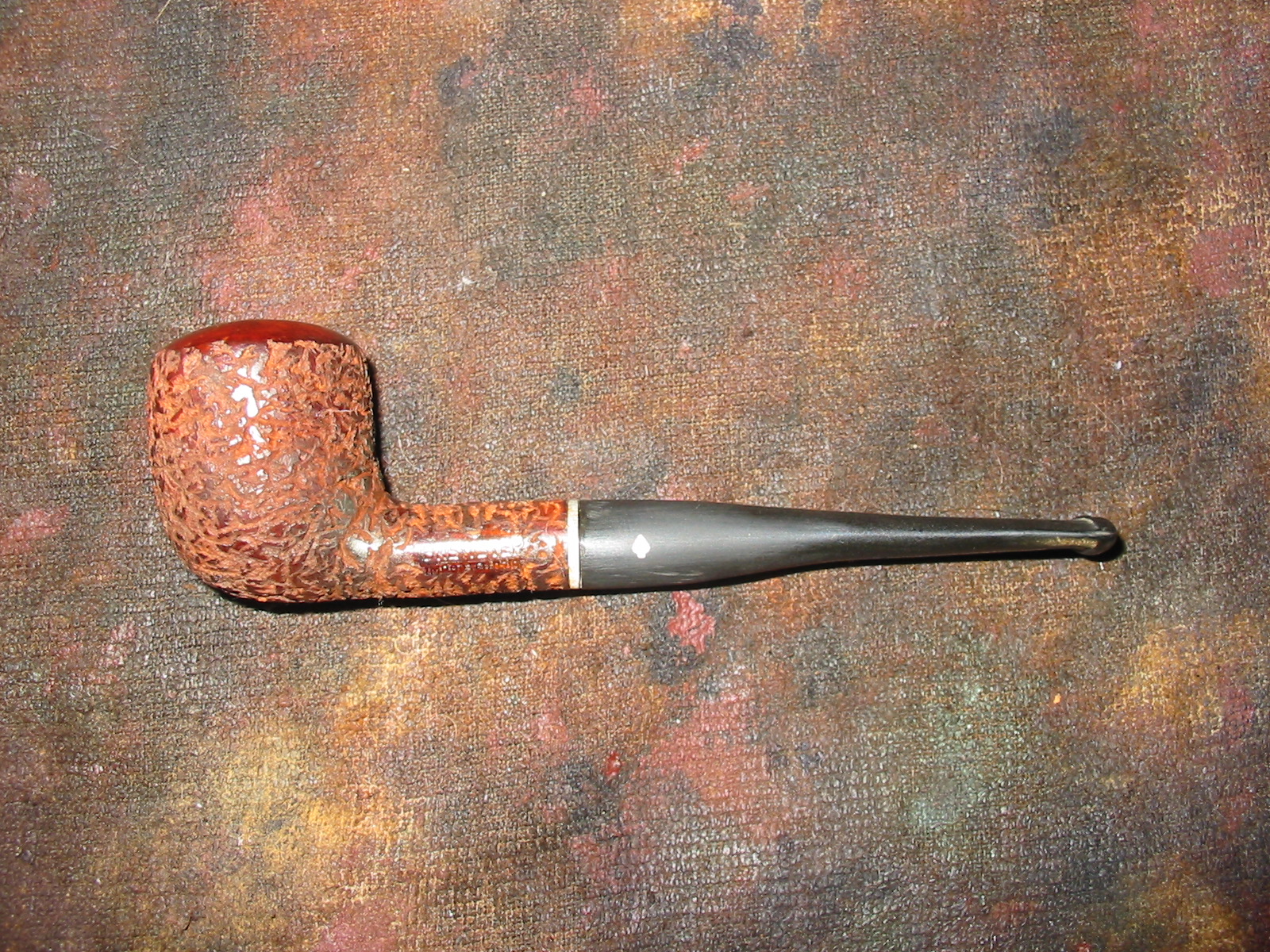
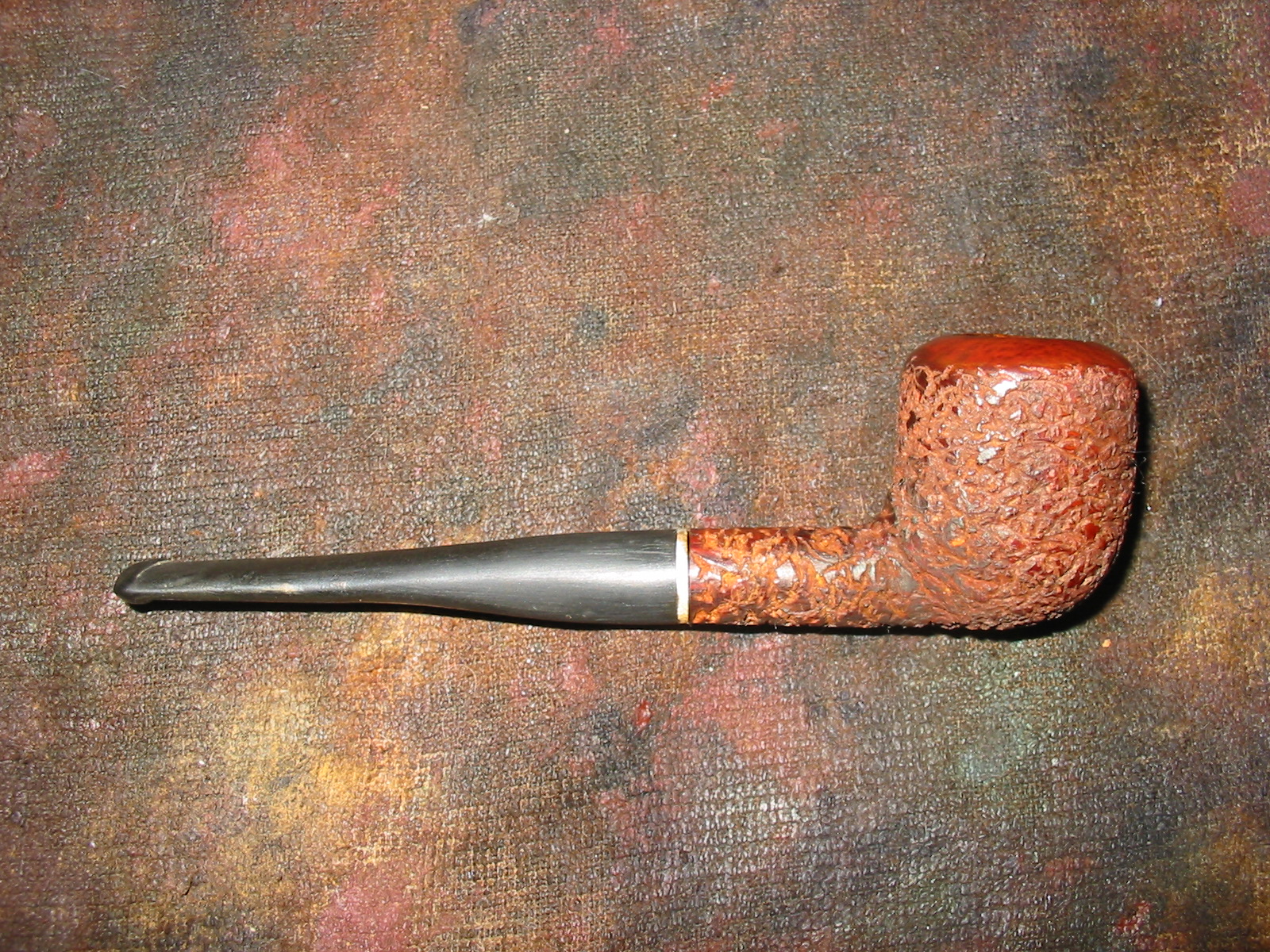
Category Archives: Pipe and Tobacco Historical Documents

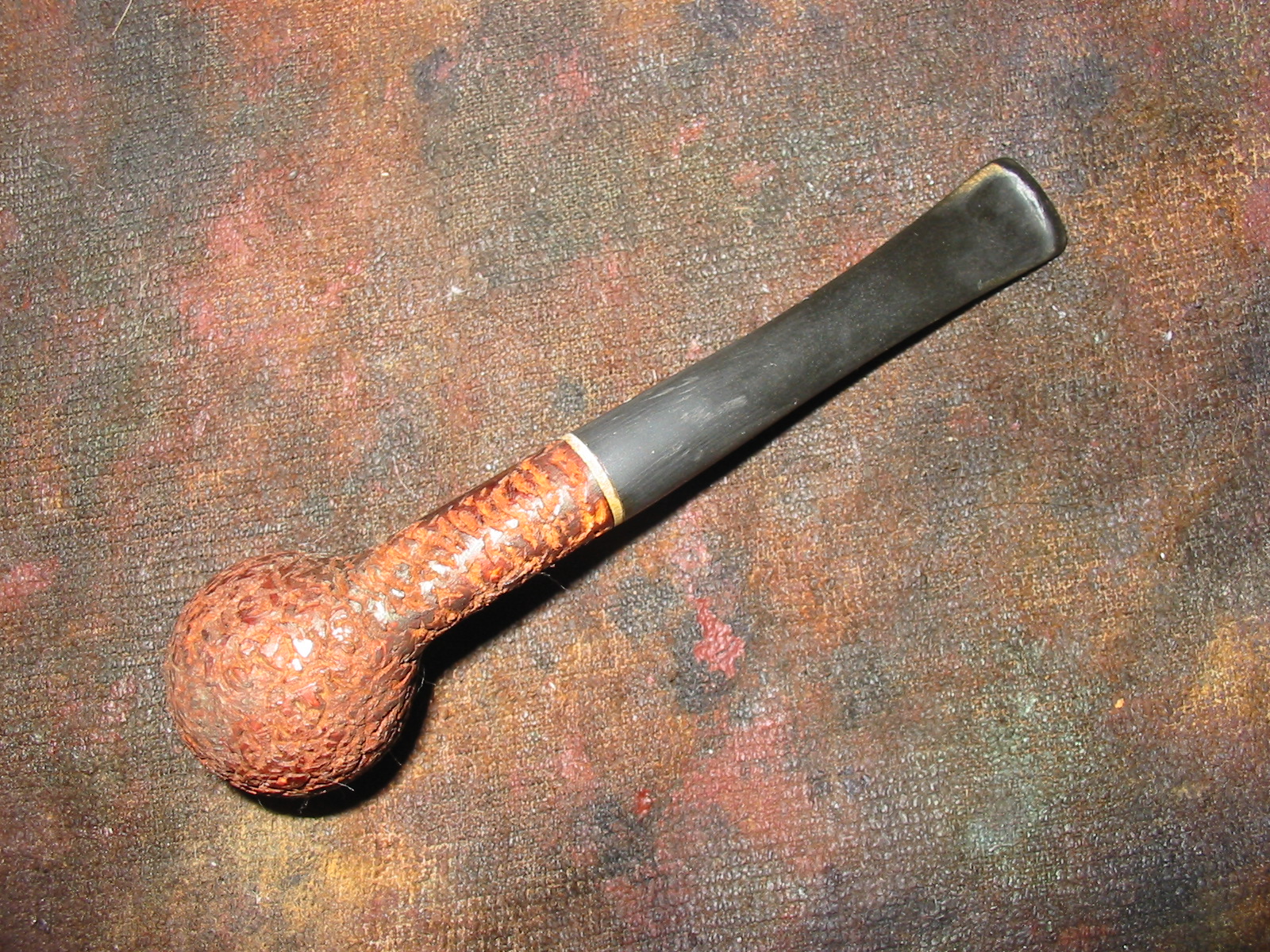
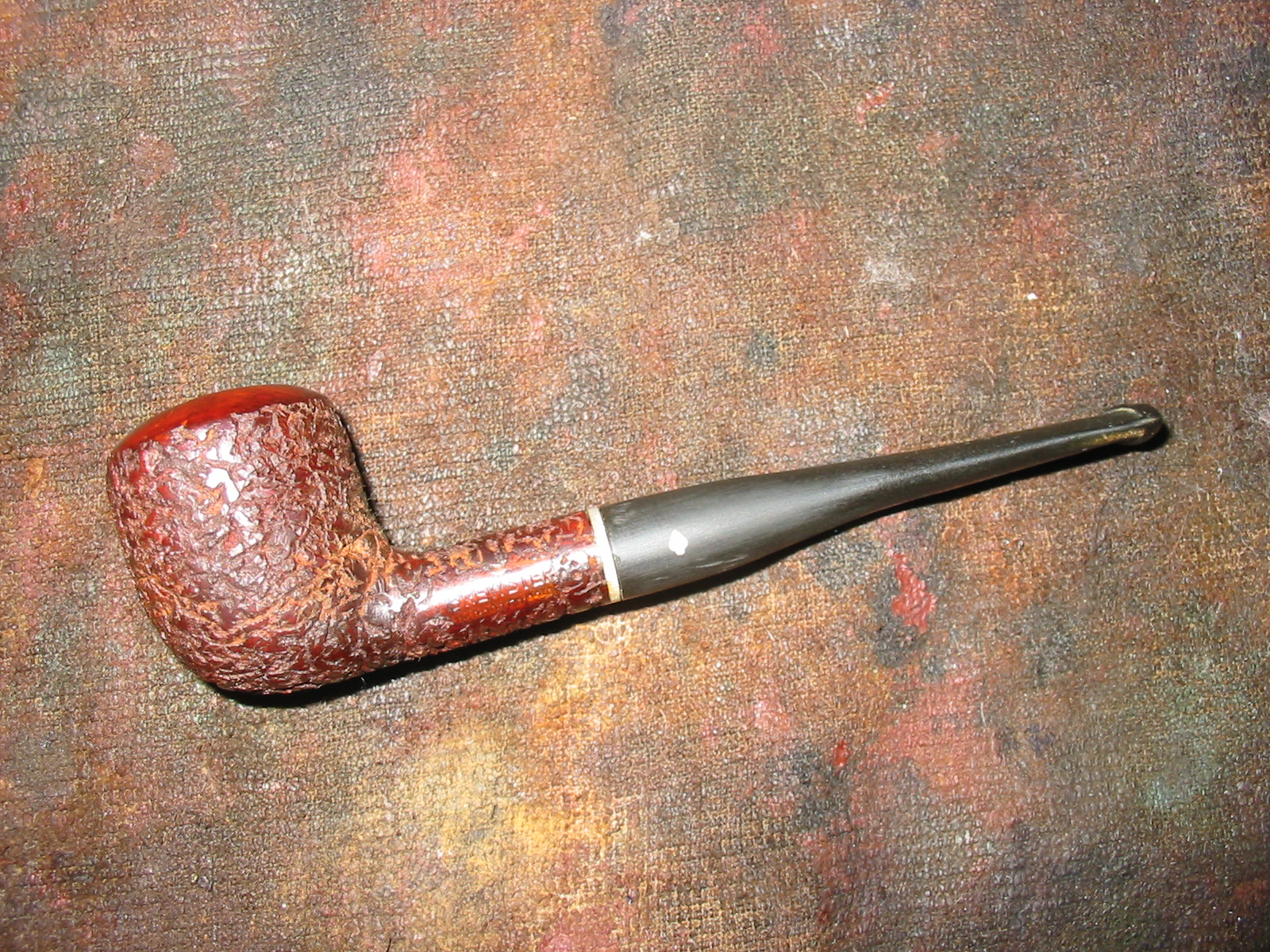
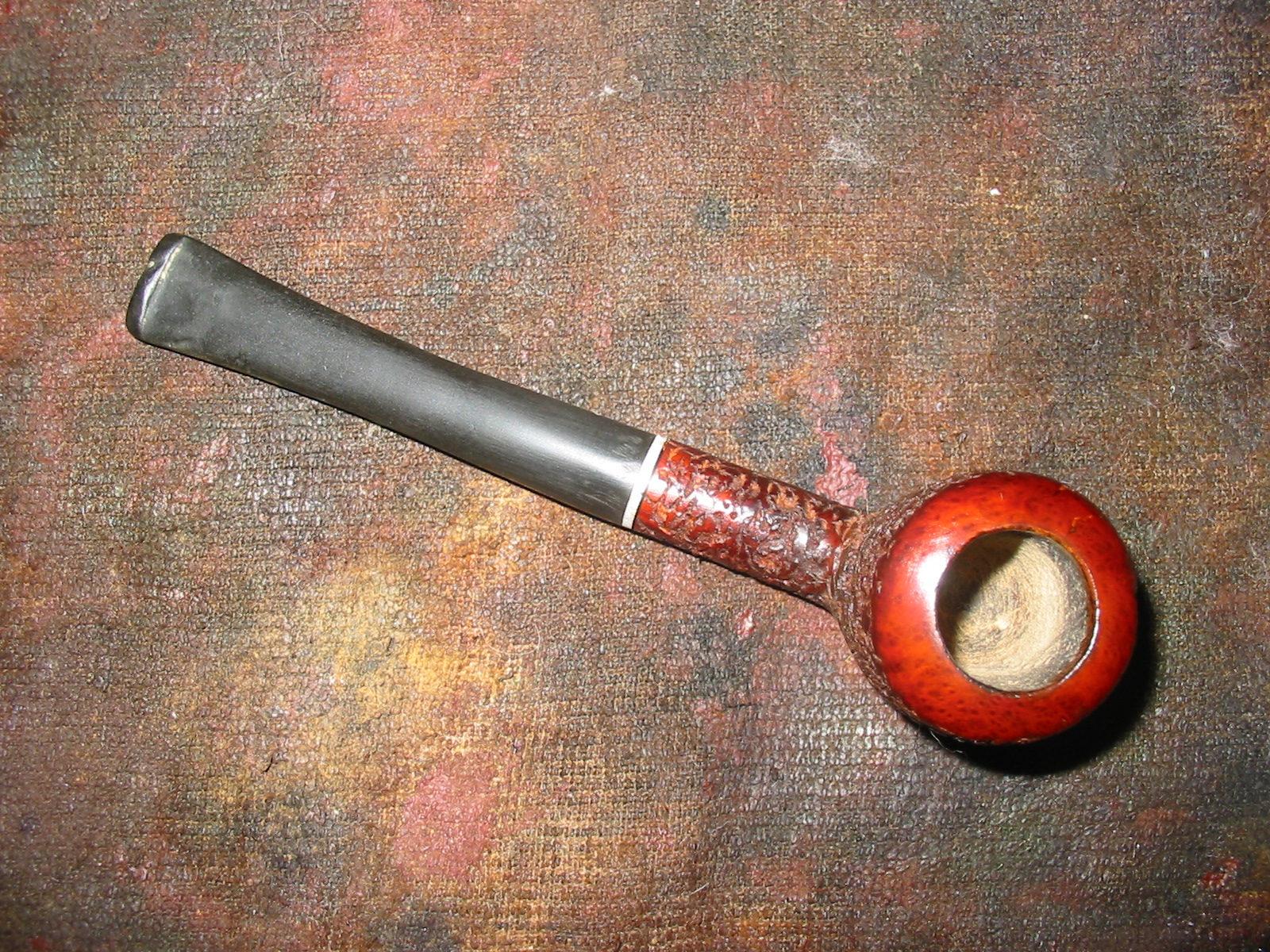
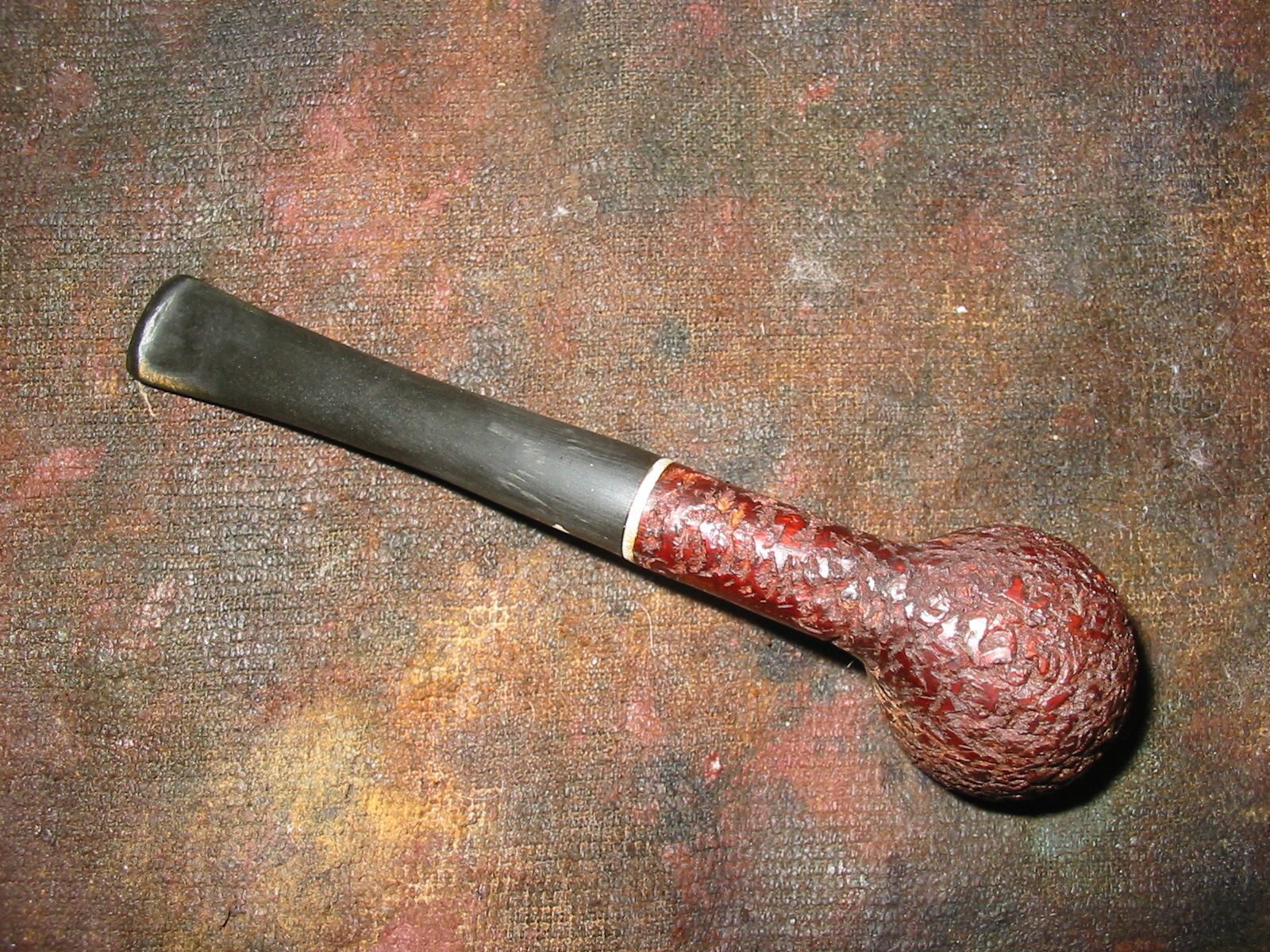
Giving a Brewster Round Top Billiard a Face Lift


Blog by Steve Laug

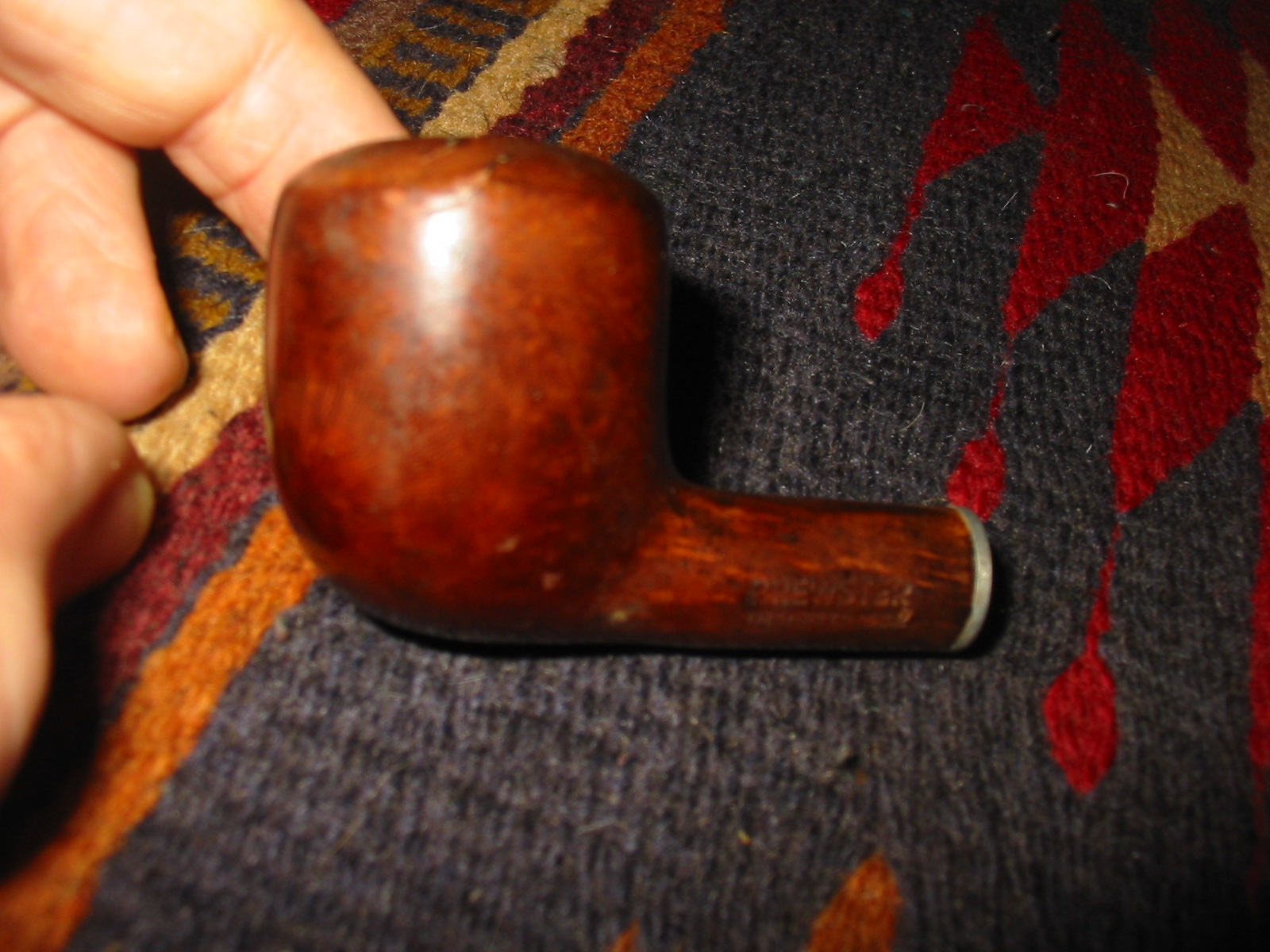
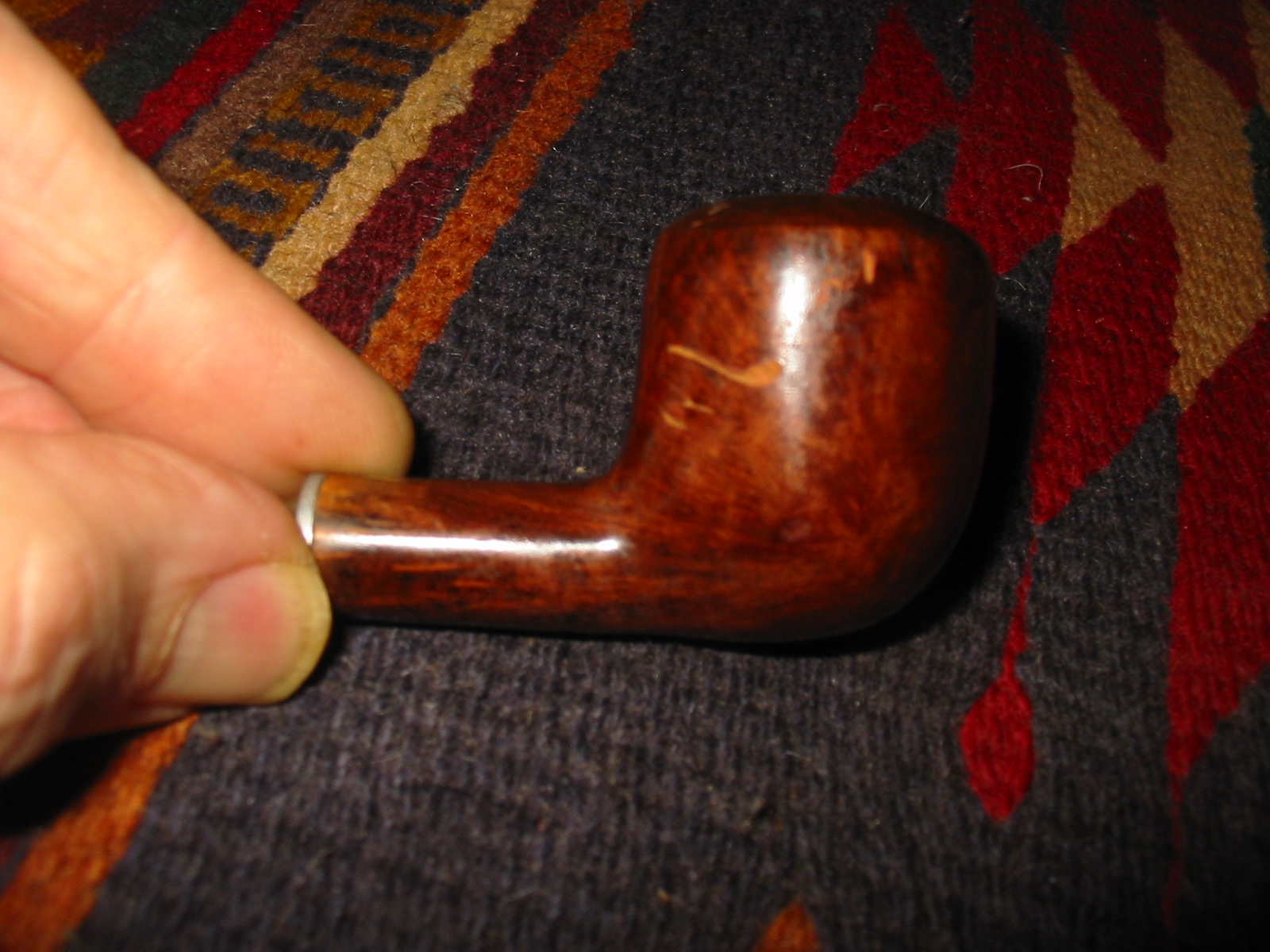
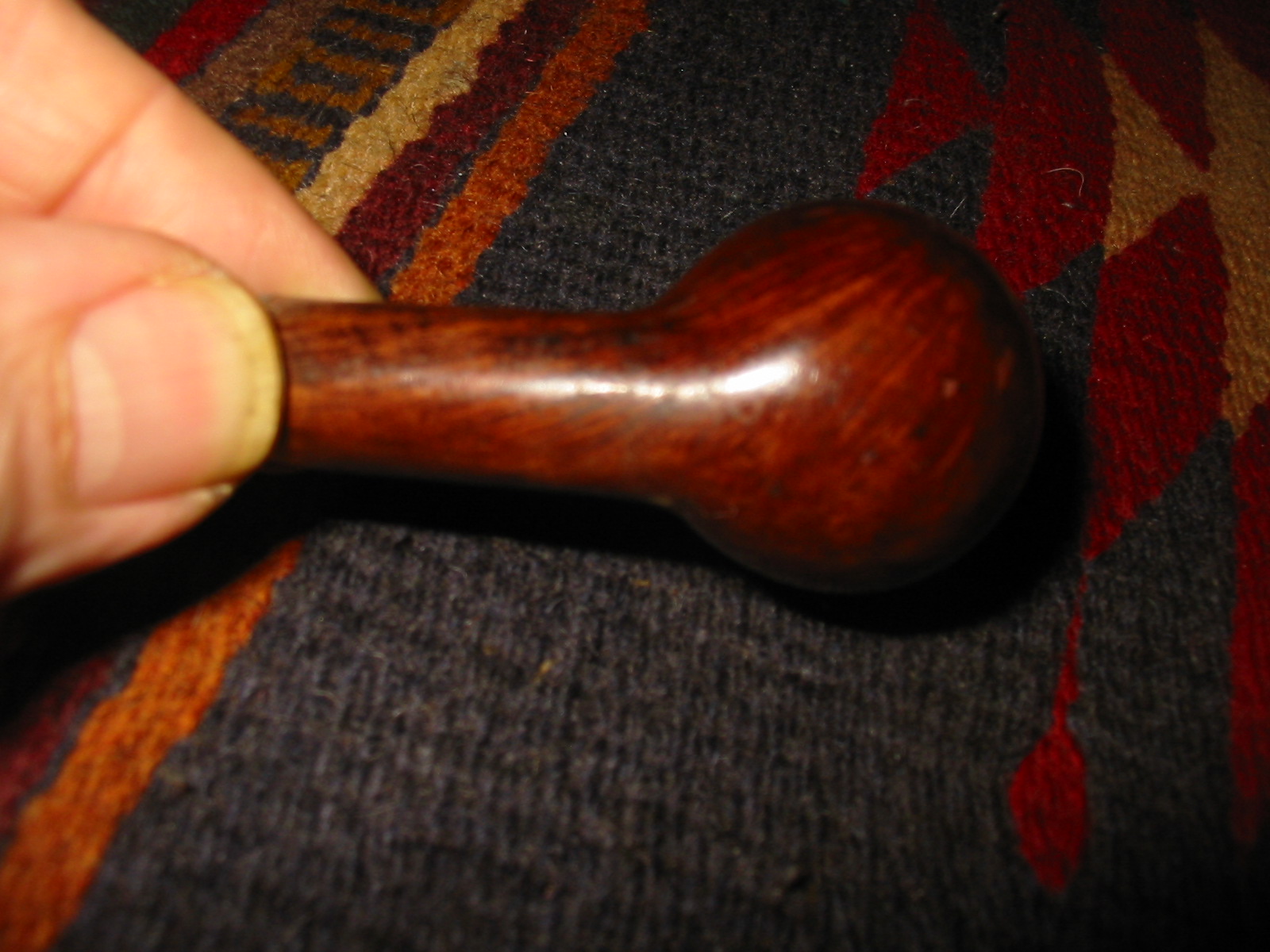
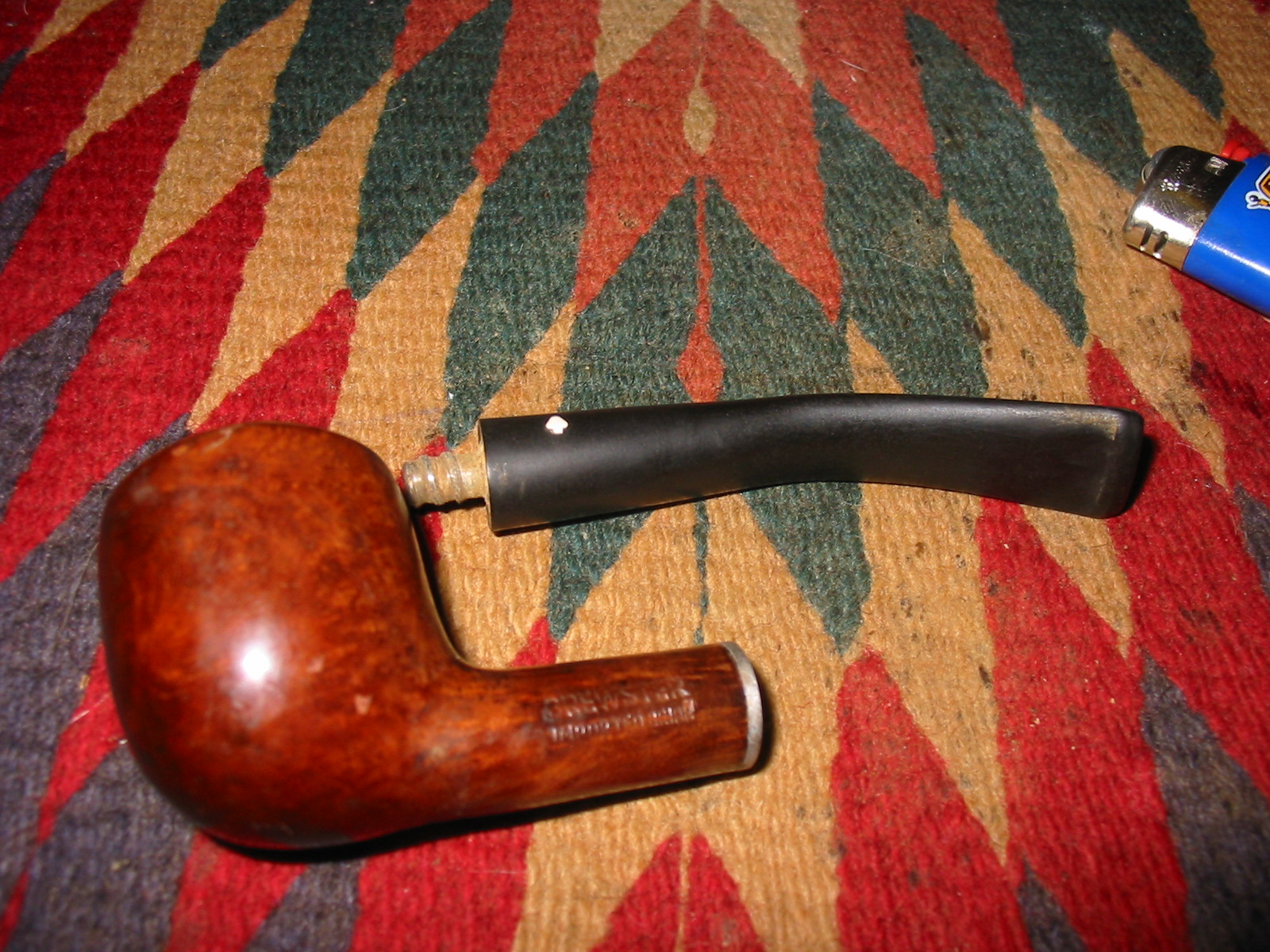
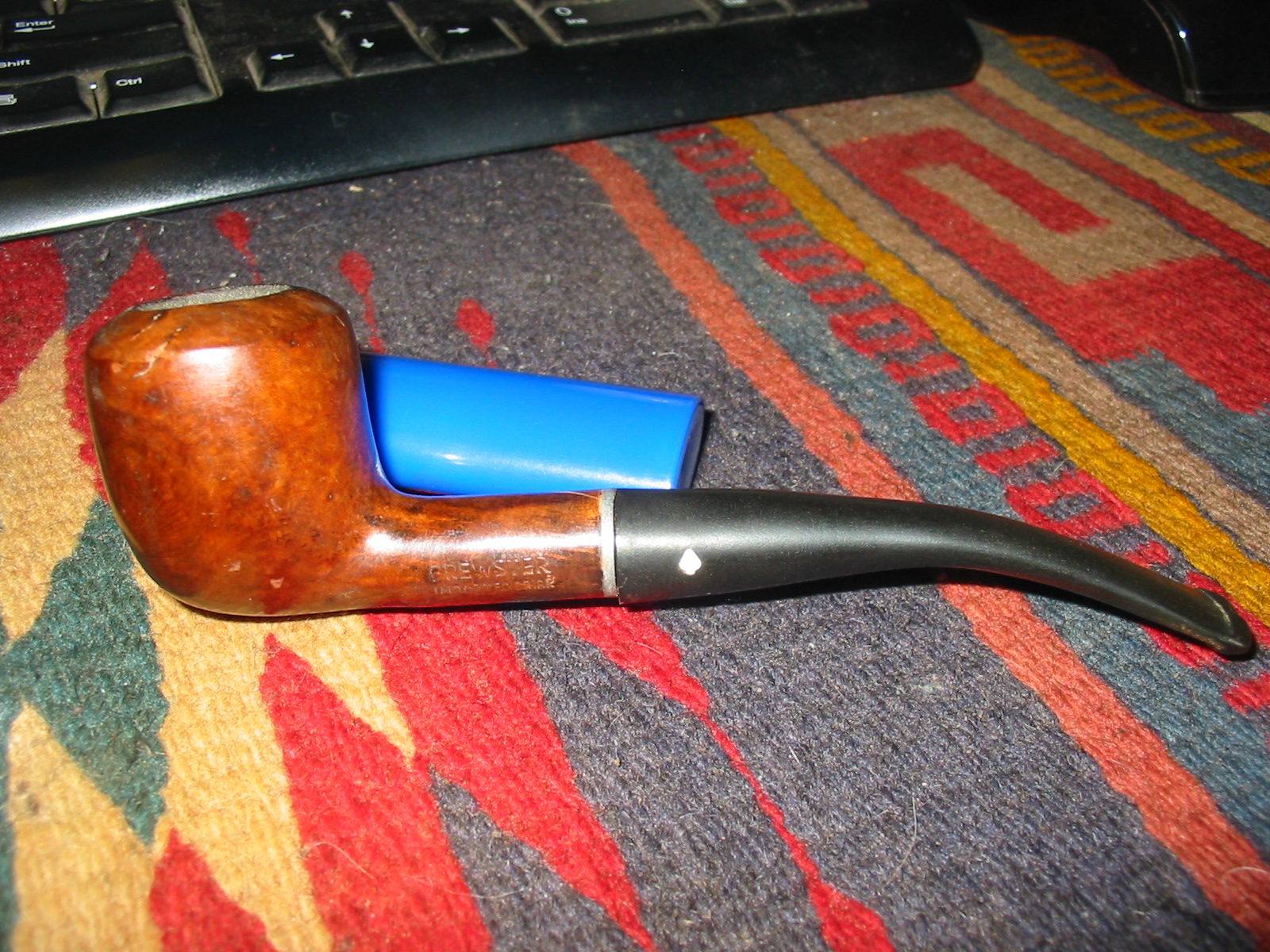
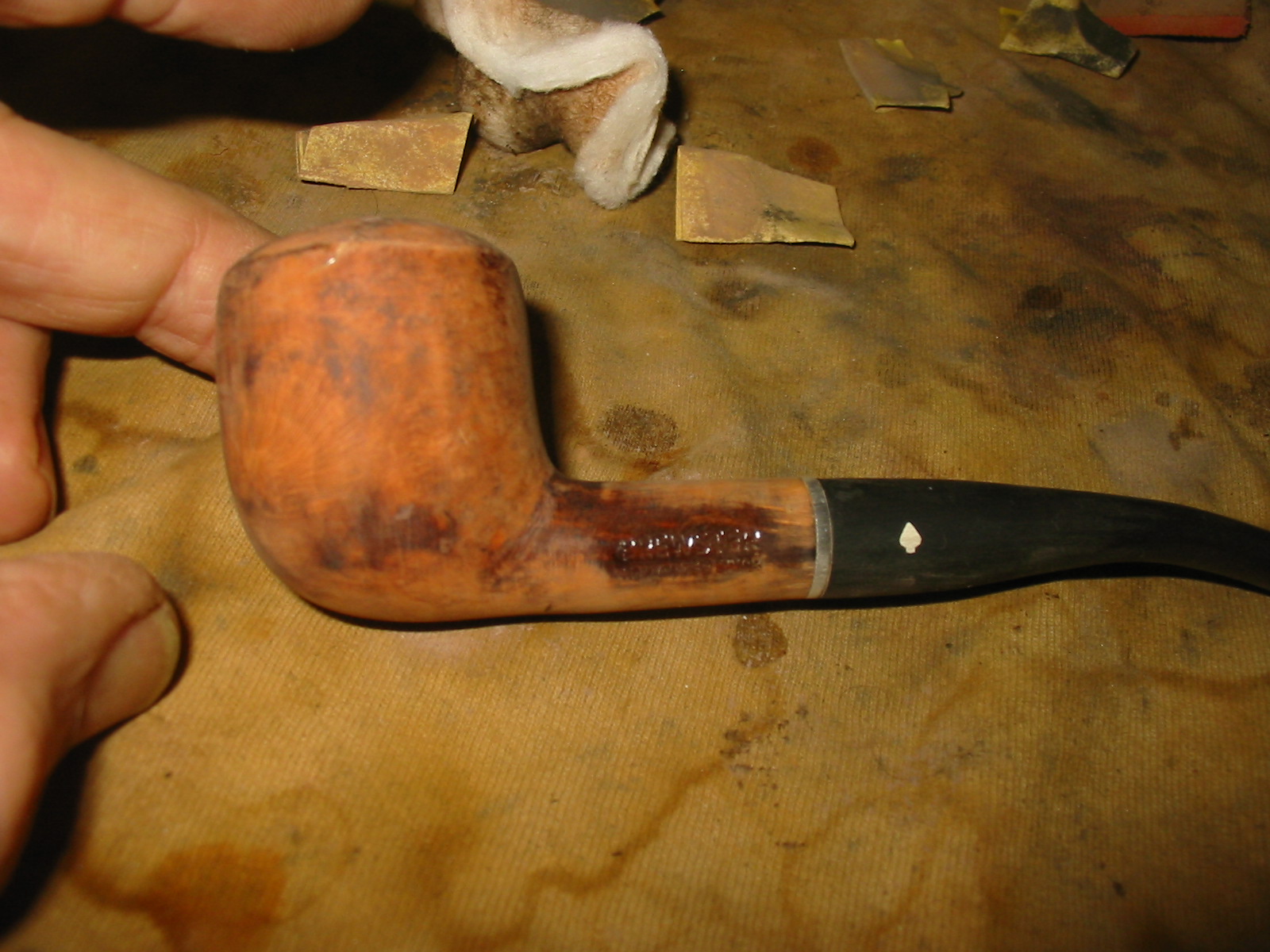
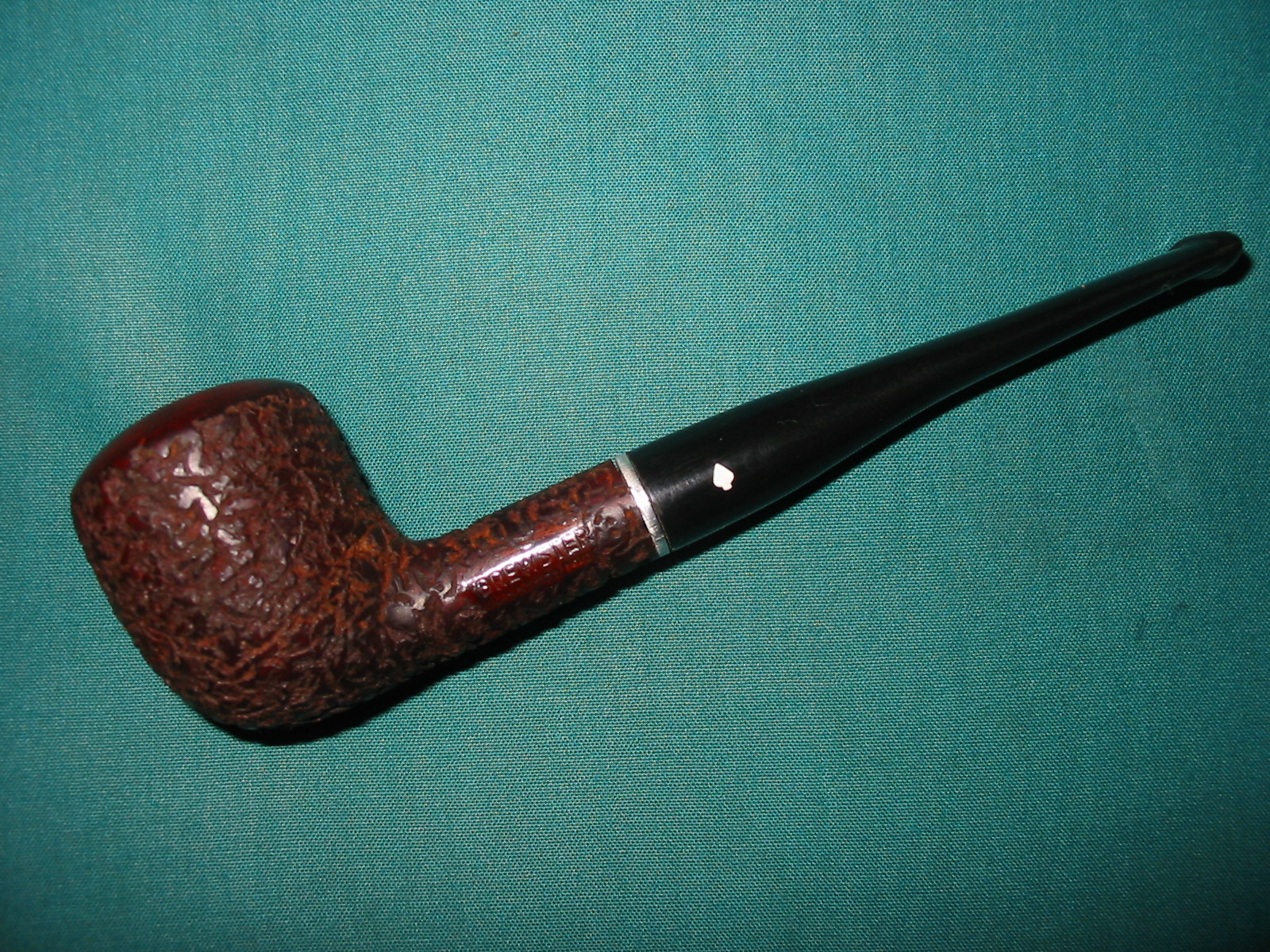
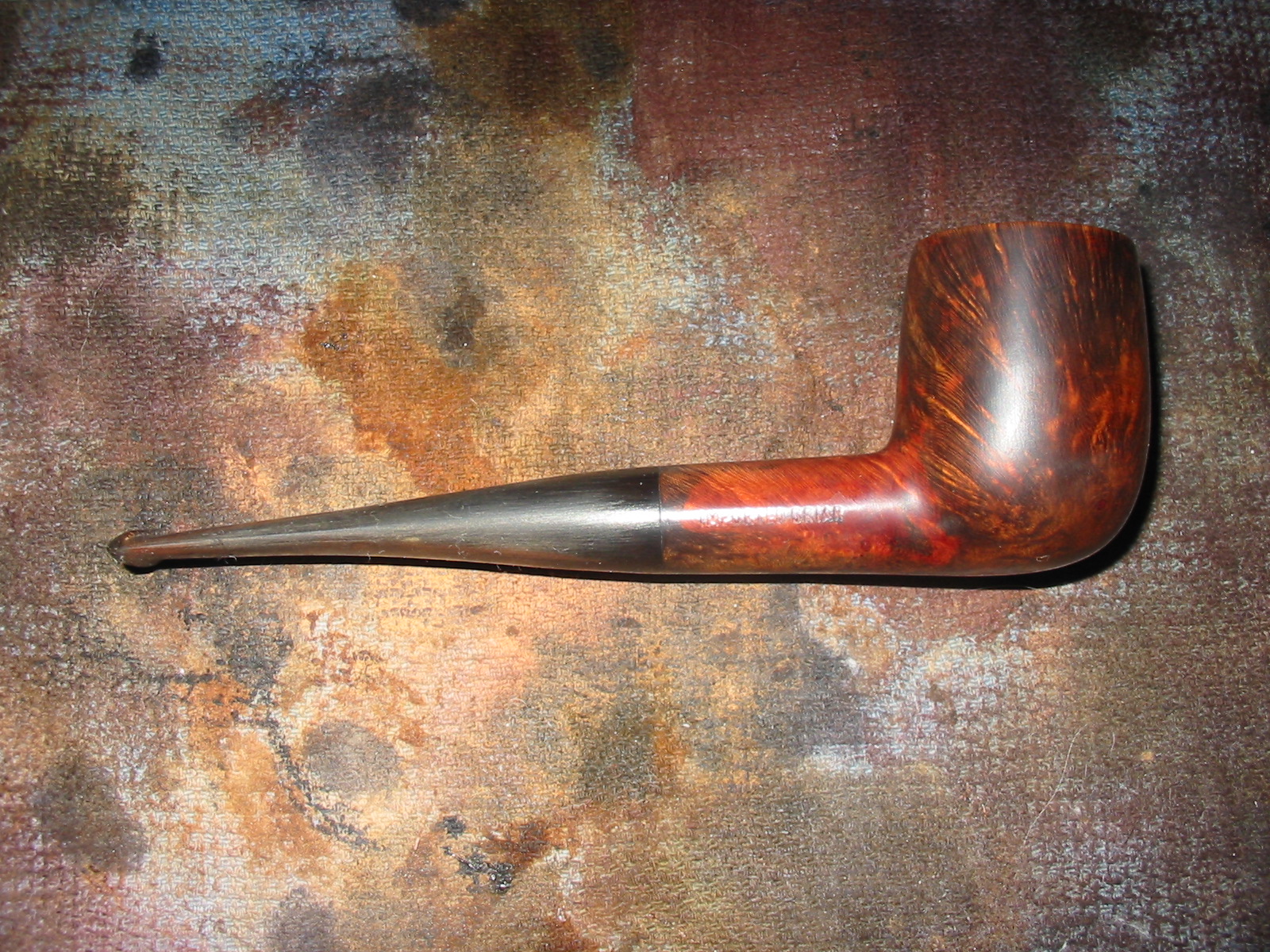
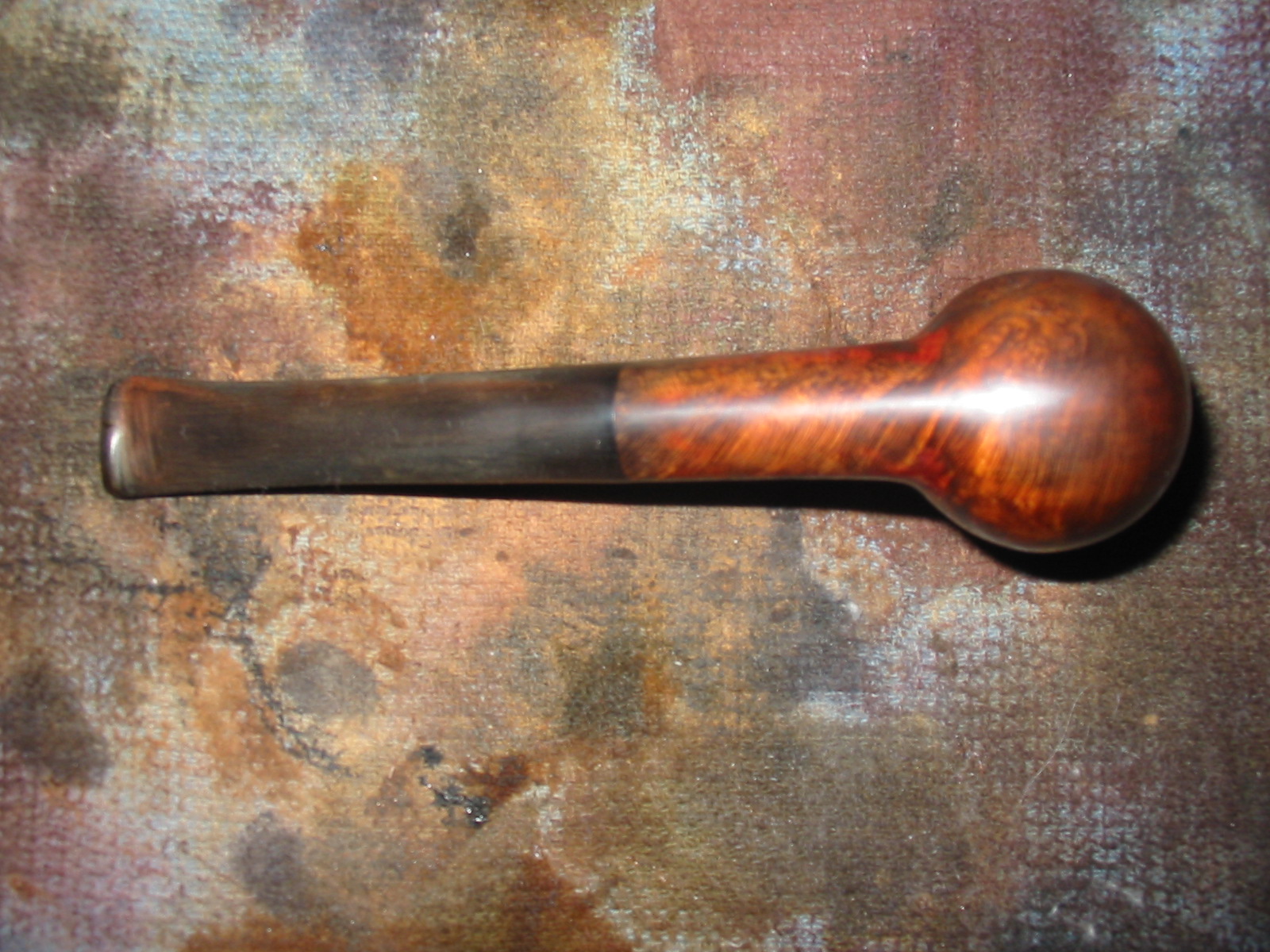
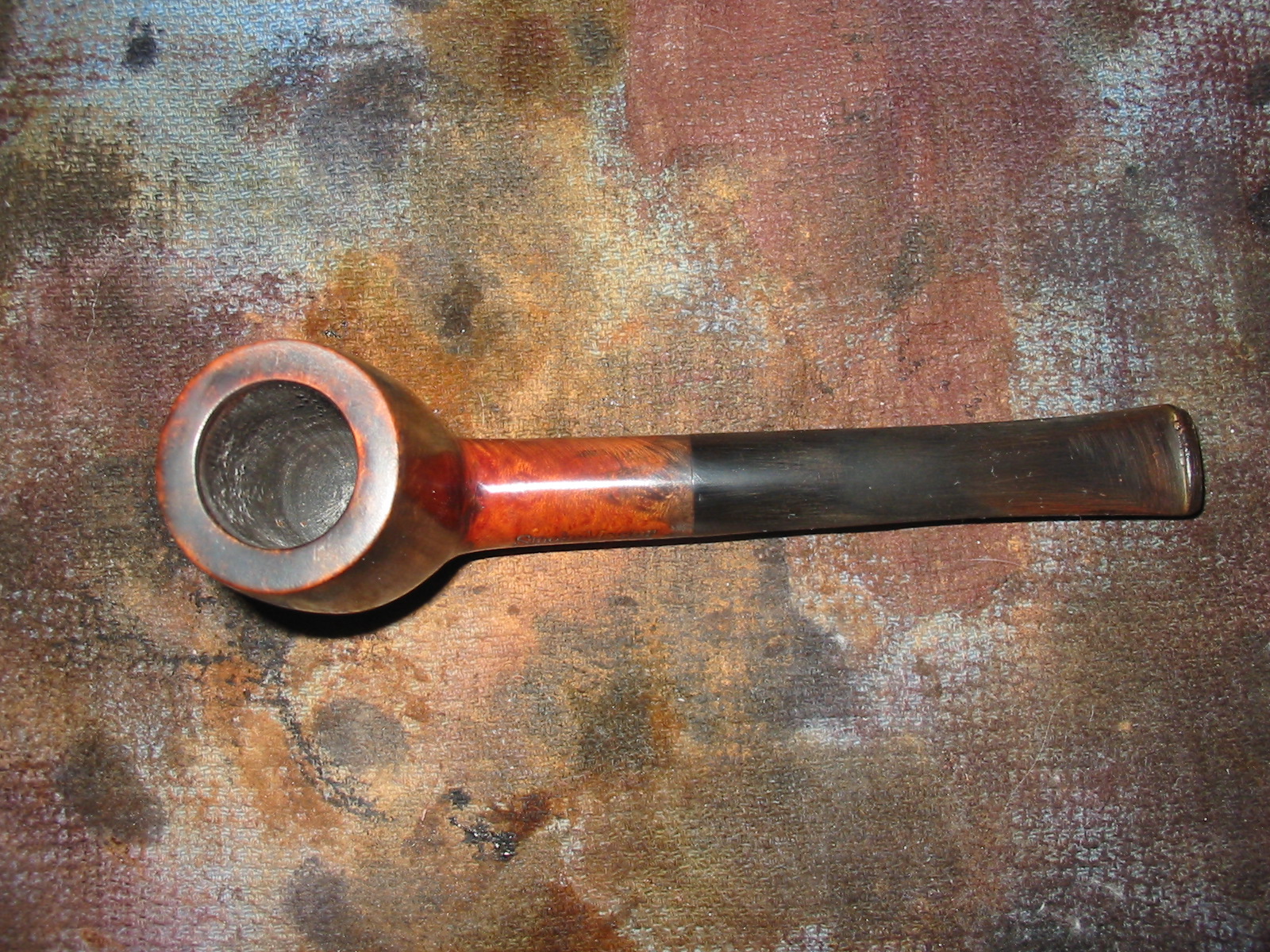
I was gifted a pipe bowl from a friend in exchange for some work on his Peterson. He had no idea of the brand or maker but thought I could have some fun with it. I dug it out of the refurb bin the other evening and began to work on it. I would need to clean it up and then restem it in the process as it did not come with a stem. It was stamped Brewster over Imported Briar on the left side of the shank with no other identifying stamping.
brewster1b
The finish seemed to be a very heavy lacquer that was cloudy with age. The shape was very interesting to me – a billiard like shape with a crowned rim, rounded and quite elevated. I like the looks of it. It is a small pipe – group 2 sized. There were a lot of putty fills on both sides of the bowl, the shank and the rim that would definitely show up once the lacquer finish was removed.
IMG_5103

IMG_5105

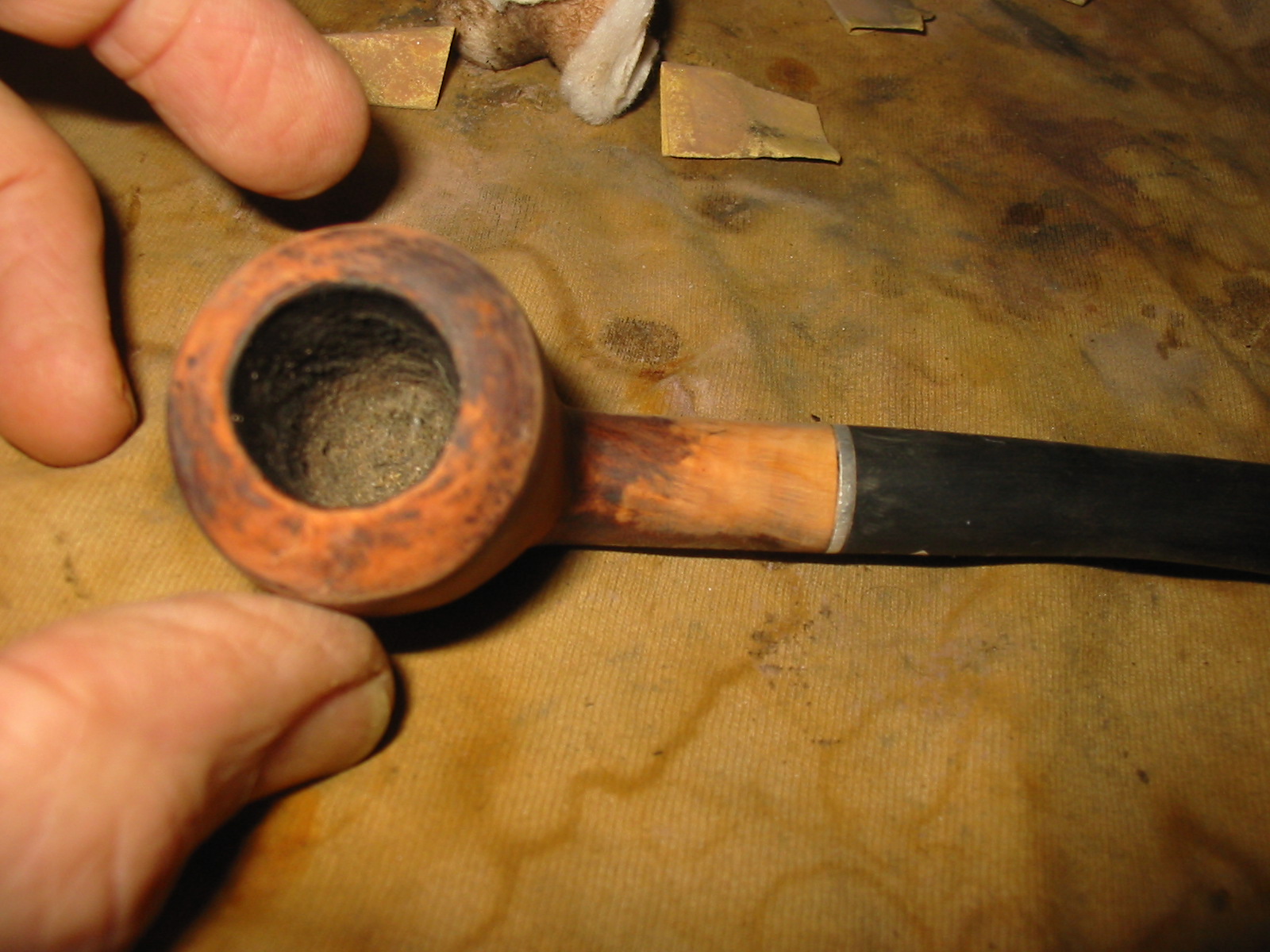
The bowl was in great shape with a light build up of cake that was the right thickness. There was no heavy smell of aromatics clinging to the pipe. The shank was clean and the metal insert in the mortise was also clean and in good shape. The thread pattern and the look of the metal fitment looked exactly like a Dr. Grabow set up.
IMG_5104

IMG_5106

I had an old Dr Grabow stem here that was missing the stinger apparatus but the threaded tenon was in working order. I took it from the can of stems I have and gave it a try on the shank. It threaded in perfectly. It was overturned but it fit. This added some objective evidence to my assumption that this pipe had some connection to Dr. Grabow.
IMG_5107

Back Story of Brewster Pipes (If you get bogged down in the history you can skip ahead to the section on the refurbishing process).

At that point in the process I slowed down the cleanup and went to the computer. I was hooked and wanted to see what I could find out about the Dr. Grabow connection to Brewster, if there was one. I wanted to know who made the pipe so I did some research on the web and in some of my books to see what I could find out about the brand. From the book Who Made that Pipe I learned that the brand was Italian made followed by the words unknown maker. I looked on Pipedia and there found much the same information – Italian made followed by question marks as to the maker. After working the web with Google and other search engines the most I could find out was that slight information – the pipe was an export brand of an unknown Italian company.

I decided to take a different tack. I found the Grabow Company site online and wrote an email to their information centre seeking information on the brand. I decided to follow-up on my hunch from the stamping and the metal insert in the shank that somehow this pipe was related to Dr. Grabow pipes. I had no clue how but it certainly had the signs so I went to the Dr. Grabow forum on-line and posted my questions http://drgrabows.myfreeforum.org/index.php . I also did some reading on the forum of back posts and found one series of posts on the brand. I read the following and immediately had more questions. The Grabow connection was not clear but I had found that the pipe may have been a promotional item. Here is the quote that gave me the information”

“A couple months back, I scored a Brewster off eBay for five bucks. Research on this forum and the wild, untamed internet tells me the Brewster pipes were all made in one batch in 1964 as a promotional item for Sir Walter Raleigh.”

Last evening while relaxing, my iPhone vibrated notifying me of a new email. I picked up the phone and saw that I had a response to the questions that I had posted on the forum. Dave Whitney, author of the book on refurbishing called Old Briar, had responded to my request for information. What he sent me was extremely helpful and a true goldmine of information. His answer affirmed the Grabow connection and gave critical information that I had not been able to find anywhere. I have included that information in part below.

Dave Whitney: Here’s what I have from my accumulated notes on Brewster – much of it looks like it came off this forum, ted/td being one of the early ones to help build this forum and a former Sparta CEO:

All the Brewsters were “made” in about 64’… Brewster… is probably from Fratelli Rossi from 64’… Ted, an older pipe smoker than me, suggested the Brewster pipes are comparable to the Willard pipes, and that Brewsters were often sold either with tobacco, or in a coupon offer. For example Brewster was sold as a redemption offer with Brown and Williamson for Sir Walter Raleigh tobacco.

Further information came from Dr. B… I think (in my feeble state of mind, after today) that Brewster was sold as a redemption offer with Brown and Williamson for Sir Walter Raleigh tobacco. But, Mastercraft in 74 had a LOAD of them left. We (Mastercraft) sold them as closeouts along with several pipes in baskets of 4 dozen at $3.98. We also included a bunch of Mastercraft from F. Rossi at the same price……..Rossi pipes are another story……Remind me of the “sticky lacquer” and I’ll tell it…….ted

Mastercraft was founded by Bernard Hochstein, an Orthodox Jew. Old, White Haired, Santa Claus looking (still alive at 96, last time I knew), and he was REKNOWNED for his ability to “strong arm” the European pipe suppliers into selling pipes to M/C at a bargain. Probably the best (never say nothing) negotiator that I’ve ever met. He sold a business (Mastercraft) to UST for 6 million in STOCK. He’s probably worth 60 million today. Mr. Hochstein could negotiate a peace in the Middle East in a very few days, and talk all parties outta’ their pants in the process.

OK, so Mr H “rapes” the Italian suppliers even up till 1964 when the Surgeon General’s (SG) report comes out. As it turns out, “rape” works both ways. A supplier, Fratelli Rossi, (still in business) took an order in 1963 for over 1 million pipes at 1/2 dollar (US) per pipe. When the SG’s report comes out, Rossi has filled a small part of the order for Hochstein, and had orders for a great many more pipes than Hochstein ordered. Rossi decided to experiment with his lacquer …Whose pipes did he experiment on? Hochsteins.

When I started at Mastercraft we had 1215 cartons of pipes from Rossi…Mastercraft Standard….72 dozen per carton, with lacquer so “tacky” that if you held the pipe as if you were smoking it, you’d have to “shake” it out of your hand. Rossi left out the curing agent. Ever touched wet paint?……..After 10 years they were still STICKY…..after 20 years, they were still STICKY.

We fought these SOB’s for years, when finally Luther Marlow (you’ll see topics about him) concluded that we could re-spray them with the Grabow lacquer and sell em’. We did, and we did. Through a “drive” by the UST salesforce, we sold every one. So if you have a Mastercraft Standard with what looks to be “heavy” lacquer, you are probably right.

Hussar…..Rossi also made Brewster. Better lacquer job though… Brewster was sold as a redemption offer with Brown and Williamson for Sir Walter Raleigh tobacco. But, Mastercraft in 74 had a LOAD of them left. We (Mastercraft) sold them as closeouts along with several pipes in baskets of 4 dozen at $3.98.

When I started with Mastercraft in the early 70’s we had over 400 cartons of pipes from Hully. Each carton contained 60 to 80 dozen, most of which were stamped Brewster or Stetson and these had a base cost (from the 60’s or earlier) of $2.80 /dz. Some of the smaller pipes, called Southern Assortment were $1.90 / dz. May be partly to blame for them going out of business.

That was very helpful information on the brand. It gave a definitive date and origin to the pipe. The Italian connection was also clear. The Dr. Grabow link was also clear in Dave’s answer. Now I wanted to know something about maker, Rossi. Dave kindly included that information in his answer as well. It is as follows:

From approximately 1946 up to the end, Ferdinando Rossi II, a grandchild of the founder, headed the company. But after World War II the world of the pipe changed dramatically. Especially in Italy, where those big pipe factories mainly turned out pipes for the lower priced segments of the international mass markets. The demand for these pipes shrunk considerably as more and more smokers turned to cigarettes. Rossi got into this vortex as well. Little by little the number of pipes produced sank. This evolution was accelerated by the upcoming fame of pipes from Denmark. As well, new Italian brands established after the war like Castello, Brebbia or little later Savinelli operated cleverer and thus were more successful.

So the decline went on through the 1960’s and 1970’s, even though Rossi offered more than 800 possible shapes in dozens of lines and uncounted finishes. Besides the completely machine made pipes there were also some lines of semi-freehands and even quite considerable freehands were made. But all these efforts could not stop the fall anyway. Due to increasing financial difficulties Rossi closed down in 1985, just one year before the 100th anniversary.

In the years around 1870 and still later the bulk of Italian pipes was made by time taking and laboriously manual work. Mainly based on families who sold their pipes to travelling purchasers handing them on to some wholesaler. Most pipes were still made of box or olive wood.

Ferdinando Rossi from Milan was one of the most important wholesalers for tobacco related goods of northern Italy. When he attended one of his pipe suppliers in Saint-Claude in 1880 he got hooked on the idea to establish this manner of industrialised briar pipe production in Italy as well. Rossi went abroad several times to buy the hardware here and there because the special features of machines for pipemaking were secrets – well kept by the French in those days. Many machines and tools had to be modified on Rossi’s defaults.

[From the Catalogue “La Regina della Pipa” (1896)] He acquired a large area of land in Barasso in the province of Varese and founded the Fabbrica di Pipe di Radica Rossi in 1886. For sure there was no lack of skilled workers and Rossi personally recruited 30 craftsmen of different occupations from the environment to get started. After a few years the enterprise had developed well and entered into export trades. In 1892 e.g. the ledgers registered the first pipes shipped to Brazil.

One reason of success was the ultramodern conception of the factory and its equipment at the given time. To give an example: a system of canals invented by Rossi drove water to turbines propelling downstream generators, which supplied the entire machinery with electricity. Also lighting and heating were already electrically operated.

In the first years after 1900 Rossi grew steadily and became one of the ten biggest pipe manufacturers of the world. Rossi’s rapid ascent produced further foundations of pipemaking firms in the area.

I love finding out the old company histories of the pipes that I refurbish. I find that it gives a colour and flavour to the pipe I hold in my hands and rework. It gives me the back story on the pipe and adds another dimension to the work of refurbishing. I have included it here for those who enjoy the same kind of history.

The Refurbishing Process (for those of you who have skipped ahead to see the work here is where it begins.)

I screwed the old Grabow stem into the mortise fitment and found that it was overturned. I used a Bic lighter to heat the metal tenon in the stem to loosen the glue. I put the stem back in place and tried to turn it straight, to clock it, but it was not loose enough. I reheated and retried until it was loose. I then turned the stem into place and aligned it with the bowl. I then cooled it under cool running water to set the glue. From the photos below it can be seen that the diameter of the stem was off. In looking at it from the tenon end it was also not round. The bottom part of the stem and the sides were wider than the top portion.
IMG_5108

IMG_5109

IMG_5110

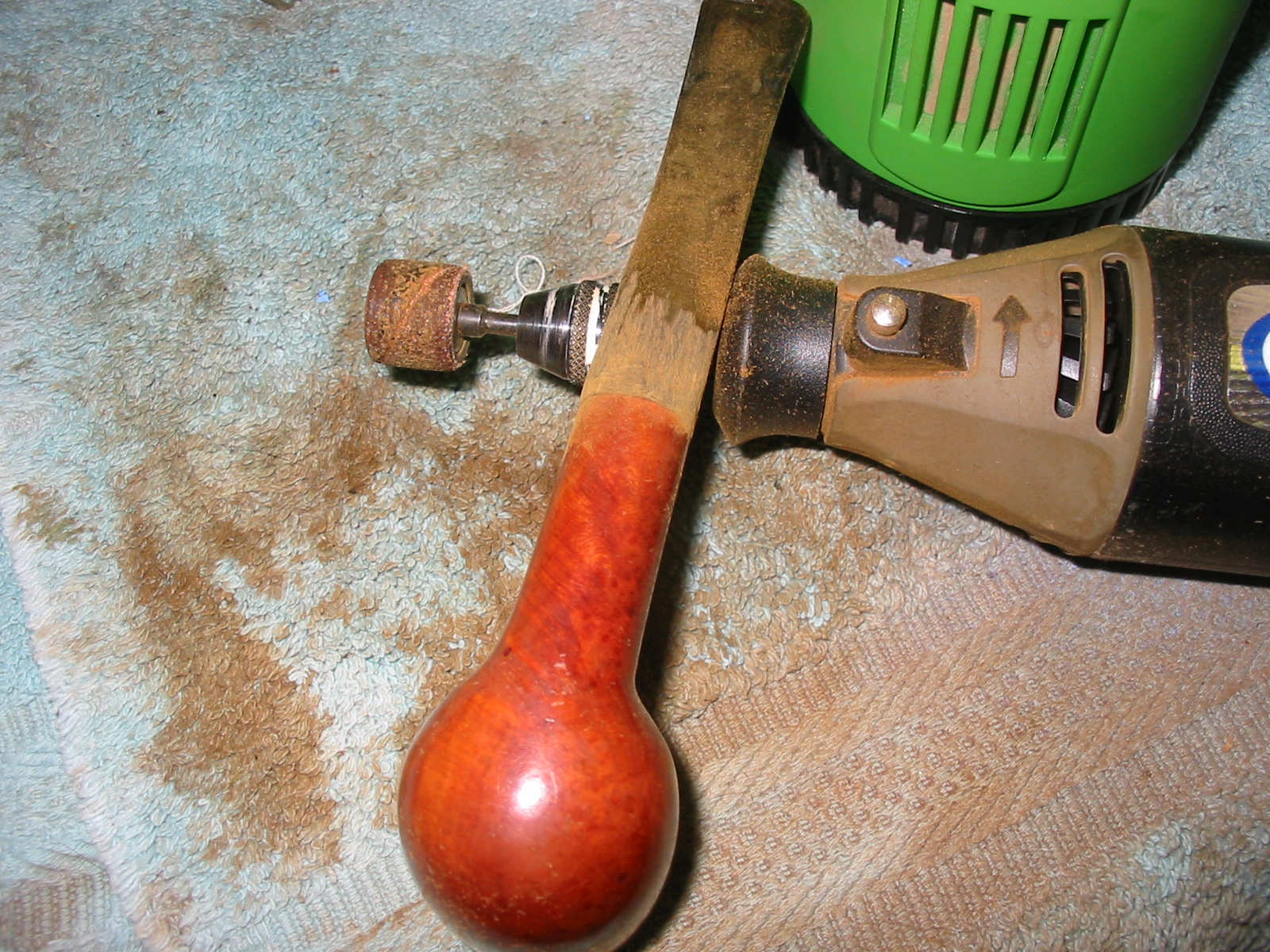
I sanded the stem with 220 grit sandpaper to decrease the diameter but soon grew tired of hand sanding and decided to give myself a head start on the work. I used a Dremel with the sanding drum to remove the excess vulcanite of the stem. I then brought it back to the work table and sanded the shank to make the transition between the shank and the stem smooth and the bowl to remove the lacquer finish.
IMG_5112

IMG_5113

IMG_5114

IMG_5115

IMG_5116

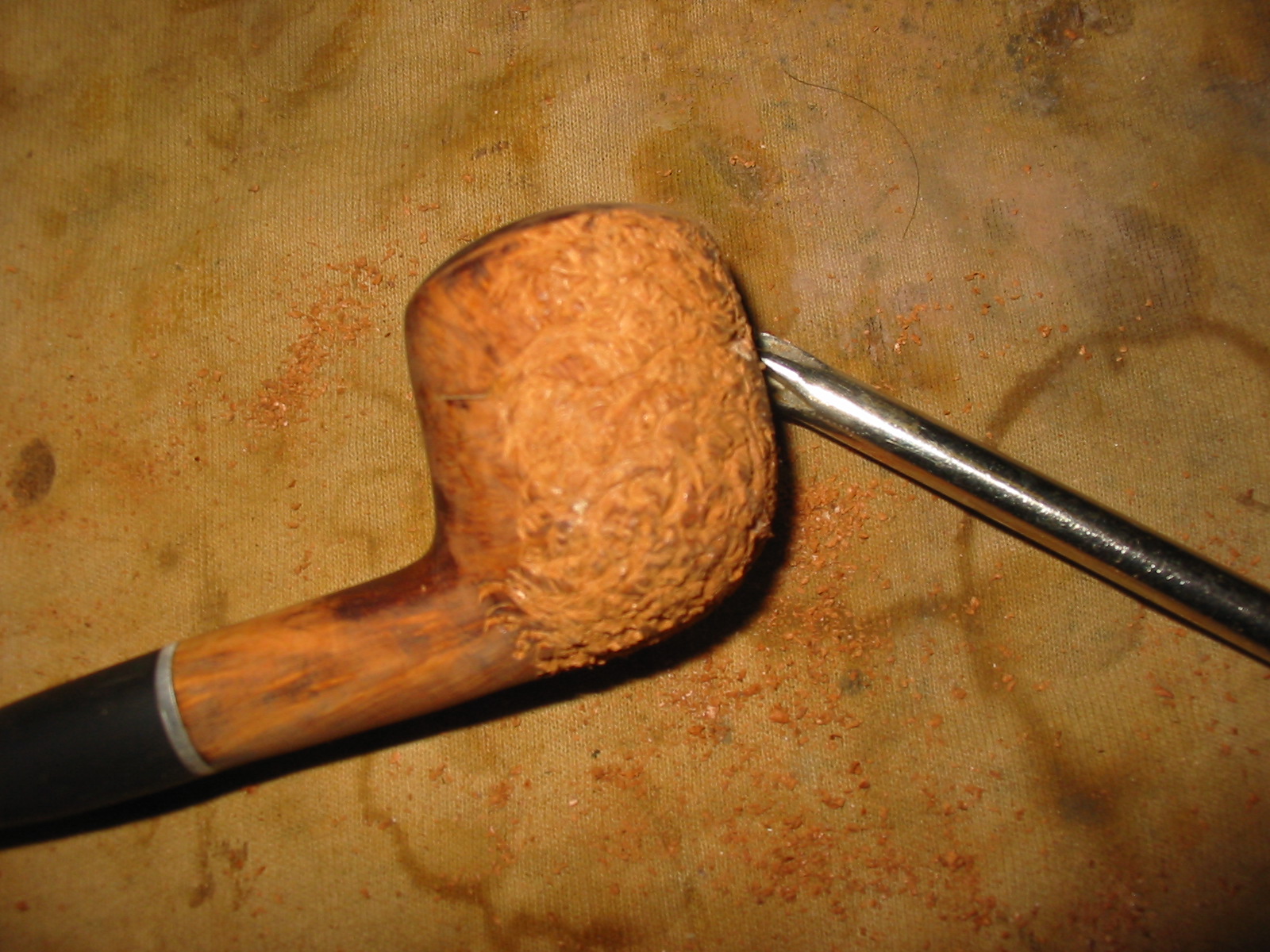
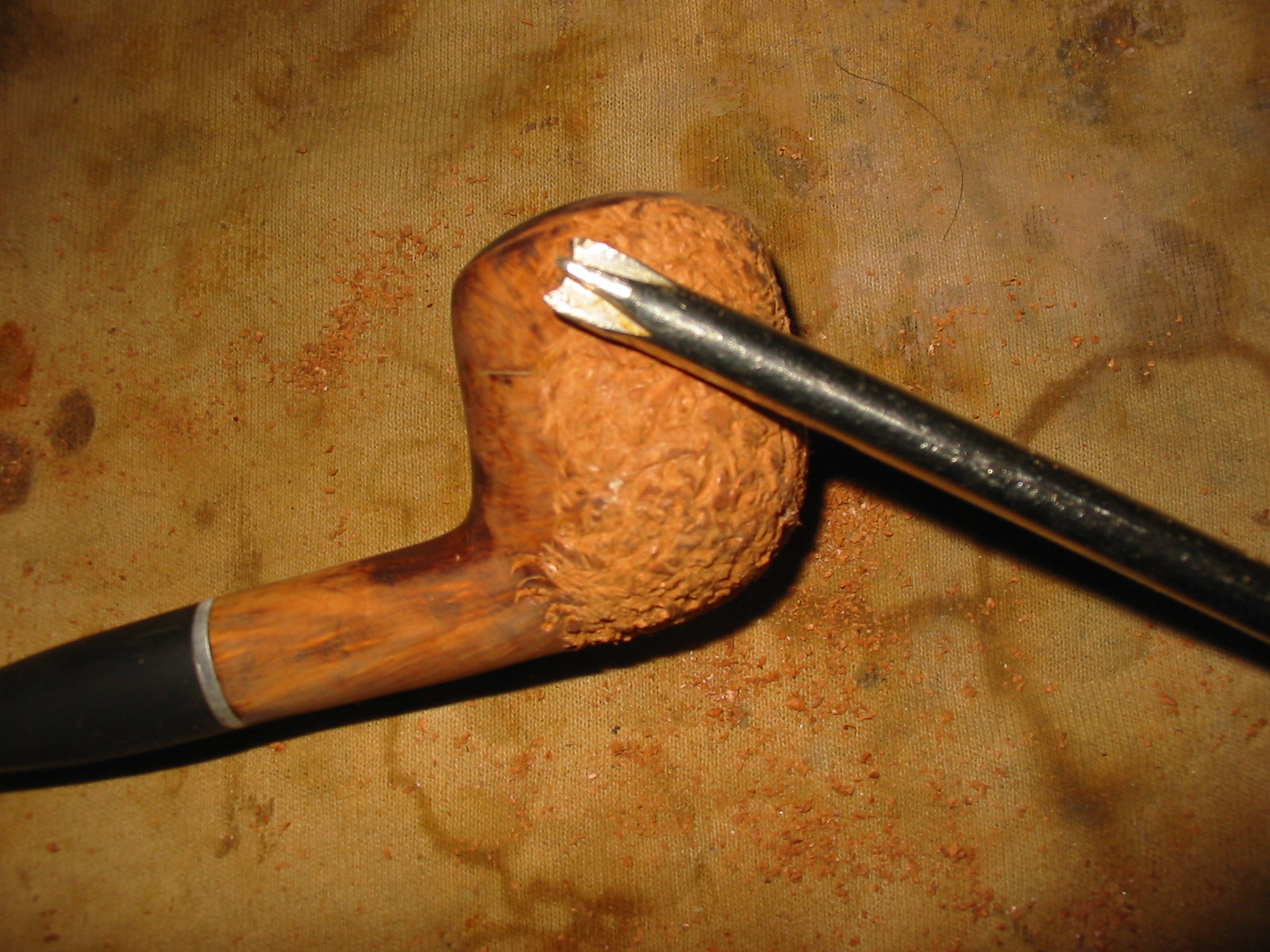
Once I had removed the finish I could see that the number and the size and shape of the fills would make them hard to blend into the new stain. I made a decision to rusticate the bowl at that point in the process. I used the modified Philips screw driver to rusticate the bowl.
IMG_5117

IMG_5118

With the bowl rustication finished and the stem fit finished I set up my heat gun and heated the stem to take out the bend. This particular Brewster shape had a straight stem. I held it above the heat gun until the vulcanite softened and the stem began to straighten on its own.
IMG_5119

IMG_5120

Once it was straight I set the shape by putting it under running water. The straightened stem can be seen in the photo below.
IMG_5121

I took the pipe back to my work table and went over the surface with a brass bristle brush to knock off the rough spots on the surface of the bowl. I also buffed it with Tripoli to smooth it out. I took the photos below to show the new look of the Brewster. The stem and the rustication looked good to me. The smooth rim and the patch with the stamping would look good once the pipe was restained.
IMG_5122

IMG_5123

IMG_5124

I decided to give the pipe a contrast stain. For the bottom coat I used a dark brown aniline stain. I applied it with a cotton swab and flamed it. I repeated the process until the stain had covered the bowl evenly. The dark brown went deep into the crevices of the rustication.
IMG_5127

IMG_5128

IMG_5129

IMG_5130

For the topcoat of stain I chose an oxblood aniline stain. I rubbed it onto the high points of the rustication with a cotton pad. My plan was to leave the dark brown in the crevices and the oxblood on the high points. I flamed the stain and then buffed the pipe with Tripoli.
IMG_5131

IMG_5133

IMG_5134

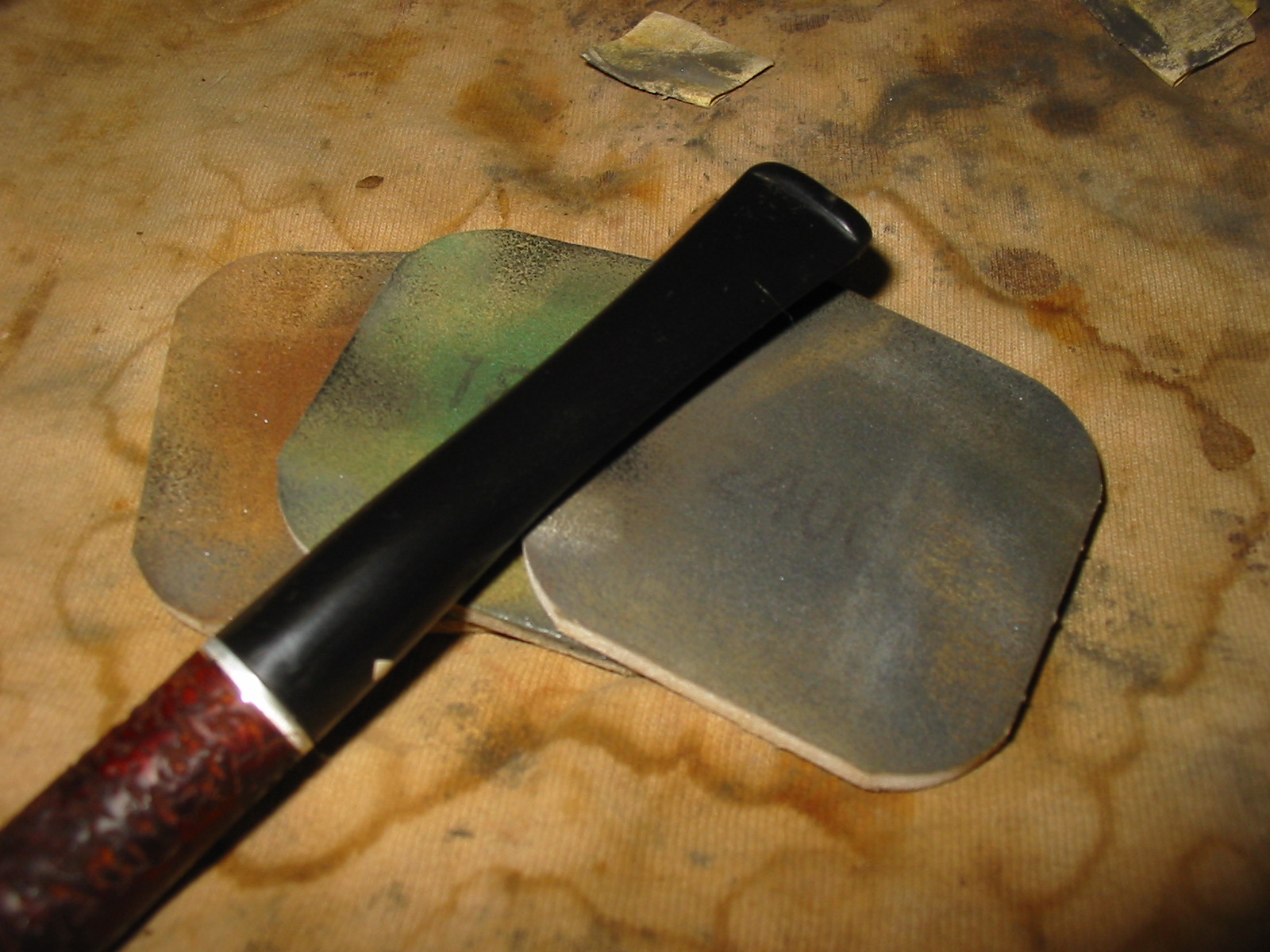
I sanded the stem with 220 grit sandpaper to finish the shaping and then used medium and fine grit sanding sponges to removes the scratches left behind by the sandpaper. I followed that up by sanding the stem with micromesh sanding pads. I wet sanded with 1500-2400 grit micromesh pads and dry sanded with the 3200-12,000 grit pads. I rubbed the stem down with Obsidian Oil and when it was dry buffed the stem with White Diamond.
IMG_5136

IMG_5140

IMG_5141

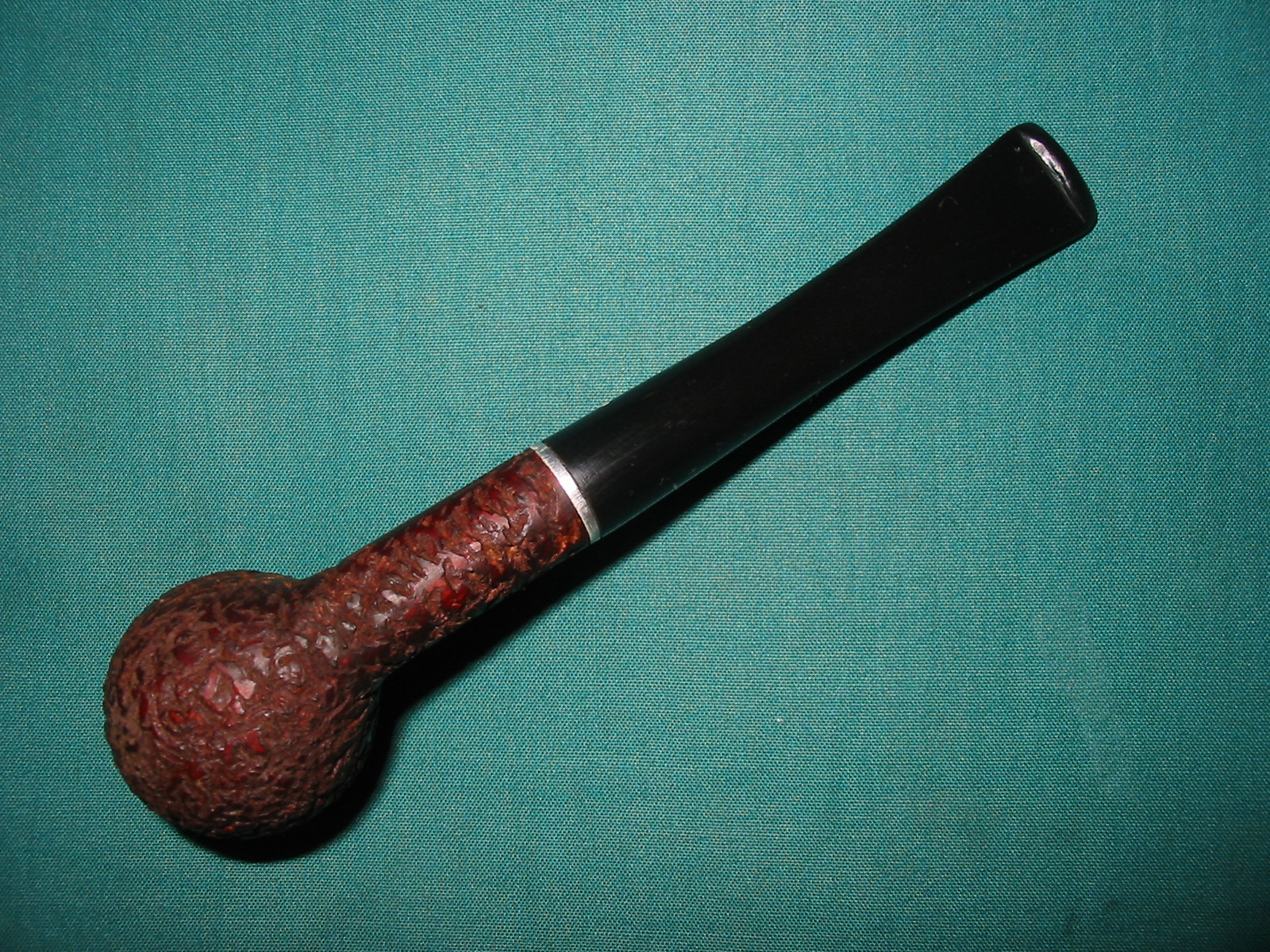
I put the stem back on the bowl and buffed the whole pipe with White Diamond. I then lightly buffed the bowl and buffed the stem with carnauba wax. I wanted to preserve the vulcanite and give it a shine. I also wanted to give a shine to the high points of the rustication on the bowl and also polish the rim. The finished pipe is shown in the pictures below. The old Brewster, with all of its history since 1964, is ready to enter a new phase of its own personal history. The face lift I gave it brings it to a new place. It is my hope that this old timer will give someone a great smoke and endure beyond me. That, after all, is what refurbishing work is all about – extending the life of the old pipes and delivering them intact to the next generation of pipemen.
IMG_5142

IMG_5143

IMG_5144

IMG_5145

Giving a Smokemaster Bard Billiard a Facelift


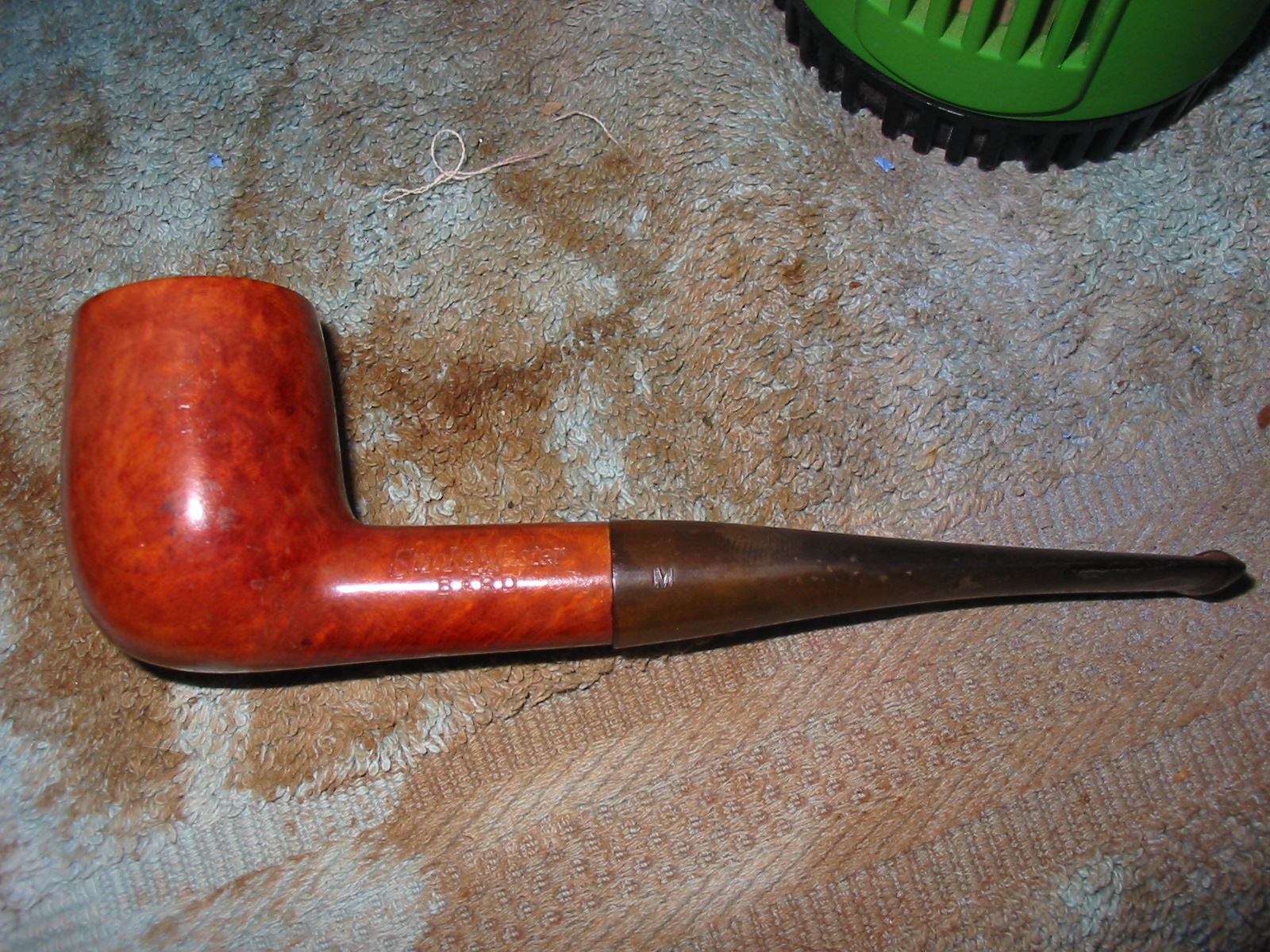
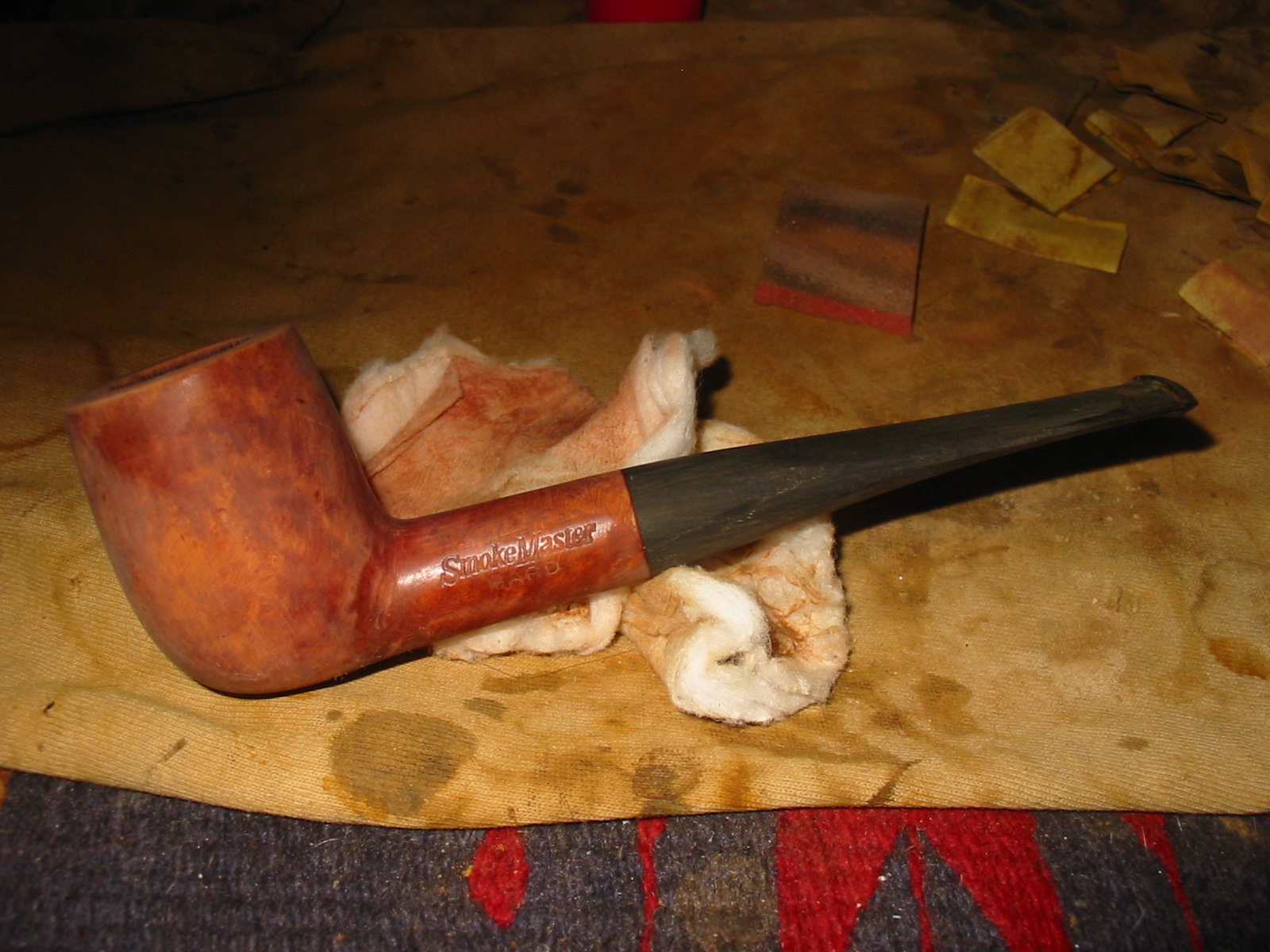
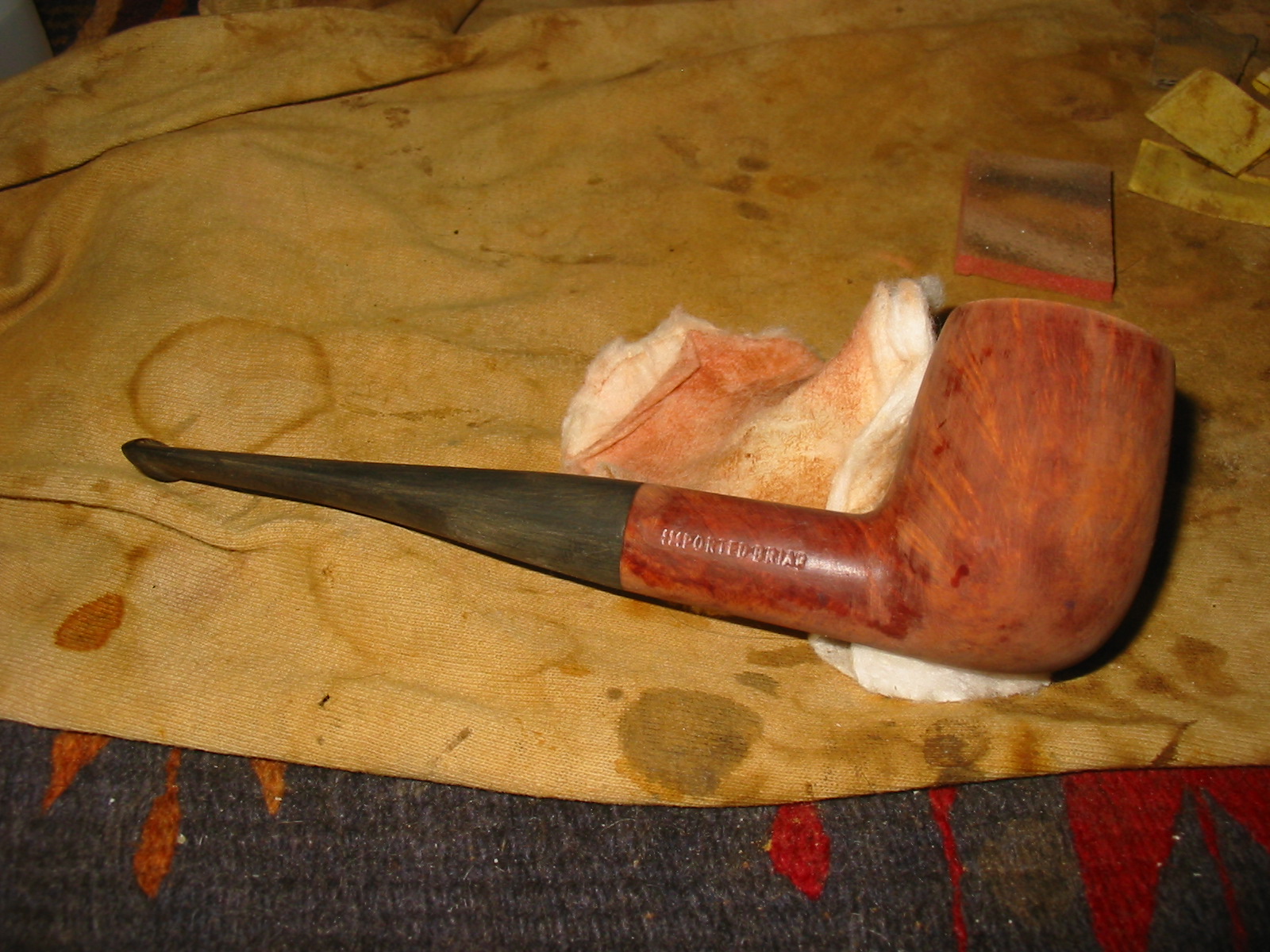
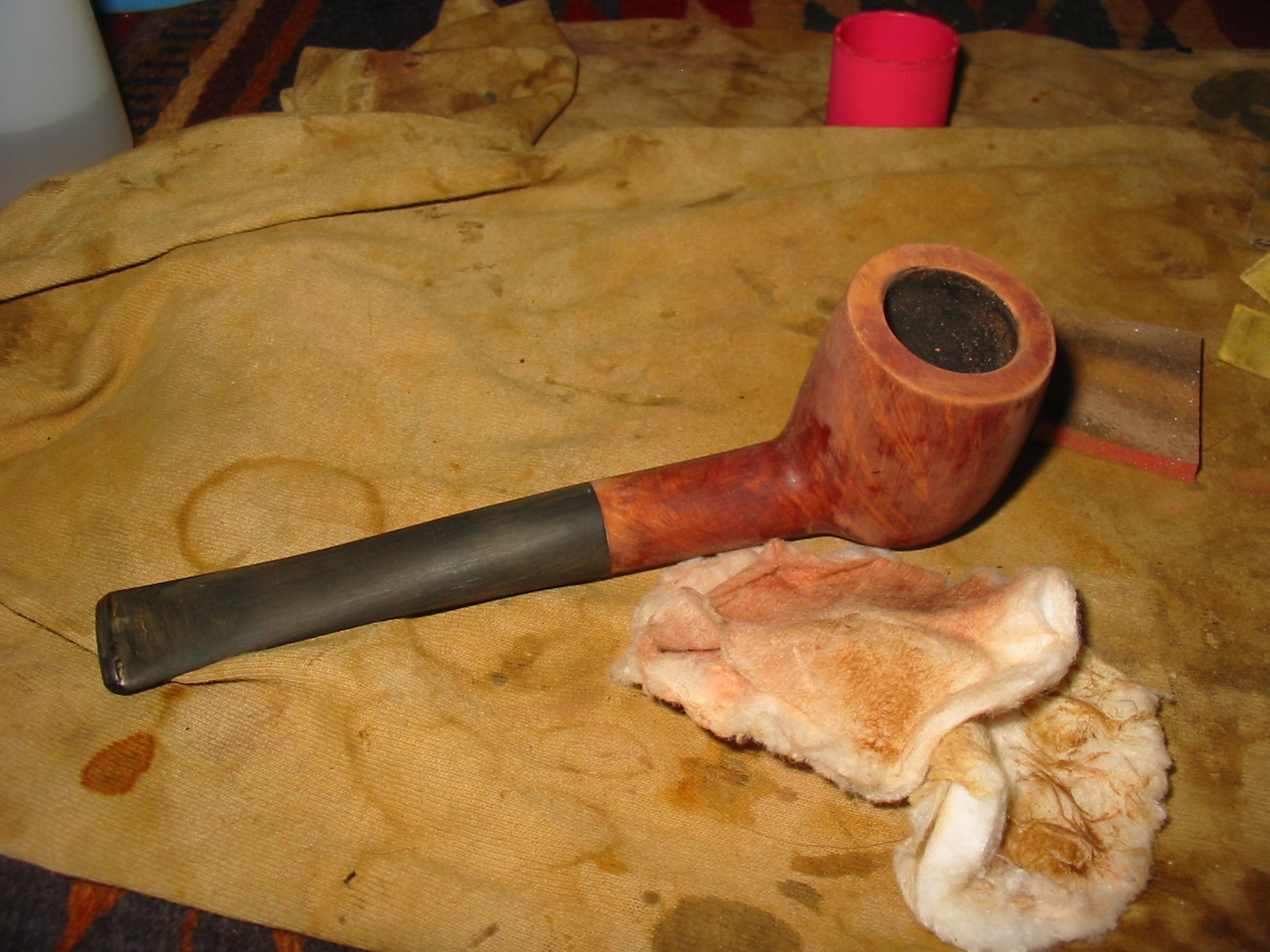
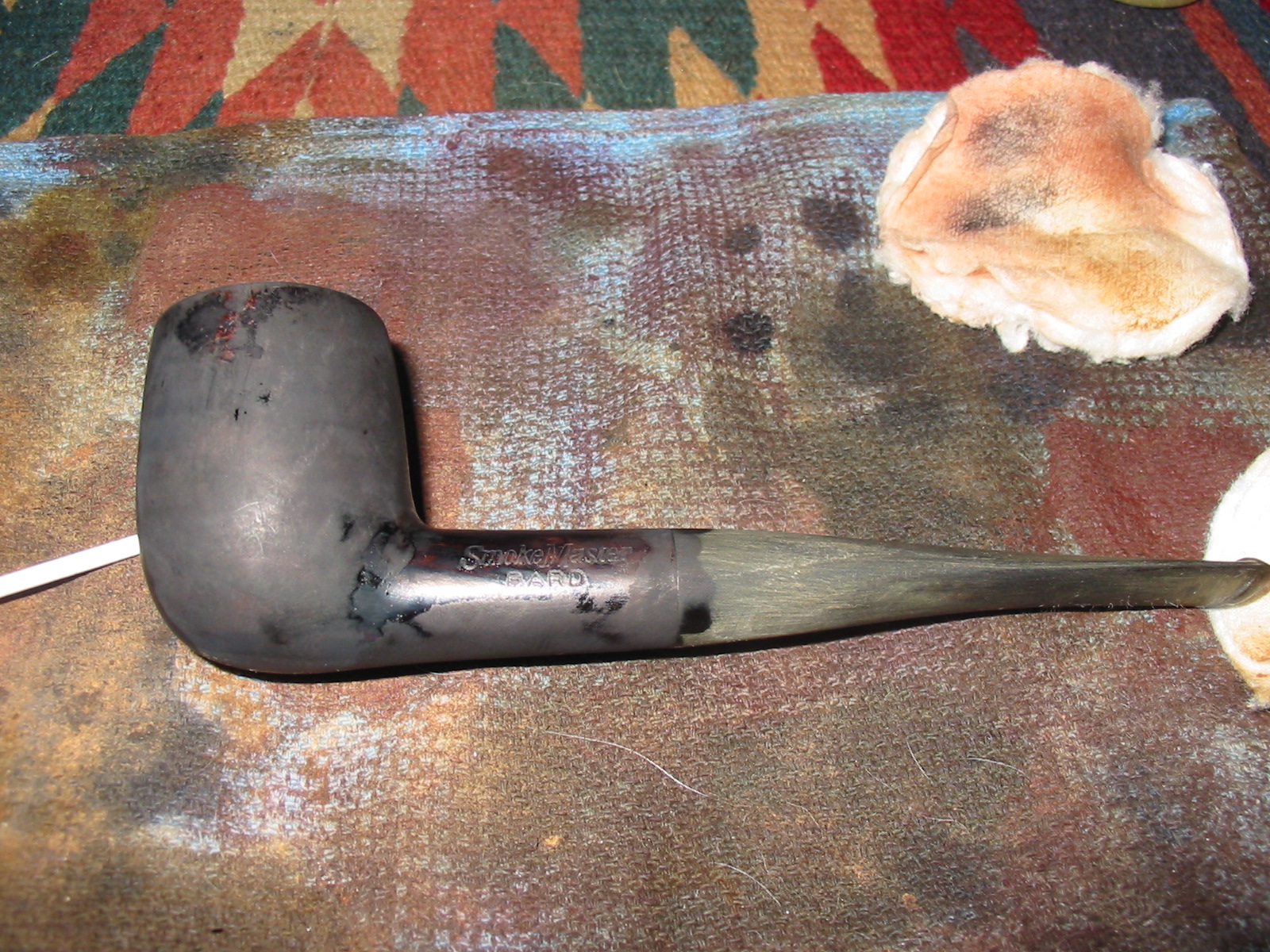
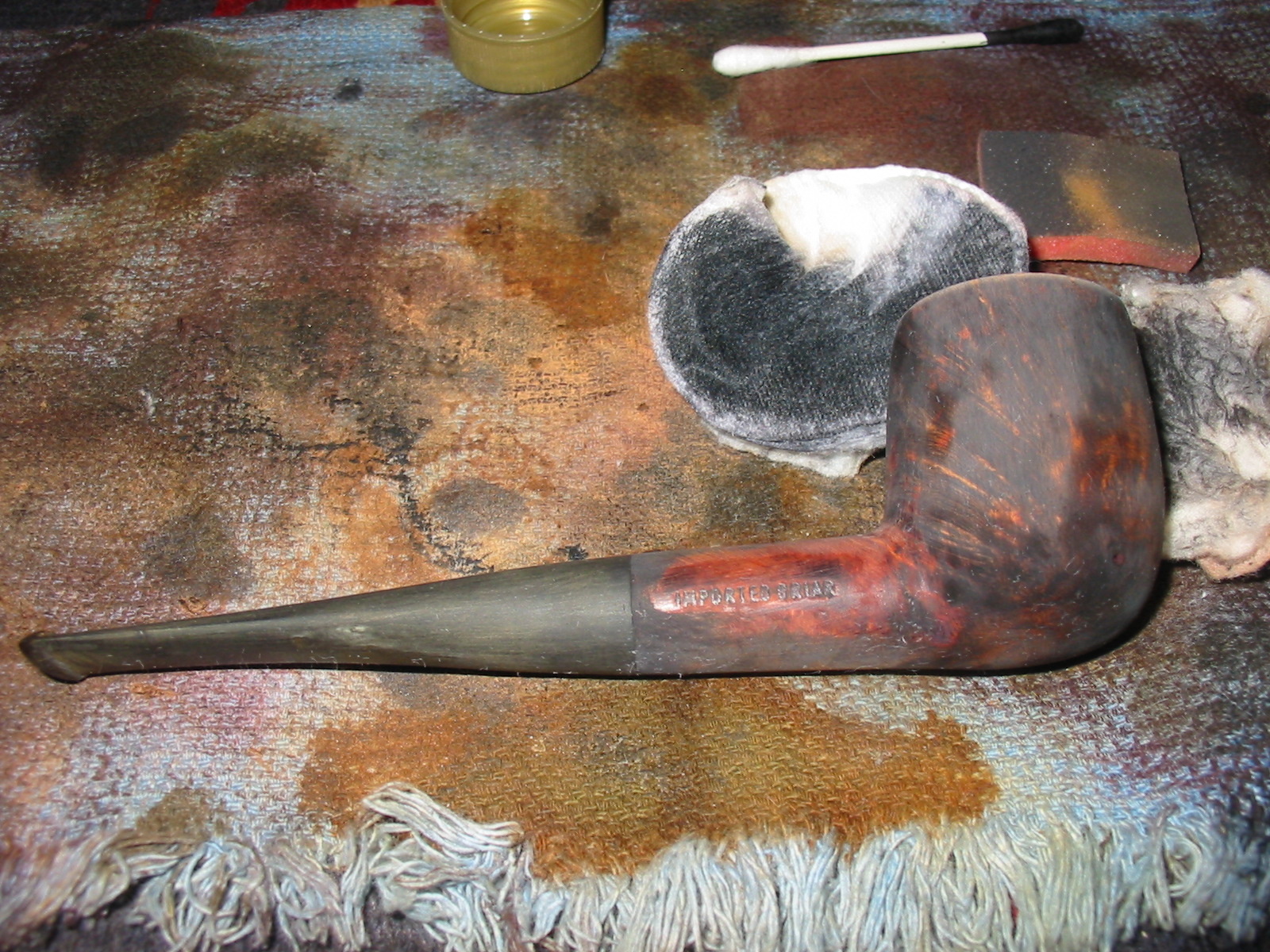
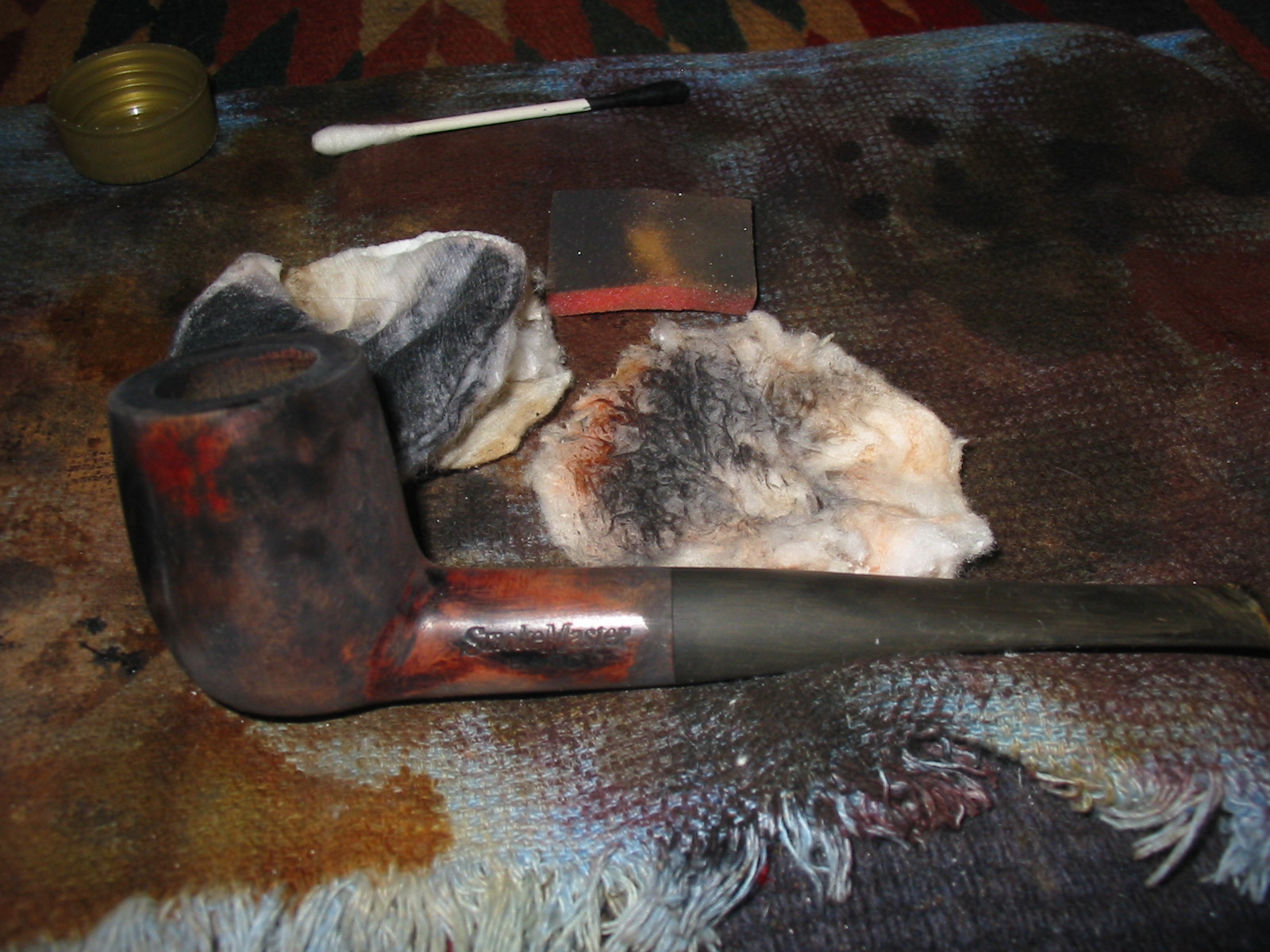
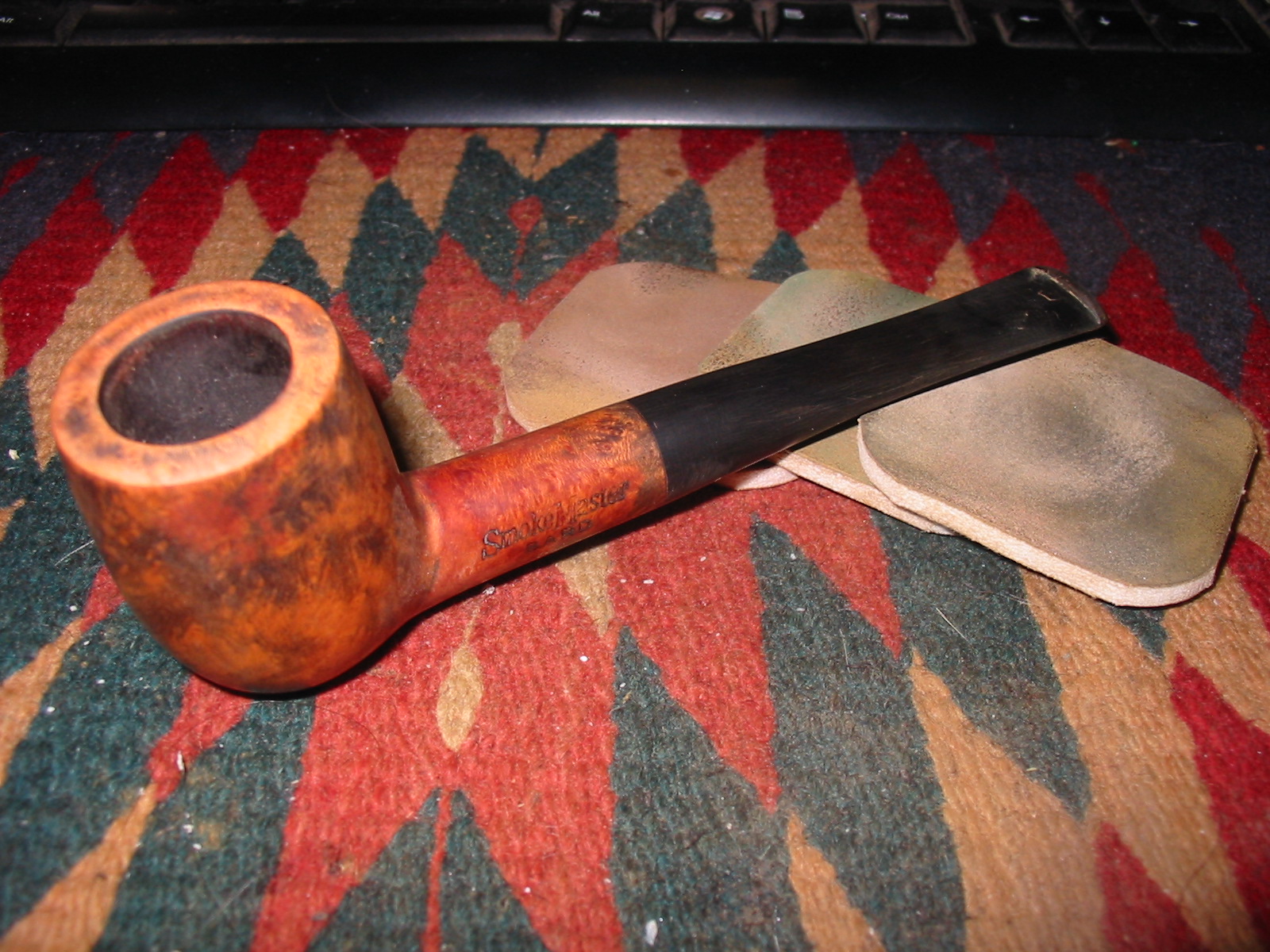
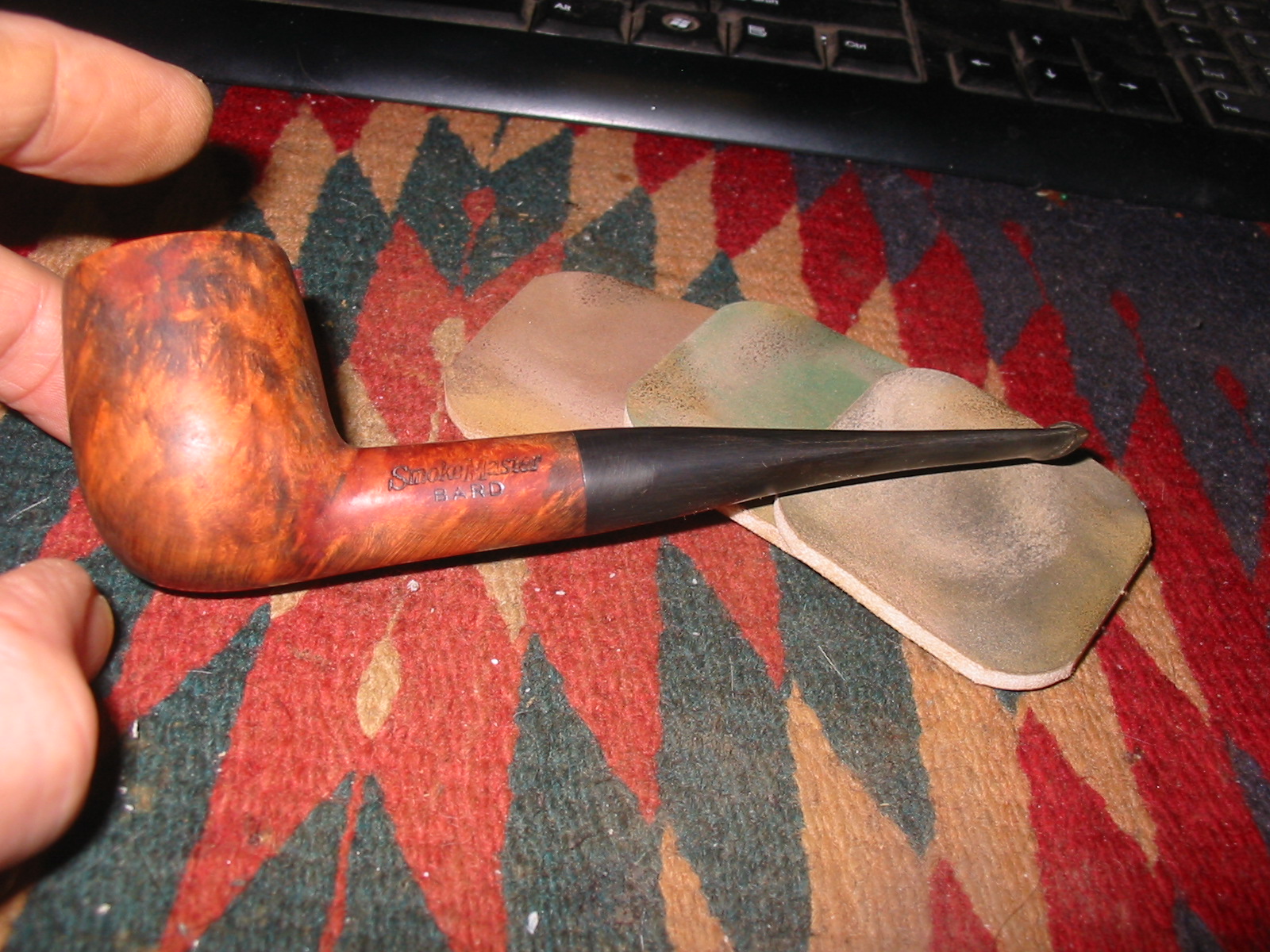
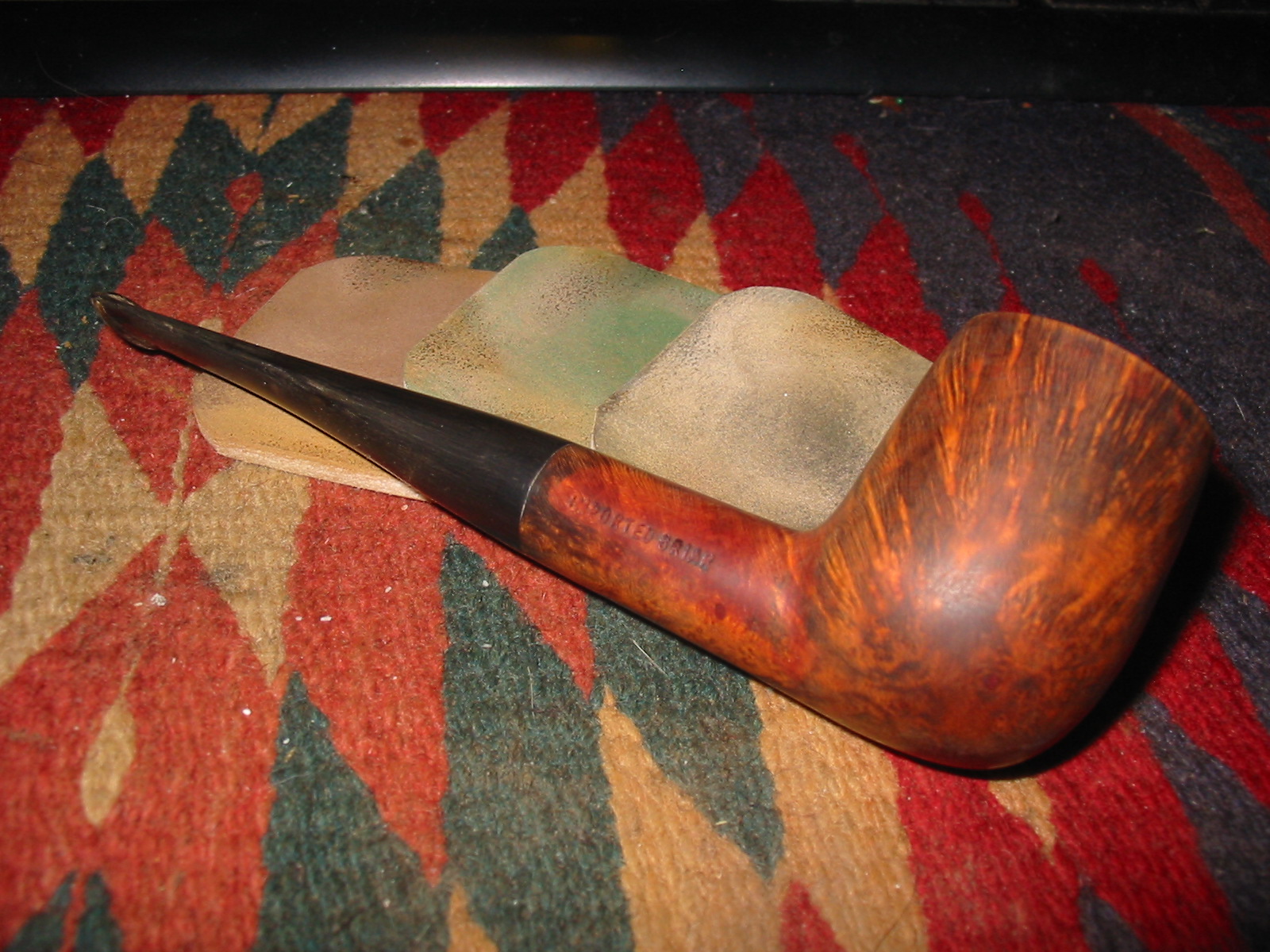
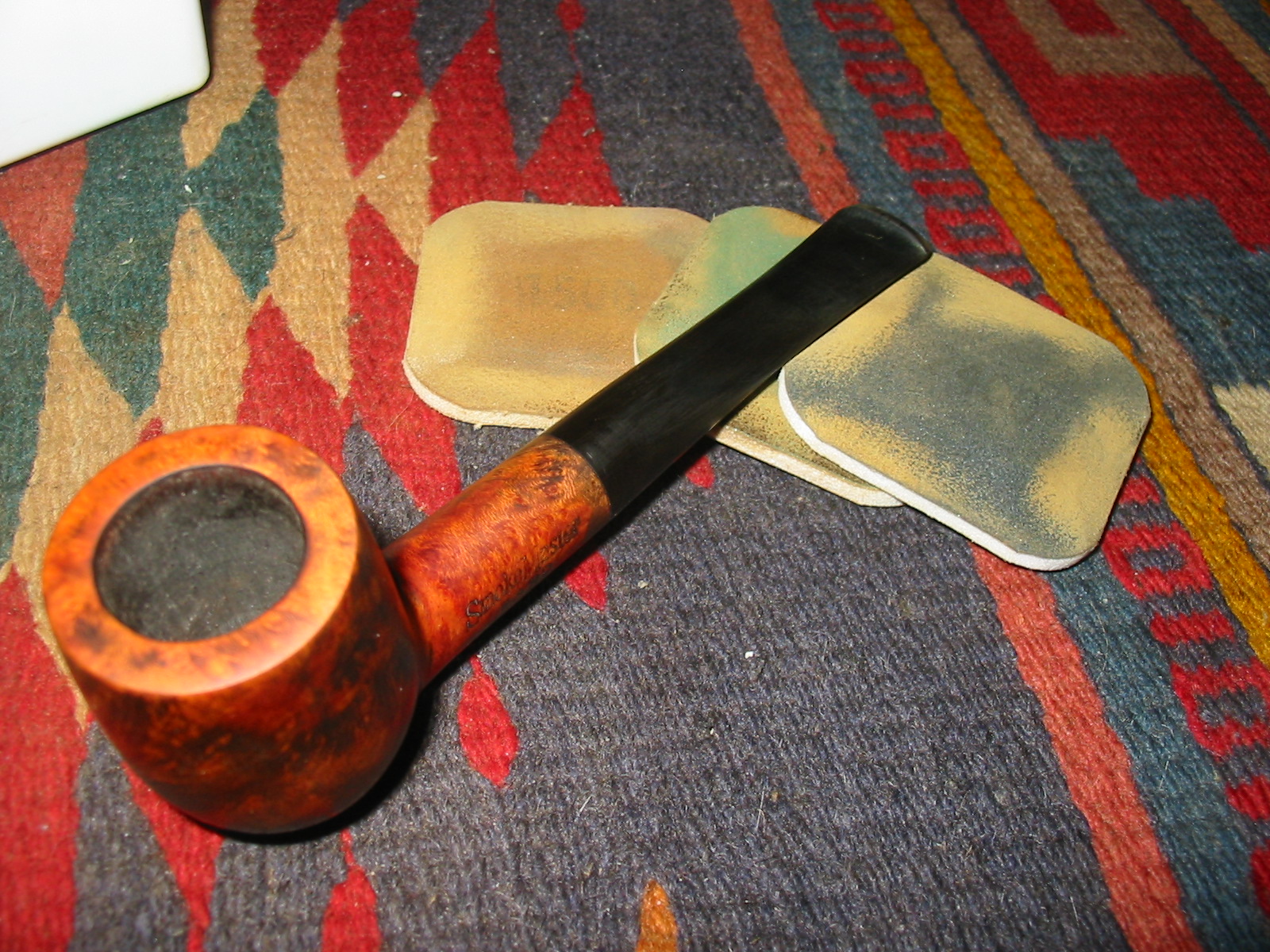
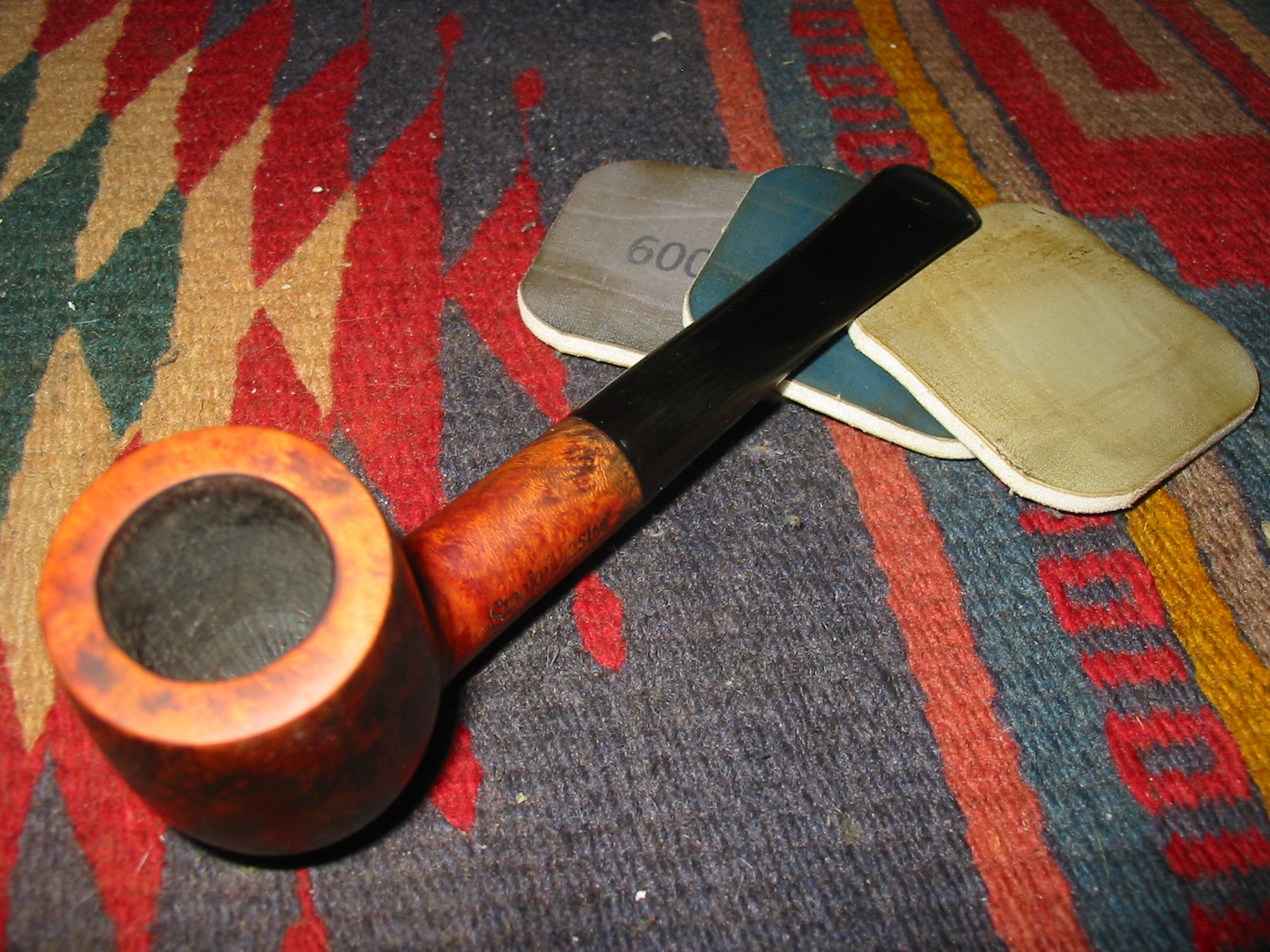
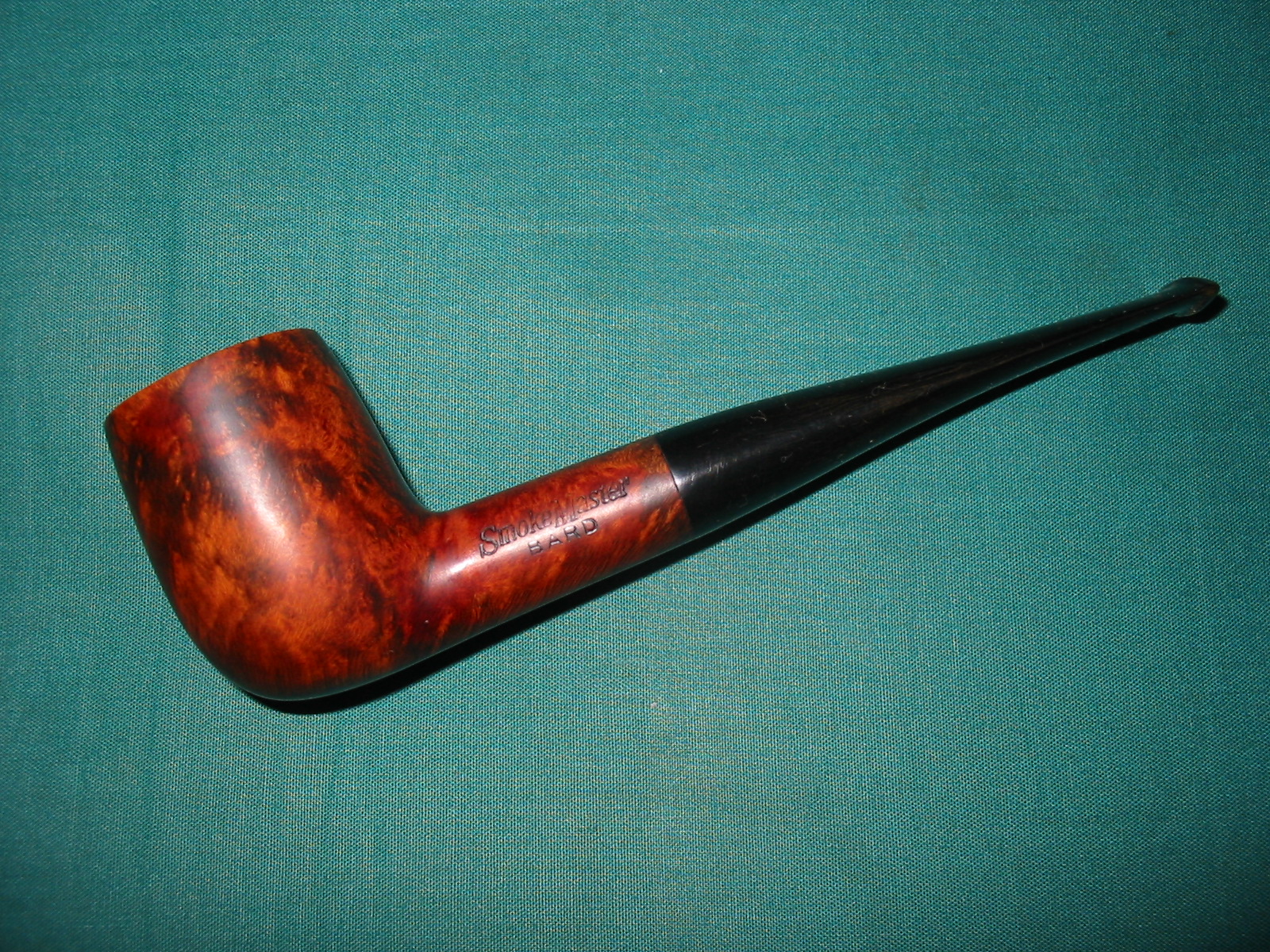
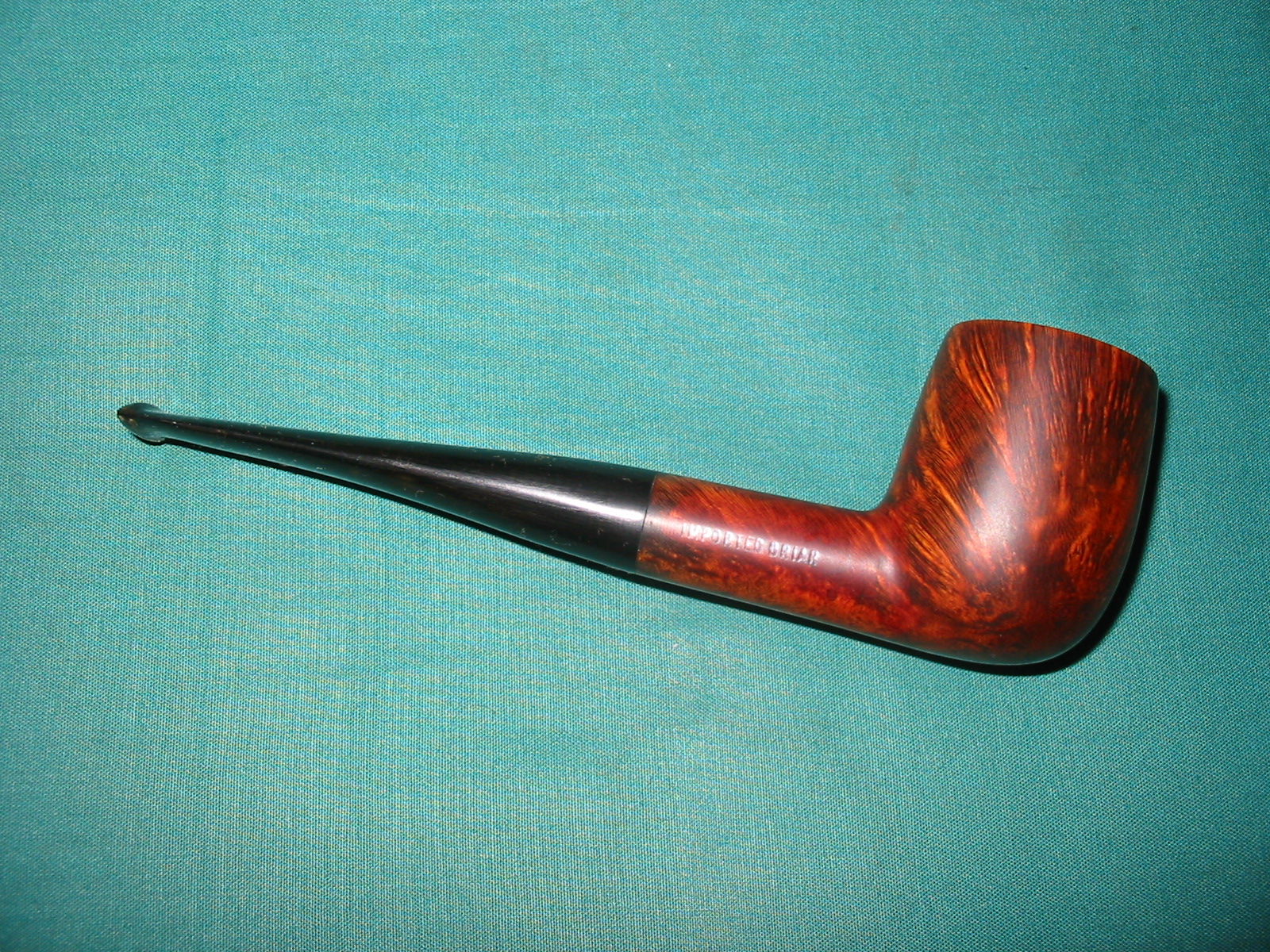
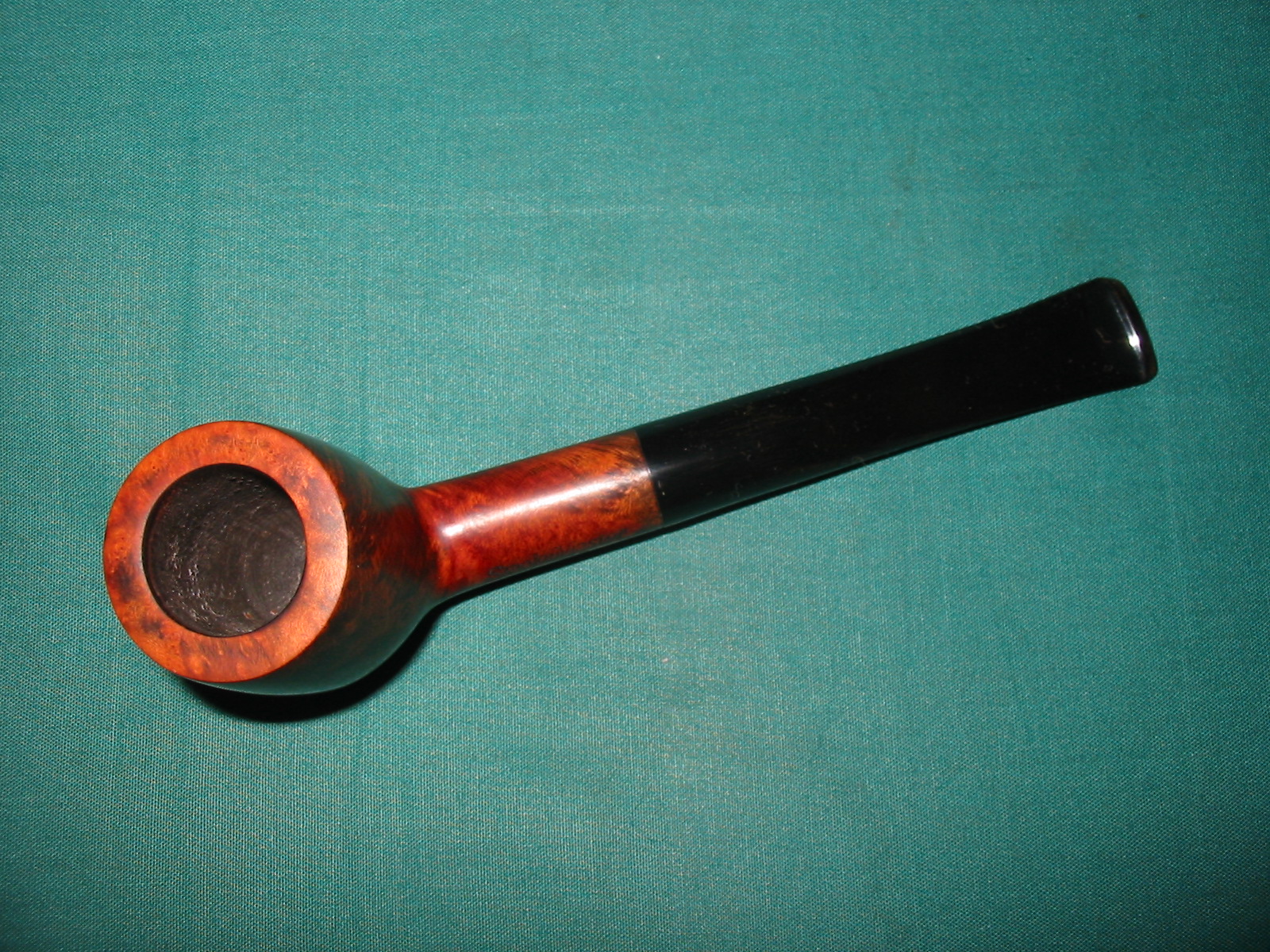
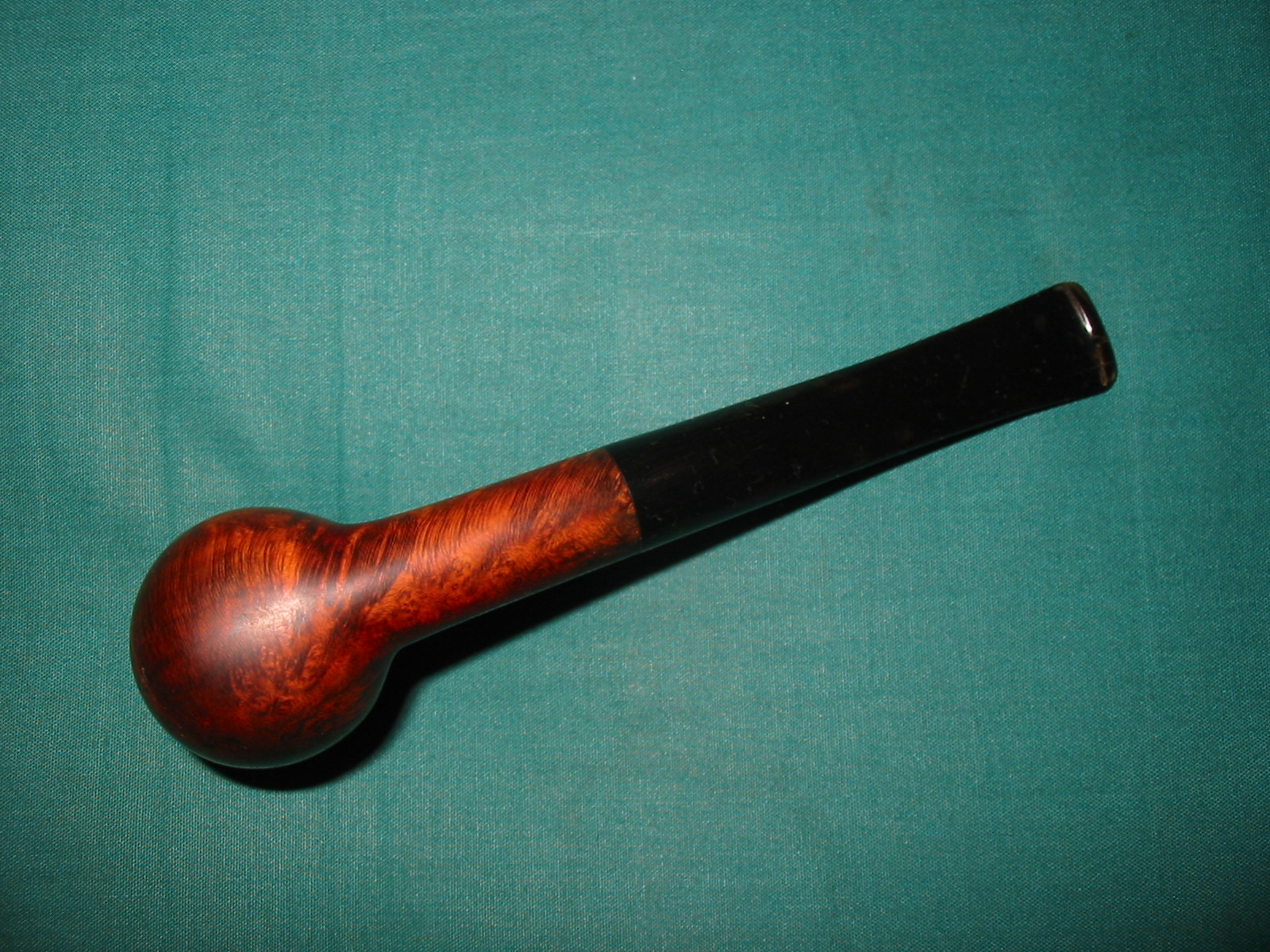
I am down to the bottom of my box of pipes to be refurbished. I have three left. In the bottom of my box was a pipe bowl stamped Smokemaster Bard on the left side of the shank and on the right side of the shank stamped Imported Briar. I found a stem in my can of stems that fit the shank after I adjusted the tenon. The diameter of the stem was slightly larger than the shank but that would be an easy adjustment. The bend would need to be straightened but that would be a simple process. The bowl was lightly smoked and the finish was a very shiny Varathane coating that made the bowl look like plastic. The shank was clean and took very little work to remove the dust that had built up in it.
IMG_3191

I knew nothing about Smokemaster pipes and had no idea who made them. The finish and shape reminded me a lot of Dr. Grabow pipes that I have reworked but that was not enough for me. As has become my habit with pipes I don’t know about, I did a bit of research on the web and found out that the pipe was made by the Briarcraft Pipe Company. The Company was very prosperous between 1920 and 1940. They produced both Briarcraft pipes and a line of seconds under the following names: Airo, Arcadian, Briarmeer, Smokemaster, Cavalcade, Hallmark, Sterling Hall, Filter Kleen and Wimbledon. They closed their doors in 1950. The pipe that I had was definitely not made pre-1950 and the stamping was wrong for it to be made by them. The original Briarcraft stamping was more stylized and had a Germanic script for the stamp. This one was italicized.

Further digging uncovered the fact that around 1967 Dr. Grabow acquired the name and system rights to the Smokemaster line, and was produced until the mid 1990’s. Thus my initial thought of it being a Grabow was correct. It turned out that Dr. Grabow made three series of Smokemaster pipes – the 100, 200, and 300. I have restored and restemmed several of these over the years but never found one that had the original stem intact. Dr. Grabow also made a line of Smokemaster pipes for L.L. Bean. Below are two photos – one of the stem logo which is a shield and the other is the stamping that is on the pipe that I refurbished.
smokemaster

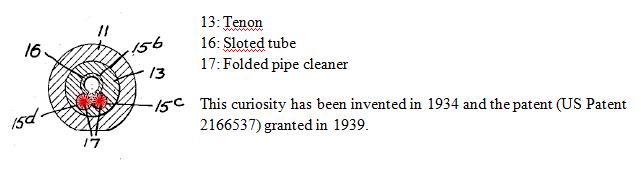
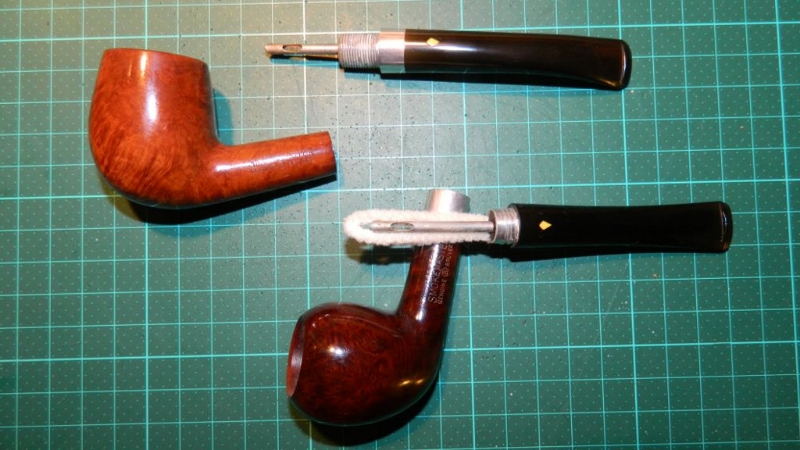
I found out that the Smokemaster had a very unique filter system and was distinct from other filter systems in that it did not include a stinger apparatus. Rather it used a slotted tube that had two special holes in it. A folded pipe cleaner was inserted into the two holes and extended the length of the shank. It collected the tars and moisture of the smoke and could be easily changed and replaced by the pipe smoker. The diagram below shows the design from the end of the tenon.
smokemaster1
I did a patent search and it gave me the following information. This includes both the original description by the inventor and also a diagram submitted at the time of the patent application. I found it at this site: https://www.google.com/patents/US2166537?dq=2166537&hl=en&sa=X&ei=r2u4UtPOHI_ZoAT9moHYCg&ved=0CEAQ6AEwAQ

Description
1939 – B. M. SHOEMAKER 2,166,537
TOBACCO PIPE Filed Oct. 12, 1934 crnar B.M. Shoemaker INVENTOR v ATTORNEY Patented July 18, 1939 UNITED STATES PATENT OFFICE 1 Claim.
My invention relates to tobacco pipes and more particularly to the type in which the bit and bowl portions are separately united to each other.
The principal object of my invention is to maintain the smoke passage in the pipe substantially free of solid deposits, making for general cleanliness in the interior of the pipe and sweet, cool smoking qualities.
I accomplish this object by arranging within the pipe a readily replaceable absorptive member which is designed to receive condensate and solid matter from the smoke as it passes through the pipe. The preferred form of such absorptive member is an ordinary pipe cleaner which, as is well known in the art, comprises a highly flexible metallic core portion carrying a large number of bristles extending there from.
One embodiment of the invention is illustratively exemplified in the accompanying drawing in which Fig. 1 is a longitudinal sectional view of a pipe; Fig. 2 is a transverse sectional view on the line 22 of Fig. 1; Fig. 3 is a transverse sectional view on the line 3-3 of Fig. 1; Fig. 4 is a broken elevation view of a metallic tube or liner constituting one of the pipe elements; Fig. 5 is an elevation view broken intermediate its ends, of the form of absorptive member used in the present construction.
Referring to the drawing, and more specifically to Figs. 1 to 3, denotes the pipe bowl, 1 the bowl stem, 2 the bit and 3 the tenon by which the bit and bowl stem are separately united. The bowl stem has the usual well l4 and the bit the usual smoke or draft passage 15. The bit 12 is further provided with three bores, 15b, c, d, and forming a continuation of the smoke passage 16. A metal tube 16 is provided which is longitudinally slotted at its lower portion and through the slot l8 the products of well be omitted. The tube l6 lies in the bore 15b. The pipe cleaner is doubled upon itself and the two legs or branches of the pipe cleaner enter the bores 15c and l5d and rest there during use of the pipe. The bores 15c and l5d parallel the bore 15b at opposite sides of its longitudinal centre. The embodiment of the invention described is a very desirable construction inasmuch as it receives a standard length pipe cleaner, which in its folded position in the passage 14 is offset from the axis thereof, and which when rotated or twisted with the tenon to seat the same the folded strands of the cleaner engage and brush or clean the wall of the bore.
The operation of the device is very simple. The pipe is sold complete with the pipe cleaner in position. After the pipe has been used for a length of time it will be found that the pipe cleaner is practically saturated with deposited matter. Thereupon the pipe cleaner is simply removed from the pipe and a new one inserted in its place. If desired, the cleaner may also be used in the ordinary manner, naturally before it has become fouled, by moving it back and forth once or twice through the draft passage l5 and/or tube.
What I claim is: In a tobacco pipe, a bowl portion having a stem provided with a central bore, and a bit portion for said stem, the bit having a centrally disposed smoke passage and grooves arranged in the bottom of said passage, a tubular liner mounted in the smoke passage and adapted to project into the bore of the stem, said liner having its underside provided with a longitudinal slot opening into the grooves and bottom of the central bore of the stem beyond the bit, and an absorptive member mounted in said grooves and arranged under the liner throughout its length to receive condensate from the liner and to wipe the wall of said bore when the bit is turned.
BERNARD M. SHOEMAKER.
Classifications

U.S. Classification 131/184.1, 131/203

International Classification A24F1/00

Cooperative Classification A24F1/00, A24F2700/03

European Classification A24F1/00

US2166537-0

I find that kind of information fascinating and am always intrigued by the designers urge to provide a cooler and cleaner smoke for the pipeman who uses his invention. I was not able to find out if Dr. Grabow continued to use the patented design when it took over the line from Briarcraft but I am assuming so until it is shown otherwise by information from those who read this or by a pristine stem that still has the apparatus intact on one of the Grabow Smokemaster pipes.

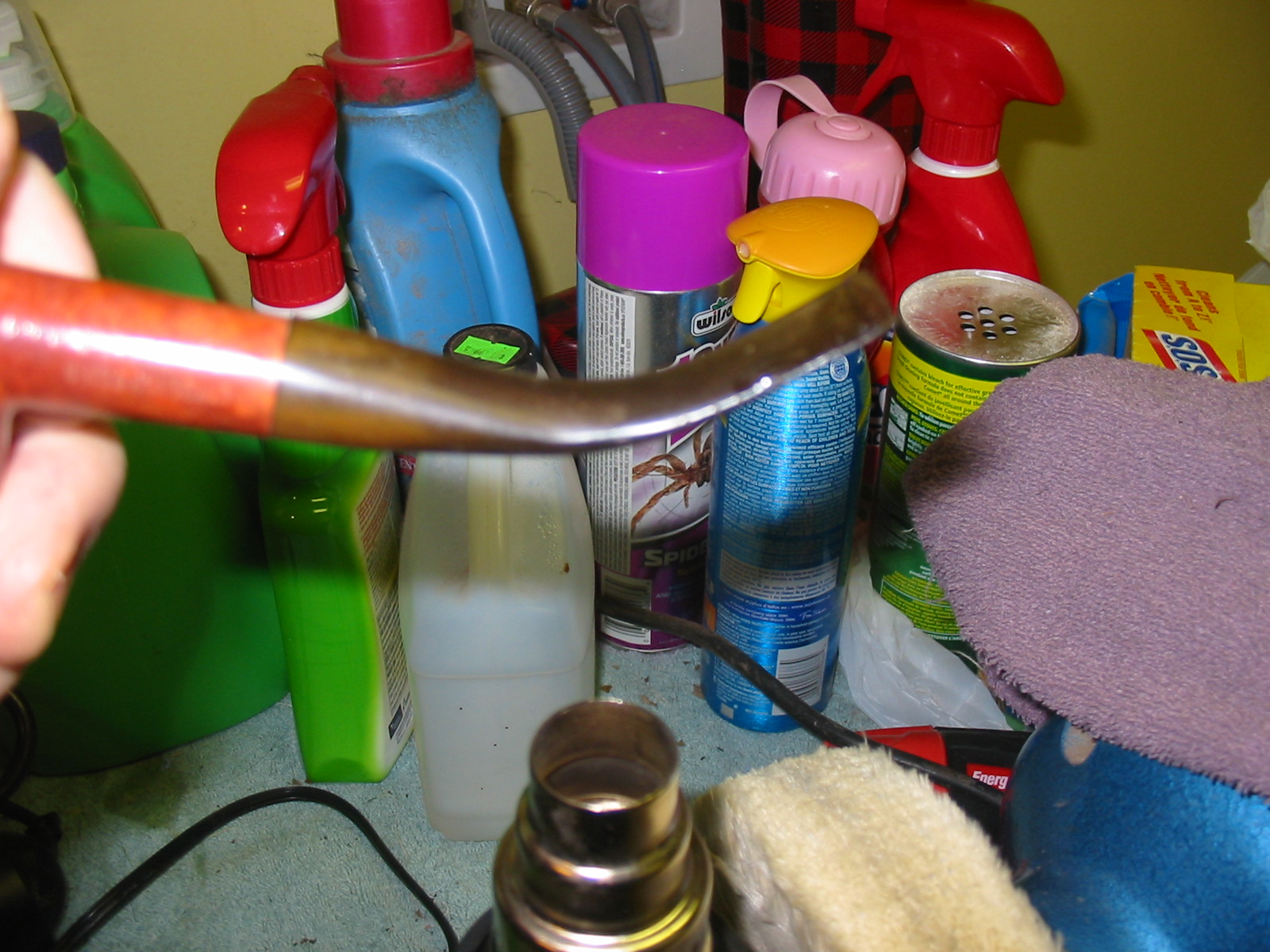
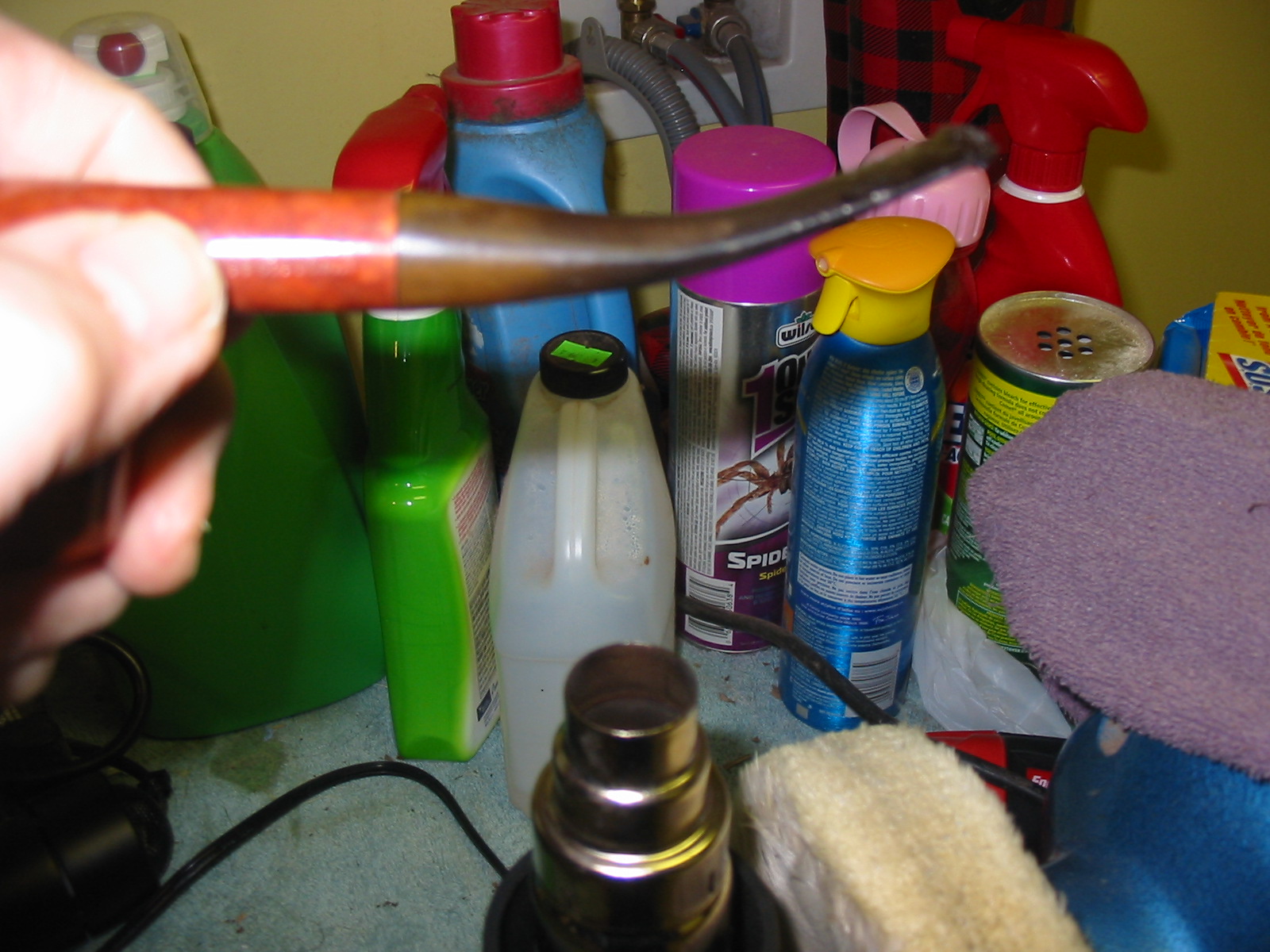
So armed with that information I went to work on the pipe. I began with the newly fitted stem and heated it with a heat gun to straighten the bend. Vulcanite has memory so with heat the stem returns to its original shape. I held the stem about 6 inches above the heat source, ran the gun on high and watched as the stem began to return to normal. It is important not to hold the vulcanite too close to the heat as it burns and to not rush the bend by helping it as it can snap if not properly heated.
IMG_3192

IMG_3193

The straightened stem is pictured below. It can also be seen in the next three photos that the diameter of the stem is slightly larger than the diameter of the shank. I also left a slight bend to the stem as I liked the look of it on this pipe.
IMG_3194

IMG_3195

IMG_3196

I used a Dremel with a sanding drum to reduce the diameter of the stem to match the shank. This has to be done slowly and with a steady hand so as not to nick the shank of the pipe. I move the Dremel slowly along the diameter of the stem and also backward toward the button to keep the lines accurate and not bulge after the sanded area. I sand it as close as possible to the correct diameter and then hand sand it to fit.
IMG_3197

IMG_3198

IMG_3199

I took it back to the work table and sanded the stem with medium grit emery cloth to smooth out the finish and fit of the stem. I then used 220 grit sandpaper and continued to sand until the stem fit was smooth. At this point I also began to use a sanding block to make the transition between the new stem and the shank smooth. I did not worry about sanding the stem as I intended to remove the plastic finish and rework the entire pipe with a new finish. I also sanded the top of the bowl to remove the two burn marks that were present on the inner edge of the rim. This is visible in the last of the series of photos below.
IMG_3200

IMG_3201

IMG_3202

IMG_3203

IMG_3204

I wiped down the bowl with acetone on a cotton pad to try to remove the plastic like finish that was on the pipe. The acetone succeeded in dulling the finish but not in removing it from the briar. I continued to wipe it down until I was through the finish coat. I sanded the bowl with a medium grit sanding sponge between the acetone washes. (I had previously tried the alcohol bath on pipes with this type of finish and found that they did not penetrate the finish.)
IMG_3205

IMG_3206

IMG_3207

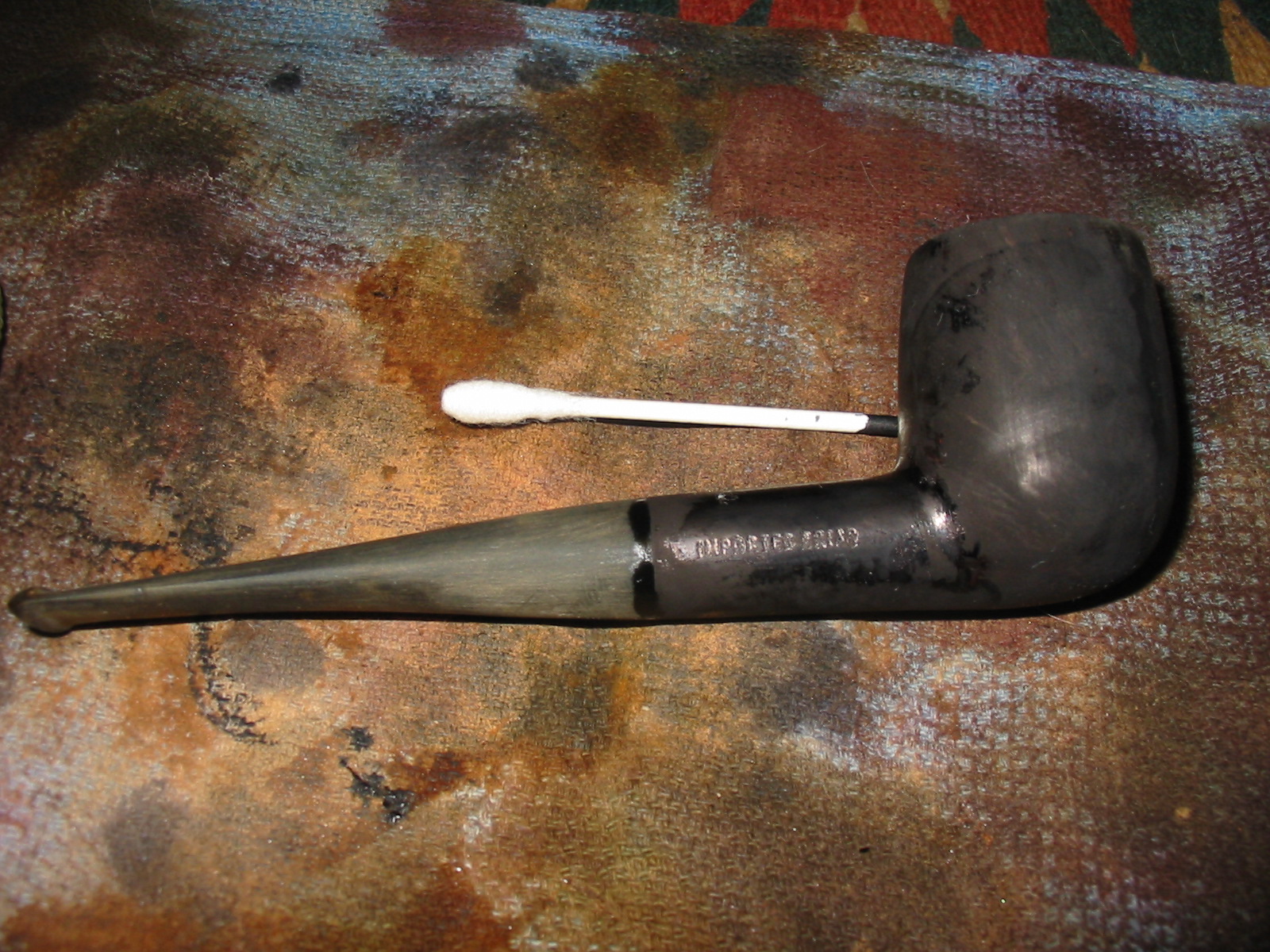
Once the finish was removed I sanded the pipe with a fine grit sanding sponge to remove the scratches as much as possible. I was not overly worried at this point in removing them all as I intended to do a two part stain and sand between the stain coats. I stained the pipe with a black aniline stain, flamed and stained and flamed again. I also heated the bowl to drive the black stain deep into the grain of the pipe so that when I sanded it the grain would show well.
IMG_3208

IMG_3209

IMG_3210

I wiped the bowl down with Everclear on a cotton pad to remove the topcoat of the stain. I knew that the stain would have penetrated deep enough into the grain to leave the parts present that I wanted highlighted.
IMG_3211

IMG_3212

I buffed the pipe with red Tripoli to further remove the black stain. The next four photos show the bowl after buffing. I still wanted to remove more of the stain from the pipe to get the desired effect and differentiate the grain for the finished look of the pipe.
IMG_3213

IMG_3214

IMG_3215

IMG_3216

I wet sanded the bowl and the stem with 1500-2400 grit micromesh sanding pads to further remove the black stain from the surface of the bowl. The sanding also served to remove the scratches left behind by the fine grit sanding sponge before staining. The first four photos below show the finish after I had sanded the bowl with these grits of micromesh. I then dry sanded the bowl and stem with the remaining grits of micromesh pads from 3200-12,000. The state of the bowl and stem can be seen in the last two photos below.
IMG_3217

IMG_3218

IMG_3219

IMG_3242

IMG_3243

IMG_3244

Once I had removed as much of the black as I wanted I stained the pipe with the second stain – an oxblood aniline stain. I heated the bowl, applied the stain, flamed it and reapplied and reflamed it until the coverage was even around the bowl. Once it was dry I buffed the bowl and stem with White Diamond to polish the finish and the stem. I rubbed the stem down with Obsidian Oil to protect the vulcanite and when dry gave the bowl and the stem multiple coats of carnauba wax to polish and protect the pipe. The finished pipe is pictured below. I really like the contrast stain and the matte like finish on the pipe. The two step stain process highlighted the grain on the pipe and gives it a far more polished and finished look than the previous plastic coat had down. This piece of briar, though not stellar, did not have fills or flaws that are visible. It should make someone a great addition for their pipe rack.
IMG_3245

IMG_3246

IMG_3247

IMG_3248

NOTE: I was just reading on PSU and saw a post there that had this photo of the filtration system on these pipes. http://pipesmokerunlimited.com/showthread.php?4015-Smokemaster-Filter-Pipe Thanks to the poster, Hammerhead (Terry Swope???maybe) for posting the photo for us to see.
Smokemaster_zps5e85a518

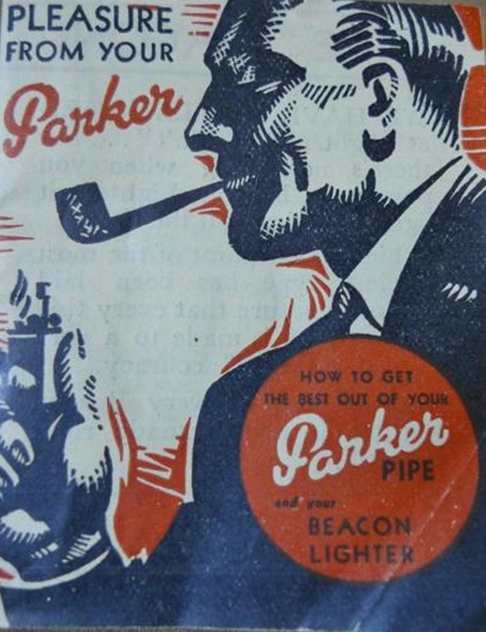
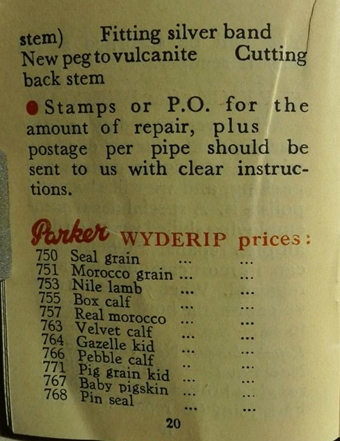
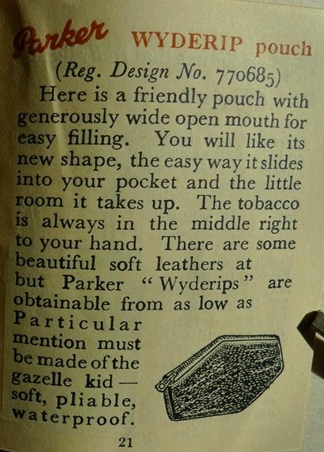
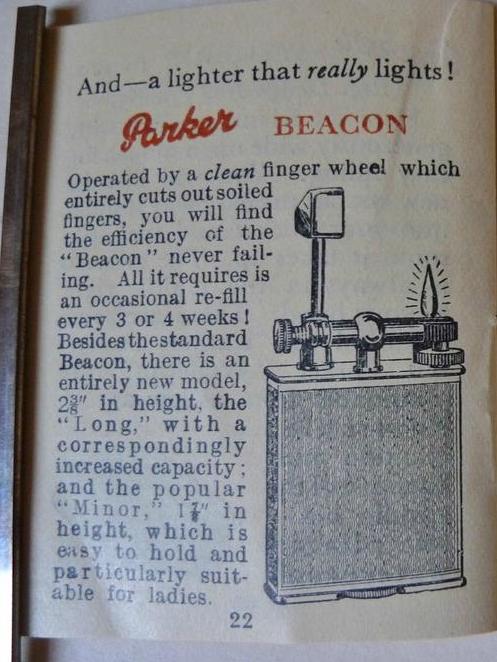
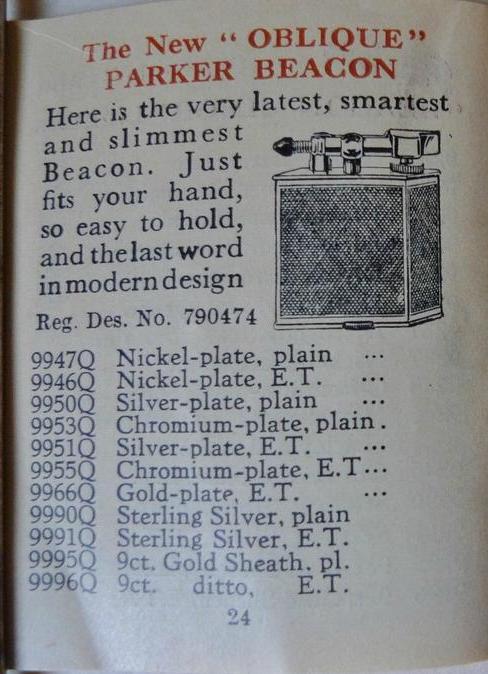
Pleasure From Your Parker – How to get the most from your Parker pipe


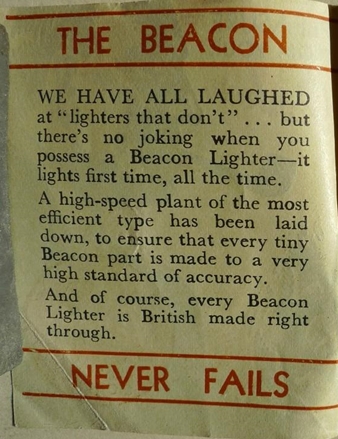
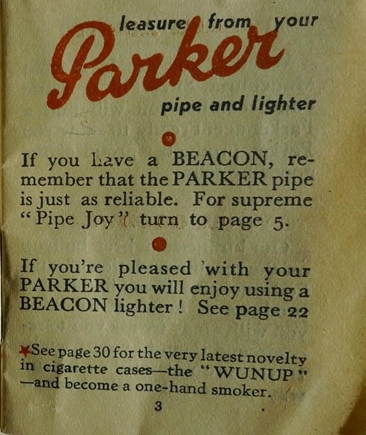
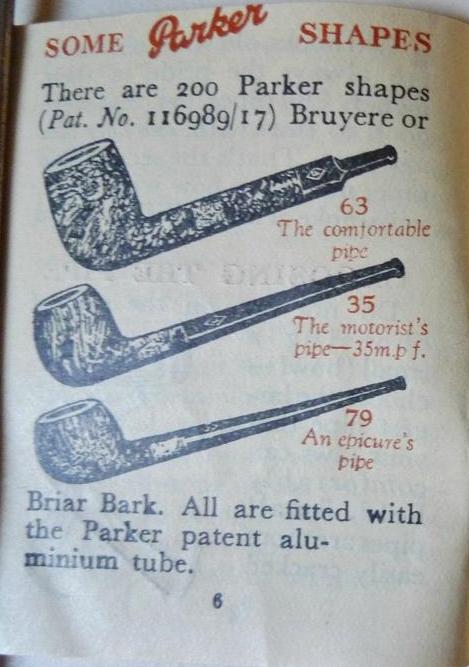
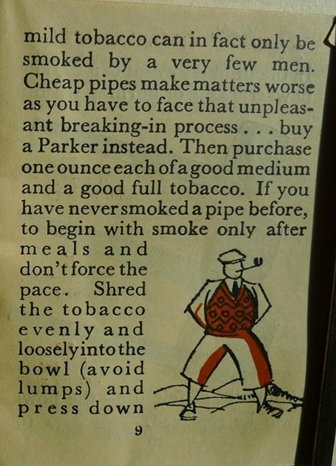
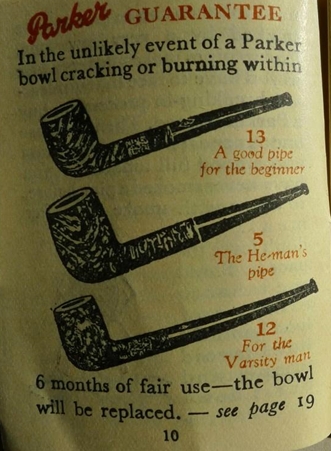
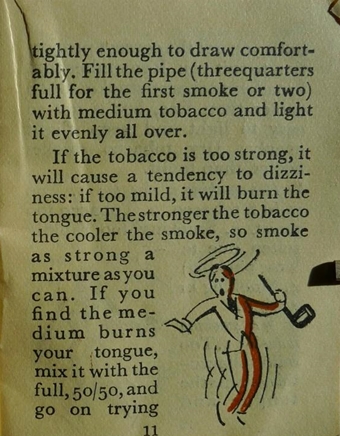
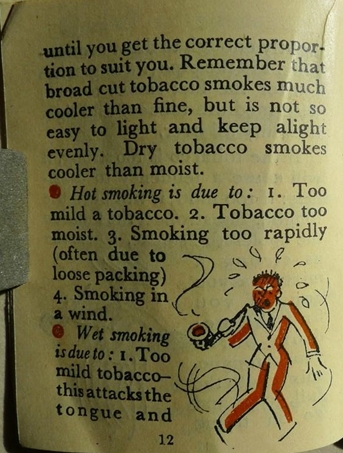
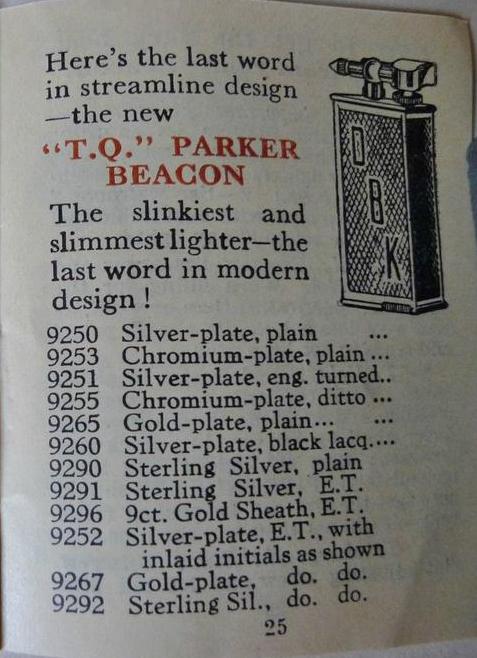
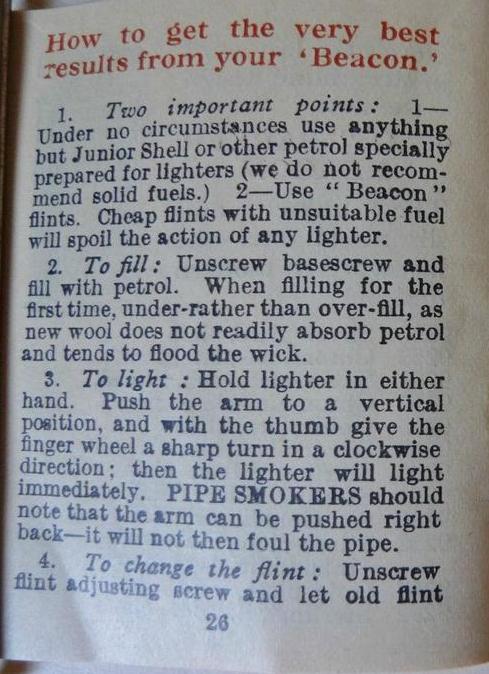
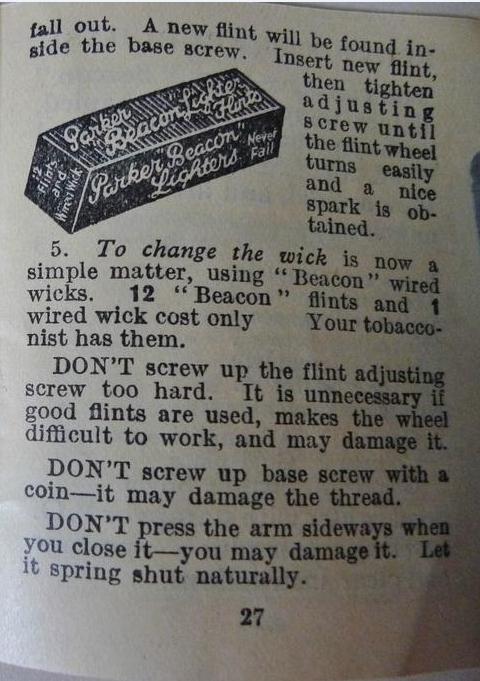
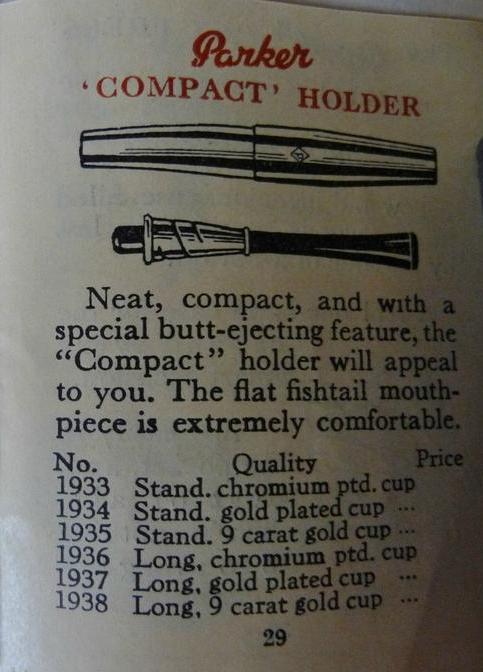
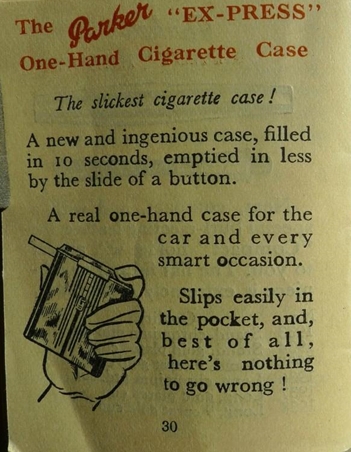
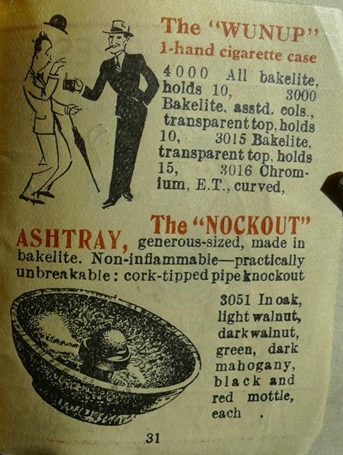
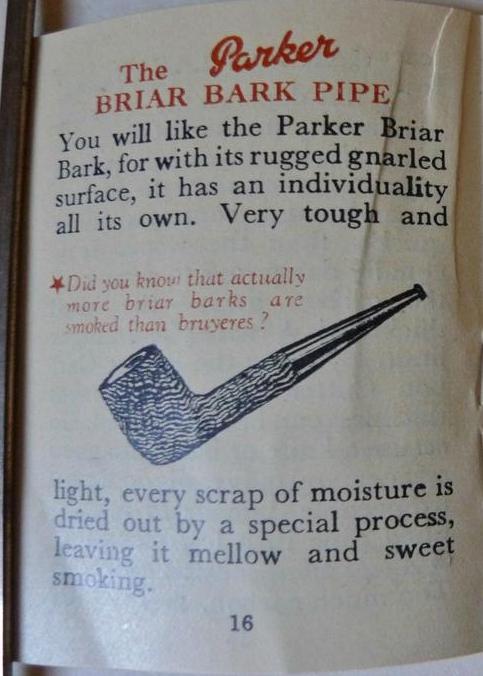
This booklet was originally posted on Pipe Smoker Unlimited by philofumo (Troy) http://pipesmokerunlimited.com/showthread.php?3616-1949-Parker-Patent-Super-Briar-Bark-from-Alan . I am always on the lookout for old tobacciana items like this; so when I saw it I thought it was an interesting piece of pipe and tobacco history that I would like to post here on rebornpipes. I always enjoy reading these old factory booklets that came with new pipes. They give a flavour of times past that I find both fascinating and enjoyable.
Parker1

Parker2

Parker3

Parker4

Parker5

Parker6

Parker7

Parker8

Parker9

Parker10

Parker11

Parker12

Parker13

Parker14

Parker15

Parker16

Parker17

Parker18

Parker19

Parker20

Parker21

Parker22

Parker23

Parker24

Parker25

Parker26

Parker27

Parker28

Parker29

Parker30

Parker31

Parker end

Tobacciana: Dating an Old Cutter Top Tin of Condor Sliced


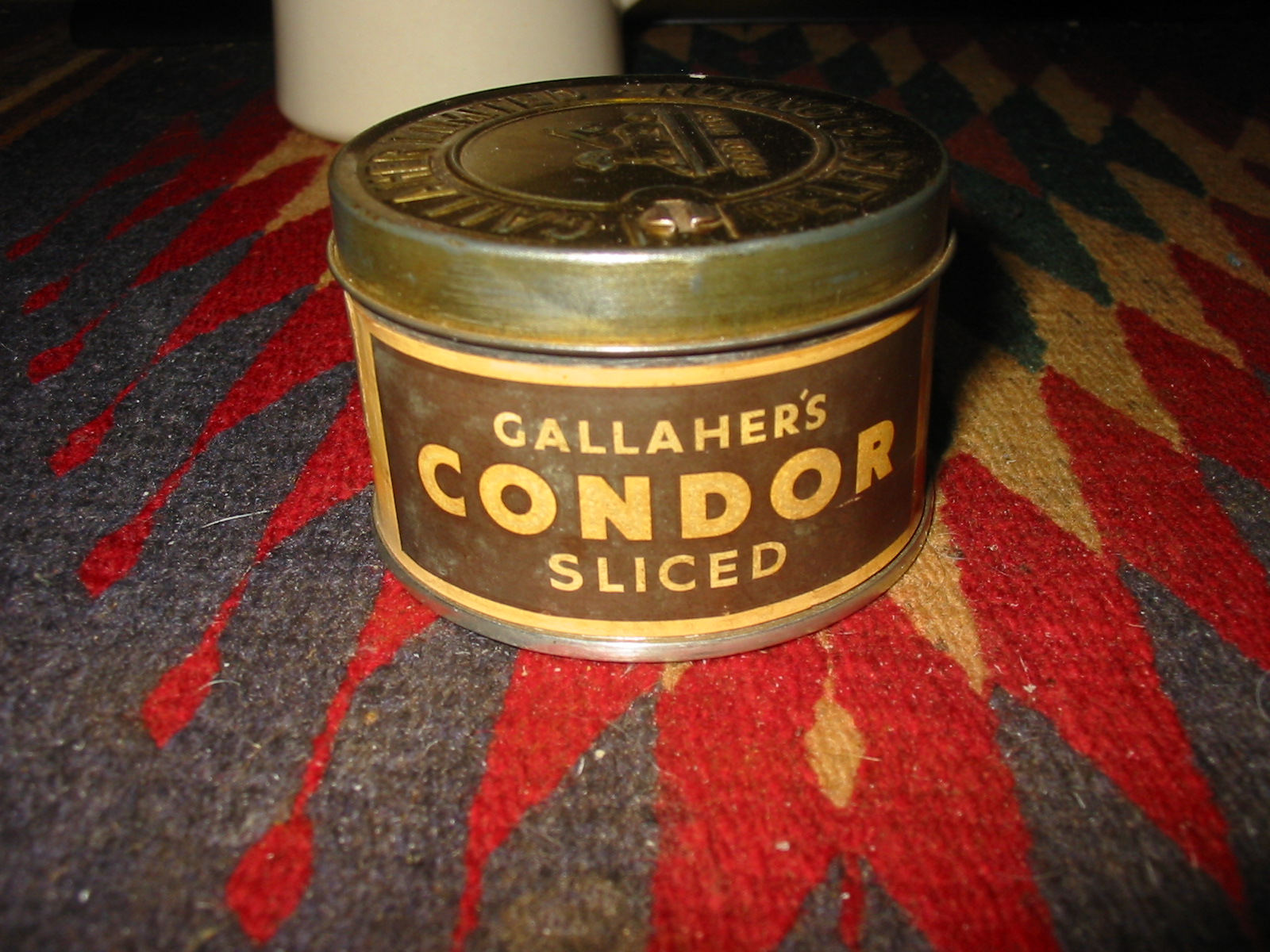
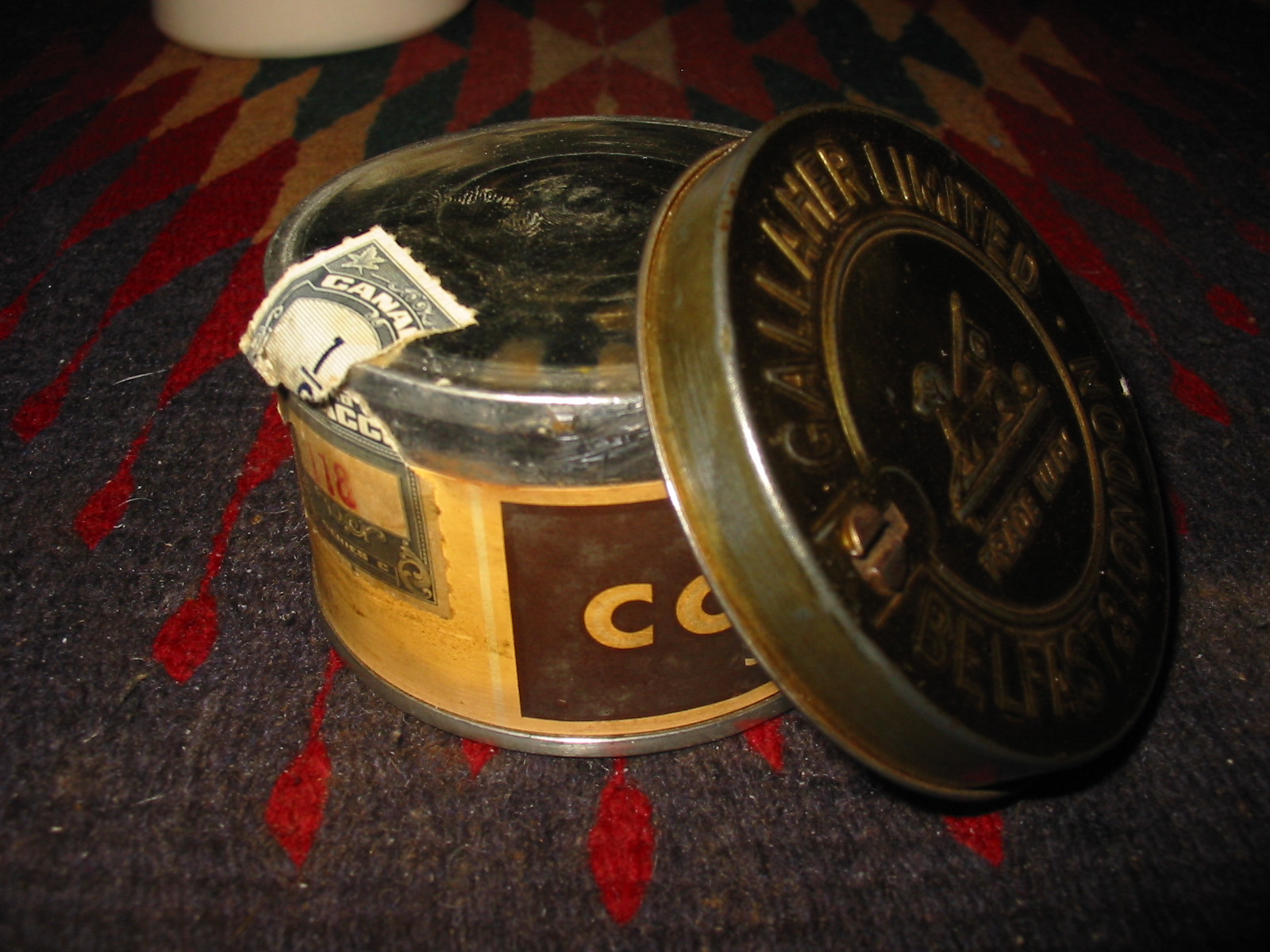
On a recent trip in Northern Alberta, Canada, I visited an antique mall and came across this old unopened tin of Condor Sliced made by Gallaher’s. Once I saw the old tin I had to have it and the price was only $10 so it is now in my collection. I am still not sure if I will open it and smoke it or just leave it as is for its collectible value. The tin is in excellent shape as can be seen in the photos below. The label reads Gallaher’s Condor Sliced on the front and back of the tin.
IMG_1940

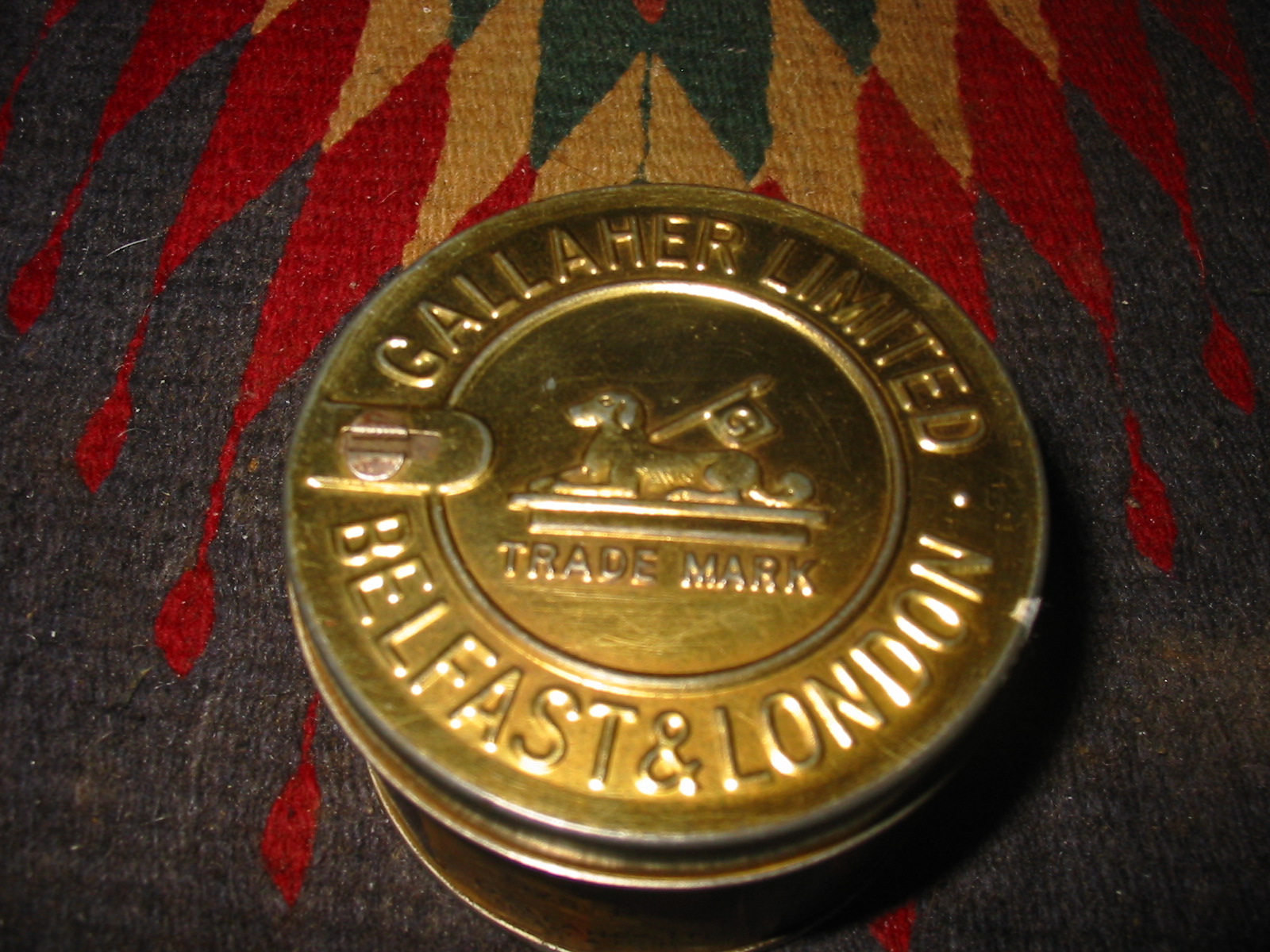
The lid is embossed and reads Gallaher Limited Belfast & London around resting Lion holding a flag over Trade Mark. The lid can be seen in the photo below. There is also a portion of the lid that is to be used to open the tin; it is visible on the left side of the lid.
IMG_1941

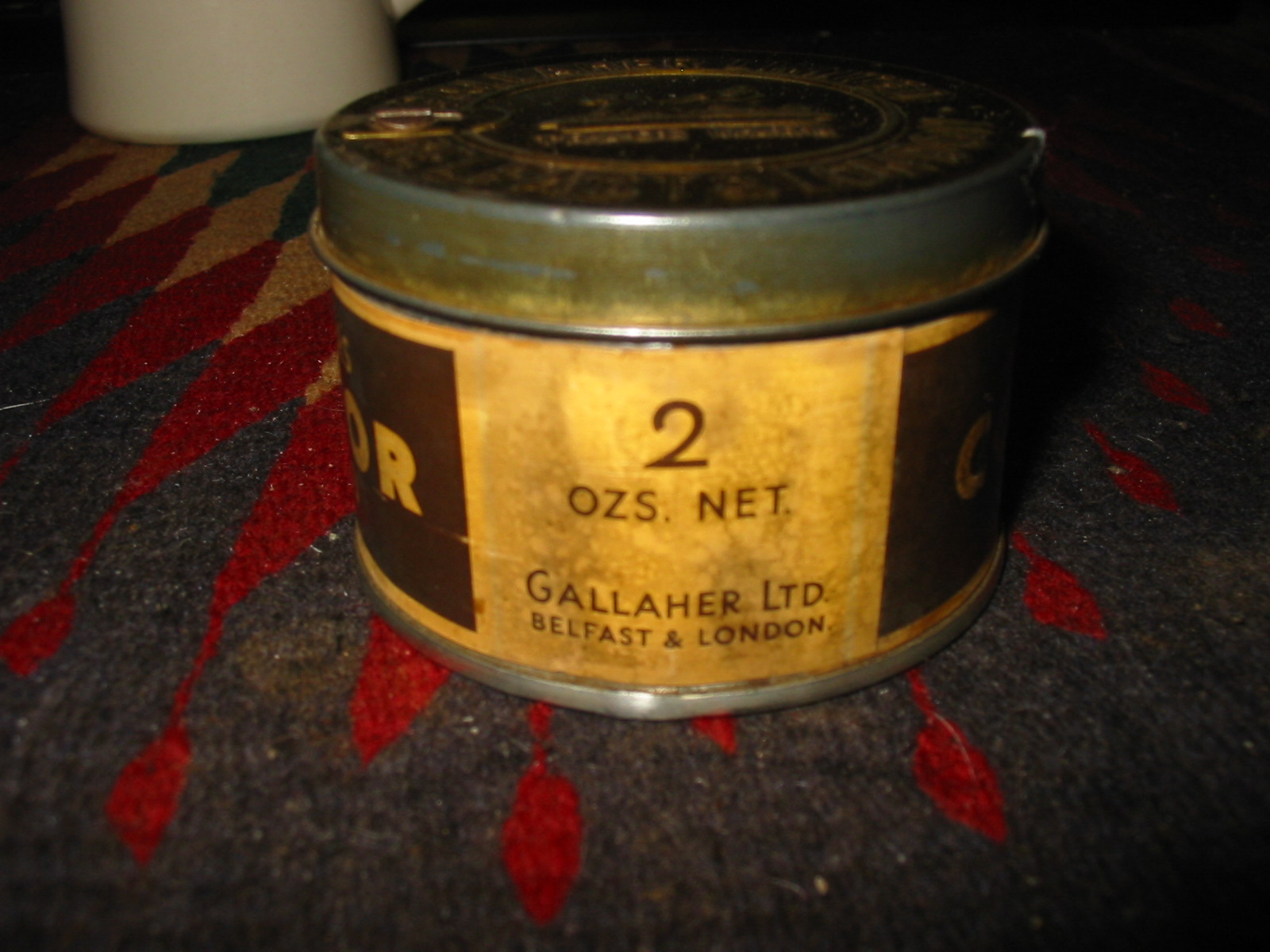
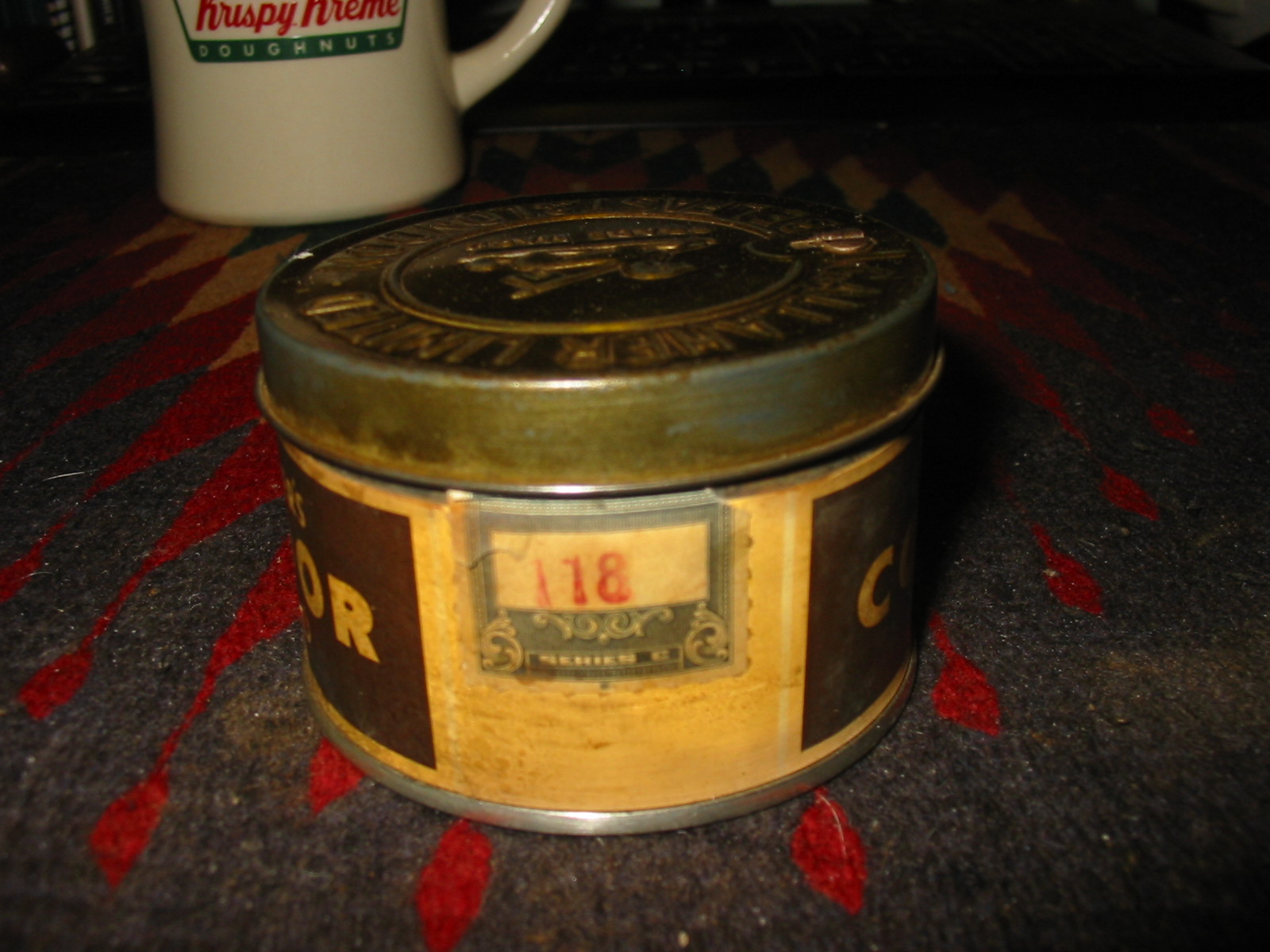
One side of the label is printed as can be seen in the photo below: 2 Ozs. Net. over Gallaher Ltd. Belfast & London. On the other side is a portion of the tax stamp that reads 118 in a box and Series C. This is visible in the next two photos.
IMG_1942

IMG_1943

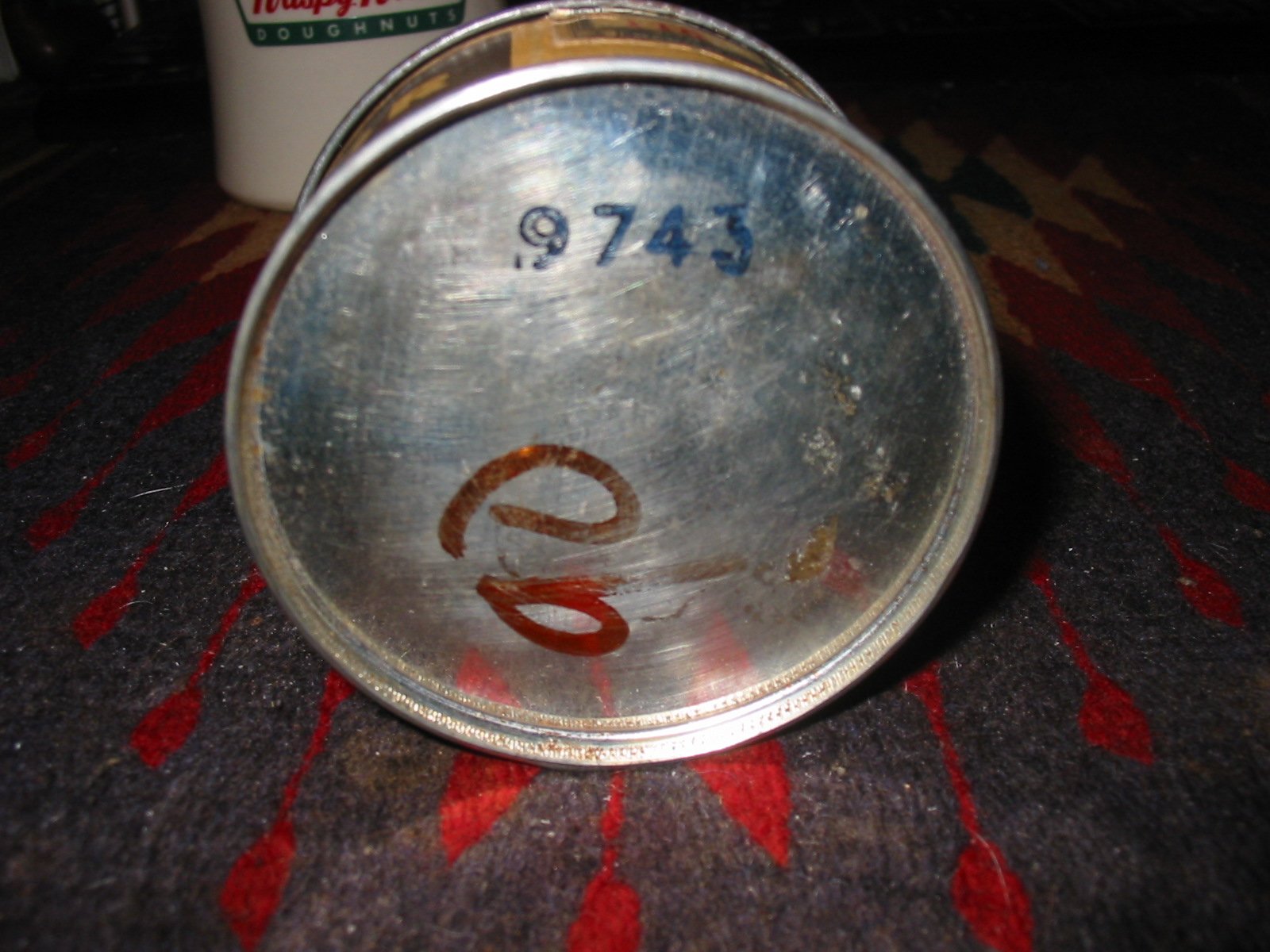
On the bottom of the tin it is stamped 9743. At this point in the search I am surmising that it is a code that can give a clue to the date of the tin. (See photo below)
IMG_1944

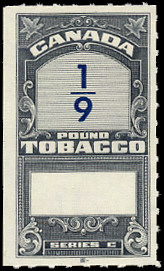
Upon removing the lid of the tin the remainder of the tax stamp can be seen clearly. It is slightly torn but the stamping is readable. The top banner of the stamp reads Canada and in the box it is stamped 1/9 Pound Tobacco. Now I wanted to know when this tin of tobacco was made. Armed with the information on the tax stamp and the numbers stamped on the tin bottom I began my research to see if I could narrow down the date of manufacture. I began with a search on Google to find information on Canadian Excise stamps or tax stamps. That seemed like a good place to start in the search to date the tin.
IMG_1945

The first thing I found in my Google search was a site that offered unused tax stamps for sale. They had the exact stamp for sale to collectors in an unused condition. The stamp catalogue said that this particular black stamp was rare. As can clearly be seen in the photo below it is a match to the torn stamp in the photo above.
3558

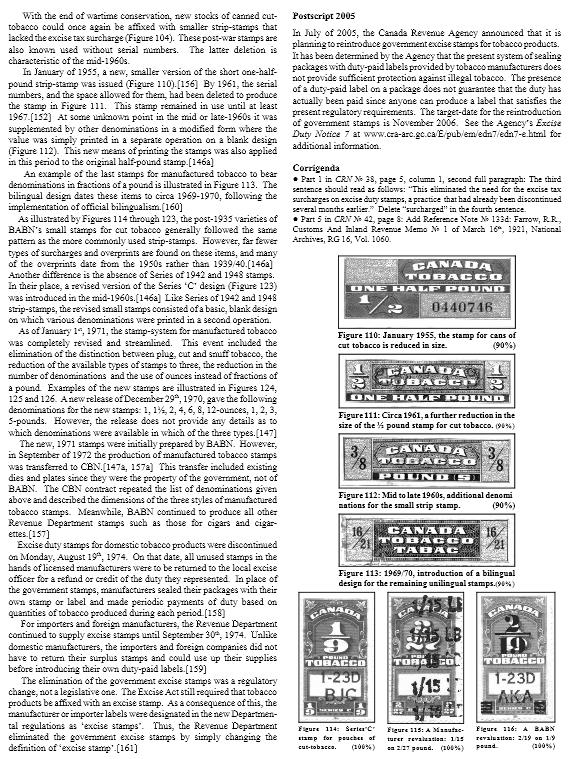
From there I did more research into the tax stamps and found several articles that are available in PDF format by Christopher Ryan. Ryan did an amazing booklet on Canadian Tax Stamps in terms of meaning and history. The photo below is of the cover page of the first part of his booklet on Canada’s Stamp Taxation of Tobacco Products. I read through much of it and in Part 6, I found the pertinent information that I needed. I will summarize what I found out in the paragraphs below.
stamps

Tax stamps were issued in rolls of prepaid amounts to the manufacturers of the tobacco products. These pre-stamped amounts were then put on the tins, plugs or packages of tobacco. The stamp I have on my tin predates the doubling of the excise tax in March 1943 when the stamps were over-stamped with a new value allowing purchasers of rolls of stamps to continue to use the older stamps until they were gone. This over-stamping continued until in 1947 the stamps were taken out of circulation and the excise stamps were no longer used. In the clip from the article pictured below there are pictures of the original stamp (Figure 3) and the over-stamped stamp (Figure 4).
Dating stamps

Later in the article from part 6 of Ryan’s work I found that the stamps on the tin that I have were made after 1935. With that new information I was able to narrow the field of time to a seven year window. That would place the tin I have to a period of time between the years of 1935 to March of 1943. This information definitely narrowed the field as I tracked down the research. In the next clip from the article there was more information given in terms of the changes in the taxation system used for tobacco. The photos included in the article are similar to the stamp on the tin I have.
tax stamps

Knowing that time line I began to work on the stamping on the bottom of the tin. Remember that is was stamped 9743. With the information I had found I believe that the stamping is a date code put on by the manufacture of the tobacco and it leads me to confirm that the date is indeed 1943. Knowing that the stamps were over-stamped after March 1943 the tin I have would thus have to be pre-March of that year. I think that overall it is not a bad find for a few minute hunt in an antique mall. I have a tin of 70 year old Condor Sliced in my collection. Now I only have to make a decision of whether to smoke it or save it.

Notes and Visual References on Barling Pipes – Compiled by Les Sechler


I came across this brief article by Les online a few years ago and have found it very helpful in narrowing down the dates for the Barling pipes that come across in my ongoing hunt for estate pipes. I wrote to Les through EBay and asked his permission to reprint the article here on rebornpipes. He graciously replied as noted below. Thank you, Les.

… if you get a comment by collector Tad Gage, his judgment is better than mine since I learned much of what I know from him as well as others. Most of this info I deduced over time by close observation of the nomenclature I found on my own pipes but also from pics I saw on ebay pieces that were listed for sale… Note – Barling nomenclature has never been an exact science and this info should be considered as a guideline rather than a mandate. Even the book done by the late John Loring about Dunhill nomenclature is not perfect since exceptions have been found in those pipes as well.

Good luck and let me know how things turn out. I have it in mind to print a small paper on the subject at some point in the future and give it away at shows. – Les Sechler

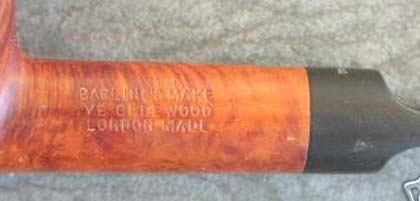
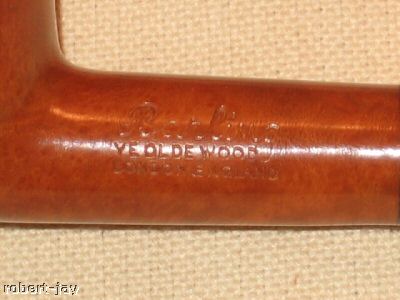
The following is a visual reference guide that allows the reader to identify the various eras of Barling nomenclature. Please note that some exceptions will occur since not every pipe had stampings that are completely in conformation to the norm.

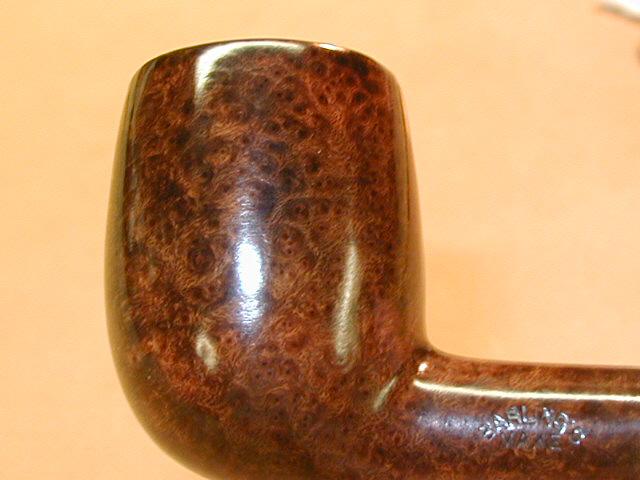
Barling1 Older Pre-transition nomenclature, probably 1900 or after. Date can be determined by silver hallmarks.

Barling2 Late 40’s – 1962 Typical Pre-Transition nomenclature

Barling3 Used only for the Guinea Grain US distributed pipes

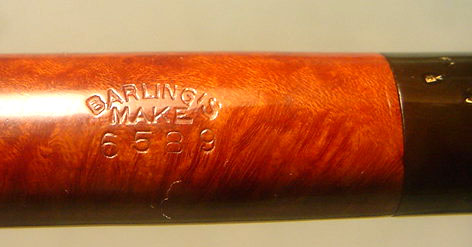
Barling4 Typical Pre Transition nomenclature, M in Make is under the R. Shape number is three digits or four digits beginning with a 1 (for UK distributed pipes).

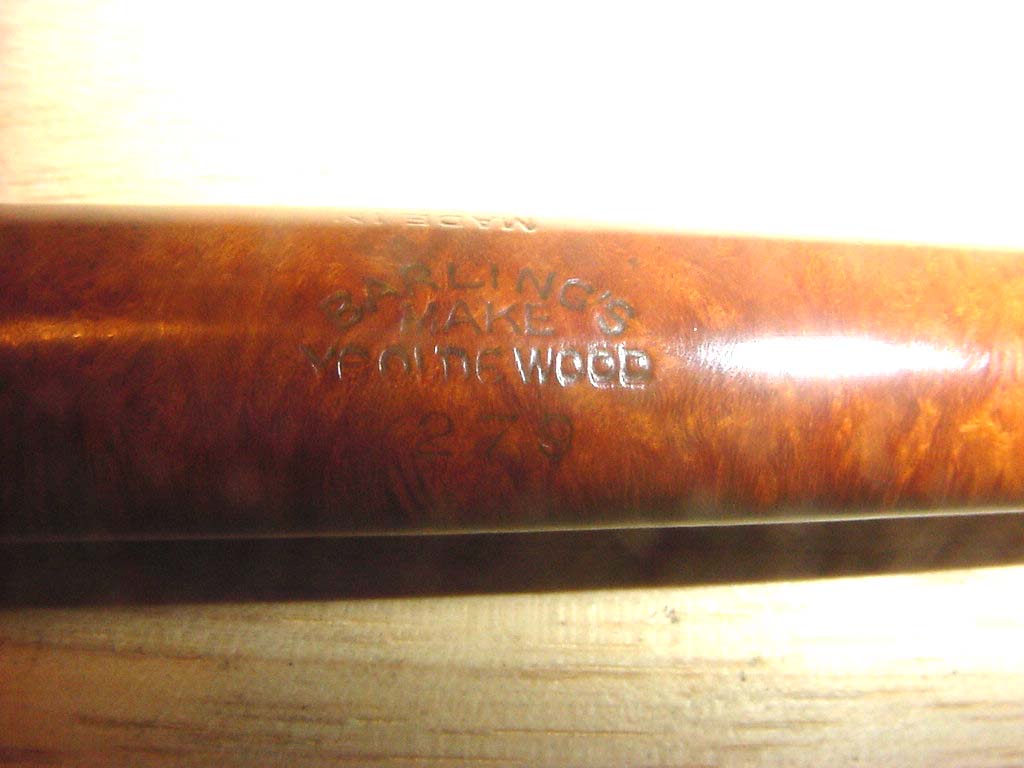
Barling5 Barling Early Transition Example: Ye Olde Wood remains but shape number is now four digits not beginning with a 1. First digit indicates size of pipe with 6 being “very large” and 7 being the largest. Pipes marked this way are thought to be late 1962 or 63’.

Barling6 Next version of early Transition Nomenclature: Ye Olde Wood is gone and shape number is four digits not beginning with a 1. First number of shape indicates size. Notice that the M in Make is now under the A.

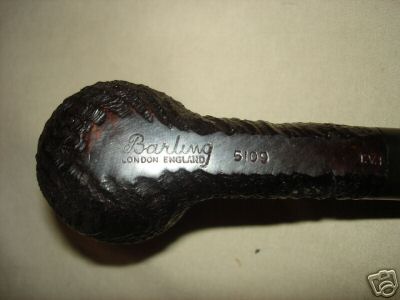
Barling7 Typical Transition Barling Nomenclature, Barling is now in script.

Non Conforming Examples of Barling Nomenclature
Barling8 Probably a fake stamp

Barling9 Note Ye Olde Wood is present, with spaces between the words, but Barling is in script and London England. This is an error stamp probably done by factory worker not paying enough attention, or a stamp that was not used for very long. This is the only example of this stamp I have ever seen.

Barling10 The word London exists on a few examples only. This is a rare stamp that was used for a brief period, probably just before the company sold in 1962 or just after.

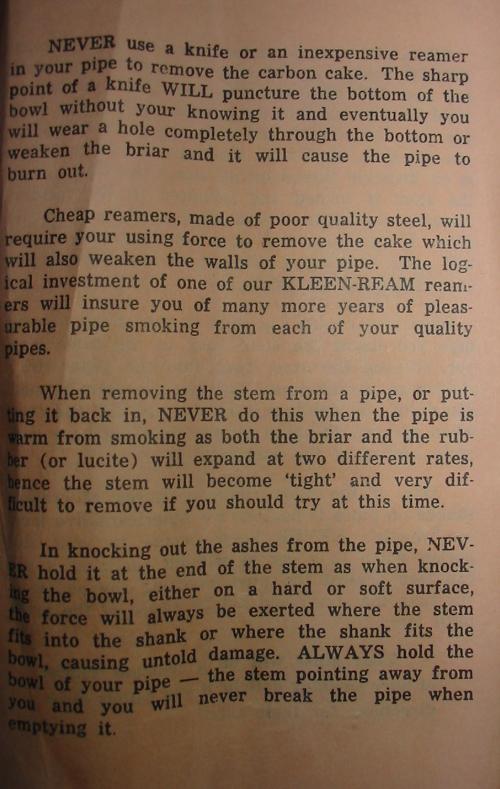
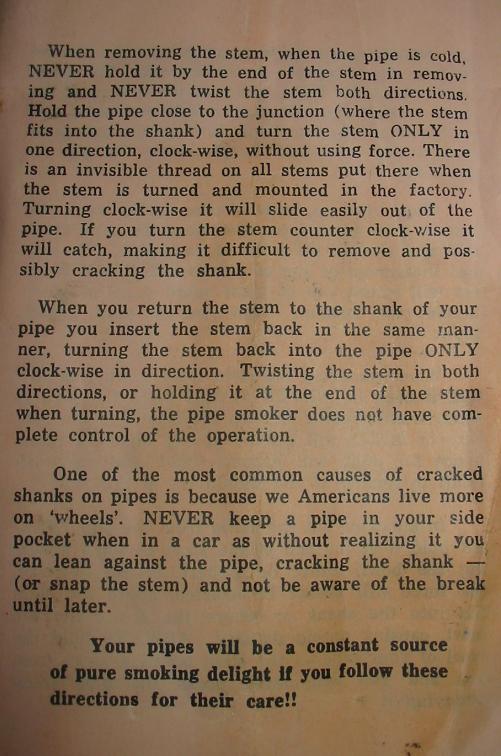
Brochure: Your Guide to Proper Pipe Care


I was clearing out a desk drawer this evening and came across this old pipe care brochure. It is entitled “Your Guide to Proper Pipe Care” and was given out by Smokers’ Haven, Inc. in Columbus, Ohio. I do not know the age of the piece but it was fun to read it again. In fact I am not sure where I picked it up as I have never been to Smokers’ Haven nor have I have been to Columbus. I thought that some of you might be interested in reading it.

Pipe 1

Pipe 2

Pipe 3

Pipe 4

Dating Loewes by Periods – Martin Farrent


Blog by Martin Farrent

I read this awhile back on the web and wrote Martin for permission to post it on the blog. I find his work helpful in dating Loewe pipes and a pleasure to read. I received his permission last evening so here is his article.

Loewe is one of the haunting old names of British pipe-making, characteristic of an almost vanished upper middle class” of the trade, which also incorporated makes such as BBB, Orlik, Comoy’s and GBD. Along with these brands, Loewe has long dwindled into pseudo-existence, becoming little more than a logo occasionally used by the Cadogan factory in Southend-on-Sea. But owners of older Loewes treasure them as superb, featherweight smokers, excellently crafted and with grain characteristics superior to those of many contemporary Dunhills.

The Frenchman Emil Loewe founded the company, both shop and workshop, in 1856 at the Haymarket 62, London. He is said to have been the first to make briar pipes in England. Richard Hacker maintains that theatre people from the West End were among the shop’s heyday aficionados. Loewe’s spigots are especially well regarded by lovers of elegance today – they were originally introduced for practical reasons, to facilitate the production of replacement stems for customers abroad.

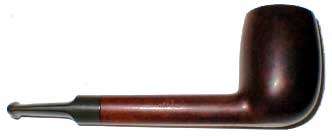
Loewe pipes

The firm and its facilities were later taken over by Civic, well before becoming a fully integrated part of the Cadogan group sometime in the final quarter of the twentieth century. As with other brands belonging to this group, it is not easy to pinpoint a date marking the end of Loewe’s independence and singularity. This is partly due to Cadogan’s own development from a cooperative to a monolithic entity.

In 1979, a German paperback said that the Loewe brand had been discontinued two years previously, but that the pipes themselves were due to reappear as high-end GBDs. Interestingly, the year of publication coincided with the year in which the Loewe trademark became Cadogan’s, who by this time already owned GBD. From today’s point of view, the author appears to have been working on confused, but partly true information. If there were ever really plans to fully amalgamate the two lines, they were dropped. Also, a two-year break at this time seems impossible, since we have hallmark evidence of Loewes made in 1978 and 1979. However, there are firm indications that Loewe shapes were later marketed as Comoy’s (another Cadogan brand). There may also have been a phase of dissolution regarding location. The reported appearance of French Loewes in the early 1980s is a sign that Loewes were being produced in more than one place at some stage before the Cadogan-era proper.

From what I can gather, Cardogan’s various brands continued to be made in separate facilities throughout the1970s. It was the purchase of Orlik in 1980 that enabled the Cadogan group to consolidate all manufacturing in that company’s new factory in Southend-on-Sea. Whether or not this transferal was a gradual process and when it affected Loewe is unclear. We hear that, as a company, Loewe was not formally wound up by Cadogan (the successor to Civic) until the late 1980s. Of course, today’s ‘Loewes’ are definitely made in Southend – though, according to Cardogan, the trademark is no longer used very much.

Collectibility

As with most brands now owned by Cadogan, the collector’s emphasis is on finding pieces made before the consolidation of the group’s production in the Southend factory. It is generally agreed, for example, that the loss of a separate identity spelled the end of GBD’s excellence. Likewise, the once celebrated name Orlik means little to the buyer of new pipes today. But finding an ‘original’ on the estate market often involves blind trust in a vendor’s word — or in one’s own ability to assess a pipe’s quality from a couple of photos on Ebay.

Mounted Loewes are thus the most valued, since the hallmarks on their silver bands offer an indication of age. Other pipes bearing the ‘L&Co’ logo are impossible to date as exactly as older Dunhills or even Charatans, where frequent changes to stamping patterns have been well documented. By contrast, the various owners of the Loewe trademark appear to have adhered to the original patterns rather consistently.

With help from members of the pipe-smokers’ newsgroups ASP and DAFT (Germany), I have looked into ways of rectifying this situation. We have come a little closer to dating Loewe pipes — or at least assigning them to a period, but there are gaps. One method is to correlate stamps with the hallmark information on pipes with bands, giving an idea of the exact stamp used in a given period. However, for a complete dating guide we would need to have examples from years clearly marking the beginning or end of a certain stamping policy — and also more insights into ownership and location issues.

To an extent, Cadogan have been helpful with information, but they have not answered historical questions. Also, their stamping philosophy really adds to the confusion. For example, they still use a London stamp, though production has been on the Essex coast for well over a decade, possibly two. The results of our collected research are still not comprehensive and the hope remains that someone will provide the information necessary to fill in the blanks.

Aspects of Dating

The period of transitions — and therefore of interest, here — begins some time after 1960. Around that year, the pipes were still being made in the Haymarket building, though – of course – no longer by the late Emil himself. Civic was running the business, apparently having taken over from the founder or his successors under a mutual agreement many years previously. There is no indication that the pipes made under Civic ownership at this time were any less highly regarded than earlier Loewes.

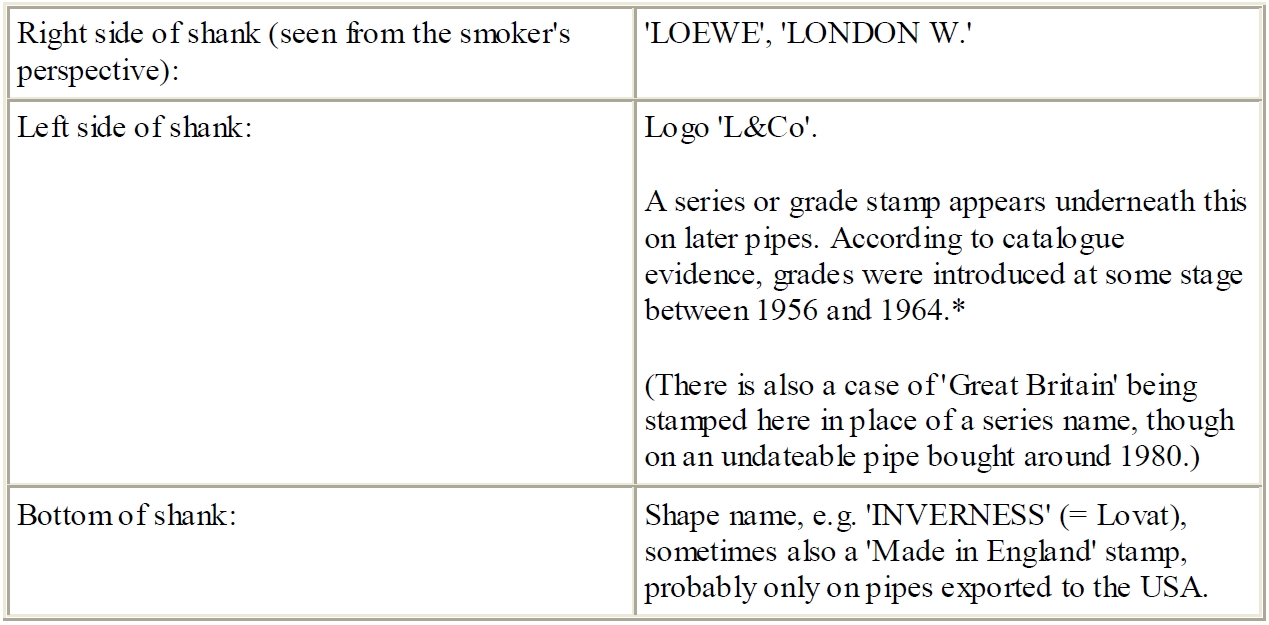
Based on information rendered by owners of hallmarked Loewe pipes, the stamping from 1920
(or earlier) to 1967 (or slightly earlier) appears as follows:

Lowe2

* The first series names to be used appear to be ‘CENTURION’ and ‘ORIGINAL’ and ‘OLD ENGLISH’. According to catalogues, they denote grades. Centurions were allegedly made of wood over 100 years old. Grading was not introduced until some time between 1956 and 1964, as one Danish owner of Loewe catalogues reports. Additional, probably later, grade stamps include ‘MOUNTED’, ‘SPIGOT’, ‘STANDARD’ and ‘STRAIGHT GRAIN’. There are certainly no grade stamps on pipes made up to 1920. There were also none on the sandblast pipes advertised as Ripple Grains in 1950. That year’s catalogue also lists a pipe called the “Process”, with a natural finish and a processed bowl requiring no breaking- in. Both the Process and the blasts were missing in 1956.

During the 1960s, still under the Civic regime, the original premises were lost to development schemes, and Loewe pipes were made in various, (possibly successive) locations all over London (Hammersmith appearing to be one of them).

Also, at some stage before 1968, shape names were replaced by shape numbers, apparently all incorporating three digits and beginning with a 9. For example, a 910 was a billiard. We know that these numbers, stamped on the right side of the shank (under ‘LONDON W.’), were still used in 1983, though there is some confusion about this. We do not know exactly when the switch from names to numbers took place. It could have been as late as 1967, but may have occurred a few (not many) years earlier. A shape name appeared on a new pipe bought in the USA in 1967, yet a pipe bearing that year’s hallmark on its band already displays a number, rather than a name. It’s also worth noting the recollections of one Danish smoker, who remembers that W.O. Larsen only imported Loewes to Denmark until 1968.

Manfred W. Resag has a page on 9xx numbered pipes, with photos of pieces made from 1978 to 1982 (with one possible exception — an unbanded and therefore undateable pipe):
http://perso.wanadoo.fr/nautor/Loewe.htm

By studying the website of one UK dealer I was able to deduce that the present shape numbers (early 2003) mostly (probably all) differ from those used from 1967. For example, a Billiard is now a 28, a Lovat an 834, a Canadian a 296. Some shape numbers now have 4 digits. But even today, Cadogan will occasionally still stamp a pipe with a shape name instead of a number, though only on request.

It would appear that both older pipes with shape names and pipes using the 9xx numbers were made in London, before the move to Southend. My guess is that only the pipes made prior to the introduction of numbers were carved on the original Haymarket premises, with the graded shanks (series names) probably indicating pieces carved after 1956.

Murky issues

To go some way towards verifying this theory, we would need to know the exact year of the move from the Haymarket, but also more about the stamps on pipes made between 1960 and 1966/67. All those smokers who followed a call for information in ASP and DAFT and reported dateable (hallmarked) pipes owned pieces made before or after these years, which almost certainly encompassed the loss of the Haymarket workshop.

Cadogan has not answered questions concerning this or the later move to Southend. However, from the evidence contributed by readers of the first version of this article, I would say that the second event occurred by or in 1982, the year in which a Danish collector has reported buying a Canadian with the new 296 shape number.

This is notwithstanding the fact that several people own Loewes with the 9xx stamps — pipes I would attribute to the late London days — yet with hallmarks from 1982 or even 1983. There are several conceivable explanations for this. The most obvious is that there may have been a few months of overlapping production in two or more locations. One could even raise the question of whether the later London years saw any consolidated product ion at all — or whether some (or all) Loewes were being made to order by other firms. The Danish collector mentioned above has records of being offered both London-made and (cheaper) French Loewes in 1982.

Moreover, it is also reasonable to assume that some pipes began life in London and were stamped there, but only completed in Southend. In a few cases, it even seems clear that the lapse between conception and completion was several years. For instance, one German smoker owns a 908 with a 1983 hallmark. It was from a strange batch of spigots offered by a German dealer in the late 1990s, with shank bands hallmarked in the early 1980s and stems made a dozen or so years later. The dealer remembers that they were the last Loewes ever offered to him. Curiously, some of the Loewe shapes from the 1970s and early 1980s apparently reappeared as Comoys (now also made by Cadogan), later on. Indeed, Comoy spigots were among the new series introduced after Comoy’s full integration into Cadogan. This was in line with Cadogan’s branding hierarchy, which put Comoy’s at the top of the pyramid at some expense to the prestige of the other names. So an educated guess says that the bowls of the strange Loewes in question
were made in London, were among the inventory moved to Southend and fitted with stems years later, when someone remembered or discovered them. The stems were available, because they were still being produced for the new Comoy pipes.

One final note on the transition period regards the desirability of Loewes made between the Haymarket days and the move to Southend. I have yet to hear a complaint from an owner of one of these pipes. I have a fine mounted Rhodesian myself with excellent, almost straight grain. It is a superlative smoker.

Prices

In 1926, the wholesale price for an unmounted Loewe was 11 shillings and three pence. 24 years later, it had doubled and such a pipe retailed for 50 shillings. At this time (1950) an ounce of pipe tobacco or a 4lb loaf of bread cost an average of a shilling in London. In 1982, one dealer was offering Loewes (London) for 19.50 pounds. A batch of 9xx Loewe spigots made in the early 1980s and sold towards the end of the century cost around 200 Euros each in Germany. In early 2003, one British website advertised Loewe-Kaywoodies for 18.50 to 65.00 pounds sterling (about 27 to 95 Euro/$). These were Cadogan pipes, of course. At the same time, some ‘antique’ pieces were fetching up to 175 Euro or US $.

Early Loewes were available with a variety of options, such as amber stems and solid silver or gold mounts at a surcharge. Interestingly, the 1926 catalogue prizes the pipes’ “natural finish”, but adds that an attractive dark tan was available at no extra charge (!).

Acknowledgements and note

This article grew in the making, following requests for information on Usenet and the publication of a first version, which almost immediately hastened new input from readers. My thanks to Asp’ers Kevyn Winkless, Stephen Bozle. Greg Pease, Chris Keene, Manfred Resag, Sonam Dasara, Jorgen Jensen and Jesper of Danpipes for contributing information and ideas to this article. Valuable details were also reported by DAFT (German newsgroup) members such as Klaus J. Pfeifer, Manfred Arenz, HaJo Oestermann, Jörg Eichelberger, Rainer Duesmann, Joachim Acker and Michael Karrengarn.

Finally, though I include my e-mail address here, it is not really intended for queries, since I lack the knowledge to answer them. I am simply an admirer, but no expert on Loewe pipes and have included every last scrap of evidence I have accumulated in this article. So ideally, the address is for those able to contribute additional information in order to make this text more satisfactory, some day.

Martin Farrent March 2003
martin@farrent.de

A Peterson Dating Guide; a Rule of Thumb – Mike Leverette


Blog by Mike Leverette

Many years ago now, Mike Leverette sent me a copy of this document. I have had it on the hard drive since sometime late in 2006. I am sure there are newer iterations of the material but I have found this little piece very helpful. I am looking forward with expectation to the book that is being worked on now by Mark Irwin and others. It will certainly be a definitive work on Peterson Pipes. Until then I use the Peterson forum and refer to this article by Mike.

A Peterson Dating Guide; a Rule of Thumb

This guide first appeared in pipelore.net on August 26, 2006 by: Mike Leverette
Introduction

The history of Ireland is an old and honorable one; steeped in warfare, family, racial and religious traditions. No other country can compete in comparison. However, the first couple of millennia of Irish history have no relevance to this dating guide. Should you wish to read more on the history of the Irish, I recommend “The Story of the Irish Race” by Seumas MacManus who gives a very vivid, and near as we can tell an accurate portrayal of their history.

History pertinent to our purposes began in the year 1865; the year Charles Peterson opened a small tobacco shop in Dublin. Later in 1875, Charles Peterson approached the Kapp brothers, Fredrich and Heinrich, with a new pipe design and with this, a very long-lived partnership was formed, Kapp & Peterson. This new pipe design is the now famous Peterson Patented System Smoking Pipe. By 1890, Kapp & Peterson was the most respected pipe and tobacco manufacturer in Ireland and rapidly gaining followers in England and America. In 1898 another of Peterson’s remarkable inventions became available, the Peterson-Lip (P-Lip) mouthpiece, also known as the Steck mouthpiece. So for the purpose of this dating guide, we will study Irish history, relevant to our pipe dating needs, from 1870s until now.
Before we start with this Peterson dating guide, an observation; the Kapp Brothers were making pipes as early as the 1850s and in many of the shapes we now associate with Peterson since the Kapp Brothers simply took their existing shapes and incorporated Charles Peterson’ s patented design into them. From their inception, Kapp & Peterson’s goal was to make a good smoking pipe that the ordinary, common working man could afford and we believe they have, very admirably, lived up to this.

Explanation of Title

The vagaries of Peterson’s processes do not allow for an accurate dating guide so this guide is a ‘rule-of-thumb’ guide only. For example; Peterson did not take up the old Country of Manufacture stamps as new ones were issued so depending on which one the various workers happen to pick up, the stamps can and do cross over the boundaries of the various Eras. Some of the pipes of the Sherlock Holmes Series of the 1980s have pre-Republic stamps, as well as other pipes produced in 2000. However, there will not be too many of these missed stamped pipes. For silver anomalies, see the section on silver marks.
Stamping of Bowls

During the years of Kapp and Peterson’s business operations, the country of Ireland has undergone several name changes and K&P’s stamping on their pipes reflects these changes. Knowing these changes, a Peterson pipe can be roughly dated and placed in “eras.”
• The Patent Era was between the years of K&P’s formation until the expiration of the patent; 1875 through approximately 1910. Though for our purposes we will list this era as 1875 through 1922. Peterson pipes made during the majority of this period had no “Country of Manufacture” (COM) stamped on them. However, later in this period, say around 1915/16, Peterson began stamping their pipes “Made in Ireland” in a block format.
• The Irish Free State was formed on 15 January 1922. So the Free State Era will be from 1922 through 1937. Peterson followed with a COM stamp of “Irish Free State” in either one or two lines, either parallel or perpendicular to the shanks axis and extremely close to the stem.
• Eire was formed on 29 December 1937. The Made in Eire Era will be from 1938 through roughly 1940? or 1941?. For dates with ?’s, see below. Peterson now stamped their pipes with “Made in Eire” in a circle format with “Made” and “Eire” in a circle with the “in” located in the center of the circle. This COM was used during the years of 1938 – 1940?/41?. Later they stamped their pipes with “Made in Ireland” in a circle format (1945?-1947?) and still later with “Made in Ireland” in a block format (1947?-1949). The “Made in Ireland” block format came in either one line or two lines.
• The Republic Era is from 1949 until the present. The Republic of Ireland was formed on 17 April 1949. From 1949 to present the stamp for this era is “Made in the Republic of Ireland” in a block format generally in three lines but two lines have been used with or without Republic being abbreviated.
•English made Peterson pipes actually spans between the pre-Republic and Republic eras. In 1895, Peterson opened a shop in London England that lasted until the late 1950s or early 1960s. So the English Era, for a simplified date, will be from 1895 through 1959. The stamps Peterson used in London and that we have seen are:
Made in England – block format
Made in England – circle format
Made in London
Made in London England
Simply, London England
Great Britain

Though there are a couple of more, the above will give one the general idea. We believe the earliest stamp of this era was the “Made in England” in a block format since Peterson was using the “Made in Ireland” block format at about the same time on their Irish production pipes. The “Made in England” circle format was used during the same time frame as the “Made in Eire” and “Made in Ireland” circle formats.

As one can see this is pretty straightforward but there have been inconsistencies within this method of stamping. Peterson was never very energetic in removing their old stamps from the work stations so the older stamps can and did cross-over into the newer Era’s.

The explanation for the question marks in the 1940’s dates is, during the Second World War briar was hard to come by for obvious reasons, so no one can say for sure what years Peterson produced briar pipes and how many briar pipes were produced in those years. Why the switch from “Made in Eire” to “Made in Ireland” is anyone’s guess since the country was still technically Eire until 1949. As a point of interest and due to the shortage of briar, Peterson did make clay and Bog Oak pipes during the war years though they had ceased clay pipe production in the Patent Era and Bog Oak production back in the early 1930s.

P1 The “Made in Ireland” block format (above) can be another headache in dating Peterson pipes since this stamp was used in the late Patent Era as well as the late 1940s. So for a guide we must take into consideration the style of lettering Peterson used on their pipes. From the start of the Patent Era until somewhere in the early 1930s, Peterson used the “Old Style” lettering that used a forked tail “P” in Peterson.

P2From then until now, Peterson used the more familiar script “P” (above) intermixed with a plain block letter “P.” Later in the 1970s, Peterson began production of “commemorative” pipes, often referred to as “replica” or “retro” pipes and these will also have the old style lettering but according to the pipes that we own and have seen, most of these will have a small difference in the original forked tail “P”. Again, there appears to be a cross-over with the old style forked tail and the later forked tail P’s(below). However, these commemorative pipes generally have a silver band with hallmarks so one can date these pipes by the hallmark.

P3Also, we must address the stamp “A Peterson Product.” During the last few years of the Pre-Republic era and throughout the Republic era, Peterson began stamping their other lines, such as Shamrocks and Killarneys, with “A Peterson Product” over the COM stamp. So a pipe stamped thusly will have been made say from 1948 to the present with the COM stamp identifying it as a pre-Republic or a Republic pipe.

Silver Band Dating

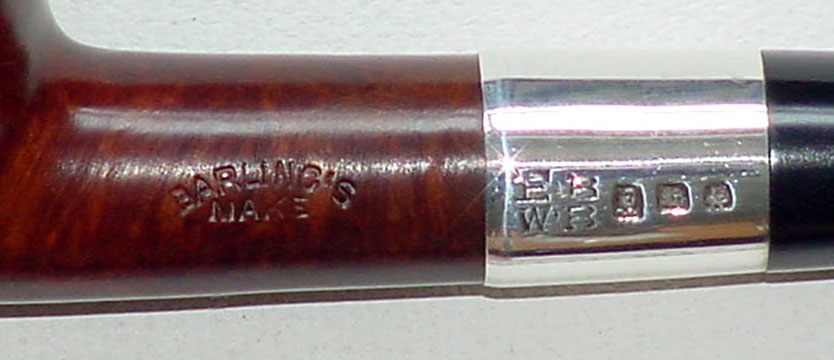
Silver hallmarks are placed on the silver after an assay office, in Peterson’s case, the Dublin Assay Office, has verified that the silver content is indeed sterling, in other words 925 parts of silver per 1000 parts of the metal. The silver hallmarks on Peterson pipes are a group of three marks, each in an escutcheon; the first is a seated Hibernia denoting Dublin Ireland, the second is a harp denoting the silver fineness, and the third is a letter denoting the year. The style of letter and the shape of the escutcheon the letter is in, will determine the year in which the assay office stamped the metal band and not necessarily the year the pipe was made. Peterson orders these bands by the thousands and sends them to the assay office for hallmarking. The assay office will stamp the date of the year in which they received the bands and it may be a year or two or three before Peterson’s employees happen to place one of these bands on a pipe though generally the bands are placed on a pipe in the year they were stamped. The Dublin hallmarks can be found in any book on silver markings or on one of several websites.

For the one year, 1987, the Dublin Assay Office added a fourth mark to commemorate the City of Dublin’s founding in 988. However, the Peterson pipes we have and have seen with silver dates of 1987 and 1988 generally do not have this fourth mark.

Here again, we must add a “maybe” to the above hallmarks. On 1 June 1976, certain countries attended an international conference on silver markings and decided to adopt an entirely different mark for sterling silver. This mark is an Arabian numeral, 925, located between the scales of a balance beam and in Peterson’s case may or may not have the Hibernia and Harp marks to either side. These particular pipes can only be said to date between 1976 and the present, and were stamped as such for shipment to the different countries involved in the conference. For pipes shipped to all other countries, Peterson still uses the old style hallmarks. Peterson pipes with a sterling silver band that does not have hallmarks could have been made for the United States market since the United States only requires sterling silver to be stamped “sterling silver” or “sterling.”

Before we close this section on silver hallmarks, we must address the marks that many people refer to as hallmarks. Peterson uses three marks on some of their pipes that are not silver hallmarks but are rather another Peterson logo (below). These marks are:
• A Shamrock for the many shamrocks found in Ireland
• A Prone Fox representing the famous fox hunts in Ireland’s history, and
• A Stone Tower for the many hundreds of stone towers spotted throughout Ireland
P4 Again these are not genuine silver hallmarks: Also many of the newer pipe smokers think that Kapp & Peterson’s official logo of “K&P,” each in a shield shaped escutcheon, are hallmarks but, of course, they are not. They are simply Kapp & Peterson’s initials.

Dating by Series

Dating by series or numbers is an area in which we are having a difficult time of establishing. For instance, the 300 series are all shapes used during the Patent Era and we believe Peterson started using this number system when the original patent expired. In the case of the 300 series and without looking at the COM stamp or silver hallmark, one can only say that they were made between 1910 and today. The 300 series was not in Peterson’s 1905 catalogue.

Though we are still trying to find the start dates of many series, here are some that we are pretty positive about:
• Centennial Edition – 1975 (for K&P’s Centennial)
• Great Explorers Series – 2002
• Harp Series – 2002
• Mark Twain Numbered Edition – 1979 (numbered 1 through 400)
• Mark Twain 2nd Numbered Edition – 1981 (numbered 1 through 1000) Mark Twain Un-numbered Edition – 1983 to c1989 (There must be a fourth production of Mark Twain pipes for there a couple of men who own Mark Twain pipes with a silver date of 1998; we are still trying to pin down the dates of this fourth production.)
• Emerald – c1985 to 2003
• Millennium Edition – 1988 (for the City of Dublin’s founding)
• Sherlock Holmes Series – 1987 to c1989
• Return of Sherlock Holmes Series – c1991
• Sherlock Holmes Meerschaums – 2006

Peterson Clay, Bog Oak and Cherry Wood Pipes
Peterson Clay, Bog Oak and Cherry Wood pipes were offered in the Patent Era with or without a formed case, as also offered with their briar and meerschaum pipes.

Peterson made clay pipes during the Patent Era with only two shapes being offered and depicted in their 1905 catalogue. During this period their clay pipes were stamped/molded “Peterson Patent” and could be purchased with either a silver or nickel band. How long and in what years Peterson made these clays is not known but as stated above two shapes were offered in their 1905 catalogue. Then during World War II, Peterson again made clay pipes due to the understandable shortage of briar. The clays of this period are stamped “Peterson System” and were only offered with nickel bands. This later production of clay pipes ended with the closing of Peterson’s London Shop in the late 1950s or early 1960s.

Also during World War II, Peterson again made bog oak pipes and again, this was due to the shortage of briar. They had previously ceased production of bog oak pipes in the 1930s during the Irish Free State Era. On the subject of bog oak pipes, Peterson’s bog oaks will always have a metal band with either amber (early production only) or vulcanite stems and will have the appropriate COM stamp. As with their clay pipes, Peterson offered a silver or nickel band on their early bog oak pipes of the Patent Era and just a nickel band on their WWII bog oak pipes.

Peterson made pipes of cherry wood during their Patent Era in both the smooth finish and the bark-left-on finish; and as with their clay pipes, Peterson used both amber and vulcanite stems and choice of silver or nickel bands. And like their clay pipes of the Patent Era, the introduction and termination dates are not known. Peterson Cherry Wood pipes were offered with or without a meerschaum lining.

Metal Ferrules of Military Mounted Pipes

As pipes get older, wear will, with all the handling, cleaning and polishing, take its toll on the nomenclature which will eventually disappear, thus, making it harder to determine the age of your Peterson. A good thorough cleaning of old hand oils, dirt and ash will sometimes bring out a faint outline of the nomenclature but sometimes the nomenclature has completely worn away and even this cleaning will not bring it back. So where do we go from here to determine the pipe’s age? The shape of the metal ferrule on Peterson pipes with the military mount will give you some hint though not a precise date.

During the Patent Era, the metal ferrules of Peterson military mounts will have a more ‘acorn-ish’ shape, that is, the bend will have a larger radius as it turns down to meet the stem. This larger radius gradually(?) changes to a smaller radius, more abrupt bend, during the Irish Free State Era and even more abruptly after World War Two when the bend takes on the modern day shape.

The metal ferrules on Peterson clay pipes during the Patent Era are angular while their clay pipes of World War Two will have the bend shape as do most of the Peterson pipes from then until now.

As with everything pertaining to the dating of Peterson pipes, this method can only give us a hint to the age of the pipe but it is better than nothing at all. The years of these changes in the metal ferrule shape are, we are sure, lost to the ages. However, someone with a larger number of Peterson pipes than we may be able to check the silver dates for more precise age boundaries. Well, this is a very short dating guide and we hope that you will be able to date more accurately your favorite Peterson with this information.

When Mike sent this to me it had the following addition at the bottom of the page:
This guide was first posted in Pipe Lore on August 26, 2006 by Mike Leverette. Should you have a correction or addition to any of the above, please do comment.

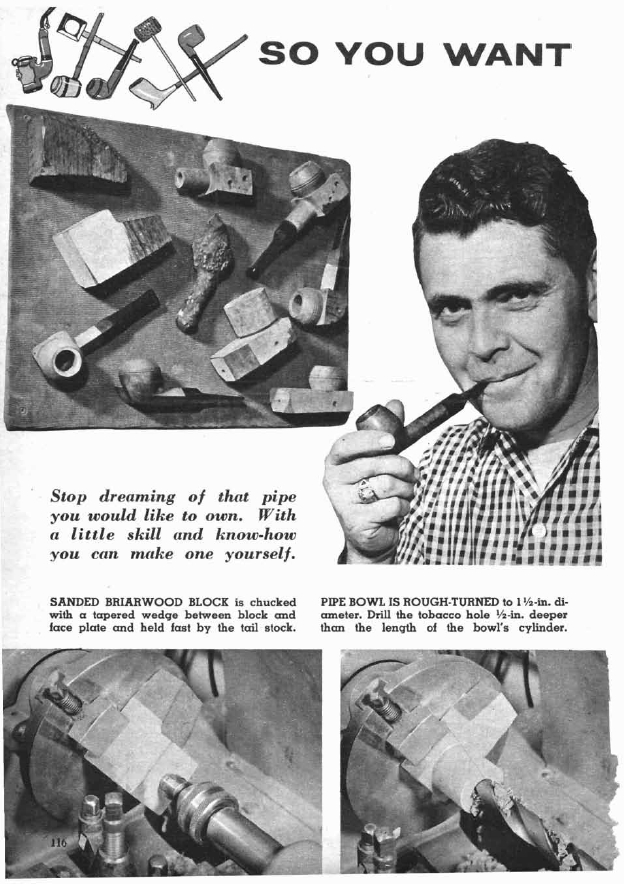
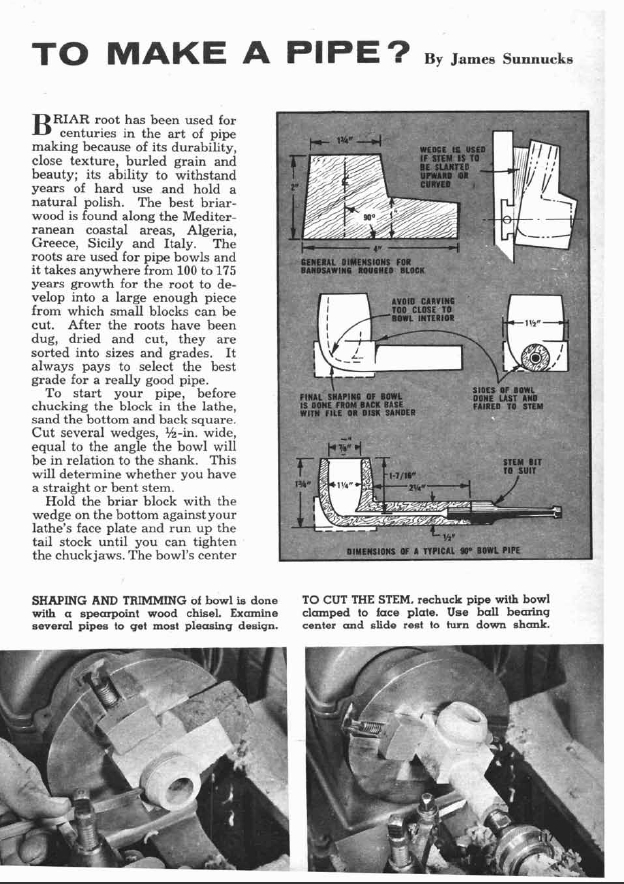
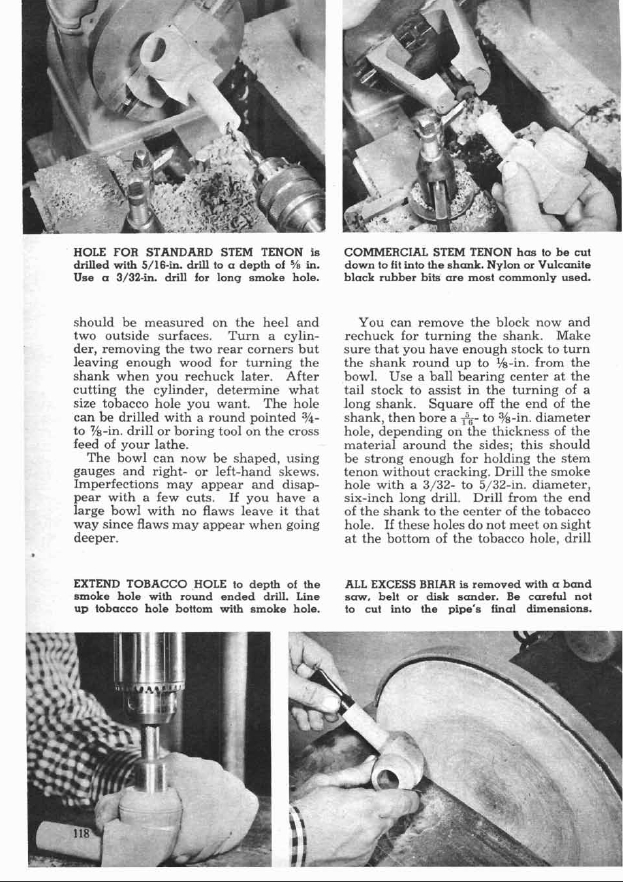
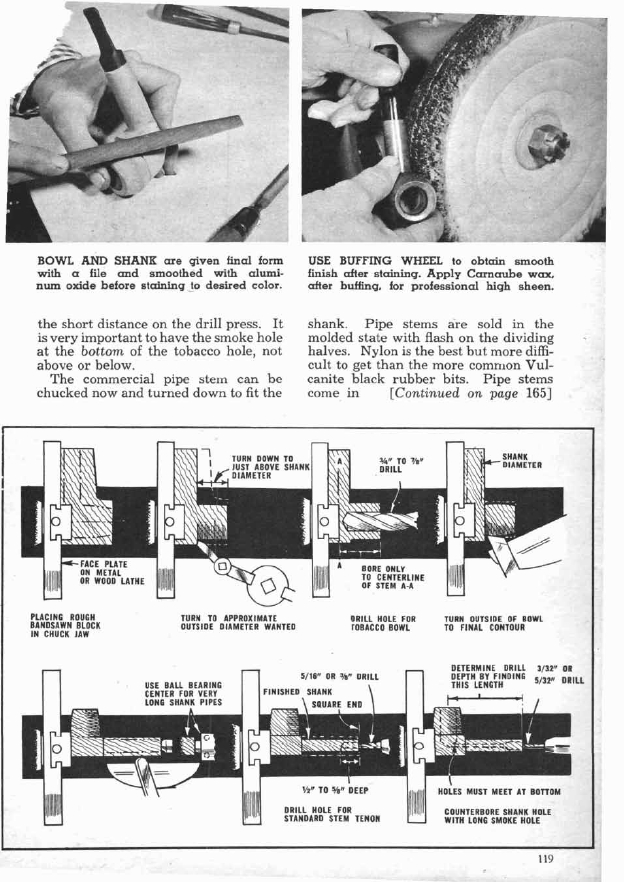
So you want to make a pipe


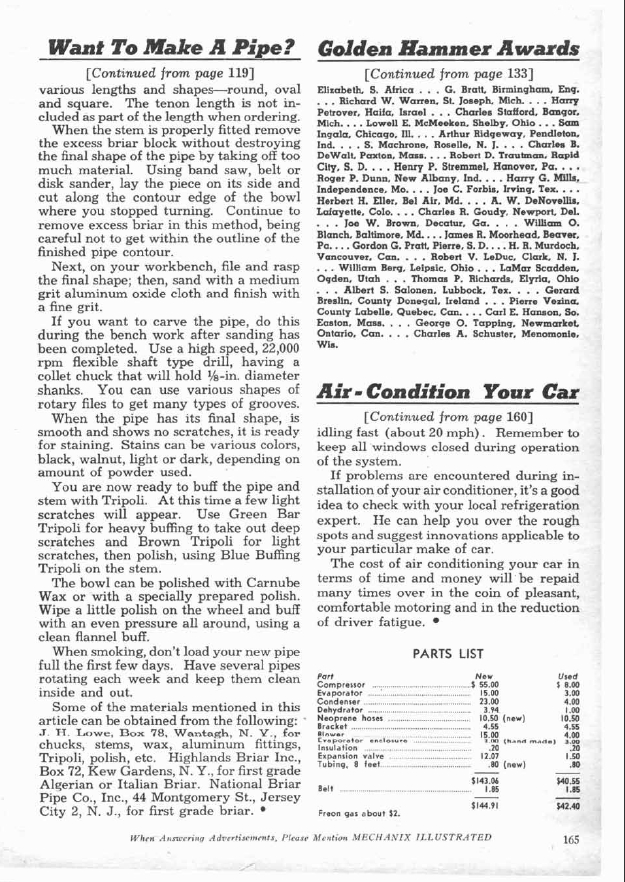
Periodically I come across old articles that are fascinating reading – at least to me. This is one from Mechanix Illustrated and was written by James Sunnucks. I find it interesting to see how he spells out the process. Great black and white illustrations and from the photos I would guess the article is from the 50’s. I thought I would pass it on.
Pipe1

Pipe2

pipe3

Pipe4

Pipe5

Mark Twain on Nicotine Nannies – The Moral Statistician


I came across this old file on my computer and thought I would pass it on to you all. I always enjoy Mark Twain and here he takes on the nannies who would tell us how to live our lives. Incredibly refreshing to read!

Originally published in Sketches, Old and New, 1893

Image
I don’t want any of your statistics; I took your whole batch and lit my pipe with it.
I hate your kind of people. You are always ciphering out how much a man’s health is injured, and how much his intellect is impaired, and how many pitiful dollars and cents he wastes in the course of ninety-two years’ indulgence in the fatal practice of smoking; and in the equally fatal practice of drinking coffee; and in playing billiards occasionally; and in taking a glass of wine at dinner, etc. etc. And you are always figuring out how many women have been burned to death because of the dangerous fashion of wearing expansive hoops, etc. etc. You never see more than one side of the question.

You are blind to the fact that most old men in America smoke and drink coffee, although, according to your theory, they ought to have died young; and that hearty old Englishmen drink wine and survive it, and portly old Dutchmen both drink and smoke freely, and yet grow older and fatter all the time. And you never try to find out how much solid comfort, relaxation, and enjoyment a man derives from smoking in the course of a lifetime (which is worth ten times the money he would save by letting it alone), nor the appalling aggregate of happiness lost in a lifetime by your kind of people from not smoking. Of course you can save money by denying yourself all those little vicious enjoyments for fifty years; but then what can you do with it? What use can you put it to? Money can’t save your infinitesimal soul. All the use that money can be put to is to purchase comfort and enjoyment in this life; therefore, as you are an enemy to comfort and enjoyment where is the use of accumulating cash?

It won’t do for you to say that you can use it to better purpose in furnishing a good table, and in charities, and in supporting tract societies, because you know yourself that you people who have no petty vices are never known to give away a cent, and that you stint yourselves so in the matter of food that you are always feeble and hungry. And you never dare to laugh in the daytime for fear some poor wretch, seeing you in a good humor, will try to borrow a dollar of you; and in church you are always down on your knees, with your ears buried in the cushion, when the contribution-box comes around; and you never give the revenue officers a full statement of your income.

Now you know all these things yourself, don’t you? Very well, then what is the use of your stringing out your miserable lives to a lean and withered old age? What is the use of your saving money that is so utterly worthless to you? In a word, why don’t you go off somewhere and die, and not be always trying to seduce people into becoming as ornery and unlovable as you are yourselves, by your villainous “moral statistics”?

Now, I don’t approve of dissipation, and I don’t indulge in it either; but I haven’t a particle of confidence in a man who has no redeeming petty vices. And so I don’t want to hear from you any more. I think you are the very same man who read me a long lecture last week about the degrading vice of smoking cigars, and then came back, in my absence, with your reprehensible fire-proof gloves on, and carried off my beautiful parlor stove.