
by Steve Laug
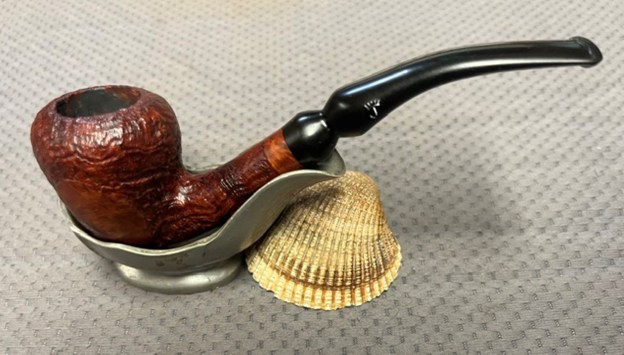
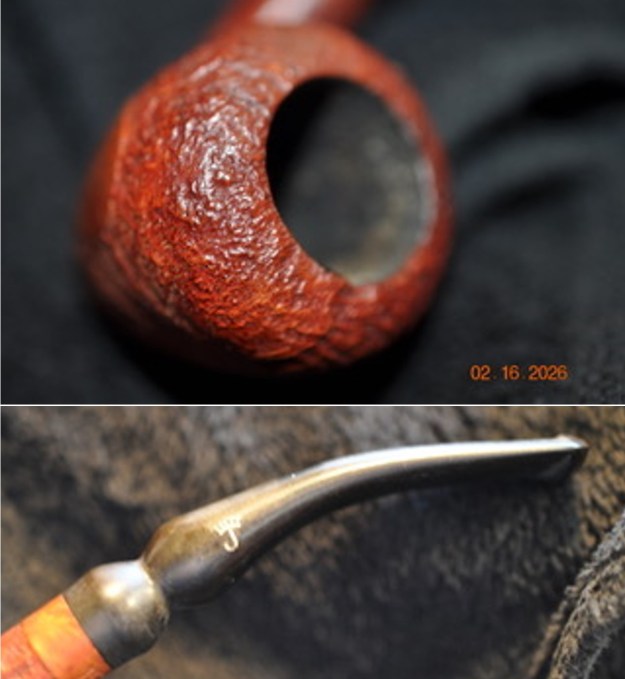
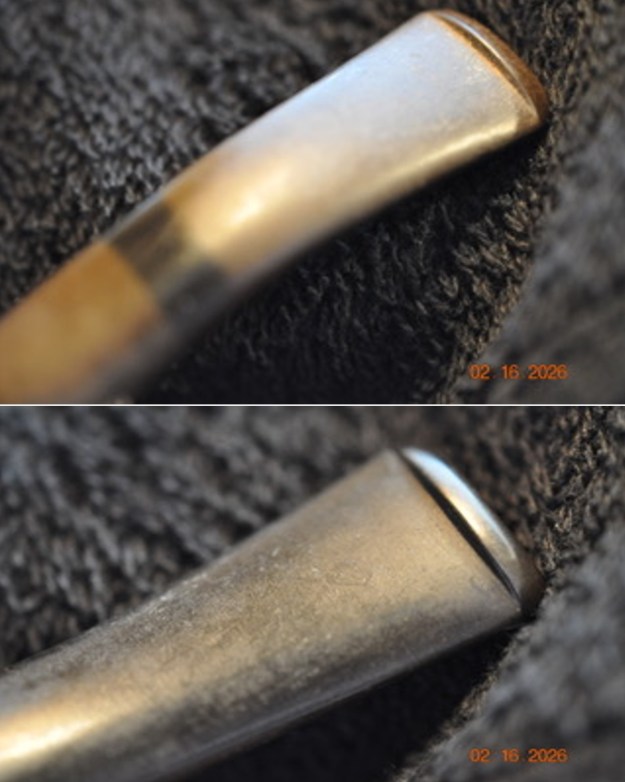
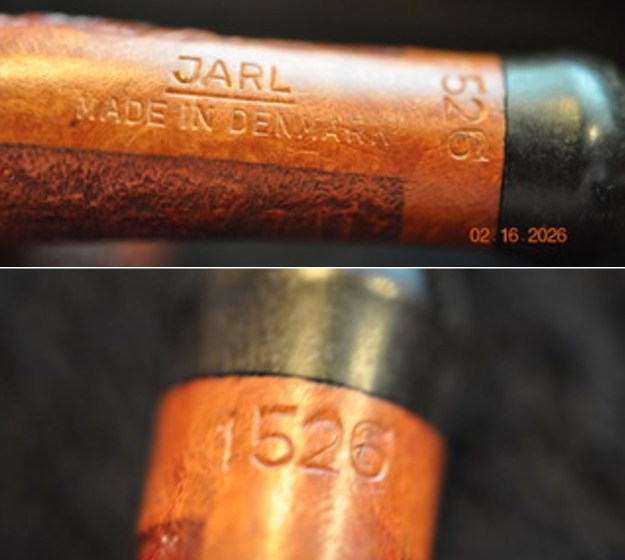
This reddish, brown mixed finish, beautifully grained, saddle stem was purchased on 01/20/2026 from a Facebook seller in Quaker Town, Pennsylvania, USA. It is a great looking Bent Acorn with a sandblast finish on most of the bowl and shank and a smooth patch on both sides and a band on the shank end. The stem is a vulcanite fancy saddle stem. The bowl is stained with a contrast of browns that highlight the grain around the bowl and shank. It is stamped on the underside of the shank and reads Jarl [over] Made in Denmark. On the underside of the shank band it is stamped with the shape number 1526. The bowl had a thick cake and some tobacco debris on the walls. There was lava on the rim top and some spots of darkening on the inner edge of rim top. There was grime ground into the finish which left the finish looking quite dull. The vulcanite saddle stem was stamped with an upper case “J” with a Crown on the left side. There was some light oxidation on the surface and light tooth marks and chatter on both sides of the stem ahead of the button. Jeff took photos of the pipe before he started his work on it. 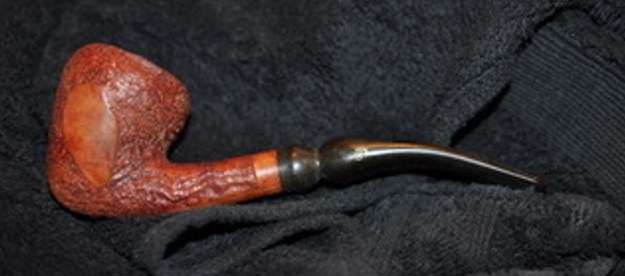
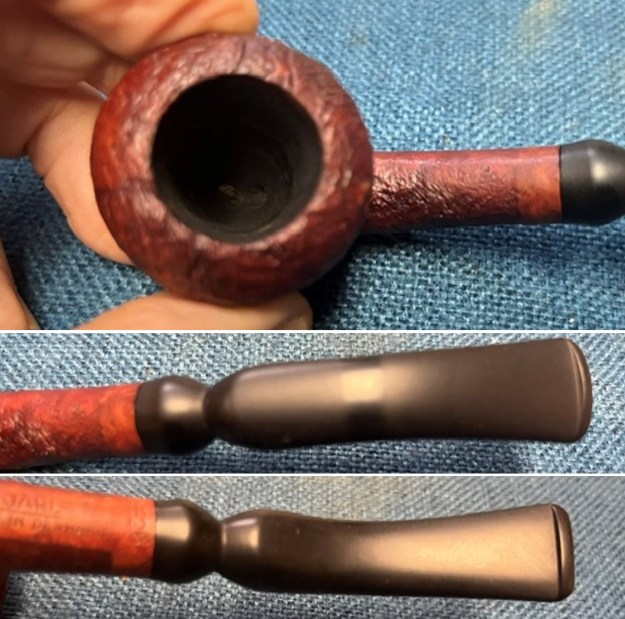
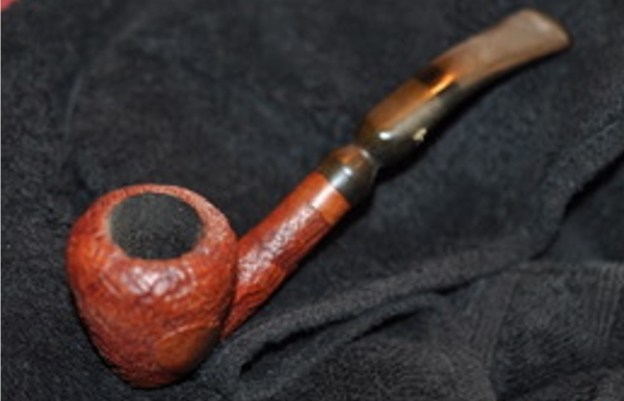 He took a photo of the rim top and bowl to show the current condition. The inner edge and the rim top showed darkening and spots of lava as mentioned above. The photos of the bowl show the cake on the walls. The stem photos show the oxidation and light marks on the rim top on both sides.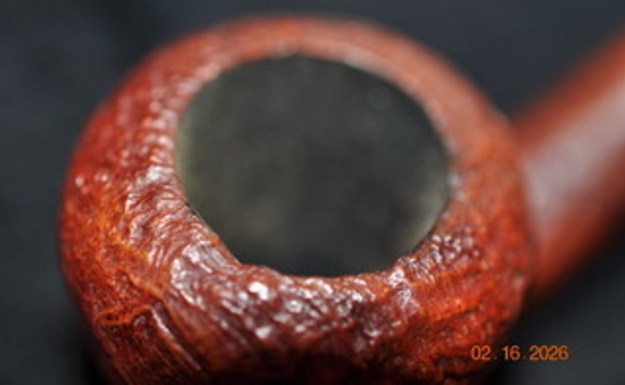
 Jeff took photos of the sides and heel of the bowl to give a sense of the condition of the bowl and the grain around the bowl. It reminds me of a Stanwell Vario.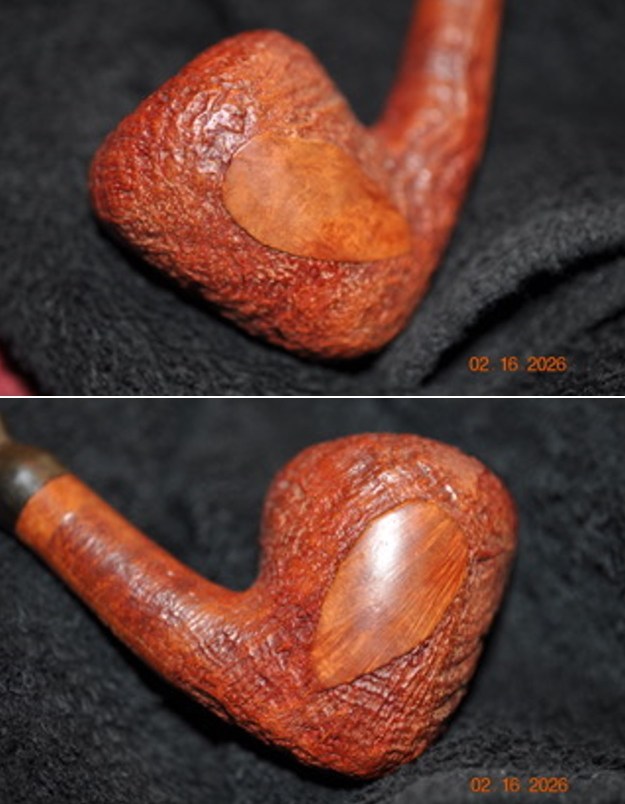
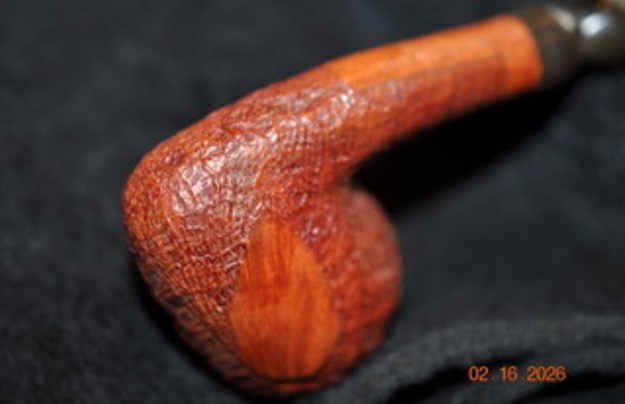 He took photos of the underside of the shank to capture the stamping. They were clear and readable as noted above.
  Before I started working on it I did a bit of research on the brand to remind myself of what I knew of the maker. I turned to Pipephil’s site first (http://www.pipephil.eu/logos/en/logo-j1.html#jarl). I did a screen capture of the information on the site. I did a screen capture of the pertinent information and have included it below.
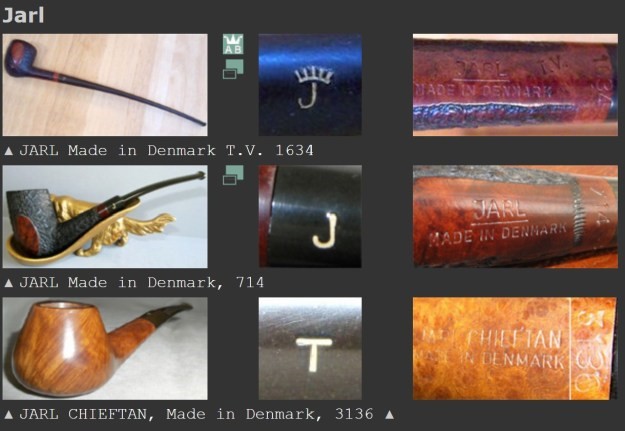 I then turned to Pipedia and found that a very short article that confirmed that the pipes were made by Niels Mogens Jorgensen (https://pipedia.org/wiki/Jarl). I have included the article in its entirety below.
In December of 2010 Ellen Jarl wrote that Jarl pipes were made by her grandfather, Niels Mogens Jørgensen in a little factory in the town of Bramdrupdam, just outside Kolding, Denmark. We have no reason to doubt that Niels Mogens Jørgensen is the maker of these pipes.
Now it was time to work on the pipe. Since Jeff always follows the same pattern of work in his cleanup we do not include photos but rather just a simple summary. Jeff reamed the bowl with a PipNet pipe reamer and followed up with a Savinelli Fitsall pipe knife to remove the cake. He scrubbed out the mortise and the airway in the shank and the stem with alcohol, cotton swabs, shank brushes and pipe cleaners. He scrubbed the exterior of the bowl, rim, shank and stem with a tooth brush and Murphy’s Oil Soap to remove the oils and tars on the rim and the grime on the finish of the bowl. He rinsed it under running water. He dried it off with a soft cloth. He was able to remove the spotty lava build up on the rim top and you could see the marks on the top and edges of the rim. He soaked it in Briarville’s Pipe Stem Deoxidizer and rinsed it with warm water to rinse off the residue. The stem was clean and the oxidation was gone. I took photos of what the pipe looked like when I brought to my worktable.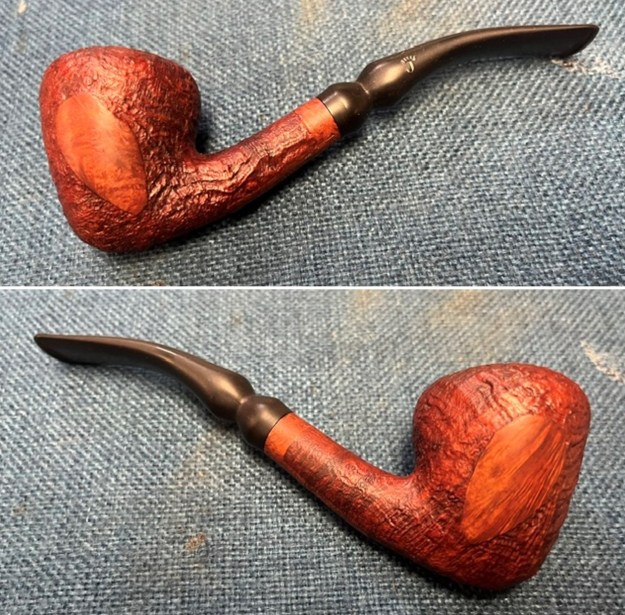
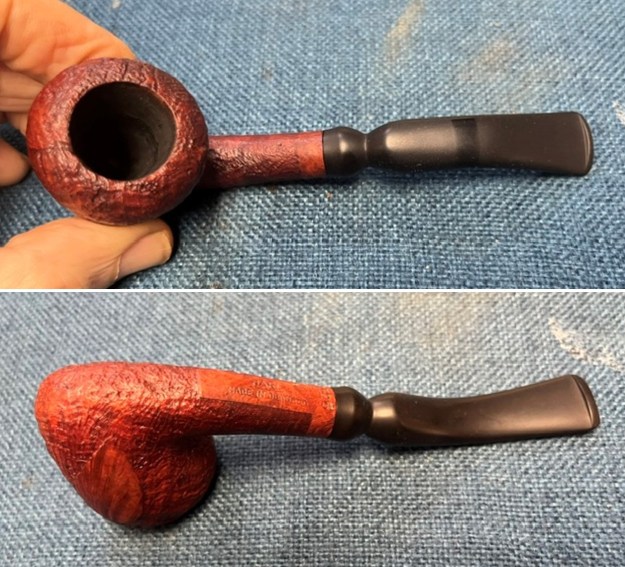 I took close up photos of the bowl, rim top and stem to show how clean the pipe was. The bowl was clean and the rim top and the inner edge looked good. The stem was clean and there were light tooth marks on the top and underside of the stem.
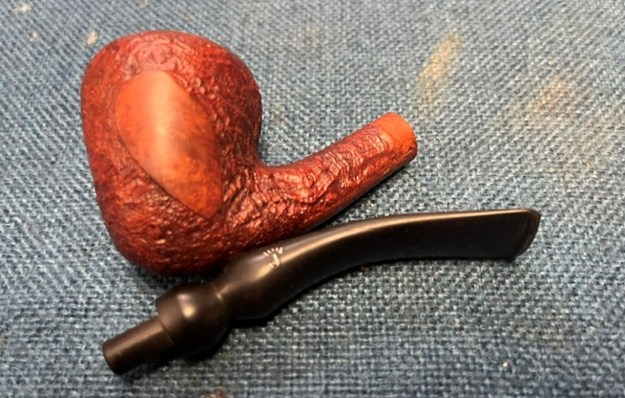
 I took a photo of the stamping on the underside of the shank and the Crowned J stamp on the left side of the saddle stem. It is clear and readable and read as noted above. I also removed the stem from the shank and took photos of the pipe to show the look of the parts.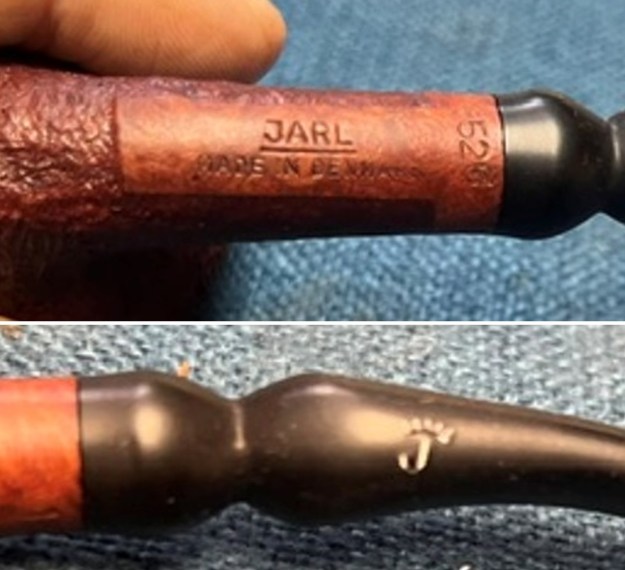
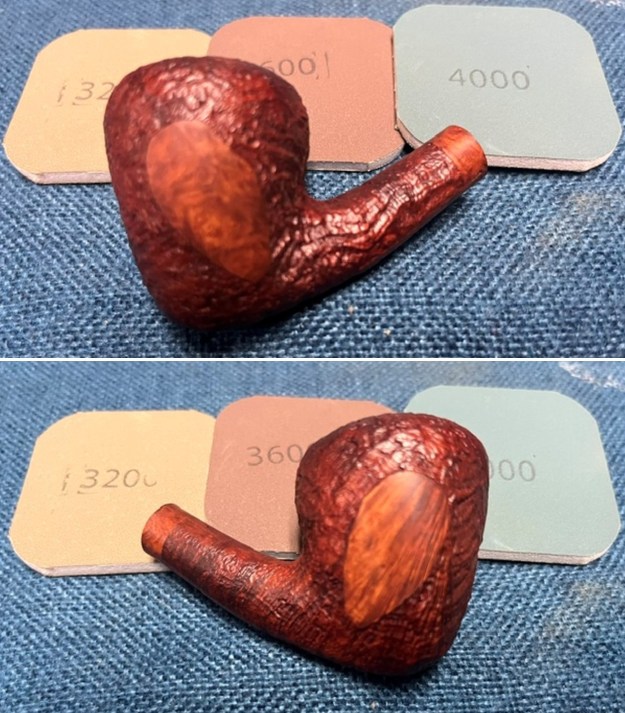
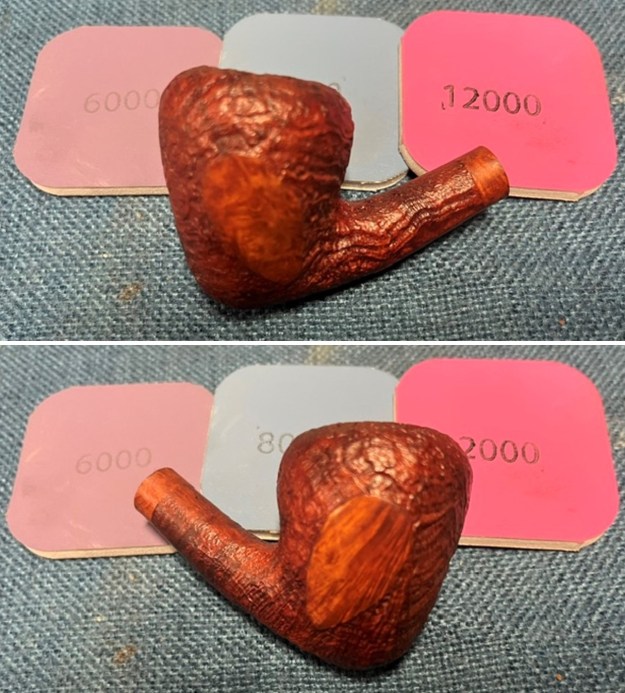
 I polished the smooth patches of the briar with micromesh sanding pads – 1500-12000 grit sanding pads. I wiped the bowl surface down with a damp cloth after each sanding pad to remove the sanding dust. Once I finished the exterior of the briar was clean and the grain really stood out.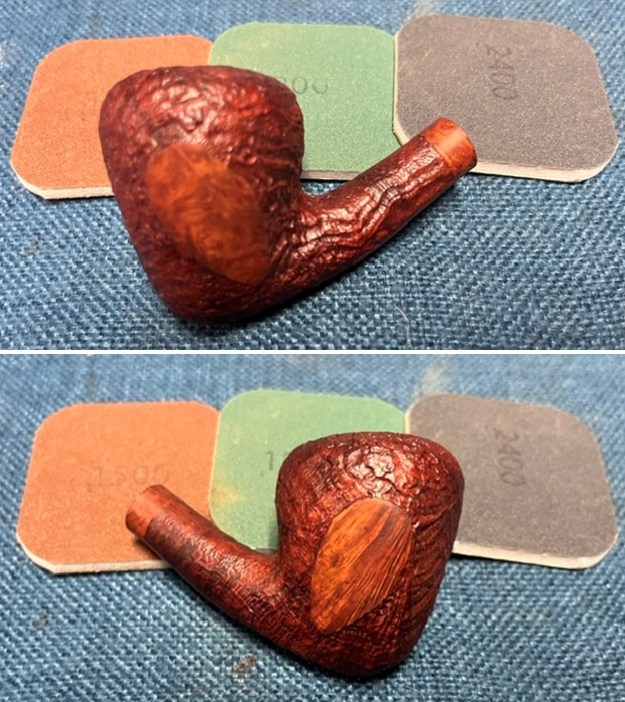
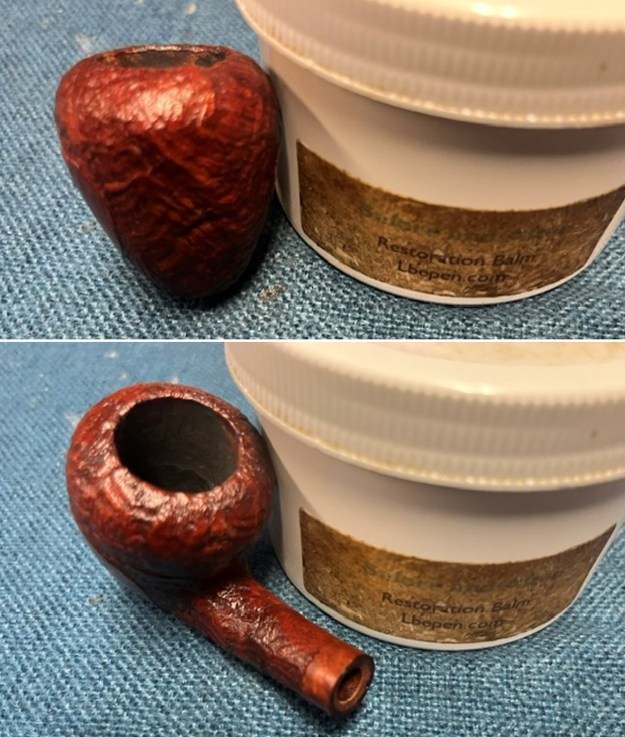
 I worked some Before & After Restoration Balm into the surface of the briar with my fingertips to clean, enliven and protect the briar. I let the balm sit for 15 minutes and then buffed with a cotton cloth to raise the shine. The photos show the bowl at this point in the restoration process.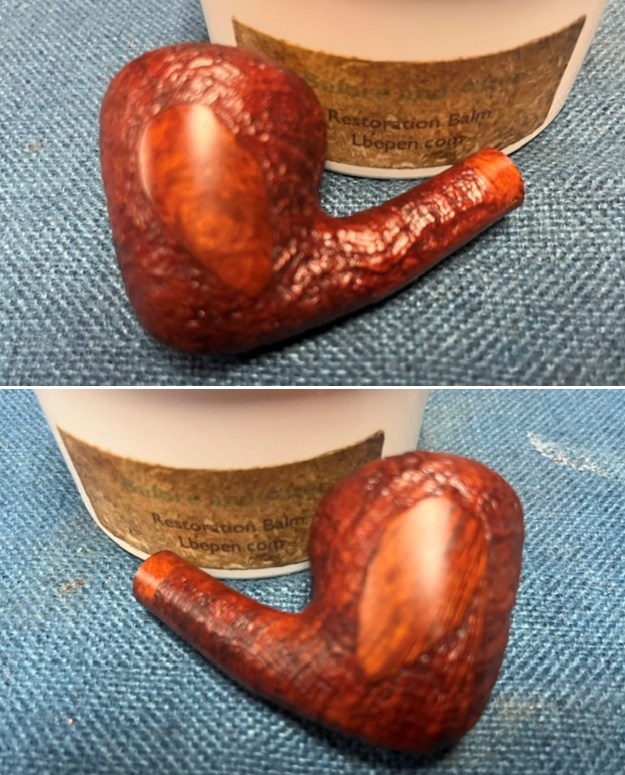
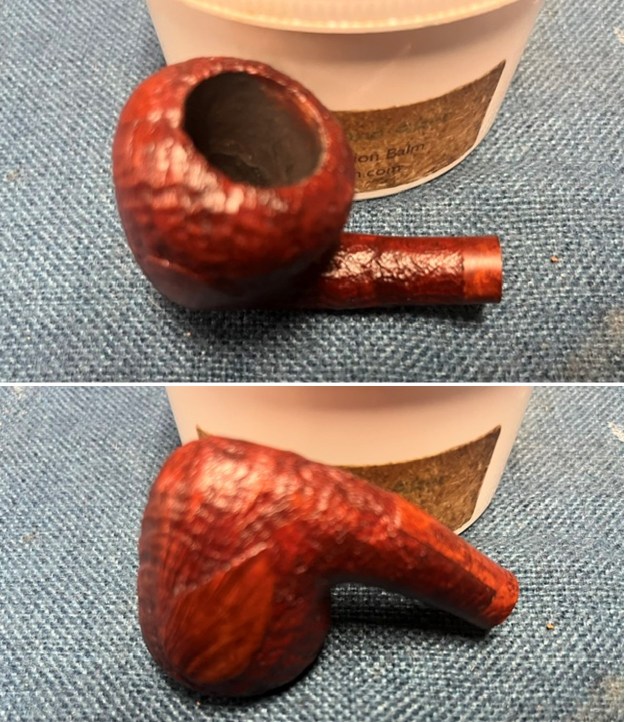
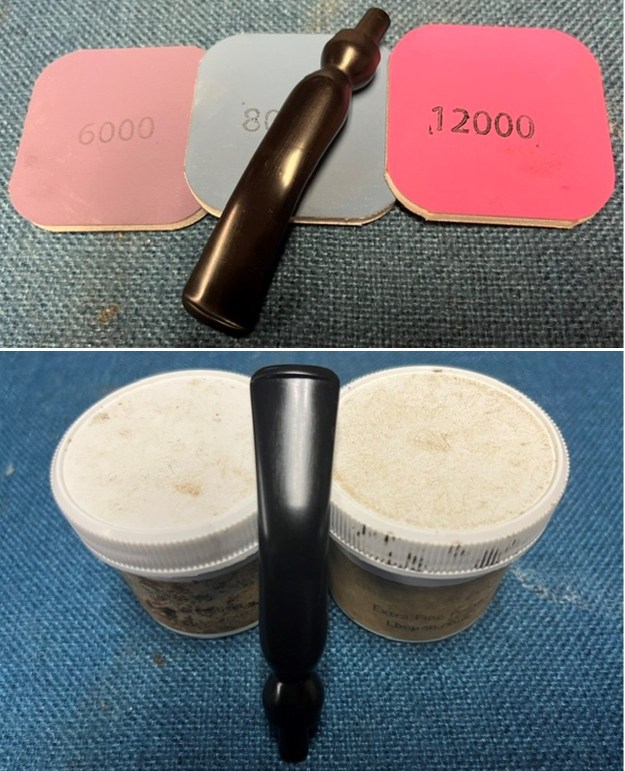
 I set the bowl aside and turned to the stem. I polished the stem with micromesh sanding pads – wet sanding with 1500-12000 grit pads. I wiped the stem down after each sanding pad with Obsidian Oil. I polished it with Before & After Pipe Stem Polish – both Fine and Extra Fine. Once I had finished the polishing I gave it final coat of oil and set it aside to dry.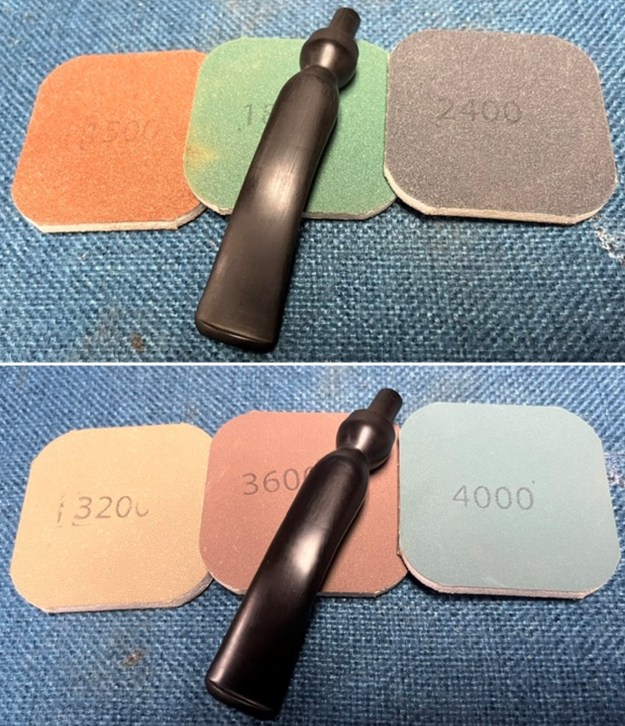
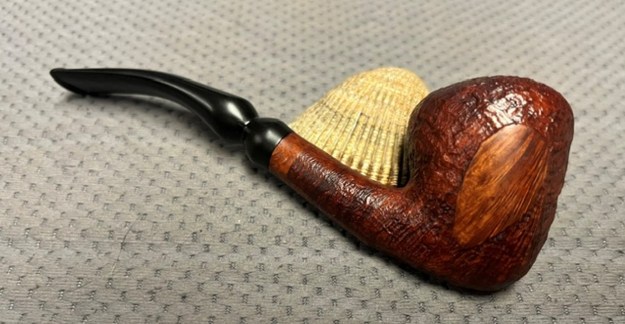
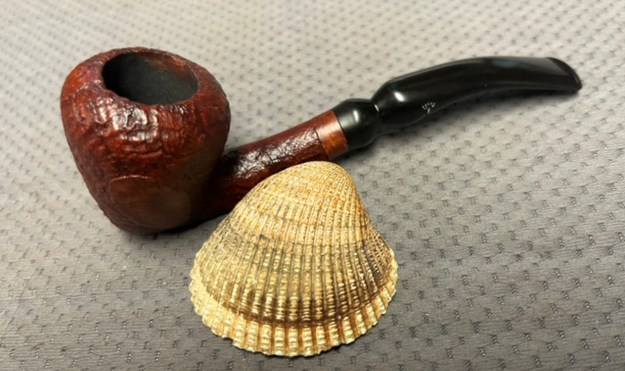
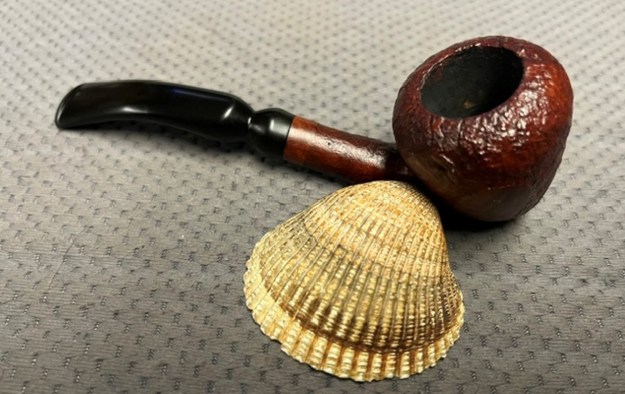
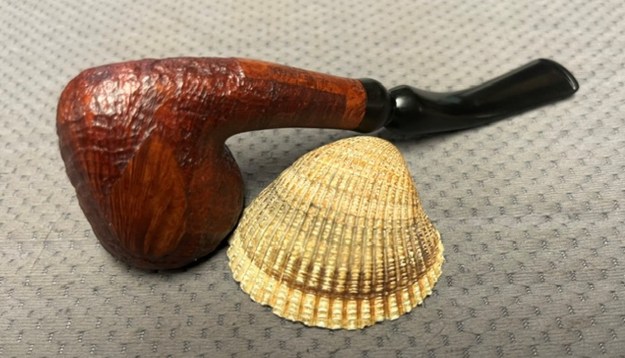
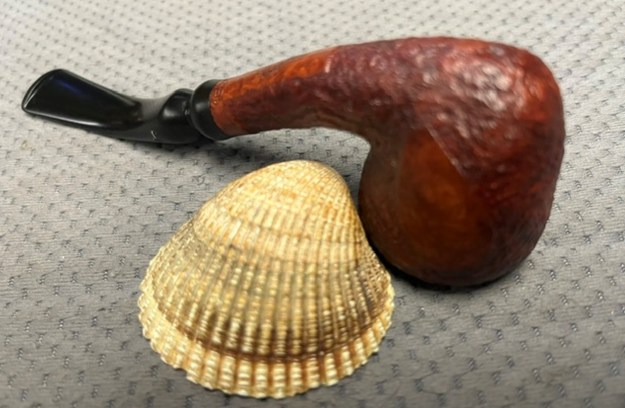
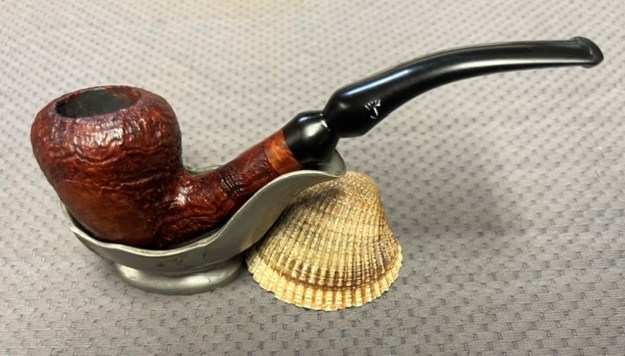
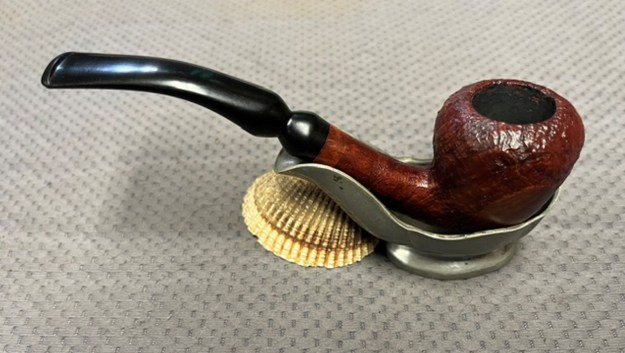
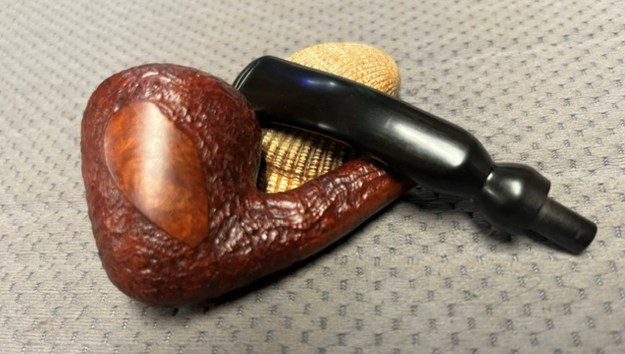
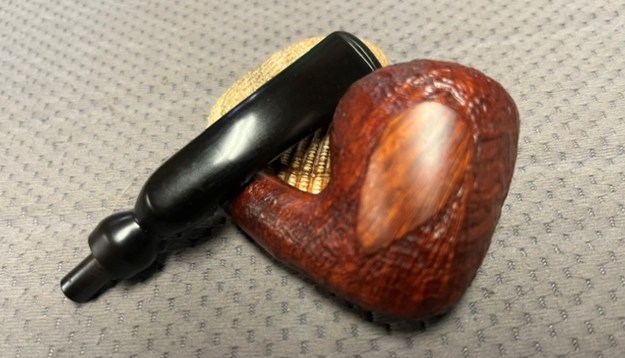
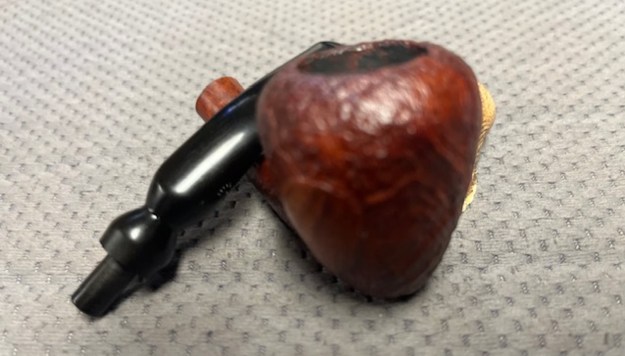
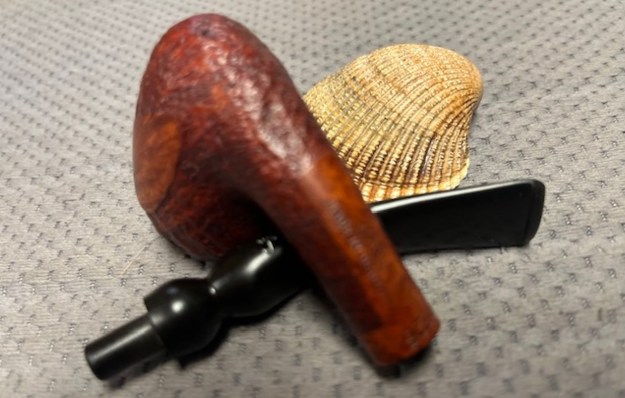
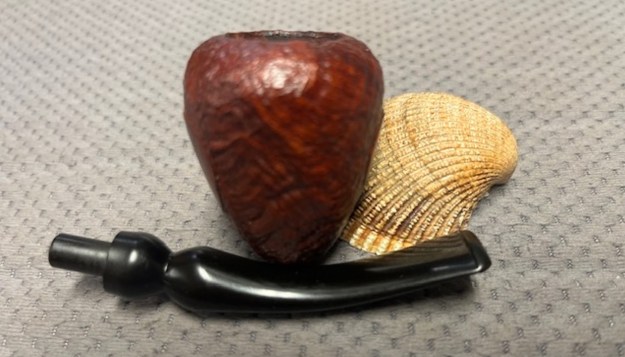
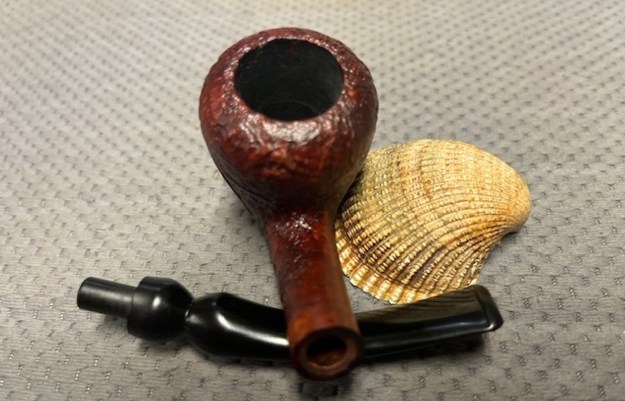
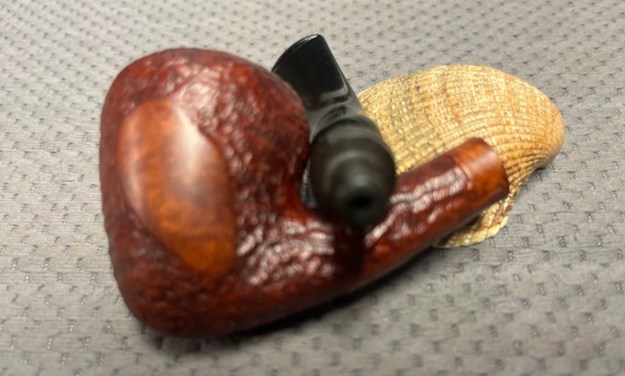
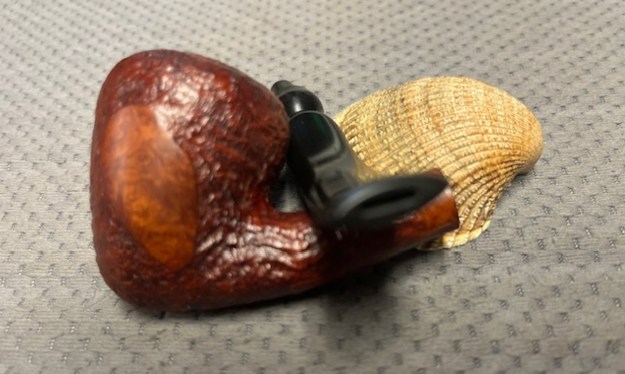
 I am excited to finish this Jarl Made in Denmark Bent Acorn 1526 with a vulcanite, fancy saddle stem. I put the pipe back together and buffed it with Blue Diamond on the buffing wheel. I gave the bowl and the stem multiple coats of carnauba wax. I hand buffed the pipe with a clean buffing pad to raise the shine. It is fun to see what the polished bowl looks like with the mix of grain on the sides of the bowl. Added to that the black vulcanite saddle stem was beautiful. This smooth Jarl Made in Denmark Bent Acorn 1526 is great looking and the pipe feels great in my hand. It is light and well balanced. Have a look at it with the photos below. The dimensions are Length: 5 ½ inches, Height: 2 inches, Outside diameter of the bowl: 1 ¼ inches, Chamber diameter: ¾ of an inch. The weight of the pipe is 35 grams /1.20 ounces. It turned out to be a beautiful pipe. I will be putting it on the rebornpipes store in the Danish Pipe Makers section. If you are interested in adding it to your rack let me know by message or by email to slaug@uniserve.com. Thanks for your time reading the blog. I appreciate it.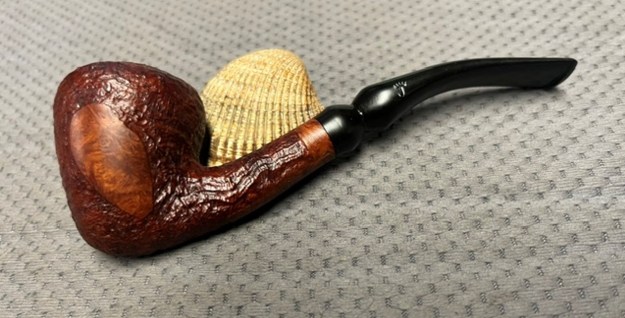
 rebornpipes
That shape is very similar to a Bari Deluxe that I have. The Jarl factory wasn’t that far from the Bari factory; I wonder if there was some cross-pollination going on! I’ve attached photos of the Bari.
LikeLike
They are very similar
LikeLike