
by Steve Laug
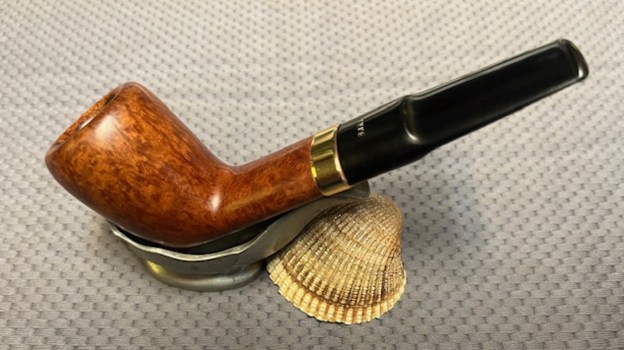
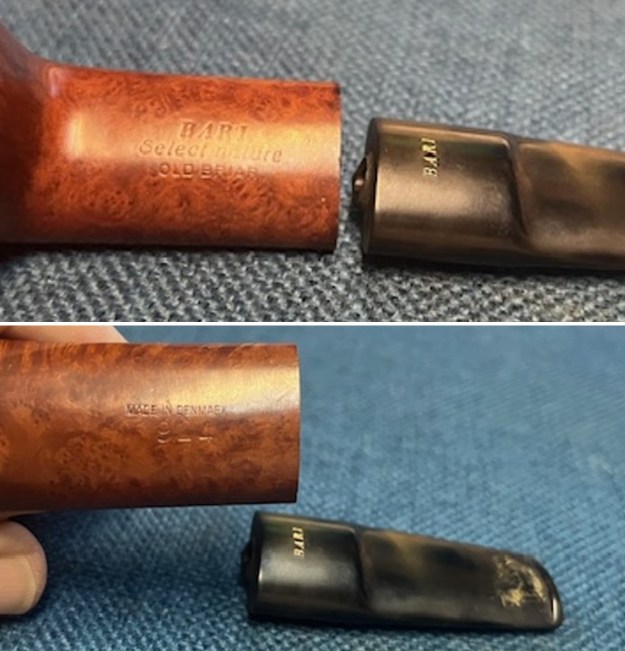
The next pipe on the work table is a beautifully grained Bari Oval Shank Acorn. It is stamped on the topside it reads Bari [over] Select Nature [over] Old Briar. On the underside it reads Made in Denmark [over] the shape number 924. It came from a box of pipes with broken tenons that I set aside to work on someday. Today is that day I guess! It is very nicely shaped Danish style acorn shaped bowl with a vulcanite saddle stem. I have worked on the shape previously and really like the look of it. The bowl has a thin cake and some lava overflow on the back of the crowned rim top and bevelled inner edge. It appeared to be in excellent condition under the grime. Only cleaning would make that very clear. The vulcanite saddle stem had a Bari logo stamp on the topside of the saddle. It is dirty, oxidized, calcified and has tooth chatter and tooth marks on both sides ahead of the button. The tenon had snapped off cleanly in the shank. I took photos of the pipe before I started working on it.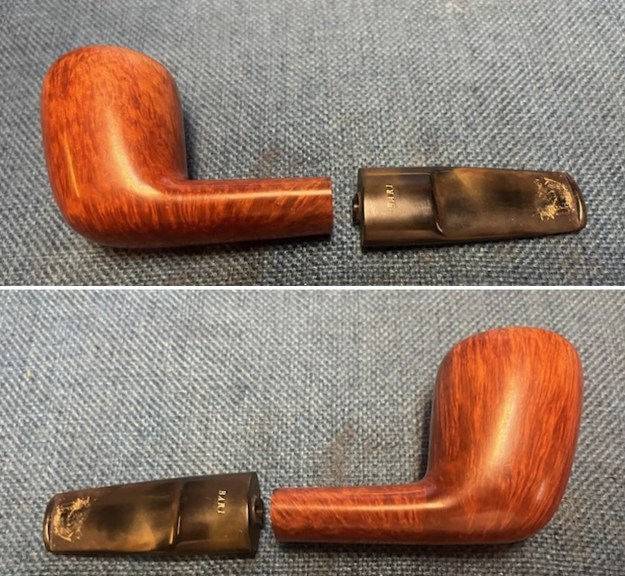
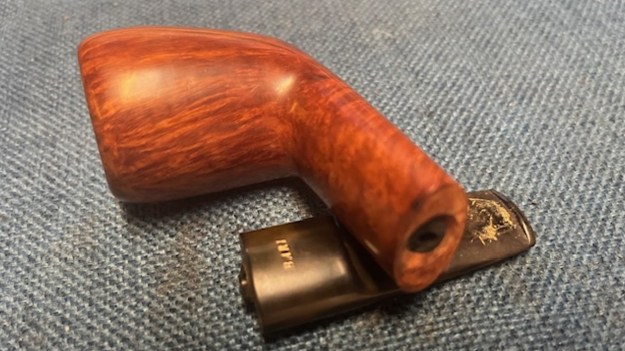
 I took a photo of the shank end to show the snapped off tenon in the shank. The break is quite clean so it should clean up very well.
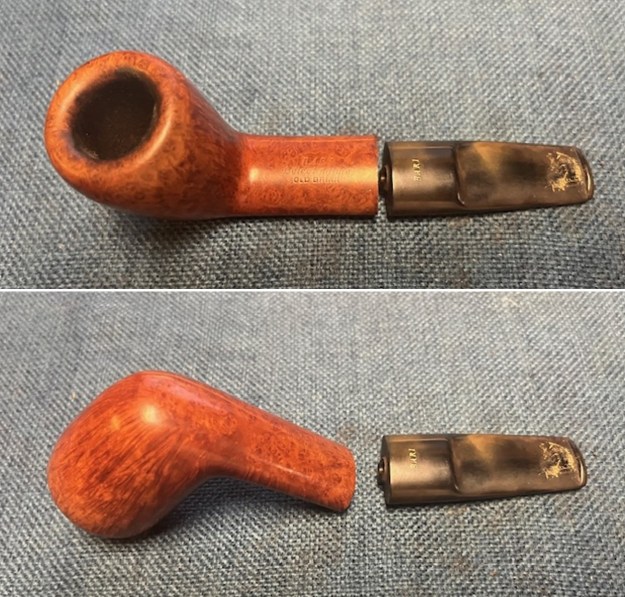
 I took photos of the bowl and rim top to show the cake in the bowl and the condition of both. It was clean bowl that had been reamed. There was a spot of lava overflow on the back inner edge and rim top. The inner and outer edges otherwise look very good. I took photos of the top and underside of the stem showing the calcification, oxidation and tooth marks on the stem surface and button.
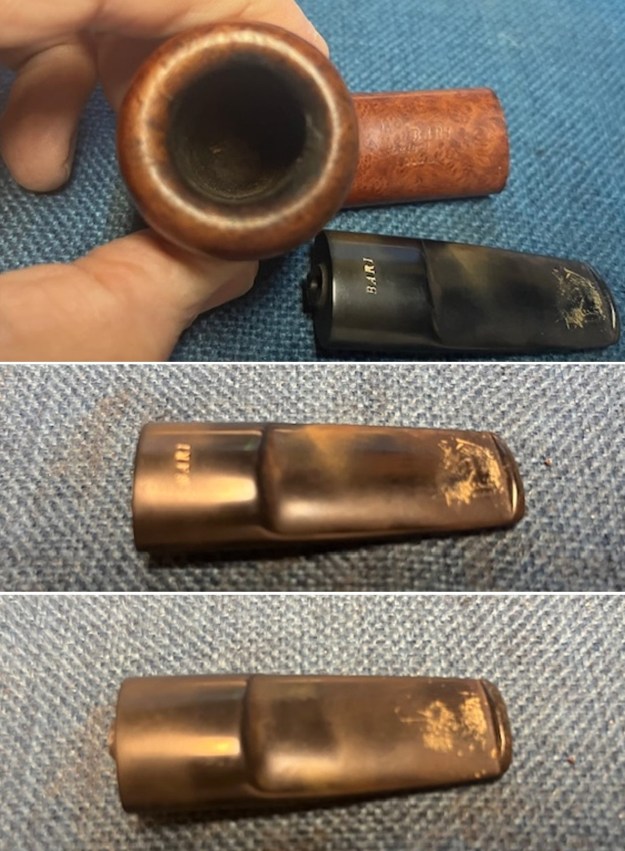 I took photos to capture the stamping on the sides of the shank. It is clear and readable as noted above. I also took a photo of the Bari stamp on the topside of the stem.
 I turned to Pipephil’s site (http://www.pipephil.eu/logos/en/logo-b1.html) to see if I could find a listing for the Bari Select Nature Old Briar with this three digit number. There was nothing specifically listed for this line of Bari pipes. There was also good info on the brand as a whole and that it was founded by Viggo Nielsen in 1950 and he ran it until 1978 when Age Bogelund managed the production for them. In 1993 it was sold to Helmer Thomsen. I have included a screen capture of the section below.
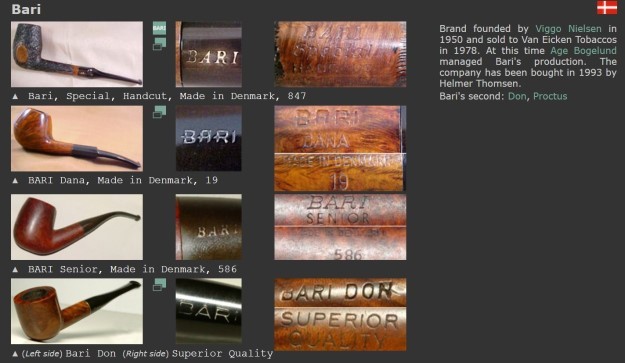 Pipedia gives a great history of the brand (https://pipedia.org/wiki/Bari) that is well worth reading. There were also photos of the Bari stamping on the Select Nature Old Briar line of pipes.
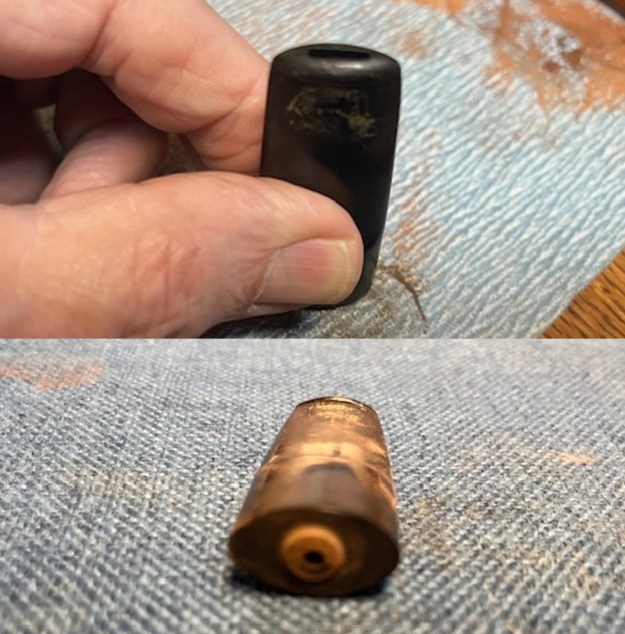
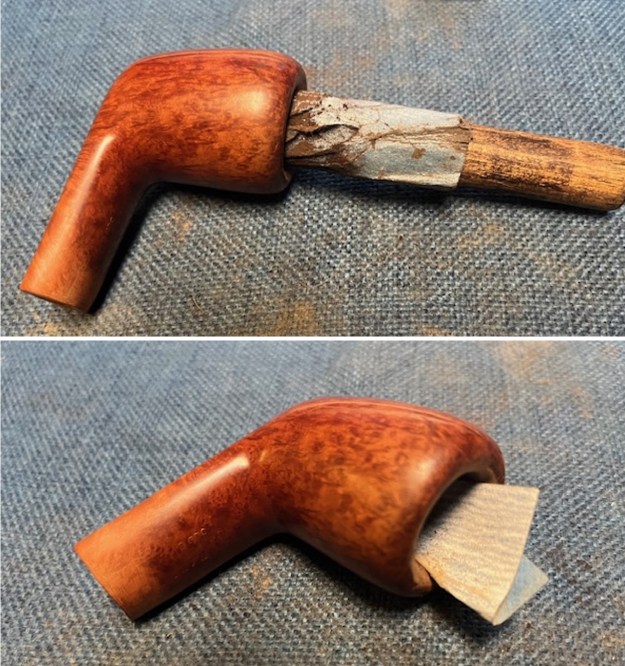
Given the information and background on the pipe I started my work on the pipe. I decided to start by pulling the broken tenon and beginning the process of the replacement. I used a drywall screw to pull the tenon. I screwed it into the airway and wiggled the broken piece out of the shank. The second photo of the bowl below shows the pulled tenon.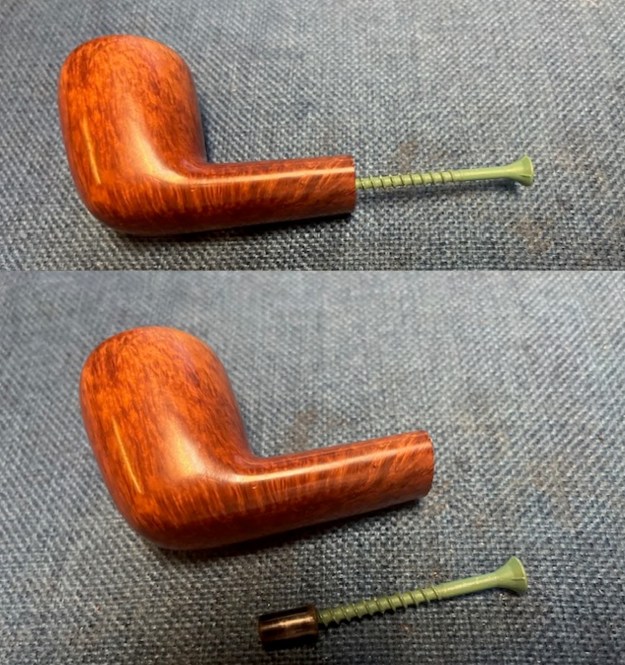 In preparation for fitting a new tenon I flattened out the broken edges on the snapped tenon using a topping board and 220 grit sandpaper.
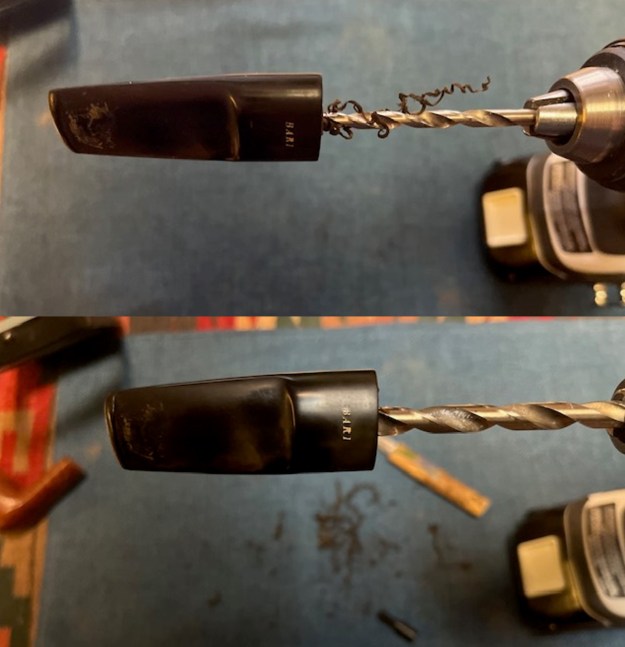
 I drilled the airway in the stem with increasingly larger drill bits until I had the bit that was the same size as the threaded portion of the new tenon.
 I fit the tenon in the stem to make sure the fit and alignment was correct and repeated the process in the mortise. I fit the stem on the tenon in the mortise to check the alignment.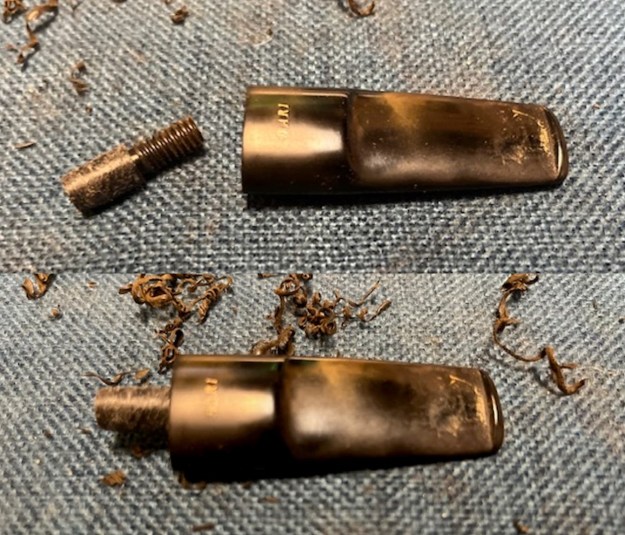
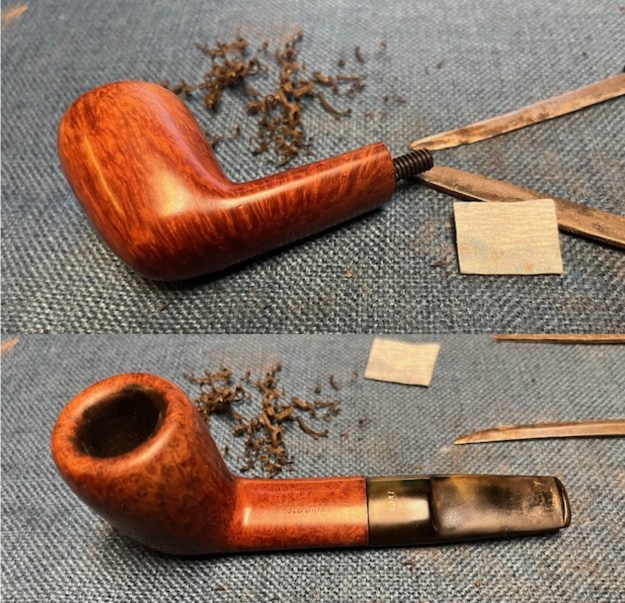 With the fit as good as it was going to get on this one I slid a pipe cleaner in the stem and tenon and painted the threads with black CA glue. I pressed it into place in the stem and set it aside to cure.
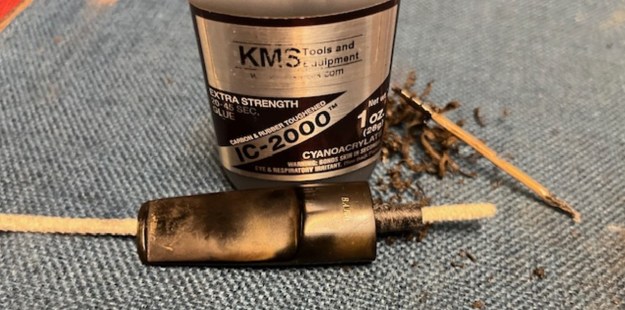 I needed to adjust the fit of the stem to the shank. The alignment as slightly off on the top and the bottom of the stem and shank. I used a piece of 220 grit sandpaper to make the adjustments to the stem and the briar shank. I was careful to not damage either the stamping on the shank of the stamping on the stem.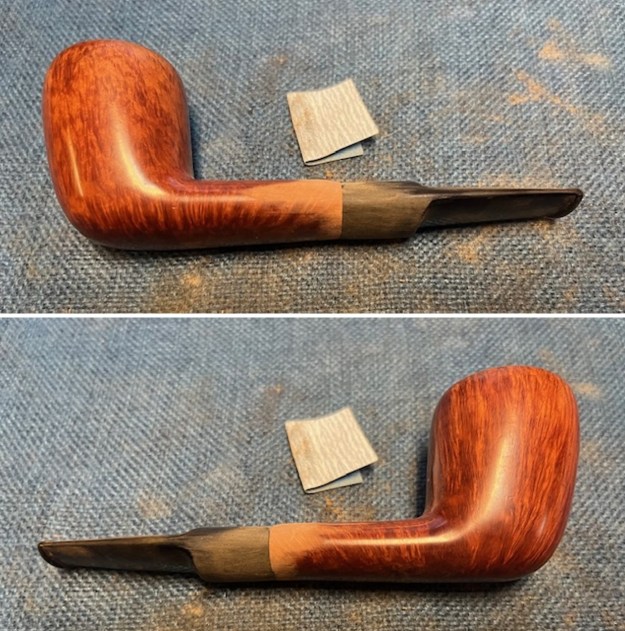
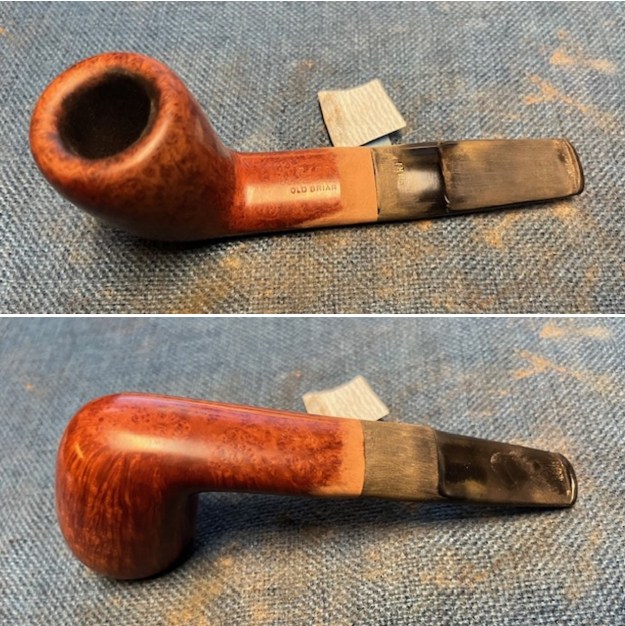 I continued smoothing out the sanded portions of the shanks and stem with 320-3500 grit sanding pads. I wiped it down with an Obsidian Oil impregnated cloth after each sanding pad.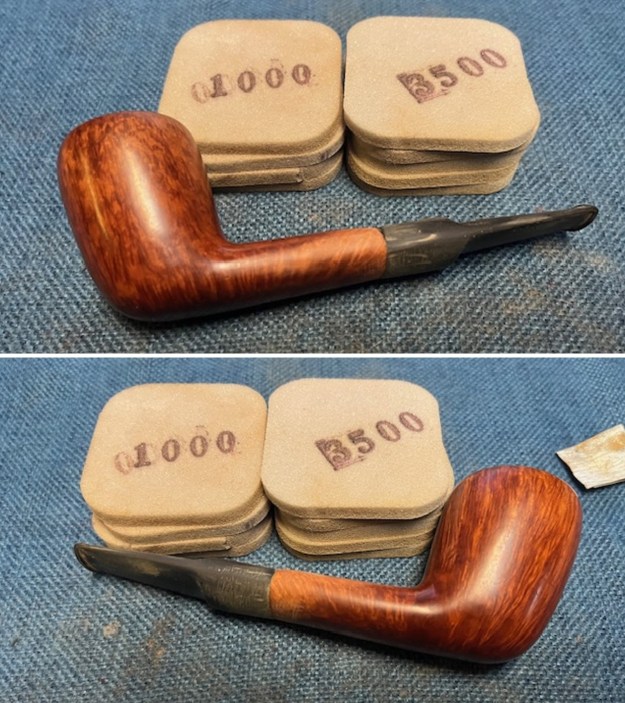
 Since the bowl walls were clean or cake I did not need to ream the bowl. I sanded the bowl with 220 grit sandpaper on a piece of dowel to clean up the walls of the bowl. It had been reamed but needed to be sanded smooth. It was in great condition. I sanded the bevelled inner edge of the rim with a folded piece of 220 grit sandpaper.
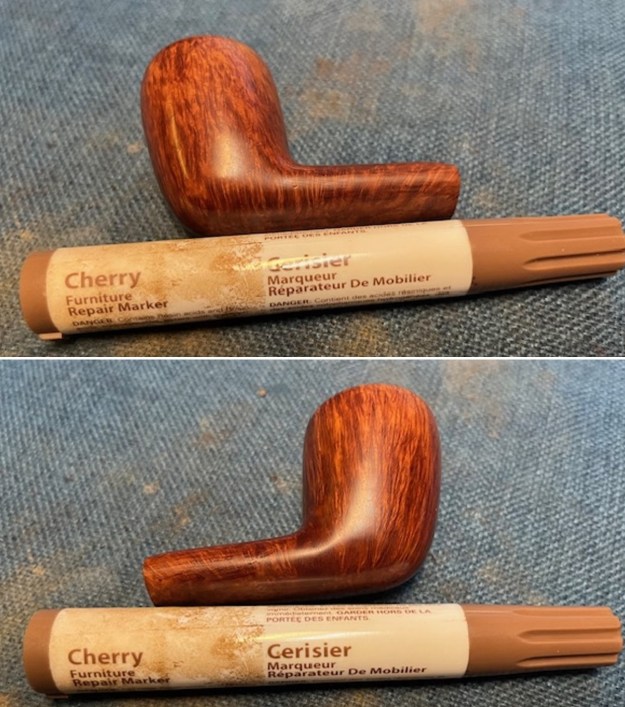
 I stained the sanded areas on the shank and on the rim top with a Cherry stain pen. It blended in very well with the rest of the briar. It is a beauty.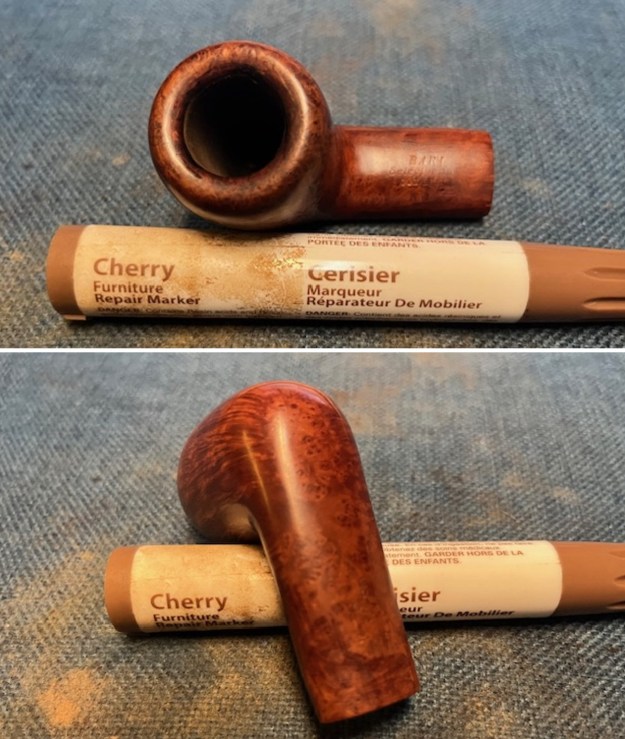
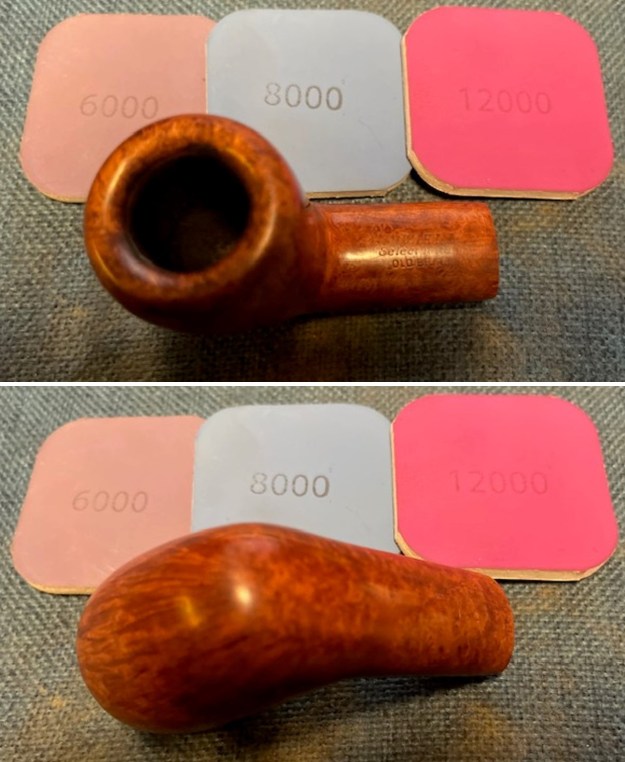
 I polished the briar with micromesh sanding pads – dry sanding with 1500-12000 grit pads. I wiped the bowl down after each pad with a damp cloth to remove the sanding dust.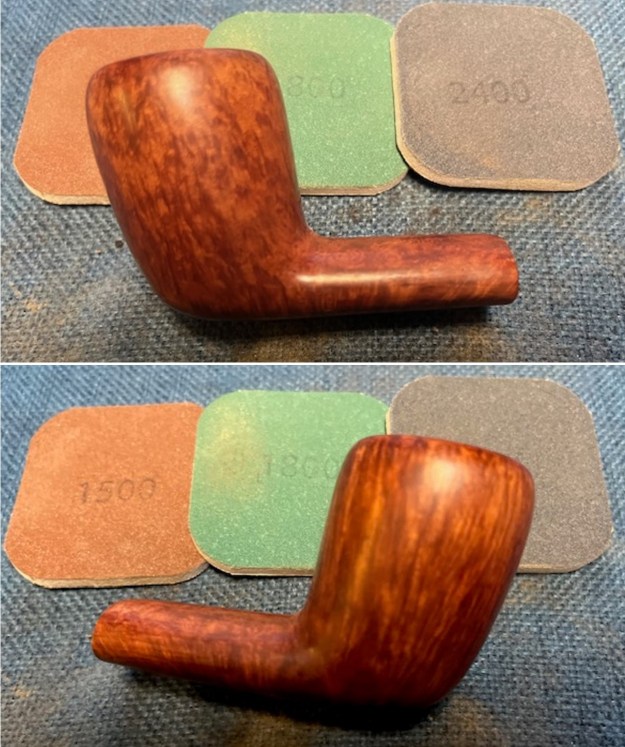
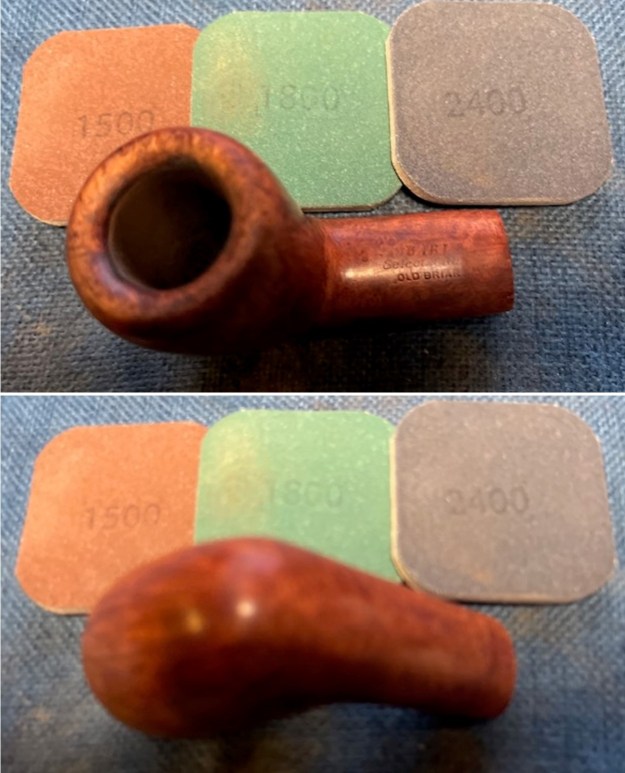
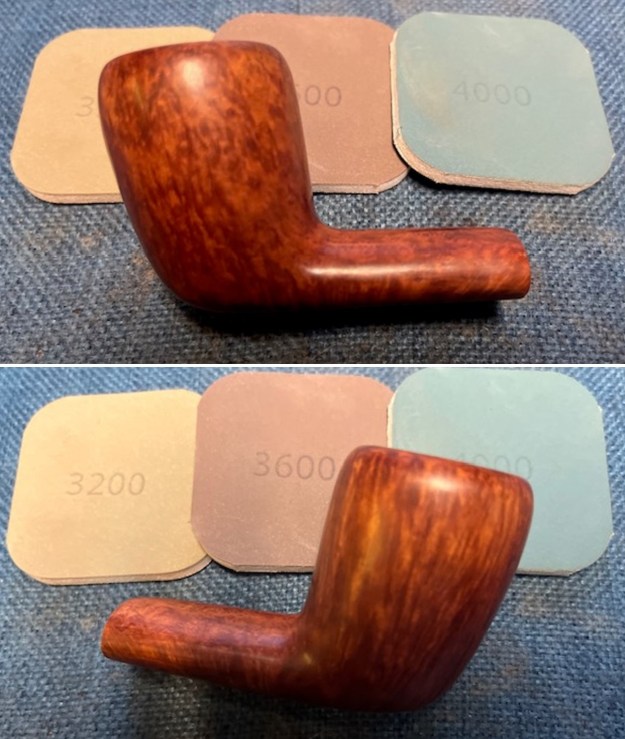
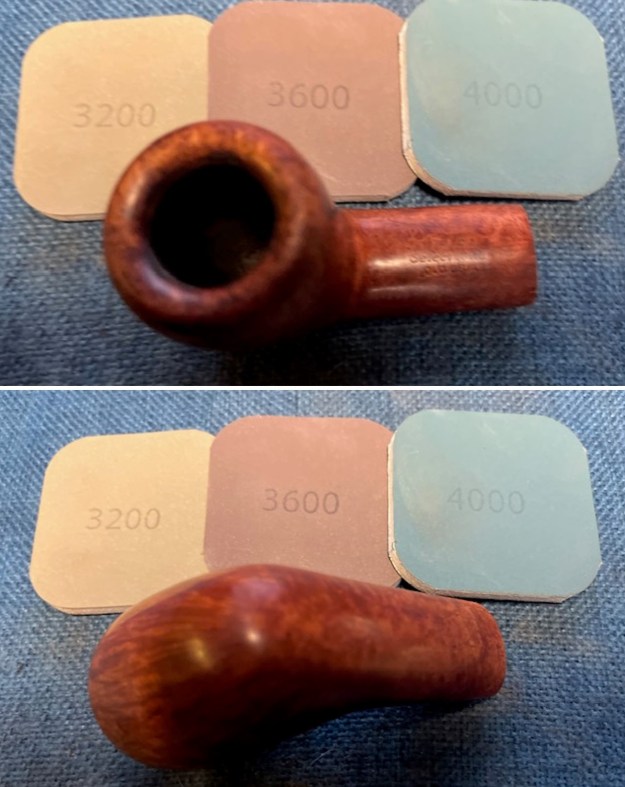
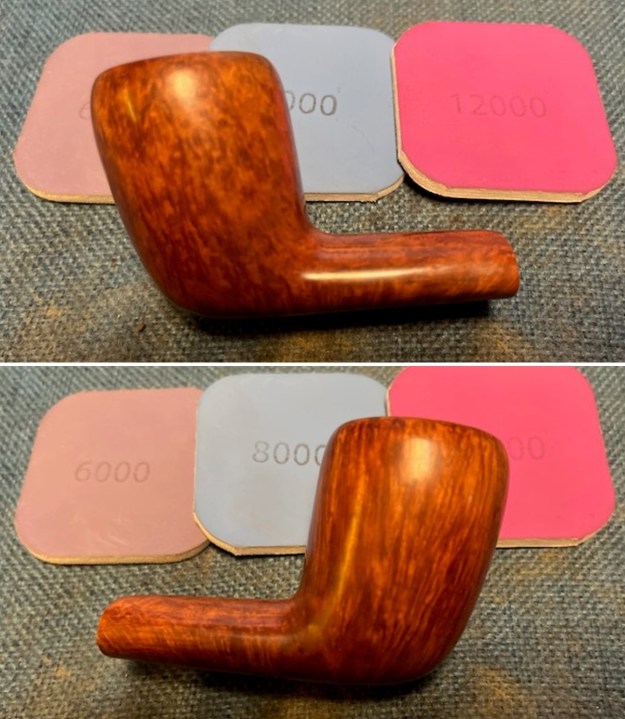
 I worked some Before & After Restoration Balm into the finish of the bowl, rim top and shank with my fingertips to clean, enliven and protect it. I find that the balm really makes the briar come alive again. The contrasts in the layers of stain really made the grain stand out. I let the balm sit for 15 minutes and then buffed with a cotton cloth to raise the shine. The bowl really looks good at this point.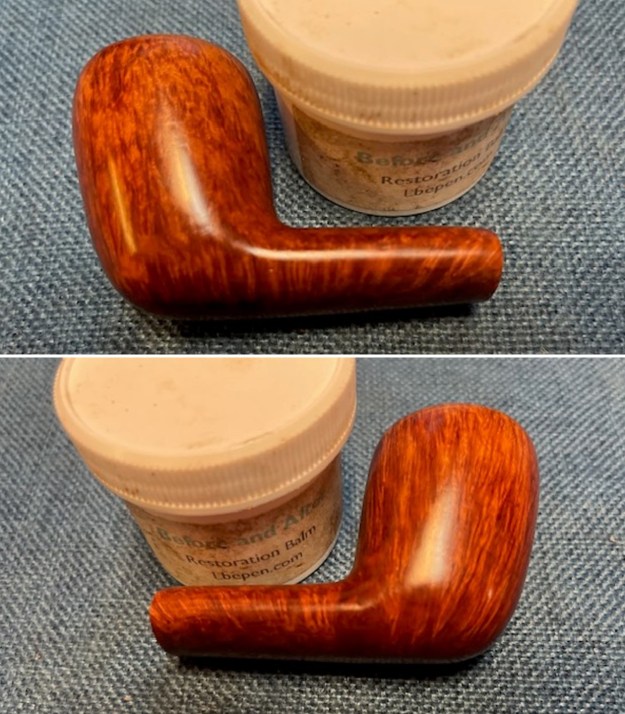
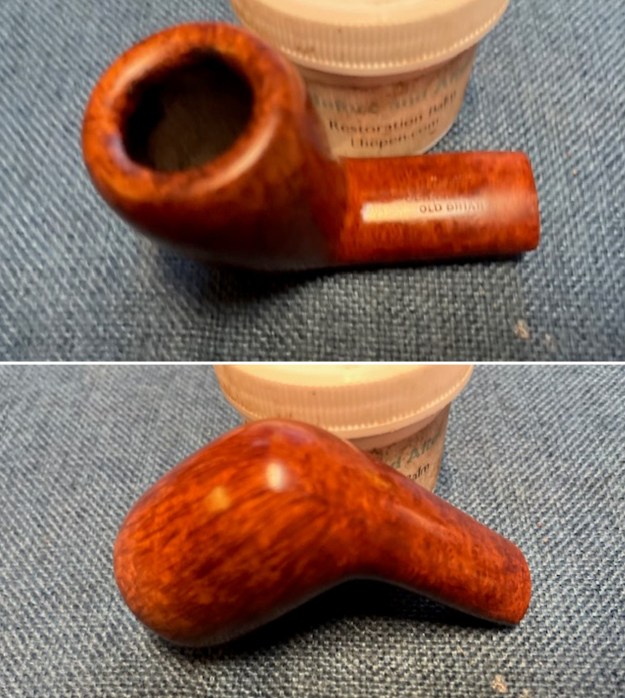
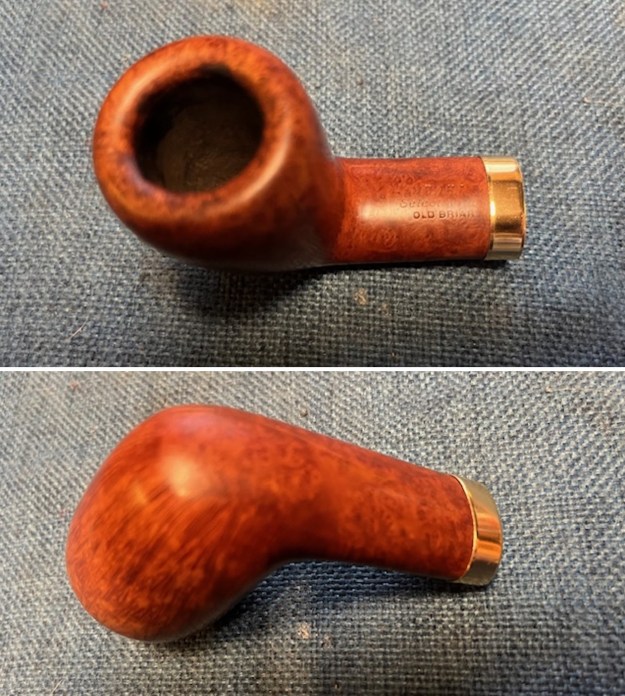
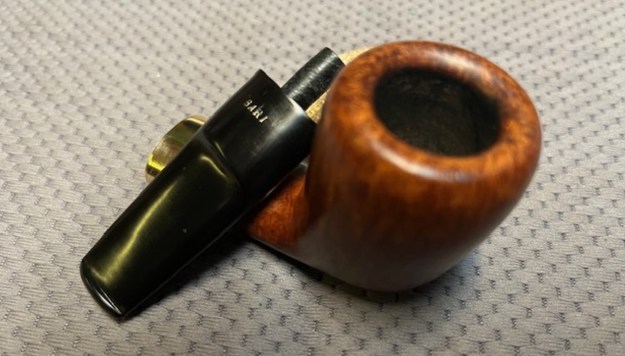
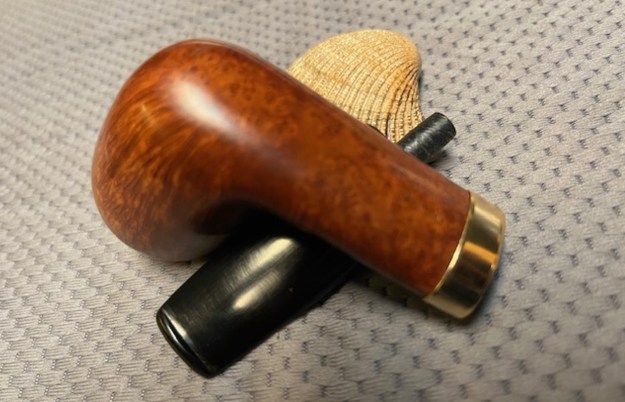
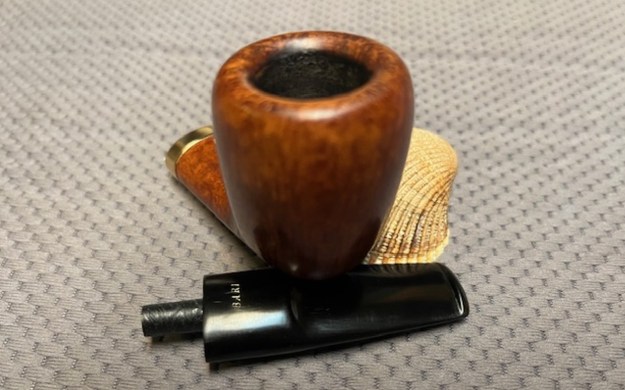
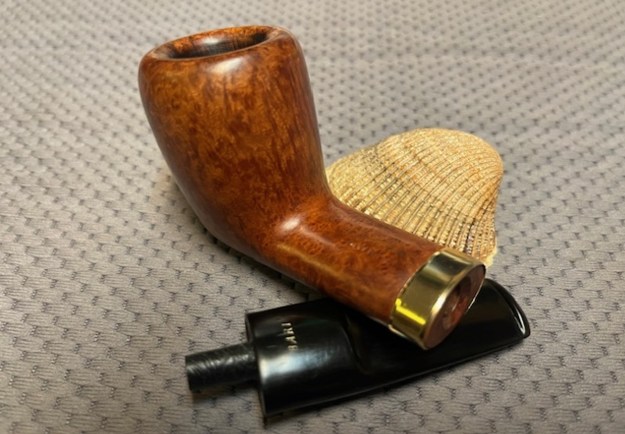
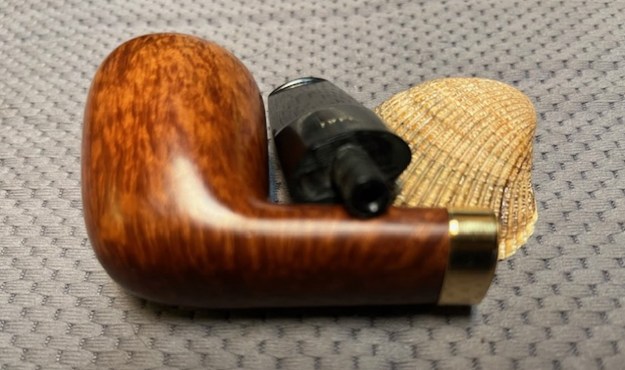
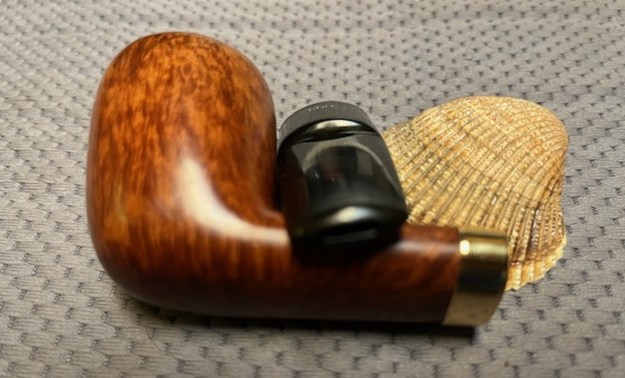
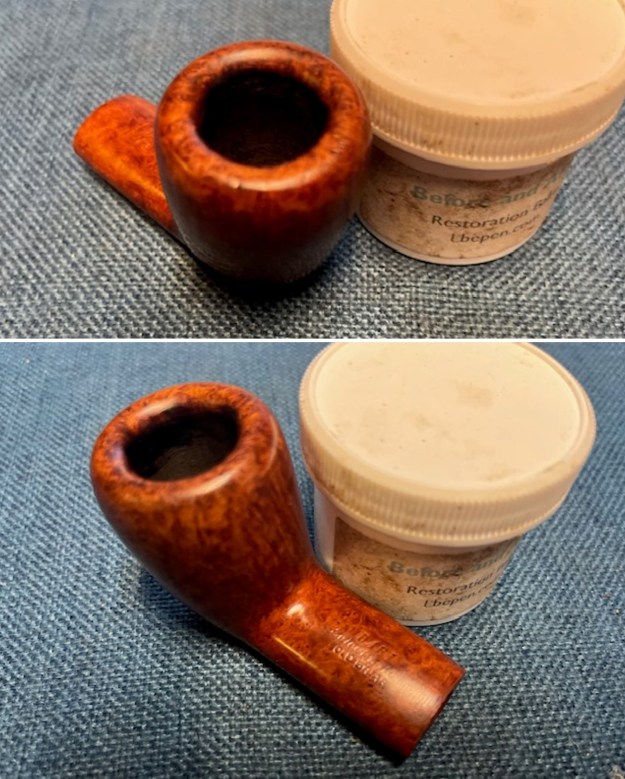 I had a gold band that was the perfect size for the shank. I had a hunch that it might give the shank a bit of bling that would look good. I pressed it in place on the shank. To get a sense of the new look. I really liked the way it looked so I set it in place.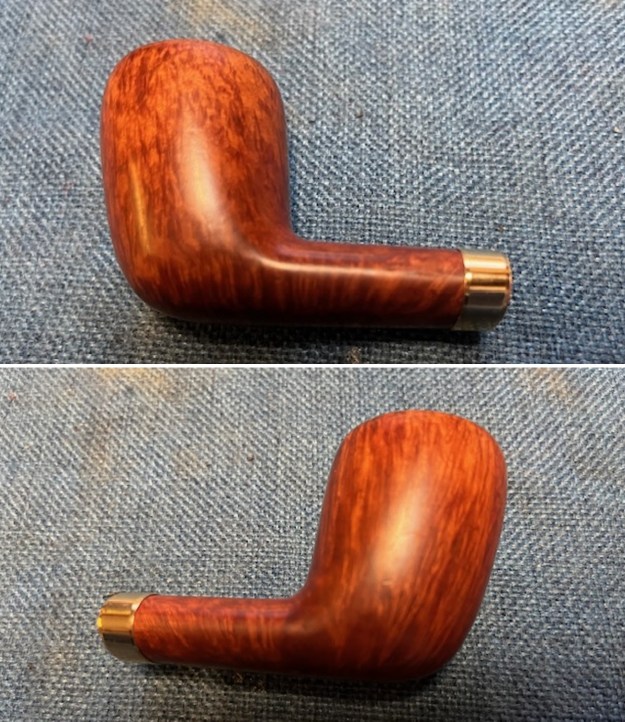
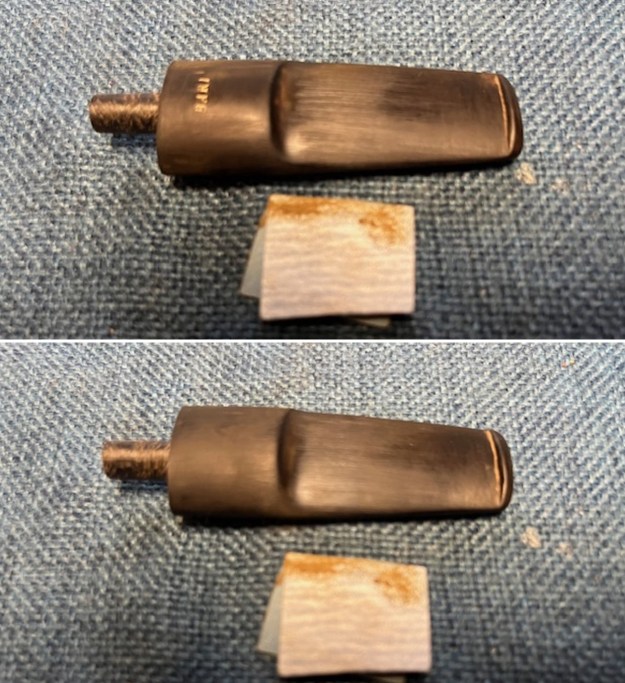
 I set aside the bowl and turned my attention to the stem. I sanded the stem surface with 220 sandpaper to remove the scratching and reshaping marks on the stem. It was looking much better at this point but still had a long way to go.
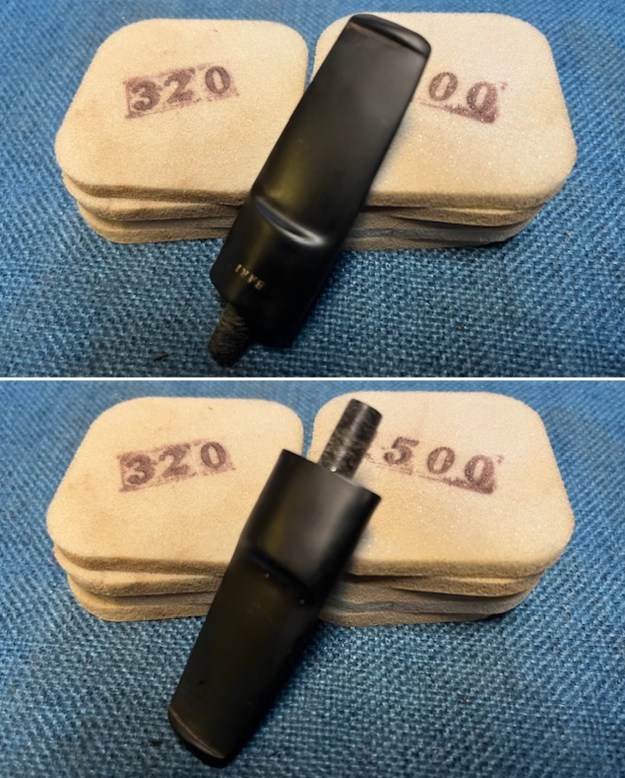
 I sanded the stem with 320-3500 grit sanding pads and wiped the stem down after each pad with an Obsidian Oil saturated cloth to remove the grime and protect the stem.
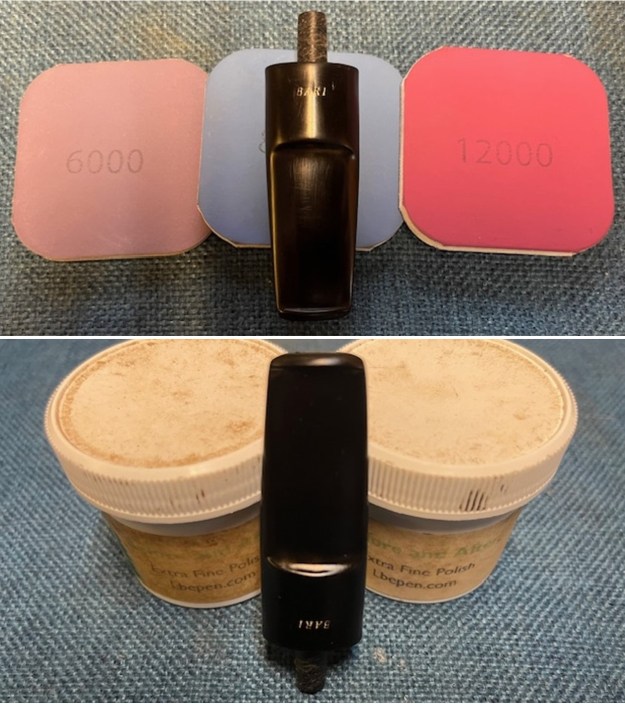
 The BARI stamping on the stem had some scoring marks between some of the letters that I could not polish out without damaging the stamping so I left them. I polished the stem with micromesh sanding pads – wet sanding it with 1500-12000 grit pads. I polished it further with Before & After Pipe Stem Polish – both fine and extra fine.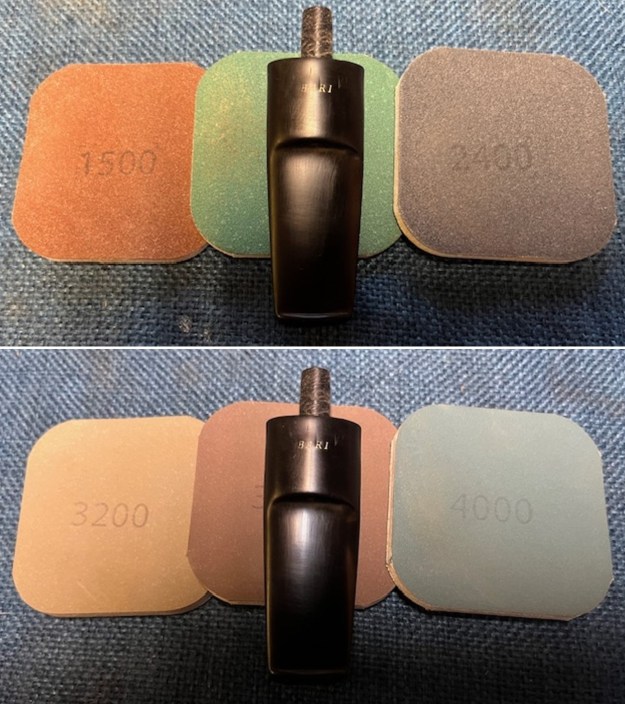
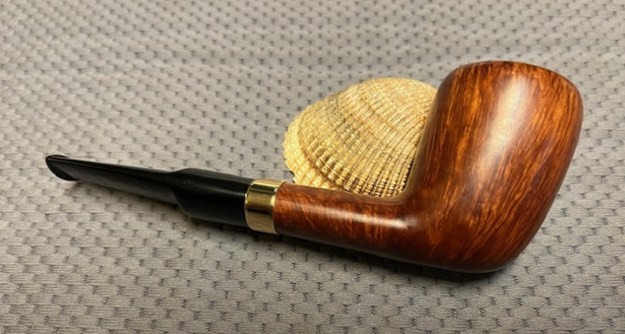
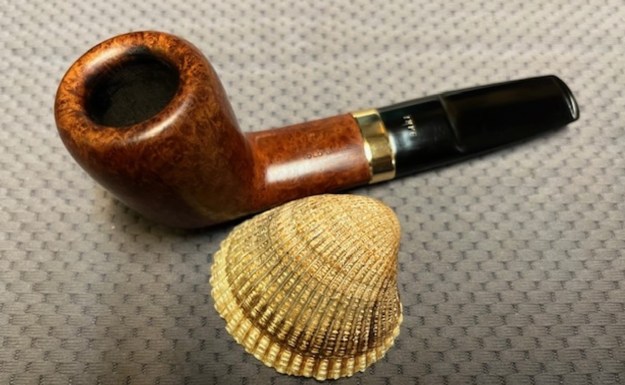
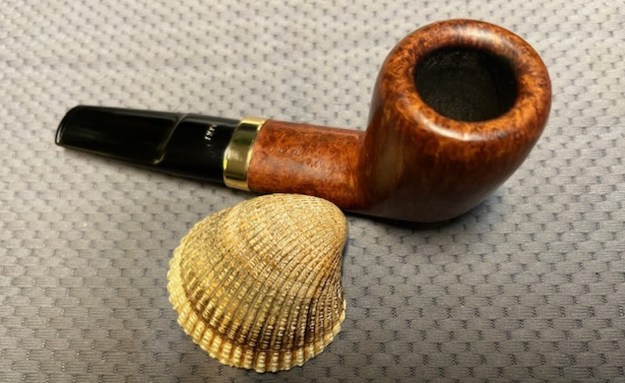
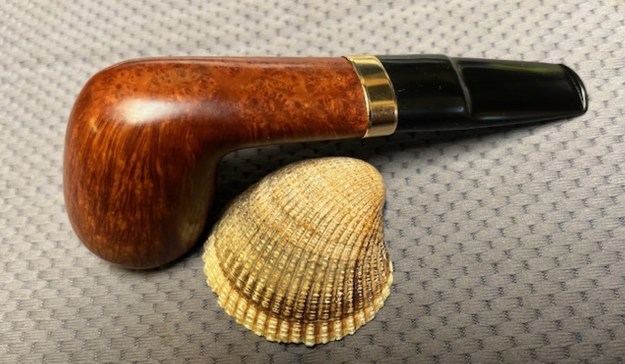
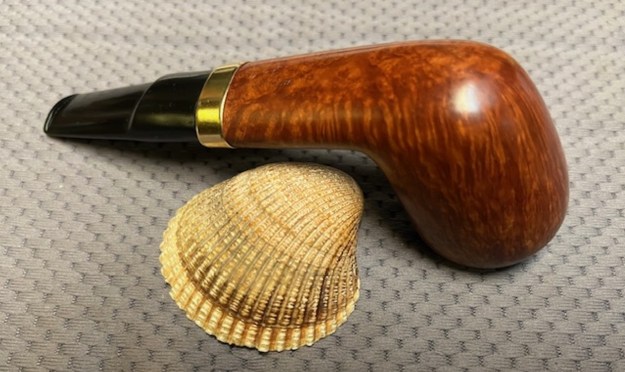
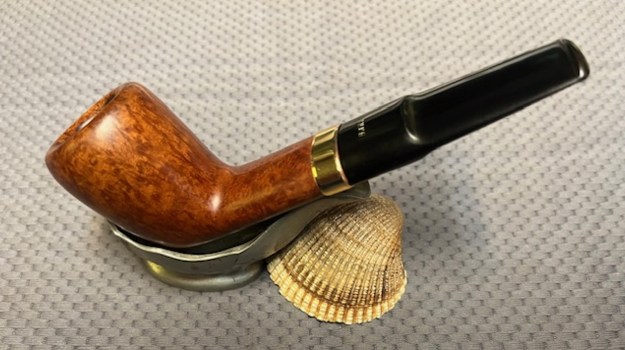
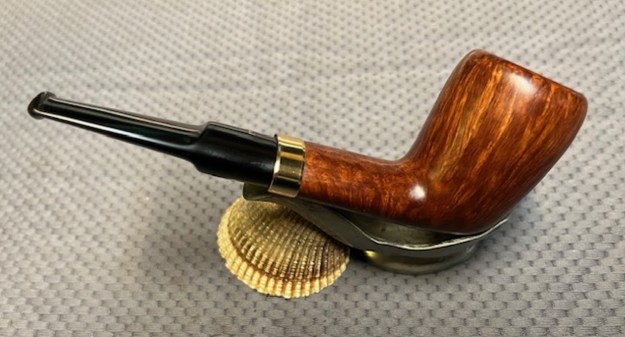
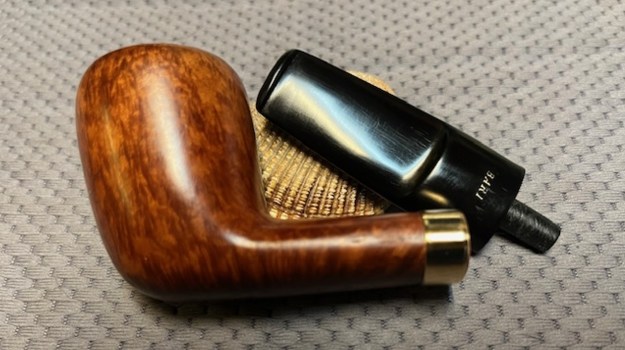
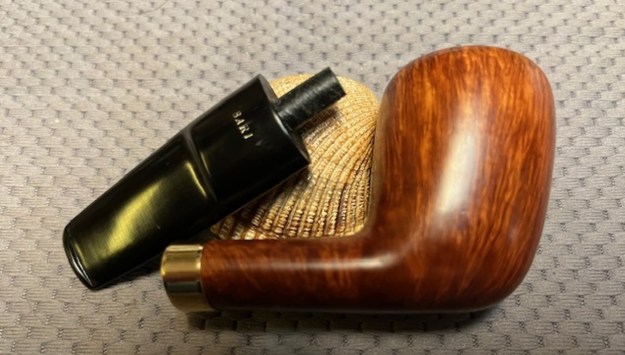
 Once again, I am the part of the restoration that I always look forward to – the moment when all the pieces are put back together. I put the pipe back together and buffed the bowl and the stem with Blue Diamond on the buffing wheel. I gave the bowl and the stem multiple coats of carnauba wax. I buffed the pipe with a clean buffing pad to raise the shine. I hand buffed it with a microfiber cloth to deepen the shine. It is fun to see what the polished bowl looks like with the smooth finish and the black vulcanite stem. This richly stained Bari Select Nature Old Briar 924 Acorn is light weight and ready for you to load up a tobacco of preference and enjoy breaking it in. Have a look at it in the photos below. The dimensions are Length: 5 inches, Height: 2 inches, Outside diameter of the bowl: 1 ¼ inches, Chamber diameter: ¾ of an inch. The weight of the pipe is 44 grams/1.52 ounces. This is one that will go on the Danish Pipemakers Section of the rebornpipes online store shortly. Let me know if you are interested in adding it to your rack. Thanks to each of you who are reading this blog. Remember we are not pipe owners; we are pipemen and women who hold our pipes in trust until they pass on into the trust of the next generation.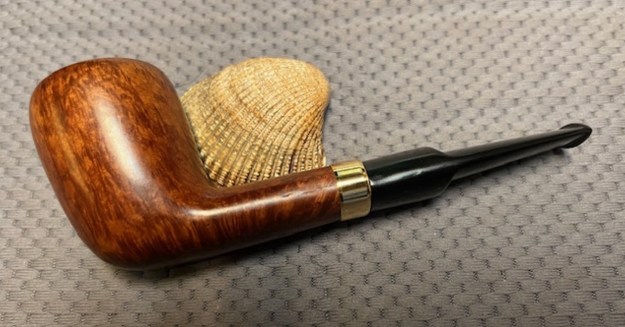
 rebornpipes