
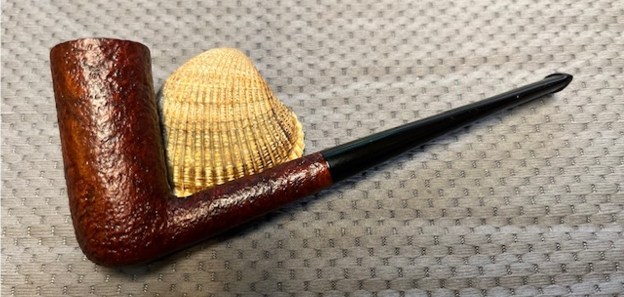
by Steve Laug
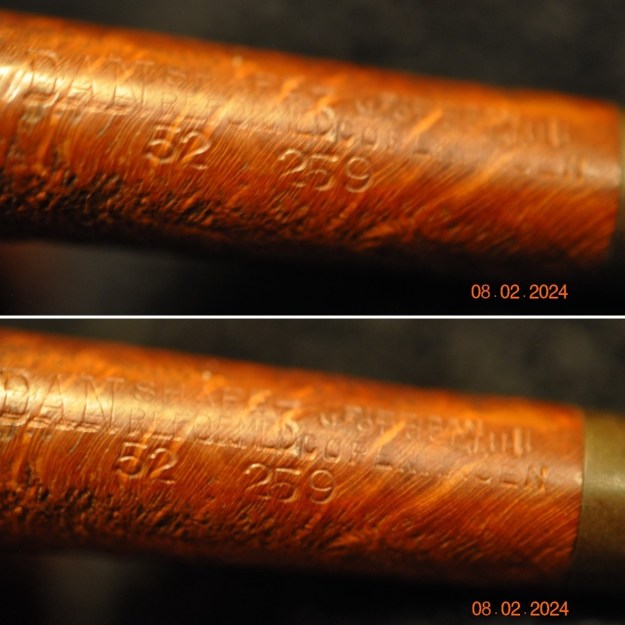
The next pipe on the worktable is an interestingly shaped pipe made by Pipe-Dan. It is a backward canted stack, tall and thin shank with a taper vulcanite stem. The finish is a nice looking sandblast. The bowl sides show birdseye in the blast and the front and back of the bowl show cross grain. It gives the pipe a very unique finish. The rim top of the bowl is also sandblasted. The pipe is stained with a medium brown. It truly is a beautiful finish. The pipe is stamped on the underside of the shank and reads DAN followed by Shape- [over] Reformed [over] 52 259. That is followed by Pibe Dan [over] WONDERFUL [over] Copenhagen. The finish was very dirty and worn looking with a lot of grime and oils ground into the valleys and crevices of the blast. There was a thick cake in the bowl overflowing in lava filling in the rim top. The tapered vulcanite stem is heavily oxidized and had calcification with light tooth chatter on both sides near the button. Jeff took some photos of the pipe before he started his cleanup work.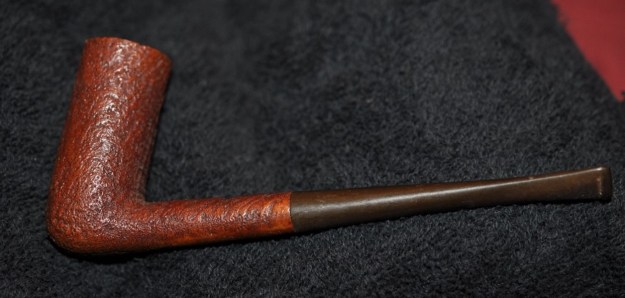
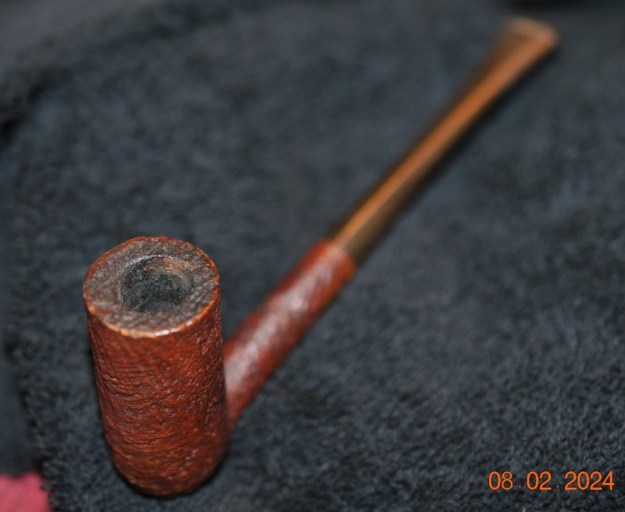 He took photos of the bowl and rim top to show their general condition. You can see the thick cake in the bowl. The cake and lava are so thick that it is not clear what the inner edge of the bowl looks like at this point. The lava also fills in the grooves and crevices in the finish of the rim top making it almost smooth. The vulcanite stem is heavily oxidized and calcified. There are also light tooth marks and chatter on the stem on both sides. The button appears to be in good condition. The photos below show the condition of the stem.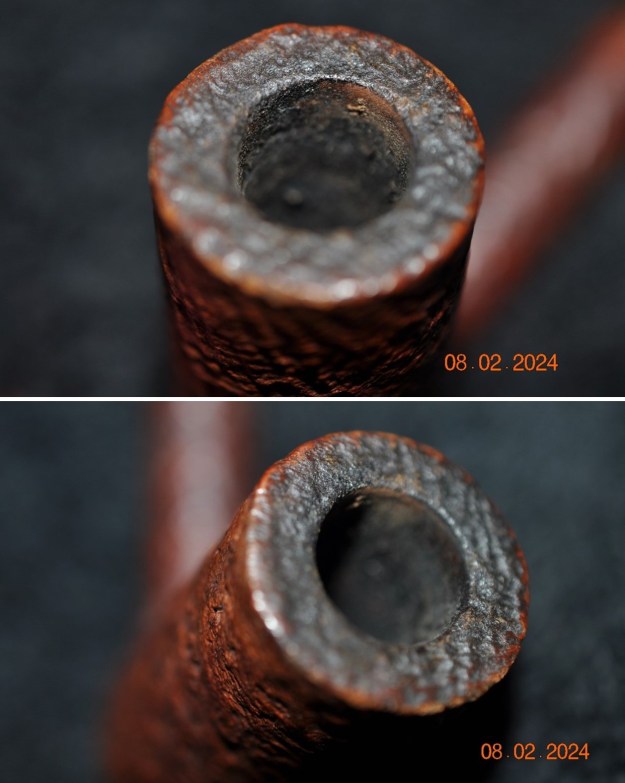
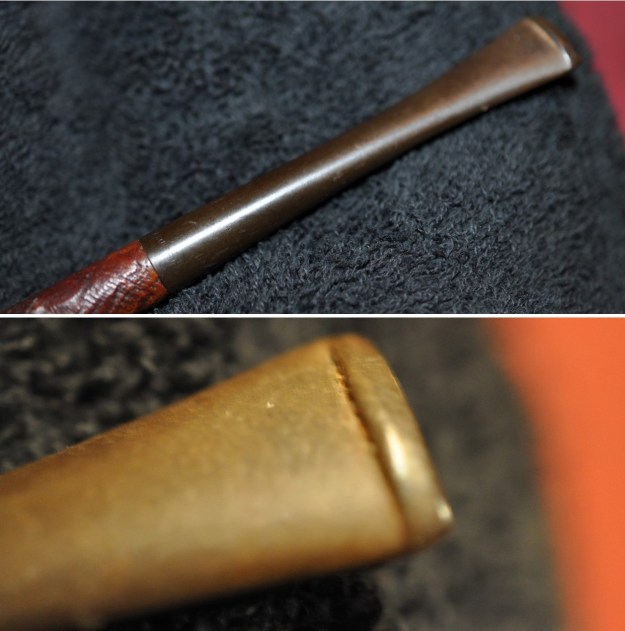
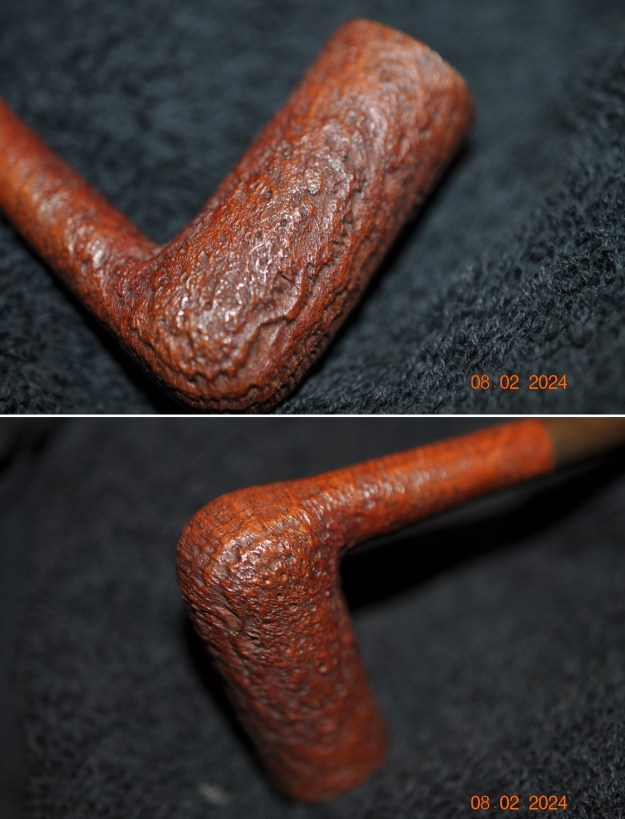
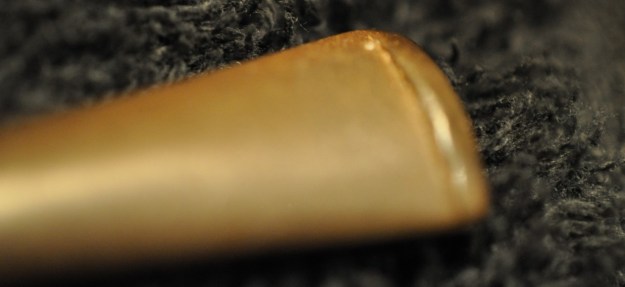 Jeff took some photos of the sides and heel of the bowl to give an idea of the sandblast finish giving the tall bowl a very tactile finish. You can also see the debris in sandblast around the bowl and rim. I cannot wait to see what it looks like once it is cleaned and polished.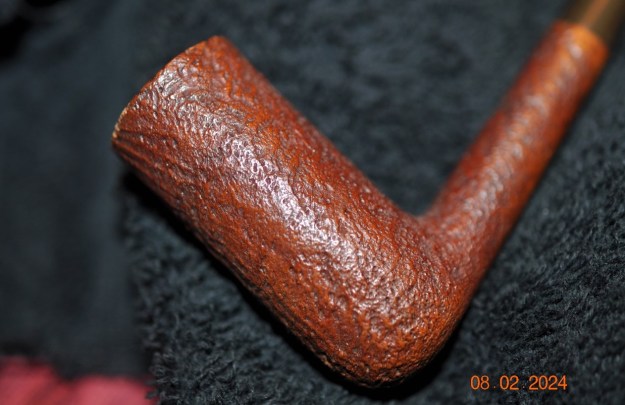
 He took several photos of the stamping on the underside of the shank to capture it for me. It is clear and readable. It runs on the underside of the shank as noted above. It is clear and readable.
 Before I started working on my part of the restoration I decided to do some research on the brand to see what I could learn. I turned first to PipePhil’s site to get a quick overview of the brand (http://www.pipephil.eu/logos/en/logo-p3.html). There found the following information. I am also including a screen capture of the pertinent section from the site and the text in the sidebar.
Brand created in 1943. The shop (Danish name: Pibe-Dan) which closed in 1991 was run by H. Dan Christensen. He sometimes designed pipes but he is merely renowned for having helped young artisans like Tom Eltang, Preben Holm, Jes Phillip Vigen, Hans Hartmann…
Pipe-Dan let the pipe maker stamp his own name on a pipe along with the shop’s name.
The line name “Shape-Reformed” means that a traditional shape had been redesigned.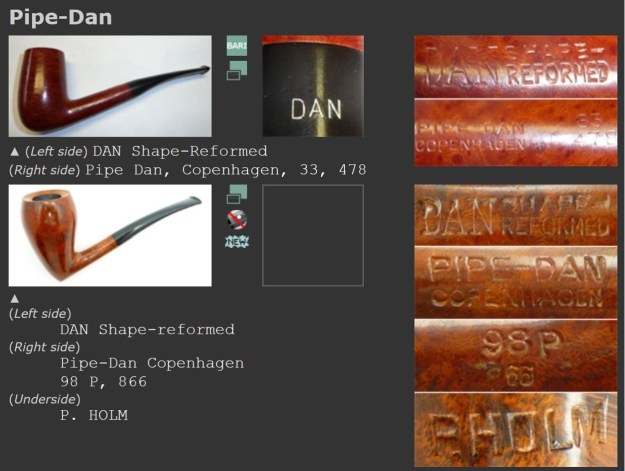 I turned then to Pipedia to get more history and background to the brand and potentially more information on the pipe (https://pipedia.org/wiki/Pibe-Dan). I quote the article in full as well I have included a photo from the site showing the storefront.
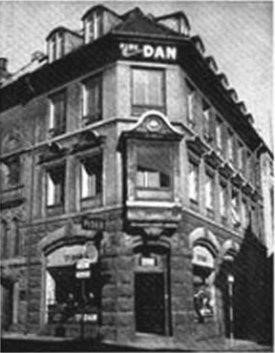 The House of Pibe-Dan was founded in Copenhagen in May, 1943, and was named for H. Dan-Christensen, nicknamed Pibe-Dan. Pibe-Dan (Pipe-Dan) unfortunately closed in 1991, but during the 48 years it was in business it was the ultimate place to find pipes by Danish masters.
Pibe-Dan would often let the pipemaker stamp his own name along with the company name… Pibe-Dan published its first catalog in the late 1950’s and, as was the case with W.O. Larsen, published it in English given their international customer base. While they sold pipes by Stanwell, Kriswill, Brakner and others, the classic pipe sold from Pibe-Dan was the Dan Shape-Reformed Pipe, which had a very tall vertical bowl, and were hand made of Corsican briar. Pibe-Dan claimed that the design was longer, drier, cooler and more even smoking. The Shape-Reformed was available in various lines including the Danois, Standard, Champion, Half Chimney and others.
At the same time, Pibe-Dan had a long history of also including pipes by Danish artisans in their catalog. Sixten Ivarsson’s Peewit, Oliphant, Ukulele and other shapes first appeared in Pibe-Dan’s catalog, and other artists who either began with or sold through Pibe-Dan include, among many others, Hans Hartmann, Gert Holbek, Sven Knudsen, Tom Eltang, Arne Nygaard, P. Holtorp, Poul Hansen, and Ph. Vigen, among others. The legendary Preben Holm sold pipes to the Pibe-Dan shop before his sixteenth birthday in 1963, and soon after was selling twenty to thirty pipes a week to the company, with Pibe-Dan setting the prices. This relationship continued until 1968.
From that information I learned that the line name “Shape-Reformed” means that a traditional shape had been redesigned. This shape was the classic pipe sold by the company. They described the pipe as having a very tall vertical bowl and hand made from Corsica briar. They claimed that the design was longer, drier, cooler and more even smoking. The Shape-Reformed was available in various lines.
Now I had a pretty good idea of how the pipe was stamped and made. With that information I moved forward to work on the pipe itself and see what I had to do with it. When I received it, Jeff had once again done an amazing job cleaning the pipe. The bowl was very small – about ½ inch in diameter so he reamed it with a Savinelli Fitsall Pipe Knife so that we could see the walls of the bowl and assess for damage. He cleaned the internals of the shank and stem with alcohol, pipe cleaners, cotton swabs, shank brushes and alcohol. He scrubbed the exterior with undiluted Murphy’s Oil Soap and a tooth brush. He rinsed the pipe under warm water. He dried it off with a cloth and then let it air dry. The stem was scrubbed with Soft Scrub and soaked in Before & After Deoxidizer. It came out looking very good. The finish on the bowl and the rim top cleaned up nicely. I took pictures of the pipe to show how it looked when I unpacked it. 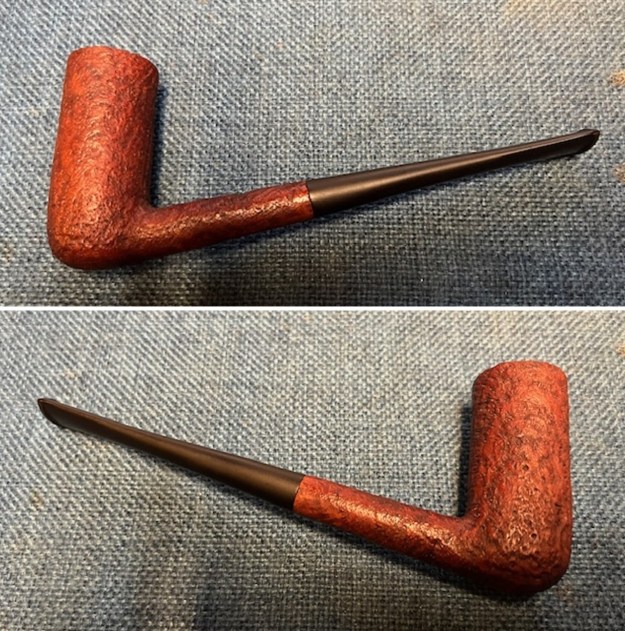
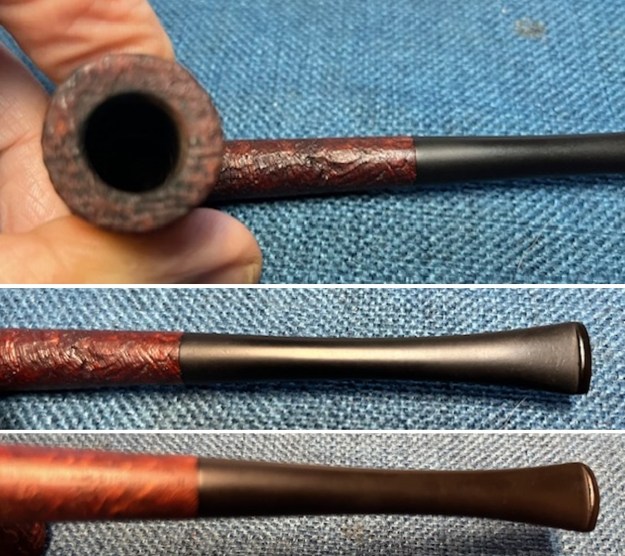
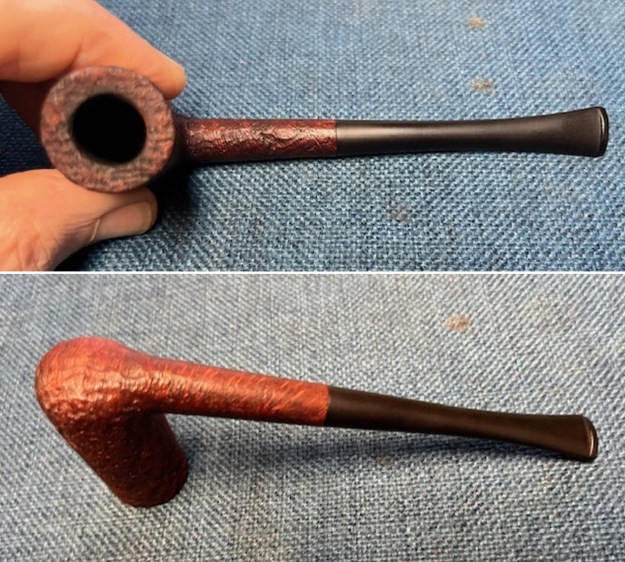 The bowl looked good in light of where it started. The stem looked much better with just a few tooth marks on each side of the stem just ahead of the button. He had done his normal thorough clean up – reaming, scrubbing, soaking and the result was evident in the pipe when I unpacked it. I took photos of the pipe before I started my work on it. The shape and finish on this pipe is very unique.
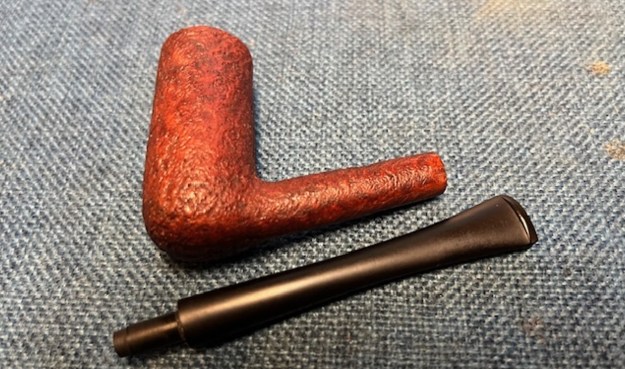
 I removed the stem from the shank and took a photo of the pipe at this point. You can clearly see the condition, size and shape of the pipe.
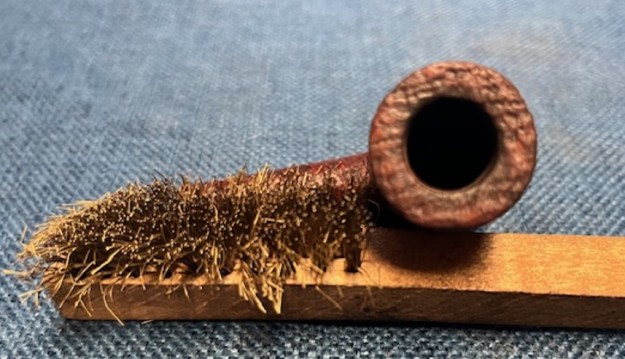
  I started my work on the pipe by working over the rim top sandblast with a brass bristle wire brush to knock off the debris in the grooves of the sandblast. It looks better.
 I worked some Before & After Restoration Balm into the surface of the briar with my fingertips. The product works to clean, enliven and protect the briar. I let the balm sit for about ten minutes and then buffed with a cotton cloth to raise the shine. The photos show the bowl at this point in the restoration process.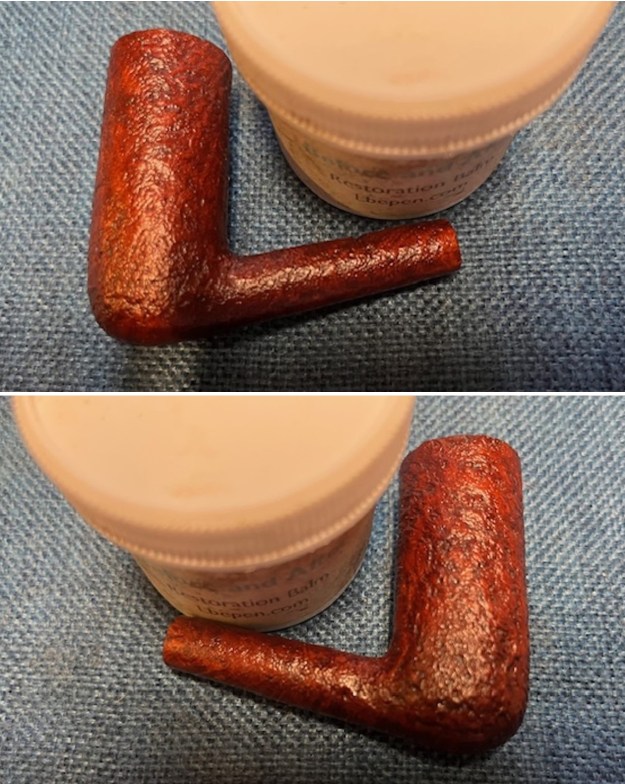
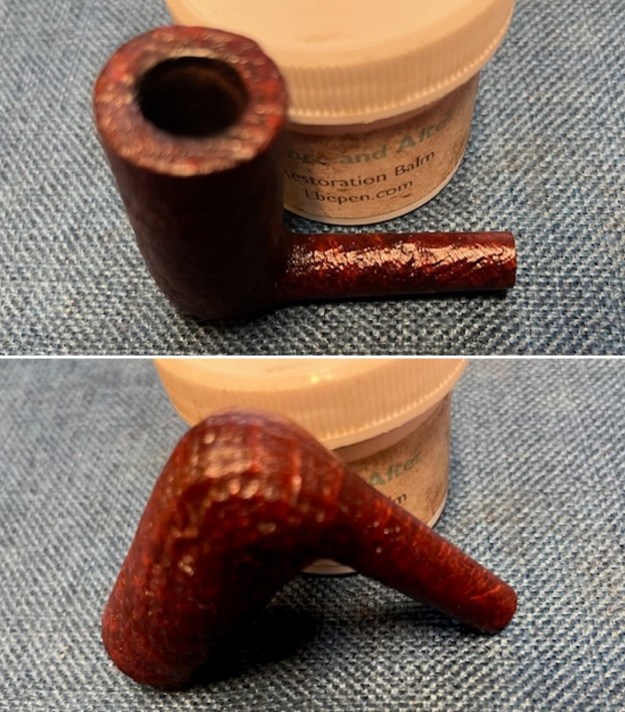
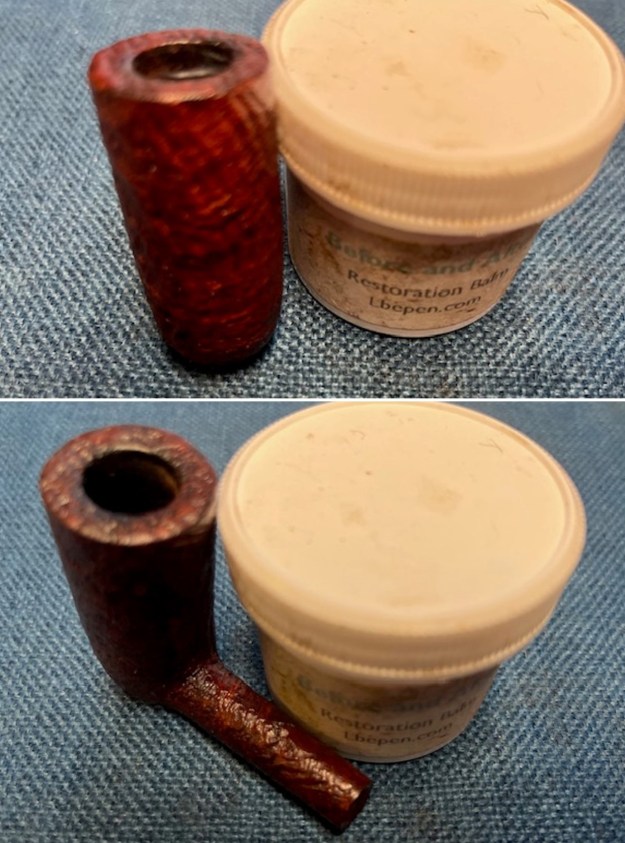 I polished the stem with micromesh sanding pads – dry sanding with 1500-12000 grit sanding pads. I wiped it down after each sanding pad with a cloth containing some Obsidian Oil. I finished polishing it with Before & After Pipe Stem Polish – both Fine and Extra Fine and buffed it off with a cotton cloth. I wiped the stem down with a coat of Obsidian Oil to protect the vulcanite and slow down oxidation.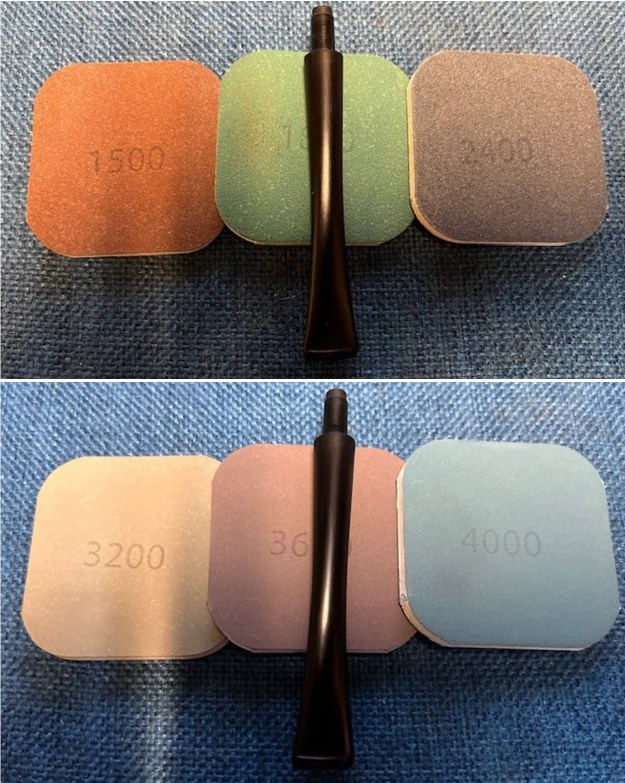
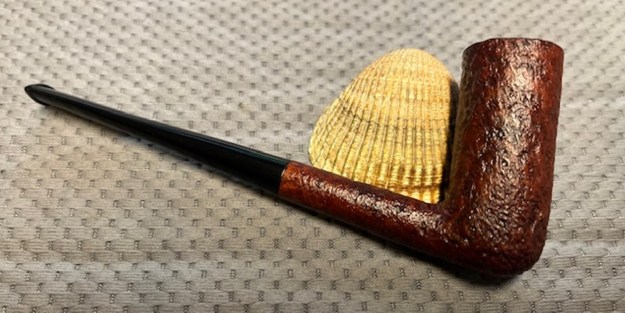
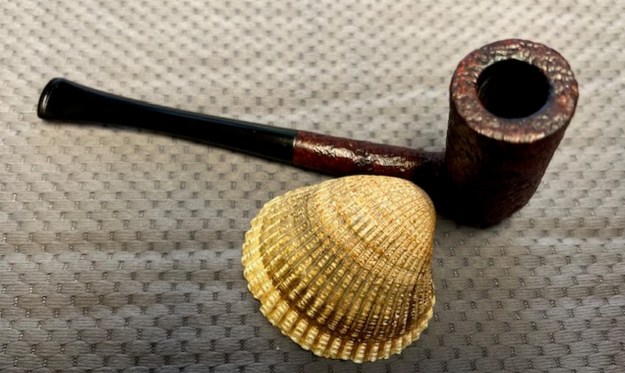
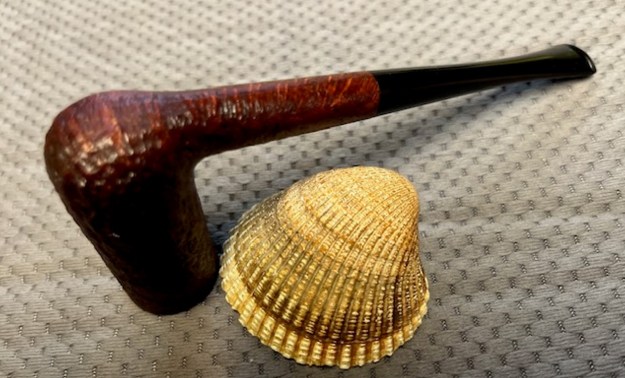
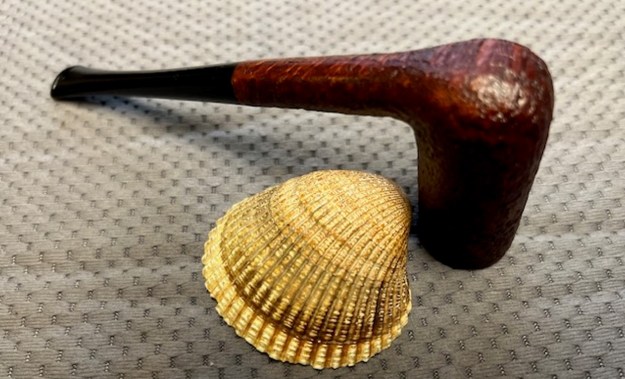
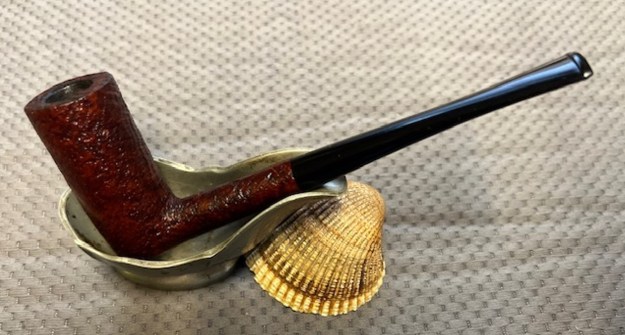
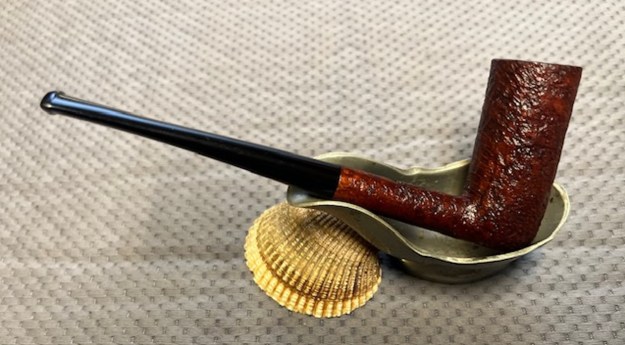
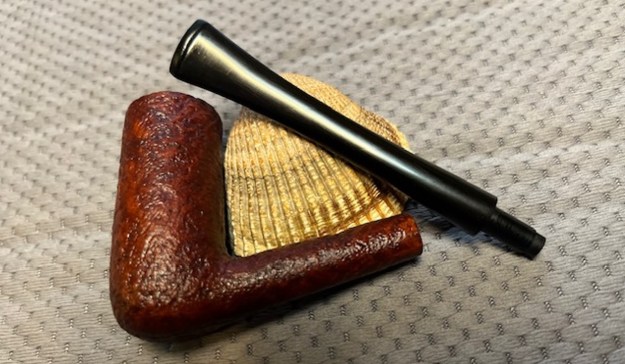
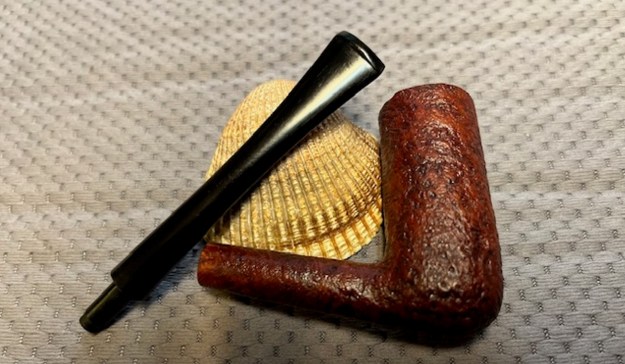
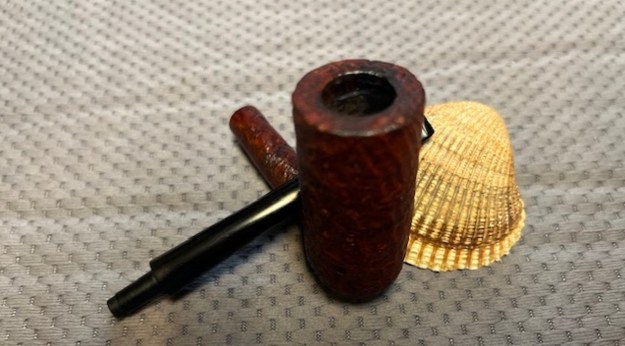
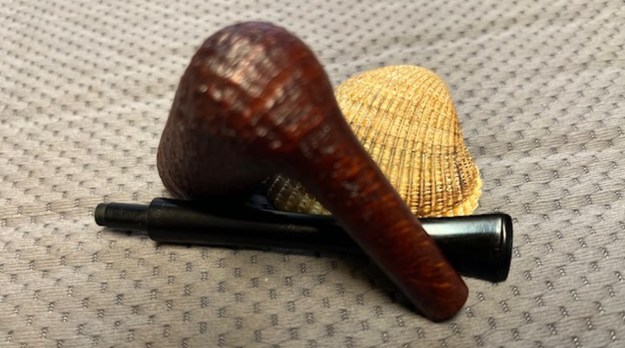
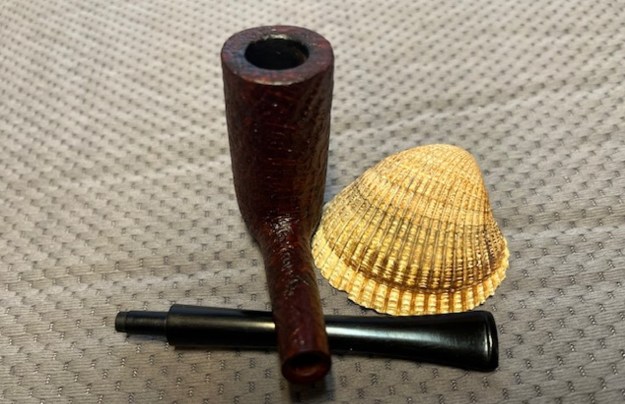
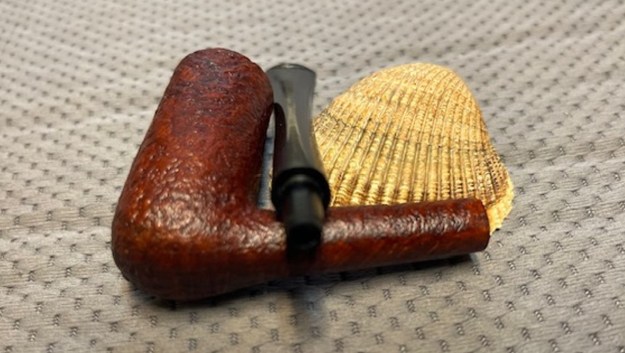
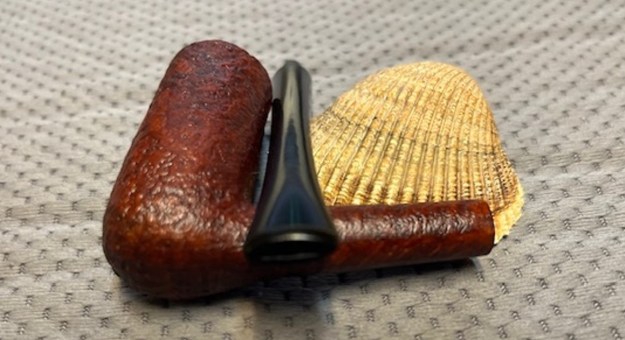
 Putting this unique pipe back together was rewarding. The change in condition and appearance is what I look forward to with every pipe. I put the stem back on the bowl and buffed the Dan Shape-Reformed Wonderful 52 259 Canted Stack lightly with Blue Diamond on the buffing wheel. I carefully avoided the stamping on the shank during the process. I gave the bowl multiple coats of Conservator’s Wax and the stem multiple coats of carnauba wax on the buffing wheel and followed that by buffing it with a clean buffing pad on the buffer. I hand buffed the pipe with a microfiber cloth to deepen the shine. The finished pipe is quite beautiful and is a uniquely shaped Danish made Dan Pibe Shape-Reformed Stack. The finish on the bowl combines various methods and stains to give it a living and tactile nature. It is very well done. Give the finished pipe a look in the photos below. I can only tell you that it is much prettier in person than the photos capture. The dimensions of the pipe are Length: 5 ½ inches, Height: 2 inches, Outside diameter of the bowl: 7/8 of an inch, Chamber diameter: ½ of an inch. The weight of the pipe is 22 grams/.81 ounces. Thanks for walking through the restoration with me as I worked over another beautiful pipe. I will be adding it to the rebornpipes store in the Danish Pipe Makers section soon. If you want to add it to your collection send me an email or a message! Thanks for your time.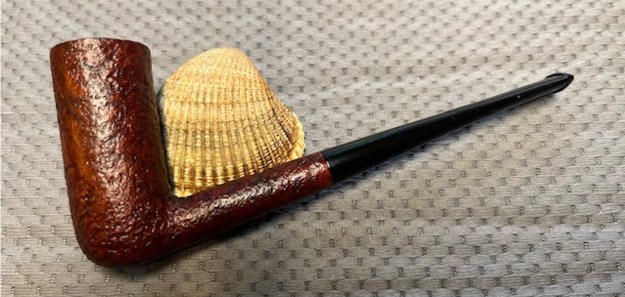


 rebornpipes