
Blog by Steve Laug
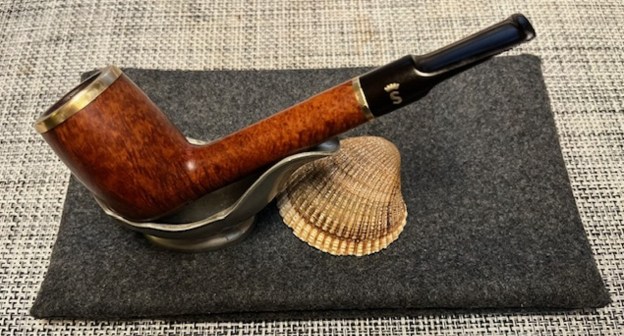
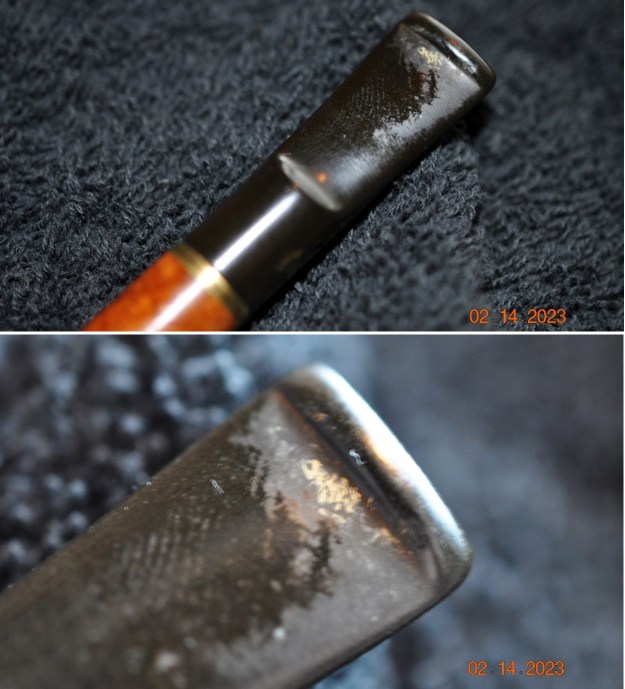
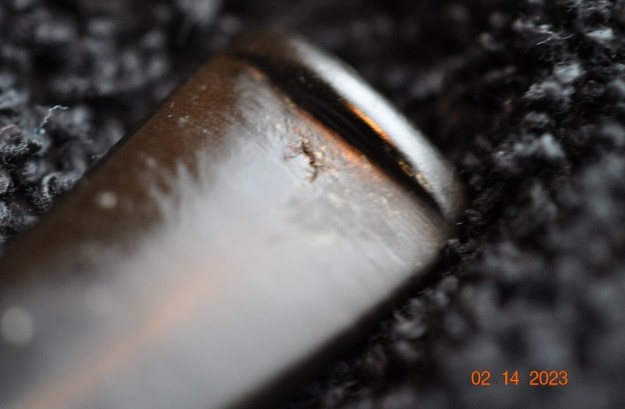
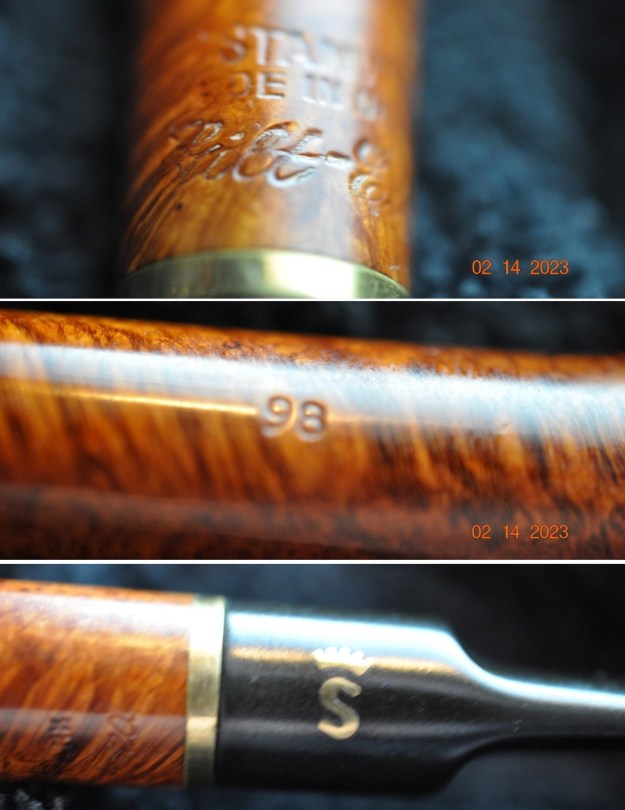
The next pipe I am working on was purchased a year ago on 01/26/2023 as part of a group of pipes from a fellow in Copenhagen, Denmark. This was another dirty pipe but underneath it had some nice grain. It was obviously it had been someone’s favourite smoker. The pipe was stamped on the underside of the shank that reads Stanwell [over] Made in Denmark [over] Gilt Edge. On the right side of the shank it is stamped with a 98 which is the shape for a Lovat. There was a gold band around the shank end and at the rim top and edge that were a very nice touch and what gave it the name Gilt Edge. The dirty finish was not able to hide the beauty in the grime. There were tars and oils ground into the surface of the briar. The bowl had a thick cake that flowed over the top of the rim in a heavy lava coat. The condition of the inner edge was hard to assess under the cake and the lava coat. The stem was a black vulcanite saddle stem with an inlaid brass crown S on the left side. There were light tooth marks and chatter on both sides ahead of the button. The bite mark on the underside was deep and almost through the vulcanite. Jeff took photos of the pipes before he started his clean up work.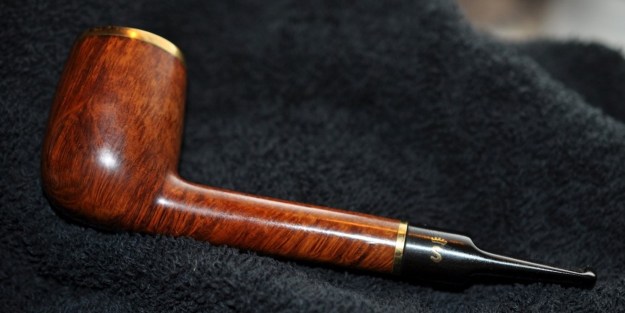
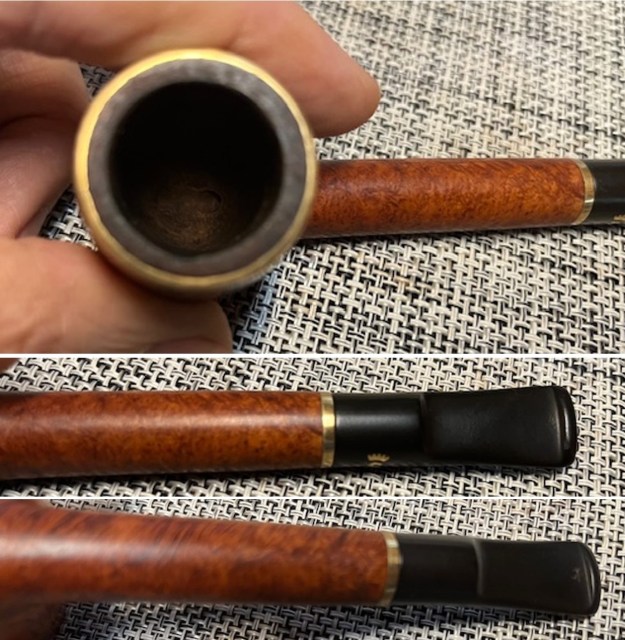
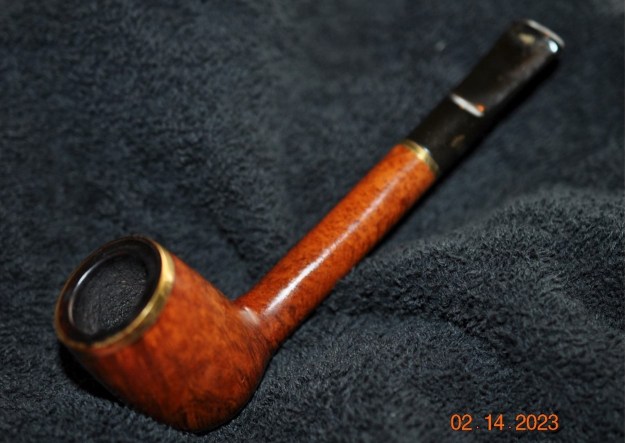 Jeff took photos of the rim and bowl to show the heavy cake and heavy lava coat covering the rim top. The inner edge of the rim is caked and hard to assess in terms of its condition. It really was a dirty pipe but still a beauty. He also took photos of the stem surfaces to show its overall condition when it arrived. You can see the small deep tooth mark on the underside.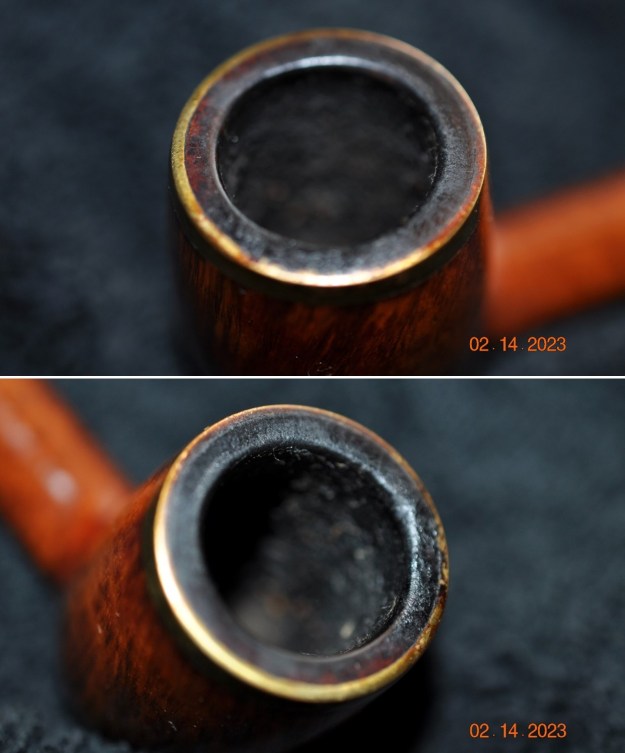
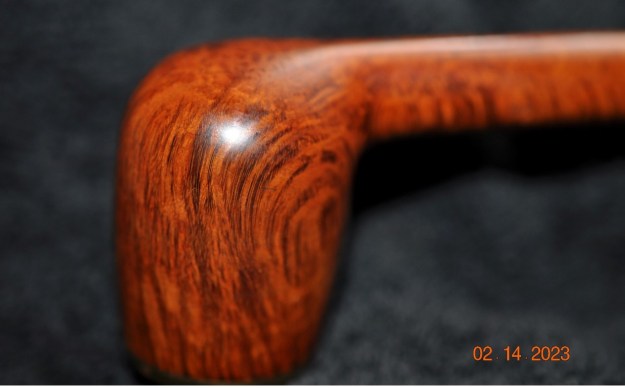
 The photos of the sides and heel of the bowls show some beautiful grain around the bowl and shank sides. The brown stain on the briar adds depth to the finish on the pipe and makes the grain really stand out. The gold rim cap and shank band are a beautiful addition. It shows a lot of promise.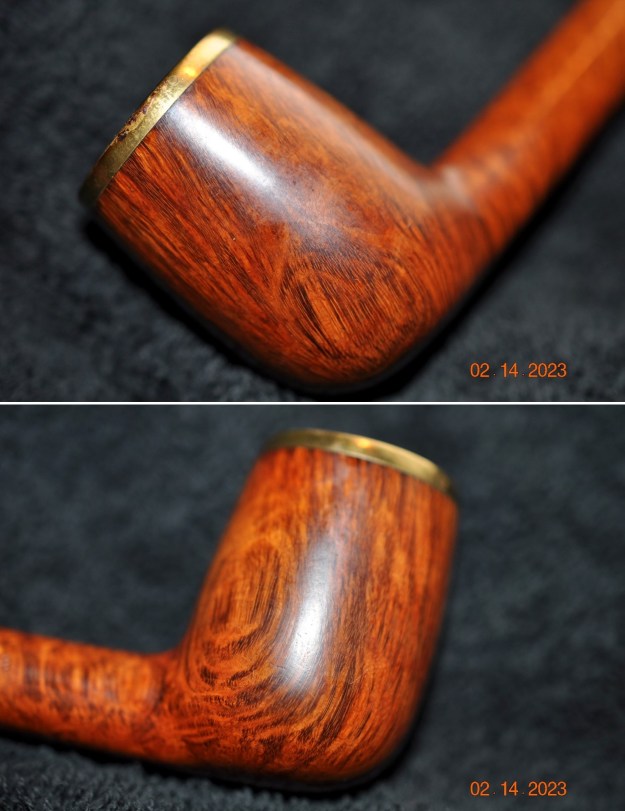
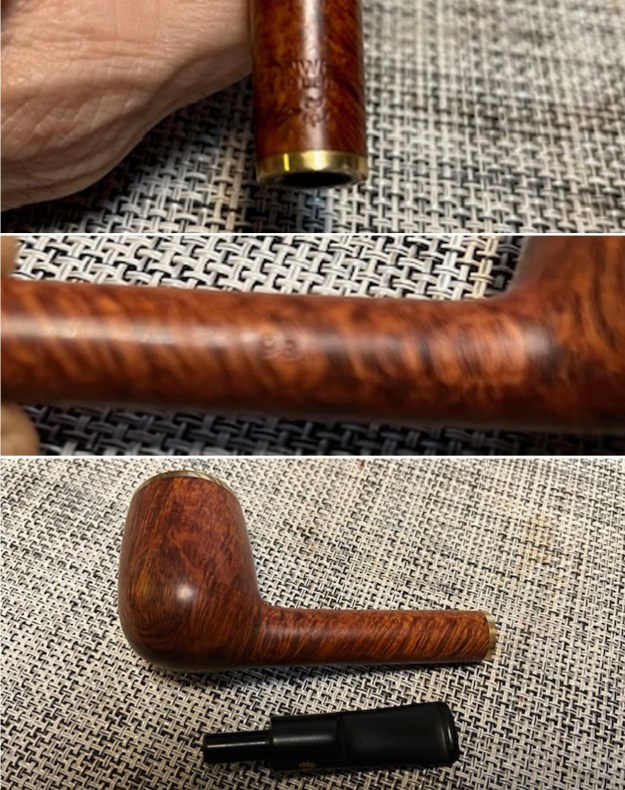
 He also took photos of the stamping on the shank sides. It is faint but reads as noted above. He also took a photo of the Crown S stamp on the left side of the stem.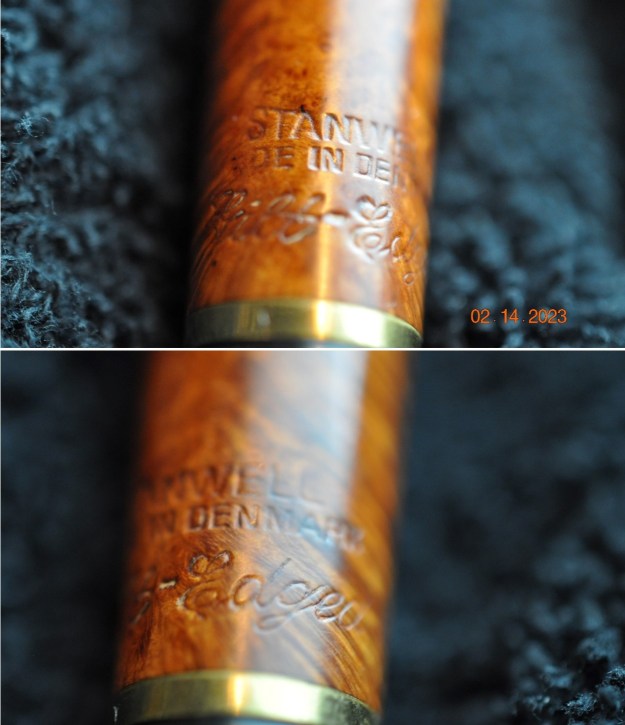
 From what I can find on the web the Rondo line was an older line of Stanwell pipes that is similar to the Brass Band line but has yellow acrylic between the bands. It is a nice looking pipe but one about which I could find little information.
I turned to the article on Pipedia that gave background information the shape numbers and the designers of the shapes (https://pipedia.org/wiki/Stanwell_Shape_Numbers_and_Designers). From what I can see there the shape number 98 was made in two versions. The first is a Pot shaped pipe with a saddle stem. The second shape is a Lovat. The pipe on the table is clearly the second shape listed – a Lovat.
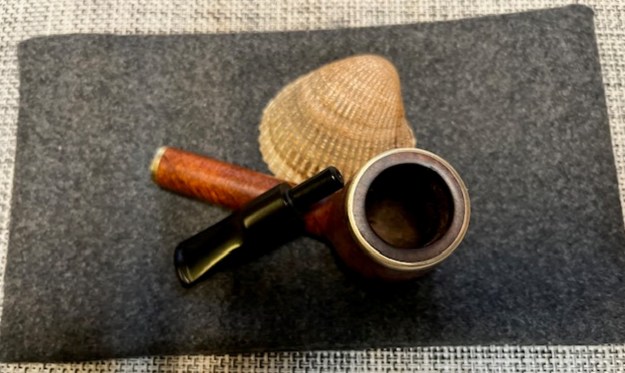
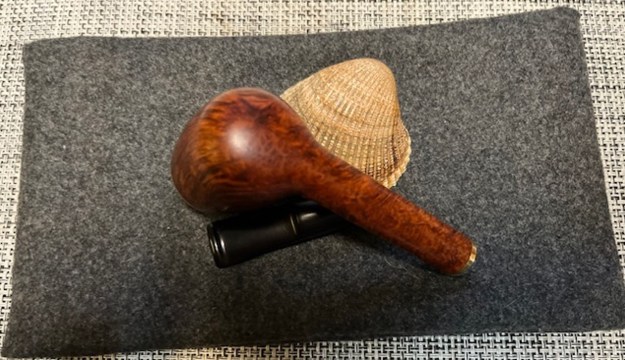
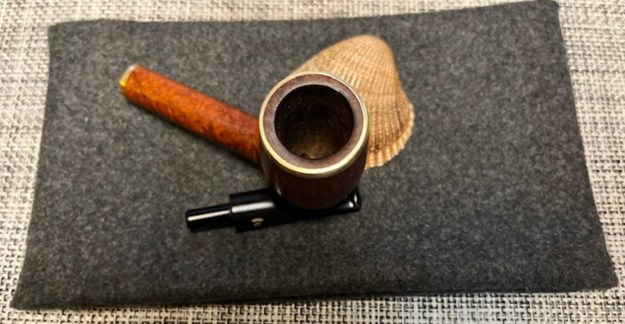
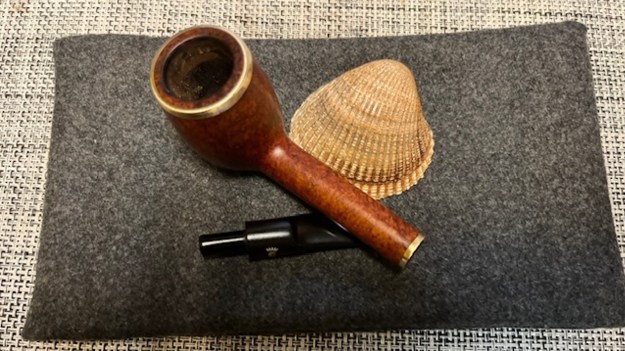
Jeff cleaned up the pipe for me. He reamed the bowl with a PipNet pipe reamer and cleaned it up with a Savinelli Fitsall Pipe Knife. He scrubbed the exterior with Murphy’s Oil Soap and a tooth brush to clean off the grime off the finish and the overflow of lava on the rim top. The cleaning had removed the grime on the rim top. He cleaned up the internals of the shank, mortise and stem with pipe cleaners, cotton swabs and alcohol to remove all of the oils and tars in the pipe. He soaked the stem in Briarvilles Pipe Stem Deoxidizer and was able to remove much of the oxidation, calcification. When it arrived here in Vancouver it was a clean pipe and I knew what I had to work with. I took photos of it before I started my part of the restoration.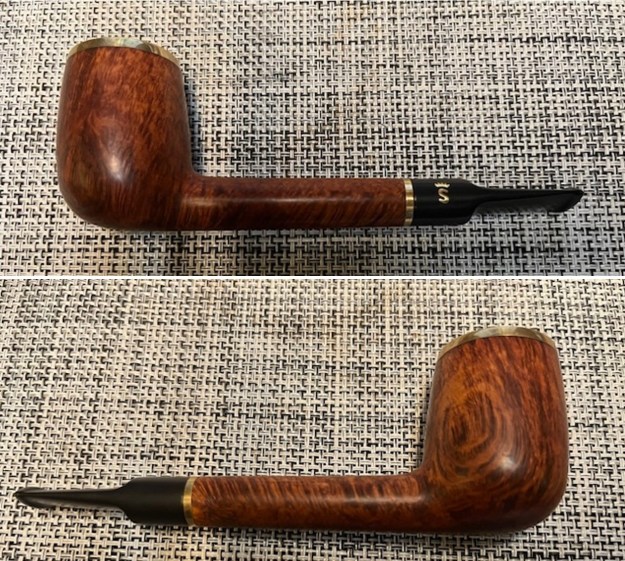
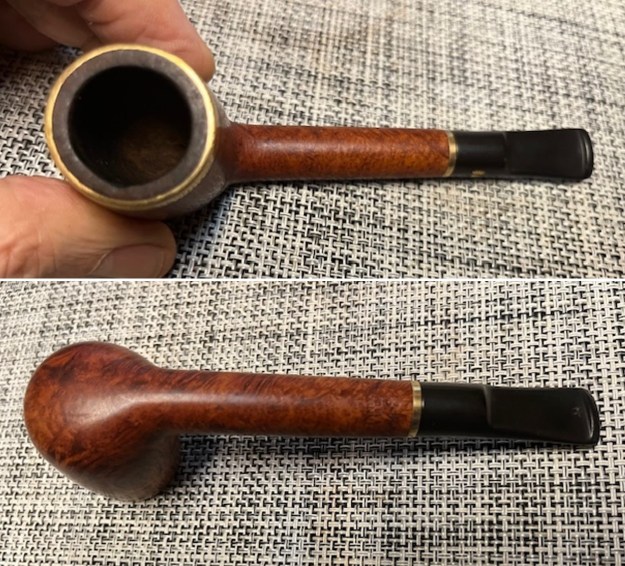 I took a photo of the rim top and the stem to show their condition once it arrived in Canada. Jeff was able to clean up the cake and the lava overflow that was shown in the rim and bowl photos above. The rim top and the inner edge of the bowl showed some darkening on the top and some damage on the left inner edge with a burn mark. The stem looked better and the tooth marks and chatter on both sides near the button. It is hard to see the pinhole in the stem surface on the underside but it is present and small.
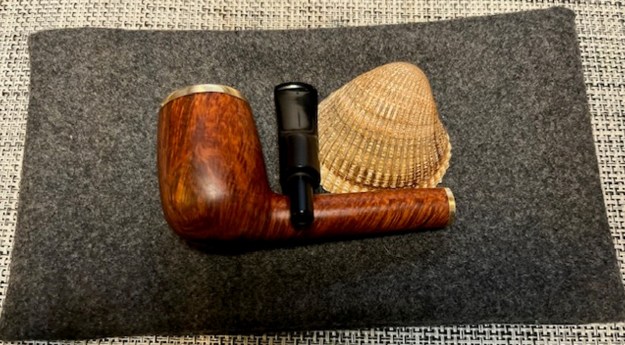
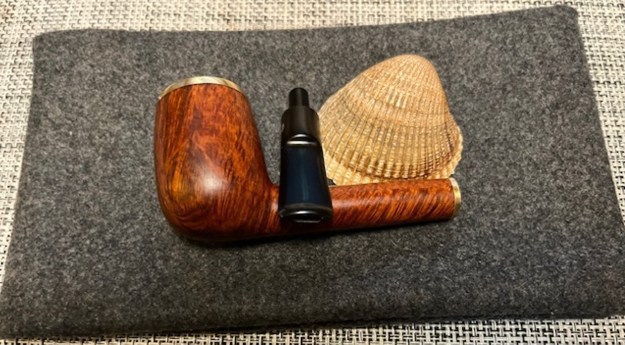
 The stamping was hard to capture it with the camera but it is readable on the underside of the shank near the shank/stem junction. The stamping on the right side of the shank shows the shape number 98 mid shank. I removed the stem from the shank and took a photo to give a sense of the proportions of this Lovat.
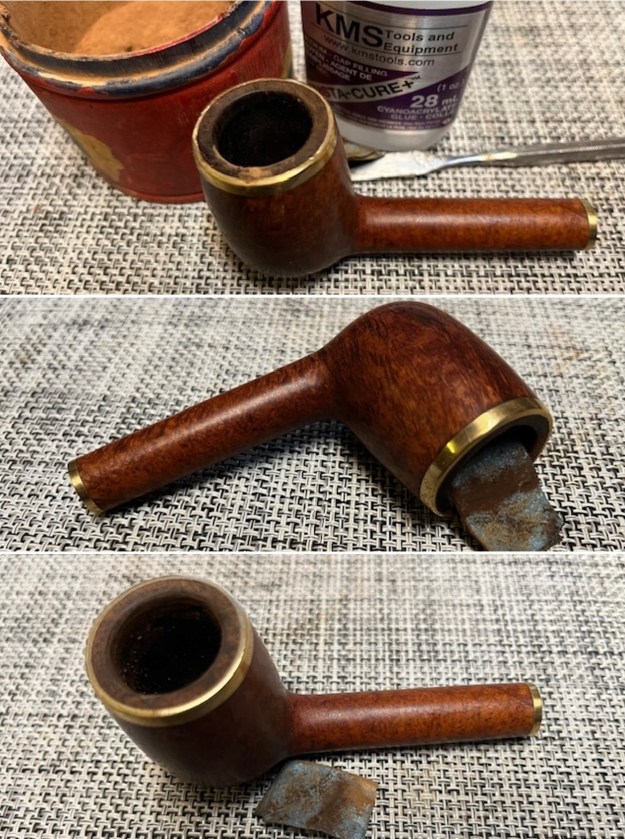
 I started my work on the pipe by cleaning up the darkening around the inner edge of the rim and the top. I started by addressing the chip out of the top inner edge and top of the bowl. I worked on the inner edge with a folded piece of 220 grit sandpaper and smoothed out the rim top at the same time. It began to look very good at this point. The grain and colour began to shine through.
 I polished the briar with micromesh because it was in such good condition. I polished it with 1500-12000 grit micromesh sanding pads. I wiped the bowl down after each sanding pad with a damp cloth.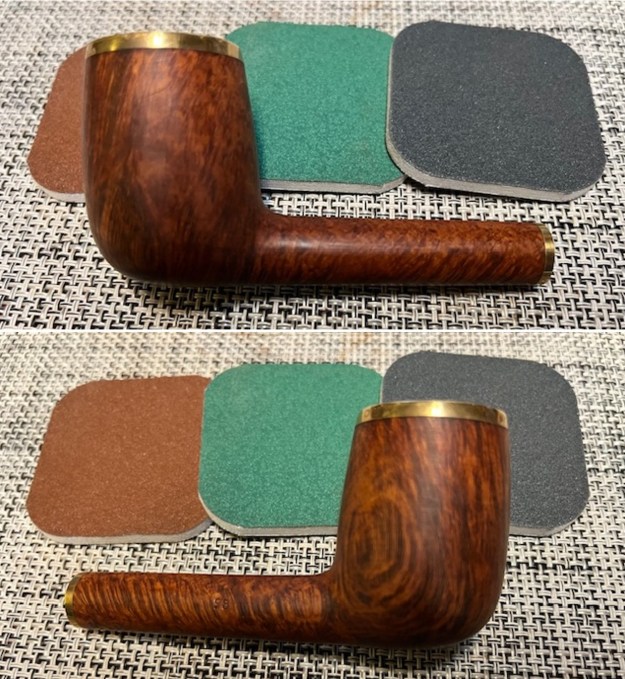
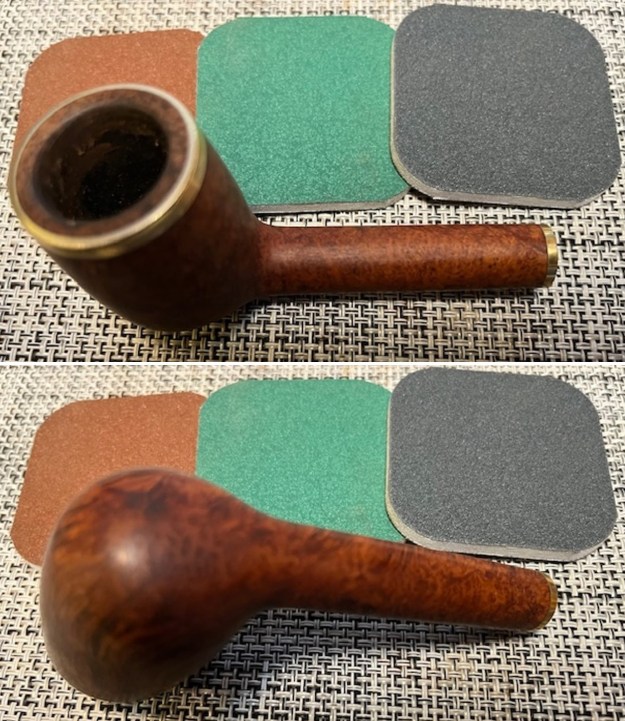
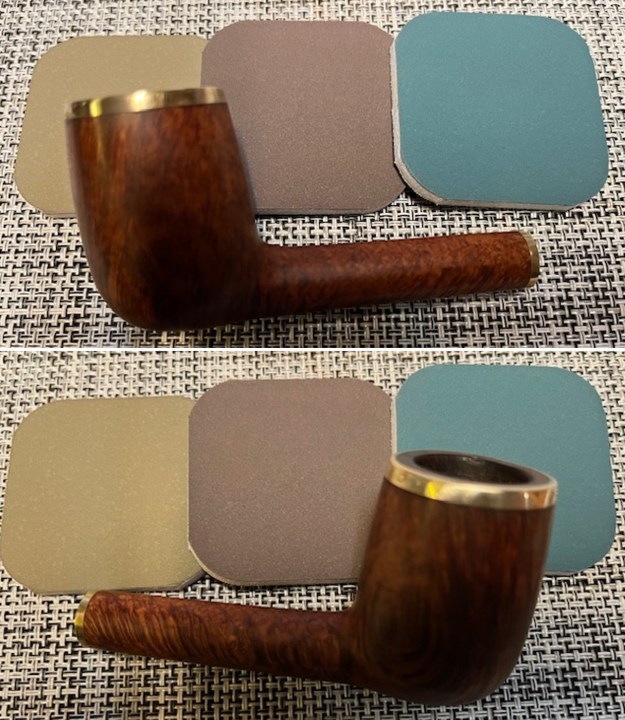
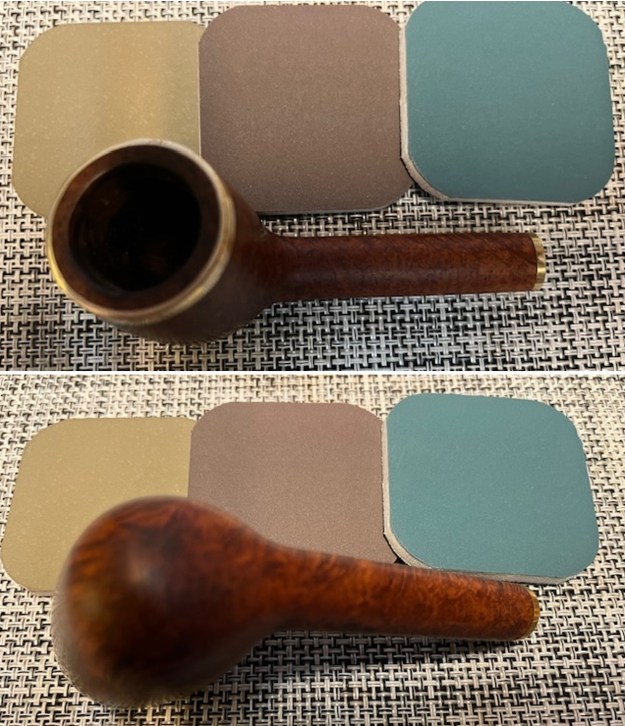
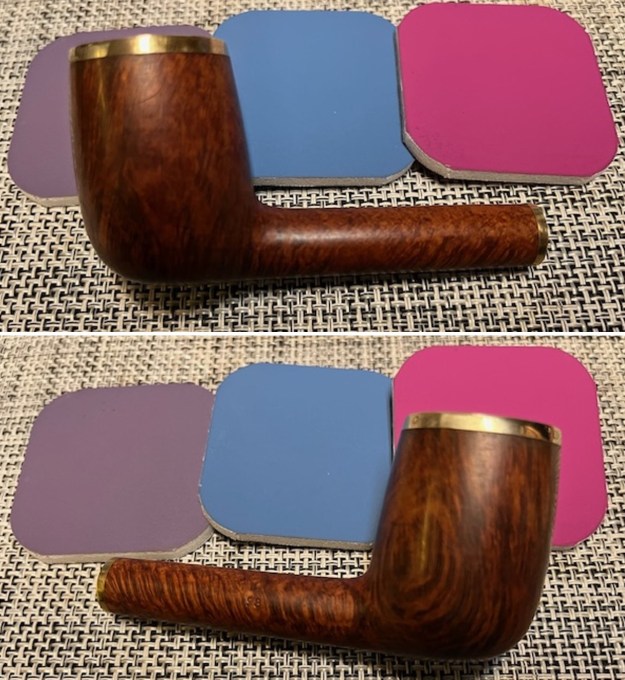
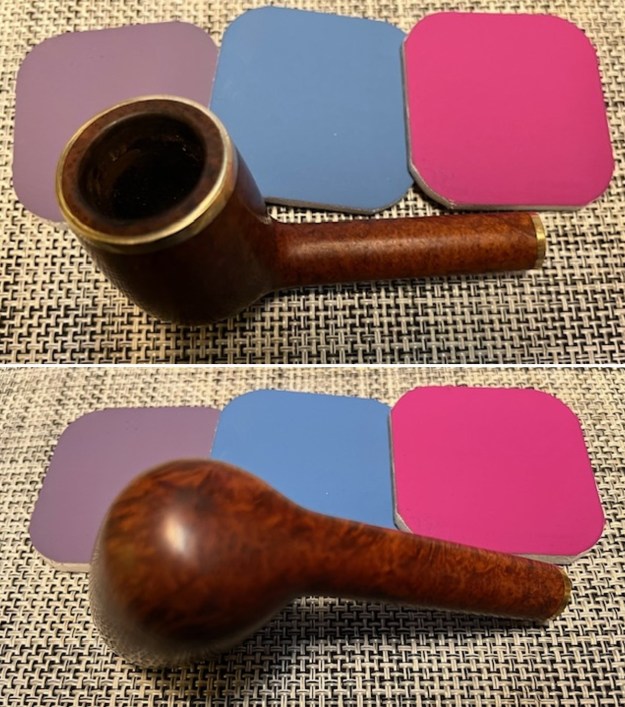 I rubbed the briar down with Before & After Restoration Balm. I worked it into the briar with my fingertips. The product works to clean, enliven and preserve the briar. I let it sit for 10 minutes while I worked on the stem. After the time passed I buffed it with a cotton cloth to deepen the shine. The briar really comes alive with the balm.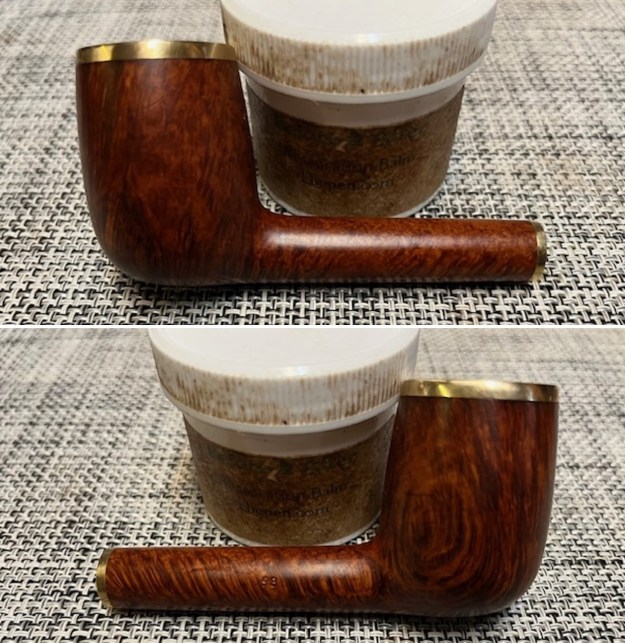
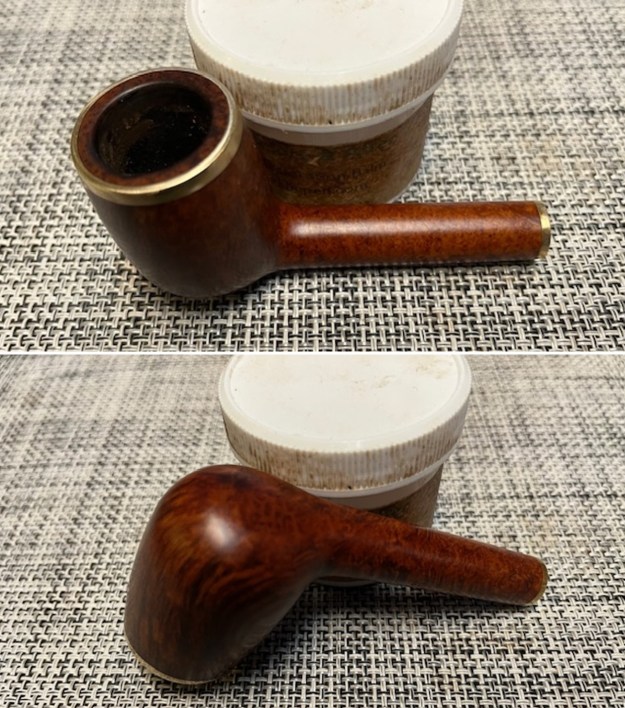
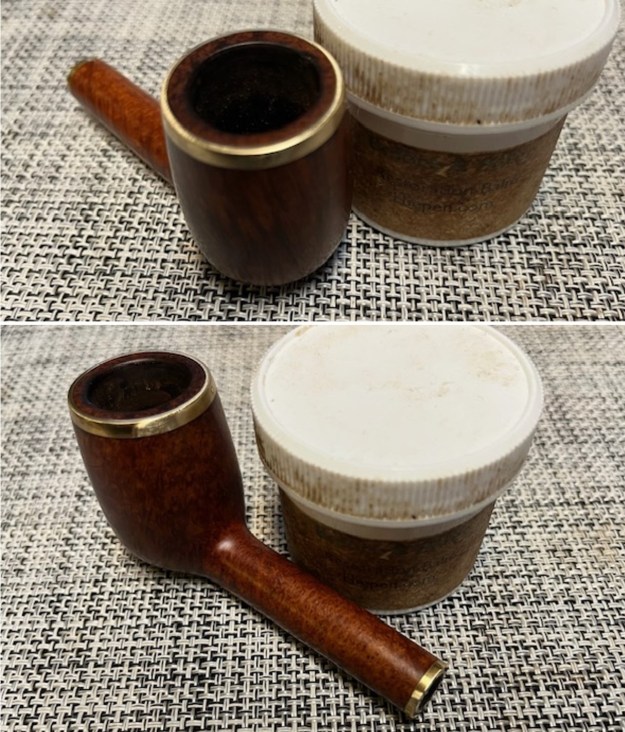 I set the bowl aside and turned my attention to the stem. I started by addressing the deep tooth marks on the surface of the stem on both sides. The marks on the underside were significantly deeper and had created a pin hole in the surface. I used a rubberized black super glue to fill in the deep marks and repair the pin hole. I set the stem aside to let the repairs cure. Once it cured I used a small file to flatten the repair. I used a folded piece of 220 grit sandpaper to smooth out the repairs.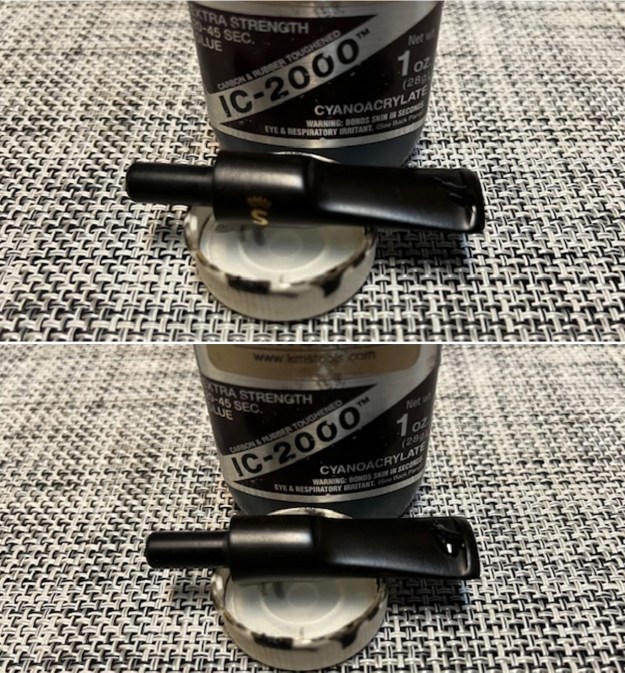
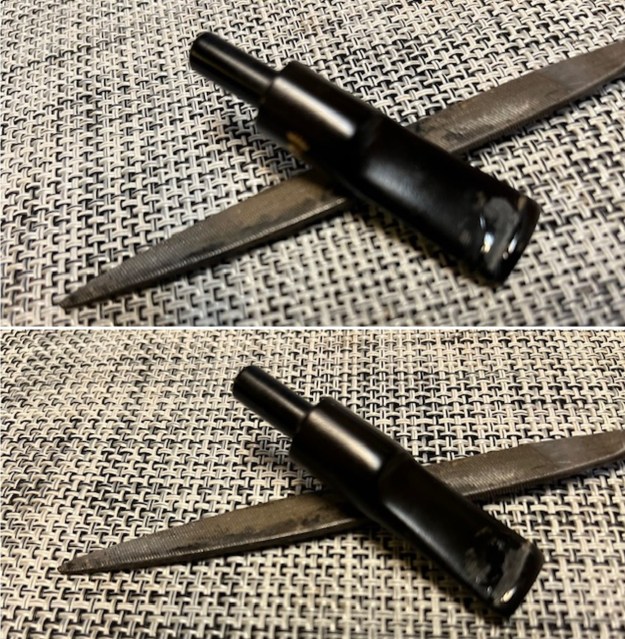
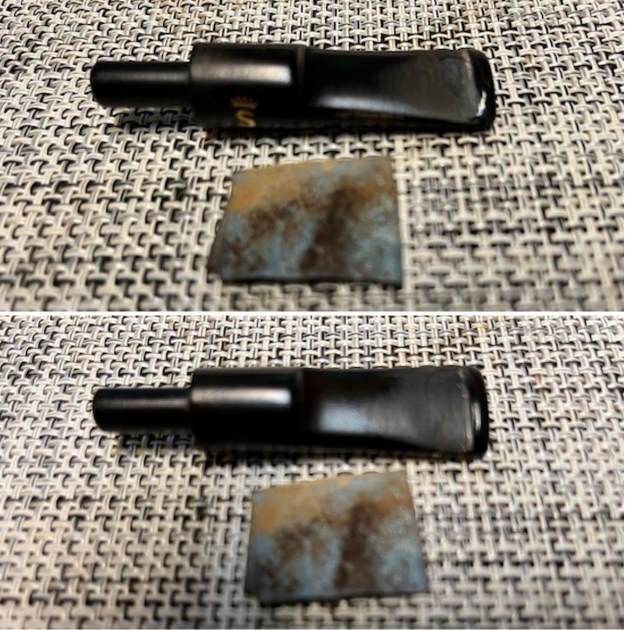 I started working on polishing the stem with my 320-3500 grit sanding pads. I was able to remove the tooth marks and chatter on both sides ahead of the button. It looked much better at this point in the process.
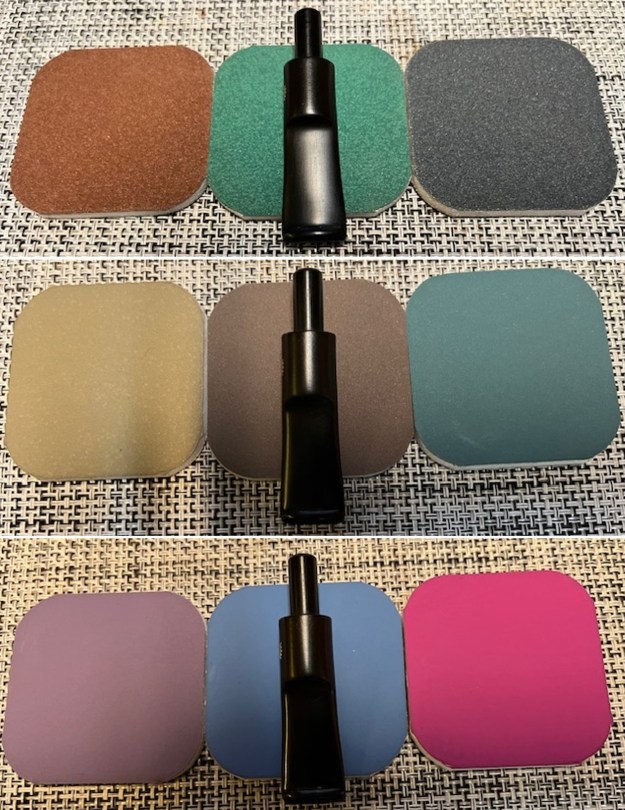
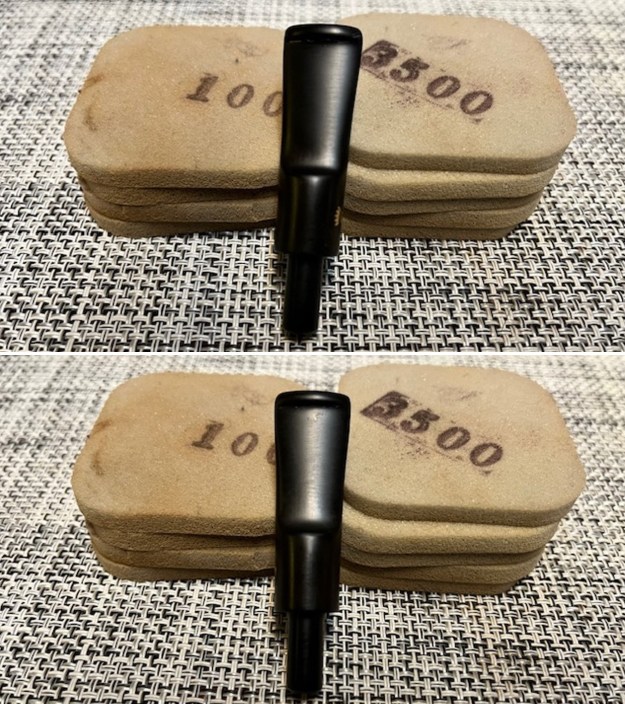 I polished the stem with micromesh sanding pads – dry sanding with 1500-12000 grit pads. I wiped the stem down after each sanding pad with Obsidian Oil.
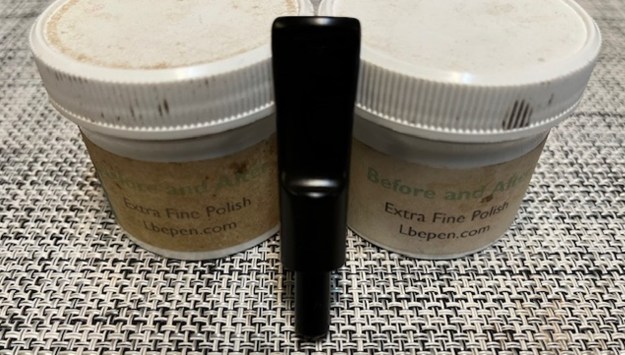
 I polished it with Before & After Pipe Stem Polish – both Fine and Extra Fine. I gave it a coat of Obsidian Pipe Stem Oil. It works to protect the stem from oxidizing. I set it aside to dry.
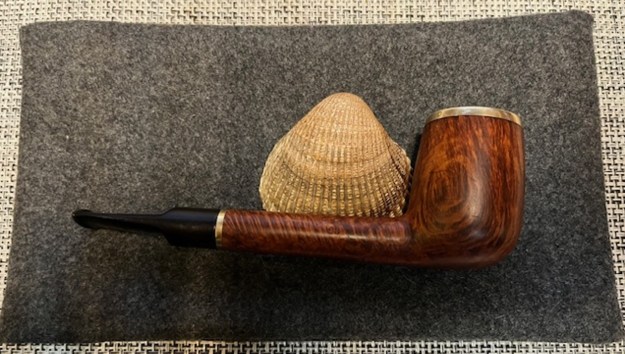
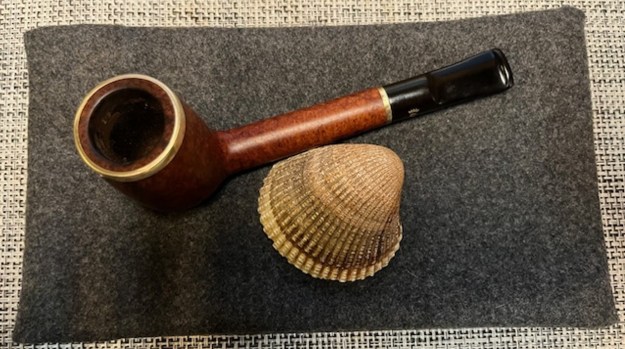
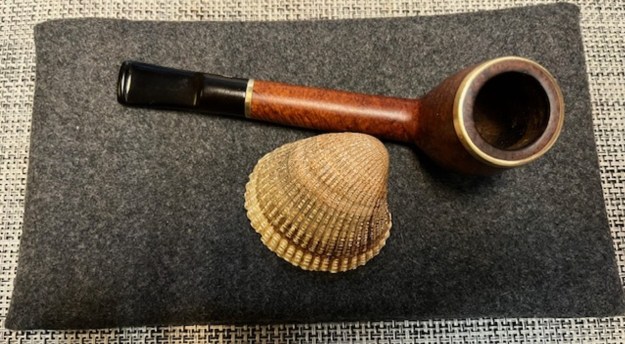
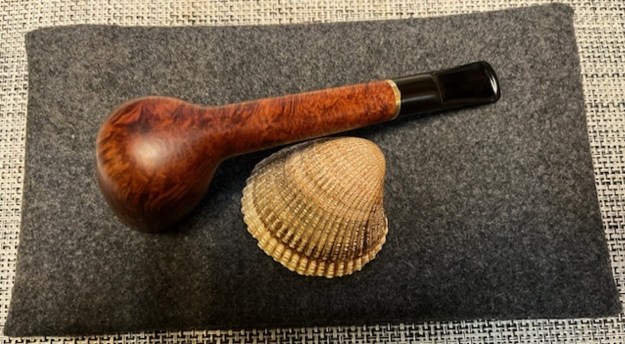
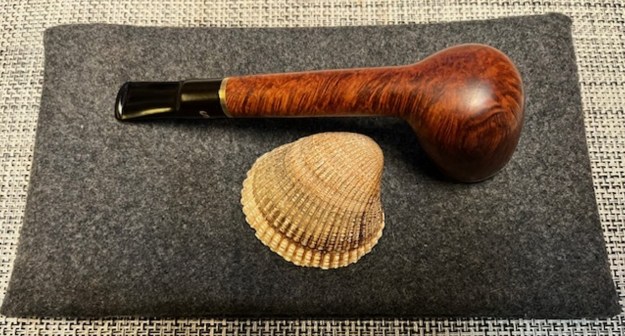
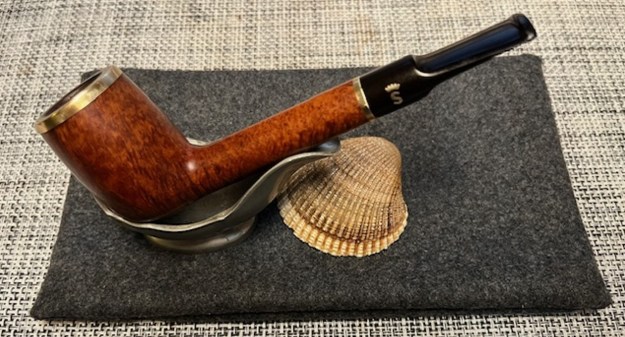
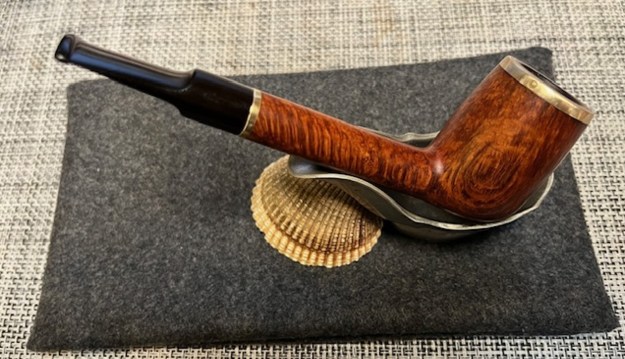
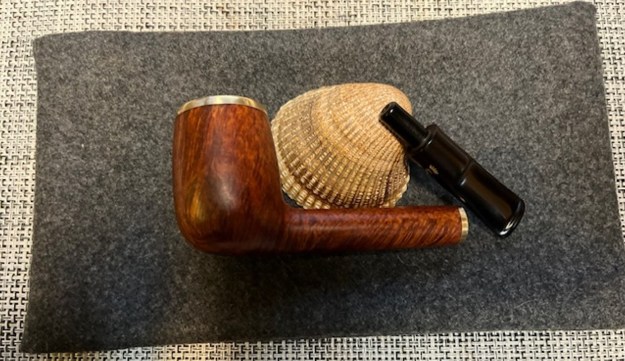
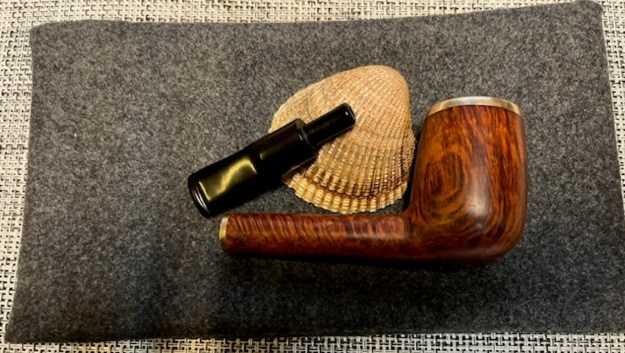
 This beautifully grained Danish Made Stanwell Gilt Edge 98 Lovat with a saddle vulcanite stem turned out very nice. The mix of brown stains highlights the great grain around the bowl sides and bottom. The brass banded top edge and rim top and brass band give the pipe a touch of class. The finish on the pipe is in excellent condition. I put the stem back on the bowl and carefully buffed the pipe with Blue Diamond on the buffing wheel. I gave the bowl and stem multiple coats of carnauba wax on the buffing wheel and followed that by buffing the entire pipe with a clean buffing pad. I hand buffed the pipe with a microfiber cloth to deepen the shine. The finished Stanwell Gilt Edge Lovat is very nice and feels great in the hand. Give the finished pipe a look in the photos below. It is a nice pipe whose dimensions are Length: 5 inches, Height: 1 ¾ inches, Outside diameter of the bowl: 1 1/8 inches, Chamber diameter: ¾ of an inch. The weight of the pipe is 37 grams/1.31 ounces. Thanks for walking through the restoration with me as I worked over another beautiful pipe. This one will be going on the rebornpipes store, in the Danish Pipe Makers Section shortly. If you are interested in adding it to your collection let me know by message or by email to slaug@uniserve.com. Thanks for your time.
As always, I encourage your questions and comments as you read the blog. Thanks to each of you who are reading this blog. Remember we are not pipe owners; we are pipe men and women who hold our pipes in trust until they pass on into the trust of those who follow us. 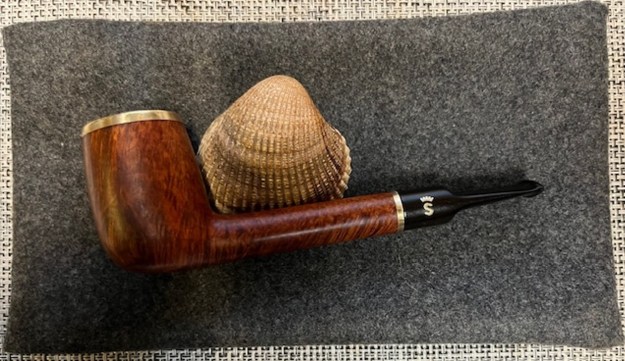
 rebornpipes