Blog by Steve Laug
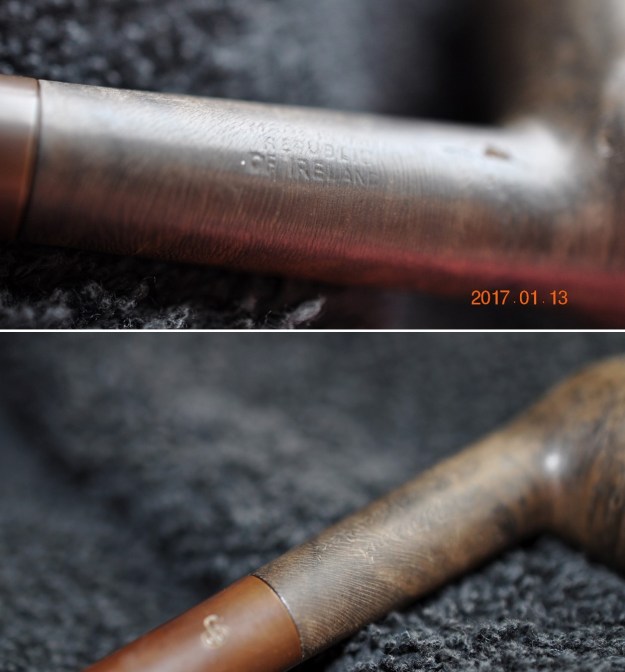
It is a cold and overcast day here in Vancouver and I decided to work on a pipe that has been sitting here for many years. It was purchased on 12/17/2016 off an eBay auction from Somerset, United Kingdom. This is a canted bowl Dublin. The smooth finish on this pipe, around the bowl and shank has a mix of flame and straight grain highlighted by a brown and a green wash over the briar. The stamping is faint but readable. It is stamped on the left side of the shank and reads Peterson’s [over] “Churchwarden”. On the right side of the shank it is stamped Made in the Republic of Ireland (three lines). The pipe was a well used pipe when Jeff received it. There was dust and grime ground into the finish. The mixture of brown stains and green highlights some beautiful grain under the dirt. The bowl was moderately caked and there was an overflow of lava on the smooth rim top. The inner edge had some damage. The stem is vulcanite and was heavily oxidized and had light tooth marks, chatter on both sides ahead of the button. There is a stamped “P” logo on the left side of the taper stem. Jeff took photos of the pipe before he started his clean up work.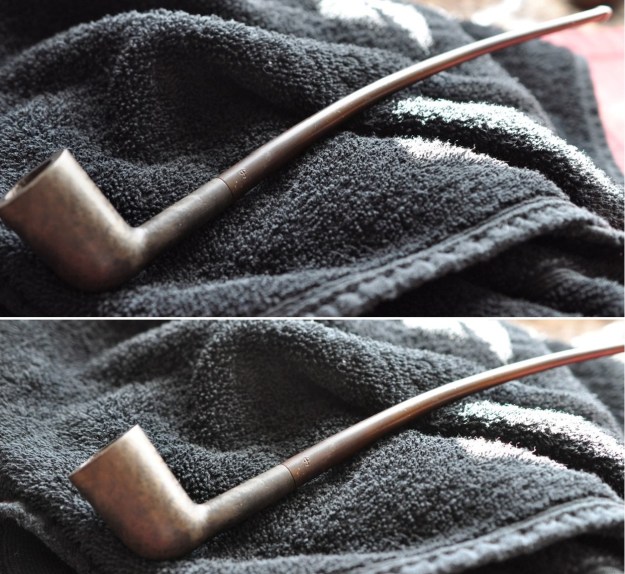
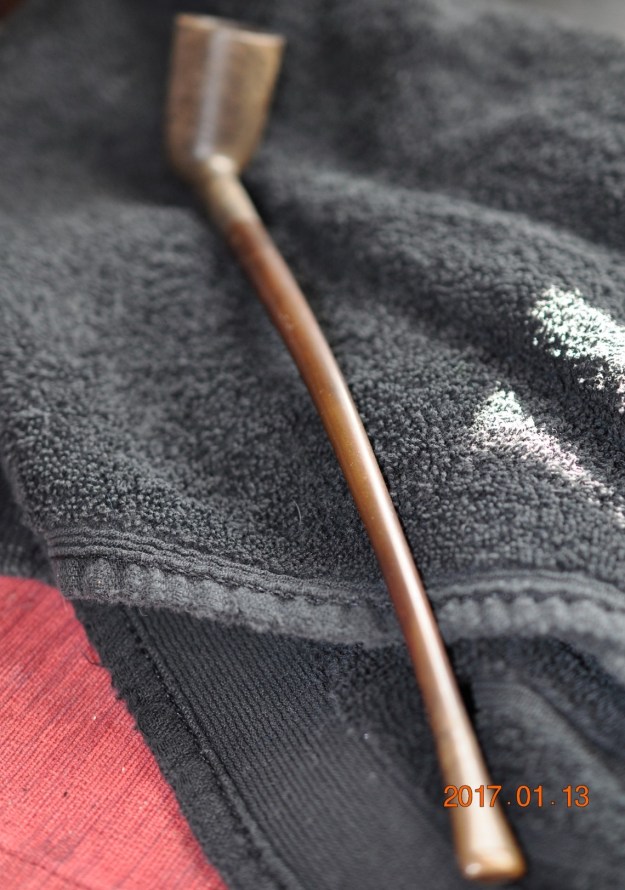 He took photos of the bowl and rim top to show what they looked like before his clean up. You can see the light lava coat on the rim top and the cake in the bowl. The inner edge shows some damage around the edge. Some spots it is nicked from what appears to be a reamer and others seem to be burn damage. He also took some of the stem to show the condition of both sides.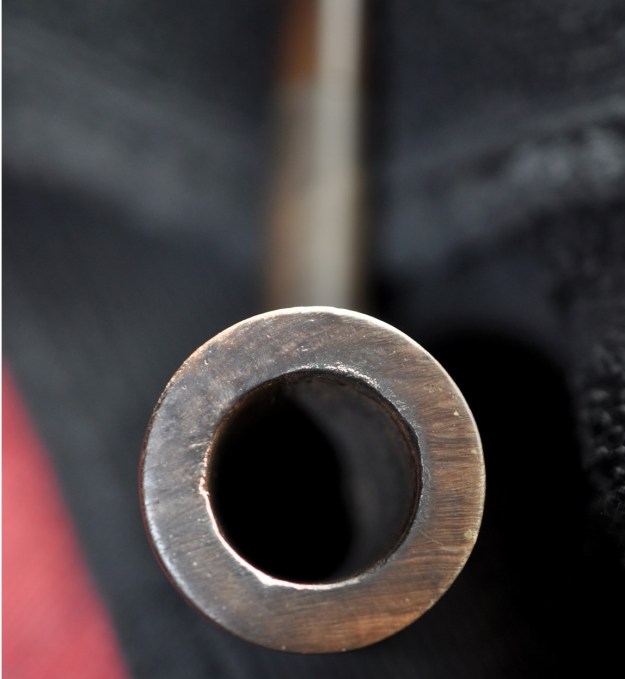
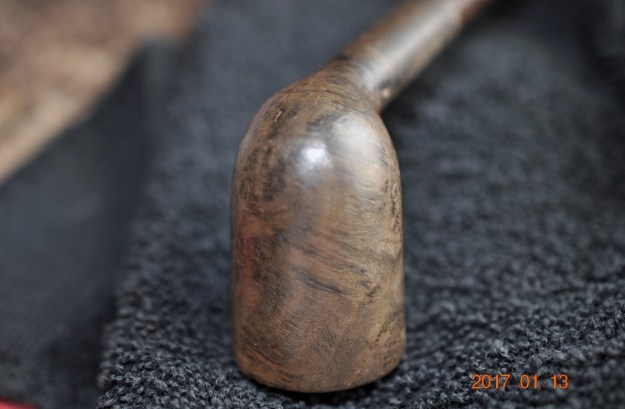
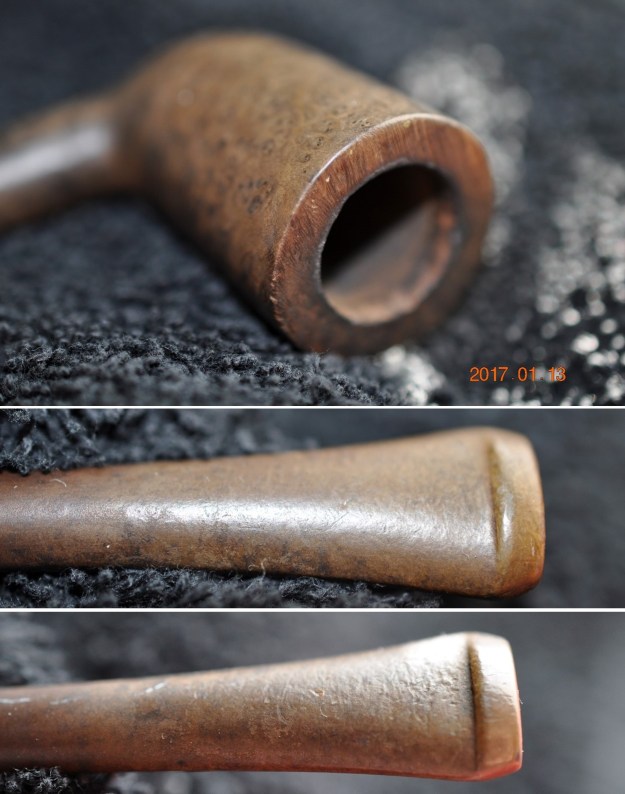 The photos of the sides and heel of the bowl show the uniquely stained grain around the bowl and shank. The mixture of brown stains and green wash adds depth to the finish on the pipe. Even under the grime it is a real beauty.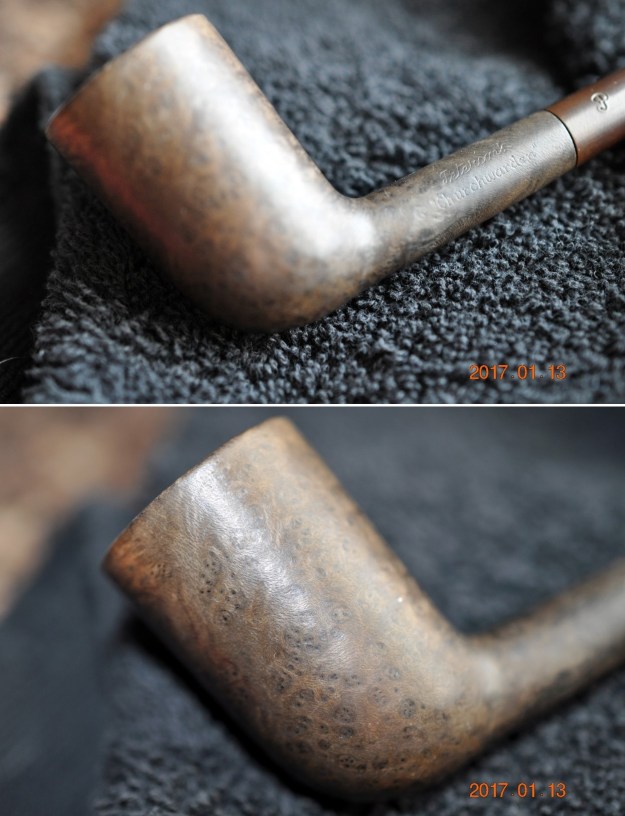
 The stamping on this one was on the sides of the shank and are shown in the photos below. It is clear and readable as noted above. You can also see the stamped P on the left side of the stem.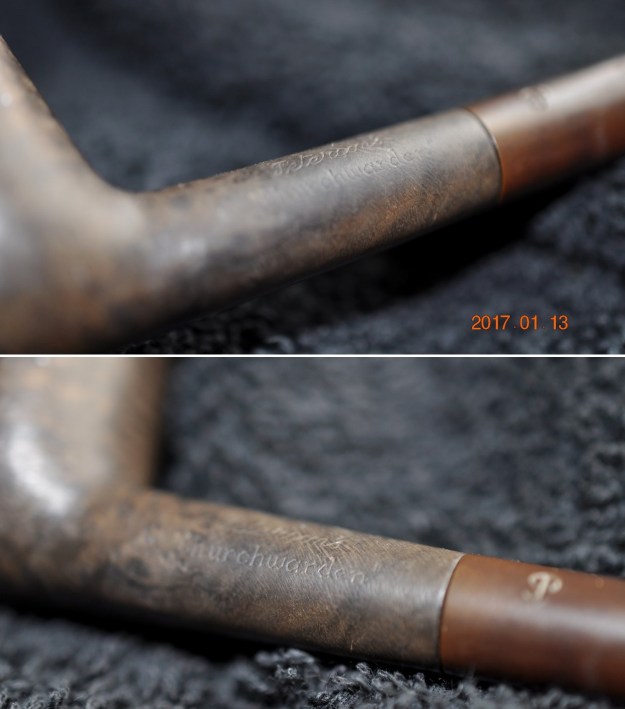
 I turned to The Peterson Pipe by Mark Irwin and Gary Malmberg, p. 313 to the listing under Specialty Briars. It says this is a term used to describe several lines. Here is the information on the Churchwarden.
Churchwarden (1945-) Long pipe with various smaller bowl shapes and a fishtail mouthpiece; smooth finish, rustic starting in1969, spigot in 2018.
Now it was time to work on the pipe. Jeff had thoroughly cleaned up the pipe. He reamed the pipe with a PipNet Pipe Reamer and cleaned up the remnants with a Savinelli Fitsall Pipe Knife. He scrubbed the bowl with undiluted Murphy’s Oil Soap with a tooth brush. He rinsed it under running warm water to remove the soap and grime. He cleaned out the inside of the shank and the airway in the stem with alcohol, cotton swabs and pipe cleaners. He scrubbed the exterior of the stem with Soft Scrub to remove the grime and calcification. He soaked the stem in Before & After Deoxidizer and rinsed it off with warm water. The pipe looked very good when it arrived here in Vancouver.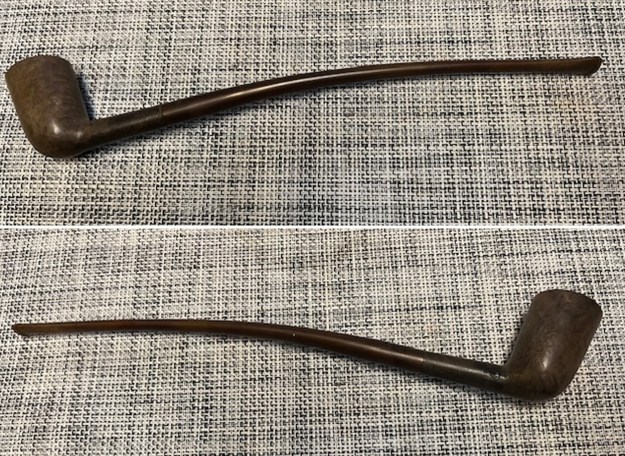
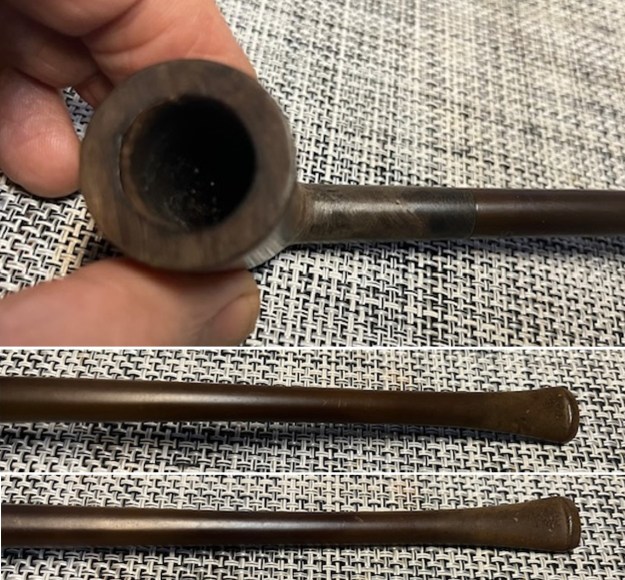
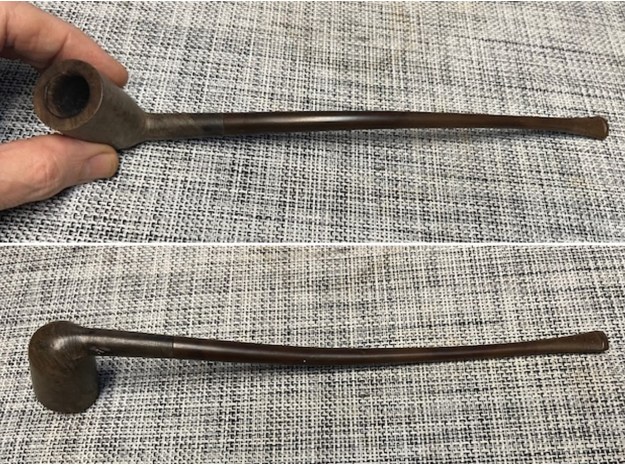 I took close up photos of the bowl, rim and the stem. The rim top and inner edge cleaned up very well. There was some darkening and some roughness to the inner edge of the rim. The stem looks cleaner, but still has some oxidation (from sitting here since 2016). There are light tooth marks and some chatter as noted above.
 I took photos of the stamping on the shank. The stamping is faint but readable as noted above. I took the stem off the shank and took a photo to give a sense of the flow and proportion of the pipe. It is a beautiful looking Churchwarden.
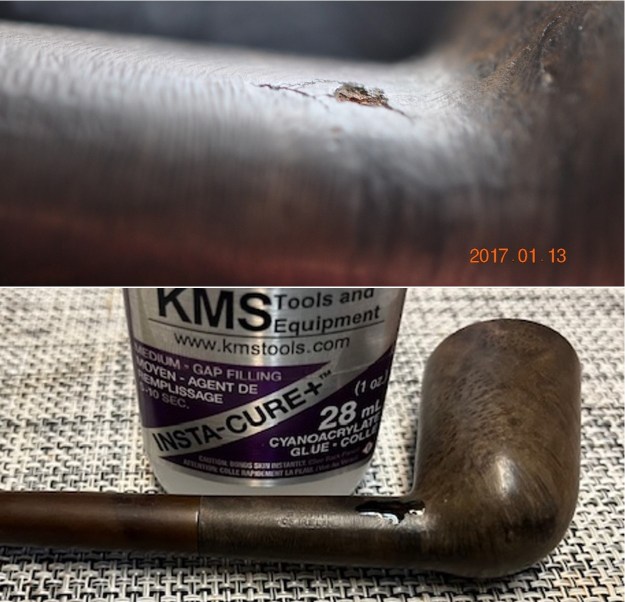
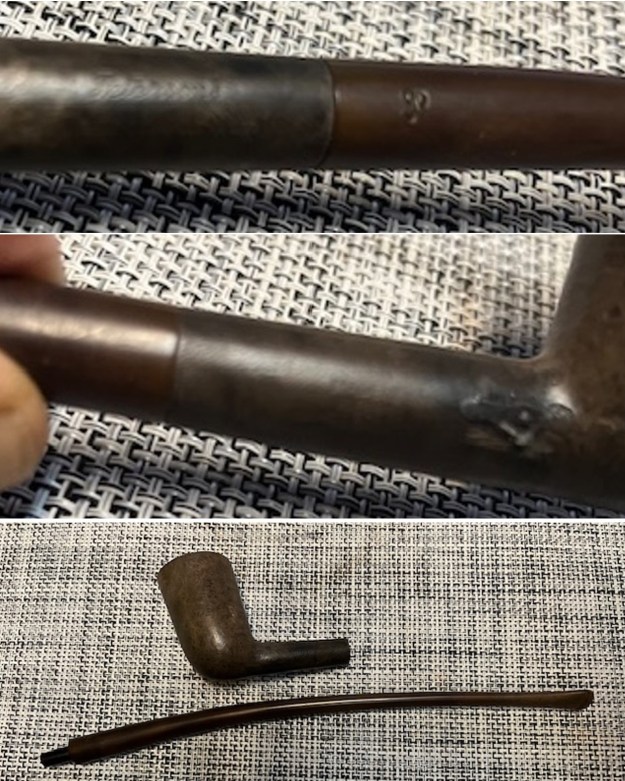 I started my work on the pipe by dealing with the damage to the fill on the right side of the shank near the bowl. It is not deep but it looks like the fill has fallen out. It was quite clean and I used clear CA glue to fill in the area. Once the repair cured I will sand it when I am working on the bowl and shank polishing.
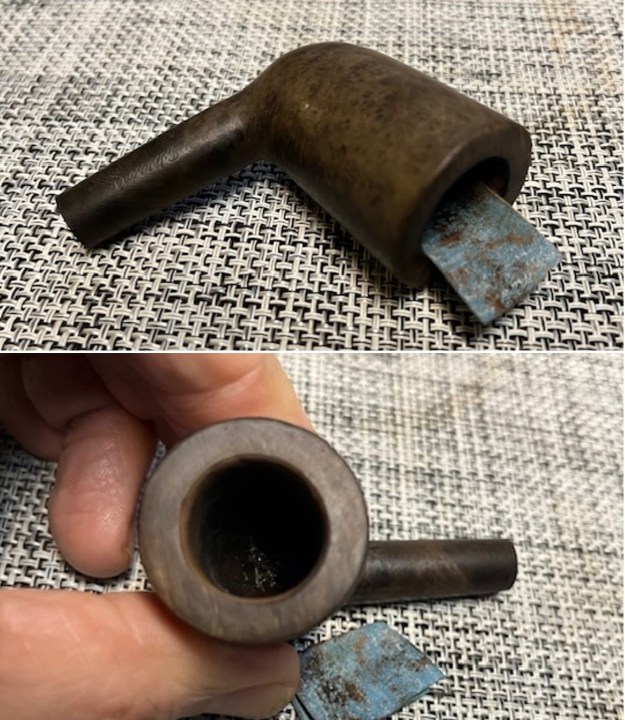
 I then turned to work on the damaged inner edge of the rim. I used a folded piece of 220 grit sandpaper to smooth out the damage and round the edges. Once I finished it the rim top and edges looked much better. I also used it to smooth out the repaired fill on the right side of the shank at the bowl.
 I polished the bowl and shank with micromesh sanding pads – dry sanding with 1500-12000 grit pads. I wiped the bowl down after each pad to remove the grit. The bowl began to take on a rich shine. It is a beauty.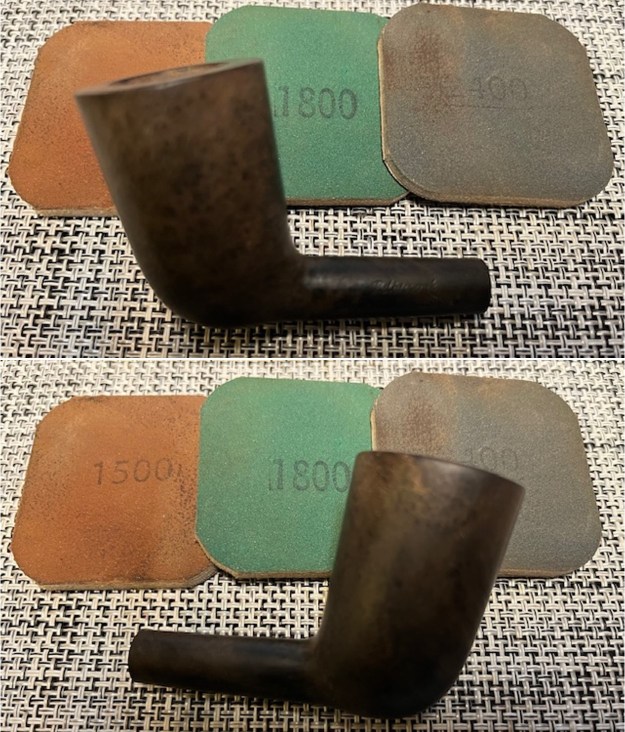

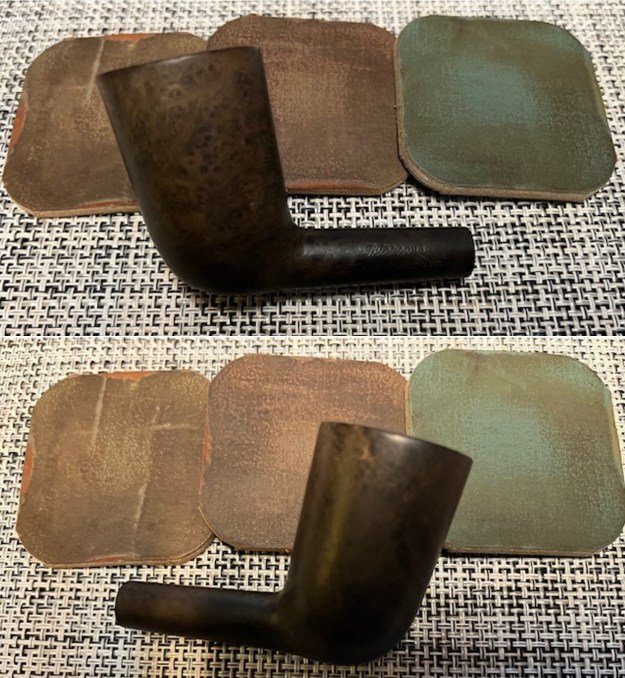
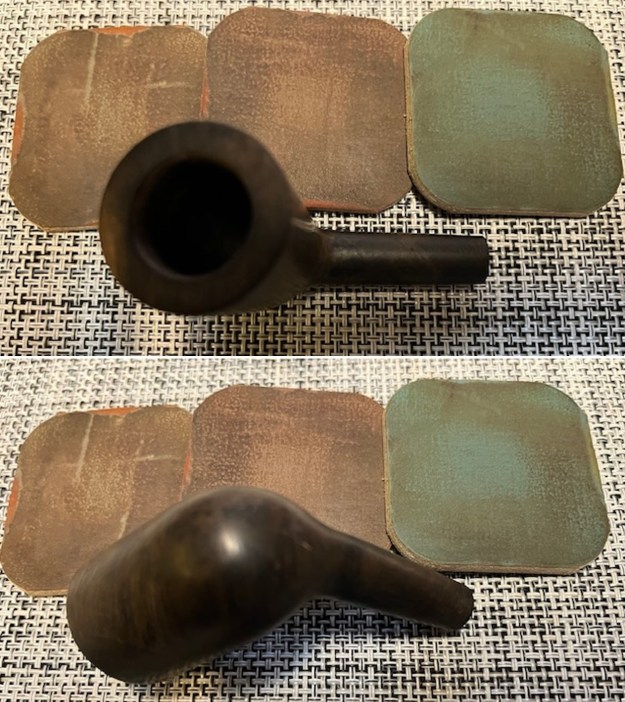
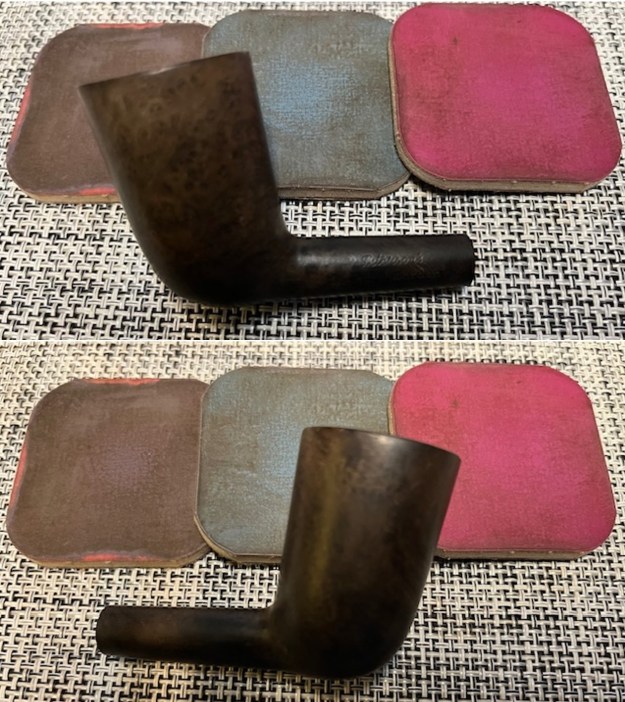
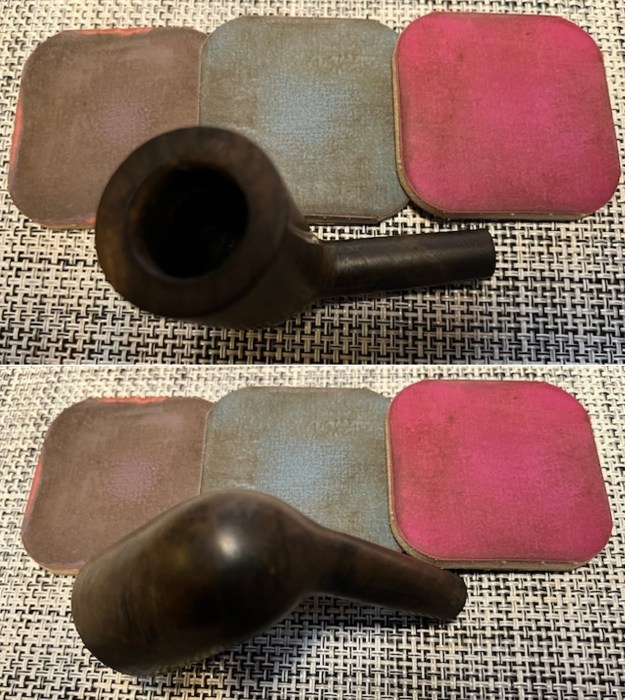 I rubbed the bowl down with Before & After Restoration Balm. I worked it into the briar with my finger tips. I let it sit for 10 minutes and the Balm did its magic. It enlivens, cleans and preserves the briar. It certainly brought this bowl back to life. I buffed it off with a clean cloth and took the following photos.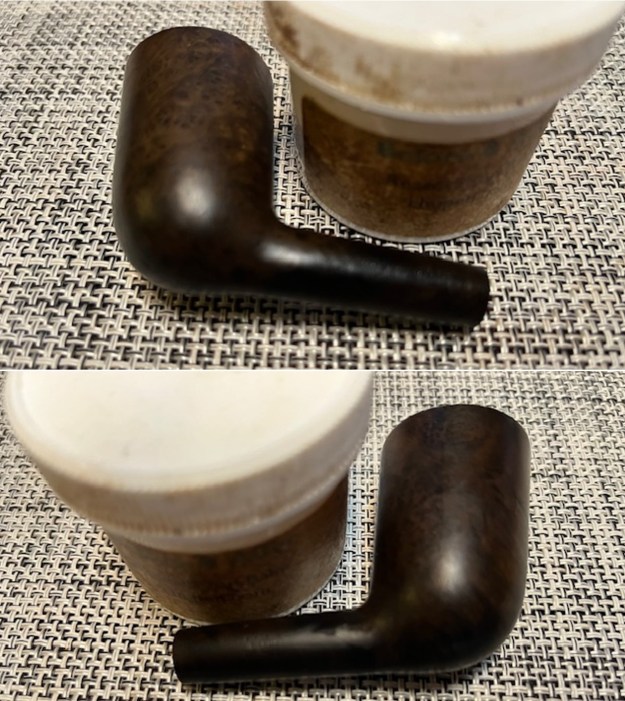
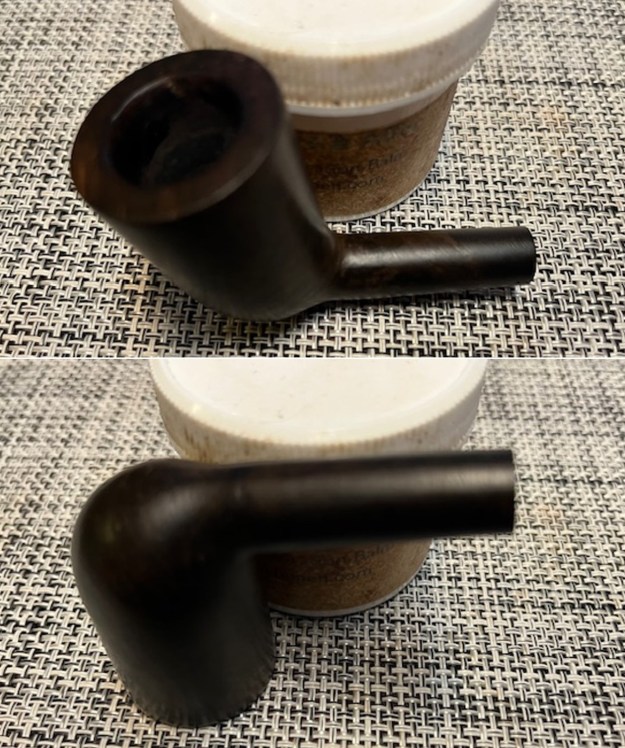
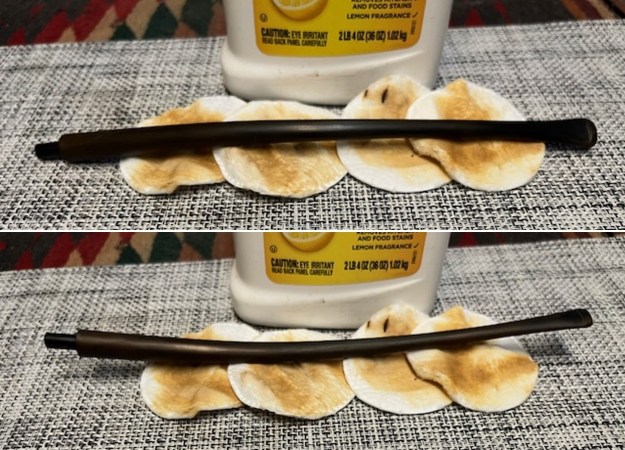
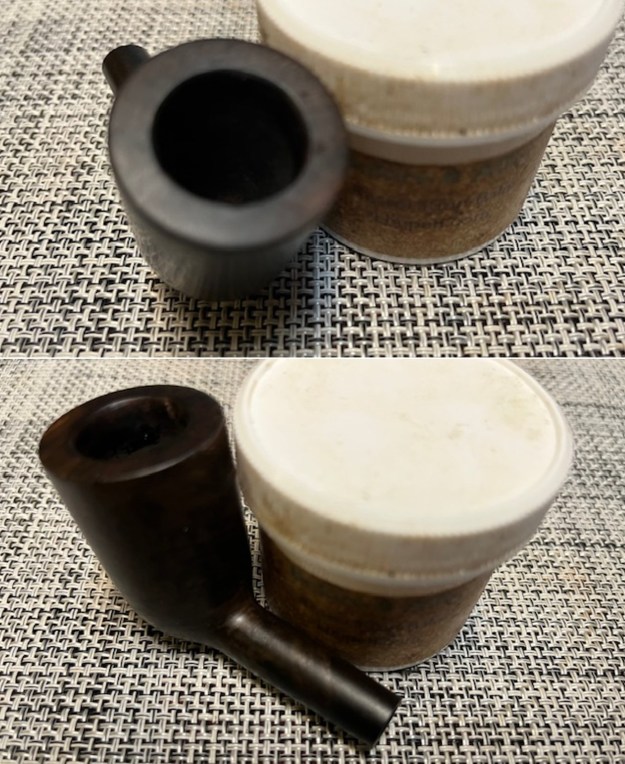 I set the bowl aside and turned my attention to the oxidized stem. I worked on it with Soft Scrub and cotton pads. I was able to remove the majority of the oxidation with the pads and polish. The stem is looking much better.
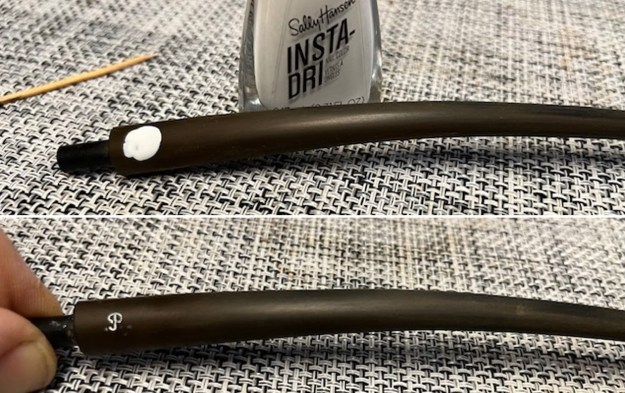
 I touched up the “P” stamp on the left side of the stem with white enamel fingernail polish. I applied it with a dauber and worked it into the stamp with a tooth pick. Once it had dried I scraped and sanded off the excess with a 1200 grit micromesh sanding pad. It looked very good.
 I worked on the remaining oxidation on the vulcanite stem surface and chatter near the button with a new product I am using. I ordered a set of 2 inch sanding pads for 320-3500 grit sanding pads from Amazon. They work amazingly well and are easy to manage and sand close to the sharp edge of the button.
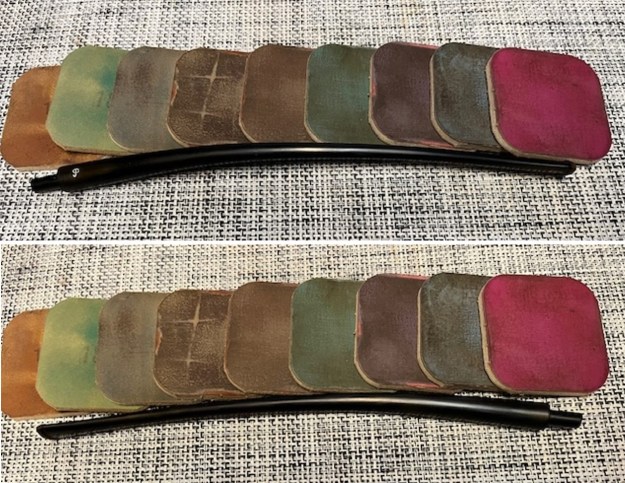
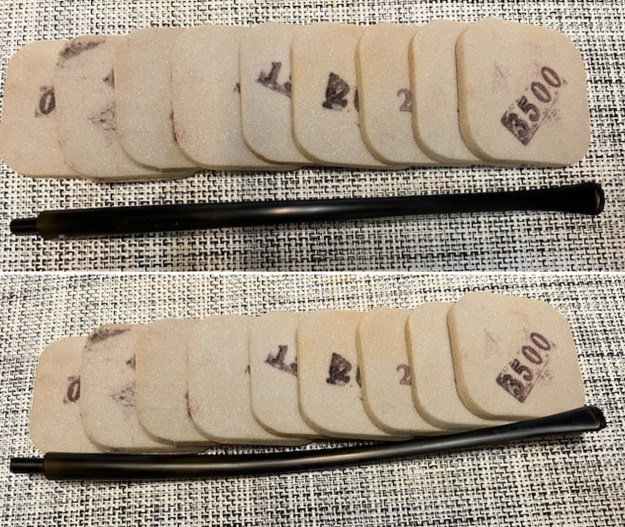 I polished the stem with micromesh sanding pads – 1500-12000 grit pads. I wiped it down with a damp cloth after each sanding pad.
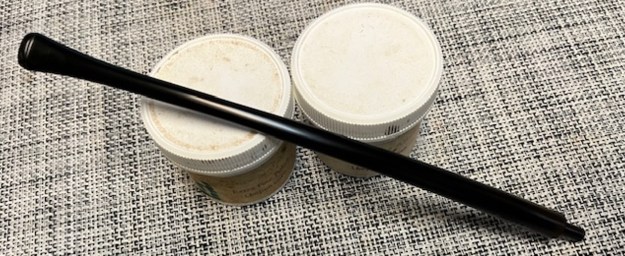
 I polished it with Before & After Pipe Stem Polish – both Fine and Extra Fine. I gave it a coat of Obsidian Pipe Stem Oil. I set it aside to dry.
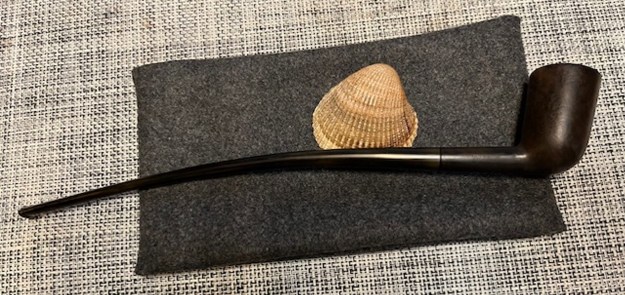
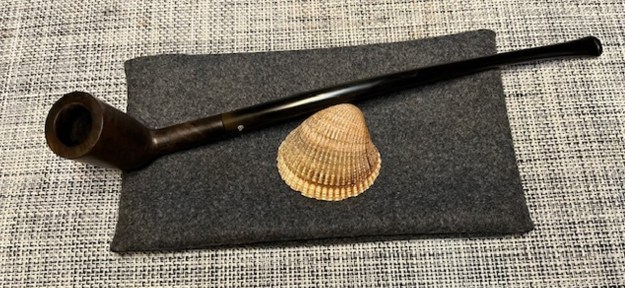
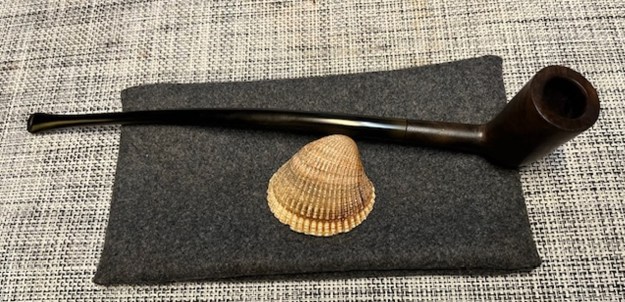
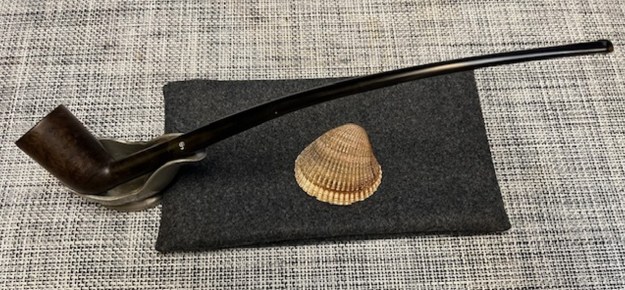
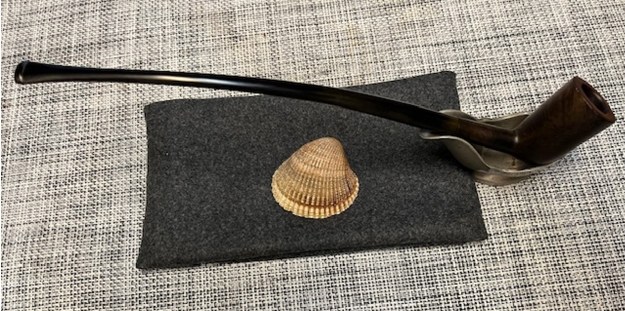
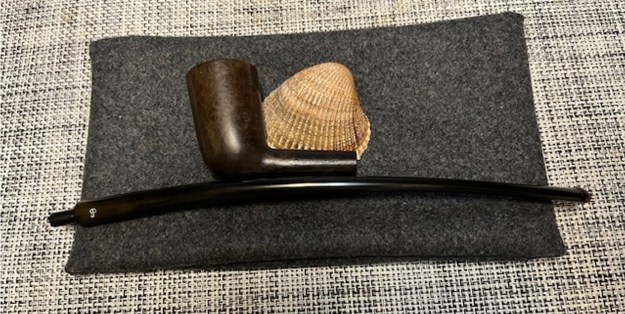
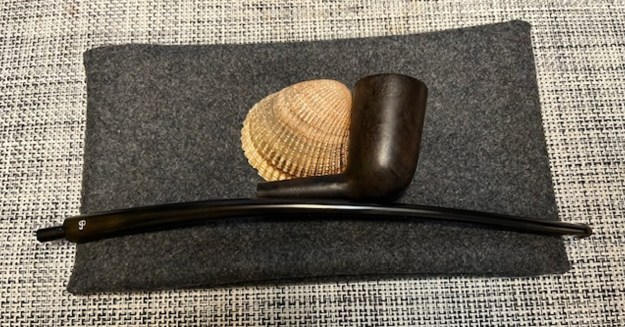
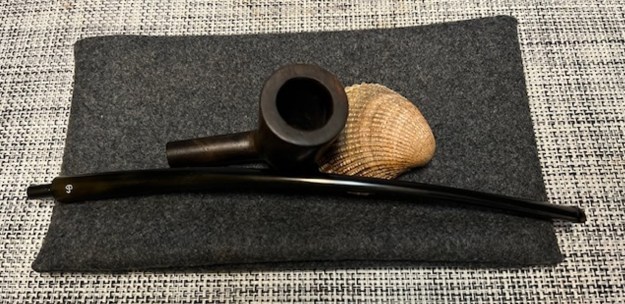
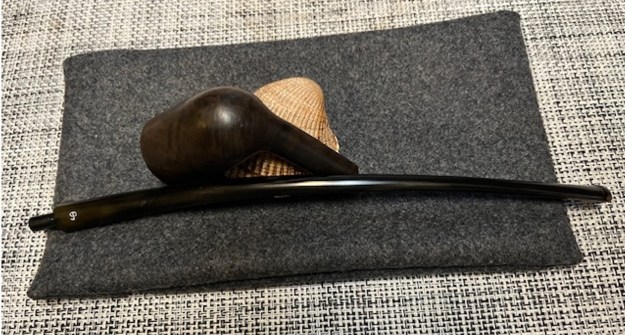
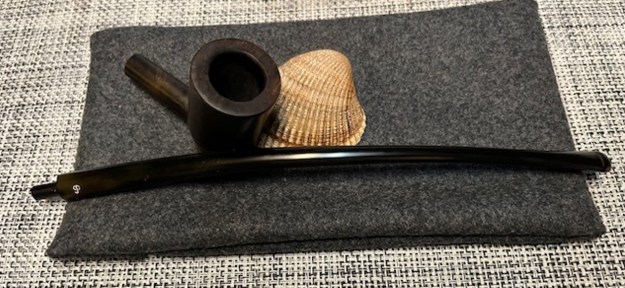
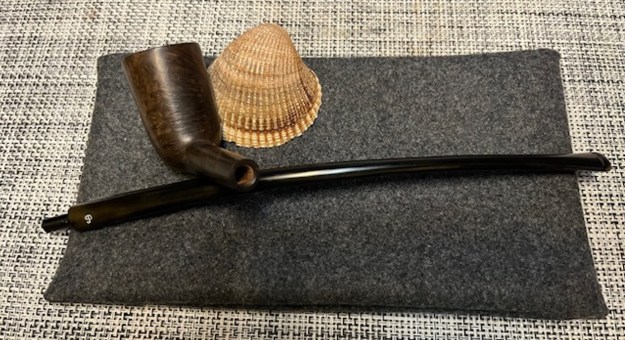
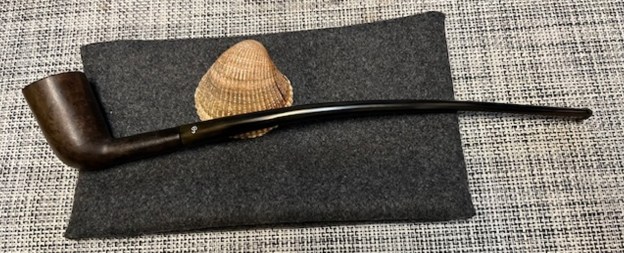
  This delicate Republic Era Peterson’s Dublinesque “Churchwarden” with a vulcanite taper stem is a classic looking Churchwarden Specialty Pipe. The mix of stains once cleaned up really highlights the grain and the polished finish is stunning. I put the stem back on the bowl and carefully buffed the pipe with Blue Diamond on the buffing wheel. I gave the bowl and the stem multiple coats of carnauba wax on the buffing wheel and followed that by buffing the entire pipe with a clean buffing pad. I hand buffed the pipe with a microfiber cloth to deepen the shine. The finished Peterson’s “Churchwarden” fits nicely in the hand and feels great. Give the finished pipe a look in the photos below. The dimensions of the pipe are Length: 10 inches, Height: 1 ¾ inches, Outside diameter of the bowl: 1 1/8 inches, Chamber diameter: ¾ of an inch. The weight of the pipe is 29 grams /1.02 ounces. I will be adding the pipe to the Irish Pipe Makers Section of the rebornpipes store. If you are interested in purchasing this pipe send me a message or an email. Thanks for reading this blog and my reflections on the pipe while I worked on it.
As always, I encourage your questions and comments as you read the blog. Thanks to each of you who are reading this blog. Remember we are not pipe owners; we are pipe men and women who hold our pipes in trust until they pass on into the trust of those who follow us.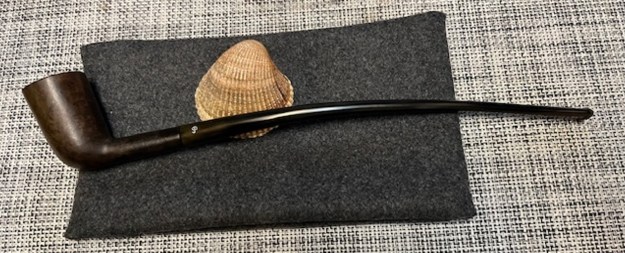




 rebornpipes