
Blog by Steve Laug
The next pipe I chose to work on came from a lot of 11 pipes I purchased from a lady in Regina, Saskatchewan. She had found them in a house she bought and wanted to know if I wanted them. We struck a deal, I paid for the pipes and shipping and the box arrived while I was travelling in Europe. In the box were 5 Stanwells, 1 Soren Freehand, 1 Calabash with a Briar Bowl, 1 Nording Freehand, 1 Italian Made Bertenetti, 1 Rhodesian with a banded cracked shank, and 1 Brigham. I have restored the Nording, the snapped Stanwell, the Brigham and there are blogs on each restoration.
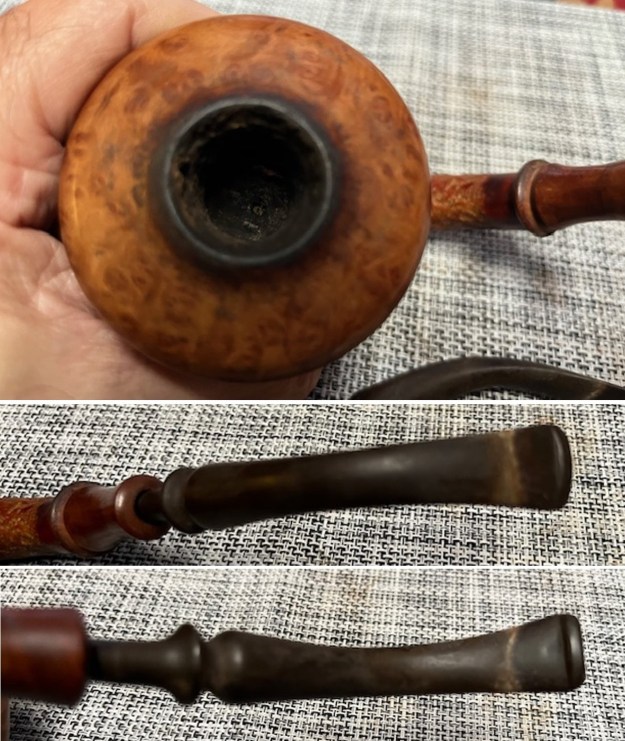
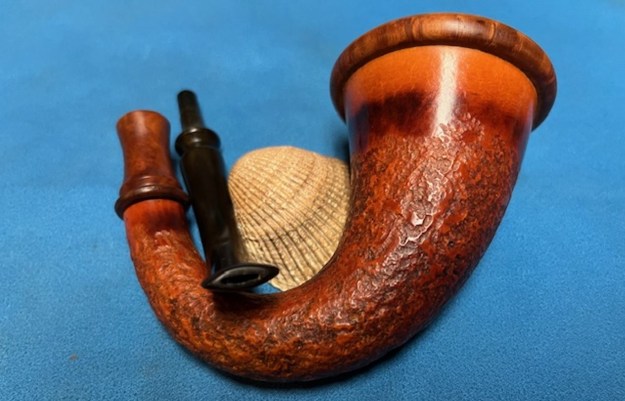
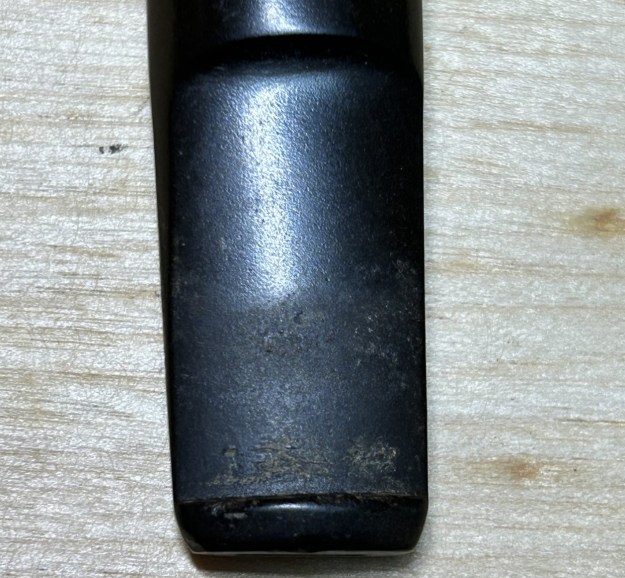
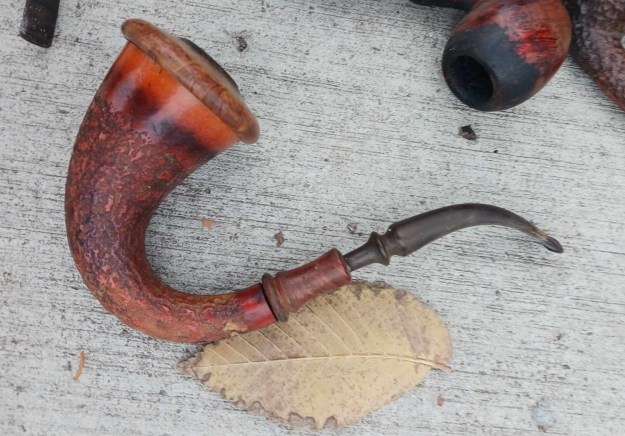 The next pipe on the table is the calabash from the lot above. There is no stamping on the pipe, shank or extension. The outer bowl was gourd calabash, the cup in the bowl is briar and seems to be glued in the calabash. There was a thick cake in the bowl, cobwebs in the bottom and on the bowl walls and some remnants of tobacco. The airway was plugged and there was no draught on the pipe. There was a lava overflow on the briar cup top. The edges of the bowl were in good condition. The finish on the briar cup was dirty and dusty and there was some lava on the outer edge of the bowl. The gourd was also very dirty with dust and debris in the rustication. There was a turned briar shank extension in the shank end that was held in place by a tenon. The fit in the gourd shank was off because of the grime in the airway. The stem was oxidized and calcified on the top and underside. The stem had some light tooth marks and chatter on both sides. I took photos of the pipe before I started my cleanup work on it.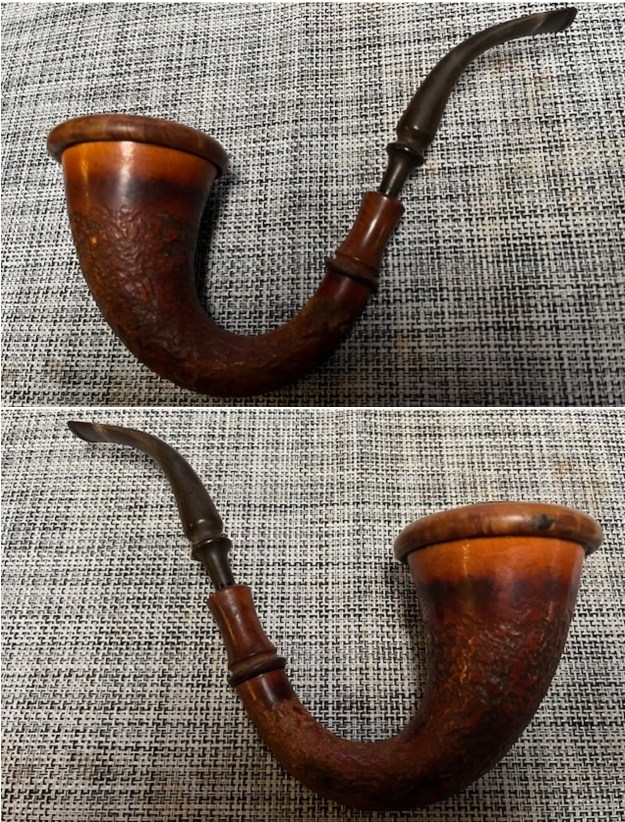
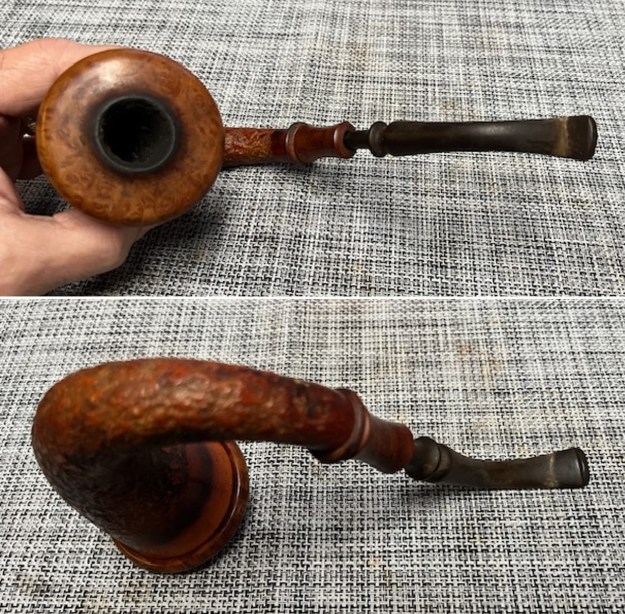 I took a close-up photo of the bowl and rim top to show the cake in the bowl. The rim top shows some thin lava spots on the smooth finish and in the plateau. The inner and outer edges of the bowl looked good. I took photos of the top and underside of the stem surface and button to show its general condition. It had some light tooth marks and chatter on both sides.
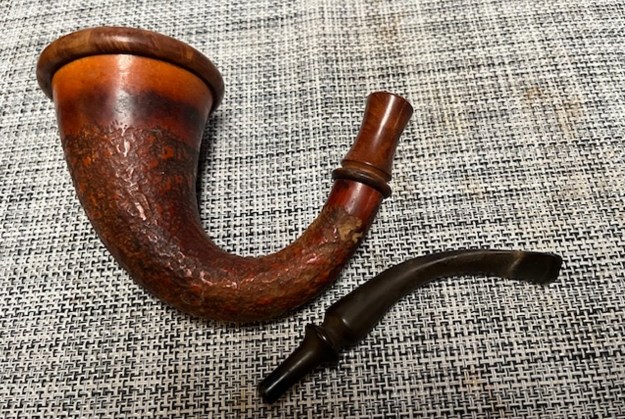
 I removed the stem from the shank to get a sense of what the pipe looked like in terms of proportion and curves. It was well designed and flowed well from bowl cap to tip of the stem.
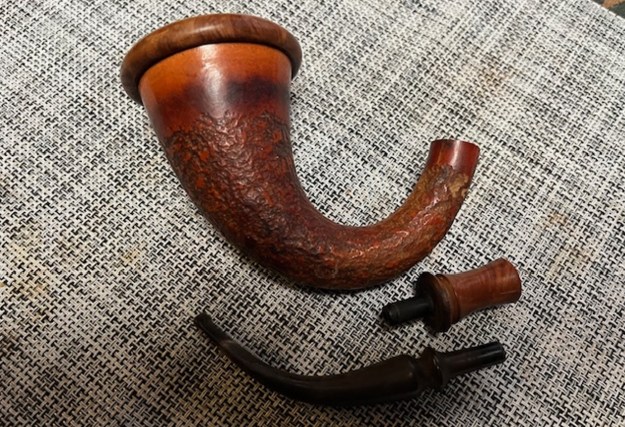
 I took the shank extension off the shank end. It was a push tenon that held it in place and it did not fit well against the shank end of the gourd.
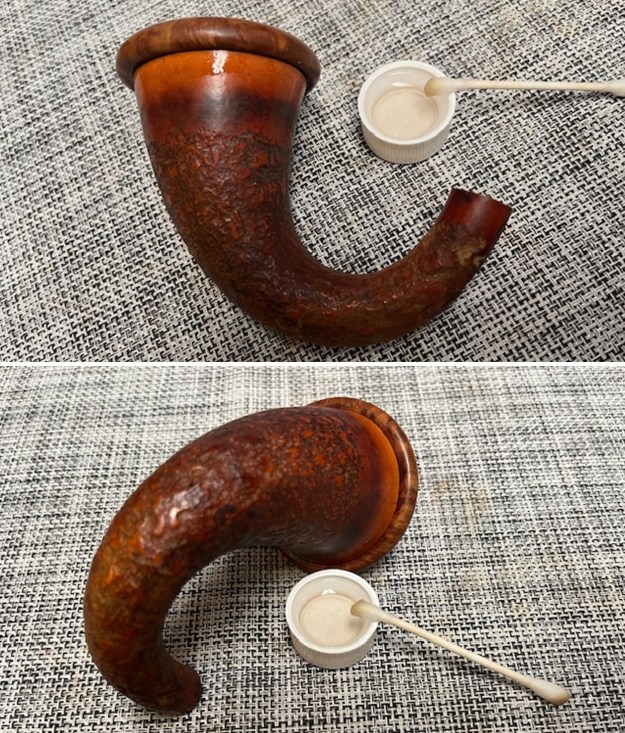
  The briar bowl cup was stuck firmly in the gourd. At this point I was not sure whether it was just gummy or if it had been glued in place in the gourd. I used a cotton swab and alcohol to place the liquid around the gap between the gourd and the briar. I repeated the process and let it sit over night. It did not loosen at all. I even tried some acetone and again the bowl did not move.
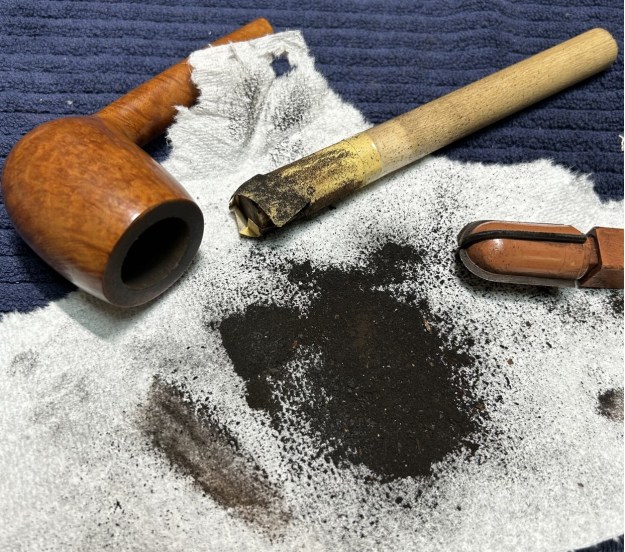
 Since the bowl did not seem to be removable I decided to proceed with the clean up. I reamed the bowl with a PipNet pipe reamer using the third cutting head to take the cake back to bare briar. I cleaned up the reaming with a Savinelli Fitsall Pipe Knife. I sanded the walls with a piece of 220 grit sandpaper wrapped around a dowel to smooth them out.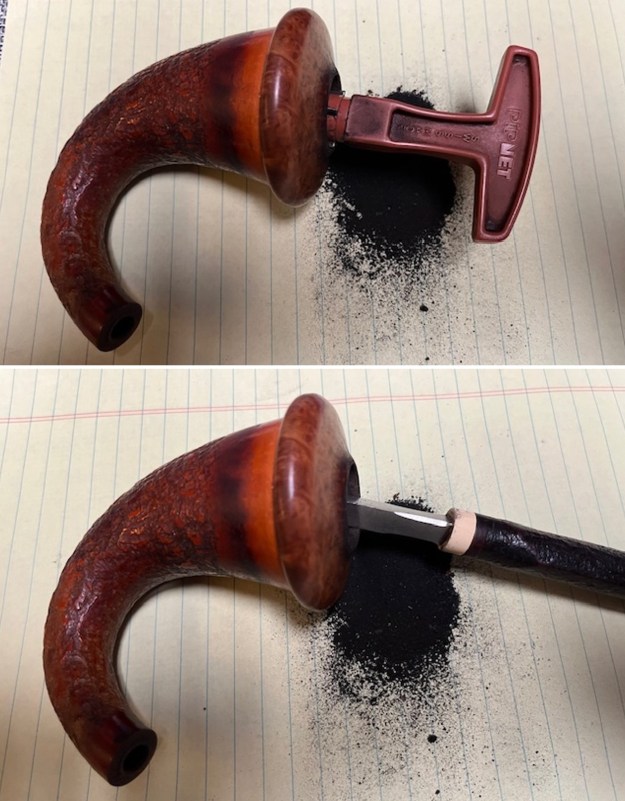
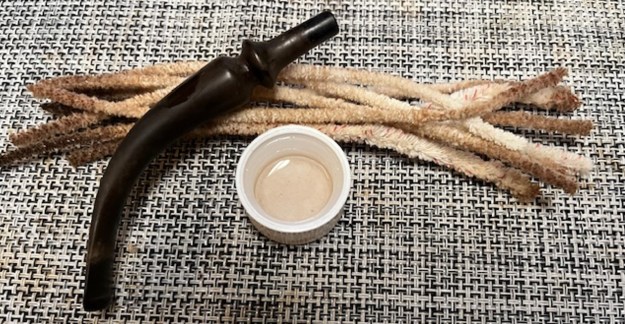
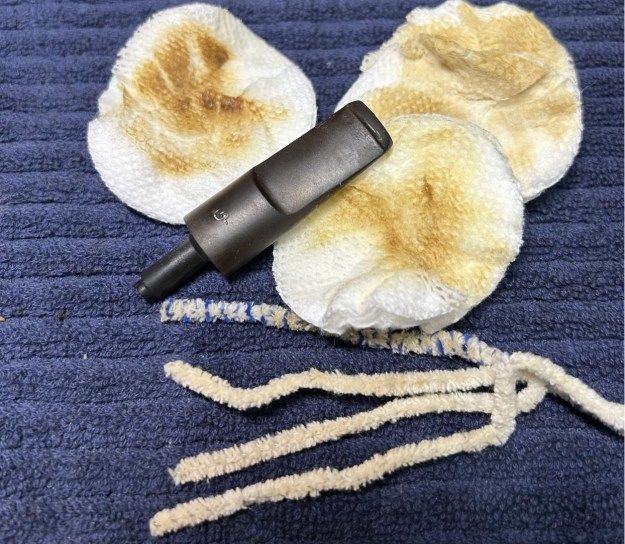
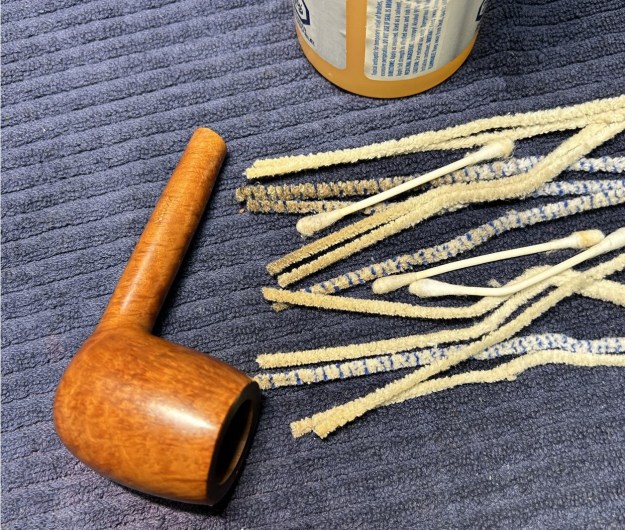
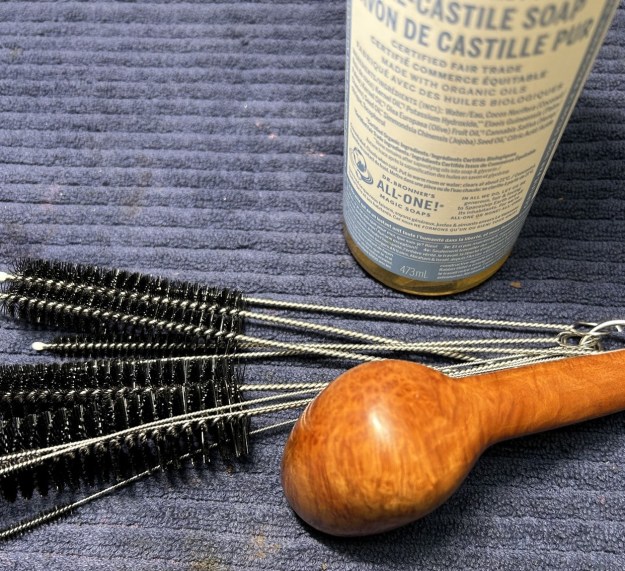
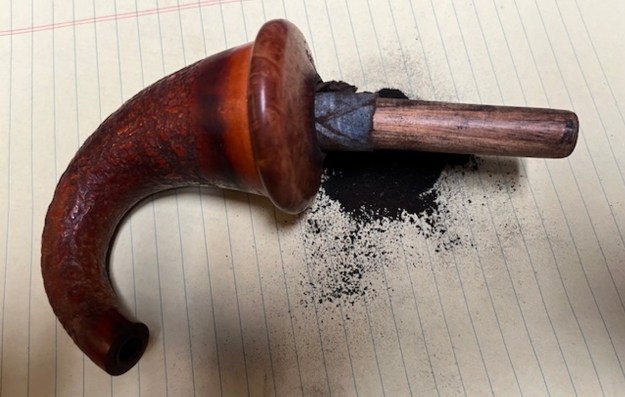 I scrubbed out the internals with 99% isopropyl alcohol, pipe cleaners and cotton swabs. In this case it was more intensive than normal. I cleaned inside of the bowl and the airway at the bottom of the bowl. I cleaned out the inside of the gourd from the shank end and also the inside of the shank extension. I cleaned out the airway in the stem as well. I worked on these areas repeatedly until the shank and the airway in all the parts was clean.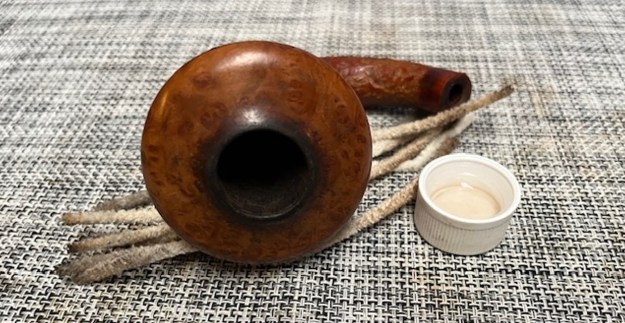
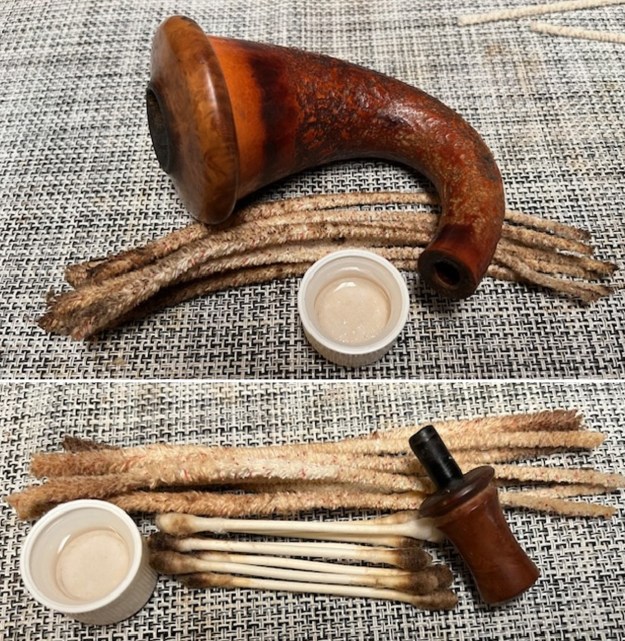
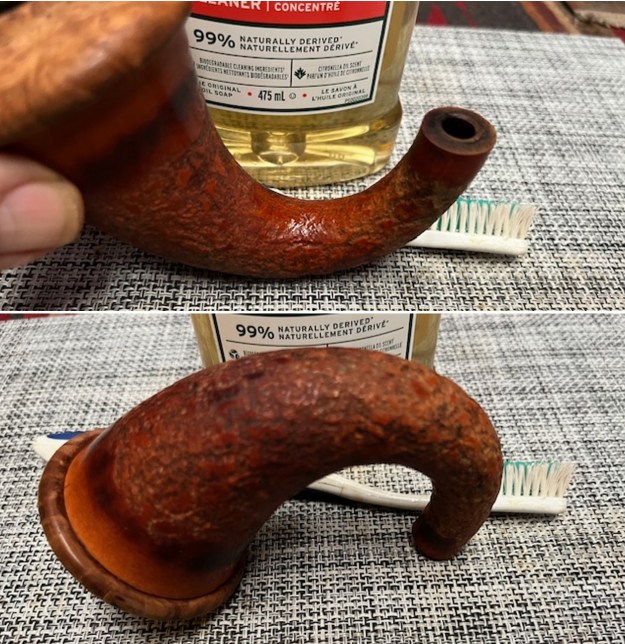
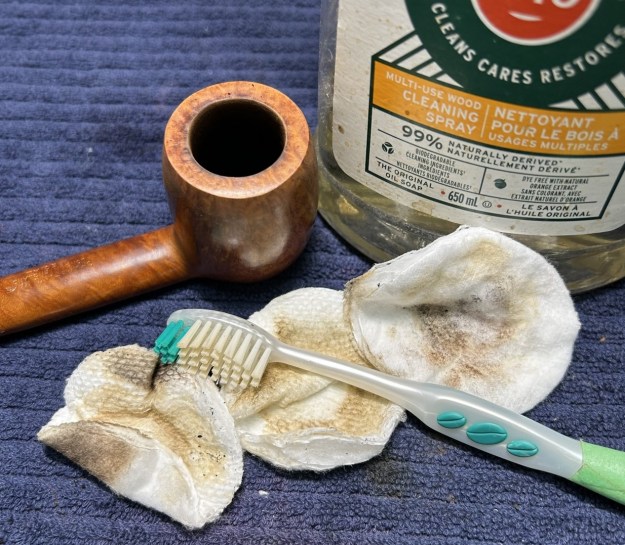
 I scrubbed the exterior of the briar cup and the gourd with a tooth brush and undiluted Murphy’s Oil Soap. It looked much better and the dust and debris was gone. The key with gourd is not to leave water sitting on it for long. I dried it repeatedly and blew air through the airway to dry out the inside of the gourd.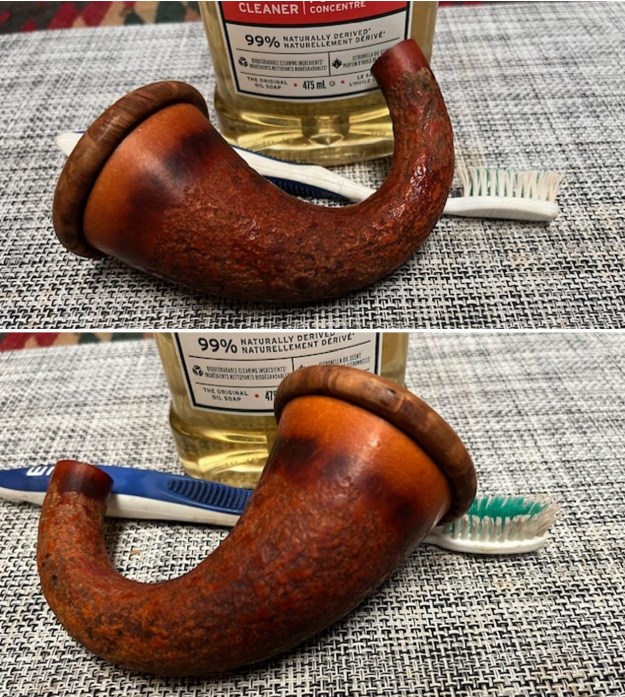
 I polished the briar top of the briar cup with 1500-12000 grit micromesh sanding pads. I wiped it down with a damp cloth after each pad. The rim top took on a deep shine that highlighted the grain.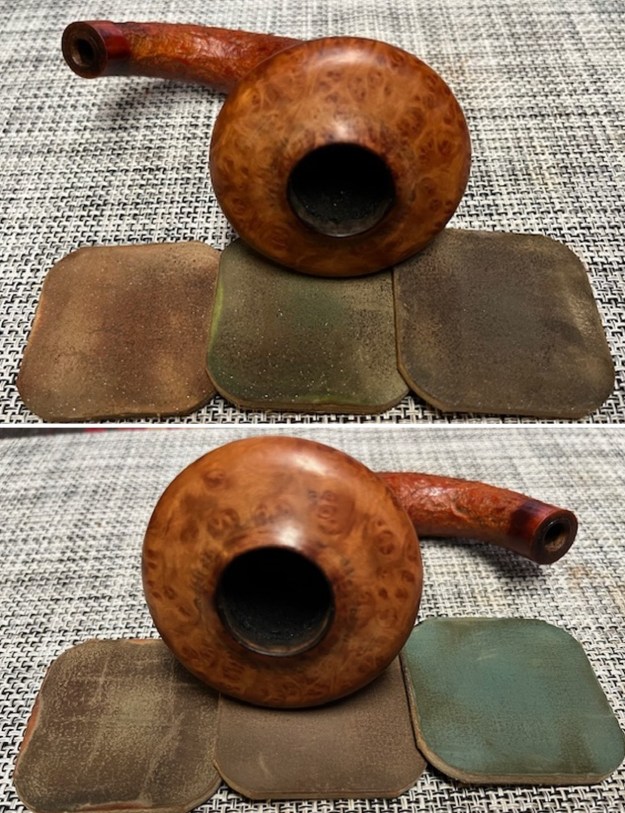
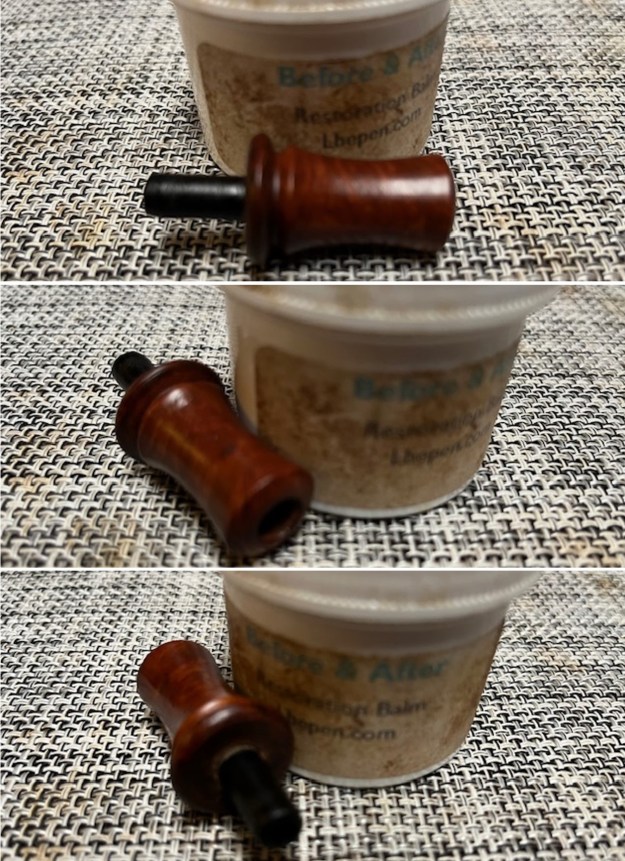
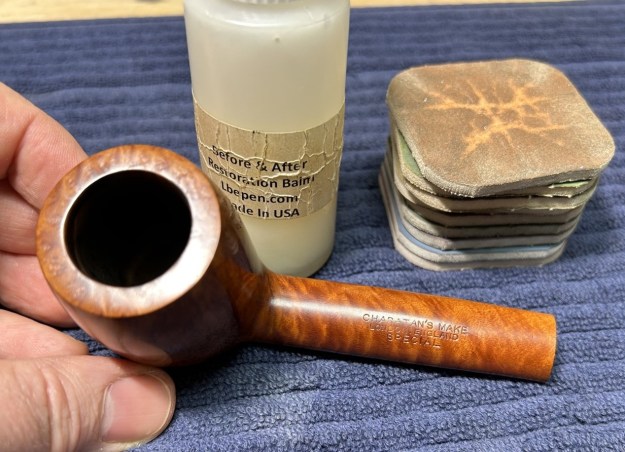
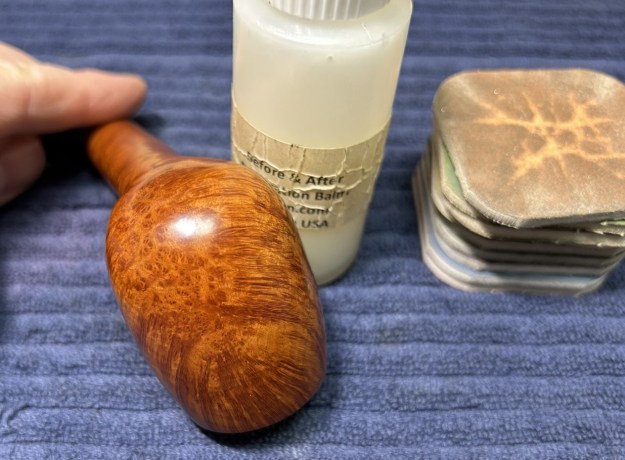
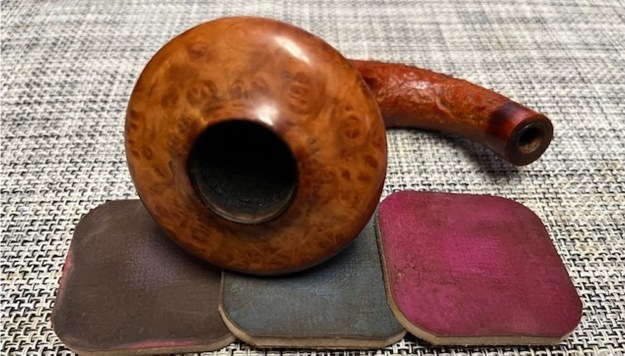 I worked some Before & After Restoration Balm into the surface of the briar and the gourd with my fingertips and a horsehair shoe brush to clean, enliven and protect the briar. I also worked it into the shank extension with my fingers. I let the balm sit for 15 minutes and then buffed with a cotton cloth to raise the shine. The photos show the bowl at this point in the restoration process.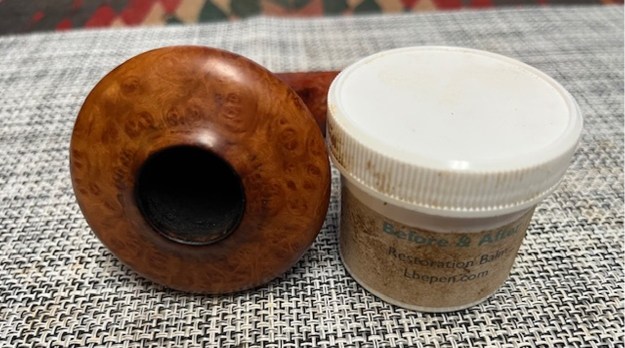
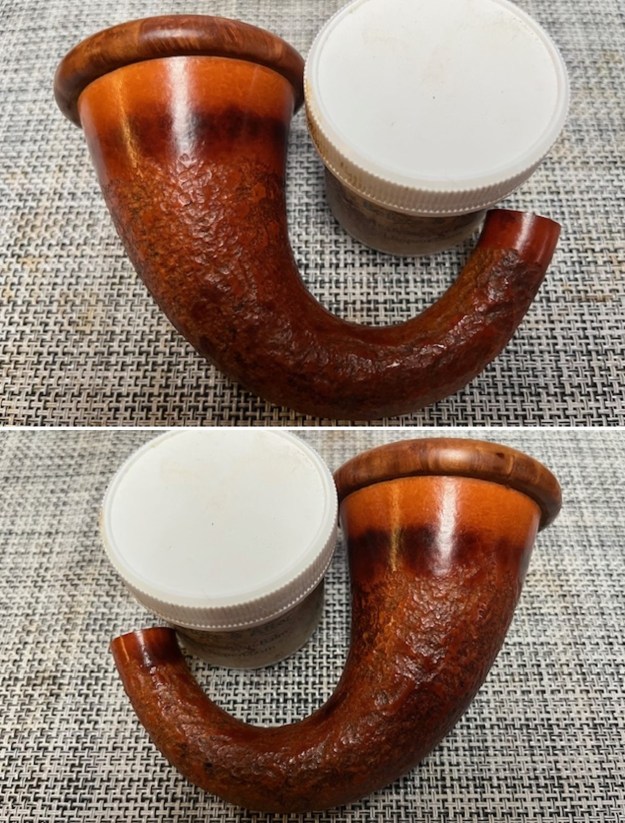
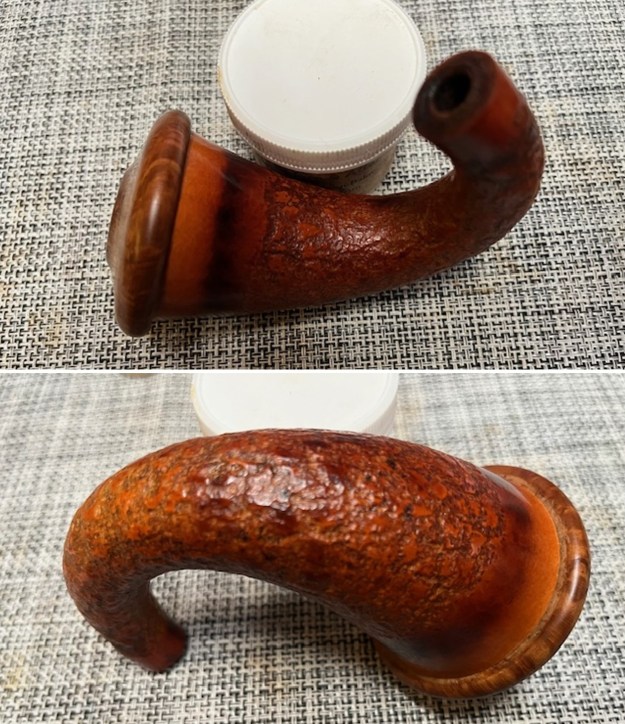
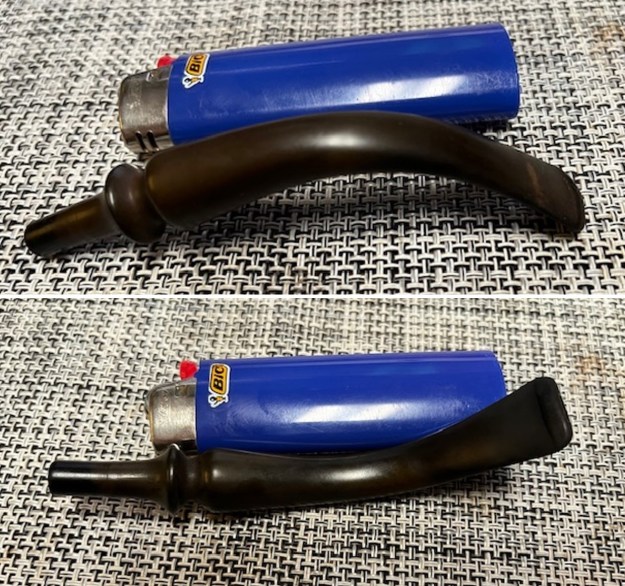
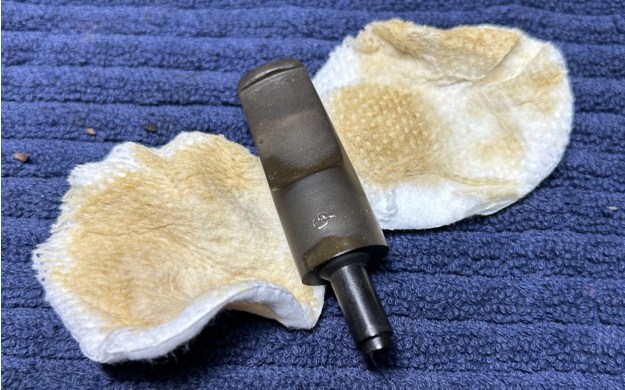
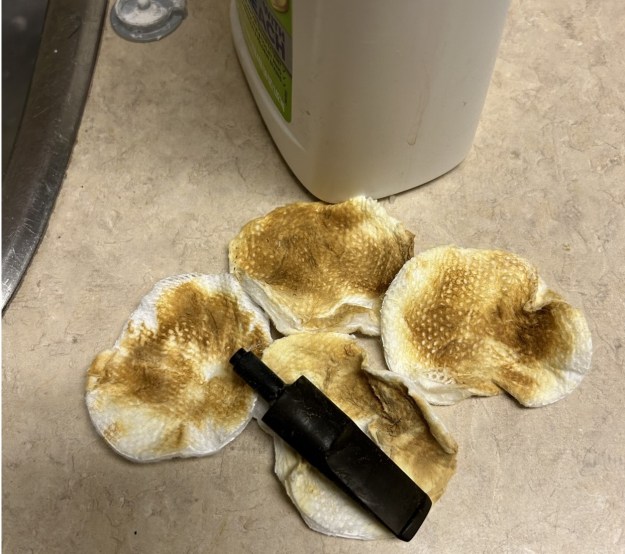
 With that done, the bowl was finished other than the final buffing. I set it aside and turned my attention to the stem. I wiped the bowl down with cotton pads and SoftScrub cleanser to remove the oxidation. Once finished I “painted” the surface of the stem with the flame of a lighter to lift the tooth marks. I sanded out what remained with 220 grit sandpaper and started polishing the stem with 600 grit wet dry sandpaper.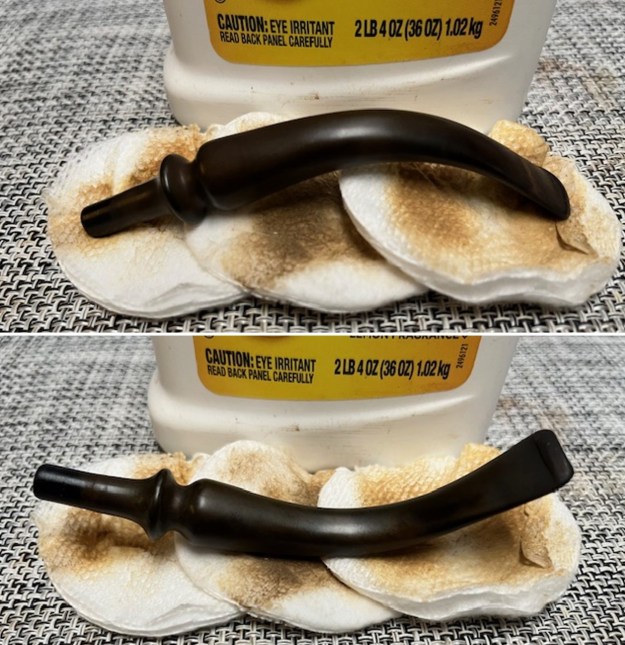
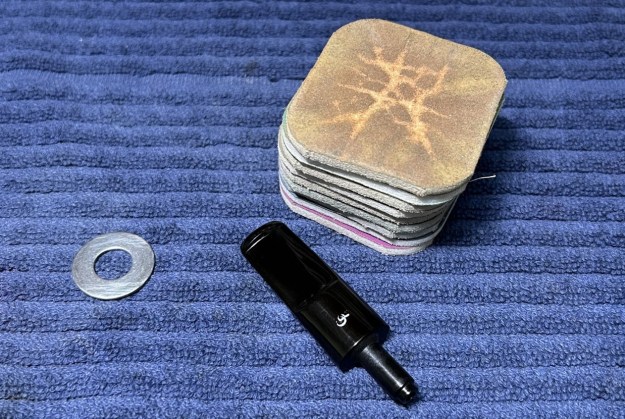
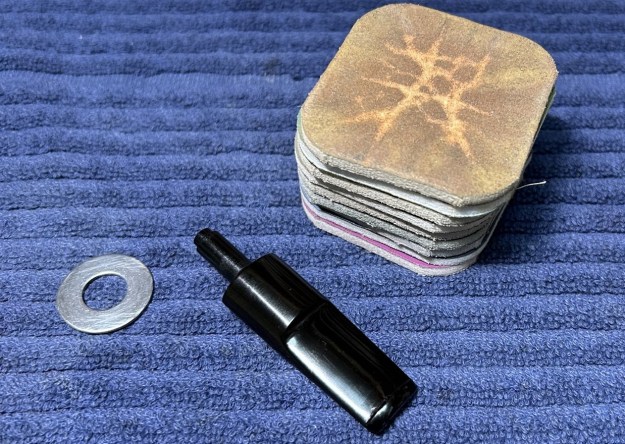
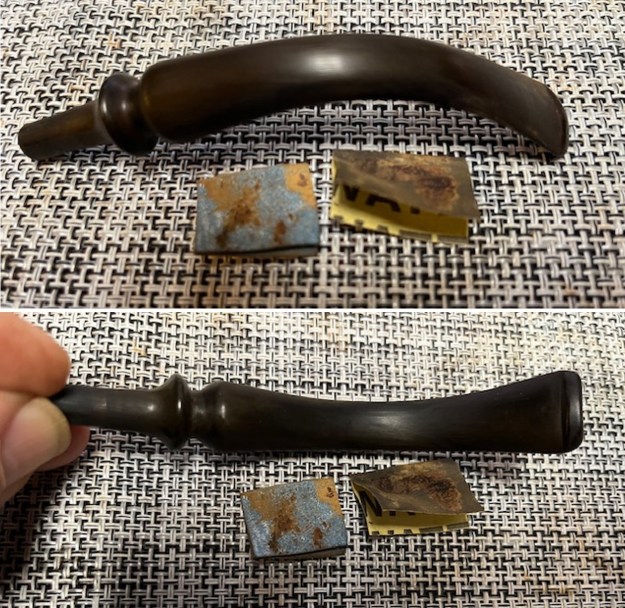 I polished the stem with micromesh sanding pads – wet sanding with 1500-12000 grit sanding pads. I wiped it down after each sanding pad with Obsidian Oil.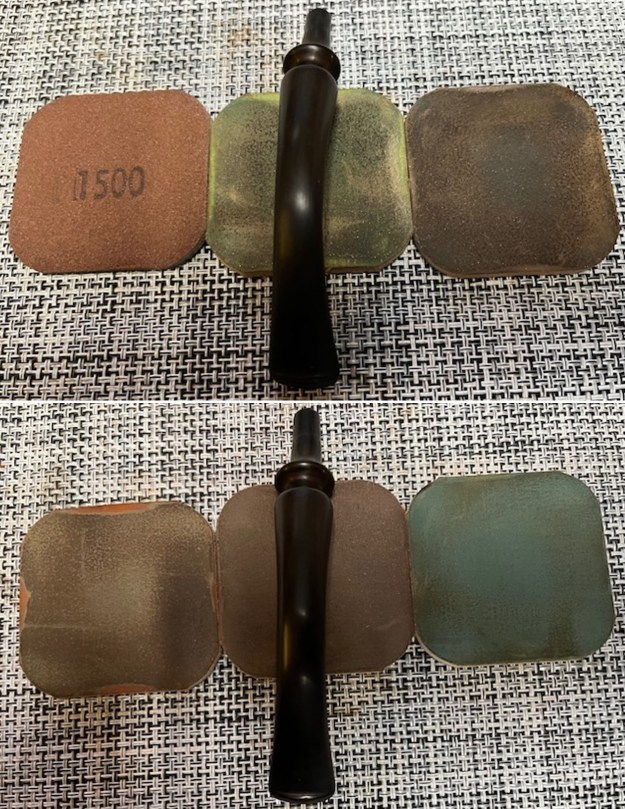
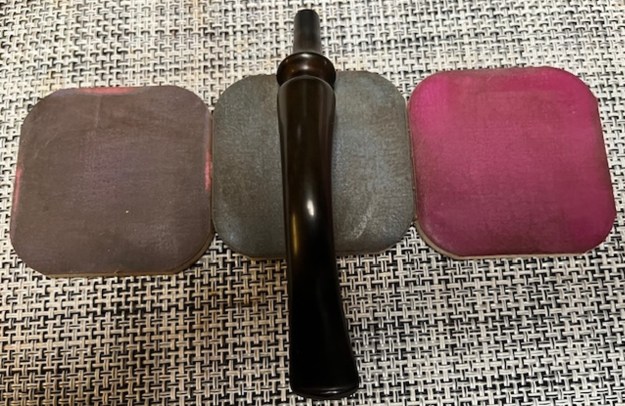 I finished polishing it with Before & After Pipe Stem Polish – both Fine and Extra Fine and buffed it off with a cotton cloth. I gave it a coat of Obsidian Oil to preserve and protect the stem.
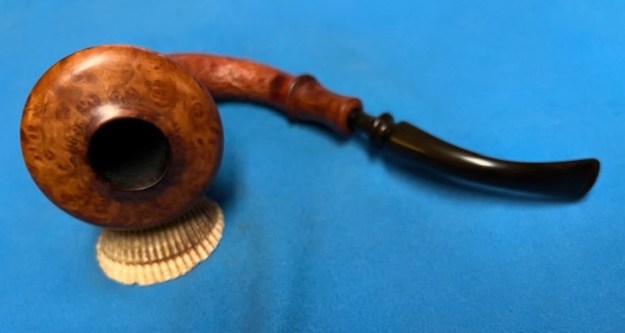
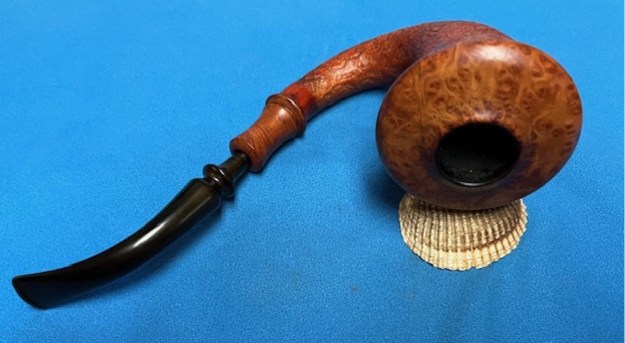
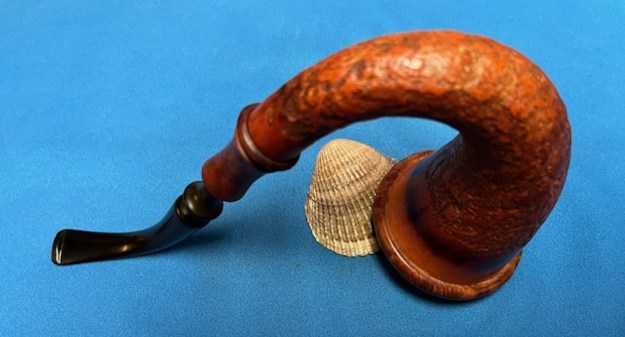
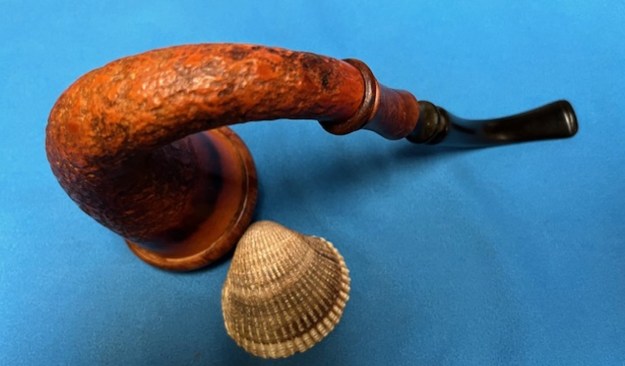
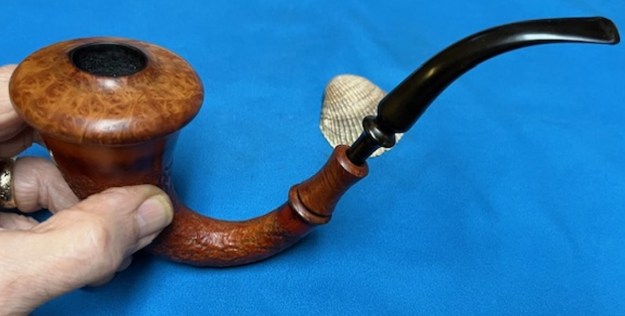
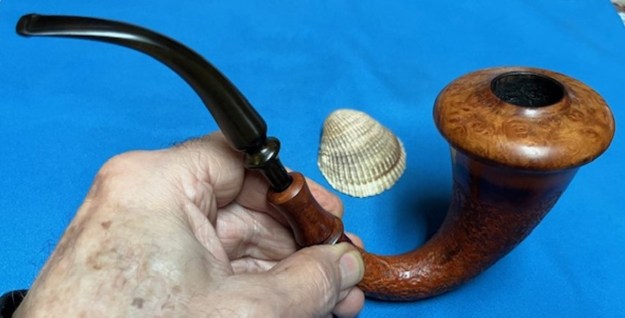
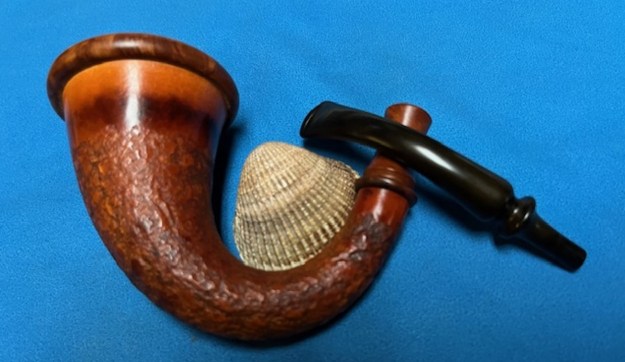
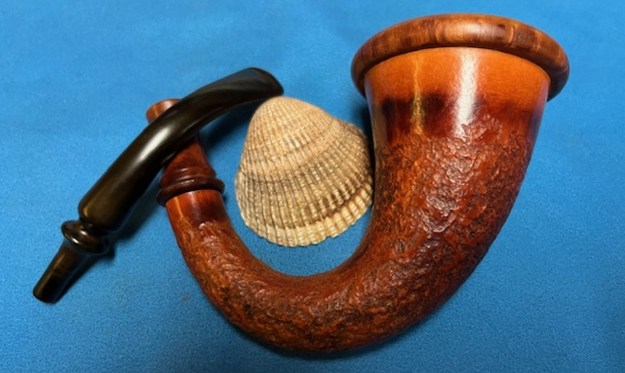
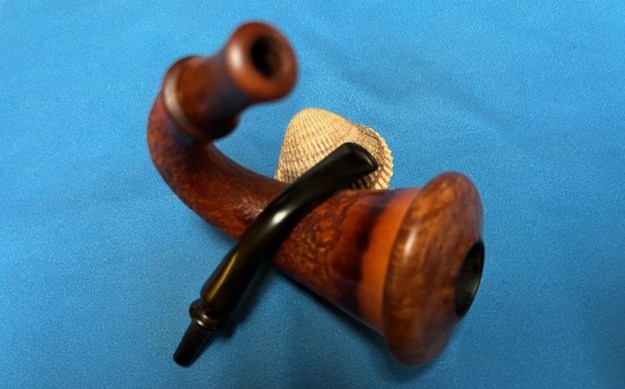
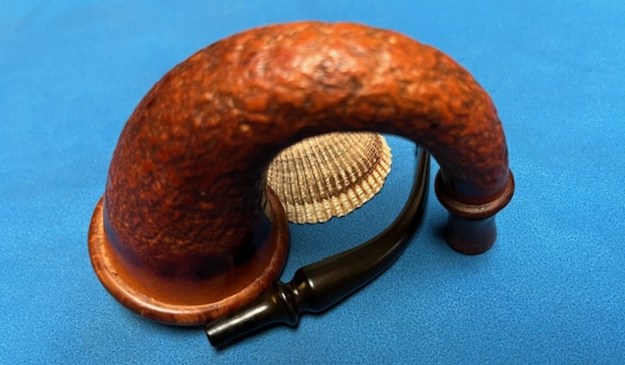
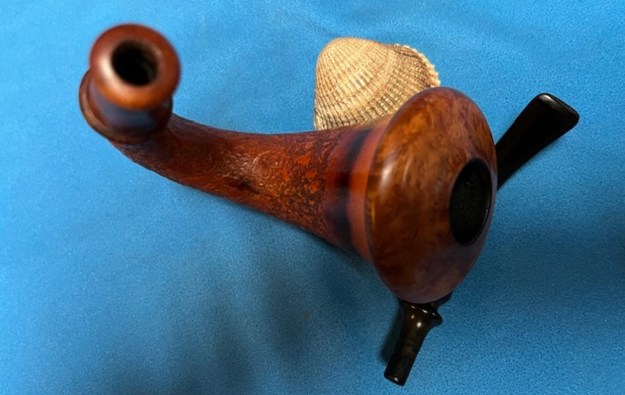
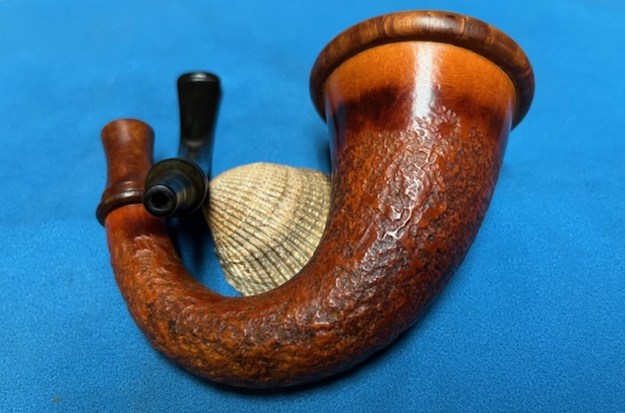
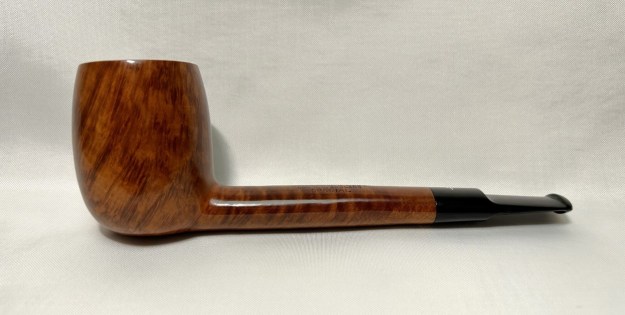
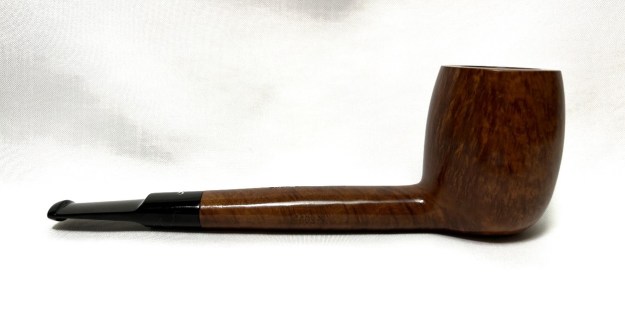
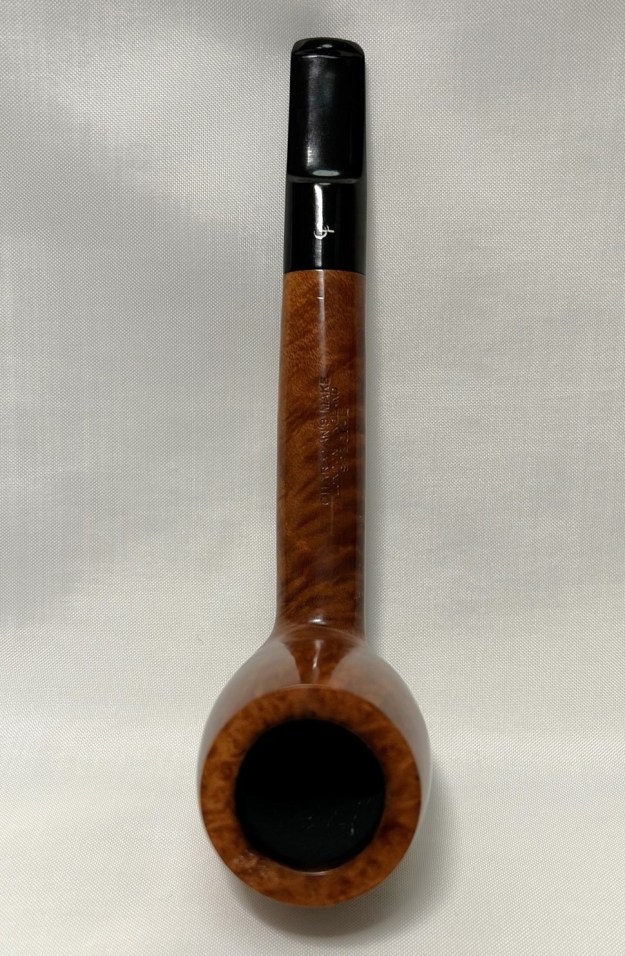
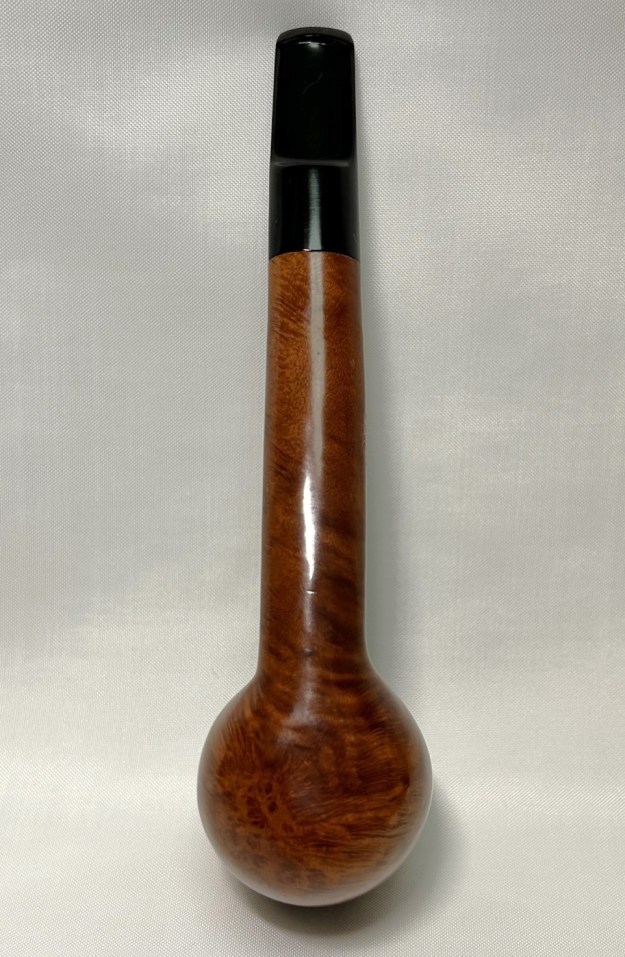
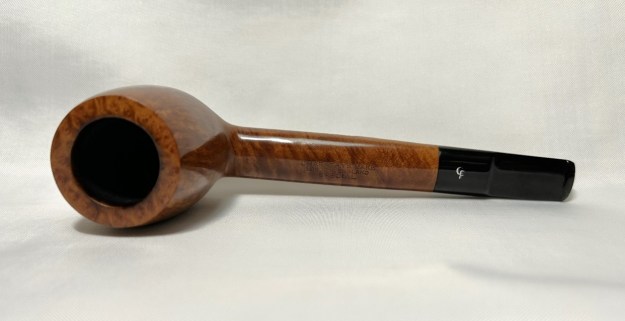
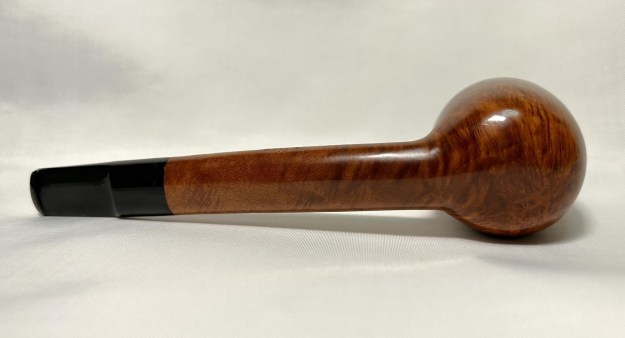
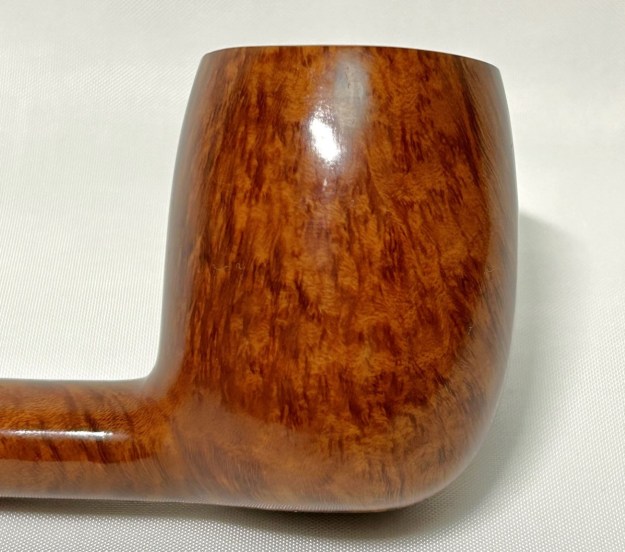
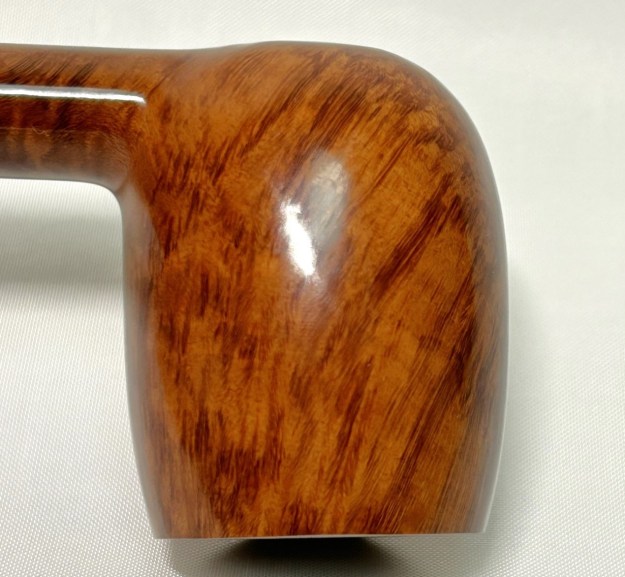
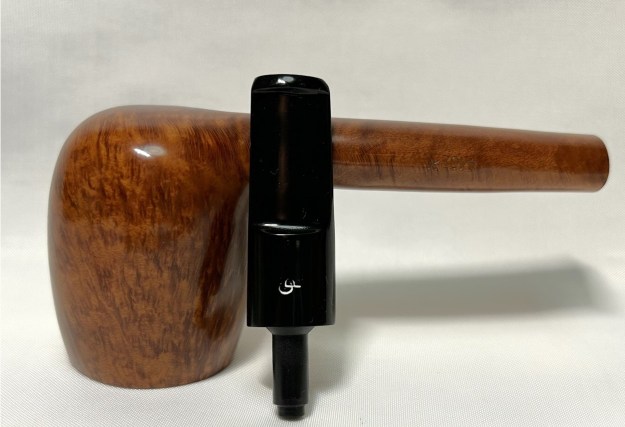
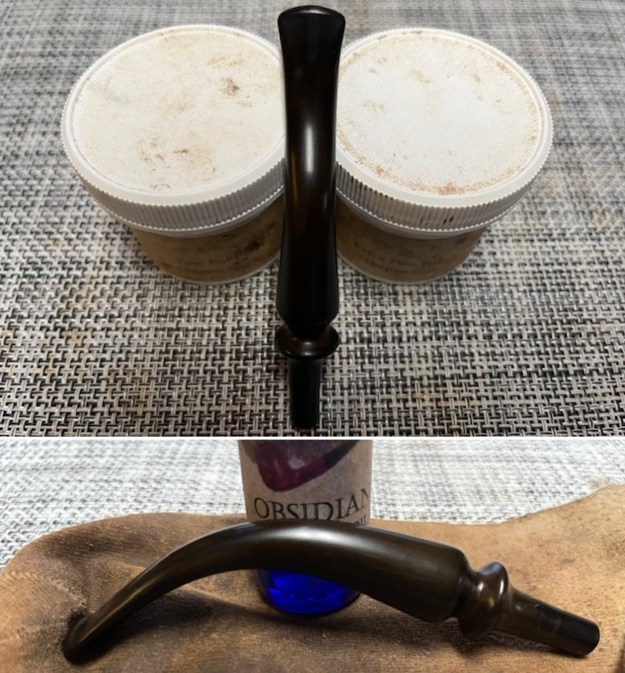 I am excited to finish this Gourd Calabash with a Briar Cup insert. I put the pipe back together and buffed it with Blue Diamond on the buffing wheel. I gave the bowl and the stem multiple coats of carnauba wax. I buffed the pipe with a clean buffing pad to raise the shine and hand buffed it with microfiber cloth to deepen the shine. It is fun to see what the polished bowl looks like with the rusticated gourd and the polished black, fancy turned vulcanite stem was beautiful. This Gourd Calabash with a Briar Bowl is nice looking and the pipe feels great in my hand. It is light and well balanced. Have a look at it with the photos below. The dimensions are Length: 7 ½ inches, Height: 4 inches, Outside diameter of the bowl: 2 ½ inches, Chamber diameter: 7/8 of an inch. The weight of the pipe is 3.77 ounces/106 grams. It is a beautiful pipe and one that will be staying in my collection for the time being. Thanks for walking through the cleanup with me as I worked over this pipe.
As always, I encourage your questions and comments as you read the blog. Thanks to each of you who are reading this blog. Remember we are not pipe owners; we are pipe men and women who hold our pipes in trust until they pass on into the trust of those who follow us. 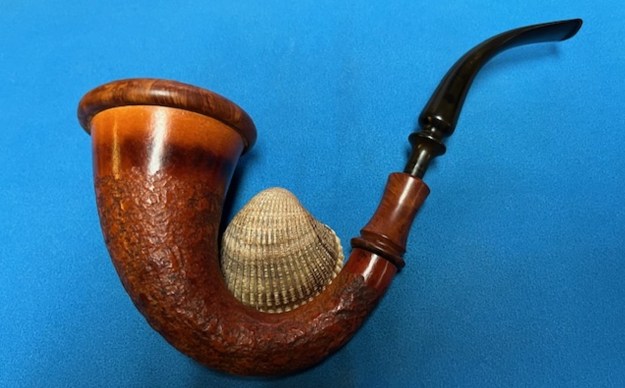









 rebornpipes