Blog by Steve Laug
The next pipe I chose to work on came from a lot of 11 pipes I purchased from a lady in Regina, Saskatchewan. She had found them in a house she bought and wanted to know if I wanted them. We struck a deal, I paid for the pipes and shipping and the box arrived while I was travelling in Europe. In the box were 5 Stanwells, 1 Soren Freehand, 1 Calabash with a Briar Bowl, 1 Nording Freehand, 1 Italian Made Bertenetti, 1 Rhodesian with a banded cracked shank, and 1 Brigham.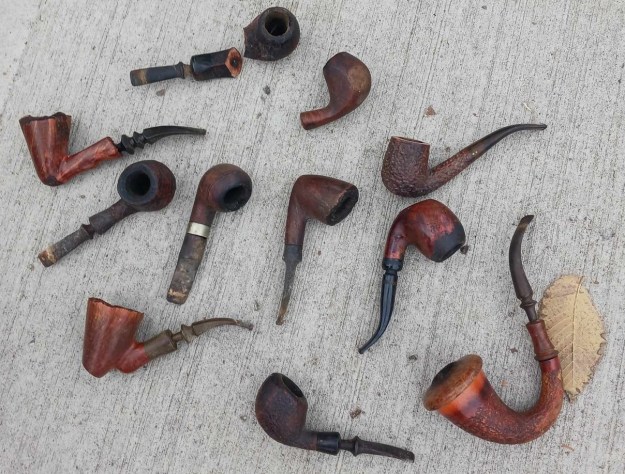
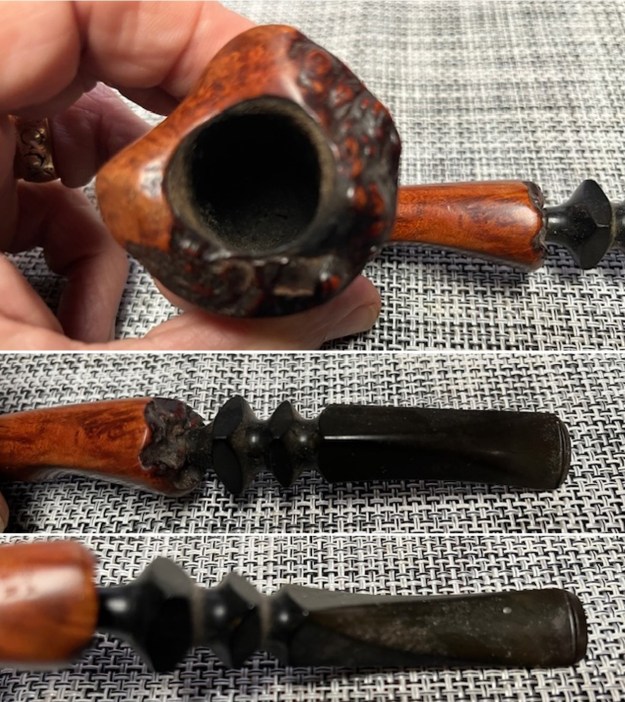
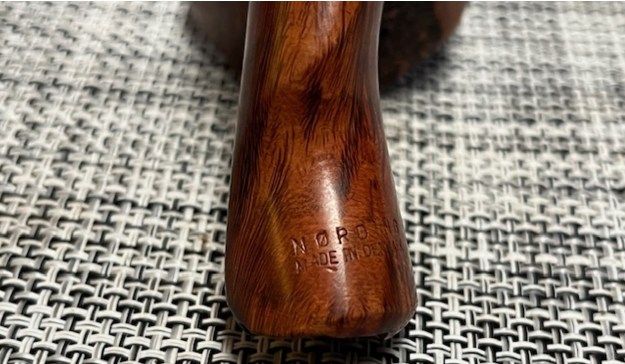
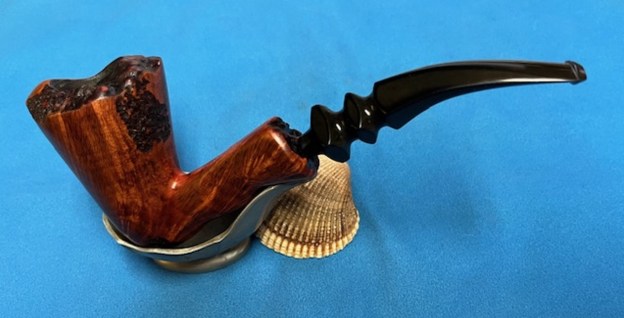
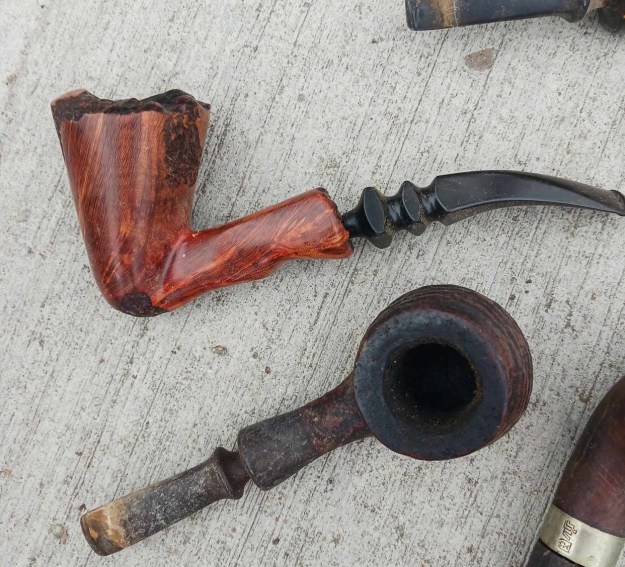 The pipe on the table is a mixed finish (rusticated and smooth) freehand from the lot above. The pipe is stamped on the underside of the shank and reads Nording [over] Made in Denmark. There was a thick cake in the bowl, cobwebs in the bottom and on the bowl walls and some remnants of tobacco. There was a light lava overflow in the plateau of the rim top. The edges of the bowl were in good condition. The finish is dirty and dusty and there was some spotty varnish on the bowl and shank sides. The stem was oxidized on the top and underside. The stem had some light tooth marks and chatter on both sides. I took photos of the pipe before I started my cleanup work on it.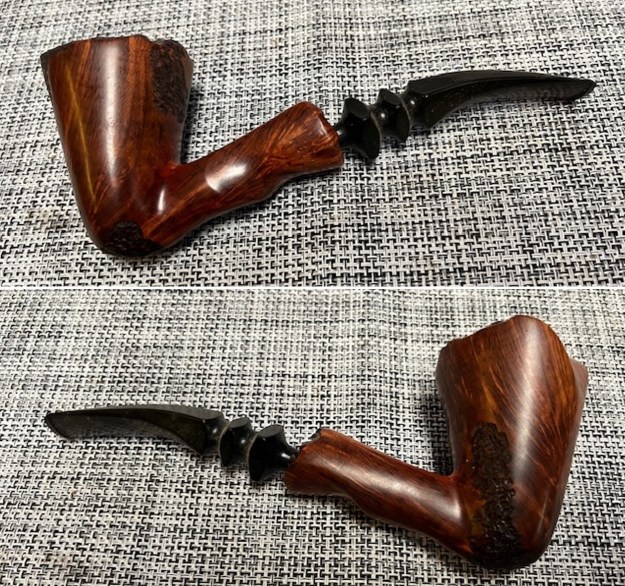
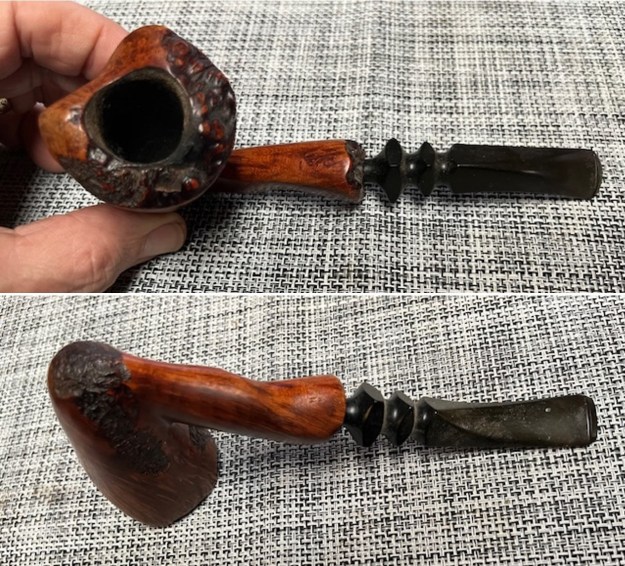 I took a close-up photo of the bowl and rim top to show the cake in the bowl. The rim top shows some thin lava spots on the smooth finish and in the plateau. The inner and outer edges of the bowl looked good. I took photos of the top and underside of the stem surface and button to show its general condition. It had some light tooth marks and chatter on both sides.
  The stamping on the underside of the shank is clear and readable as noted above.
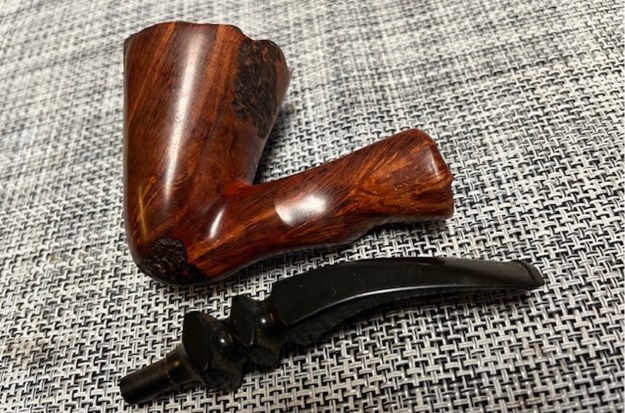
  I removed the stem from the shank and was not surprised to see the Brigham Hard Maple filter in the metal tenon.
  Before I started my work on the pipe I wanted to learn more about where this pipe fit into the Nording lines so I turned to the first of two sites that I always check to gather information on a brand. I turned first to Pipedia (https://pipedia.org/wiki/N%C3%B8rding). Nording’s were exclusively freehand shapes, graded from A, B, C, D, up to its highest grade, extra. Later an “F” grade was added—less expensive than the “A.” I could find no other information on the rest of the stamping on the pipe.
I did find a great collage of photos of Erik Nording that I have included below. 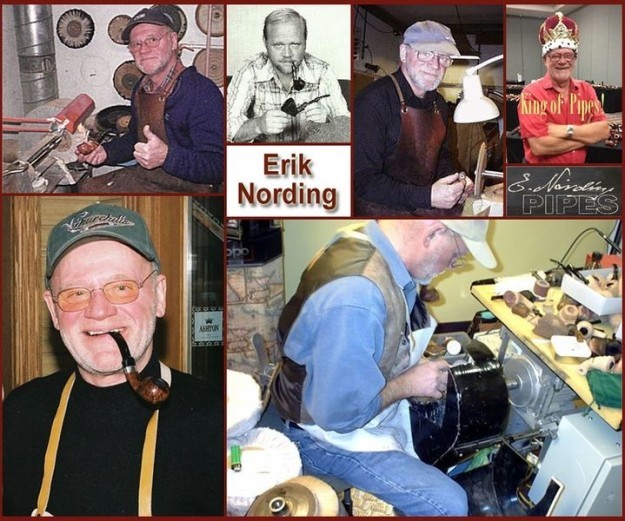 I turned to the second information site – Pipephil’s (http://www.pipephil.eu/logos/en/logo-n2.html) did not find any more helpful information on the Nording Made in Denmark stamp.
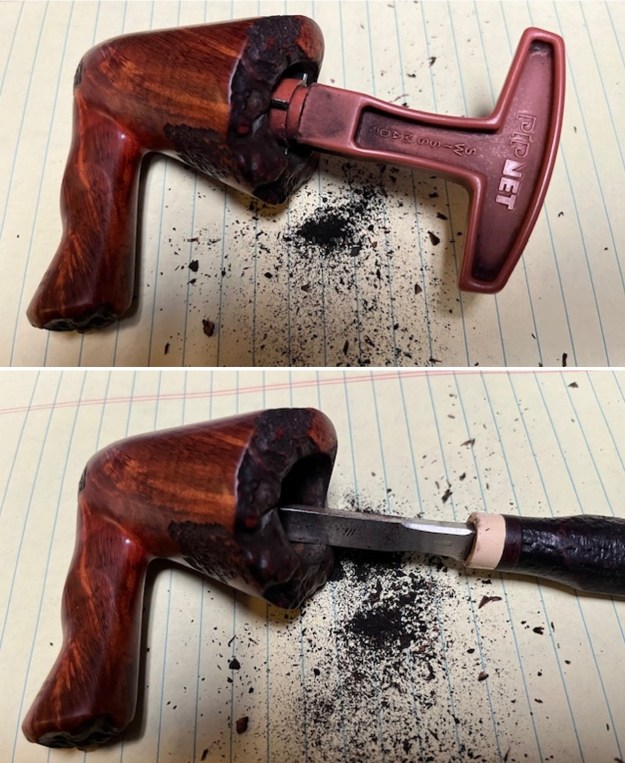
I began my work by wiping the finish down with acetone to remove the varnish coat on the briar. It was spotty and uneven so wiping it down removed the remainder of the coat.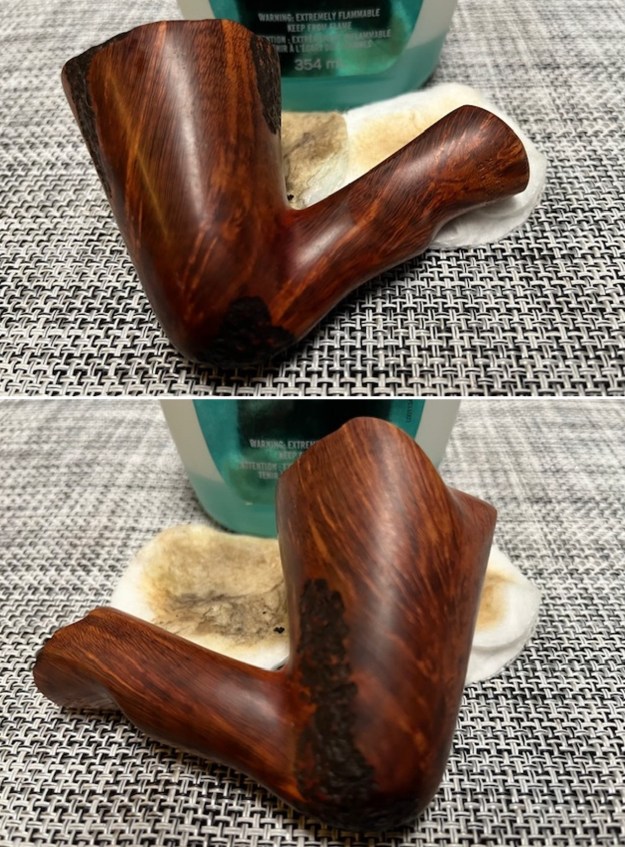 I reamed the bowl with a PipNet pipe reamer using the third cutting head to take the cake back to bare briar. I cleaned up the reaming with a Savinelli Fitsall Pipe Knife. I sanded the walls with a piece of 220 grit sandpaper wrapped around a dowel to smooth them out.
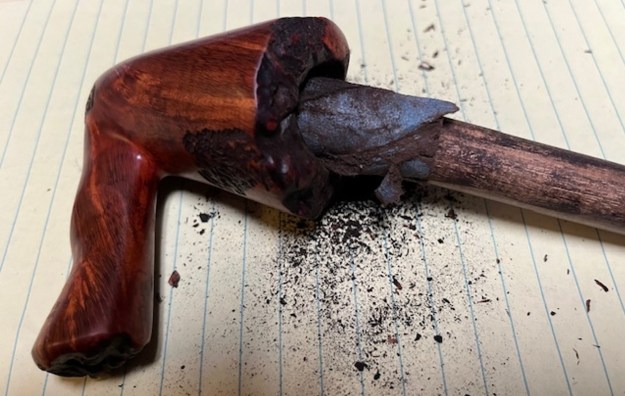 I scrubbed out the internals with 99% isopropyl alcohol, pipe cleaners and cotton swabs until the shank and the airway into the bowl and the stem were clean.
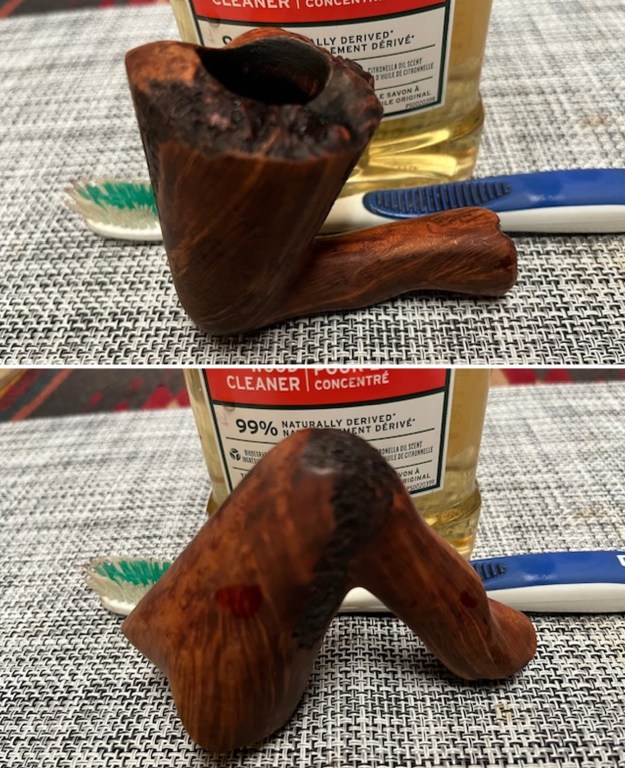
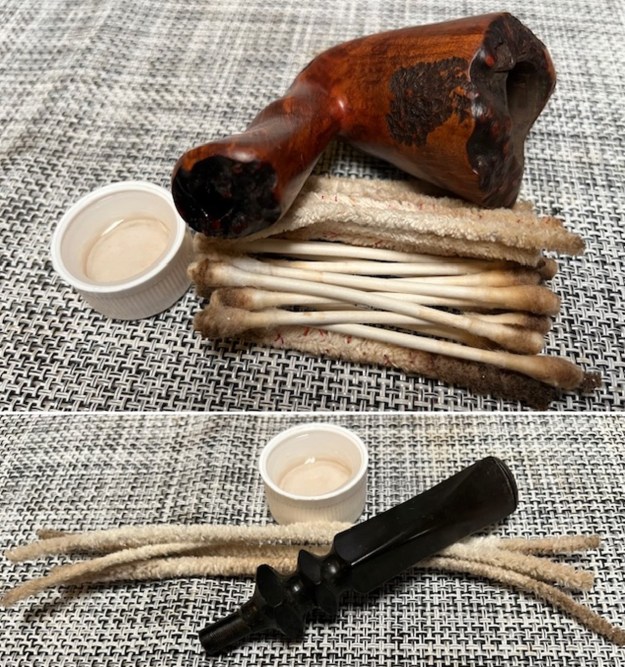 I scrubbed the exterior of the bowl and the rim a tooth brush and undiluted Murphy’s Oil Soap. It looked much better and the dust and debris was gone.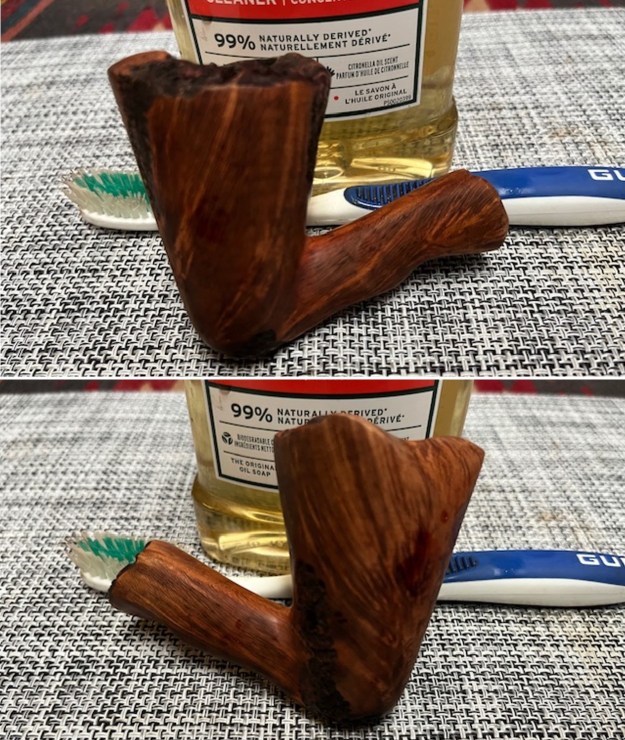
 I polished the bowl and the rim top with 1500-12000 grit micromesh sanding pads. I wiped it down with a damp cloth after each pad. The rim top took on a deep shine that highlighted the grain.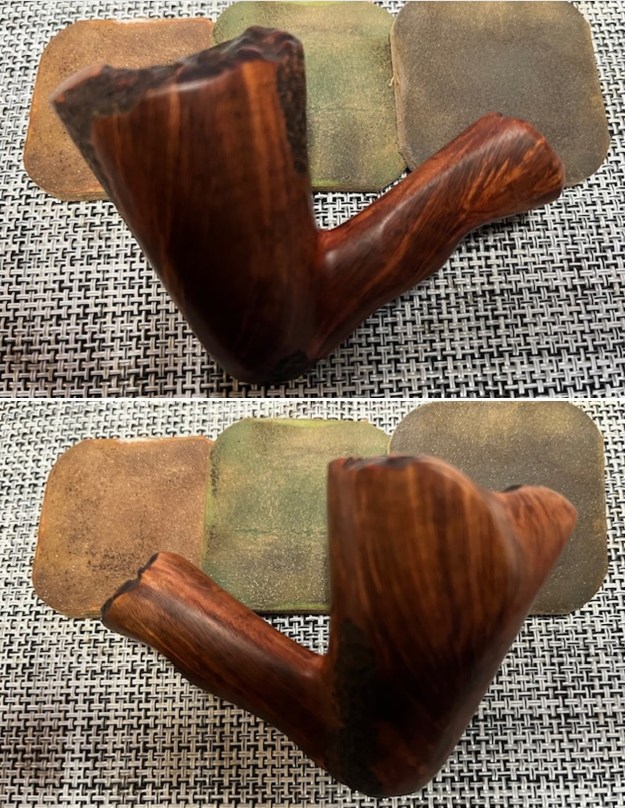
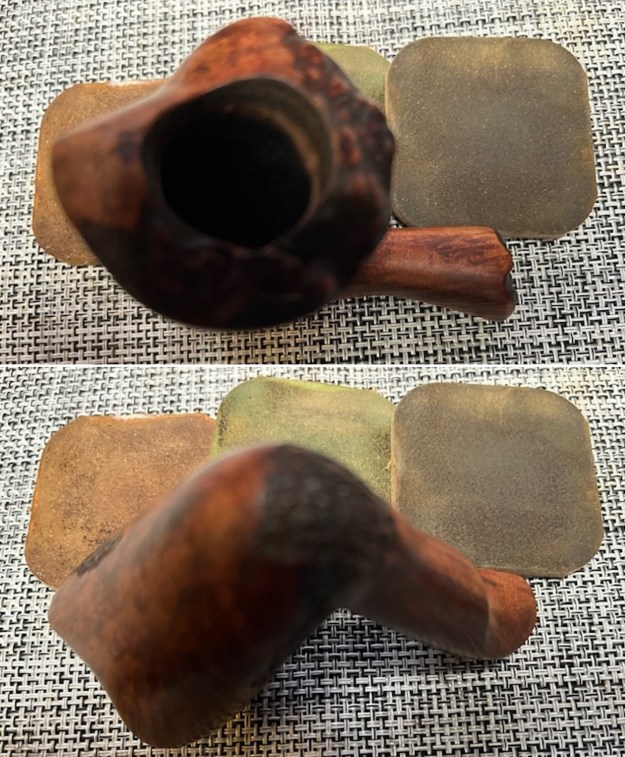
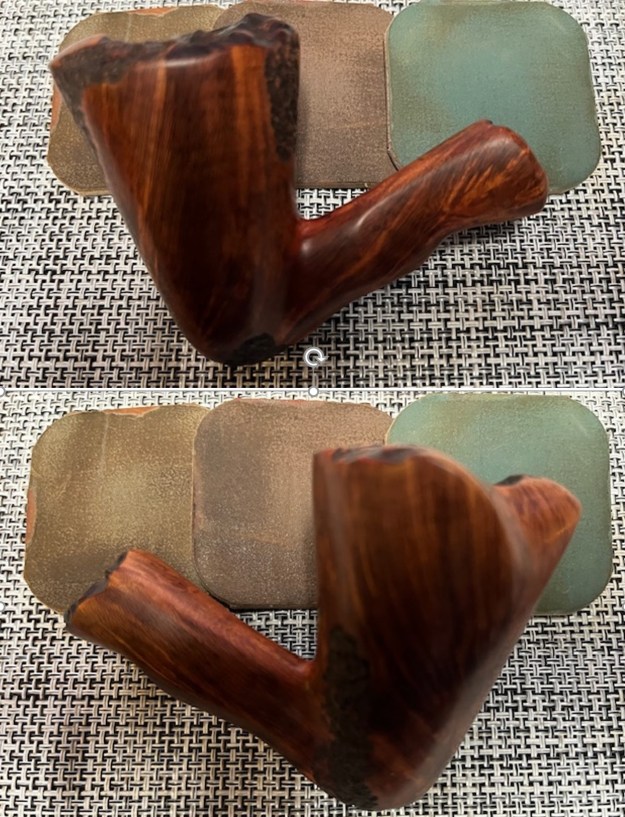
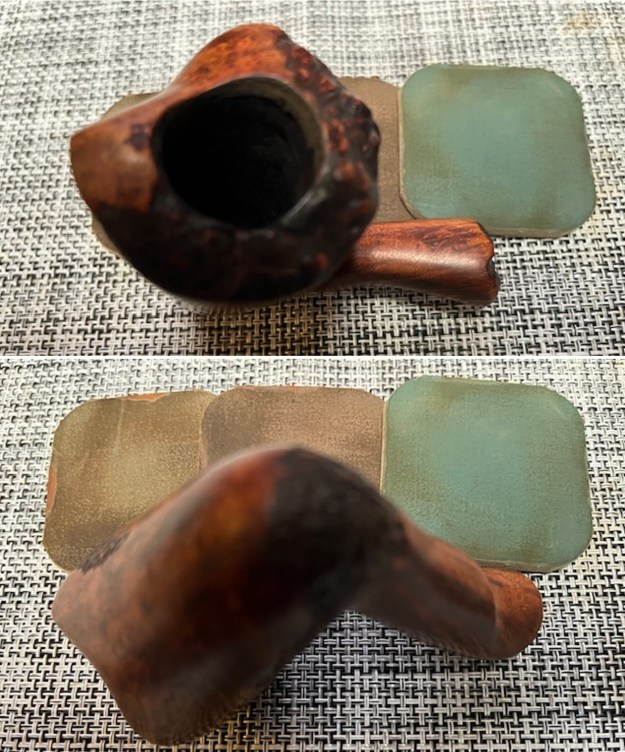
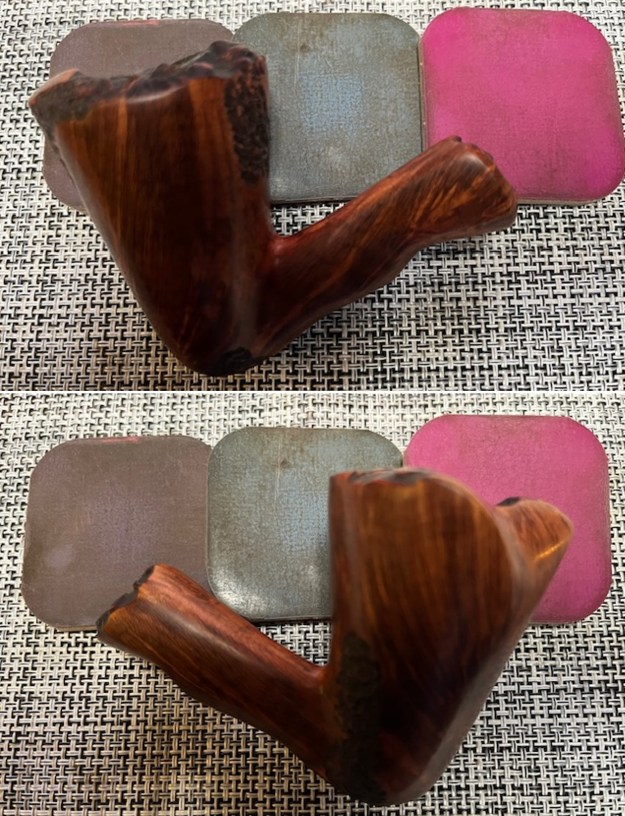
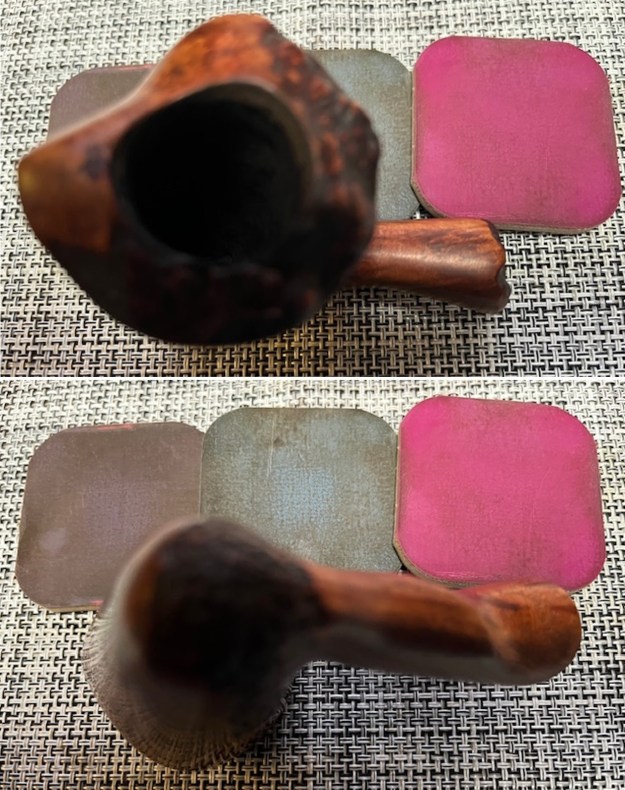 I worked some Before & After Restoration Balm into the surface of the briar with my fingertips and a horsehair shoe brush to clean, enliven and protect the briar. I let the balm sit for 15 minutes and then buffed with a cotton cloth to raise the shine. The photos show the bowl at this point in the restoration process.
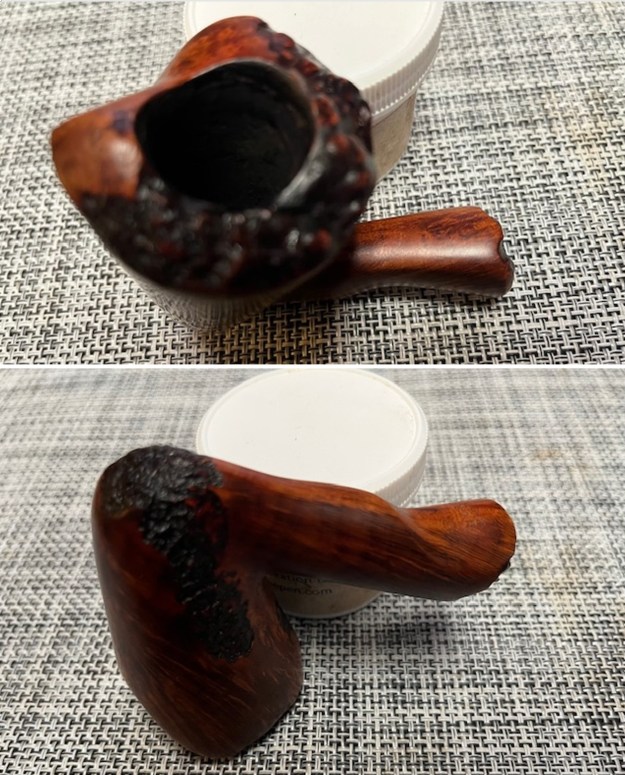
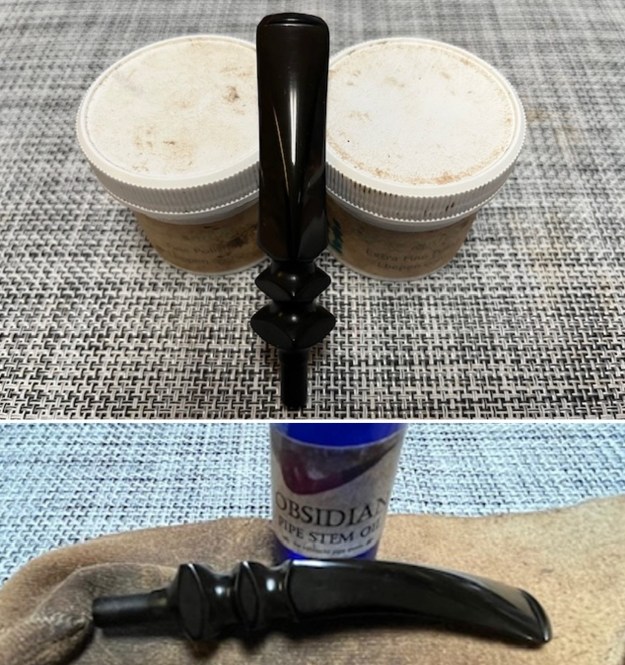
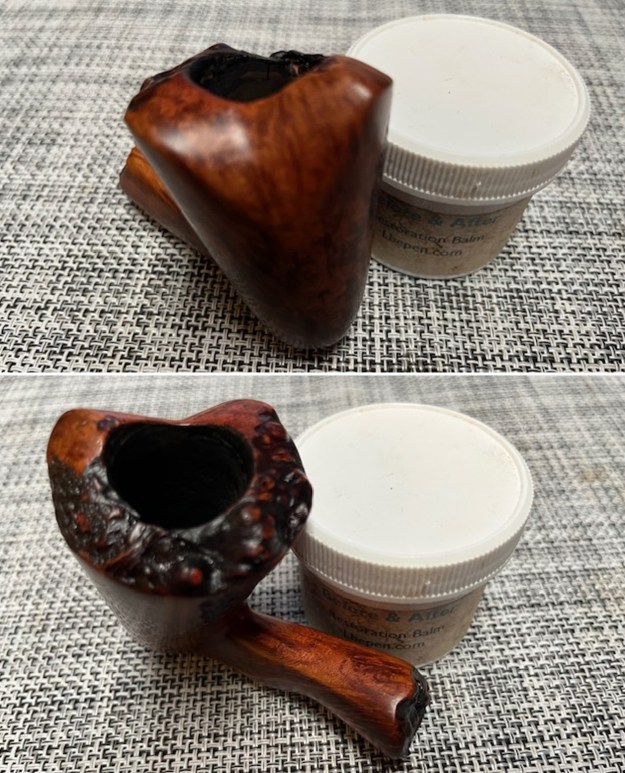 With that done, the bowl was finished other than the final buffing. I set it aside and turned my attention to the stem. I polished the stem with micromesh sanding pads – wet sanding with 1500-12000 grit sanding pads. I wiped it down after each sanding pad with Obsidian Oil.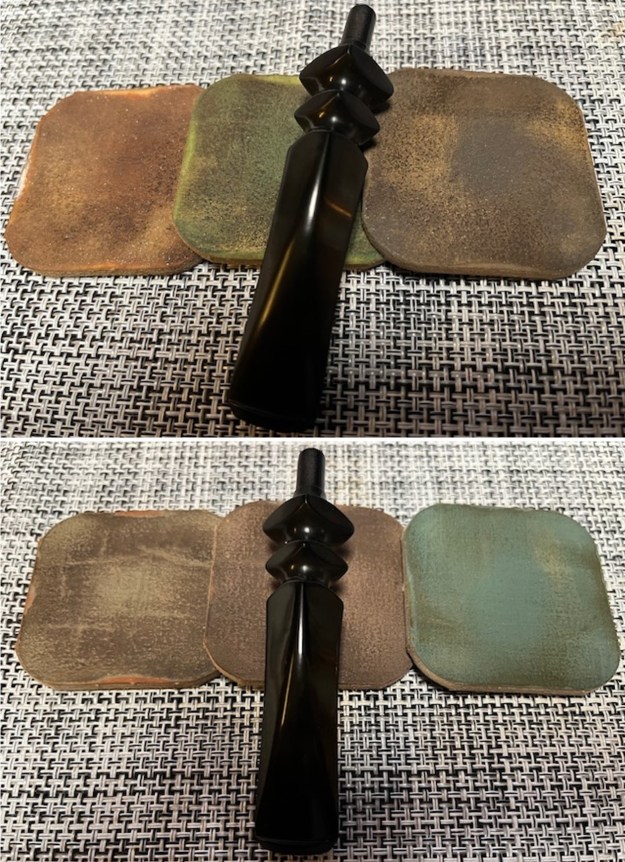
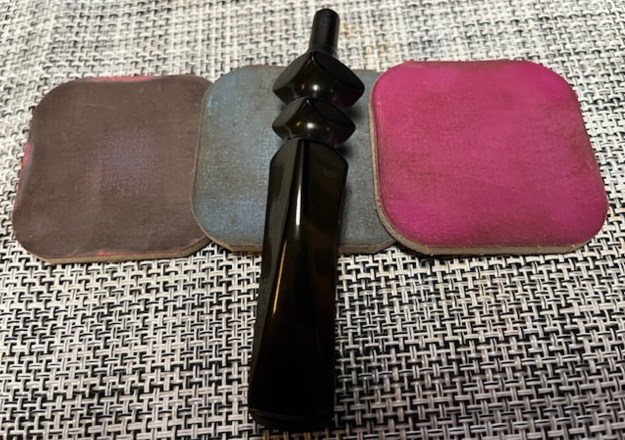 I finished polishing it with Before & After Pipe Stem Polish – both Fine and Extra Fine and buffed it off with a cotton cloth. I gave it a coat of Obsidian Oil to preserve and protect the stem.
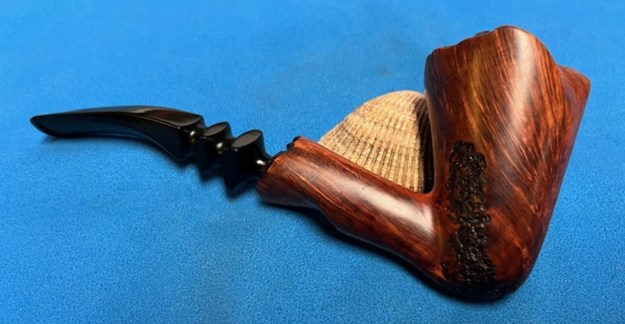
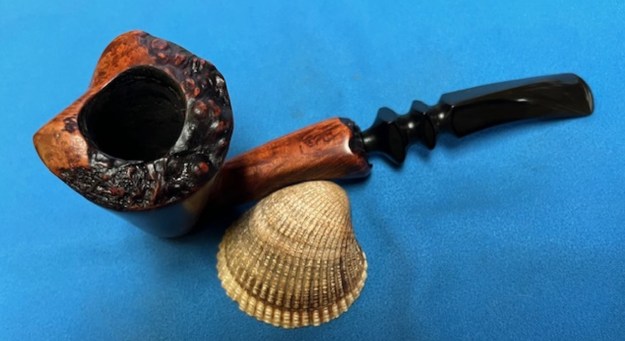
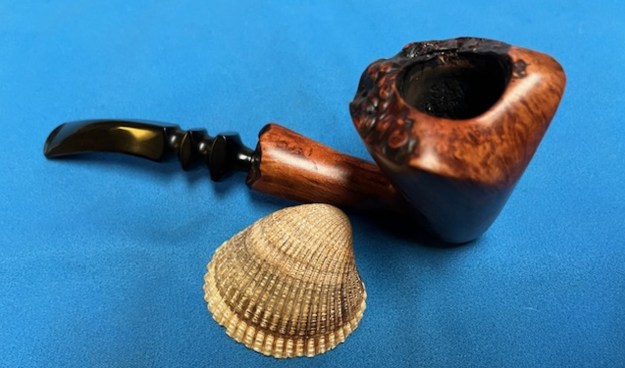
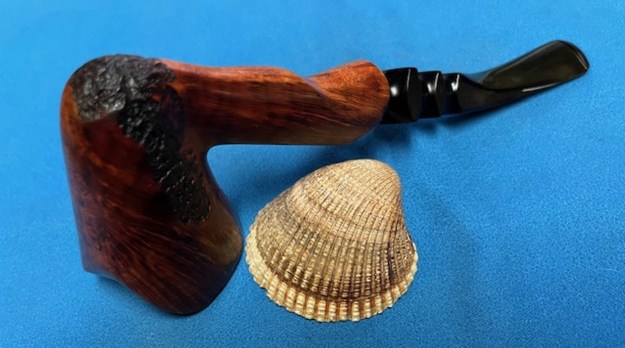
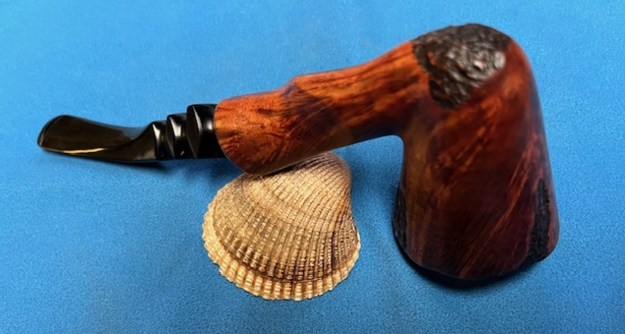
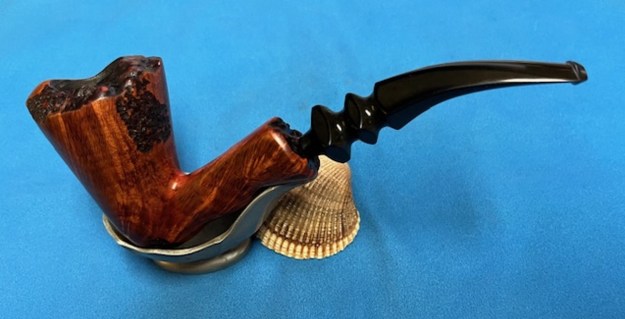
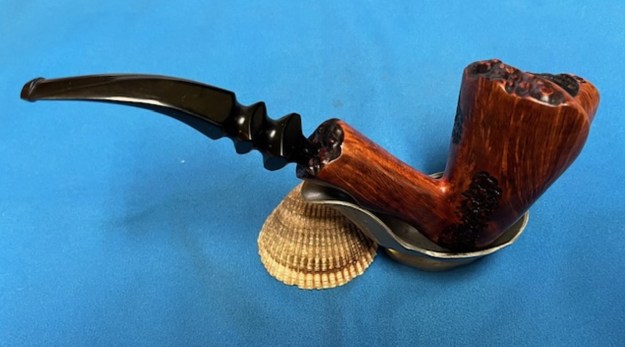
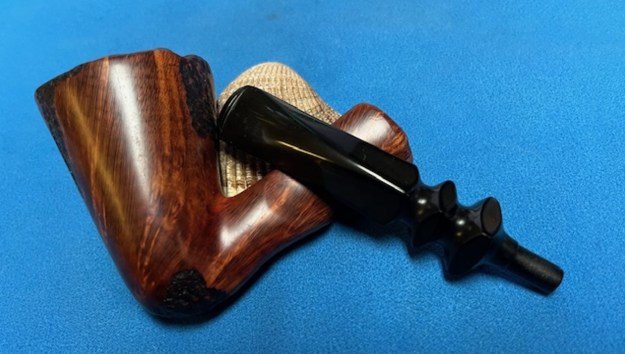
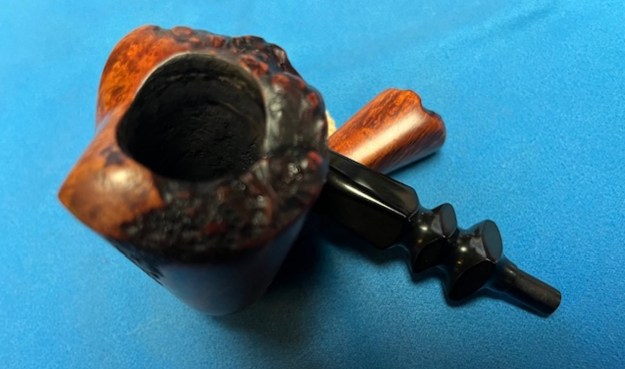
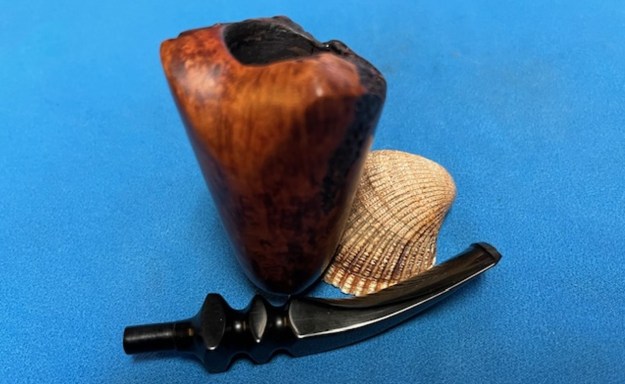
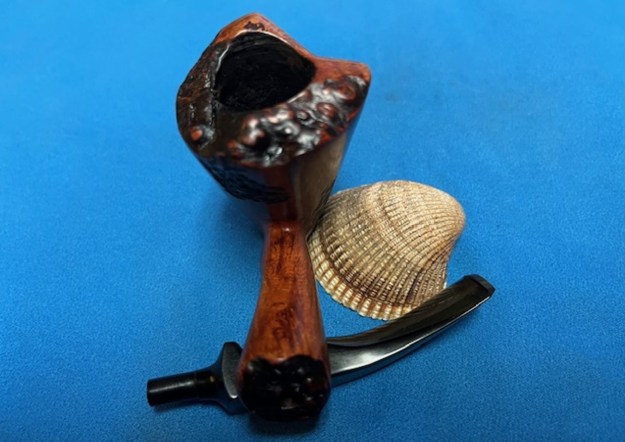
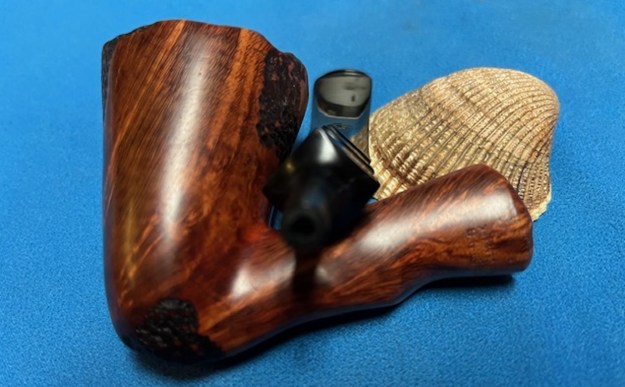
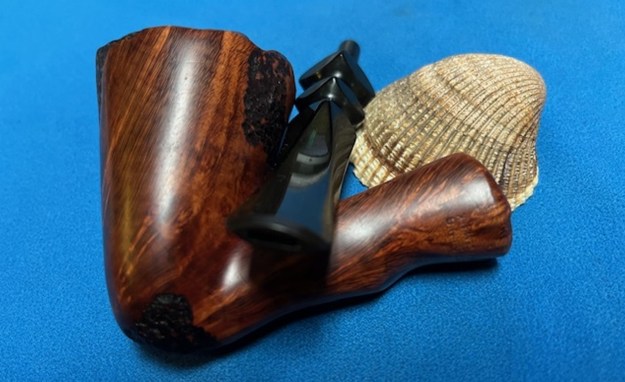
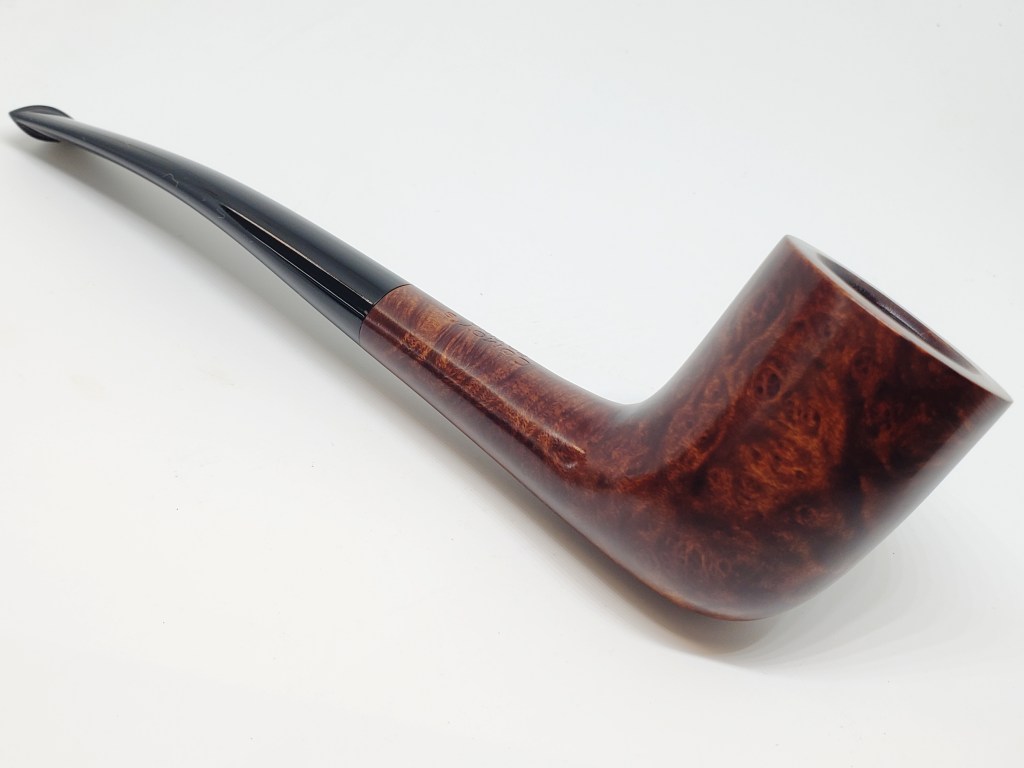
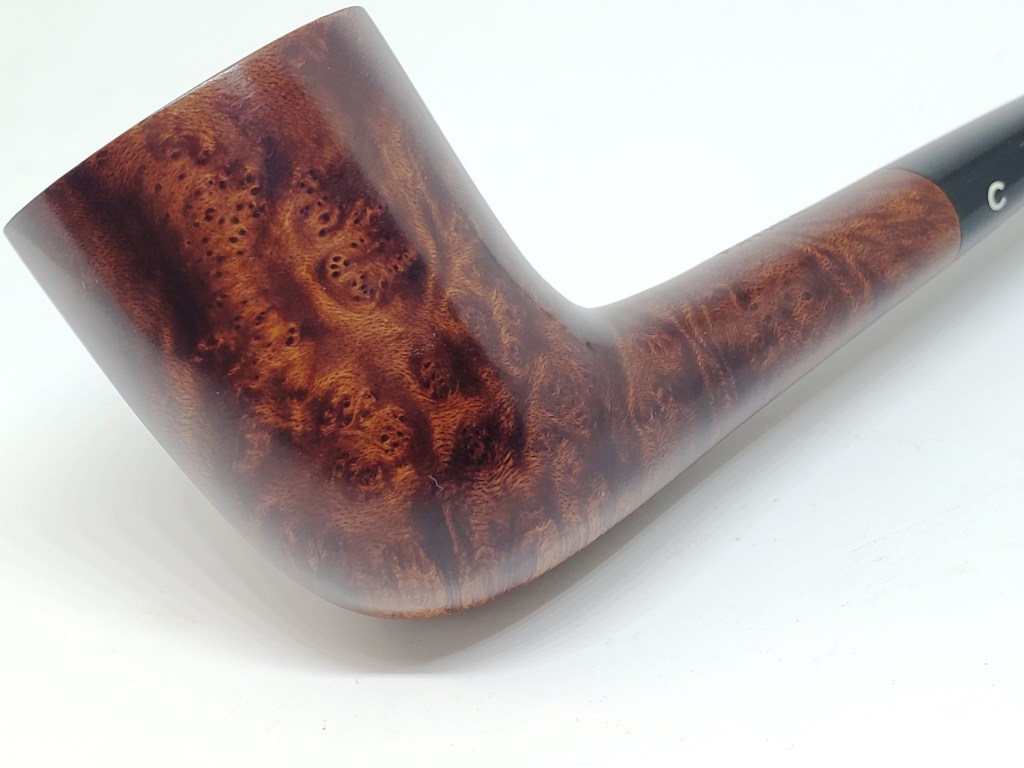
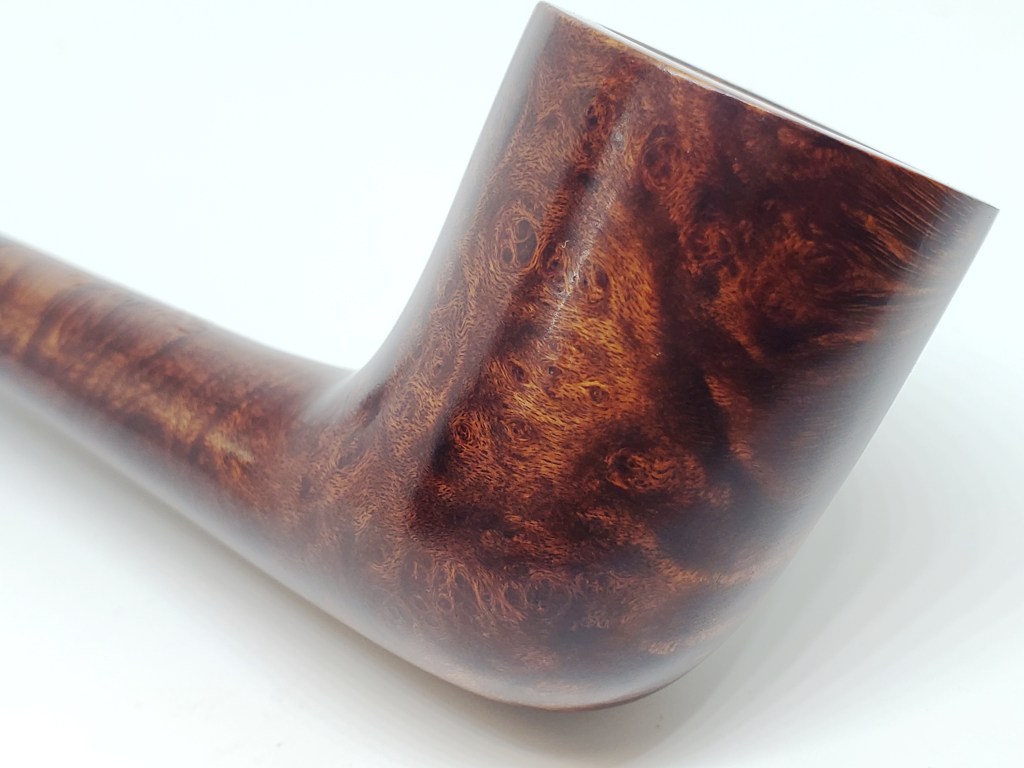
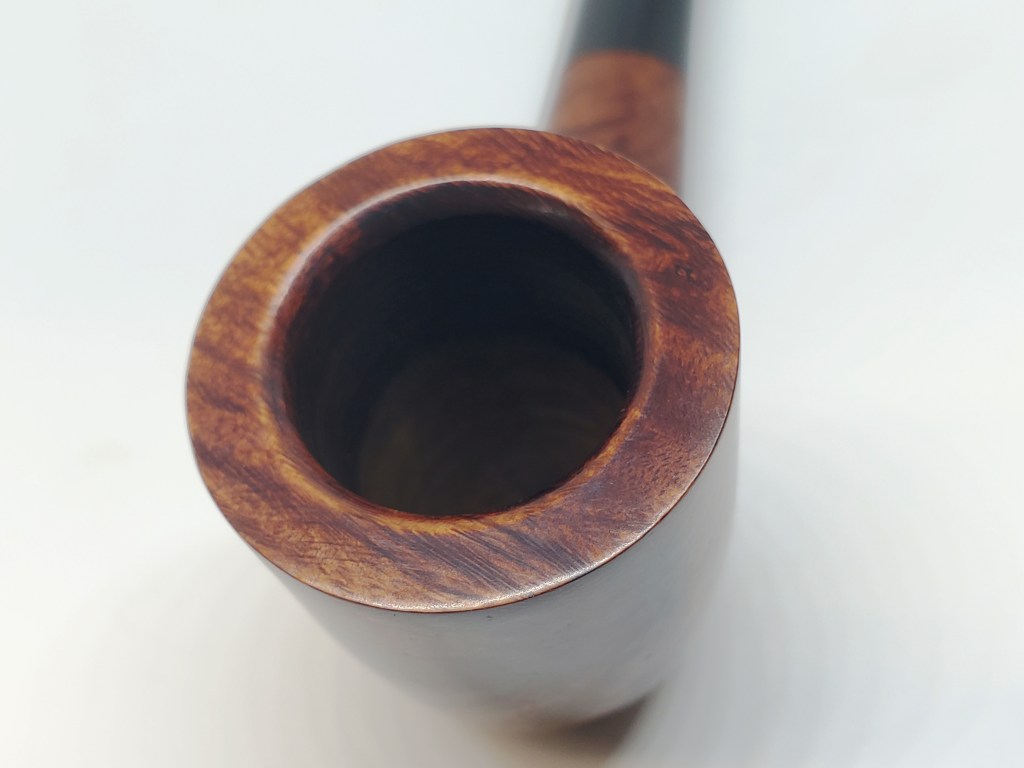
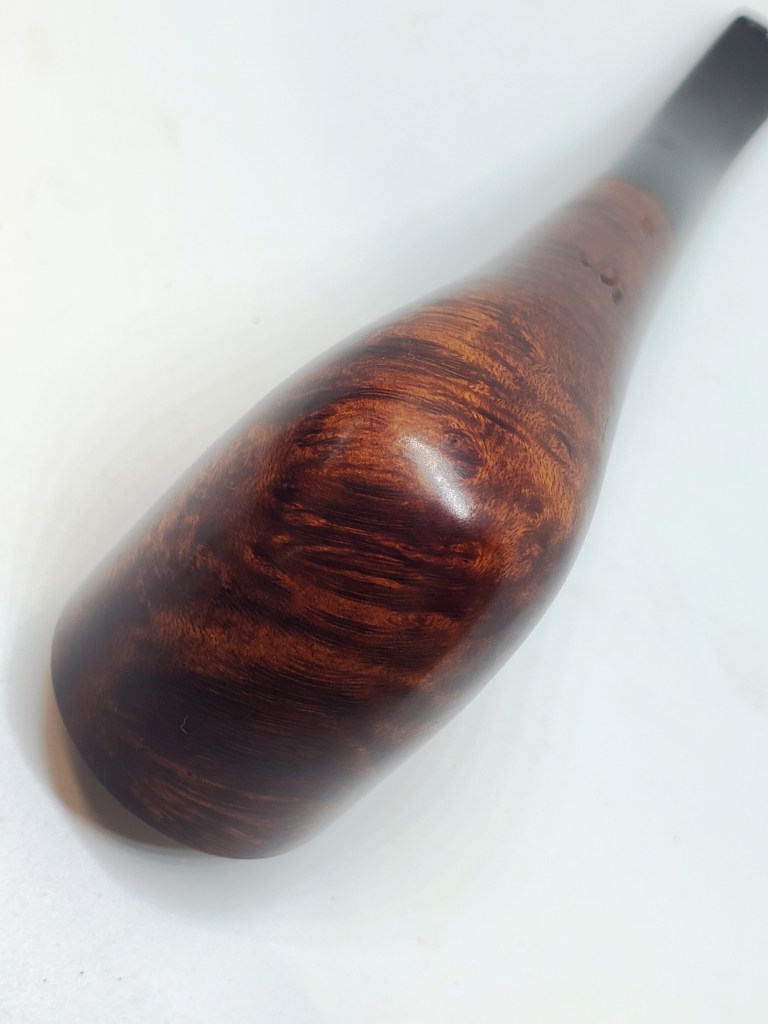
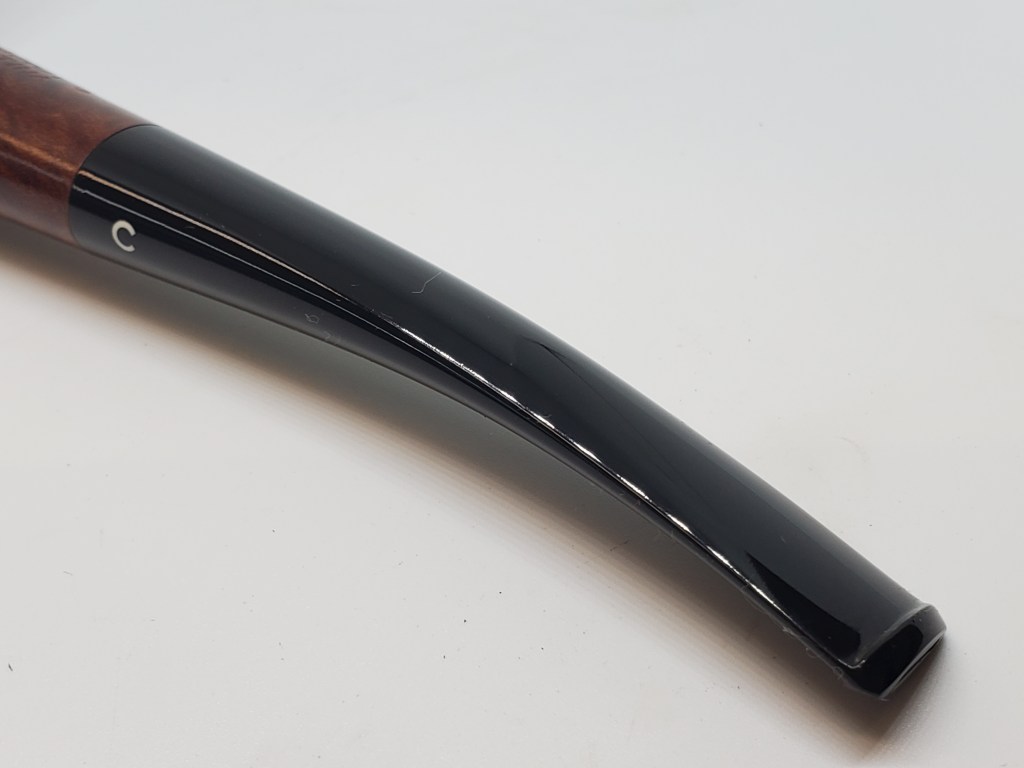
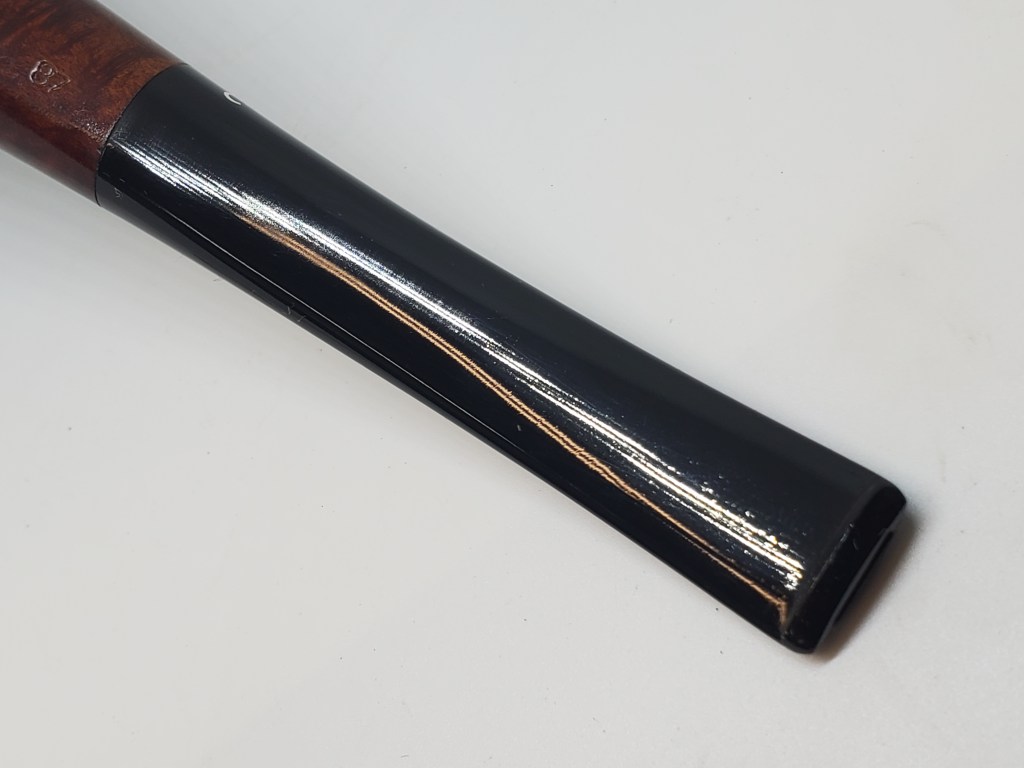
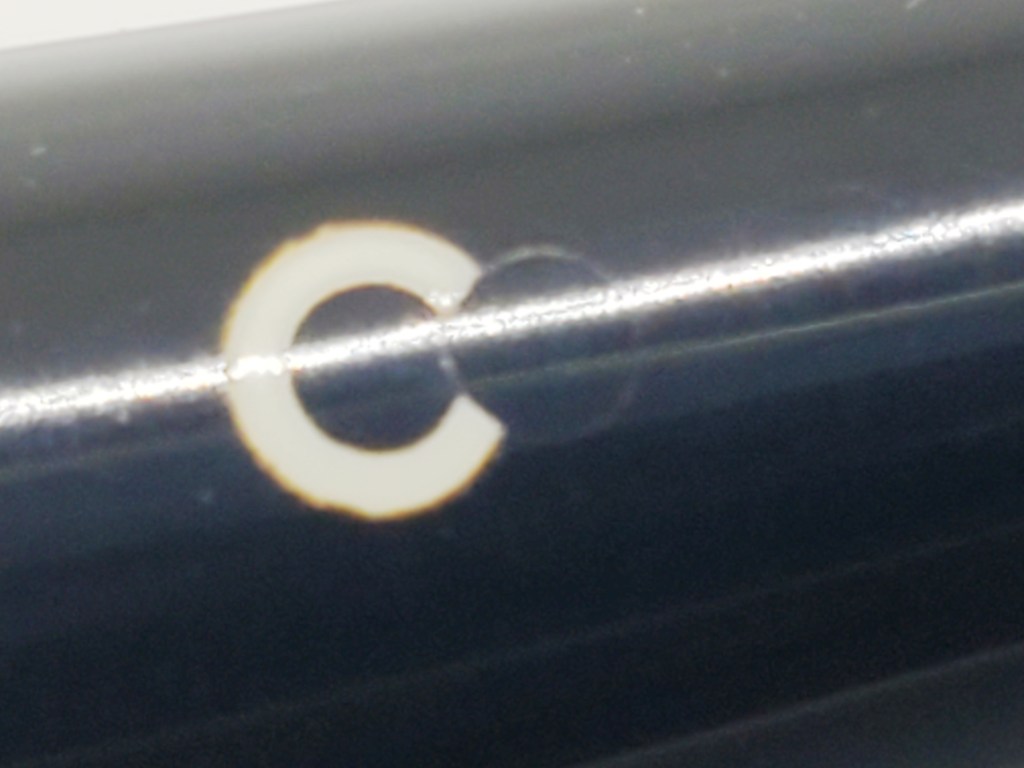
 I am excited to finish this Nording Made in Denmark Freehand. I put the pipe back together and buffed it with Blue Diamond on the buffing wheel. I gave the bowl and the stem multiple coats of carnauba wax. I buffed the pipe with a clean buffing pad to raise the shine and hand buffed it with microfiber cloth to deepen the shine. It is fun to see what the polished bowl looks like with the mixed smooth, rusticated and plateau finish. Added to that the polished black, fancy turned vulcanite stem was beautiful. This mixed grain on the Nording Made in Denmark Freehand is nice looking and the pipe feels great in my hand. It is light and well balanced. Have a look at it with the photos below. The dimensions are Length: 6 ½ inches, Height: 2 ¾ inches, Outside diameter of the bowl: 1 ¾ inches, Chamber diameter: ¾ of an inch. The weight of the pipe is 1.90 ounces/54 grams. It is a beautiful pipe and one that will be on the rebornpipes store in the Danish Pipe Makers section. If you are interested in adding it to your collection let me know. Thanks for walking through the cleanup with me as I worked over this pipe.
As always, I encourage your questions and comments as you read the blog. Thanks to each of you who are reading this blog. Remember we are not pipe owners; we are pipe men and women who hold our pipes in trust until they pass on into the trust of those who follow us.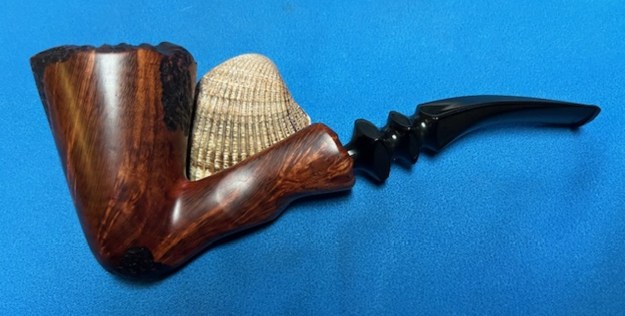






 rebornpipes