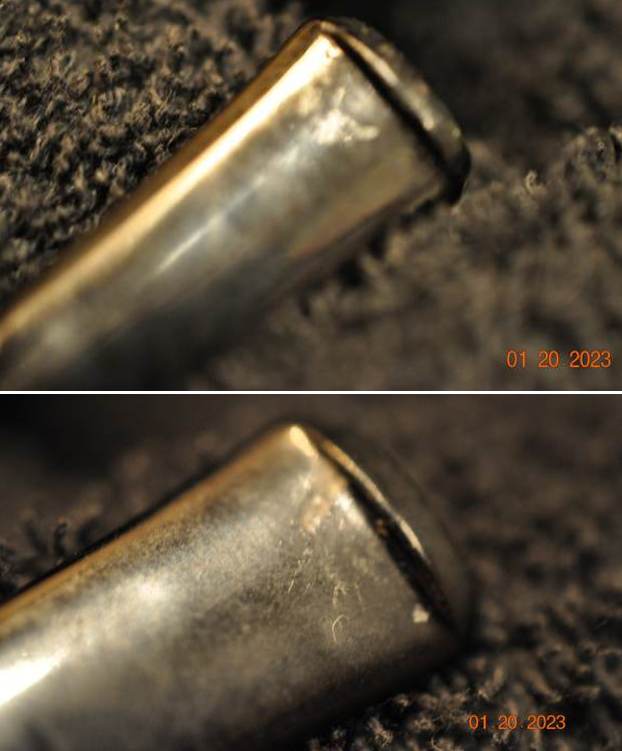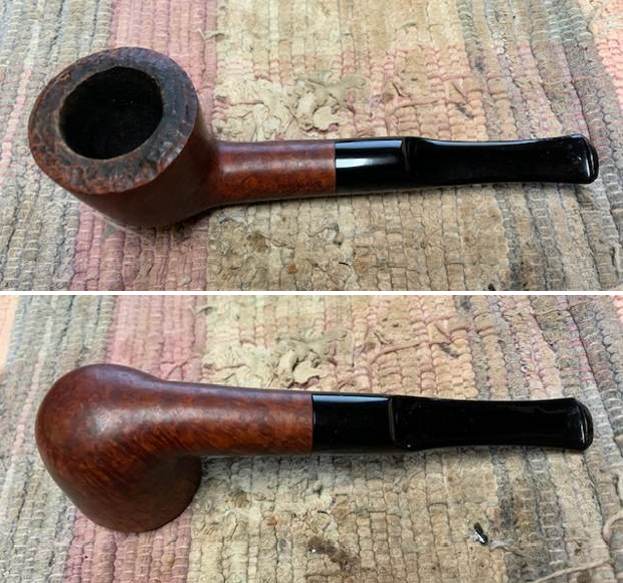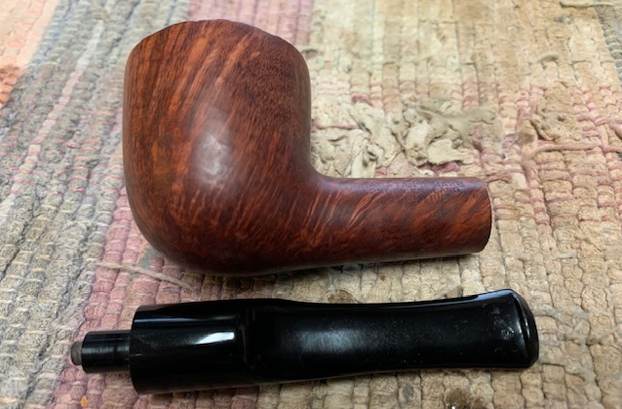
Monthly Archives: June 2023

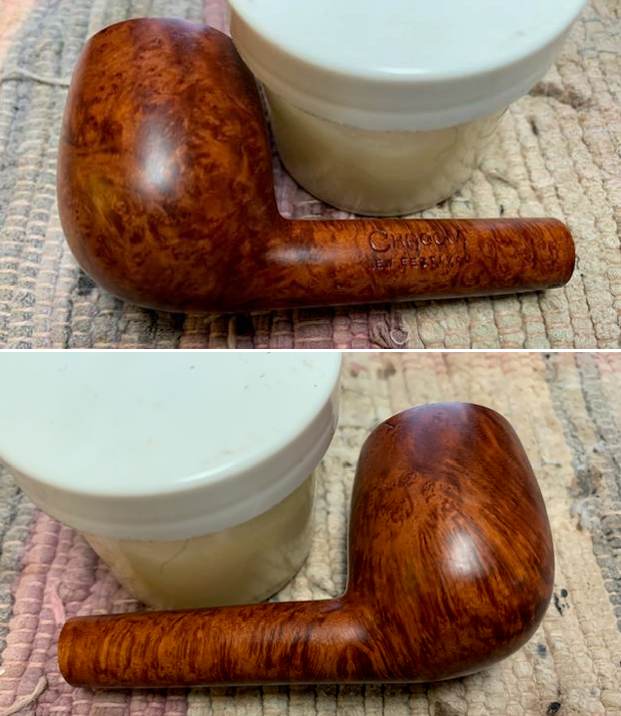
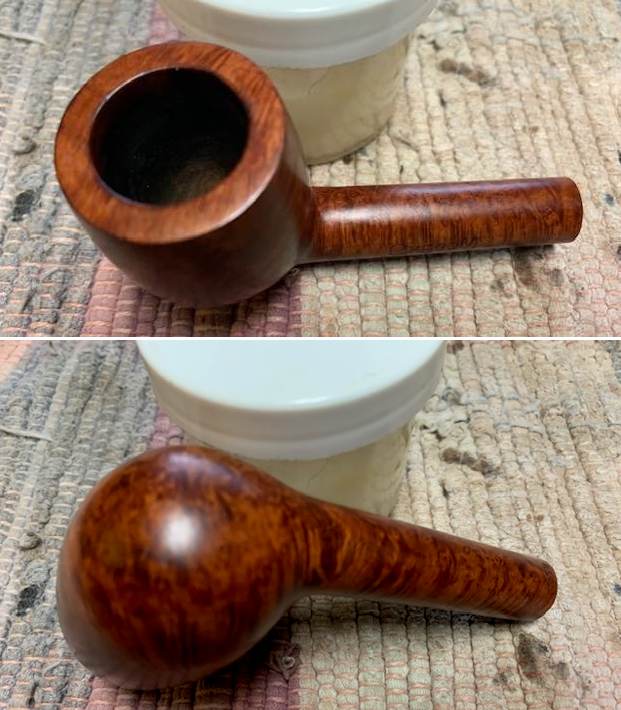
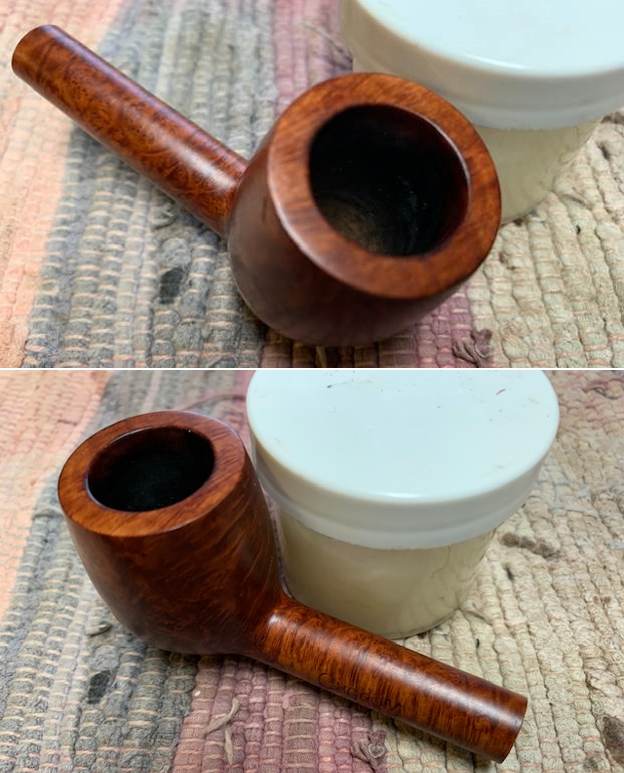
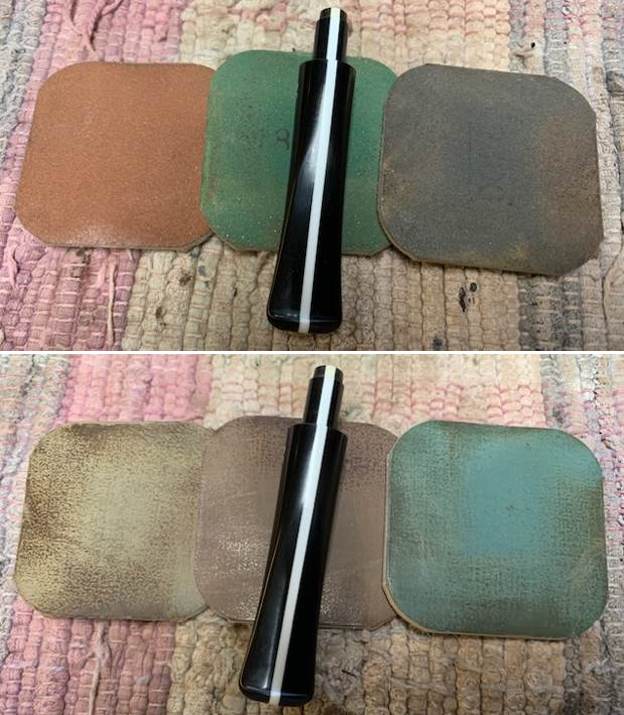
Rebirth of a Charatan Executive Hand Made in City of London Dublin


Blog by Steve Laug

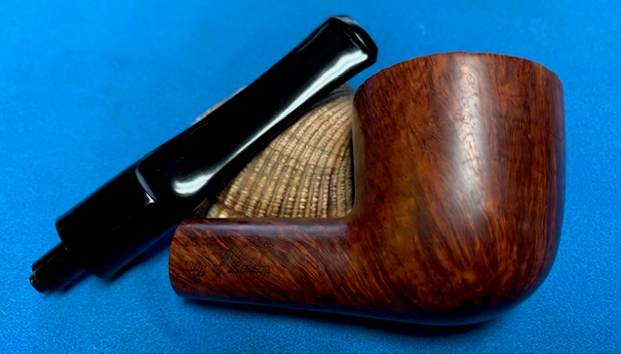
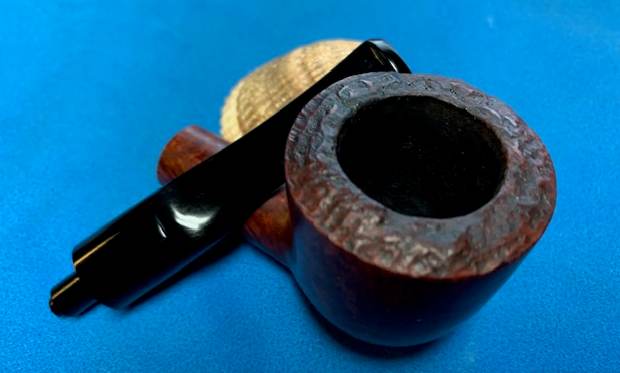
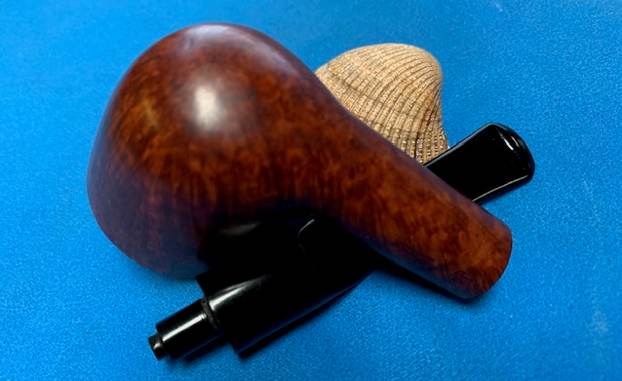
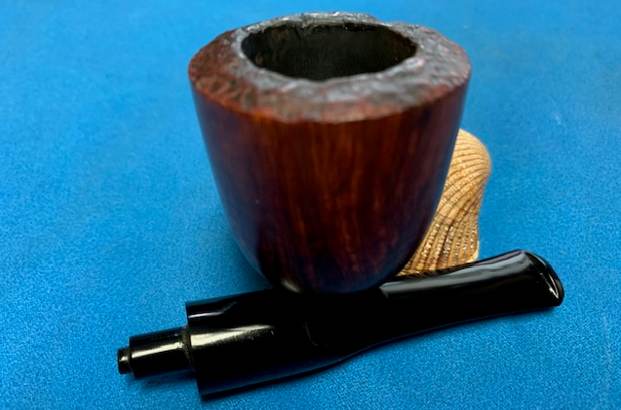
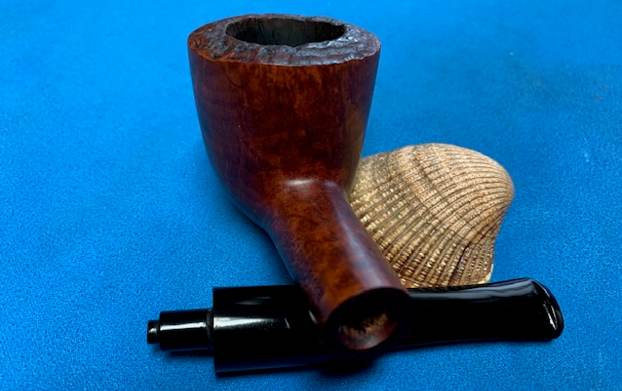
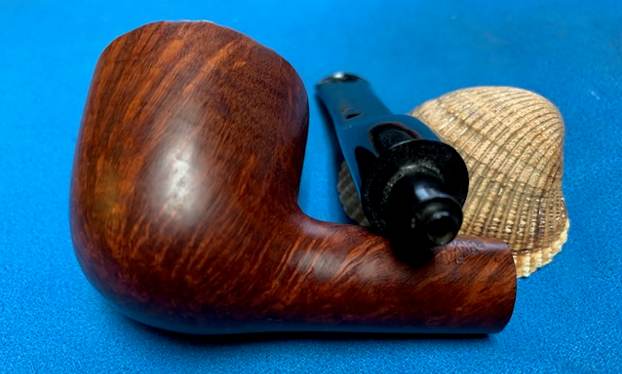
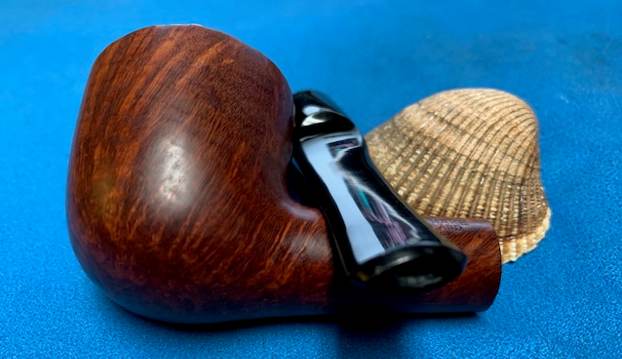
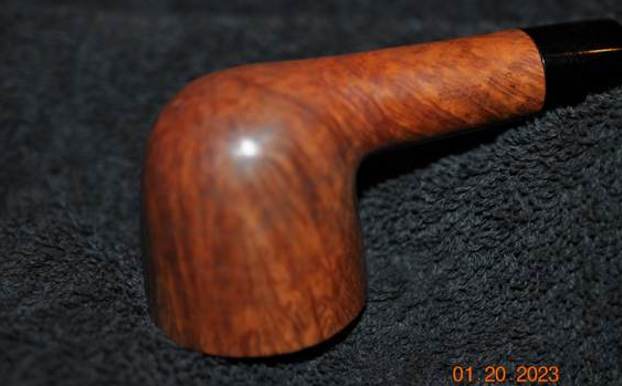
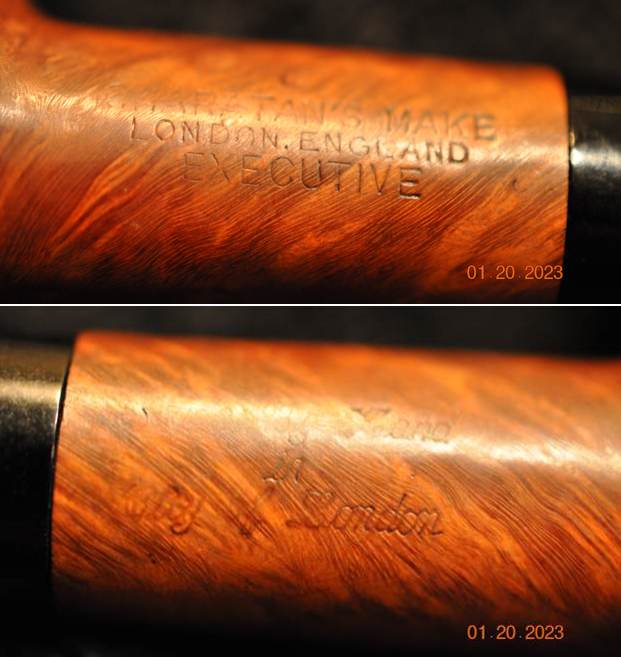
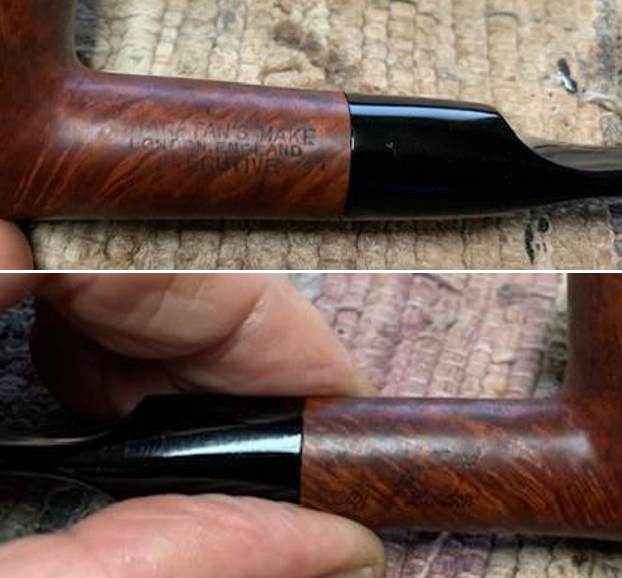
The next pipe I have chosen to work on is a nice looking straight grain Dublin with a plateau rim top and a replacement acrylic stem. We picked it up on 03/30/2022 from an estate in Plano, Texas, USA. The stamping on the left side of the shank read Charatan’s Make [over] London, England [over] Executive. On the right side it is stamped Made by Hand [over] in [over] City of London. The acrylic, black saddle stem is a replacement. The pipe is a nice looking pipe with a medium brown finish that highlights the straight grain on the bowl sides and shank. The rim top has a plateau style rustication. The acrylic stem works very well with the bowl. It is light weight and comfortable pipe to hold. Jeff sent me the following photos of the pipe to show the condition it was in before he worked on it.

This is what I saw when I looked over the pipe.

  1. The finish shows darkening of hand oils and some thick grime ground into the finish around the bowl sides. The medium brown stain is dull and the grain is obscured around the bowl sides and shank
  2. The plateau style rusticated rim top was very dirty with darkening and lava ground into the rustication to point that it was almost smooth. The inner edge of the bowl was unclear but seemed to show some damage under the lava coat.
  3. There was a moderate cake in the bowl. The bowl itself was very dark and dirty. Once the bowl was cleaned up we could confirm the condition of the bowl walls.
  4. The acrylic taper stem was filthy and had tooth marks and chatter on both sides. There were some deeper tooth marks on the underside ahead of the button.
  5. There is no marking or logo on the stem but it is a well fit replacement stem.

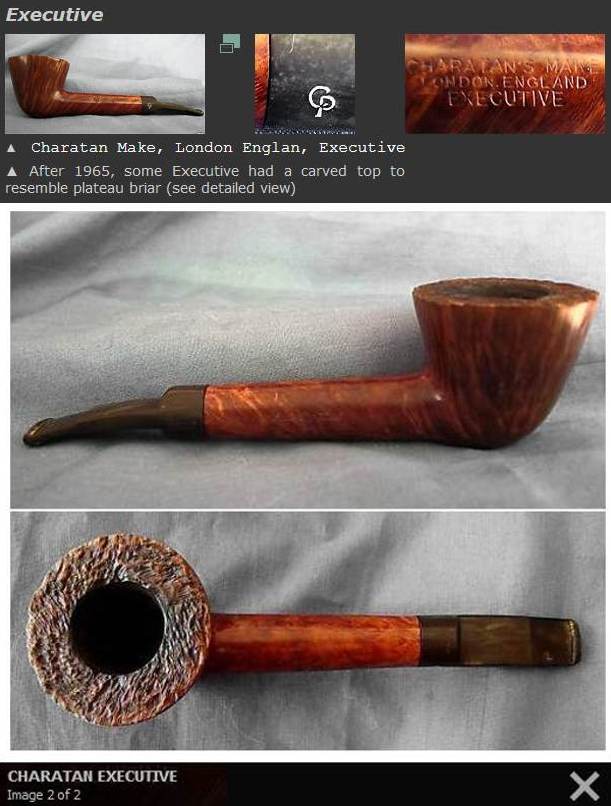
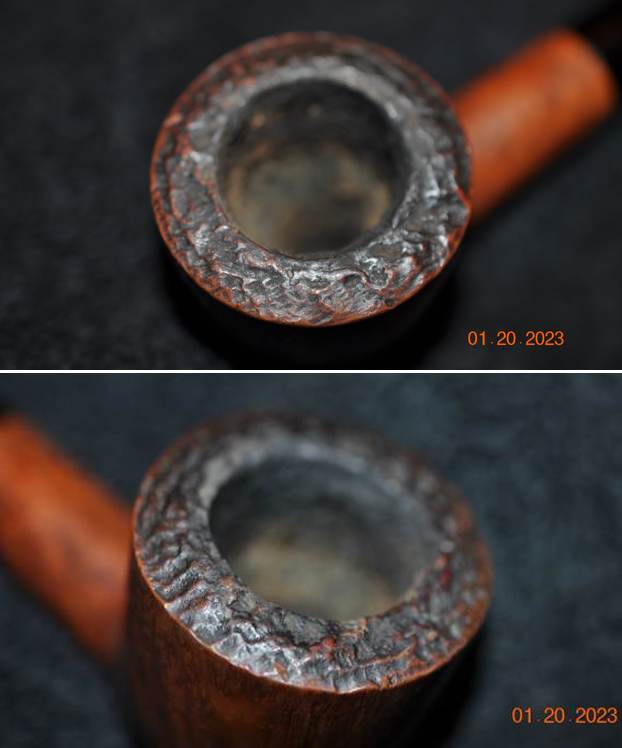
To summarize what I saw – this Charatan’s Make London, England Made by Hand Executive is a well made pipe. The bowl and stem are very dirty which says to me that the pipe was someone’s favourite pipe. The look and feel of the pipe in the hand is great. It should clean up very well. Here are photos of the pipe taken before Jeff started the clean up.   Jeff took close up photos so that I could have a clearer picture of the condition of the bowl, rim edges and top. The rim top photos confirm my assessment above. The cake in the bowl is thick – covering the walls of the bowl. The rim top has thick lava coat and has some darkening on the inner edge and is heavier toward the back of the bowl. The inner edge looks like it might be damaged. This is what I look for when assessing a pipe. I look forward to viewing it in person after the clean up work. The acrylic stem is dirty and has grime all over the surface. There are tooth marks and chatter on both sides ahead of the button. Instead of telling you what I see in the next photos of the sides of the bowl and the heel I want to hear from you. Tell me what you see? What does the finish look like to you? Are there any visible problems or issues that stand out to you? Are the cracks or scratches in rusticated finish of the bowl? Are there visible flaws or fissures in the briar? What does the finish look like? Is there a pattern to it? Any visible issues on the heel of the bowl? These questions should help you to see what I am looking for when I see these photos.  He took photos of the stamping on the sides of the shank. It is stamped as noted above on the right and the left sides. The acrylic stem shows no logo or CP stamping on the saddle portion of the saddle. What stands out for you in the photos of the stamping? What do you look for in the stamping? It is dirty but what do you see underneath the grime on the surface of the briar?I turned to Pipephil’s site (http://pipephil.eu/logos/en/logo-charatan.html) to look up information on the Executive line. There was a great photo of the line and a blow up picture of the side and rim top. It also describes the rim top of the pipe I am working on. I have included the photos below as well as the noted below the first screen capture.
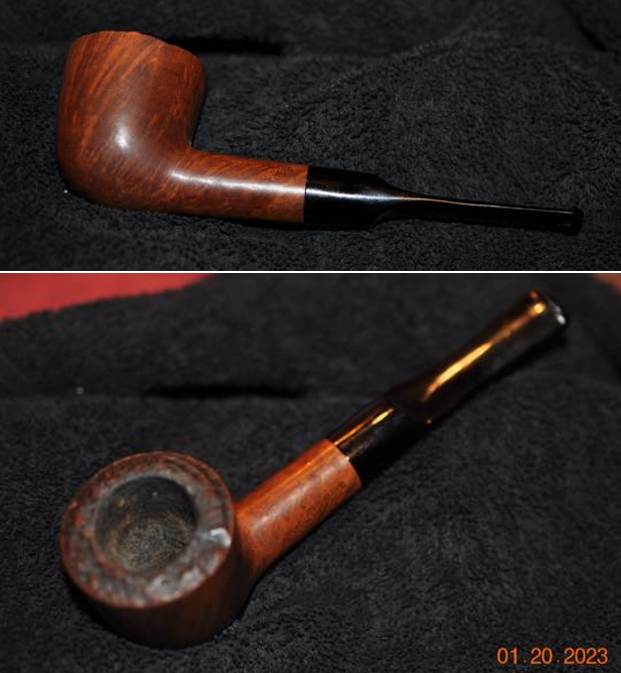
After 1965, some Executive had a carved top to resemble plateau briar (see detailed view below).The carved plateau top tells me that the pipe was made after 1965. The rim top is definitely hand carved and is clearly an indication of the date of its carving.

I am sure many of you will shake your head and ask maybe even out loud, “Why is he including this again?” However, please remember that the point of these blogs is not to wow your with the work or make you shake your heads but I want you to know the details of the work we do so you can do your own. Back in 2020 Jeff wrote a blog about his cleaning process. I am including a link to that now so you can see what I mean about his process. Do not skip it! Give it a read (https://rebornpipes.com/2020/01/20/got-a-filthy-estate-pipe-that-you-need-to-clean/). Here is the introduction to that blog and it is very true even to this day.

Several have asked about Jeff’s cleaning regimen as I generally summarize it in the blogs that I post rather than give a detailed procedure. I have had the question asked enough that I asked Jeff to put together this blog so that you can get a clear picture of the process he uses. Like everything else in our hobby, people have different methods they swear by. Some may question the method and that is fine. But it works very well for us and has for many years. Some of his steps may surprise you but I know that when I get the pipes from him for my part of the restoration they are impeccably clean and sanitized. I have come to appreciate the thoroughness of the process he has developed because I really like working on clean pipe!

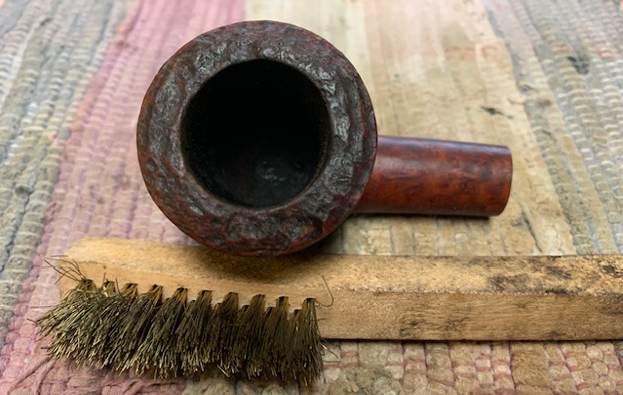
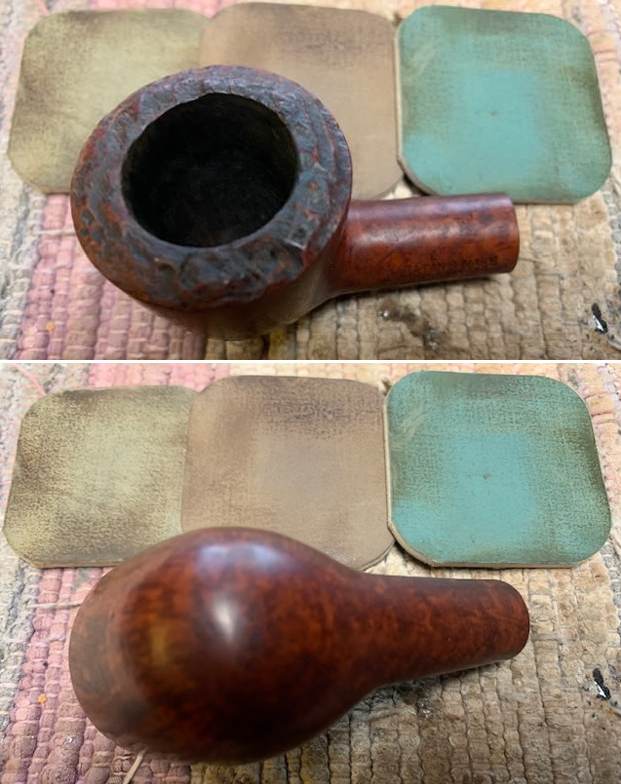
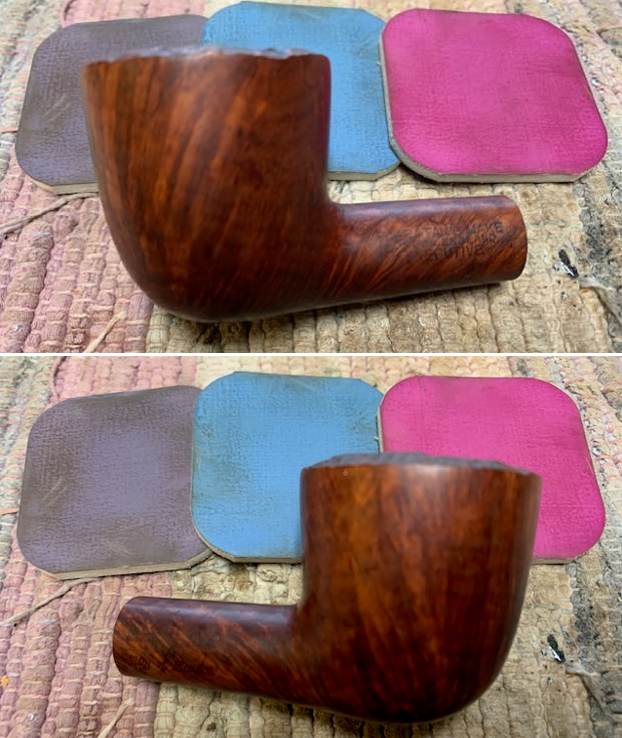
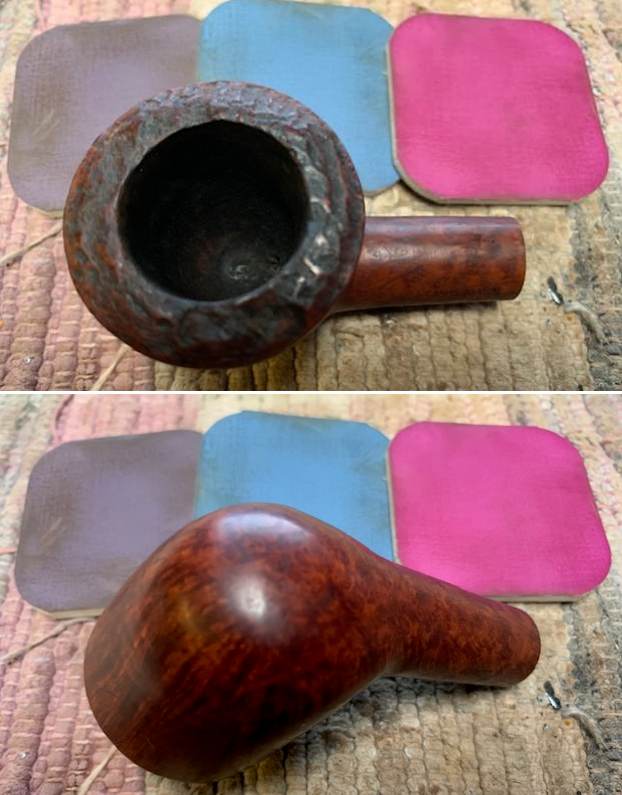
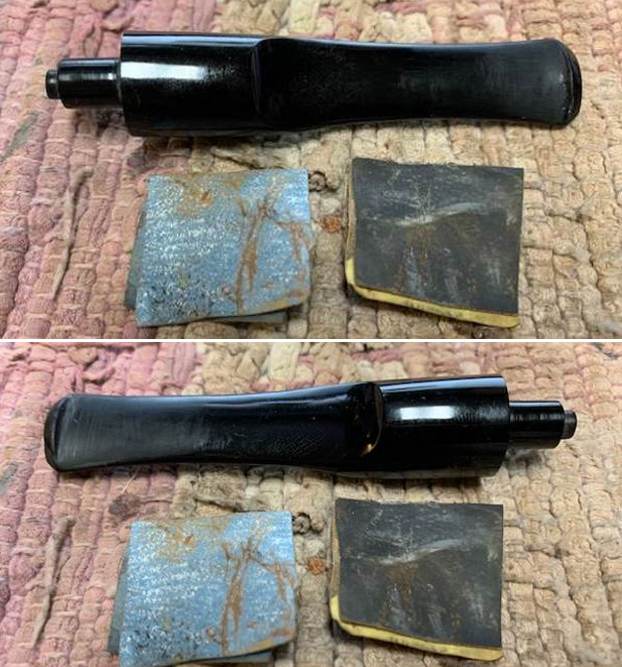
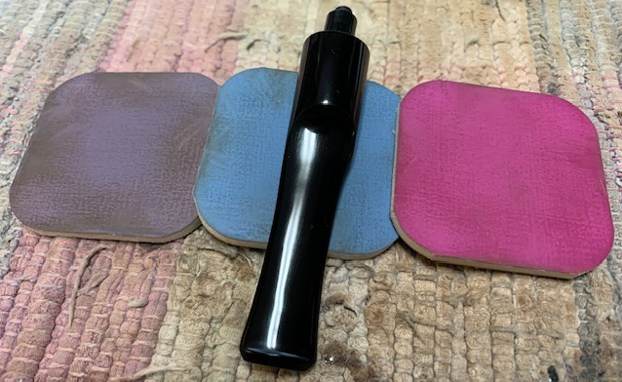
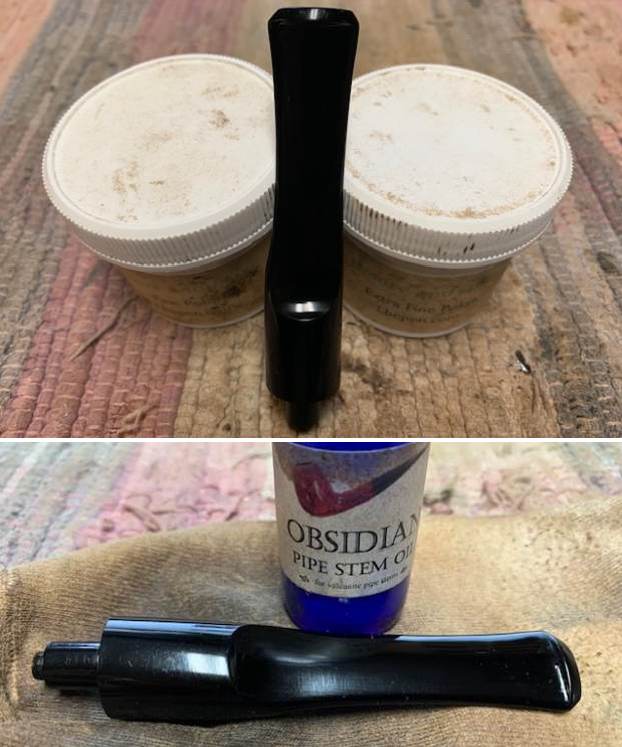
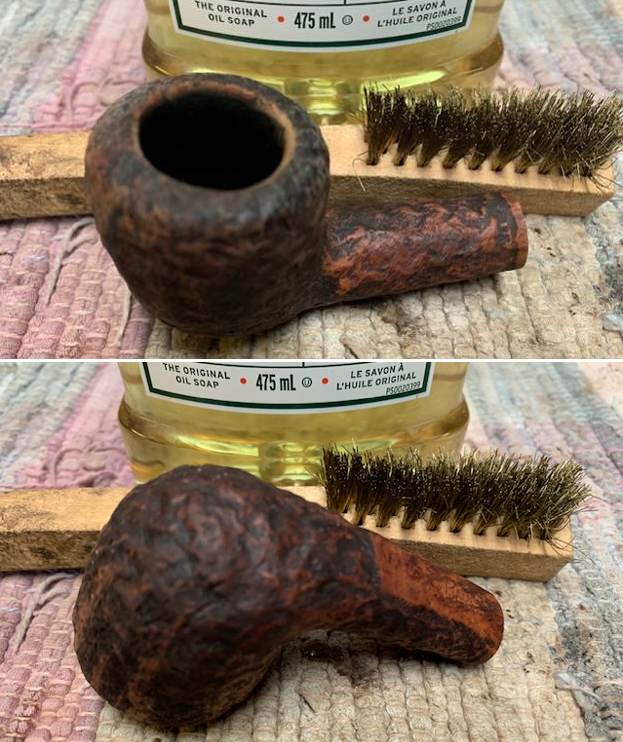
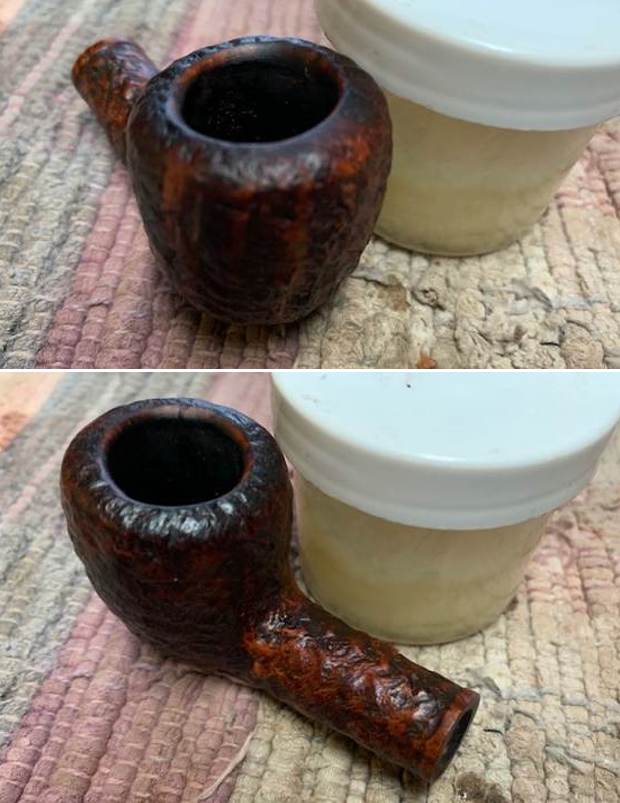
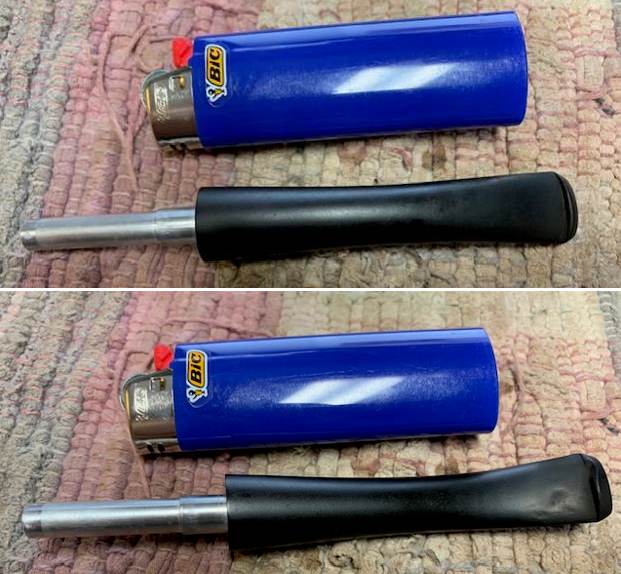
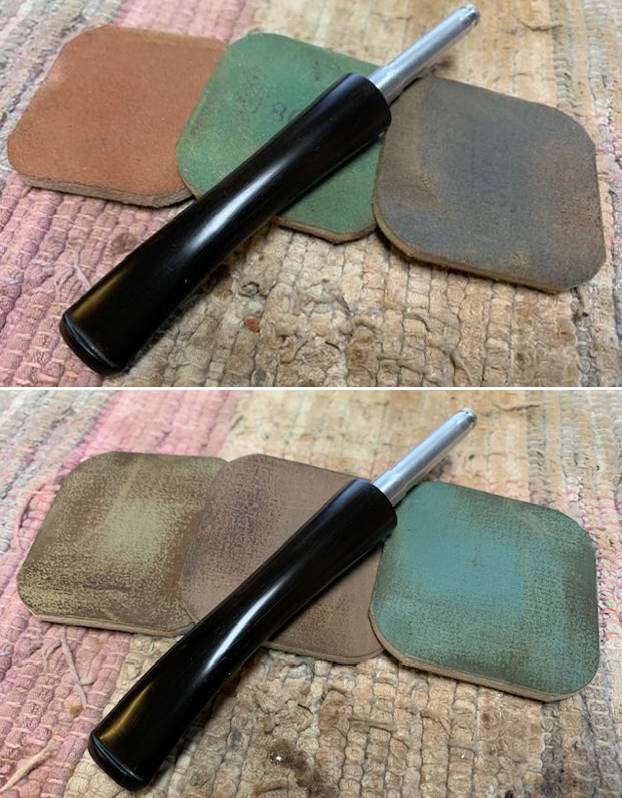
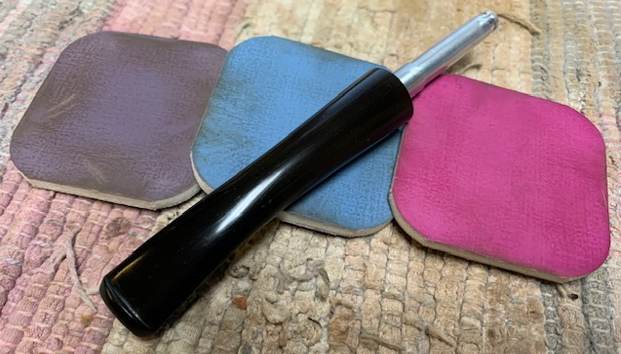
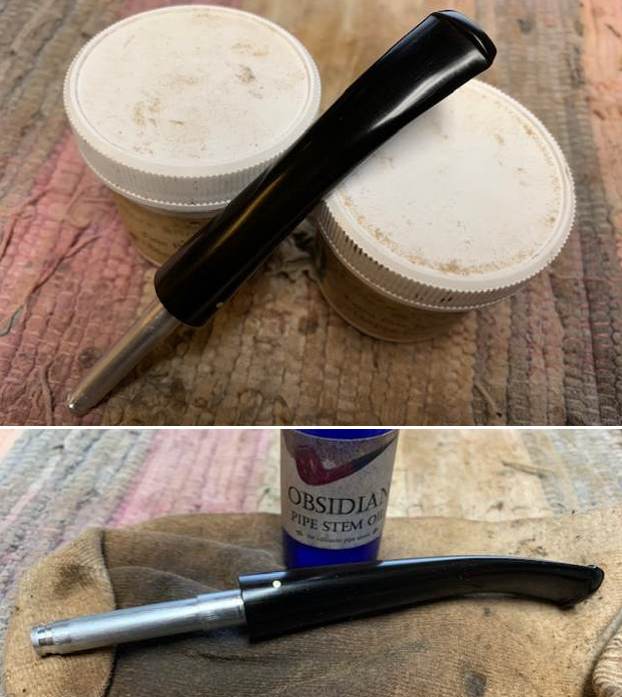
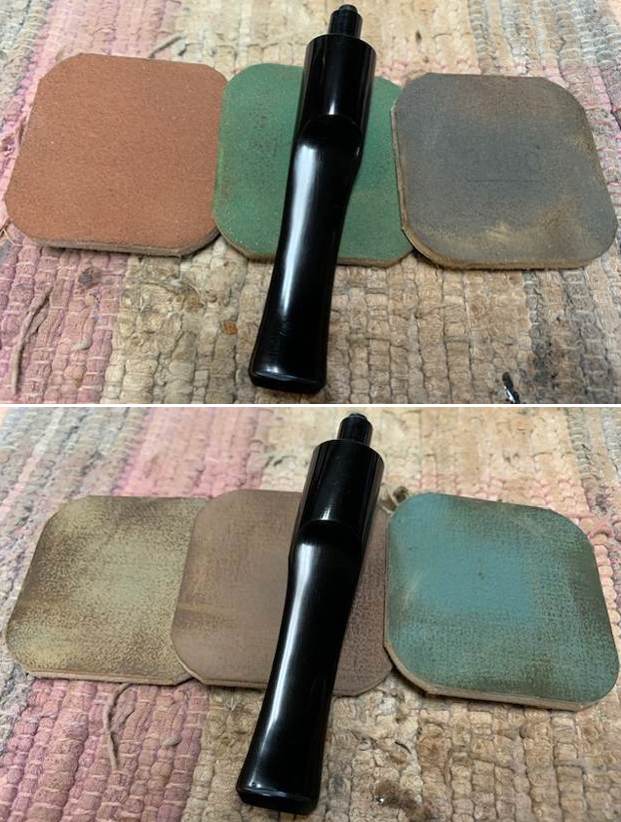
For the benefit of some of you who may be unfamiliar with some of the products he uses I have included photos of three of the items that Jeff mentions in his list. This will make it easier for recognition. These three are definitely North American Products so you will need to find suitable replacements or order these directly on Amazon. The makeup pads are fairly universal as we were able to pick some up in India when we were with Paresh and his family.

In the blog itself he breaks his process down into two parts – cleaning the stem and cleaning the bowl. Each one has a large number of steps that he methodically does every time. I know because I have watched him do the work and I have seen the pipes after his work on them. He followed this process step by step and when the pipe got to me it was spotlessly clean and ready for my work. The inside of the stem, shank and bowl were clean and to me that is an amazing gift as it means that my work on this end is with a clean pipe! I cannot tell you how much difference that makes for my work.

  1. The finish is clean and the oils and grime in the finish shows the beautiful straight grain around the sides. The medium brown stain highlights the grain.
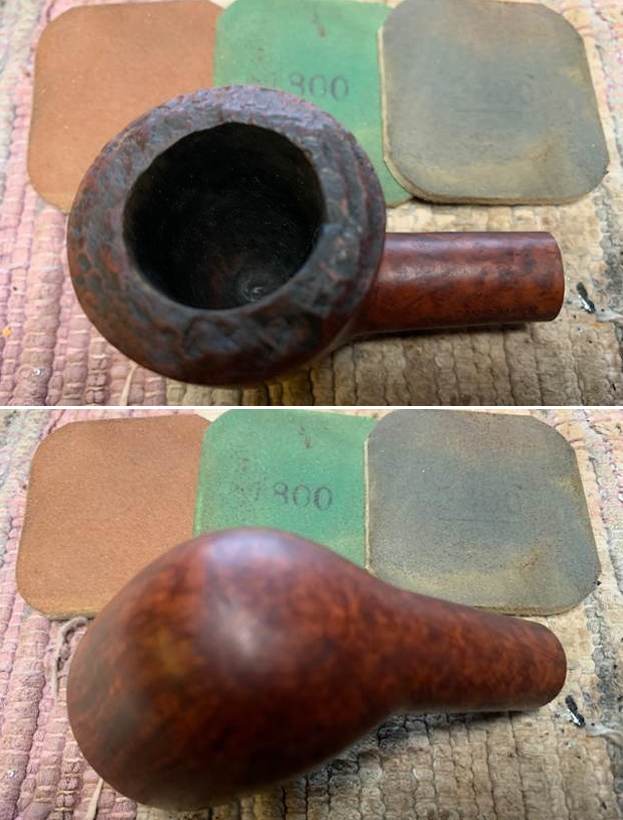
  2. The plateau style rusticated rim top was clean but still had some darkening in the rustication. The inner edge of the bowl is clean and appears to be in excellent condition.
  3. There cake in the bowl has been removed and the bowl is very clean. The walls of the bowl are smooth and appear to be undamaged and show no checking or burn damage.
  4. The acrylic taper stem looks better though the tooth marks and chatter on both sides are still visible. There were some deeper tooth marks on the underside ahead of the button.
  5. There is no marking or logo on the stem but it is a well fit replacement stem.

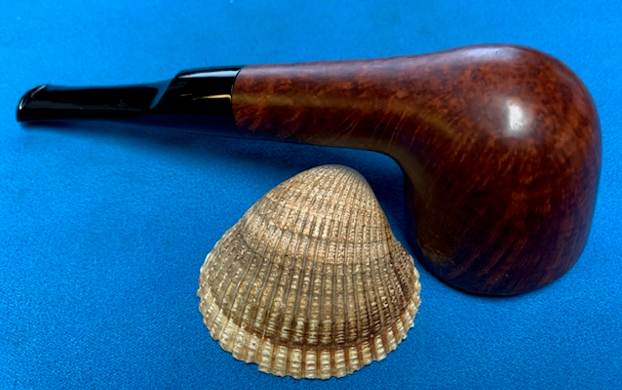
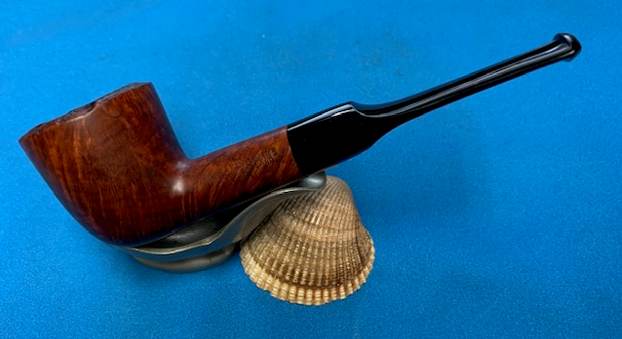
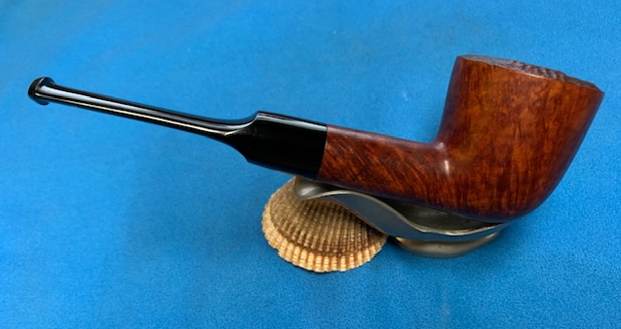
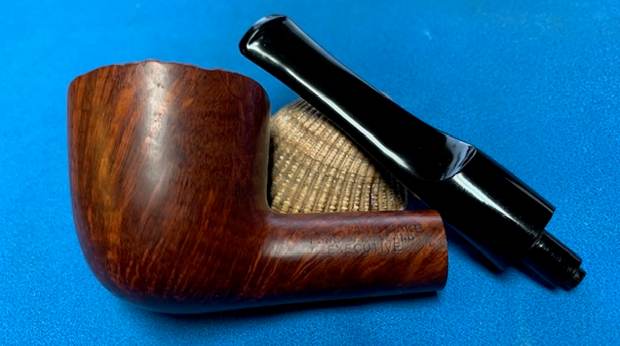
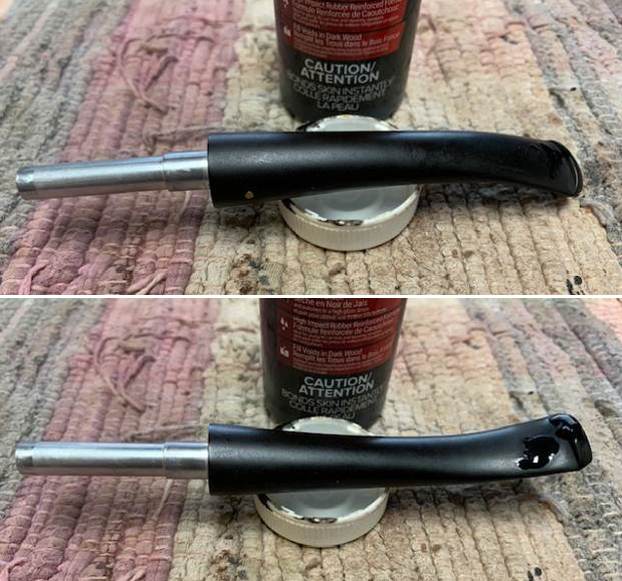
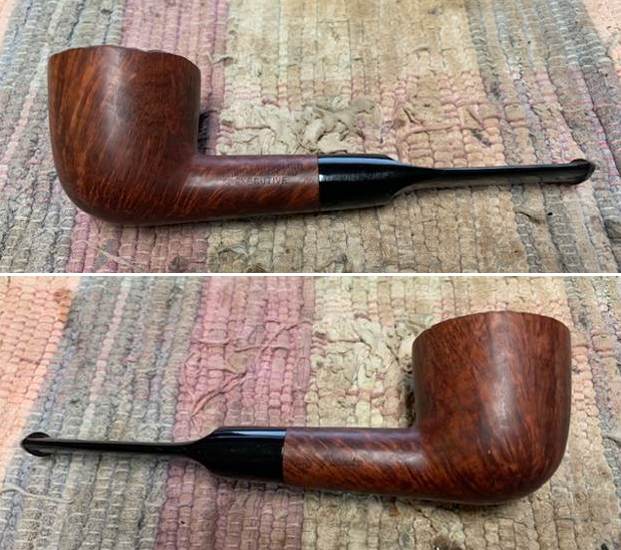
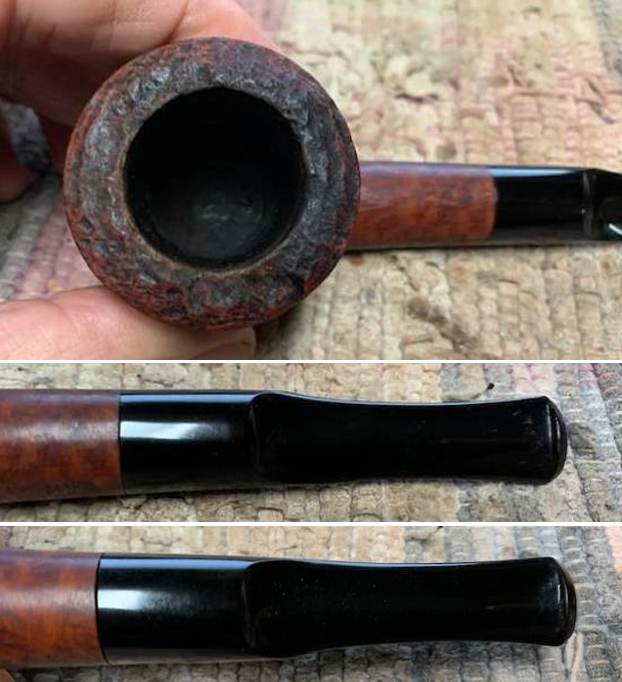
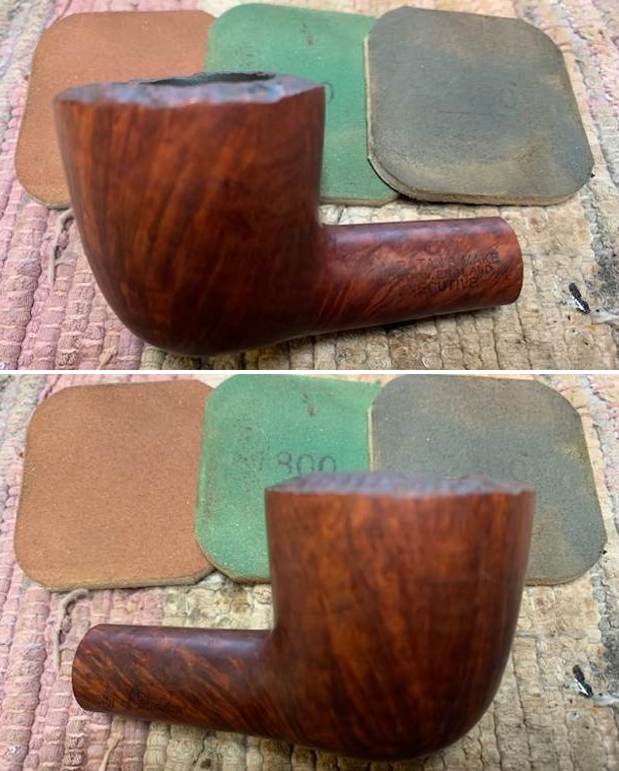
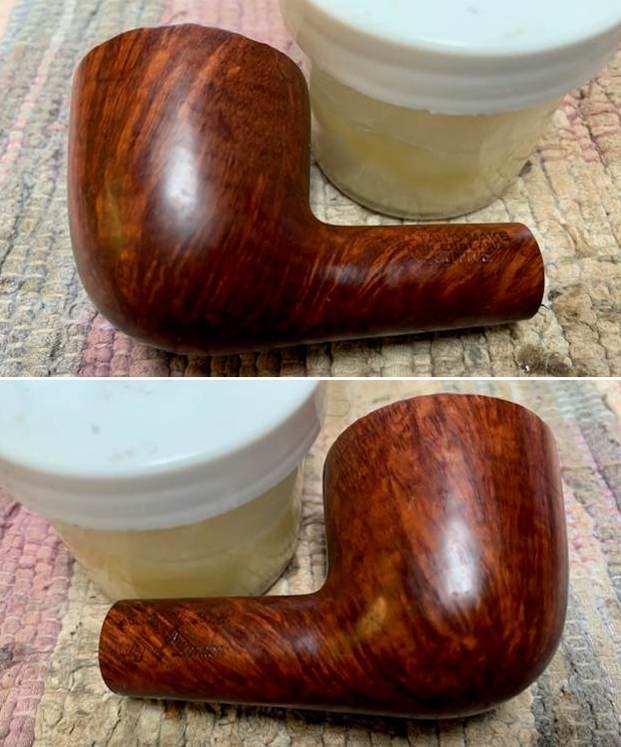
Hopefully the steps above show you both what I look for when I go over the pipe when I bring it to the work table and also what I see when I look at the pipe in my hands. They also clearly spell out a restoration plan in short form. My work is clear and addressing it will be the next steps. I took photos of the whole pipe to give you a picture of what I see when I have it on the table. This is important to me in that it also shows that there was no damage done during the clean up work or the transit of the pipe from Idaho to here in Vancouver.  I carefully went over the bowl and rim top to get a sense of what is happening there. In this case once the rim top and edges were cleaned the rim top looked better. The inner edge was in good condition and looked good with the rusticated plateau style rim top. I also went over the stem carefully. The fit of the replacement to the shank is snug and the transitions are smooth. There were some tooth marks and chatter on the surface of the stem and the button on the underside. The acrylic stem surface was clean and looked better. I took photos of the rim top and stem sides to show as best as I can what I see when I look at them. I always check to make sure that the clean up work did not damage the stamping on the shank sides in any way. It is in excellent condition and is very clear and readable. I love just looking at the lay of the pipe and the proportion of the hand made pipes. I took the pipe apart to get a sense of what was in the mind of the pipe maker when he crafted the pipe. The photo shows its beauty in flow and shape. I started my work on the pipe by dealing with the darkening on the top of the bowl. I used a brass bristle wire brush to work over the rim top rustication. It looked much better when I had finished. I polished the briar with micromesh sanding pads. I choose to dry sand the briar rather than wet sand it. Again it is a matter of personal preference. I prefer to use the pads dry and find they work very well on the briar. I sand with each pad (9 in total) and group them by threes for ease of reference. I wipe the bowl down after each pad with a damp cloth to remove the sanding debris and check the briar. I love seeing the developing shine on the briar as I move through the pads which is why I include so many photos of this step. I rubbed down the bowl and shank with Before & After Restoration Balm. It is a paste/balm that is rubbed into the surface of the briar. The product works to deep clean the finish, enliven and protect the briar. I worked it into the briar with my finger tips. I let it sit for 10 minutes then wiped it off with a soft cloth then buffed it with a cotton cloth. The briar really began to have a deep shine in the briar and the rustication showed depth. The photos I took of the bowl at this point mark the progress in the restoration. It is a gorgeous pipe.   I set the bowl aside and turn to work on the stem. I used a pottery saw and files to reshape the airway in the end of the button. It was a small round hole that is often found on replacement stems and I shaped it into a slot. I filled in deep marks on the underside of the stem with black CA glue. I set the stem aside for the repairs to cure. Once hardened I used a small file to flatten out the repairs. I sanded them smooth with 220 grit sandpaper and started polishing it with 600 grit wet dry sandpaper. I polished the stem with micromesh sanding pads – 1500-12000 grit sanding pads and water to wet sand the stem. I wiped it down after each sanding pad with Obsidian Oil on a cotton rag after each sanding pads. I know that many say Obsidian Oil does nothing for acrylic stems, but I find it does two things – first it gives some protection to the stem from buildup and second it give the sanding pads bite in the polishing process.     After finishing with the micromesh pads I rub the stem down with Before & After Fine and Extra Fine stem polish as it seems to really remove the fine scratches in the acrylic. I rub the Fine Polish on the stem and wipe it off with a paper towel and then repeat the process with the Extra Fine polish. I finish the polishing of the stem down with a final coat of Obsidian Oil and set the stem aside to let the oil absorb. This process gives the stem a shine and also a bit of protection. The final steps in my process involve using the buffer. I buffed the bowl and stem with Blue Diamond to polish out the light scratches in the briar and the acrylic. I gave the bowl and the stem multiple coats of carnauba wax. I have found that I can get a deeper shine if I follow up the wax buff with a buff with a clean buffing pad. It works to raise the shine and then I hand buff with a microfiber cloth to deepen the shine. It is always fun for me to see what the polished bowl looks like with the polished stem. It really is a nice pipe. The smooth finish around the bowl sides and shank looks great with rusticated plateau style crowned rim. The acrylic stem works well with the pipe. The Charatan’s Make Executive Made by Hand in City of London Dublin feels great in my hand. It is a well balanced pipe. Have a look at it with the photos below. The dimensions are Length: 6 inches, Height: 1 ¾ inches, Outside diameter of the bowl: 1 ½ inches, Chamber diameter: 1 inch. The weight of the pipe is 1.69 ounces/48 grams. It is a beautiful pipe that I will soon be adding to the rebornpipes store in the British Pipemakers Section. If you would like to add it to your collection let me know. It should be a great smoking pipe.

Hopefully the style of writing of this blog is helpful to you in some way. In it I wanted to show both what I am looking for and how I move forward in addressing what I see when work on a pipe. Let me know if it is helpful to you. It is probably the most straightforward detailed description of my work process that I have done. As always I encourage your questions and comments as you read the blog. Thanks to each of you who are reading this blog. Remember we are not pipe owners; we are pipe men and women who hold our pipes in trust until they pass on into the trust of those who follow us.

A Brigham Canada 141 Rusticated Acorn Reborn


Blog by Steve Laug

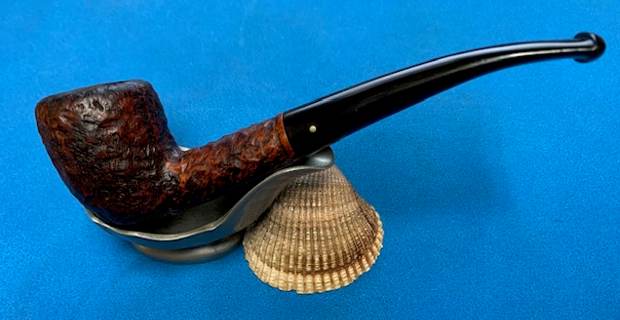
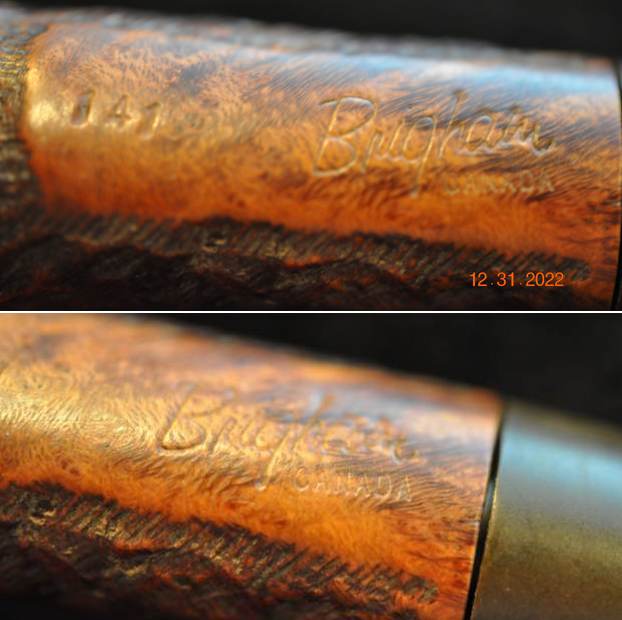
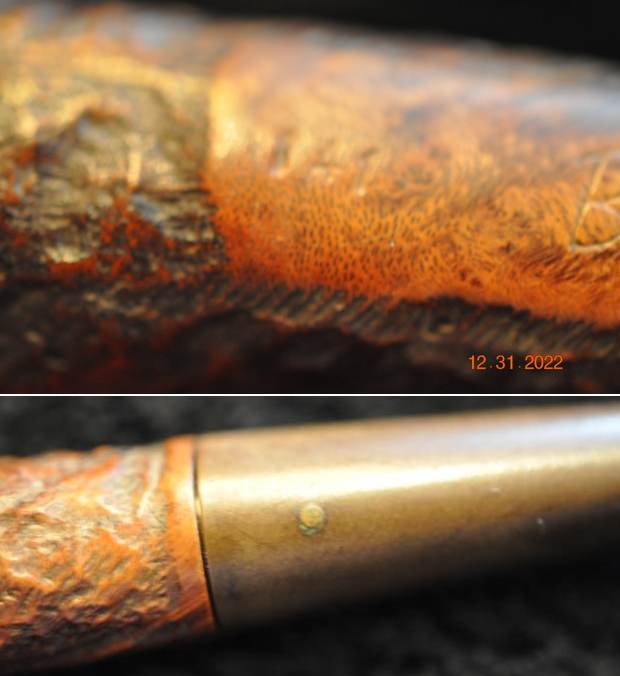
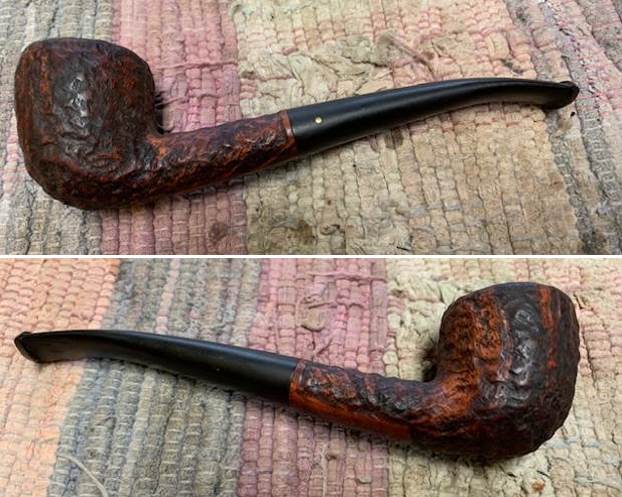
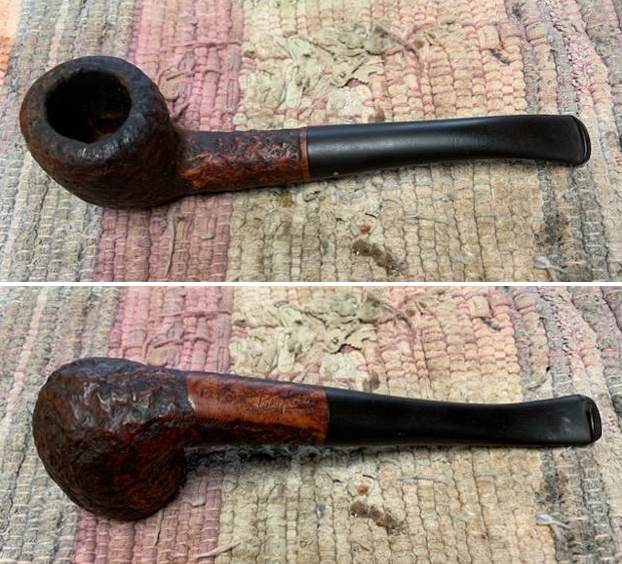
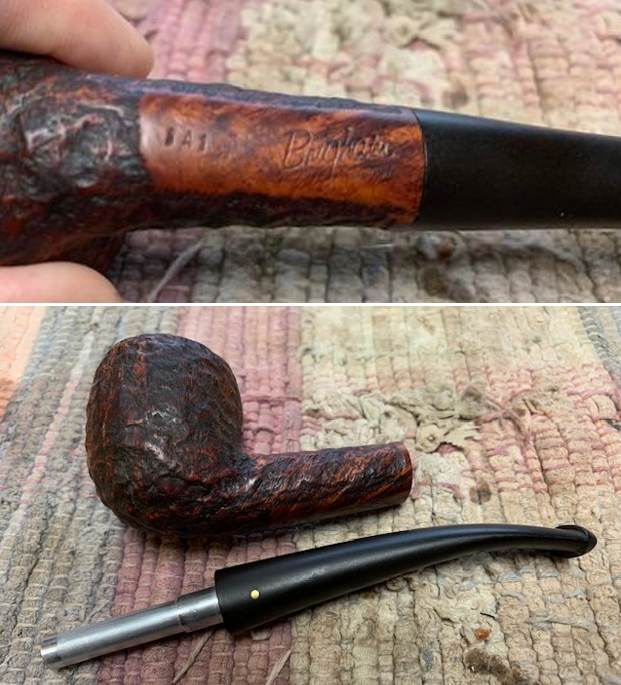
The next pipe I have chosen to work on is a nice looking rusticated ¼ bent acorn with a black vulcanite stem. We picked it up on 09/12/2021 from an auction in Wilkes Barre, Pennsylvania, USA. The stamping on the underside of the shank has the shape number 141 on the heel of the bowl followed by Brigham in script [over] CANADA. The vulcanite stem has a single brass dot inserted on the left side. The pipe is a nice looking pipe with a medium brown finish that highlights the grain under the rustication. The ¼ bent vulcanite stem works very well with the bowl. It is light weight and comfortable pipe to hold. Jeff sent me the following photos of the pipe to show the condition it was in before he worked on it.

This is what I saw when I looked over the pipe.

  1. The finish shows darkening of hand oils and some thick grime ground into the finish around the bowl sides. The medium brown stain is dull and the grain is obscured around the bowl sides and shank
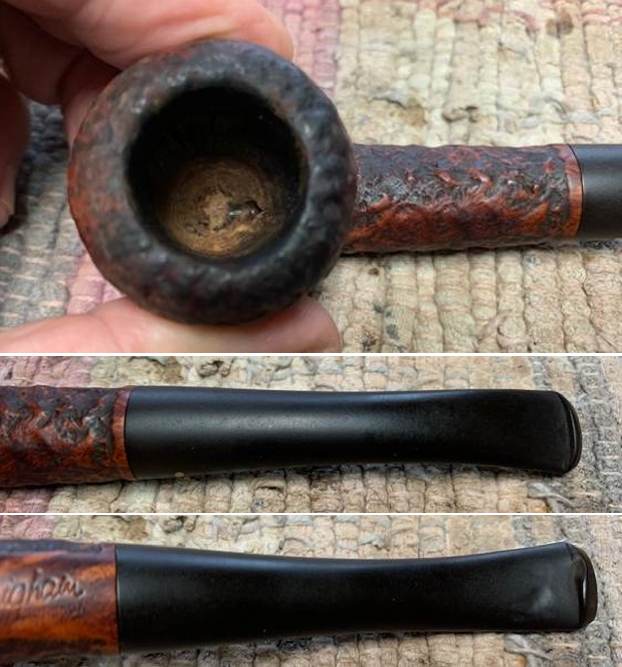
  2. The rusticated rim top was very dirty with darkening and lava ground into the rustication to point that it was almost smooth. The inner edge of the bowl was unclear but seemed to show some damage under the lava coat.
  3. There was a moderate cake in the bowl. The bowl itself was very dark and dirty. Once the bowl was cleaned up we could confirm the condition of the bowl walls.
  4. The vulcanite taper stem was filthy with oxidation, calcification and tooth marks and chatter on both sides. There were some deeper tooth marks on the underside ahead of the button.
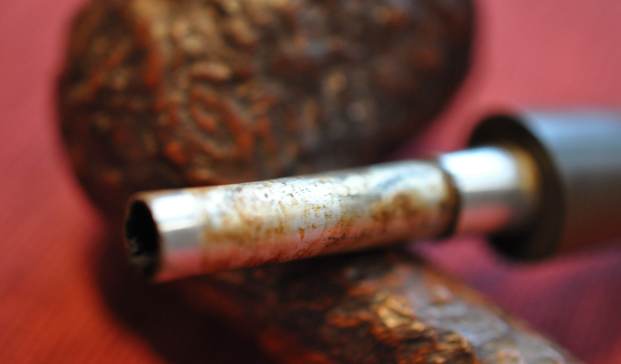
  5. There is a brass single dot on the left side that identifies it as a Brigham pipe. It is tarnished and almost invisible in the oxidation of the stem. The tenon is a Hard Rock Distillator system that holds a maple filter and it is tarred and heavily dirty.

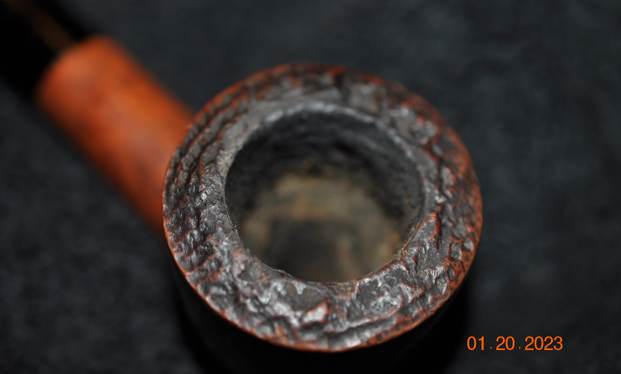
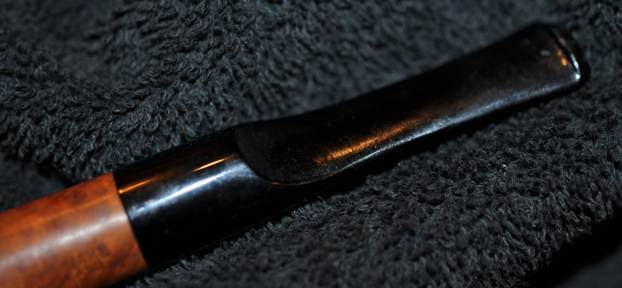
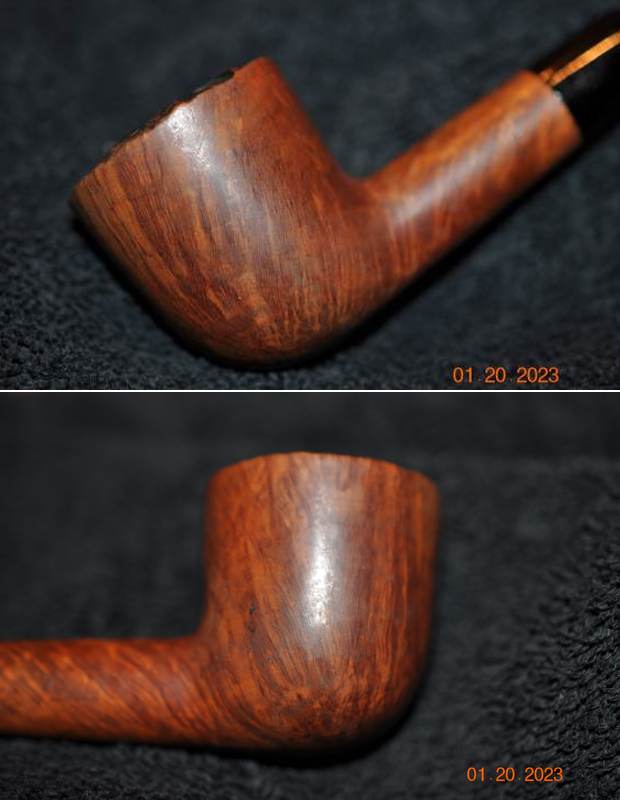
To summarize what I saw – this Brigham Canada 141 Acorn is a well made pipe. The bowl and stem are very dirty which says to me that the pipe was someone’s favourite pipe. The look and feel of the pipe in the hand is great. It should clean up very well. Here are photos of the pipe taken before Jeff started the clean up.  Jeff took close up photos so that I could have a clearer picture of the condition of the bowl, rim edges and top. The rim top photos confirm my assessment above. The cake in the bowl is thick – covering the walls of the bowl. The rim top has thick lava coat and has some darkening on the inner edge and is heavier toward the back of the bowl. The inner edge looks like it might be damaged. This is what I look for when assessing a pipe. I look forward to viewing it in person after the clean up work. The stem is very oxidized with thick calcification on the last half of the stem and there are tooth marks and chatter on both sides ahead of the button. Instead of telling you what I see in the next photos of the sides of the bowl and the heel I want to hear from you. Tell me what you see? What does the finish look like to you? Are there any visible problems or issues that stand out to you? Are the cracks or scratches in rusticated finish of the bowl? Are there visible flaws or fissures in the briar? What does the finish look like? Is there a pattern to it? Any visible issues on the heel of the bowl? These questions should help you to see what I am looking for when I see these photos.  Jeff removed the stem from the shank and took photos of the distillator aluminum tenon. There was no maple filter in the tenon so the tube was filled up with tars and oils. The outside of the tube is also covered with tars as well. He took photos of the stamping on the underside of the shank. On the heel it is stamped with the shape number 141. That is followed by Brigham in script [over] Canada. The vulcanite stem has the brass pin in the left side of the taper. What stands out for you in the photos of the stamping? What do you look for in the stamping? It is dirty but what do you see underneath the grime on the surface of the briar? I am also including the information from Pipedia’s article on Brigham pipes. It is a great read in terms of the history of the brand (https://pipedia.org/wiki/Brigham_Pipes). Charles Lemon (Dadspipes) is currently working on a book on the history of the brand. Until that is complete this article is a good summary. I have included it below.
Roy Brigham, after serving an apprenticeship under an Austrian pipesmith, started his own pipe repair shop in Toronto, in 1906. By 1918 the business had grown to include five other craftsmen and had developed a reputation across Canada for the high quality of workmanship. After repairing many different brands of pipes over the years, Roy noted certain recurring complaints by pipe smokers, the most common referred to as “tongue bite”. Tongue bite is a burning sensation on the smoker’s tongue, previously thought to be due to the heat of the smoke (i.e. a “hot smoking pipe”).

He soon began manufacturing his own pipes, which were lightweight, yet featured a more rugged construction, strengthening the weak points observed in other pipes. The problem of tongue bite intrigued him, and he decided to make overcoming it a future goal.

About 1938, Roy’s son Herb joined him to assist in the business. The business barely survived the great depression because pipes were considered to be a luxury, not a necessity, and selling pipes was difficult indeed. In approximately 1937 [1], after some experimentation, Roy and Herb discovered that tongue bite was in fact a form of mild chemical burn to the tongue, caused by tars and acids in the smoke. They found that by filtering the smoke, it was possible to retain the flavour of the tobacco and yet remove these impurities and thereby stop the tongue bite.

Just as Thomas Edison had searched far and wide for the perfect material from which to make the first electric light bulb filaments, Roy & Herb began experimenting with many materials, both common and exotic, in the quest for the perfect pipe filter. Results varied wildly. Most of the materials didn’t work at all and some actually imparted their own flavour into the smoke. They eventually found just two materials that were satisfactory in pipes: bamboo and rock maple. As bamboo was obviously not as readily available, rock maple then became the logical choice.

They were able to manufacture a replaceable hollow wooden tube made from rock maple dowelling, which when inserted into a specially made pipe, caused absolutely no restriction to the draw of the pipe, yet extracted many of the impurities which had caused tongue bite. The result was indeed a truly better smoking pipe…

I then turned to a second article by Charles Lemon called, “A Closer Look at the Dots, Dates, and Markings of Brigham Pipes” to be able to pin down the time frame that the pipe was made in and to help interpret the stampings and shape number on the pipe. Here is the link to his article. (https://pipedia.org/wiki/Brigham_Pipes_%E2%80%93_A_Closer_Look_at_Dots,_Dates_and_Markings

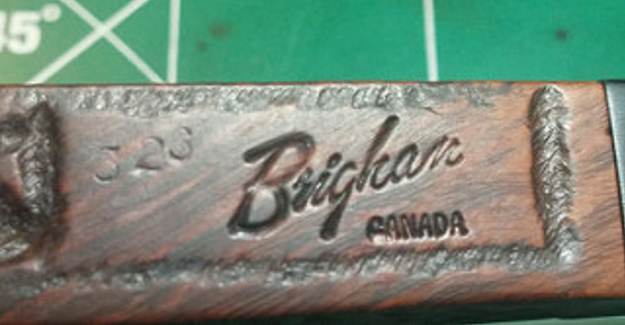
I have dubbed the decades between 1980 and 2000 the Late Canadian Era, a period that saw several changes at Brigham that are of note to the collector. First, the traditional 8-grade pinning system (the famous Brigham “Dots” which denoted the quality of the pipe) was changed to a 7-grade system to simplify pinning (more on this below), and the Norsemen and Valhalla series were merged to form the President Series, which represented the very finest pipes coming out of the Toronto factory. Early pipes from this era (left, below) are stamped with a shape number and “Brigham” over “Canada”; later pipes (late 1980s+, on right below) are stamped simply with a shape number and the Brigham logo.

I have included the photos and headings on the photos below.

Late Canadian Era Stamps1980-85 1990s

With the information from Charles’ message and the chart above that he included I knew what I was dealing with in terms of the stamping and the age of this pipe. I learned that this Late Canadian Era was made between 1980-1985. The pipe is a Brigham Standard (1-Dot) 141 Acorn. Now it was time to work on the pipe.

I am sure many of you will shake your head and ask maybe even out loud, “Why is he including this again?” However, please remember that the point of these blogs is not to wow your with the work or make you shake your heads but I want you to know the details of the work we do so you can do your own. Back in 2020 Jeff wrote a blog about his cleaning process. I am including a link to that now so you can see what I mean about his process. Do not skip it! Give it a read (https://rebornpipes.com/2020/01/20/got-a-filthy-estate-pipe-that-you-need-to-clean/). Here is the introduction to that blog and it is very true even to this day.

Several have asked about Jeff’s cleaning regimen as I generally summarize it in the blogs that I post rather than give a detailed procedure. I have had the question asked enough that I asked Jeff to put together this blog so that you can get a clear picture of the process he uses. Like everything else in our hobby, people have different methods they swear by. Some may question the method and that is fine. But it works very well for us and has for many years. Some of his steps may surprise you but I know that when I get the pipes from him for my part of the restoration they are impeccably clean and sanitized. I have come to appreciate the thoroughness of the process he has developed because I really like working on clean pipe!

For the benefit of some of you who may be unfamiliar with some of the products he uses I have included photos of three of the items that Jeff mentions in his list. This will make it easier for recognition. These three are definitely North American Products so you will need to find suitable replacements or order these directly on Amazon. The makeup pads are fairly universal as we were able to pick some up in India when we were with Paresh and his family.

In the blog itself he breaks his process down into two parts – cleaning the stem and cleaning the bowl. Each one has a large number of steps that he methodically does every time. I know because I have watched him do the work and I have seen the pipes after his work on them. He followed this process step by step and when the pipe got to me it was spotlessly clean and ready for my work. The inside of the stem, shank and bowl were clean and to me that is an amazing gift as it means that my work on this end is with a clean pipe! I cannot tell you how much difference that makes for my work.

  1. The finish cleaned up quite well but there was still some darkening of hand oils in the finish around the bowl sides. The medium brown stain is clean and the grain around the bowl sides and shank
  2. The rusticated rim top was clean and the lava was cleaned out of the grooves and hollows of the rustication. The inner edge of the bowl showed some rough areas but was very clean.
  3. The cake was cleaned out of the bowl. The bowl very clean and the bottom of the bowl was raw briar. The bowl walls were smooth and there was no checking or burn damage.
  4. The vulcanite taper stem was very clean and the oxidation and calcification were gone. The tooth marks and chatter on the topside looked better. There were some deeper tooth marks on the underside and on the button.
  5. There is a brass single dot on the left side that identifies it as a Brigham pipe. It looks better and once it is polished with shine. The tenon is a Hard Rock Distillator system that holds a maple filter is very clean.

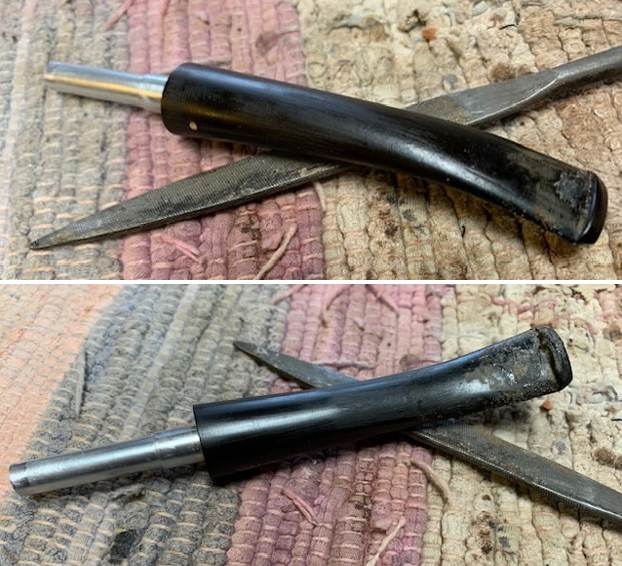
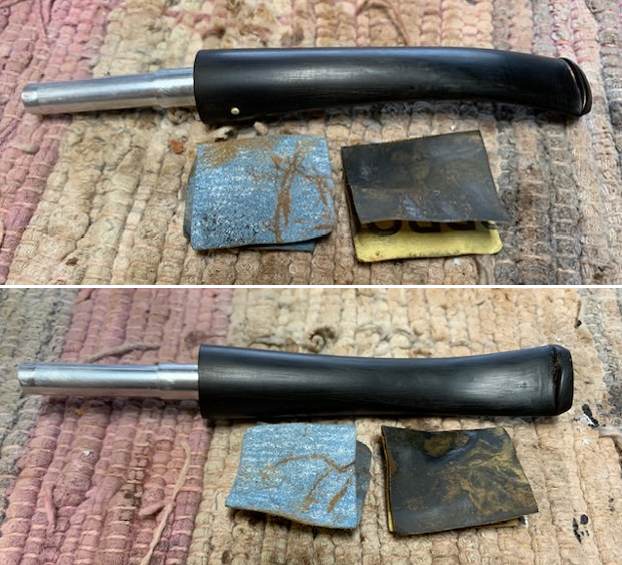
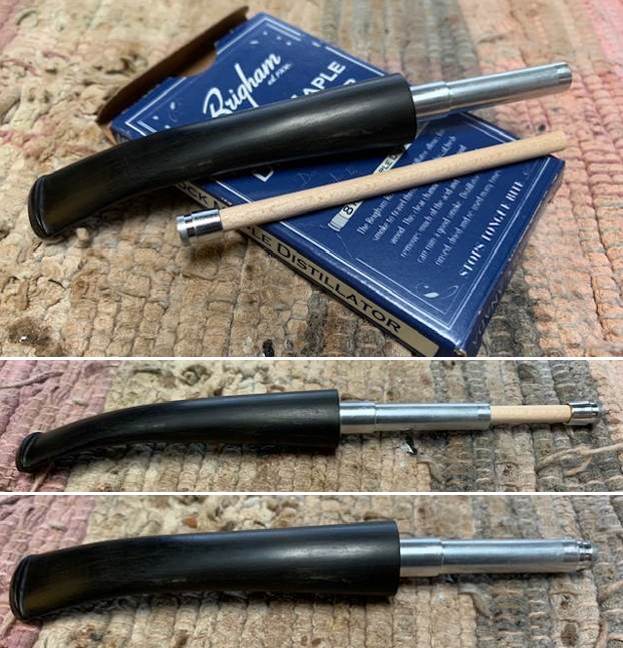
Hopefully the steps above show you both what I look for when I go over the pipe when I bring it to the work table and also what I see when I look at the pipe in my hands. They also clearly spell out a restoration plan in short form. My work is clear and addressing it will be the next steps. I took photos of the whole pipe to give you a picture of what I see when I have it on the table. This is important to me in that it also shows that there was no damage done during the clean up work or the transit of the pipe from Idaho to here in Vancouver. I carefully went over the bowl and rim top to get a sense of what is happening there. In this case once the rim top and edges were cleaned the rim top looked better. The inner edge was damaged and was the bowl was slightly out of round. I also went over the stem carefully. The fit to the shank is snug and the transitions are smooth. There were some tooth marks and chatter on the surface of the stem and the button on the underside. The vulcanite stem surface was clean and looked better. I took photos of the rim top and stem sides to show as best as I can what I see when I look at them. I always check to make sure that the clean up work did not damage the stamping on the shank sides in any way. It is in excellent condition and is very clear and readable. I love just looking at the lay of the pipe and the proportion of the hand made pipes. I took the pipe apart to get a sense of what was in the mind of the pipe maker when he crafted the pipe. The photo shows its beauty in flow and shape.I started my work on the pipe by dealing with the damaged inner edge of the bowl. I used a folded piece of 220 grit sandpaper to clean up the edges and to give the rim edge a slight bevel to hide the damage. It looked much better when I had finished. I rescrubbed the bowl and shank with undiluted Murphy’s Oil Soap and a brass bristle wire brush. I rinsed it with hot water to remove the remaining grime in the briar. The Tiger Striped stain on the pipe looks amazing.     I rubbed down the bowl and shank with Before & After Restoration Balm. It is a paste/balm that is rubbed into the surface of the briar. The product works to deep clean the finish, enliven and protect the briar. I worked it into the briar with my finger tips and a horsehair shoe brush. I let it sit for 10 minutes then wiped it off with a soft cloth then buffed it with a cotton cloth. The briar really began to have a deep shine in the briar and the rustication showed depth. The photos I took of the bowl at this point mark the progress in the restoration. It is a gorgeous pipe.    I set the bowl aside and turn to work on the stem. I painted the stem surface with the flame of a Bic lighter to lift the tooth marks. I was able to lift the majority of them significantly. The deep marks on the underside of the stem did not completely come up and neither did the deep mark in the button edge on the underside. I filled them in with black CA glue and set the stem aside for the repairs to cure. Once hardened I used a small file to flatten out the repairs and reshape the button edge on the underside. I sanded them smooth with 220 grit sandpaper and started polishing it with 600 grit wet dry sandpaper. I fit the aluminum tenon/Distillator holder with a Hard Maple filter tube. It fits in the aluminum tube and fits snug against the tube end.I polished the stem with micromesh sanding pads – 1500-12000 grit sanding pads and water to wet sand the stem. I wiped it down after each sanding pad with Obsidian Oil on a cotton rag after each sanding pads. I know that many say Obsidian Oil does nothing for acrylic stems, but I find it does two things – first it gives some protection to the stem from buildup and second it give the sanding pads bite in the polishing process. After finishing with the micromesh pads I rub the stem down with Before & After Fine and Extra Fine stem polish as it seems to really remove the fine scratches in the vulcanite. I rub the Fine Polish on the stem and wipe it off with a paper towel and then repeat the process with the Extra Fine polish. I finish the polishing of the stem down with a final coat of Obsidian Oil and set the stem aside to let the oil absorb. This process gives the stem a shine and also a bit of protection.The final steps in my process involve using the buffer. I buffed the bowl and stem with Blue Diamond to polish out the light scratches in the briar and the vulcanite. I gave the bowl multiple coats of Conservator’s Wax and the stem multiple coats of carnauba wax. I have found that I can get a deeper shine if I follow up the wax buff with a buff with a clean buffing pad. It works to raise the shine and then I hand buff with a microfiber cloth to deepen the shine. It is always fun for me to see what the polished bowl looks like with the polished stem. It really is a nice pipe. The rusticated finish around the bowl sides and shank looks great with the vulcanite stem. The Brigham Canada Acorn 141 feels great in my hand. It is a well balanced pipe. Have a look at it with the photos below. The dimensions are Length: 6 inches, Height: 1 ¾ inches, Outside diameter of the bowl: 1 ¼ inches, Chamber diameter: ¾ of an inch. The weight of the pipe is 1.31 ounces/37 grams. It is a beautiful pipe that I will soon be adding to the rebornpipes store in the Canadian Pipemakers Section. If you would like to add it to your collection let me know. It should be a great smoking pipe.

Hopefully the style of writing of this blog is helpful to you in some way. In it I wanted to show both what I am looking for and how I move forward in addressing what I see when work on a pipe. Let me know if it is helpful to you. It is probably the most straightforward detailed description of my work process that I have done. As always I encourage your questions and comments as you read the blog. Thanks to each of you who are reading this blog. Remember we are not pipe owners; we are pipe men and women who hold our pipes in trust until they pass on into the trust of those who follow us.

Breathing Life into a Chacom New Festival 438 Billiard with a Striped Stem


Blog by Steve Laug

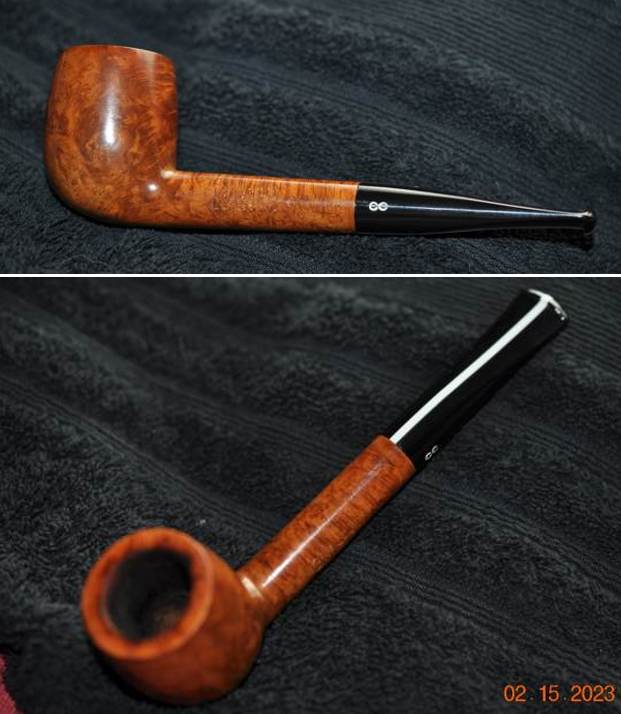
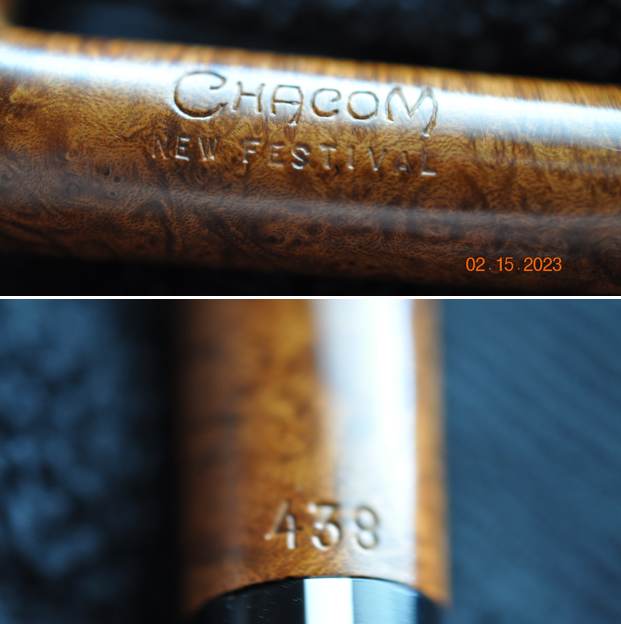
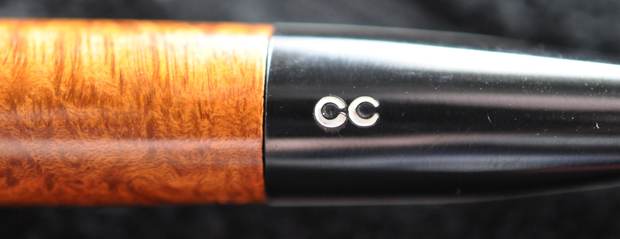
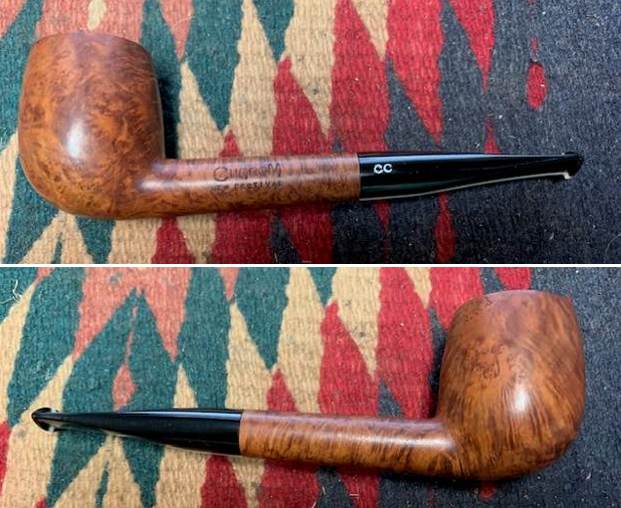
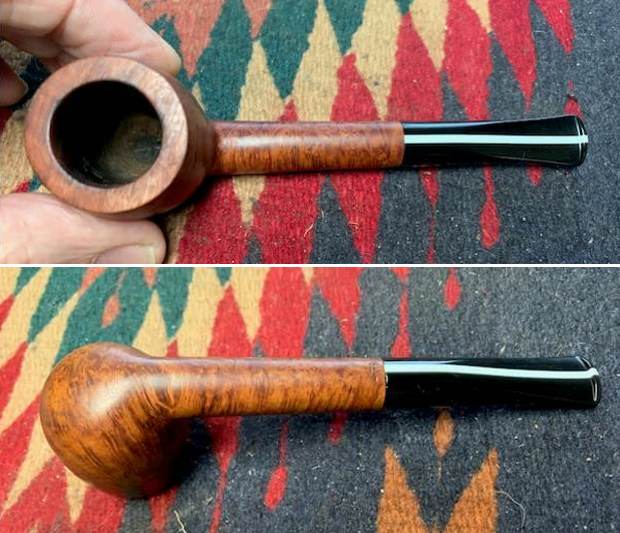
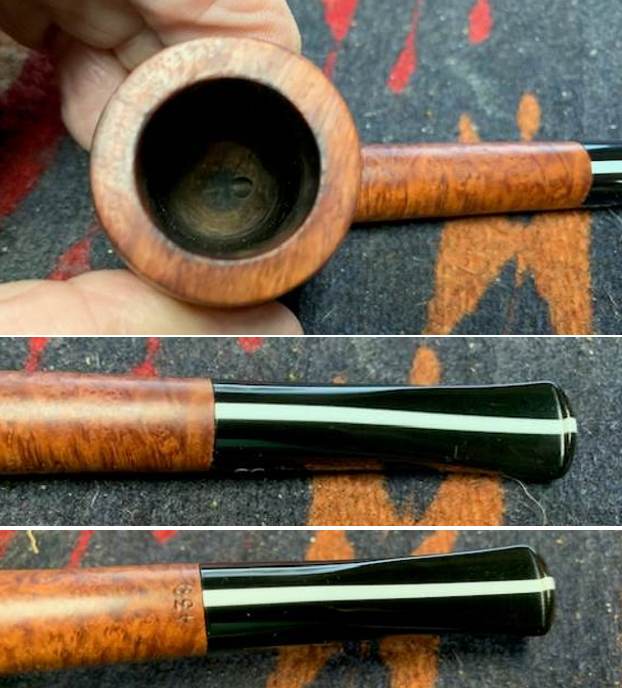
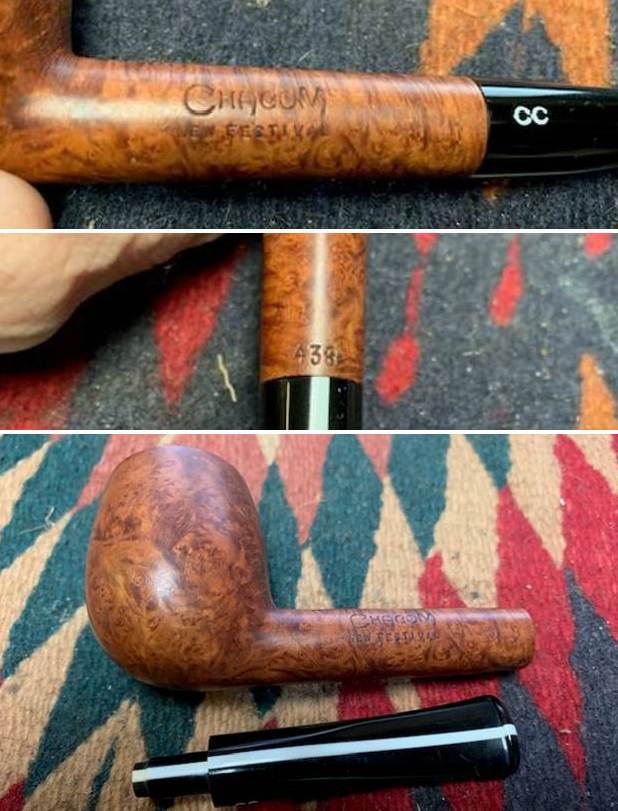
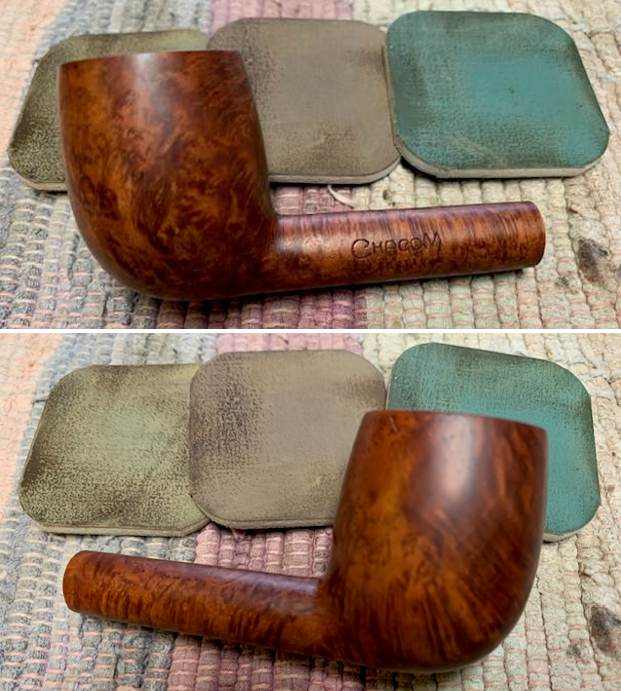
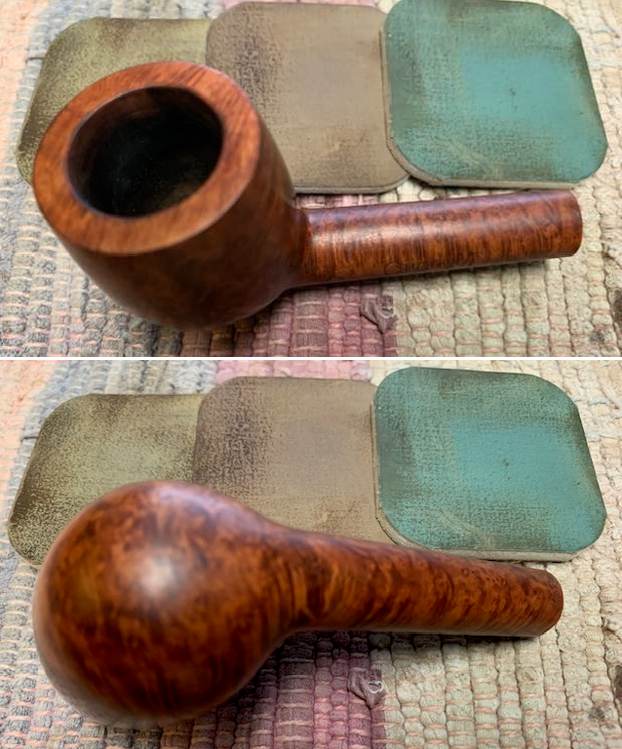
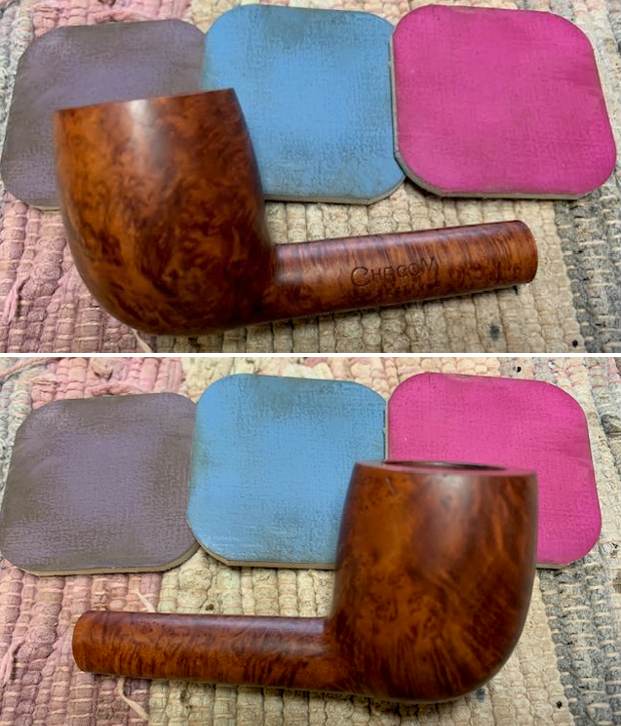
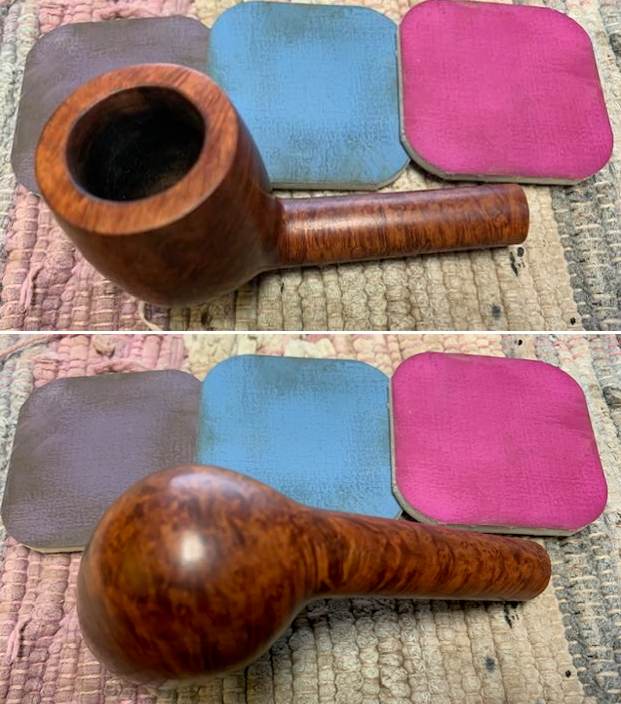
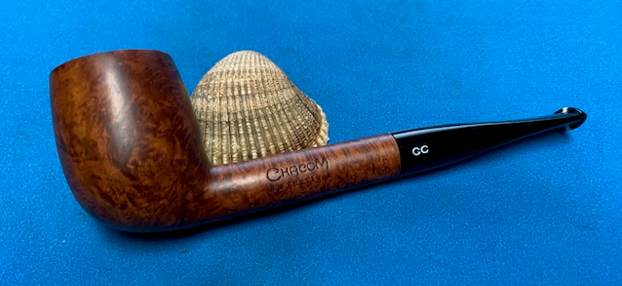
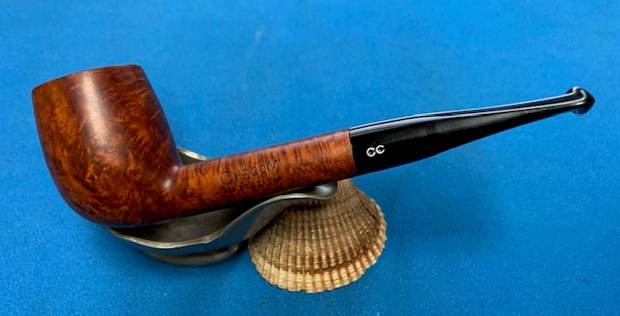
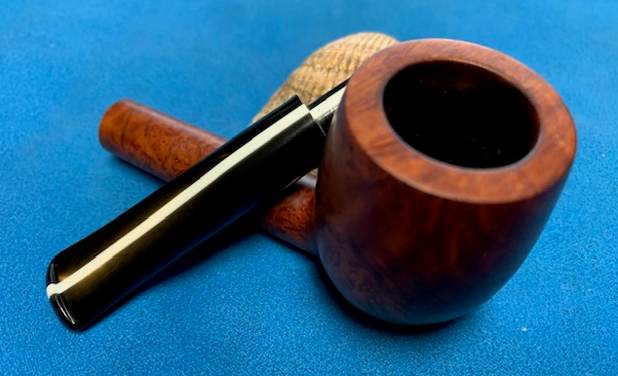
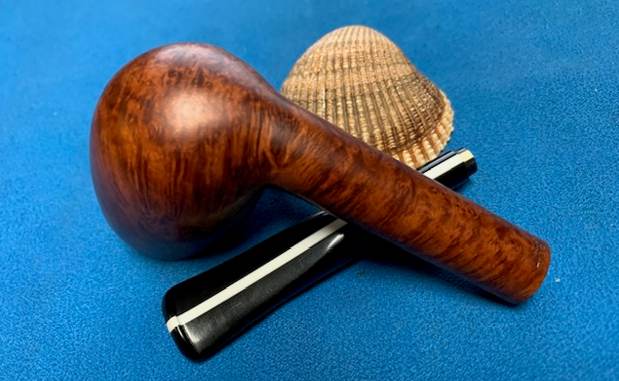
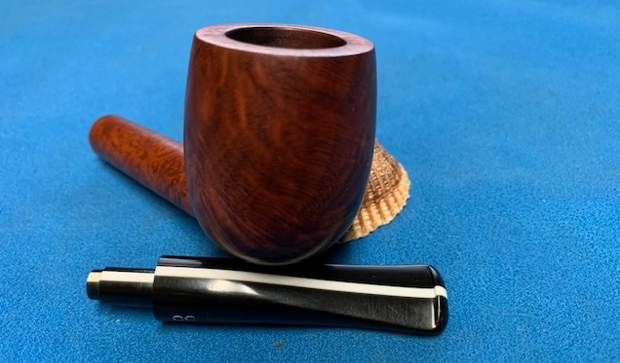
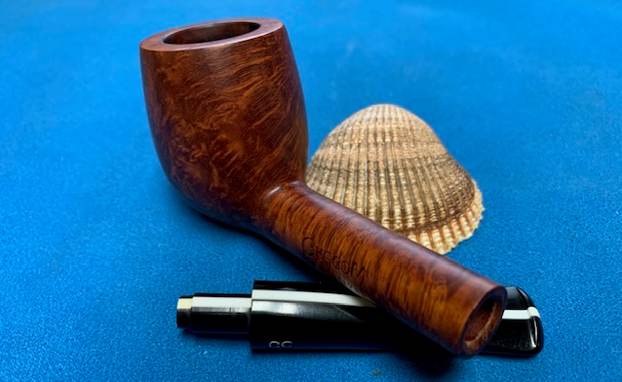
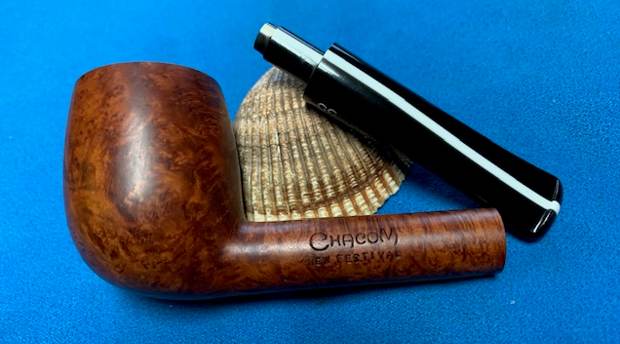
The next pipe I have chosen to work on is a nice looking smooth brown straight Billiard with a black acrylic stem with a white stripe running from the button to the end of the tenon. I picked it up on 01/26/2023 from a fellow we buy pipe from in Copenhagen, Denmark. The stamping on the left side of the shank reads Chacom [over] New Festival. On the underside it was stamped with the shape number 438 at the shank/stem junction. The acrylic taper stem has a stamped white CC Chacom logo on the left side. The pipe is a nice looking pipe with a medium brown finish that highlights the grain. The striped stem works very well with the bowl. It is light weight and comfortable pipe to hold. Jeff sent me the following photos of the pipe to show the condition it was in before he worked on it.

This is what I saw when I over the pipe.

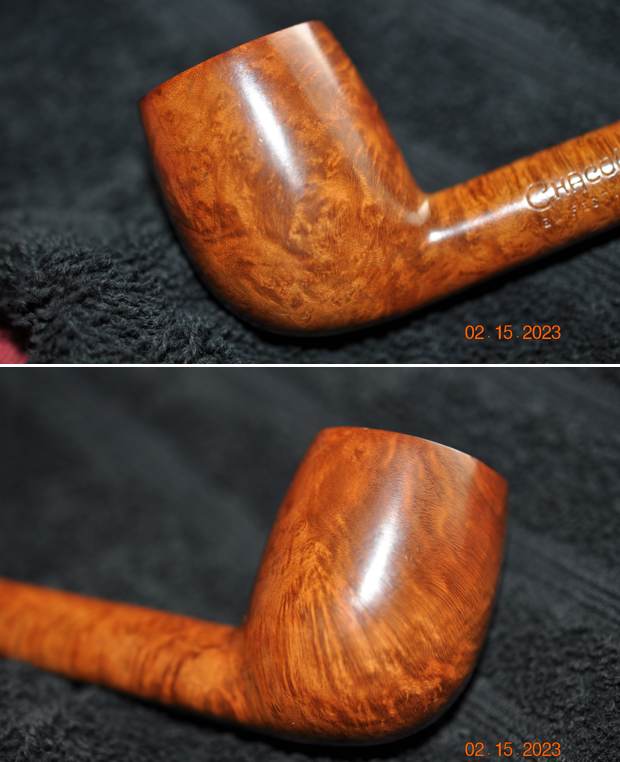
  1. The finish was very good with only some light dust and grime ground into the finish around the bowl sides. The medium brown stain is dull but the it really highlights the grain around the bowl sides and shank
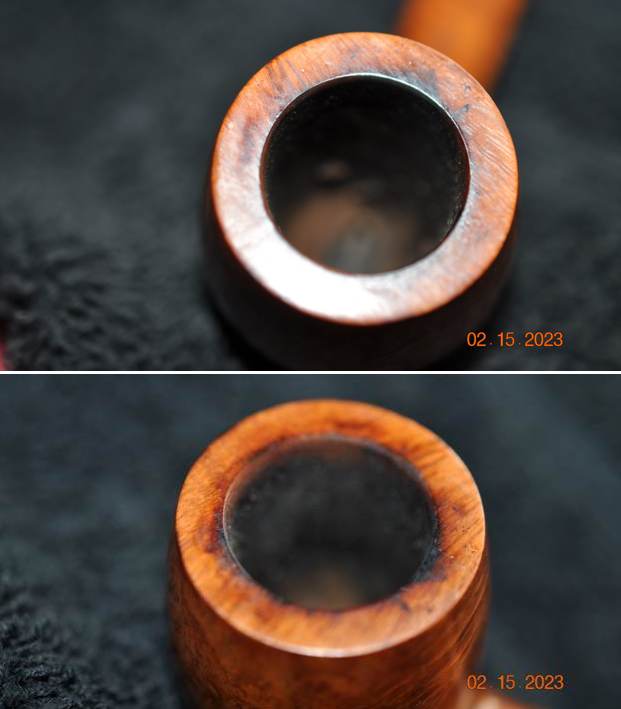
  2. The smooth rim top looked very good and the inner and outer edges look very good. There was some light lava build on the top and some darkening on the inner edge of the bowl.
  3. There was a light cake in the bowl. That also showed some raw briar on the bottom 1/3 of the bowl. Once the bowl was cleaned up we could confirm the condition of the bowl.
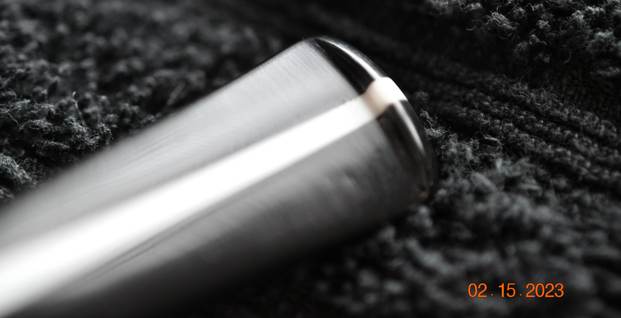
  4. The acrylic taper stem has a white stripe that runs the length of the stem from the button and also on the tenon and button end. It is obviously cast into the acrylic stem when it was made.
  5. There is a white CC logo stamped into the acrylic on the left side that identifies it as a Chacom pipe. It is in excellent condition with just some light tooth marks and chatter on the top and underside ahead of the button.

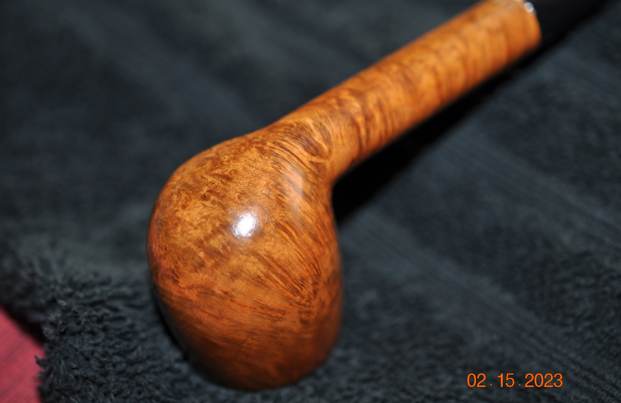
To summarize what I saw – this Chacom New Festival 438 Straight Billiard is a well made pipe. It is a little dusty but otherwise in good condition. The acrylic stem is lightly tooth marked but otherwise undamaged. There does not appear to be any calcification on the stem surface. The look and feel of the pipe in the hand is great. It is going to clean up very well. Here are photos of the pipe taken before Jeff started the clean up.  Jeff took close up photos so that I could have a clearer picture of the condition of the bowl, rim edges and top. The rim top photos confirm my assessment above. The cake in the bowl is not too thick – lightly coated on the walls of the bowl. The rim top has some light spots of lava coat and has some darkening on the inner edge and top toward the back of the bowl. The inner edge looks to be in good condition otherwise. This is what I look for when assessing a pipe. I look forward to viewing it in person after the clean up work. Instead of telling you what I see in the next photos of the sides of the bowl and the heel I want to hear from you. Tell me what you see? What does the finish look like to you? Are there any visible problems or issues that stand out to you? Are the cracks or scratches in smooth finish of the bowl? Are there visible flaws or fissures in the briar? What does the grain look like Is there a pattern to it? Any visible issues on the heel of the bowl? These questions should help you to see what I am looking for when I see these photos.  He took photos of the stamping on the left side of the shank. On the left side it is stamped with the Chacom [over] New Festival and on the underside it is stamped with the shape number 438. The striped acrylic is stamped with the expected Chacom CC logo on the side of the taper. What stands out for you in the photos of the stamping? What do you look for in the stamping? It is dirty but what do you see underneath the grime on the surface of the briar? I am sure many of you will shake your head and ask maybe even out loud, “Why is he including this again?” However, please remember that the point of these blogs is not to wow your with the work or make you shake your heads but I want you to know the details of the work we do so you can do your own. Back in 2020 Jeff wrote a blog about his cleaning process. I am including a link to that now so you can see what I mean about his process. Do not skip it! Give it a read (https://rebornpipes.com/2020/01/20/got-a-filthy-estate-pipe-that-you-need-to-clean/). Here is the introduction to that blog and it is very true even to this day.
Several have asked about Jeff’s cleaning regimen as I generally summarize it in the blogs that I post rather than give a detailed procedure. I have had the question asked enough that I asked Jeff to put together this blog so that you can get a clear picture of the process he uses. Like everything else in our hobby, people have different methods they swear by. Some may question the method and that is fine. But it works very well for us and has for many years. Some of his steps may surprise you but I know that when I get the pipes from him for my part of the restoration they are impeccably clean and sanitized. I have come to appreciate the thoroughness of the process he has developed because I really like working on clean pipe!

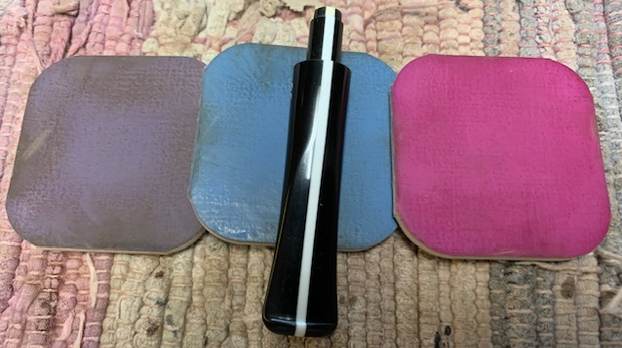
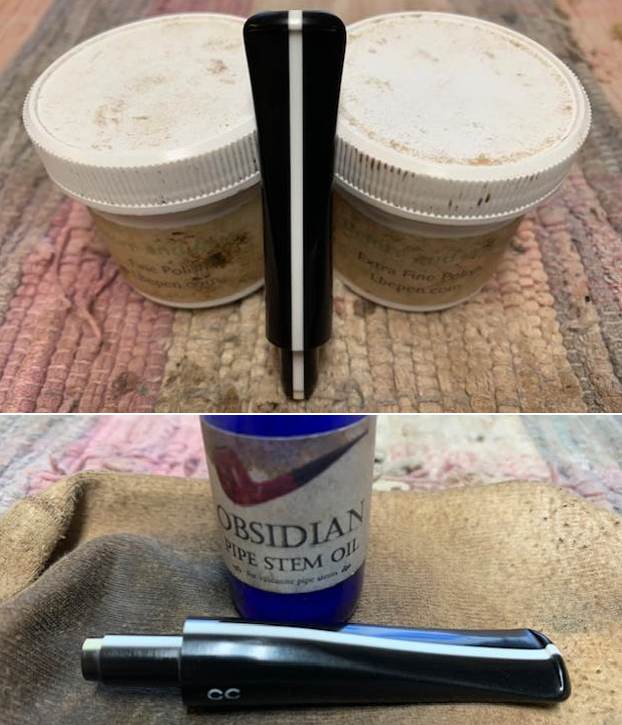
For the benefit of some of you who may be unfamiliar with some of the products he uses I have included photos of three of the items that Jeff mentions in his list. This will make it easier for recognition. These three are definitely North American Products so you will need to find suitable replacements or order these directly on Amazon. The makeup pads are fairly universal as we were able to pick some up in India when we were with Paresh and his family.

In the blog itself he breaks his process down into two parts – cleaning the stem and cleaning the bowl. Each one has a large number of steps that he methodically does every time. I know because I have watched him do the work and I have seen the pipes after his work on them. He followed this process step by step and when the pipe got to me it was spotlessly clean and ready for my work. The inside of the stem, shank and bowl were clean and to me that is an amazing gift as it means that my work on this end is with a clean pipe! I cannot tell you how much difference that makes for my work.

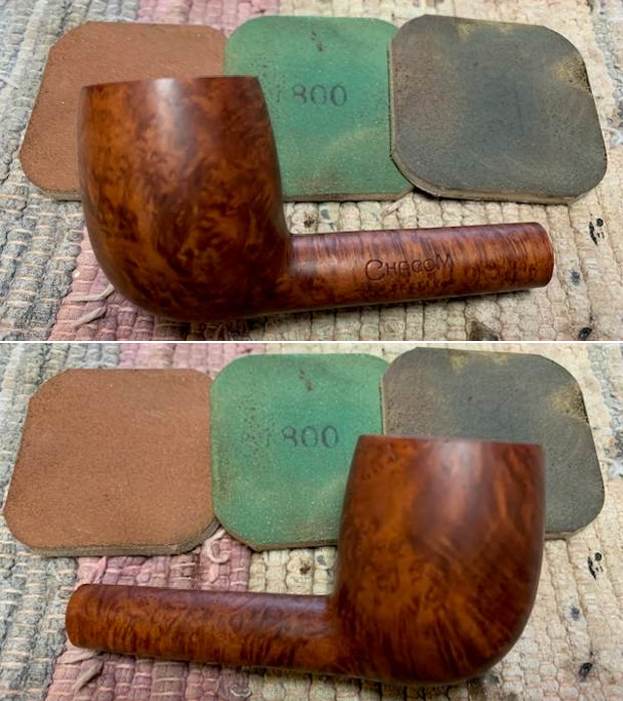
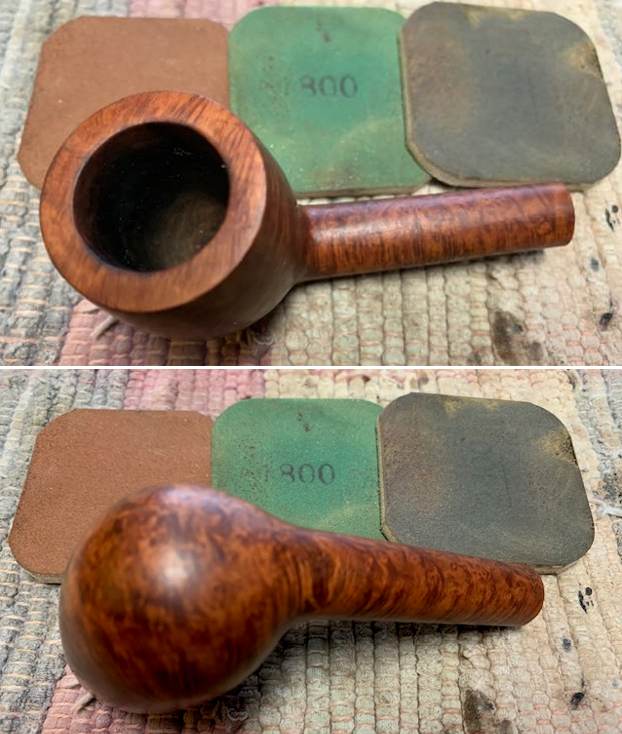
  1. The finish is clean and the grime and grit have been removed from the finish on the bowl. The smooth grain looks very good as well. It cleaned up very well and has some shine already that reveals the grain.
  2. The lava, grime and darkening on the rim top has been removed and it has revealed that the inner and outer edges are clean and burn free.
  3. With the cake reamed out the walls of the bowl are clean and they look very good with no checking or burn damage to the walls.
  4. The acrylic taper stem has a white stripe that runs the length of the stem from the button and also on the tenon and button end. It is obviously cast into the acrylic stem when it was made.
  5. There is a white CC logo stamped into the acrylic on the left side that identifies it as a Chacom pipe. It is in excellent condition with just some light tooth marks and chatter on the top and underside ahead of the button.

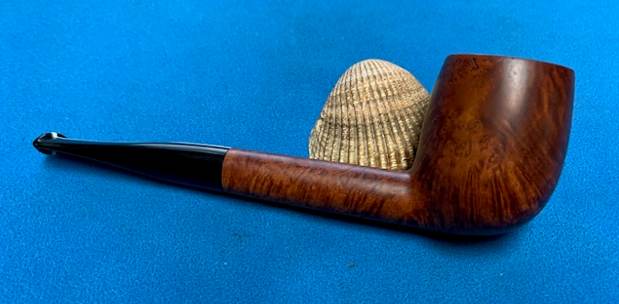
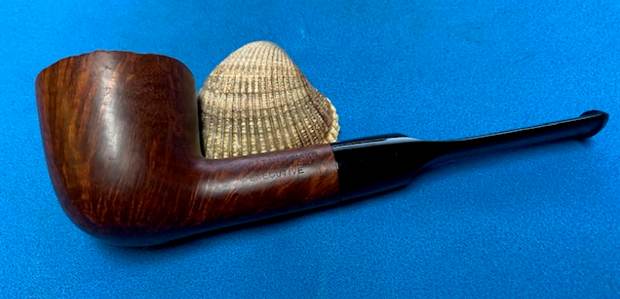
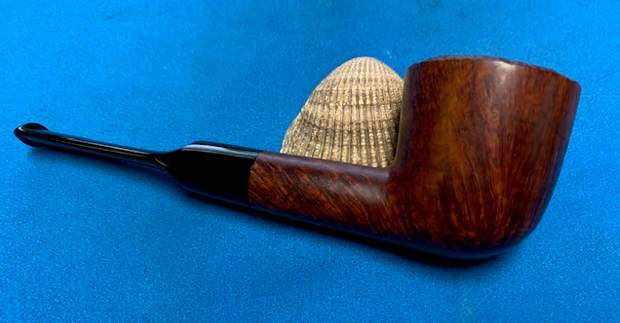
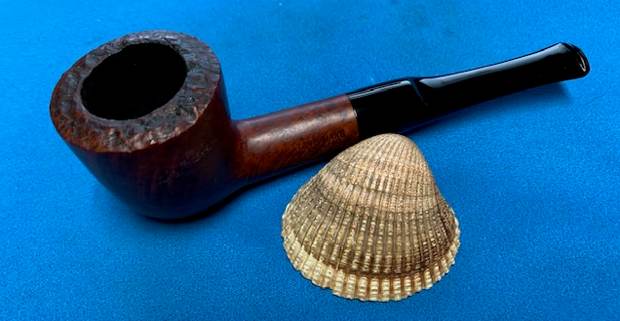
Hopefully the steps above show you both what I look for when I go over the pipe when I bring it to the work table and also what I see when I look at the pipe in my hands. They also clearly spell out a restoration plan in short form. My work is clear and addressing it will be the next steps. I took photos of the whole pipe to give you a picture of what I see when I have it on the table. This is important to me in that it also shows that there was no damage done during the clean up work or the transit of the pipe from Idaho to here in Vancouver.  I carefully went over the bowl and rim top to get a sense of what is happening there. In this case once the rim top and edges were cleaned the rim top and inner edge looked very good. A bit of polishing would bring it back well. I also go over the stem carefully. The fit to the shank is snug and the transitions are smooth. There were some light tooth marks and chatter on the surface of the stem but the button was in excellent condition. The acrylic stem surface was clean and looked very good. I took photos of the rim top and stem sides to show as best as I can what I see when I look at them. I always check to make sure that the clean up work did not damage the stamping on the shank sides in any way. It is in excellent condition and is very clear and readable. I love just looking at the lay of the pipe and the proportion of the hand made pipes. I took the pipe apart to get a sense of what was in the mind of the pipe maker when he crafted the pipe. The photo shows its beauty in flow and shape.I polished the smooth portions of the briar with micromesh sanding pads. I choose to dry sand the briar rather than wet sand it. Again it is a matter of personal preference. I prefer to use the pads dry and find they work very well on the briar. I sand with each pad (9 in total) and group them by threes for ease of reference. I wipe the bowl down after each pad with a damp cloth to remove the sanding debris and check the briar. I love seeing the developing shine on the briar as I move through the pads which is why I include so many photos of this step. I rubbed down the bowl and shank with Before & After Restoration Balm. It is a paste/balm that is rubbed into the surface of the briar. The product works to deep clean the finish, enliven and protect the briar. I worked it into the briar with my finger tips. I let it sit for 10 minutes then wiped it off with a soft cloth then buffed it with a cotton cloth. The briar really began to have a deep shine in the briar and the rustication showed depth. The photos I took of the bowl at this point mark the progress in the restoration. It is a gorgeous pipe.    I set the bowl aside and turn to work on the stem. I polished the stem with micromesh sanding pads – 1500-12000 grit sanding pads and water to wet sand the stem. I wiped it down after each sanding pad with Obsidian Oil on a cotton rag after each sanding pads. I know that many say Obsidian Oil does nothing for acrylic stems, but I find it does two things – first it gives some protection to the stem from buildup and second it give the sanding pads bite in the polishing process.   After finishing with the micromesh pads I rub the stem down with Before & After Fine and Extra Fine stem polish as it seems to really remove the fine scratches in the acrylic. I rub the Fine Polish on the stem and wipe it off with a paper towel and then repeat the process with the Extra Fine polish. I finish the polishing of the stem down with a final coat of Obsidian Oil and set the stem aside to let the oil absorb. This process gives the stem a shine and also a bit of protection.The final steps in my process involve using the buffer. I buffed the bowl and stem with Blue Diamond to polish out the light scratches in the briar and acrylic. I gave the bowl and the stem multiple coats of carnauba wax. I have found that I can get a deeper shine if I follow up the wax buff with a buff with a clean buffing pad. It works to raise the shine and then I hand buff with a microfiber cloth to deepen the shine. It is always fun for me to see what the polished bowl looks like with the polished stem. It really is a nice pipe. The mix of smooth finish around the bowl sides and shank looks great with the black and white acrylic stem. The Chacom New Festival Billiard feels great in my hand. It is a well balanced pipe. Have a look at it with the photos below. The dimensions are Length: 5 ¾ inches, Height: 1 ¾ inches, Outside diameter of the bowl: 1 ¼ inches, Chamber diameter: ¾ of an inch. The weight of the pipe is 1.45 ounces/41 grams. It is a beautiful pipe that I will soon be adding to the rebornpipes store in the French Pipemakers Section. If you would like to add it to your collection let me know. It should be a great smoking pipe.
Hopefully the style of writing of this blog is helpful to you in some way. In it I wanted to show both what I am looking for and how I move forward in addressing what I see when work on a pipe. Let me know if it is helpful to you. It is probably the most straightforward detailed description of my work process that I have done. As always I encourage your questions and comments as you read the blog. Thanks to each of you who are reading this blog. Remember we are not pipe owners; we are pipe men and women who hold our pipes in trust until they pass on into the trust of those who follow us.
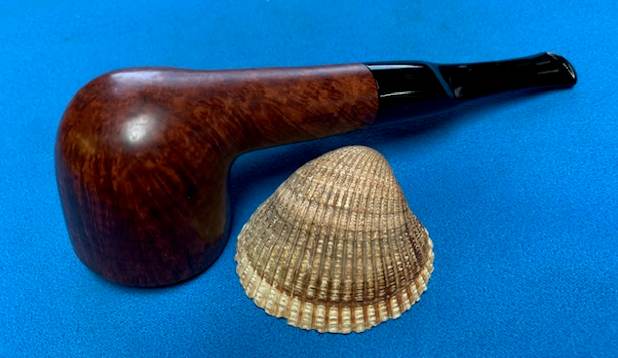
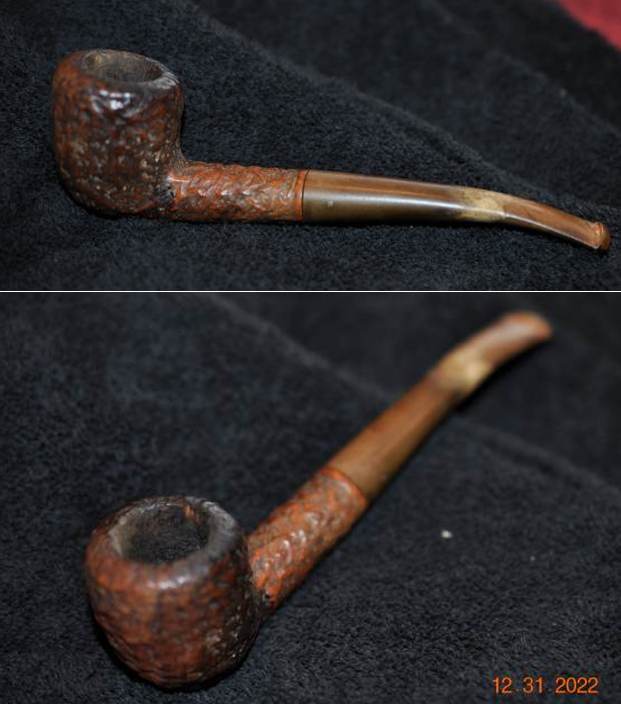
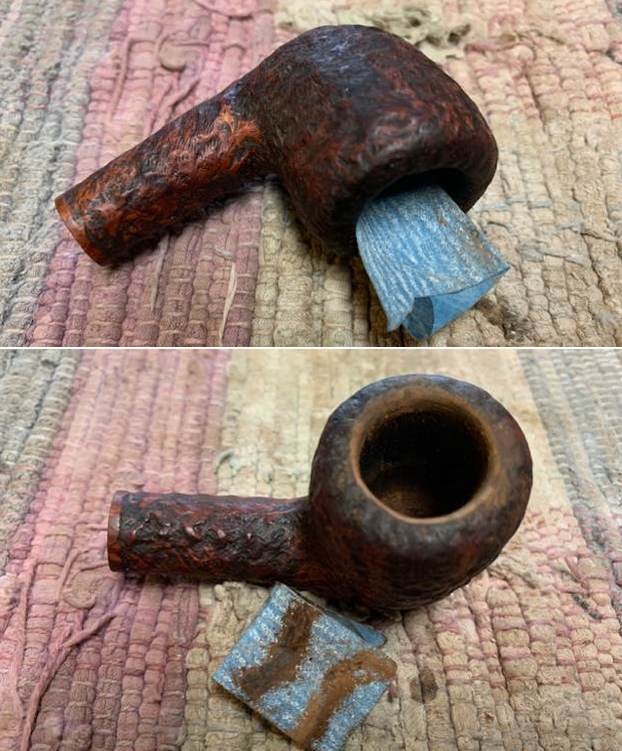
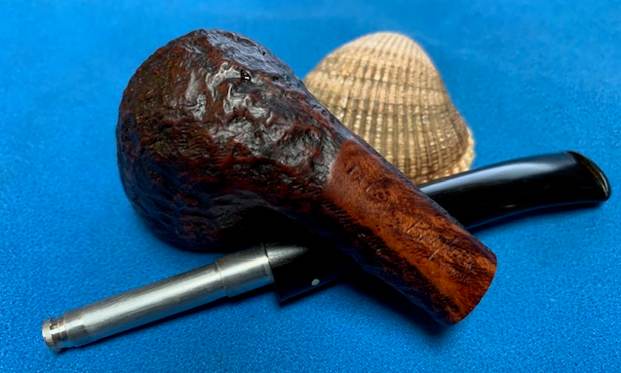
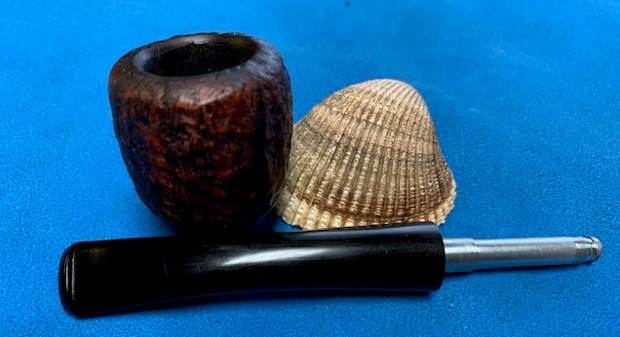
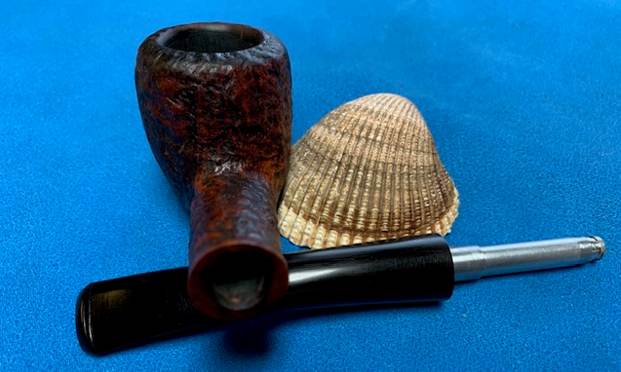
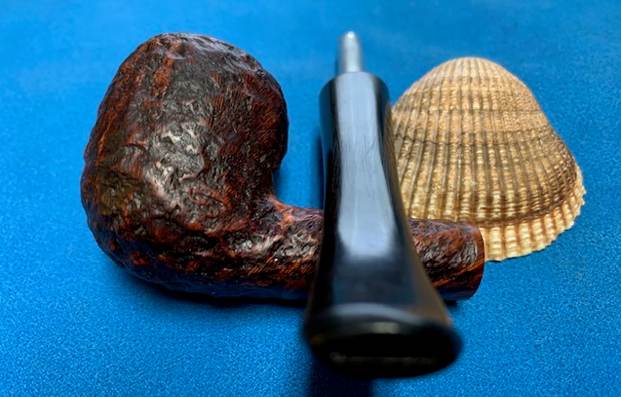
Cutting a New Acrylic Stem for a Vintage RBC French Briar Bulldog


Great work Charles. Looks like it was supposed to.

It’s always fun to come across an old pipe brand I’ve not heard of before, and even better if I get to work on a representative pipe. This RBC …

Cutting a New Acrylic Stem for a Vintage RBC French Briar Bulldog

Changes in the choice of pipes we pick up on our hunts…


Blog by Steve Laug

When I first started working on pipes I literally picked up every pipe that I found whether I picked them up in flea markets, antique shops or thrift shops. I was incredibly indiscriminate and picked them all up. I bought Dr. Grabows, Yello Boles, any and every American or Canadian Made pipe, Danish, English, French, German or any other country where a pipe was made that caught my attention. I was always on the lookout for that illusive Dunhill or Preben Holm made pipe. I found a few of both over the years. In those early days, almost 20 years ago, I paid very little for the pipes I found. Most cost me between $10 and $12. I also bought a few on EBay as well in the same price range. These early days were filled with excitement regardless of the pipes that I had found.

One day, almost drowning in pipe that I had restored and did not want and could not even seem to give away any more I made a significant change to my purchasing and hunting habits. I decided to “go to school on pipe repairs”. I purchased pipe that needed very specific repairs. For example,. I would buy pipes that needed to be refinished and work on them until I was comfortable with the process from beginning to end. I would buy bowls for restemming and work on the process of fitting and shaping new stems until I had worked out my own system. Each purchase represented something that I wanted to learn and continued to work on until I became better at the process. This went on for several years until I was comfortable with most restoration projects or needs. Notice, I never used the terms perfected or became proficient because I am always in the process of learning and refining the work.

From there I went on to purchase pipes by country of origin. I focused primarily on English and Danish pipe with a few specialty or unique American pipes. These American pipes were ones that I called oddities or perhaps a better term would be unique or specialty pipes. I broadly focused on country rather than specific brands. I worked on virtually anything British or Danish. In terms of British pipes I purchased Barlings, Comoys, GBDs and all the various seconds or sub lines that each produced. These included Portland, Dr. Plumb, Irwins, the Everyman, the Guildhall to name a few. I also picked up Orliks, Millvilles, Upshalls, Ashtons, Charatans, Dunhill, Loewe and Co., Astleys, BBBs, Charles Fairmorn, Parker, Redman, Sasieni, Tilsheads and others.

In terms of Danish pipes I purchased all the various pipes carved by Preben Holdm- Danish Pride, Preben Holm, Golden Danish, Walnut Monte Verdi to name a few. I also bought Georg Jensen, Stanwell, Royal Danish, Stokkebye, Winslow, Johs, Nording, Bari and Bentleys. There were others that I picked up as well whose names escape me. There were many other brands that caught my eye and joined the collection that needed to be worked on.

The third change of focus is more recent, perhaps the past 4 years or so. That involved buying estates as well as buying specific brands noted above. This has been a very enjoyable aspect of the hobby for us. We buy estates from family members and executors and get to enjoy the story of their friend, husband, father, uncle or brother. We learn to understand and know them in their pipe smoking habits. That is a huge bonus that allows us to carry on the story of a specific pipe or group of pipes. These estates have been purchased from family members, executors and sellers moving pipes for the families. These estates have come from Europe, Australia, Asia, the US and Canada. It is a pleasant twist on the hobby for both Jeff and me.
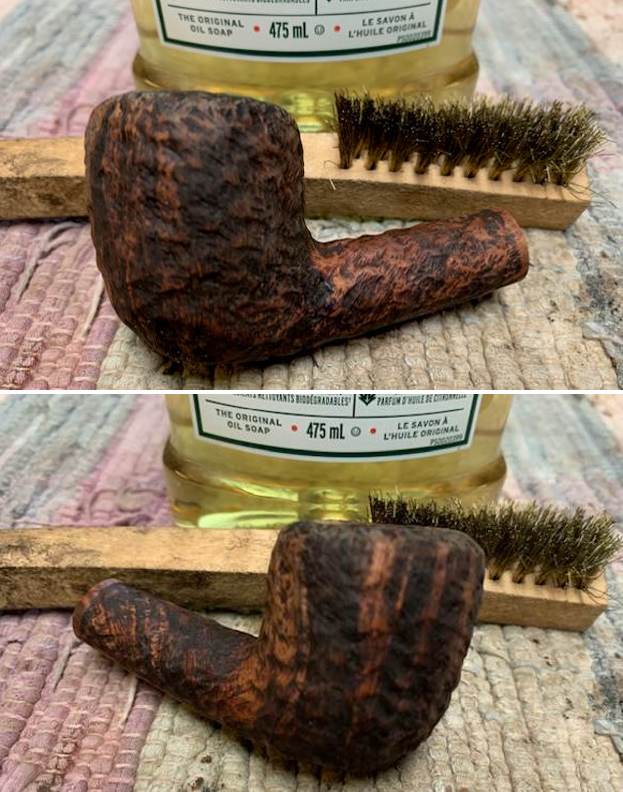
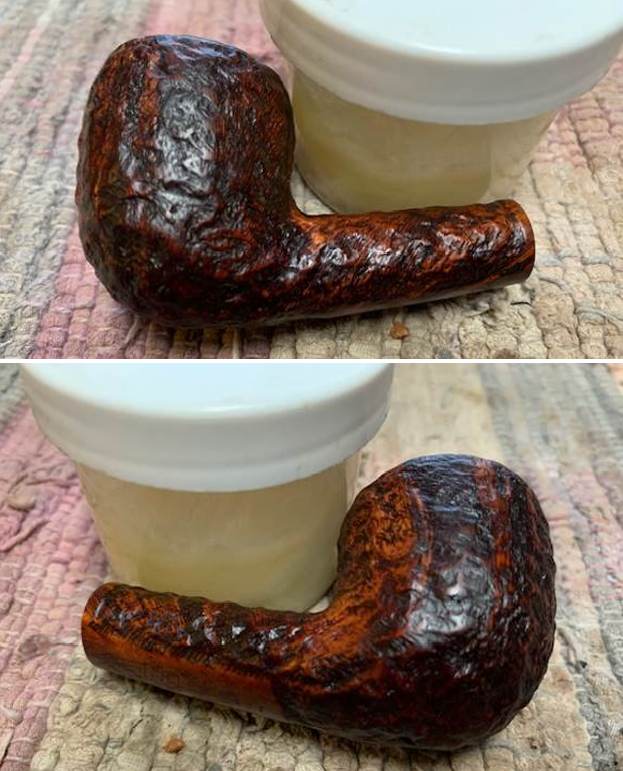
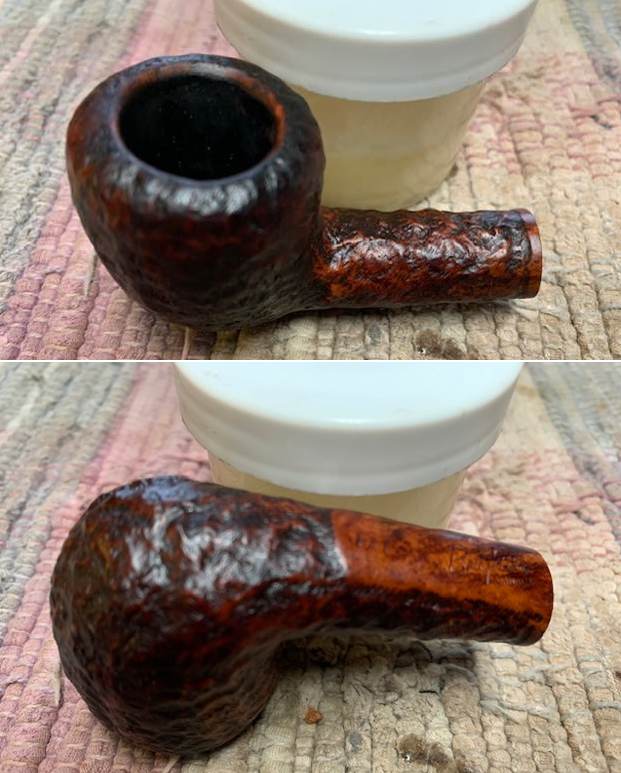
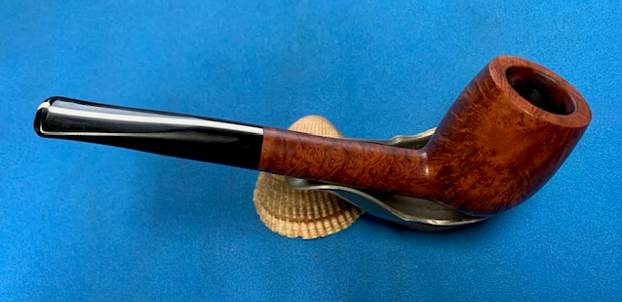
It seems that we rarely buy pipes from EBay any longer as we no longer need to. We still enjoy the pipe hunt and still enjoying buying from individuals who contact us about pipes they would like to sell. We enjoy the thrill of the pipe hunt and the mystery of uncovering beautiful briar in the pipes that we restore. We love the restoration journey. Continue to follow us in our restoration journey as demonstrated in the blog. We are sure you will enjoy the musings and development as we work on these pipe finds. Thanks for your faithful support.

Major Repairs to a WDC Wellington Jumbo


Blog by Kenneth Lieblich

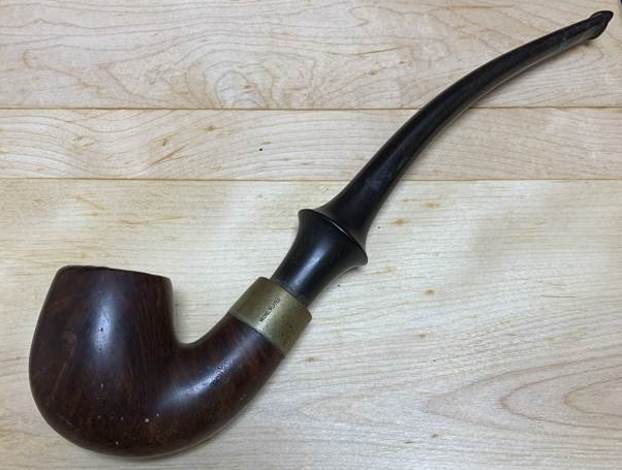
There are some pipes that are so rough that they are an entire pipe-restoration course in and of themselves. This is one of those pipes. It is a WDC Wellington Jumbo and it came to me in a lot of pipes from the USA. Recently, a customer of mine commissioned me to restore this pipe I readily agreed – because I didn’t know what I was getting myself into! The story of this pipe’s repair is a long one and it includes so many different elements that one can learn a lot just by reading. This pipe also reminded me that sometimes the wear-and-tear of the years needs to remain on a pipe as part of its story. I managed to bring great beauty back to this pipe, but it would always retain signs of its harsh past. This is one Wellington that did NOT win at Waterloo. The pipe in question was made by the William Demuth Company of New York (hence, WDC). I read a blog Steve wrote on a Wellington Jumbo back in 2020 to learn more about the pipe’s background. I was directed to the Pipedia page on WDC and it has a lot of good information, including a great flyer which had a photo of some of the Jumbos.From Pipedia is a Wellington ad and another from 1915, courtesy of Pipephil: The Wellington is a charming pipe, but it had a number of significant issues. It might be most clear for you, dear reader, if I enumerate the issues, one-by-one, and we can address them in due course. There was a tremendous amount of work to do on this pipe, so I got to it. I divided up the problems into three categories: the stem, the ferrule/band, and the stummel.

1.  I began by cleaning some of the filth on the outside of the stem with some Murphy’s Oil Soap on cotton rounds. This removed some of the surface staining.
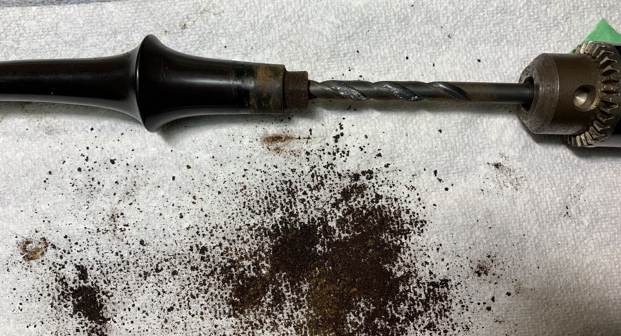
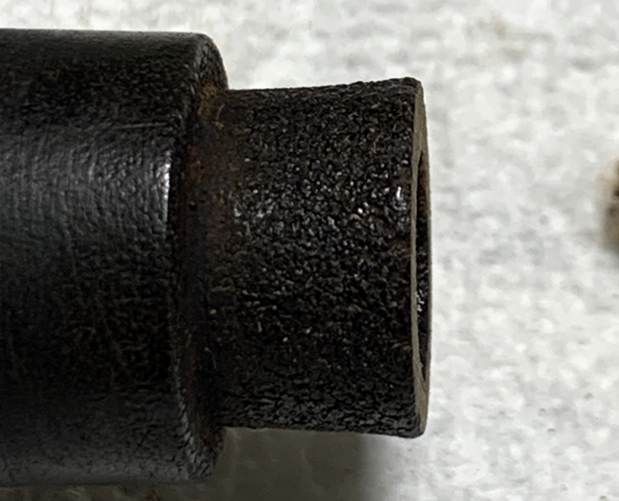
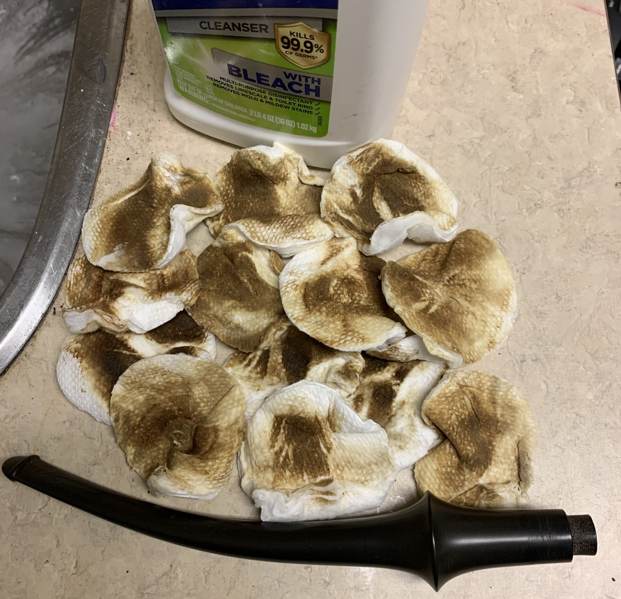
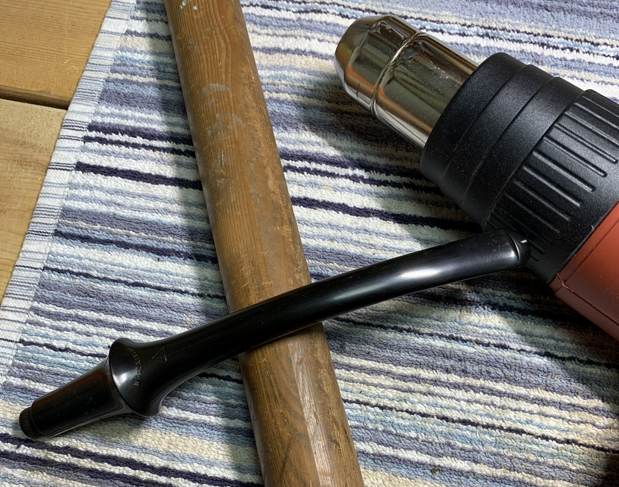
2. The stem’s insides were absolutely clogged with filth. Steve told me that the Wellingtons are notorious for this, and I learned the hard way just how true that was. I actually used a drill bit (by hand) to break into the encrusted gunk in the stem. Then, I started cleaning the inside with isopropyl alcohol, Q-tips, and pipe cleaners. This took a long while. The inside was terribly dirty and it took an awful lot of cotton. 3. Due to the size of the stem, I had to use churchwarden-size pipe cleaners, but this was just not doing enough to progress the process. I decided to plug up the bore-end, filled the stem with alcohol, and let it sit for a while – in the hope that it would loosen some of the gunk. This was mildly successful but insufficient. So, I then opted to use my tube brushes with alcohol and this worked quite well, dislodging some of the filth I couldn’t otherwise get to. It was clear that the pipe would require a retort, but that would have to wait until later. 4. The tenon end was burnt to a crisp from overuse and, more specifically, overheating. I sanded this down in order to even it out. I didn’t want to over-sand it, but I couldn’t just leave it as it was. 5. There was considerable oxidation, but the stem was too large to fit in my deoxidation fluid container. As a result, I had to do this by hand. I used SoftScrub with some cotton rounds and, as you can see, lots of revolting colour came off the stem. As expected, this took a lot of elbow grease, but I got it to a reasonable state.6. The area of the stem just above the button was chomped as badly as I’ve ever seen and the vulcanite had actually ruptured at some point. Also, the bore hole was damaged. I used a BIC lighter to try and lift some of those dents, but very little (if anything) was lifted. I brought out my cyanoacrylate adhesive and I applied it liberally to the affected areas – including the bore. I used some accelerant to get the glue going, and then moved on. 7. I began the lengthy process of sanding and shaping the cyanoacrylate repairs. I used small files and both 220- and 400-grit sandpapers to remove the excess adhesive. Once I had shaped it the way I wanted it, I then used all nine Micromesh pads (1,500 through 12,000 grit) to bring out the lovely black lustre on the stem. I also used Obsidian Pipe Stem Oil in between each pad scrubbing. Hey –we’re finally making some progress!8. Halfway through the MicroMesh process, I paused to fix yet another problem with the stem: it had straightened over time and needed to be bent back into its correct shape. Essentially, I wanted the end of the stem to be close to parallel with the rim of the bowl. I brought out my heat gun and heated the vulcanite stem in order to make it malleable. The heat gun is very powerful – it does not take long! When it was soft, I gently curved the stem over a wooden dowel. The dowel provides a firm surface and a proper curve. Once I had the bend I wanted, I left the stem to cool and set itself in place.9. On to the ferrule – which was thoroughly corroded and discoloured from years of mistreatment. Somewhat to my surprise, the ferrule came off very easily and required no special effort. I began by cleaning the metal with some SoftScrub on cotton rounds. This was quite good at removing the unsightly bits.10. I sanded the inside of the ferrule with 220-grit sandpaper in order to remove the old glue and debris that came from the shank. This would provide a better surface for re-gluing later.

11. I used some of my MicroMesh pads (only 3,600-12,000) to eliminate some of the minor scratches on the metal. It also gave a nice shine which clearly hadn’t been seen for decades.

12. I used a jewelry cloth to give the final polish to the nickel. This ferrule would always retain some small dents etc. from its hard life, but it looks much improved.

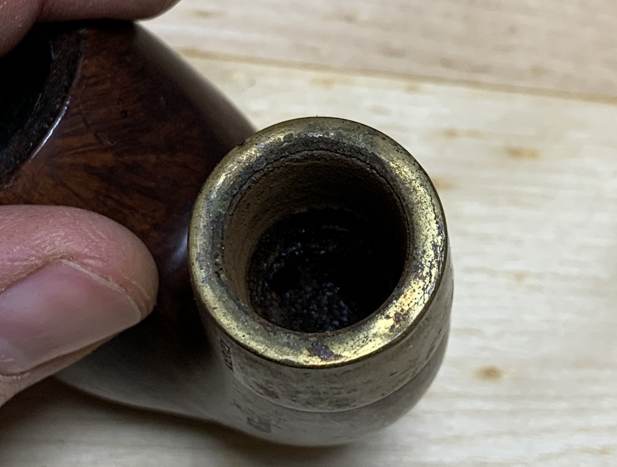
13. On to the stummel – this is where the lion’s share of the work was. The insides (both bowl and shank) were overwhelmed with cake and tar and anything else you’d care to mention. The bowl really needed to be reamed, so I used the KleenReem too to scrape off as much built-up cake. Sadly, this just wasn’t sufficient – I had to go to the next step to get things moving.14. I threw the stummel in my alcohol bath in the hope that it would loosen some of the incredibly hard residue inside the bowl. After 24 hours, this worked a bit, but not enough. It was time for the nuclear option.15. I put a sanding drum (and a couple of other bits) on my Dremel and carefully began removing the old stuff. This is not an option that I use regularly. The risk of oversanding is high and that can be an even bigger problem. However, I worked slowly and cautiously. Generally, I prefer to sand the chamber down to bare briar. When restoring, it is important to ensure that there is no damage to the briar under the cake. There are a few situations when I might leave some cake in the bowl, but not today. Sadly, there were definitely some hidden flaws to the briar on this pipe. I’ll come back to that later.16. Just like the bowl, the shank was absolutely disgusting. It had never been cleaned – or, not for many decades. I started cleaning the inside with isopropyl alcohol, Q-tips, and pipe cleaners. This took a while. The inside was very dirty and required and extraordinary number of Q-tips and pipe cleaners. Eventually some cleanliness came to it.

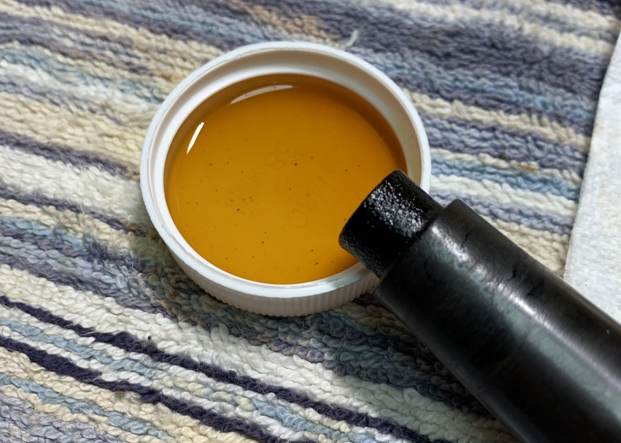
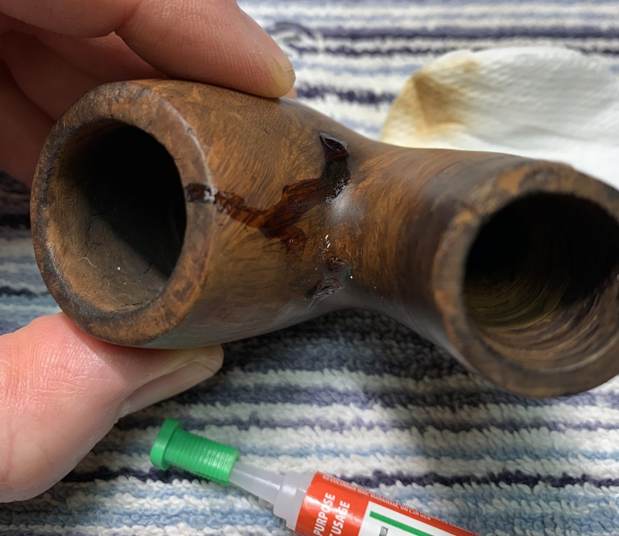
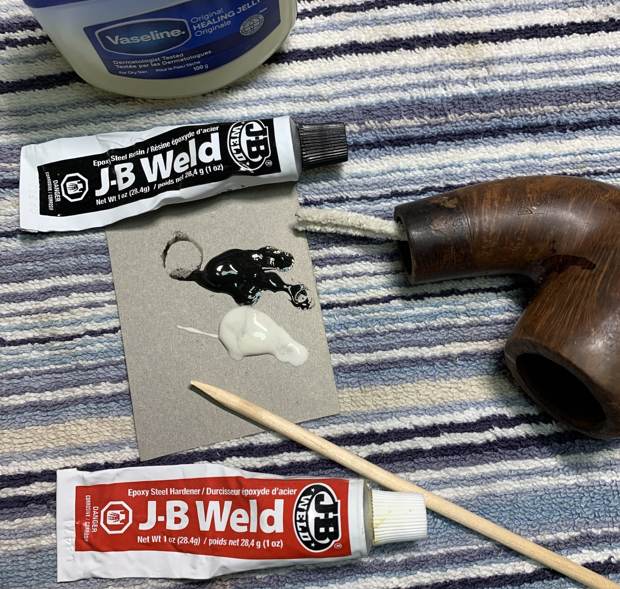
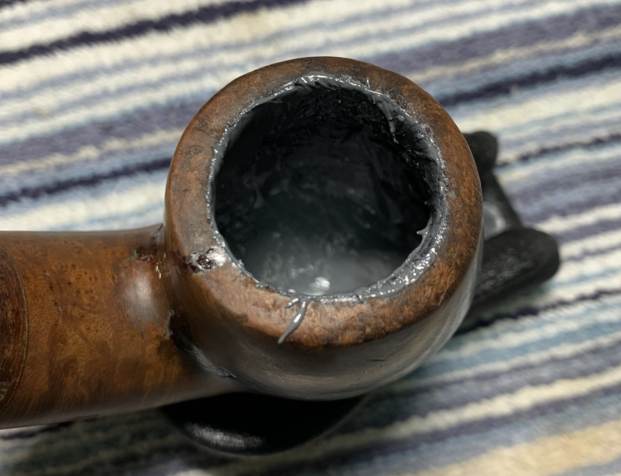
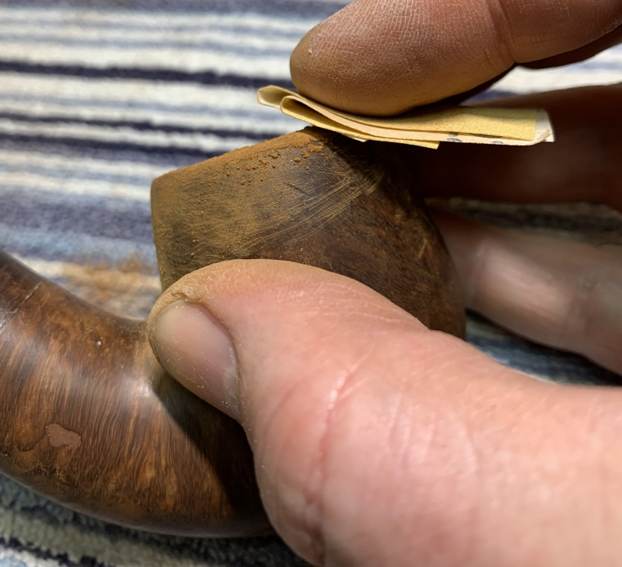
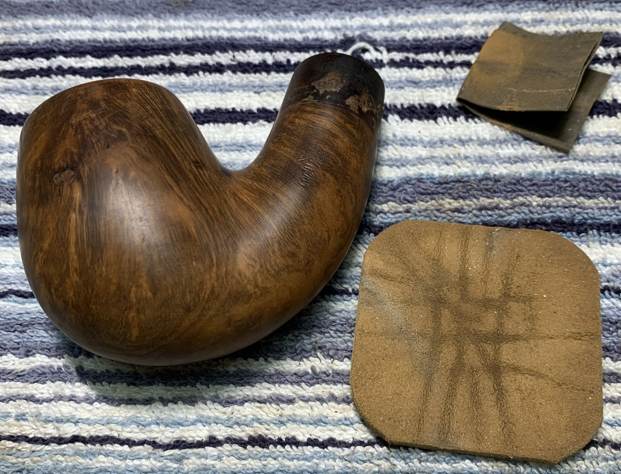
17. I decided to de-ghost the pipe in order to remove any lingering smells and dirt of the past. I thrust cotton balls into the bowl and the shank and saturated them with 99% isopropyl alcohol. I let the stummel sit overnight. This caused oils, tars and smells to leach out into the cotton. The bowl was supposed to be nice and clean after this, but this was no ordinary pipe.18.  At this point, it seemed sensible to set up a retort and further clean this whole pipe out. I put the stem and stummel back together and used my pipe retort system. This system uses boiling isopropyl alcohol and a vacuum (a void, not the household appliance) to clean the interior of a pipe. As you can see by the brownish colour of the alcohol, the retort worked well – although it took many changes of alcohol to get it clean. I managed to extract lots of otherwise inaccessible filth from inside the pipe. 19. Now that the pipe was clean, I wanted to have a closer look at the state of the briar, inside and out. For this, I scrubbed the outside of the stummel with Murphy’s Oil Soap on some cotton pads. That removed any latent dirt that blighted the wood. No surprise: there was lots.20. Several tiny cracks appeared on the outside of the stummel and I needed to address them. The first step in dealing with this was to ensure that the crack would not continue to creep after I had repaired it. To that end, I took a micro-drill bit, inserted it in my Dremel, and very carefully drilled a hole at the ends of the cracks. Since the cracks were not deep and did not go right through the wood, I did not drill all the way through. I then repaired the cracks by allowing cyanoacrylate adhesive to seep into them and then letting the glue cure. 21. Alas, there were also cracks inside the bowl. But beyond that, significant gouges were there from some prehistoric reaming tool. Removing the cake in the bowl did feel like an archaeological dig, so there were bound to be some surprises in the briar. The solution to this problem is always a tricky one: epoxy. I prepared some J.B. Weld epoxy and filled the cracks and gouges, ensuring that the epoxy was evenly spread throughout the bowl. Of course, I did plug the draught hole with a folded pipe cleaner (coated in Vaseline) to make sure none of the epoxy made its way up there. Once done, a good 24 hours was needed to ensure that the epoxy was properly set. 22. Burn marks and an uneven surface blighted the rim of the pipe and it needed to be redone. There was a lot of damage to the rim and the front edge had been bashed in, presumably from banging out dottle over the years. In order to remove the damage, I “topped” the pipe – that is to say, I gently and evenly sanded down the rim on a piece of 220-grit sandpaper. This is always a tricky business – I want to find the balance between removing old burns and maintaining as much of the pipe as possible.23. The rim needed some more help since the bowl opening was badly out of round. To fix this, I took a solid wooden sphere, wrapped some 220-grit sandpaper around it, and sanded the inner edge of the rim. In addition to this, I also sanded down the outside of the bowl, near the rim, so as to minimize the visual effect of the bashed edge. I sand all the way around to ensure that the pipe retains its look.24. As mentioned earlier, there were a few dents in the briar. I dug out my iron and a damp cloth to try to raise the nicks. The hot and moist steam can often cause the wood to swell slightly and return to shape. There was some movement in the wood, which was good. The repair was not perfect, but the remaining wounds would be improved by sanding.25. There were two significant fills on the bowl. They were large enough that I would not be able to make them disappear entirely, but I wanted to make them solid and smooth, and meld into the rest of the wood. I fixed them up with a mixture of cyanoacrylate adhesive and briar dust.

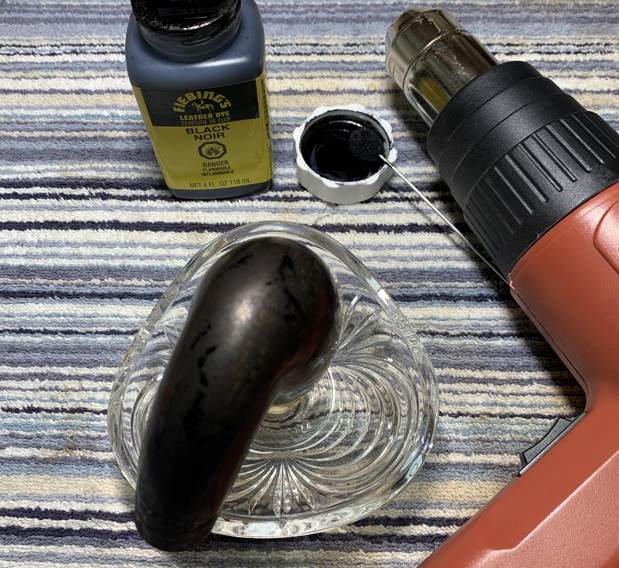
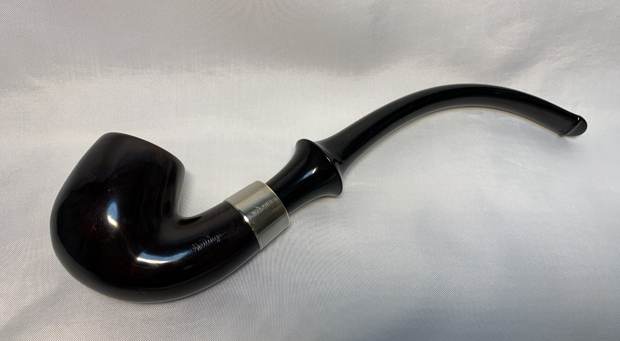
26. Next, I used all nine Micromesh pads (1,500 through 12,000 grit) all over the stummel to make it lovely and smooth. 27. Having completed that, it was time for staining. My customer wanted a deep, dark burgundy colour. First, I brought out my heat gun and spent a couple of minutes thoroughly heating the wood, so it would be as receptive as possible to the stain, to give the best results. I applied Fiebing’s Black Leather Dye with a cotton dauber. I flamed it with my BIC lighter and let it set. This dye is alcohol-based, so I used isopropyl alcohol to wipe down the pipe and remove excess stain. I coated it again with Fiebing’s Oxblood Leather Dye, flamed it again, and let that set too. I stained and flamed the pipe another two times (once with black, once with oxblood), always making sure I warmed the pipe with my heat gun first. 28. Now that the epoxy had fully cured, I gently sanded the inside of the bowl to provide a rough surface for what was to come next. I coated the entire inside of the bowl with a mixture of activated charcoal and my wife’s homemade yogurt. Once hardened, this provided a good, slightly rough surface for a new cake to build. 29. At long last, I was off to my bench buffer to put the final touches on this pipe. I first gave it a thorough going-over with White Diamond compound. Following that, several coats of carnauba wax created a beautiful, glossy seal on the pipe and some closure to this long and involved repair. The lovely shine made the wood look beautiful! I know that the new owner will enjoy smoking it for many years to come. I hope you enjoyed reading the story of this pipe as much I as I did restoring it. The approximate dimensions of the pipe are as follows: length 9½ in. (240 mm); height 6½ in. (165 mm); bowl diameter 1⅝ in. (41 mm); chamber diameter 1 in. (25 mm). The weight of the pipe is 3 oz. (86 g). If you are interested in more of my work, please follow me here on Steve’s website or email me directly at kenneth@knightsofthepipe.com. Thank you very much for reading and, as always, I welcome and encourage your comments.

I cant believe it has been 11 years…


Blog by Steve Laug

The end of May came and went without fanfare. I received an email from WordPress on May 31st reminding me that rebornpipes was 11 years old and congratulating me for that. That made me stop and think about the blog. When I started it 11 years ago I established it with two objectives.

  1. To create a repository of my written reports on my work on pipe restoration and trace not only my development but also my growth and progress in restoration.
  2. To create a community of restorers who share their experience and methodology with each other. The community would create a challenge and an encouragement to each other.

Eleven years has shown the development of both of these objectives. The first objective has been met and continues. It is a large collection of articles that I have written about my work on each pipe that has crossed my work table. If you have followed for long you can see both the minute and large changes that have been part of my development in restoration.

The second objective has grown much greater than I ever imagined. The community of restorers includes people from around the globe who are working restorers who have joined me in writing about their work. The other piece of this that was unforeseen was the many who have worked on their own pipes or started restoring pipes they have collected. I receive emails every day with thanks and questions about restoration. It has been and encouragement to see this happen.

Another surprise for me was an email I received from a fellow named Anuj Agarwal. He started and maintains a blog called Feedspot about an entry he had written on the Top 30 Smoking Pipe Blogs. Here is a copy of his email.

Hi Steve,

My name is Anuj Agarwal, I’m the Founder of Feedspot.

I would like to personally congratulate you as your blog Rebornpipes has been selected by our panelists as one of the Top 30 Smoking Pipe Blogs on the web.

https://blog.feedspot.com/smoking_pipe_blogs/

…I personally give you a high-five and want to thank you for your contribution to this world. This is the most comprehensive list of Top 30 Smoking Pipe Blogs on the internet and I’m honored to have you as part of this!

We’d be grateful if you can help us spread the word by briefly mentioning about the Top 30 Smoking Pipe Blogs list in any of your upcoming post.

Please feel free to reach out with any questions.

Best, Anuj

Here is a screen capture of the listing on his blog. The wording is taken from the blog itself and I was given a link on how to edit it if I chose to do so.I never know what to do with this kind of email and usually wonder about the validity of the nomination to the Top 30 Smoking Pipe Blogs. It always feel like it is being nominated to Who’s Who so that the selling company can use your information for their own use. It may well be an honest site but I am a skeptic. Still it is great to receive this nonetheless.

For me it is interesting to see the two original objectives are met and will continue to be met over the years ahead as I keep working on pipes. Looking around my work area I realize that I have more than enough pipes to carry me through the rest of my working life.

As I reflect further there is a side benefit that has developed on the blog – the rebornpipes store. It allows me to move on the pipes that I work on, passing them onto to new pipe men or women who will carry on the trust of the pipe before passing them onto he next one who will enjoy the pipe. I love the fact that the pipes I work on come to me with stories and that those stories will continue to grow over time as the pipe outlives each of us who enjoy them.

I also want to say thank you for your ongoing support as contributors and readers. I look forward to enjoying the journey together as we walk ahead through the years. Enjoy a bowl and a pipe you have restored or purchased! Remember the trust we share with the briar we hold.

Cheers

Steve