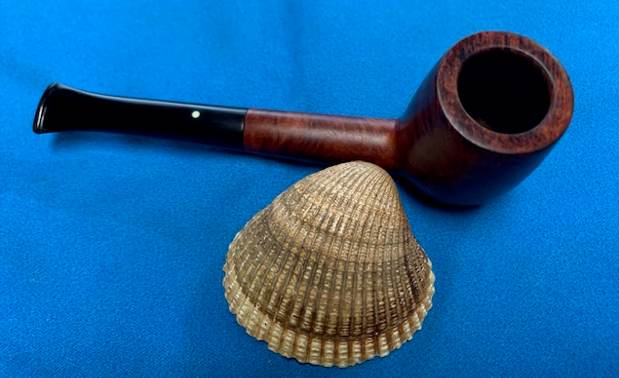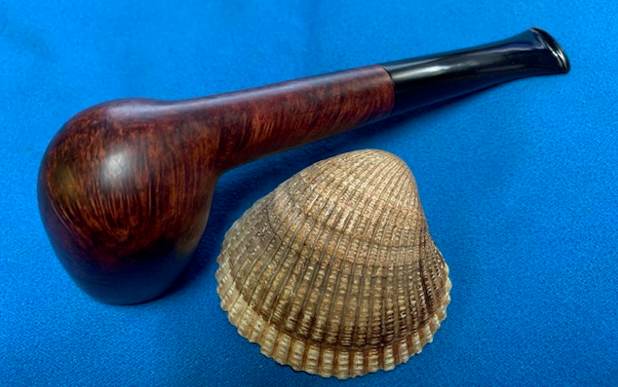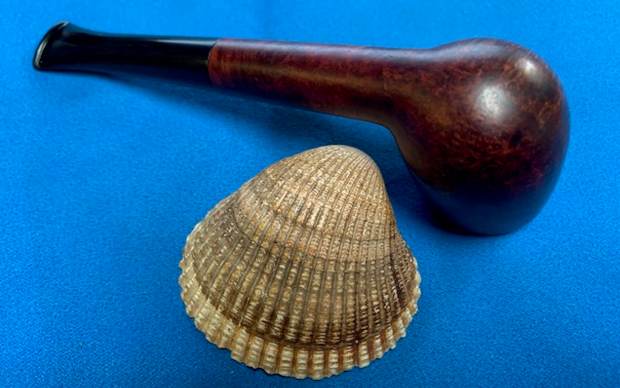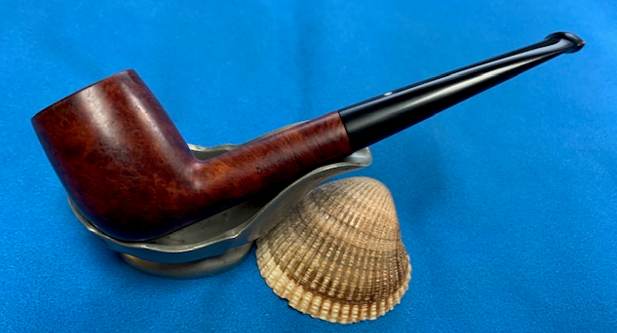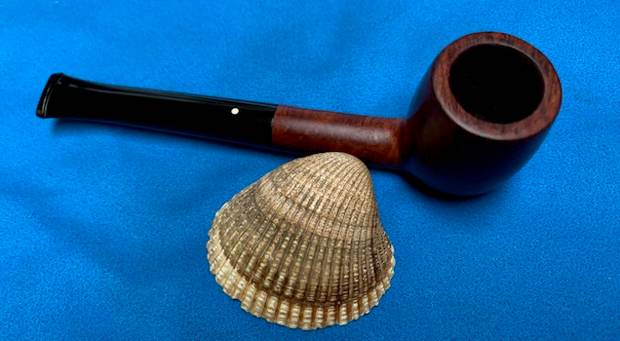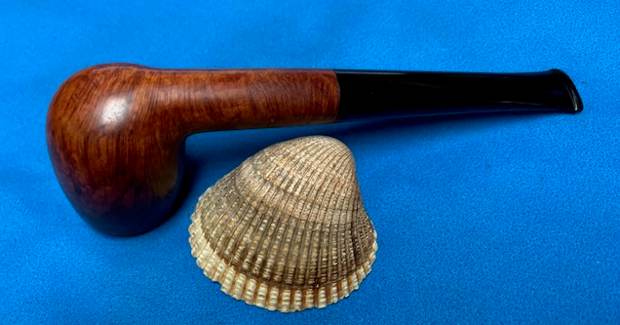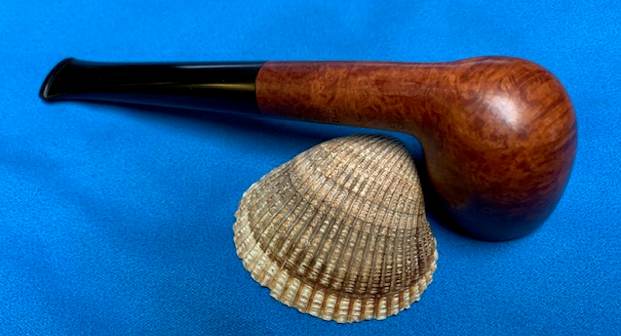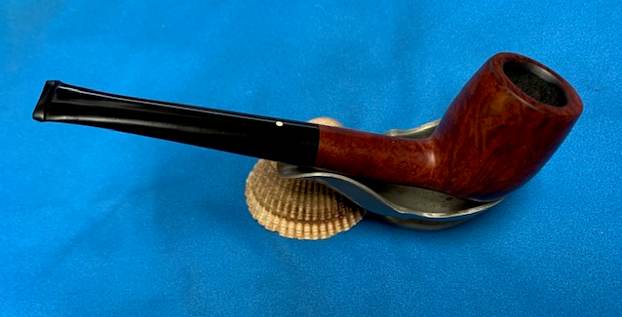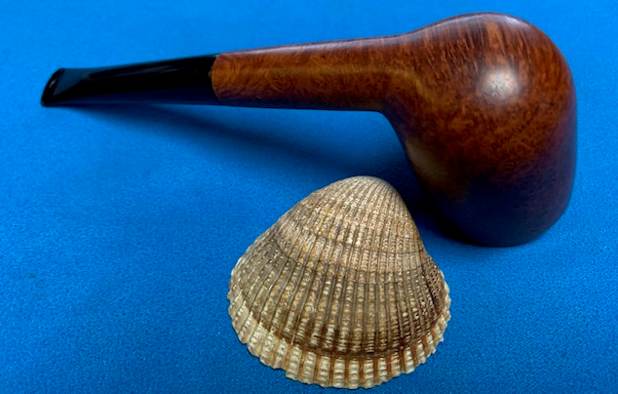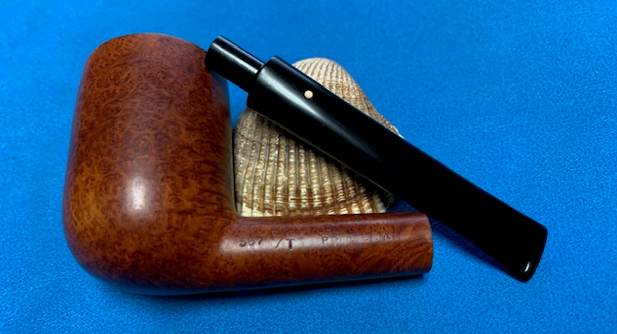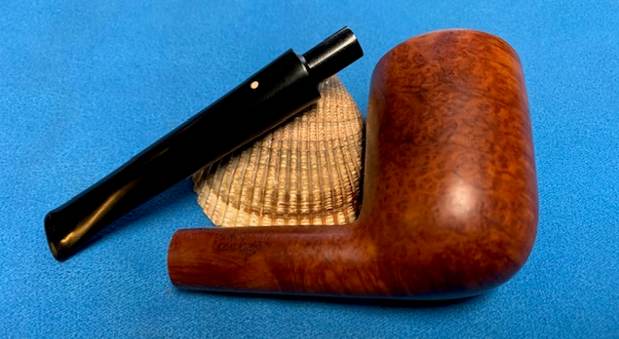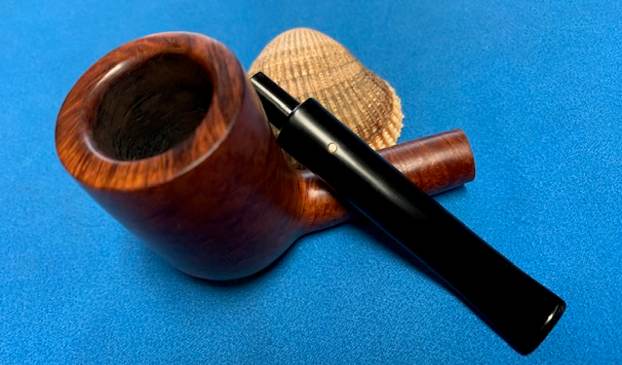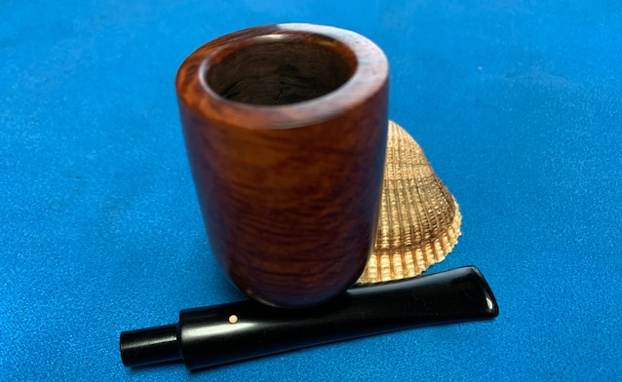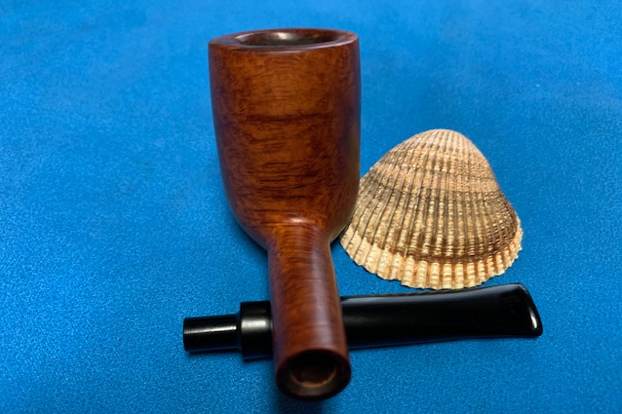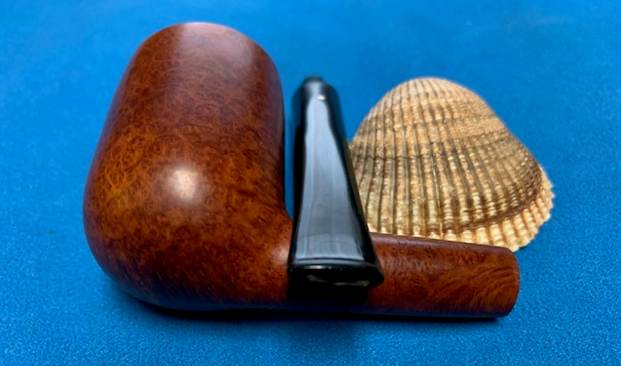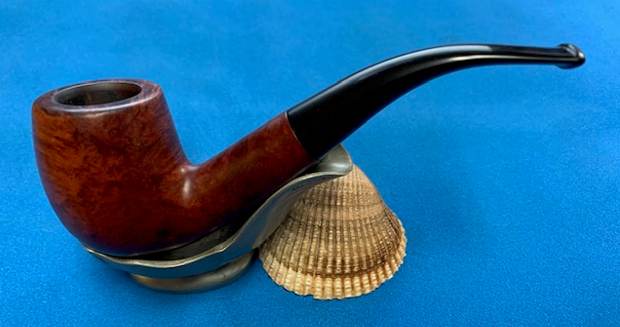
Monthly Archives: January 2023

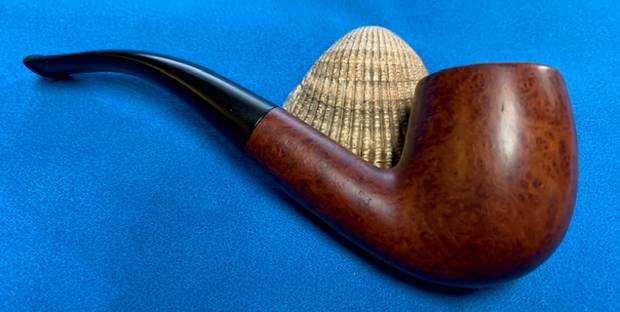
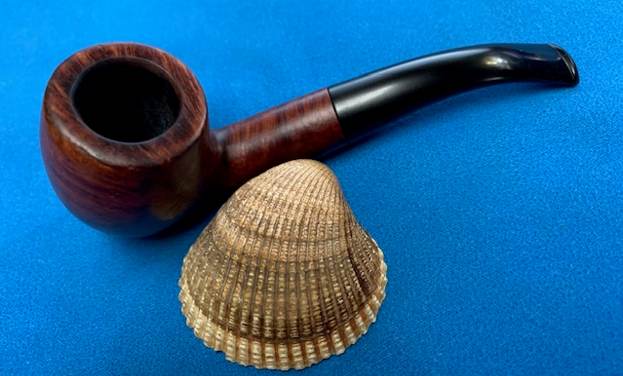
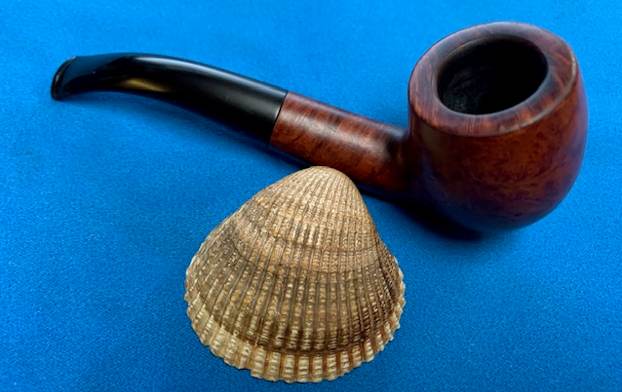
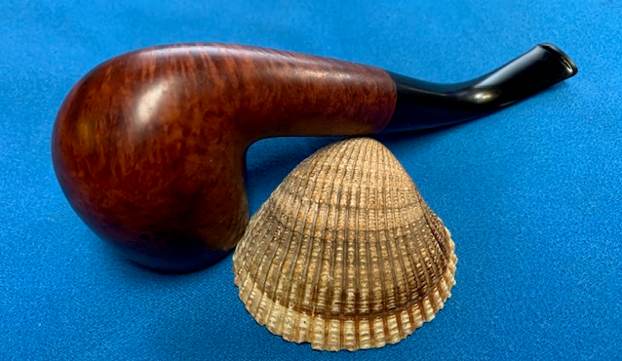
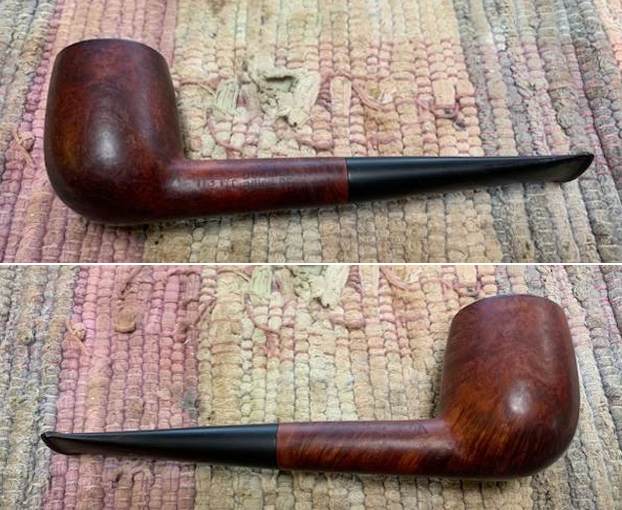
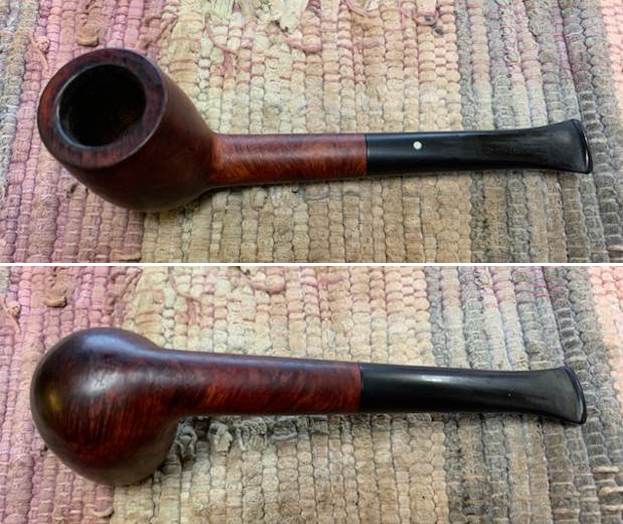
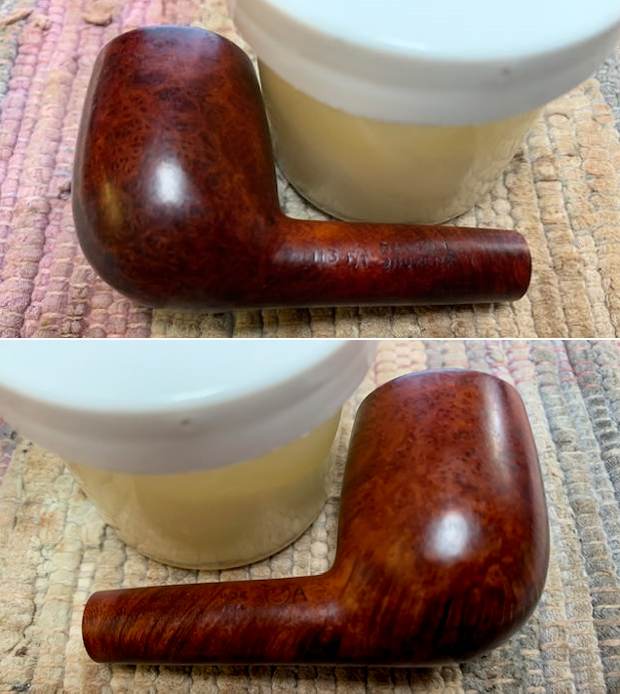
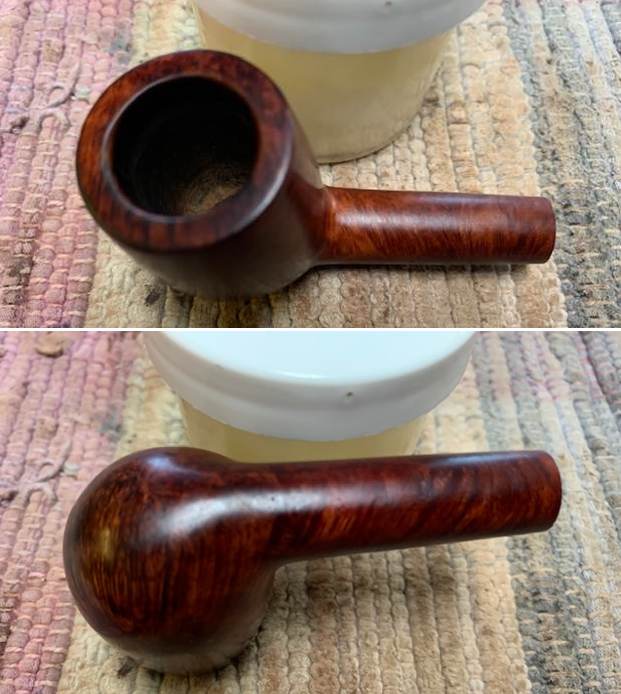
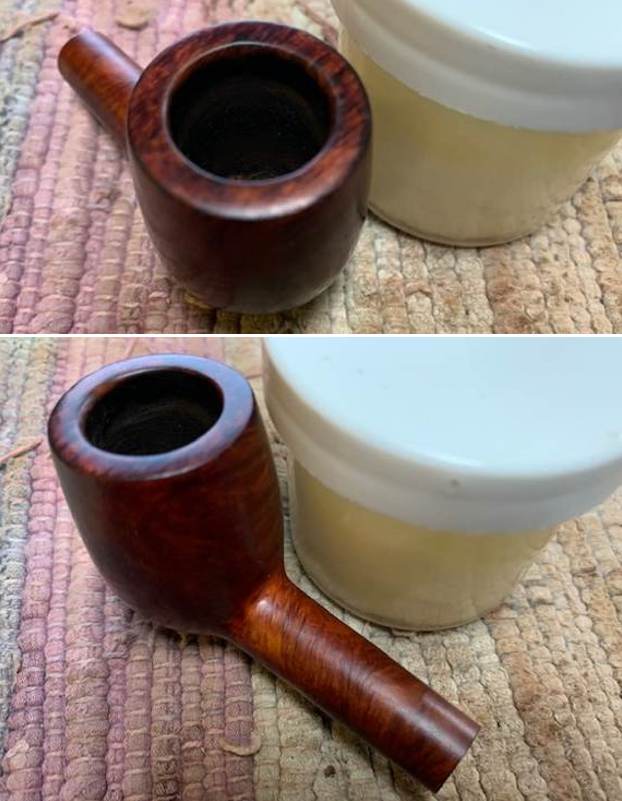
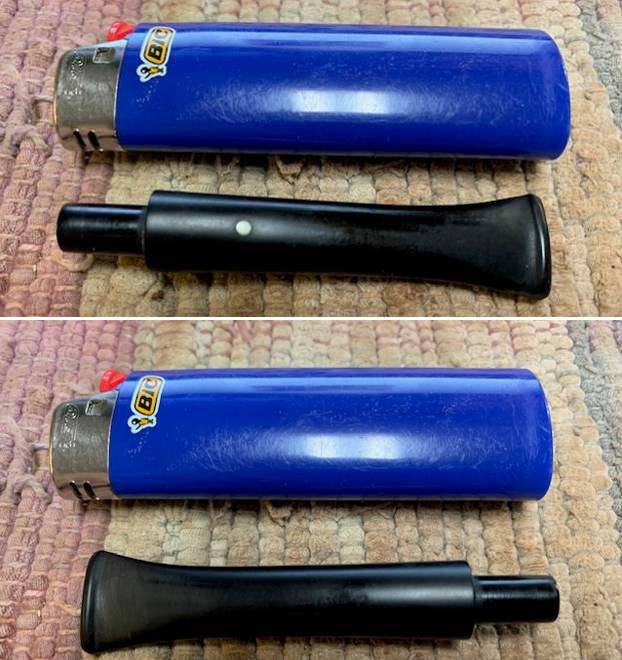
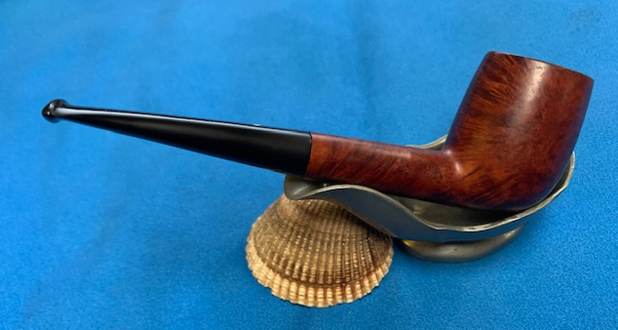
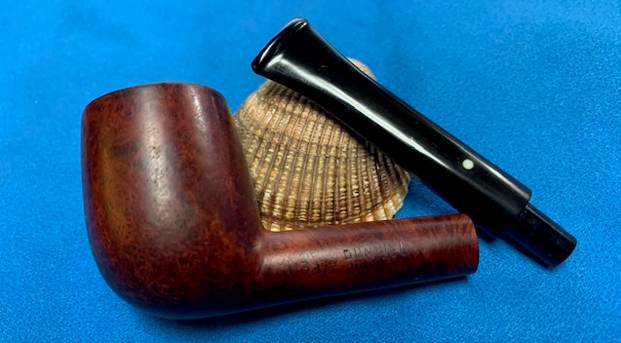
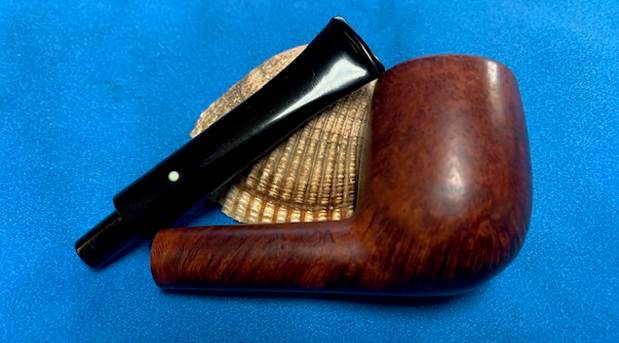
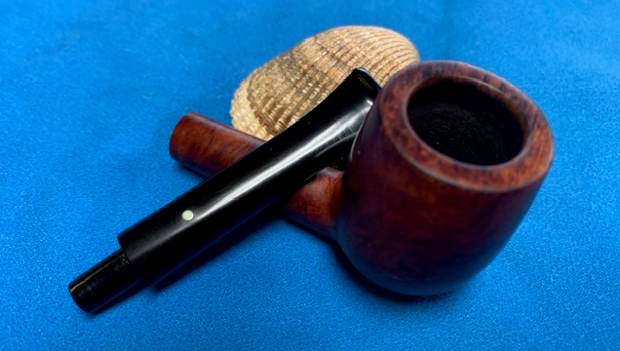
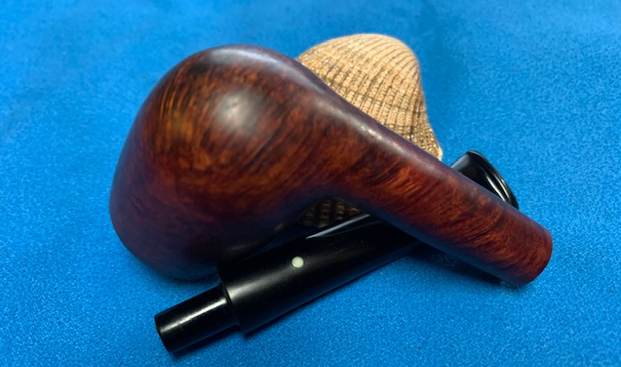
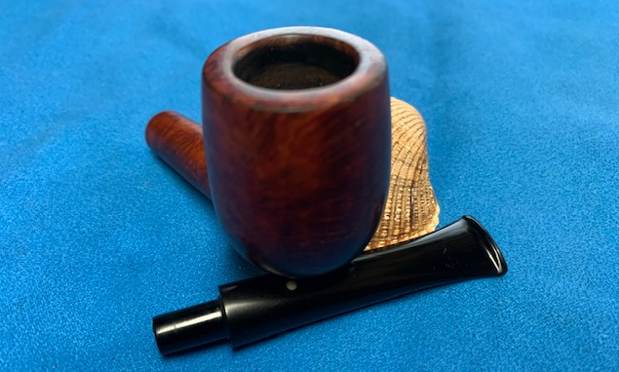
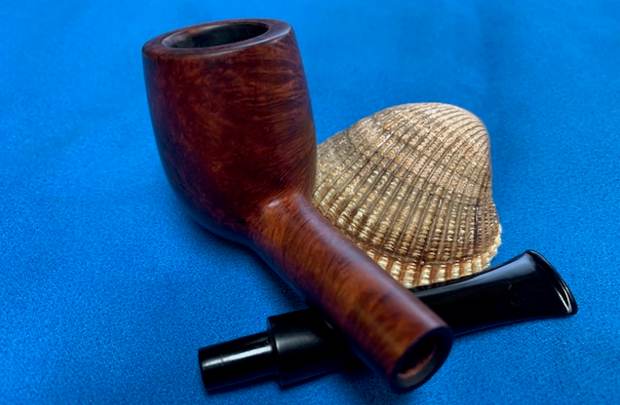
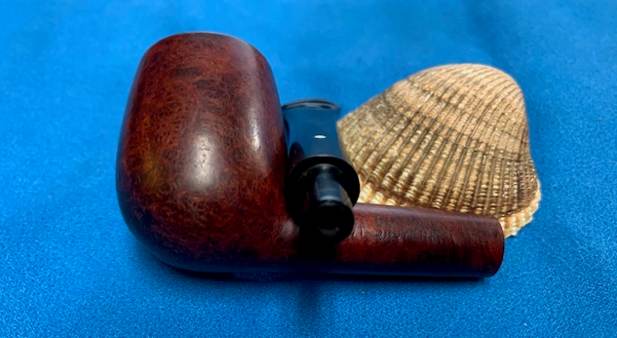
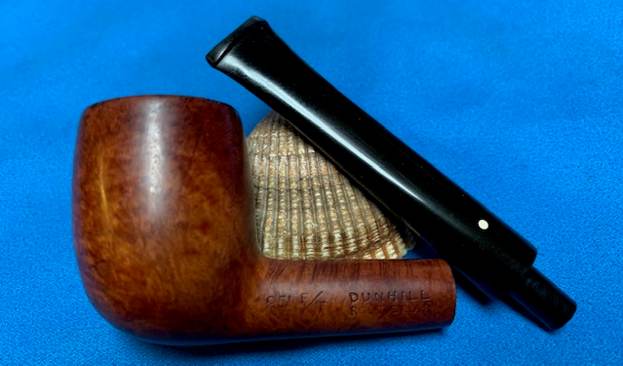
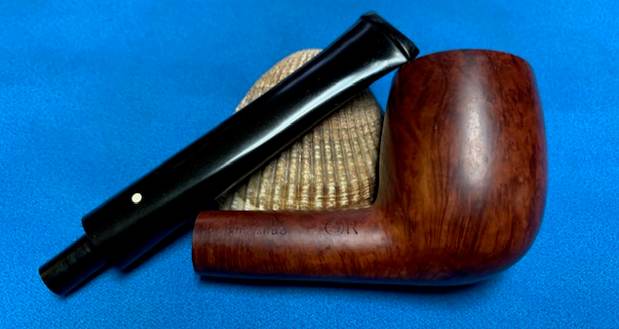
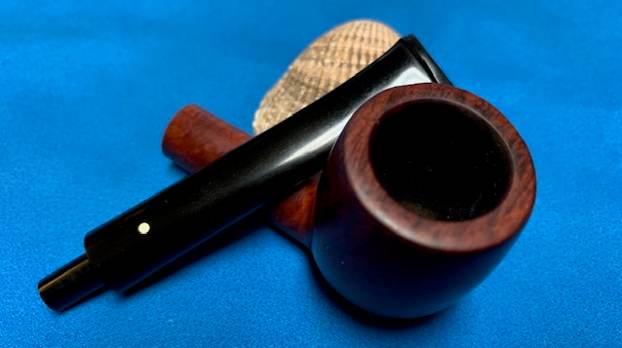
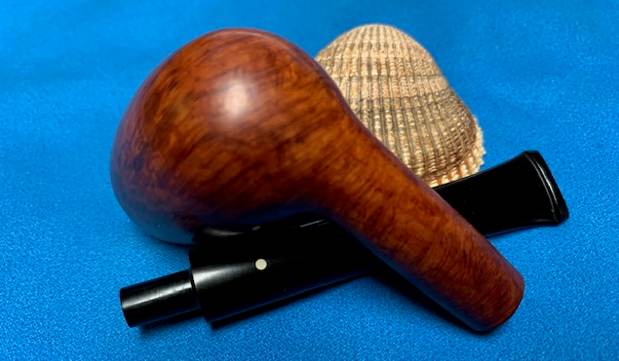
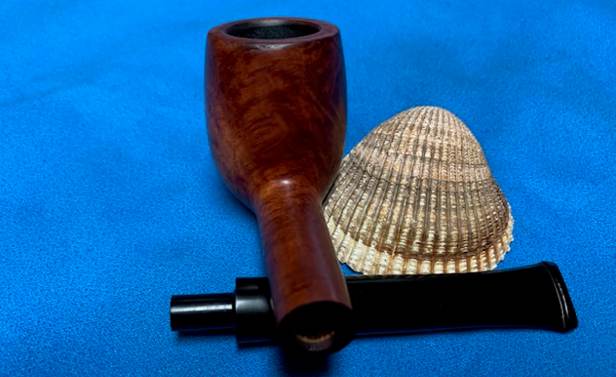
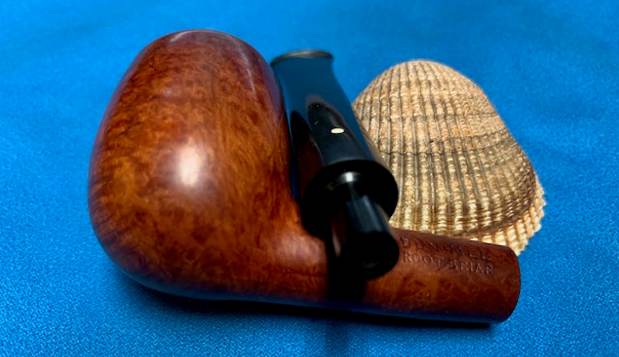
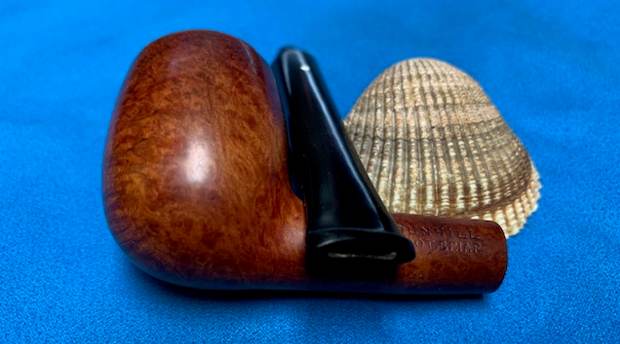
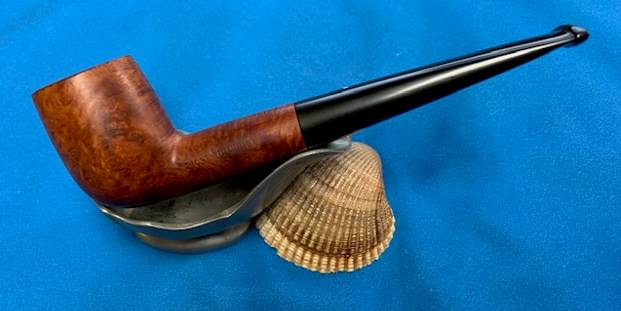
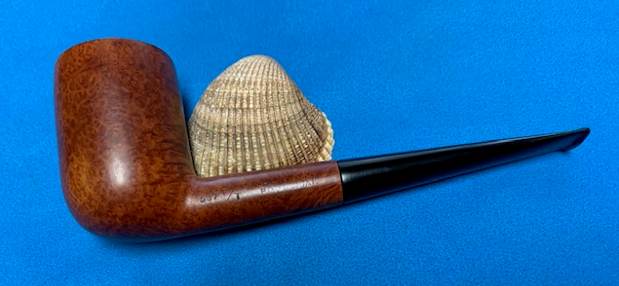
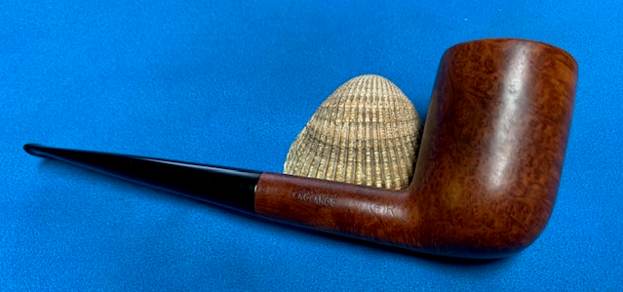
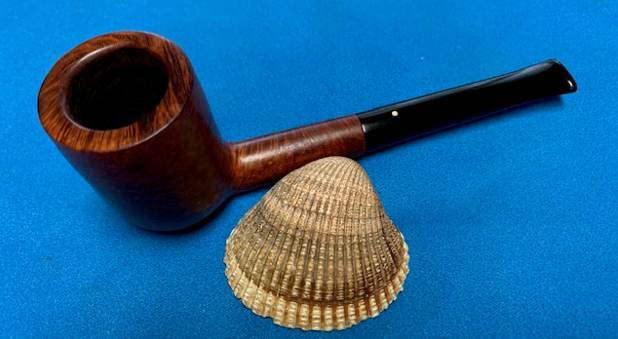
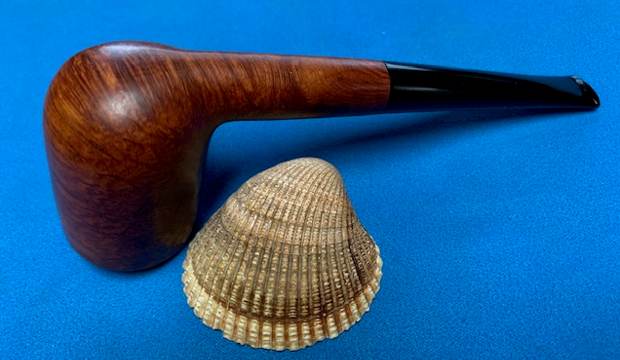
Cleaning up a Patent No. Dunhill Root Briar London 53 Made in England 0 3R Bent Billiard


Blog by Steve Laug

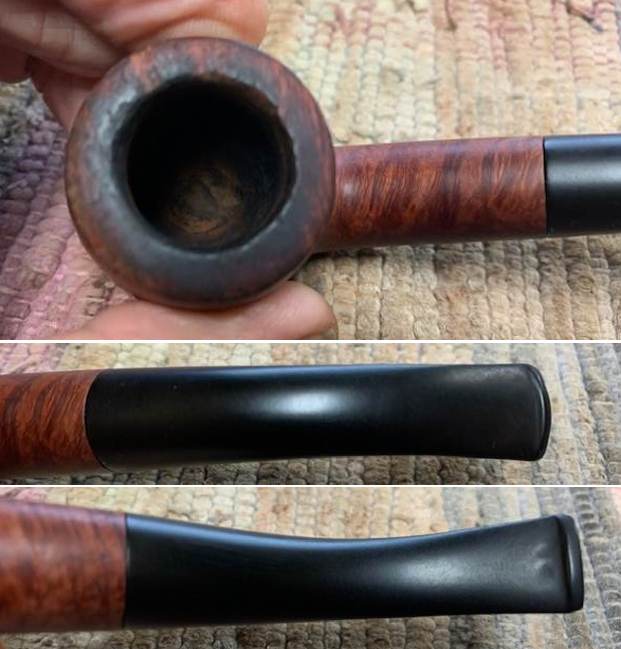
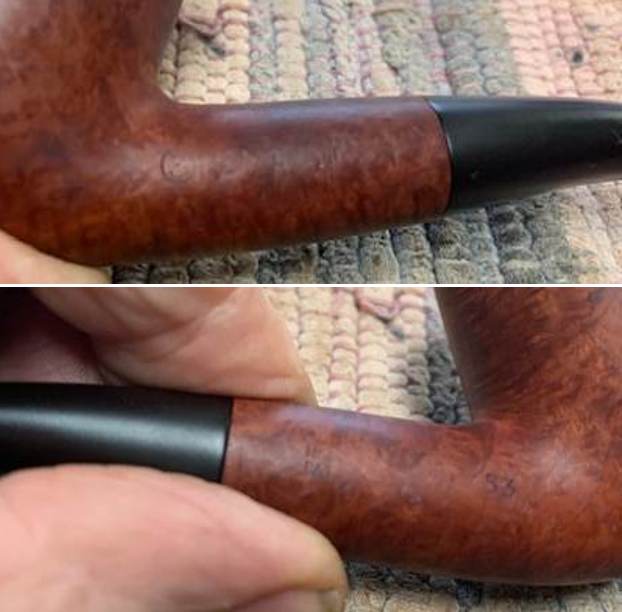
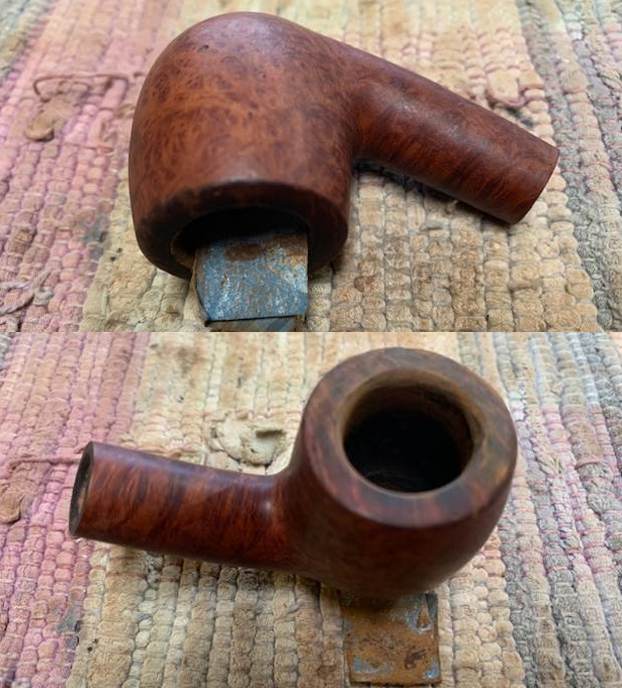
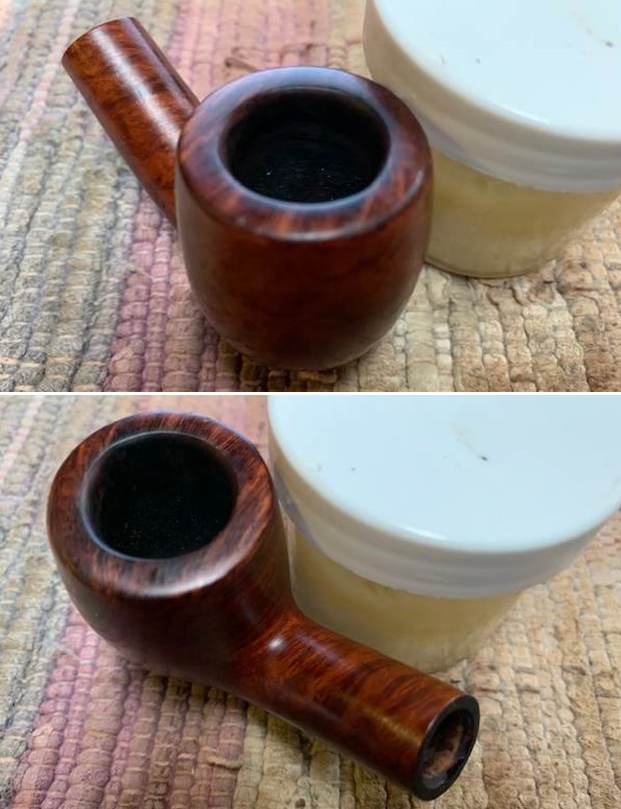
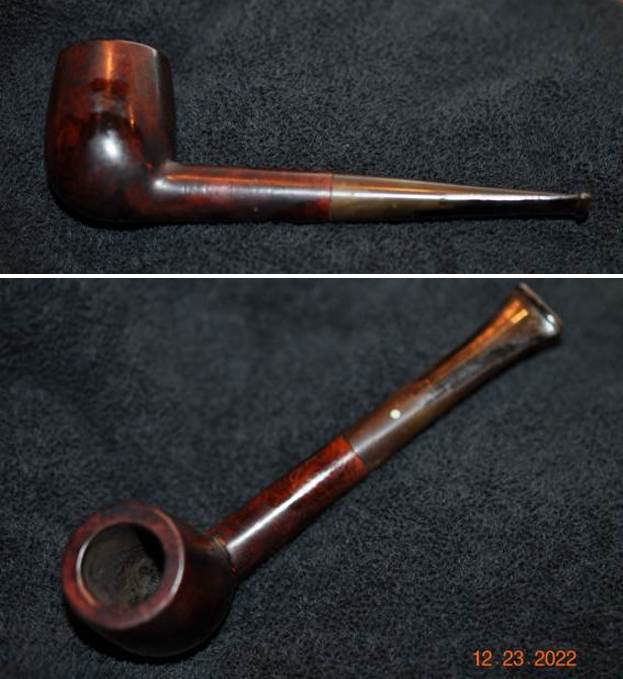
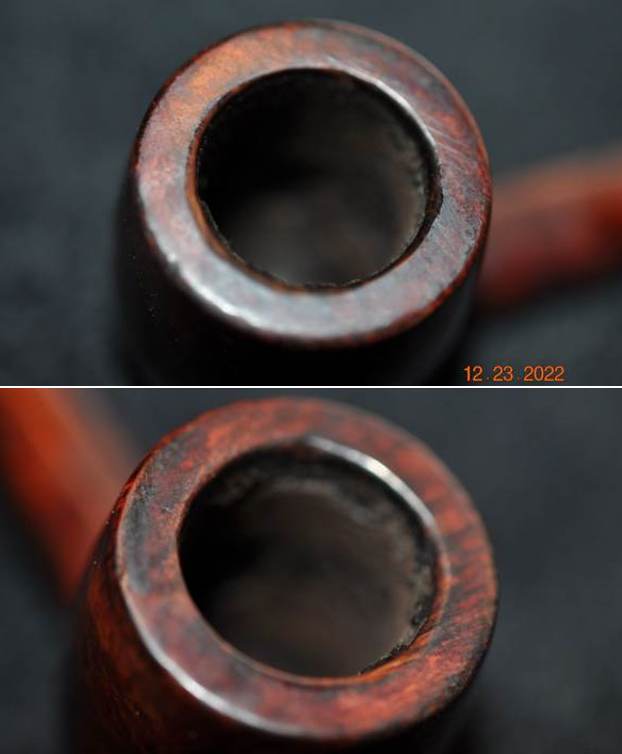
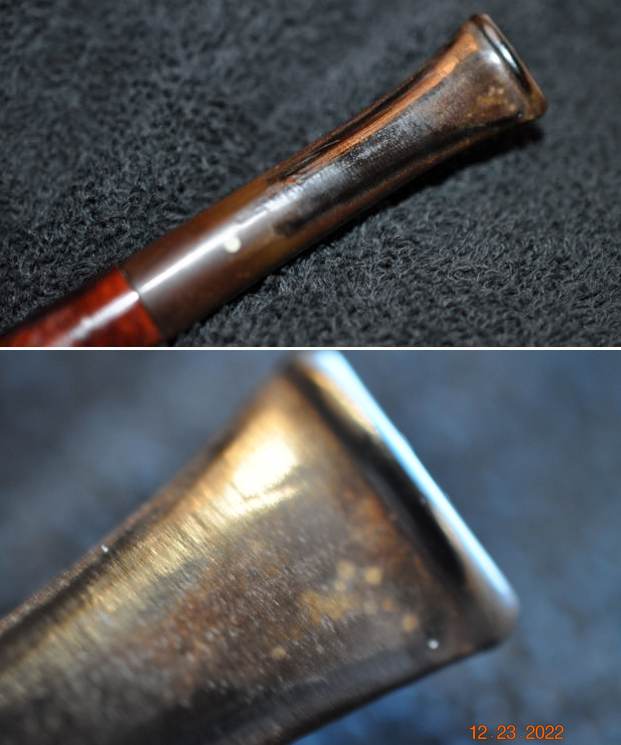
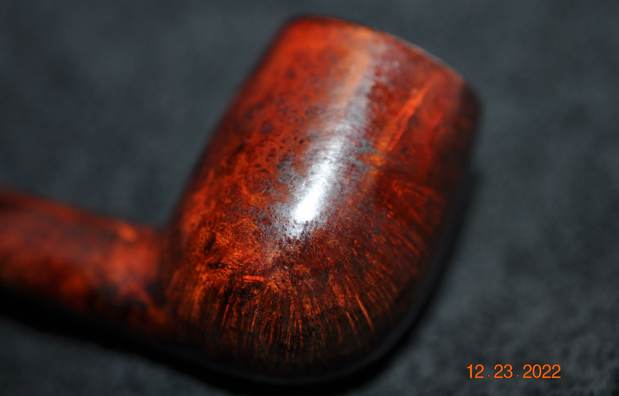
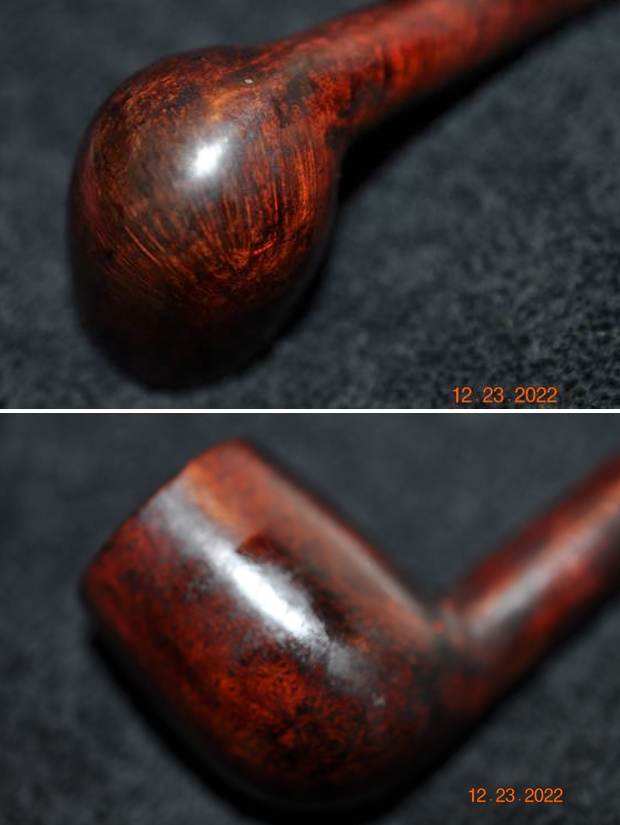
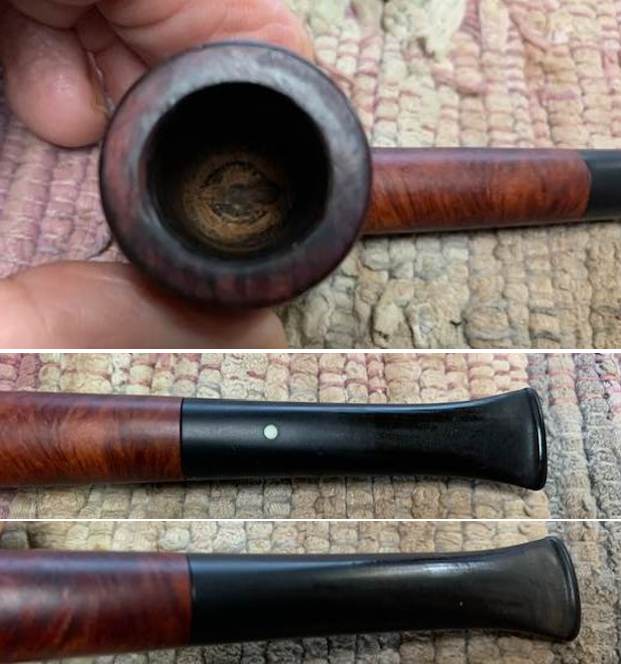
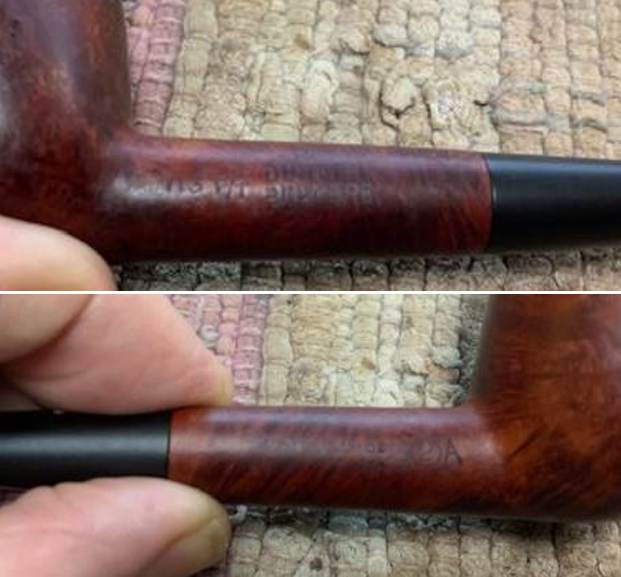
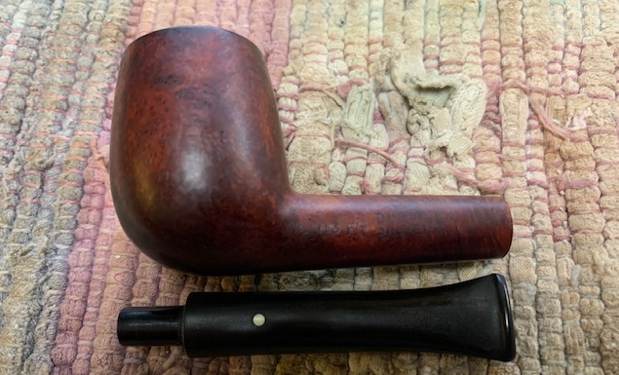
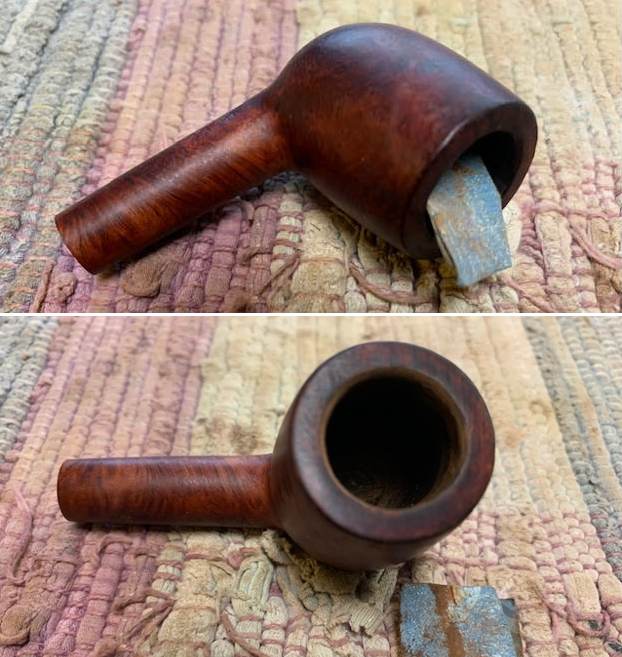
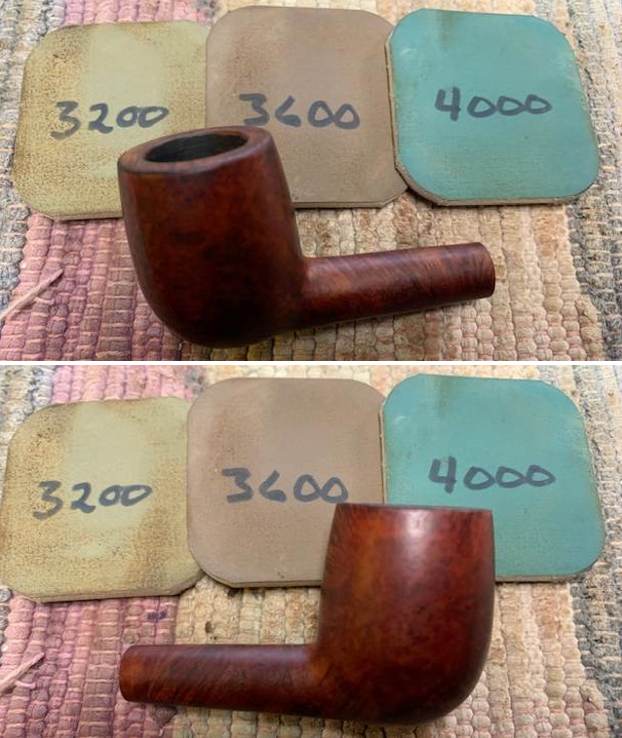
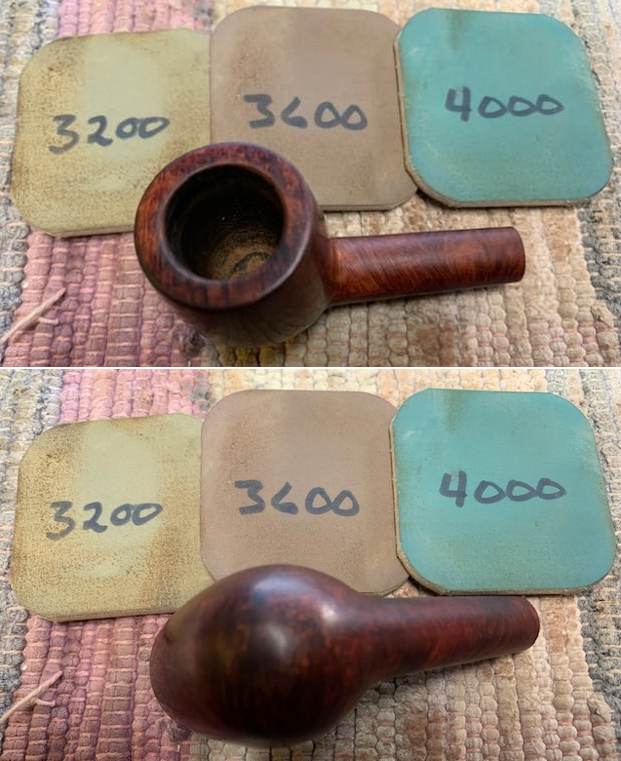
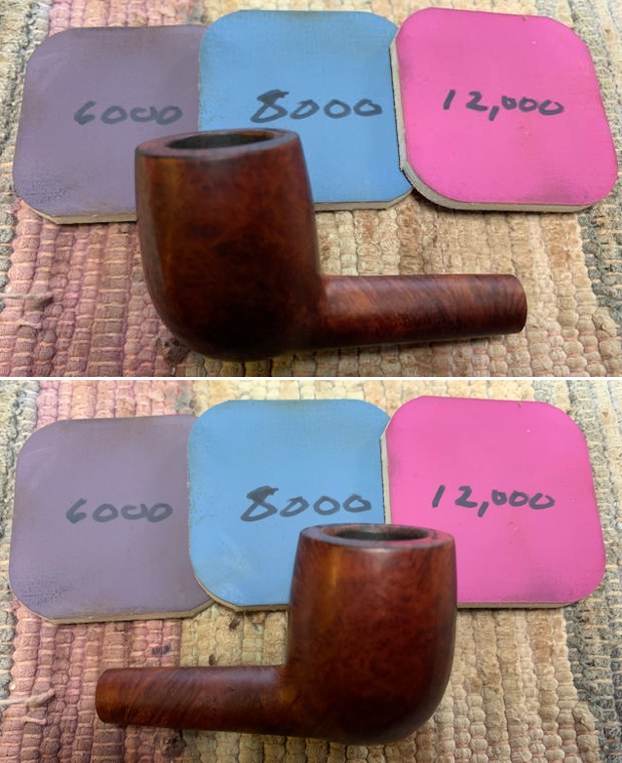
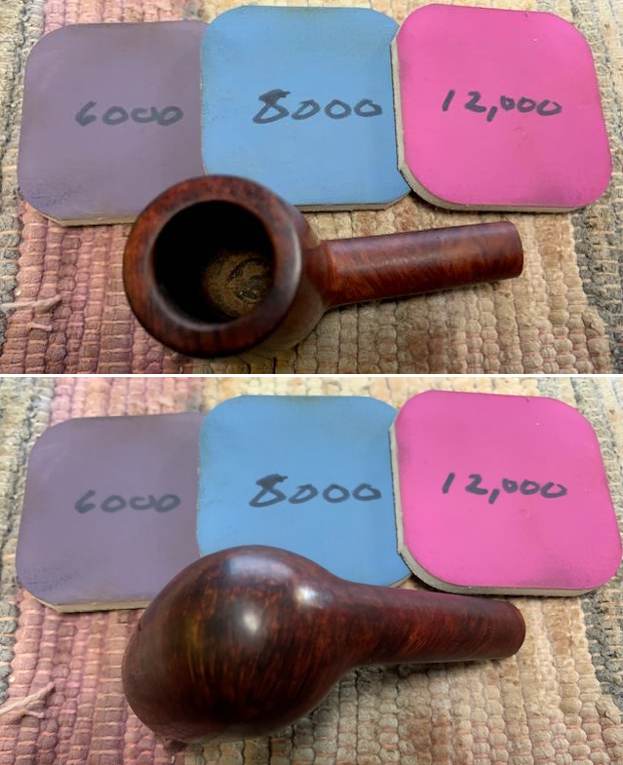
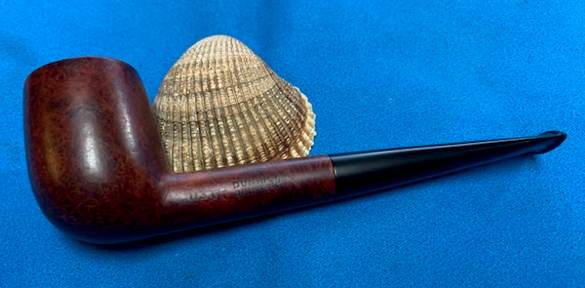
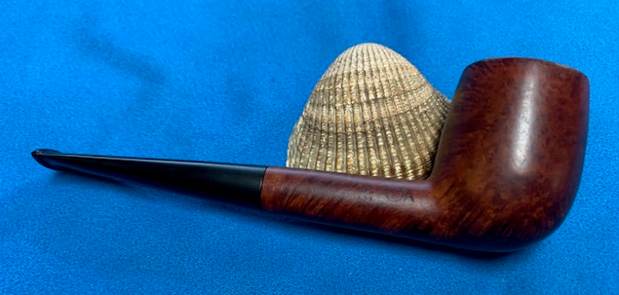
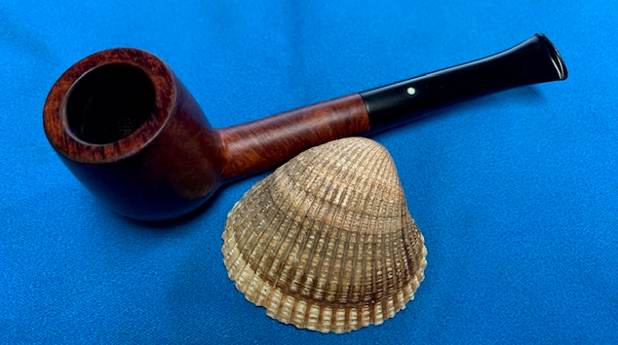
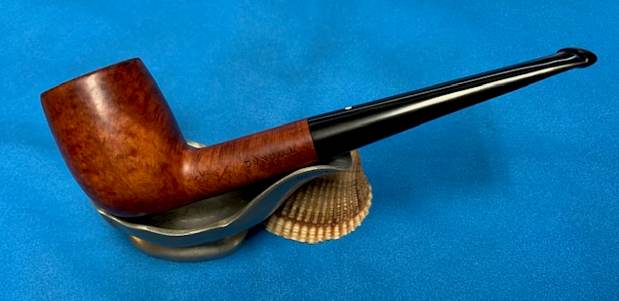
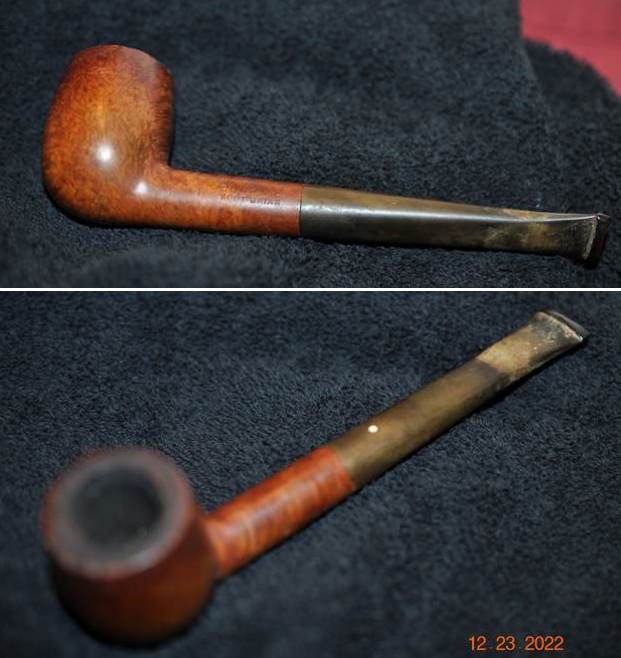
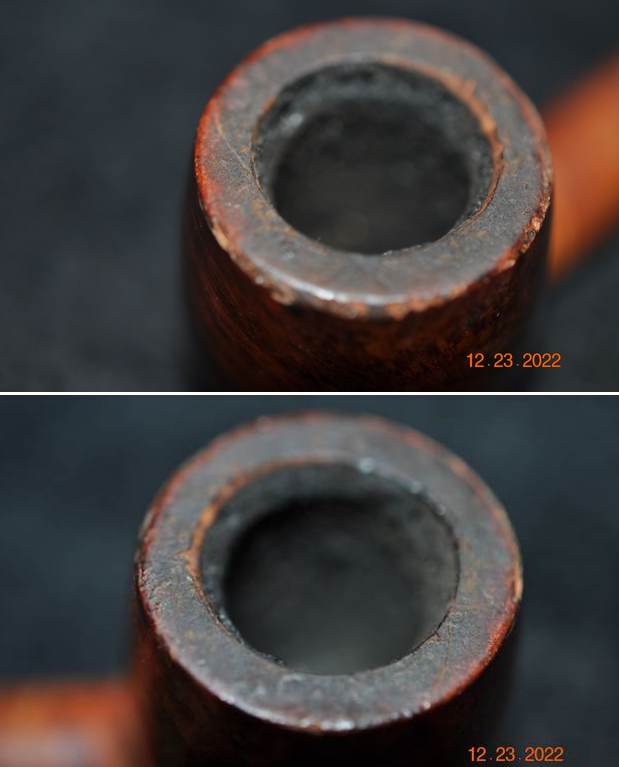
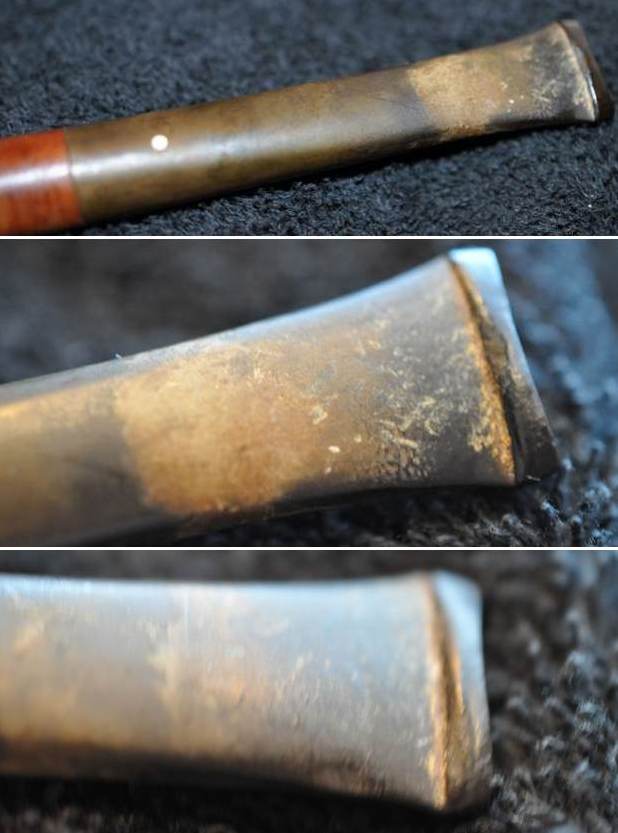
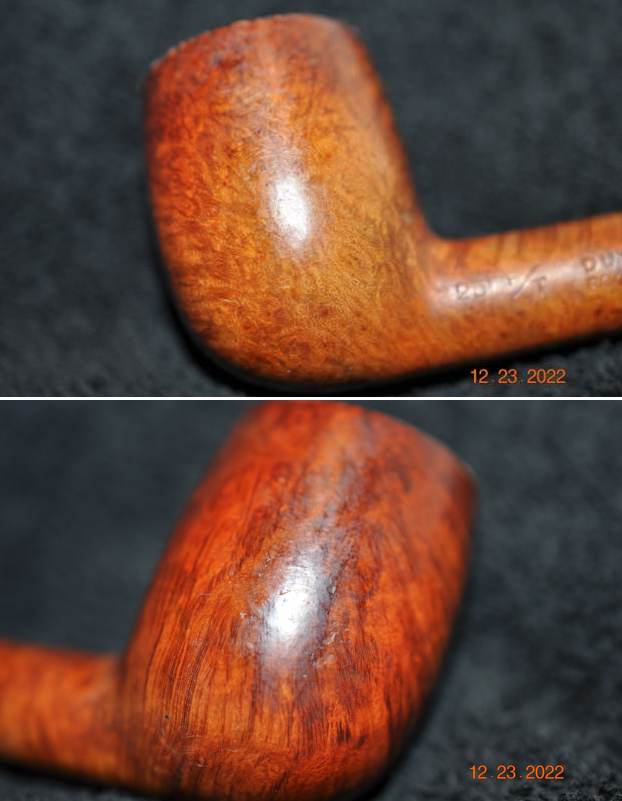
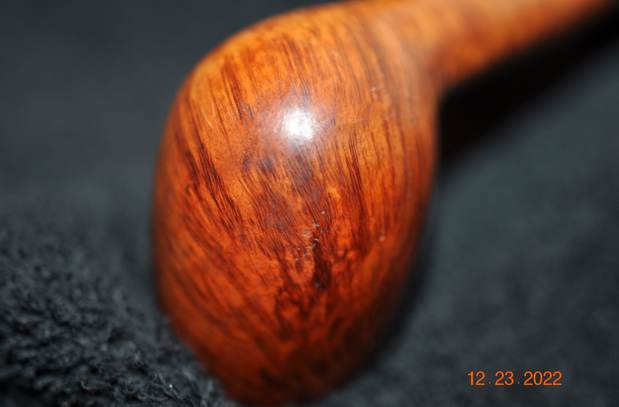
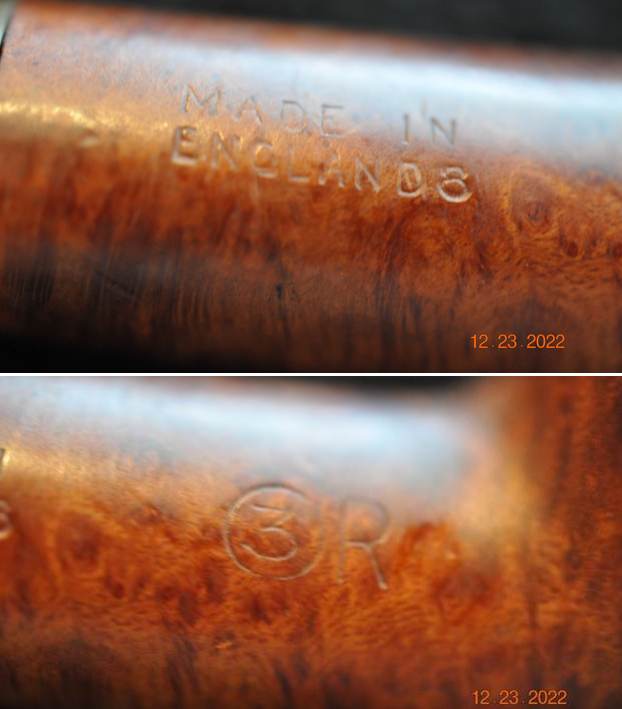
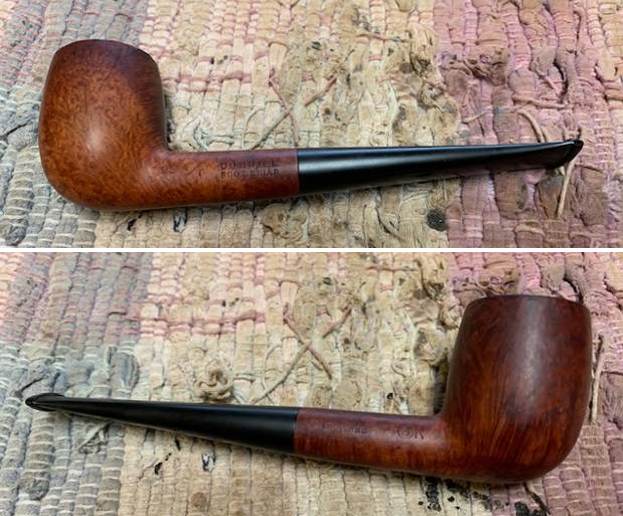
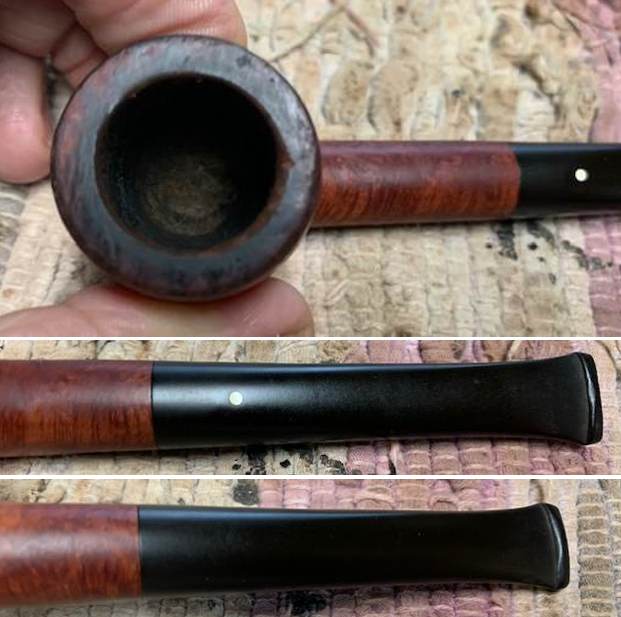
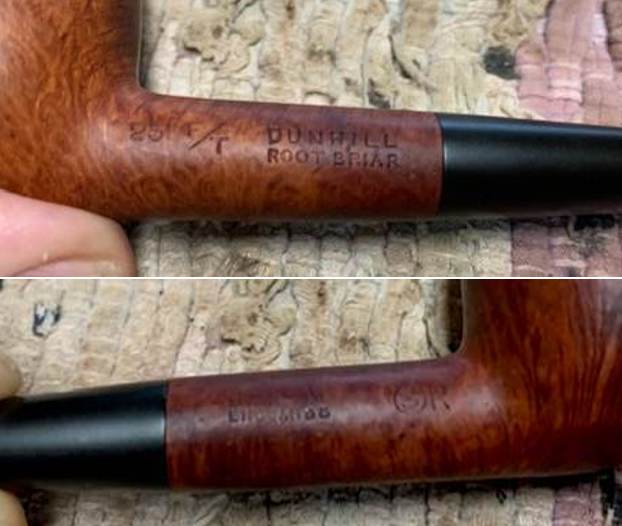
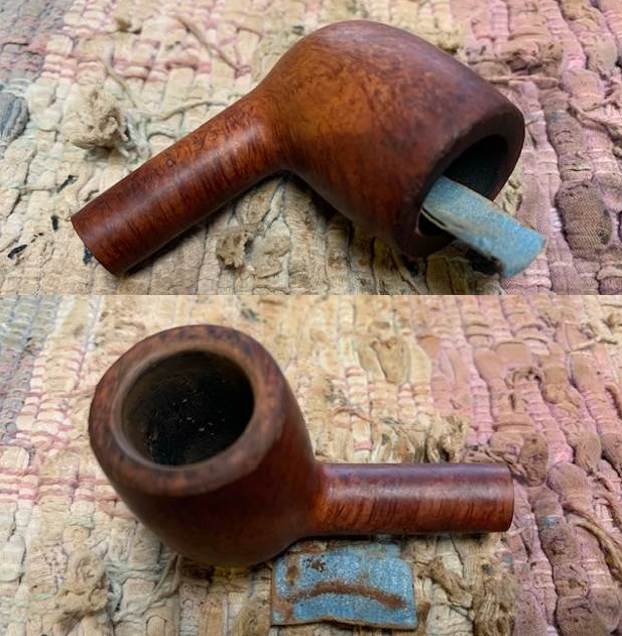
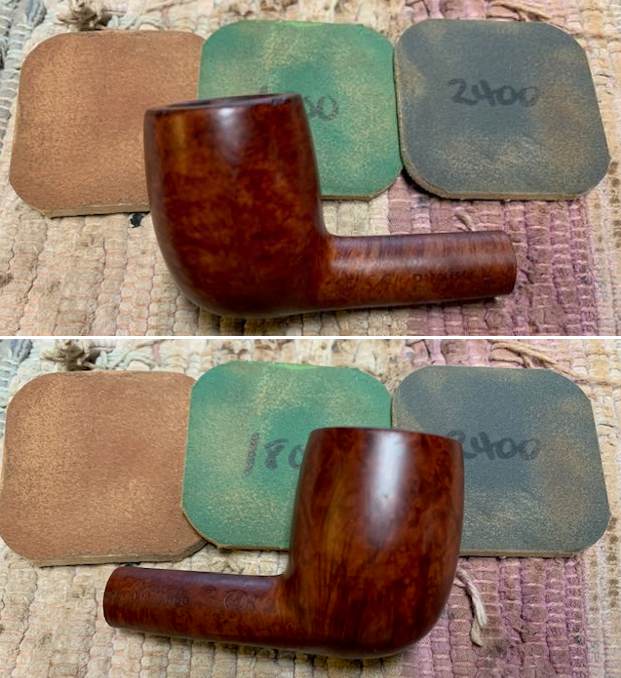
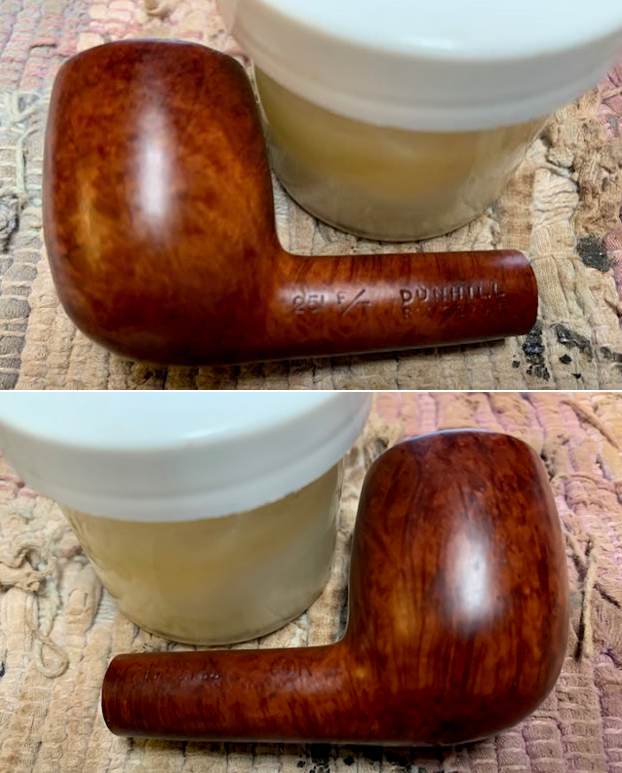
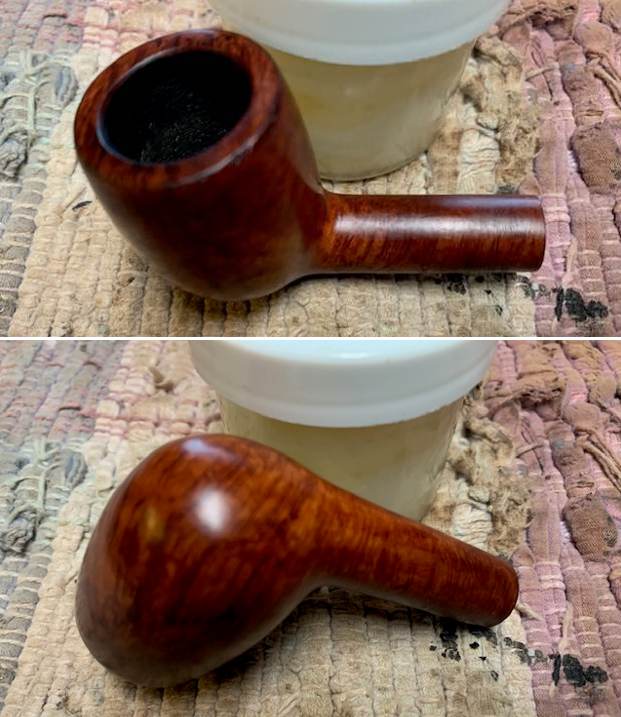
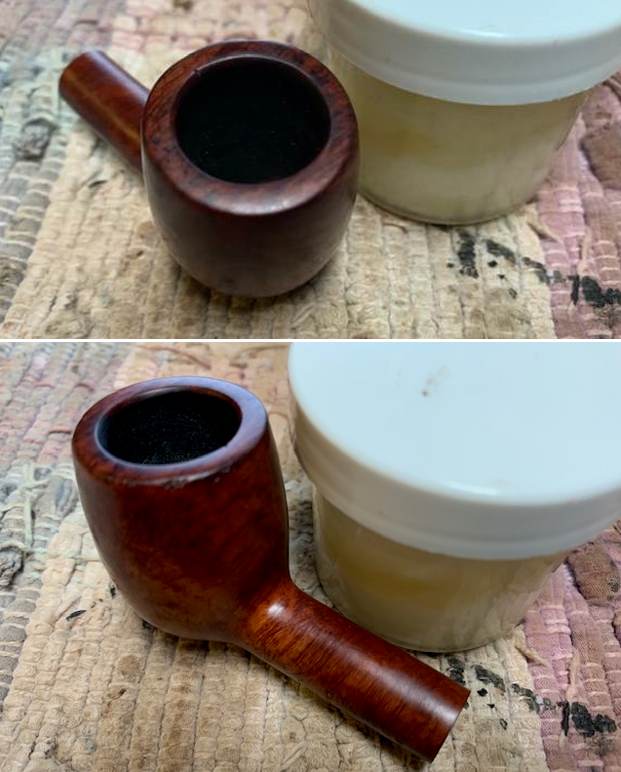
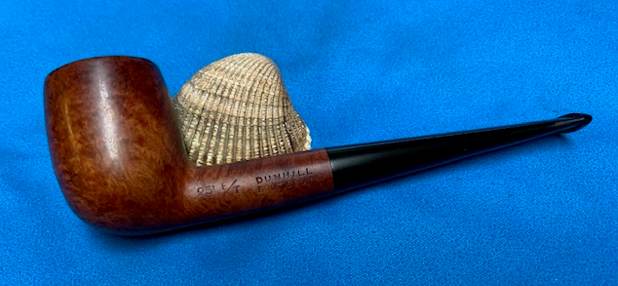
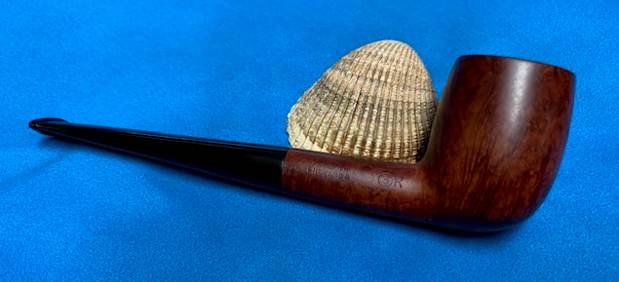
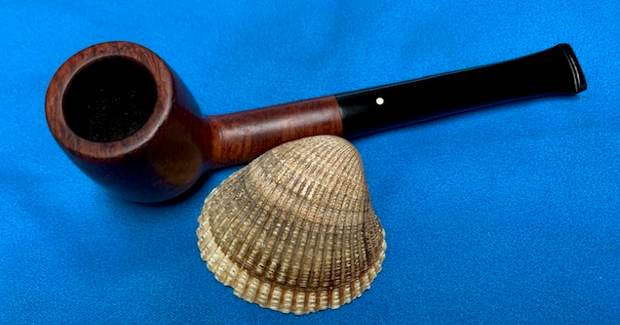
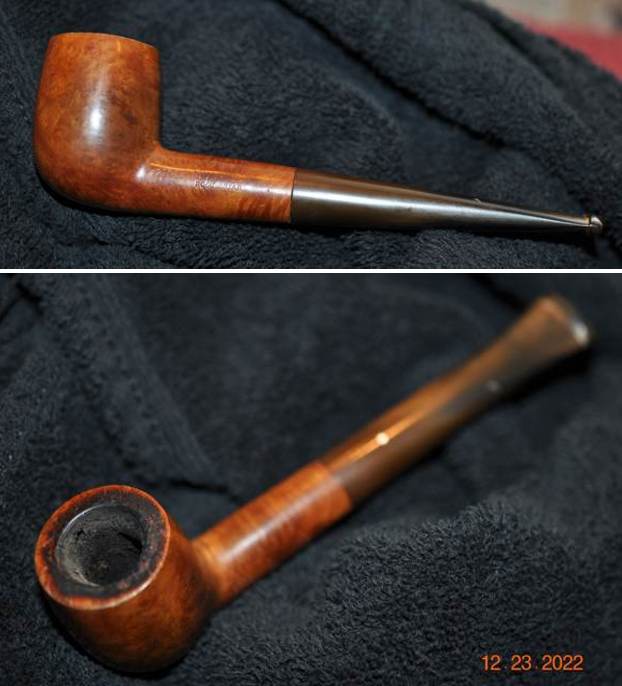
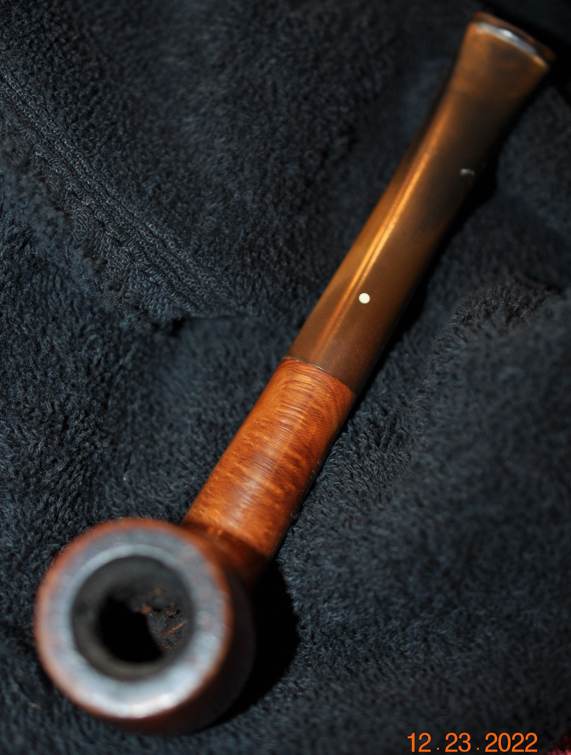
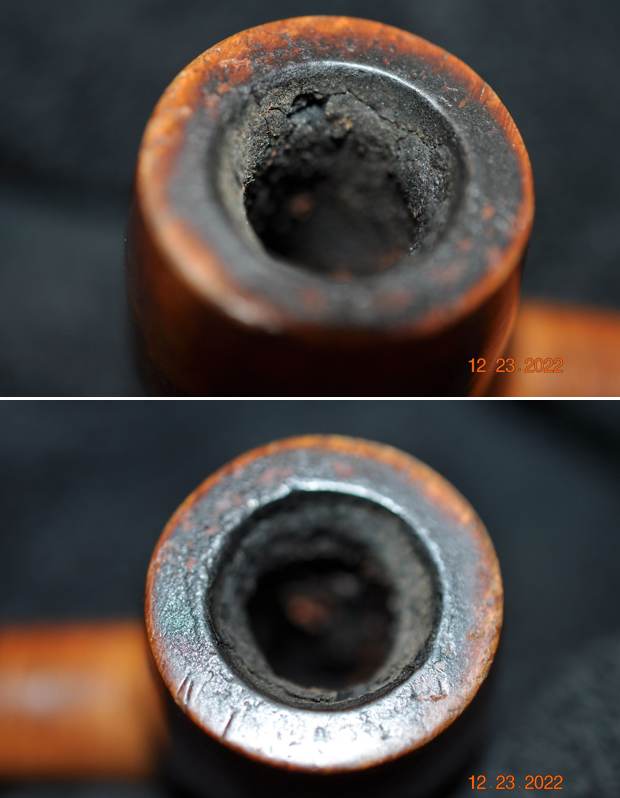
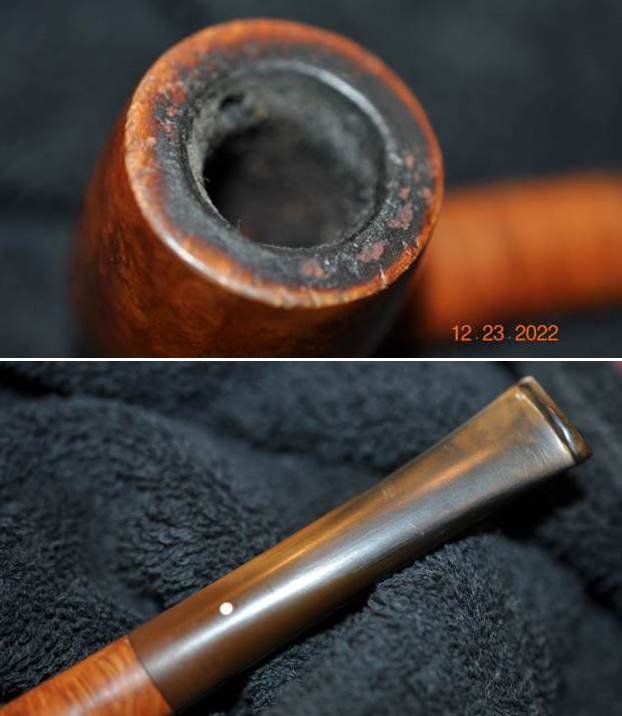
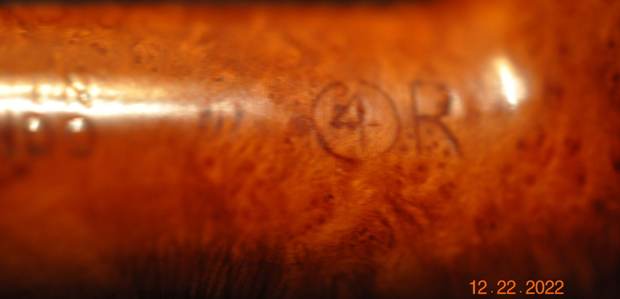
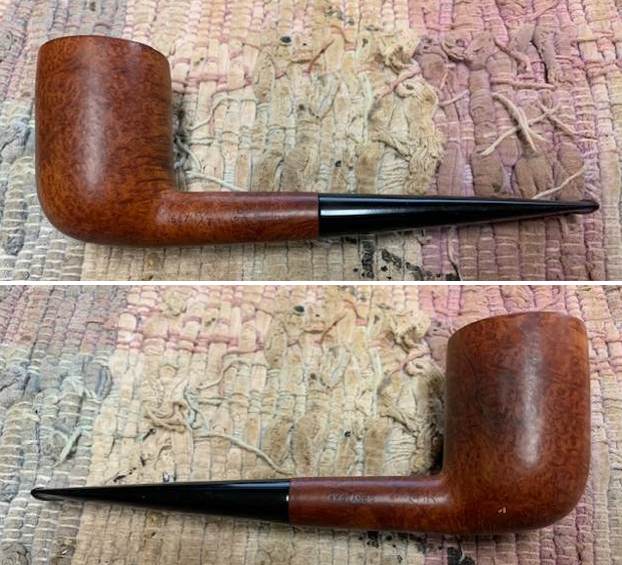
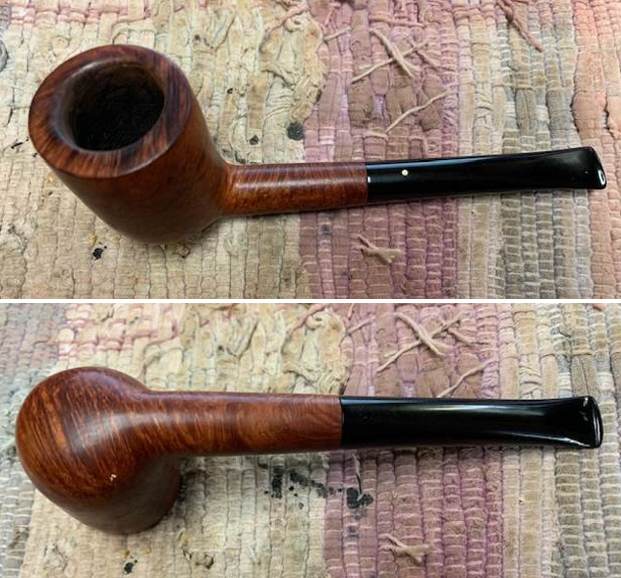
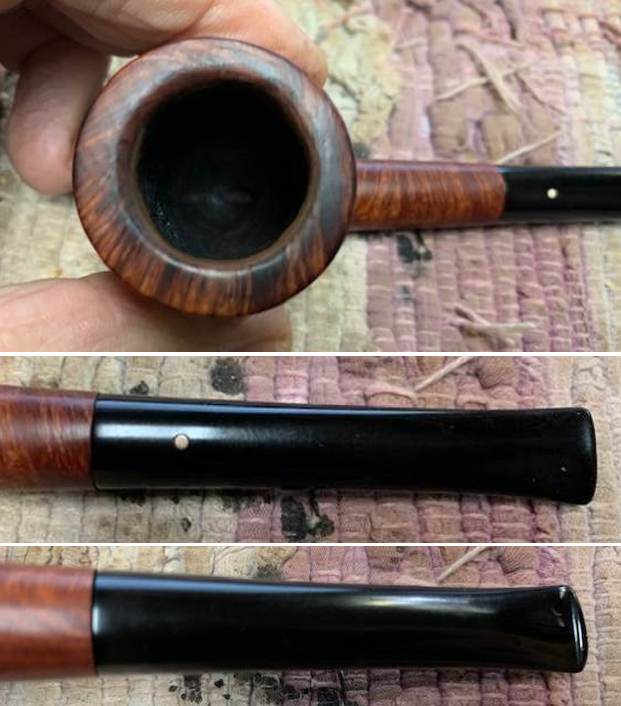
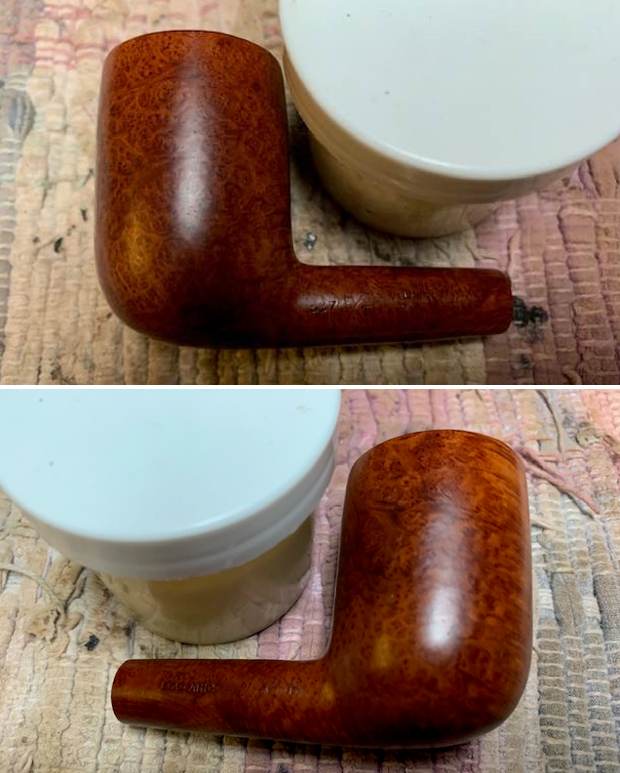
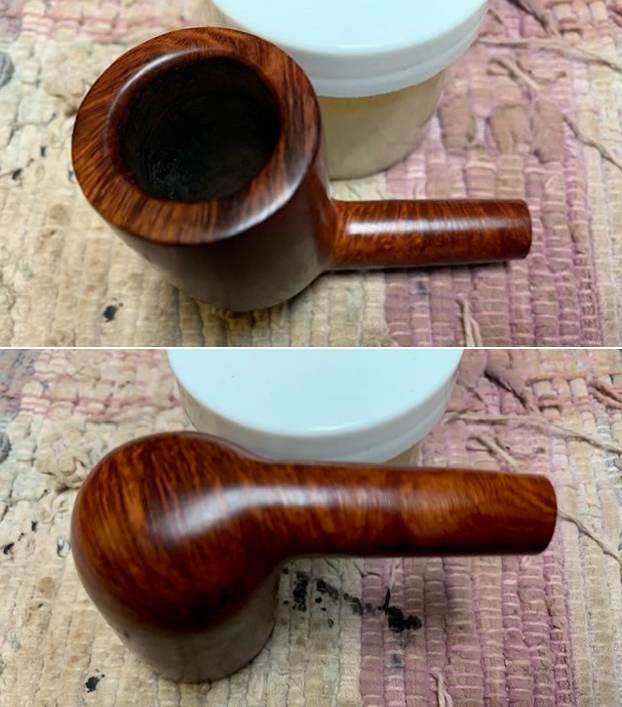
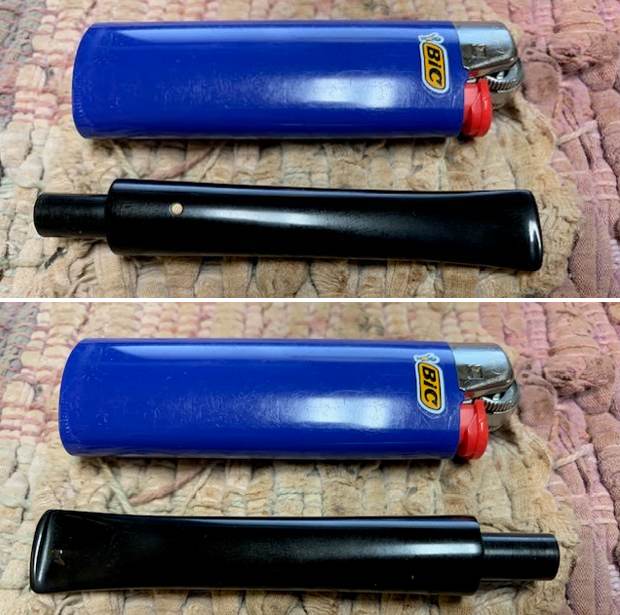
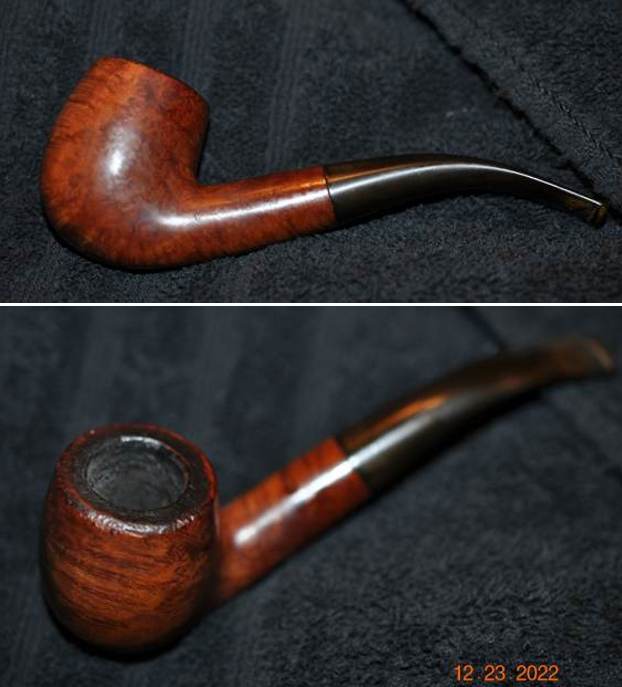
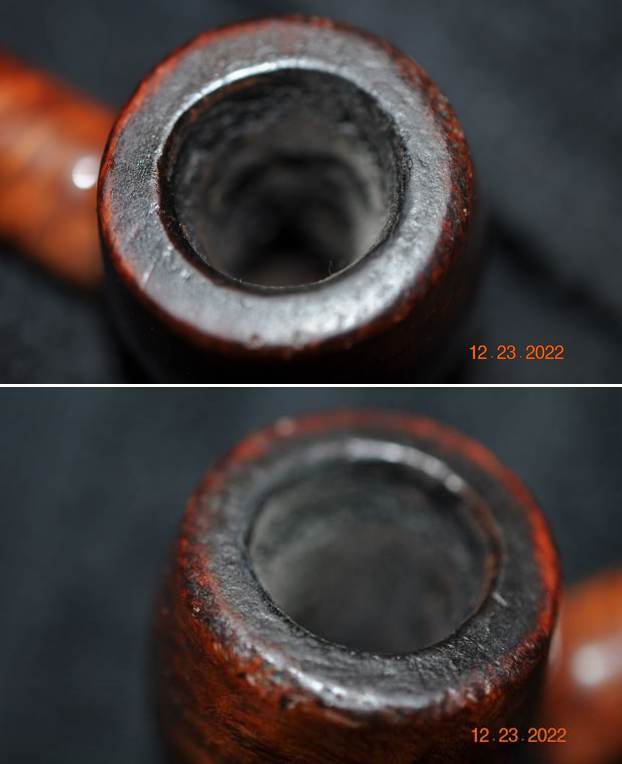
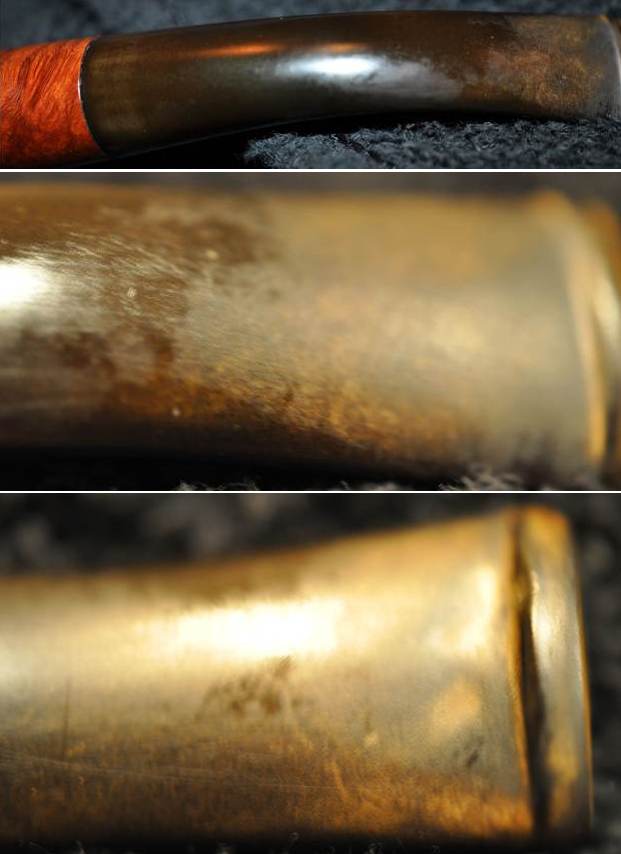
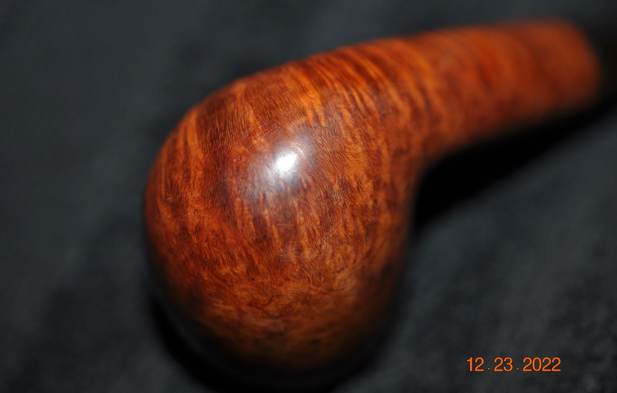
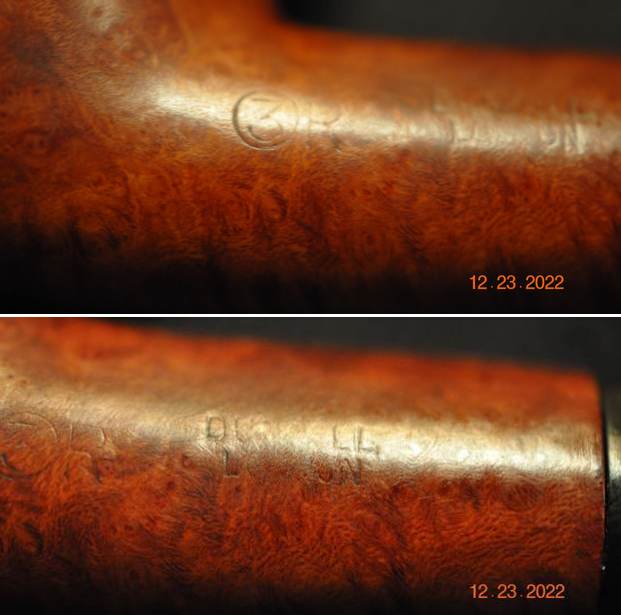
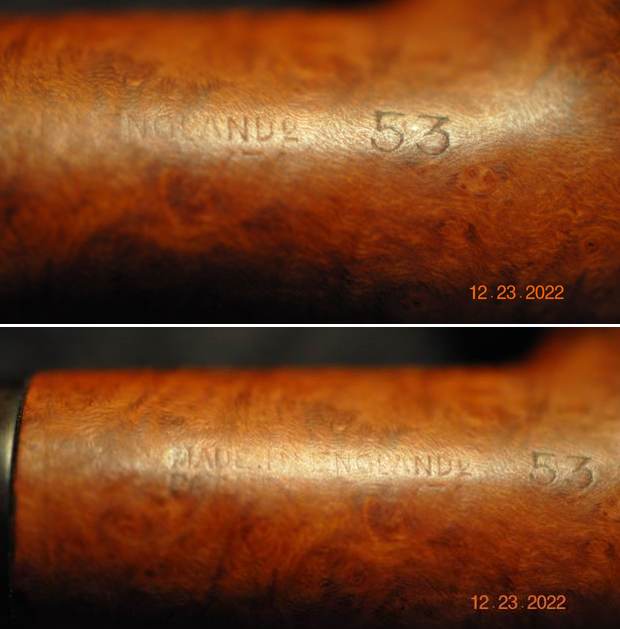
The next pipe on the table is another one that came to us from a group of pipes that Jeff and I purchased on 11/10/2022 from Copenhagen, Denmark. It is another Dunhill smooth finish pipe that is in rough but workable condition. On the left side it is stamped with the shape number 4R followed by Dunhill [over] London. On the right side it is stamped Made in [over] England followed by the date number superscript 0 after the D in England. Underneath that it reads Pat. No. 417574/34. After that it is stamped with a 3 in a circle [followed by] R for Root Briar.  The stamping is faint but readable as noted above. The pipe has an brown coloured stain with some amazing grain that the shape follows well. The finish extremely was dirty. The bowl had a moderate cake and there was an overflow lava and darkening and damage on the rim top and both the inner and outer edges. The taper stem was in decent condition and was oxidized, calcified and had tooth marks and chatter ahead of the button. The stem was also missing a white spot so it is a replacement stem. Jeff took photos of the pipe to show what it looked like before he started working on it. He took photos of the bowl and rim top to show their condition and of the stem to show the condition of both sides of the stem. The photos of the sides and heel of the bowl show beautiful cross and birdseye grain and the Root Briar coloured finish on the pipe. Even under the grime it is a real beauty. The stamping on the sides of the shank are shown in the photos below. It is faint but readable. It reads as noted and explained above. Jeff captured the detail in the photos below. One of the first things I like to do is to unpack the stamping and understand each element in it. I turned to Pipephil’s helpful site (http://pipephil.eu/logos/en/dunhill/bruyere1.html). There was no pipe with the same Dunhill [over] London stamping on the Root Briar page but I can still work with the stamping. It can be interpreted as follows: The 53 stamp is the shape for a Billiard. The London stamp appears at times under Dunhill on older Root Briar and Bruyere pipes. The 0 following the D of England gives the date the pipe. The Circle 3 R refers to the size of the pipe being a Group 3 and the R is for the Root Briar designation.
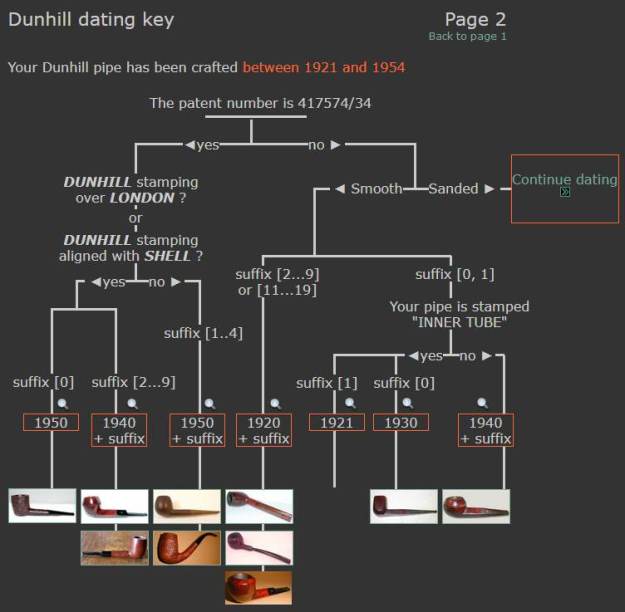
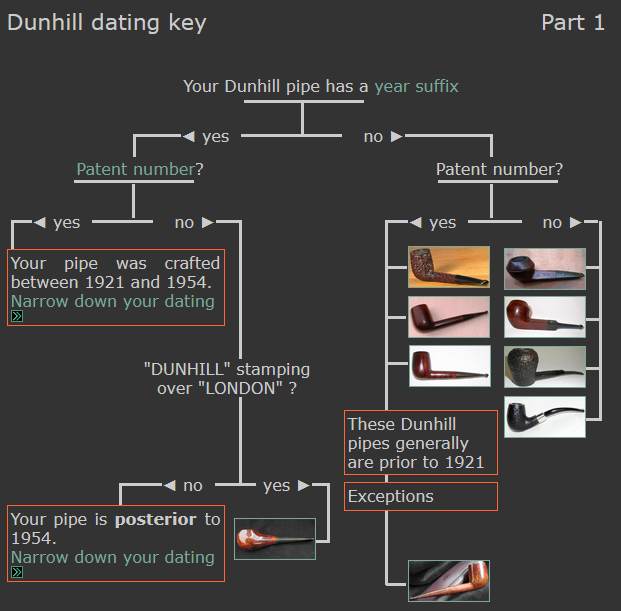
Pipephil also has some helpful dating keys on the site that are basically flow charts that you can walk through to date your pipe (http://pipephil.eu/logos/en/dunhill/cledat-en1.html). I turned to Part 1 of the Dating Key and followed the chart. This pipe has a 0 following the D in England. It is a superscript above the D so that took me to the section on the chart below (column one) which instructed me that the pipe could be dated as being “crafted between 1921 and 1954 Narrow down your dating”. I followed the link following the “Your Dunhill pipe has been crafted between 1921 and 1954”. That took me to Page 2 of the dating key (http://pipephil.eu/logos/en/dunhill/cledat-en1b.html). The first column (suffix 0) led me to the section with a 0 after the D in England. There was a directive for dating the pipe to 1950.I then turned to Pipedia’s section on Dunhill Root Briar to get a bit of background on the Dunhill finishes (https://pipedia.org/wiki/Dunhill#Root_Briar). I have highlighted the section below where the Dunhill [over] London stamp is explained. I quote:

Root Briar – Introduced in 1931 and highly prized because the grain is more pronounced in this finish (usually made using Corsican briar – was made exclusively from that briar into the 60s). The Root Briar finish requires a perfectly clean bowl with excellent graining. Therefore, it is the most expensive of the Dunhill pipes. Corsican briar was most often used for the Root finish since it was generally more finely grained. This is a rare finish, due to the scarcity of briar suitable to achieve it. These pipes are normally only available at Company stores, or at Principle Pipe Dealers. Straight grained pipes were formerly graded A through H, but are now only “Dr’s” and graded with one to six stars, with the letters G and H still used for the very finest pieces.

Dunhill introduced its third major finish, the Root finish, in 1931. Corsican mountain briar is characteristically beautifully grained and the Root was made exclusively from that briar into the 1960s. The pipe was finished with a light natural stain to allow the beauty of the graining to show through. Although always available with a traditional black vulcanite bit, the Root was introduced in either 1930 or more likely 1931 and fitted with a marble brown dark and light grained vulcanite bit that has since become known as the ‘bowling ball’ bit because of the similarity in appearance between the bit’s finish and that of some bowling balls of the time. With the war, however, the bowling ball bit was dropped from production. Through 1954 (and after) the Root pipe nomenclature (including shape numbers) was identical to that of the Bruyere except that instead of the “A” of the Bruyere, the Root was stamped with an “R”. In 1952 when the finish rather then LONDON was placed under DUNHILL, ROOT BRIAR rather then BRUYERE was used for the Root. Loring, J. C., The Dunhill Briar Pipe, The Patent Years and After (self-published, Chicago, 1998).

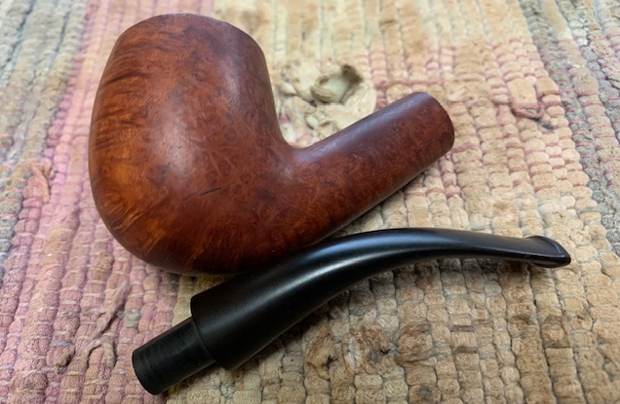
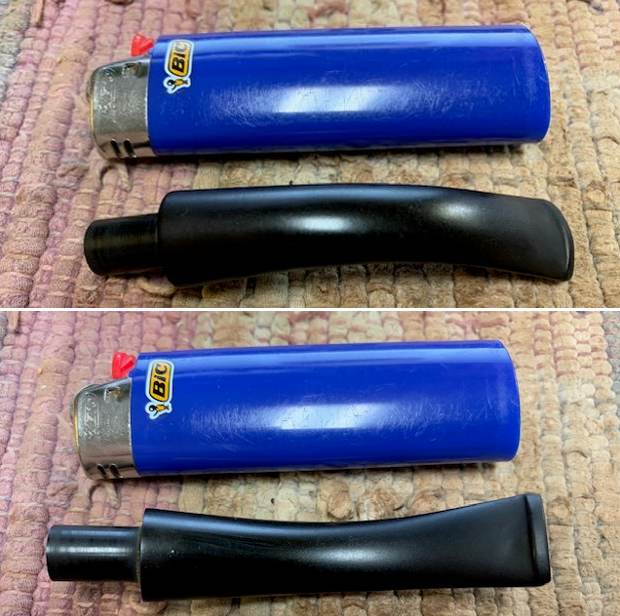
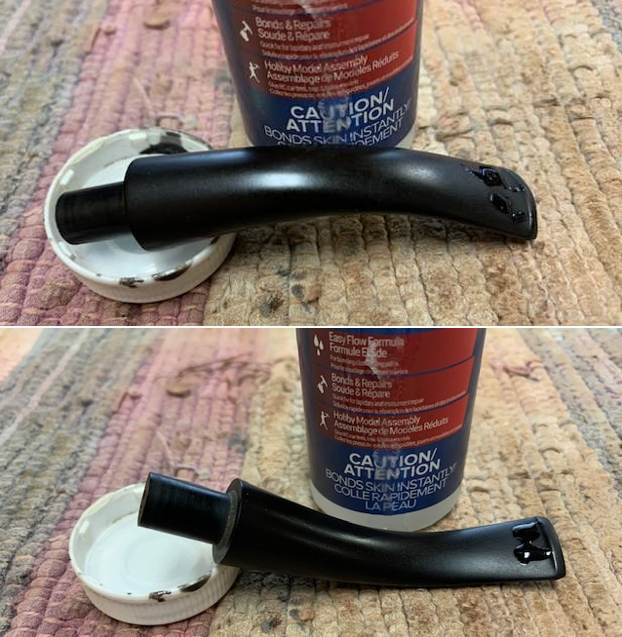
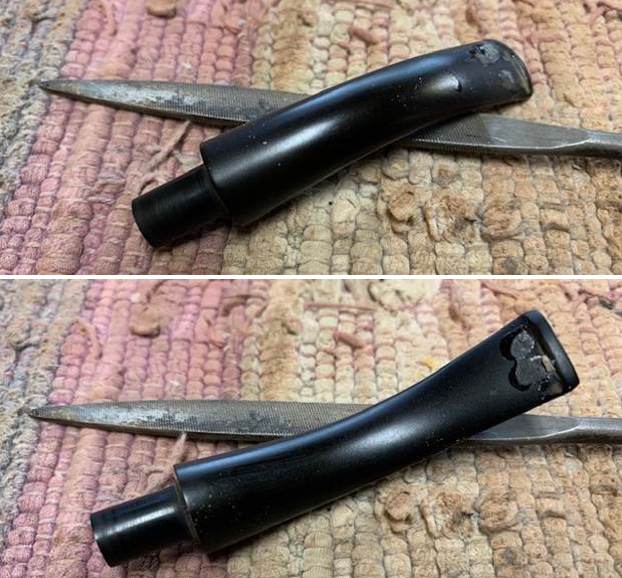
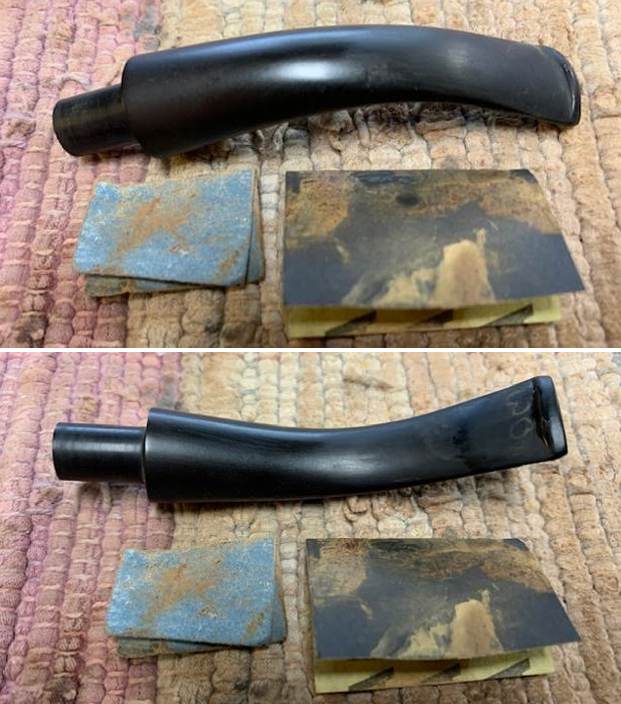
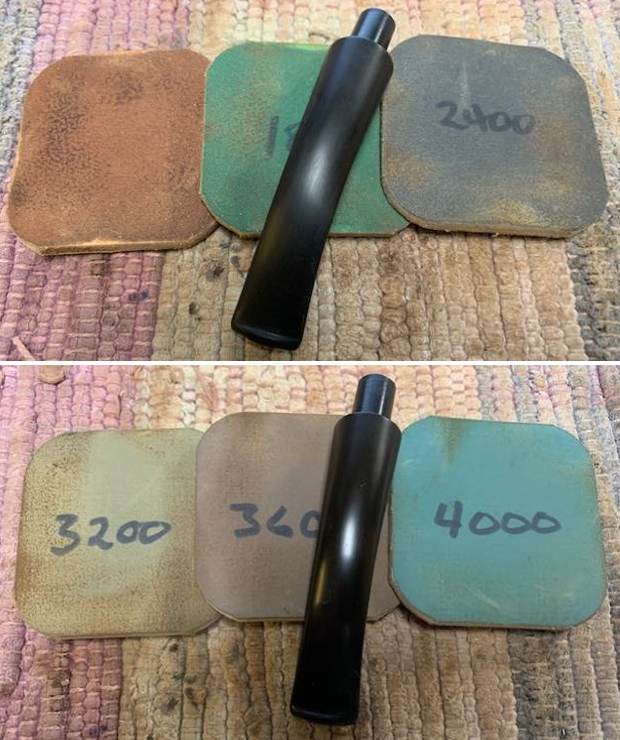
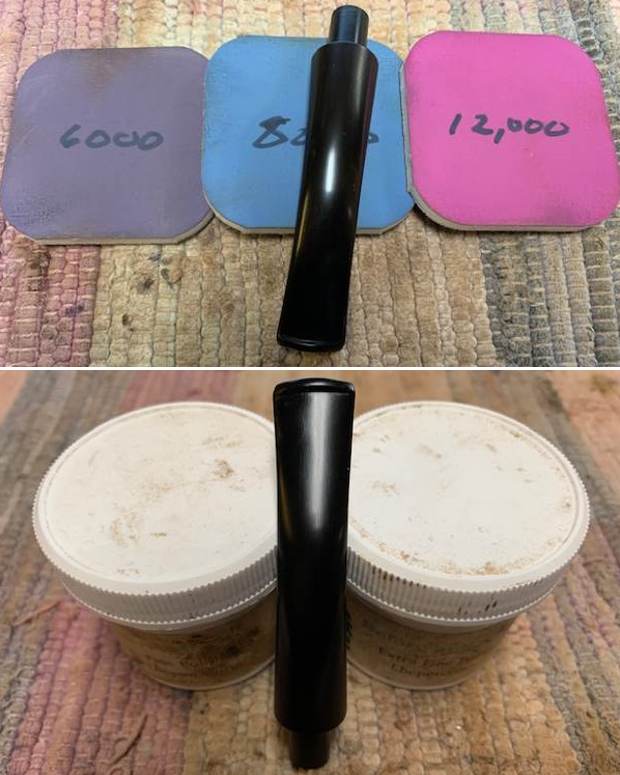
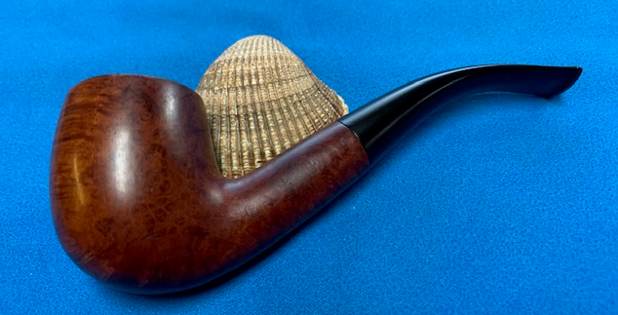
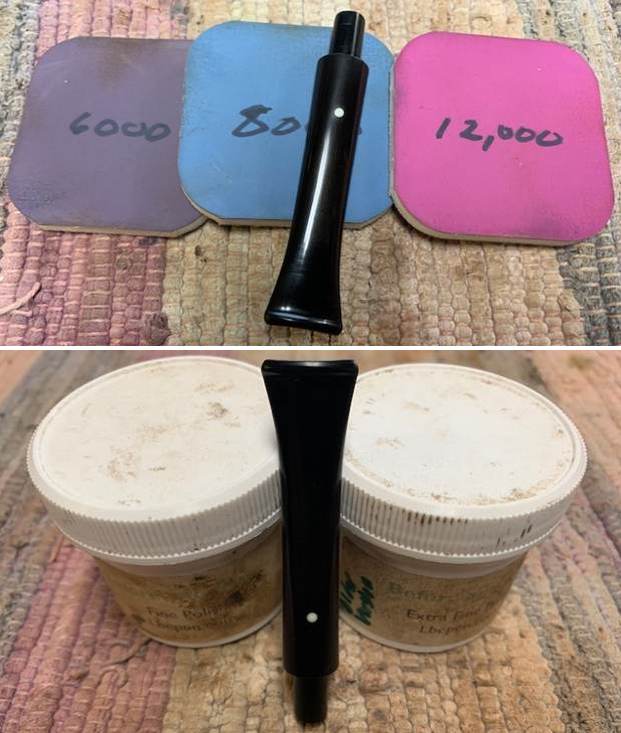
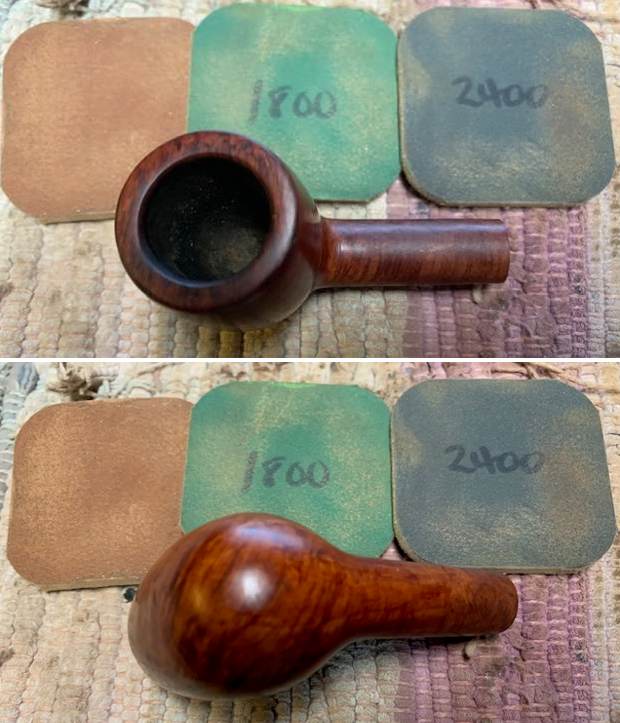
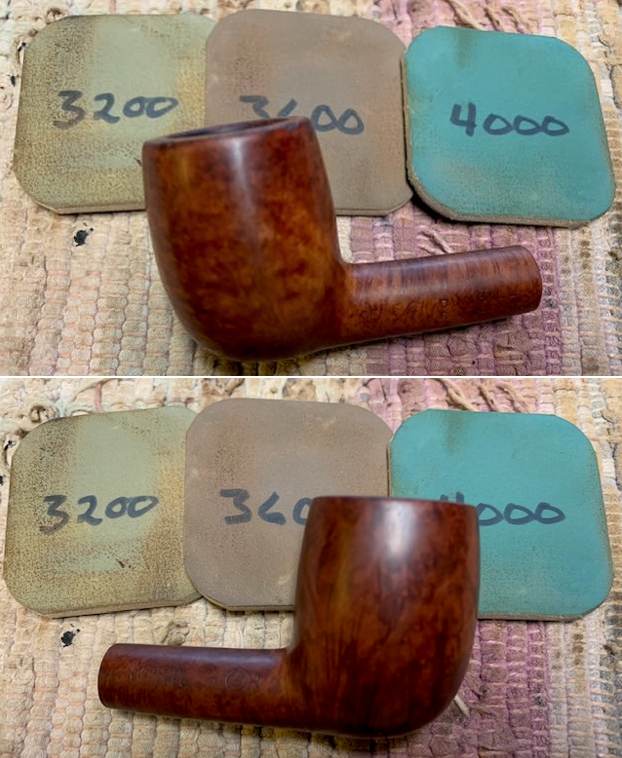
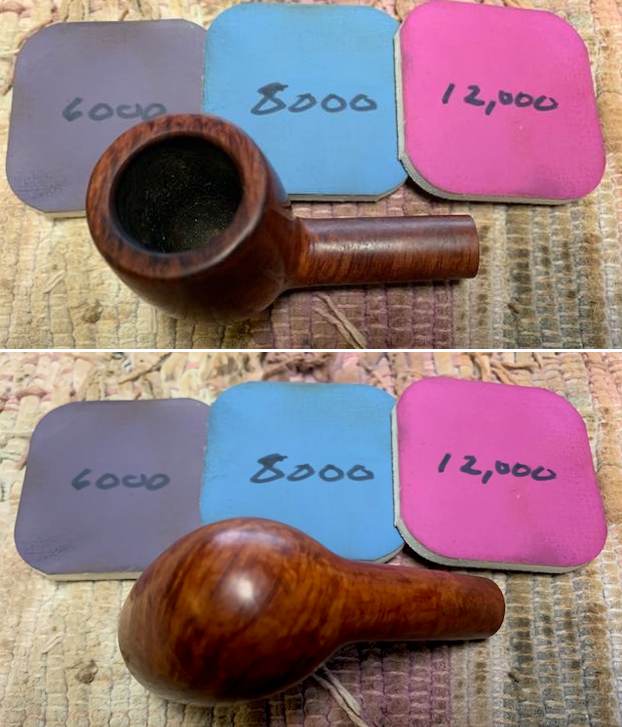
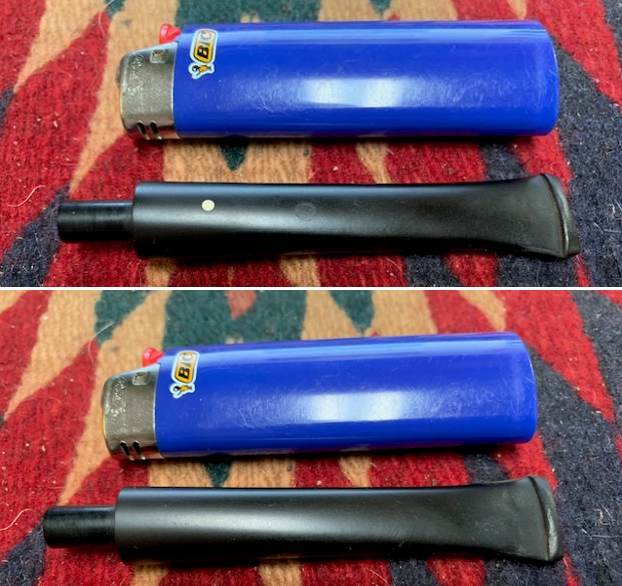
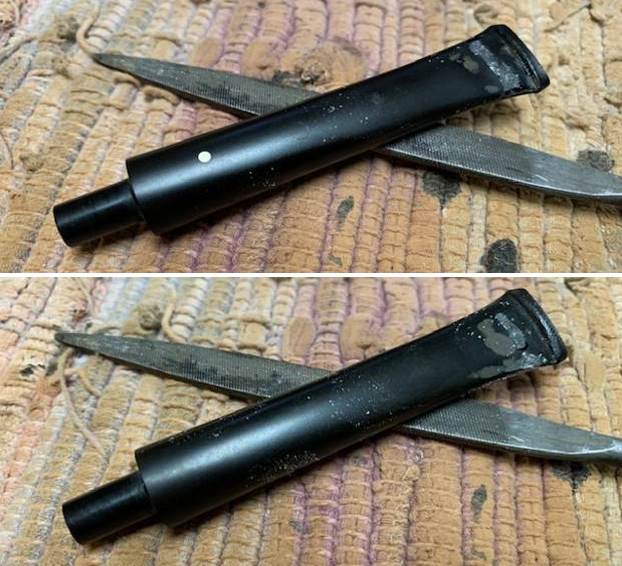
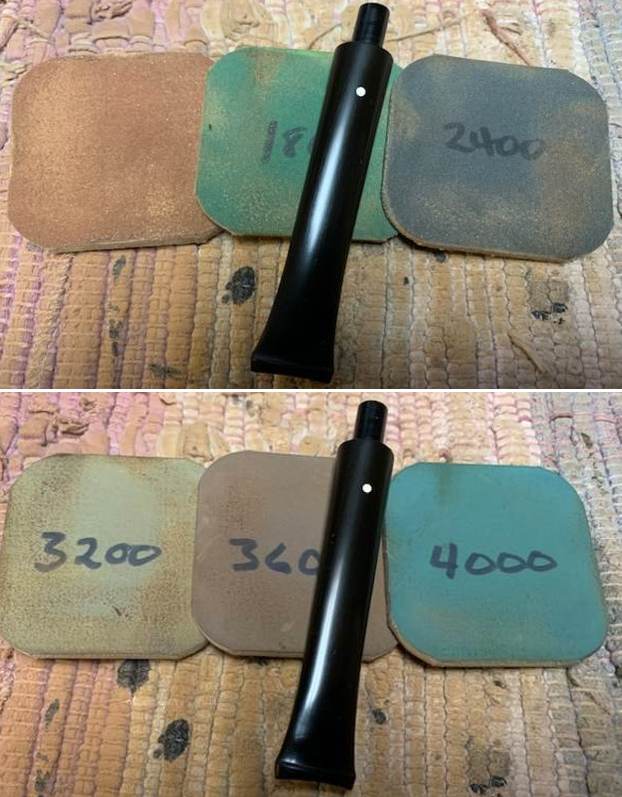
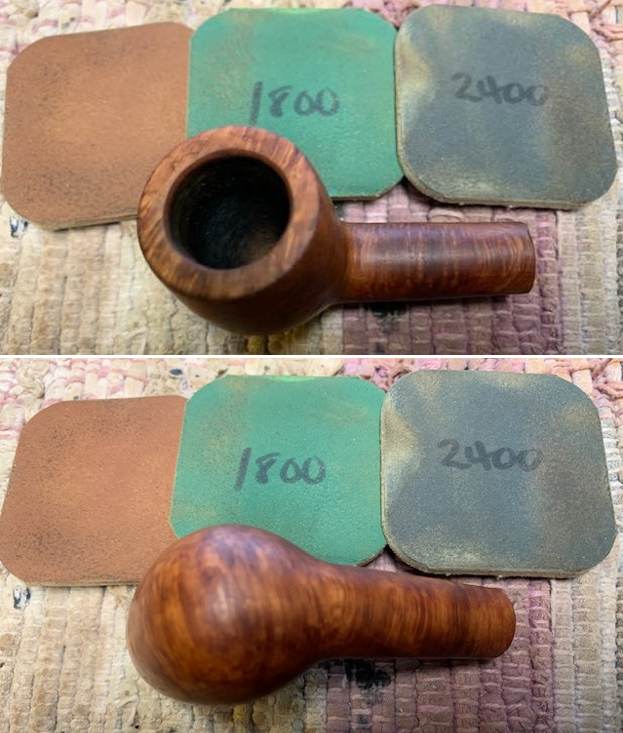
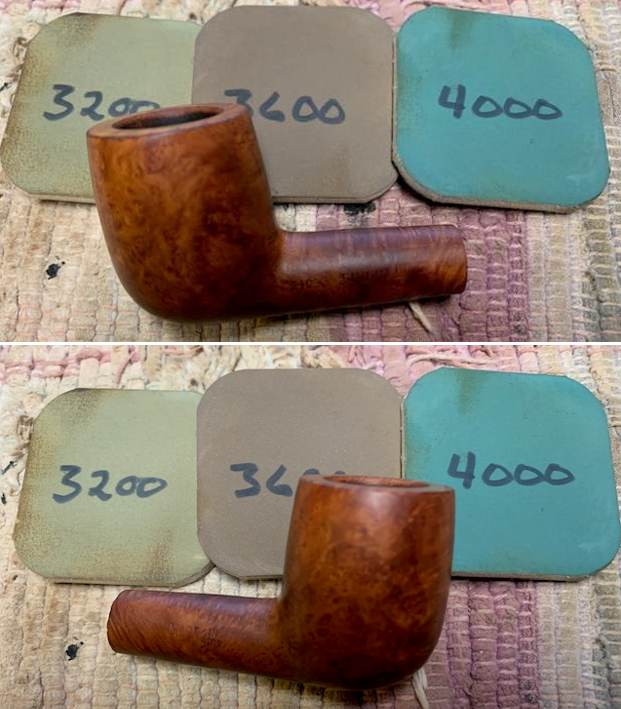
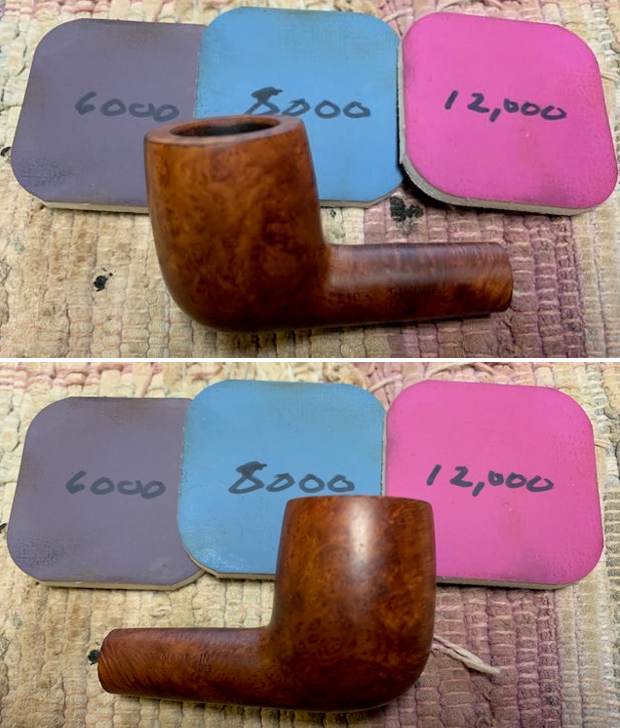
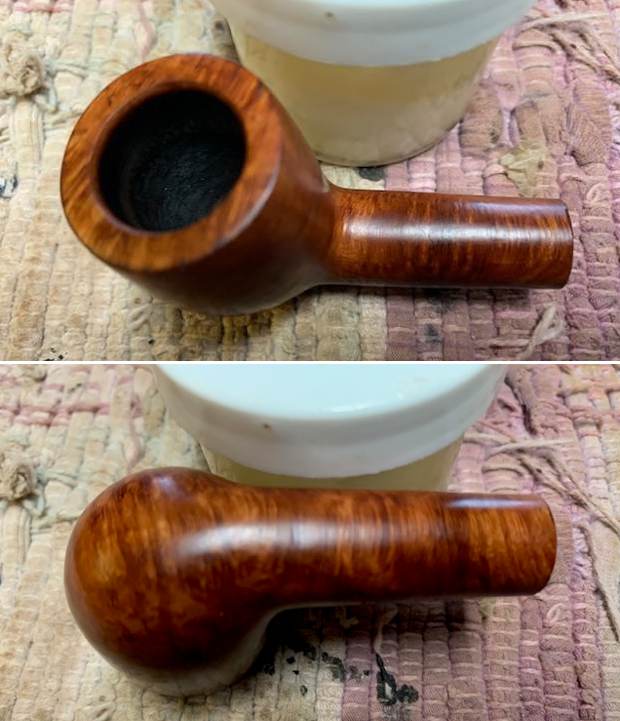
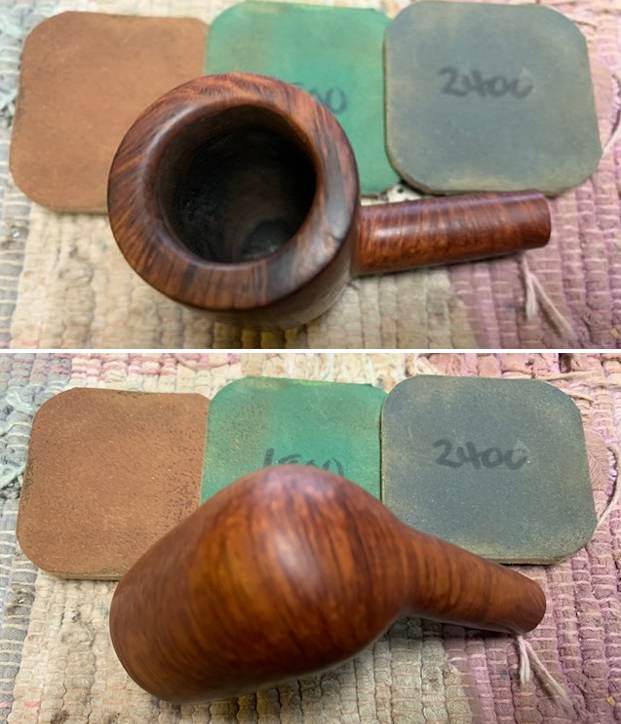
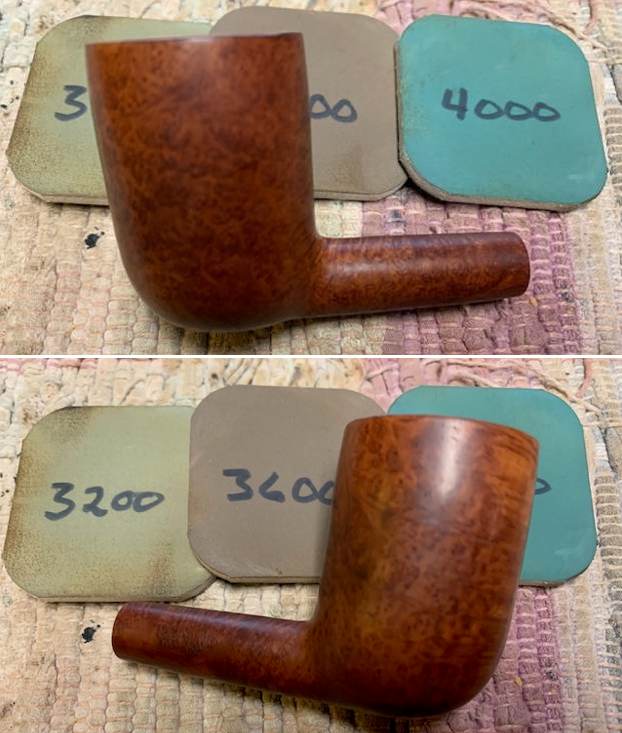
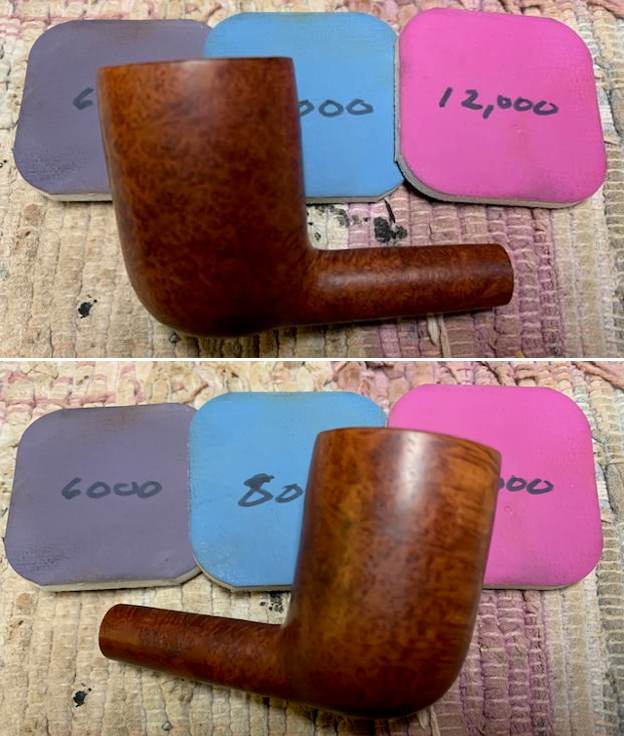
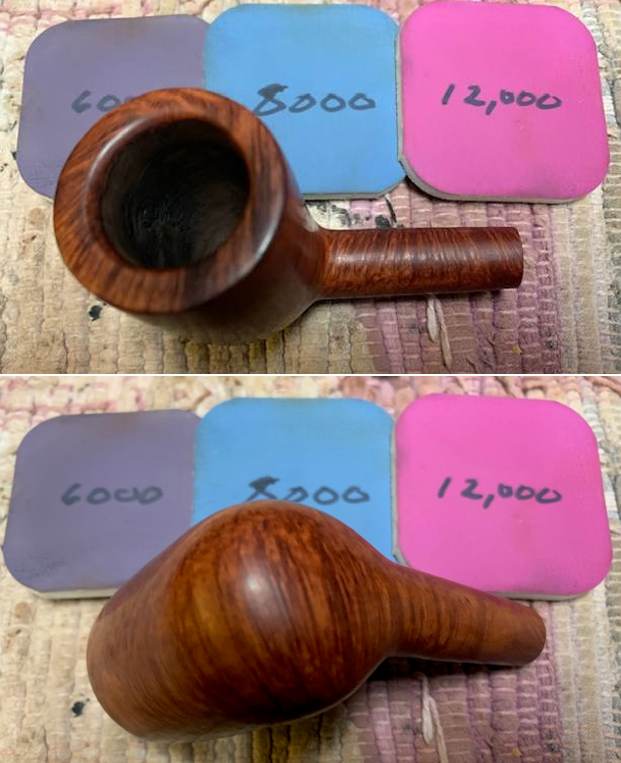
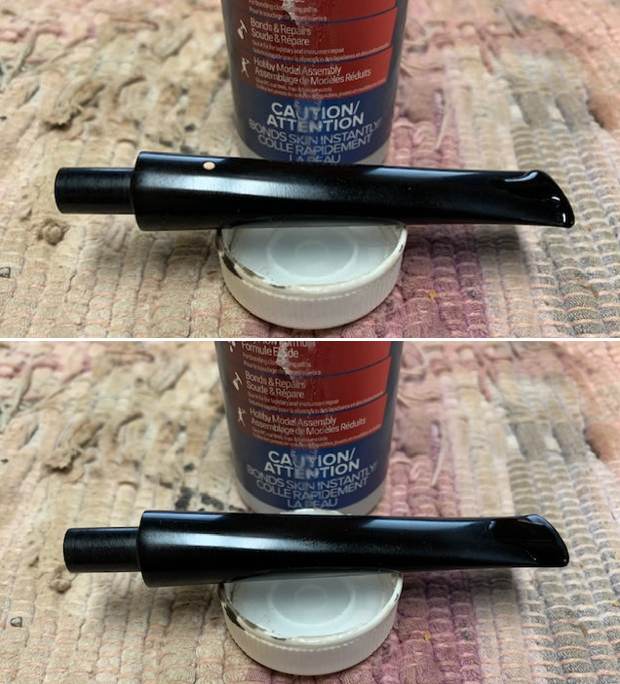
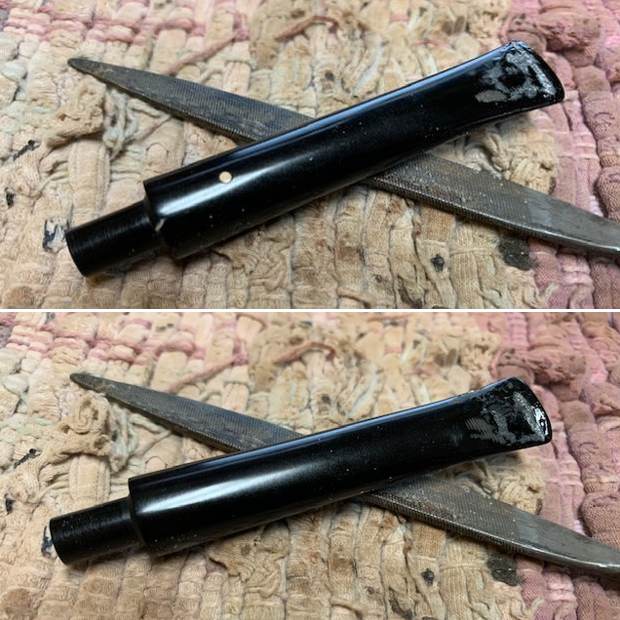
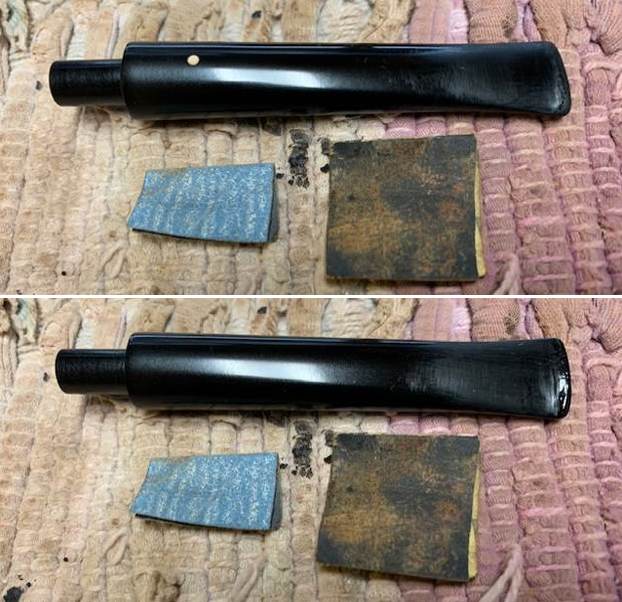
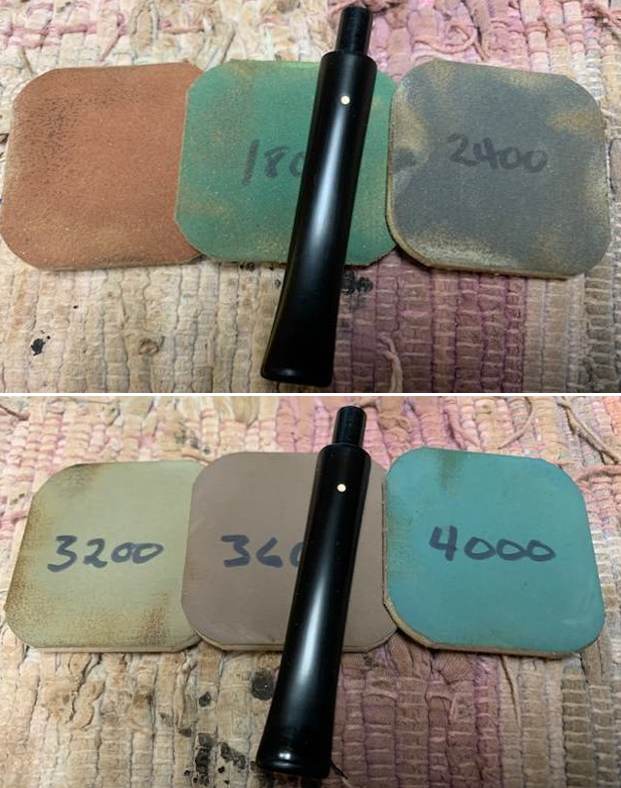
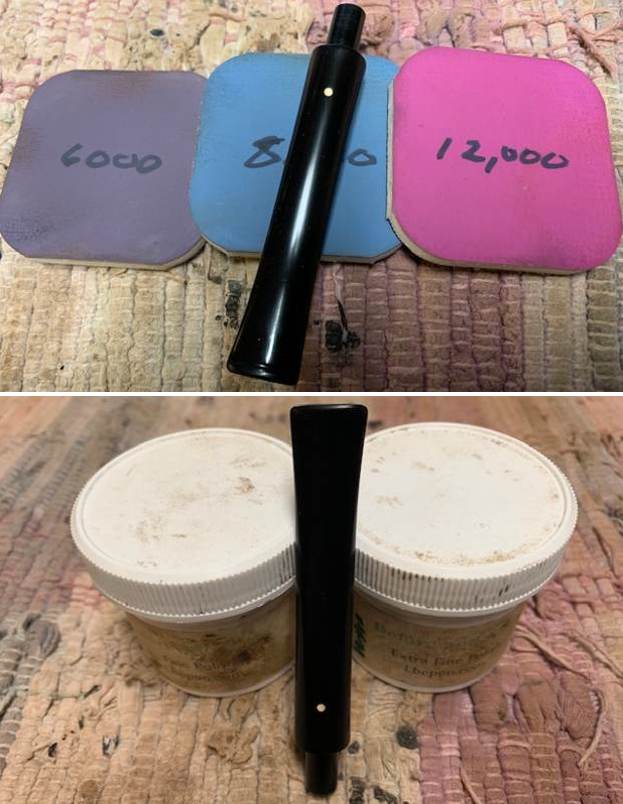
I have also included a chart from the site from Dunhill spelling out the Standard Pipe Finishes and giving short information and a timeline. I turned to work on the pipe itself. Jeff had done an amazing cleanup of the pipe. He reamed the cake with a PipNet reamer and cleaned up that with a Savinelli Fitsall Pipe Knife. He scrubbed the internals of the bowl and stem with alcohol, cotton swabs and pipe cleaners. He scrubbed the externals with undiluted Murphy’s Oil Soap and rinsed the bowl off with running water. He soaked the stem in Briarville’s Pipe stem Deoxidizer and once it had soaked rinsed it off with warm water to remove the residual solution. He dried it off and rubbed it down to remove any oxidation that was still on the stem. The pipe looked very good when I received it. I took a photo of the rim top to show the condition. You can see the clean bowl and the damage on the rim top and inner and outer edges. The replacement stem came out looking quite good. There are some scratches, tooth marks and chatter on both sides ahead of the button.   I took photos of the stamping on the sides of the shank. The stamping is faint in spots but still very readable. It reads as noted above. I removed the stem from the shank and took a photo of the pipe parts to show what I was working with. It is a nice looking pipe. I worked on both the inside and outside edge and top of the rim with a folded piece of 220 grit sandpaper to clean up the damage. It would take some work but it looked much better.I polished the cleaned up rim top and edges with micromesh sanding pads – dry sanding with 1500-12000 grit pads and wiping the bowl down with a damp cloth to remove the dust. The rim top came out looking very good. I rubbed the briar down with Before & After Restoration Balm. I worked it into the briar with my fingertips. The product works to clean, enliven and preserve the briar. I let it sit for 10 minutes then I buffed it with a cotton cloth to deepen the shine. The briar comes alive with the balm. I set the bowl aside and turned to address the stem issues. I “painted” the surface of the stem with the flame of a Bic lighter. The heat lifted the tooth marks significantly. I filled in the small remaining marks with clear CA glue. I flattened them out with a small file once they cured. I sanded them with 220 grit sandpaper to blend them into the surface of the stem. I started the polishing with a 600 grit wet dry sandpaper. I polished the vulcanite with micromesh sanding pads – 1500-12000 grit pads. I wiped it down with Obsidian Oil after each sanding pad. I used Before & After Pipe Polish – both Fine and Extra Fine to further polish the stem. This 1950 Dunhill London Root Briar 53 Bent Billiard with a replacement taper stem has a smooth Dunhill finish that has some great grain. The polished mix of brown stains highlights some great grain around the bowl and shank. The polished replacement vulcanite taper stem adds to the mix. I put the stem back on the bowl and buffed the pipe with Blue Diamond on the buffing wheel being careful to not buff the stamping. I gave the bowl and the stem multiple coats of carnauba wax on the buffing wheel and followed that by buffing it with a clean buffing pad. I hand buffed the pipe with a microfiber cloth to deepen the shine. The finished 1950 Dunhill London 3R 53 Bent Billiard is quite nice and feels great in the hand. Give the finished pipe a look in the photos below. The dimensions of the pipe are Length: 5 ½ inches, Height: 1 ¾ inches, Outside diameter of the bowl: 1 1/8 inch, Chamber diameter: ¾ of an inch. The weight of the pipe is 1.45 ounces/41 grams. Thanks for walking through the restoration with me as I worked over another beautiful pipe. If you are interested in adding it to your collection I will be adding it to the British Pipe Makers Section of the rebornpipes store. Thanks for your time.

Cleaning up a Patent No. Dunhill Bruyere 113 F/T Made in England 2 2A Billiard


Blog by Steve Laug

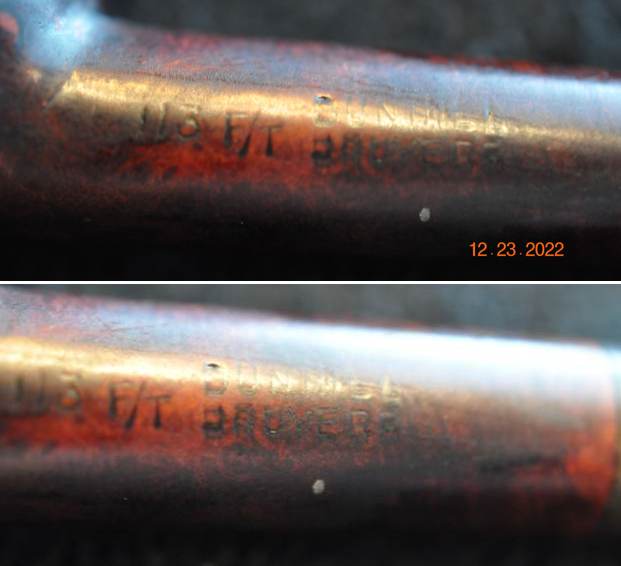
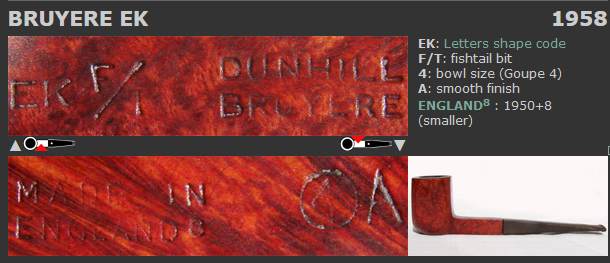
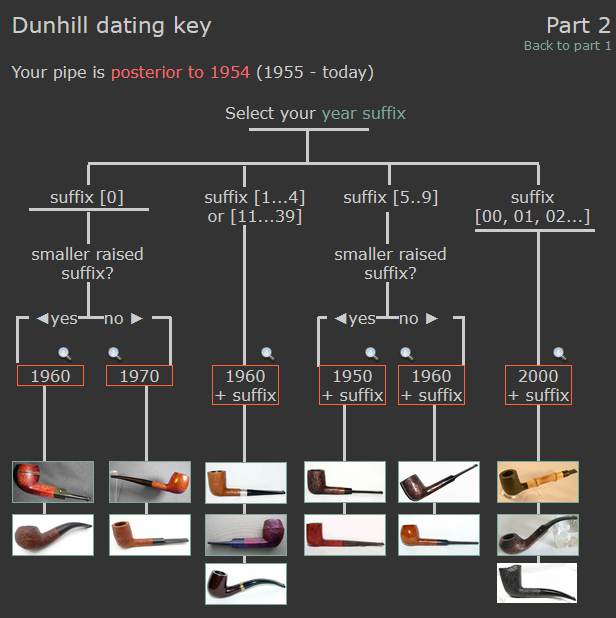
The next pipe on the table is another one that came to us from a group of pipes that Jeff and I purchased on 11/10/2022 from Copenhagen, Denmark. It is another Dunhill smooth finish pipe that is in rough but workable condition. On the left side it is stamped with the shape number 113 F/T followed by Dunhill [over] Bruyere. On the right side it is stamped Made in [over] England followed by the date number superscript 2 after the D in England. Underneath that it reads Pat. No. 417574/34. After that it is stamped with a 2 in a circle [followed by] A for Bruyere.  The stamping is faint but readable as noted above. The pipe has an oxblood coloured stain with some amazing grain that the shape follows well. The finish extremely was dirty. The bowl had a thin cake and there was a light overflow lava and darkening and scratches on the rim top and both the inner and outer edges. The fishtail, taper stem was in decent condition and was oxidized, calcified and had tooth marks and chatter ahead of the button. Jeff took photos of the pipe to show what it looked like before he started working on it. He took photos of the bowl and rim top to show their condition and of the stem to show the condition of both sides of the stem. The photos of the sides and heel of the bowl show beautiful cross and birdseye grain and the Bruyere coloured finish on the pipe. Even under the grime it is a real beauty. The stamping on the sides of the shank are shown in the photos below. It is faint but readable. It reads as noted and explained above. Jeff captured the detail in the photos below. One of the first things I like to do is to unpack the stamping and understand each element in it. I turned to Pipephil’s helpful site (http://pipephil.eu/logos/en/dunhill/bruyere1.html). The stamping is interpreted as follows: The 113 stamp is the shape for a Billiard. The F/T stamp refers to the fishtail stem. The Bruyere stamp refers to the finish. The 2 following the D of England gives the date the pipe. The Circle 2 A refers to the size of the pipe being a Group 2 and the A confirms the Bruyere designation.Pipephil also has some helpful dating keys on the site that are basically flow charts that you can walk through to date your pipe (http://pipephil.eu/logos/en/dunhill/cledat-en1.html). I turned to Part 1 of the Dating Key and followed the chart. This pipe has a 2 following the D in England. It is a superscript above the D so that took me to the section on the chart below (column one) which instructed me that the pipe could be dated as being “crafted between 1921 and 1954 Narrow down your dating”. I followed the link following the “Your Dunhill pipe has been crafted between 1921 and 1954”. That took me to Page 2 of the dating key (http://pipephil.eu/logos/en/dunhill/cledat-en1b.html).   The first column (suffix 1…4) led me to the section with a 2 after the D in England. There was a directive for dating the pipe spelled out as follows: 1950 + suffix which dates the pipe to 1952.I then turned to Pipedia’s section on Dunhill Root Briar to get a bit of background on the Dunhill finishes (https://pipedia.org/wiki/Dunhill#Root_Briar). I quote:
Bruyère – The original finish produced (usually made using Calabrian briar), and a big part of developing and marketing the brand. It was the only finish from 1910 until 1917. A dark reddish-brown stain. Before the 1950s, there were three possible finishes for Dunhill pipes. The Bruyere was a smooth finish with a deep red stain, obtained through two coats, a brown understain followed by a deep red.

See more about here: Dunhill Bruyere

I clicked on the “See more about here:” link above (https://pipedia.org/wiki/Dunhill_Bruyere) and it took me to more specific information on the brand.

Initially, made from over century-old briar burls, classified by a “B” (denoted highest quality pipe); “DR” (denoted straight-grained) and an “A” (denoted first quality), until early 1915. After that, they became a high-end subset to the Dunhill ‘Bruyere’. The DR and B pipes, a limited production, they should be distinguished as hand-cut in London from burls as opposed to the Bruyere line which was generally finished from French turned bowls until 1917, when the Calabrian briar started to be used, but not completely. Only in 1920 Dunhill took the final step in its pipe making operation and began sourcing and cutting all of its own bowls, proudly announcing thereafter that “no French briar was employed”.

Bruyere pipes were usually made using Calabrian briar, a very dense and hardy briar that has a modest grain but does very well with the deep red stain.

“Before the 1950s, there were three possible finishes for Dunhill pipes. The Bruyere was a smooth finish with a deep red stain, obtained through two coats, a brown understain followed by a deep red. The Shell finish was the original sandblast with a near-black stain (though the degree to which it is truly black has varied over the years). Lastly, the Root finish was smooth also but with a light brown finish. Early Dunhill used different briars with different stains, resulting in more distinct and identifiable creations… Over the years, to these traditional styles were added four new finishes: Cumberland, Dress, Chestnut and Amber Root, plus some now-defunct finishes, such as County, Russet and Red Bark.”[1]

I have also included a chart from the site from Dunhill spelling out the Standard Pipe Finishes and giving short information and a timeline. I turned to work on the pipe itself. Jeff had done an amazing cleanup of the pipe. He reamed the light cake with a PipNet reamer and cleaned up that with a Savinelli Fitsall Pipe Knife. He scrubbed the internals of the bowl and stem with alcohol, cotton swabs and pipe cleaners. He scrubbed the externals with undiluted Murphy’s Oil Soap and rinsed the bowl off with running water. He soaked the stem in Briarville’s Pipe stem Deoxidizer and once it had soaked rinsed it off with warm water to remove the residual solution. He dried it off and rubbed it down to remove any oxidation that was still on the stem. The pipe looked very good when I received it. I took a photo of the rim top to show the condition. You can see the clean bowl and the damage on the rim top and inner edge. The stem came out looking quite good. There are some scratches, tooth marks and chatter on both sides ahead of the button.   I took photos of the stamping on the sides of the shank. The stamping is faint in spots but still very readable. It reads as noted above. I removed the stem from the shank and took a photo of the pipe parts to show what I was working with. It is a nice looking pipe. I worked on both the inside and outside edge and top of the rim with a folded piece of 220 grit sandpaper to clean up the damage. It would take some work but it looked much better.I polished the cleaned up rim top and edges with micromesh sanding pads – dry sanding with 1500-12000 grit pads and wiping the bowl down with a damp cloth to remove the dust. The rim top came out looking very good. I rubbed the briar down with Before & After Restoration Balm. I worked it into the briar with my fingertips. The product works to clean, enliven and preserve the briar. I let it sit for 10 minutes then I buffed it with a cotton cloth to deepen the shine. The briar comes alive with the balm. I set the bowl aside and turned to address the stem issues. I “painted” the surface of the stem with the flame of a Bic lighter. The heat lifted the tooth marks significantly. I filled in the small remaining marks with clear CA glue. I flattened them out with a small file once they cured. I sanded them with 220 grit sandpaper to blend them into the surface of the stem. I started the polishing with a 400 grit wet dry sandpaper. I polished the vulcanite with micromesh sanding pads – 1500-12000 grit pads. I wiped it down with Obsidian Oil after each sanding pad. I used Before & After Pipe Polish – both Fine and Extra Fine to further polish the stem. This 1952 Dunhill Bruyere 113 F/T Billiard with a Taper Stem has a smooth Dunhill finish that has some great grain. The polished oxblood reddish stain highlights some great grain around the bowl and shank. The polished black vulcanite taper stem adds to the mix. I put the stem back on the bowl and buffed the pipe with Blue Diamond on the buffing wheel being careful to not buff the stamping. I gave the bowl and the stem multiple coats of carnauba wax on the buffing wheel and followed that by buffing it with a clean buffing pad. I hand buffed the pipe with a microfiber cloth to deepen the shine. The finished Dunhill Bruyere 113 F/T Billiard is quite nice and feels great in the hand. Give the finished pipe a look in the photos below. The dimensions of the pipe are Length: 5 inches, Height: 1 ½ inches, Outside diameter of the bowl: 1 1/8 inch, Chamber diameter: ¾ of an inch. The weight of the pipe is .99 ounces/28 grams. Thanks for walking through the restoration with me as I worked over another beautiful pipe. If you are interested in adding it to your collection I will be adding it to the British Pipe Makers Section of the rebornpipes store. Thanks for your time.

Grail Acquisition & Restoration: GBD 9242 New Standard


By Al Jones

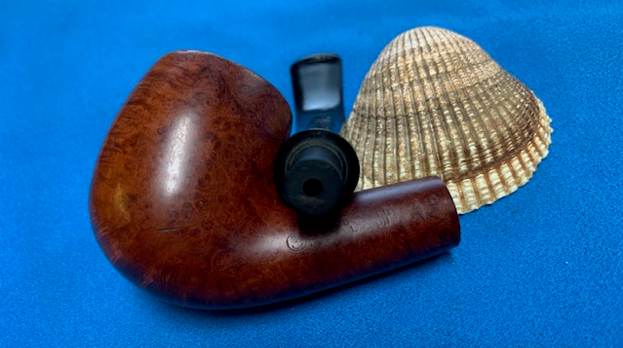
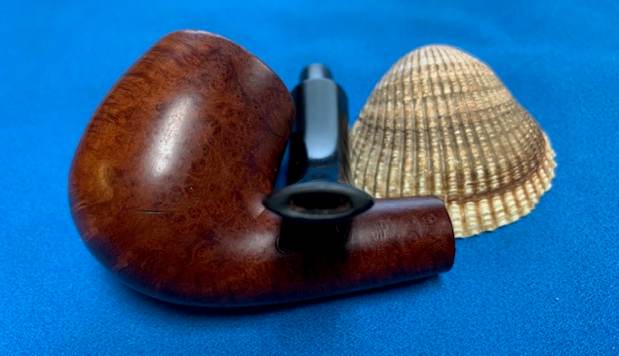
The GBD shape 9242 was one of the first few shapes on my “Holy Grail” list of British pipes. Over the years, I’ve managed to acquire a few and this one is currently the fourth in my collection.

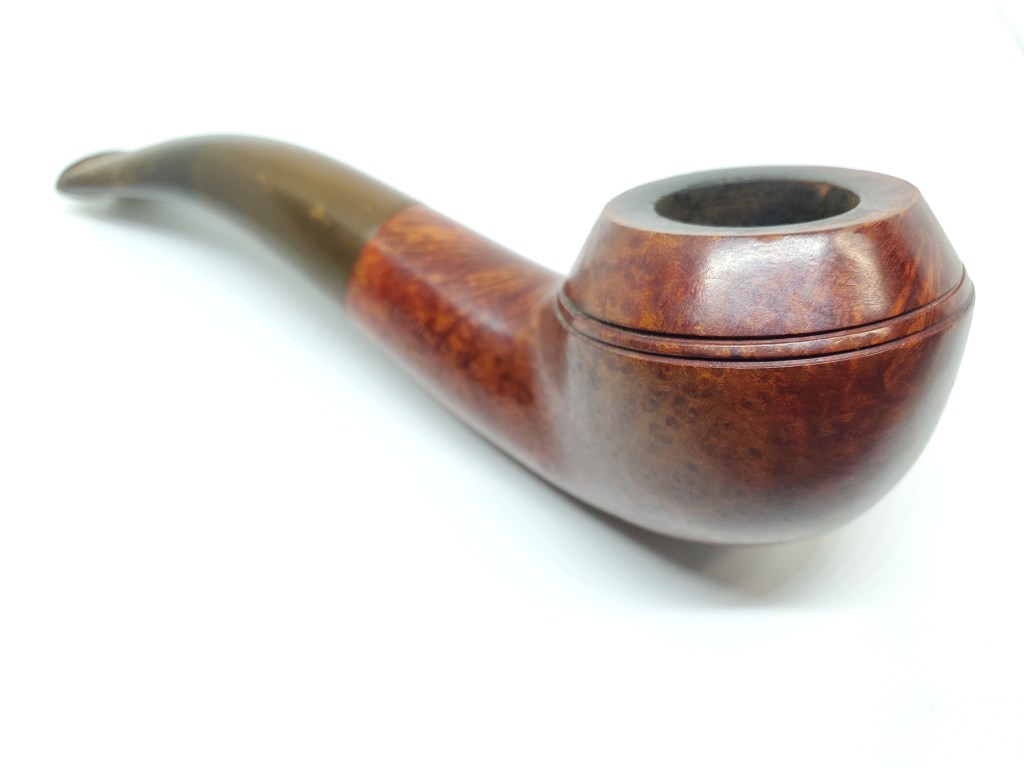
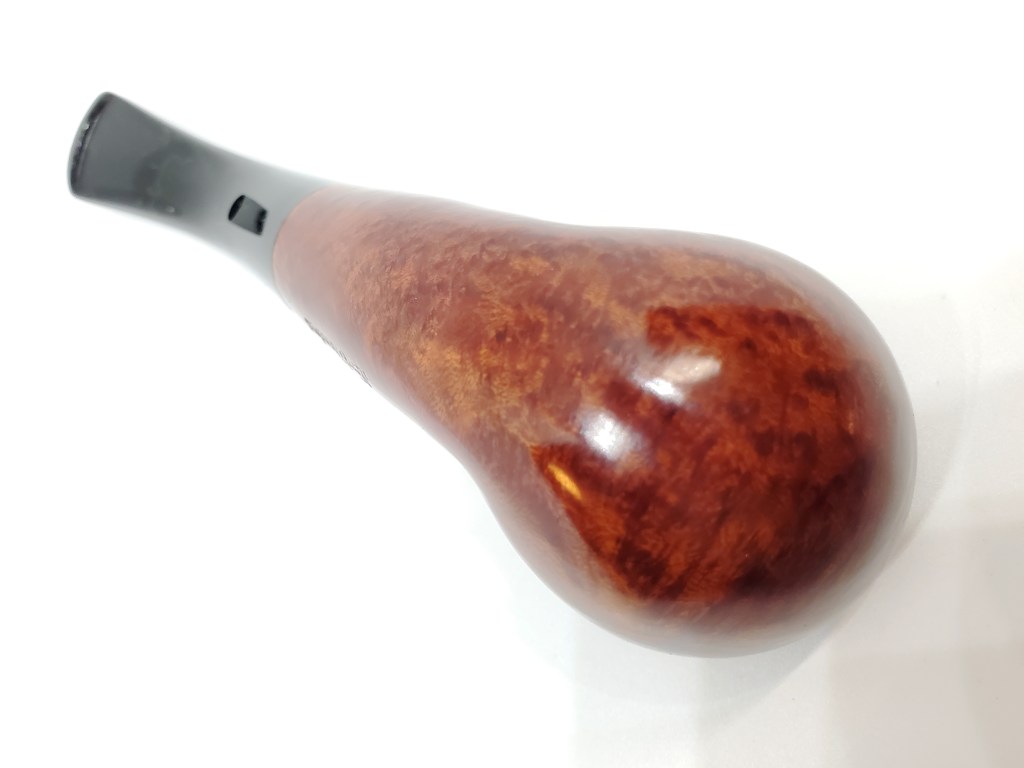
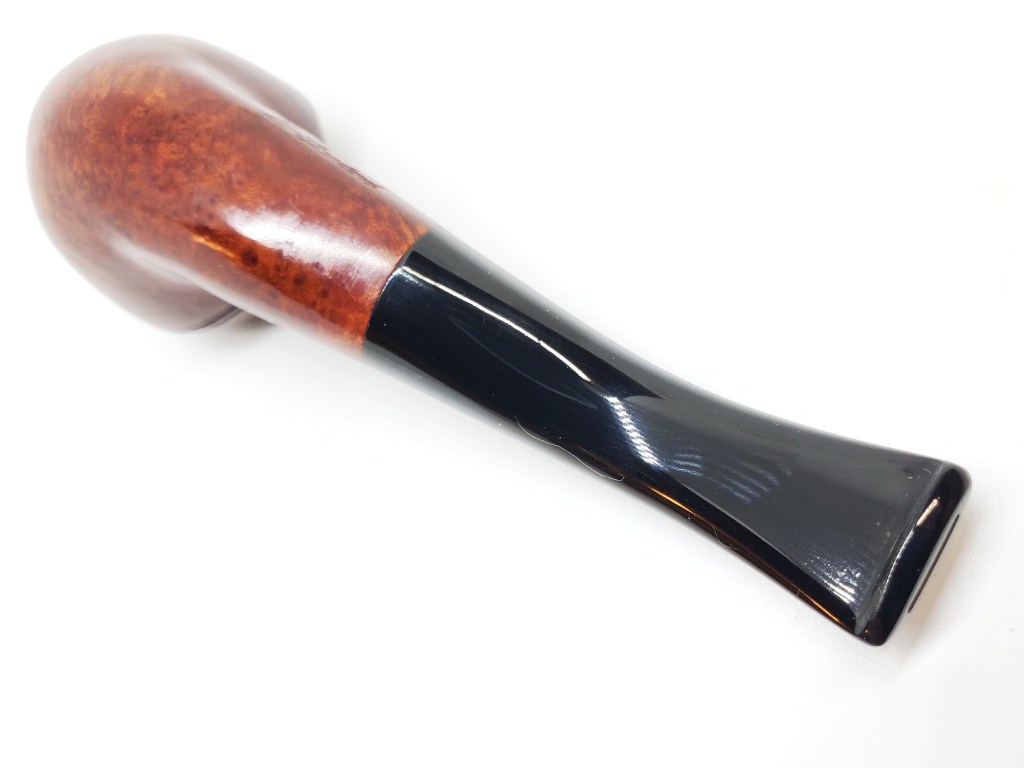
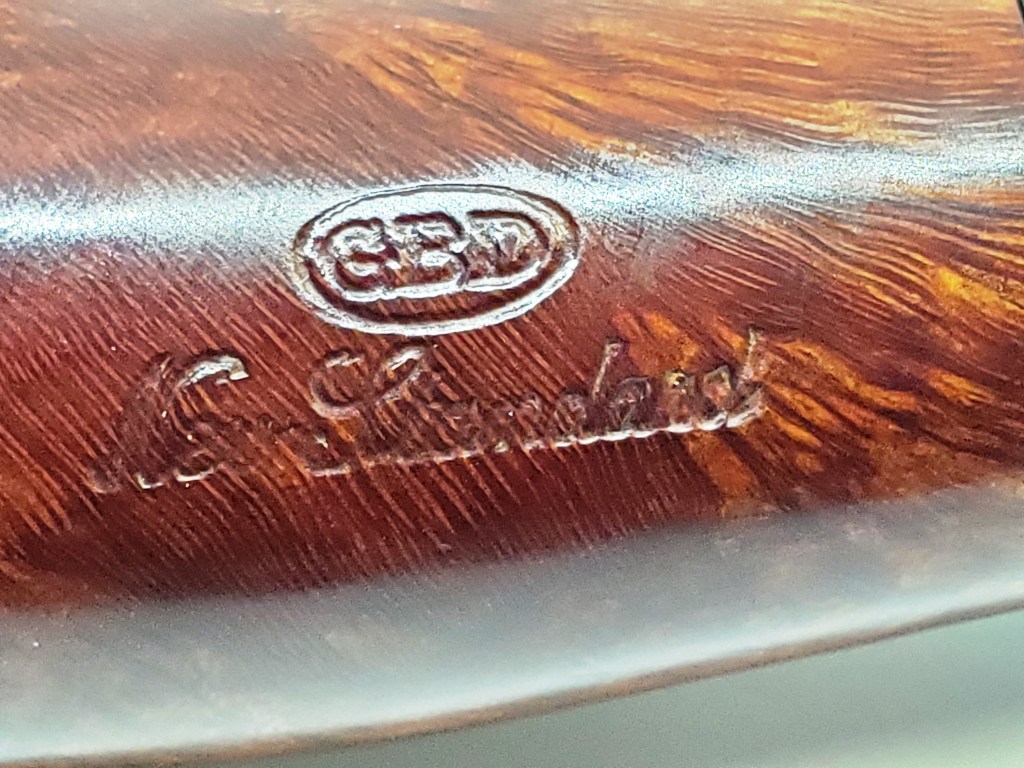
This example appeared to be in very good condition and on delivery, it was even better than the modest eBay pictures showed. The bowl had some darkening on on the rim, with some dings around the bowl and the finish was faded. There was one nick on the inside of the bowl edge. The stem was in excellent shape, only oxidized. The bowl rings were in perfect condition. This example has the reddish stain, as opposed to the brown stain on my other New Standard 9242’s. The nomenclature looks like the day it was made.

Below is the pipe as it was received.

I removed the very slight cake with my reamer set and found the bowl in excellent condition. The bowl was filled with sea salt and alcohol to soak. I found a set of small rubber plugs that I now use to plug the shank end.

I used a worn piece of Scotch-Brite to remove the rim darkening. This lightened the stain, so I mixed up some Medium Brown and Oxblood Feibings Leather Dye and applied that to the bowl top. It matched the reddish stain perfectly.

I used and electric iron and wet cloth to steam out some of the handling marks around the bowl. The bowl was then buffed lightly with White Diamond and then several coats of Carnuba wax.

The stem was mounted and oxidation removed with 600, 800, 1,500 and 2,000 grit wet sandpaper, followed by 8,000 and 12,000 micromesh sheets. The stem was then polished with White Diamond and Meguiars Plastic Polish.

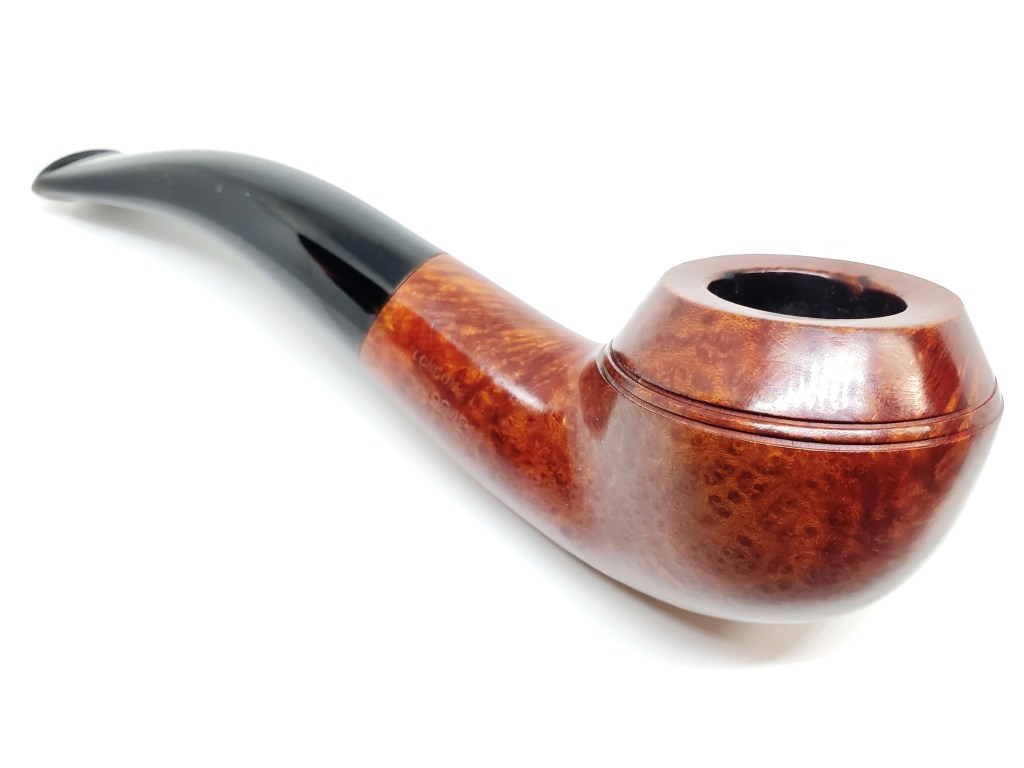
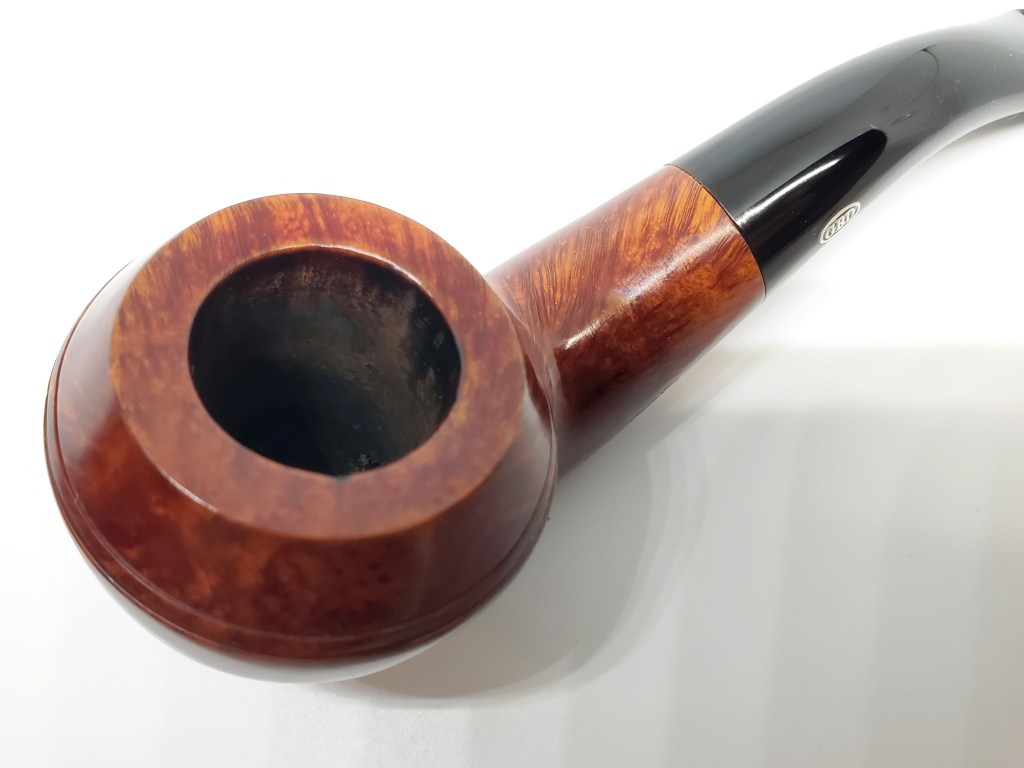
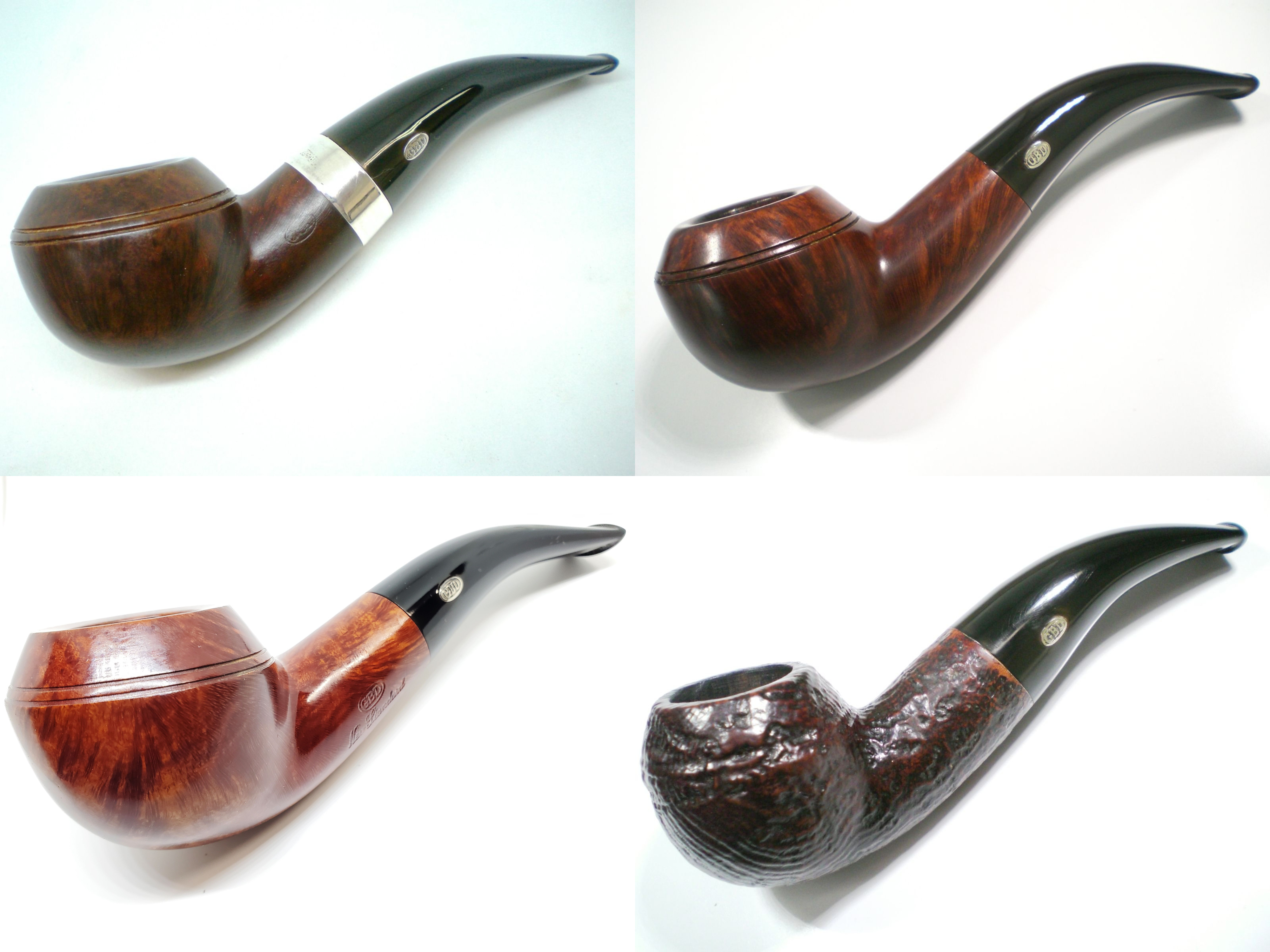
Below is the finished pipe. I also include a collage with the current 9242 shapes in my collection.

Pictured clockwise:

9242 Silver Band (No Grade stamp) 1950 Hallmark

New Standard – Brown stain

New Standard – Red stain (featured pipe)

9242 P Sandblast

Rescuing a Dr. Grabow Regal Ajustomatic Pat. 2461905 Dublin


The next pipe on the worktable came to me in what I have named the St. Louis Lot of 26 in December of 2018.  My son Josiah was instrumental in …

Rescuing a Dr. Grabow Regal Ajustomatic Pat. 2461905 Dublin

This turned out to be a real beauty. Well done.

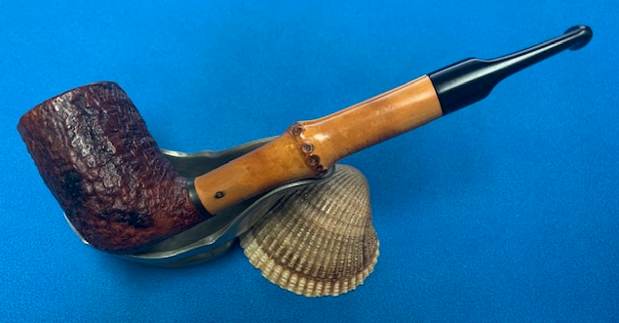
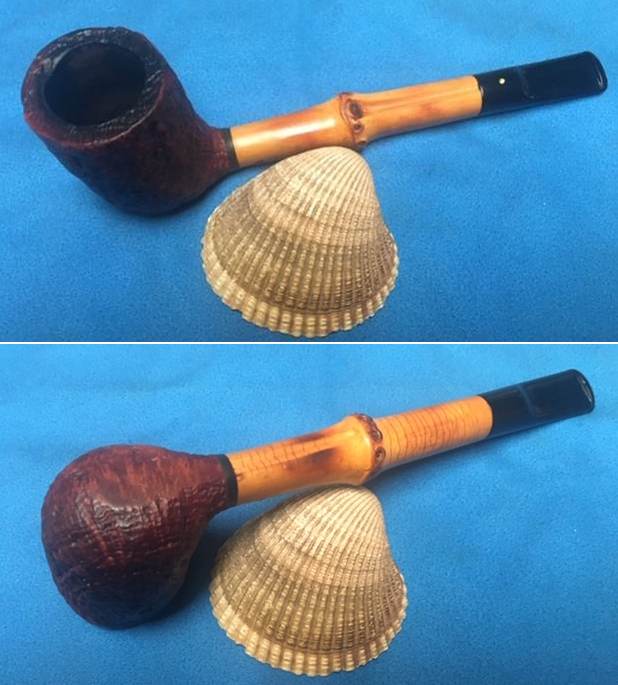
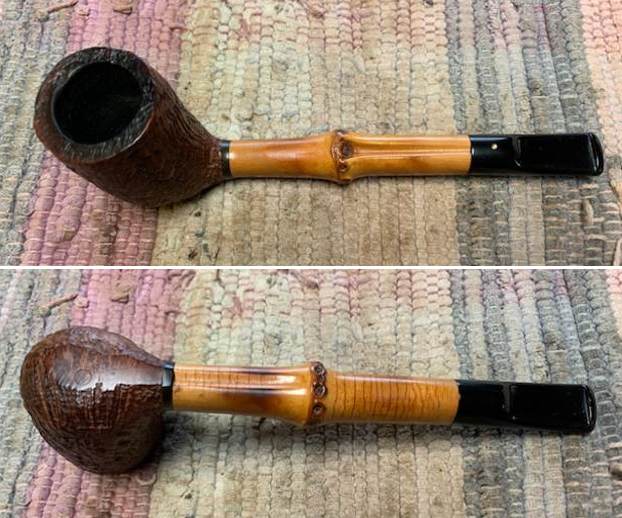
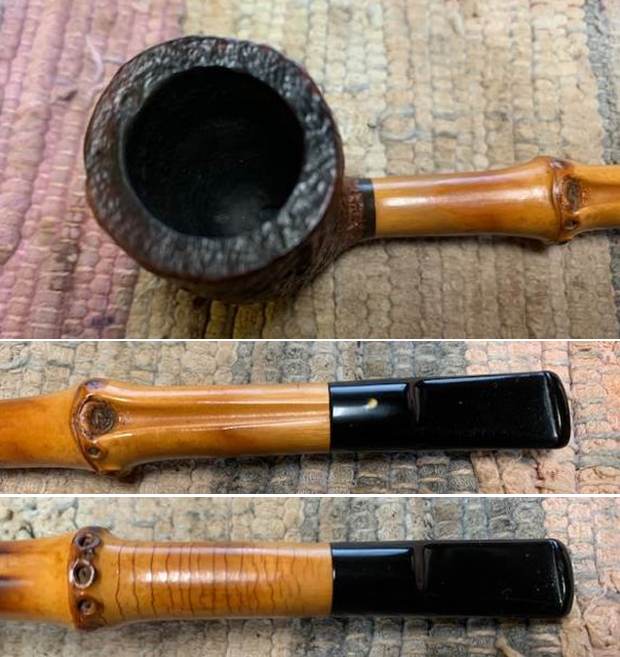
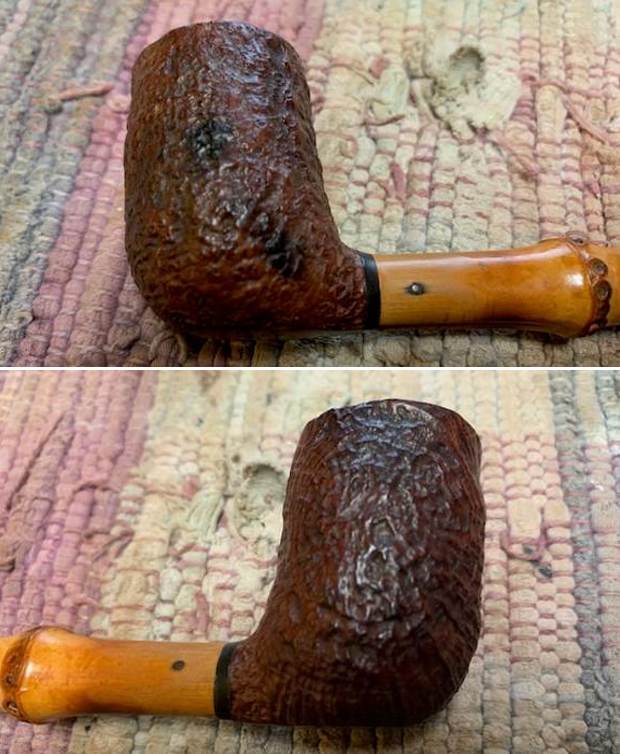
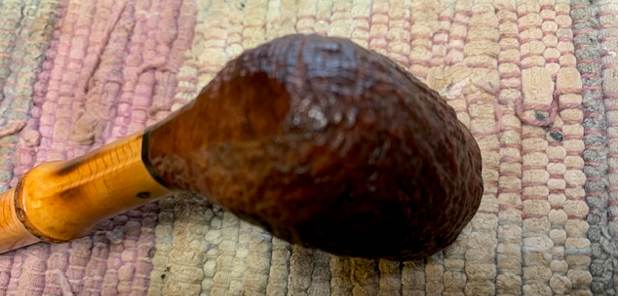
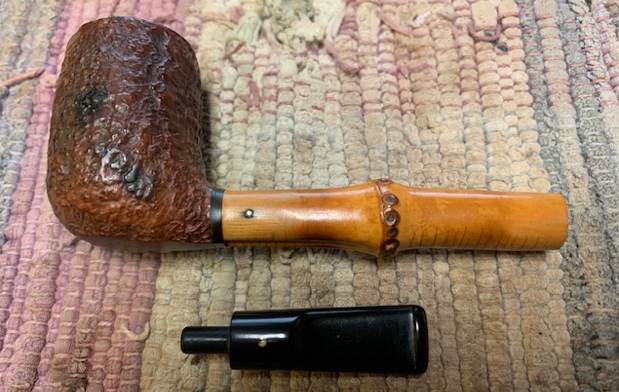
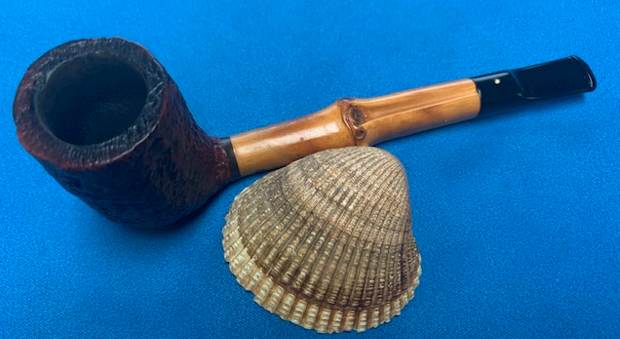
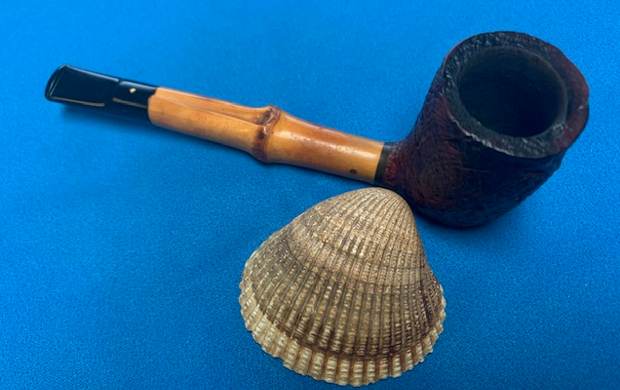
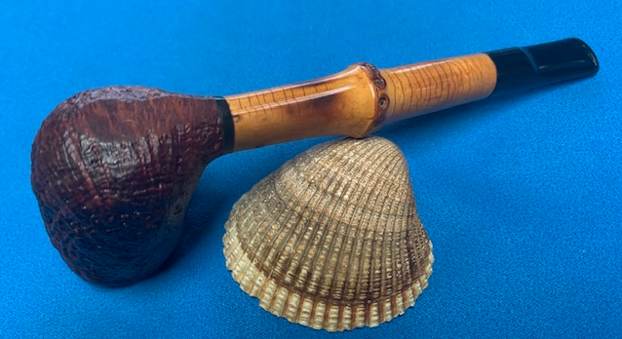
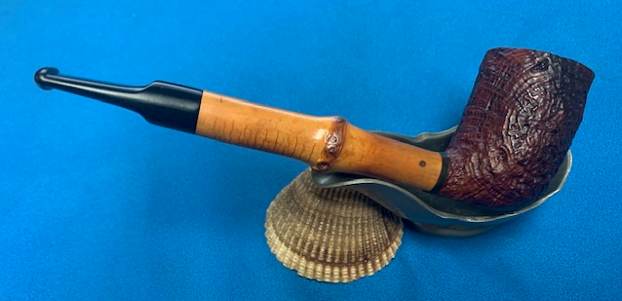
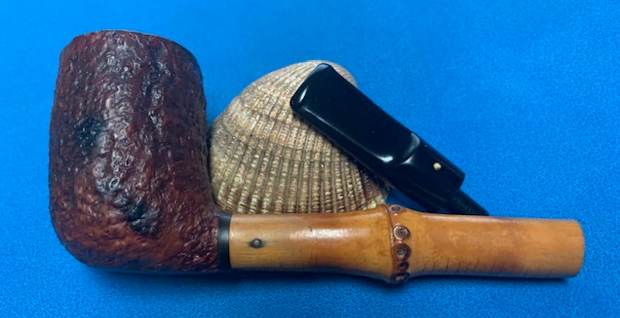
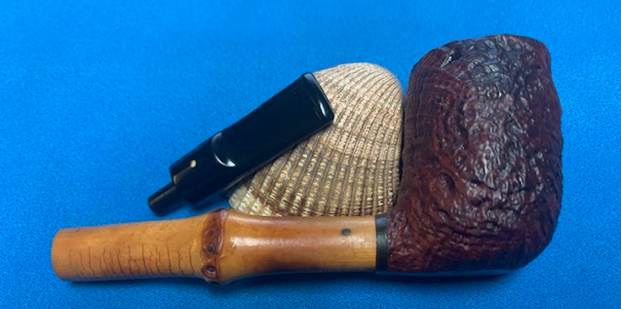
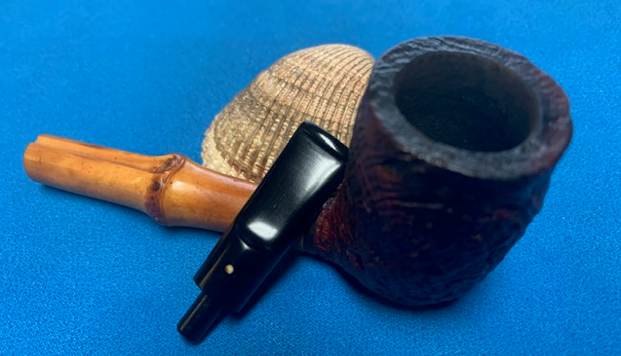
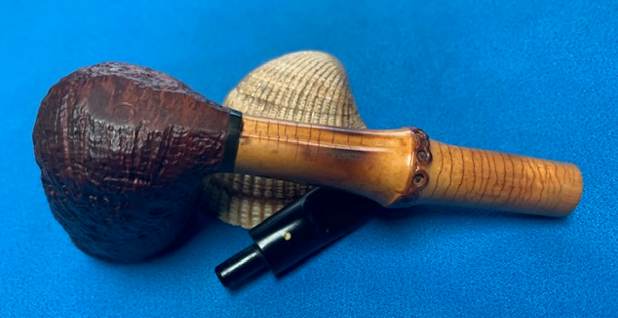
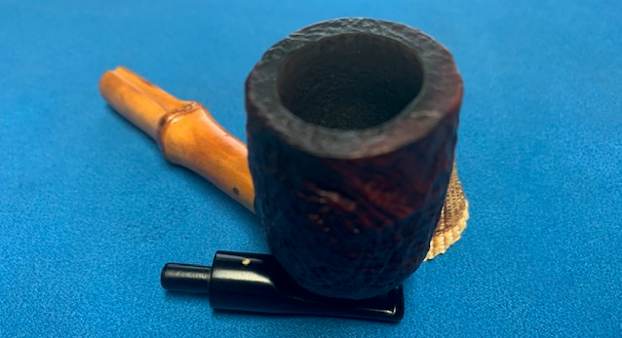
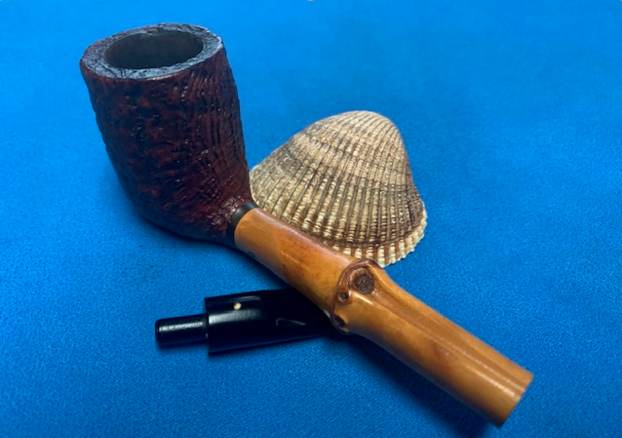
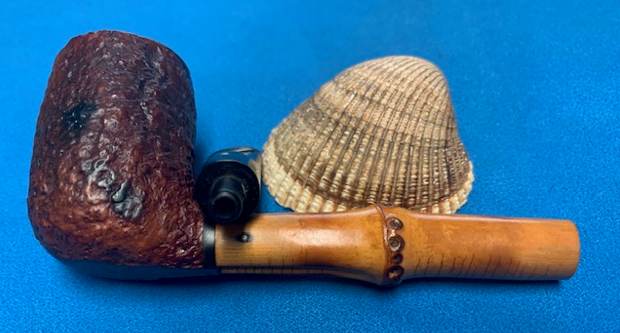
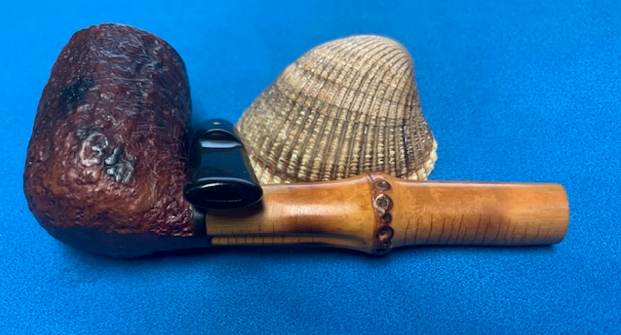
Preparing a 1962 Dunhill Bamboo “Whangee” Tanshell W60 Lovat  so that I can enjoy it!


Blog by Steve Laug

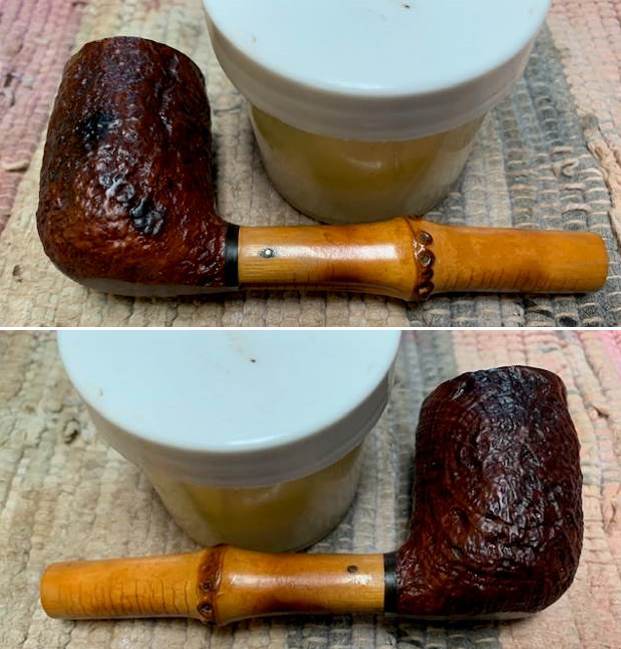
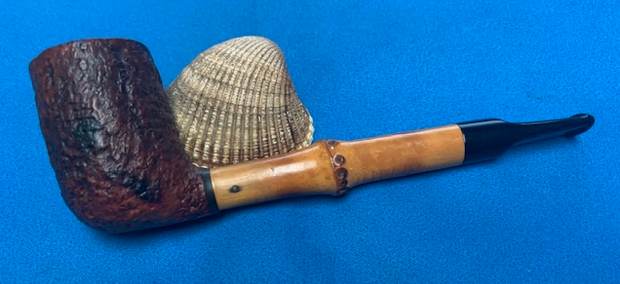
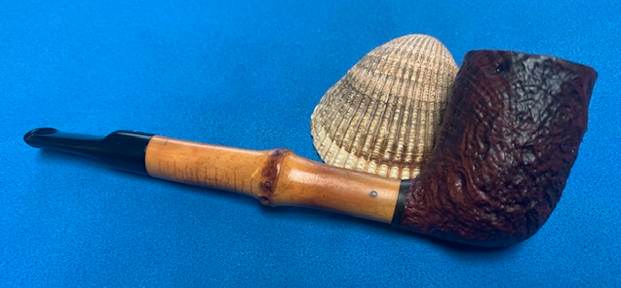
Back in 2020 I met with a friend here in Vancouver, Alex, whose pipes I often worked on to enjoy a visit and some good tobacco. He showed me this pipe and I immediately was taken with it. I told him that if he ever wanted to part with it he should call me first. This week I received an email from him that he was ready to part with it. We talked about it for awhile and arrived at a price and I paid him online. Yesterday (Thursday) I picked it up from Alex. It was exactly as I remembered it. I have included a few photos of the pipe to show what it looked like when I gave it back to Alex. It still had the unique beauty that I remembered and now looked forward to enjoying myself. It had some great patina on the Bamboo and a darkened Tanshell finish that had only become richer with Alex’s use. This morning I went back to the original blog describing the restoration of the pipe. I am including the link to the blog (https://rebornpipes.com/2020/01/08/refreshing-a-dunhill-tanshell-w60-t-1962bamboo-lovat-for-alex/). Give it a read. I am quoting my introductory comments in that blog below because they capture well the feelings I had when I first saw the pipe and the information that I could gather on it.

I carefully took it in my hands and examined it. While I have several Stanwell Bamboo pipes and older KBB Yello Bole Bamboos this is the first Dunhill that I had seen up close and personal. Alex told me that these bamboo-adorned pieces were referred to as “Whangee” pipes. I learned later that the term comes from the Mandarin word for bamboo, huáng lí and was used to describe canes and umbrellas with bamboo handles throughout the early to mid-1900s before being attributed to pipes — Dunhill’s in particular. I learned from reading on line that bamboo came to into use in pipemaking during the briar shortage that accompanied and followed WWII. As a means of saving on briar, pipemakers would extend the shank with bamboo.

The pipe was stamped on the heel of the bowl with the following nomenclature: W60 over a circle with a T next to it. T is the designation for Tanshell pipes. I assume that the circle with what looked like a 4 faintly in the center which was the size designation. Next to that is a superscript underlined 2 which I believe designates the year of manufacture – 1962. So now I knew the date on this interesting Bamboo.

Alex had reamed the pipe and cleaned it up very well. He had already enjoyed smoking it and was hooked on it. I even offered to buy it from him and he gently declined! He asked if I could take it home with me and see what I could do about the finish on the bowl. I told him I would take it home and have a go at it…

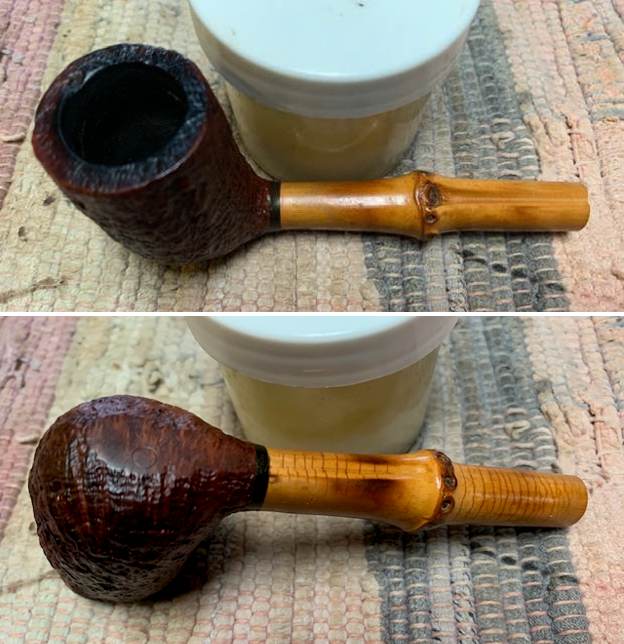
When I got home yesterday afternoon I laid it aside and this took it up to work on it. I enjoyed going over it carefully to see what I had purchased from Alex. You can see from the four photos below that the dark spots on the left side of the bowl had blended in better and were looking better. They seemed to be stains from the bowl coming in contact with some substance. It was deep in the finish. The right side of the bowl had some darkening toward the top of the bowl and the rim top was clean but still had a bit of darkening. The vulcanite spacer between the bowl and the bamboo shank was cleaned. The patina on the Bamboo shank had darkened and the crackling in the finish looked very good. It was quite stunning. The stem was in good condition other than a few small tooth marks and chatter on both sides just ahead of the button. The pipe had a light cake and smelled of good tobacco. Overall the pipe was in good condition. I took photos of the bowl and rim top to show their condition and of the stem to show the condition of both sides of the stem. Alex had taken great care of this old pipe.The photos of the sides and heel of the bowl show beautiful sandblasted grain around the bowl and the patterns in the briar. The Tanshell finish had darkened a lot on the pipe and I really debate whether to let it darken naturally or stain it with a Shell Briar style of stain. It is a nice looking pipe. I took the stem off the bamboo shank and took a photo. It really is a beautiful Bamboo shank Lovat in my opinion.One of the first things I like to do is to unpack the stamping and understand each element in it. I turned to Pipephil’s helpful site (http://pipephil.eu/logos/en/dunhill/shapes-l.html). The stamping on the shank heel is interpreted as follows: W stamp is the shape code for a Bamboo followed by the number 60 which is a number for a Billiard, however I would call the elongated shank and bowl combination a Lovat. The 2 following the W60 gives the date the pipe. The Circle 4 T refers to the size of the pipe being a Group 4 and the T is the stamp for a Tanshell designation.

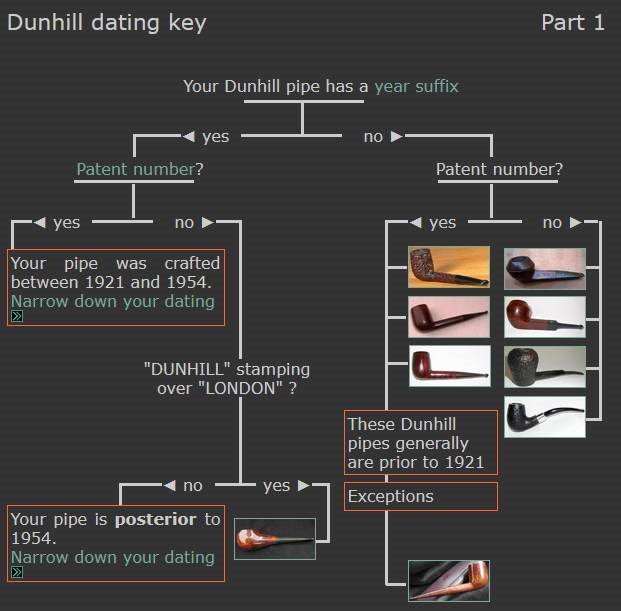
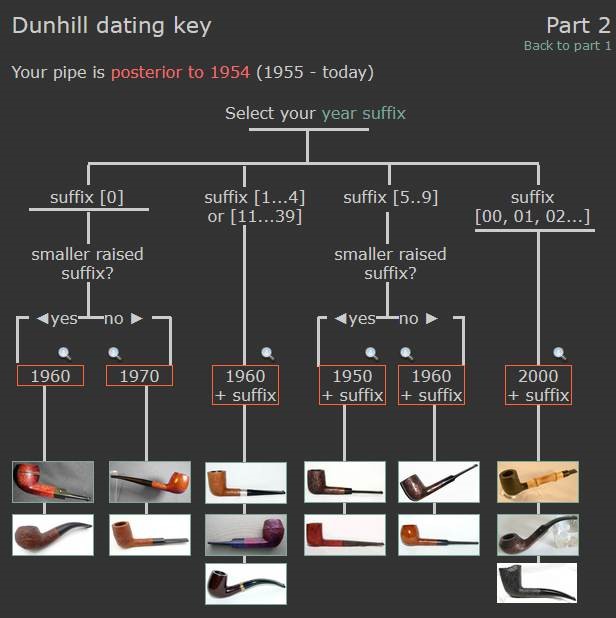
Pipephil also has some helpful dating keys on the site that are basically flow charts that you can walk through to date your pipe (http://pipephil.eu/logos/en/dunhill/cledat-en1.html). I turned to Part 1 of the Dating Key and followed the chart. This pipe has a 2  following the W60 number. That took me to the section on the chart below (column one) which instructed me that the pipe could be dated as being made posterior to 1954. I followed the link following the “Your pipe is posterior to 1954. Narrow down your dating”. That took me to Page 2 of the dating key (http://pipephil.eu/logos/en/dunhill/cledat-en1a.html). The second column (suffix [1…4] or [11…39]) led me to the section with a 2 after the D in England. There was a directive for dating the pipe spelled out as follows: 1960 + suffix which gives the pipe a date of 1962.I googled Dunhill Bamboo Wanghee to get a bit of background on the that brand and found a link on Smoking Pipes that had some helpful information that I will quote below the link (https://www.smokingpipes.com/pipes/estate/england/moreinfo.cfm?product_id=235695).

It’s not everyday you come across a Dunhill Whangee, the marque’s classic bamboo-shanked pipe. Though originally incorporated into Dunhill’s lineup several decades back, when briar was in short supply, these eccentric designs caught on, and many collectors have even built entire rotations around them. You will occasionally find one on the estate market, as we do here, but they tend to sell quickly, especially if it is an older example like this ’62 edition — in part due to their general rarity, but also because of their overall unique aesthetic. You can’t find classic English designs fitted with oversized bamboo extensions everywhere, after all…

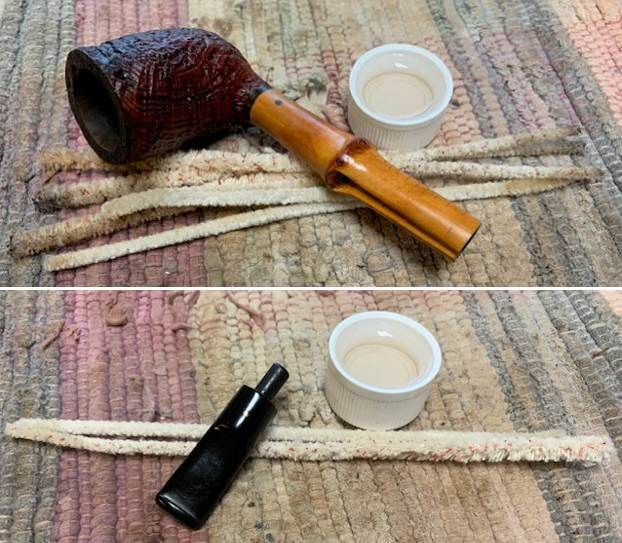
I turned to work on the pipe itself. I reamed the light cake with a Savinelli Fitsall Pipe Knife and sanded the walls of the bowl with a piece of 220 grit sandpaper wrapped around a piece of dowel. The walls of the bowl are smooth. I scrubbed the inside of the bamboo shank and the mortise with alcohol and pipe cleaners. I also cleaned out the airway in the stem the same way. I rubbed the briar down with Before & After Restoration Balm. I worked it into the briar with my fingertips. The product works to clean, enliven and preserve the briar. I let it sit for 10 minutes then I buffed it with a cotton cloth to deepen the shine. The briar comes alive with the balm. I set the bowl aside and turned to address the tooth marks and chatter in the stem surface. I sanded them with 220 grit sandpaper to blend them into the surface of the stem. I wet sanded the stem with 600 grit wet dry sandpaper. I polished the vulcanite with micromesh sanding pads – 1500-12000 grit pads. I wiped it down with Obsidian Oil after each sanding pad. I used Before & After Pipe Polish – both Fine and Extra Fine to further polish the stem. Once I finished with the Dunhill Bamboo W60 I put the stem back on the shank and carefully buffed the pipe with Blue Diamond polish using a lightly loaded pad and a soft touch. I wanted the shine but not the grit filling in the crevices of the sandblast bowl. I used even a gentler touch on the bamboo. I gave the stem a vigorous polish being careful around the white spot. I gave the bowl and bamboo several coats of Conservator’s Wax and the stem several coats of carnauba. I buffed the pipe with a clean buffing pad and hand buffed it with a microfiber cloth. The finished pipe is shown in the photos below. It is a great piece of pipe history and looks better than when I began the process. The dimensions of the pipe are Length: 5 ¾ inches, Height: 1 7/8 inches, Outer Bowl Diameter: 1 ¼ inches, Chamber Diameter: ¾ of an inch. The weight of the pipe is .95 ounces/ 26grams. I am glad to say that I plan on loading a bowl of Friedman & Pease Fool’s Cap later today and enjoying my “new” addition. Thanks Alex for calling me on this one.

Restoring a Unique Savinelli Autograph 4 Freehand


Blog by Steve Laug

The next pipe on the table is one that was sent to me for a restoration. I am not taking on too many more pipes from outside Canada but the shape and finish of this one caught my eye. It is a Savinelli Autograph 4 with an unusual shape and a great sandblast finish. It is dirty but still very eye catching. It is stamped on the underside of the shank and reads Savinelli [over] Autograph [over] 4. The shank is round but has a flat bottom that allows the pipe to be a sitter. The bowl had been partially reamed and the top half had scraped away some briar on the inner edge of the bowl. The bottom half was very full of a thick cake that had not been touched with the reamer. The pipe smelled of old tobacco but did not seem to be a heavy aromatic. The shank was dirty with oils and tars. The acrylic stem is almost certain a replacement. It does not have the characteristic autograph/signature on the side of the saddle though it is very well made and the fit to the shank is perfect. There were light tooth marks and chatter in the surface on both sides. The button surface was clean but the slot had been filled in with debris leaving a very small airway. I am including the photos of the pipe that were sent by the person who is the steward of the pipe below. I think that you can see what attracted me to this one. The email also included photos of the rim top to show its condition. There was some damage to the finish on the rim top and some damage to the inner edge of the rim. The acrylic stem photos show the scratches, chatter and tooth marks. Overall the pipe looked impressive even in its unrestored state. I wanted to remind myself a bit about the Autograph line from Savinelli so I reread a blog I had written on a previous Autograph restoration (https://rebornpipes.com/2019/01/05/restoring-a-savinelli-autograph-3-rhodesian-dublin-long-shank/). I quote that portion of the blog now:

I turned first to the Pipephil website (http://www.pipephil.eu/logos/en/logo-savinelli1.html) to get a brief overview of the Autograph line. There I found out that the Autographs were hand made and unique. The Autograph Grading system is ascending: 3, 4, … 8, 0, 00, 000.

I turned then to Pipedia to get a more background on the Autograph line. I had the outline I needed from pipephil for the pipe but wanted more (https://pipedia.org/wiki/Savinelli). I quote in part from the article on that site.

While Savinelli’s serially produced pipes account for around 98% of annual production, the marque also creates a number of artisanal, handmade pieces as well. The Autographs, the Creativity line, and the Mr. A. line are all the result of Savinelli’s unique handmade process, with the Autographs reflecting the larger Freehand aesthetic, the Creativity line delving into more complex hand carving, and the Mr. A. line sidestepping the standard shape chart for remarkable and unusual pipes.

All of the briar for Savinelli’s Autographs and other freehand pipes is sourced specifically for those pieces. While the majority of the marque’s serial production is made from extra grade ebauchon blocks, Savinelli keeps a separate supply of Extra Extra plateau blocks for Freehands. This variety of briar is much larger, and of a higher quality, which explains why so many Autographs and Savinelli handmades are naturally larger designs.

These handmade pieces are shaped much like traditional Danish Freehands: they are shaped first and drilled second. Using this method, Savinelli’s team of artisans is able to showcase their own creativity, as it maximizes flexibility and facilitates a more grain-centric approach to shaping. The resulting Freehand designs are at once both a departure from the marque’s classical standard shapes, yet very much still “Savinelli” in their nature—i.e. proportioned so that the bowl is the visual focus when viewed from the profile, juxtaposed by the comparatively trim lines of the shank and stem. To provide a little more insight into the differences between Savinelli’s standard production and freehand lines, Luisa Bozzetti comments:

“When we choose to make Freehand pipes we must stop production on the standard shapes. The process for Freehands is much more involved and takes much more time. Finding the best people from the production line and pulling them to make Freehands is challenging since it’s not an assembly line, but rather a one or two man operation.

After the rough shaping of the stummel, we must get together and brainstorm which style of stem will be paired before the pipe can be finished since we do not use pre-shaped stems. All accents and stems for the Freehands are cut from rod here in the factory. A lot of care goes into the few pieces lucky enough to make the cut; to end up with a certain number of Autographs, for instance, means that many, many more will be made, and only the few will be selected.”

The quality control process for Savinelli handmades is even more rigorous than that employed in the standard lineup. Many blocks are started and later discarded because of pits or defects. While Savinelli’s briar sourcing is a constant process, working with some of Italy’s top cutters to ensure only the finest and most suitable blocks make their way to the factory, it’s impossible to source plateau briar that’s completely free from flaws. That’s just nature. Savinelli creates the standard for quality by working through the rough (a very high-quality rough, mind you) to find that shining diamond with the potential to become a Savinelli handmade.

It looks like the Autograph 4 I am working is pretty high in the hierarchy of the line. Like other autographs I have worked on in the past this one has a unique twist to the stem.

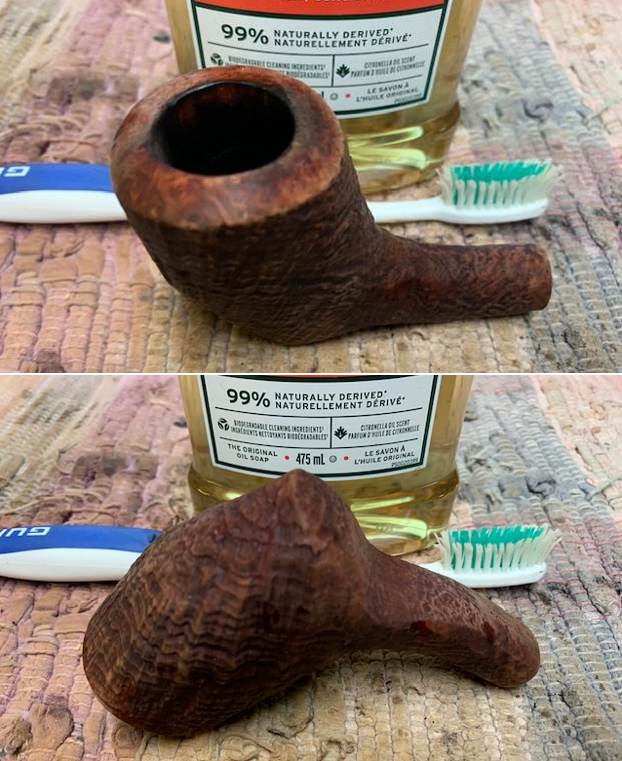
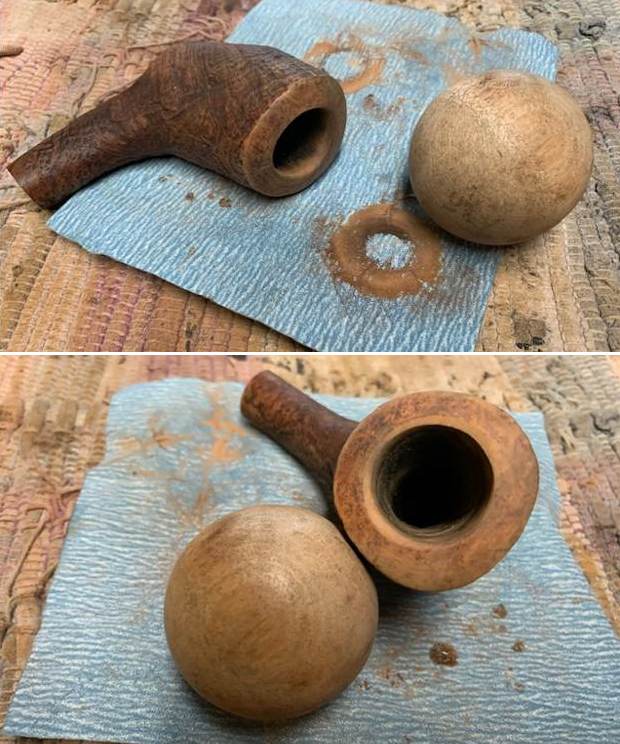
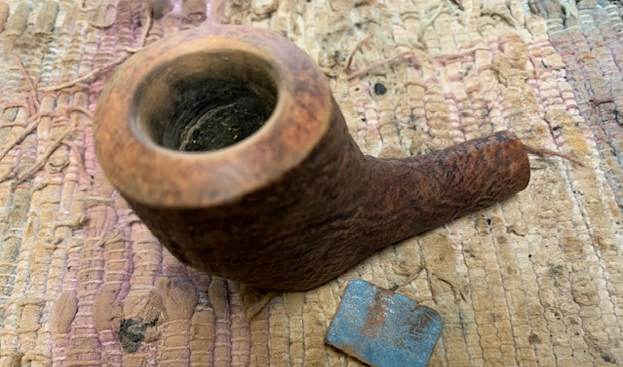
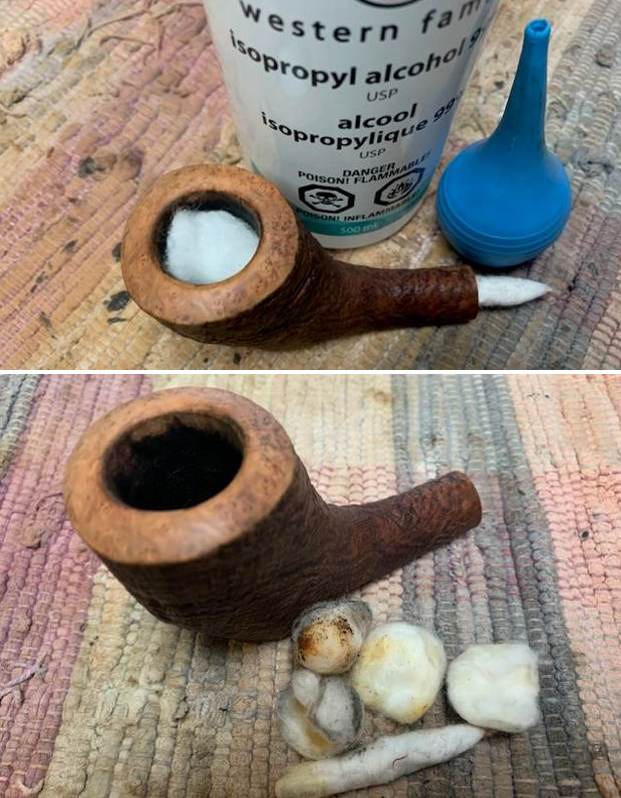
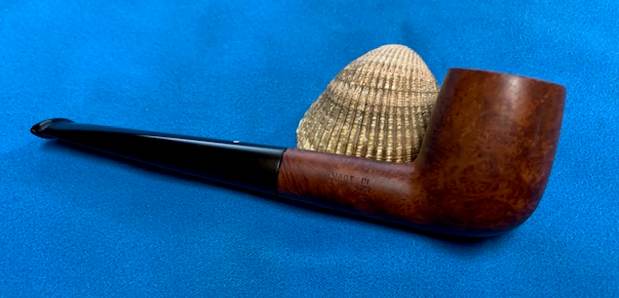
I started my work on the pipe by reaming it with a PipNet pipe reamer and got rid of the cake. I cleaned up the reaming with a Savinelli Fitsall Pipe knife. I then sanded the walls smooth and wiped it down with a cotton pad so that I could see the walls of the bowl and assess for damage. I scraped the mortise walls with a pen knife and was able to remove a lot of tarry/oily buildup. Once I had scraped it clean, I scrubbed the internals of the shank, mortise and the airway in the shank and stem with alcohol, pipe cleaners and alcohol. It smelled considerably cleaner at this point in the process. I scrubbed the exterior with undiluted Murphy’s Oil Soap and a tooth brush to get into the grooves and valleys of the sandblast. I worked on the rim top and edges of the bowl to remove some of the tars and darkening there. I rinsed the pipe under warm water. He dried it off with a cloth and then let it air dry. I decided to address the damage to the inner edge of the rim. I used a wooden ball and a piece of 220 grit sand paper to give the inner edge a slight bevel to take care of the damage and burn marks. I cleaned it up lightly with a folded piece of 220 grit to smooth out the notches from the reaming work done before it arrived here. I was able to minimize the damaged area. Before I called it a night I stuffed the bowl with some cotton bolls, plugged the shank end and filled it with 99% isopropyl alcohol to leach out the oils and tars in the bowl and shank that gave it a bit of a funky smell. I set it aside for the night to do its magic. When I came back to the work table in the morning the cotton had darkened all the way down the bowl and the plug. The pipe smelled considerably better.I ran some pipe cleaners through the shank and dried the bowl edges. I used a black stain pen to stain the inner edge of the bowl to blend it into the bowl and give definition to the rim top. I like the way this looks on a cleaned pipe.I polished the rim top with micromesh sanding pads – wet sanding with 1500-12000 grit pads. I wiped the bowl down after each pad with a damp cloth. The grain really began to pop and stand out on the polished briar. I worked some Before & After Restoration Balm into the briar with my finger tips and a horsehair shoe brush. The product is a great addition to the restoration work. It enlivens, enriches and protects the briar while giving it a deep glow. It is a product I use on every pipe I work on. I set the bowl aside and turned to address the stem issues. I sanded out the tooth marks and chatter on the acrylic stem with a folded piece of 220 grit sandpaper to blend them into the surface of the stem. I polished out the scratching and marks left behind from the 220 grit sandpaper by wet sanding it with a 600 grit wet dry sandpaper.I polished the acrylic with micromesh sanding pads – 1500-12000 grit pads. I wiped it down with Obsidian Oil after each sanding pad. I used Before & After Pipe Polish – both Fine and Extra Fine to further polish the stem. This Savinelli Autograph 4 Sitter with a Fancy Acrylic Stem has a beautiful sandblast finish around the bowl and shank and a smooth rim top that has some great grain. The polished light briar highlights some great grain around the pipe. The polished black acrylic fancy stem adds to the mix. I put the stem back on the bowl and buffed the pipe with Blue Diamond on the buffing wheel being careful to not buff the stamping. I gave the bowl multiple coats of Conservator’s Wax and the stem multiple coats of carnauba wax on the buffing wheel and followed that by buffing it with a clean buffing pad. I hand buffed the pipe with a microfiber cloth to deepen the shine. The finished Savinelli Autograph 4 Sitter is quite nice and feels great in the hand. Give the finished pipe a look in the photos below. The dimensions of the pipe are Length: 6 ½ inches, Height: 2 ½ inches, Outside diameter of the bowl: 1 ½ inches x 1 ¾ inches, Chamber diameter: 1 inch. The weight of the pipe is 2.43 ounces/70 grams. I will be boxing it up and shipping it to its current steward to enjoy and care for. Thanks for walking through the restoration with me as I worked over another beautiful pipe.

Refurbishing a Steward’s First Pipe —


The choice of a first pipe is an important decision. As a new pipe smoker, finding the perfect first pipe is often a balancing act between cost and quality, not to mention finding a pipe shape that speaks to you, is comfortable to hold and clench, and that is neither too large nor too small. […]

Refurbishing a Steward’s First Pipe —

This restoration by Charles Lemon caught my eye as I also just finished two Gulden Dansk pipes for a fellow here in BC. They are well made pipes and clean up looking very good. Great job on the restem.

Cleaning up a 1968 Dunhill Root Briar 251 F/T Made in England 8 Taper Stem Billiard


Blog by Steve Laug

The next pipe on the table is another one that came to us from the group of pipes that Jeff and I purchased on October 16, 2021 from a fellow in Redmond, Oregon who was selling his father’s estate pipes. It is another Dunhill smooth finish pipe that is in rough but workable condition. It is stamped on the left side of the shank with the shape number 251 F/T followed by Dunhill [over] Root Briar. On the right side it is stamped Made in [over] England by the date number 8. Next to the bowl on the right side it is stamped with a 3 in a circle followed by R. The stamping is clear and readable as noted above. The pipe has a mix of brown stains with some amazing grain that the shape follows well. The finish was dusty and oily and the pipe was dirty. The bowl had a thick cake and there was a thick overflow lava and darkening and scratches on the rim top and both the inner and outer edges. The taper stem was in decent condition and was oxidized, calcified and had tooth marks and chatter ahead of the worn button. Jeff took photos of the pipe to show what it looked like before he started working on it. He took photos of the bowl and rim top to show their condition and of the stem to show the condition of both sides of the stem. The photos of the sides and heel of the bowl show beautiful cross and birdseye grain and the Root Briar coloured finish on the pipe. Even under the grime it is a real beauty. The stamping on the sides of the shank are shown in the photos below. It is faint but readable. It reads as noted and explained above. Jeff captured the detail in the photos below. One of the first things I like to do is to unpack the stamping and understand each element in it. I turned to Pipephil’s helpful site (http://pipephil.eu/logos/en/dunhill/root-briar1.html). The stamping is interpreted as follows: The 251 stamp is the shape for a Billiard. The F/T stamp refers to the fishtail stem. The Root Briar stamp refers to the finish. The 8 following the D of England gives the date the pipe. The Circle 3 R refers to the size of the pipe being a Group 3 and the R confirms the Root Briar designation.Pipephil also has some helpful dating keys on the site that are basically flow charts that you can walk through to date your pipe (http://pipephil.eu/logos/en/dunhill/cledat-en1.html). I turned to Part 1 of the Dating Key and followed the chart. This pipe has a 8 following the D in England. It is the same size as the D so that took me to the section on the chart below (column one) which instructed me that the pipe could be dated as being made posterior to 1954. I followed the link following the “Your pipe is posterior to 1954. Narrow down your dating”. That took me to Page 2 of the dating key (http://pipephil.eu/logos/en/dunhill/cledat-en1a.html).   The third column (suffix 5…9) led me to the section with a 8 after the D in England. There was a directive for dating the pipe spelled out as follows: 1960 + suffix which gives the pipe a date of 1968. I then turned to Pipedia’s section on Dunhill Root Briar to get a bit of background on the Dunhill finishes (https://pipedia.org/wiki/Dunhill#Root_Briar). I quote:

Root Briar – Introduced in 1931 and highly prized because the grain is more pronounced in this finish (usually made using Corsican briar – was made exclusively from that briar into the 60s). The Root Briar finish requires a perfectly clean bowl with excellent graining. Therefore, it is the most expensive of the Dunhill pipes. Corsican briar was most often used for the Root finish since it was generally more finely grained. This is a rare finish, due to the scarcity of briar suitable to achieve it. These pipes are normally only available at Company stores, or at Principle Pipe Dealers. Straight grained pipes were formerly graded A through H, but are now only “Dr’s” and graded with one to six stars, with the letters G and H still used for the very finest pieces.

Dunhill introduced its third major finish, the Root finish, in 1931. Corsican mountain briar is characteristically beautifully grained and the Root was made exclusively from that briar into the 1960s. The pipe was finished with a light natural stain to allow the beauty of the graining to show through. Although always available with a traditional black vulcanite bit, the Root was introduced in either 1930 or more likely 1931 and fitted with a marble brown dark and light grained vulcanite bit that has since become known as the ‘bowling ball’ bit because of the similarity in appearance between the bit’s finish and that of some bowling balls of the time. With the war, however, the bowling ball bit was dropped from production. Through 1954 (and after) the Root pipe nomenclature (including shape numbers) was identical to that of the Bruyere except that instead of the “A” of the Bruyere, the Root was stamped with an “R”. In 1952 when the finish rather then LONDON was placed under DUNHILL, ROOT BRIAR rather then BRUYERE was used for the Root. Loring, J. C., The Dunhill Briar Pipe, The Patent Years and After (self-published, Chicago, 1998).

I have also included a chart from the site from Dunhill spelling out the Standard Pipe Finishes and giving short information and a timeline. I turned to work on the pipe itself. Jeff had done an amazing cleanup of the pipe. He reamed the light cake with a PipNet reamer and cleaned up that with a Savinelli Fitsall Pipe Knife. He scrubbed the internals of the bowl and stem with alcohol, cotton swabs and pipe cleaners. He scrubbed the externals with undiluted Murphy’s Oil Soap and rinsed the bowl off with running water. He soaked the stem in Briarville’s Pipe stem Deoxidizer and once it had soaked rinsed it off with warm water to remove the residual solution. He dried it off and rubbed it down to remove any oxidation that was still on the stem. The pipe looked very good when I received it. I took a photo of the rim top to show the condition. You can see the clean bowl and the damage on the rim top and inner edge. The stem came out looking quite good. There are some scratches, tooth marks and chatter on both sides ahead of the button.   I took photos of the stamping on the sides of the shank. The stamping is faint in spots but still very readable. It reads as noted above. I removed the stem from the shank and took a photo of the pipe parts to show what I was working with. It is a nice looking pipe.I worked on both the inside and outside edge and top of the rim with a folded piece of 220 grit sandpaper to clean up the damage. It would take some work but it looked much better.I polished the cleaned up rim top and edges with micromesh sanding pads – dry sanding with 1500-12000 grit pads and wiping the bowl down with a damp cloth to remove the dust. The rim top came out looking very good. I rubbed the briar down with Before & After Restoration Balm. I worked it into the briar with my fingertips. The product works to clean, enliven and preserve the briar. I let it sit for 10 minutes then I buffed it with a cotton cloth to deepen the shine. The briar comes alive with the balm. I set the bowl aside and turned to address the stem issues. I “painted” the surface of the stem with the flame of a Bic lighter. The heat lifted the tooth marks significantly. I filled in the remaining spots with clear CA glue. Once the repairs cured I flattened the with a small file then sanded them with 220 grit sandpaper to blend them into the surface of the stem. I started the polishing with a 400 grit wet dry sandpaper. I polished the vulcanite with micromesh sanding pads – 1500-12000 grit pads. I wiped it down with Obsidian Oil after each sanding pad. I used Before & After Pipe Polish – both Fine and Extra Fine to further polish the stem. This 1968 Dunhill Root Briar 251 F/T Billiard with a Taper Stem has a smooth Dunhill finish that has some great grain. The polished light brown stain highlights some great grain around the bowl and shank. The polished black vulcanite taper stem adds to the mix. I put the stem back on the bowl and buffed the pipe with Blue Diamond on the buffing wheel being careful to not buff the stamping. I gave the bowl and the stem multiple coats of carnauba wax on the buffing wheel and followed that by buffing it with a clean buffing pad. I hand buffed the pipe with a microfiber cloth to deepen the shine. The finished Dunhill Root Briar 251 F/T Billiard is quite nice and feels great in the hand. Give the finished pipe a look in the photos below. The dimensions of the pipe are Length: 5 ¾ inches, Height: 1 ¾ inches, Outside diameter of the bowl: 1 1/8 inch, Chamber diameter: ¾ of an inch. The weight of the pipe is 1.09 ounces/31 grams. Thanks for walking through the restoration with me as I worked over another beautiful pipe. If you are interested in adding it to your collection I will be adding it to the British Pipe Makers Section of the rebornpipes store. Thanks for your time.

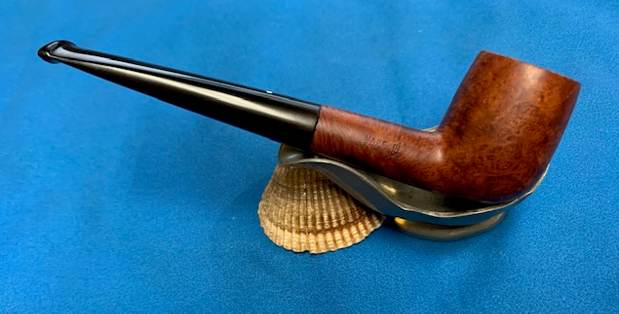
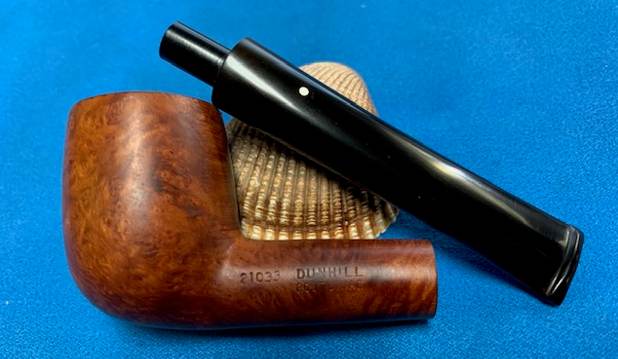
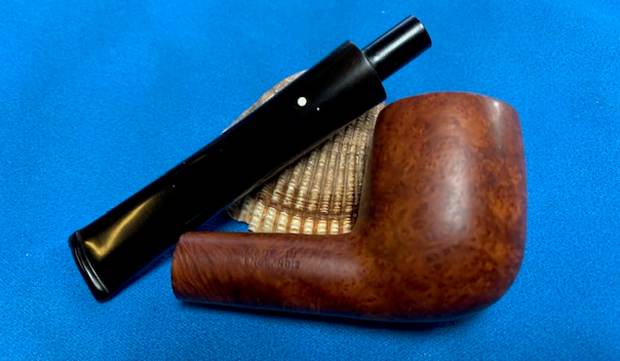
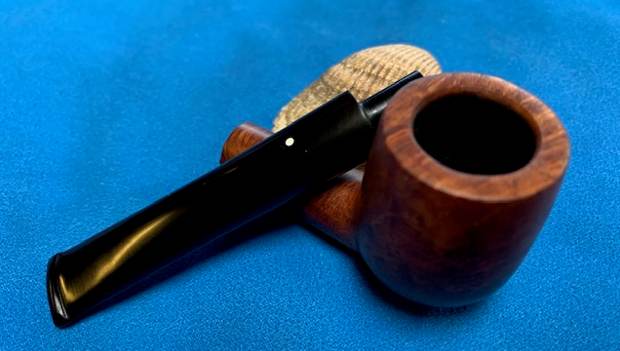
Cleaning up a Dunhill Root Briar 21033 Made in England 18 Taper Stem Billiard


Blog by Steve Laug

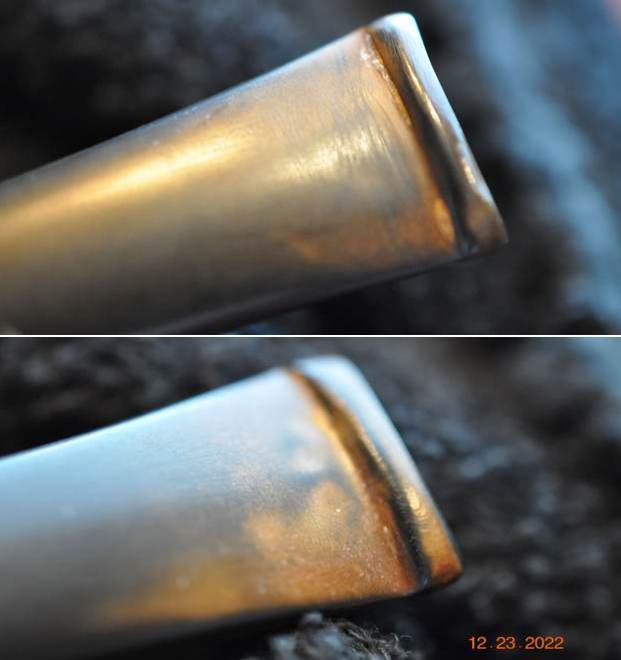
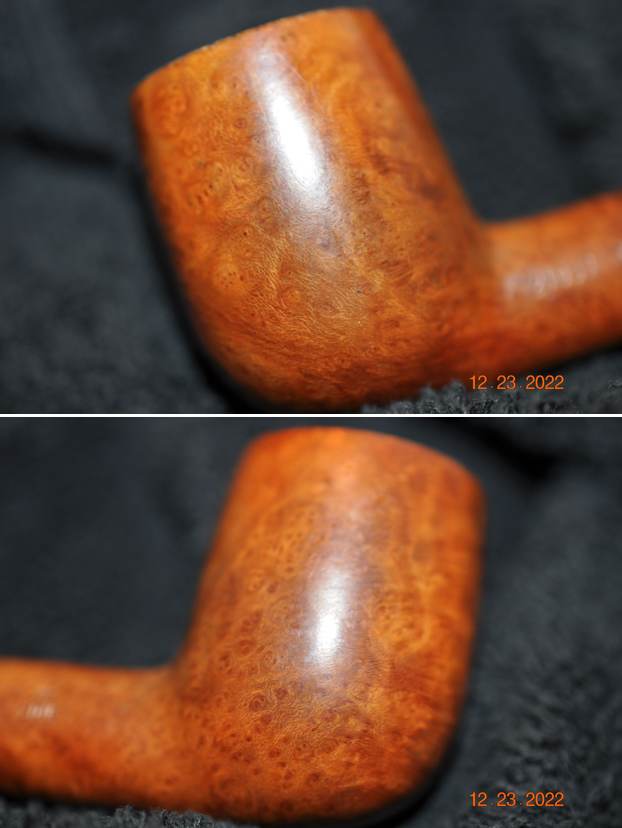
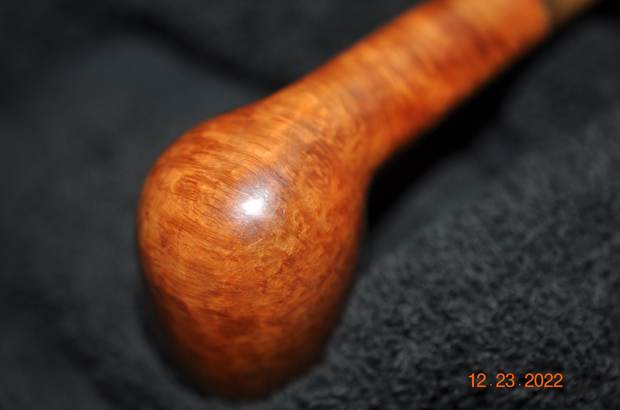
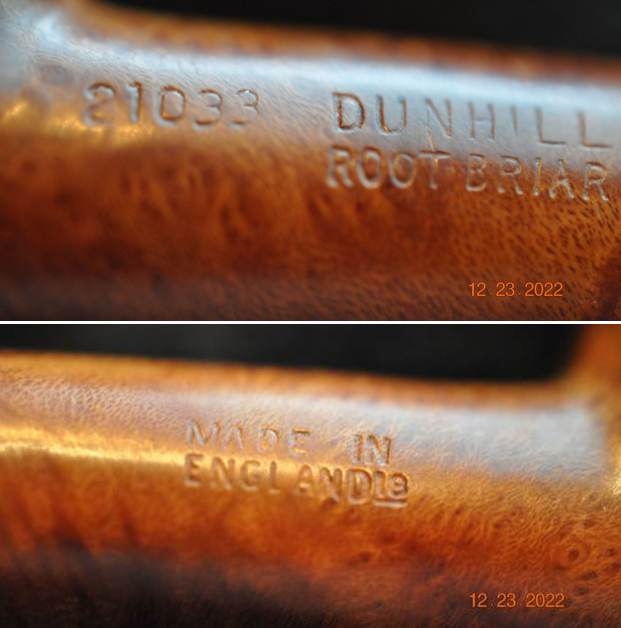
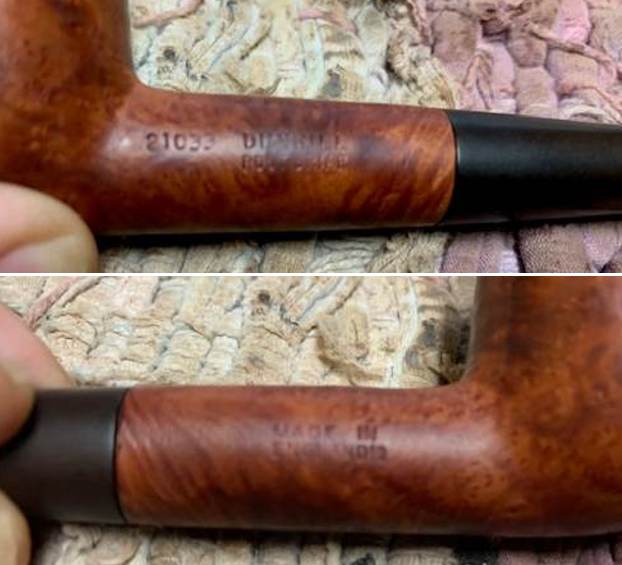
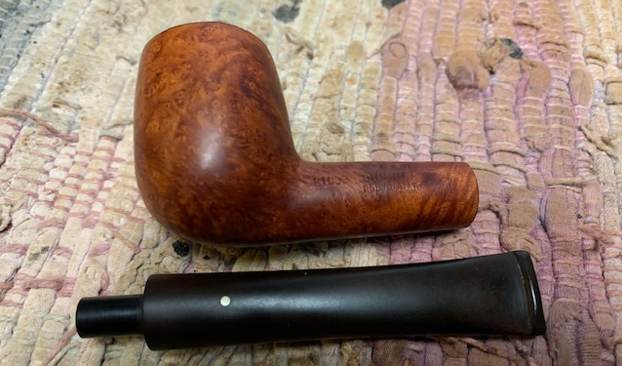
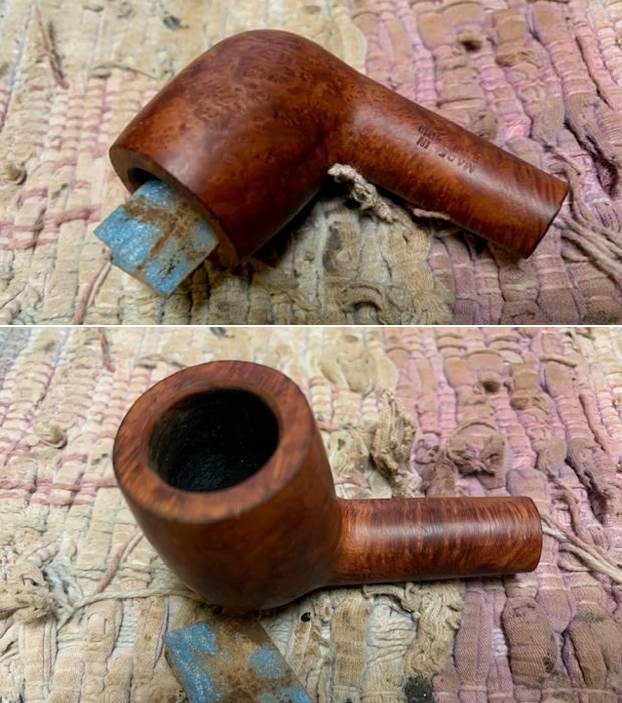
The next pipe on the table is another one that came to us from the group of pipes that Jeff and I purchased from a fellow in Copenhagen, Denmark on November 14, 2022. It is another Dunhill smooth finish pipe that is in good condition. It is stamped on the left side of the shank with the shape number 21033 followed by Dunhill [over] Root Briar. On the right side it is stamped Made in [over] England by the date number 18. The stamping is clear and readable as noted above. The pipe has a mix of brown stains with some amazing grain that the shape follows well. The finish was dusty and oily and the pipe was dirty. The bowl had a thick cake and there was a thick overflow lava and darkening and scratches on the rim top and edges. The taper stem was in decent condition and was oxidized, scratched and had tooth marks and chatter ahead of the worn button. Jeff took photos of the pipe to show what it looked like before he started working on it. He took photos of the bowl and rim top to show their condition and of the stem to show the condition of both sides of the stem. The photos of the sides and heel of the bowl show beautiful cross and birdseye grain and the Root Briar coloured finish on the pipe. Even under the grime it is a real beauty. The stamping on the sides of the shank are shown in the photos below. It is faint but readable. It reads as noted and explained above. Jeff captured the detail in the photos below. One of the first things I like to do is to unpack the stamping and understand each element in it. I turned to Pipephil’s helpful site (http://pipephil.eu/logos/en/dunhill/root-briar1.html). The stamping is interpreted as follows: The 21033 stamp is the shape for a Billiard. Interpreting that number is a matter of breaking down the numbers. The first number 2 is the bowl size (Group 2), The 1 is for a tapered stem. The 03 is the number for a Billiard. The fifth number 3 – indicates the style of the bowl within the group of a similar classification, each identified by the last digit, which could be any number between 1-9. The Root Briar stamp refers to the finish. The 18 following the D of England gives the date the pipe.Pipephil also has some helpful dating keys on the site that are basically flow charts that you can walk through to date your pipe (http://pipephil.eu/logos/en/dunhill/cledat-en1.html). I turned to Part 1 of the Dating Key and followed the chart. This pipe has a 18 following the D in England. It is the same size as the D so that took me to the section on the chart below (column one) which instructed me that the pipe could be dated as being made posterior to 1954. I followed the link following the “Your pipe is posterior to 1954. Narrow down your dating”. That took me to Page 2 of the dating key (http://pipephil.eu/logos/en/dunhill/cledat-en1a.html).   The third column (suffix 5…9) led me to the section with a 18 after the D in England. There was a directive for dating the pipe spelled out as follows: 1960 + suffix which gives the pipe a date of 1978. I then turned to Pipedia’s section on Dunhill Root Briar to get a bit of background on the Dunhill finishes (https://pipedia.org/wiki/Dunhill#Root_Briar). I quote:
Root Briar – Introduced in 1931 and highly prized because the grain is more pronounced in this finish (usually made using Corsican briar – was made exclusively from that briar into the 60s). The Root Briar finish requires a perfectly clean bowl with excellent graining. Therefore, it is the most expensive of the Dunhill pipes. Corsican briar was most often used for the Root finish since it was generally more finely grained. This is a rare finish, due to the scarcity of briar suitable to achieve it. These pipes are normally only available at Company stores, or at Principle Pipe Dealers. Straight grained pipes were formerly graded A through H, but are now only “Dr’s” and graded with one to six stars, with the letters G and H still used for the very finest pieces.

Dunhill introduced its third major finish, the Root finish, in 1931. Corsican mountain briar is characteristically beautifully grained and the Root was made exclusively from that briar into the 1960s. The pipe was finished with a light natural stain to allow the beauty of the graining to show through. Although always available with a traditional black vulcanite bit, the Root was introduced in either 1930 or more likely 1931 and fitted with a marble brown dark and light grained vulcanite bit that has since become known as the ‘bowling ball’ bit because of the similarity in appearance between the bit’s finish and that of some bowling balls of the time. With the war, however, the bowling ball bit was dropped from production. Through 1954 (and after) the Root pipe nomenclature (including shape numbers) was identical to that of the Bruyere except that instead of the “A” of the Bruyere, the Root was stamped with an “R”. In 1952 when the finish rather then LONDON was placed under DUNHILL, ROOT BRIAR rather then BRUYERE was used for the Root. Loring, J. C., The Dunhill Briar Pipe, The Patent Years and After (self-published, Chicago, 1998).

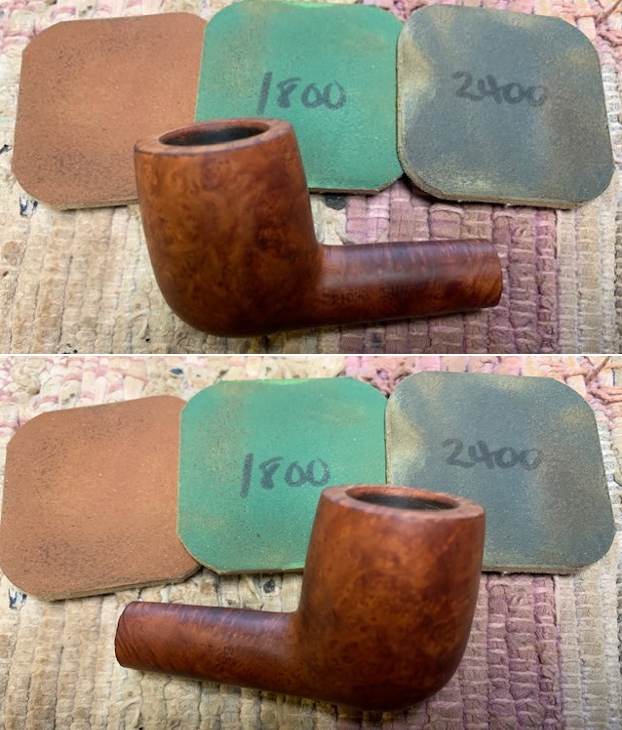
I have also included a chart from the site from Dunhill spelling out the Standard Pipe Finishes and giving short information and a timeline. I turned to work on the pipe itself. Jeff had done an amazing cleanup of the pipe. He reamed the light cake with a PipNet reamer and cleaned up that with a Savinelli Fitsall Pipe Knife. He scrubbed the internals of the bowl and stem with alcohol, cotton swabs and pipe cleaners. He scrubbed the externals with undiluted Murphy’s Oil Soap and rinsed the bowl off with running water. He soaked the stem in Briarville’s Pipe stem Deoxidizer and once it had soaked rinsed it off with warm water to remove the residual solution. He dried it off and rubbed it down to remove any oxidation that was still on the stem. The pipe looked very good when I received it. I took a photo of the rim top to show the condition. You can see the clean bowl and the damage on the rim top and inner edge. The stem came out looking quite good. There are some scratches, tooth marks and chatter on both sides ahead of the button.   I took photos of the stamping on the sides of the shank. The stamping is faint in spots but still very readable. It reads as noted above. I removed the stem from the shank and took a photo of the pipe parts to show what I was working with. It is a nice looking pipe. I worked on the inside edge and top of the rim with a folded piece of 220 grit sandpaper to clean up the damage. It would take some work but it looked much better.I polished the cleaned up rim top and edges with micromesh sanding pads – dry sanding with 1500-12000 grit pads and wiping the bowl down with a damp cloth to remove the dust. The rim top came out looking very good. I rubbed the briar down with Before & After Restoration Balm. I worked it into the briar with my fingertips. The product works to clean, enliven and preserve the briar. I let it sit for 10 minutes then I buffed it with a cotton cloth to deepen the shine. The briar comes alive with the balm. I set the bowl aside and turned to address the stem issues. I “painted” the surface of the stem with the flame of a Bic lighter. The heat lifted the tooth marks significantly. I sanded what remained with 220 grit sandpaper to blend them into the surface of the stem. I started the polishing with a 400 grit wet dry sandpaper. I polished the vulcanite with micromesh sanding pads – 1500-12000 grit pads. I wiped it down with Obsidian Oil after each sanding pad. I used Before & After Pipe Polish – both Fine and Extra Fine to further polish the stem. This 1978 Dunhill Root Briar 21033 Billiard with a Taper Stem has a smooth Dunhill finish that has some great grain. The polished light brown stain highlights some great grain around the bowl and shank. The polished black vulcanite taper stem adds to the mix. I put the stem back on the bowl and buffed the pipe with Blue Diamond on the buffing wheel being careful to not buff the stamping. I gave the bowl and the stem multiple coats of carnauba wax on the buffing wheel and followed that by buffing it with a clean buffing pad. I hand buffed the pipe with a microfiber cloth to deepen the shine. The finished Dunhill Root Briar 21033 Billiard is quite nice and feels great in the hand. Give the finished pipe a look in the photos below. The dimensions of the pipe are Length: 5 ½  inches, Height: 1 ½ inches, Outside diameter of the bowl: 1 1/8 inch, Chamber diameter: ¾ of an inch. The weight of the pipe is 1.06 ounces/30 grams. Thanks for walking through the restoration with me as I worked over another beautiful pipe. If you are interested in adding it to your collection I will be adding it to the British Pipe Makers Section of the rebornpipes store. Thanks for your time.

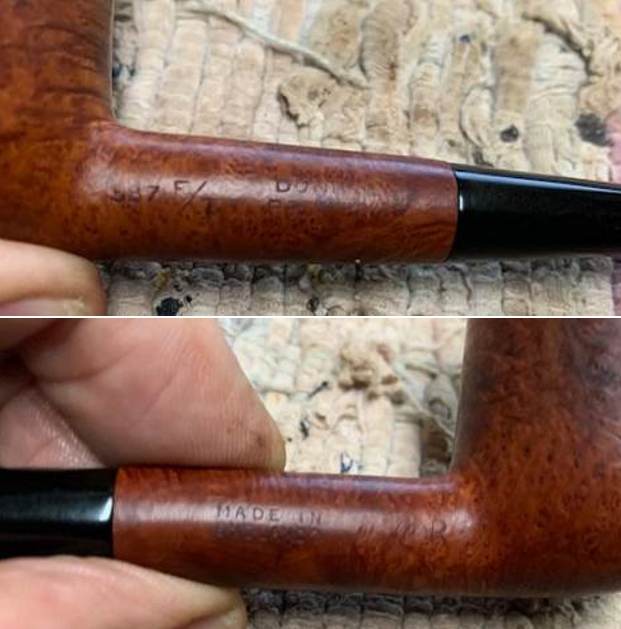
Cleaning up a Dunhill Root Briar 4R 587 F/T Stack Made in England 9


Blog by Steve Laug

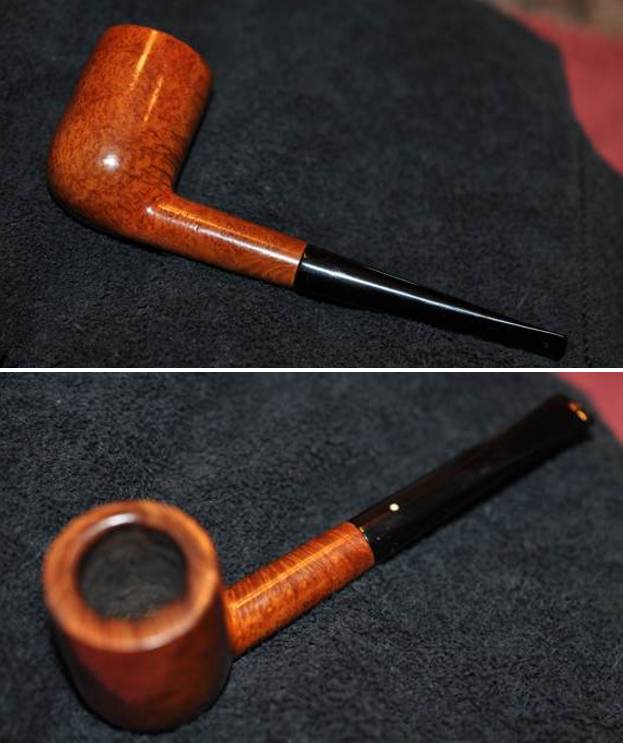
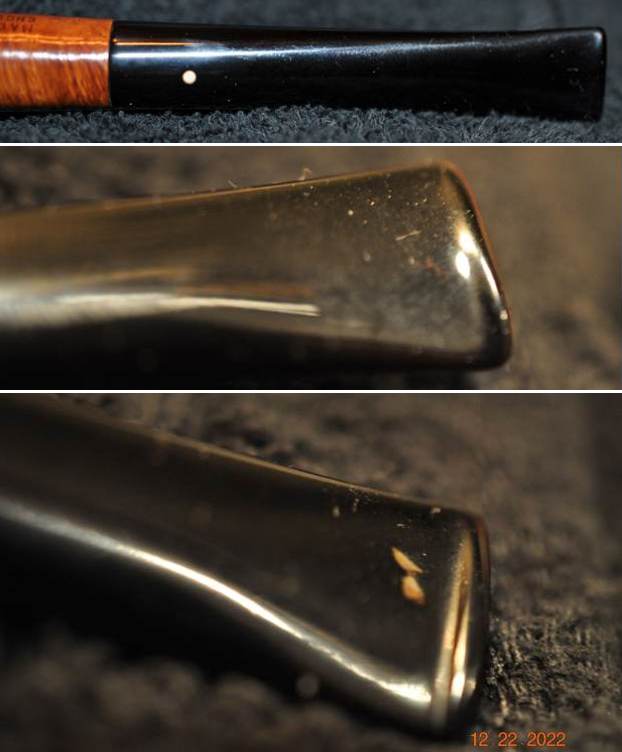
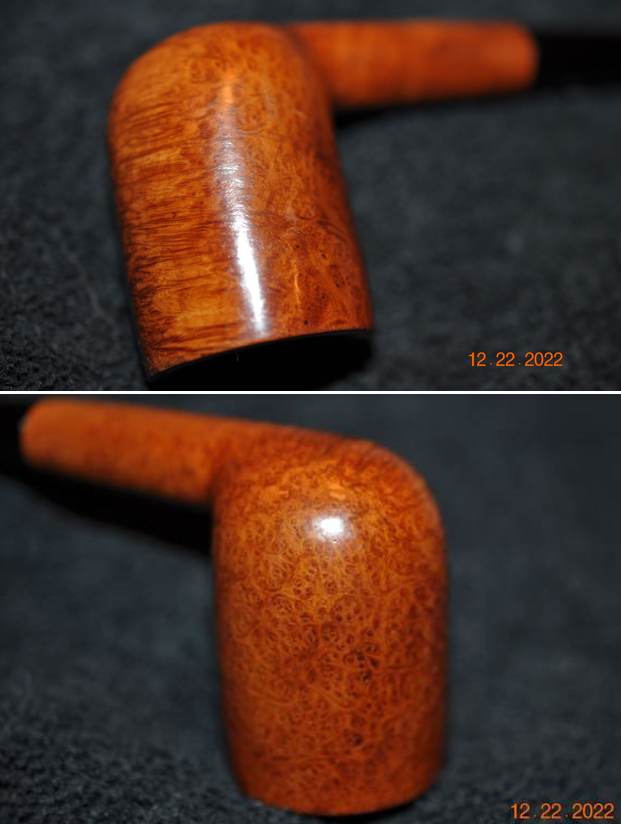
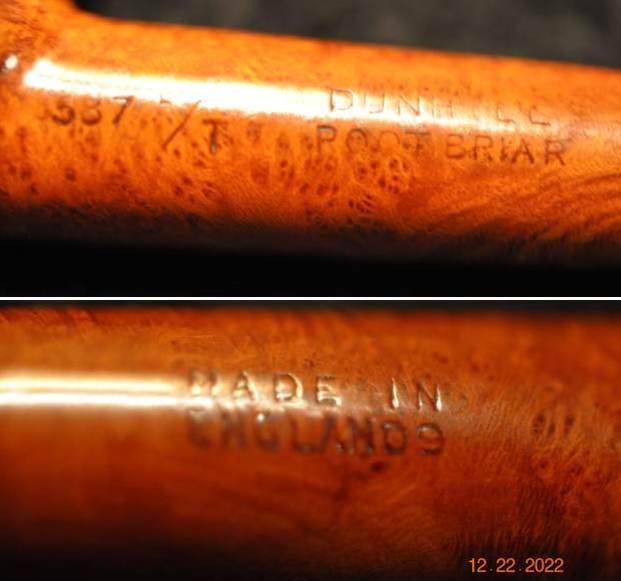
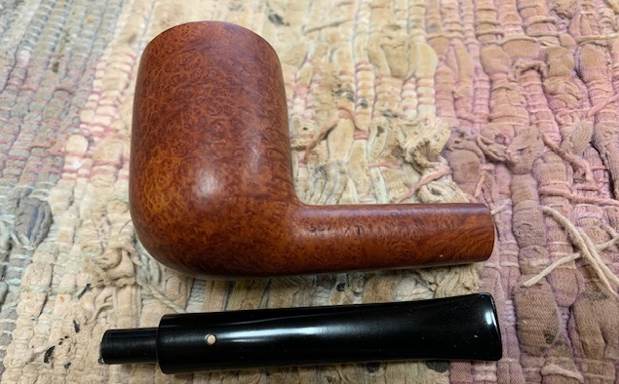
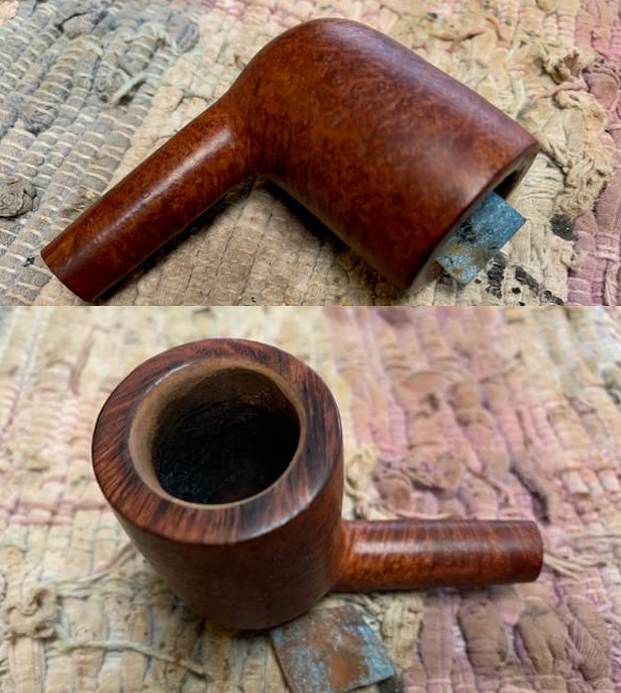
The next pipe on the table is another one that came to us from the group of pipes that Jeff and I purchased from a fellow in Copenhagen, Denmark on October 3, 2022. It is another Dunhill smooth finish pipe that is in good condition. It is stamped on the left side of the shank with the shape number 587 F/T followed by Dunhill [over] Root Briar. On the right side it is stamped Made in [over] England by the date number 9. After that it is stamped with a 4 in a circle [followed by] R for Root Briar. The stamping is clear and readable as noted above. The pipe has a mix of brown stains with some amazing grain that the shape follows well. The finish was dusty and oily but the pipe was fairly clean. The bowl had a moderate cake and there was some light lava and darkening on the rim top and edges. The taper stem looked to be in decent condition and had tooth marks and chatter ahead of the worn button. Jeff took photos of the pipe to show what it looked like before he started working on it. He took photos of the bowl and rim top to show their condition and of the stem to show the condition of both sides of the stem. The photos of the sides and heel of the bowl show beautiful cross and birdseye grain and the Root Briar coloured finish on the pipe. Even under the grime it is a real beauty.  The stamping on the sides of the shank are shown in the photos below. It is faint but readable. It reads as noted and explained above. Jeff captured the detail in the photos below. One of the first things I like to do is to unpack the stamping and understand each element in it. I turned to Pipephil’s helpful site (http://pipephil.eu/logos/en/dunhill/root-briar1.html). The stamping is interpreted as follows: The 587 stamp is the shape for a Stack. The F/T stamp refers to the Fishtail style stem. The Root Briar stamp refers to the finish which is corroborated the R at the end of the stamping. The size of the pipe 4 in a circle is a Group 4. The 9 following the D of England gives the date the pipe.Pipephil also has some helpful dating keys on the site that are basically flow charts that you can walk through to date your pipe (http://pipephil.eu/logos/en/dunhill/cledat-en1.html). I turned to Part 1 of the Dating Key and followed the chart. This pipe has a 9 following the D in England. It is the same size as the D so that took me to the section on the chart below (column one) which instructed me that the pipe could be dated as being made posterior to 1954. I followed the link following the “Your pipe is posterior to 1954. Narrow down your dating”. That took me to Page 2 of the dating key (http://pipephil.eu/logos/en/dunhill/cledat-en1a.html).   The third column (suffix 5…9) led me to the section with a 9 after the D in England. There was a directive for dating the pipe spelled out as follows: 1960 + suffix which gives the pipe a date of 1969.I then turned to Pipedia’s section on Dunhill Root Briar to get a bit of background on the Dunhill finishes (https://pipedia.org/wiki/Dunhill#Root_Briar). I quote:
Root Briar – Introduced in 1931 and highly prized because the grain is more pronounced in this finish (usually made using Corsican briar – was made exclusively from that briar into the 60s). The Root Briar finish requires a perfectly clean bowl with excellent graining. Therefore, it is the most expensive of the Dunhill pipes. Corsican briar was most often used for the Root finish since it was generally more finely grained. This is a rare finish, due to the scarcity of briar suitable to achieve it. These pipes are normally only available at Company stores, or at Principle Pipe Dealers. Straight grained pipes were formerly graded A through H, but are now only “Dr’s” and graded with one to six stars, with the letters G and H still used for the very finest pieces.

Dunhill introduced its third major finish, the Root finish, in 1931. Corsican mountain briar is characteristically beautifully grained and the Root was made exclusively from that briar into the 1960s. The pipe was finished with a light natural stain to allow the beauty of the graining to show through. Although always available with a traditional black vulcanite bit, the Root was introduced in either 1930 or more likely 1931 and fitted with a marble brown dark and light grained vulcanite bit that has since become known as the ‘bowling ball’ bit because of the similarity in appearance between the bit’s finish and that of some bowling balls of the time. With the war, however, the bowling ball bit was dropped from production. Through 1954 (and after) the Root pipe nomenclature (including shape numbers) was identical to that of the Bruyere except that instead of the “A” of the Bruyere, the Root was stamped with an “R”. In 1952 when the finish rather then LONDON was placed under DUNHILL, ROOT BRIAR rather then BRUYERE was used for the Root. Loring, J. C., The Dunhill Briar Pipe, The Patent Years and After (self-published, Chicago, 1998).

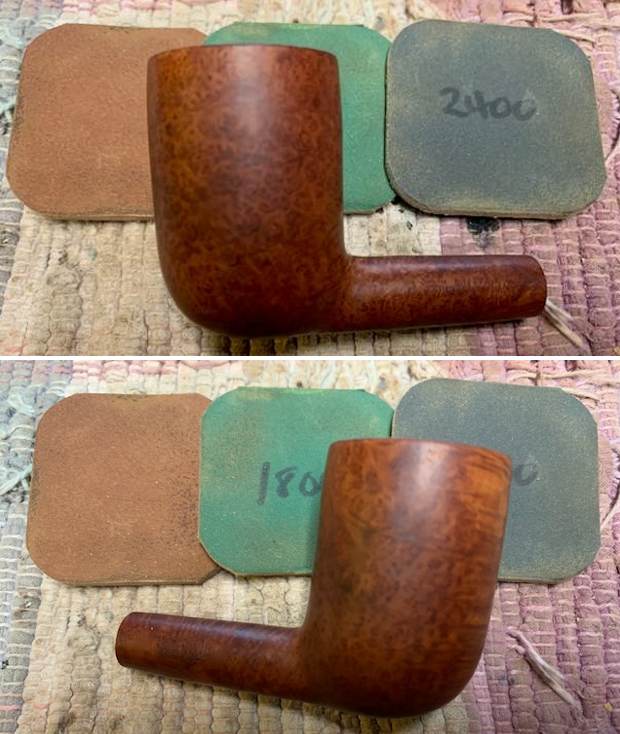
I have also included a chart from the site from Dunhill spelling out the Standard Pipe Finishes and giving short information and a timeline. I turned to work on the pipe itself. Jeff had done an amazing cleanup of the pipe. He reamed the light cake with a PipNet reamer and cleaned up that with a Savinelli Fitsall Pipe Knife. He scrubbed the internals of the bowl and stem with alcohol, cotton swabs and pipe cleaners. He scrubbed the externals with undiluted Murphy’s Oil Soap and rinsed the bowl off with running water. He soaked the stem in Briarville’s Pipe stem Deoxidizer and once it had soaked rinsed it off with warm water to remove the residual solution. He dried it off and rubbed it down to remove any oxidation that was still on the stem. The pipe looked very good when I received it. I took a photo of the rim top to show the condition. You can see the clean bowl and the damage on the rim top and inner edge. The stem came out looking quite good. There are some scratches, tooth marks and chatter on both sides ahead of the button. I took photos of the stamping on the sides of the shank. The stamping is faint in spots but still very readable. It reads as noted above. I removed the stem from the shank and took a photo of the pipe parts to show what I was working with. It is a nice looking pipe. I worked on the inside edge and top of the rim with a folded piece of 220 grit sandpaper to clean up the damage. It would take some work but it looked much better.I polished the cleaned up rim top and edges with micromesh sanding pads – dry sanding with 1500-12000 grit pads and wiping the bowl down with a damp cloth to remove the dust. The rim top came out looking very good. I rubbed the briar down with Before & After Restoration Balm. I worked it into the briar with my fingertips. The product works to clean, enliven and preserve the briar. I let it sit for 10 minutes then I buffed it with a cotton cloth to deepen the shine. The briar comes alive with the balm. I set the bowl aside and turned to address the stem issues. I “painted” the surface of the stem with the flame of a Bic lighter. The heat lifted the tooth marks significantly. I filled in the marks that remained with clear CA glue. Once it cured I used a small file to flatten the repairs. I sanded them with 220 grit sandpaper to blend it into the surface of the stem. I started the polishing with a 400 grit wet dry sandpaper. I polished the vulcanite with micromesh sanding pads – 1500-12000 grit pads. I wiped it down with Obsidian Oil after each sanding pad. I used Before & After Pipe Polish – both Fine and Extra Fine to further polish the stem. This 1969 Dunhill Root Briar 587 F/T Stack with a Taper Stem has a smooth Dunhill finish that has some great grain. The polished light brown stain highlights some great grain around the bowl and shank. The polished black vulcanite taper stem adds to the mix. I put the stem back on the bowl and buffed the pipe with Blue Diamond on the buffing wheel being careful to not buff the stamping. I gave the bowl and the stem multiple coats of carnauba wax on the buffing wheel and followed that by buffing it with a clean buffing pad. I hand buffed the pipe with a microfiber cloth to deepen the shine. The finished Dunhill Root Briar 587 F/T Stack is quite nice and feels great in the hand. Give the finished pipe a look in the photos below. The dimensions of the pipe are Length: 5 ¾ inches, Height: 2 inches, Outside diameter of the bowl: 1 3/8 inch, Chamber diameter: 7/8 of an inch. The weight of the pipe is 1.31 ounces/37 grams. Thanks for walking through the restoration with me as I worked over another beautiful pipe. If you are interested in adding it to your collection I will be adding it to the British Pipe Makers Section of the rebornpipes store. Thanks for your time.