
Blog by Steve Laug
Last week I was down in the US visiting my parents and had some time to visit a few of my old haunts for estate pipes. One of the locations was a gold mine of old pipes. Below are two poor quality picture of the lot that I found there. It included two old English made pipes with saddle stems that were tired but in decent shape, an older Danish Made egg, an older Jobey English made push stem sandblast billiard and a meerschaum system pipe that looked like a Peterson 303 shape to me.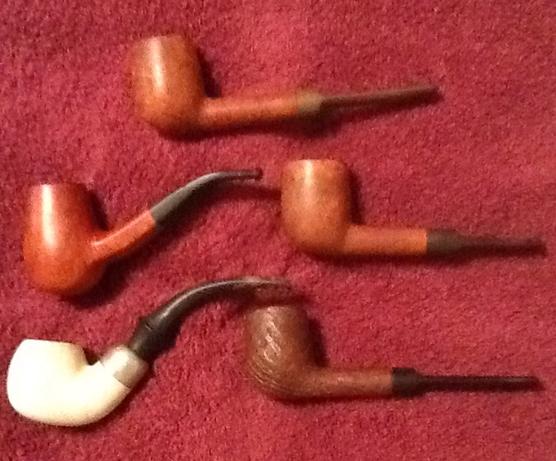
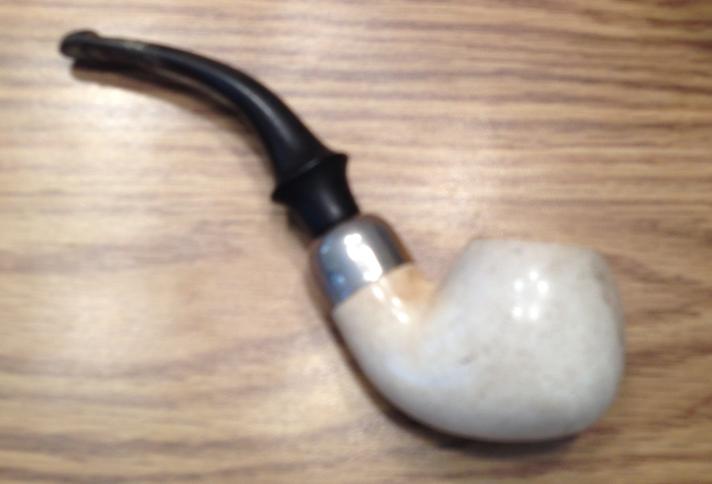
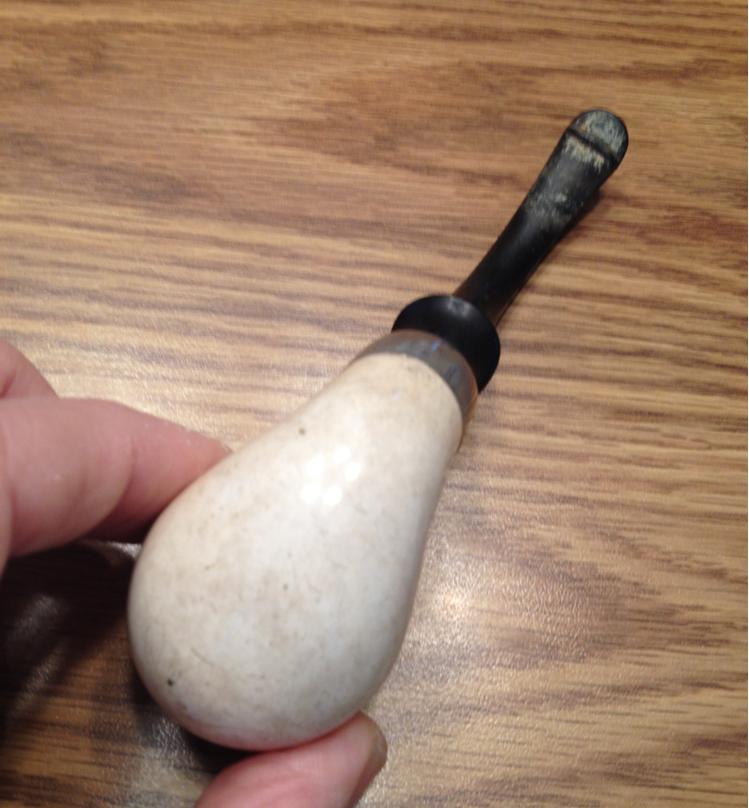
 It was scratched and dirty with oxidation and bite marks on the stem. The stem looked like a P-Lip but it is not – it has the airway in the end of the button rather on the top of it. The saddle flare is also different from a Peterson stem but the shape of the pipe certainly screams Peterson. It bears stamping on the stem that reads Thompson on the left side and Gt. Britain on the underside. The stamping is etched into the vulcanite. The nickel cap was oxidized and worn. The rim of the bowl was dirty and had tarry build up. The inside of the bowl was caked and dirty. The sump in the shank was filled with tars and oils that had crystallized and hardened. It was in need of some TLC.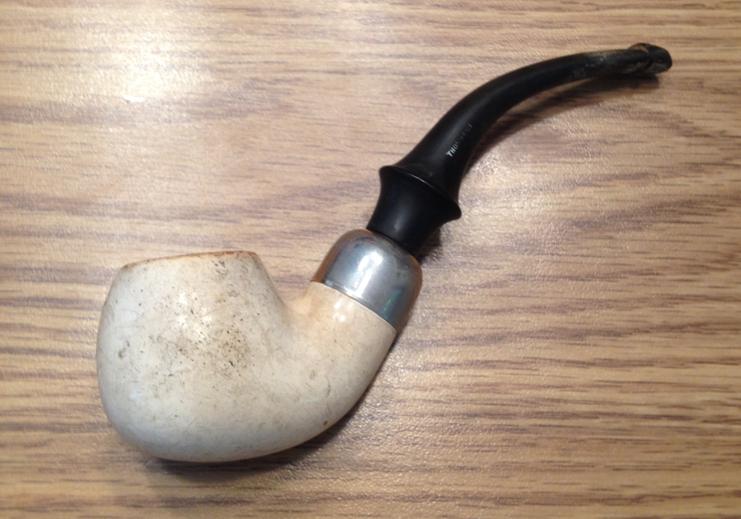
 I reamed the bowl with a sharp knife to remove the cake back to the meerschaum. I carefully scraped it away so that I would not damage the inner edge of the rim.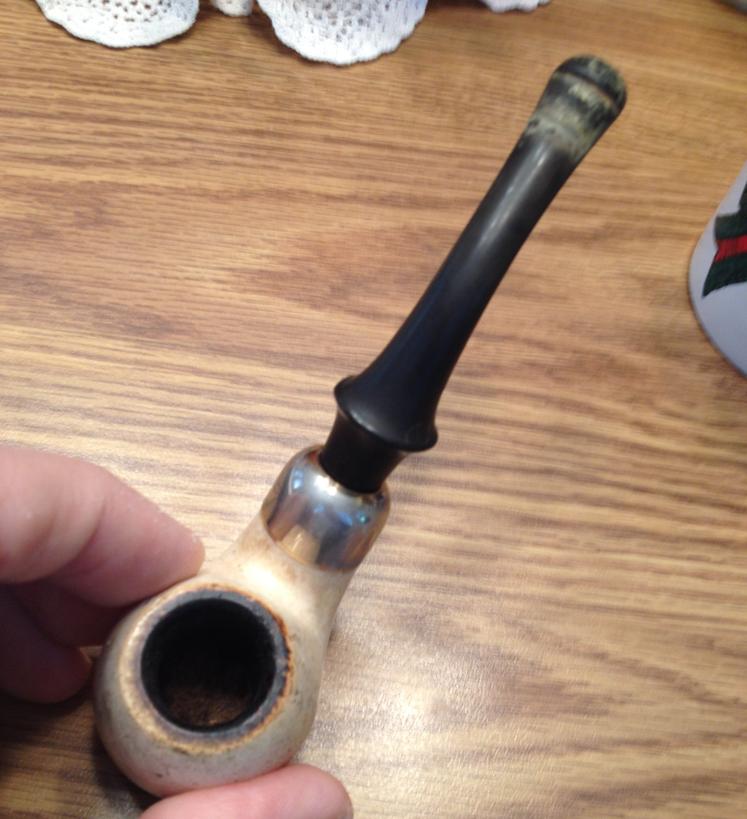
 When I returned to my parent’s house I set up some newspapers and turned the kitchen table into a work table. I chose to work on this old warhorse first. I scrubbed the rim with a damp paper towel to remove the tars. I scrubbed it with saliva as well to break down the tars. I also scrubbed the bowl with the damp towel as well to remove the dirt and grime on the sides. The first bit of scrubbing took off the grime on the bowl sides and most of the buildup on the top of the rim. The second photo below shows the rim after the first bit of scrubbing.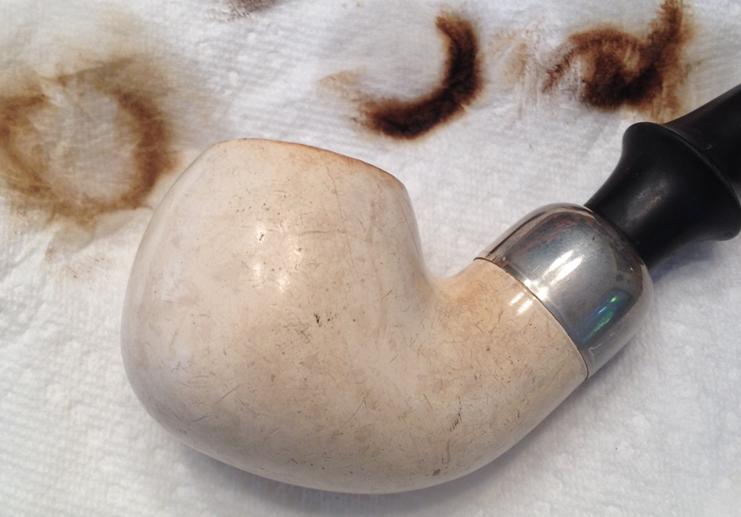
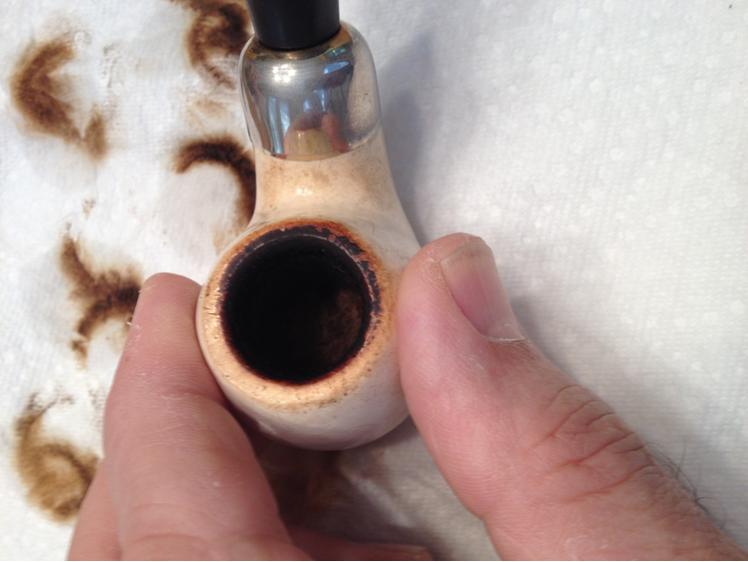 I sanded the bowl and rim with micromesh sanding pads. I started with 1500 grit and worked through 2400 grit sanding pads. It minimized the scratches on the sides of the bowl and also removed the rest of the tars on the rim.
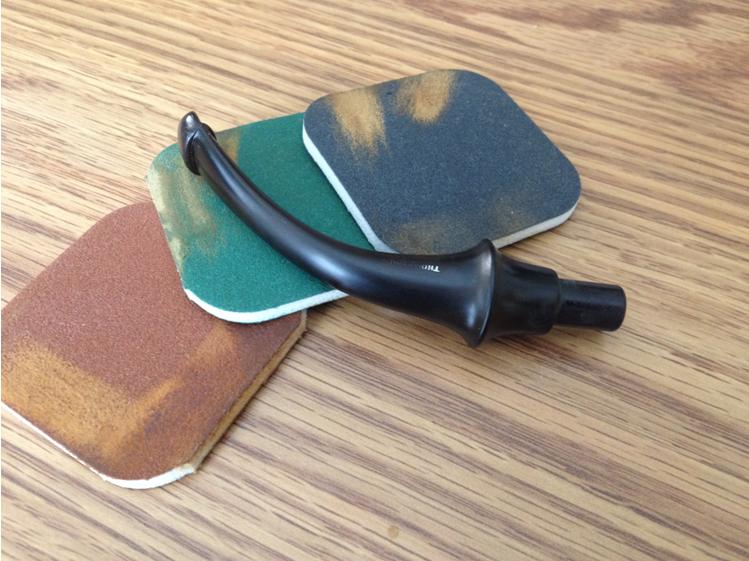
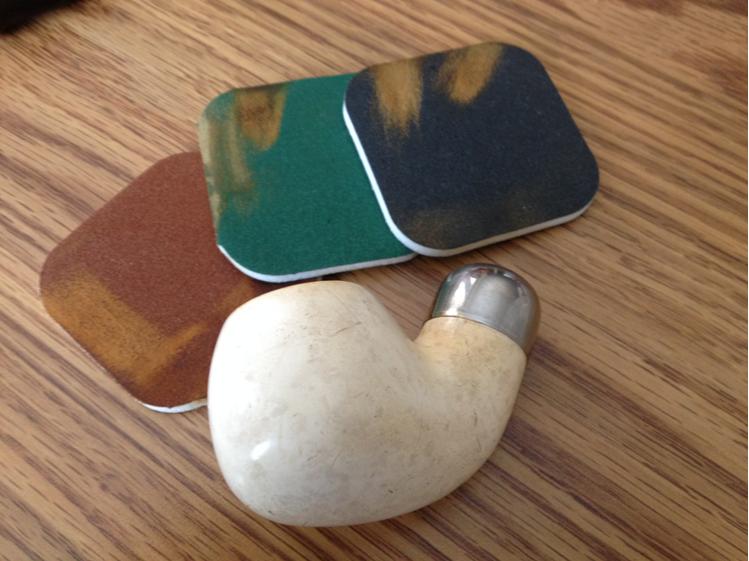 I wet sanded the stem with 1500-2400 grit micromesh and then rubbed it down with a light coat of mineral oil (thanks Troy) and sanded it with 3200-4000 grit pads. I carefully sanded around the etched/stamped letters on the stem side and bottom. I was able to remove the oxidation and calcification that was built up around the button.
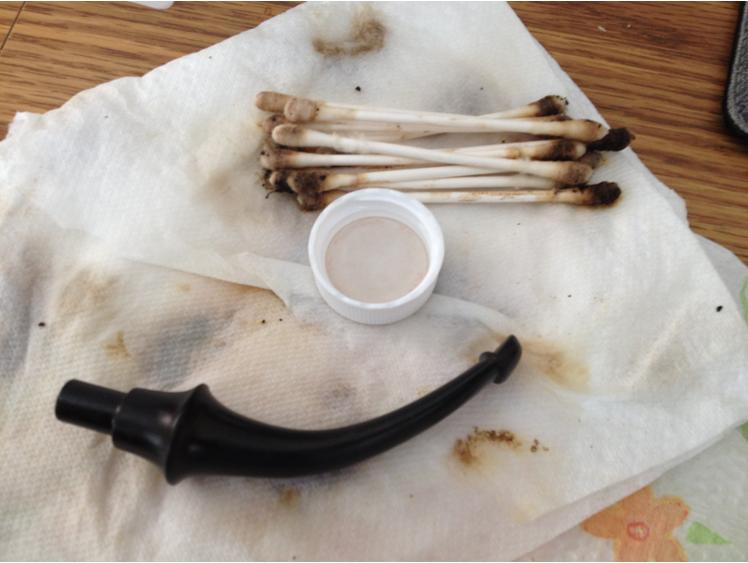
 I scrubbed out the tenon end of the stem and the shank/mortise of the meerschaum bowl with alcohol and cotton swabs. I scrubbed out the bowl with cotton swabs and alcohol to remove the dust from the reaming. I then followed that by scrubbing the shank and bowl with pipe cleaners and alcohol.
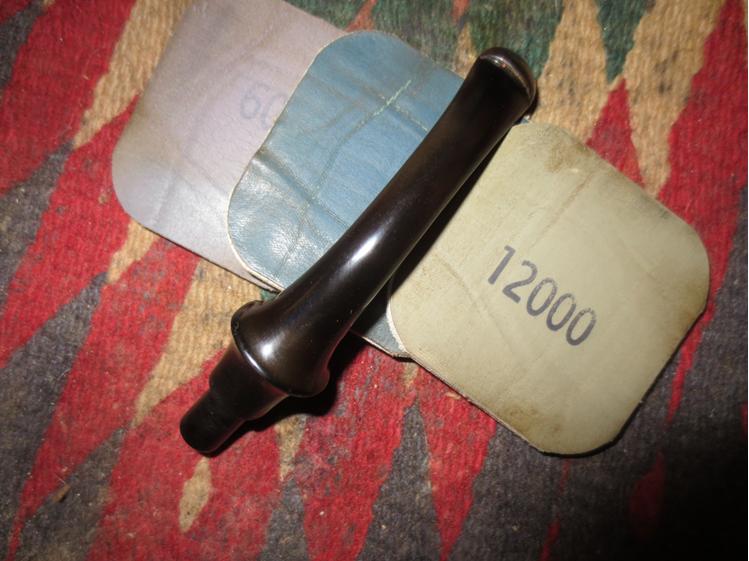
 I set aside the pipe until I returned to Vancouver and then buffed the stem and bowl with White Diamond to polish both the stem and the bowl. I then sanded them both with 6000-12000 grit micromesh pads and then buffed both with Blue Diamond on the buffing wheel. I gave the bowl a coat of carnauba wax to polish it.
 I used a liquid paper pen to fill in the stamping on the stem and let it dry.
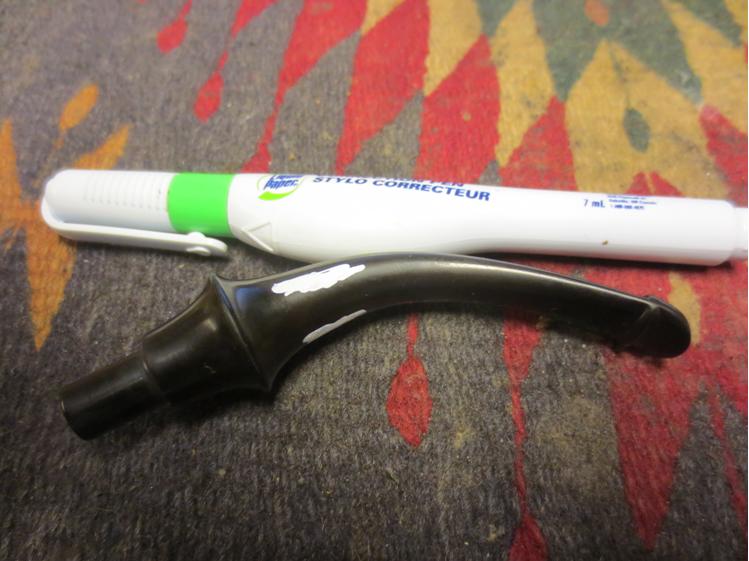 I scraped off the excess dried liquid with my fingernail and then buffed the stem with Blue Diamond to finish cleaning up the area around the stamping. The next two photos show the stamping on the stem.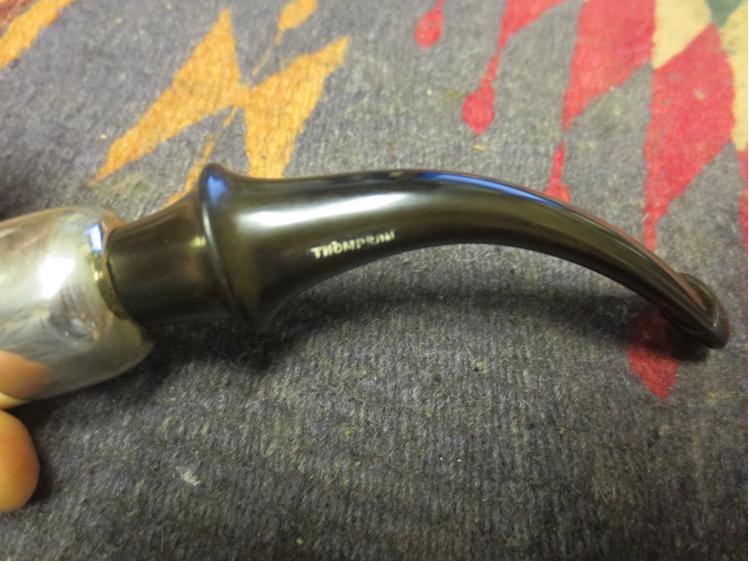
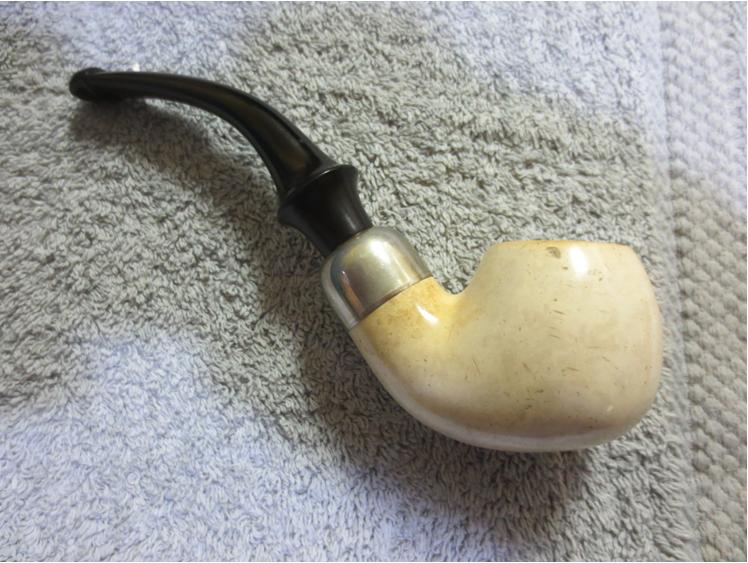
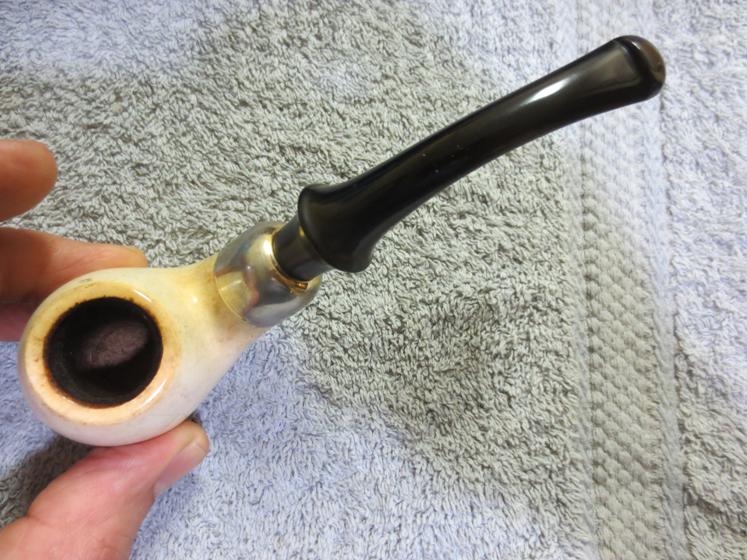
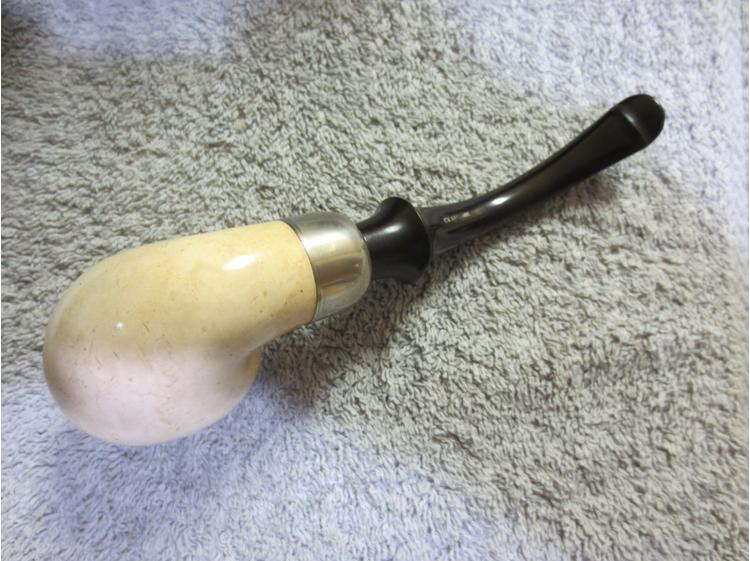
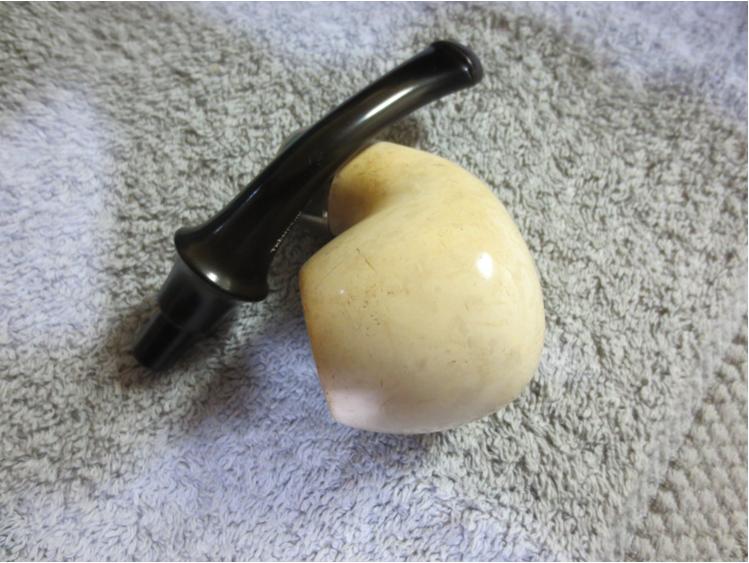
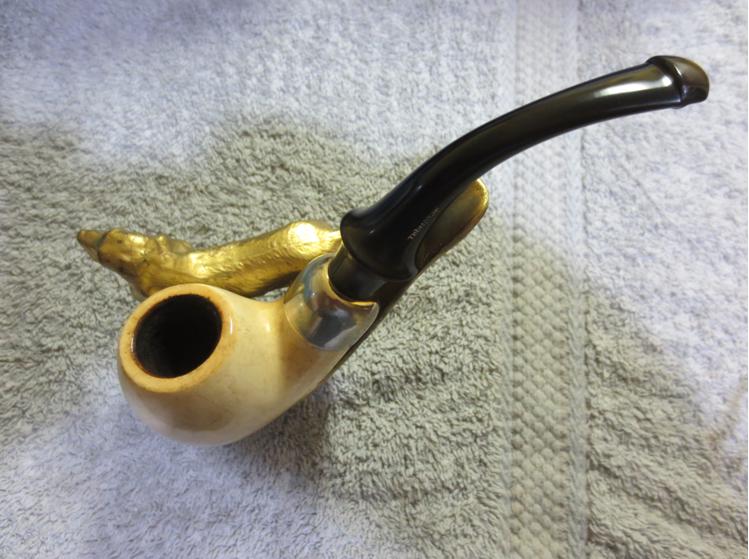
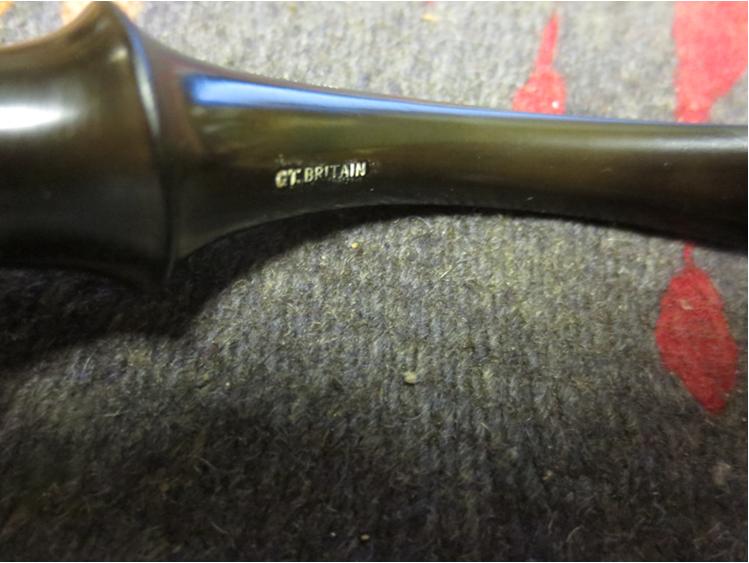 Once I had finished I buffed the bowl and stem with carnauba wax and buffed it finally with a clean flannel buff to raise the shine. The finished pipe is shown in the next series of photos. It turned out to be a beautiful pipe. I would love to figure out who made the pipe and wonder if there is not a Peterson connection based on the drilling and the shape. Does anyone have any information on the brand? Thanks for looking.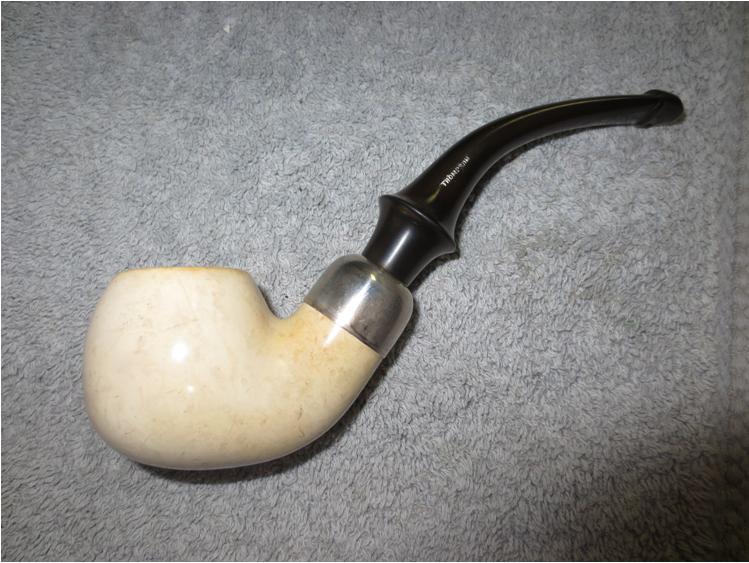

 rebornpipes
I just refinished a Thompson meerschaum that is almost exactly like yours – same Peterson 303 shape. It also says ‘Thompson’ on the left of the stem and ‘Gr Britain’ on the right side, and the p-lip mouthpiece hole is directly in the end rather than in the top, so a pipe cleaner runs straight through the stem. It has a heavy bowl and quality stem. The nickel bowl is cracked at the back, but it smokes nicely. -Scott
LikeLike
Pingback: Restoring a Thompson Freehand 529 with Cumberland Stem | rebornpipes
Good looking pipe. Nice trick with the whiteout pen. Have you used the whiteout on briar stampings before? Just curious if it would effect the finish around the application site.
LikeLike
I use rub and buff for that
LikeLike
By rub and buff, do you mean you use wax to highlight the nomenclature or rub and buff the white out? I seen an LHS resto you posted that had white nomenclature. I thought it looked good, I’d like to give it a go.
LikeLike
For the white I use the whiteout I apply it and let it get good and dry and then buff it. Rub and Buff is an art product that is oil based and you rub it into the stamping and then buff it. It comes in a array of colours. I have used it for the gold in the LHS and WDC old timers.
LikeLike
Very cool. I’ve never heard of that product before. I’ll definitely check into it. Thanks Steve.
LikeLike
Sure looks like a Peterson shape to me. I love the “Gt Britain” stem stamp.
LikeLike
That’s gorgeous, Steve – are you keeping it? If not, I’d be interested!
Cheers, Dallas
LikeLike