Monthly Archives: February 2015

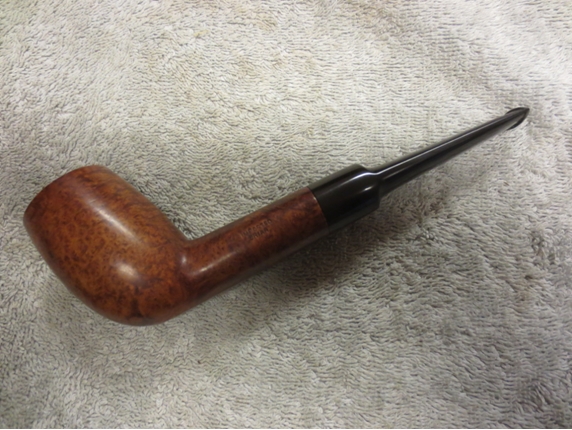
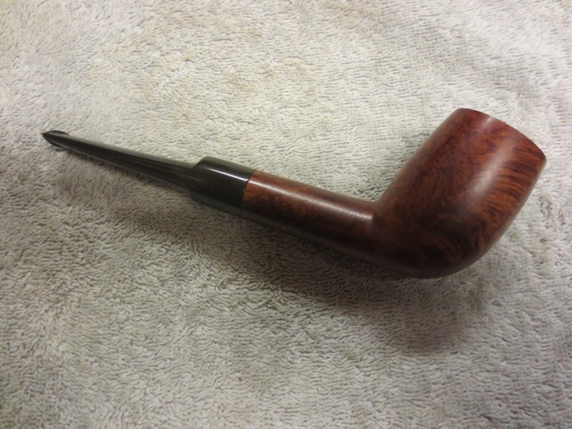
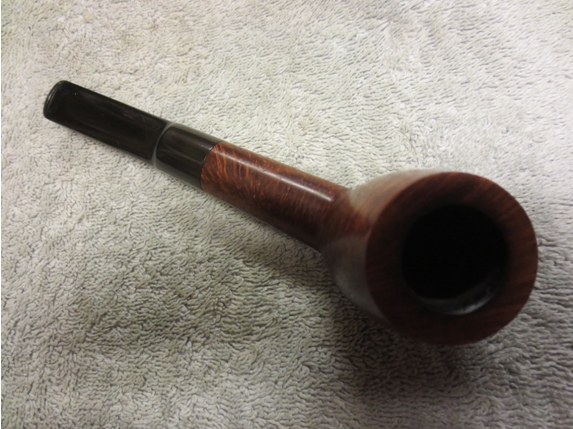
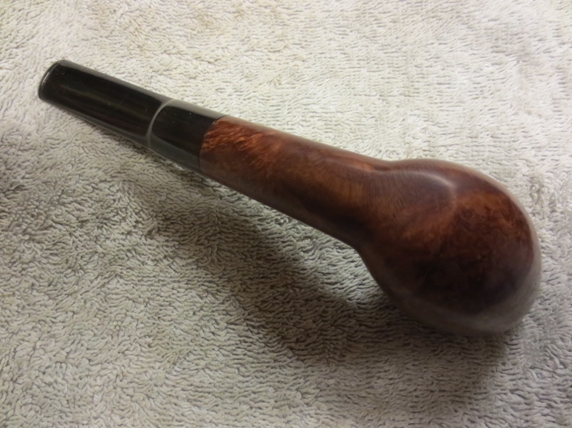
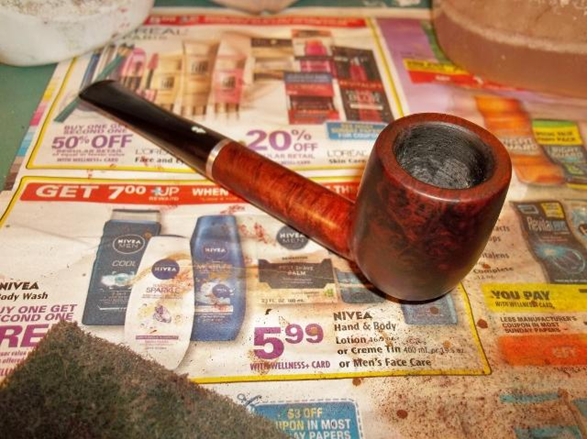
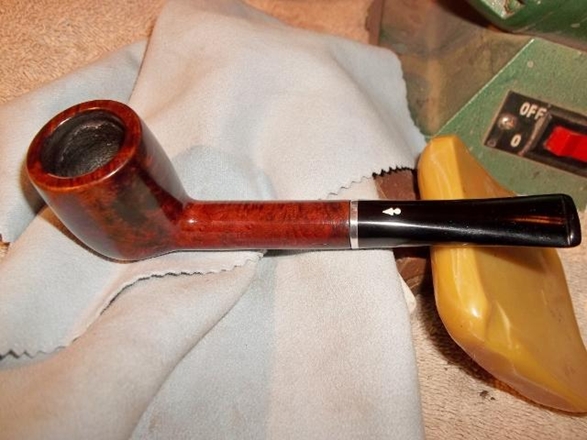
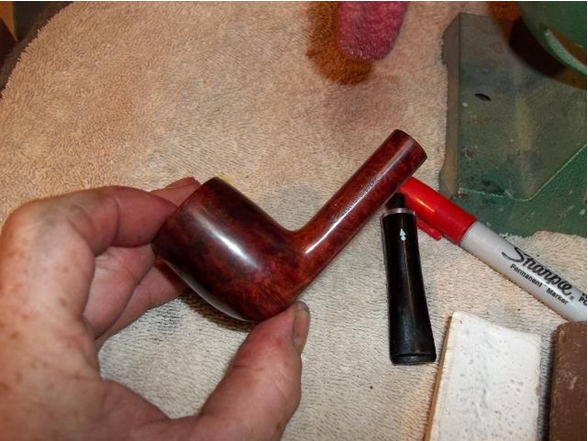
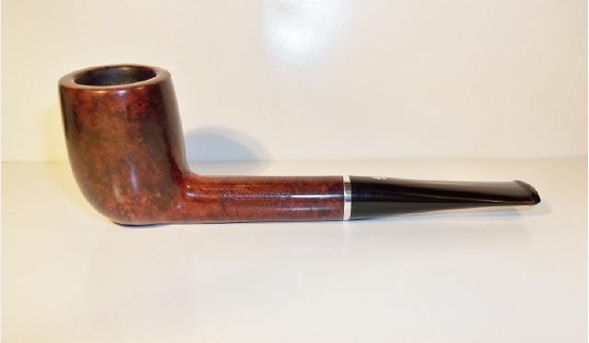
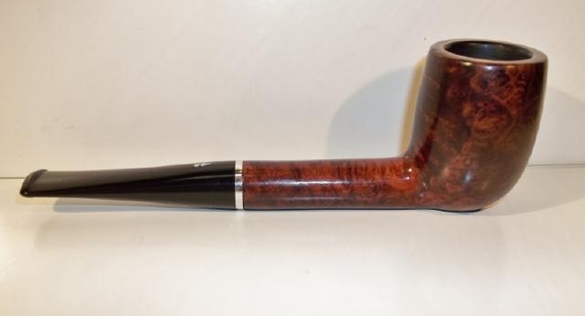
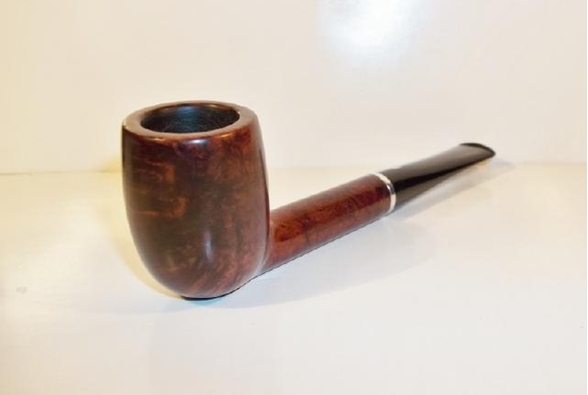
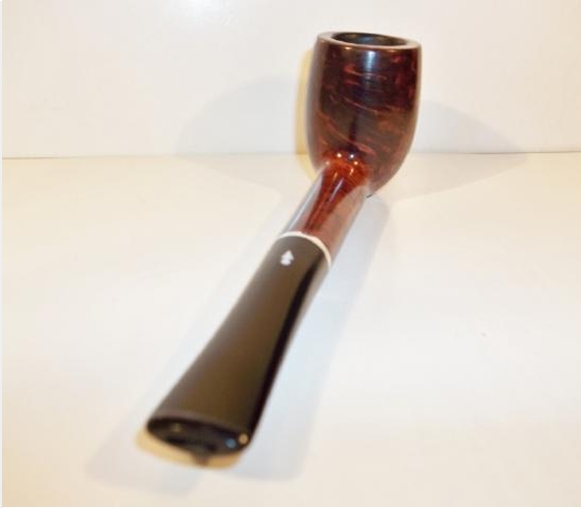
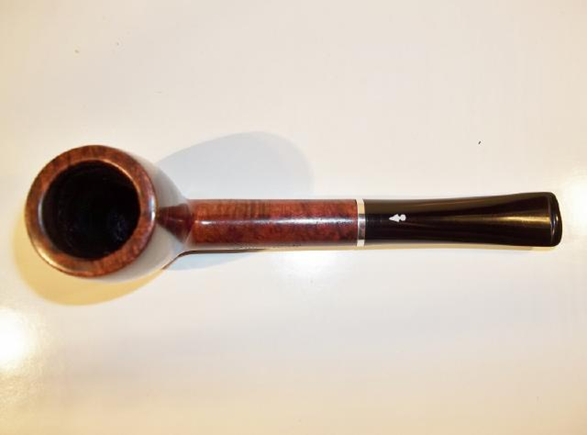
Restoring an Old Yello Bole 2033 Apple


Blog by Troy Wilburn

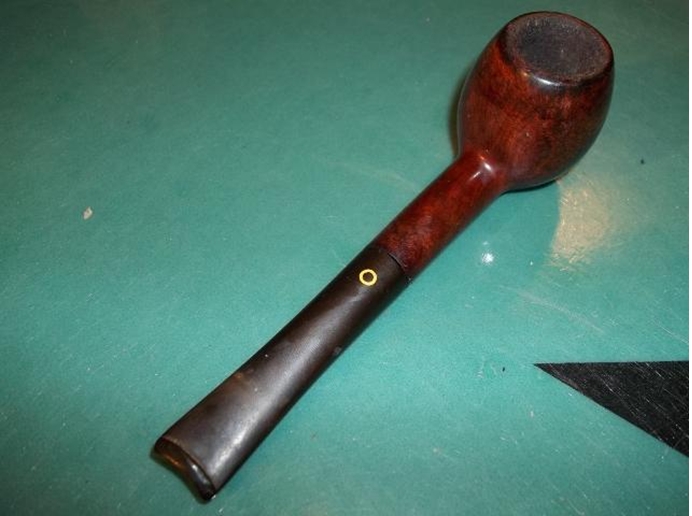
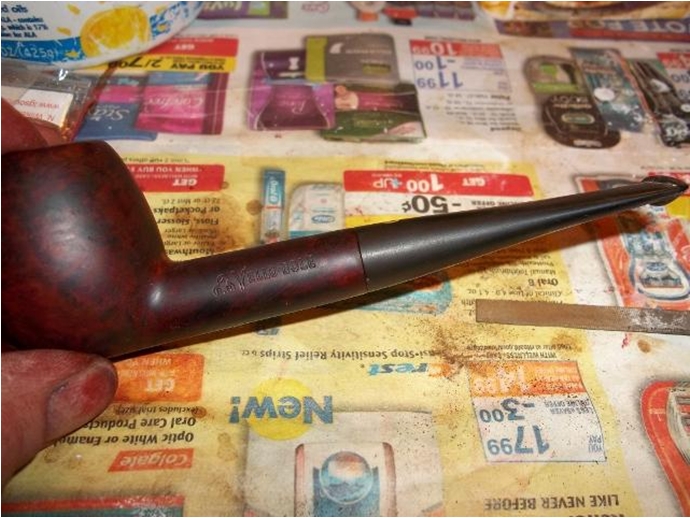
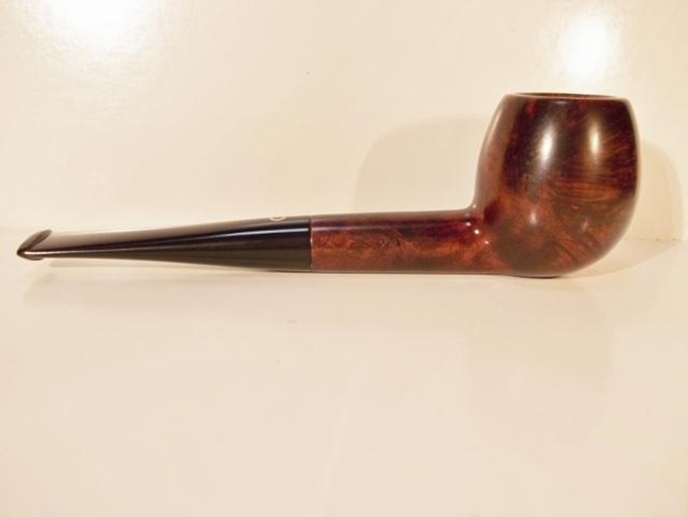
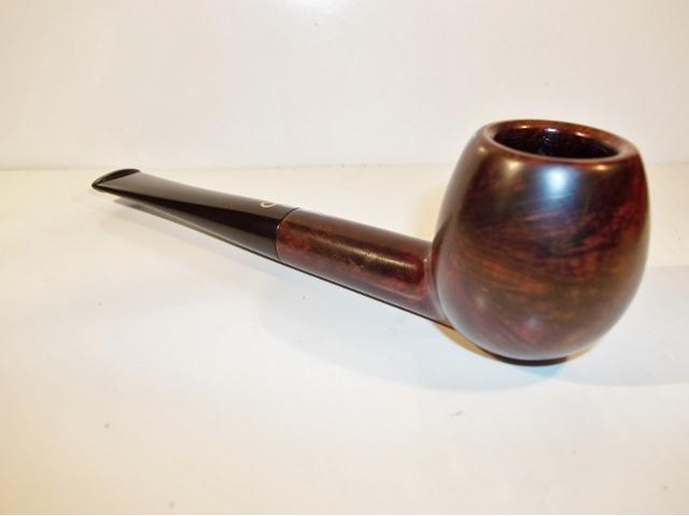
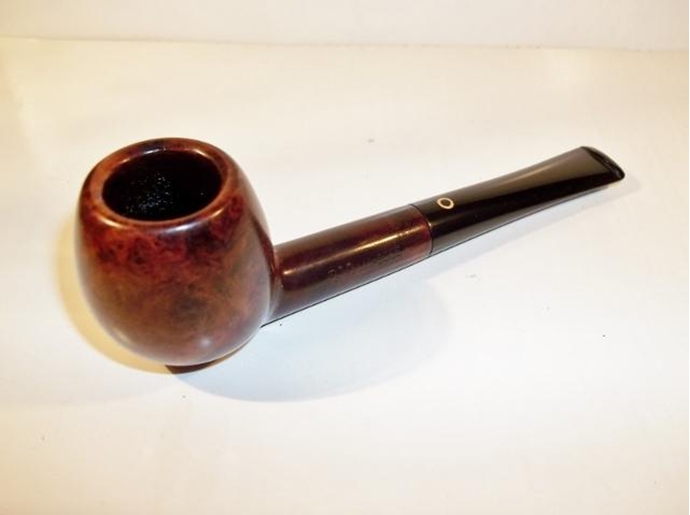
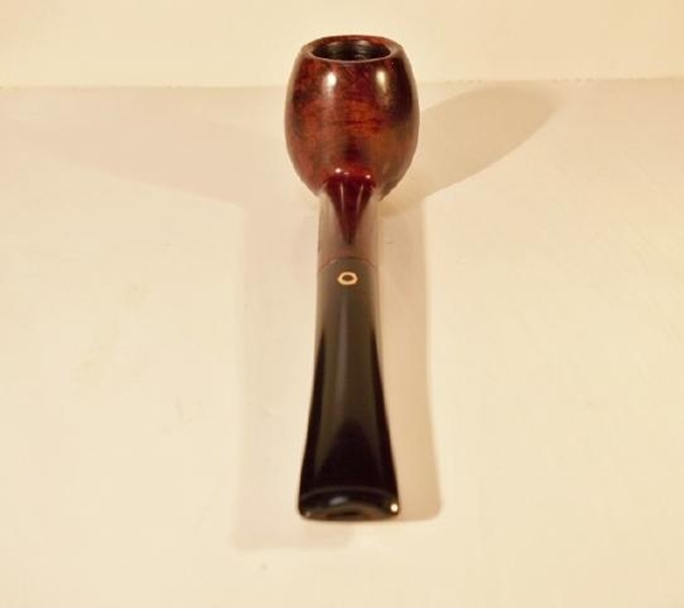
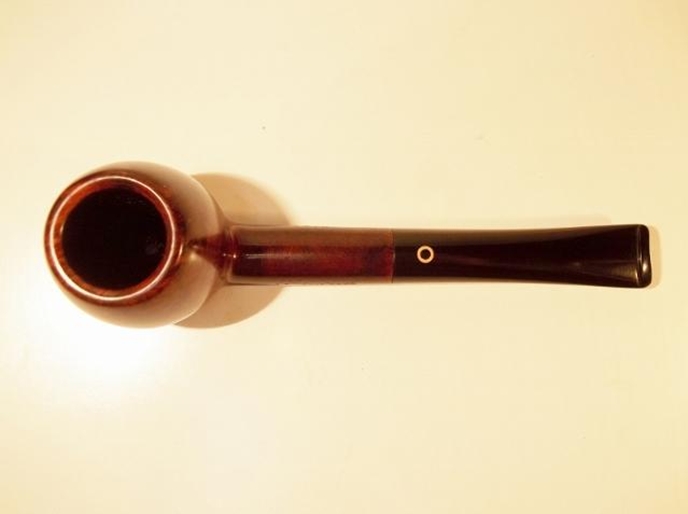
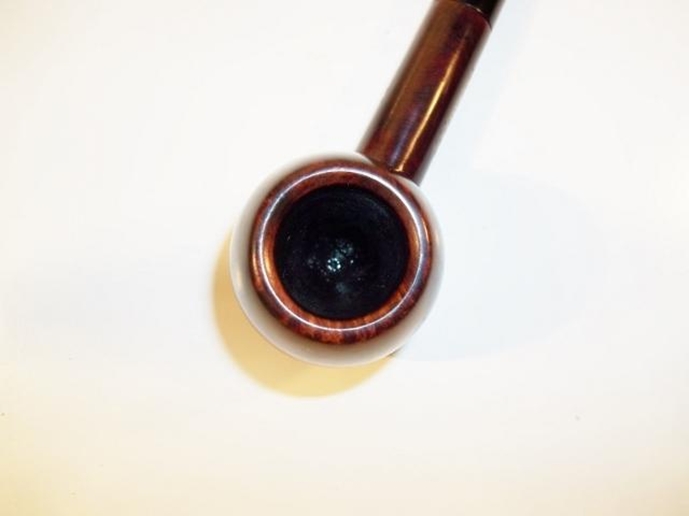
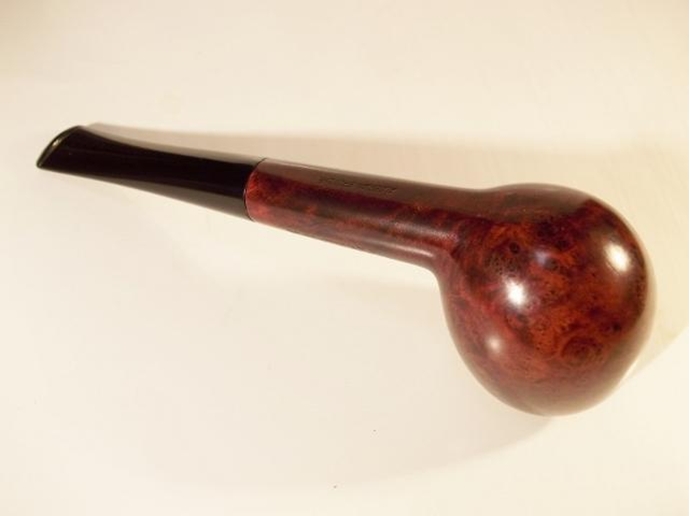
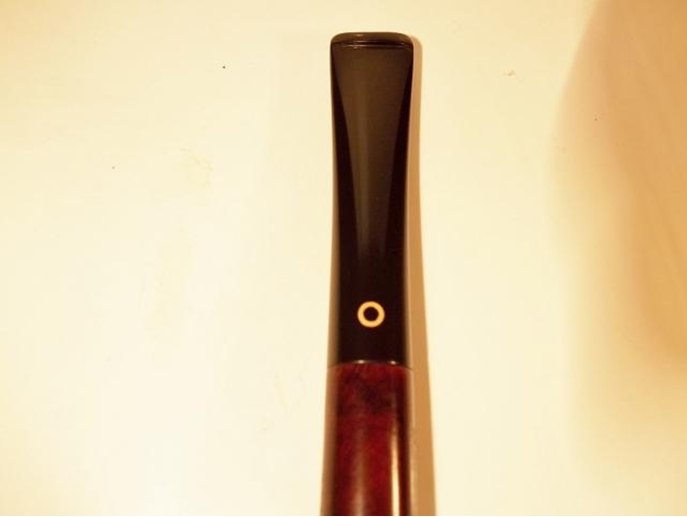
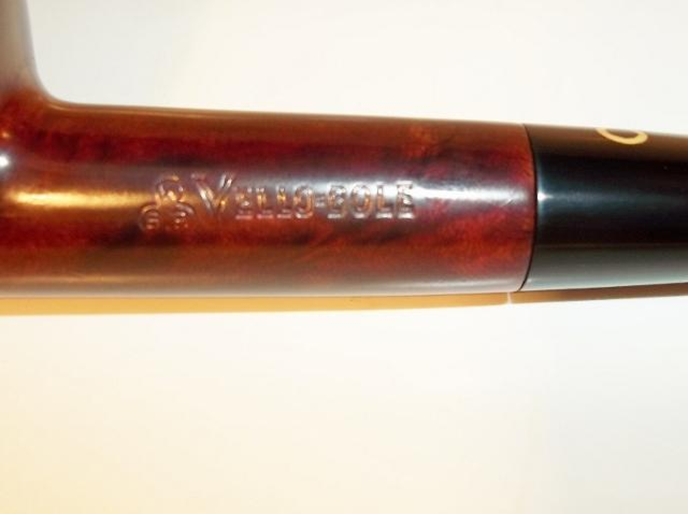
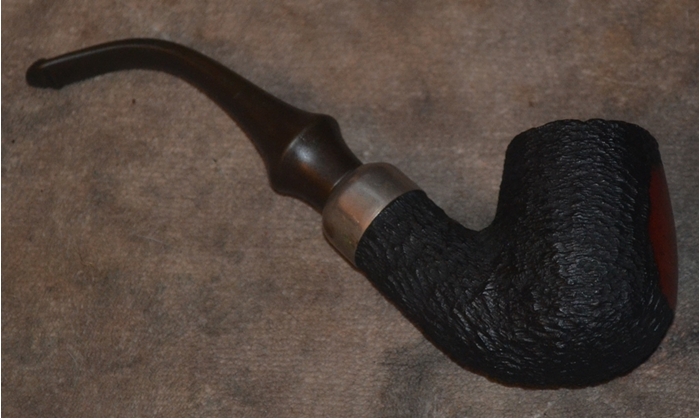
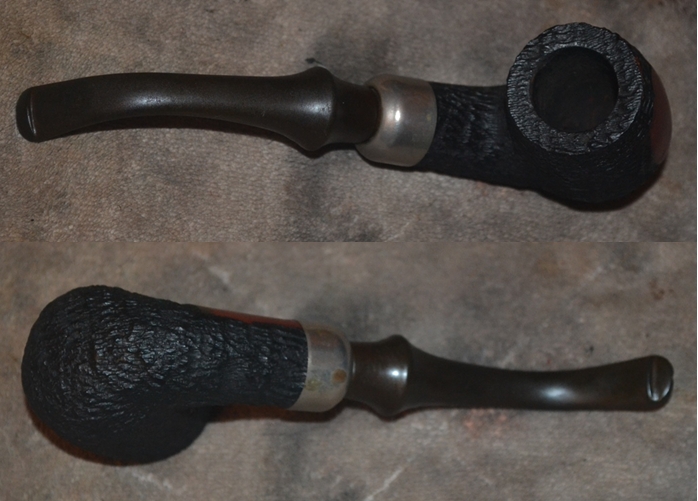
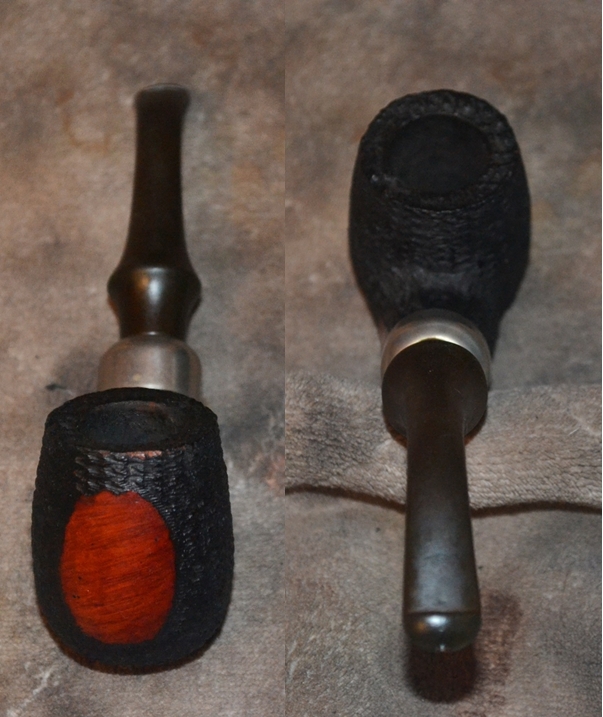
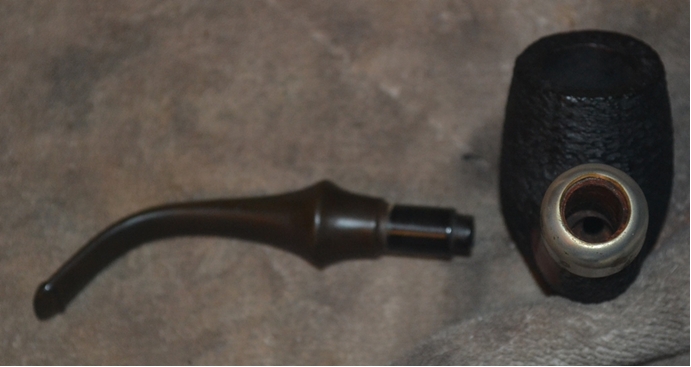
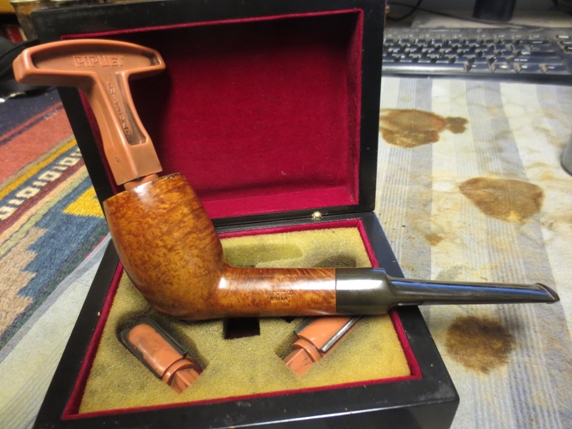
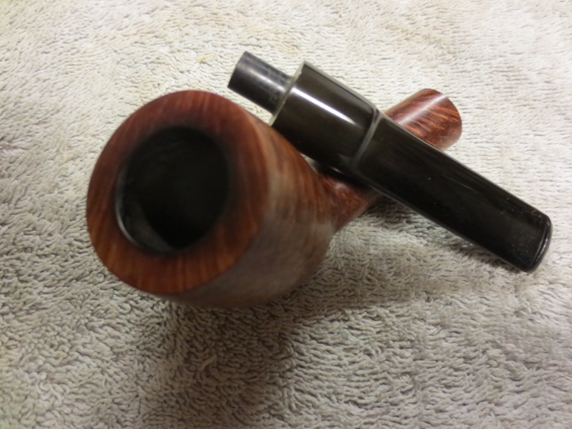
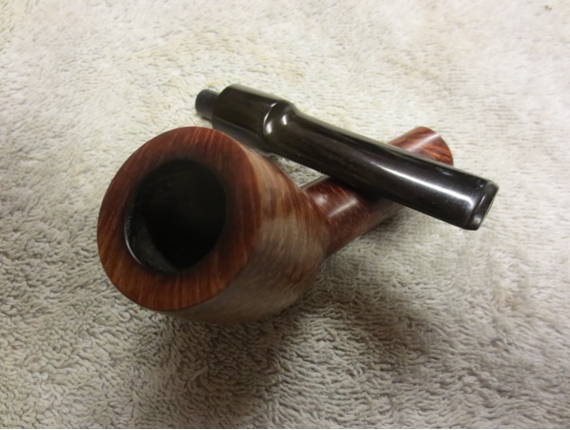
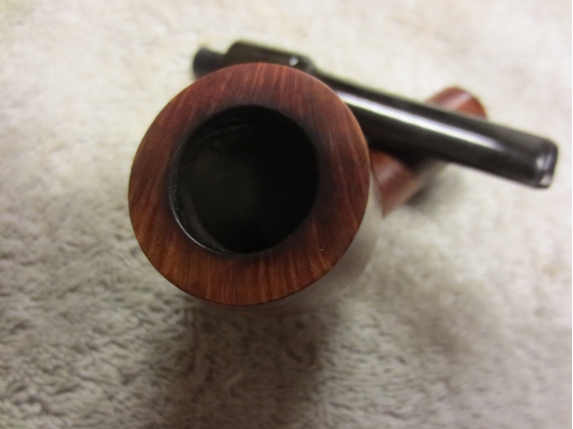
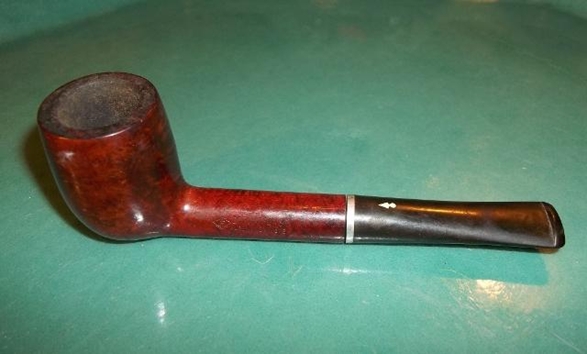
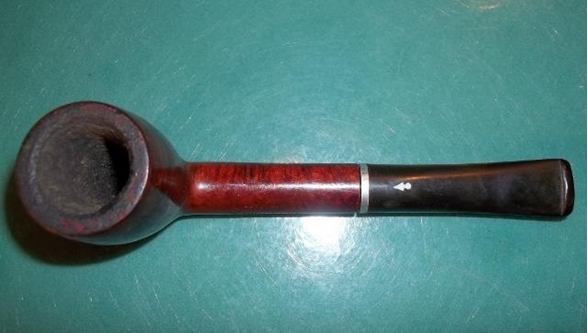
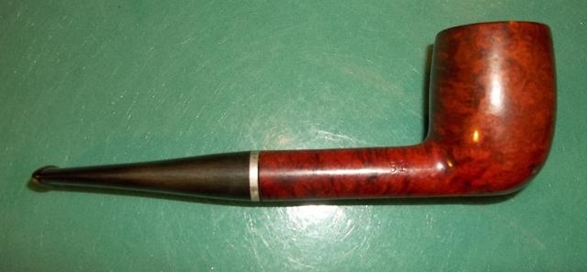
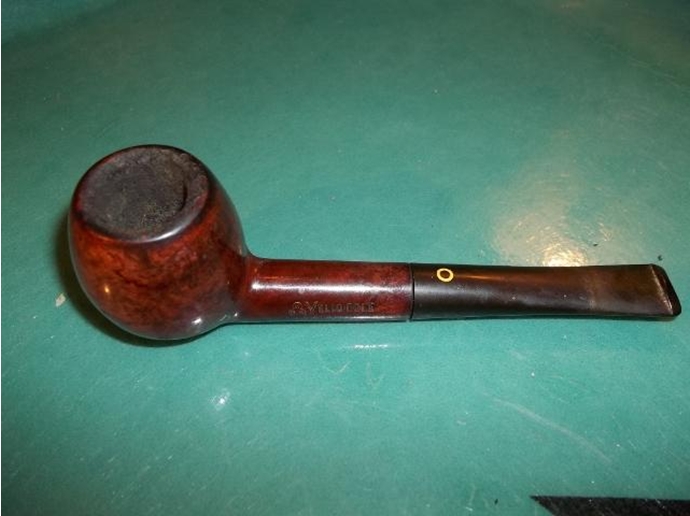
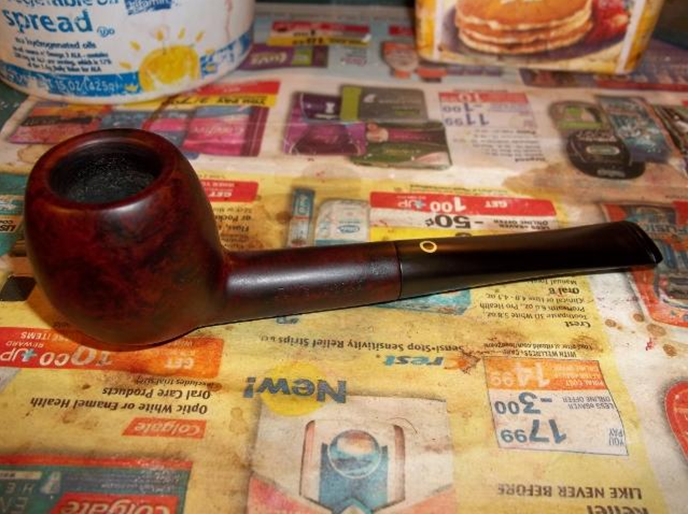
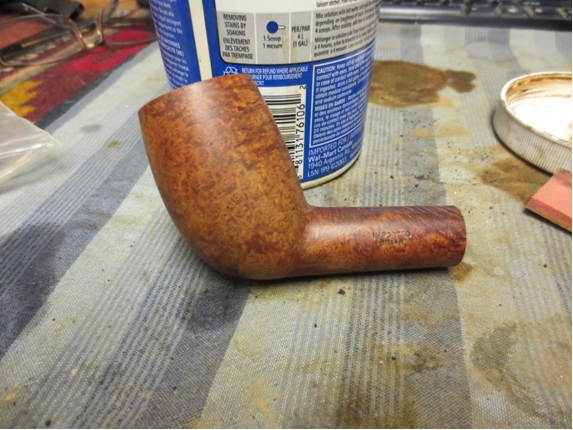
This is the other pipe I got with the Doc Watson. Both came from the same owner estate sale – an old gentleman that had them has since passed on to glory. The two pipes have been together longer than I have been alive. It’s an early Yello Bole in that it has the Imported Bruyere stamp but no “Honey Cured Briar” along with the 2033 four digit shape stamp. I’m guessing 1930 – 1933 roughly.

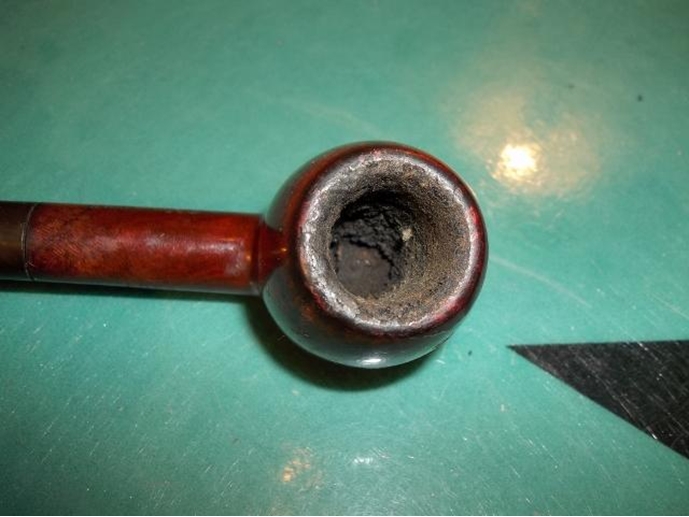
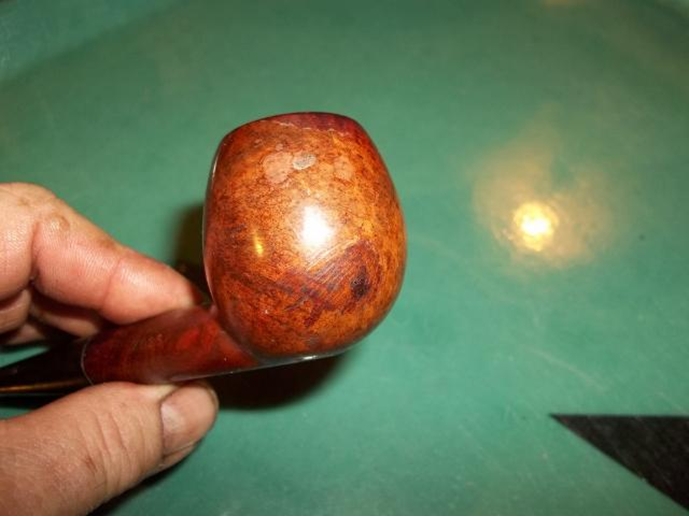
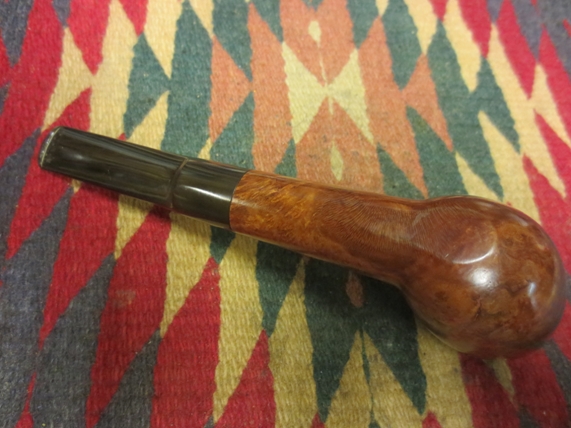
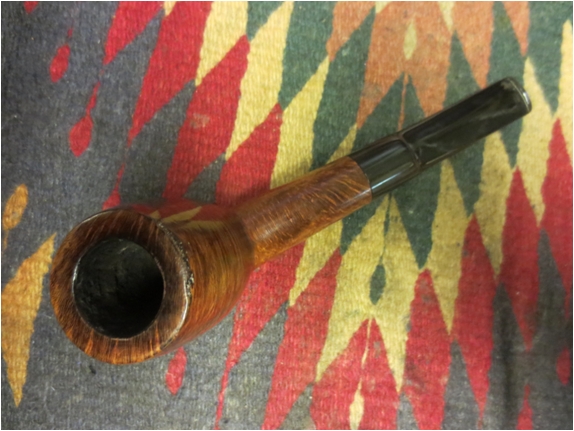
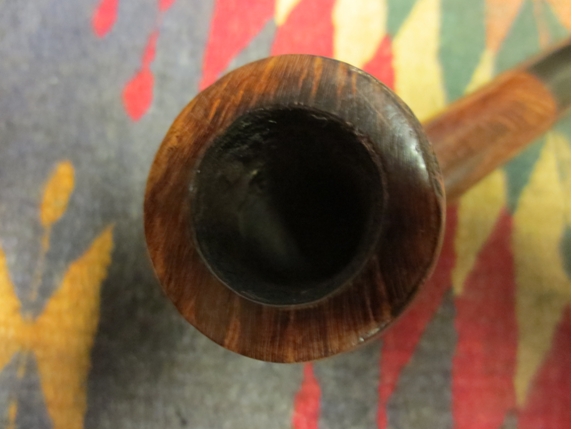
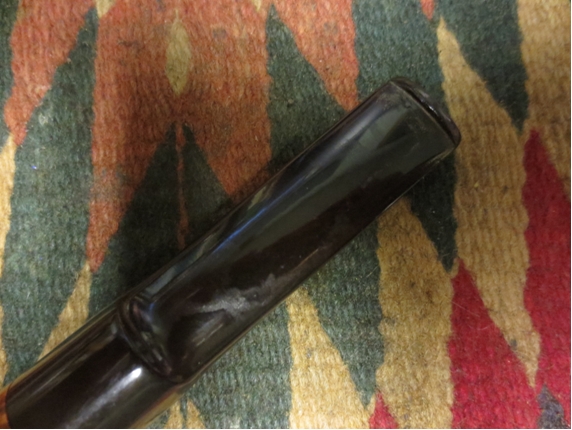
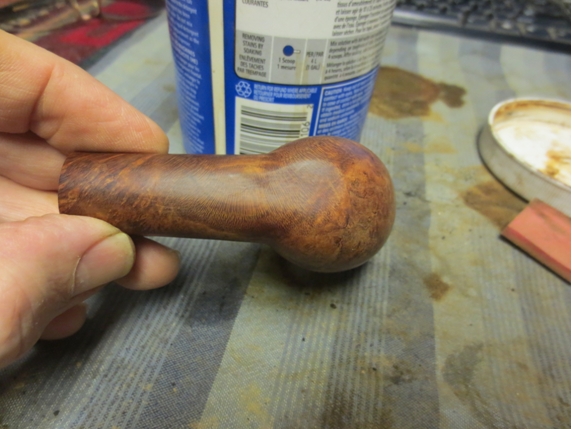
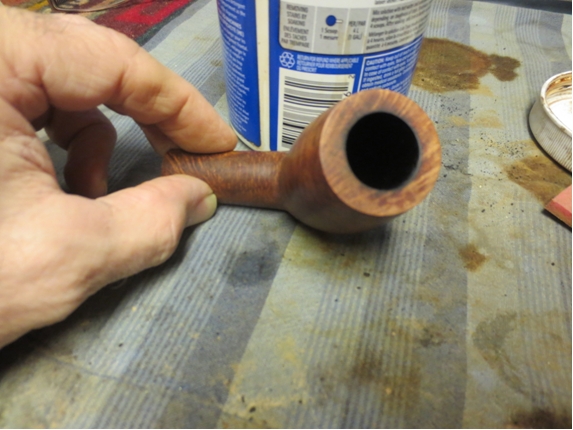
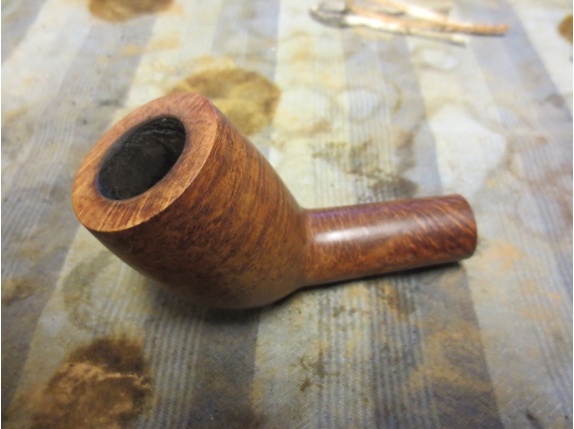
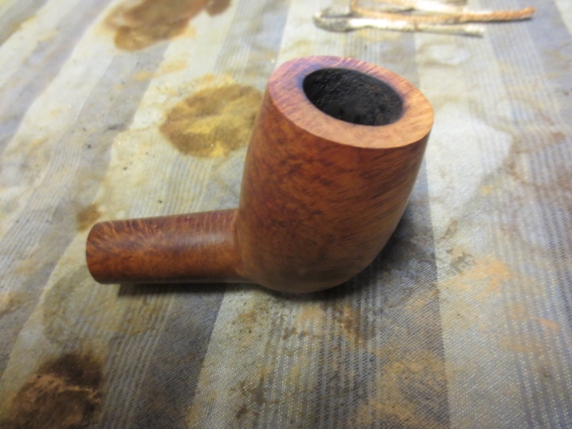
The pipe as it was when I got it.YB1
YB2

YB3

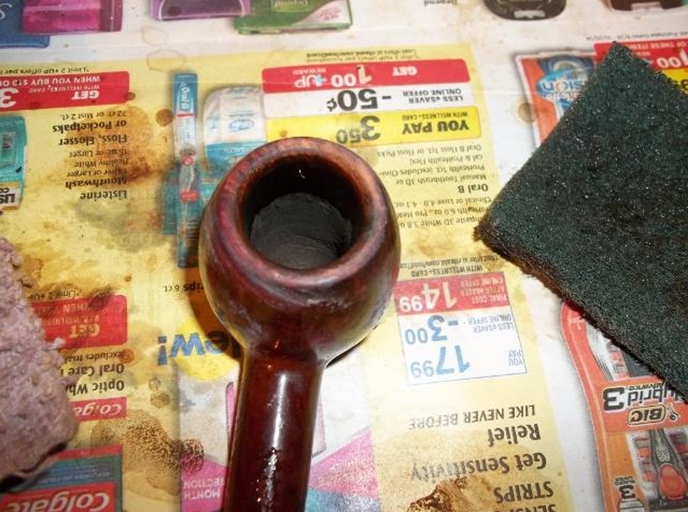
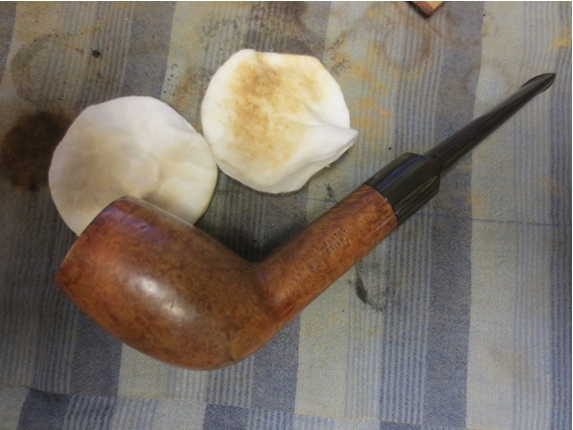
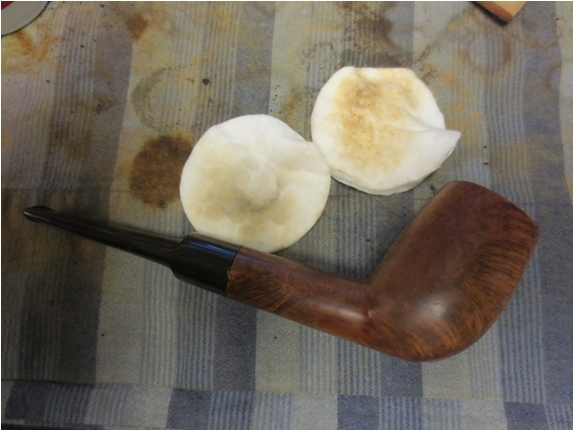
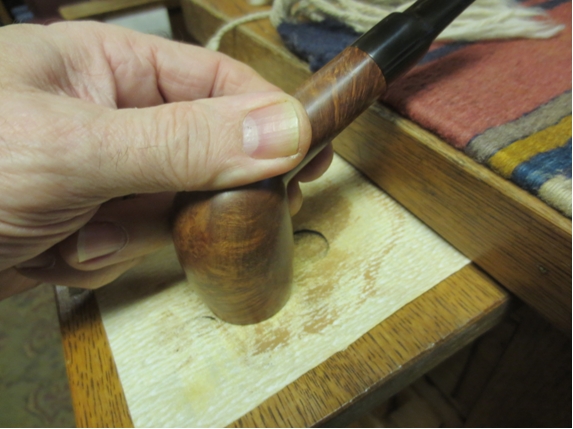
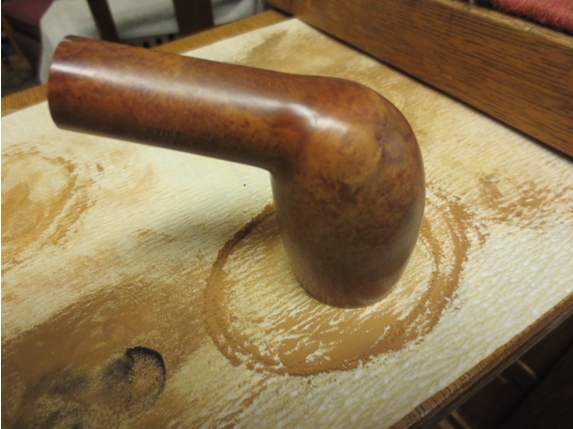
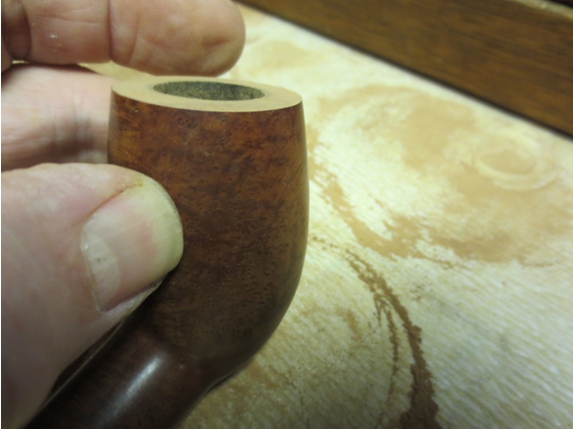
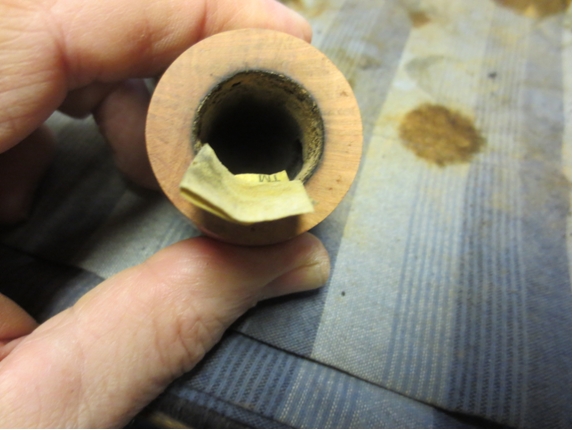
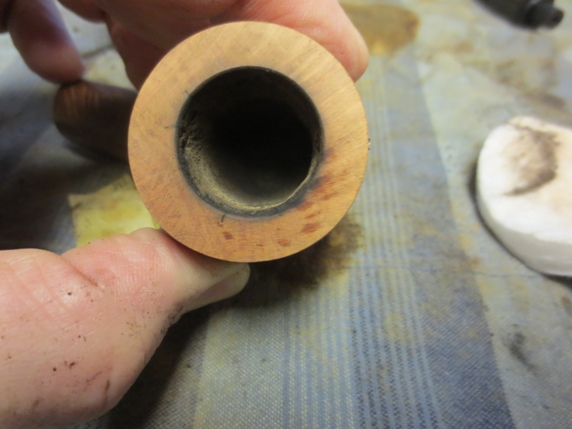
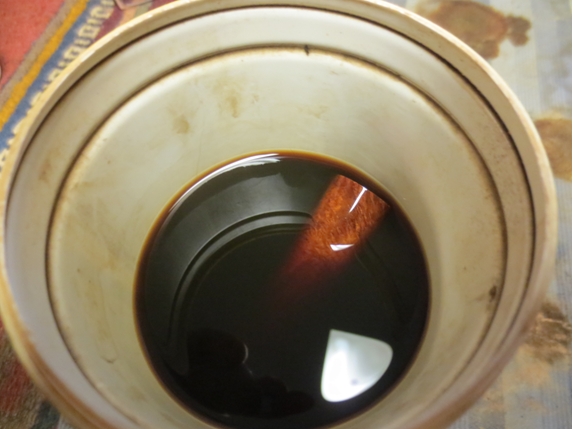
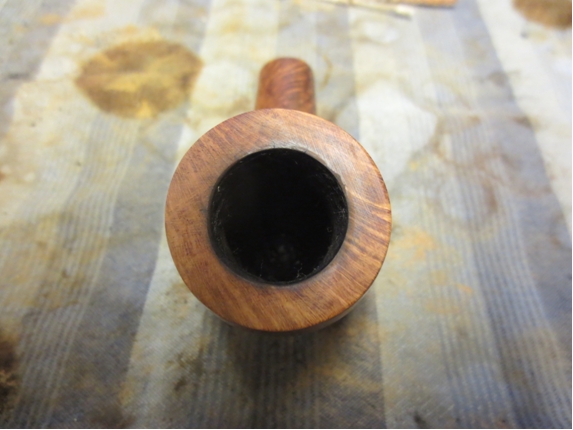
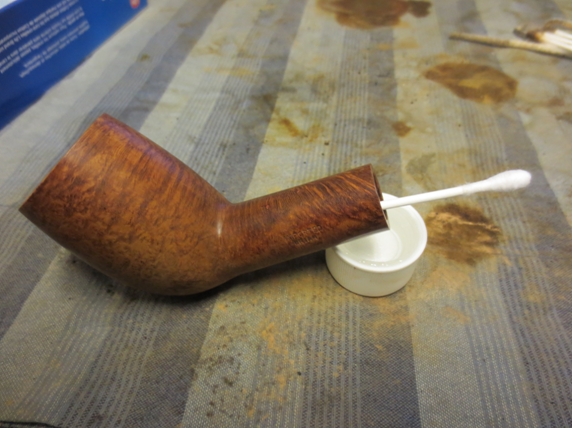
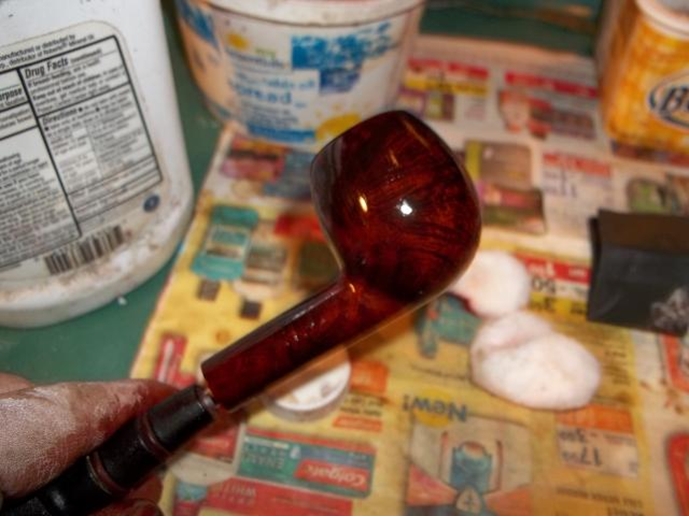
YB4 I started out by removing most of the cake, then sanding inner bowl with some rough grit paper leaving a thin coat of cake.YB5 Next I cleaned out inner shank and stem with 91% alcohol. On these large airway YBs I like to twist 2-3 shank brushes together for better scrubbing. I also scrubbed outer stem with 91% alcohol and a Scotch Brite pad to remove grease, oil, wax etc.YB6 This is easiest way I’ve found to remove rim cake. I mix up some Oxy Clean and warm water. Dip a piece of Scotch Brite pad in it leaving it not quite dripping wet. Lay it flat on surface and move rim along lightly. It takes it off pretty fast and will not harm under finish if you are trying to save it. It will leave it discolored but a little mineral oil will bring the color back to original.YB7
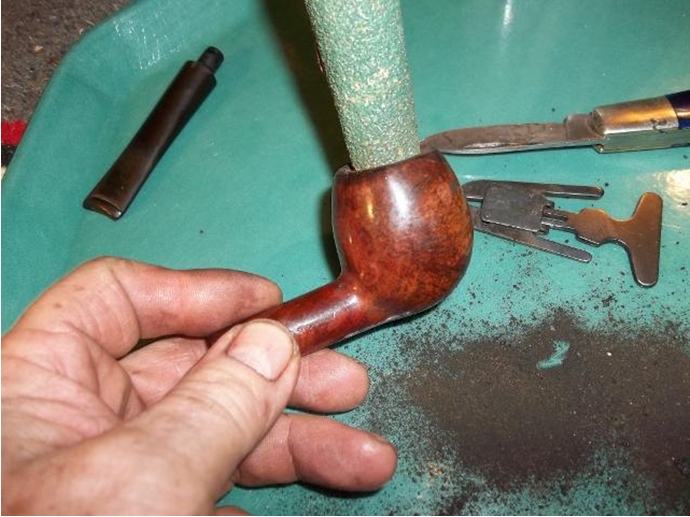
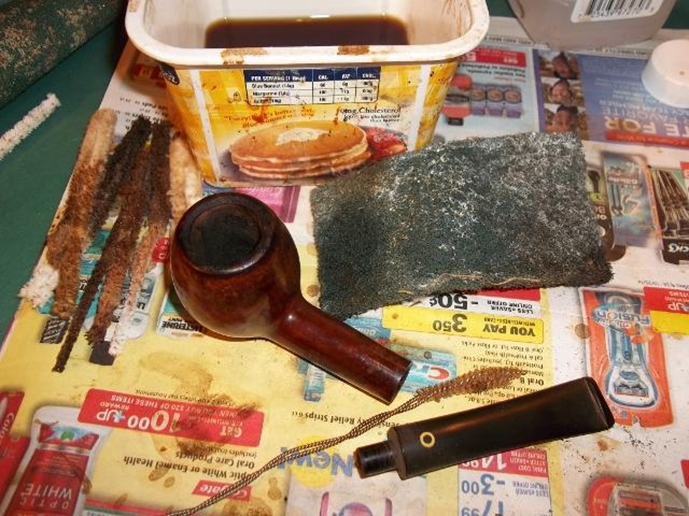
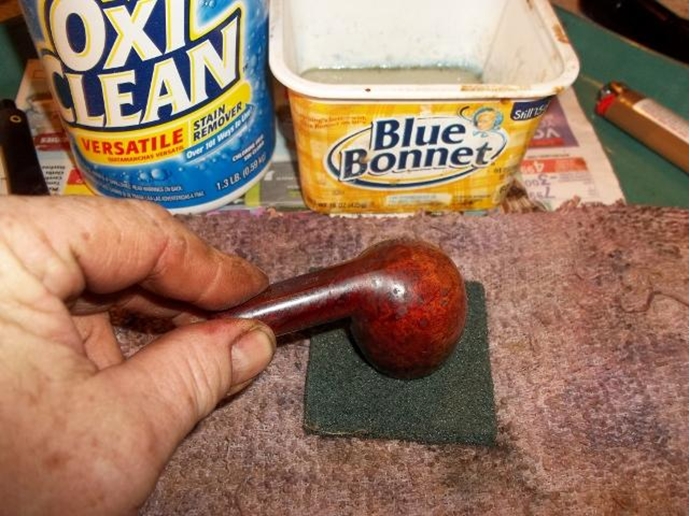
YB8Next I went ahead and scrubbed bowl and stem with same pad and Oxy Clean solution. It will remove contaminants and not hurt the finish just dull it. It will remove any light oxidation from stem that might be present. I scrub the stem harder than the bowl.YB9 Next I went ahead and scrubbed bowl and stem with same pad and Oxy Clean solution. It will remove contaminants and not hurt the finish just dull it. It will remove any light oxidation from stem that might be present. I scrub the stem harder than the bowl. After getting a good look at the bowl after old dirt and such was removed the finish looks toasted. Sadly it cannot be saved.
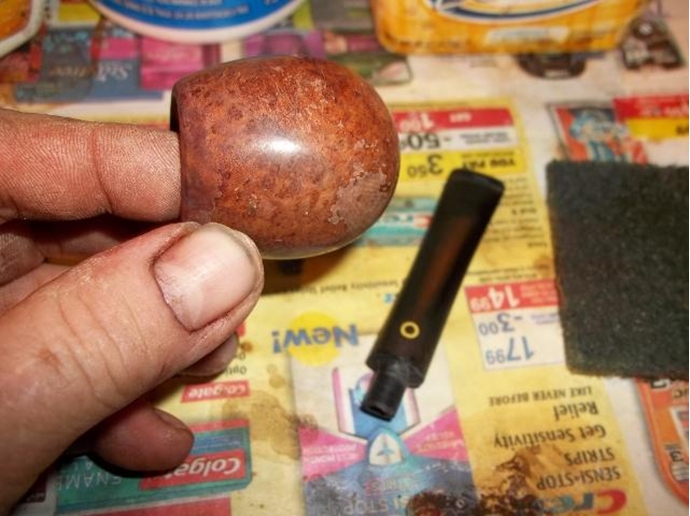
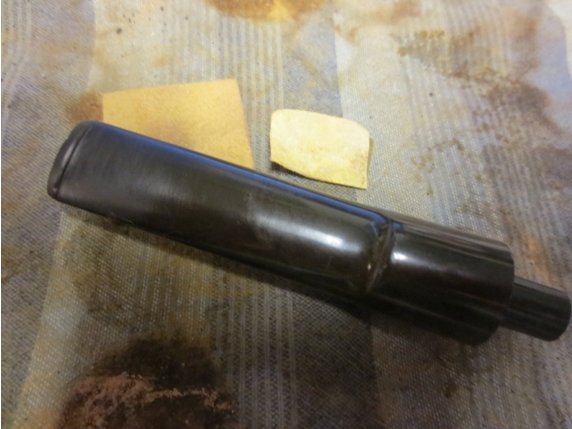
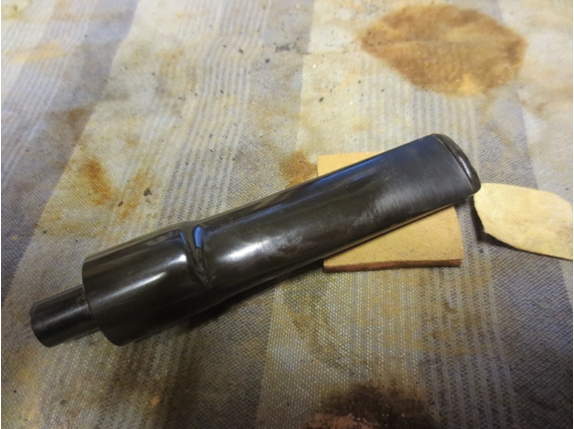
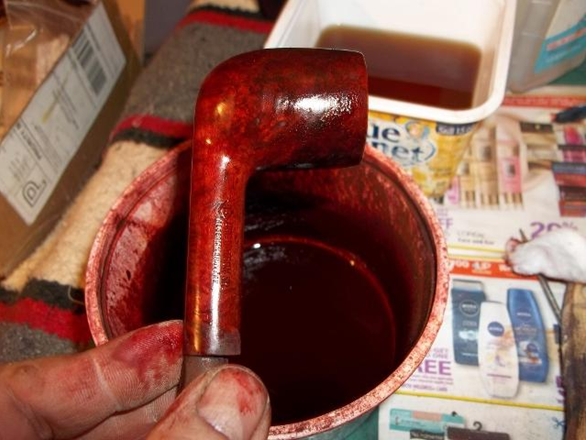
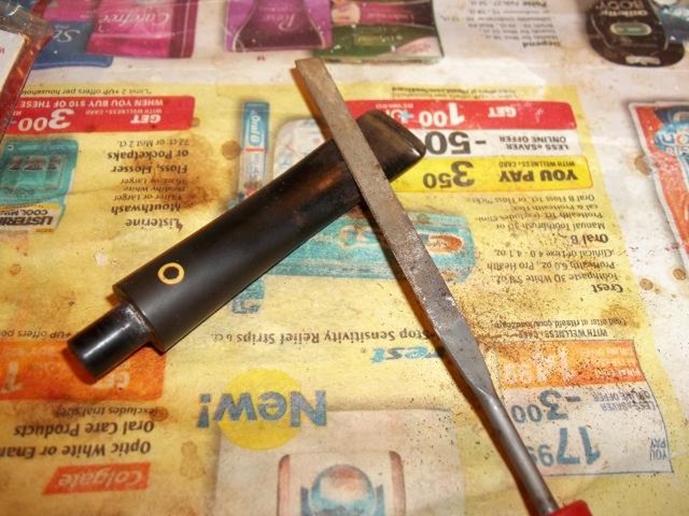
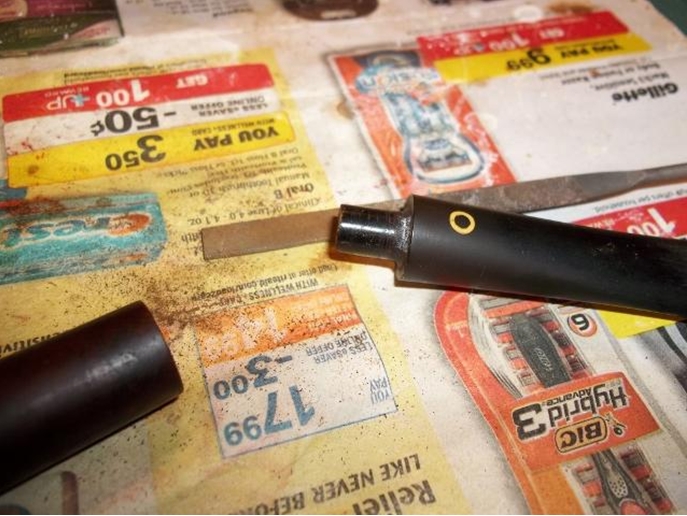
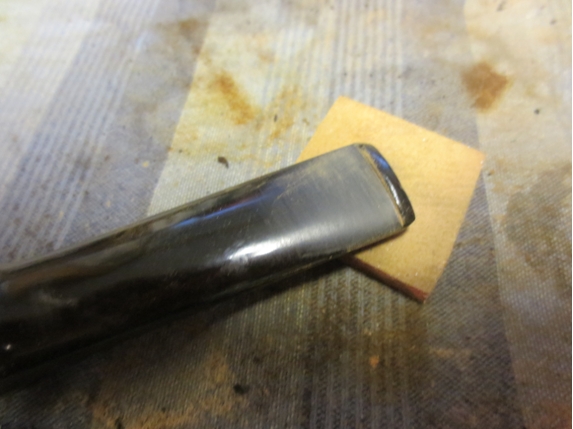
So I went ahead and sanded bowl with 400-2000 grit sandpaper. Never touching the stampings with any grit sandpaper less than 1200 grit. I will leave a defect or mark near a stamping just so it won’t be harmed.YB10 Luckily the stain I had left over from the Doc Watson was a good match so I was able to use it. I applied three coats letting in dry in between.YB11 After third coat of stain I like to apply mineral oil to help the grain stand out and condition the briar. The mineral oil lets you see any defects in the finish and what the bowl will look like when waxed. I set it to the side and let it air dry.YB12 I had to do some filing on the stem and button to remove some tooth marks.YB13 If you noticed in before pic the stem did not fit tight to the shank, so I filed down tenon a little at a time until it fit tight.YB14
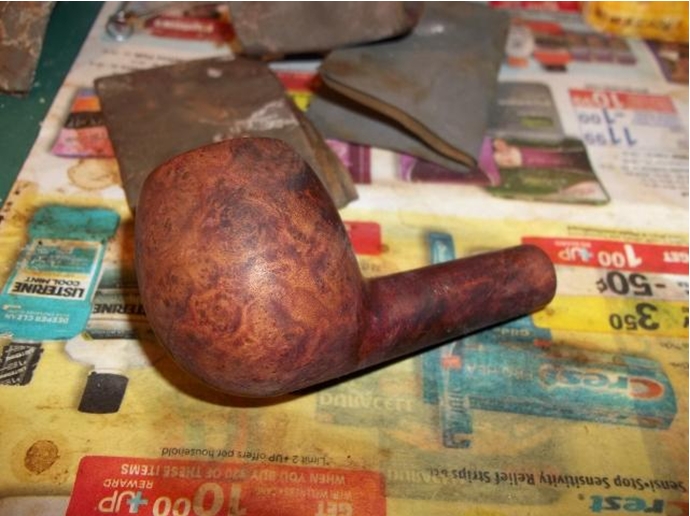
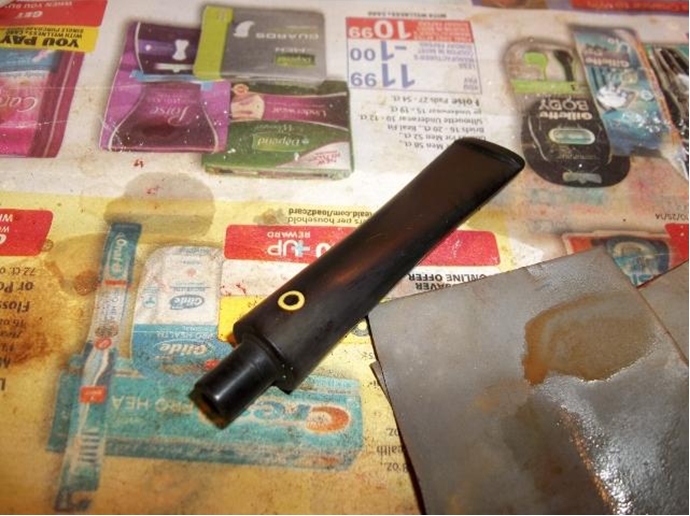
YB15 I wet sanded the stem again using 400-2000 grit sandpaper.YB16 I put the bowl and stem back together and it is ready for some buffing and wax.YB17 On bowls I’ve stained I put about 3 coats of base wax then go back over with white Tripoli then go back to wax .
On the stems I use brown Tripoli, white Tripoli and then wax.YB18 Here are pics of the finished pipe.YB19

YB20

YB21

YB22

YB23

YB24

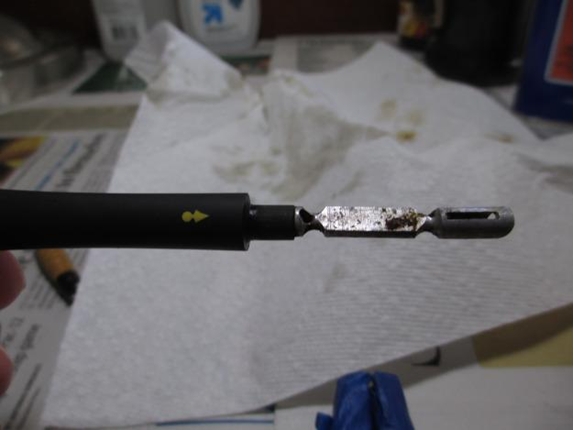
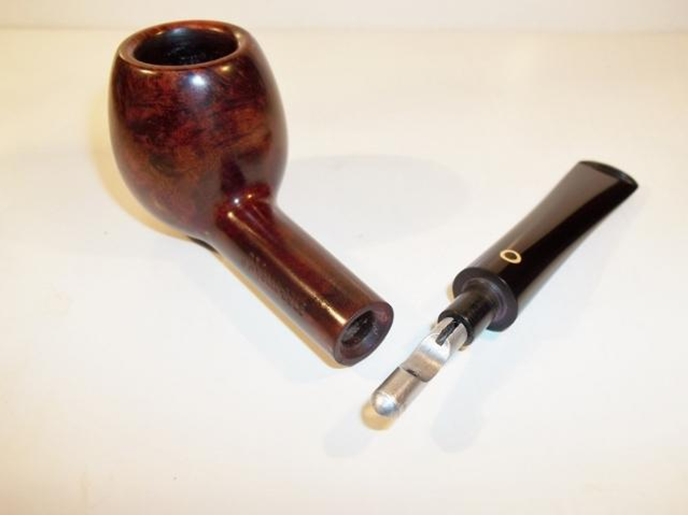
YB25 It was missing a stinger so I dug out an extra I had and cleaned it up.YB26
YB27

YB28

YB29

YB30 It should make a fine daily smoker and better than most any pipe I could buy today for under a 100 dollars. I have less than 12 dollars in it.YB31

An Unknown Italian Full Bent Billiard by Any Other Name Would Smell as Sweet


Guest Blog by Robert M. Boughton
Member, North American Society of Pipe Collectors
http://www.naspc.org
http://www.roadrunnerpipes.com
http://about.me/boughtonrobert
Photos © the Author

’Tis but thy name that is my enemy;
Thou art thyself though, not a Montague.
What’s Montague? it is nor hand, nor foot,
Nor arm, nor face, nor any other part
Belonging to a man. O! be some other name:
What’s in a name? that which we call a rose
By any other name would smell as sweet;
So Romeo would, were he not Romeo call’d,
Retain that dear perfection which he owes
Without that title. Romeo, doff thy name;
And for that name, which is no part of thee,
Take all myself.

― William Shakespeare (1564-1616), English playwright and poet, in “Romeo and Juliet,” Act II, sc. 2, 1597

INTRODUCTION
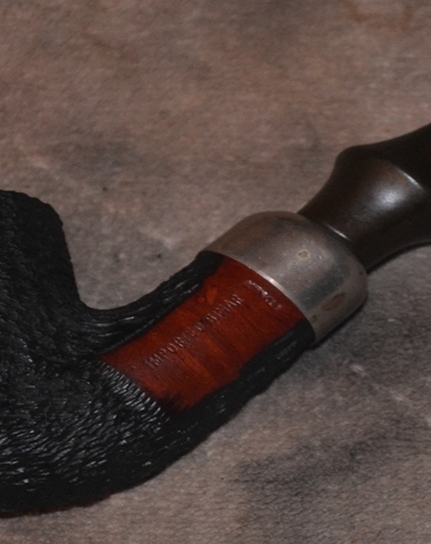
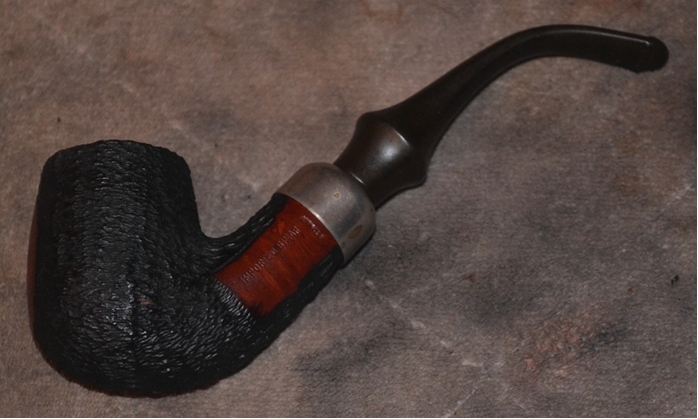
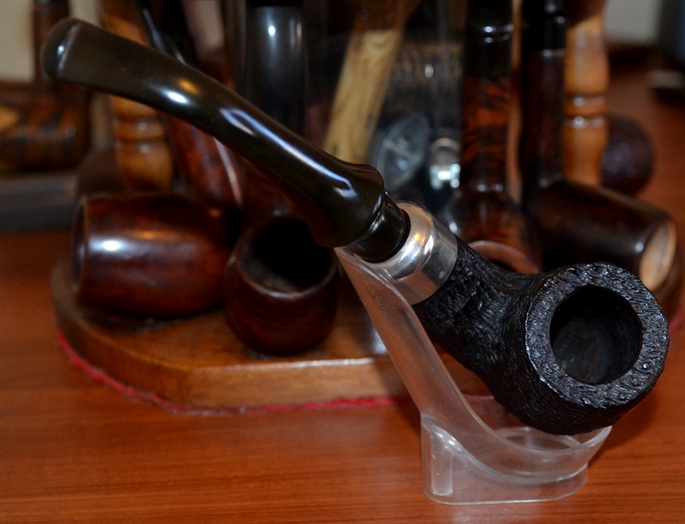
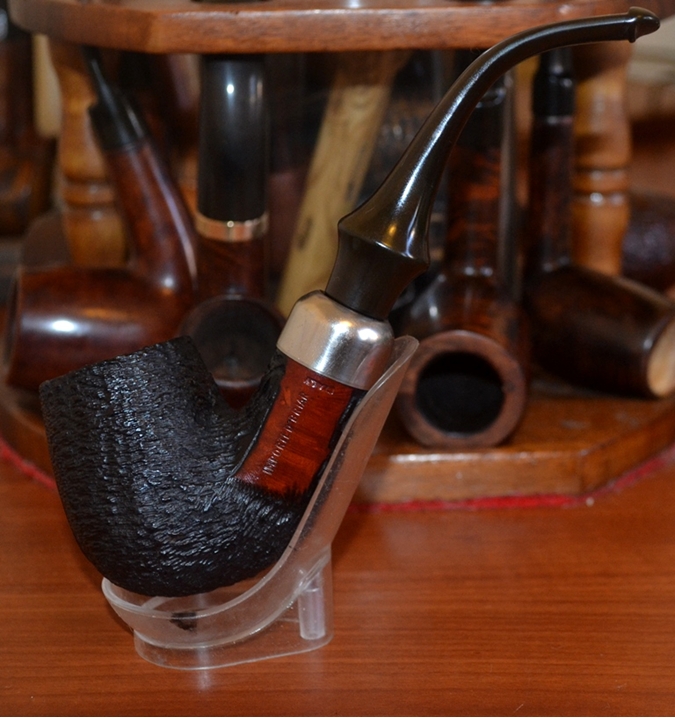
This splendid rusticated full bent billiard somehow overshadowed the other pipes in one of the many estate lots I purchased in rapid succession some months past, despite my inability to identify its brand in the group photo. Of course, being also a system pipe, the slim chance that it was a Peterson’s crossed my mind, but I was more than doubtful. When the lot arrived, I was eager to see who made it and set aside the others of known make and quality in a rush to examine the nomenclature of the mysterious new addition to my pipes to be restored for resale. I was surprised and intrigued to find it was a no-name Italian.It1 I began showing the unusual pipe to some of my friends more familiar with Italian crafters than I. The first of these was my mentor, Chuck Richards, as he was present at our tobacconist just after the package arrived when I tore my way past the over-taping that is the bad habit of so many shippers. His own exquisite pipe of the day in mouth, Chuck examined the specimen with the quick thoroughness of which he is capable, squinting and pursing his lips, but offered nothing by way of a comment, which in itself spoke volumes of his appraisal. In this way Chuck’s style is much like that of New Yorker Magazine reviews, which, if they have nothing at all good to say about a book, condemn the work to a brief blurb citing only its name, author and other trivial information.

Undaunted, perhaps or perhaps not with an undue sense of romanticism, I held onto my suspicion that the no-name bent billiard system was the reject of a well-known company such as Savinelli, Ser Jacopo, Castello or Velani – though I could not suspect a Romeo.

I can only add now that the bella pipa’s origins remain secret, but like Juliet in the Bard’s famous tragedy, I care not for its name.

Needing to know how this pipe smoked before the refurbish, I gave it a good initial cleaning with Everclear. I noted the ease with which the several pipe cleaners – that’s right, this pipe was so well cared for that I did not need to use half a pack of bristly cleaners just to test it with safety – passed through the stem and well-aligned shank opening and draught hole.It2 After letting it have plenty of time to dry out, I loaded a bowl and relaxed on my couch. Soon I drifted into abstracted musing.

By the time I returned to the present space-time continuum, a half-hour had passed. Faint drifts of smoke wafting upward, I realized the tobacco had not yet extinguished, yet the bowl, still in my hand, was cool. The taste of the tobacco remained fresh, without a hint of wetness to the draw. I reached for my tamper and, still puffing, found that less than a quarter of the bowl had turned to ash.

Whoever crafted this pipe, I knew, was a true artist by any name.

THE REFURBISH
Finished with my one and only enjoyment of this wonderful no-name, I turned it again in my hands for another look-over.It3

It4

It5

It6

It7 There was not a thing wrong with it that minimal cleaning and shining would not fix. The rim showed no burn. The rusticated majority of the bowl and shank was faded black from age. The deep red natural wood in two spots had but the faintest scratches. The stem was impeccable if lusterless. The steel band was in good shape. The chamber, even, was as smooth as almost any I have ever seen.

And so I began with a gentle ream of the chamber followed by a scouring using 320-grit paper to remove the mild buildup of cake. As always, I followed this by soaking a couple of small squares of cotton cloth in Everclear and washing away the carbon residue.

The next logical step was to retort the pipe. This, in fact, proved to be the step that took the most time (maybe 10 minutes), despite the previous owner’s excellent care but apparently frequent enjoyment of the bent billiard.

Following the retort, I gave the briar bowl and shank with the band, along with the stem, a bath with purified water. This revealed the minor scrapes on the patches of natural wood, which I removed with progressive increases of micromesh 1500, 2400, 3600 and 4000. I made the band sparkle with a light buff of super fine steel wool, leaving no scratches, and used the same progression of micromesh on the stem.

And that was all, other than buffing the stem with red and white Tripoli and White Diamond, and then the bowl and shank with the last of the Halcyon II I had on hand.It8

It9

It10

It11

It12

It13 CONCLUSION
The strain of my well-known pipe acquisition disorder almost proved too much to overcome with my intense and somewhat inexplicable desire to add a no-name Italian pipe to my collection that already overflows the boundary of a stand-up case with shelves of excellent examples of some of the best brands made. But such is the obsessive-compulsive beast of P.A.D. that the beauty of the pipe itself and the nagging doubt as to the mere possibility of a greater pedigree proved to be a great trial.

The tribulation ended with the wise arbiter of such matters, whence its powers are derived no serious pipe collector can say, granting me at least a reprieve. With every ounce of willpower I could summon, I listed the No-Name Italian Rusticated Full Bent Billiard for sale.

A glooming peace this morning with it brings;
The sun, for sorrow, will not show his head:
Go hence, to have more talk of these sad things;
Some shall be pardon’d, and some punished:
For never was a story of more woe
Than this of Juliet and her Romeo.

— Id., Act IV, sc. 3

Giving a Large No Name Imported Briar Cutty a New Look


Blog by Steve Laug

In the box of pipes that I was gifted was a large cutty shaped pipe that looked to be in pretty decent shape. It appeared that it did not need a lot of work to bring it back. The finish looked pretty good with birdseye on the sides and cross grain off to one side of the front and back of the stem. The grain followed a similar pattern on the shank. The bottom of the bowl had some mixed grain patterns. The stem was not oxidized. The bowl had a minimal cake in it. The only issue appeared to be the outer edge of the rim. On the back side it was very beat up and the briar was broken and nicked. All of this is what I assumed when I took it out of the box and took a closer look at the pipe.Cutty1
Cutty2

Cutty3

Cutty4 The pipe is large, at least for me. It is seven inches long from button to the front of the bowl. The bowl is 2 ¼ inches tall. The chamber is ¾ inch in diameter. Proportionally it is a well made pipe. There are no fills in the briar. There are no sandpits. But there were issues! The bottom of the bowl had been flattened but the flattened portion was not centered on the bowl and shank bottom. It was off to one side. This gave the bowl and pipe a distinct cant to the right. The damage to the rim was deep on the back outer edge. The stem had tooth marks on the top and bottom sides next to the button. All of these would need to be addressed in a restoration of this pipe.Cutty5

Cutty6

Cutty7 I reamed the bowl with the PipNet reamer. I seem to default to this T handled reamer as first choice in most of the refurbishing that I do. It is an easy tool to use. The T handle is small enough in diameter at the junction of the cutting head that it can be pushed deep into the bowl which was necessary with this pipe.Cutty8 Since I was planning on topping the bowl to repair the rim damage I decided to remove the finish from the pipe so that matching stain would not be necessary. I wiped it down with acetone on cotton pads. The finish dulled but it did not completely come off the bowl. It has the feel of a Urethane coat. Once I topped the bowl I would deal with that issue.Cutty9

Cutty10 I set up my usual topping board with 220 grit sandpaper. I would need to remove quite a bit of briar from the surface of the rim to take care of the damage. I also found that the cant on the bowl and shank left me with a canted bowl top as well. I sanded the bottom of the shank until the pipe sat upright and then had to work on the rim to make it horizontal without a slant. As usual I collected the briar dust for later use on fills and repairs.Cutty11

Cutty12

Cutty13

Cutty14

Cutty15

Cutty16 I used a folded piece of sandpaper to smooth out the inner edge of the rim and lightly bevel/chamfer it and remove the charring.Cutty17

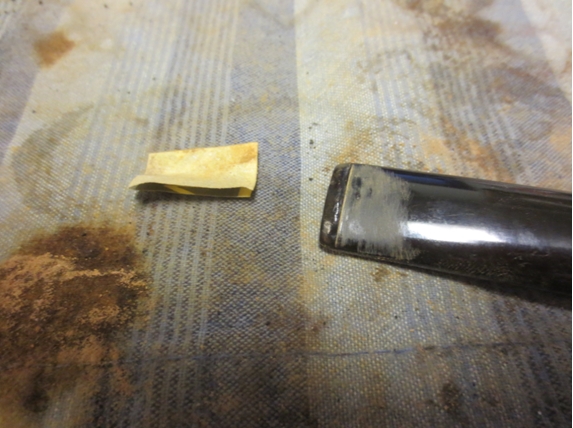
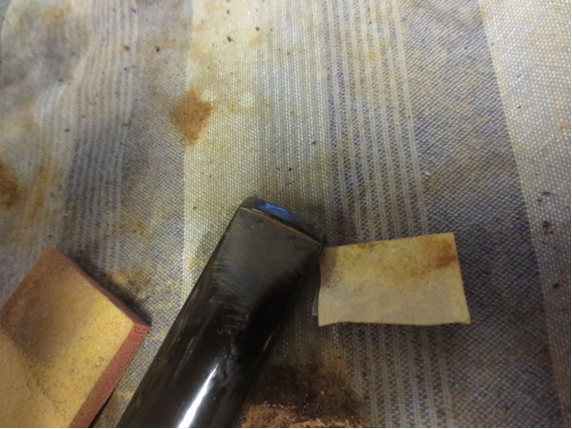
Cutty18 I sanded the bowl and shank with a medium grit sanding sponge to break through the urethane finish. I wiped it down further with acetone until it was gone. I decided to drop the bowl in my alcohol bath to soak while I worked on the stem. I have found that the stain darkened alcohol bath works really well to give some patina to briar once the finish has been opened up. For such a large piece of briar the bowl was surprisingly light weight and it floated on the surface of the bath.Cutty19 I sanded the bite marks on the stem with 220 grit sandpaper until they were removed. I followed that by sanding the stem surface with a medium and a fine grit sanding sponge to minimize the scratches in the stem.Cutty20

Cutty21

Cutty22

Cutty23

Cutty24 I rubbed the stem down with Obsidian Oil and set it aside. I took the bowl out of the bath. The finish had completely disappeared with the soak and the entire bowl, including the rim had picked up a nice patina. The grain just popped in the clean surface of the bowl. It would be easy to stain and polish.Cutty25

Cutty26

Cutty27

Cutty28 The colour of the topped rim matched the bowl colour perfectly – in fact it matched so well that I was unsure that I would even stain it. The next photos show the bowl as it stood after the soaking and drying. I love the way that the grain stood out.Cutty29
Cutty30

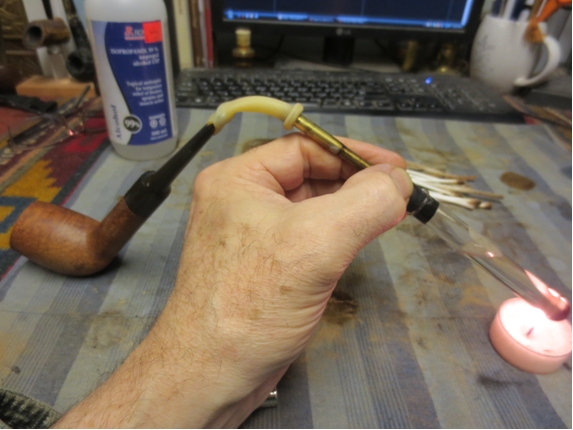
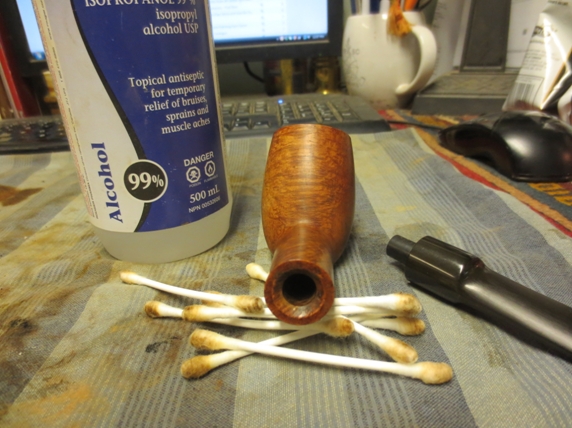
Cutty31 I ran a few pipe cleaners and cotton swabs soaked in isopropyl alcohol through the shank to clean it out. I was surprised with how dirty the shank was. The buildup of tars and oils was heavier than I expected. I set up a retort and boiled alcohol through the pipe until the alcohol came out clean.Cutty32

Cutty33 After the retort I used a few pipe cleaners and cotton swabs to remove the alcohol and remaining tars from the shank.Cutty34 With the bowl and shank clean and ready to go it was time to finish the stem. I sanded it with micromesh sanding pads – wet sanding with 1500-2400 grit pads and dry sanding with 3200-12,000 grit pads. I rubbed the stem down with Obsidian Oil between each set of three pads. When I finished sanding with the 12,000 grit pad I gave it a final coat of oil and let it dry.Cutty35

Cutty36

Cutty37 I gave the bowl a light coat of olive oil to highlight the grain. I did not stain the bowl as I really liked the natural look of the briar. I gave it a buff with White Diamond and did the same with the stem. I then gave the pipe several coats of carnauba wax and a buff with a soft flannel pad. I took the photo below to give some idea of the size of this pipe. It is sitting next to the Kaywoodie Prime Grain Lovat that I finished restoring recently.Cutty38 The finished pipe is shown below. The first four photos show the overall look of the pipe. The last three photos give a close up view of the bowl and stem. The pipe is like new. The new finish is far better than the one that came with the pipe. The look of the grain and the way the bath and olive oil highlights it is quite stunning. This pipe will make someone a great addition to their rack and should be a great smoking pipe. It is too large of a pipe for me at this phase of my pipe smoking. I am much more drawn to smaller bowls and lighter pipes, but that being said, the grain on this one makes it very tempting.Cutty39

Cutty40

Cutty41

Cutty42

Cutty43

Cutty44

Cutty45

A Restorfurb of a Doc Watson SR Billiard


Blog by Troy Wilburn

I have read about some of Troy’s refurbs on Pipe Smokers Unlimited and on the Dr. Grabow Collector’s Forum so when I saw his work on this old Doc Watson and the unique stamping it had I wrote and asked him if he would be willing to post it on rebornpipes. It is a pleasure to have some of Troy’s work here. He did an amazing job on this particular old timer with the distinct purpose of trying to keep the original finish as much as possible as he worked on it. Thanks Troy for taking the time to send me this blog. I am glad you were willing to post it here. Welcome to rebornpipes as one of the contributors. It is great to have you here. You have shared not only a great restorfurb but some tricks that I will have to use in the future. We would love to read about and look at more of your work. Thank you. – Steve
Hi everyone, my name is Troy Wilburn and I live in rural Virginia near Roanoke. I have been a dedicated pipe smoker for a little over a year now and refurbishing my own pipes for about 8 months. I mostly hang out on the Dr. Grabow Collectors Forum. My collection is mostly American made pipes. My favorite shapes are pokers, billiards and Canadians. Pokers are my most favorite with nearly 40 of them last count. I have kind of a tight budget to work with on my pipe smoking, pipe purchasing and pipe refurbishing. That’s why I got into refurbishing my own pipes. I’m always trying to find a bargain on pre 50s pipes as they are my favorite. Linkmans and Yello Boles are my most common pre 50s pipes with three Marxman’s thrown in. I do have a hard to find Marxman poker that is one of the prides of my pipe collection and is 100 % original finish.
I have browsed Reborn pipes for information and refurbishing info for a while.

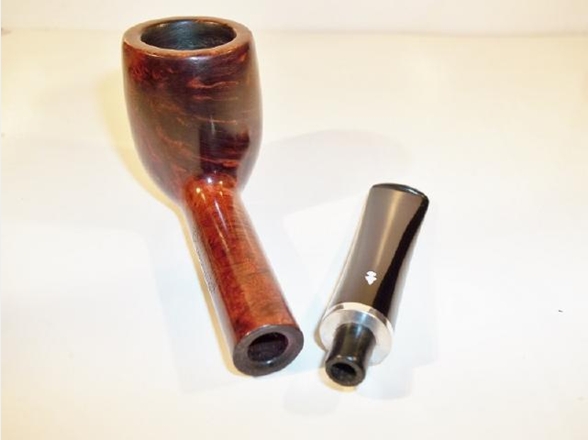
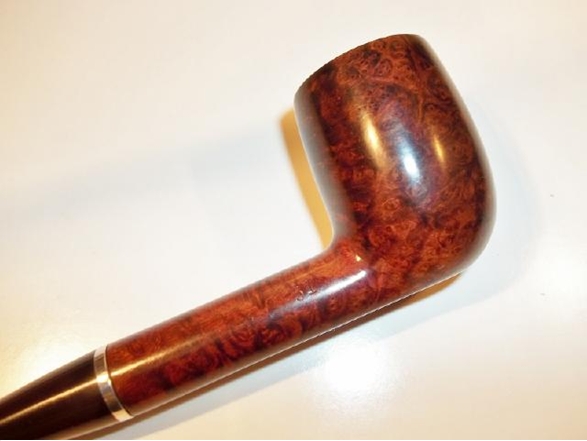
This is my latest one and the pipe that got me here. It’s a Doc Watson pipe shape #51. I know from researching this pipe that Steve had restored a couple so I thought he might know some info on the odd stamping’s mine has. He invited me here to post my work on this pipe.

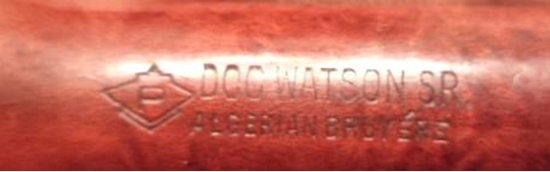
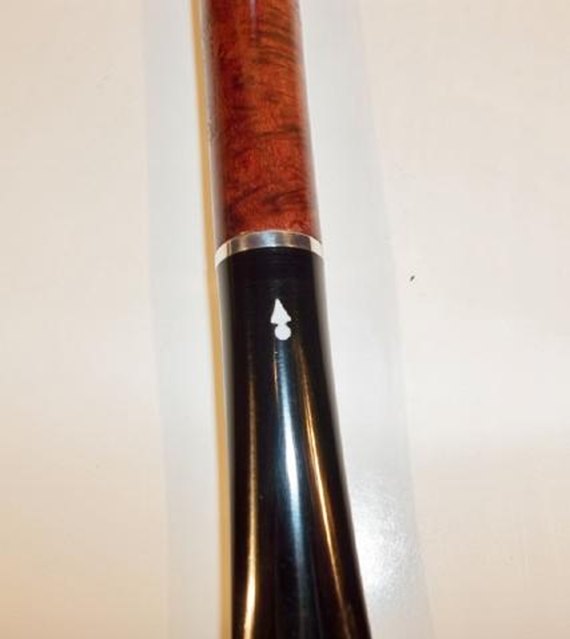
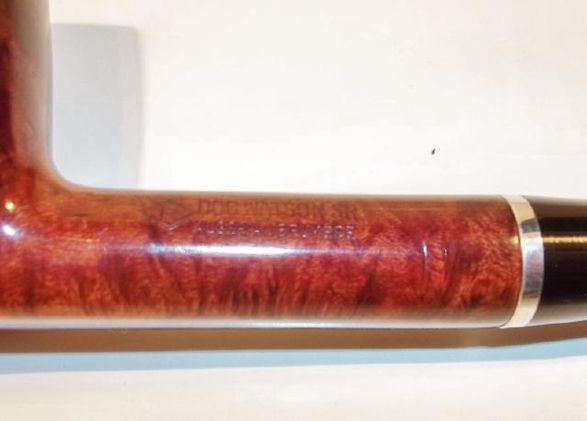
I got this one and an early Yello Bole apple from a woman who got them at the same estate sale. They both came from the same owner. The Doc Watson’s were made by KBB and though I have seen a few, mine has odd stamping of a P in a shield and mine has the name SR applied. The others I’ve seen are stamped just plain Doc Watson and with the KKB in a cloverleaf.Troy1 I know this is a KBB as it has the same shape number as KBB, YB and KW charts. The stem has the same logo as the KBBs. KBB stamped Watson’s are all marked Italian Bruyere not Algerian like this one is. I’m guessing this pipe is dated between 1936-1940 as it has the Bruyere stamp but lacks the four digit code.

Pipe as I got it… Troy2

Troy3

Troy4 After a reaming and a good cleaning I noticed that it had some discoloration spots from heat and the finish was all but gone on these spots. Also there were lots of scratches on the surface and some were deeper. So instead of stripping the whole thing I decided to try and blend in the spots with the original finish, to keep it as original as possible.

So after sanding the bowl down with some 600 grit sandpaper very lightly, being careful of the stampings and the stem with 1000 grit, I applied a matching dye that I mixed up to the spots.Troy5 The dye pretty much only stuck to the bare finish parts and the excess rubbed off after I wiped it with a rag. After three coats I applied some mineral oil. I had to file out some tooth marks on the stem and button and then wet sanded the stem.

Below is a picture of the bowl and stem back together and ready for some base wax.Troy6 After waxing the pipe late last night I saw some file marks still visible and the spots were not quite as well blended in as I would have liked. It was more visible in person that it is in the pic shown here.Troy7 So I decided to back up and punt. After some sleep, morning caffeine and some Vitamin N from some Haunted Bookshop I was ready to go at it again. I sanded the whole pipe and stem with mineral oil and 1000, 1400 and 2000 grit sandpaper. Then I applied a thin coat of red sharpie as toner and buffed off the excess with a loose pad. It left just a red tint and helped blend the dye with the original finish.Troy8 I lightly waxed the bowl to seal it in. The pipe is about 70-75 percent original finish with some slight blending and tone work. It still has some minor dings around the stampings but I didn’t want to damage them or buff them out any more than I could help. I guess you would call it a Restorfurb.

After several more coats and buffing…Troy9

Troy10

Troy11

Troy12

Troy13

Troy14

Troy15

Troy16

Troy17

Troy18 Sadly the stinger is missing on this one. The Doc Watson pipes have a pretty near stinger. Here is a pic of one that I got off the web.Troy19 I’ll try to find one for it but it may be difficult as these are not that common of a pipe and they were only made for a short time.