
In my gift box from Jim there was a small pipe tool in the bottom of the box. It has an amberoid handle that is flat and very translucent. The amberoid material has flecks and pieces in it that are almost like real amber. It has a beautiful handle. The handle is flat and thin – the same thickness as the blade on the spoon end of the tool. It is very lightweight. The spoon end and shaft are chrome and polished up very nicely. The blade is fixed in the handle. It works amazingly well as a tool to clean out dottle in a bowl and also to gently scrape estate pipes that I am cleaning up. The spoon end is curved and fits against the curved wall of the bowl perfectly. The edges are thin but not sharp so it is not a scraper in the true sense of the word but works on soft cake and the crumbly cake in some estates.
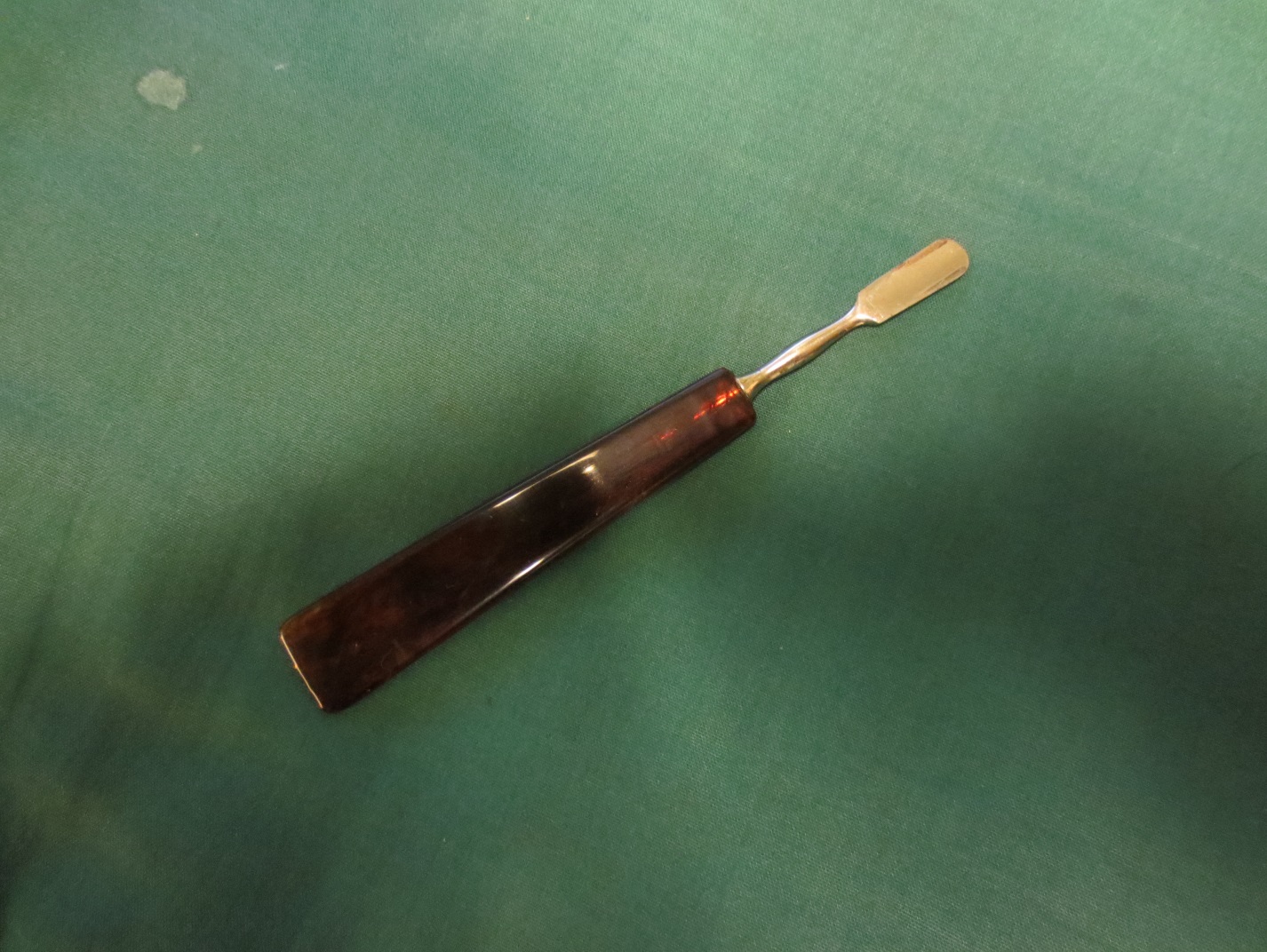
Top side of the scraper
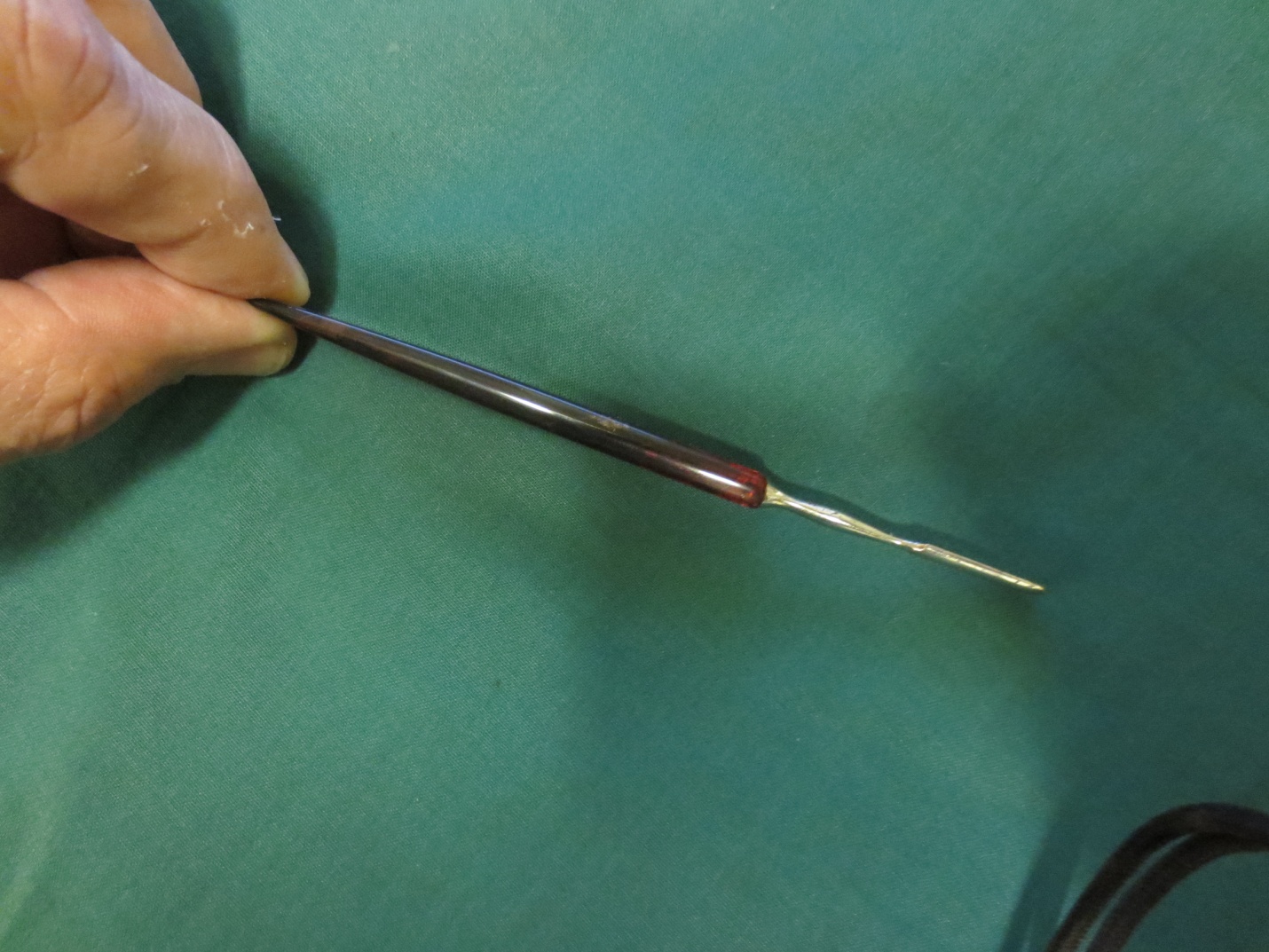
Side view of the scraper with top up
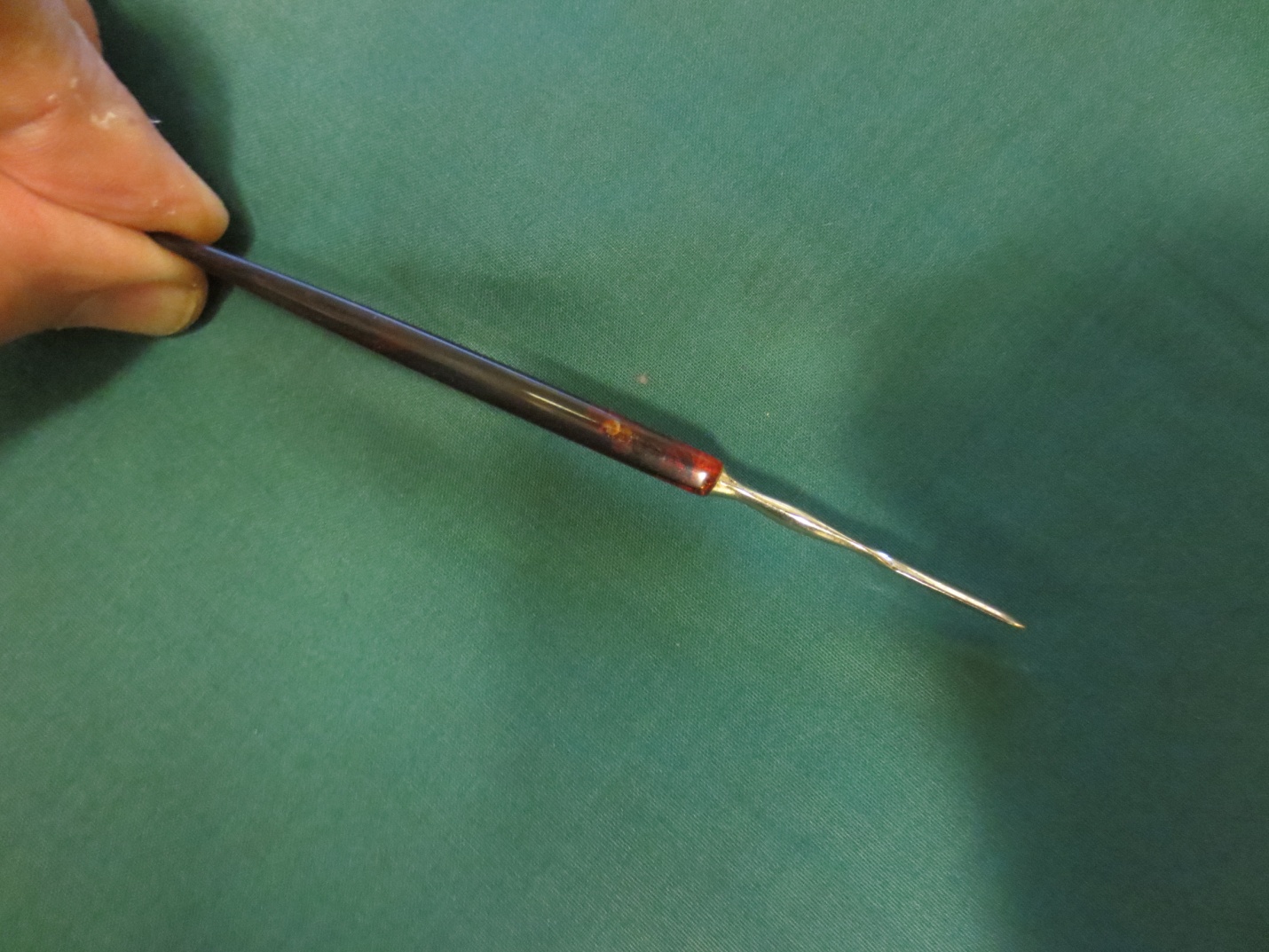
The handle had a few damaged spots or nicks along the edge that needed to be repaired. They were rough to the touch and I was afraid of them breaking further. I cleaned the handle with alcohol on a cotton pad and then repaired the nicks with clear super glue. I sanded the glue smooth with 220 grit sandpaper and then a medium and fine grit sanding sponge. I finished by sanding the handle with micromesh sanding pads – wet sanding with 1500-2400 grit pads and dry sanding with 3200-12,000 grit pads. I buffed the handle carefully with White Diamond and then rubbed it down with Obsidian Oil and gave it several coats of carnauba wax to polish and protect it.
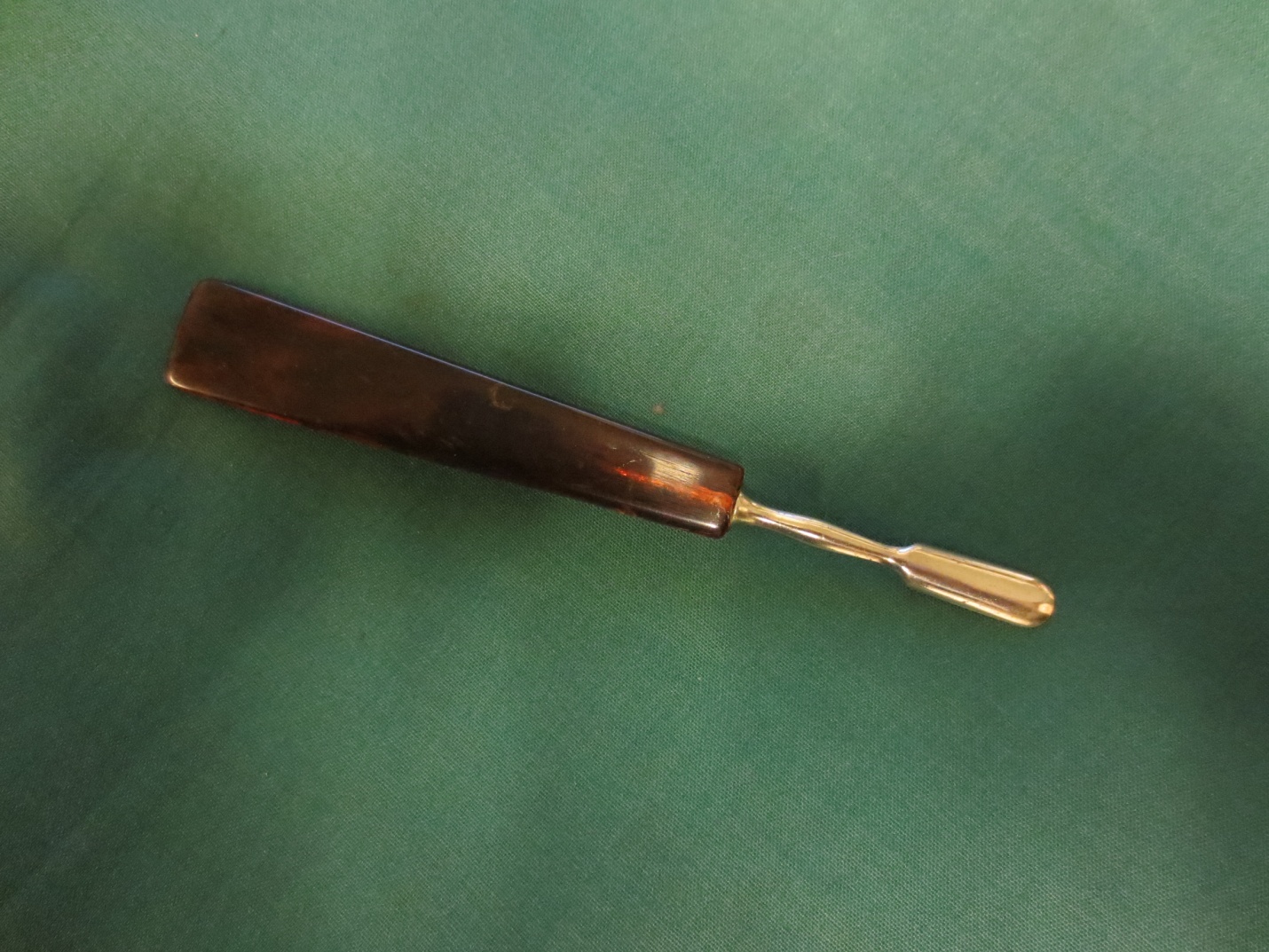
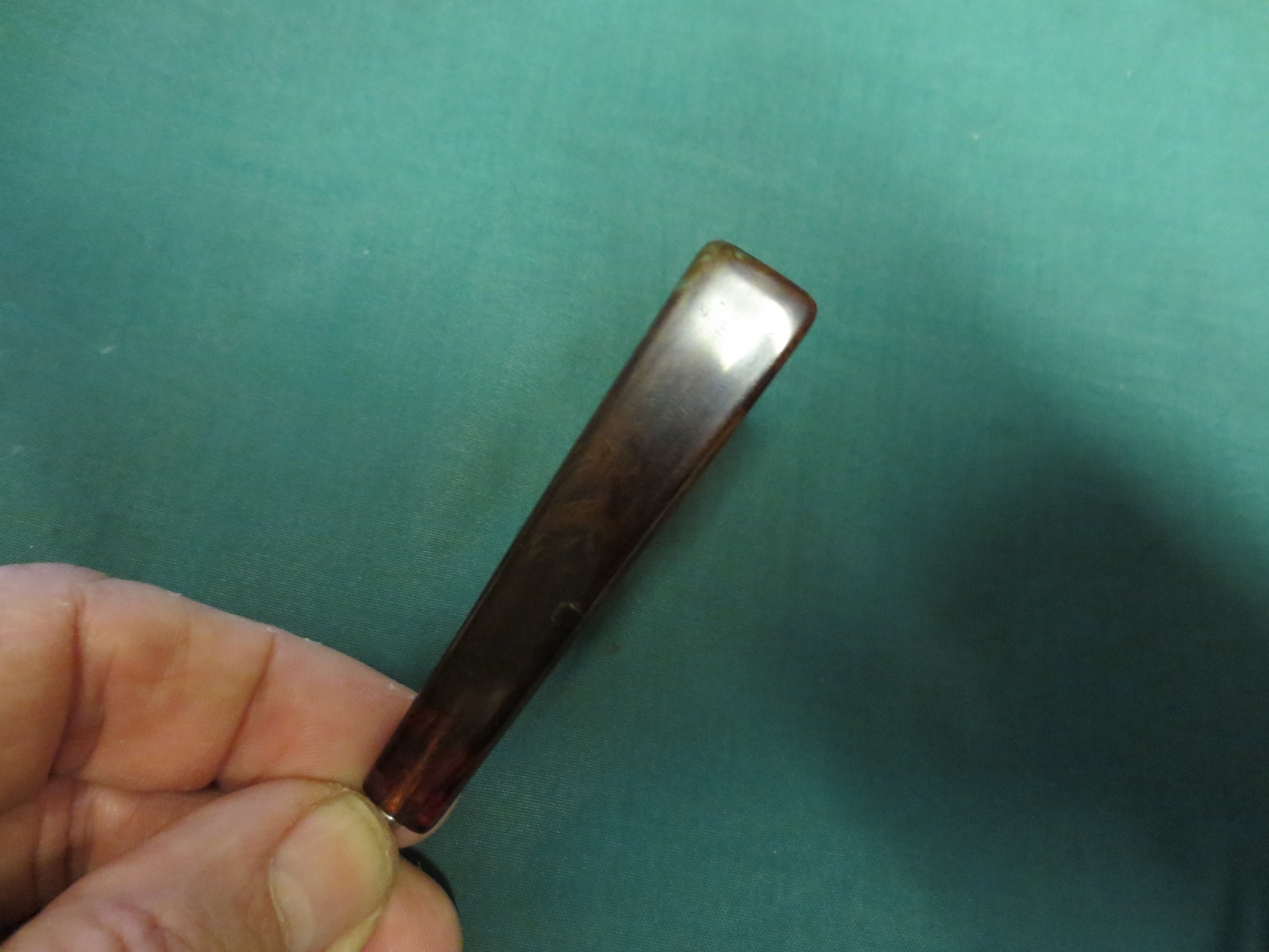
view of the handle of the scraper
The final photo below shows the handle with light shining through it. The amber colour and dark flecks give it a very attractive look. The tool has already found its way into my refurbishing tool kit and I use it regularly now to clean out the bottom of a bowl that I have just reamed. I also have used it to apply pipe mud and find the rounded back of the spoon works perfect to press the mud into the sides and bottom of the bowl.
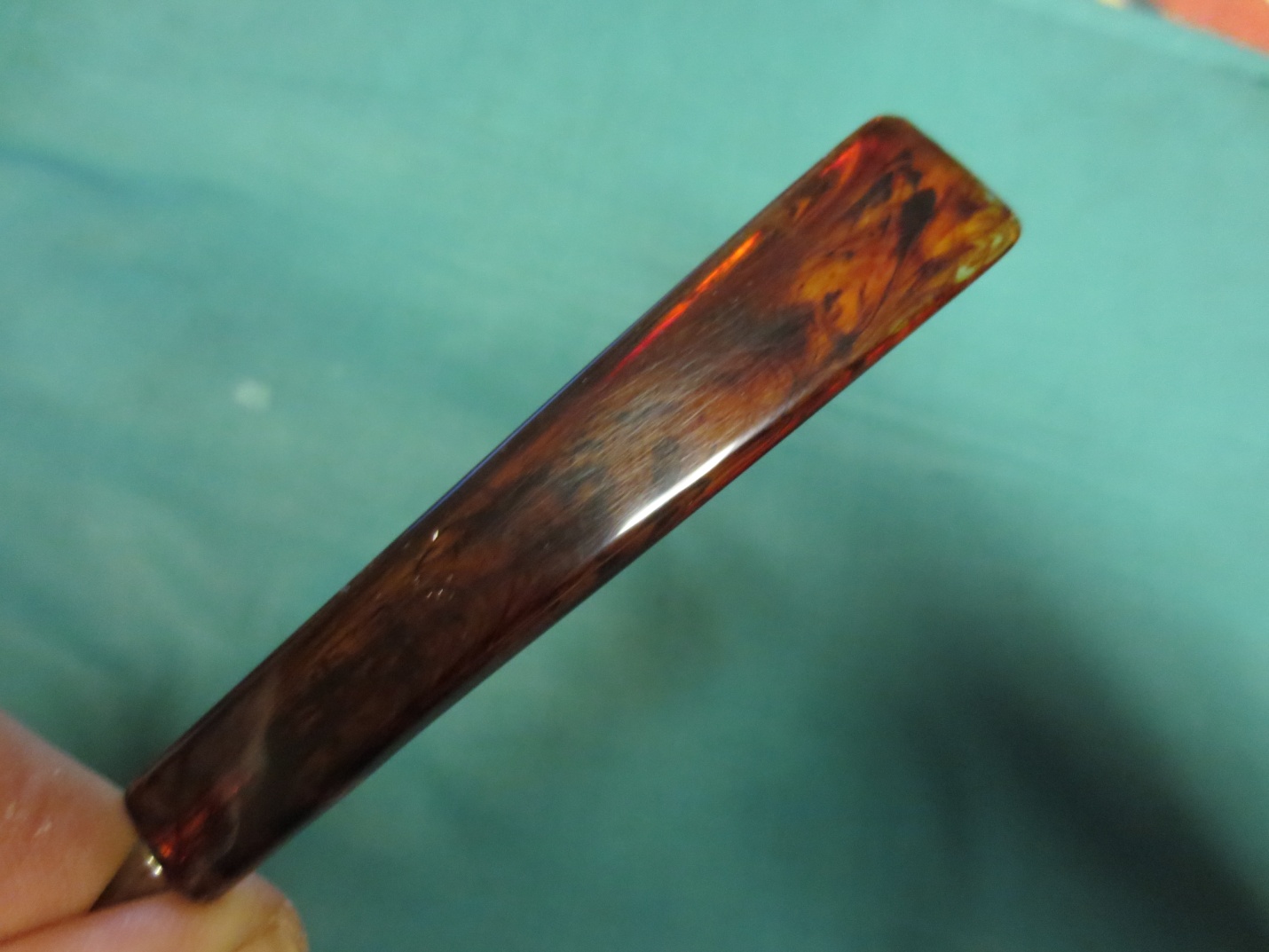
close up view of the handle of the scraper
I have no idea if the tool was originally designed to be used with pipes or not but it certainly works for me and will remain a usable tool for as long as I do refurbishing work. Thanks Jim.
 rebornpipes
The tool in question is part of a manicure set.
LikeLike
Thanks Bertie. I had no idea
LikeLike
I think that is correct!
LikeLike
Mrs. Upshall confirms this, a cuticle tool.
LikeLike
Thank her for me Al! 😉
LikeLike
I should have asked my wife or daughters they would have solved the mystery before i wrote about it!
LikeLike
I think so too Al. But let me tell you it works really well cleaning out a bowl and scraping the sides and bottom. It is also great in packing pipe mud.
LikeLike
– yes, this is very interesting tool. The metal part may serve as sort of spatula, useful for applying small quantities of powdered material, like spatulas used in laboratories or in pharmacies.
And this handle; well, perhaps it is just a spatula of higher sort with nice handle, but if this handle is rounded on the end and the “amberoid” material is rigid/strong enough, perhaps we are seeing the old fashioned tool used in old days for artistic bookbinding; the metal spatula part would be so useful for taking precisely measured small parts of powdered glue (dextrine) to be diluted with few droplets of water; the handle would be a perfect example of burnisher useful for pressing/burnishing soft materials like paper, leather etc.
It is just my guess…
LikeLike