
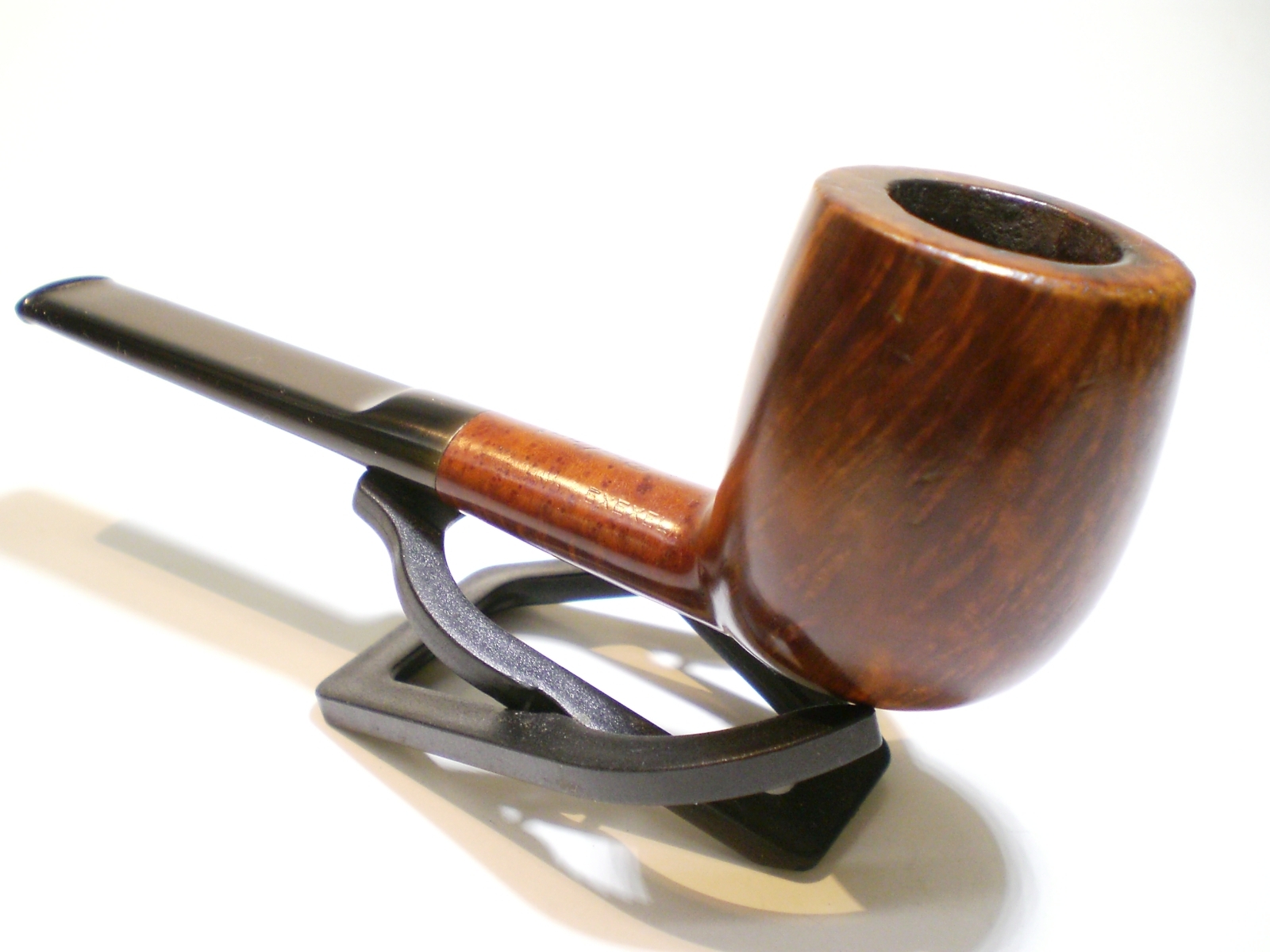
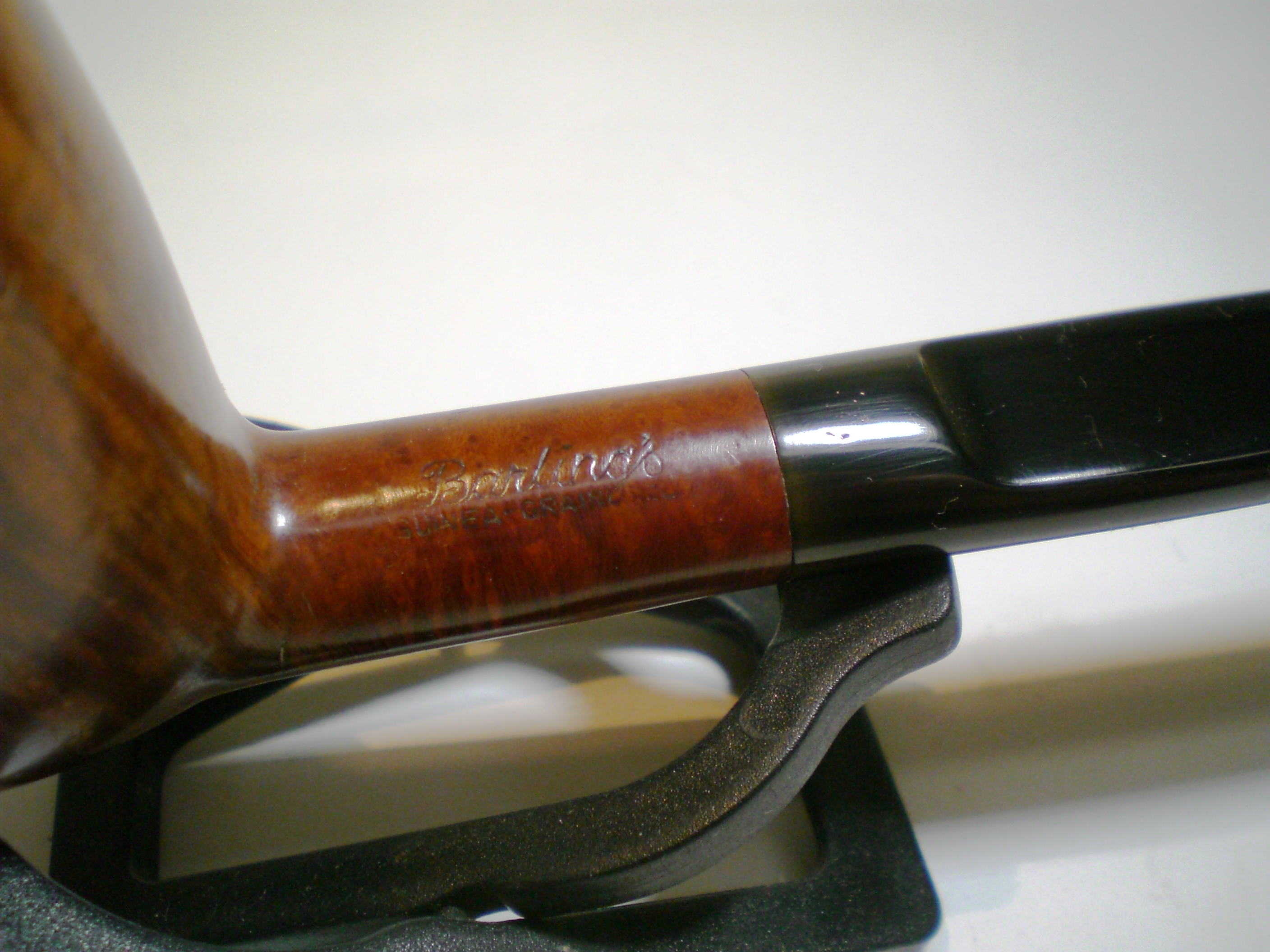
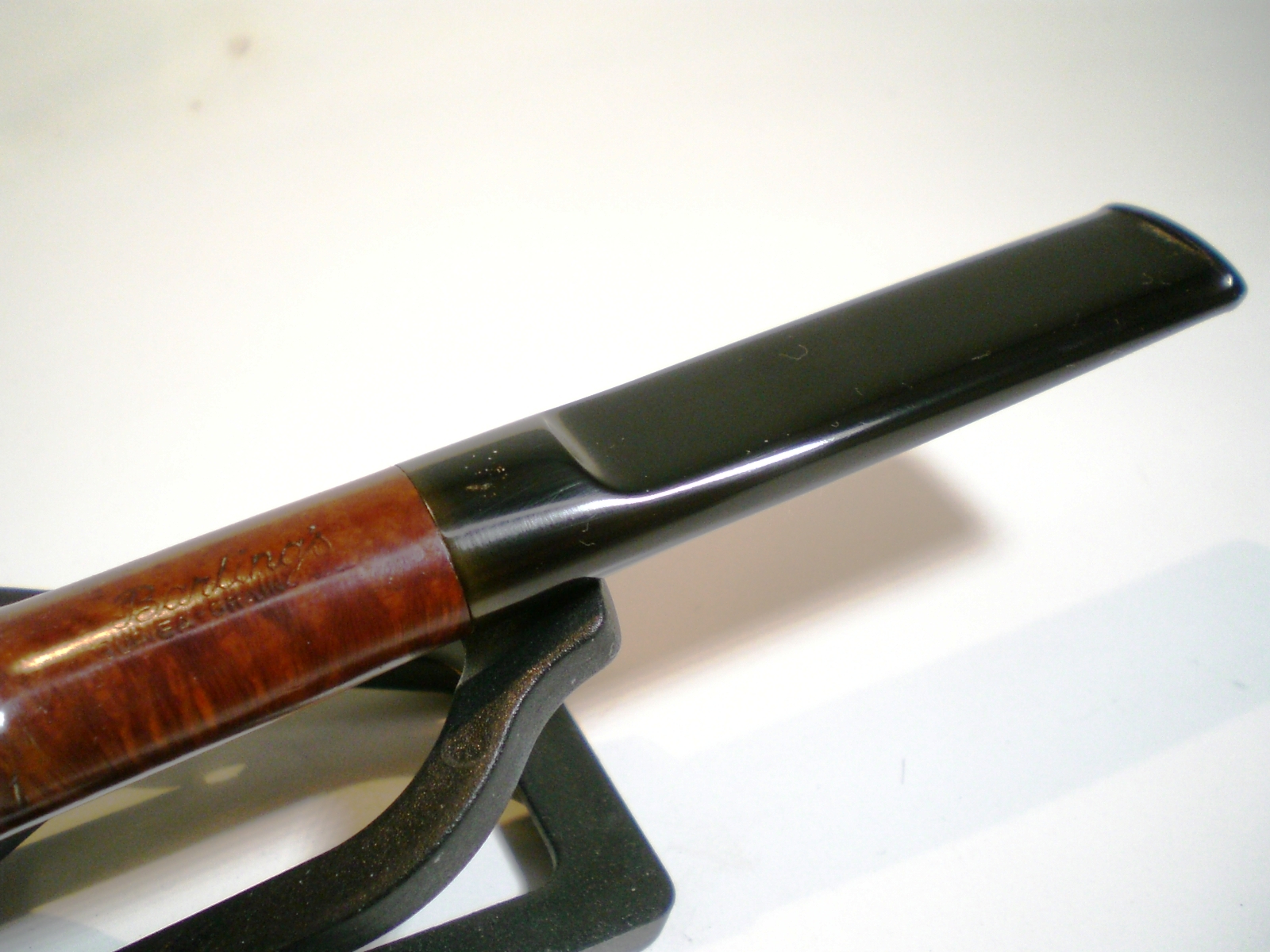
A member on the Pipe Smokers Forum recently acquired this Barling’s “Guinea Grain” pipe and I jumped at the opportunity to restore it for him. I don’t currently own a Barling’s pipe, but recent posts by brand authority, Jesse Silver, had piqued my interest. In conversation with Jesse about the pipe, he shared that “Guinea Grains are a higher grade designation and distinctive for several reasons. They’re the only Family Era pipes with a cursive “Barling’s” logo and they’re the only pipes that Barling also used oil in the curing process to bring out the contrast of the grain.” I enjoyed learning more about this fabled British pipe maker as much as working on it. I need to thank Jesse for his input and information. It is really wonderful to have such a brand authority available for comment. Since the pipe is stamped “Barling’s” in the possessive, Jesse dates the pipe to the 1940’s as a pre-Transition piece. The pipe is stamped EXEXEL, a size grade started in 1940. It also has a very faint “Reg” stamp and the letter “E”. Jesse tells me this is most likely the remnant of EB WB (Edward and William Barling), whose initials form the Barling sterling makers stamp and were used as part of the company nomenclature. Their initials were used on 1940’s era Guinea Grain pipes.
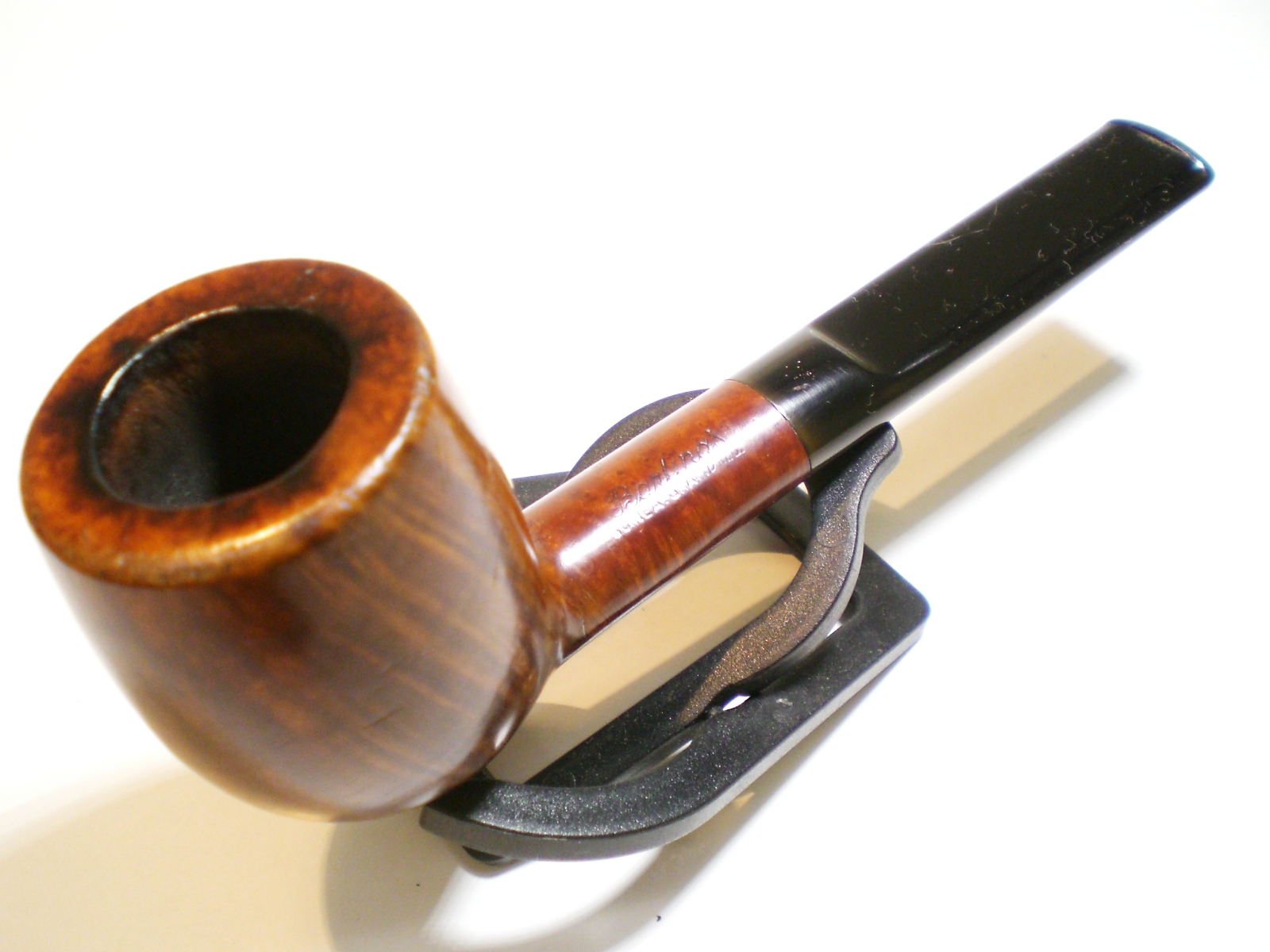
The pipe as I received it.
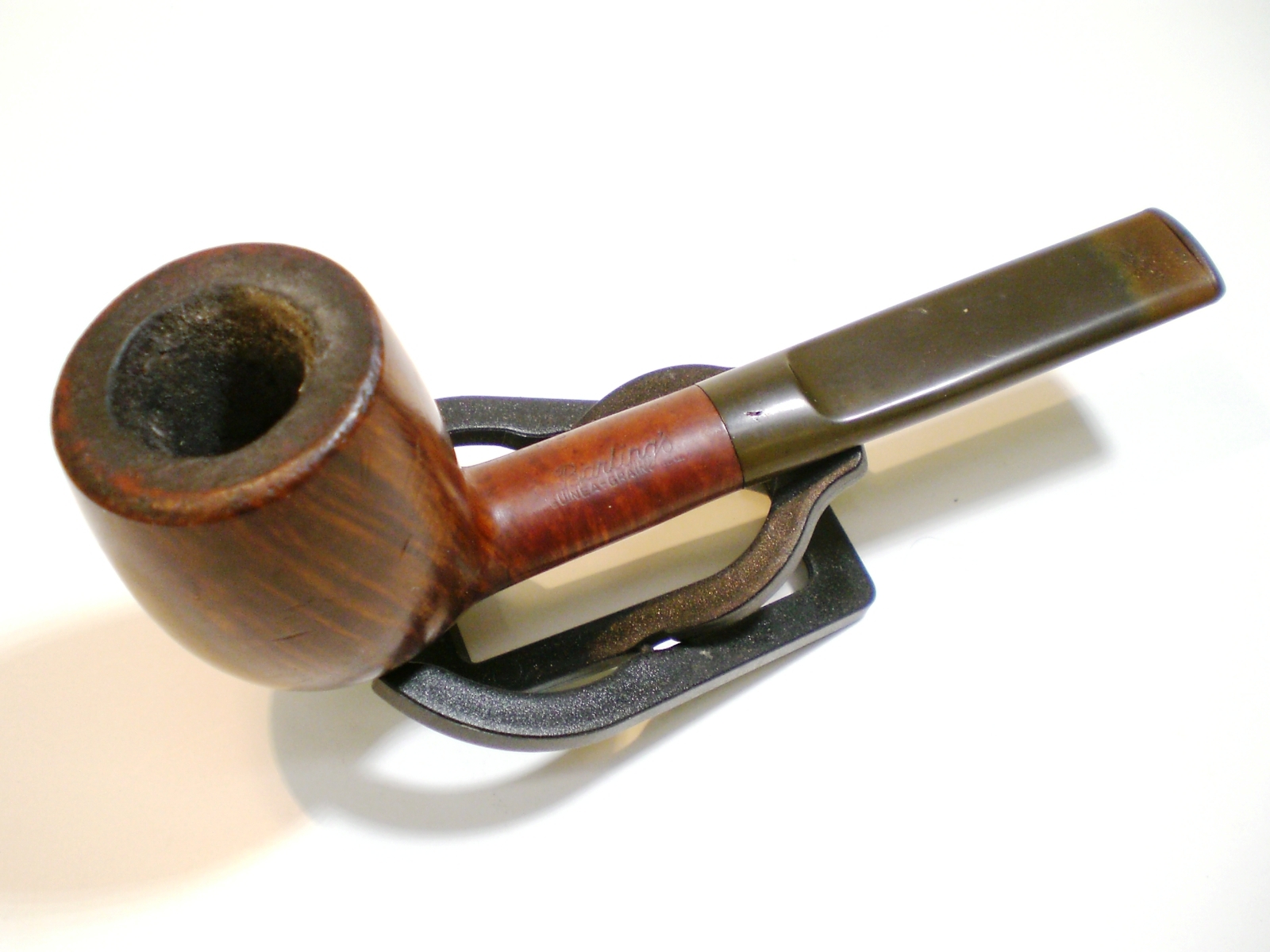
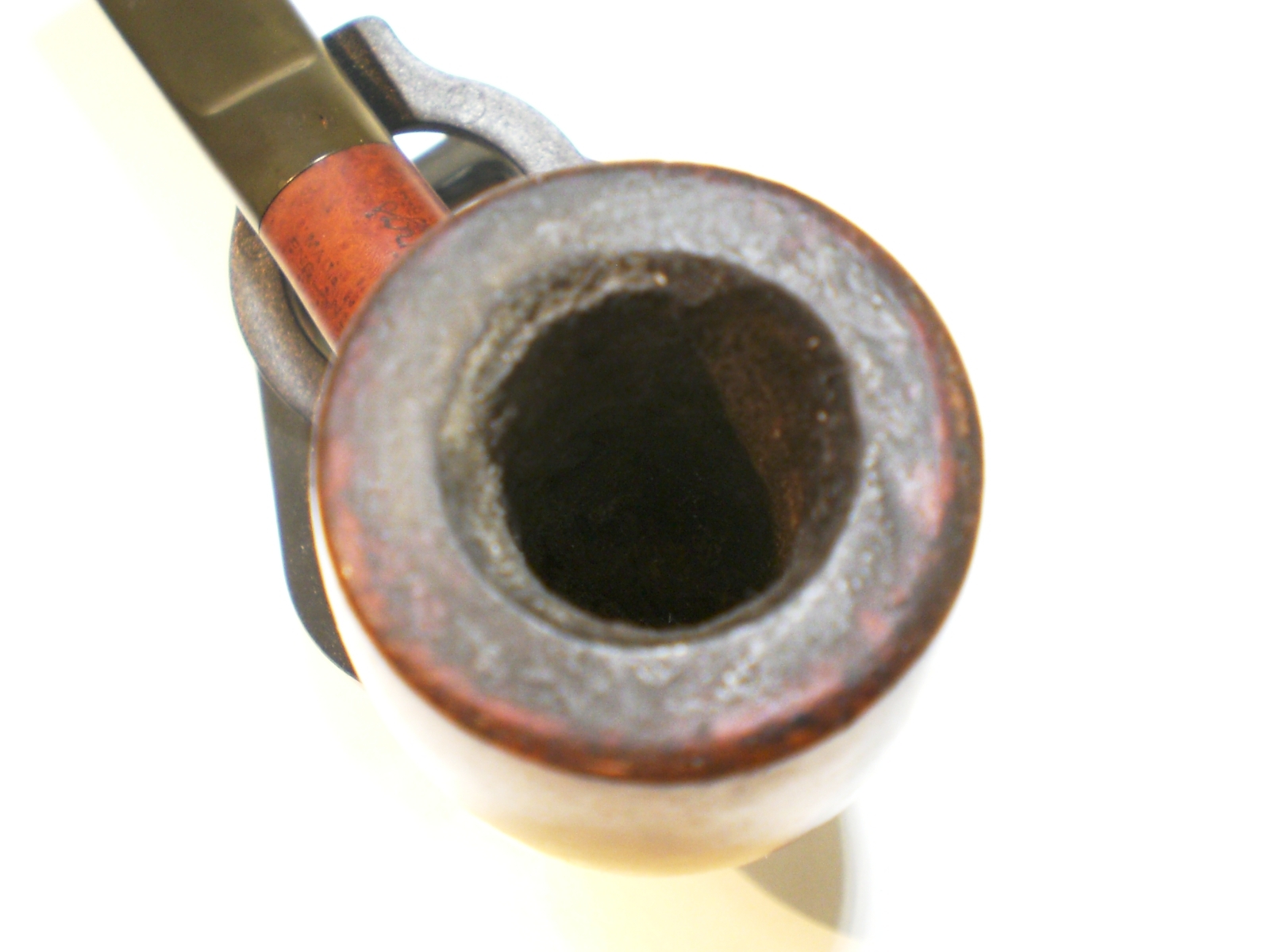
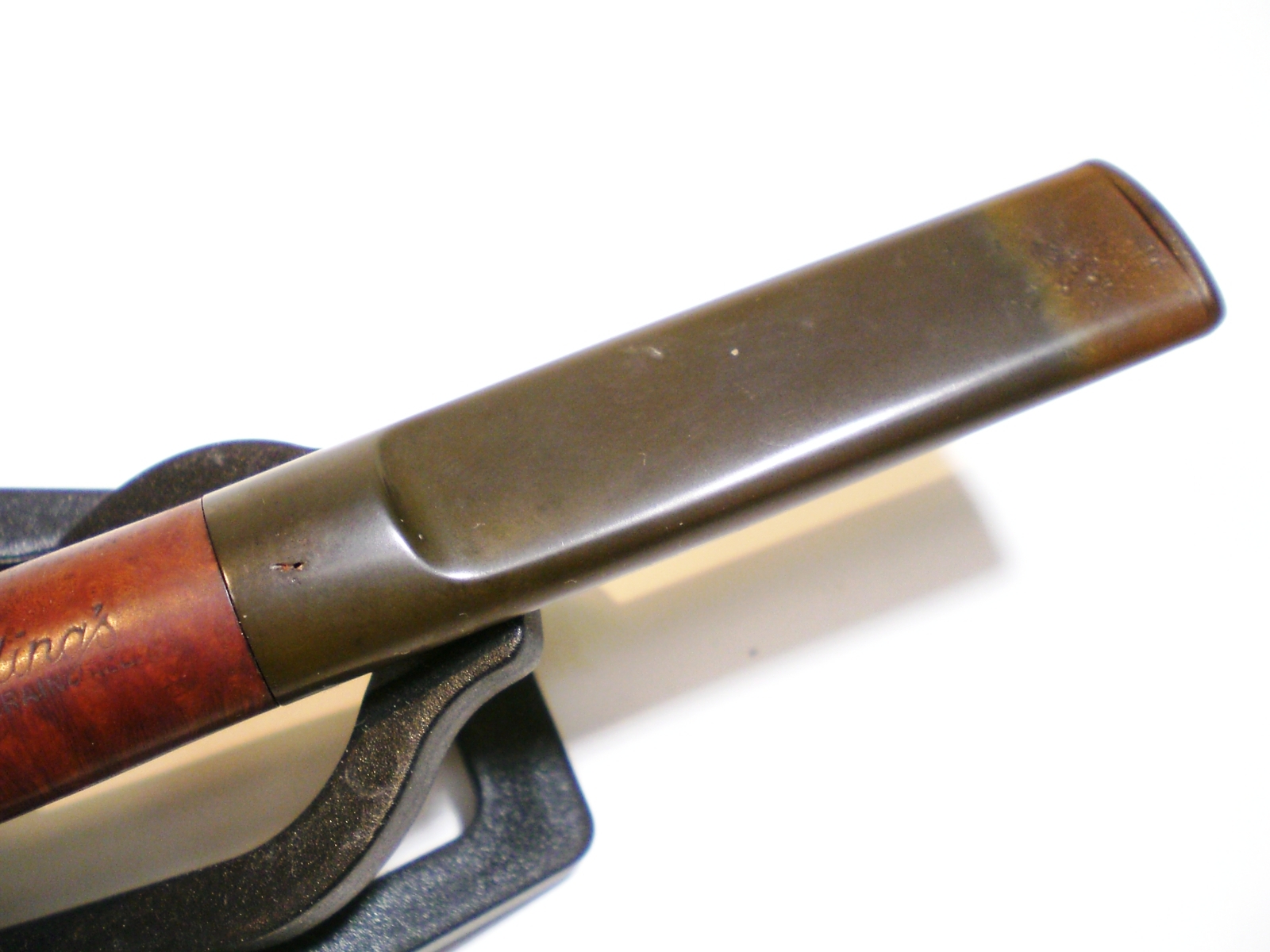

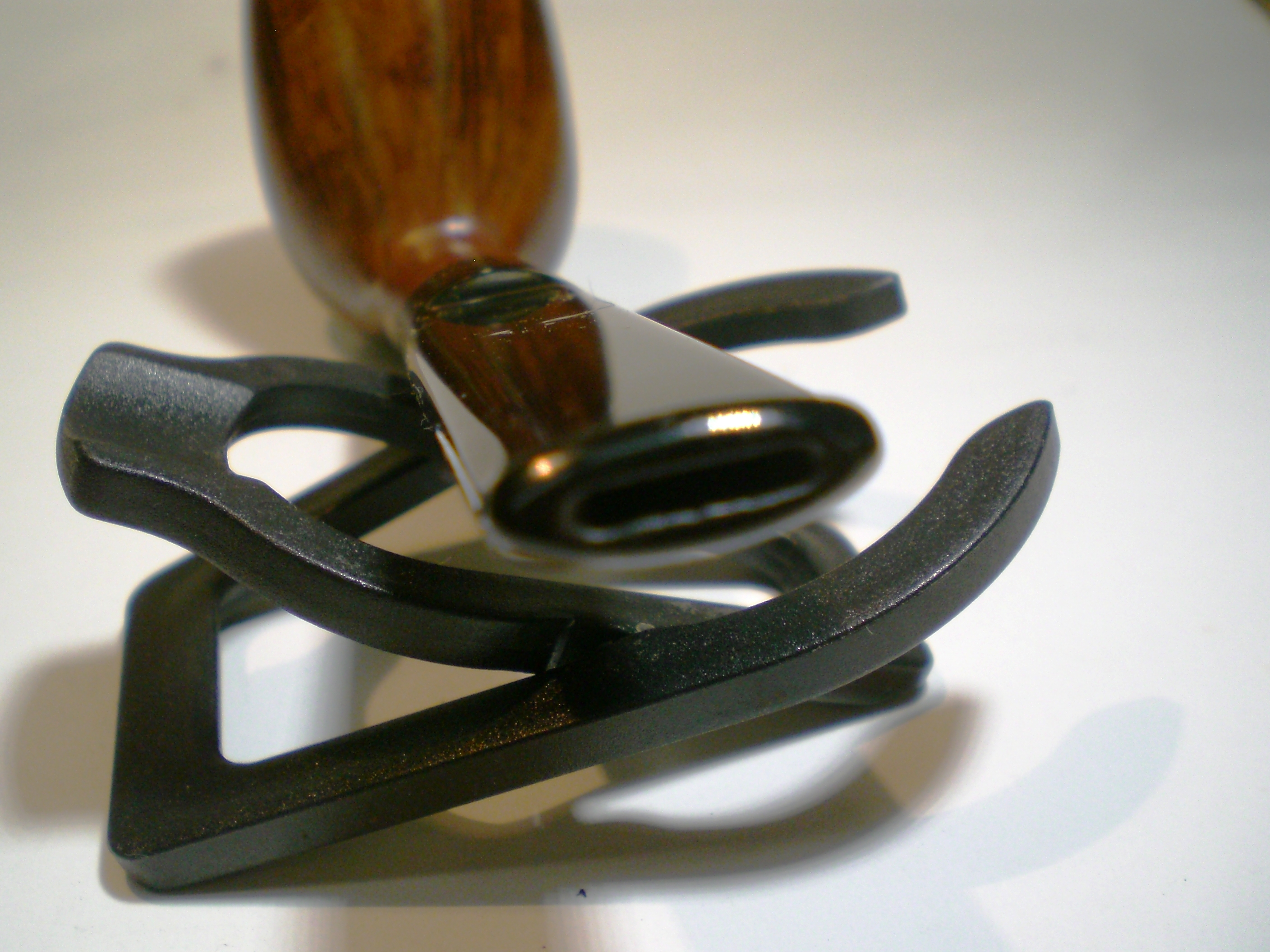
When the pipe arrived, it had heavy tar build-up on the bowl top and many dings and cuts in the briar. The stem was in relatively good condition with only surface teeth abrasions and no dents. Curiously, there was what appeared to be a pinhole near where the Barling’s Cross stem logo would be placed. There was no remnant left of the logo, even under magnification. At first, I thought the stem might be a replacement, but the button ends appears to have the distinctive ovalized and funneled button.
The bowl had a heavy caked which was reamed and then soaked with alcohol and sea salt. While the bowl was reamed a little out of round, the interior of the bowl was in relatively good condition. The bowl top had a number of scars and dings. I have been using Mike Gluklers method of soaking the tar covered bowl tops in just a millimeter or two of distilled water to soften the build-up. I removed it with a cotton cloth using the distilled water. There is some rim darkening, but I didn’t want to sand the rim and restain and think the patina fits the pipe
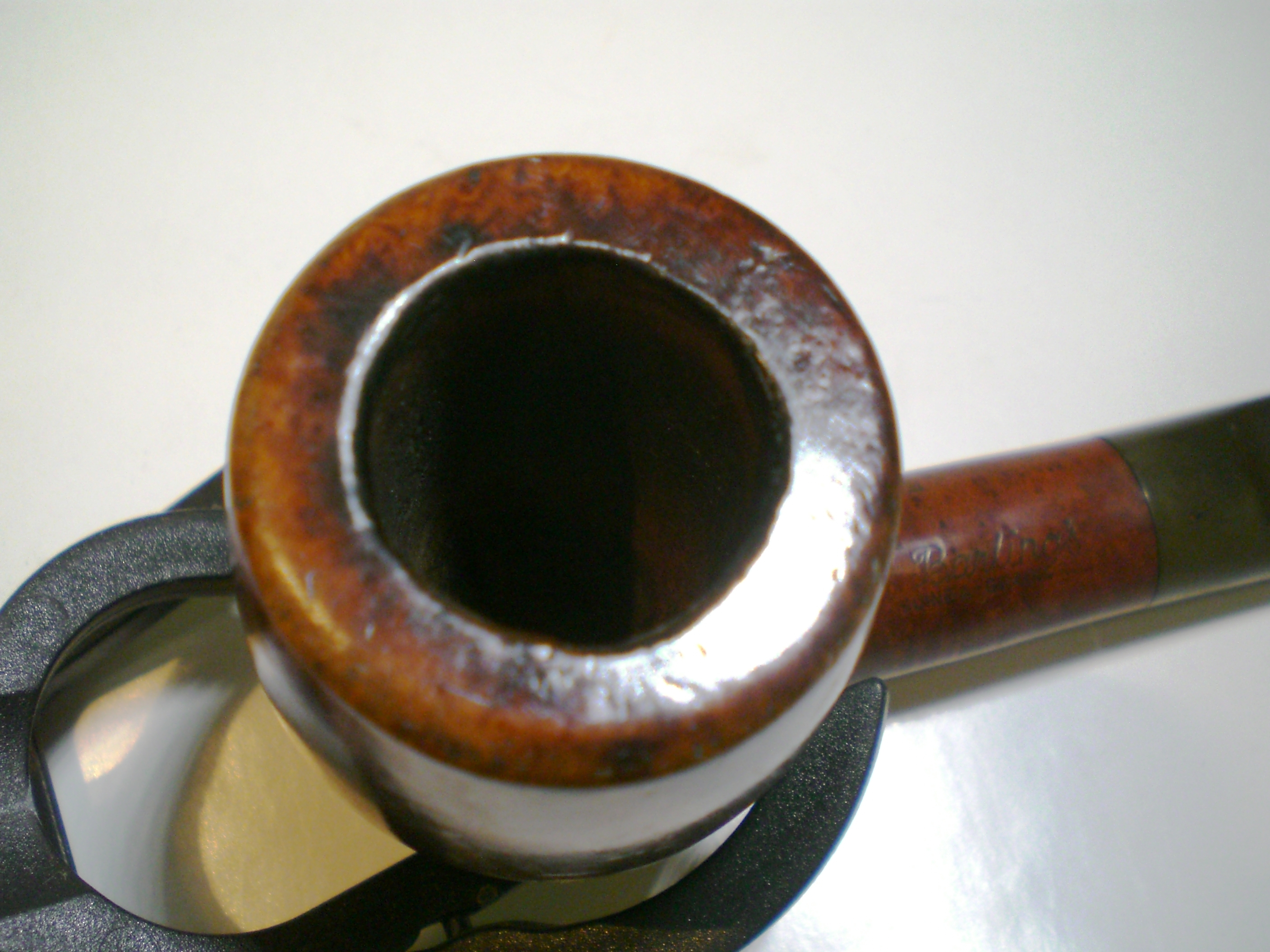
Using a dinner knife heated by a propane torch and a wet cloth, I went to work on the numerous dents and cuts. Some lifted out completely, others were minimized. I wasn’t able to do much about the chatter around the bowl rim. I suspect the previous owner knocked ash out of the bowl. Staying away from the valuable nomenclature, the bowl and rim was buffed with white diamond and several coats of carnuba wax. I gave the nomenclature area a hand-wax with Halycon pipe wax.
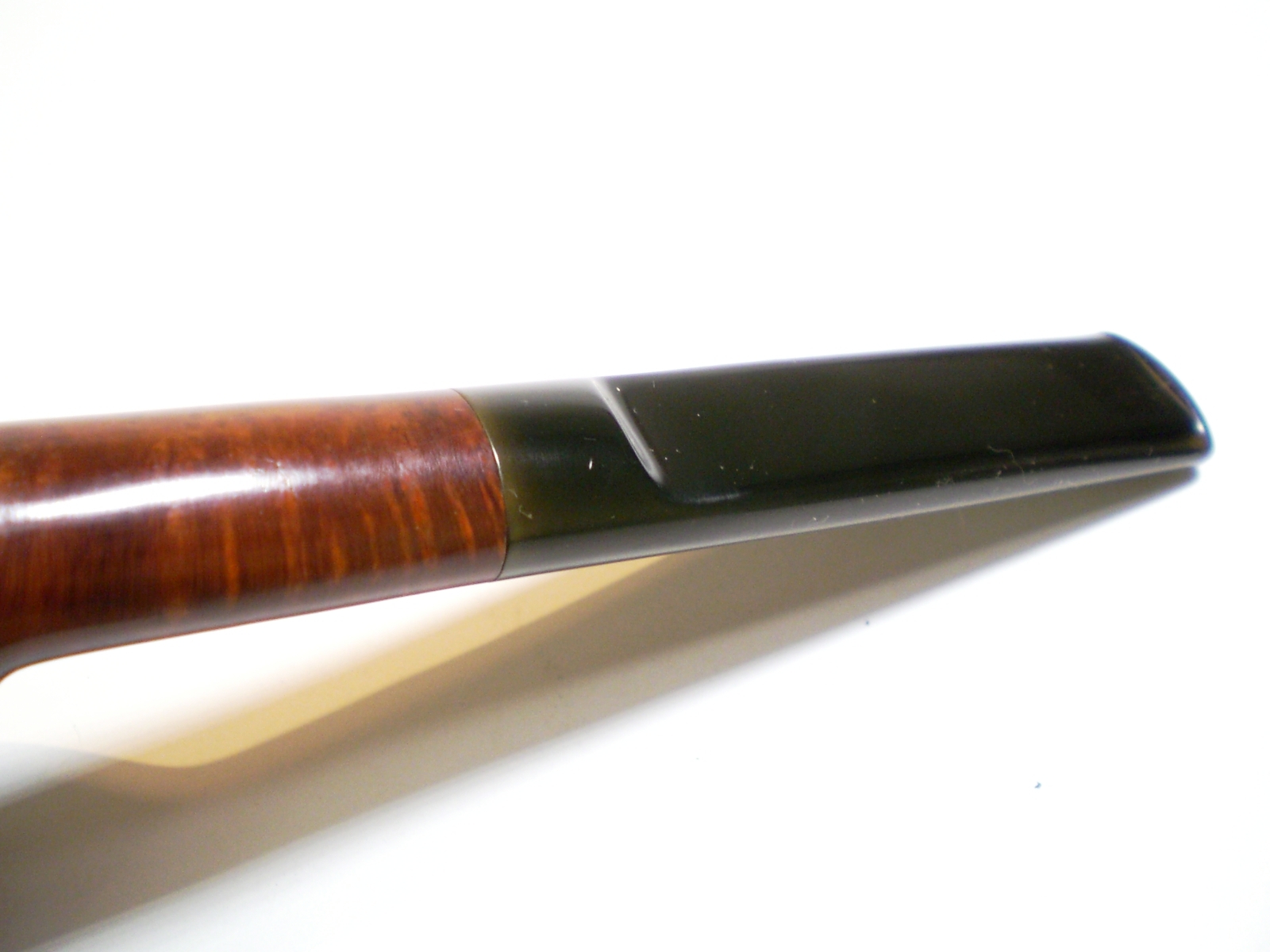
I put a drop of black superglue on the hole in the briar. After it was dry, I sanded off the worst of the oxidation with some 800 grit wet paper. I then moved to 1500 and 2000 grades wet paper and finally 8000 and 12000 grades of micromesh. I used a slim knife blade to hold the paper into the button crease to remove that oxidation. Then the stem was buffed lightly with white diamond and finally a plastic polish. The Barling’s stem has a unique feel to it, unlike my similar era Comoys or Charatan stems. The button air hole shapiong shows a lot of care was shown making the stem. (and also makes me think it is an original Barling’s stem).
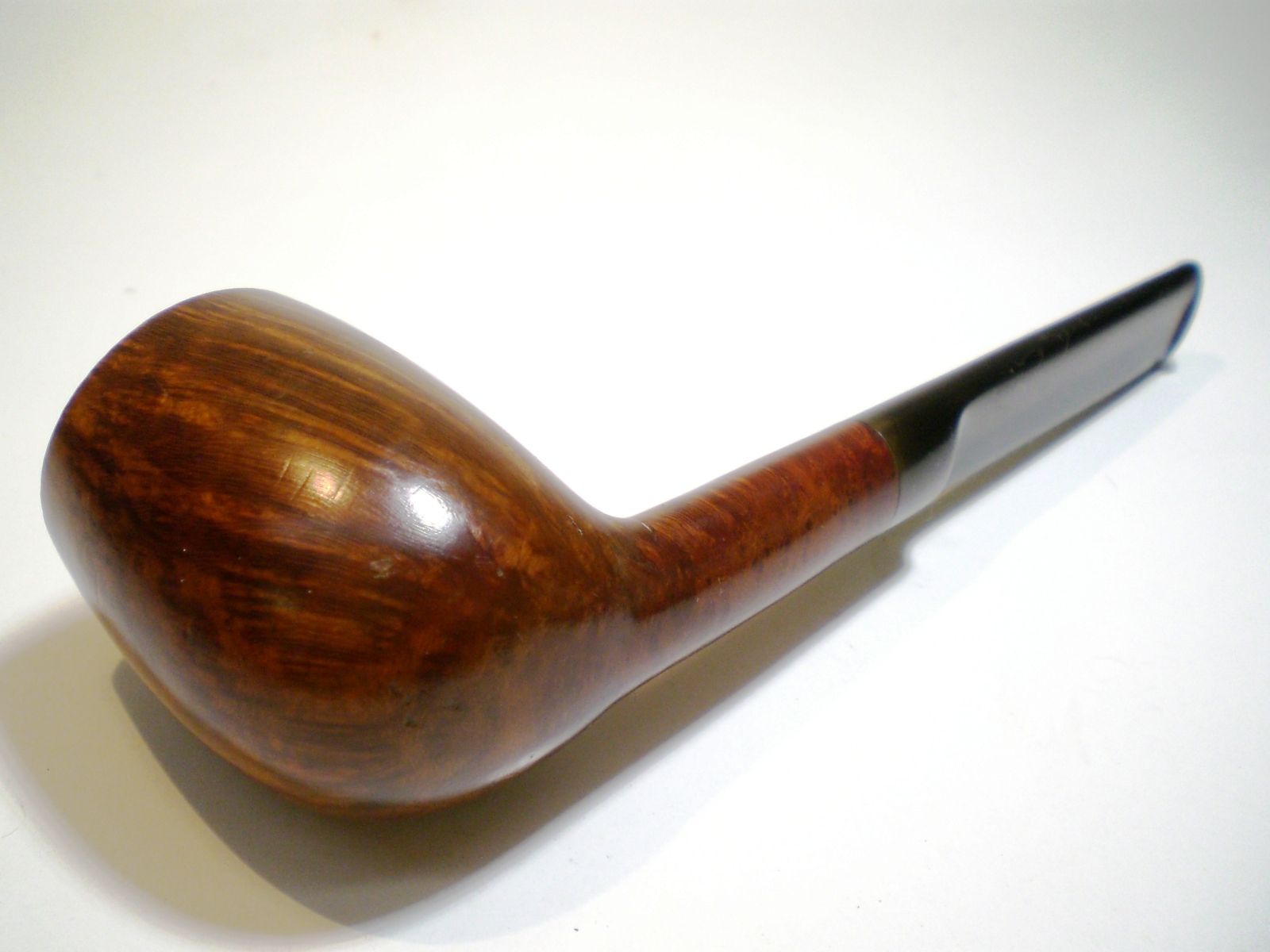
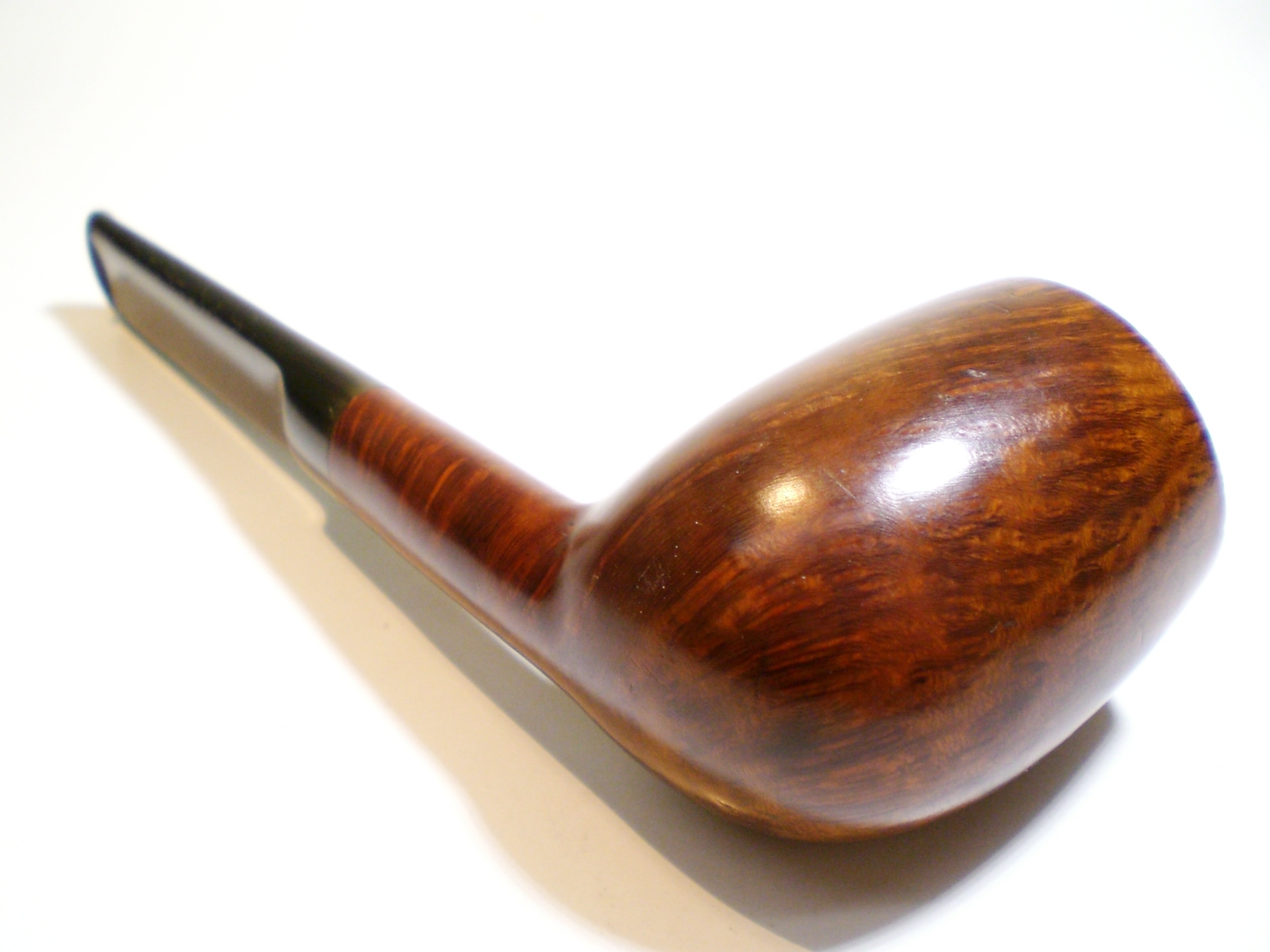
And finally, the finished pipe.
 rebornpipes
Great write up Al! I can’t wait to try the water method for softening the tars. I have been setting the bowl rim on a saliva soaked cotton pad and that works pretty good.
LikeLike
Barling is represented in my symbolic today collection by nice small billiard, saddle stem. Well preserved and readable nomenclature reads: BARLING’S (capital block letters in arch), below: MAKE, and below: YE OLDE WOOD, and at the other side – denomination of size – EL. There are faint remains of original Barling in cross signature.
LikeLike
One of my favorite pipes is a Barking. The logo on the stem has disappeared as others have also noted. Mine is a Dublin with a military bit and sterling mount.
LikeLike
Thank you Steve for description of your restoration of this Barling. It is so good to read on the simple method of using heated knife; some restores use the temperature-controlled soldering iron with tip of proper shape. Also the information that Guinea Grains edition is the only Family Era pipes with a cursive “Barling’s” logo and they’re the only pipes that Barling also used oil in the curing process to bring out the contrast of the grain is very enlightening for some Barling owners, many think that all Family Era Barlings have “Barling’s” logo stamped with capital block letters, not with cursive letters.
LikeLike
I like the width of the knife as it allows me to roll over an area, or I can just heat the tip for more specific placement. I have butane soldering iron, but the choice of replacement tips is limited and I haven’t found one wide enough.
LikeLike
Yes, upshallfan, I understand and agree; perhaps I should write in more detailed way that what I find of help in type of soldering iron that I have in mind is fact that it is powered by electricity and has precise regulation of temperature, what I find sometime helpful. On very small areas I use a knife – like device powered/heated by electricity and used for carving or forming wax models in ancient casting technique called “cire perdua” – lost wax casting. And in my workshop there are polishing and grinding machines, not to mention plenty of files, so I have technical means of shaping “working heads” and their surfaces into shape that I need.
This may be small illustration of what we see for last decades in the field of many factory made tools to be used in handicraft; “straight from the shop” they often need to be elaborated in order to perform it’s function well. This is with regard to hammers, pliers, handles, burins, plenty of others. And making or re shaping tools by the master craftsmen is an old tradition in many fields of handicraft.
LikeLike
That gets me thinking Jacek. I should probably customize the shape to a few specific needs (I have a grinder & files).
LikeLike
At first: thank you very much, upshallfan, for your kind attitude toward what I wrote. Please, believe that I am as far as possible from “playing smart one”.
I think that reshaping working “heads” or surfaces of tools will be most helpful. In case of “heads”/”tips” of soldering irons to be used for “curing” pressed ugly marks on wood surfaces applying force and heat in steaming atmosphere I always remember that to apply force+heat is one thing, and equally important is the well polished surface of an element that I press; the whole thing is IMO more like iron for ironing shirt then like hot press used in tyre service garage for fixing holes by vulcanization in old days.
LikeLike
That is a good analogy and the dinner-knife profile works much ilke an iron but you have me thinking about some customization. I’ll have to pick up some cheap knives to work. A few months ago my wife saw me using the dinner knife and asked if it was one of our good knives. I said “no” because, well it’s not a good one any longer…. (shhhh) But, I don’t want to risk her ire!
LikeLike
Thanks guys. I used a lighted, 40x loupe to get most of the stamping details. Mike Glukler did a write-up on a restoration he did on the PIpesMagazine forum describing the distilled water process.
http://pipesmagazine.com/forums/topic/cleaning-plateaus
LikeLike
Great Job Al. Barling logos are notorious for disappearing like the invisible man. I have just restored a Barling’s Guinea Grain as well. It is amazing that not a trace of logo can be found, even using a 30x jewellers loupe.
LikeLike
Looks great Al. You did a great job on that one. I had not heard of the distilled water idea. That is a new on to me. I am going to have to try that. Thank you.
LikeLike