
Blog by Steve Laug
In a recent EBay purchase I picked up a unique pipe that has a flowing look to it. I was intrigued to figure out the history and any information I could find regarding it so I went on a hunt on the web. One of the first articles I came across is found in the link below. http://streamlinesdeluxe.wordpress.com/2012/06/01/weber-streamliner-pipe-2/ The author of the blog makes a brief reference the pipe I found and even has a picture of it. He speaks of the stem being made of something other than vulcanite. Other references I found in online pipe forums spoke of the fact that the bowl was not made of briar but of some composite material. Others said that the bowls were made of American hardwoods. Interestingly no one spoke of what hardwoods were used. I have hunted high and low on the web and can find nothing definitive on the pipe’s manufacture or composition.
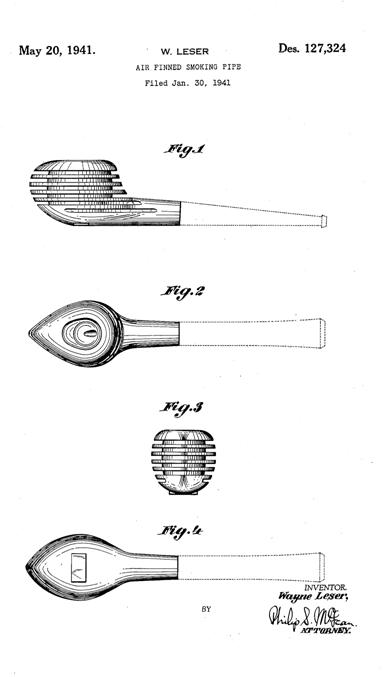
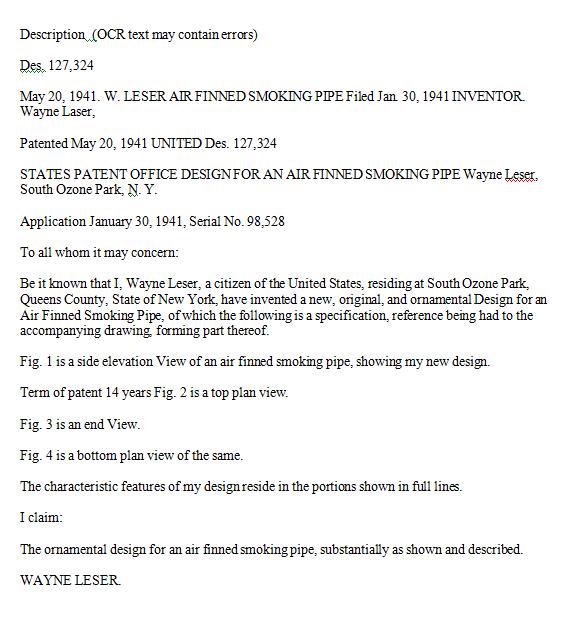
I broadened my search to information on finned pipes. I did not want information on Porsche design pipes or metal finned pipes but was looking for anything on wooden finned pipes. I came across the following information on a patent taken by a carver/designer named Wayne Leser. His diagrams and patent application is included below and it can be seen that it is actually very close to CB Weber’s Streamliner. His patent was applied for through the US Patent Office in January of 1941. I assume the patent was granted as it is on the Patent website. Weber’s design seems to be elongated a bit more than the Leser design but the tear drop shape of the outer bowl and the similarly tear drop shape of the drilling match quite well.
I can find no further information on Wayne Leser so I have no idea if he sold his concept to Weber, or worked for Weber. If anyone has further information on that connection it would be great to learn about it. Please post a response below.
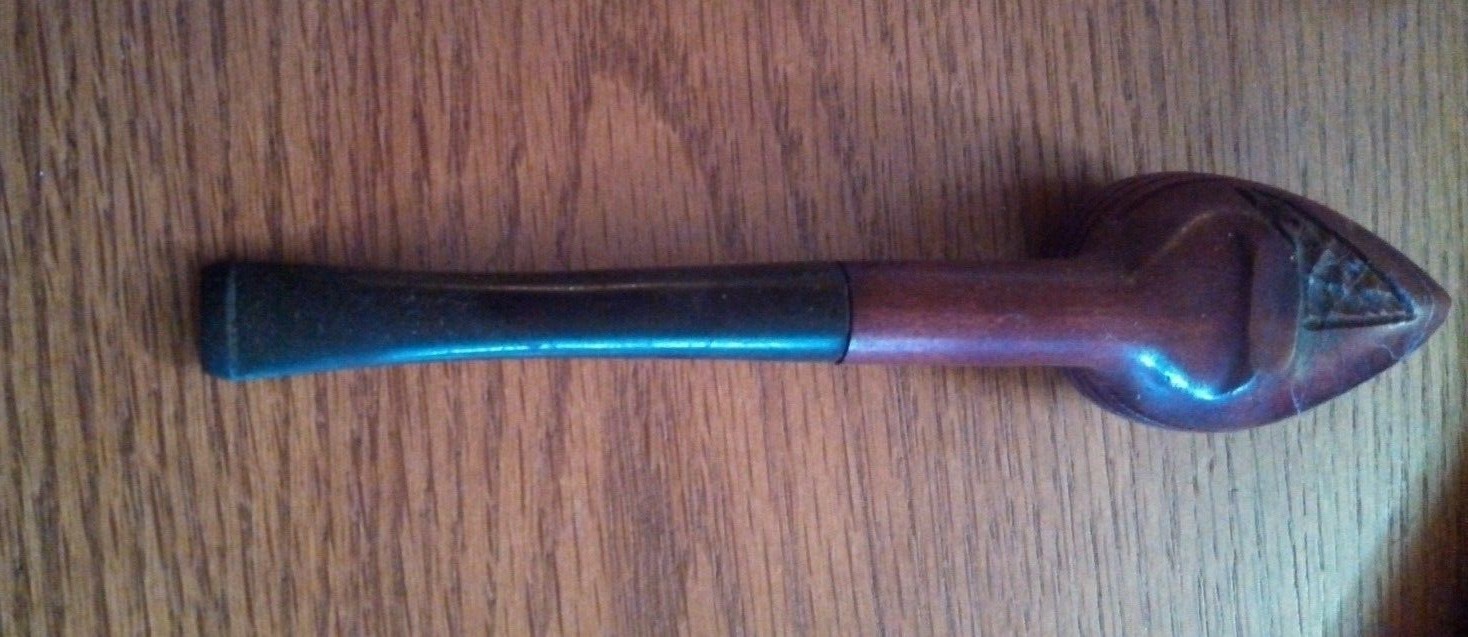
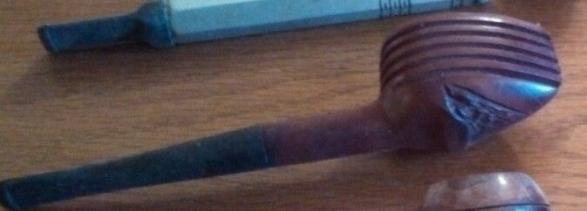
The pipe I picked up is pictured below in photos from the EBay seller. The photos were not very clear so I could not see the condition of the pipe very well but I was intrigued by it nonetheless. It looked like the bowl was in good condition. The stem however, appeared to be a replacement stem and the fit was poorly done. In the second photo below it is evident that the junction of the stem and shank does not meet.
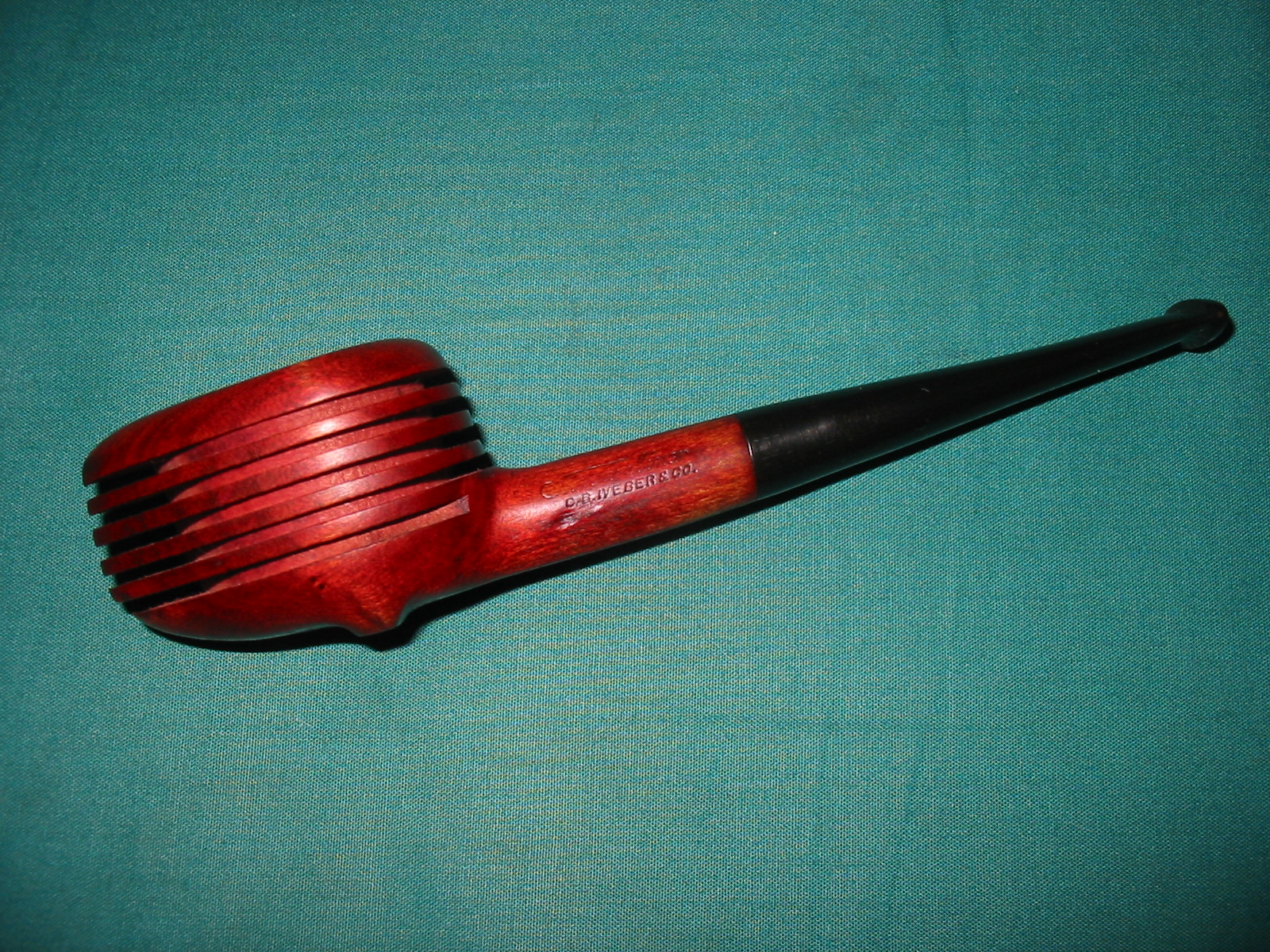
When the package arrived from the seller I took the pipe to my worktable and photographed the condition of the pipe. The pipe was in fairly decent condition. The left side of the bowl was clean. It is stamped Streamliner in script over C.B. Weber & Co.
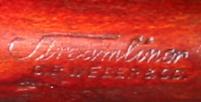
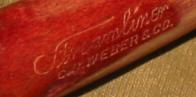
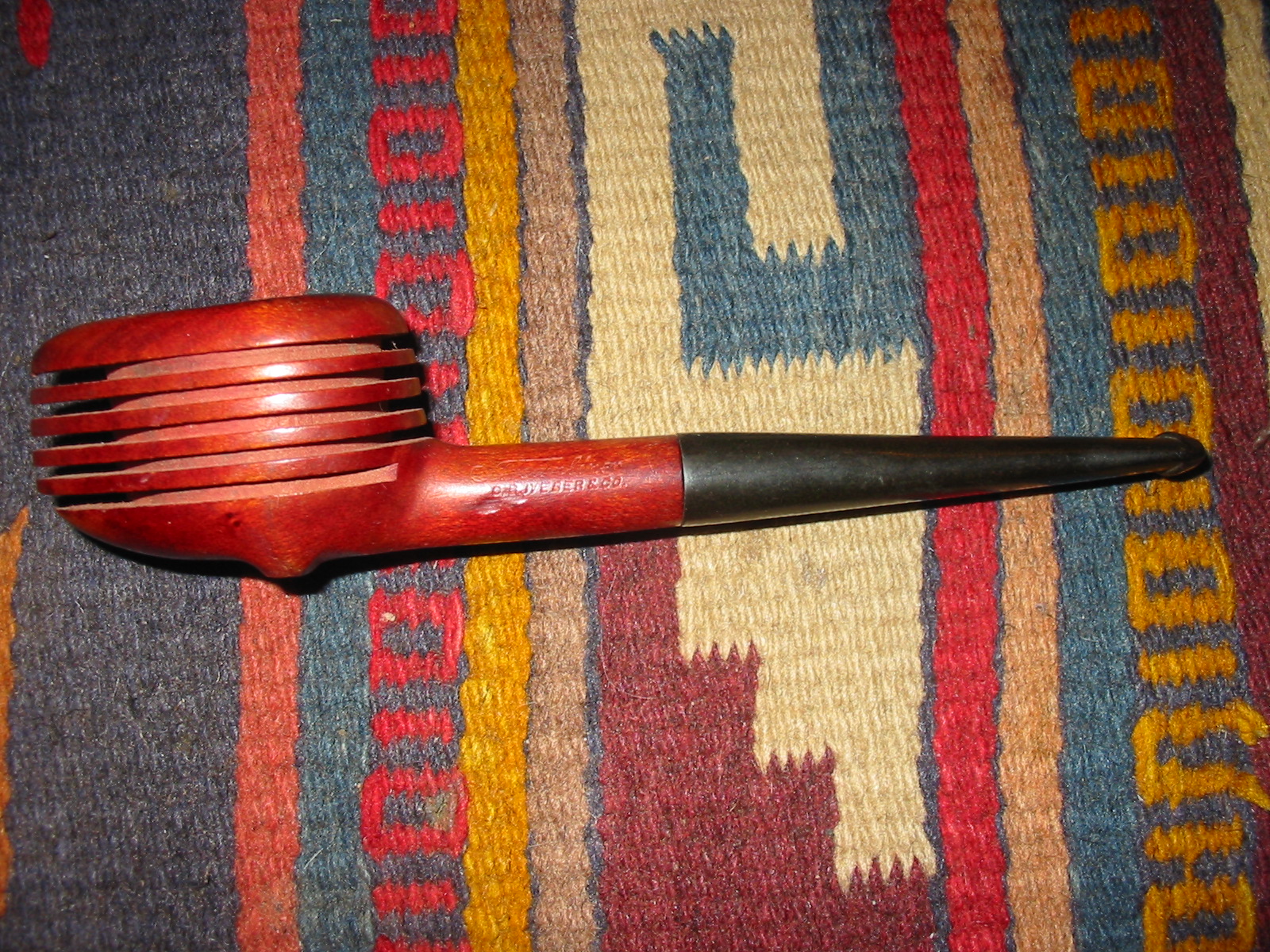
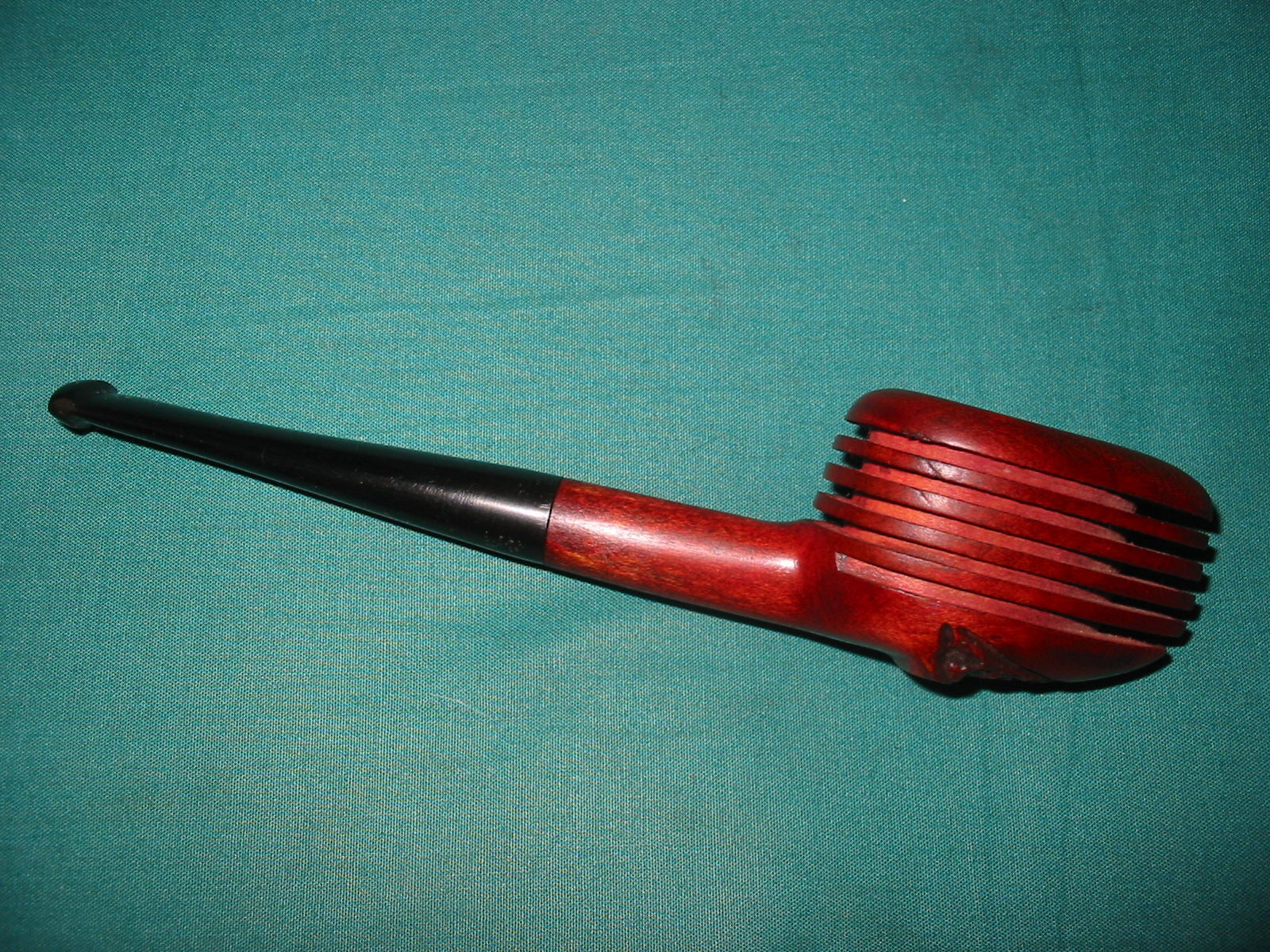
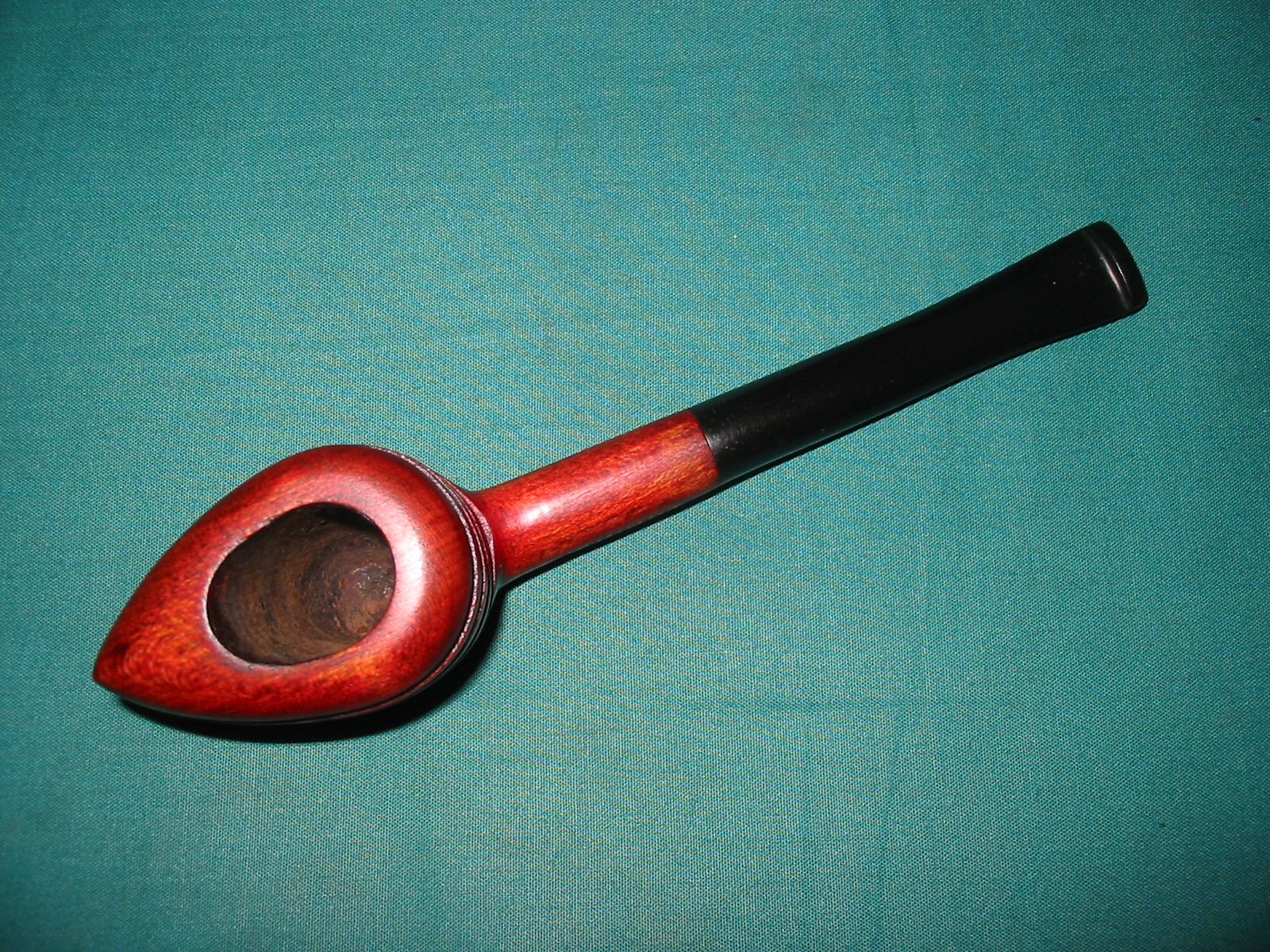
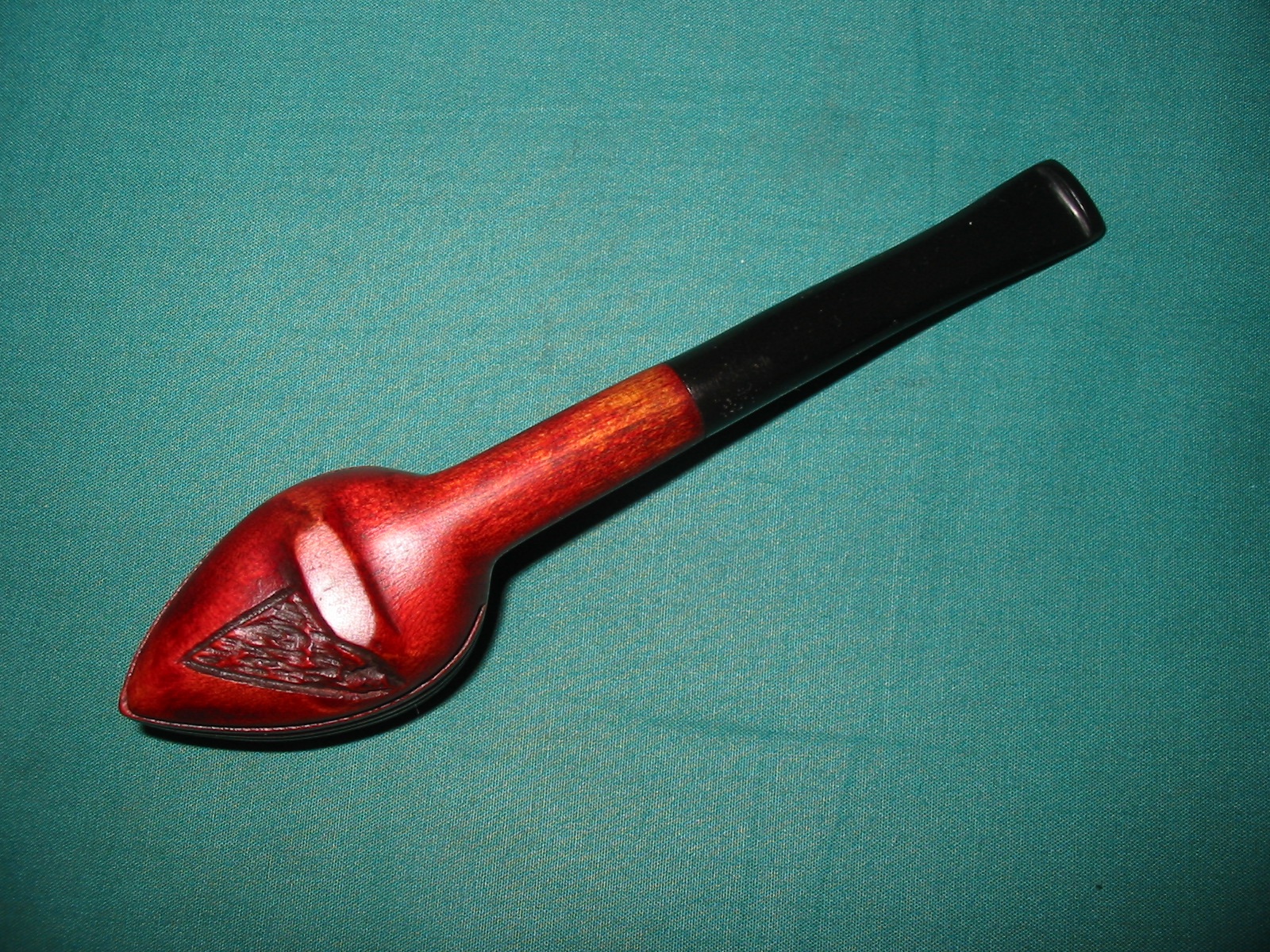
There were two small divots in the shank just below the stamping. I thought at first these might be dents but they are actually spots where the wood is missing. The right side of the bowl is also in good shape. The fins are intact all the way around the bowl with no chips or breakage. The rim was tarred and had a small burn spot on the point at the front of the bowl. The stem was definitely a replacement stem. In my reading I had found copies of the logo that was originally on the stem and also the fact that the stem had a stinger apparatus as part of the fitments. This stem had neither and the fit was wrong. The diameter of the stem was bigger; the tenon was off center therefore the fit was out of line with the left side being too large and the right side too small. The length of the stem was also too long and did not match the dimensions that I had found online regarding the overall length of the pipe. The bowl was in pretty decent shape though there was some kind of bowl coating on it that had broken free of the walls. It is a tear drop shaped bowl with a downward angle on the front portion so reaming it would be tricky. The wood on this one was definitely not briar. The bottom of the bowl has a foot that makes it a sitter and there is a rusticated pattern on the bottom of the bowl.
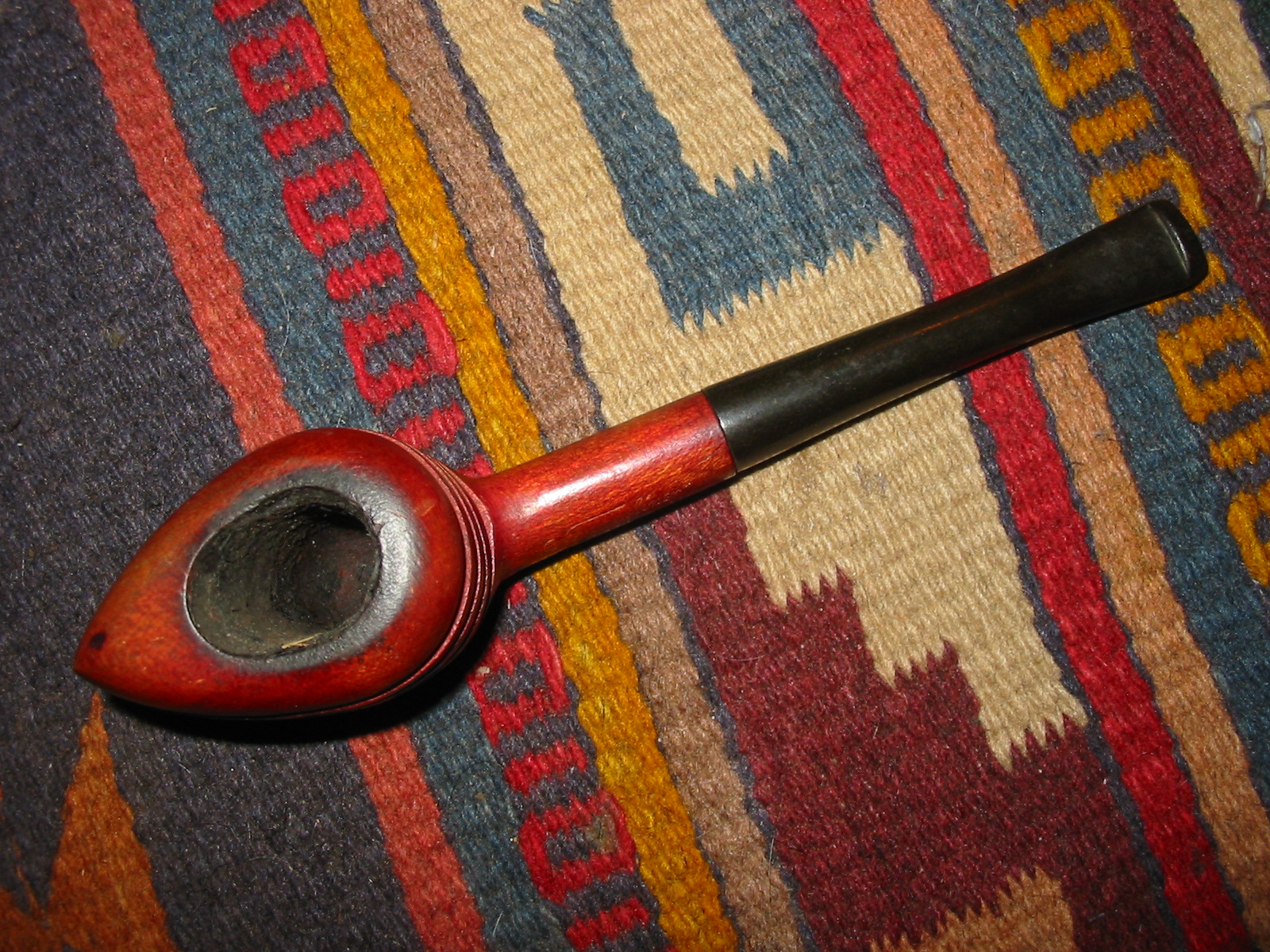
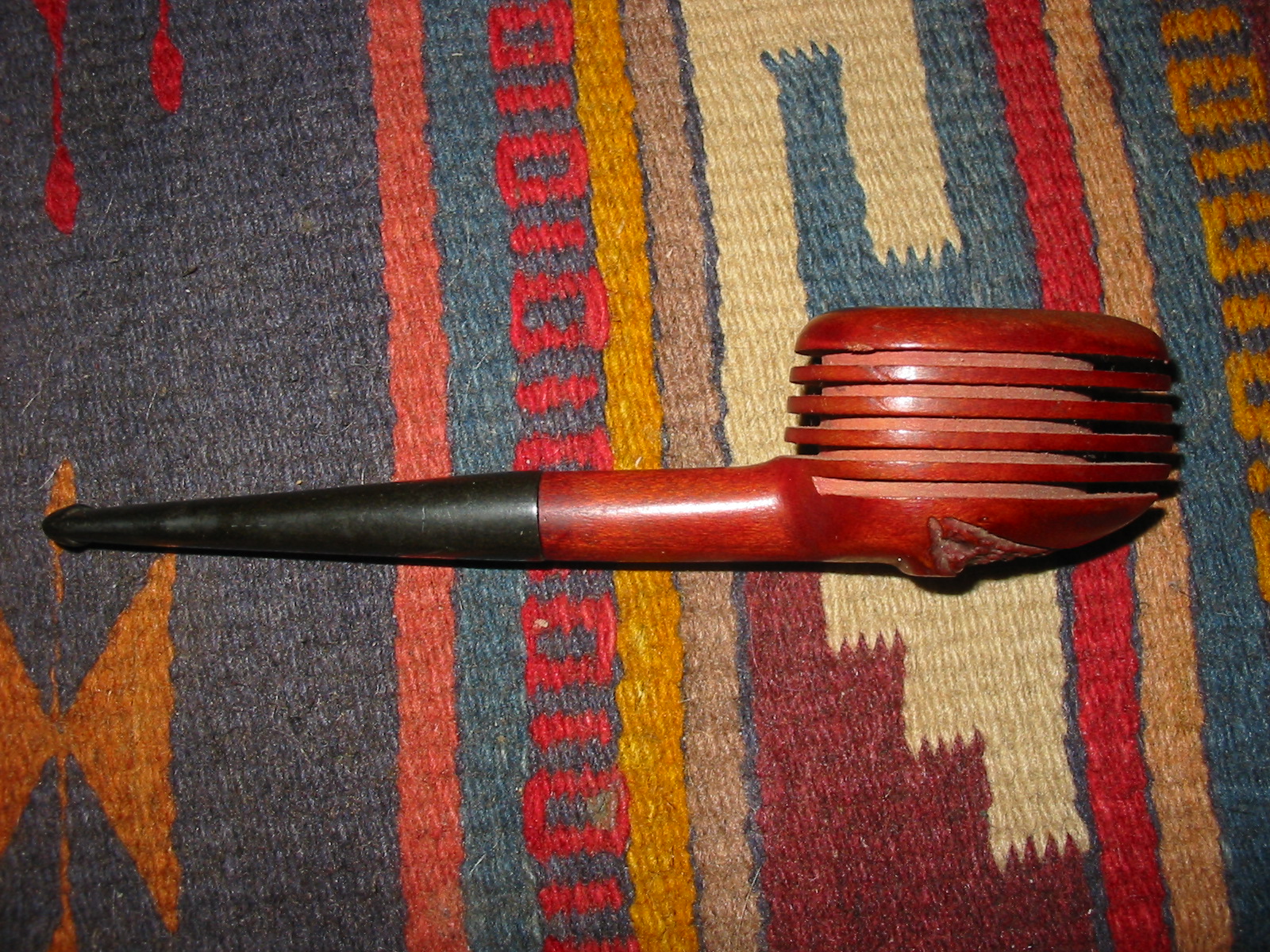
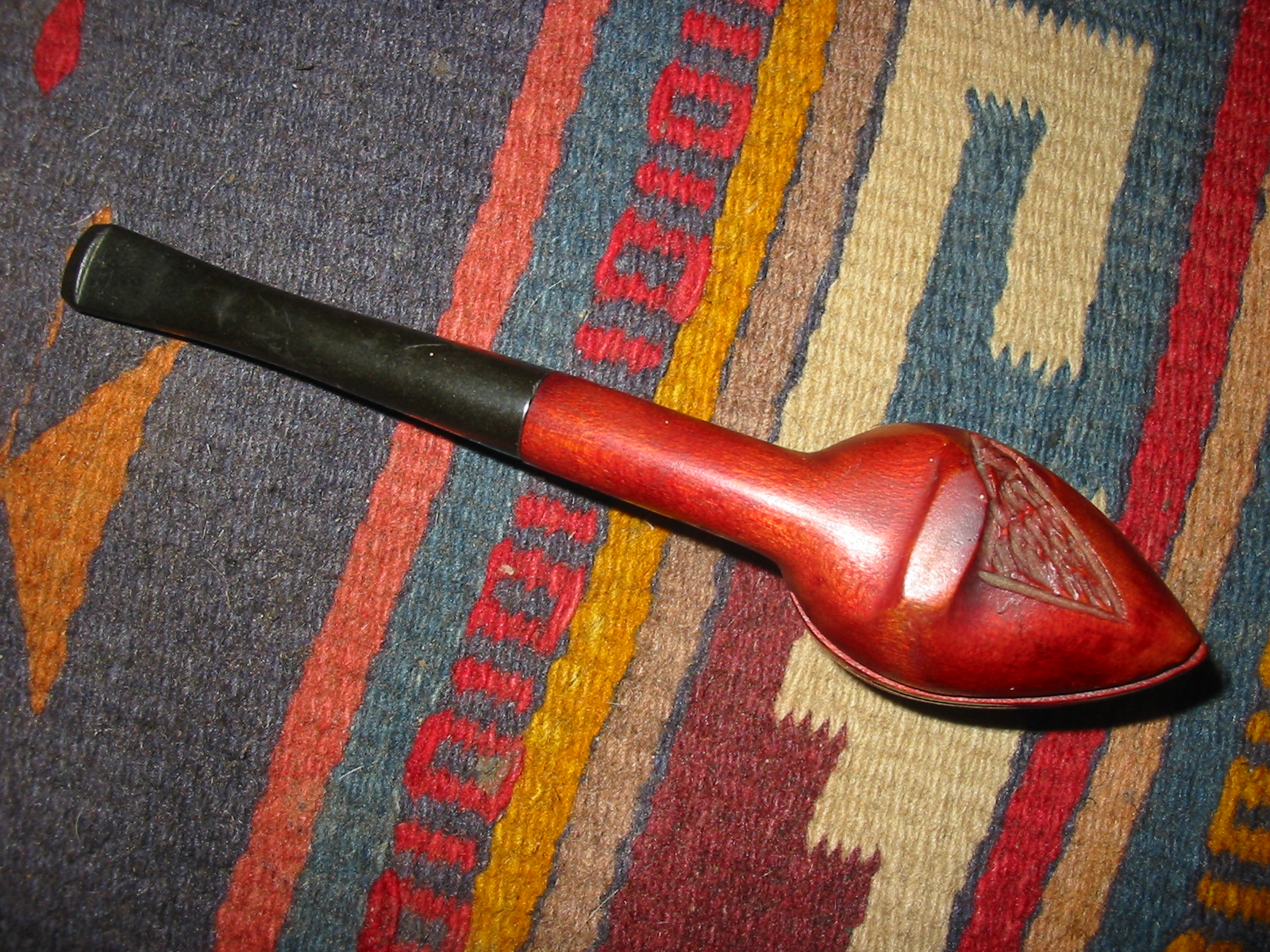
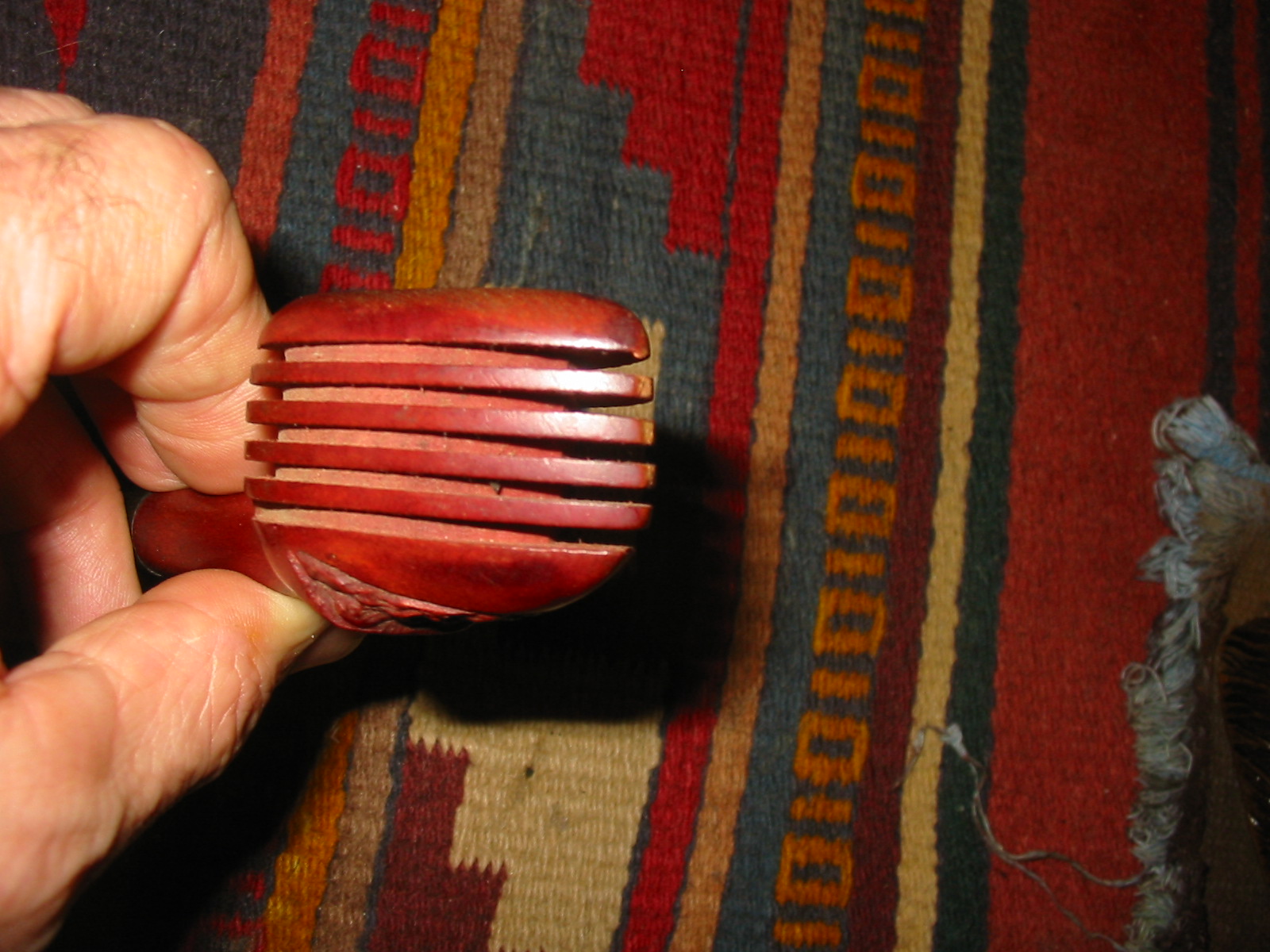
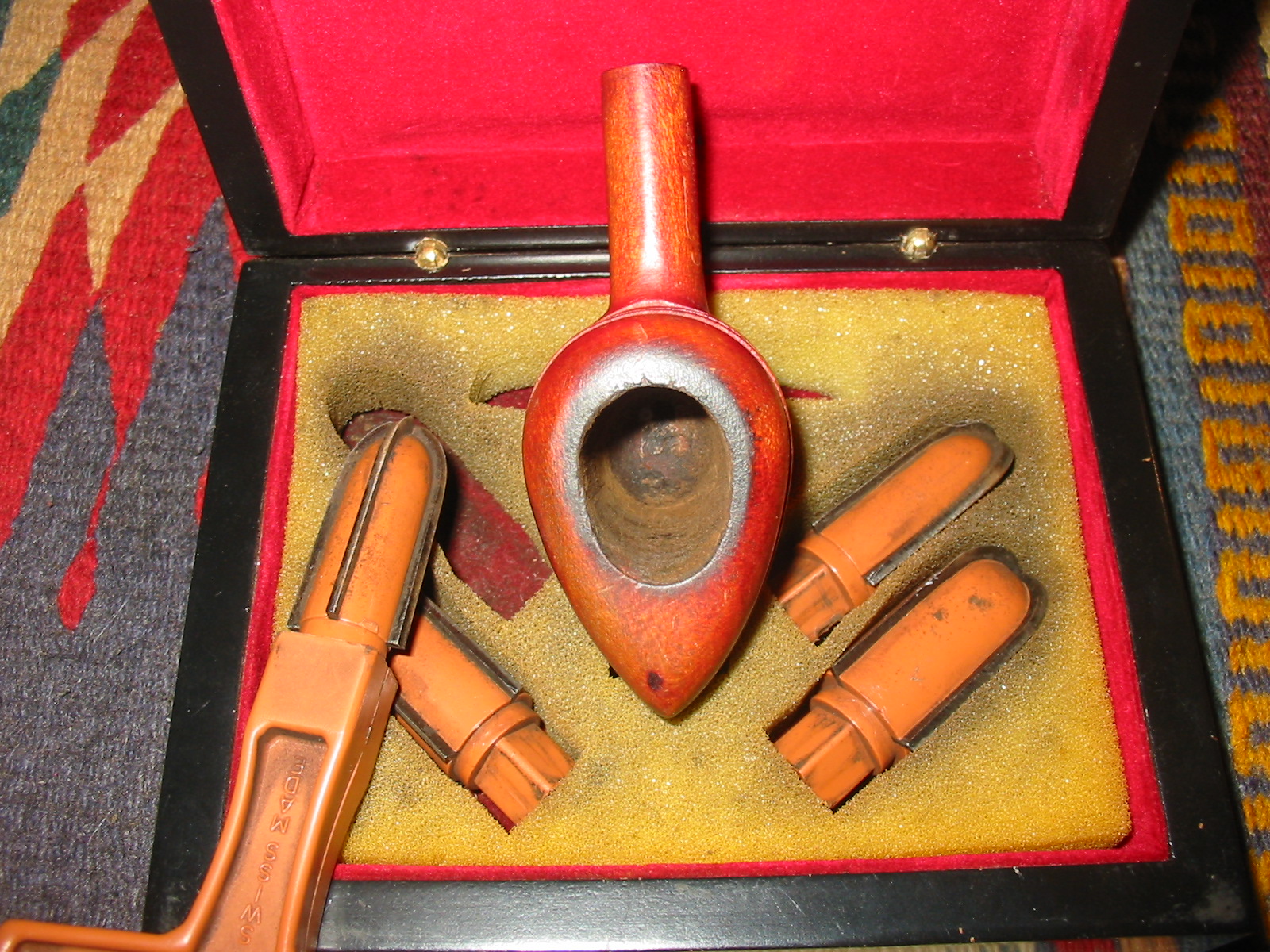
I carefully reamed the bowl to remove the bowl coating and the slight cake that was there. I used two different cutting heads on the PipNet reamer. The first head was the same diameter as the main portion of the bowl. For the angle teardrop end I used the smallest cutting head. Between the two of them I was able to clean up the bowl and remove all of the coating.
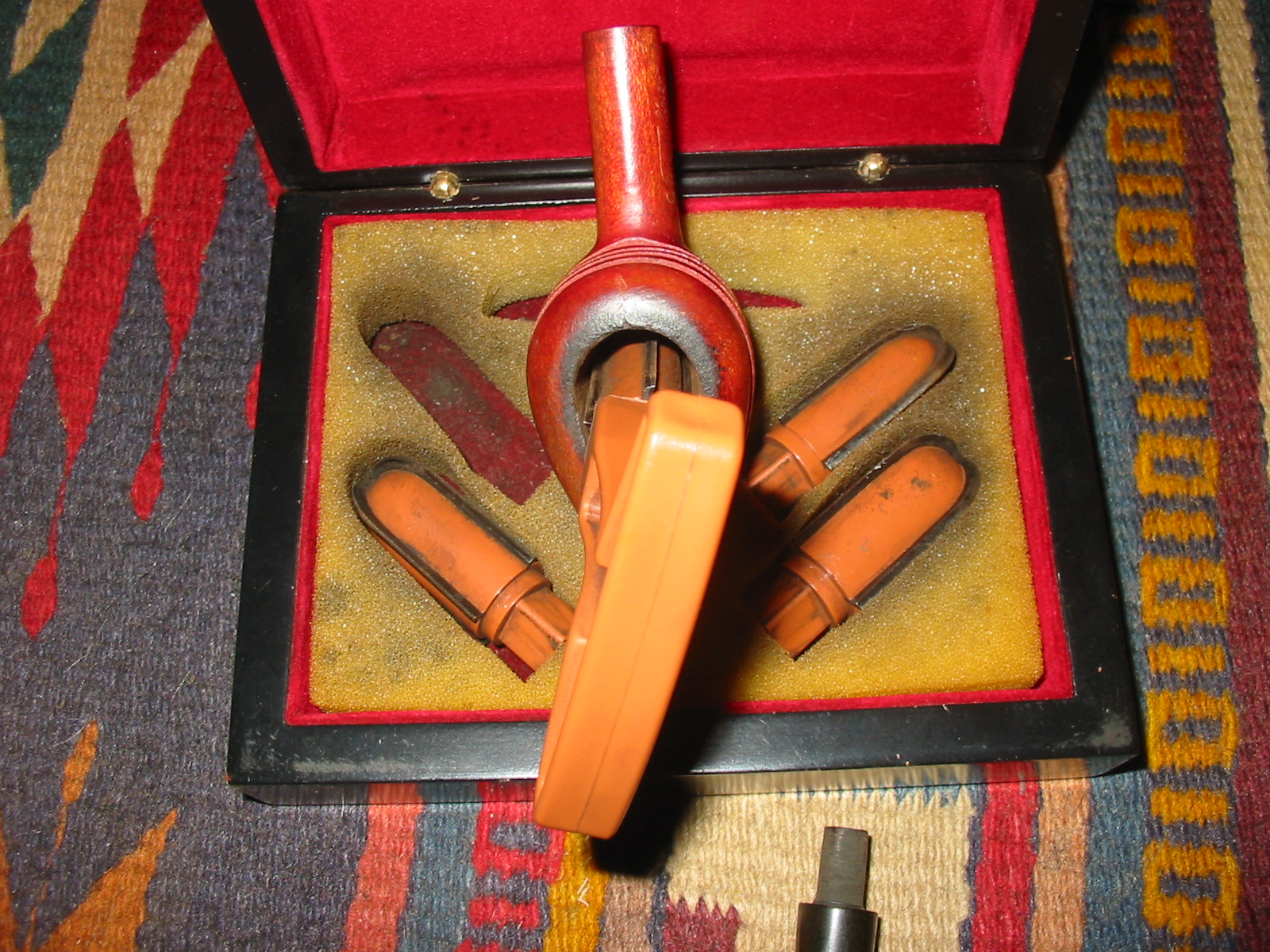
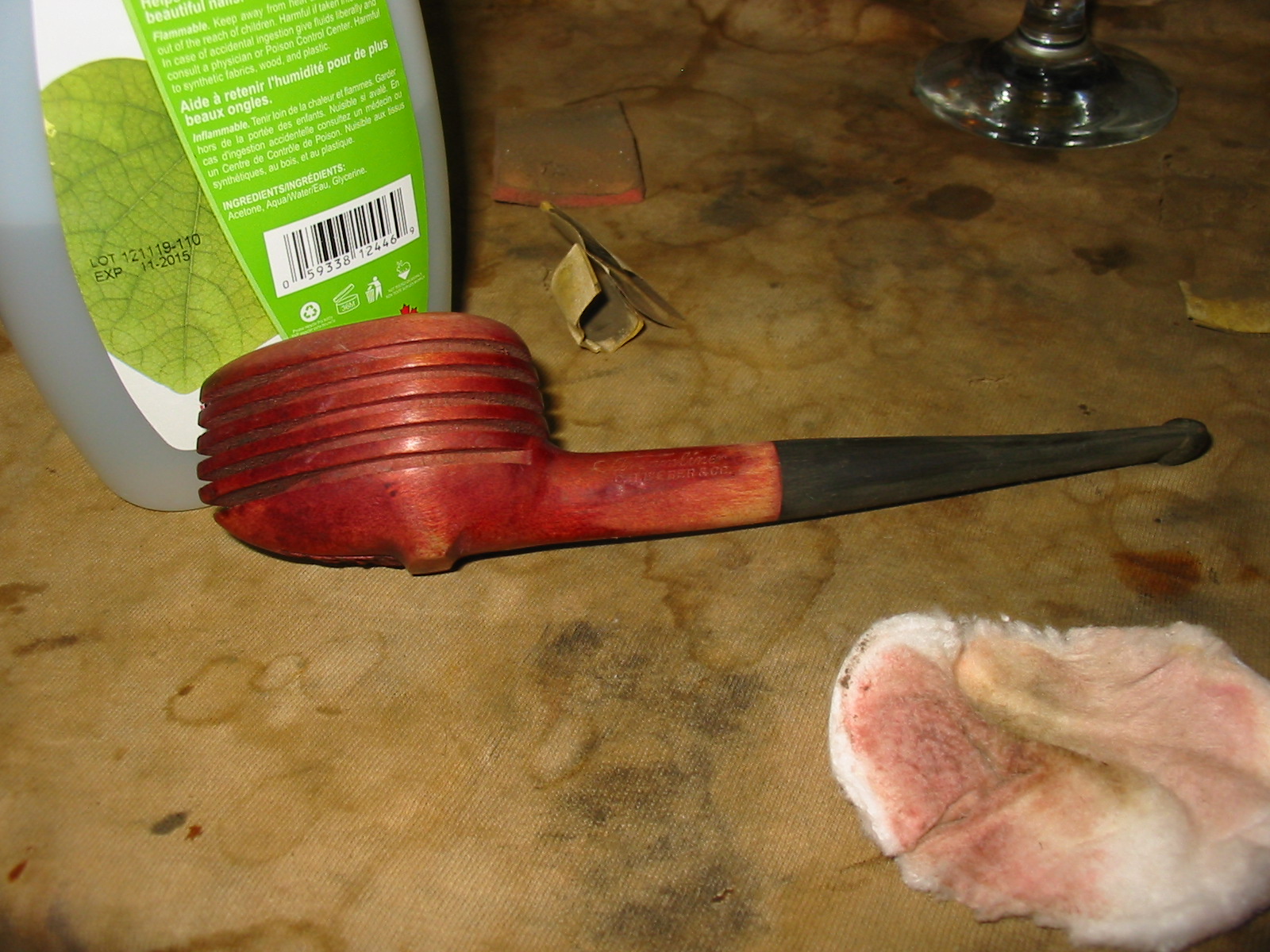
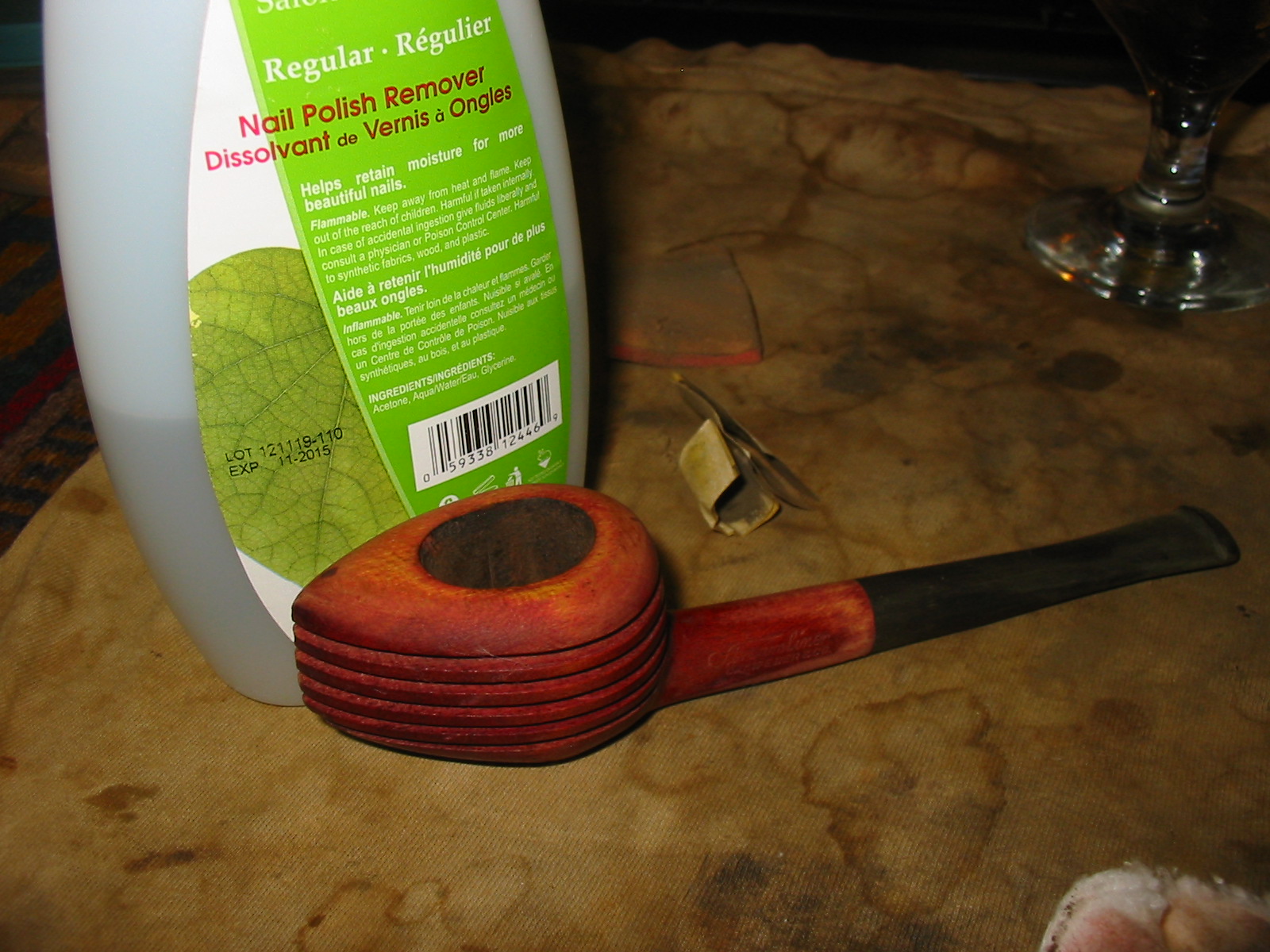
Removing the tars from the rim was a bit of a challenge and combined with burn mark on the point I decided to sand off the rim with a medium grit sanding sponge. I would then have to restain the bowl. I sanded it with the medium grit sponge and then with a fine grit sanding block to work on the burn mark and the darkening of the rim.
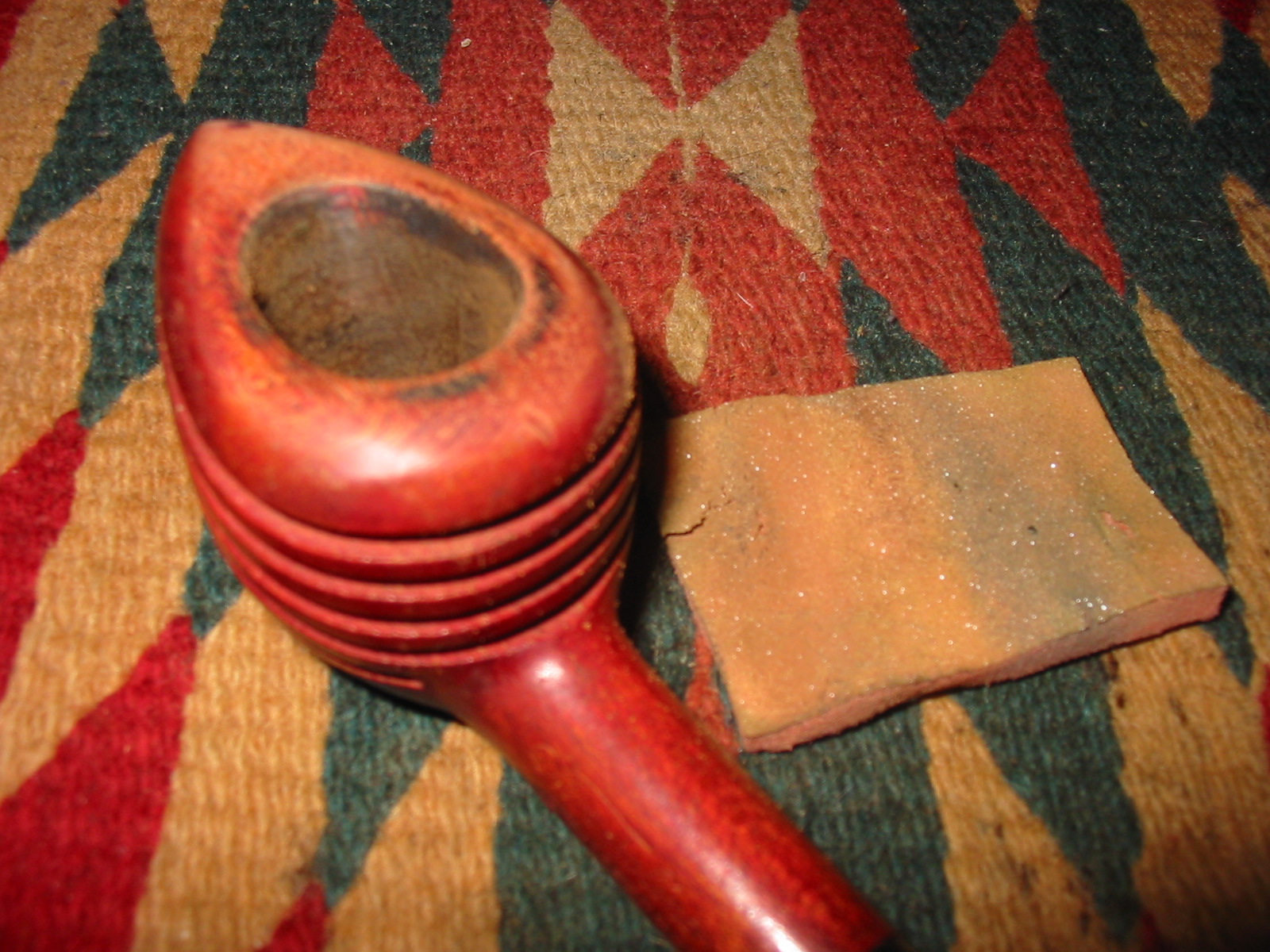
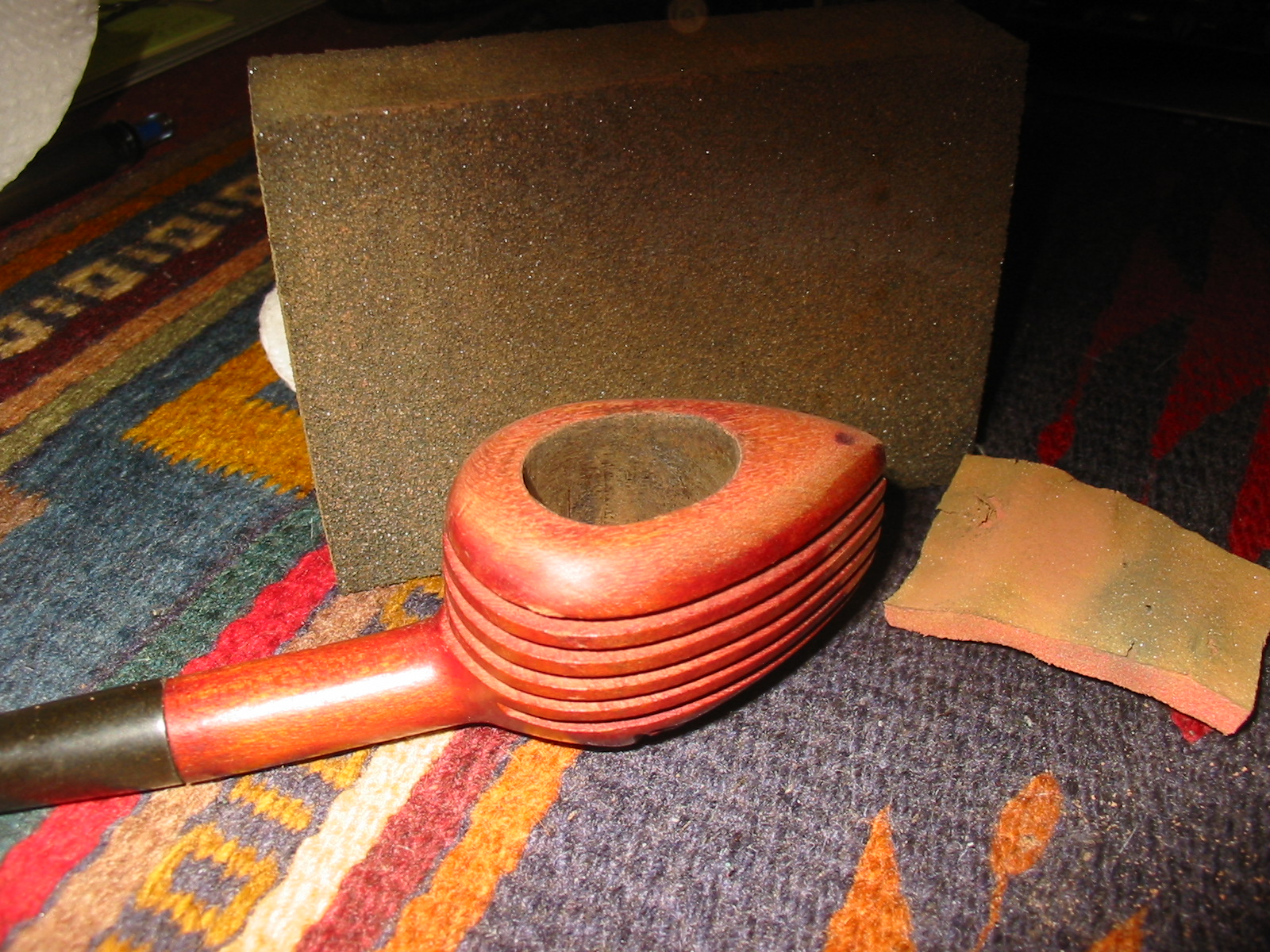
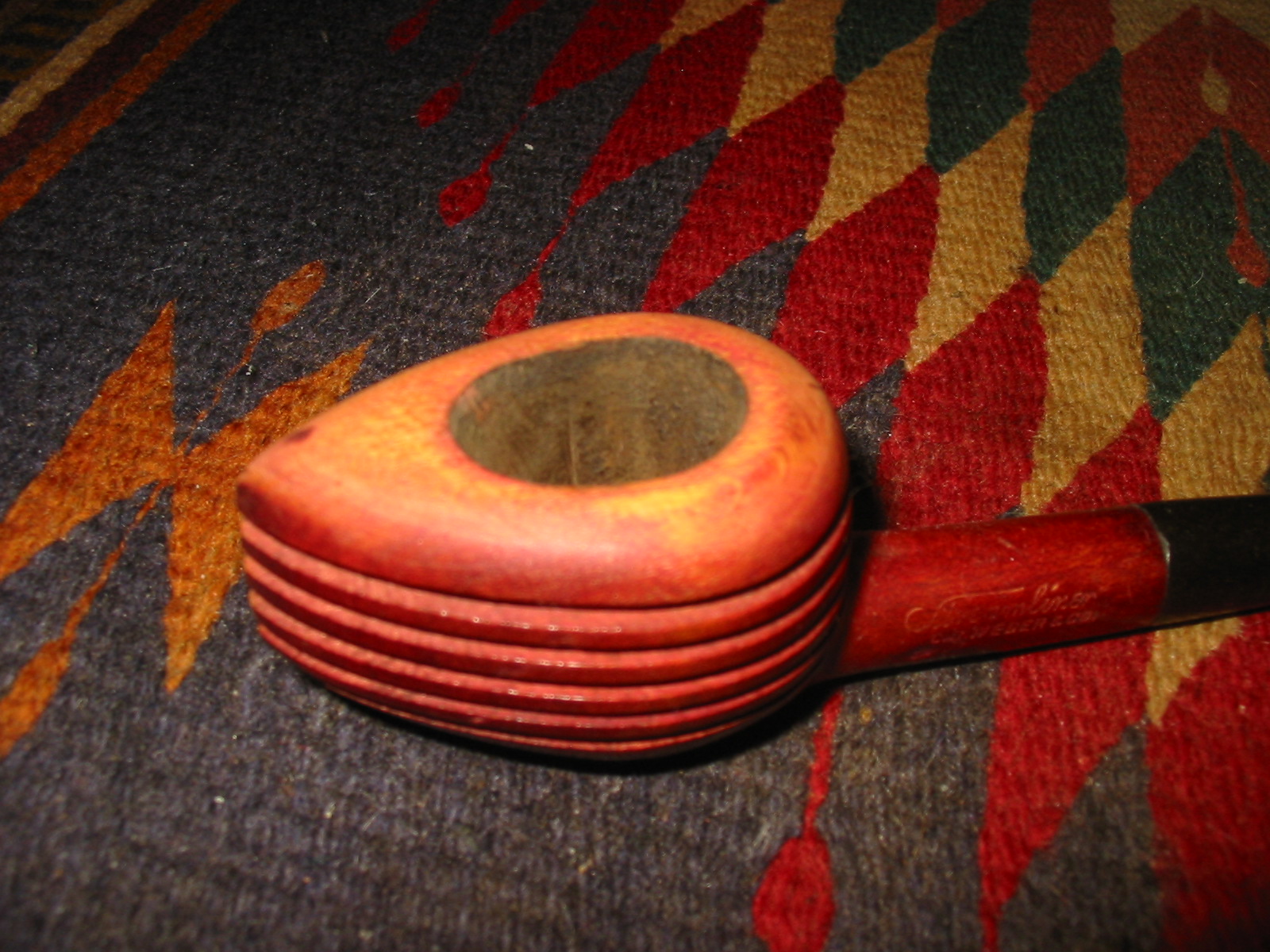
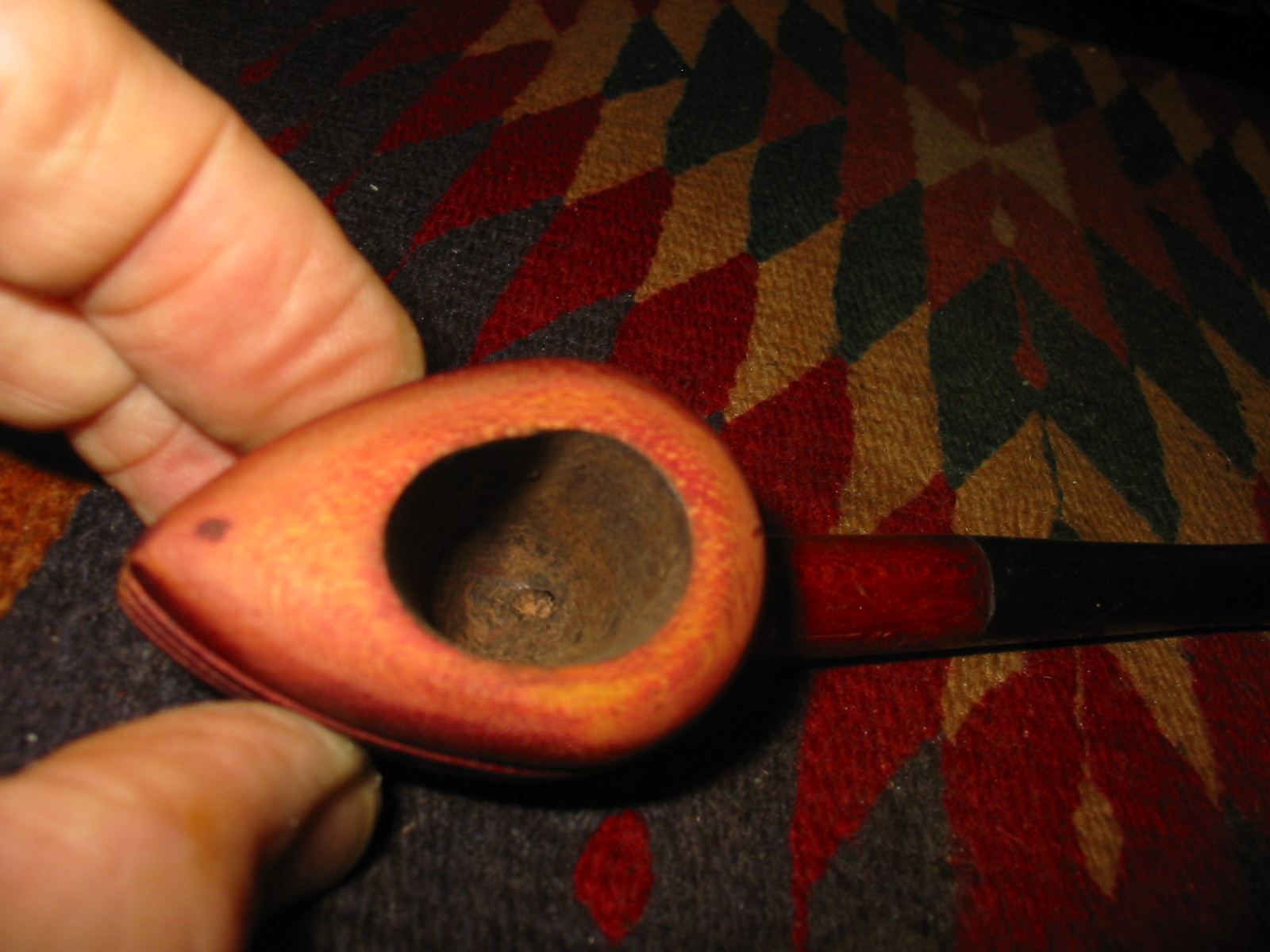
I finished the sanding by wiping down the bowl with acetone on a cotton pad. I was able to even out the finish on the bowl and rim so matching stain would be much easier to do. I was also able to lighten the burn spot with the same process to the point that a good coat of oxblood stain would make it fade into the surface of the rim.
I then set the bowl aside and went to work on fitting a new stem to the bowl and shank. In the first photo below I have the new stem blank fit to the shank. It still needs work to make the diameters match. The stem is about an inch shorter and brings the pipe back to the original length as noted from my online work. I also think that proportionally it works better with the elongated bowl and shank than the one that came with it.

In order to get the fit good and tight I used a sanding block to make sure that the transition between the bowl and shank was smooth. This entailed sanding the shank slightly in the process. In the next series of four photos below the fit is finished. The transition is smooth and the fit is good and tight.
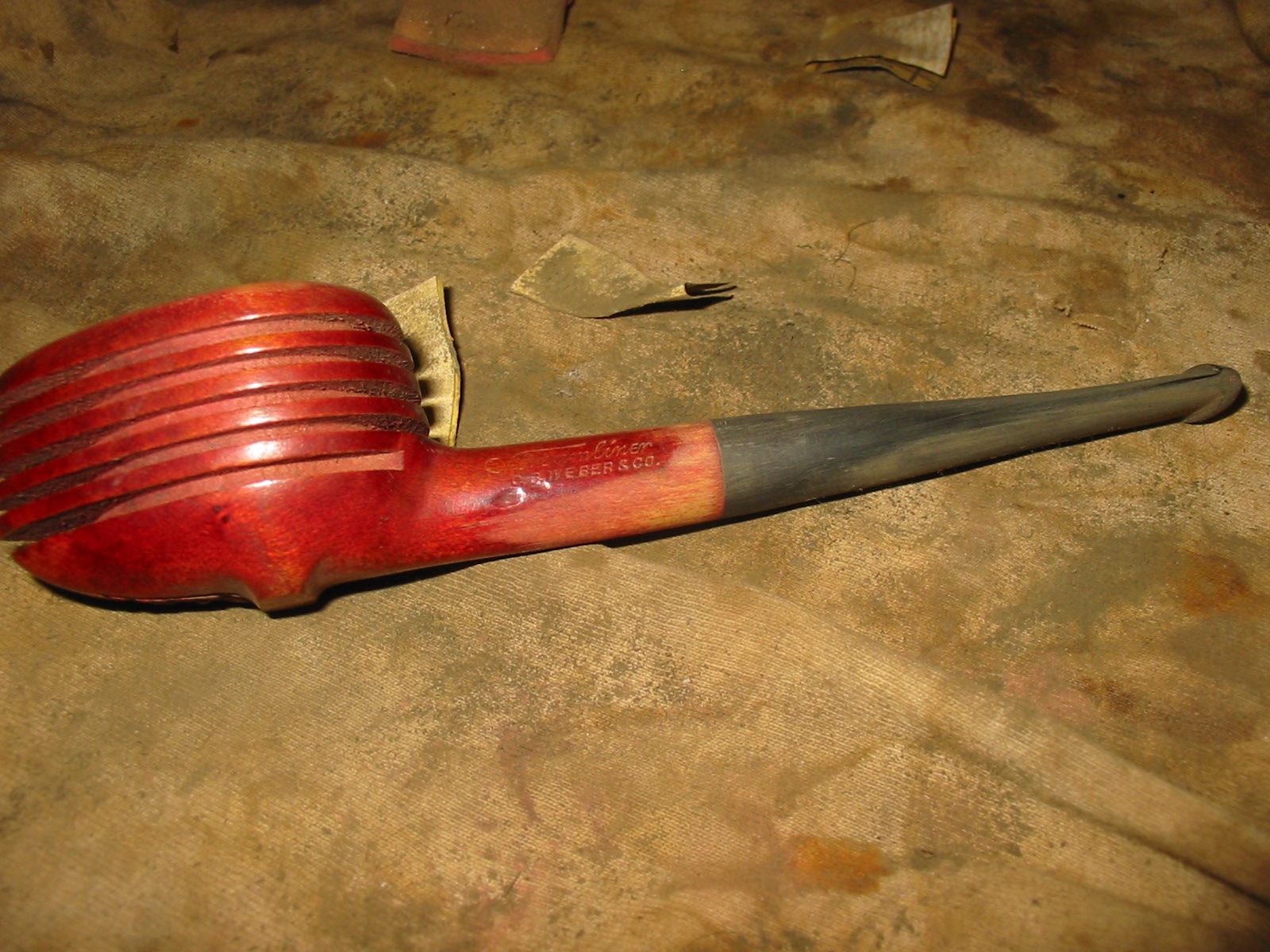


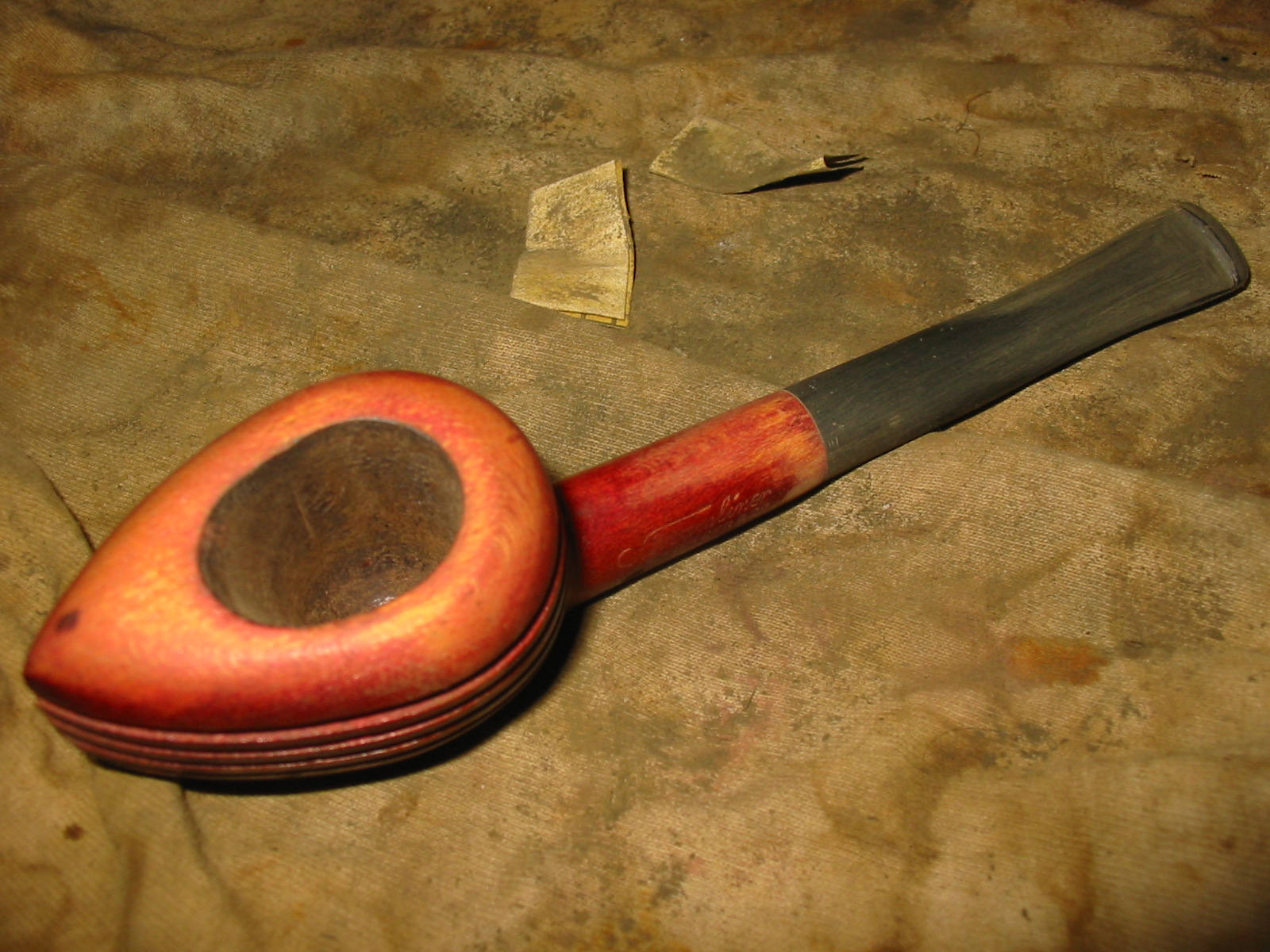
I wiped the pipe down with acetone once again to even out the finish on the shank. The grain in the original wood is quite visible in these photos and it is not briar.
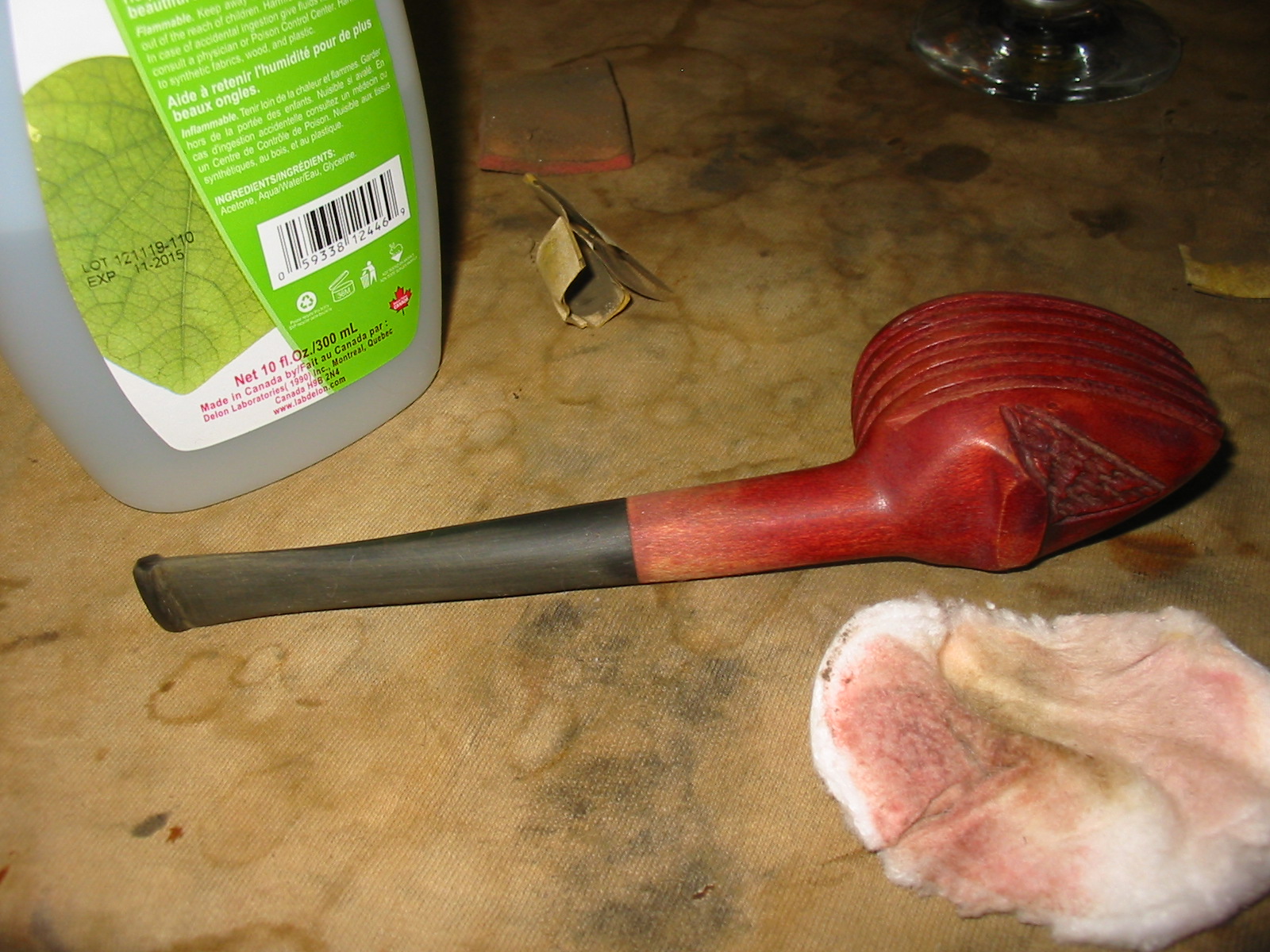
The flow of the taper on the stem was still too chunky in my opinion to match the Streamline concept of the pipe. I used 220 grit sandpaper and files to change the slope of the stem. When I had it the way I envisioned I sanded it with 220 grit sandpaper, a medium grit sanding sponge and also a fine grit sanding block. The angle was right and the profile looked much more “streamlined”.
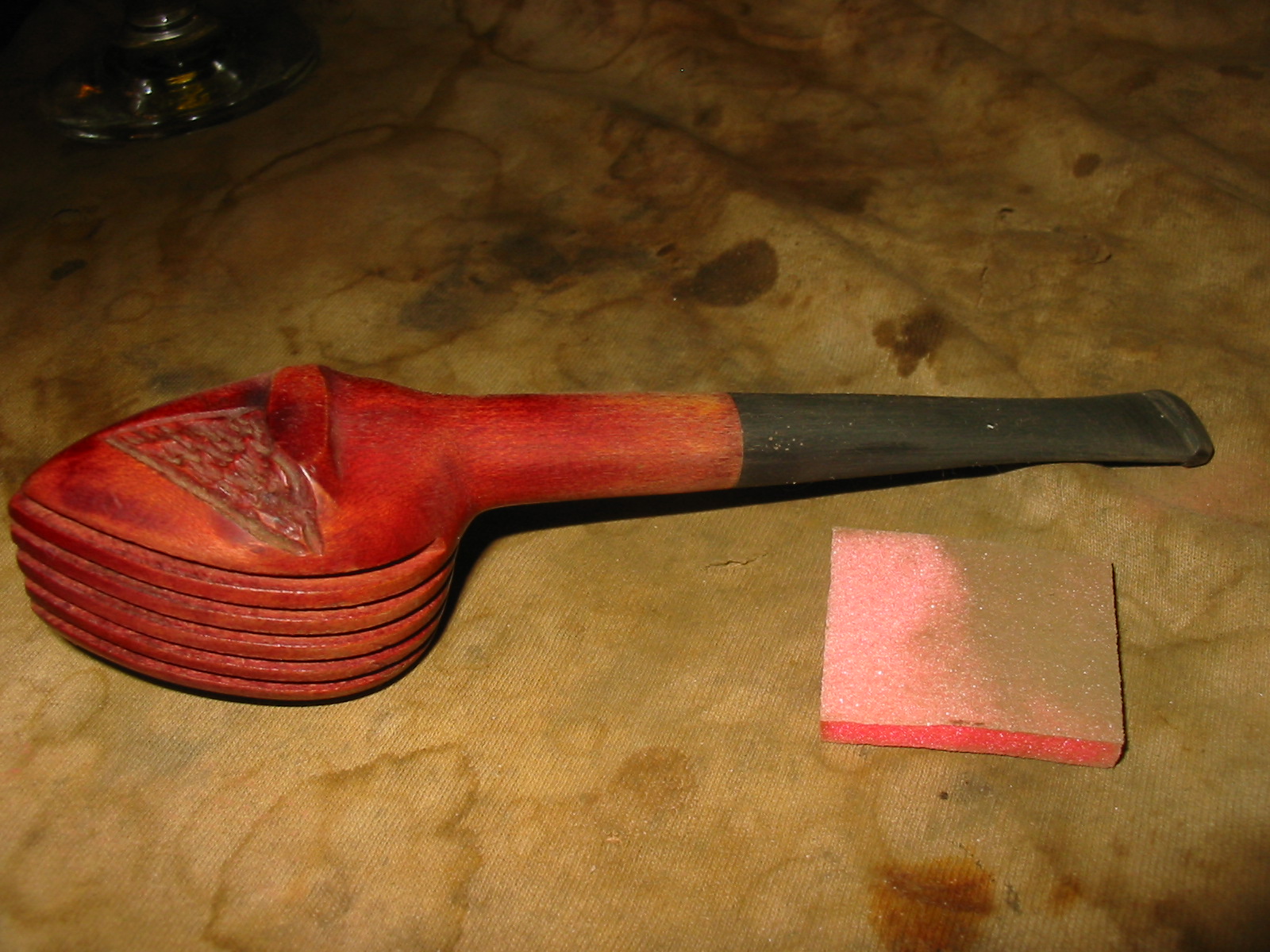
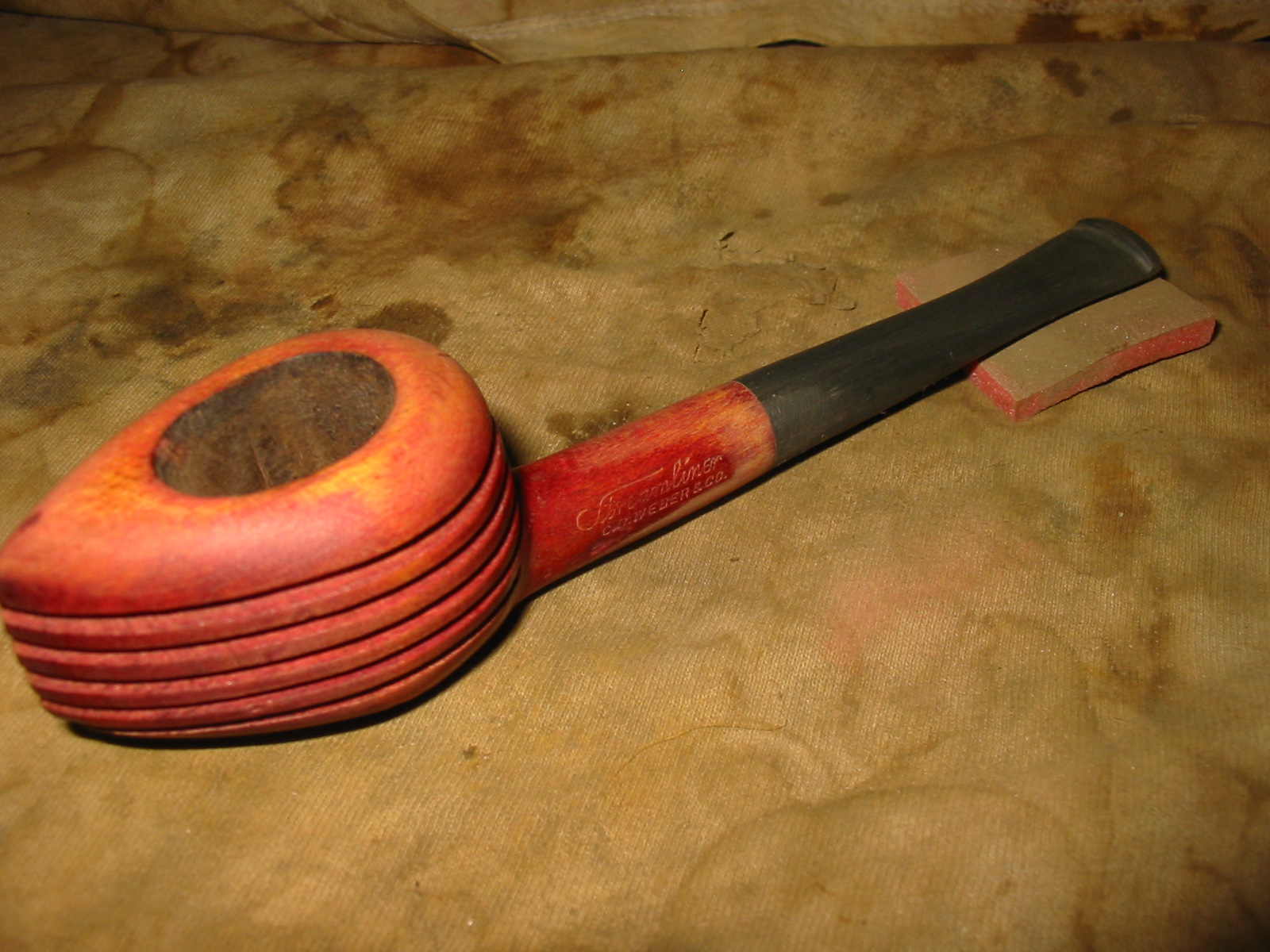
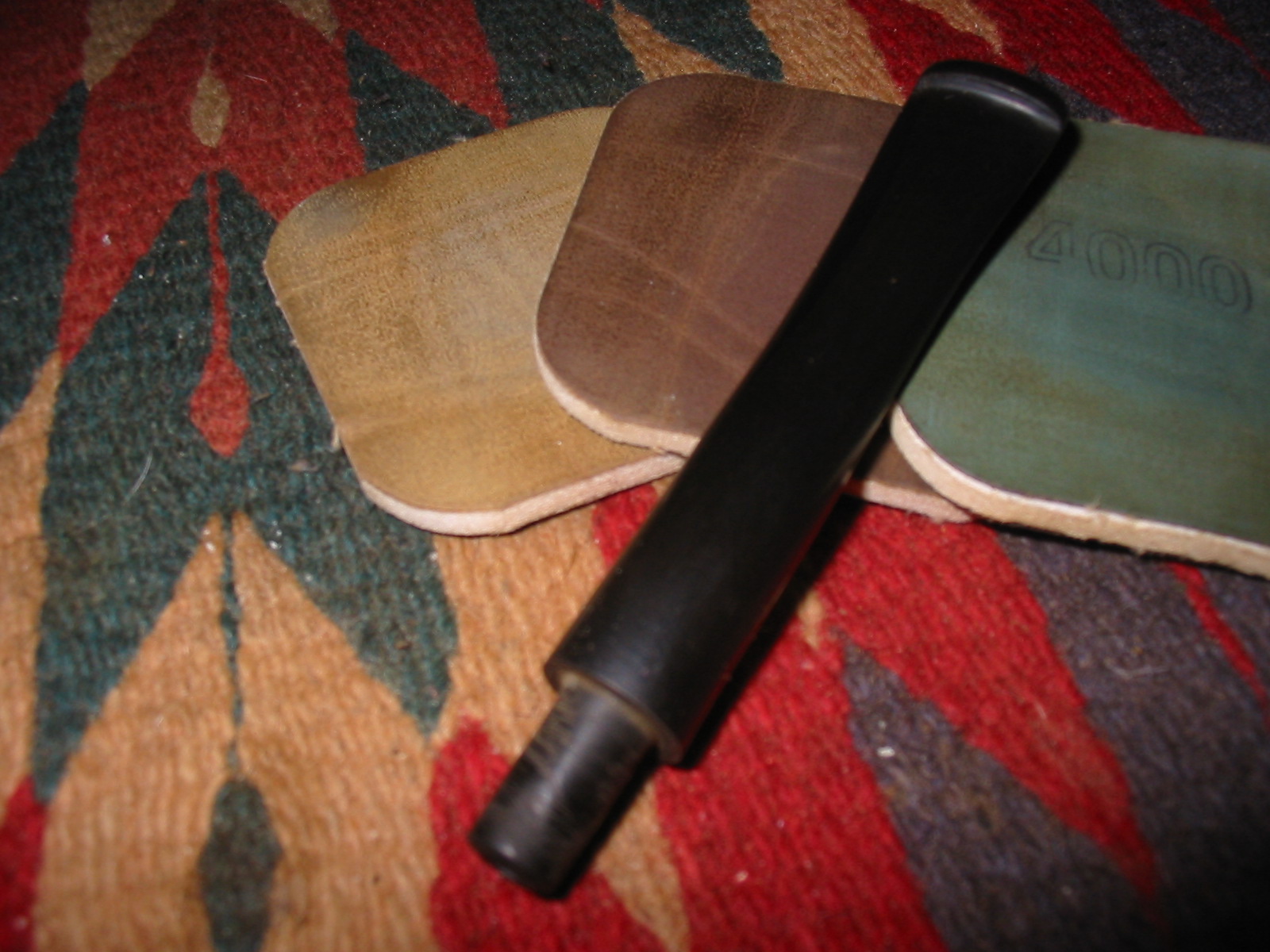
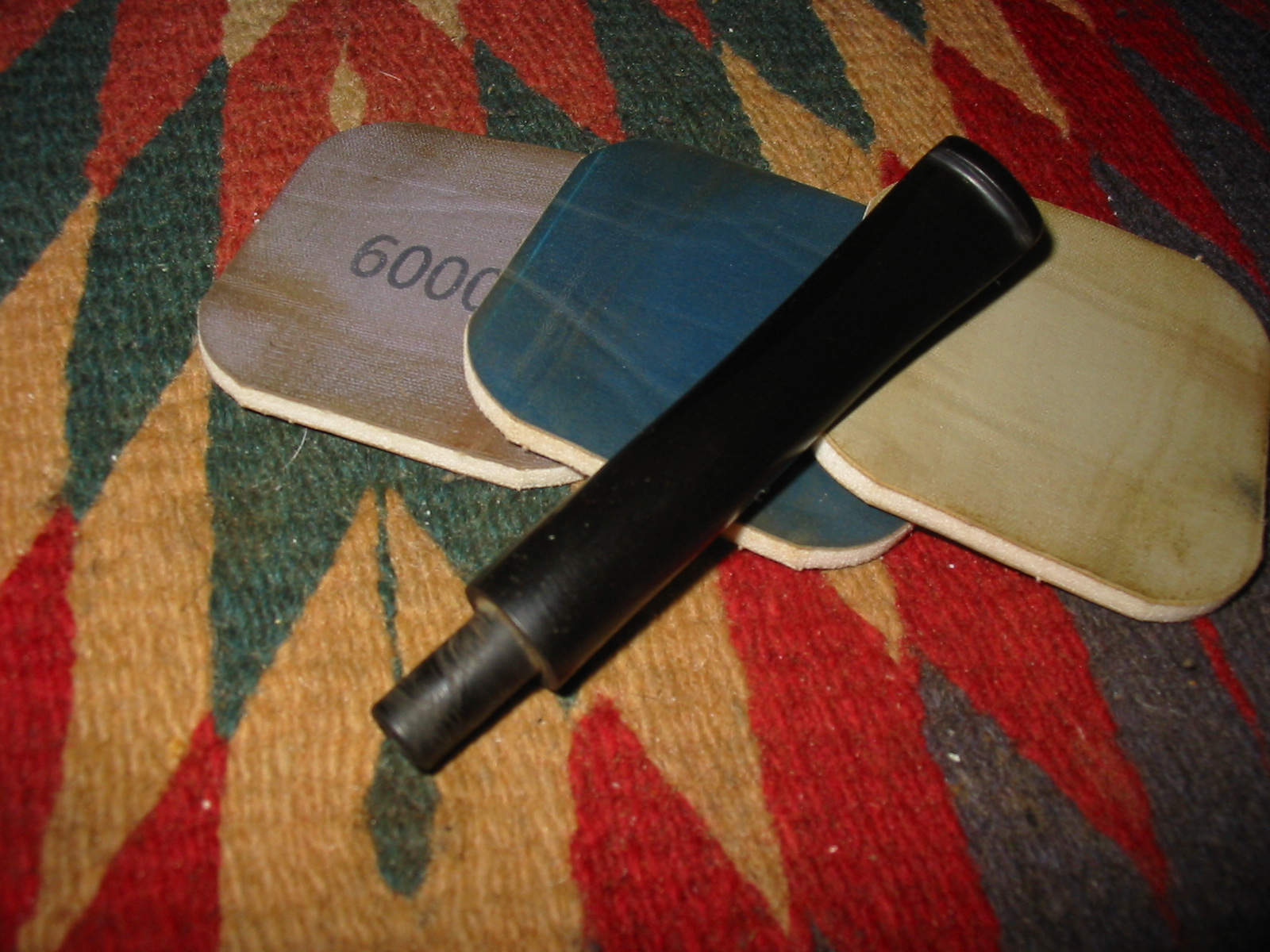
I sanded the stem, bowl and shank with micromesh sanding pads. I wet sanded them with 1500-2400 grit sanding pads and dry sanded with 3200-12,000 grit pads.
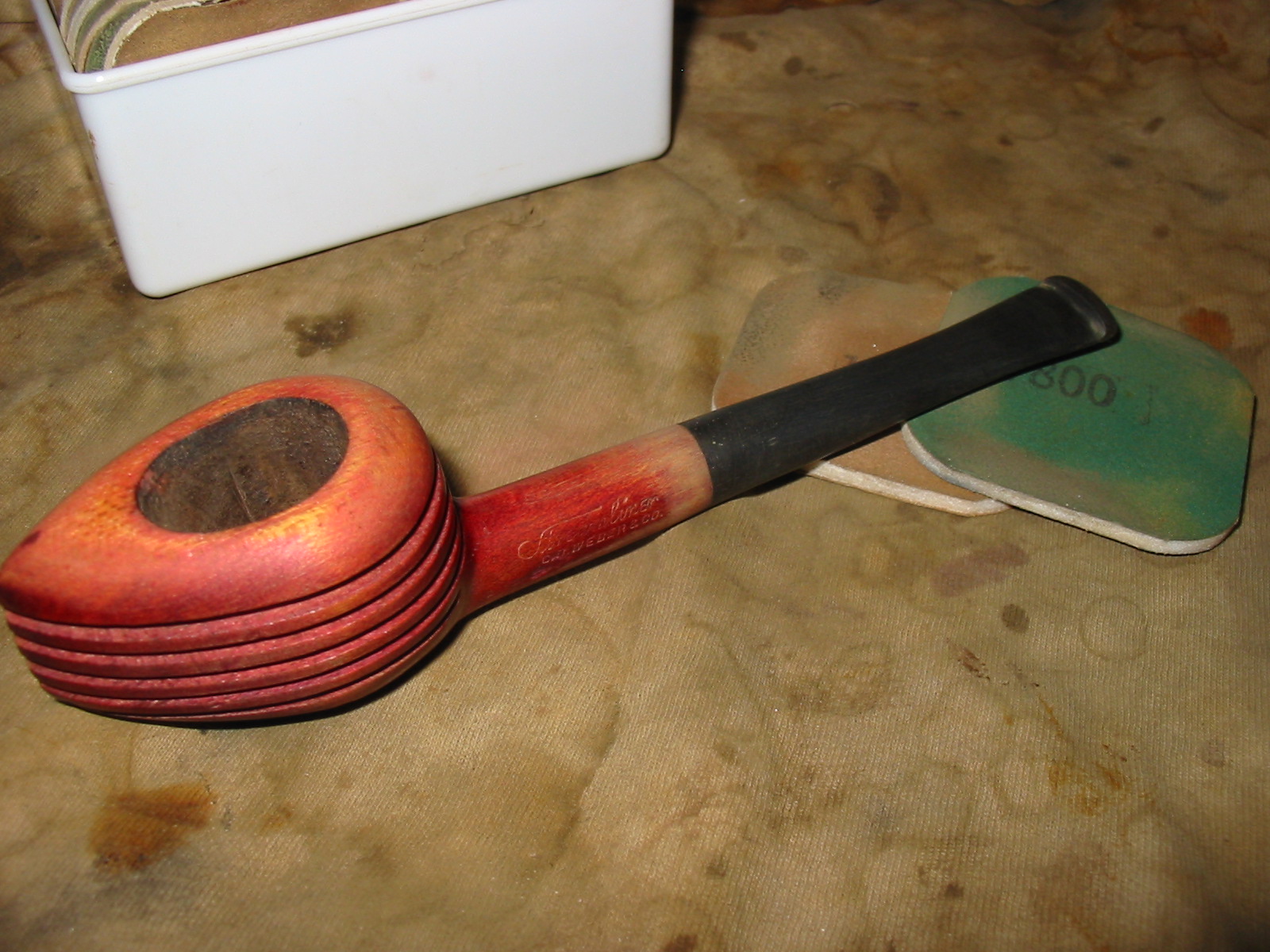
I decided to try to match the original stain using a Danish Oil (linseed oil with a cherry stain). I applied the stain with a cotton pad and wiped it down. When it had dried I was not happy with the coverage and appearance so I removed the stain with acetone to try a different stain.

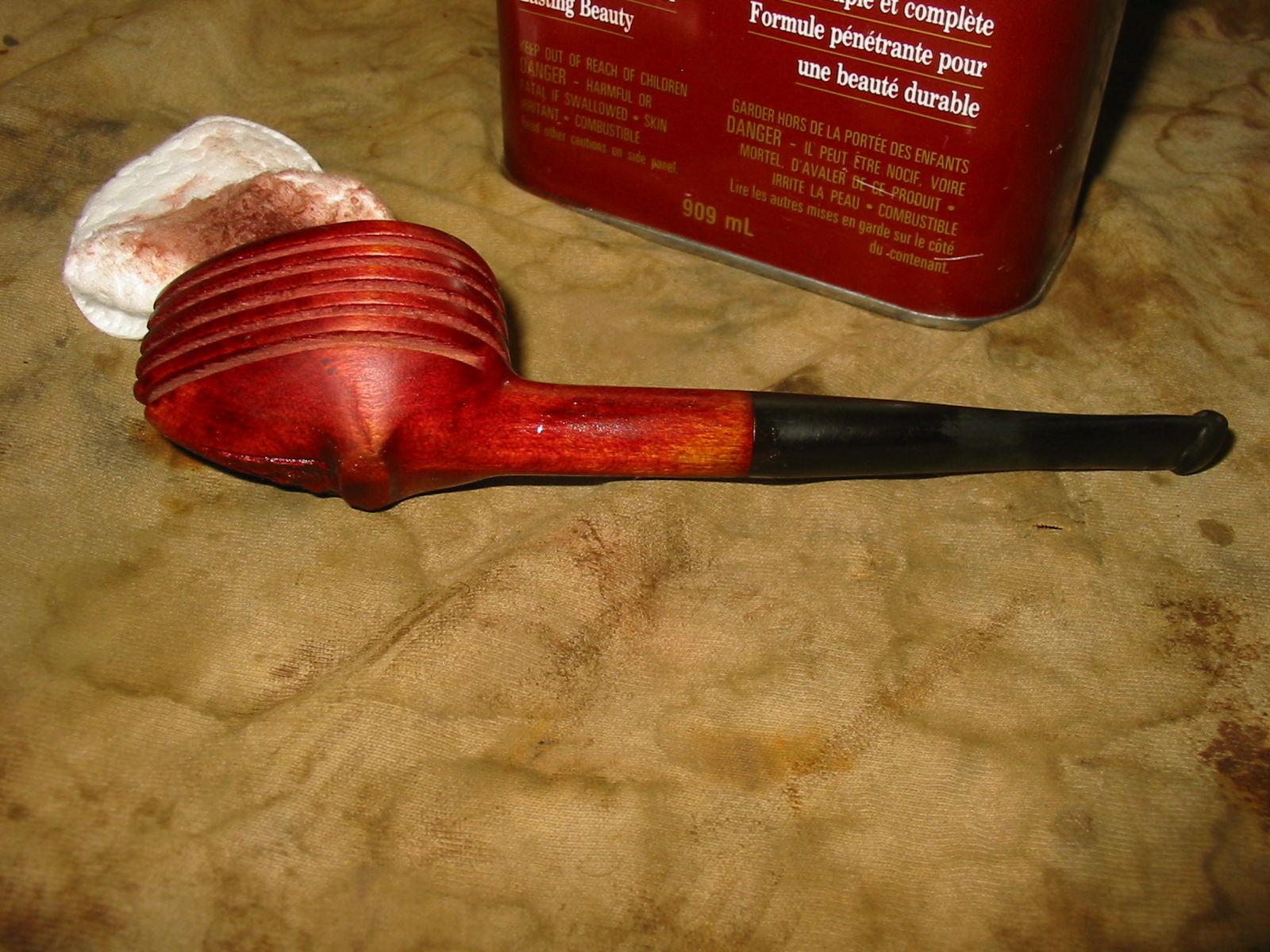
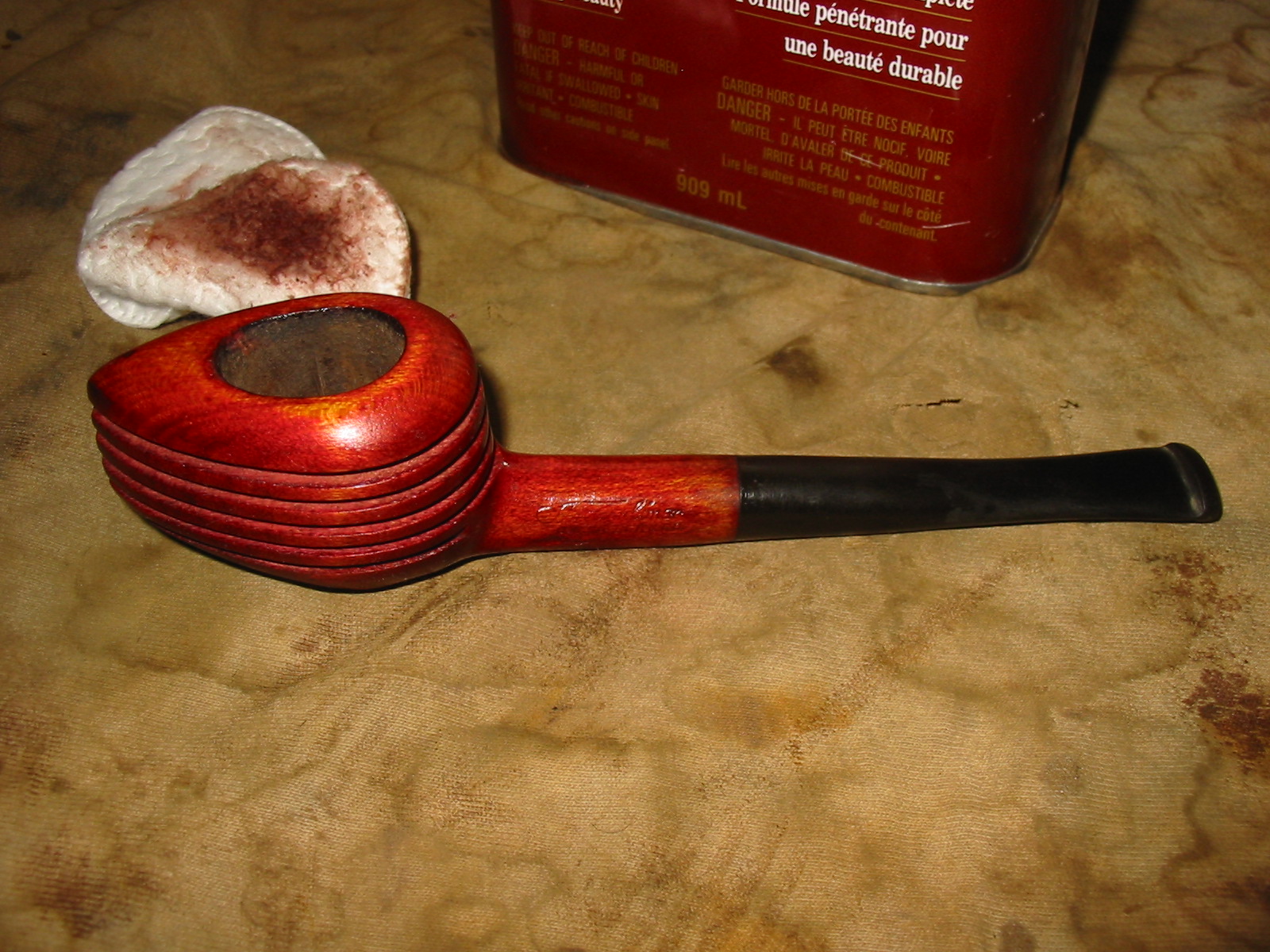
Once I had the finish removed I restained it with an oxblood aniline stain. I had to apply it and flame it several times to the top of the bowl and shank to get the stain to set deeply and match the rest of the bowl. This was a hard one to get a good stain on. I decided to not apply the stain in the grooves of the fins but just on the surface of the bowl. It worked quite well with the original stain in the fins matching the surface colour really well.
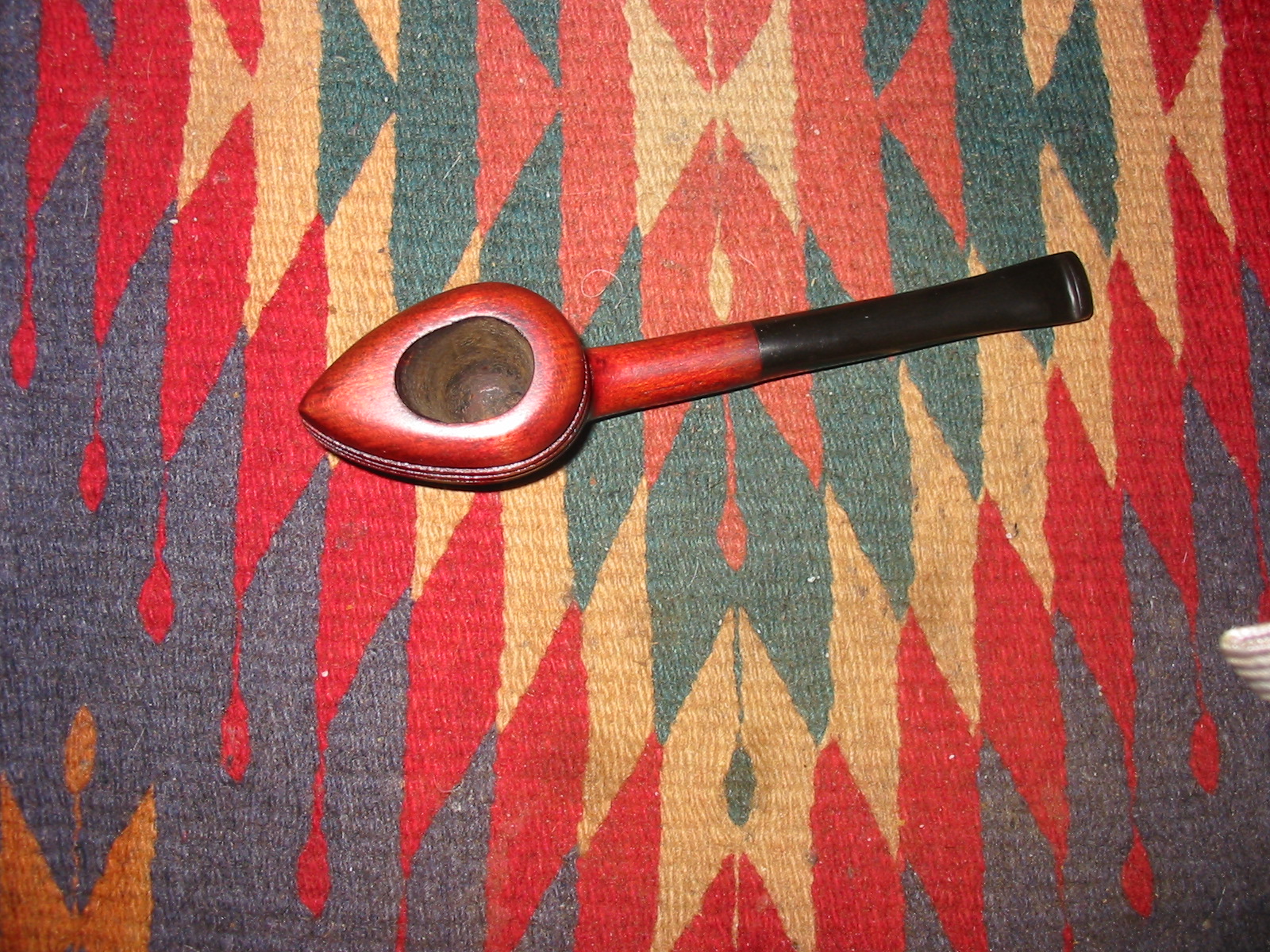

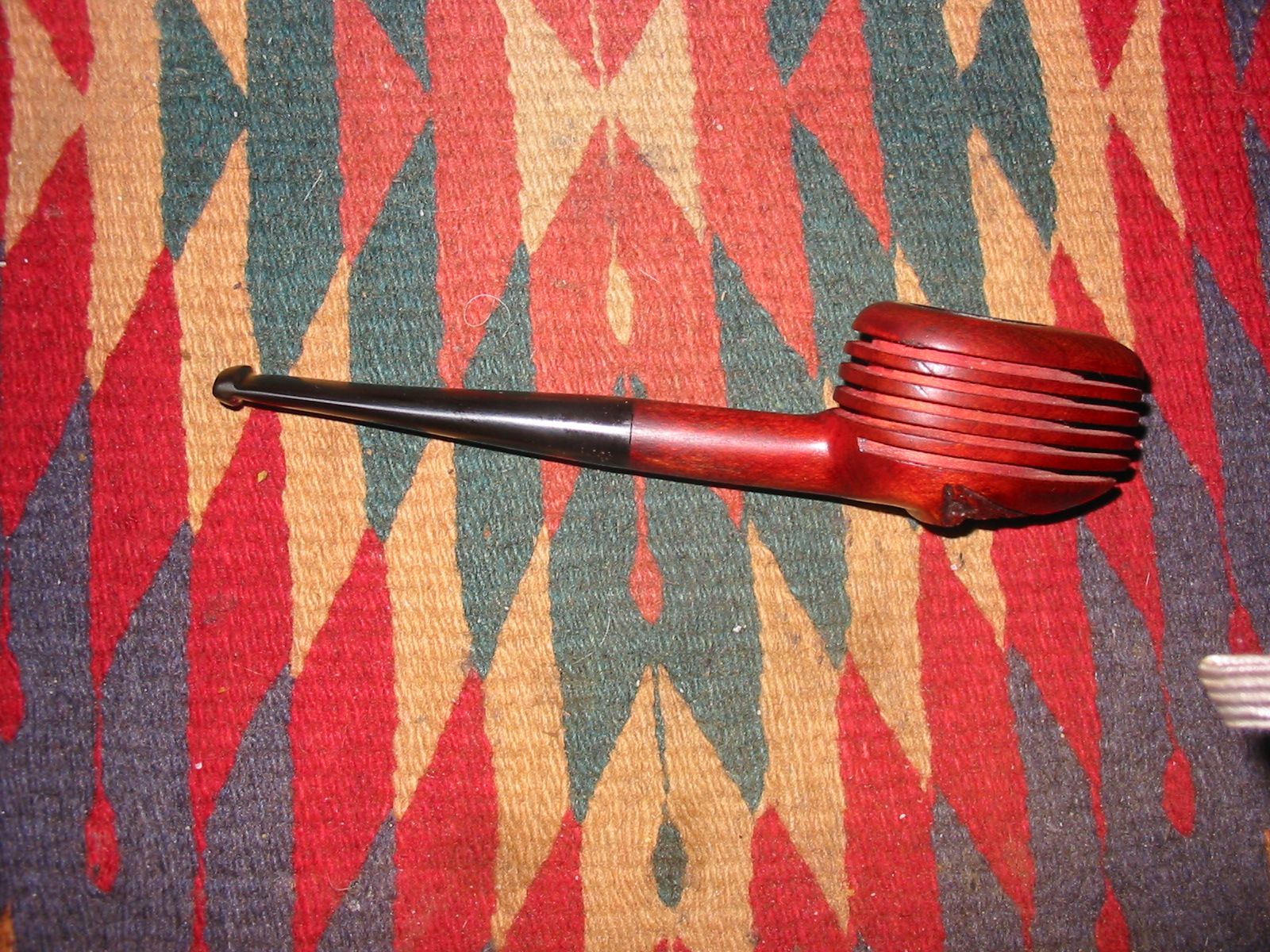
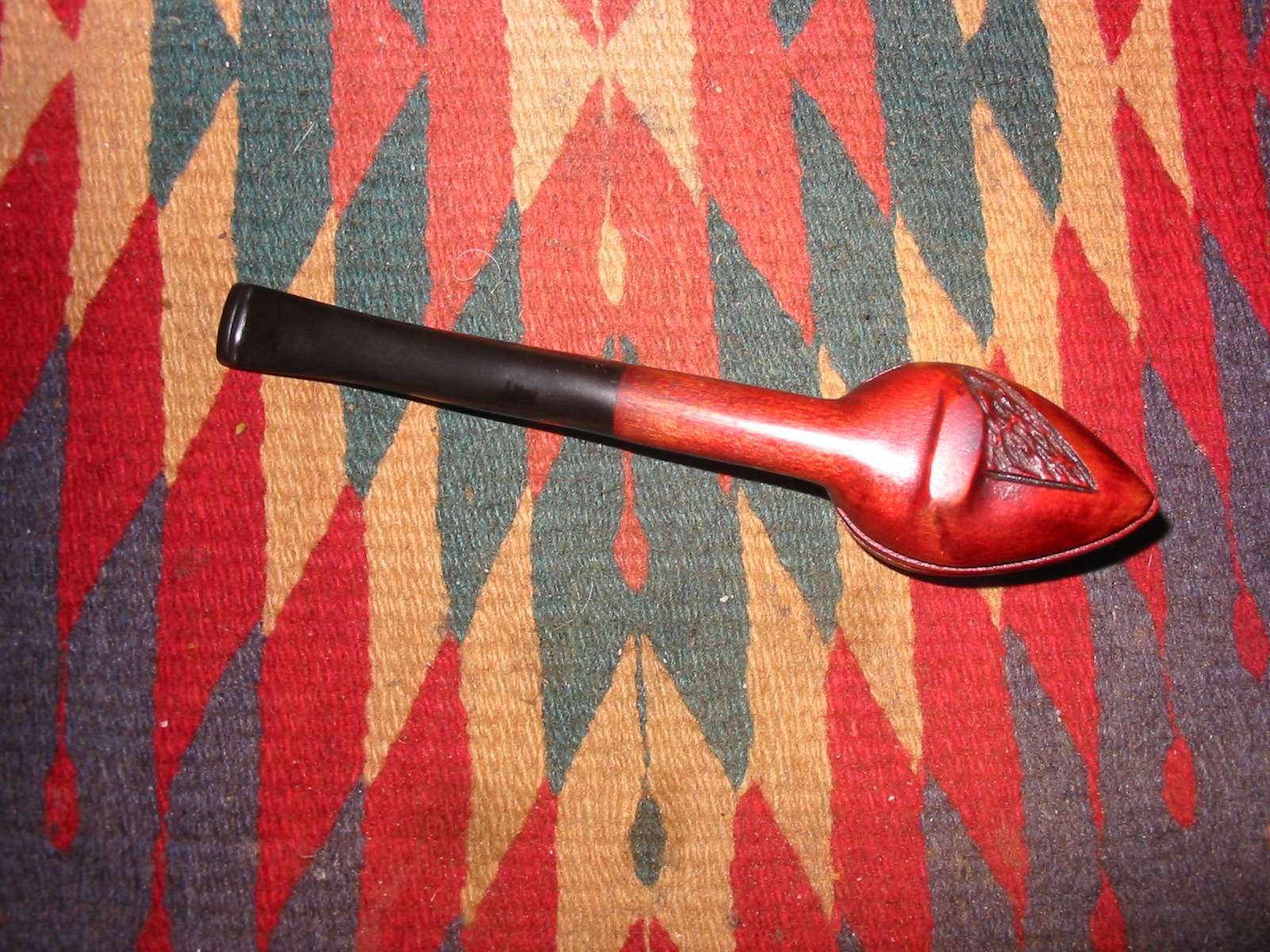
I did some further polishing on the stem with the higher grits of micromesh from 3600-12,000. Once I had finished the sanding I polished the stem with Maguiar’s Scratch X2.0 to deepen the shine. I coated the stem with Obsidian Oil and then buffed it with carnauba wax to seal it and protect it. The final buff on the stem was done with a soft flannel pad.
I reinserted the stem and gave the pipe a final buff with carnauba wax and a soft flannel buffing pad. The finished pipe clearly shows some of the grain pattern of the alternative wood on the shank and the top and bottom of the bowl. The stem came out fitting nicely and giving the overall pipe a new “streamlined” appearance more accurately approximating the original stem. The bowl feels great in the hand and is uniquely attractive as a piece of pipe history. Time will tell if I smoke this one or just keep it around for display purposes. Below are photos of the finished pipe.


Great find, and restoration! What a treasure!
LikeLike
A Weber Streamliner with original stem just landed on my work bench, it belongs to one of my forum friends. I’ll do a clean-up and blog entry this coming week.
LikeLike
What a beautiful pipe.
Very well done on the staining.
LikeLike
Thanks, Steve for the great project. The history, research, and presentation were fantastic. My preference is for traditional design…Bull Dog/Rhodesian, Oom Paul etc, but this dseign is intriguing. I wonder if the fins achieve the heat dissipating effect that they were designed for. I also wonder what pros and cons the inner-bowl shape has on smokeability, and maintenance. I would have to try it out if for no other reason than scholarly reasearch 🙂
LikeLike
Oops, don’t know how to link a pic in, sorry. (Thanks Chiz – I inserted it for you. You are right it does look like the hotel)

LikeLike
🙂
LikeLike
Steve, that is an awesome piece of work, well done in bringing that most unusual piece of design back to such vibrant life.
When I first saw this pipe after you posted elsewhere, I was instantly reminded of a famous landmark in my hometown of Liverpool, the Atlantic Tower hotel, designed to look appropriately enough like the prow of a ship in recognition of Liverpool’s maritime history:
LikeLike
That is so cool! I stayed in that hotel one night when I visited Liverpool in 2014!
LikeLike
What a neat piece of pipe history. That new stem fits like it was made with the pipe, nice work! I think that would make a great display pipe, that shape is quite distinctive.
LikeLike
In page 175 of “American Streamlined Design”, which I referenced at my blog post to which you linked, it has the same patent drawing as you feature here, and it attributes the Streamliner design to Leser, so your investigation and conclusion is correct. What’s interesting is that neither the pipe featured in the book, nor mine, nor does the one at this link: http://www.pipephil.eu/logos/en/logo-s7.html#streamliner says “Weber”. Nor do any of ours have the same carving as your, so I wonder if that was done later. For the record, my book says that the wood is burl walnut, so you’re correct that it isn’t briar. If you visit that link that I gave, it also shows the wing/fin design on the stem which would identify an original stem. Thanks, by the sway, for linking to my post. And I enjoyed reading about your restoration!
LikeLike
Thanks for commenting. I wonder about the date on this one of mine as it is also stamped slightly different. The Streamliner stamping is an Italicized script which is different than the one you show or the one on pipephil. My guess would indeed be walnut on the wood of the bowl.
LikeLike
Yeah, I didn’t notice the font difference because I couldn’t quite make out the stamping from your pictures. Also, does your pipe have a patent number stamped on it?
LikeLike
I just took a couple of pics of the stamping for you to see and updated the blog post. There is no patent number on the shank.
LikeLike
Hmm, I don’t know what to make of that. It’s a mystery to me.
LikeLike
Neat looking pipe, Steve; and a great restoration. Very cool pipe which, visually, takes one back to wholly different era!
LikeLike