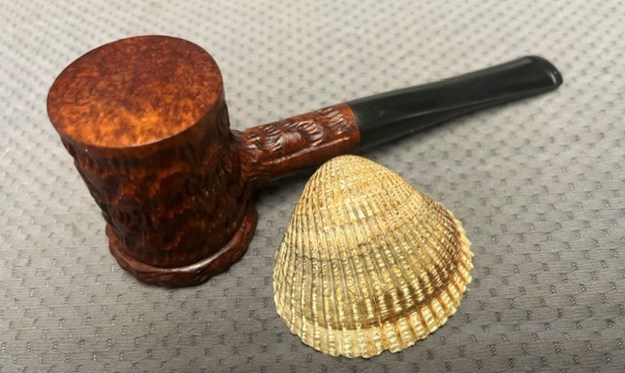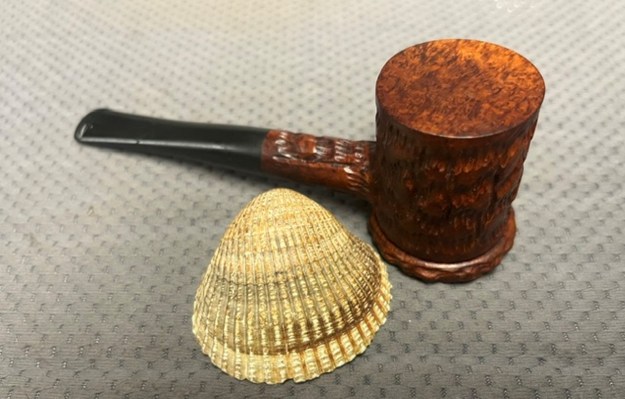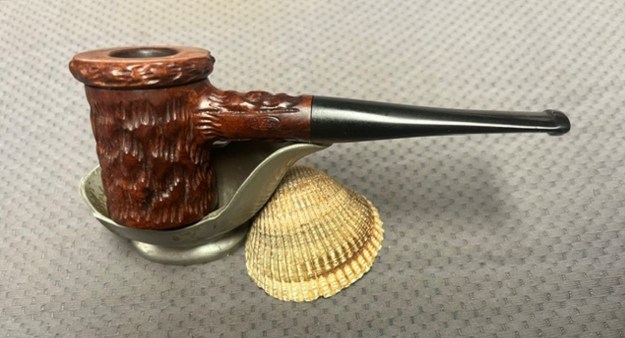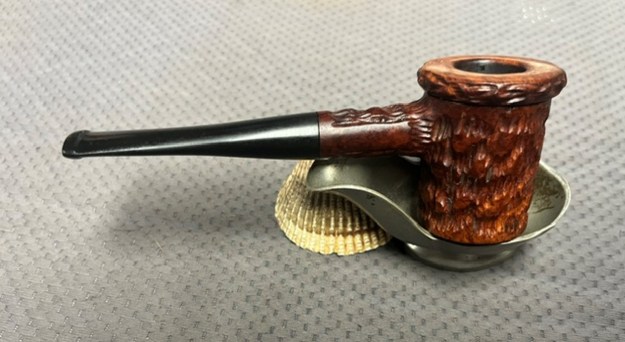
by Steve Laug
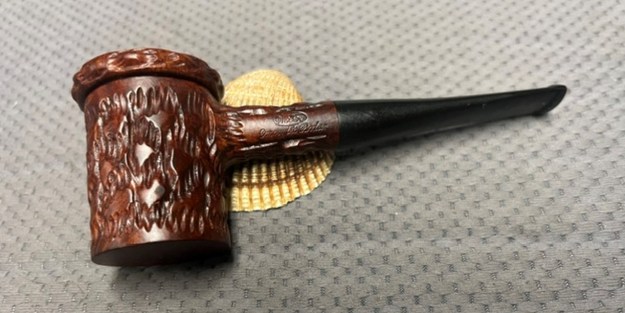
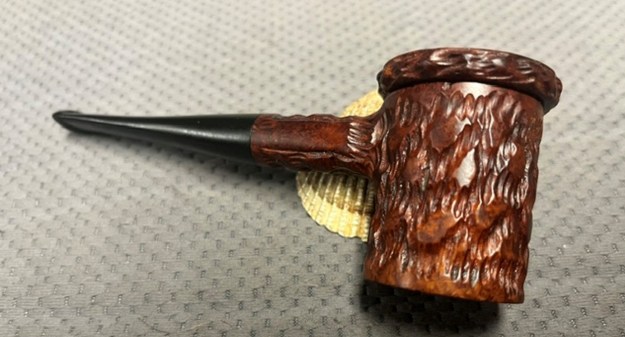
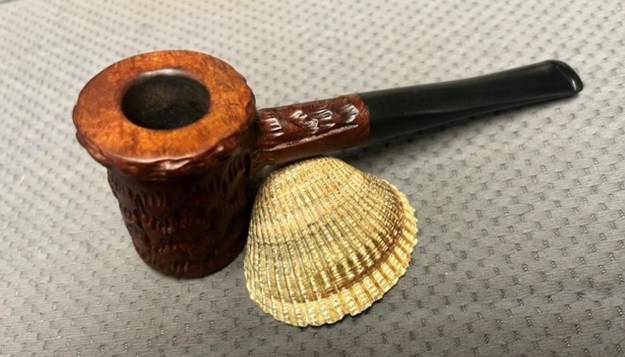
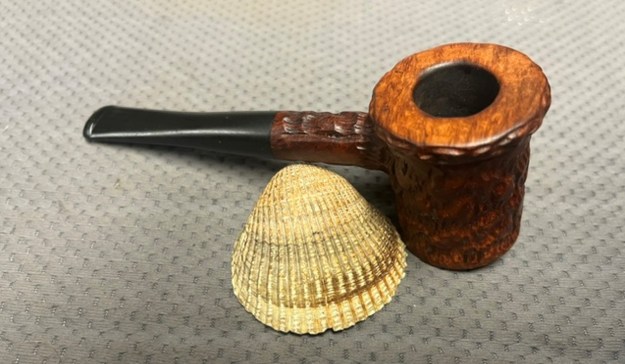
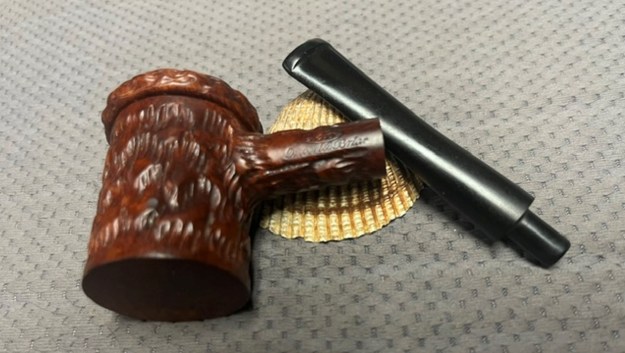
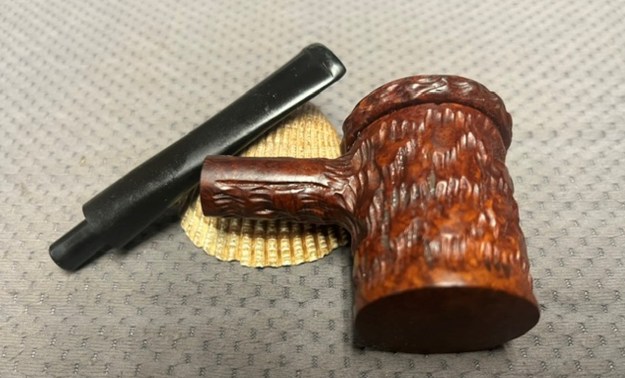
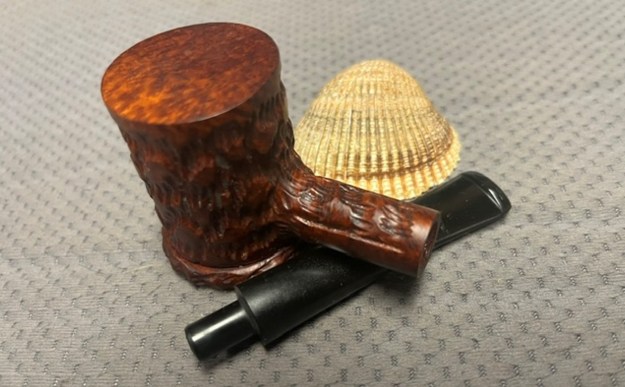
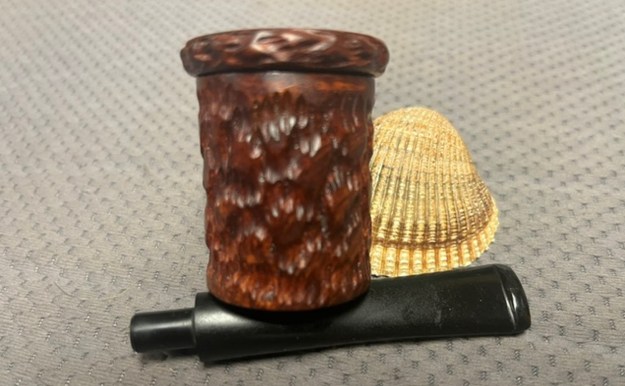
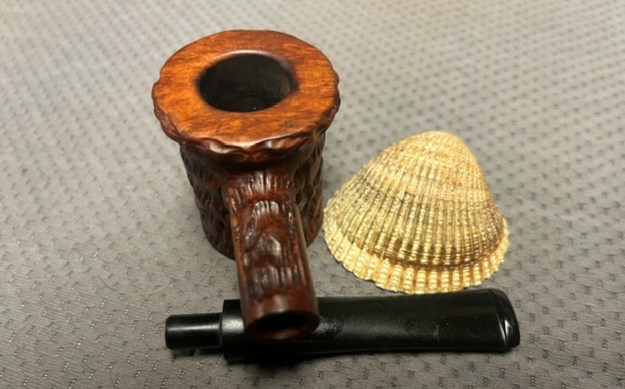
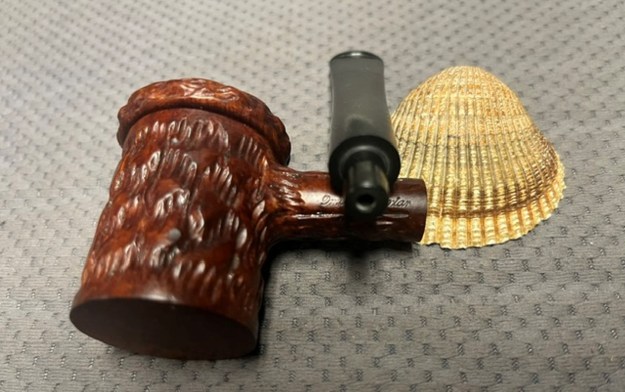
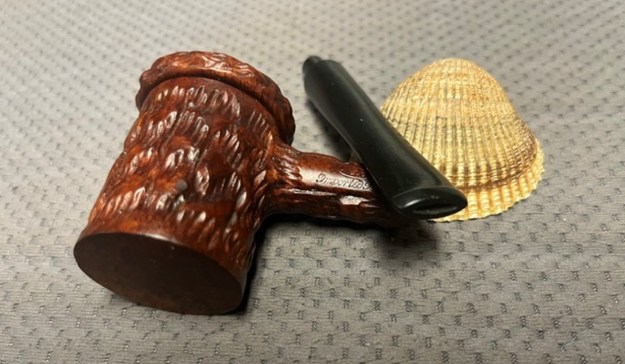
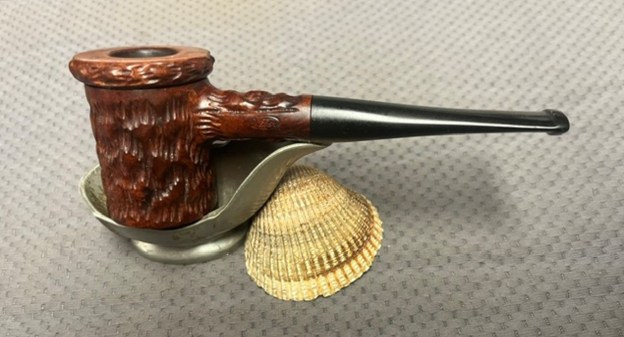
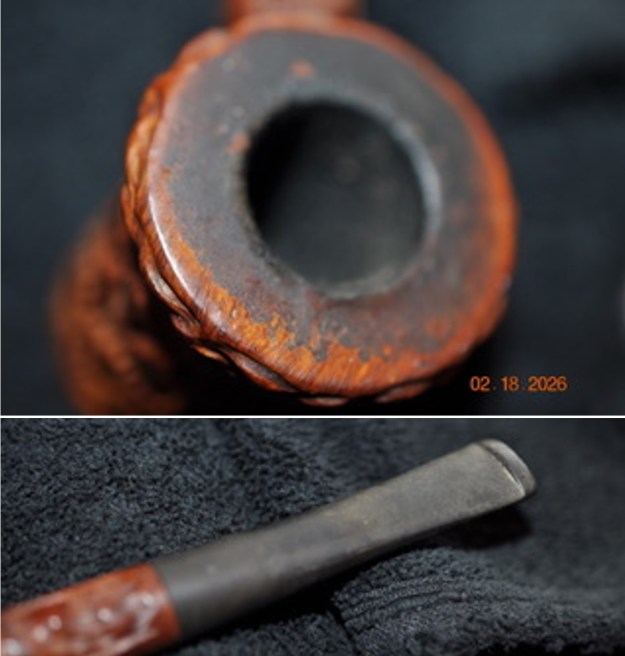
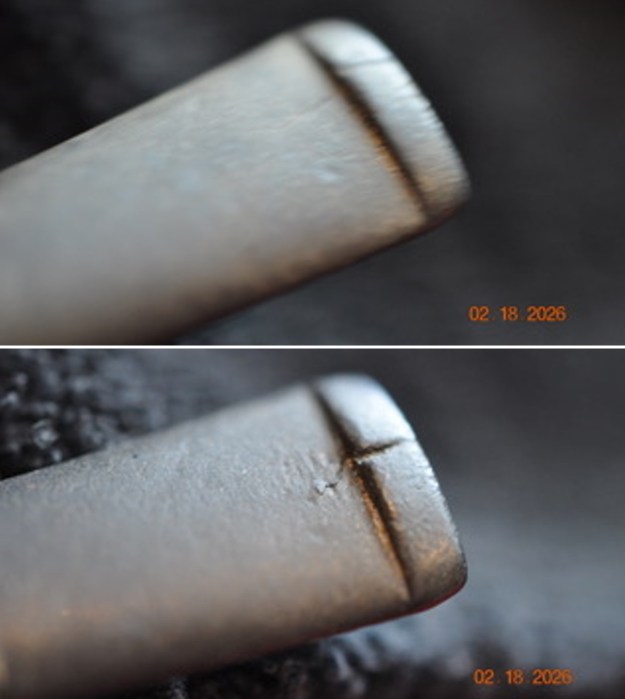
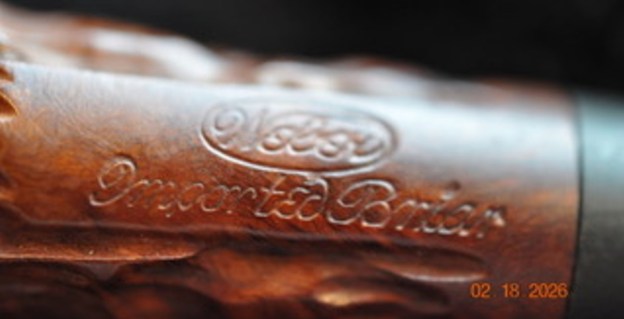
The next pipe on the table is a rugged looking the Campaign style pipe with a deep rustication. It was one purchased on 01/20/2026 from a Facebook seller in Quaker Town, Pennsylvania, USA. The bowl and the shank are heavily rusticated. The top of the bowl insert, base of the calabash and the end of the shank band are smooth. It is a great looking pipe. It is stamped on the left side of the shank and reads Weber in an oval [over] Imported Briar. The finish was dirty and had a lot of grime and grit ground into the rustication and the smooth portions. The rim top and inner edge of the bowl is dirty with a thick overflow of lava the edge and the top that was heavier toward the back of the bowl. The bowl insert was stuck in the calabash base and had no give. There is a thick cake in the bowl. The vulcanite taper stem is dirty and has light tooth marks and chatter on the surface ahead of the button. There were no logo stamps on either side of the stem. Jeff took photos of the pipe before he started his clean up work. It showed a lot of promise.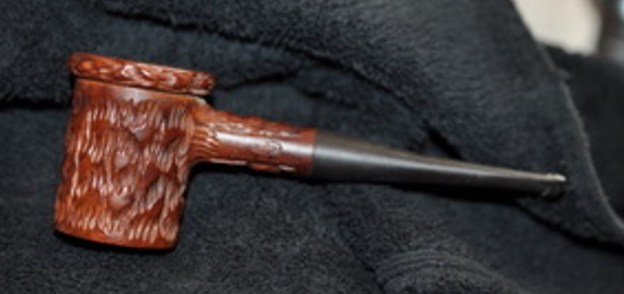
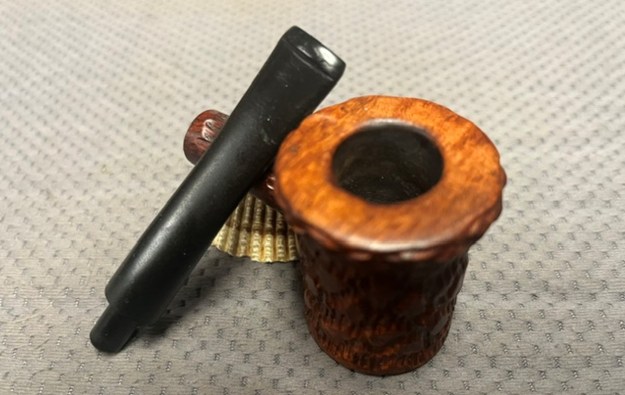
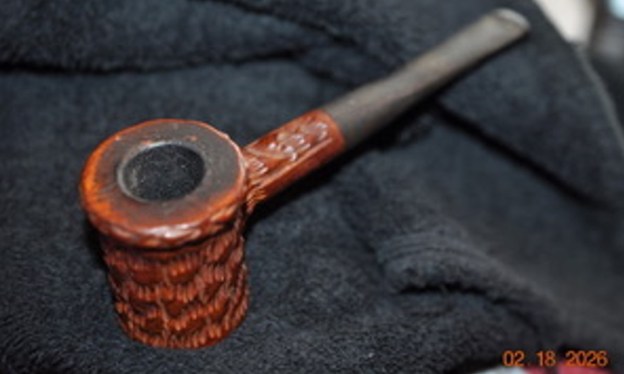 Jeff took photos of the briar bowl insert in the calabash base. It is stuck but you can see the thick lava coat on the rim top, heavier toward the back. The cake in the bowl is quite thick and overflows over the top. It is a dirty pipe. I am curious what the bowl of the calabash underneath looks like.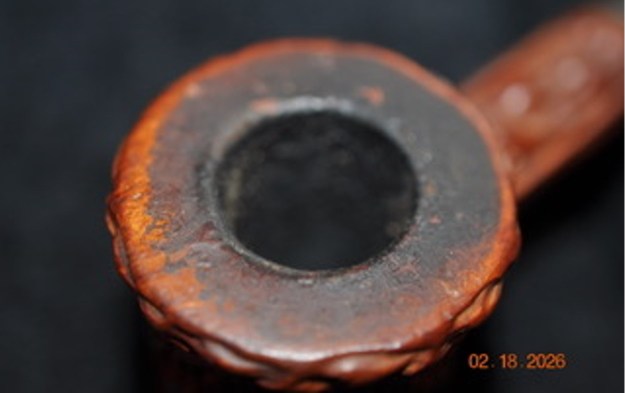
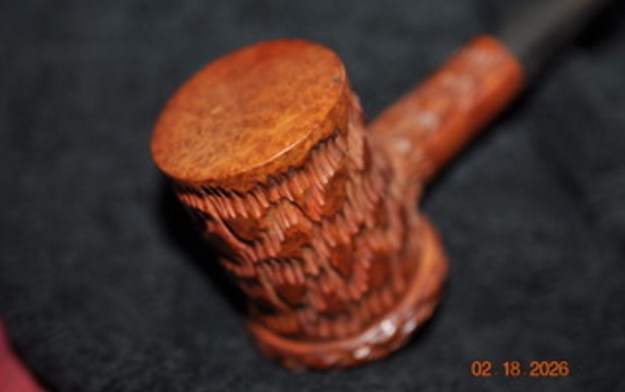
 He took photos of the sides and heel of the bowl to show the finish around the bowl and the condition of the pipe. You can see the grime ground into the surface of the briar. The stain combination really makes the grain and the depths of the rustication stand out. I look forward to seeing it once it is clean and polished.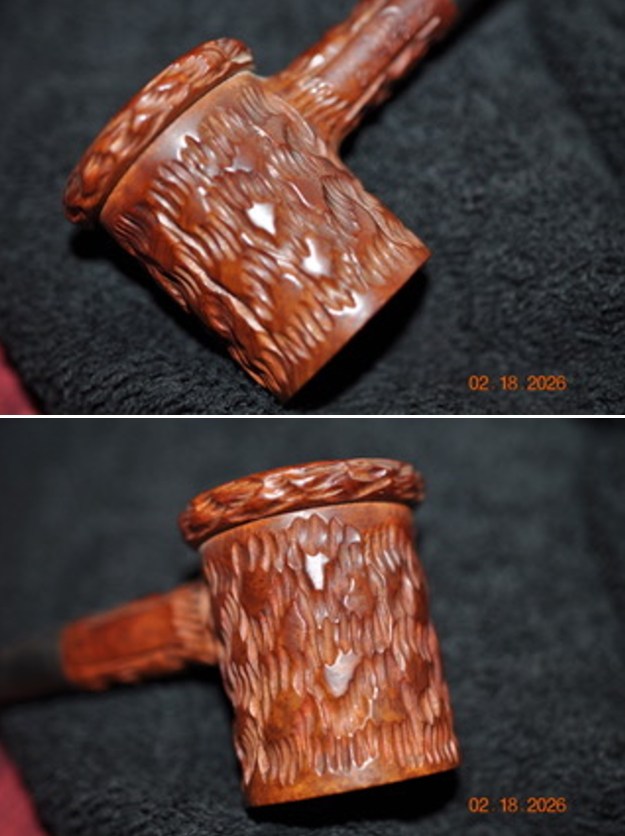
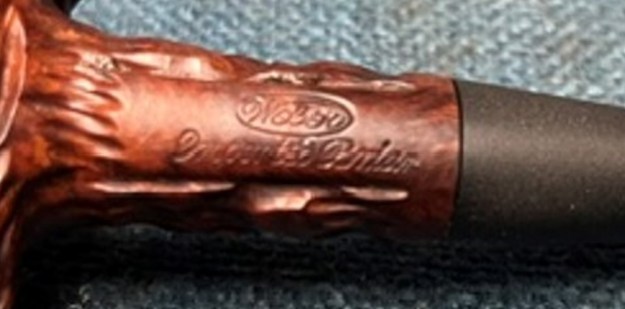
 He took photos of the stamping on the sides of the shank. It is clear and readable as noted above.
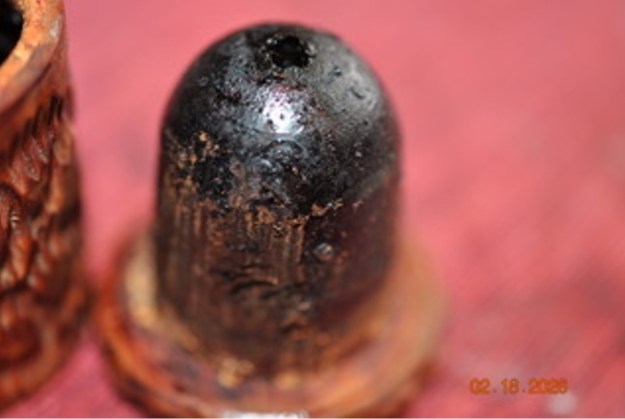
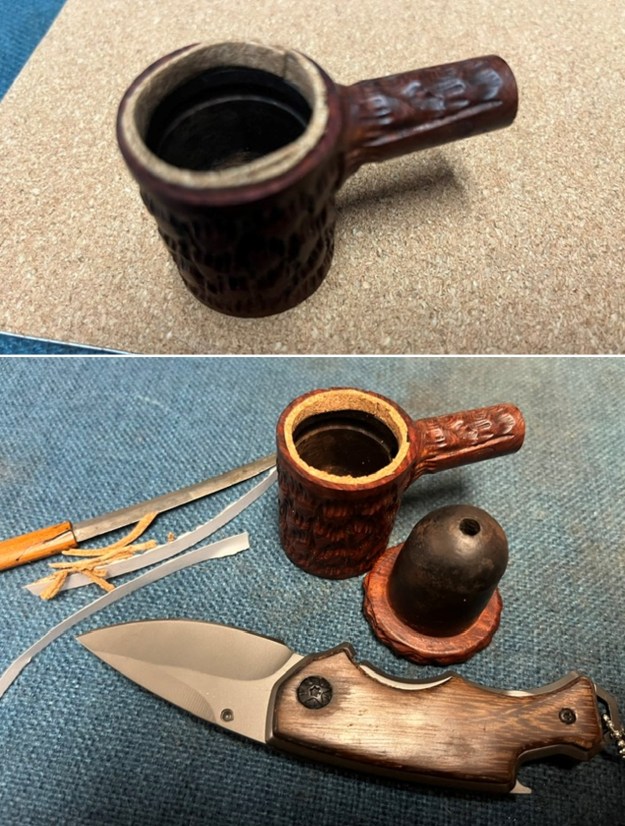
  Jeff put the bowl in the freezer to try and loosen the insert from the calabash base. After some time, there he was able to remove the insert. He took photos of the parts to show the dirty condition. There was crumbling cork gasket around the inner edge of the calabash base. It will need to be replace.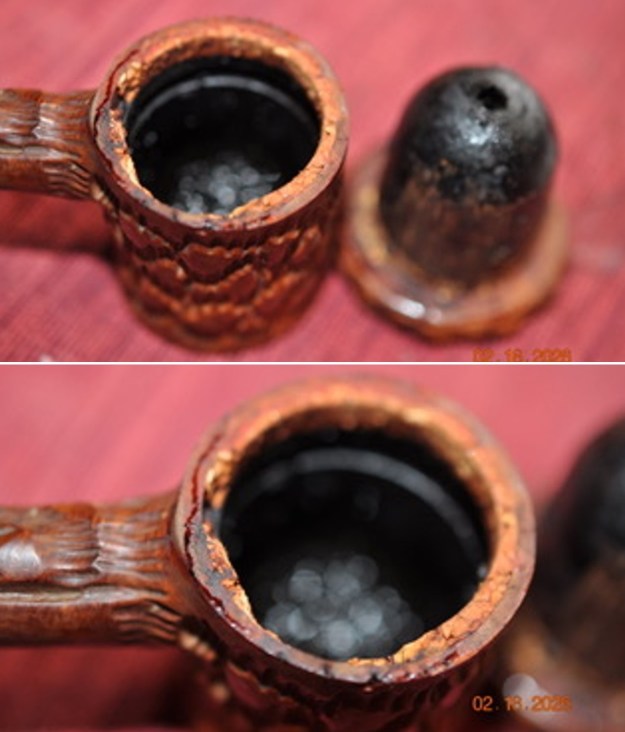
 I checked on Pipephil and though there was great information on the Weber brand of pipes. There was nothing in the list there that showed a Campaign pipe or referred to it. I turned to Pipedia’s article on Weber and it was a great on the history of the brand. There was nothing there on the Campaign pipe. From there I turned back to the various Campaign pipes on rebornpipes that I have worked on before.
I am attaching the link to one of the blogs and some of the information that I found in researching the brand at that time. (https://rebornpipes.com/tag/wdc-campaign-calabash-pipe/). The information is all on the WDC made Campaign pipe but the information is helpful.
In my online research I found a brief interchange on a Google group. I include the link if you would like to read it in context and its entirety. It gives some helpful information regarding this particular pipe. https://groups.google.com/forum/#!topic/alt.smokers.pipes/kpkpd3zXoiwExcerpt from pipedia.org
To a request for information regarding the WDC Campaign pipe on the Google Group there was quite a long string of answers. I am quoting two of those in full…
Respondent 1: While I can’t say anything about this pipe specifically, I have a hazy memory of that shape listed in a book about pipes; (I may be totally misremembering this, but here goes) the shape being called the “Dawes”, named after Harding’s Vice President? Anyone else remember this? Sounds like an interesting pipe, whatever it’s called…
Respondent 2: From Weber’s Guide to Pipes: “The Dawes Pipe (more correctly named the Lyons, after its inventor, Charles Herbert Lyons) happened to be the favorite pipe of General Charles G. Dawes, Vice-President of the USA from 1925 to 1929. General Dawes smoked the curious pipe incessantly and it became popularly known as the Dawes Underslung, because the shank joined the bowl near its rim.”
I looked on Pipedia, (https://pipedia.org/wiki/The_Lyon_Pipe) for information on the Dawes Underslung pipe or what was known as a Lyons Pipe. It is a fascinating read regarding the shape and the build of the pipe. I have also included a copy of the Patent page that was on that link.
General Charles G. Dawes (August 27, 1865 – April 23, 1951) was an American banker and politician, as well as the 30th Vice President of the United States. He was a co-winner of the Nobel Peace Prize in 1925, and later in life the Ambassador to the United Kingdom. He also, of interest to pipe smokers, so incessantly smoked a Lyon pipe that his party used it as a campaign emblem and the pipe took on his name, now being referred to as the Dawes Pipe. In fact, this pipe was invented by Charles H. Lyon (February 17, 1861 – January 1, 1947).
The Lyon pipe, now more commonly known as the Dawes pipe, was characterized by an inner bowl which was threaded into an outer bowl, with smoke traveling through the bottom of the inner bowl to reach the airway much as in a traditional gourd calabash. On September 11, 1924, the Ellensburg Daily Record reported from Chicago that Mr. Lyon worked from a small tin shanty on the outskirts of Chicago, but upon Dawes’ nomination for the Vice Presidency became swamped by orders for the pipe, with 75,000 orders received at that time, and a factory struggling to produce 1,000 pipes a month.
The Lyon pipe was invented by Charles H. Lyon (1862-1947) while working in his workshop in the Chicago area in the early 1920’s. In late 1920, the inventor, a former millwright, was without his right arm due to a factory accident he suffered during World War I, without a job, and at 60 contemplating a start in the real estate business to feed his family. While considering his options, he thought up the pipe that bears his name, and applied for a patent for its design on September 23, 1920. The following year, having seen him smoking a pipe, Lyon sent a pipe to the General as a sampler and the General began ordering the pipes by the dozen.
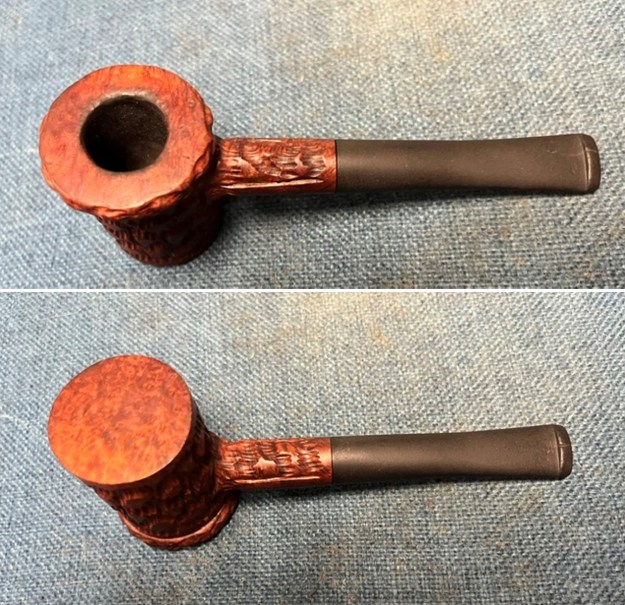
The two became friends, and General Dawes used the pipe as a campaign giveaway in his 1924 campaign for the Vice Presidency, making the pipe famous. In the meantime, Lyon had been granted a patent for the pipe on September 18, 1923. It is reported in Lyon’s obituary on January 2, 1947 in the Oakland Tribune that Dawes and Lyon had become partners in the production of the pipe. 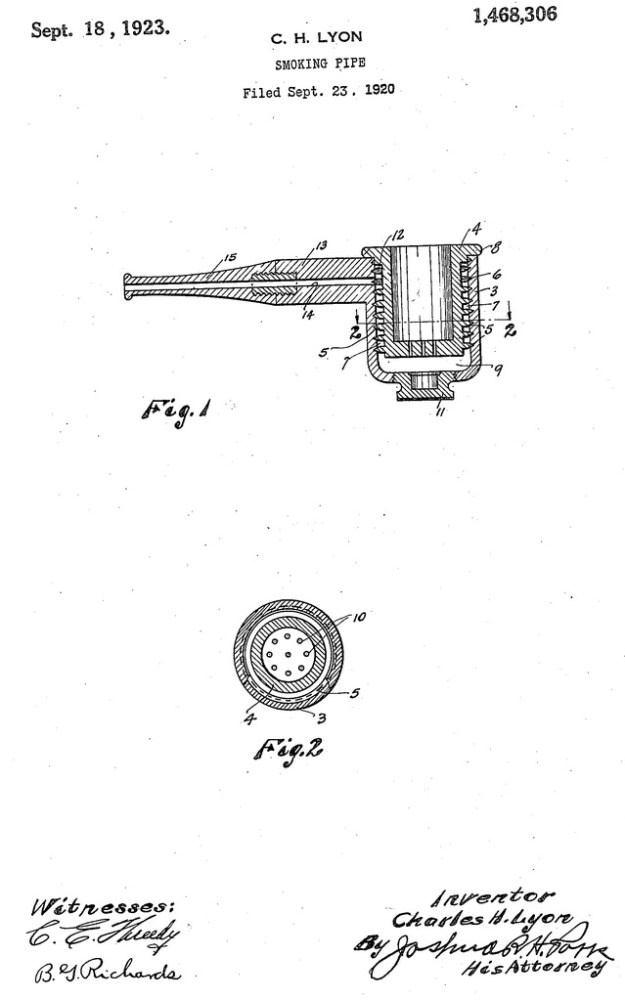 Jeff carefully reamed this Weber Imported Briar Campaign Insert bowl with a PipNet pipe reamer and then cleaned up the inside of the bowl with a Savinelli Fitsall Pipe Knife. He scrubbed the inner bowl and the exterior of the briar with undiluted Murphy’s Oil Soap and a tooth brush to remove the grime on the rim top and bowl sides. He scrubbed the internals of the shank and stem with pipe cleaners, cotton swabs, shank brushes and alcohol until the airways were clean and the pipe smelled fresh. He scrubbed the stem with Soft Scrub to remove the oxidation and then let it soak in Briarville’s Pipe Stem Deoxidizer. He rinsed it with warm water when he took out of the soak. The pipe looked much better once the bowl and stem were clean. Before I started my part of the work I took photos of the pipe. It is a pretty pipe.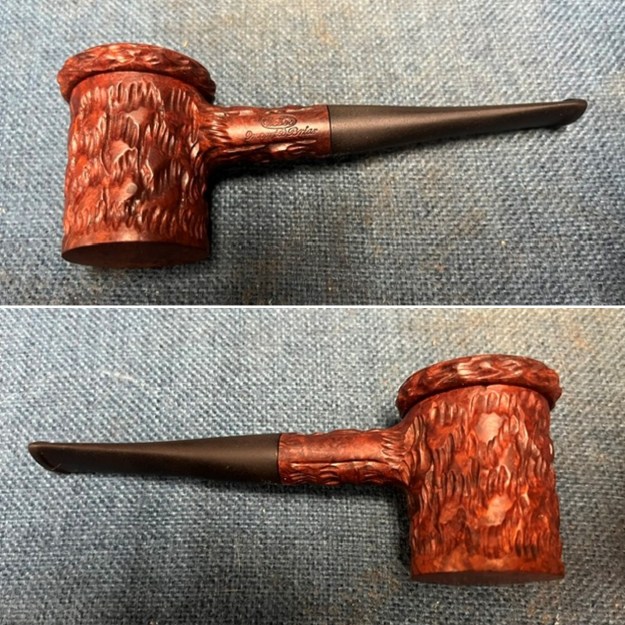
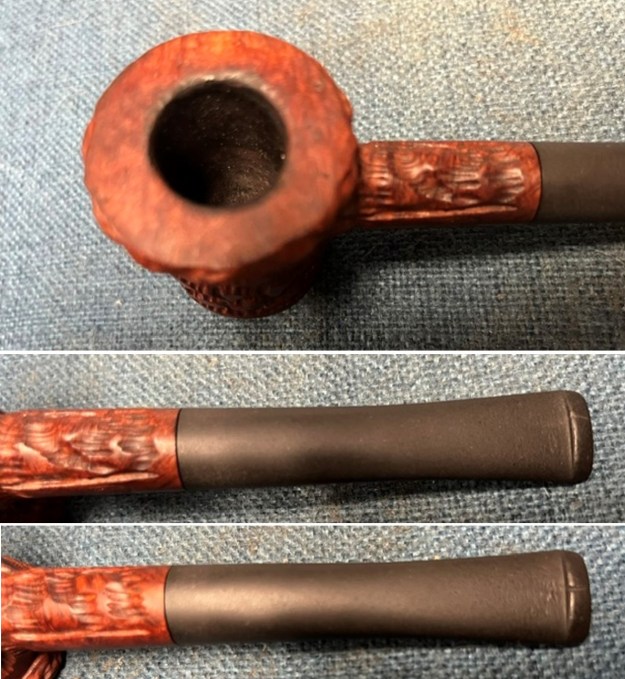
 I took close up photos of the bowl and the rim top to show the condition. It looked better and the inner edge and top were in very good condition. There were some scratches in the top and on the inner edge that will need to be cleaned up. I also took photos of both sides of the stem to give a sense of the condition of both sides at the button. There were light tooth marks on both sides ahead of the button. On the underside there was also a deeper mark on the button itself.
 I took a photo of the stamping on the left side of the shank.. It reads as noted above and is very clear and readable.
  I took the briar inner bowl out of the outer bowl and took some photos of the various parts of the pipe. You can also see the inset on the top edge of the base where a cork gasket was fit to hold the insert in place. It is an interesting piece of pipe history and it is in excellent condition for a pipe of its age.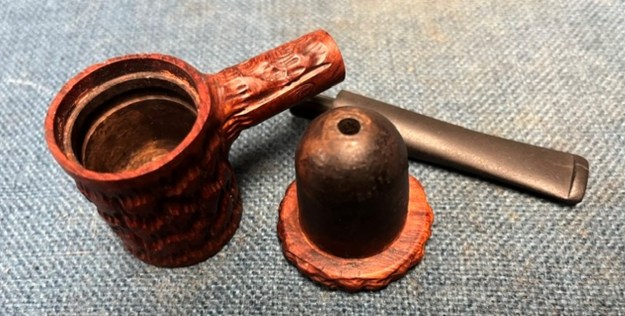
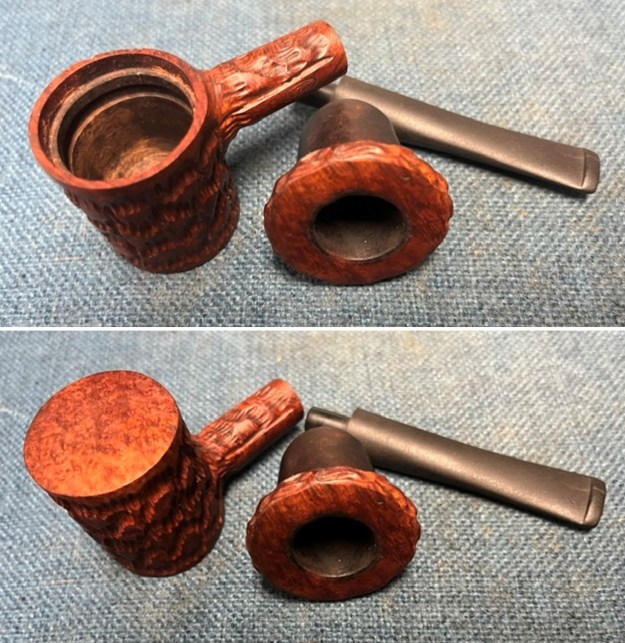
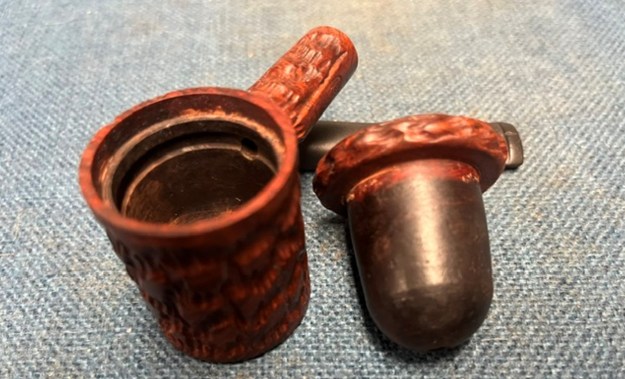 I worked on the damage on the rim top and inner edge with a folded piece of 220 grit sandpaper. I sanded the rough areas smooth and smoothed out the rim edge. It began to look better.
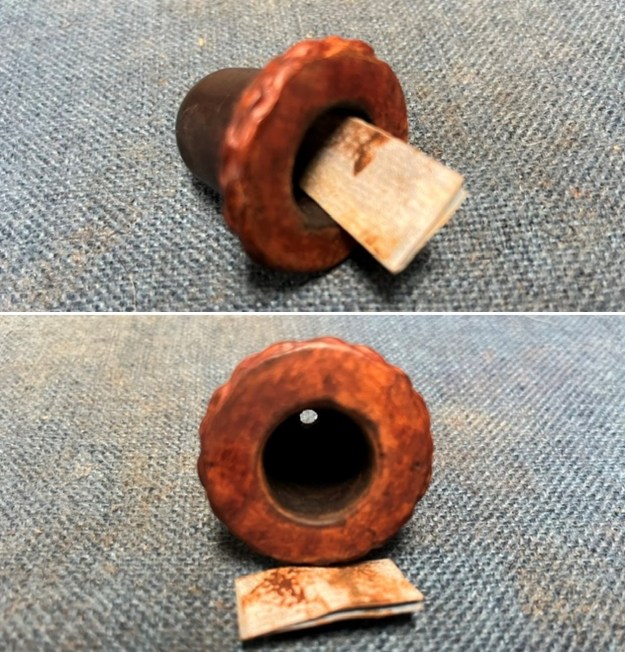 I sanded the smooth rim top of the insert with 320-3500 grit 2×2 inch sanding pads. I wiped it down with a damp cloth to remove the sanding debris and dust. It looked very good.
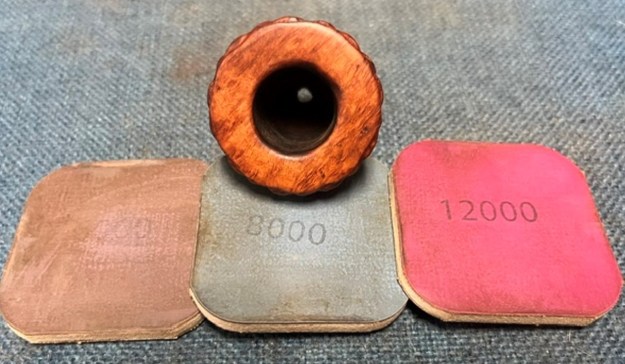
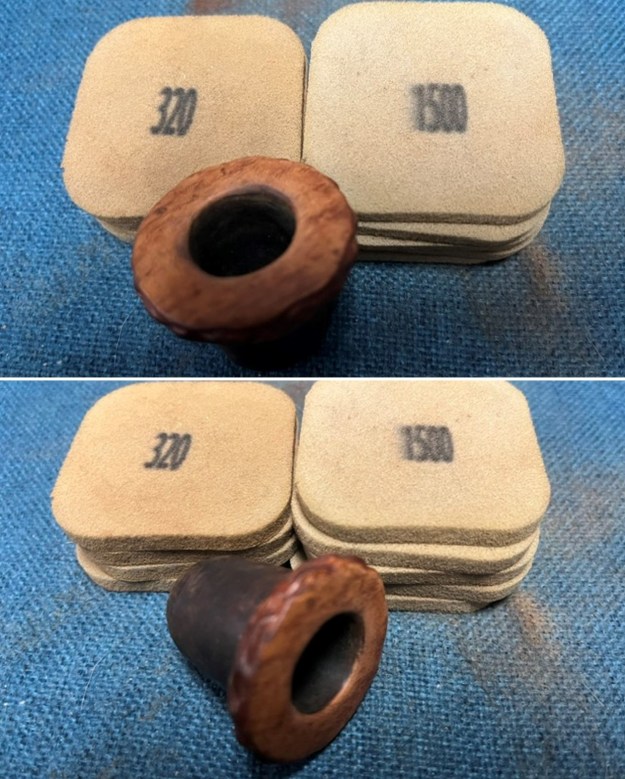 I polished the smooth rim top with micromesh sanding pads – dry sanding with 1500-12000 grit pads and wiped down the bowl down with a damp cloth after each sanding pad.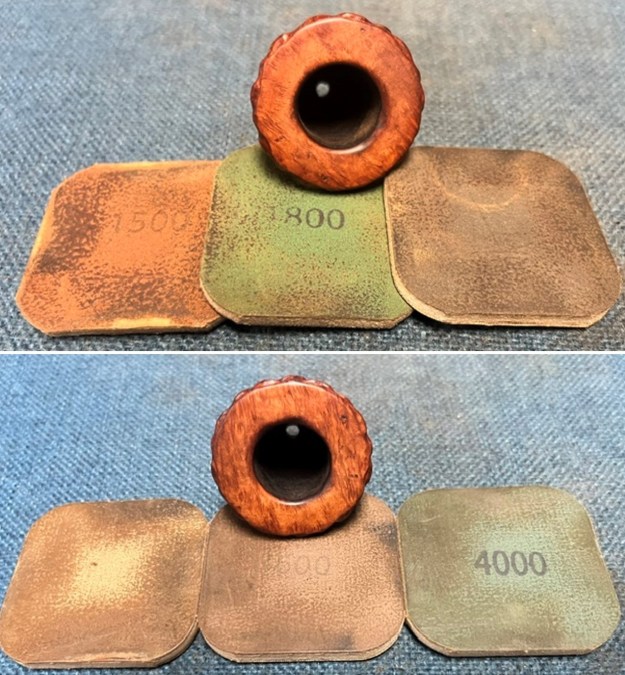
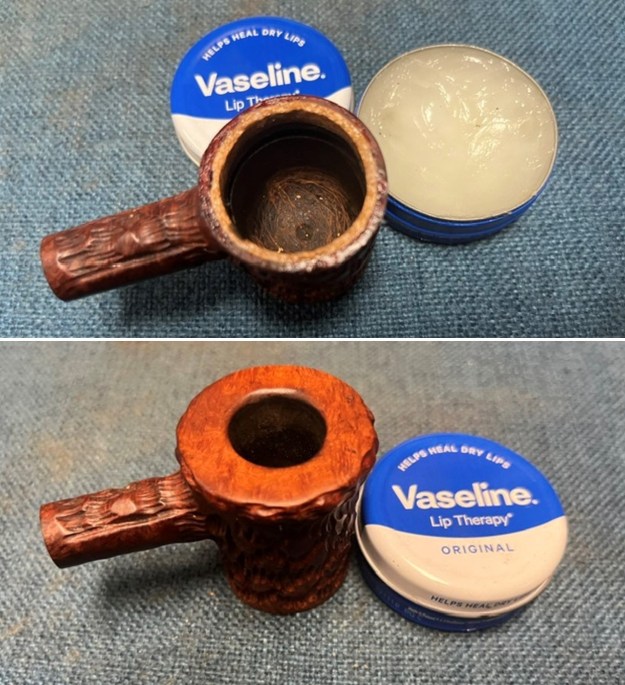
 To achieve a snug fit of the insert in the base I cut a piece of cork from a thin sheet of cork to make a gasket for the base bowl. The cork had a sticky back on it and I pressed two layers or the cork in place and trimmed the excess off the top of the bowl with a knife. Once finished I gave it a light coat of Vaseline to soften and preserve it. I pressed the two parts together and it fit snugly into the outer bowl. I hand buffed the bowl with a microfibre cloth and took photos of the pipe at this point in the process.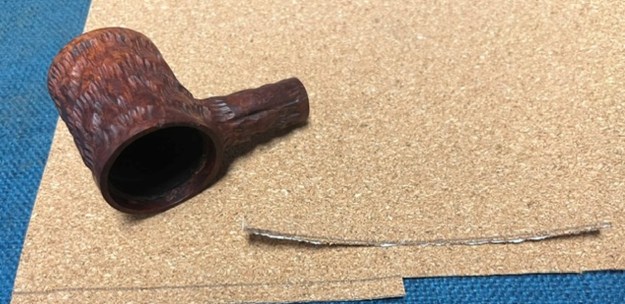
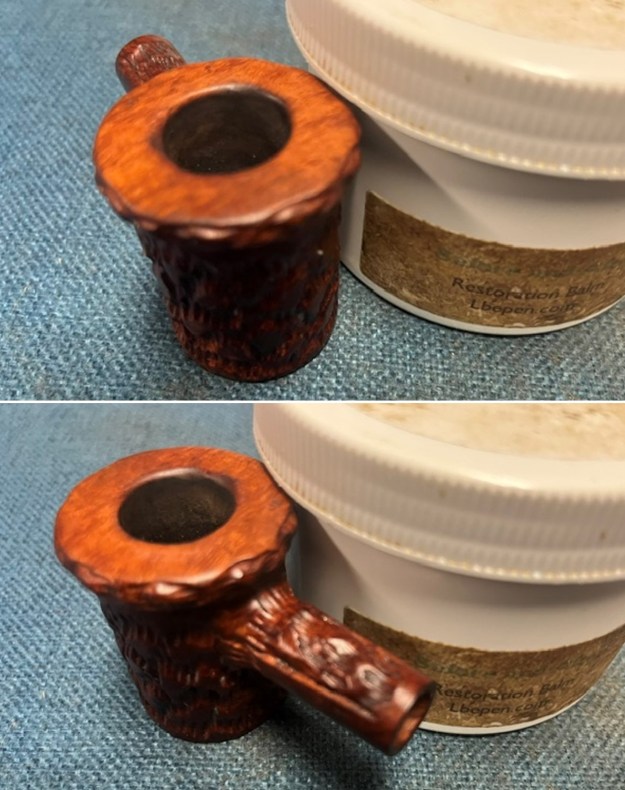
 I rubbed the bowl and shank down with Before & After Restoration Balm. I worked it into the surface of the bowl sides and shank with my fingertips and a shoe brush to get it into the depths of the rustication. The product works to clean, enliven and protect the briar. I let the balm sit for a little while and then buffed with a cotton cloth to raise the shine. The Balm did its magic and the grain stood out.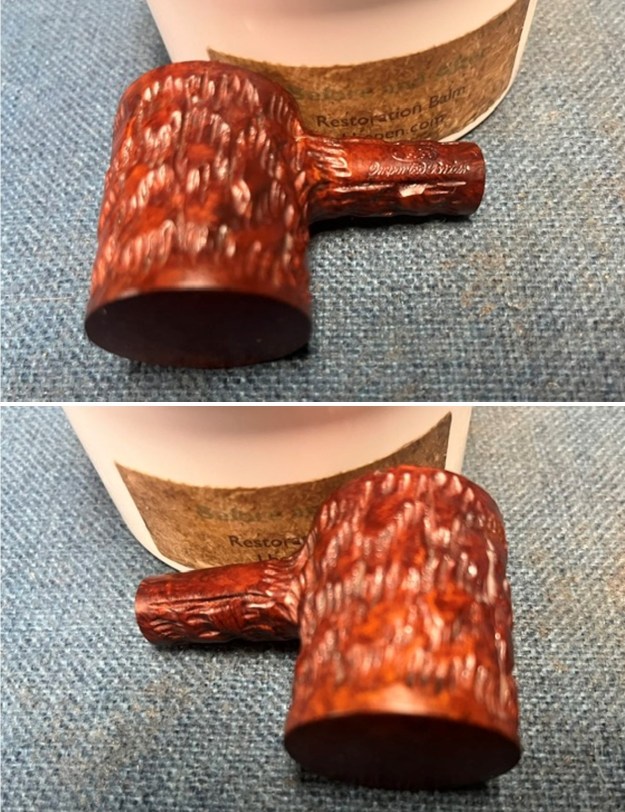
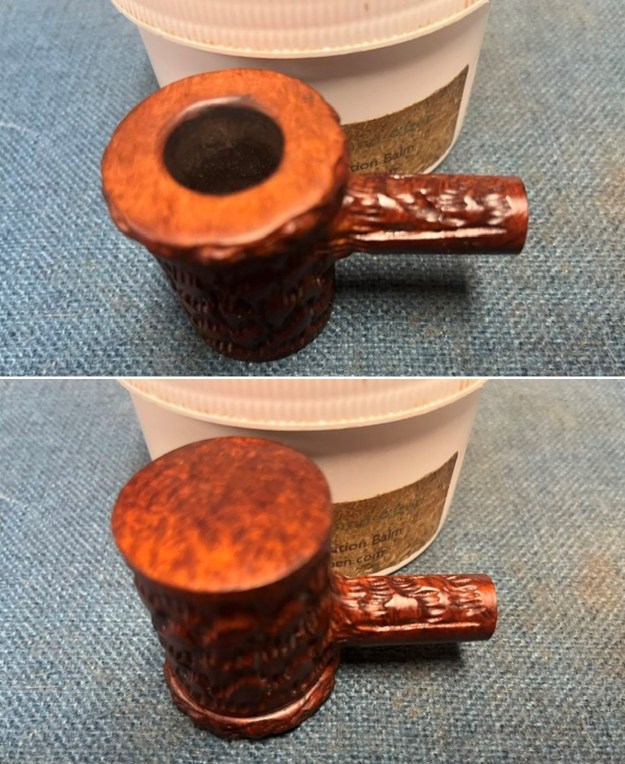
 I filled in tooth marks that were present with Extra Strength CA glue – strengthened with rubber. Once it cured I used a small flat file to flatten the repairs and recut the button edge. I blended the repairs further with a folded piece of 220 grit sandpaper.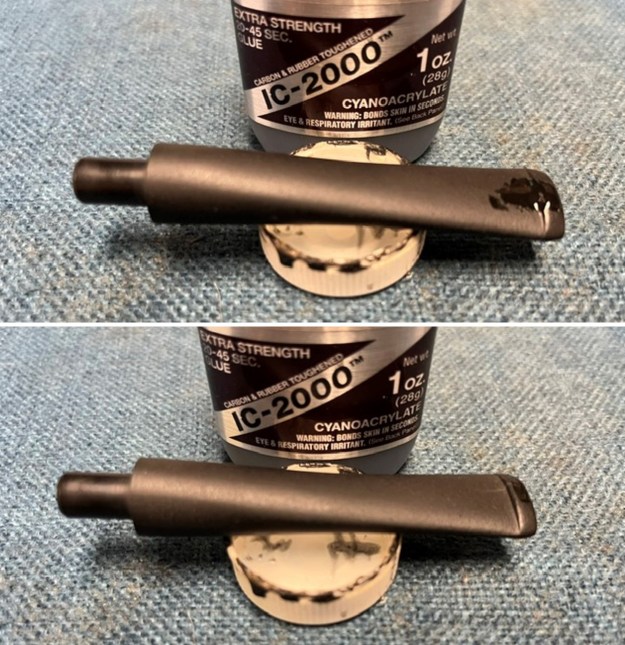
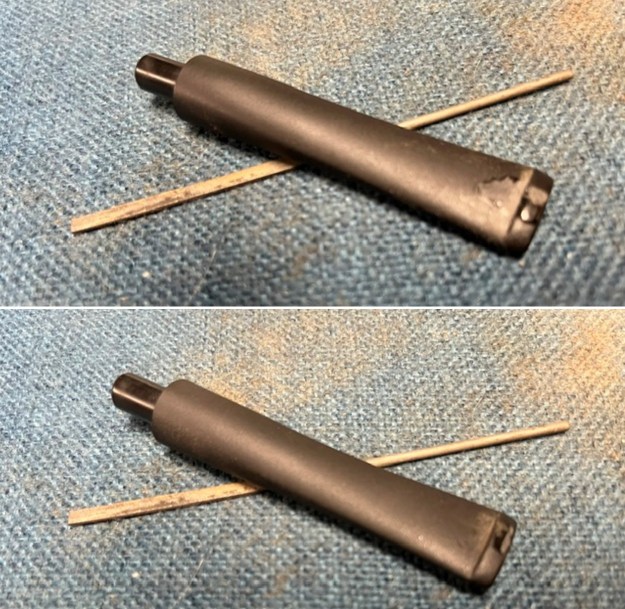
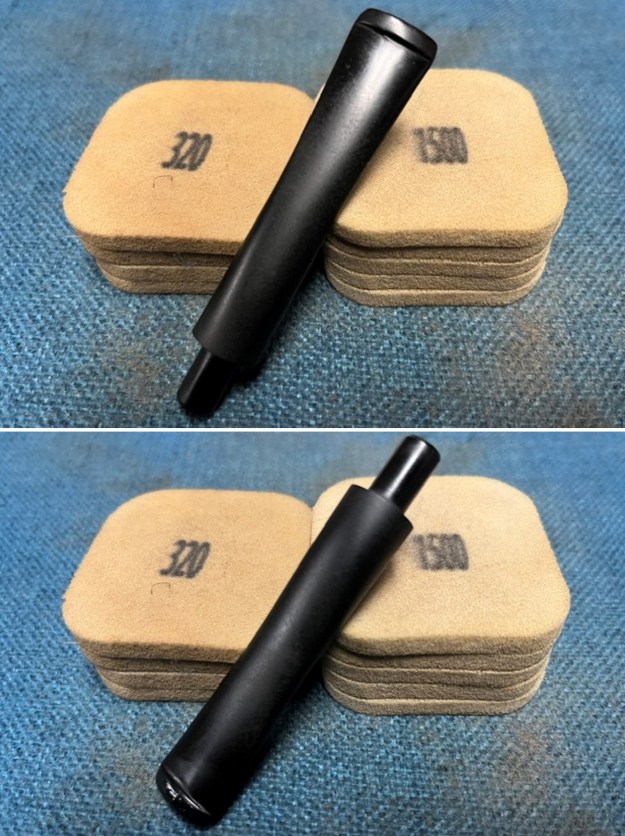
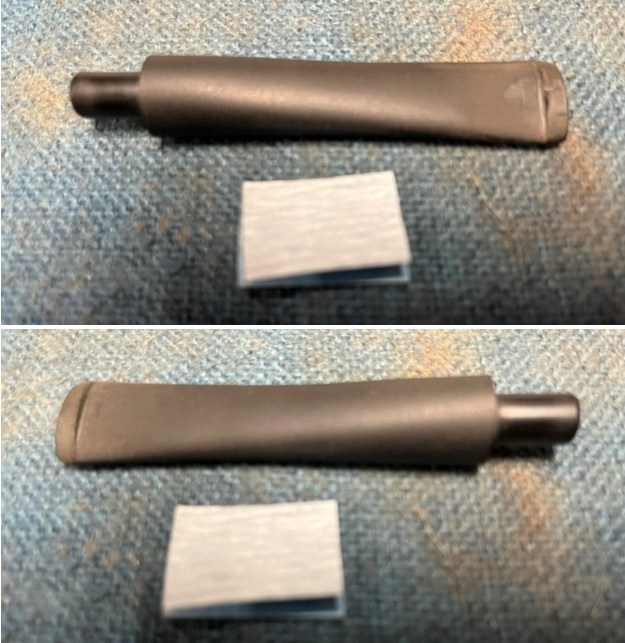 I sanded the stem with 320-3500 grit 2×2 inch sanding pads. I wiped the stem down with a damp cloth after each pad. By the last sanding pad it began to take on a deep shine.
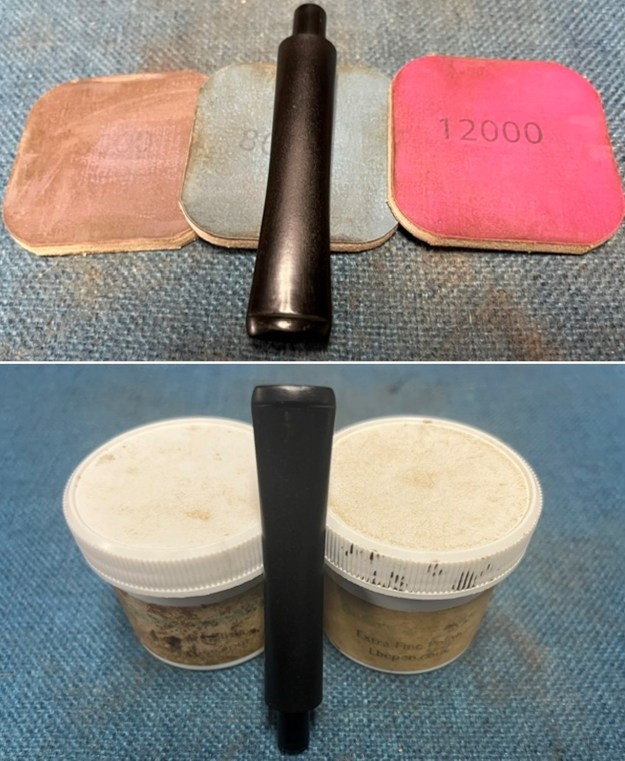
 I polished the stem with micromesh sanding pads – wet sanding with 1500-12000 grit sanding pads. I wiped it down after each sanding pad with Obsidian Oil. I polished it with Before & After Pipe Stem Polish – both Fine and Extra Fine. I gave it a final coat of Obsidian Oil.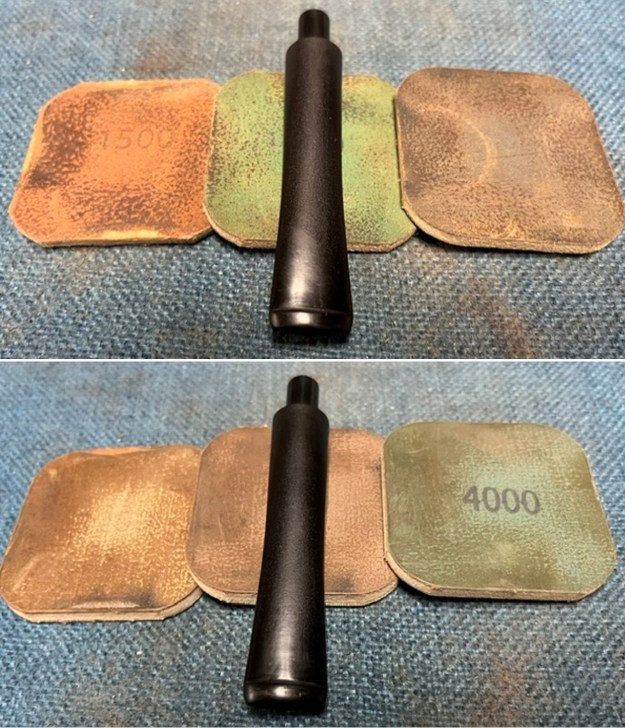
 I am excited to put the final touches on this interesting piece of American Pipe History a beautiful Weber Imported Briar Campaign Calabash Pipe with a double bowl. I put the pipe back together and buffed it with Blue Diamond on the buffing wheel. I gave the bowl and the stem multiple coats of carnauba wax. I hand buffed the pipe with a clean buffing pad to raise the shine. It is fun to see what the polished bowl looks like with beautiful grain on the bowl sides, top and bottom. The polished black vulcanite stem combined with the bowl to make a stunning pipe. This older Weber Imported Briar Campaign Calabash Pipe is great looking and the pipe feels great in my hand. It is light and well balanced. Have a look at it with the photos below. The dimensions are Length: 5 ½ inches, Height: 2 inches, Outside diameter of the bowl: 1 ½ inches, Chamber diameter: ¾ of an inch. The weight of the pipe is 39 grams/1.41 ounces. I will be adding it to my own collection for now to enjoy and experiment with. Thanks for walking through the restoration with me as I worked over this pipe. Thanks to each of you who are reading this blog.