
Blog by Kenneth Lieblich
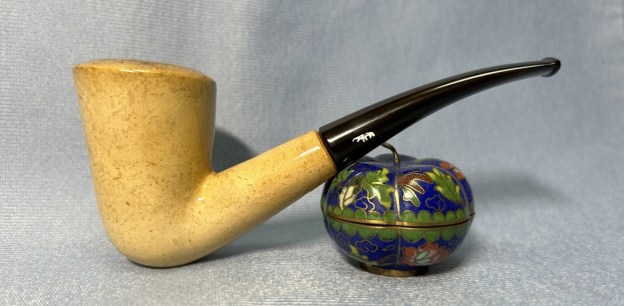
My cousin sent me a very good-looking pipe that he found in his meanderings and send it to me for some repairs. Naturally, I was happy to help, but this one provided some tough work. I like the tough ones though – makes me feel like an old timer has truly been saved.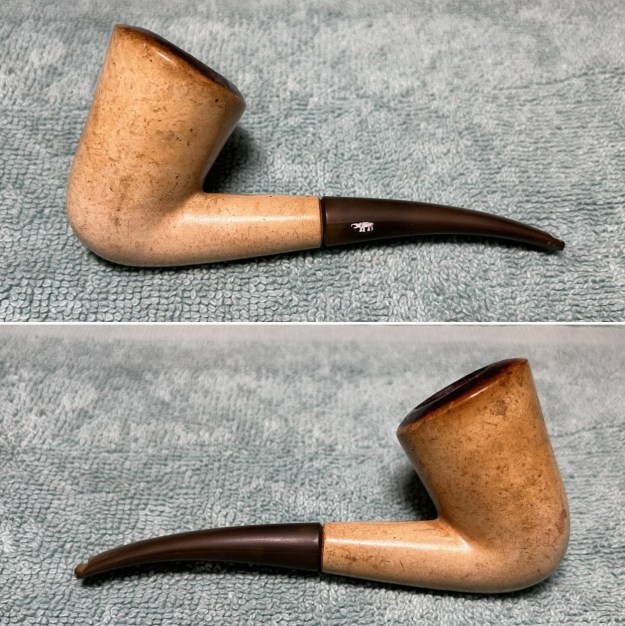
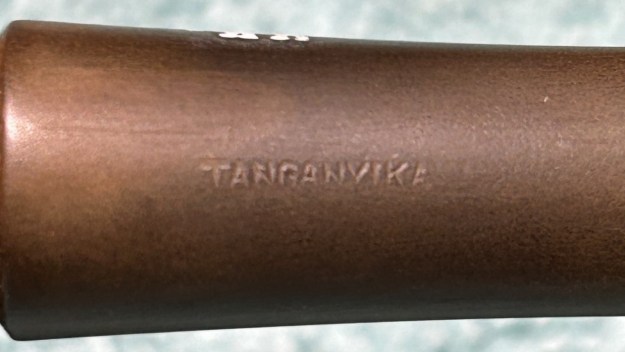
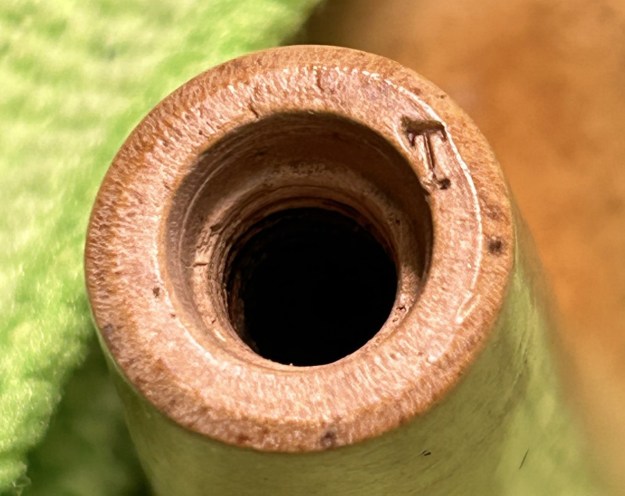
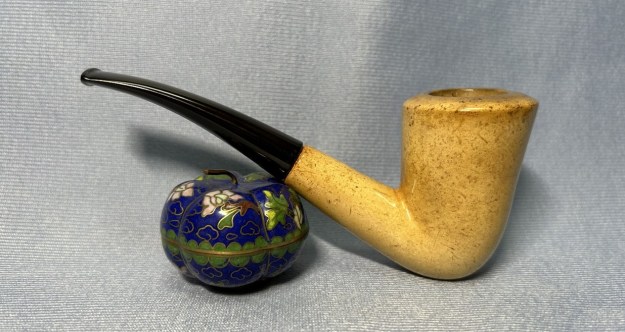
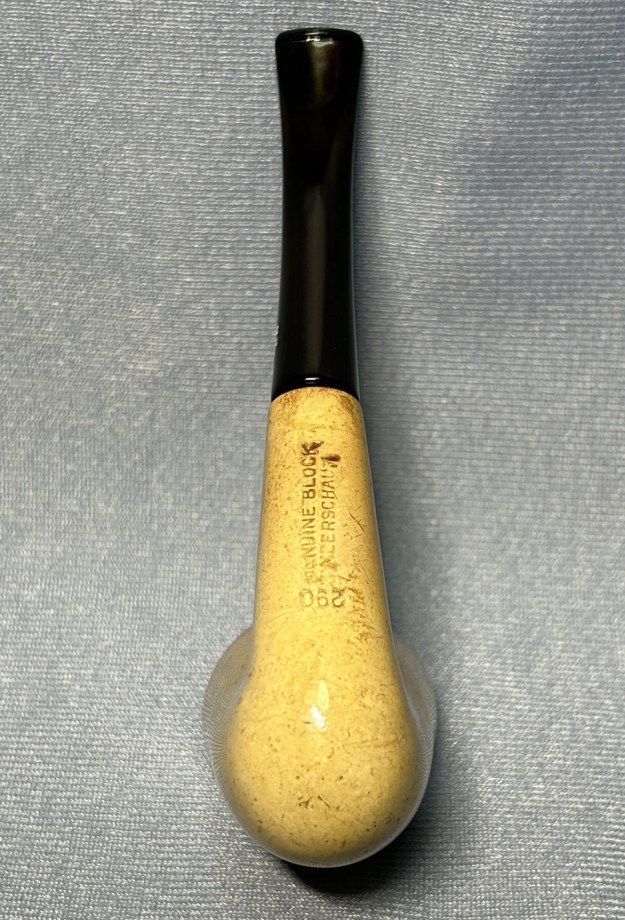
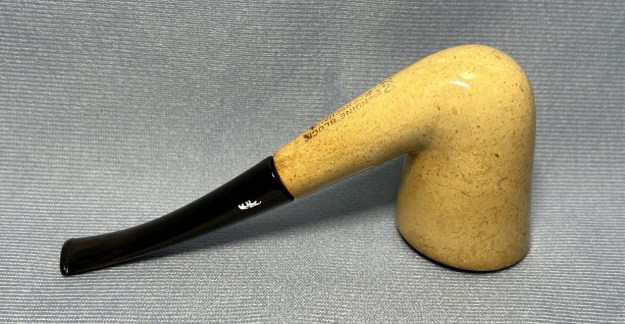
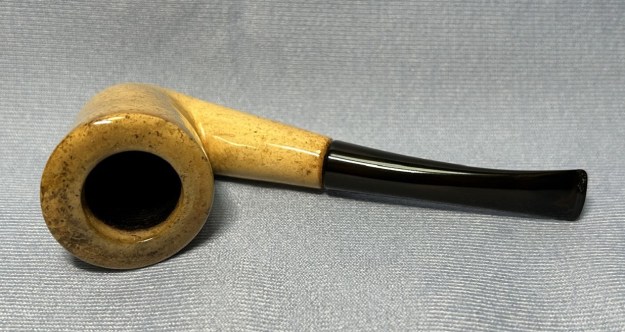
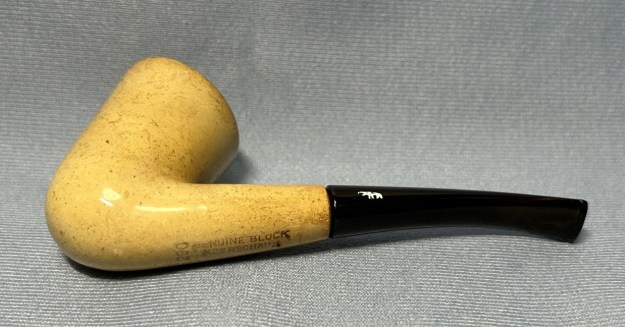
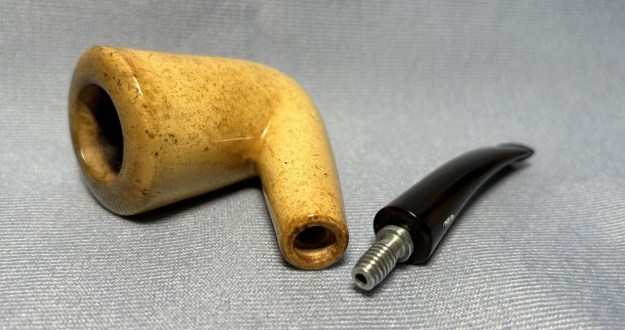
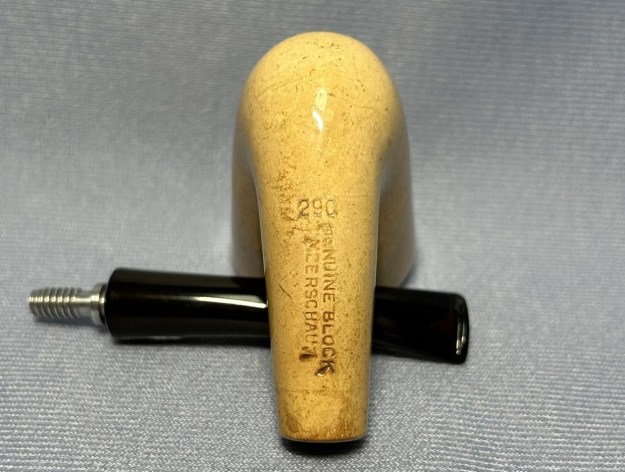
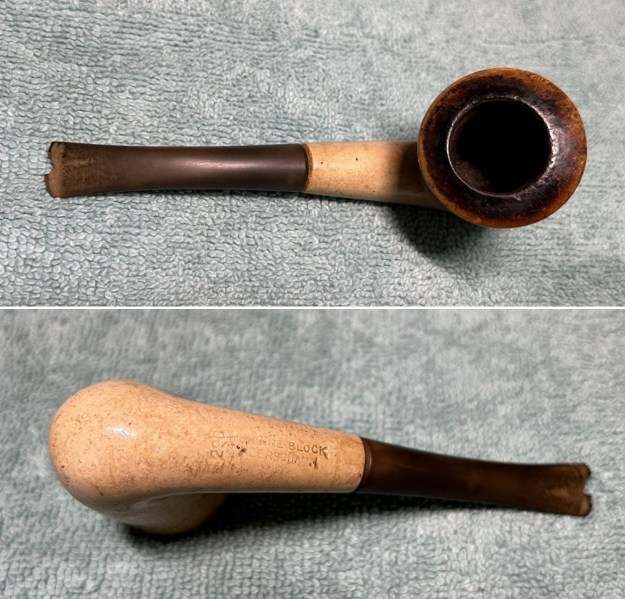 This is a Tanganyika Genuine Block Meerschaum 290 Bent Dublin. As soon as I saw it, I liked it. It looked like a really good smoker. The stummel was very handsomely cut – thick and robust. The stem had a metal tenon that screwed into the mortise. There were a few markings on the pipe. On the underside of the shank was engraved Genuine Block [over] Meerschaum. To the left of this (and perpendicular), was the number 290, the shape number. On the left side of the stem was the logo: a charming little elephant. Underneath the stem was the word Tanganyika – this stamping was very faint and I was worried about it. Finally, I wonder if there was something else. On the very end of the shank, was engraved what looked like a capital T. If that’s what it is, then presumably it stands for Tanganyika. If anyone has further information, please post it in the comments below.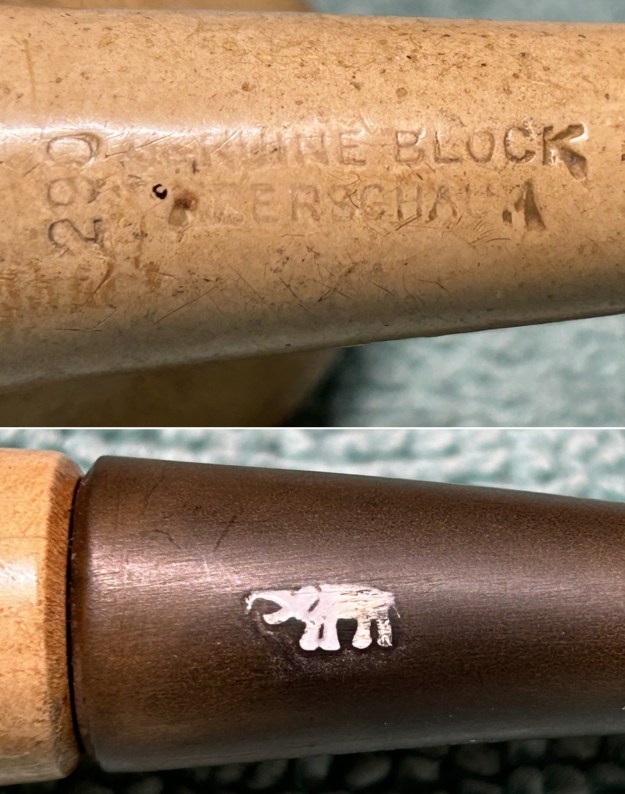
 I looked in the book, Pipes: Artisans and Trademarks by José Manuel Lopes, to learn more about Tanganyika pipes. It had the following entry for the Tanganyika Meerschaum Corporation:
Company formed in 1955 by Kenyan businessmen from Nairobi after the discovery of a meerschaum mine relatively close to the surface on Kilimanjaro. The meerschaum is tougher, less porous, and cheaper than the Turkish variety. Another mine was soon discovered in Sinya, in the famous Amboseli Game Park. The company, previously based in Arusha (Tanzania), became an associate of a Belgium firm, but closed some years after. It produced the Caveman, Countryman, Kiko, Killimanjaro, Sportsman, Townsman, and Wiga brands. It maintained a link with GBD for the making of the GBD Block Meerschaum series, and after its closure, the English firms, London Meerschaum and Manx Pipes (Manx Meerschaum) continued producing with African meerschaum.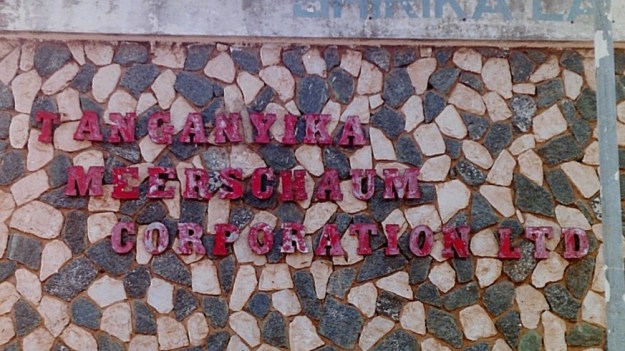 Pipedia also included the above information, but also referred me to the page on Amboseli Pipes.
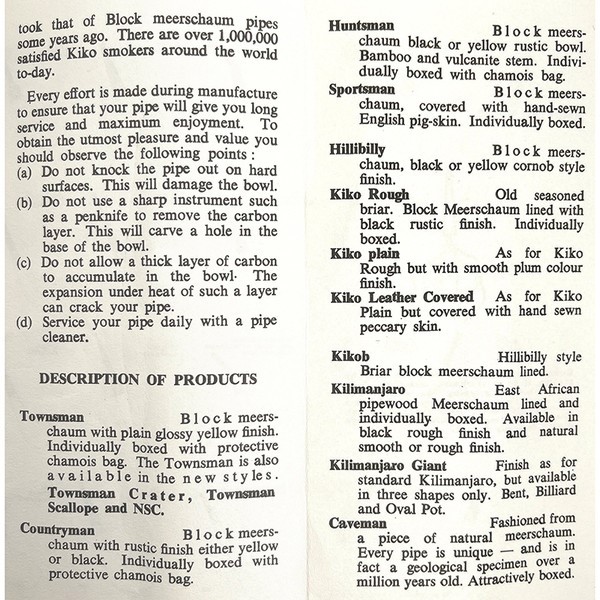
Amboseli Pipes made calabash and meerschaum pipes in Tanganyika. They moved to Arusha, Tanzania, and later closed. Countryman is one of the brands Amboseli produced. Its symbol is an elephant. Other brands include Hillbilly, Kiko, Kilimanjaro, London Meerschaum, Merlin, Sportsman, Tanganyika Meerschaum Corporation, and Tembo.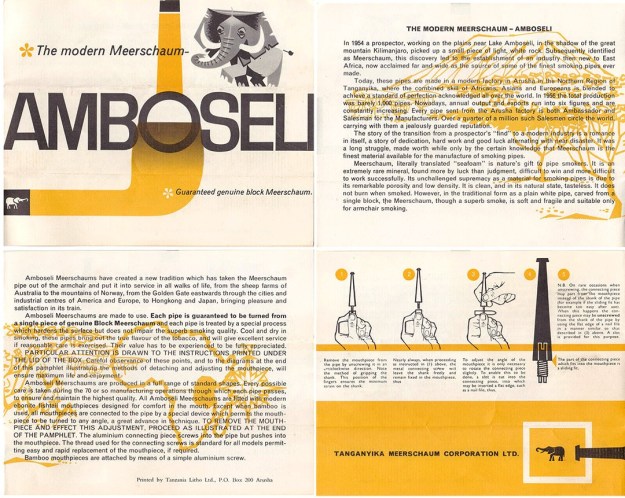 Pipedia also seemed to direct all related pages to Kiko Pipes. This page did have the most information, but I wasn’t much closer to figuring out which brand of pipe this was. By comparing the descriptions from the Amboseli brochure below and various animal logos, I was able to eliminate some of the brands. I also looked at some previous articles here on rebornpipes. Therefore, this pipe is probably either a Caveman, Sportsman, or Townsman – without having that specific nomenclature on the pipe itself. But, truth be told, that is no more than an educated guess.
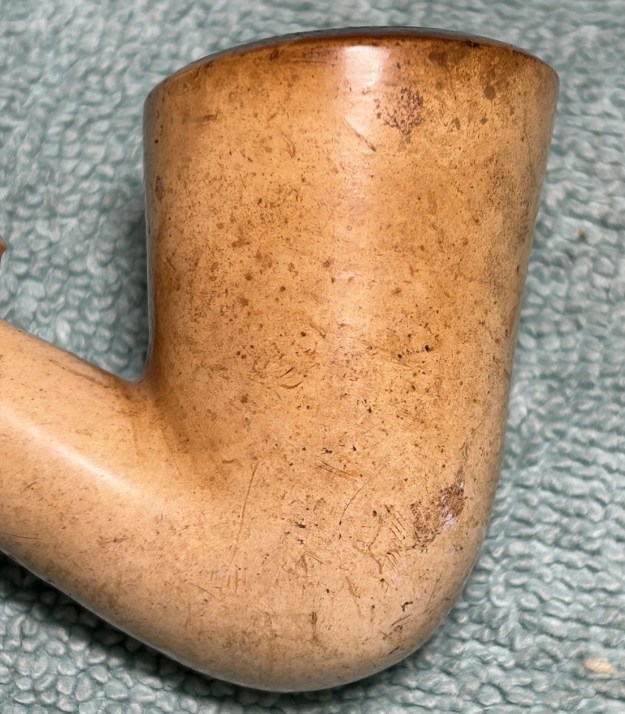
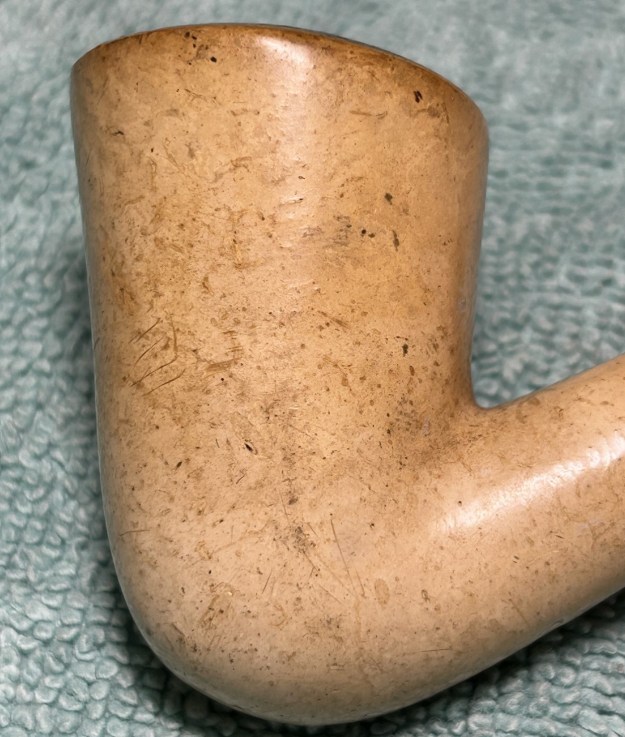
 Moving on. The stummel was in nice shape. The outside definitely had seem some wear and tear, but there were no major issues. Sure, it was dirty inside, but nothing more than what would be expected. I was pleased to see that the threaded mortise was in excellent condition. I had been concerned that the threads might have been damaged over the years, but no such damage was there. Meanwhile, the big problems lay with the stem. It was heavily oxidized, and thoroughly chewed. In fact, as the photos attest, the button was completely broken. A major rebuild would be required.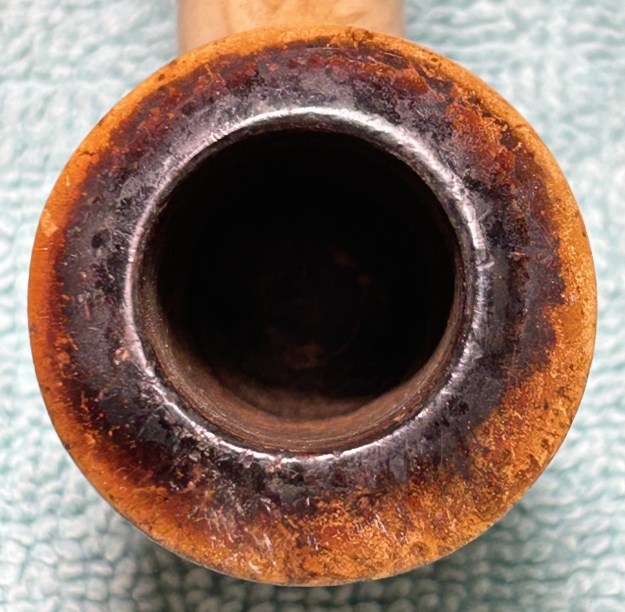
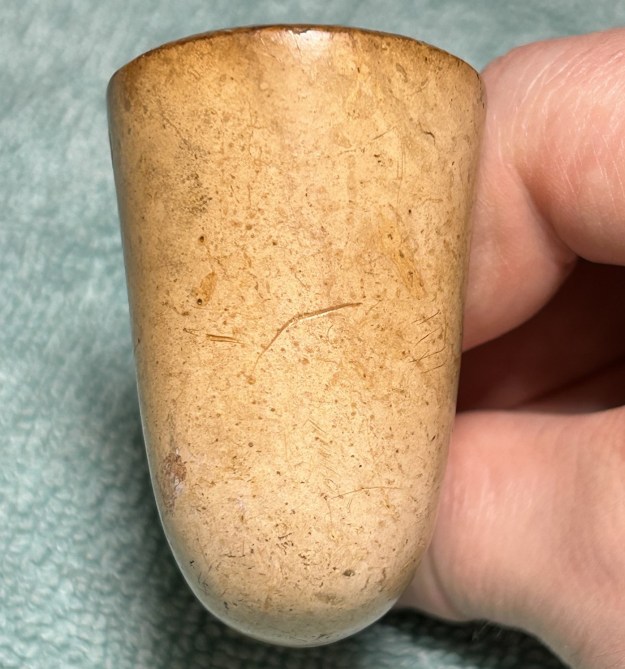
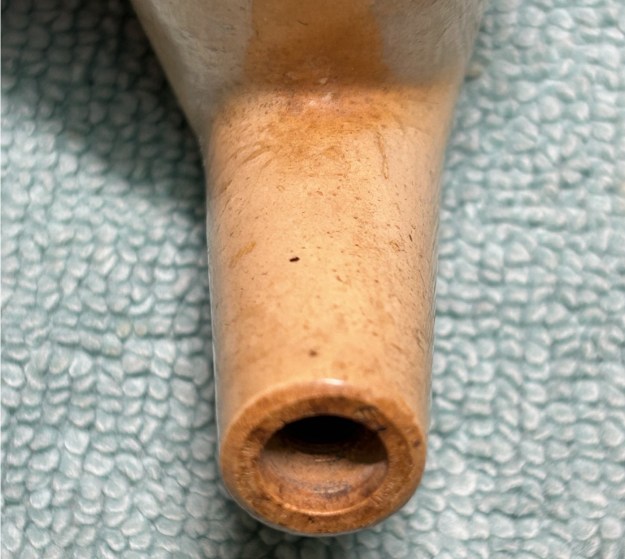
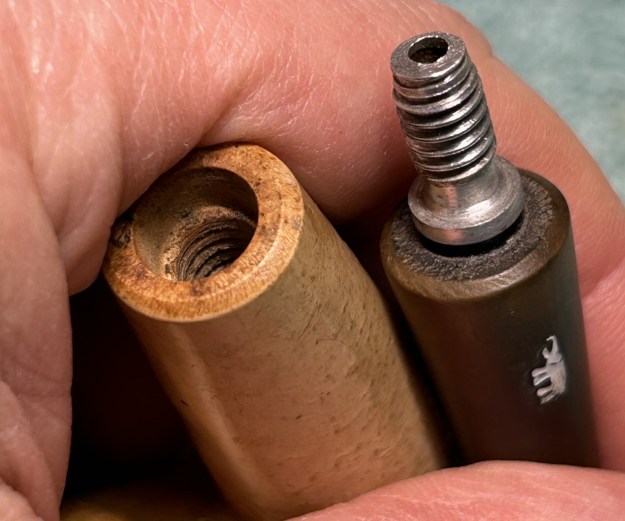
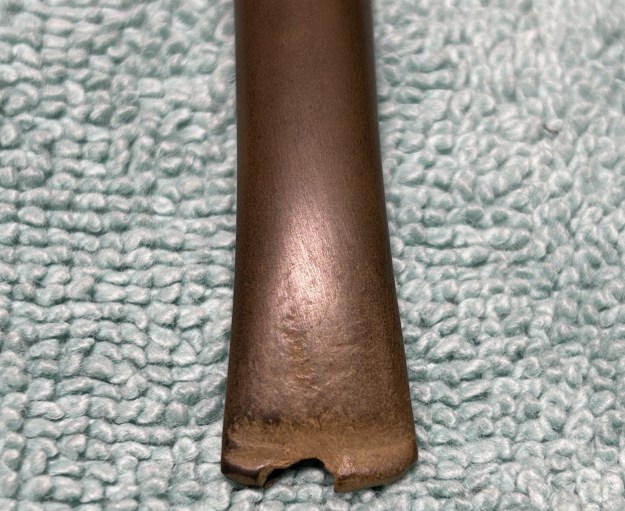
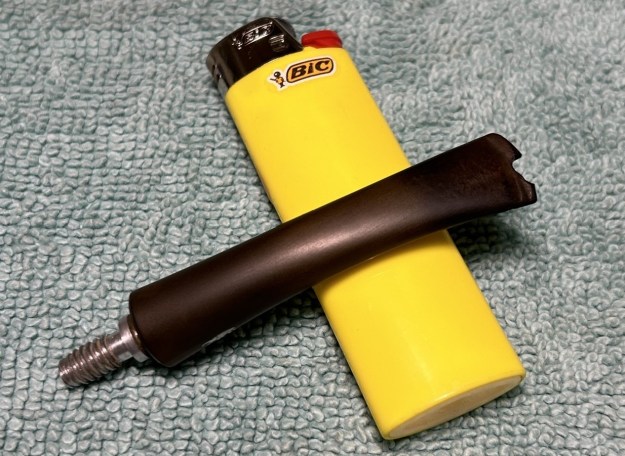
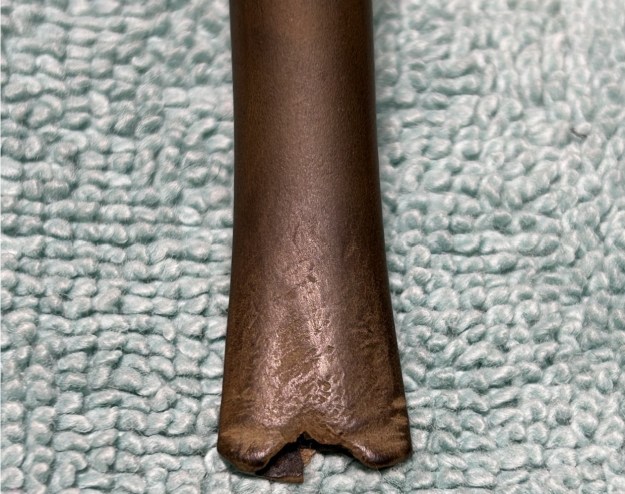 Even though I would need to rebuild the stem, I wanted to save as much of the original as possible. So, I “painted” the stem with my BIC lighter in order to try and lift some of the bite marks all over the end of it. This worked reasonably well, but there was still a lot of damage.
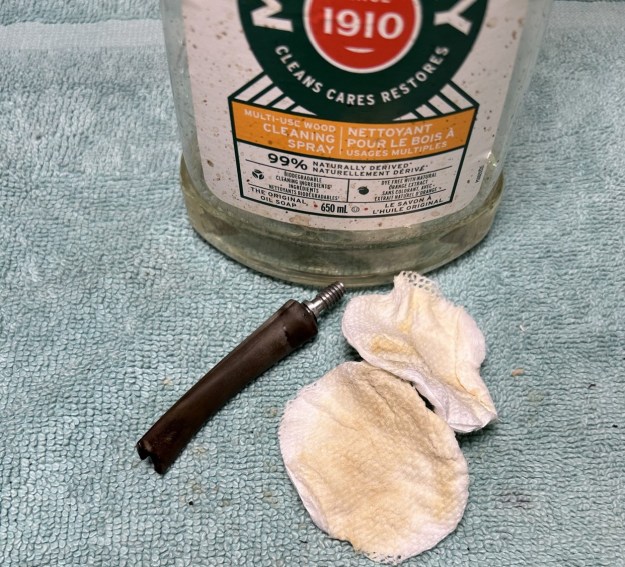
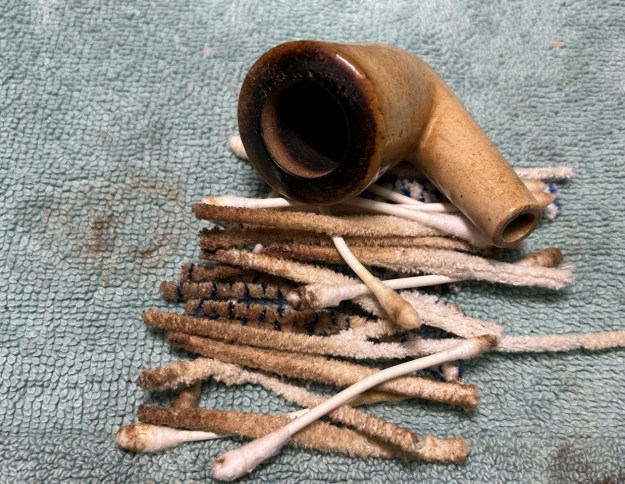
 Next, I took some pipe cleaners and lemon-infused 99% isopropyl alcohol, and cleaned the revolting insides of the stem. The photo only shows a few of the pipe cleaners needed. It was pretty darn dirty. I also wiped down the outside with some Murphy’s on some cotton rounds. This removed some of the surface filth.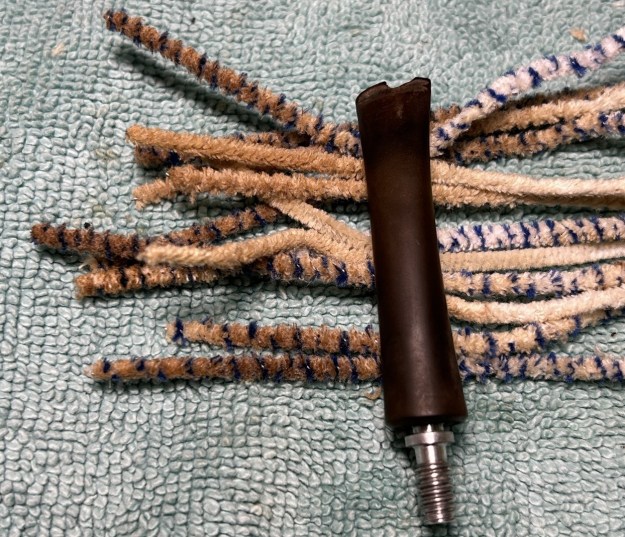
 As usual, I sent the stem for a swim in the deoxidizing fluid over night. I could tell even before this that the oxidation was deeply set into the vulcanite, but I needed to clean what I could. The following day, I wiped down the stem with SoftScrub cleanser and made sure to scrub hard. A lot of oxidation came off, but a lot of oxidation remained. I actually sent it for a second bath, and that helped, but not enough.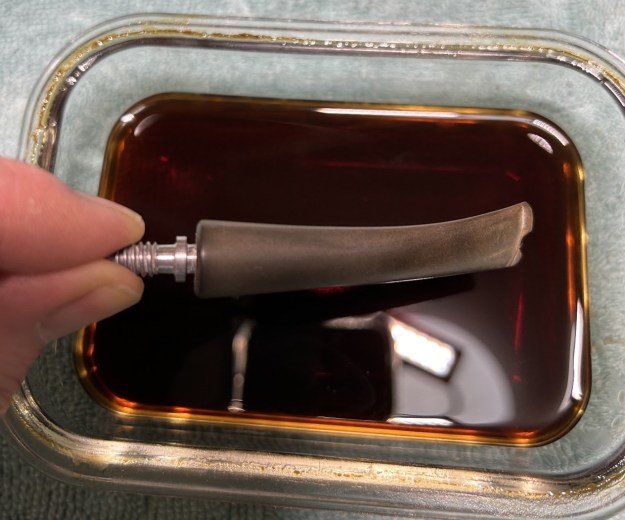
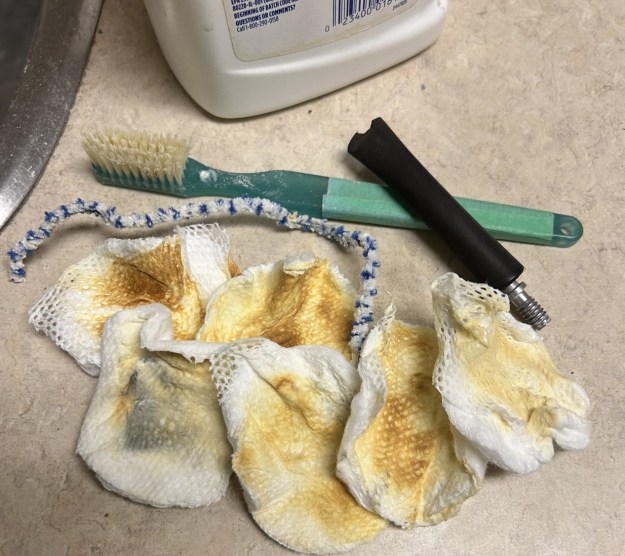 Once it was a clean as I could get it, it was time to build up the damage. I brought out my black cyanoacrylate adhesive and I applied it to the bitemarks and such. The missing chunks would need far more work. I created a new button out of black cyanoacrylate, impregnated with carbon and rubber. I first plugged up the stem’s draught hole with a folded pipe cleaner, coated in petroleum jelly. This ensured that any of the glue would not accidentally plug up the air passage in the stem.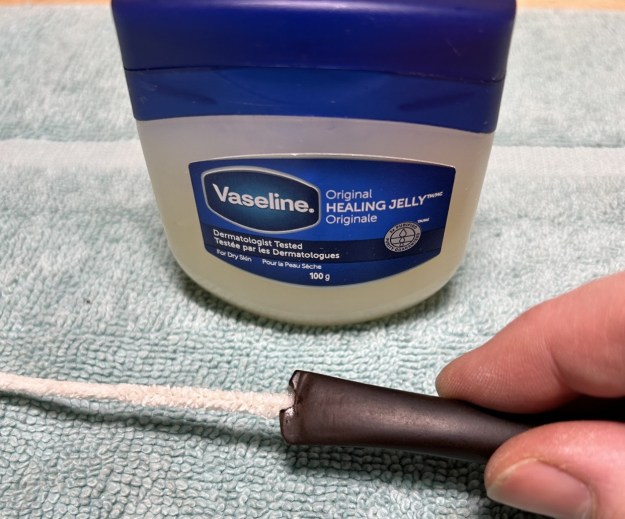
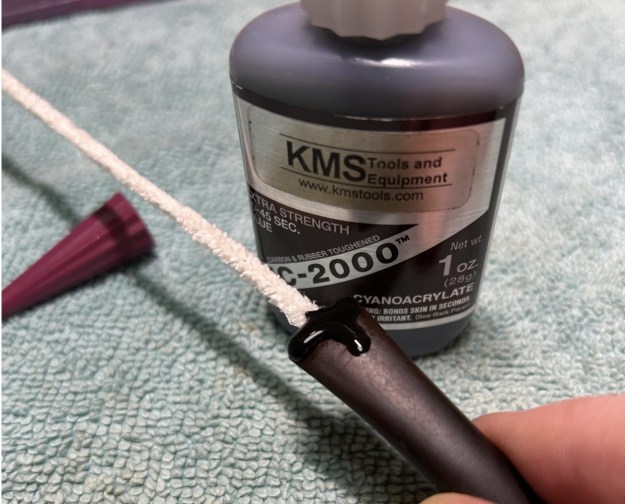 This is always a tricky business and it took some patience to make it work. After I applied the cyanoacrylate, it looked pretty darn ugly, but I was expecting that. After the curing, I ended up sanding down the end of the stem to reduce some of the excess material. To carry this process on, I used some miniature files to further shape the button and make it suitable for sanding. I used another file on the inside to ensure there were no rough edges in the bore.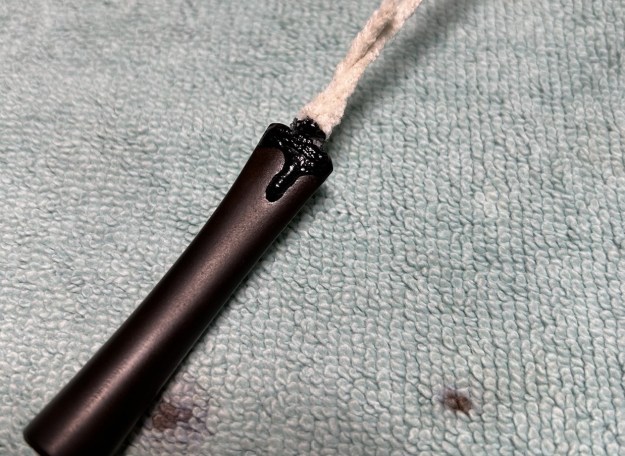
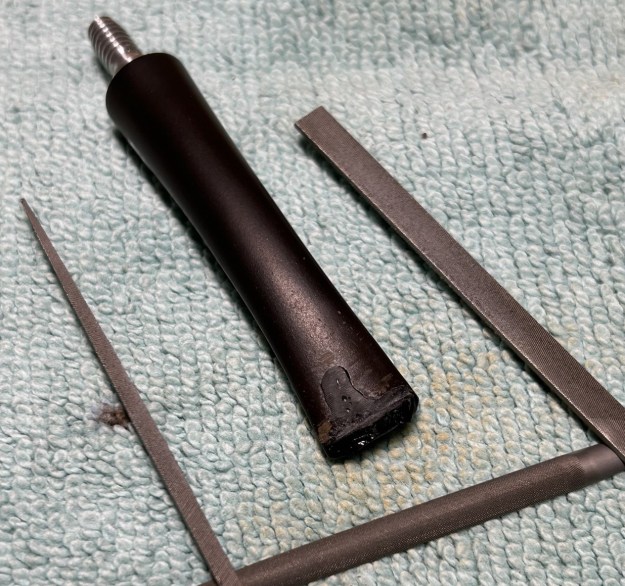
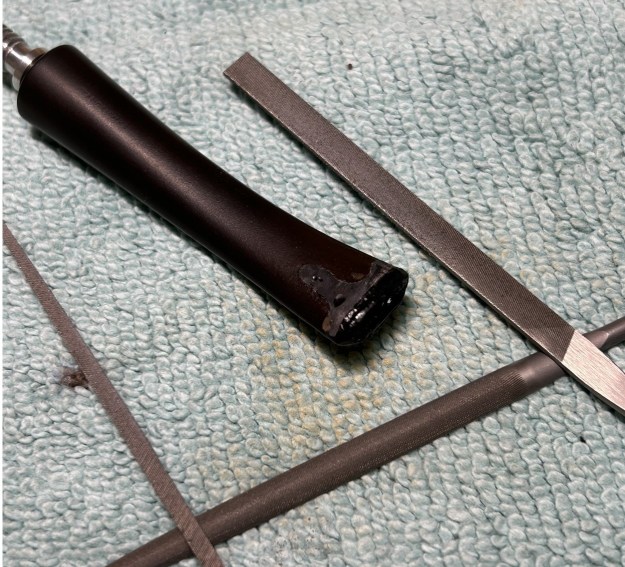 I then sanded the stem down with sandpaper to keep the shape. I then used all nine Micromesh pads (1,500 through 12,000 grit) to smooth everything out. I also used Obsidian Pipe Stem Oil in between each pad scrubbing. It is worth noting that a repair this big on a stem will never be completely invisible – especially on this pipe. Finally, I used some 0000-grit steel wool on the aluminum tenon to make it shiny.
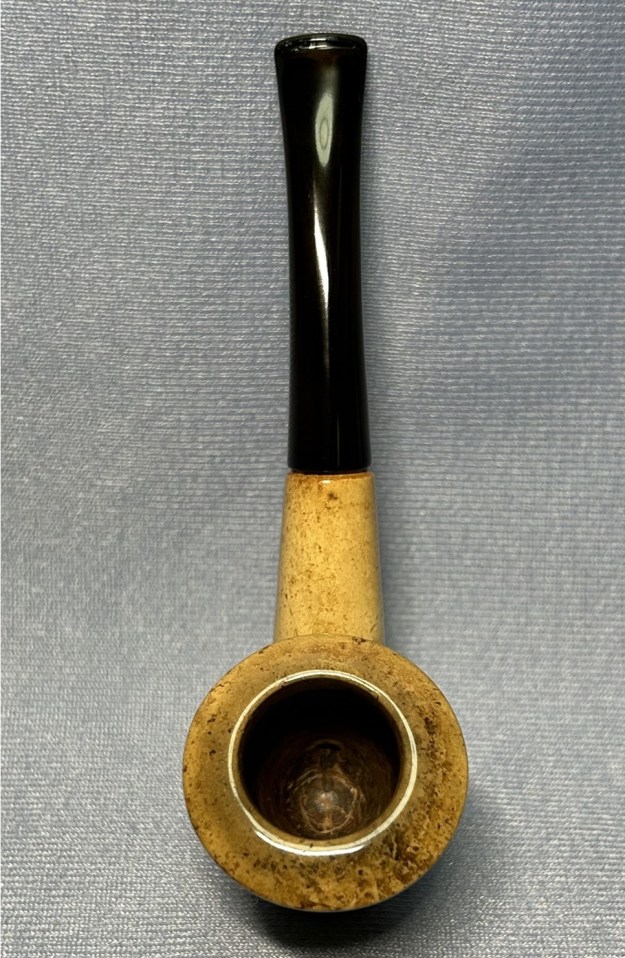
On to the stummel. Normally, at this point, I would use a reamer to remove the built-up cake inside the bowl, but meerschaum has the potential to crack in those circumstances. Instead, I simply used some sandpaper taped to a wooden dowel to scrape the bowl down. Fortunately, everything looked sound on the inside of the bowl. I then proceeded to clean out the shank with Q-tips, pipe cleaners, and isopropyl alcohol. There was a lot of nastiness inside this stummel and – boy-oh-boy – it took a lot of cotton to get this thing clean!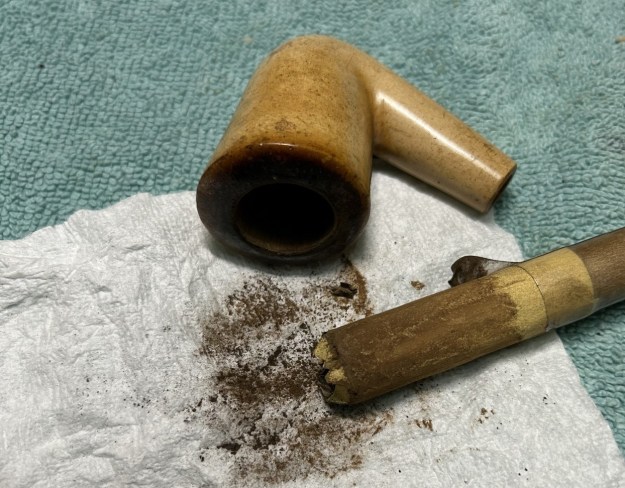
 I then moved on to cleaning the outside of the stummel with Murphy’s Oil Soap and some cotton pads. I also cleaned the insides with some Castile soap and tube brushes. Now in this case, I did it especially carefully because too much soaking can cause meerschaum to soften. In this case, I moved quickly, nothing softened, and everything turned out well.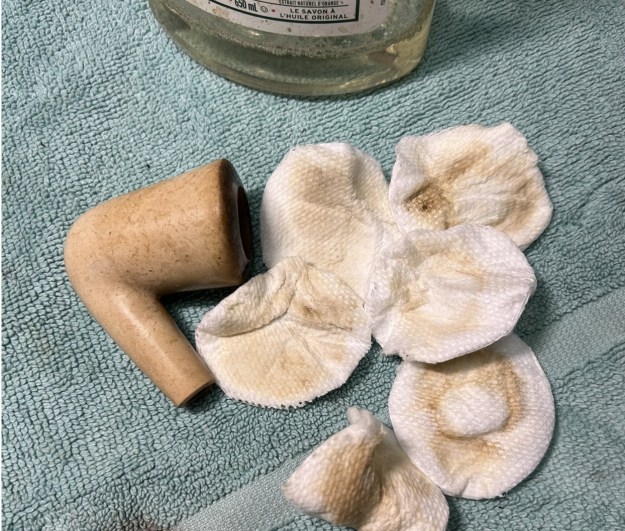
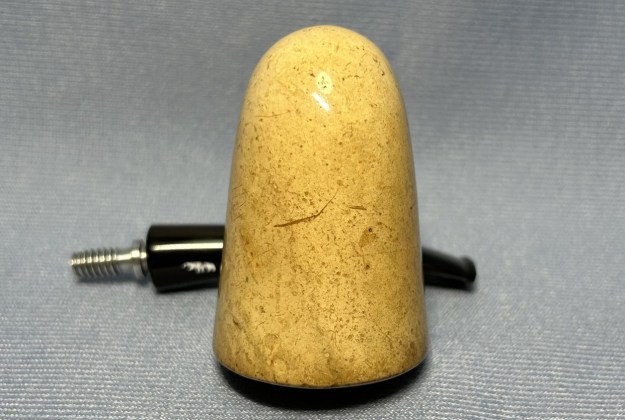
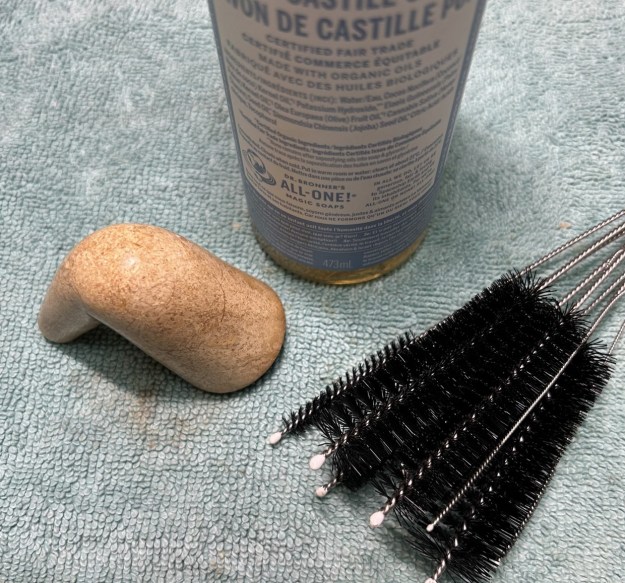 After this, I used my Micromesh pads to sand down and minimize the scratches in the meerschaum and make everything smooth. I then applied some Clapham’s Beeswax Finish to the meerschaum and let it sit for about 30 minutes. I then buffed it with a microfibre cloth. I repeated this process and left it – it sure was pretty! I took the stem (but not the stummel) to my buffing wheel and finished it with some White Diamond polish. Worked like a charm.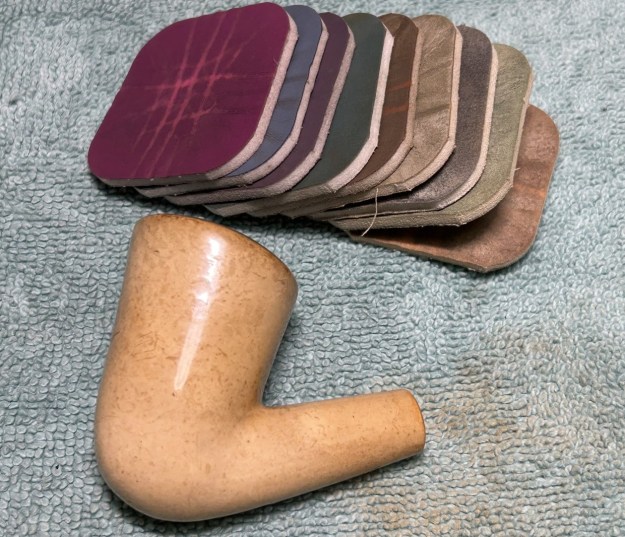
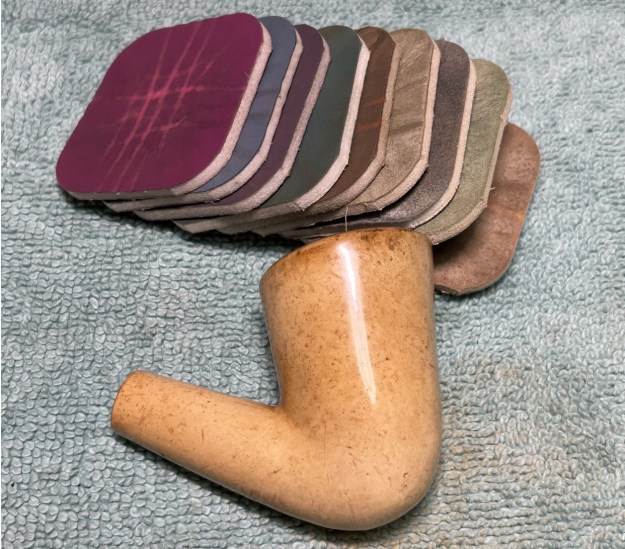
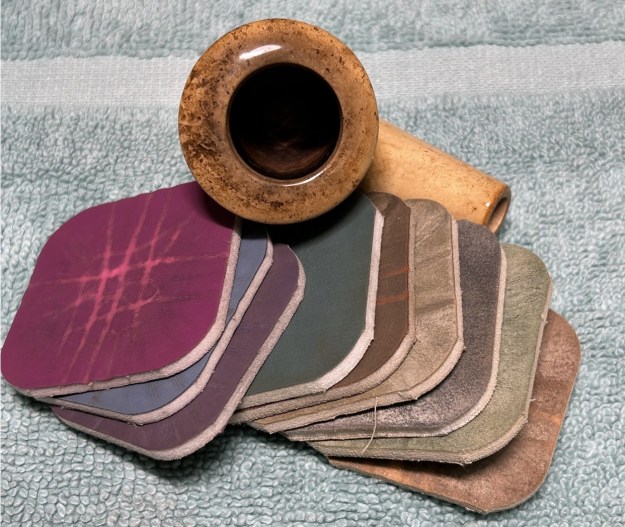
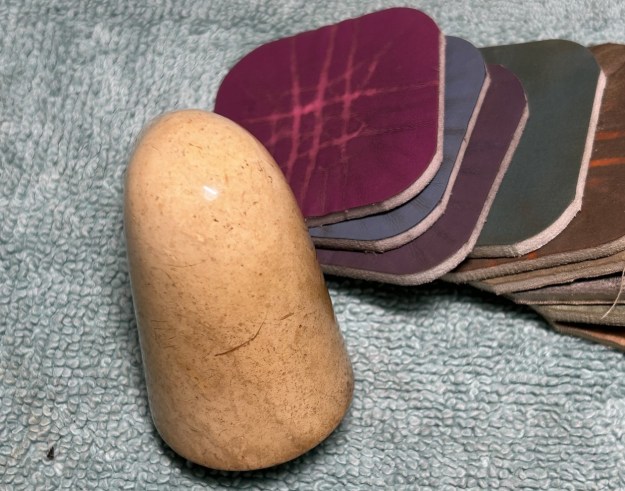
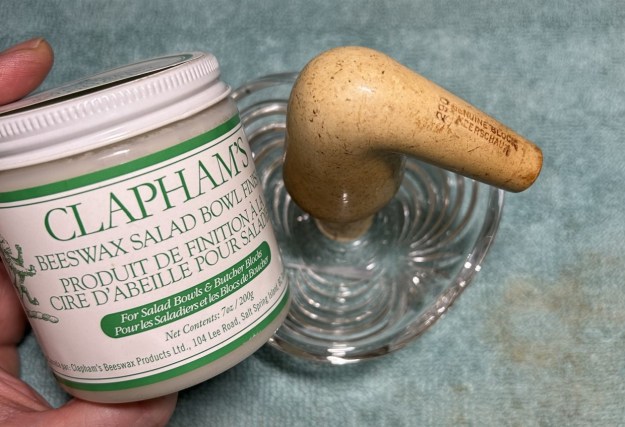
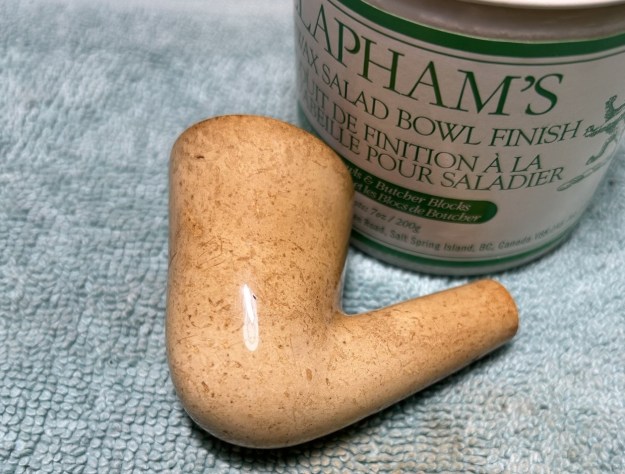

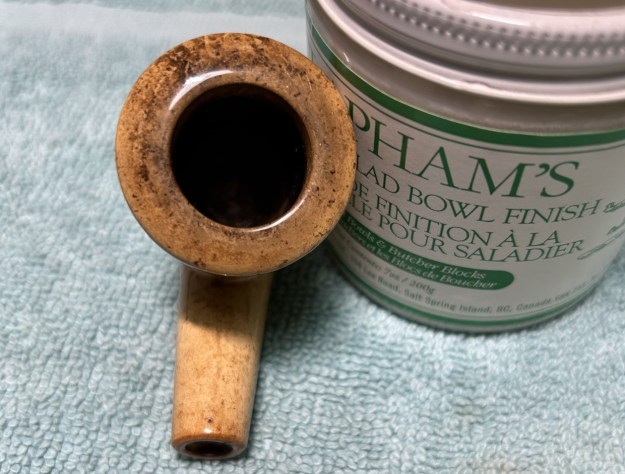
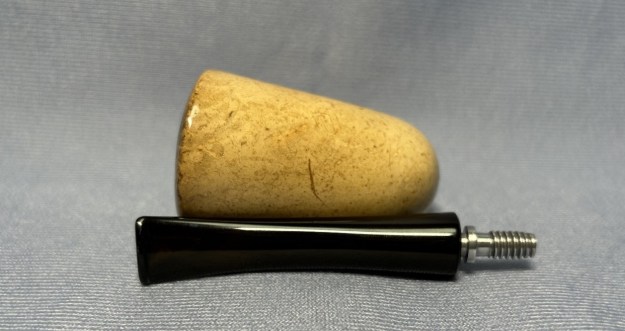
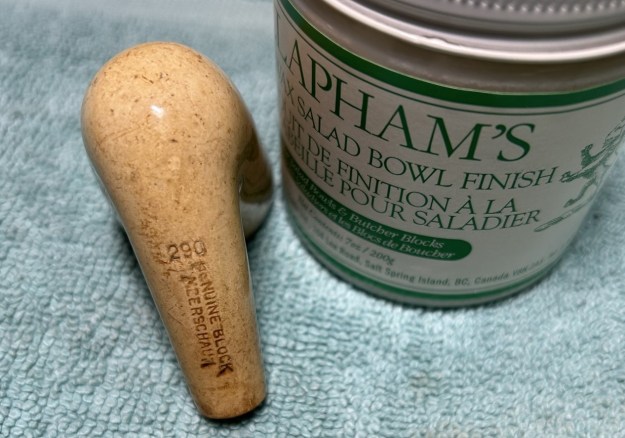 This Tanganyika Genuine Block Meerschaum 290 Bent Dublin looks beautiful once again. I’m sure my cousin will love it. I hope you enjoyed reading the story of this pipe as much I as I did restoring it. The approximate dimensions of the pipe are as follows: length 5⅛ in. (131 mm); height 2¼ in. (58 mm); bowl diameter 1½ in. (39 mm); chamber diameter ⅞ in. (22 mm). The weight of the pipe is 1⅝ oz. (49 g). If you are interested in more of my work, please follow me here on Steve’s website or email me directly at kenneth@knightsofthepipe.com. Thank you very much for reading and, as always, I welcome and encourage your comments.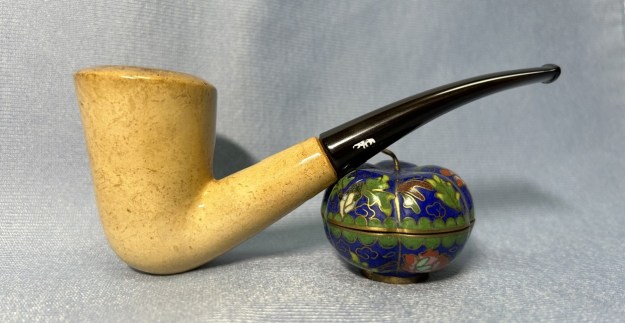

 rebornpipes