Tag Archives: turning a tenon with a PIMO tenon turning tool

Restemming the Peterson’s XL999 with a Cumberland Stem


Blog by Steve Laug

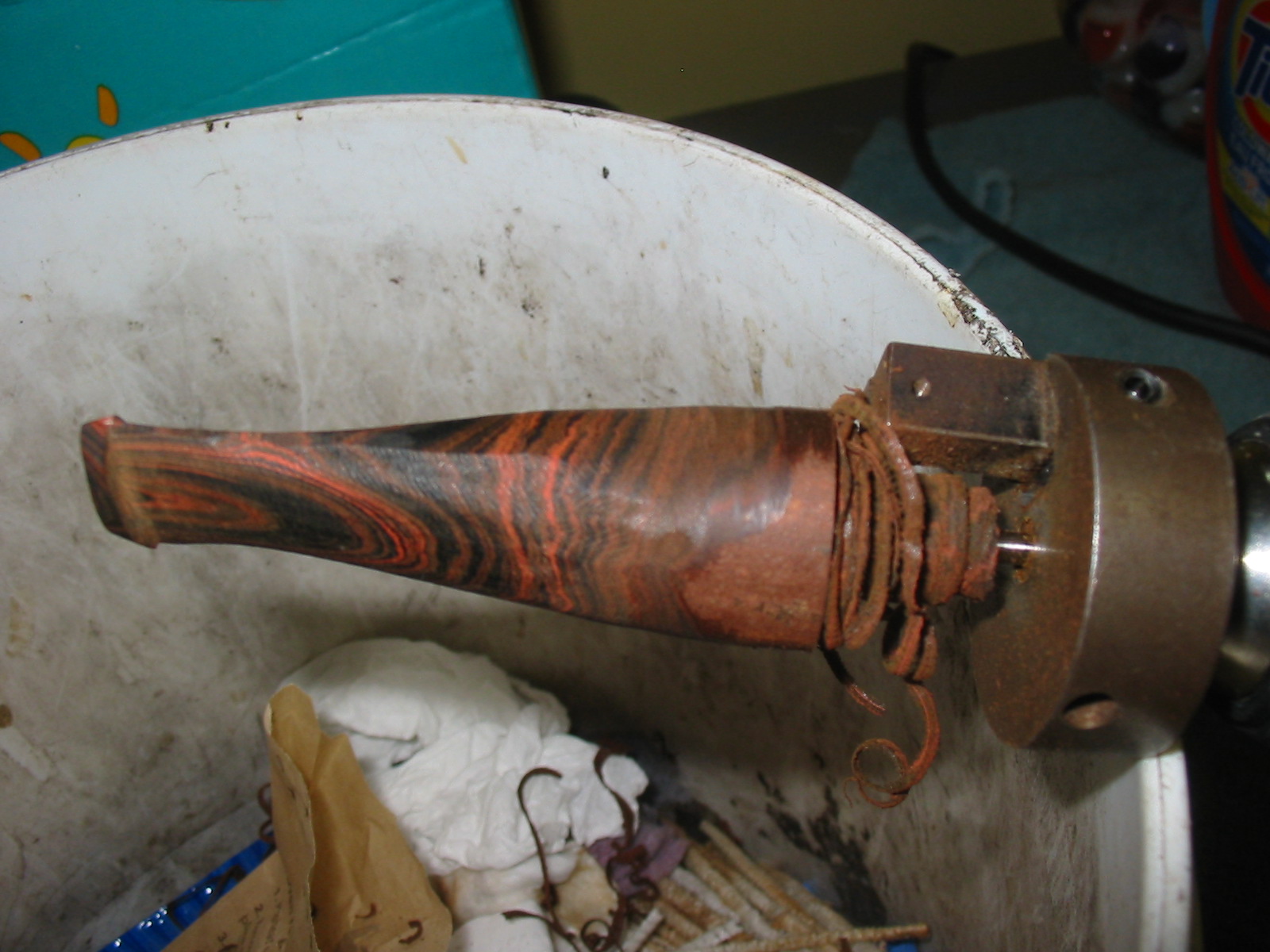
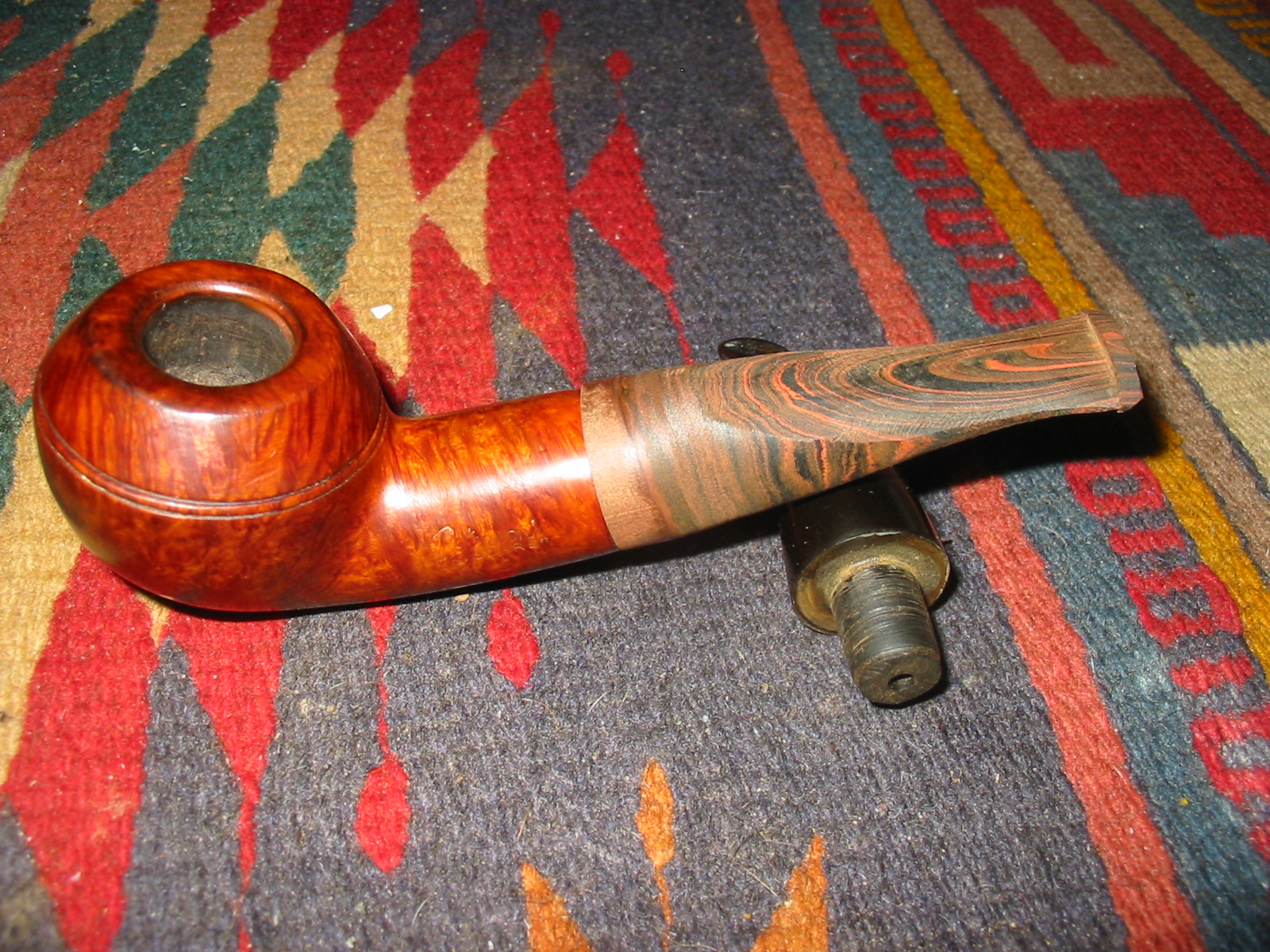
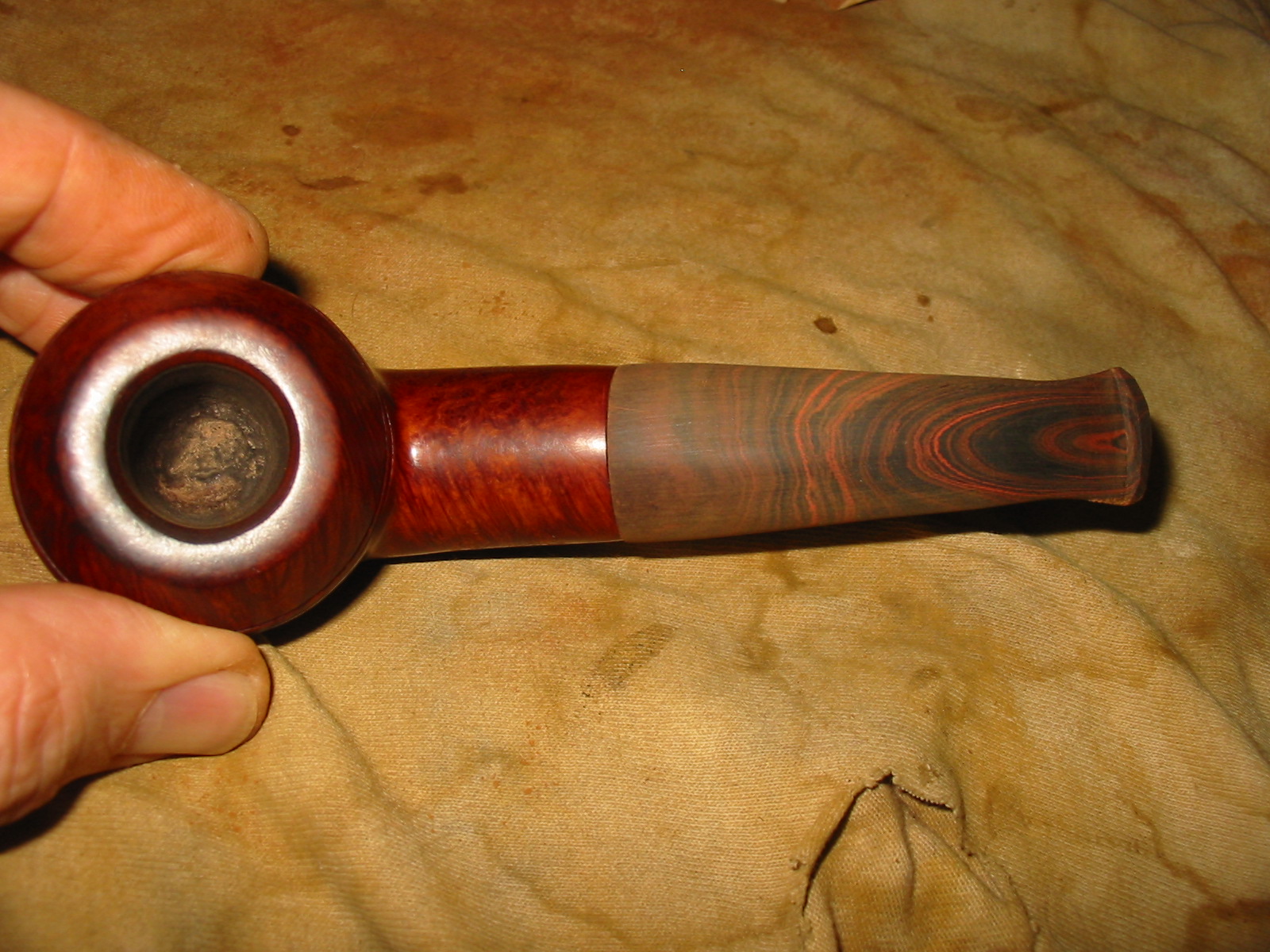
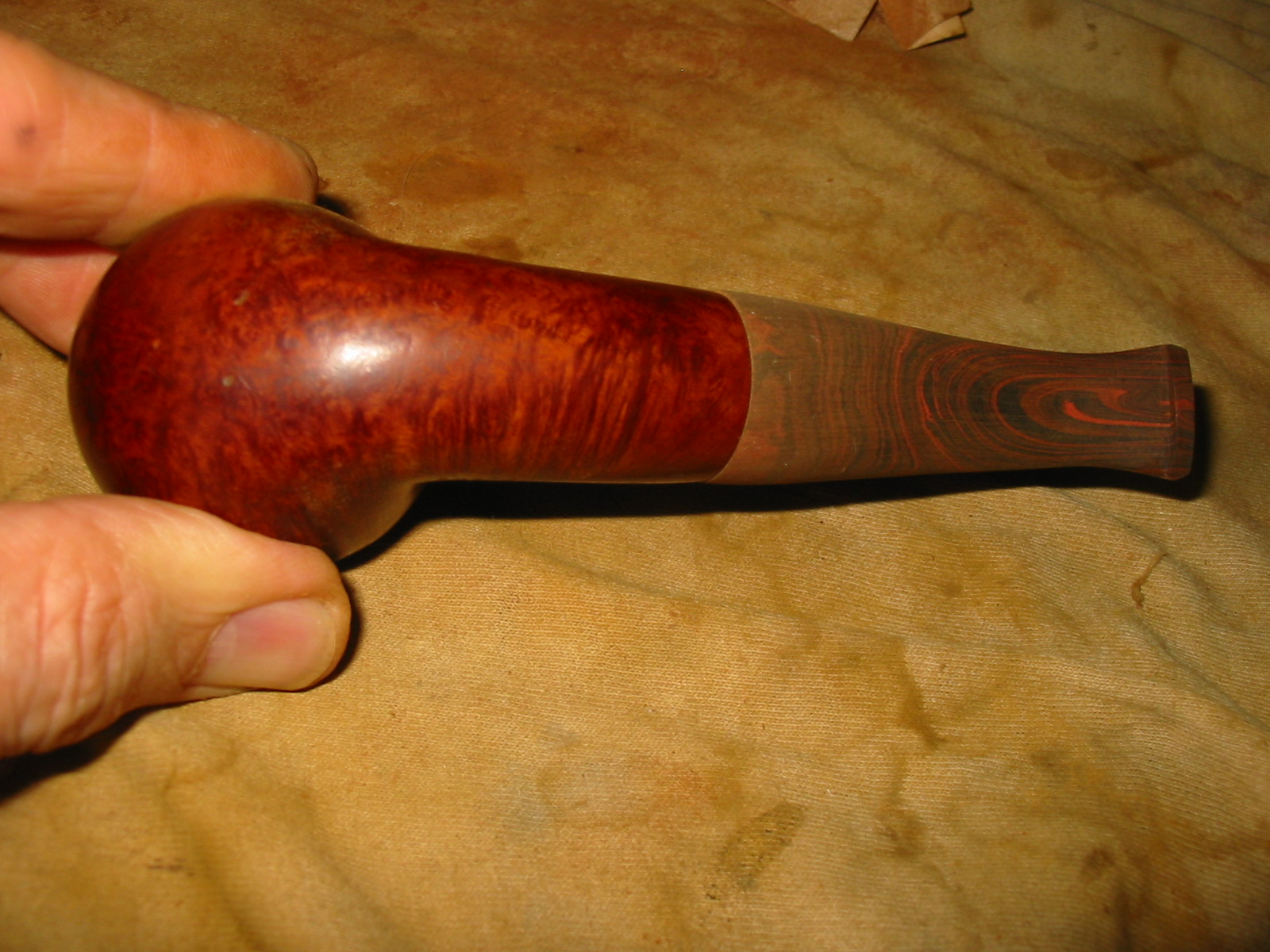
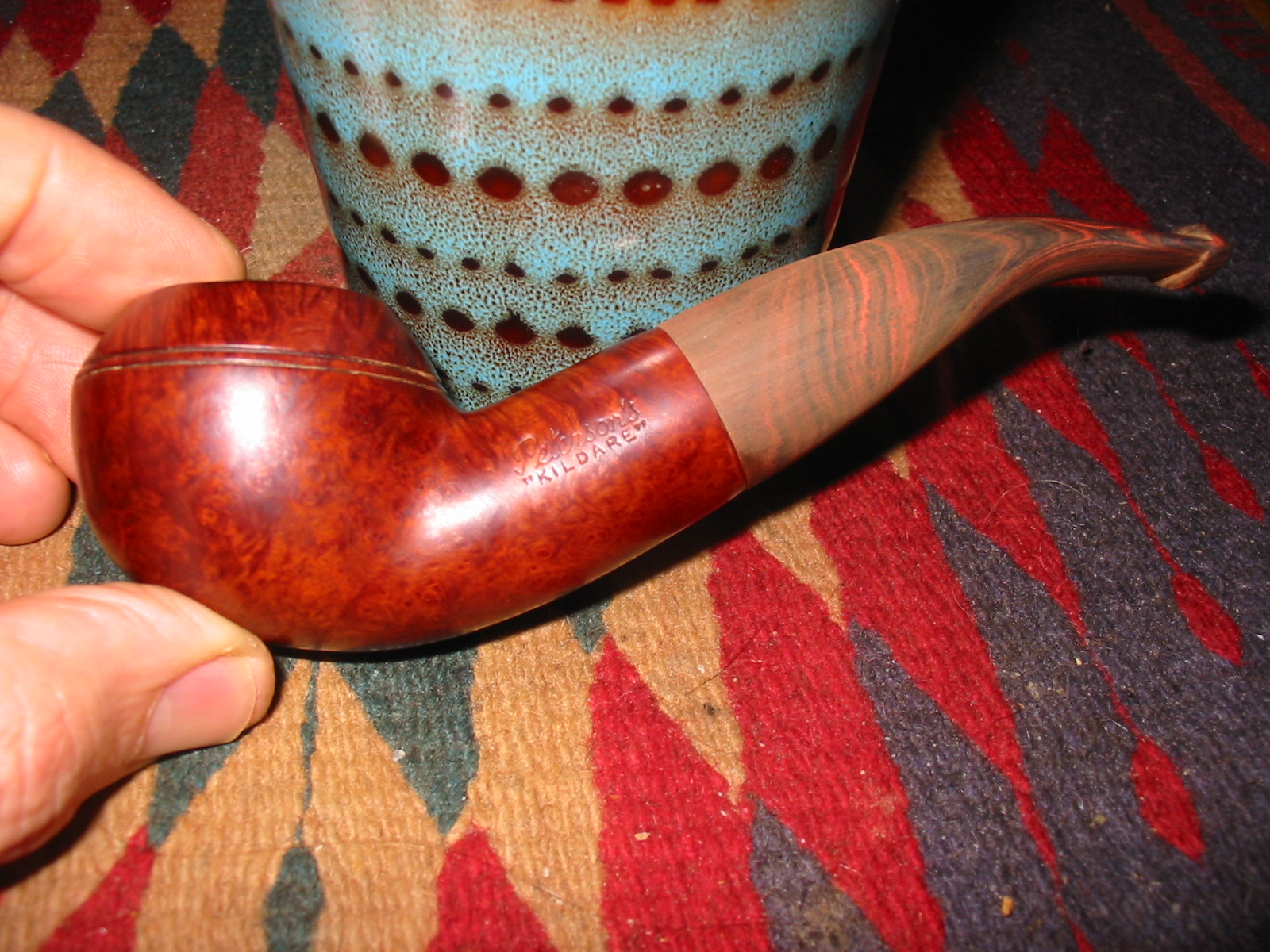
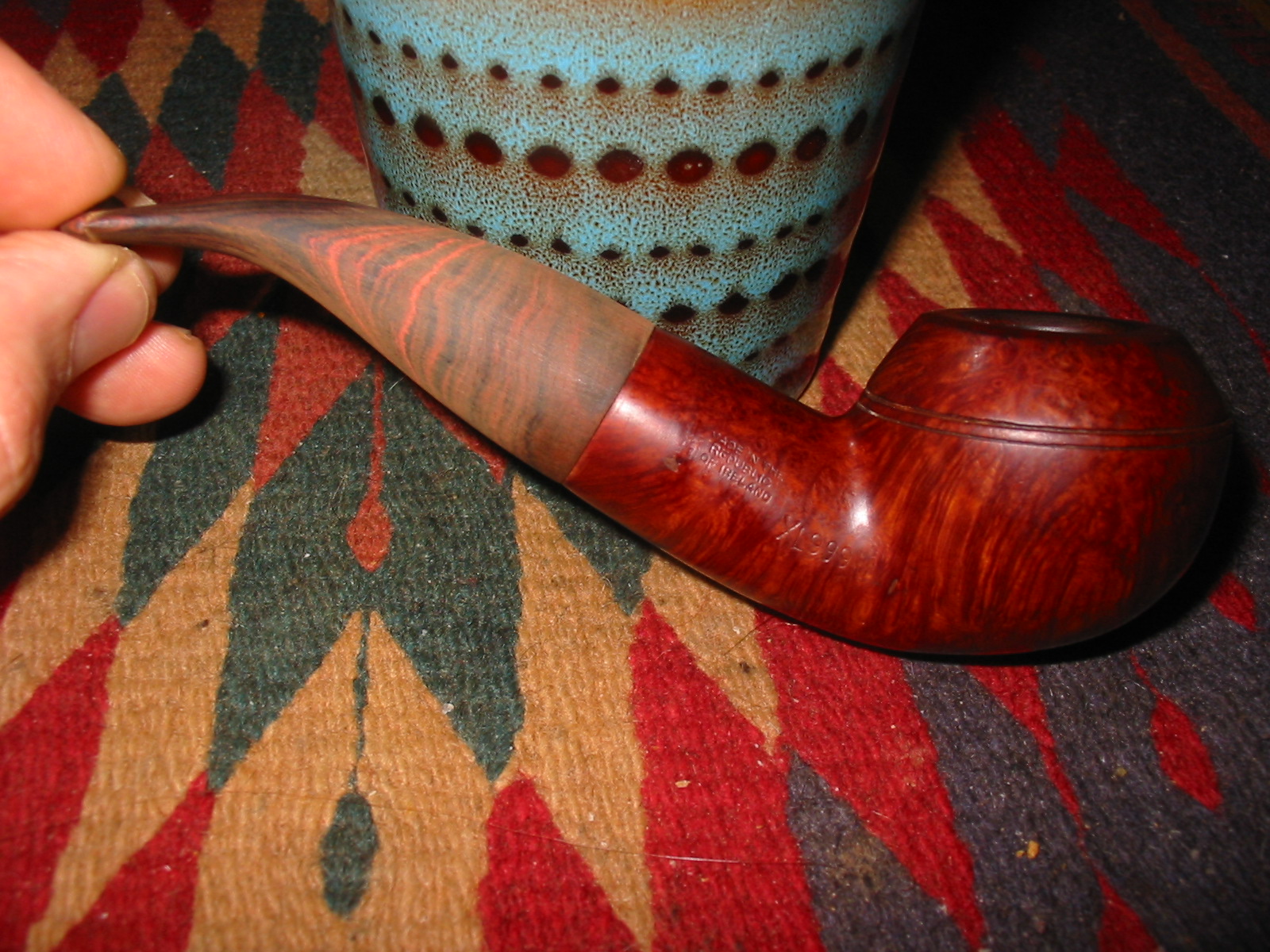
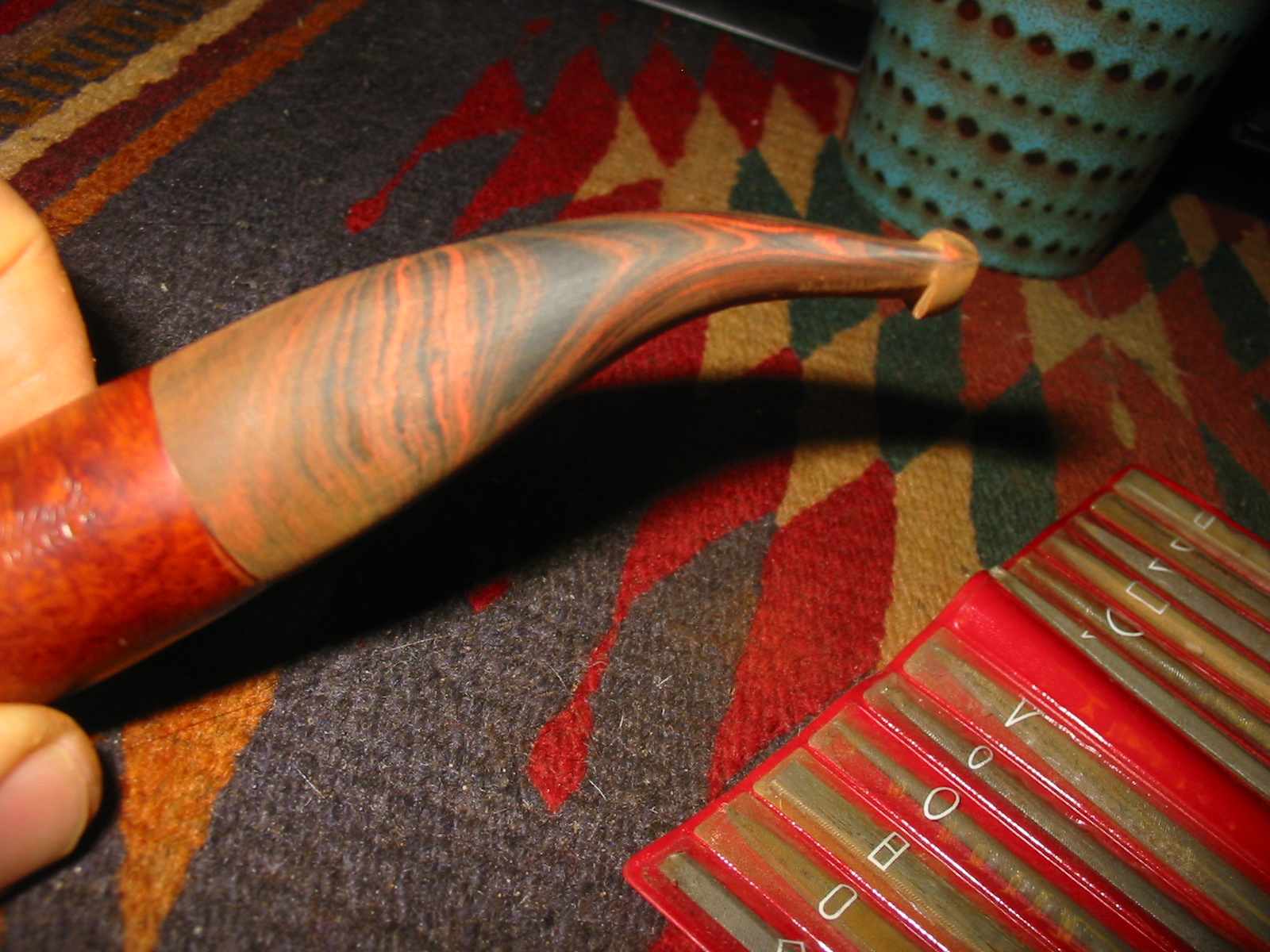
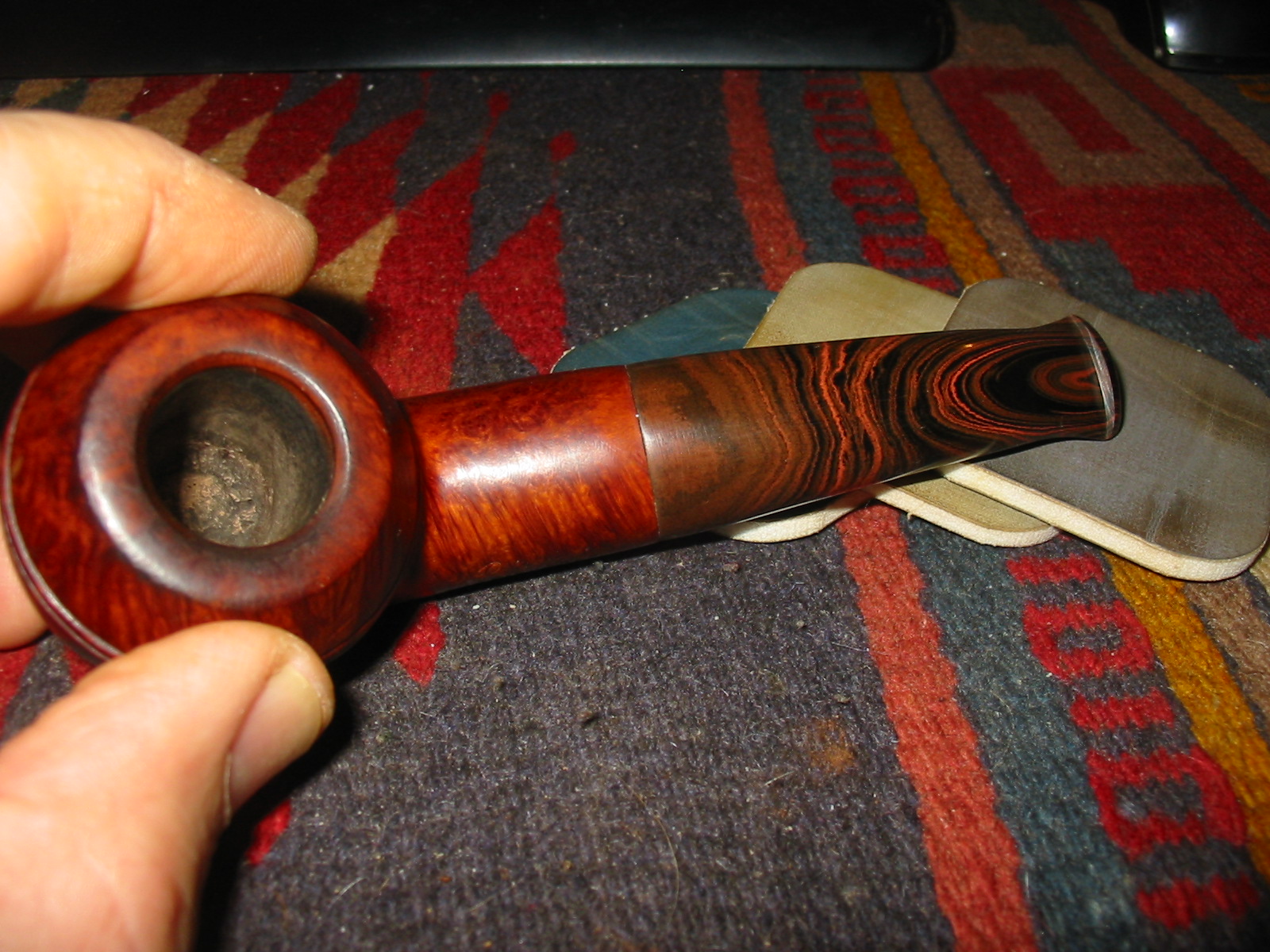
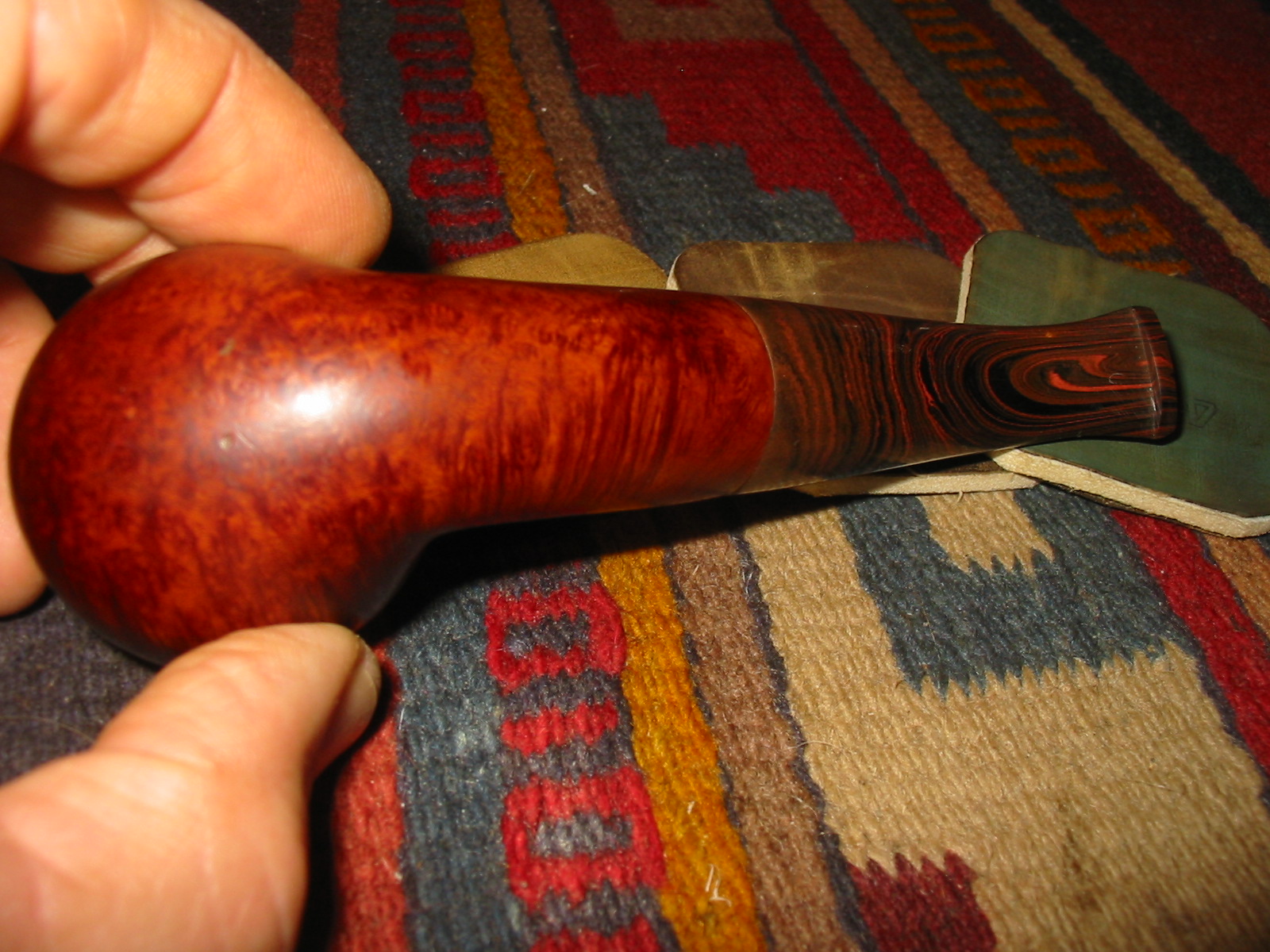
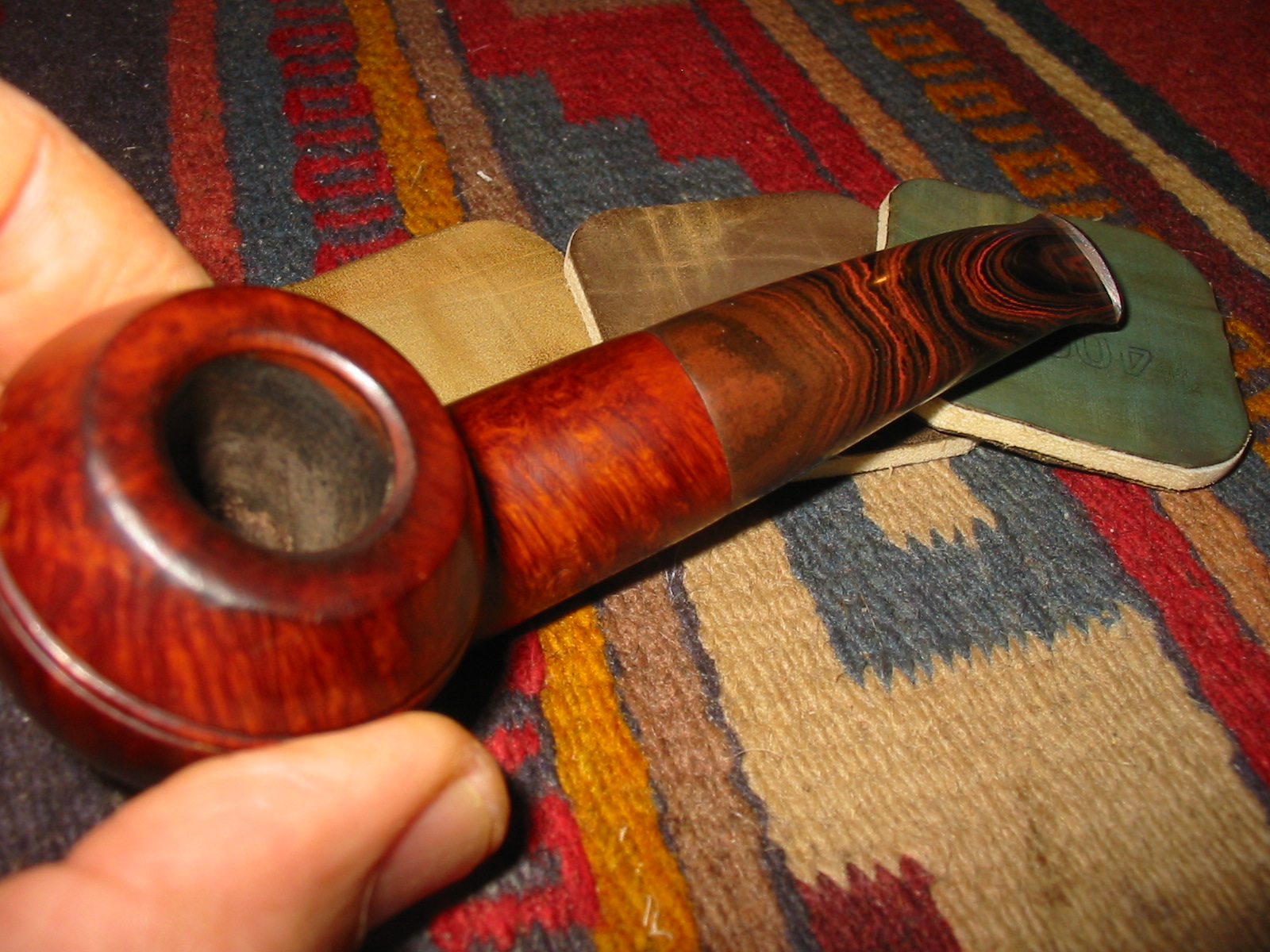
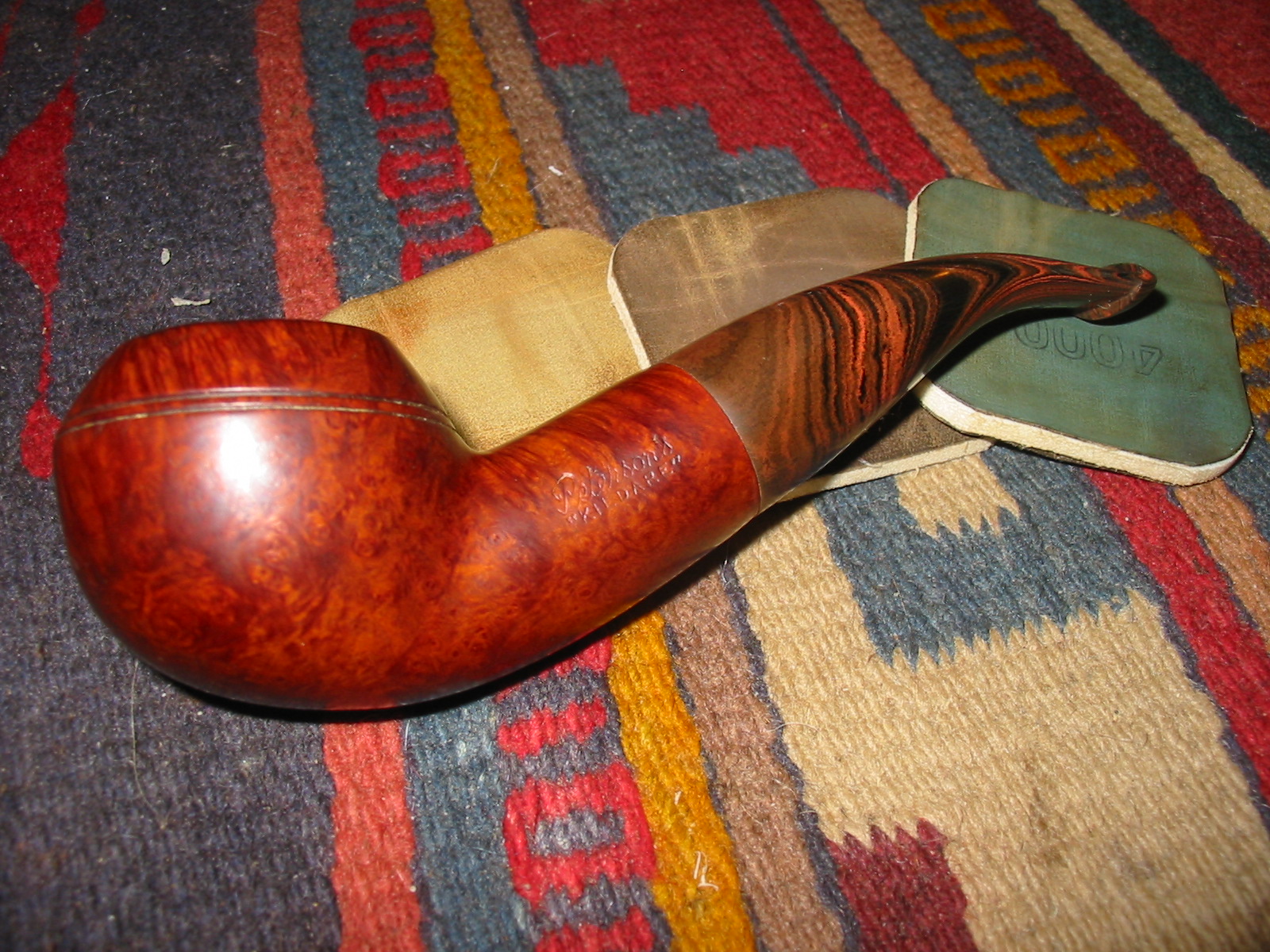
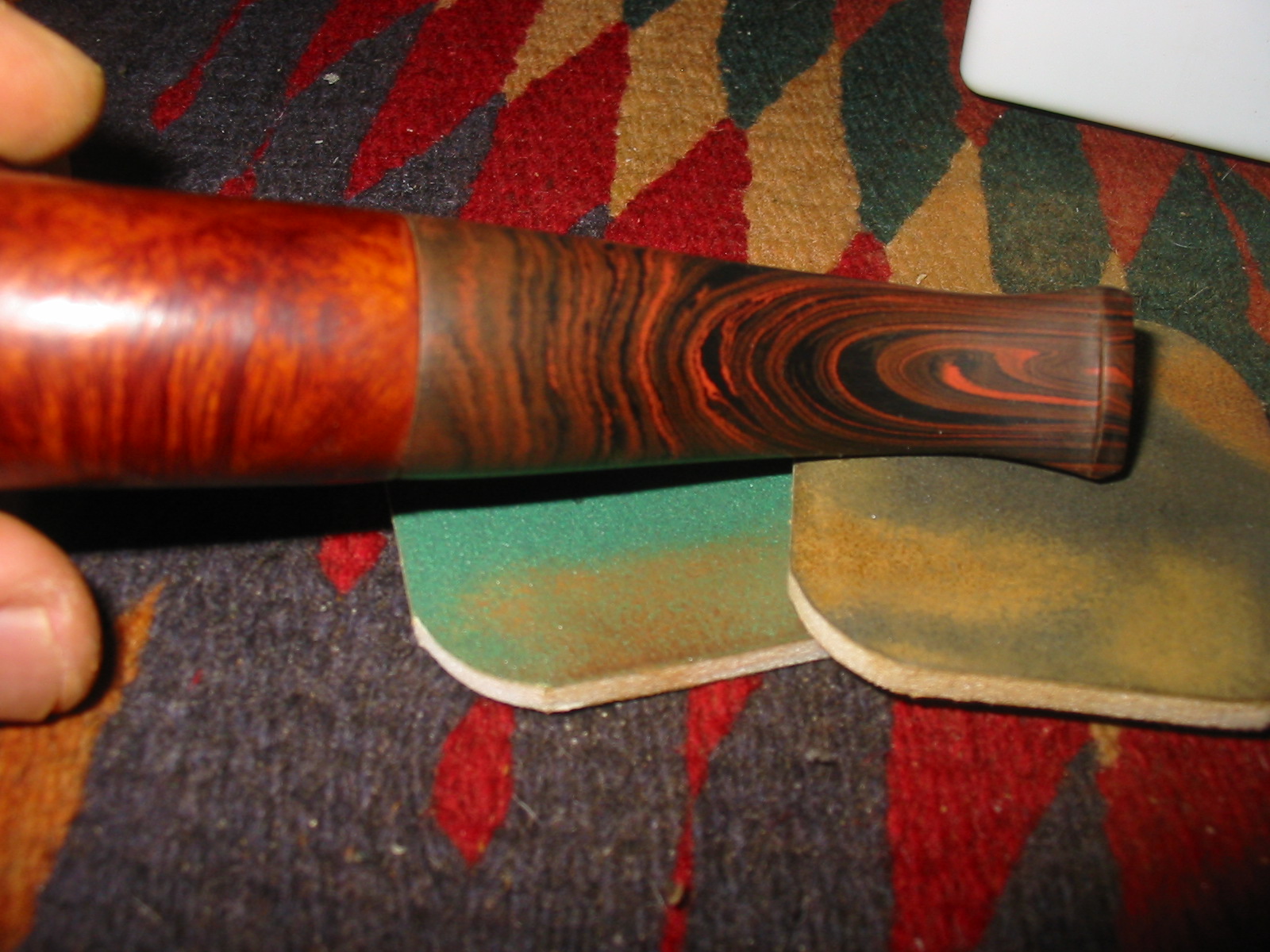
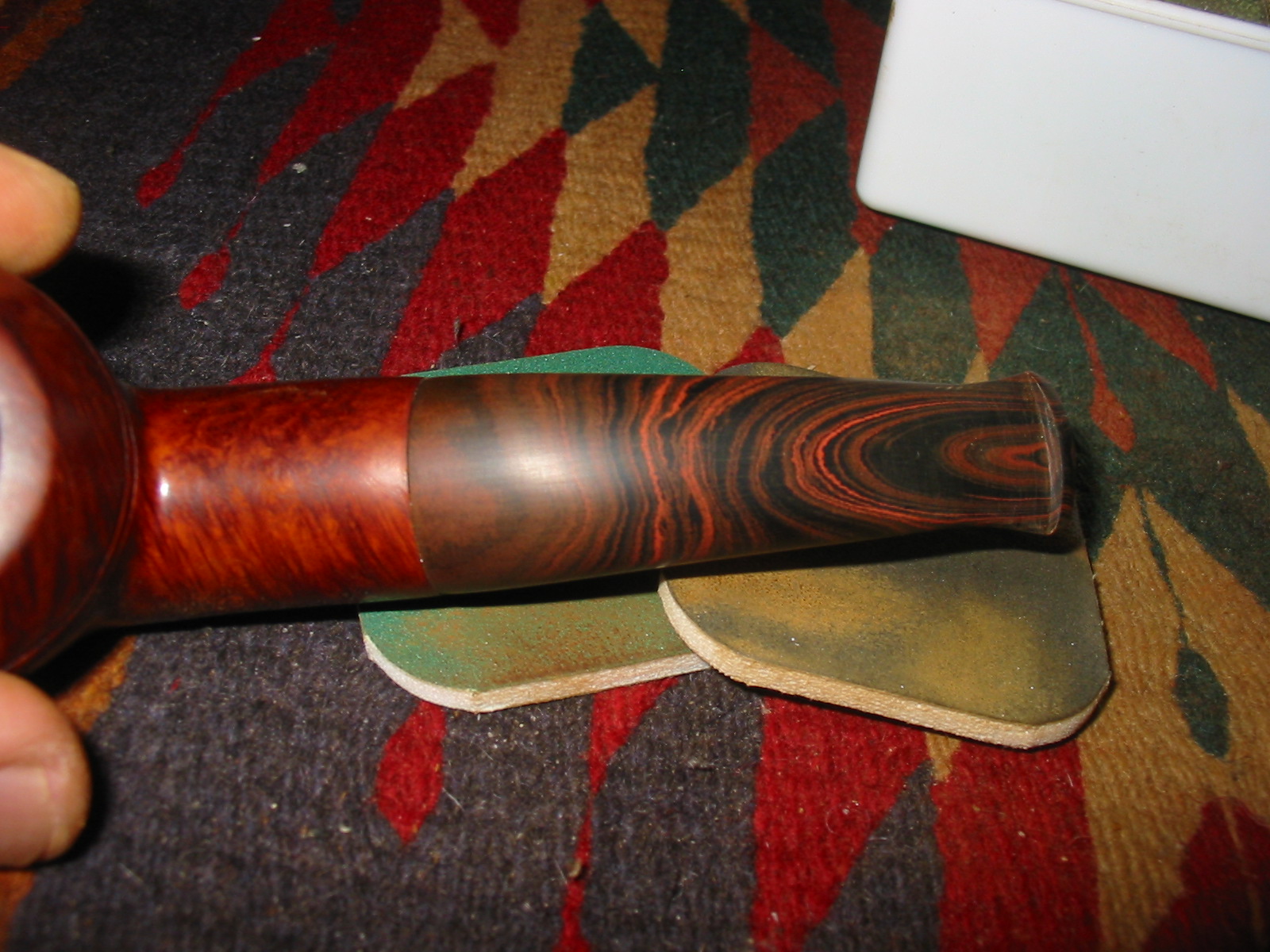
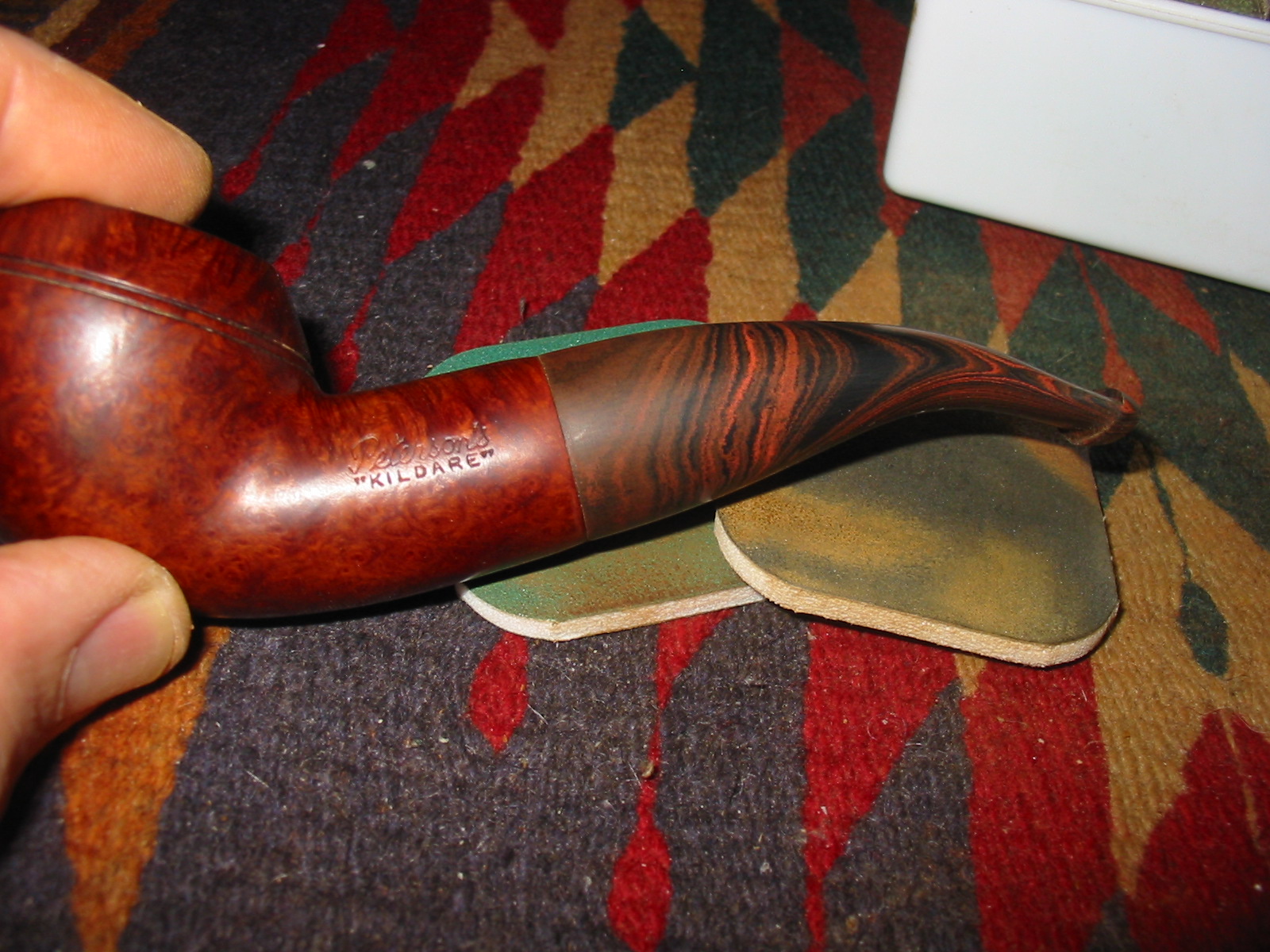
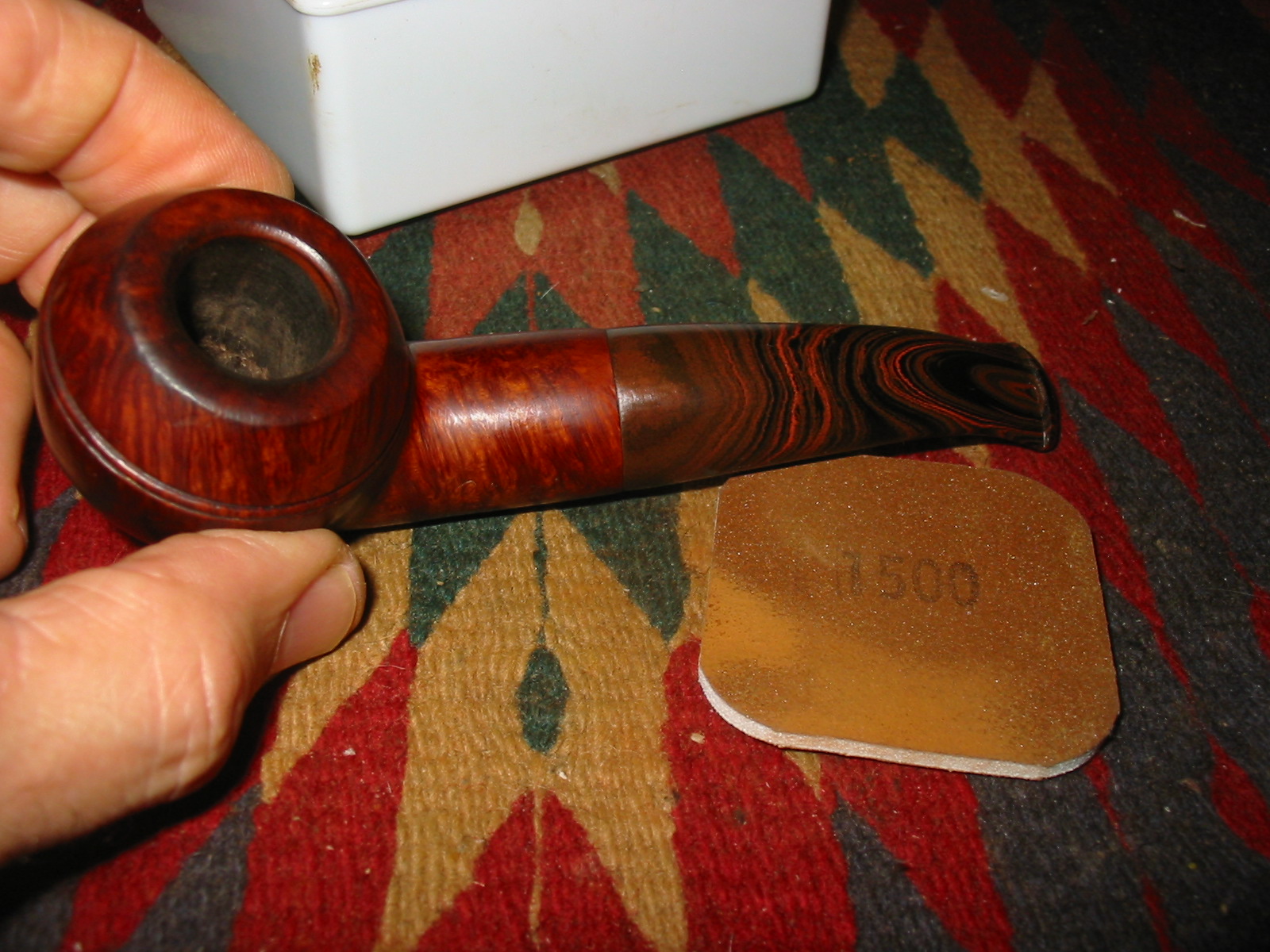
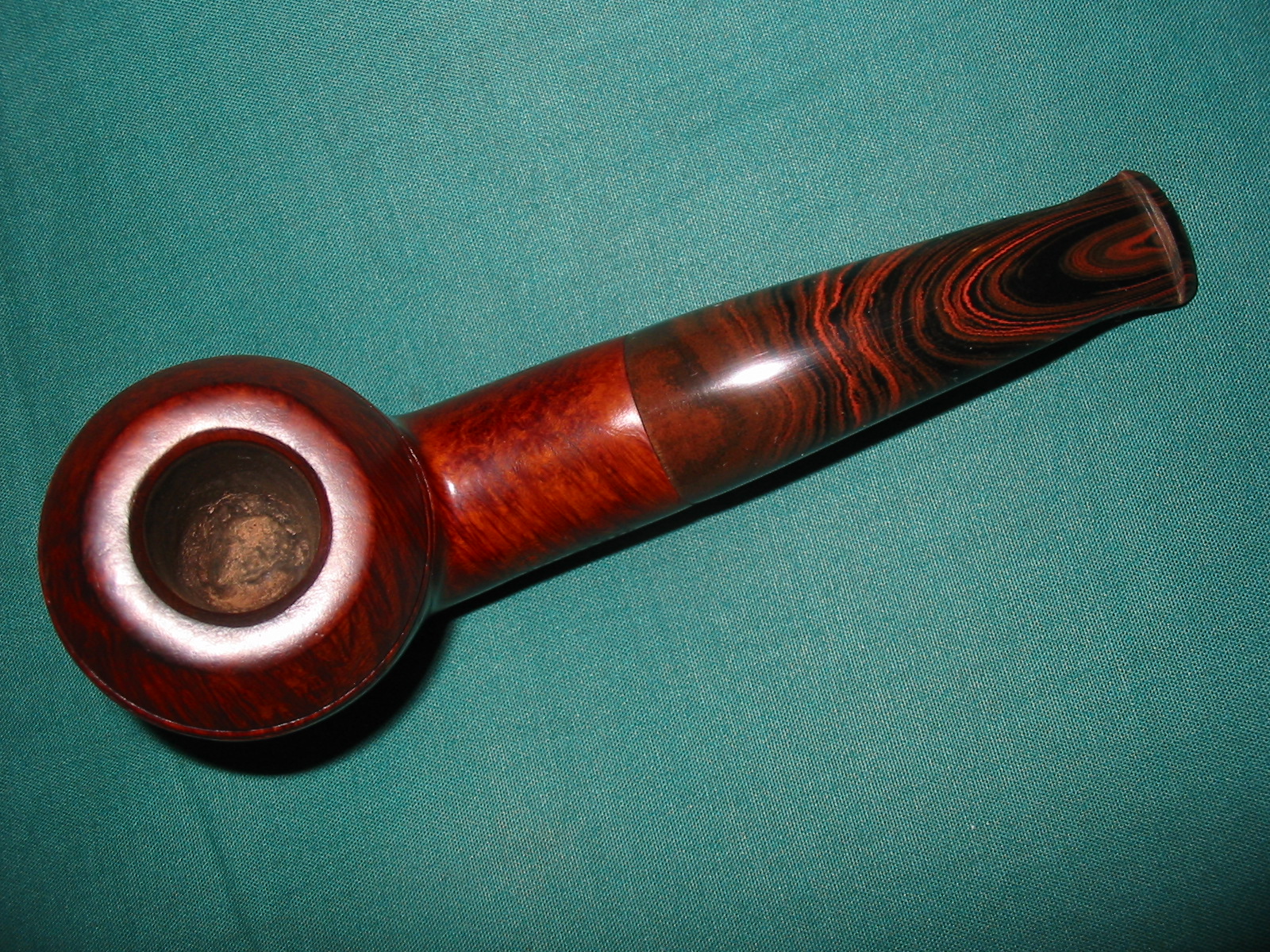
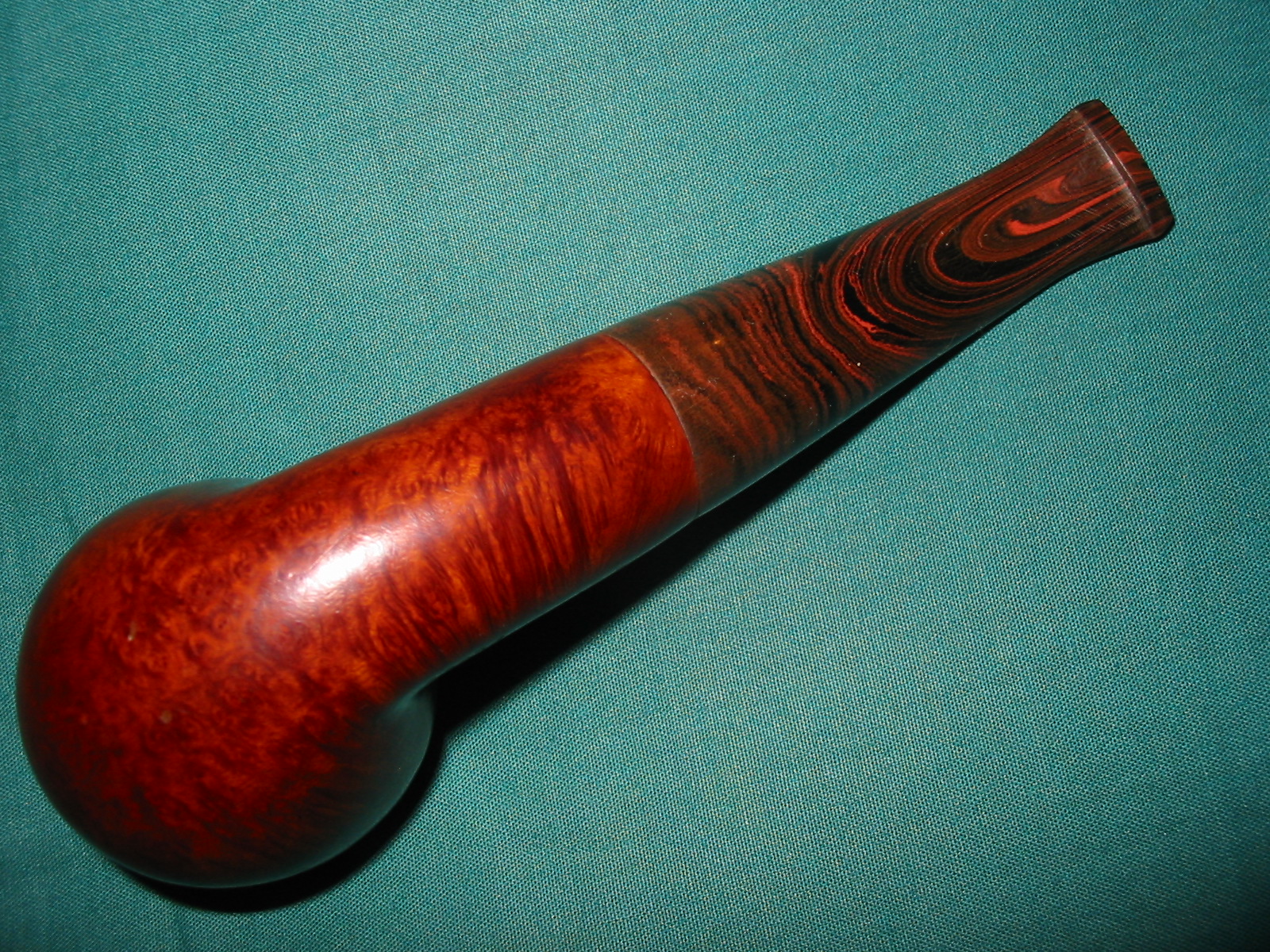
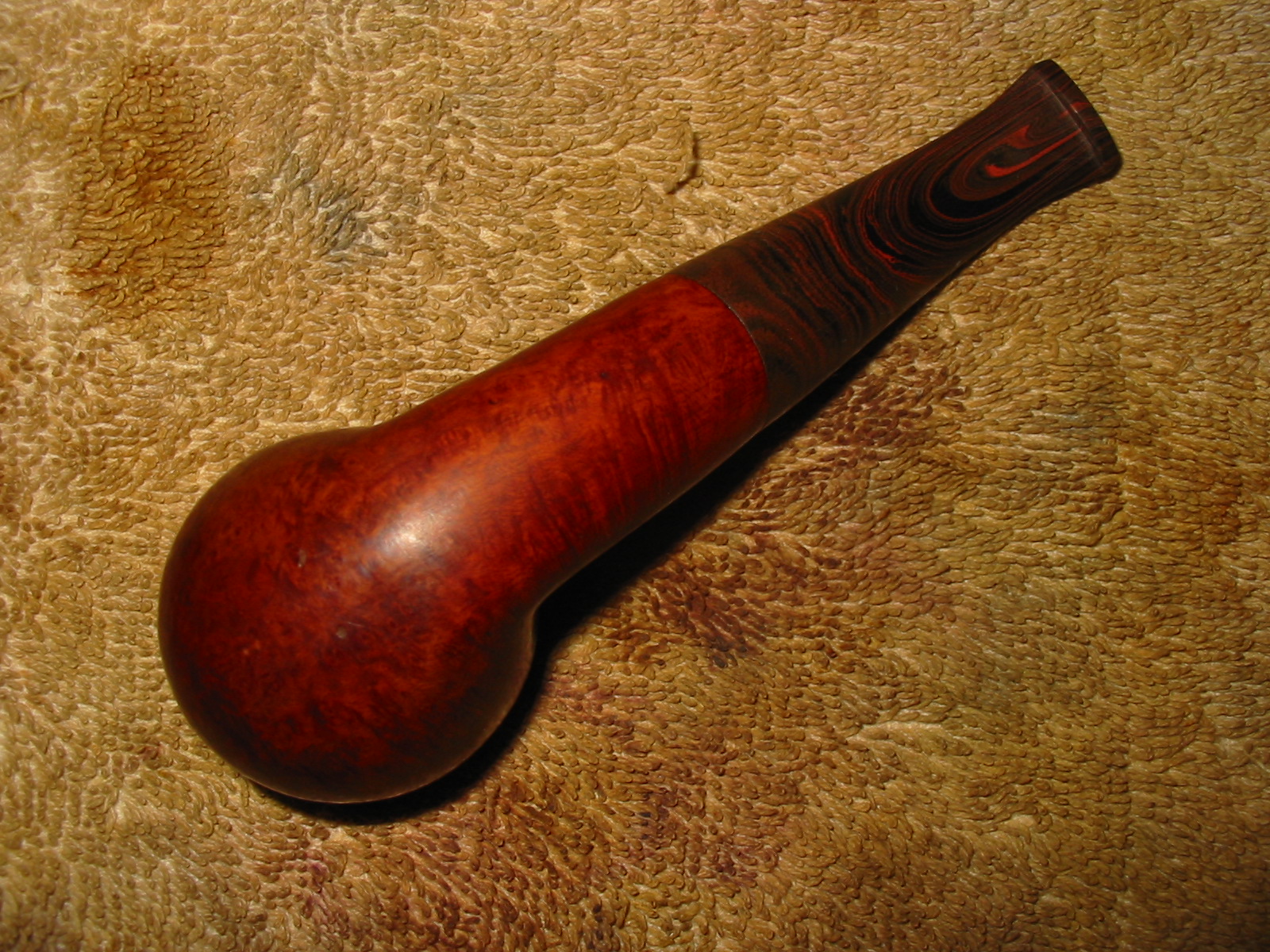
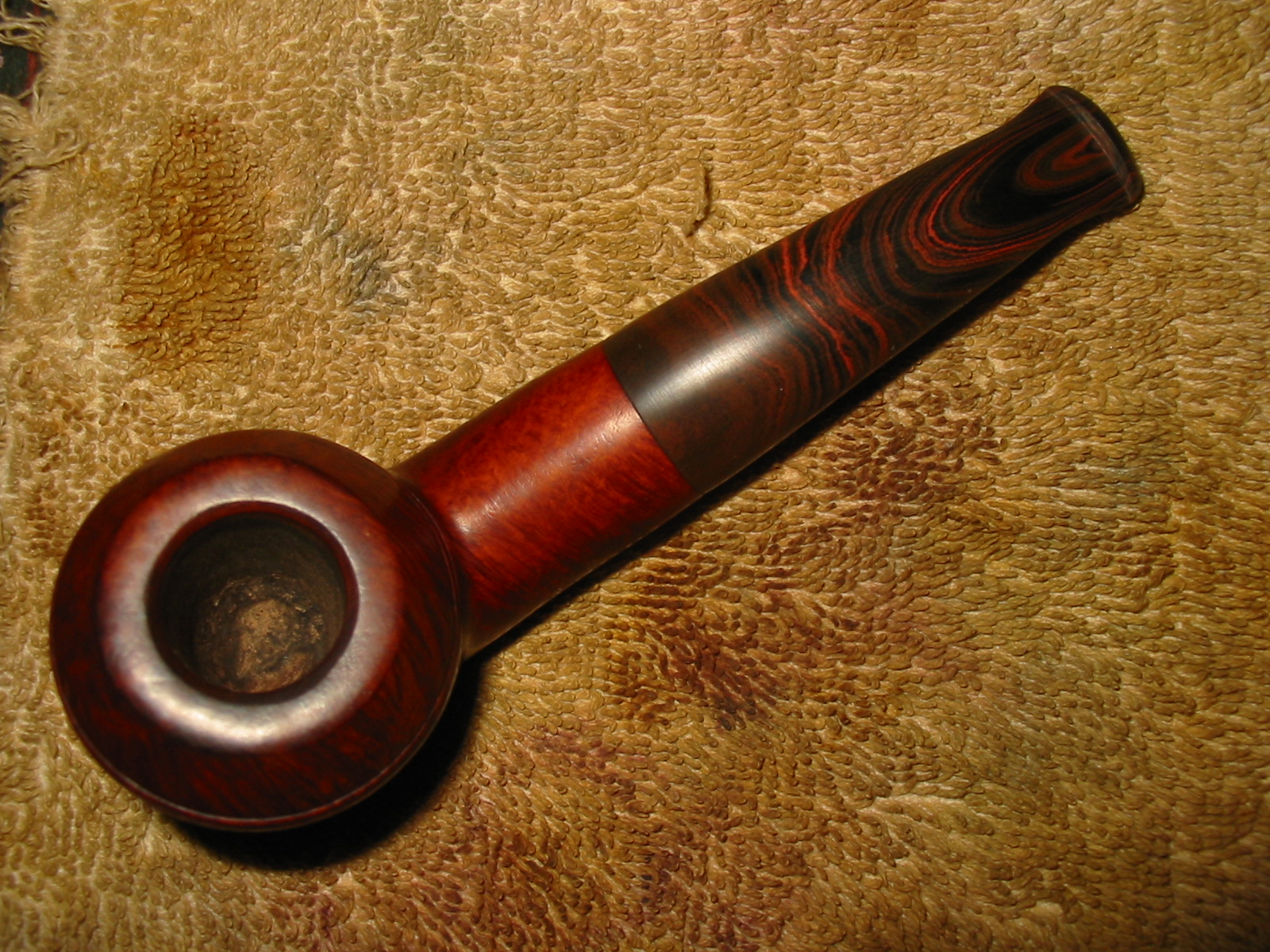
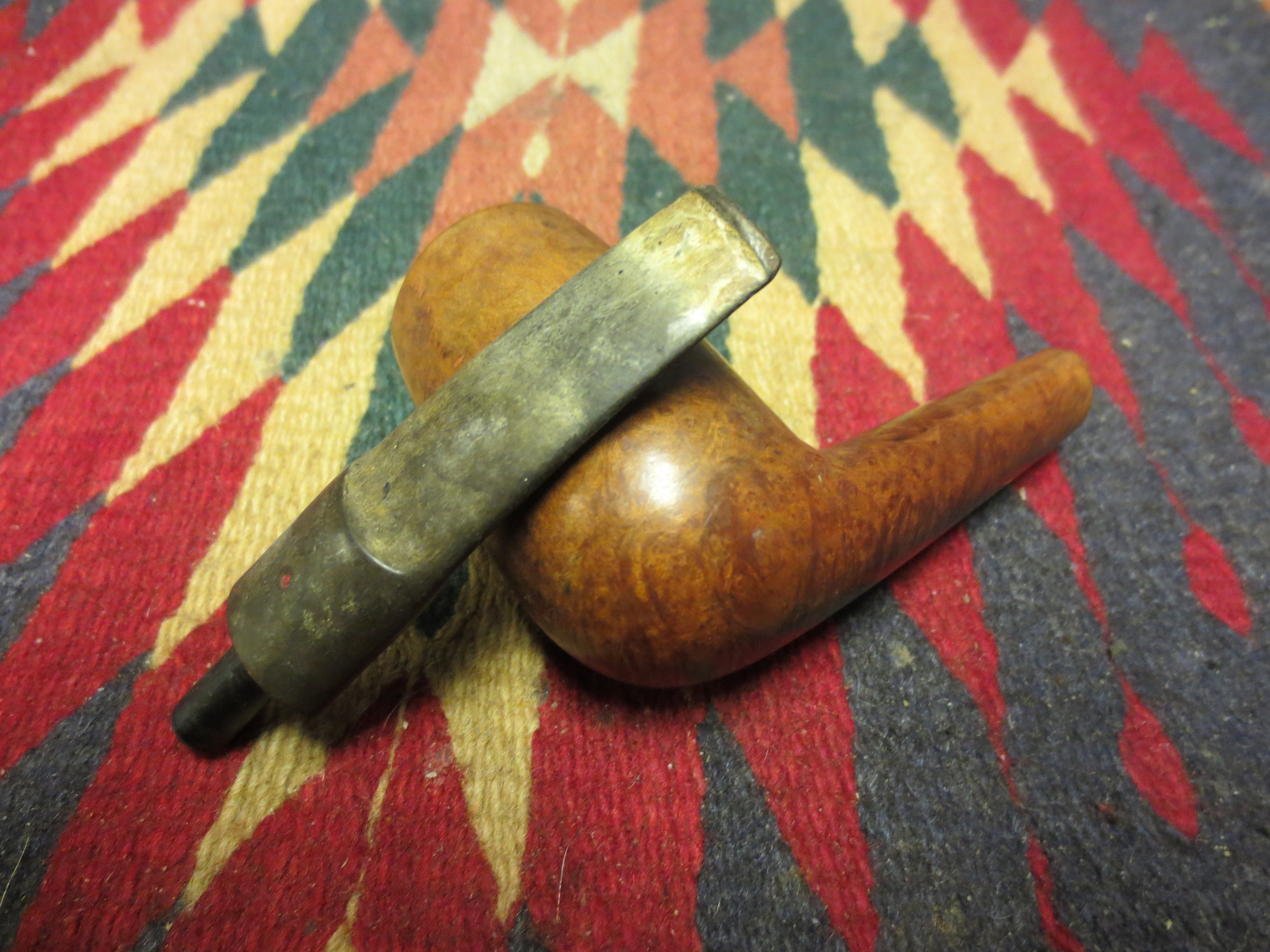
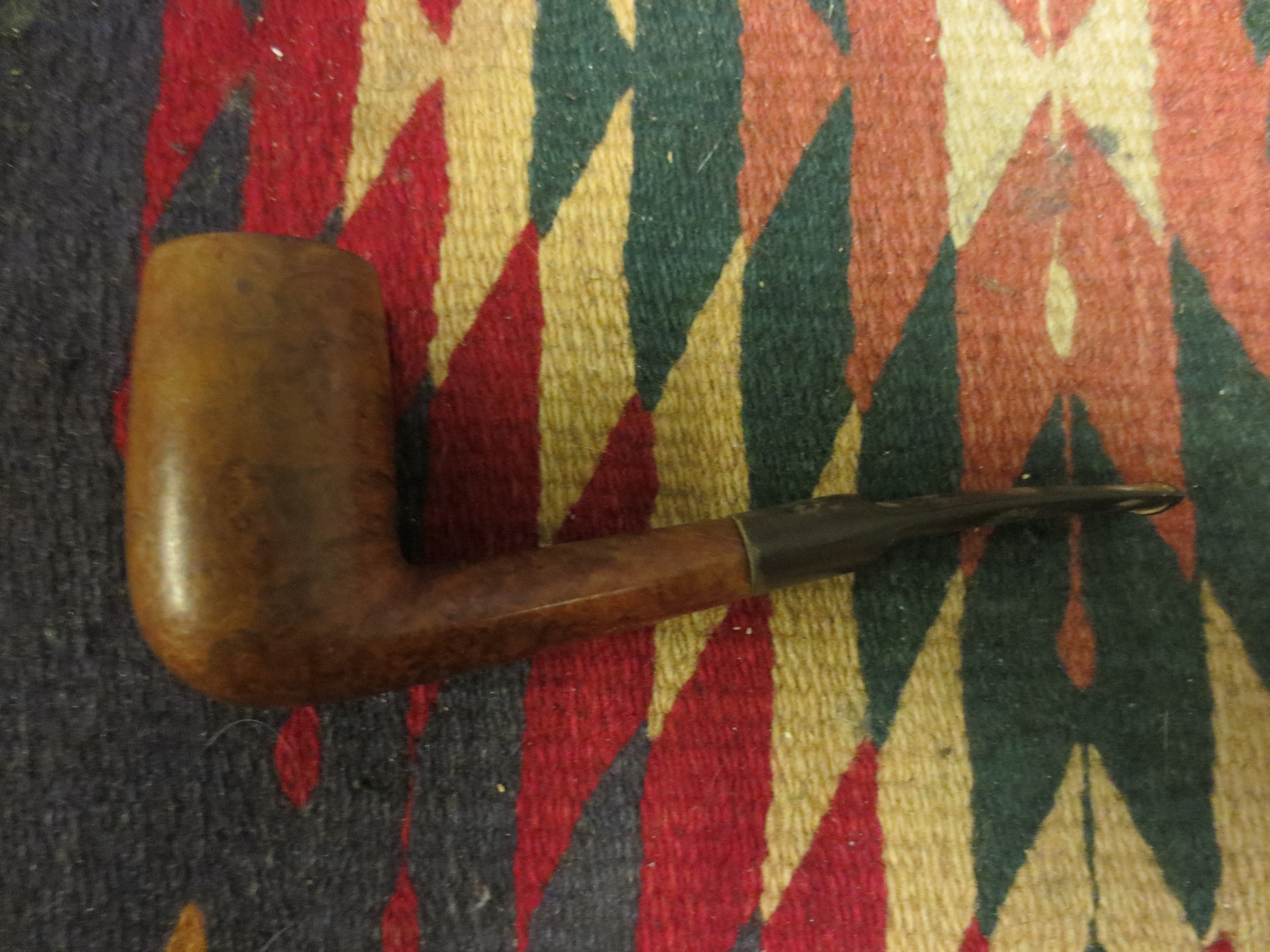
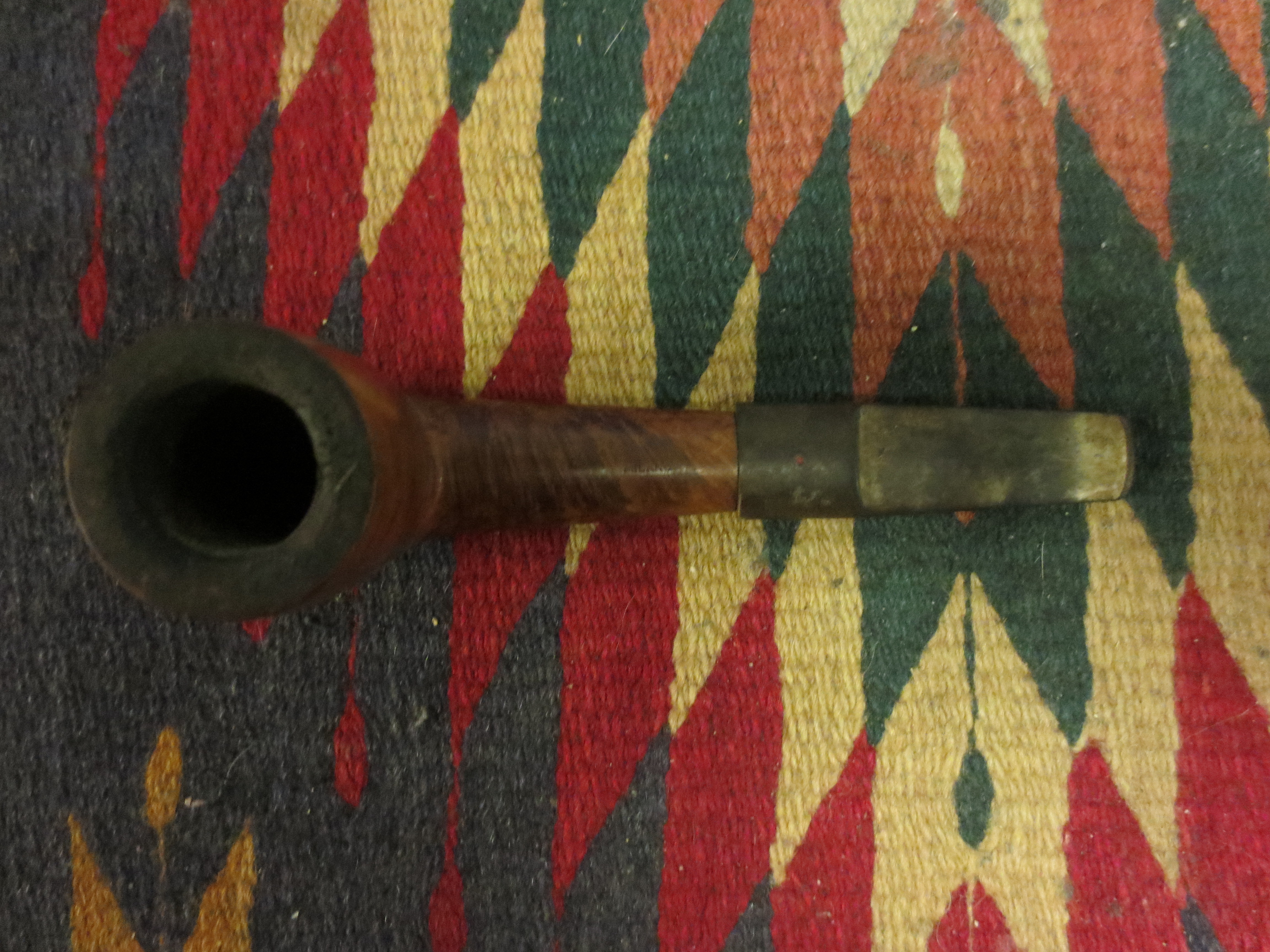
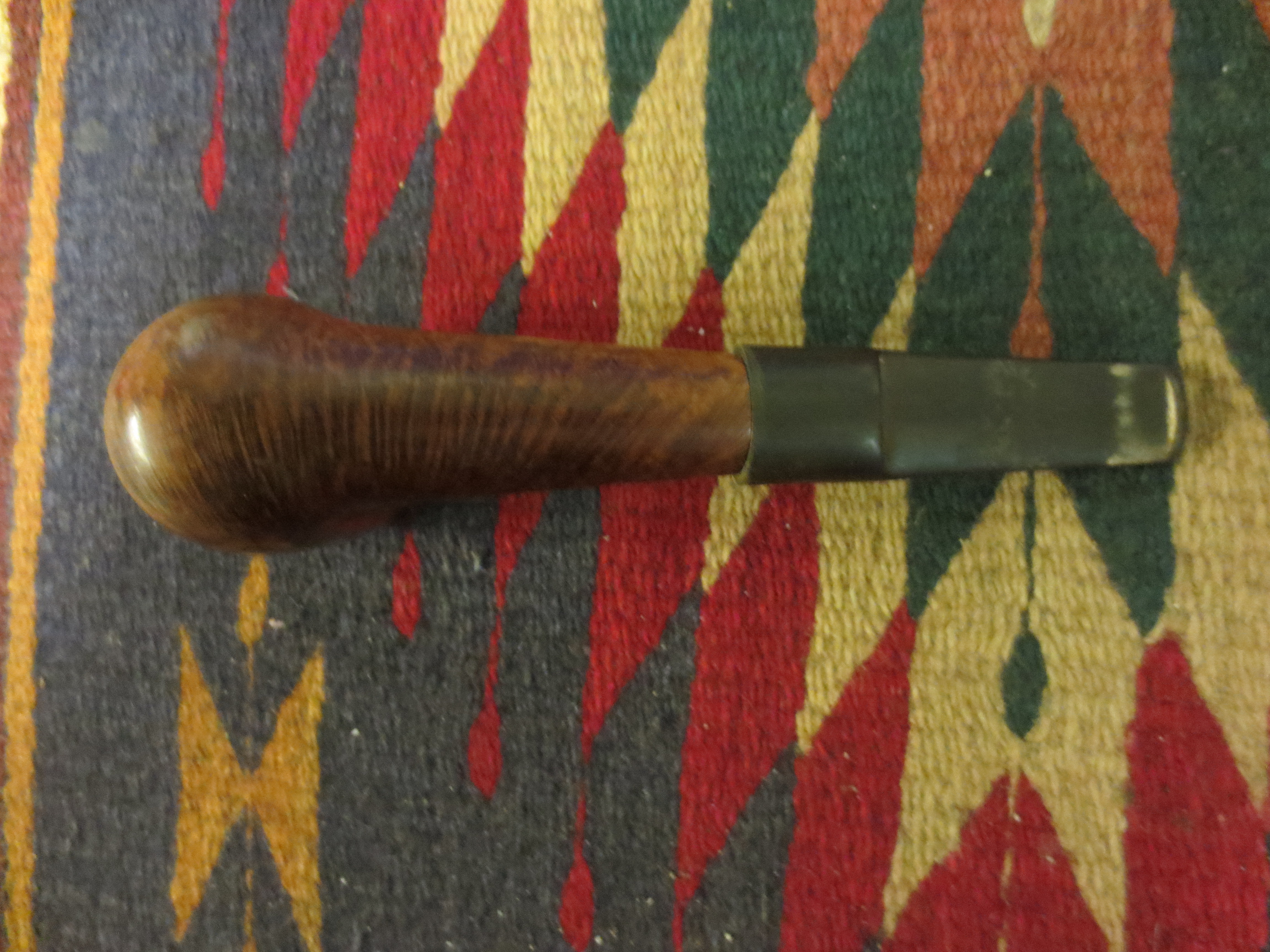
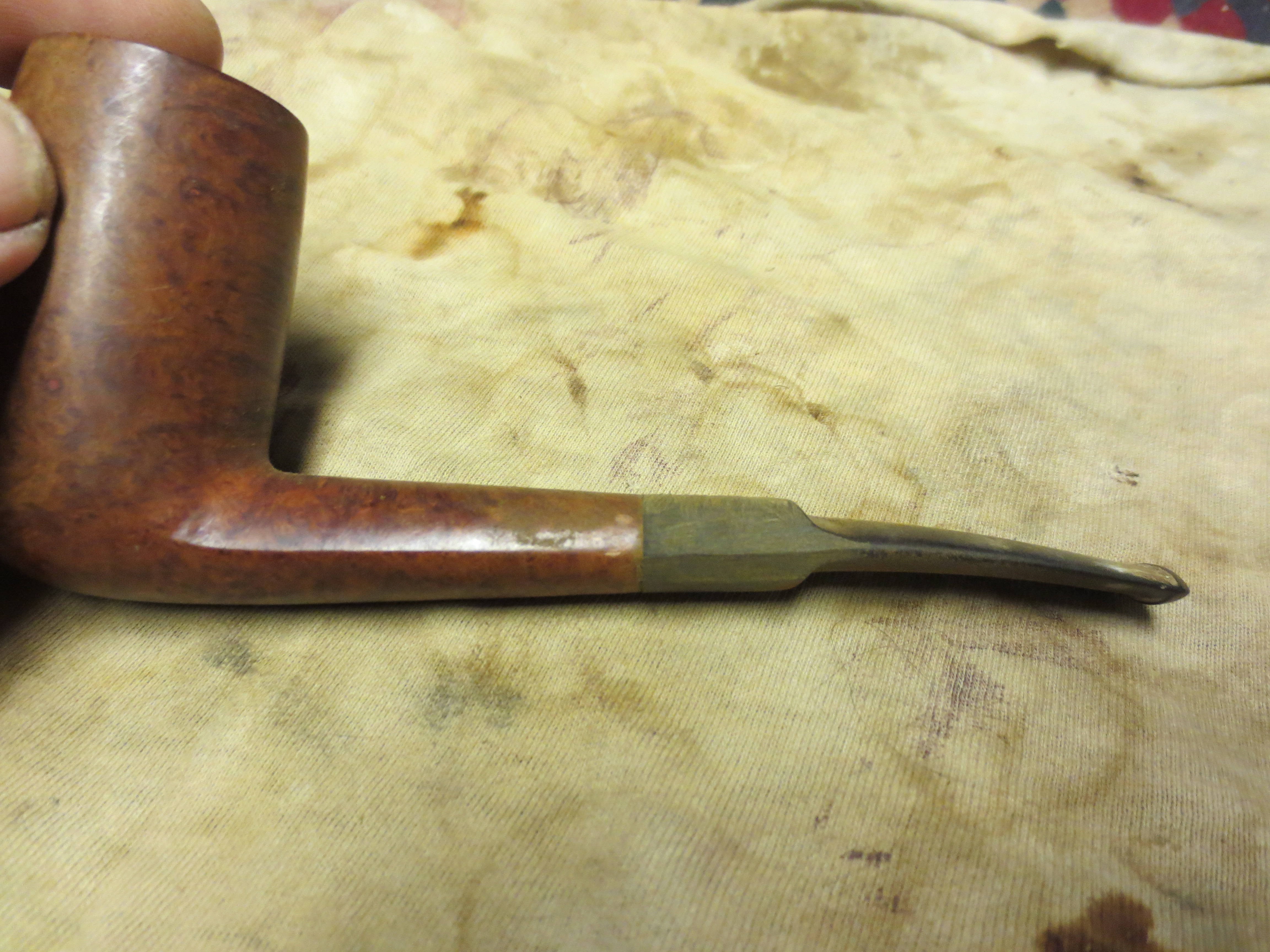
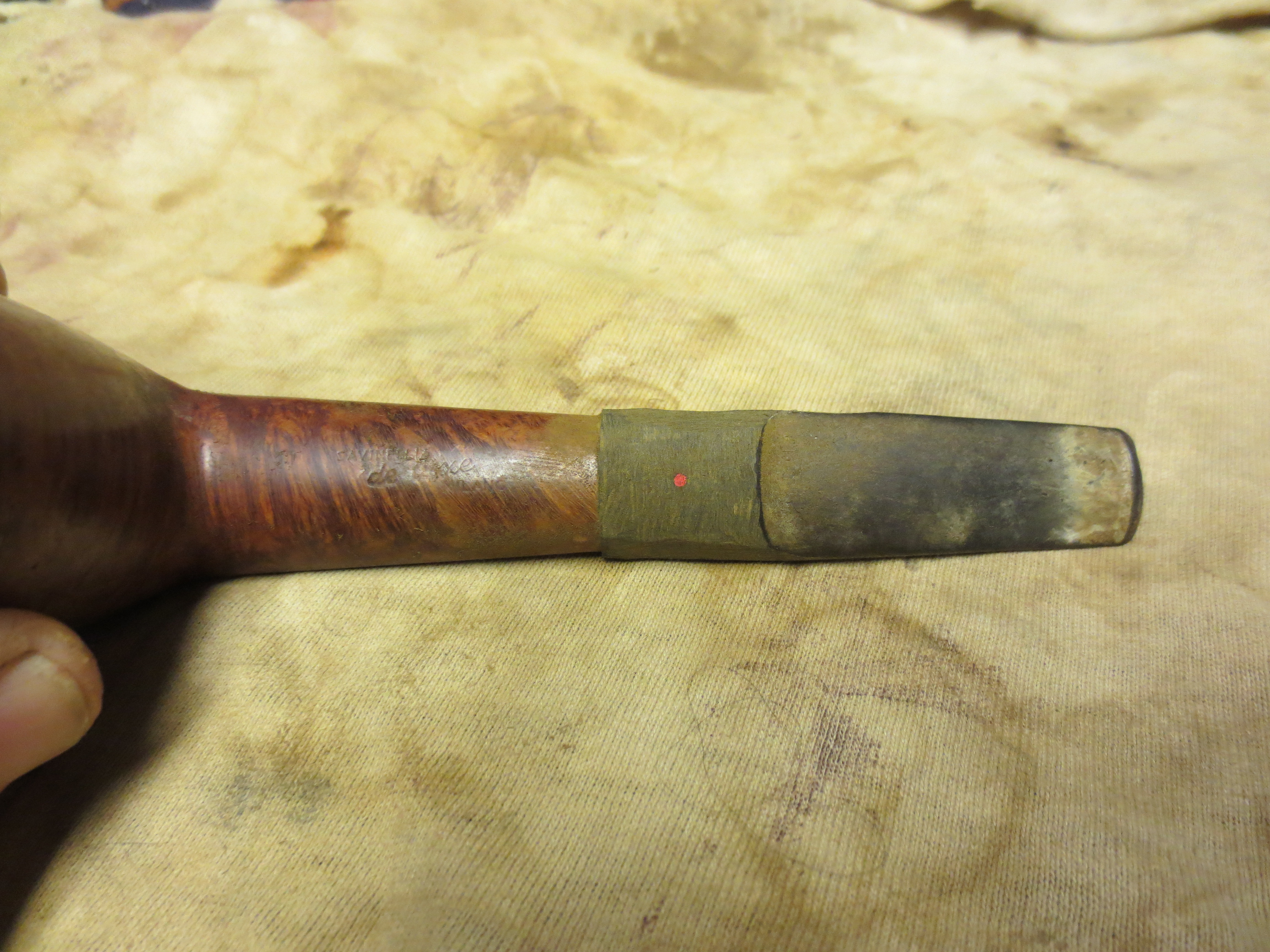
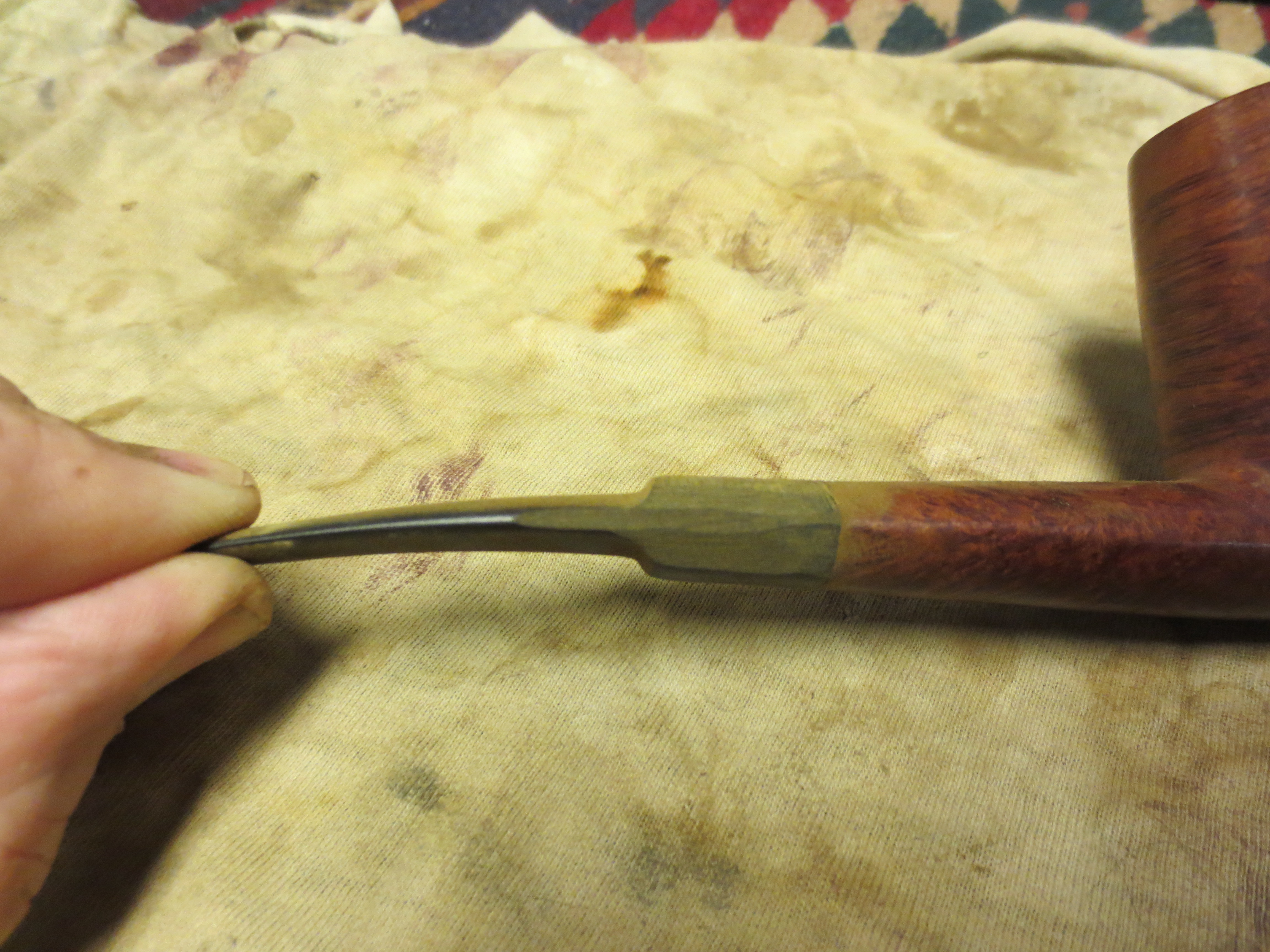
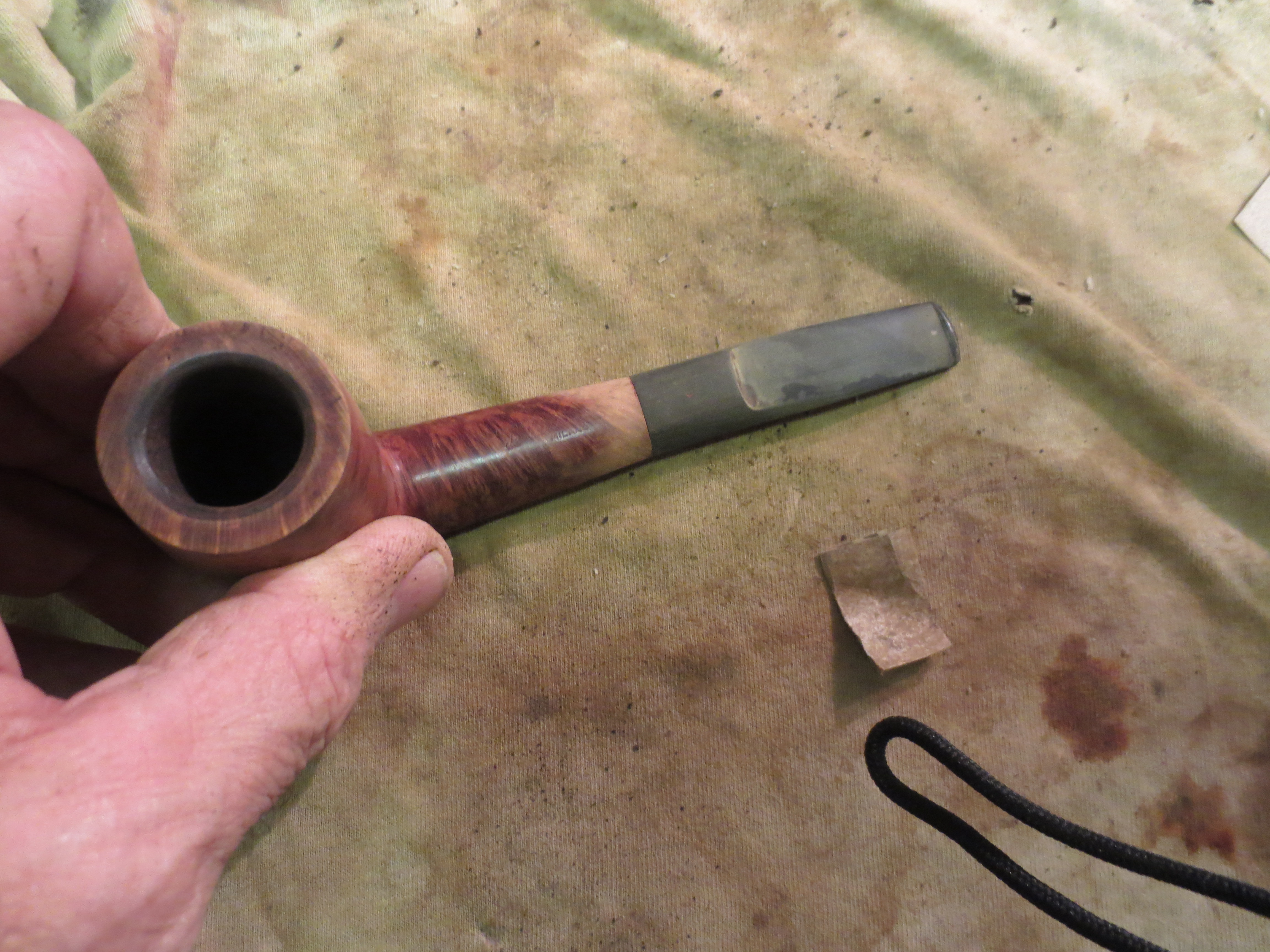
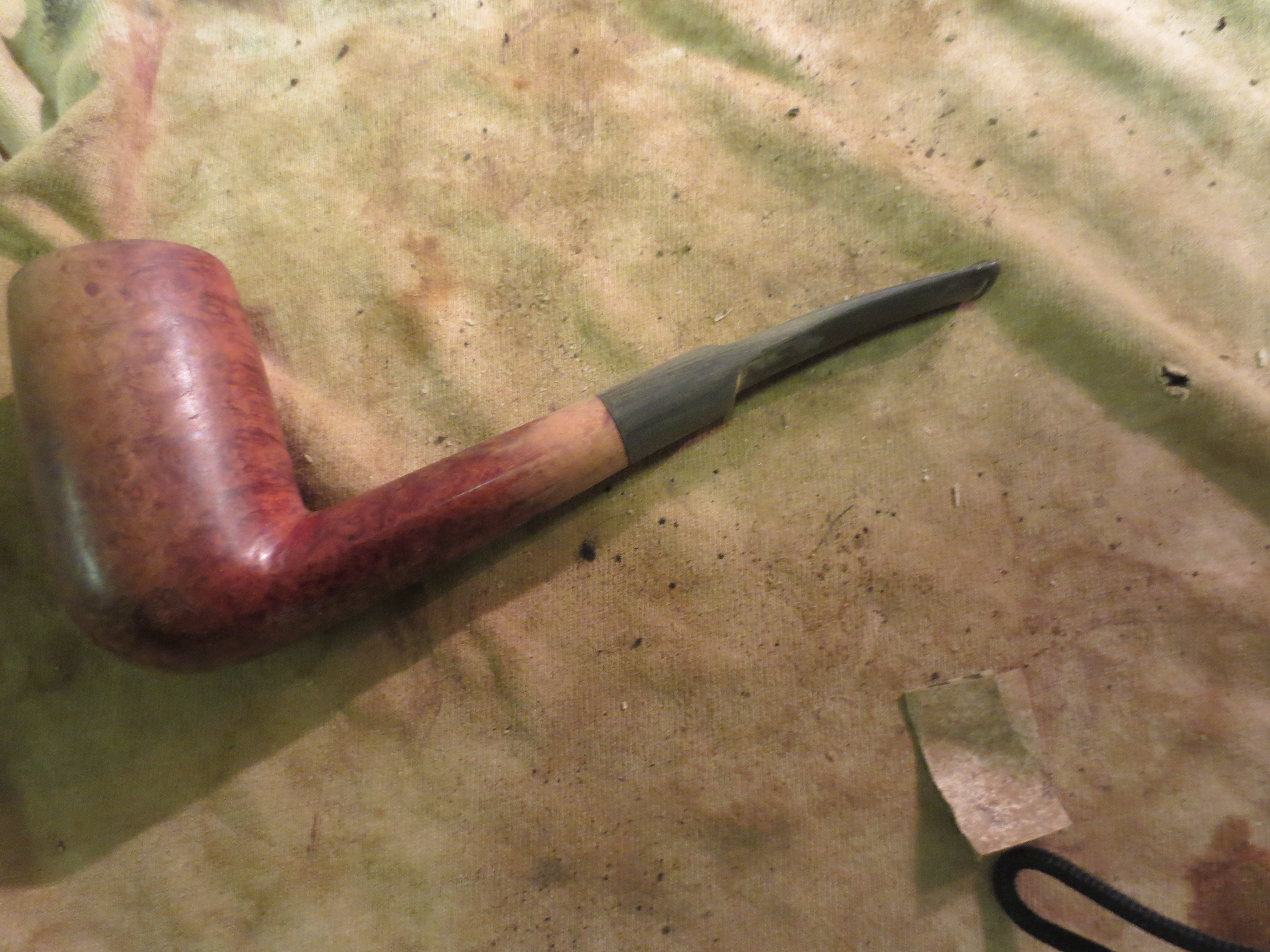
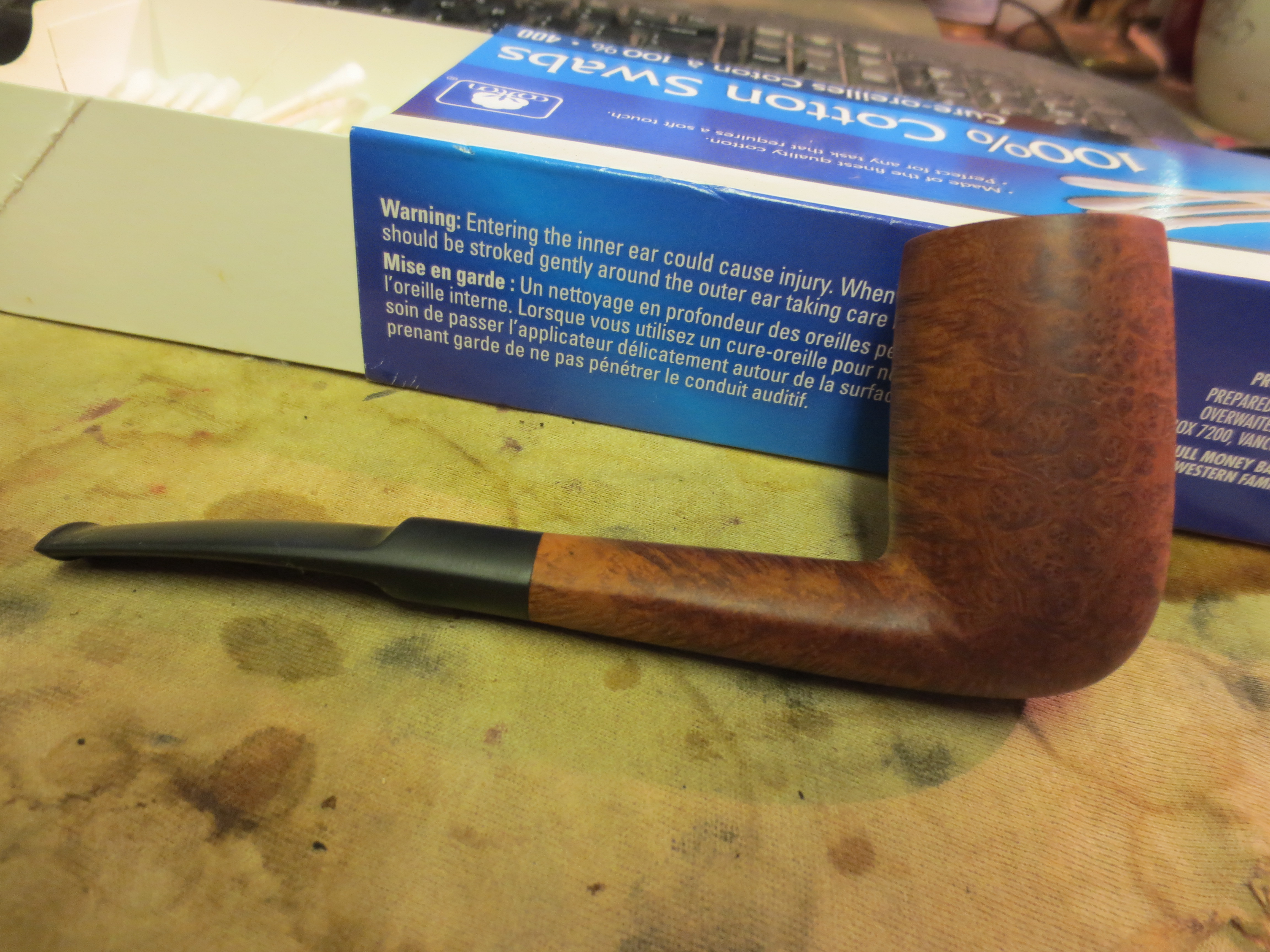
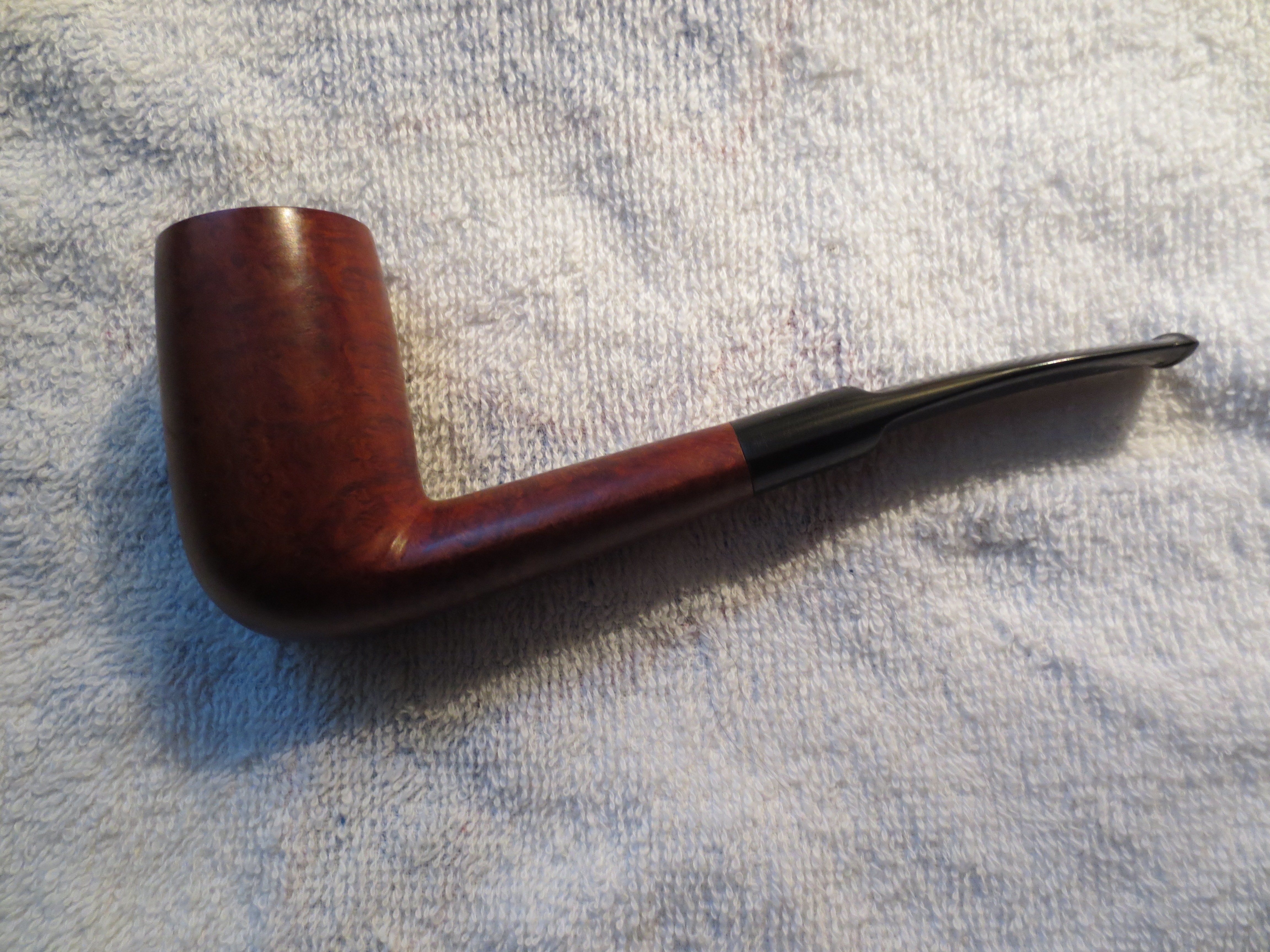
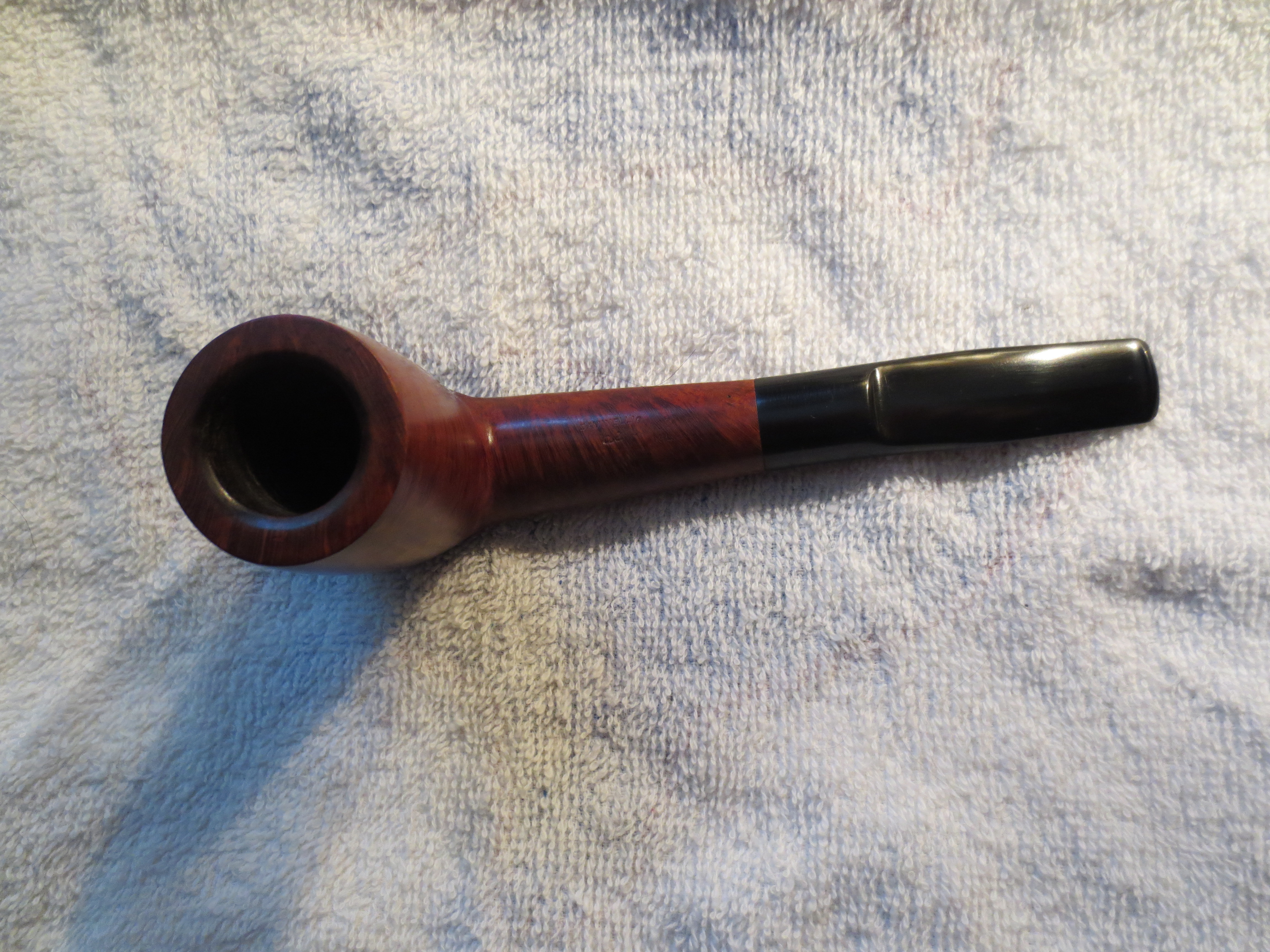
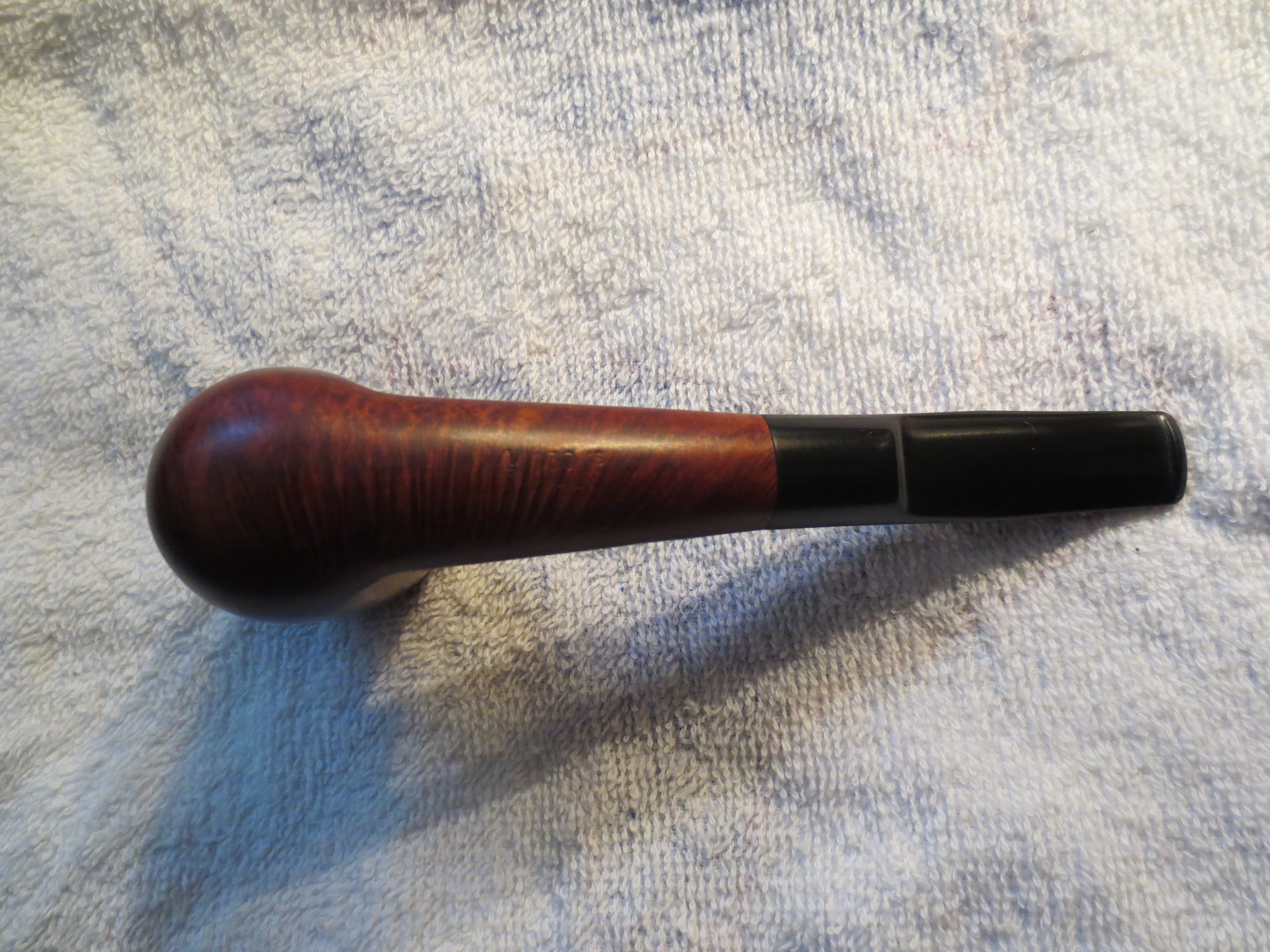
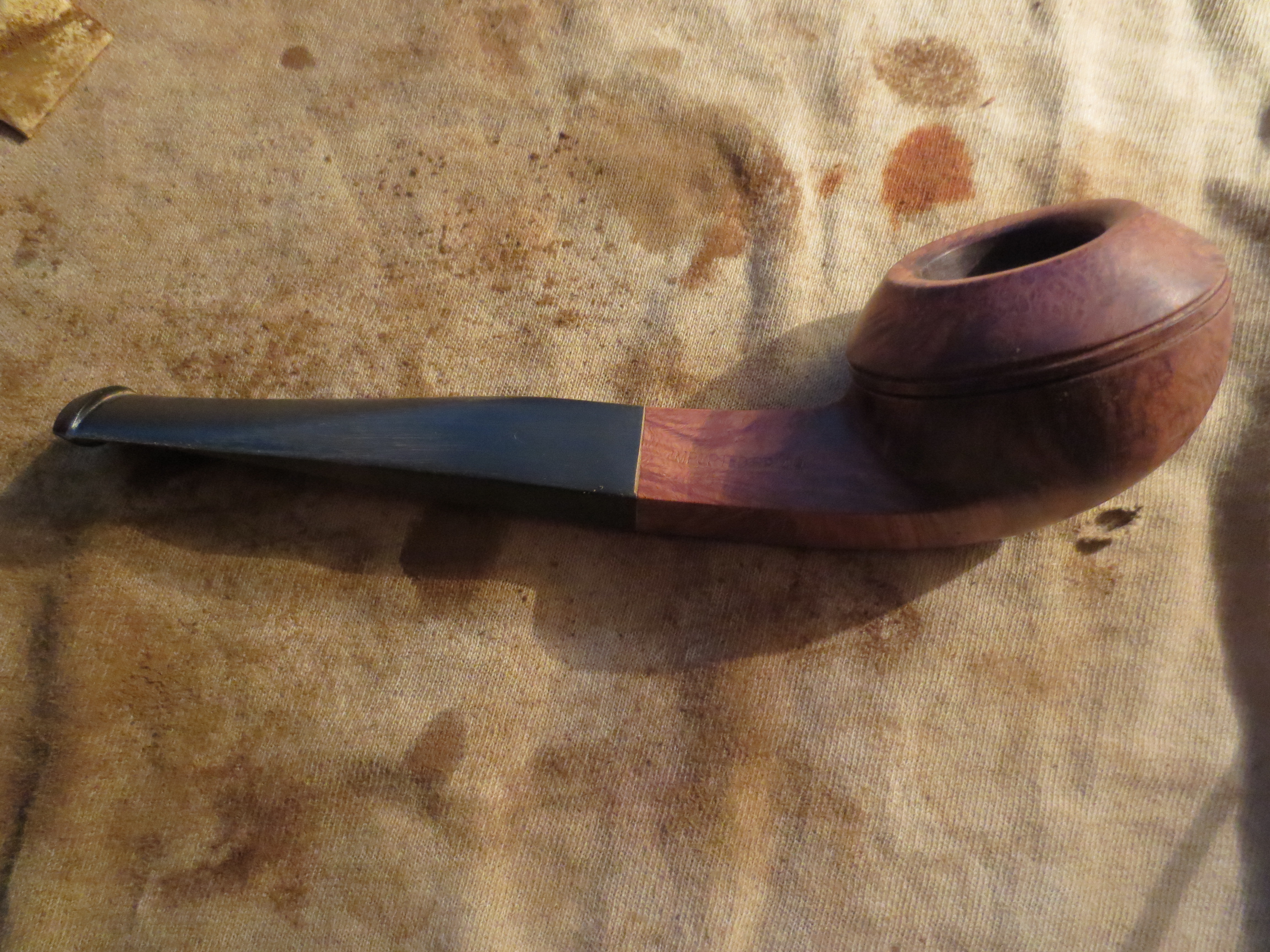
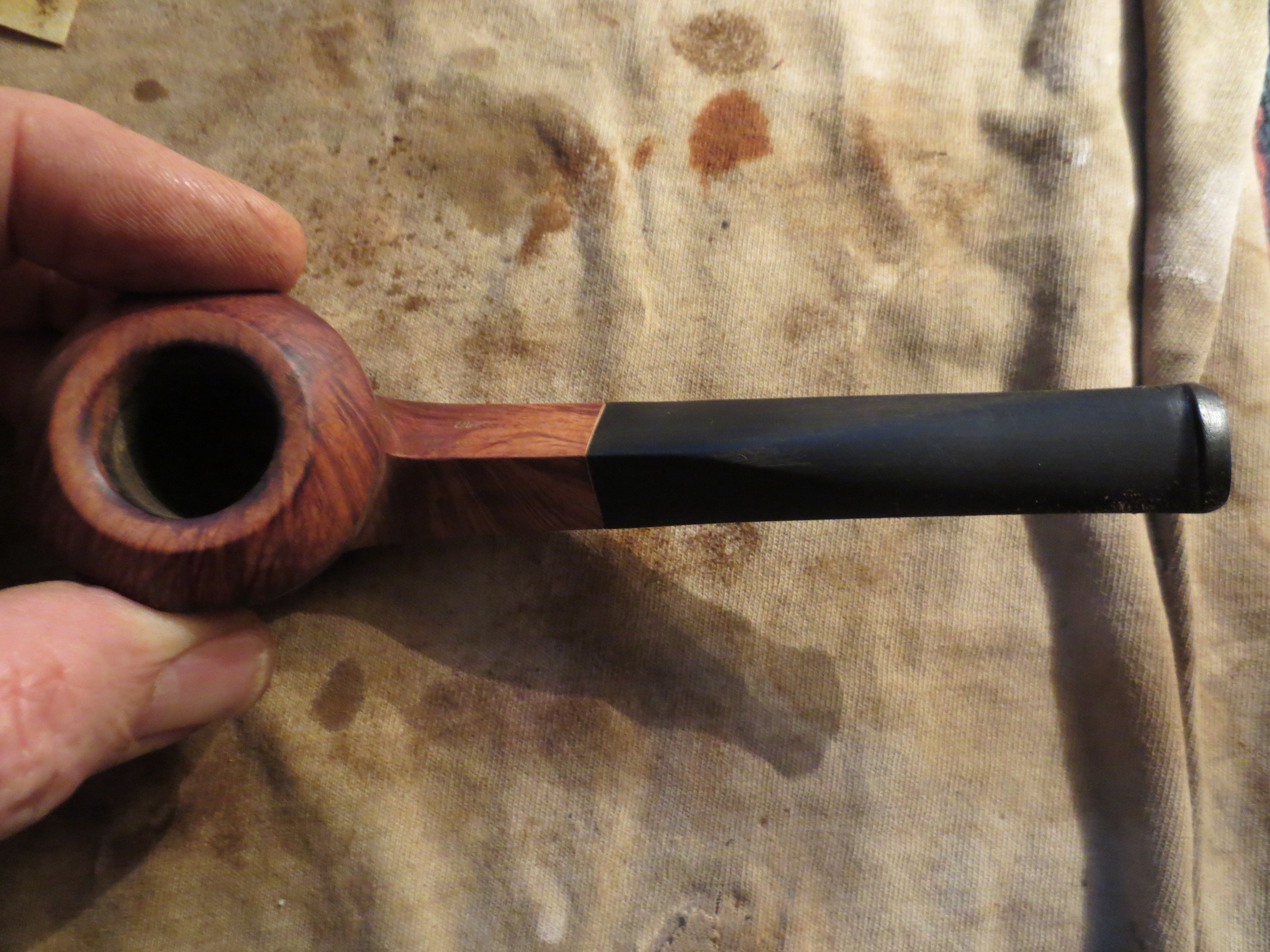
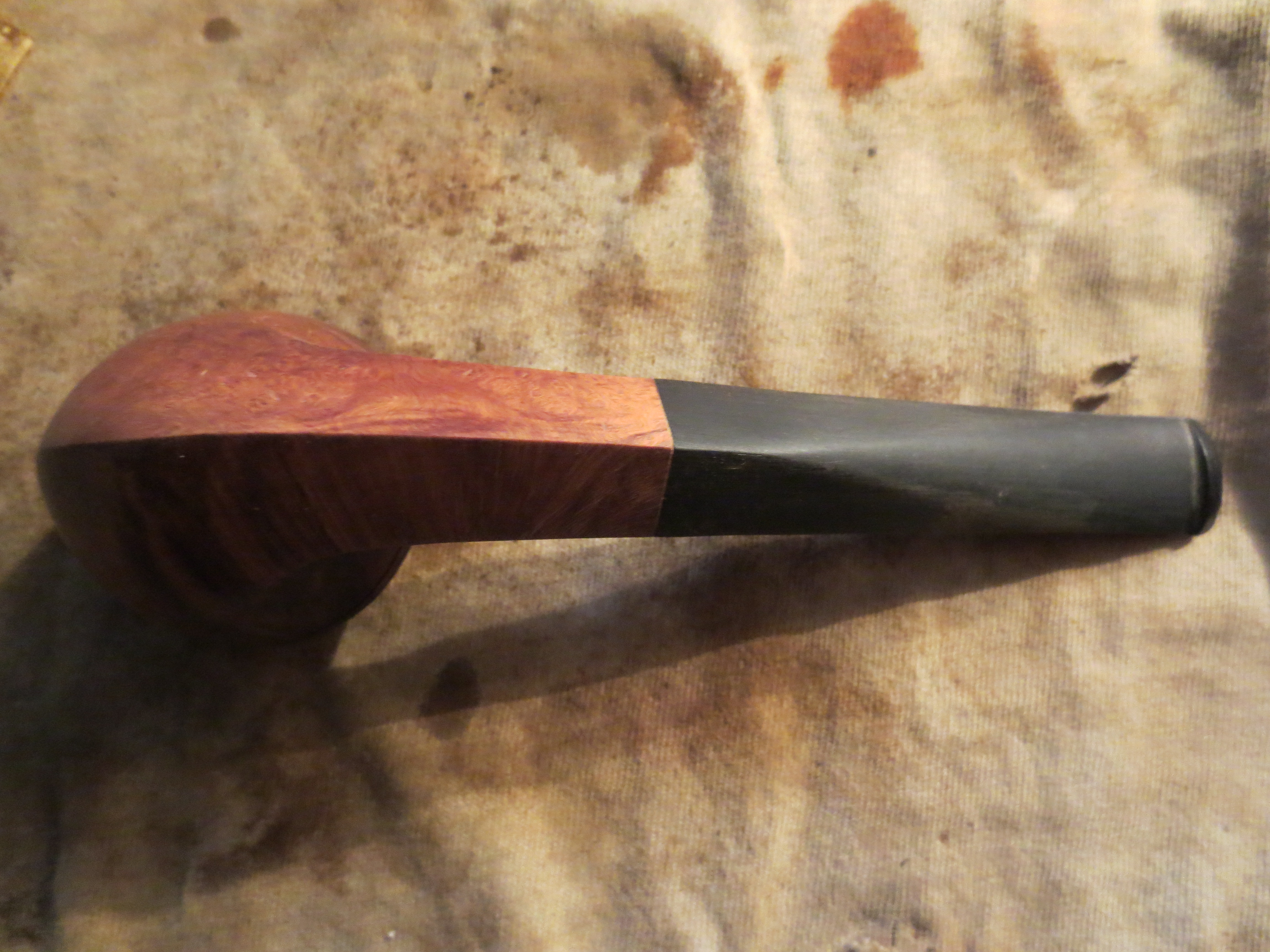
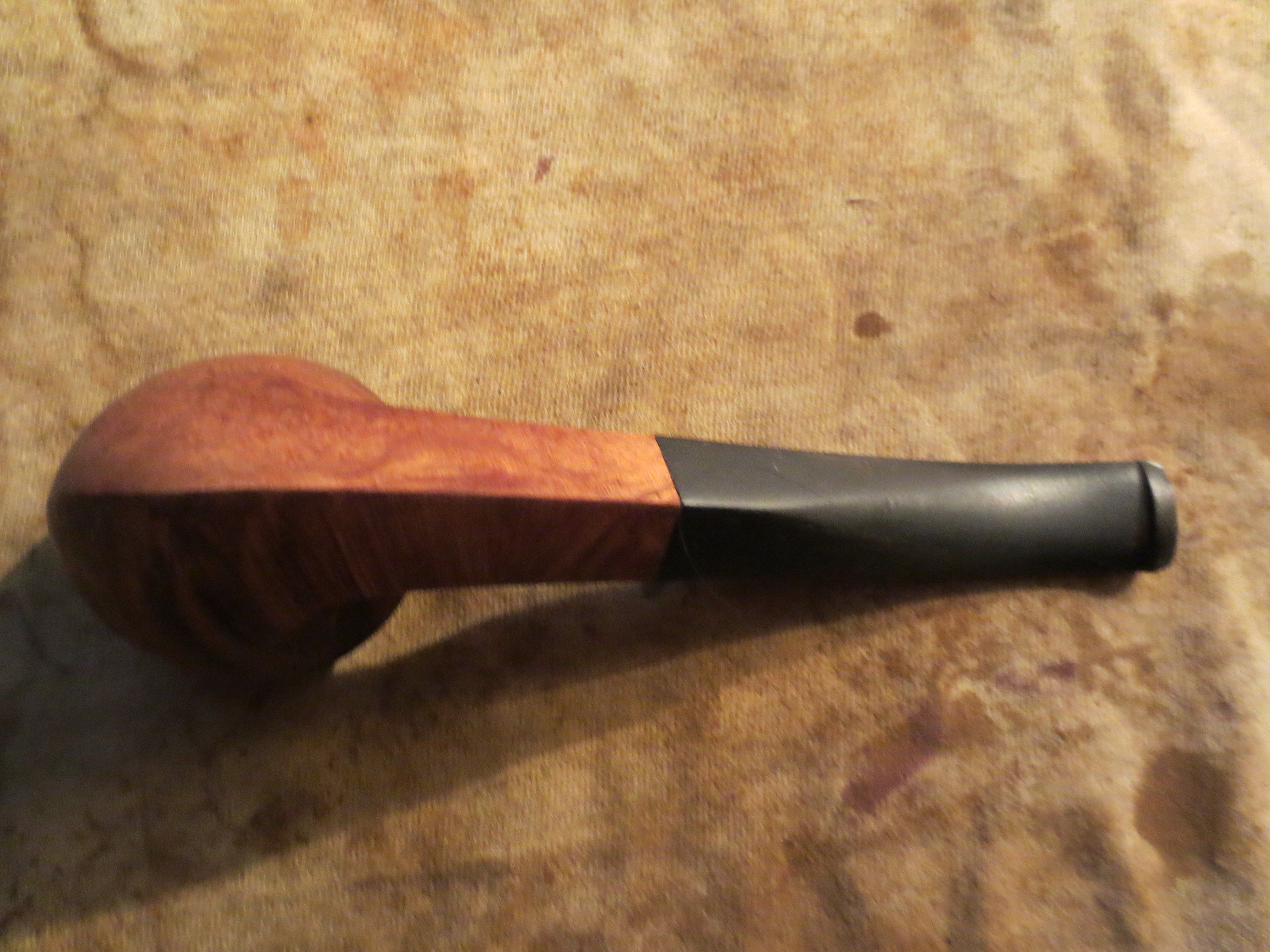
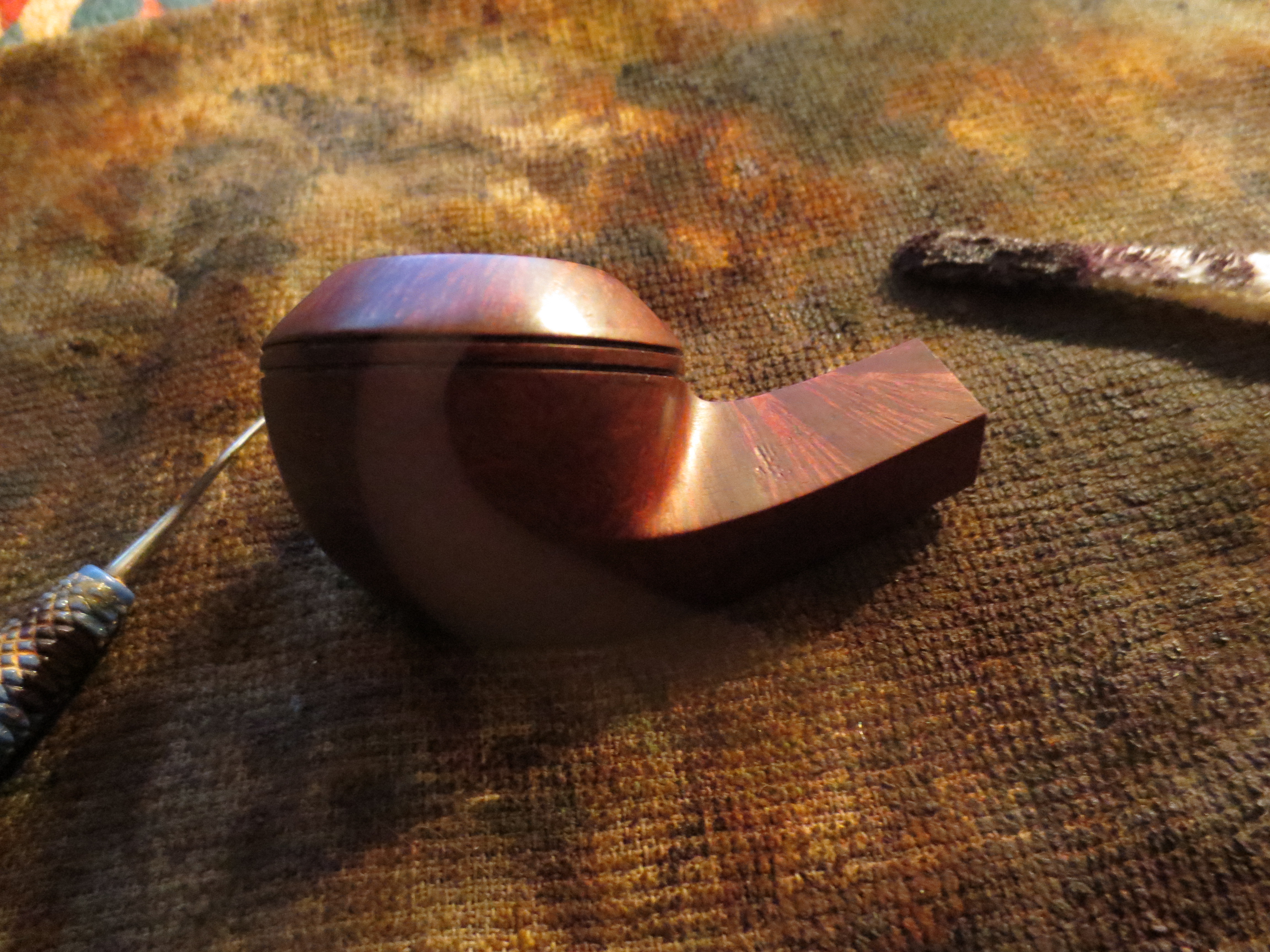
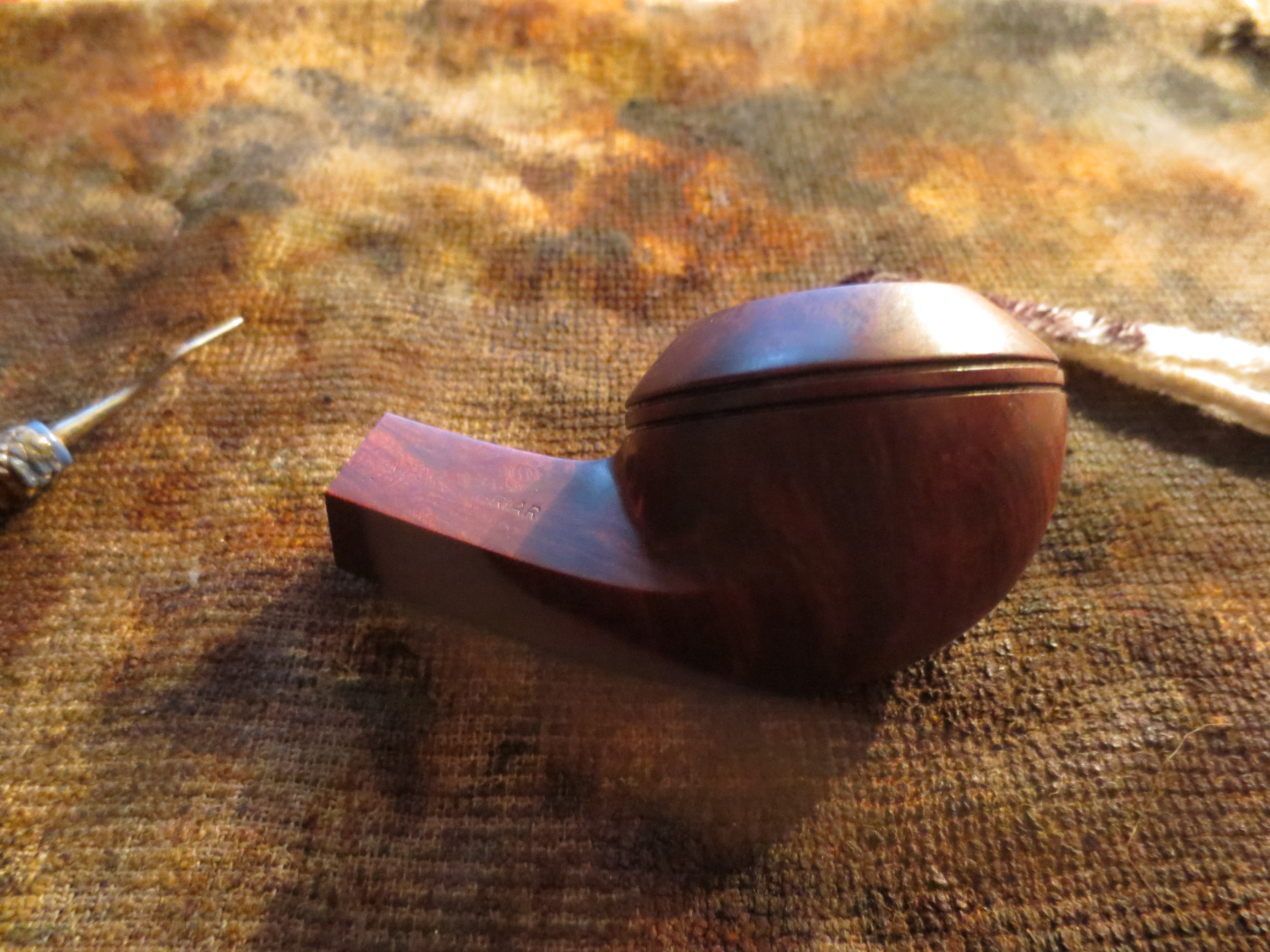
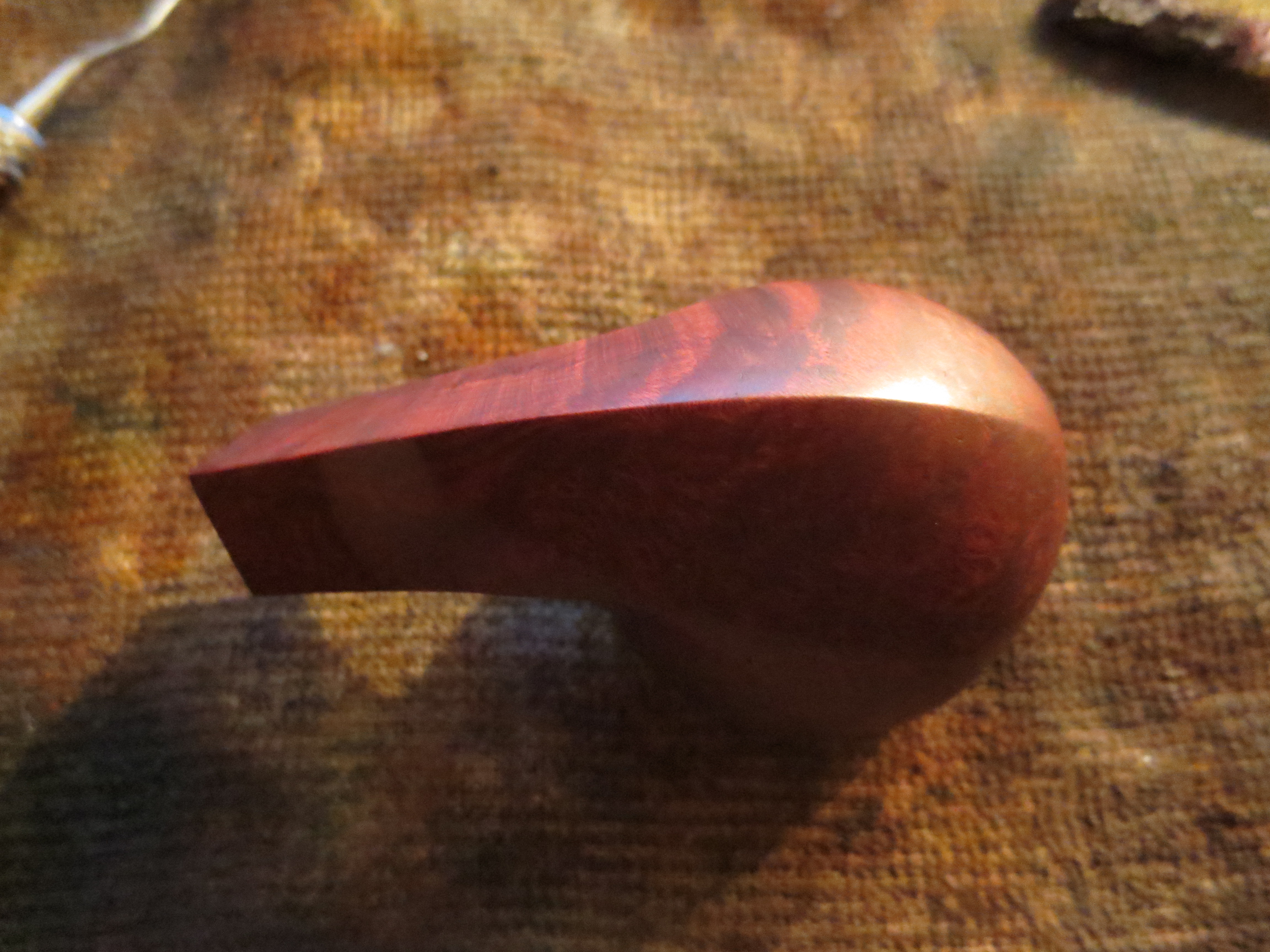
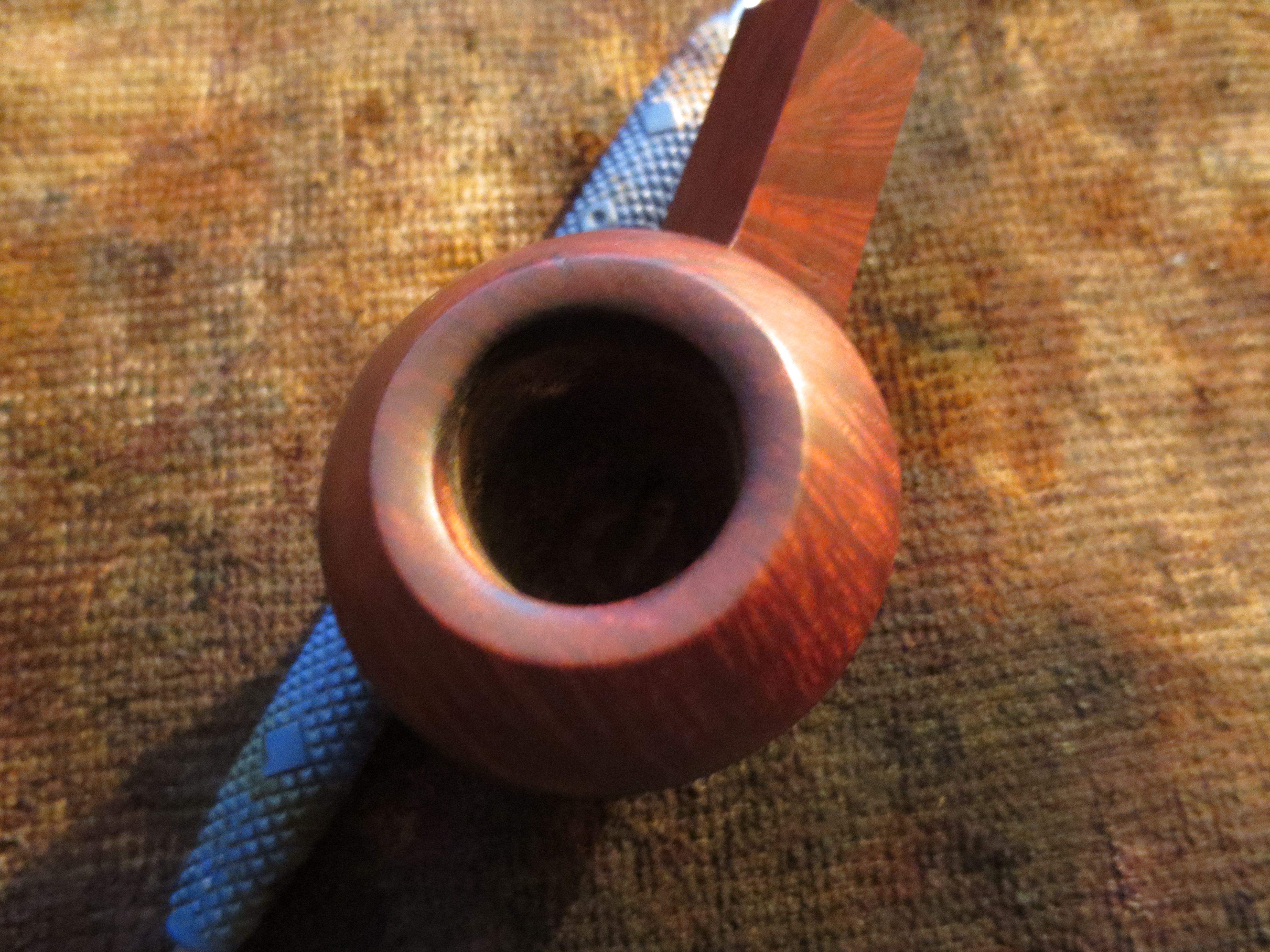
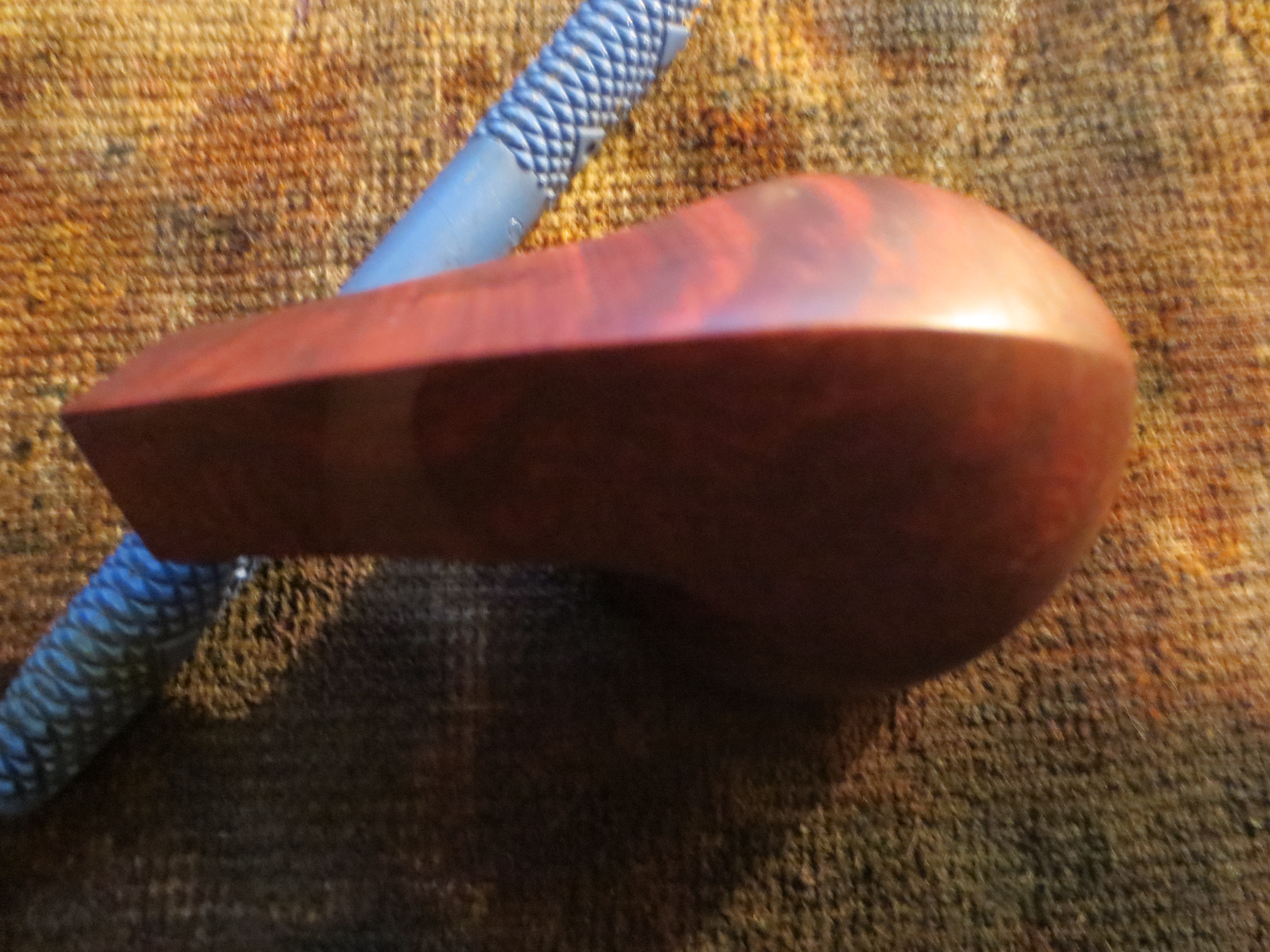
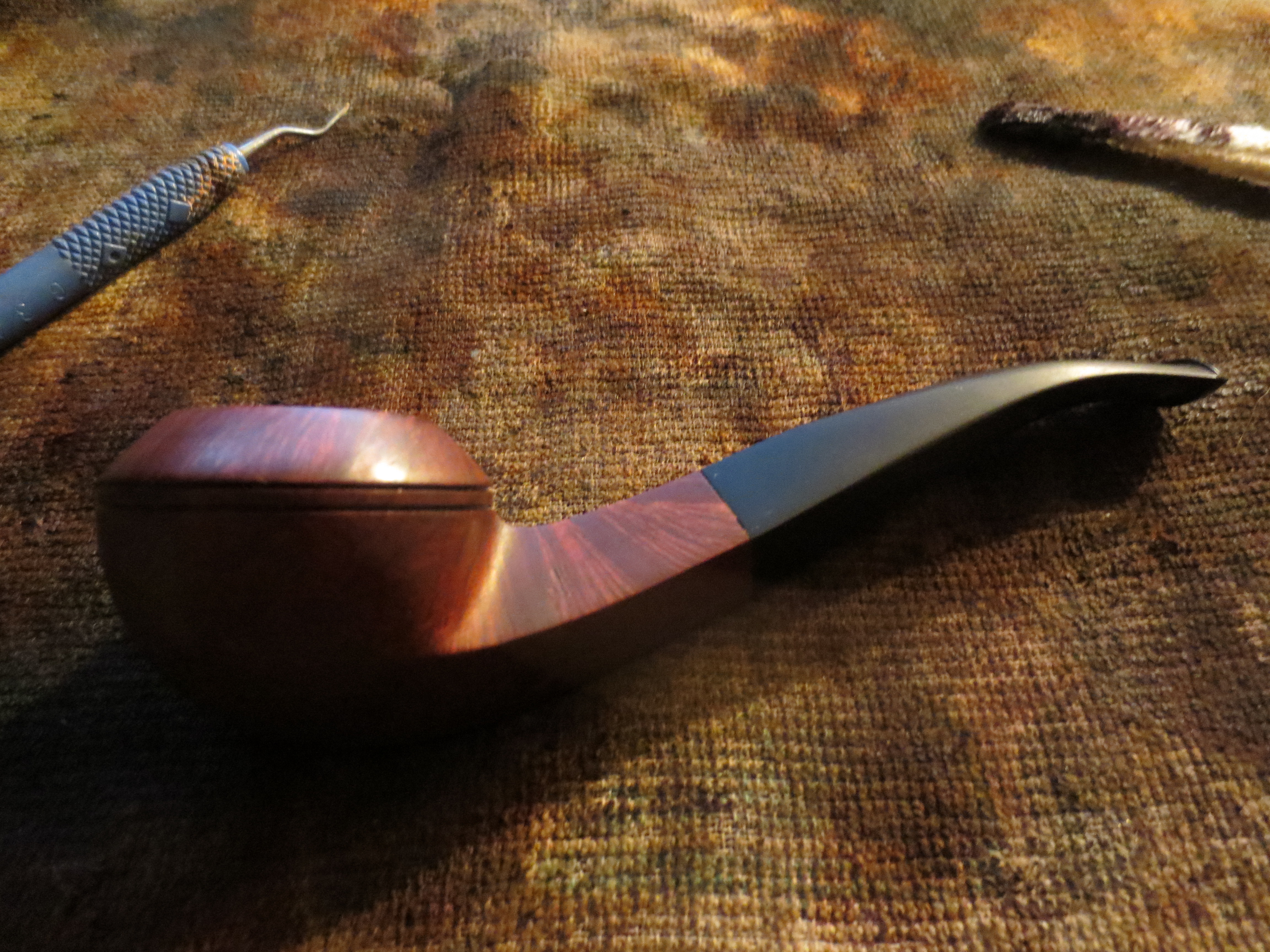
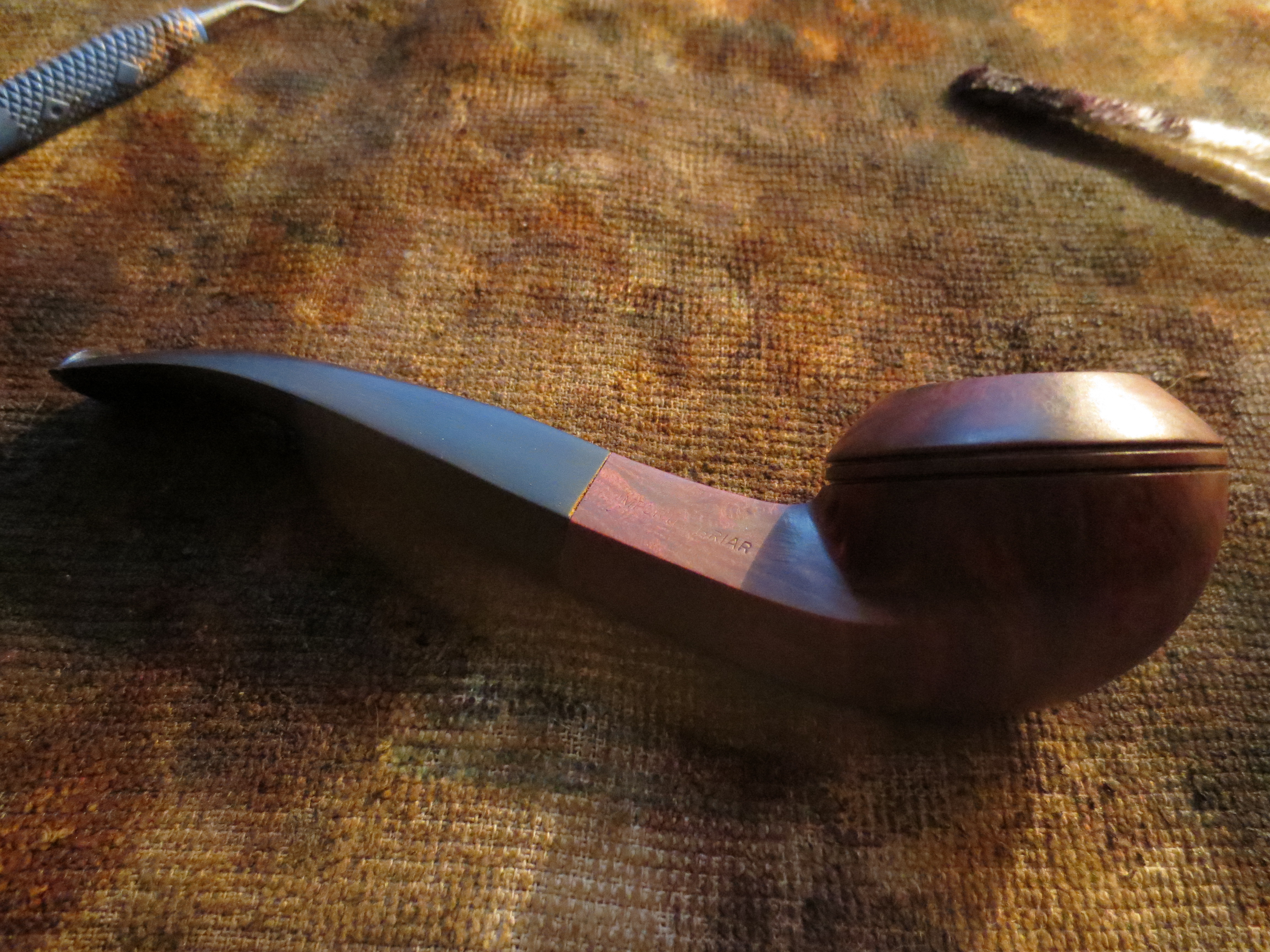
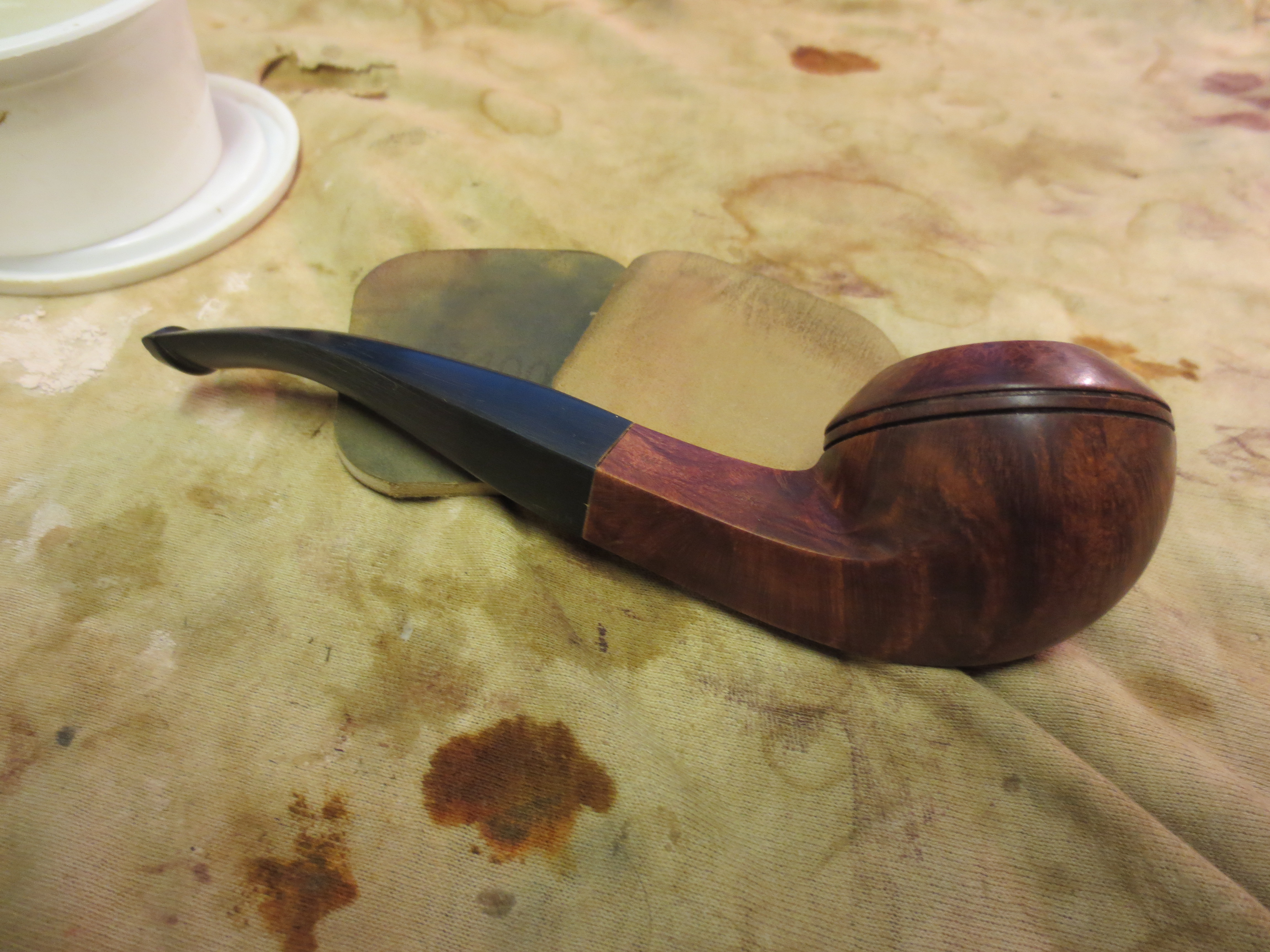
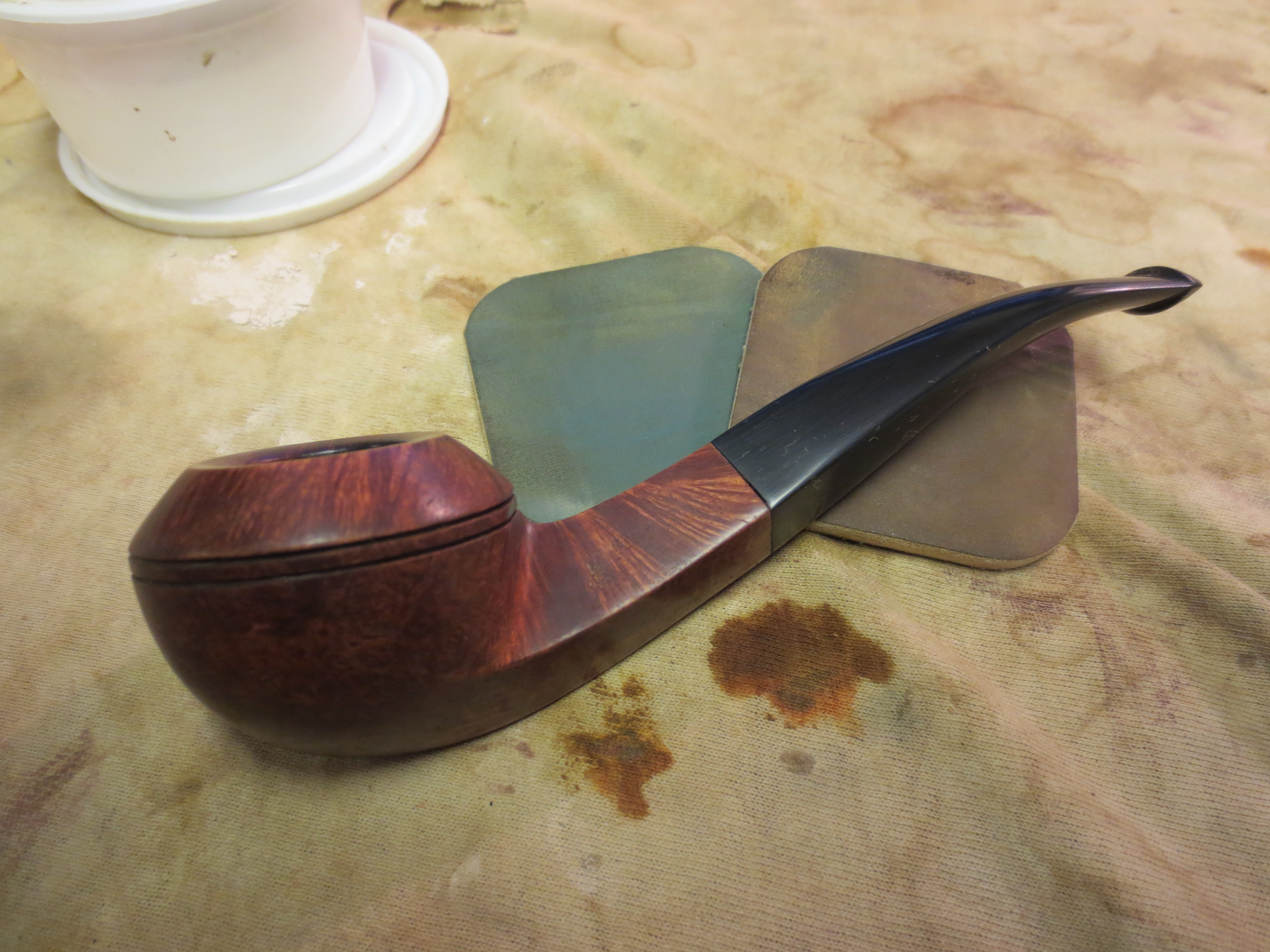
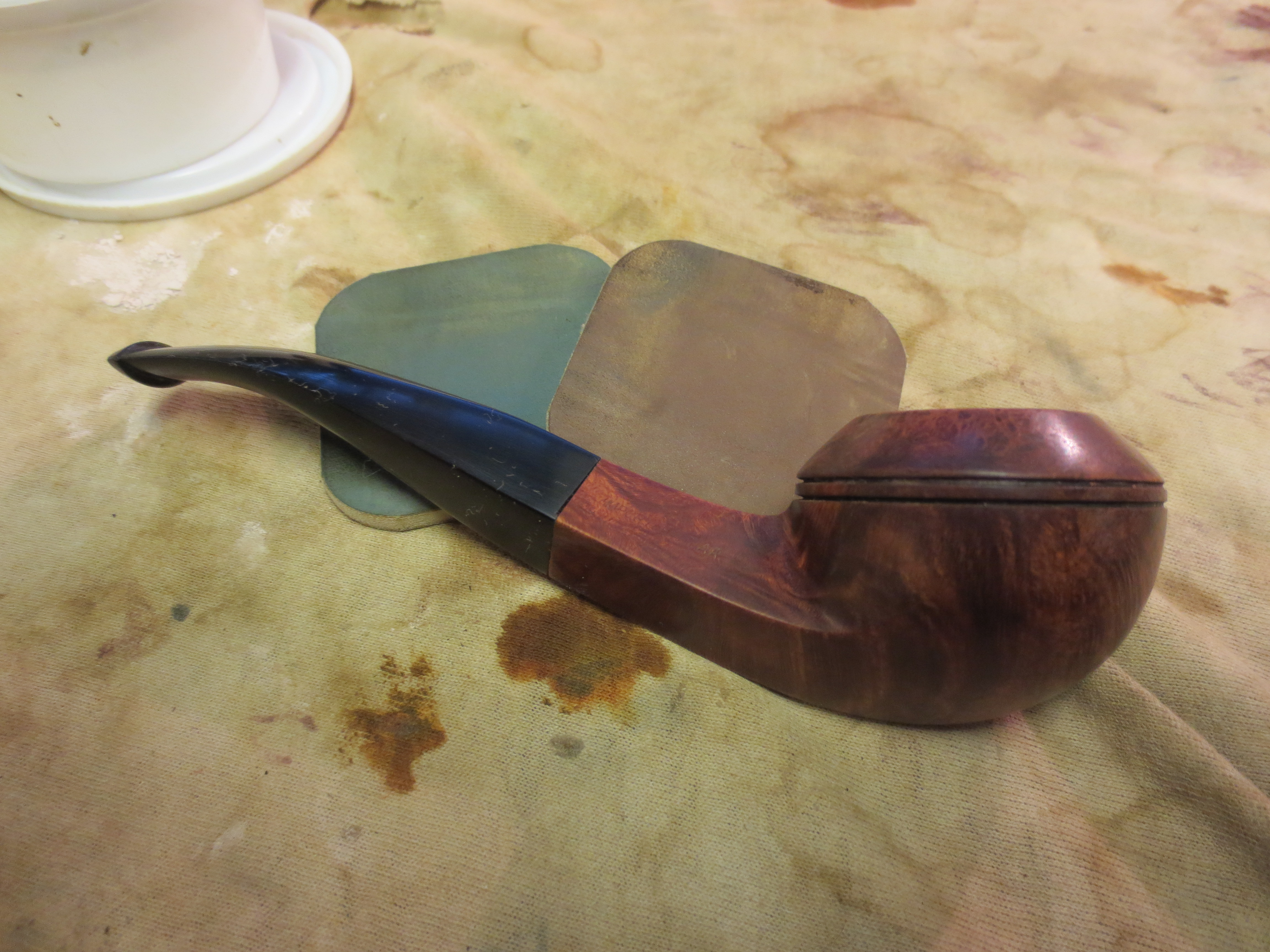
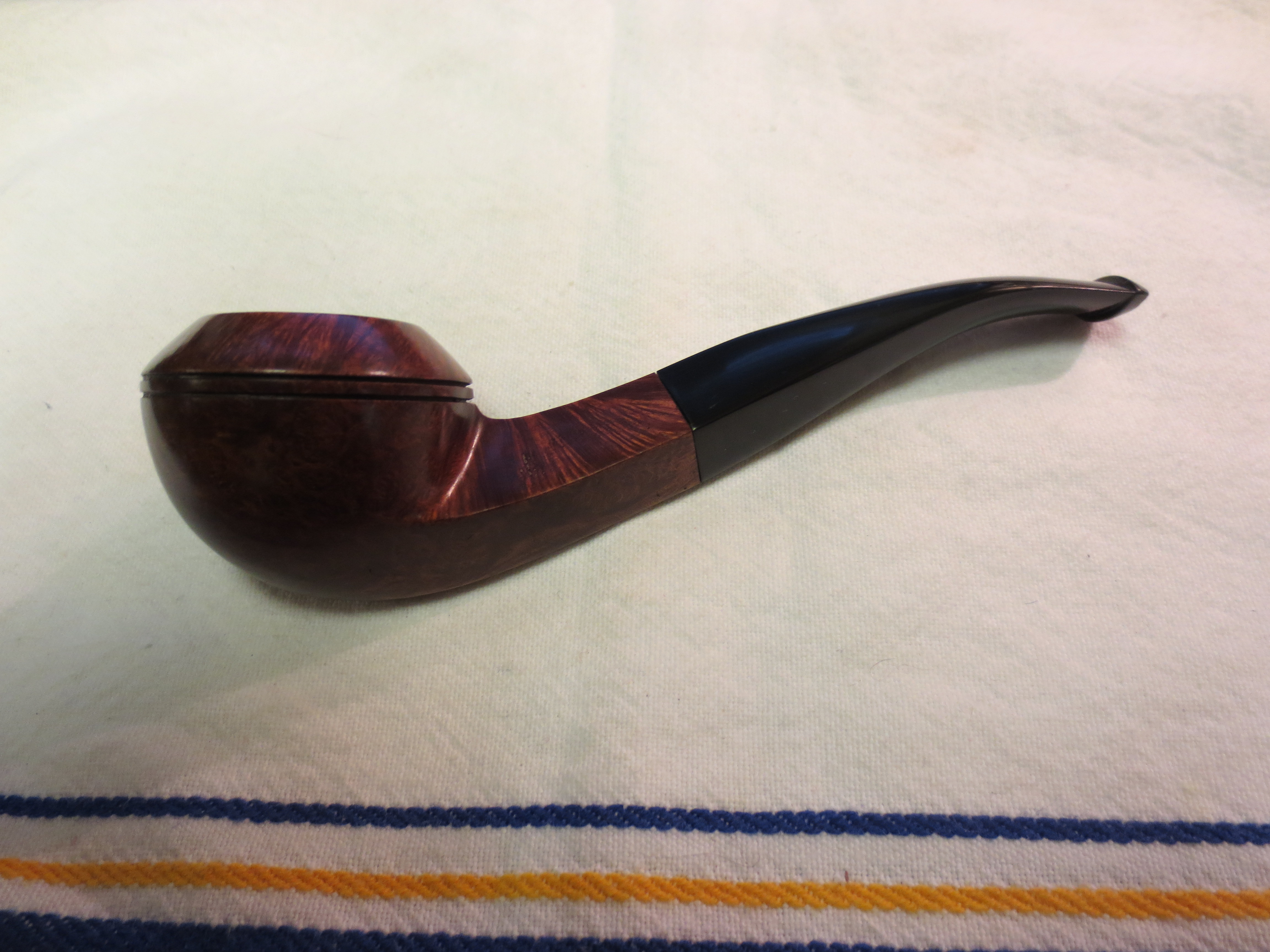
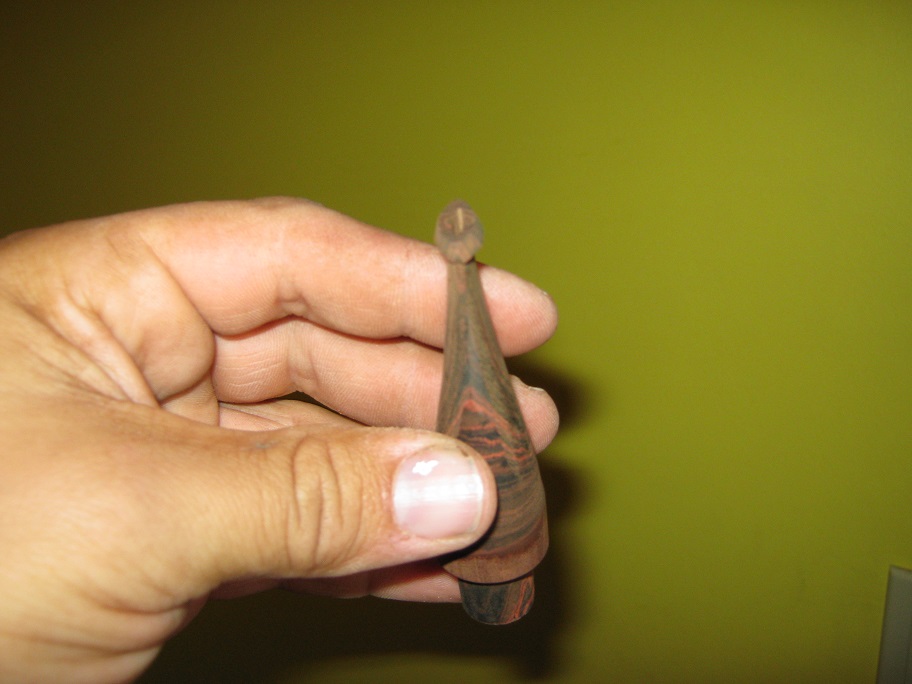
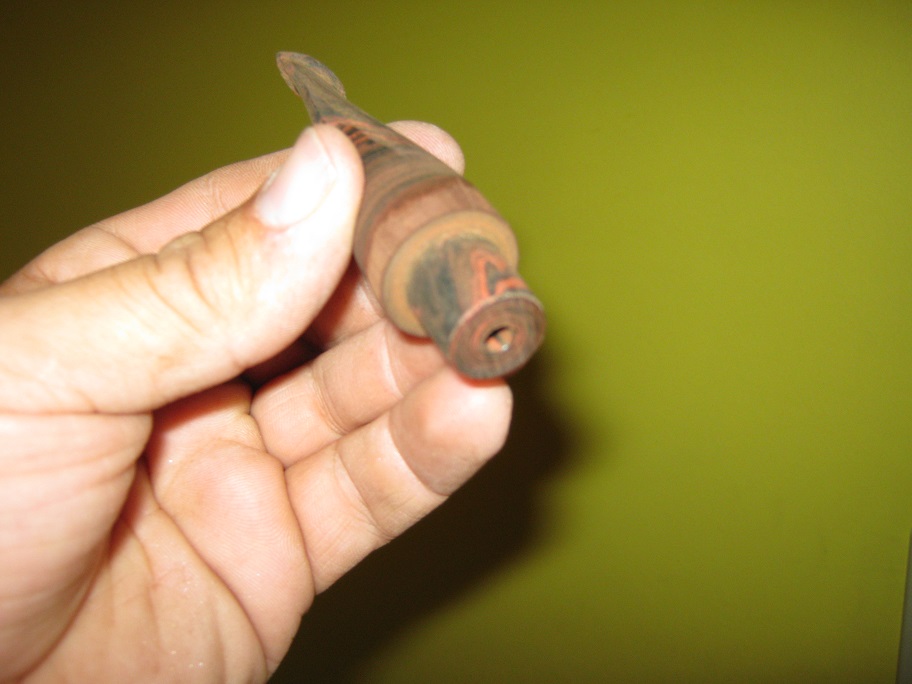
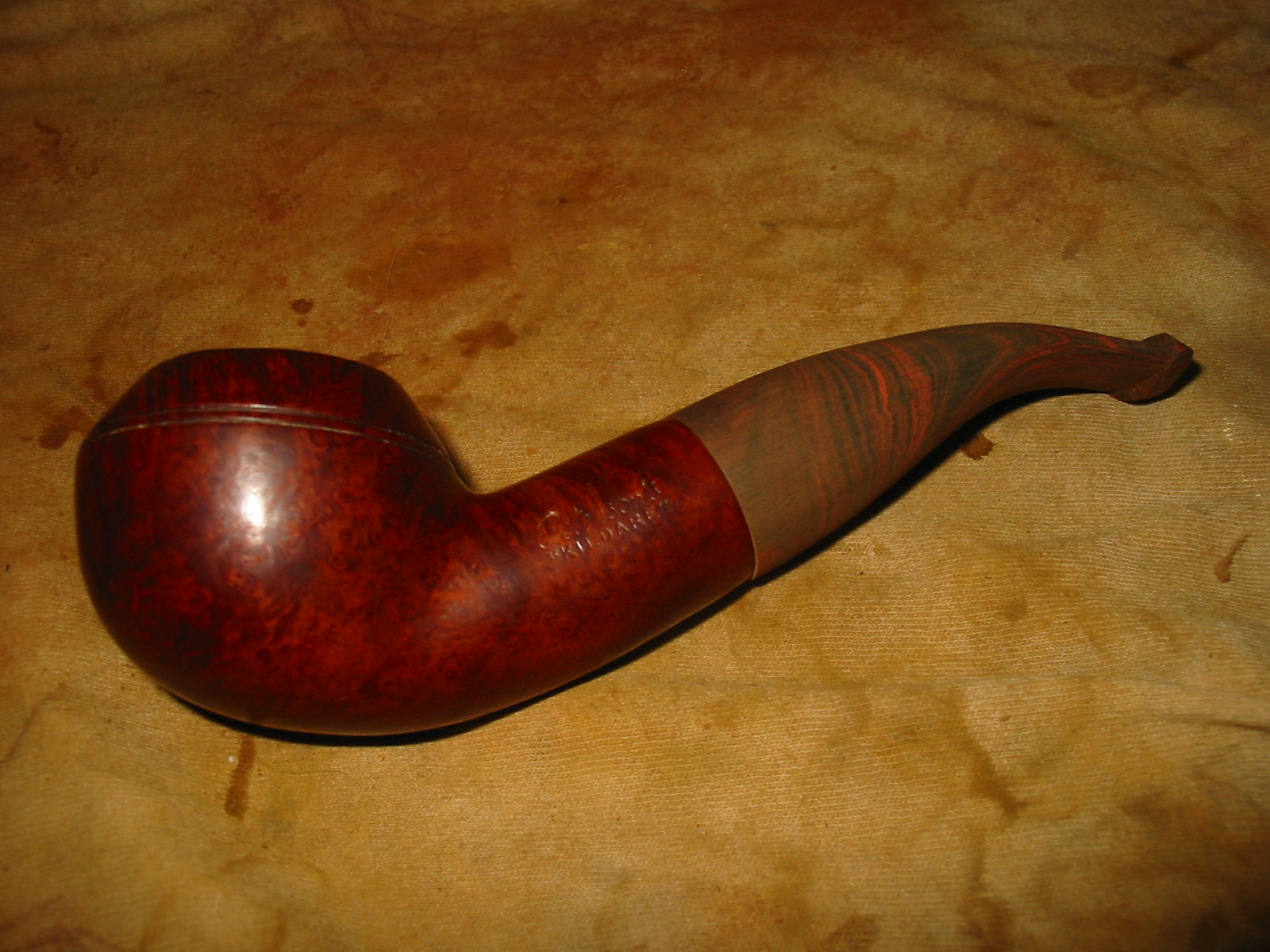
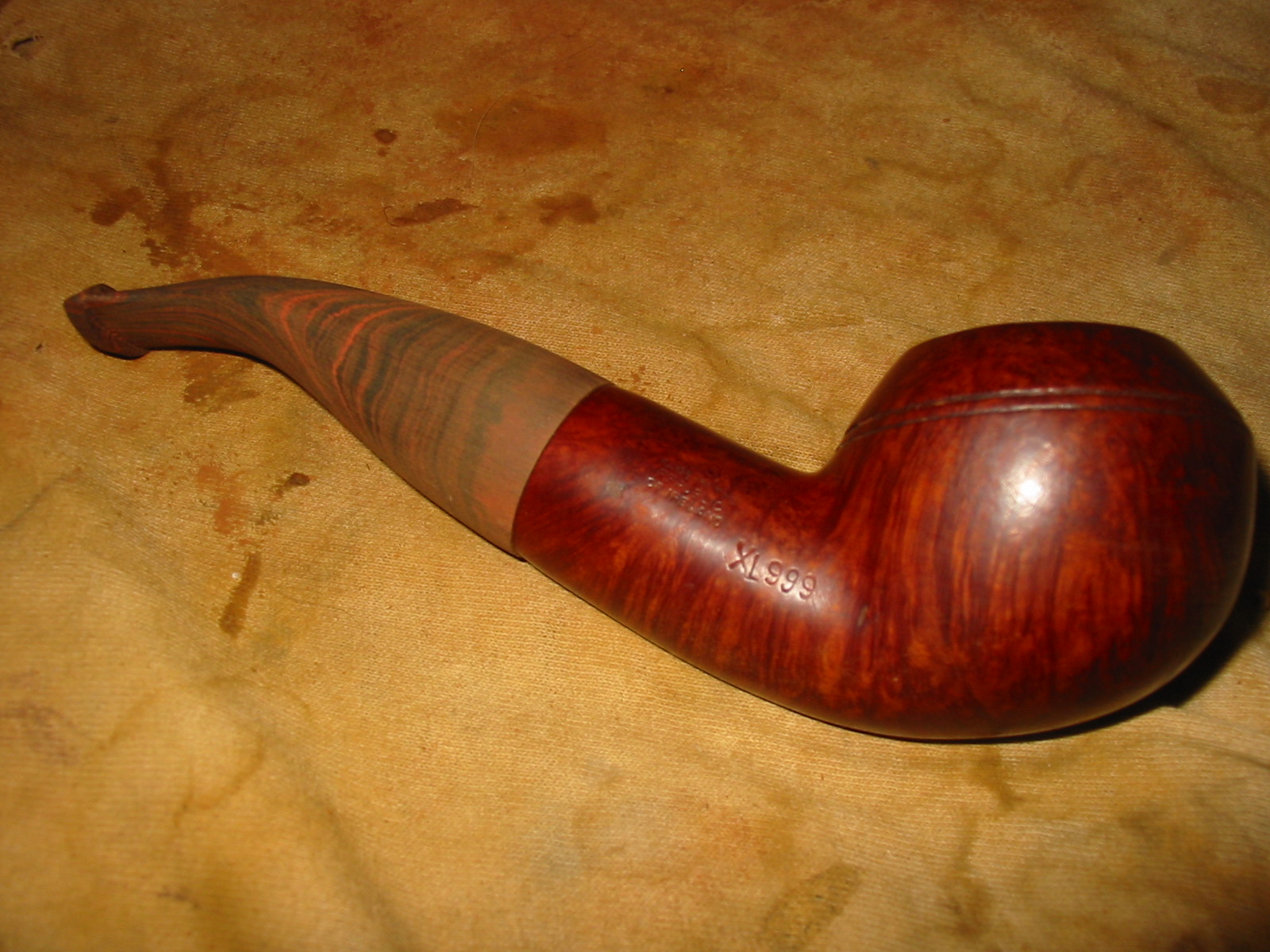
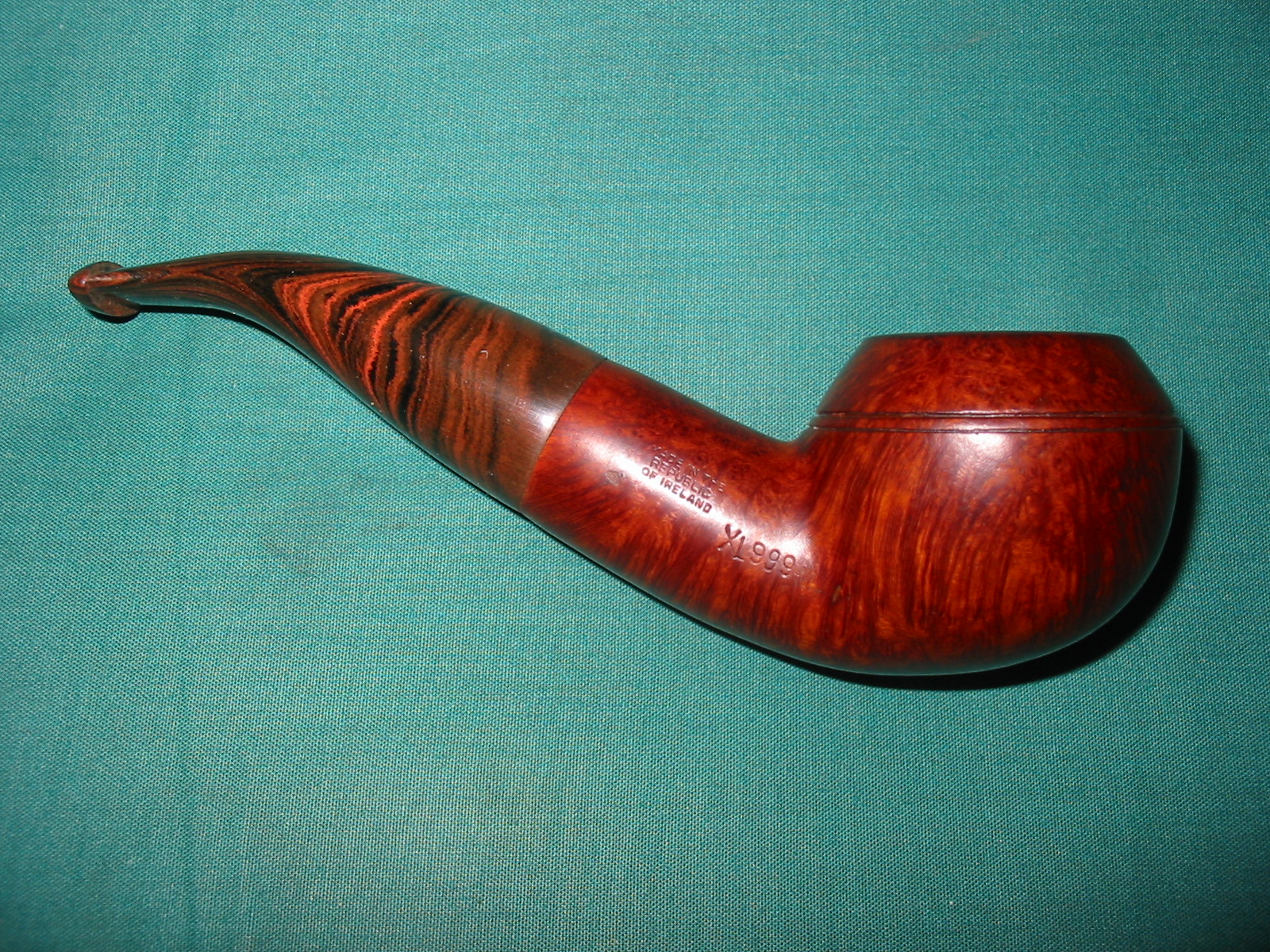
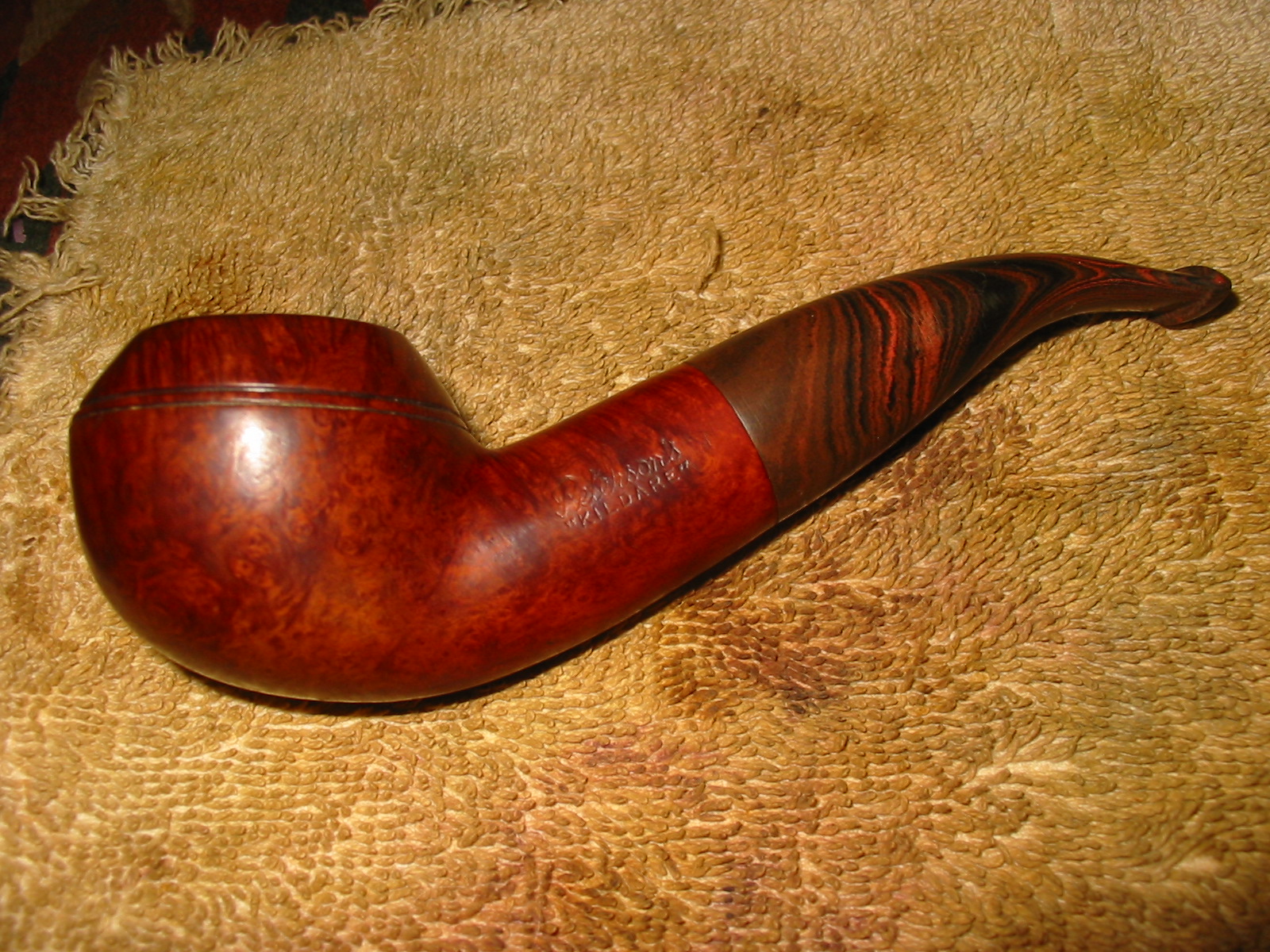
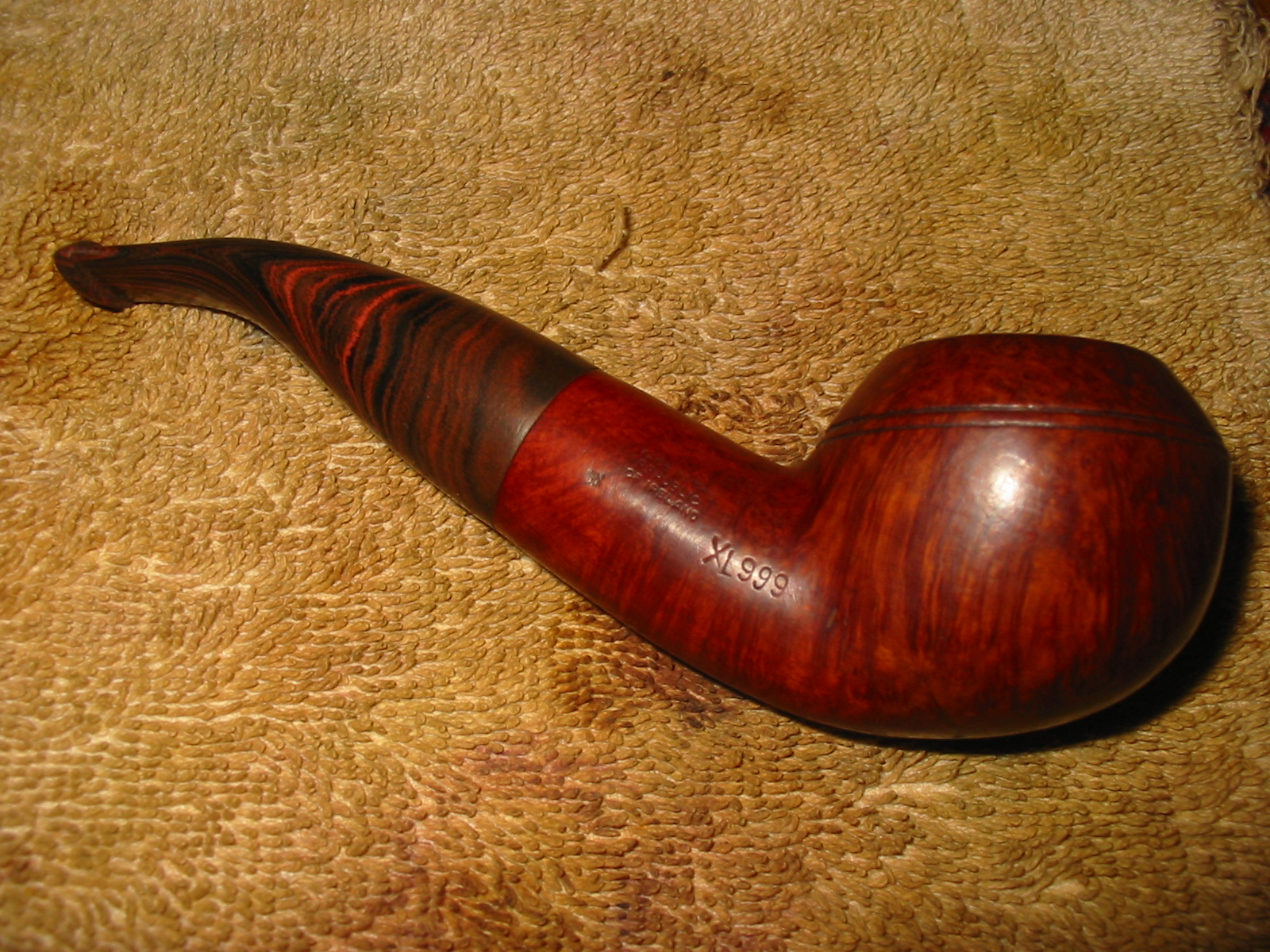
I put out a request for a stem for a Peterson’s XL999 stem on various web forums I am on. I was sent several that almost worked but either the diameter of the tenon was wrong or that of the stem itself was off just a bit. I turned a tenon on a stem blank that was sent to me and made a nice looking black stem that I posted pictures of earlier on the blog https://rebornpipes.wordpress.com/2013/07/26/making-a-new-stem-for-a-petersons-kildare-xl999/ but Todd Bannard, who is a pipe maker in Alberta, Canada offered to cut a rough one for me from some rod stock he had available. He did not have black vulcanite but did have some Brindle or Cumberland stock. I sent him the rough dimensions of the stem – I needed tenon material that I could turn to ½ inches and I needed a piece of stock that was 7/8 inches or more in diameter to work with to match the shank. I have shaped stems from straight rod stock in the past so I was not too worried about doing that. However, I got an email from Todd saying the rod stock was ready and he was going to send it off. He sent the following two photos to me to show me what was coming. He did a lion’s share of the shaping work for me. I was amazed at how much work he had done on it. I needed only to turn the tenon and refine the shape and the button once it arrived. The Cumberland is vertical and swirling rather than horizontal and lined. It was intriguing looking and I was excited to see what I could do with it.
IMG_2008

IMG_2009

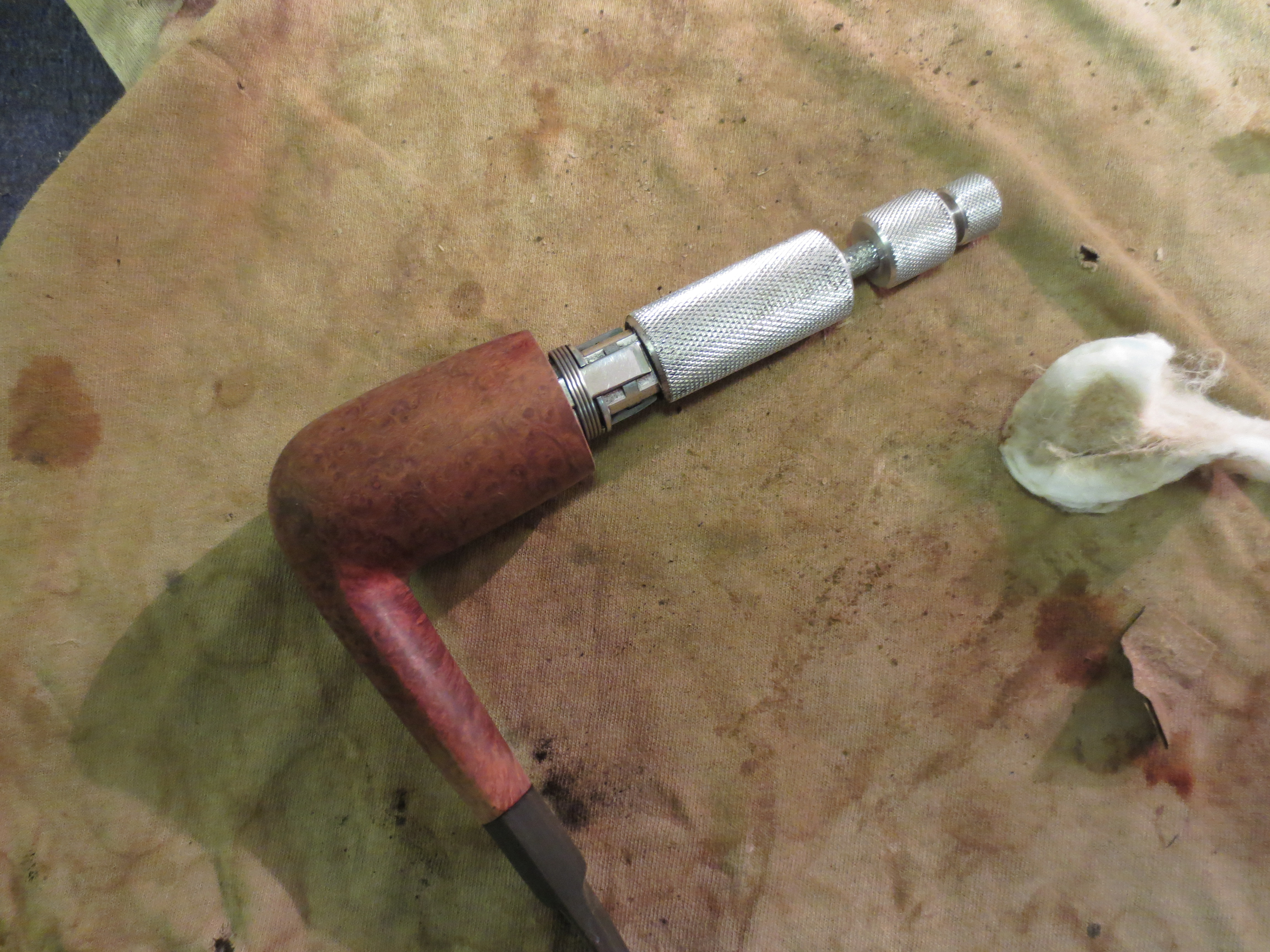
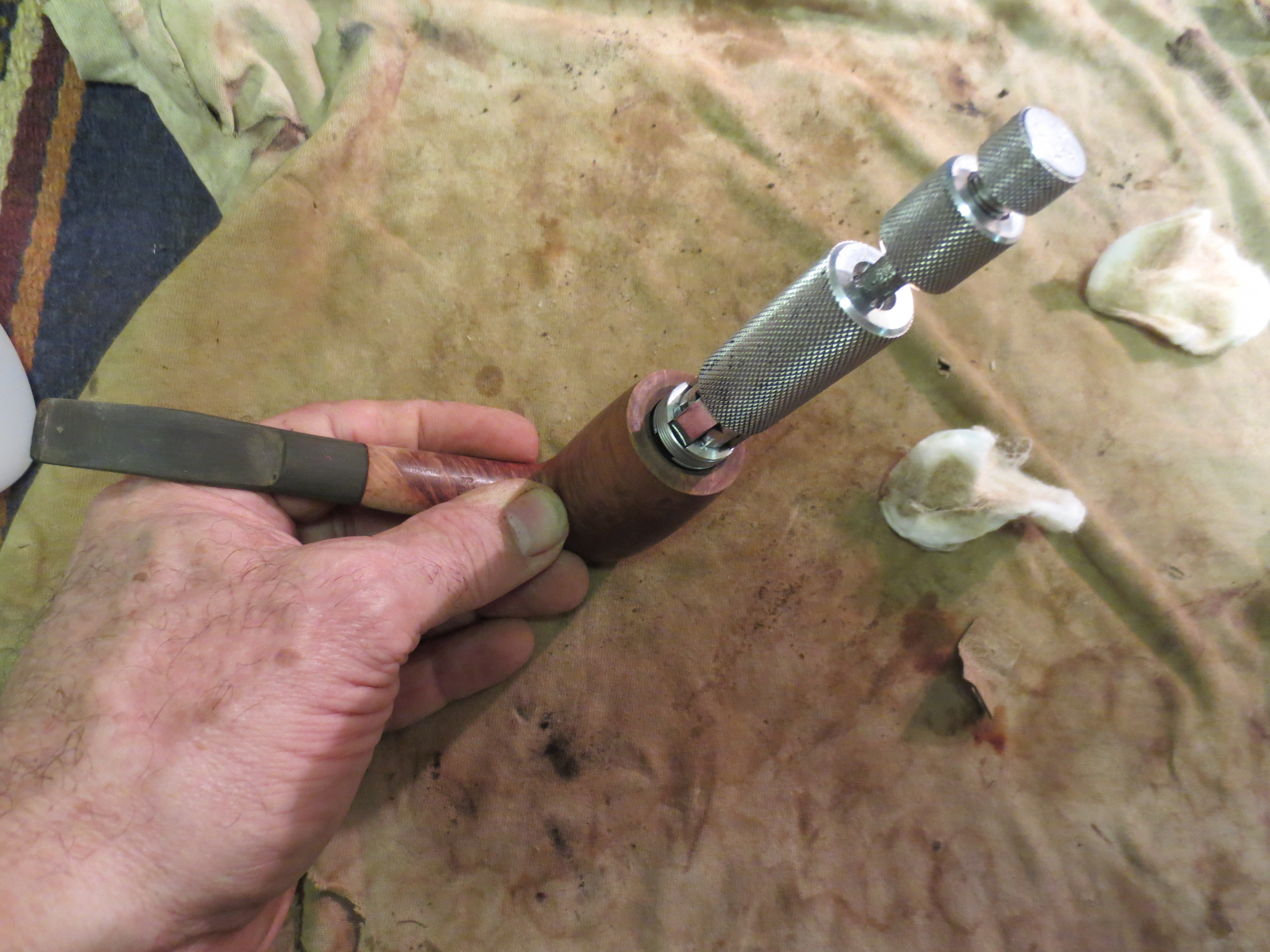
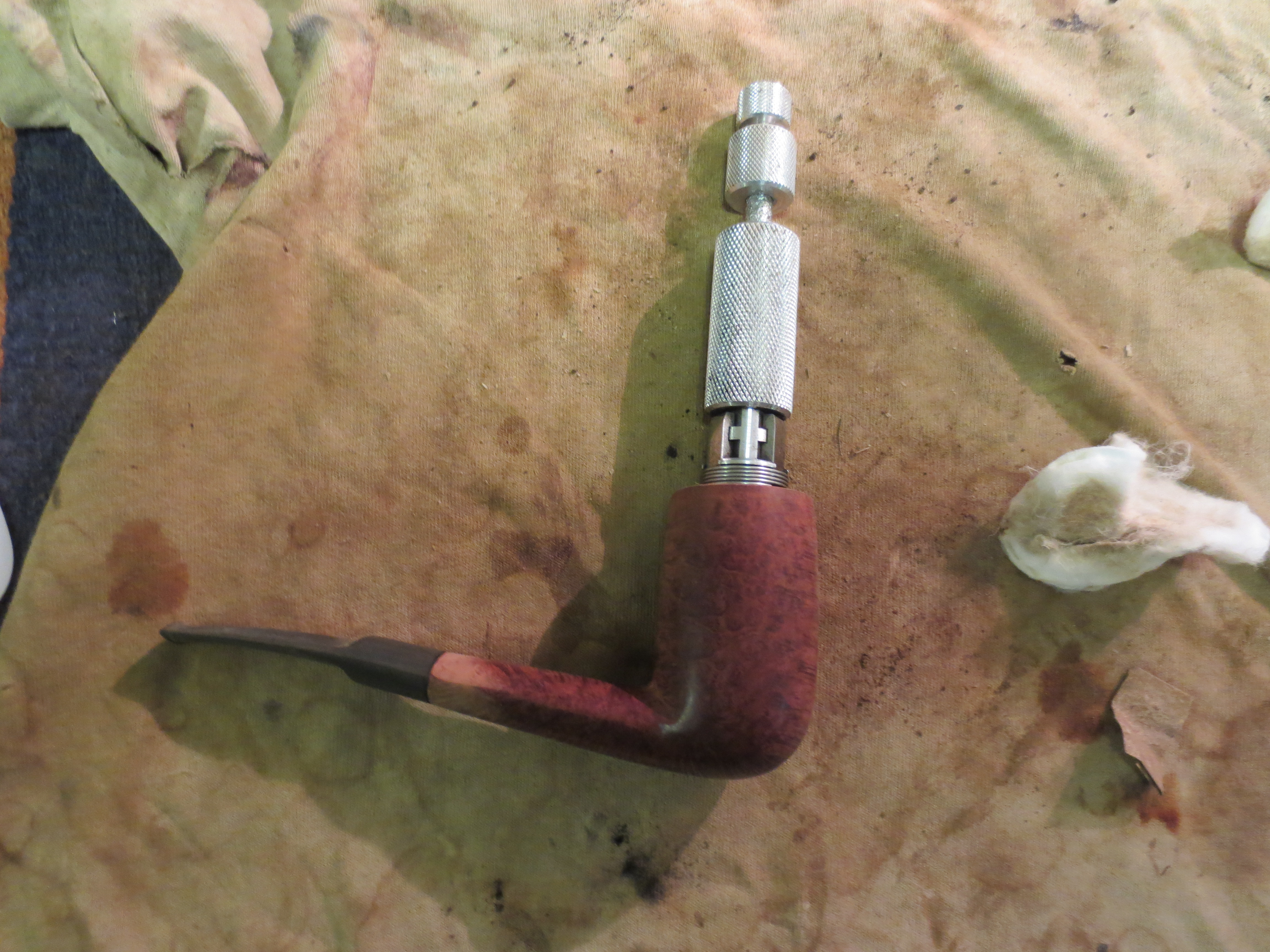
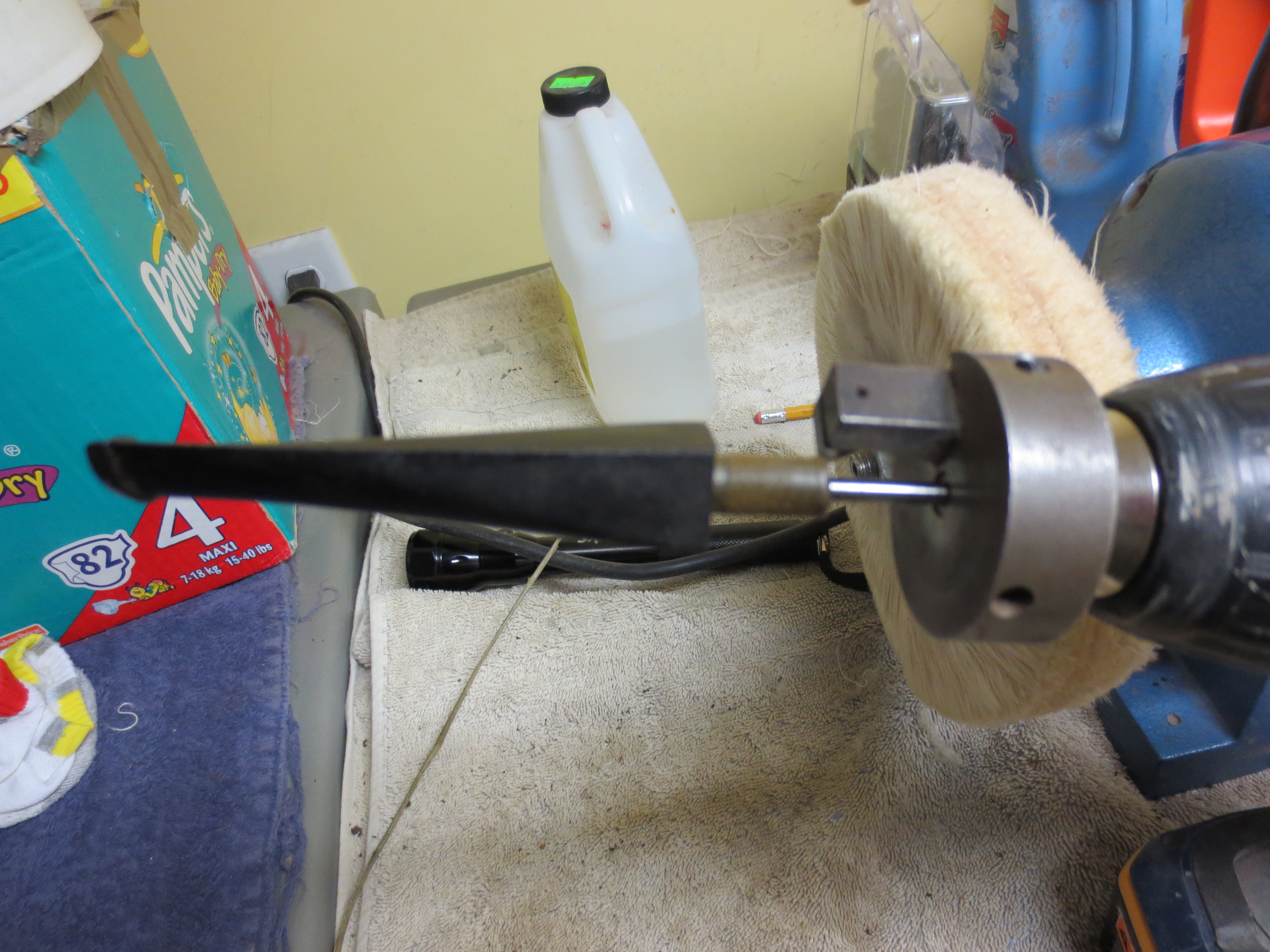
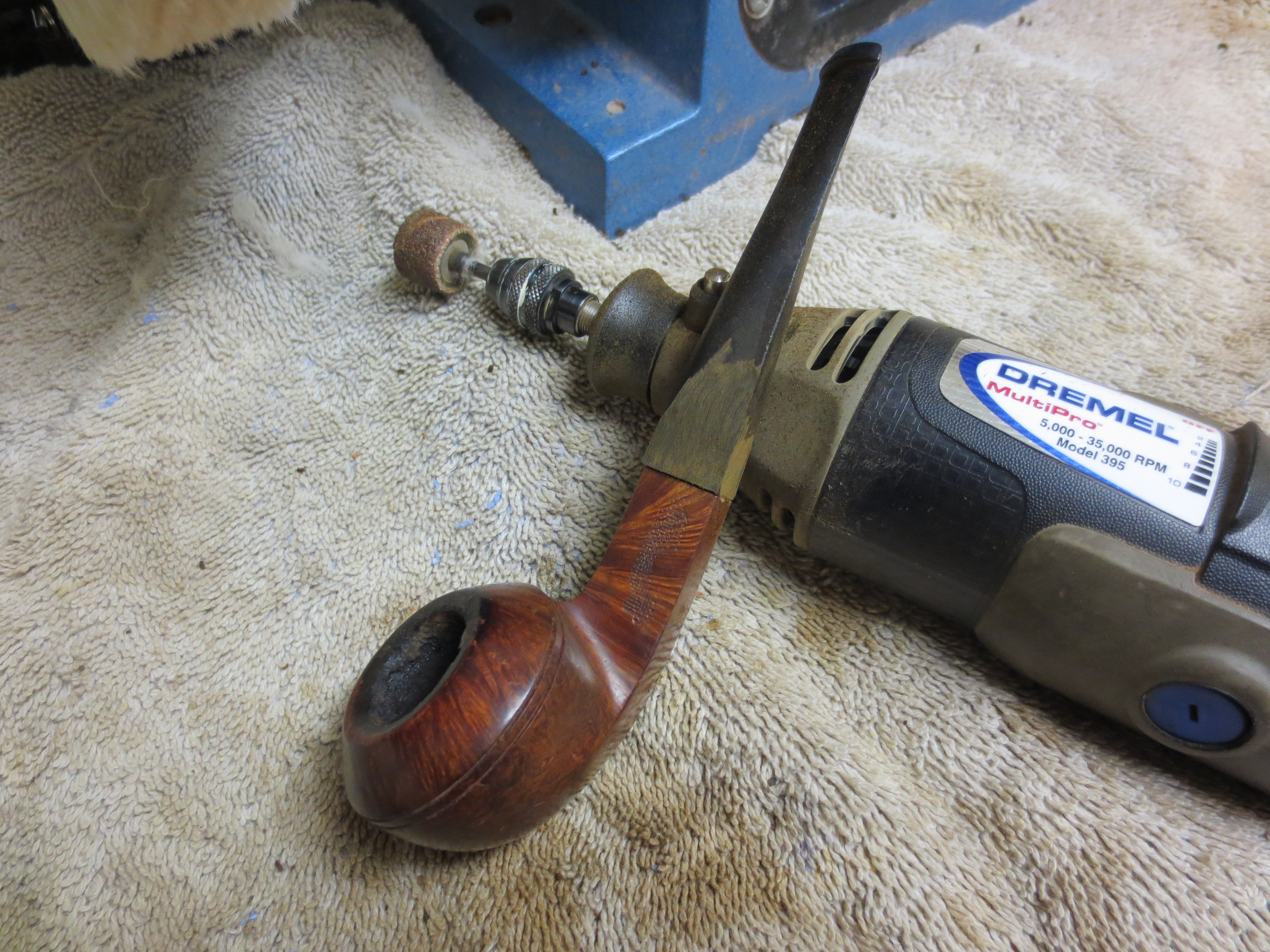
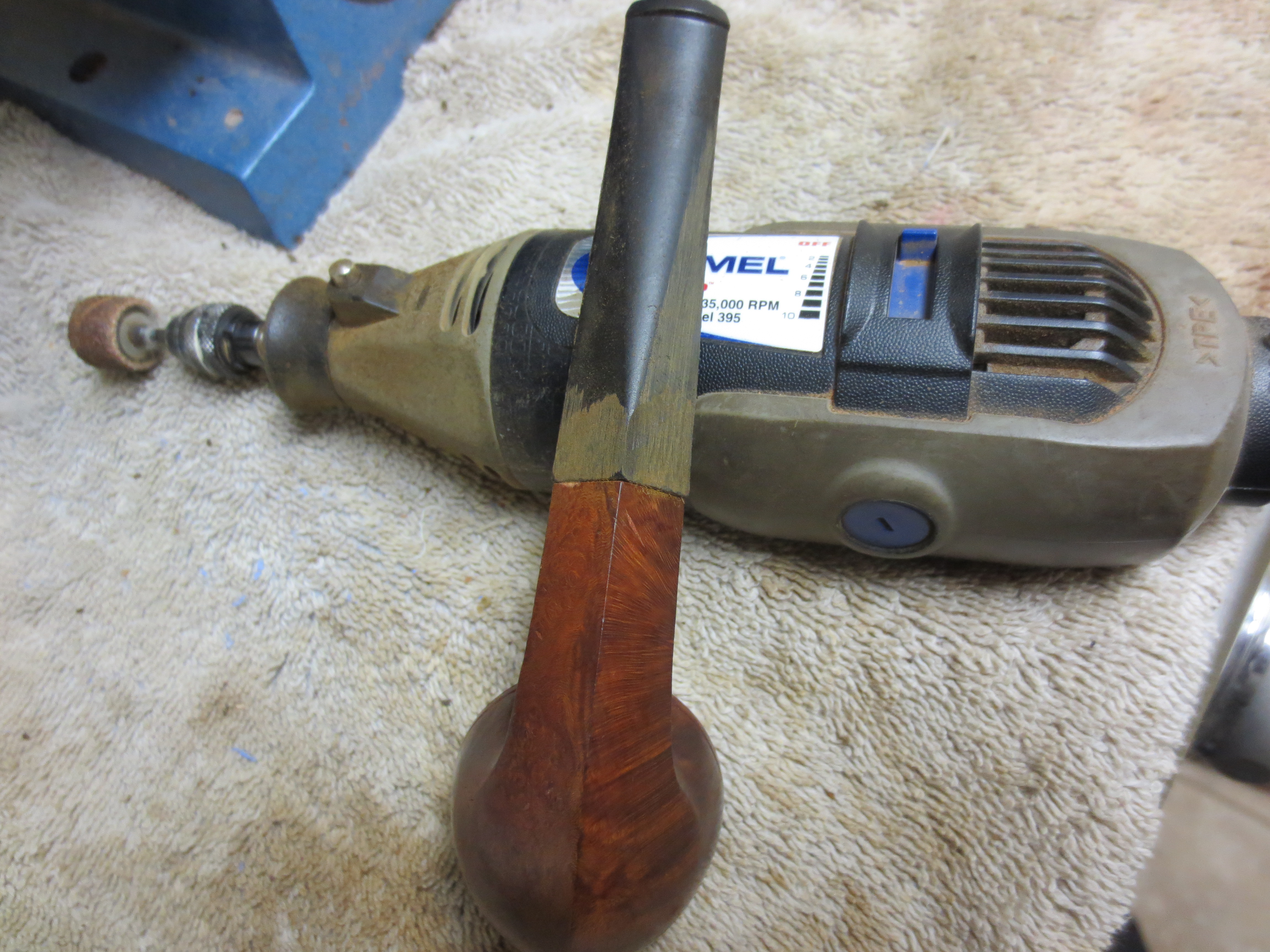
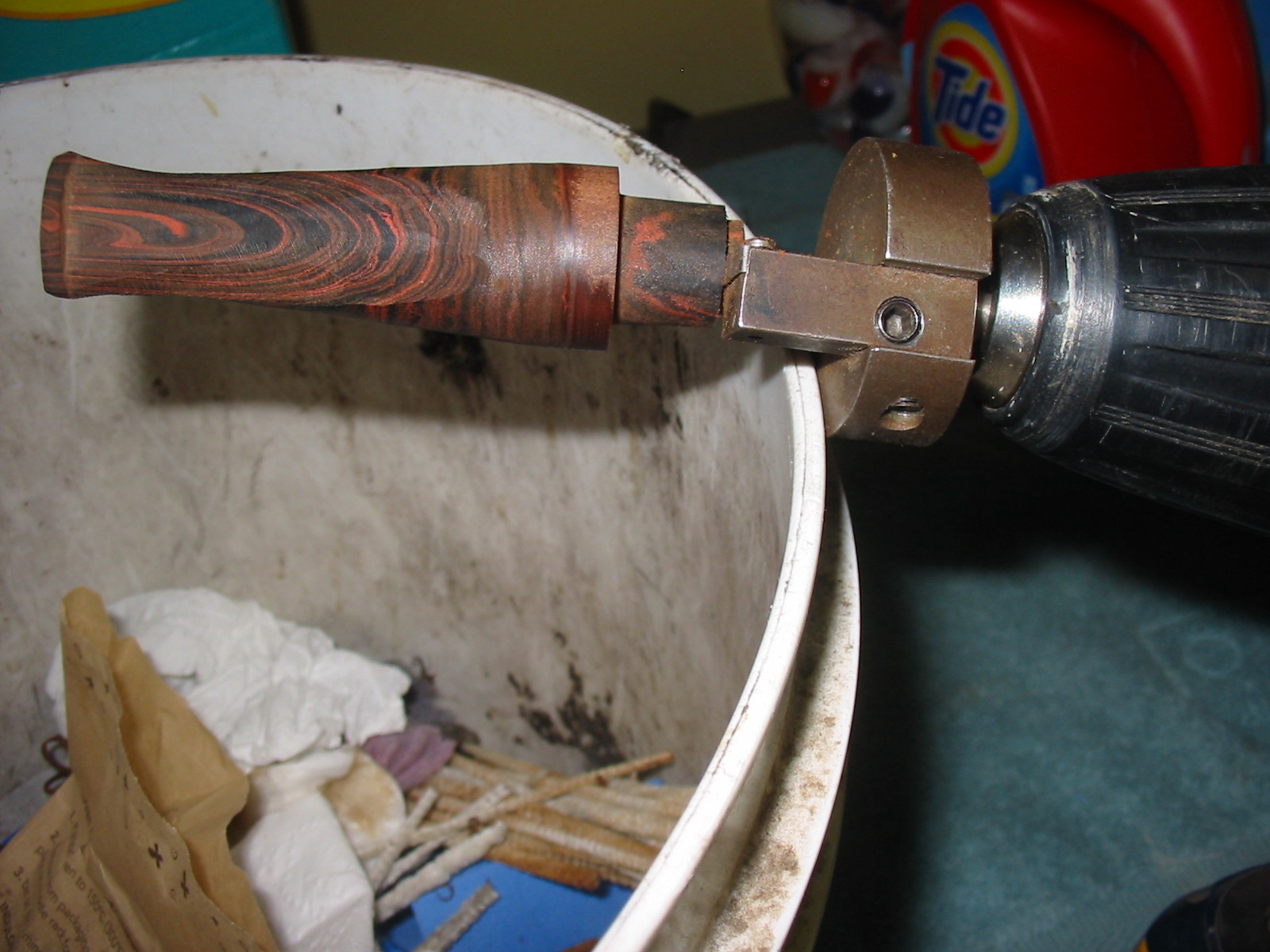
When it arrived I set up my PIMO tenon turning tool on a cordless drill to cut a tenon that was slightly over ½ inch which was the extent of the tools adjustment. I cut a slight step in the tenon first to get a rough idea on the setting on the tool (Photo 1 below). It was correct so I tightened the adjustments and and cut the new tenon for the stem (Photos 2 and 3 below). Once I had it turned close to size I used a Dremel with a sanding drum and gave it a once around sanding and fit the stem to the shank (Photos 4 and 5 below).
IMG_1538

IMG_1539

IMG_1540

IMG_1541

IMG_1542

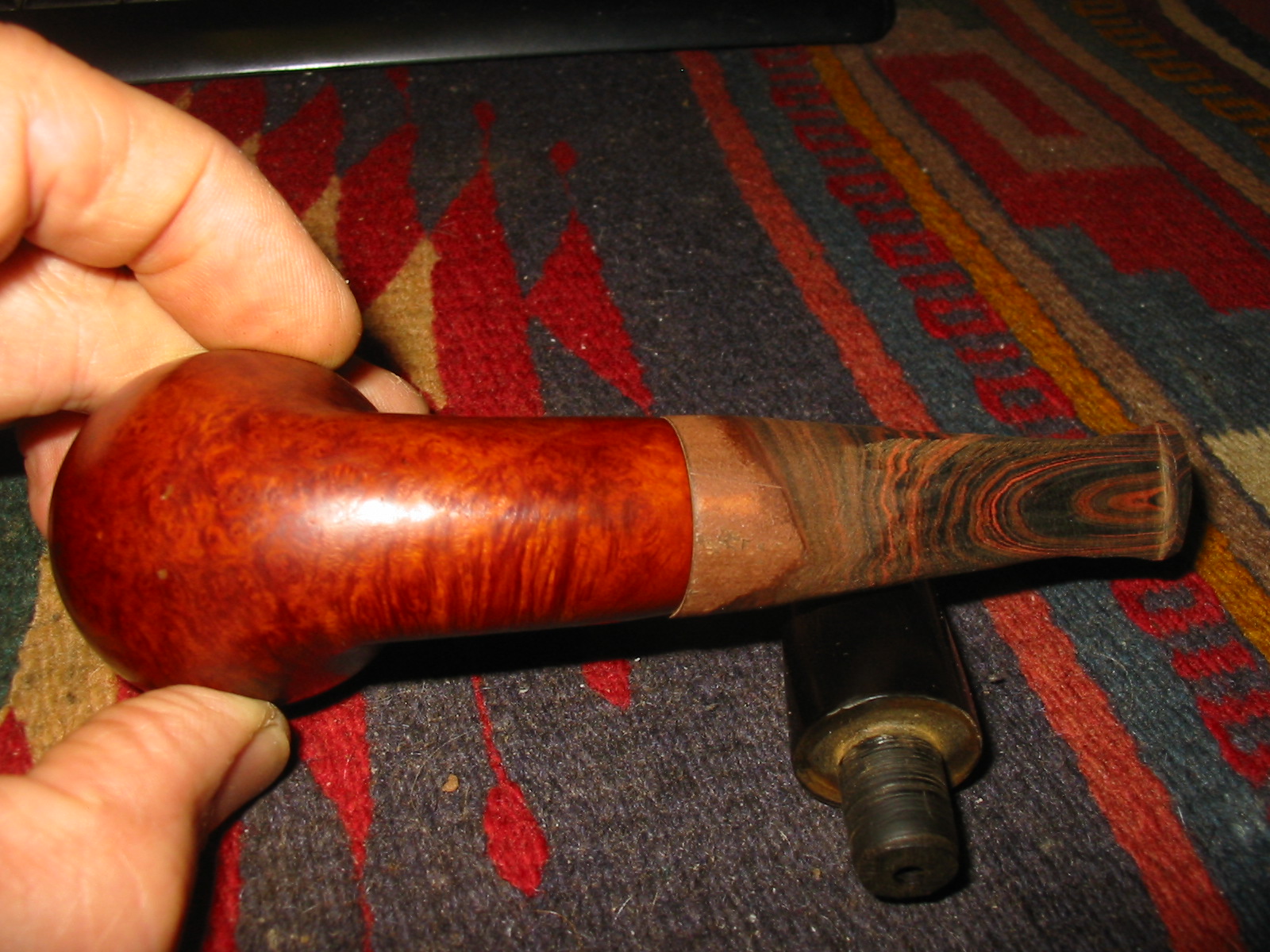
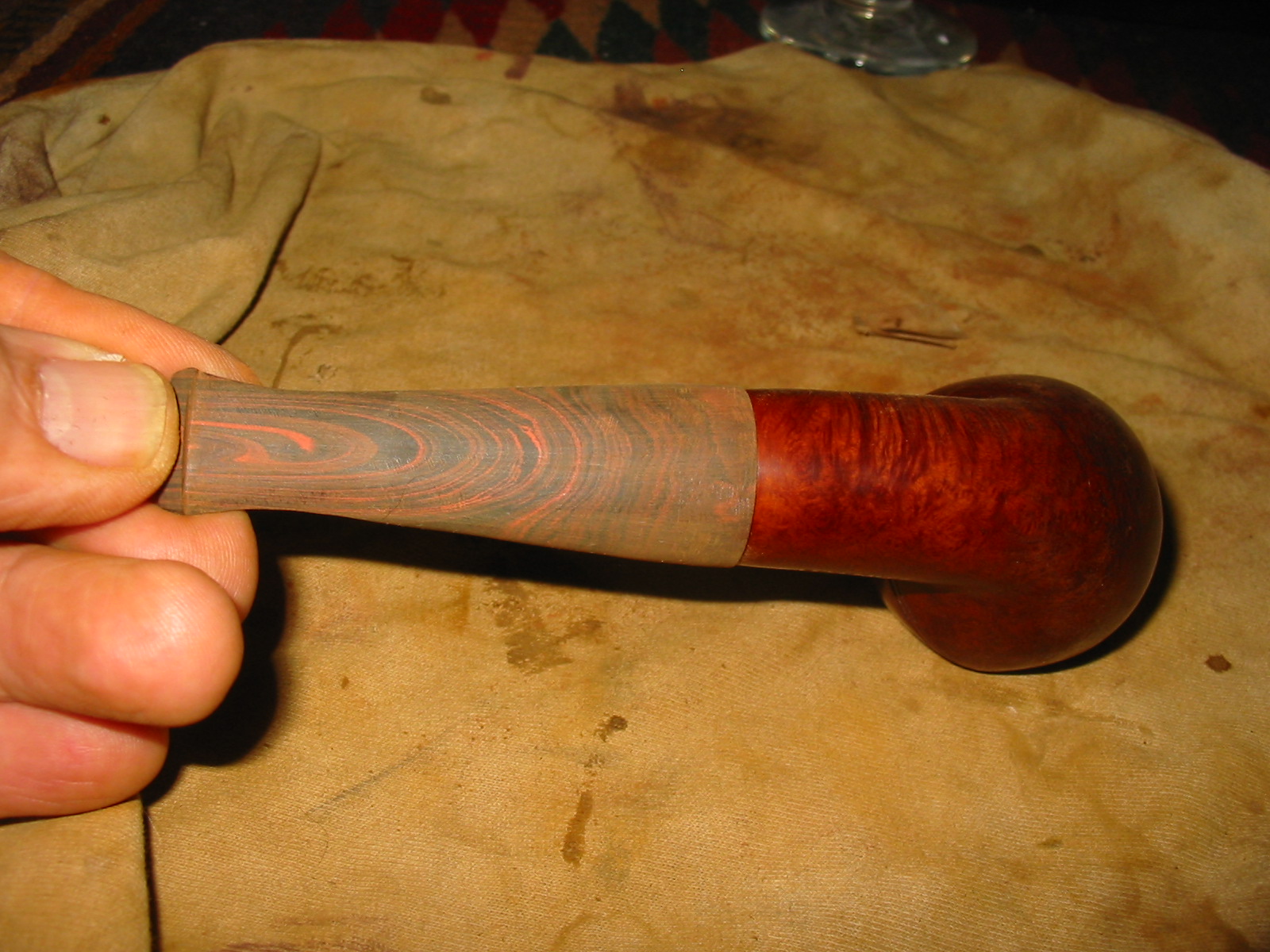
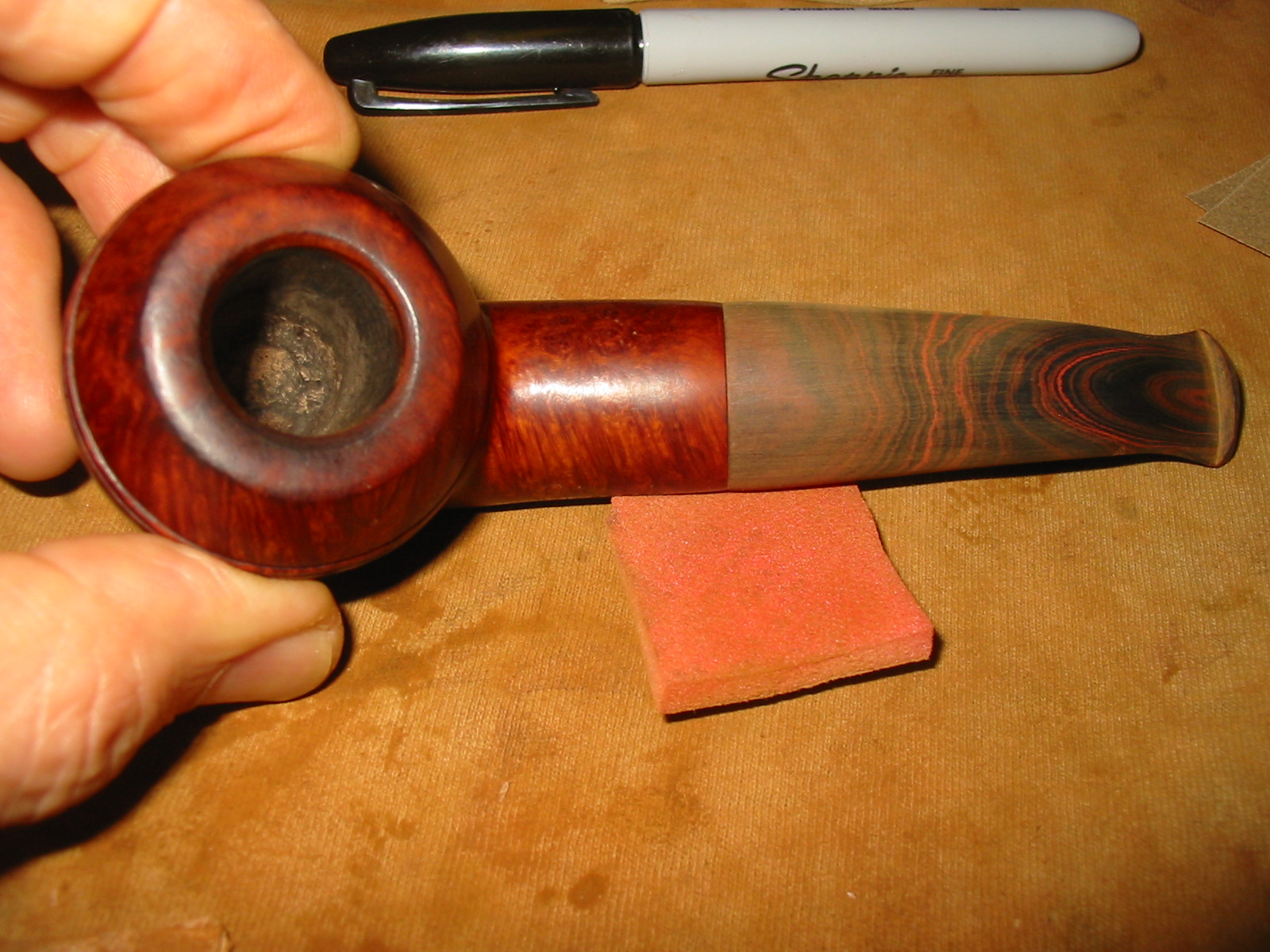
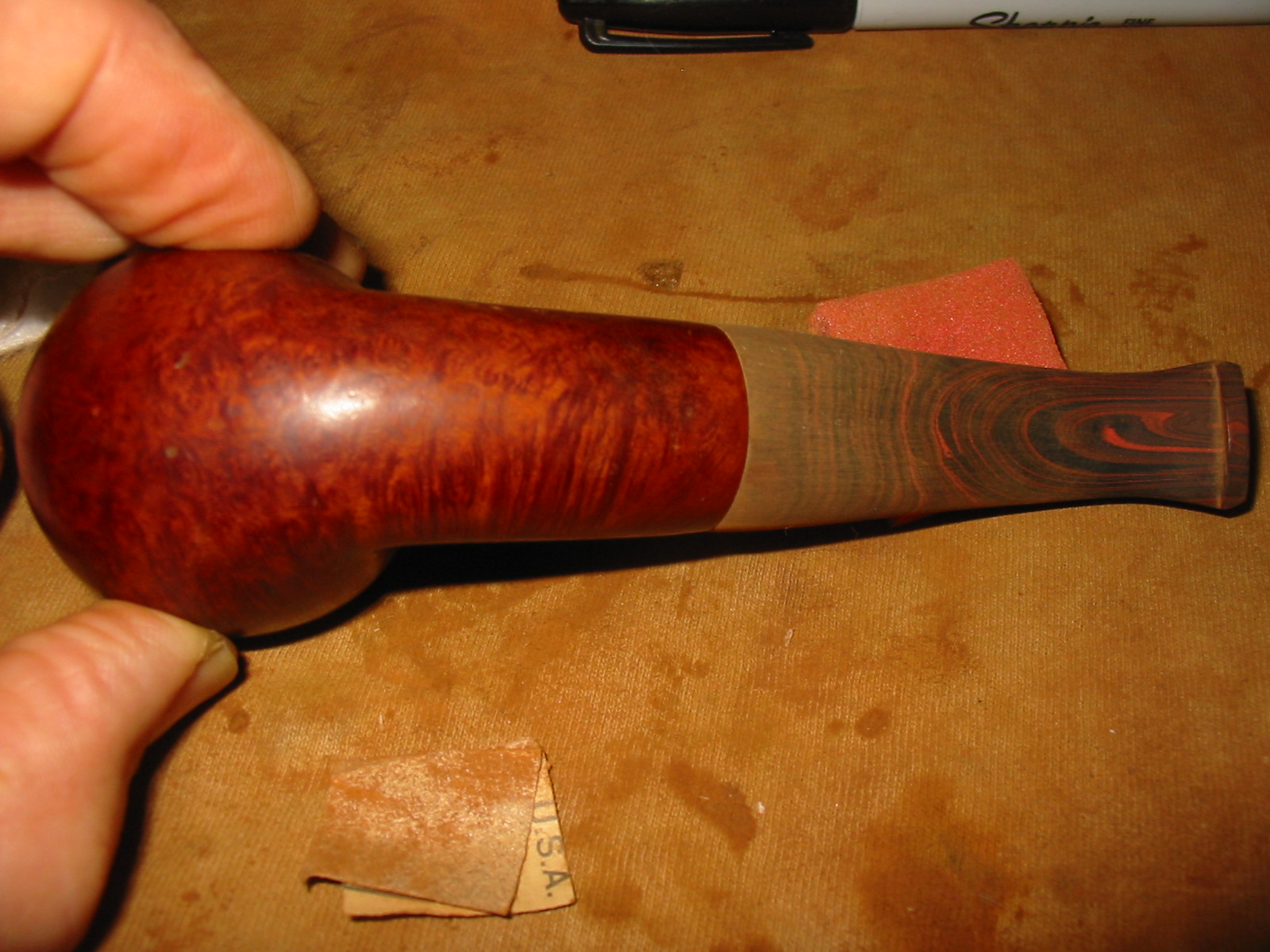
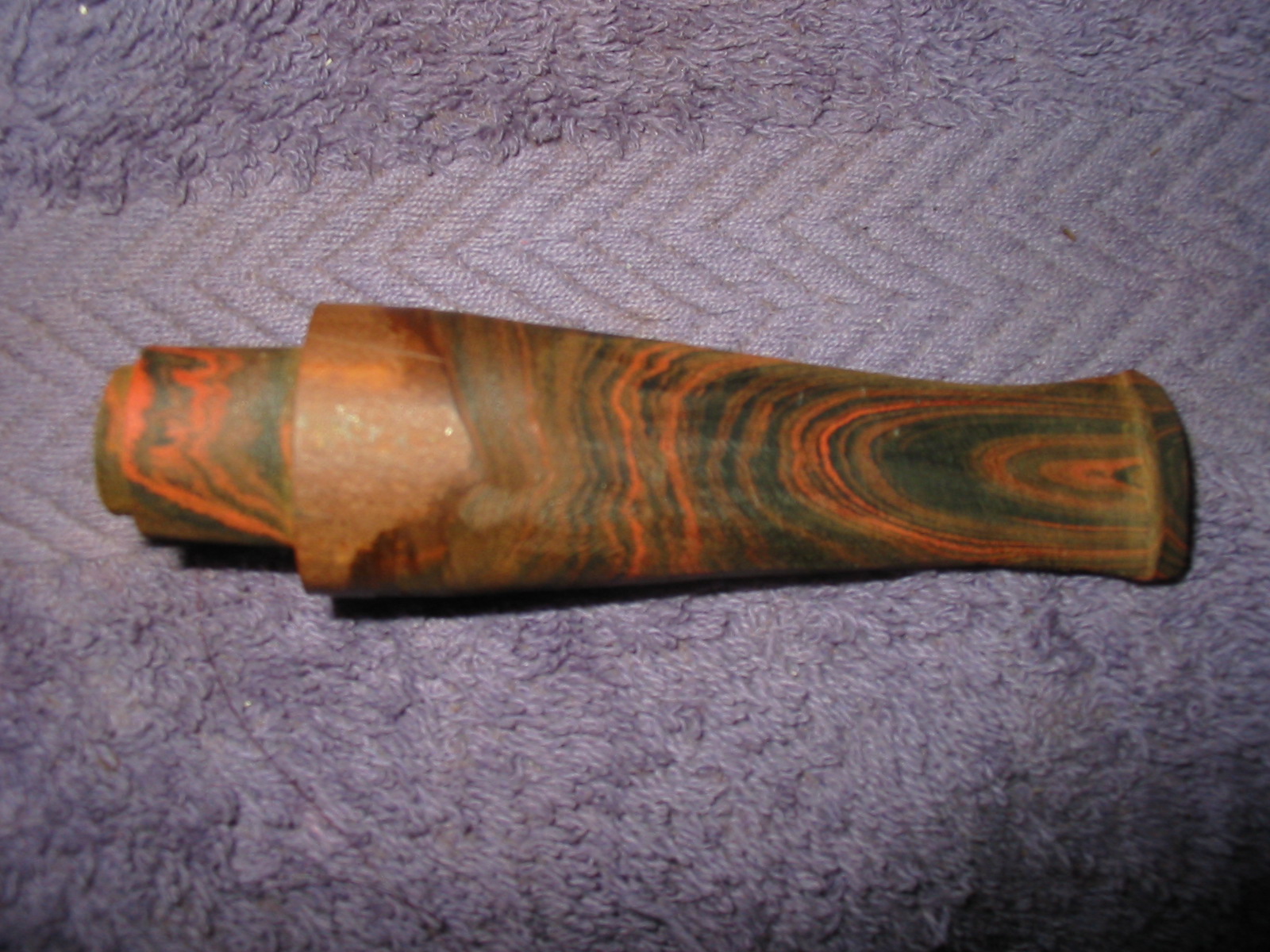
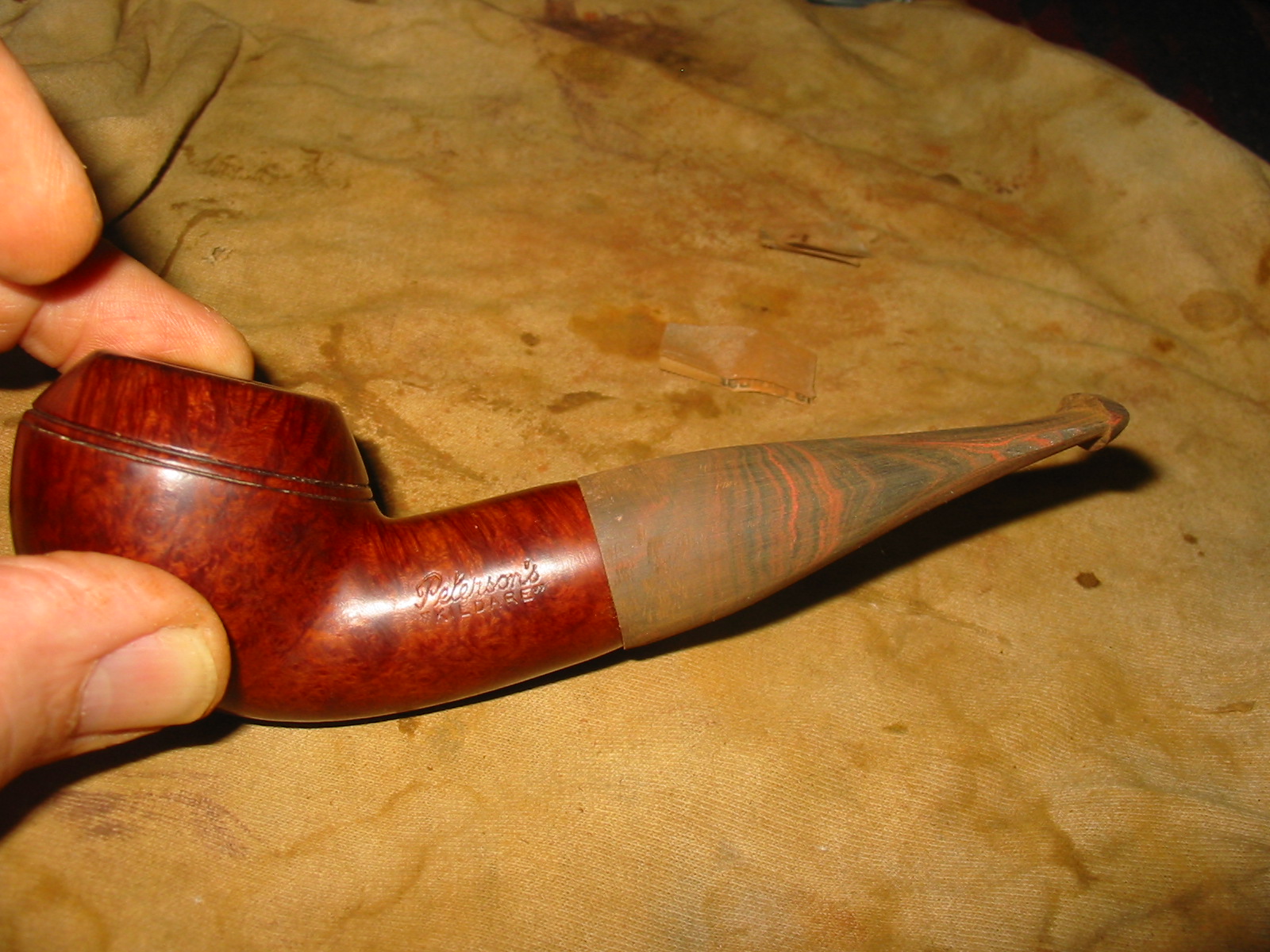
I used the Dremel with the sanding drum to also remove excess material from the stem at the shank stem junction. Afterward I sanded the stem with medium grit emery paper to remove the scratches and marks left by the Dremel. I followed up by sanding the stem with 220 grit sandpaper to further remove the scratches. The next series of four photos show the fit of the stem at this point in the process. The pattern of the Cumberland is also very visible. The pinkish swirls would polish into a reddish brown and the darker colour would be a dark brown fading into black throughout the length of the stem.
IMG_1543

IMG_1544

IMG_1545

IMG_1546

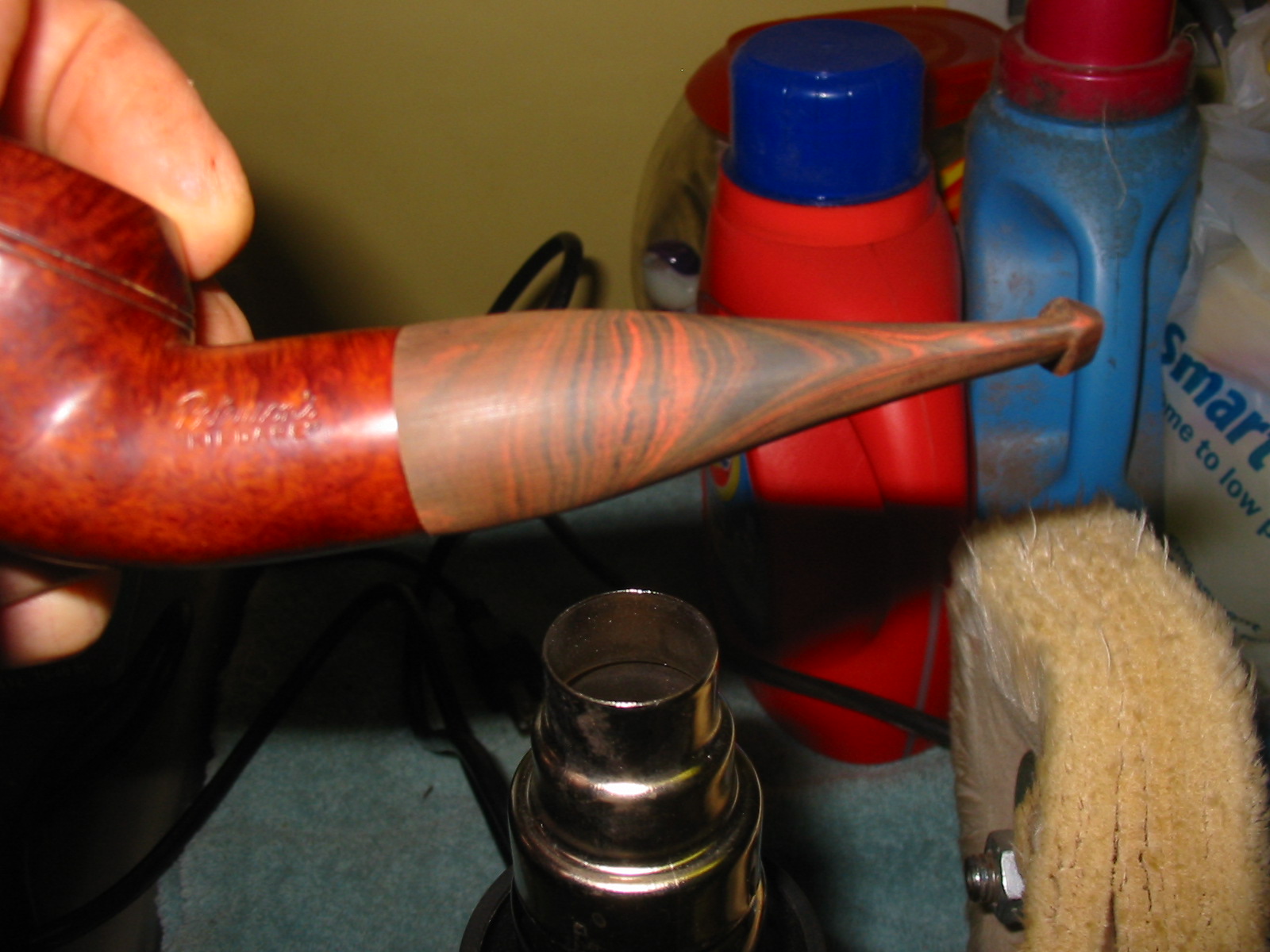
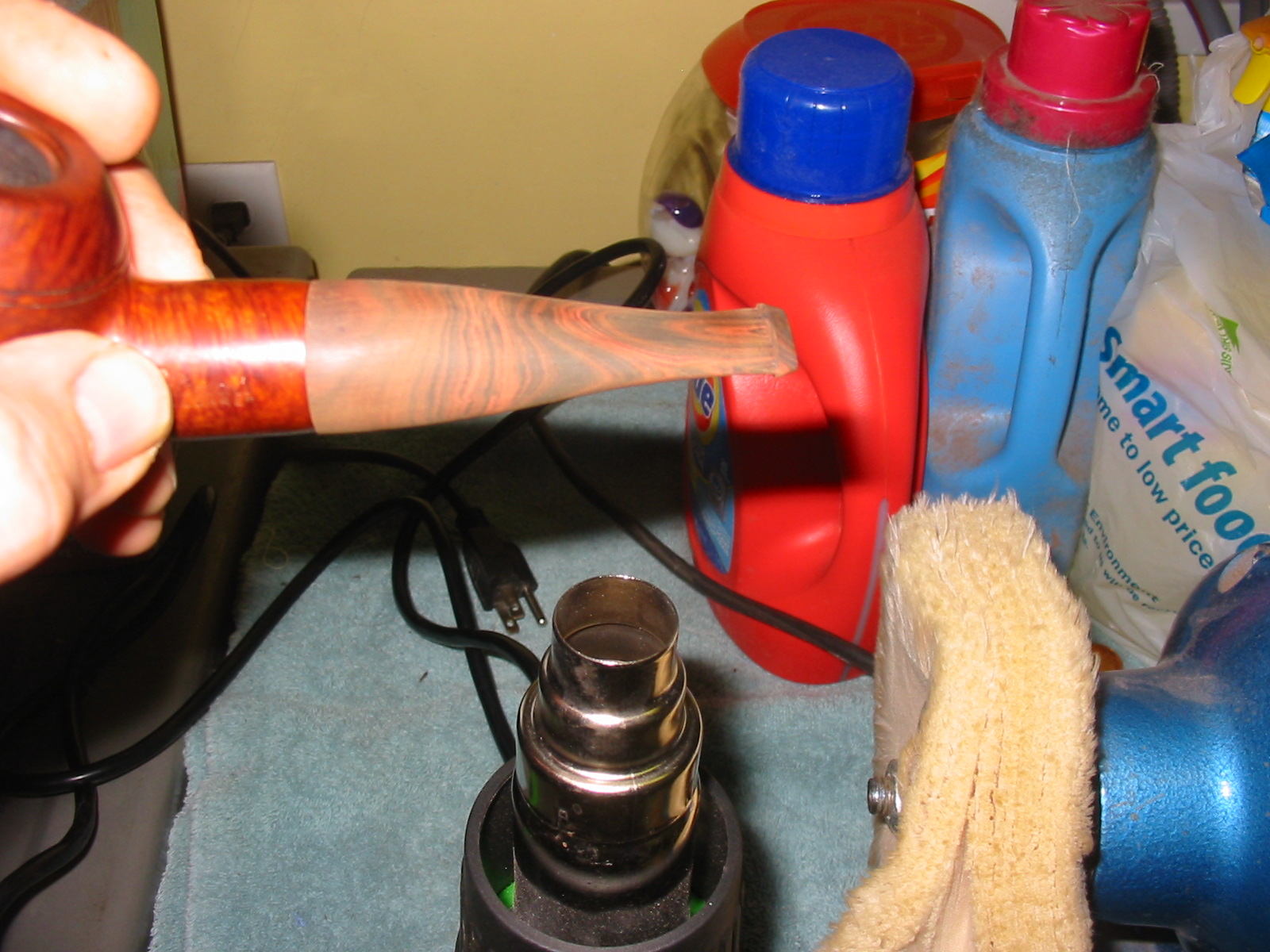
Once I had sanded the stem to the smoothness and fit pictured above I heated it to bend it to the finished shape. I set up the heat gun and held the stem over the tip until it was soft enough to bend. Cumberland like vulcanite bends quite easily. What made this one a bit harder was the thickness of the stem where I wanted to bend it. Once flexible I bent it over a rolling pipe and cooled it under running water to set the bend.
IMG_1547

IMG_1548

I continued to sand the stem with 220 grit sandpaper to get a better fit with the shank. I wanted the transition to be smooth between the two parts so it took a lot of hand sanding. I sanded it removed from the shank, checking often for the fit, until it was a smooth fit.
IMG_1549

IMG_1550

IMG_1551

IMG_1552

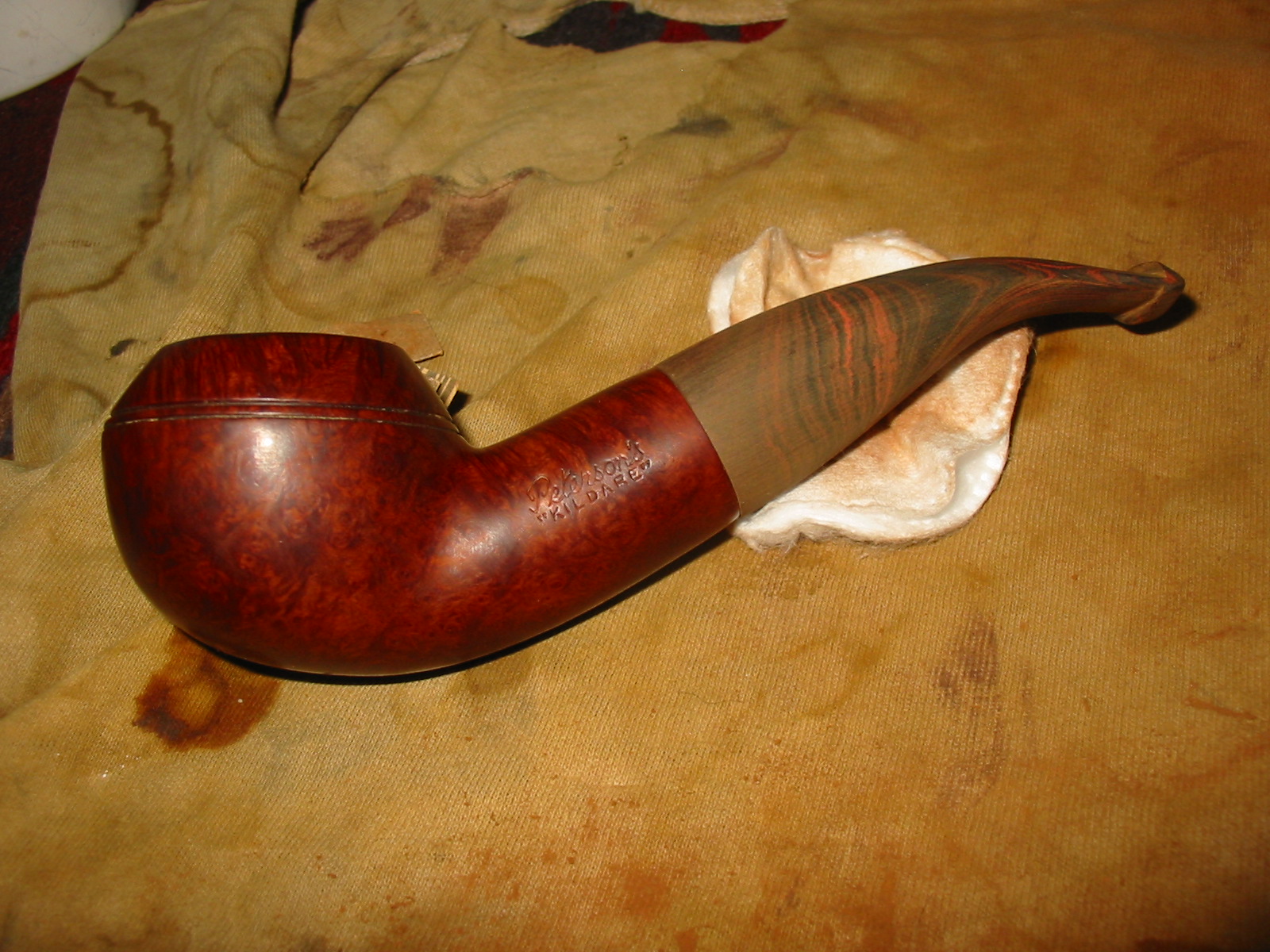
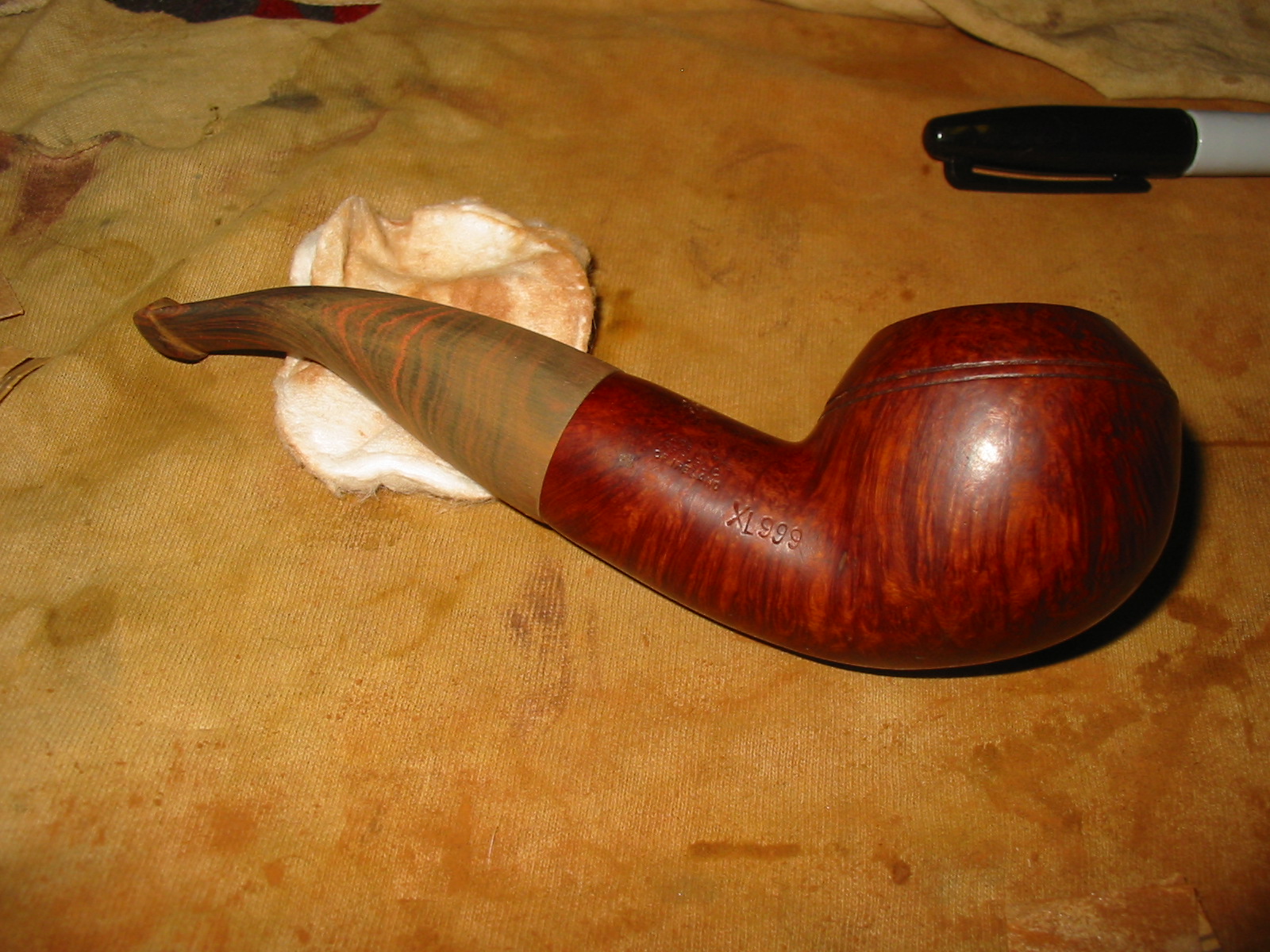
I sanded with a fine grit sanding sponge to smooth out the scratch marks more thoroughly and to also fine tune the fit. The next series of seven photos show that progress.
IMG_1553

IMG_1554

IMG_1555

IMG_1556

IMG_1557

IMG_1558

IMG_1559

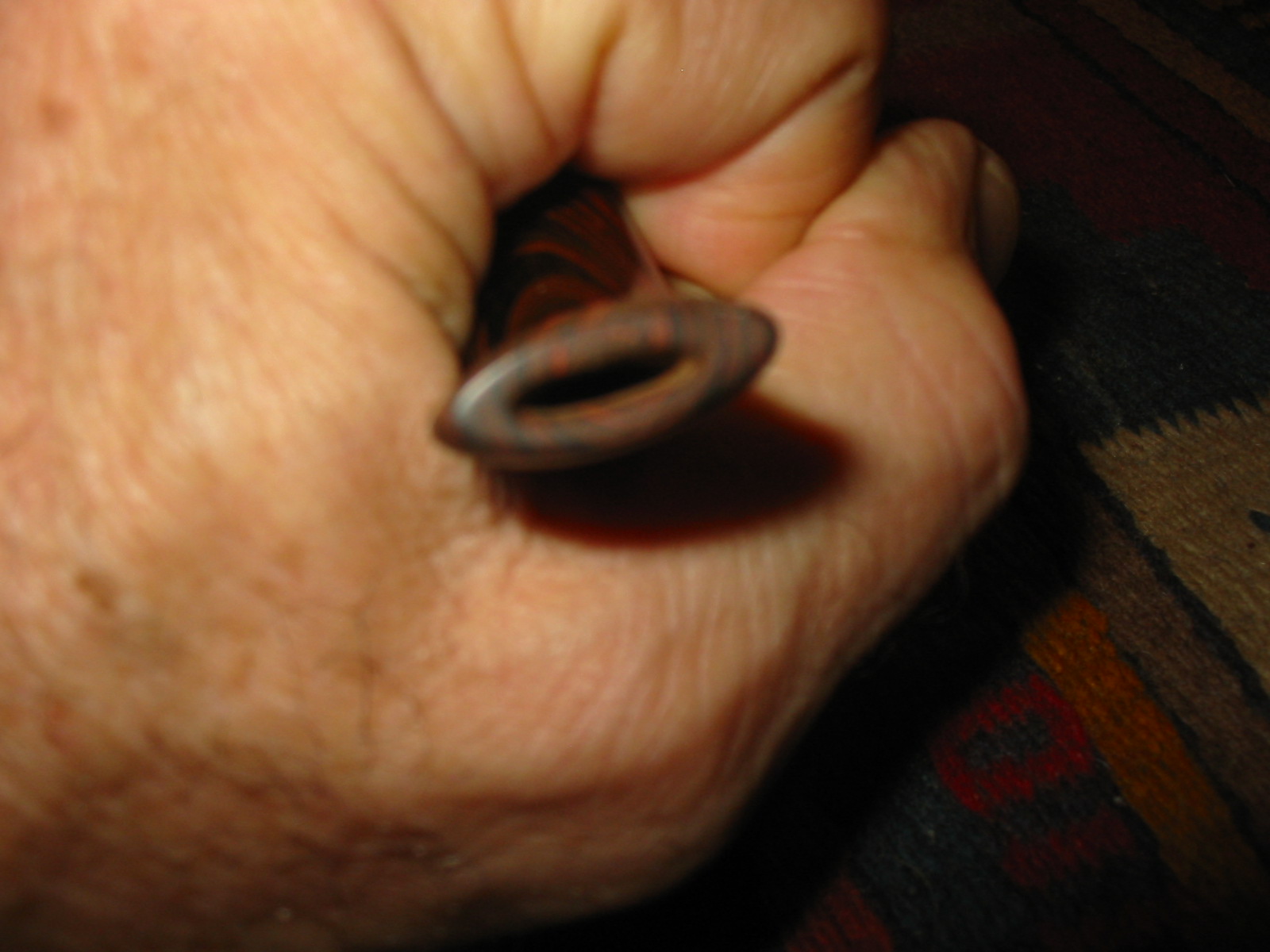
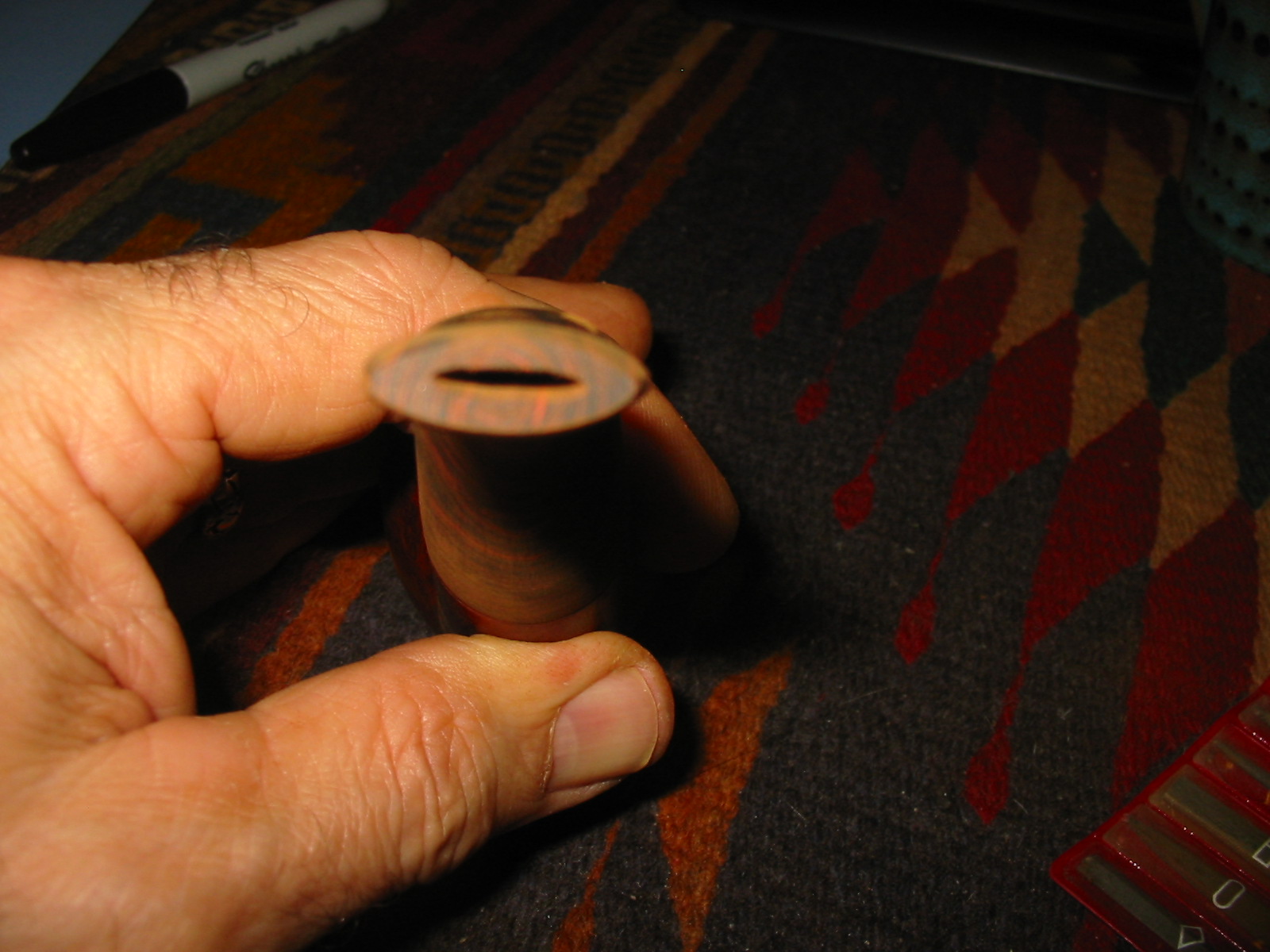
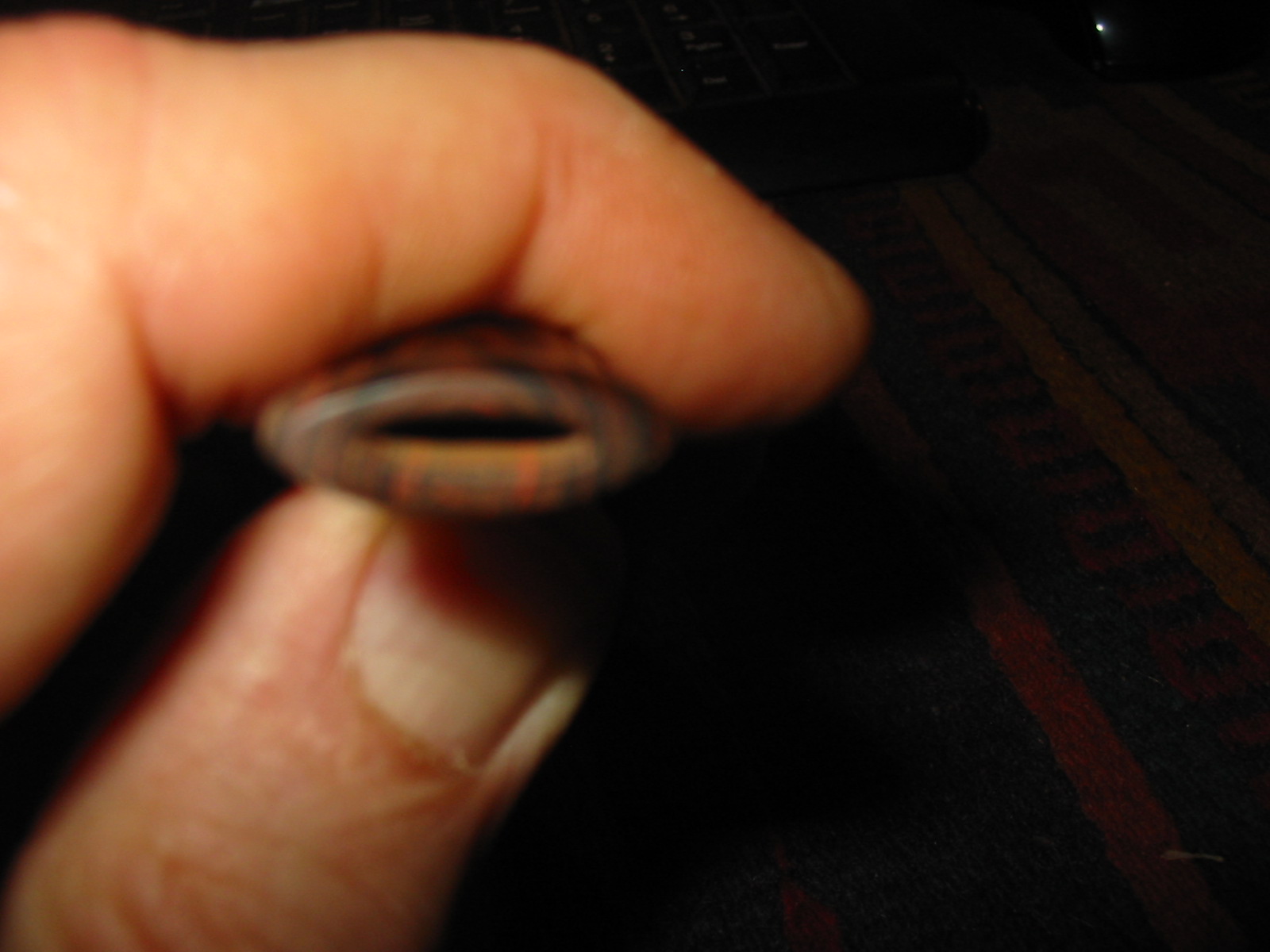
I worked on the button and slot with needle files to thin down the button and to also open the slot. The first photo below shows the slot and button before I started reworking it and shaping it. The second photo, though blurry, shows the button and slot after I had been working on it with the files and sandpaper. The button is thinner and the slot is beginning to open up. Photos three and four show the finished button and slot before buffing and polishing. The button is rounded and shaped, thinner than it originally was and the slot is oval and wide open. I used folded sandpaper to polish the inside of the slot and smooth out the edges. The fifth photo shows the profile of the button when I had finished working on it.
IMG_1560

IMG_1582

IMG_1581

IMG_1563

IMG_1561

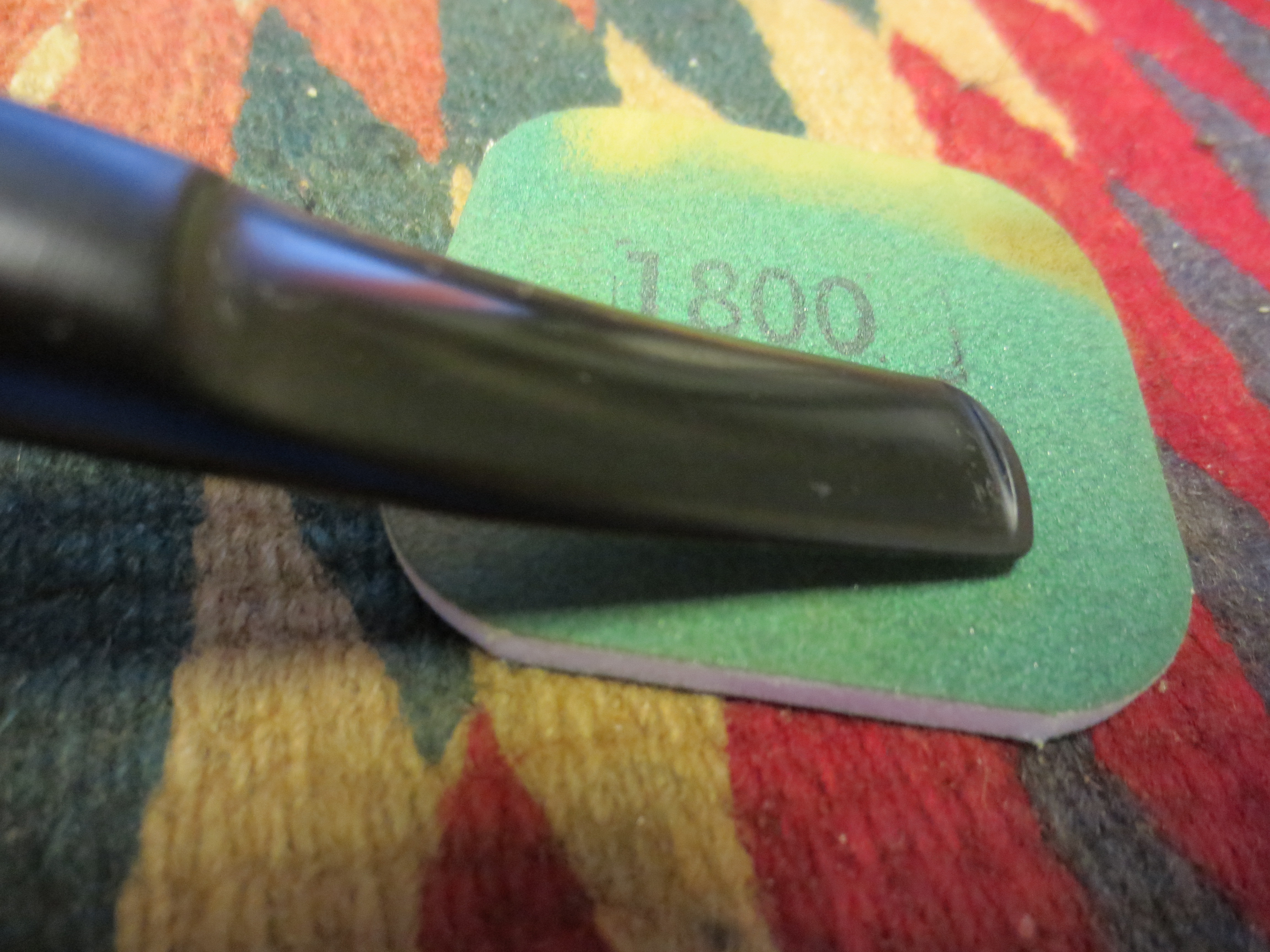
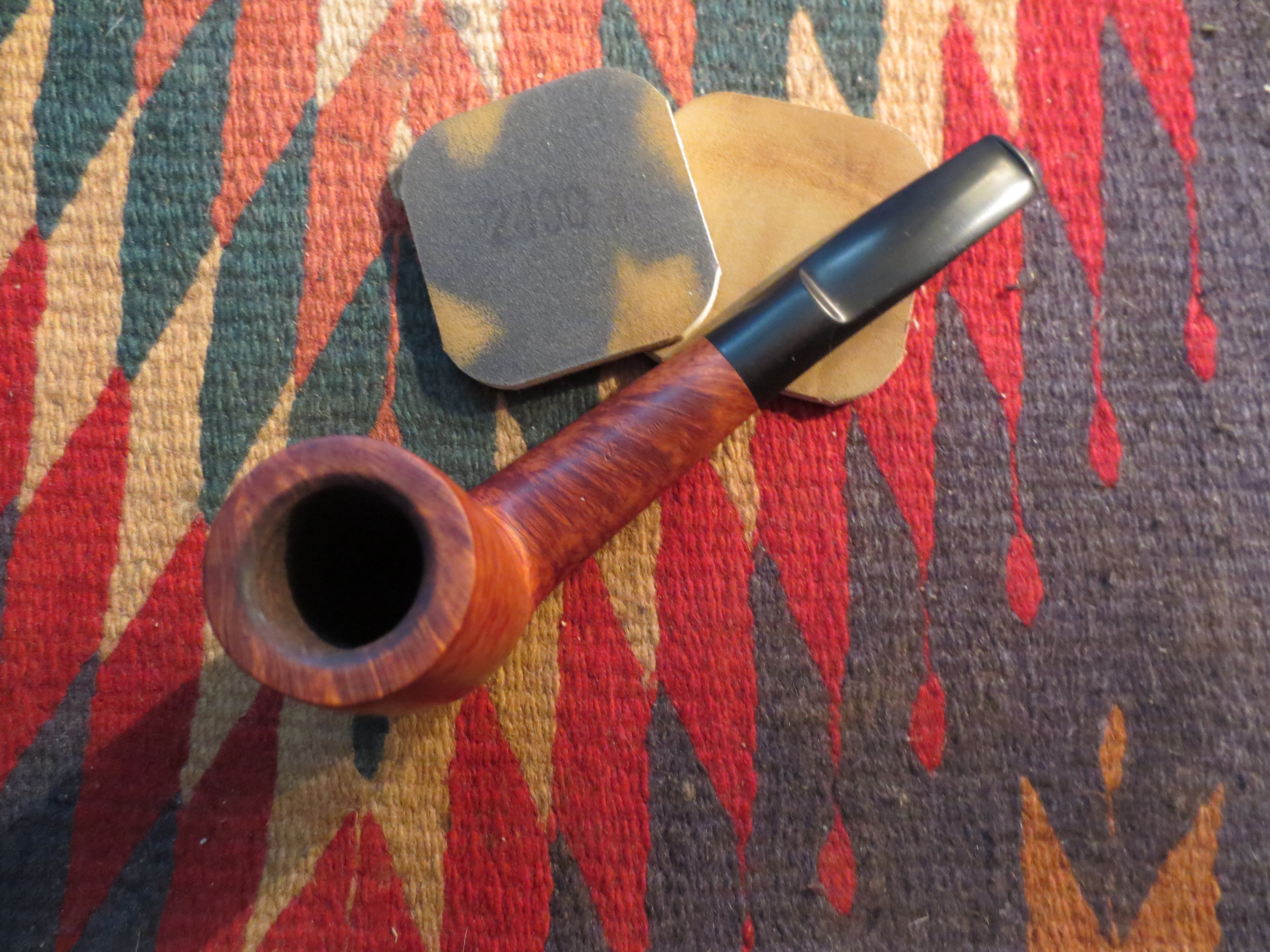
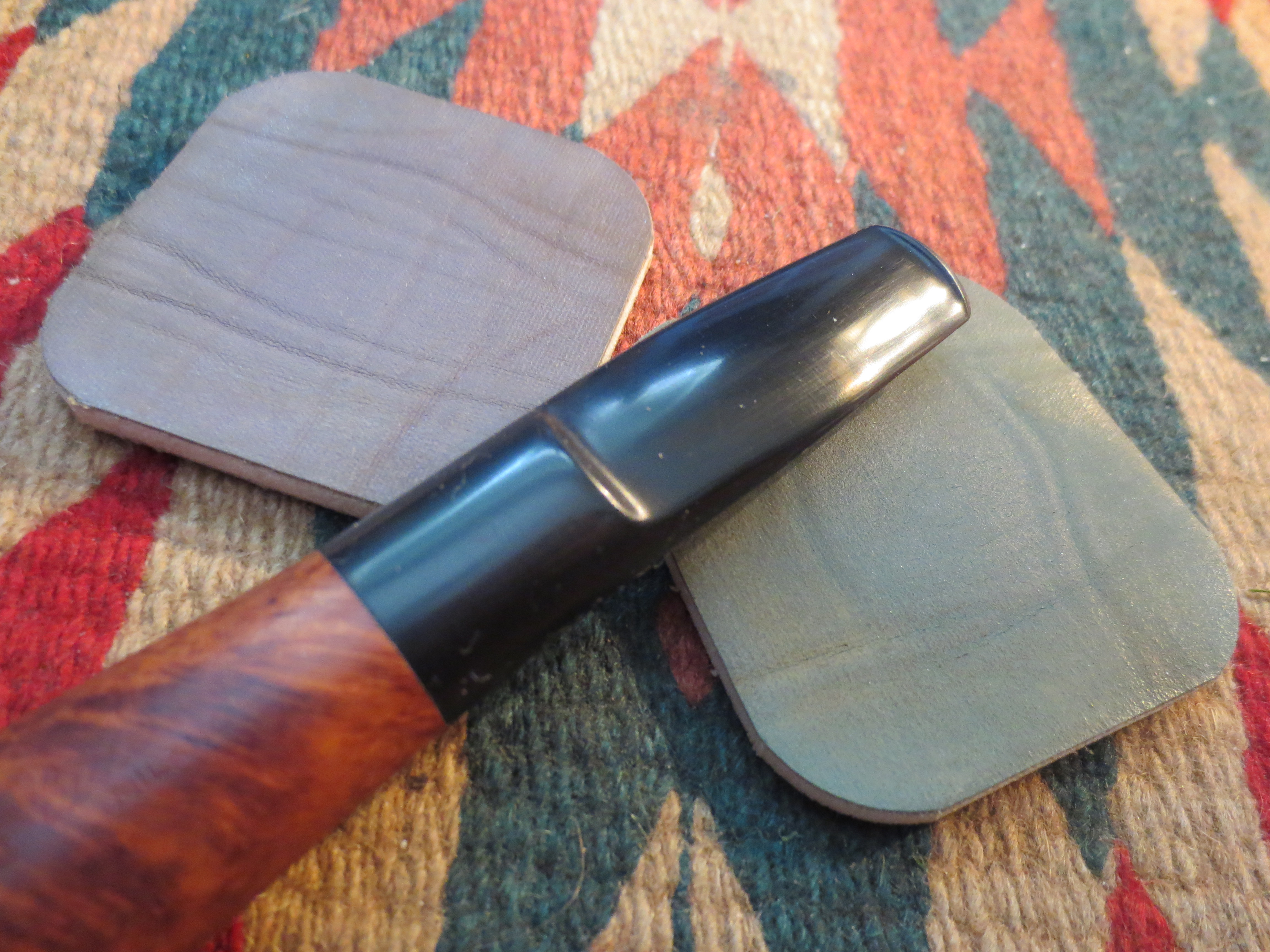
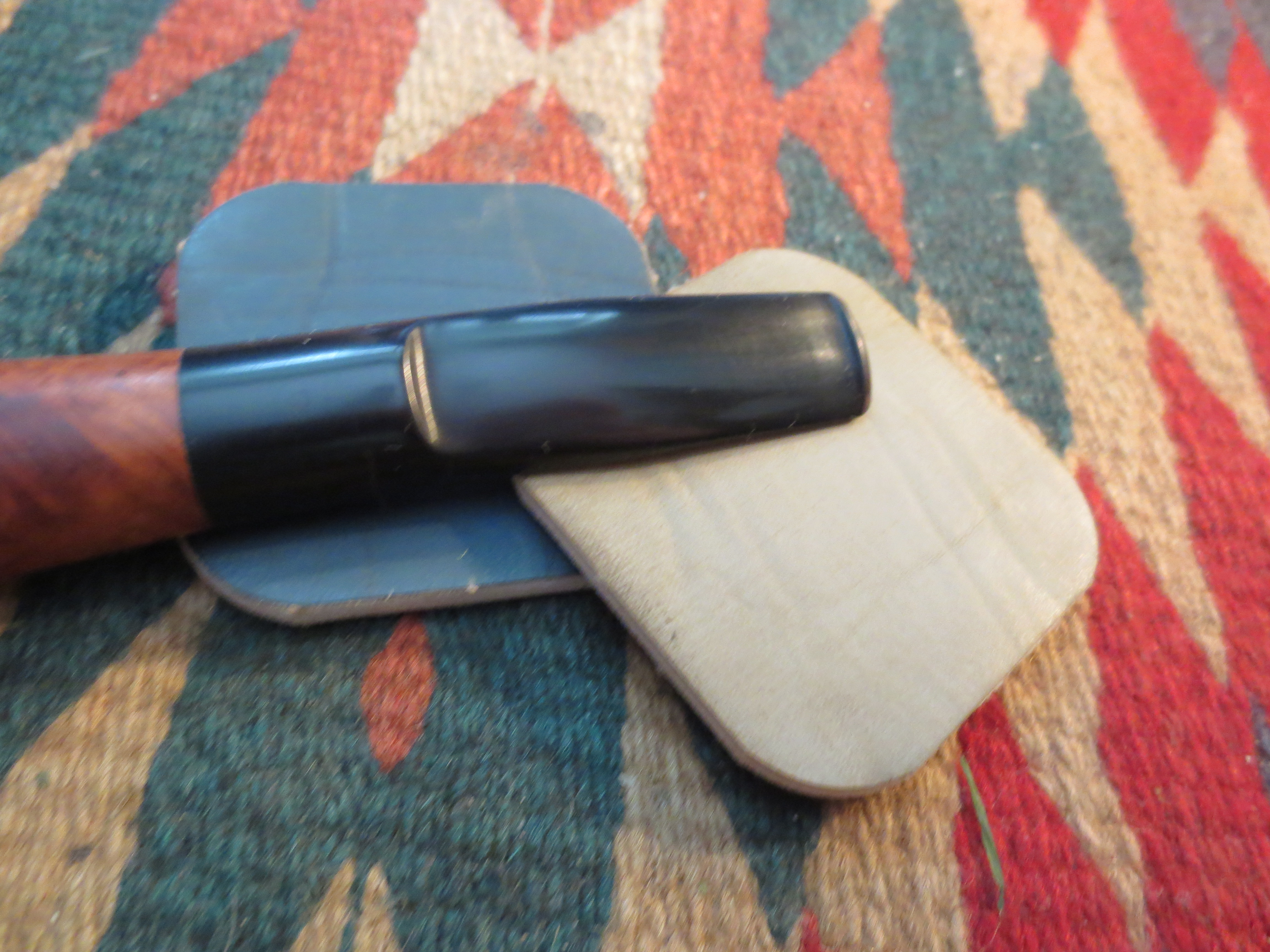
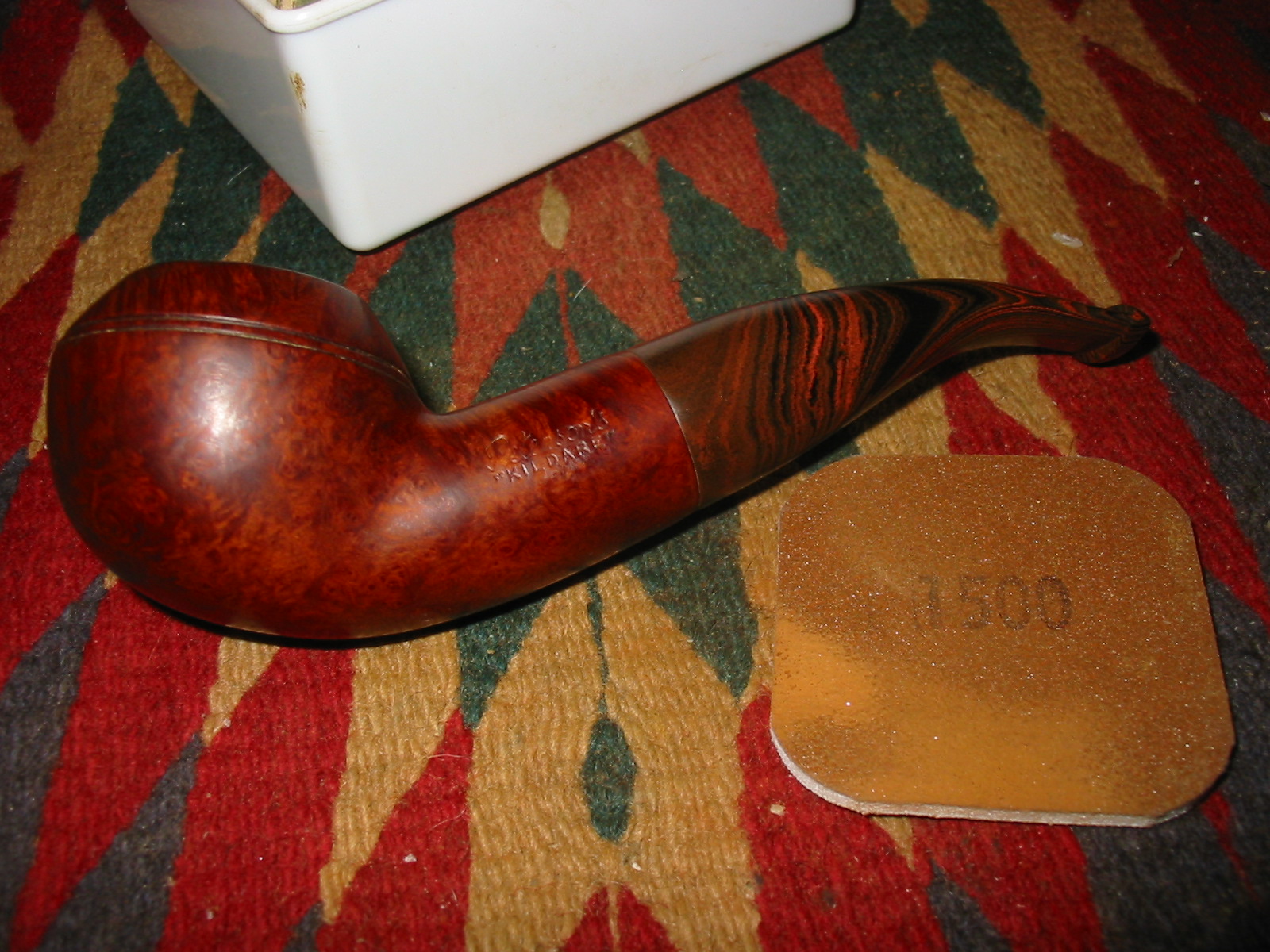
I sanded the stem with micromesh sanding pads from 1500-12,000 grit, with each successive grit giving the stem a more finished appearance and removing the scratches from the Cumberland. The next series of ten photos show the progressive shine developing. I included quite a few photos in this section to show the various sides of the stem and the developing clarity of the Cumberland patterns in the stem as it was sanded.
IMG_1564

IMG_1573

IMG_1572

IMG_1571

IMG_1570

IMG_1569

IMG_1568

IMG_1567

IMG_1566

IMG_1565

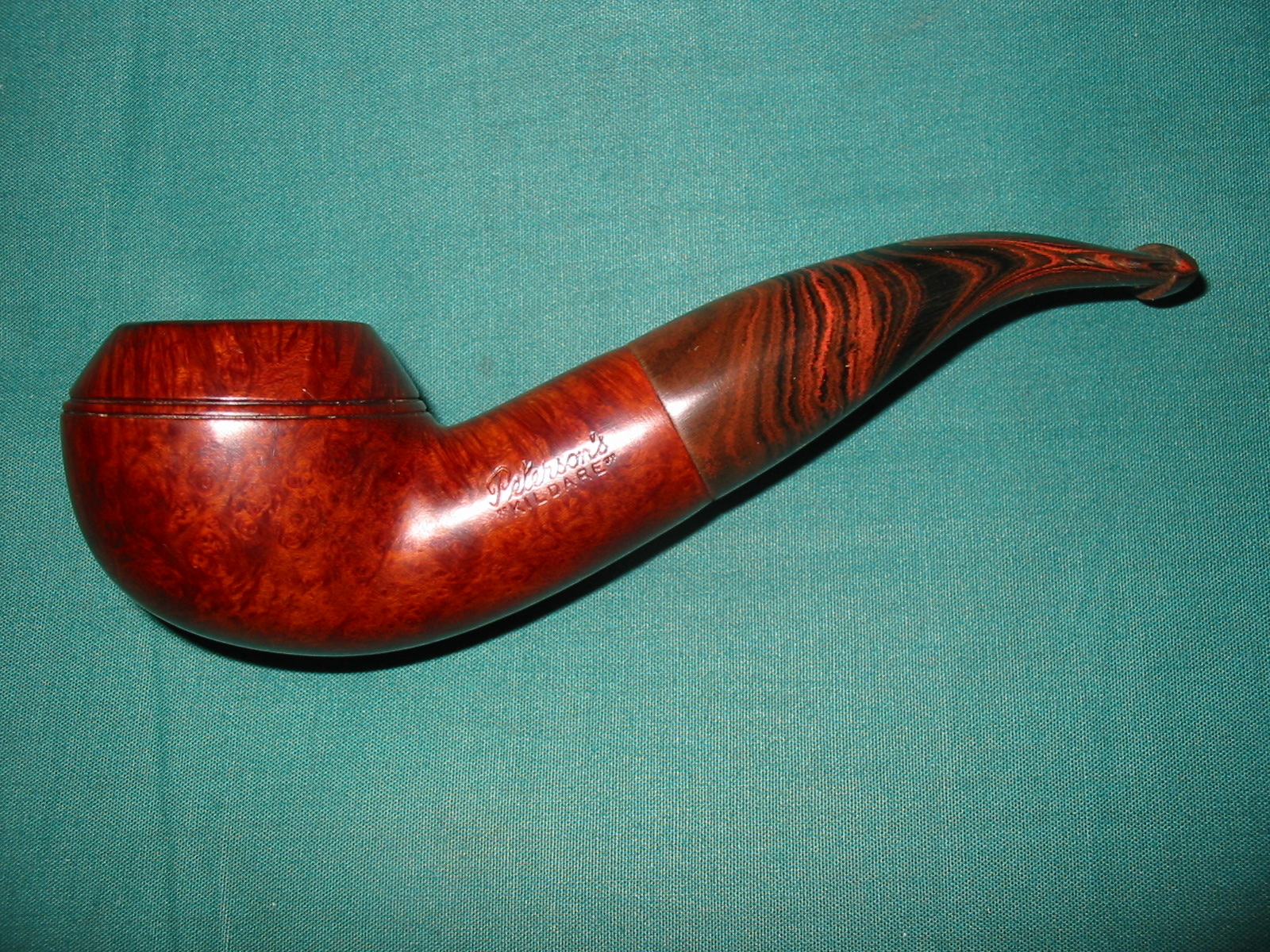
I took the pipe to the buffer and buffed the stem with White Diamond and Blue polish to further enhance the shine. I gave the entire pipe several coats of carnauba wax and buffed with a clean flannel buffing pad.
IMG_1574

IMG_1575

IMG_1576

IMG_1577

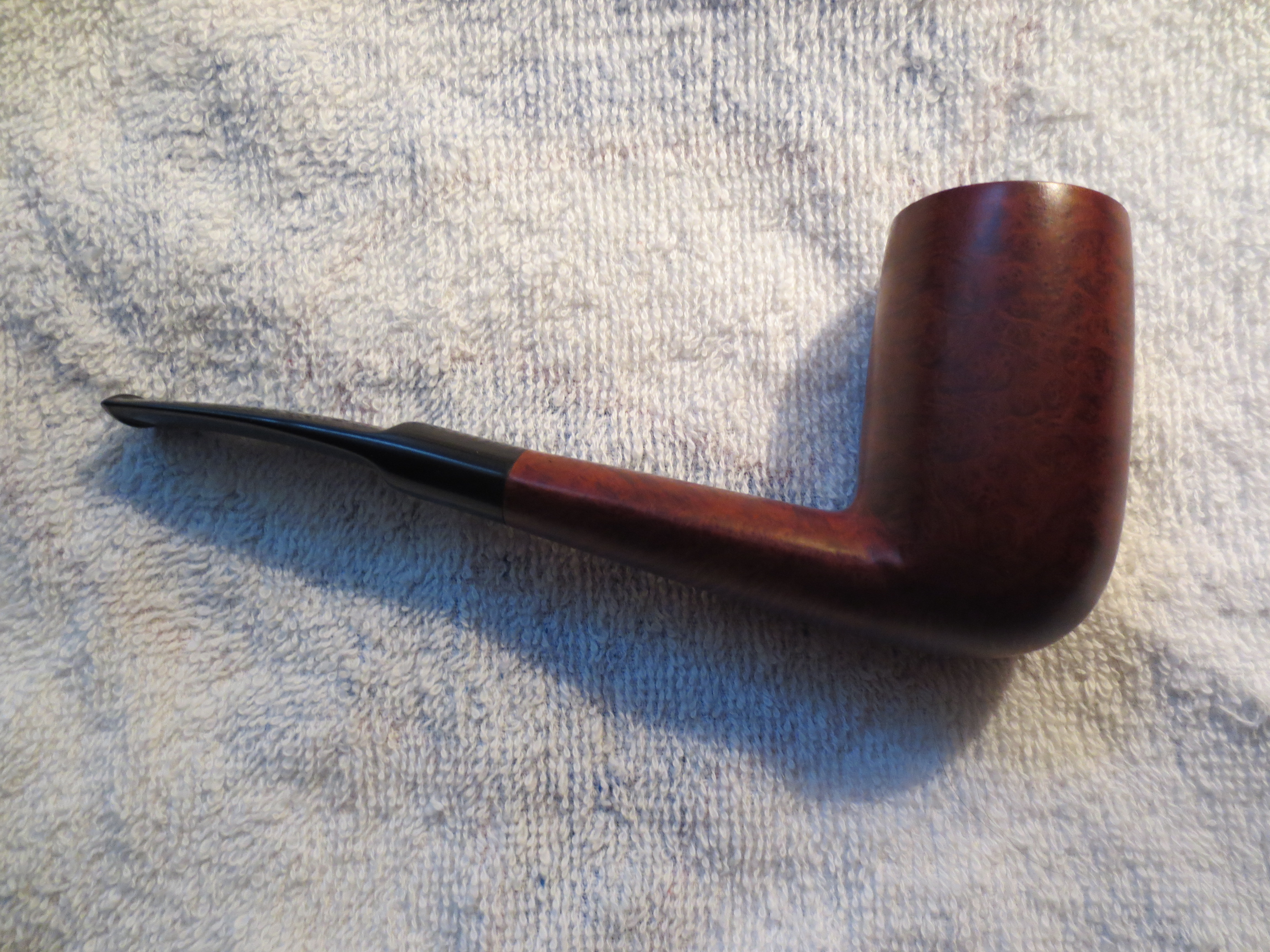
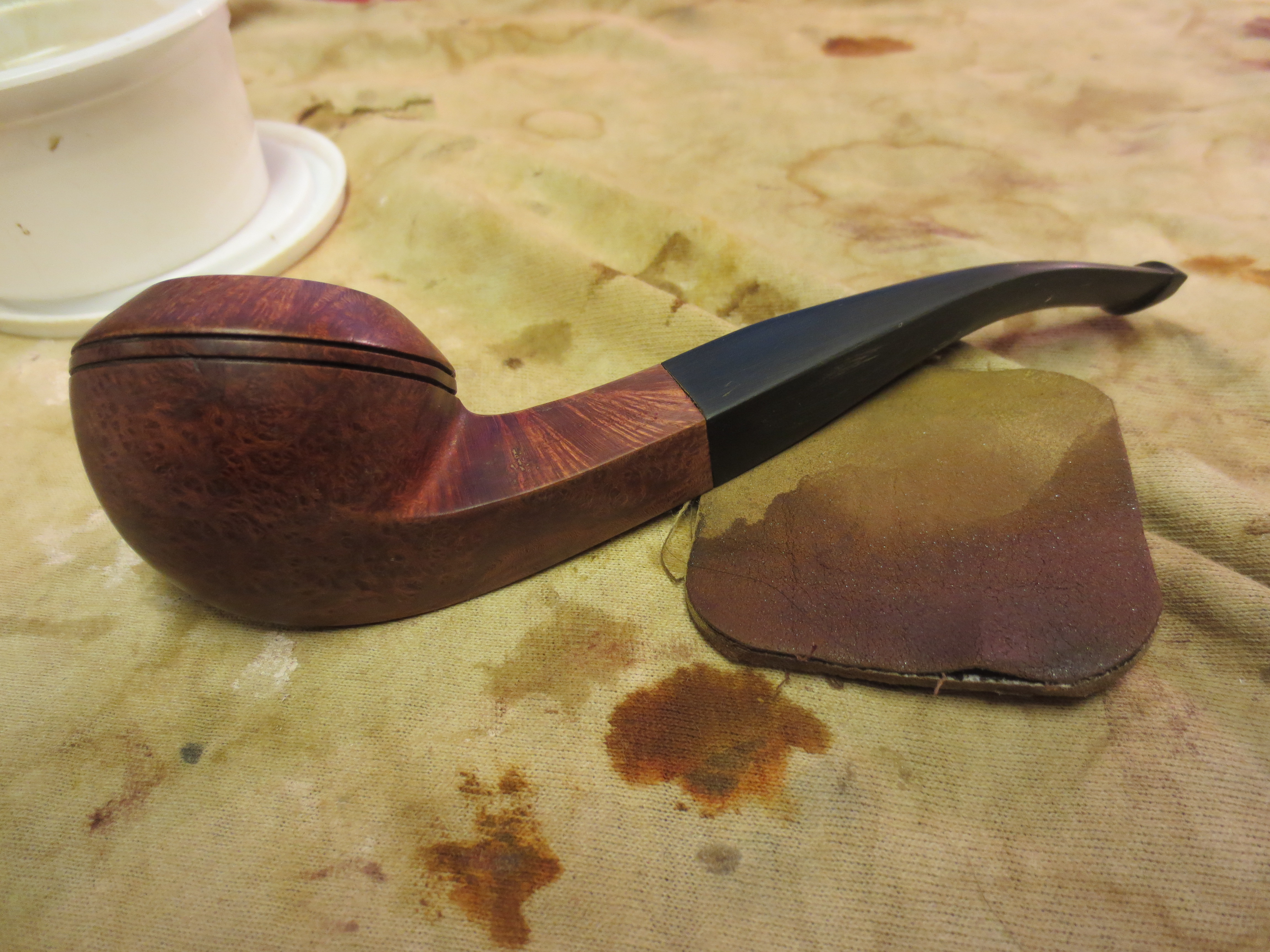
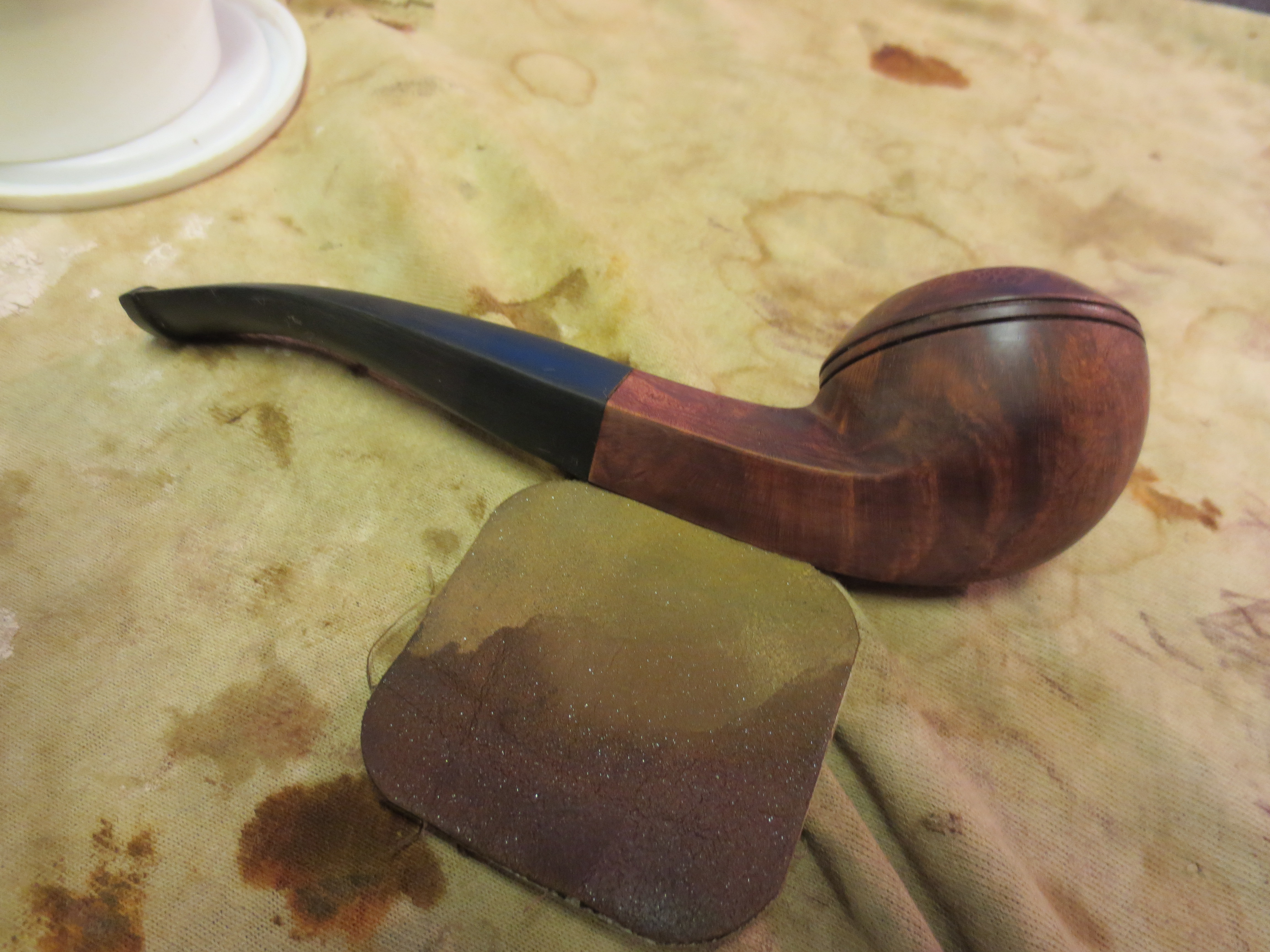
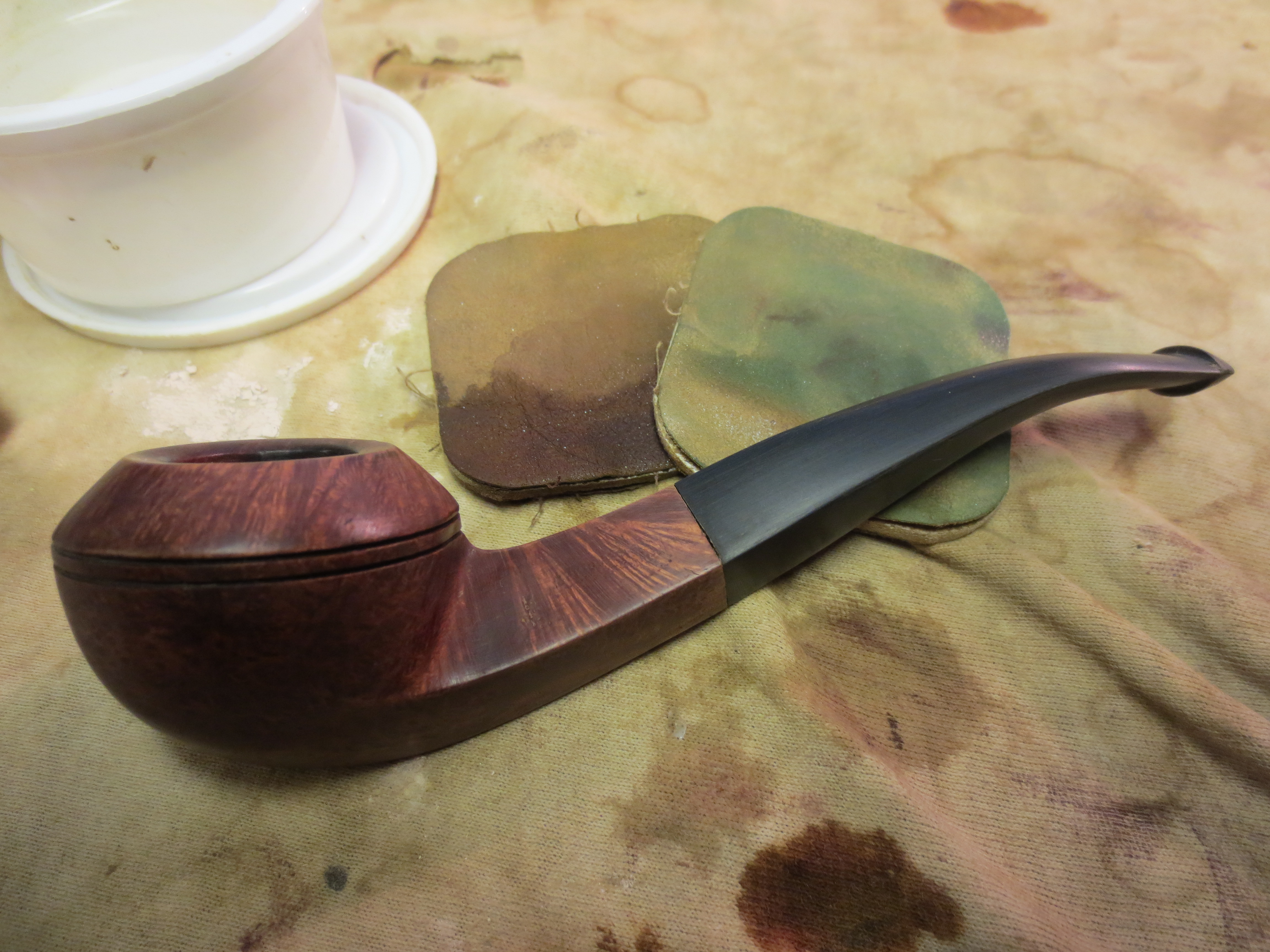
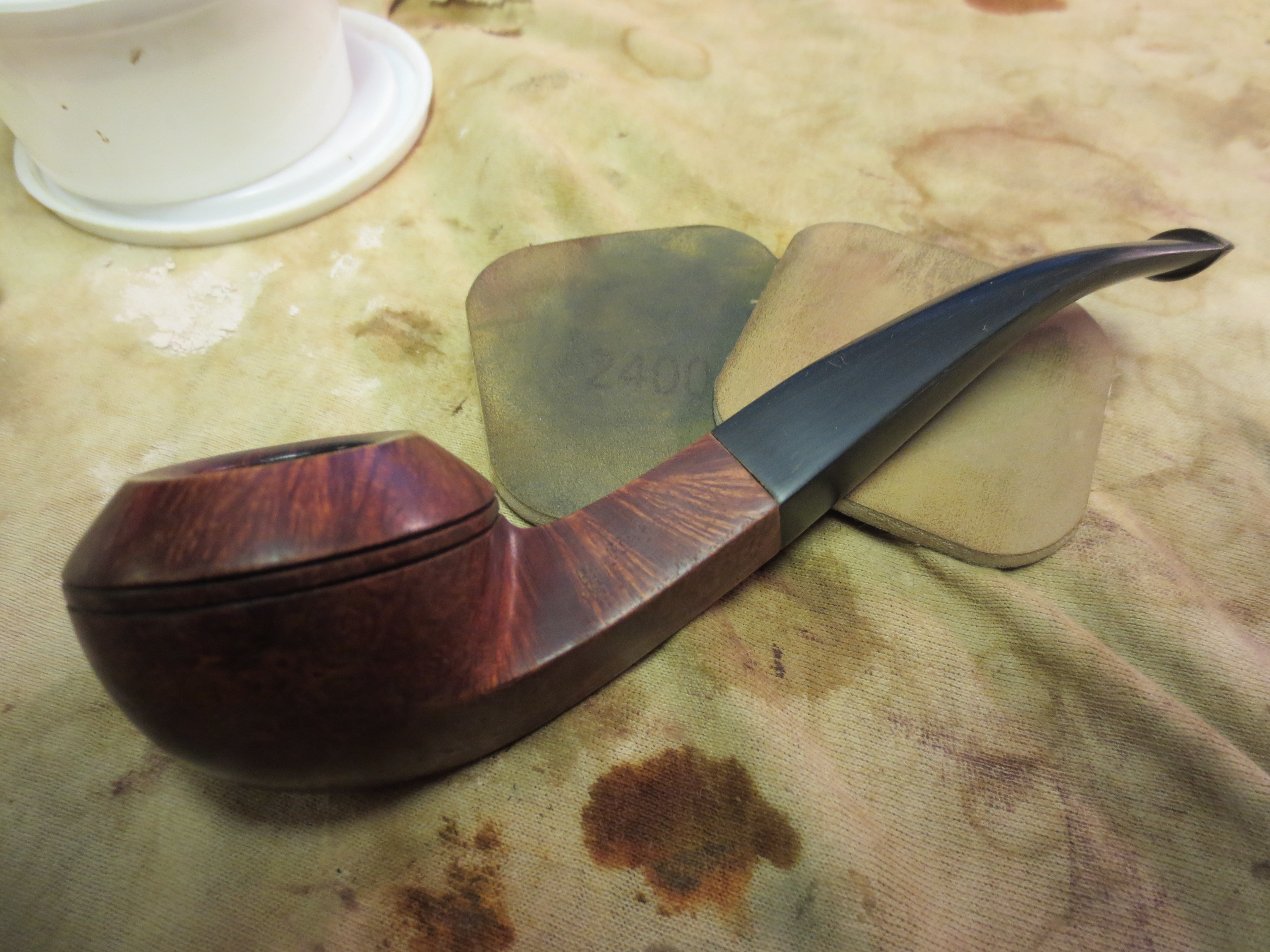
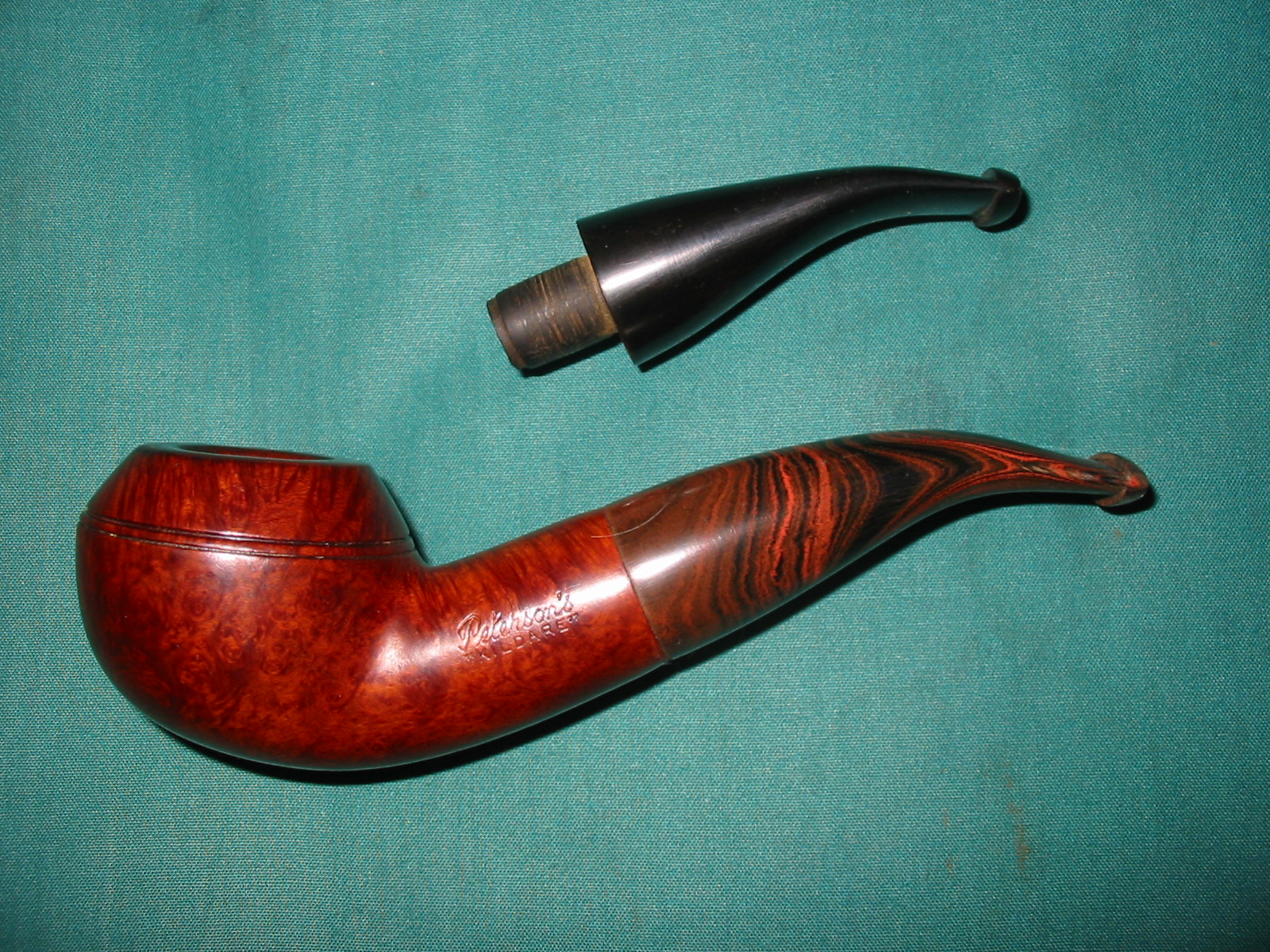
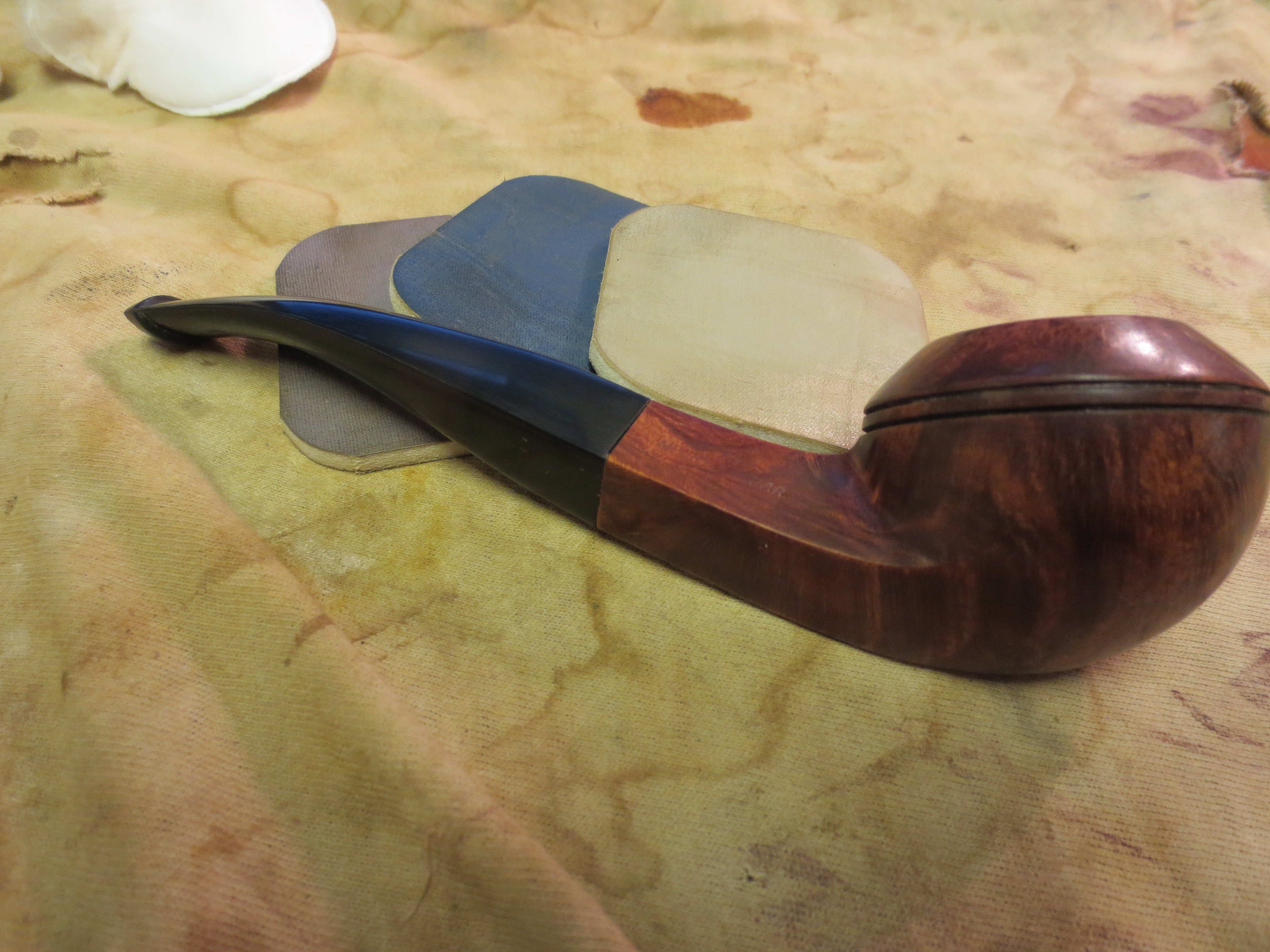
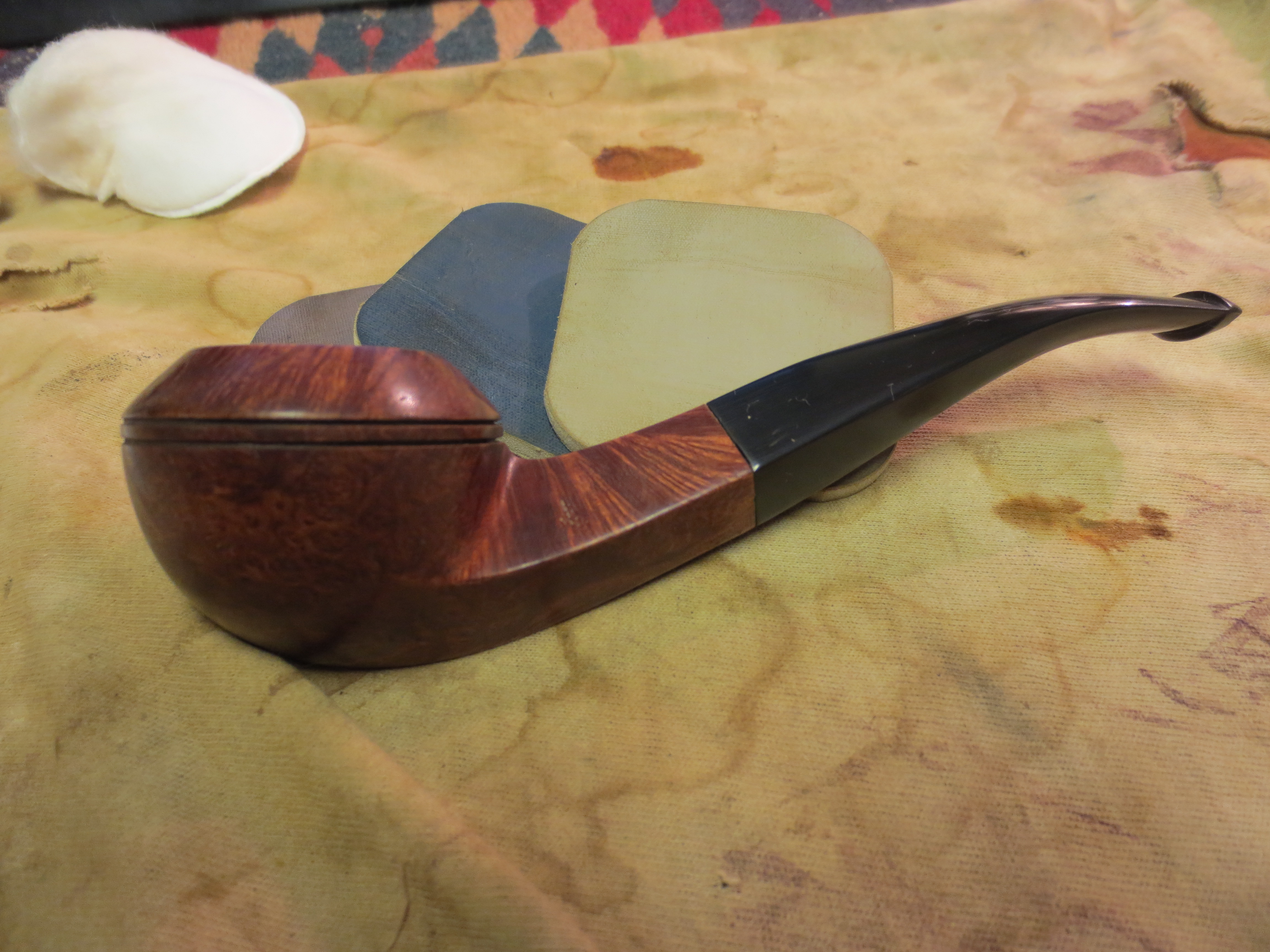
The photo below shows both of the stem that I turned and shaped for the pipe. The black vulcanite one is about ½ inch shorter than the Cumberland stem. Both look very good on the pipe and are comfortable in the mouth.
IMG_1580

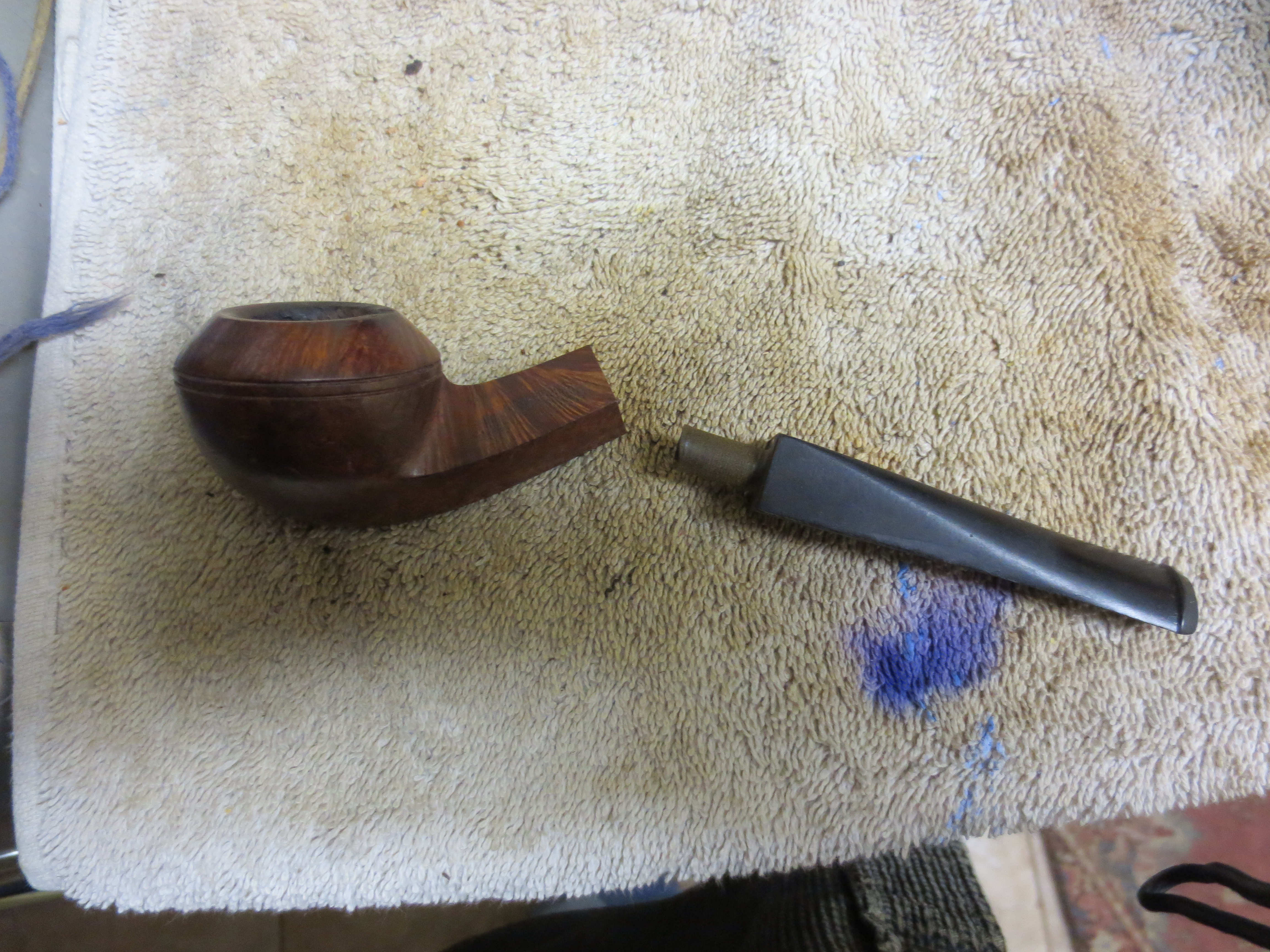
After staring at the pipe and handling it yesterday I was not happy with the stem shank union. There were some problems there with a slight taper to the shank that broke the smooth line of the pipe. I took it back to the work bench last night and did some more work on it. I will post the update later today.

Addendum
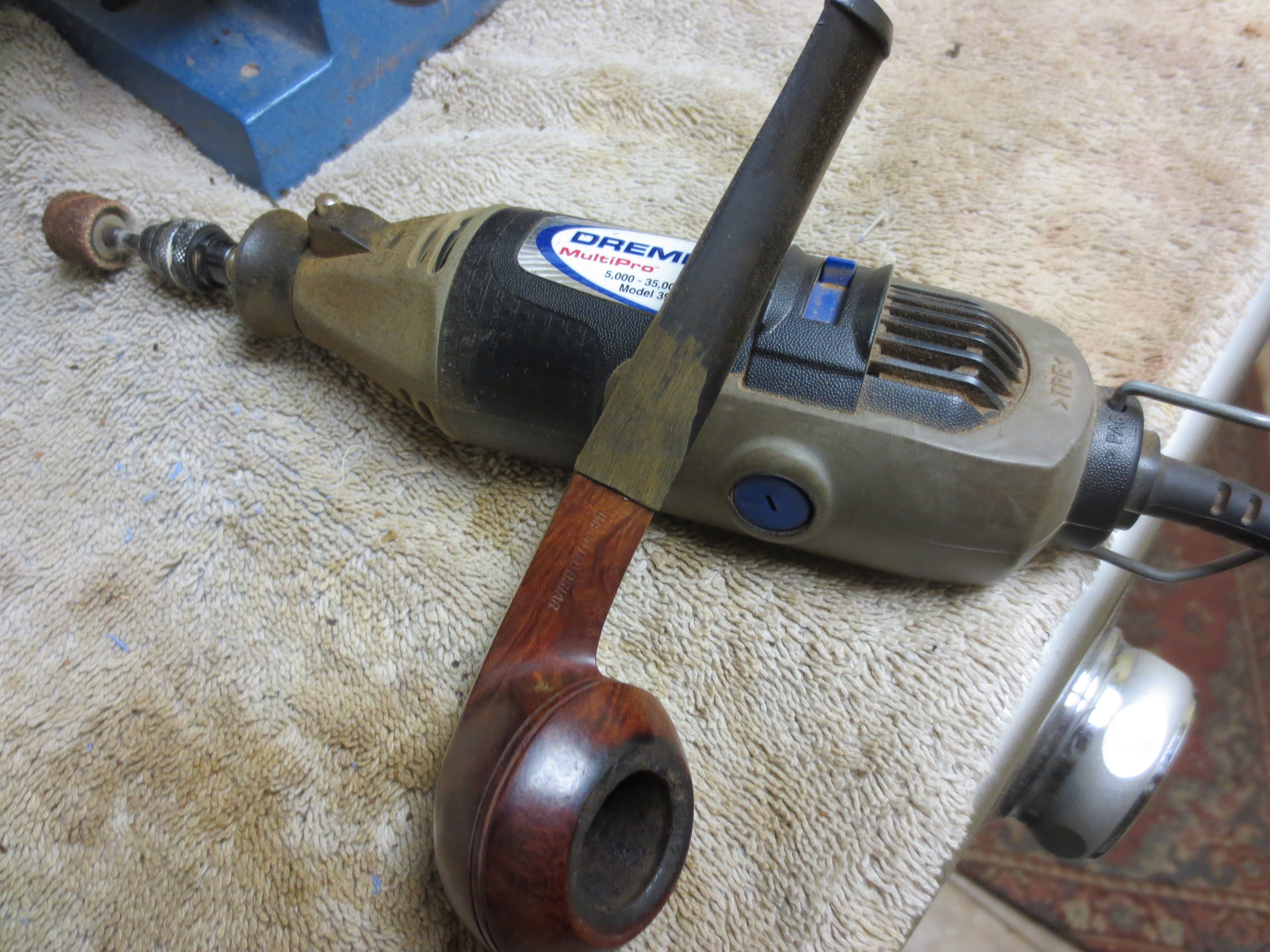
I took the pipe to work with me today and held it off and on while working on things and ran my fingers over the joint of the shank and the stem. There was a slight hip, with the shank tapering down slightly at the joint and breaking the flow of the lines of the pipe. It bugged me so when I got home I put it back on the worktable. I would have to deal with it and smooth things out. I knew it would take some more sanding and then refinishing the pipe and stem but so be it. I sat down and read the responses to my post regarding this pipe on Smokers Forums and also read my private messages. I had received a private message from bbqncigars (Wayne). I include his message in the paragraph below.

Steve,
Your restorations have been breathtaking. That said, I have a quibble with this pipe. The last 1/16″ or so of the shank exhibits a taper that is out of place with the lines of the rest of the pipe. This could be from over-buffing/sanding pressure on the end of the shank (BTDT). To restore the continuous line from the shank to the tip would require block sanding (might jeopardize the stamping) or removing the taper by shortening the shank. It’s a beautiful pipe and bit, but the bit/shank junction would drive me nuttier until I fixed it.

Yeah, I can be really anal about things I make that other people will see.

Wayne

I laughed when I read his words because they confirmed my own feelings and put into words some of my reserve regarding the restemming of this pipe. I looked at the pipe again and then wrote him back as follows:

Wayne
I agree with you totally! It bugs me as well. It forms a slight hip between the stem and the shank that really bugs me. I know that I am not finished yet either! The stummel came to me with a slight taper that was only clearly seen when there is a stem in place. The black stem has the same problem due to the shank. I have been contemplating hunting down a silver band to do deal with the issue and clean up the lines but we shall see. I could indeed block sand and may do that instead, we shall see. Thank you for your pm. I appreciate it as it has been bugging me.

Thanks
Steve

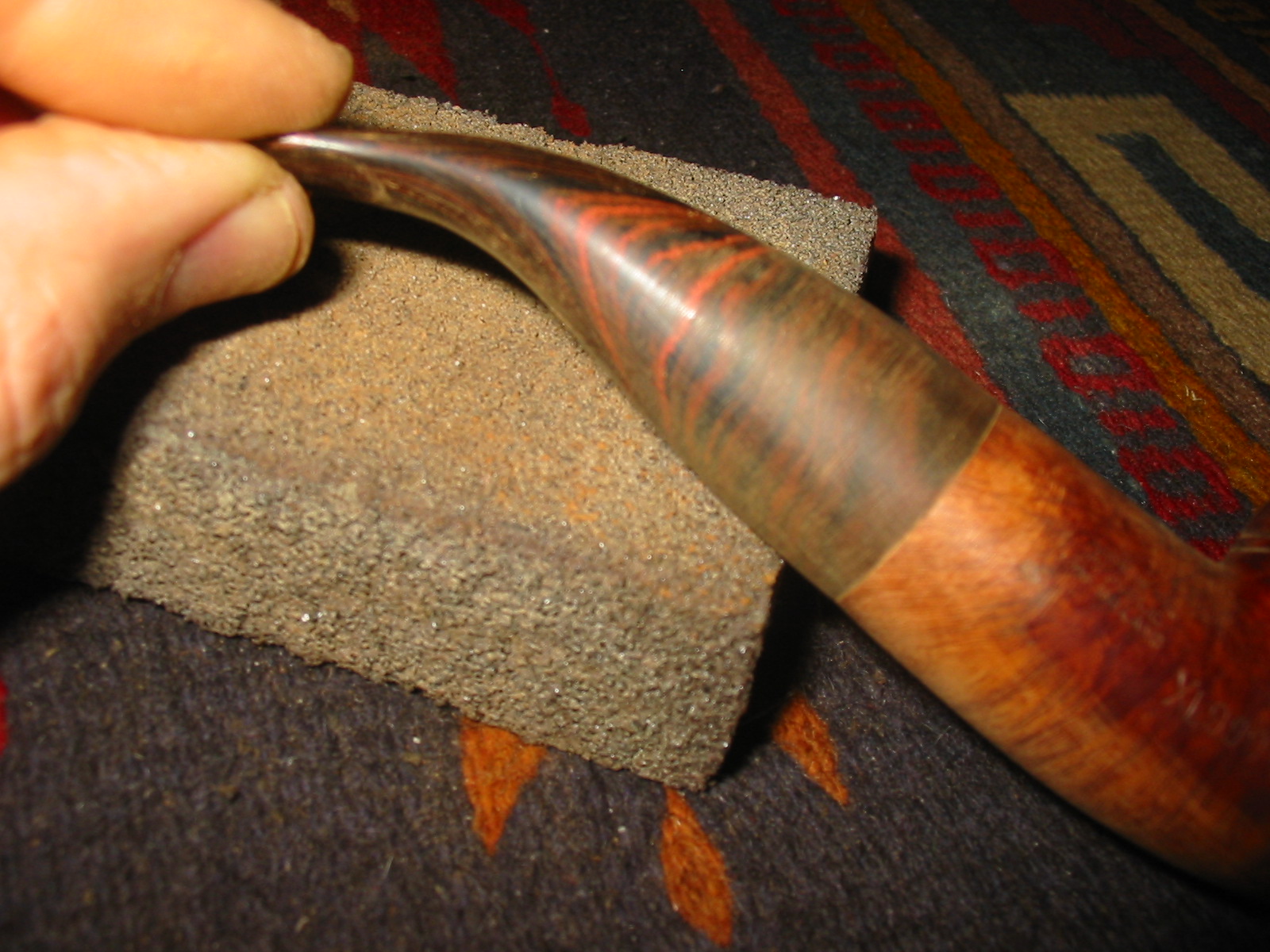
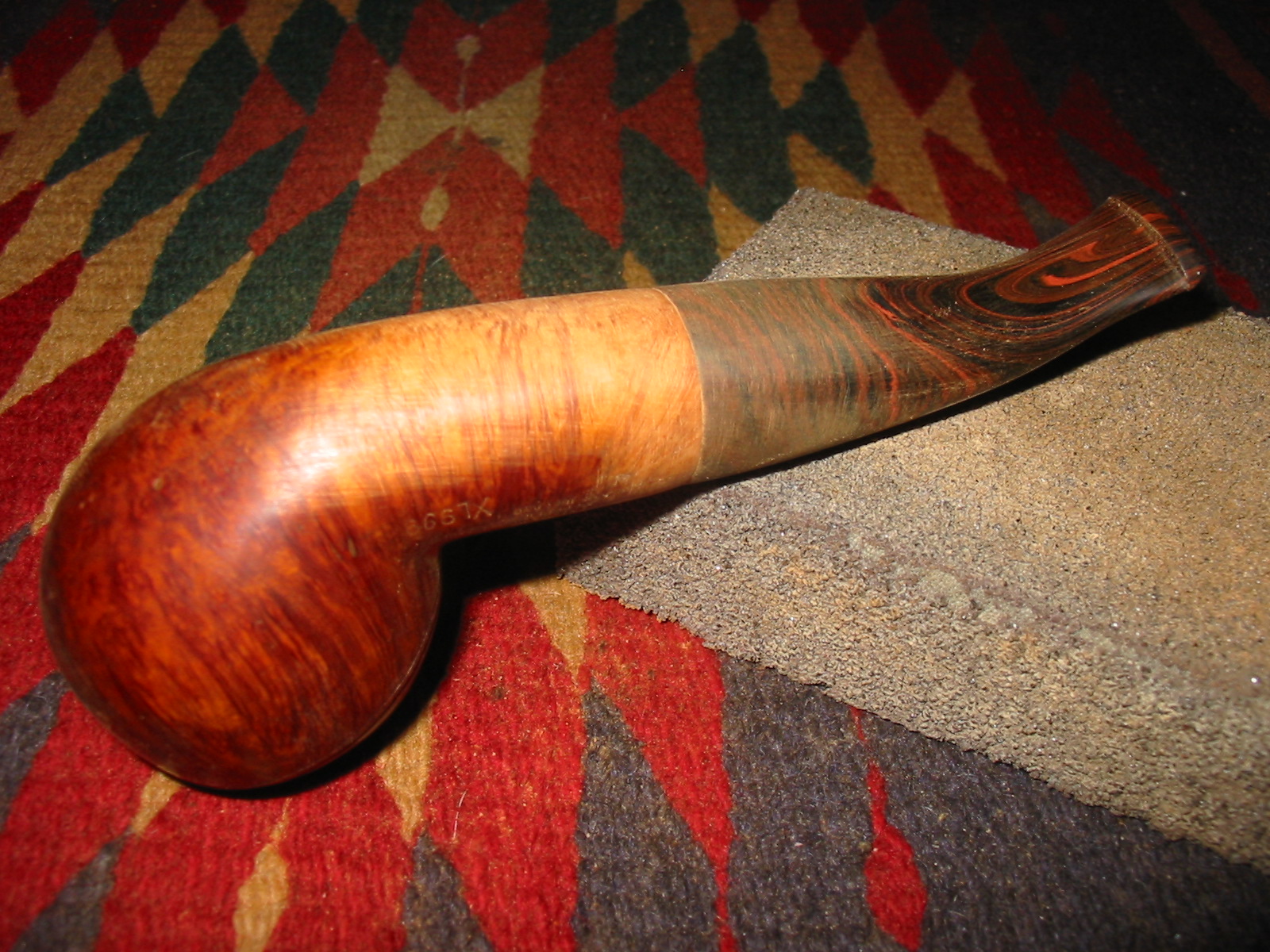
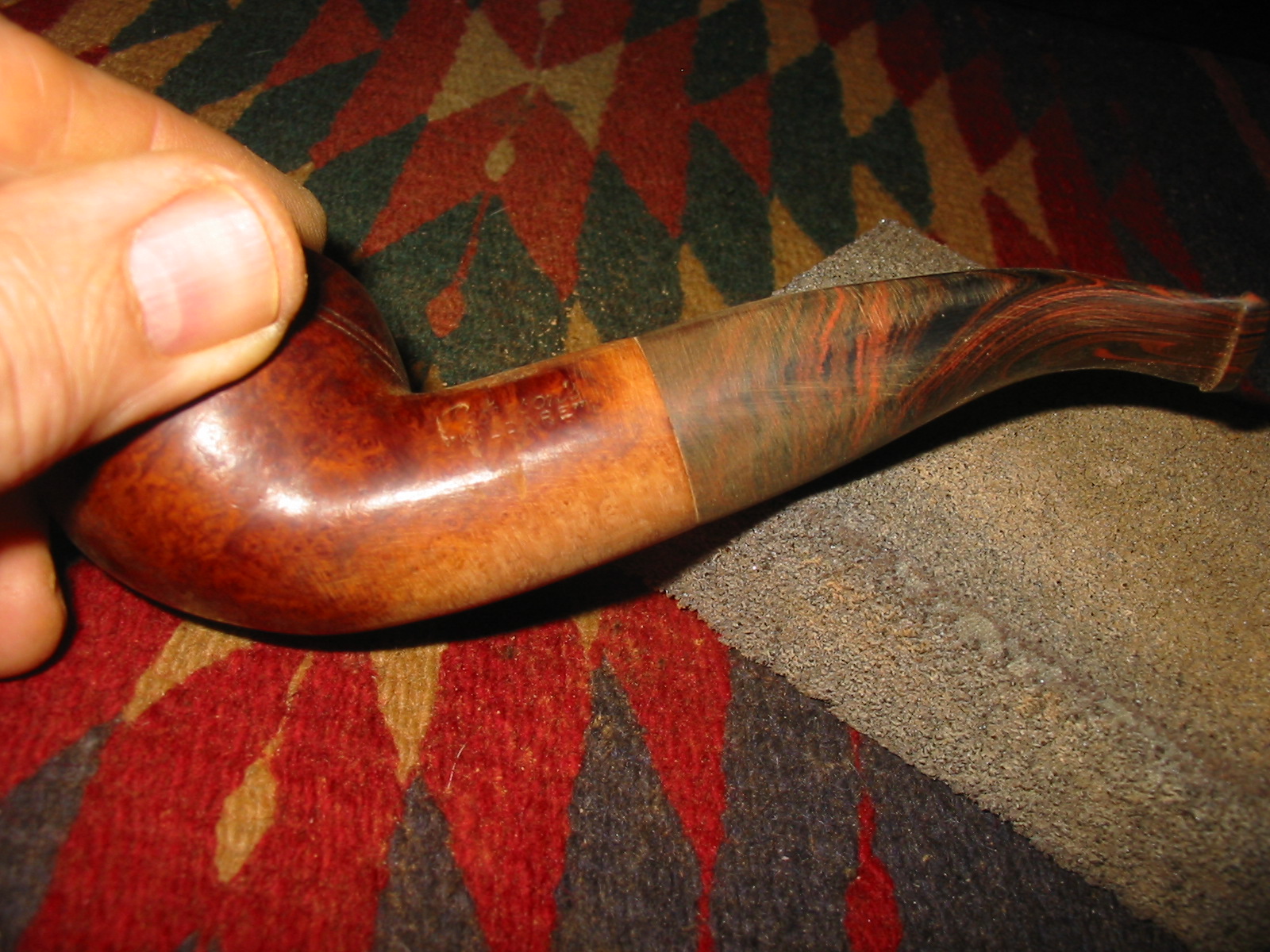
So after dinner this evening I decided to tackle the repair and remedy the situation. I used a pair of sanding blocks, one coarse and one fine to block sand the shank on the top and the bottom and more carefully along the sides of the shank around the stamping on the pipe. I sanded the briar and the stem material until the lines were smooth from the bottom of the bowl to the end of the stem and the same for the top. I worked on the sides to achieve the same thing. After sanding it with the coarse sanding block I sanded it with the fine grit block to remove the scratches.
IMG_1605

IMG_1606

IMG_1607

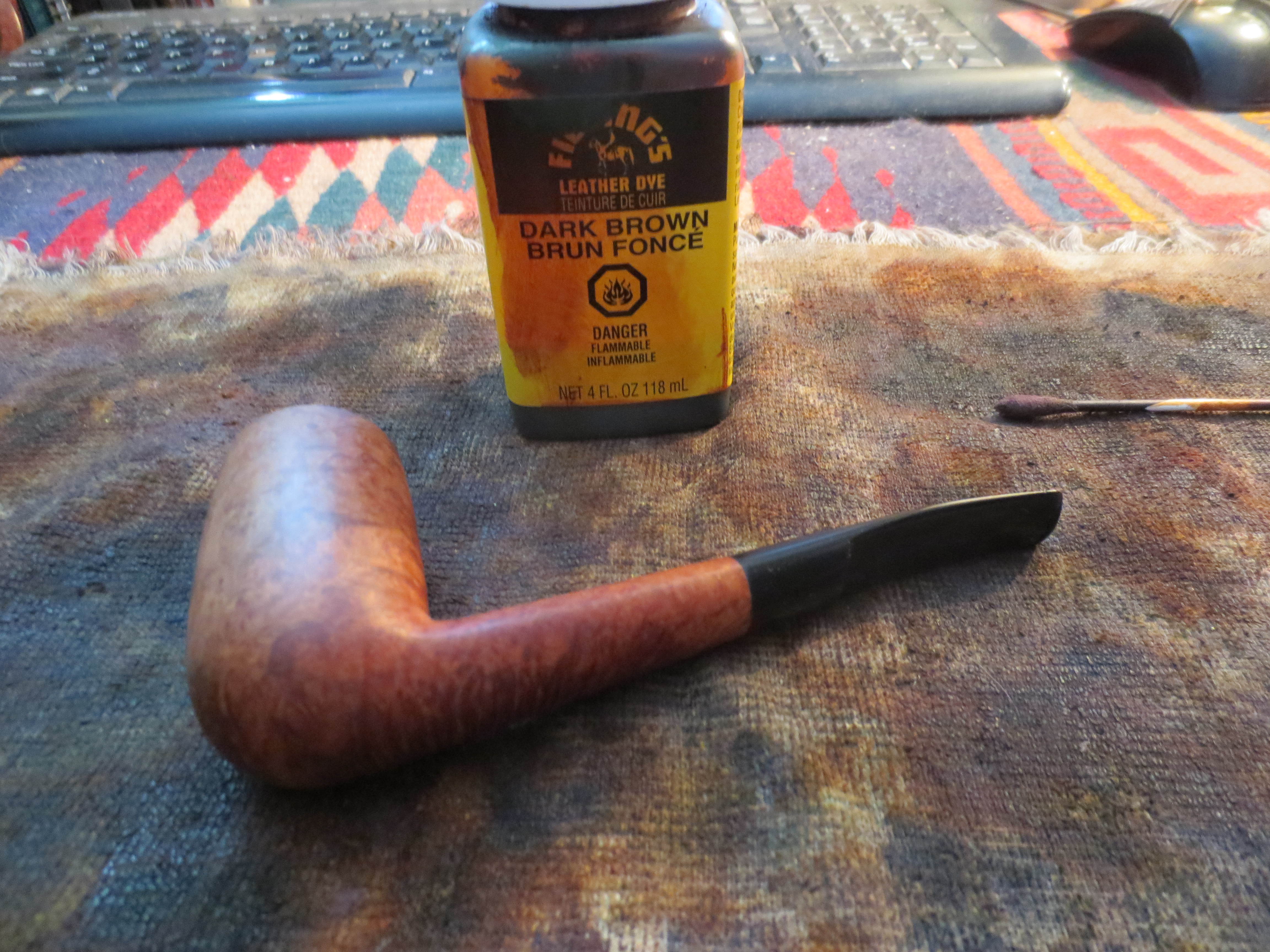
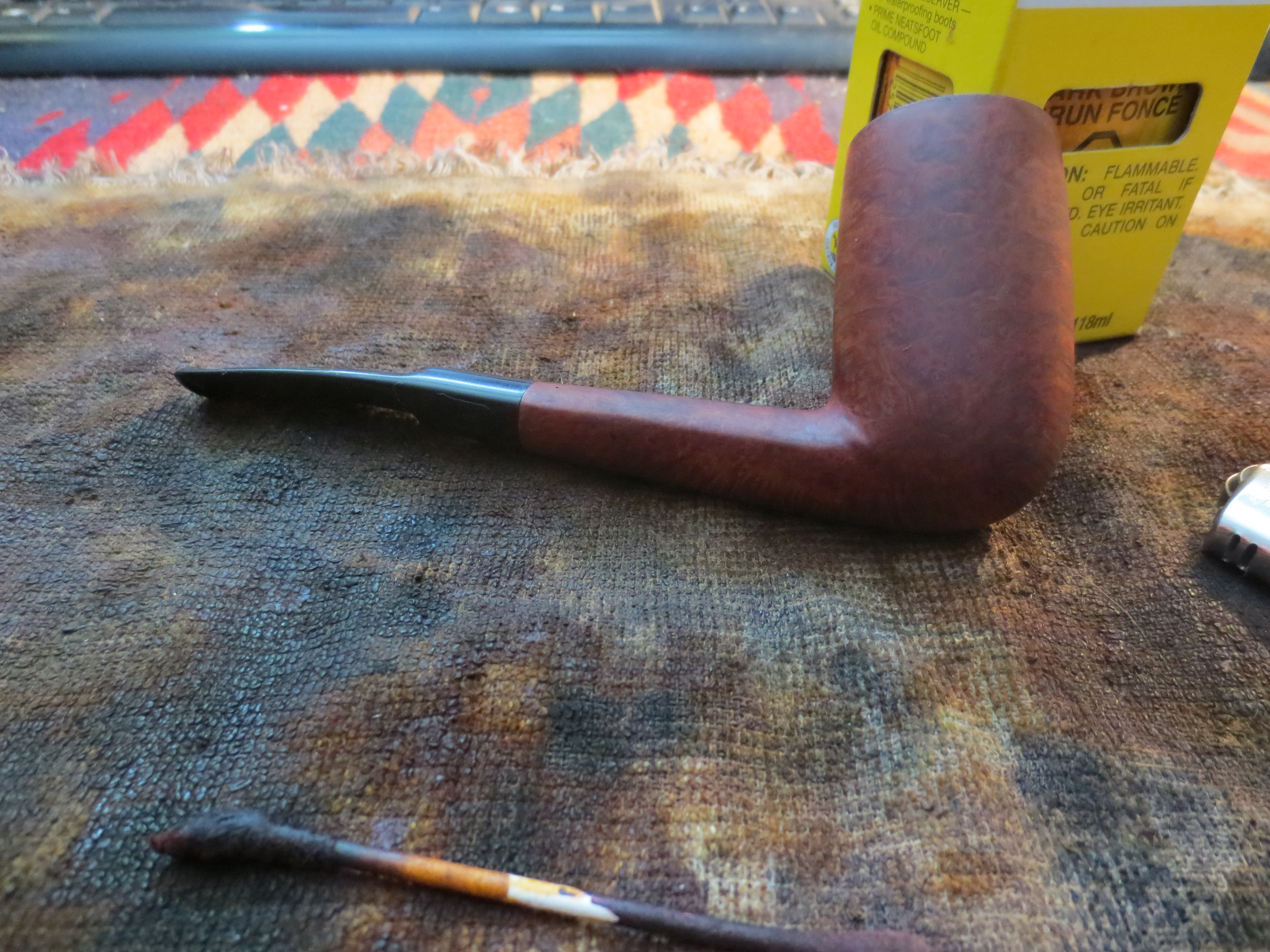
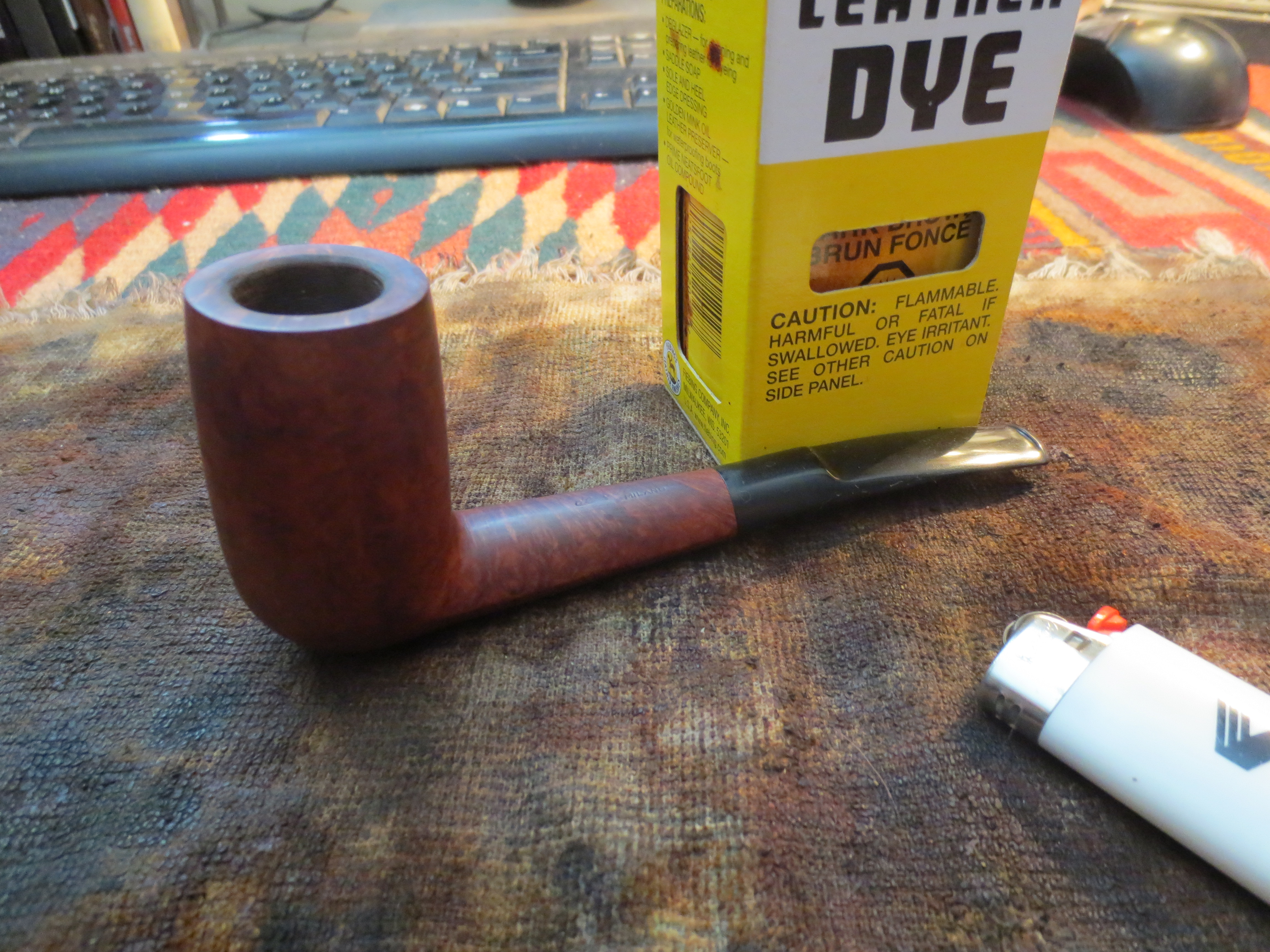
I sanded the stem and shank with 1500-12,000 grit micromesh sanding pads to bring back a smooth finish to the stem and the shank. I heated the shank with a lighter to warm the briar, restained it with a dark brown aniline stain that I thinned with isopropyl alcohol – 1 part stain to 2 parts alcohol. I flamed the alcohol and continued to stain the shank until it matched the rest of the bowl on the pipe. I buffed it with White Diamond and then gave it several coats of carnauba wax and buffed it lightly with a soft flannel buff. Tomorrow morning I will give it a careful examination in the light of day and see where I go from there. Thanks Wayne for your help.
IMG_1608

IMG_1609

IMG_1611

IMG_1612

Savinelli deluxe Milano Stack Restemmed & Renewed


Blog by Steve Laug

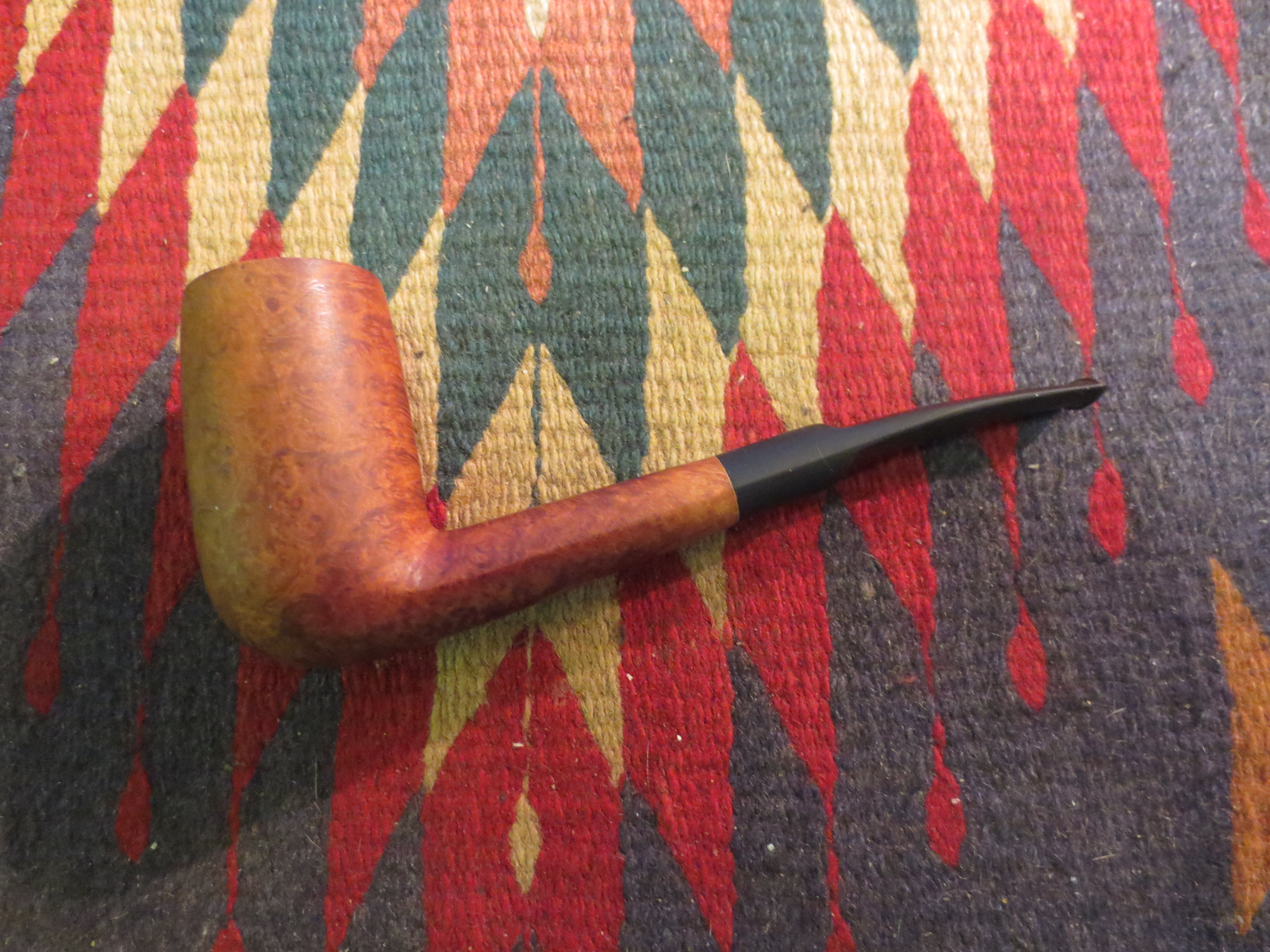
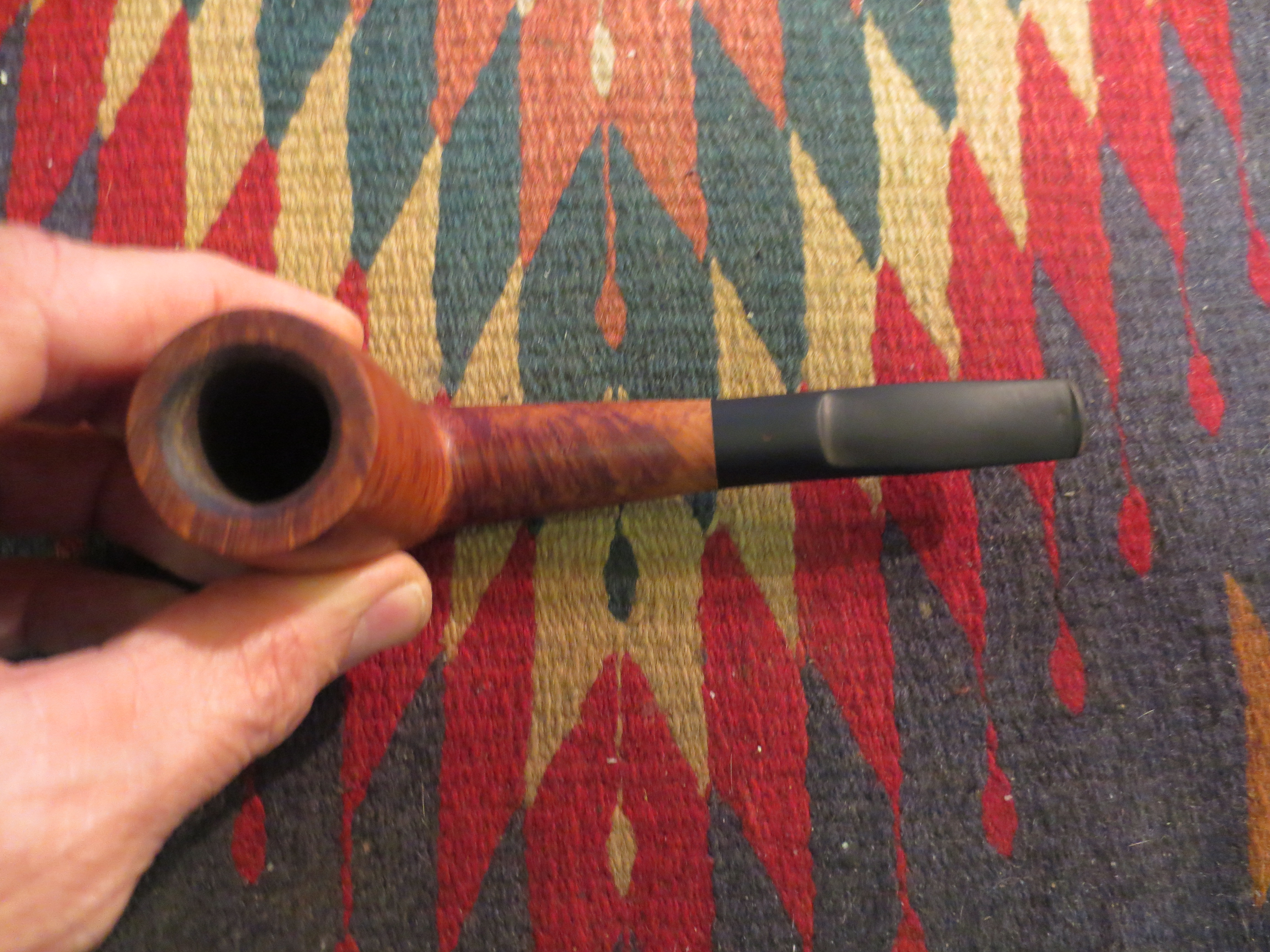
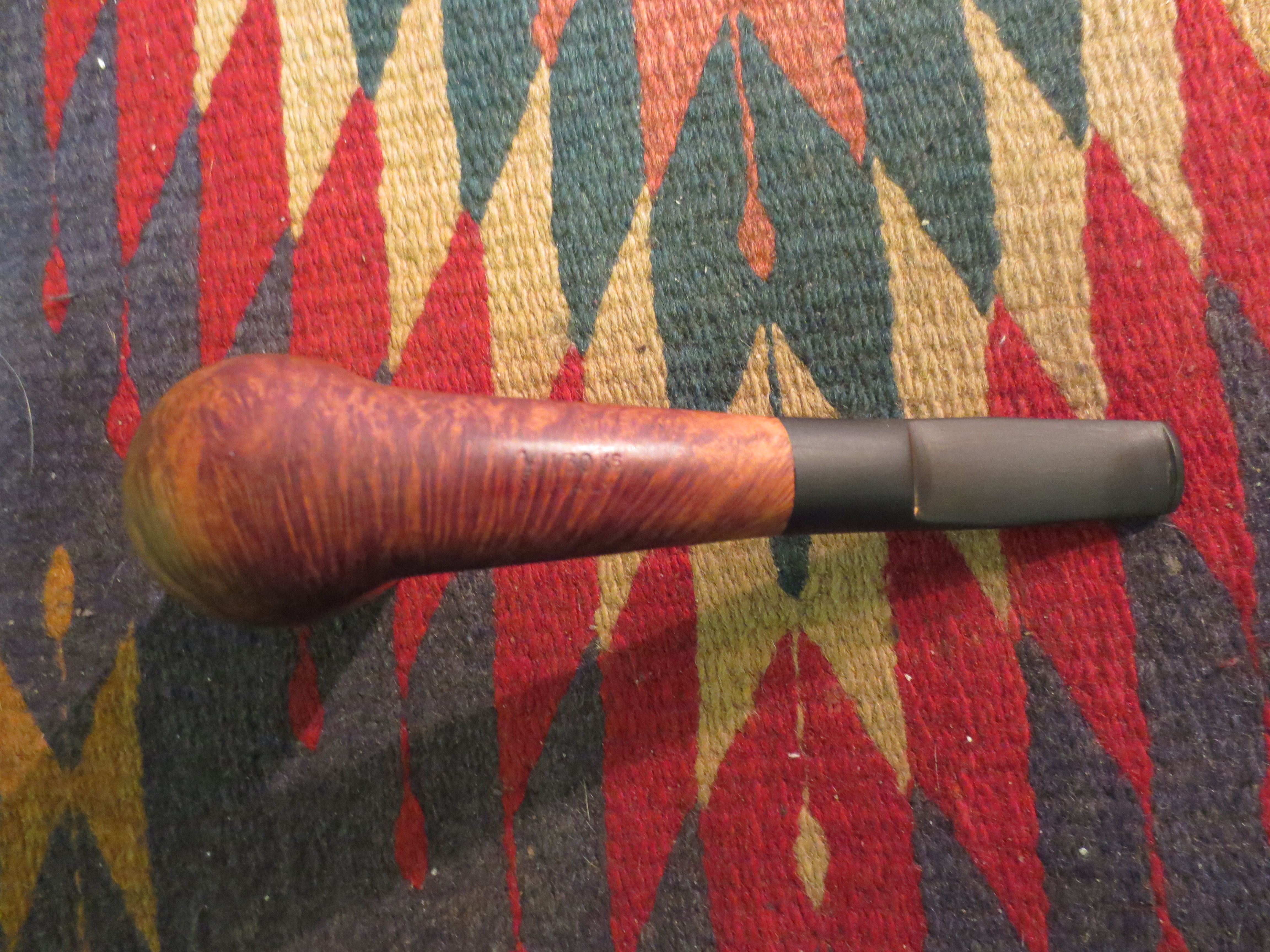
The second pipe in the lot pictured below that I chose to work on was the one on the top of the right column. It is stamped on top of the shank Savinelli de luxe Milano and on the underside the Savinelli shield and next to that is it stamped 130KS Italy. The finish was dull and mostly gone. The rim was not charred at all but had a heavy build up of tars. The bowl was caked – interestingly for a pipe this deep it was caked all the way to the bottom of the bowl. The dimensions of this bowl are: height 2 1/4 inches, outer diameter of the bowl 1 ½ inches, diameter of the chamber ¾ inches. It smelled of sweet aromatics so it would need to be reamed and cleaned well. There was no stem with it but there was a broken tenon stuck in the shank. I would have to pull the tenon and fit a new stem on the bowl. It was made of a good piece of briar – no fills or sand pits. The grain is cross grain on the front and back of the bowl and the top and the bottom of the shank. It had some very nice birdseye grain on each side of the bowl and the shank. The shape of the shank was a modified oval shape.

bowls1

Savinelli top

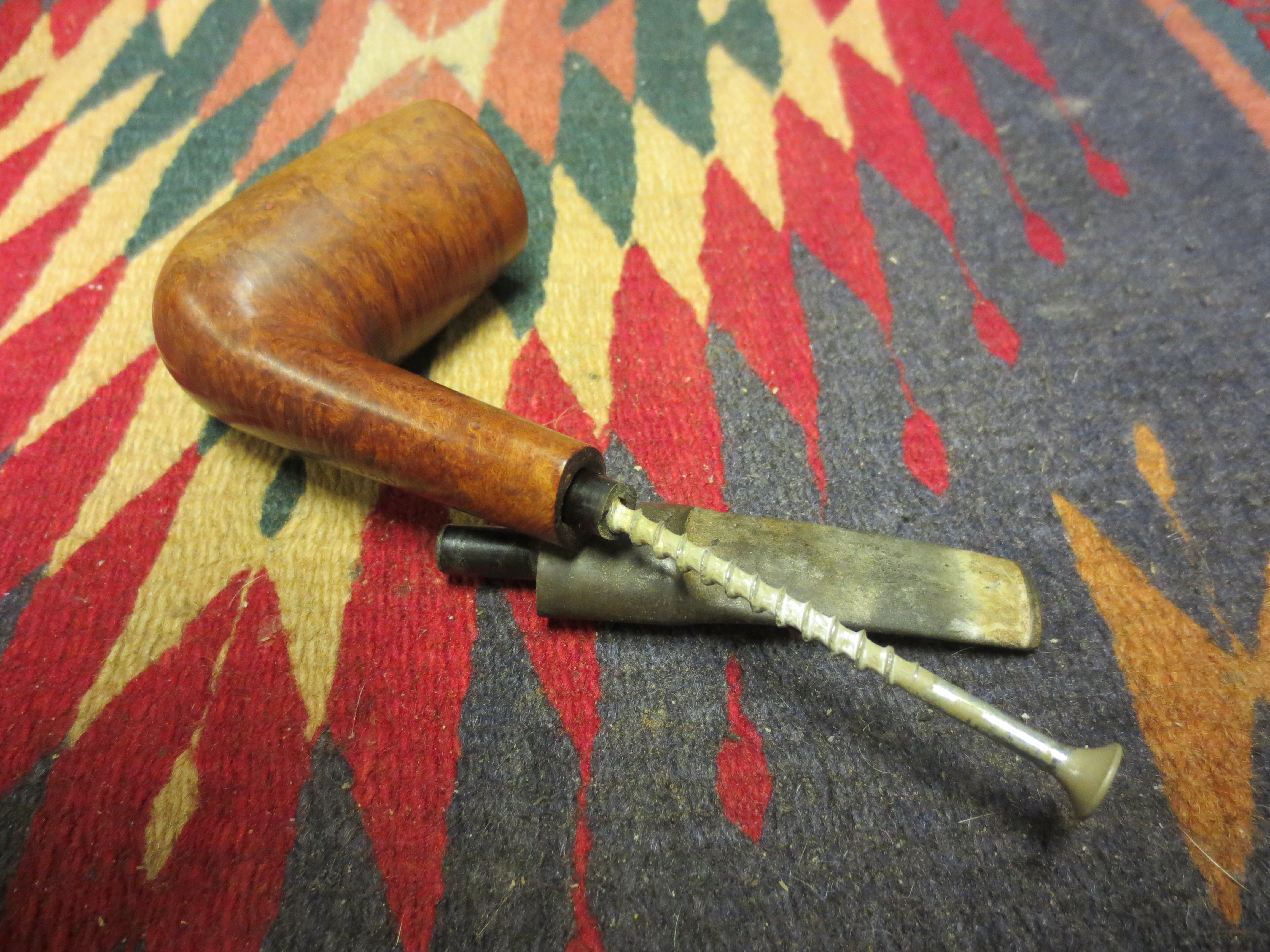
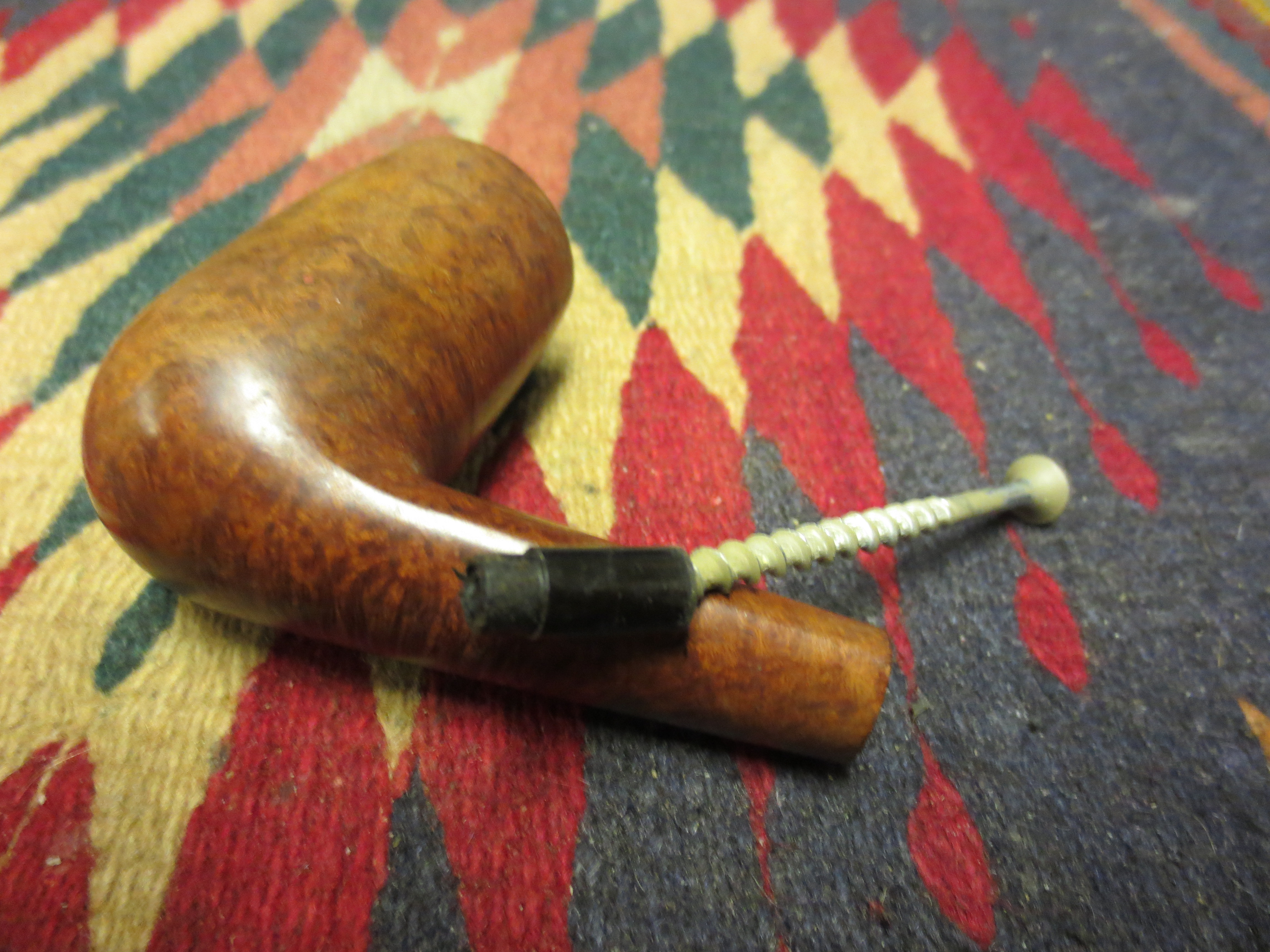
Before I cleaned the bowl and shank I removed the broken tenon that was stuck in the mortise. I have a screw that works perfectly for this process. I turn it into the tenon by hand or a screw driver and then work it out by hand or with a pair of pliers. If the tenon is stuck and will not move I put it in the freezer for 30 minutes or more and generally it will pop out quite easily. In this case it came out quite simply and I was able to move on in the process of cleaning.

IMG_1323

IMG_1324

I sorted through my collection of old stems to find an oval one that I could modify to fit the style of the shank. I had looked on line and found that this particular model of Savinelli had a taper stem (see the first photo below). I did not have any oval tapered stems that would fit, nor did I have large enough round stems that could be modified. I chose an older oval saddle stem that I believed would look good. I think that originally it was on a Dr. Plumb pipe but the logo was worn off and my modifications would remove the red dot on the stem (second photo below).

$T2eC16JHJHUFFfhDpWd3BR)N9Jwnpw~~60_57

IMG_1325

I sanded the tenon with 220 grit sandpaper until I had a good snug fit on the shank. The next four photos show the stem before I began to shape it to fit. The fit against the shank was good and tight. The look of the pipe and stem worked for me so I was good to go.

IMG_1326

IMG_1327

IMG_1328

IMG_1329

I do the initial shaping of a stem with a Dremel and sanding drum. I set the speed about mid mark on the speed control of the Dremel and slowly work at the surface of the stem. I do this initial shaping with the stem on the shank. I want to shape it as closely as possible to the shank shape before doing the finish shaping by hand. The next three photos show the stem after this initial shaping. There was still much work to do in bring the stem and shank to a proper fit and the width of the stem to a match with the taper of the shank. This work had to be done by hand using sandpaper and files.

IMG_1330

IMG_1331

IMG_1332

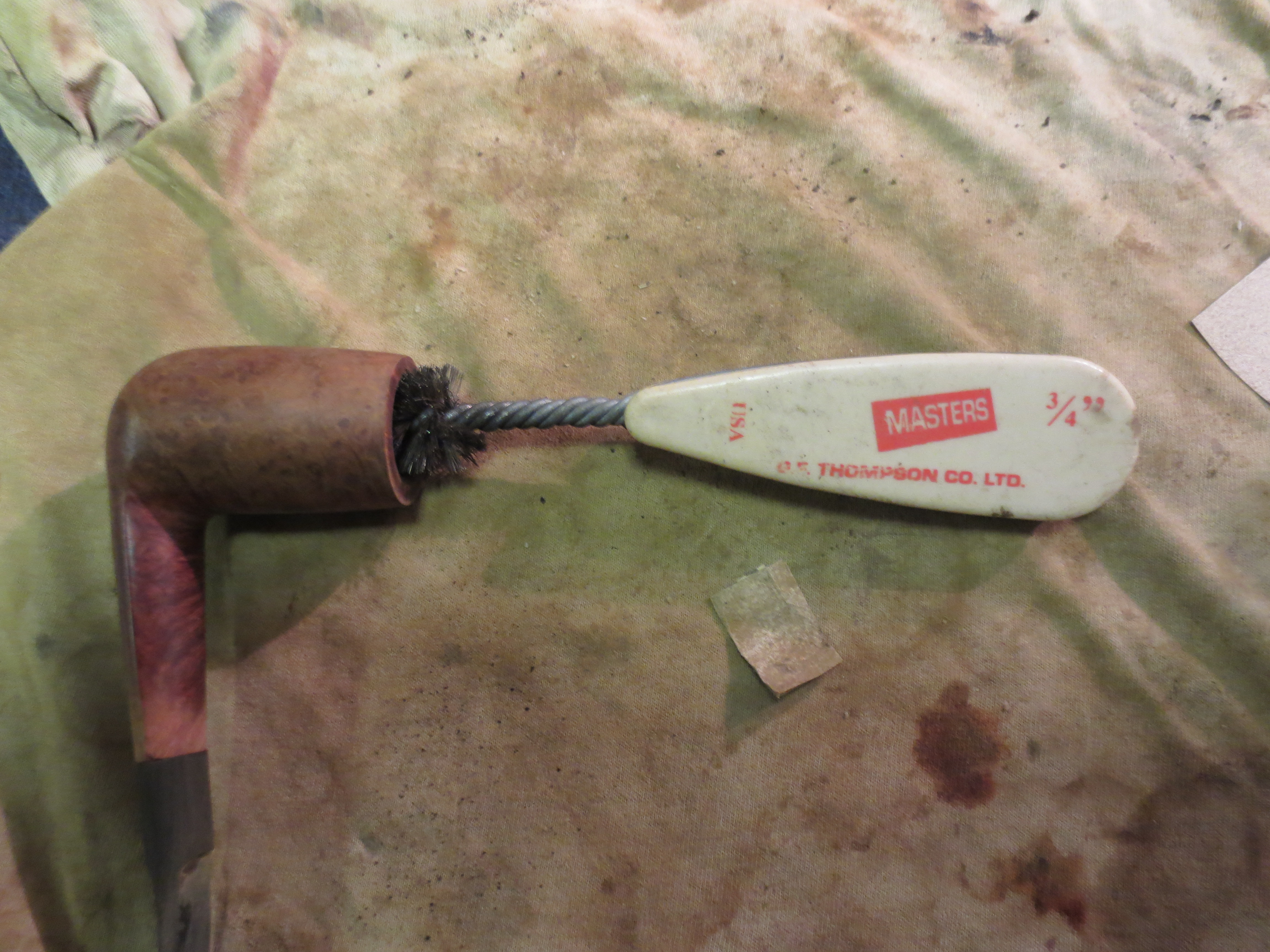
The depth of the bowl on this stack made it impossible for me to get to the bottom of the bowl with my reamers. The PipNet reamer went about 2/3 of the way down the bowl and the KleenReem or Senior reamer did the same. I have used a plumbing tool that is used to clean up pipe after cutting it to ream deep bowl. It is a ¾ inch cone shaped wire brush with a handle that I can turn into the bowl and go to the bottom to remove the cake evenly. It works exceptionally well for this purpose.

IMG_1337

IMG_1338

IMG_1339

IMG_1333

I cleaned up the rim of the pipe with 220 grit sandpaper and also worked on the shank stem fit with the same sandpaper. As I was planning to refinish the pipe bowl and shank I did not care if I removed a bit of the finish while sanding the stem and shank. The next three photos show the stem/shank fit after I had sanded it with the sandpaper. I really liked the look of the pipe at this point and only needed to do the stem polishing and the finish sanding and cleaning of the bowl.

IMG_1334

IMG_1335

IMG_1336

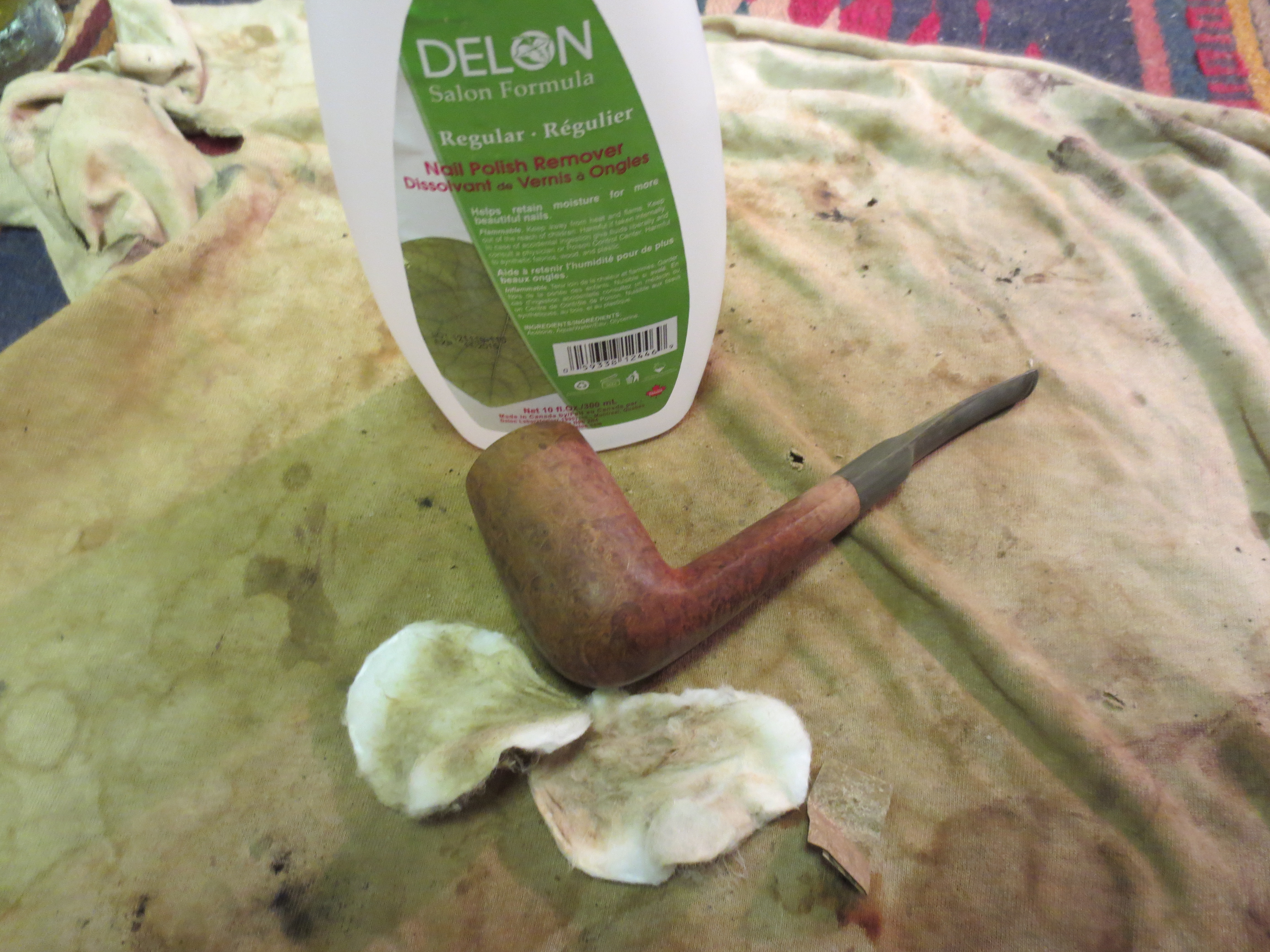
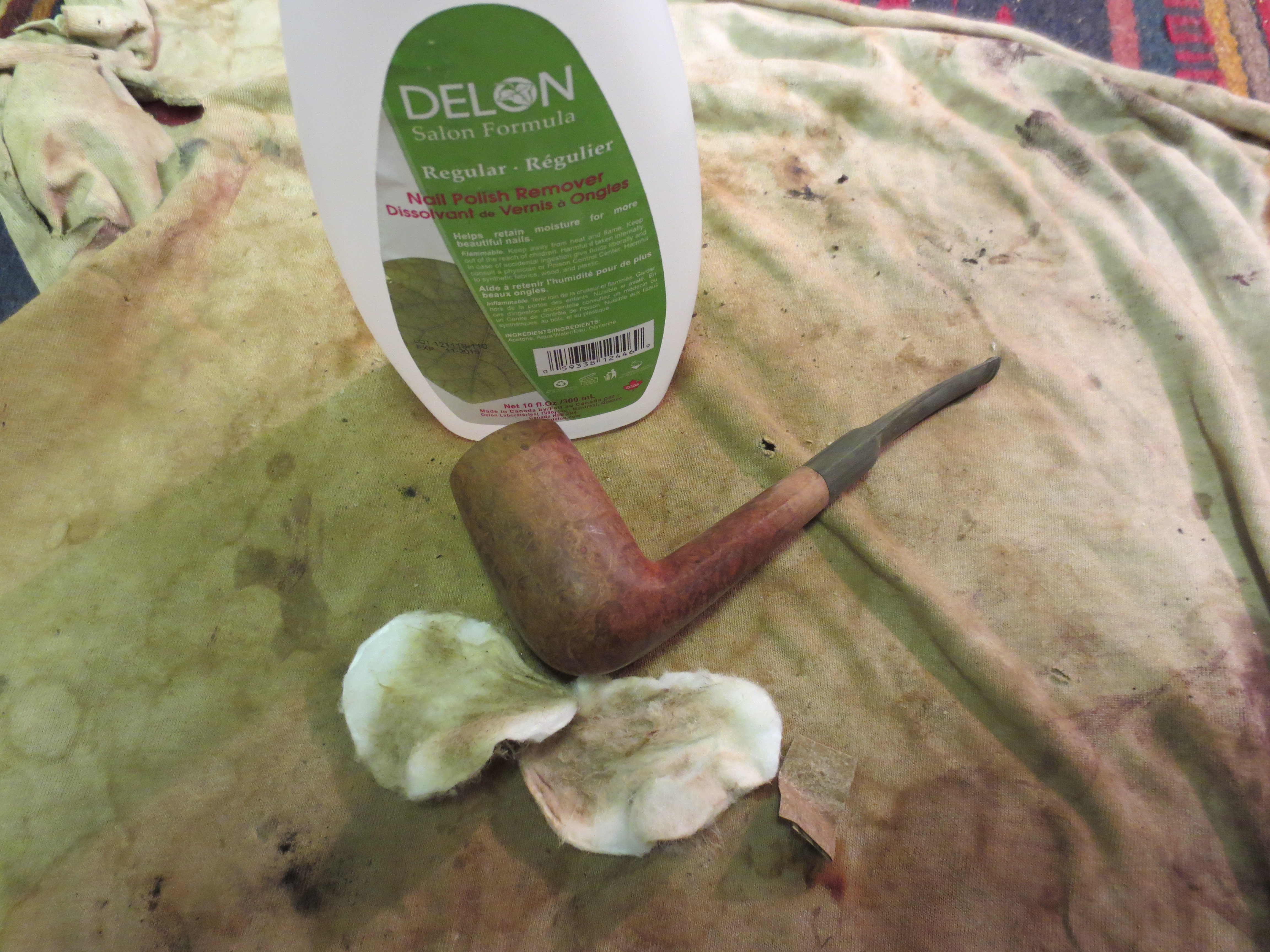
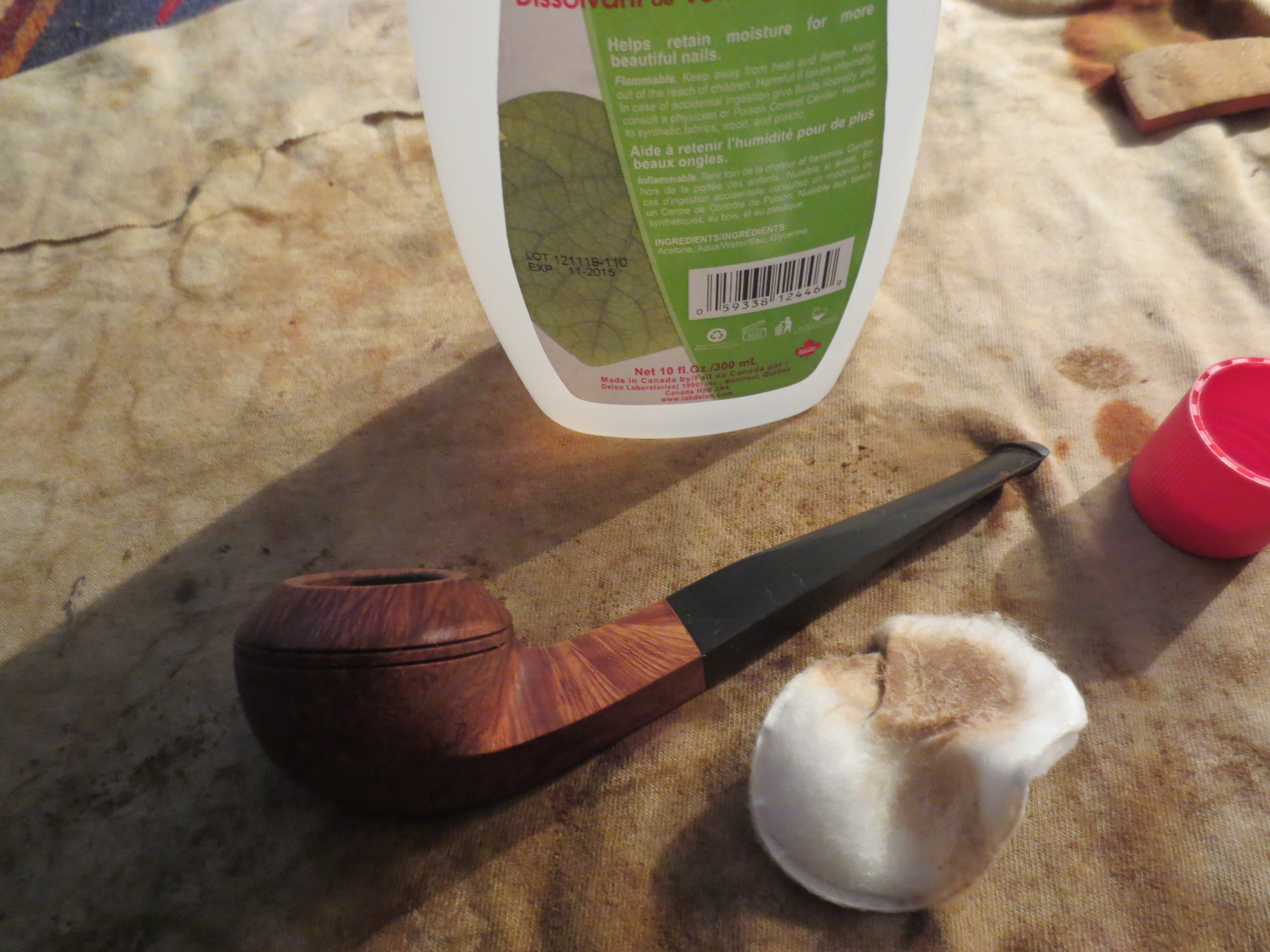
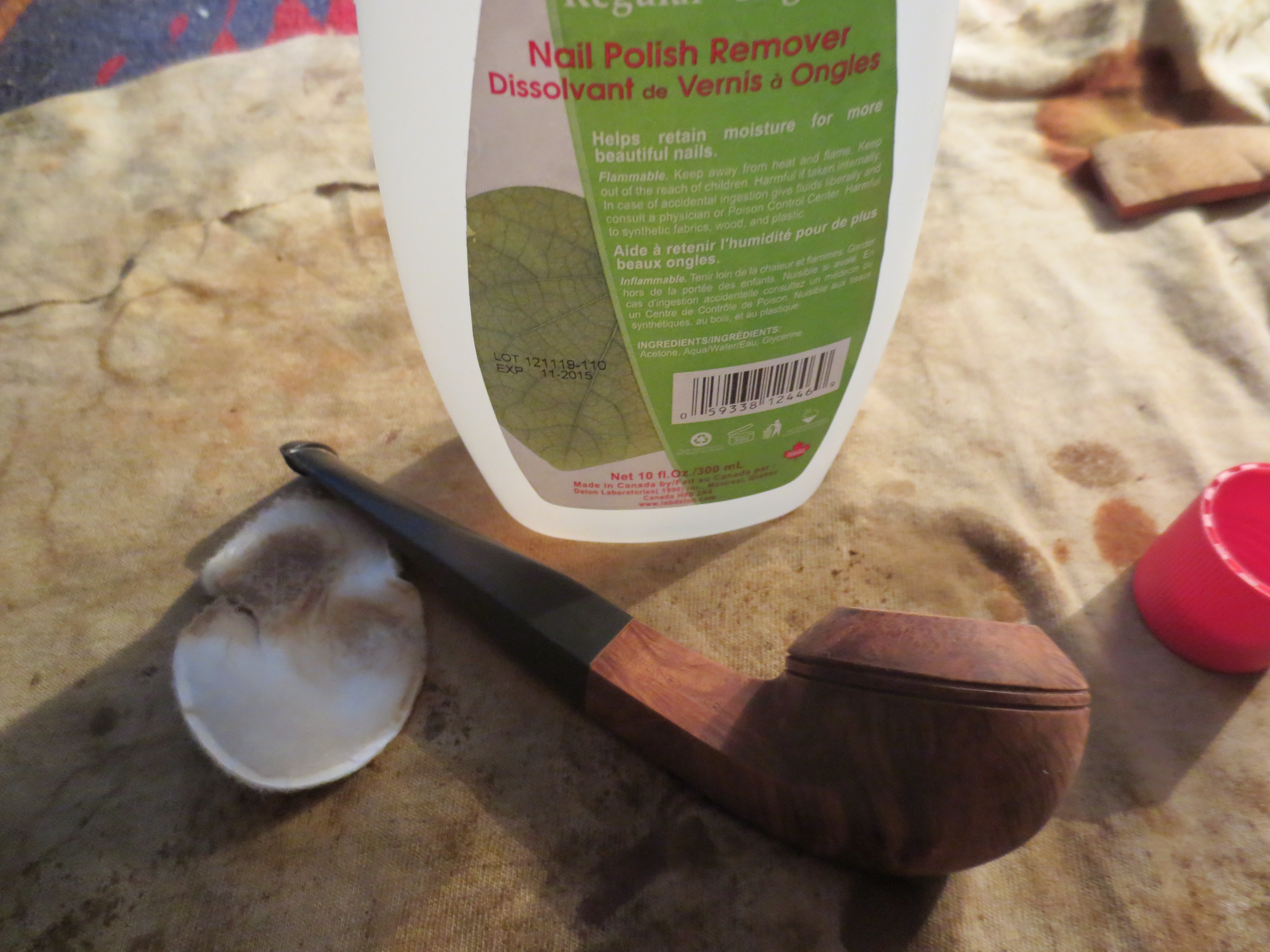
I used acetone on cotton pads to remove the finish on the pipe. I wiped it down until it was the same colour as the sanded portion of the shank. This would make blending the stain much easier to do. The first two photos below show the bowl after the initial wipe down with acetone. Photos 3-5 show the pipe after the finish has been removed from the pipe and it is ready to be stained.

IMG_1340

IMG_1341

IMG_1342

IMG_1343

IMG_1344

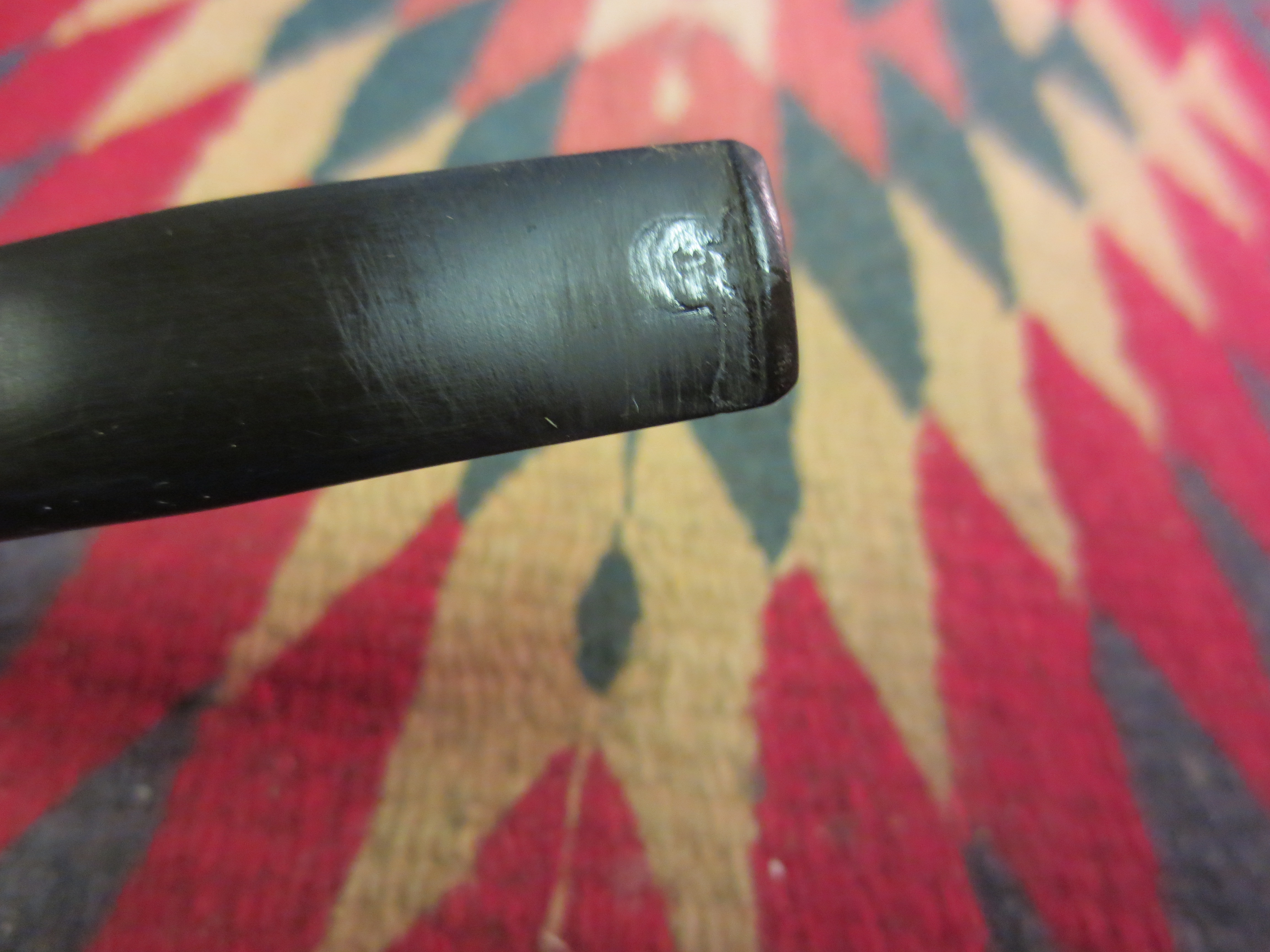
When I sanded the stem I found that there was one small tooth mark on the top of the stem near the button that no amount of heat would lift up. I sanded the spot with the 220 grit sandpaper until it was clean and then buffed it with Tripoli until it was very clear the breadth of the spot. I filled the indentation with clear super glue and sanded it once it was dry. The two photos below show the stem repair after the initial sanding and then after it was ready to be polished. Once the polishing was done the repair would be virtually invisible.
IMG_1345

IMG_1346

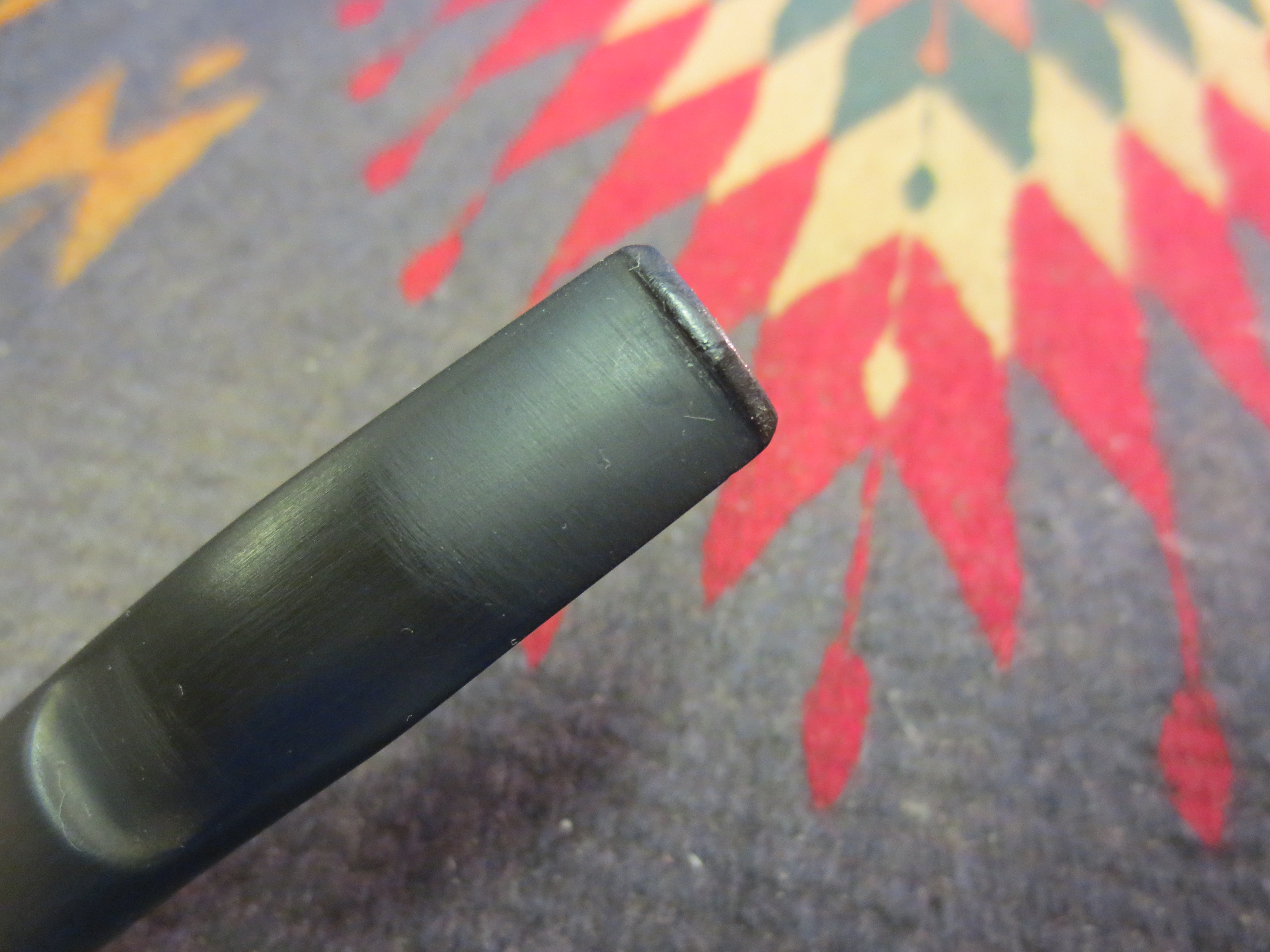
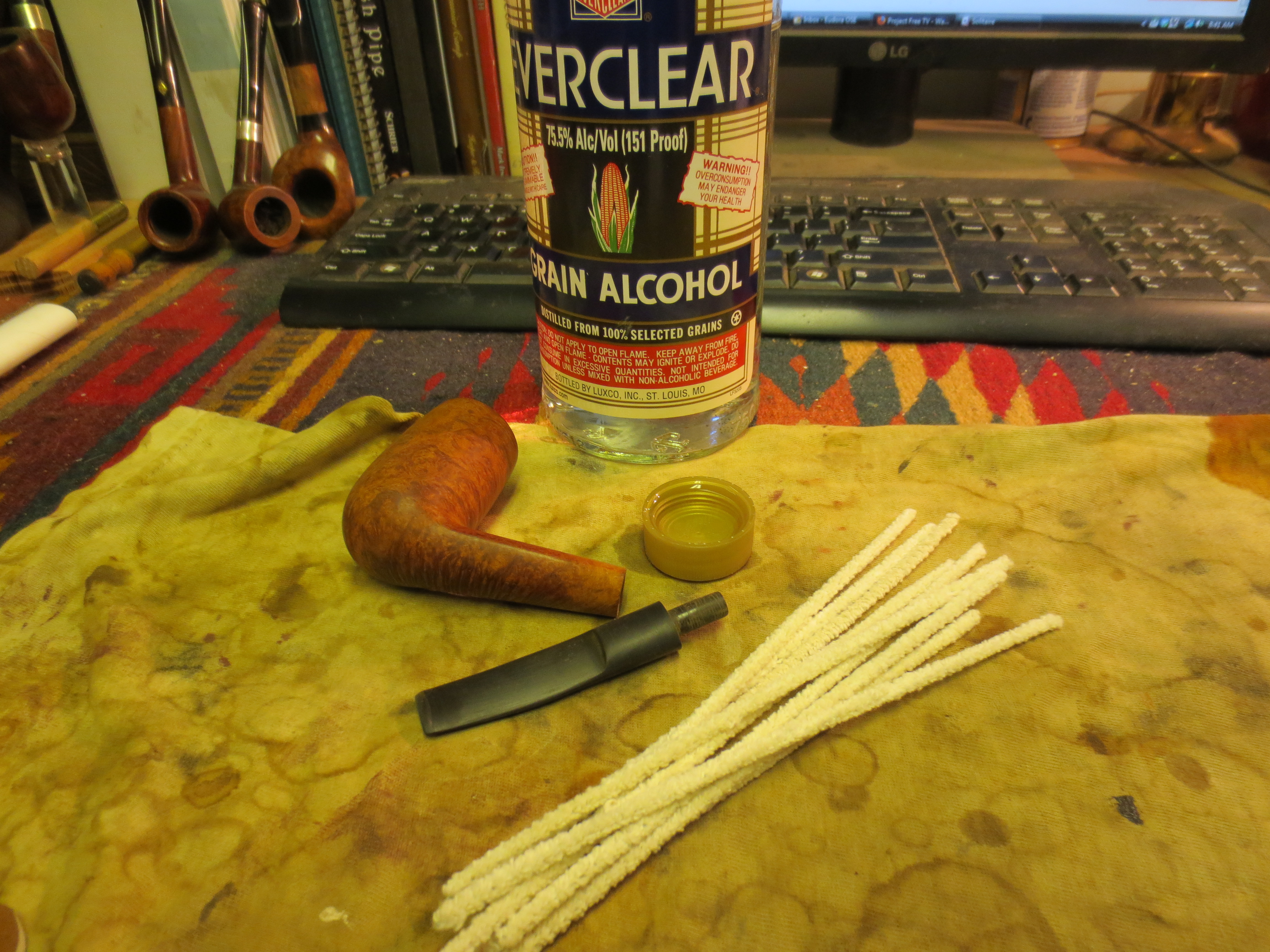
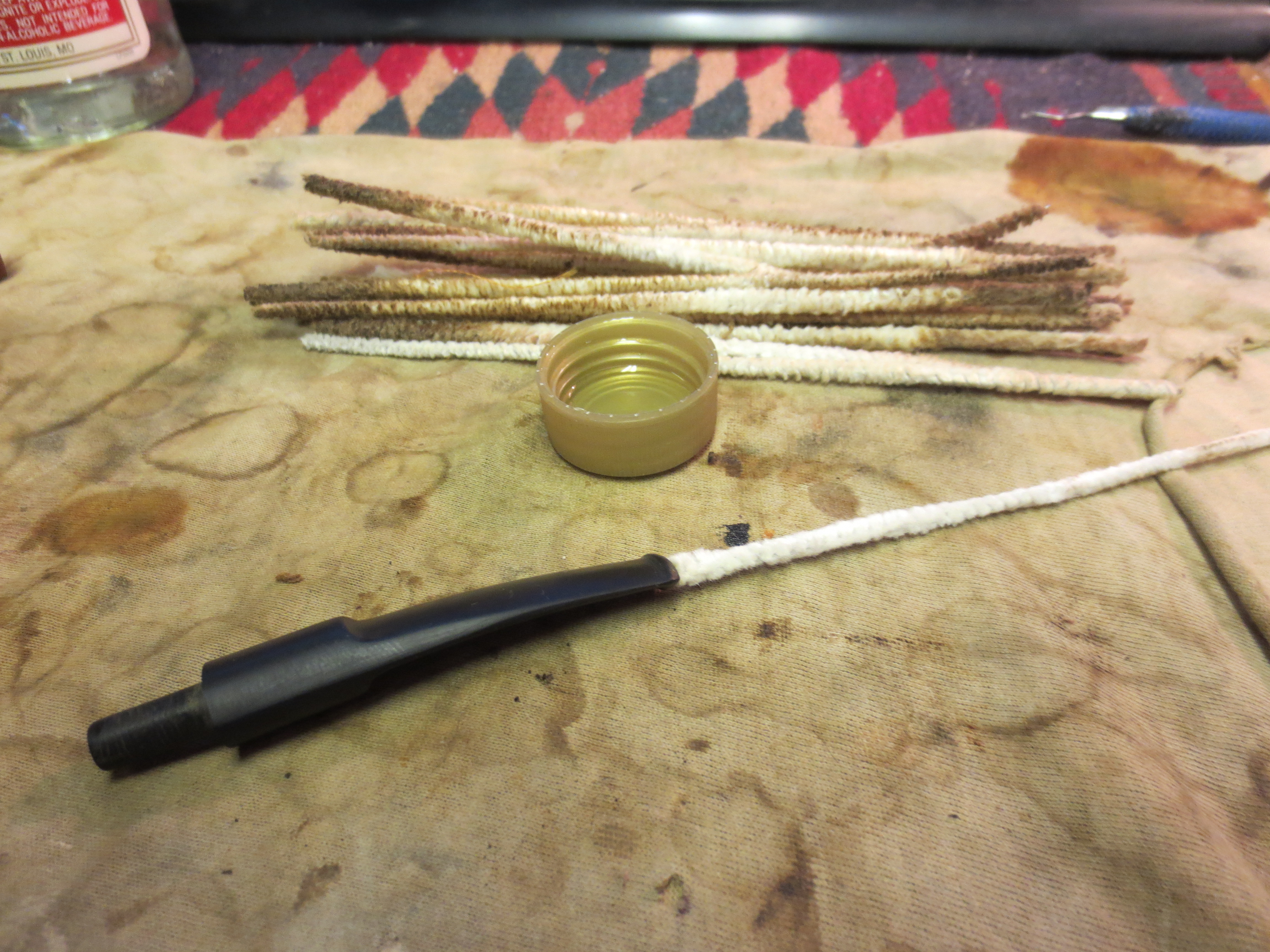
I cleaned the internals of the stem and the shank with pipe cleaners, cotton swabs and Everclear until the shank and the internals of the stem were clean. I used a dental pick to clean out the areas inside the button and the flare of the airway in the button.

IMG_1347

IMG_1349

Once the insides were clean I wiped the bowl down with Everclear and removed any possible grime that I added to the surface in the cleaning process. The next three photos show the pipe after all of the cleaning. It is beginning to look like the stem and pipe were made together.

IMG_1350

IMG_1351

IMG_1352

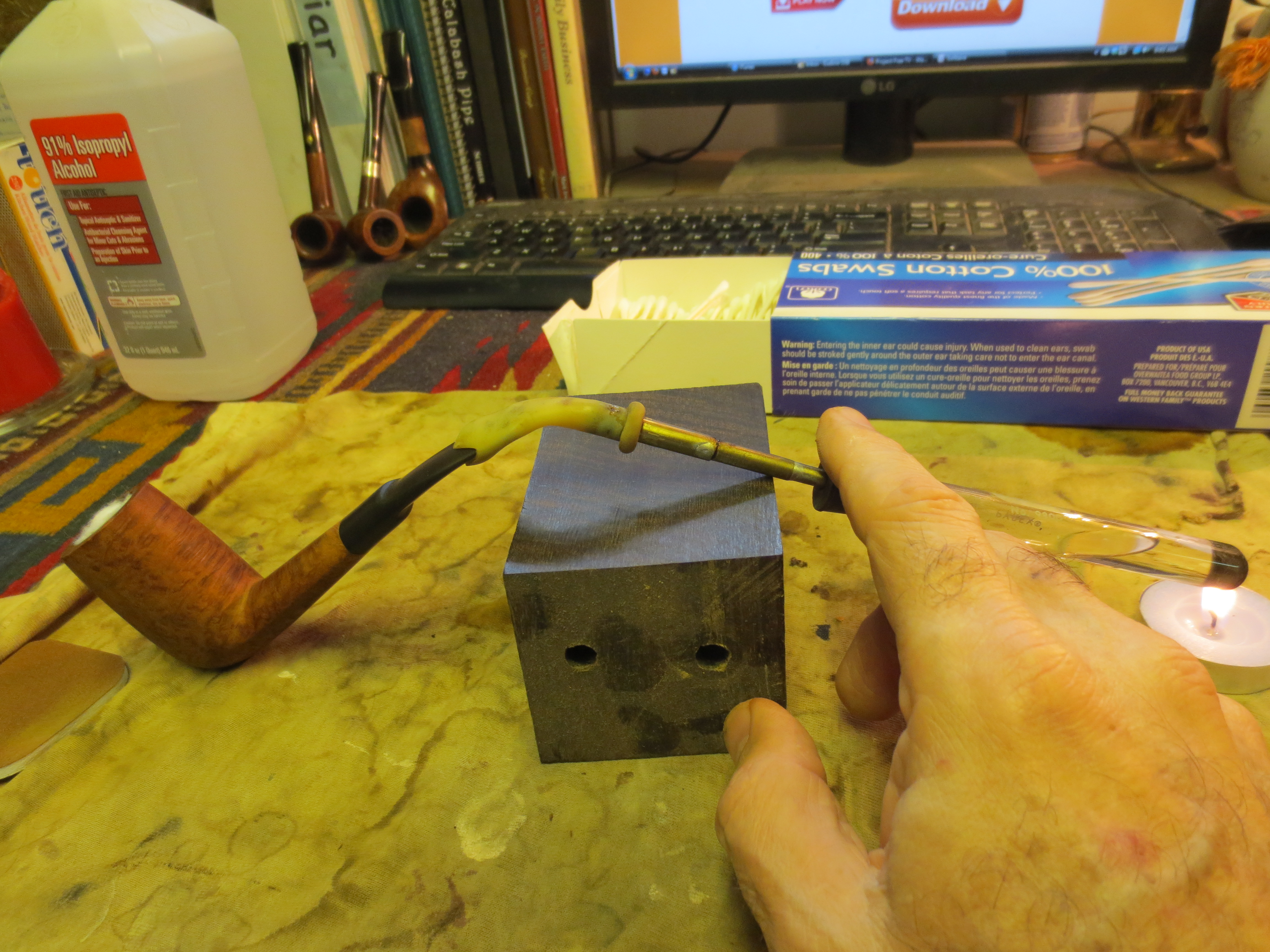
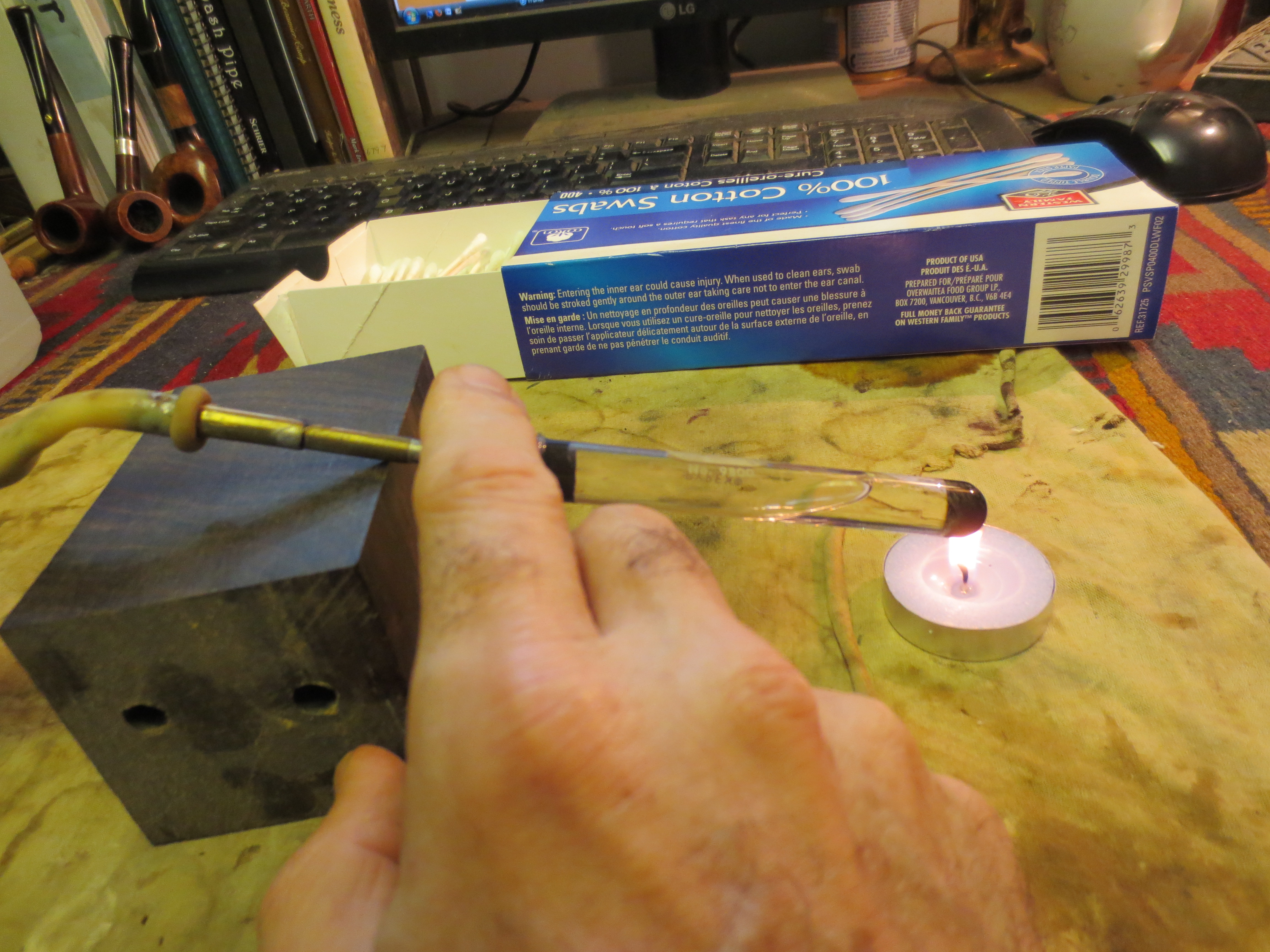
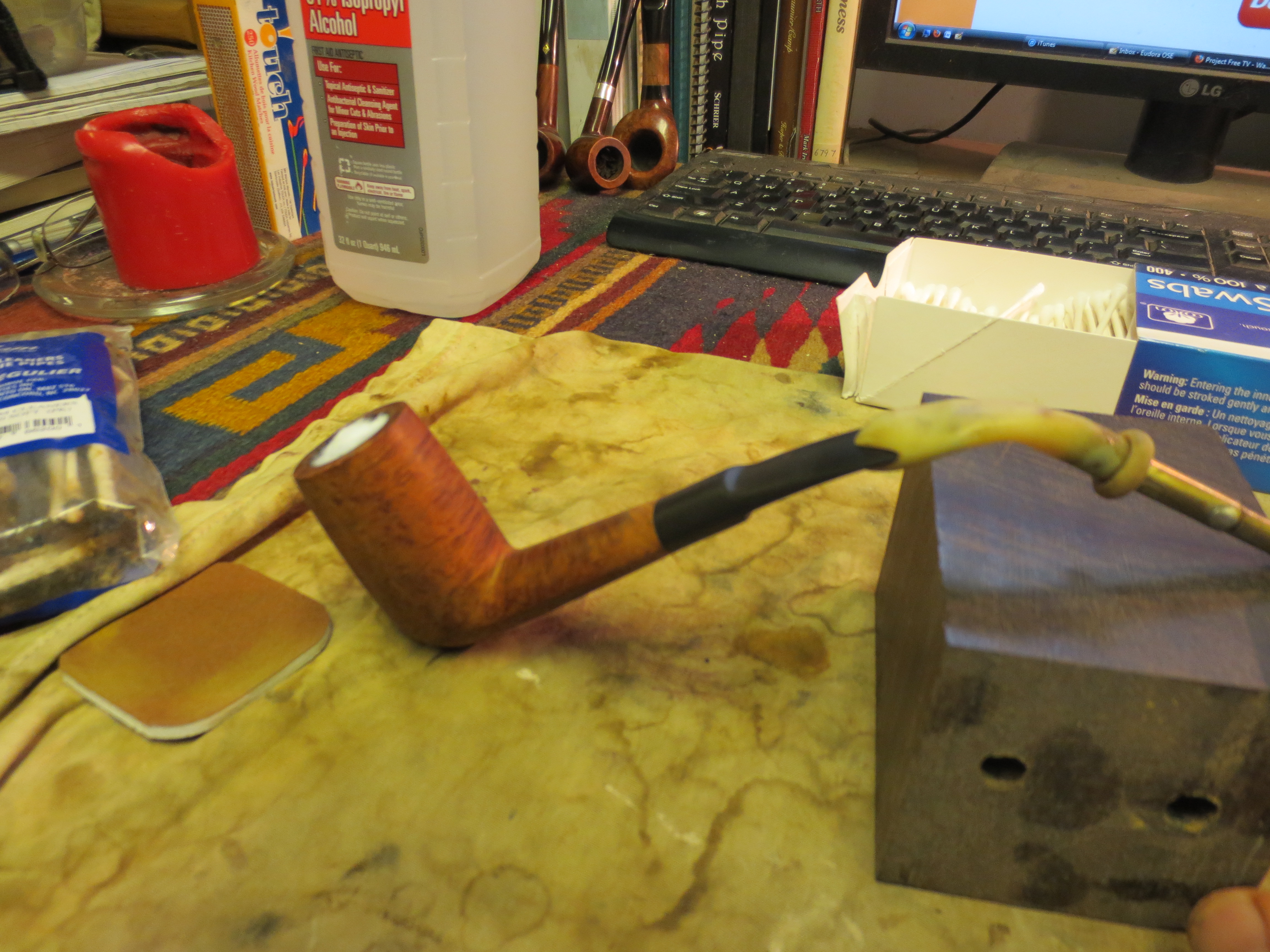
Because of the amount of grime that I cleaned out of the shank and the stem I decided to use a retort on it to give it a more thorough cleaning. The next series of three photos show the set up of the retort system. I use isopropyl alcohol in the test tube and heat the tube with a small tea light candle. I use a block of ebony that I have here to support the pipe and retort during the process. The alcohol is boiled through the pipe until it comes out clean. Generally this takes 2-3 fresh test tubes of alcohol.

IMG_1353

IMG_1354

IMG_1355

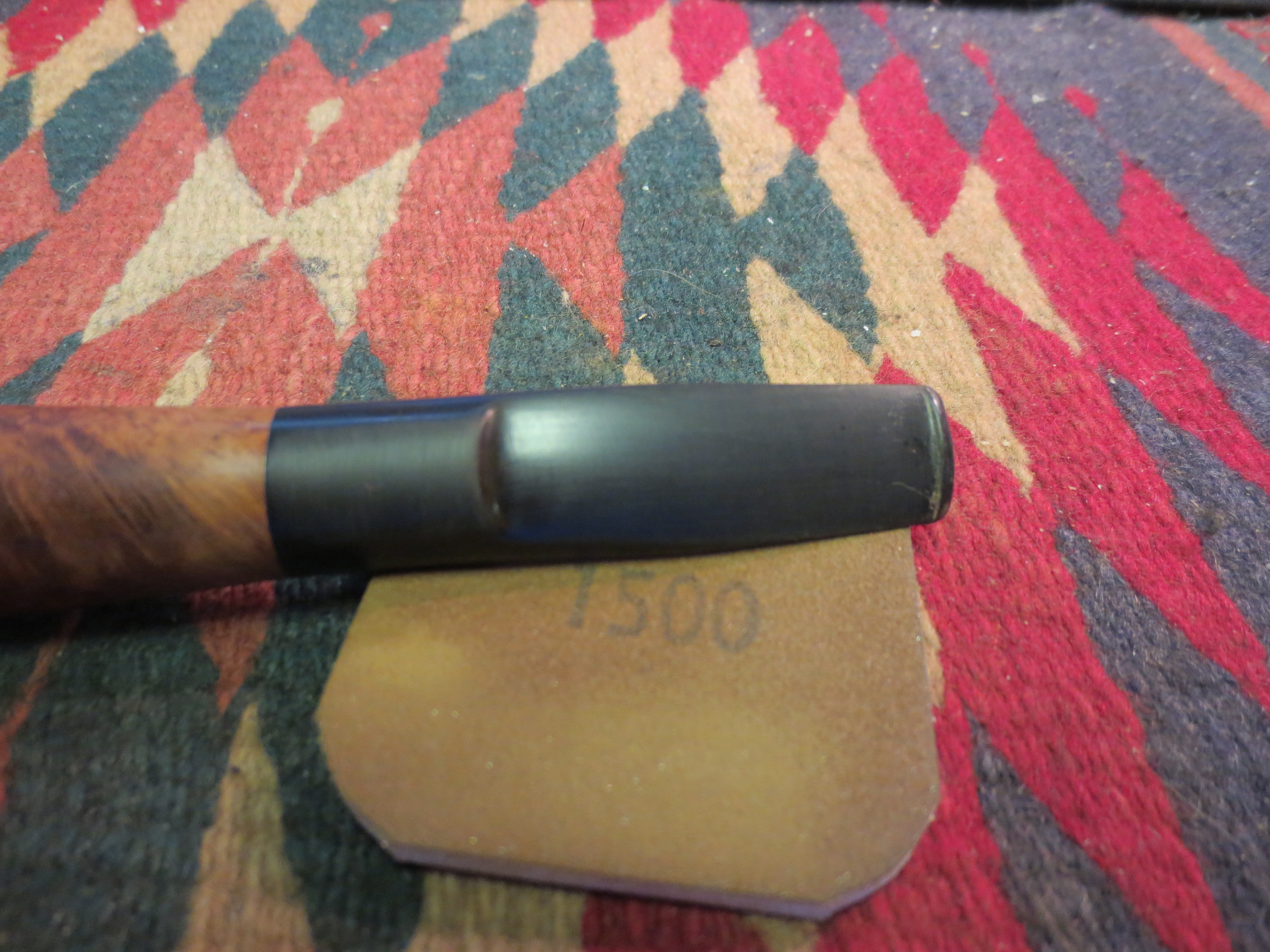
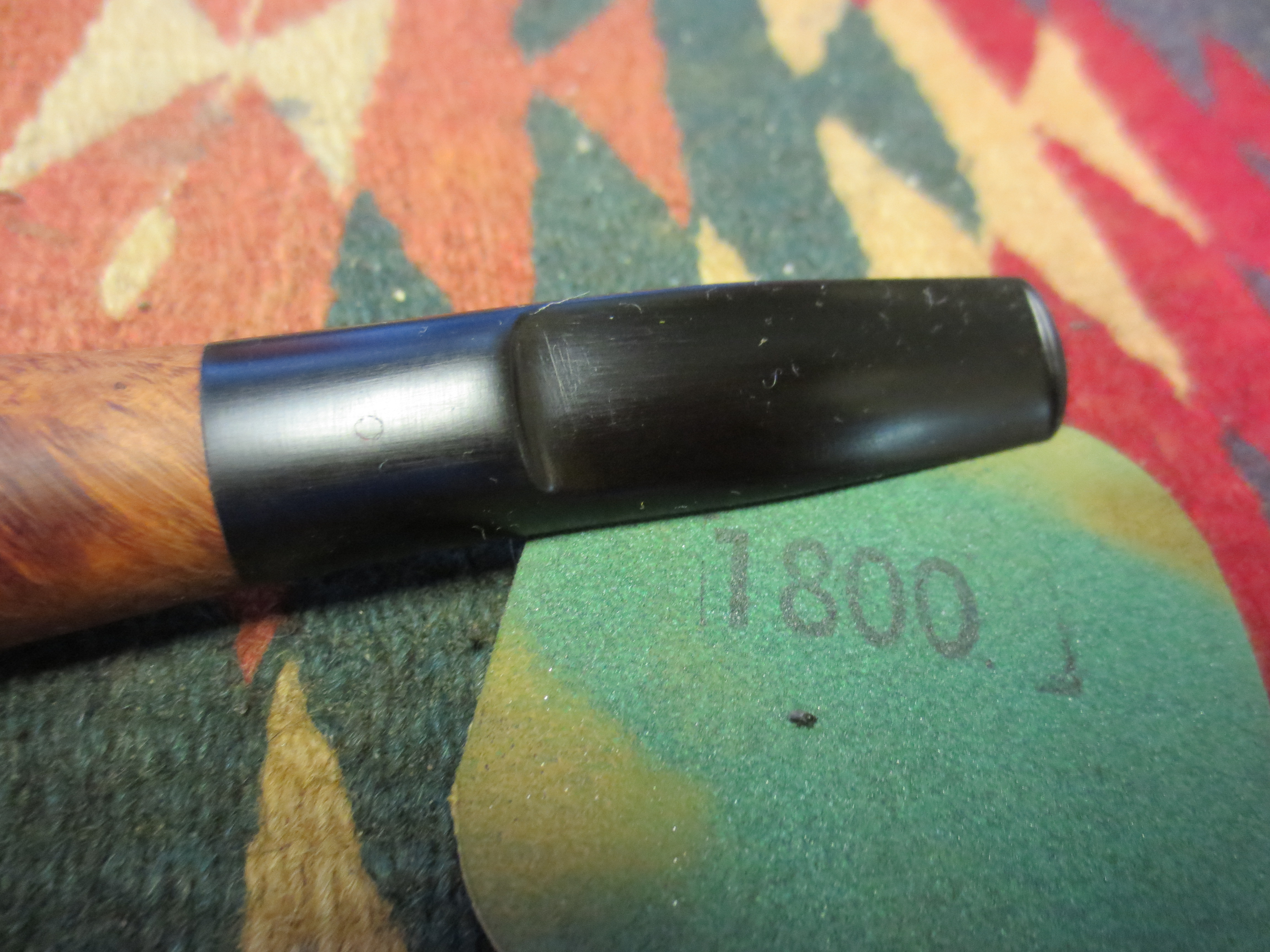
After removing the retort I cleaned out the bowl, shank and stem with pipe cleaners and cotton swabs a final time to remove any of the alcohol and oils that remained. I then sanded the stem with 1500 and 1800 grit micromesh sanding pads to begin polishing the surface and to remove any of the debris left from the surgical tubing on the stem.I continued to sand the stem with the micromesh sanding pads from 2400-12,000 grit in preparation for staining.

IMG_1356

IMG_1357

IMG_1358

IMG_1359

IMG_1360

IMG_1361

IMG_1362

I stained the pipe bowl and shank with dark brown aniline stain mixed 2 parts stain to one part alcohol to get the brown colour that was previously on the pipe. I wanted it thin enough that the grain would really stand out and give the pipe a uniform look after the sanding. The pipe has some beautiful cross grain on the front and back of the bowl and the top and bottom of the shank with birdseye grain on the sides. I wanted the stain to highlight that. I stained the pipe, flamed it and restained and reflamed it to set the stain in the grain.

IMG_1363

IMG_1364

IMG_1365

Once the stain was dry I took the pipe to the buffer and buffed the bowl and the stem with White Diamond to polish the stem and the stained bowl. Afterwards I gave it multiple coats of carnauba wax and buffed it with a clean flannel buff. For a final touch I hand buffed it with one last coat of wax and shoe shine brush. The final photos below show the finished pipe. It is cleaned, renewed and ready to go out to a good friend who loves this shape!

IMG_1368

IMG_1369

IMG_1370

IMG_1371

A No Name Bulldog Born Anew – New Look and New Stem


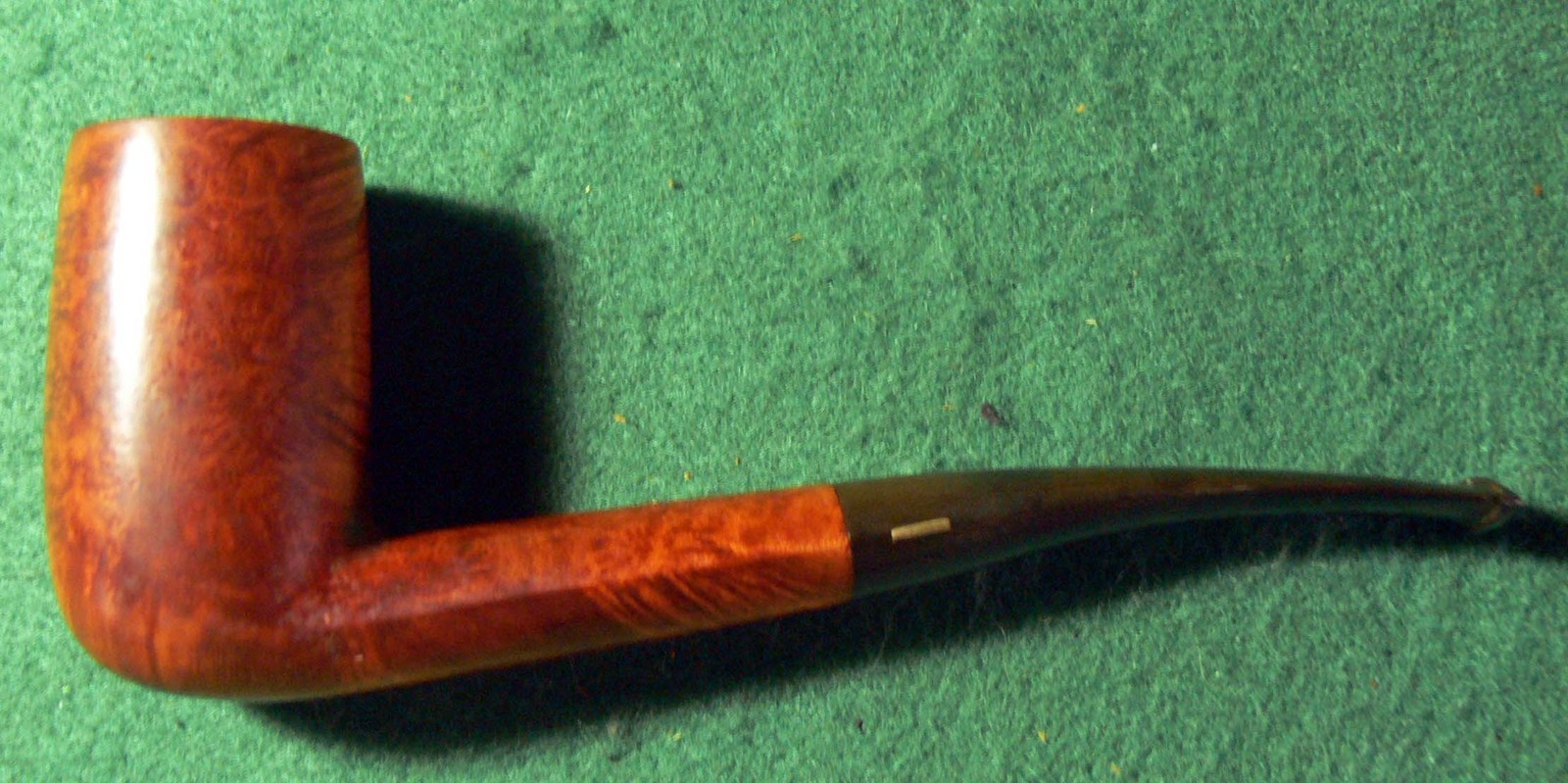
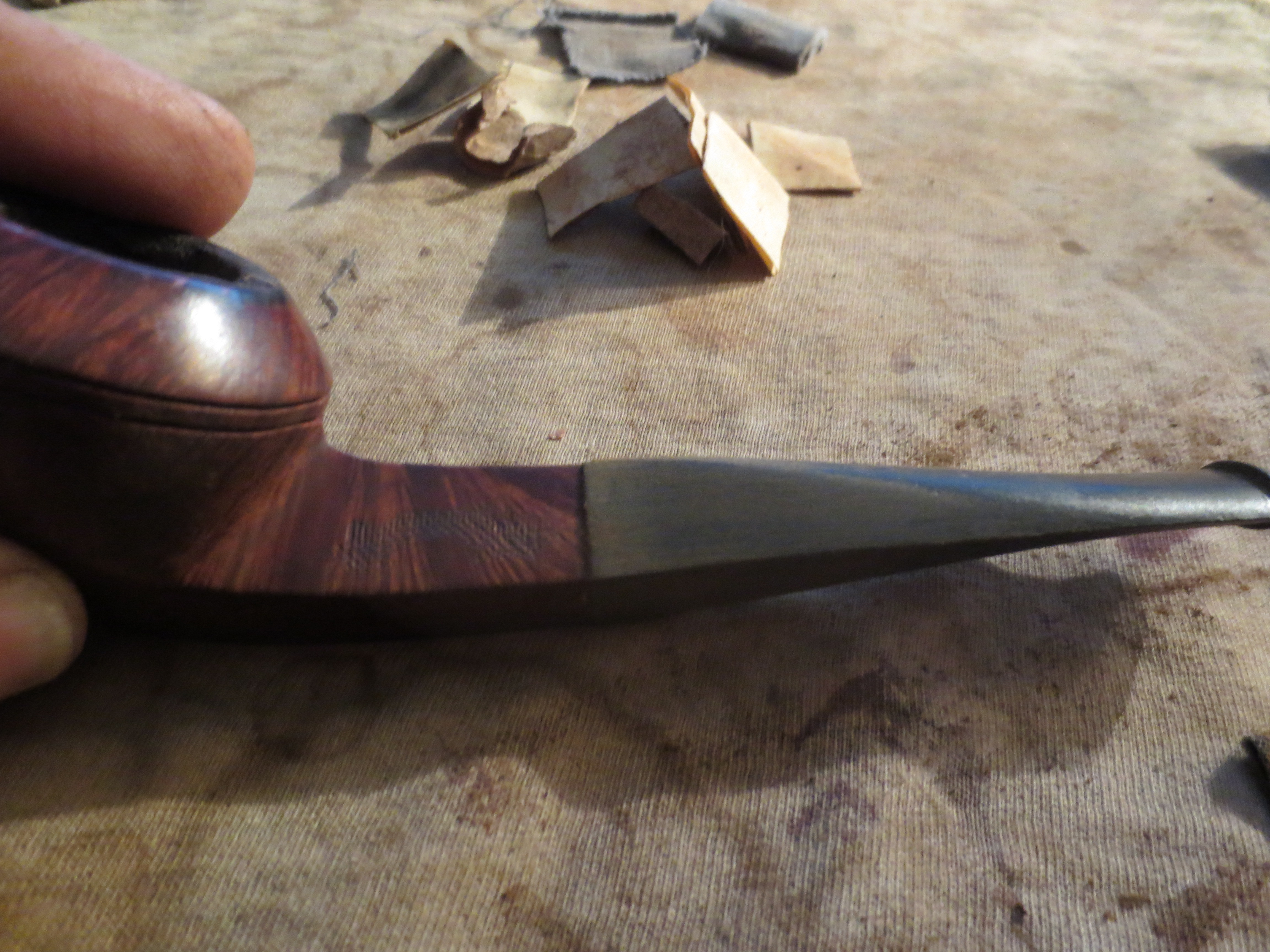
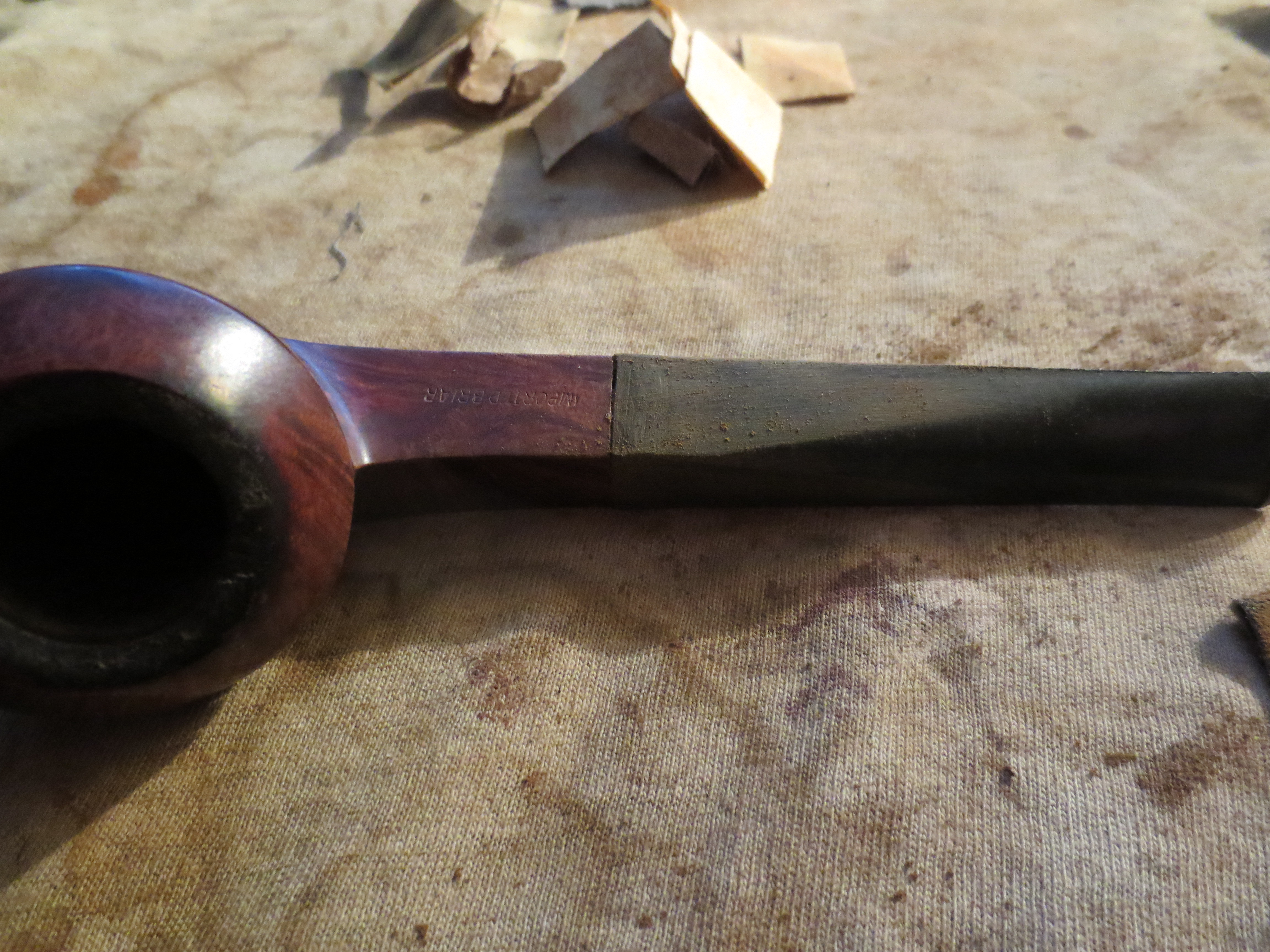
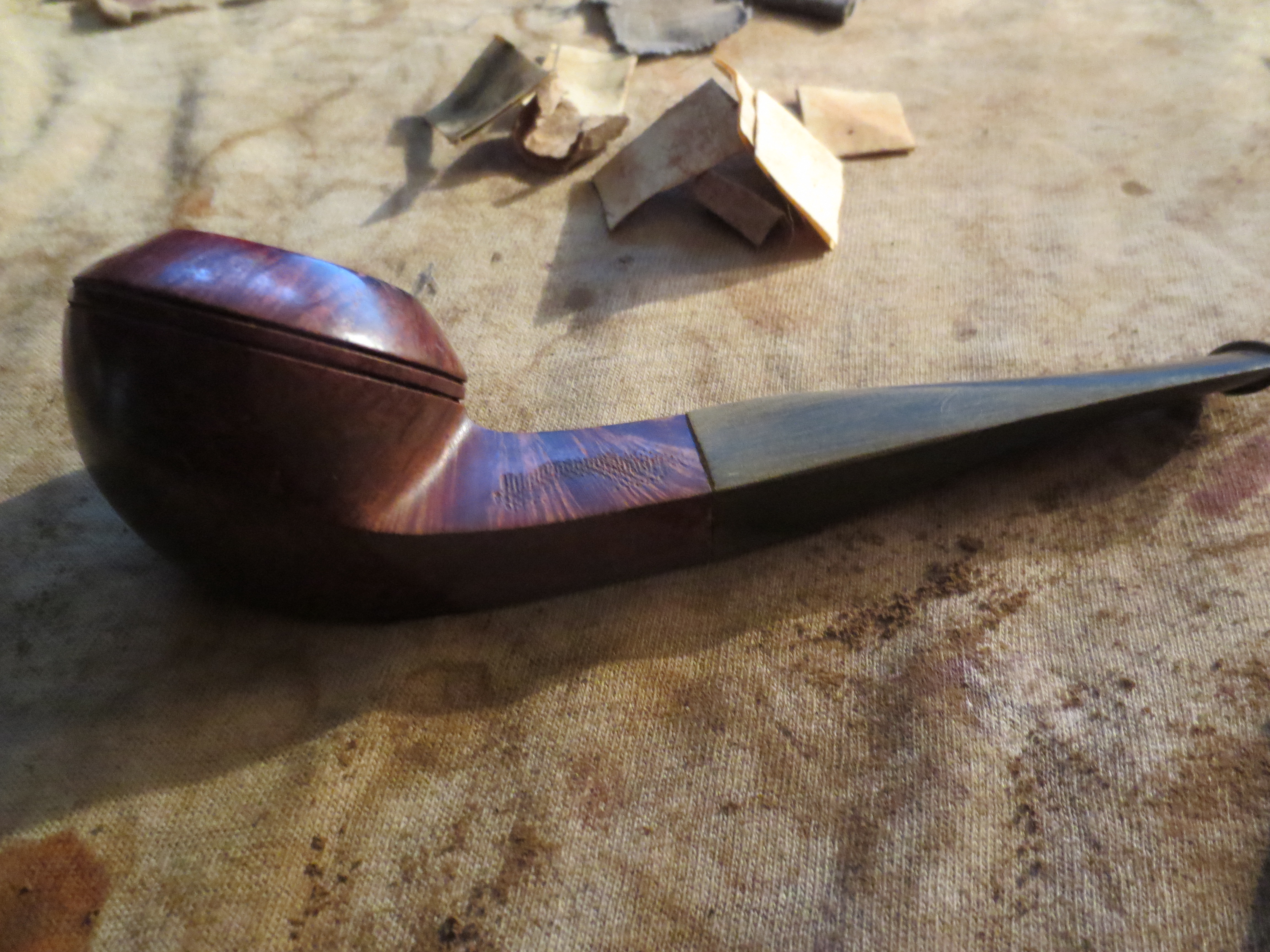
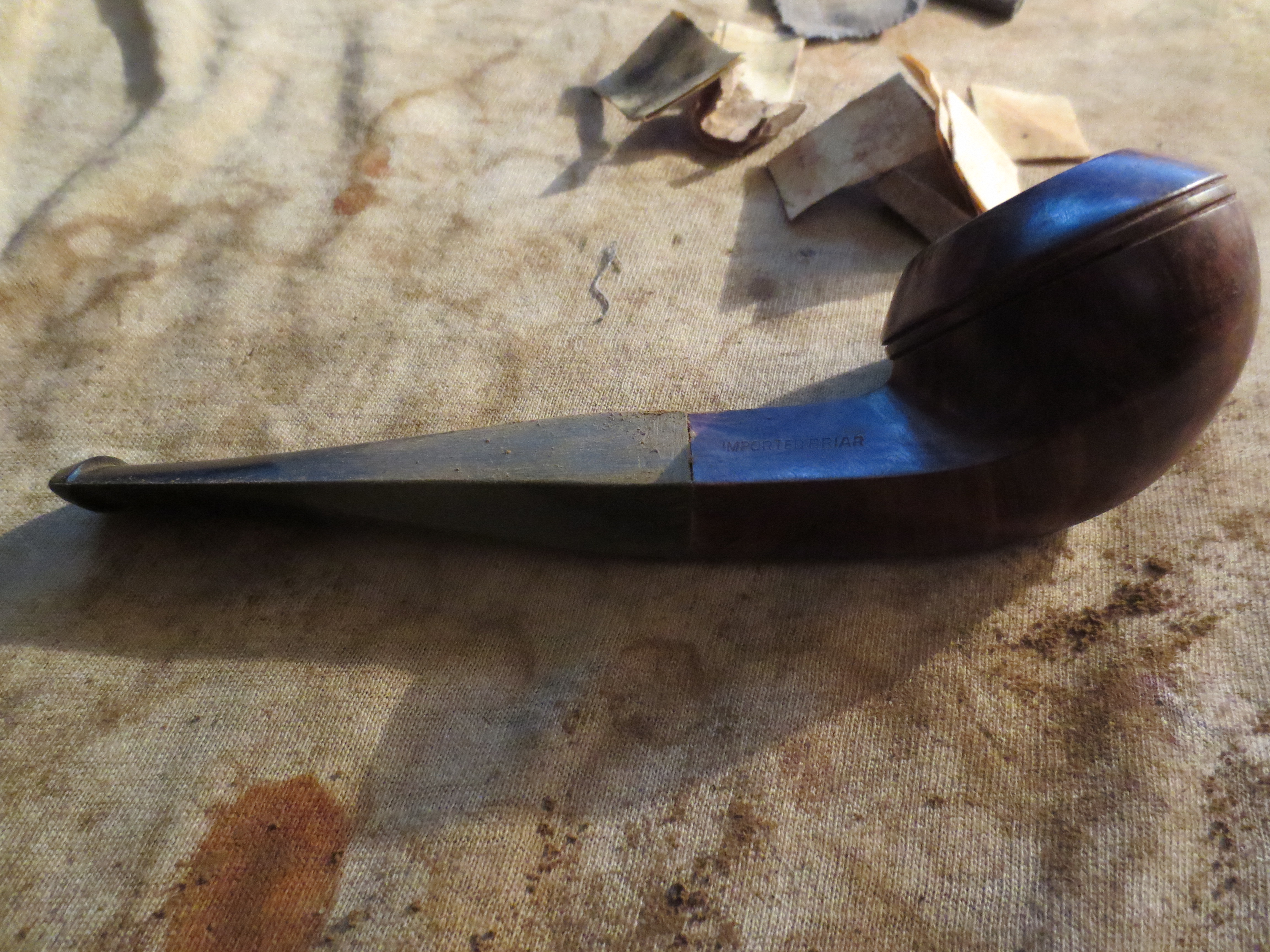
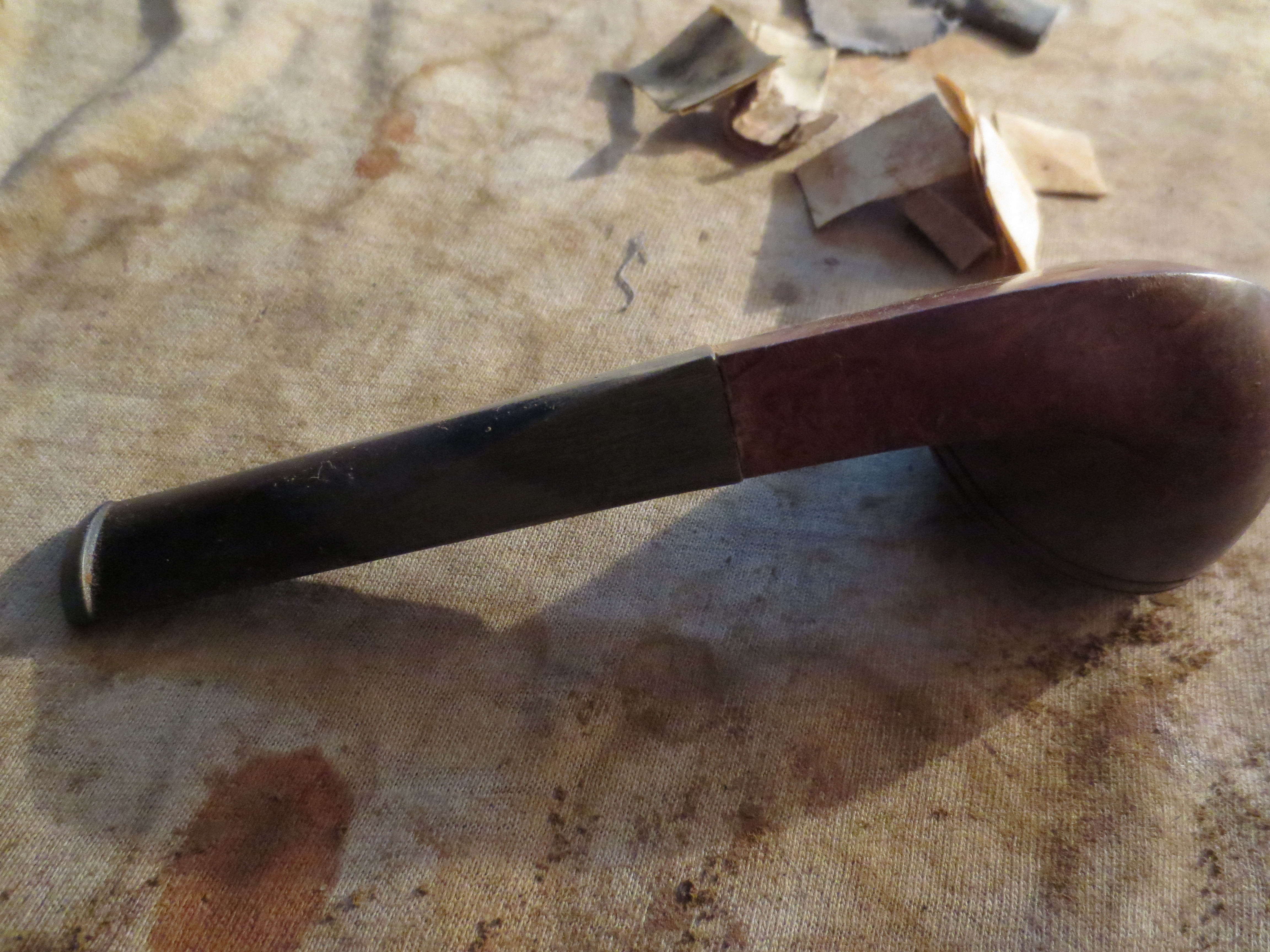
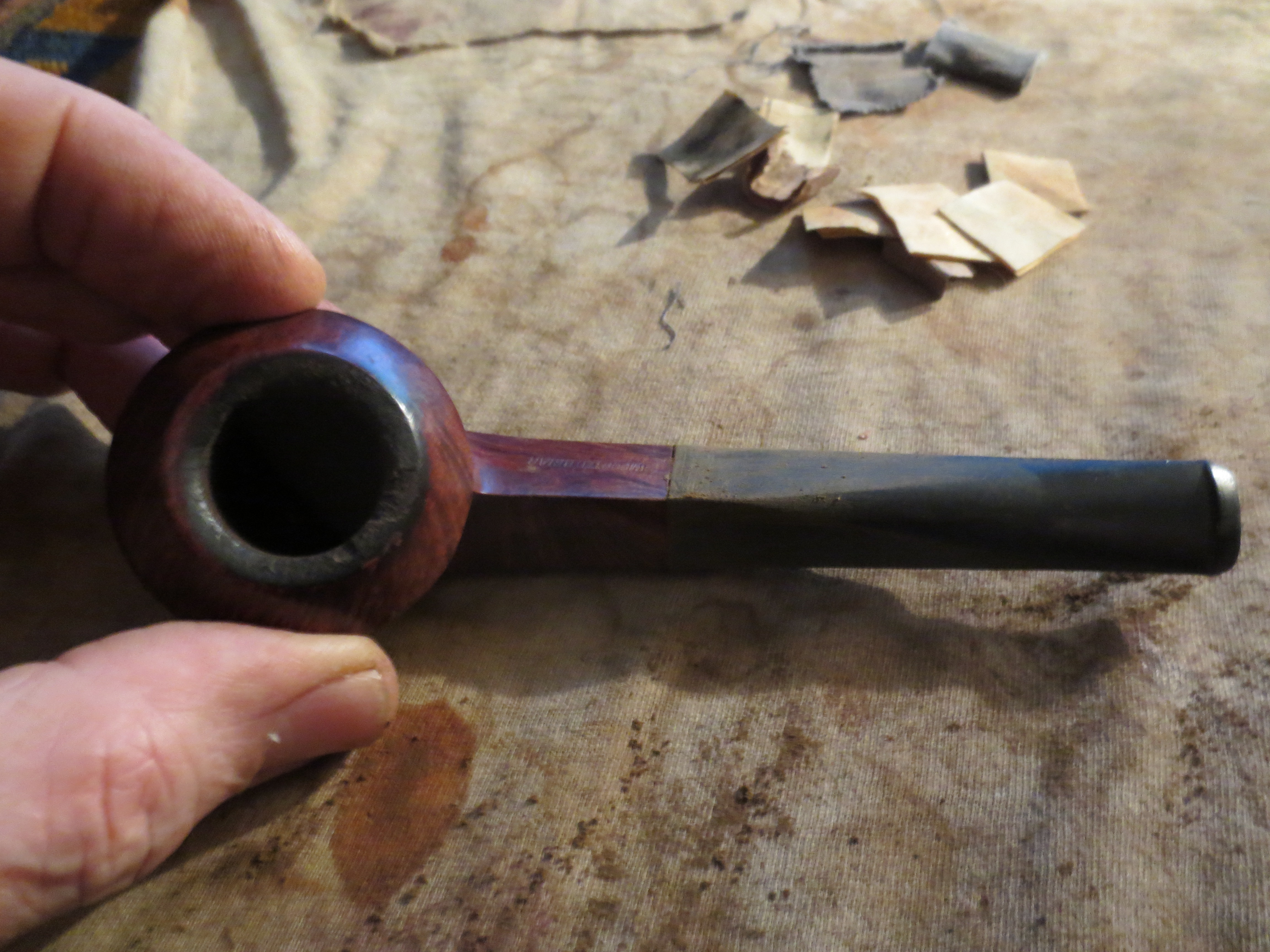
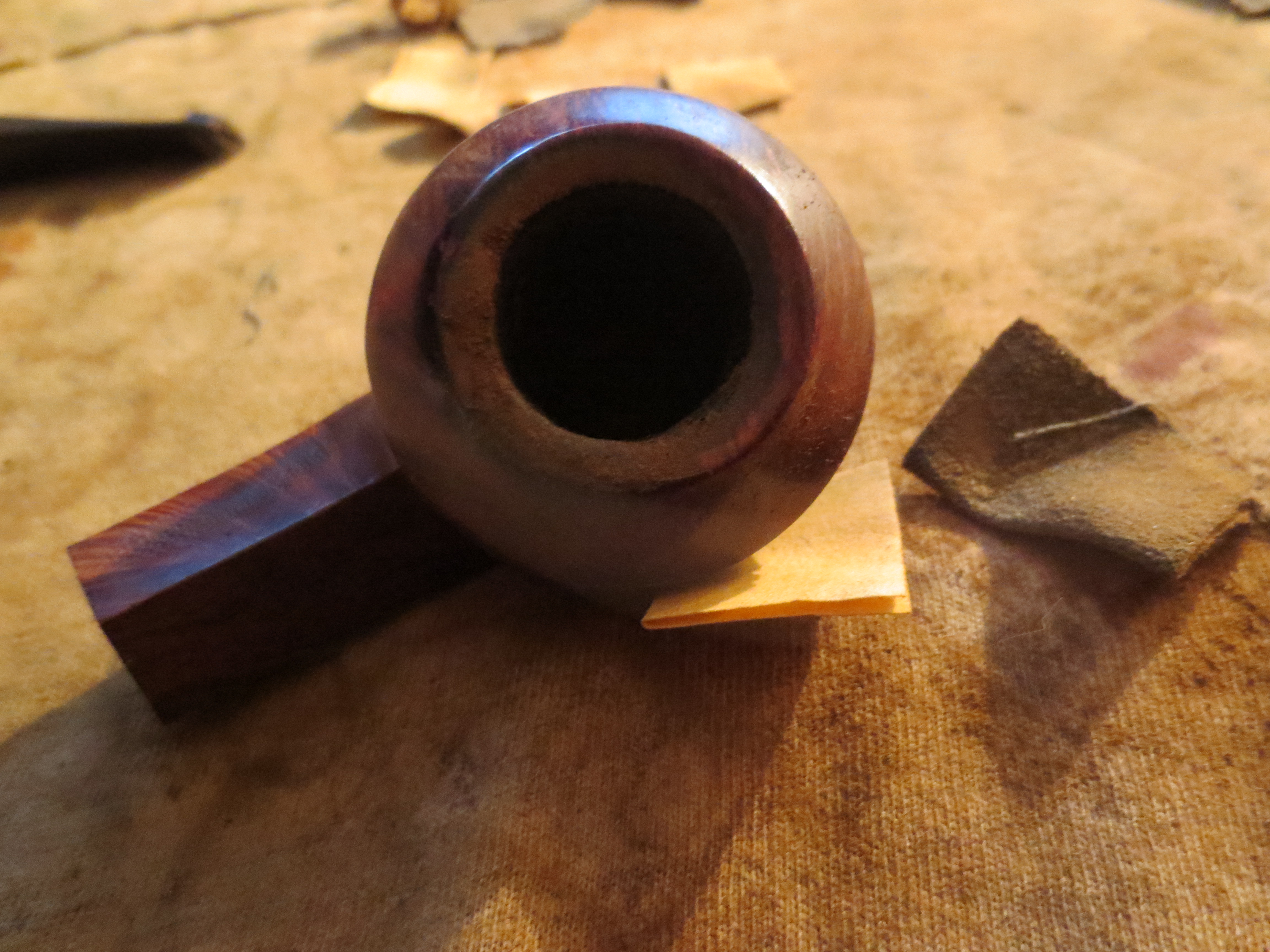
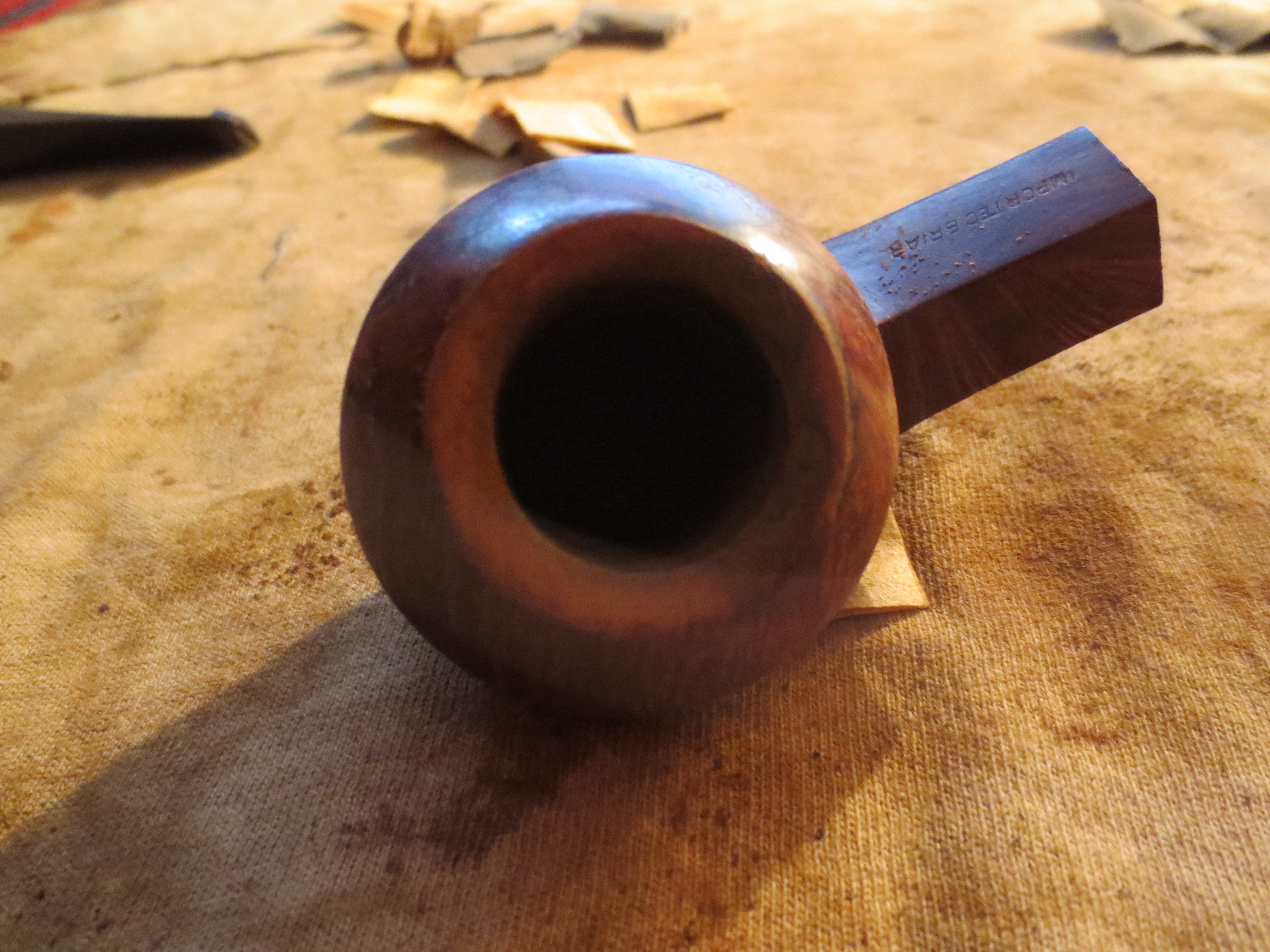
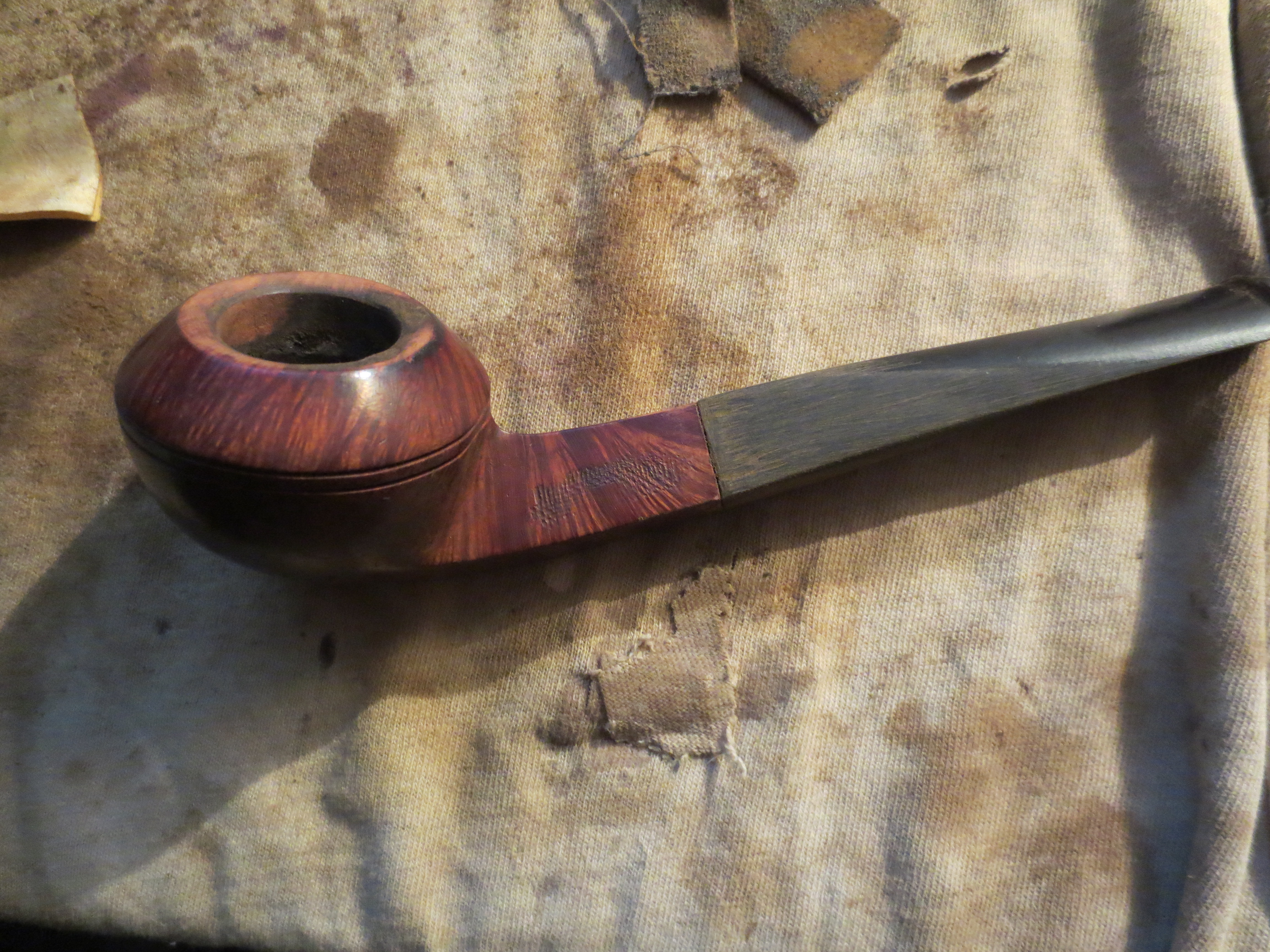
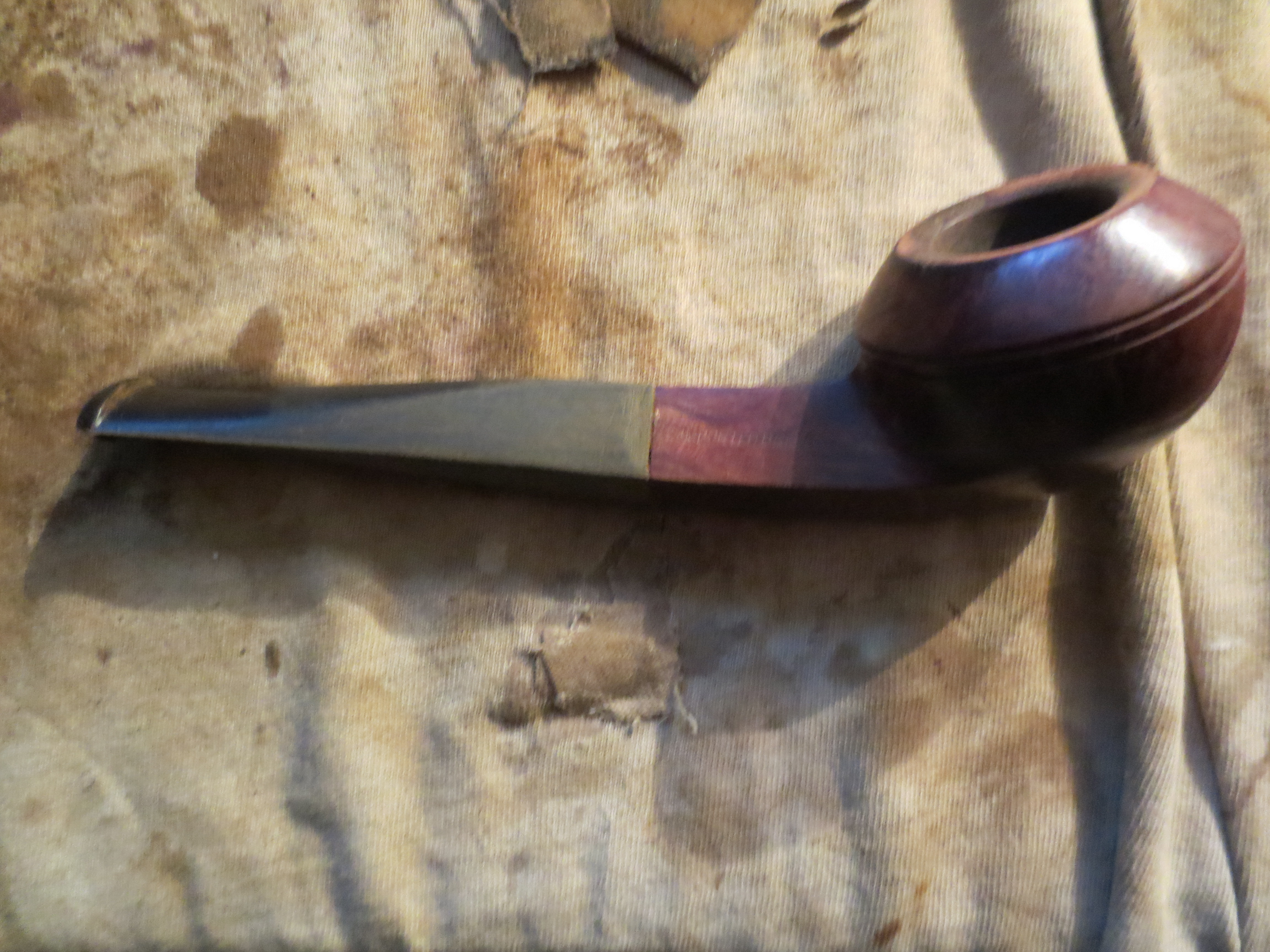
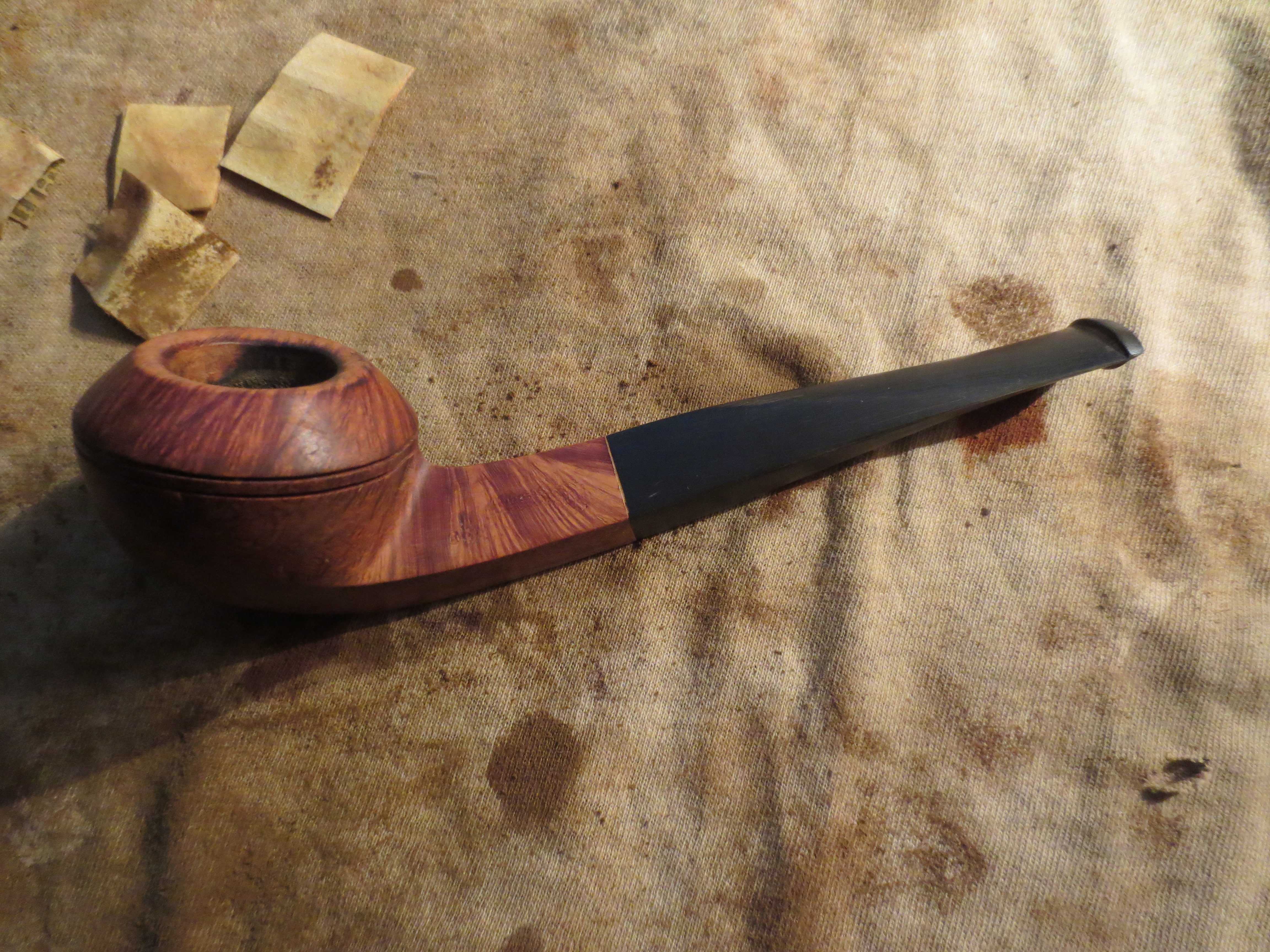
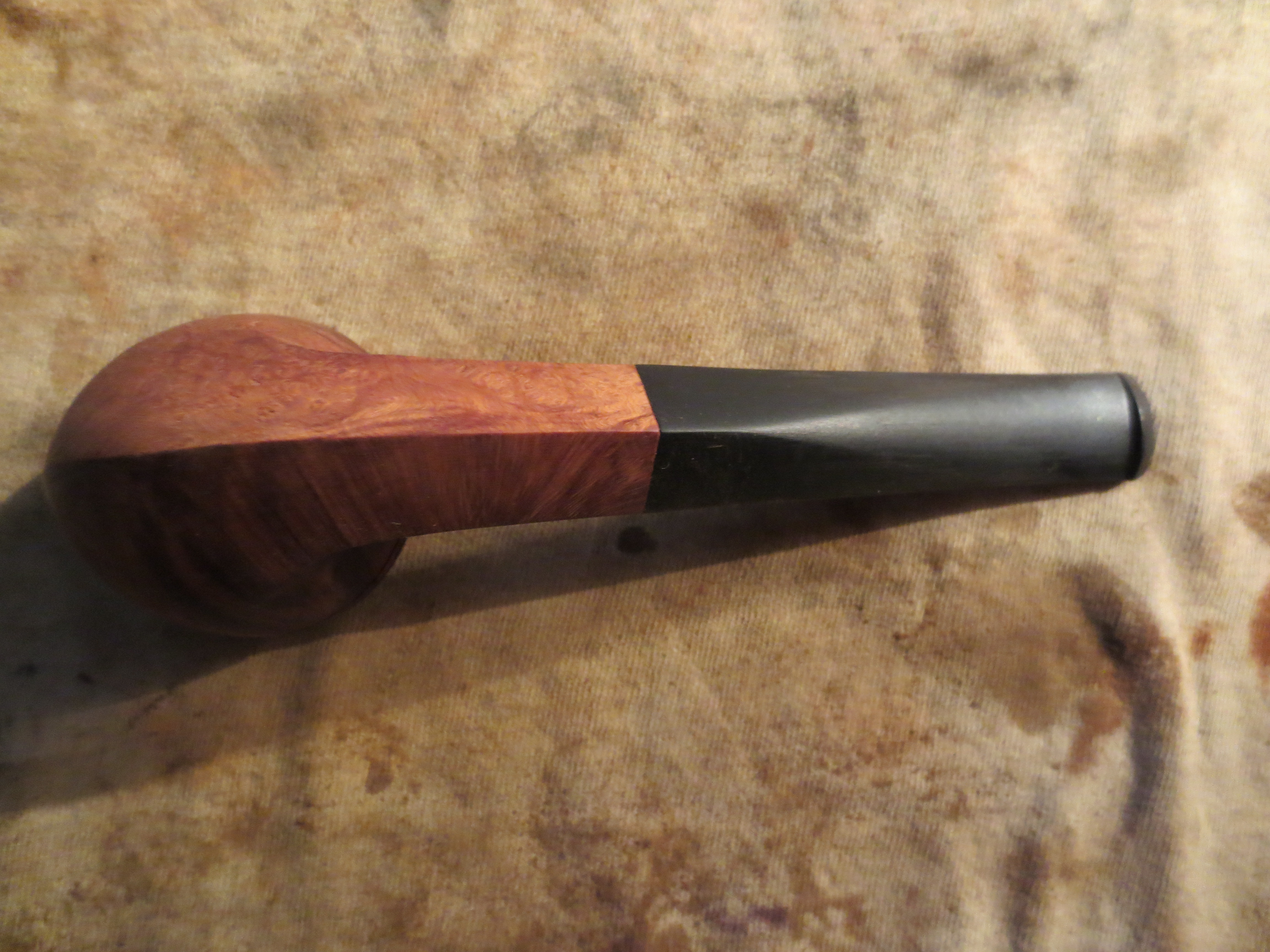
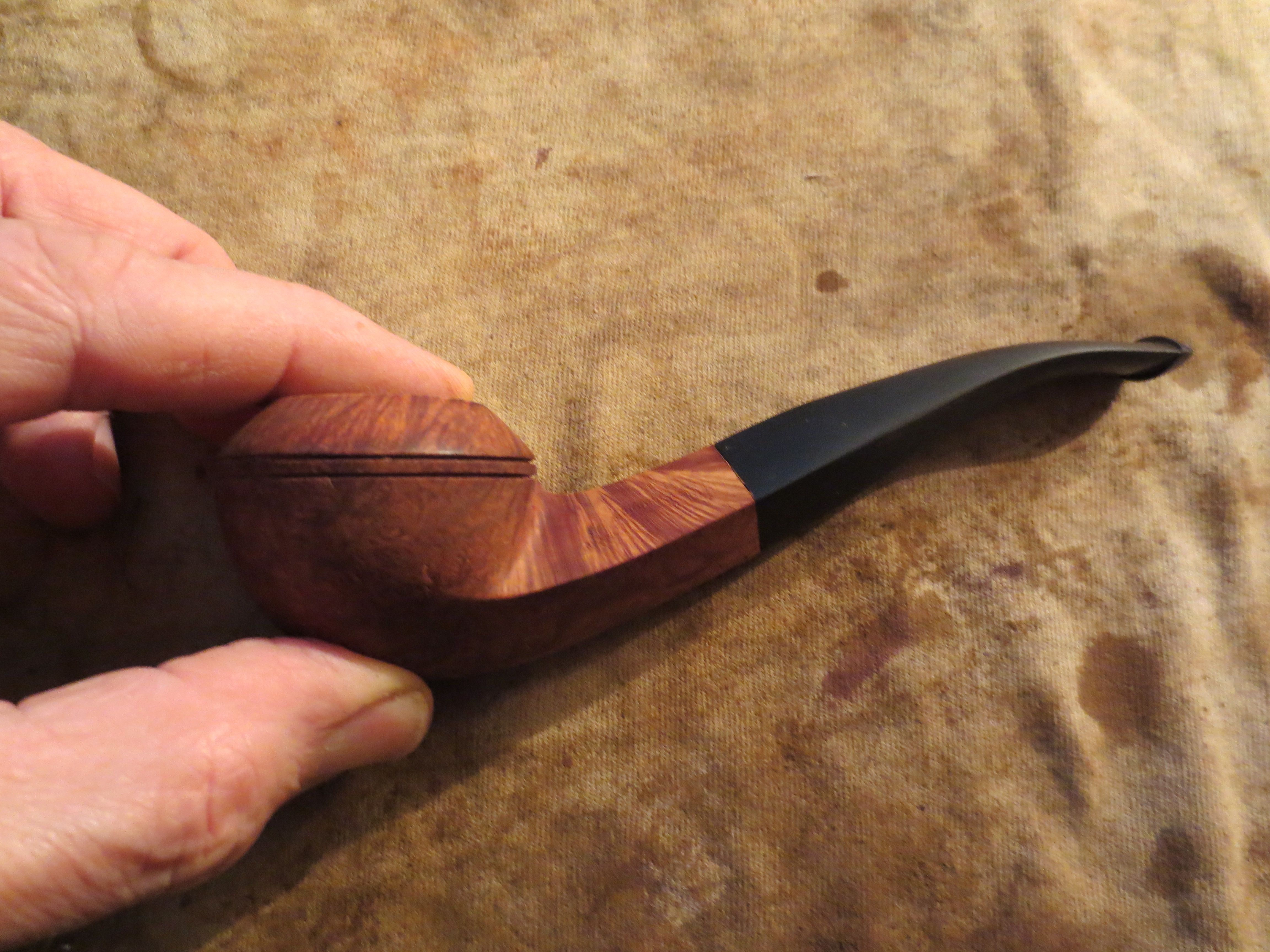
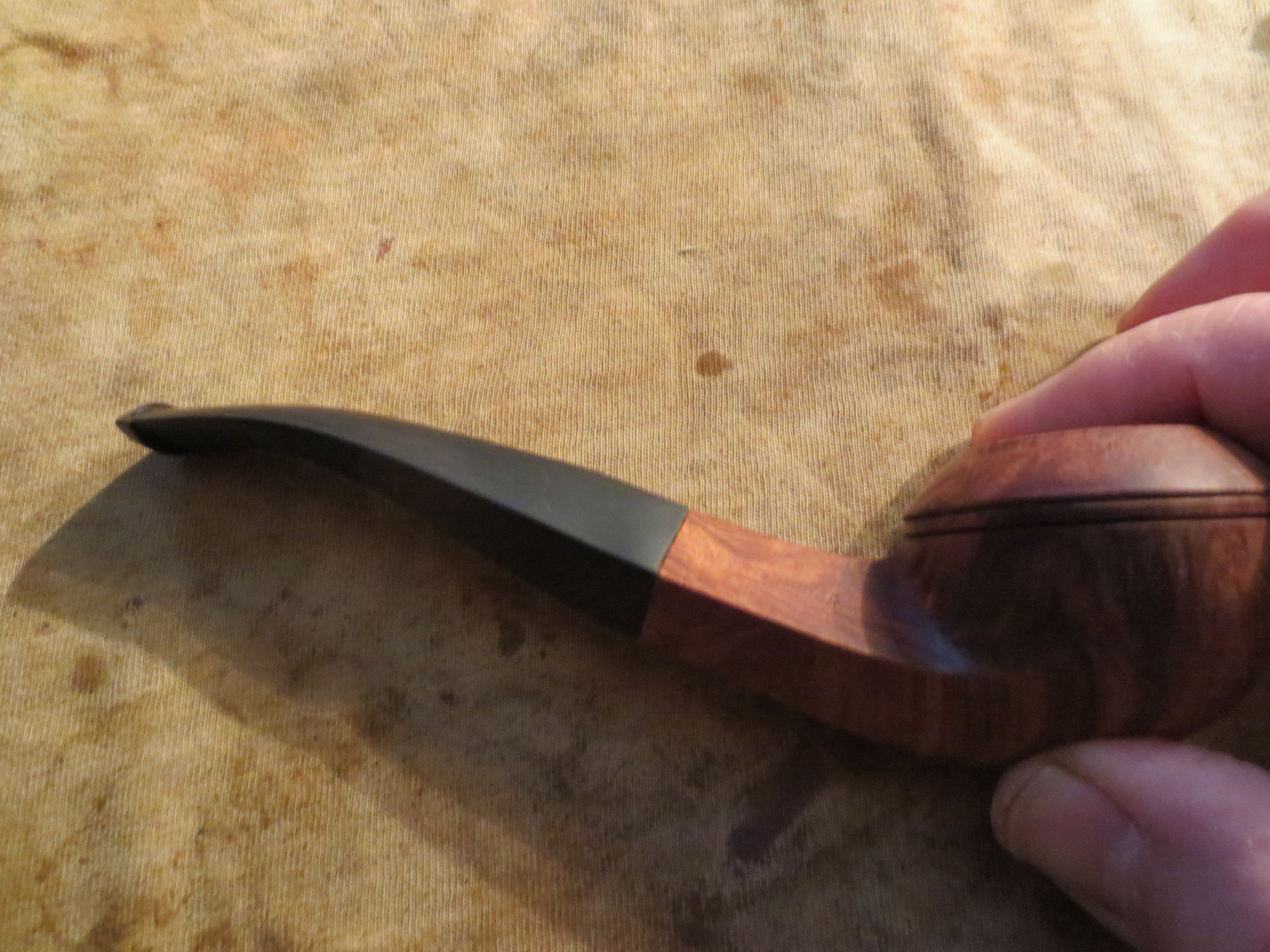
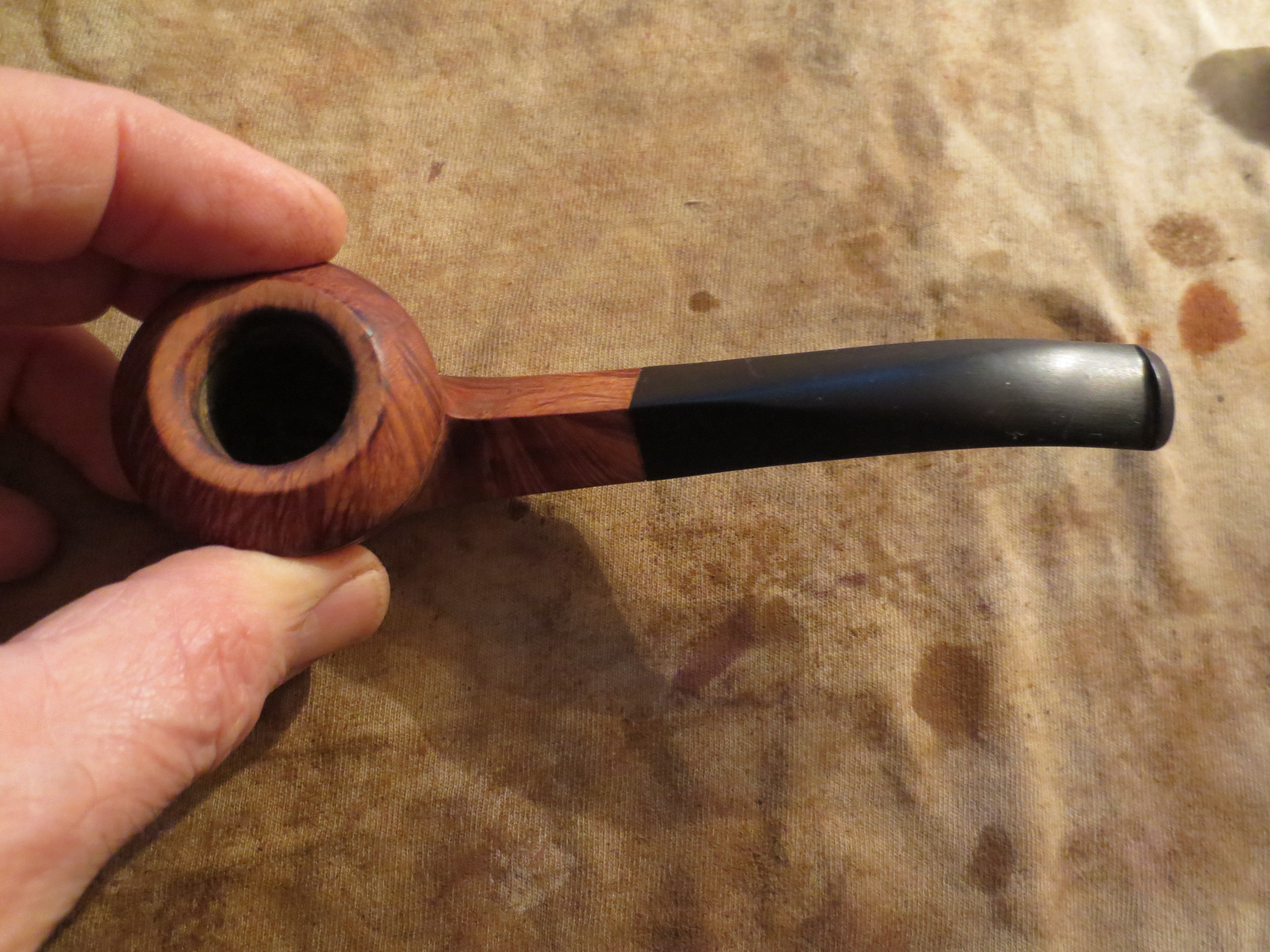
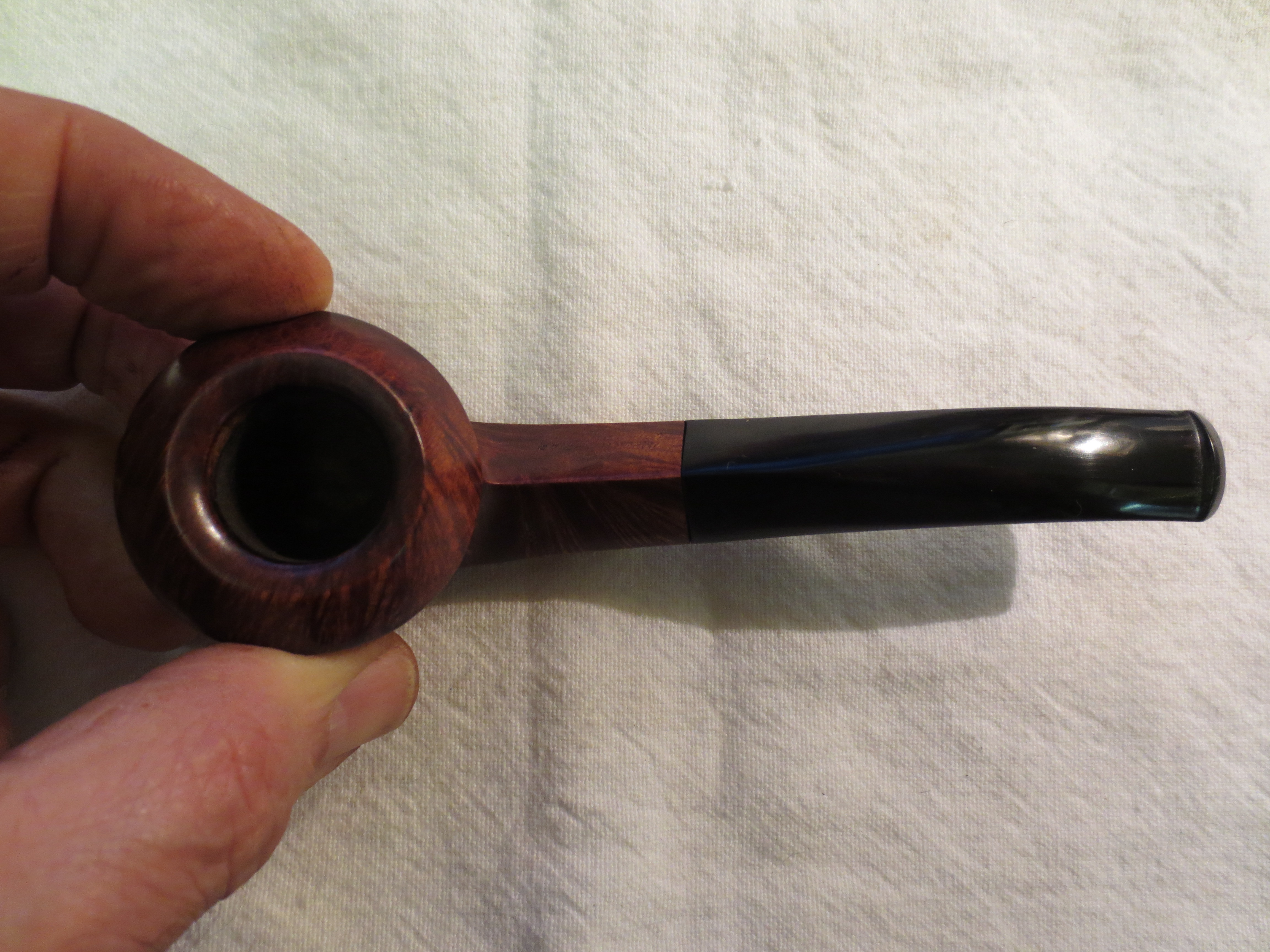
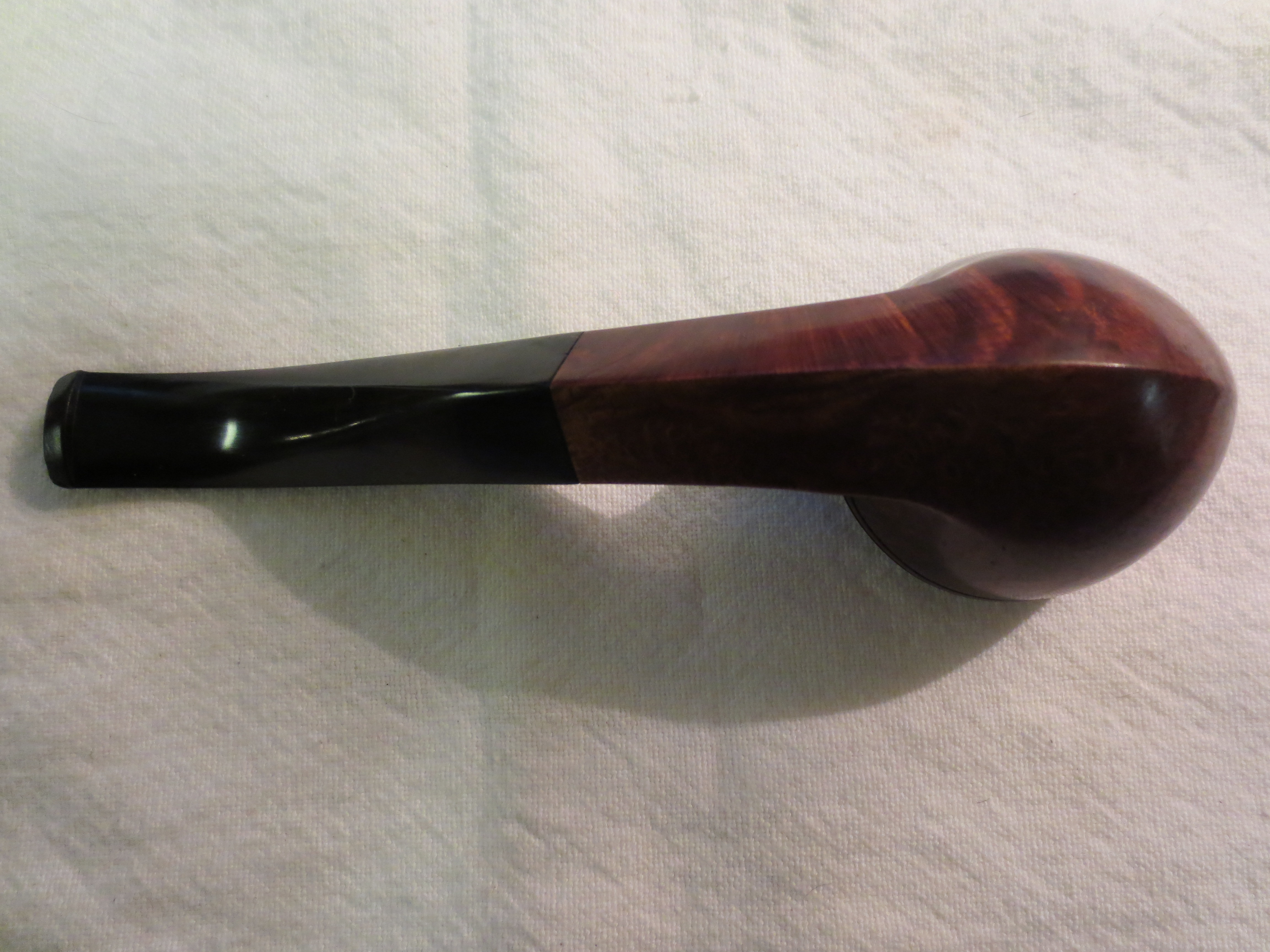
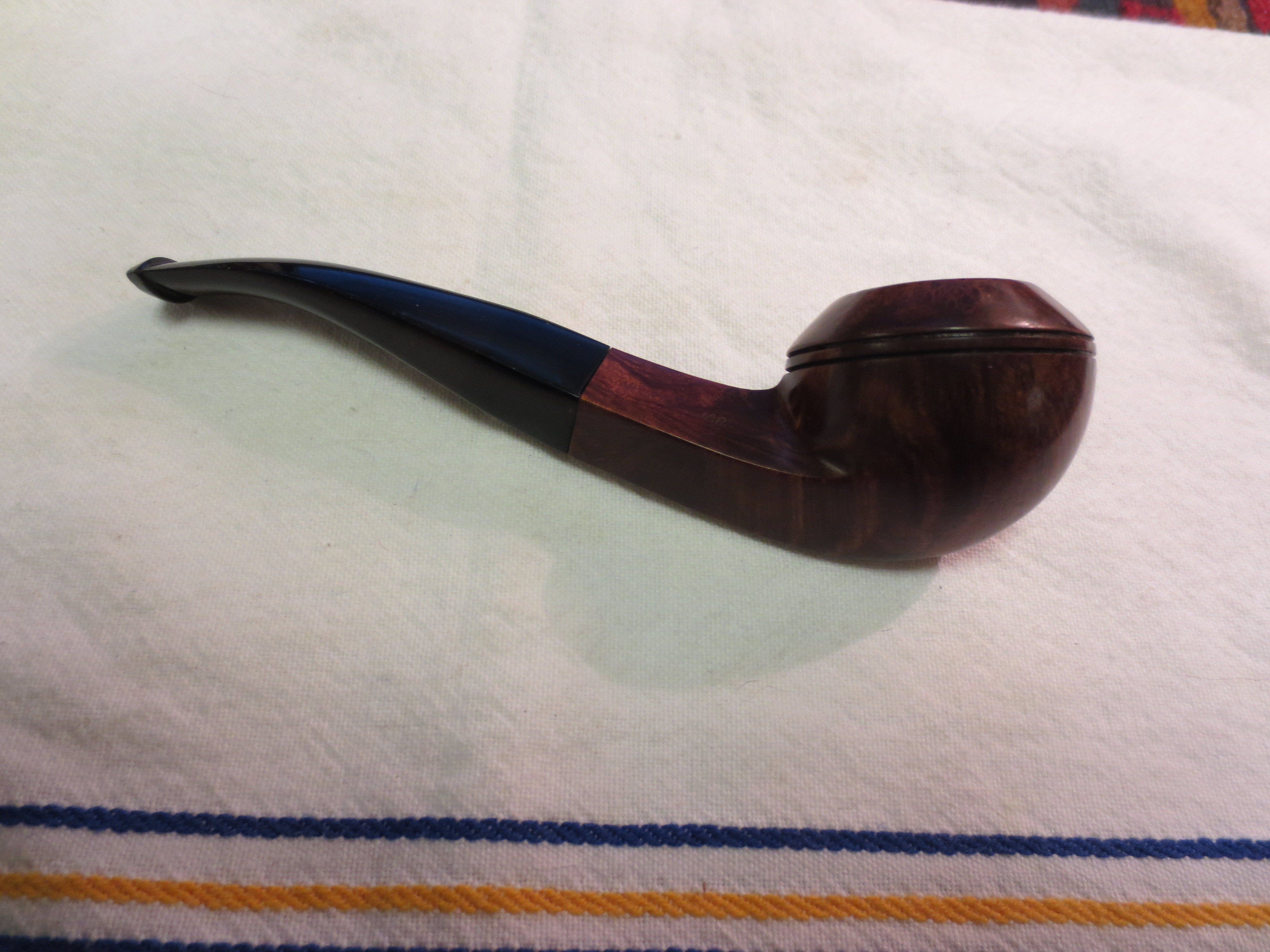
This little bent bulldog is the last of the briar stummels in the EBay lot I picked up. It is a nice little dog and I saved it for last as I find that the diamond shank stems are a bear to fit correctly. Bent diamond shanks are even harder in my opinion. I had quite a few stems to choose from in my can of stems so a new stem was not a problem. The issue really was getting all the sides and angles to line up and look right. Restemming these is a tricky proposition. This one had crosshatched stamping on the left side of the shank that obliterated the stamping of the name on it. On the right side it is stamped Imported Briar which I am assuming makes it an American made pipe. It had some nice grain under the dark stain and varnish coat. The bowl had a very poorly formed cake with many chunks missing. The rim was thick with a tar and oil build up but surprisingly was not dented or damaged by burns or over reaming. The end of the shank which would butt up against the stem was pristine with no damage or cracks. I love it when I can work on a pipe that does not need banding. It is a challenge to get a good clean fit on the stem. This would thus be a double challenge.
I chose a diamond shank tapered stem for the pipe. I had saddle stem galore and only two of these tapered stems. I love the look of a tapered stem on a bulldog so I decided to go with that one. It would not require too much of a bend in it so it would work well and look classy. I drilled out the airway to fit the pin on the Pimo Tenon Turning Tool and then turned the tenon to a close fit on the stem. I had to reduce the length of the new tenon as it was longer than the mortise on the pipe. I hand sanded the tenon to get a good clean fit on the shank and inserted it in place. Externally, it would need to be reduced on all sides to match the flow of the shank so there was work to do in fitting the stem.
IMG_0830

IMG_0831
I used my Dremel with a sanding drum to bring the sides of the stem down to almost match the shank. This was a bit tricky in that I did not want to cause dips in the surface of the stem but reduce each side until it was a close fit to the shank. It takes a light touch on the sanding drum to keep it horizontal to the stem and also keep it from hitting the shank and doing damage to the briar. I held the bowl in hand and worked the sanding drum both vertically and horizontally to the stem to remove the excess vulcanite. I worked on one side at a time until the fit was close then turned the stem and did the next side. I began on the top side of the stem and worked both top sides before turning the stem over and doing the underside. The next three photos show the shaping done by the Dremel. After doing this initial work on the stem it was time to take to the table and do the rest by hand.
IMG_0832

IMG_0834

IMG_0833
I began sanding with medium grit emery paper to remove the deep scratches left by the Dremel and to even out the surfaces of the stem. I sanded each side until they were smooth. I also sanded the peak of the stem on each side to make sure the peak matched the one on the shank of the pipe. The next seven photos show the progress of evening out the stem sides. When I finished with the emery paper I would go on to use various other grades of sandpaper and continue the process.
IMG_0835

IMG_0836

IMG_0837

IMG_0838

IMG_0839

IMG_0840

IMG_0841
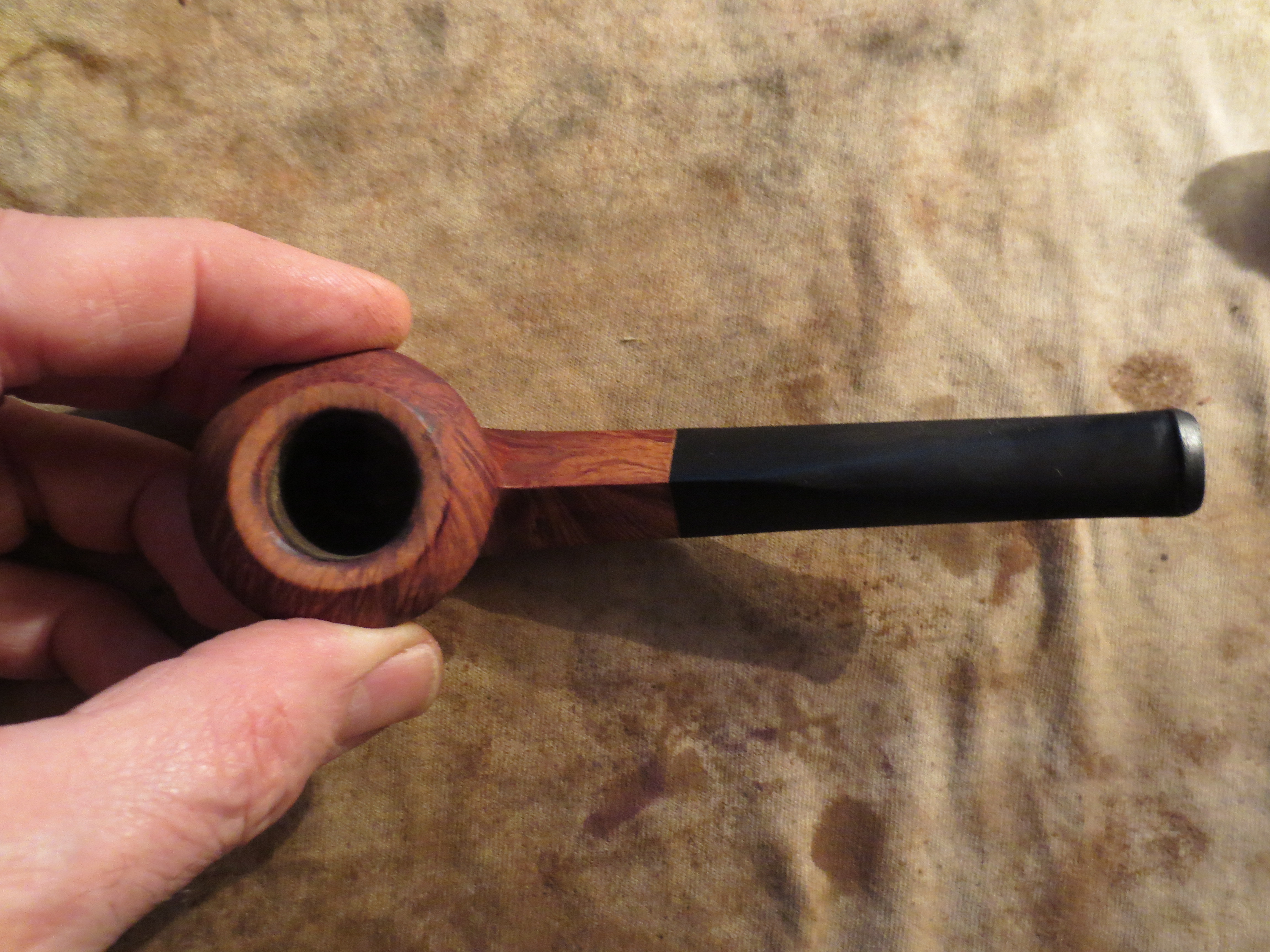
As the rim of the bowl was chamfered into the bowl I worked on it with a folded piece of medium grit emery paper first followed by 320 grit sandpaper. I wanted to keep the chamfer clean and even so I held the paper to the angle of the chamfer on the cleanest part of the rim toward to the front of the bowl. The next two photos show the cleaned rim.
IMG_0842

IMG_0843
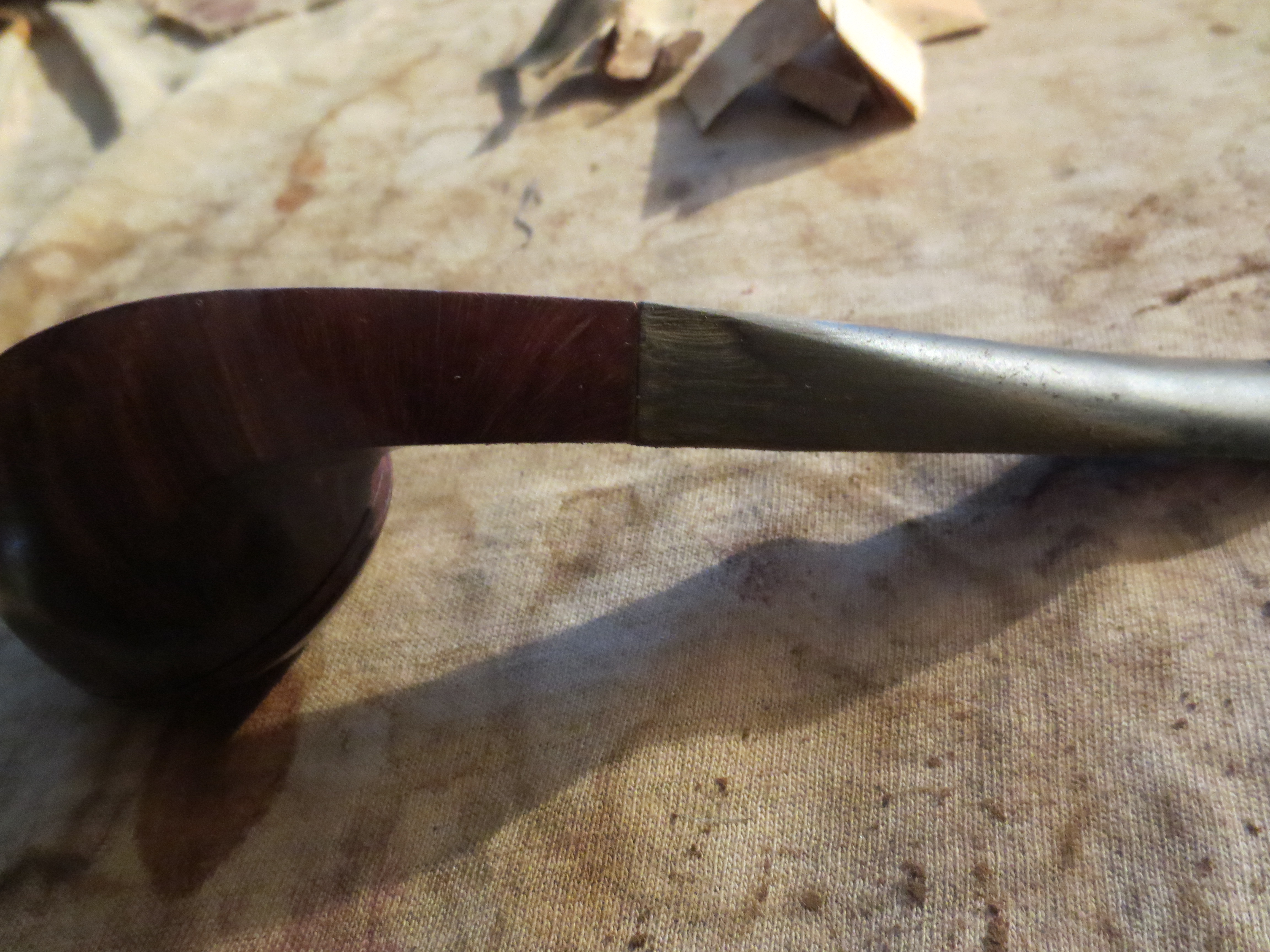
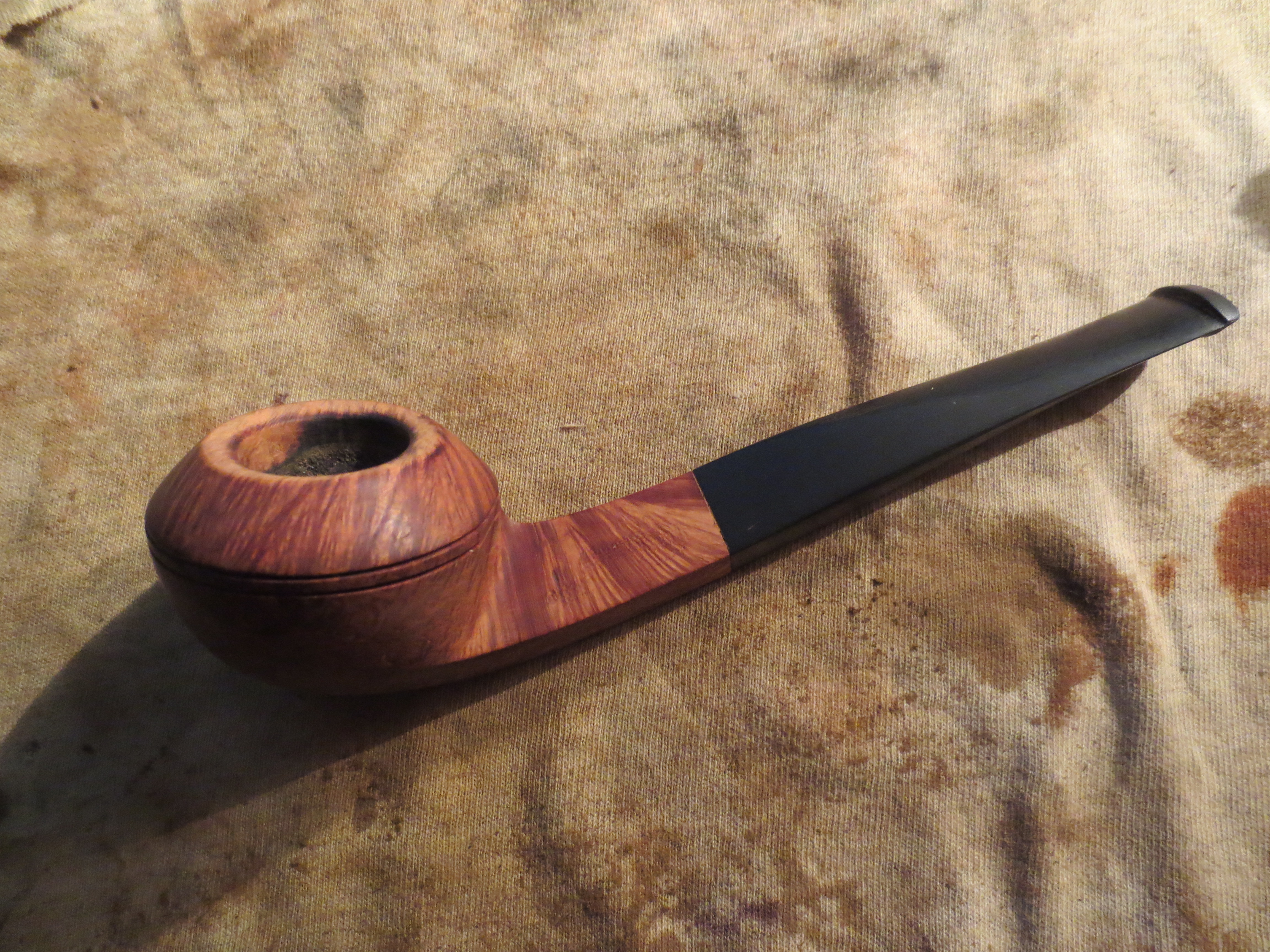
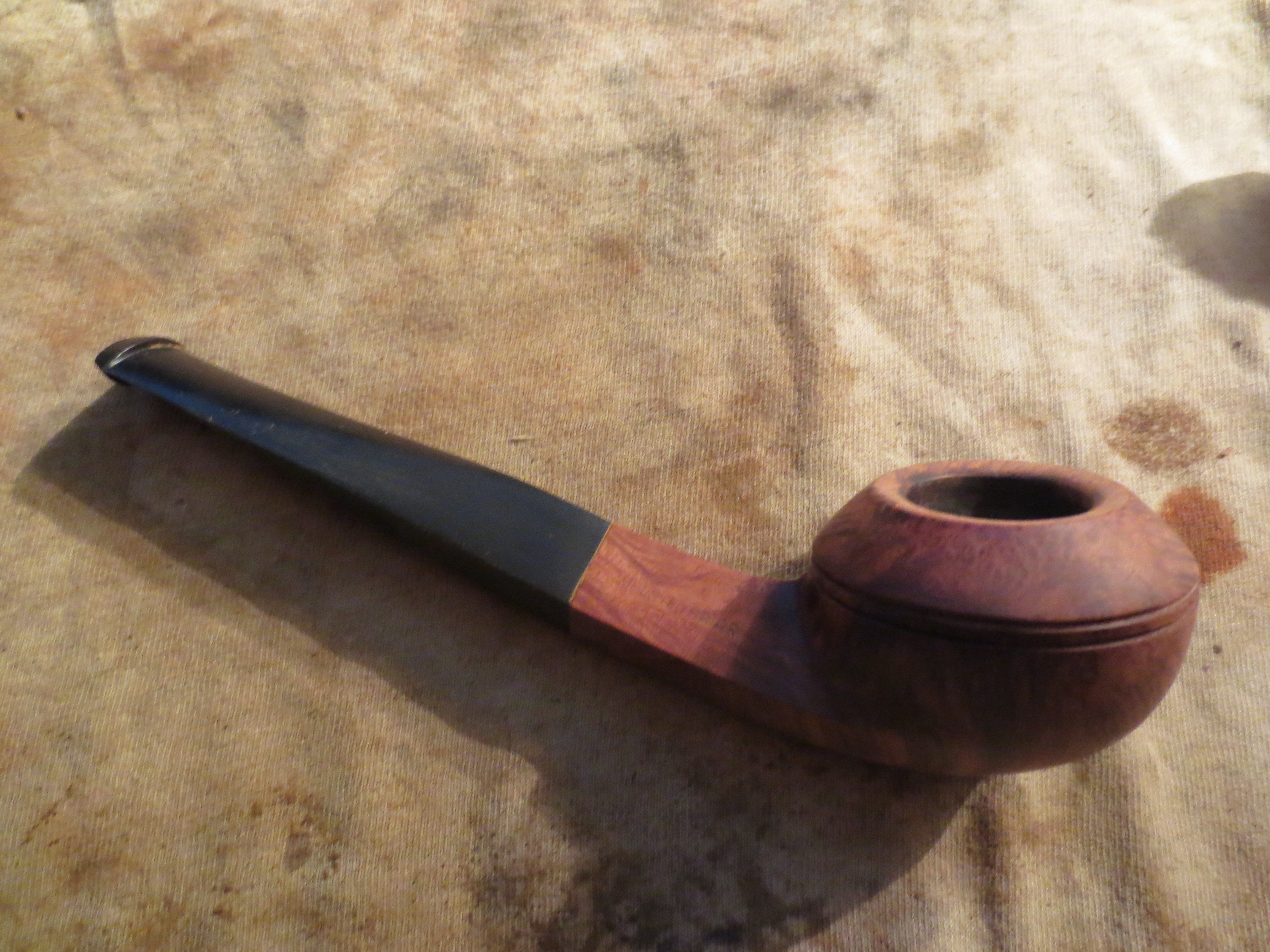
I went on to sand the stem with a fine grit emery paper to continue to bring the size down to meet the shank on the pipe (Photos 1 & 2). After I had the stem fairly close I switched to 320 grit sandpaper and sanded down the stem, the shank and the bowl. I decided to remove the cross hatching on the shank and clean up the finish. I wiped it down with acetone on a cotton pad to remove the finish and sanded until the finish was stripped and the shank and stem was smooth. The flow between the stem and the shank was a good match when I finished with this part of the work (Photos 3, 4, 5, & 6). An amazing grain was beginning to break out on the bowl and shank.
IMG_0844

IMG_0845

IMG_0846

IMG_0847

IMG_0848

IMG_0849
Once I had finished the fit of the stem to the shank and cleaned off the bowl with the sandpaper I wiped it down a second time with acetone to remove the remaining remnants of stain and to clean off the dust of the sanding (Photos 1 & 2). The remaining photos show the pipe after it was cleaned and ready to stain (Photos 3, 4, 5 & 6).
IMG_0850

IMG_0851

IMG_0852

IMG_0853

IMG_0854

IMG_0855
At this point I decided to bend the stem to the angle I wanted on the finished pipe. I set up my heat gun and turned it on to the lowest setting and held the stem above the heat until it was pliable. I have a wooden rolling pin that I use as a guide to bend the stem evenly so once it was soft I bent it over the rolling pin until the angle of the stem bend aligned with the curve of the bowl. I wanted the bowl to be level when held in the hand. Once the angle was right I cooled the pipe stem in cool water to set the bend. The next four photos show the stem after it was bent according to the angles I was aiming for. The grain on this pipe was calling out to me to come up with a stain colour and process that highlighted the grain.
IMG_0856

IMG_0857

IMG_0858

IMG_0859
I decided to stain the pipe with an oxblood aniline stain. I like it because it sets deeply in the grain of the pipe and when it is buffed off it still allows the grain to be seen. I also planned on sanding the finish with micromesh sanding pads to further highlight the grain patterns on the bowl. The next five photos show the stained bowl. I still needed to buff the pipe and lift the stain a bit from the briar.
IMG_0860

IMG_0861

IMG_0862

IMG_0863

IMG_0864
I reinserted the stem at this point in the process and hand buffed the bowl to get a good feel for the opacity of the stain (Photos 1 & 2). I then began to sand the stem and the bowl with the micromesh sanding pads. I began with 1500 and 1800 grit micromesh first. I wet sanded with these grits of micromesh (Photos 3, 4, & 5). The finish on the stem is smoothing out and the bowl finish is really beginning to show the grain and highlight the beauty of the piece of briar.
IMG_0865

IMG_0866

IMG_0867

IMG_0868

IMG_0869
I continued wet sanding with 2400 and 3200 grit micromesh sanding pads (Photos 1 & 2) and the grain began to pop and the stem began to shine nicely. I dry sanded with 3600 and 4000 grit micromesh sanding pads as I sought to polish the finish and the stem more fully. Photos 3 & 4 give an idea of the polish work that had been done by this point in the process. I finished sanding the bowl and stem with the remaining micromesh dry sanding pads 6000, 8000 and 12,000 grits. The resultant effect on the stain of the bowl was exactly what I had hoped for. The grain stood out clearly on the sides and shanks. On the left side of the bowl there is a nice birdseye pattern that is not as visible in the photos as it is in person. The pipe came out very nicely. Photos 5 & 6 show where things stood after the final polishing with the micromesh pads.
IMG_0870

IMG_0871

IMG_0872

IMG_0873

IMG_0874

IMG_0875
I buffed the pipe with White Diamond and then gave it multiple coats of carnauba wax to finish it. The finish came out nicely in my opinion and the feel of the pipe in the hand was perfect. I had to load a bowl of tobacco and give it a new inaugural smoke. I chose to load it with some 2009 Barclay-Rex Barclay Slice. I packed the bowl, picked up a tamper and lighter and headed outside into the yard with my spaniel. While he ran around and chased sticks and chewed them I relaxed and had a bowl. It is a great smoking little pipe. It is comfortable in the mouth and has an open draught. I like it. Now I need to decide whether to keep it or pass it on.
IMG_0876

IMG_0879

IMG_0878

IMG_0877

Old Croydon-Reborn


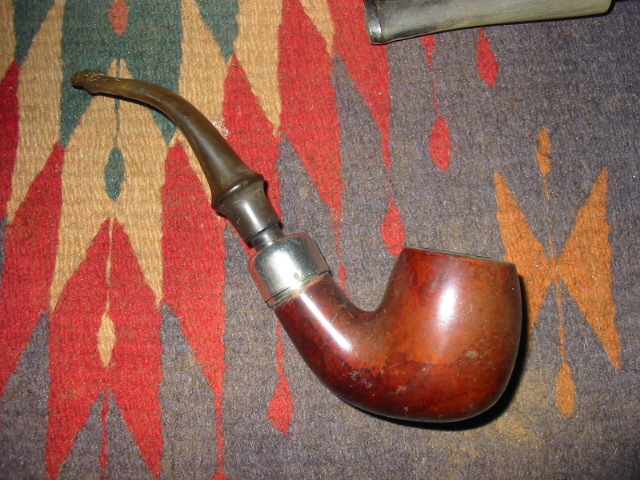
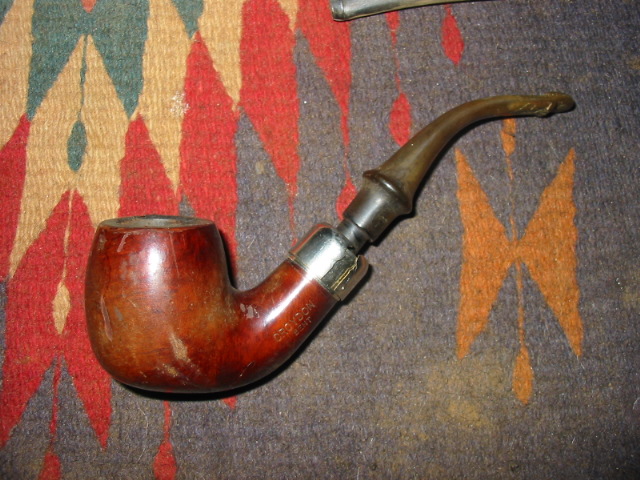
I have spent a bit of time on this old Croydon Bent (Peterson Line of seconds I believe). In fact I probably spent more time than I should have done, judging by other refurbishers throw away buckets. Sometimes I just have to see what I can make of an old tired ugly looking pipe. It is a challenge more than it is a labour of restoration. In fact it could probably be argued that when I am done with this one it really no longer should be considered a Croydon at all. I suppose it is a matter of how far one goes in the process of restoration before it becomes a totally new work of briar. In my mind this one would probably qualify for the removal of the name – or at least a hyphenated name CROYDON-REBORN.

When I received this one it was in pretty rough shape. In the pictures below you can see the state of the finish on the bowl. There were places where pieces of the lacquer finish were peeling away and falling off. The stain on the bowl was spotted and variegated. Even the many fills all over the bowl had shrunken significantly and what remained were dips and divots in the surface. The rim was one part of the pipe that was in pretty good shape. It had some tar build up and a bit of blackening but no nicks and dents. That is actually remarkable given the condition of the rest of the pipe. The silver shank cap was split in half and torn from the stem being jammed in and out of the bowl. The P-lip stem was also marked with tooth chatter, was oxidized and dented.

ImageImageImage

I did not have any end caps in my collection of pipe odds and ends so I decided to put a regular nickel band on the shank as it was thin and weakened from the broken shank cap. I cleaned the shank end with alcohol and dried it out. I heated a band and pressure fit it on the shank. There was a small gap at the edge that I filled with wood glue to give stability to the shank. I probably should have waited to apply the band but the shank seemed fragile and I wanted to stabilize it before further work on the bowl.

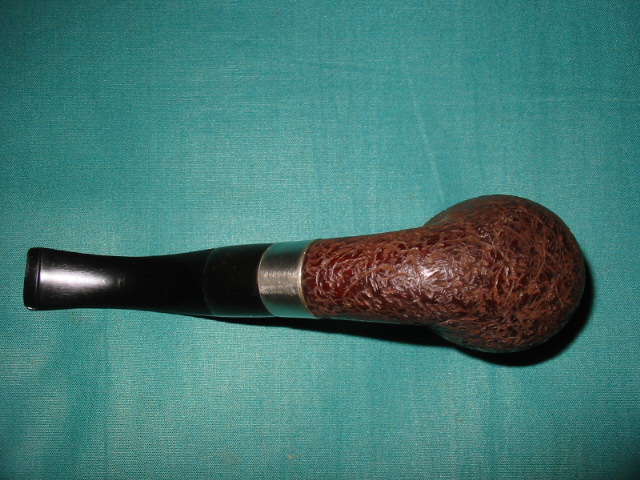
I have never liked the thin Peterson type stems so I decided to restem it with a saddle fish tail stem. I used my PIMO tenon turner and turned the tenon close and sanded it to a good tight fit. I used my Dremel to take down the excess diameter of the stem and worked on the ridges and seams with the Dremel. I sanded the roughness of the new stem until it was smooth with 240 grit sandpaper followed by 400 and 600 grit wet dry sandpaper and a bit of water. It was finished with the regular regimen of micromesh pads – 1500, 1800, 2400, 3200, 4000 and 6000 grit. The final polish was done on the buffer with White Diamond and carnauba wax.

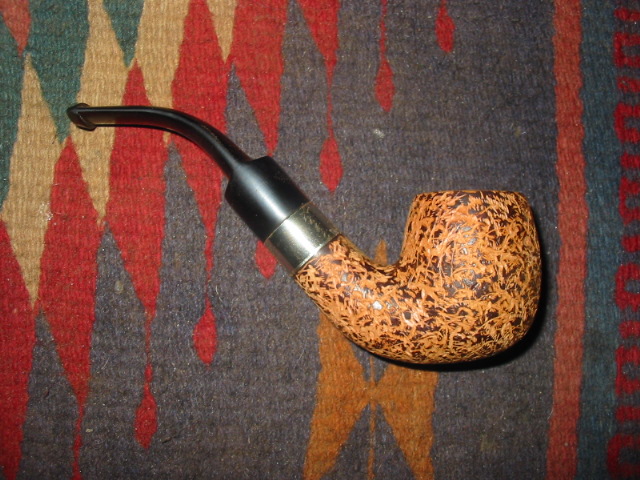
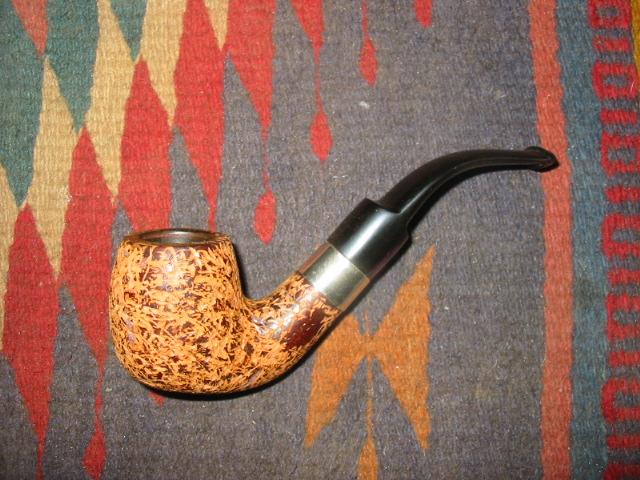
The bowl was a major problem. I tried to strip the bowl using acetone and 99% Isopropyl alcohol and could not break through the finish – don’t what they coated it with but it would not let go. I resorted to sanding the bowl to try and remove the finish and sanded, sanded and re-treated it with acetone and alcohol. The finish was finally gone and I had a raw briar bowl with so many fills in it that it looked like it had freckles. I decided to try staining it with a dark brown stain to hide the fills and give it a good deep colour that was a bit opaque. Once it was dry I buffed it and polished it with wax. It looked really awful and I hated it!!! Soooo… I decided to rusticate it. I used my fist full of nails (pipe with nails inserted in it) to do the rustication that appears in the photos below. The previous coat of stain that I had applied helped with the process of rustication and I could clearly see where I needed to do a bit more work. This is when I wished that the band was not present as it would have been a bit easier to avoid contact with the band and the rusticator.

Image

ImageImage

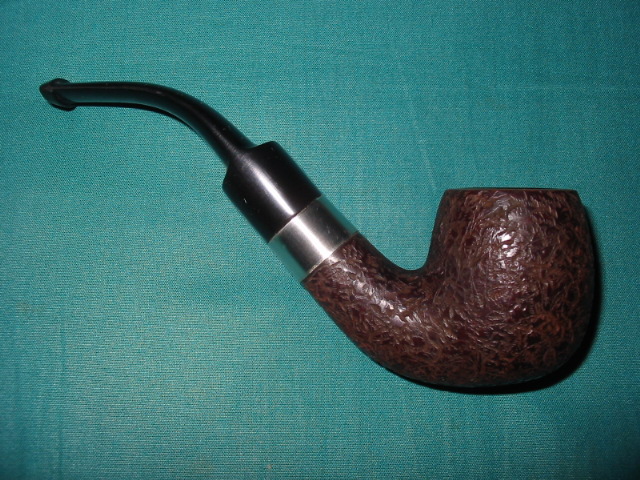
Once the rustication was acceptable to me, and the pipe felt good in the hand I prepared it for staining. On this one that involved using the floral frog to knock off any loose chips of briar and to smooth out the surface before I wiped it down with a damp alcohol cloth. I also sanded the rim smooth and used the micromesh to get rid of any scratches. A smooth rim and a smooth spot around the Croydon stamping would look good on the finished pipe. I decided to go for an aged leather like finish on this pipe as it seemed to fit the shape and the look. I gave the pipe a coat of black stain as an undercoat and then buffed it off the high spots. I gave the entirety a coating of Fiebing’s Medium Brown for the top coat. I flamed it and after drying took it to the buffer for a light buff. I waxed it with Halcyon II and buffed it with a soft cloth to give it the final look. Below are pictures of the finished pipe. In my book it is a significant improvement over the original!

ImageImageImage