Tag Archives: rusticating a bowl

Mission Impossible: Operation Long Shot


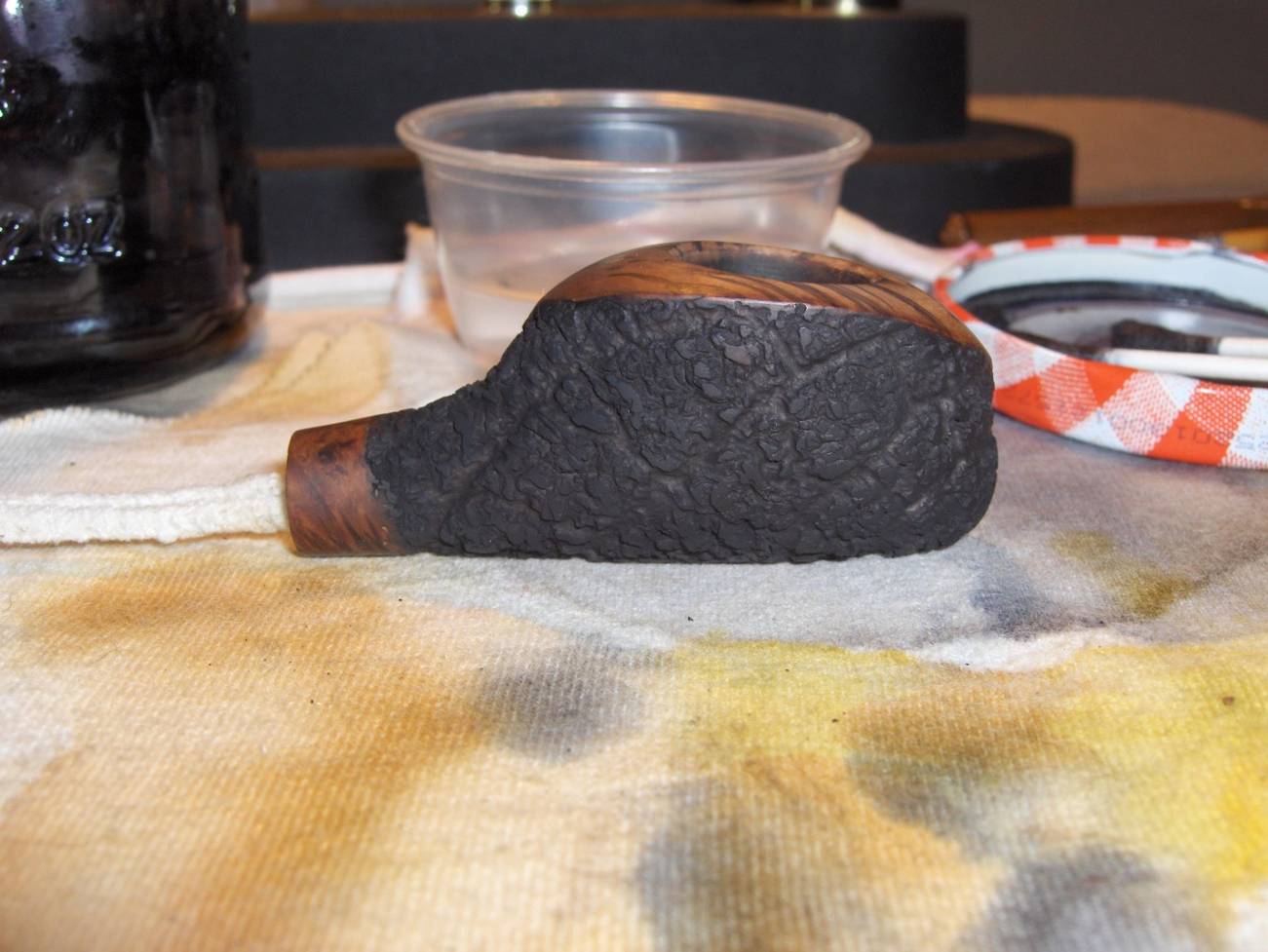
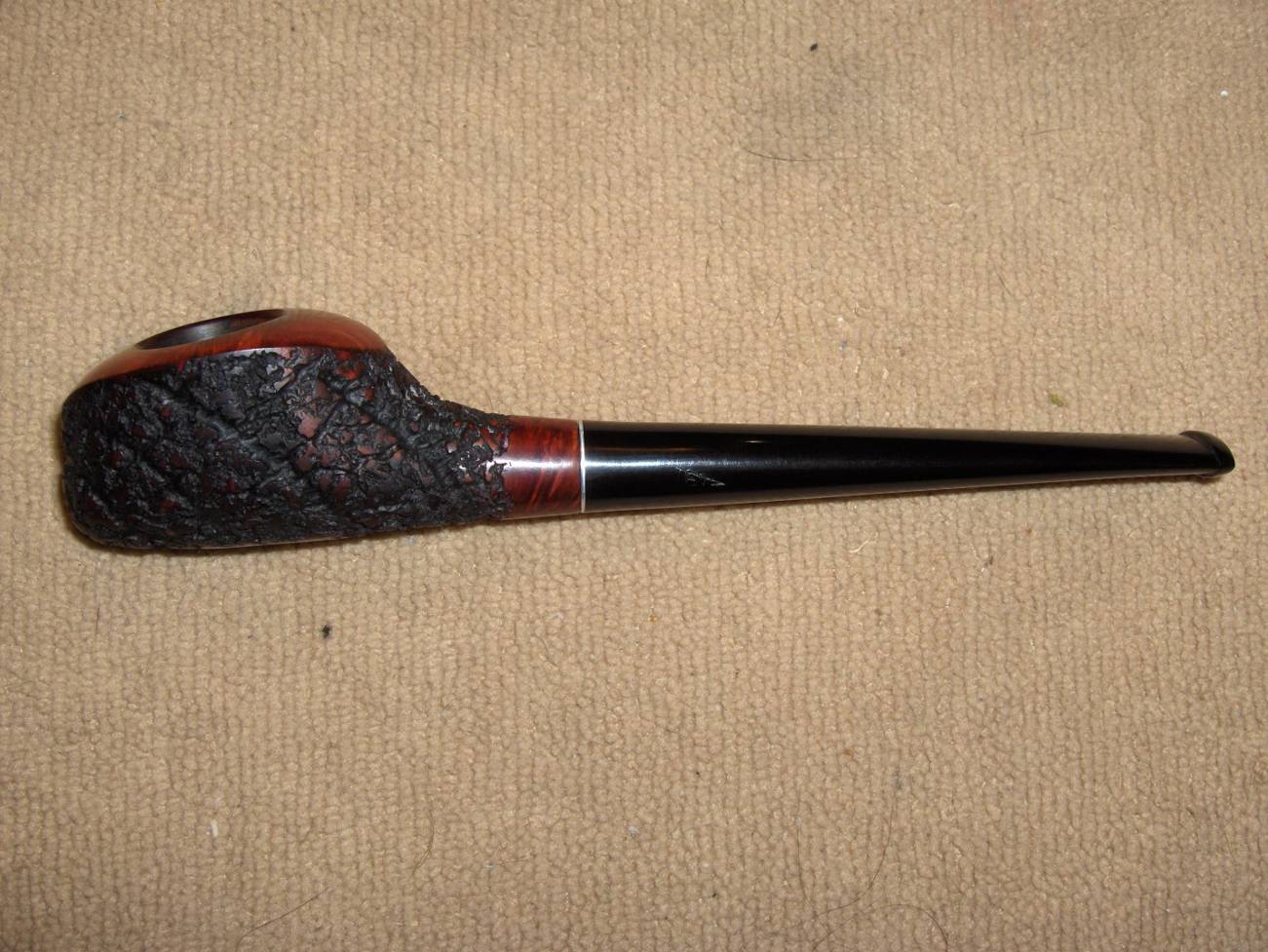
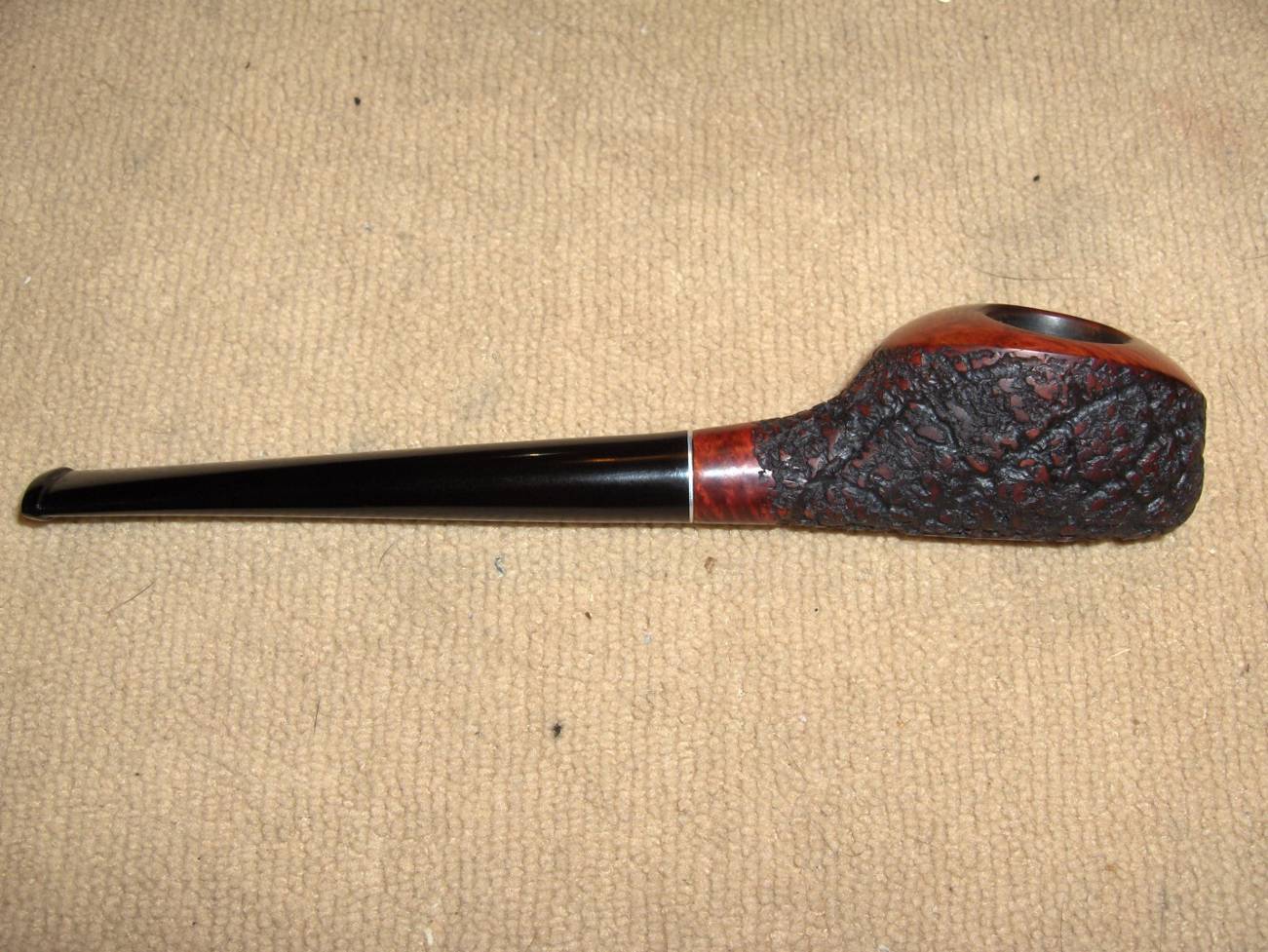
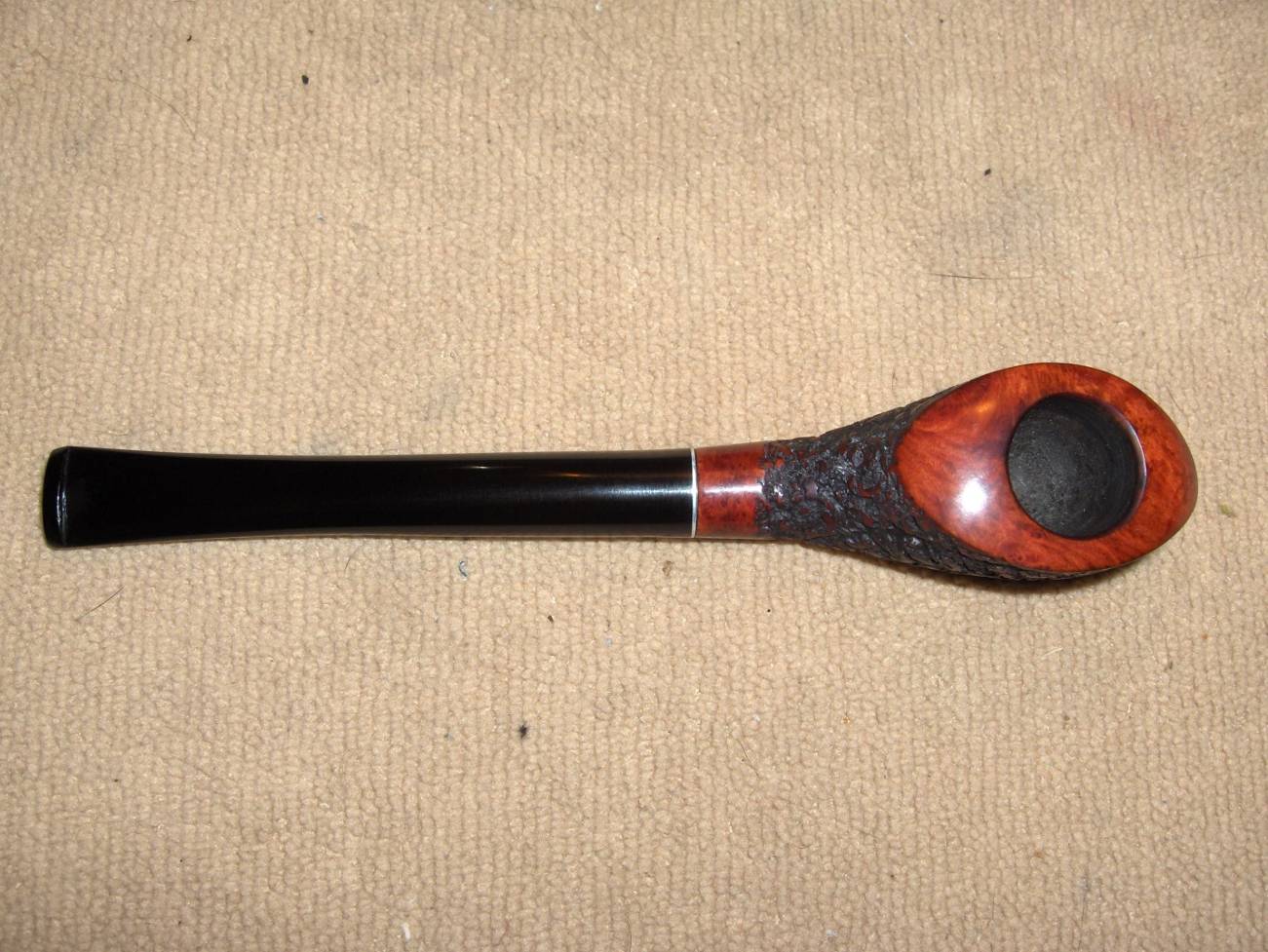
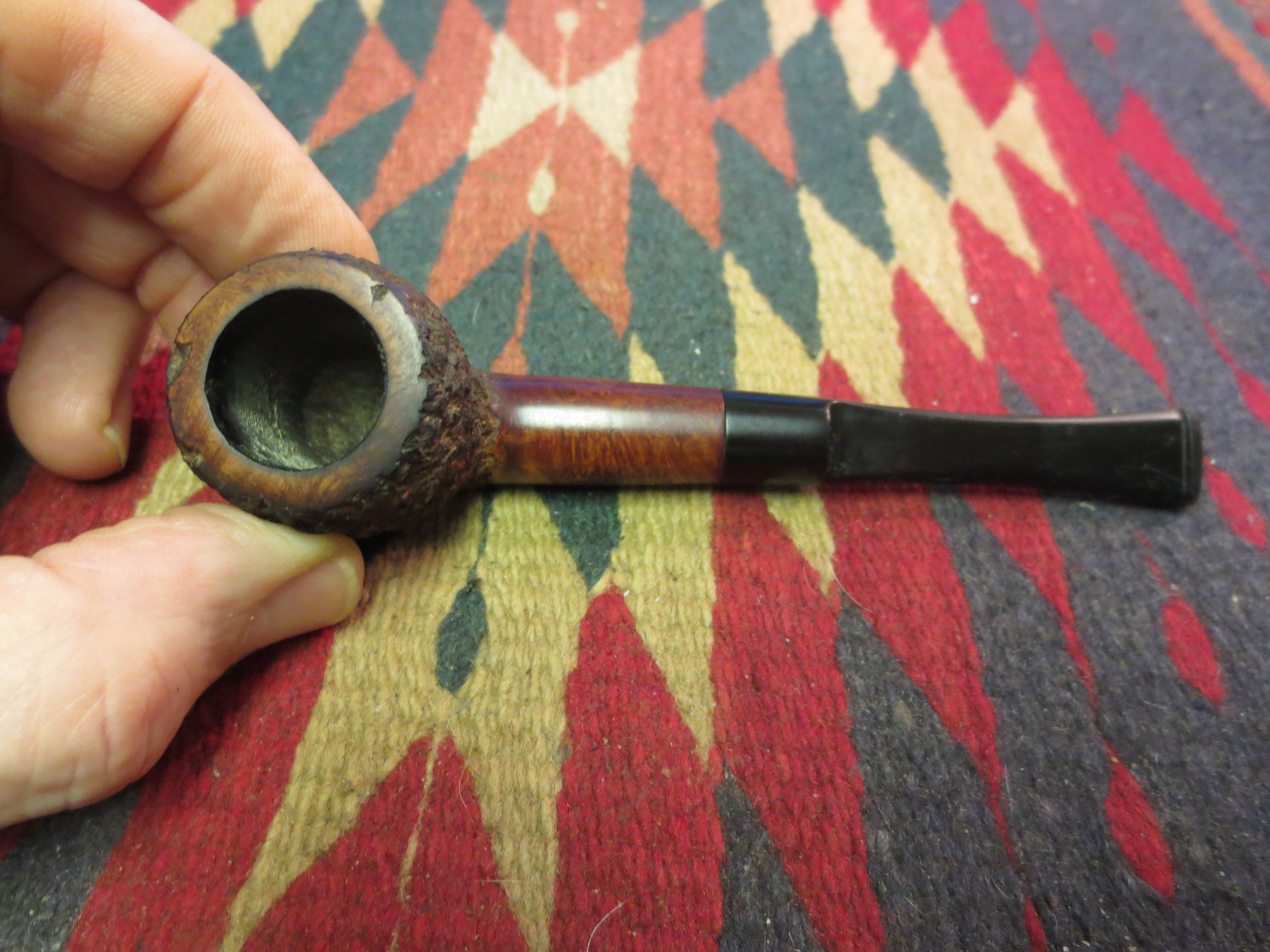
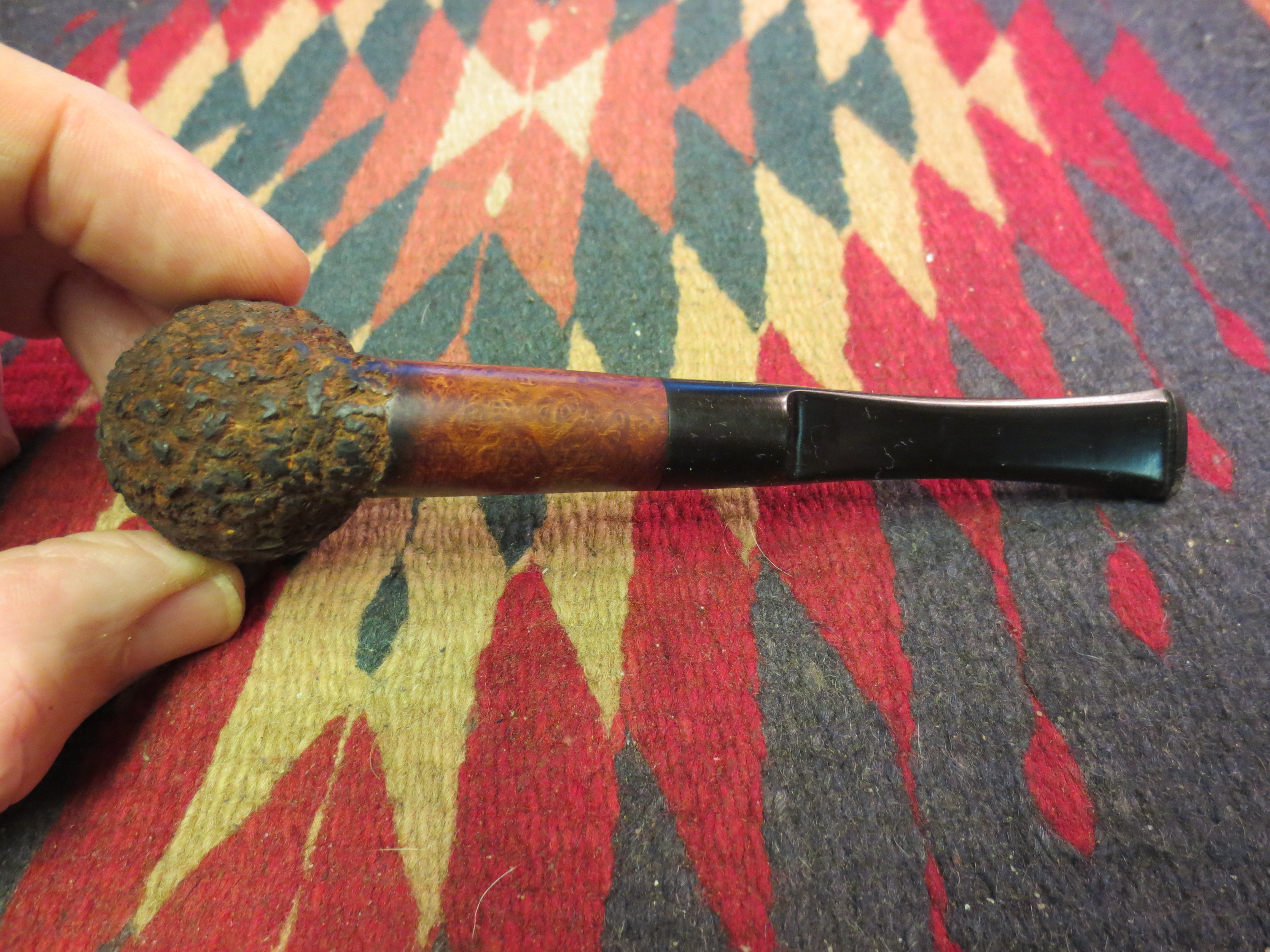
This is an old Brigham that Charles and I did together and it was almost Mission Impossible. Wanted to post on both blogs.

Charles Lemon's avatar

The door opened and a man walked into the bar, pausing briefly in the doorway to allow his eyes to adapt to the dim light inside. The place was what optimists would euphemistically call a dive. The establishment was empty except for a few drunks and a large, bored-looking man behind the counter wiping glasses with a rag that was presumably once white but was now an indeterminate shade of grey.

The man walked through the room, turned in at a doorway marked “Gents” and scanned the room – two stalls, a urinal and a grimy sink – before spotting what he sought. Moving across the room, he fed a handful of coins into a coin-operated machine advertising cheap cologne. There was a rattle and then a small rectangular device dropped into a waiting hand. The man pushed his thumb against a small pad on the otherwise blank rectangle. A laser washed briefly…

View original post 2,428 more words

Turbulence: Rusticating a Medico Jet Stream


Blog by Anthony Cook

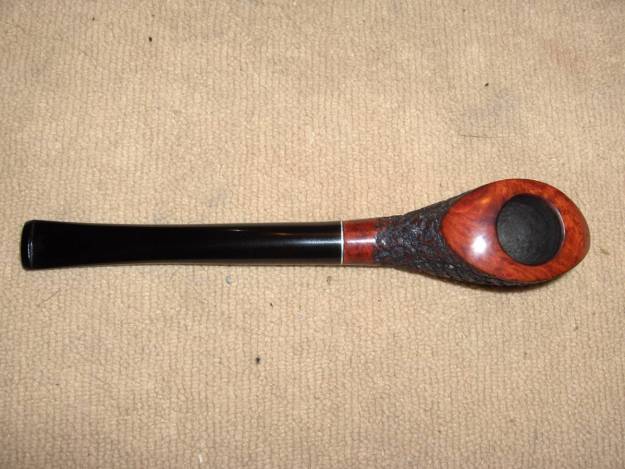
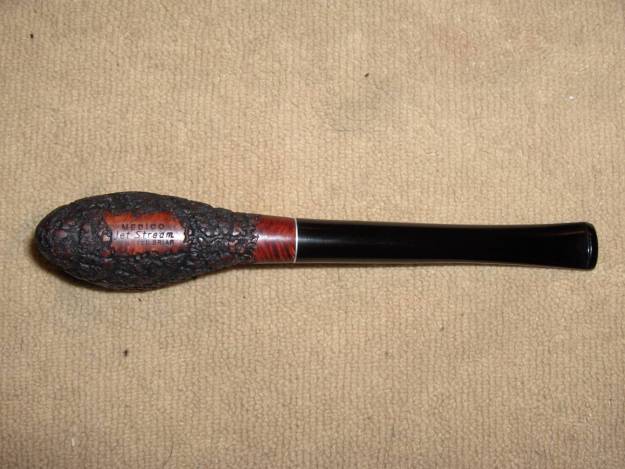
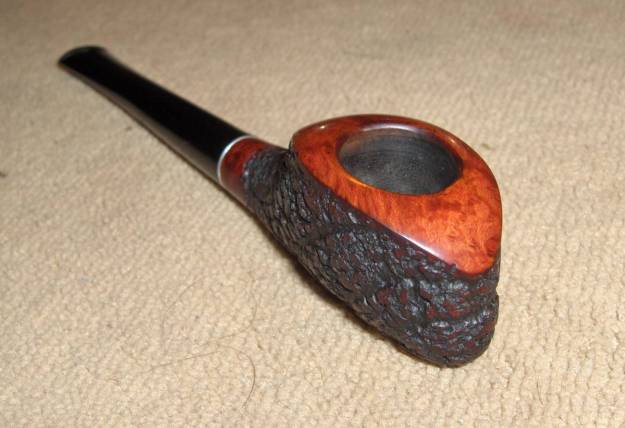
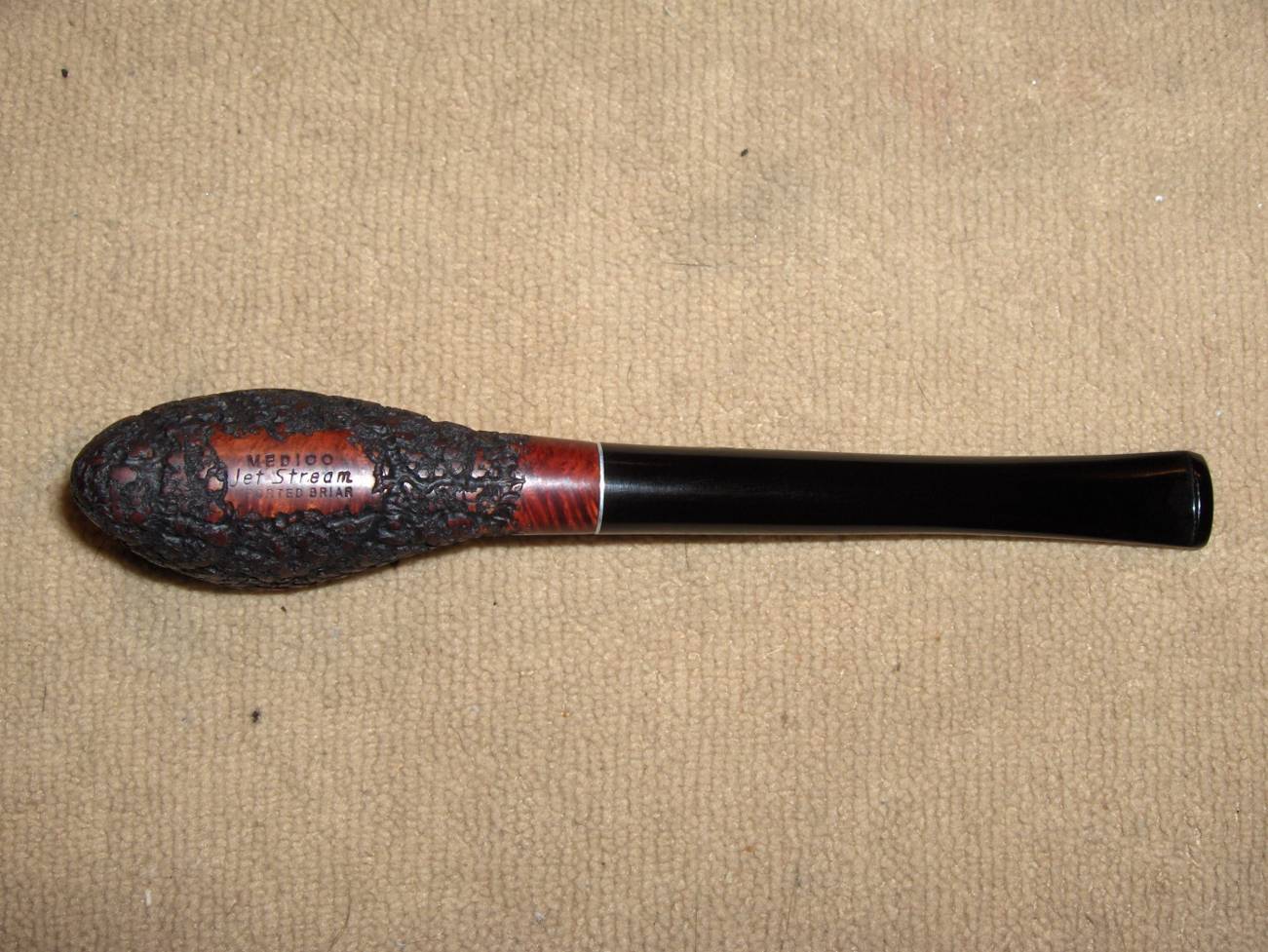
I recently completed work on another pipe in the batch that was sent to me by an online friend. This time, it was a Medico Jet Stream. These were produced by Medico from sometime around 1965 until 1971. There were a couple of shapes in the line and each was quite a departure from the classic forms. This one is by far my favorite. I think it has a nice, streamlined flow to it. The pipe is right at six inches long with a small bowl that is barely more than inch tall. Mechanically it was sound but it was obvious that it had let itself go cosmetically in its 44 years (at minimum) of existence.

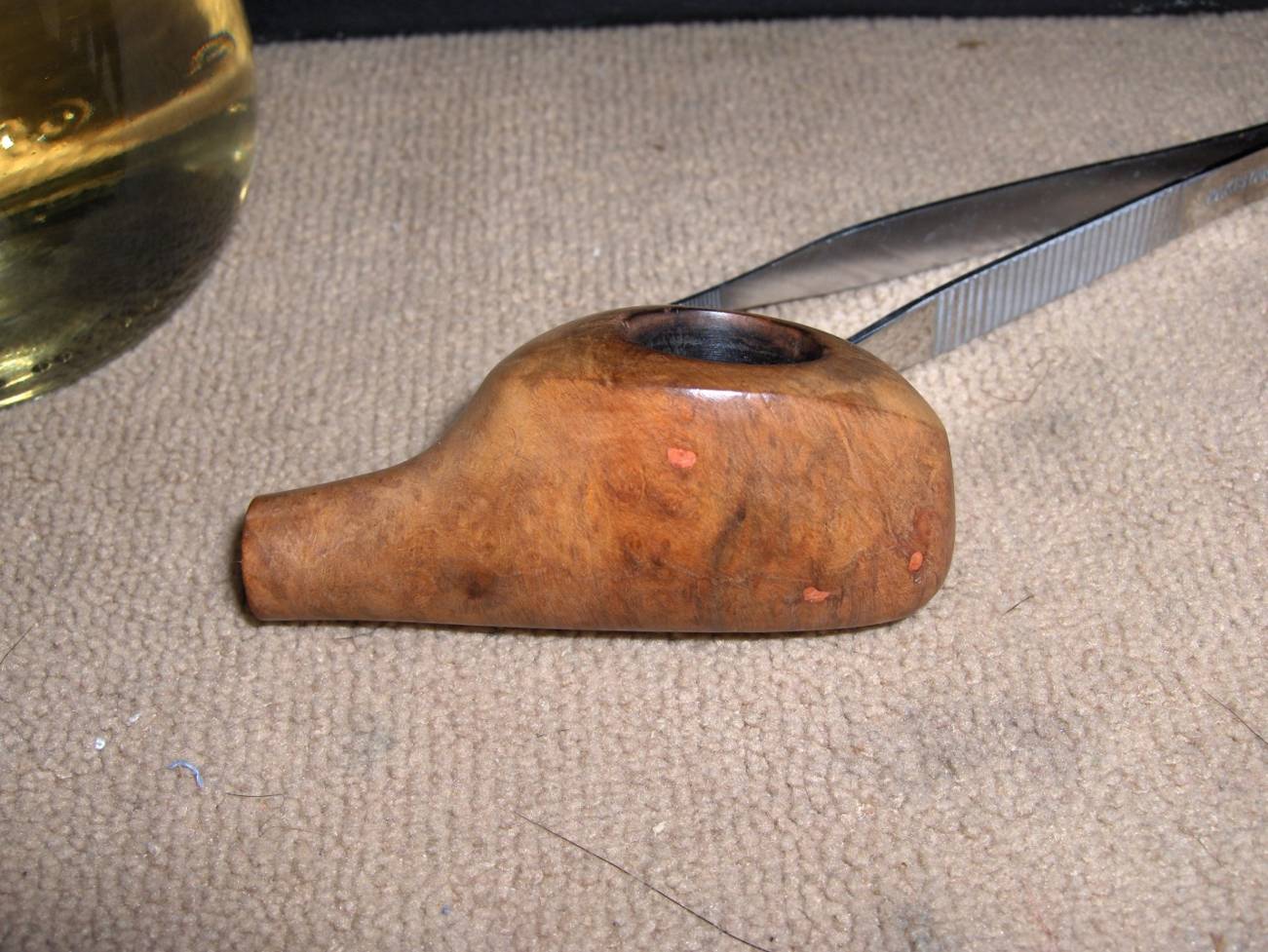
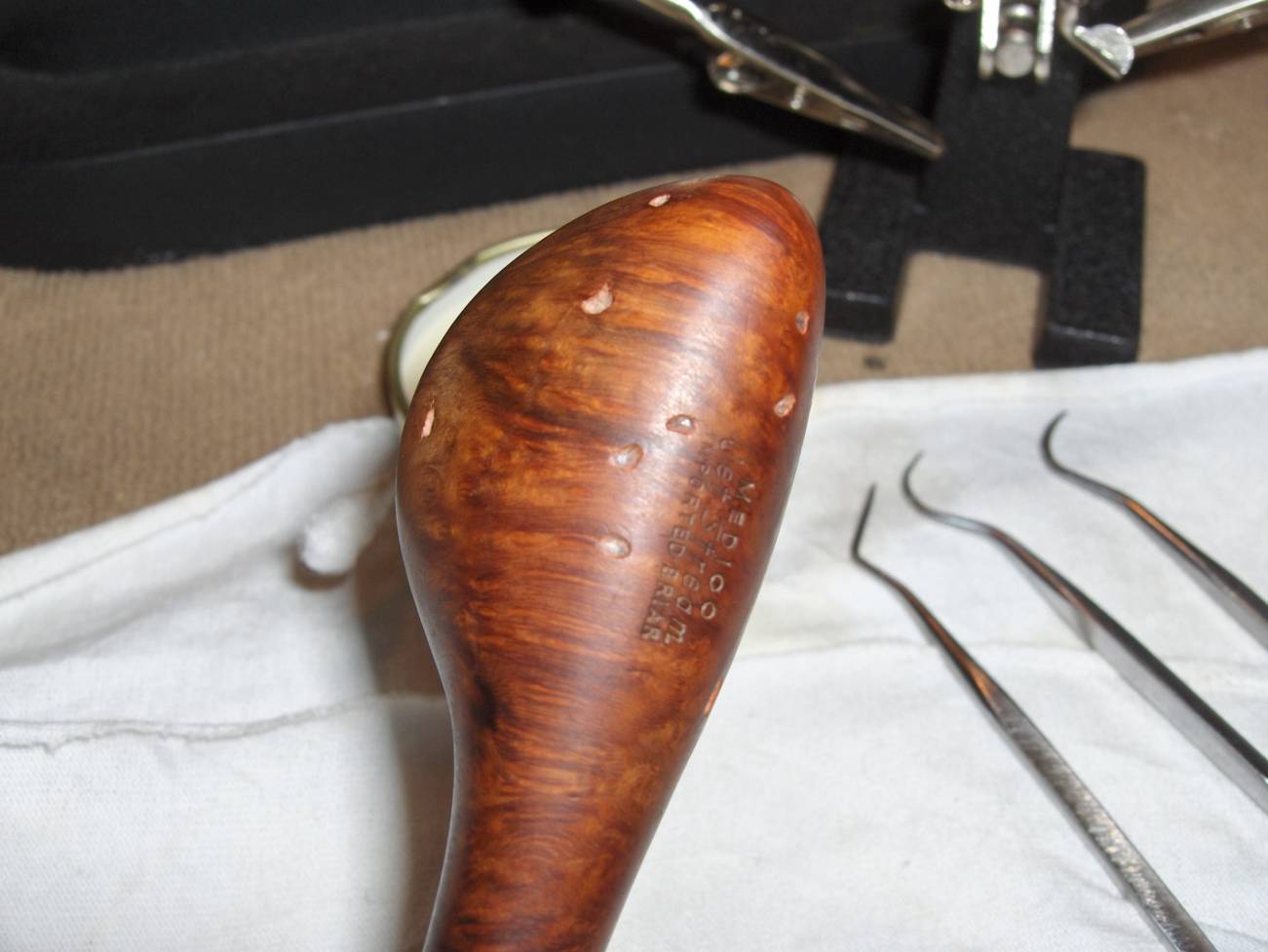
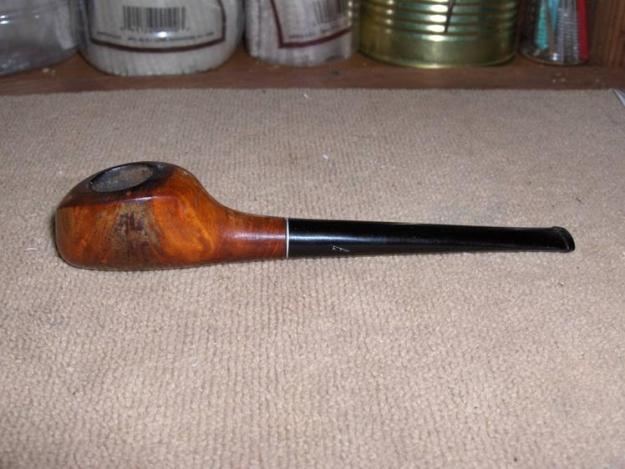
There were no deep dents or scratches in the stummel, but it did have some light charring and a few nicks around the rim. It was coated with a thick layer of deeply tinted lacquer that had been worn to bare wood in spots. It looked like there might be some interesting grain under there, but the fills… Oh, Jeeze! The fills!!! It was so riddled with them that it looked like it had the pox. The nylon stem was in predictable shape for a pipe of this age with jagged chatter and tooth dents on both sides. You can see the condition of the pipe when it arrived in the following photos.Jet1
Jet2

Jet3

Jet4 I began by cleaning the internals of the pipe. The cake in the bowl was light and reamed out easily enough. I think removing the old cake really helps to eliminate any ghosting issues that a pipe may have. So, I took it down to bare wood. I made a surprising and disappointing discovery at that point. The fills did not stop on the outside of the bowl. There were at least two fills in the inside of the chamber. Oh, Medico, say it ain’t so!

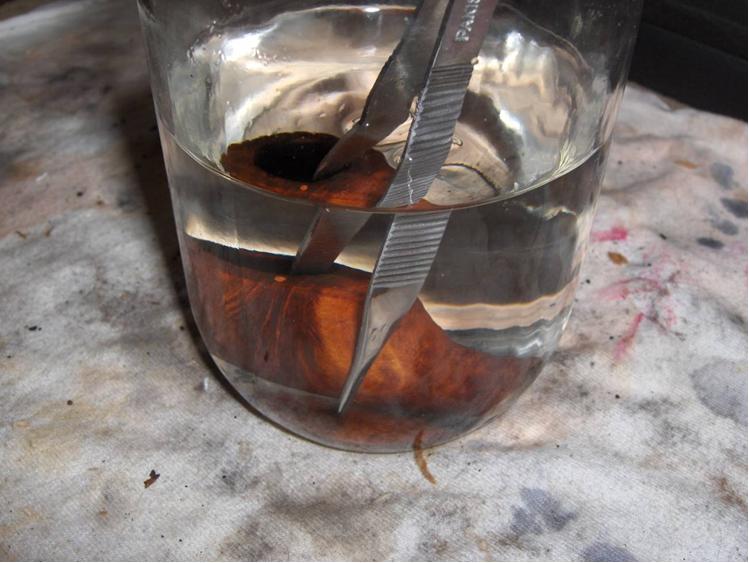
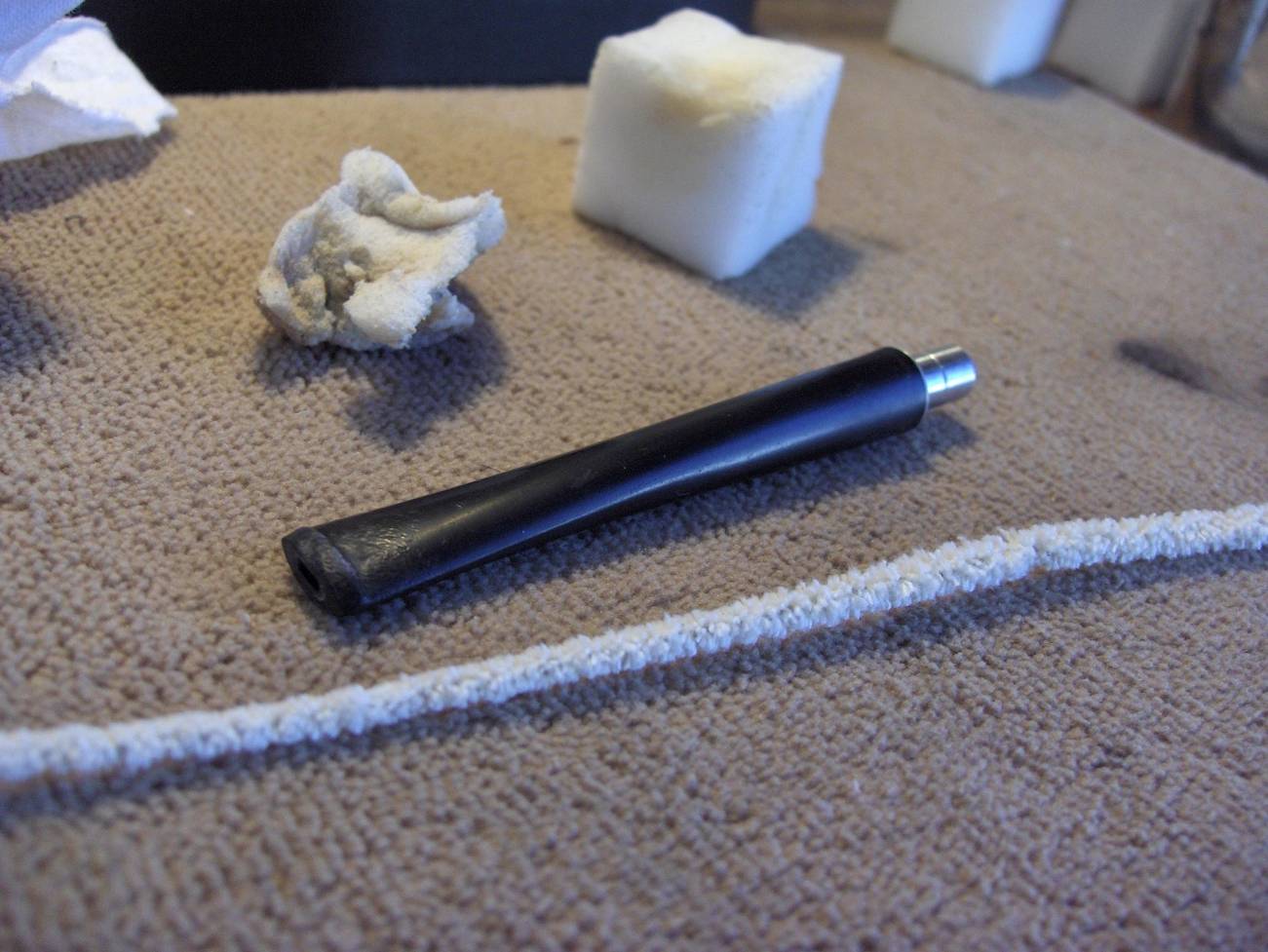
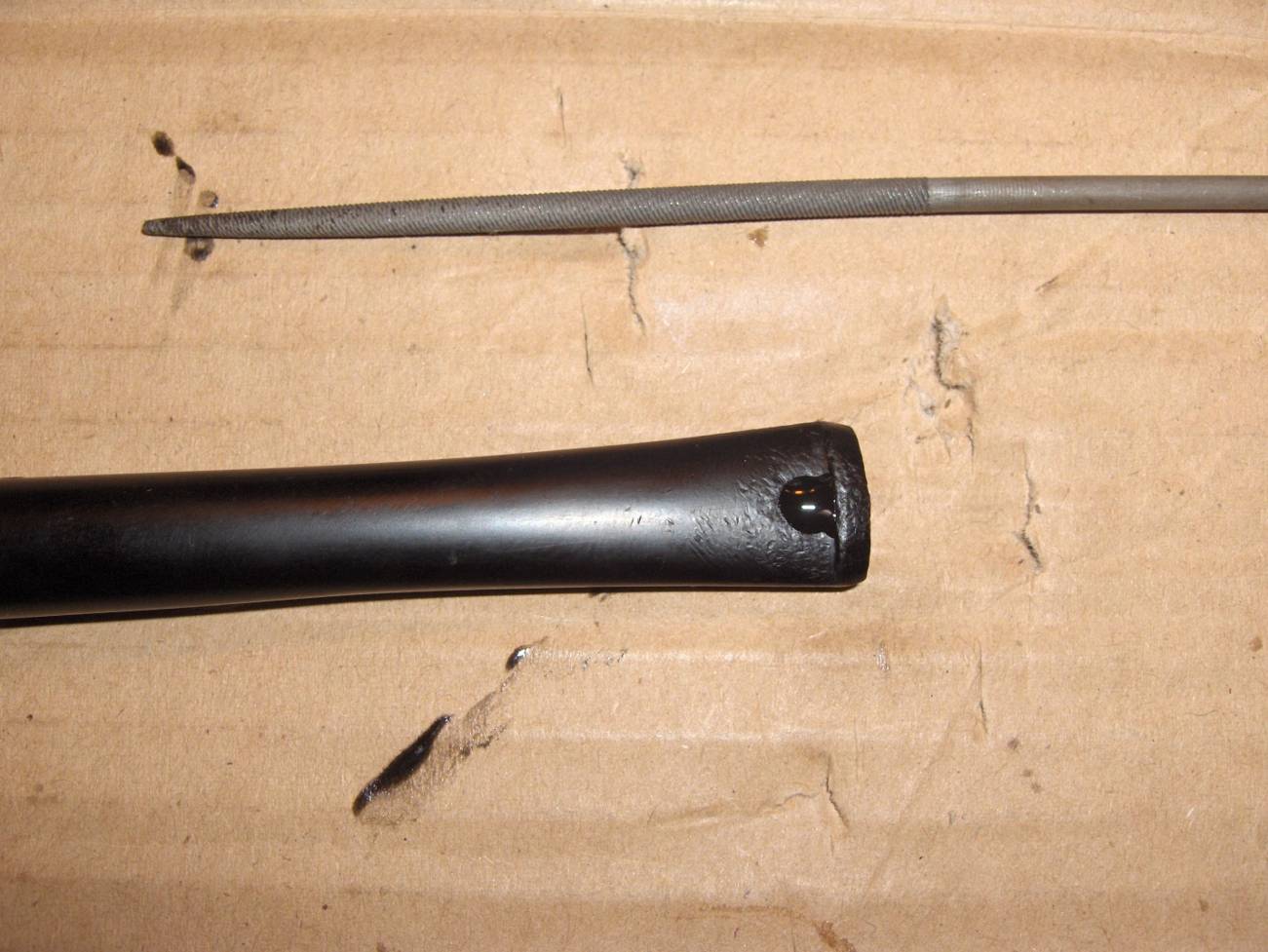
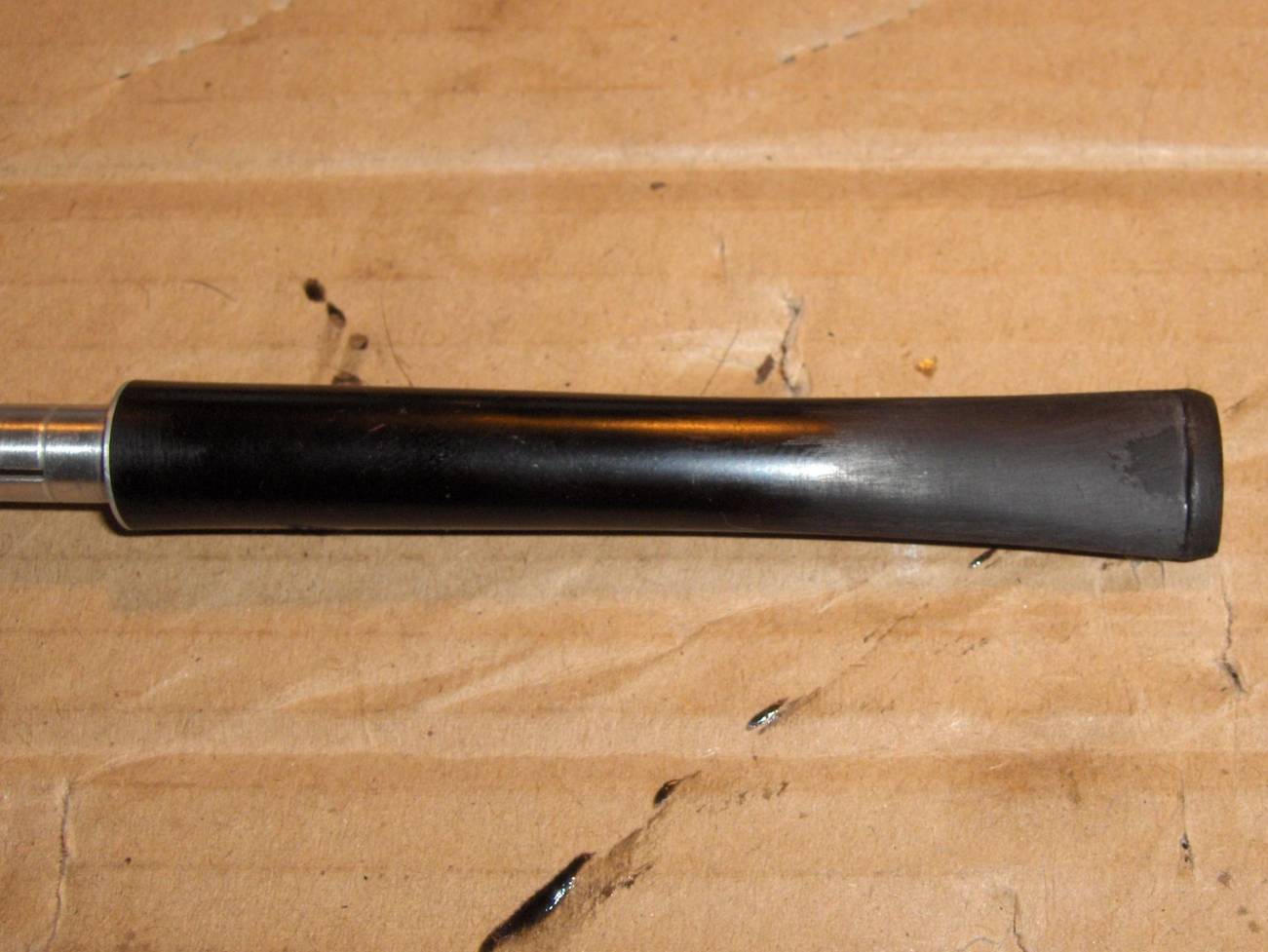
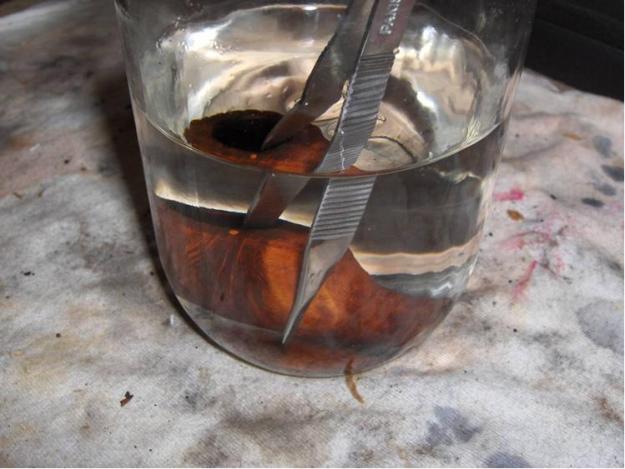
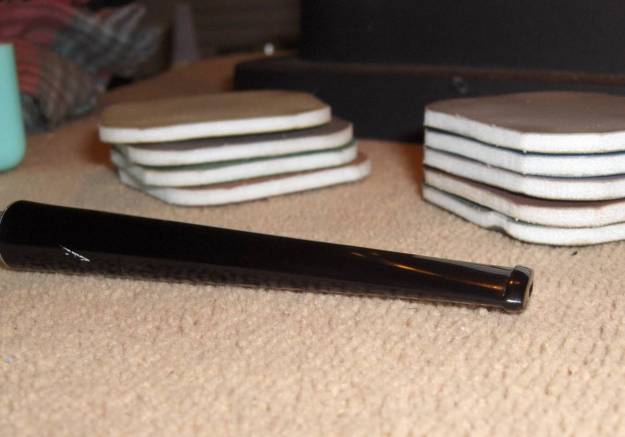
I took the opportunity to sand out a few of the nicks on the inner rim while I was working in the area, and then moved on to the rest of the pipe. There turned out to be quite a bit of residue inside the shank and stem. I took care of that by running a variety of alcohol soaked pipe cleaners, cotton swabs, and shank brushes through until they came out clean.Jet5 When I was satisfied that the internals were clean, I gave the stummel an acetone wipe-down to get rid of the spotty lacquer coat, and then dropped it into an alcohol bath to remove the remaining of the finish. Usually, there’s a satisfying Ker-Plink! when I do this and the stummel goes right to the bottom. Not this time. This one actually floated belly-up like a dead fish. I had to put tweezers in to hold it down to make sure the entire thing was submerged. I’m guessing that it was the fault of the fills, but it’s a good thing that we weren’t in Salem, Massachusetts. If we were, I would have had to get out the pitchfork and call the Witch Finder General.Jet6 While the stummel enjoyed a pleasant soak, I went to work on the nylon stem. The first step was to clean the surface with citrus cleaner and cubes cut from a Magic Eraser. There really wasn’t very much filth to remove and it cleaned up quickly. The photo below shows the stem after the surface cleaning.Jet7 Next, I set out to remove the dents and chatter around the button. I began by roughing up the area around the dent with the point of needle file to give the patch a better surface to cling to, and then filled the dents with a drop of black CA glue (seen in the first picture below). When the glue had dried, I sanded it back with 220-grit paper and refilled the area with glue. I did this on both sides of the stem until the dents were filled and level with the rest of the stem surface. I then sanded out the high spots of the chatter with 320-grit paper (seen in the second picture below) and followed that with 400-grit, then 600-grit to give the area a completely smooth surface.Jet8
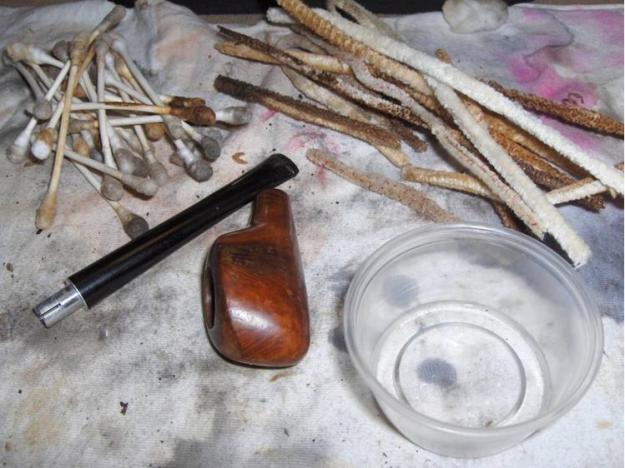
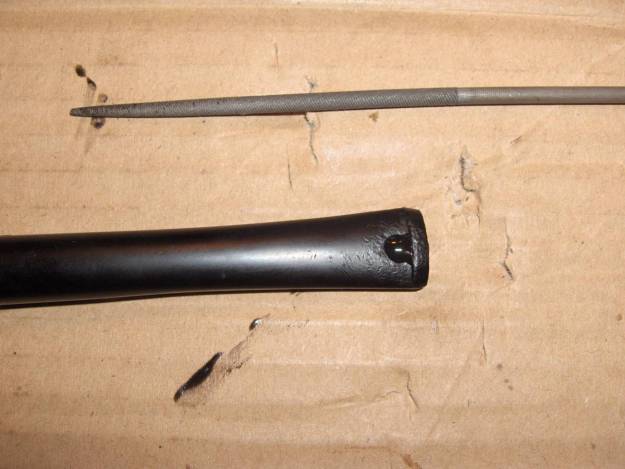
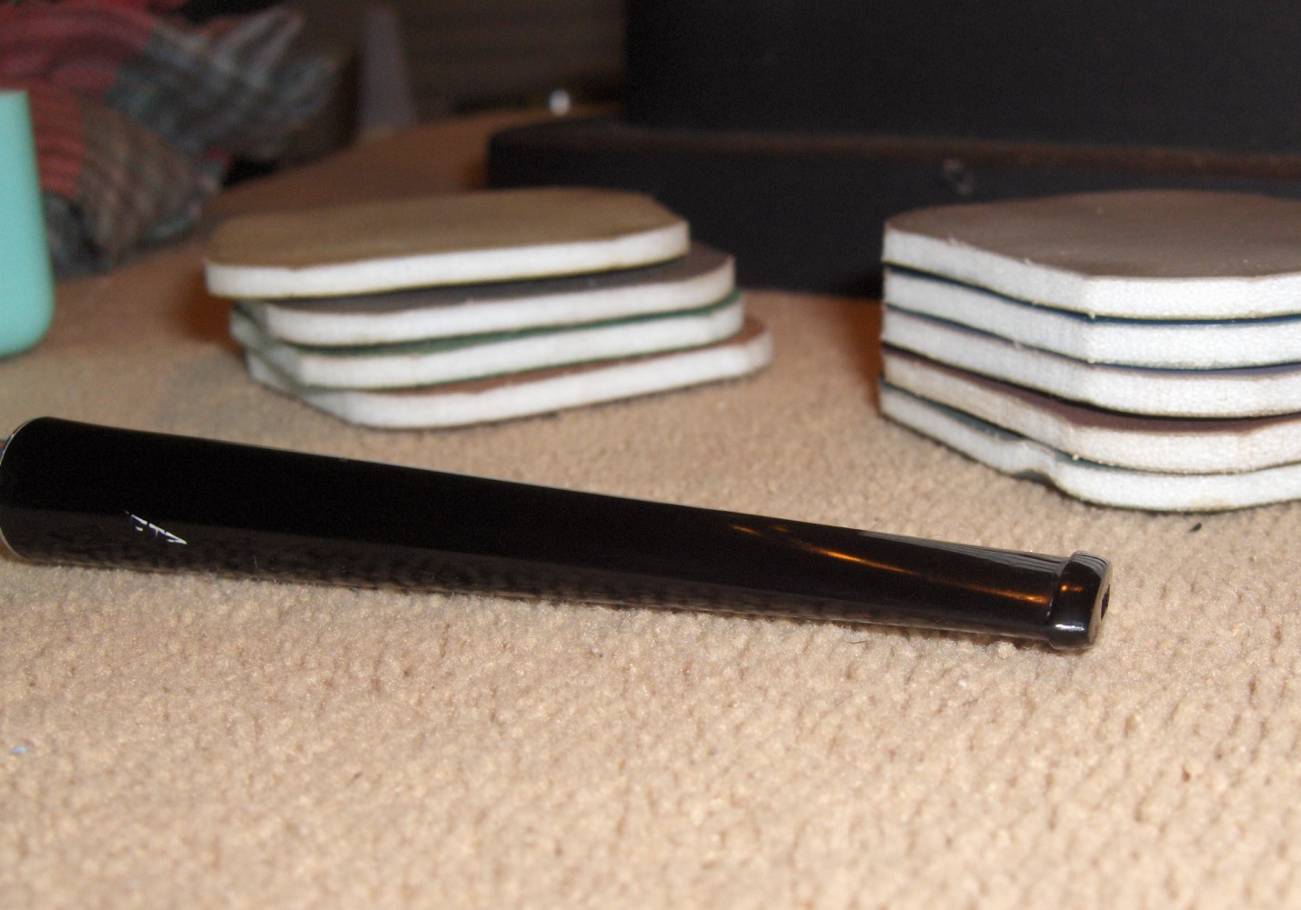
Jet9 With the dents filled and the chatter removed, I lightly sanded the entire stem with 1200-grit paper to even out the surface. Then, I used the full complement of micromesh sanding pads 1500-12,000 to polish the stem. You can see the results of the finished stem in the photo below.Jet10 The stem work was all wrapped up. So, I pulled the stummel out of the alcohol bath to see what I had to work with. The bath had done an excellent job of removing the old finish and exposing the briar wood. Unfortunately, it has also done an excellent job of exposing all of the fills. I counted fifteen of them in all and that’s not counting the ones in the chamber.Jet11 After using a pick set to remove all of the pink fill material on the outside stummel surface, it looked like a block of Swiss cheese. At that point, I had to admit that I didn’t see any way that I could fill all of those pits and hope to have them blend them into the final pipe without the benefit of the tinted lacquer to cover them.Jet12 Rustication seemed like my best way forward, but I really didn’t want to go that way. I felt that it would really break up the great flow of the shape and stop the movement. I know when I’m whipped, though, and with all of the pits it appeared to be partially rusticated already.
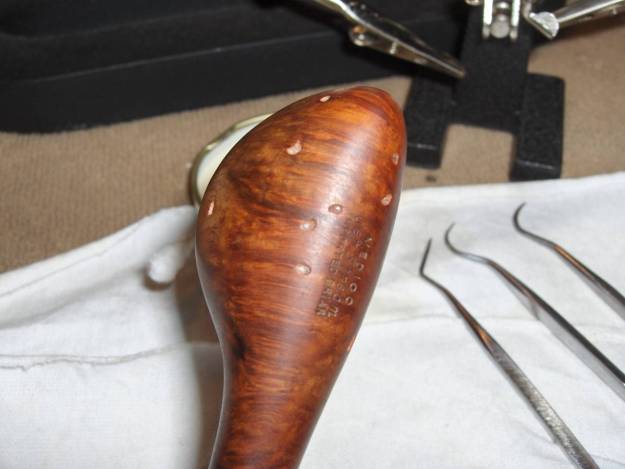
I decided to leave the rim, the shank end, and the area around the stamping smooth. That meant that I would have at least one pit on the rim to fill. I packed it with briar dust that I have gathered from work on other pipes, and then dripped a small dab of clear CA glue into the dust. When the glue was dry, I sanded it level with the surface. With that out of the way, I prepared to rusticate the surface.

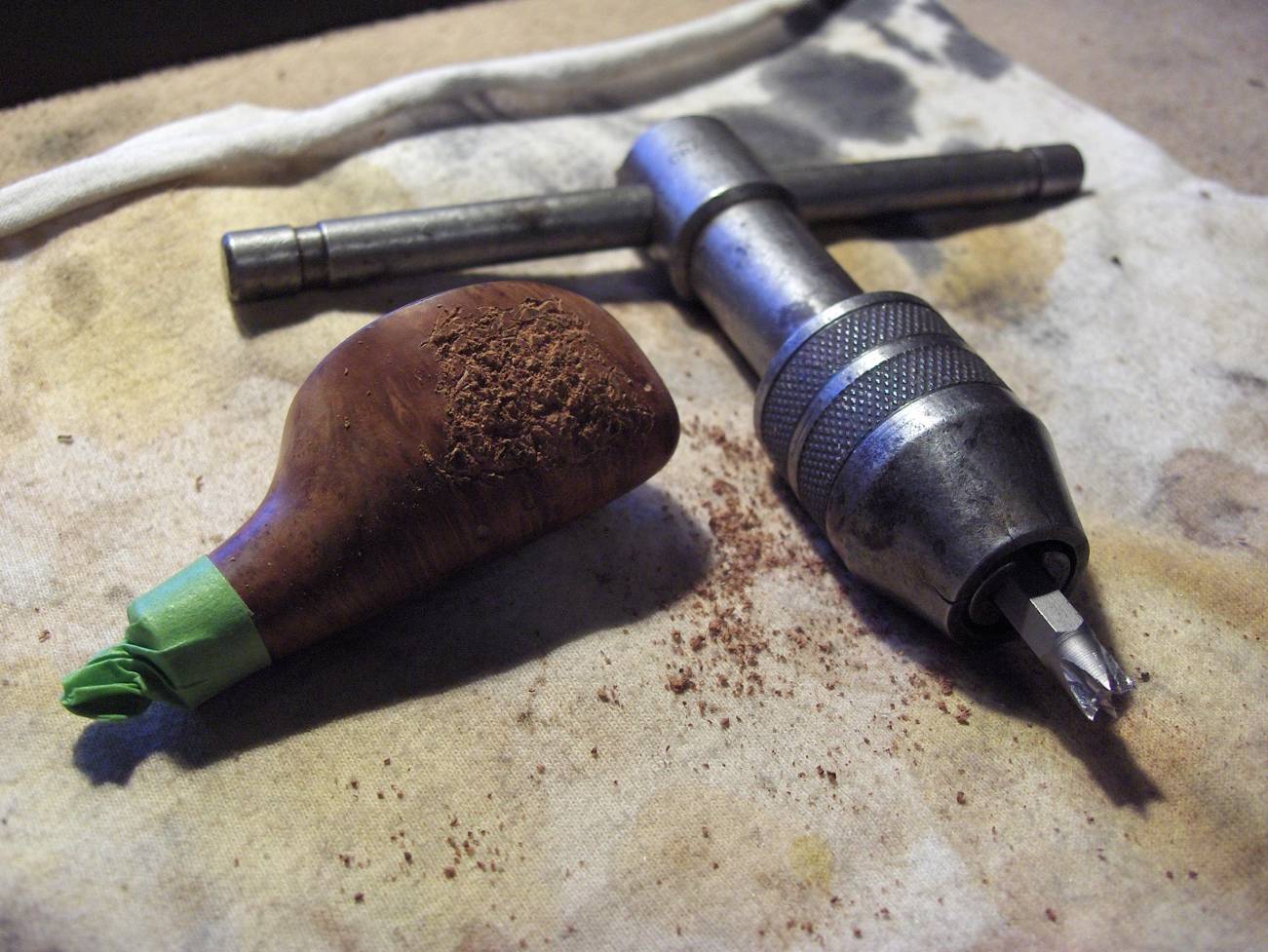
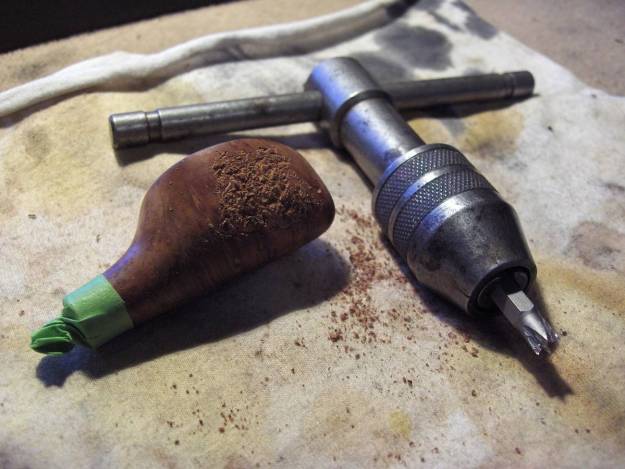
I have a variety of tools that I use to carve into the briar. Some of them are handmade and others are off-the-shelf tools, but my favorite is an old Craftsman T-handle tap wrench. It has a chuck on the end that will accommodate any ¼”–½” bit. It makes it very easy to switch out any of the several bits of various sizes and shapes that I have modified for carving different textures. The chuck provides a tight grip without any of the “wobble” that I’ve encountered when using a bit in a standard driver.

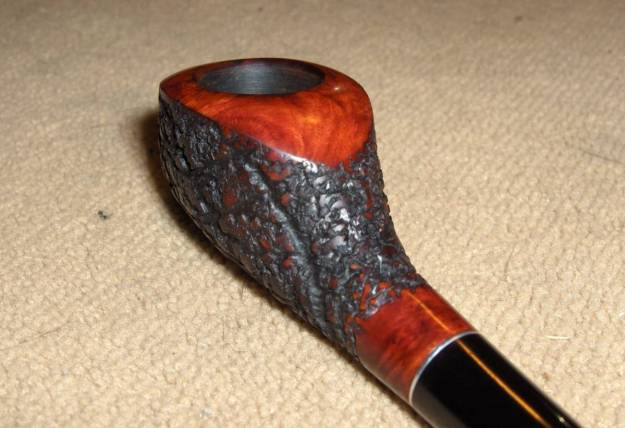
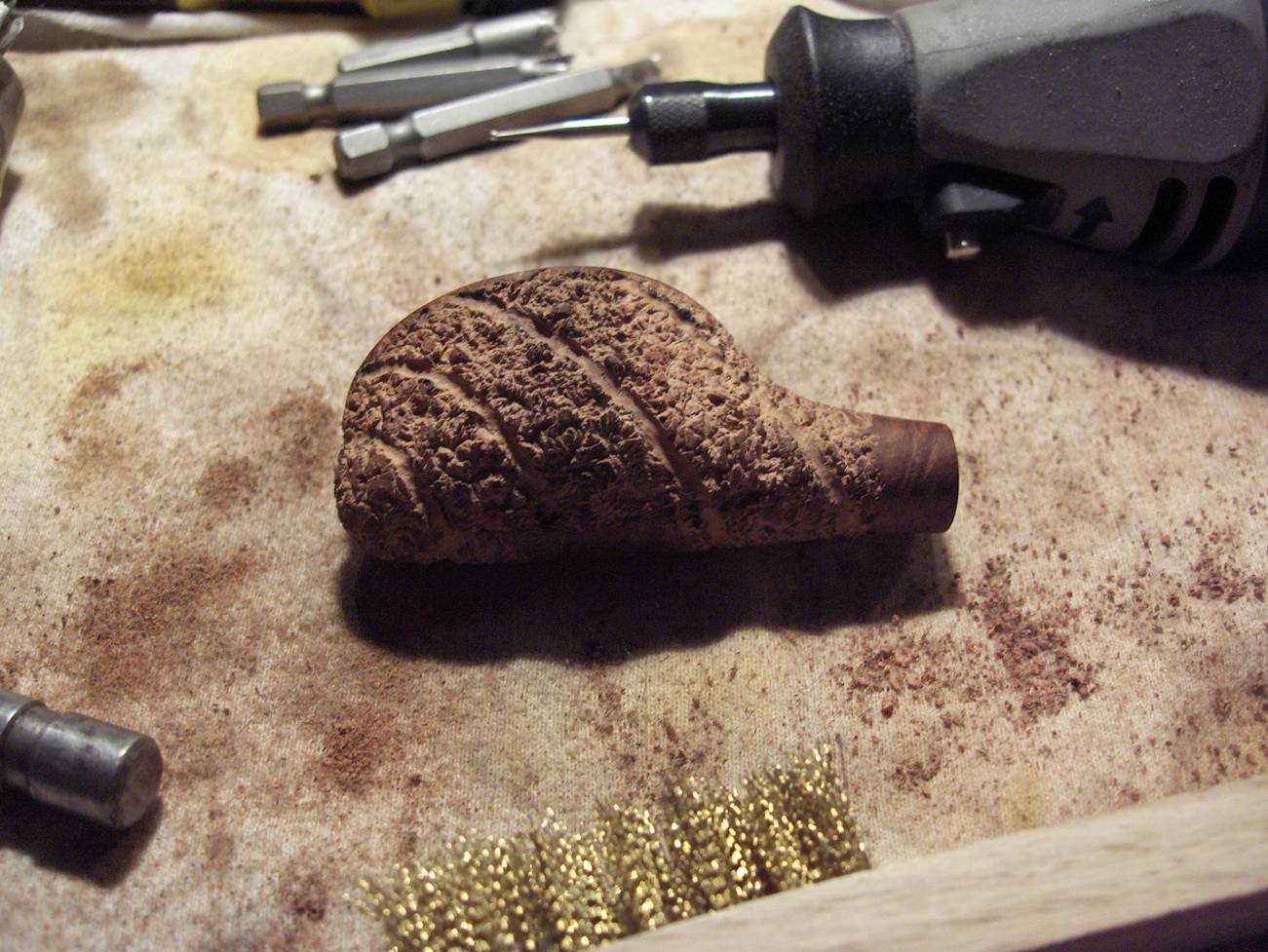
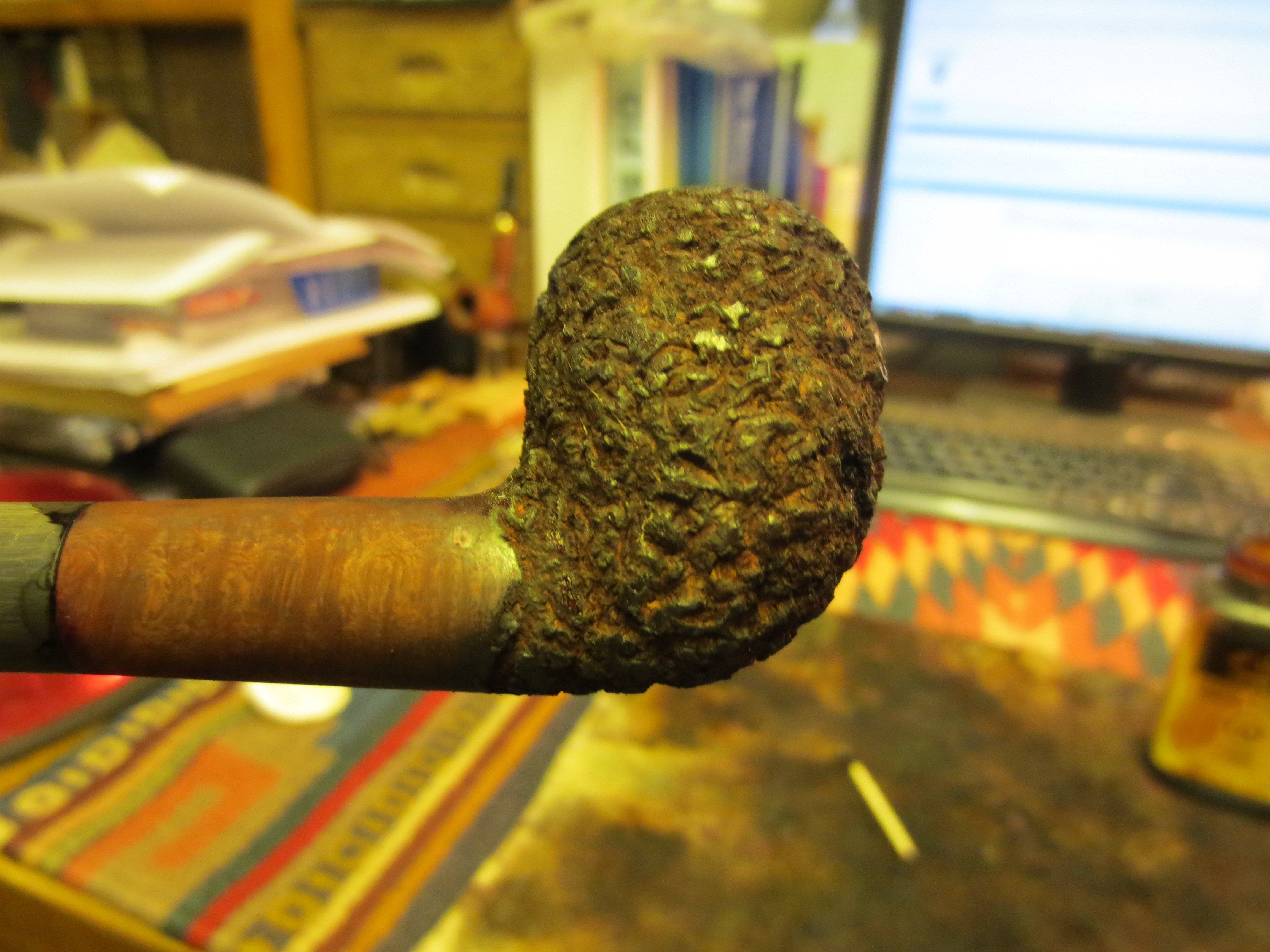
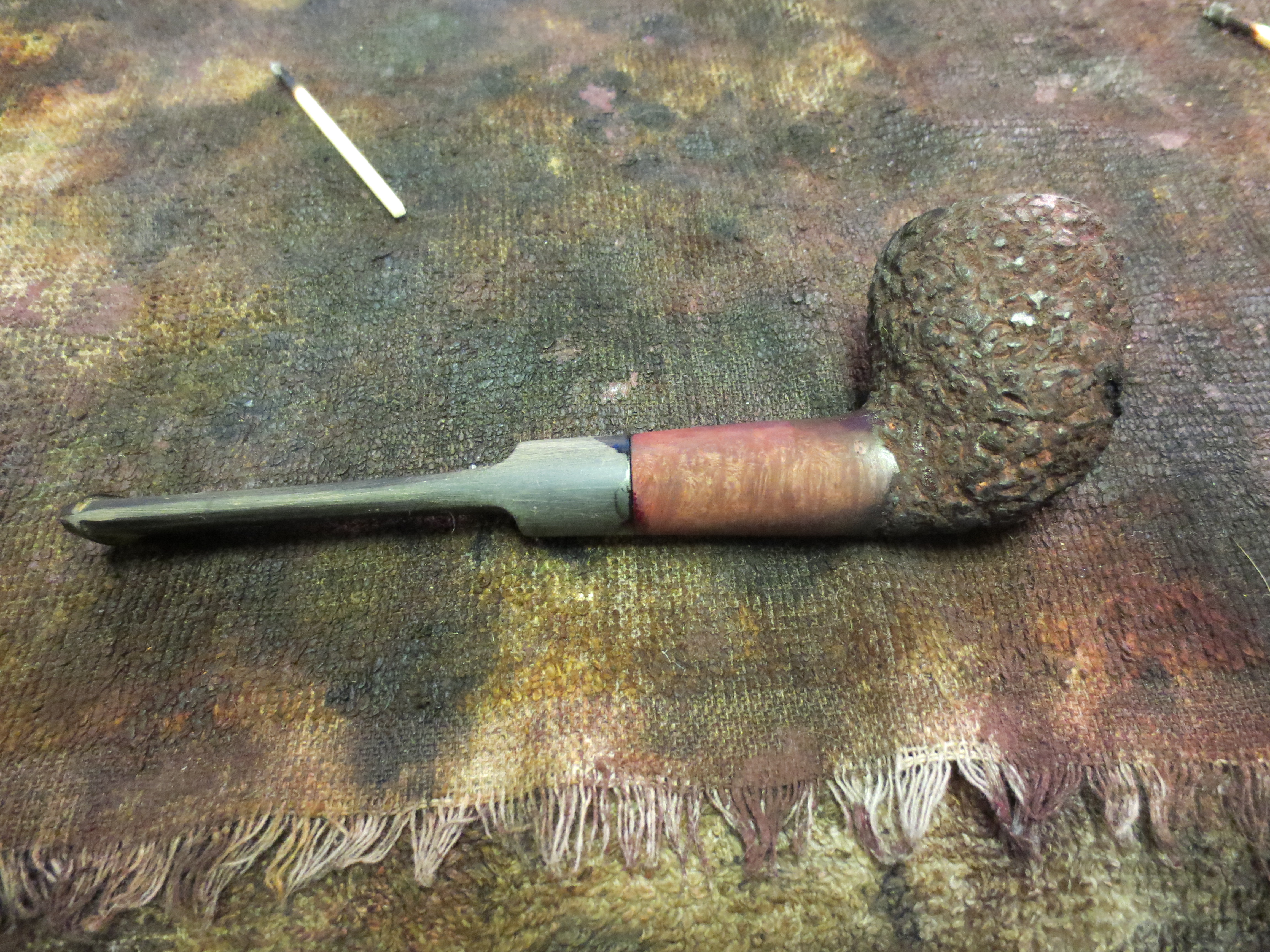
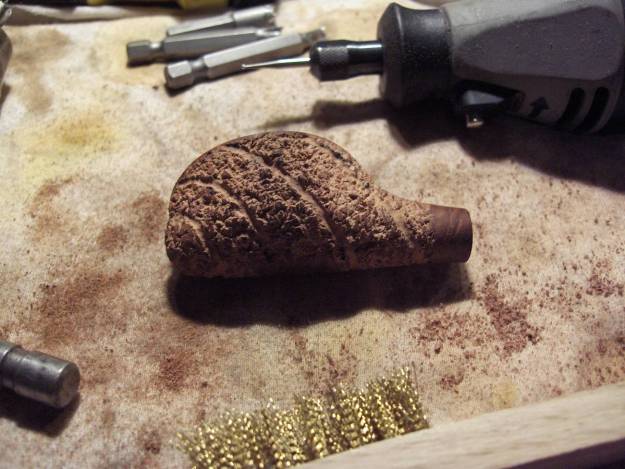
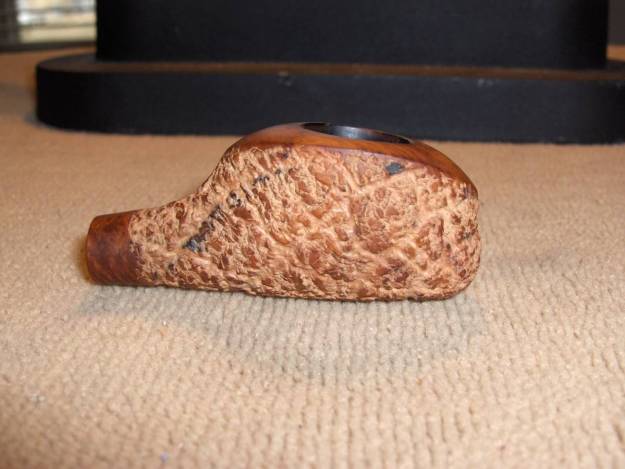
For this project, I began by using modified Phillips bits similar to what Steve has previously detailed here. First, I taped off the end of the shank with painter’s tape to make sure that I didn’t carve into that area. Then, I used a #2 bit to carve around the stummel, twisting and turning as I went. I wanted a deep, craggy texture to give some good contrast with the smooth areas. I switched to a smaller #1 bit for a little more control while I edged up to the smooth areas. The photo below shows the tool and the stummel after I had just started carving.Jet13 After carving with the bits, I used a wire brush to remove any loose material in the texture. Then, I had the idea that I might be able to restore some of the movement in the shape by carving a few deep “waves” into the rustication. I used a Sharpie pen to sketch some curved lines onto the texture to test out my idea and to give me something to follow should I choose to go that way. I liked it well enough and decided to go ahead. I never pass up an opportunity to break out my trusty Dremel (it really is an addictive tool). So, I fitted it with a #107 engraving bit and etched in the lines that you see in the following photo.Jet14 I then used a smaller #108 engraving bit to etch a few divergent “cracks” off of the curved lines. This was followed up with some more work with hand carving tools to give it a more natural, less machined, look. I went over it again with the wire brush, and then used 400-grit paper to slightly smooth the peaks for a better tactile feel. You can see the final rustication texture in the photo below (the dark spots are the remains of my Sharpie lines).Jet15 Then it was time to stain. I used isopropyl alcohol to thin some black Fiebing’s leather dye 3 to 1, applied it to rusticated area with a cotton swab, and flamed it. Then, I heated the wood with a heat gun until it was very warm to the touch and used a 20/0 liner brush to paint the dye across the grain in the smooth areas.Jet16 After allowing the stain to set, I lightly sanded the entire stummel with 600-grit paper. This included sanding the surface of the rusticated areas to give it some highlights to accent the darker crevices. I then gave the entire stummel two coats of dark brown stain thinned with alcohol, and flamed it between each one.Jet17 The stummel was hand-buffed with a cotton cloth. The smooth areas were then lightly sanded with 1200-grit. I also lightly and strategically sanded a few of peaks in the rustication around the smooth areas to allow one texture to fade into the other a bit. I then used micromesh pads 1500-2400 in the same manner.
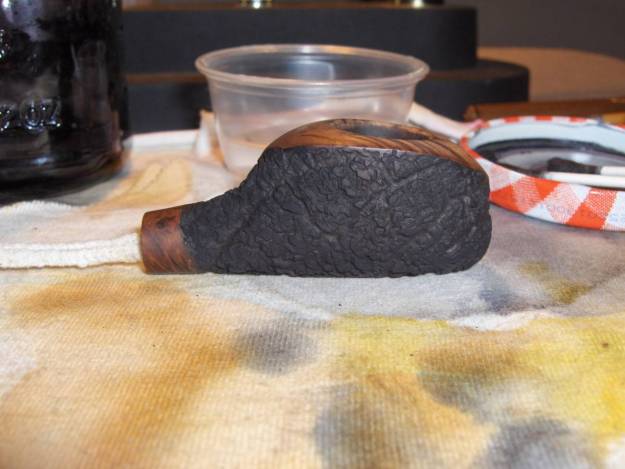
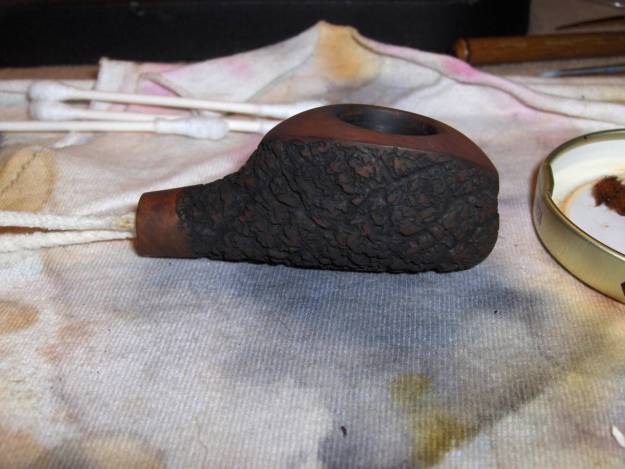
Another couple of stain coats were then applied to the stummel using the same mix and technique that I had used earlier. This time, it was an ox blood stain to add some brightness. Then, I continued with the remaining grits of the micromesh pads. When done with the pads, I gave the stummel a couple of coats of Halcyon wax to wrap up the work.

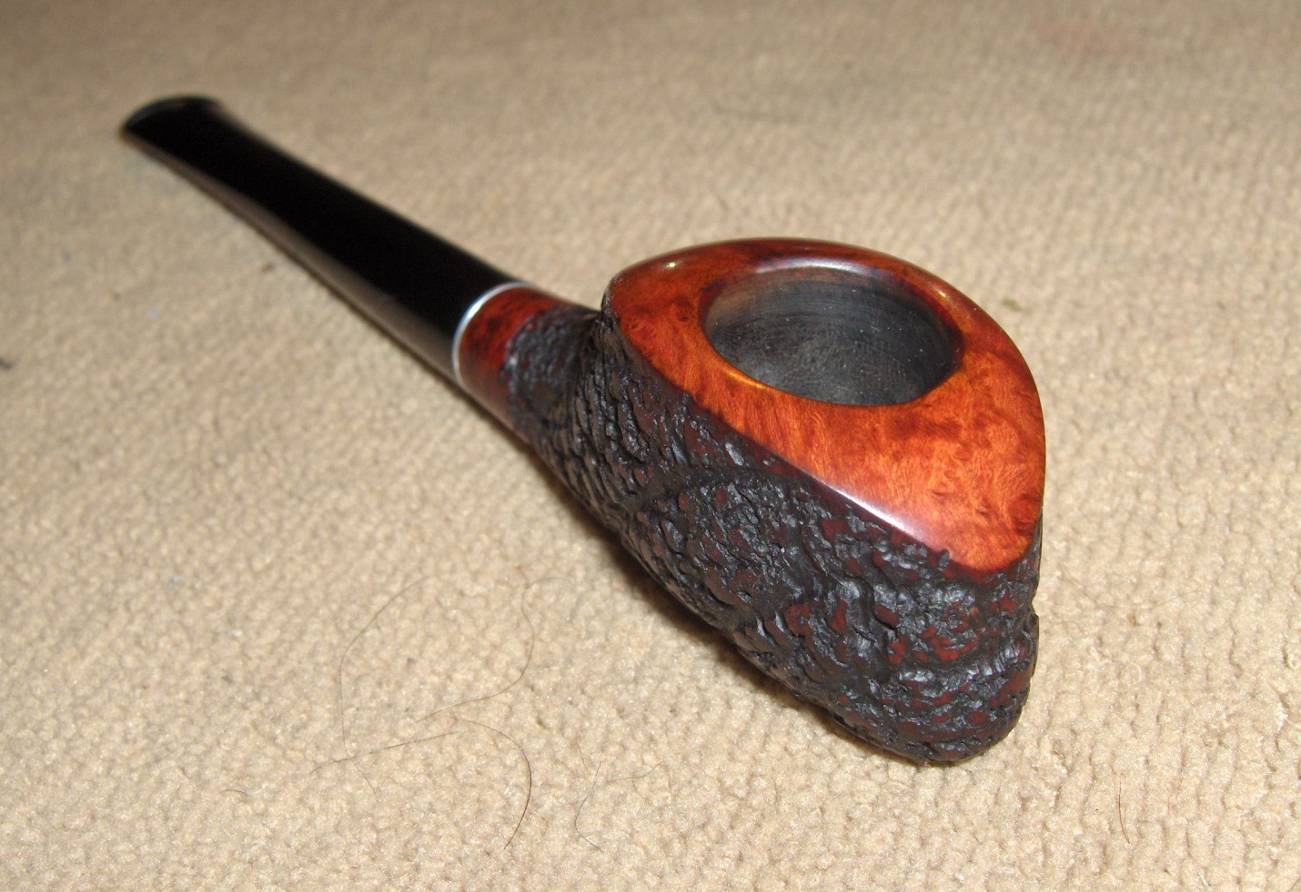
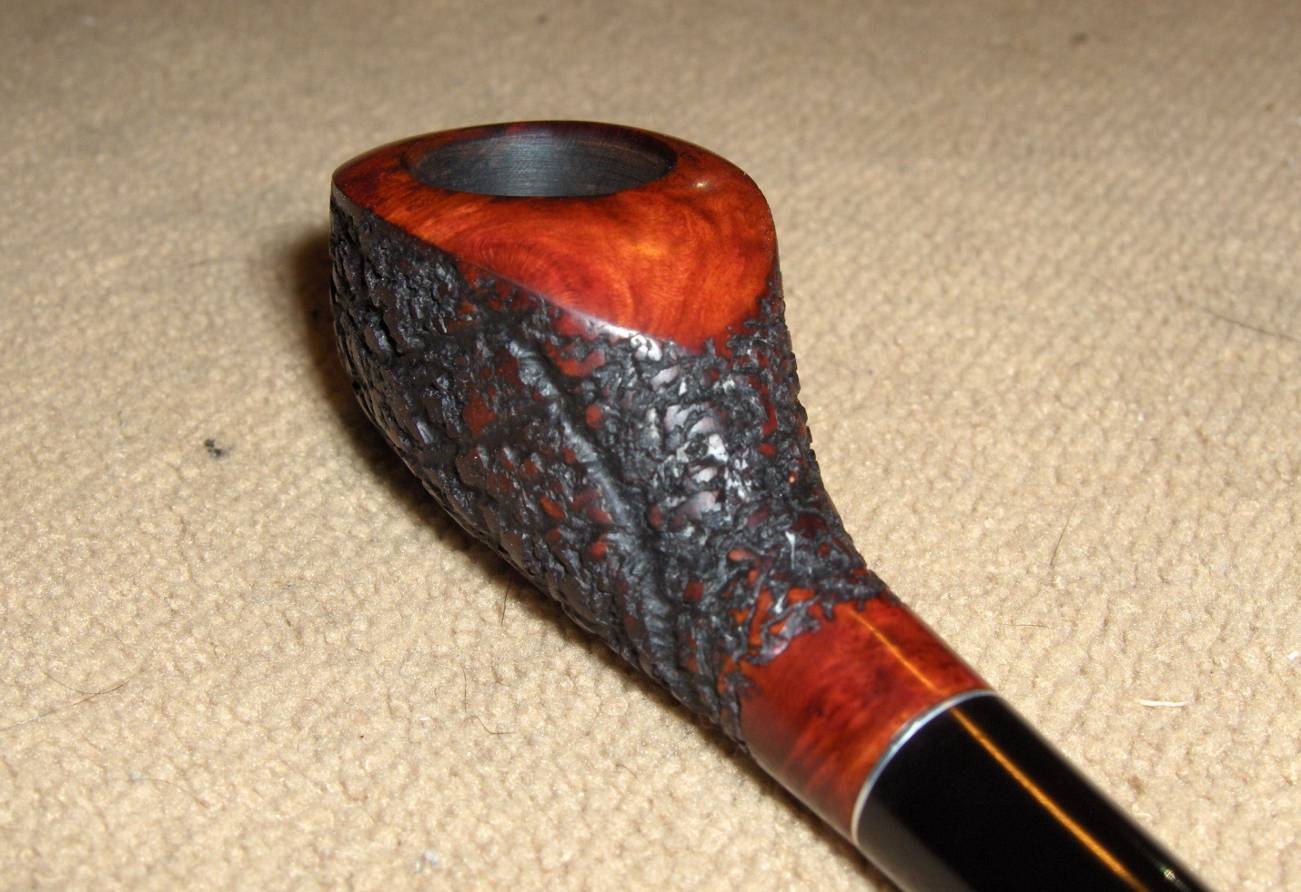
I think the rustication worked out fairly well and it has a great feel in the hand. You can judge for yourself from the photos of the completed pipe below. I’ll always wonder what could have been if I had left it smooth, though. I guess I’m on the hunt for another Jet Stream so that I can find out!Jet18
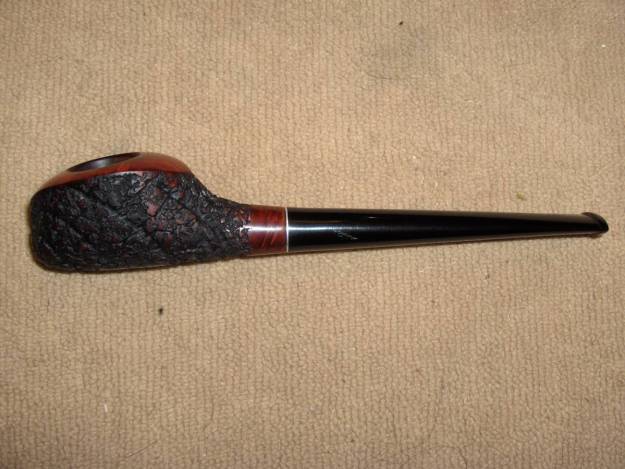
Jet19

Jet20

Jet21

Jet22

Jet23

Reworking a Medico Apple – A Save this Pipe Project of My Own!


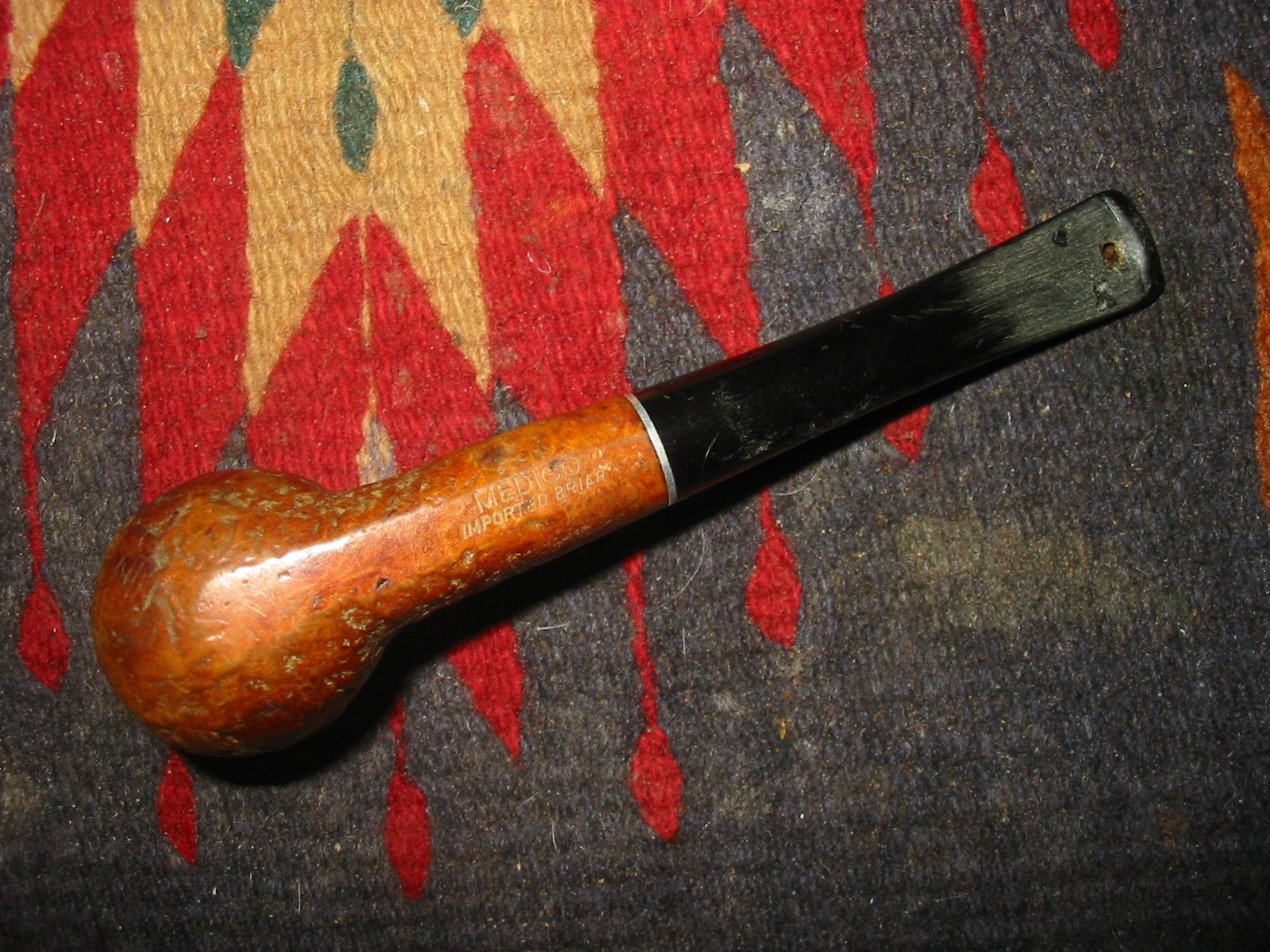
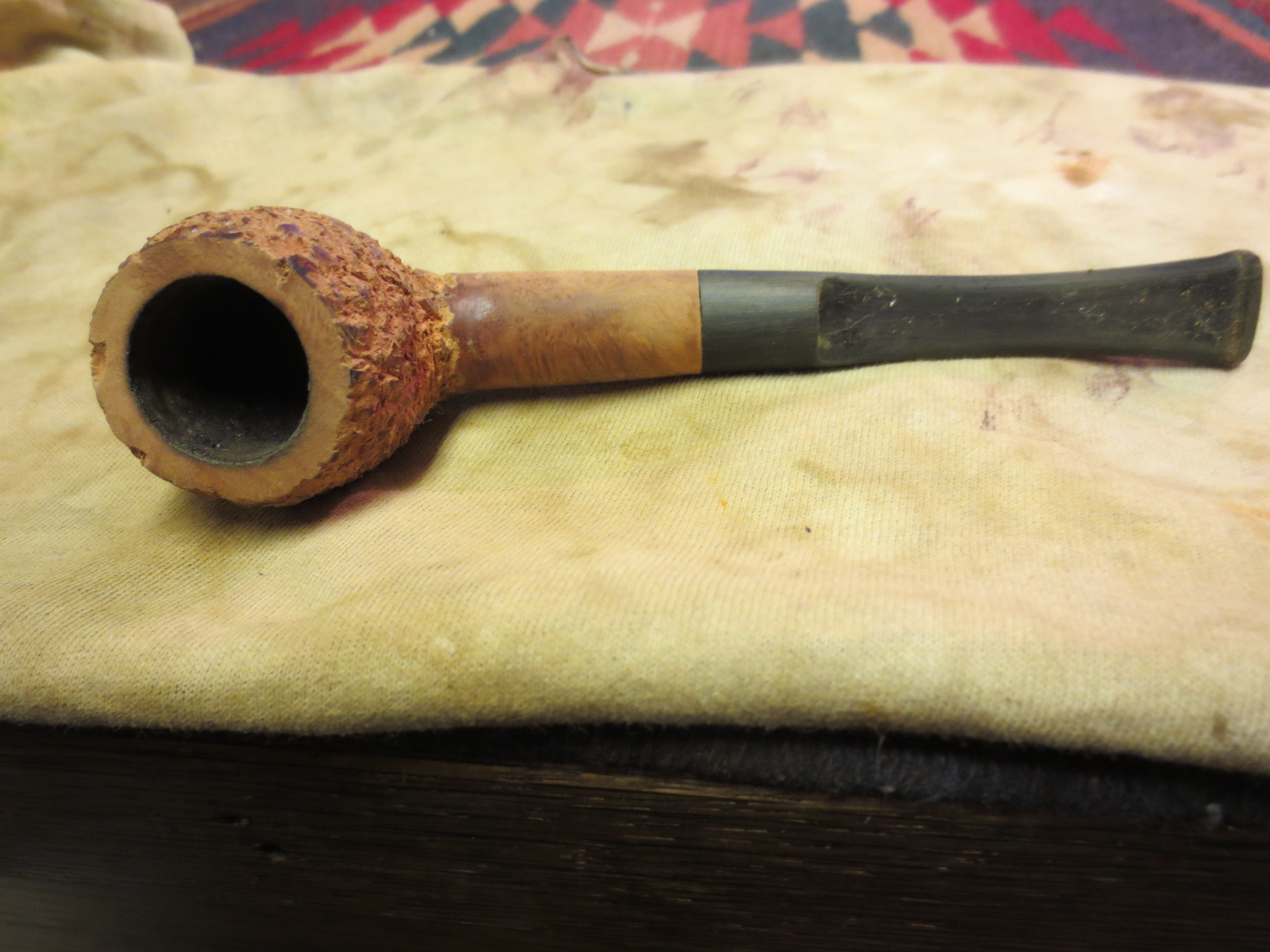
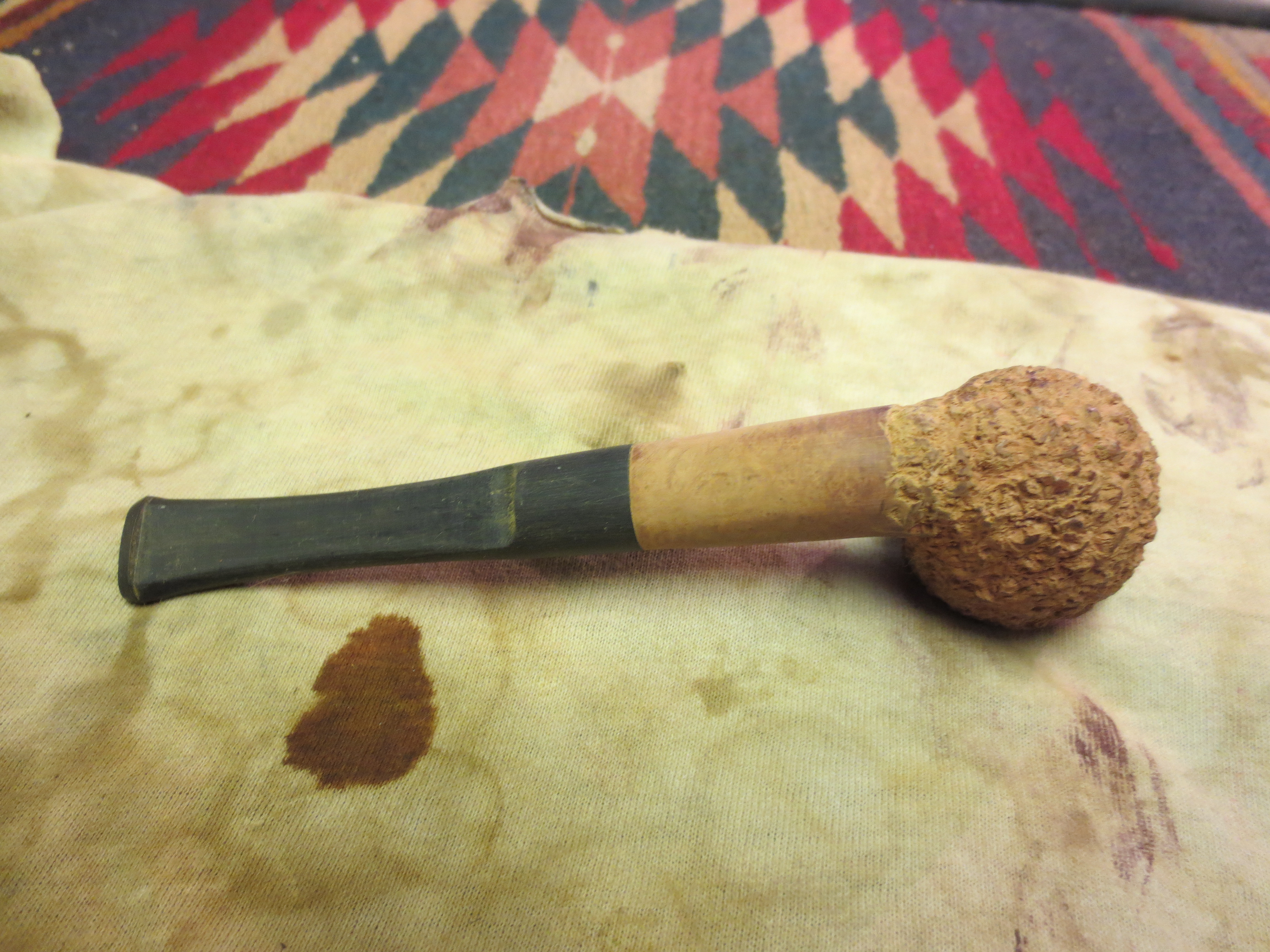
The last pipe in my box of pipes to refurbish was a Medico Apple that was stamped Medico over Imported Briar on the underside of the shank. It was a well-worn sandblast bowl that had dark stain marks on the front and back of the bowl. It appeared to be a dark blue India ink type of staining. The grooves in the blast were worn down almost smooth and what was left was dirty with light brown grime that raised the surface of the grooves smooth. The top of the bowl was damaged and worn from being struck against a surface to empty the bowl. The inside of the bowl was badly caked and crumbling when I received and I cleaned and dumped out the carbon and shreds of tobacco before throwing it in the box. The stem had been bitten through on both the top and the bottom sides next to the button. The nylon stem was in rough shape with many deep tooth dents around the holes. At one point I had taken the stem out thinking I would work on it and sanded down the tooth chatter and some of the lighter marks. I had heated the stem to raise them and gotten quite a few of them out-of-the-way. The holes in the stem left me questioning whether I even wanted to work on this poor worn pipe.
IMG_6980

IMG_6981

IMG_6982

IMG_6983
After reading Greg’s post about saving a pipe – the Medico VFQ I was moved to go and have a look at the last pipe in the box. I have four days off starting today and it is a rainy cool day in Vancouver. It is a perfect day for working on pipes so I took the pipe to the worktable. I knew all of the flaws that awaited me but the bones of the pipe, the briar was still sound. The damage truly was cosmetic. The stem was another question. But I figured it was worth the effort. I cleaned the surface of the nylon stem and wiped it down with alcohol. I folded a piece of cardboard and coated it with Vaseline before sticking it in the airway to provide a backing for the black super glue patches that I was going to use for the holes.
IMG_6984

IMG_6985
The super glue had become quite viscous which actually worked for me. It was not the thin liquid it had been when I purchase it several years ago. I shook it well and then applied it to the holes on the stem. I always do the patching in layers. I start quite wide around the edges of the hole and work toward the centre to close off the hole. I decided to work on both sides of the repair at the same time so I put the glue in both holes. I set the stem aside for the repair to cure before adding more layers of glue.
IMG_6986

IMG_6987
I scrubbed the bowl with Murphy’s Oil Soap to remove the grime. I used a tooth brush to get into the remaining grooves in the briar. I used the soap undiluted as I find it is less liquid and works better on rounded surfaces as a gel. I wiped off the soap with cotton pads, rinsed the bowl with warm water and dried it off. The next four photos show the bowl after this cleaning. The sandblast was basically worn away and I needed to make a decision on what to do with the finish on this bowl.
IMG_6988

IMG_6989

IMG_6990

IMG_6991
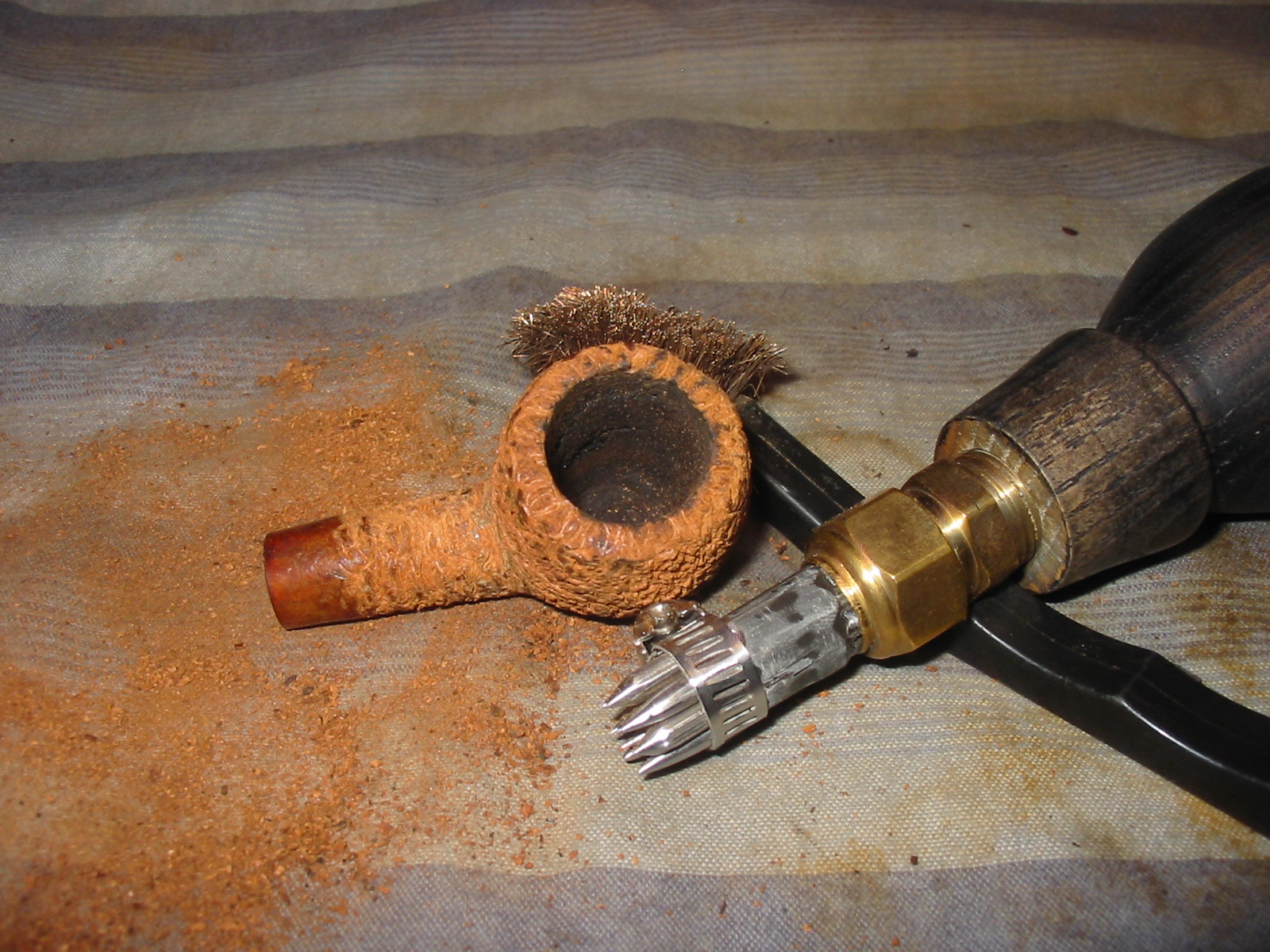
The worn finish and the ink stains on the front and back of the bowl made the decision pretty easy for me. To clean and restain the pipe would still leave it worn and the ink stains visible. I decided I would rusticate the bowl with the rusticator I had received from Chris. I wanted the finish to look slightly different from the previous pipe that I rusticated so I had some ideas on what to do once I had rusticated the finish.
IMG_6992

IMG_6993

IMG_6994

IMG_6995

IMG_6996

IMG_6997
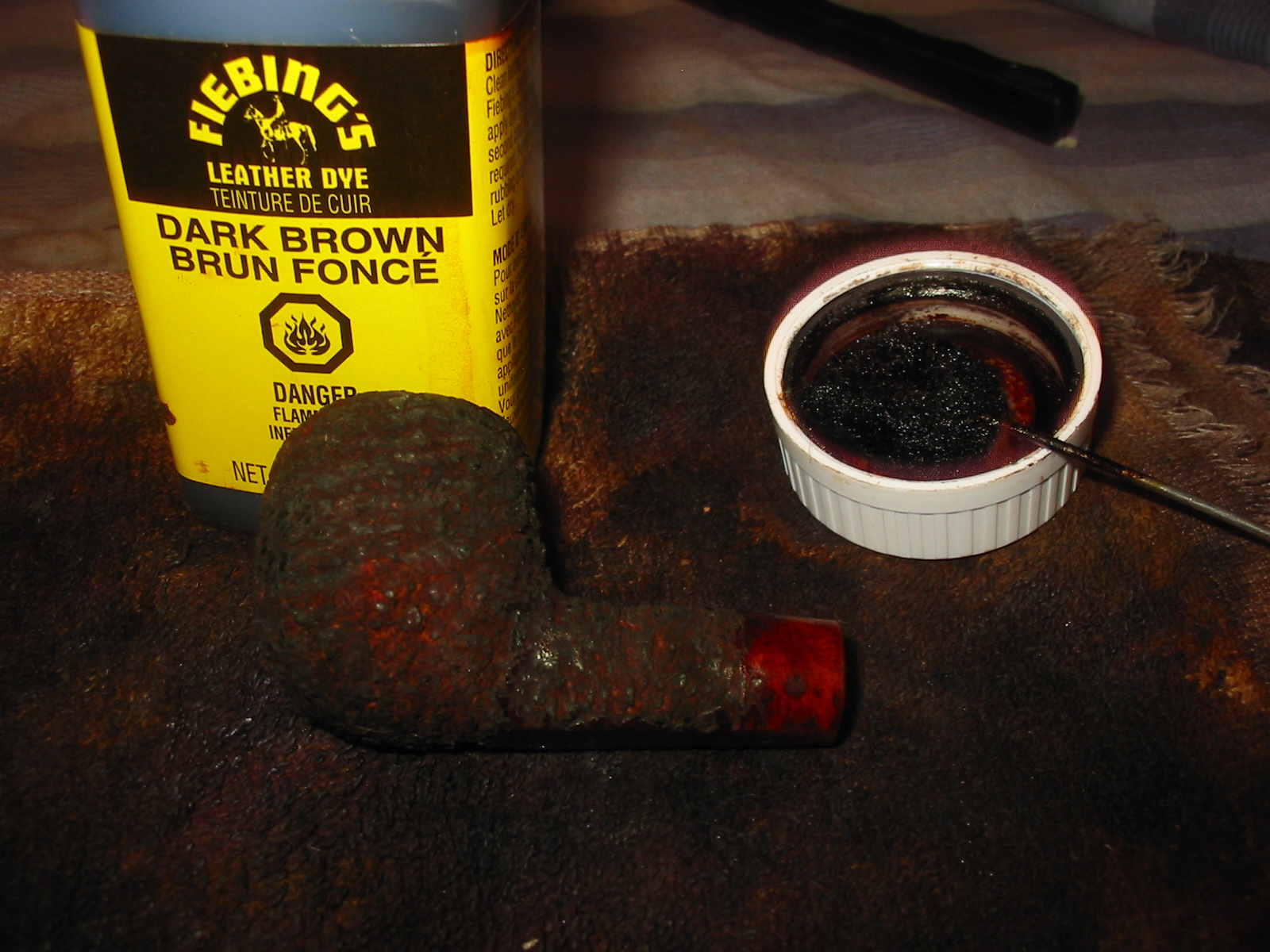
Once the bowl was rusticated I scrubbed the rough surface with a brass tire brush to knock of the edges. I carefully rusticated the rim and used the tool to round the edges on the outer rim to hide some of the obvious damage that had been present before. Once finished I stained it with a dark brown aniline stain. I had left the underside of the shank smooth and a portion of the shank next to the stem shank junction. I stained the bowl, flamed it, stained it and flamed it again until the coverage of the stain was even all over the briar.
IMG_6998

IMG_6999

IMG_7000

IMG_7001
I buffed the bowl with red Tripoli to further smooth out the high spots on the rustication and give a little contrast to the stain. I used the brass brush a second time on the surface. It still was not quite what I was aiming for but I laid it aside for a while to look at it and think about the options. It was while I was doing that I thought I would see if I had a new stem that would work. It gave me a second option to try should the repair or patches not work well.
IMG_7002

IMG_7003

IMG_7004
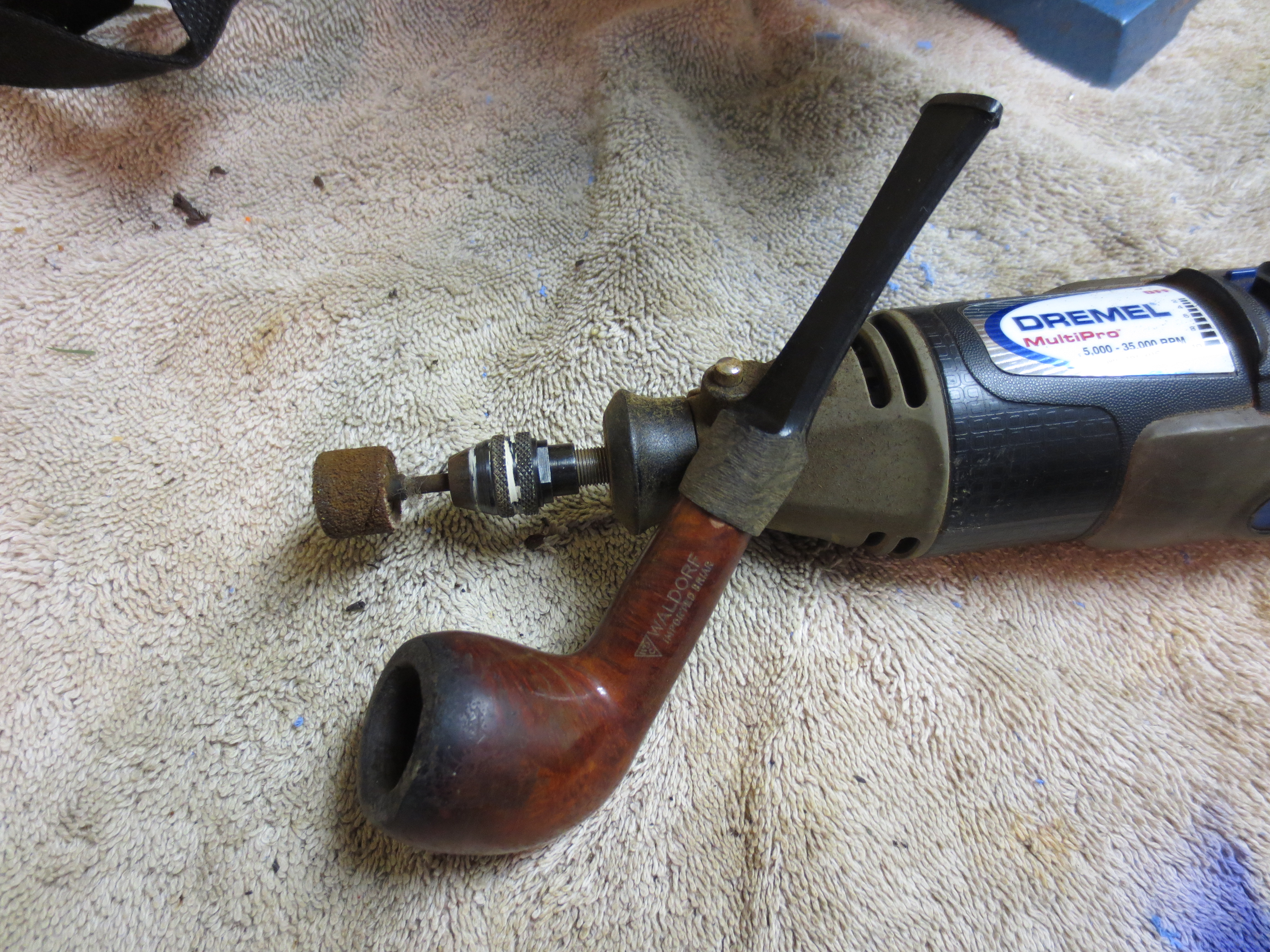
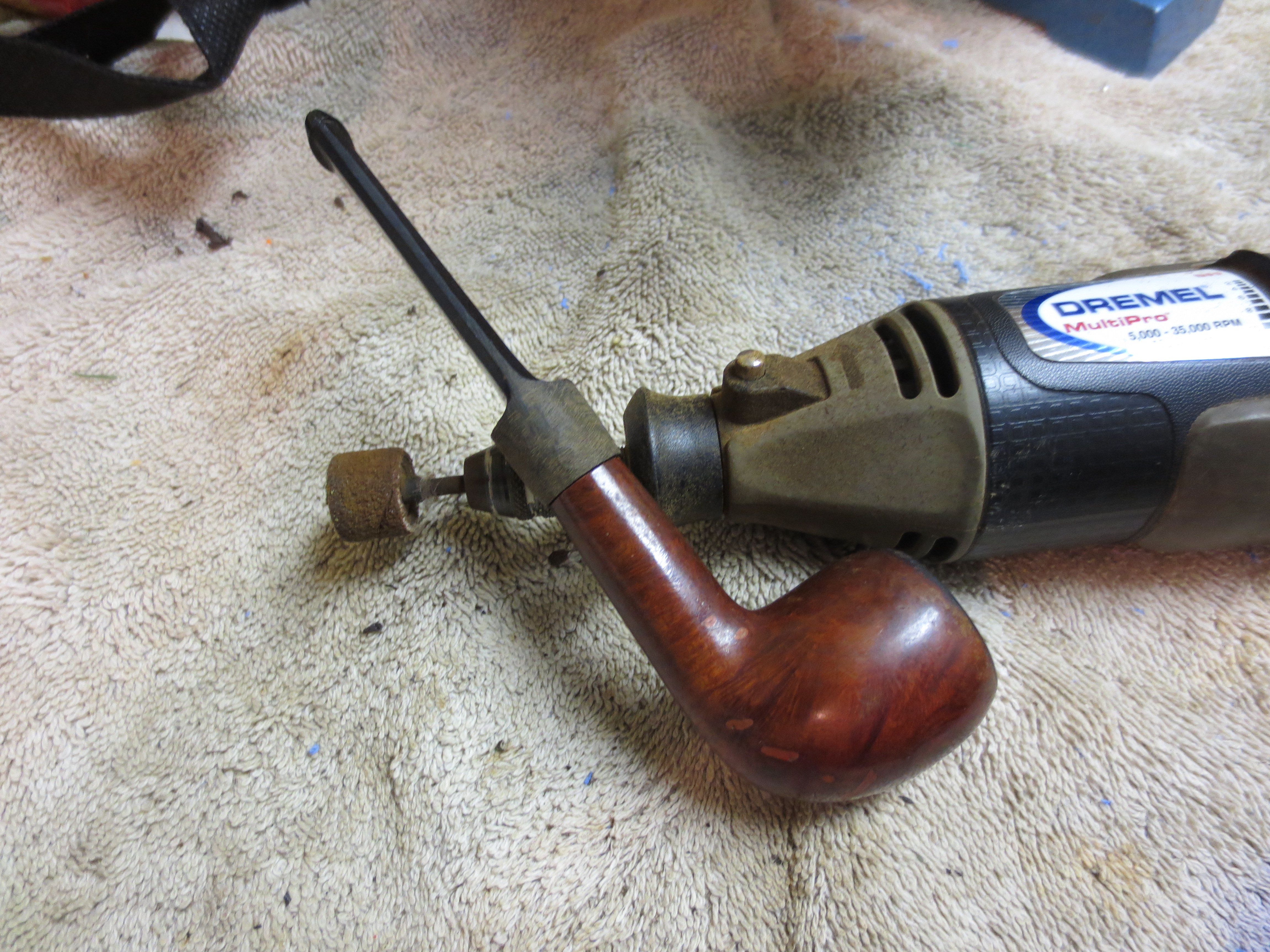
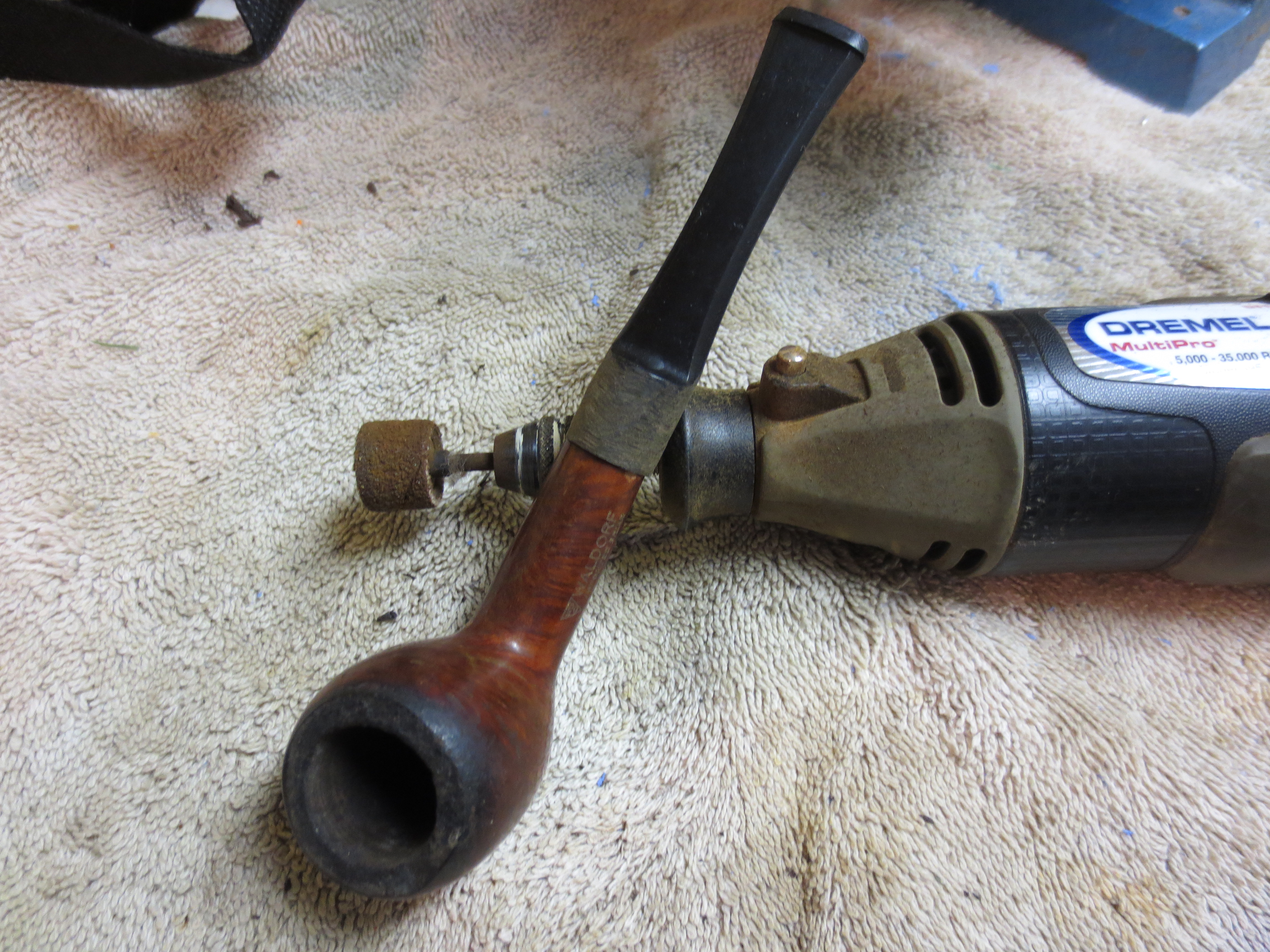
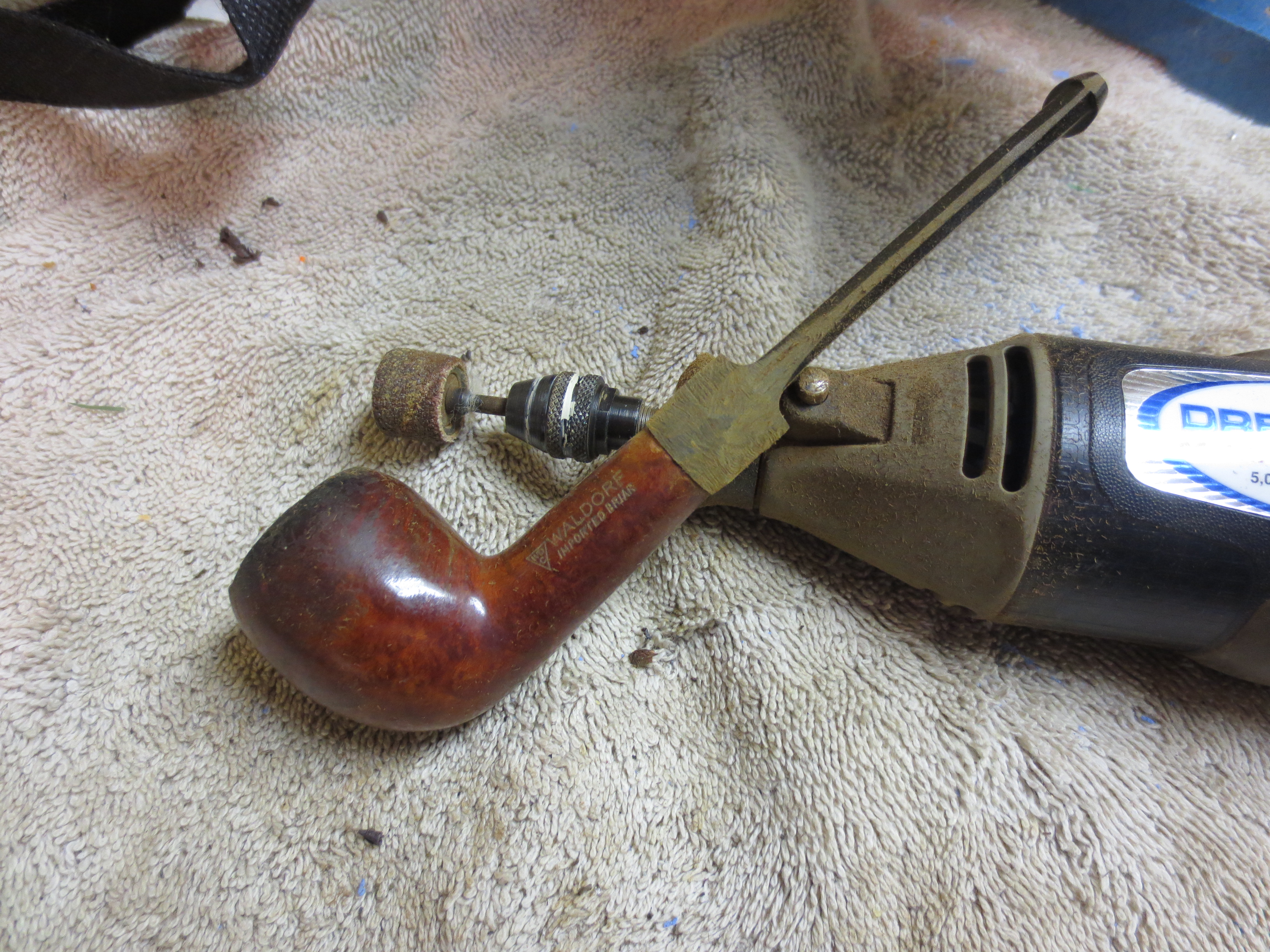
I did not have a round taper or saddle stem in my can of stems that was the right diameter for the shank but I did have quite a few square stems that could be modified to fit the shank diameter. I found one that had the tenon already turned for a previous pipe I was working on and put it on the pipe to have a look. I could see some potential in the stem and the look of the wide blade saddle stem. It would certainly be worth a try. If it turned out well and the patch on the other stem worked then I would have several options to work with. The tenon on the square stem was too long but that could easily be adjusted for a tight fit against the shank. I did the adjustment with a Dremel and sanding drum.
IMG_7006

IMG_7007
With the stem in place against the shank I could see the very evident taper of the shank on the topside and the underside. It was significantly narrower than the rest of the shank. I wondered if the smooth briar at the shank/stem junction was not from a previous refitting of a stem. I looked over the stem I was patching and saw that it actually bore the F stamping on the top rather than the M stamp that I had expected. I had not paid attention to that before but combined with the shape of the shank I was relatively certain that the stem was a replacement and the damage to the shank was caused by a sanding the shank to more readily match the smaller diameter of the replacement stem. That made the stem choice easy – I would refit a new stem to the shank. I would use a nickel band to level the shank out and make the taper of the shank more even. This would also make fitting the new stem quite easy. I set up a heat gun, heated the nickel band and pressed it into place on the shank. The silver actually looked good against the rustication of the bowl.
IMG_7008

IMG_7009

IMG_7010

IMG_7011

IMG_7012
I used the Dremel and large sanding drum to take off the square edges of the new stem. I worked on it until it was round. I started by taking off all the corners and creating an octagon first and then continuing to round out the stem until it was the same shape as the shank. The bottom of the shank on the pipe was flattened so the pipe would sit upright on its own so I left the bottom side of the stem slightly flattened as well. I sanded the stem with 220 grit sandpaper and medium and fine grit sanding sponges to get the fit against the bowl and band perfect. I also sanded the rustication on the bowl to soften the high spots and flatten them out. I wiped the bowl down with alcohol after I had sanded. The next series of four photos show the sanded bowl and stem. The rustication is getting closer to the look that I was after when I started.
IMG_7013

IMG_7014

IMG_7015

IMG_7016
I continued to sand the stem with the fine grit sanding sponge and also the bowl. I once more wiped the bowl down with a soft cloth and alcohol to remove the dust. Each step in the process is flattening out the rustication slightly more and bringing a shine to the newly rounded stem.
IMG_7017

IMG_7018

IMG_7019

IMG_7020
I sanded the stem with micromesh sanding pads – wet sanding with 1500-2400 grit pads and dry sanding with 3200-12,000 grit pads.
IMG_7021

IMG_7022

IMG_7023
I rubbed the stem down with Obsidian Oil and when it had dried I buffed the bowl and the stem with White Diamond. I sanded the bowl with 1500-2400 grit micromesh sanding pads to further flatten he high points of the rustication and then buffed the bowl a final time with White Diamond. I gave the stem multiple coats of carnauba wax. I buffed with a soft flannel buff between the coats of wax. I wiped the bowl down lightly with a coat of olive oil. The finished pipe is shown below. It has come a long way from the worn and tired looking old Medico with the bite throughs in the stem. The rustication came out the way I wanted it to with the high spots showing a lighter brown and the valleys in the rustication holding the dark brown stain. It is finished and ready for an inaugural smoke – if not by me at least by someone who will take it home to their rack.

Oh, and for those who wondered about the “original” stem that I was patching earlier in this post, I am continuing to work on the repairs. Both sides have had two layers of super glue and the holes are sealed. There are still more layers to go as the glue shrinks as it cures. It will be used on some other pipe in the future I am sure but for now once the patch is finished it will go back to the stem can to be used on another pipe.
IMG_7024

IMG_7025

IMG_7026

IMG_7027

WDC Waldorf Given a New Look and a New Stem


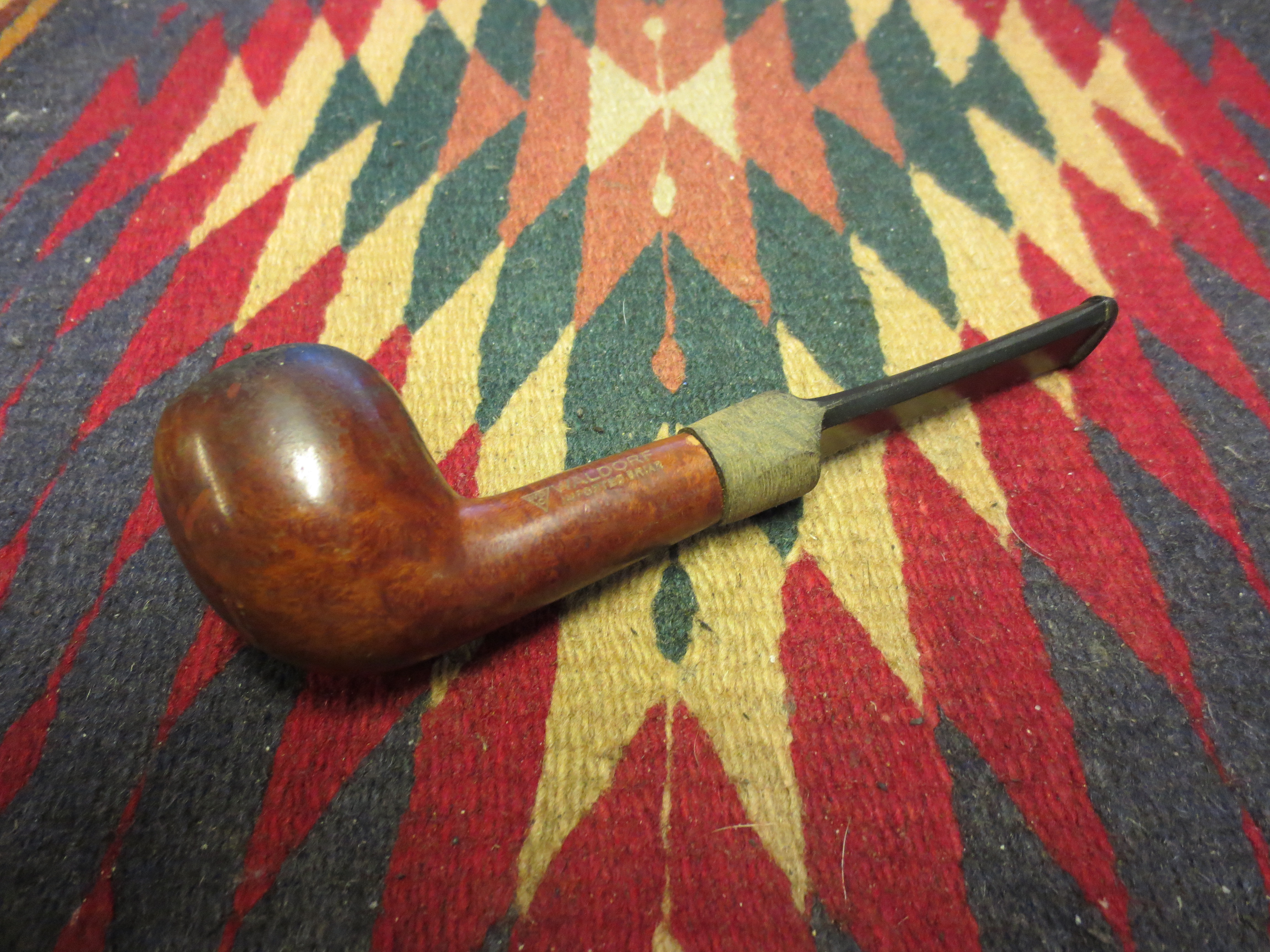
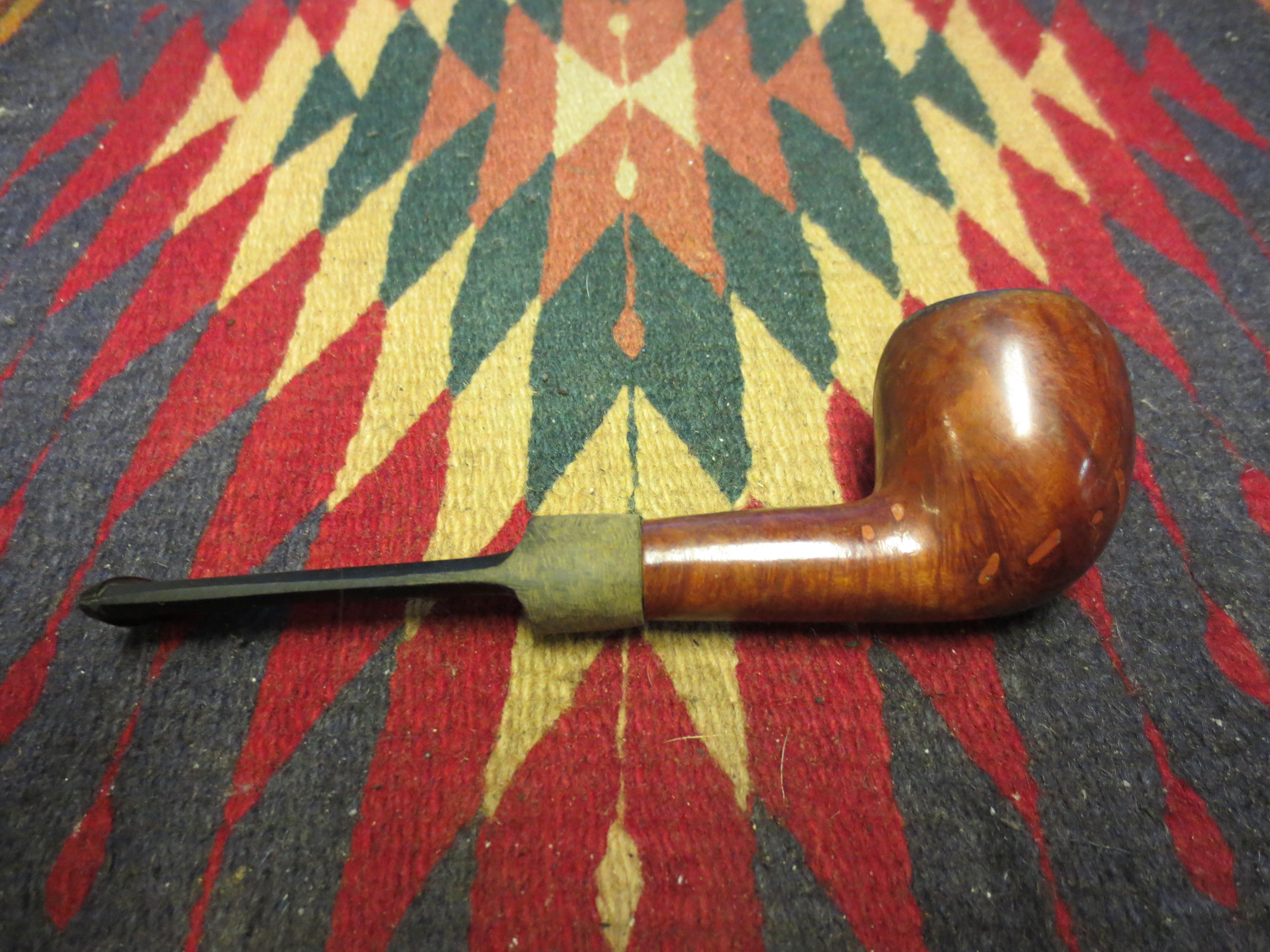
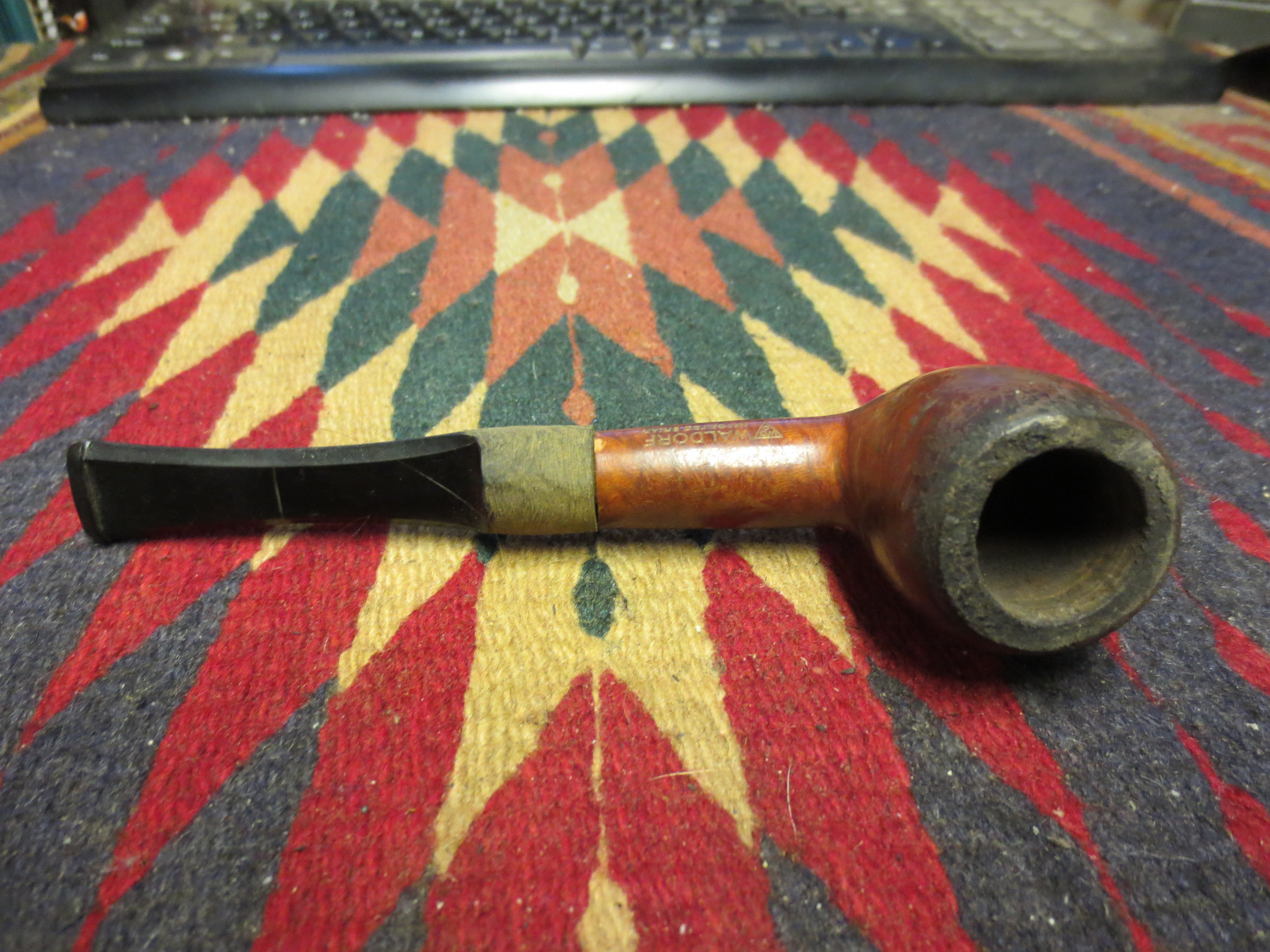
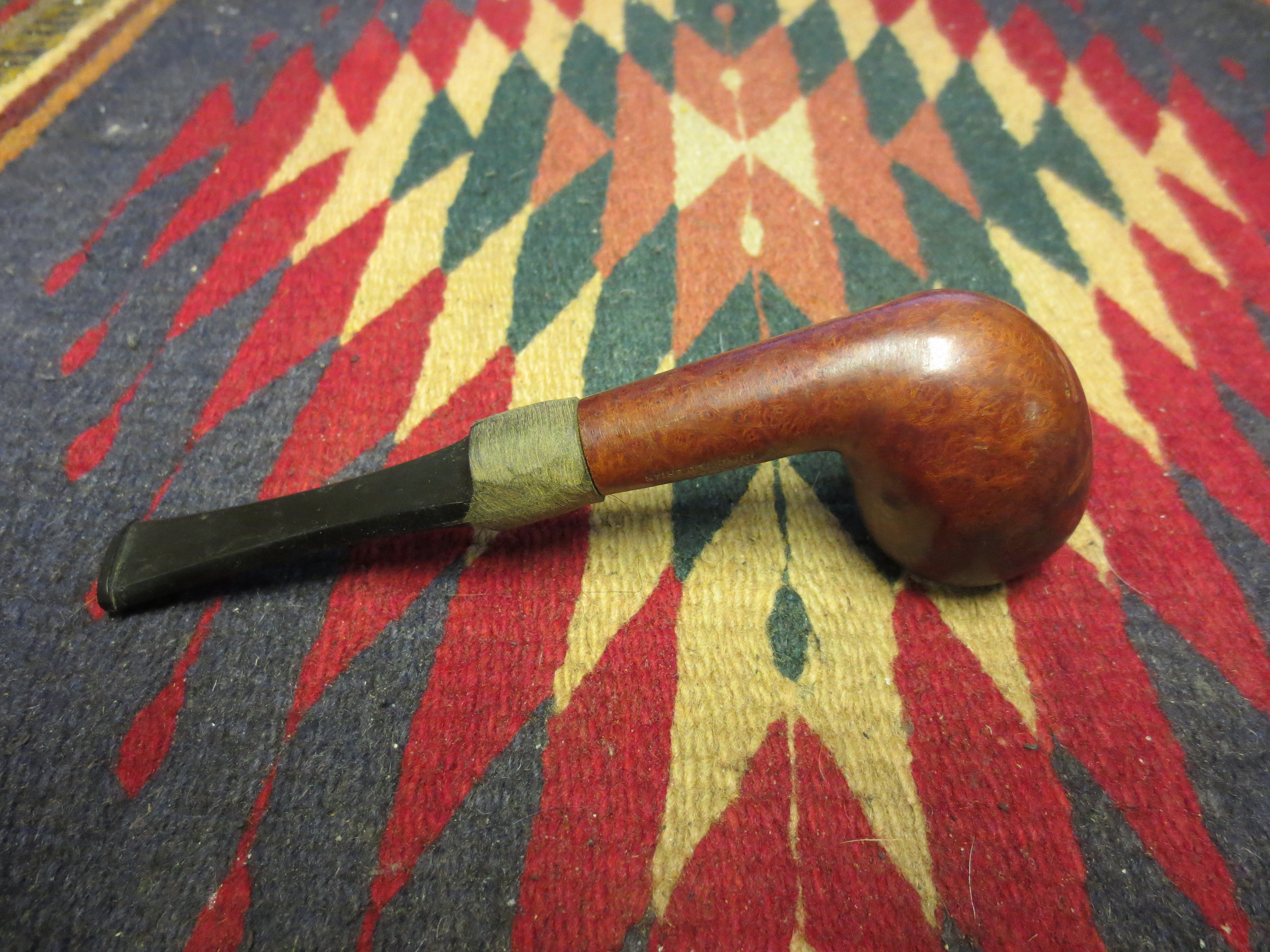
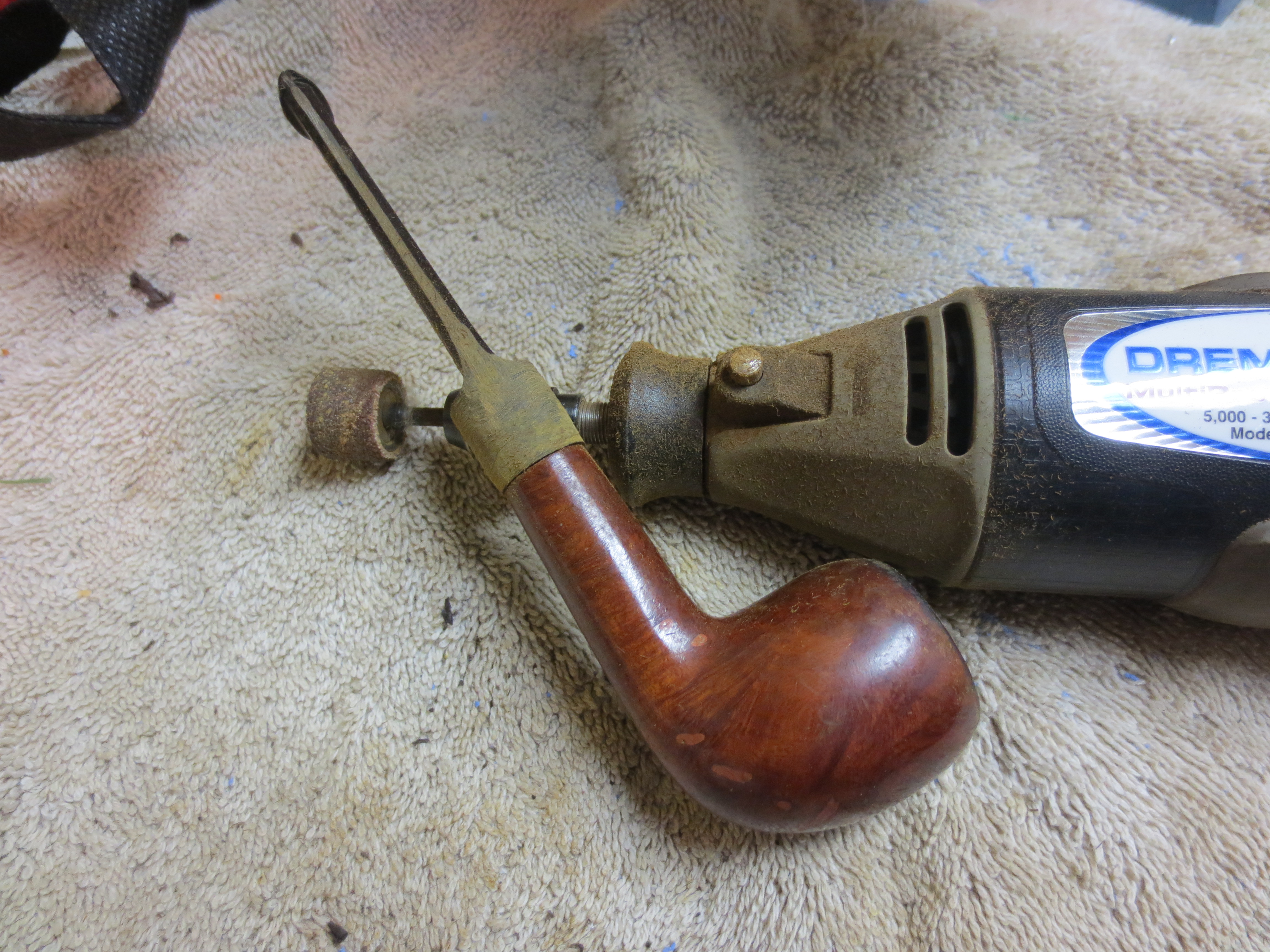
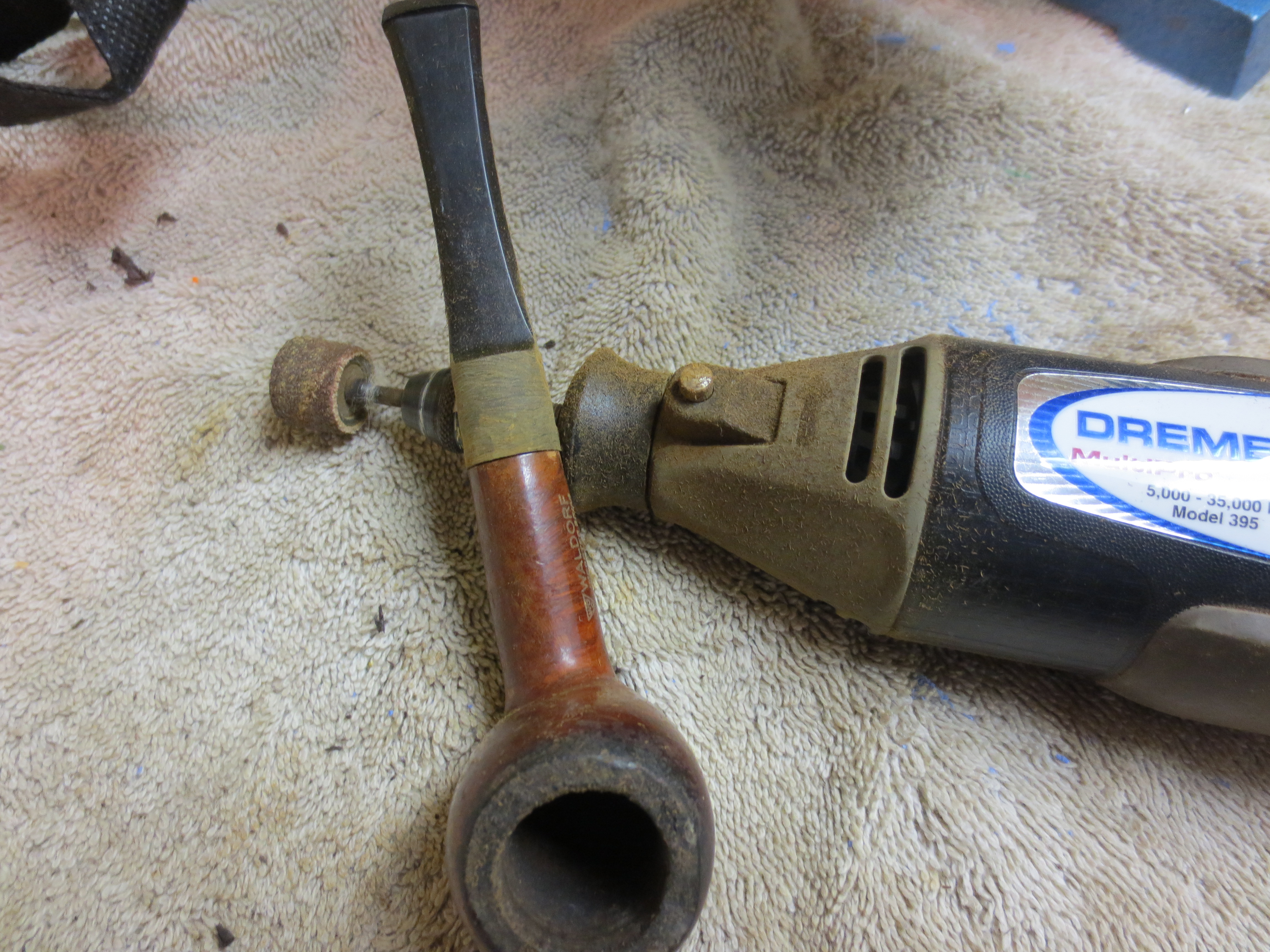
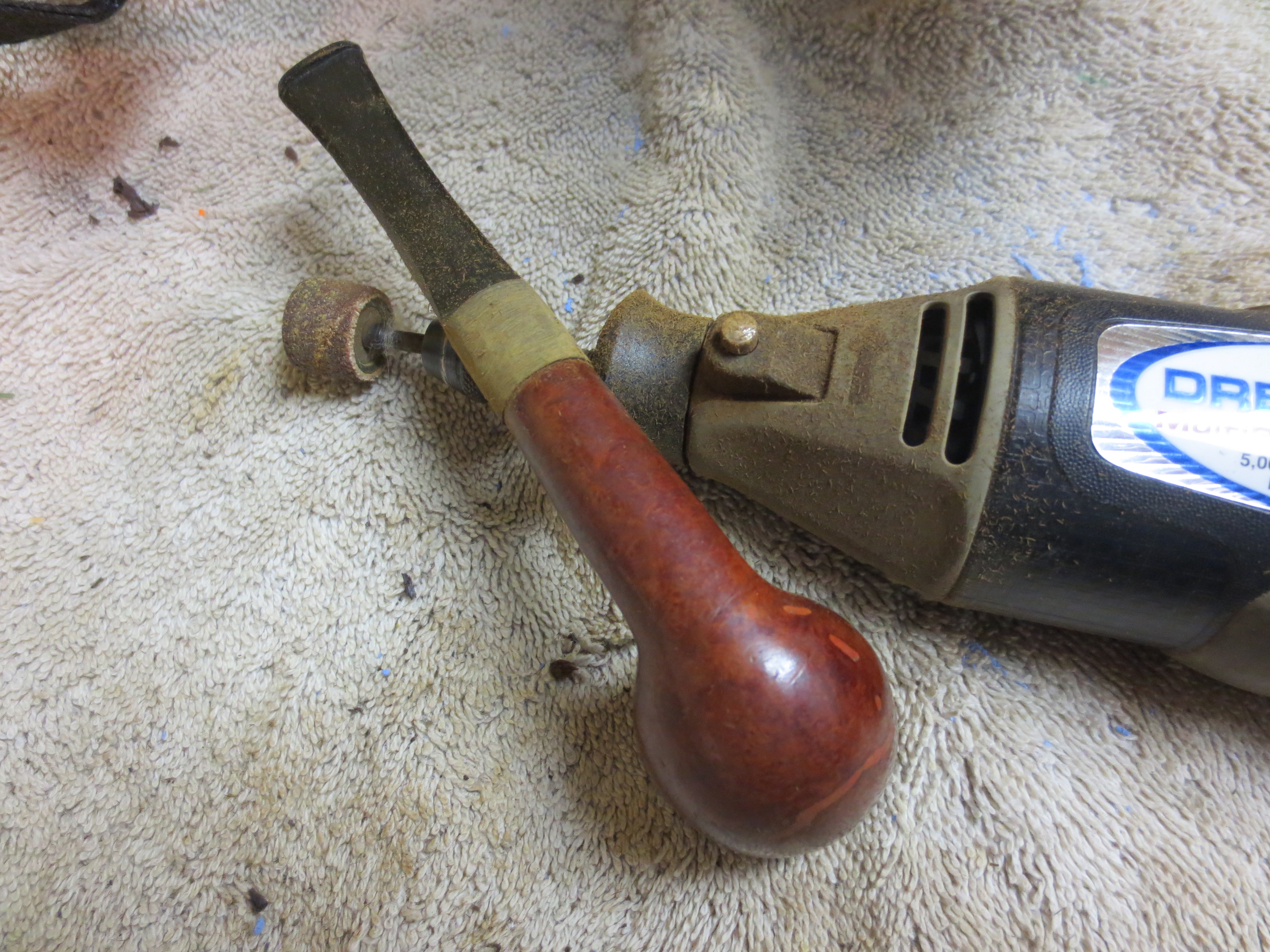
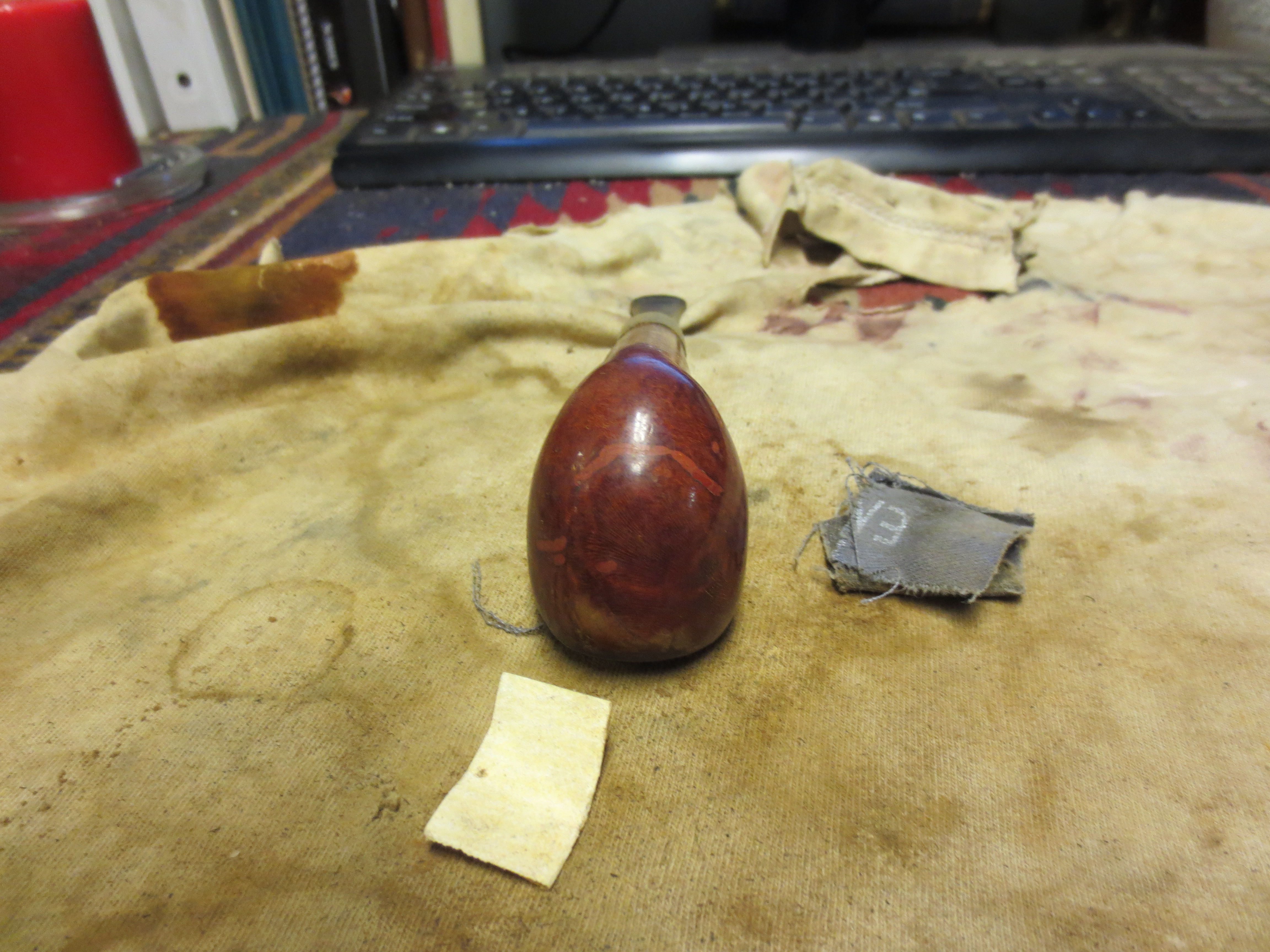
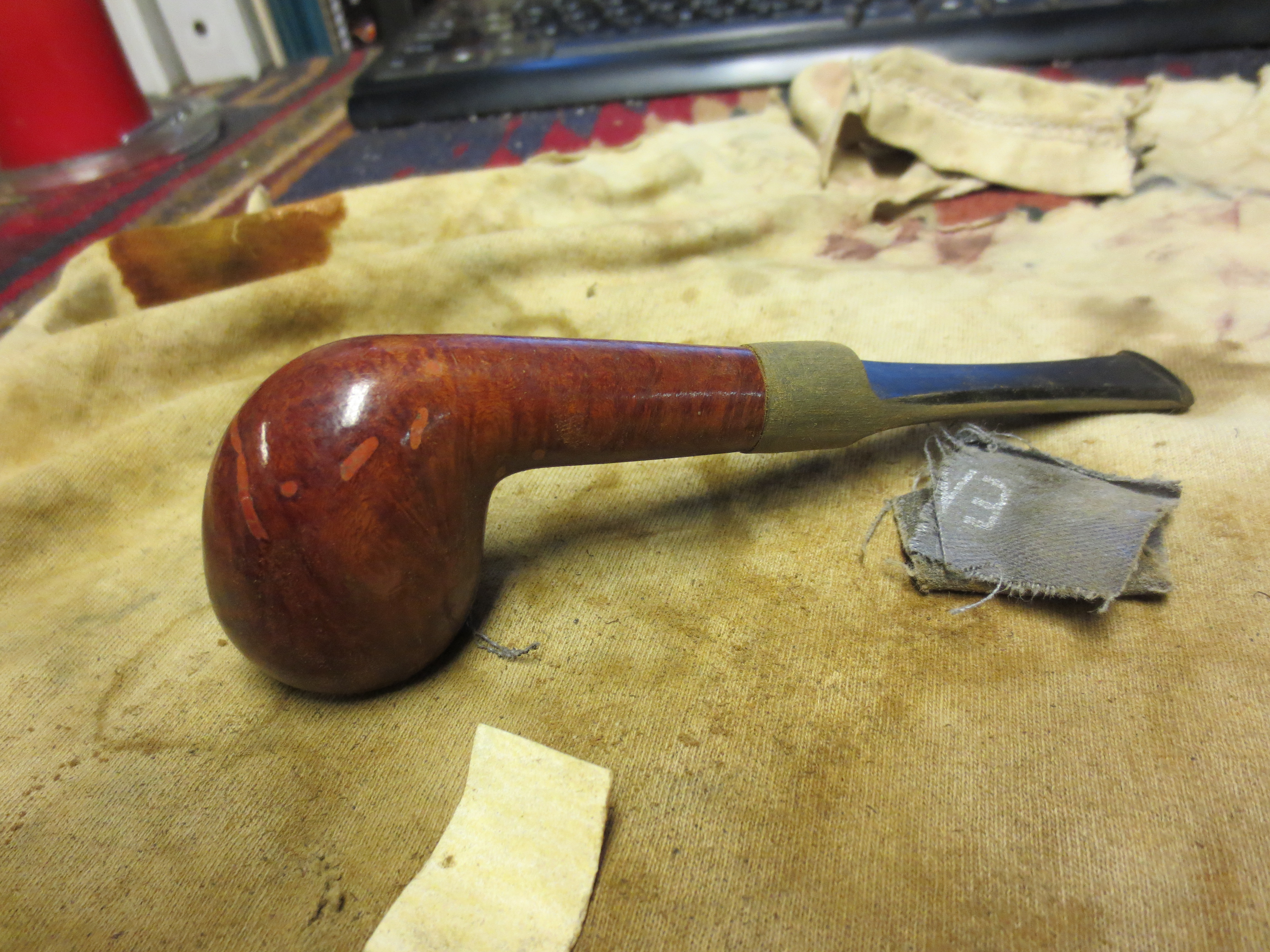
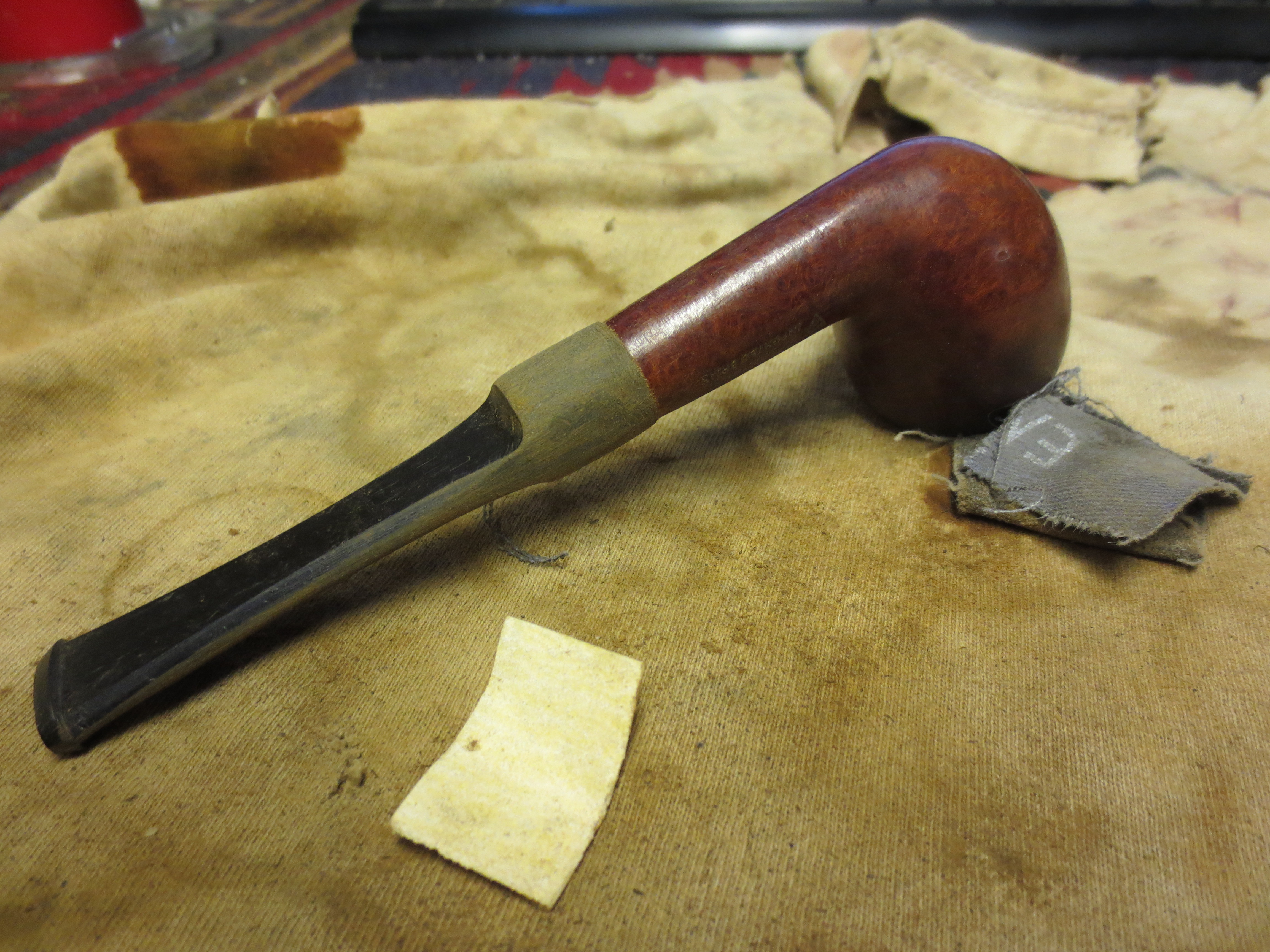
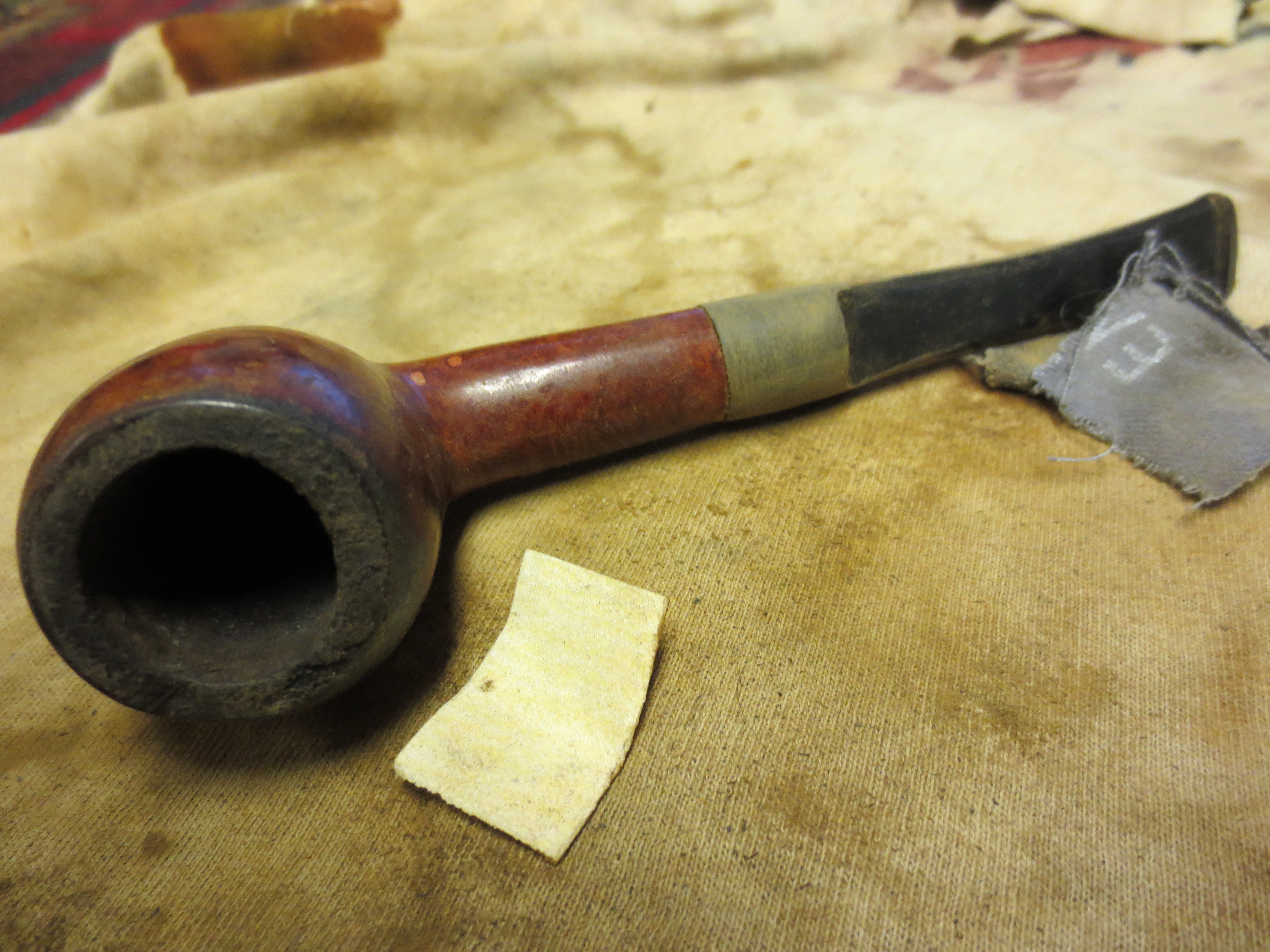
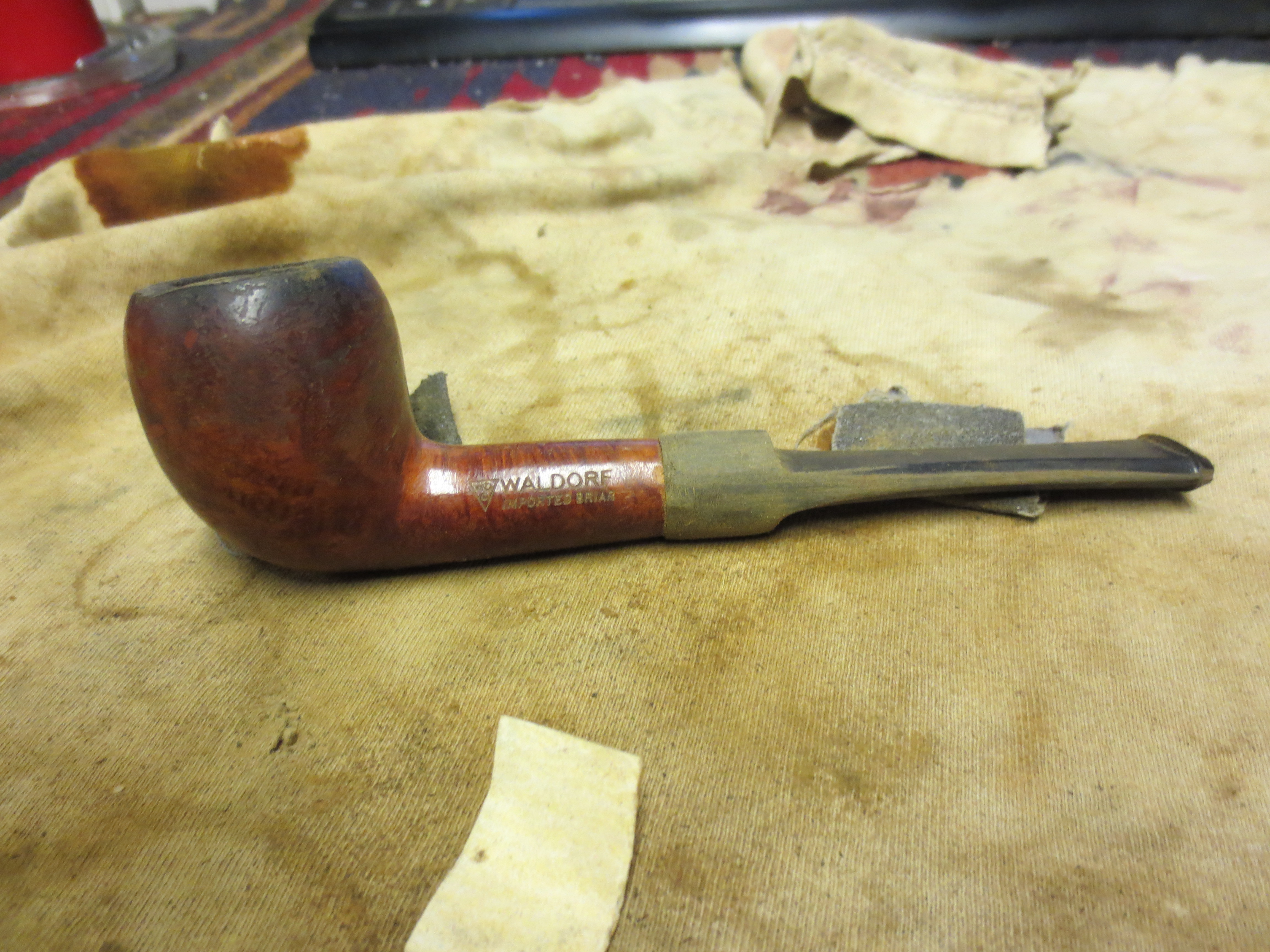
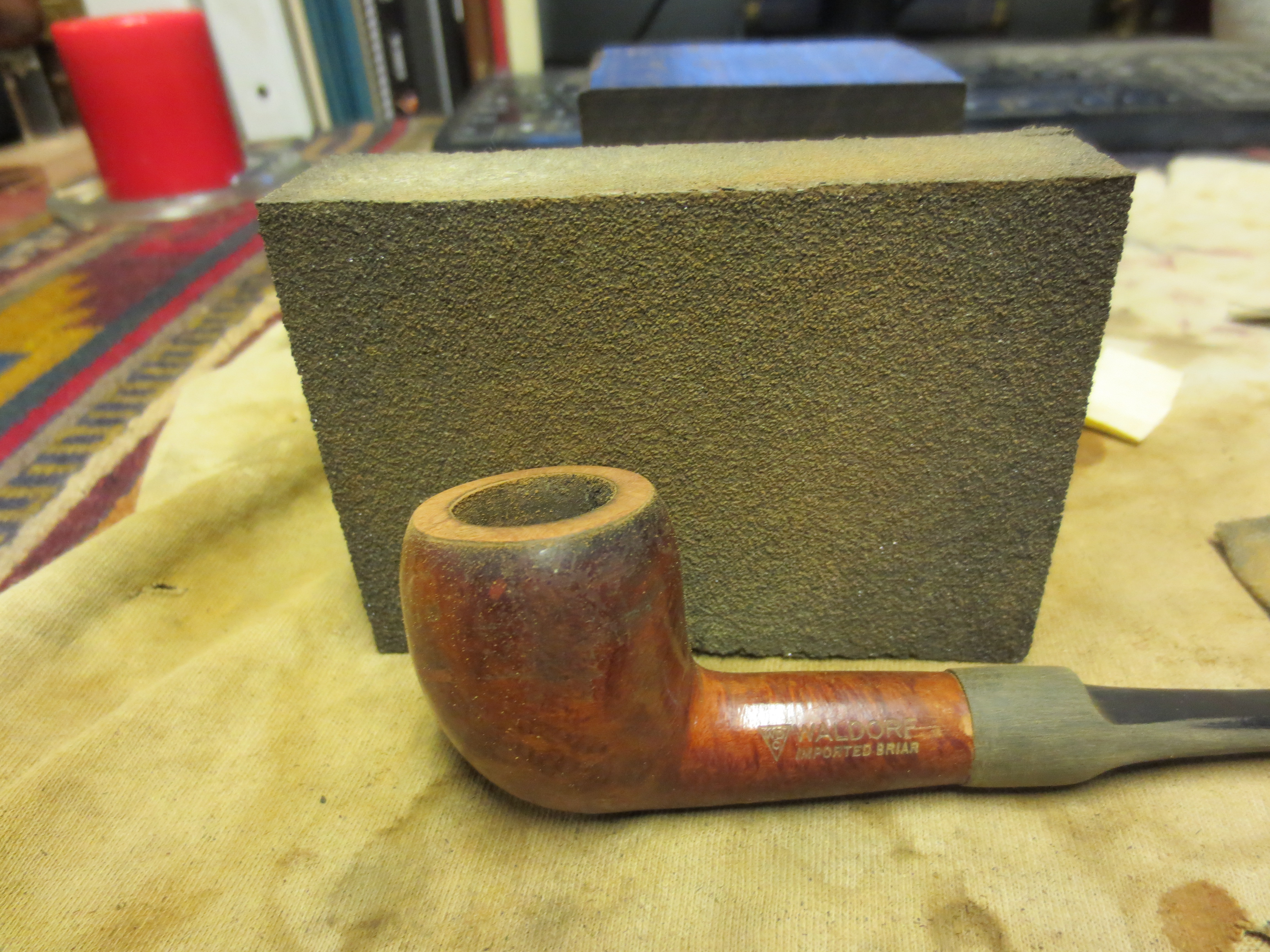
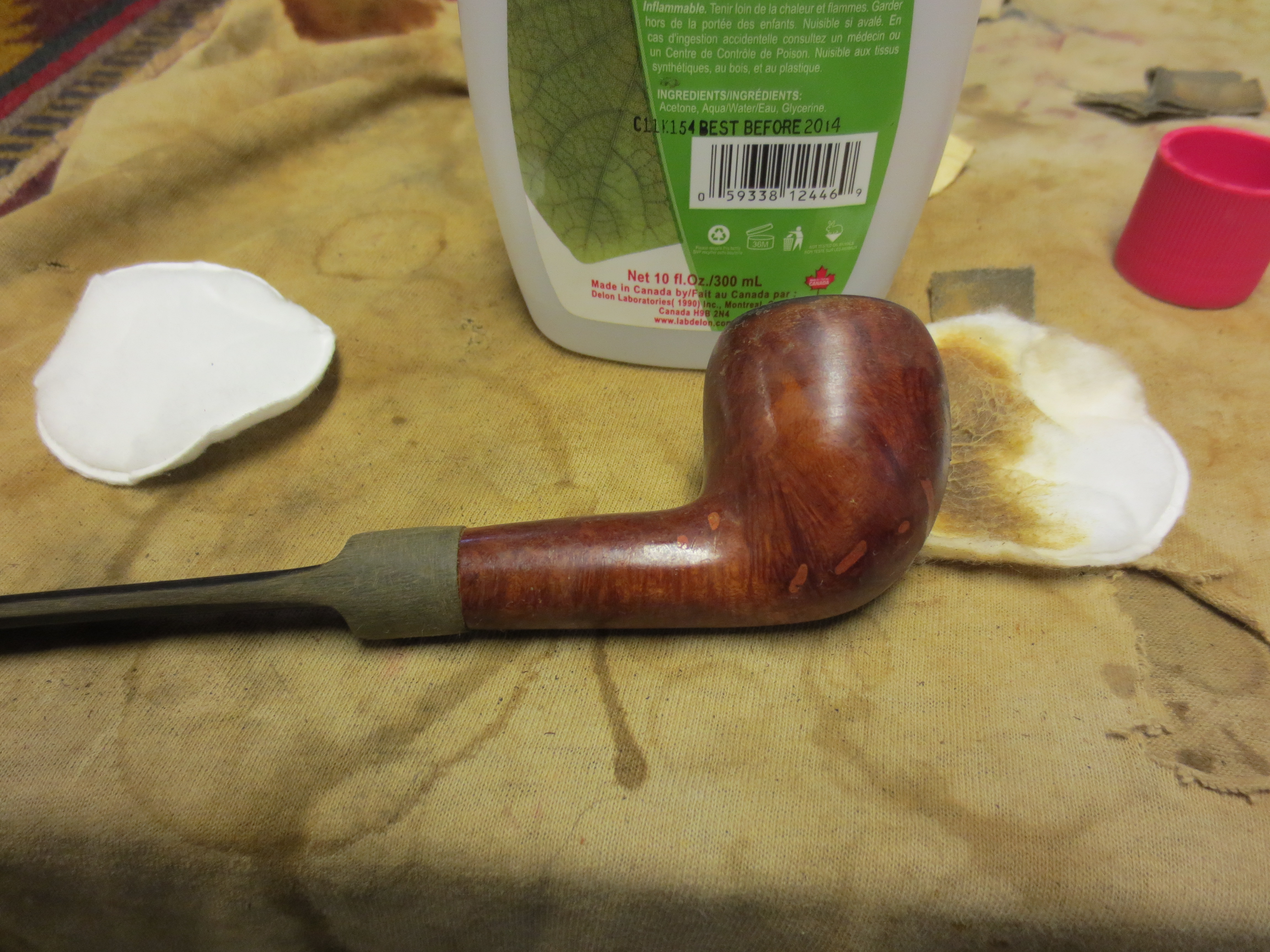
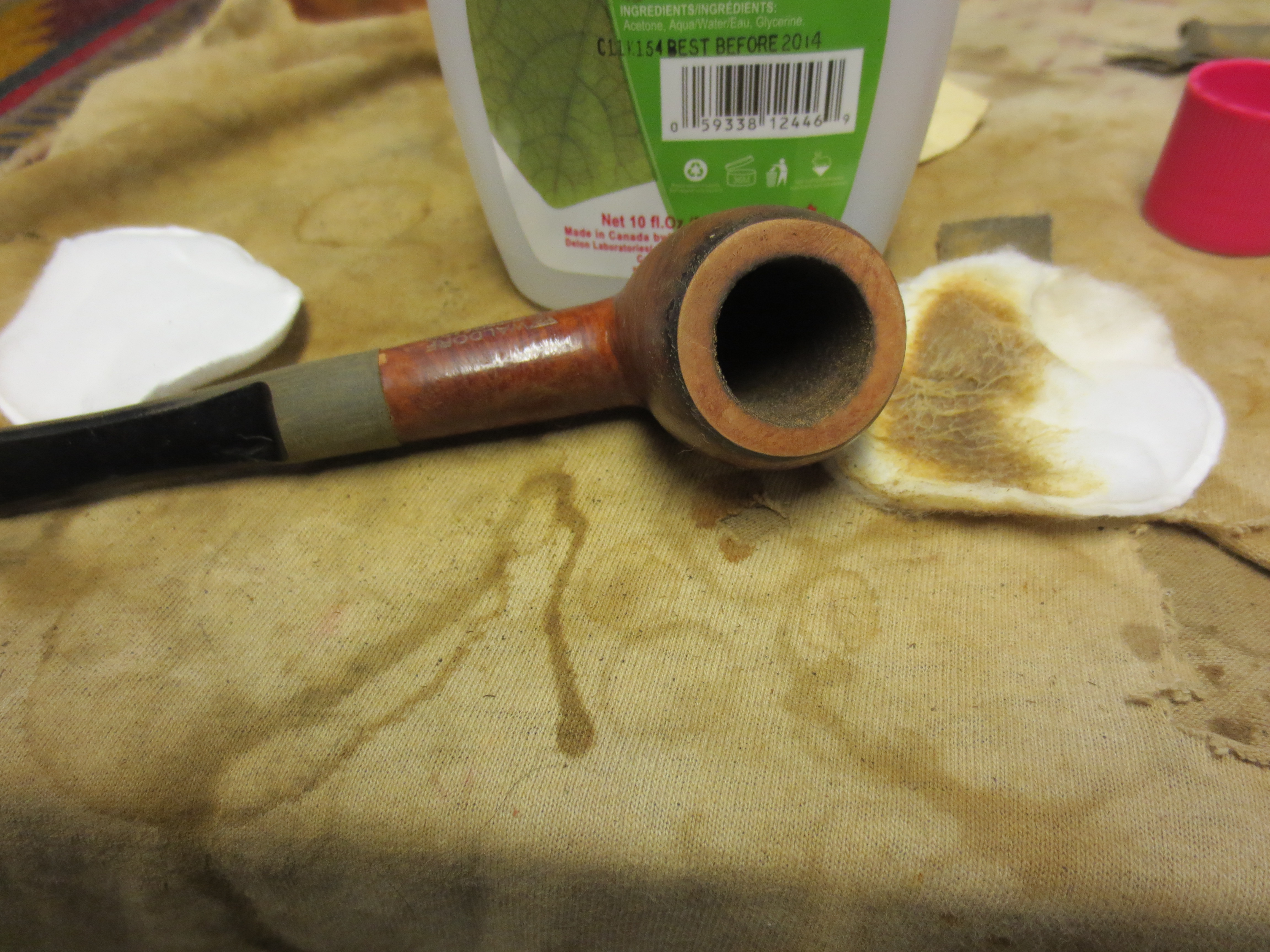
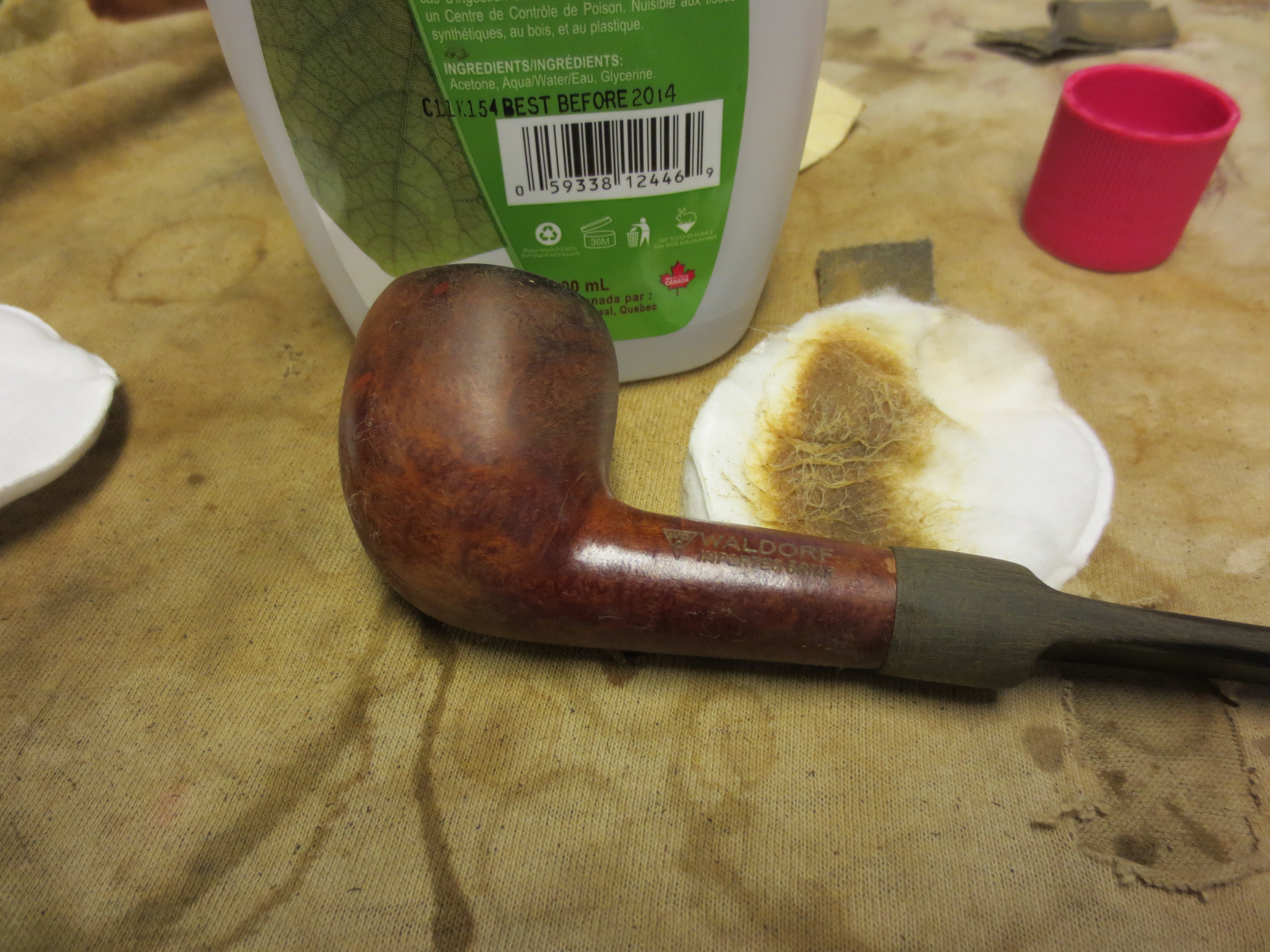
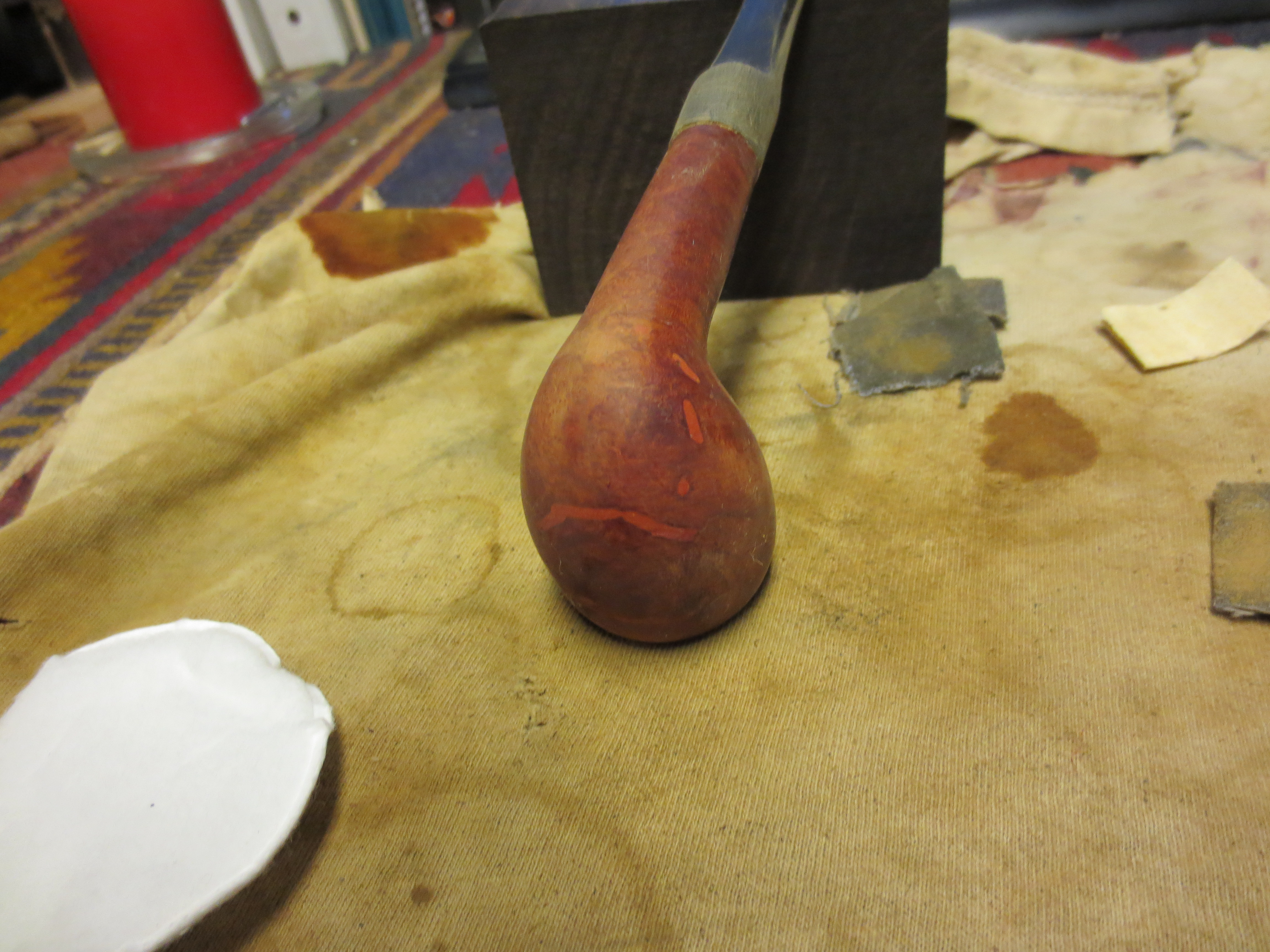
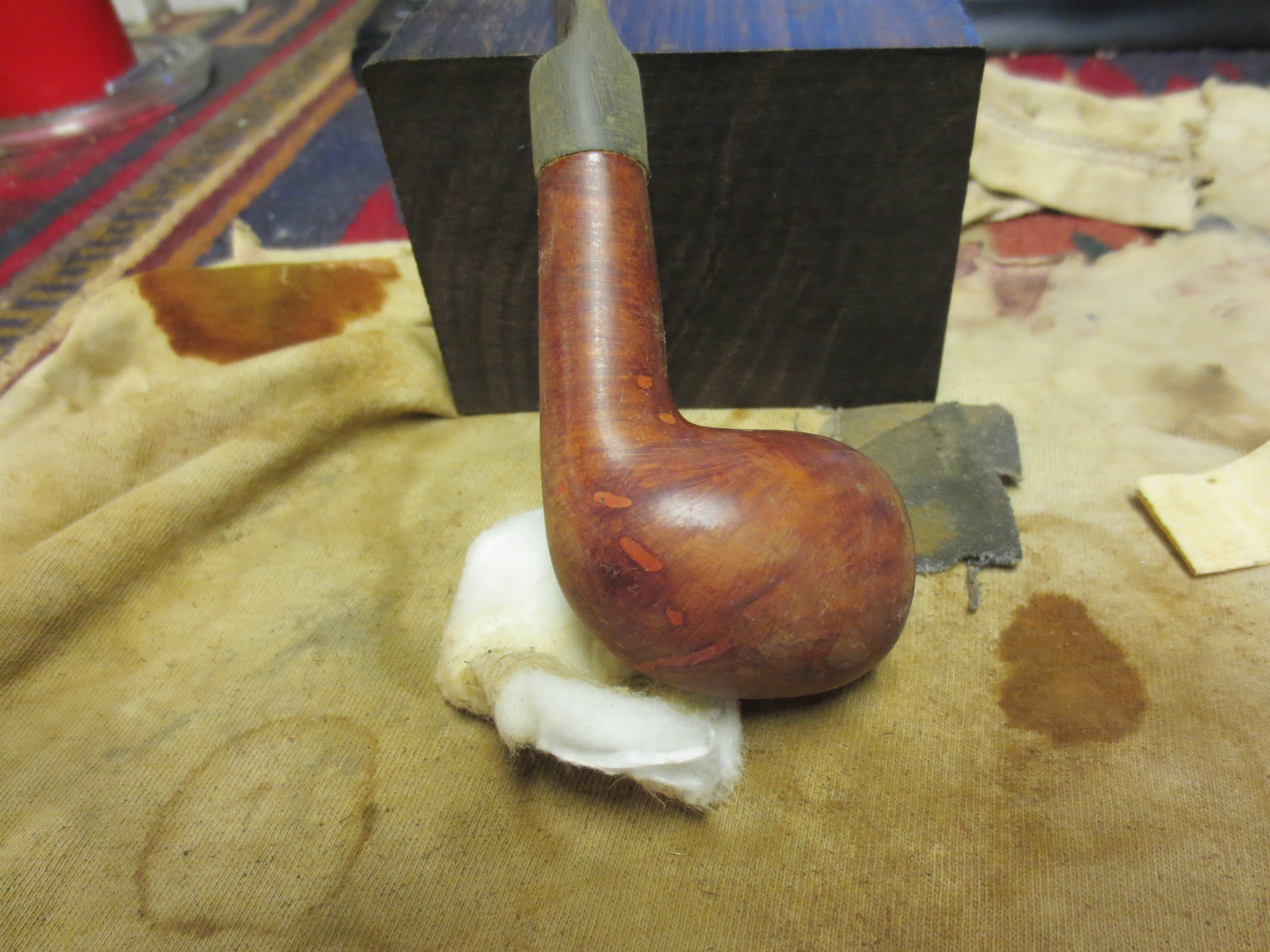
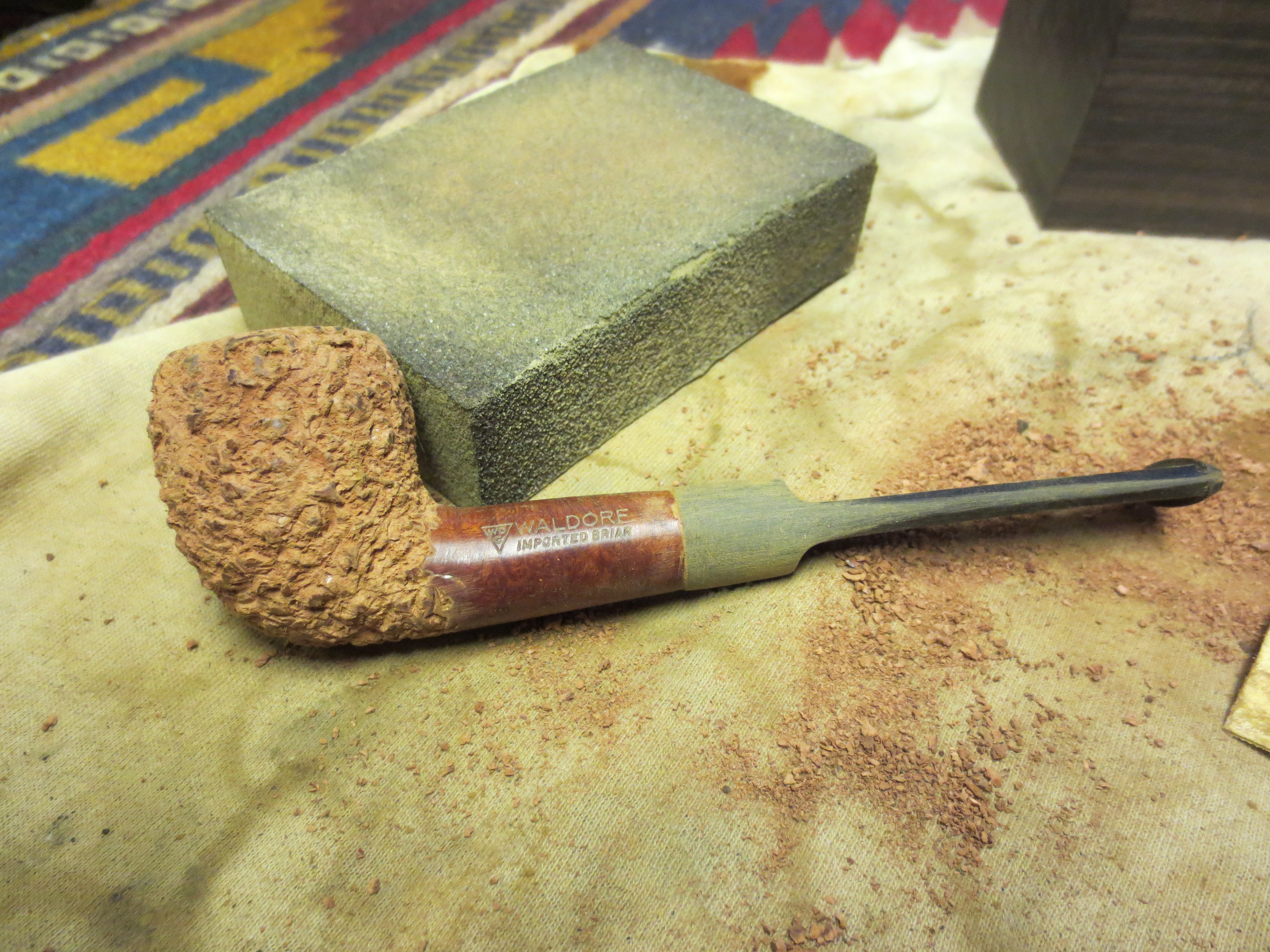
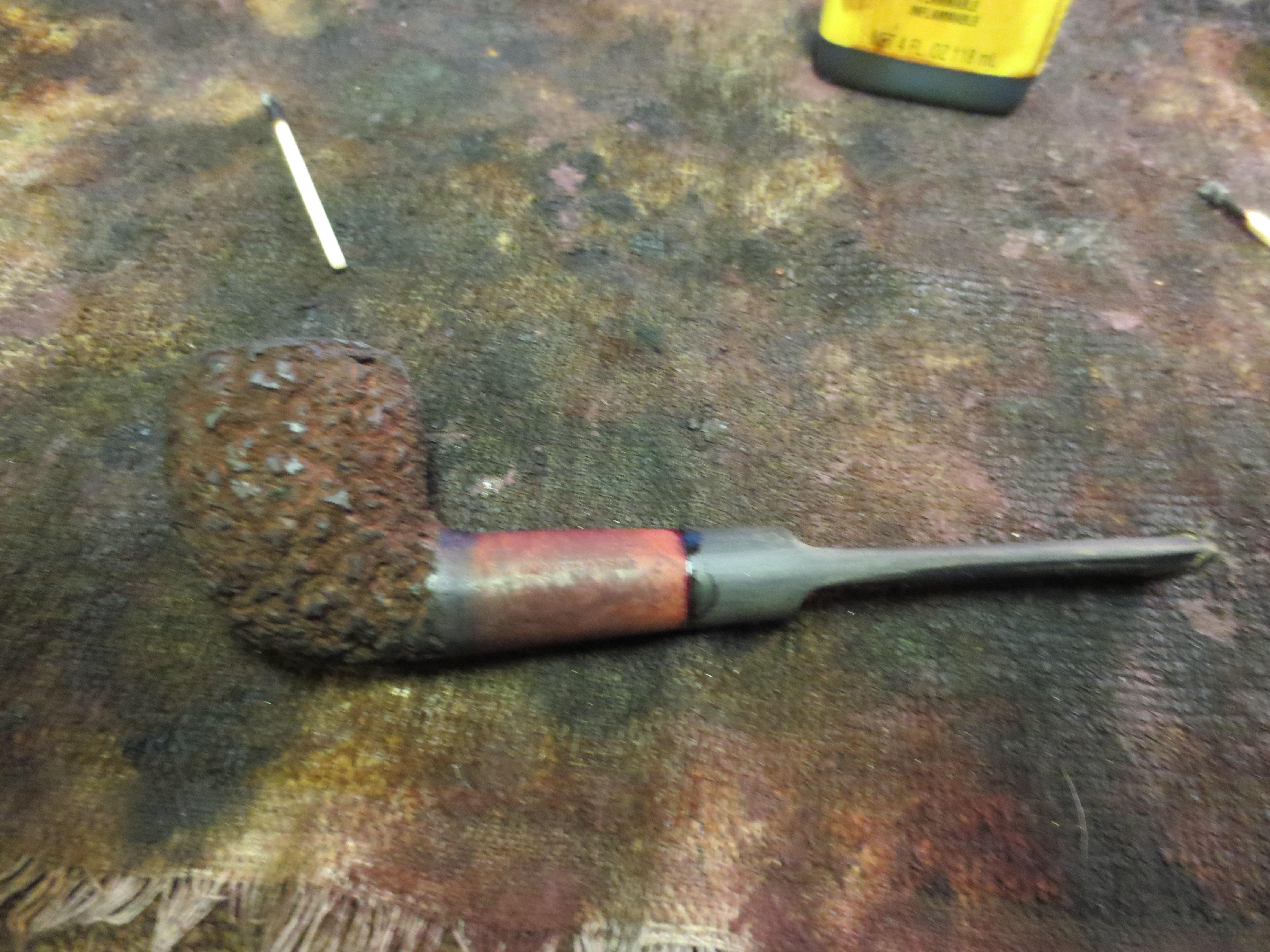
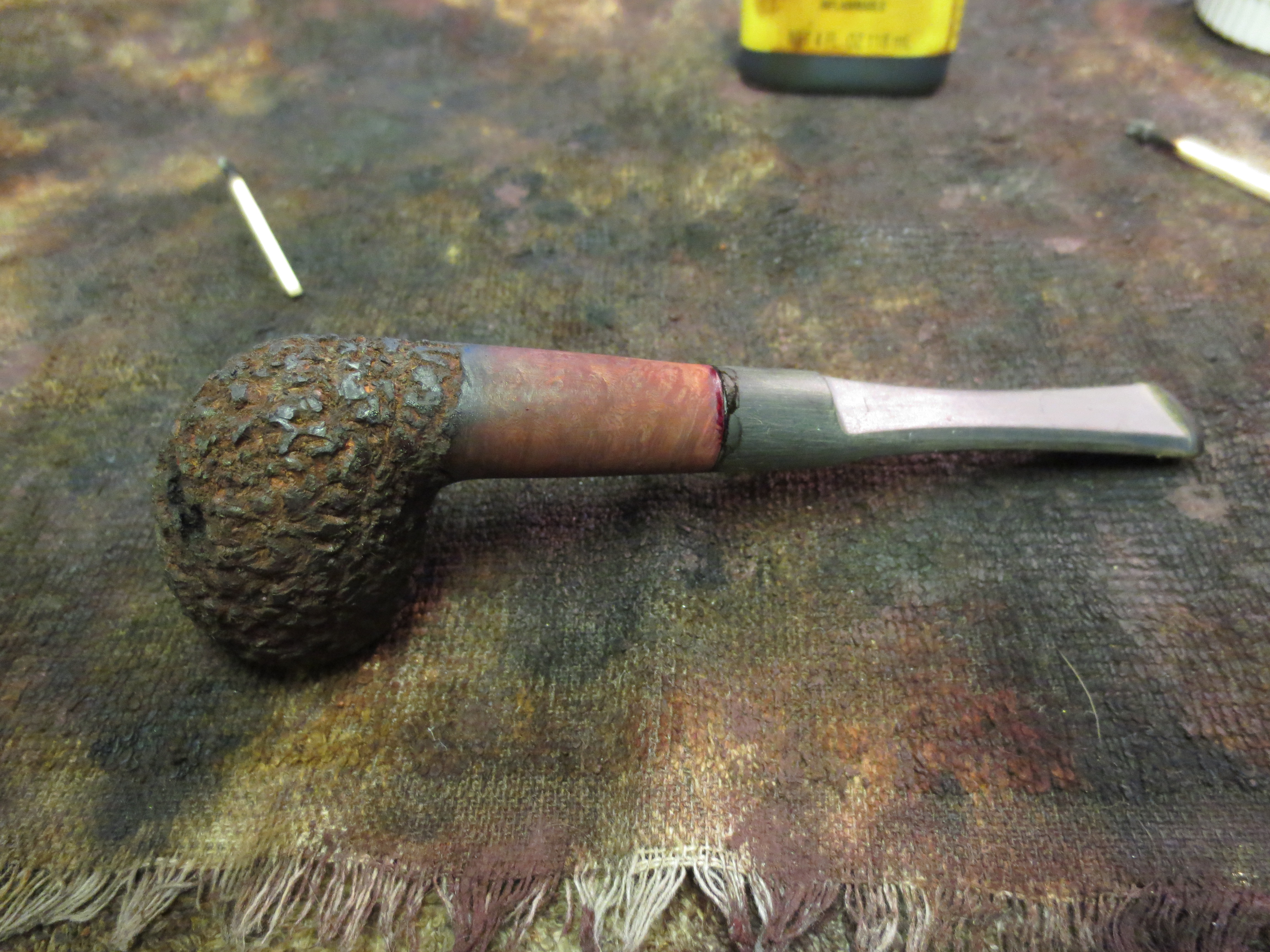
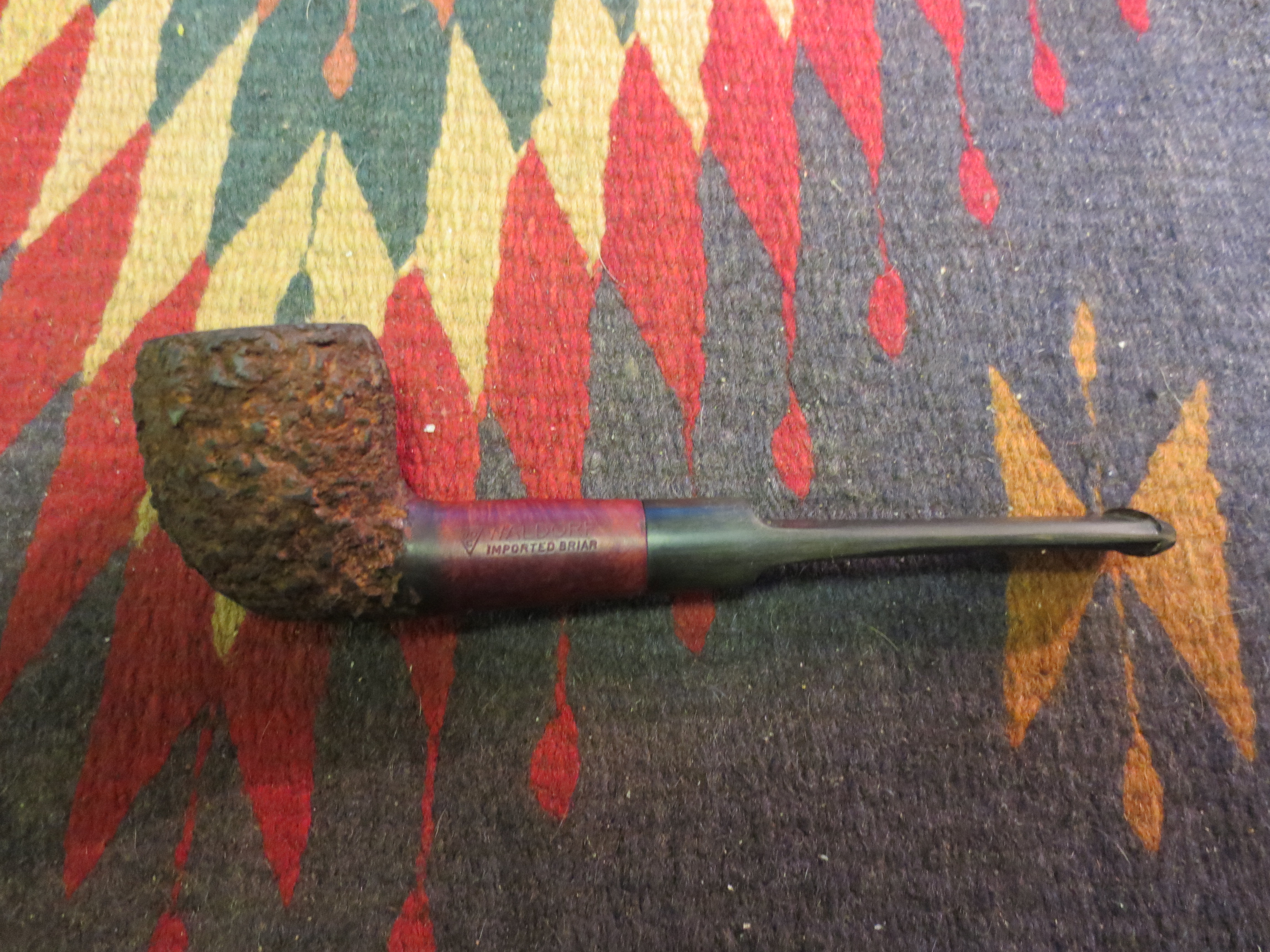
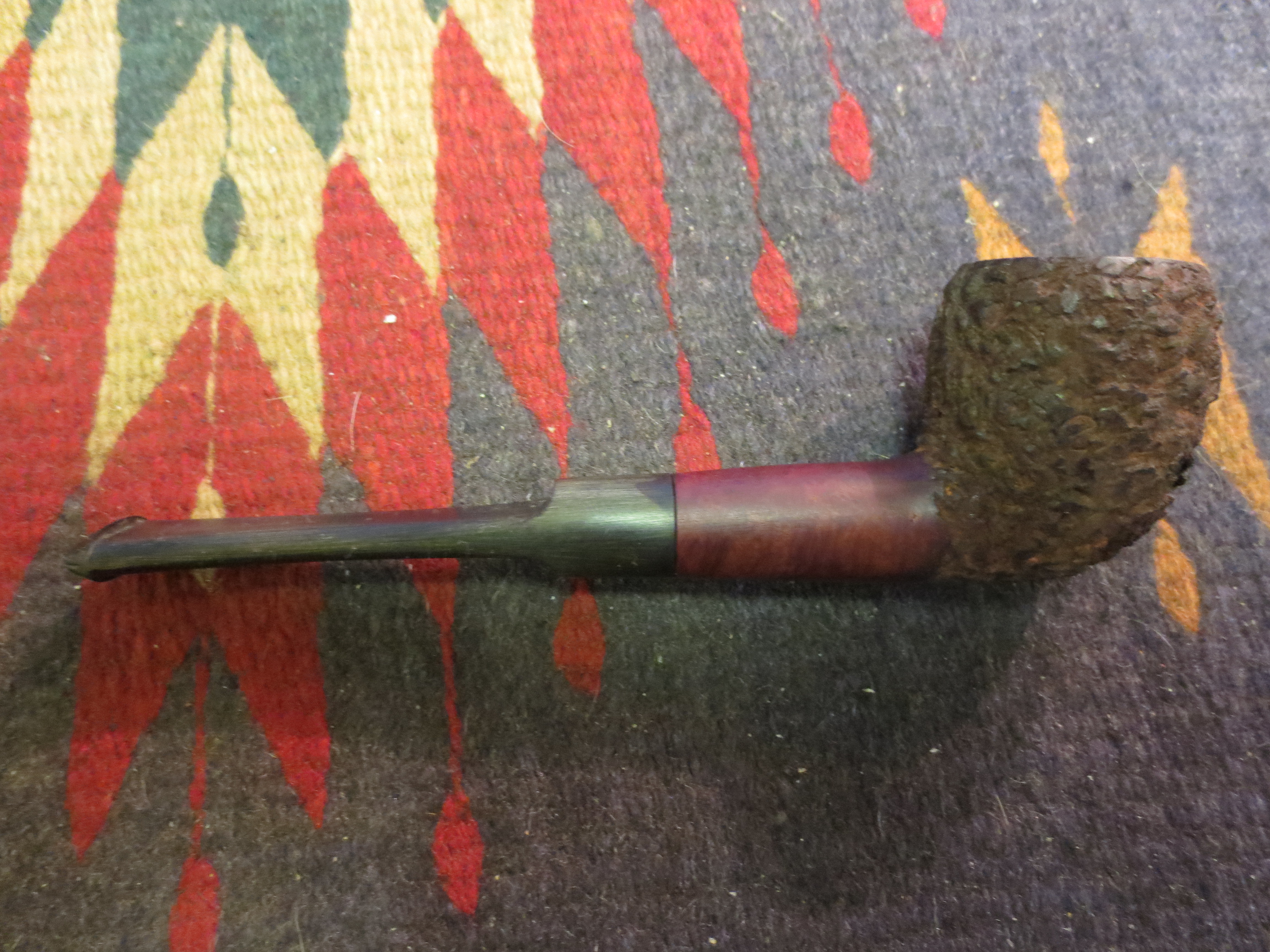
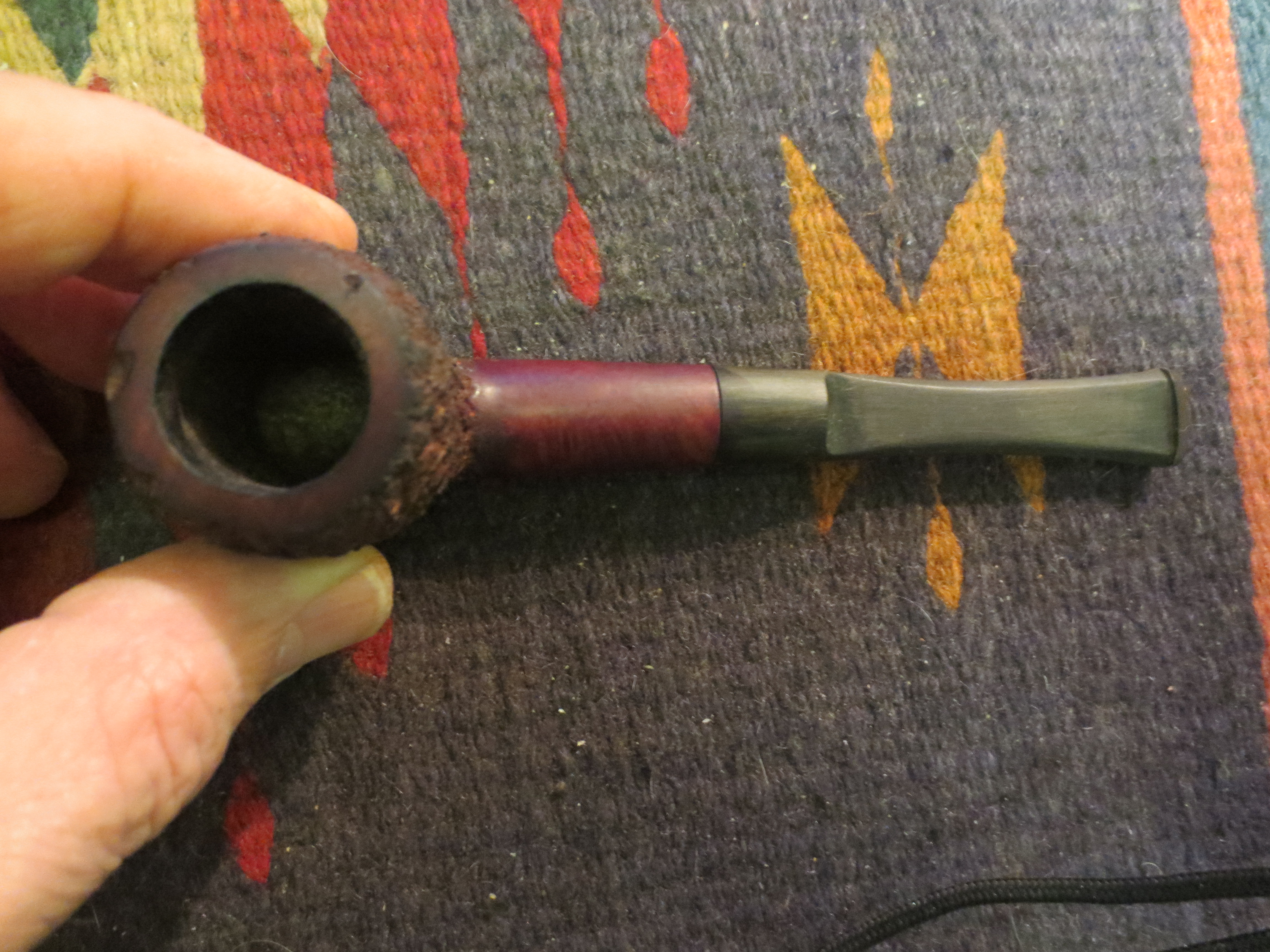
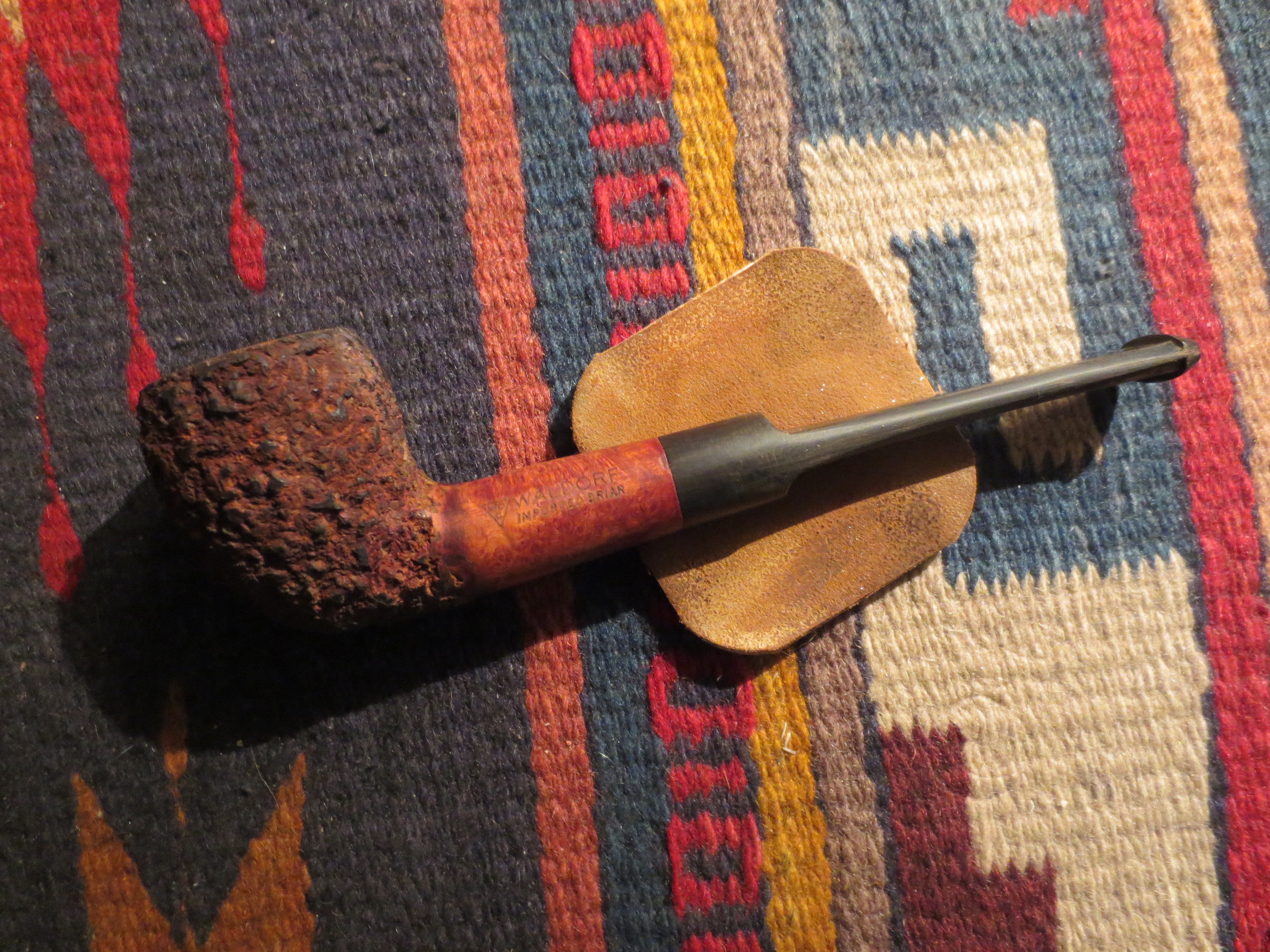
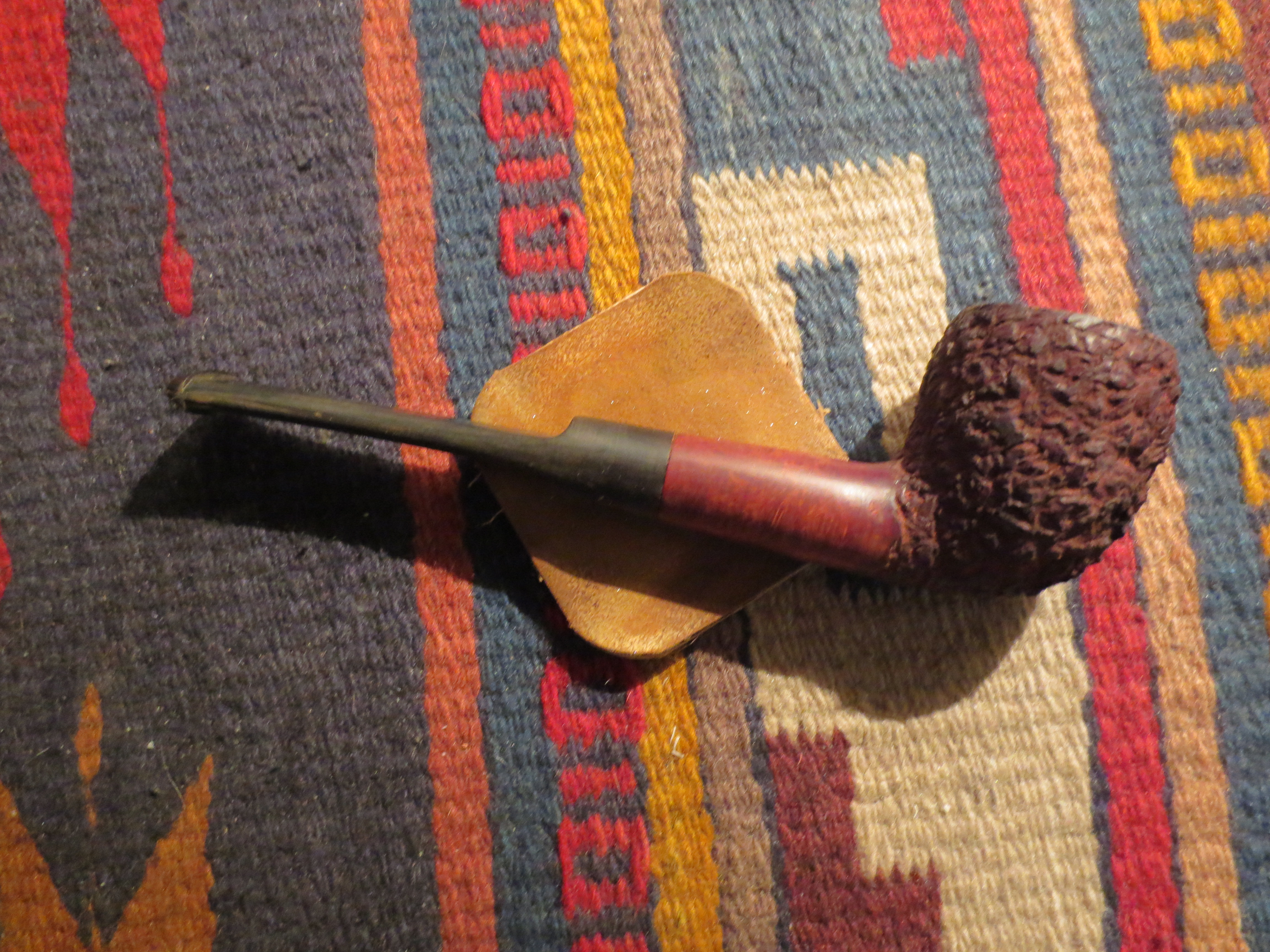
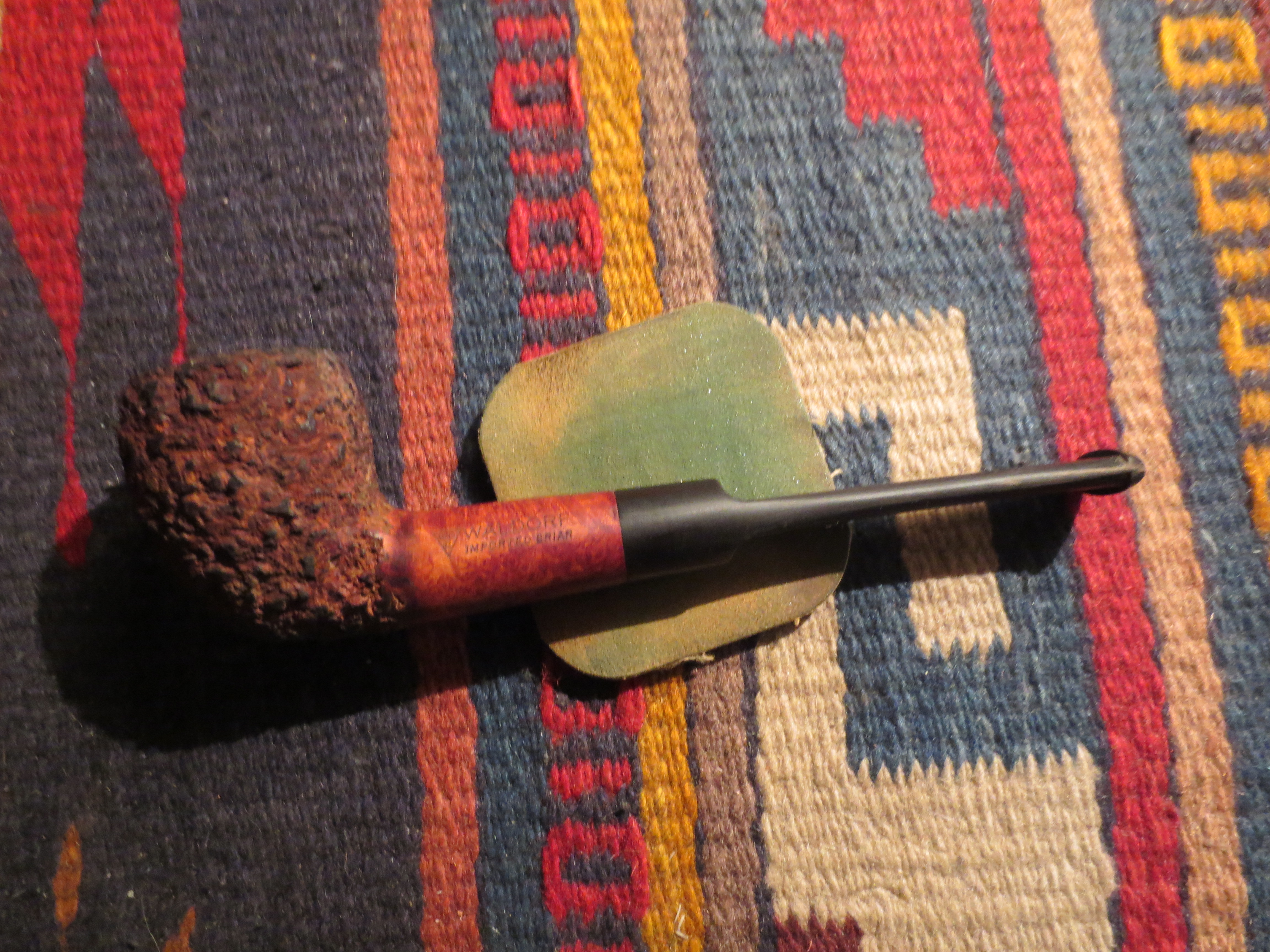
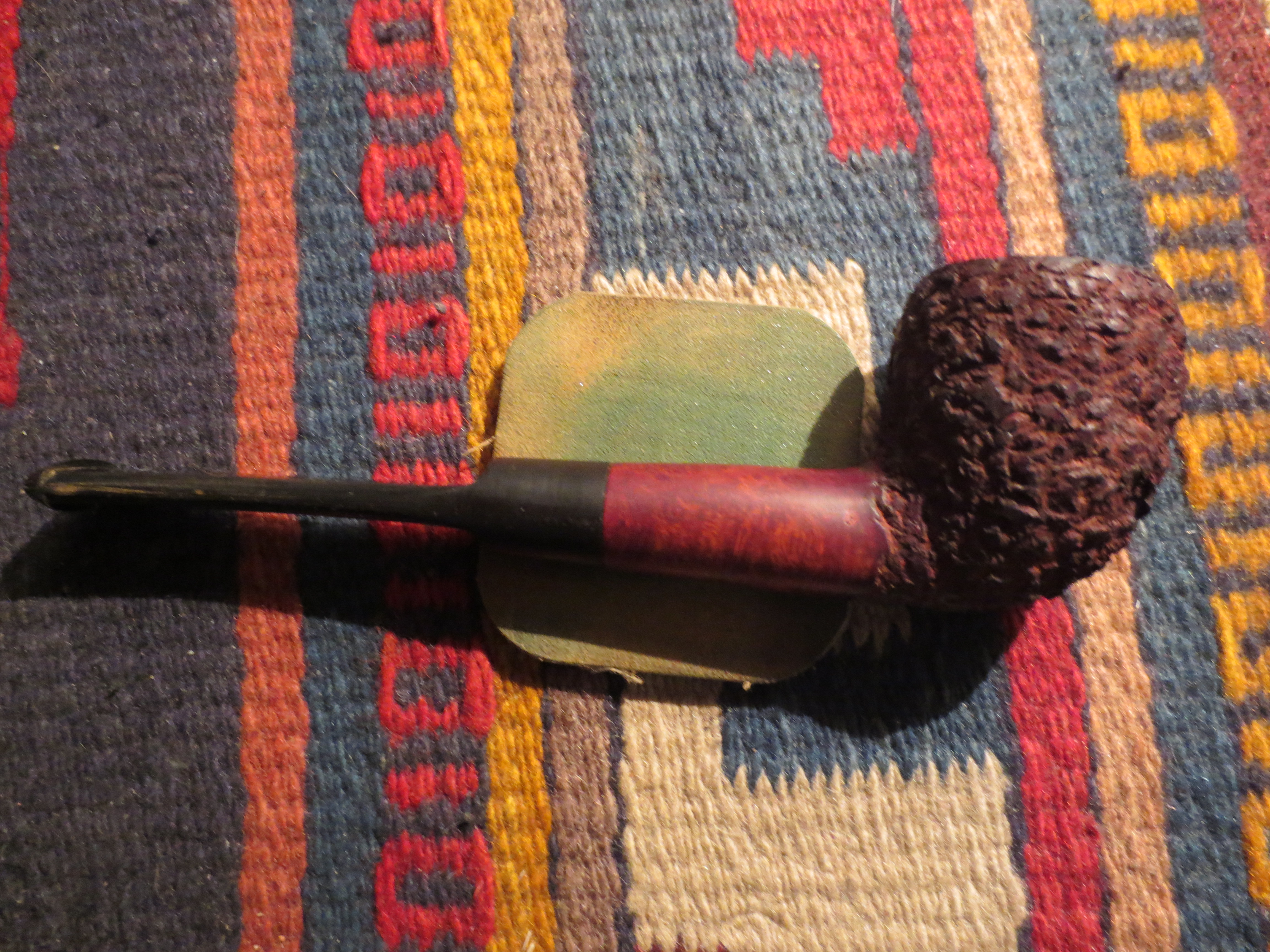
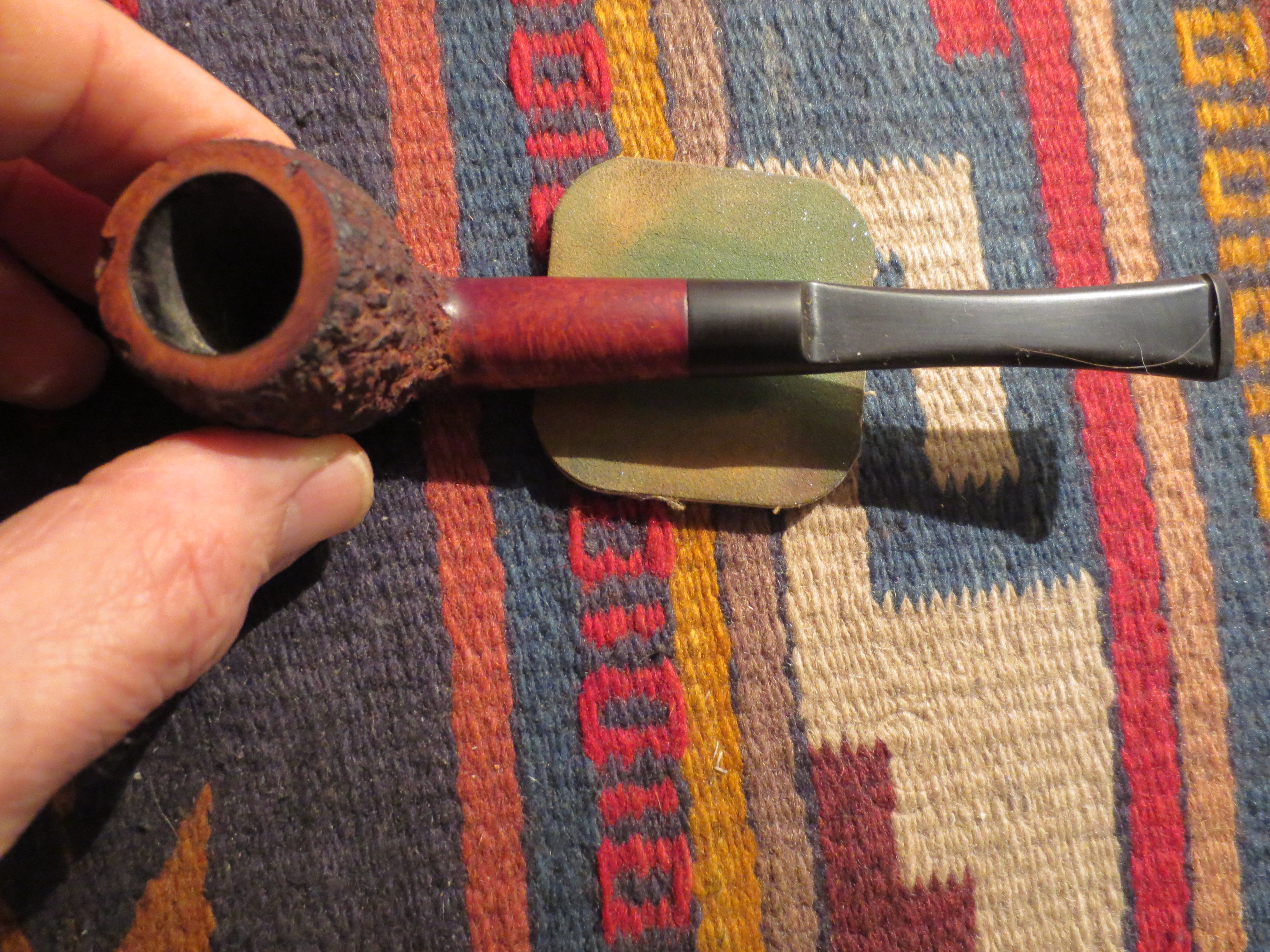
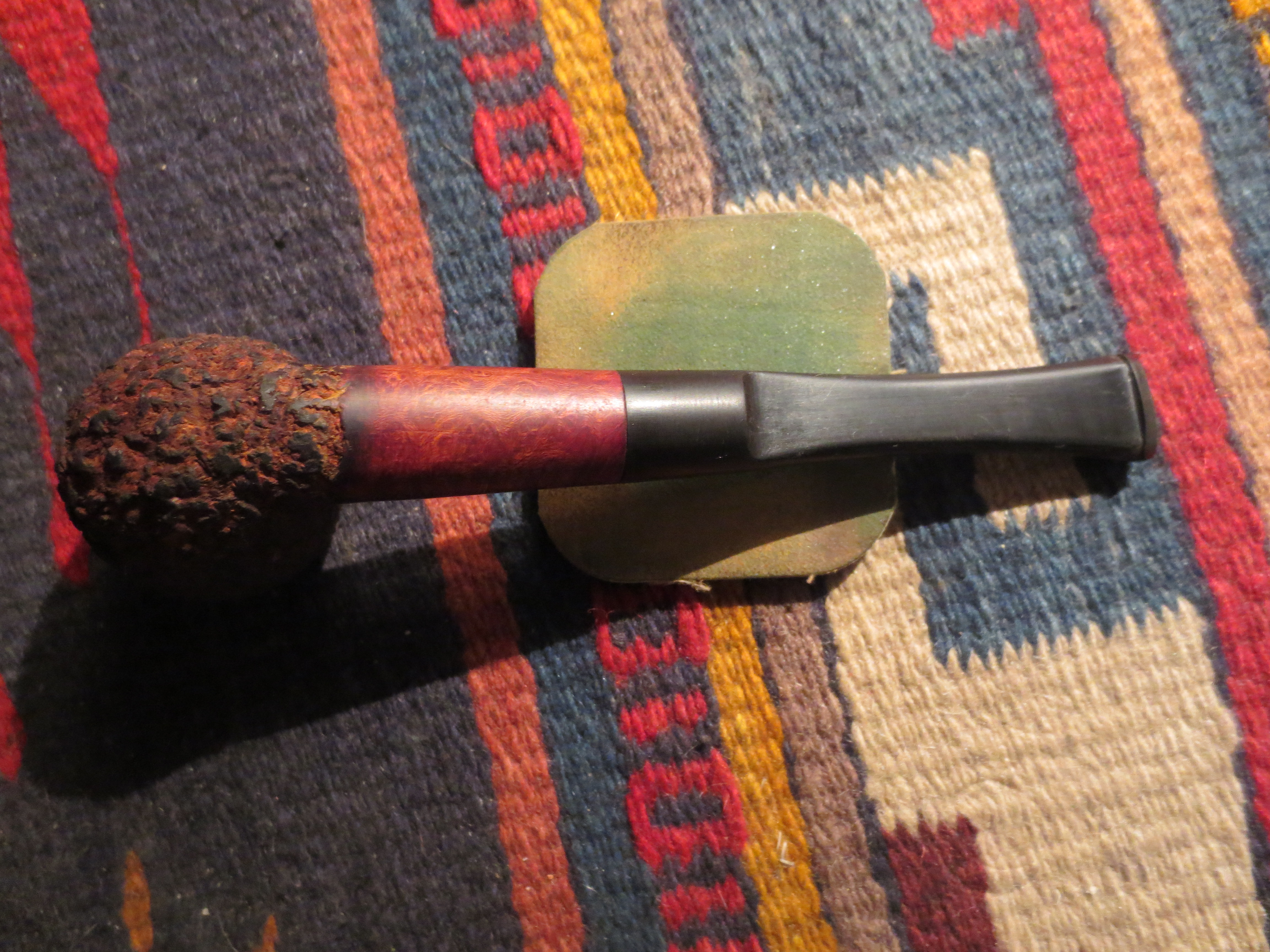
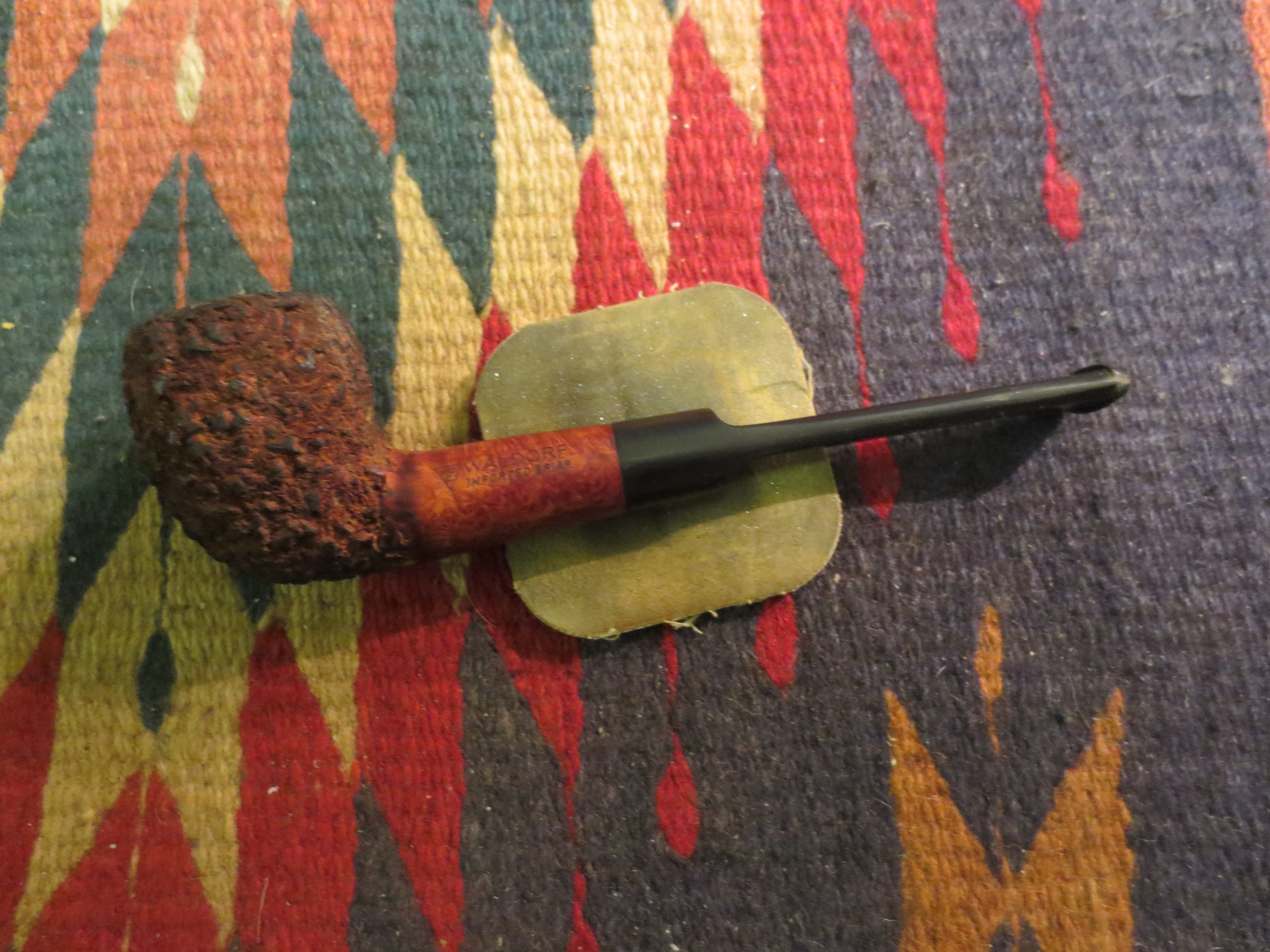
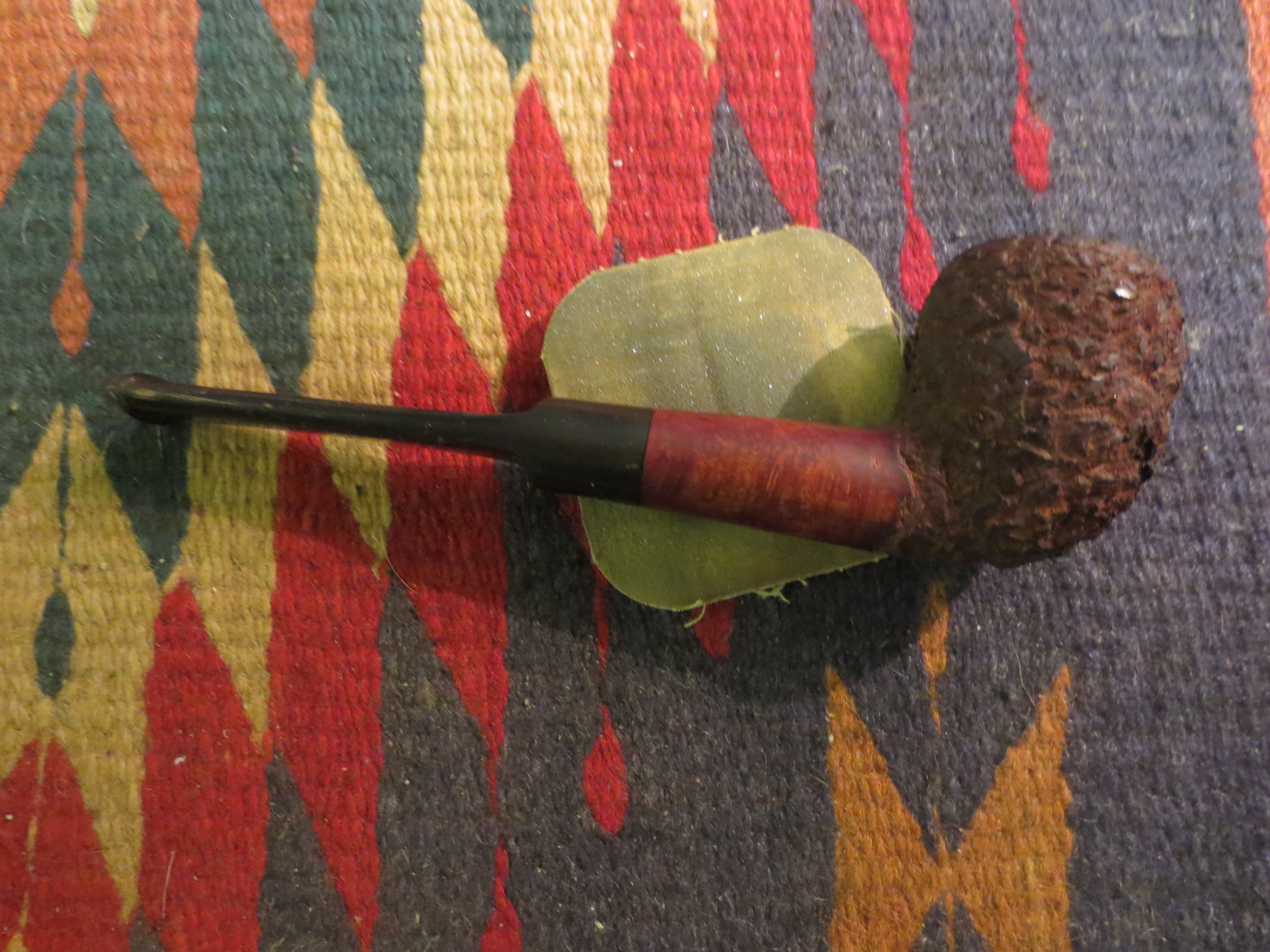
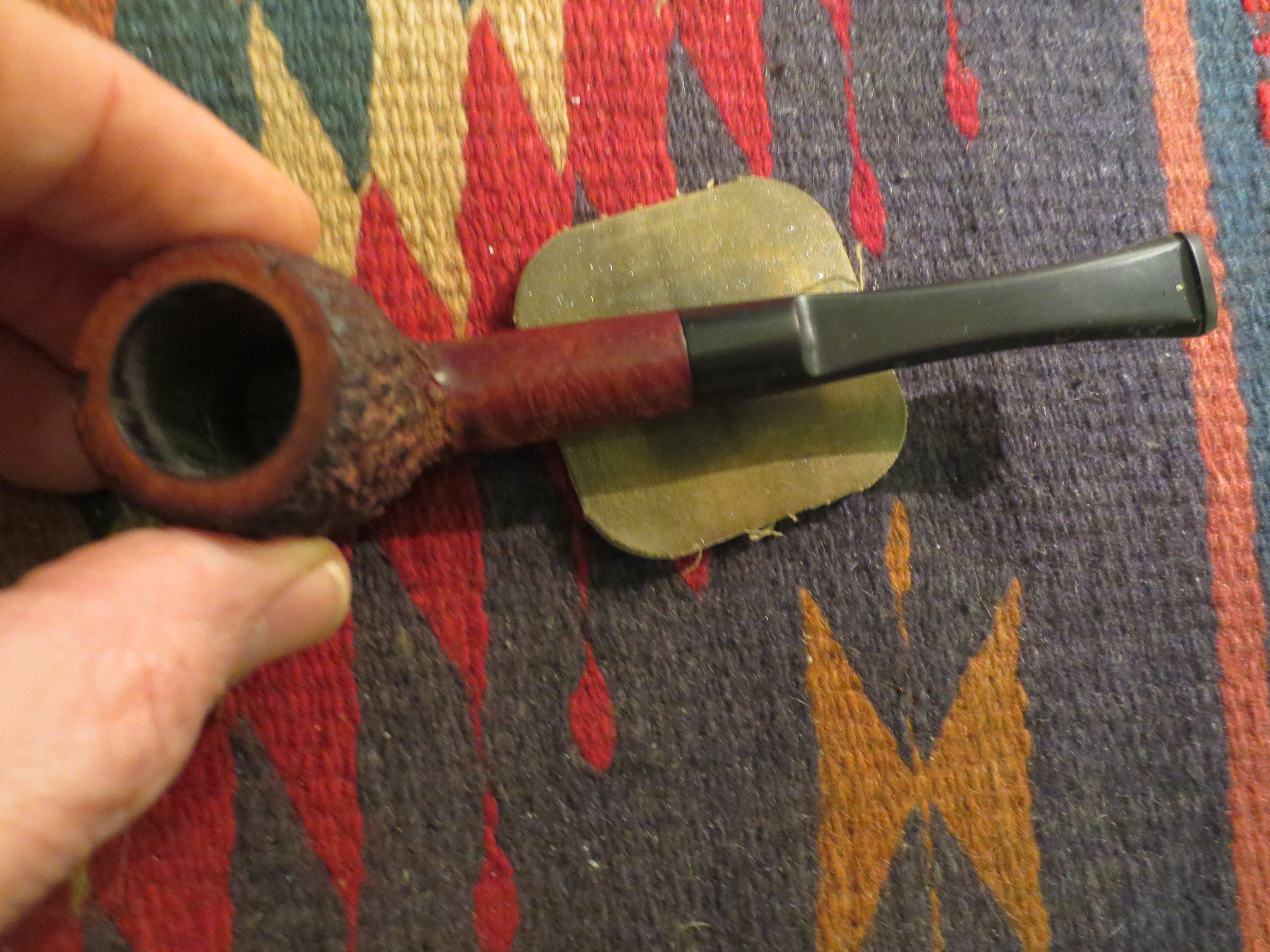
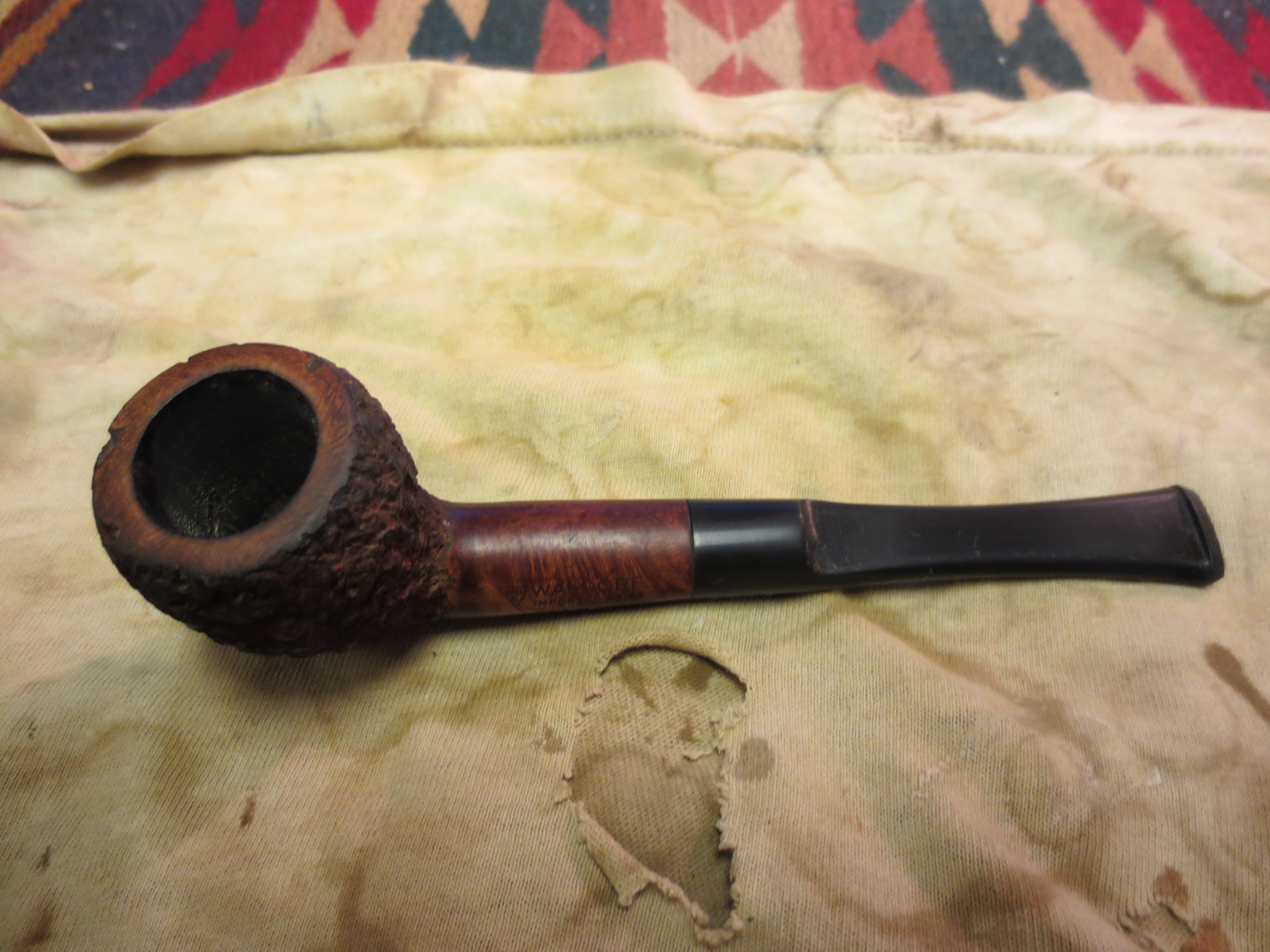
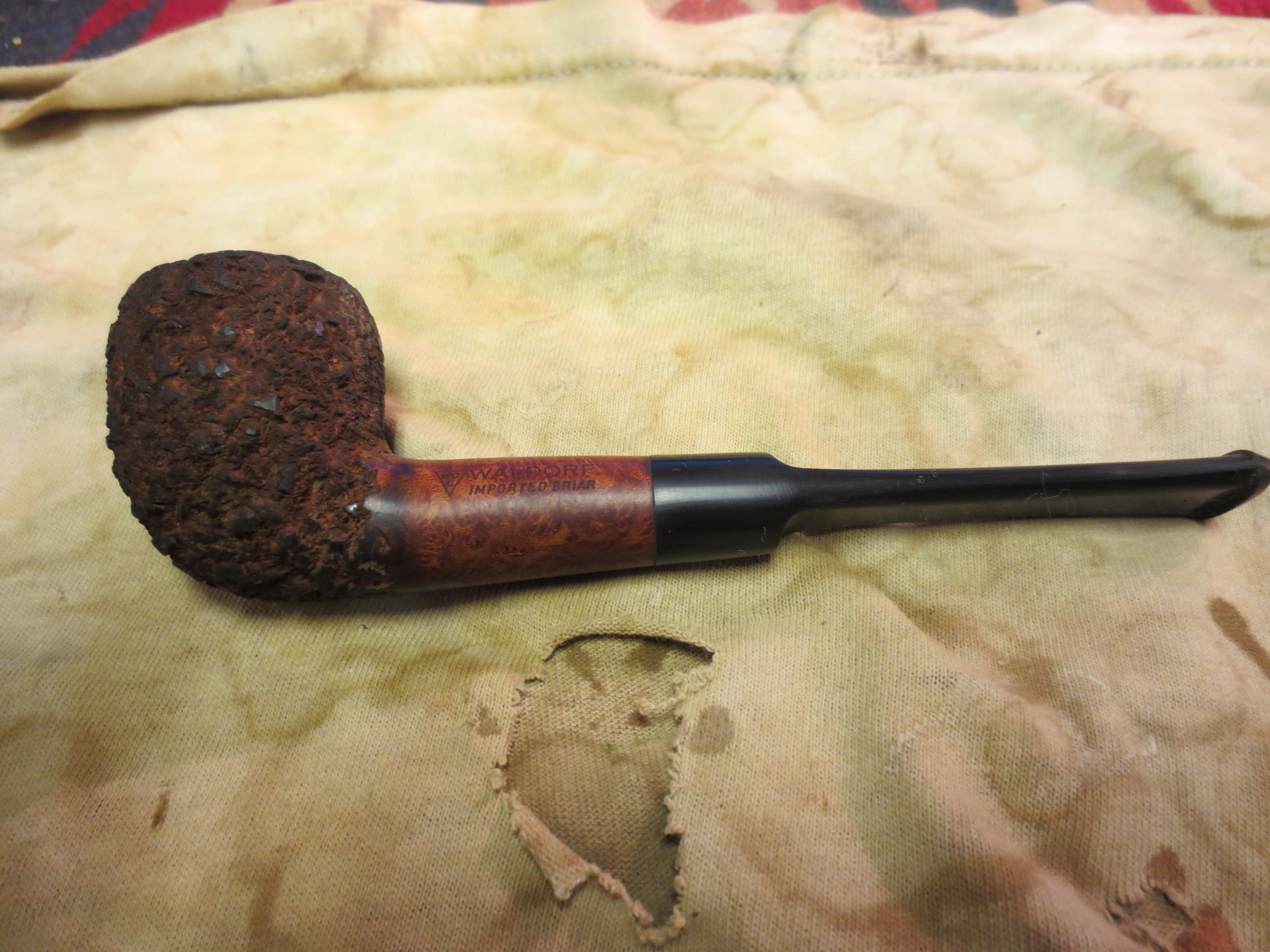
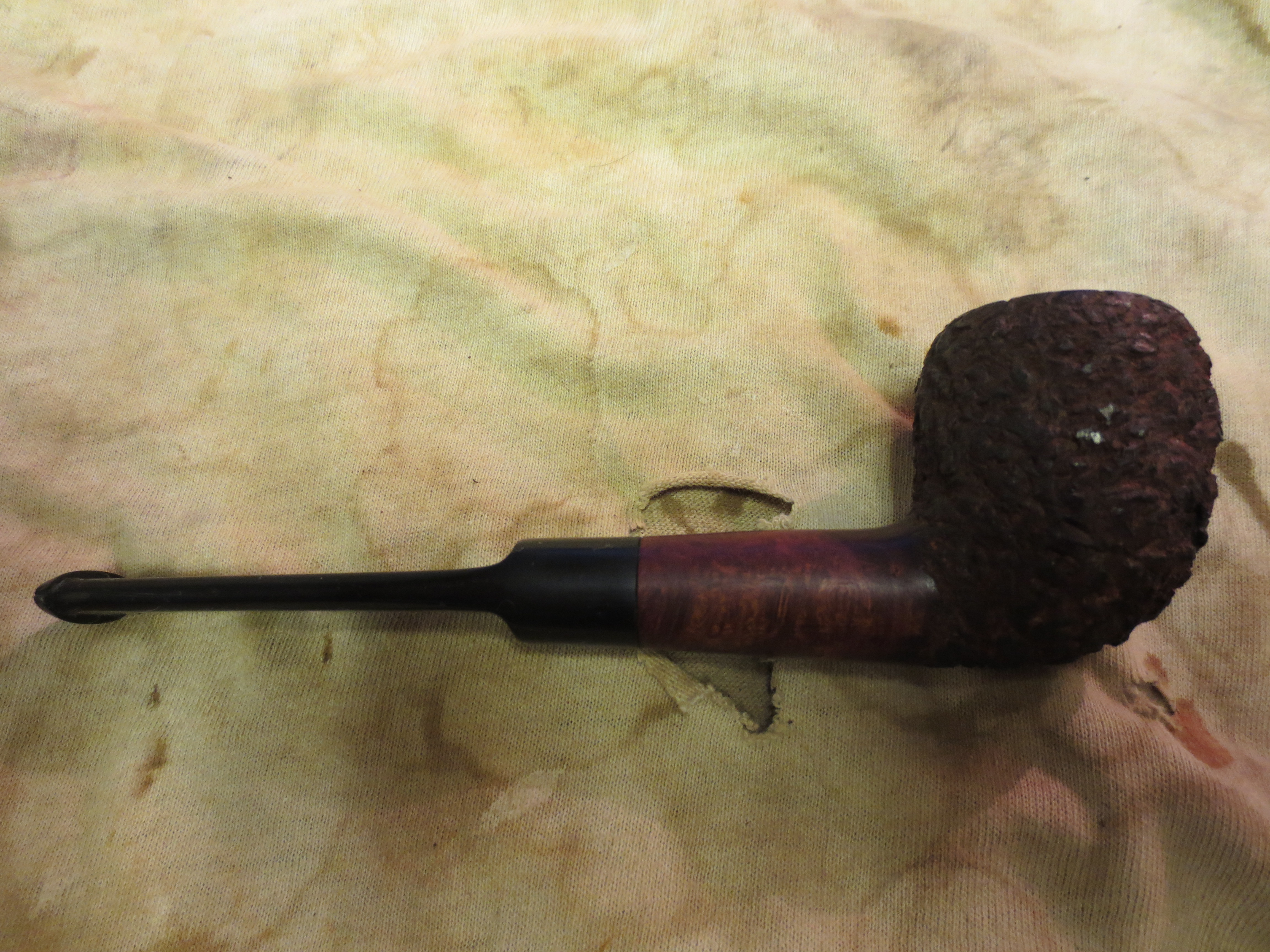
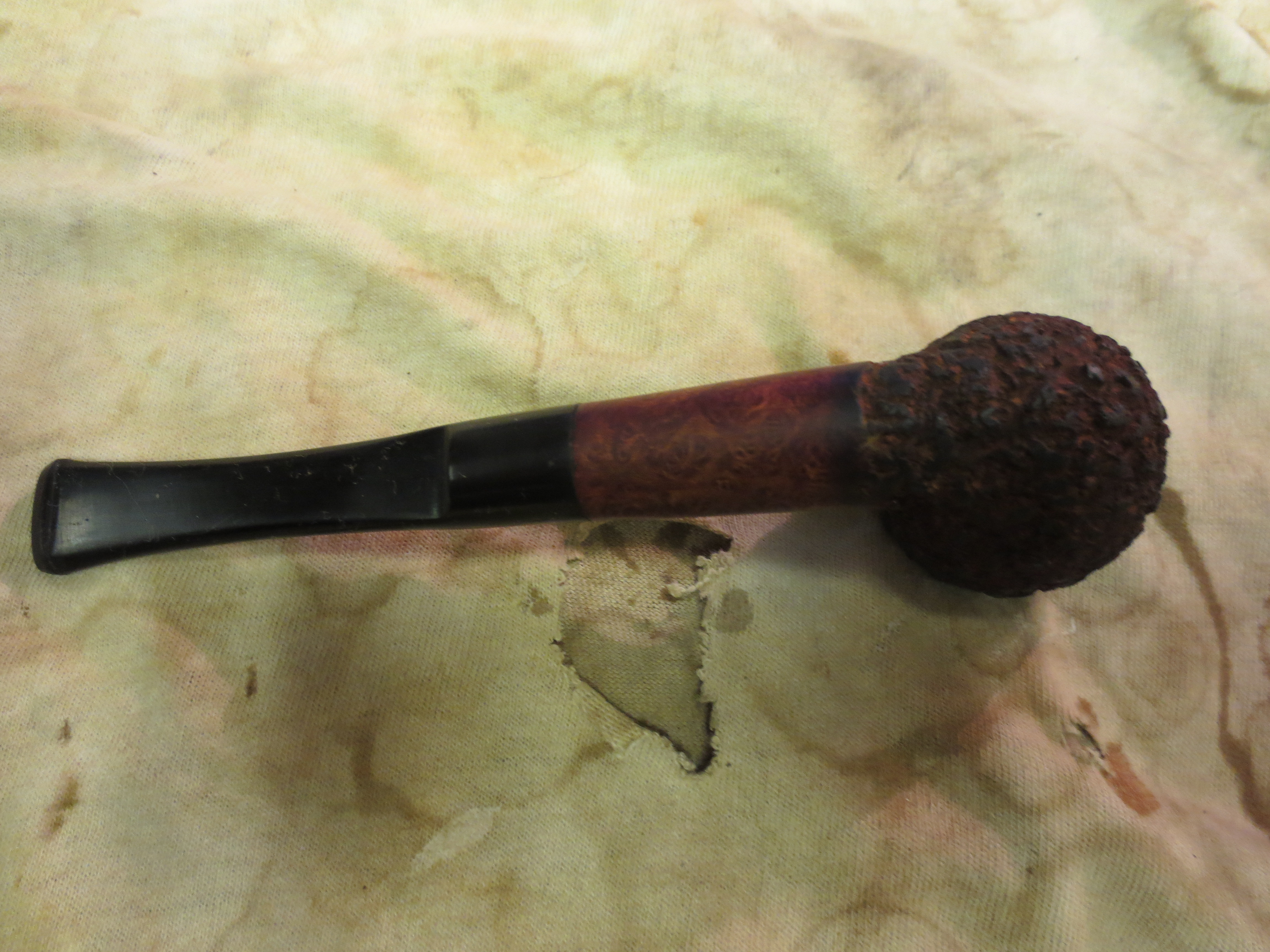
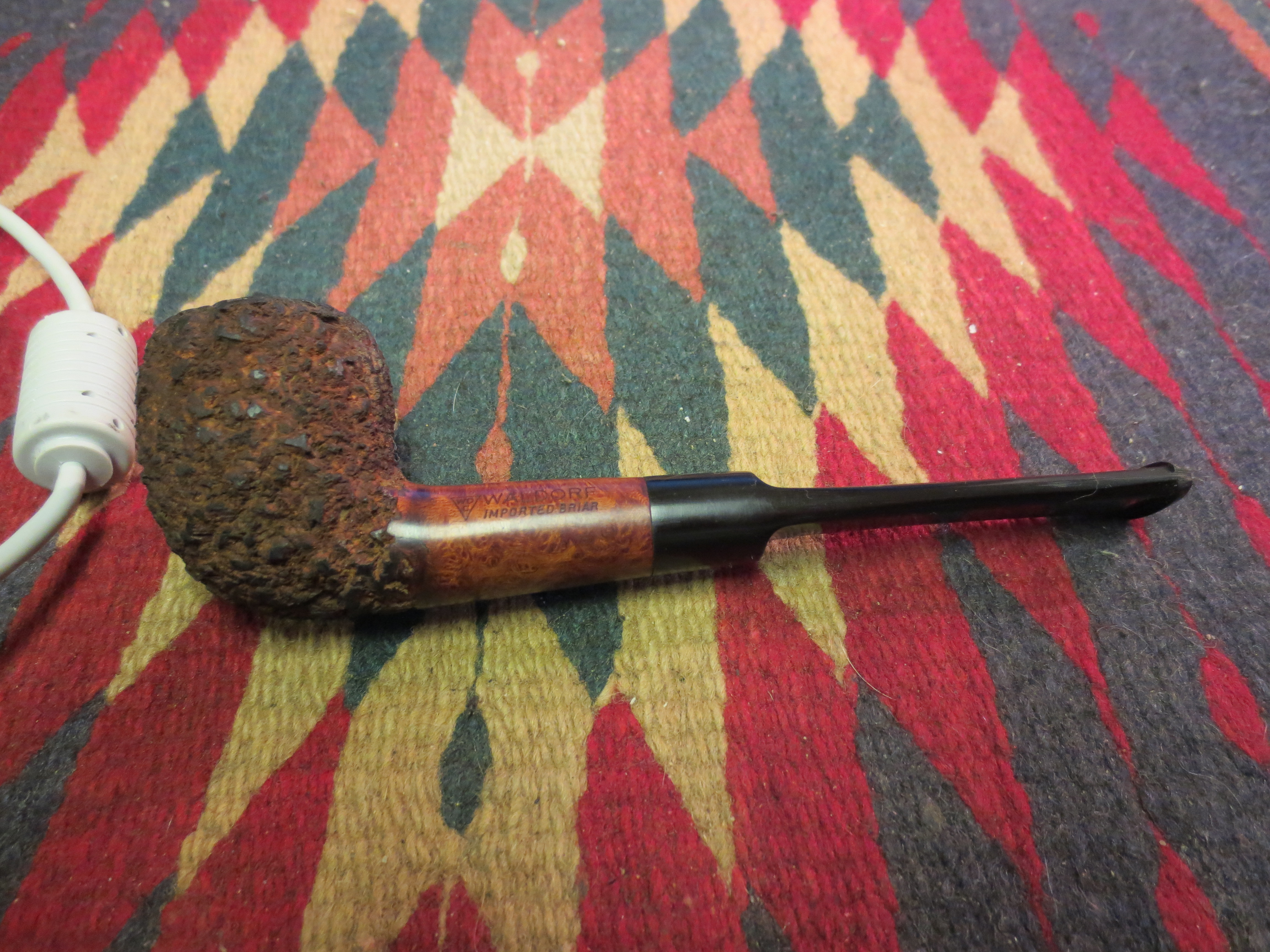
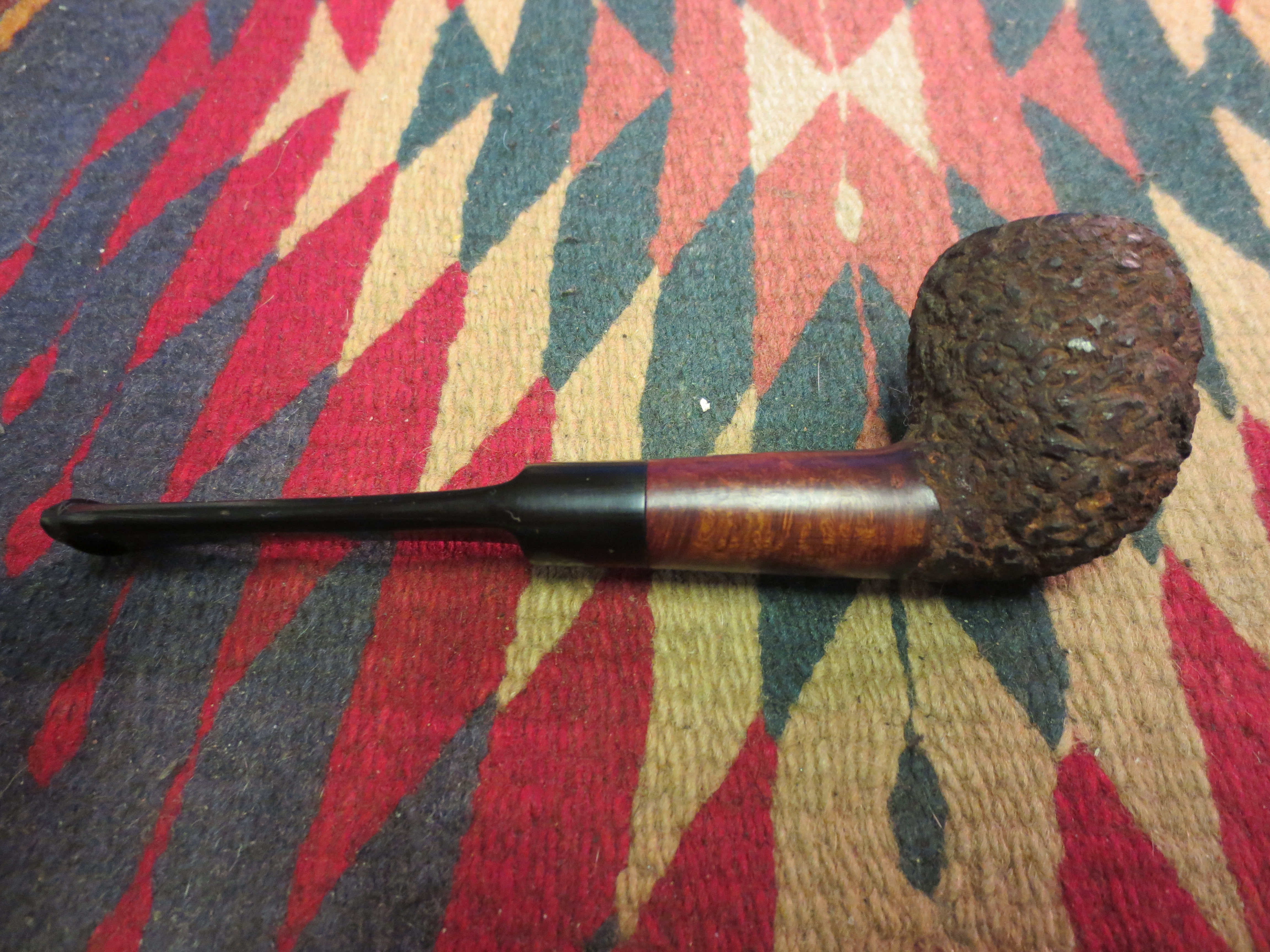
Today I decided to pick one of the stummels in my box of pipes that needed to be restemmed. I had cut the tenon a while back when I was restemming a bunch of old pipes I had. This one was in rough shape but I like the general shape of it. It is stamped WDC in a Triangle (William Demuth Pipe Company) and next to that is stamped WALDORF over Imported Briar. There is no other stamping on the pipe. According to Phil’s Pipe Logos and Markings website, http://www.pipephil.eu/logos/en/logo-w1.html the Waldorf is a second’s line of the WDC brand. Not sure but that is interesting to note. This one was in rough shape. The bowl was badly caked and the rim was tarry and charred with a notch out of the briar near the front of the bowl. The finish was rough, blackened and the varnish coat was peeling. The bowl also had a large number of fills on the front and both sides. These were the ugly pink putty fills. I cut a tenon and roughed a stem to fit the bowl. The four photos below show the state of the pipe when I began to work on it today.

ImageImageImageImage

I decided to work on the fit of the stem first and trim it down to size. I took it to my work table where I keep my Dremel. I have the larger sanding drum on the Dremel and I have found that run at a medium speed it works well to trim down the stems to fit the shanks. I work carefully so that I do not damage the shank or cut too deeply into the stem. The next seven photos show the work on the stem and the progress from the pictures above to the last photo in the seven. I always work to get the stem as close to the diameter of the shank as I can so that I have less work to do with the sandpaper. Note also the visible fills in the bowl. They would make it a natural candidate for rustication when I got to that point.

ImageImageImageImageImageImageImage

The next five photos show the sanding progress on the stem. I kept in on the shank to reduce the risk of rounding the edges/shoulders on the stem. I worked with a medium grit emery paper and 240 and 340 grit sandpaper. When I get to this point in the shaping of the stem I work to remove the excess vulcanite more slowly and work at removing the scratches left by the Dremel. The fills are very visible in these photos as is the shiny varnish finish on the pipe.

ImageImageImageImageImage

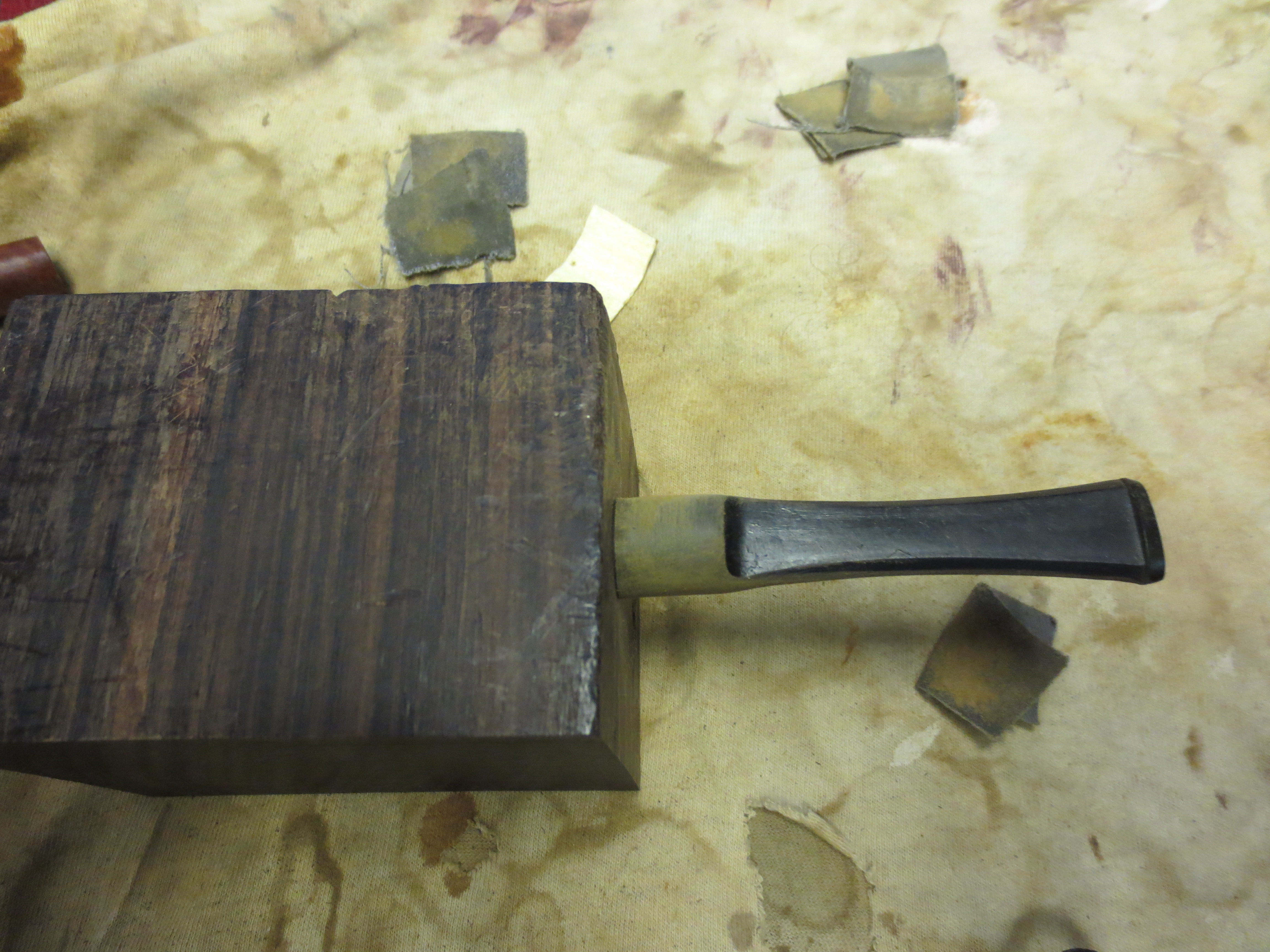
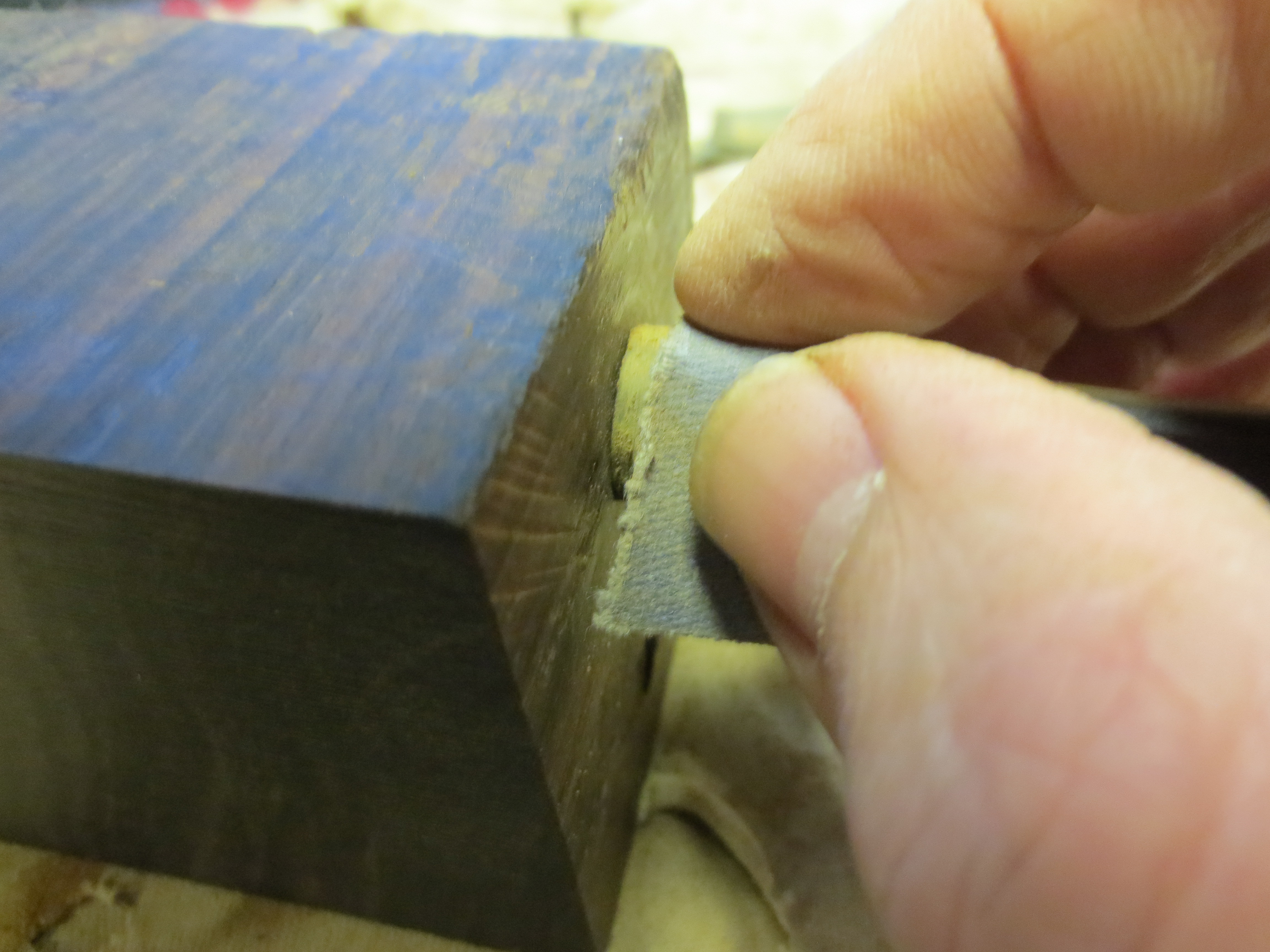
I am working on a block to hold the stem while I do the shaping sanding on them. I drilled out a small block of ebony that I have here to the size of the tenon and inserted the stem in the block. Then I can work the edge of the stem and not risk rounding the shoulders. This is still in the experimental stages and I have already decided on some significant improvements. I hold the stem tight against the block and work the folded sandpaper against the block to smooth out that part of the stem. The next three photos give the idea that is in its infancy stage. There will be more to come on this process in the days ahead.

ImageImageImage

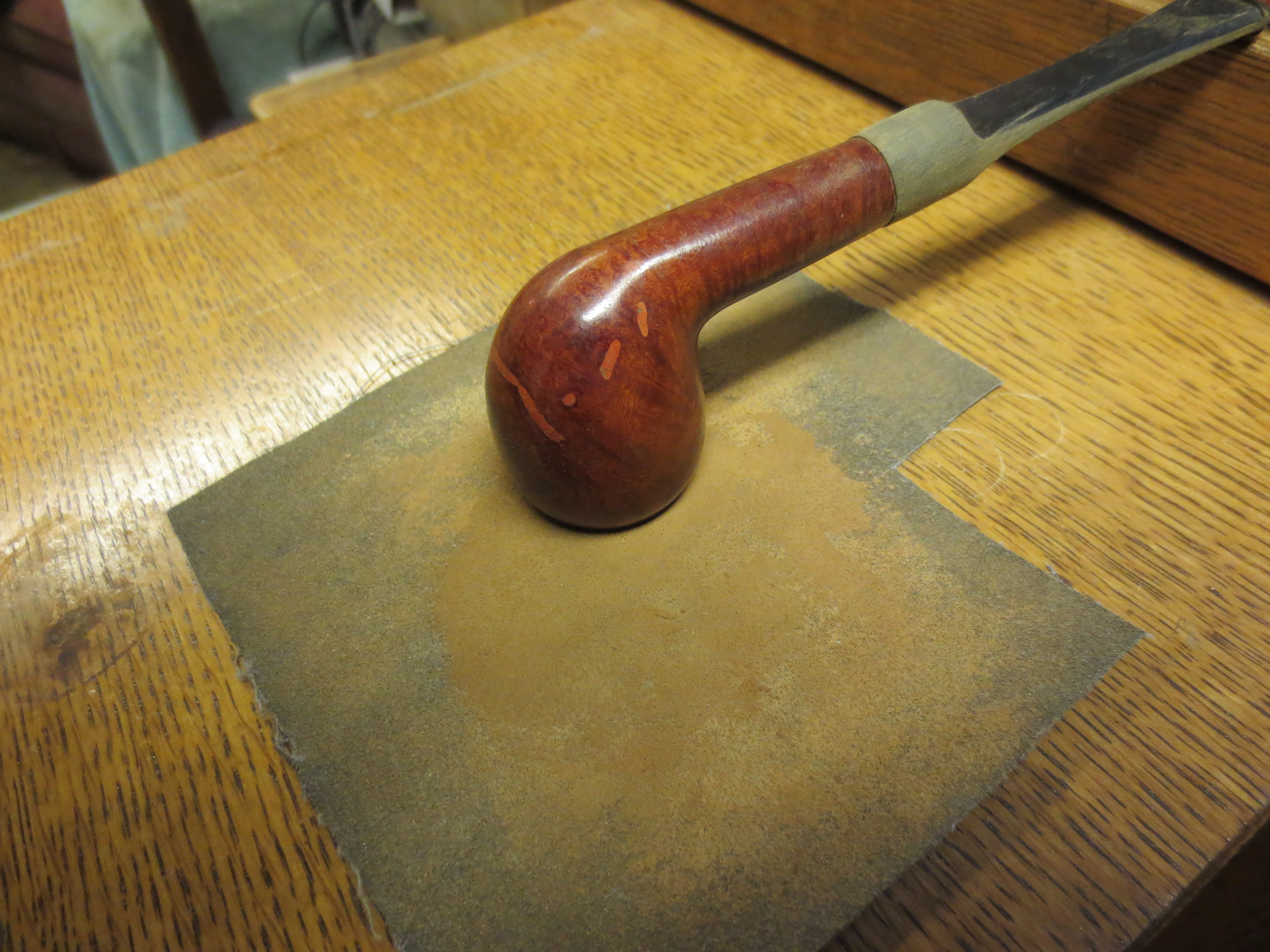
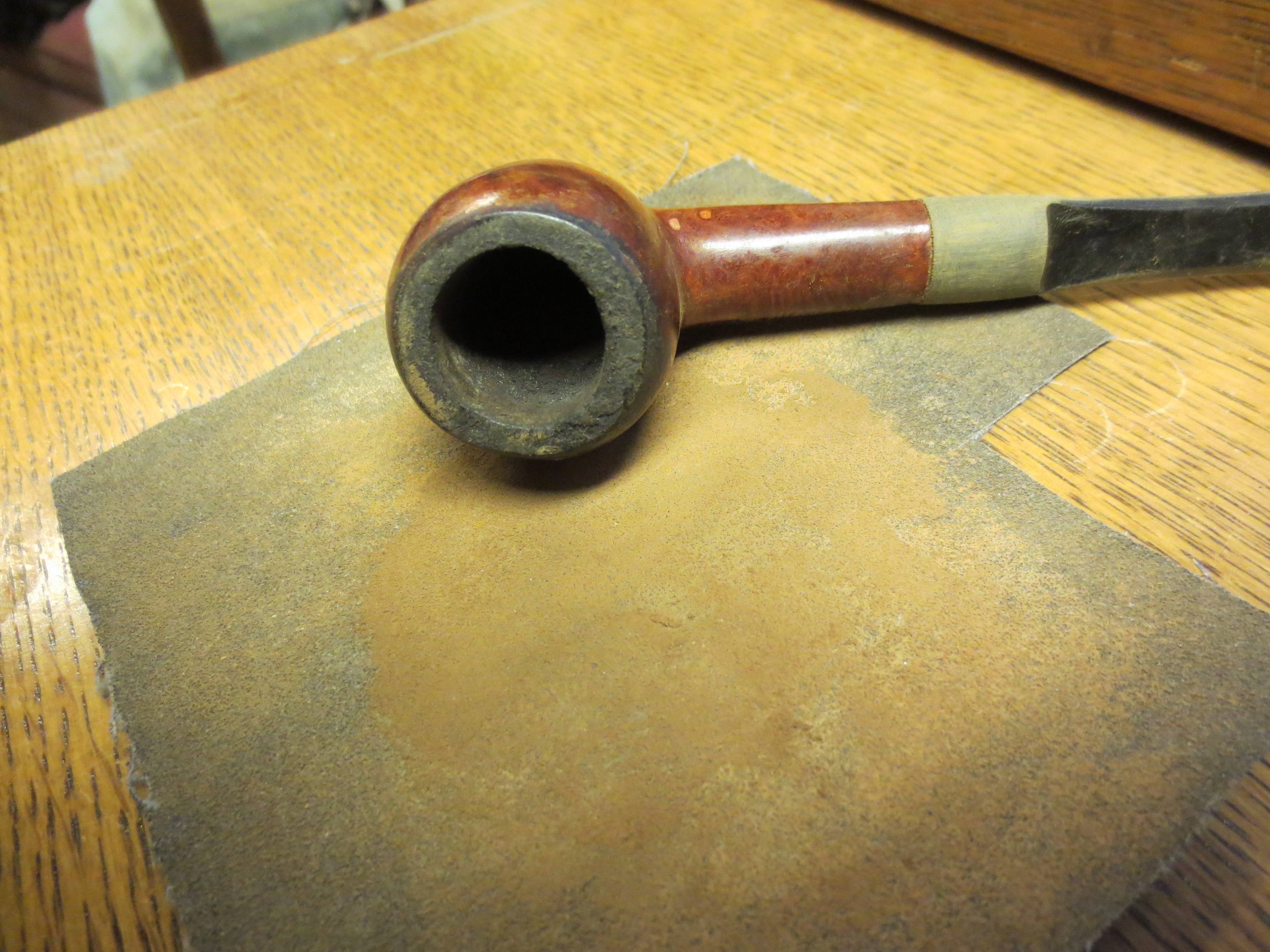
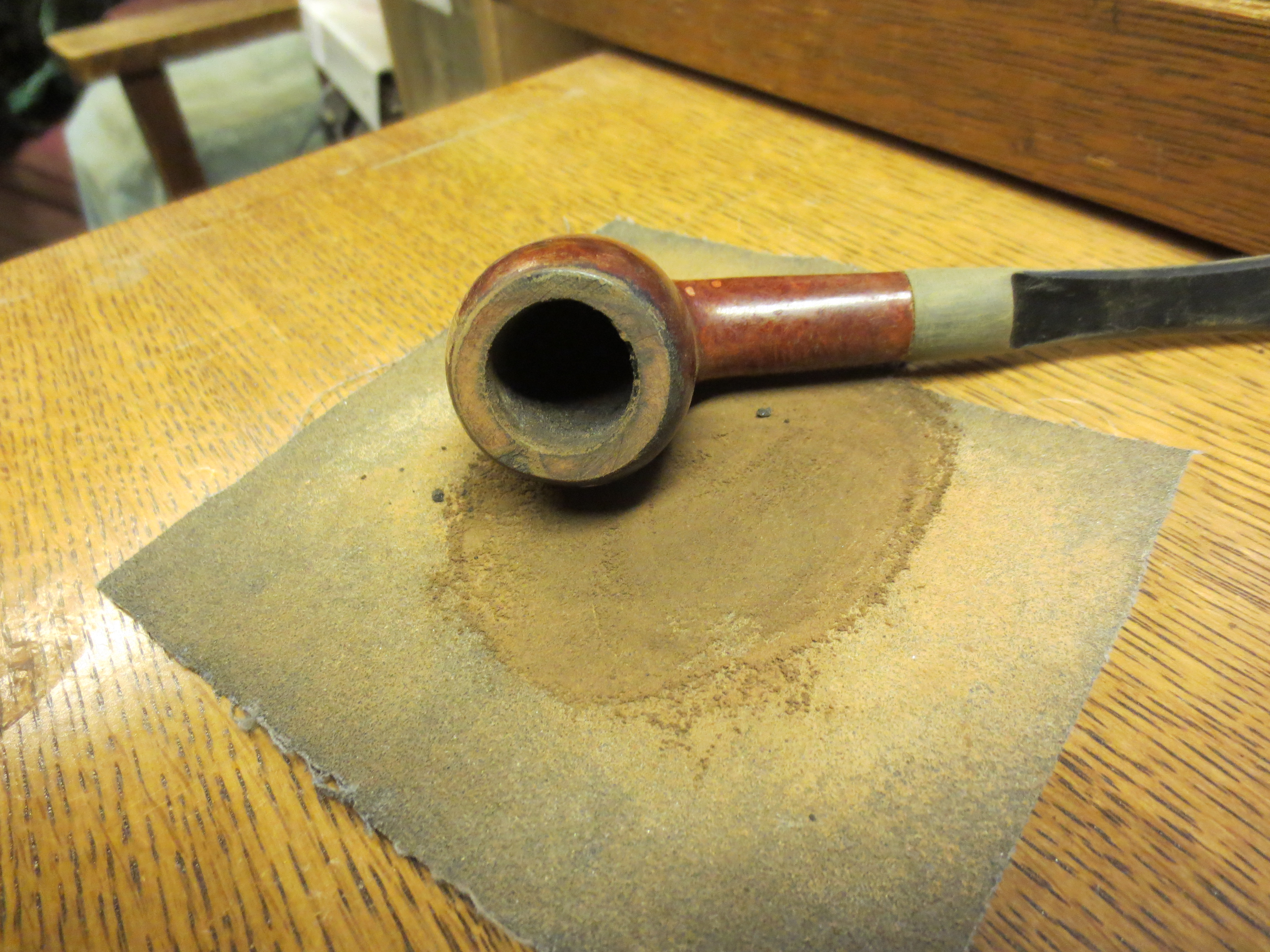
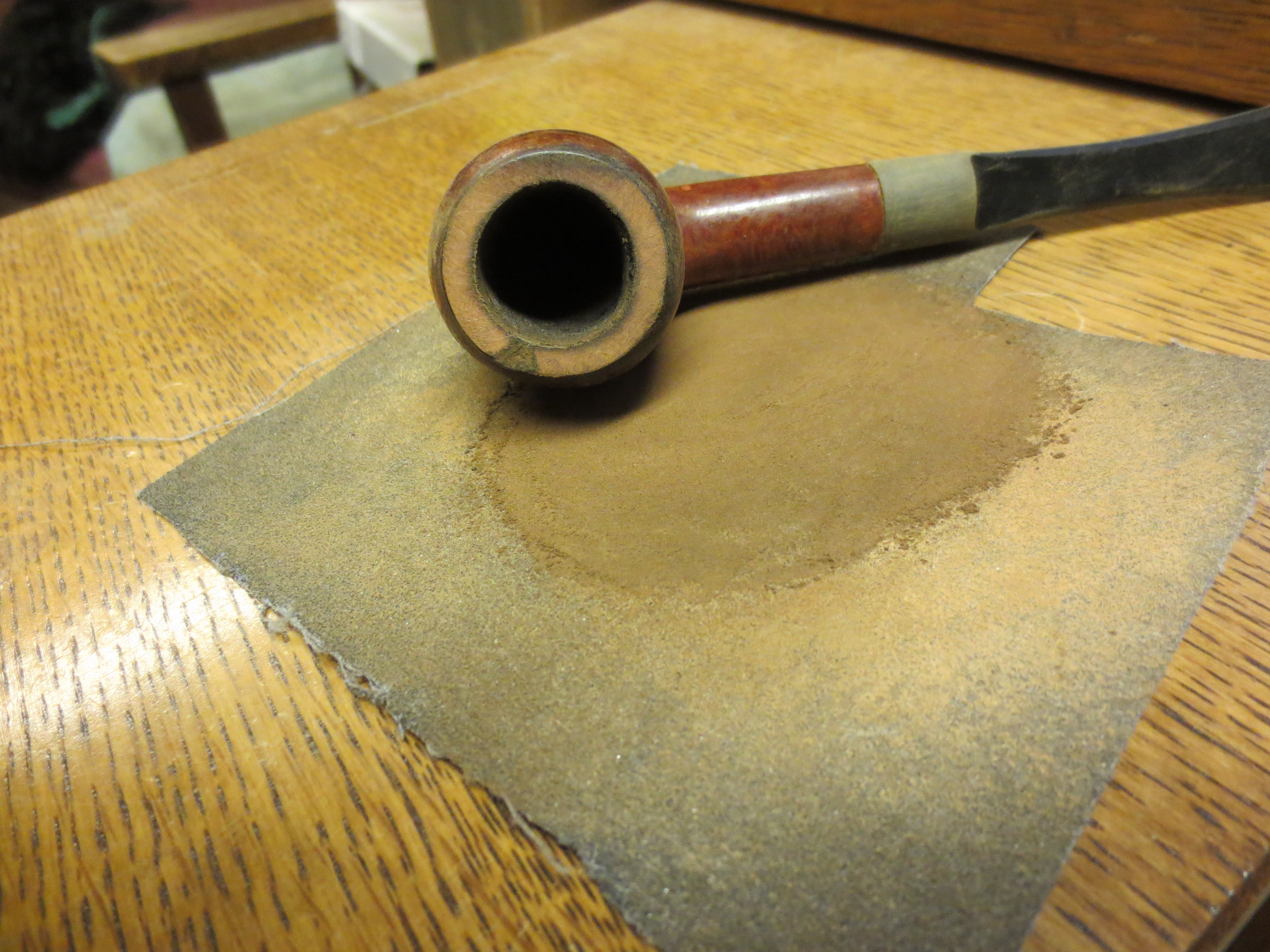
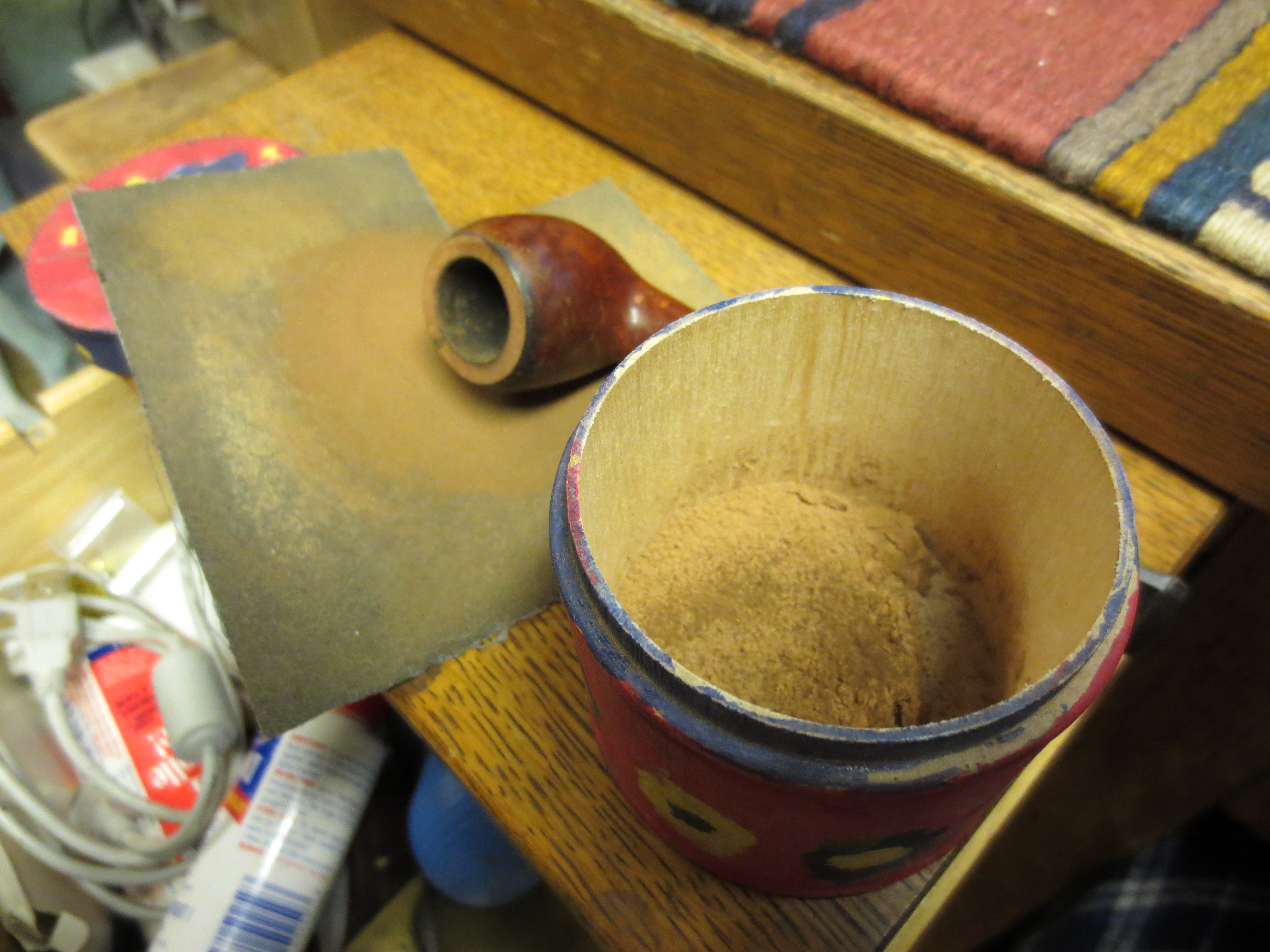
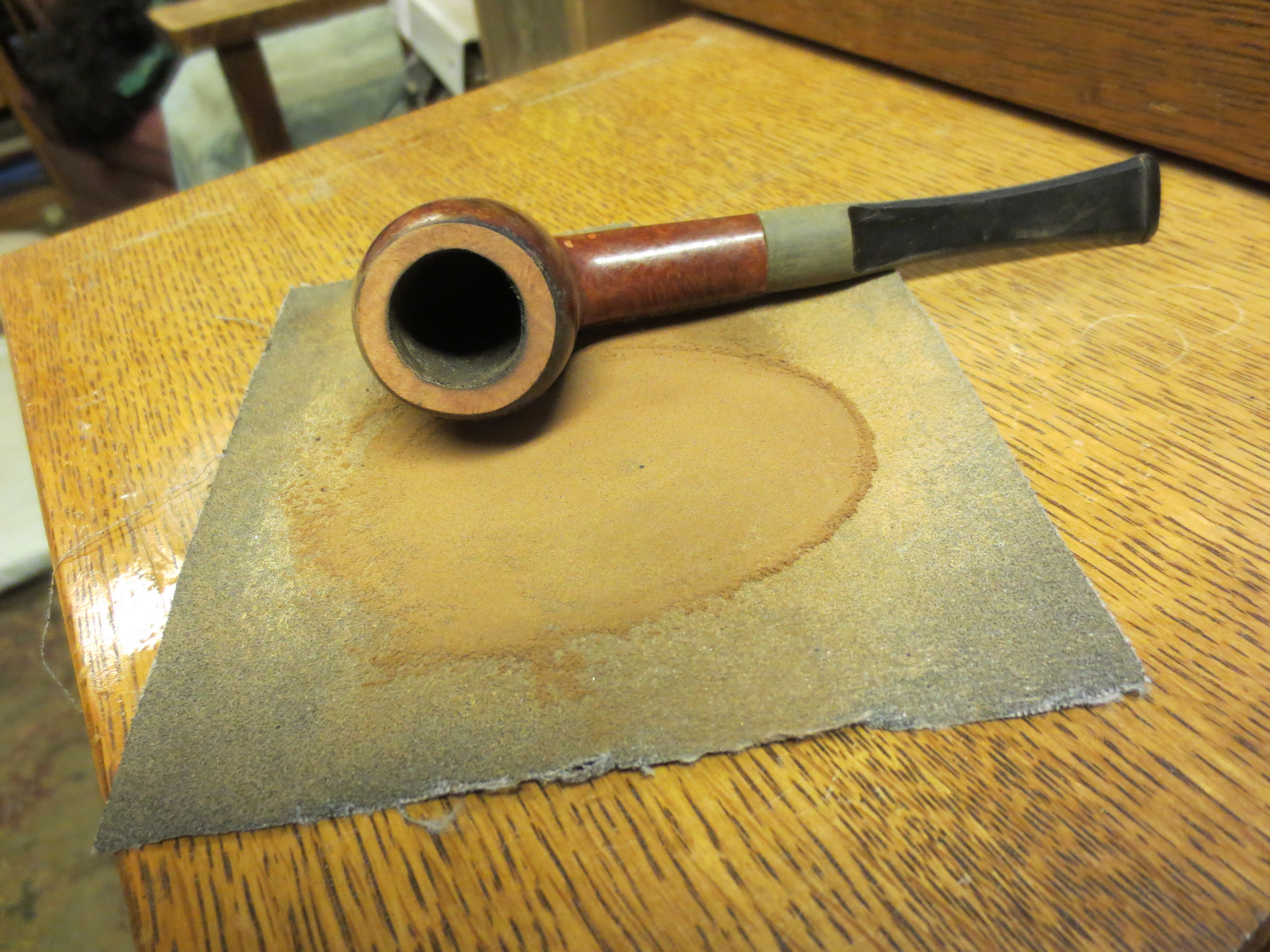
Once the stem was round and even – there were no bulges or dips in the line of the stem – I moved to the bowl. I decided to top it to get rid of the gouged out spot and to clean up the tars and burn to the rim. I set up my sandpaper (medium grit emery paper in this case to start with) on my flat board and began to twist the bowl against the paper in a clockwise direction. The next seven photos show the progress of the topping. I clean off the sandpaper regularly throughout the sanding and collect it in the wooden box that is pictured in these photos. It is this briar dust that I use for replacing the putty fills in the pipes that I work on. The final photo in the set shows a sanding sponge (medium grit) that I use to finish topping the bowl and to remove the scratches left by the emery cloth.

ImageImageImageImageImageImageImage

After topping the bowl I wiped the outside of the bowl down with acetone on a cotton pad. I wanted to break up the crackled finish that is visible above and also remove the darkening and grime on the top edges of the bowl. The next five photos show the progress in removing the finish on the pipe. Once it is gone you can clearly see the fills and also understand why I have chosen to rusticate this pipe.

ImageImageImageIMG_0259IMG_0260

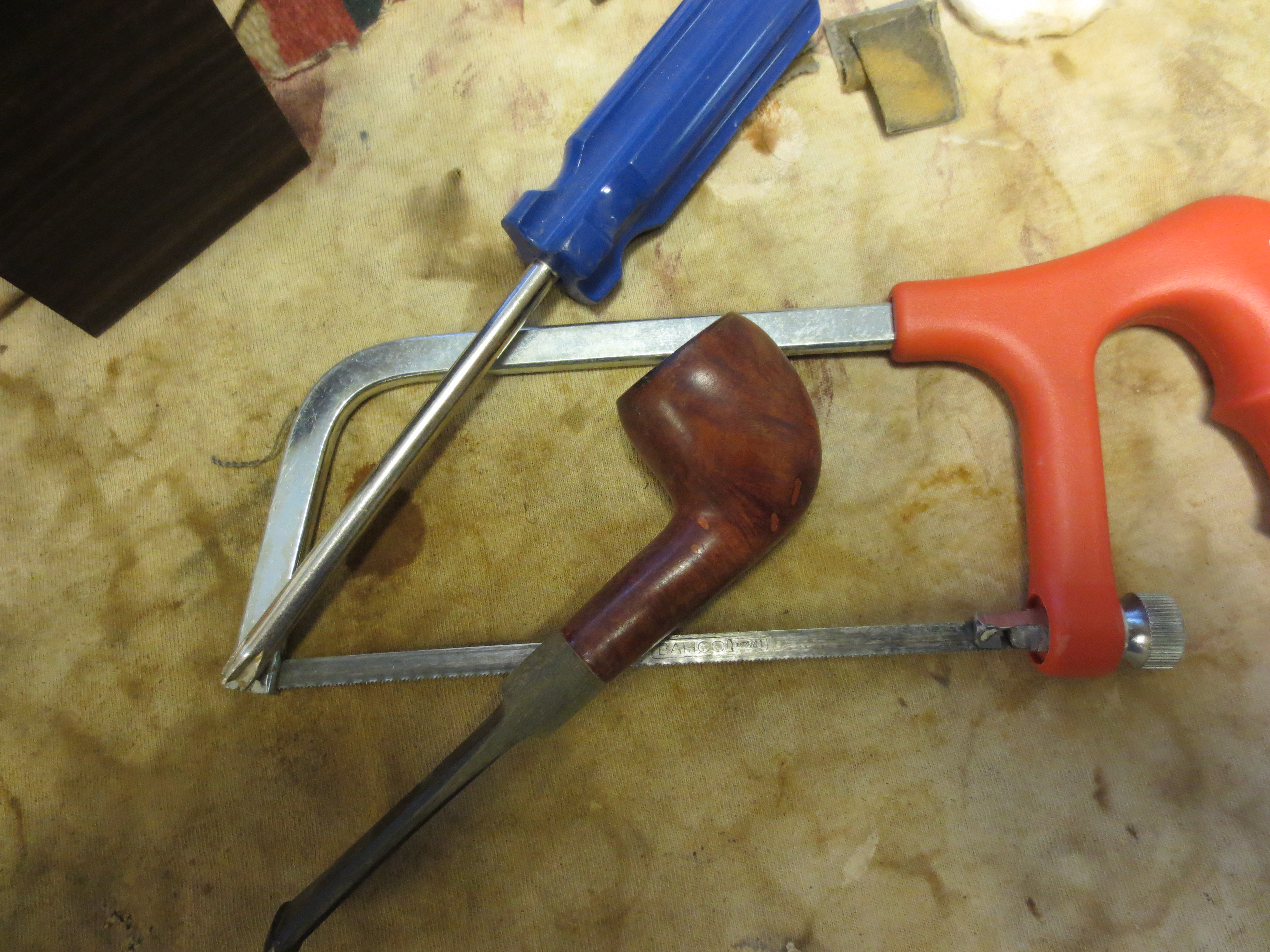
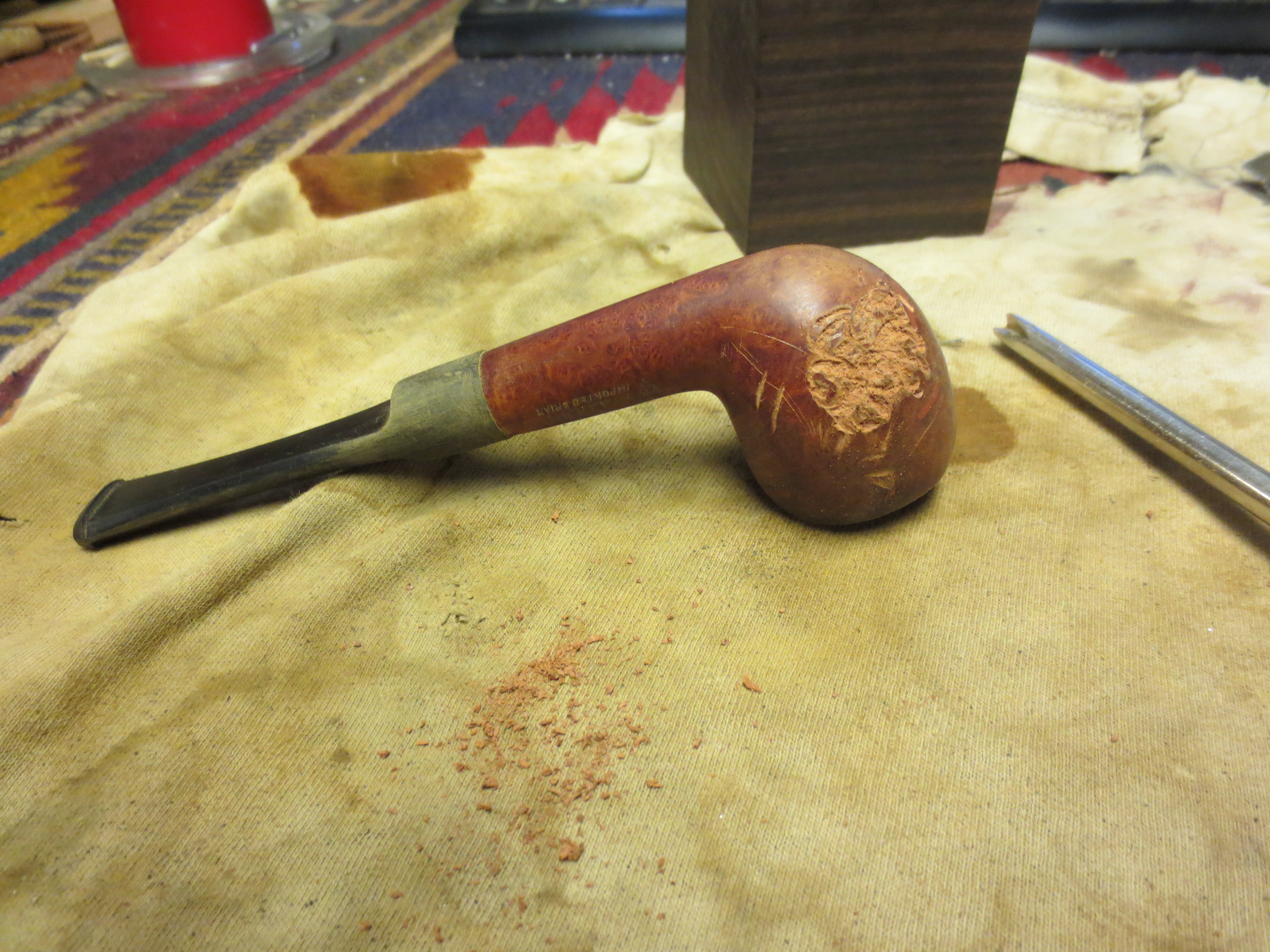
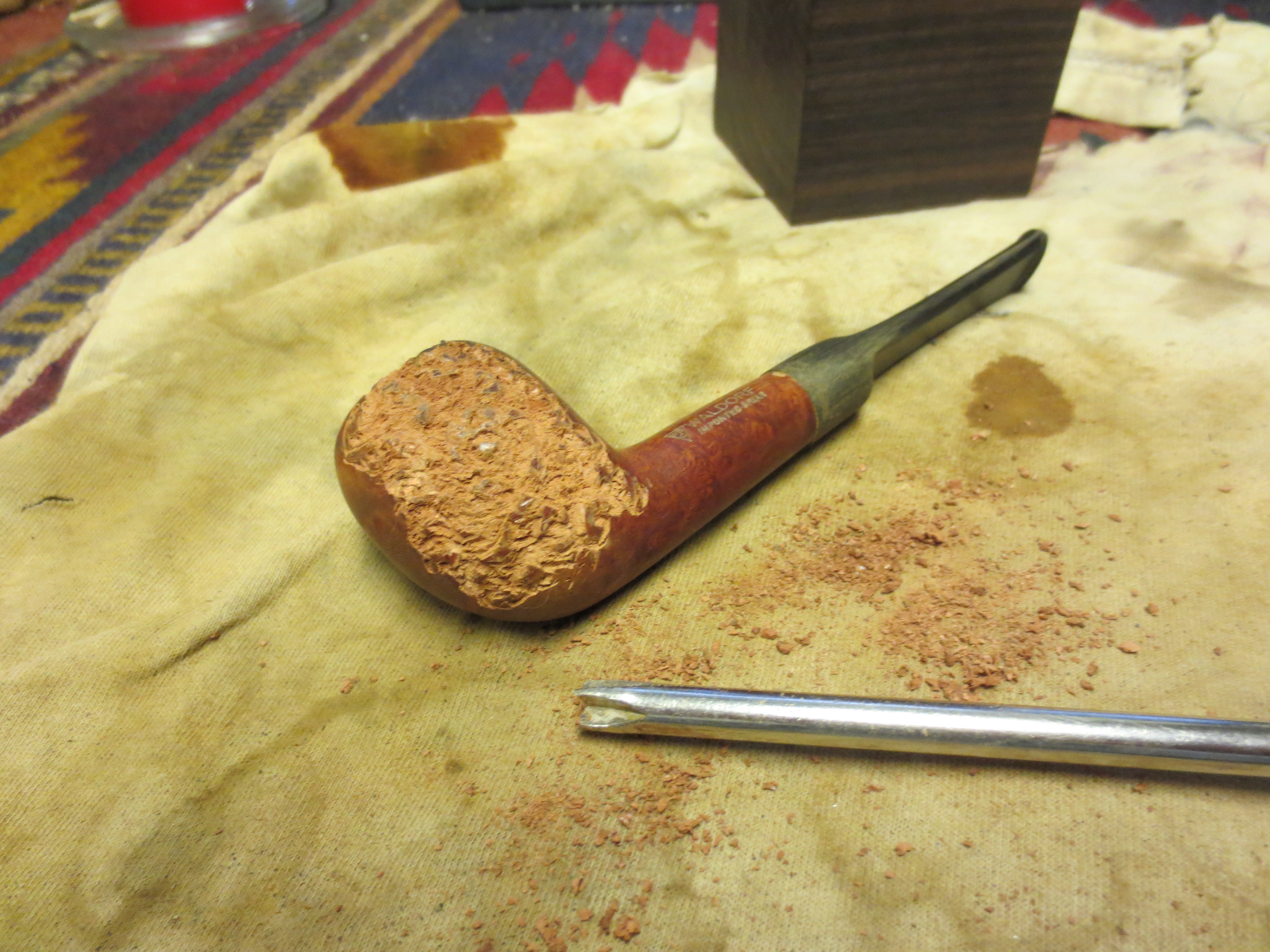
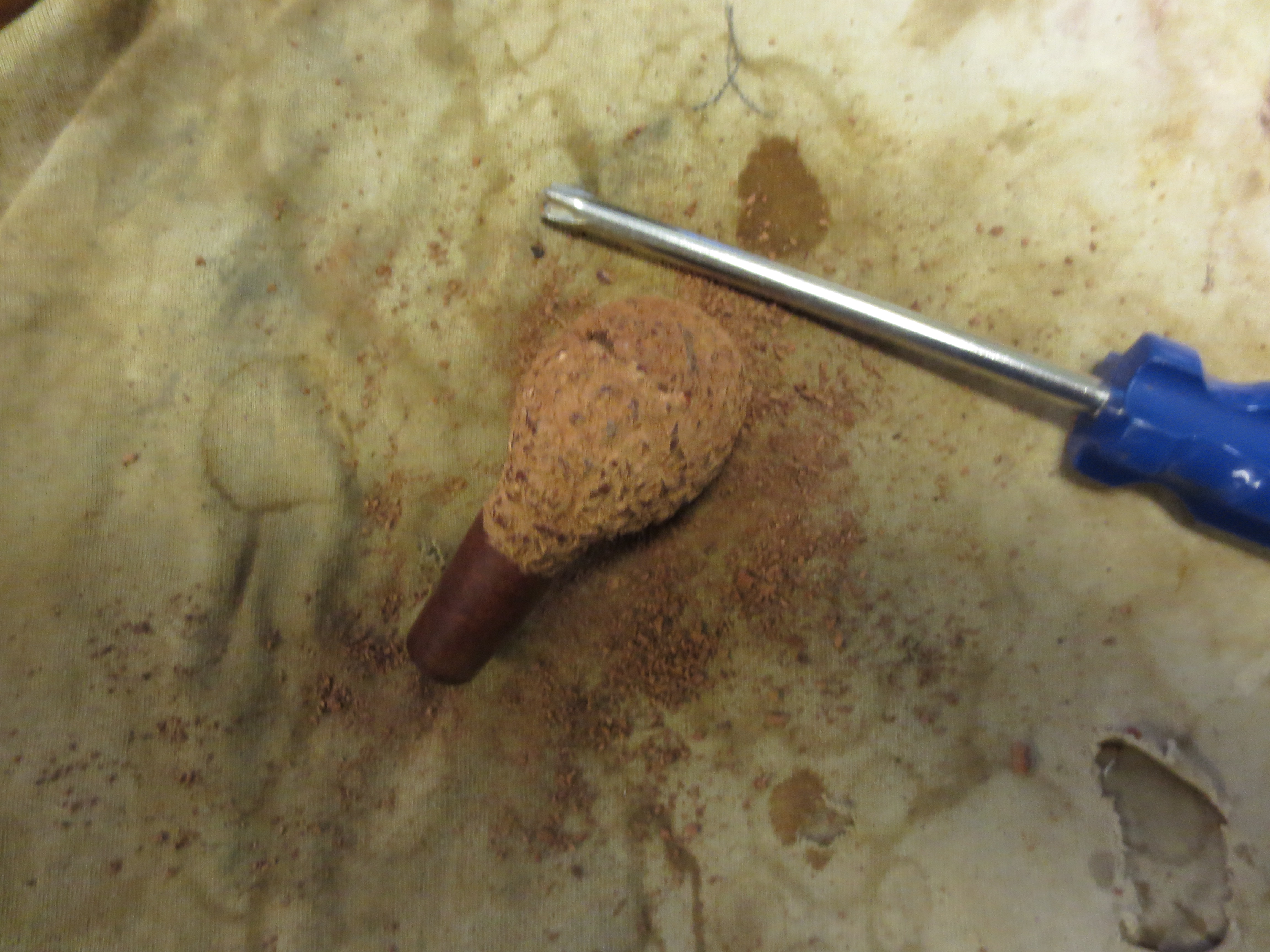
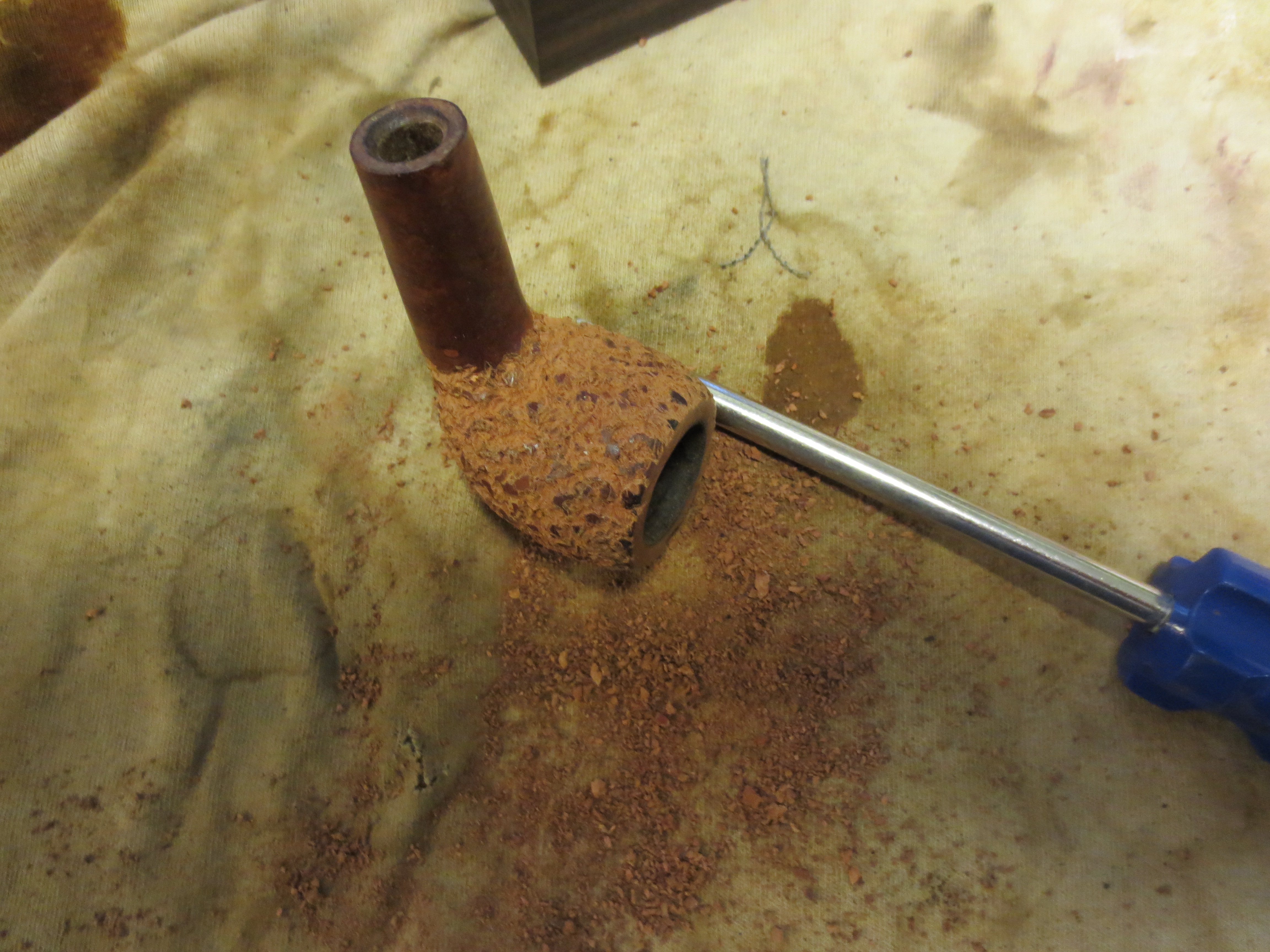
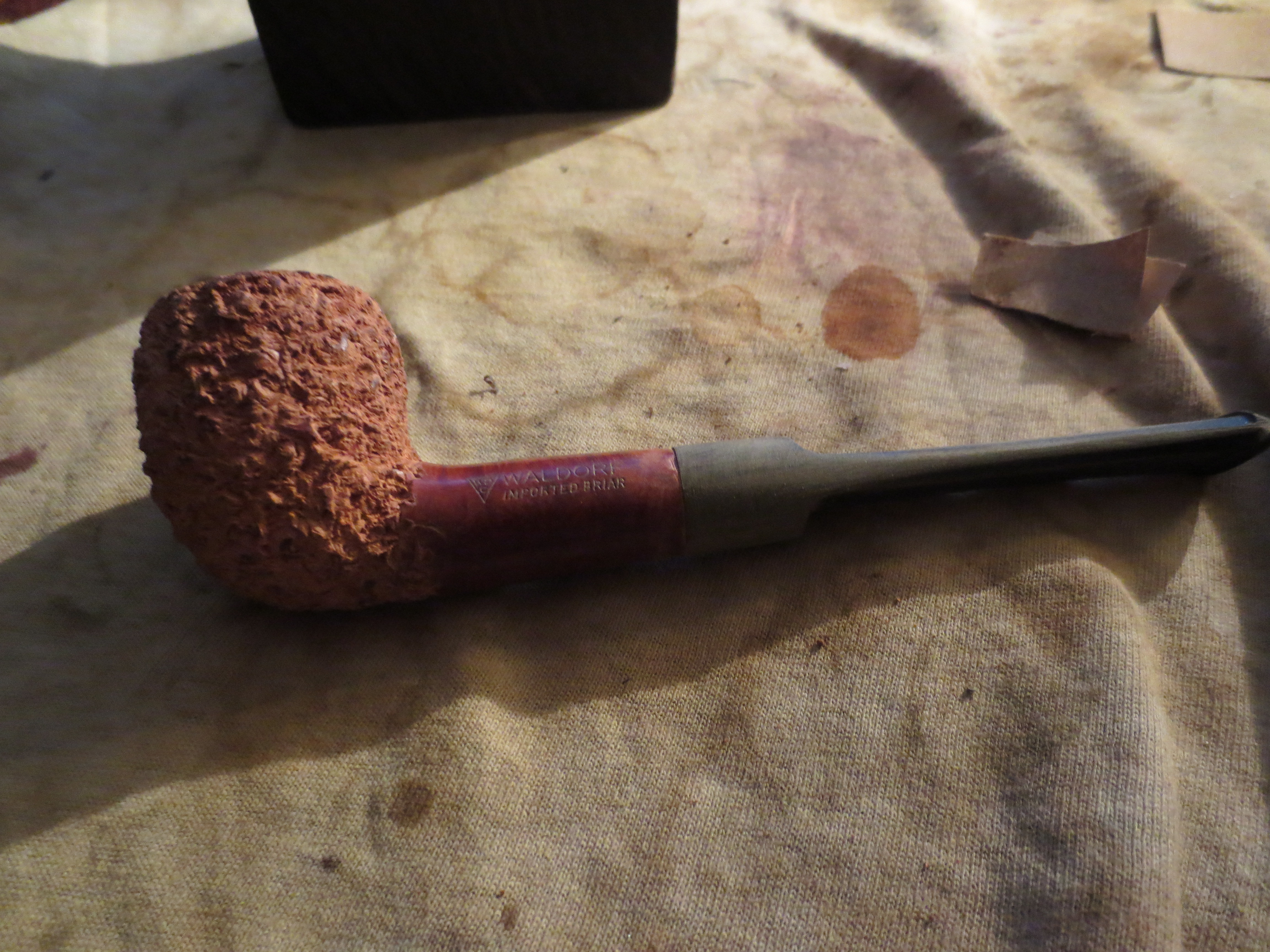
With the finish removed (maybe unnecessary for some, but I wanted a clean surface to rusticate) I brought out the tools that I use for rusticating a pipe. I will often use a small hack saw or coping saw to scar the surface of the bowl before using the modified Philips screwdriver that is my main rusticator. The first picture below shows the pipe and the tools ready to use. I used the saw for a few strokes and decided to skip that step and go with the screwdriver alone. The eleven photos following show the process and progress of the rustication. I generally work on one side at a time. I push the rim against the table top and rusticate the side from the rim edge to the bottom of the bowl. I work my way around the pipe, from the side to the back, to the opposite side to the front of the bowl. On this pipe I decided to leave the shank and the rim smooth as they had no fills and I liked the look of the partial rustication.

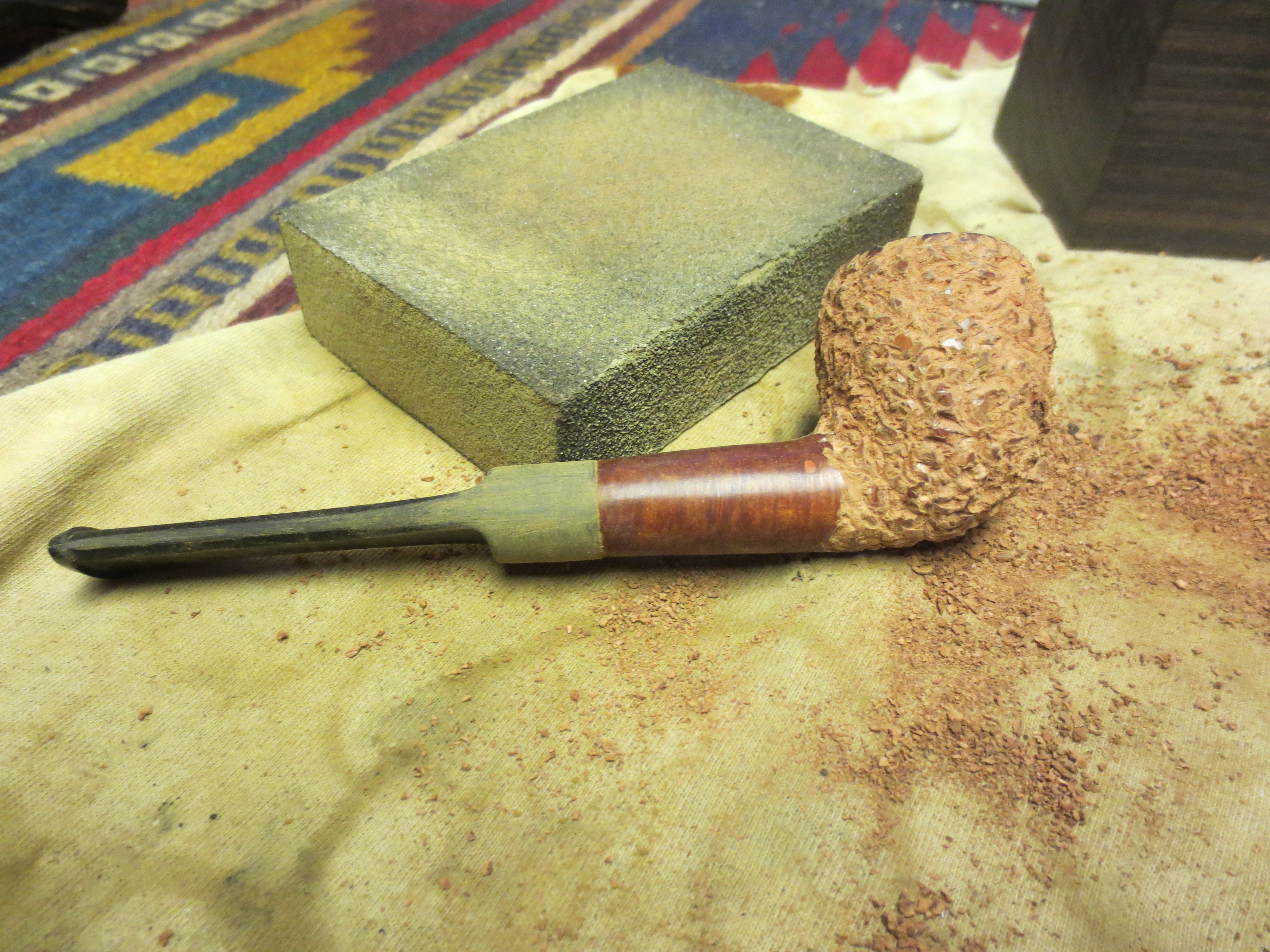
IMG_0261 IMG_0262 IMG_0263 IMG_0264 IMG_0265 IMG_0266 IMG_0267 IMG_0268 IMG_0269 IMG_0270 IMG_0271Once the rustication was done the first time I went over it a second time with the rusticator and removed more briar and made the cuts deeper. The next series of five photos show the finished rustication. At this point I was ready to work on the shank stem junction and smooth it out.

IMG_0272 IMG_0273 IMG_0274 IMG_0275 IMG_0276

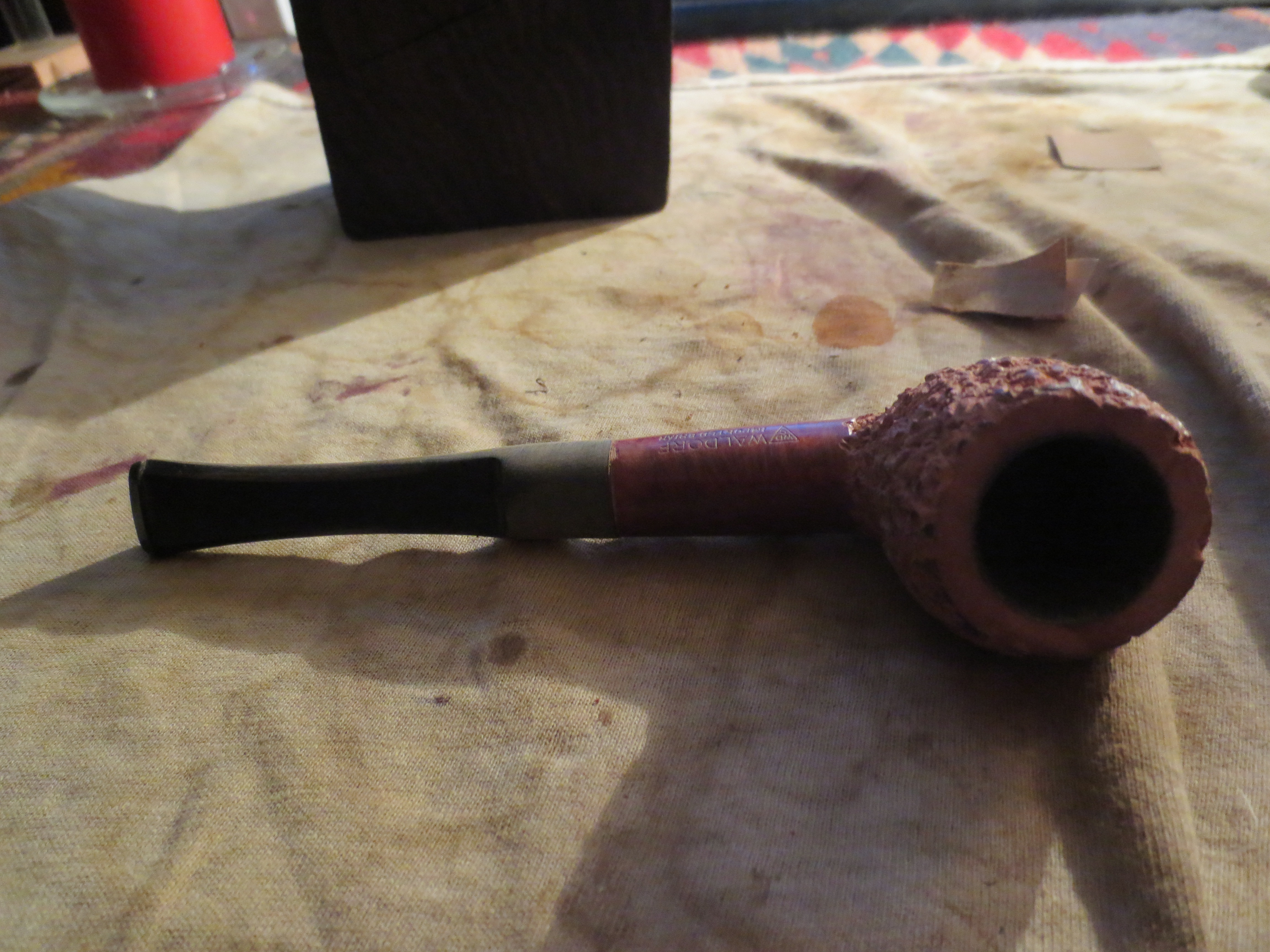
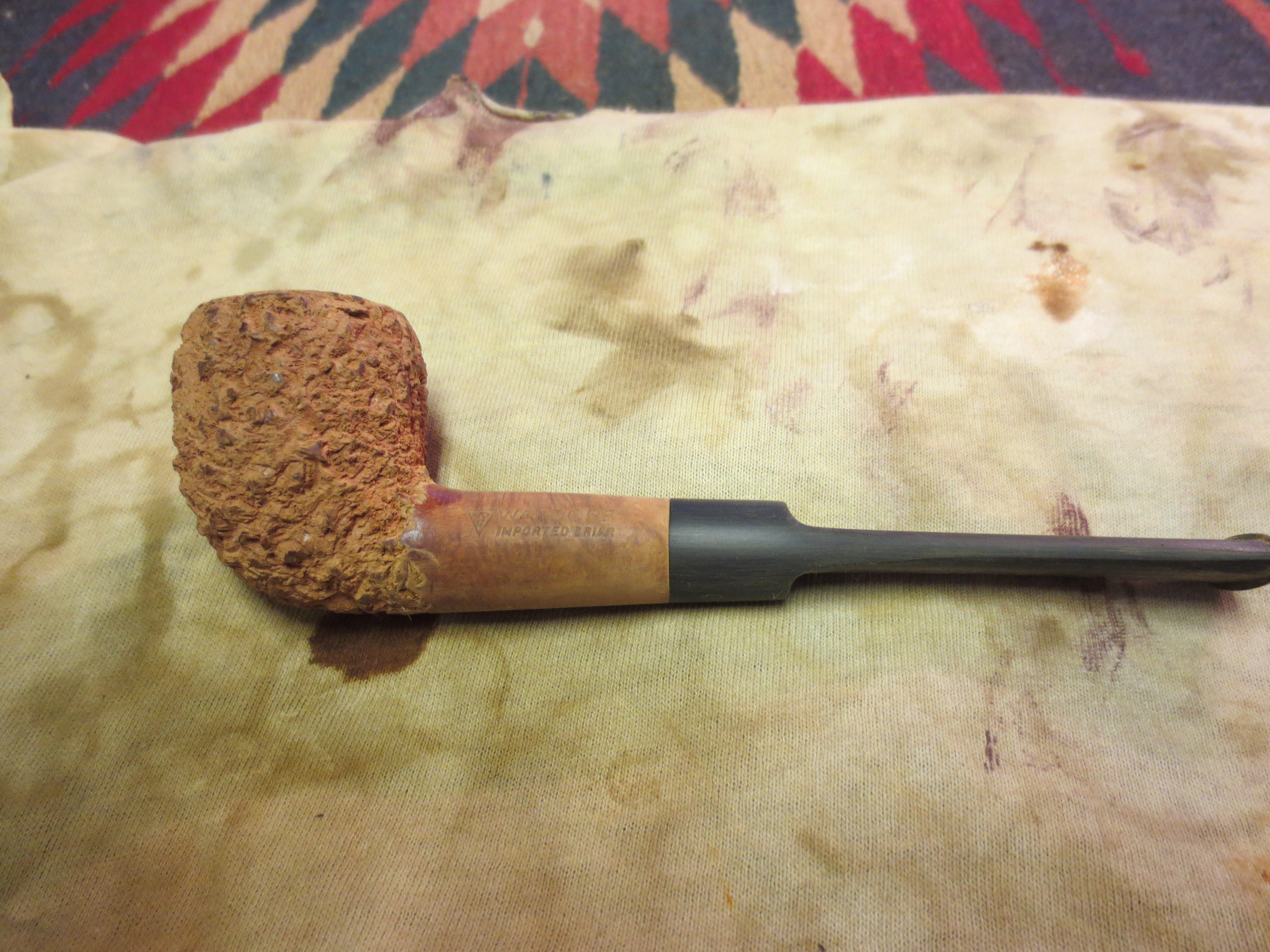
I sanded the rim, the shank and the stem with 240 grit sandpaper to remove the remaining finish on the bowl and to begin to even out the transition between the shank and the stem. I find it is easier when I am reworking a whole pipe to treat it as if it is a new pipe that I am working on fitting a stem. That way I can sand the entirety as a unit instead of in parts. You have to be careful during this process as the hardness of the briar and the hardness of the vulcanite are different and you can easily remove too much from the shank. The next four photos show the clean and unfinished pipe. The briar is clean and sanded. I used the 240 and 320 grit sandpaper and a fine grit sanding sponge to remove the finish and the scratches. I wiped the bowl and shank down with acetone dampened cotton pad to clean off the dust and ready the pipe for a new stain coat.

IMG_0277 IMG_0278 IMG_0279 IMG_0280

I decided to use a dark brown aniline stain for the finish on this pipe. I had learned from experience that I liked the way the dark brown settled into the crevices of the rustication and how it would be able to be washed to a lighter colour for contrast on the shank and the rim. I applied the stain with a dauber, as usual I start on the bottom of the bowl and let the stain run upward to the rim and finish with the rim. I flamed it, restained it, and flamed it again. I restain the rim several times to get good coverage and flow down the rusticated outer edges of the rim. The next five photos show the pipe after it has been stained and before I took it to the buffer.

IMG_0281 IMG_0282 IMG_0283 IMG_0284 IMG_0285

The next series of three photos show the pipe after I buffed it with Tripoli and White Diamond. I also buffed the stem to get an idea of the depth of the scratches and the work that needed to be done. The stain on the rustication came out nicely with a flat finish at this point. I like the depth that it gives the finish. The shank and the rim are a shade lighter after buffing and there is a dark edge at the bowl shank angle. The shank and the rim would need some work to even out the stain and give it a uniform contrasting colour.

IMG_0286 IMG_0287 IMG_0288

I then went to work on the stem with the micromesh sanding pads. The next nine photos show the progress in polishing the stem and the shank and rim using 1500, 1800 and 2400 grit sanding pads. I wet sanded with these grits, wetting the pad and then sanding and wiping the stem and shank down before going on to the next grit. I was able to even out the stain on the shank and the bowl rim and blend them well with the edges and also remove many of the scratches in the stem.

IMG_0289 IMG_0290 IMG_0291 IMG_0292 IMG_0293 IMG_0294 IMG_0295 IMG_0296 IMG_0297

I went on to dry sand the stem with the rest of the micromesh sanding pads from 3200-12,000 grit. Each successive pad gave the stem more of a polish. When I had finished that I applied a coat of Maguiar’s Scratch X2.0 with my finger and scrubbed it off with a cotton pad and polished it to the shine that is shown below. Before finishing I sanded it a final time with the 12,000 grit micromesh pad and then gave it a coat of Obsidian Oil. The next four photos show the pipe just before I took it to the buffer for a final buff.

IMG_0298 IMG_0299 IMG_0300 IMG_0301

After buffing the pipe I was pleased that the original red stain came through the dark brown and gave the pipe a real contrast look. The finished pipe is pictured in the four photos below. It has a great feel in the hand and the rustication is tactile with the high spots showing dark and the valleys showing a lighter brown. The rim and the shank came out exactly how I wanted them and provide a contrast to the rustic bowl of the pipe. The stem is smooth and shiny and the pipe is ready for its new life.

IMG_0306 IMG_0307 IMG_0308 IMG_0309

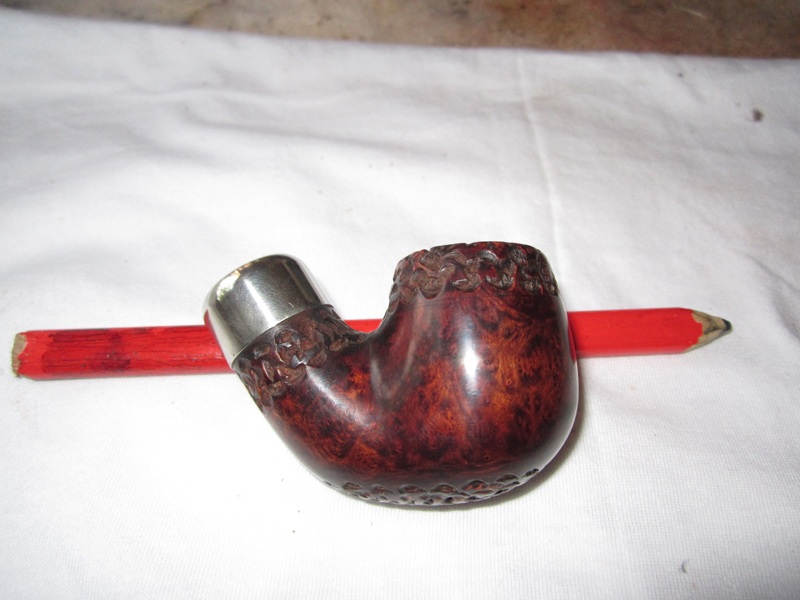
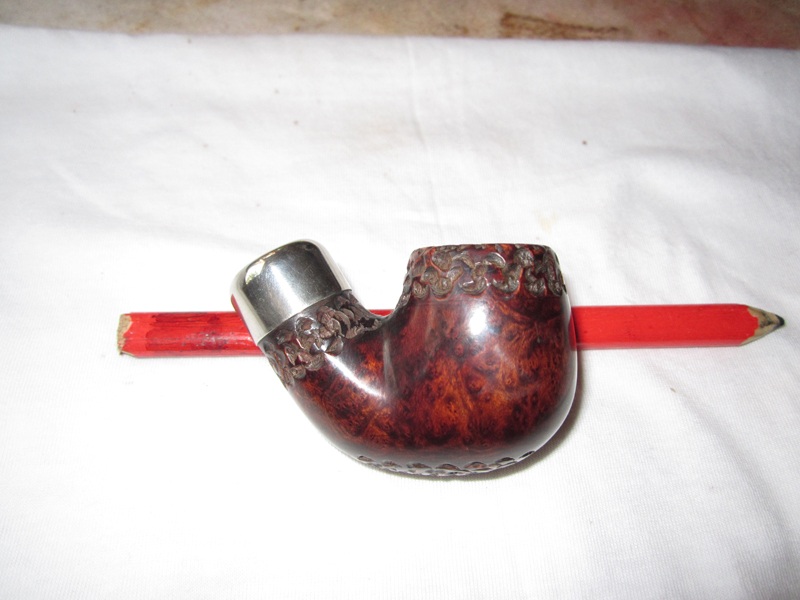
Peterson Rustication pictorial – Kirk Fitzgerald


When Kirk Fitzgerald posted this step by step tutorial on Smokers Forums I thought it would be great to have it on the blog. I asked Kirk if I could post it on the blog and he granted his permission. So without further introduction here is his rustication process. Kirk is the founder of the Pipe Smokers Cubby Web Forum http://www.pipesmokerscubby.com/cubby.php

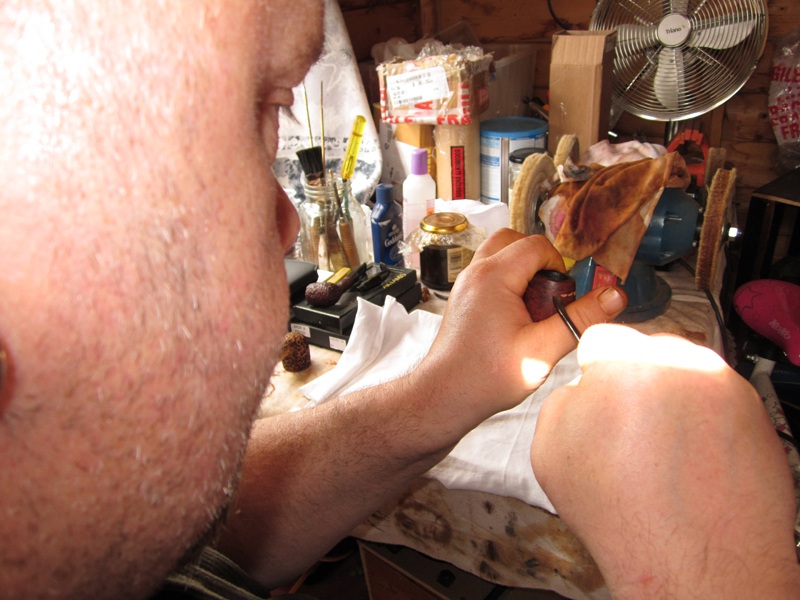
I was asked if I would do a step-by-step rundown on my own rustication process, so I have rusticated my own Peterson bent bowl for this purpose.

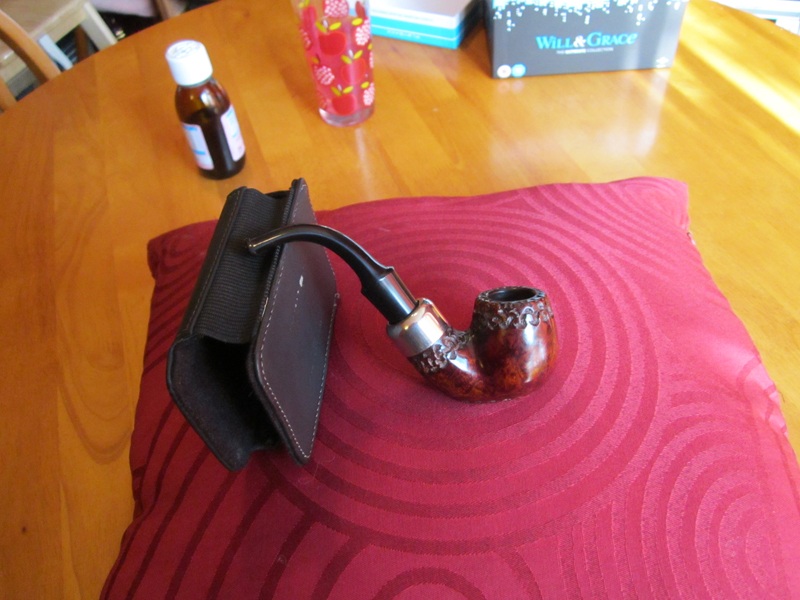
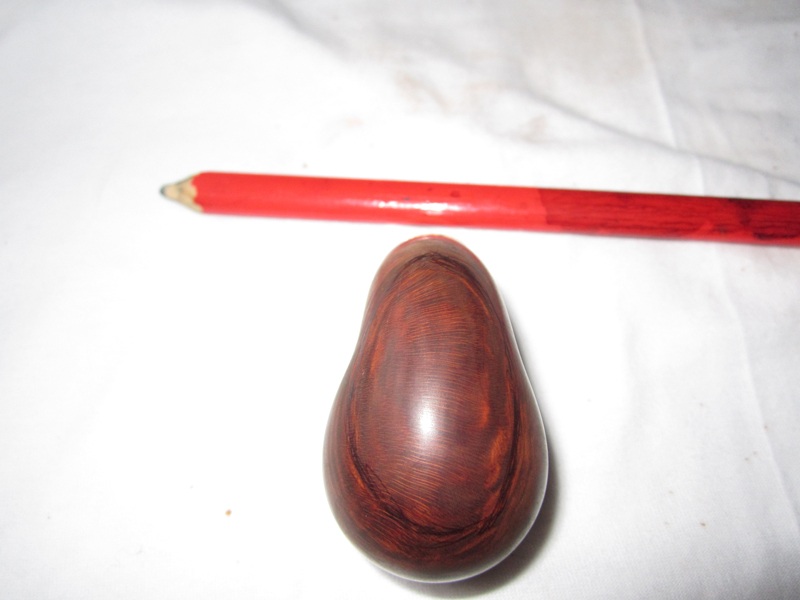
So before we get going, let’s see what the process will do to the bowl of the pipe

Image

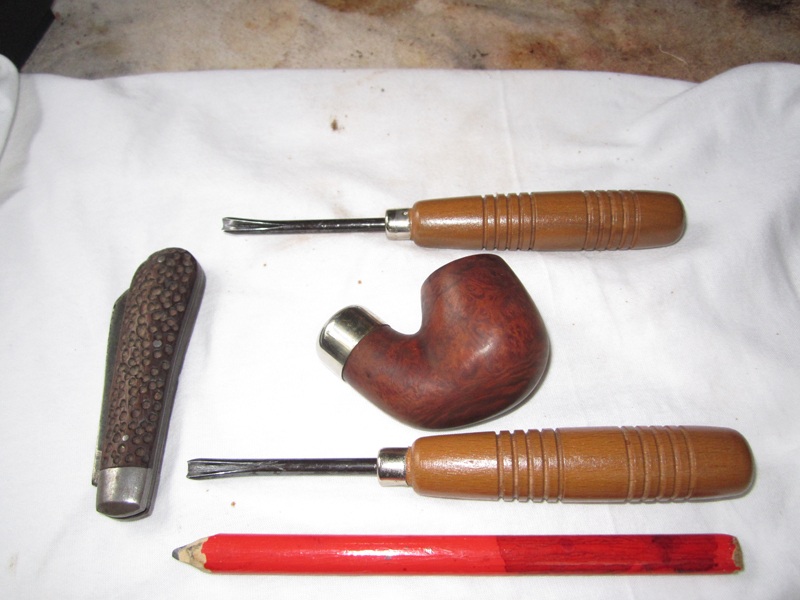
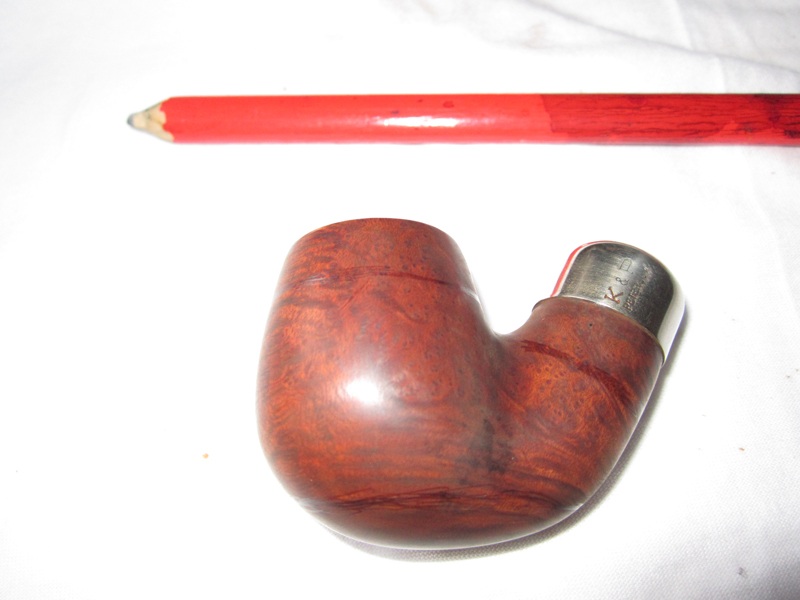
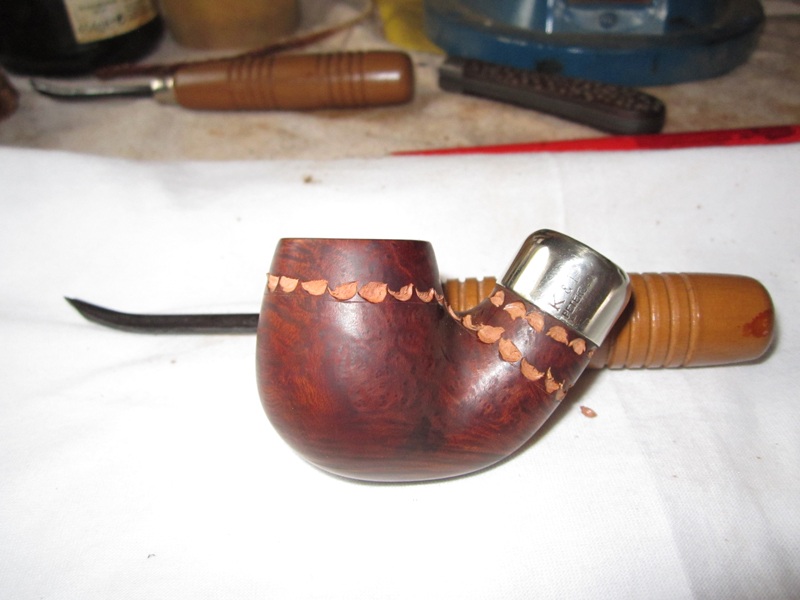
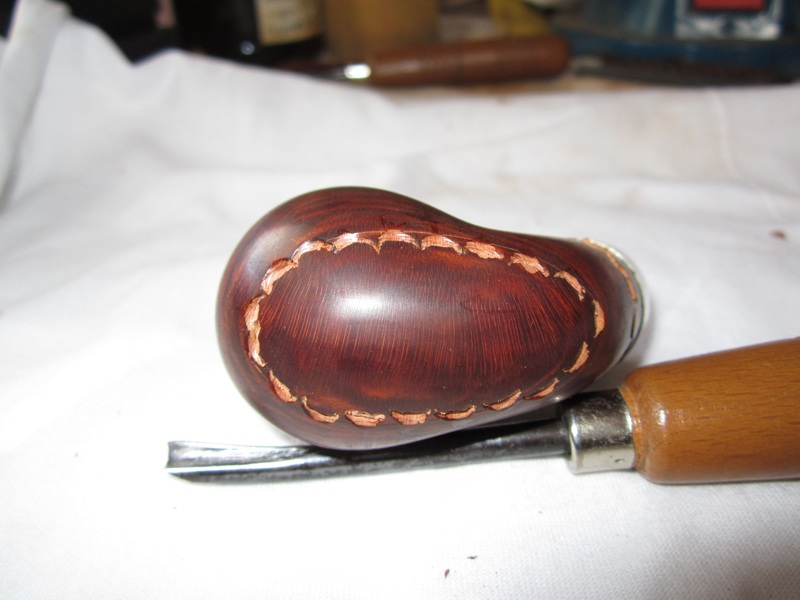
The pipe’s bowl, the two chisels I use, my crappy pencil and the knife I use to perma-line the boundaries for the areas to be rusticated

Image

Here we mark the rustication boundaries in pencil

ImageImageImage

Here we perma-mark the boundaries using a sharp knife to scratch out the linesImageImageImage

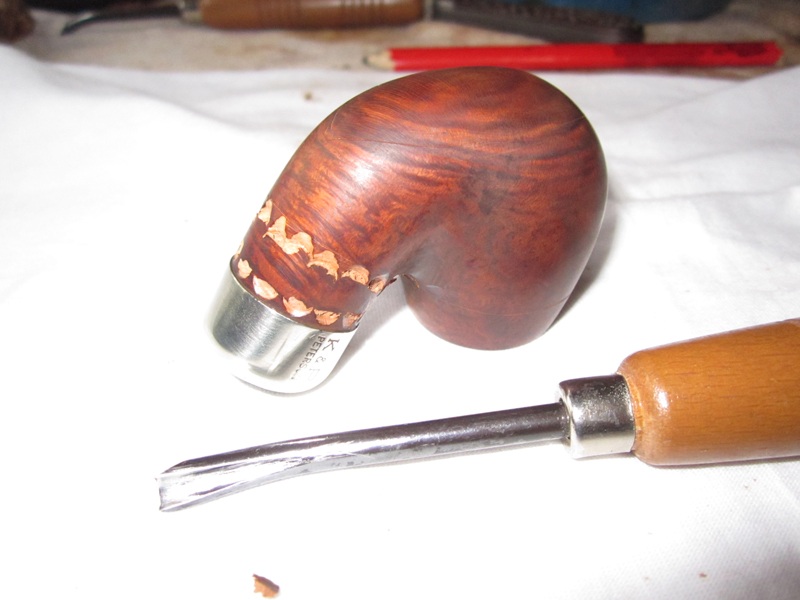
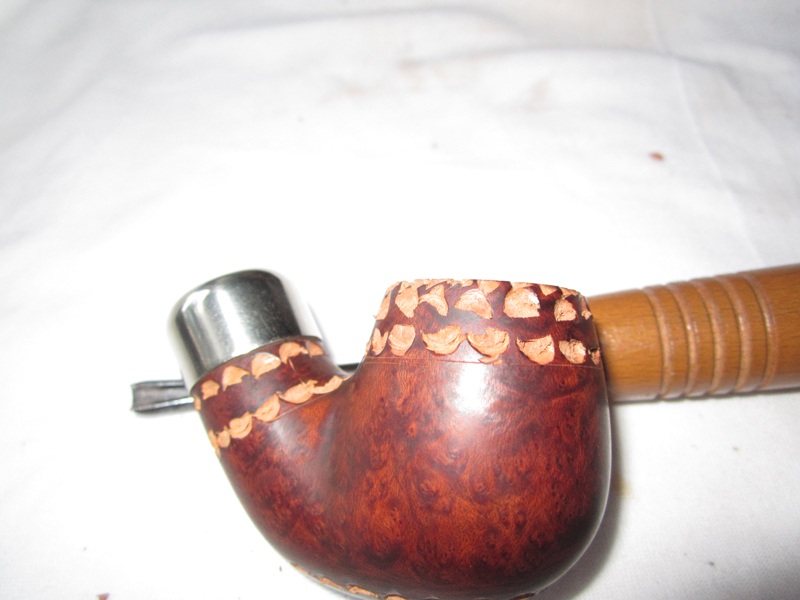
Notched out the shank boundary linesImage

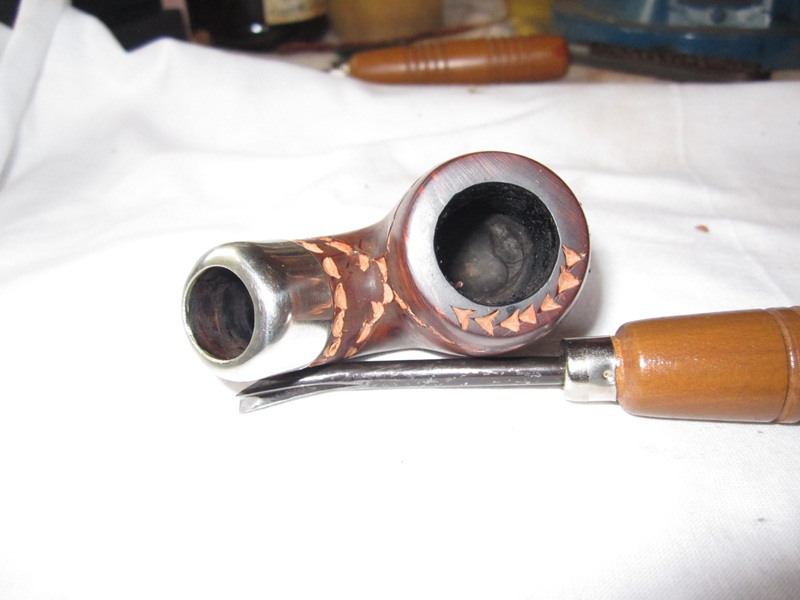
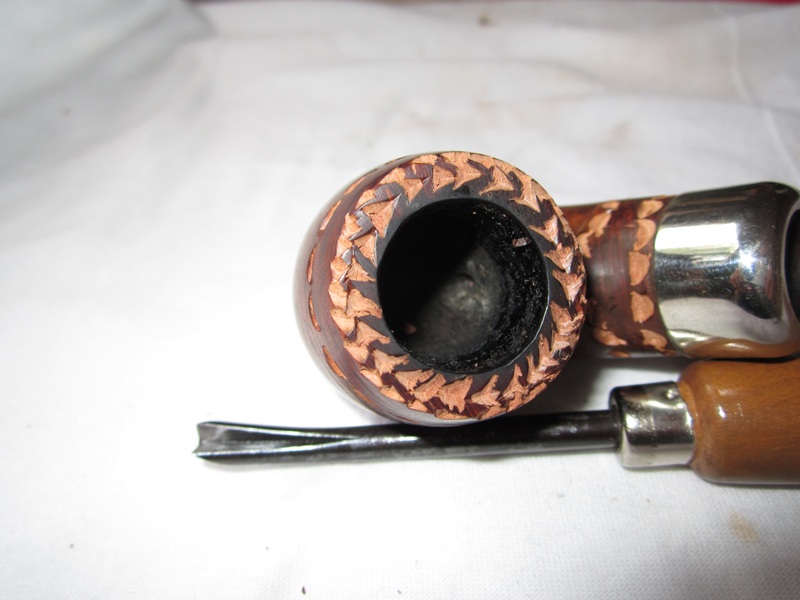
Here’s me notching the bowl rim boundariesImage

Notched the bowl rim boundaryImage

Here I have started notching the bowl topImage

Here’s the bowl top notchedImage

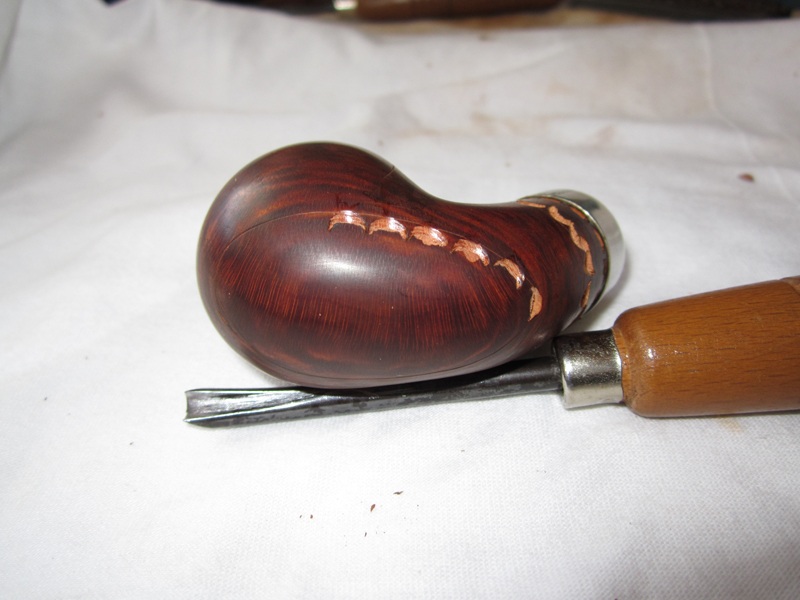
Start of the base boundary notchesImage

The base boundary notches are now doneImage

This is where we are so far, getting thereImage

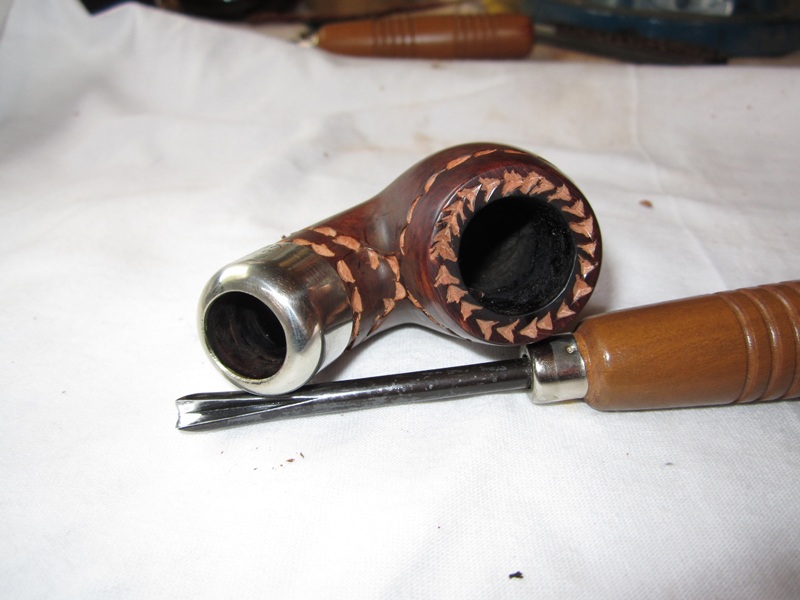
Start to notch the bowl rim edgeImage

Finished notching the bowl rim edgeImage

Here I have now notched the bowl top rimImage

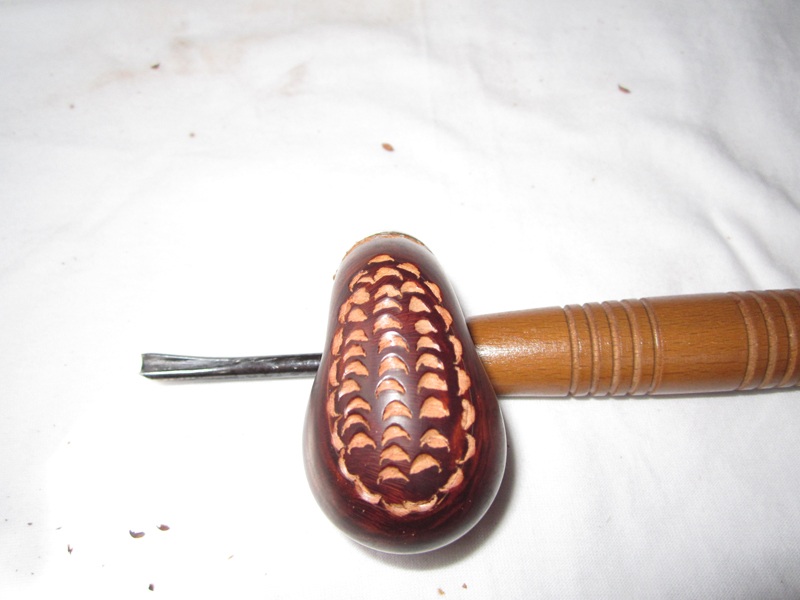
Notching the bulk of the base interiorImage

Here I have notched out the bulk of the bowl top rim interiorImageImage

Here I have notched the remainder of the base interiorImage

Here I am starting to remove the remaining surface finish with 180 wet and dryImage

Here the remaining finish is now removed; note I have made sure it looks distressedImage

Here I have now sanded the bowl smooth using 400, 600, 1200 grit wet and dry sand paper, note the effect is looking distressedImage

Here I have applied a dark brown stain, note it is a full and generous applicationImage

Here I have applied a dark red stain, again note the fullness of the coatingImage

Now I have applied the final stain, a mid-brown, coverage is not so important with this one, a quick cover would do but I have opted for a full and generous application.Image

Now I have given the bowl an alcohol rub-down using a clean cloth and Isopropyl alcohol, note I have almost wiped the stains away, but only ‘almost’Image

I have now applied 2 very generous applications of Tripoli using the buffer wheels, this stage is vital to the finish of the bowlImage

This is after I have brutalised the bowl on the buffer wheels to remove some staining to distress the bowl furtherImage

Here I have used White Diamond on the buffer wheels to remove the Tripoli much and shine the surface a little before the waxImage

Here I have applied the first coat of wax and carnaubaImage

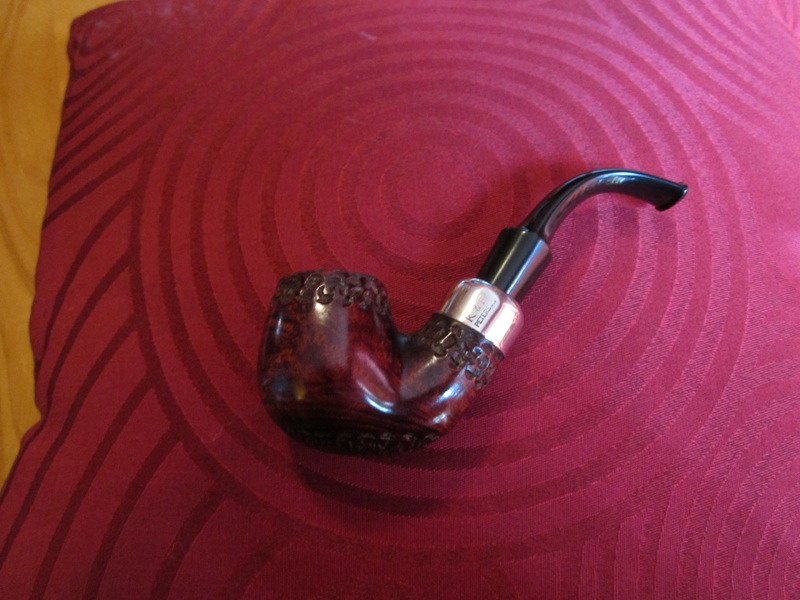
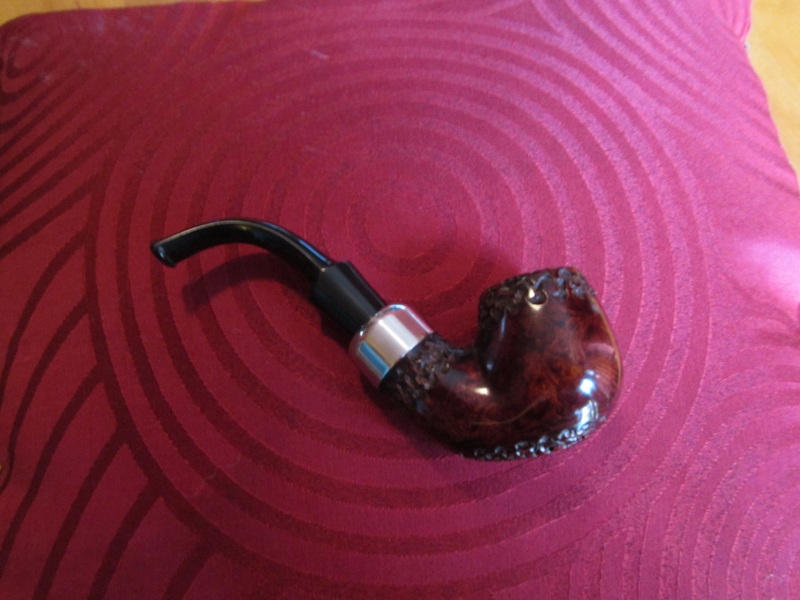
All done now, here is the final bowl re-attached to its polished stem.ImageImageImageImageImageImageImage