Tag Archives: restaining a bowl and rim

Reborn London Royal Apple Restemmed with a Saddle Stem


Blog by Steve Laug

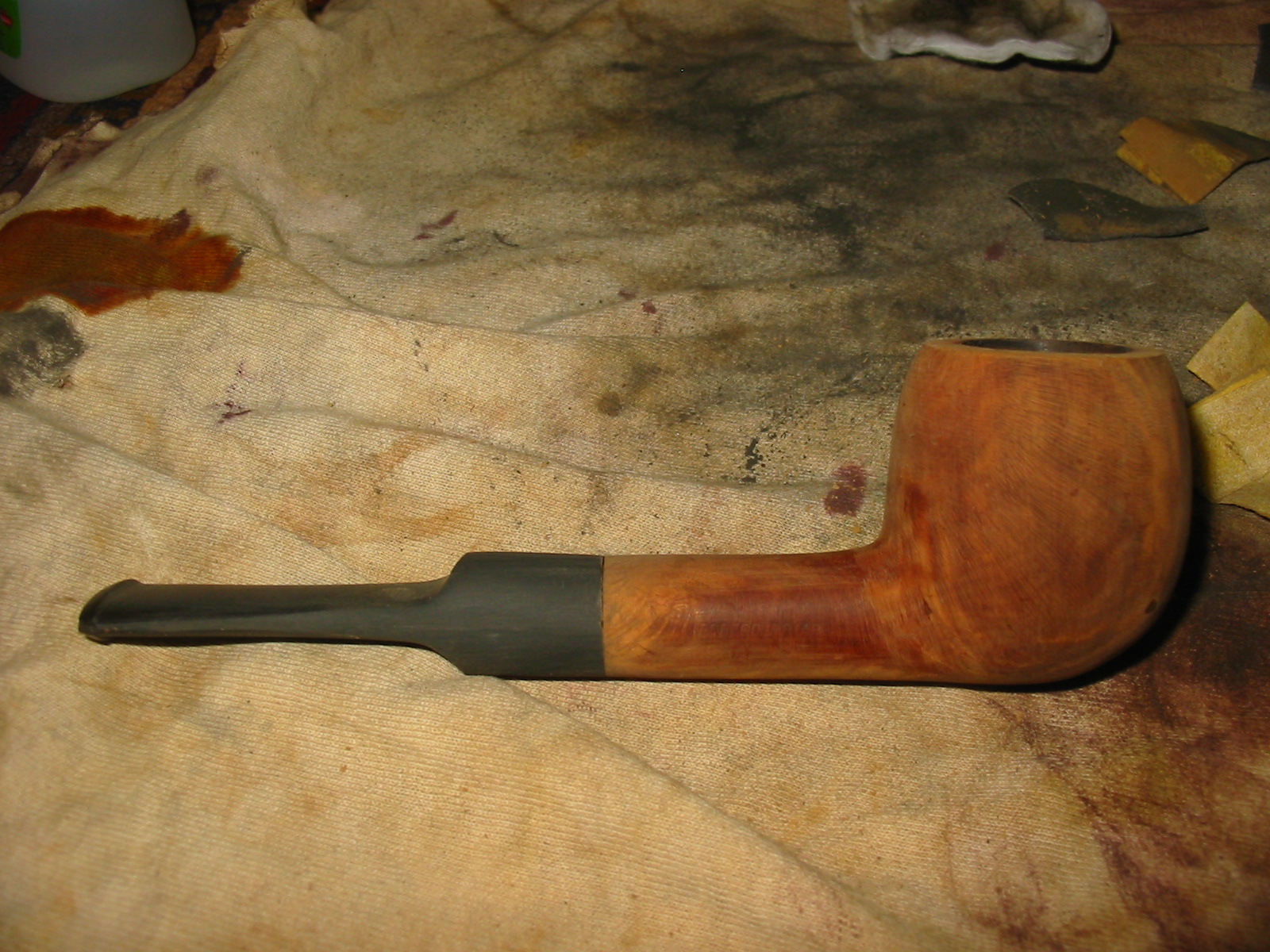
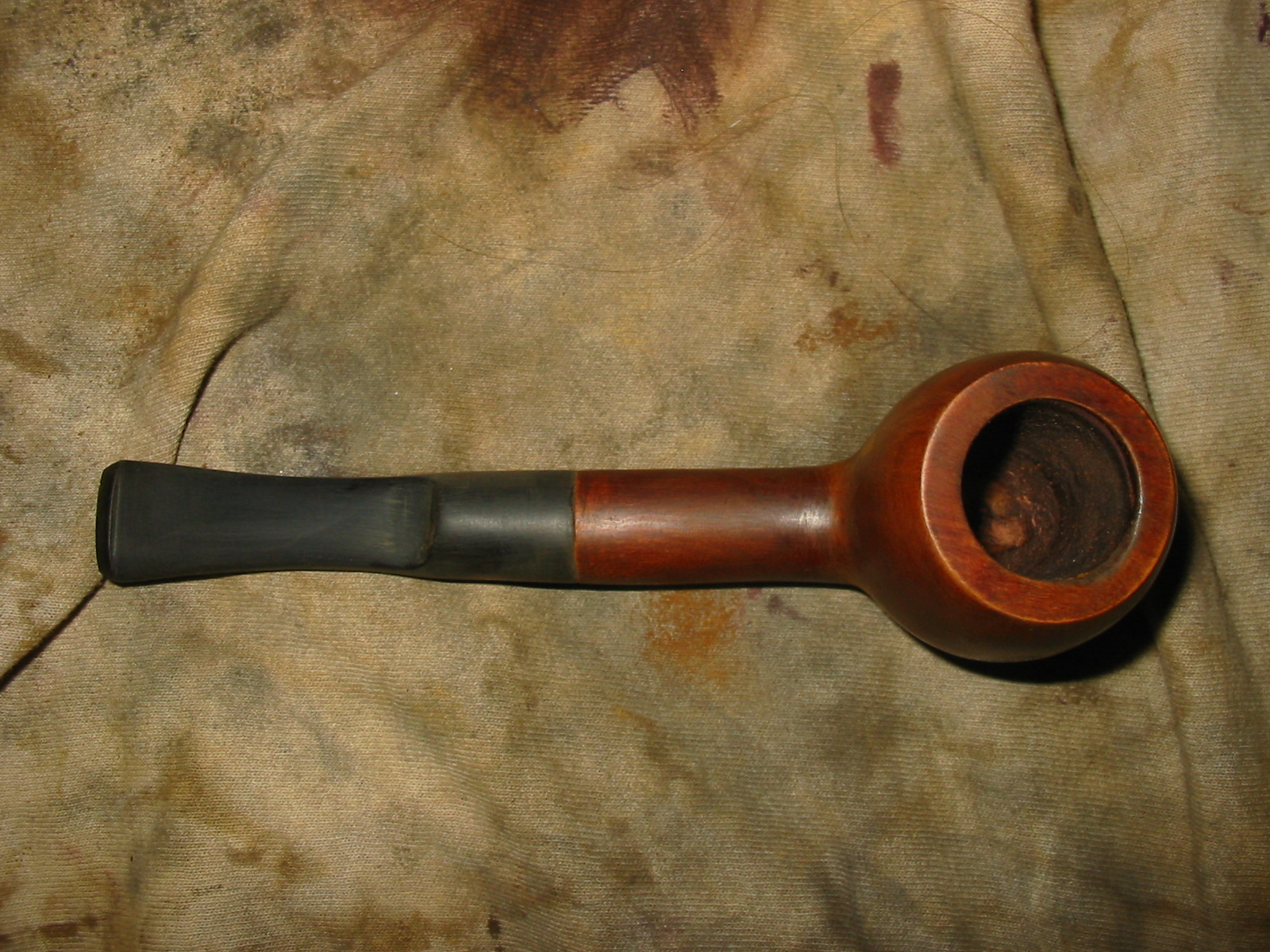
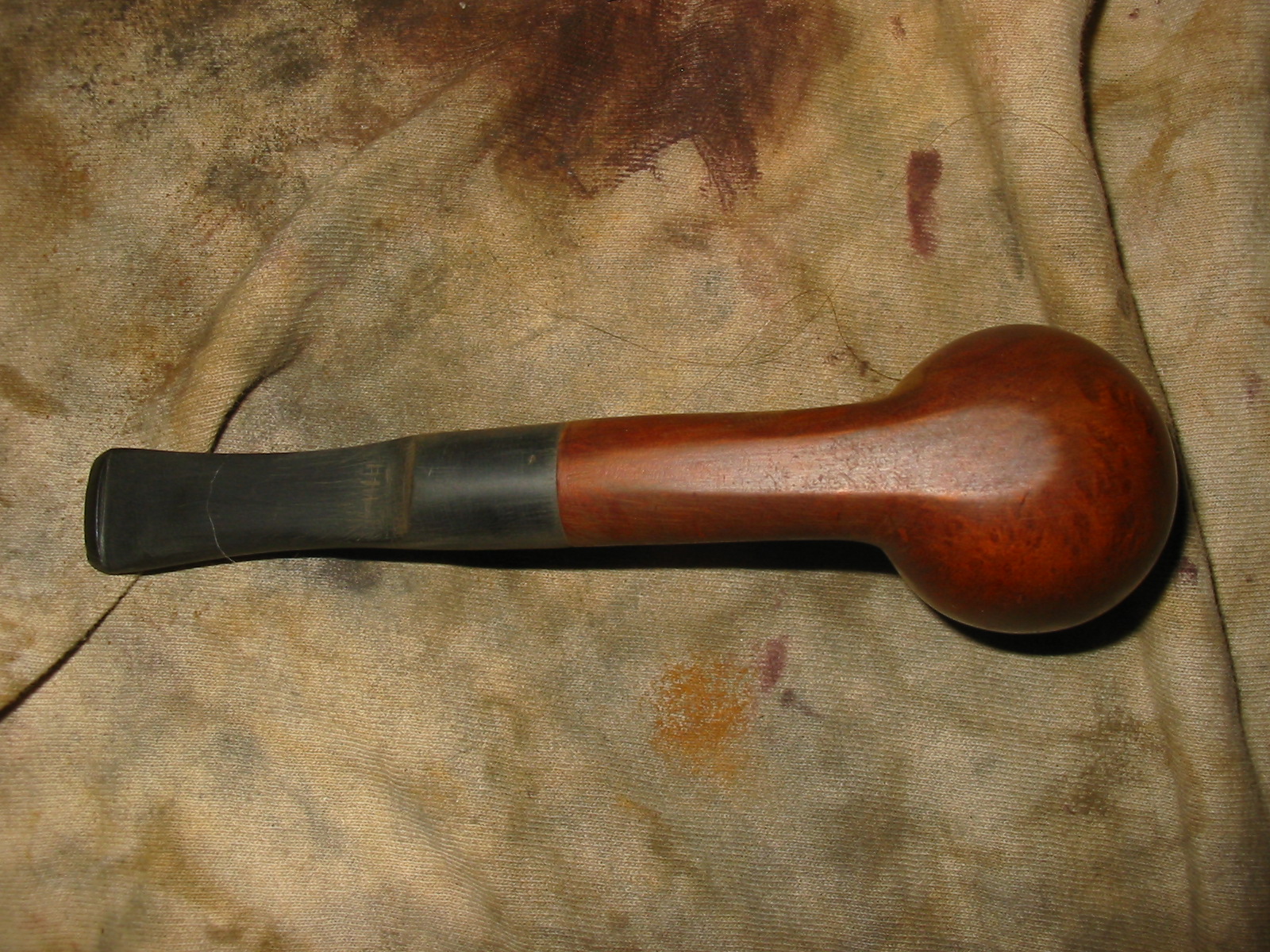
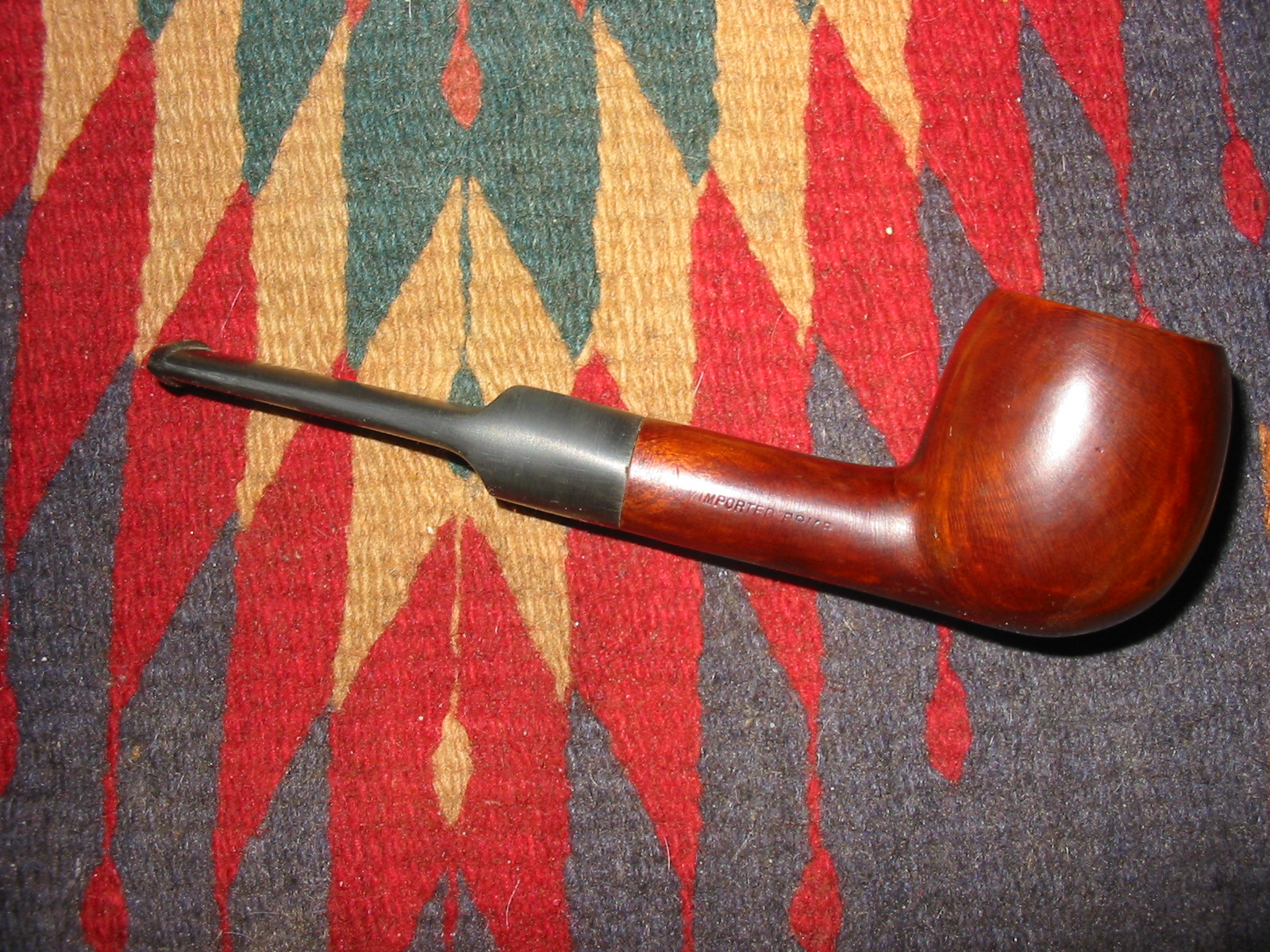
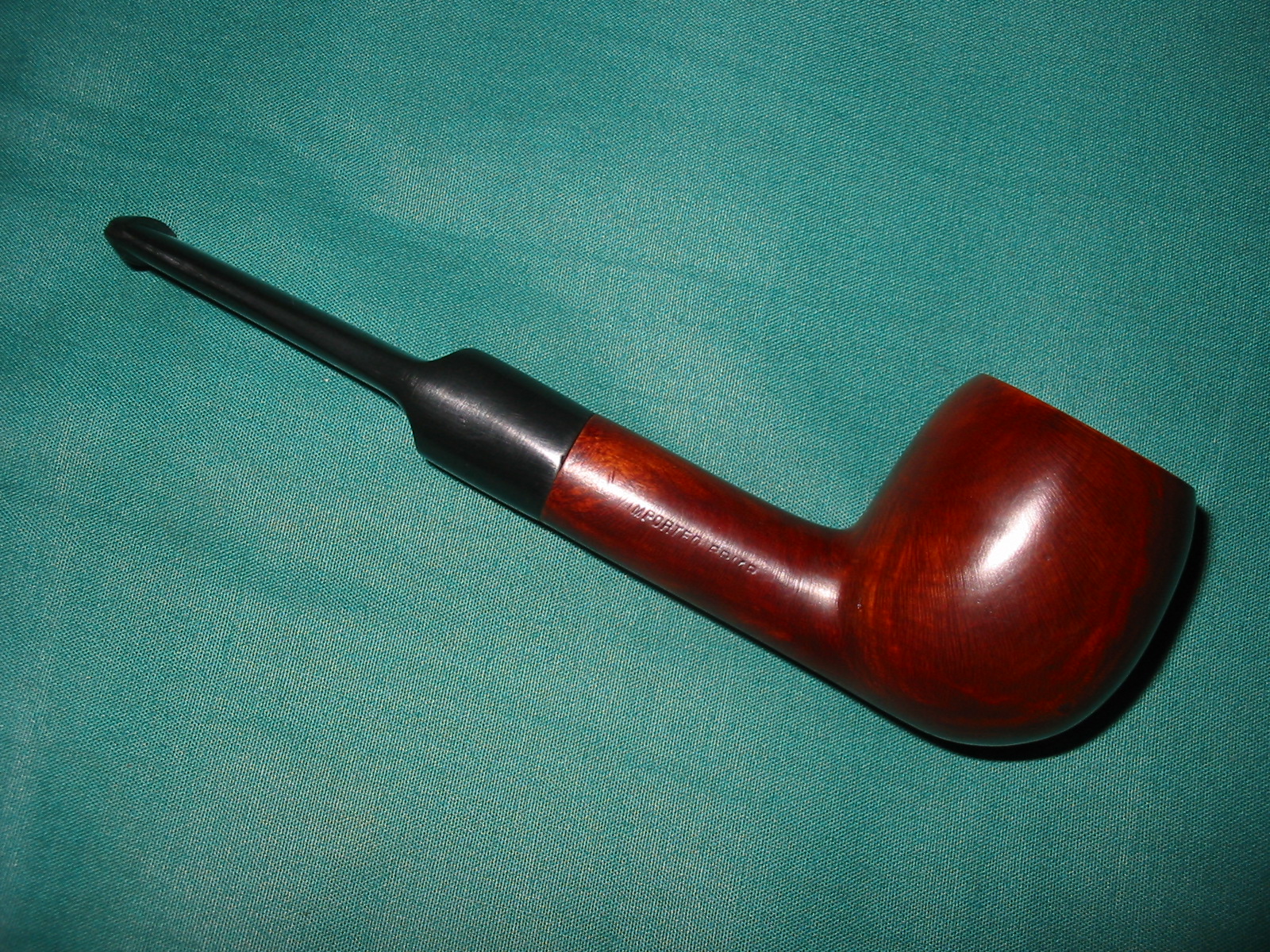
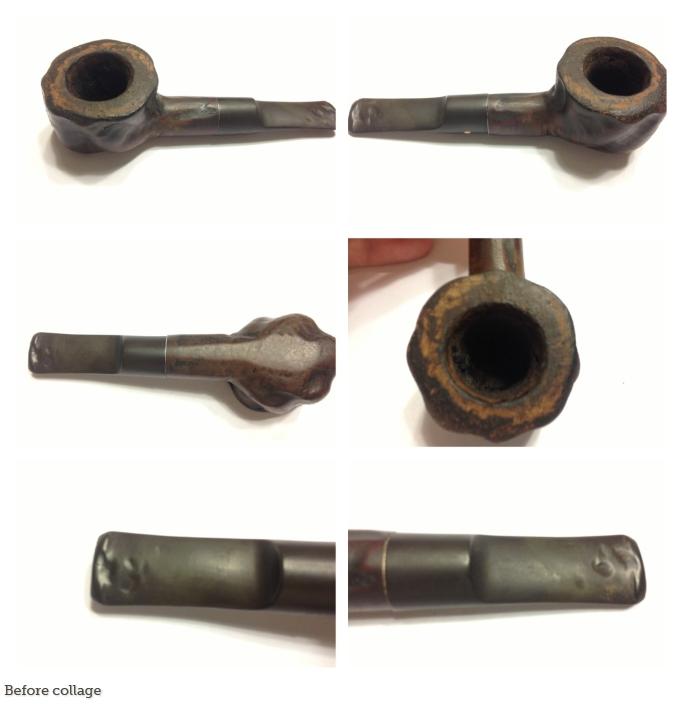
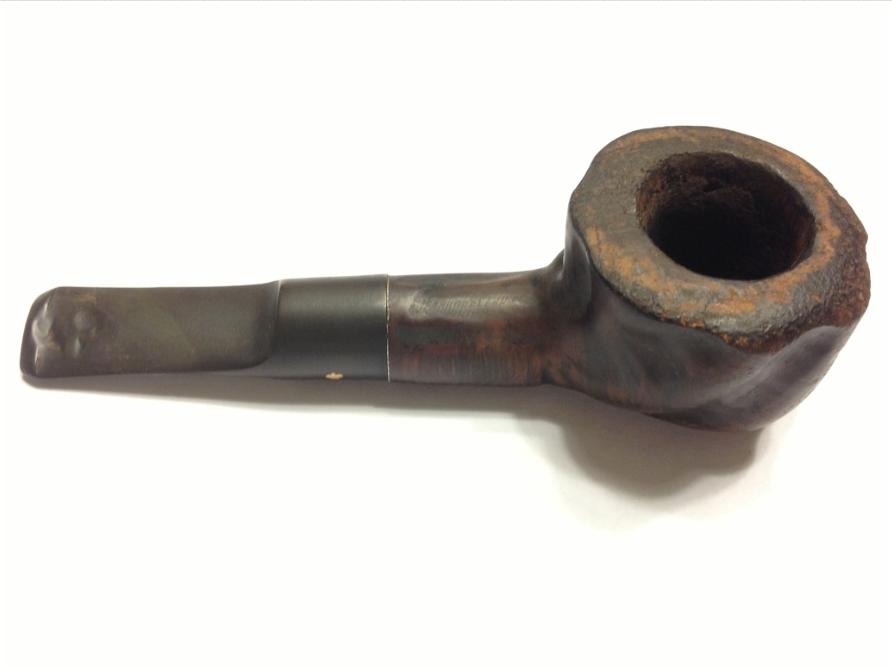
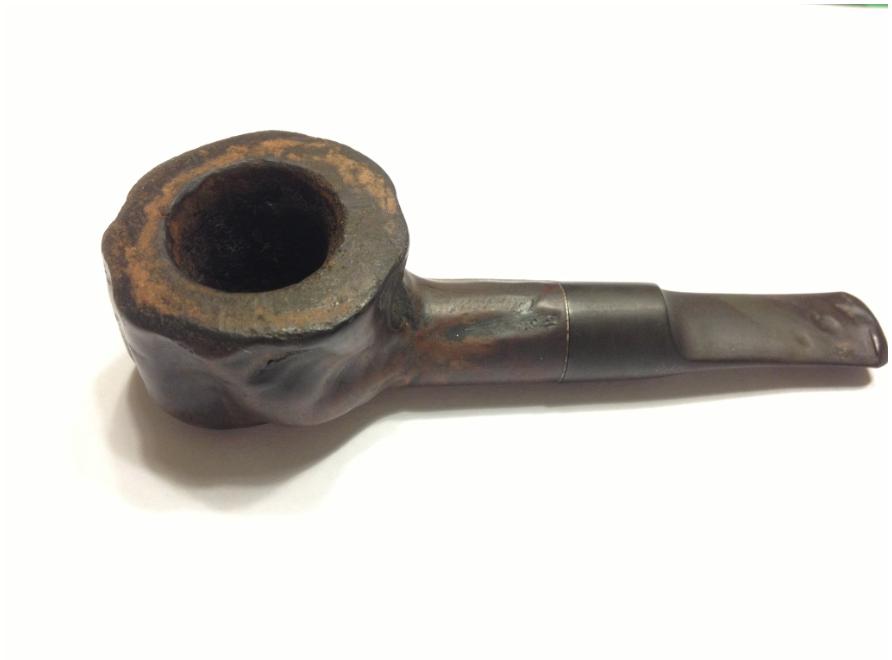
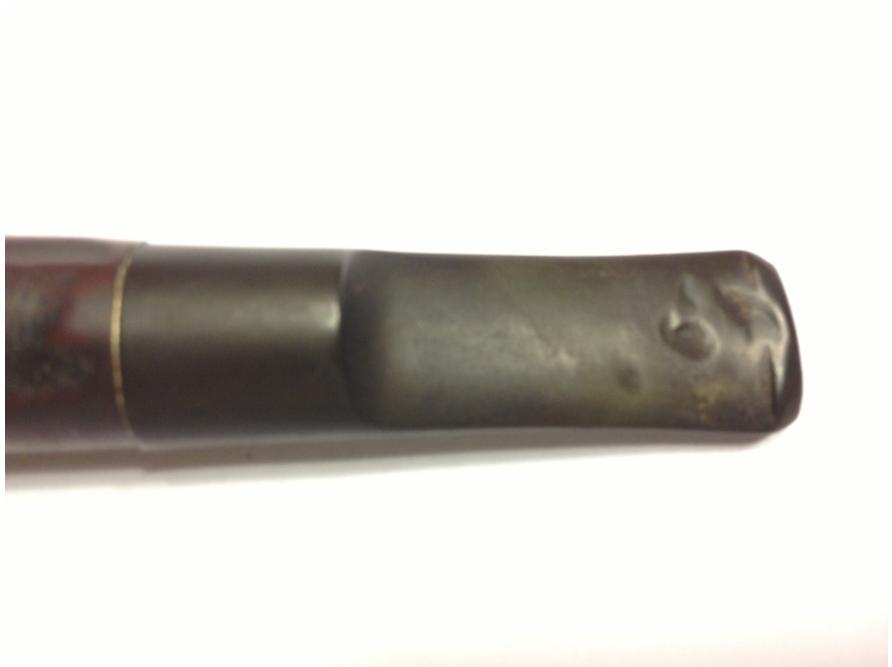
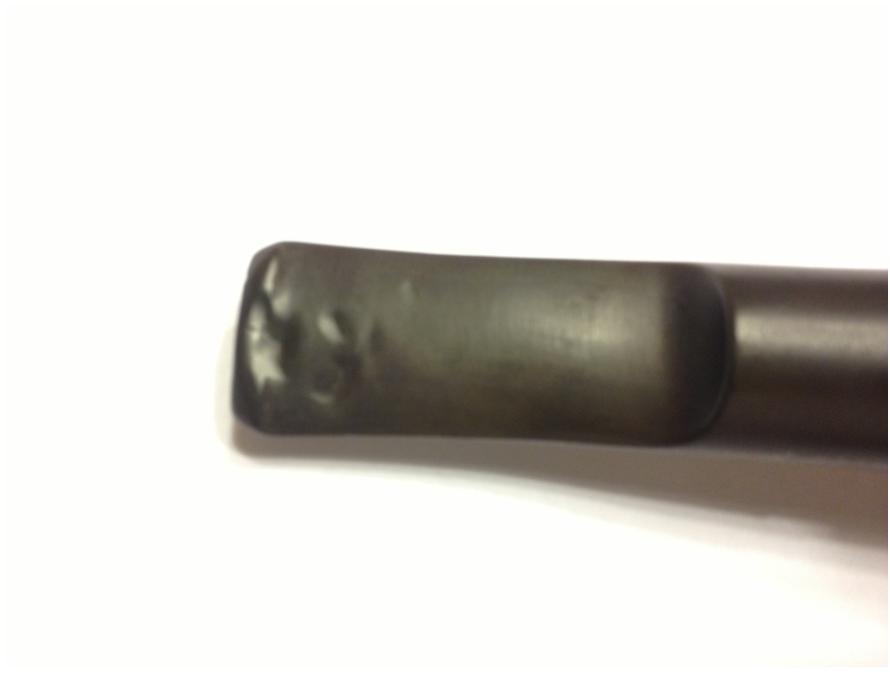
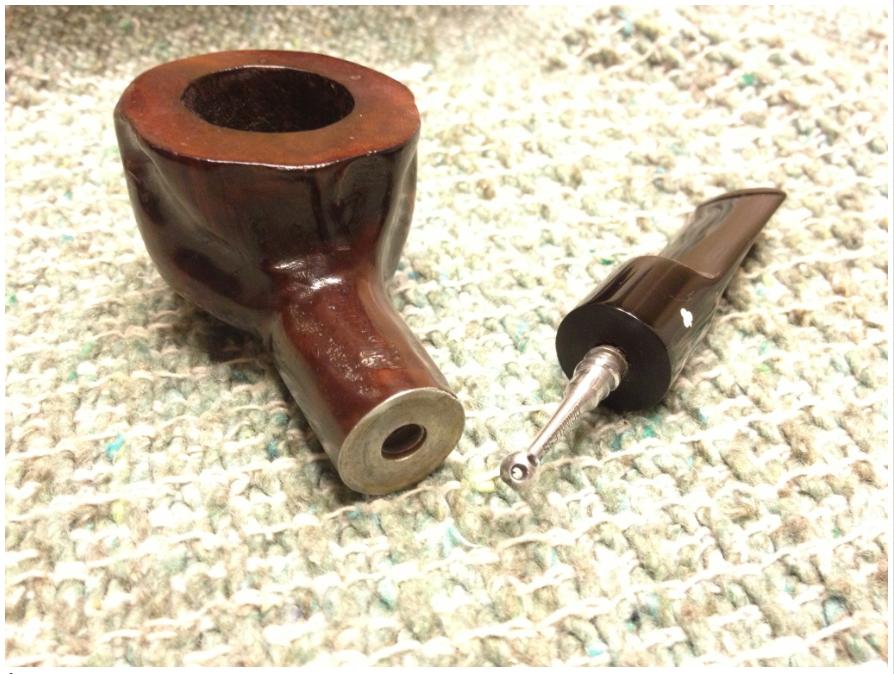
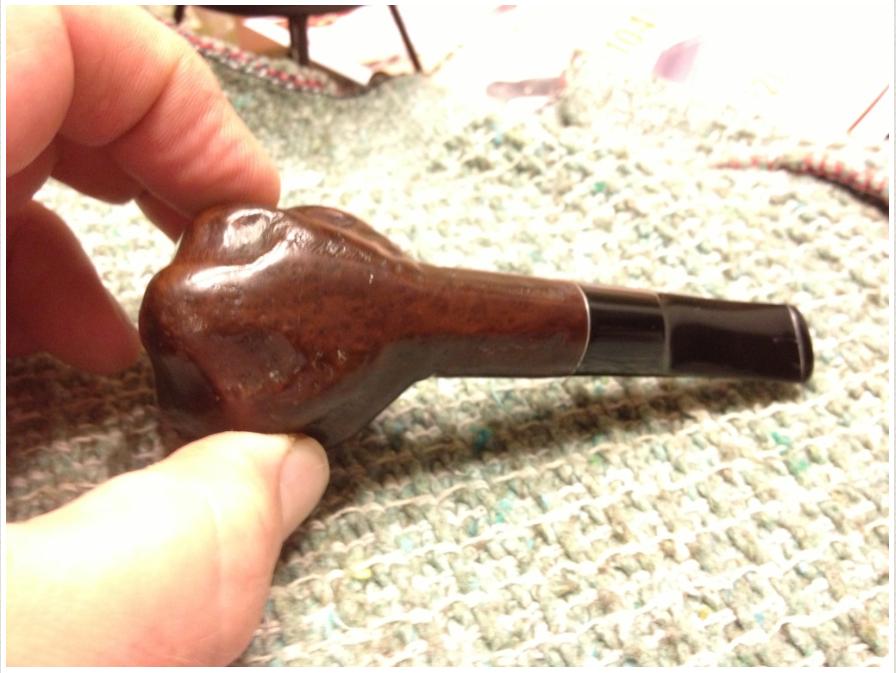
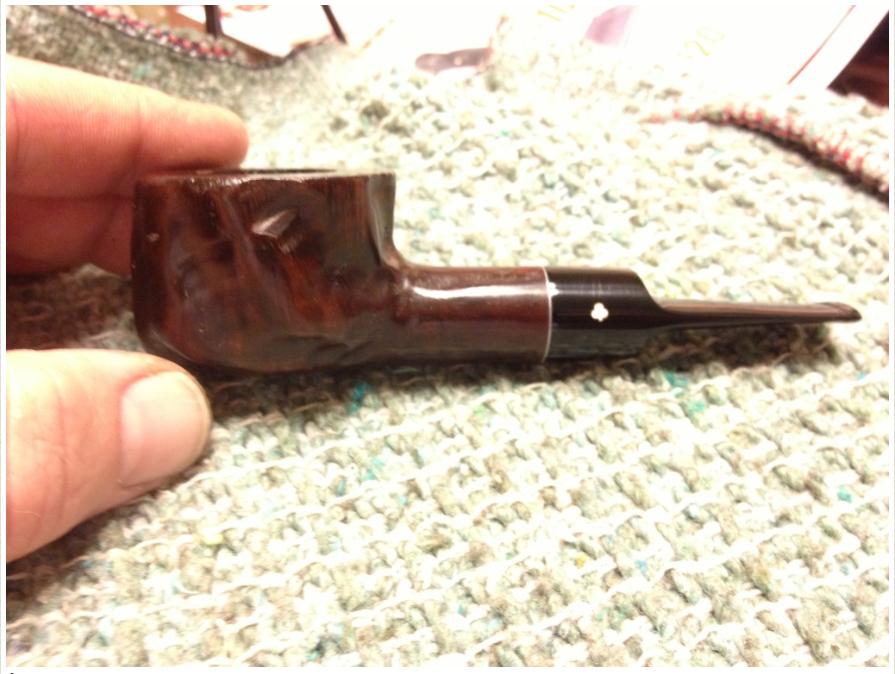
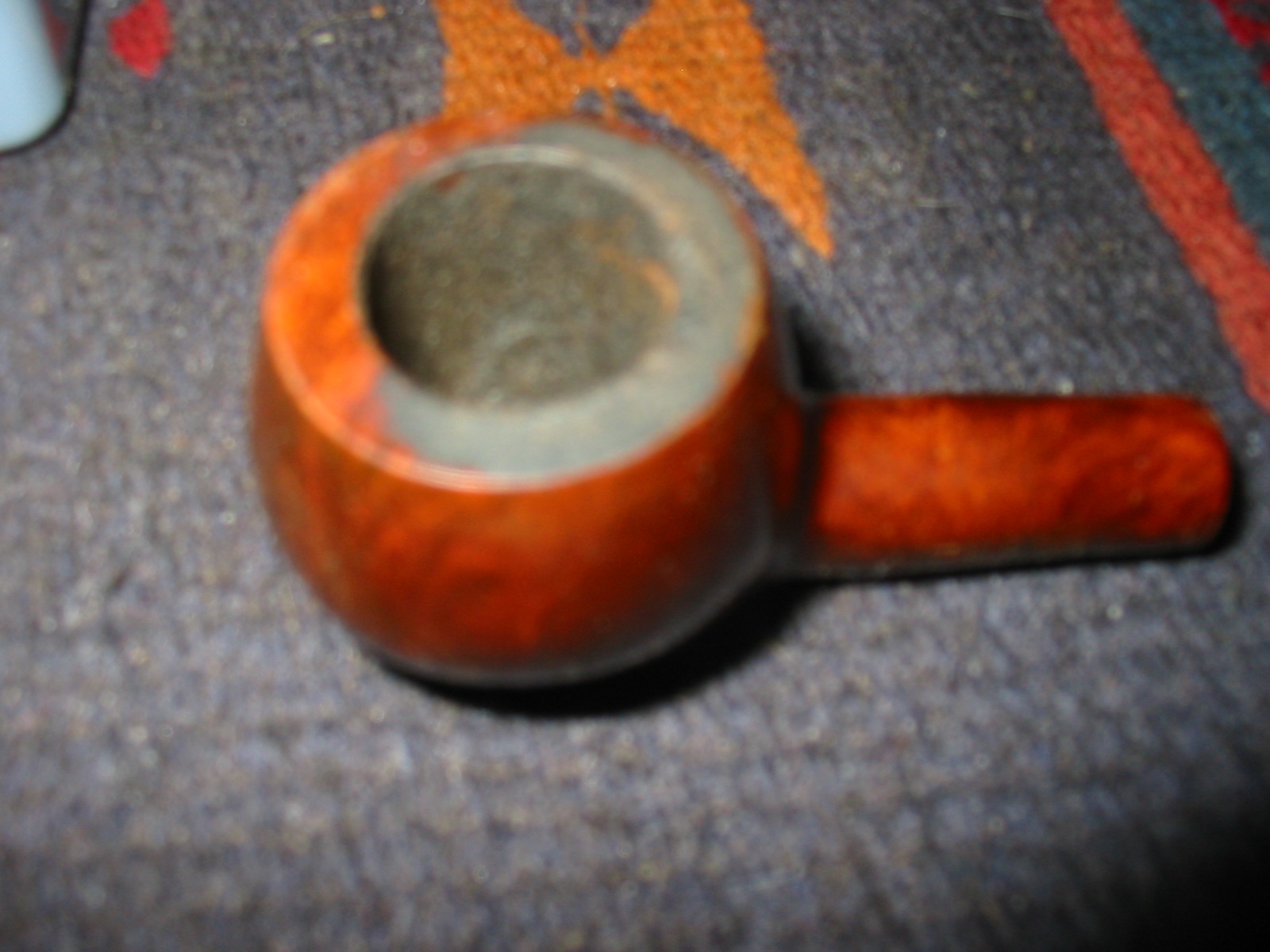
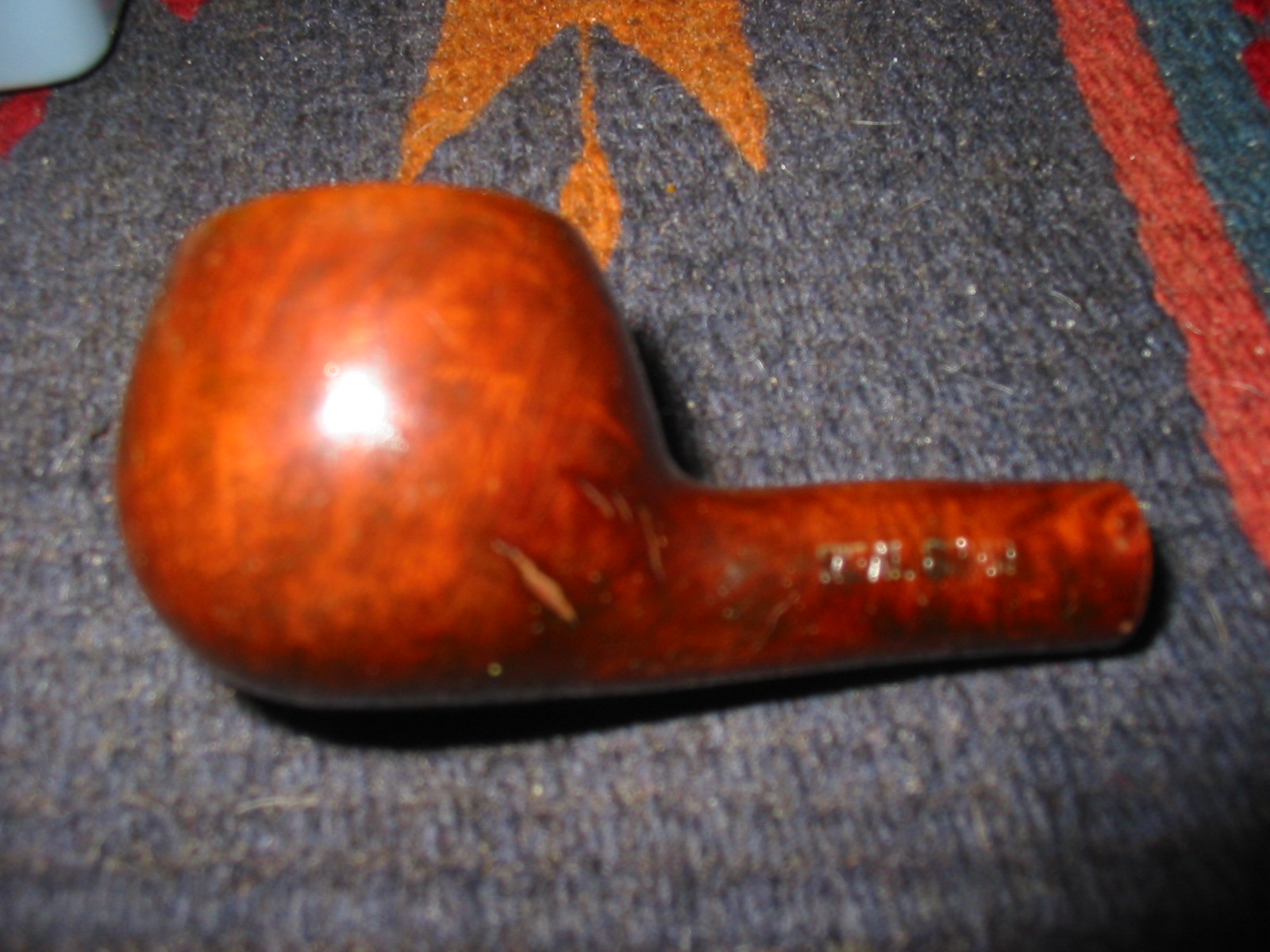
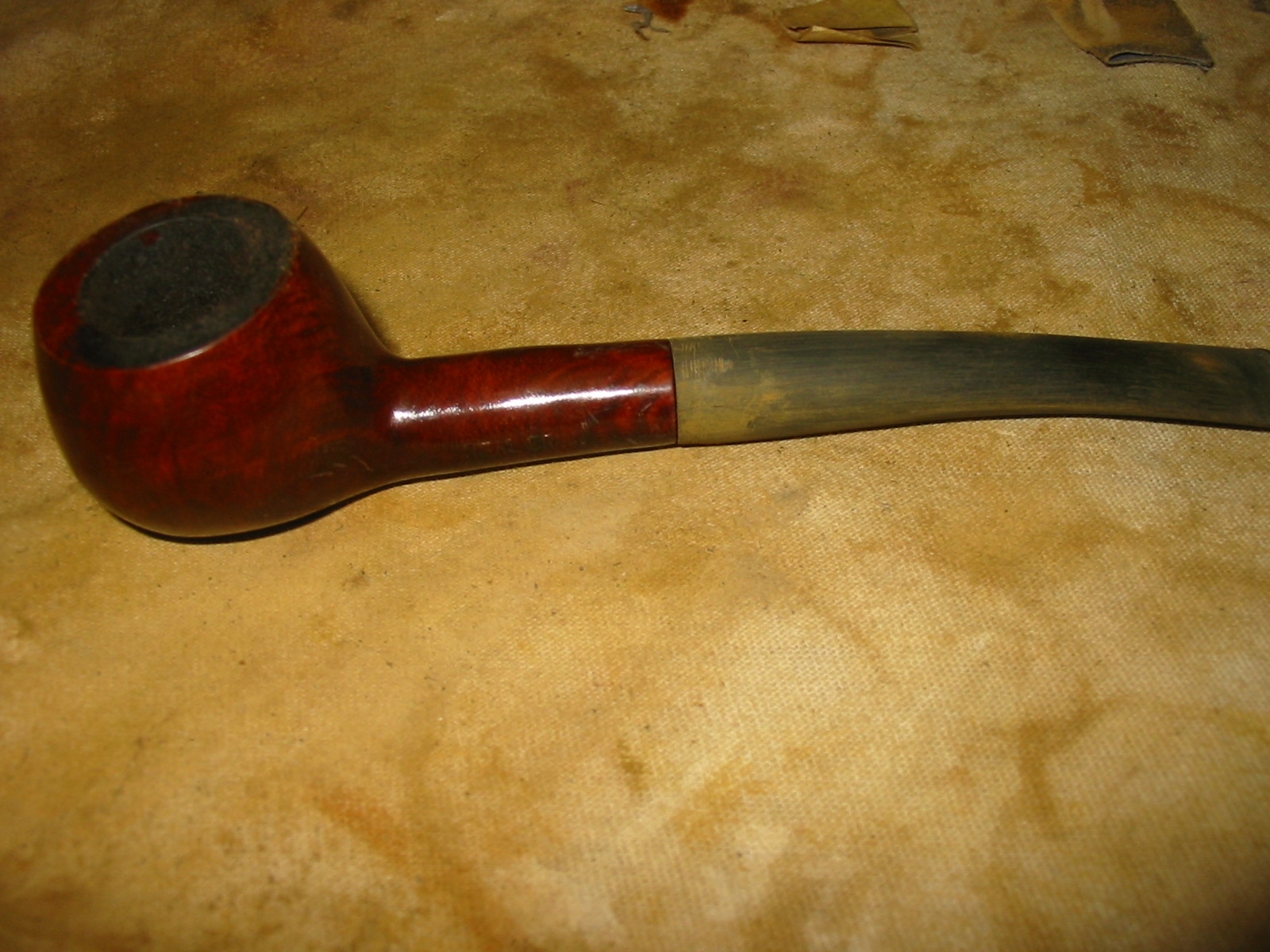
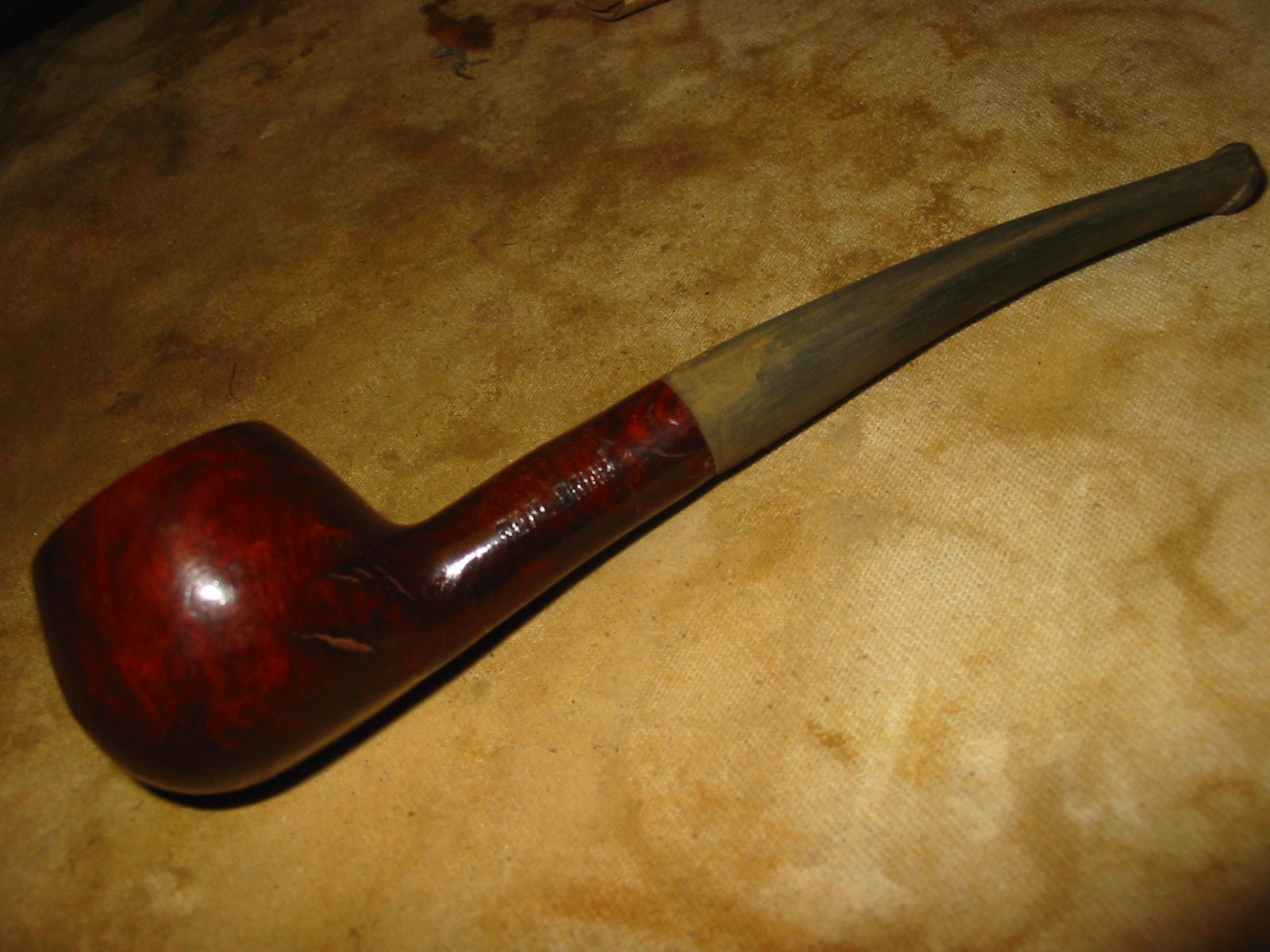
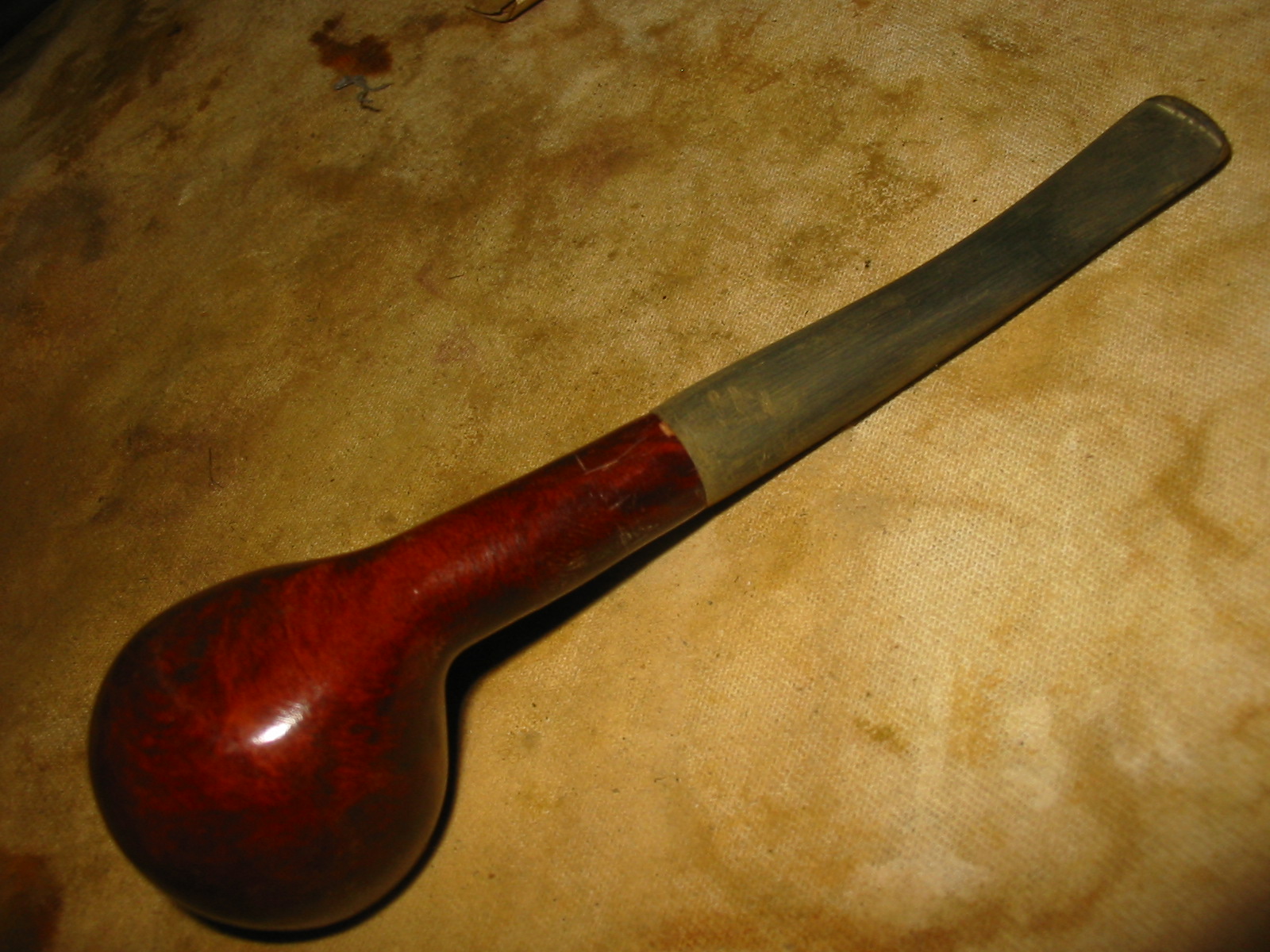
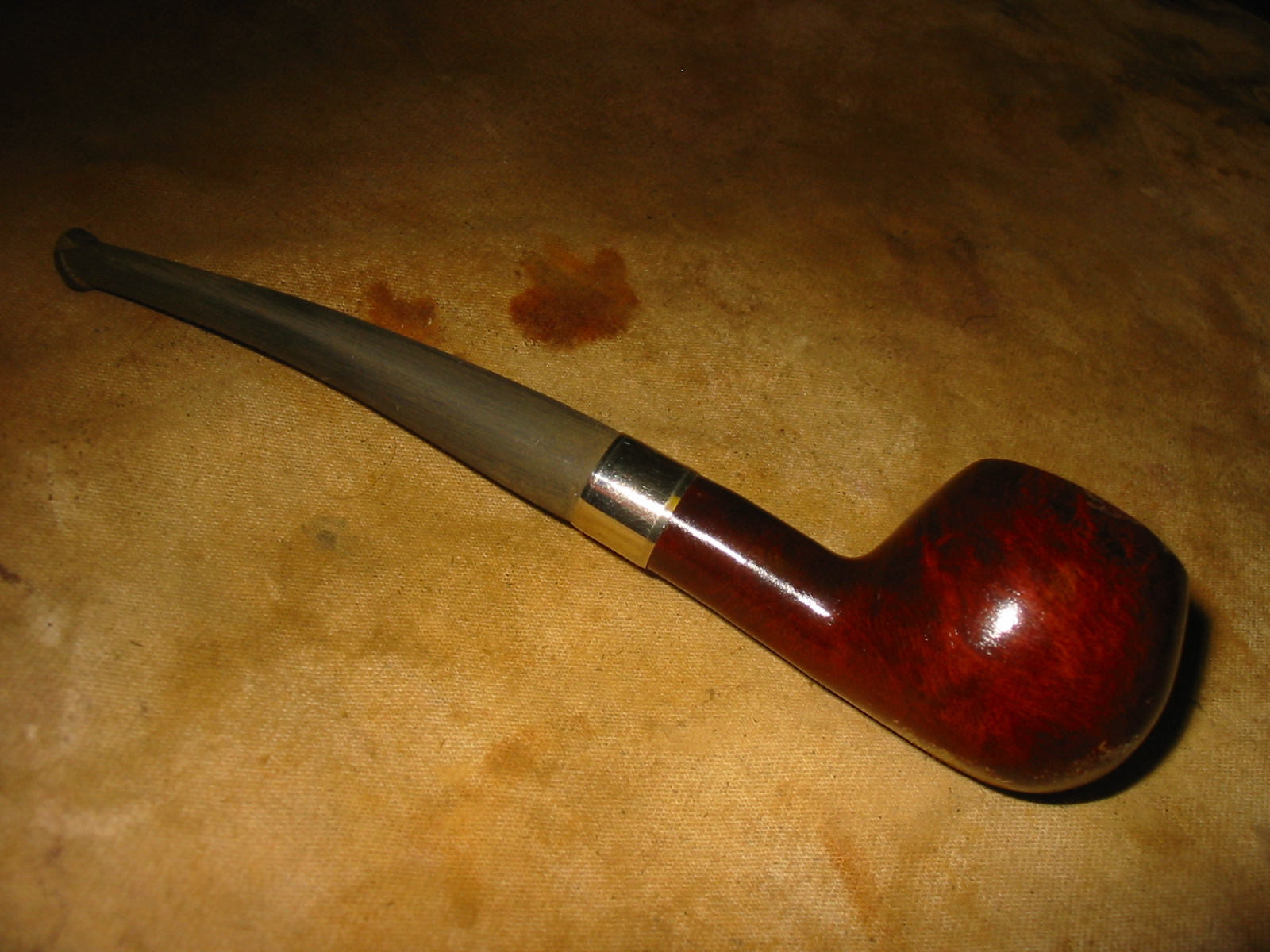
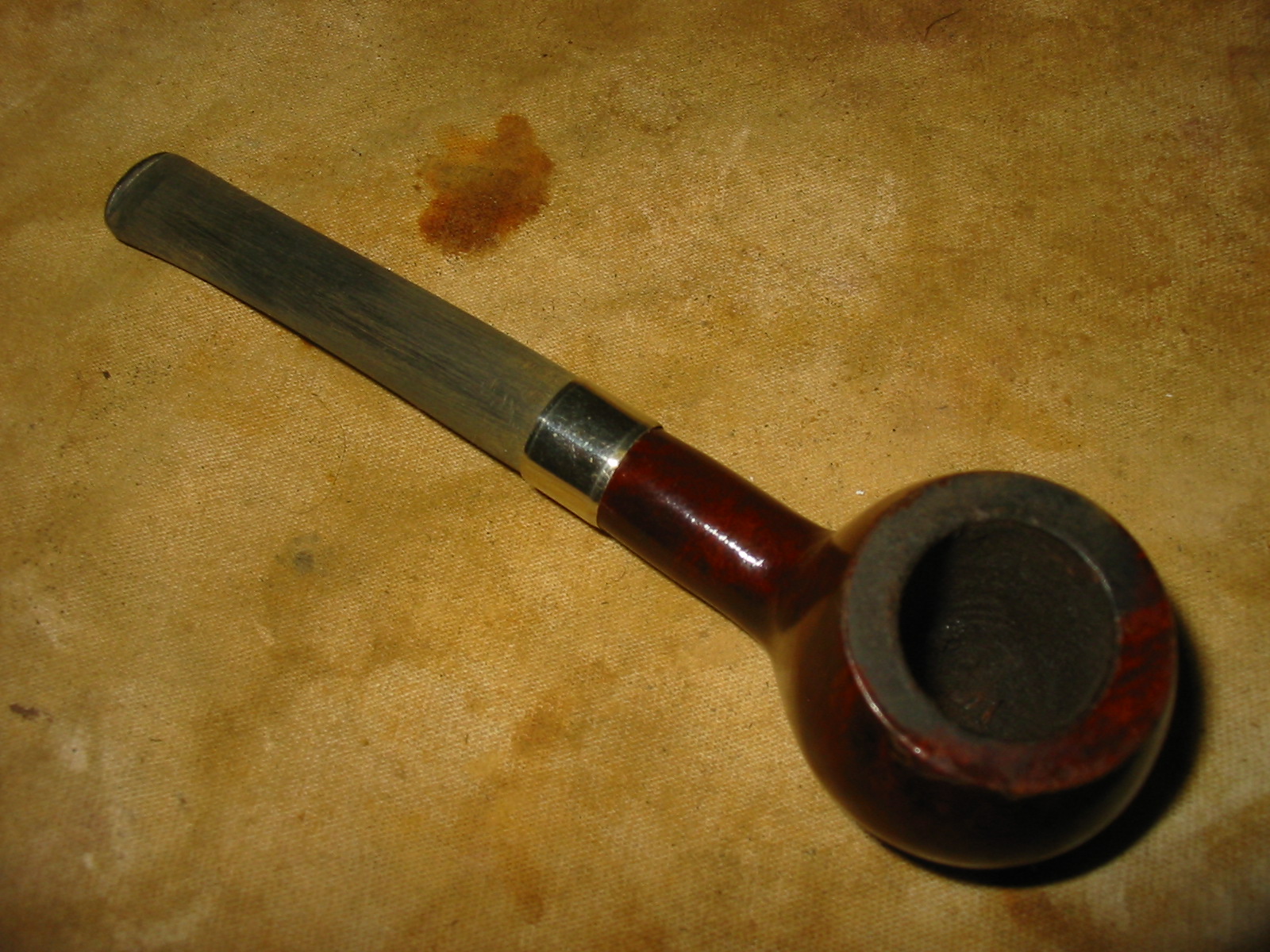
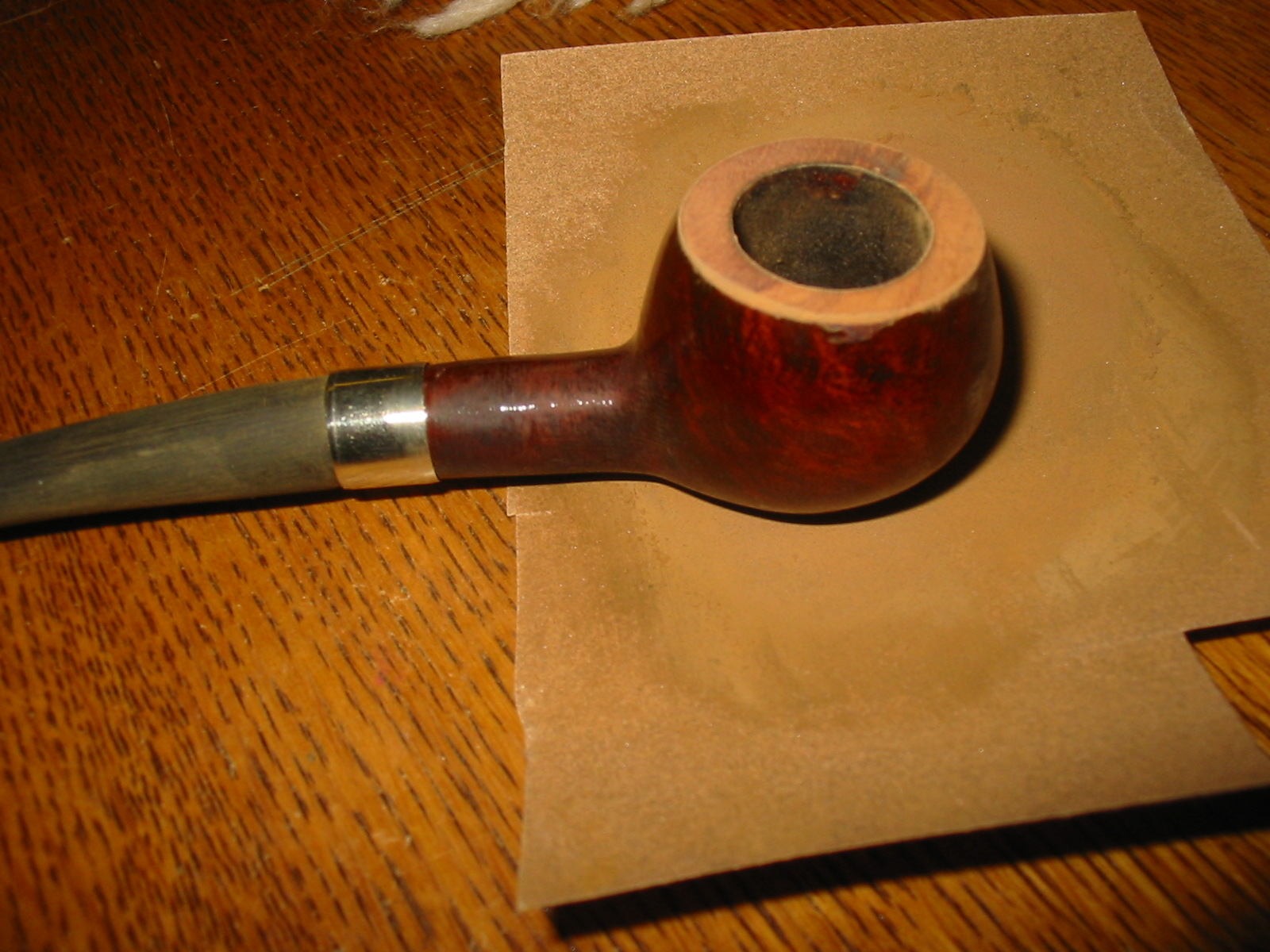
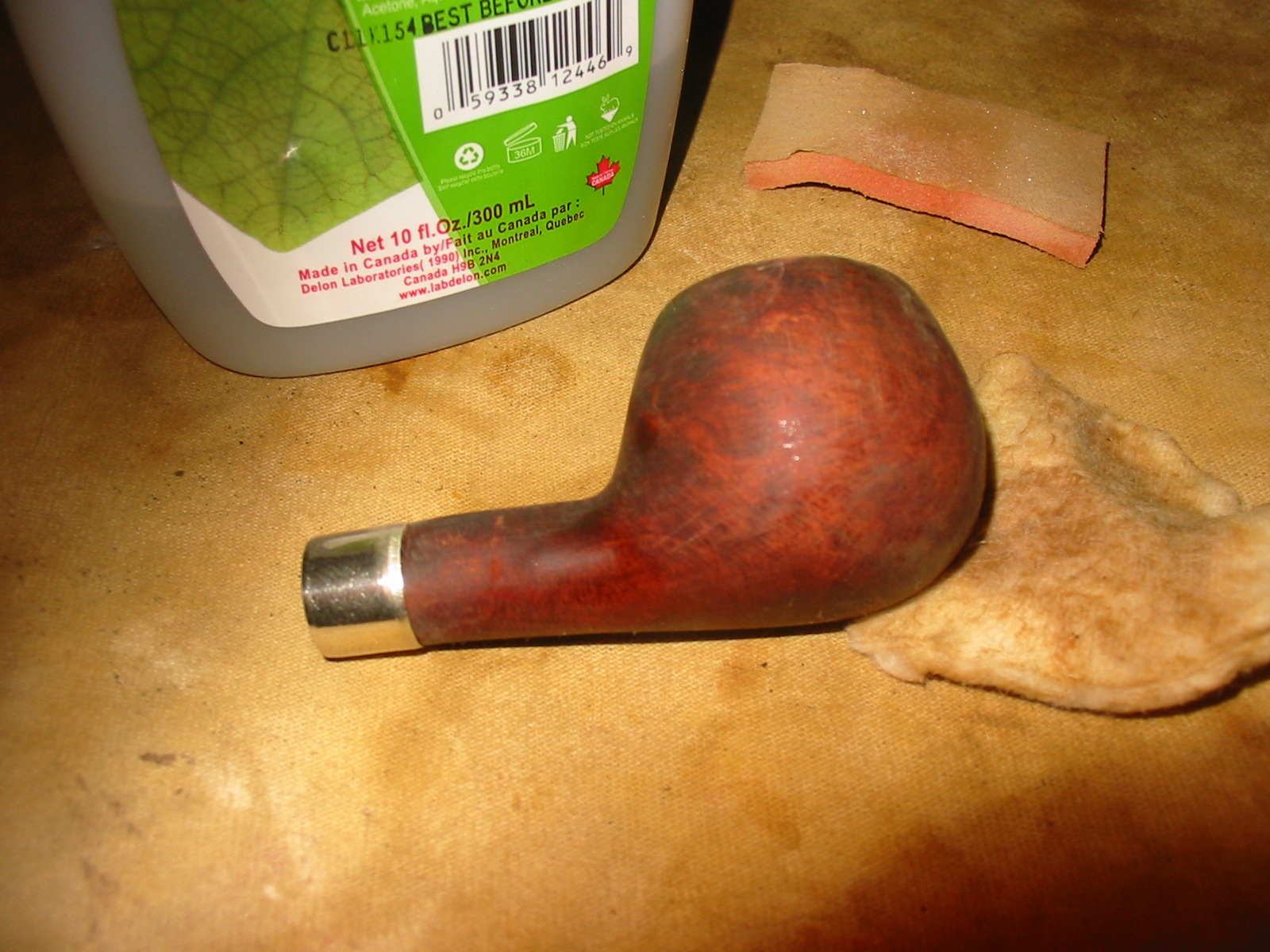
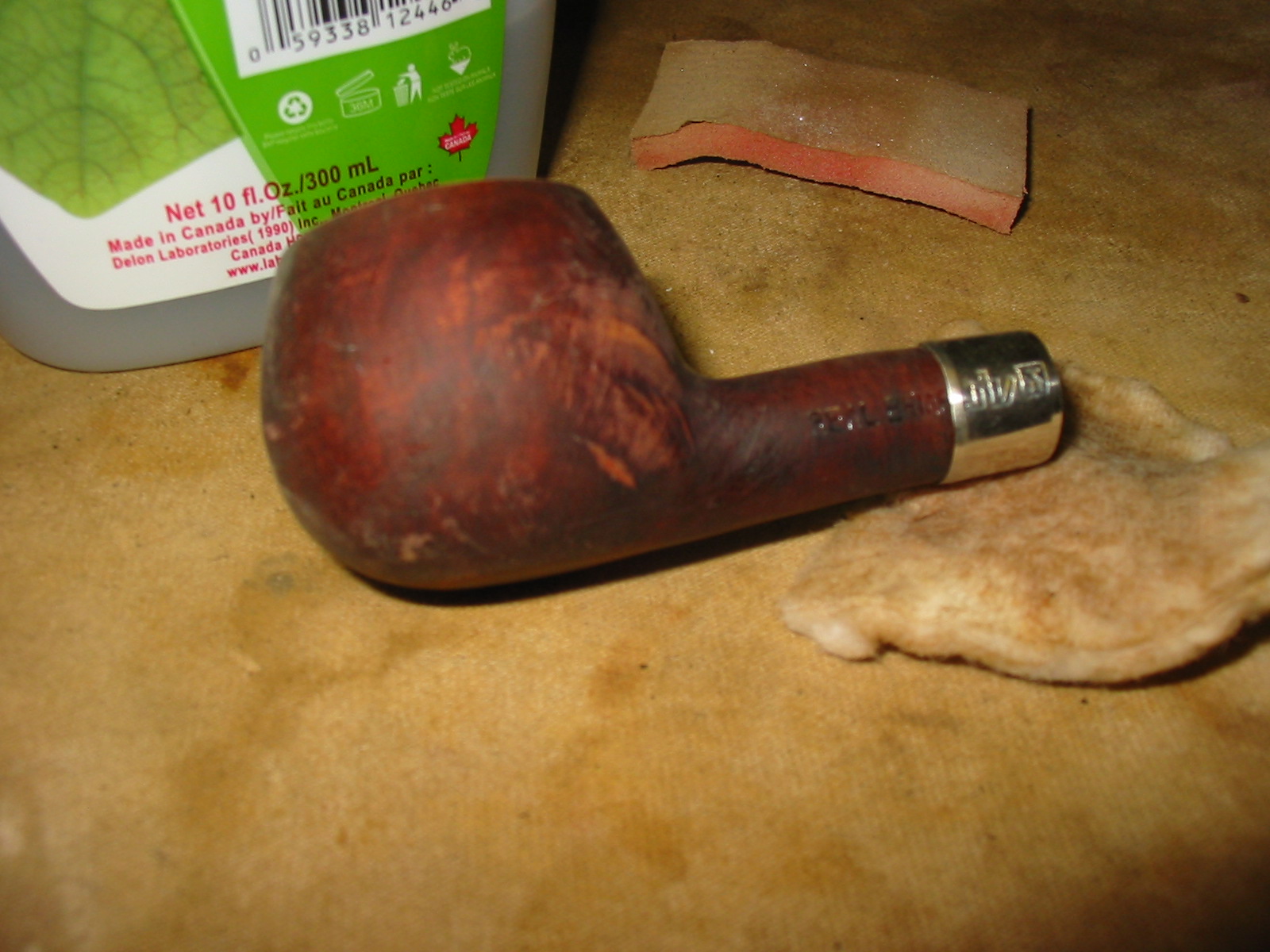
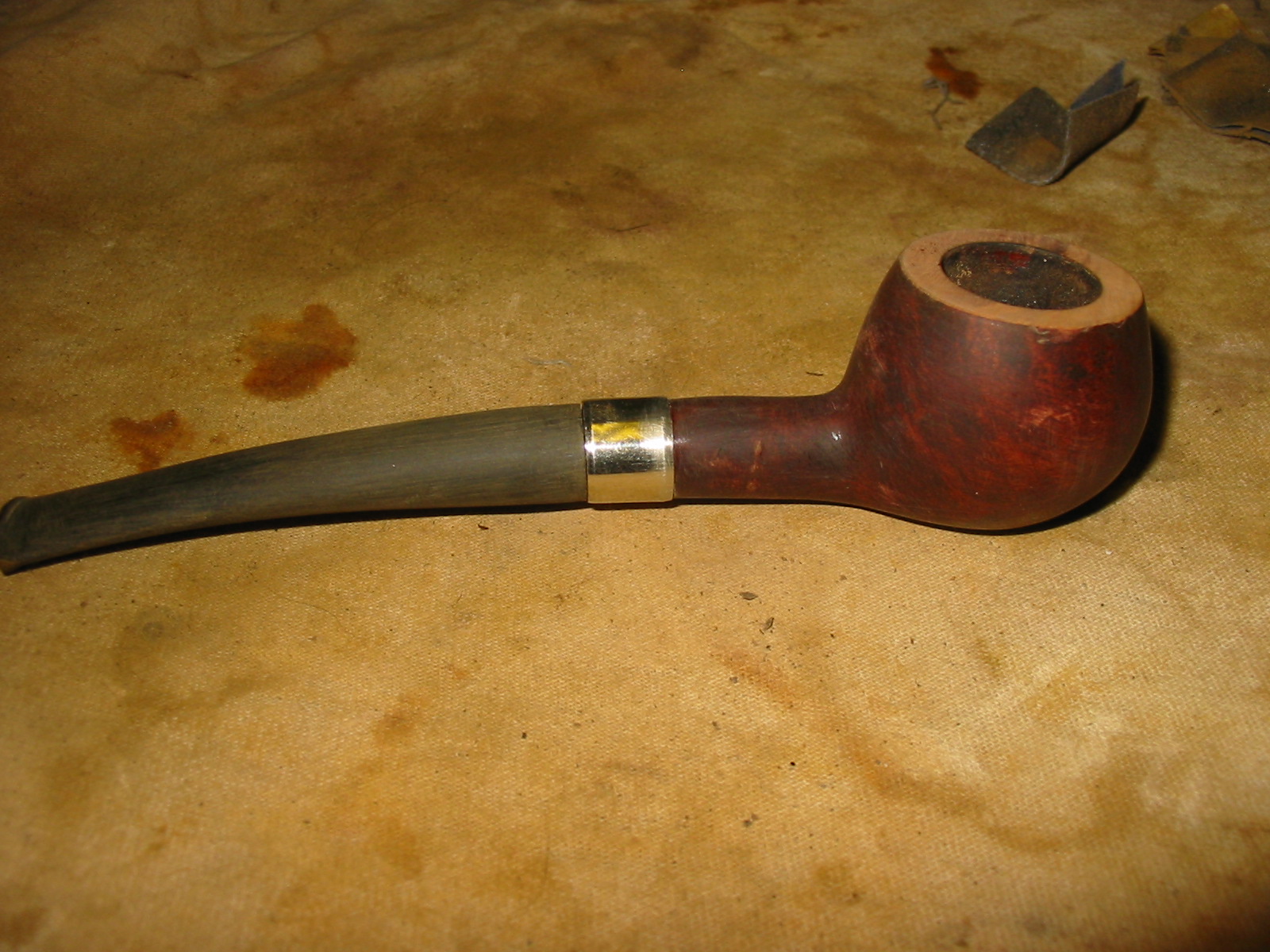
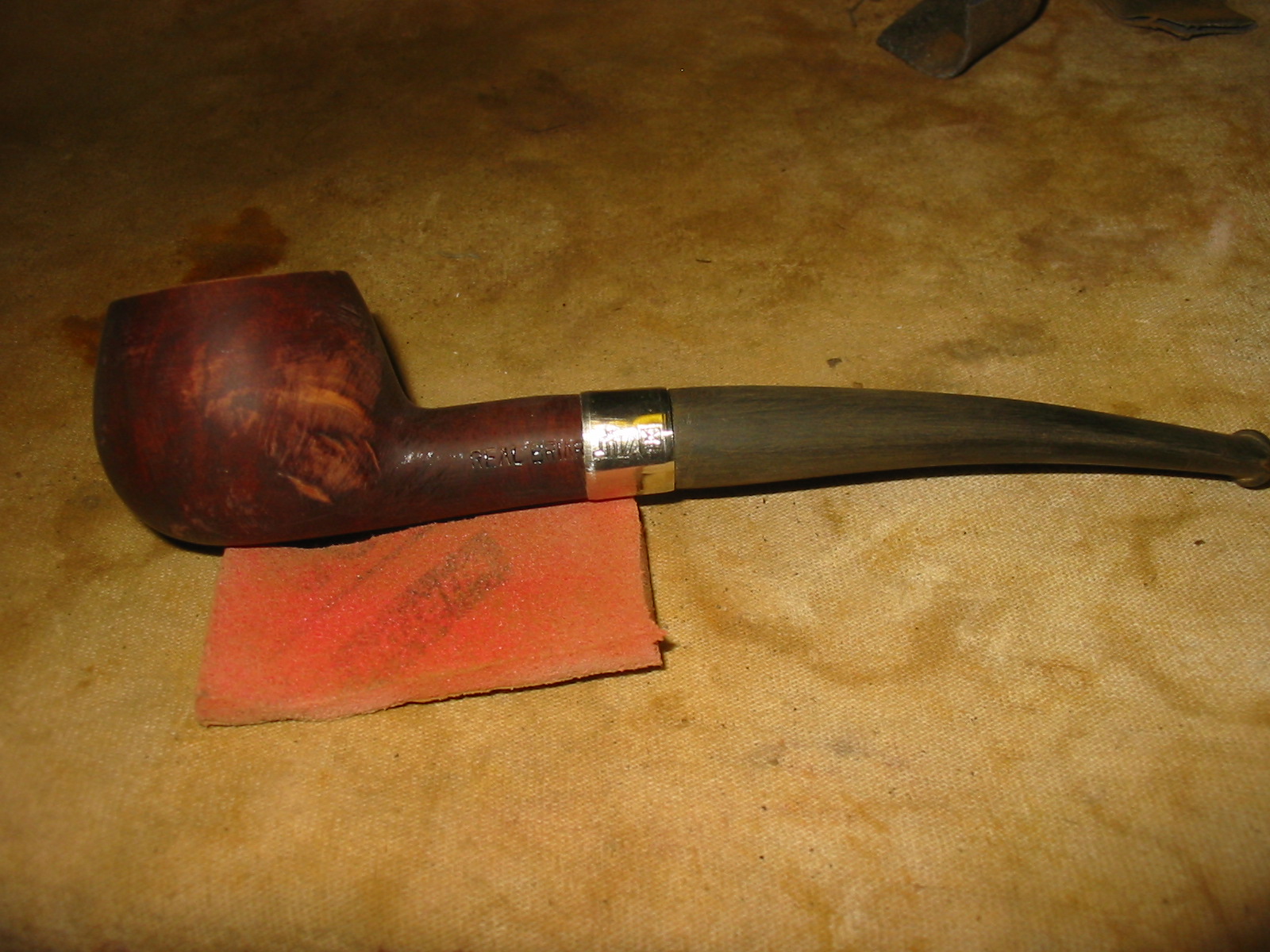
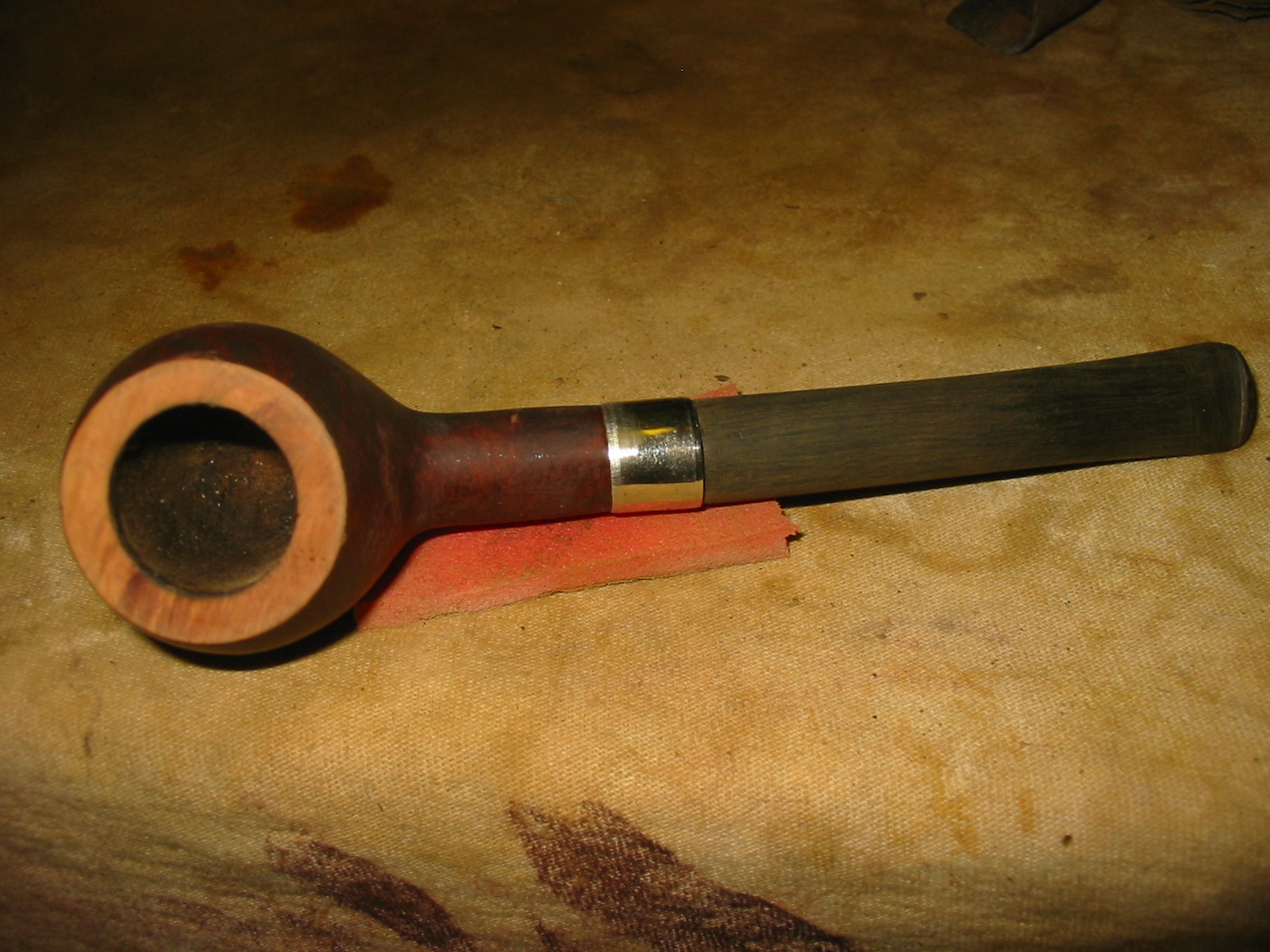
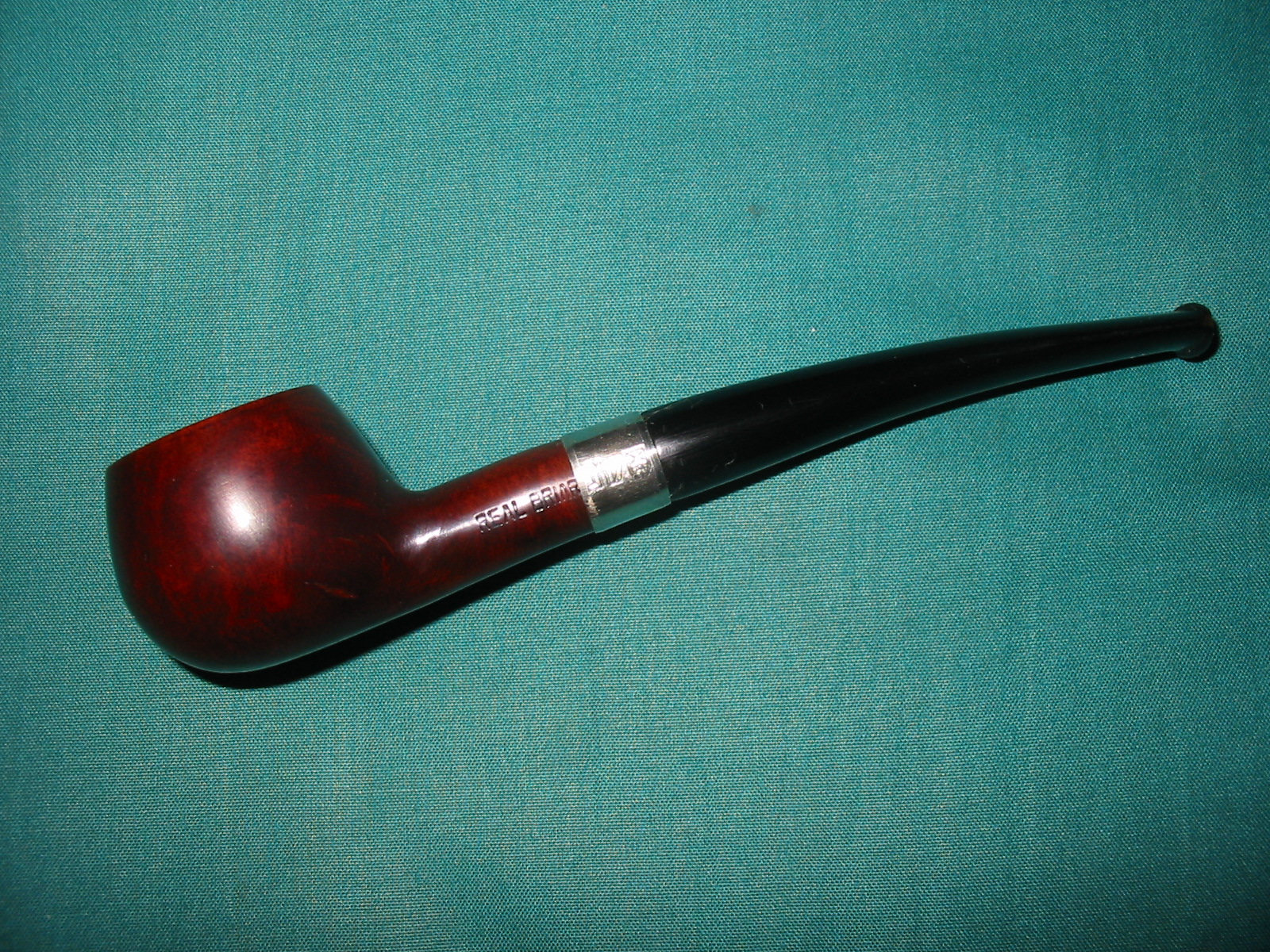
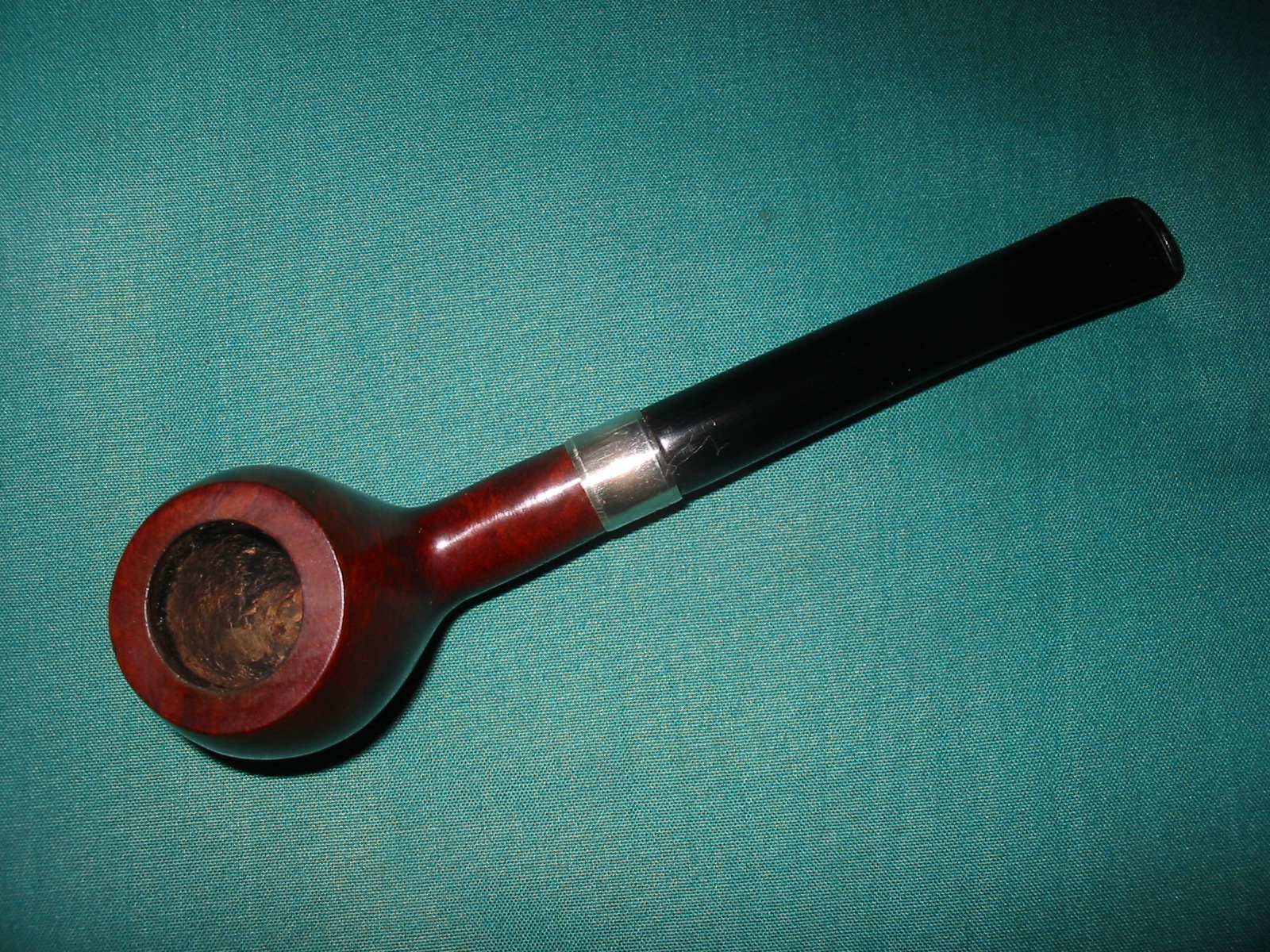
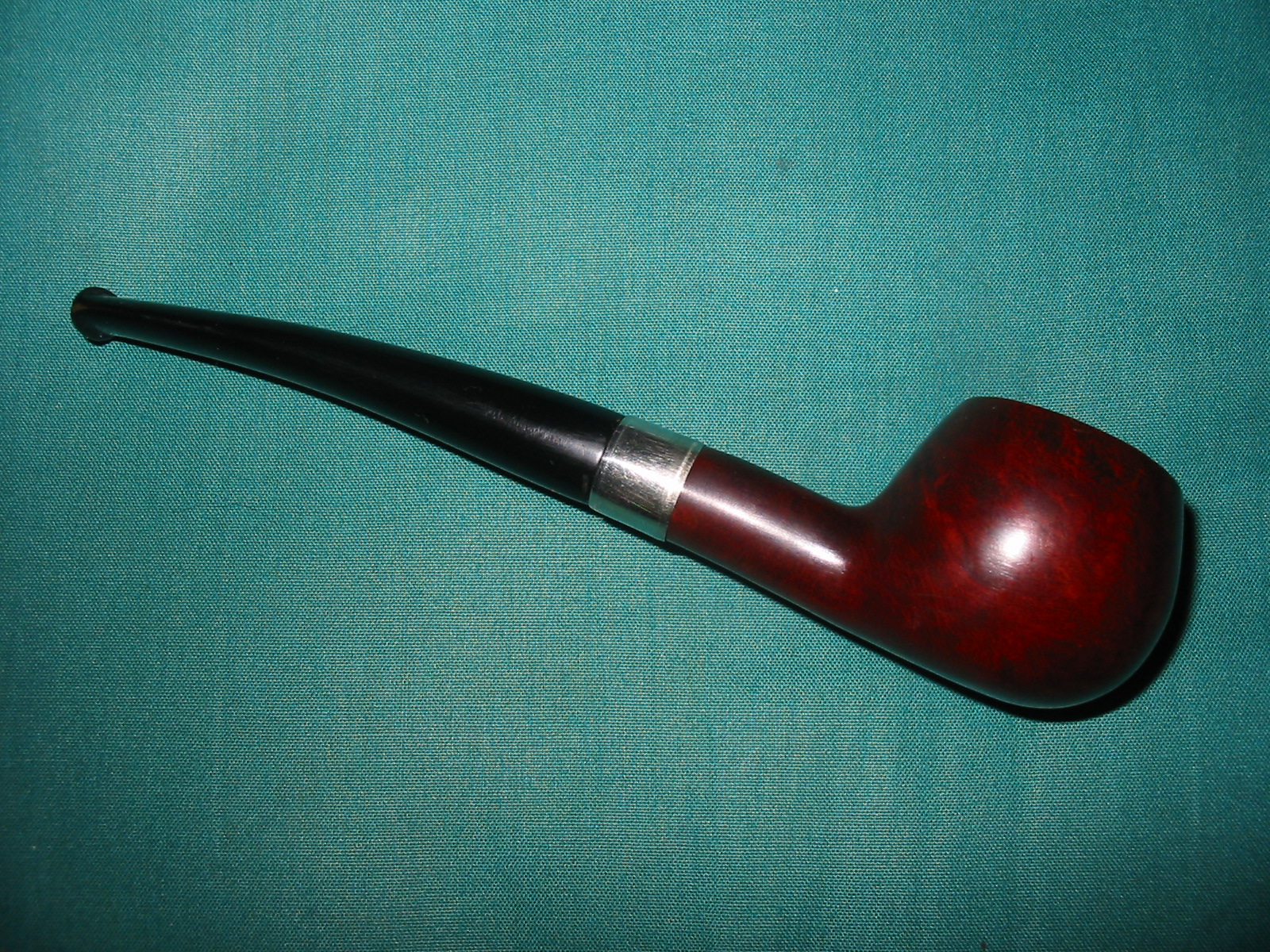
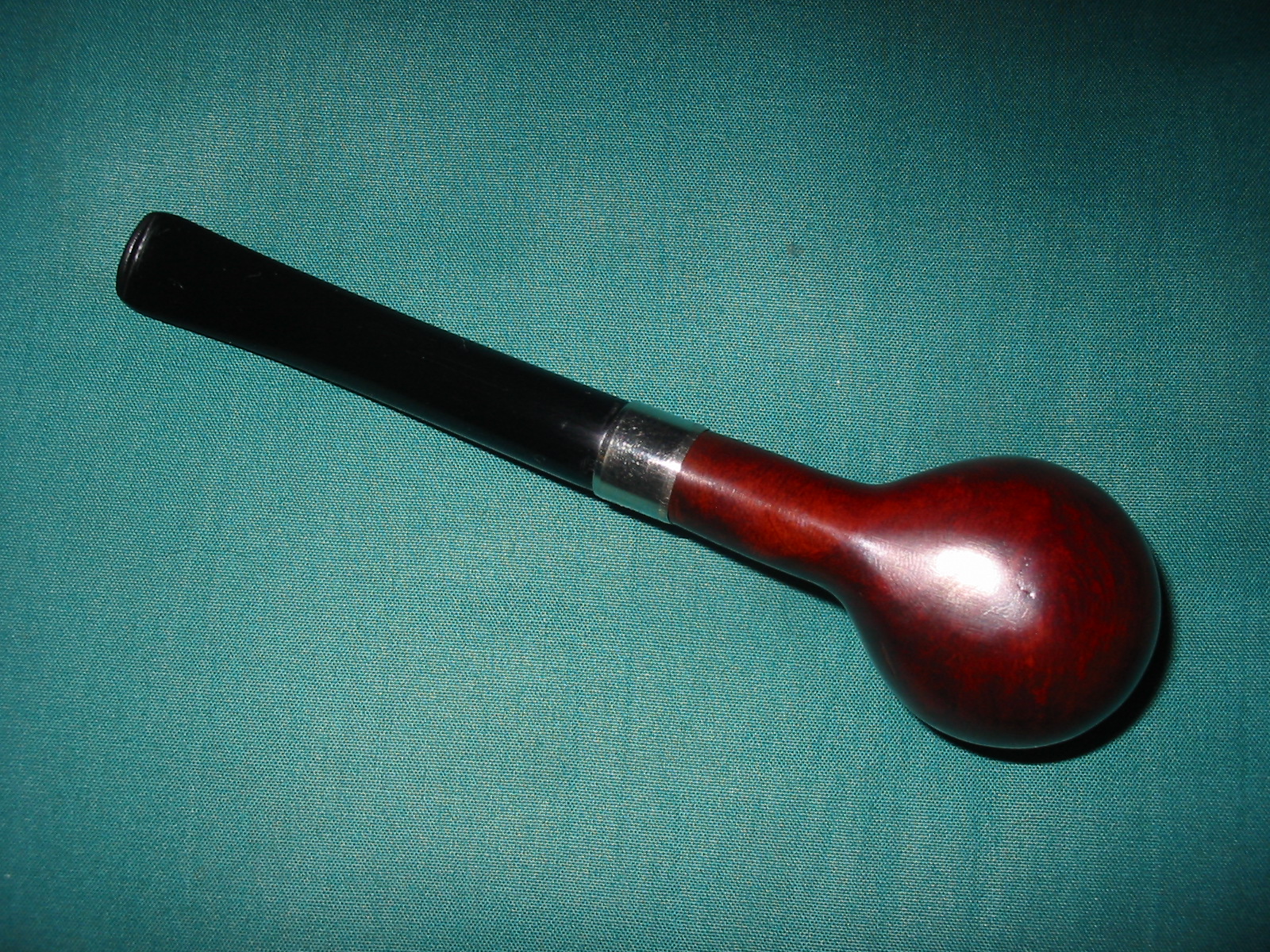
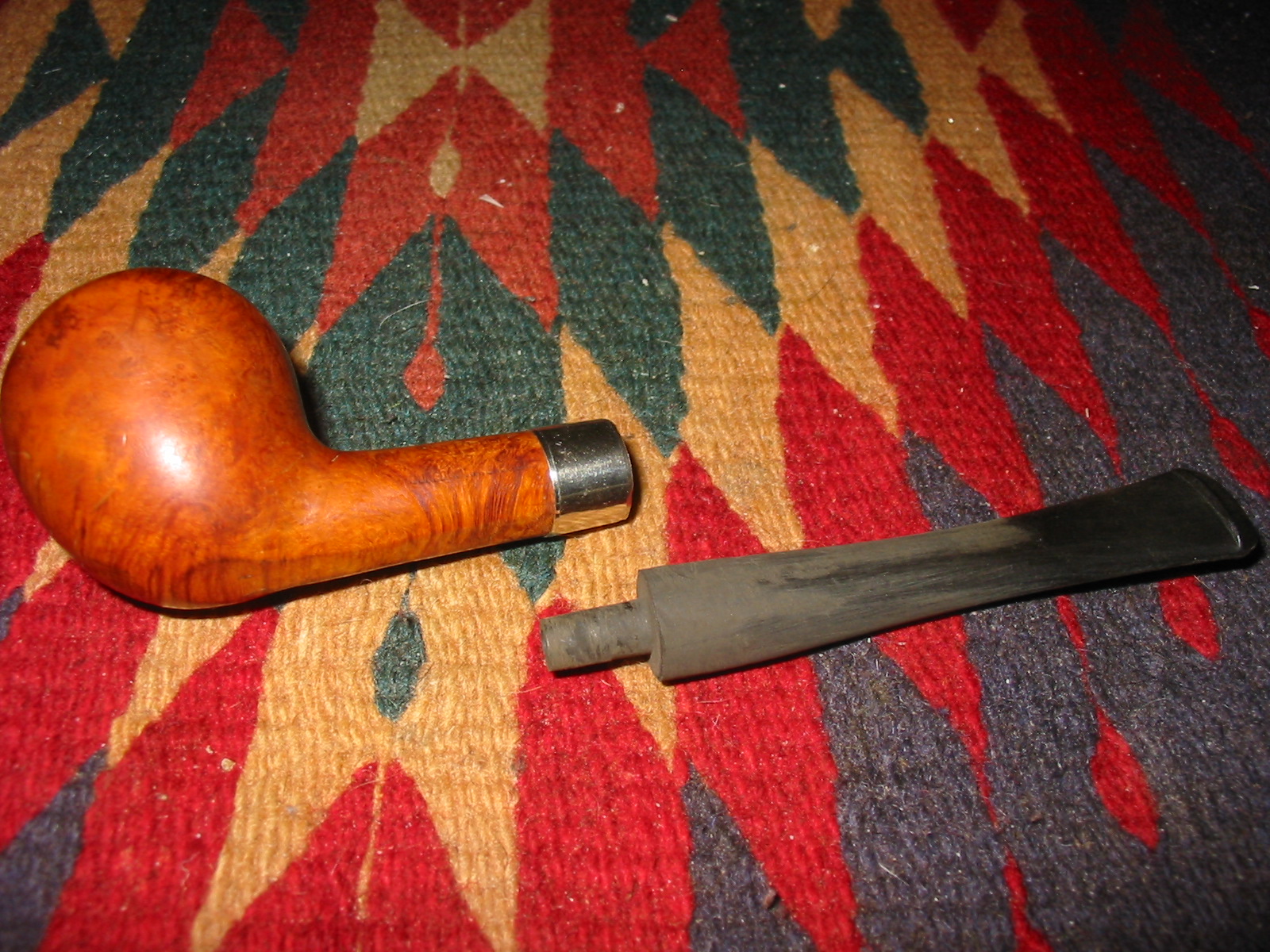
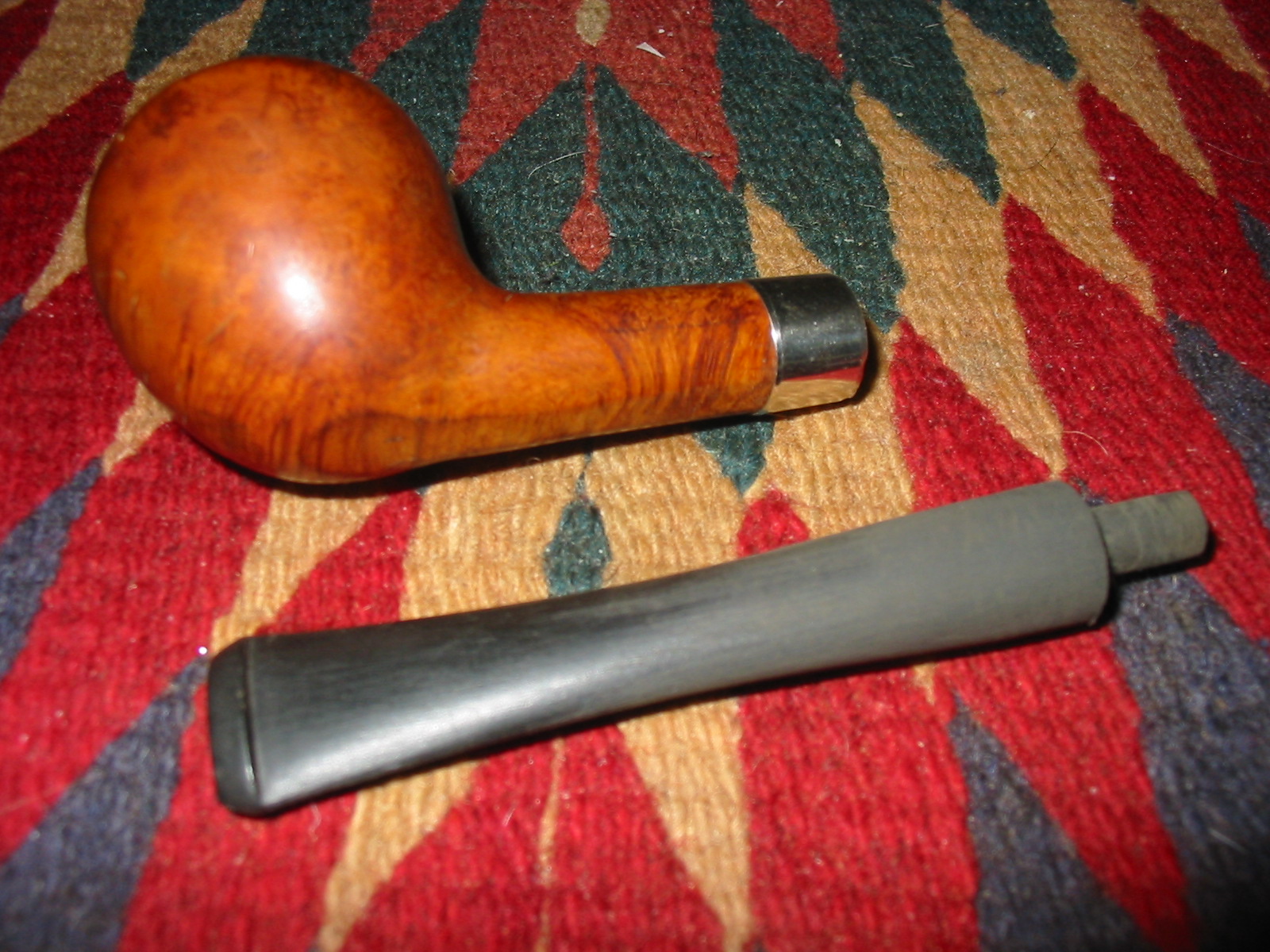
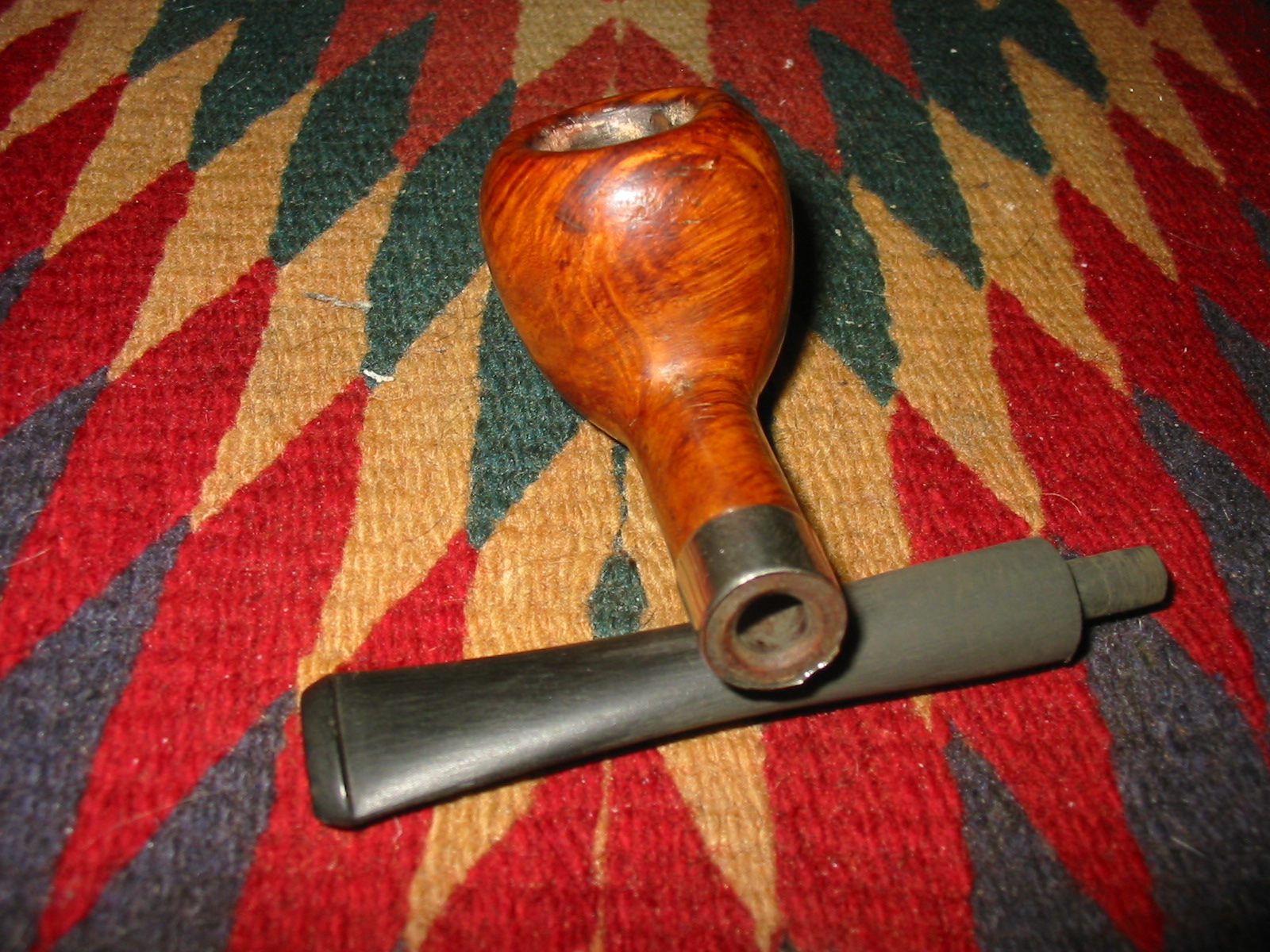
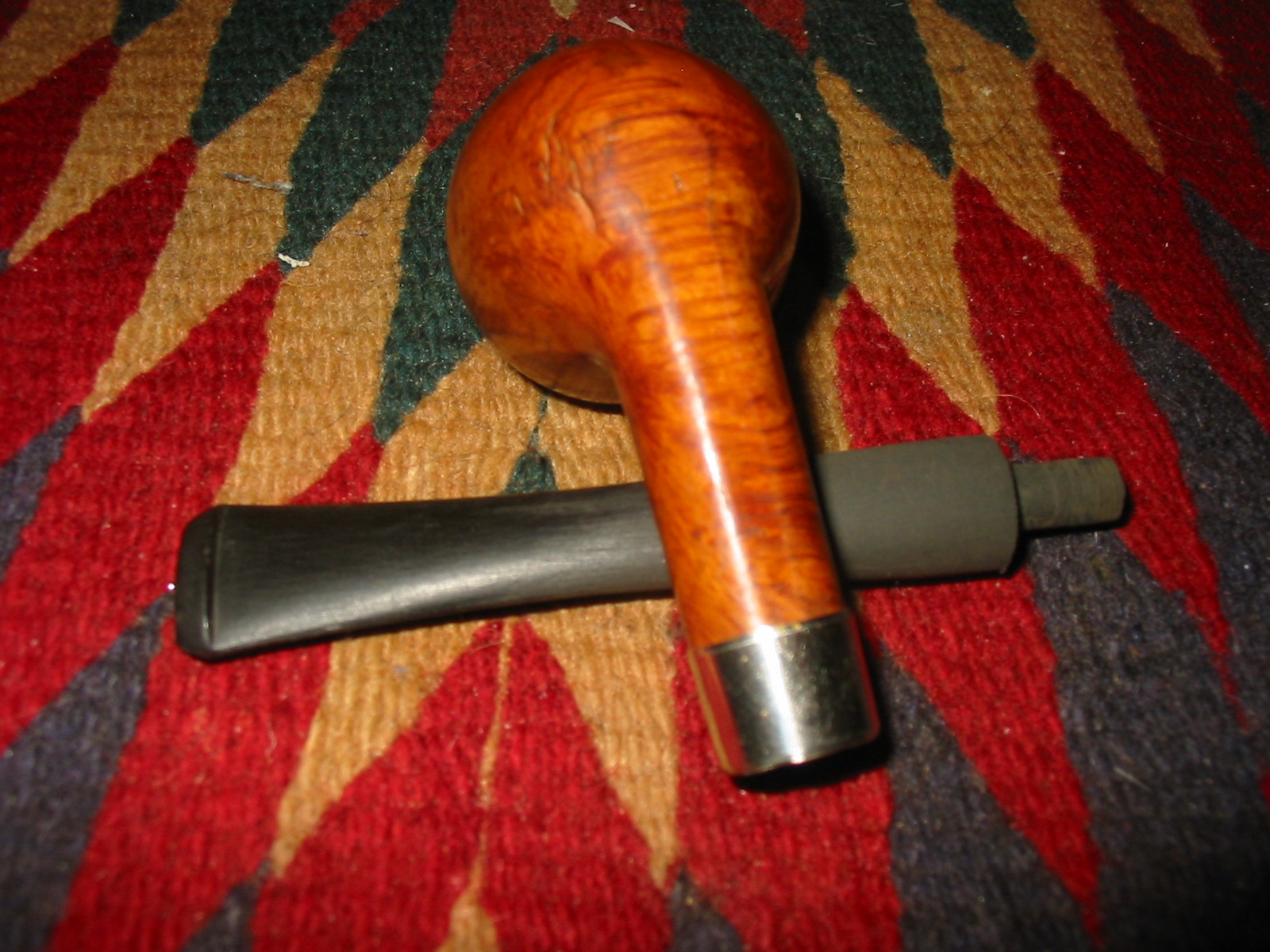
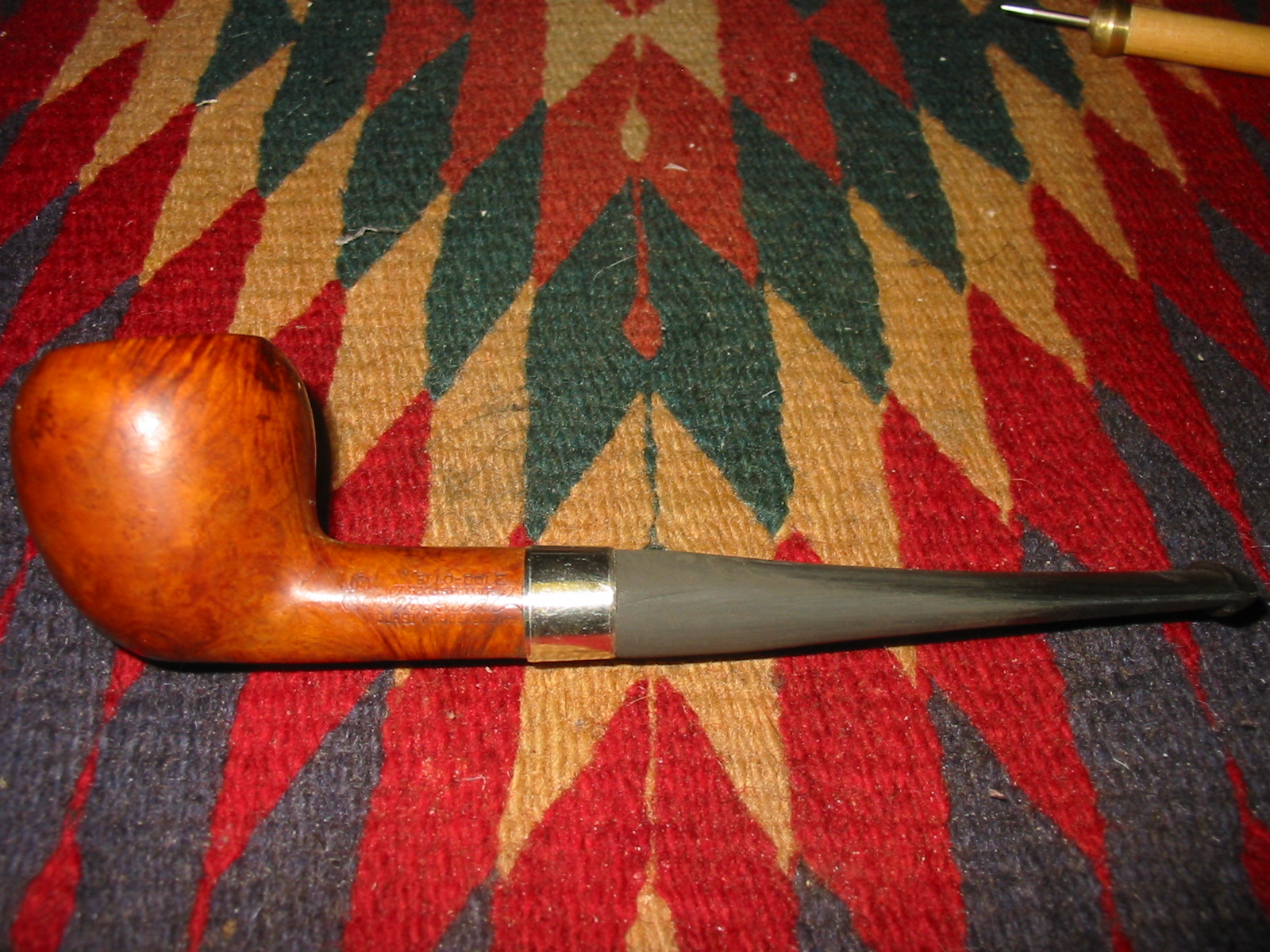
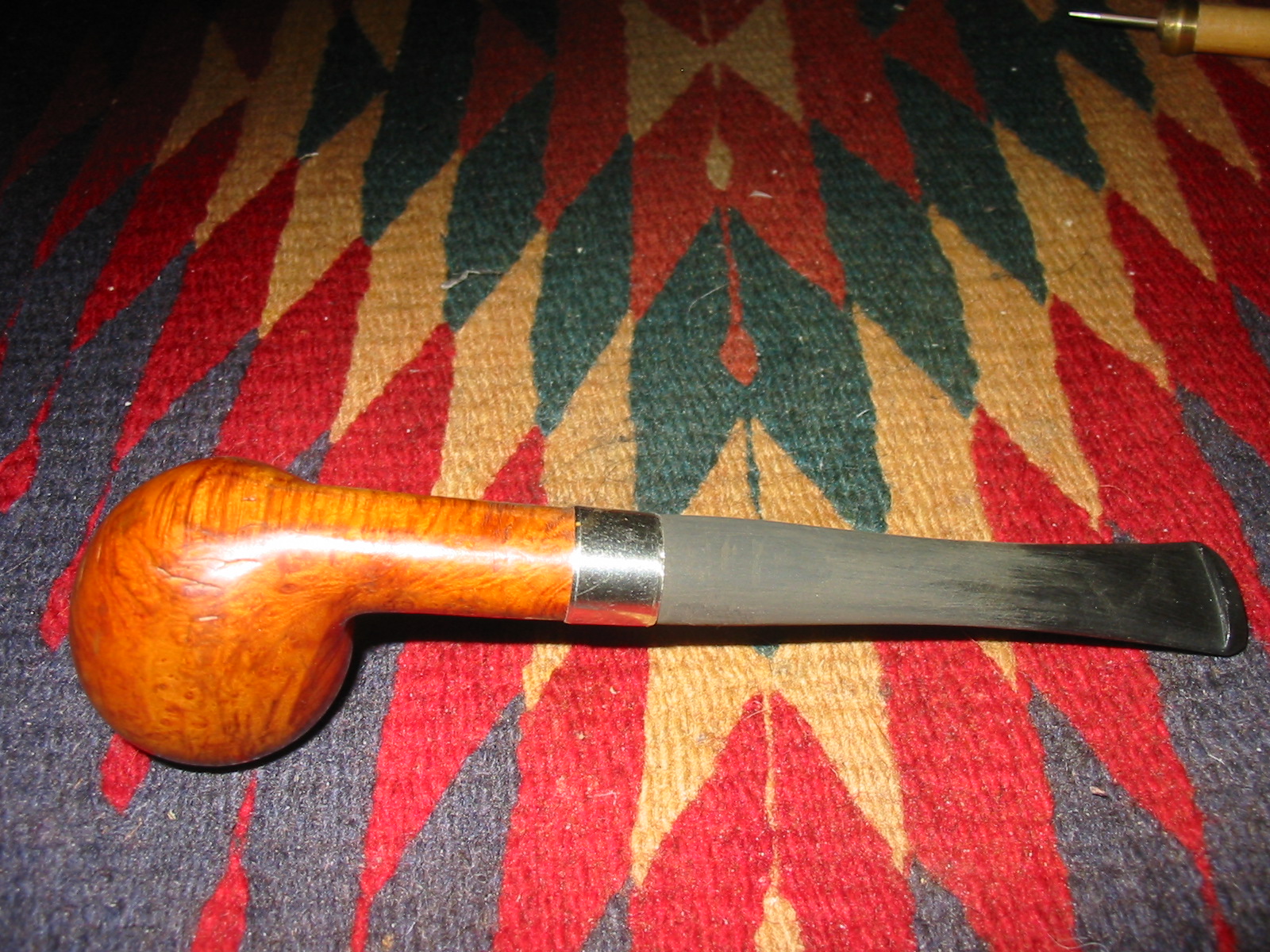
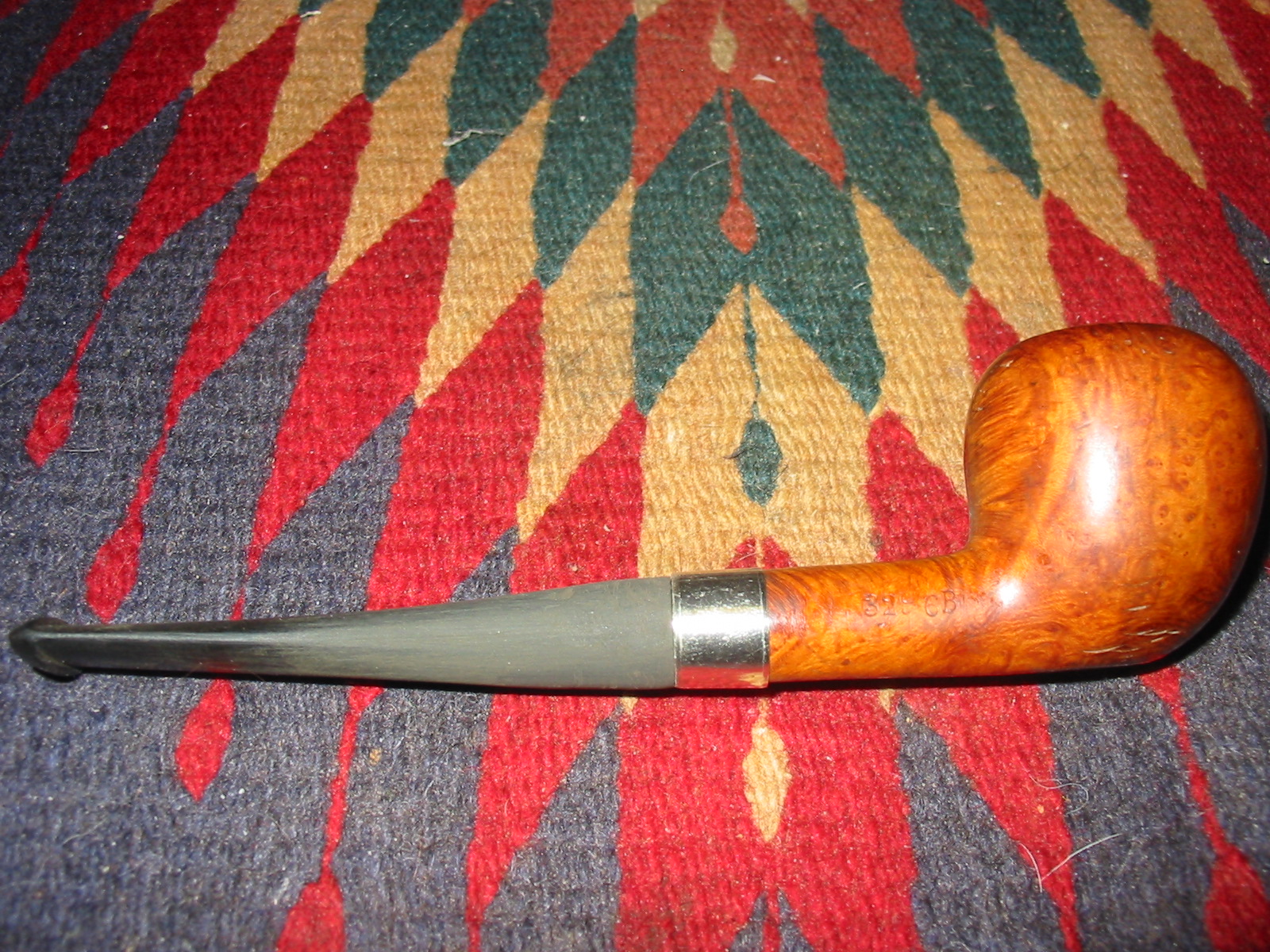
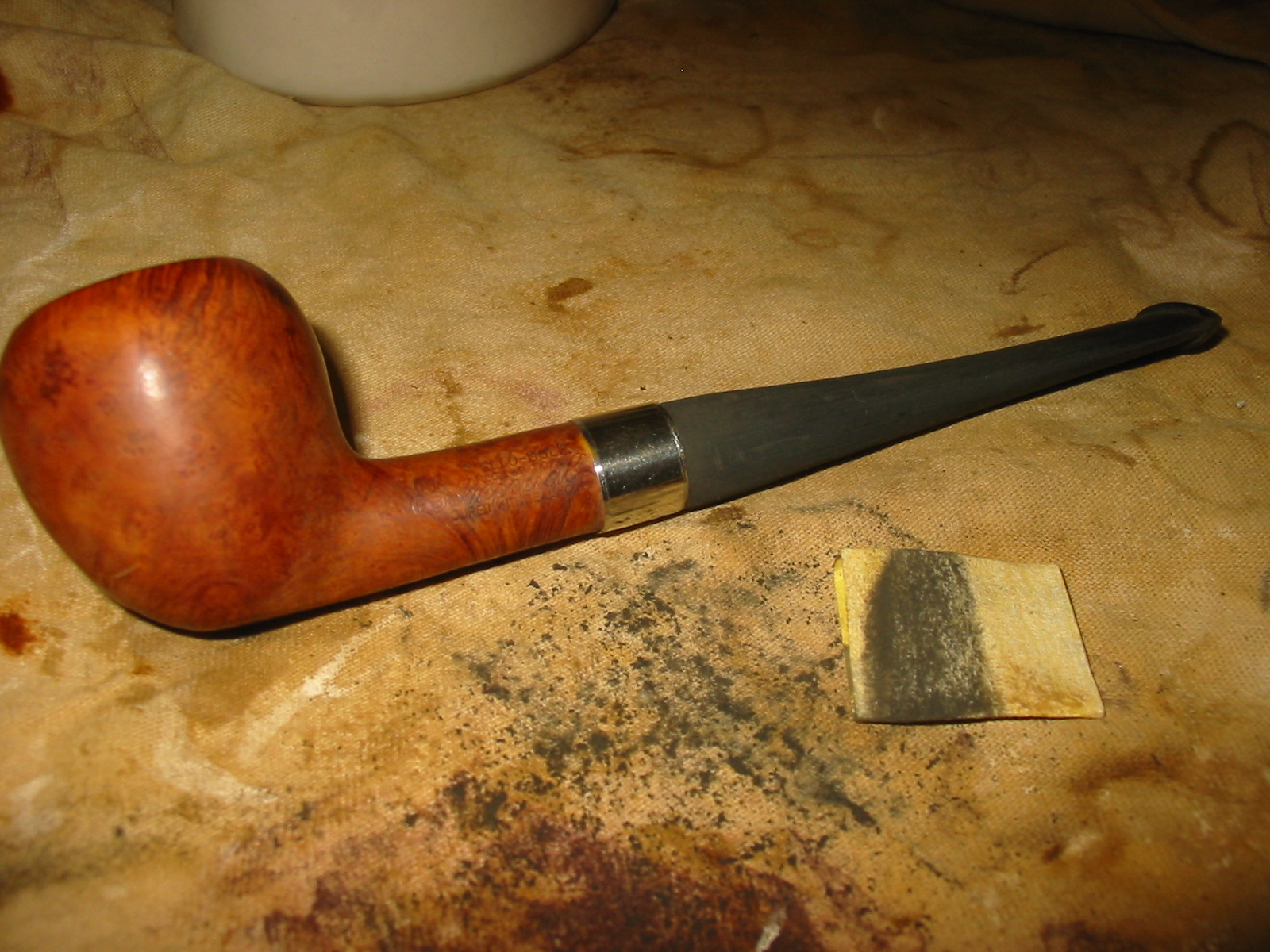
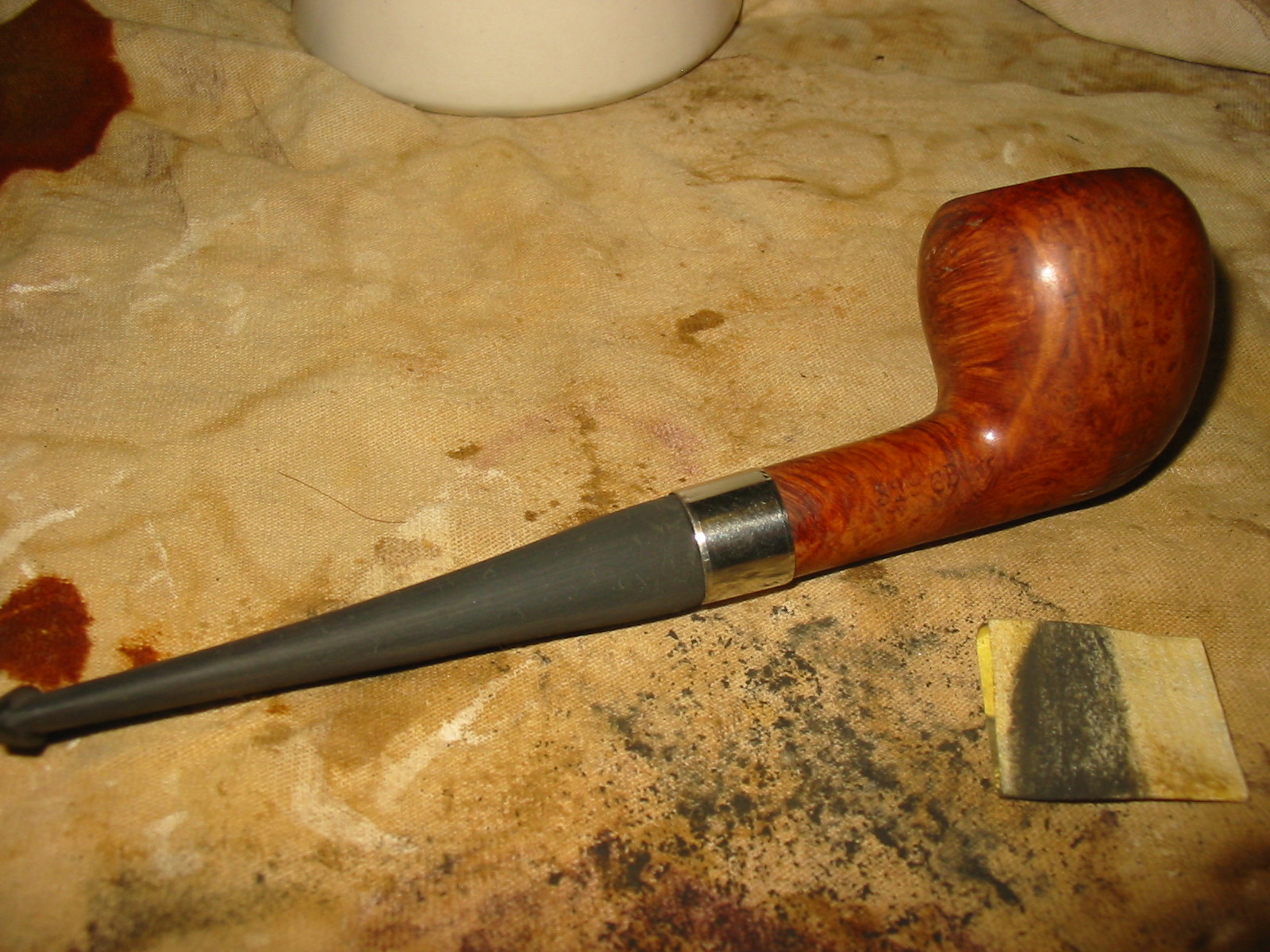
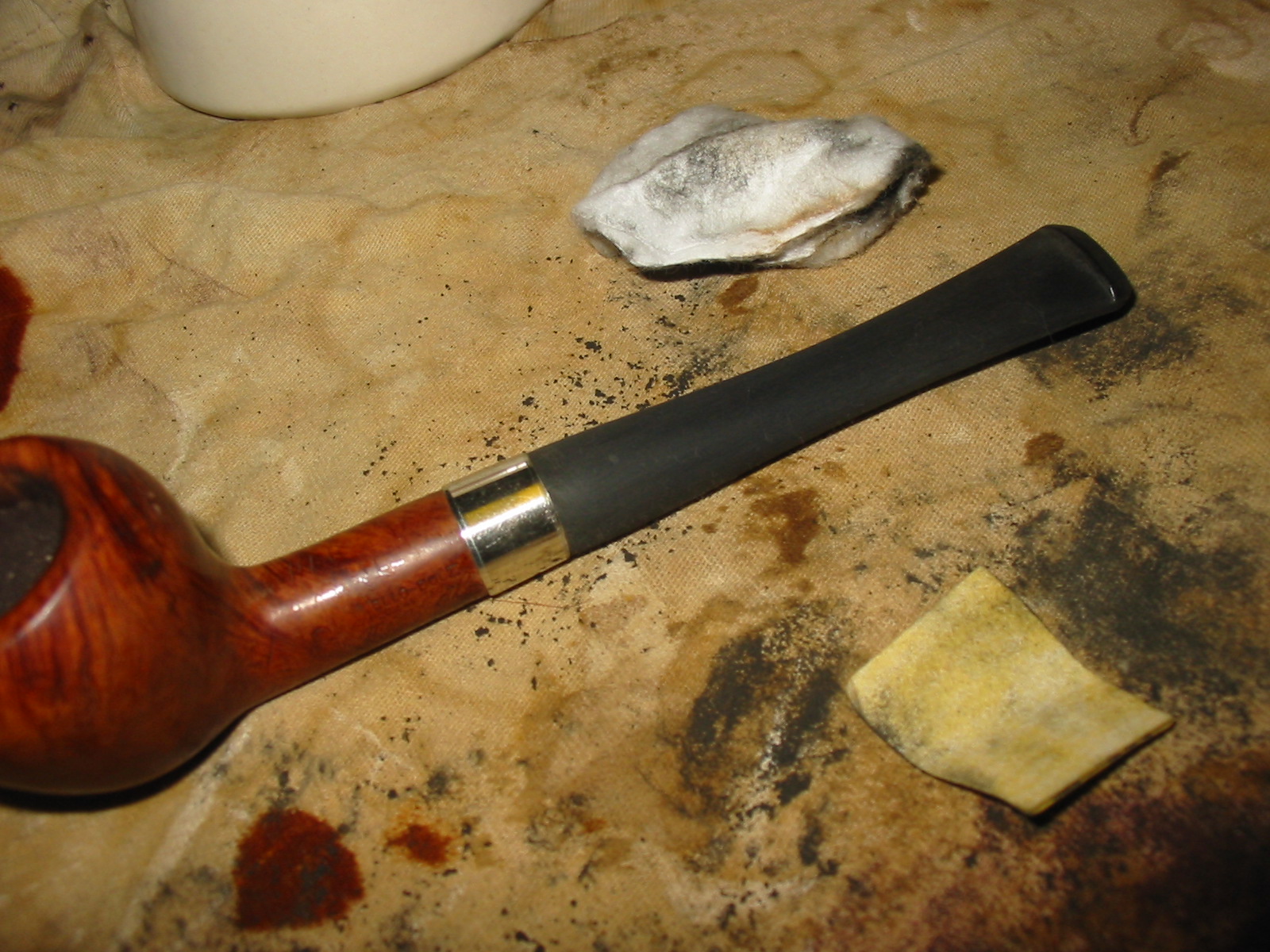
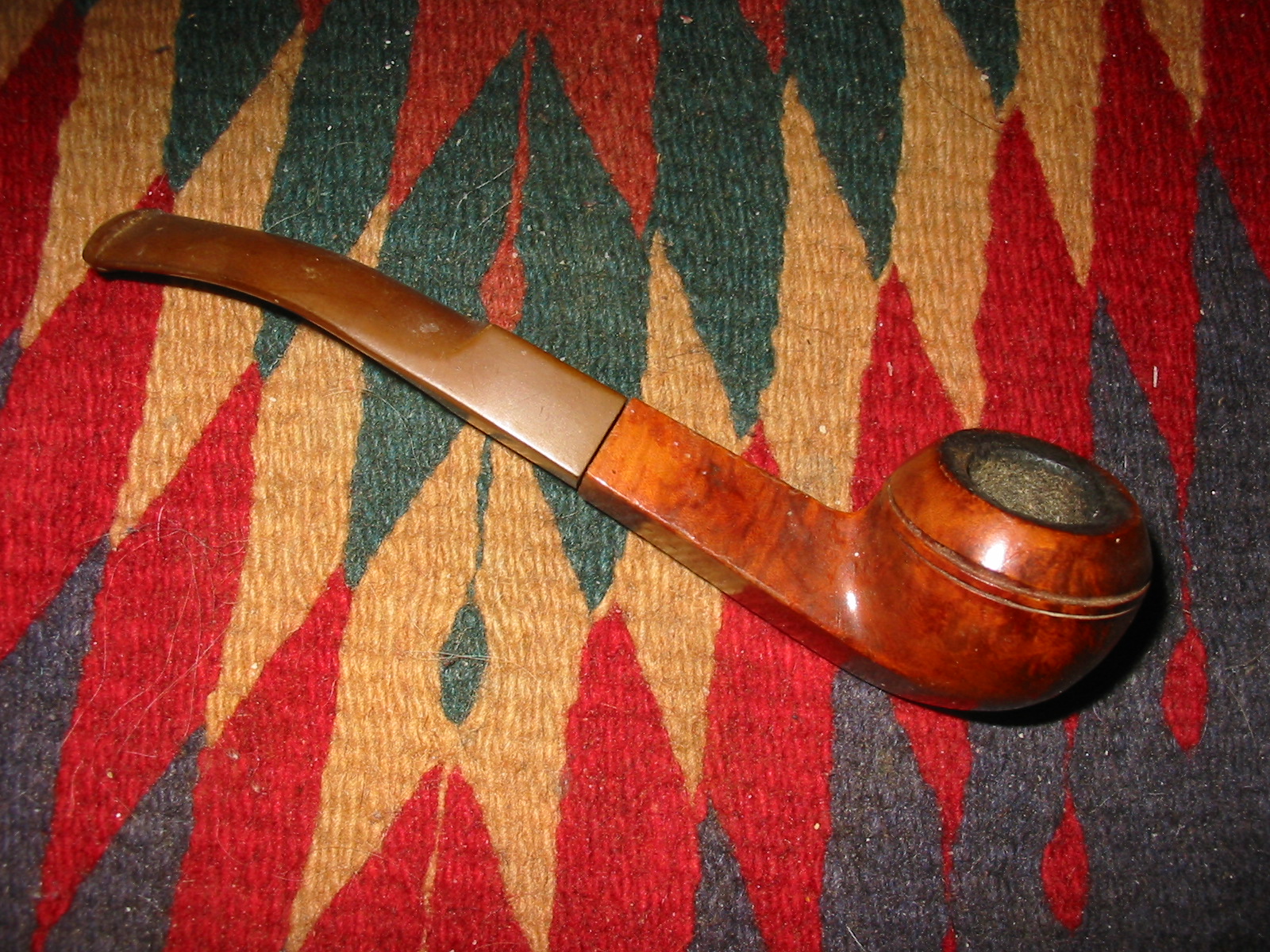
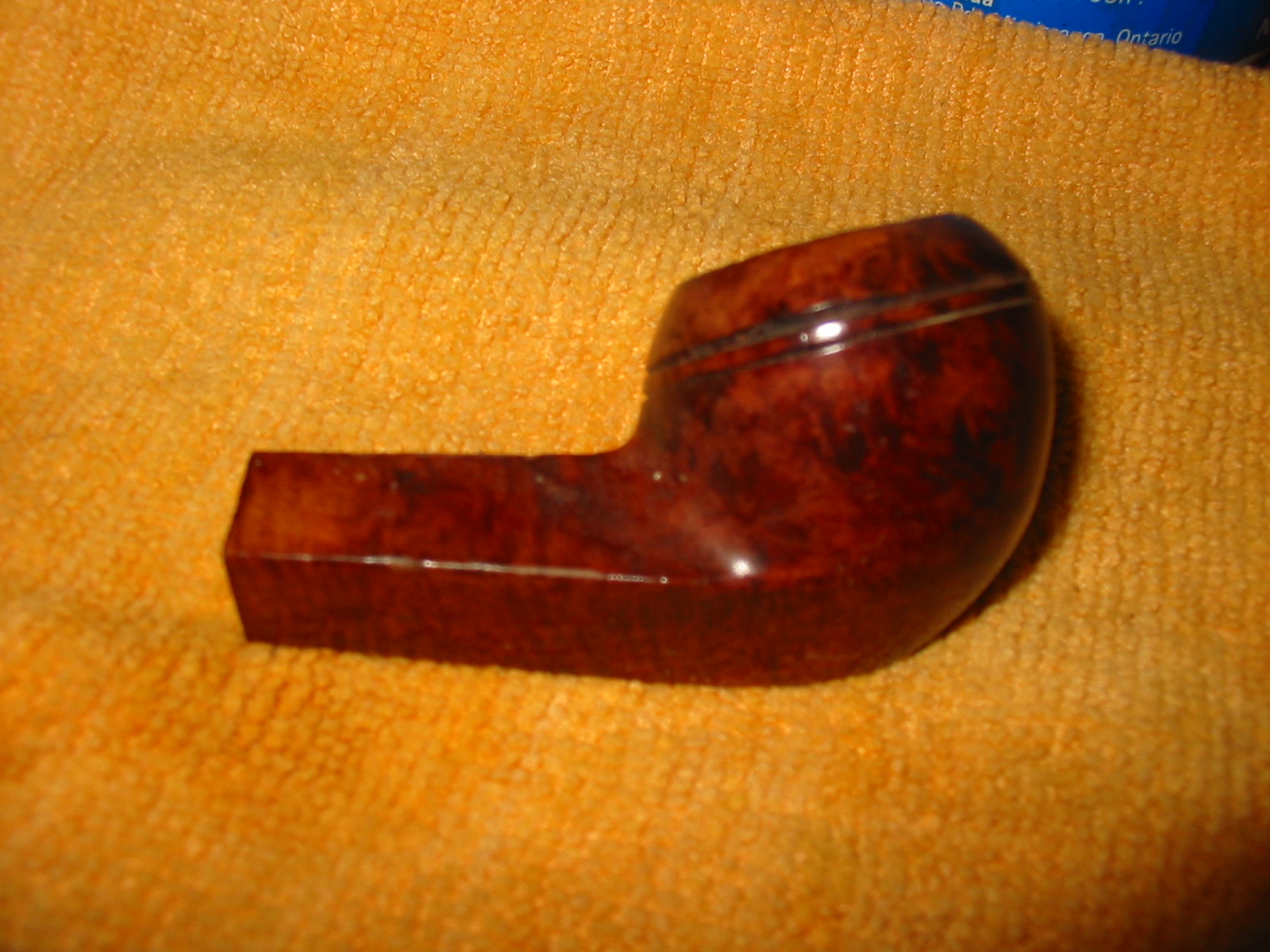
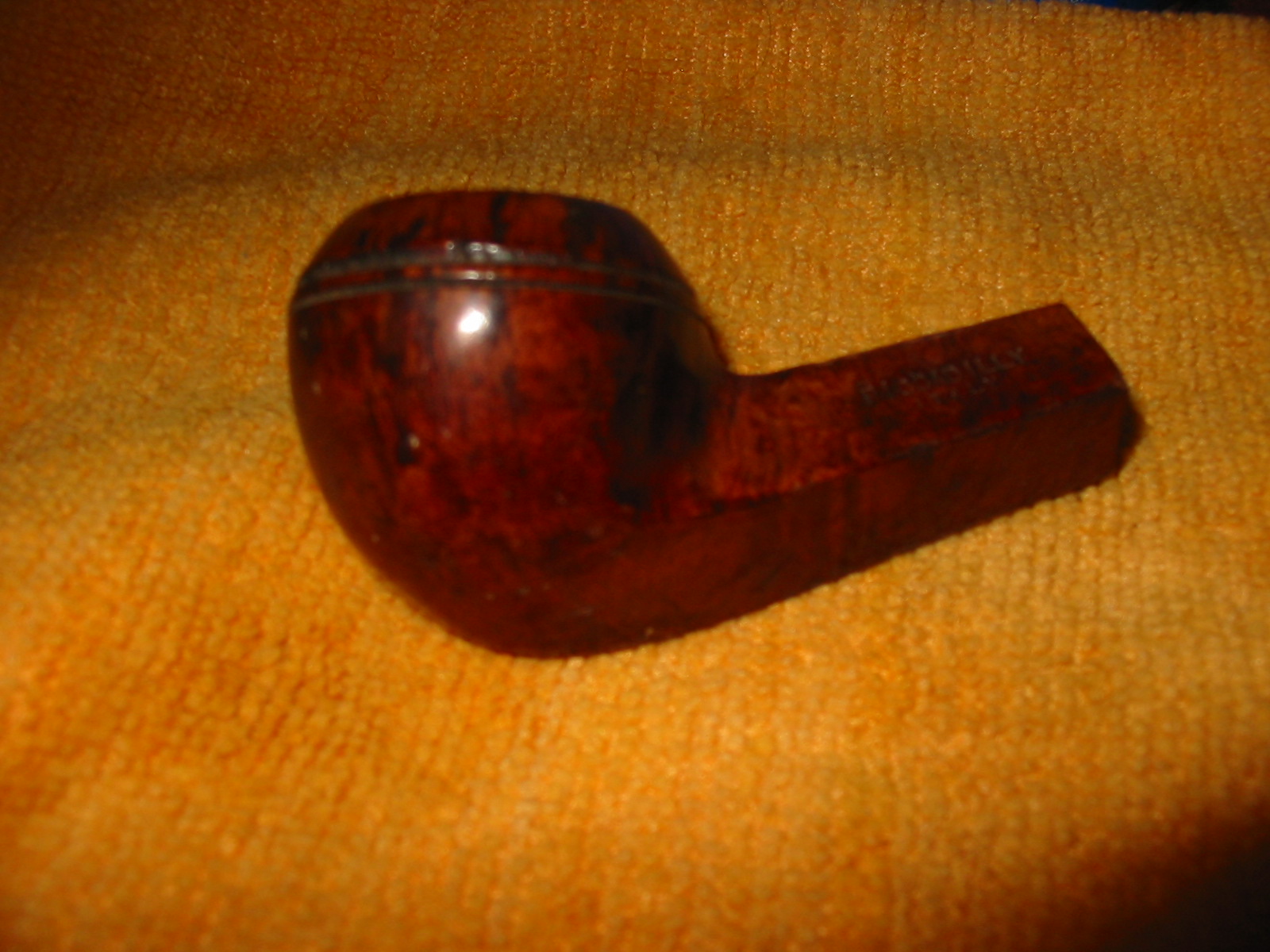
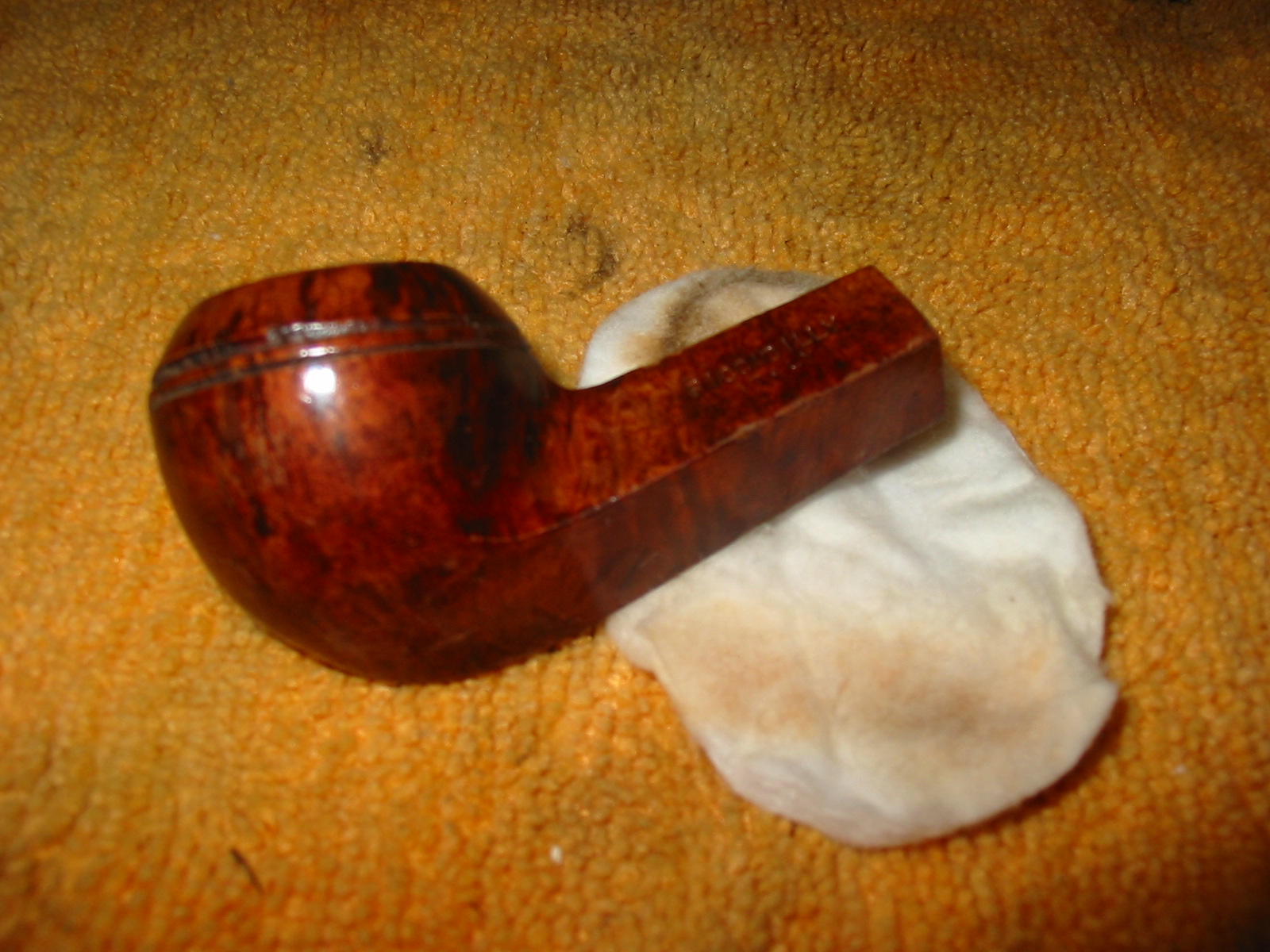
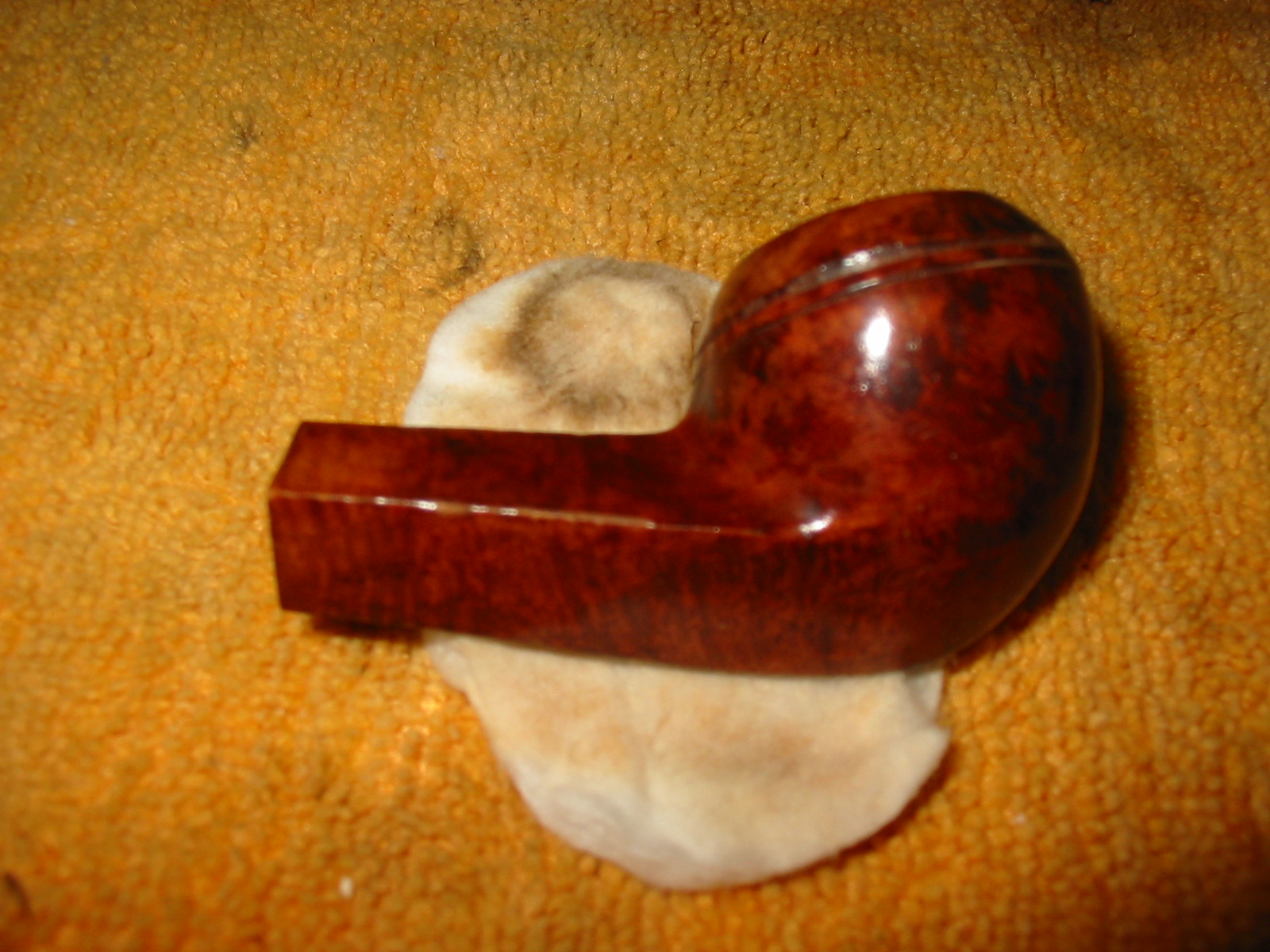
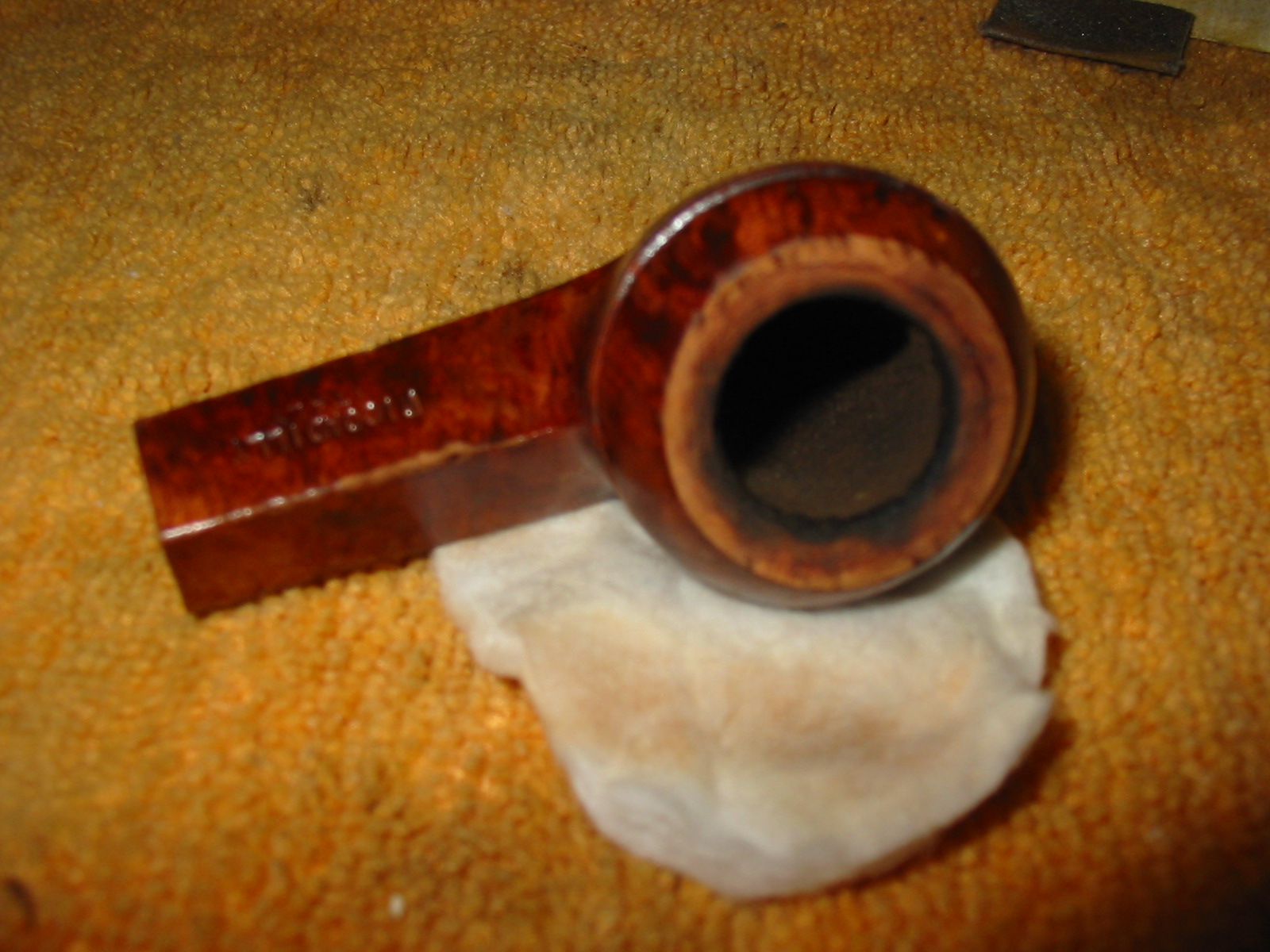
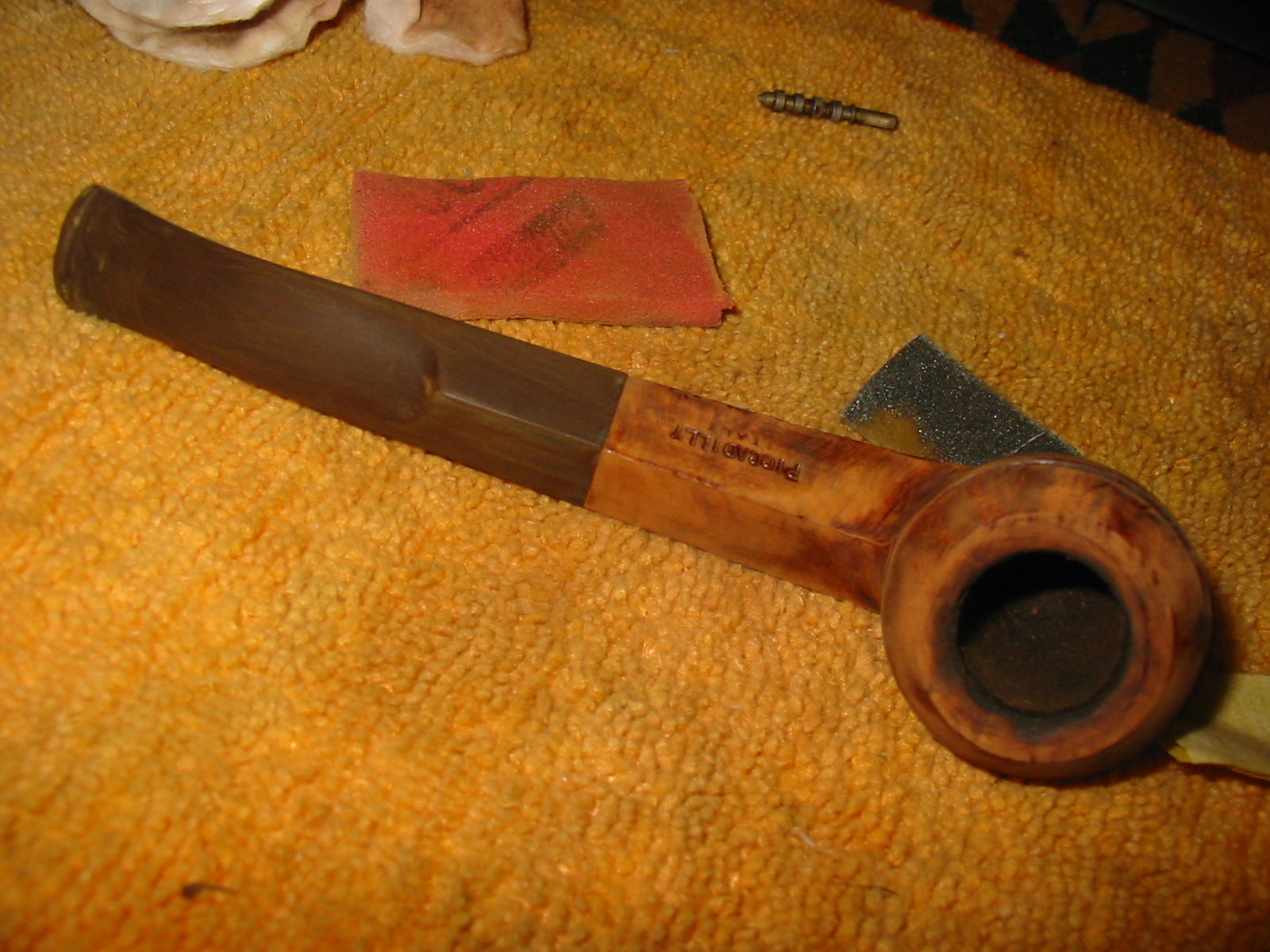
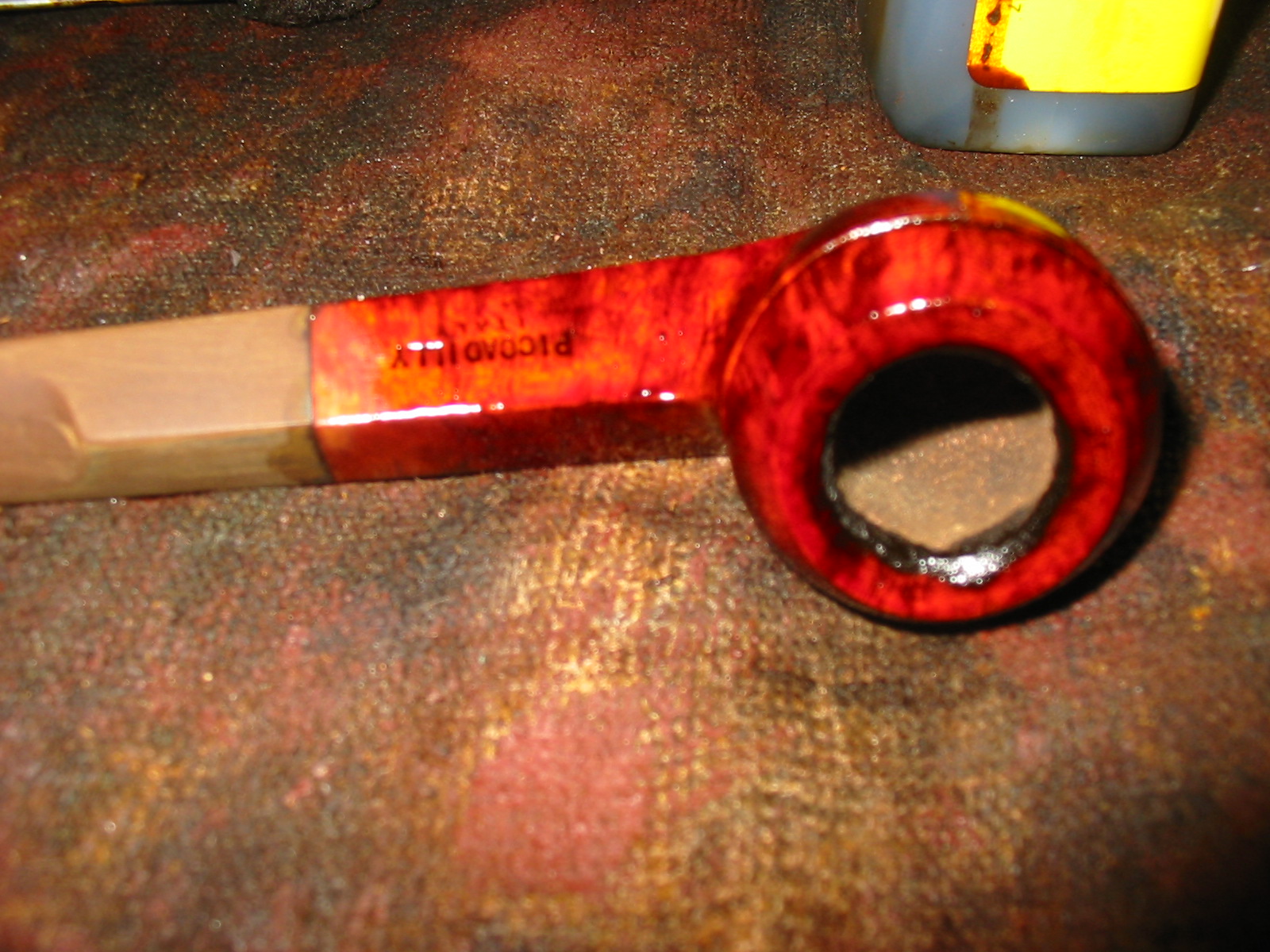
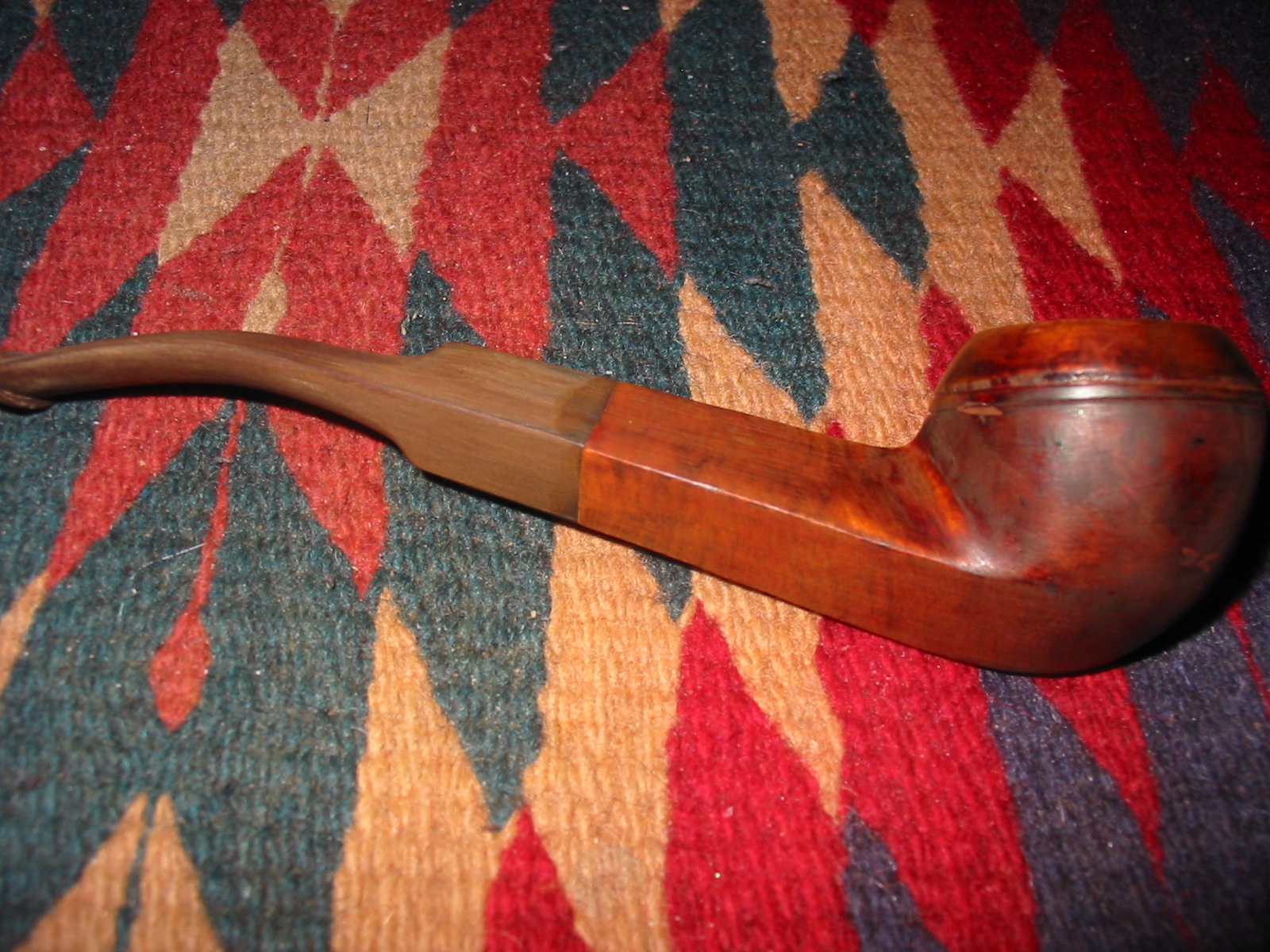
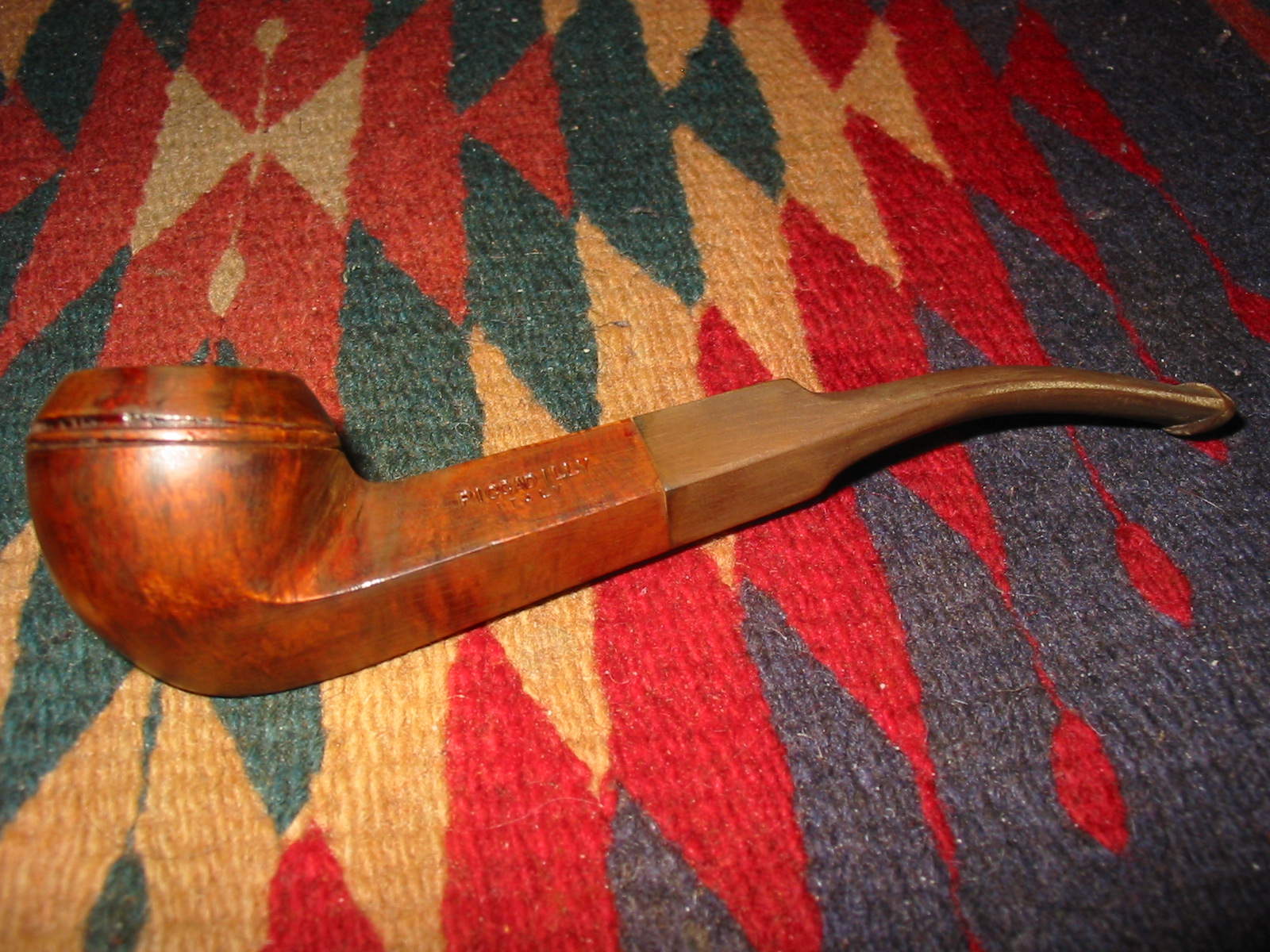
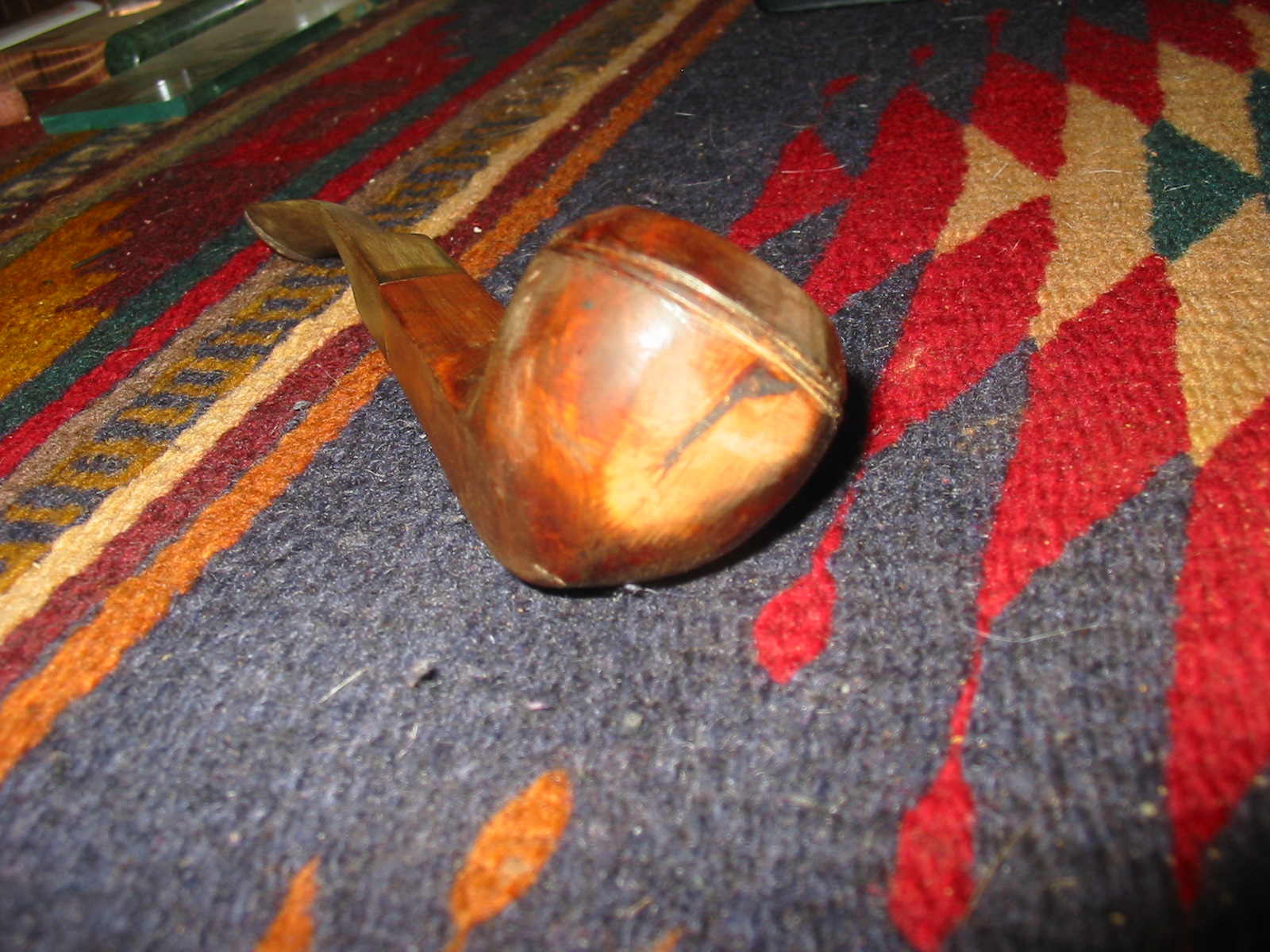
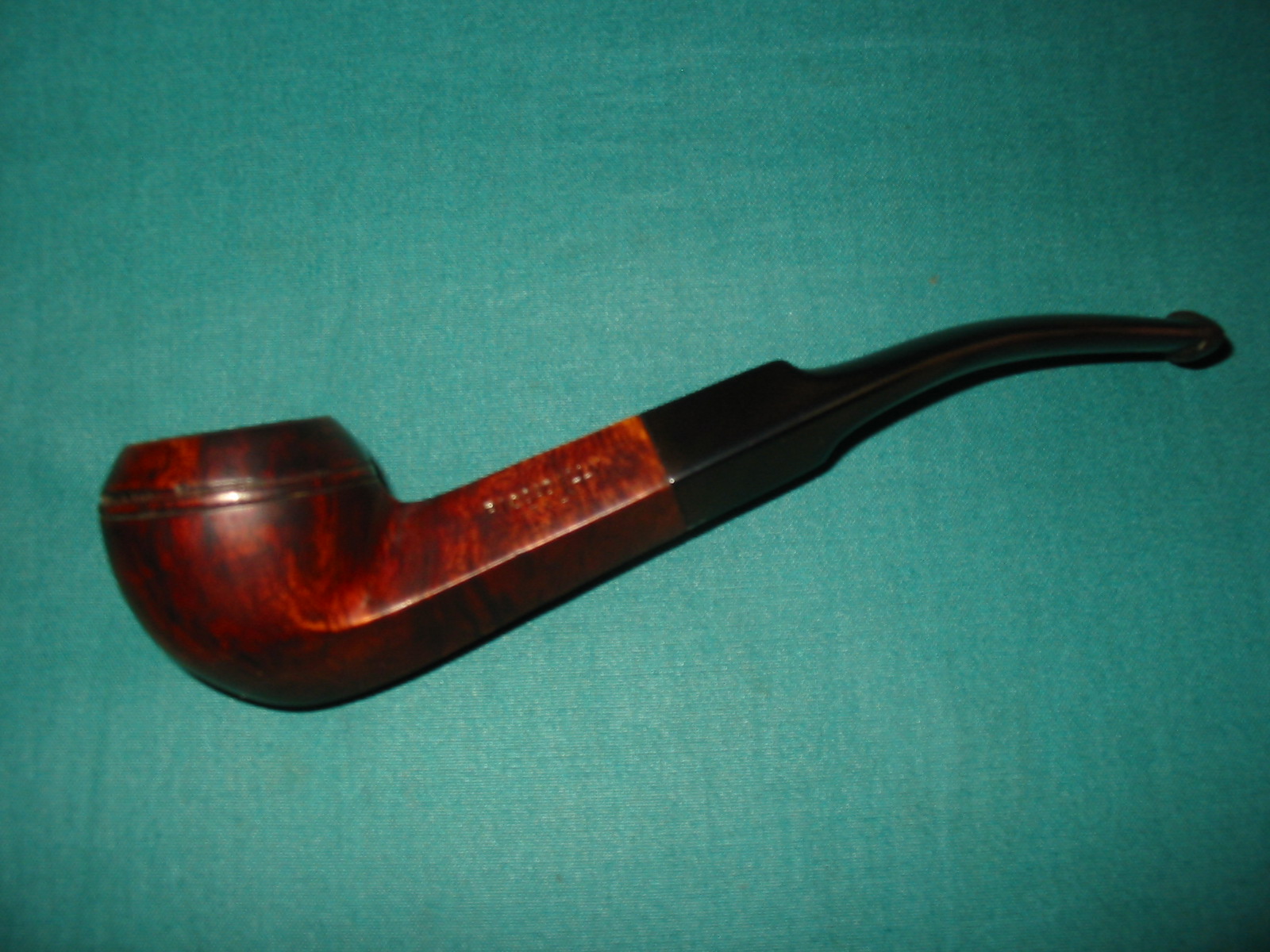
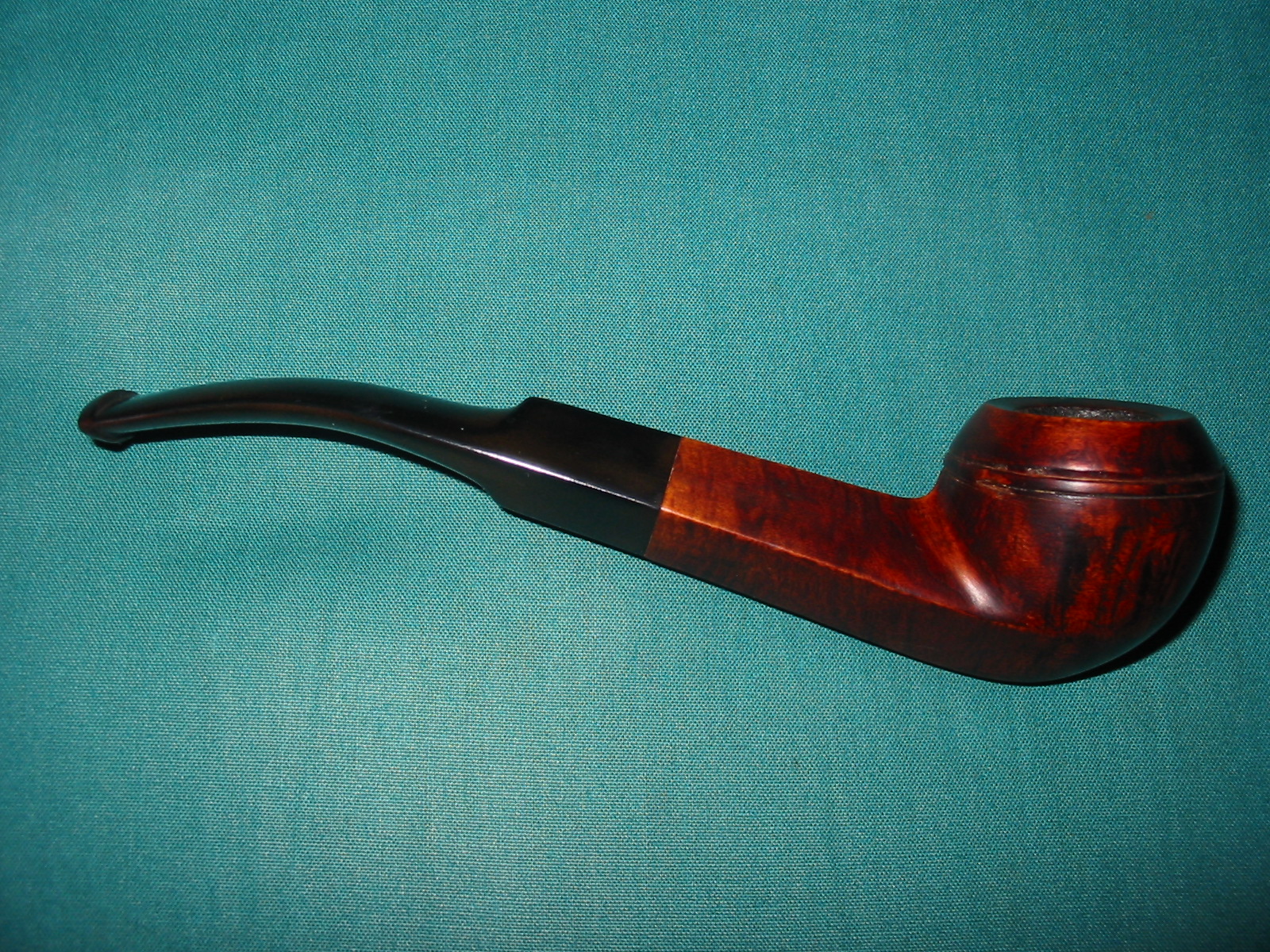
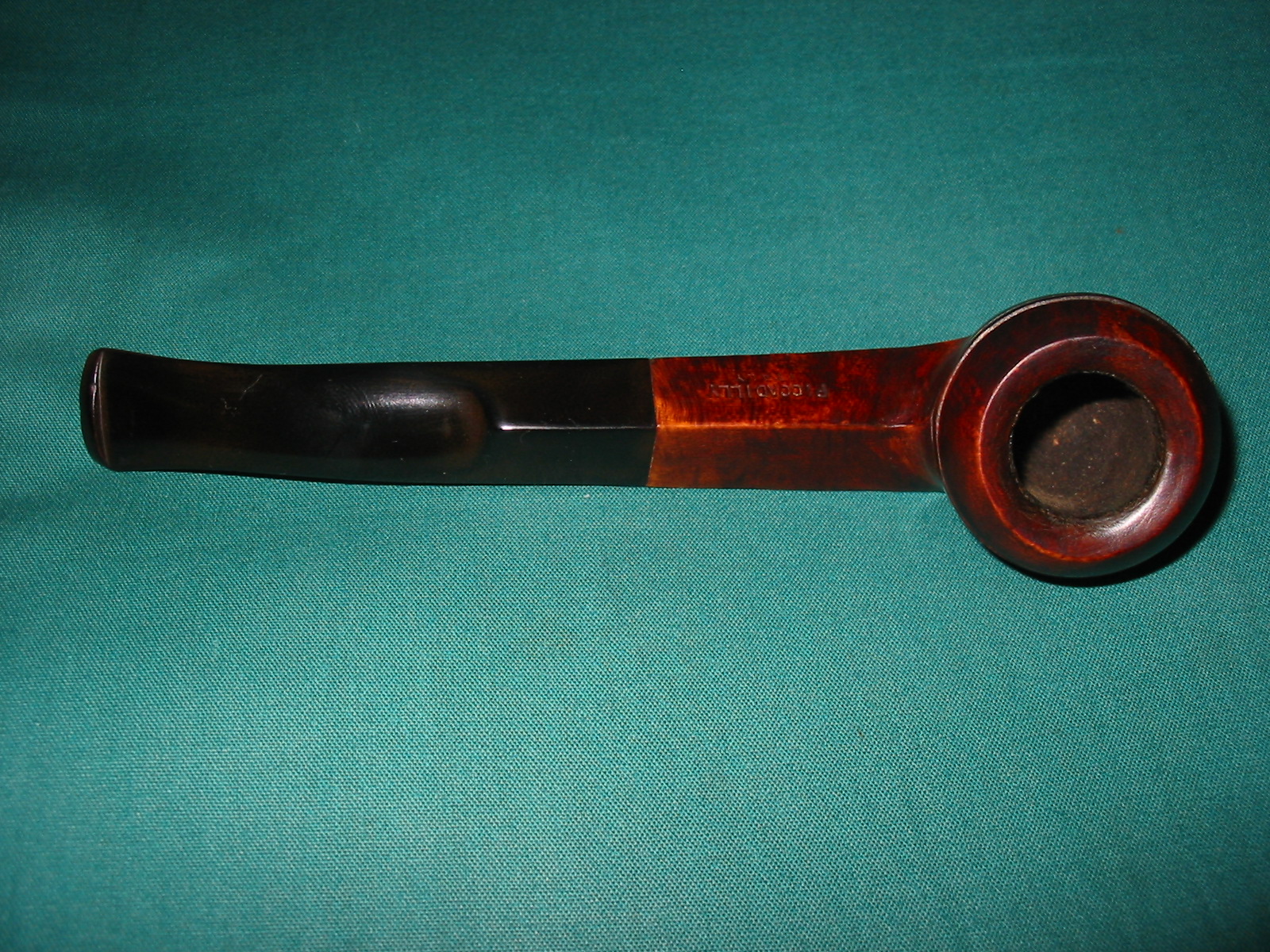
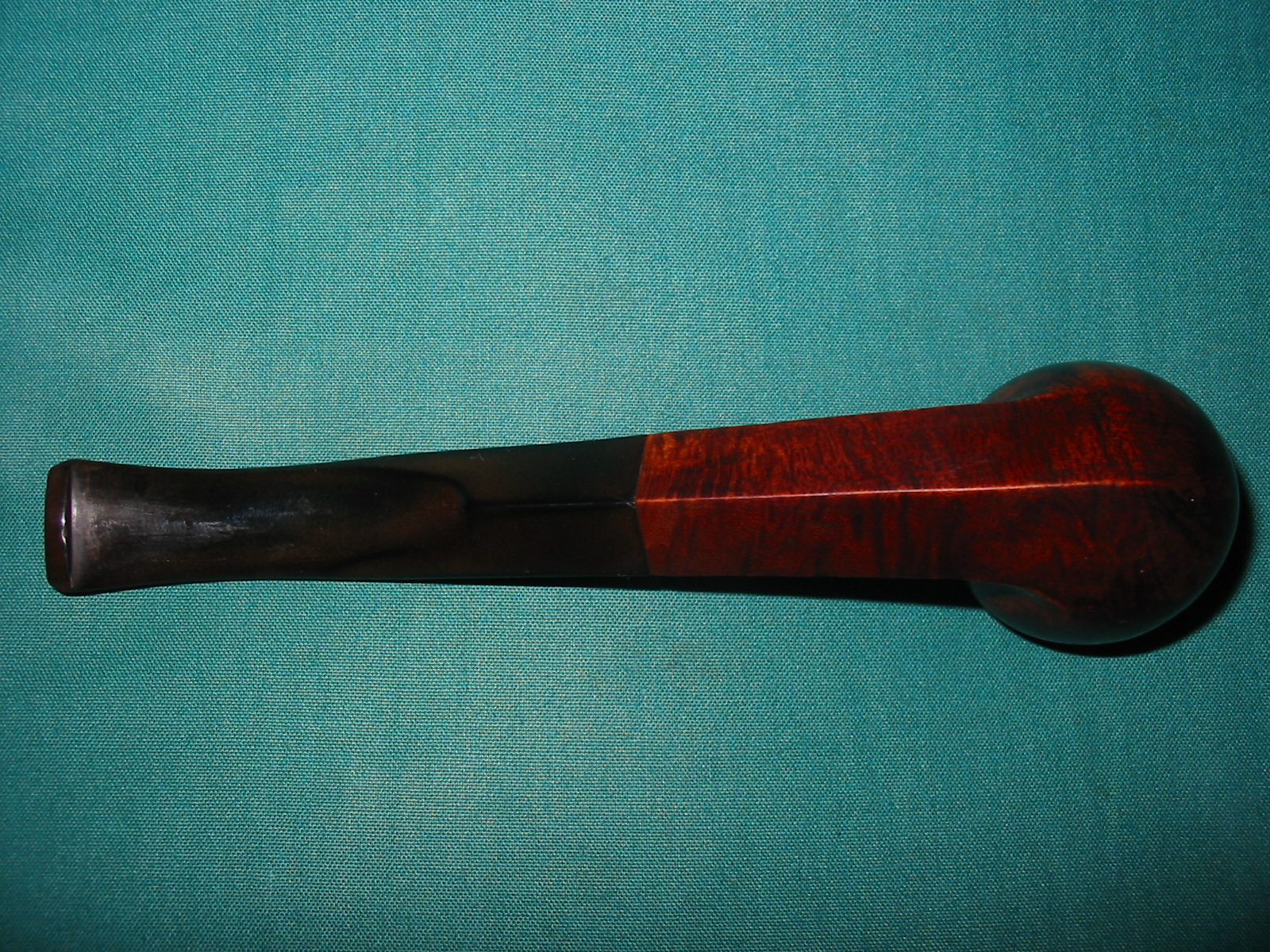
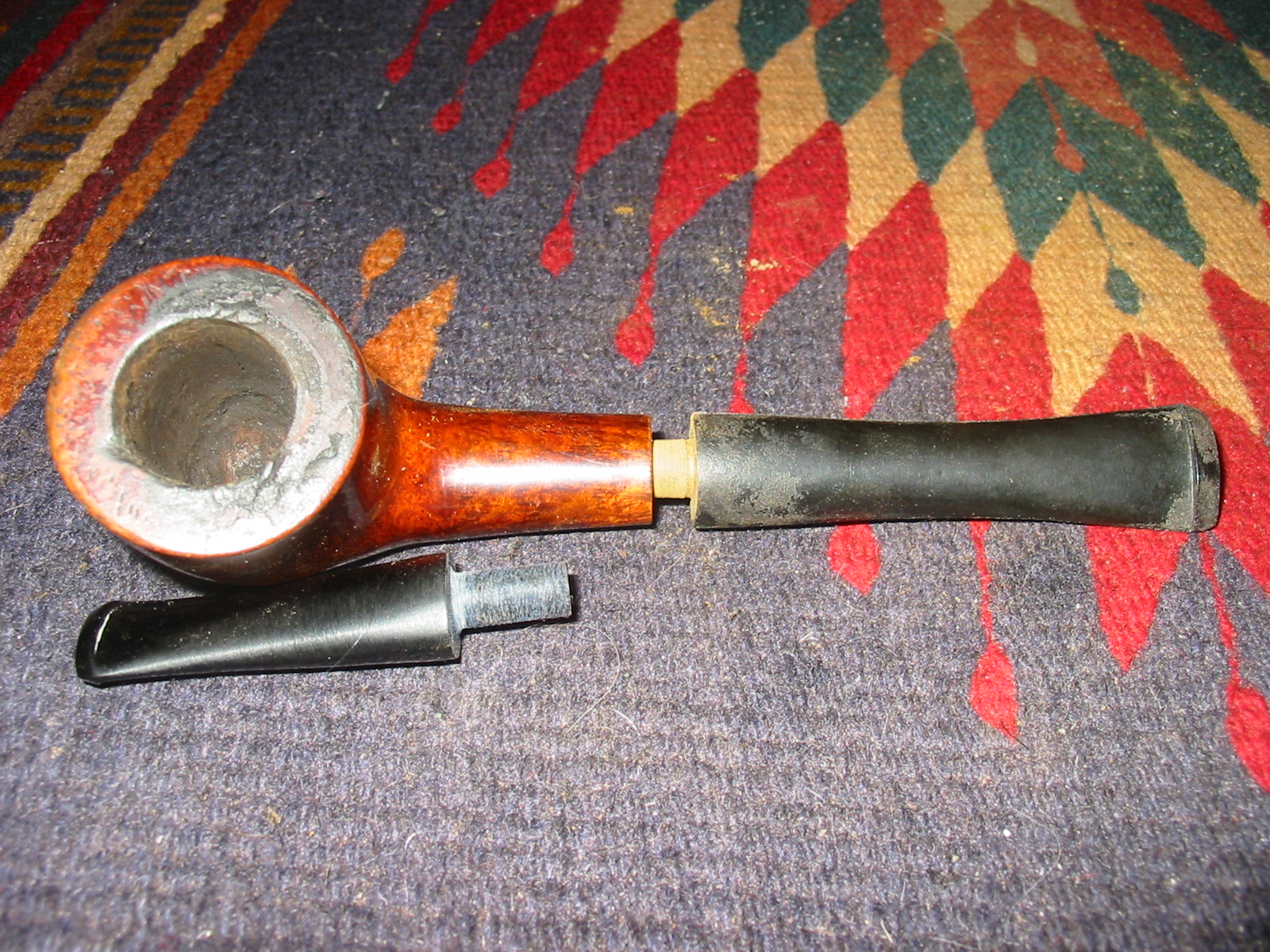
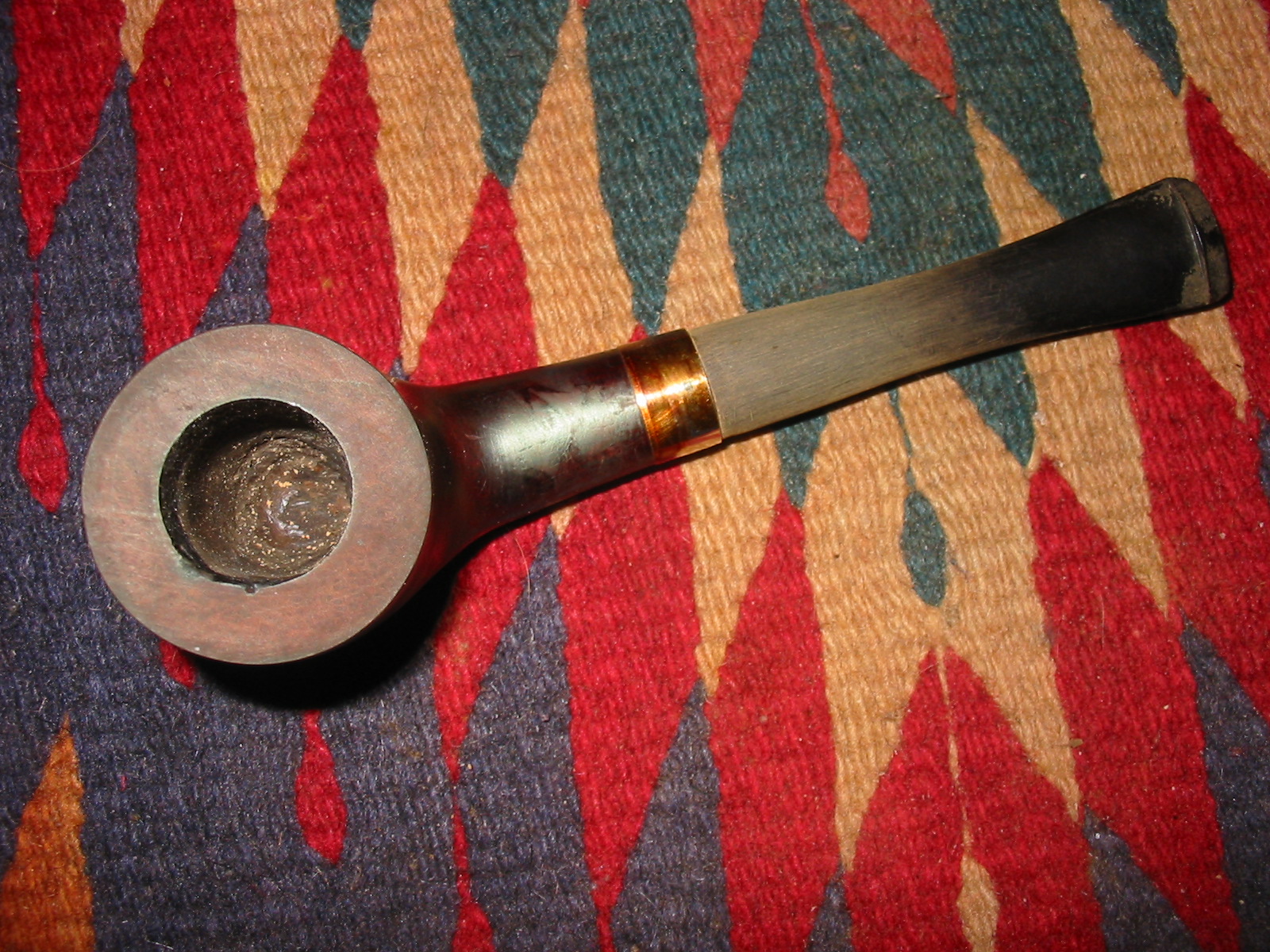
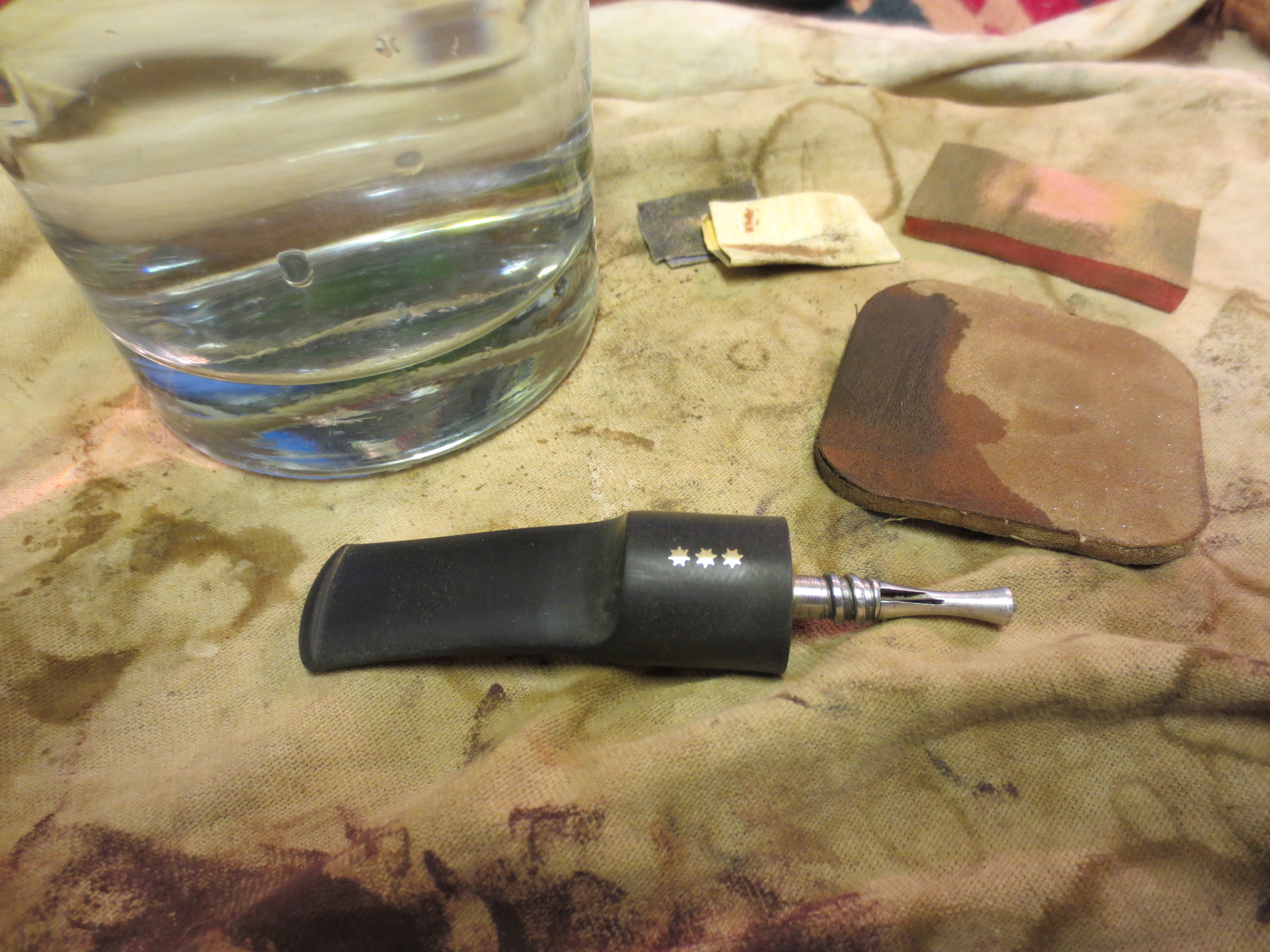
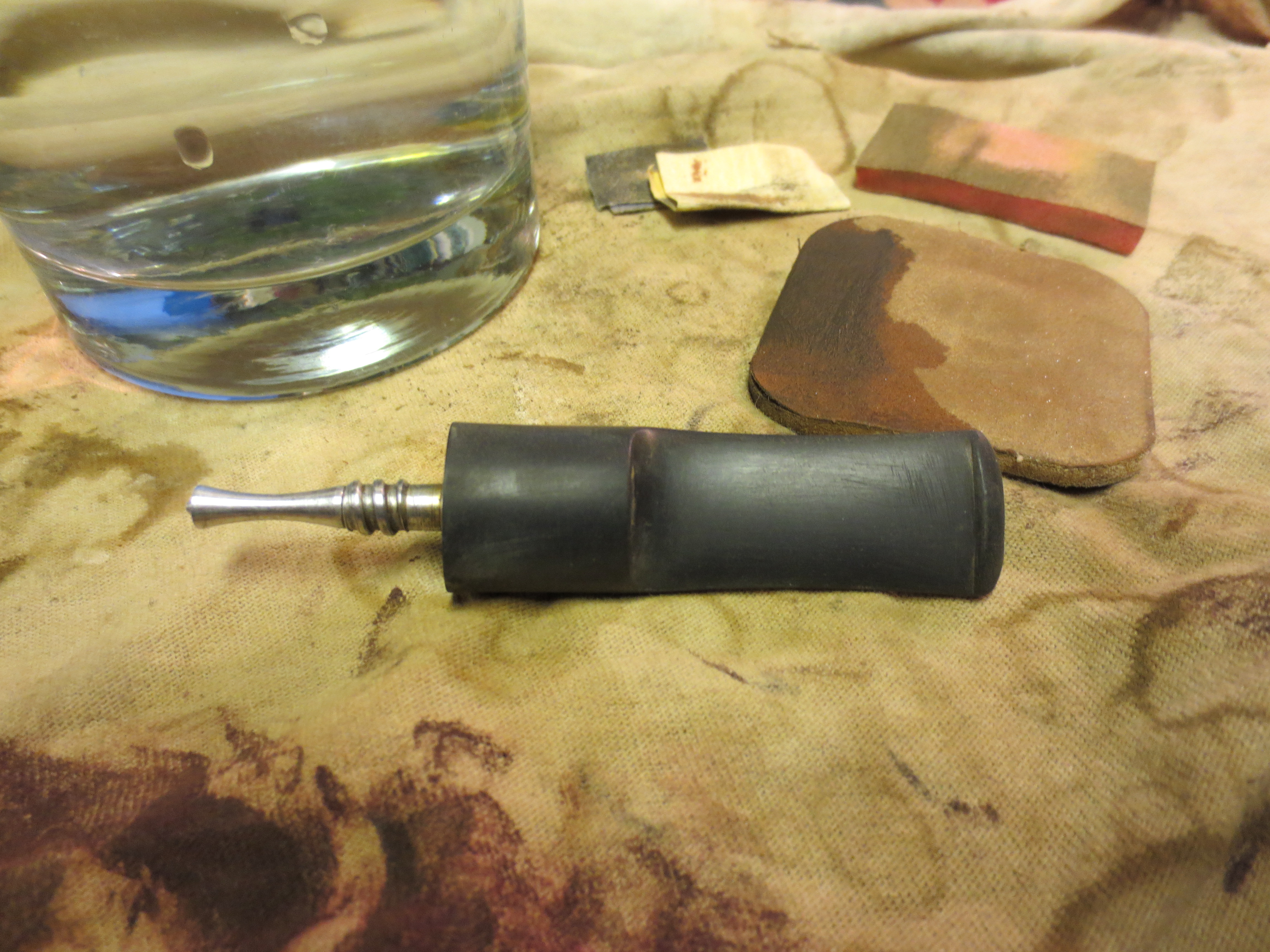
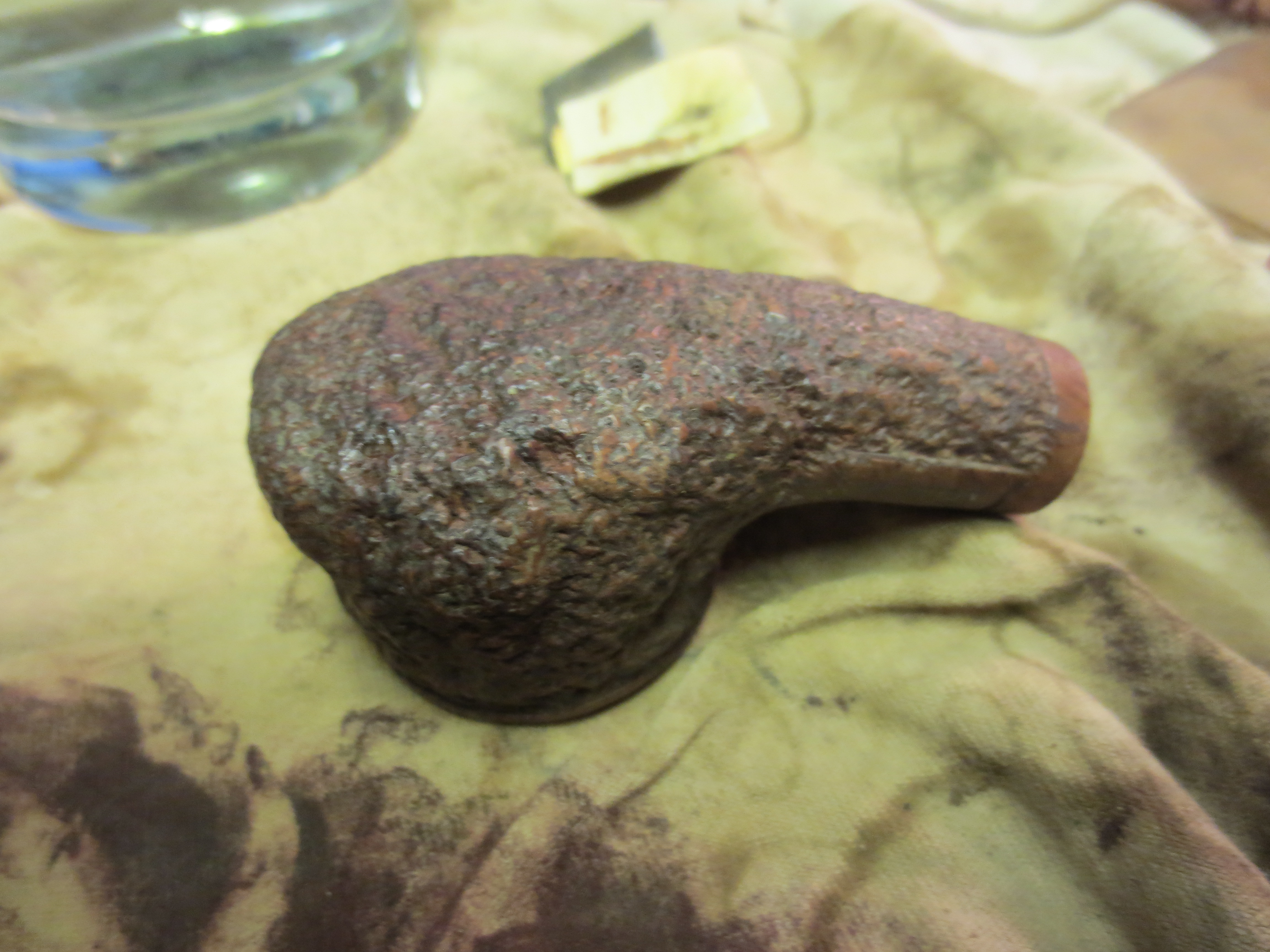
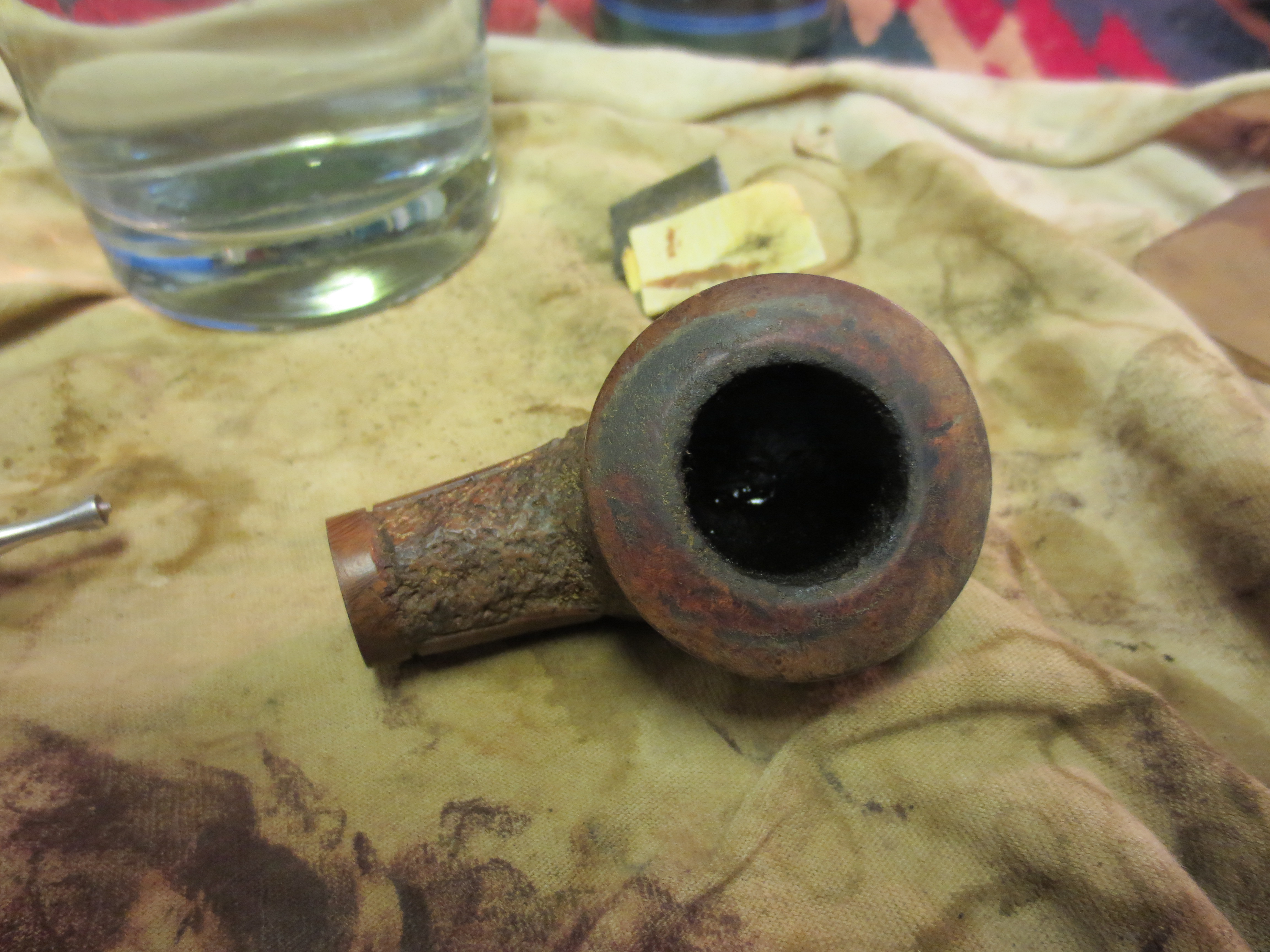
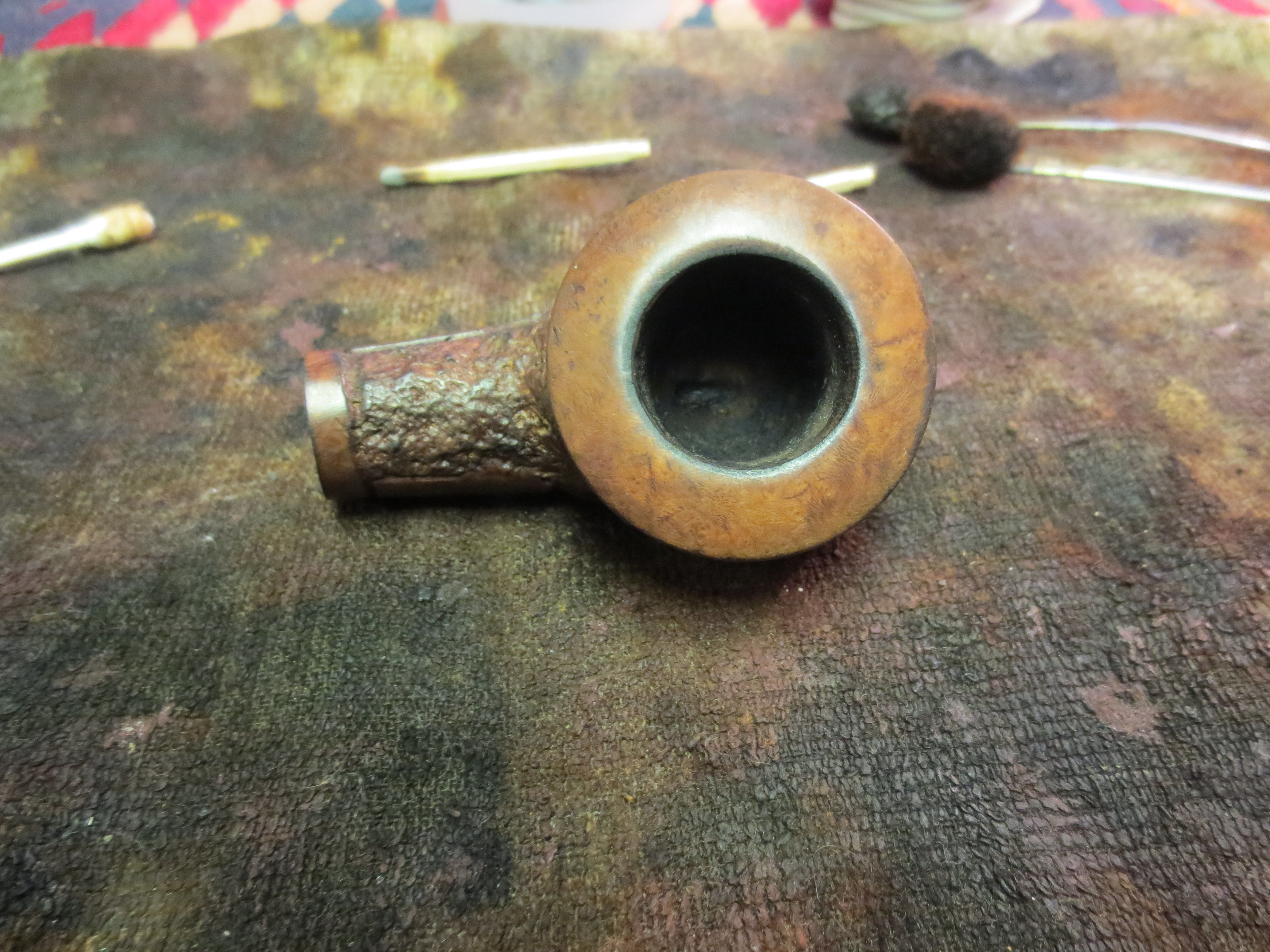
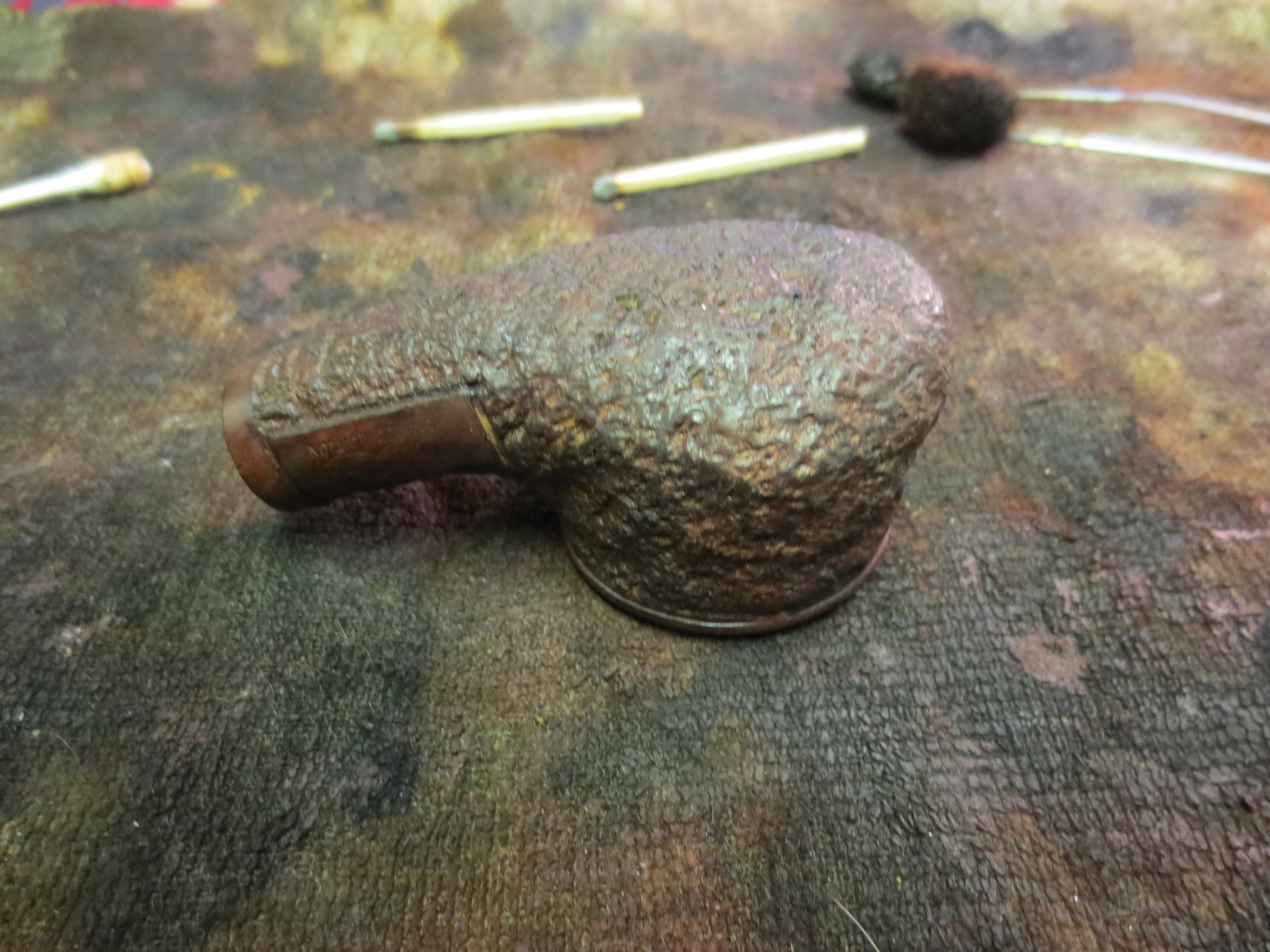
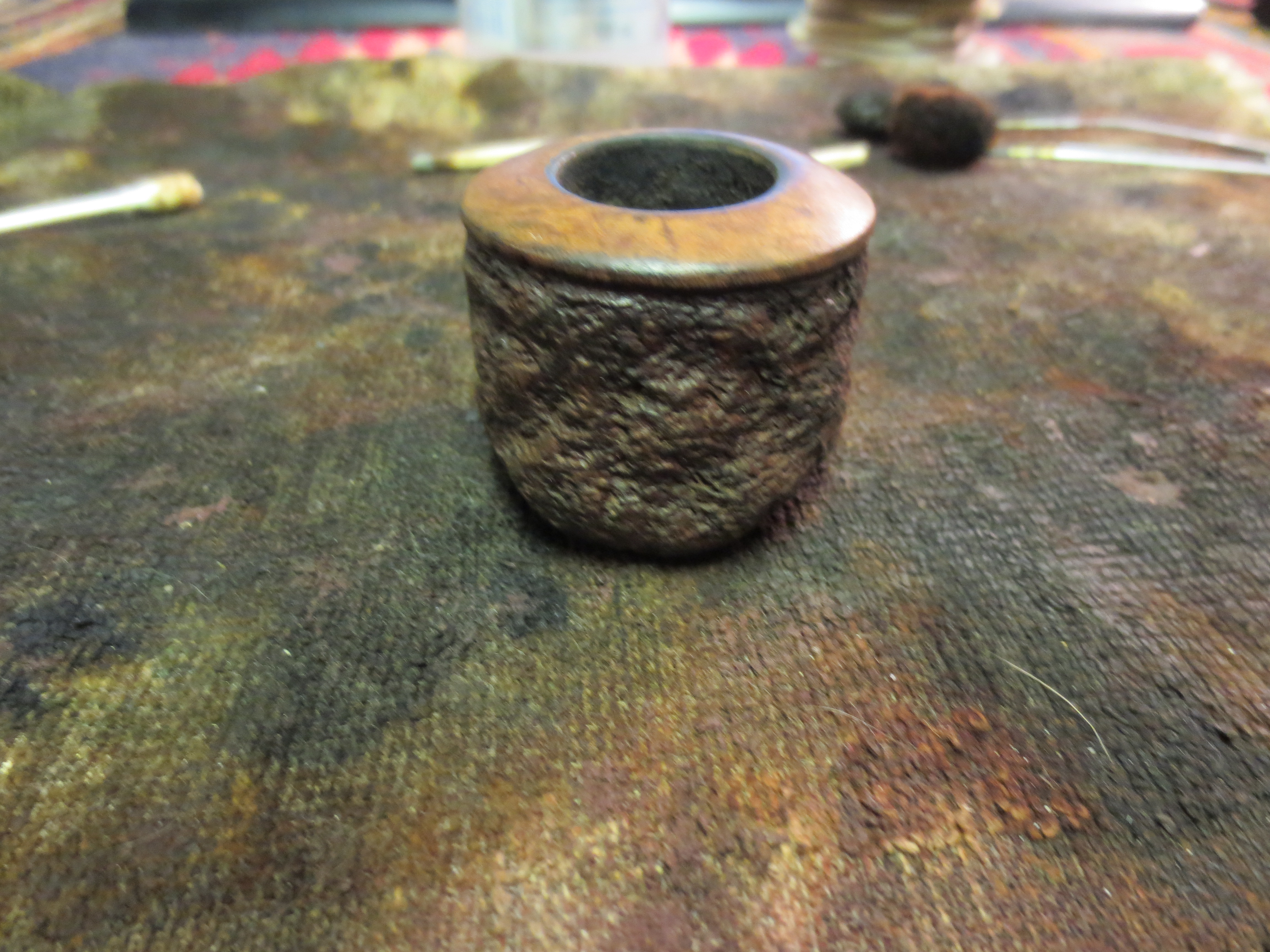
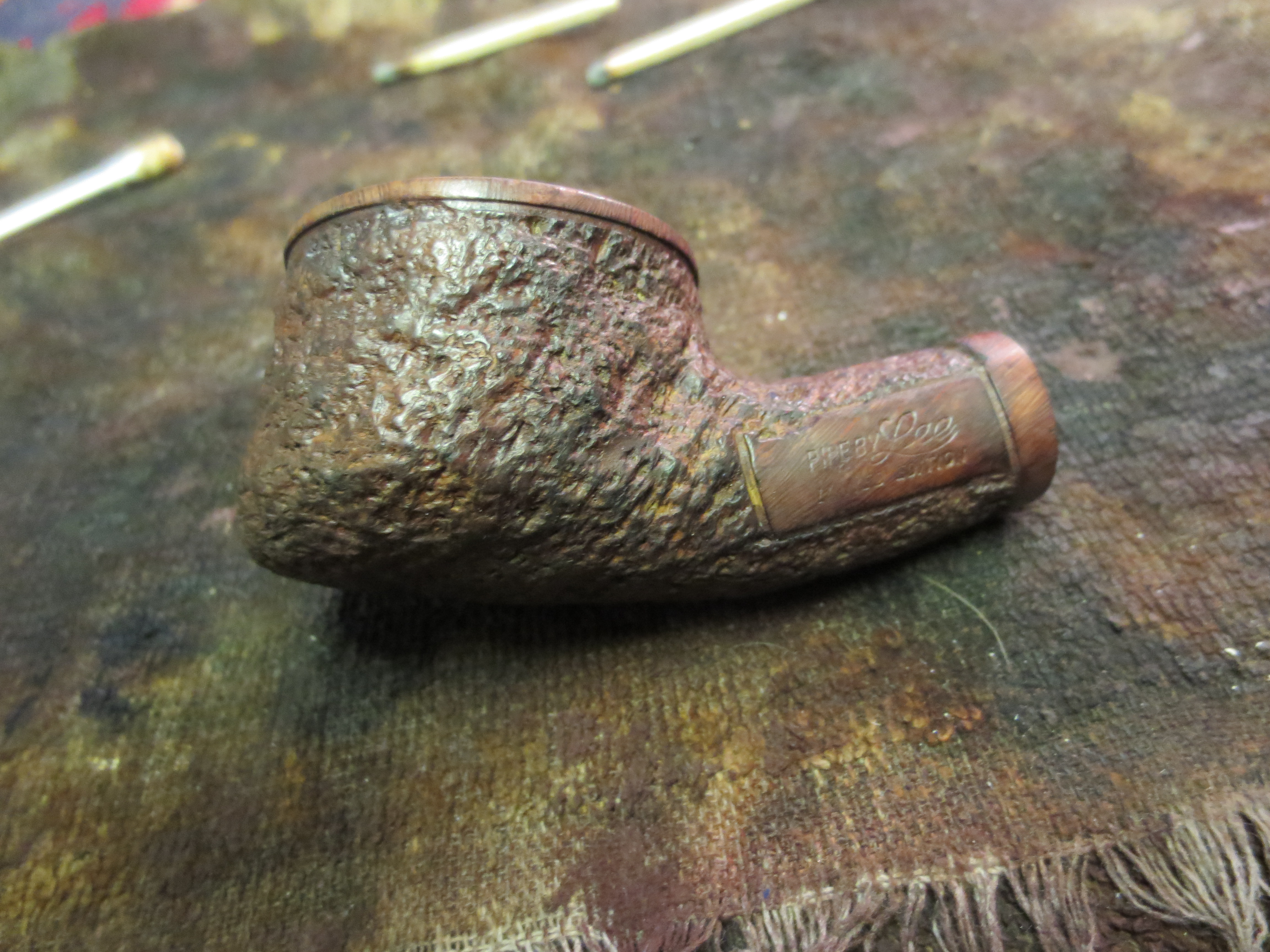
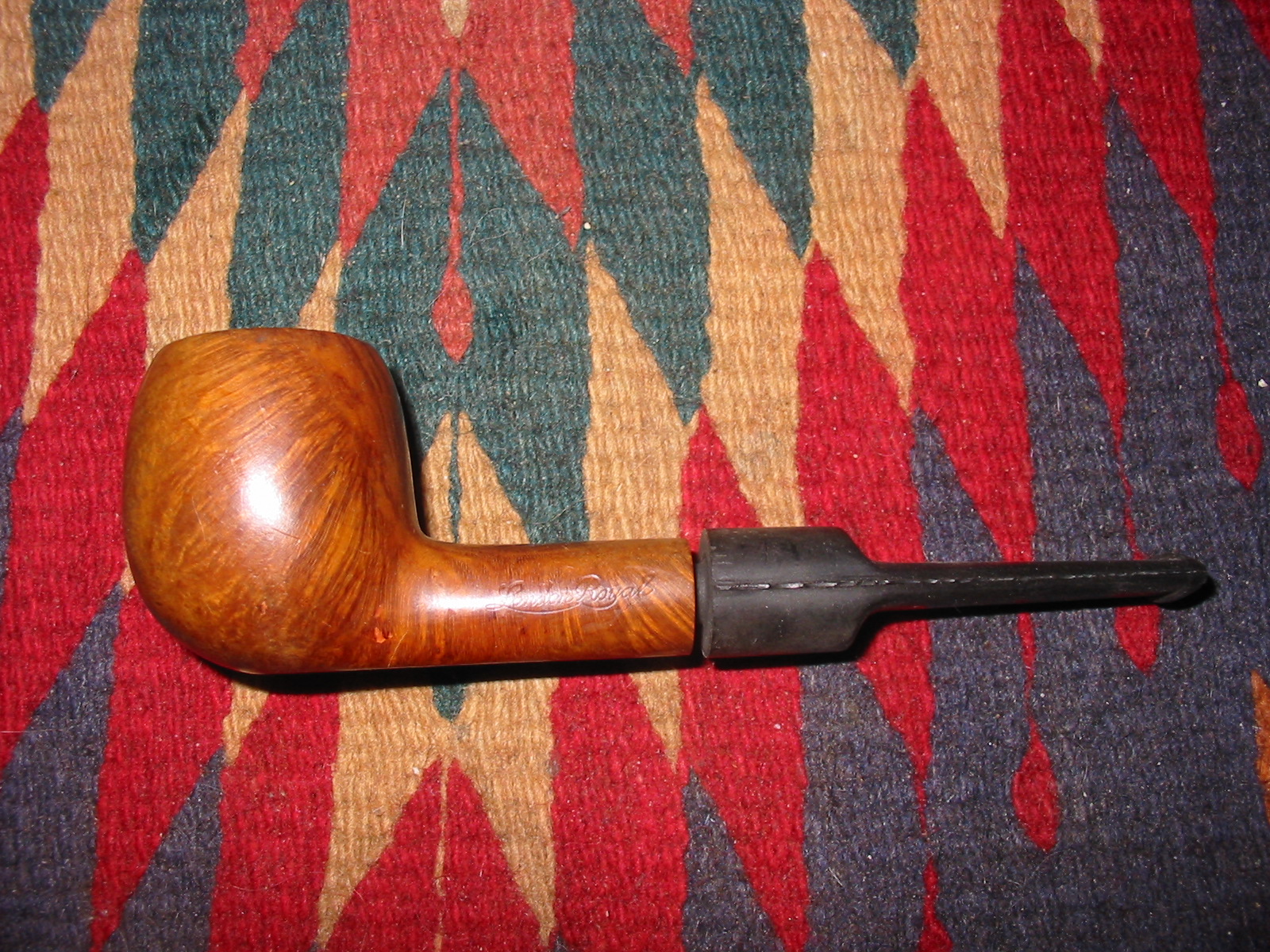
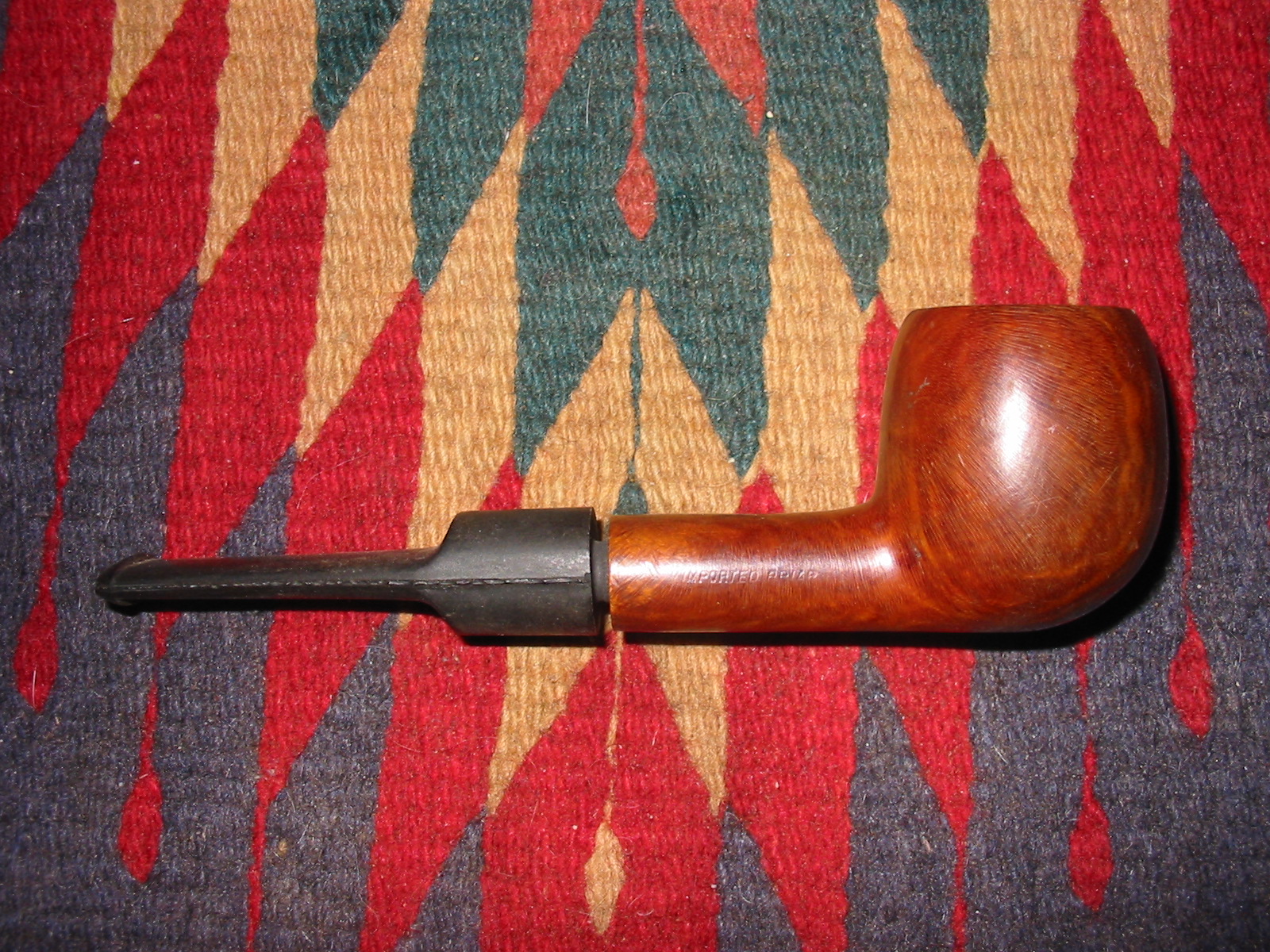
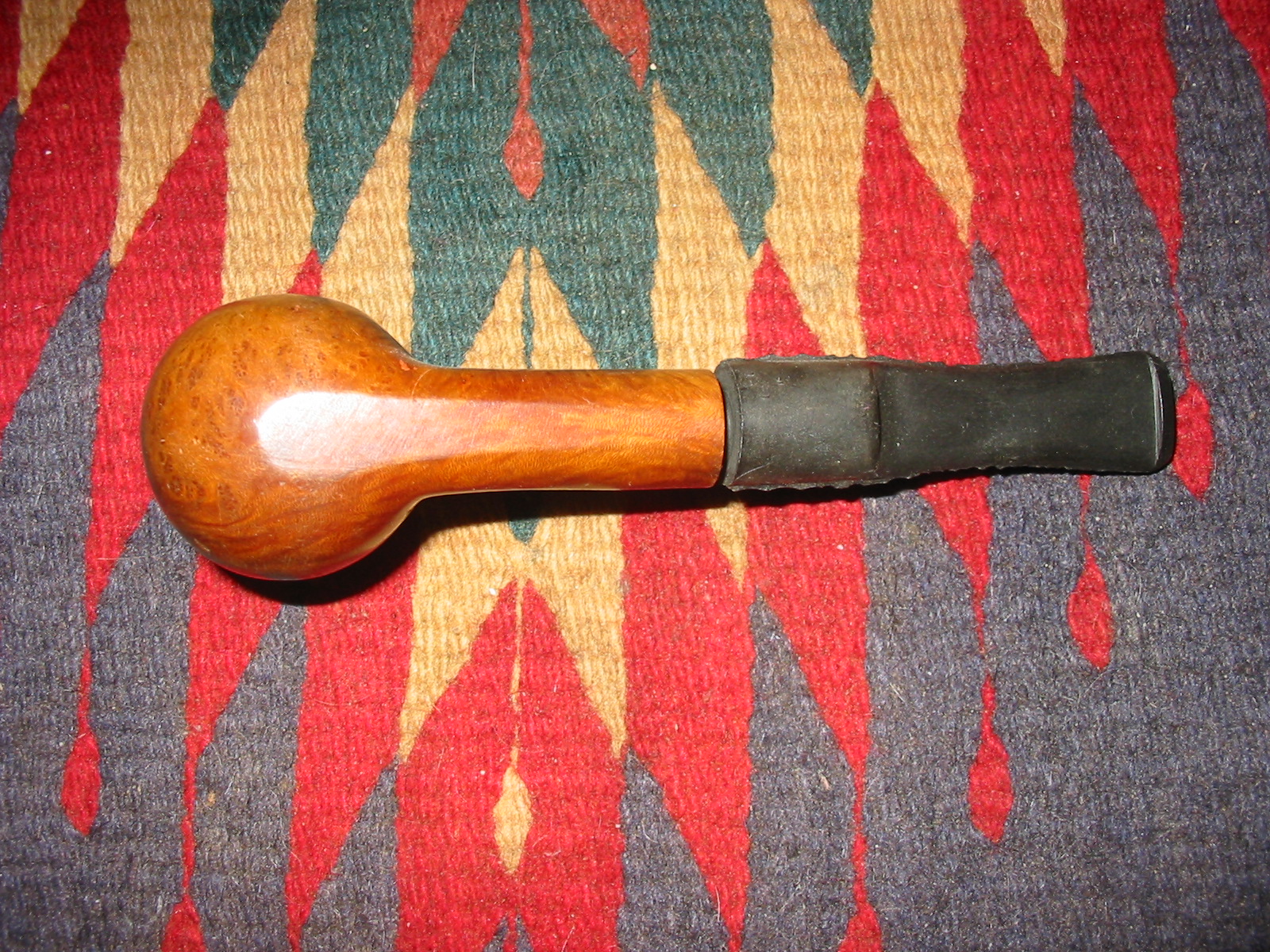
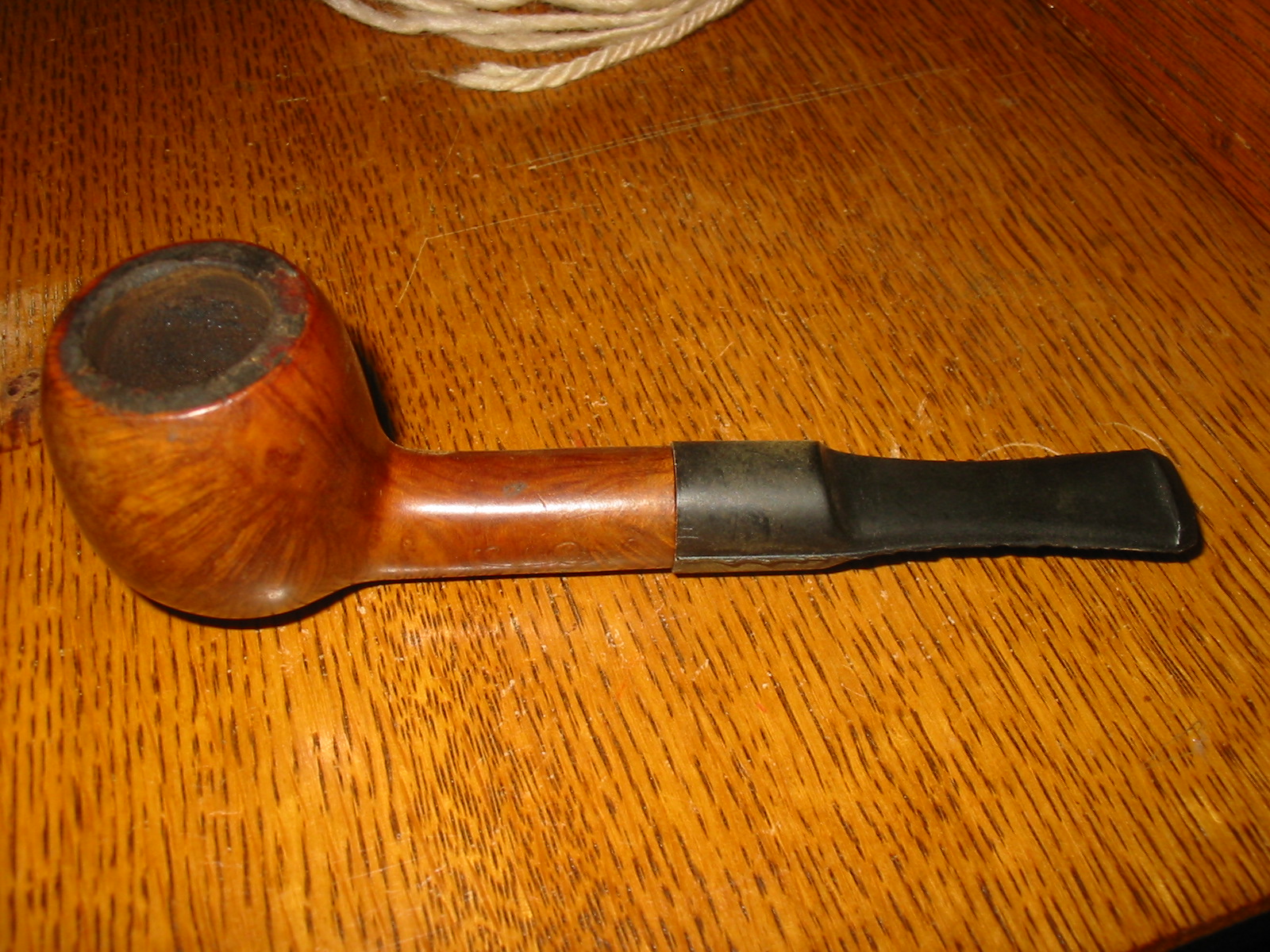
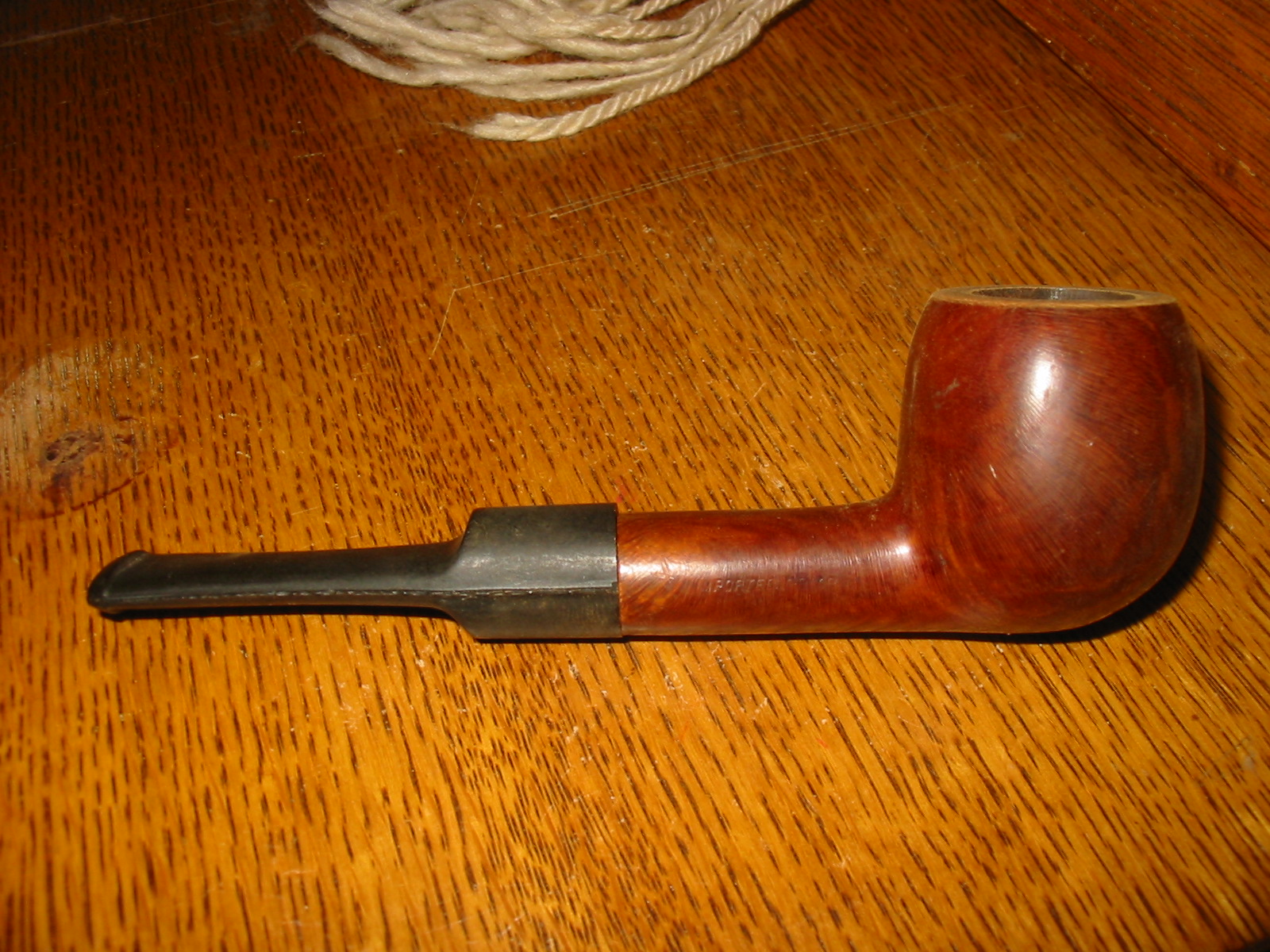
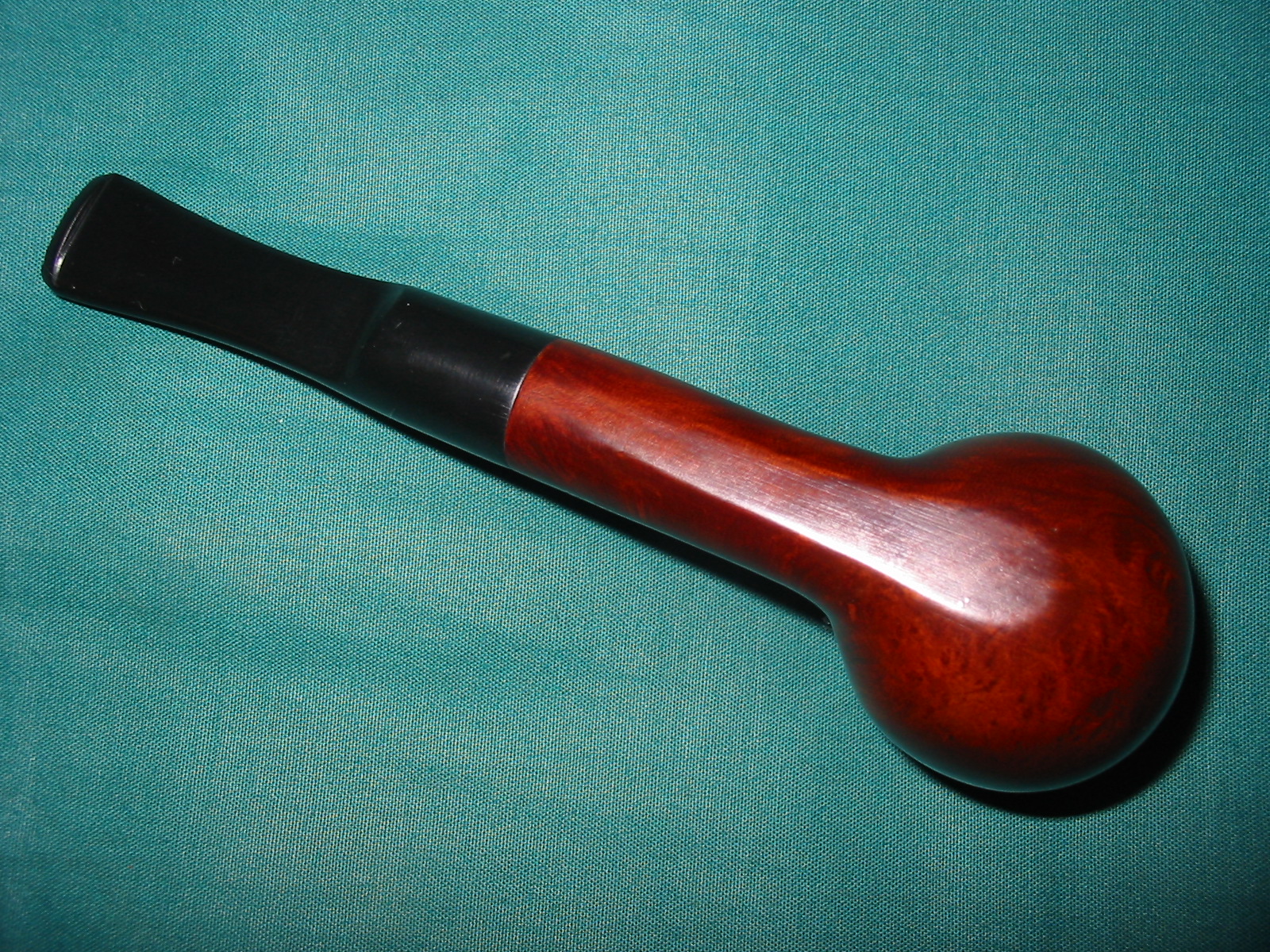
I am down to about 16 pipes in my box to be refurbished and all of them need to be restemmed. Some of them are full of fills or are just pipes that for one reason or another I have avoided dealing with. But I am at the bottom of the box and need something to work on so I am left to choosing from that lot. Last evening I chose this little apple shaped pipe, fit a new stem on it and reworked the finish and the fit of the stem. It is stamped London Royal on the left side of the shank and on the right side Imported Briar. It seems to me that it is thus an American made pipe. I have done no research on it so I have no idea of the manufacturer. The first series of four photos show the pipe after I turned a tenon to fit the shank. I used a new stem blank that is a nice hard vulcanite that seems less prone to oxidize. The dust from sanding is black. You can see the shape of the bowl and the condition it was in when I started in these photos.
Image

The tenon was long for the shank so it would need to be taken down until it fits snugly against the bottom of the mortise. You can see from the photos the small fill on the bottom of the left side of the bowl. The stem blank would also need to be cleaned up to remove the remnants of the casting.
ImageImage

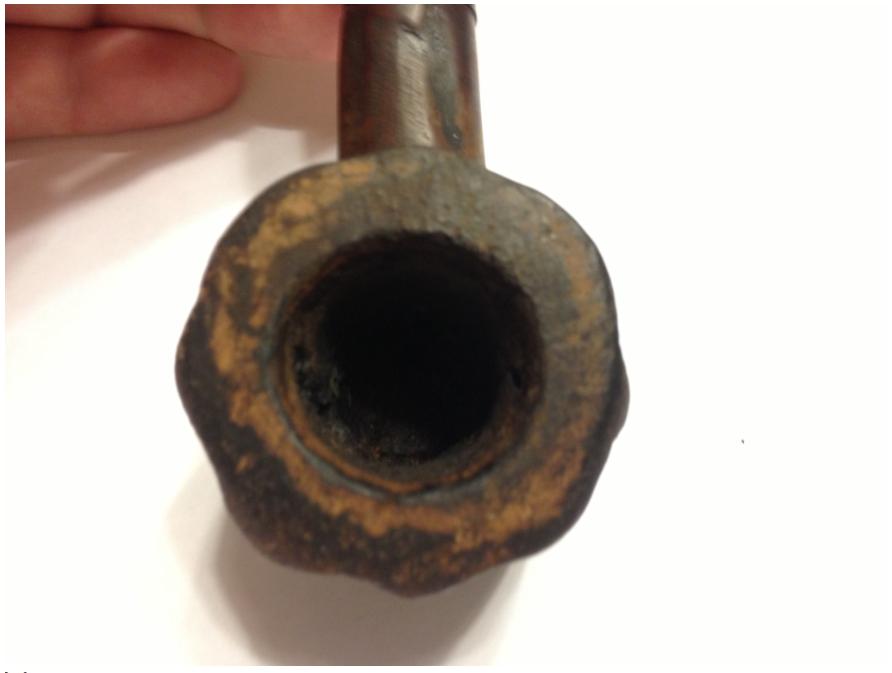
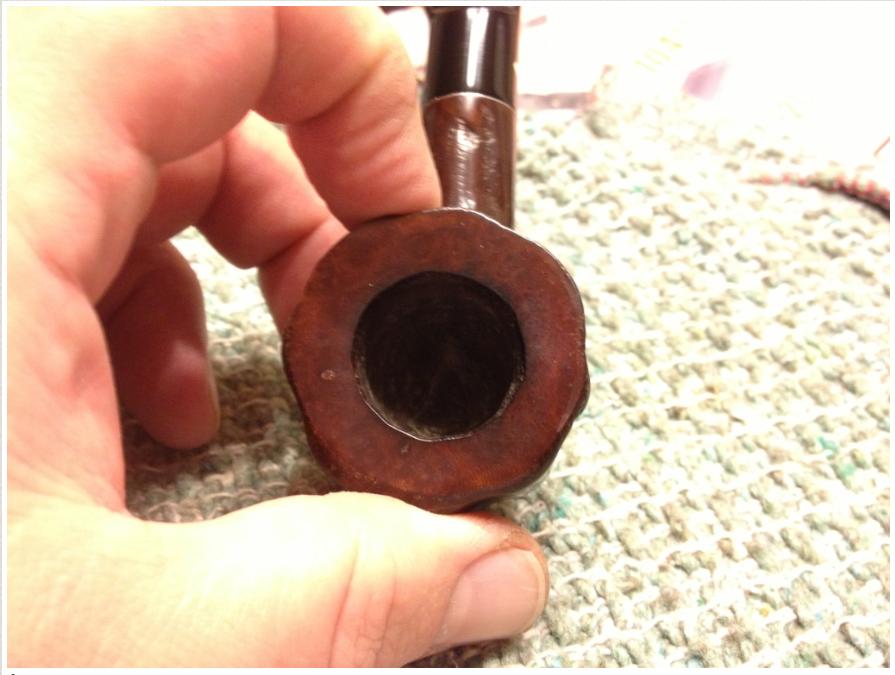
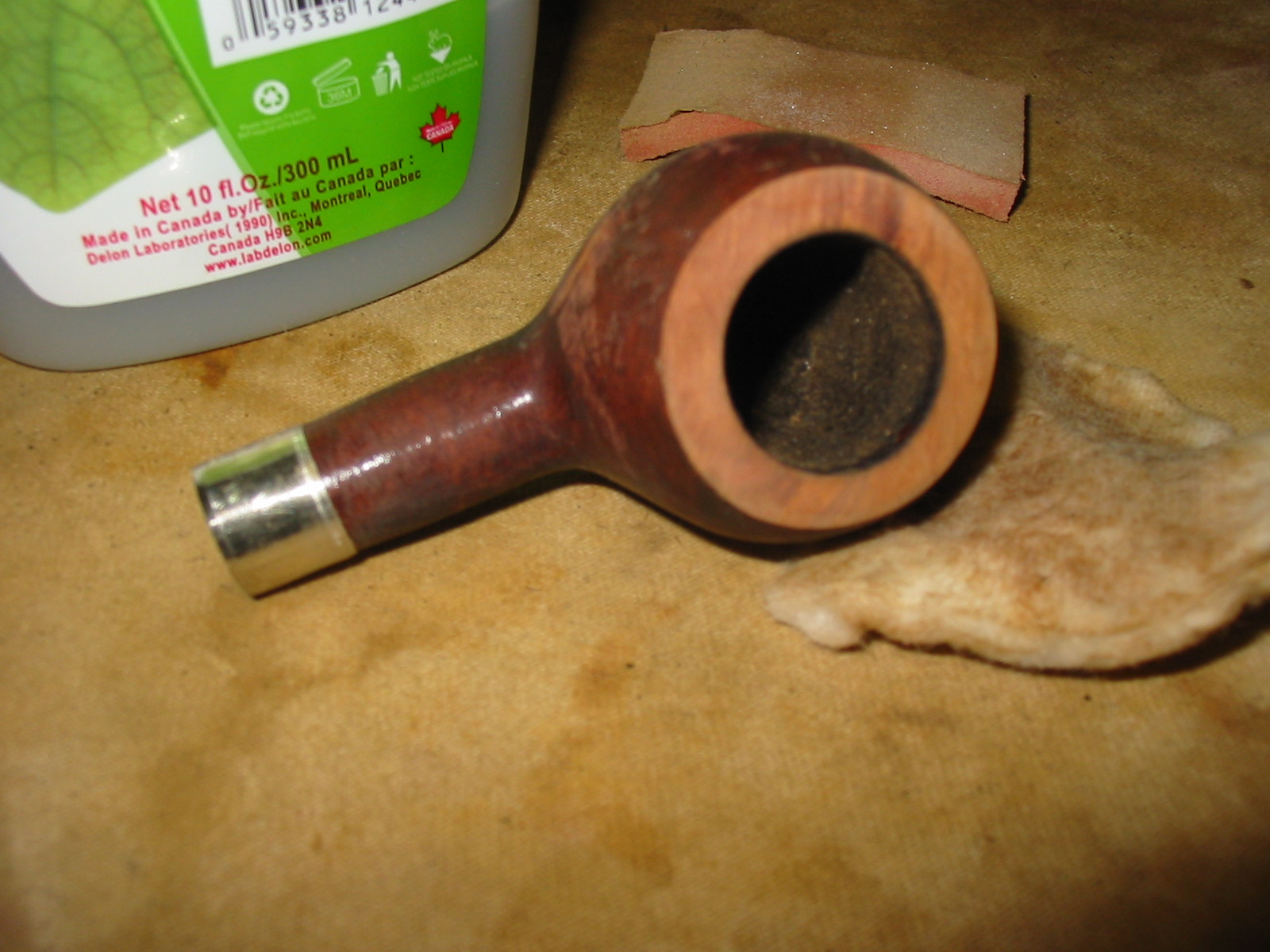
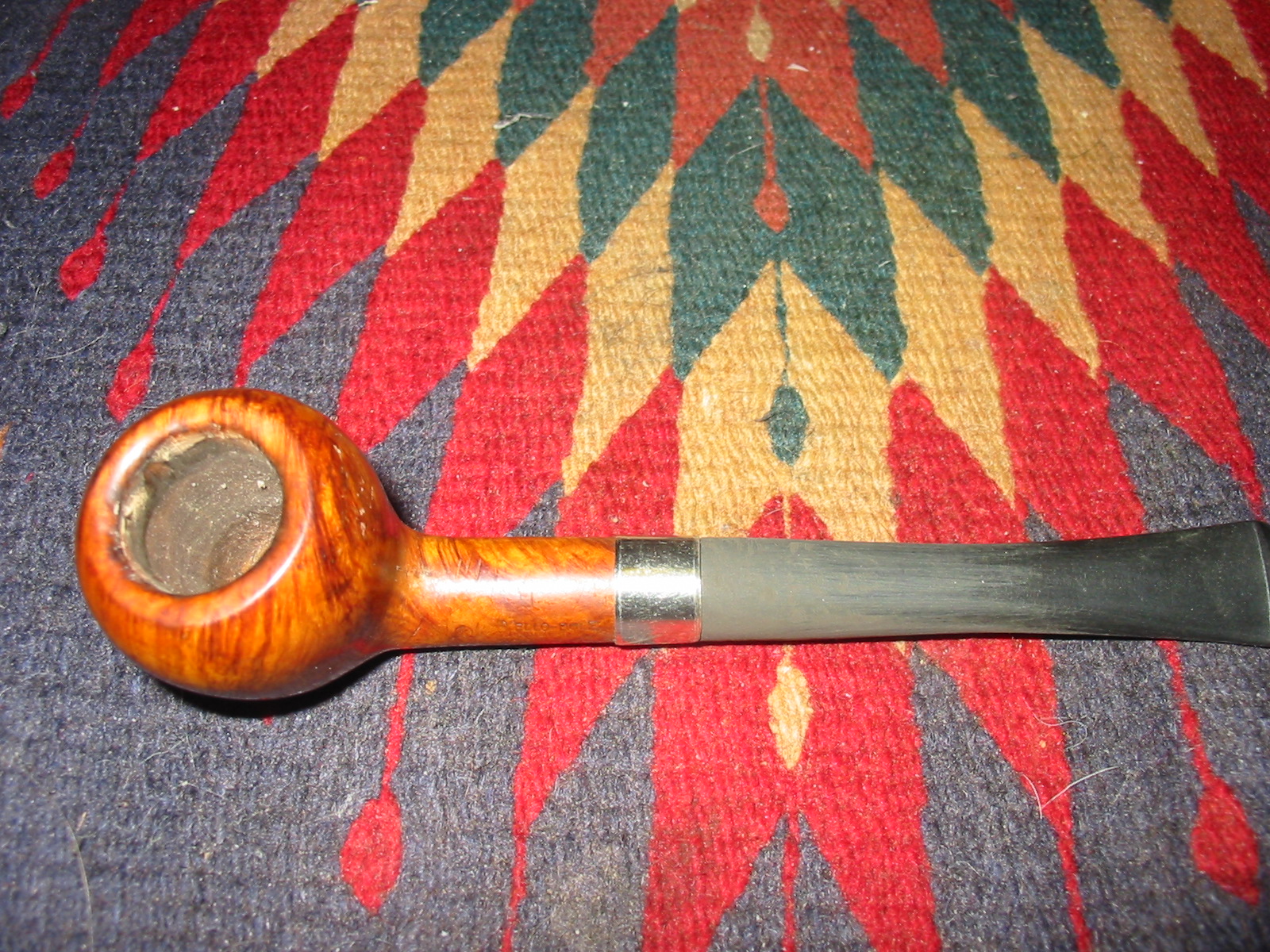
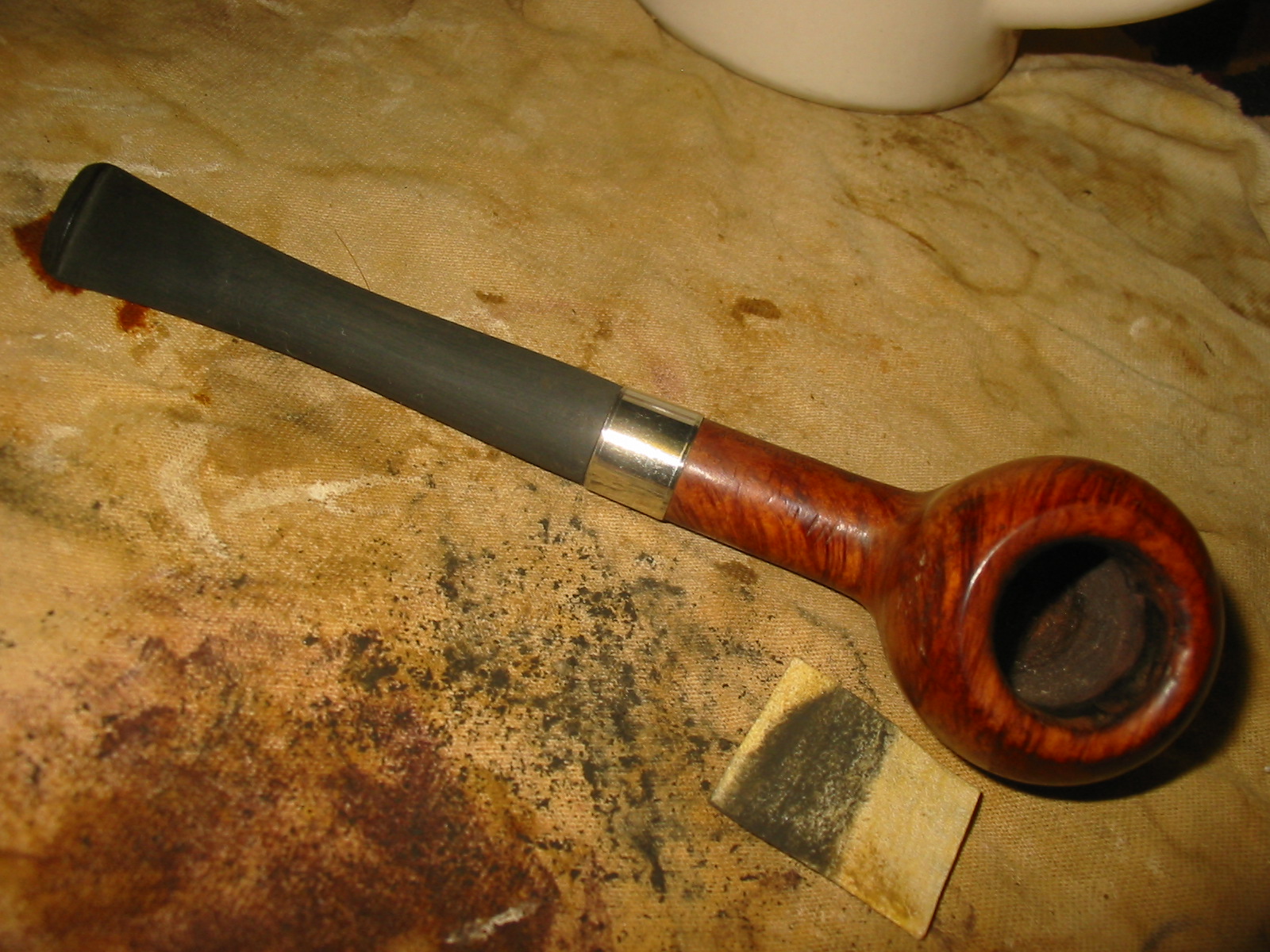
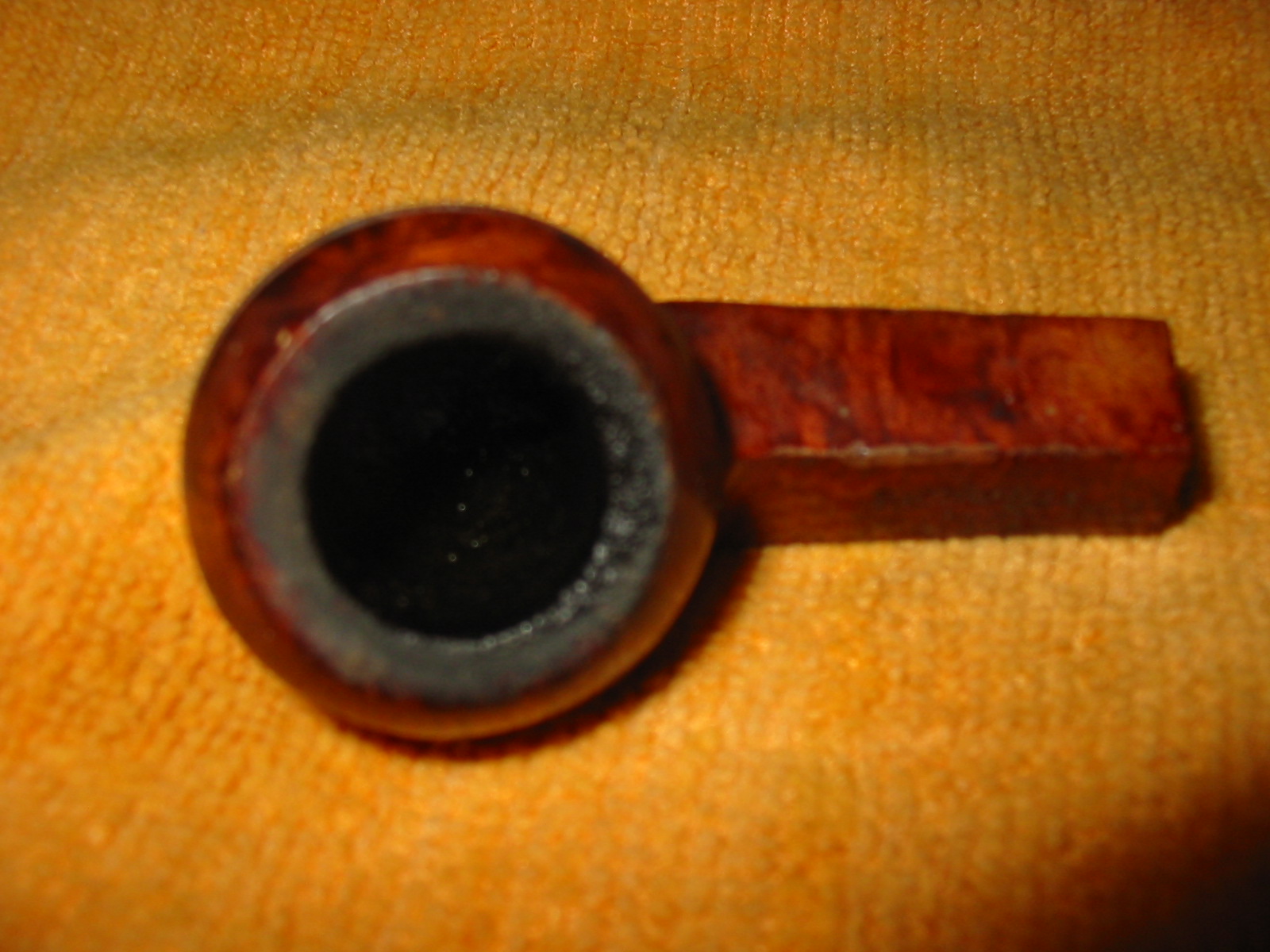
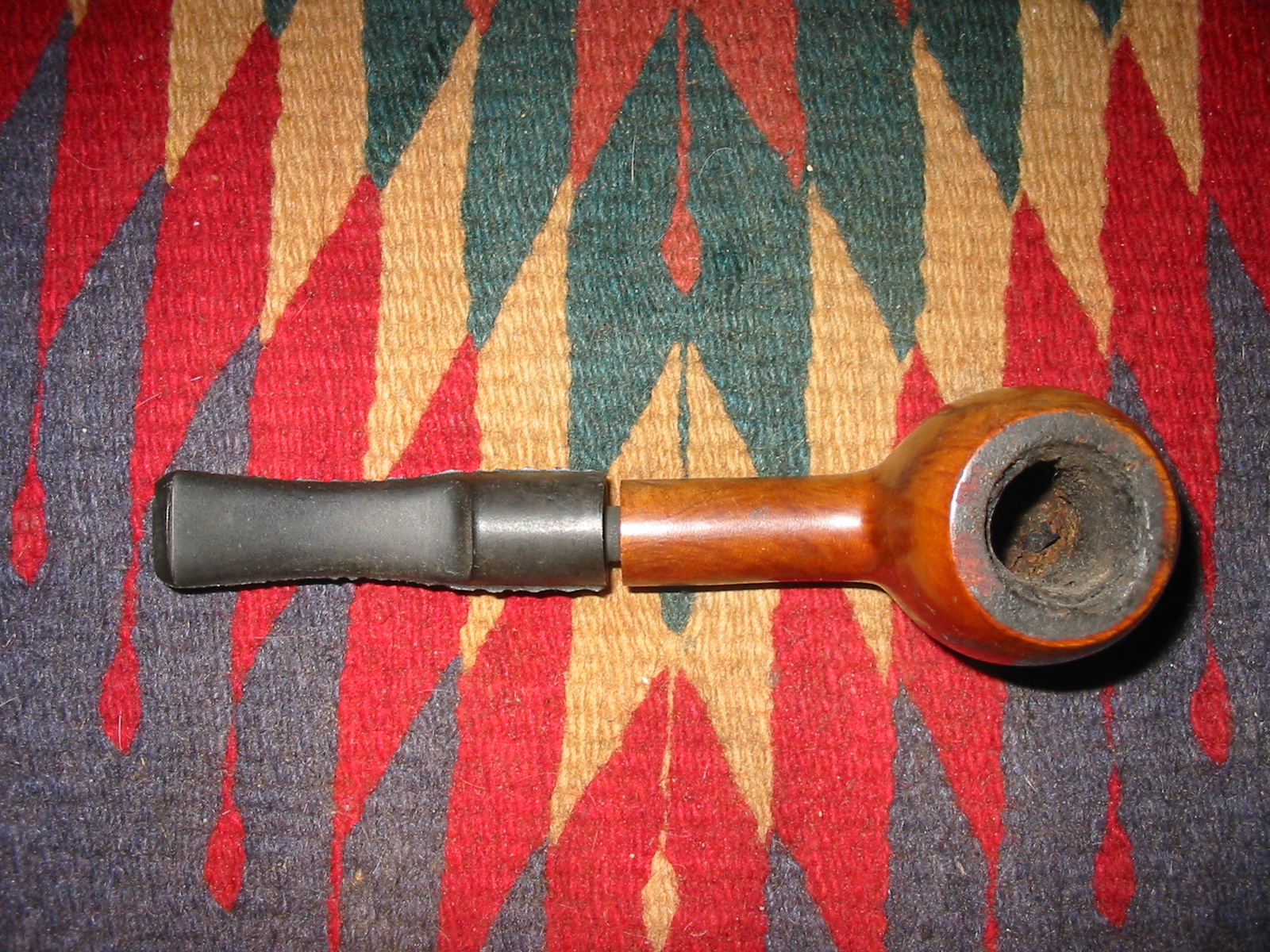
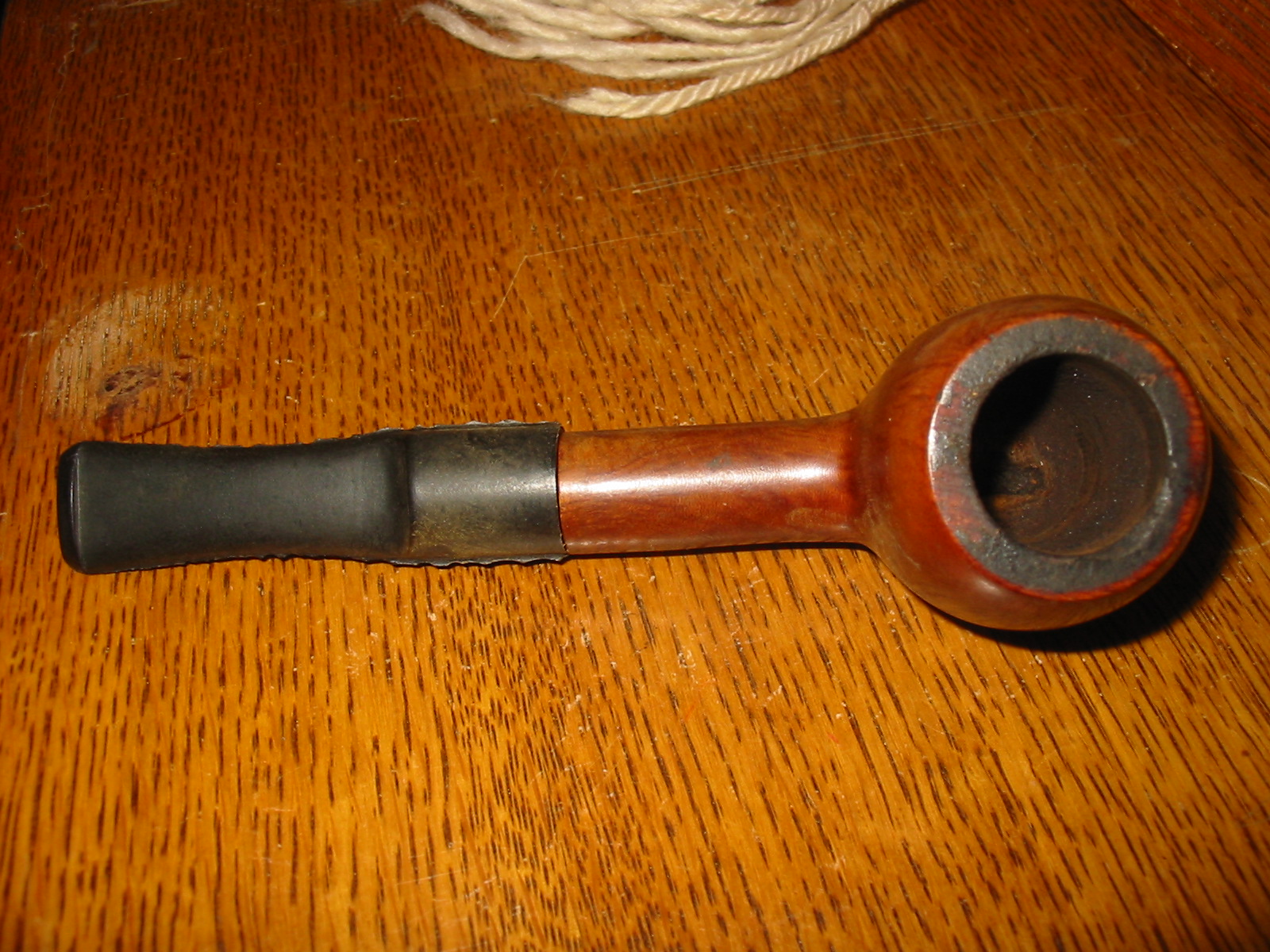
In the photo above you can see that the bowl still has tobacco in it and the cake uneven and rough. The rim is dirty and caked. There is one slight burned area on the rim as well on the front right side of the inner edge of the rim.
Image

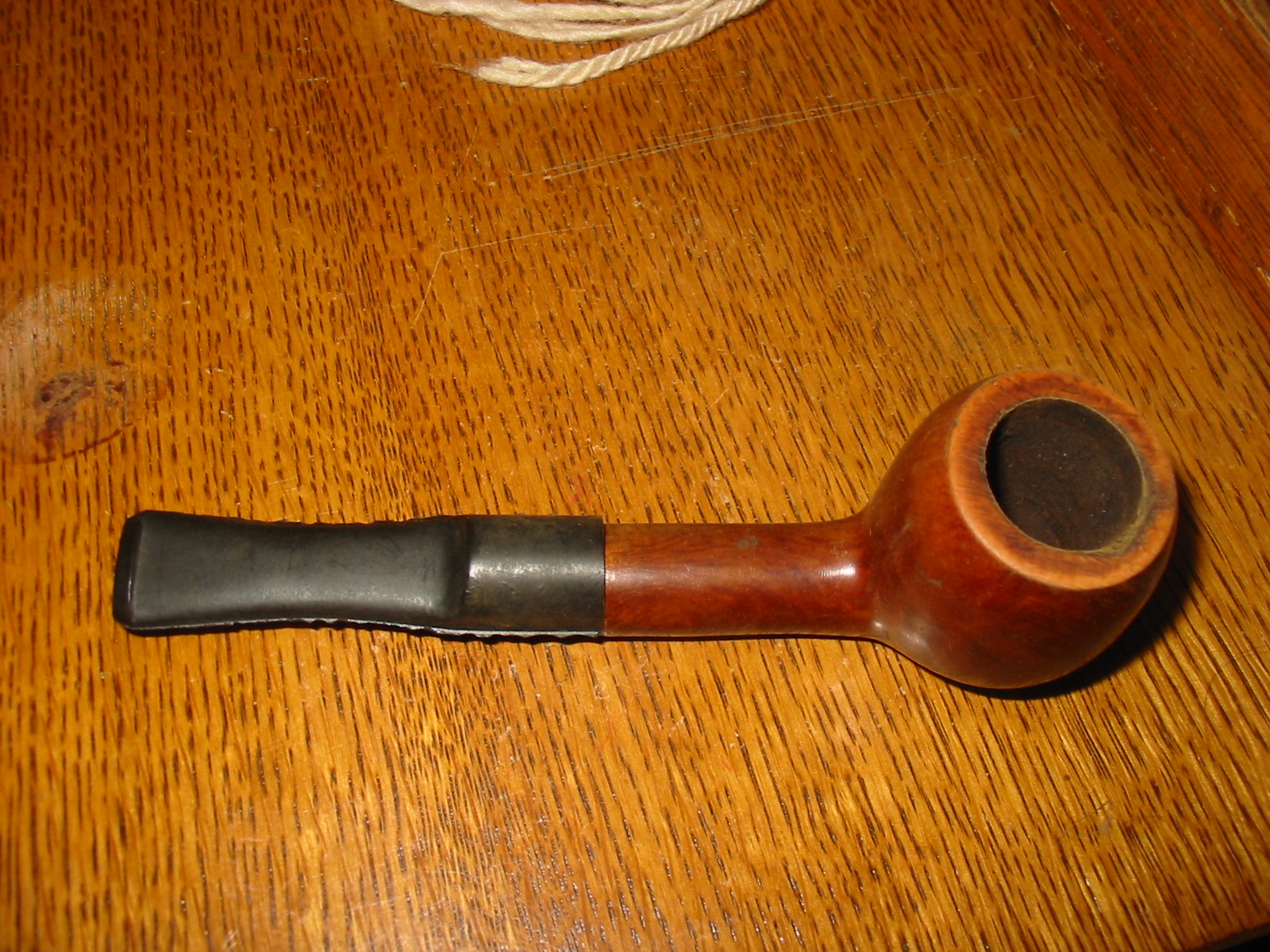
I shortened the tenon in order to get the snug fit in the mortise. I was then able to get the stem to fit snugly against the shank. I reamed the bowl to clean up the uneven cake. The next two photos show the stem fit and the reamed bowl. The bottom of the bowl has a groove in it that looks like it was made to fit a stinger apparatus that extended into the bottom of the bowl. I do not have that apparatus as the bowl came to me without a stem. The bottom of the bowl is still fairly thick so it should not be a problem, but it could be remedied with pipe mud should I choose to do so at a later time.
ImageImage

I topped the bowl lightly to remove the tars on the rim and also to try to minimize the burned area that is visible in the photo above on the front right inner edge of the bowl. The next two photos show the topped bowl and the minimized rim char. I planned on removing the finish from the bowl of the pipe so staining the entire pipe should blend in the rim and bowl as well as hide the rim damage a bit.
ImageImage

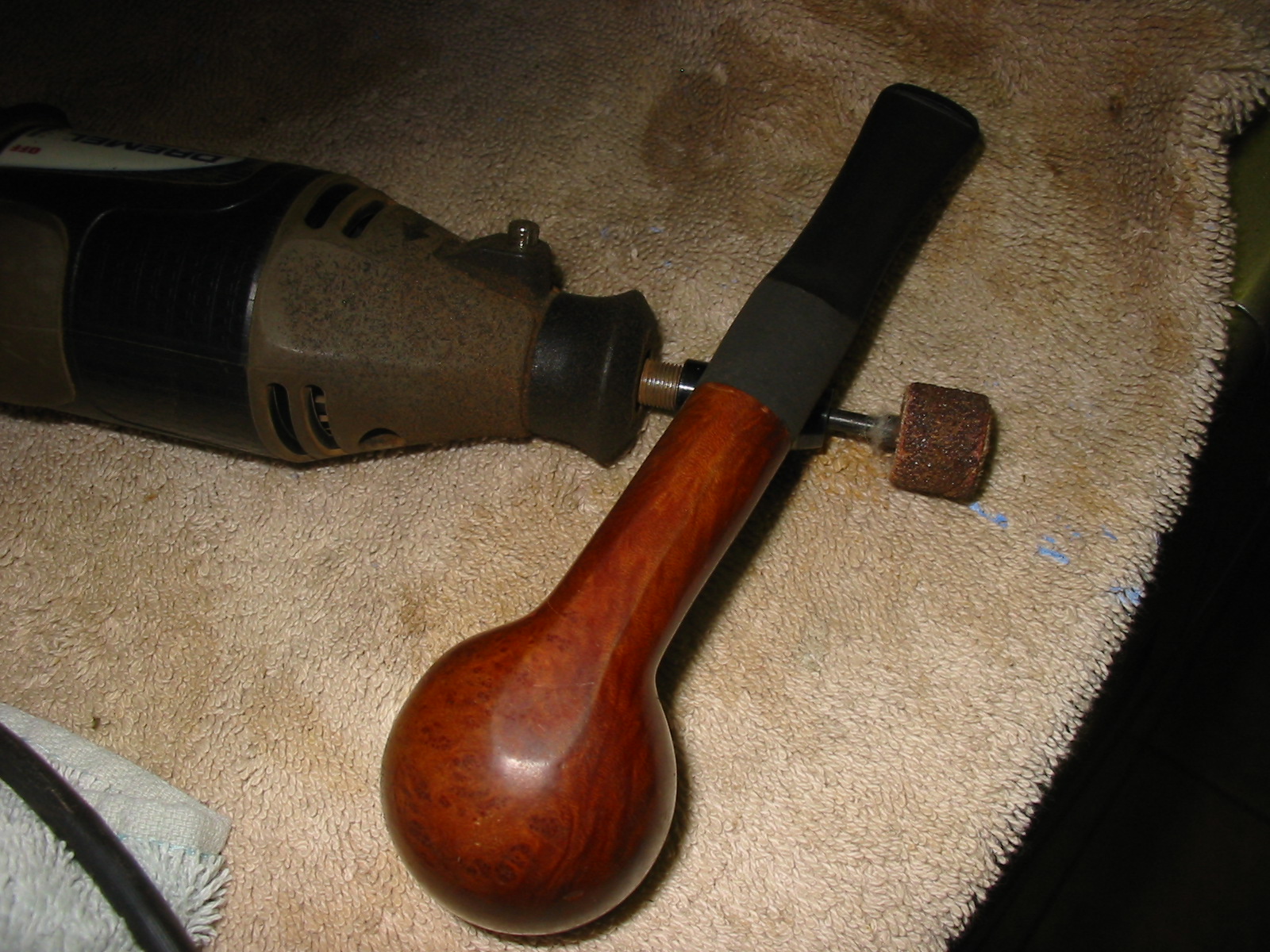
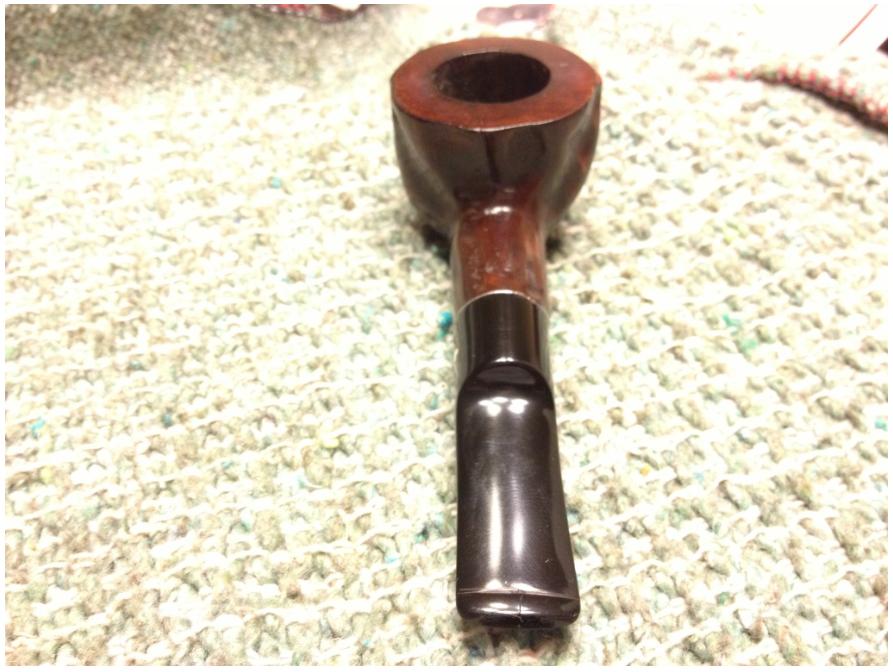
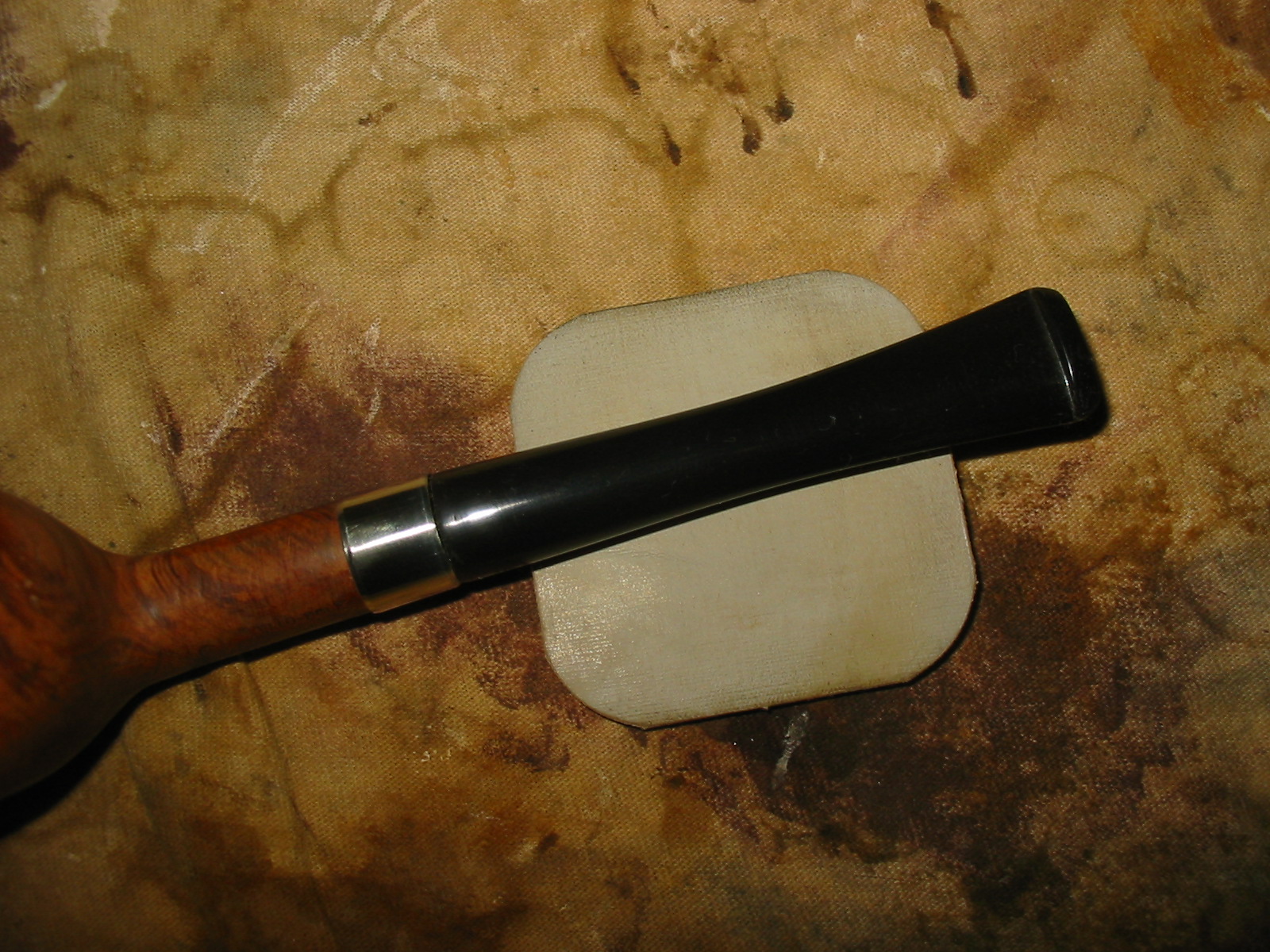
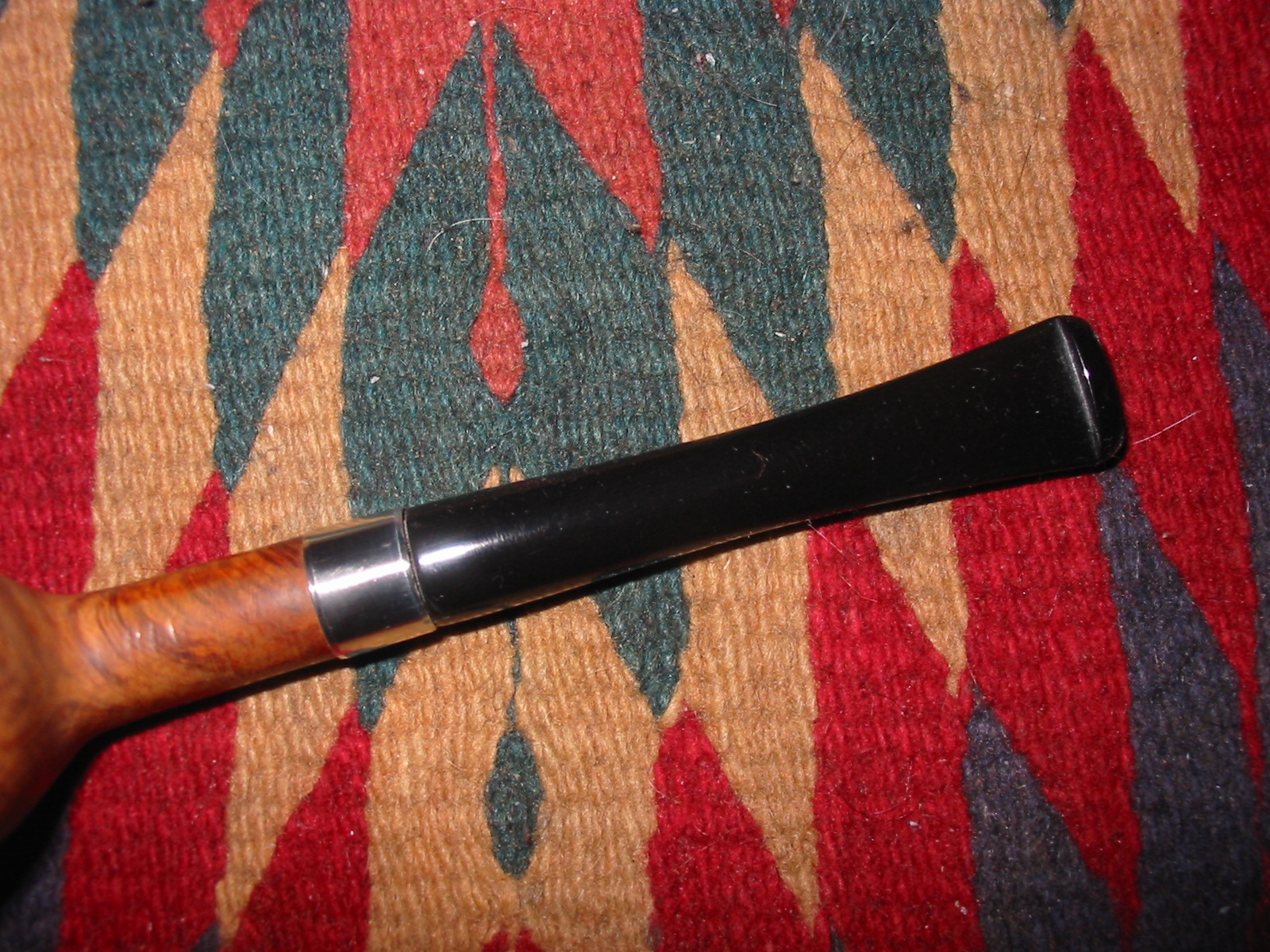
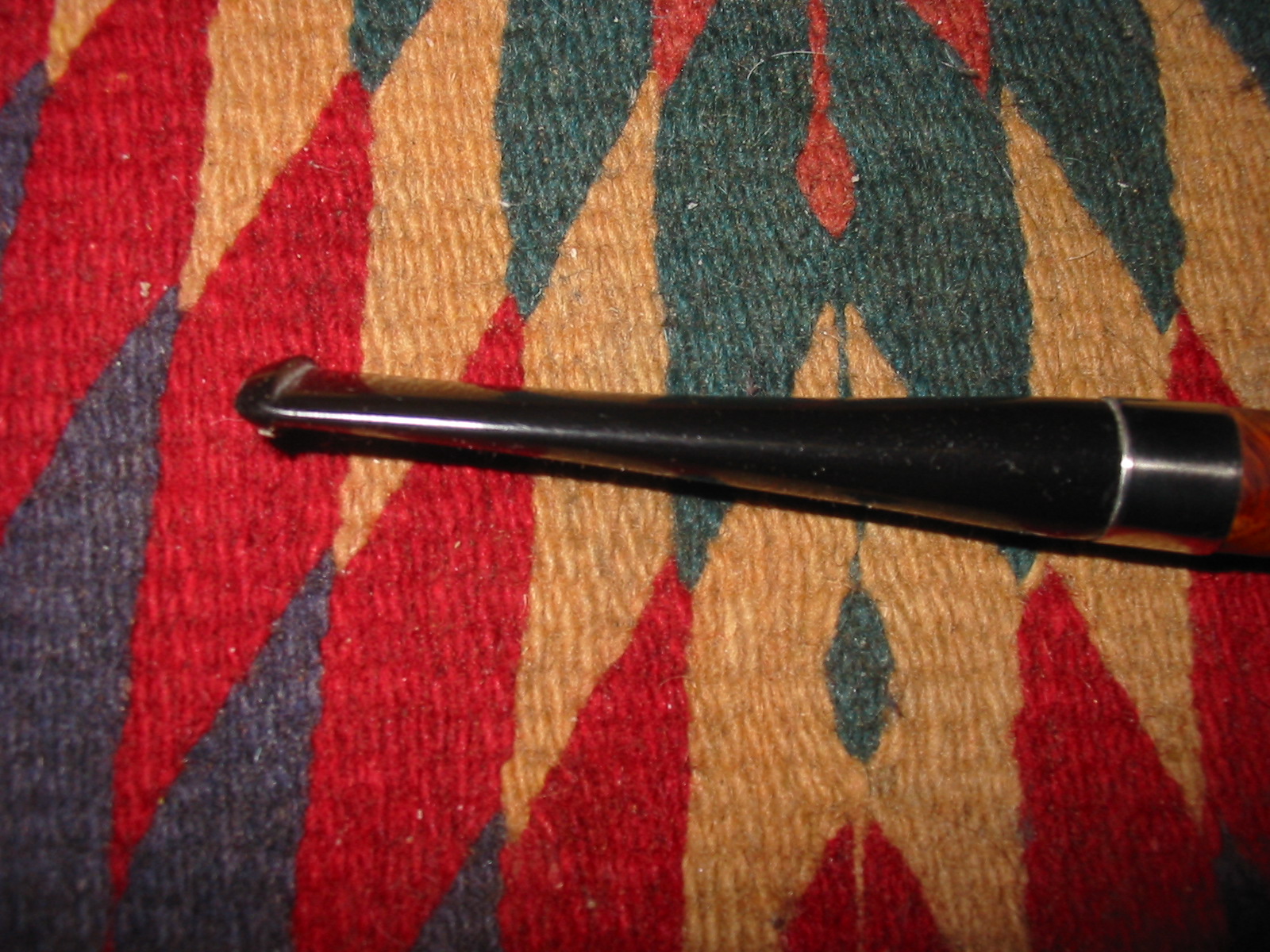
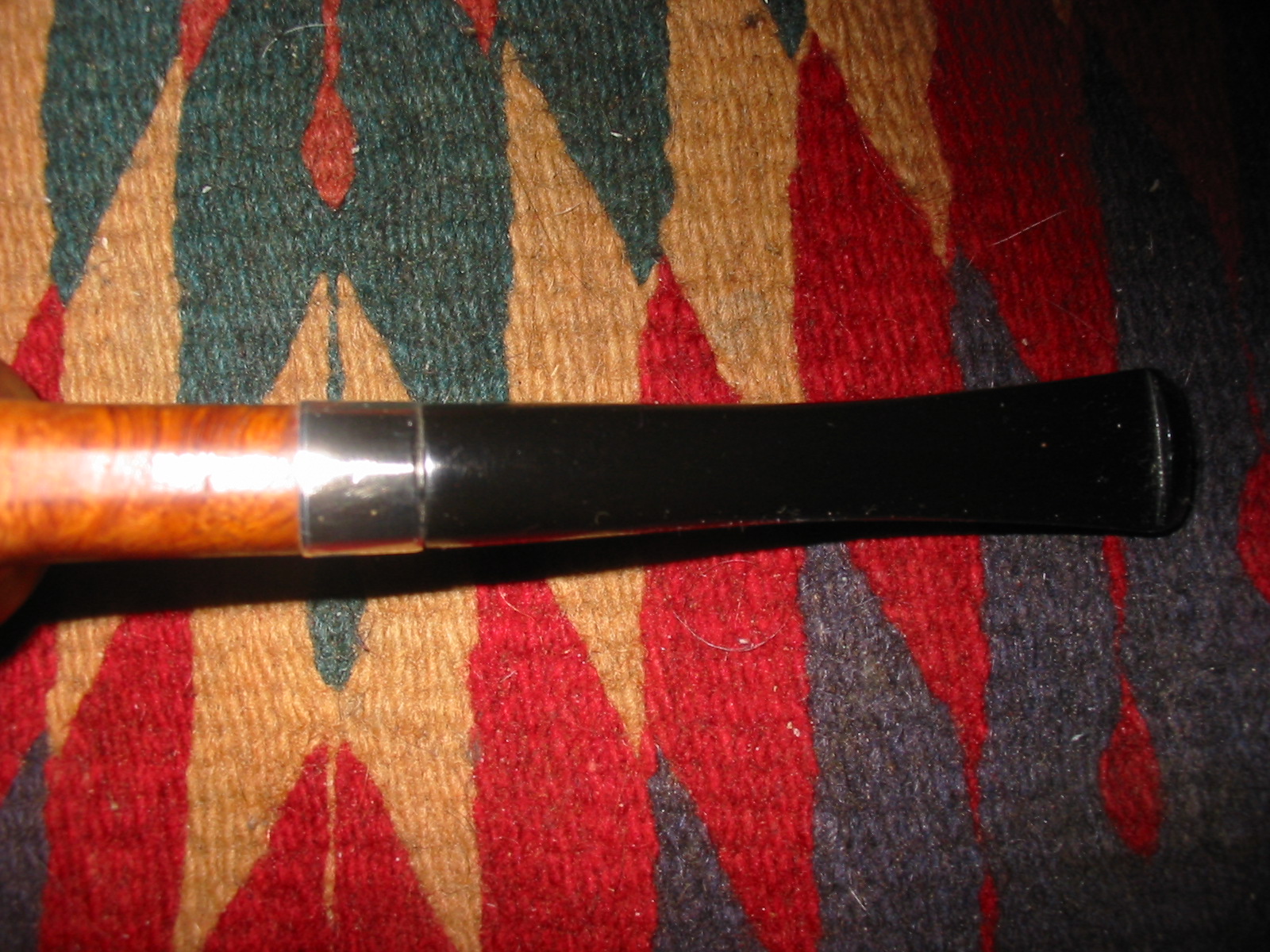
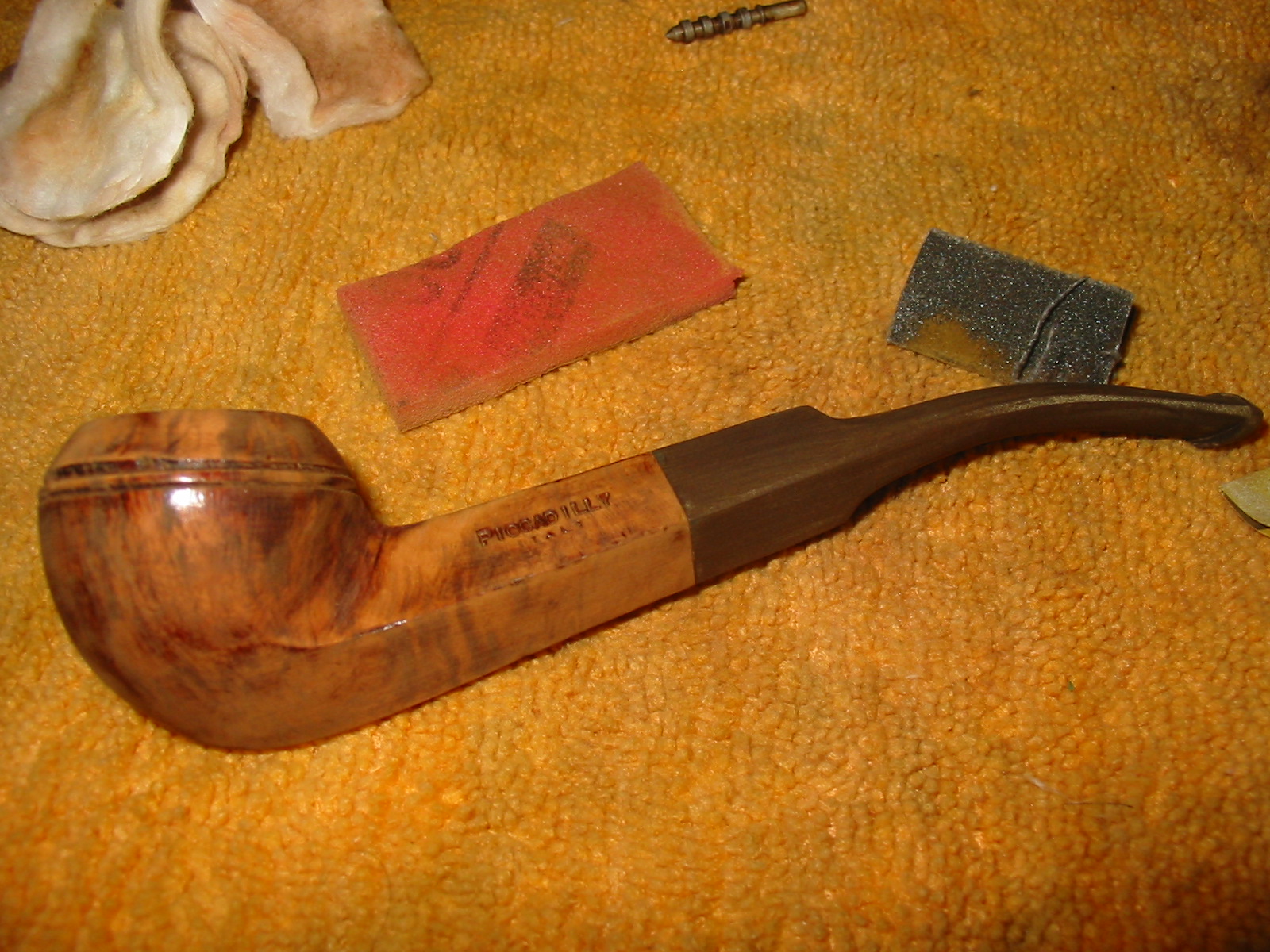
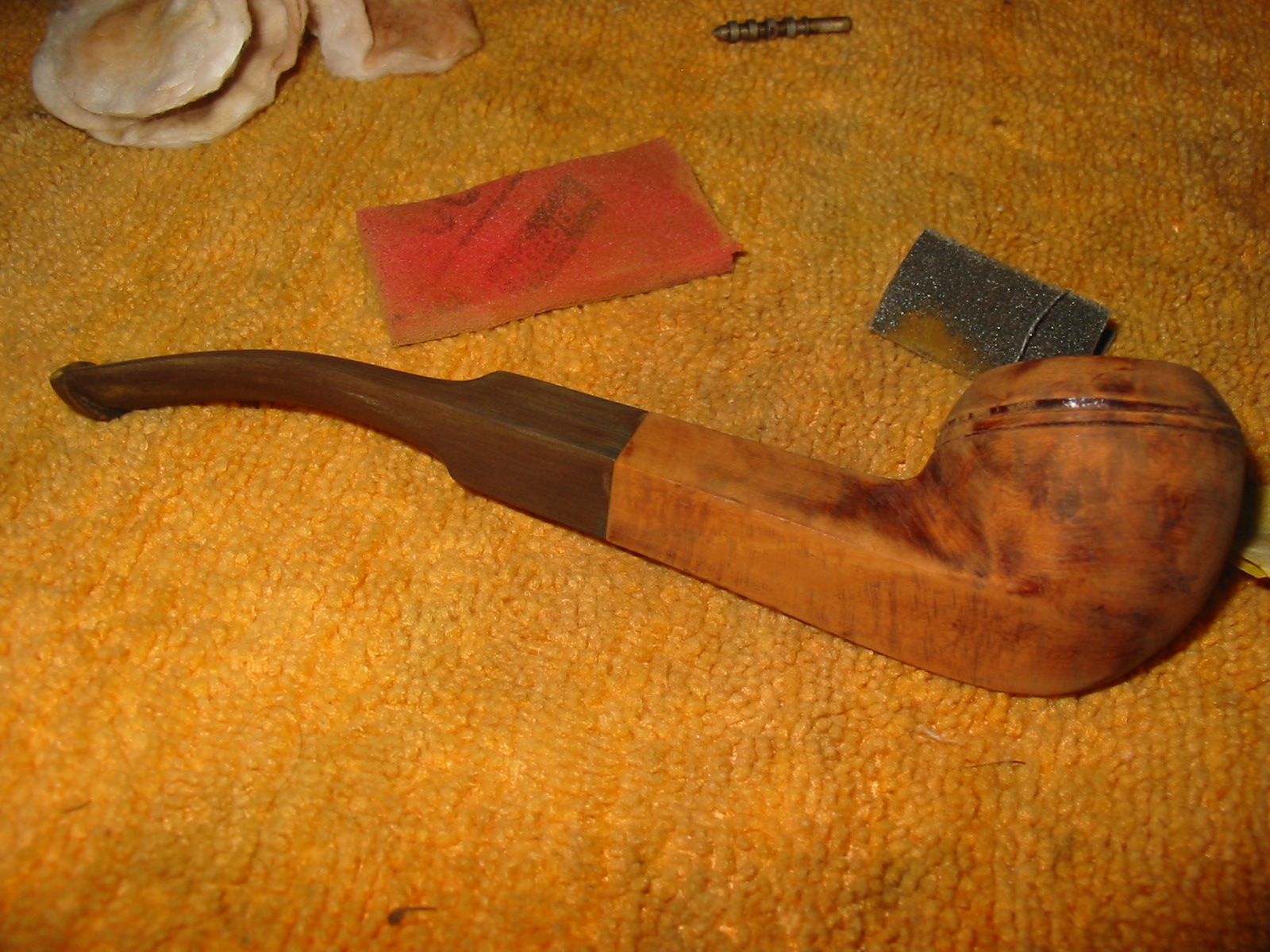
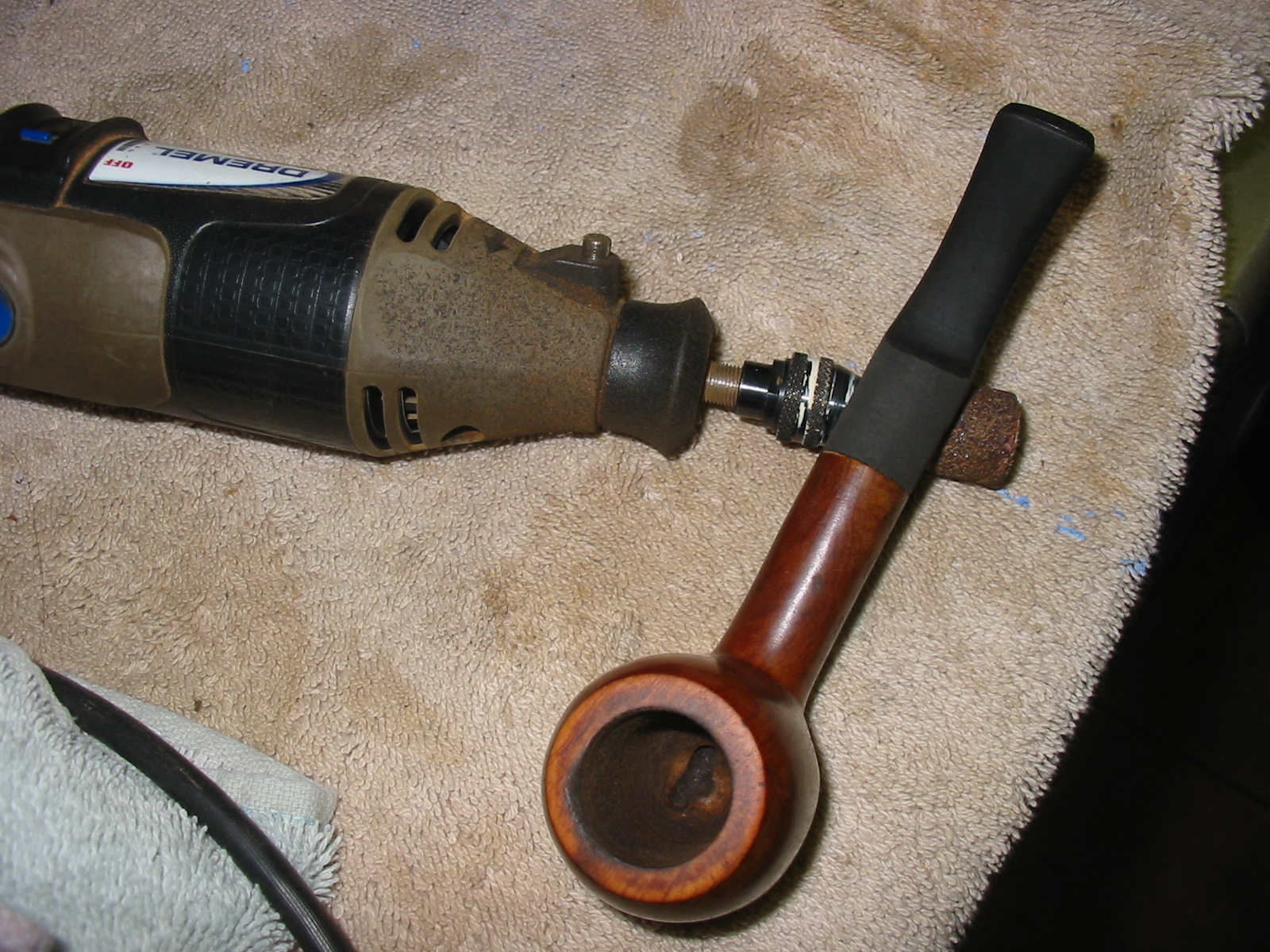
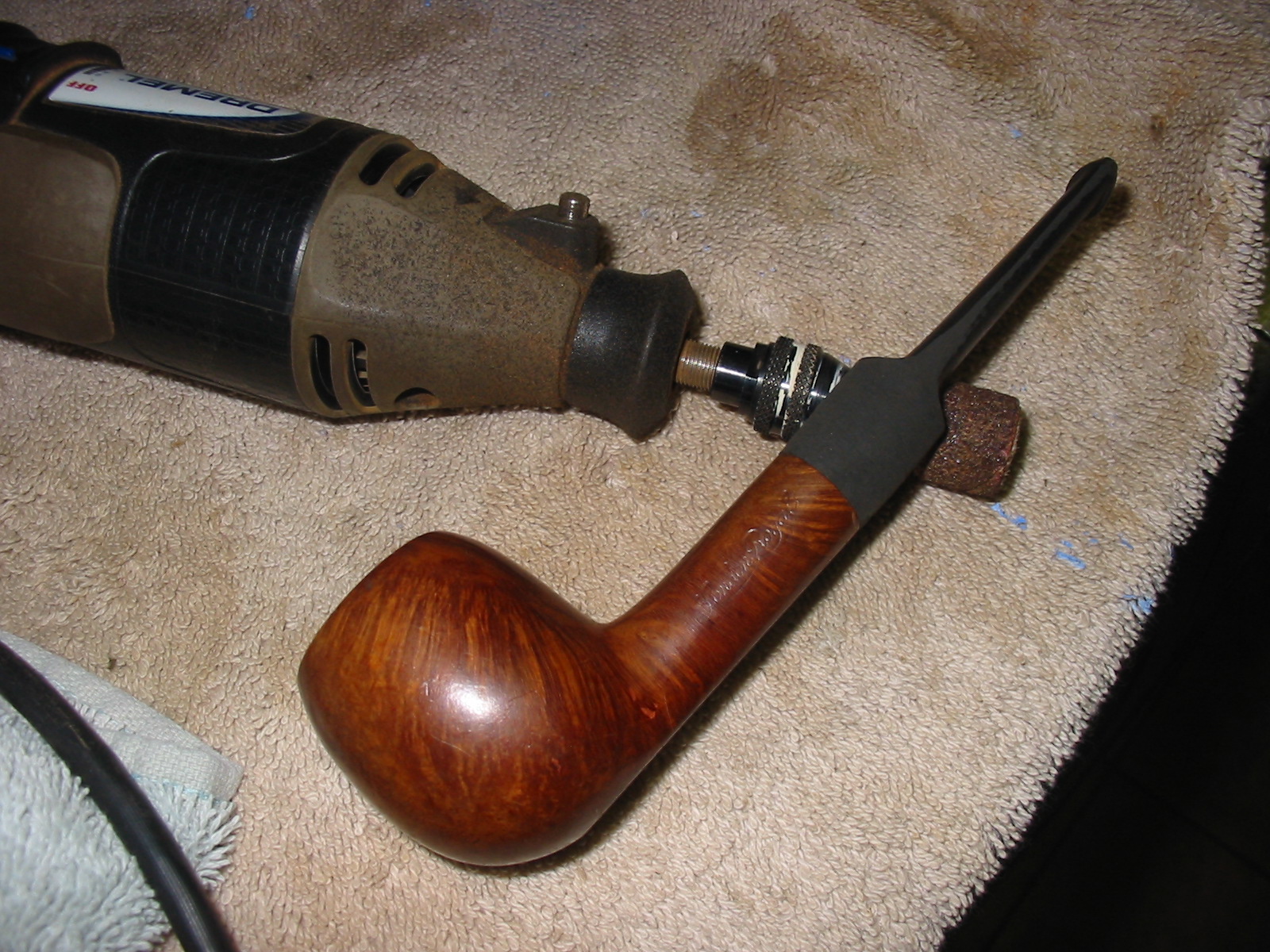
The next three photos show the stem after I have worked on the diameter of the saddle where it meets the shank and removed the rough edges of the casting of the stem. I run my Dremel at a speed that allows me to control the sanding drum as I use it to remove the excess material on the stem. In this case you can see that the excess is mainly on the top and the left side of the stem. I have found that using the Dremel with the sanding drum carefully can make the fitting of a stem short work. This particular stem blank is very high quality vulcanite as can be seen in the photos below. As I sanded the stem the sanding dust was black and the finished stem retained a very black look and colour as well. The shaping of the stem also had to take into account the changes made in the saddle as material was removed from the top of the stem and the left side. I used the sanding drum to rework the saddle area where is curves into the blade of the stem on both sides. I also had to reshape the blade to make both sides match in terms of the curves of the edges toward the button. The photos show the newly shaped and cleaned up stem. All that remains at this point is a lot of sanding and polishing before the stem is ready.
ImageImageImage

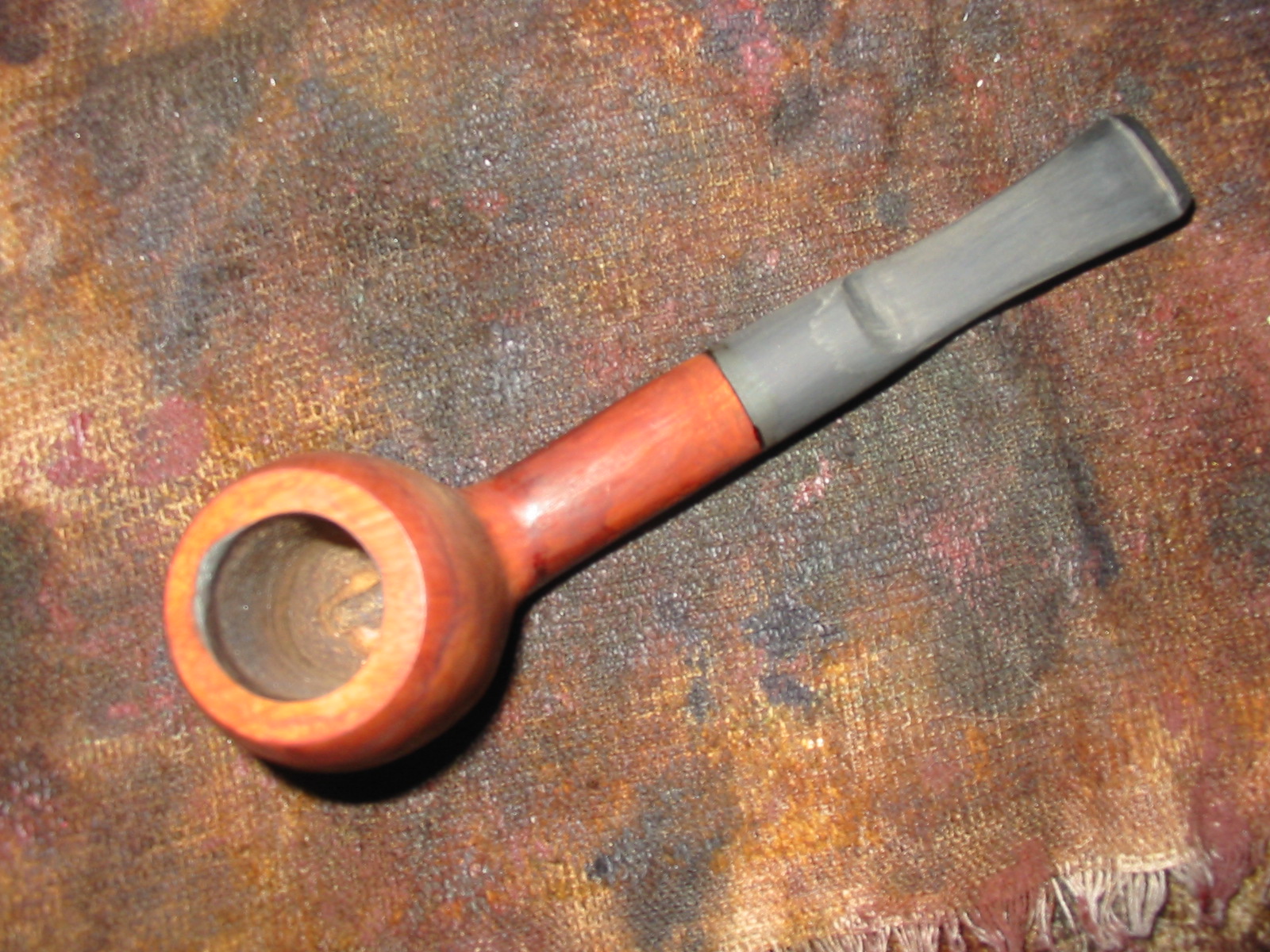
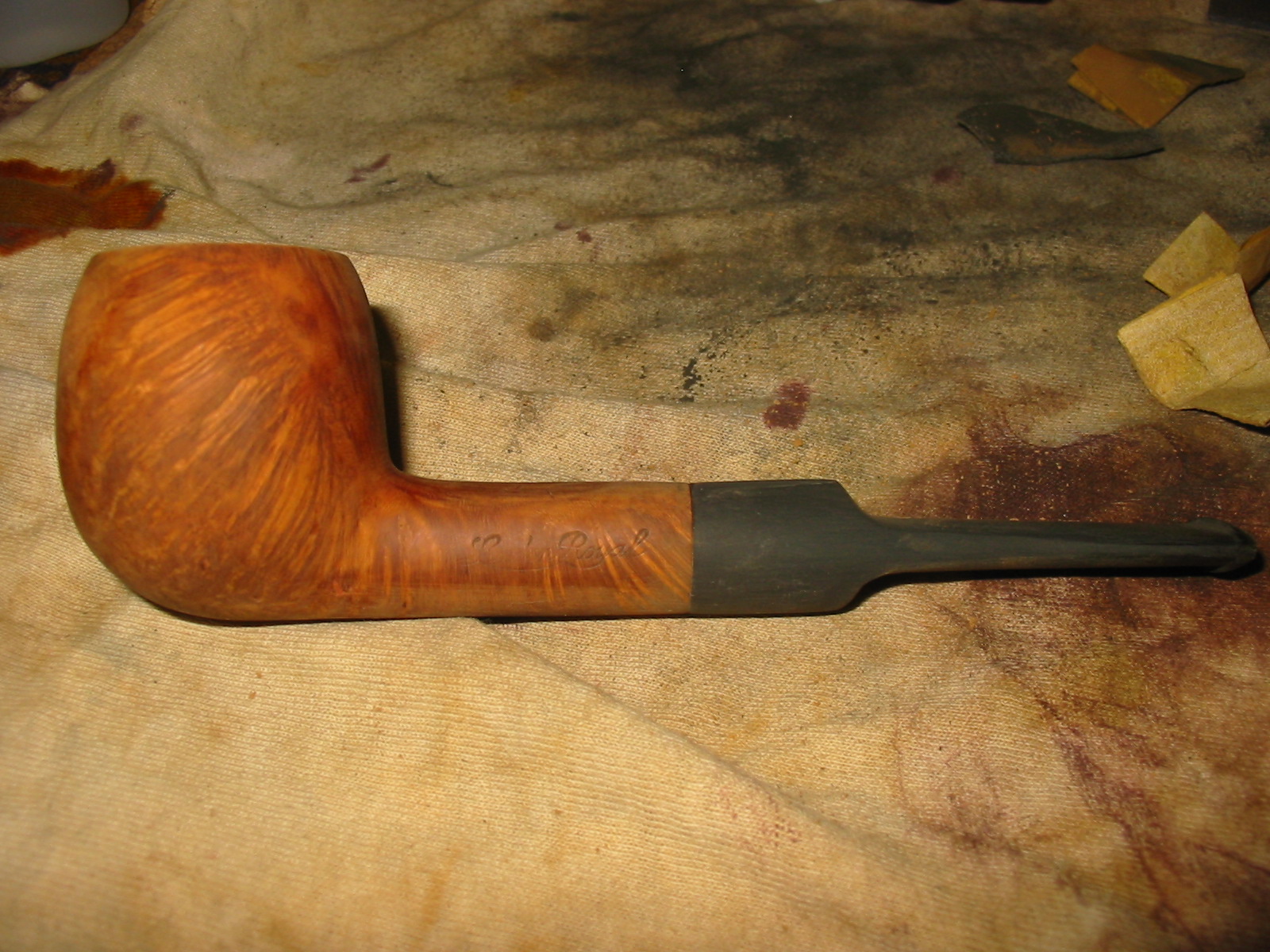
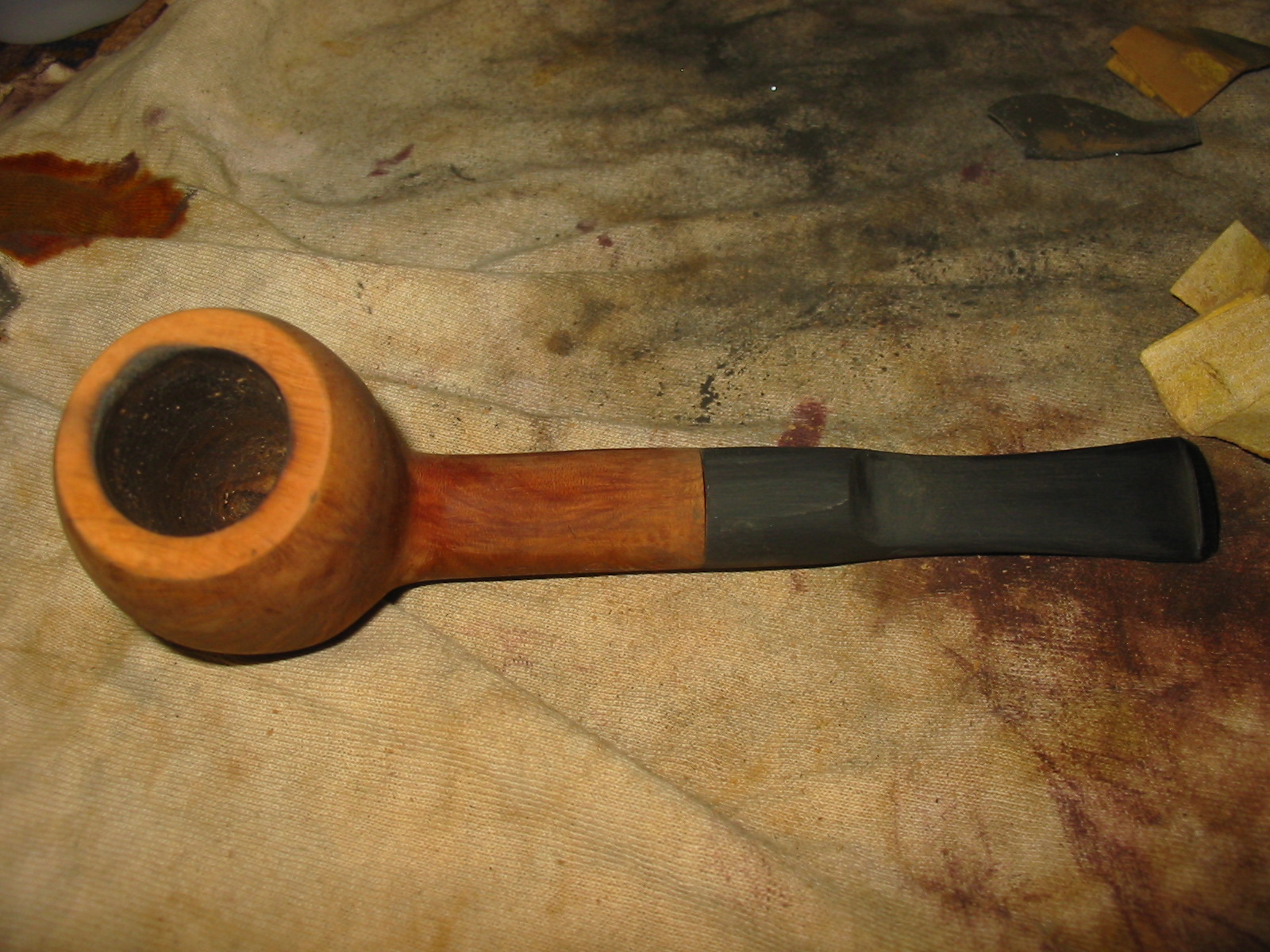
The next series of three photos below shows the pipe after I have washed the bowl with acetone to remove the finish and then sanded it with 320 grit sandpaper. I was careful around the stamping in order to leave it in tact. I wanted to bring the bowl and the rim to the same state so that the new stain would take well and match. I also sanded the stem with a medium grit sanding sponge to smooth it out as well. I wanted the shank stem transition to be smooth and even with no high or low points in the fit. The pipe revealed some really nice looking grain on the left side of the bowl but had bald spots on other side of the bowl.
ImageImageImage

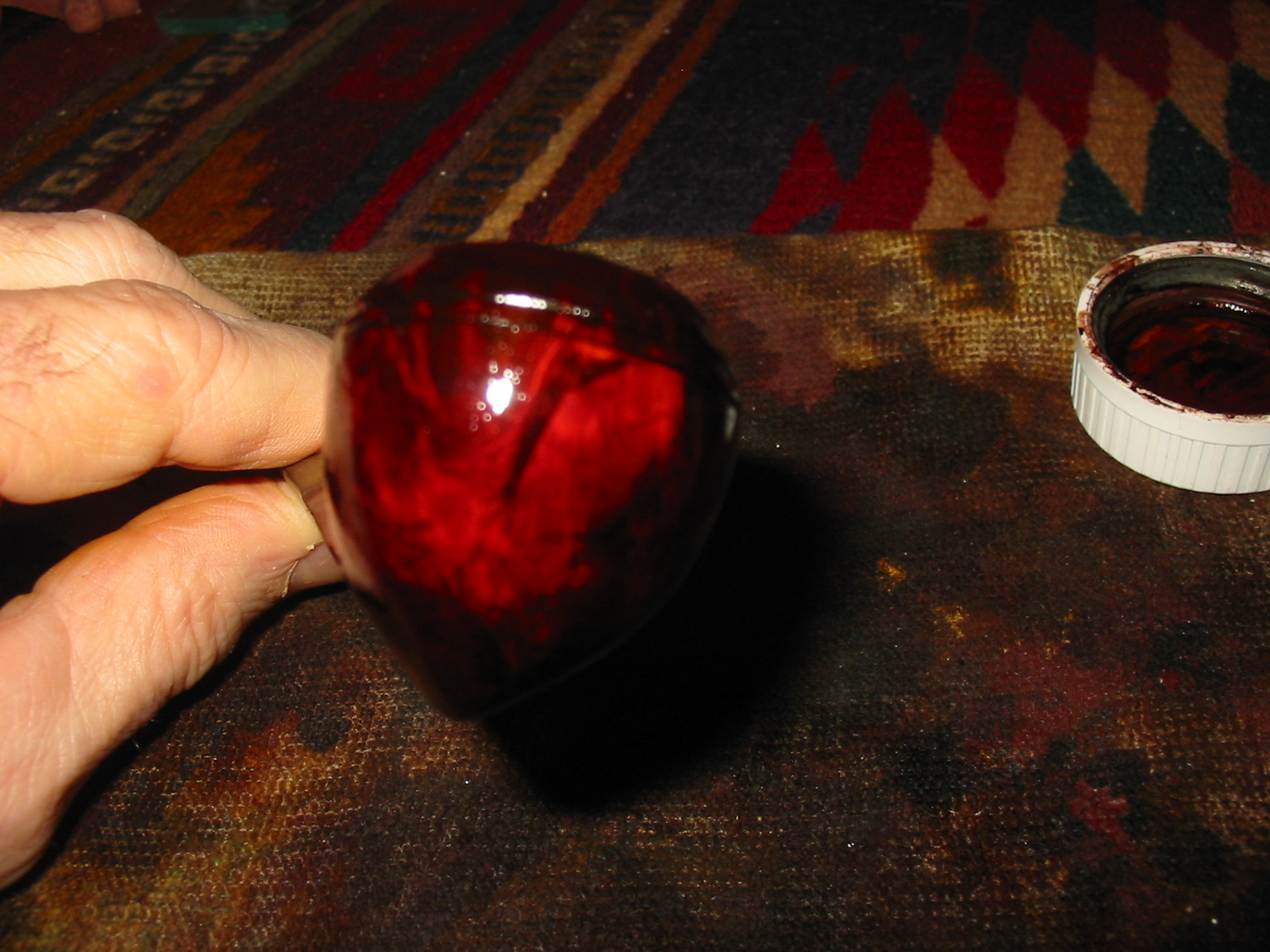
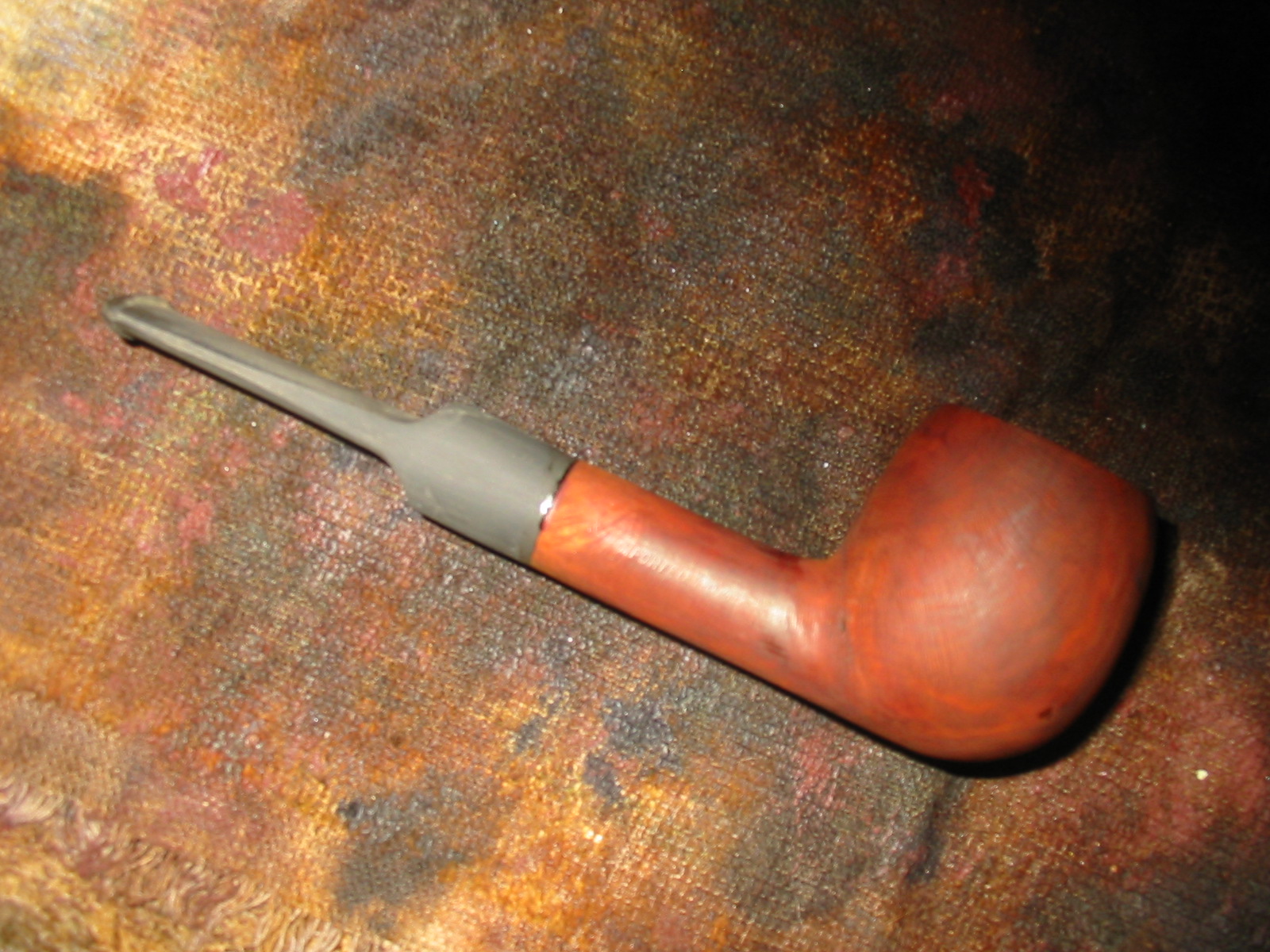
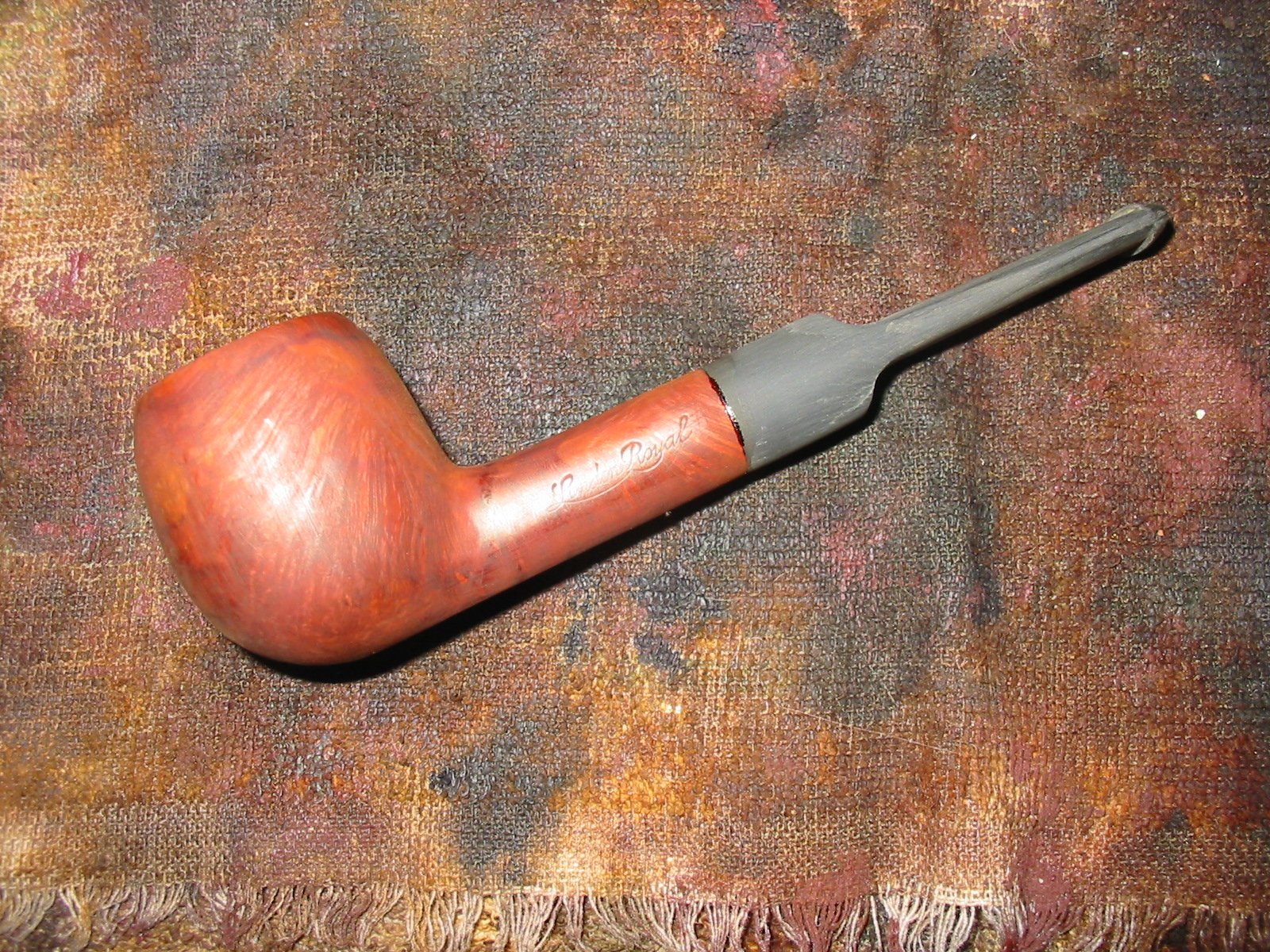
I wiped the bowl and shank a final time with acetone and a cotton pad to remove the sanding dust and prepare it for staining. The next series of three photos below show the pipe after I stained it. I used a dark brown aniline stain mixed 2:1 with isopropyl alcohol. I stained the pipe, flamed it with a lighter, restained it, reflamed it. I gave the rim several extra coats to make sure the pipe was evenly stained.
ImageImageImage

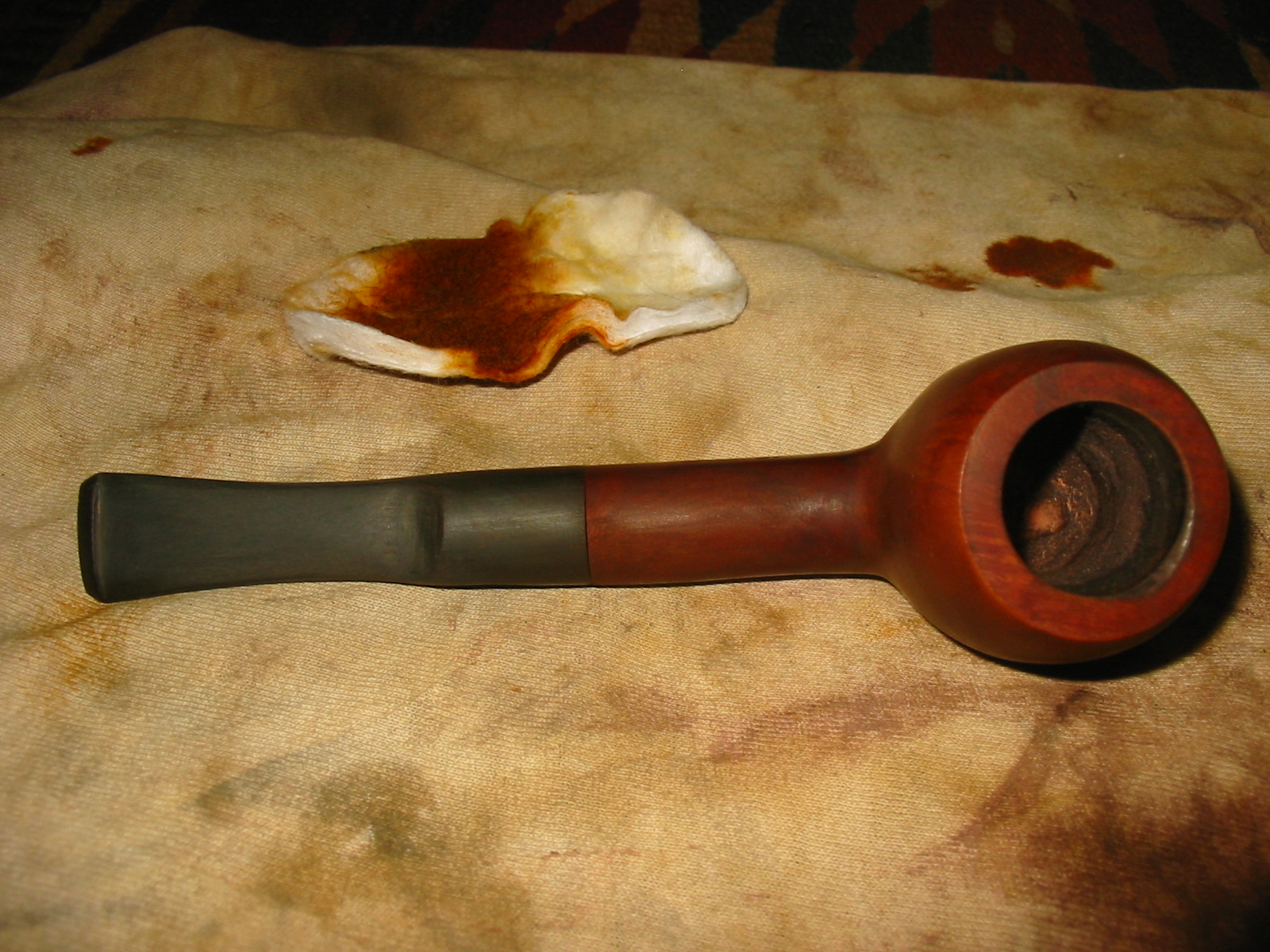
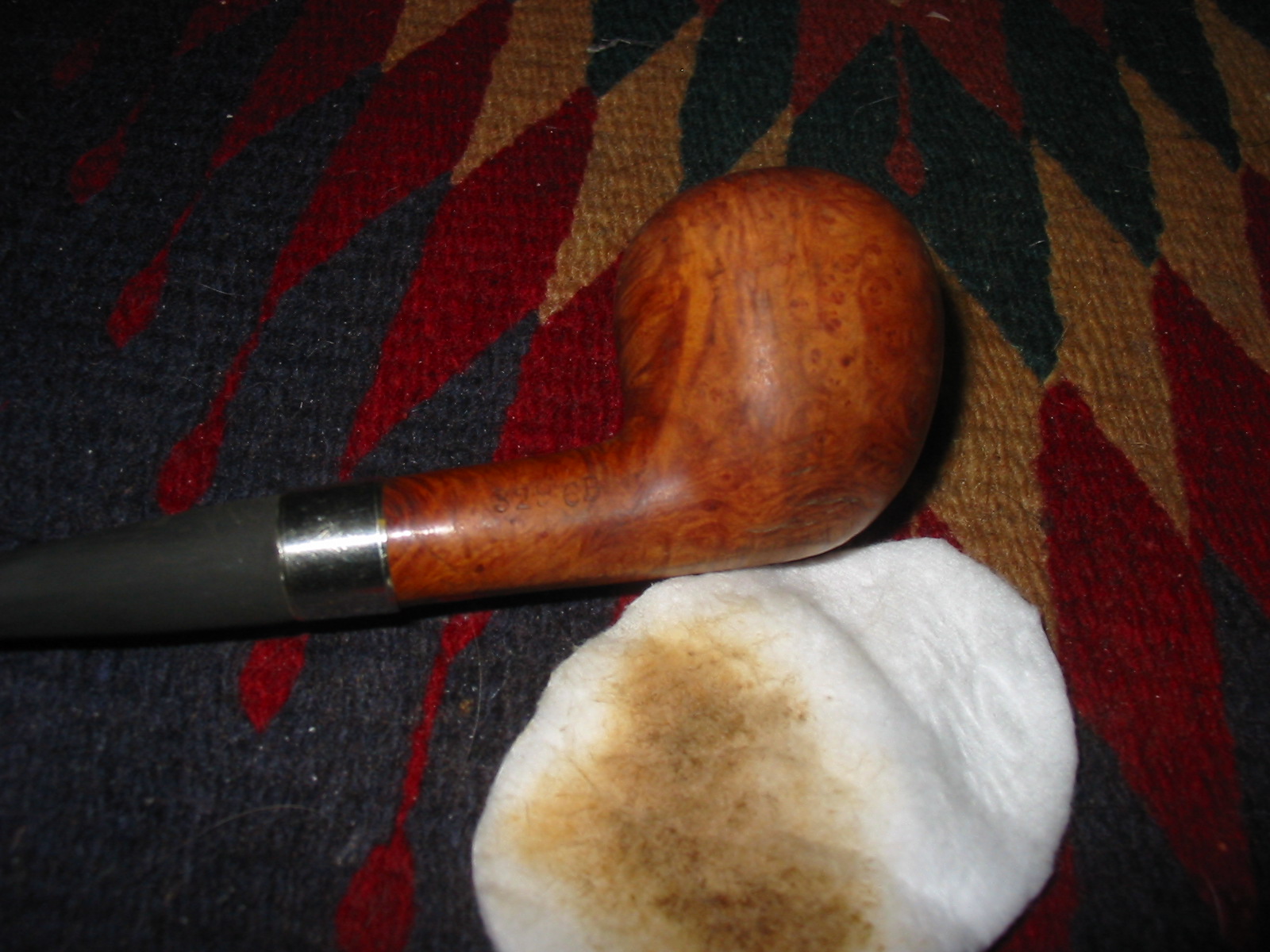
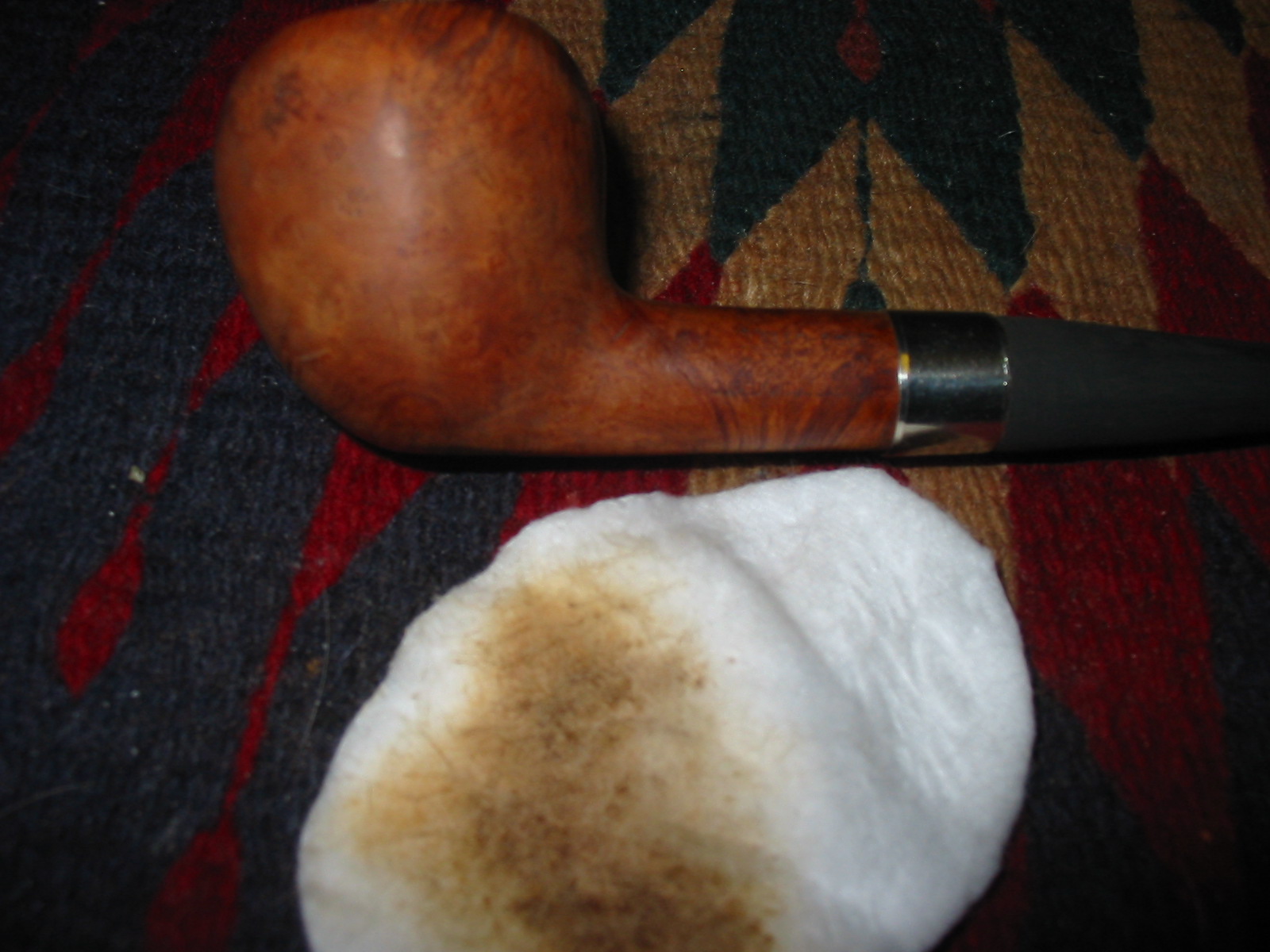
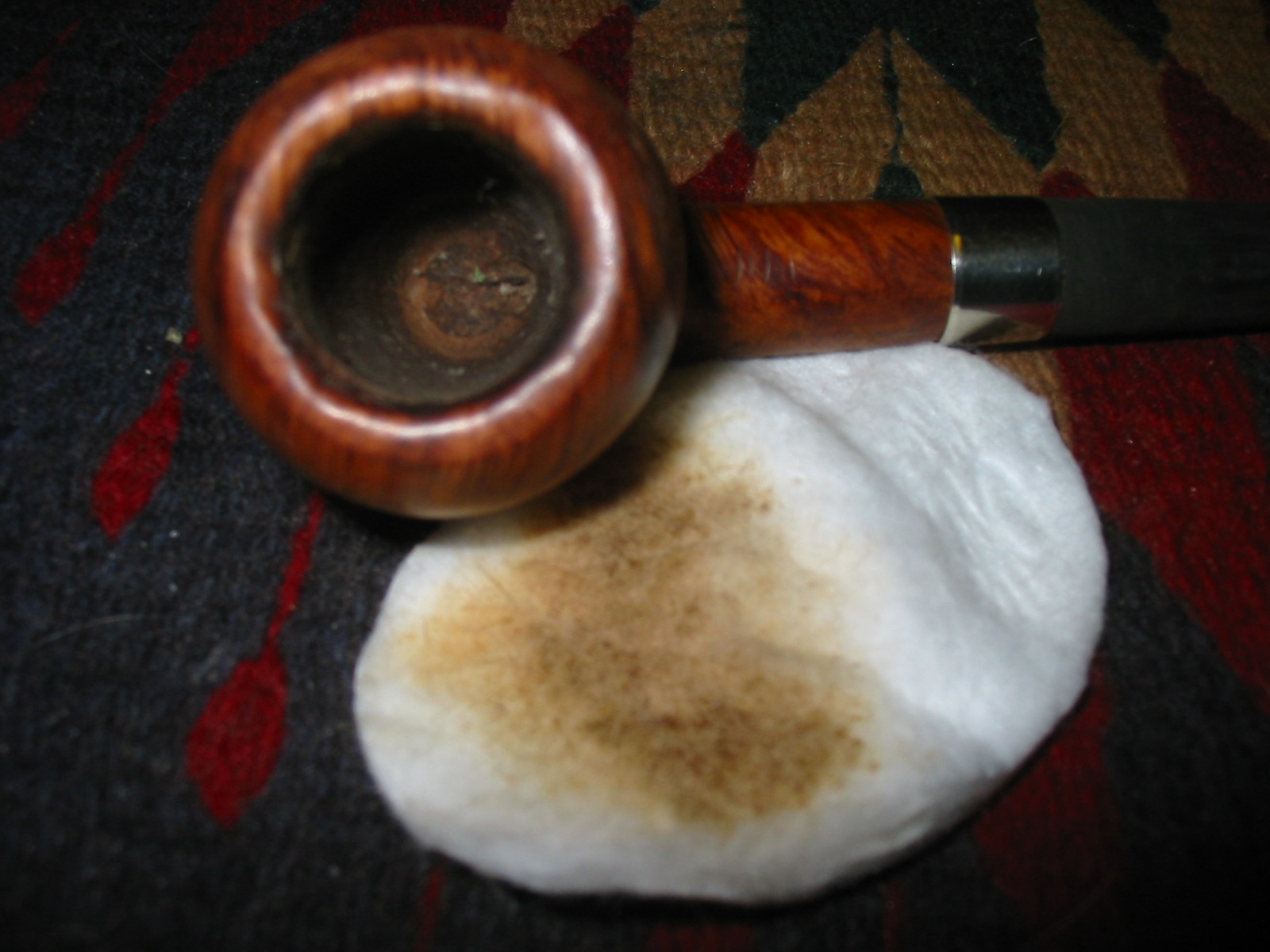
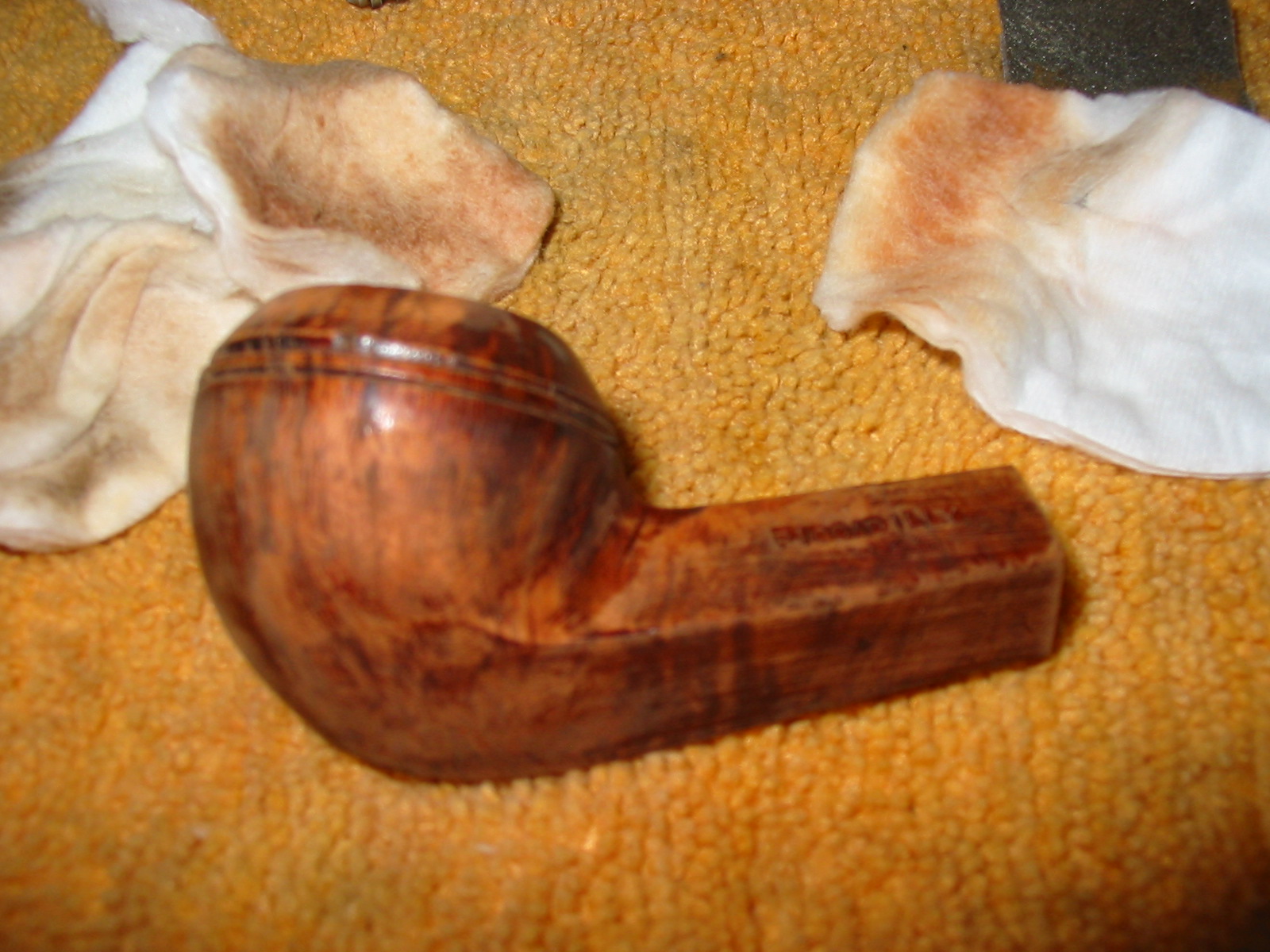
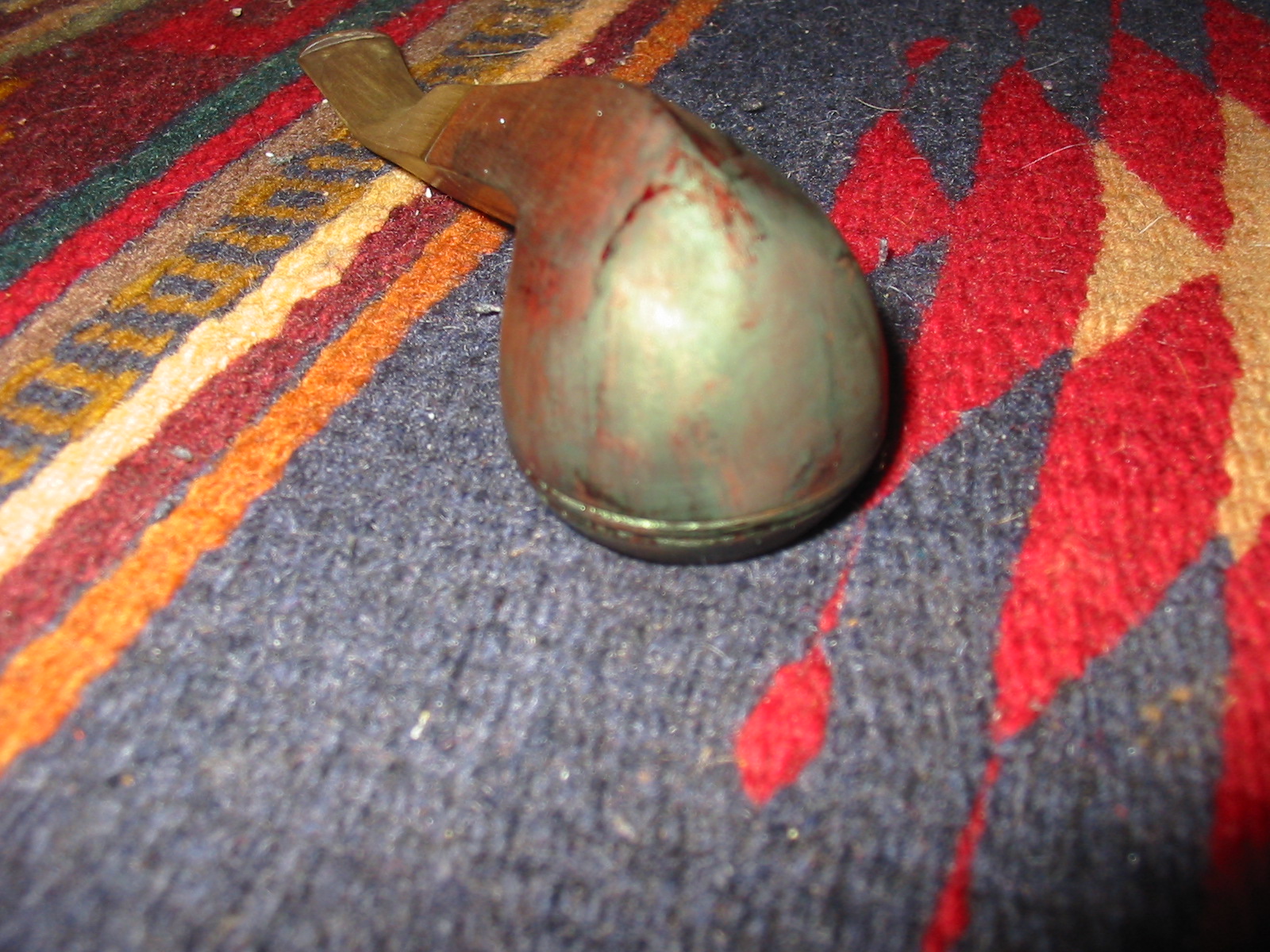
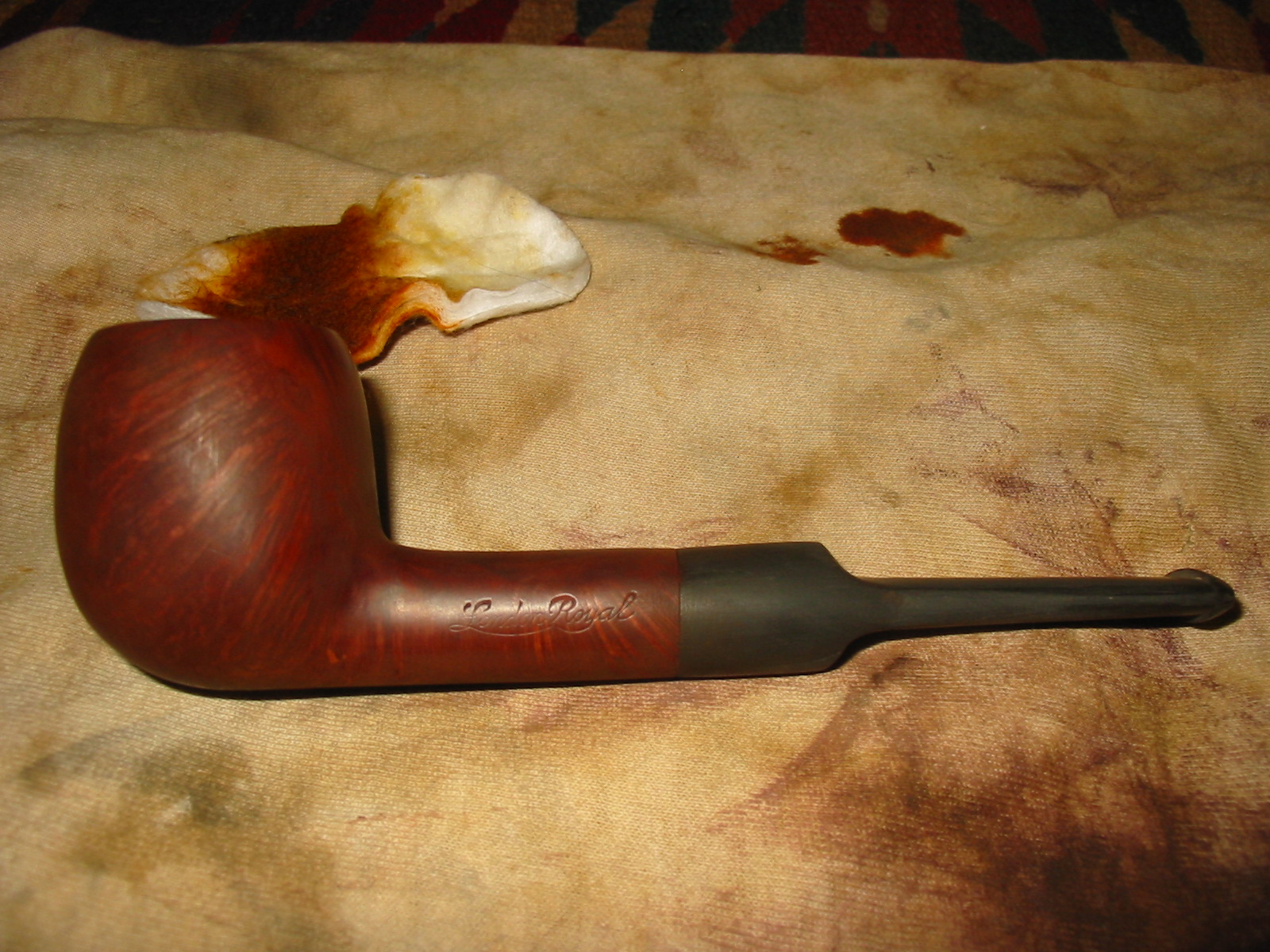
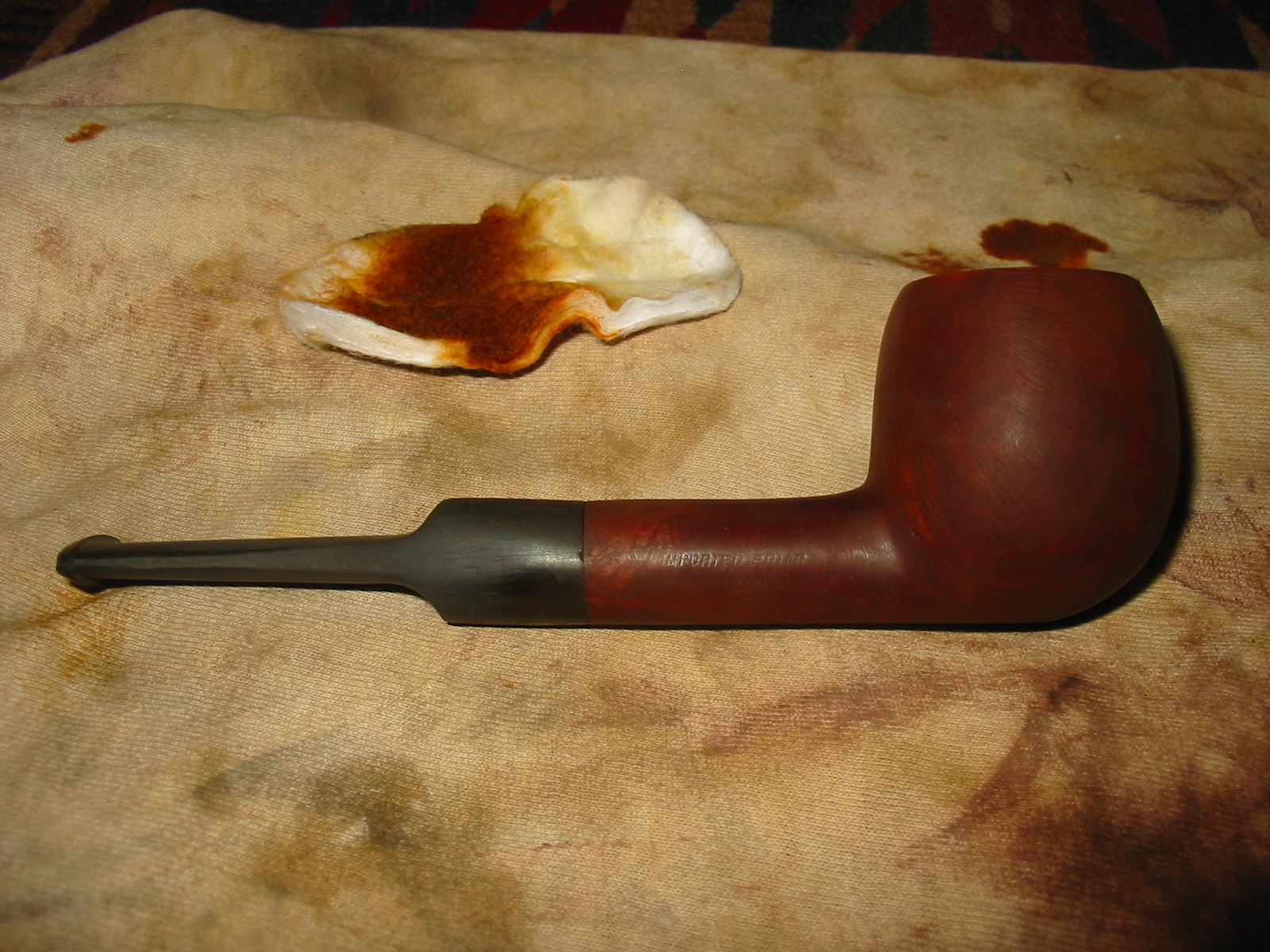
After the stain was dried I took the pipe to the buffer and buffed it with Tripoli and White Diamond to remove excess stain. The stain coat was very even but it was still too dark to my liking so I used some isopropyl alcohol on a cotton pad to remove some of the heaviness of the stain from the pipe. The next three photos show the pipe after I had removed much stain. The cotton pad is darkened with the brown stain. The grain is becoming more visible as I worked on the finish with the isopropyl alcohol.
ImageImageImage

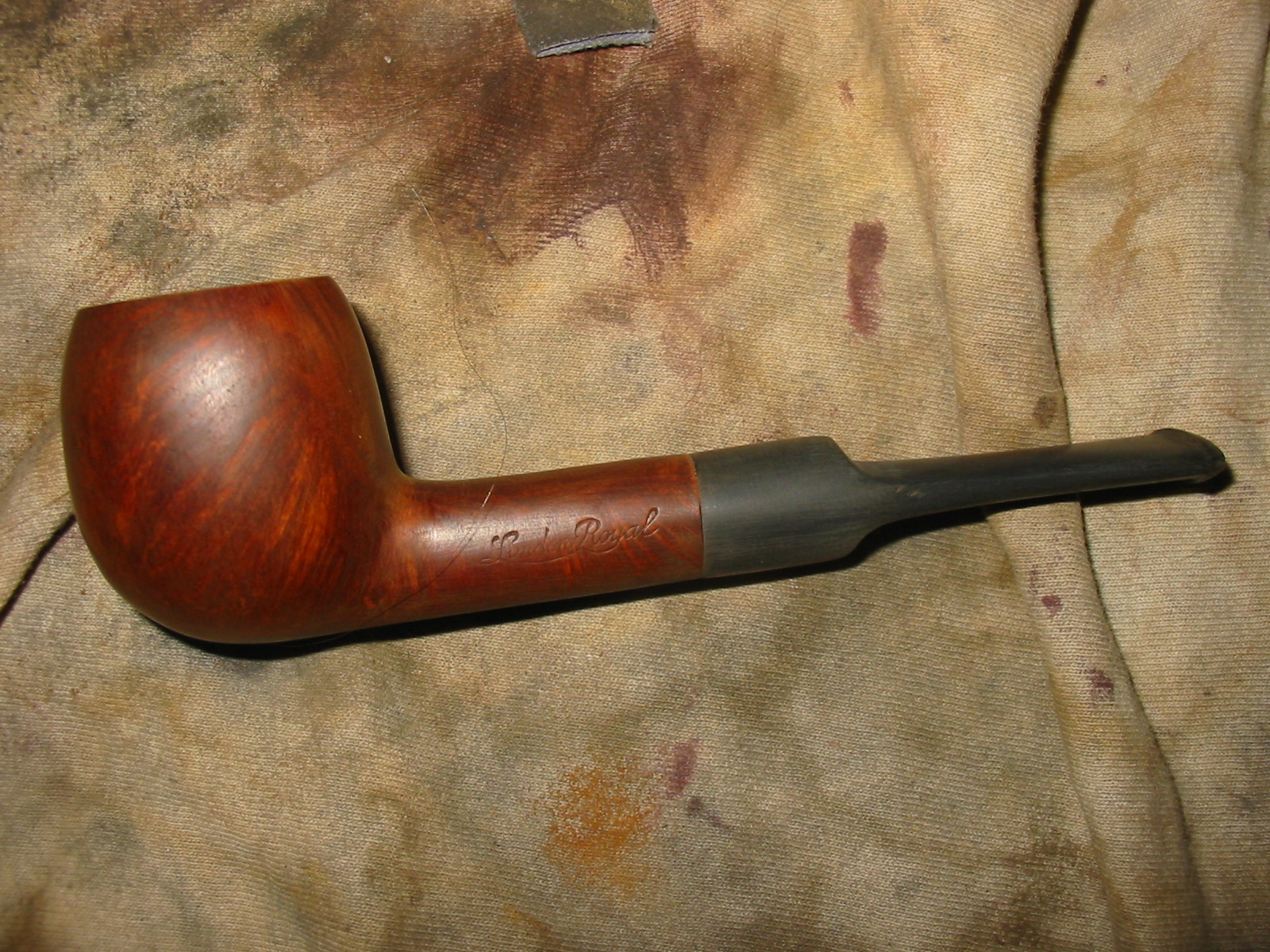
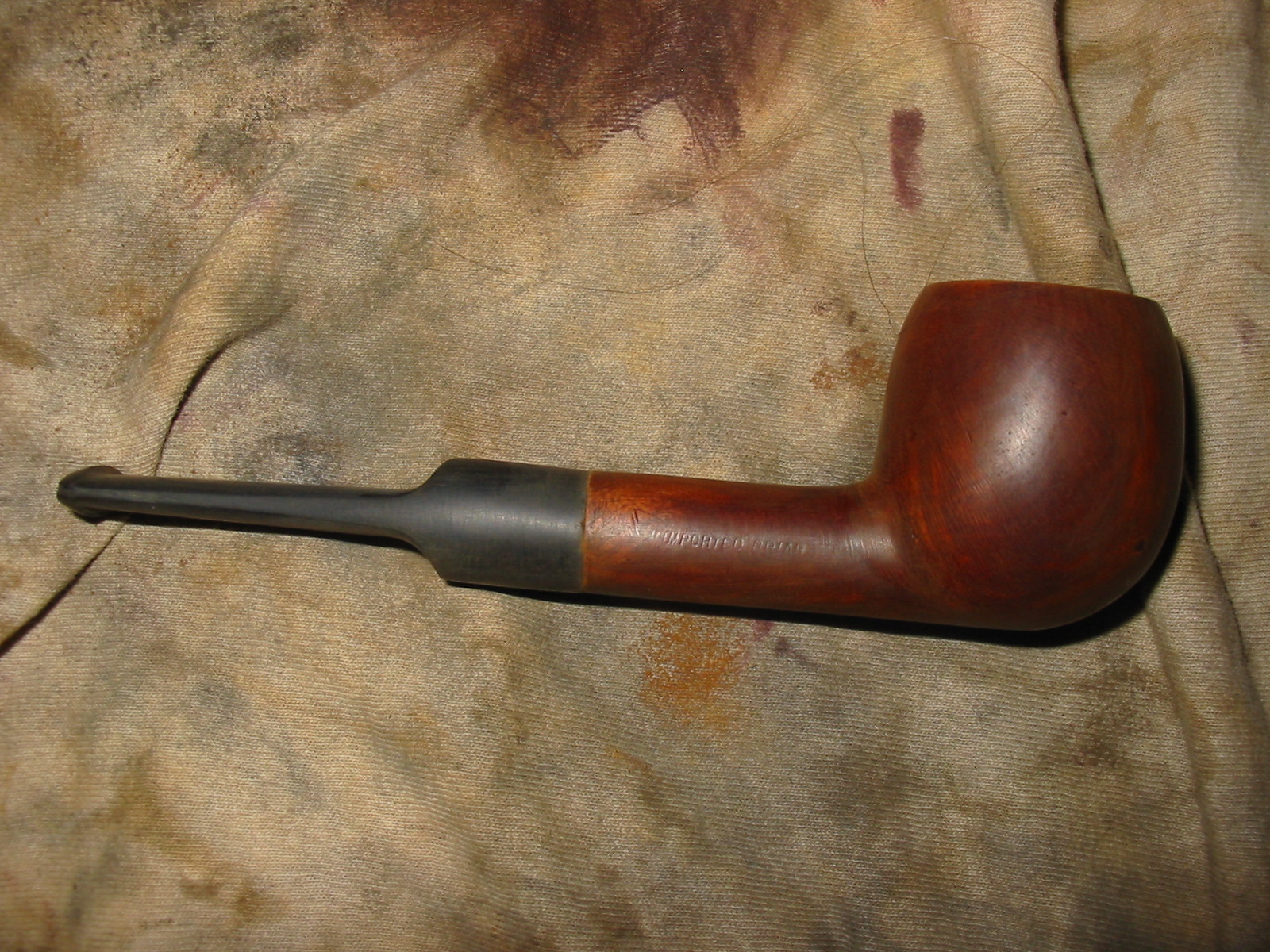
I then sanded the stem some more with some fine grit emery cloth to even up the stem shank junction. The next series of four photos show the pipe after the sanding. The bowl and shank are close to the colour I was aiming for. I would need to remove a bit more colouring from them to get it so the grain shows through the finish.
ImageImageImageImage

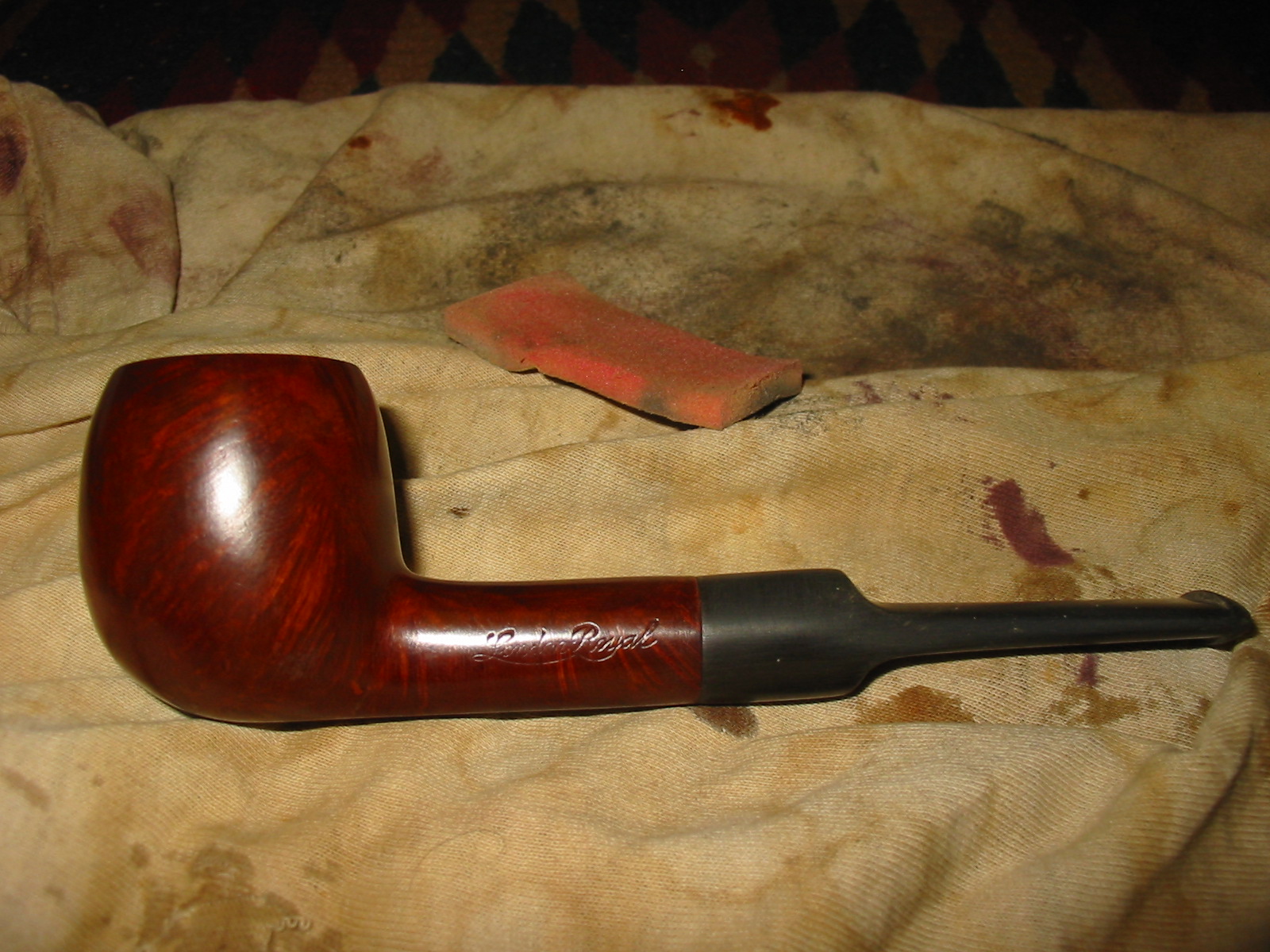
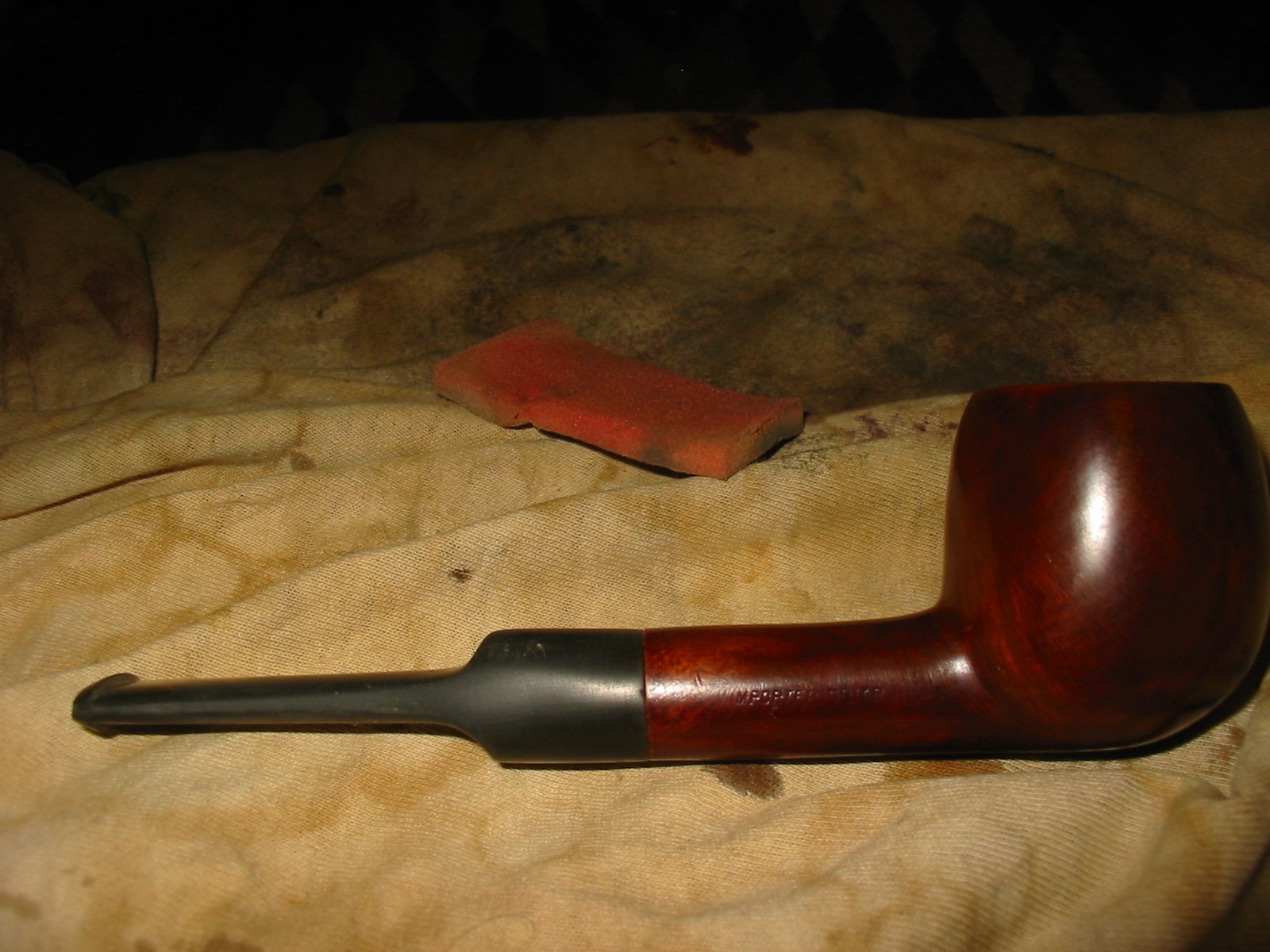
I took the pipe back to the buffer and gave it a buff with Tripoli and White Diamond. I use a light touch around the stamping on the shank and then hand buff that with a shoe shine brush to get it to shine. The next series of two photos show the finished bowl. There is still some work that needs to be done on the fit of the stem to the shank.
ImageImage

The next three photos show the stem after I used the sanding sponge on it to bring the stem even with the shank. The colour of the pipe is also exactly what I wanted in this pipe. The small fill on the left side of the bowl is no longer visible without a close examination. Once the stem was at this point it was ready for sanding with the micromesh pads and polishing with Maguiar’s.

ImageImageImage

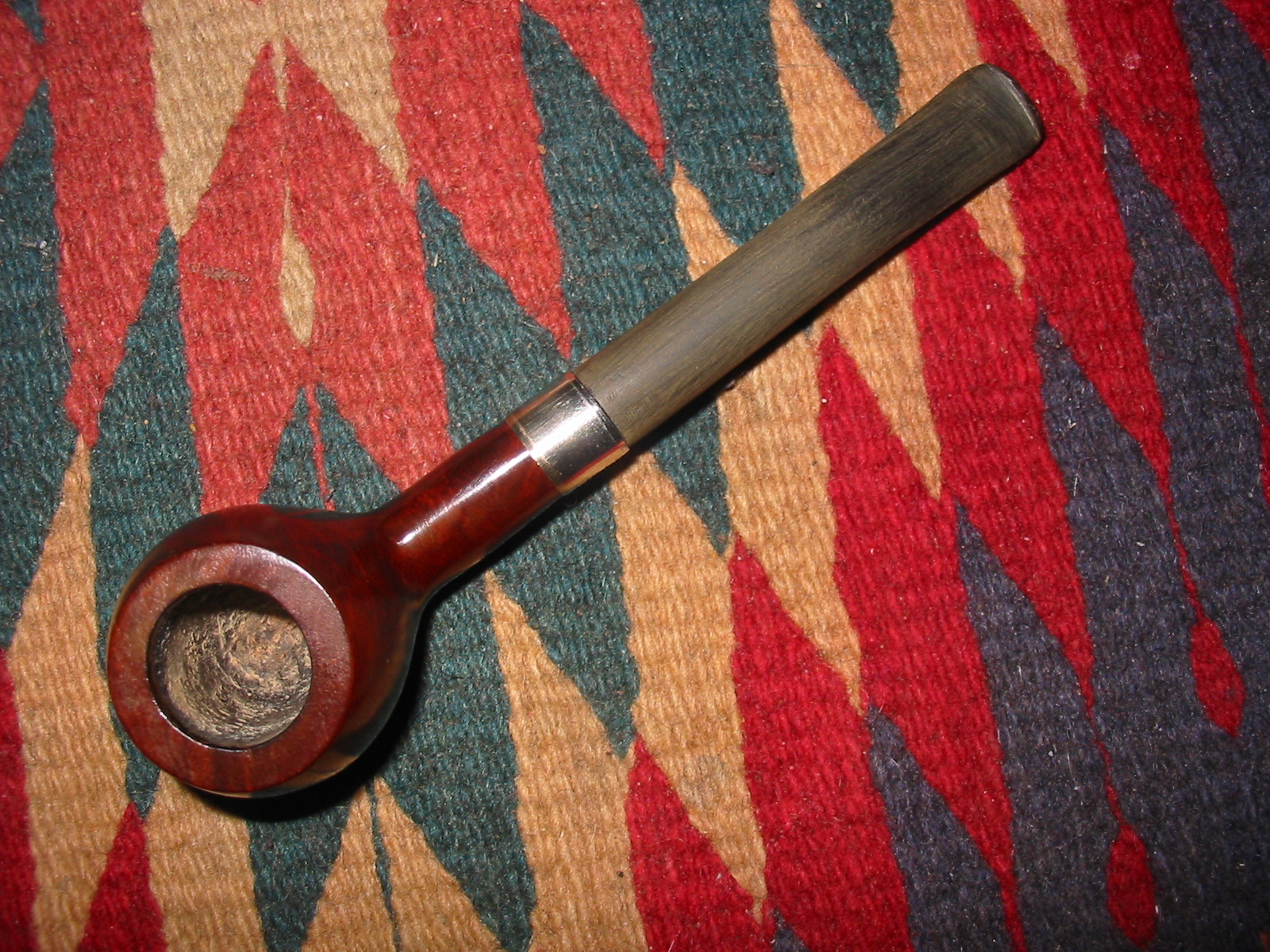
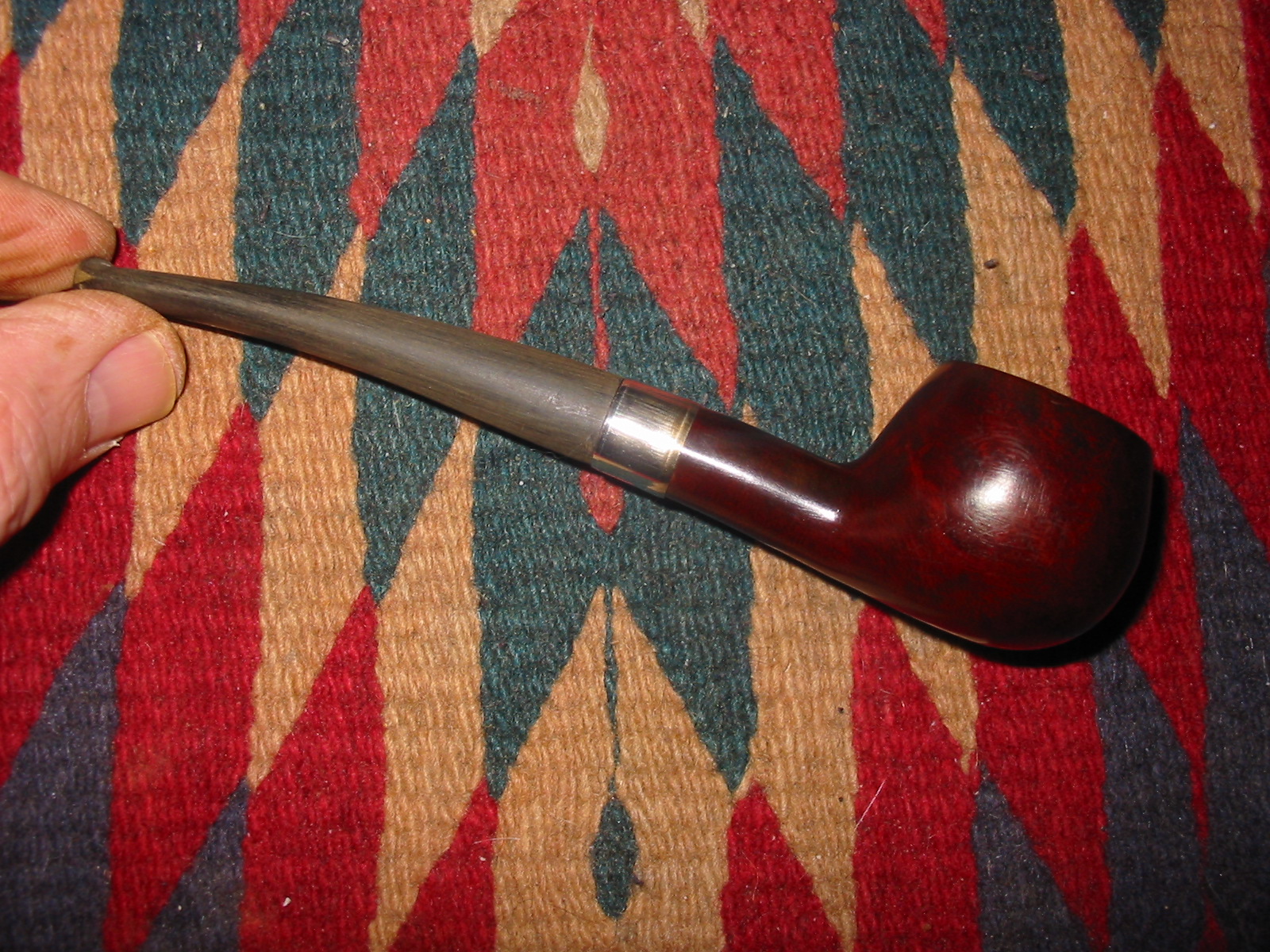
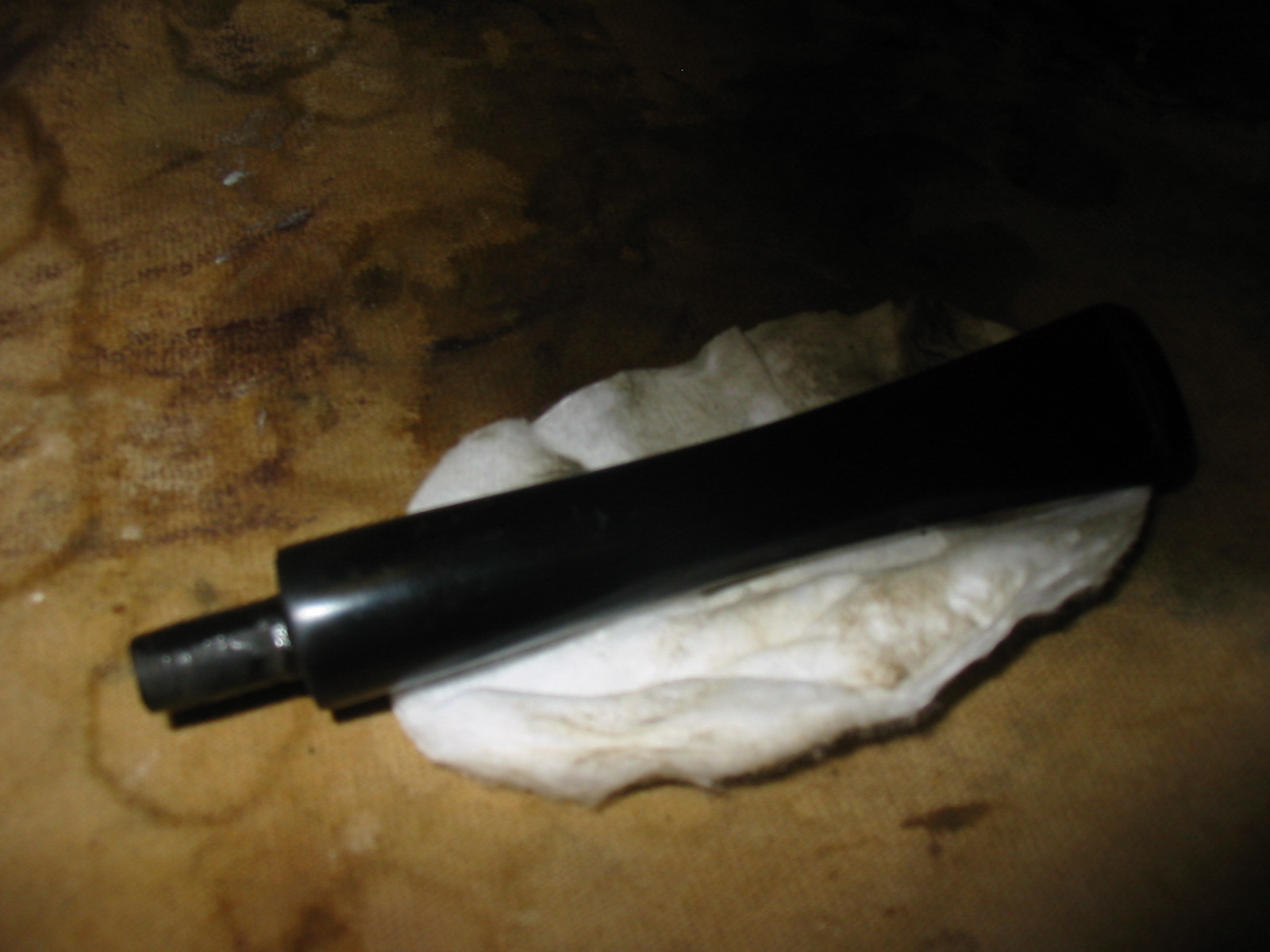
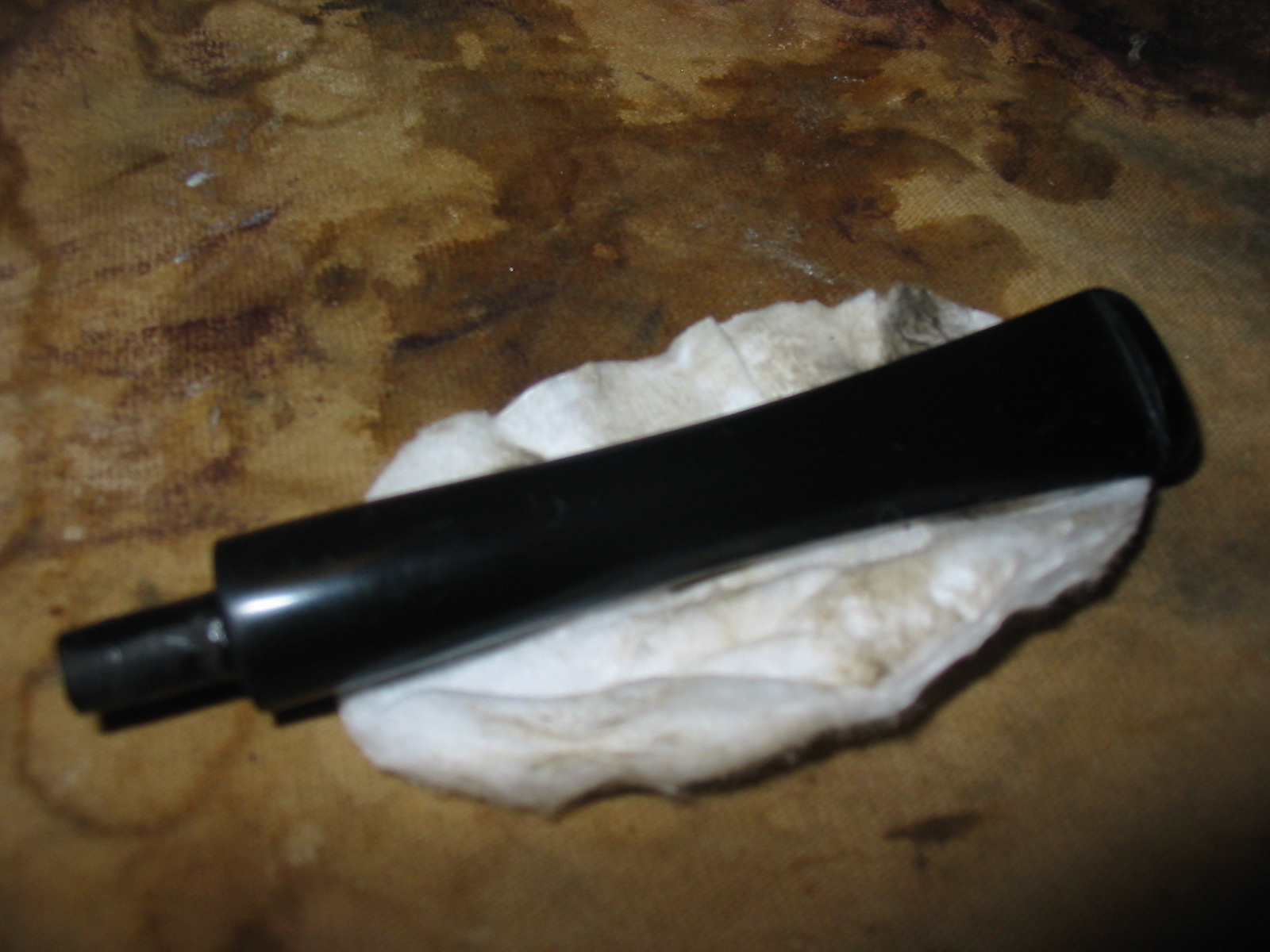
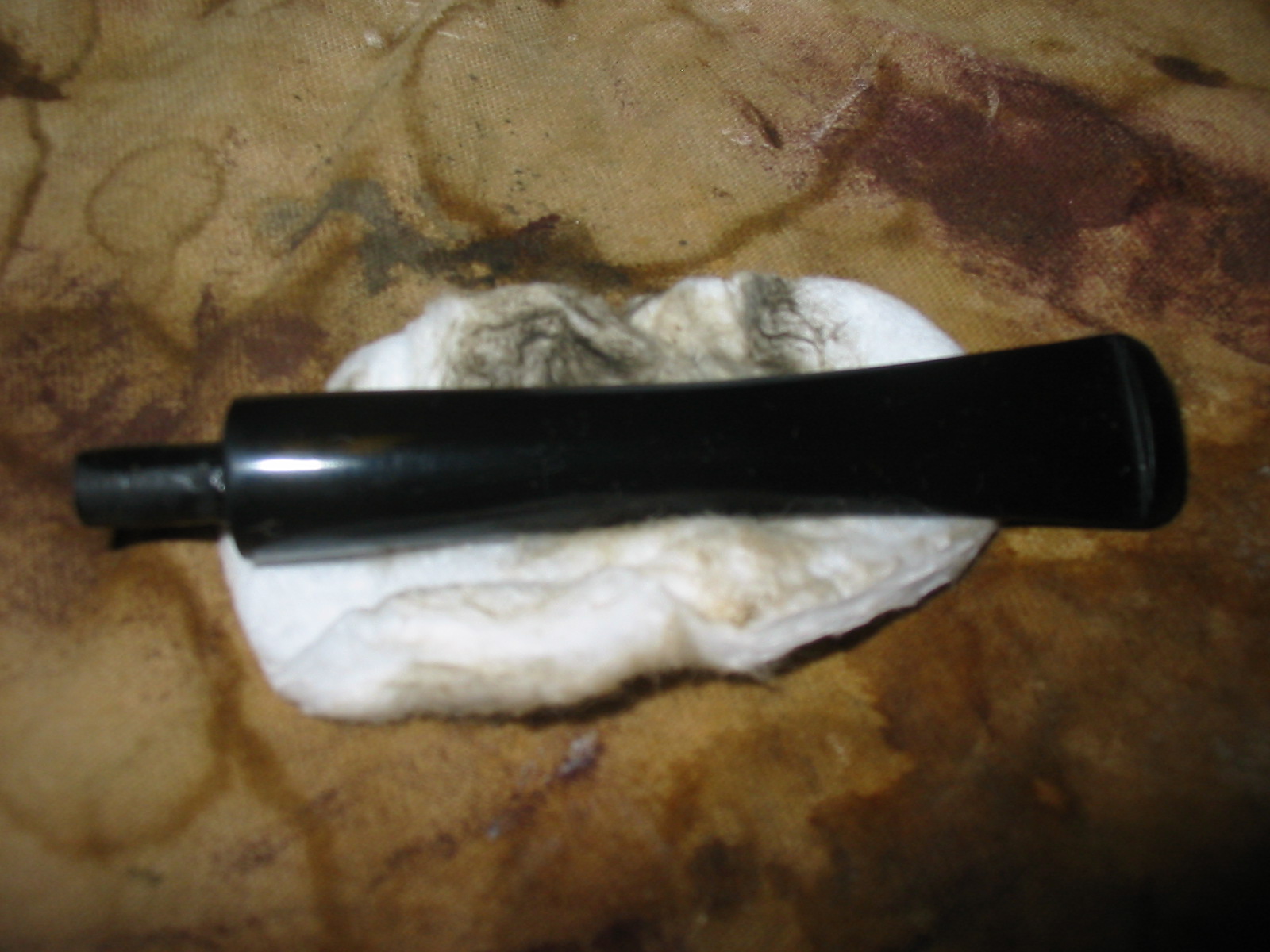
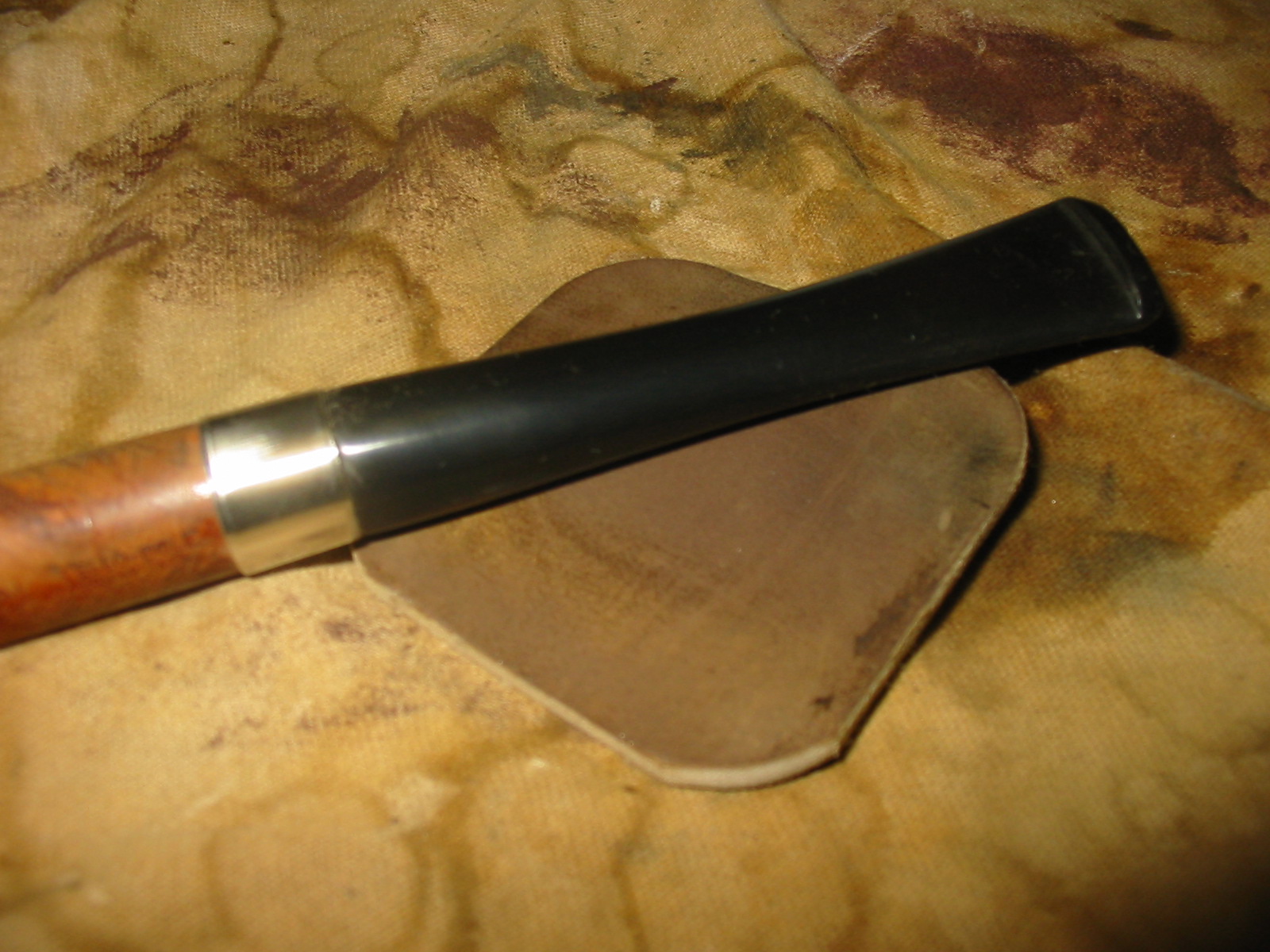
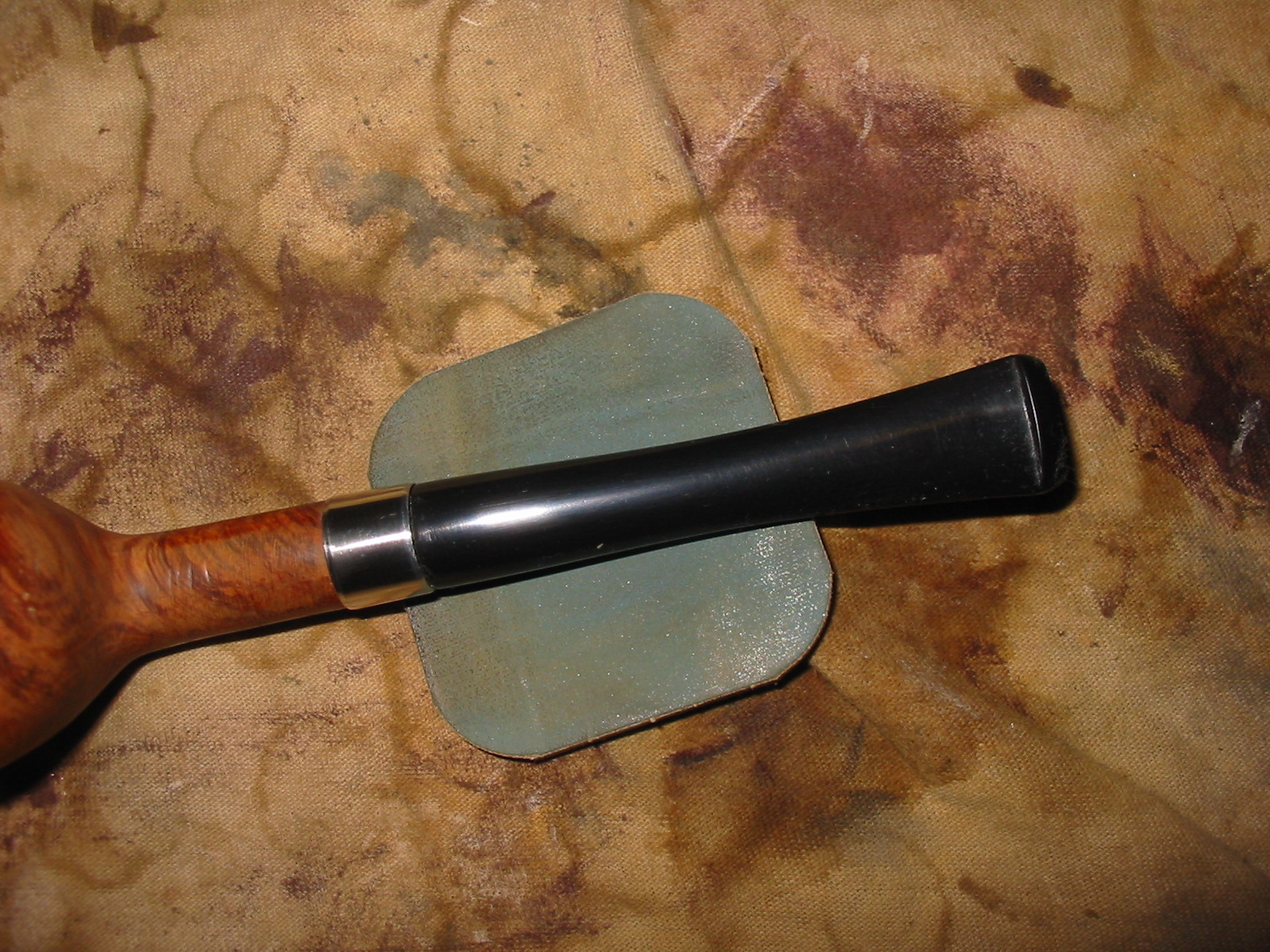
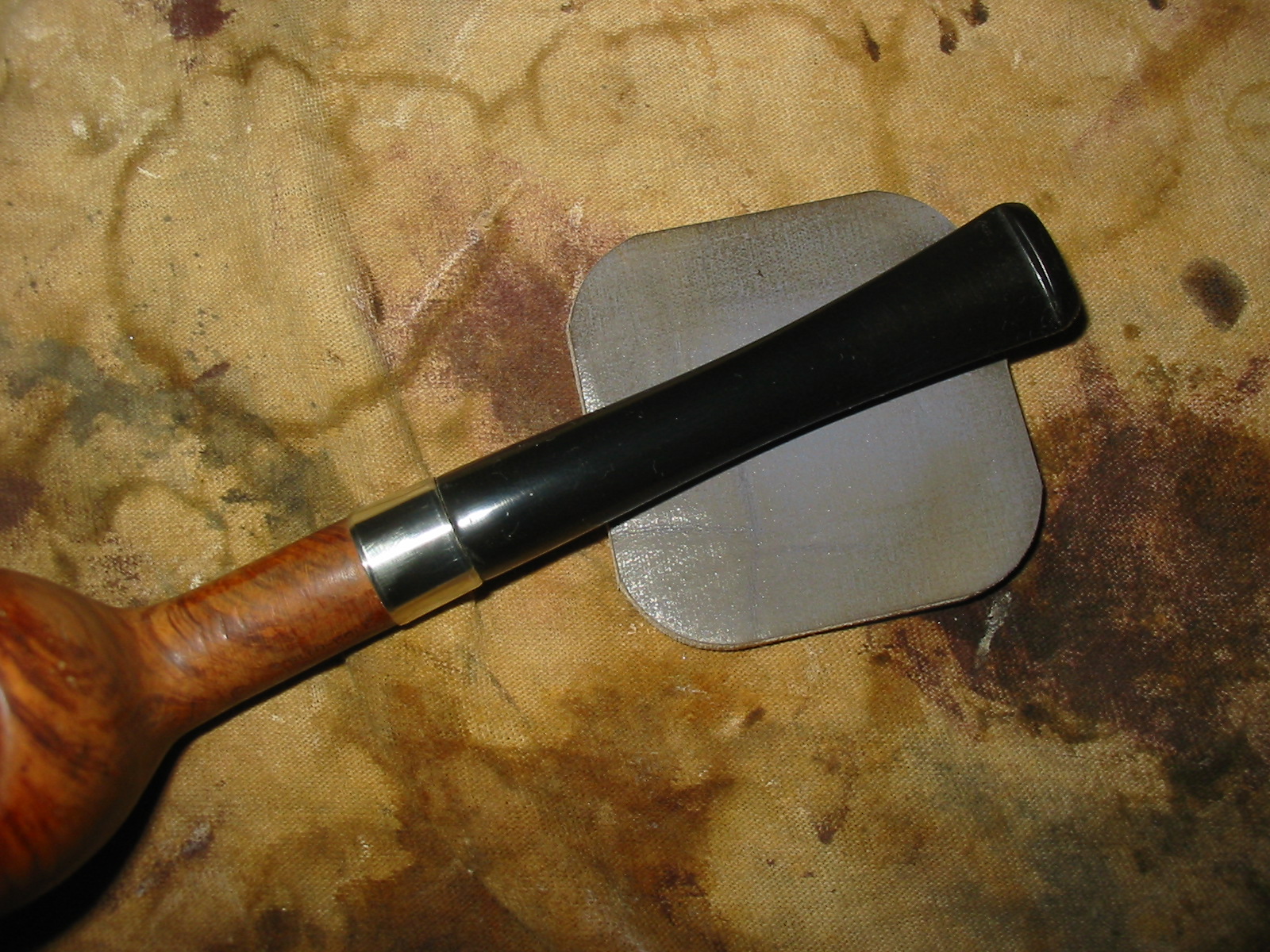
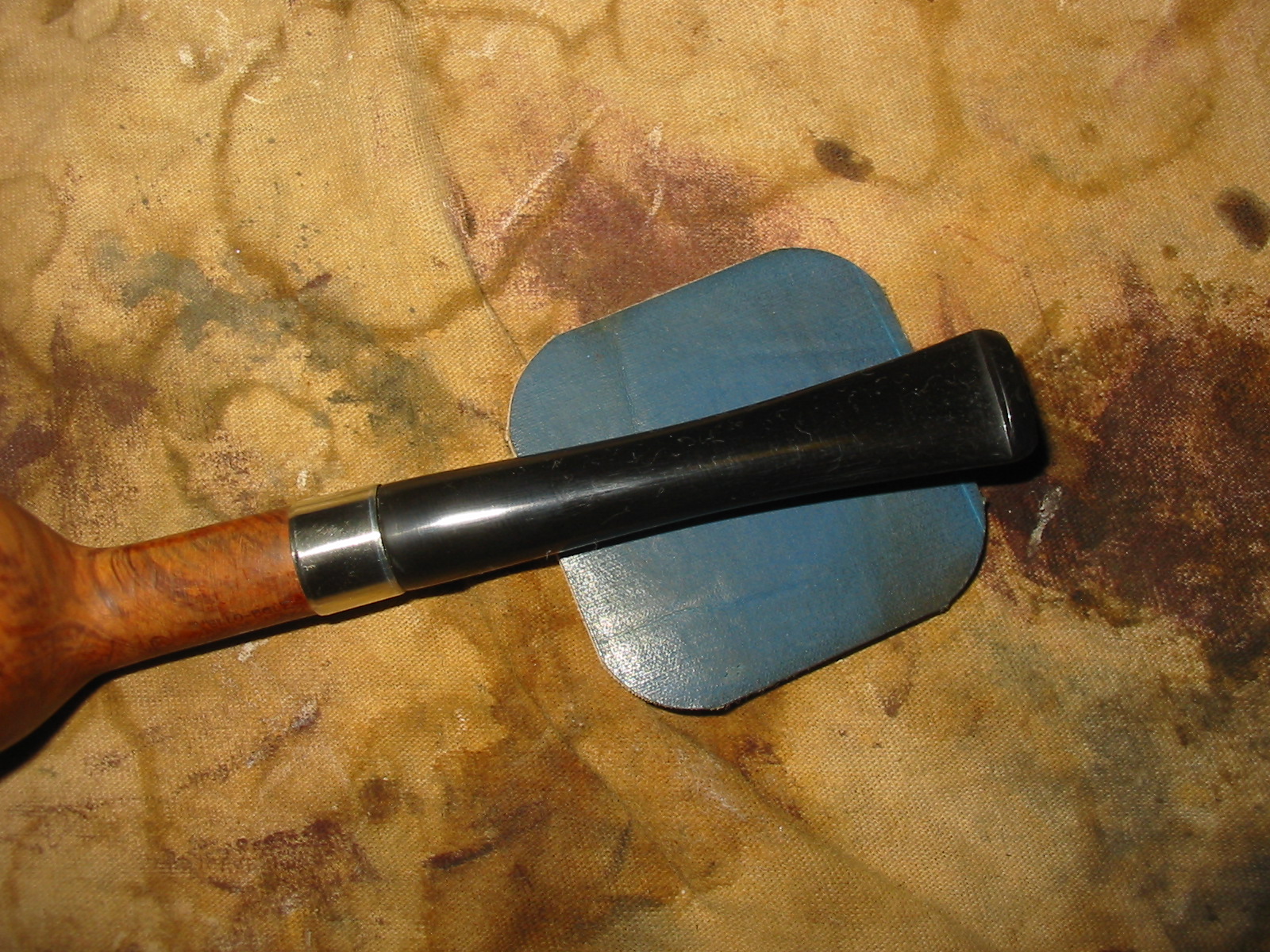
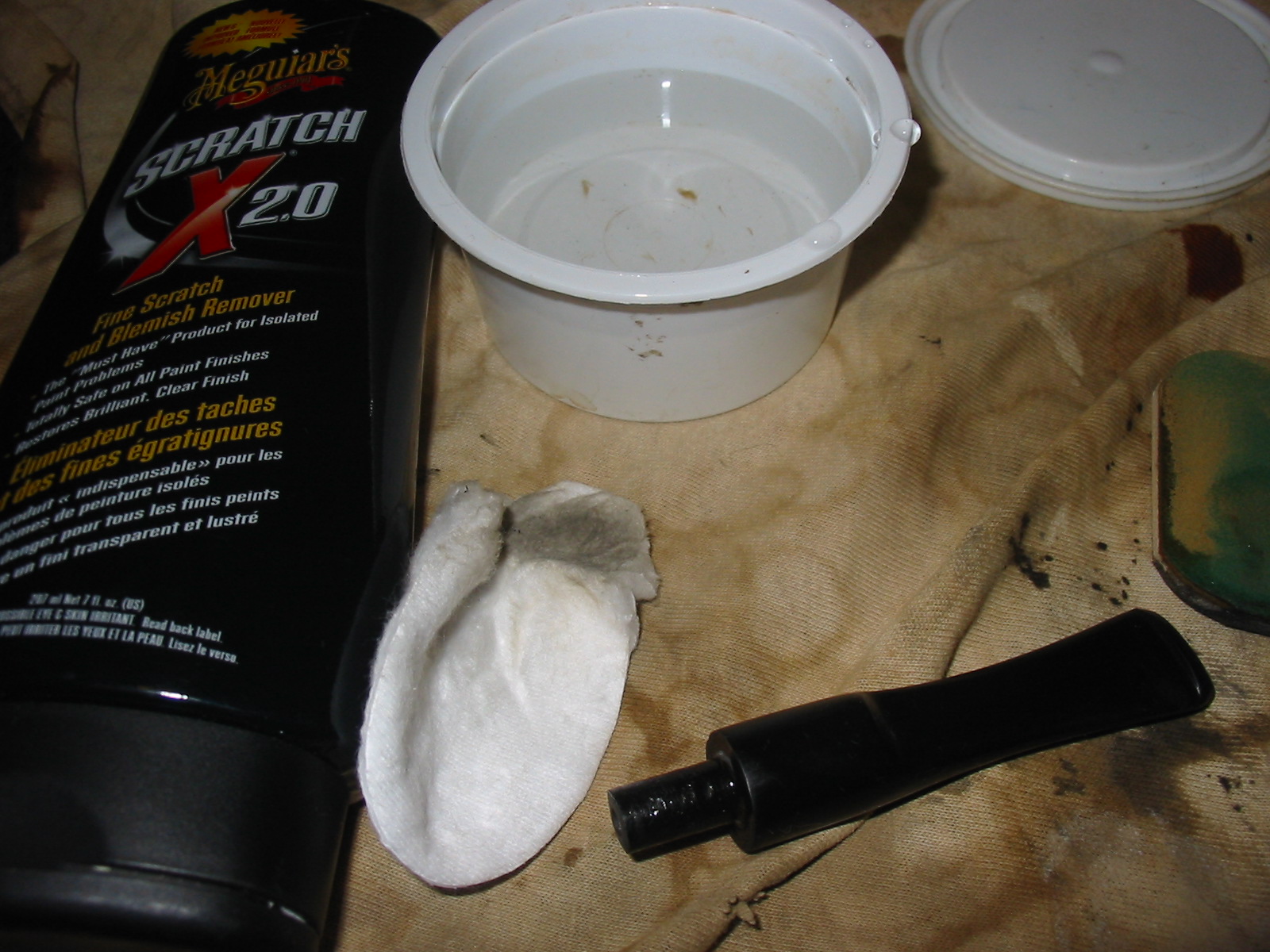
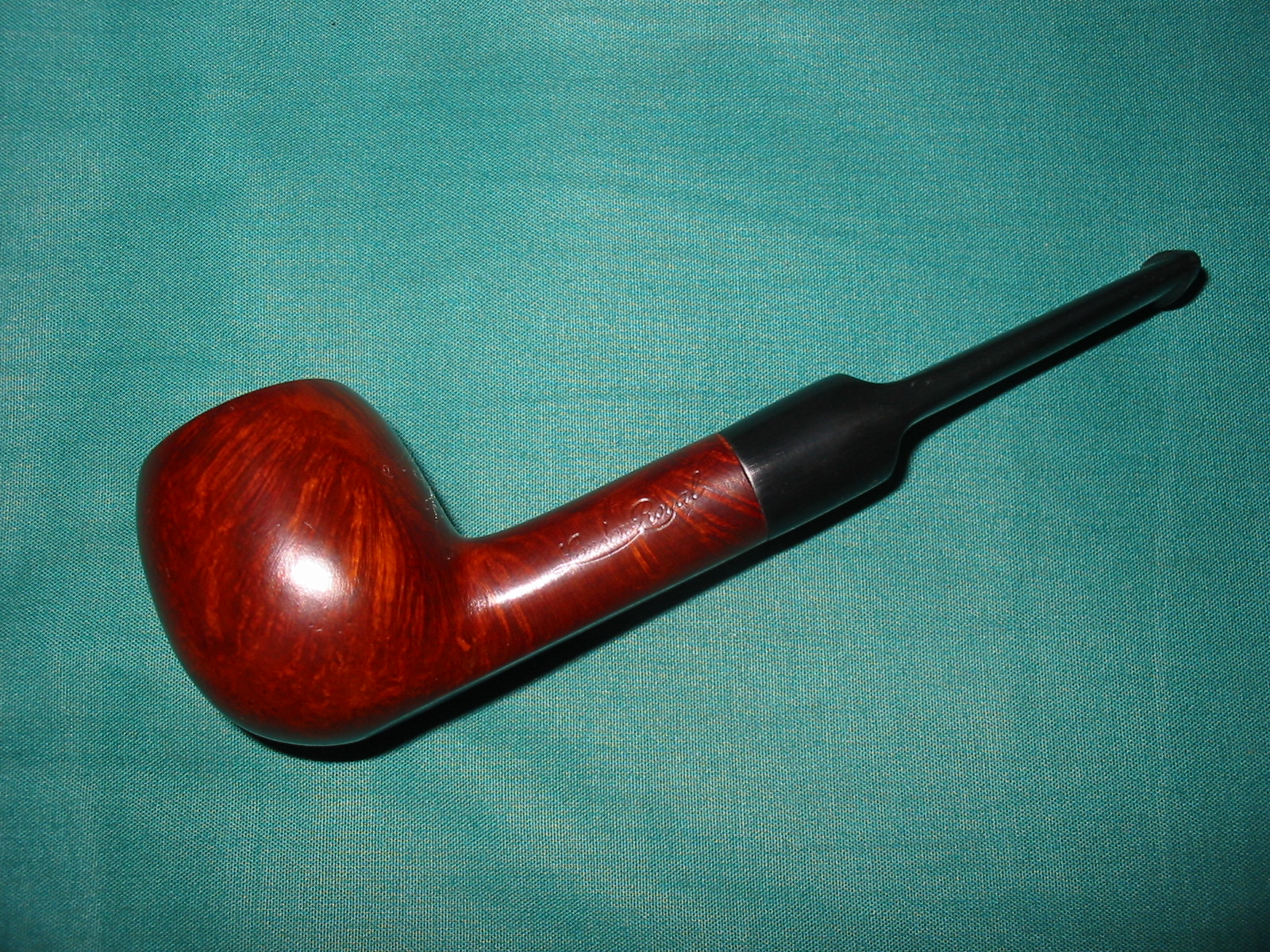
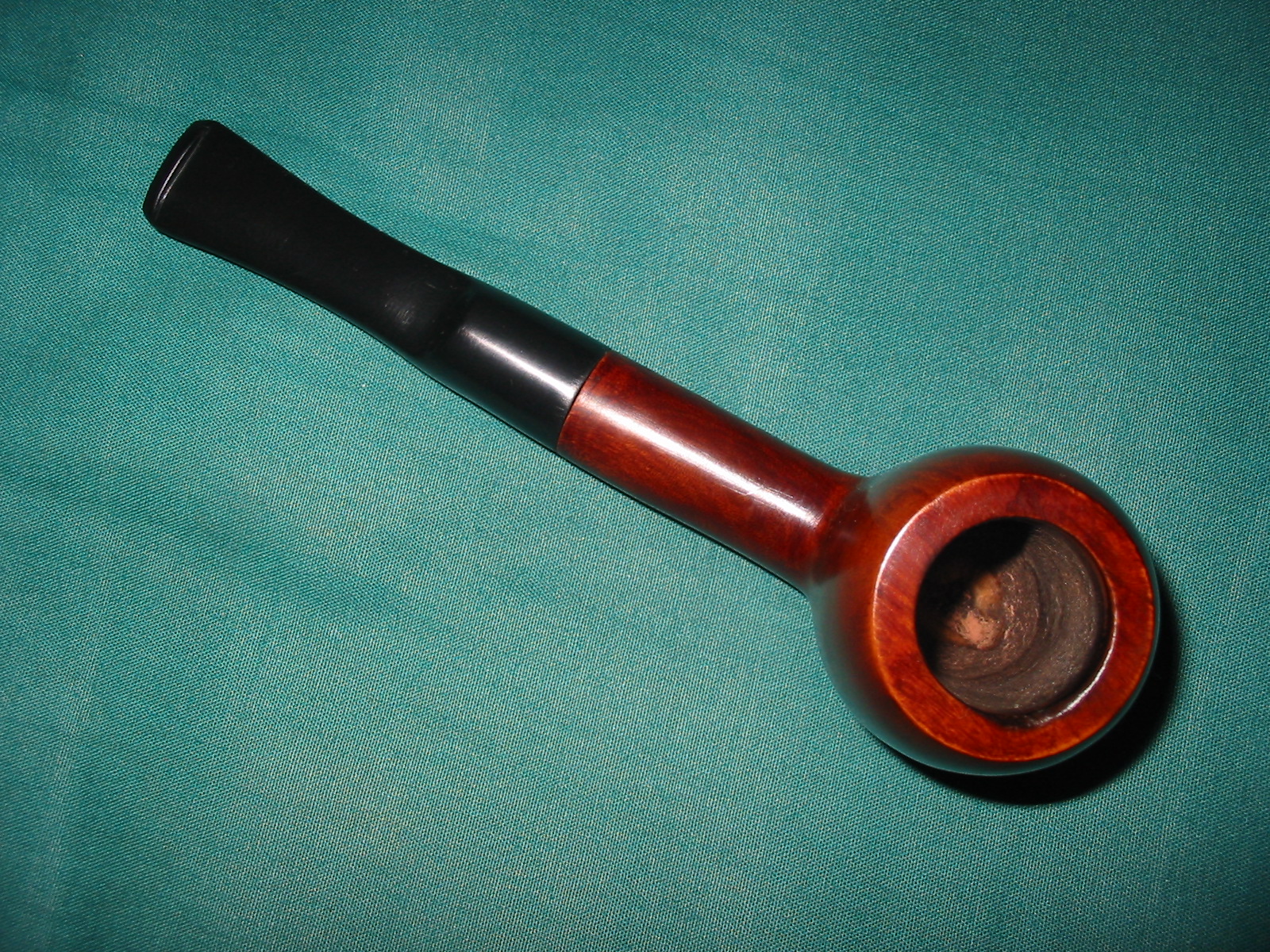
I wet sanded the stem with 1500, 1800 and 2400 grit micromesh sanding pads wiping the stem down between changes in grit. I repeated this sequence of pads until the fine scratches were out of the stem. Where I had recut the saddle had some very fine scratches that were very hard to remove. After this sanding I used Maguiar’s hand applied and rubbed into the stem then wiped off and scrubbed with a cotton pad. I dry sanded the stem with 3200-12,000 grit micromesh following the polish. I also repeated the polish with Maguiar’s. When finished I took the pipe to the buffer and gave the entirety a buff with White Diamond and then gave it several coats of carnauba wax to give it a shine. The final series of four photos show the finished pipe.
ImageImageImageImageImage

A Kaywoodie Handmade Brought Back to Life – Greg Wolford


Blog by Greg Wolford

Greg is one of the blog’s readers and comments often on various posts. He contacted me about writing an article for the blog. He sent me the following article. I want to thank Greg for documenting his work on this old Kaywoodie Handmade. It is great to be able to read and see what others are doing as they work on restoring old pipes to their former glory. Here is a brief biography of Greg that he has written. (I invite others who have been reading the blog to do the same. Send us pictures and documentation of the work you have done and are doing.)

In June of last year I saw a bunch of old pipes, filthy and dirty, wasting away in an antique store. Thoughts of my former hobby of working with wood flooded my brain, as did the romantic idea of bringing new life to these old relics. I purchased the whole lot of 25-30 pipes and pieces and began to research how one goes about restoring these wonderful pipes to at least enjoyable and useable condition, if not to their total and complete former glory. Much help and advice has been shared with me in this short period of time; I have learned a tremendous amount from this blog, its founder and contributors. I am honored to have the opportunity to share some of my work here and to, hopefully, repay some of the kindness shown to me when I began and as I continue to learn this restoration-side of our pipe hobby.

I picked up this old Kaywoodie last month at an antique mall. It was in poor, filthy shape when I found it but I knew her potential. The stamping is not very strong but identifies it as a Kaywoodie Handmade, which I’ve seen and owned before. But this is one of the oversize models, a style that I’ve not yet had.

ImageImageImageImageImageImage

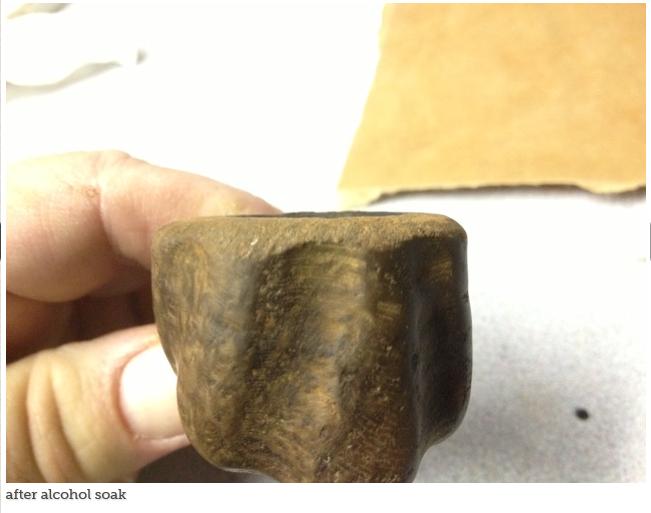
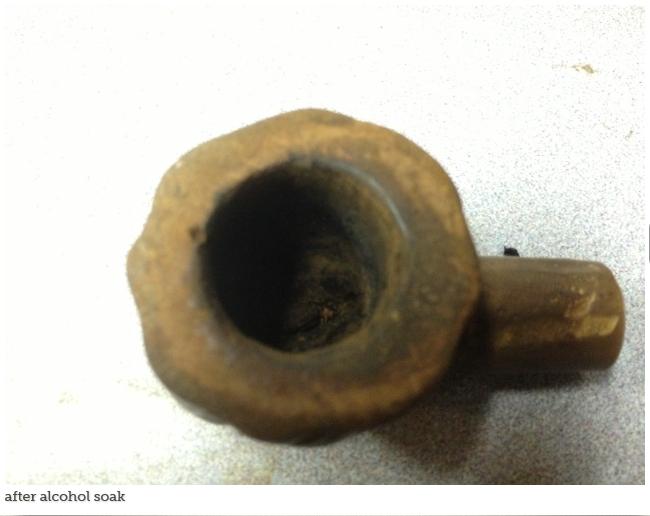
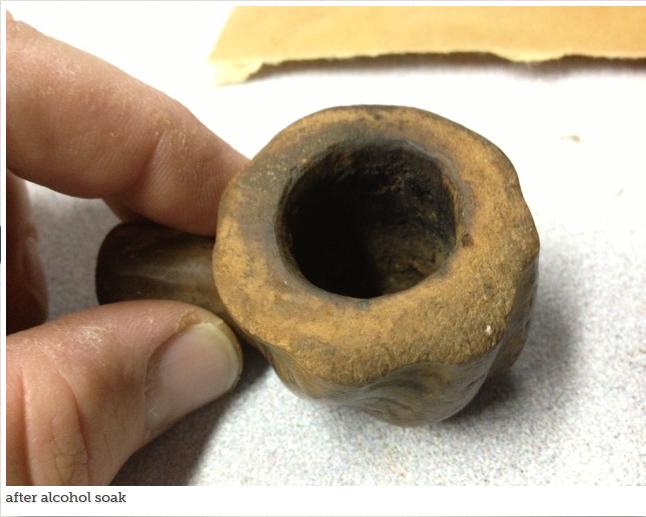
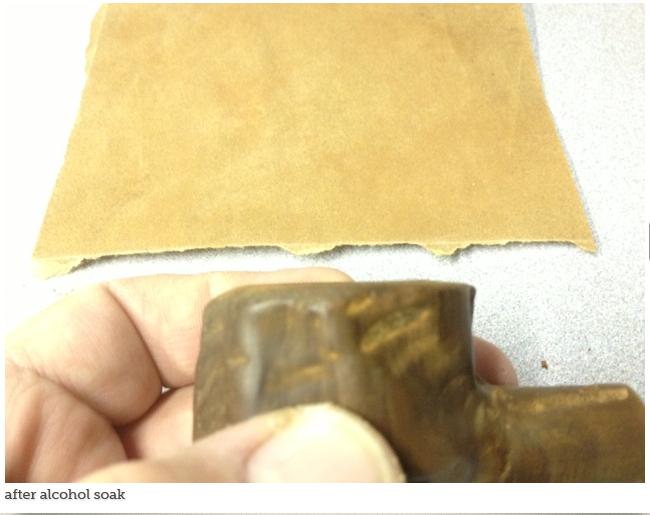
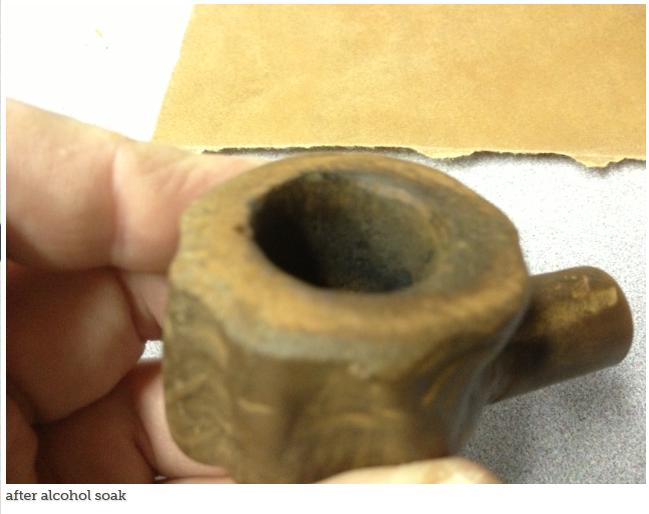
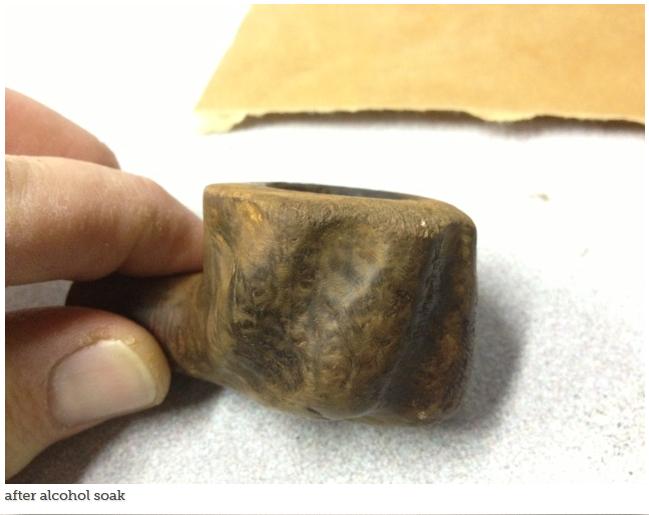
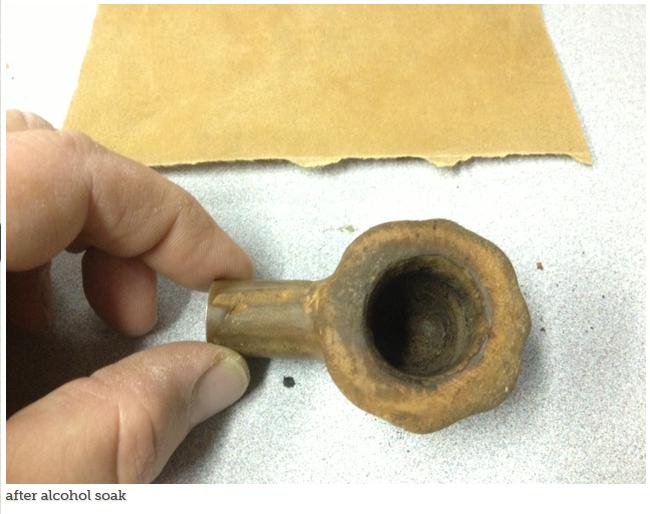
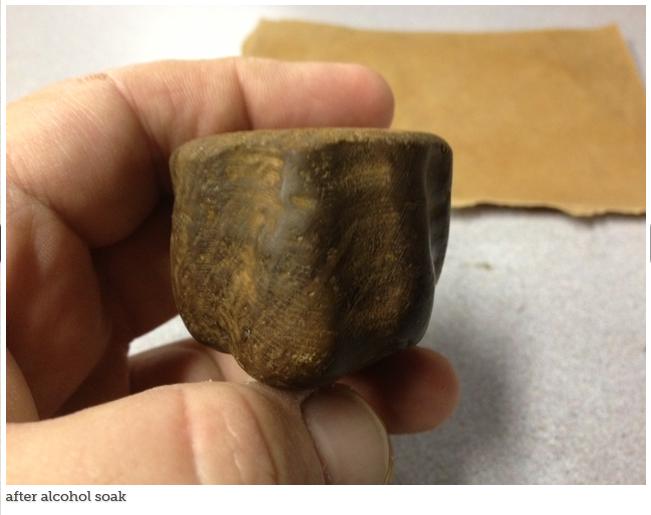
I began with an overnight alcohol soak and allowed a few hours dry time before I began working in the briar. She had a few scratches and a bit of whitish “mold” that I wanted to get rid of.

ImageImageImage

The previous owner must have had the dreadful habit of knocking the rim of the bowl to empty the pipe on a hard surface; the front was beaten down by probably 1/8th of inch, give or take a bit, giving it a terrible “frontal slope” (visible in the photos above and below). This seemed like the best place to start working on the briar. Before starting, I put the stem in a warm OxyClean soak so it would be ready when I was. 

ImageImageImageImageImage

It took a lot of steaming and some topping to get the bowl back to even. I alternated steaming and topping until I was happy with the shape. The only thing I was unhappy with was finding a sand pit in the new top of the rim; I filled it with briar dust and dropped a little Super Glue into it to make a fill. The fill is somewhat visible but should fade with use as patina develops (I hope). 

ImageImage

For the scratches and left over “mold”, I lightly sanded with 400 grit wet dry paper. It didn’t take too long on the scratches since they weren’t deep. The carved areas where the whitish substance was took more time but came off fairly easily.  I then stained it with Fiebing’s Dark Brown leather dye, cut about 50/50 with 91% isopropyl alcohol. I applied, flamed, buffed with an old t-shirt by hand and repeated. Then I took the pipe to the buffer for a treatment with Tripoli, white diamond, and finally a few coats of carnauba wax. For the final buffing I used my cordless drill with a “mushroom” buffer attachment. I find the shape of the mushroom allows me to get into every crevice with relative ease. Lastly, I cleaned with stinger by buffing it with blue rouge several times, bringing it back up to a nice, new shine. I then set the bowl aside to work on the stem. 

ImageImage

When I took stem out of its bath I rinsed it well and used a Miracle Eraser to remove some of the loosened oxidation. To my surprise I found that the bit was cracked under all the crud, something I had not dealt with before. I then took a fluffy pipe cleaner and dipped the first 1.5 inches or so into Vaseline and then inserted it into the stem.  I dripped some Super Glue into the crack and let it sit a while until it had hardened through. (This was my first time fixing a crack with super glue and was happy with the outcome and learning curve.) The stem was really deeply marked dents and scratches and took a lot of time and work. I began with some heat from a candle to raise what I could of the dents. Then I used various needle files, wet/dry sand paper in grits from 220-800, micro mesh 1500-4000, plastic polish and carnauba wax on it. I actually started over twice, at different points, to get it as nice as possible.

Here are photos of the finished pipe.ImageImageImageImageImageImage

A Reborn Real Briar Prince – Restemmed and Restored


Quite a few of the old stummels in my box for restemming are stamped Real Briar over Made in Italy. This one caught my eye. It had a great classic shape of a Prince. I dug through my can of stems and found an old stem that would work on this little prince with some work. The bowl was coated with tars and needed to be reamed. The rim was tarred and the cake overflowed the bowl onto the rim. On the bottom left side of the bowl near the shank were several fills that were visible and ugly. The shank was plugged with tars and oils and I could not pass a pipe cleaner through it. The old stem I picked had the right shape but was also badly oxidized and coated with a calcification that was white and hard. The button had a single hole drilled in the centre but it had been damaged and had been worn toward the top of the button. This one was going to be a challenge but it was something I wanted to give a shot.

ImageImage

I used my Dremel with the sanding drum to cut away the excess material on the diameter of the stem. The next three photos show the stem after it has been shaped to close to the diameter of the shank. The rest of the work would have to be done by hand. The first one shows the state of the stem when I started with it. The second and third photos show the stem after I had sanded it with emery paper to remove the oxidation and the calcification.

ImageImageImage

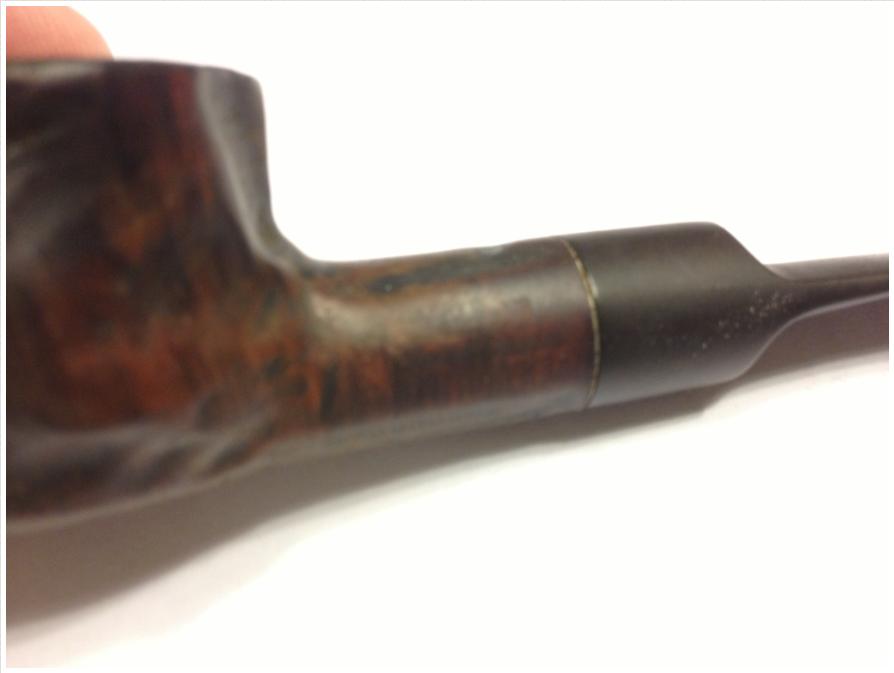
I wiped down the bowl with acetone and in doing so found a hairline crack in the shank on the underside of the pipe. I don’t believe this was done in fitting the stem as the fit is actually very precise and smooth. There was no stress on the shank from the new stem. The look of the crack also was dirty and showed that it had been there for awhile. The next two photos below show the crack in the shank on the underside.

ImageImage

I dripped some superglue into the crack and then heated a nickel band and pressure fit it on the shank. I then took a little more of the stem material off so that the fit to the band would be smooth and not bulge. The next two photos show the band and stem fit. The band seems to really dress up this old Real Briar Prince.

ImageImage

I wiped the bowl down with several more wipes of acetone on a cotton pad to break up the varnish coat. I have found that the acetone softens the varnish and makes it easier to sand off with sand paper. I also decided to sand off the rim to get rid of the hard tars. The next two photos show the process I use for sanding the rim. In this case since I was restaining the pipe anyway I did not care if the finish was removed from the rim.

ImageImage

I then sanded the bowl and shank with a foam back medium grit sanding pad to remove the varnish coat. I sanded it until the bowl finish was foggy looking and then I wiped it down with acetone once again on a cotton pad. The next three photos show the result of the sanding and washing with acetone. The finish is finally beginning to break up and the briar is down to the stain coat.

ImageImageImage

I put the stem on the bowl and continued to sand the stem and the bowl with the sanding sponge that is pictured with the pipe. The next three photos show the progress of the sanding. Once I was finished the sanding I wiped it down a final time with the acetone and cotton pad to prepare it for restaining.

ImageImageImage

The next three photos show the bowl after I have stained, flamed, restained and flamed it again. I stained the rim three times to get it to be the same colour as the bowl. It took a bit of work to get the colours to match. I used a dark brown aniline stain mixed in a 2:1 ratio with isopropyl alcohol to attain the colour that I wanted for this pipe. I have learned that the mix is great for hiding unsightly fills and blending them into the rest of the bowl.

ImageImageImage

I removed the bowl and went to work on the button. The airway in the button was actually quite large and had been cut very close to the edge of the button. I examined it and could see that the damage was fairly surface. The airway inside the button was centered in the button so the edge would need to be built up to accommodate the new slot that I would cut into the button. I used a two part 5 minute epoxy that I mixed and inserted into the damaged edge of the airway with a dental pick. This took a bit of time to get it to the point that I was happy with. The first photo below shows the airway when I started on the repairs.

Image

The next three photos, though a little blurry show the repair in process. To start with I used my needle files to open up the airway into a slot. I wanted to provide a straight edge to build up to on the airway so that I that the epoxy would stay put in the right place. The epoxy is wet and shiny in these photos and is visible on the bottom edge of the stem photos. The slotted airway is very clearly visible in these photos showing the process of rebuilding the airhole.

ImageImageImage

The next photo shows the dried patch in the airway and the even slot that is present in the button. I needed to let the epoxy harden before I finished the shaping of the slot to an oval that easily took a pipe cleaner.

Image

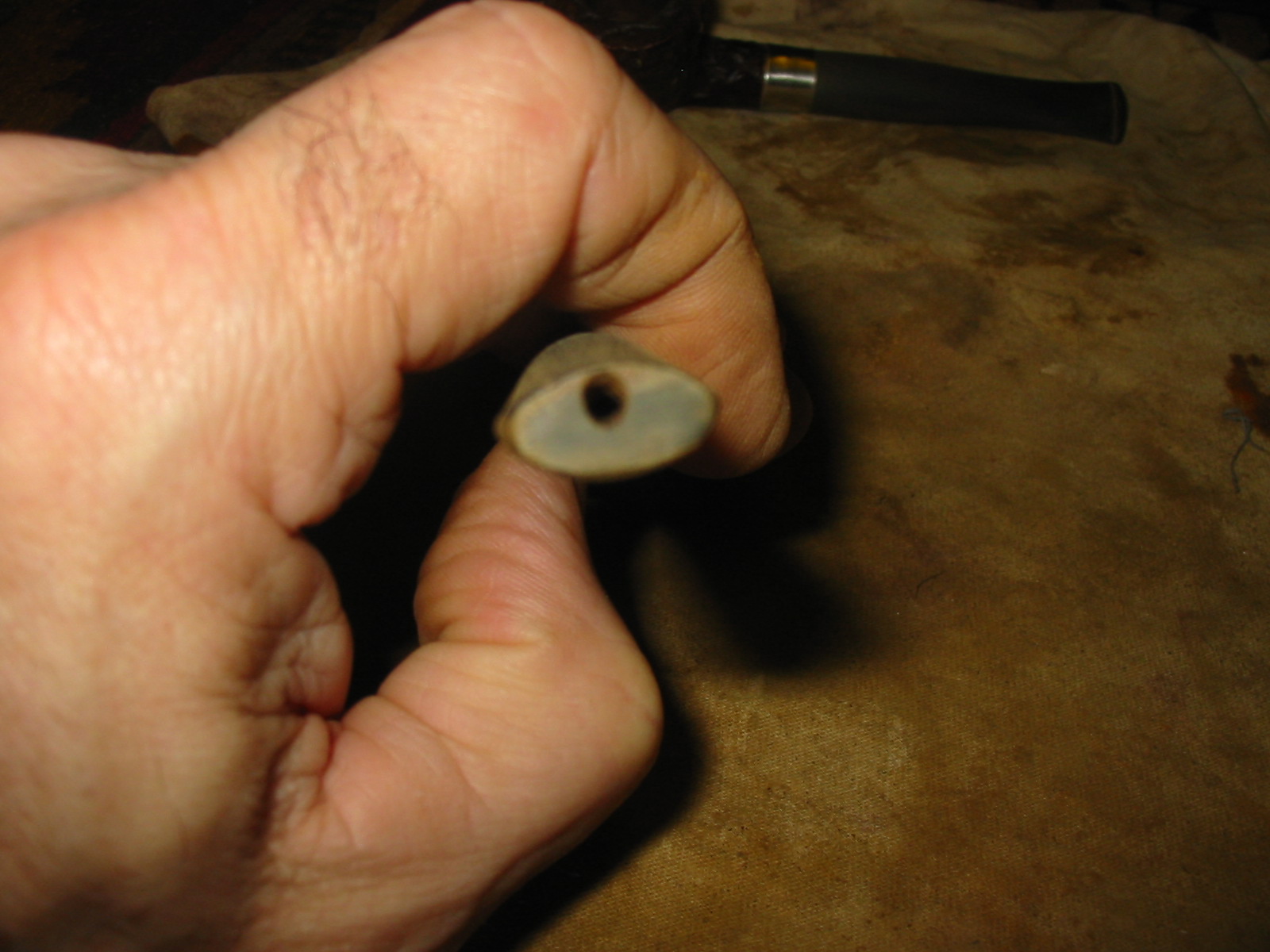
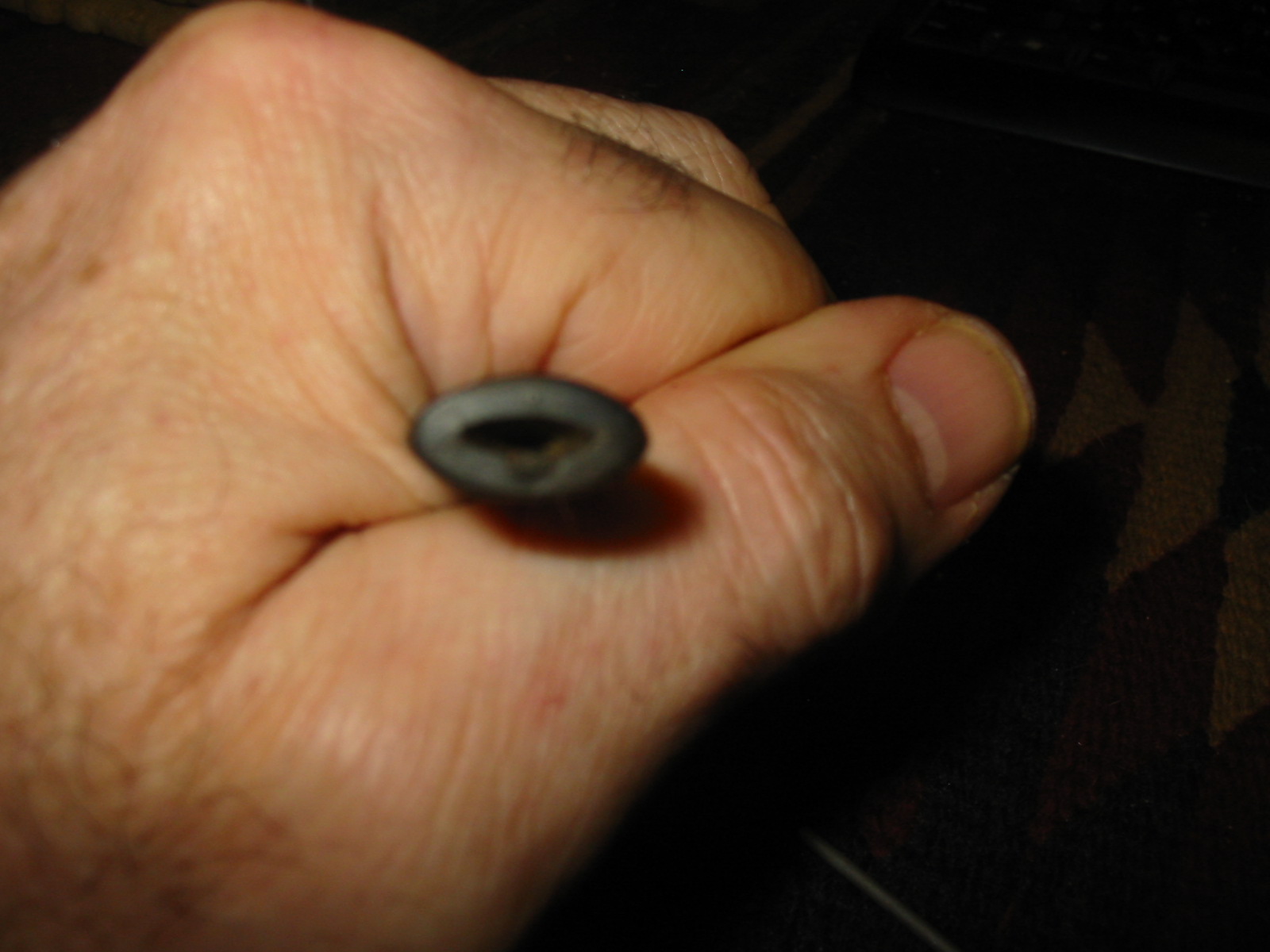
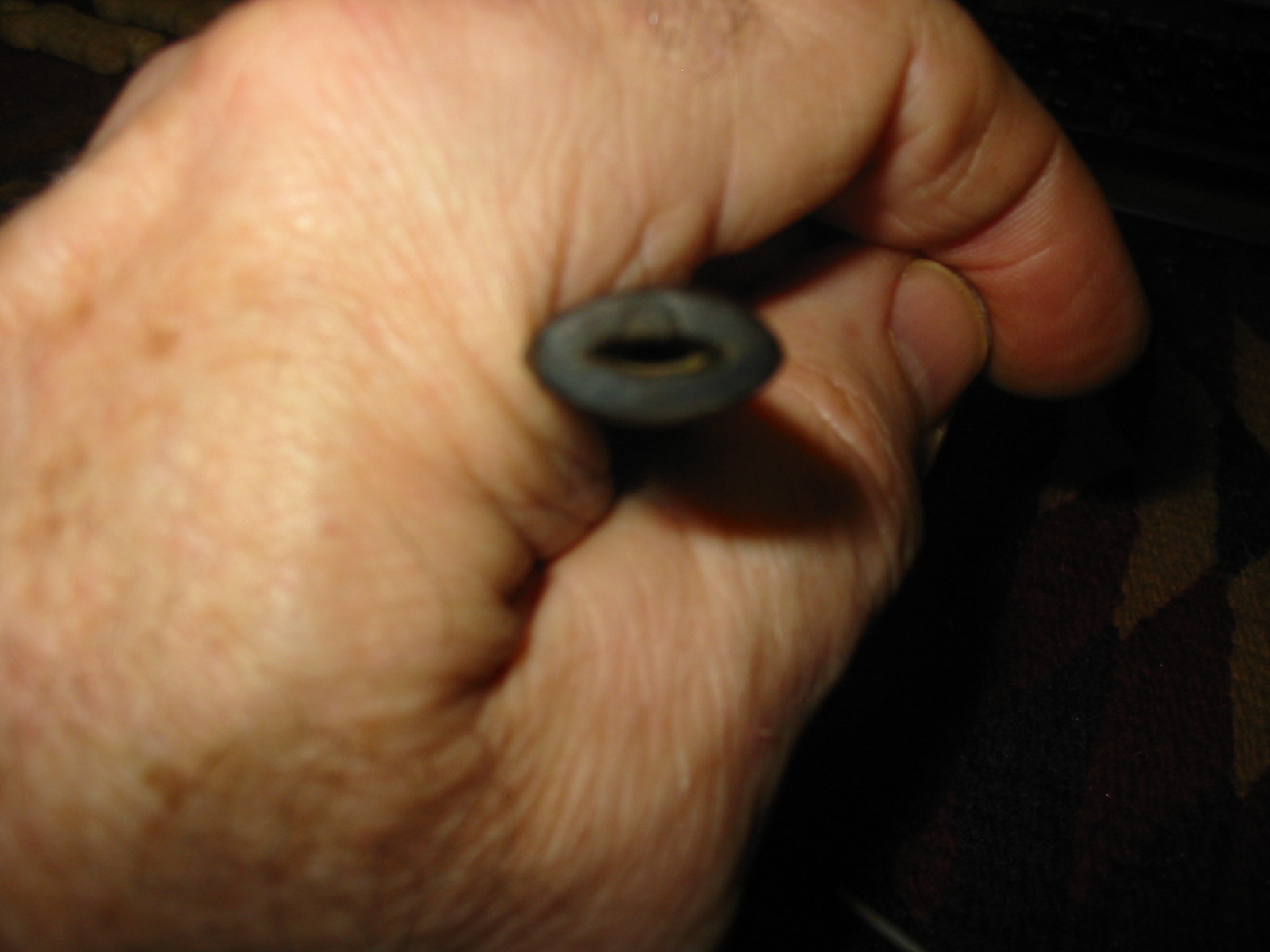
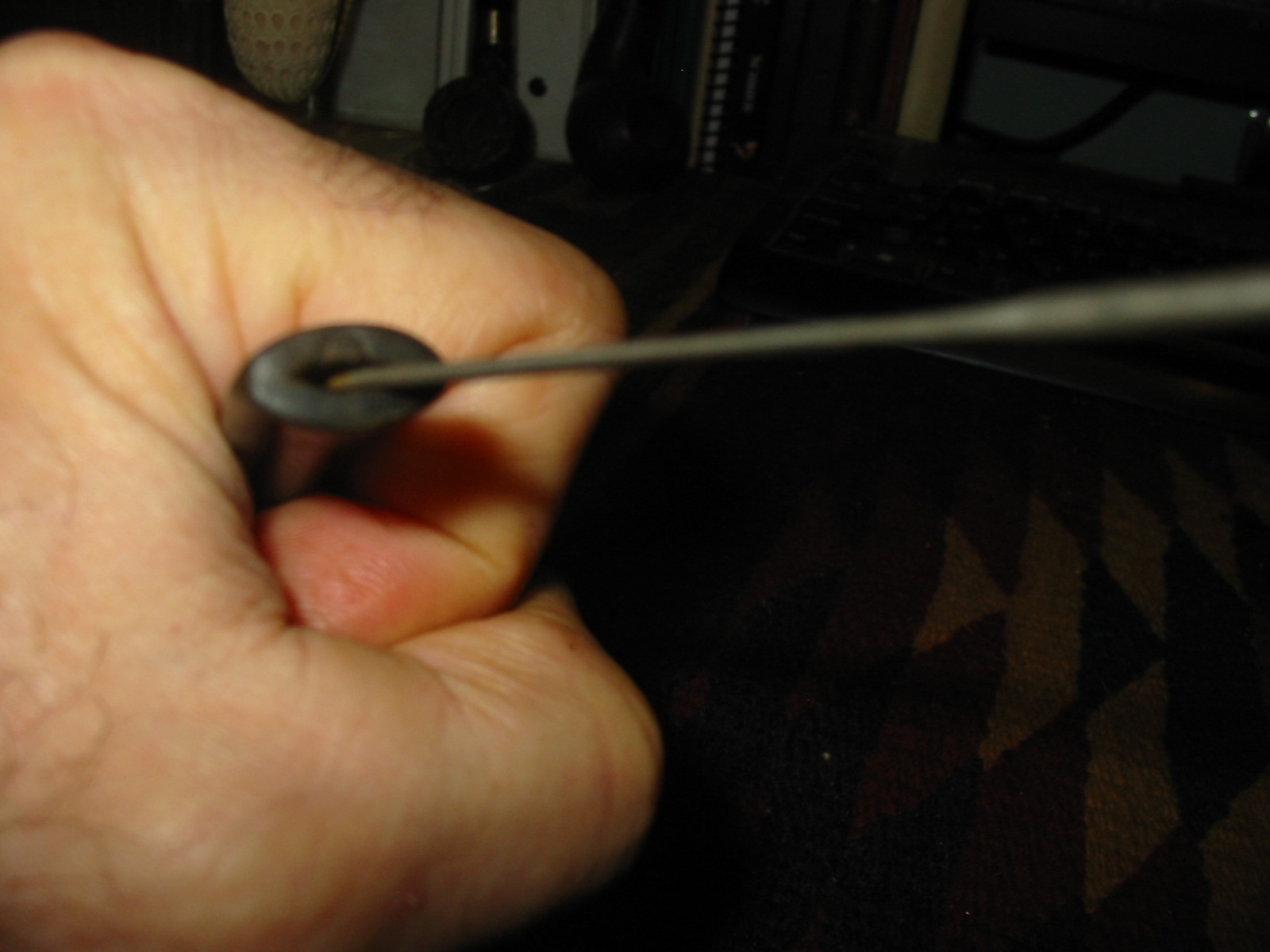
The next three photos show the repaired airhole and the newly cut slot in the button. The first photo shows the stem held in my hand upside down. The repair is visible at the 6 o’clock position in the picture and looks like a small divot in the slot. The slot itself is smooth and the divot is the patch. The second photo shows the stem right side up and the repair is visible at the 12 o’clock position. The final of the three photos shows the small oval needle file that I used to open the airway. I inserted it into the slot to give an idea of the size of the files that I use to do the work on these slots.

ImageImageImage

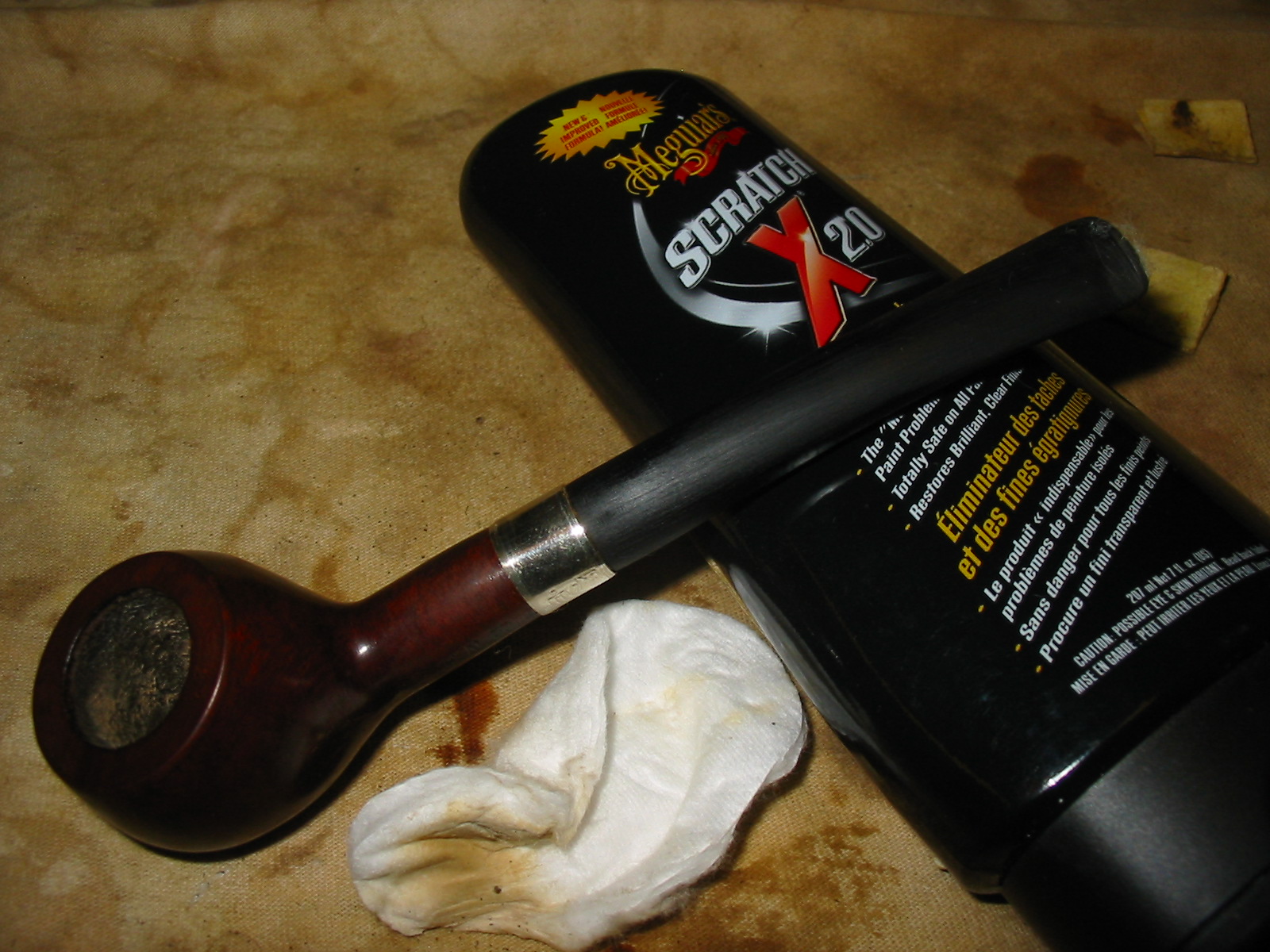
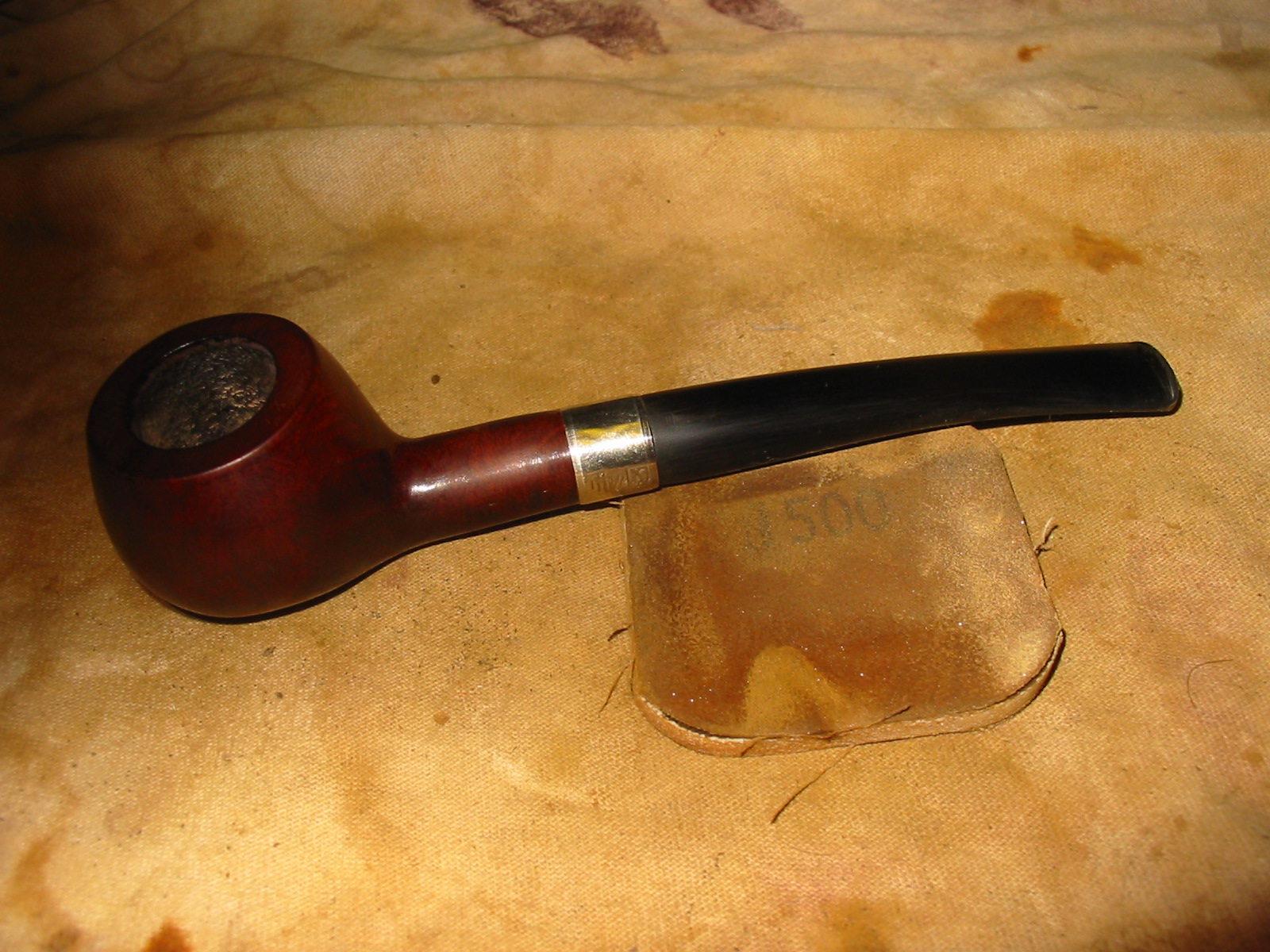
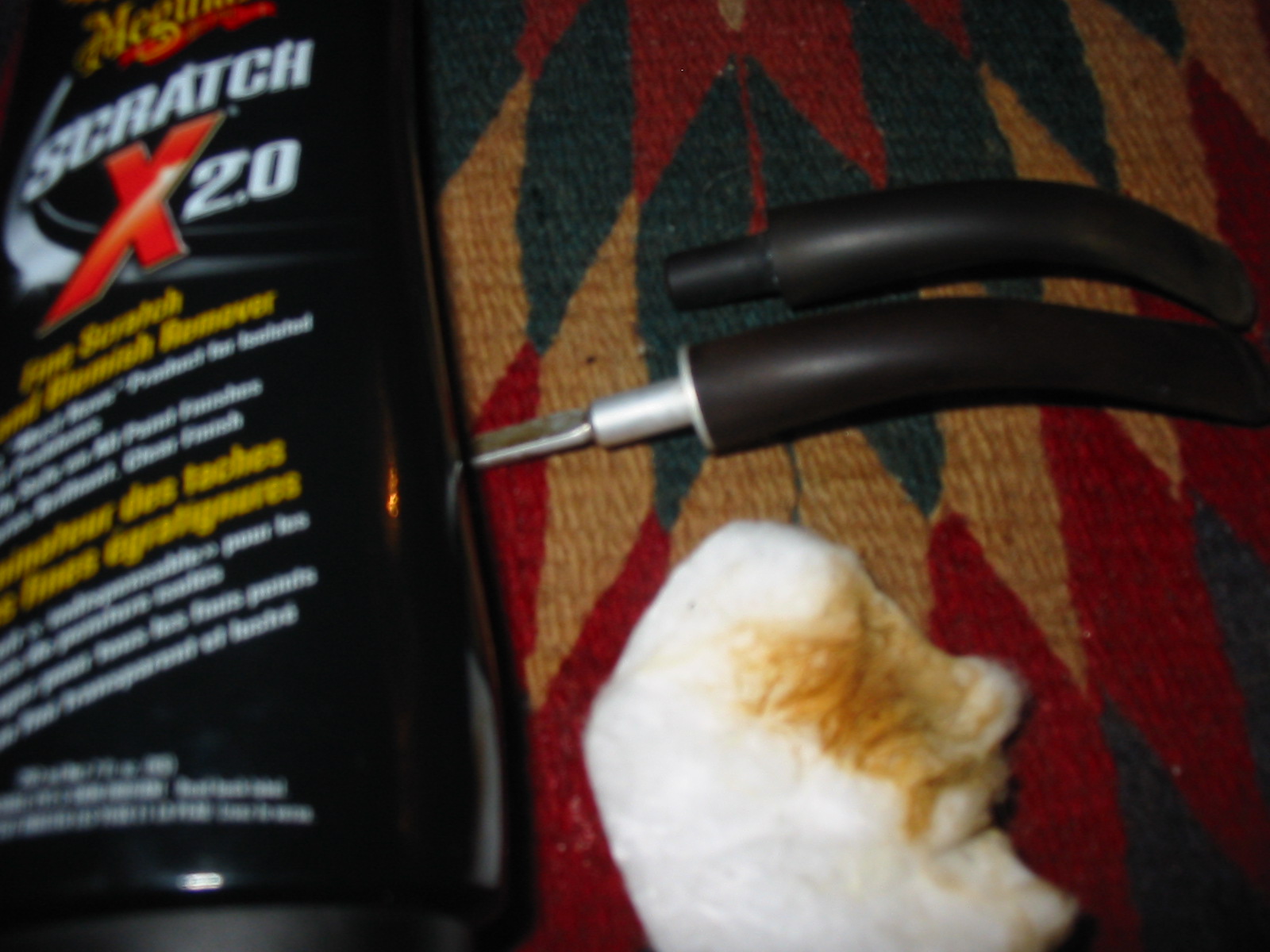
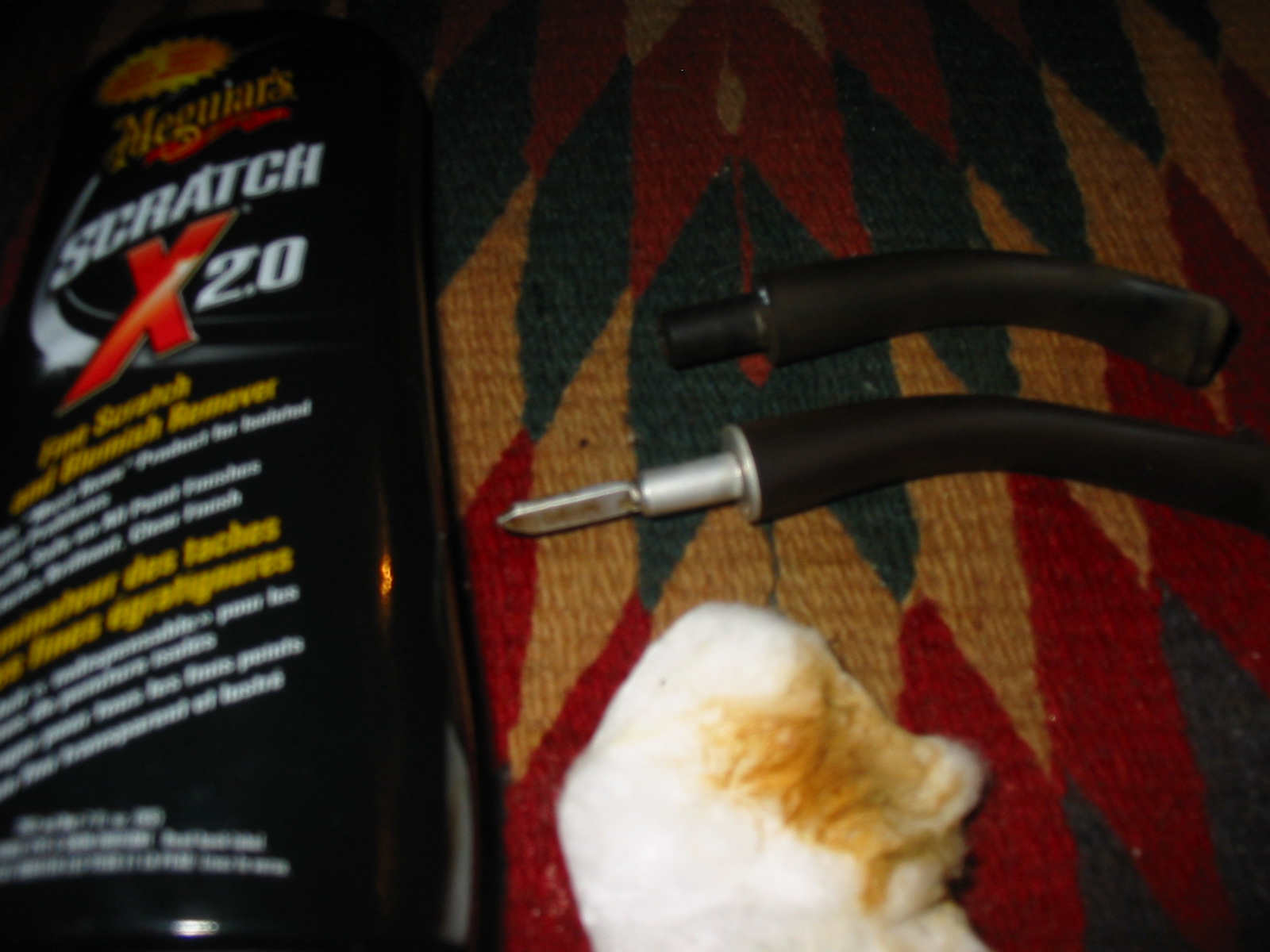
I then turned my attention to the stem itself. It needed a lot more sanding to clean it up and bring out a clean shine. The first photo below shows the polish that I gave it with the Maguiar’s Scratch X2.0. I rub this on with my fingers and then scrub it off with the cotton pad. The polish is white and when I rub it off it is the brown colour that stains the cotton pad in the picture below. Once I had finished with the polish I then sanded it with the micromesh sanding pads. I only took one photo (the second one below) to show the sanding process. I used 1500-12,000 grit micromesh sanding pads to remove the scratches and shine the stem.

ImageImage

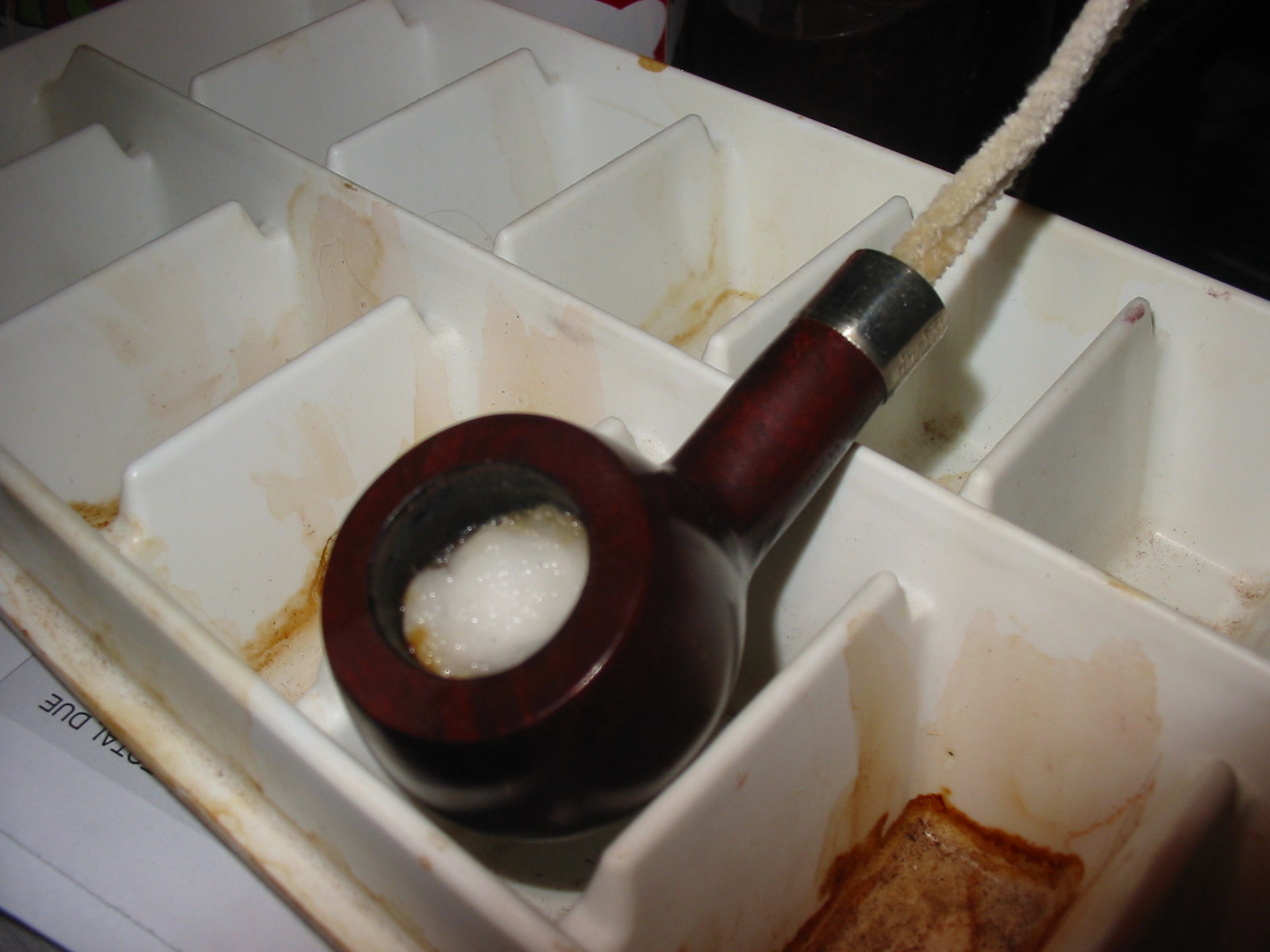
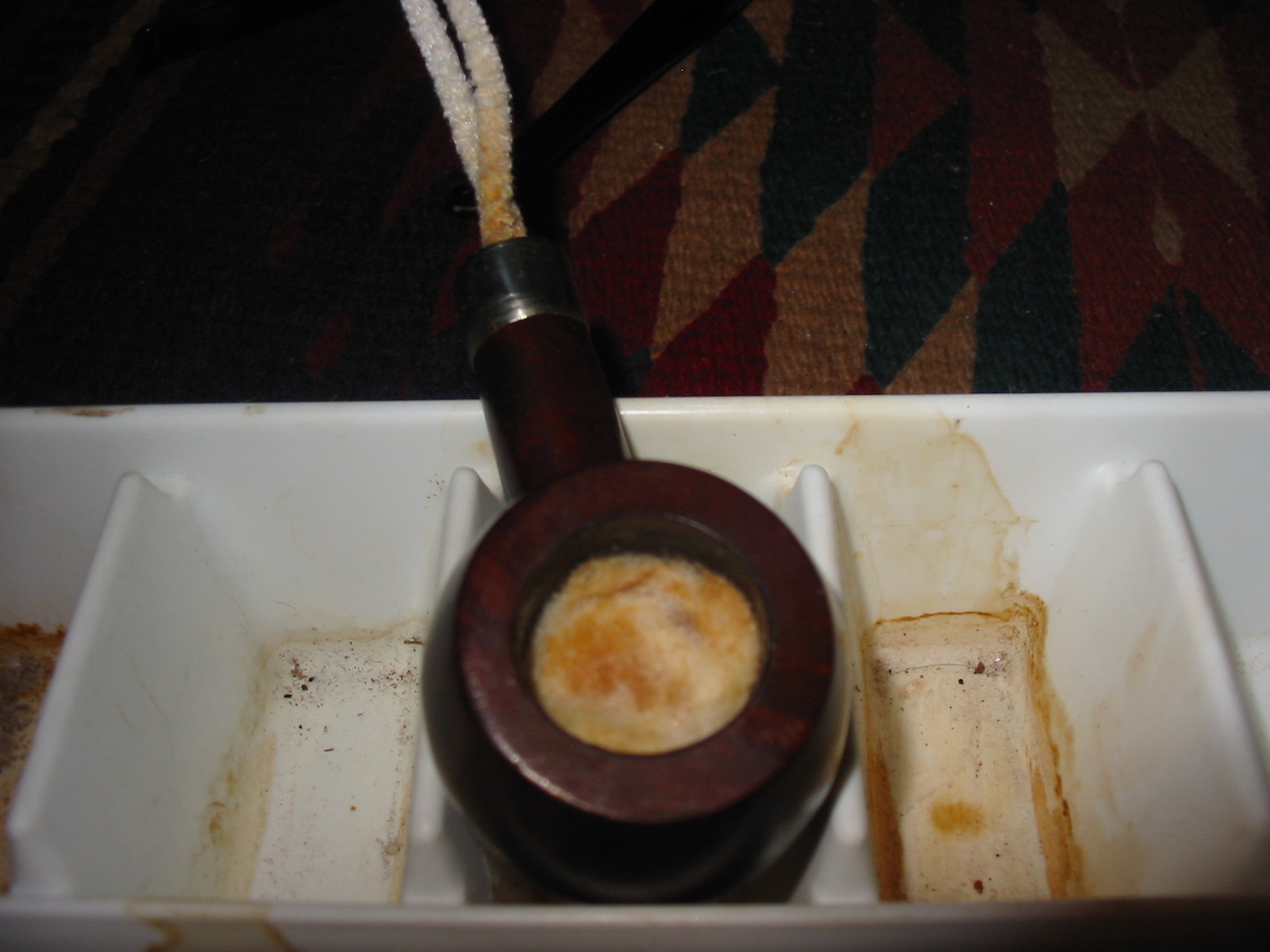
I continued to work on the stem but removed it from the bowl and gave the bowl a cotton bole and alcohol treatment to remove the strong sour smell that came from the bowl. I stuffed the bowl with a cotton bole, put a pipe cleaner in the shank and used my ear syringe to fill the bowl with Everclear. I left it to sit on the ice cube tray while I went hunting at the flea market. It sat for about 4 hours before I removed the cotton bole and flamed the bowl to remove the remaining alcohol. The first photo shows the pipe when I first set it up. The second one is how it looked four hours later when I returned home and removed the cotton.

ImageImage

I cleaned the bowl and shank with pipe cleaners. I used my Kleen Reem drill bit to clean out the softened tars in the airway in the shank. The amount of gunk that came out is astonishing. I wiped it and ran the bit through several times to get the airway back to the briar. Then I used many pipe cleaners dipped in Everclear to finish cleaning the shank. Once I was finished I reinserted the finished stem on the bowl and gave it a coat of Obsidian Oil and then multiple coats of carnauba wax to give the pipe a finished shine. The next four photos show the finished pipe.
ImageImageImageImage

Restemmed and Reworked an Old Yello Bole Acorn


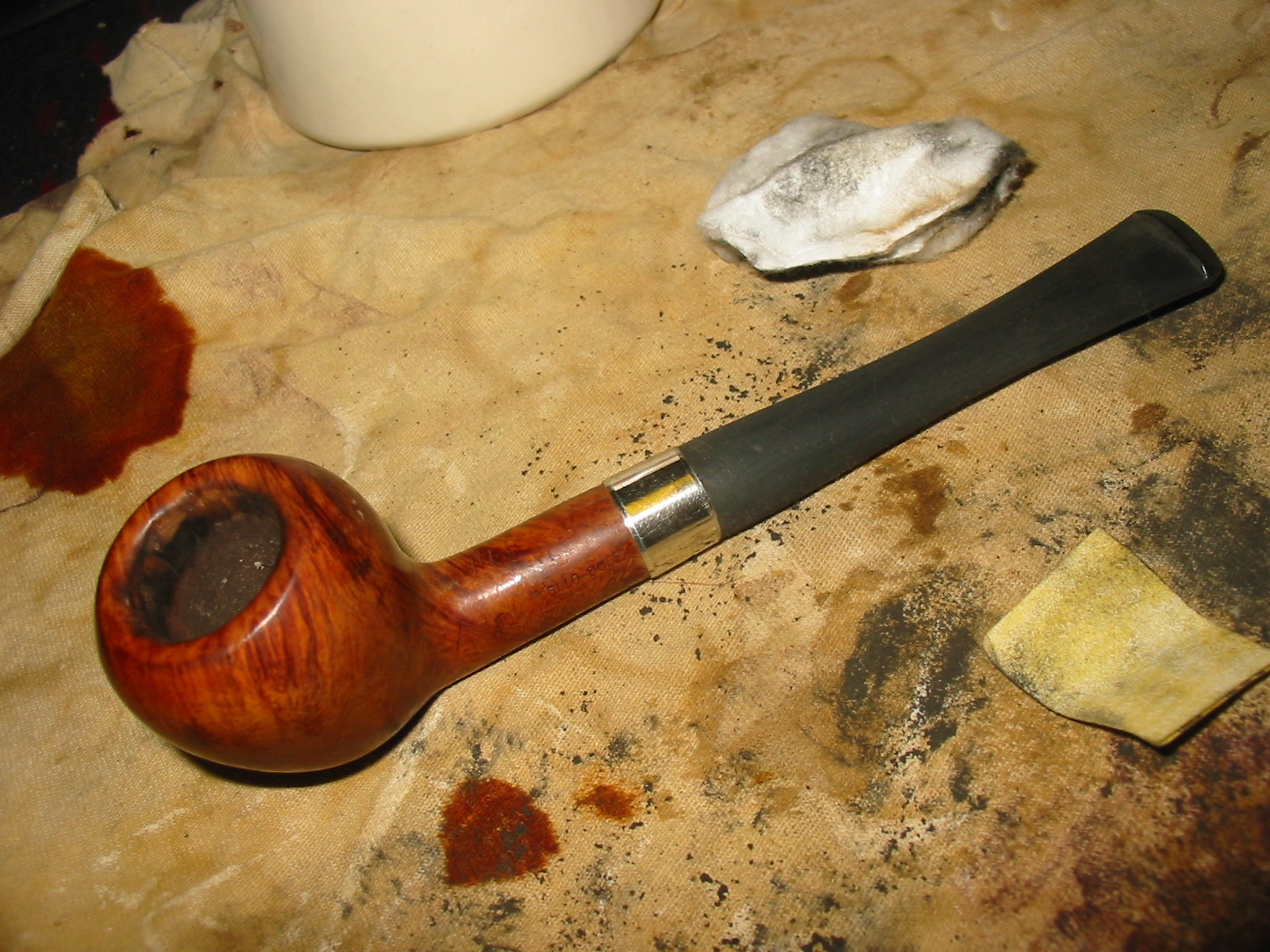
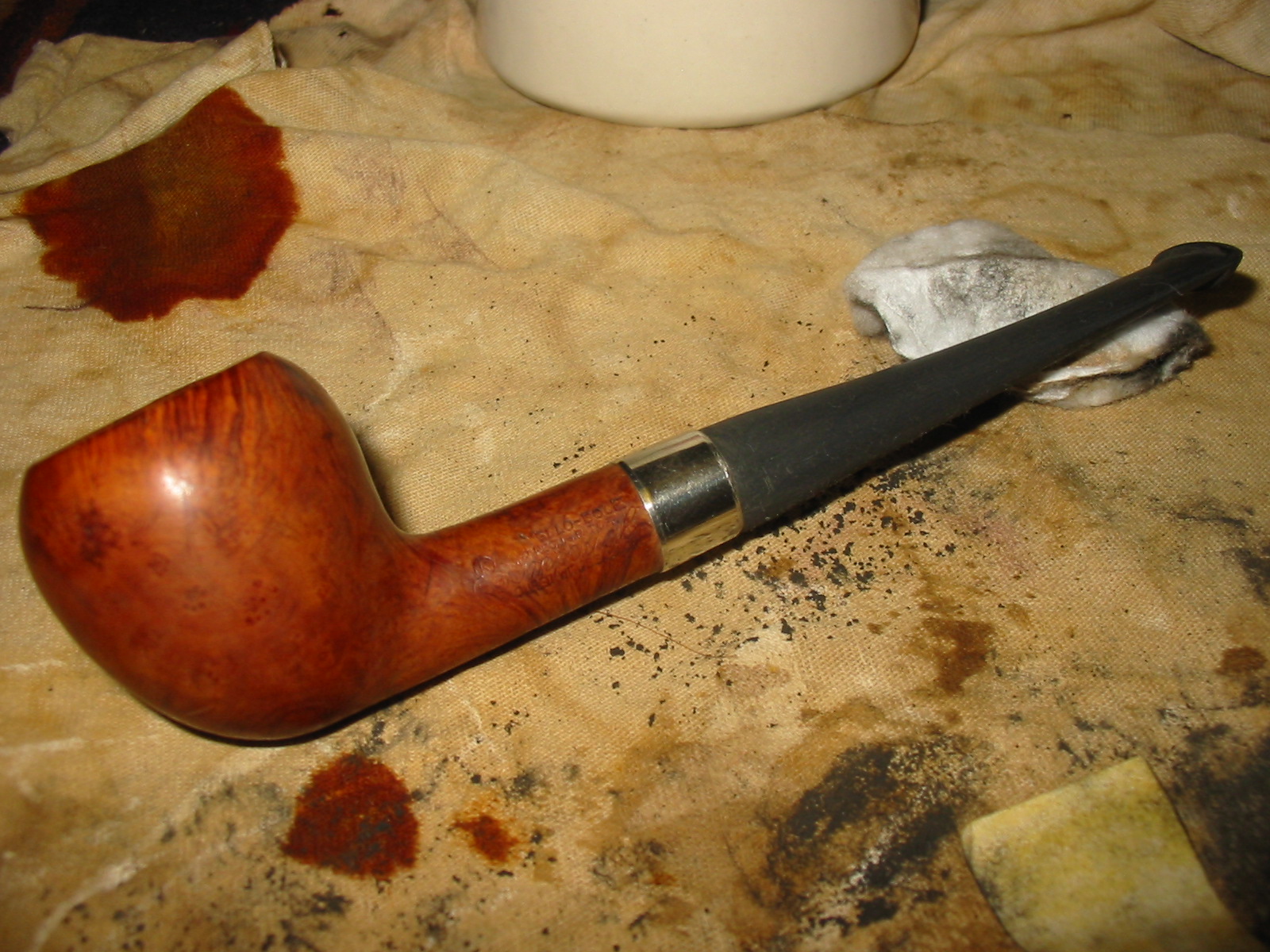
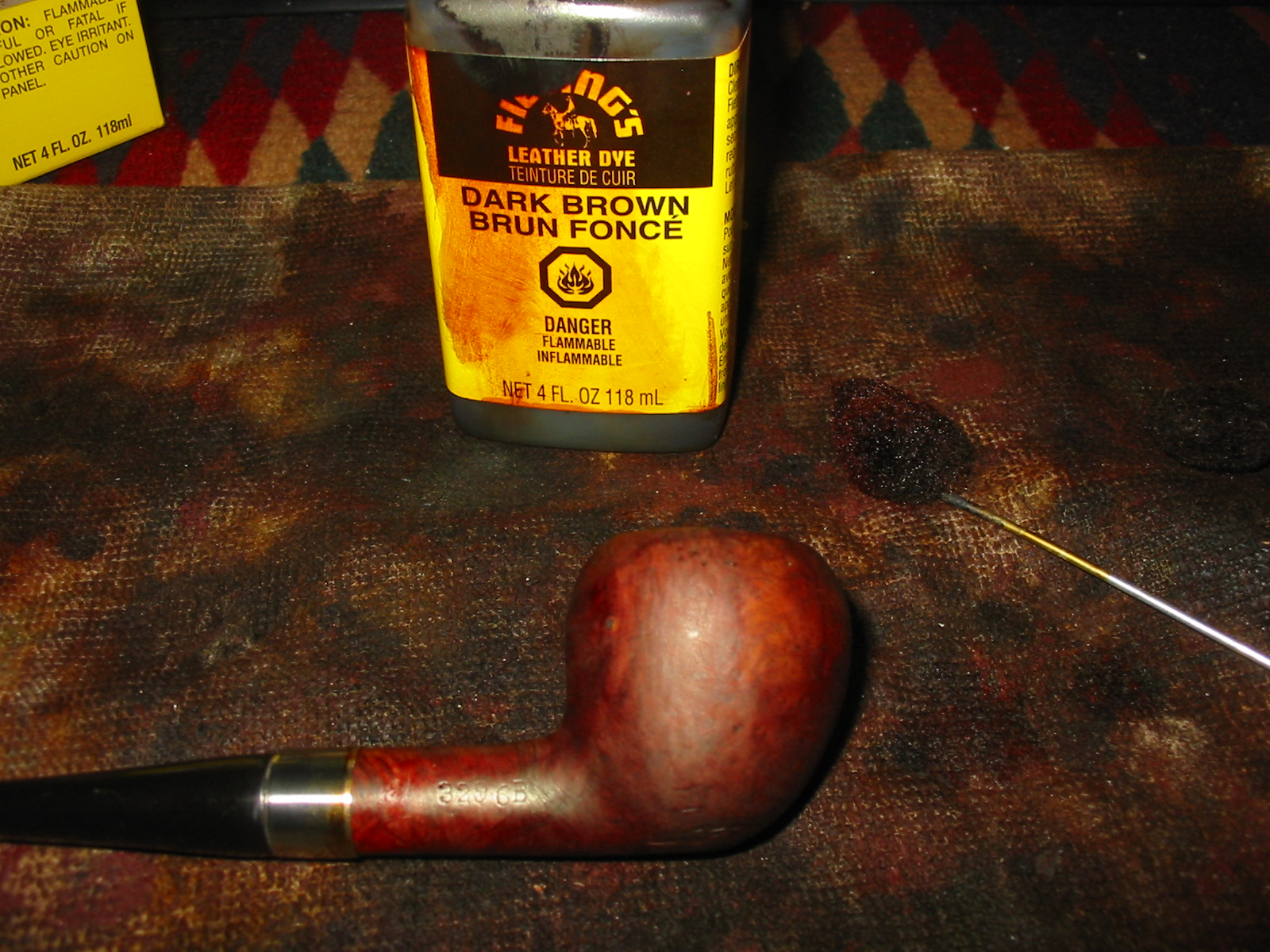
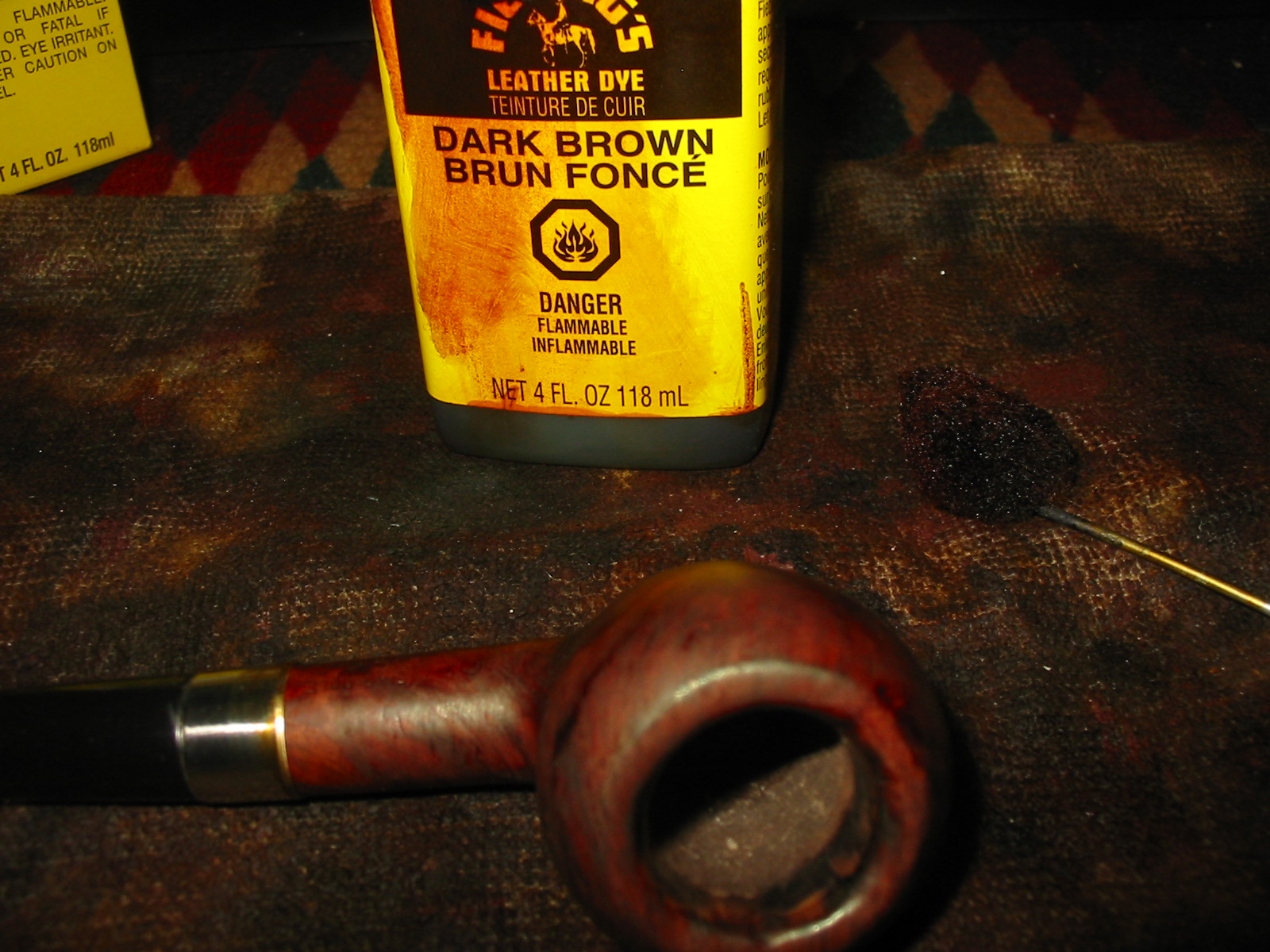
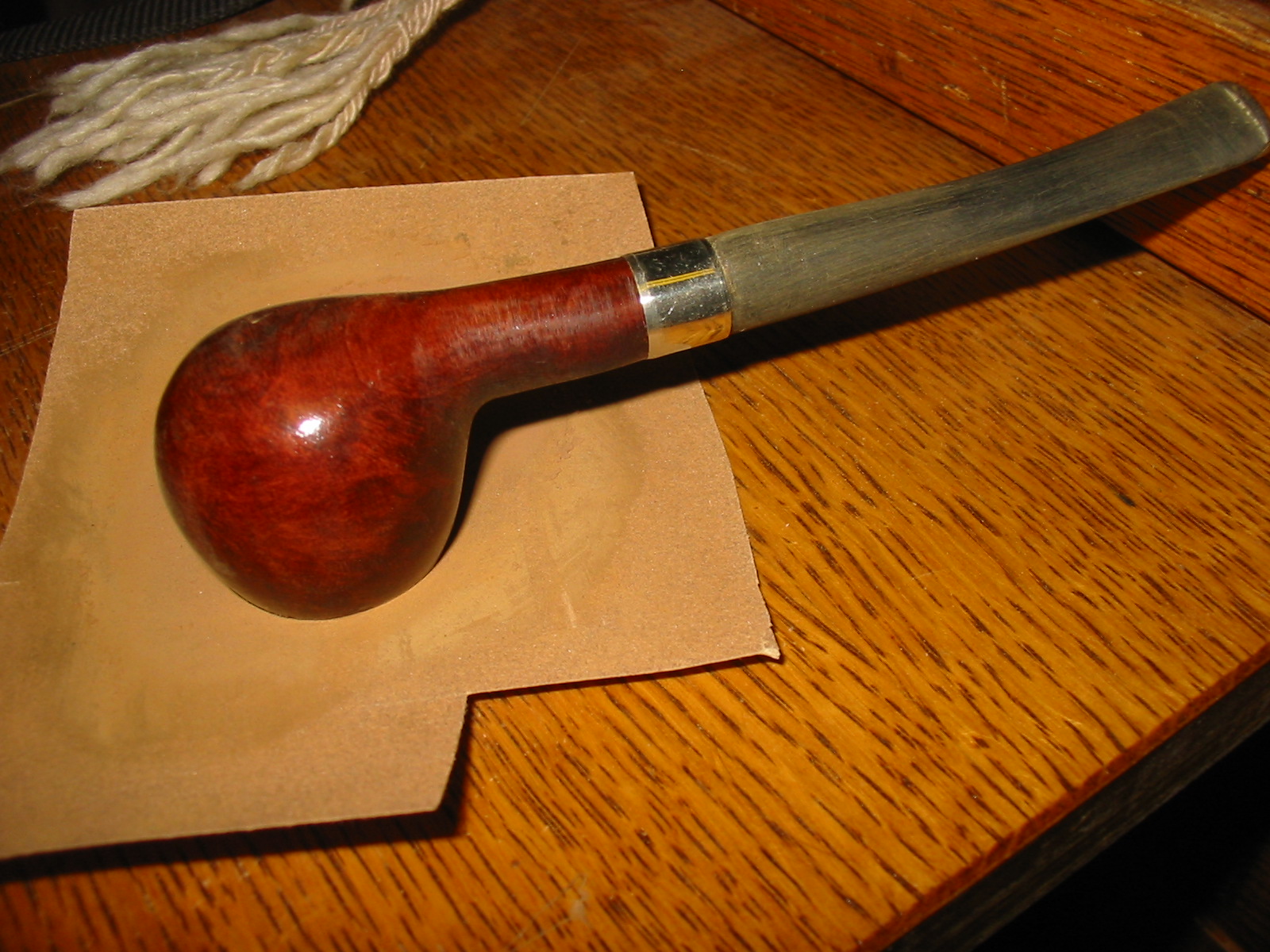
I have cleaned out my box of pipes for refurbishing and all I have left are bowls that need to have stems made and fit. This little Yello Bole Acorn pipe attracted my attention and I decided it would be the first one I worked on. The pipe is stamped on the left side of the shank: KBB in a cloverleaf and next to that it is stamped Yello Bole over REGDUSPATOFF over Imperial in script. Underneath that it is stamped “Cured with Real Honey”. On the right side is stamped 3296B. I reamed the bowl and cleaned the airway and mortise area so that I could get a good clean fit with the new stem. I picked a stem blank from my can of stems and used my Pimo Tenon turning tool to turn the tenon to fit the shank. The stem was too large so I removed the excess material with a sanding drum on my Dremel. In the photo below you can see the stem after I had sanded the excess away with the Dremel. The shank on the pipe also had a small crack in it so I glued it with superglue and pressure fit a nickel band on the shank.

Image

I sanded the stem with medium grit emery cloth to remove the scratches and marks left by the sanding drum. I find that the emery cloth does a great job removing the deep scratches and marks around the diameter of the stem as well as fine tune the fit to the shank. The band had some small dents that needed to be taken out so I used a small round headed pick to bring the shape back into round. The next three photos show the stem after sanding with the emery cloth.

ImageImageImage

At this point in the process I used the tool to round out the band a bit more and then fit the stem on the pipe. The next series of four photos shows the stem on the pipe. I also noted at this point that the band needed to be flattened on the bottom to accommodate the flattened bottom of the shank on the pipe. I would also have to flatten the edge of the stem to also accommodate that flattening.

ImageImageImageImage

I took a break from the stem and worked a bit on the bowl of the pipe. I wiped it down with acetone on a cotton pad to remove the finish. I then sanded the bowl to remove some of the dents and marks in the finish. The deep gouges needed to be steamed and I was able to raise them slightly. They are still visible on the finished pipe but lend it some character. The next series of three photos show the bowl cleaned and ready for staining.

ImageImageImage

I then changed to sanding the stem with 240 and 320 grit sandpaper. The next series of six photos shows show the progression of the stem as I sanded it.  The shape was pretty close to finished by the time I was done. The fit was excellent and the look of the new stem gave the pipe a great look in my opinion. All that remained was to do a lot more sanding! The fourth through the sixth photos below show the stem after I had wiped it down with some Maguiar’s Scratch X2.0 applied by hand and rubbed down with cotton pads. The finish of the stem is getting smoother.

ImageImageImageImageImageImage

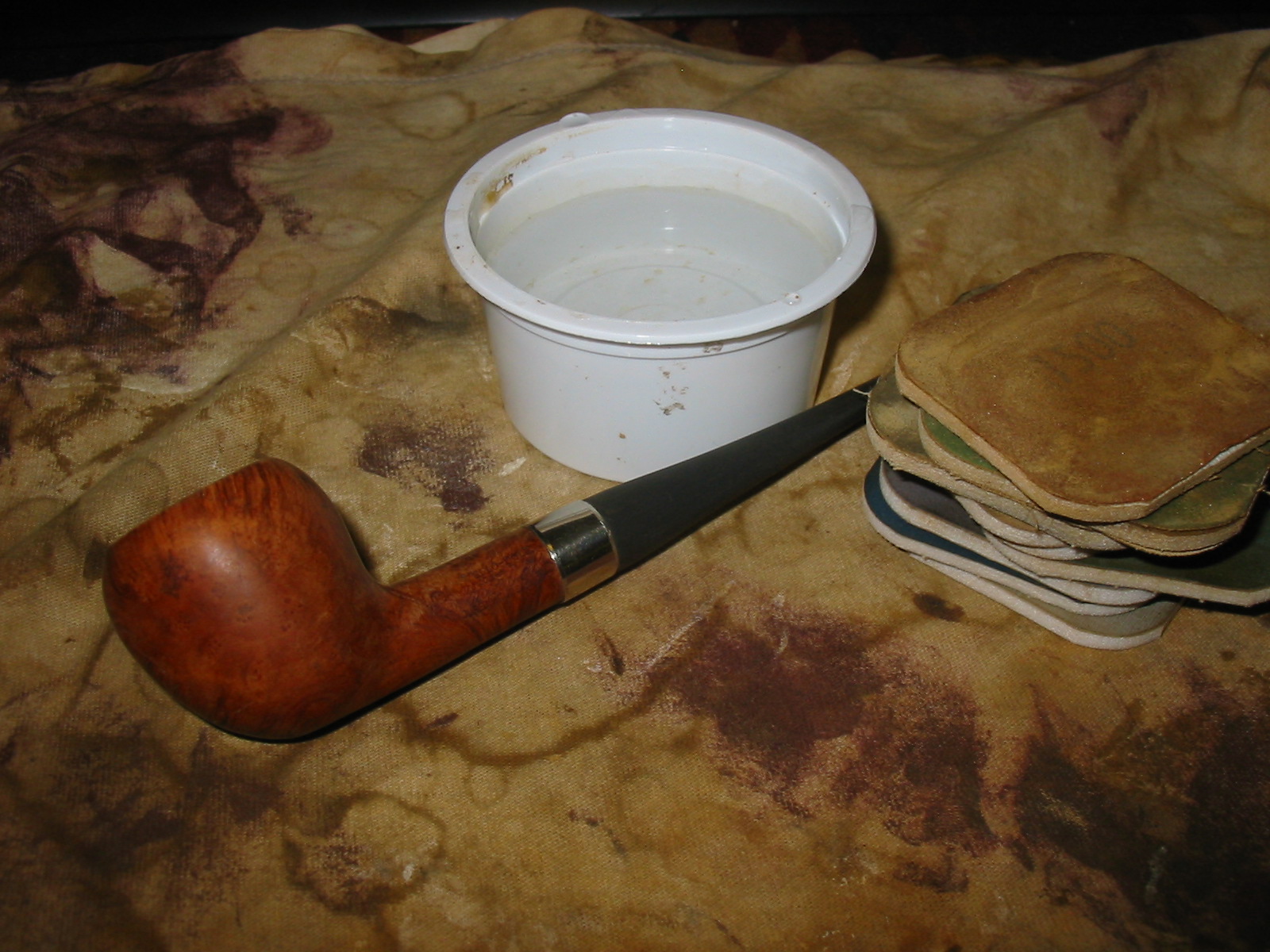
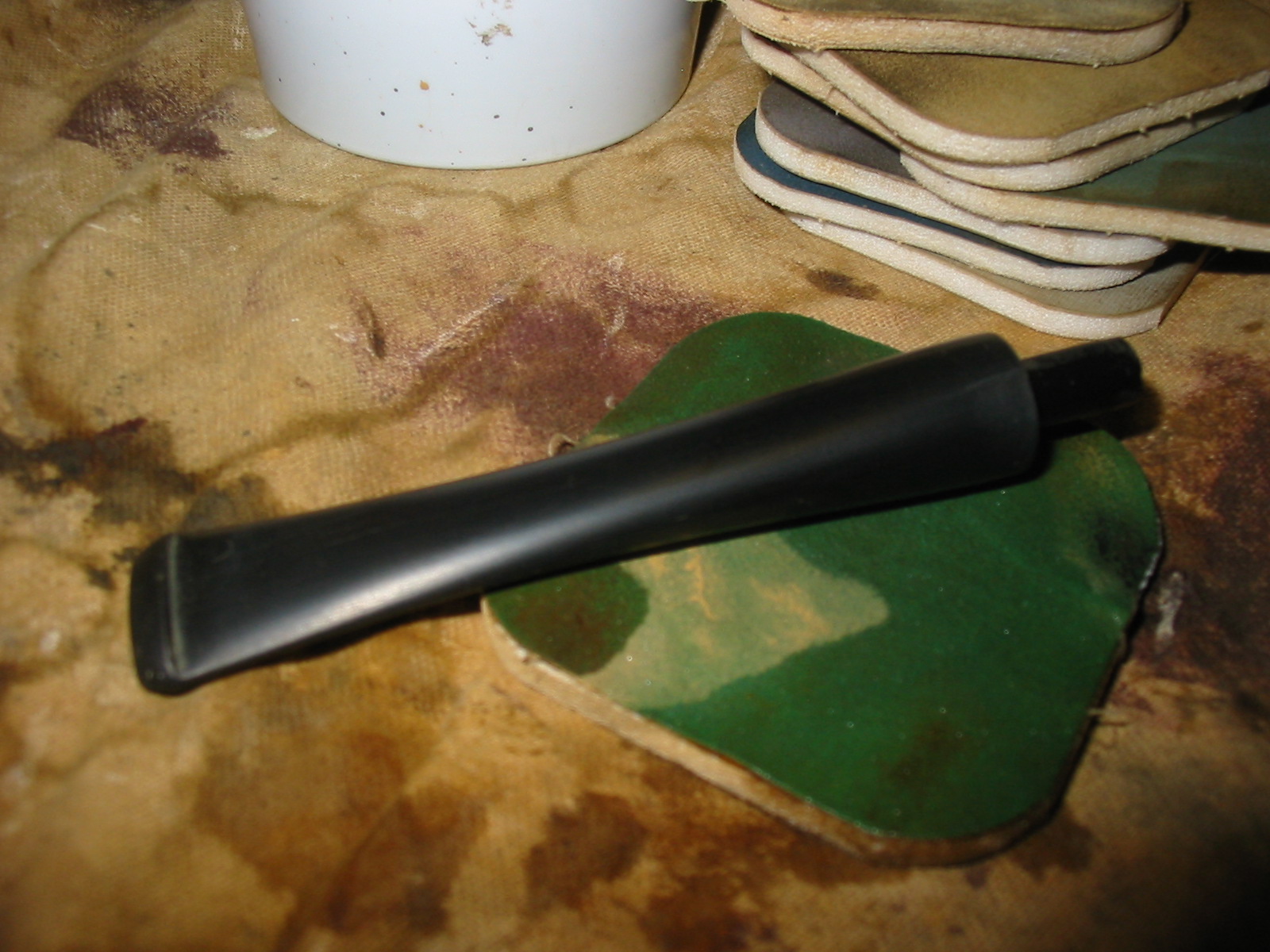
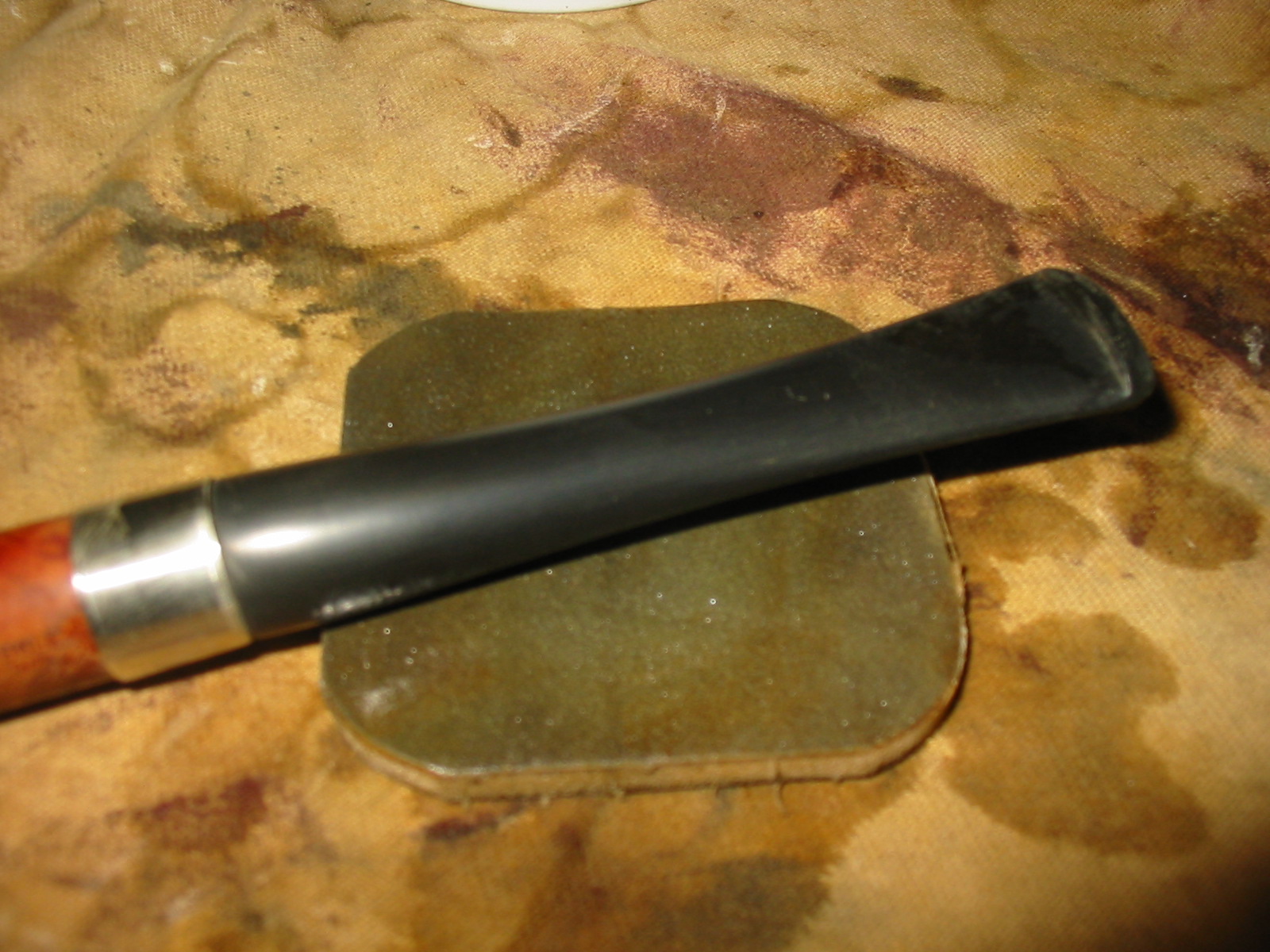
I then filled a small cup with water and moved on to wet sand the stem with the micromesh sanding pads. I used 1500, 1800 and 2400 to wet sand the stem. I wet the pad and sanded the stem. Then rinsed the pad and kept sanding until that particular grit had down its work and the stem was ready for the next one. Between pads I wiped the stem down with a wet cotton pad to clean off the grit. The first photo below shows the setup of my sanding area. I use an old rag for the work space so that it can pick up the dust and water from the sanded stem. The next series of three photos shows each of the three micromesh sanding pads from 1500-2400 and the stem after sanding with that particular pad.

ImageImageImageImage

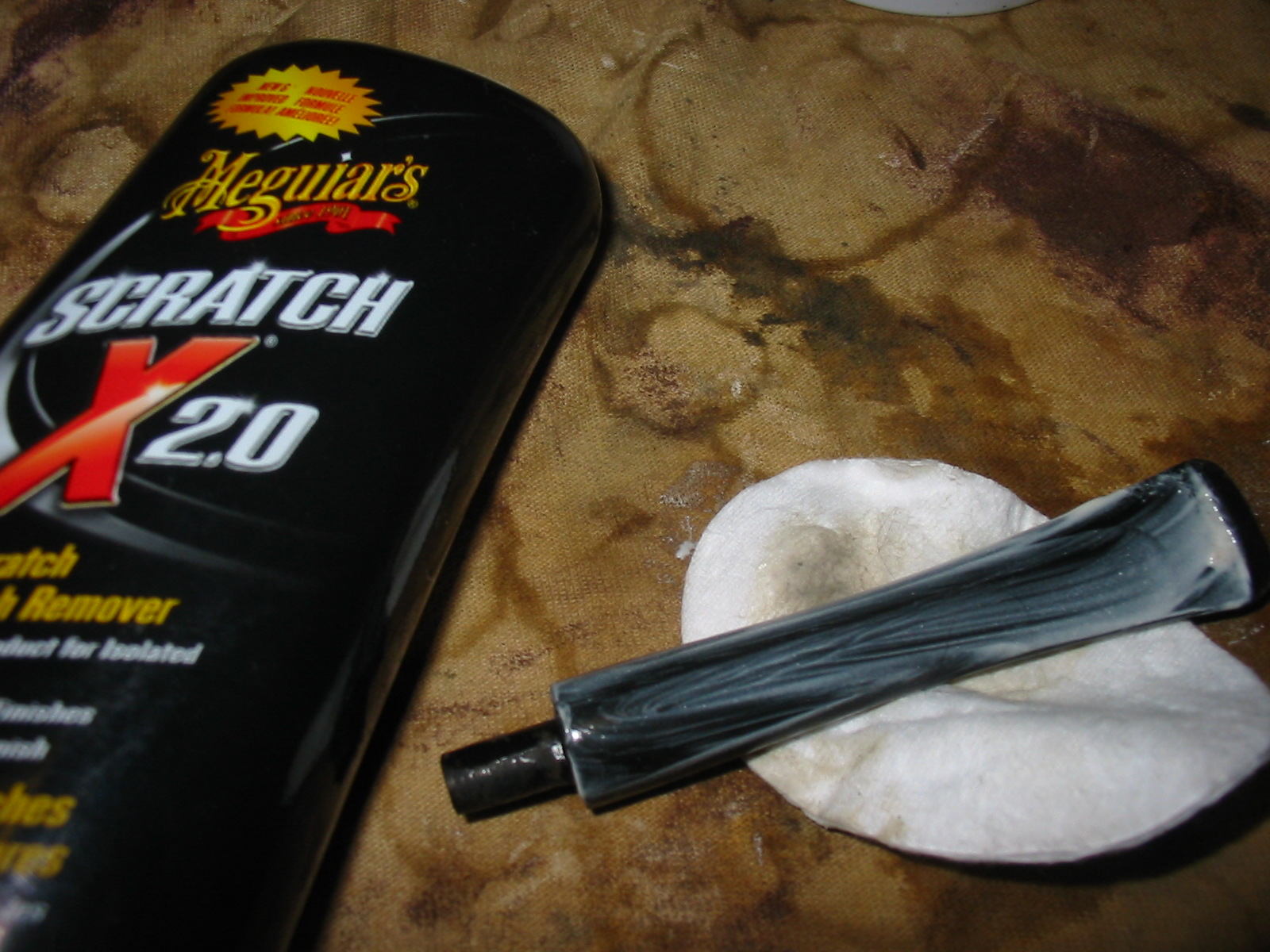
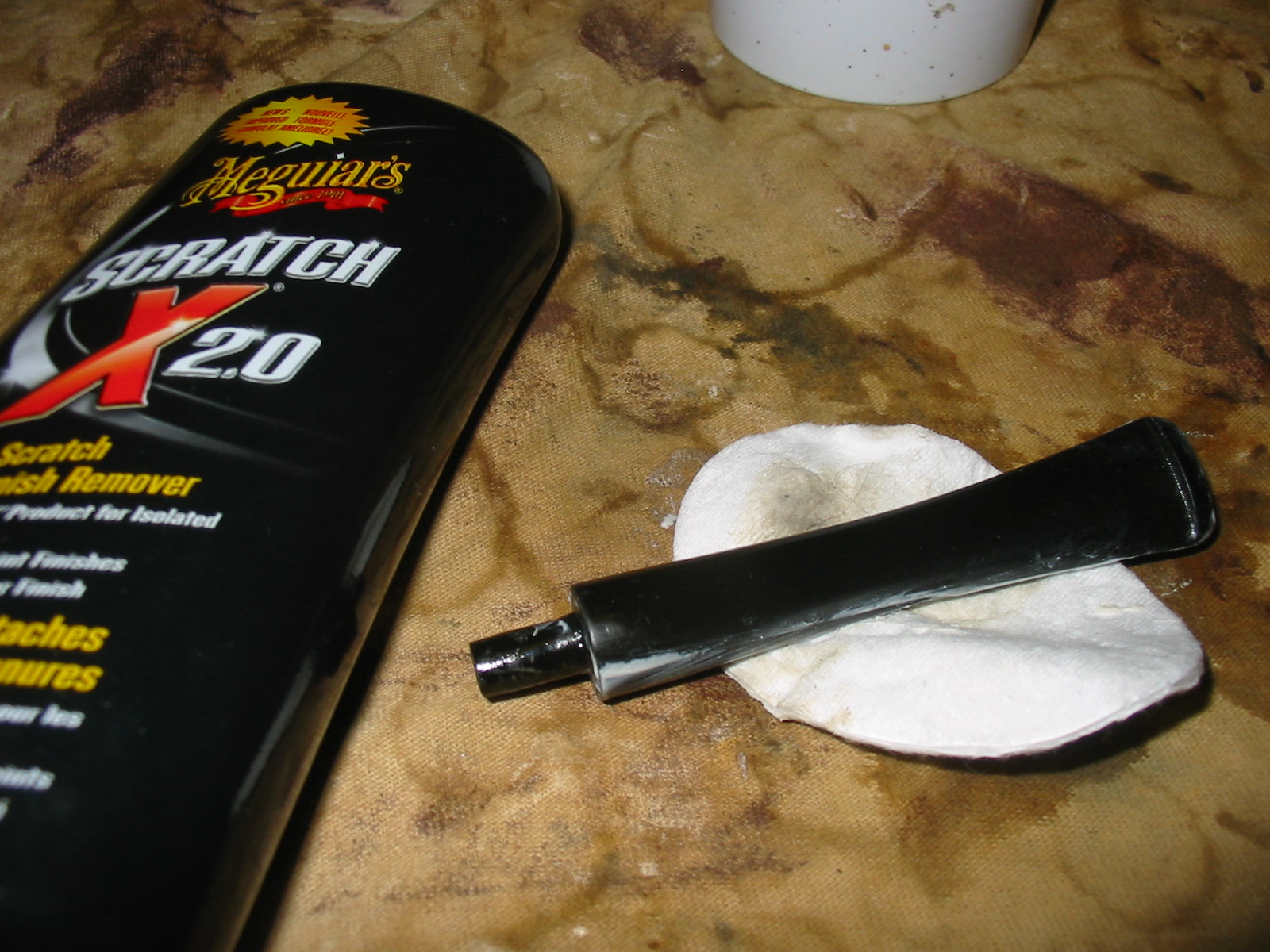
Once I finished wet sanding the stems up through the 2400 grit micromesh pads I then used the Maguiar’s again to polish the stem to see what remained of the deep scratches. I rubbed it into the stem with my finger and then polished it off with the cotton pads. The next series of five photos shows the application and the progressive polishing of the stem. The final pictures in the series show the stem polish to this point. I decided after this was done to move on to dry sanding with the remaining micromesh sanding pads.

ImageImageImageImageImage

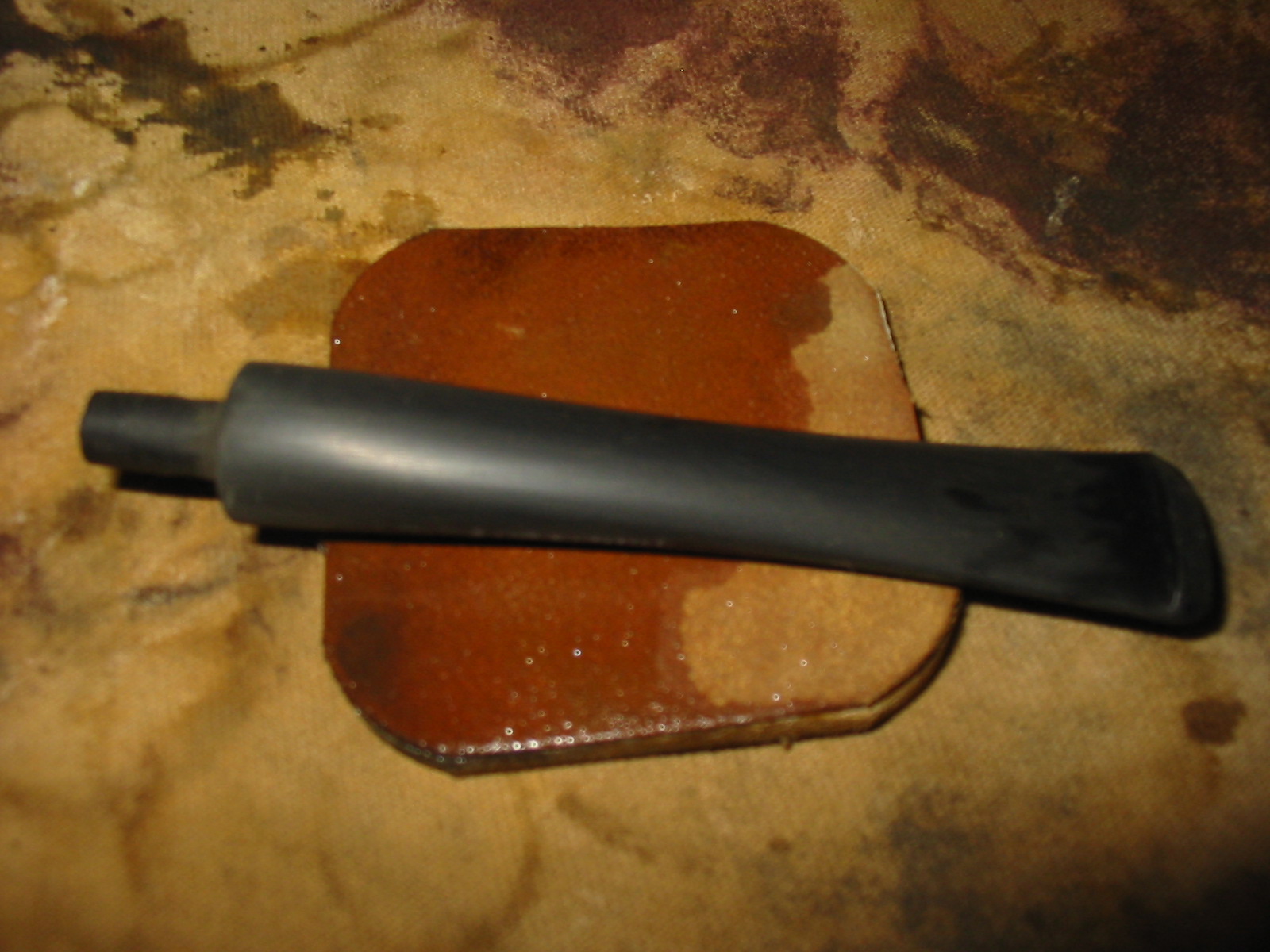
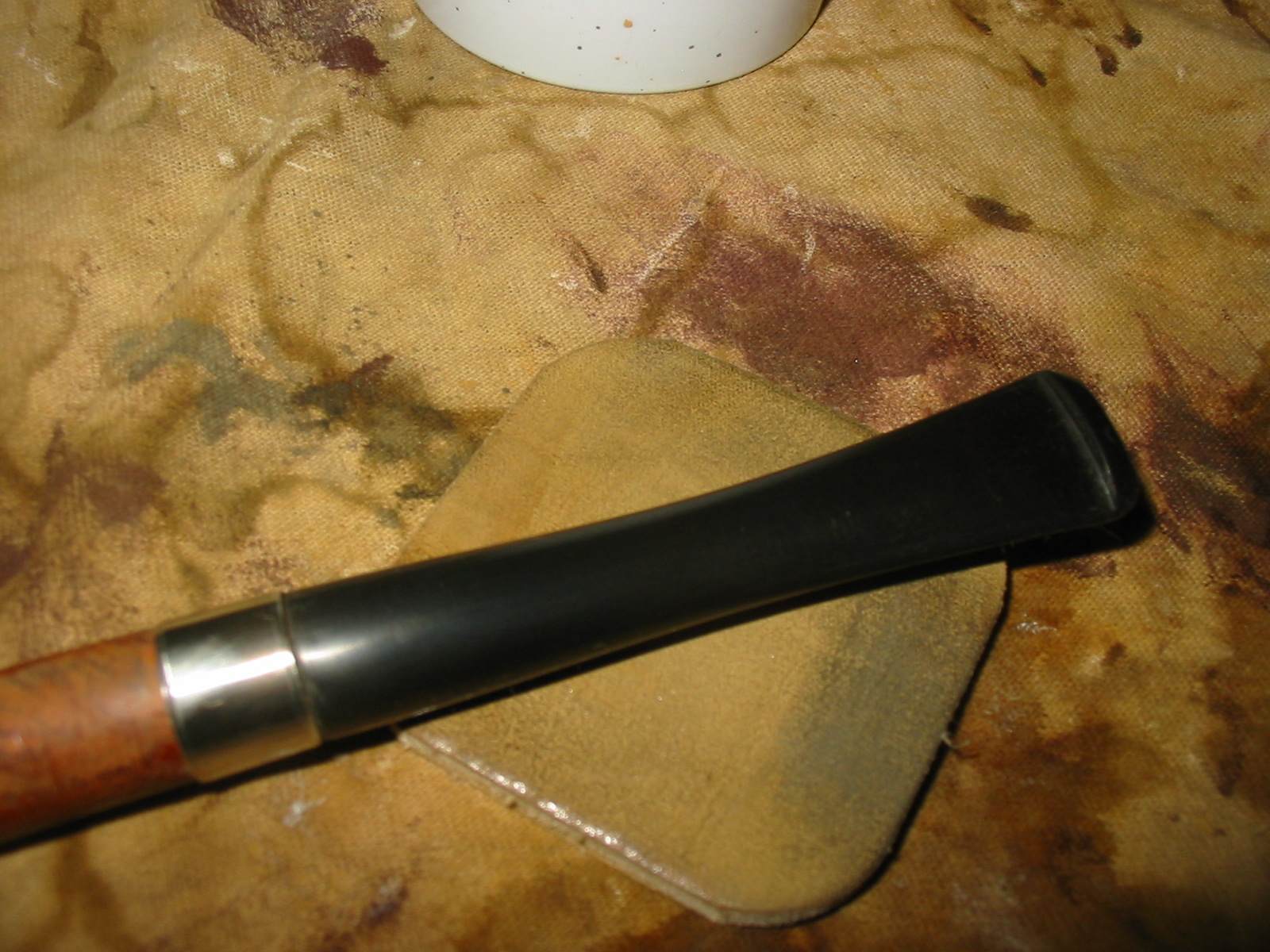
The next series of six photos show the sanding progress through the remaining grits of micromesh sanding pads – 3200, 3600, 4000, 6000, 8000 and 12,000 grits. Each picture shows the stem on top of the sanding pad that I used to sand it. I dry sand with these higher grit micromesh pads.ImageImageImageImageImageImage

The next series of four photos show the stem after finishing the sanding and polishing it with Maguiar’s polish. There is a nice deep black shine to the stem at this point.

ImageImageImageImage

Now it was time to stain the bowl of the pipe. I used a Dark Brown aniline stain that I had thinned with isopropyl 2:1 to stain the bowl. I wanted a consistency in the colour and also have the grain on the bowl show through the stain. I applied the stain with the wool dauber that came with the stain and then flamed it with a match to set the stain. I restained it and reflamed it a second and third time. The next two photos show the stained bowl.

ImageImage

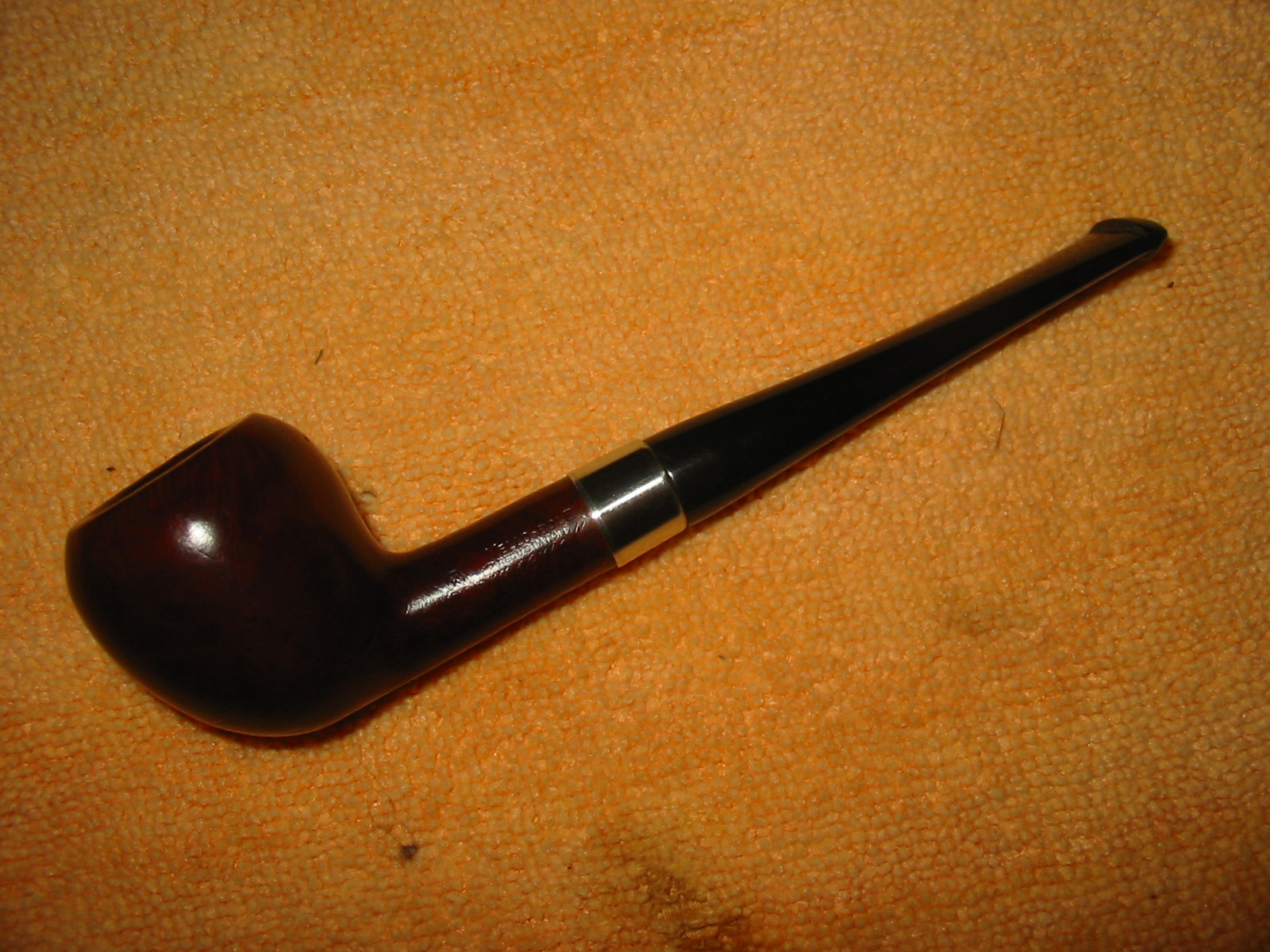
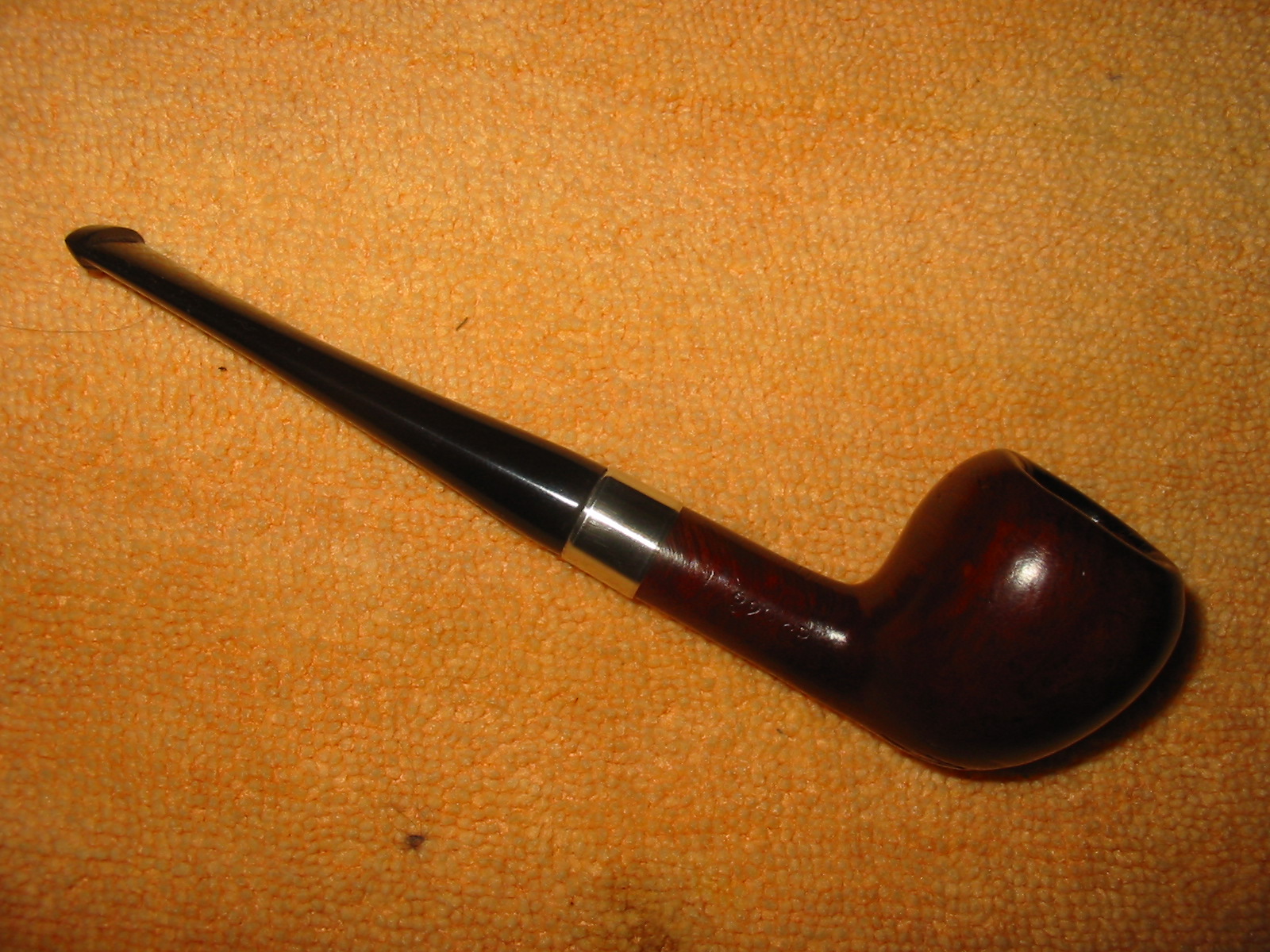
Once the stain was dry I used some silver polish on the nickel band to shine it up and remove the stain that had spilled on it. I also used some sandpaper in the bowl to remove stain that ran into the bowl edges from the beveled rim. I then took it to the buffer and buffed it with Tripoli and White Diamond before giving the whole pipe multiple coats of carnauba wax and a final buff with a clean flannel buffing wheel. The final four photos show the finished pipe.
ImageImageImageImage


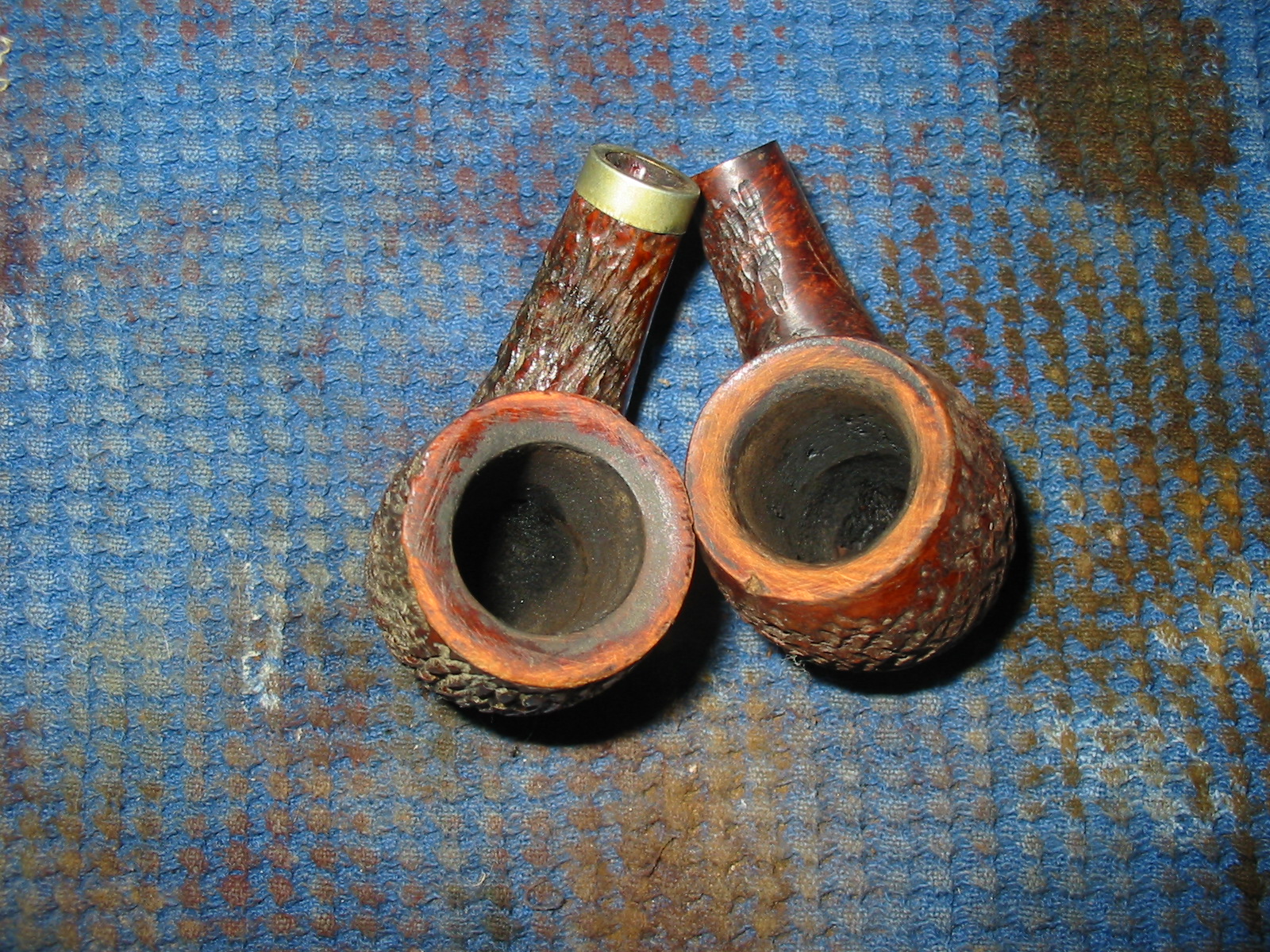
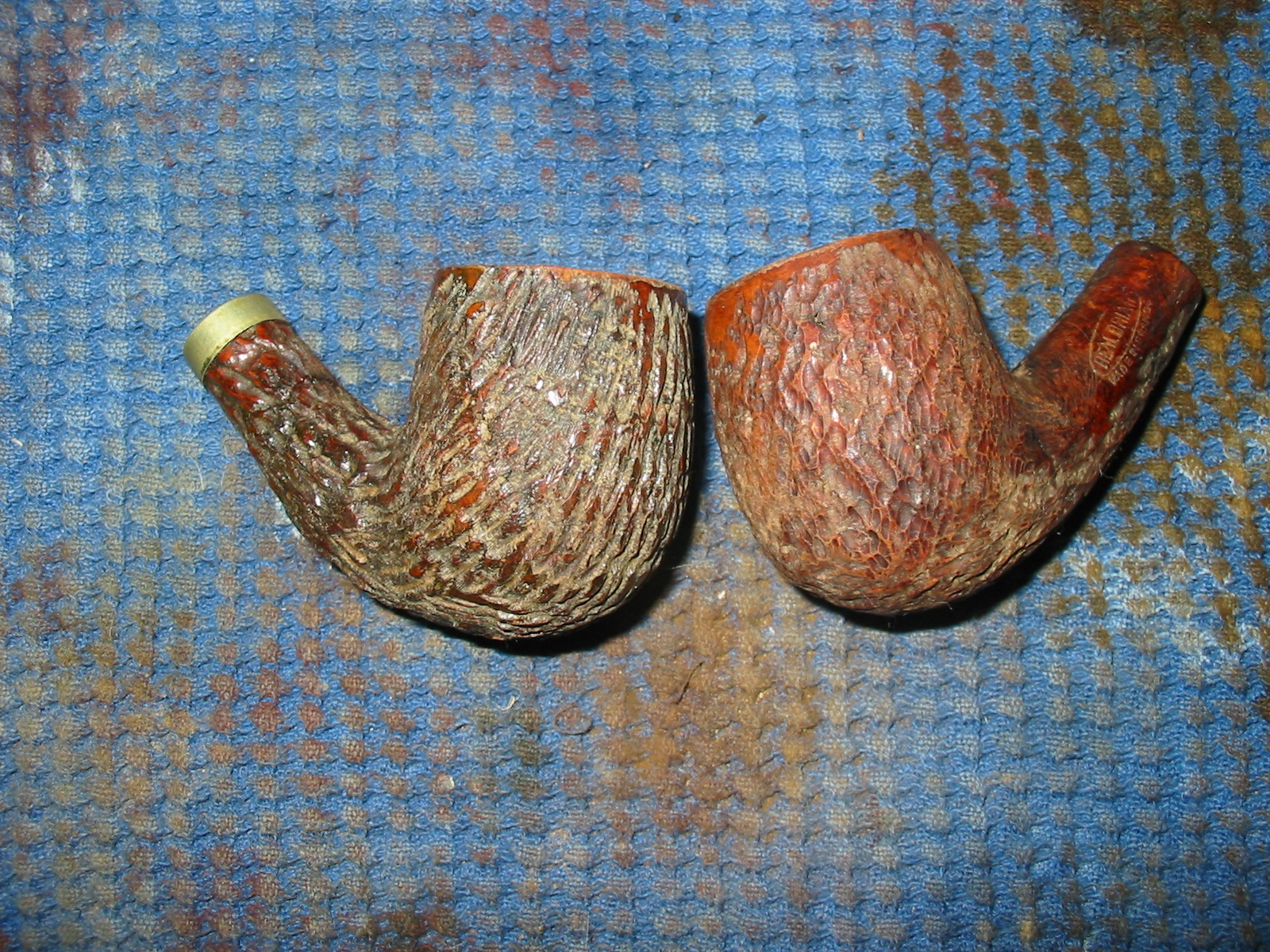
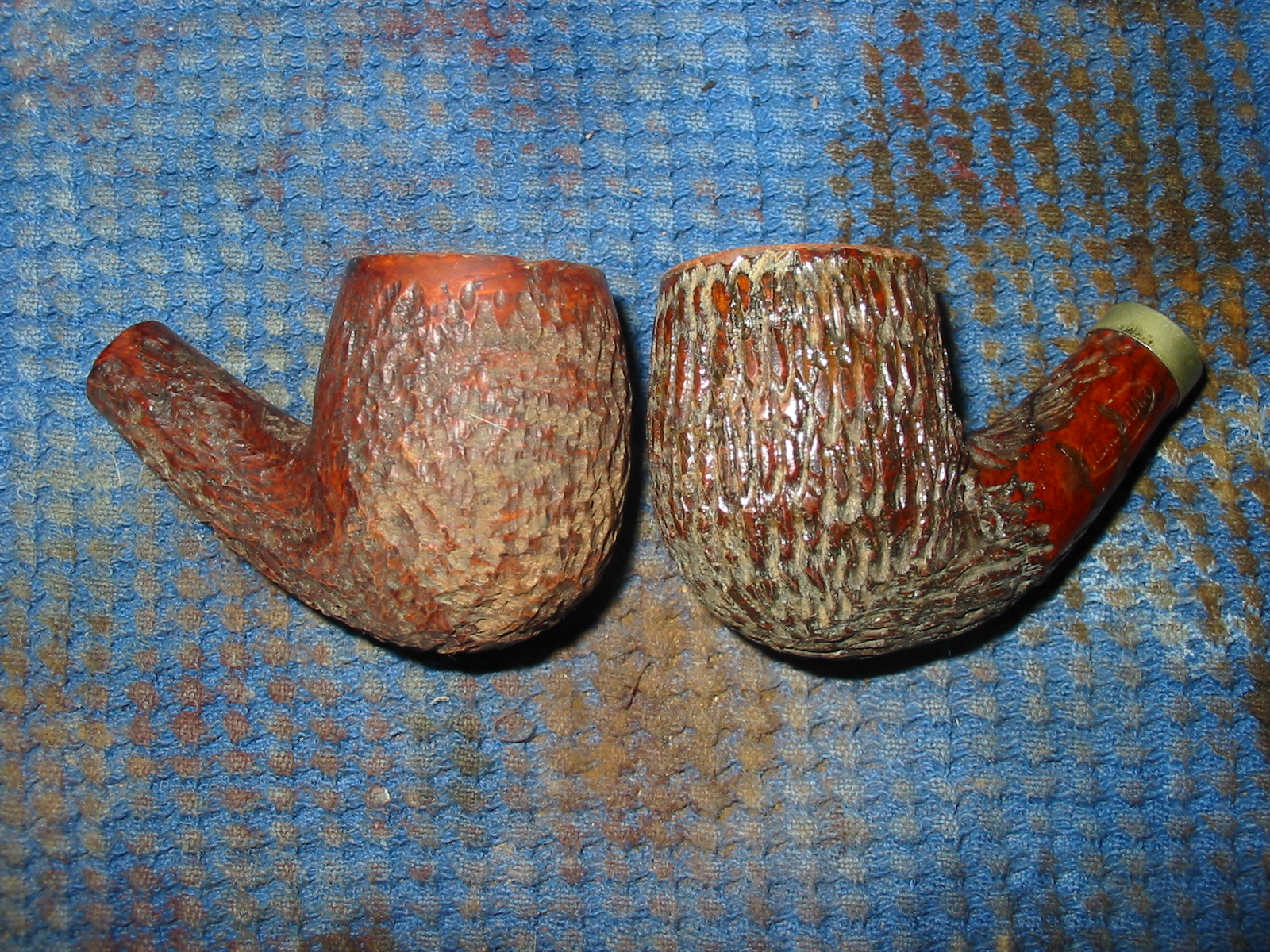
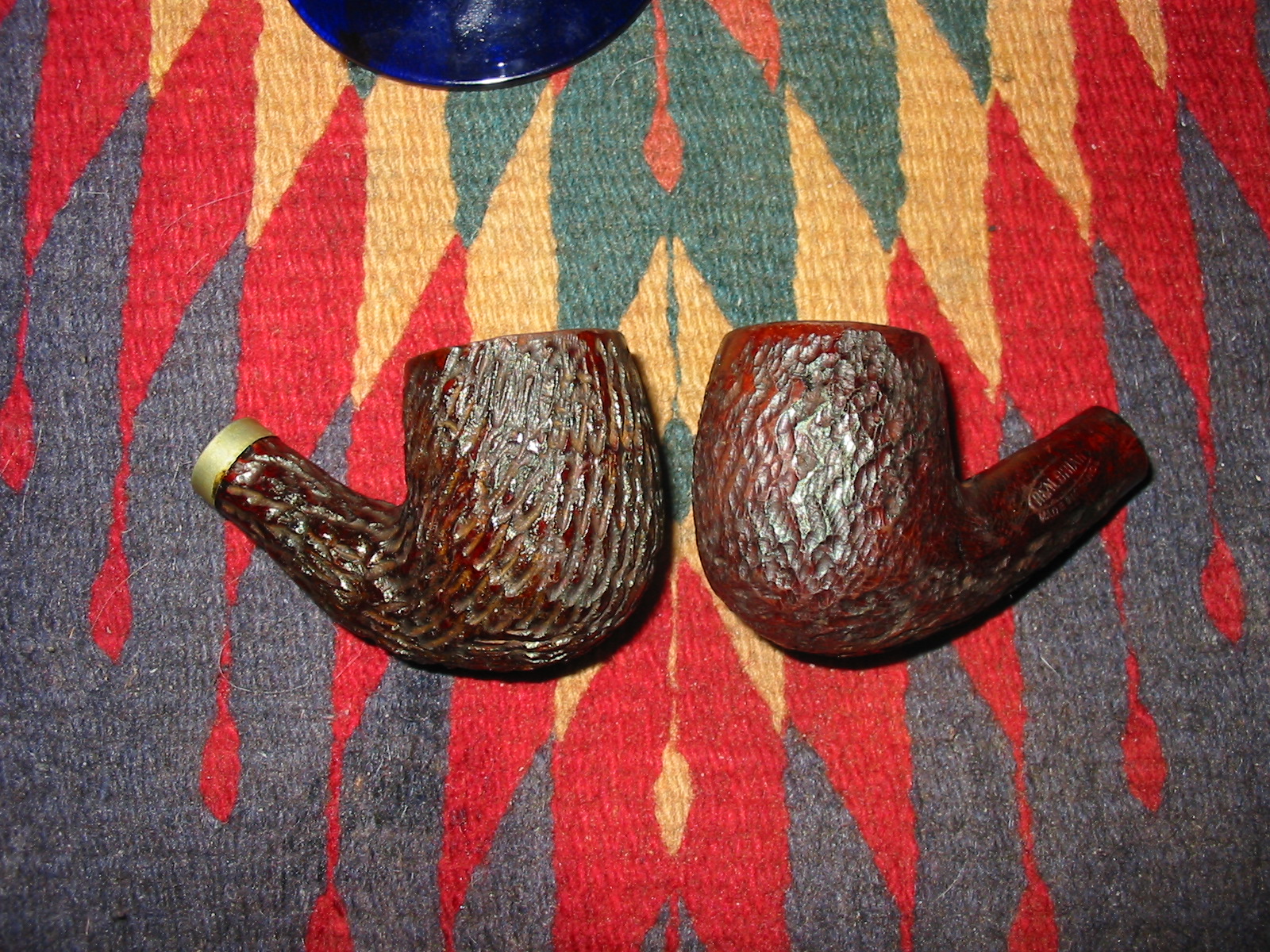
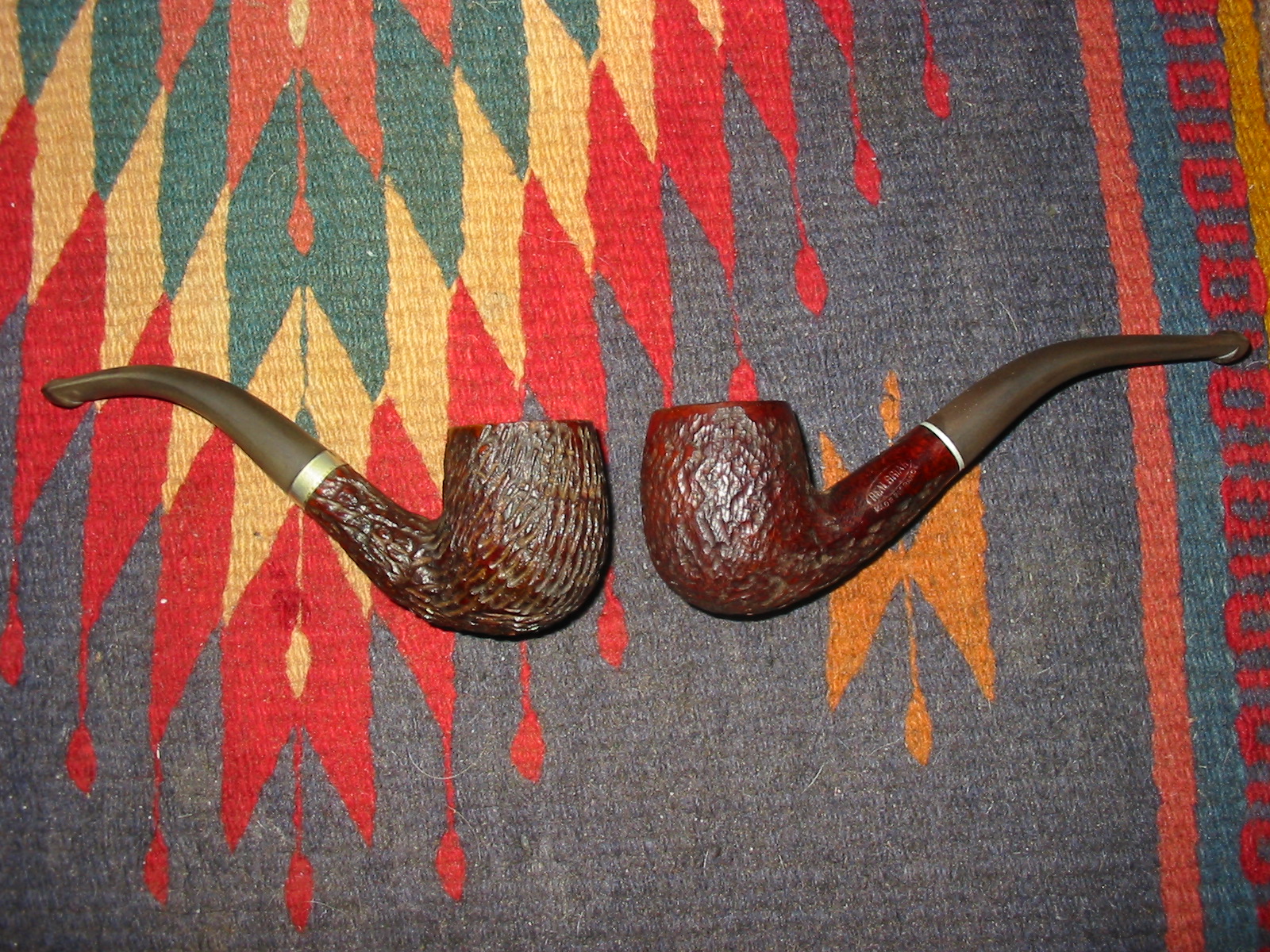
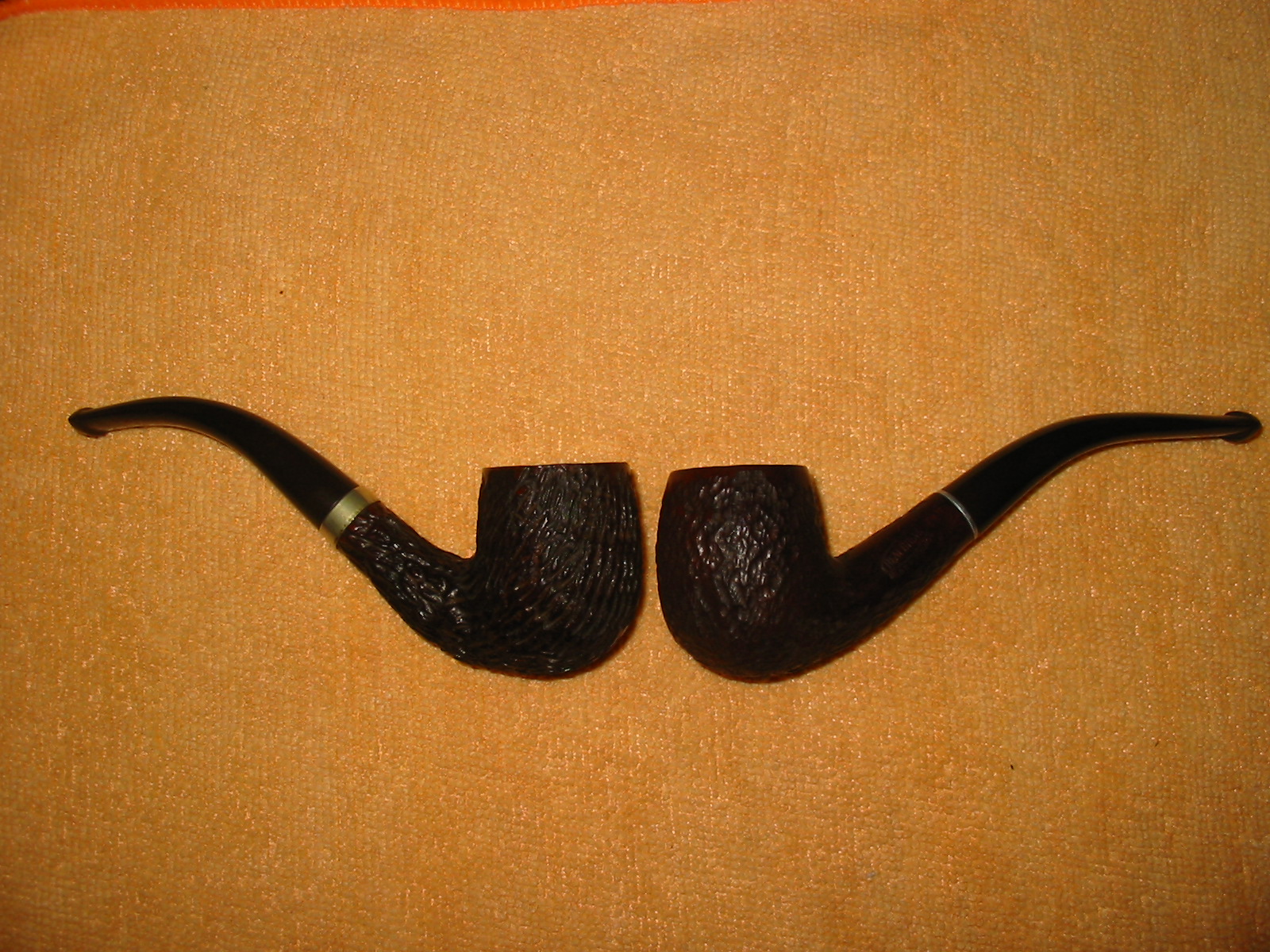
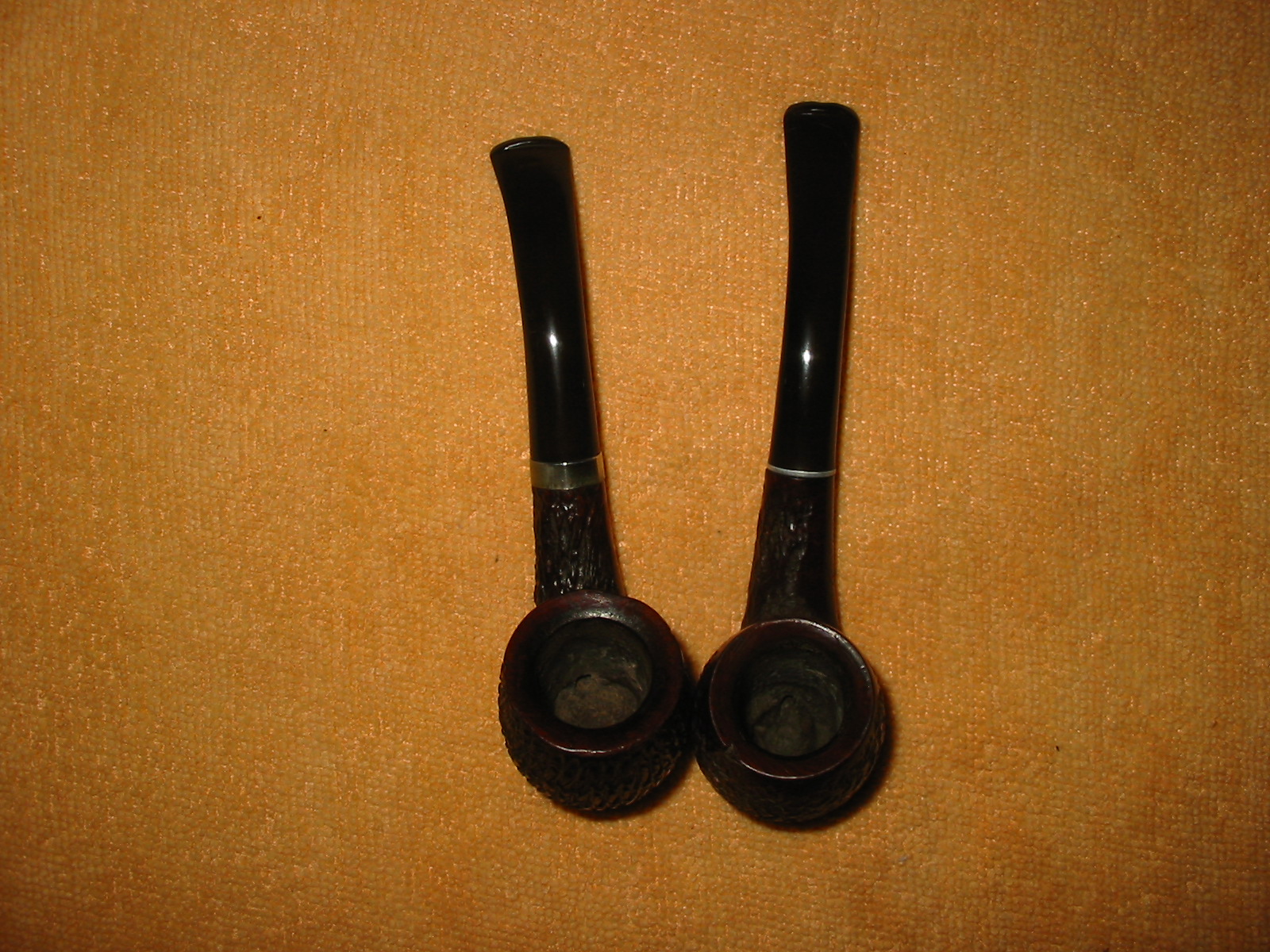
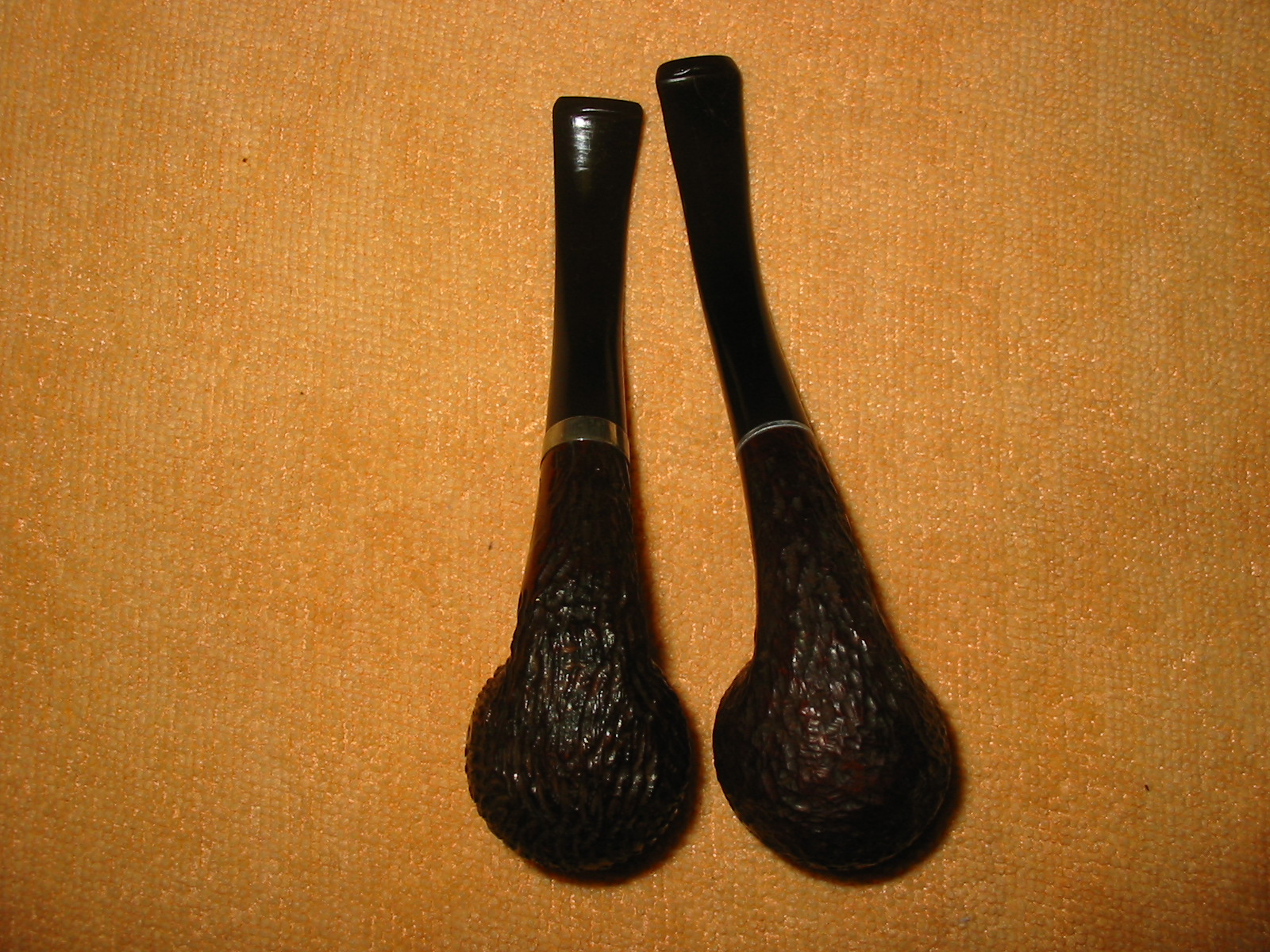
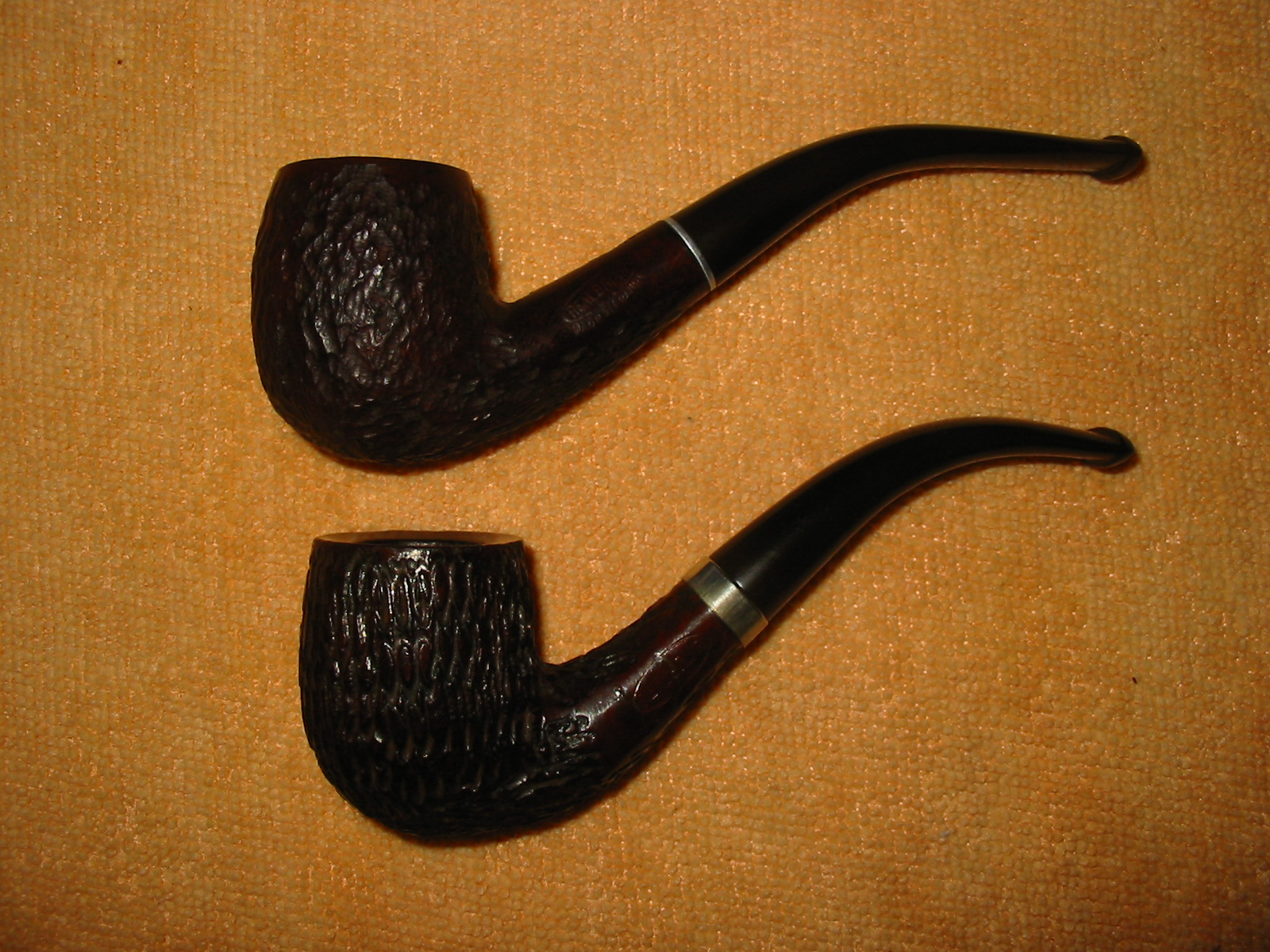
Restored a Pair of Older Real Briar Bent Billiards


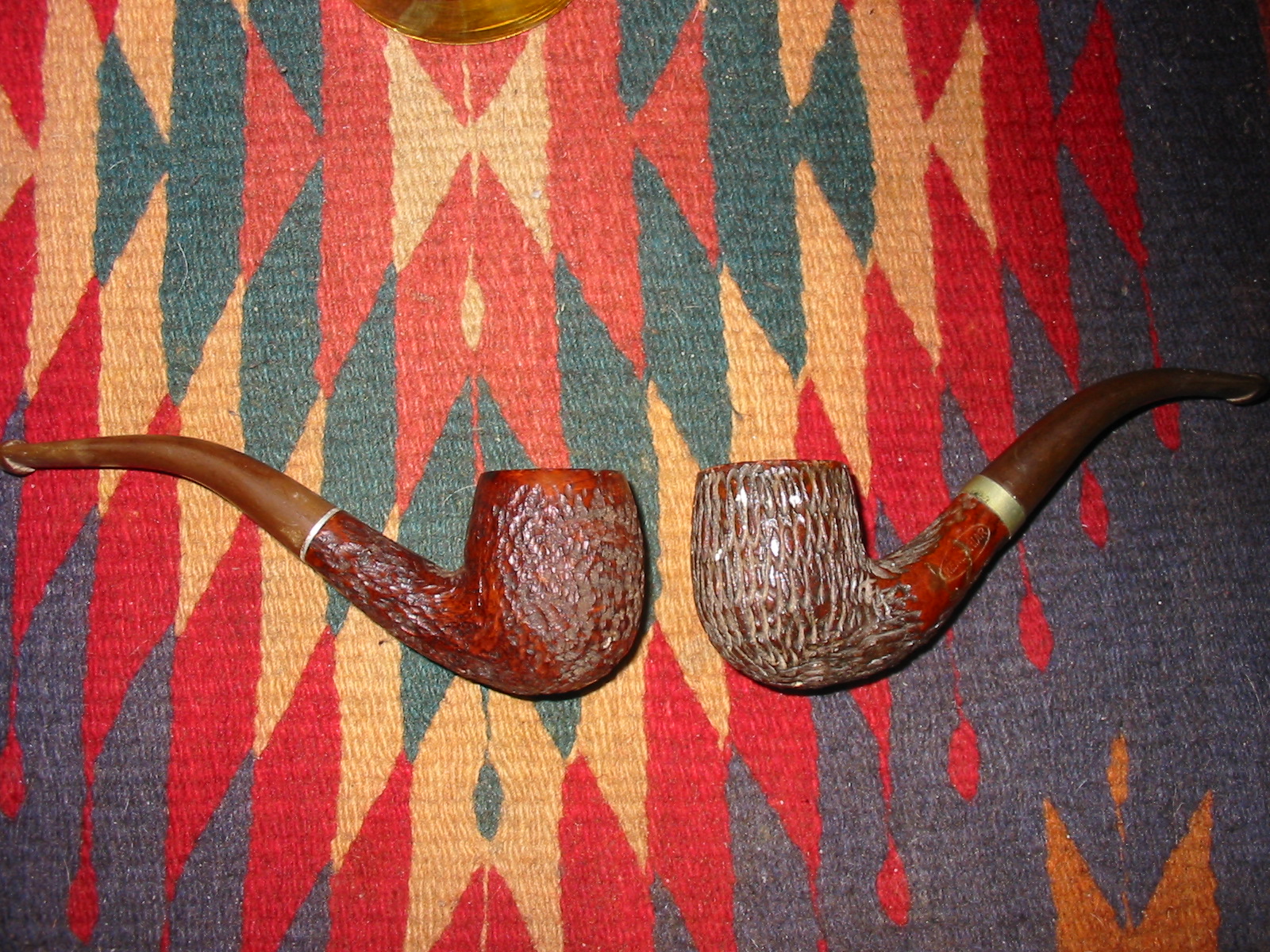
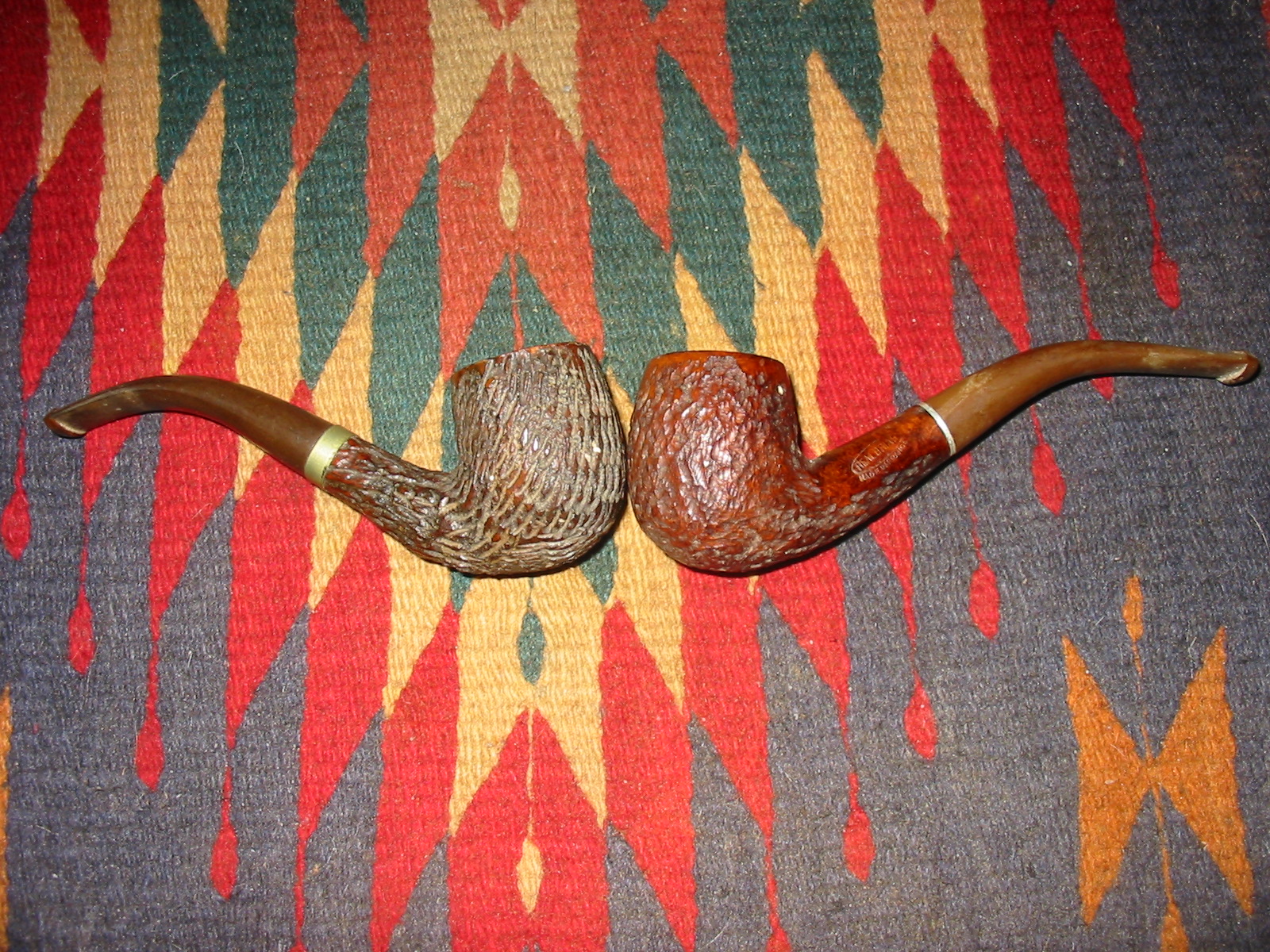
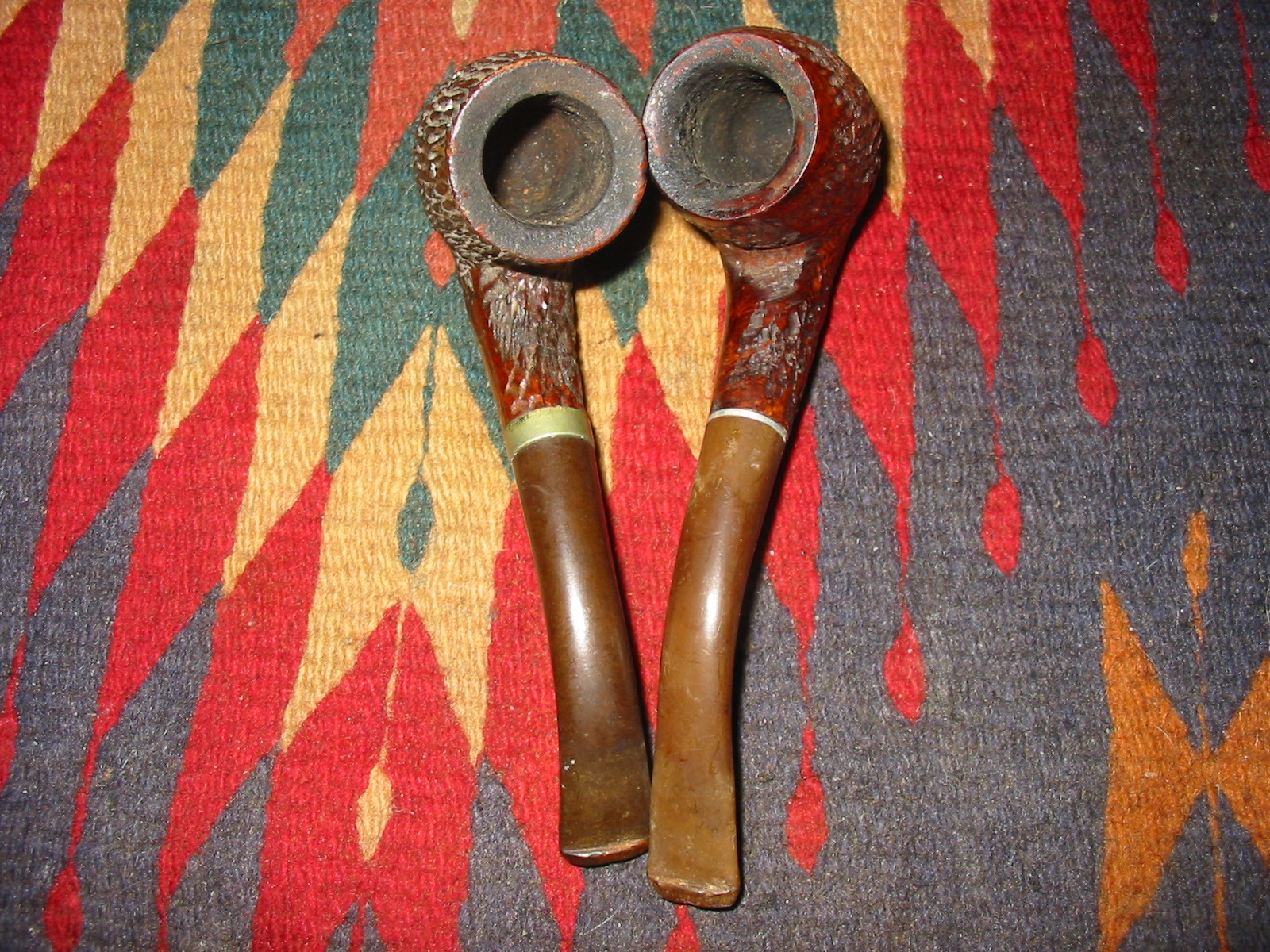
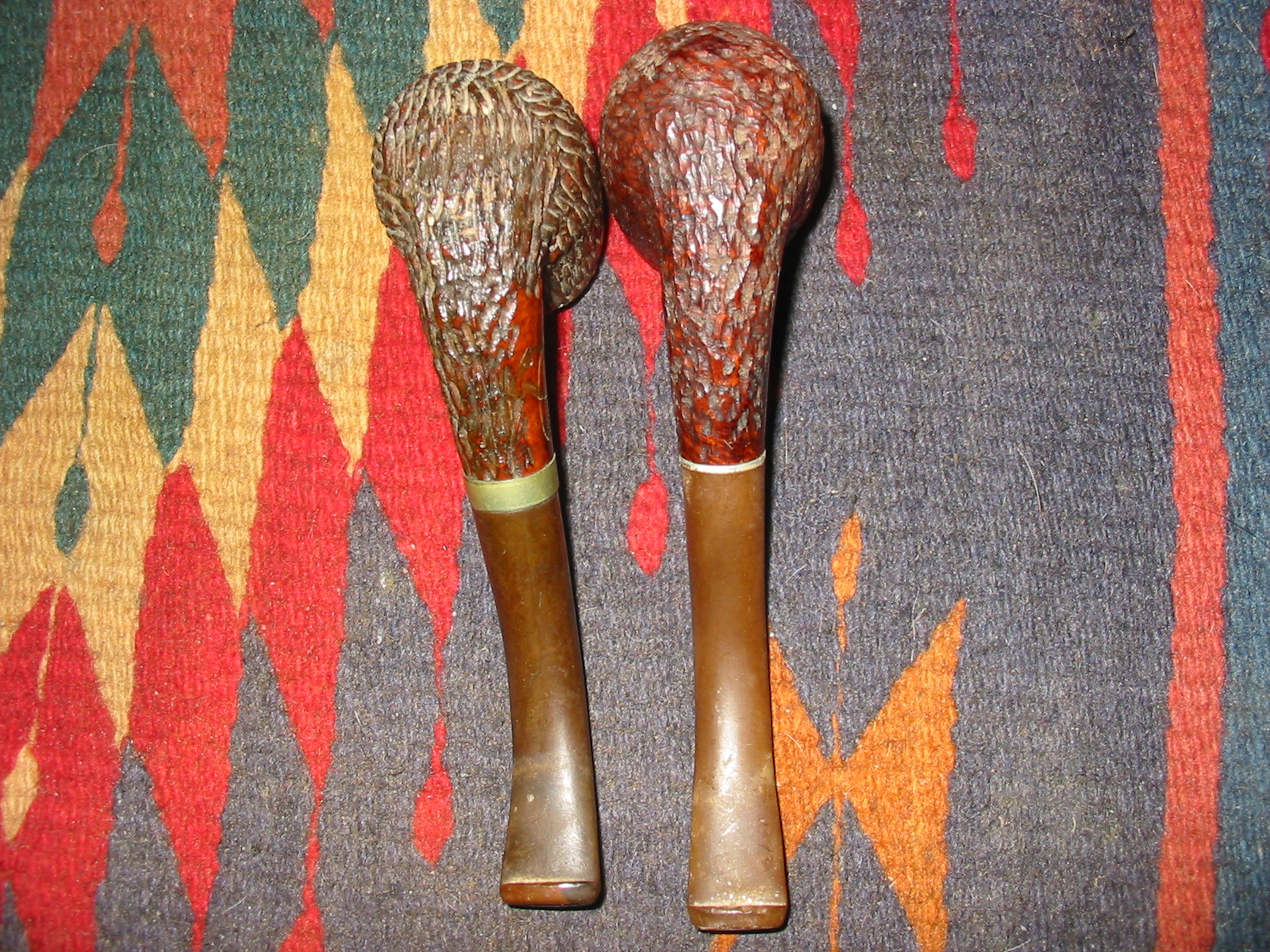
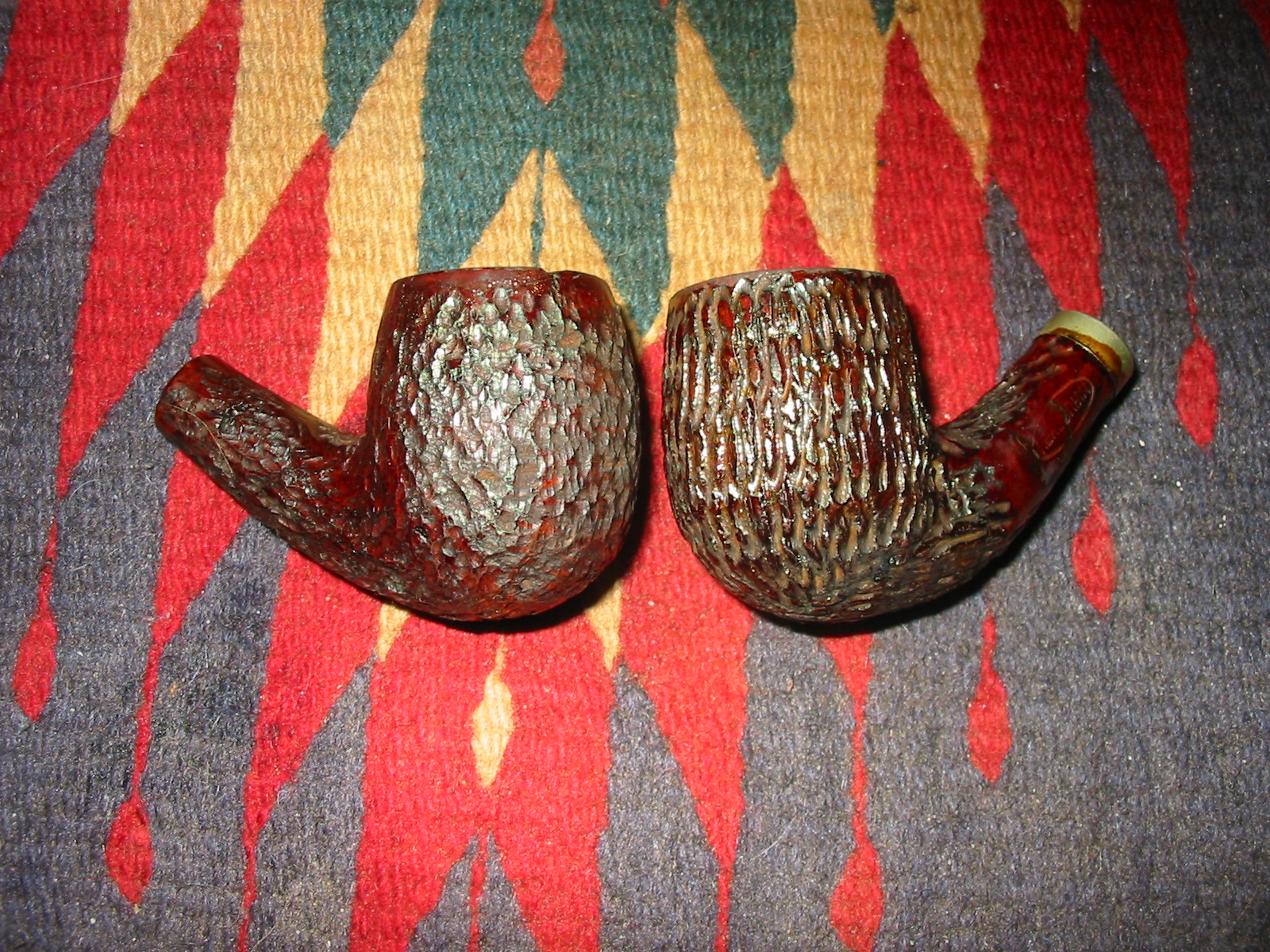
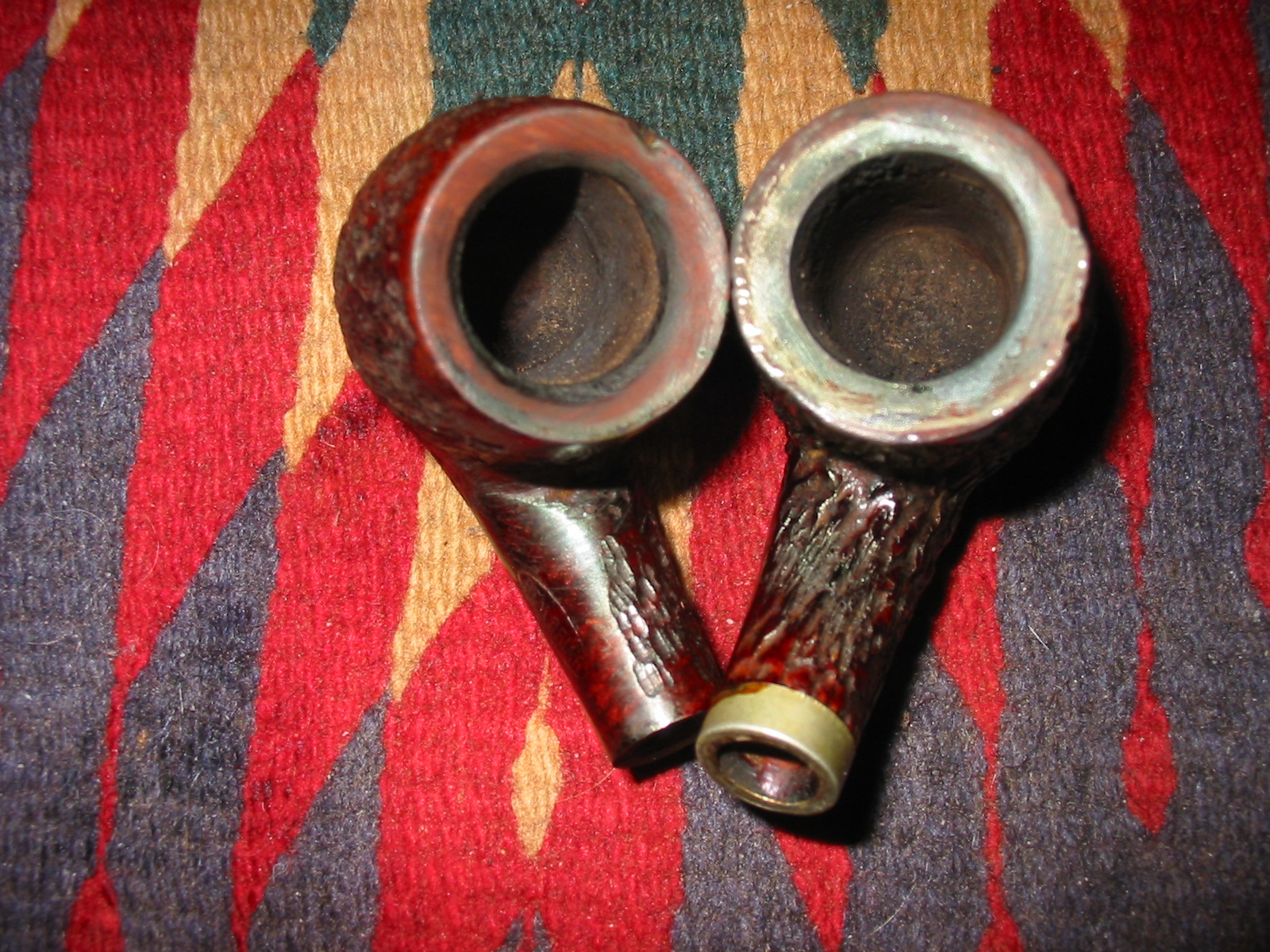
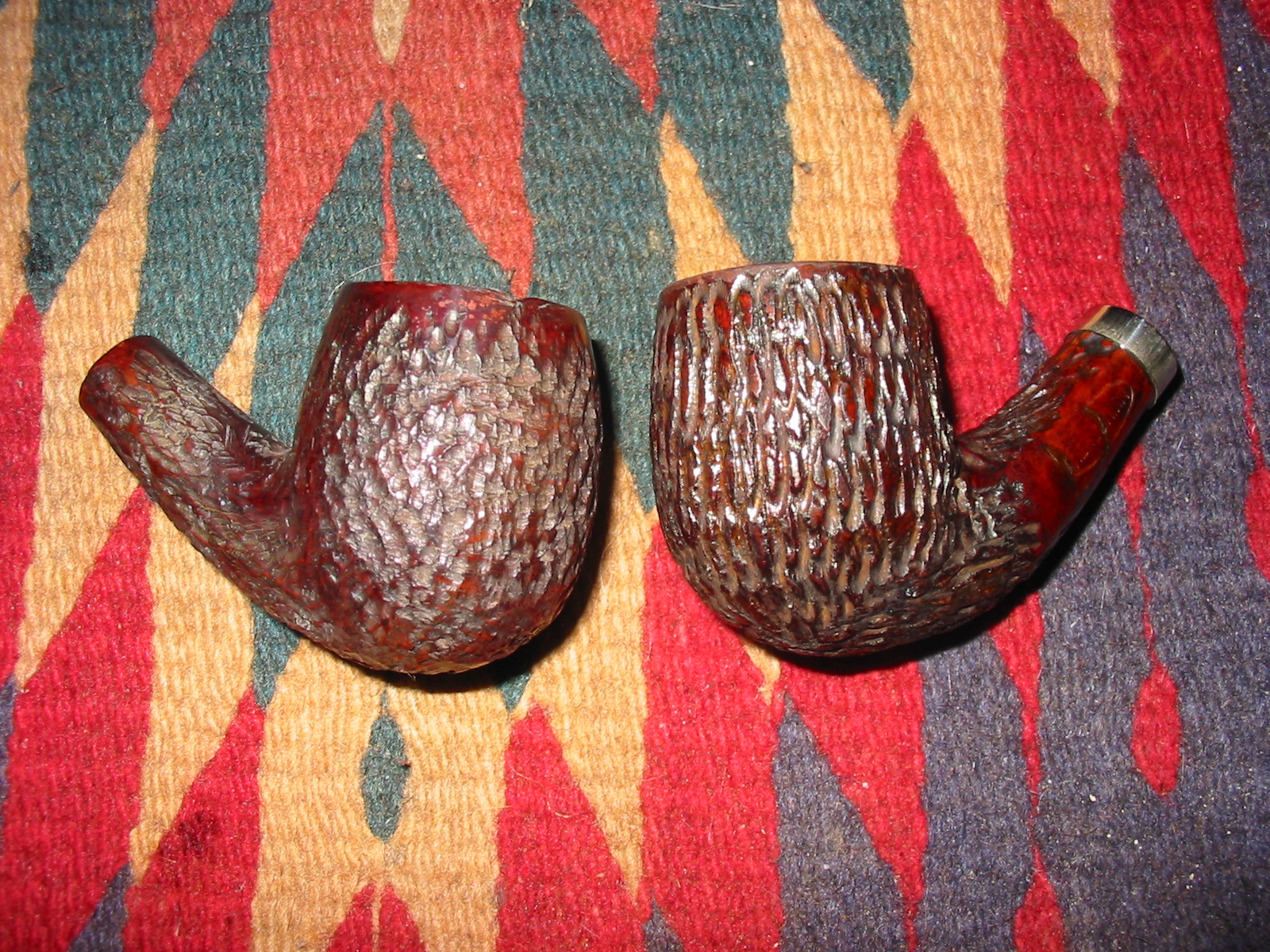
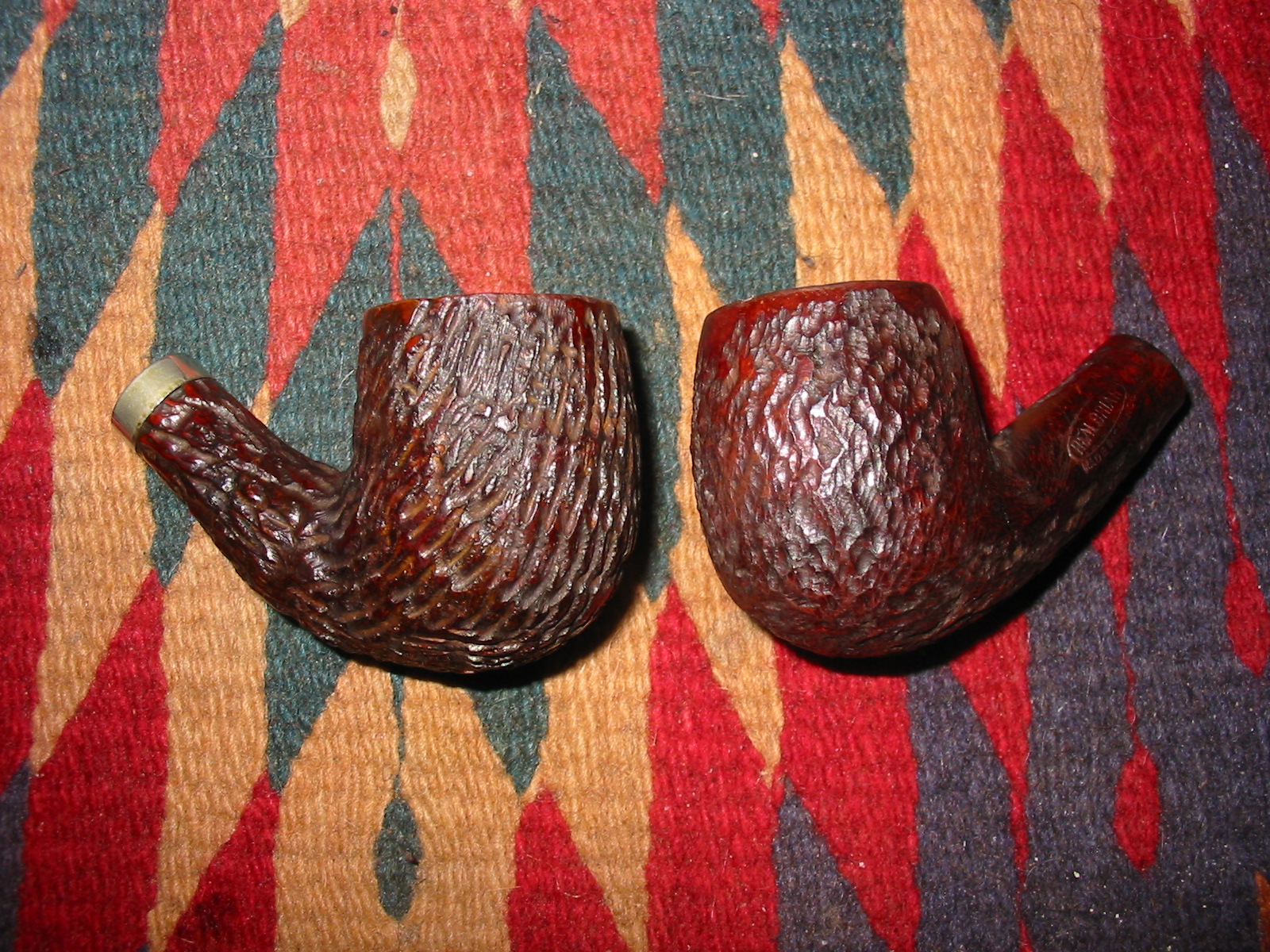
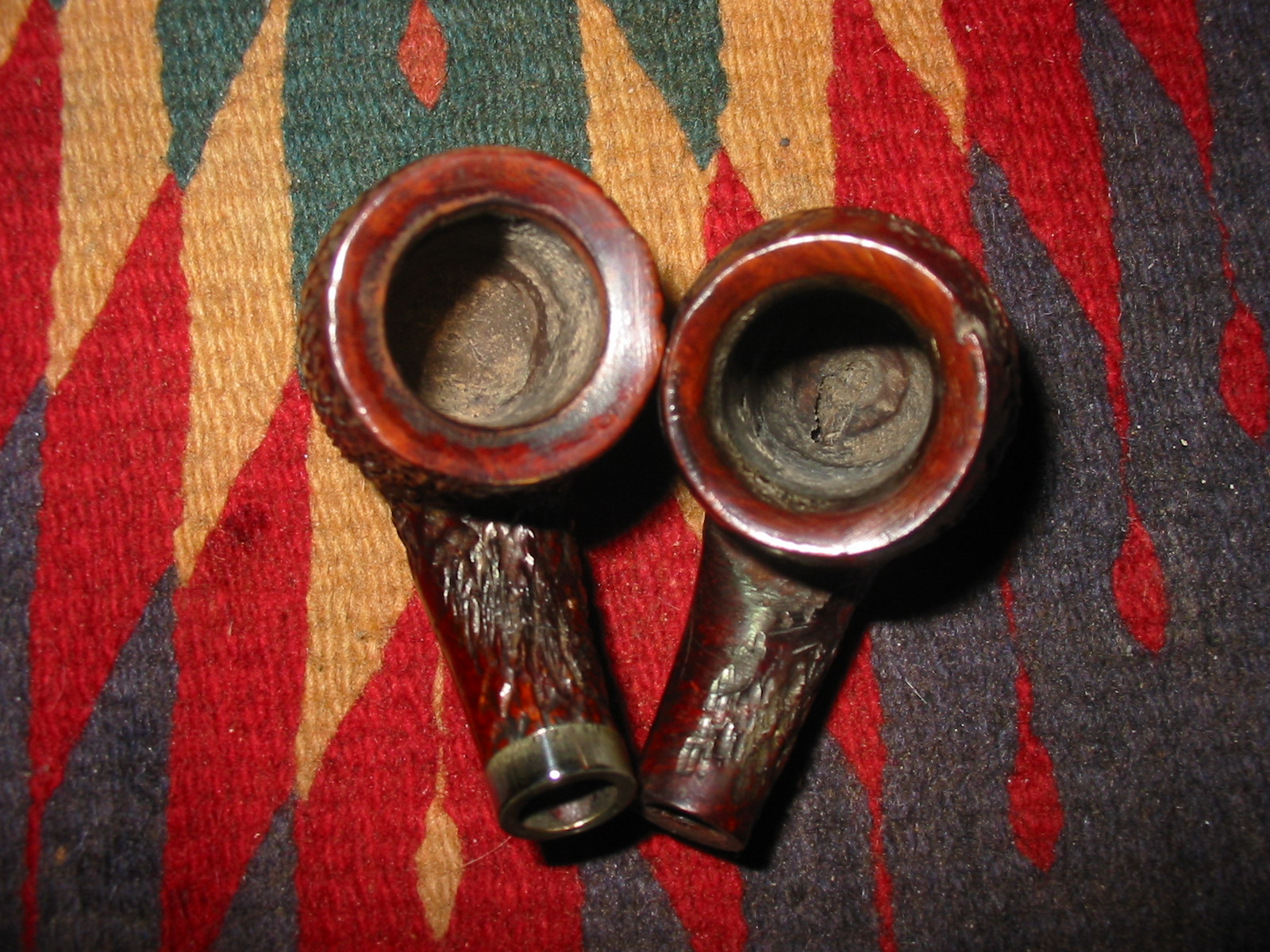
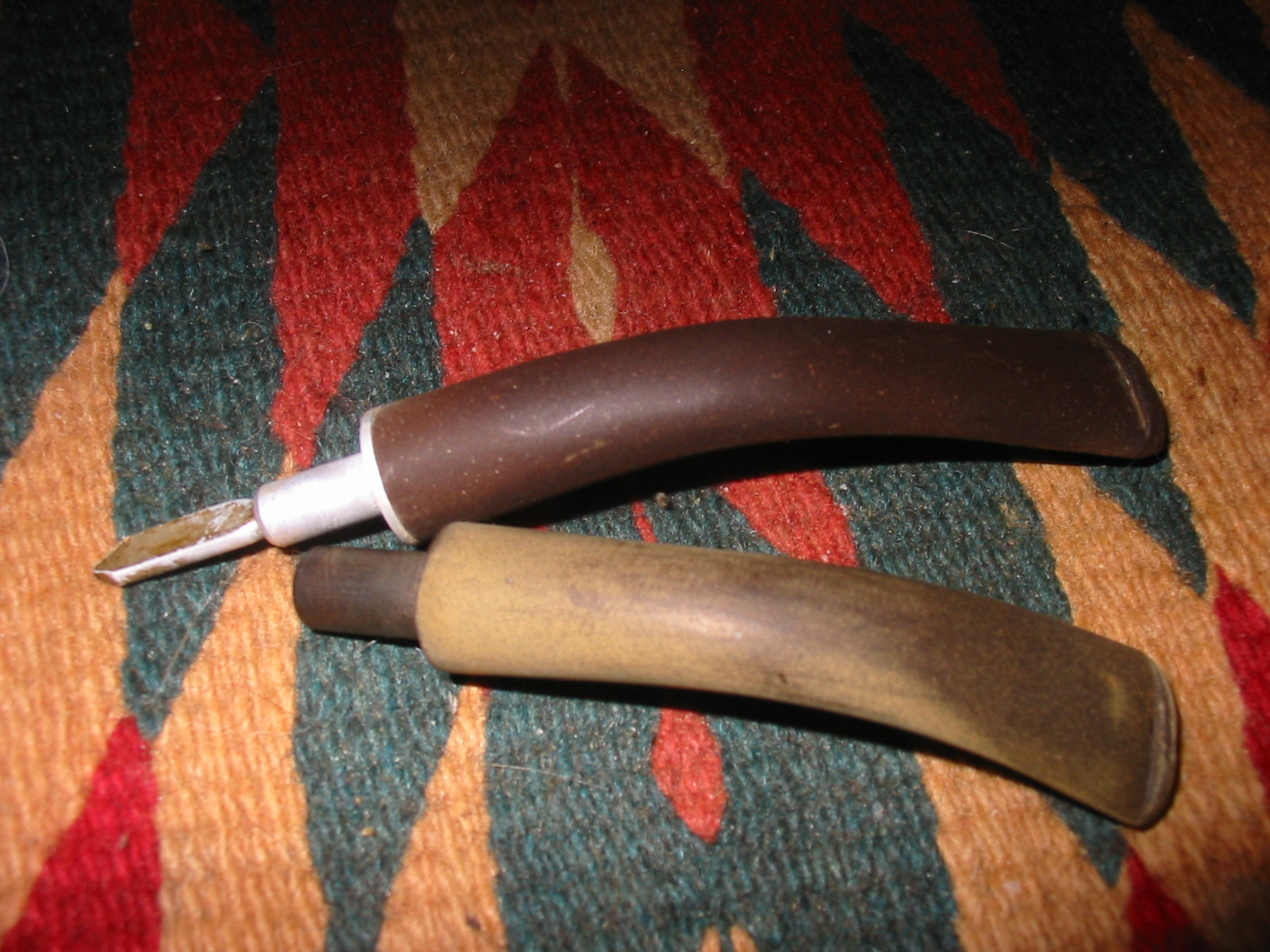
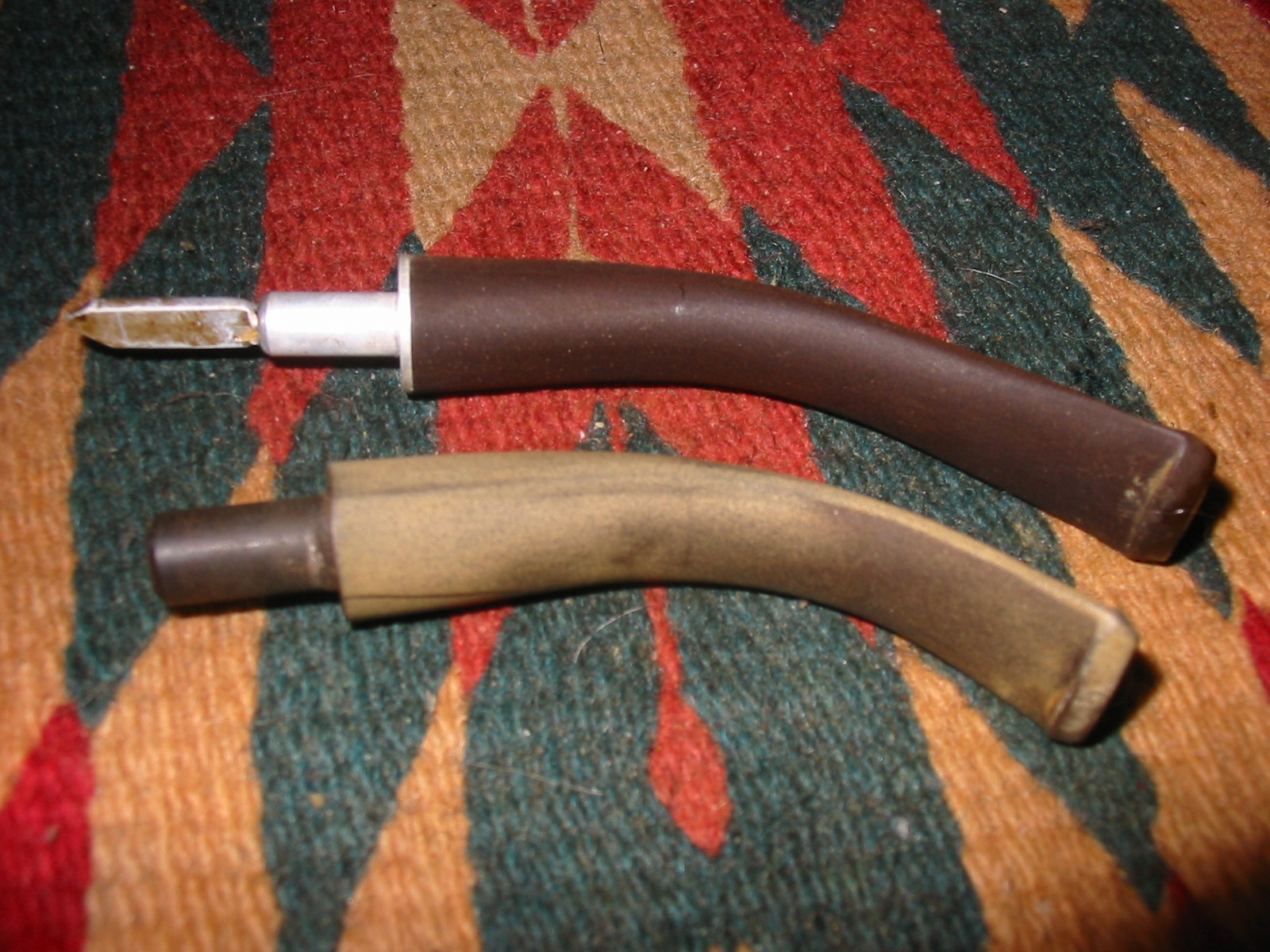
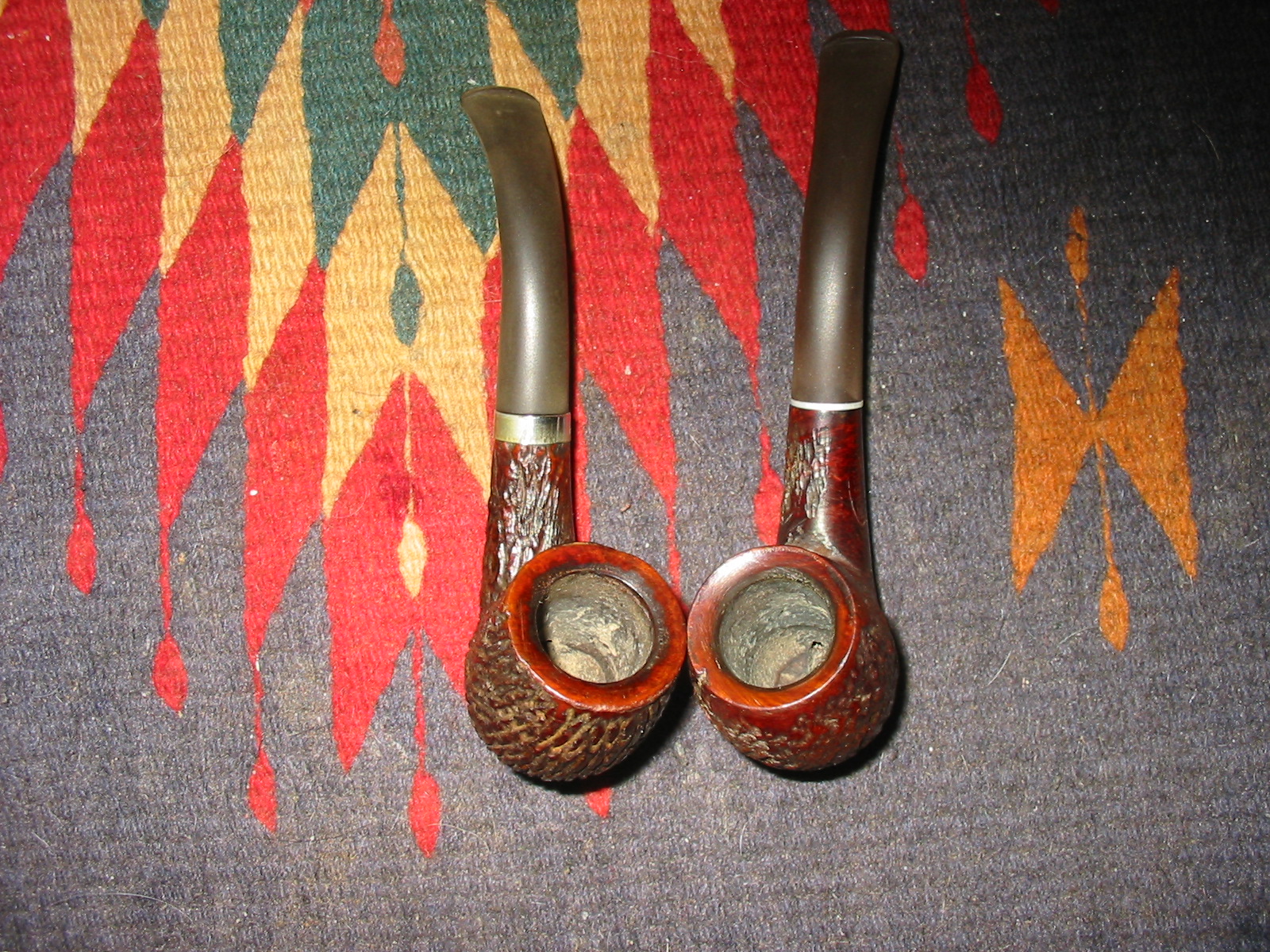
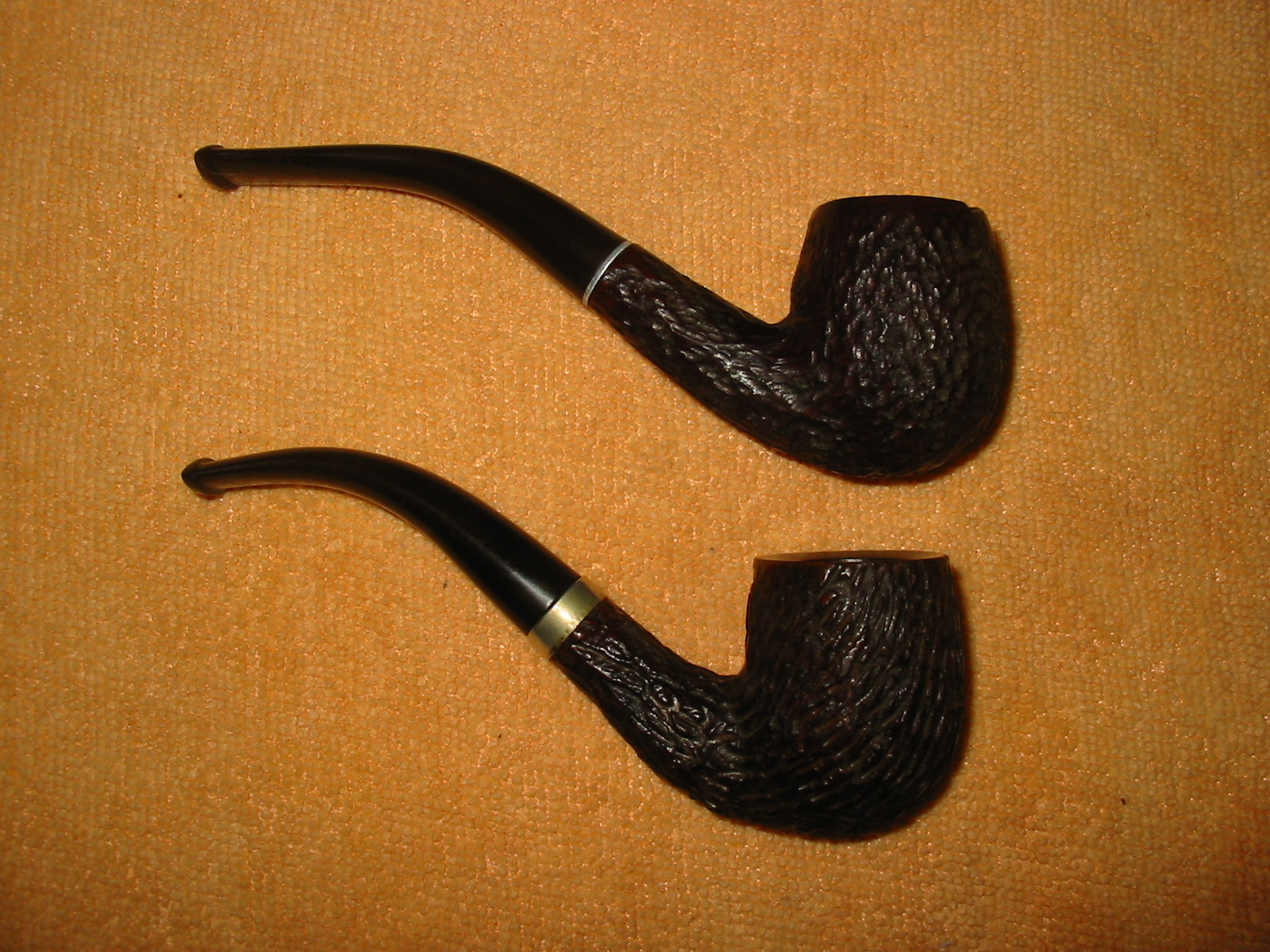
The last two pipes I received in the gift package from a friend on Smokers Forums were these two older rusticated bent billiards. The pipes are both stamped Real Briar in an Oval on the shank. There is no other stamping to help identify country of origin or maker. The rustication on the pipe on the left is more refined and almost like a sandblasted look and feel. The rustication on the other one is rustic and less refined. The pipe on the left has an aluminum tenon with a thin aluminum wafer built into the stem itself and has a blade like stinger attachment. The pipe on the right has a push stem with a sterling silver band. The rims on both were chamfered into the bowl and both were heavily caked with tars and resins. The bowls were in need of a ream. The shanks were dirty and tarry. The finish on both was dirty with dust and grime set into the rustication on the bowl. The aluminum and the silver band were tarnished. The stems were both oxidized and both had matching tooth dents on the top and bottom of the stem about a quarter inch from the button. The first series of four photos shows the state of the pipes when they arrived to my work table.

ImageImageImageImage

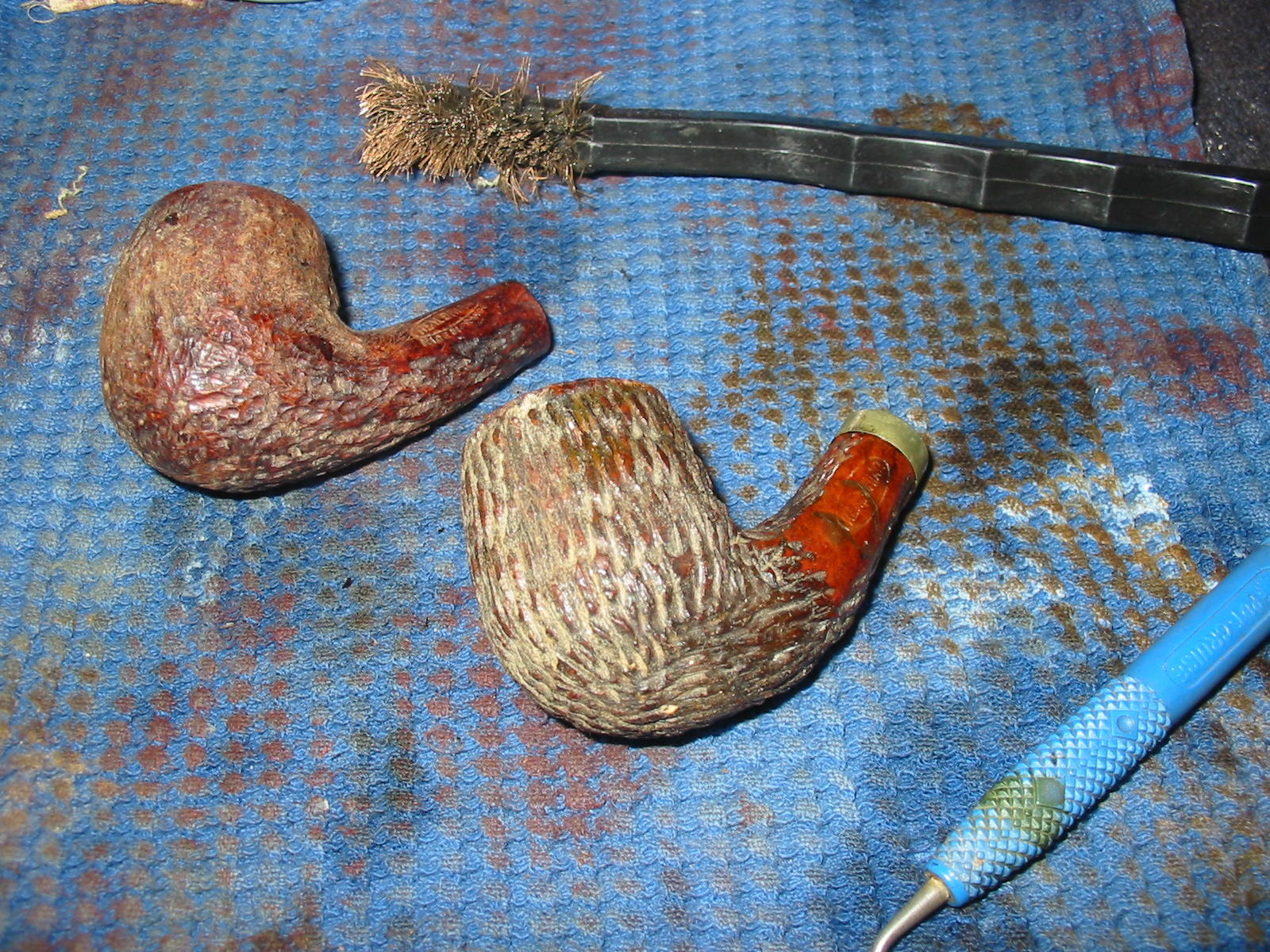
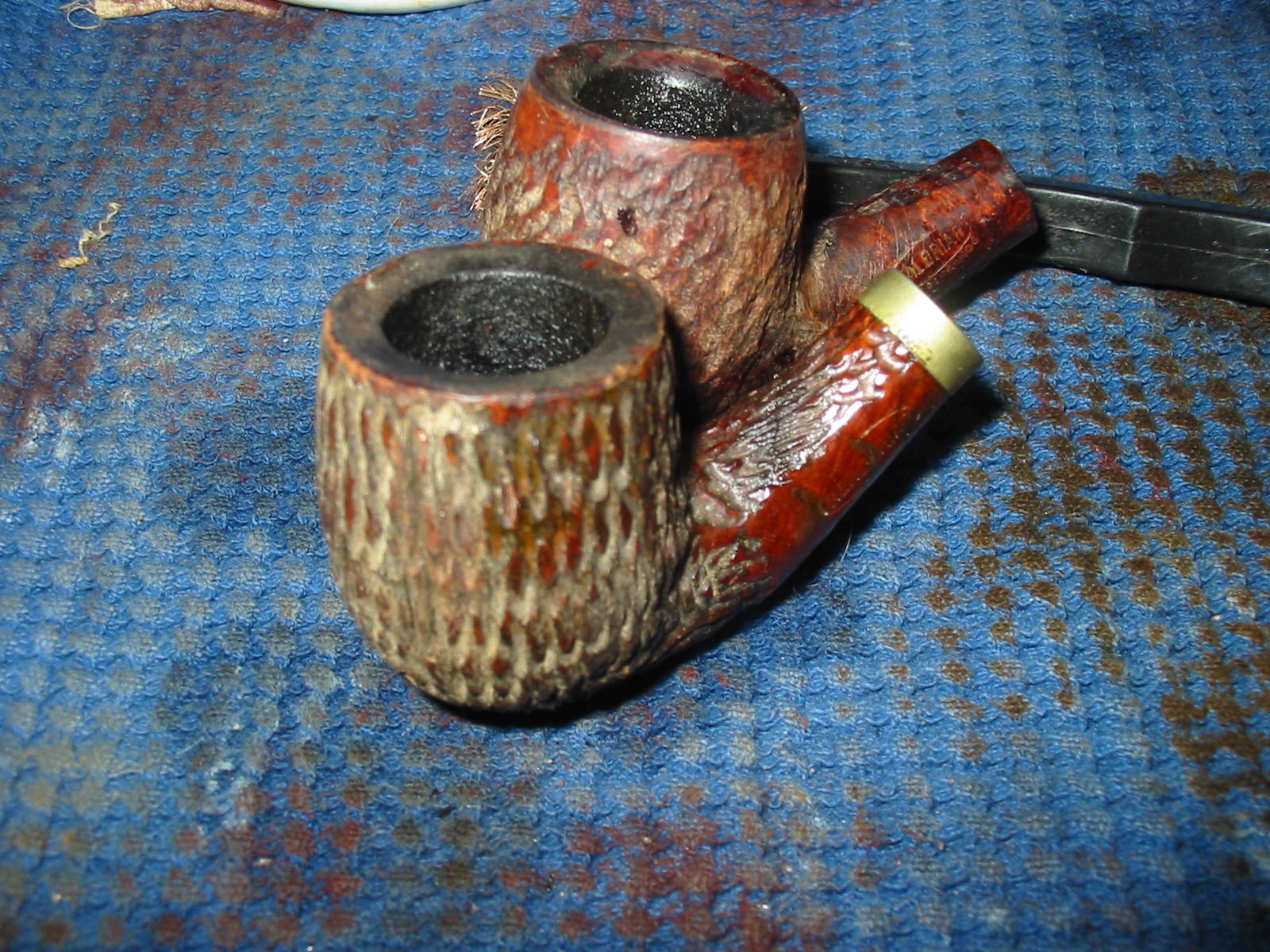
I removed the stems and placed them in an Oxyclean bath and placed the bowls in an alcohol bath (99% isopropyl alcohol). I scrubbed the bowls in the bath with a soft bristle brass tire brush as seen in the pictures below. The bowls and stem soaked overnight to let the bath do its work. When I took them out the next morning I scrubbed the bowls some more with the brass brush and dried the bowls off. I also sanded the rims with 320 grit sandpaper to remove the tars and the damage to the surface of the rim. The rims were chamfered so this was done by hand with a small folded piece of sandpaper held at the angle of the chamfer. The next series of five photos show the bowls after the scrubbing and rim work.

ImageImageImageImageImage

I finished my work in cleaning the bowls by wiping down the bowl surfaces with acetone on a soft cotton pad. With that work they were ready to be stained. I chose a dark brown aniline stain thinned with alcohol 2:1. I applied it with the dauber and then flamed it to set the stain. Stained it a second time and flamed it. Then I took it to my buffer to buff with a light touch on a White Diamond wheel. The next six photos show the developing shine that the bowls and the rims took on with the buffing. I still needed to clean the sterling silver band on the one bowl.

ImageImageImageImageImageImage

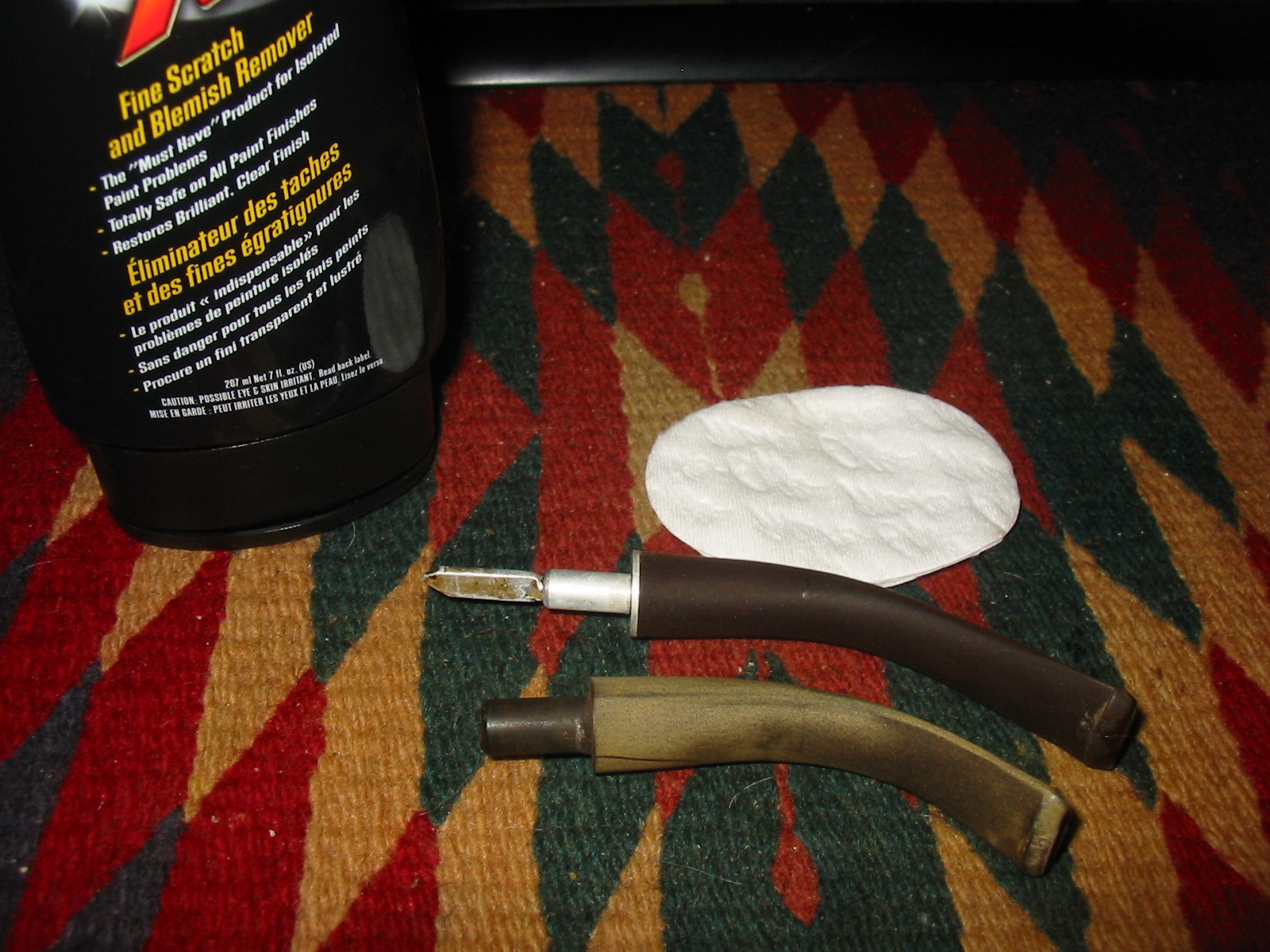
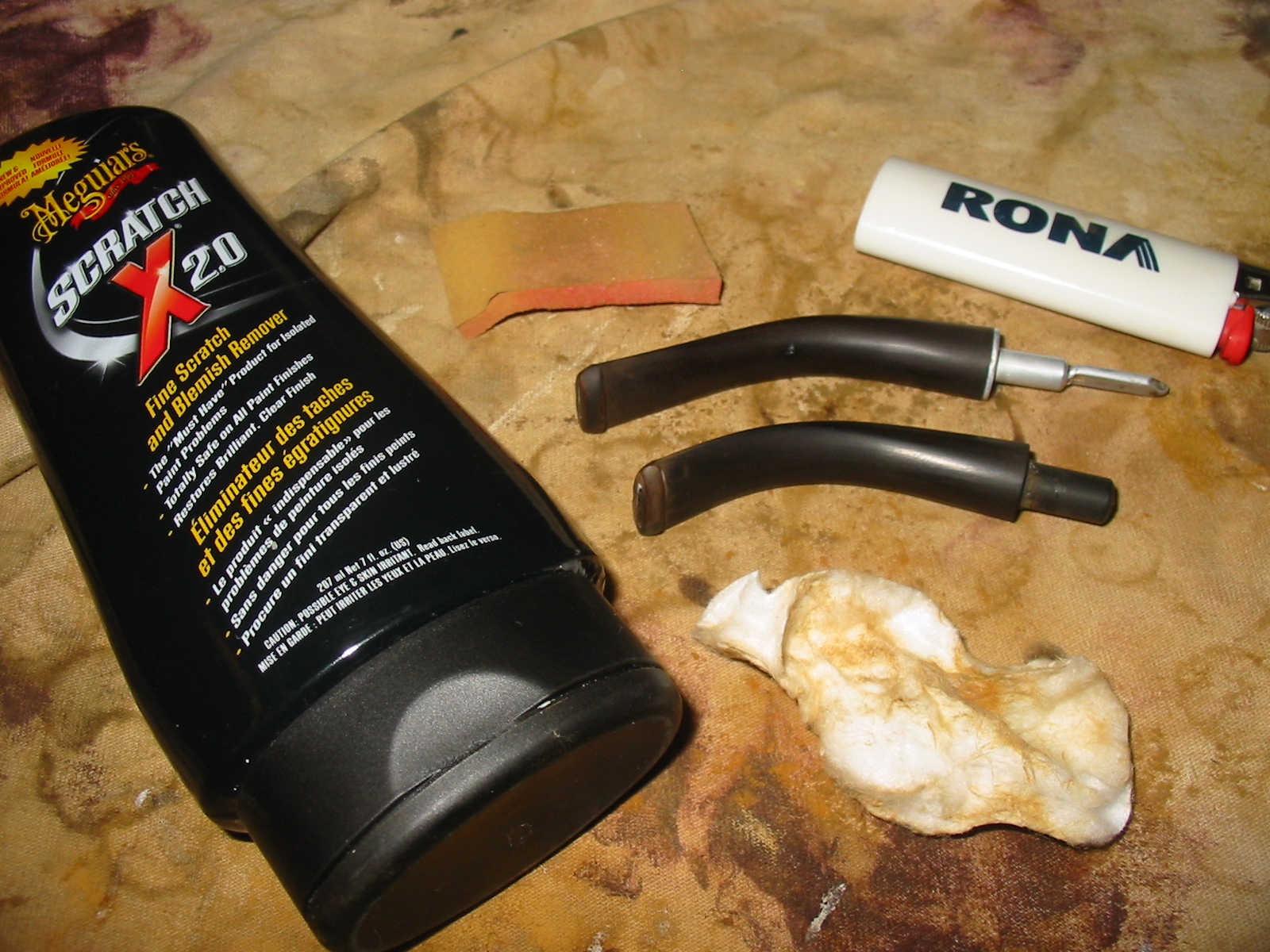
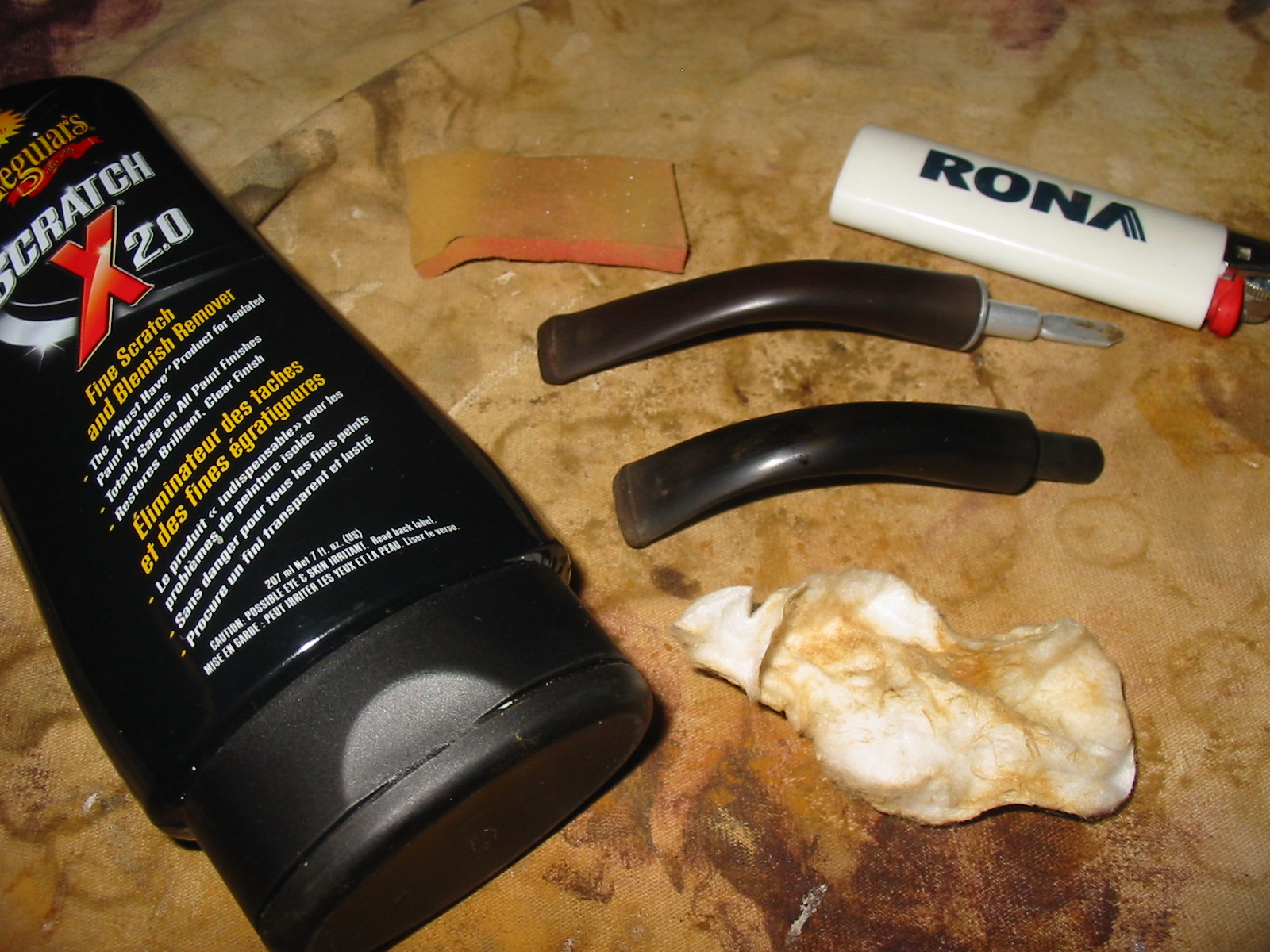
At this point in my process I set the bowls aside and worked on the stems. The first two photos below show what they looked like when I took them out of the Oxyclean bath and dried them off. The oxidation was by no means gone but it had softened considerably and was easier to remove. The four photos that follow show the stem in the process of polishing it with Maguiar’s Scratch X2.0. I applied the scrub by hand and rub it into the stem surface and then wipe it and polish it with a cotton pad. I find on this kind of oxidation it works to remove the surface material that the Oxyclean raised and gives me a clean surface to work on with the micromesh sanding pads. The last two of the four photos show the stems after the polish with the cotton pads.

ImageImageImageImageImageImage

At this point I reinserted the stems in the bowls and worked on the stems in the bowl with fine grit sanding sponges to remove the remaining oxidation. I then removed them from the bowl and continued sanding them.

ImageImage

The next two photos show the stem after sanding with the sanding sponge and then reapplying the Maguiar’s polish. The remaining oxidation is very clear around the button and at the end of the stem near the tenon. I used the Bic lighter method and ran flame along the surface of the stem from front to back while really working over the button area and the tenon end of the stem with the flame. The idea is to move the flame fairly quickly along the surface of the stem while be careful not to burn or heat the stem too much. It burns off the oxidation and is easier to work with using the micromesh sanding pads afterwards.

ImageImage

After all the preliminary cleaning of the stems and removing the oxidation I worked on the stems with micromesh sanding pads. I wet sanded with 1500-3200 grit micromesh pads. I found that the water gives the pads a bit of bite in the sanding process. I have a small cup of water that I dip the edge of the pad in when sanding. I then finished by dry sanding with 4000-12,000 grit micromesh pads. I then polished it a last time with Maguiar’s Scratch X2.0 and then coated the stem with Obsidian Oil and finally multiple coats of carnauba wax.

ImageImage

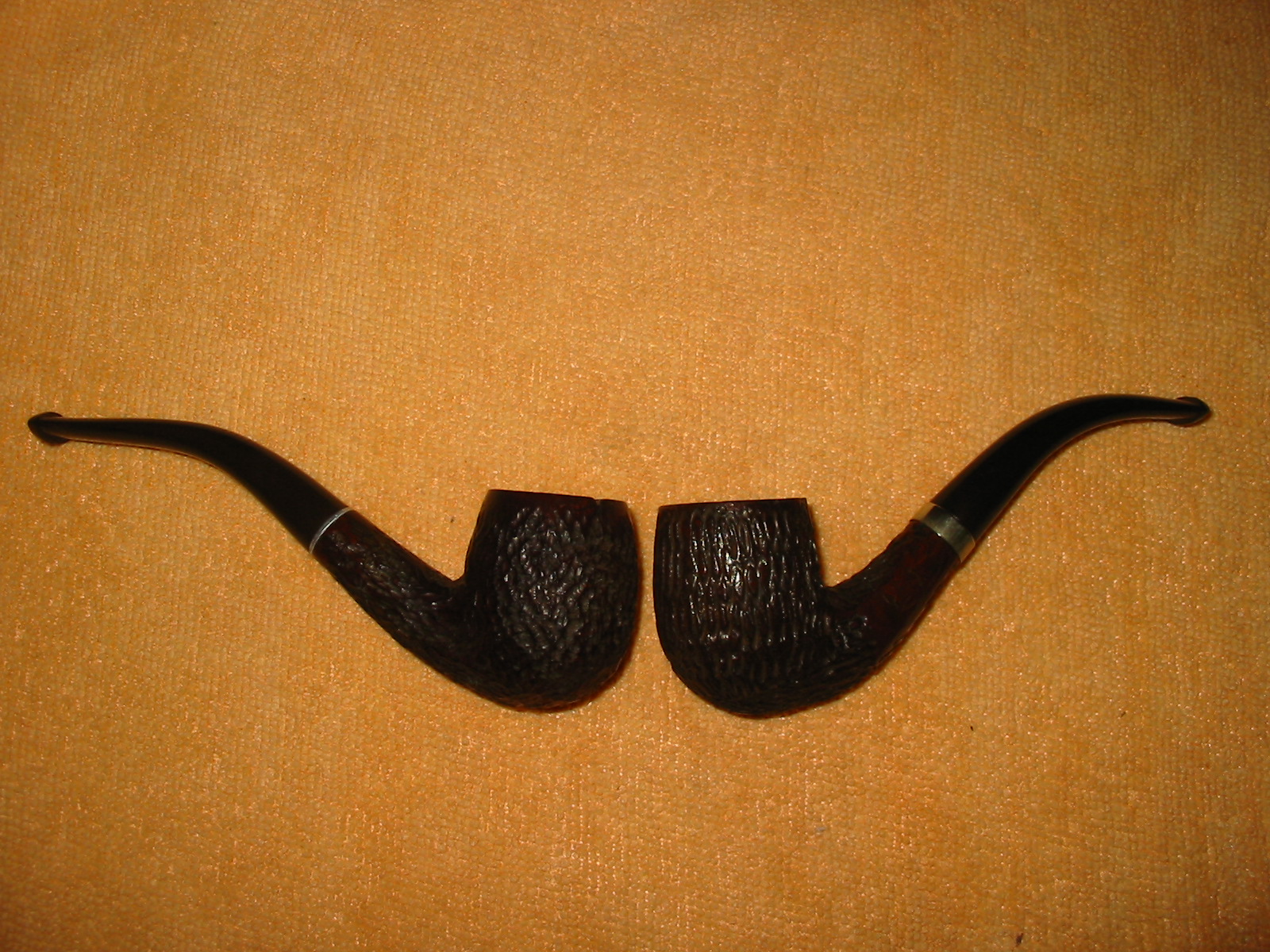
The final series of six photos shows the finished pair of Real Briar Pipes. I polished the silver band with some silver polish before giving them all a quick buff with carnauba wax and a soft flannel buff for polishing. Both pipes are cleaned, polished and ready to smoke.

ImageImageImageImageImageImage

Refurb – Jarl Ribbon Acorn


Blog by Steve Laug

This little pipe caught my eye when I was going through my box of pipes to be refurbished. It is stamped Jarl and is in what they call their Ribbon finish. It an acorn shape with what for all intents and purposes looks like a Celius style stem on it. It is light and clean.

The bowl needed a good reaming – a bit of a trick as it is a conical bowl. I used several of the PipNet bits on the T handle to ream the bowl. The finish was faded and dirty. The inside of the shank was tarry and dirty and the inside of the stem was the same. The stem was oxidized and the original owner had modified it by carving some horizontal lines (3x) on the top and bottom of the stem to make kind of a homemade dental bit. He had also used some Elmers Glue to repair the button where he cracked it trying to put a pipe cleaner through it. The glue was all over the top of the stem.

ImageImage

I scrubbed the bowl with some Murphy’s Oil Soap and a soft bristle tooth brush to clean out the grime and dirt from the sand blasted portions of the bowl and shank. I scrubbed the ribbon or smooth portions with a cotton pad and Oil Soap. It took a bit of scrubbing to remove the tars from the rim edge and restore the finish there to a clean colour. I ran it under a clear stream of warm water to wash away the soap and then dried it off with a microfibre cloth. Once it was dry I decided to restain it with an oxblood and black stain on the blast portion and a nice oxblood/cherry on the smooth parts. Before staining I cleaned out the shank and airway with cotton swabs/qtips and bristle pipe cleaners to remove the grime. I finished with fluffy pipe cleaners. Once clean it was ready to be stained. I first used a black aniline stain and then flamed it. I took it to the buffer and buffed it with Tripoli and White Diamond to remove the black stain from the smooth surfaces and from the high spots on the blasted portion. Then I restained it with a top coat of oxblood/cherry stain, flamed it and then buffed it with White Diamond to get a good contrast colour to the bowl.

The stem took some work. I was able to sand out the homemade cuts without compromising the thickness to much as they were fortunately not too deep. The cracked button was a challenge. I cleaned off the Elmers Glue and then scrubbed the crack clean with alcohol and a soft brush. I picked out the bits of glue that were in the crack with a dental pick. I dried the area and then repaired it with Super Glue. It came out looking like new. The stem was buffed with Tripoli and White Diamond after sanding. The entirety was given a coat of Halcyon II wax and buffed with a shoe brush.

ImageImageImage

Some sad news came back to me regarding this beautiful little acorn pipe. When I finished working on it I gave it away to Desertpipe as a gift. He loved the look and feel of it and appreciated it for what it is. Then one day after using it the cracked portion of the button broke off entirely. He sent the pipe out to be restemmed. I am looking forward to the day it is finished and he sends me some pictures.

A Reborn Piccadilly Bulldog


Blog by Steve Laug

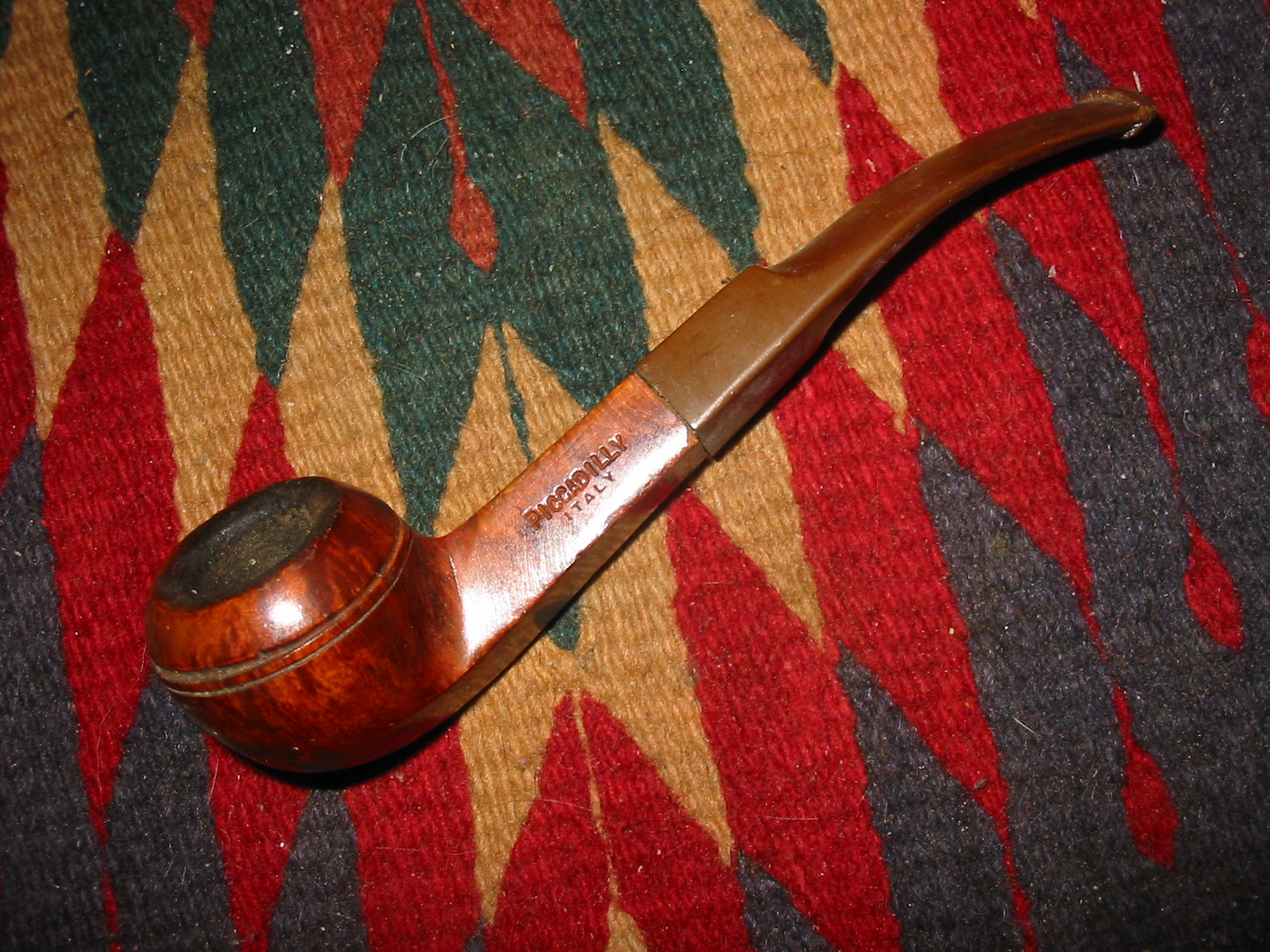
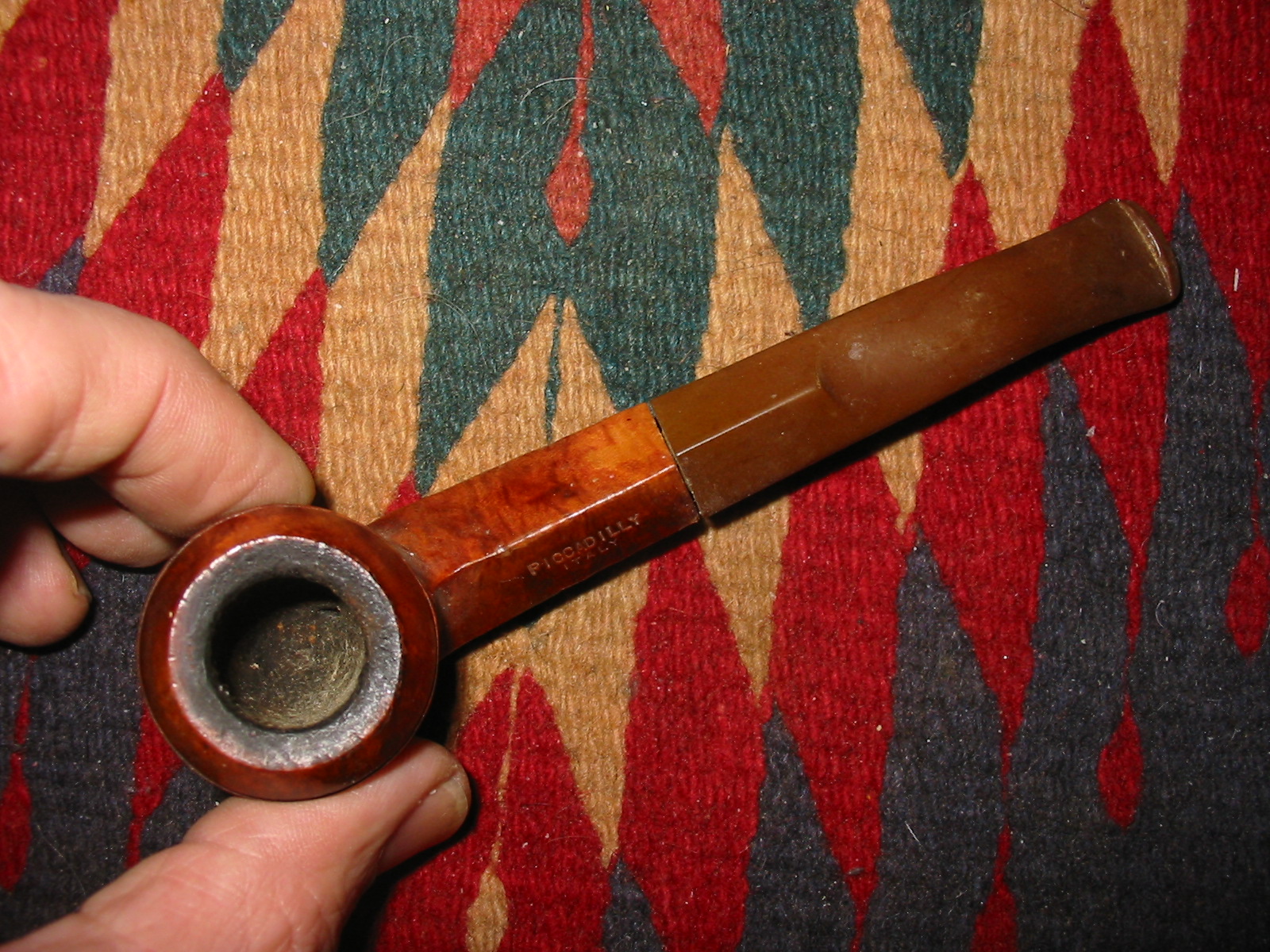
This little bulldog came to me in a lot of six pipes given to me by a friend. Something about it caught my attention as it seemed to have a classic bulldog shape. It was in pretty rough shape. It is stamped Piccadilly over Italy. It had a thick coat of varnish over the whole bowl and shank. There were also paint flecks on the surface of the bowl and shank. The rim was tarred and black with minor dings in the wood on the outer edge. The rim was chamfered in toward the bowl and also showed some wear and tear. The bowl was pretty clean; as I am pretty sure it had been recently reamed. The stem was badly oxidized and when the pipe came to me the stem would not come out of the shank or even turn. There were no bite or tooth marks on the surface of the stem. The inside of the stem was also tarry and dirty. The first series of three photos shows the state of the pipe when it arrived.

ImageImageImage

I put the pipe in the freezer for several hours and then I was able to remove the stuck stem. It was incredible tight and very dirty. The tars seemed to have acted like glue holding the stem in the shank. I cleaned out the stem with pipe cleaners and a shank brush and then put it in a bowl of Oxyclean to soak overnight. I dropped the bowl in an alcohol bath overnight as well. The next series of five photos show the bowl and the stem the next morning after an all-night soak in the baths. You can see that the bowl is clean and incredibly shiny. The alcohol bath removed the paint flecks and the surface grime. The rim tars had softened and were ready to be removed. The varnish coat however was not even touched by the soak in isopropyl. The stem was much better than when it went in to the bath. The oxidation had softened and much of it was removed when I dried off the stem. What remained would take more work.

ImageImageImageImageImage

I then wiped the bowl and shank down with cotton pads soaked with acetone to try to break up the varnish finish. It took many wipes to cut through the finish and also to cut through the tars on the rim. I also sanded the rim with 320 grit sandpaper to remove the remaining tars and the slight burning around the inner edge of the rim. The next three photos show the result of the sanding on the rim and the wiping down of the bowl. The varnish was untouched – maybe softened a little but it did not give way at all to the acetone.

ImageImageImage

More drastic measures were going to be required to remove this thick varnish coat. It was almost acting like a coat of polyurethane. I would have to sand the finish off the bowl if I was going to remove it at all. This required care as I wanted to remove the finish and not change the shape of the bowl and shank. I used a medium grit emery cloth to break through the finish coat. The next series of three photos shows the pipe after the sanding with emery cloth. I also wiped it down again with acetone at this point to clean the finish and see what remained. You can see the stubborn remainders of the topcoat.

ImageImageImage

At this point I switched to a medium grit sanding sponge to remove more of the remaining finish. I removed the inserted stinger apparatus and put the stem back in place so that I would not change the angles on the shank where it met the stem when I sanded. It also allowed me to sand the stem and shank simultaneously and to keep the angles sharp and intact. The next three photos show the pipe after sanding with the sponge. I continued to sand until the shiny finish was gone. I then wiped it down with acetone on a cotton pad to clean the surface.

ImageImageImage

I sanded the bowl and shank with 320 grit sandpaper and then 400 and 600 grit wet dry sandpaper followed by micromesh pads from 1500-6000 grit before staining the bowl with a dark brown aniline stain thinned 2:1 with isopropyl alcohol. I wanted to give the pipe a stain so I could see if the many fills that were revealed could be camouflaged with the stain coat. My guess was that they would stand out and I would need to pick them out and refill them with superglue and briar dust. I stained and flamed the pipe several times. The next series of six photos shows the results after staining. I would indeed have to rework the fills – at least the large ones.

ImageImageImageImageImageImage

I used my dental pick to remove the old fill material – it seemed to be white putty that did not take the stain. The pick removed the white material easily and I wiped the bowl down with an alcohol wetted cotton pad to clean up the dust before refilling the flaw. I then took out my container of briar dust (I collect this from the bowls that I top) and used the dental pick to pack the flaw with briar dust. Once it was packed and overflowing I dribbled drops of superglue into the packed dust. It dries quickly so there is no time to work it or move it. Once I finished the first pack and drip I added more briar dust and redripped the glue. The three photos below show the new fill before I sanded it. The briar dust and glue are very hard and I always over fill the flaw and sand it back to smooth. I do not want any shrinkage in the fill so I work with the material as I spelled out above and over fill the flaw.

ImageImage

Image

Since the glue and dust fill dries very quickly, it can be immediately sanded. I used some fine grit emery cloth to smooth out the glue and followed that with some 240 and 320 grit sandpaper. The next two photos show the fill after I had sanded it smooth. The fill is now dark and hard. I have found from past experience that the dark fill is much easier to blend in with the stain than the white or pink putty fills.

ImageImage

After the sanding and preparation of the other fills that I replaced I restained the bowl with the dark brown aniline stain. I flamed it and restained it several times. The bowl is seen both wet and after the flaming in the three photos below. The fill is well blended into the dark stain.

ImageImageImage

Once the stain was dry I took the pipe to my buffer and buffed the bowl with Tripoli and White Diamond. The fills were still to visible to my liking so I used a trick I learned somewhere – I used a black permanent marker (Sharpie) and highlighted the grain on the pipe and also stroked in grain through the fills. Once it was finished I stained it one last time with the dark brown stain and then buffed it to a polish. The bowl was finished and I set it aside to work on the stem.

The stem needed quite a bit of work. I sanded it with the medium grit sanding sponge and then with 320 grit sandpaper and 400 and 600 grit wet dry sandpaper. The oxidation was still stubbornly remaining on the saddle and in the slope of the saddle to the flat bit. I used the Bic lighter and moved it over the surface of the stem to burn off the oxidation. I repeated this several times and then sanded the stem with 1500-4000 micromesh sanding pads. I also used the Maguiar’s Scratch X2.0 between grits of micromesh. I also used my Bic lighter to burn more of the oxidation between the grits. Once I was finished I polished the stem with Maguiar’s and then buffed with White Diamond to polish it. I gave it a coat of Obsidian Oil followed by multiple coats of carnauba wax to the stem and bowl. The final pictures show the pipe after this work. In the last photo the area that had the fill repaired is shown to detail how well the fill blends into the finished pipe.

ImageImageImageImageImage

1918 J.K.L.K.Dublin Restemmed and Brought Back to Life


I saw this old stummel on EBay and was interested in giving it a refurbishment. It did not have a stem and when it arrived it was in worse shape than the seller had led me to believe. The bowl was filled with a hardened burned tobacco and also a half a bowl under that of unburned dried and hardened tobacco. The rim was very badly damaged and the cake was very thick. It was thicker about half way down the bowl and funneled down to the bottom of the bowl making the bowl appear to be conical. I knew from examining it that it was not a conical bowl so the cake would have to go. The silver band was twisted over to the right and was upside down. The stamping on the bowl was non-existent but the band was stamped J.K.L.K. and next to it were the hallmarks – a lion (signifying that the band was sterling silver), an anchor (signifying that it was made in Birmingham, England) and in the center of the threesome was the letter “t” in a boxlike shield with the corners trimmed (signifying the date of the pipe as 1918). I use a website that gives the information on hallmarks http://www.silvercollection.it/englishsilverhallmarks.html . The finish on the bowl was shot with darkening spots and worn spots. The grain underneath actually appeared to be quite nice. It looked like it would clean up very well to me. The first three pictures below show the state of the bowl when it arrived in the mail.

ImageImageImage

I took my dental pick and cleaned out the hardened tobacco, both burned and unburned. I collected it on a piece of paper to show the amount of material left in the bowl. It is always interesting to me to think about what had happened in the life of the original smoker to make him pause mid-bowl and stop smoking, set aside his pipe and not come back to it. I also wondered what happened to the stem on this pipe as it seemed that somehow it had been separated from the bowl and was nowhere to be found. I reamed the pipe with my PipNet reamer and dumped the carbon material on the paper as well. The next two pictures show the cleaning of the bowl and removal of the dottle and the cake.

ImageImage

I then set up my heat gun to heat and loosen the band in order to turn it to the correct position on the shank. I heated it using the lowest setting on the gun. I used a cotton cloth to try to turn the band several times before the heat loosened the glue and allowed me to turn it. Once it was loose I removed the band and cleaned off the old glue and the surface of the shank with an alcohol damp cloth. Once it was clean and dry I used some wood glue and spread it over the surface and then pressure fit the band in place and wiped off the excess glue. I used turned the band so that the letters and hallmarks were right side up and straight on the right side of the shank. The next three pictures show the heating and setting of the band as well as the finished set of the band.

ImageImageImage

I then looked through my can of used stems that I have scavenged and purchased until I found one that had the same diameter as the shank and band. I knew that I would have to work on the diameter of the tenon to make it fit the shank. I sanded the tenon until it fit well in the shank. I also needed to use a drill bit to smooth out the interior of the shank. I hand turned a drill bit into the shank until it was the same depth as the tenon and was smooth on the inside. I then used a slightly larger drill bit to set the countersink on the shank so that the stem would fit tightly against the shank. The next four photos show the process of fitting the stem to the shank.

ImageImageImageImage

At this point I topped the bowl rim to smooth out the surface and remove the chewed up surface and the dents and roughness. I used my board and a piece of emery cloth first. I turned the bowl top in a counter clockwise direction with the rim flat against the board and paper. I turned it on the emery cloth and repeatedly checked to see if I removed the damaged surface. I have found that regular checking keeps me from going too far with the topping process. The next four photos show the topping process. As I topped the bowl and cleaned the surface of the bowl exterior, a fairly large crack appeared in the side of the bowl and also on the top of the rim. It is visible in several of the photos at the 7 o’clock position on the bowl surface. It would need some work to repair it and a decision had to be made whether to do so.

ImageImageImageImage

Once it was sanded I wiped the bowl down with some more acetone on a cotton pad to remove the dust from the sanding. I decided to take the time to work on the crack and see if I could repair it with briar dust and superglue. I began by wiping down the bowl with a cotton pad and some acetone. Once the surface was clean I used my dental pick to clean out the crack. It did not seem to go all the way through to the inside of the bowl and as I cleaned it the depth of the crack became very evident. The first three photos below show the surface cleaned and ready to repair. The next two photos show the repairs that have been made with the briar dust and the superglue. I tapped briar dust into the crack first with my dental pick and then dripped the super glue on the rim and the bowl side. The glue on the rim ran and made a large spot of glue that would need to be sanded to clean up the spillage.

ImageImageImageImageImage

I sanded the rim by once again placing a piece of sandpaper on my flat board and sanded the bowl top like I did when I topped it. I used 320 grit sandpaper for the topping cleanup and also used the same grit sandpaper to sand the outside of the bowl. I sanded it again with 400 and 600 grit wet dry sandpaper and water to finish removing the excess glue and preparing the surface for a restaining. The next series of six photos show the repair after it has been sanded and wiped clean. The crack on the side of the bowl has all but disappeared with the briar dust/superglue repair. The one on the top of the rim also was smooth and once it was stained would also be virtually invisible.

ImageImageImageImageImageImage

I sanded the bowl with micromesh pads 1500-4000 grits and then wiped the bowl down a final time with some acetone on a soft cotton pad to prepare it for staining. I decided to use some dark brown aniline stain that I had thinned down 2:1 with isopropyl alcohol. I applied the stain with a wool dauber that came with the stain and then flamed it to set the stain. I reapplied the stain, flamed it a second time and then reapplied the stain a third time with several applications to the rim of the bowl. Each time I flamed it and set it. Once finished I took it to the buffer and buffed the bowl with red Tripoli and then White Diamond to polish it and see the finished look of the pipe to this point. The next three photos show the progress of the staining from first application to the resulting look after buffing with the White Diamond. After buffing the bowl I took it back to the work table and wiped the bowl down with some isopropyl alcohol on a cotton pad to lighten the stain some more as I wanted to make the grain more visible. I rebuffed the pipe with White Diamond and the last three photos below show the pipe after the final buffing.

ImageImageImageImageImage

Image

At that point in the process I went to work on the stem. I sanded the stem with medium grit foam back sanding pad to remove the oxidation. I used a Bic lighter and ran it over the surface of the stem to remove the oxidation on the surface. Once that was finished I sanded the stem with 320 grit sandpaper to remove the scratches and the marks in the stem. I also worked on the taper as there were some tooth dents in the surface of the stem that had changed the flow of the taper in front of the button. Once I had removed the scratches with the sandpaper I then used the micromesh sanding pads. I wet sanded with 1500, 1800 and 2400 grit micromesh and then scrubbed the surface with the Maguiar’s Scratch X2.0. I wiped it off with a cotton pad and then dry sanded the stem with 3200, 3600 and 4000 grit micromesh pads. I then scrubbed it a second time with the Maguiar’s and then gave the stem a coat of Obsidian Oil. Once it was dry I sanded it with 6000, 8000 and 12,000 grit micromesh pads.  I then coated the stem with another coat of Obsidian Oil and then several coats of carnauba wax.

ImageImageImage

I then took the pipe to the buffer and buffed it with White Diamond before coating the entire pipe with carnauba wax. I gave it multiple coats of wax and then buffed it with a clean soft flannel buffing pad. I also polished the silver band with a jeweler’s cloth to remove any remaining tarnish and polish the silver. The four photos below show the finished pipe. It is ready to smoke and enjoy in all of its renewed life.

ImageImageImageImage


Restemming and Refurbishing an Italian No Name Dublin


This is the fourth pipe of the six I picked up recently on a visit to some antique malls in the US. The stamping was not present on the top or bottom of the shank. The bowl had an interesting shape to me when I saw it on the shelf of pipes in the shop. It did not have a stem. The grain on it was very nice looking. The stain was spotty and the finish damaged – it had a coat of varnish or something over the finish that was broken and spotty. Where the varnish remained the colour was rich and where the varnish was gone the finish was lighter and soiled. The rim had been damaged on the outer edge of the bowl to the point that it was round on the front. There was a lighter burn on the inside edge of the bowl toward the front of the bowl. Once I got it home and cleaned it up a bit I found that the shank had a long ½ inch crack that followed the grain on the bottom of the shank. The first two photos below show the bowl before I worked on it. I used my PIMO tenon turner to fit a stem to the pipe before I did any work on the bowl. The new stem is visible in the first two pictures as well. The stem needed to be worked on for a good fit but I did not want to push it into the mortise as I had to deal with the crack before working on the tenon for a snug fit.

ImageImage

The next photo shows the crack in the shank. I used a dental pick to open it up so that I could drip super glue into the crack. I dripped the glue in and then clamped it until it was set and dry. There was some minimal excess of the glue that I removed by sanding the shank with 320 grit sandpaper to remove the drops. Once that was done I fit the stem to the shank by hand sanding the tenon until it was a snug fit. I knew from previous experience that once I banded the shank I would need to remove a bit more material from the tenon in order to make it fit snugly. The second photo below shows the fit of the stem. I used my Dremel with a sanding drum to remove the excess vulcanite from the stem so that the flow would be smooth between the shank and the stem. I also sanded the seams on the stem and the button and faced the surface of the button to remove the excess vulcanite.

ImageImage

I heated a nickel band with my heat gun and then pressure fitted it on the shank at this point. I wanted the fit to be tight and to draw in the crack further. Once the pipe was banded I needed to remove more vulcanite from the stem to make it fit against the band. The photos below show the band after it has been pressure fitted and the stem after I used the Dremel to remove more of the excess vulcanite to make it fit. The main feature of the photos though is the process I used in topping the bowl. The first photo shows the bowl with the rim flat against some 220 grit sandpaper on a flat board that I use as a sanding surface for topping bowls. The second photo shows the bowl after I have been topping it in a circular motion on the sandpaper for quite a while. You can clearly see the burn mark and the damage to the back and the front of the bowl. The third photo shows the bowl when I am finished topping it. I finished the sanding with a fine grit sanding block (the yellow sanding sponge in the final photo). The damage to the back and front edges of the rim is gone. The burn has been minimized and the briar under the darkened spot is solid and smooth. The staining will minimize the damage even more once it is done.

ImageImageImage

The next two photos show the bowl after I wiped it down with acetone to break up the remaining varnish on the outside of the bowl. It took quite a bit of scrubbing with acetone on cotton pads to remove the remnants of that coating. I also sanded the bowl with 340 grit sandpaper to further remove the coating and wiped it down a final time with acetone. I also sanded the stem with medium grit Emery paper to remove the deep scratches from the sanding drum and followed that up with 240 and 320 grit sandpaper. The fit of the stem can be seen in the two photos as well.

ImageImage

At this point in the process I stained the bowl with a dark brown aniline stain that I had diluted with isopropyl alcohol in a 3:1 ratio. I wanted the stain to be slightly opaque to hide the remaining darkening of the burn but I still wanted to highlight the grain in the briar. The four photos below show the stain after it has been applied, flamed, reapplied and stained a second time. I applied it with the dauber that comes with the stains and as soon as the bowl was covered I lit it on fire to set the stain and burn off the alcohol.

ImageImageImageImage

The next three photos, though out of focus, give an idea of what the pipe looked like after I buffed it with Tripoli and White Diamond. The colour is strong throughout, the rim has an opacity that is what I was aiming for and the bowl still shows the grain patterns very clearly. I am pleased with the overall look of the pipe at this point. I also buffed the stem with Tripoli and White Diamond as well as I wanted to get a clear idea of the status of the scratching. After buffing the stem I set up my heat gun and heated the stem in order to give it a quarter bend. Once it was heated I used a round dowel to bend it evenly and then held it in place until it was cool. I ran cool water over the stem to set the bend and then took it back to my desk work on it further.

ImageImageImage

I took the pipe back to the work table and worked on the stem. I used micromesh sanding disks and wet sanded the stem with 1500, 1800 and 2400 grits. When that was finished I polished the stem with Maguiar’s Scratch X 2.0 rubbed on by hand and polished off with a cotton pad.  I then dry sanded with micromesh sanding pads using 3200, 3600, 4000 grit. I gave the stem a coat of Obsidian Oil and rubbed it into the stem. Once dry I finished sanding with 6000, 8000 and 12,000 grit micromesh pads. I took the pipe to the buffer for a final buff with White Diamond and then gave the entirety several coats of carnauba wax and buffed it with a soft, clean flannel buffing pad. The next series of photos show the finished pipe.
ImageImageImageImage

Refurbishing a Pipe by Lee Bull Moose Scoop


Blog by Steve Laug

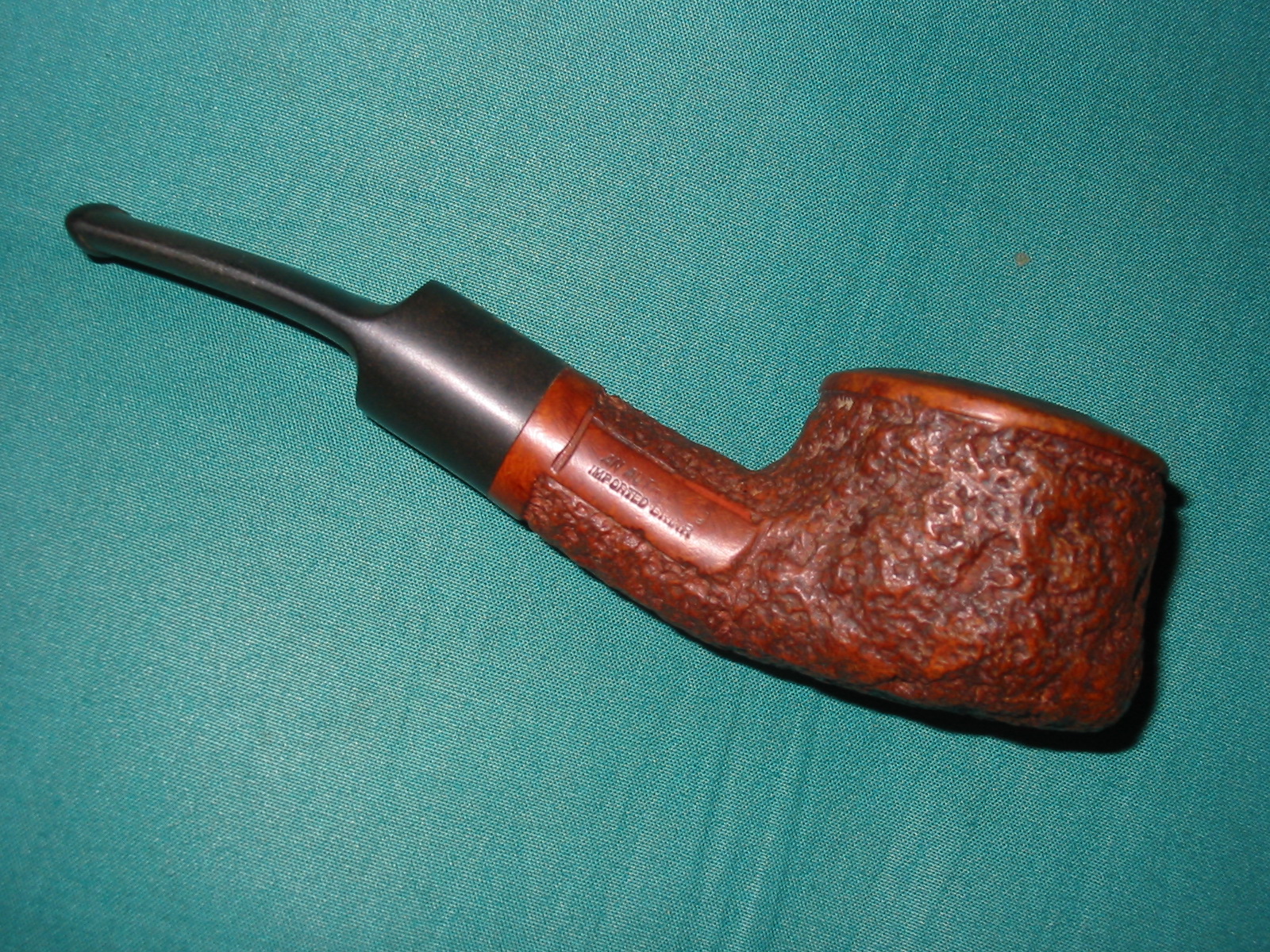
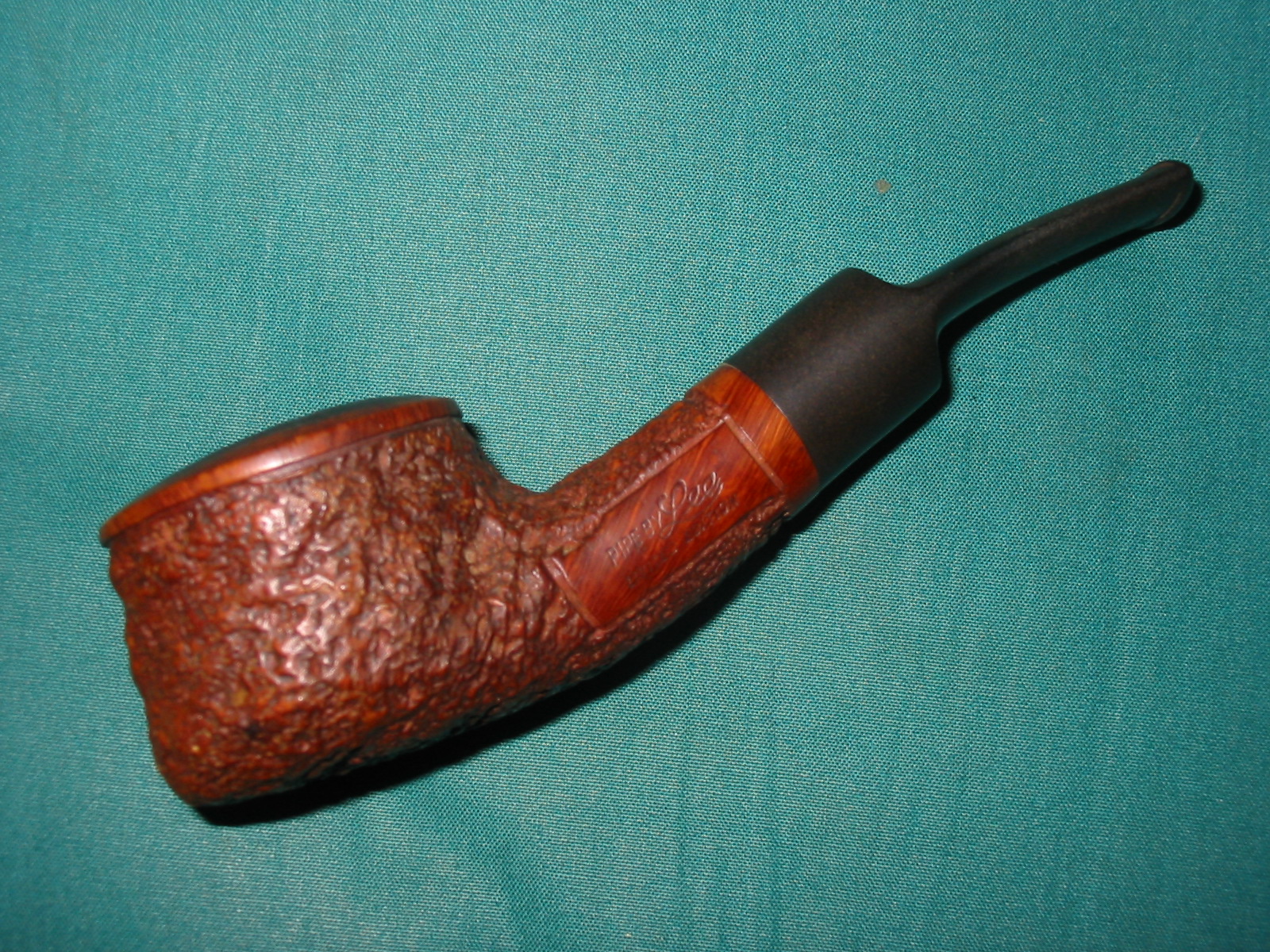
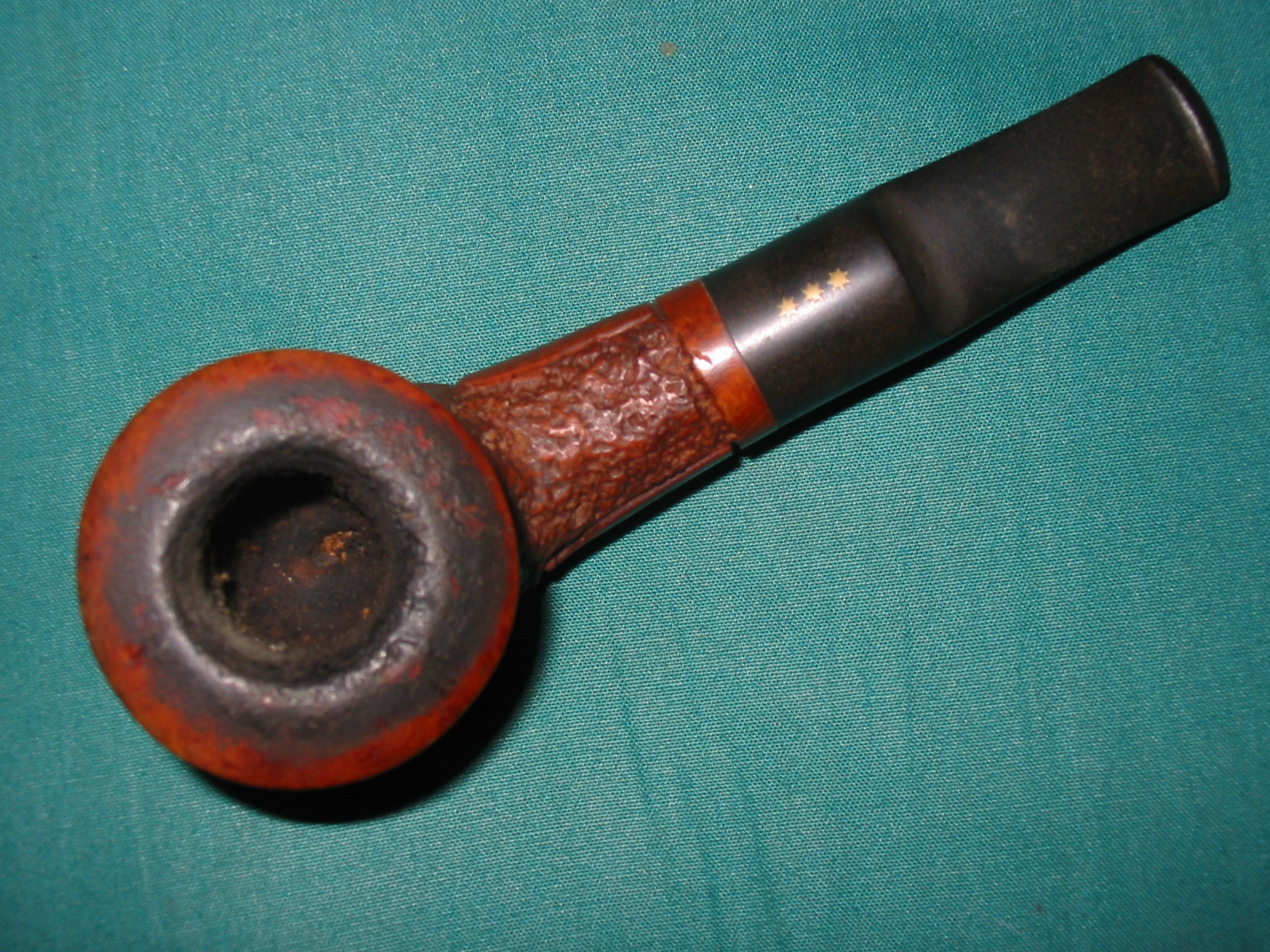
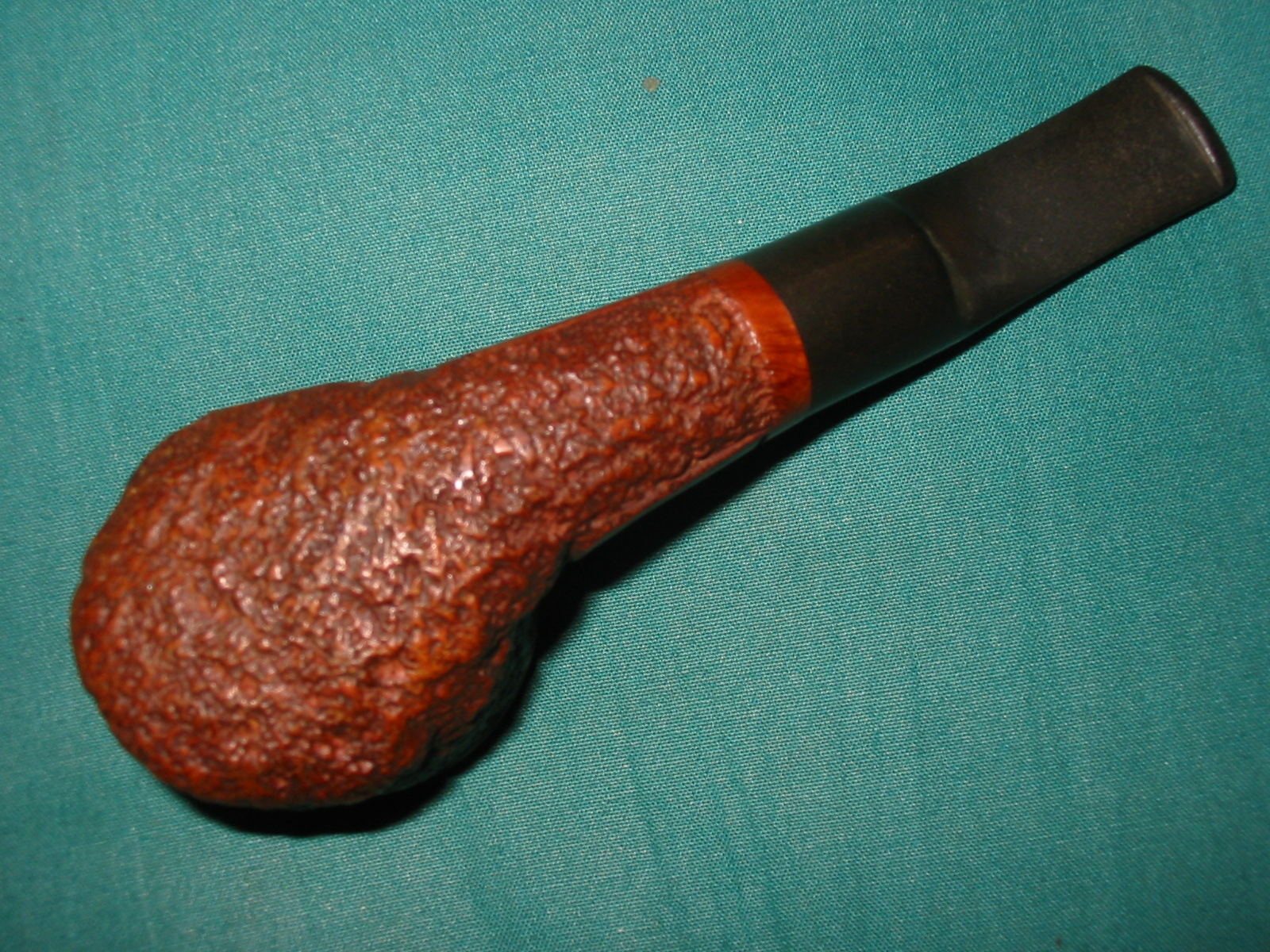
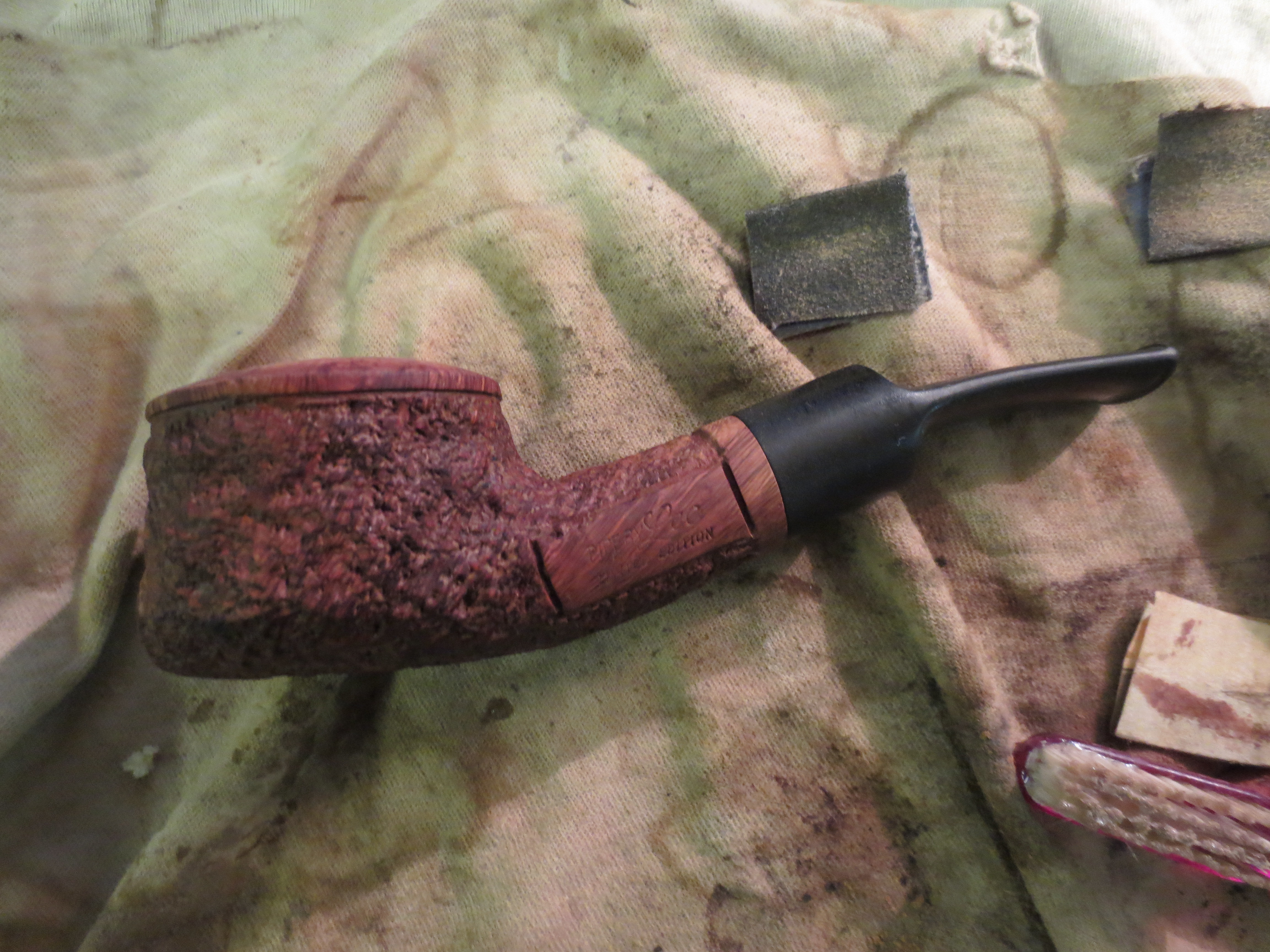
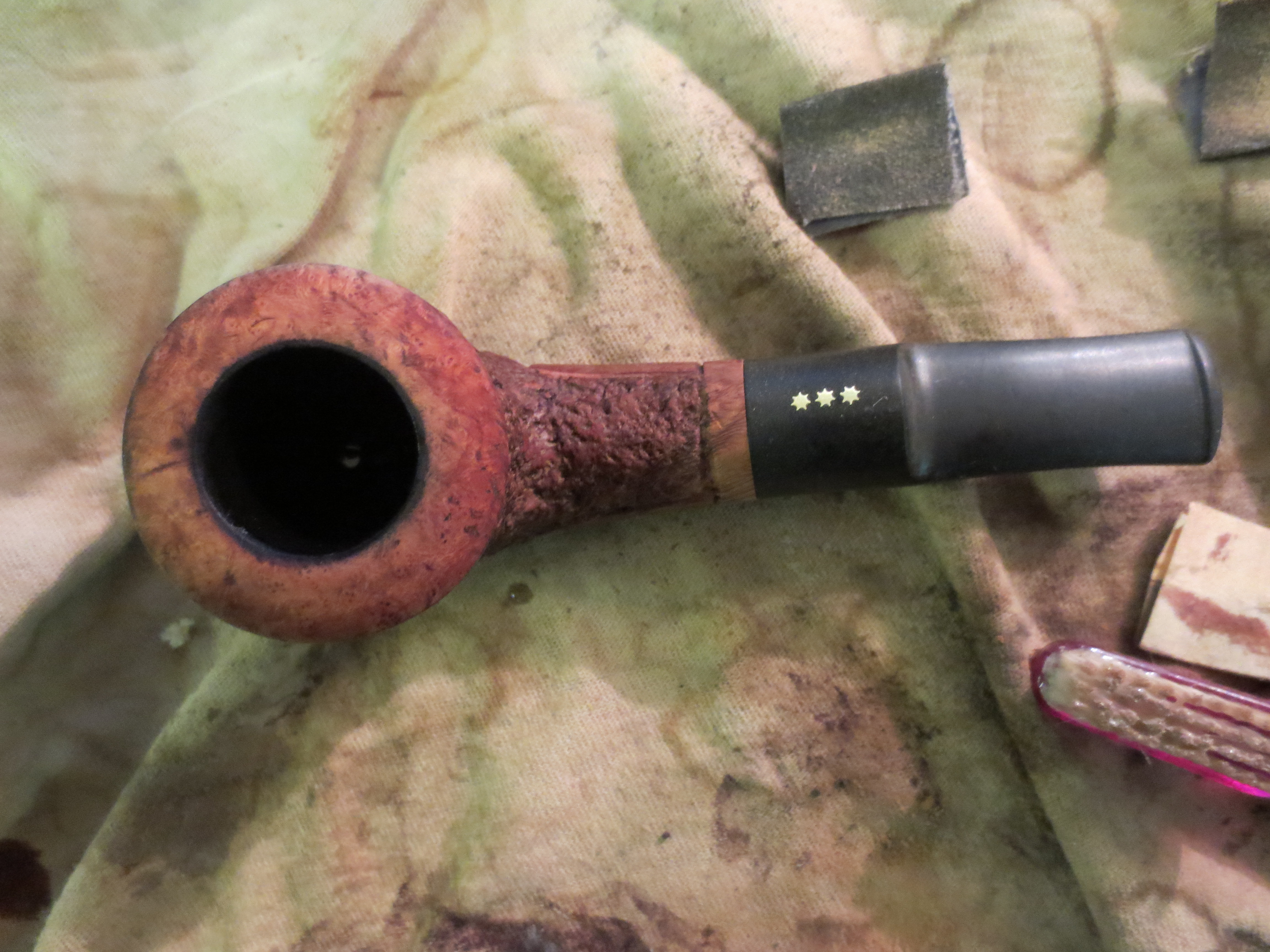
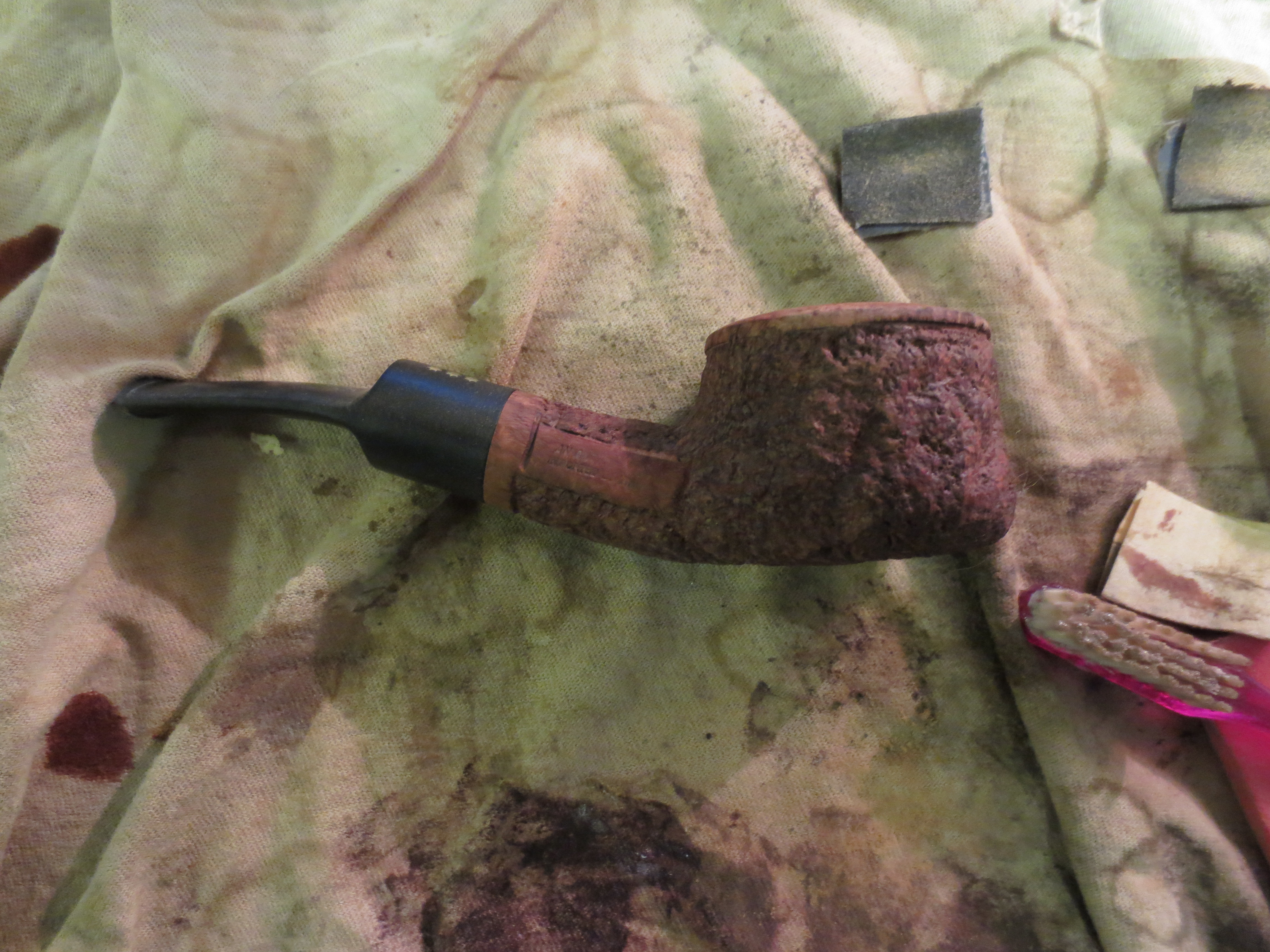
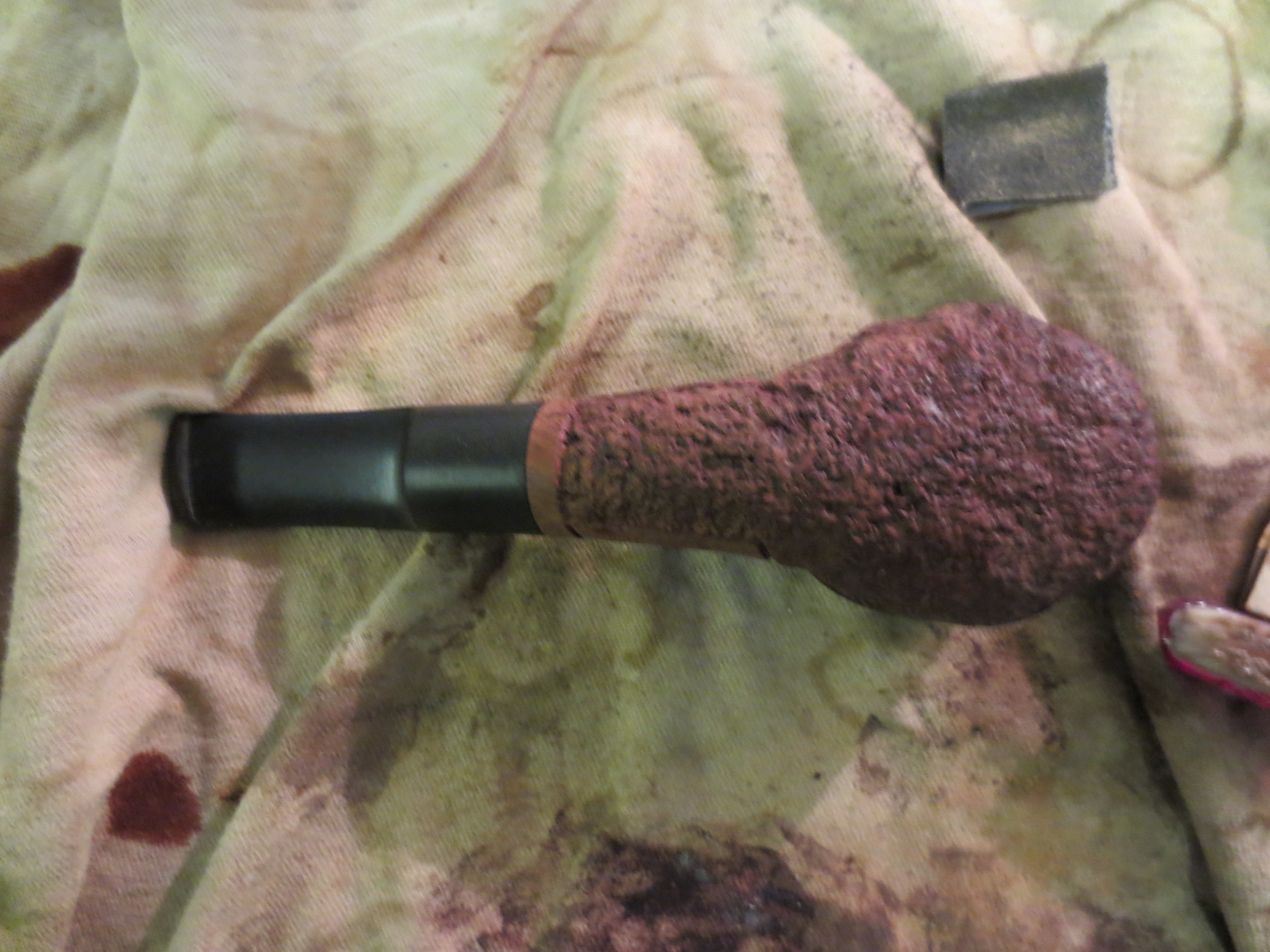
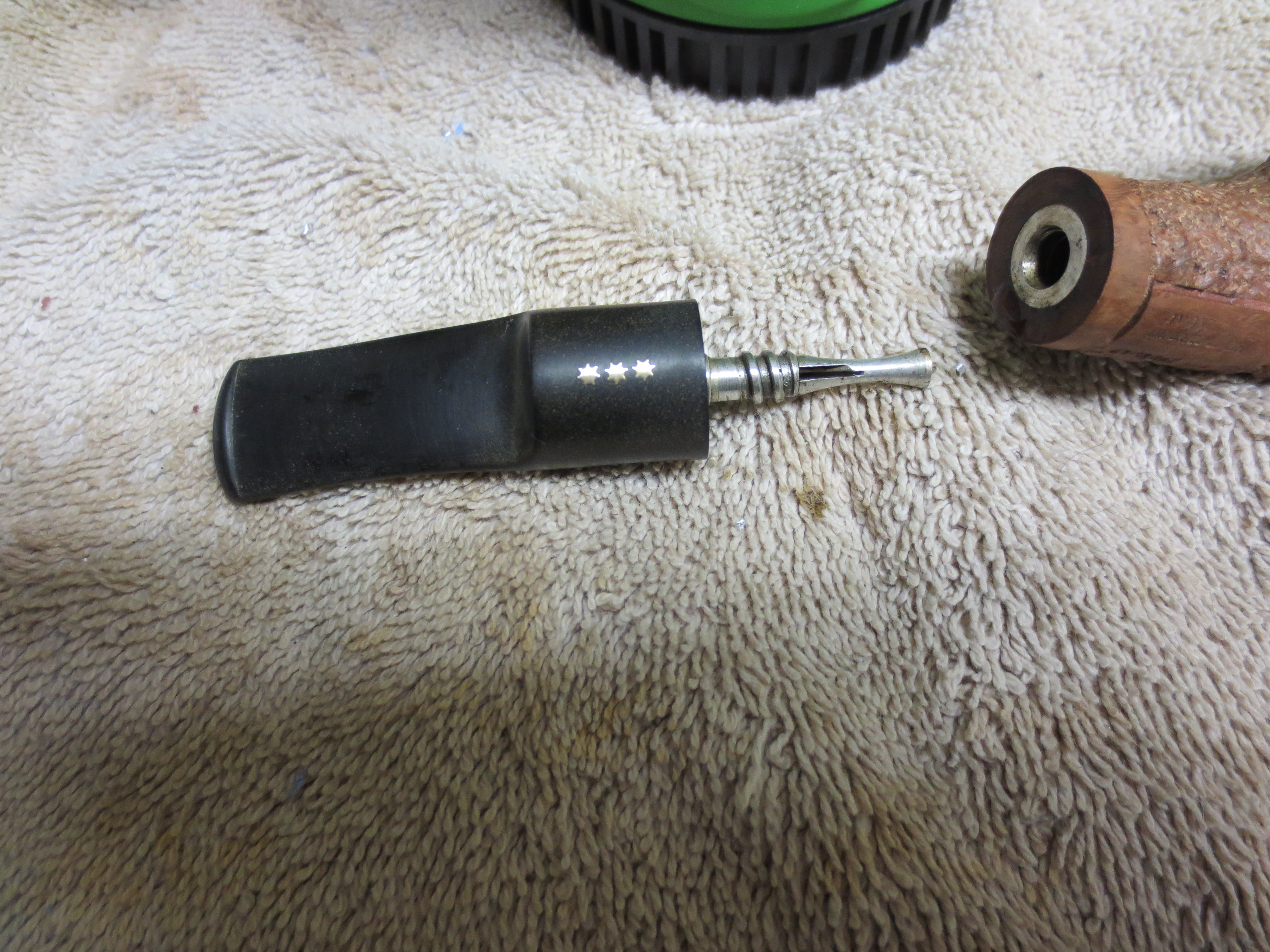
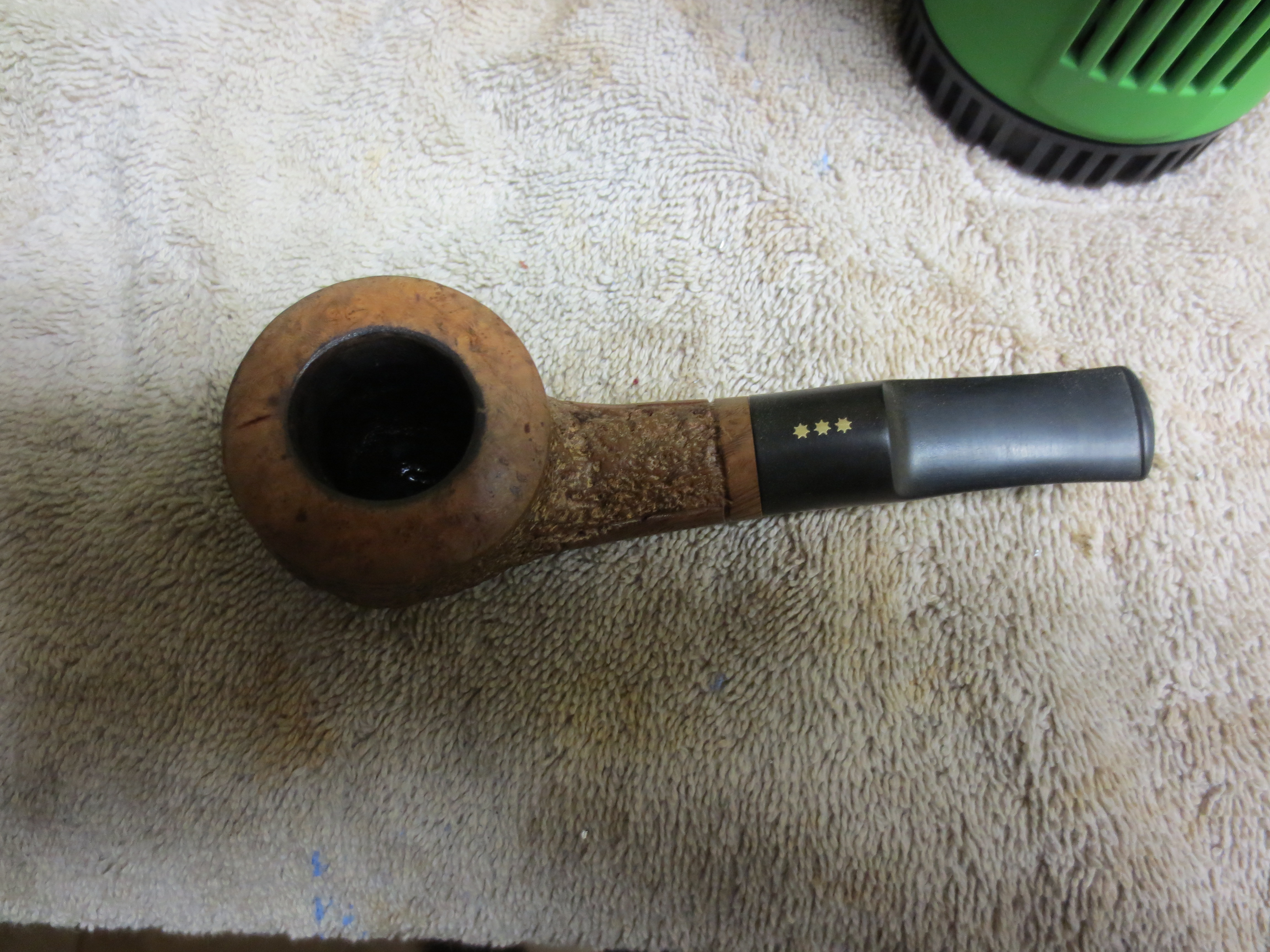
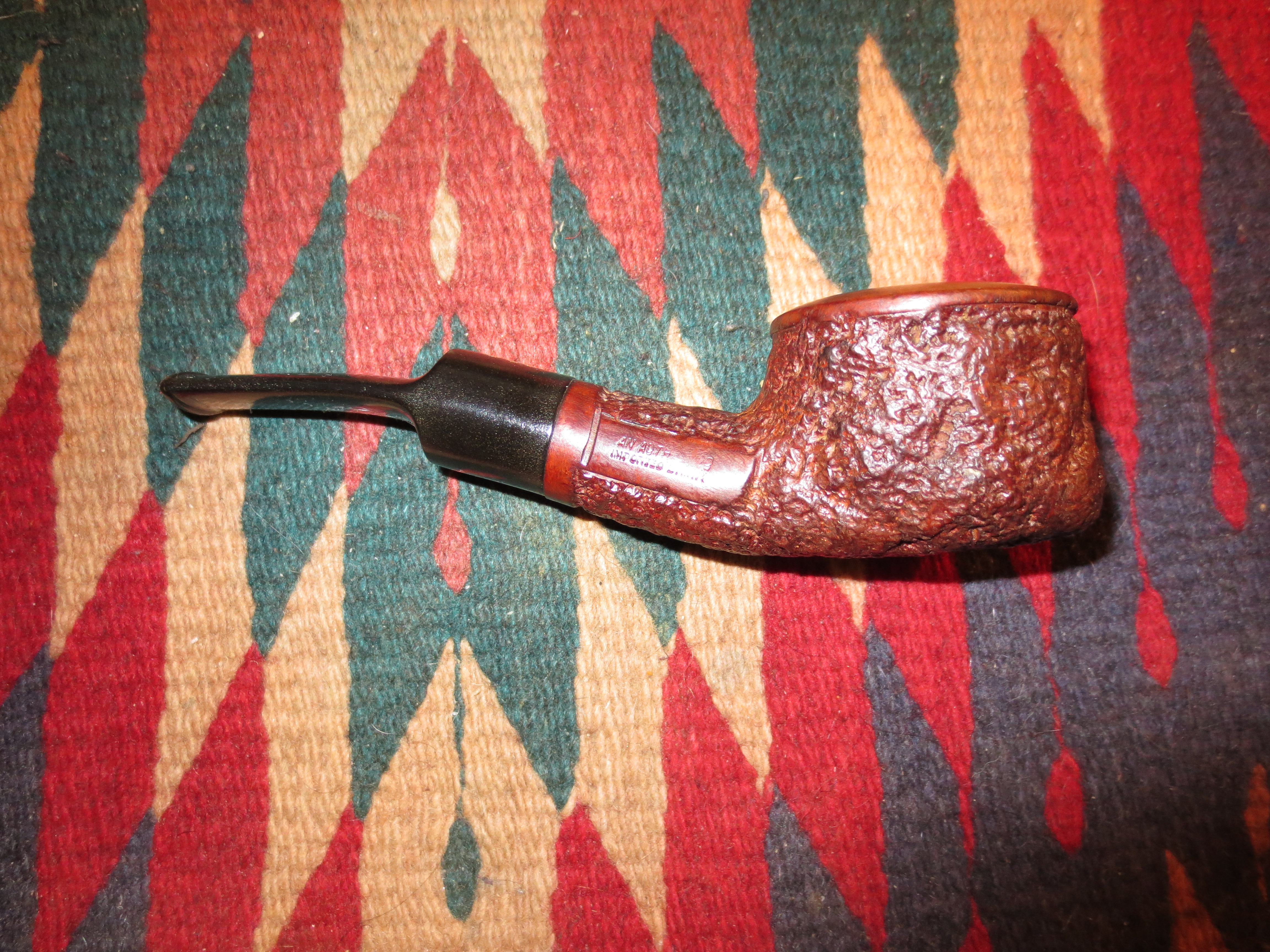
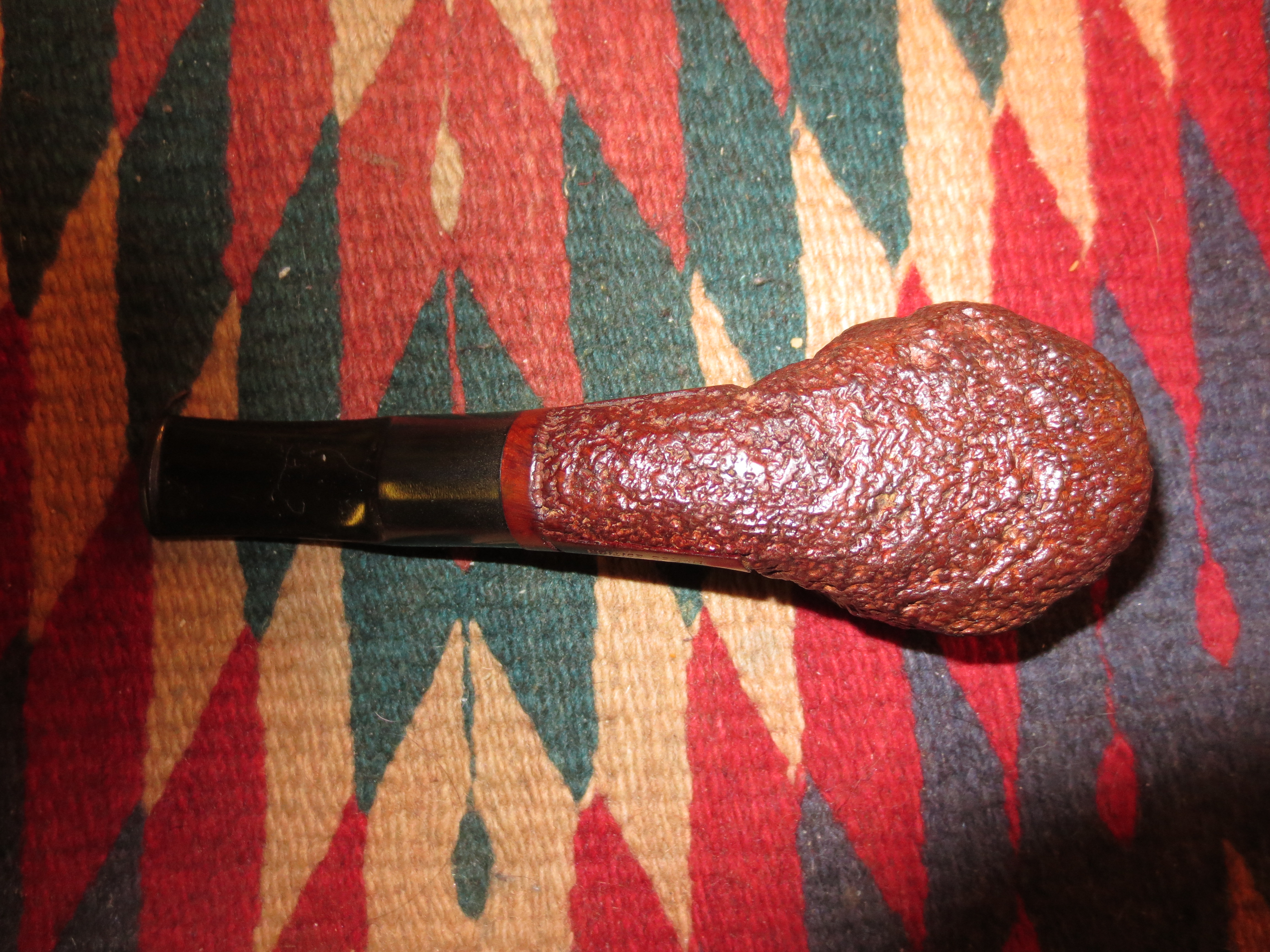
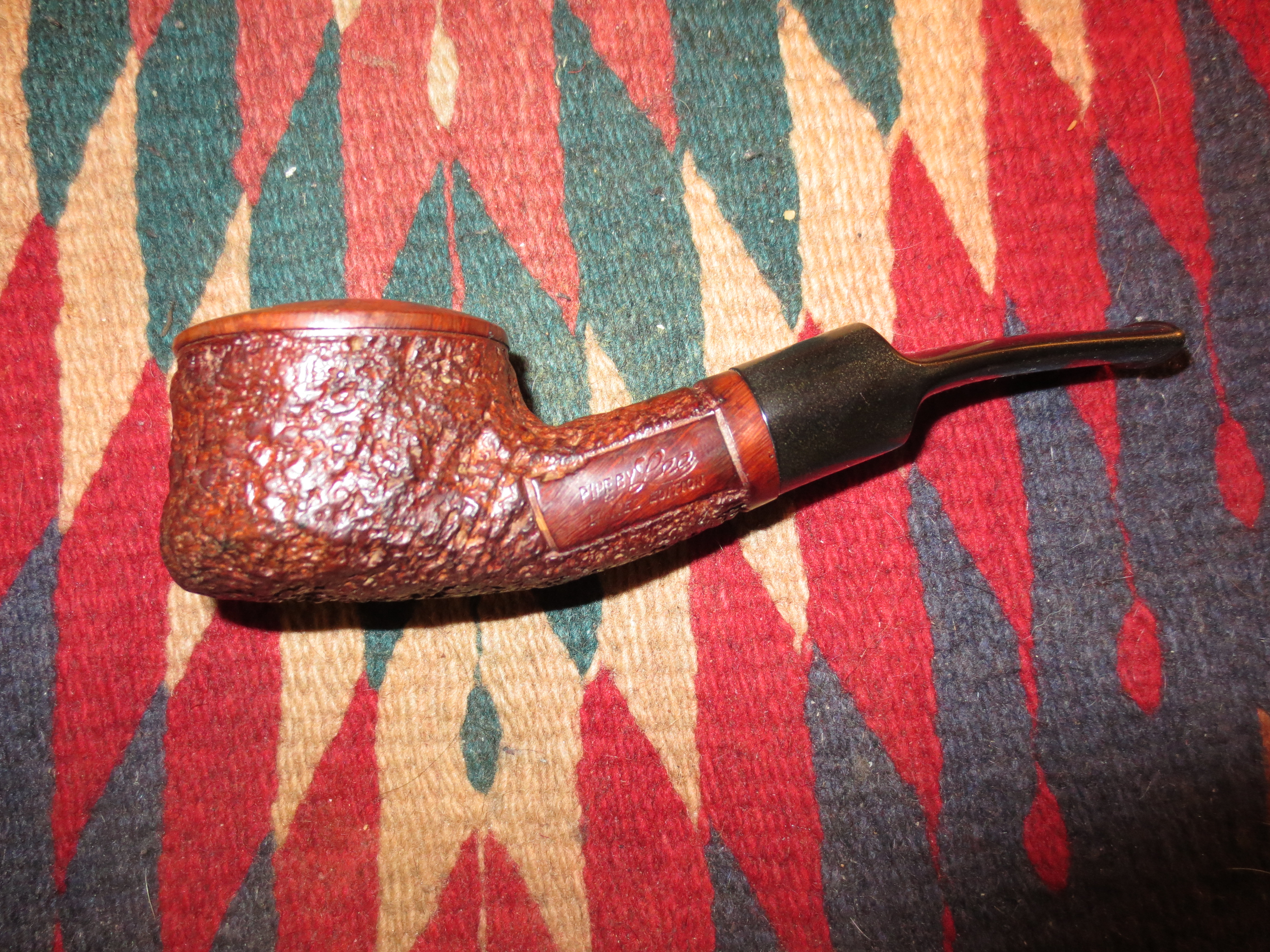
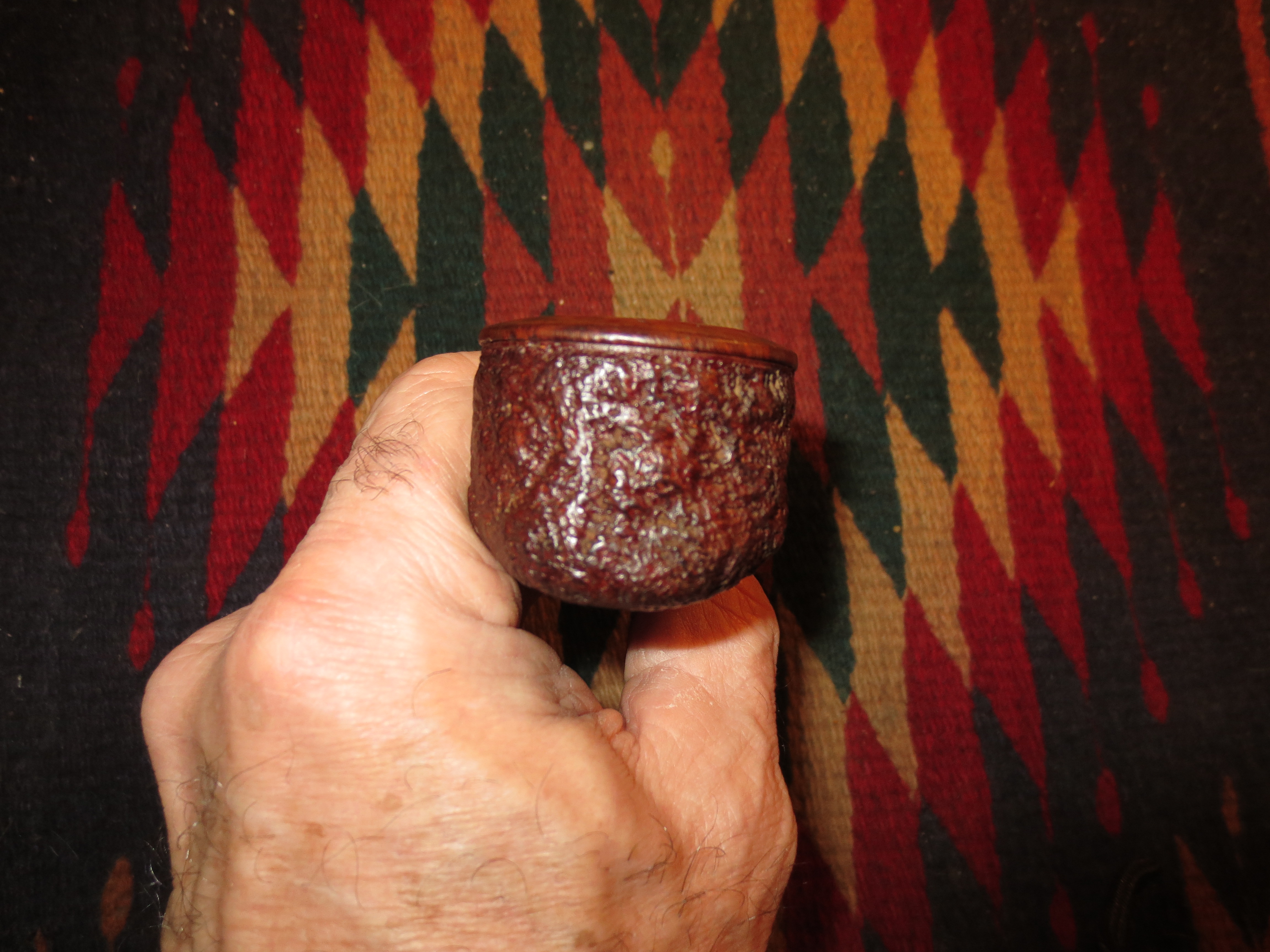
This weekend I took my wife down for a visit to Bellingham, Washington – just about 40 minutes or so from Vancouver, BC. One of our past times when we are visiting another city is to check out the antique shops and antique malls. We have a circuit of them that we visit whenever we go to Bellingham. She looks for things for the house and I look for pipe and tobacciana. This weekend was great in that I found 6 pipes and three old pouches of tobacco. The first pipe on the work table is one that intrigued me and grabbed my attention. It has a nice rustication (??) that looks almost like a sand blast. The carver left a smooth rim and a small ring around the top edge of the pipe. There is also a smooth band at the end of the shank and also two patches that are smooth that bear the stamping on the pipe. The shape is a Bull Moose, I believer. It is also very similar to a Weber Scoop that I have except for the prominent prow on the front of the bowl. It is stamped on the left side of the shank PIPE BY Lee (Lee is in Script) over LIMITED EDITION. On the other side of the shank it is stamped AN AUTHENTIC over IMPORTED BRIAR. The stem bears the brass stars that grace the stems of Lee pipes. This one has three stars.

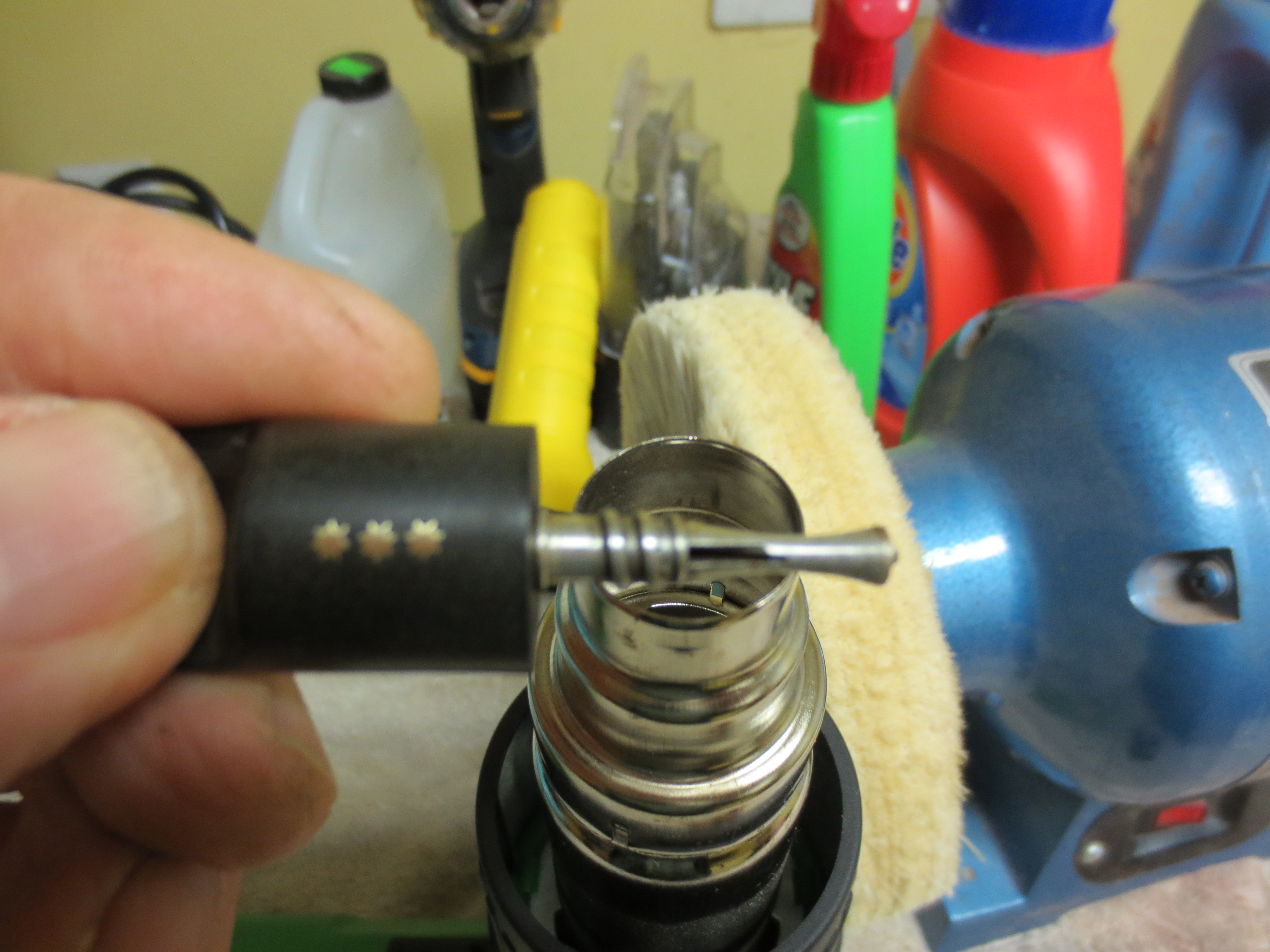
When I found it in the shop the stem had some oxidation and some minor tooth marks on the underside of the stem near the button. The stem had a metal stinger that was black with tars and oils and was also overturned slightly. The bowl was dirty with dirt and grime wedged into the finish of the rustication. The rim had a thick coat of tars and buildup and the bowl was heavily caked and wreaked of aromatics. When I found it there was also a threesome of tobaccos in their original packages tied in a sealed plastic bag – Skandinavic Mildly Aromatic, Sir Walter Raleigh Aromatic and a leather pouch of something that smells aromatic as well. The pipe smelled just like these tobaccos. The first series of four photos show the pipe as I found it.

ImageImageImageImage

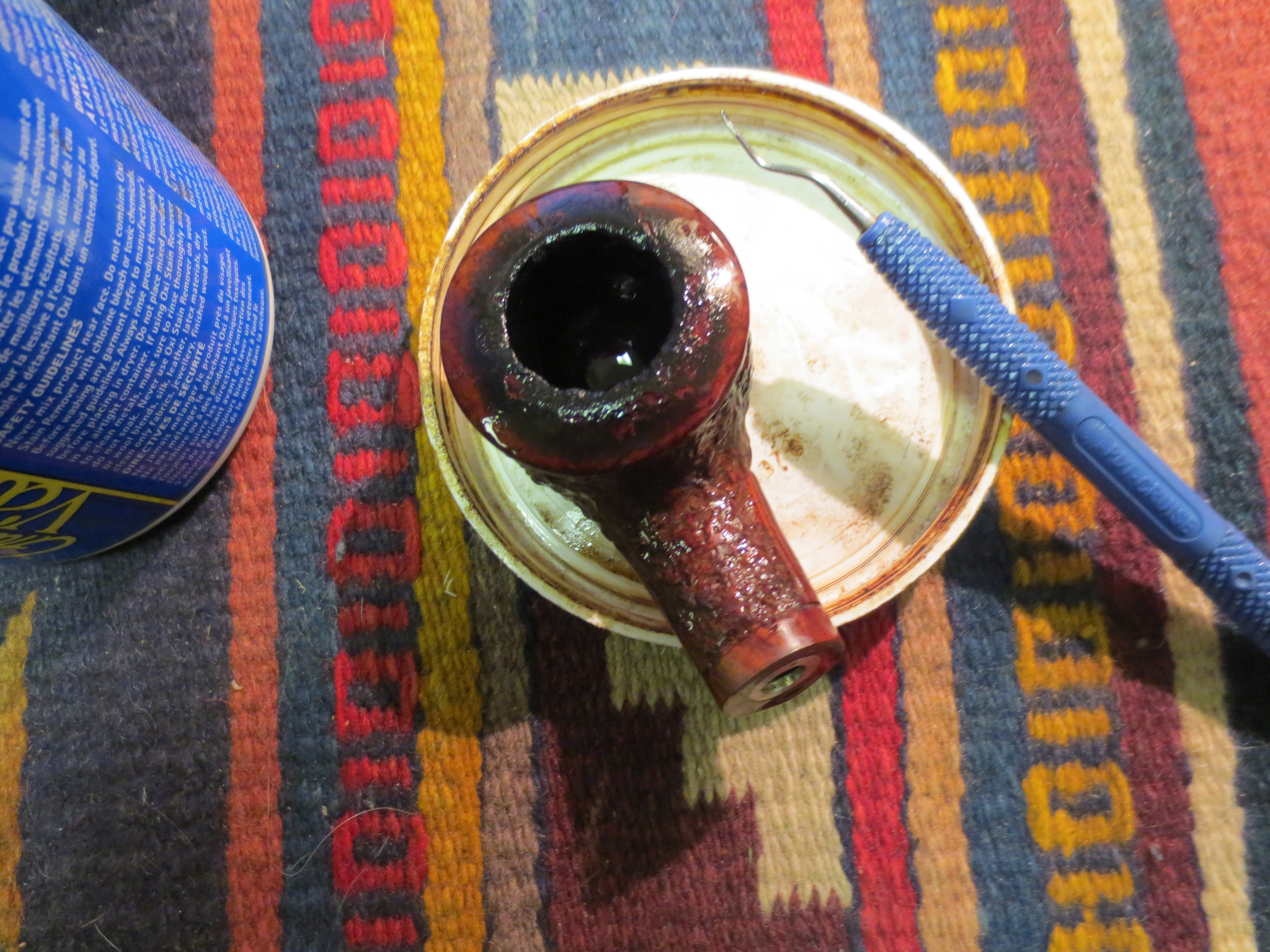
I unscrewed the stem from the shank and dropped the bowl into my alcohol bath. It is a jar of isopropyl alcohol that I have reused and filtered repeatedly to remove the grit from the bath. The remaining alcohol has a dark brown colour and actually does a great job in not only removing the grime and old finish but gives the old bowls a light patina as well.

ImageImage

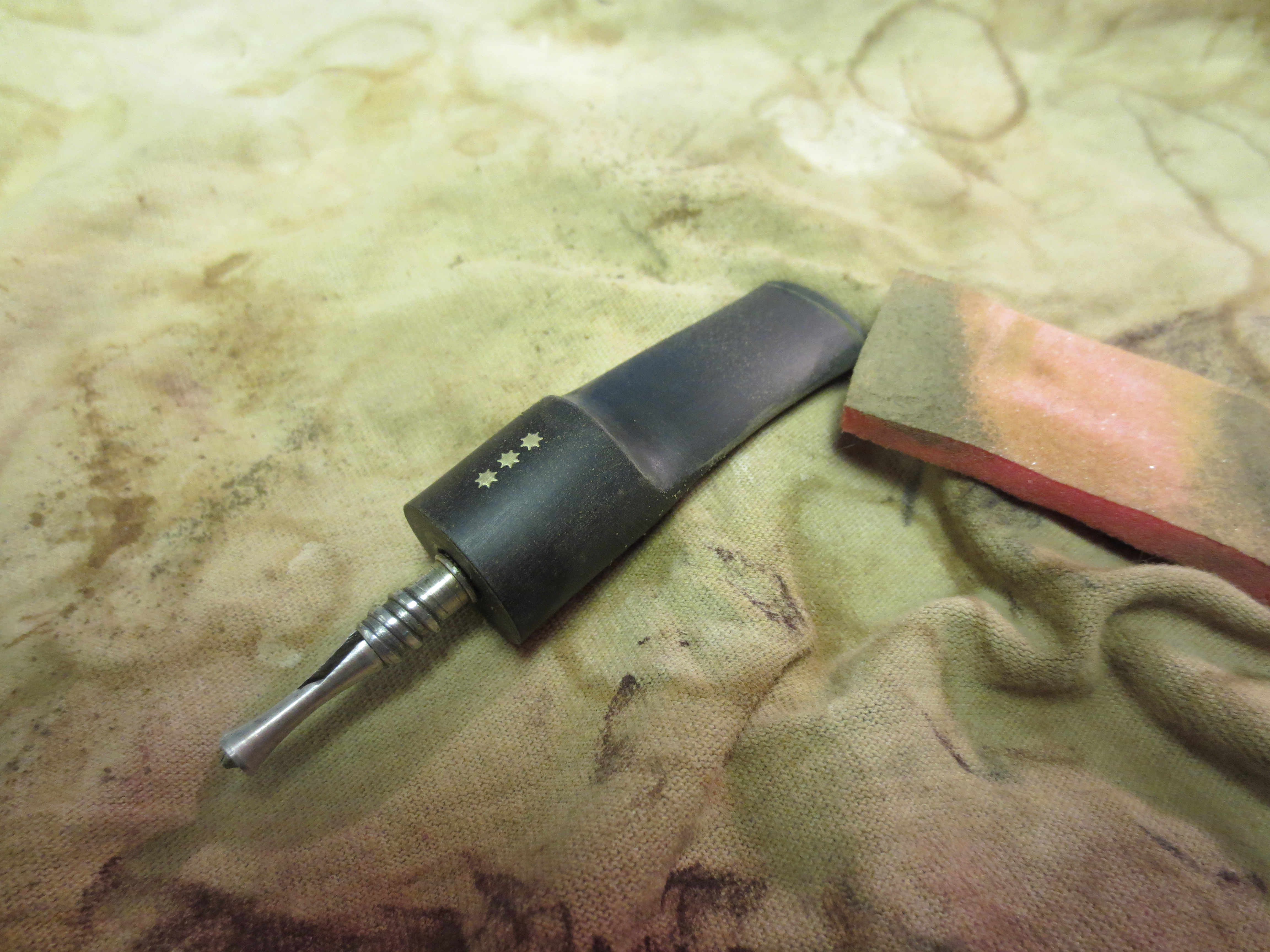
While the bowl soaked I worked on the stem. I cleaned it with pipe cleaners and isopropyl alcohol to get the tars and oils out of the stem. The style of stinger restricts the airway enough that I could not get the pipe cleaner all the way through. It took quite a few cleaners until they came out clean. The stinger I cleaned with alcohol and then 0000 steel wool until it was clean. I began sanding it with the medium grit sandpaper on the sponge back to remove the oxidation and the roughness of the stem. It was very rough and almost pitted. It is hard to capture that with the photos. The first three photos below show the sanding pad and the stem after that initial sanding.

ImageImageImage

From there I filled a glass with warm water and used a micromesh1500 grit sanding pad to wet sand the stem. This took the majority of the scratch marks out of the surface and took care of the roughness of the stem. It would take a lot of sanding to bring the surface to a glossy smooth finish.

ImageImage

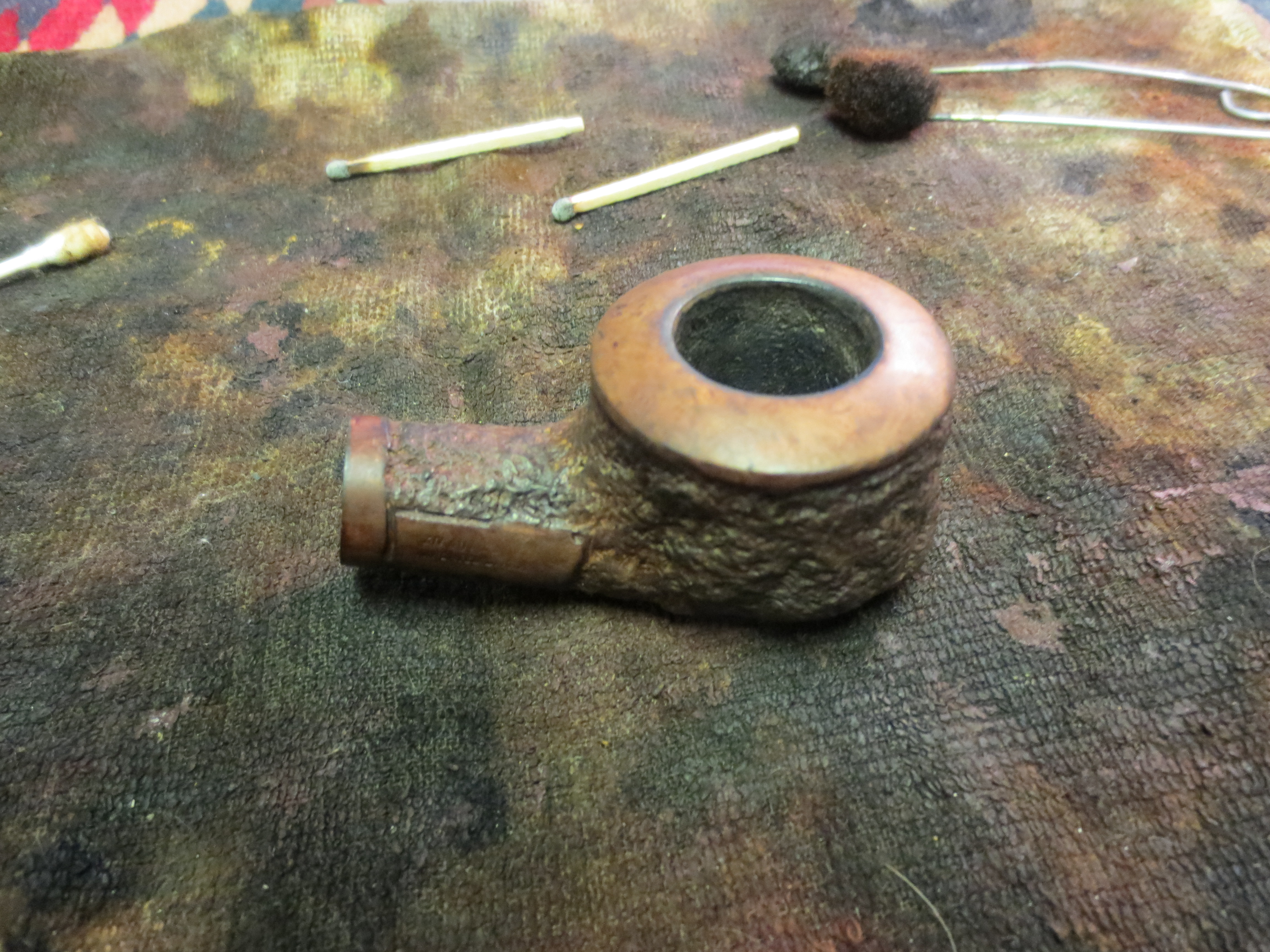
At this point I took the bowl out of the bath. It had been sitting in the bath for about an hour and I figured it was time to pull it. I scrubbed it with a soft bristle tooth brush to remove the softened grit and grime in the rustication. The next two photos show the bowl after I removed it from the bath and dried it off with the cloth that it is resting on. The grit is pretty well gone and the rim tar is softened but still present. The third photo below shows the rim after I had used some fine grit sandpaper to begin removing the tars on the rim. I continued to sand it until they were all gone. Since I planned on restaining the pipe anyway it was not an issue.

ImageImageImage

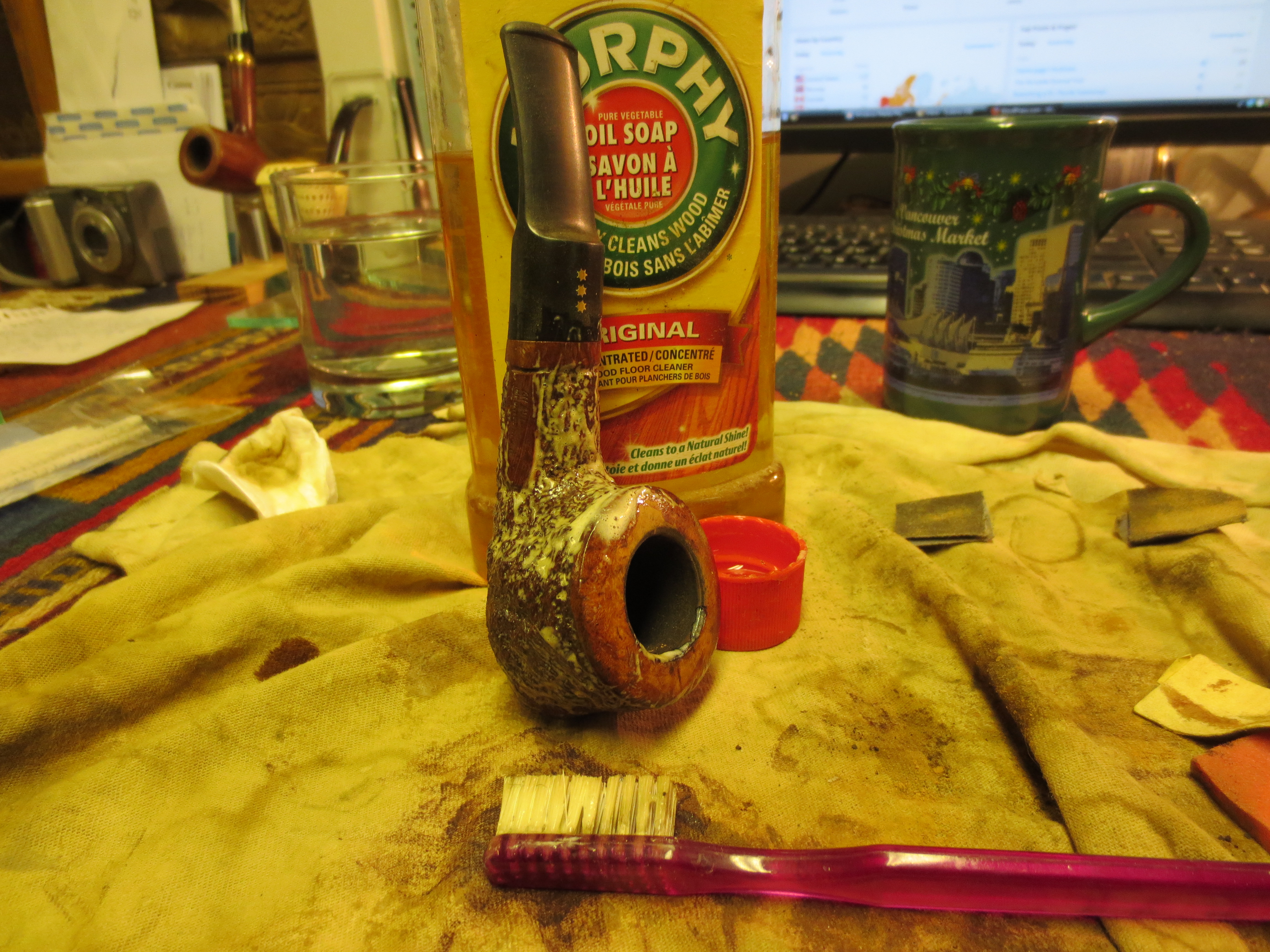
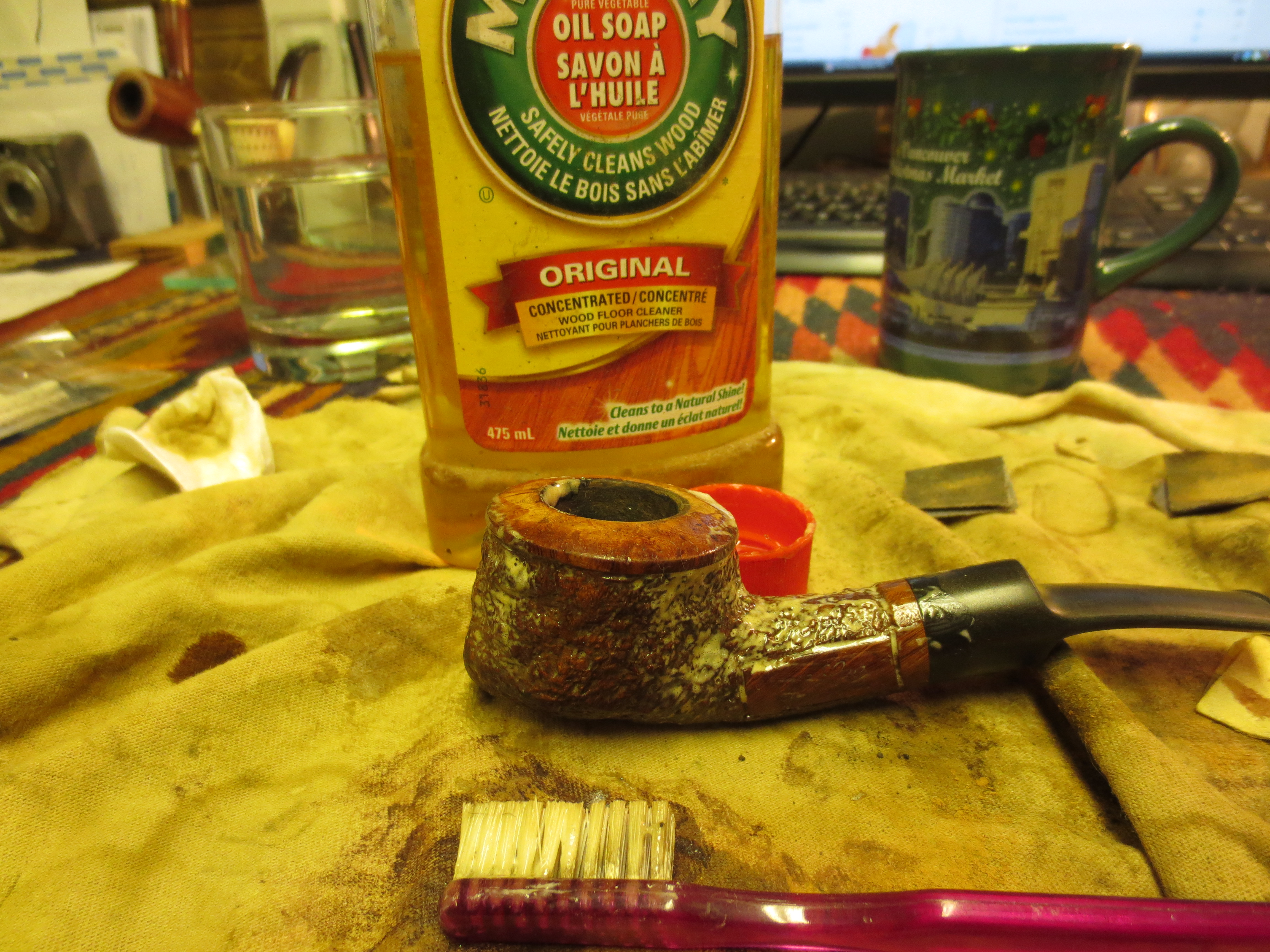
I still was not happy with the grime in the crevices of the rustication. I had removed much of it but there was still quite a bit present and I decided to scrub it with Murphy’s Oil Soap and a tooth brush until the surface was clean. Again I was not worrying about removing any finish as I planned on redoing that anyway so I gave it a heavy scrub and then rinsed it with warm water and dried it off. I repeated the scrub until the bowl was clean and the rustication free of grime.

ImageImage

The next four photos show the pipe bowl after I had scrubbed it with the oil soap and rinsed it the final time. I dried it off with some microfiber rags that I have here for that purpose. It removed the water from the briar and left a good clean surface that was ready for a coat of stain. In the photos you can also see the stem after it has been sanded with micromesh sanding pads up to 2400 grit. All of the sanding on the stem to this point was done with water and wet sanded. The rim is clean and ready for the stain. The bowl is clean and you can actually see the rustication really well.

ImageImageImageImage

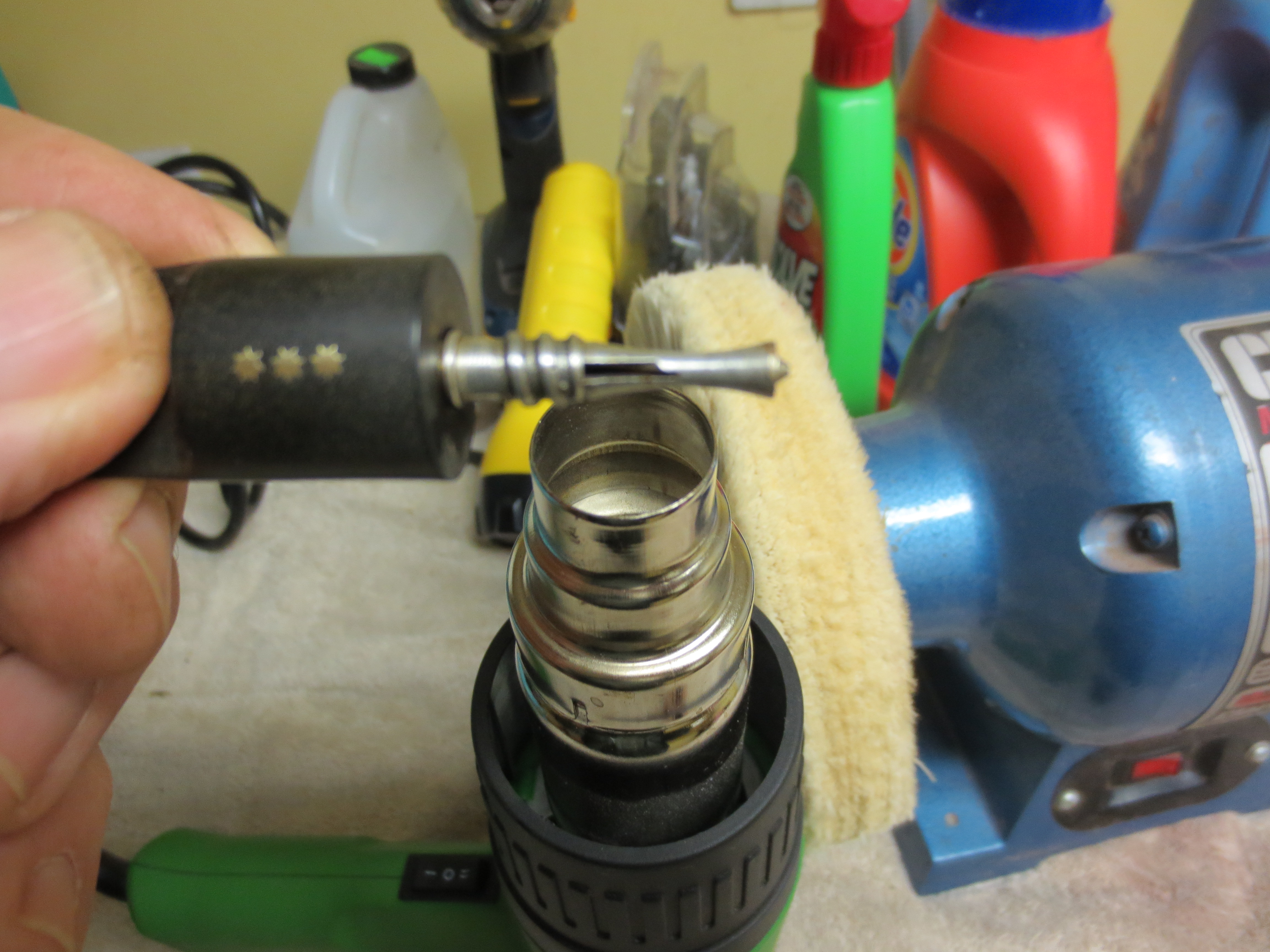
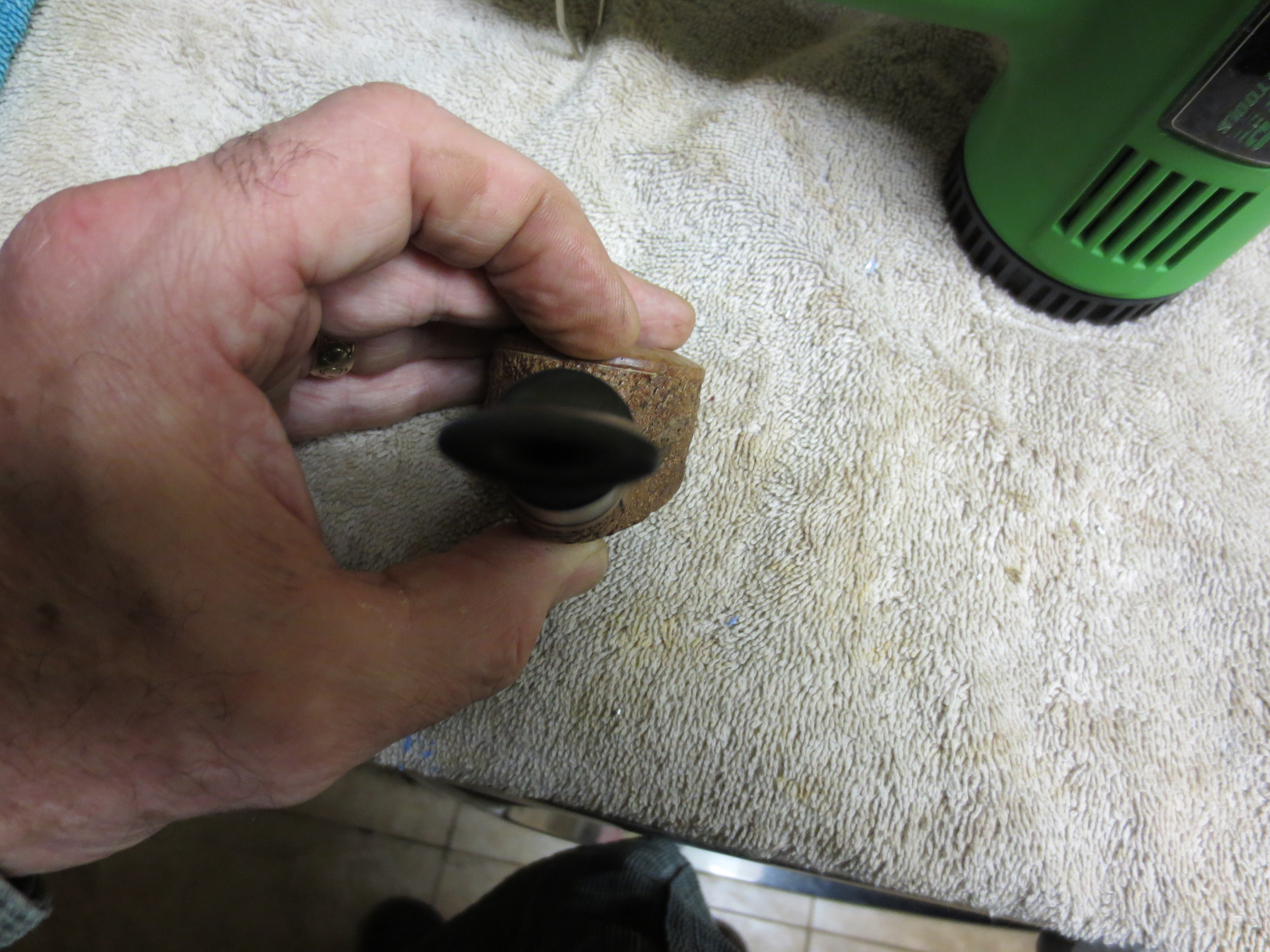
At this point in the refurbishing process I decided to correct the over turned stem. I set up my heat gun and then took the pipe apart. The second and third photos show the process of heating the stinger. The heat softens the glue in the stem and once it is soft I turn it back on the shank until I can turn it all the way around and align the stem properly. Once it was aligned I dipped it in cold water to set the glue again. The fourth and fifth pictures in the sequence below show the newly aligned stem.

ImageImageImageImageImage

The next series of photos show the staining process of the bowl. I decided to thin the Dark Brown aniline stain to a light brown wash. I use an old tobacco tin and fill it with 2/3 alcohol and 1/3 stain. I mix it well and then use a dauber to stain the pipe. I repeated the staining until it was the brown colour I was looking for. I flamed the stain between coats. The colour I was aiming for was a wash coat that allowed the grain to show through on the smooth portions of the pipe and also made a good contrast between those parts and the rustication.

ImageImageImageImage

Once I had the stain the colour I wanted I took it to the buffer and buffed it with White Diamond. The next two photos show the pipe bowl after the buffing. The contrast came out nicely and the grain is very visible on the smooth portions.

ImageImage

After buffing I took it back to the work table and gave the bowl a coat of Halcyon II wax. I rubbed it on by hand and then buffed it with a soft bristle shoe shine brush. For some reason the photos came out with some strange looking browns to the finish. The final colour is the reddish brown tone that is visible in the first photo below.

ImageImageImageImageImage

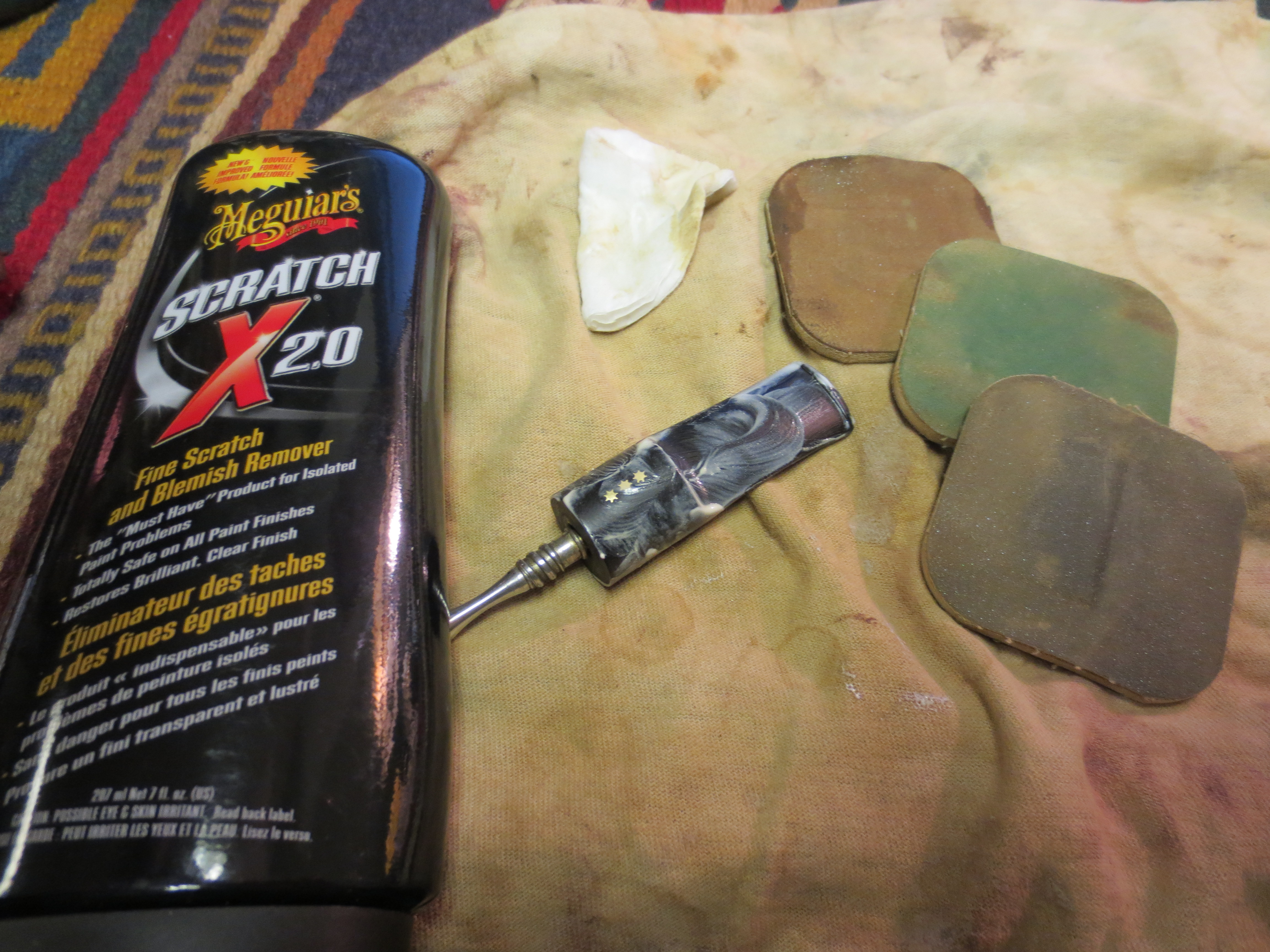
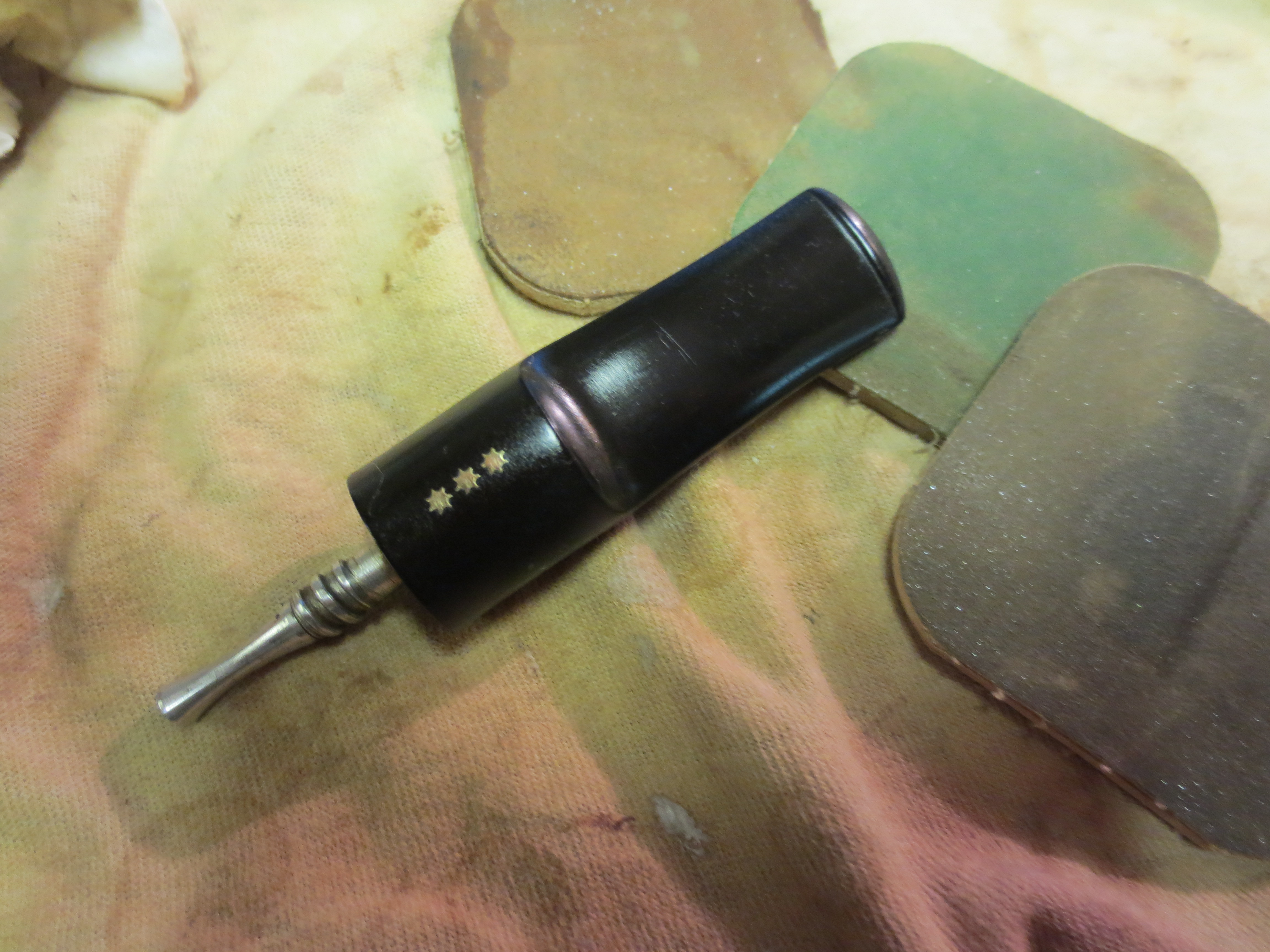
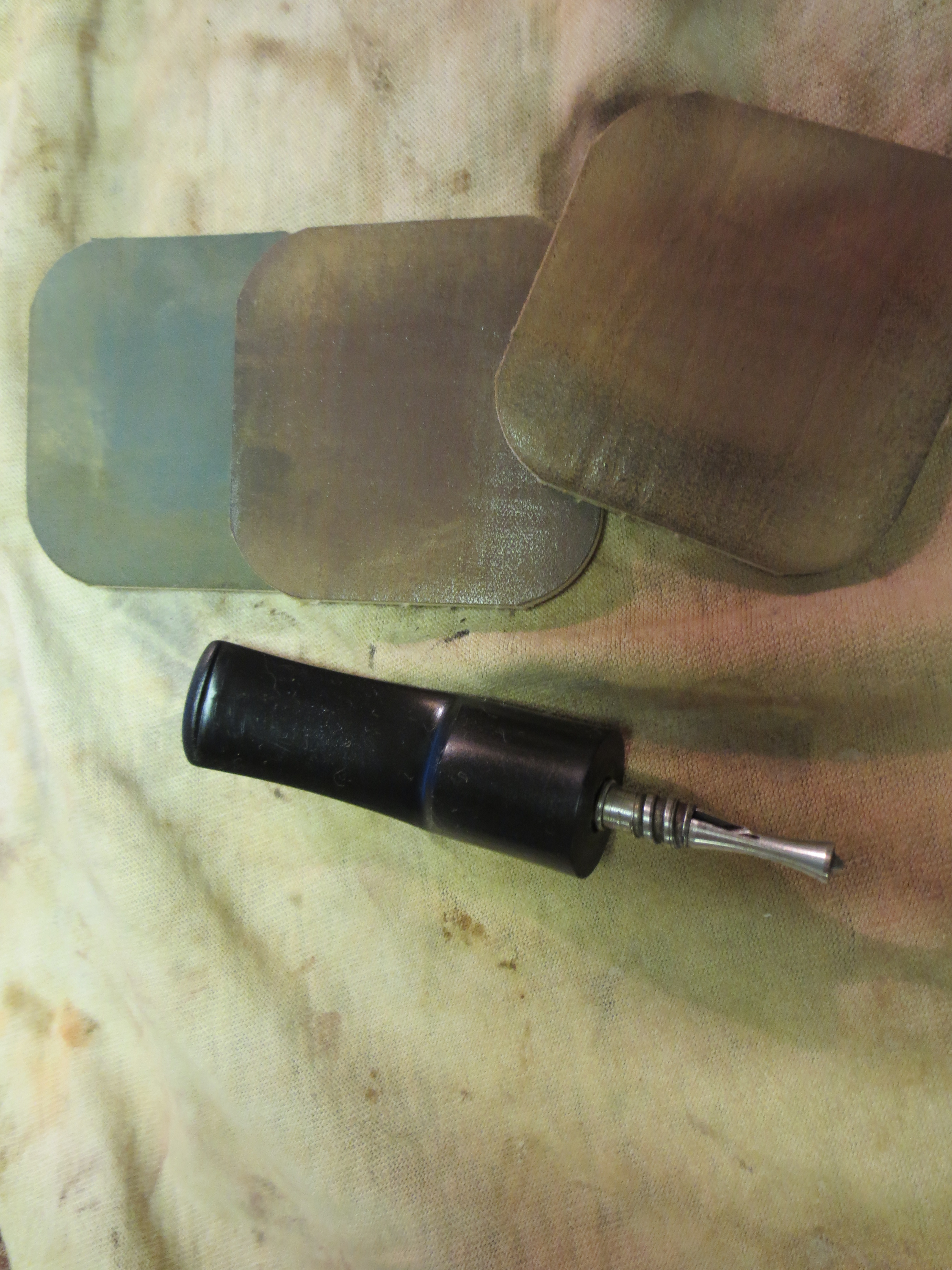
Once the bowl was stained, waxed and buffed I put it aside and went back to work on the stem. I finished wet sanding the stem with the micromesh sanding pads 1500, 1800 and 2400 and then gave the stem a coating of Maguiar’s Scratch X 2.0. I applied it with my finger and then rubbed it with a cotton pad. The first photo below shows the coating of the polish. The second and third photos show the stem after the polishing with Maguiar’s.

ImageImageImage

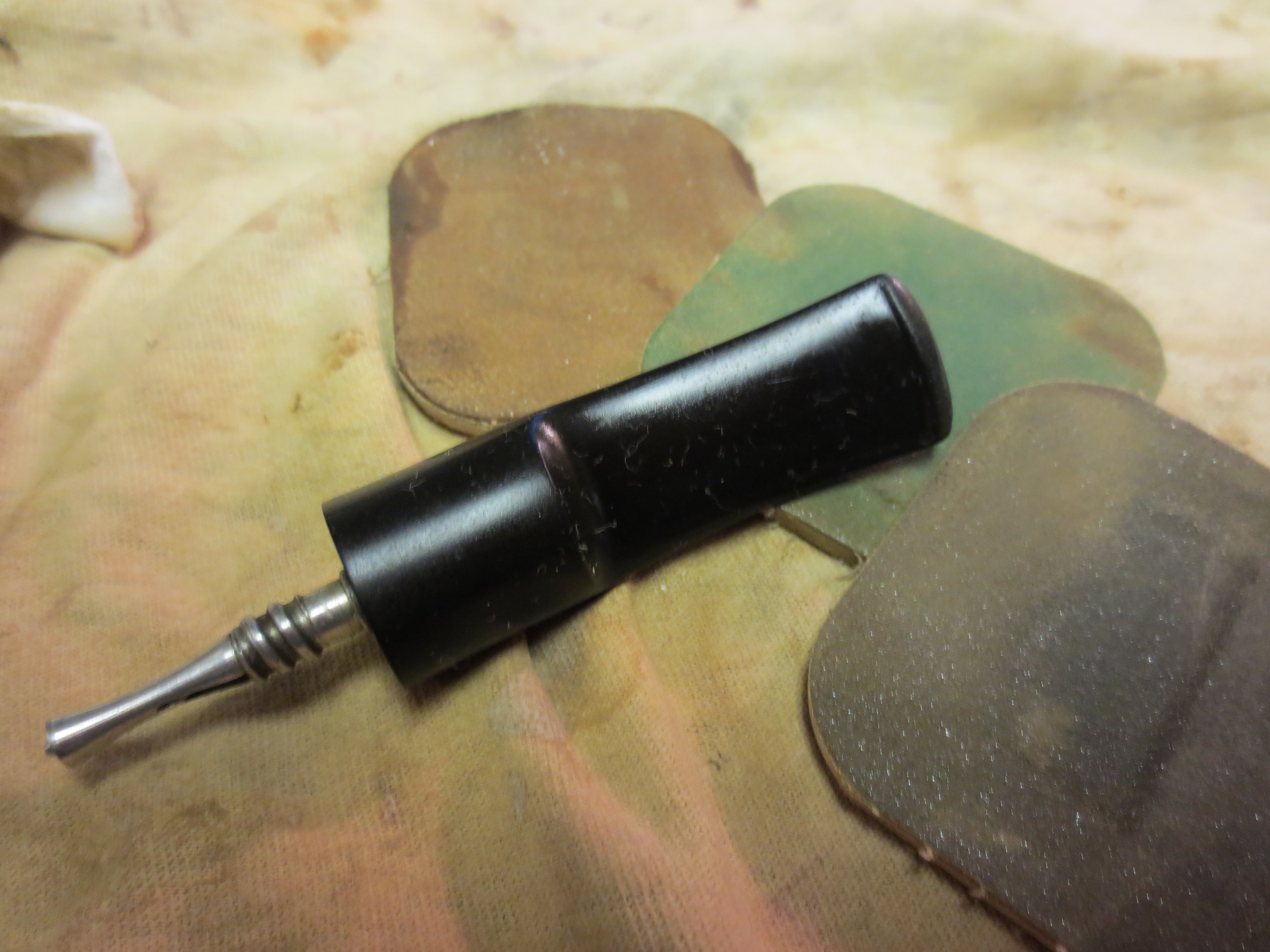
At that point I shifted to 3200, 3600 and 4000 grit micromesh sanding pads. The next two photos show the change in the stem polish after this next set of three sanding pads.

ImageImage

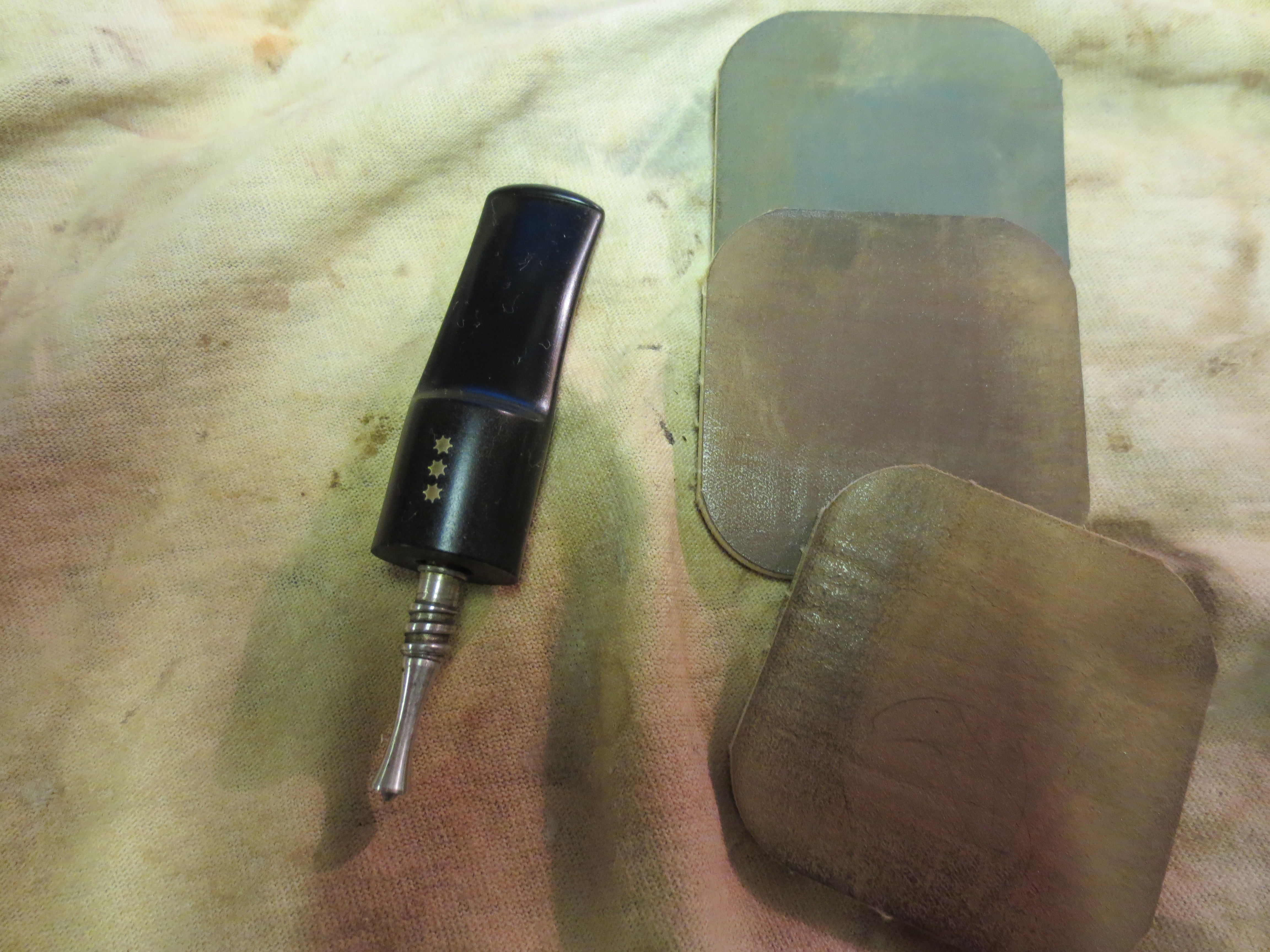
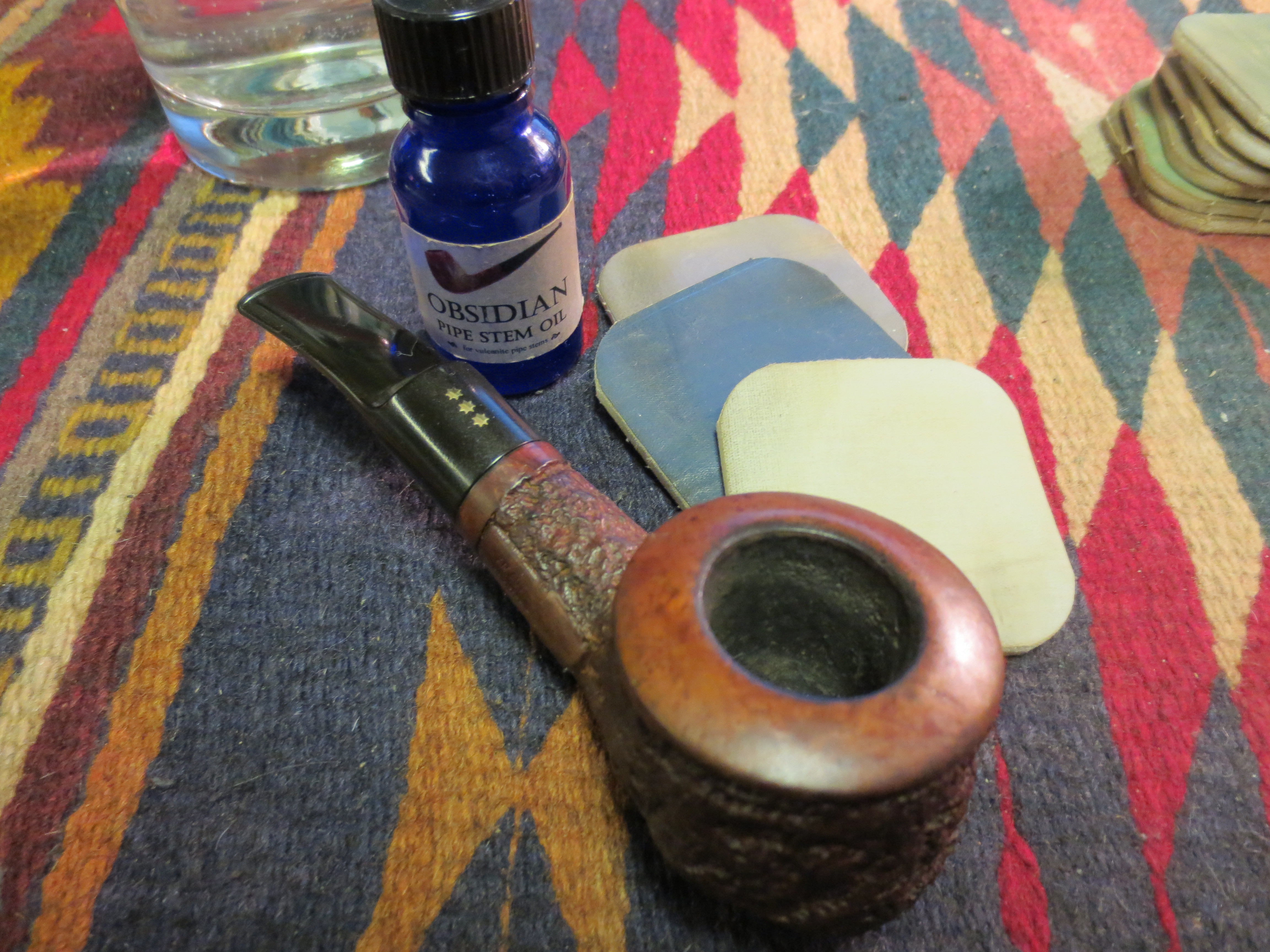
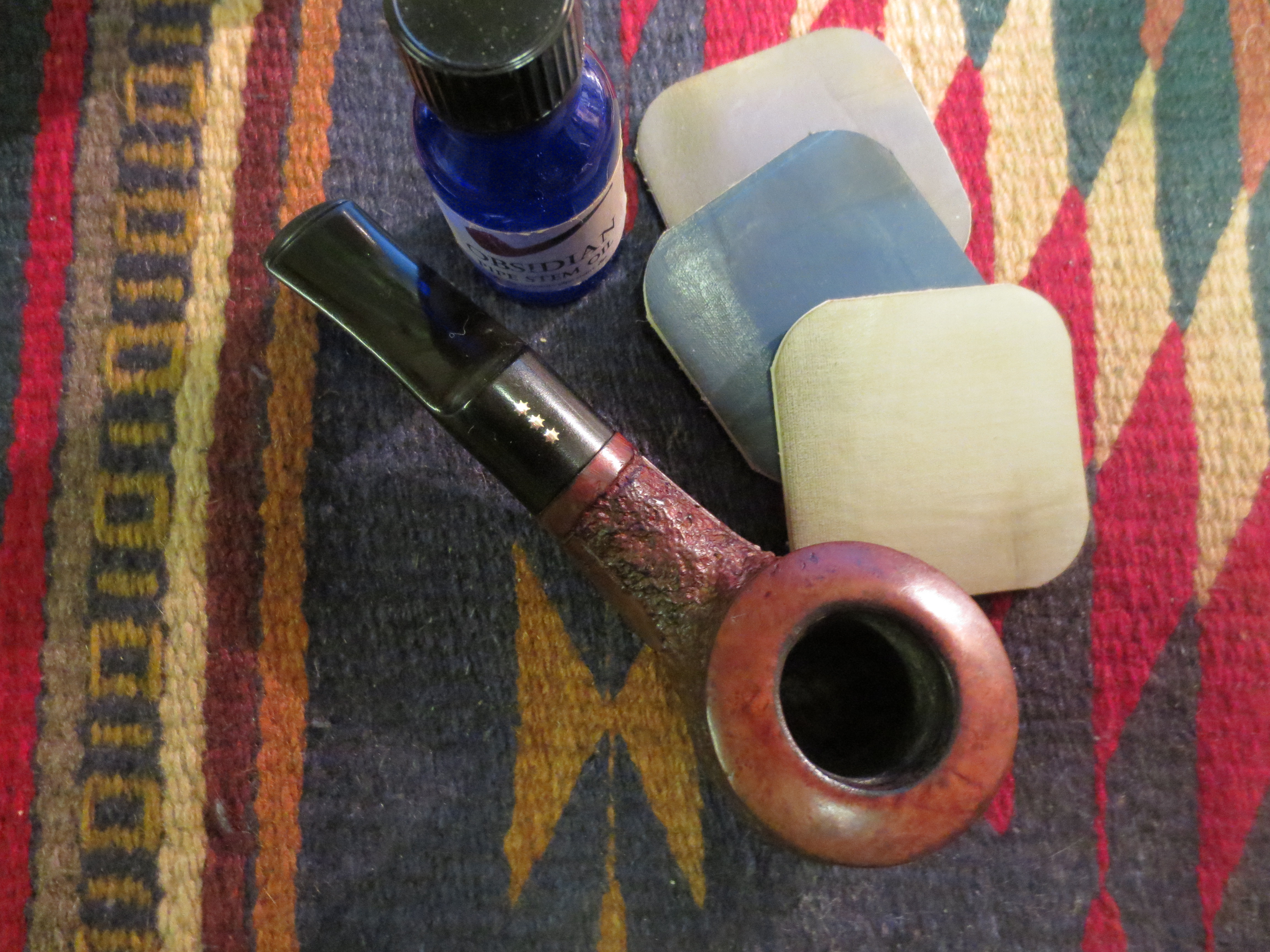
I then coated the stem with Obsidian Oil as pictured in the next two photos. When it was dry I wiped the stem down and finished sanding with the last three micromesh sanding pads – 6000, 8000 and 12,000 grit. The difference in the finish after the last three pads is quite remarkable.

ImageImage

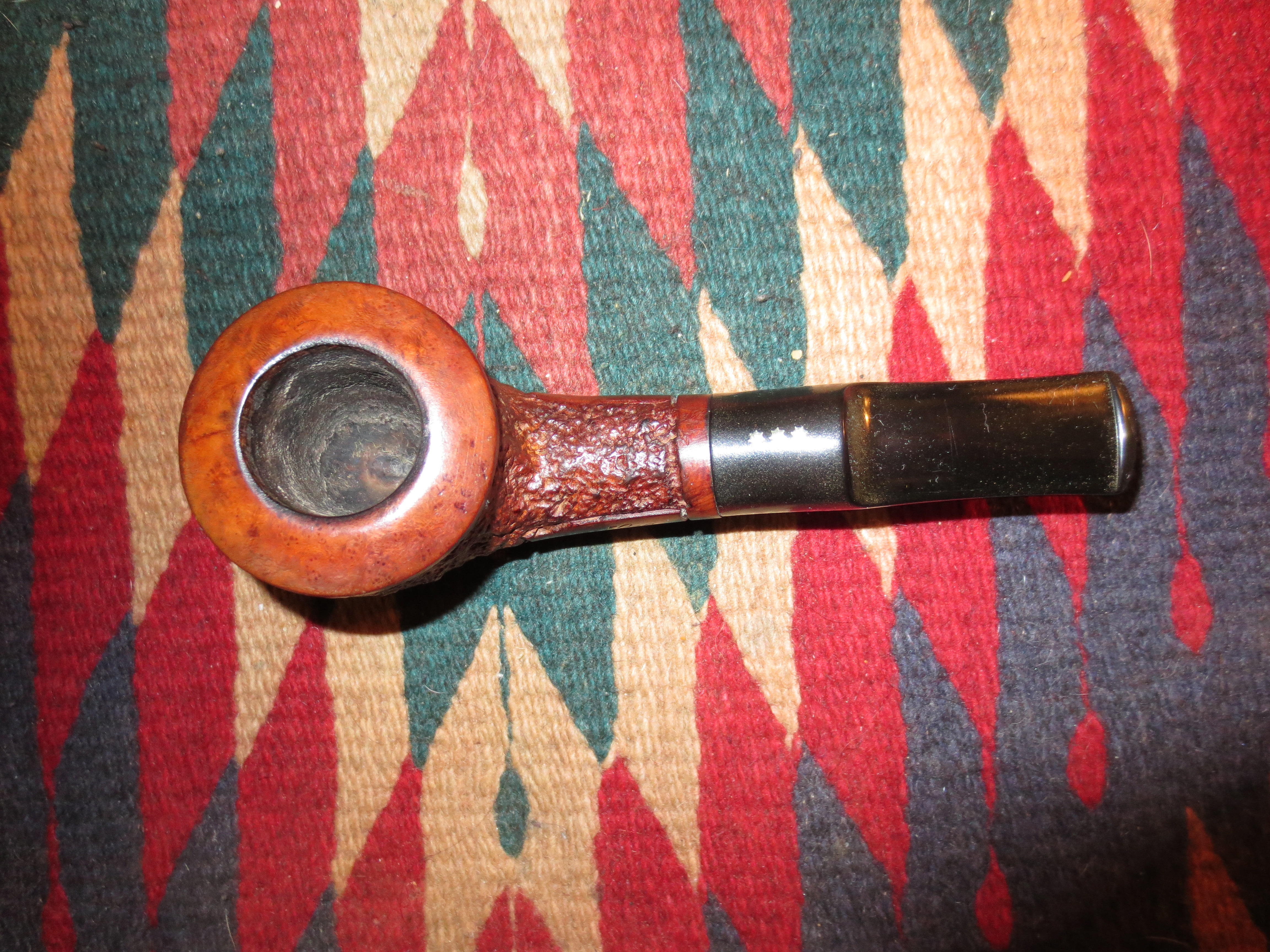
Once the stem was polished I gave it a coat of carnauba wax and then buffed it with a soft flannel buffing pad. Here is the finished pipe. The pipe in person has a glossy stem. I got a new camera so I am still learning all the tricks of it. The thing really picks up the dust particles on the pics. Ah well. I will get it down eventually!
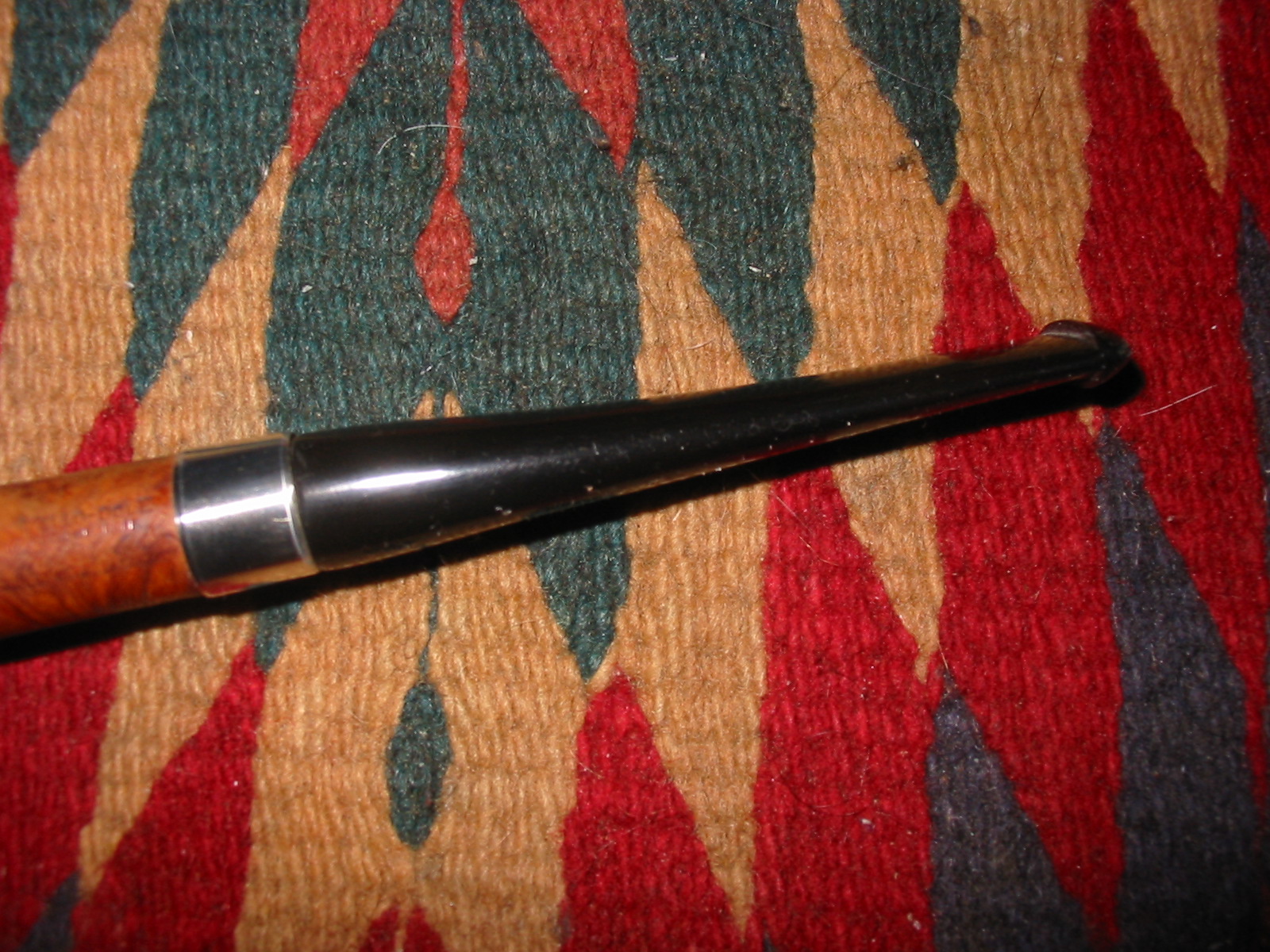
ImageImageImageImageImageImage