
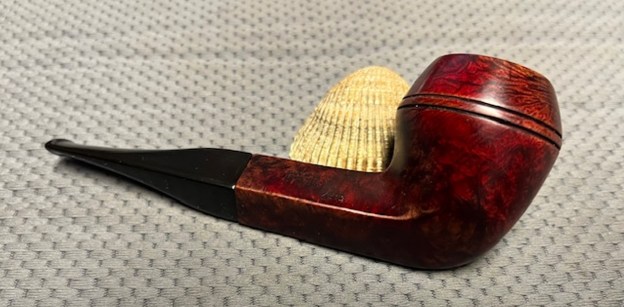
by Steve Laug
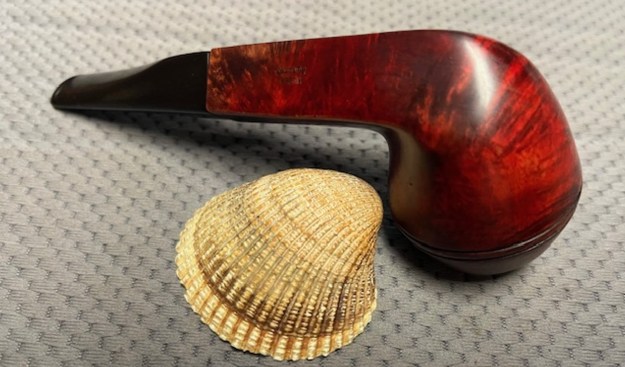
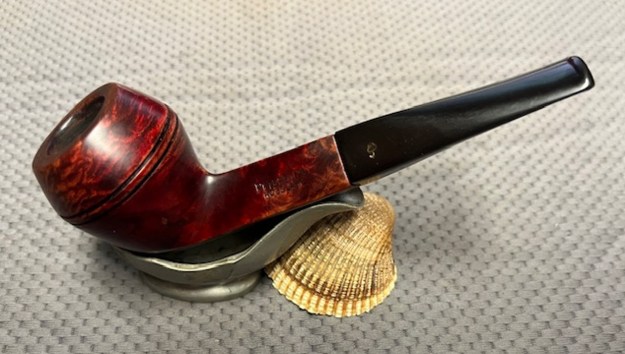
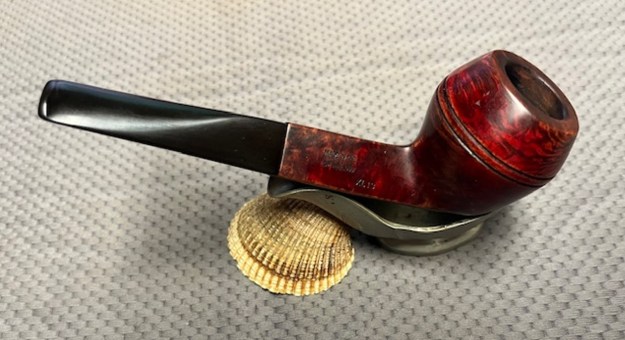
The next pipe I have chosen is another Peterson’s Rosslare Bulldog. This one is a large size Bulldog with a Peterson’s taper, fishtail stem. It came to us from our contact in Copenhagen, Denmark on 11/21/2023. This pipe was obviously a favourite of the previous pipe smoker. It had been well smoked but it had been reamed and cleaned recently. The briar was dirty with grime and oils ground into the finish and the varnish coat was spotty and peeling. The pipe was stamped on the left side and read Peterson’s [over] Rosslare. On the right side it had the three-line Republic of Ireland stamp [over] the shape number XL13. On the left underside of the diamond shank it is stamped HUBER [over] MUNCHEN. The acrylic stem was clean without tooth marks. It was a 9mm filter stem. The Peterson’s P logo was present but the gold had washed out over time. Jeff took photos of the pipe before he started his clean up work on it.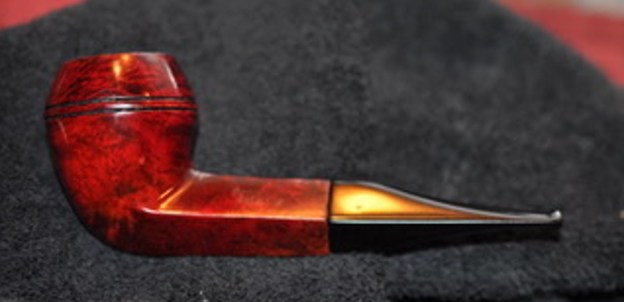
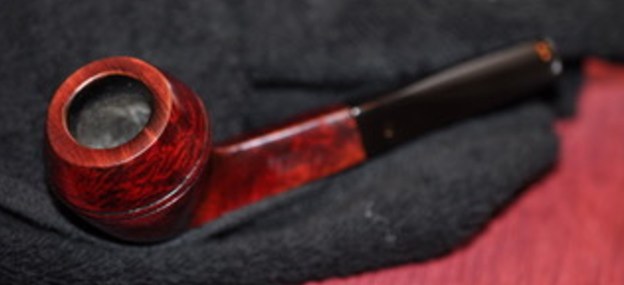 Jeff captured the light cake in the bowl and the clean rim top in his photos. The edges looked to be in excellent condition and the varnish coat had been removed from the rim top. The taper, fishtail stem surface was very clean.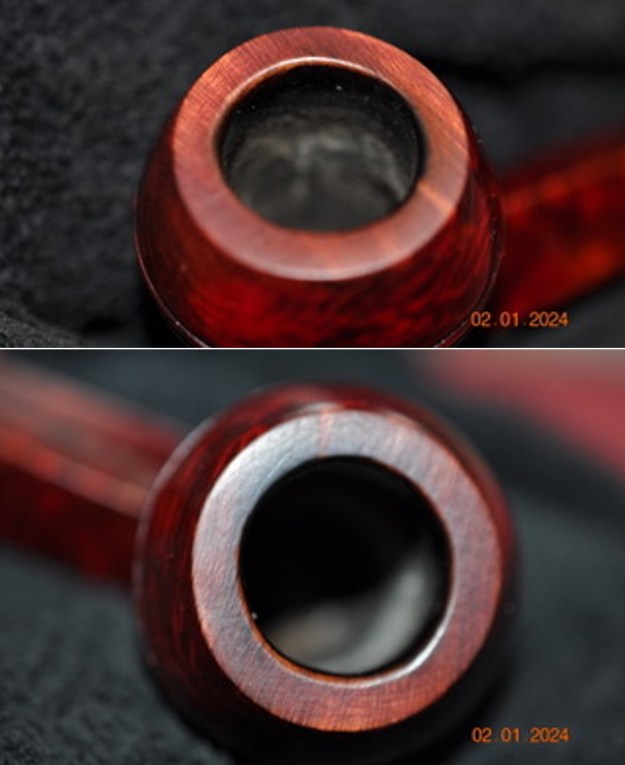
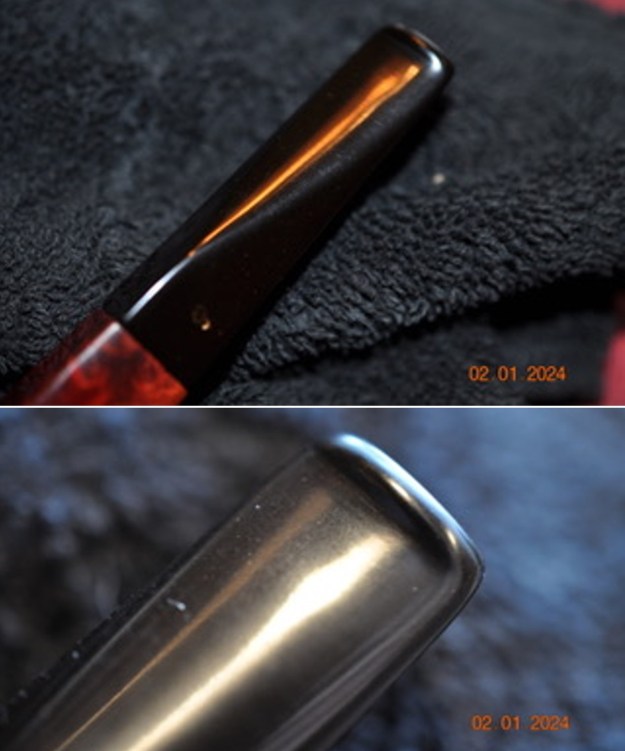
 He took photos of the sides and the heel of the bowl to show the interesting grain patterns in the briar. The varnish coat is spotty on the rim top and shank end. Even so it was quite beautiful.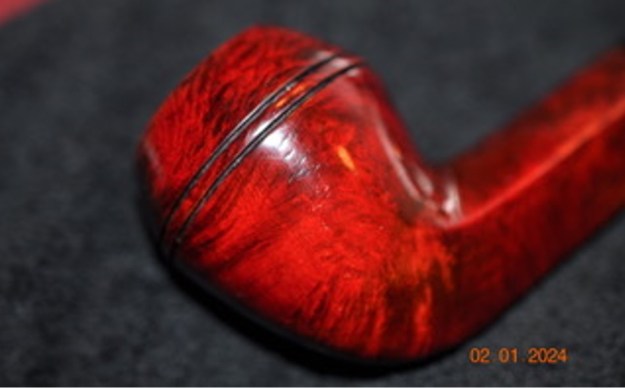
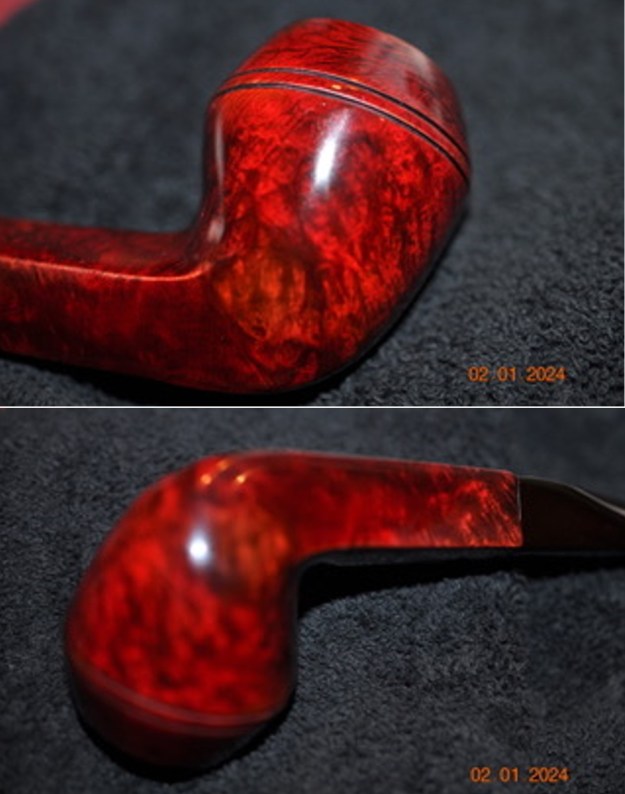 He also took some photos of the shank sides to capture the stamping on the shank. It was also stamped Huber Munchen on the underside and he did not capture that in a photo.
 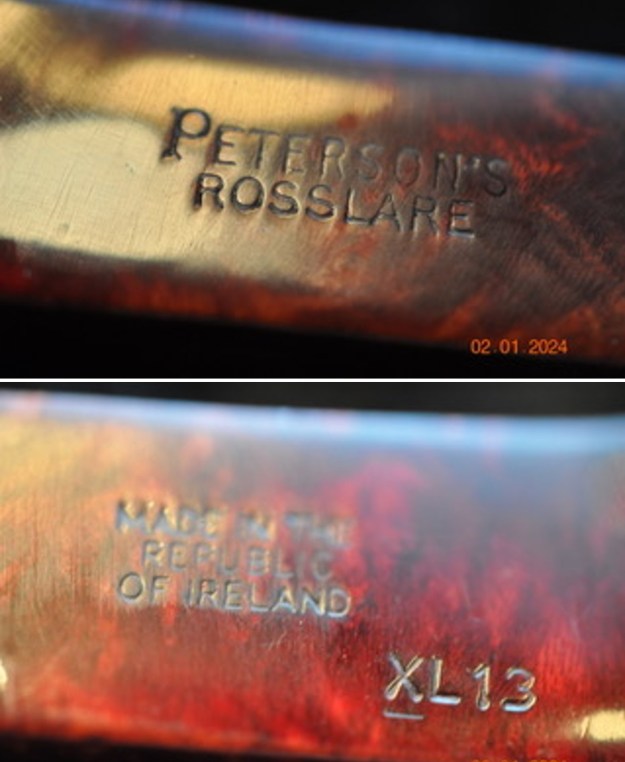 I wanted to understand the Rosslare line to see where it stood in the Peterson’s hierarchy. I turned to page 311 of “The Peterson’s Pipe” by Mark Irwin and Gary Malmberg and read about the line. I quote:
Rosslare (2003-) Upper-grade line, Classic Range and select B shapes in smooth or black sandblast, sterling band often fitted with faux spigot, amber fishtail acrylic mouthpiece, embedded aluminum P in the first years and hot foil P more recently. Not to be confused with the Rosslare Royal Irish (2010)
I turned to (http://thepetersonpipeproject.blogspot.com/2007/07/dating-peterons-pipes.html) to lock down a rough period of time for the Republic Era. I quote:
Stamping of Bowl: During the years of Kapp and Peterson’s business operations, the country of Ireland has undergone several name changes and K&P’s stamping on their pipes reflects these changes. Knowing these changes, a Peterson pipe can be roughly dated and placed in “eras.”
The Republic Era is from 1949 until the present. The Republic of Ireland was formed on 17 April 1949. From 1949 to present the stamp for this era is “Made in the Republic of Ireland” in a block format generally in three lines but two lines have been used with or without Republic being abbreviated.
Finally, on the underside of the shank it is stamped Huber [over] Munchen. From a past restoration I did a lot of work on the stamping (https://rebornpipes.com/2023/10/14/petersons-kildare-special-hg-republic-of-ireland-10-canadian/). Have a look if you are interested.
To learn more about the Huber Munchen stamp I turned to page 300 of “The Peterson’s Pipe” by Mark Irwin and Gary Malmberg as noted by him in the previous blog and found a great paragraph on the stamping. I quote in full.
GH Retailer’s Monogram (c. 1960s) George Huber of Munich, Germany, a Peterson distributor and retailer for decades, stamped their monogram on pipes sold in their store, G overlaid on H. Peterson shared in the 1988 commemoration of Huber’s 125th year in business by producing a special pipe with a sterling rim cap, stamped HUBER over CELEBRATION.
The pipe I have is one that does not bear that monogram and does not appear to have ever had the sterling rim cap and was not stamped HUBER over CELEBRATION. It was however, stamped Huber [over] Munchen – the city where the shop was located. With that information I turned my attention to working on the pipe.
Jeff cleaned this filthy pipe with his usual clean up process. He reamed it with a PipNet pipe reamer and cleaned up the reaming with a Savinelli Fitsall Pipe Knife. He scrubbed out the internals with alcohol, pipe cleaners and cotton swabs until the pipe was clean. He scrubbed the exterior of the bowl with Murphy’s Oil Soap and a tooth brush to remove the grime and grit on the briar and the lava on the rim top. The finish looks very good with great looking grain around the bowl and shank. Jeff soaked the acrylic stem in Briarville’s Pipe Stem Deoxidizer to remove the grime on the surface. When the pipe arrived here in Vancouver for the second stop of its restoration tour I was amazed it looked so good.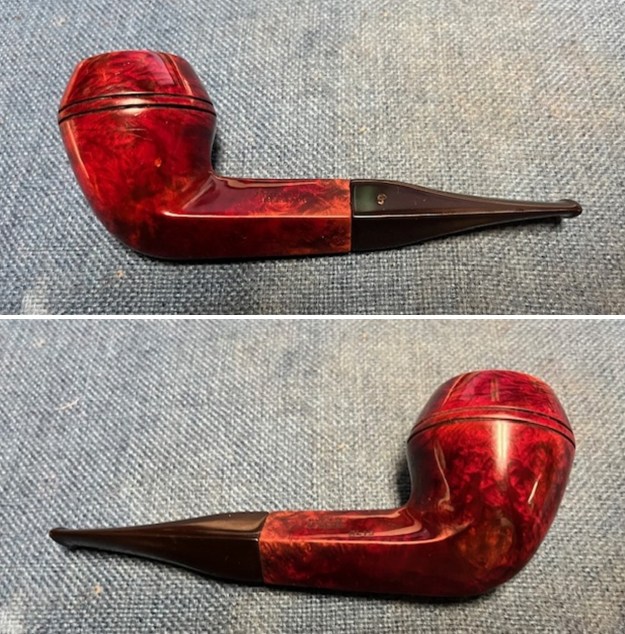
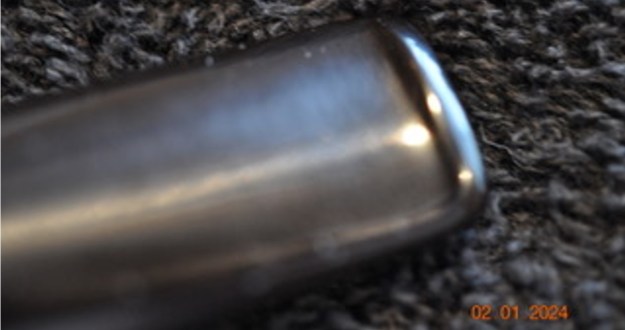
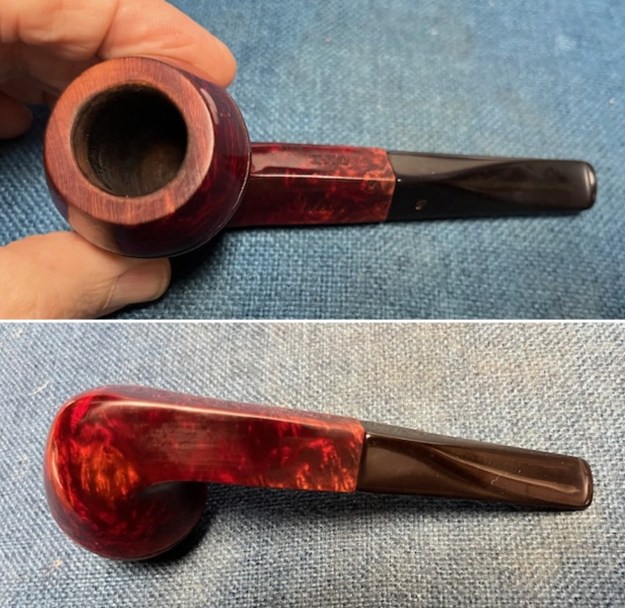 I took some close up photos of the rim top and the stem surface. I wanted to show how well it had cleaned up. The rim top and inner and outer edge looked very good. It did not have any varnish on the rim and the shank end was also missing the varnish on the first inch from the shank end. It was ragged looking. Once stripped of the varnish it should polish well. I also took close up photos of the stem to show the condition of the stem surface near the button.
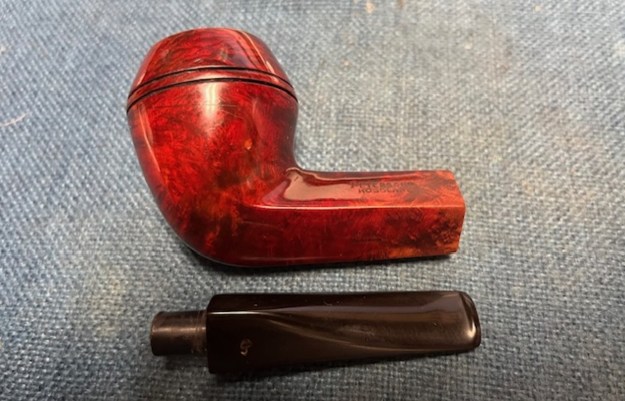
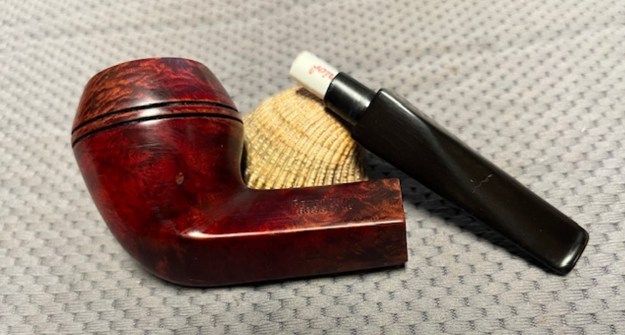
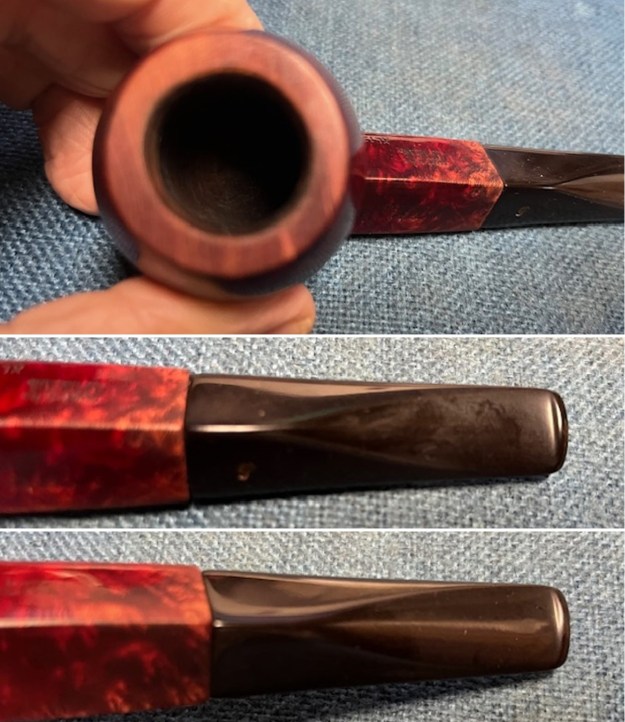 I took photos of the stamping on the sides of the shank. You can see that it is stamped as noted above. It is faint in spots but readable. I removed the stem and took a photo of the pipe to have a look at the parts and overall look.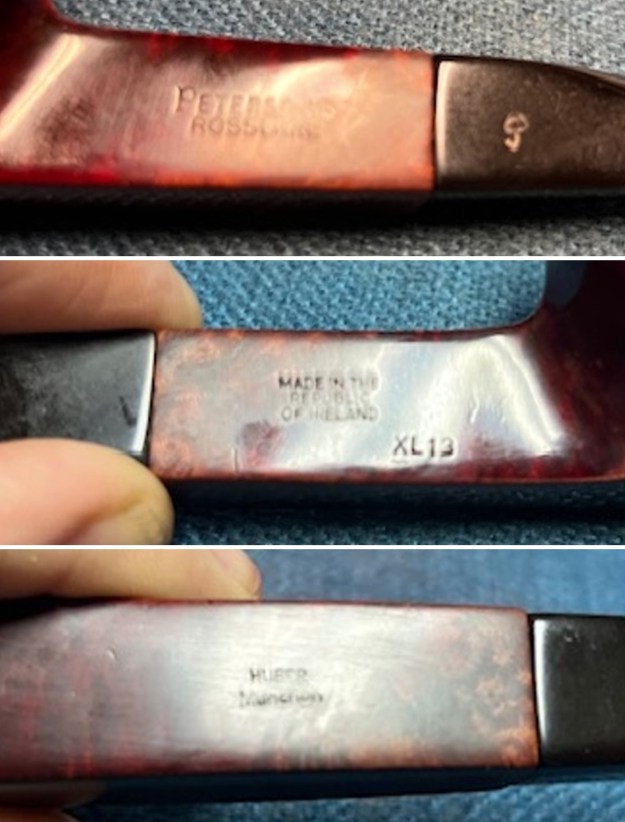
 To address the spotty varnish on the bowl sides and shank, I wiped it down with acetone and cotton pads. I removed a lot of the varnish coat and sanding it with the sanding pads would remove the rest of the coat.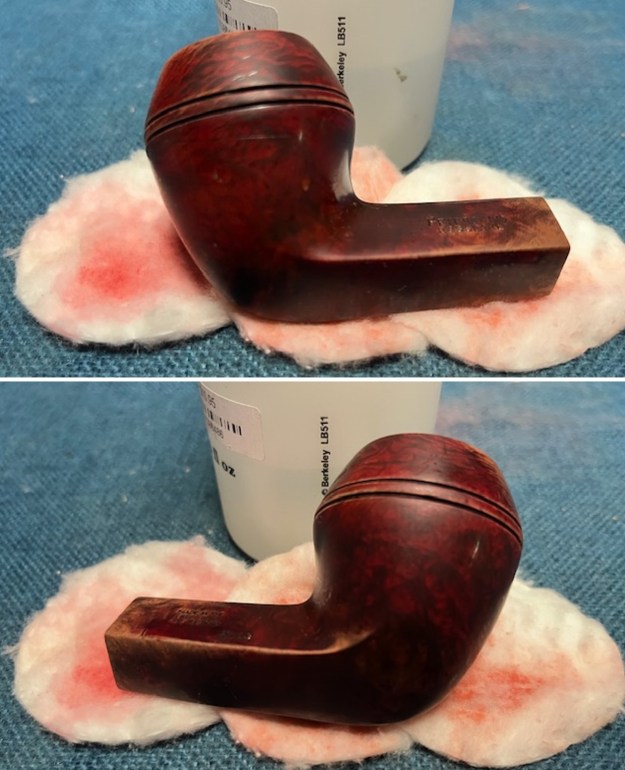
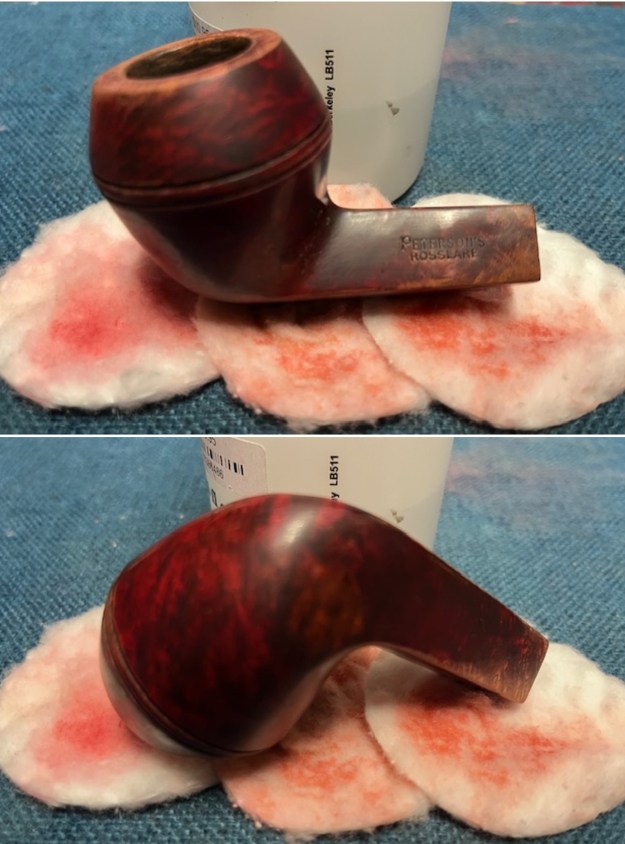 I sanded the briar with 320-3500 grit 2×2 inch sanding pads to remove the remainder of the varnish coat that the acetone did not remove. I wiped the bowl down with a damp cloth after each sanding pad to remove the sanding debris. It really looks much better.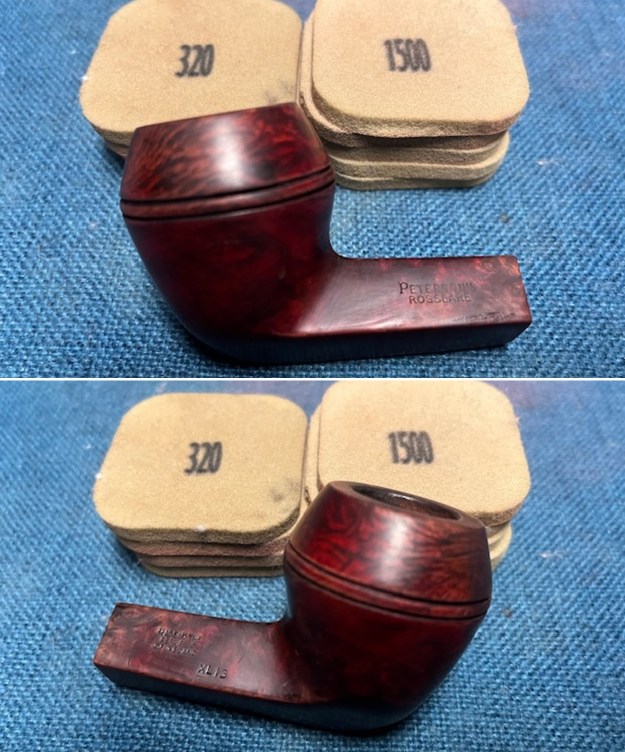
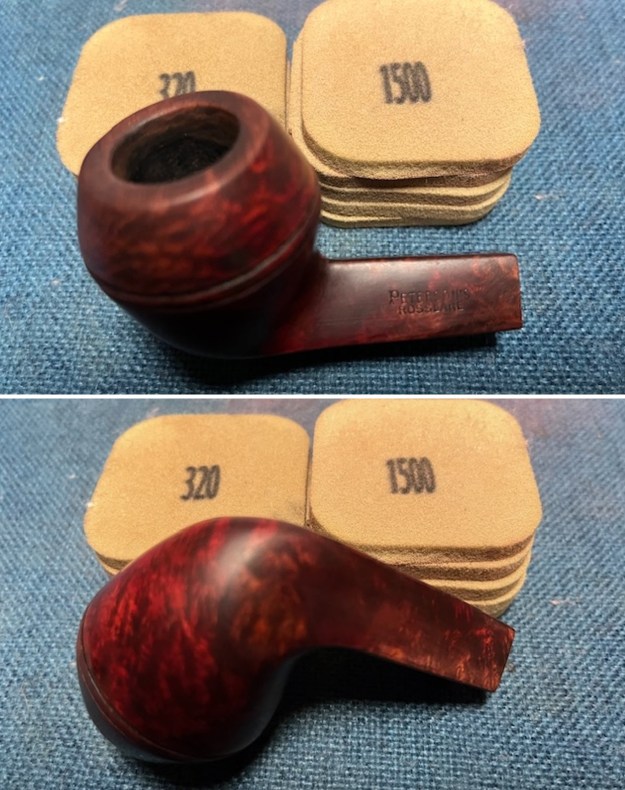 I polished the briar with micromesh sanding pads – dry sanding with 1500-12000 grit pads. I wiped the bowl down after each pad with a damp cloth.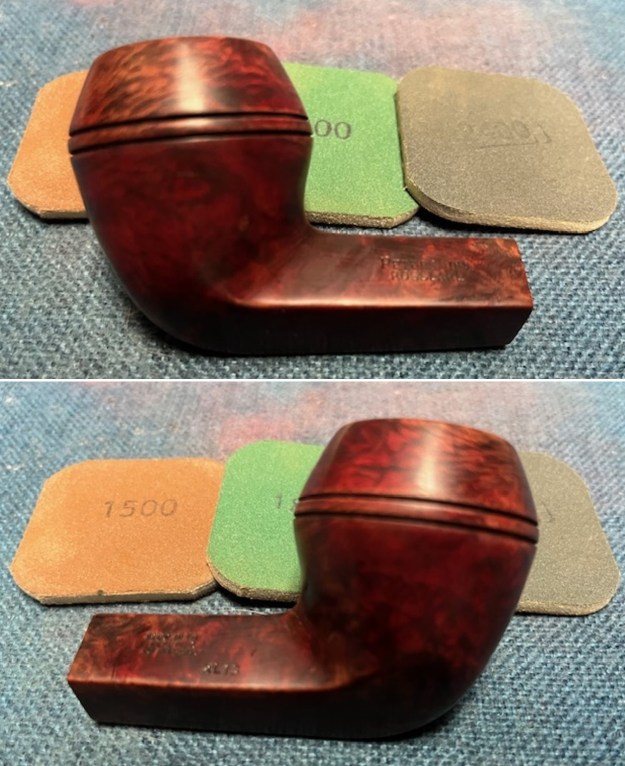
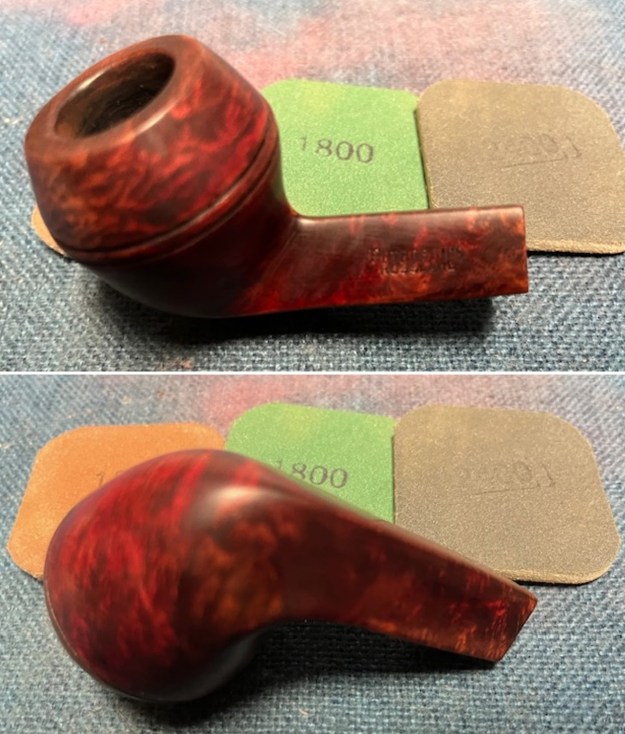
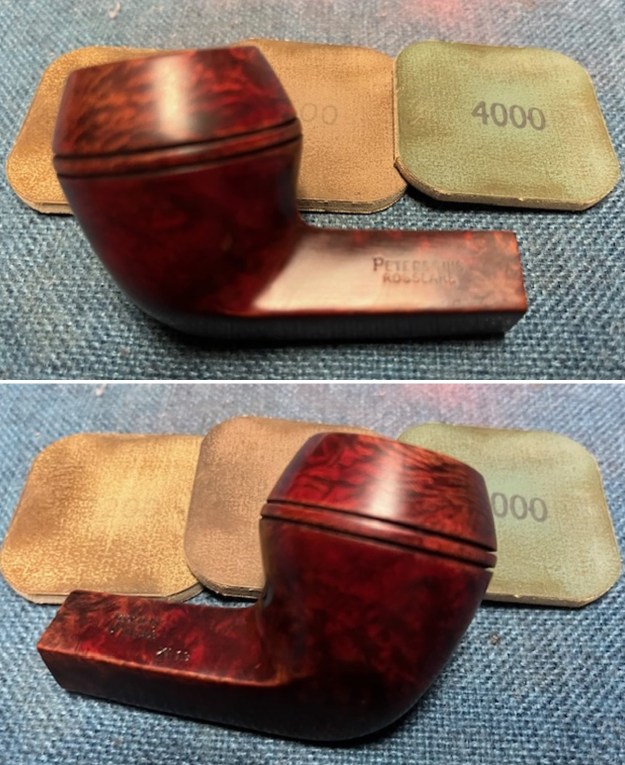
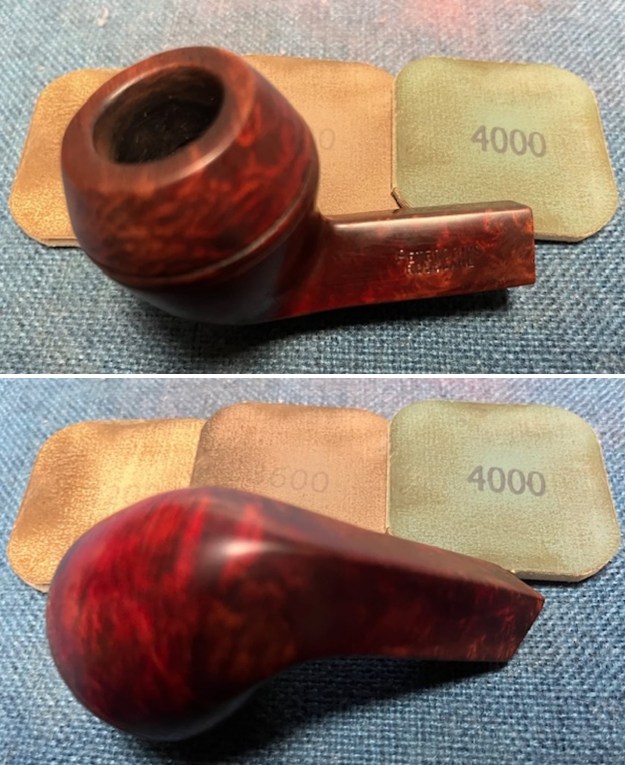
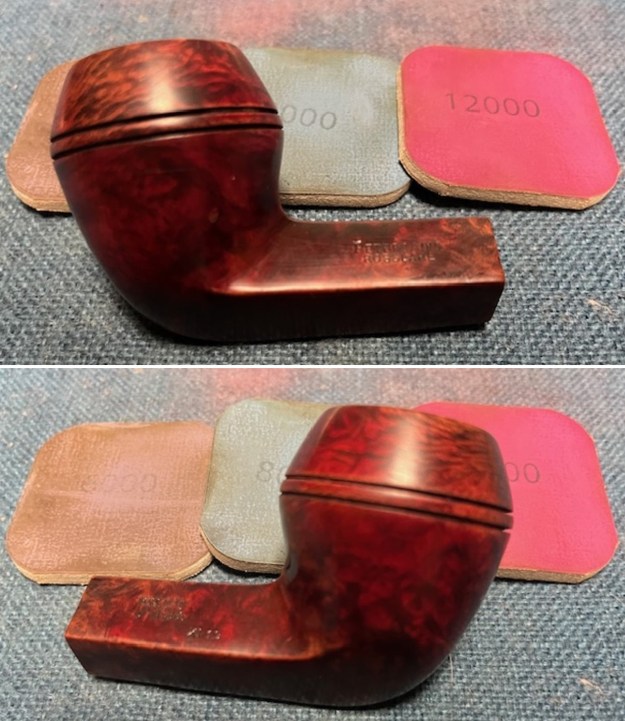
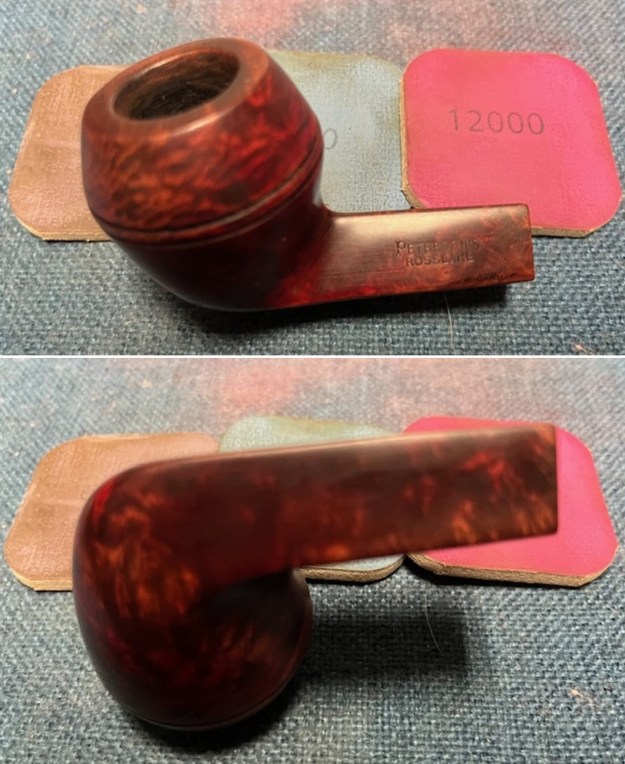 I rubbed the bowl down with Before & After Restoration Balm. I worked it into the surface of the bowl sides and shank with my fingertips. The product works to clean, enliven and protect the briar. I let the balm sit for a little while and then buffed with a cotton cloth to raise the shine.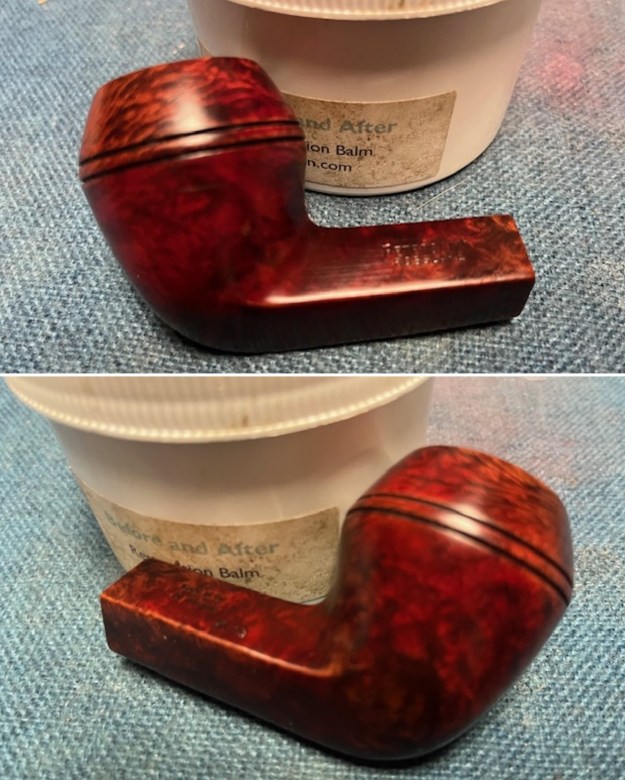
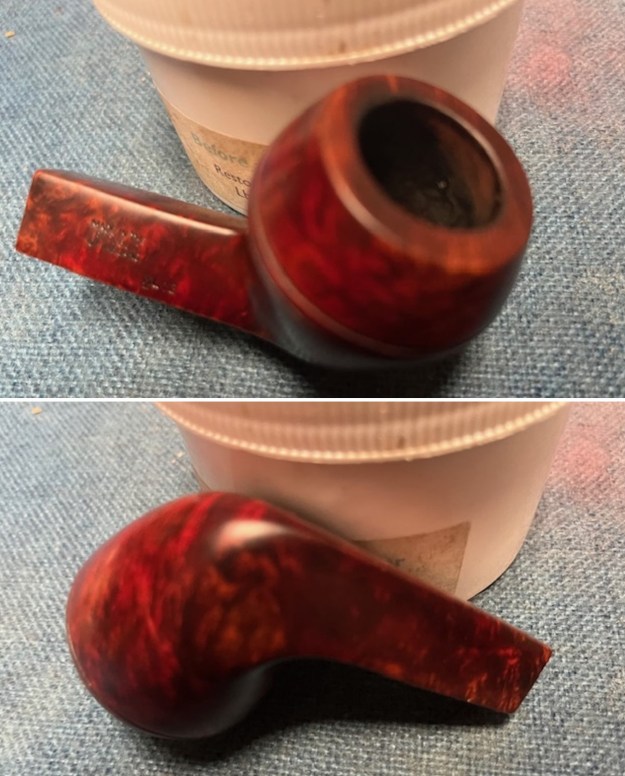
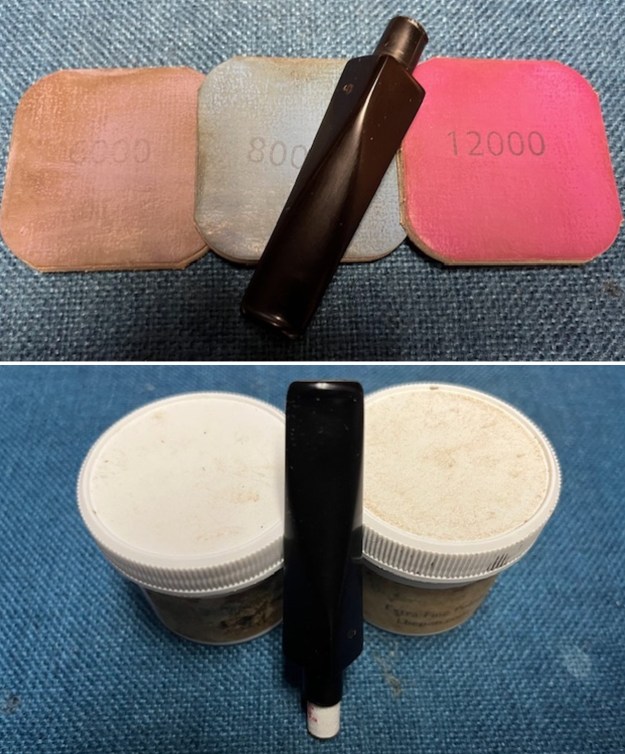
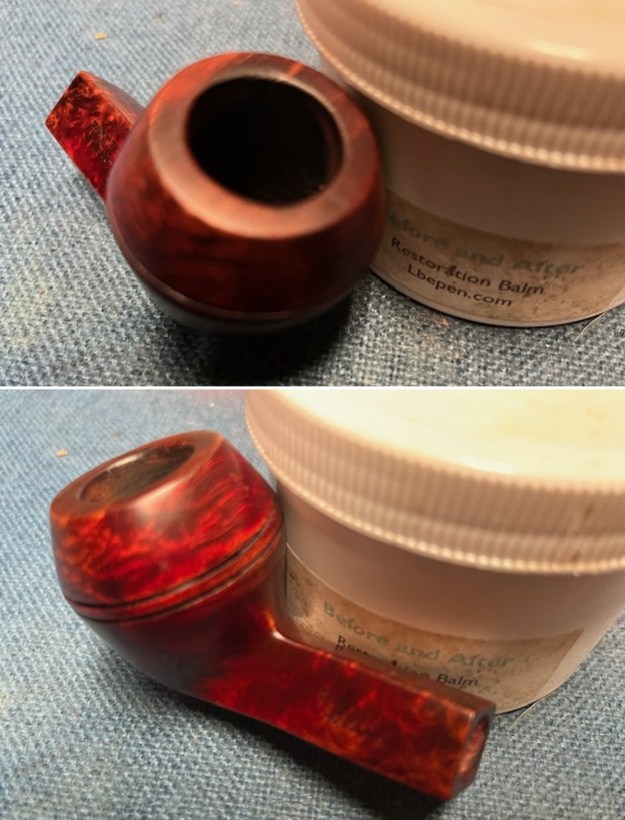 I set the bowl aside and turned my attention to the stem. I polished the stem with micromesh sanding pads – dry sanding it with 1500-12000 grit pads. I wiped the stem down with Obsidian Oil after each pad. I polished it with Before & After Pipe Polish – both Fine and Extra Fine and gave it a final coat and set it aside to dry.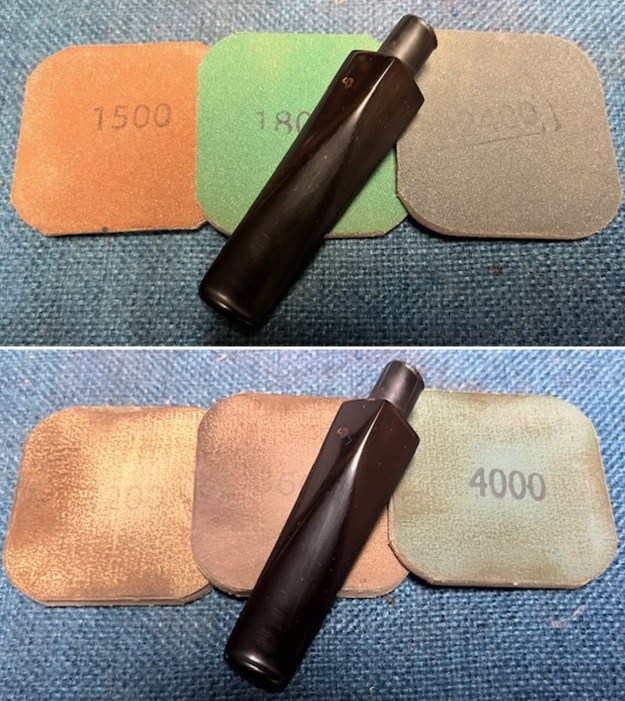
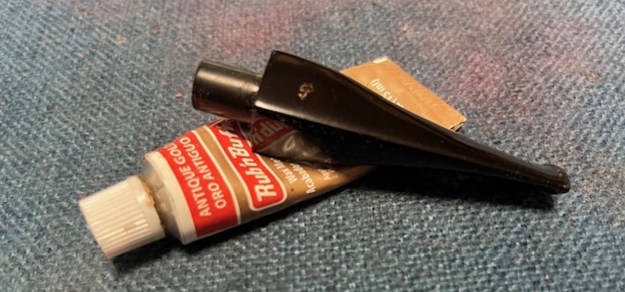
 I touched up the gold P stamp on the left side of the stem with Rub’n Buff Antique Gold. I pressed it into the stamp with a toothpick. I buffed it off with a soft cloth.
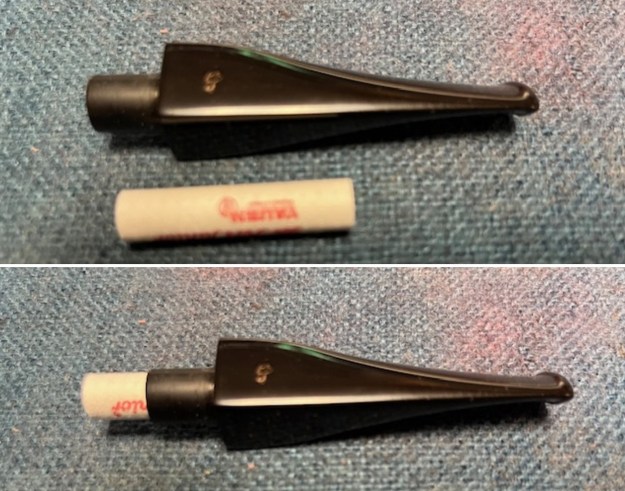
  I fit the stem with a 9mm filter and put the pipe back together again. The fit was perfect.
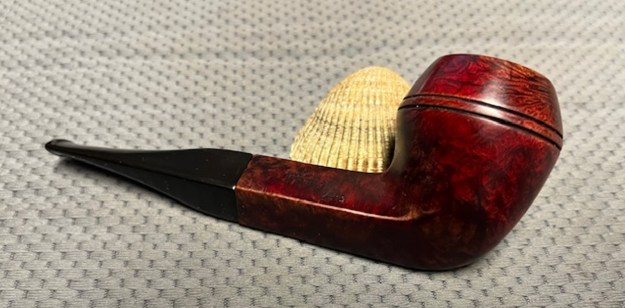
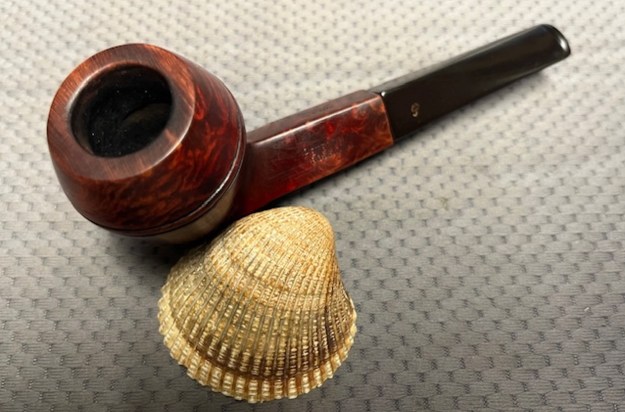
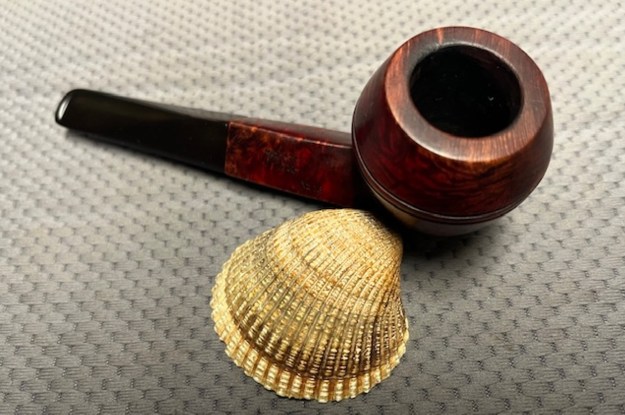
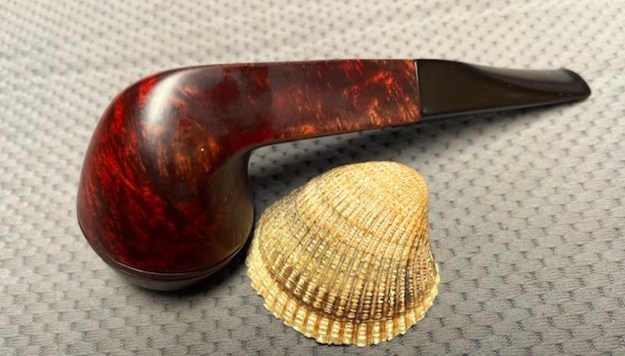
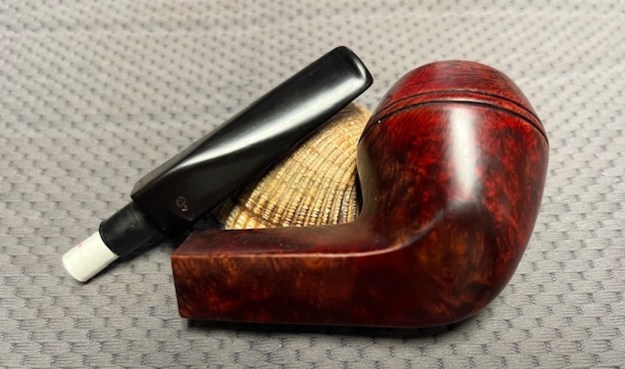
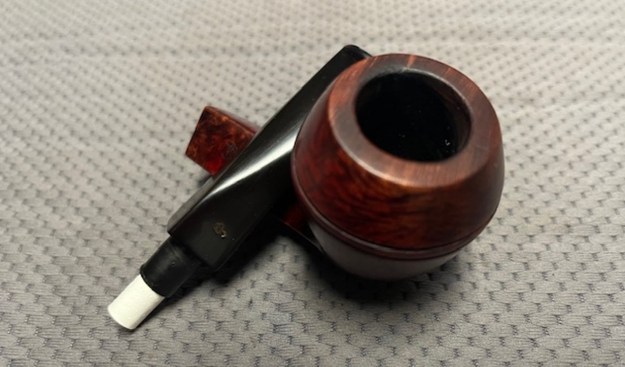
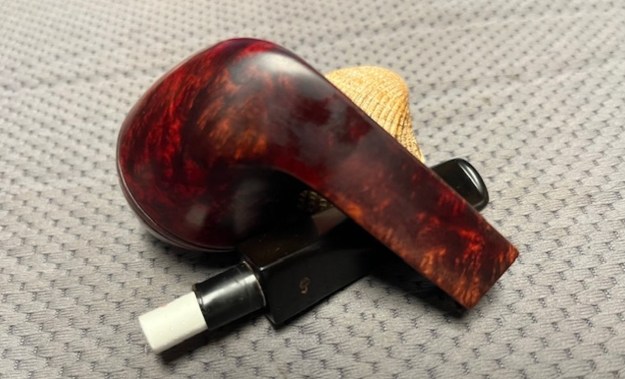
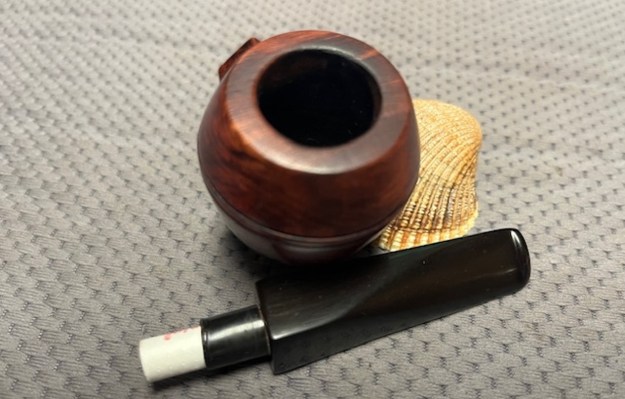
  I am excited to finish this Peterson’s Rosslare XL13 Bulldog. I put the pipe back together and buffed it with Blue Diamond on the buffing wheel. I gave the bowl and the stem multiple coats of carnauba wax. I hand buffed the pipe with a clean buffing pad to raise the shine. It is fun to see what the polished bowl looks like with beautiful mixed grain all around it. Added to that the polished black vulcanite stem combined with the bowl and sandwich brass/nickel/brass band on the shank and made a stunning pipe. This smooth Classic Peterson’s Rosslare XL13 Straight Bulldog is great looking and the pipe feels great in my hand. It is light and well balanced. Have a look at it with the photos below. The dimensions are Length: 5 ½ inches, Height: 2 inches, Outside diameter of the bowl: 1 ¼ inches, Chamber diameter: 7/8 of an inch. The weight of the pipe is 44 grams/1.55 ounces. It is a beautiful pipe that I will soon be putting on the rebornpipes store in the Irish Pipe Makers Section. If you are interested in adding it to your collection send me an email or a message. Thanks for walking through the restoration with me as I worked over this pipe. Thanks to each of you who are reading this blog.
As always, I encourage your questions and comments as you read the blog. Thanks to each of you who are reading this blog. Remember we are not pipe owners; we are pipe men and women who hold our pipes in trust until they pass on into the trust of those who follow us. 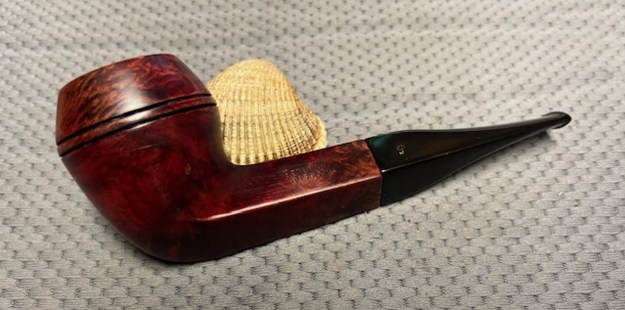
 rebornpipes