Tag Archives: polishing and waxing a meerschaum pipe

Restoring a Osman Tall Meerschaum Billiard with a Bakelite Stem


by Steve Laug

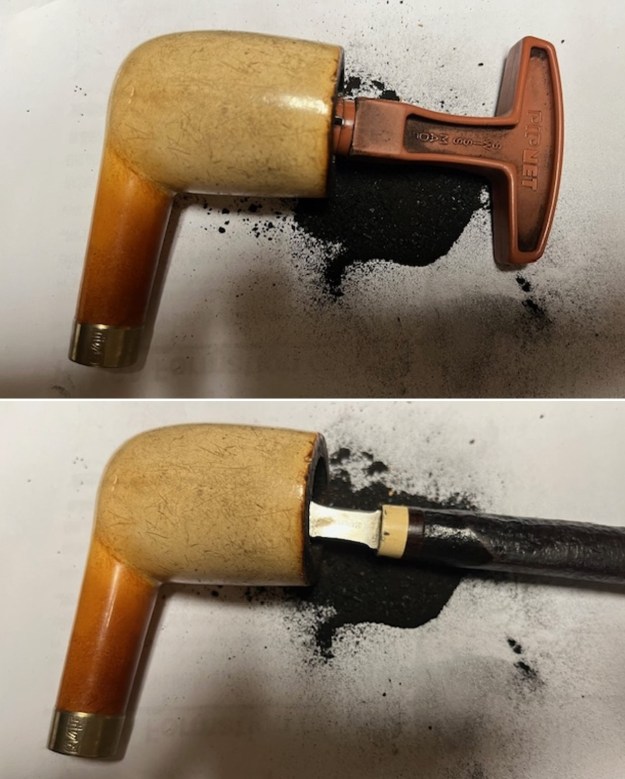
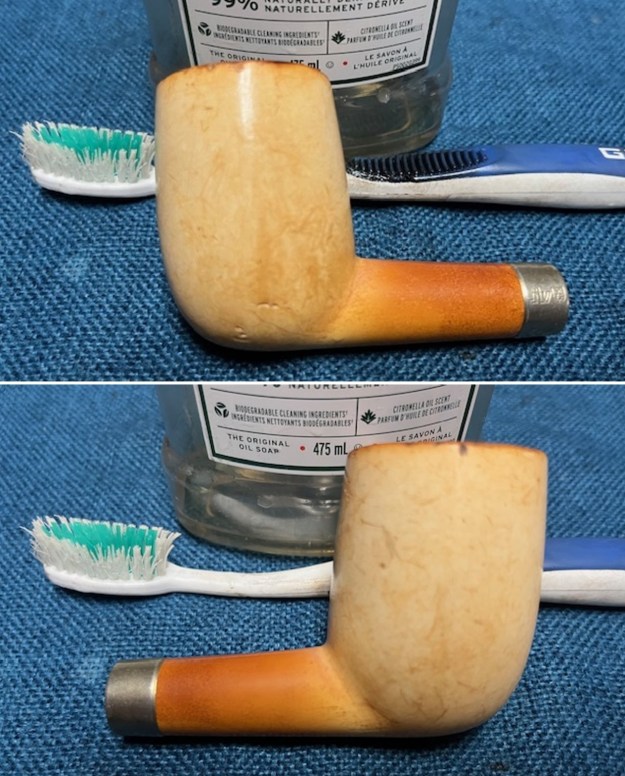
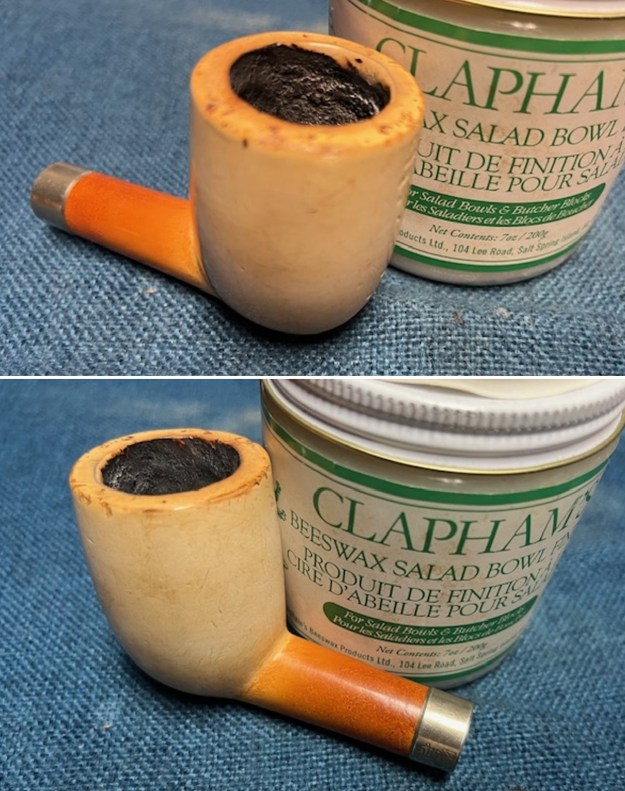
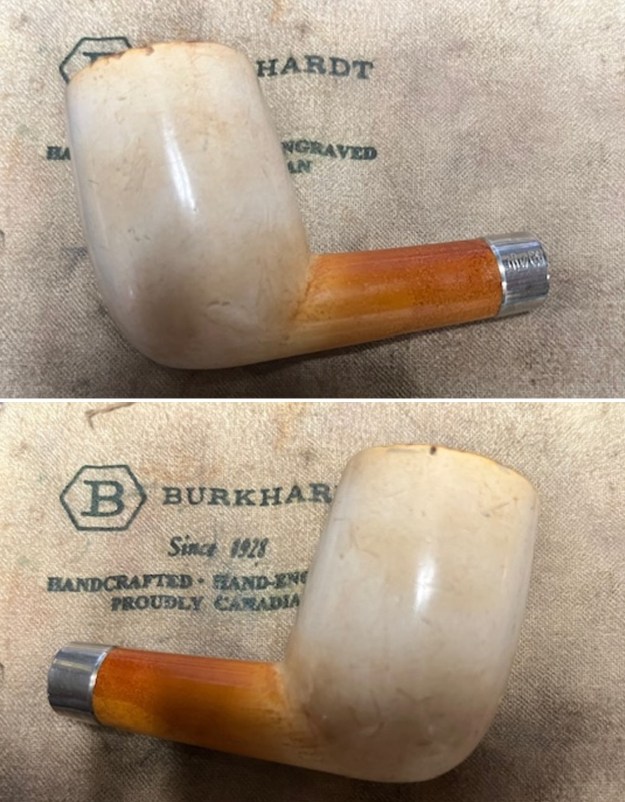
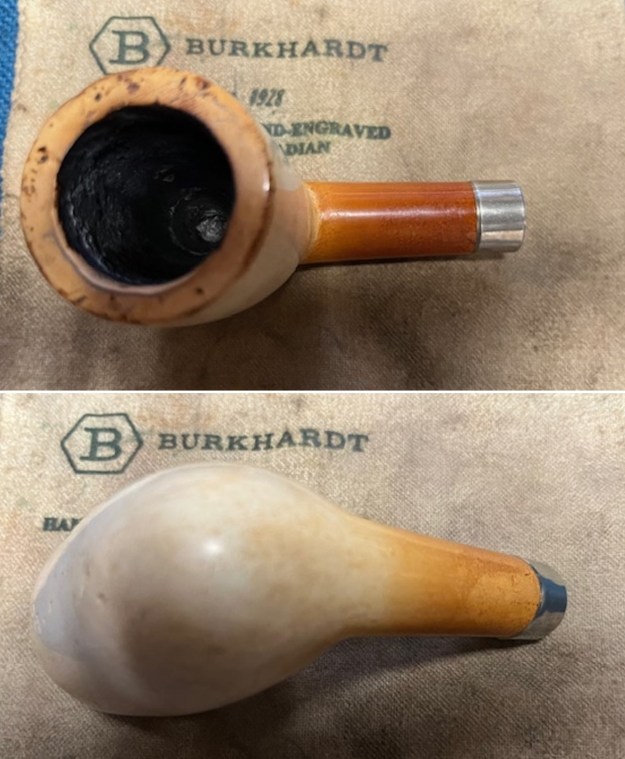
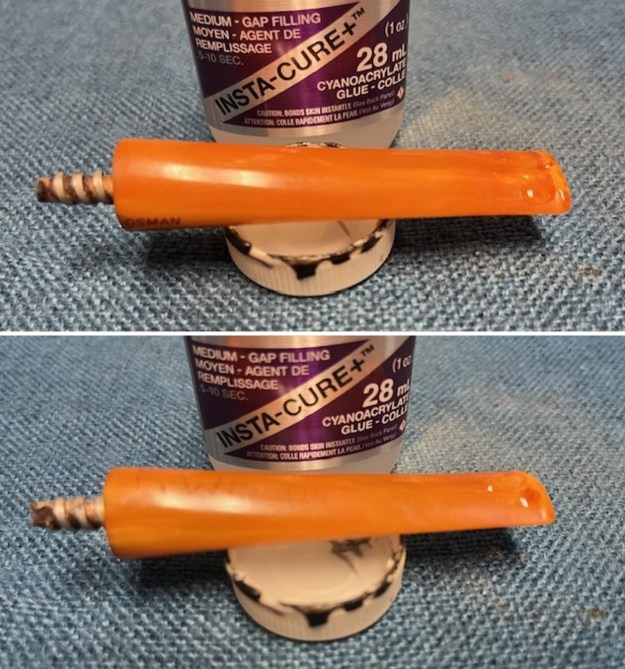
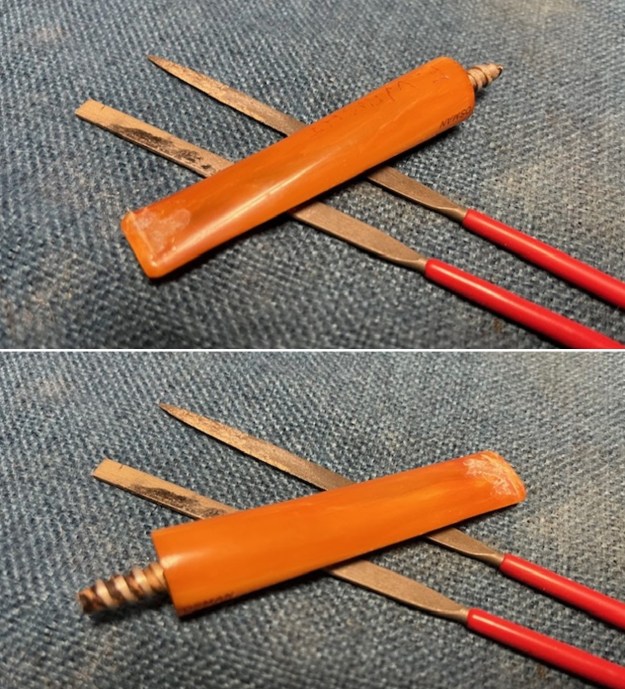
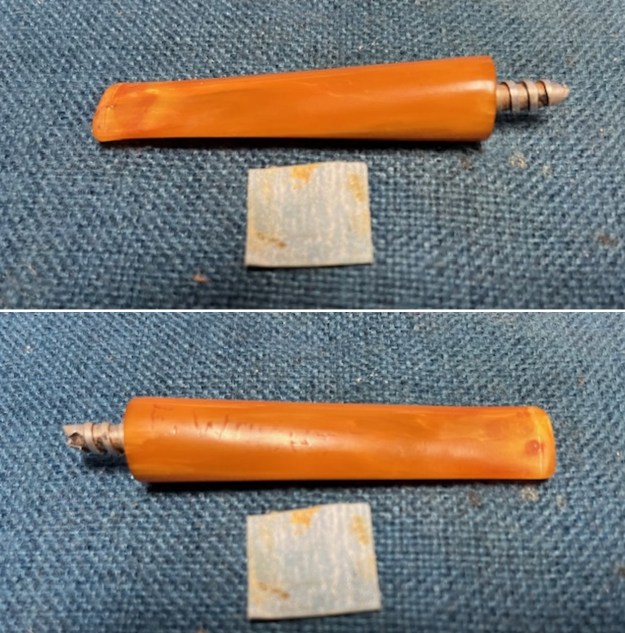
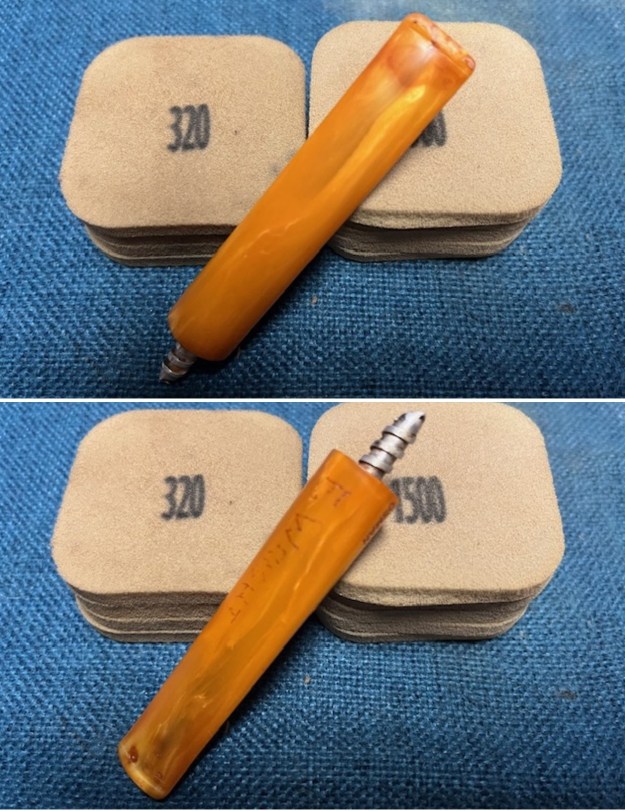
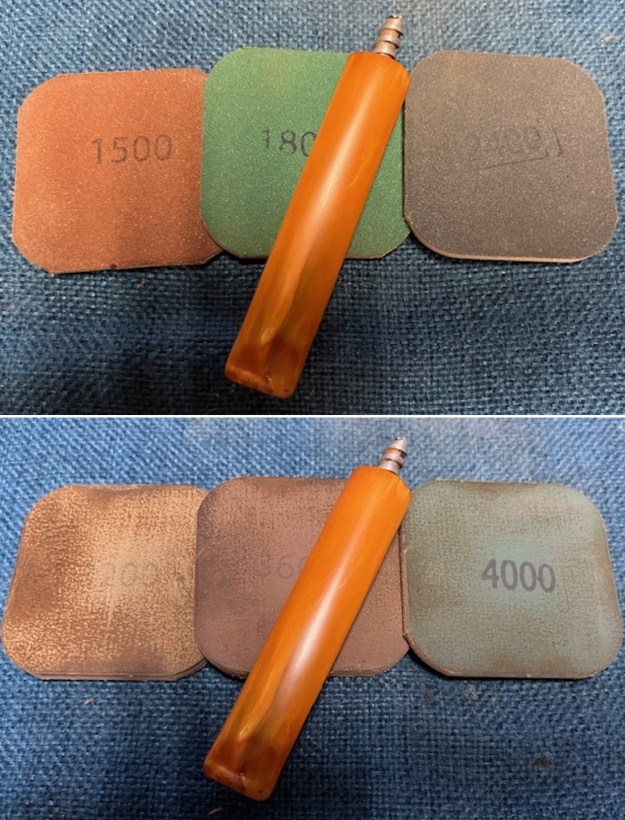
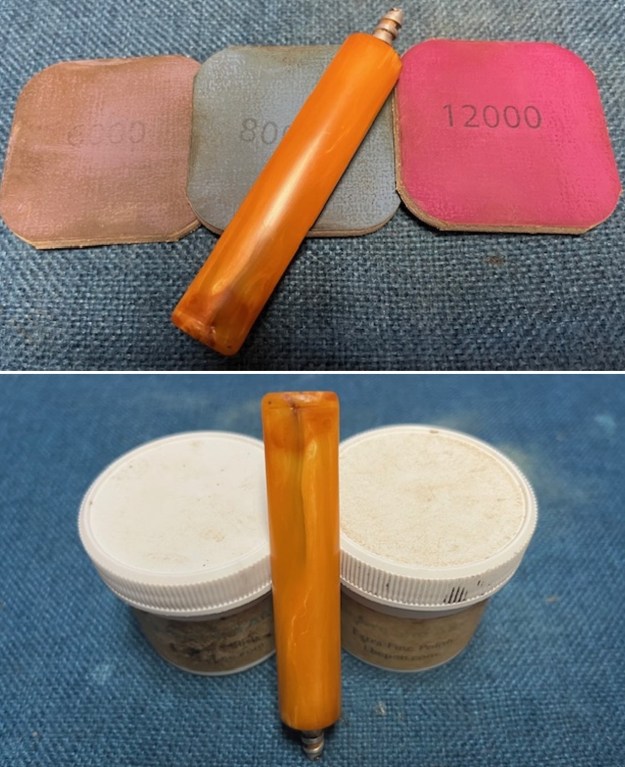
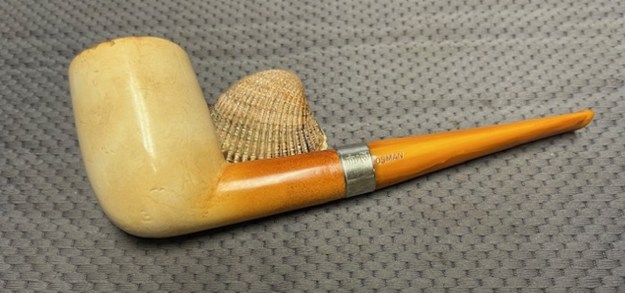
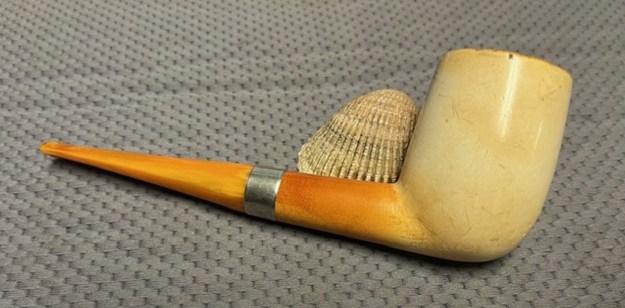
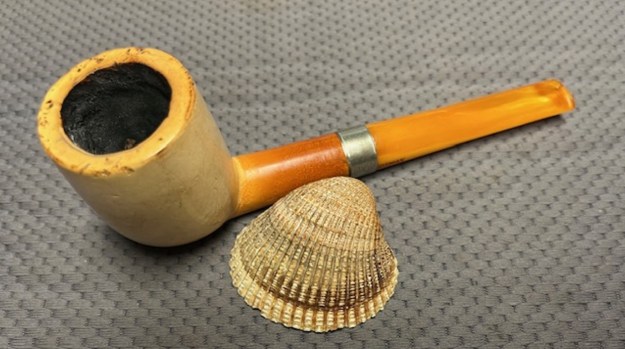
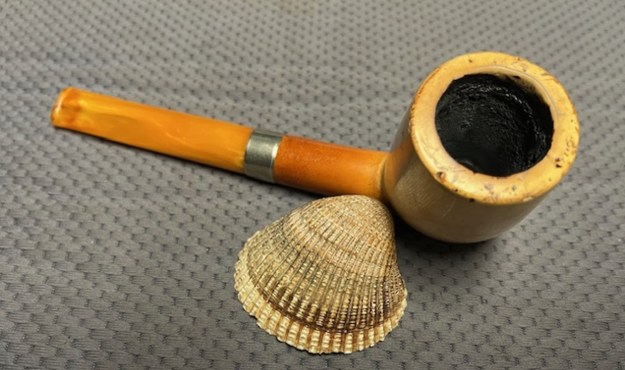
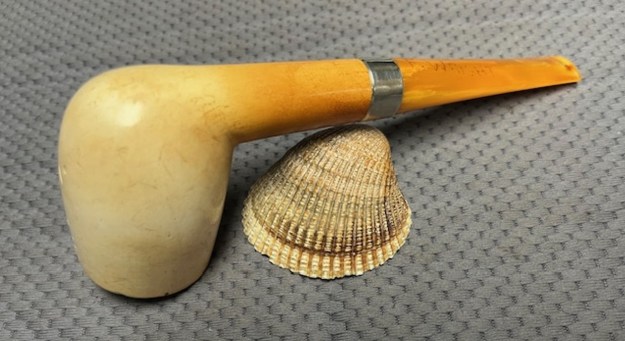
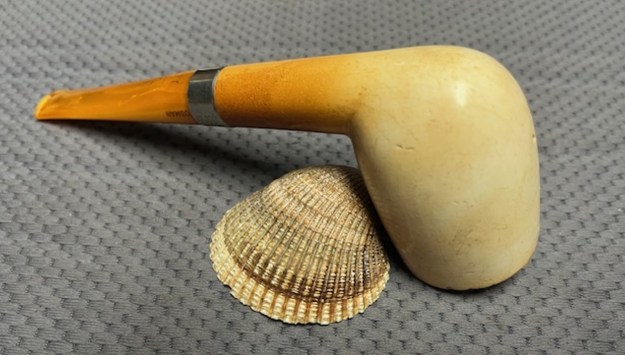
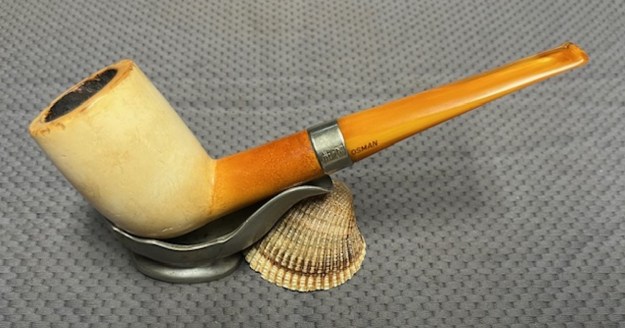
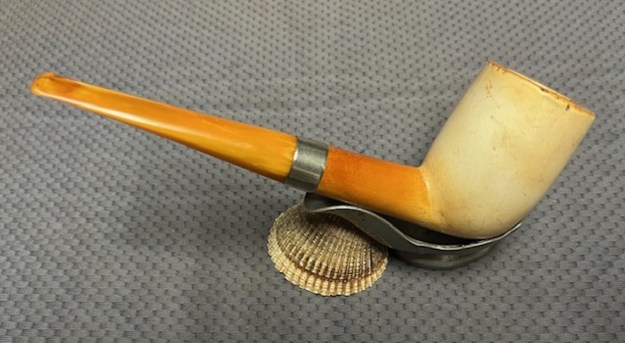
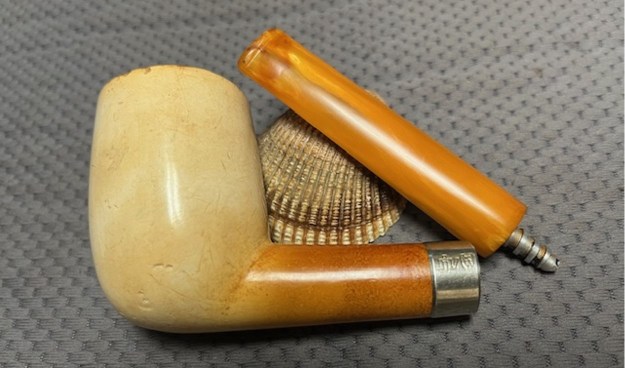
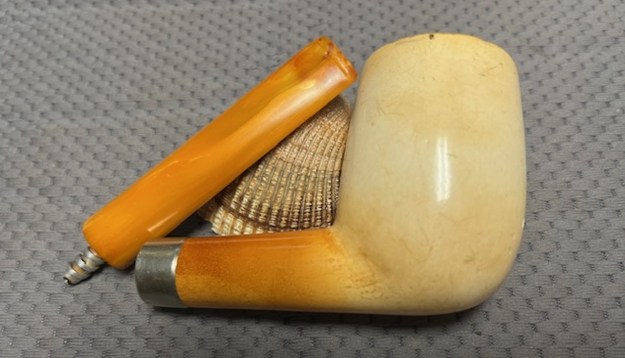
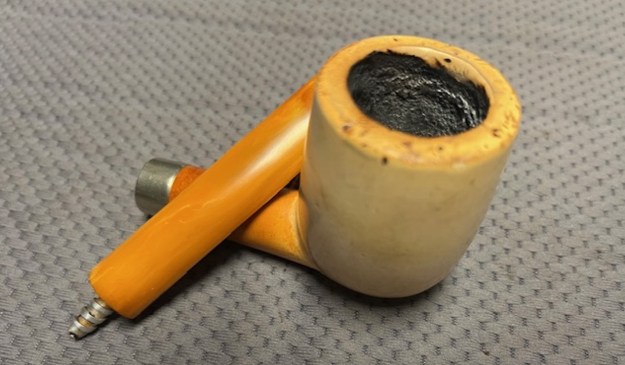
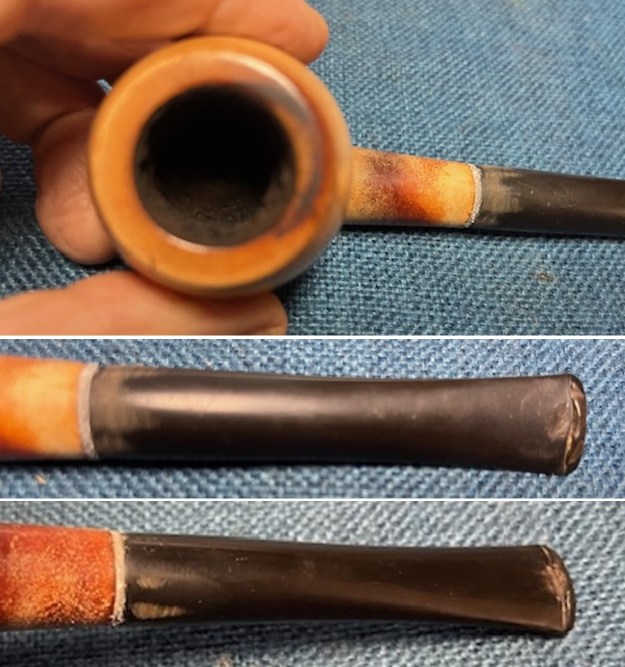
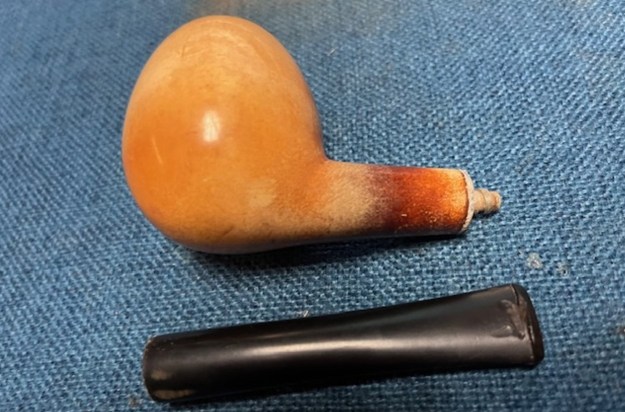
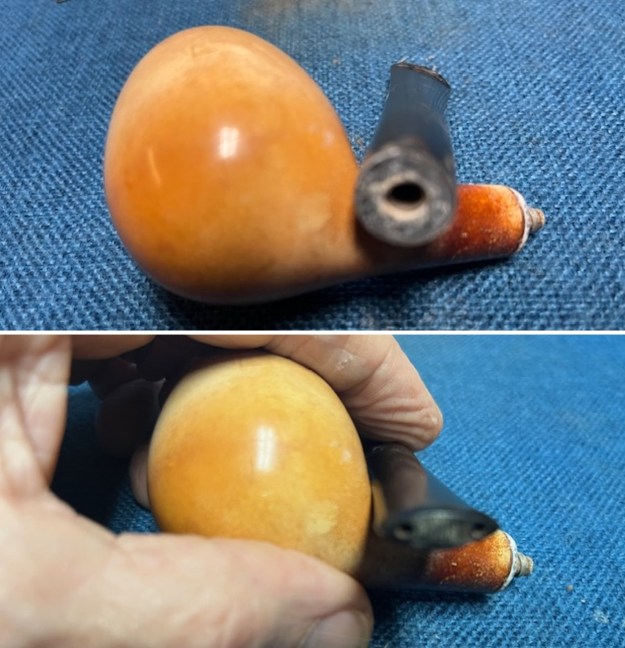
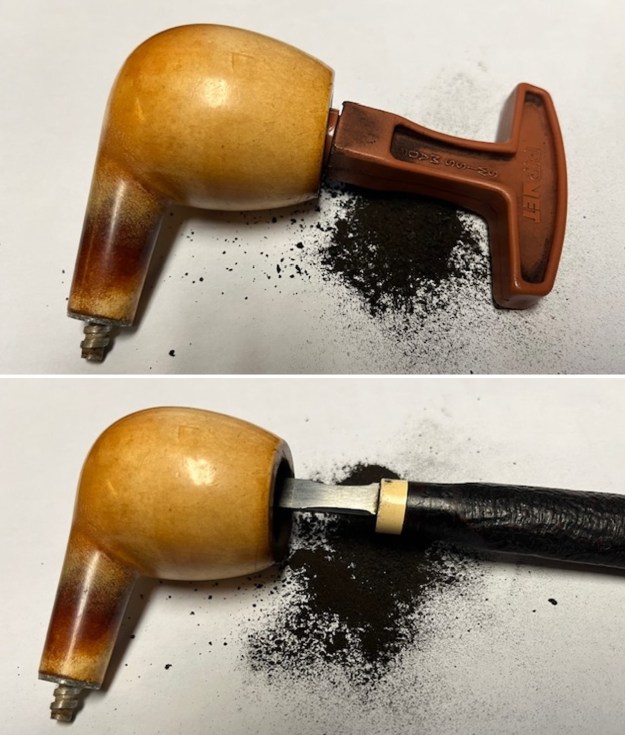
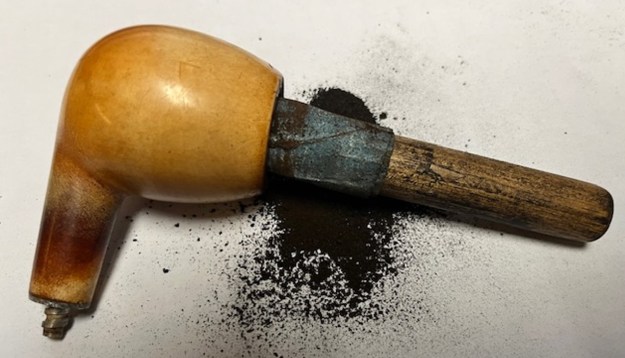
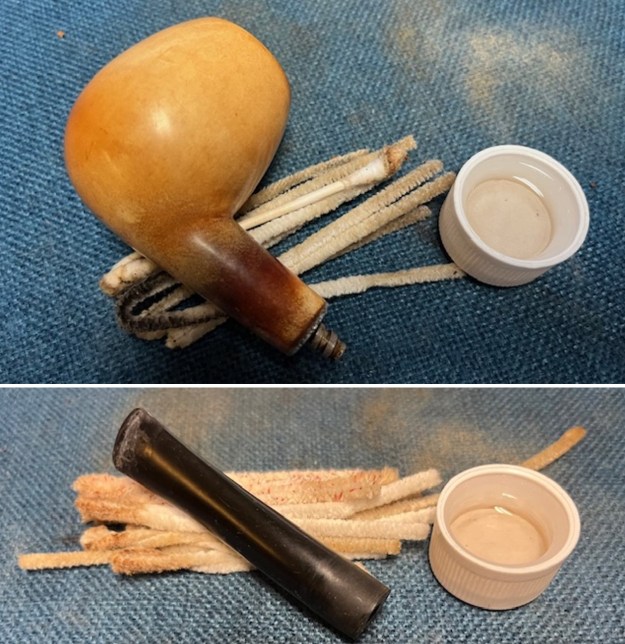
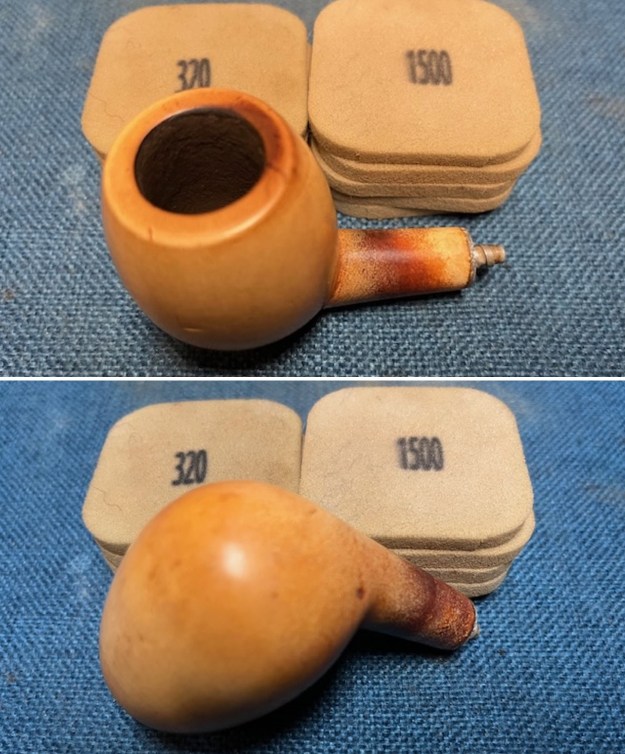
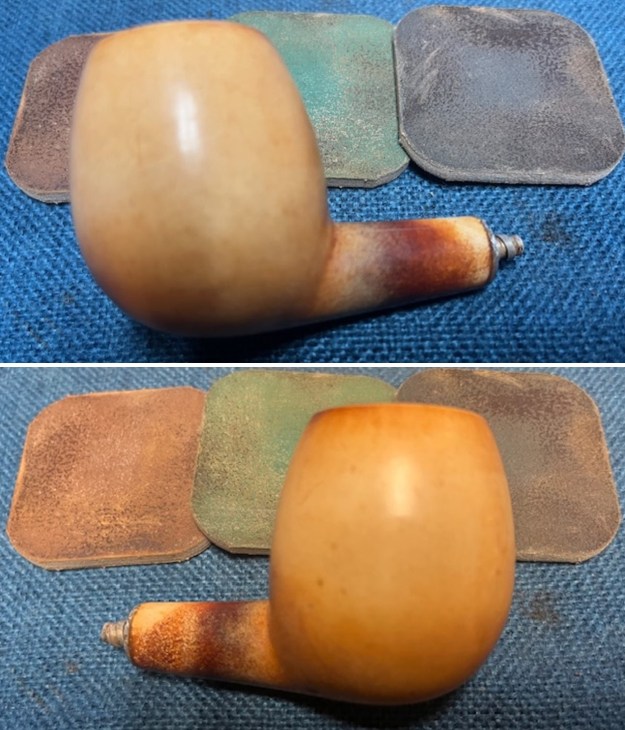
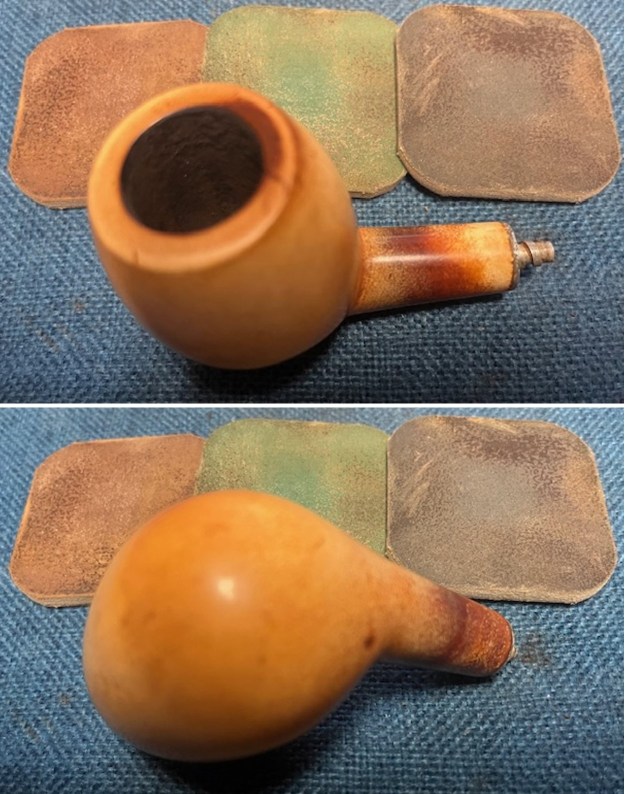
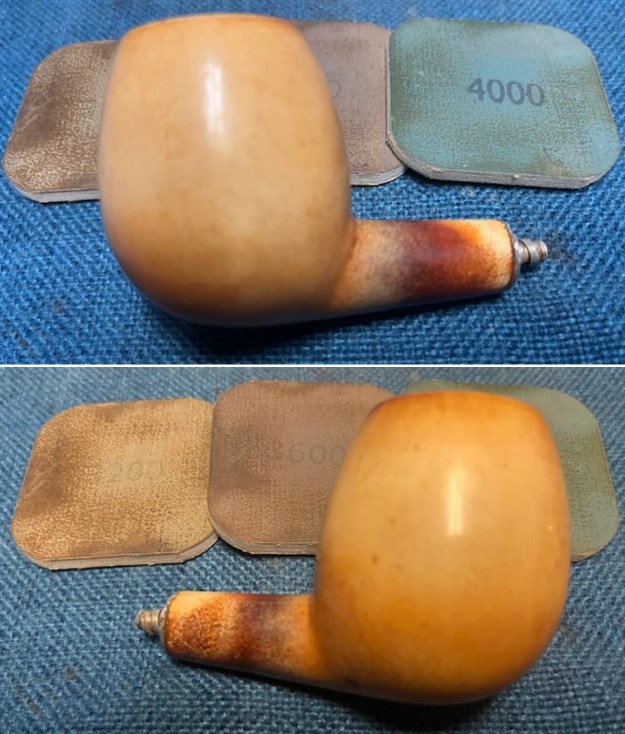
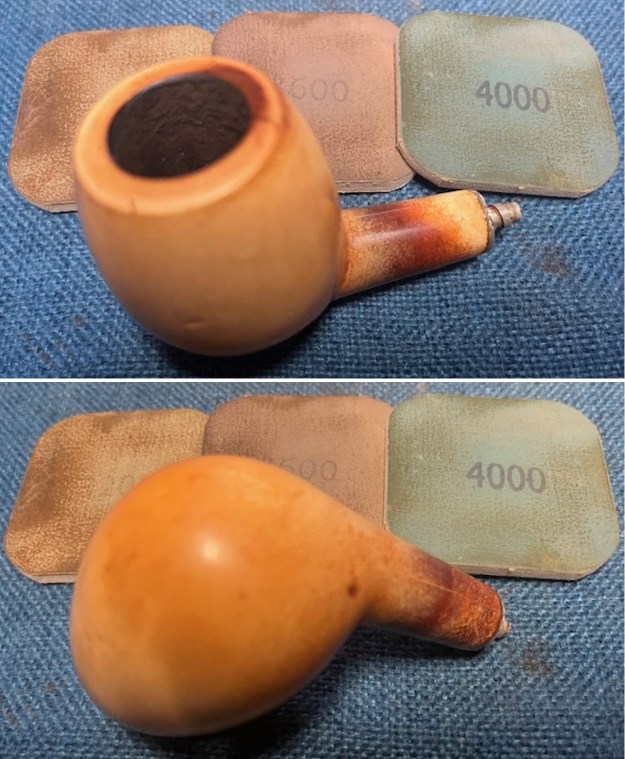
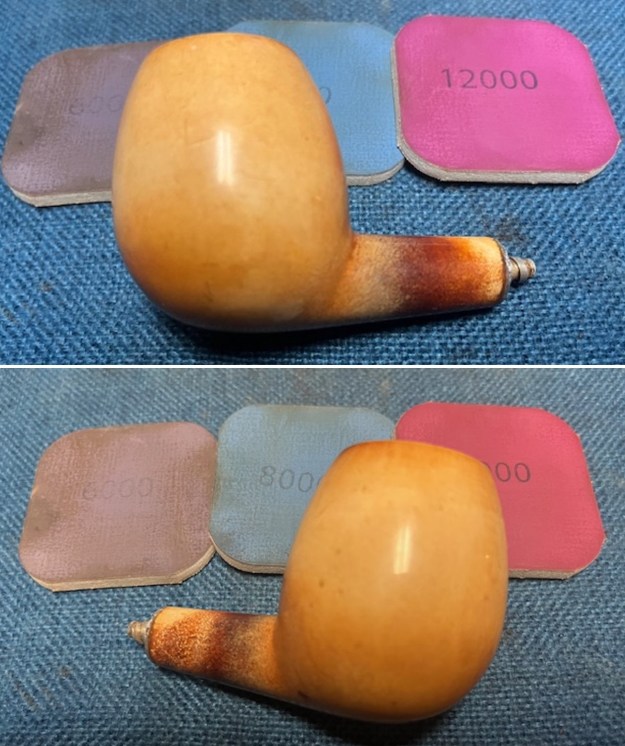
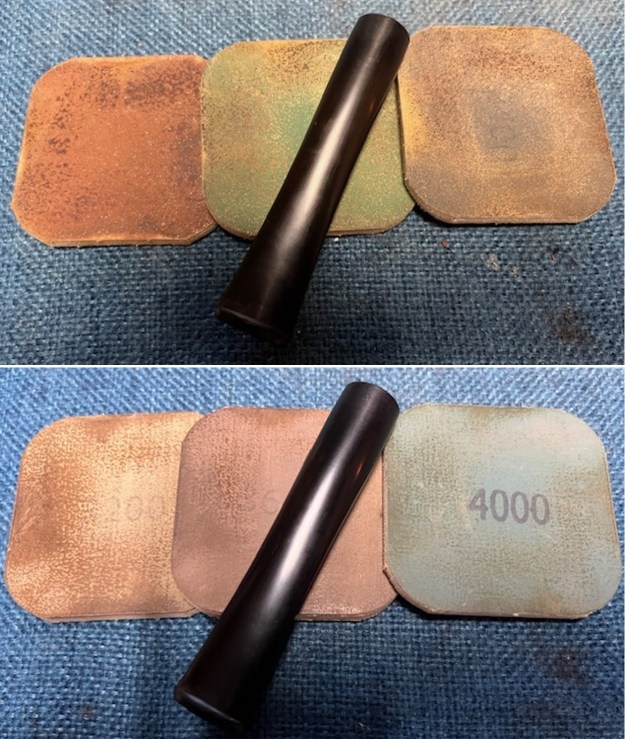
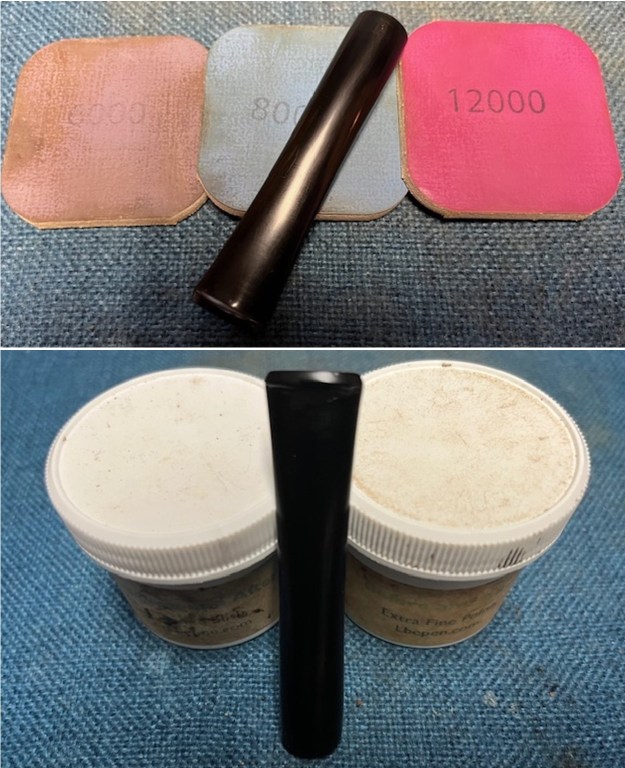
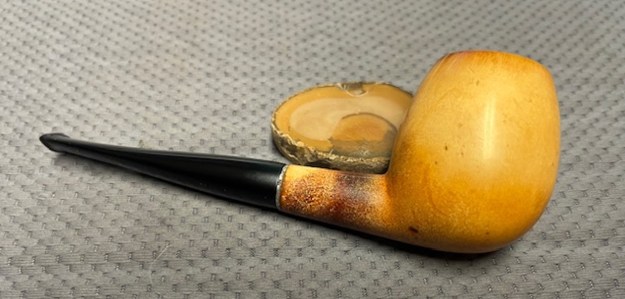
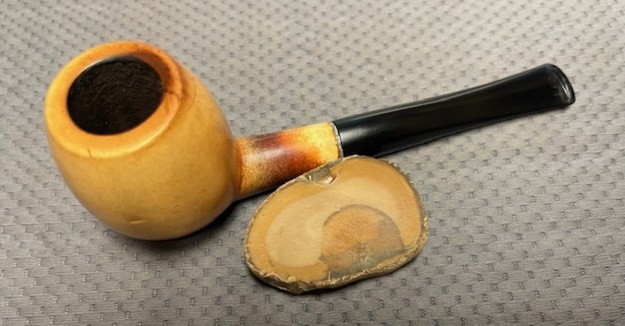
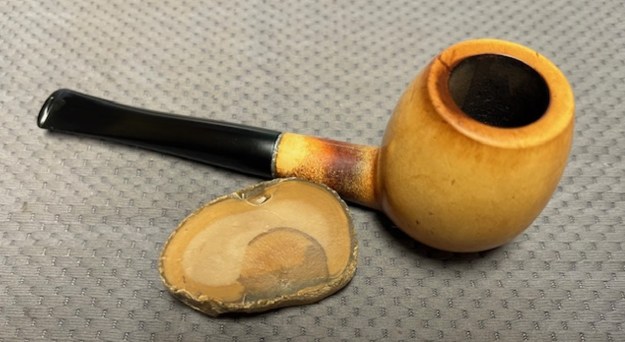
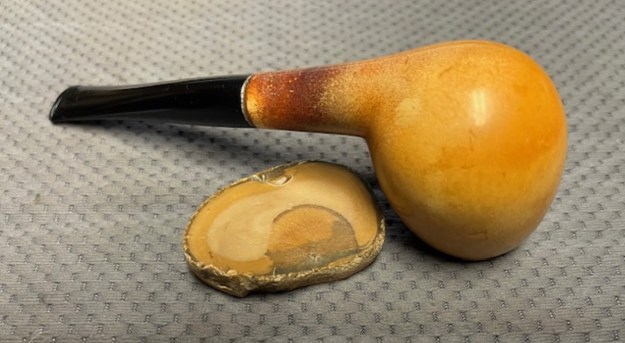
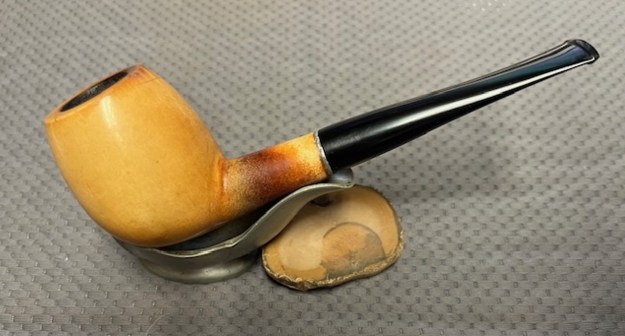
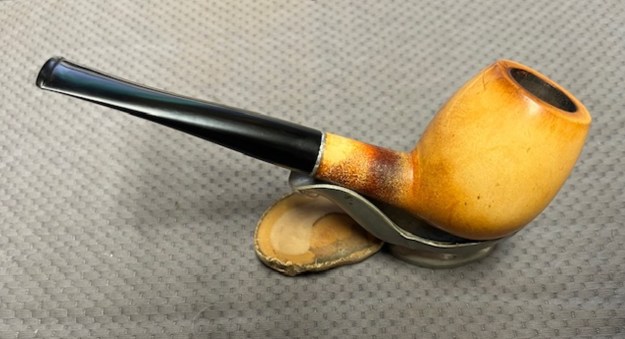
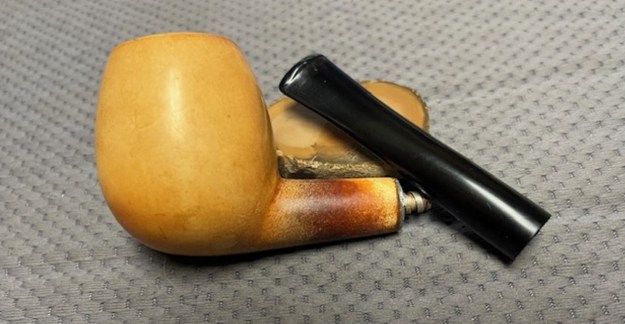
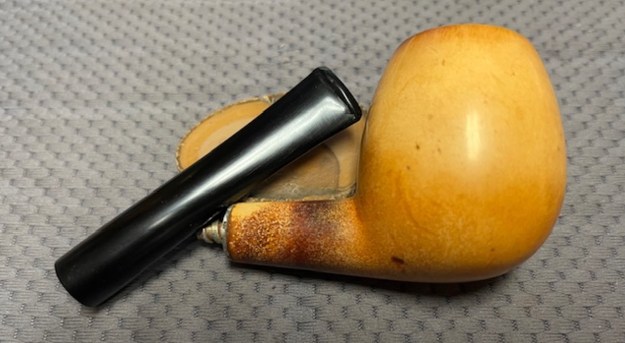
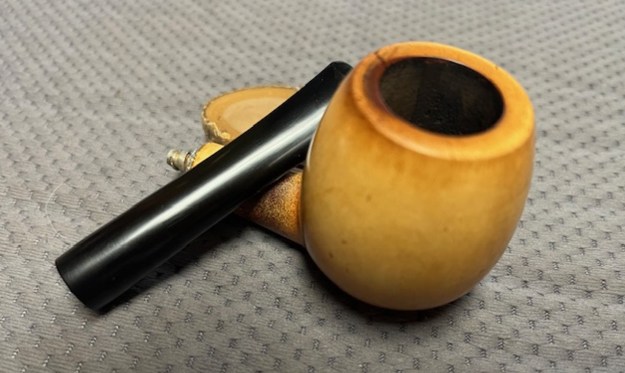
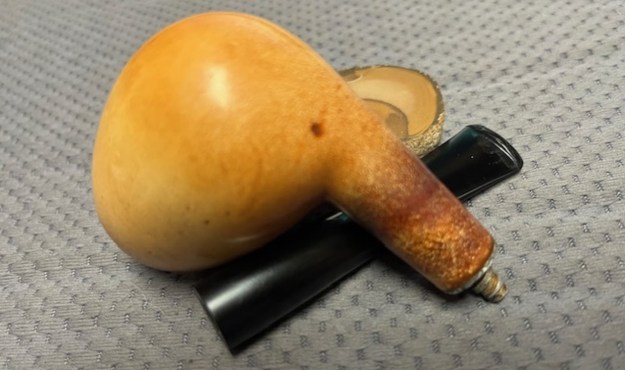
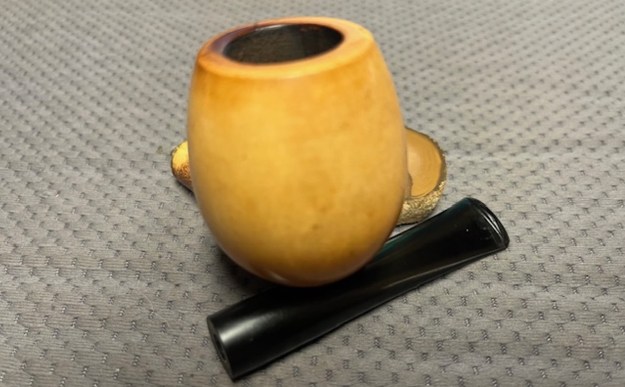
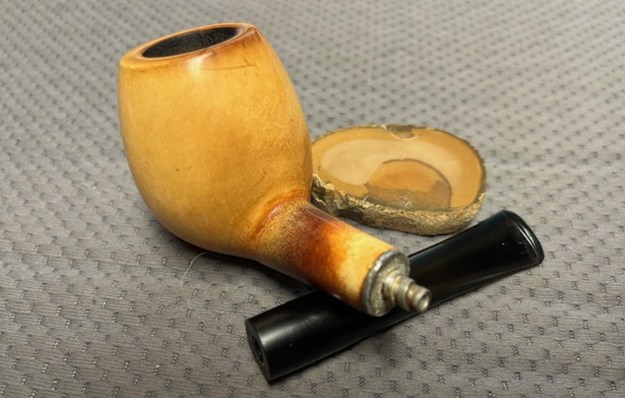
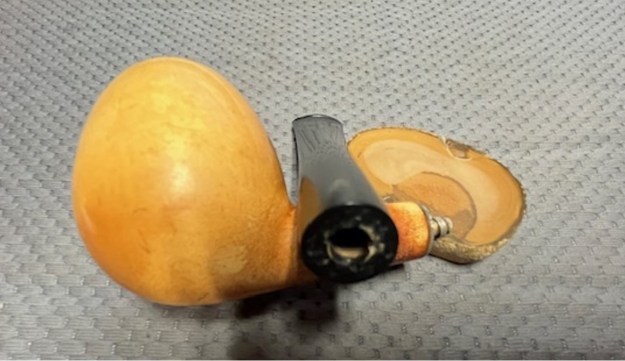
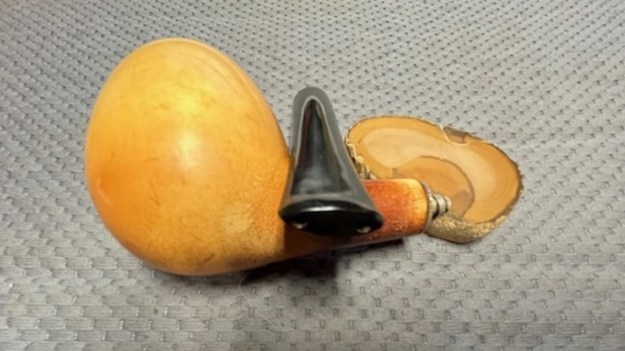
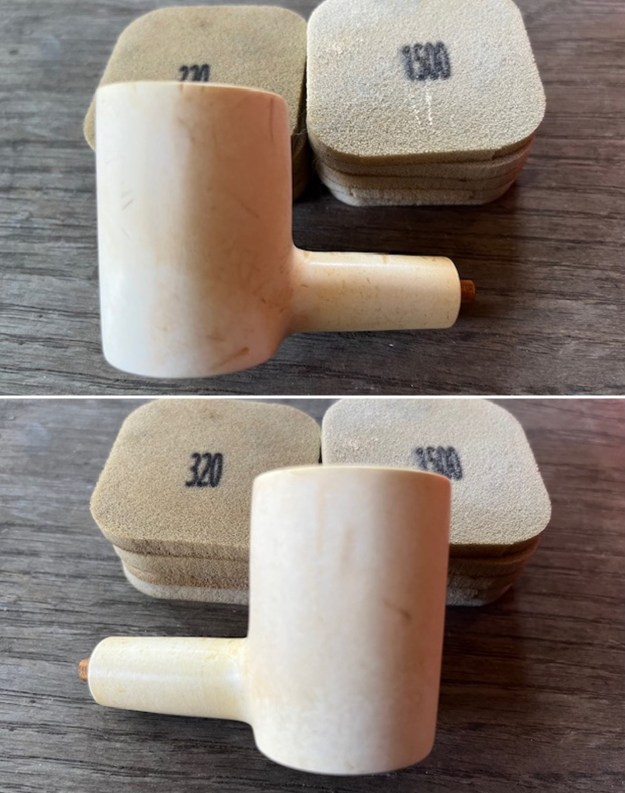
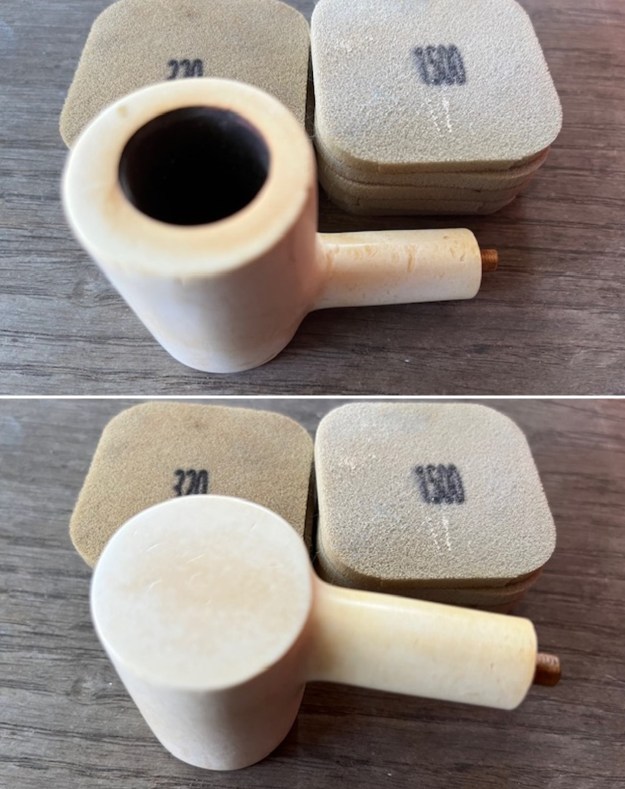
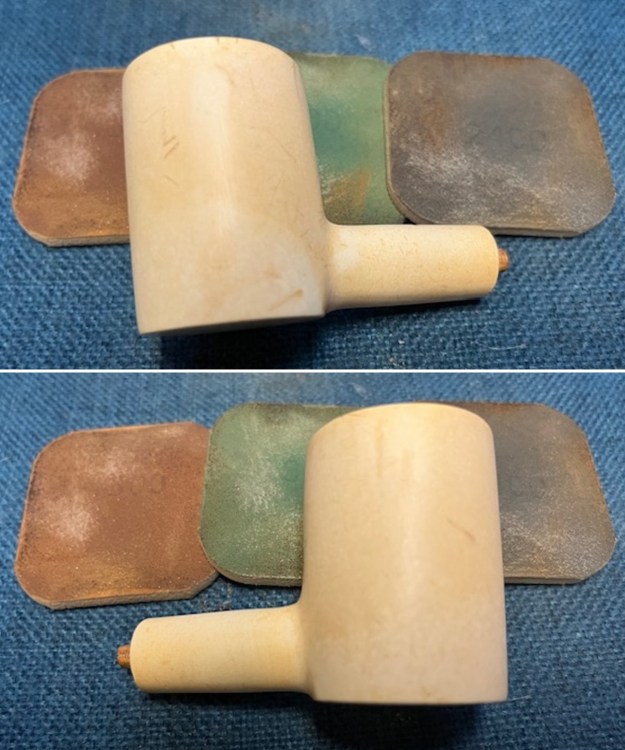
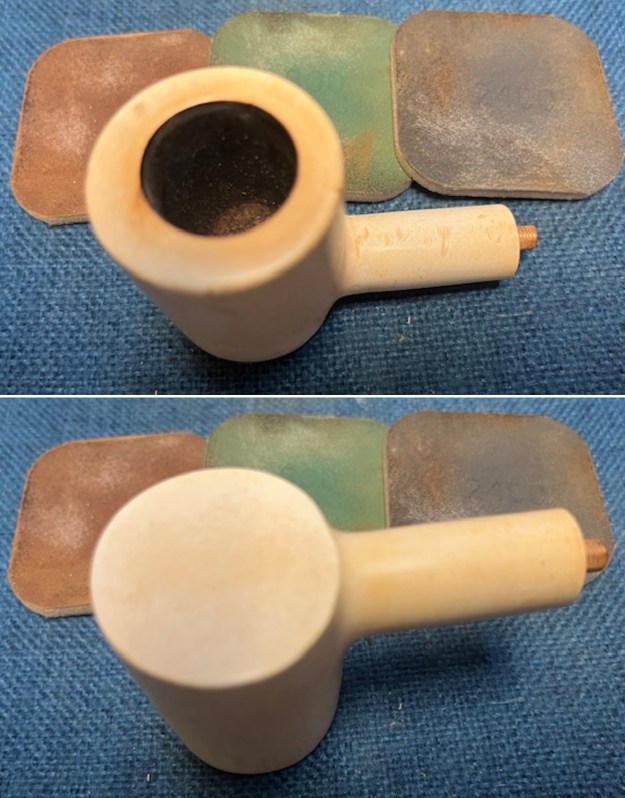
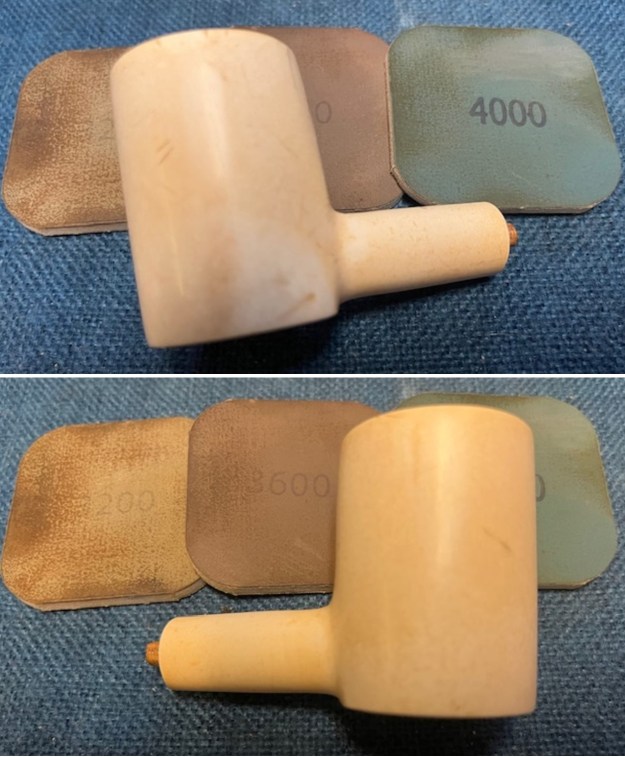
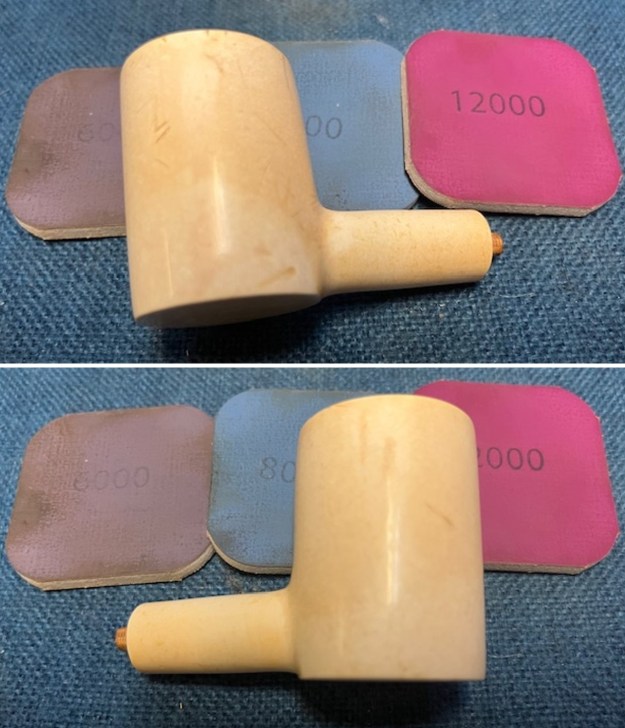
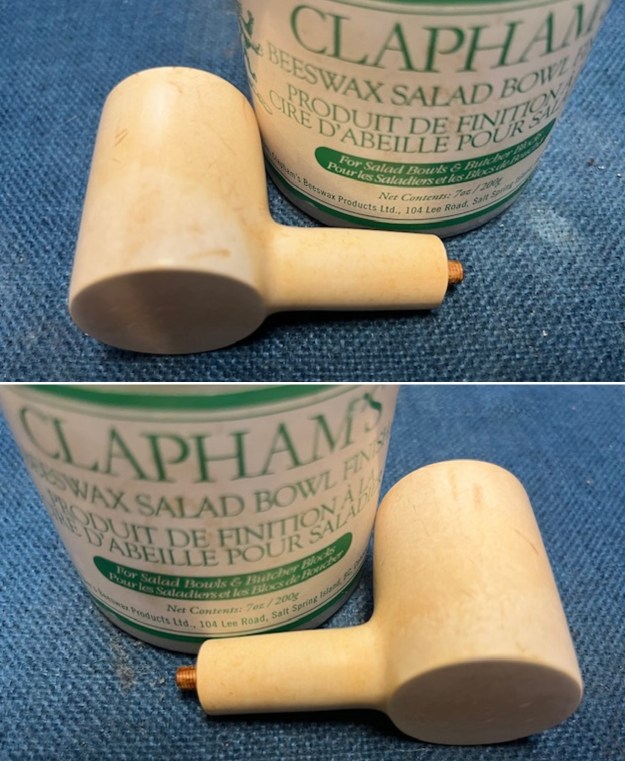
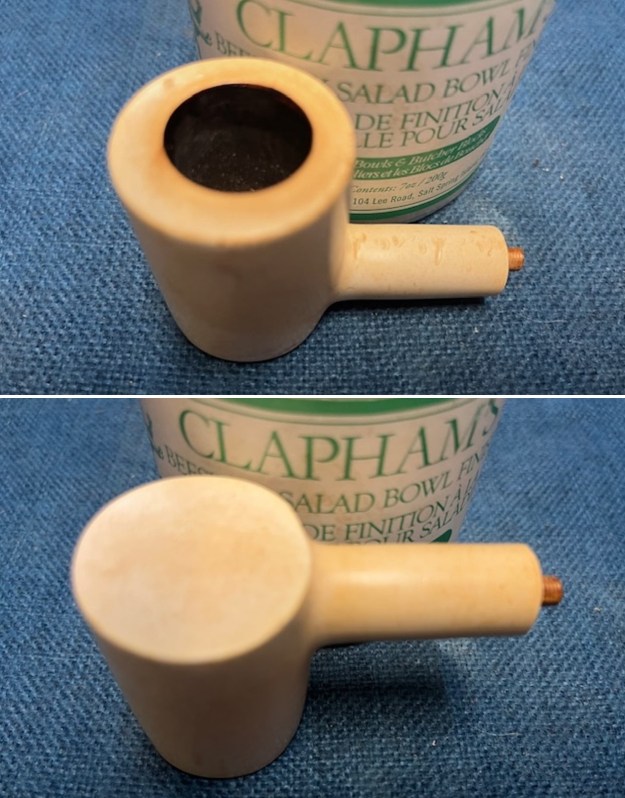
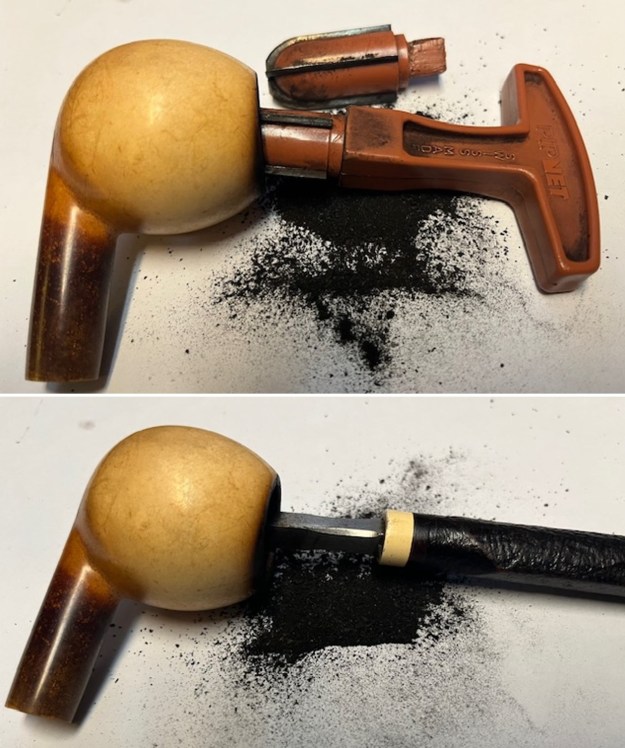
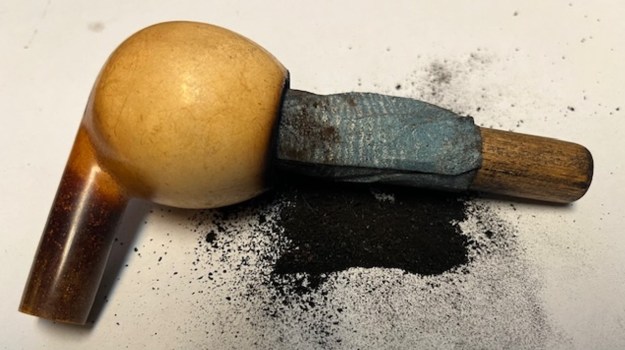
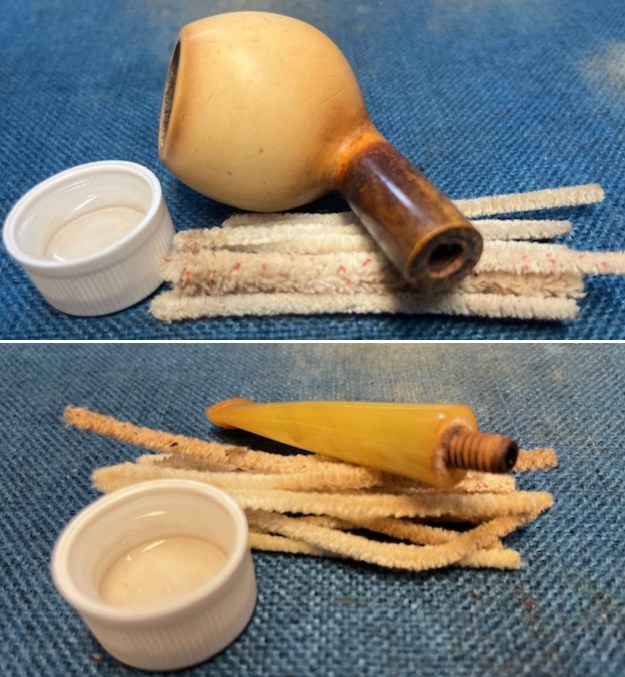
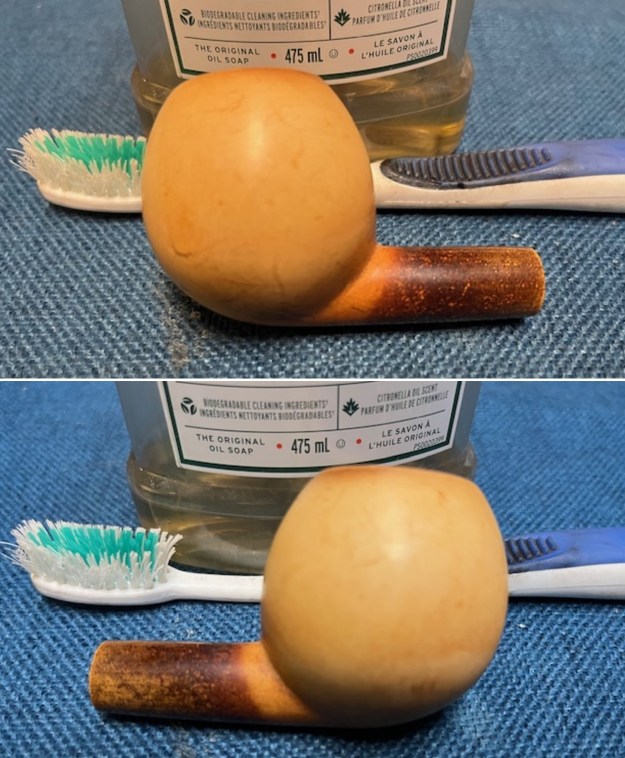
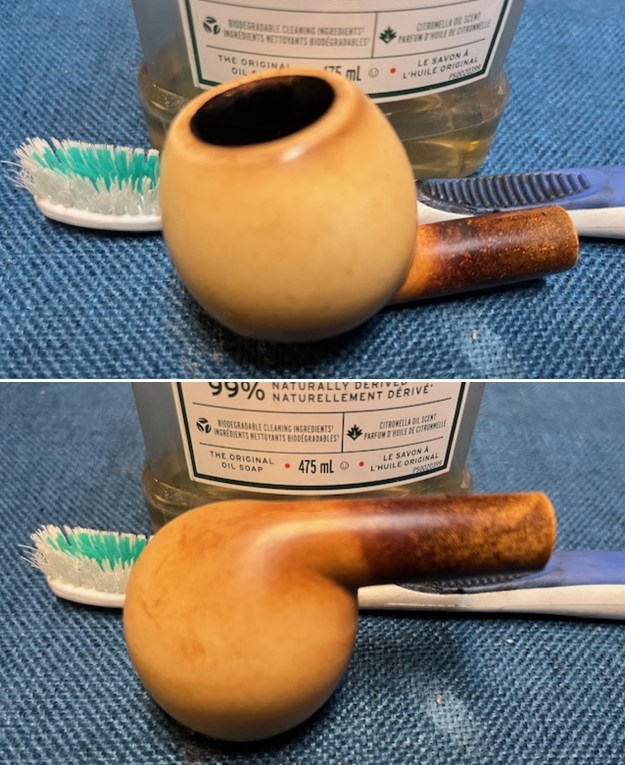
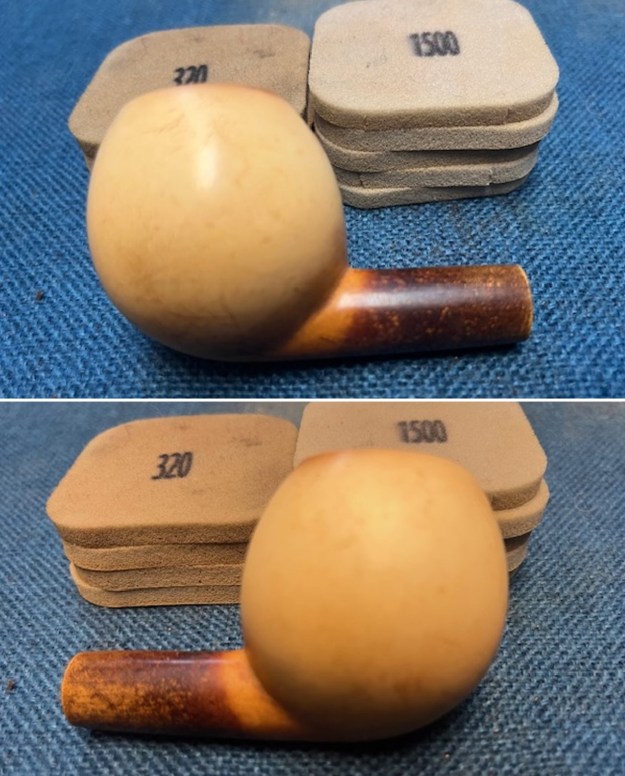
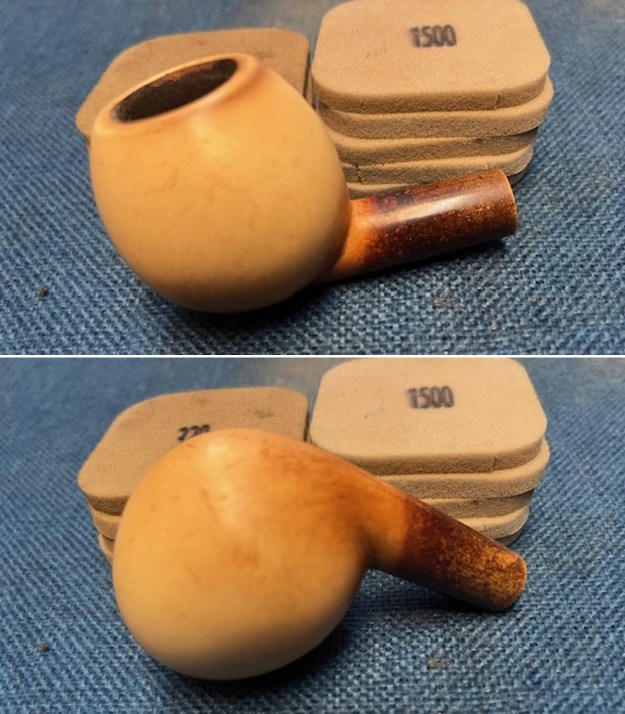
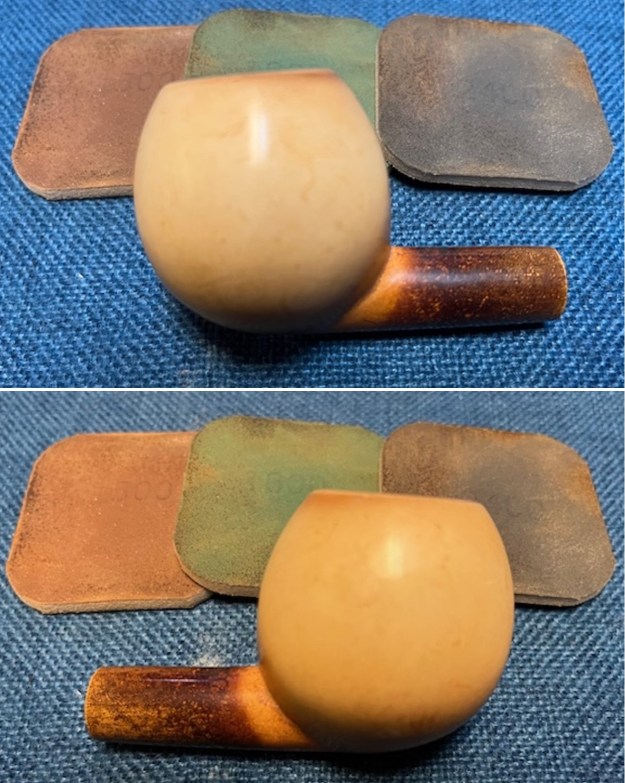
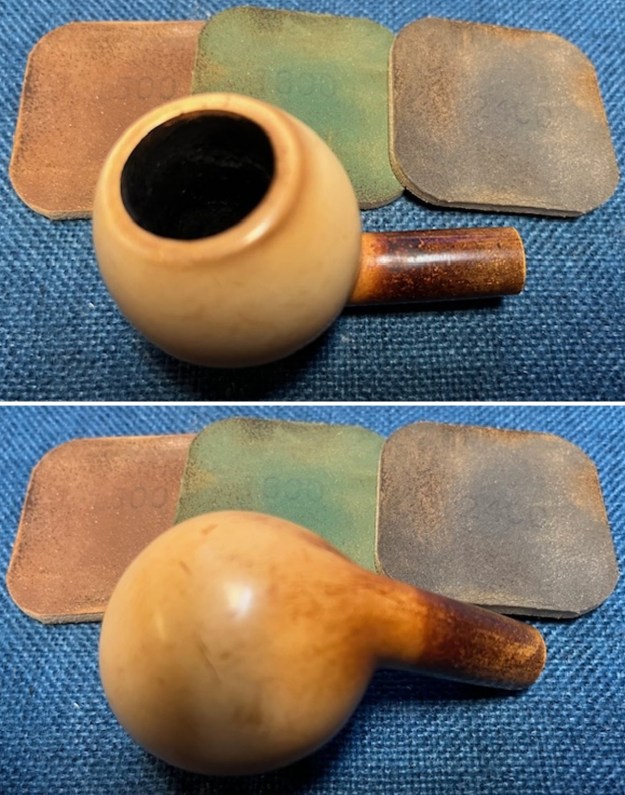
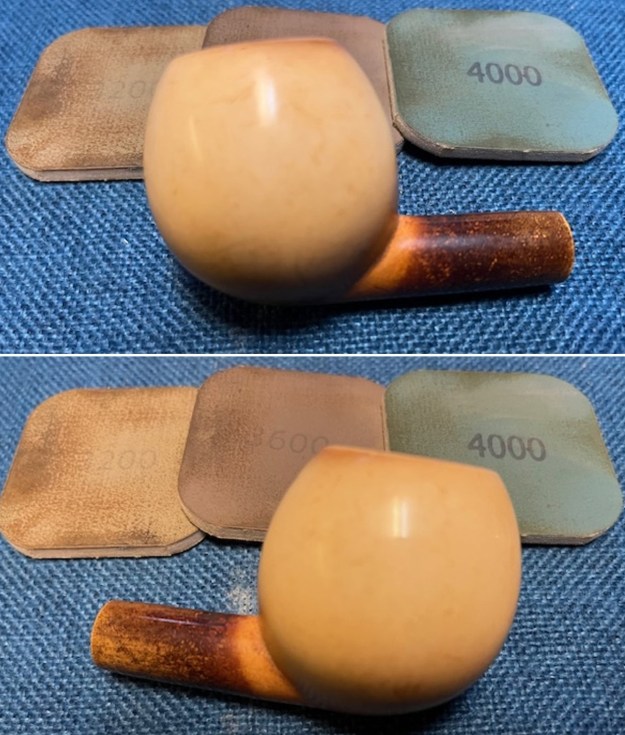
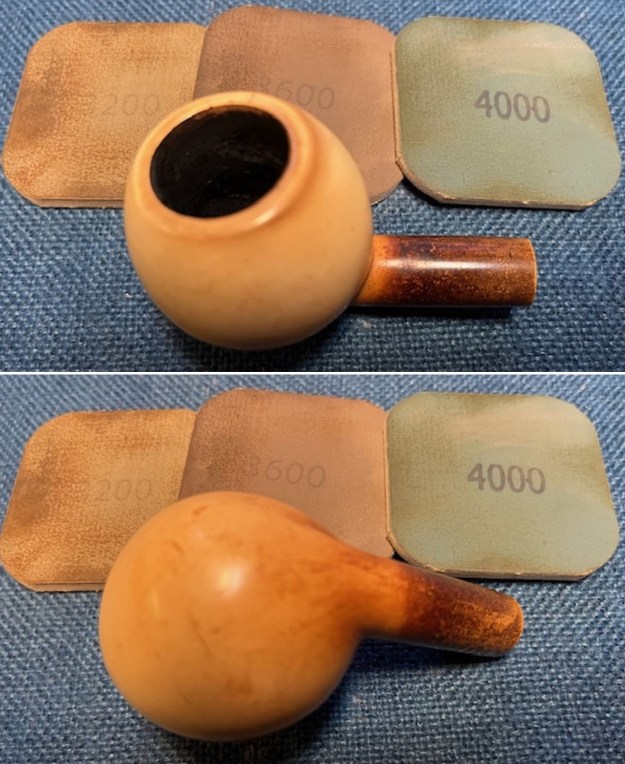
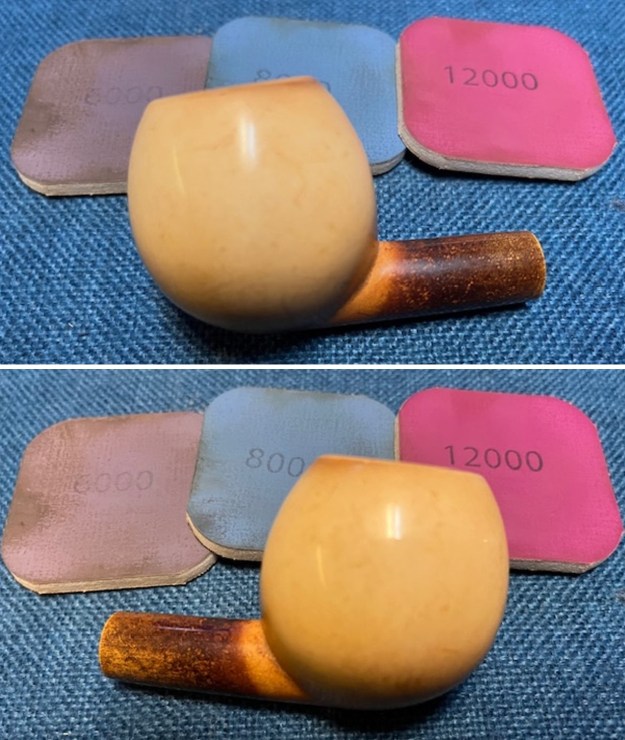
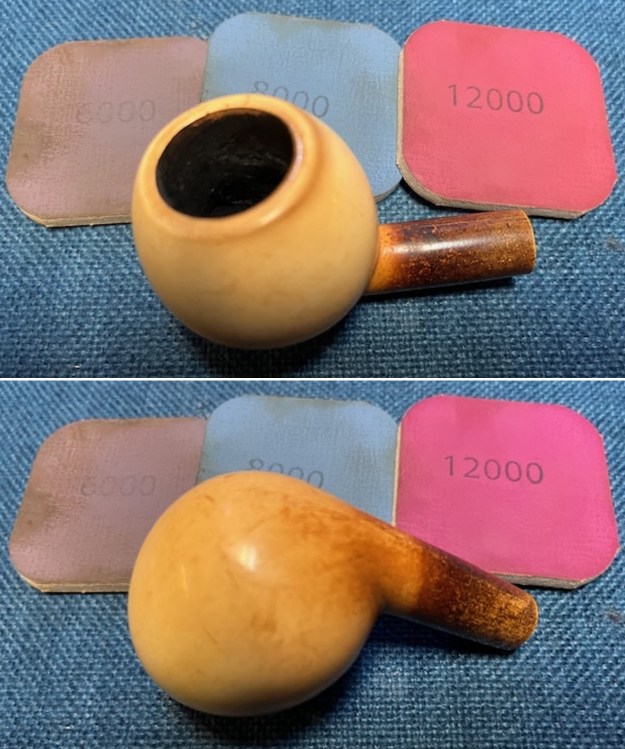
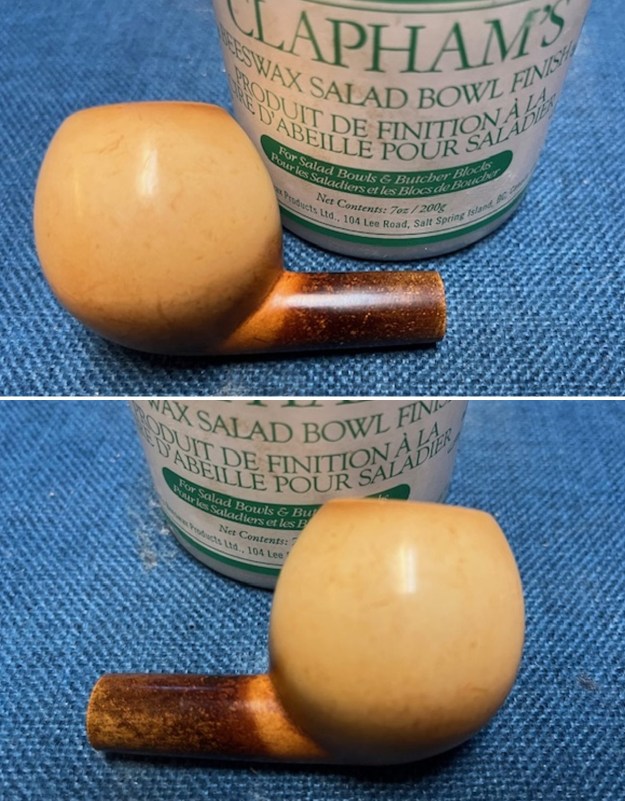
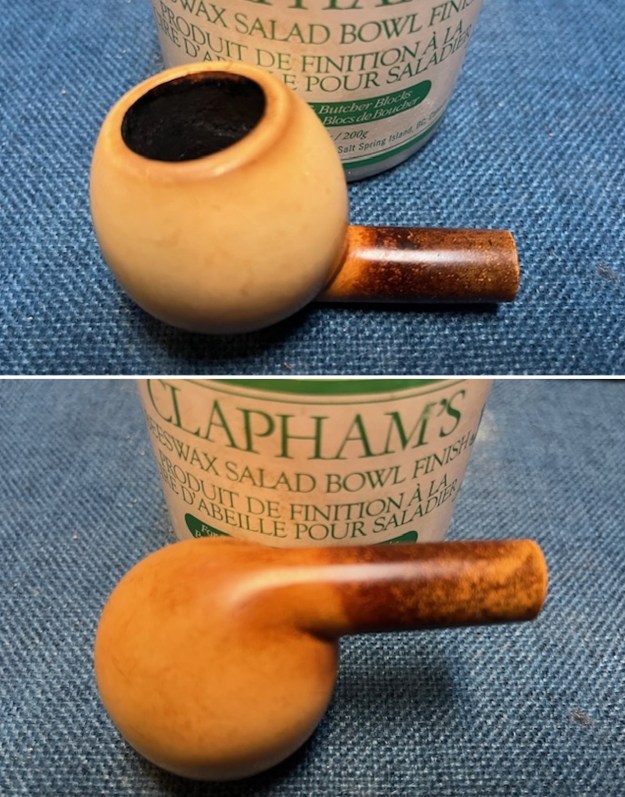
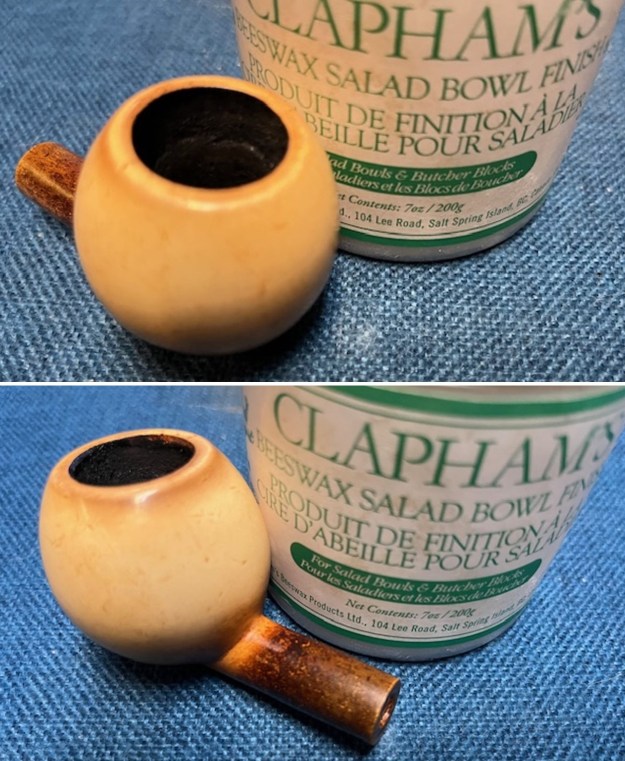
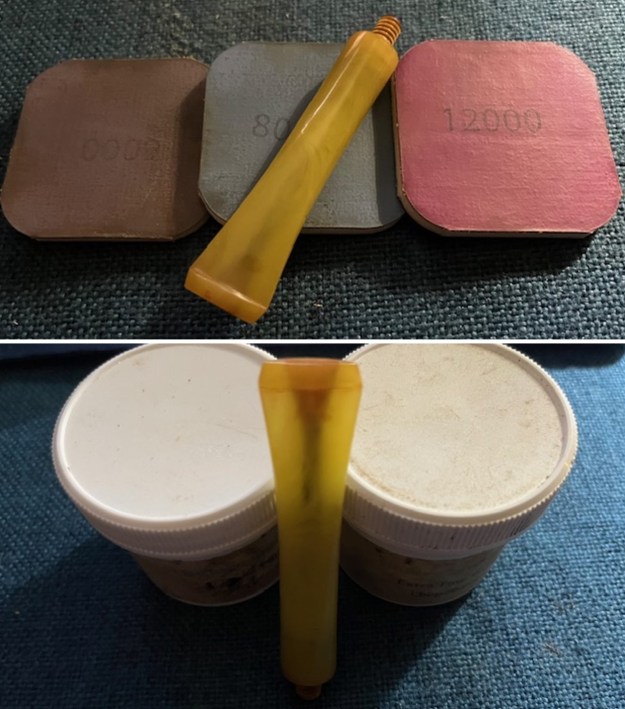
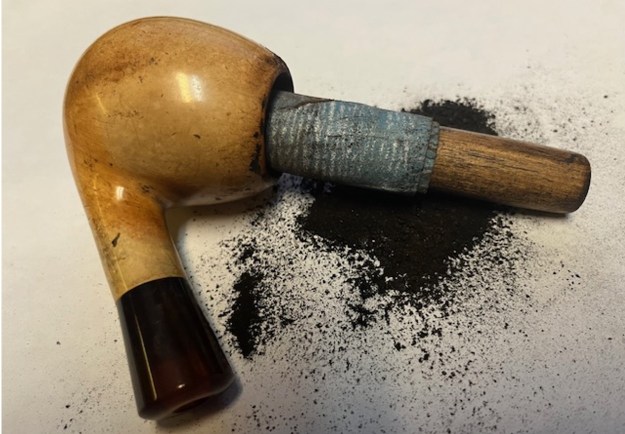
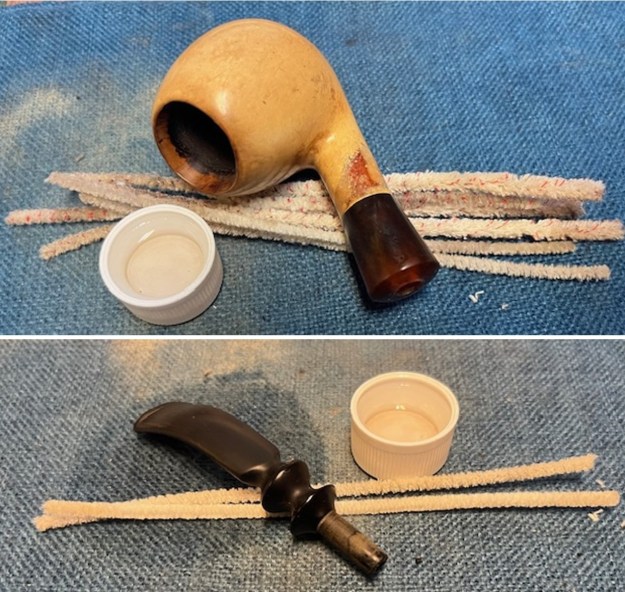
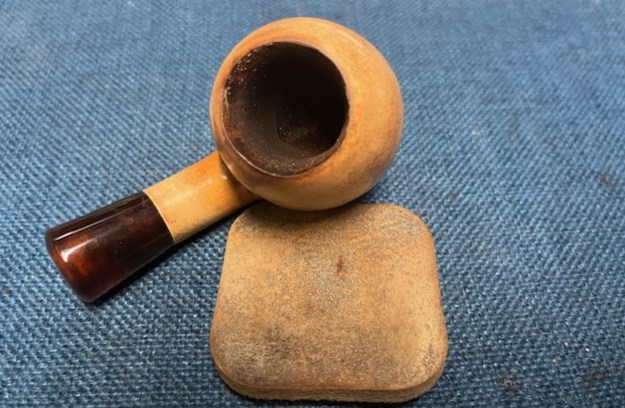
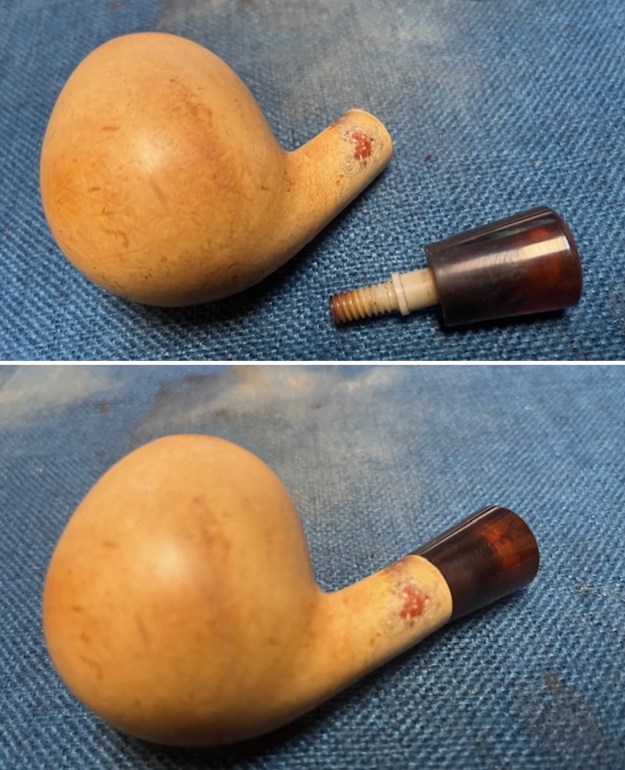
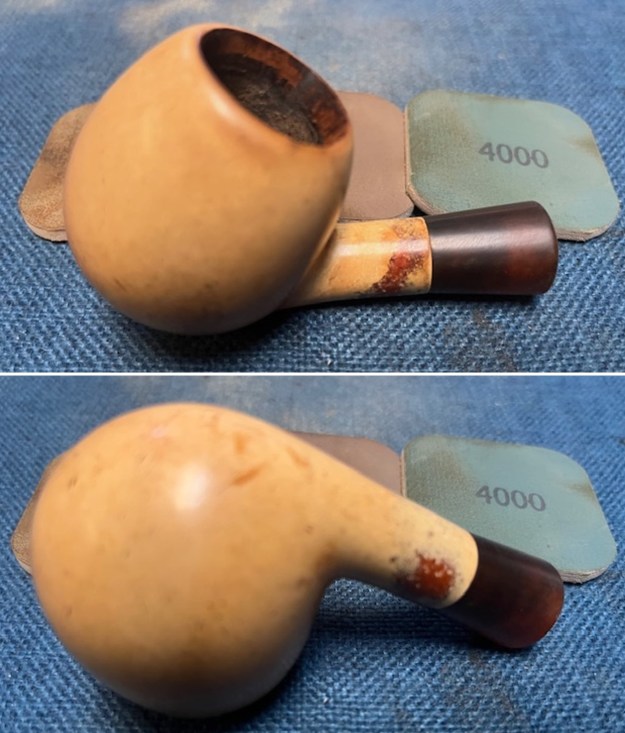
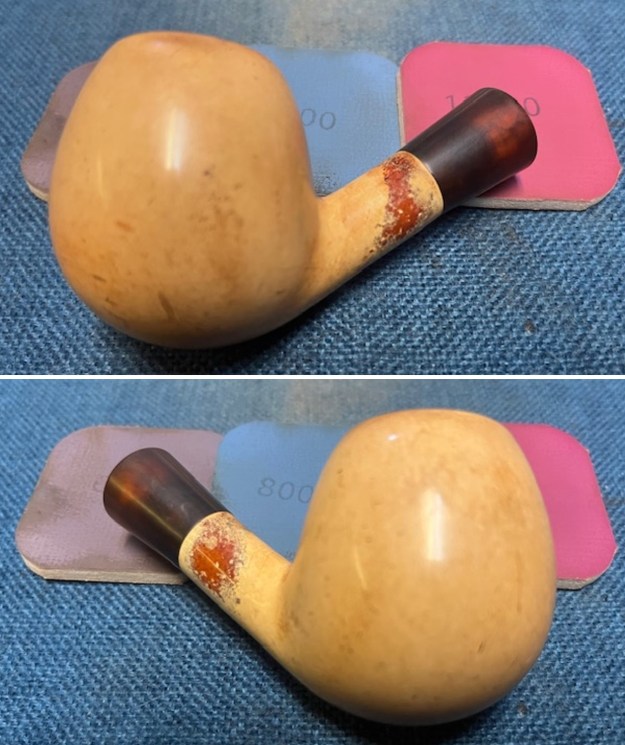
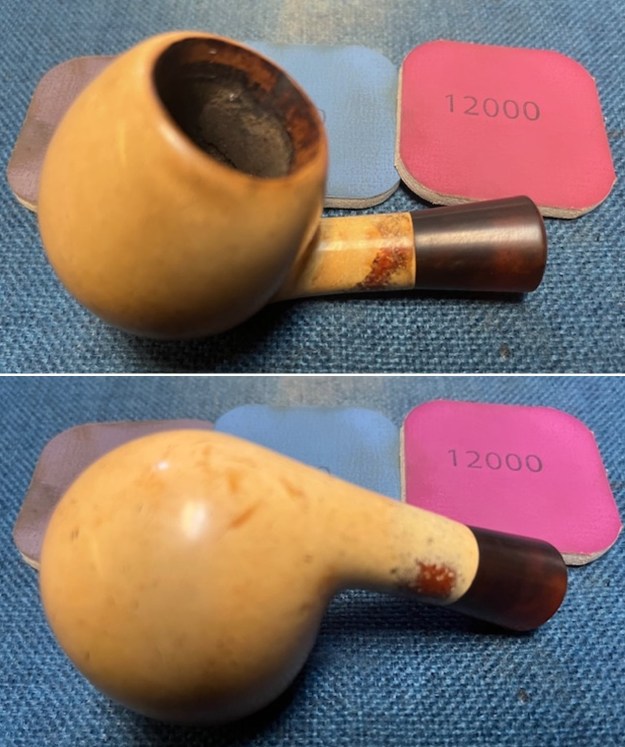
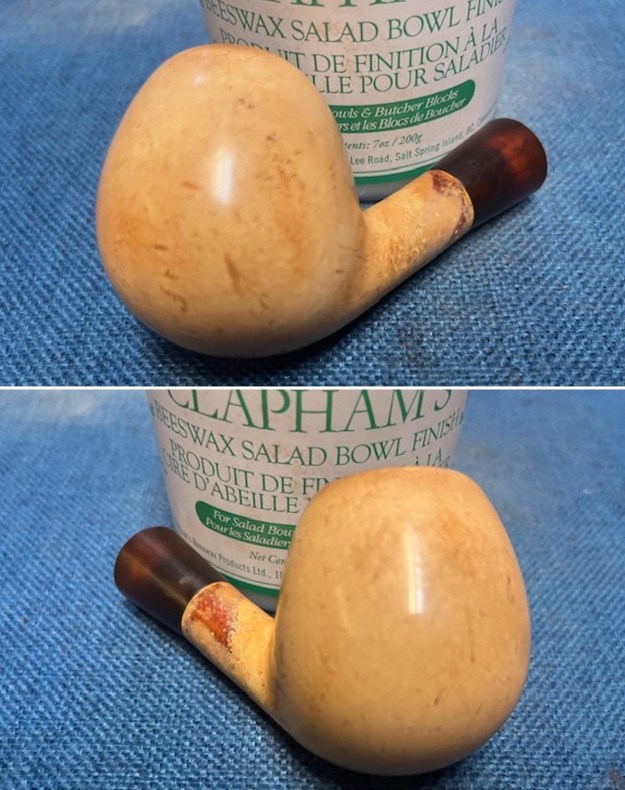
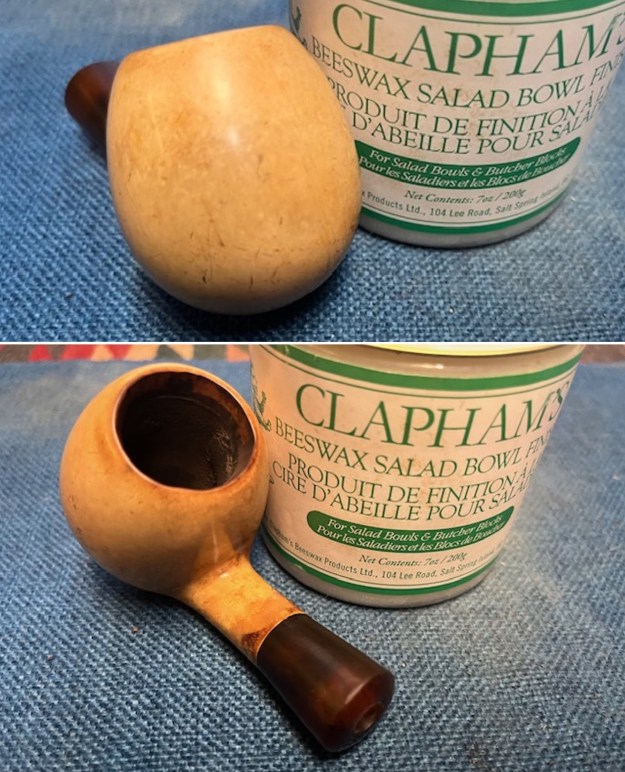
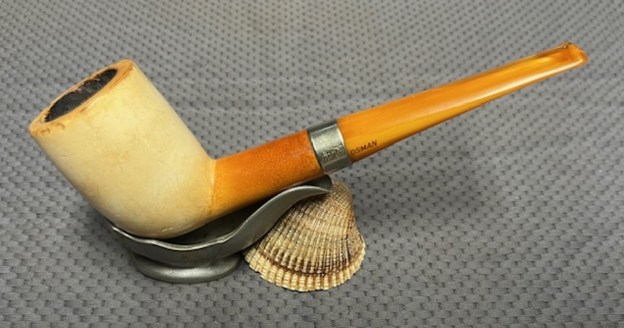
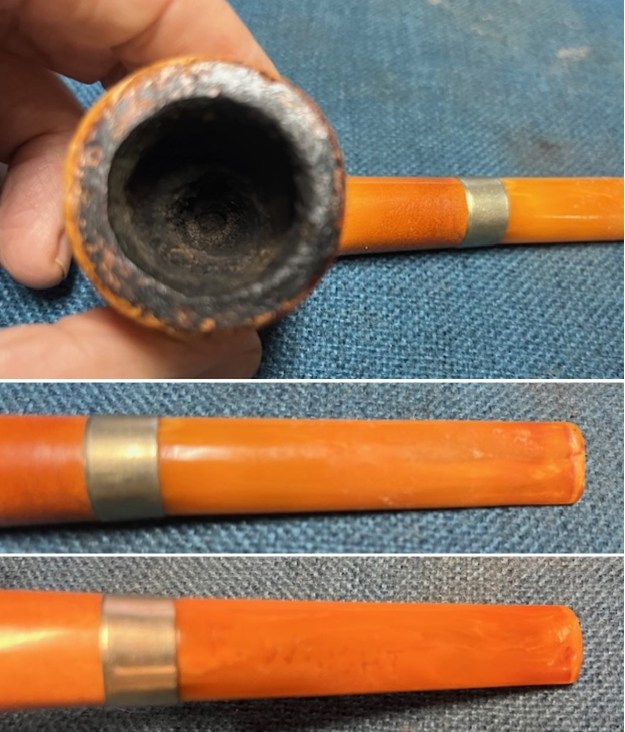
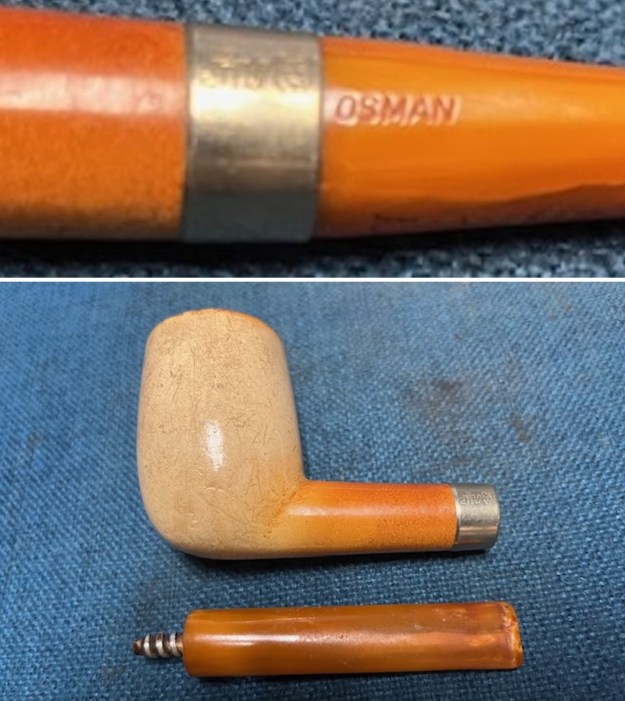
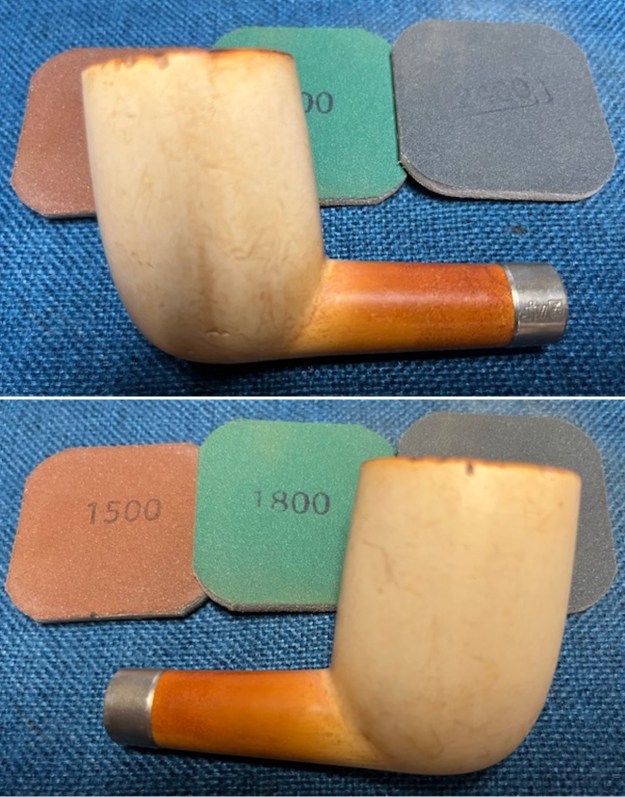
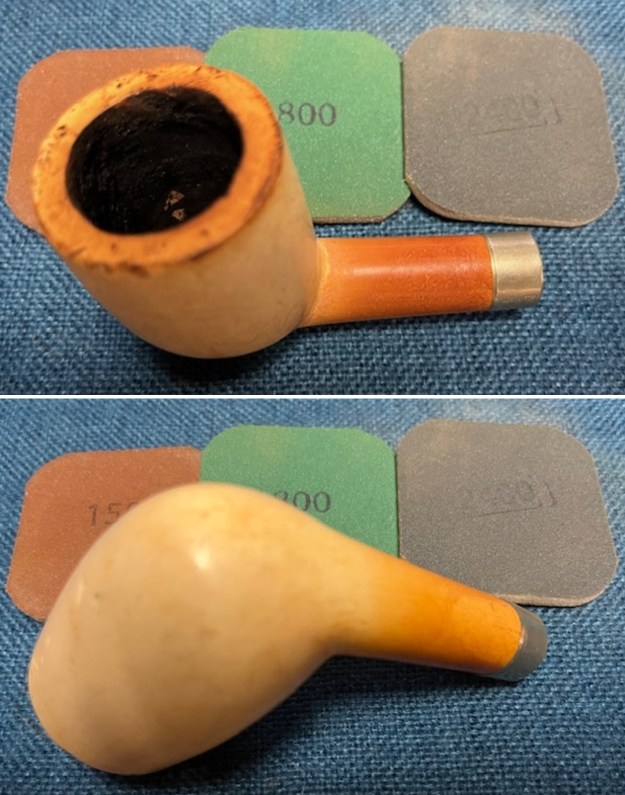
Last evening but for quitting for the night I decided to work on another pipe that I no longer know where or when we purchased it. It is another pipe from a large box of Meerschaum pipes that is sitting in my storage that I need to clean up and restore. I have honestly avoided them for years but now was the time to start my work on some of them. The one I chose was a Tall Billiard or almost a stack. It is a smooth meerschaum with what appears to be a Bakelite stem. It is a beautifully shaped meer with nicks and scratches from its journey and some nice patina developing around the shank and sides. The meer is very dirty from use with a thick cake in the bowl and an overflow of lava on the inner edge and rim top. The stem fit well against the shank end and had a threaded tenon in the shank that aligned with properly with the stem in place. The tenon was a Kaywoodie type threaded one that had been clipped. The stem was stamped OSMOND on the left side and the shank band has the marks of a repair band. On the underside of the name F. Wright was scratched into the surface but it was almost worn away. I took photos of the pipe before I started my clean up work on it. I took photos of the rim top and the stem to show the condition of the pipe when I brought it to the worktable. You can see the cake in the bowl and the build up of lava and debris on the edge and top of the rim top. It is another dirty pipe but still a charmer. The orifice button Bakelite taper stem has light chatter and deep tooth marks on both sides near the button. I took a photo of the stamping on the left side of the taper stem. It is clear and readable as noted above. I removed the stem from the shank and took a photo of the parts.I started my work on the bowl by reaming the thick cake out of the bowl. I started with a PipNet reamer and the 2nd and 3rd cutting heads to take back the cake to the walls of the bowl. I cleaned up the reaming with a Savinelli Fitsall Pipe Knife and scraped the rim top at the same time. I sanded the bowl walls with a piece of dowel wrapped with 220 grit sandpaper. Once finished it looked much better. I scrubbed the bowl and shank with undiluted Murphy’s Oil Soap and a tooth brush. I rinsed off the soap and debris with warm water and repeated the process until the pipe was clean. I dried it off with a soft towel. It really began to look better. I cleaned out the airway in the shank and mortise as well as in the stem with pipe cleaners (both bristle and regular). I used a brass bristle wire brush to further clean up the metal tenon. It was much better.I polished the meerschaum with micromesh sanding pads – dry sanding with 1500-12000 grit pads. I wiped the bowl down after each pad with a damp cotton cloth. The bowl took on a shine by the last pads. I gave the bowl multiple coats of Clapham’s Wax that blends both carnauba and beeswax in a soft wax. I rubbed the wax on the bowl sides and the shank end with my fingers and set it aside to dry. Once the wax cured I buffed the bowl with a clean buffing pad and then with a soft microfibre cloth. The bowl has a rich glow. I polished the polished nickel band with a jeweller’s cloth to clean and protect the finish and to remove the remaining oxidation and dullness. I set the bowl aside and turned my attention to the stem. I filled in the tooth marks with some clear CA glue. When it cured I flattened the repairs with a small flat file to blend them into the surface of the stem. I then sanded it with 220 grit sandpaper to smooth it out. I continued sanding the stem surface with 320-3500 grit 2×2 inch sanding pads. I wiped the stem down after each pad with a damp pad to remove the debris. By the end it was quite shiny and ready for polishing.I polished the stem with micromesh sanding pads – wet sanding it 1500-12000 pads. I wiped it down with a damp cloth after each pad to protect it and preserve it. I polished it with Before After Pipe Polish – both Fine and Extra Fine. I am really happy with the way that this Osman Meerschaum Tall Billiard with a Bakelite Stem turned out. It really is a beautiful looking pipe with a unique shape and smooth meerschaum bowl. The taper stem is really nice. The rich patina on the meerschaum came alive with waxing and buffing. I put the stem back on the bowl and carefully buffed the pipe with Blue Diamond on the buffing wheel. I gave the bowl and the stem multiple coats of beeswax/carnauba wax and buffed the pipe with a clean buffing pad to raise the shine. I hand buffed the pipe with a microfiber cloth to deepen the shine. The finished Osman Meerschaum Tall Billiard really is a beauty and feels great in the hand and looks very good. Give the finished pipe a look in the photos below. The dimensions of the pipe are Length: 6 ¼ inches, Height: 2 ¼ inches, Outside diameter of the bowl: 1 ½ inches, Chamber diameter: 1 inch. The weight of the pipe is 51 grams/1.80 ounces. The pipe will be going on the rebornpipes store soon. It will be in the Ceramic and Meerschaum Pipes Section if you would like to add it to your collection. Thanks for reading this blog and my reflections on the pipe while I worked on it. It was a fun one to work on!
Restoring a Block Meerschaum Apple with a Twin Bore Stem


by Steve Laug

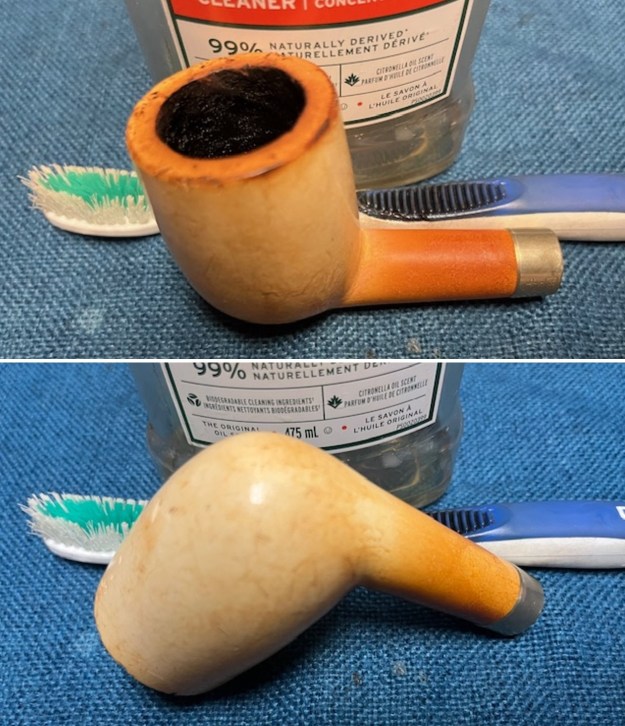
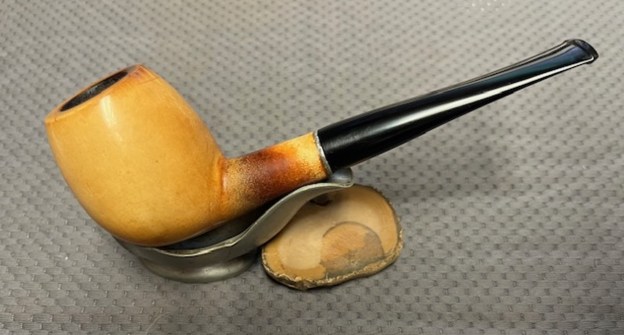
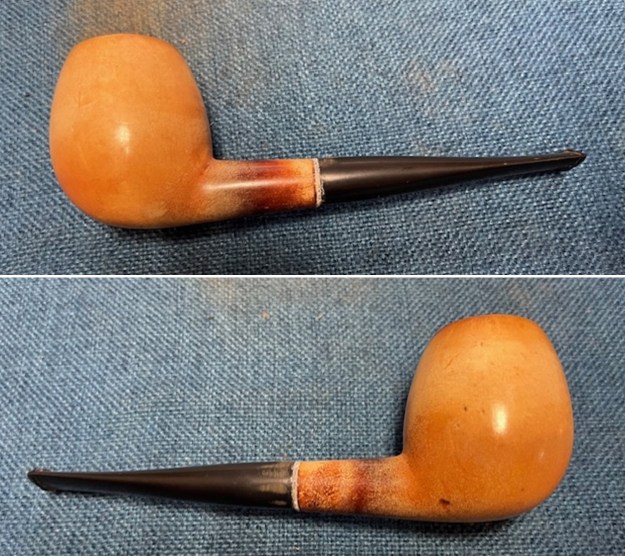
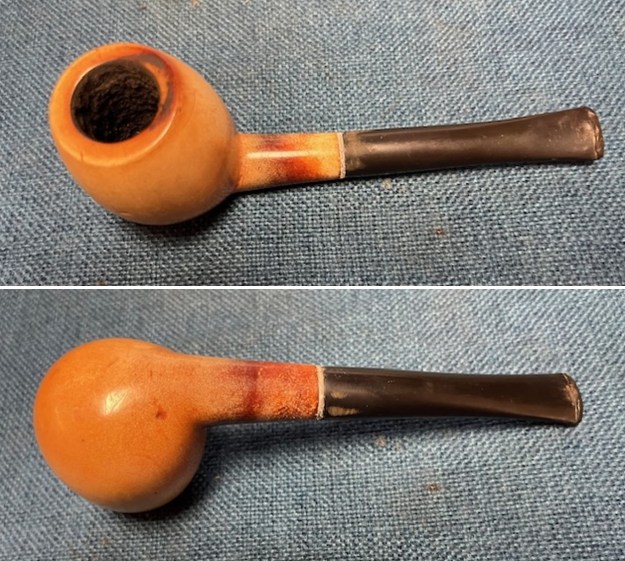
This afternoon I decided to work on another pipe that I no longer know where or when we purchased it. I have a large box of Meerschaum pipes that is sitting in my storage that I need to clean up and restore. I have honestly avoided them for years but now was the time to start my work on some of them. The one I chose was a ball or apple shaped smooth meerschaum with a Twin Bore vulcanite stem. It is a beautifully shaped meer with light scratches from its journey and some nice patina developing around the shank and sides. The meer is dirty from use with a thick cake in the bowl and an overflow of lava on the inner edge and rim top. The stem fit well against the shank end and had a threaded tenon in the shank that aligned with properly with the stem in place. The tenon was a Kaywoodie type threaded one without a stinger and was oxidized and pitted. There were no identifying logos on the bowl or shank. I took photos of the pipe before I started my clean up work on it. I took photos of the rim top and the stem to show the condition of the pipe when I brought it to the worktable. You can see the cake in the bowl and the build up of lava and debris on the edge and top of the rim top. It is another dirty pipe but still a charmer. The TWIN BORE vulcanite taper stem has light chatter and deep tooth marks on both sides near the button. I took a photo of the stamping on the inside of the case. It is clear and readable as noted above. I removed the stem from the shank and took a photo of the parts. I removed the stem from the shank and took a photo of the parts. I took photos of the end of the stem to try to show the threads on the end that sat against the shank end and the twin bores in the button.I started my work on the bowl by reaming the thick cake out of the bowl. I started with a PipNet reamer and the 2nd and 3rd cutting heads to take back the cake to the walls of the bowl. I cleaned up the reaming with a Savinelli Fitsall Pipe Knife. I sanded the bowl walls with a piece of dowel wrapped with 220 grit sandpaper. Once finished it looked very good. I cleaned out the airway in the shank and mortise as well as in the stem with pipe cleaners (both bristle and regular). It was much better.Now it was time to work on the scratches on the bowl and rim top. I started my work by sanding with 320-3500 grit 2×2 inch sanding pads. It smoothed out the scratches and revealed more and more of the patina around the bowl and shank. It is a beautiful looking pipe. I polished the meerschaum with micromesh sanding pads – dry sanding with 1500-12000 grit pads. I wiped the bowl down after each pad with a damp cotton cloth. The bowl took on a shine by the last pads. I gave the bowl multiple coats of Clapham’s Wax that blends both carnauba and beeswax in a soft wax. I rubbed the wax on the bowl sides and the shank end with my fingers and set it aside to dry. Once the wax cured I buffed the bowl with a clean buffing pad and then with a soft microfibre cloth. The bowl has a rich glow. I set the bowl aside and turned my attention to the stem. I filled in the tooth marks with some clear CA glue. When it cured I flattened the repairs with a small flat file to blend them into the surface of the stem. I then sanded it with 220 grit sandpaper to smooth it out. I continued sanding the stem surface with 320-3500 grit 2×2 inch sanding pads. I wiped the stem down after each pad with a damp pad to remove the debris. By the end it was quite shiny and ready for polishing.I polished the stem with micromesh sanding pads – wet sanding it 1500-12000 pads. I wiped it down with a damp cloth after each pad to protect it and preserve it. I polished it with Before After Pipe Polish – both Fine and Extra Fine. I am really happy with the way that this Meerschaum Apple with a Twin Bore Stem turned out. It really is a beautiful looking pipe with a unique shape and smooth meerschaum bowl. The vulcanite taper stem is really nice. The rich patina on the meerschaum came alive with waxing and buffing. I put the stem back on the bowl and carefully buffed the pipe with Blue Diamond on the buffing wheel. I gave the bowl and the stem multiple coats of beeswax/carnauba wax and buffed the pipe with a clean buffing pad to raise the shine. I hand buffed the pipe with a microfiber cloth to deepen the shine. The finished Meerschaum Apple really is a beauty and feels great in the hand and looks very good. Give the finished pipe a look in the photos below. The dimensions of the pipe are Length: 5 ¾ inches, Height: 2 inches, Outside diameter of the bowl: 1 ¼ inches, Chamber diameter: ¾ of an inch. The weight of the pipe is 59 grams/2.08 ounces. The pipe will be going on the rebornpipes store soon. It will be in the Ceramic and Meerschaum Pipes Section if you would like to add it to your collection. Thanks for reading this blog and my reflections on the pipe while I worked on it. It was a fun one to work on!
Restoring a Block Meerschaum Cherrywood/Poker with A Butterscotch Acrylic Stem


by Steve Laug

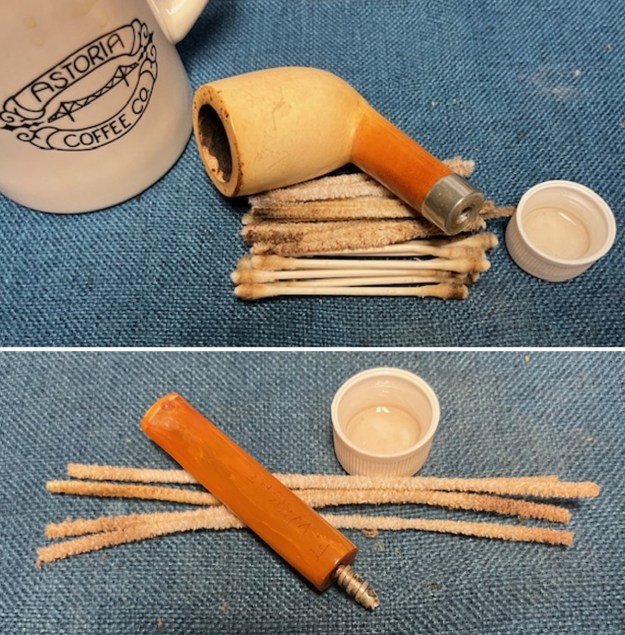
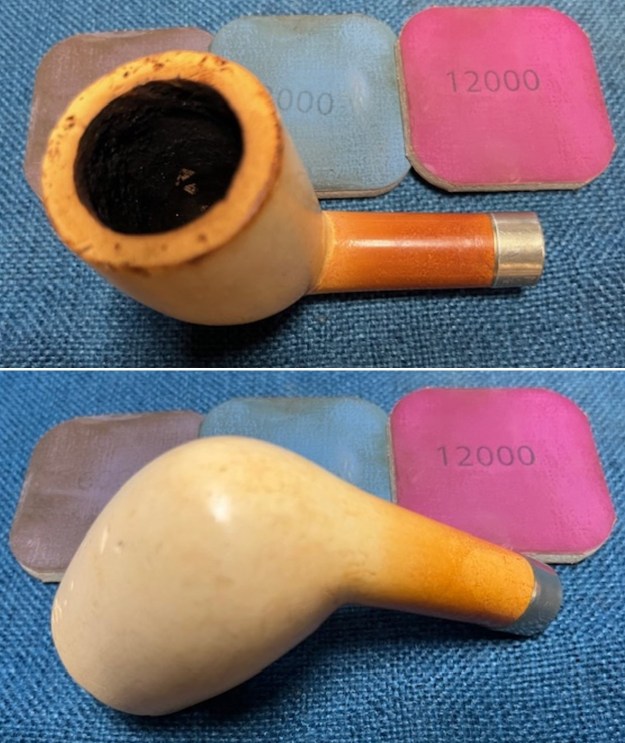
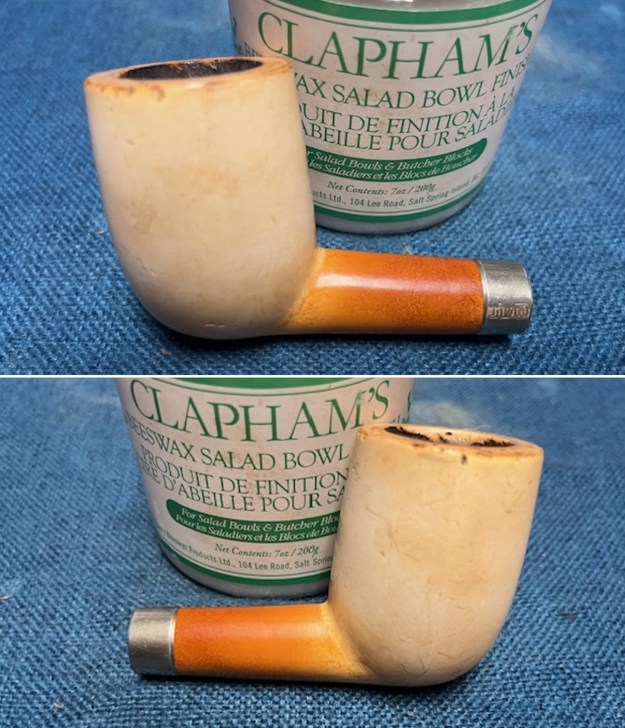
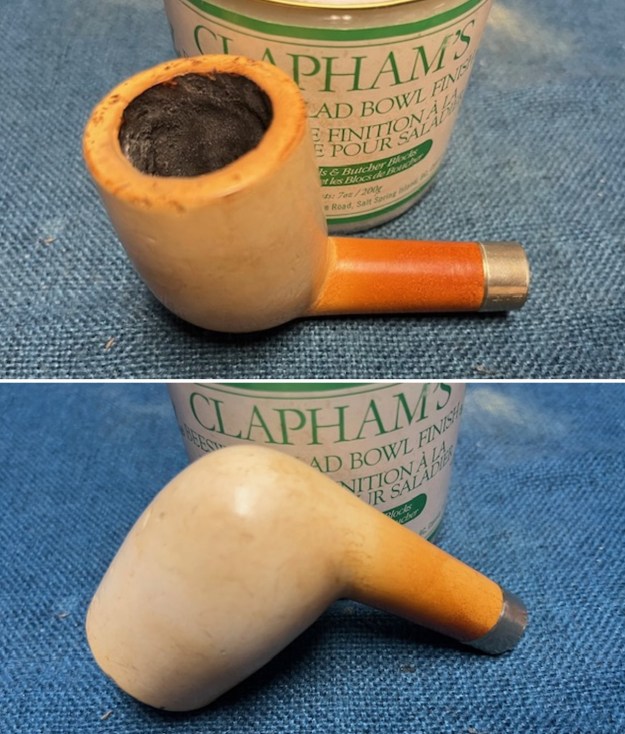
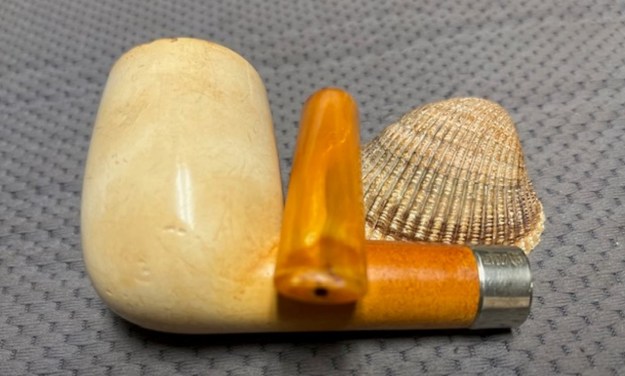
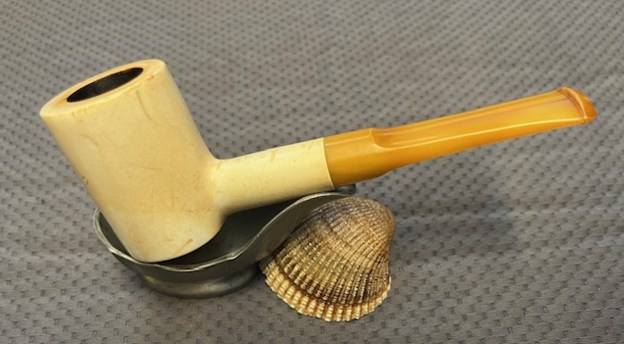
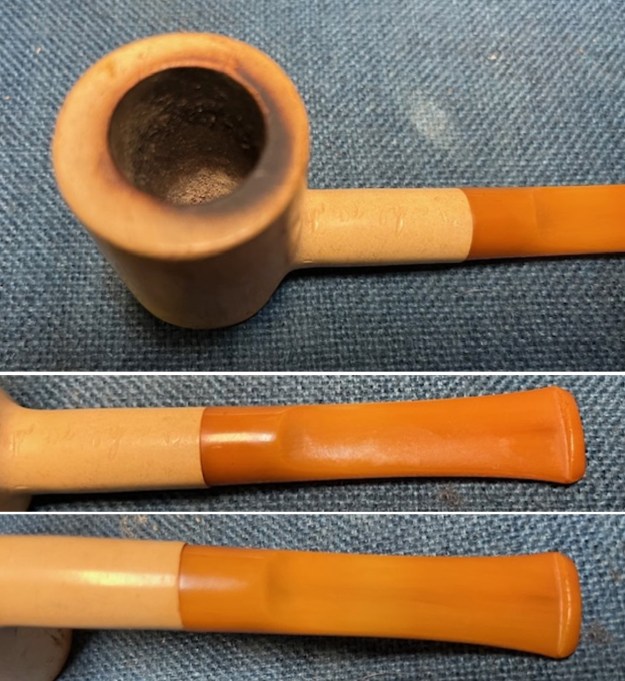
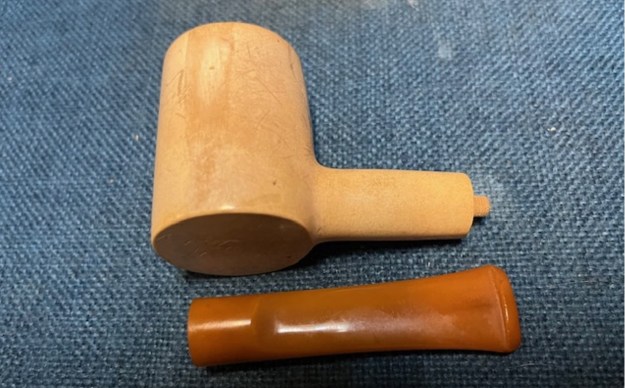
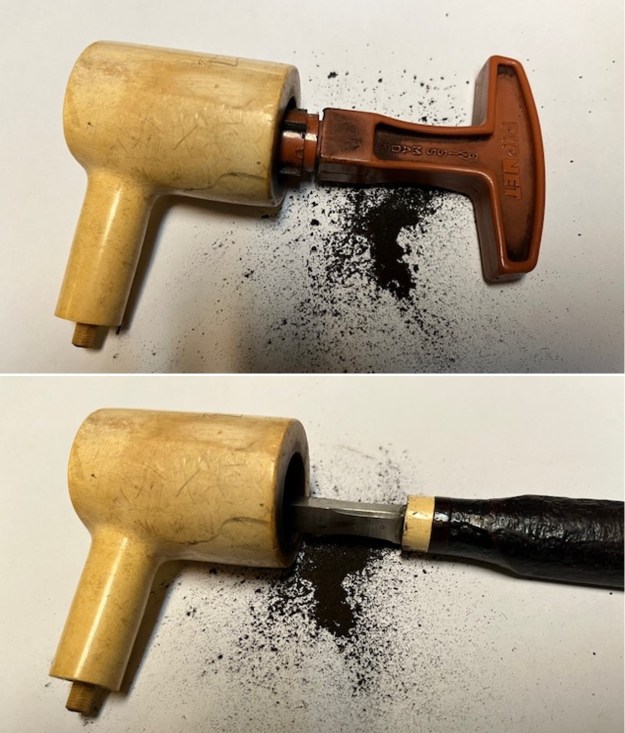
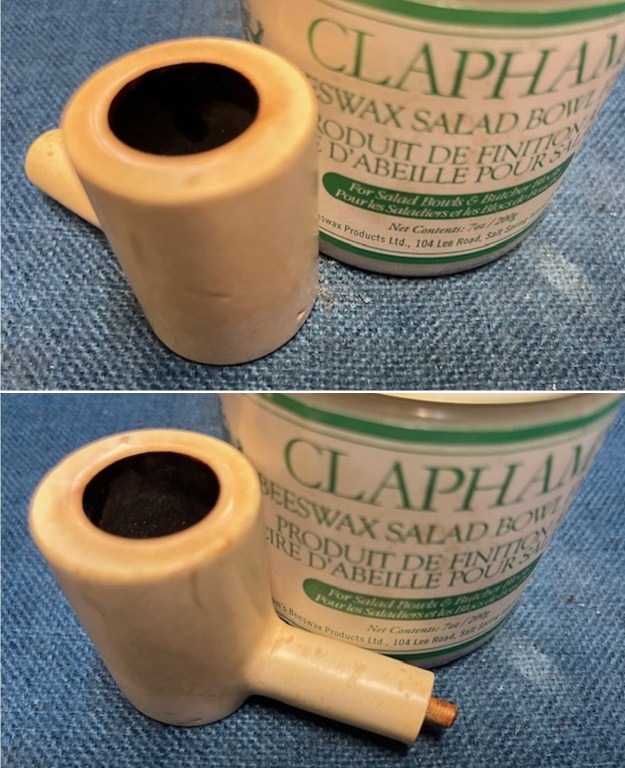
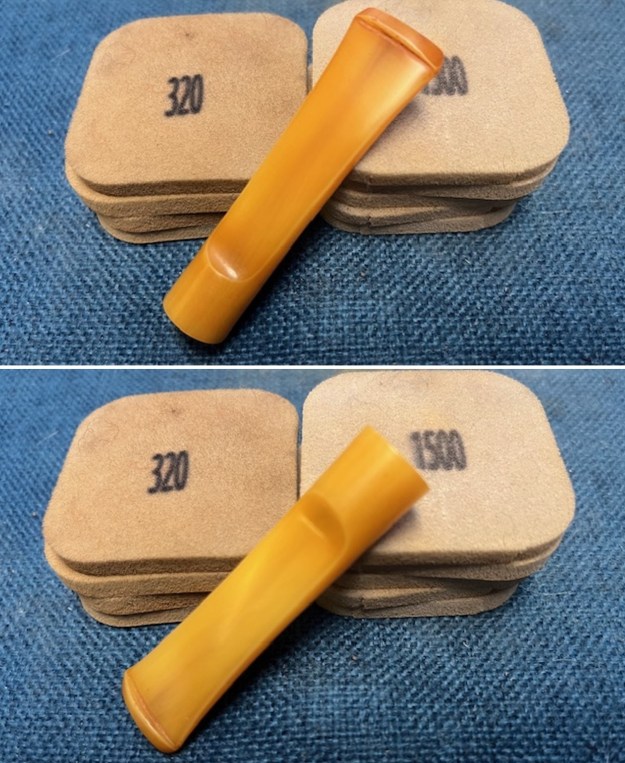
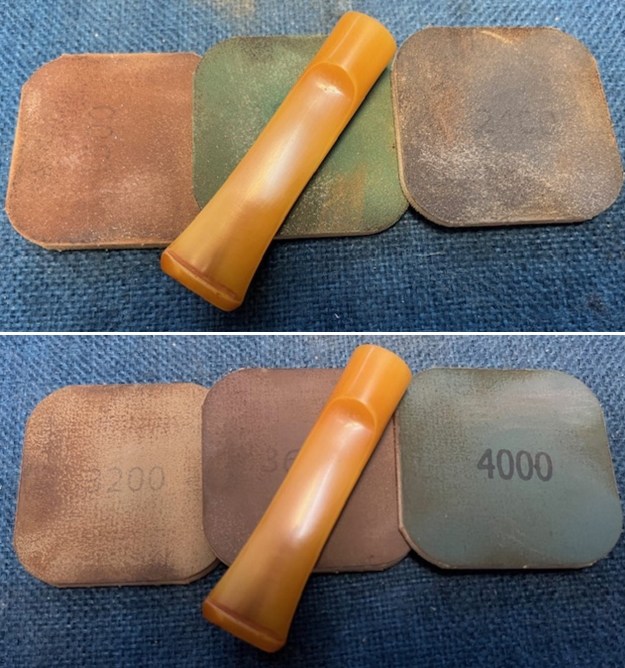
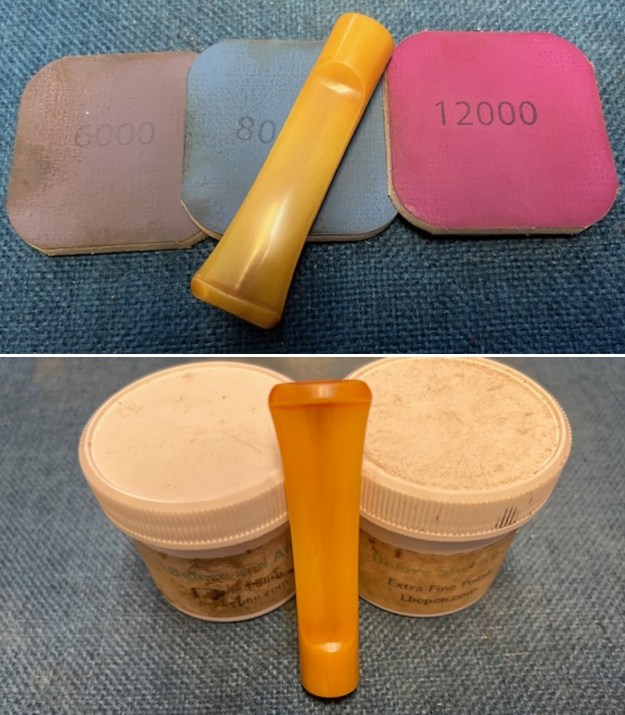
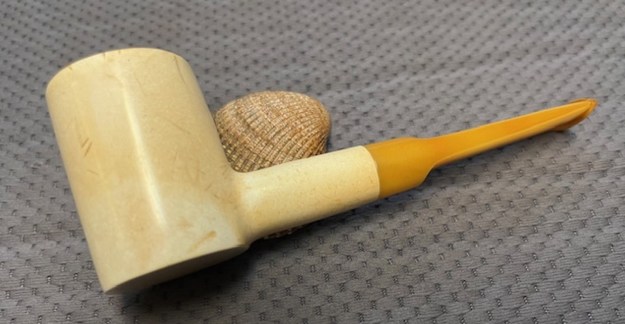
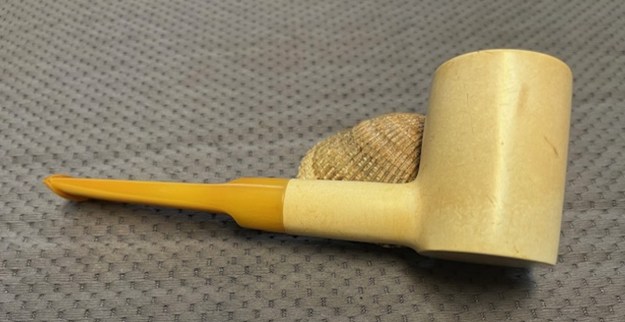
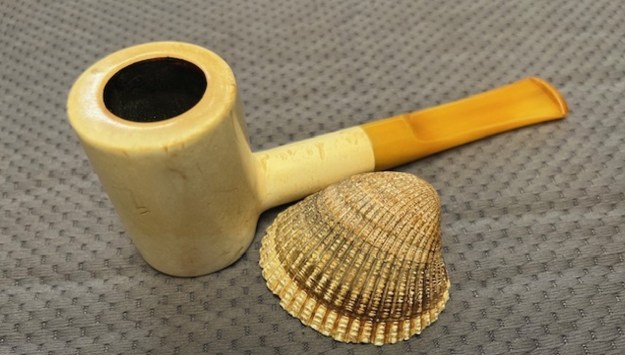
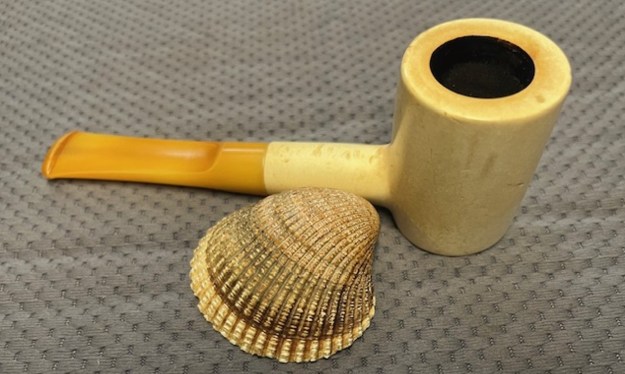
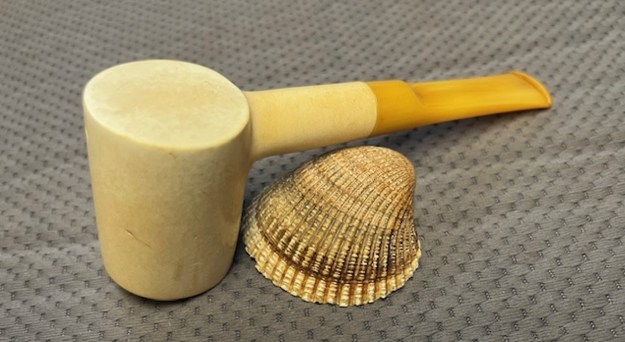
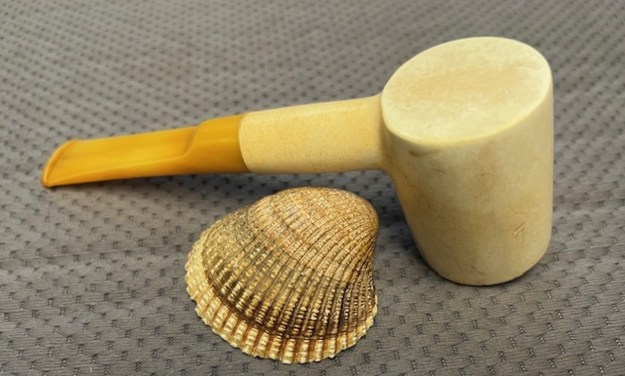
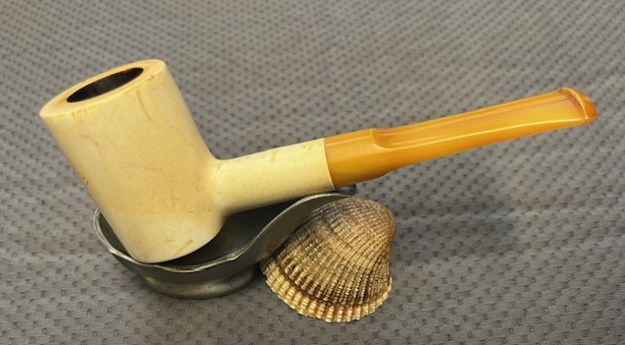
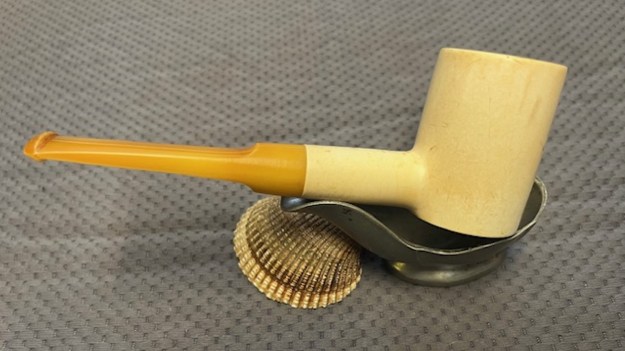
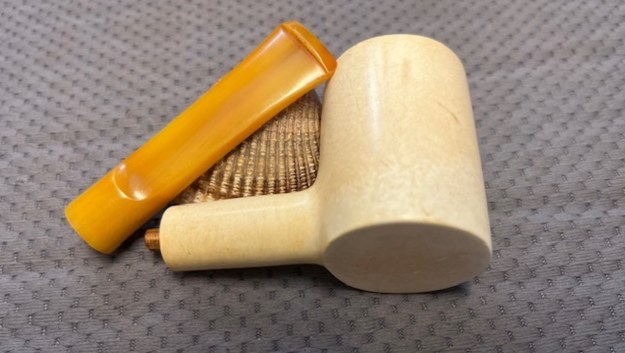
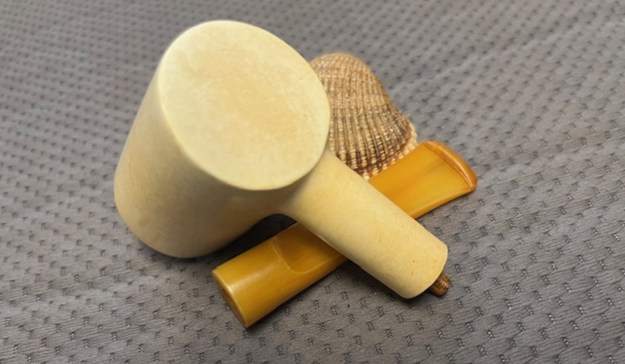
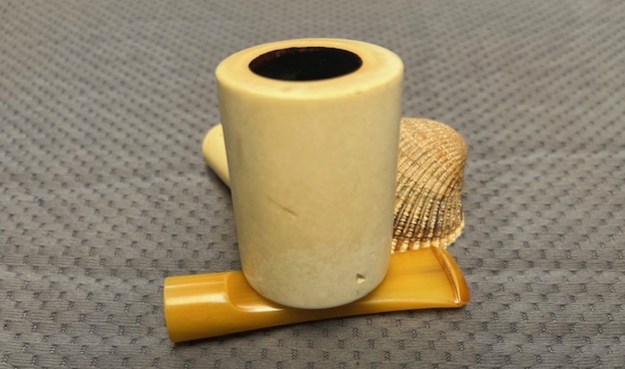
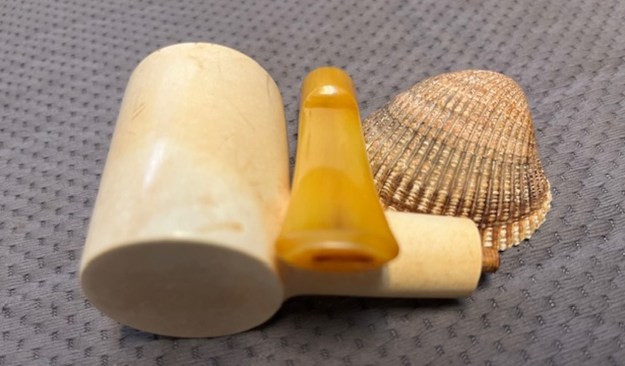
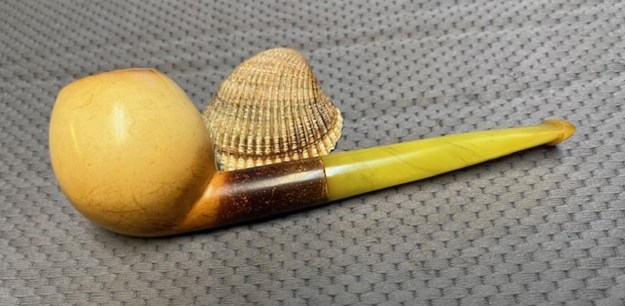
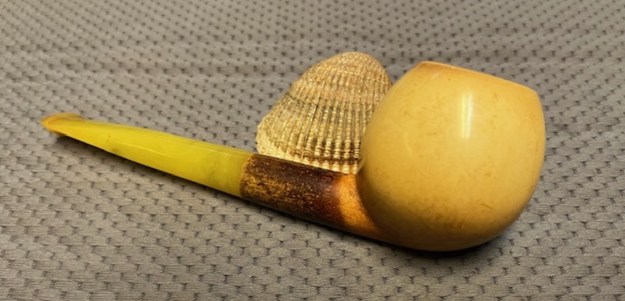
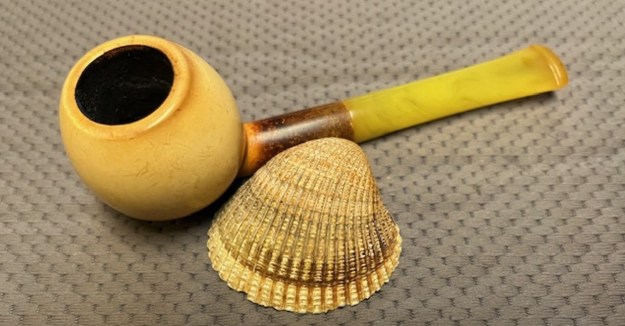
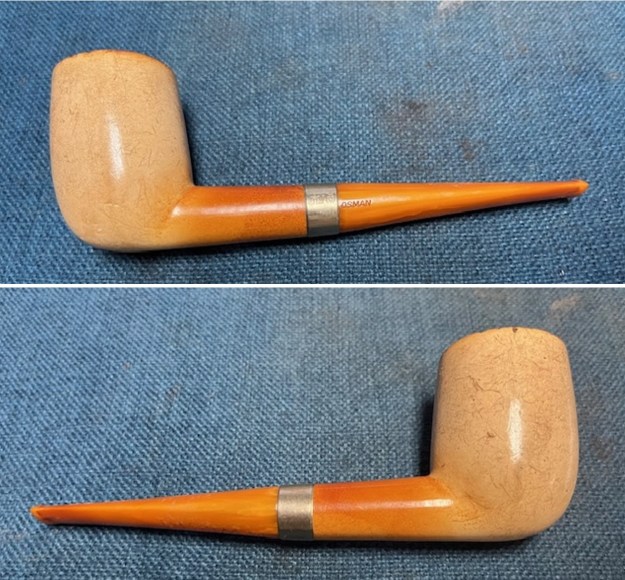
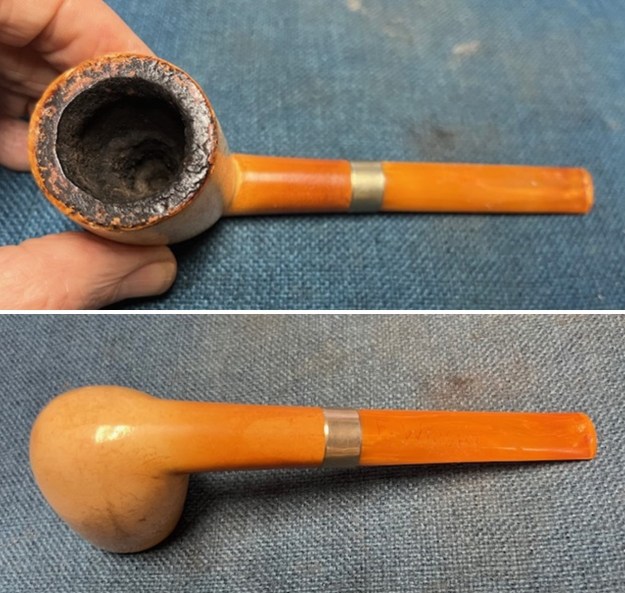
Last evening, I decided to work on another pipe that I no longer know where or when we purchased it. I have a large box of Meerschaum pipes that is sitting in my storage that I need to clean up and restore. I have honestly avoided them for years but now was the time to start my work on some of them. The one I chose was a Cherrywood or Poker shaped smooth meerschaum with a yellow/butterscotch amber acrylic stem. It is a beautifully shaped meer with some deep and minor scratches from its journey and some nice patina developing around the shank and sides. The meer is dirty from use with a thick cake in the bowl and an overflow of lava on the inner edge and rim top. The saddle stem fit well against the shank end and had a threaded tenon in the shank. There were no identifying logos on the bowl or shank. I took photos of the pipe in and out of the case before I started my clean up work on it. I took photos of the rim top and the stem to show the condition of the pipe when I brought it to the worktable. You can see the cake in the bowl and the build up of lava and debris on the edge and top of the rim top. It is another dirty pipe but still a charmer. The yellow/butterscotch acrylic saddle stem has light chatter and tooth marks on both sides near the button. I removed the stem from the shank and took a photo of the parts. It is a beautiful pipe and the developing patina is very nice. I started my work on the bowl by reaming the thick cake out of the bowl. I started with a PipNet reamer and the 2nd and 3rd cutting heads to take back the cake to the walls of the bowl. I cleaned up the reaming with a Savinelli Fitsall Pipe Knife. I sanded the bowl walls with a piece of dowel wrapped with 220 grit sandpaper. Once finished it looked very good. I cleaned out the airway in the shank and mortise as well as in the new stem with pipe cleaners (both bristle and regular). It was not as dirty as I expected considering the cake in the bowl. IT came out very clean.I scrubbed the exterior of the bowl with undiluted Murphy’s Oil Soap and a tooth brush to remove the grime. I rinsed it with warm water and repeated the process until the surface was clean. I dried it off with a soft cloth. It is greatly improved. Now it was time to work on the scratches on the bowl and rim top. I sat on the front porch in the sun and started my work by sanding the bowl with 320-3500 grit 2×2 inch sanding pads. It smoothed out the scratches and revealed more and more of the patina around the bowl and shank. It is a beautiful looking pipe. I polished the meerschaum with micromesh sanding pads – dry sanding with 1500-12000 grit pads. I wiped the bowl down after each pad with a damp cotton cloth. The bowl took on a shine by the last pads. I gave the bowl multiple coats of Clapham’s Wax that blends both carnauba and beeswax in a soft wax. I rubbed the wax on the bowl sides and the shank end with my fingers and set it aside to dry. Once the wax cured I buffed the bowl with a clean buffing pad and then with a soft microfibre cloth. The bowl has a rich glow. I set the bowl aside and turned my attention to the stem. I sanded the stem surface with 320-3500 grit 2×2 inch sanding pads to blend the light marks and chatter into the stem surface. I wiped the stem down after each pad with a damp pad to remove the debris. By the end it was quite shiny and ready for polishing.I polished the stem with micromesh sanding pads – wet sanding it 1500-12000 pads. I wiped it down with a damp cloth after each pad to protect it and preserve it. I polished it with Before After Pipe Polish – both Fine and Extra Fine. I am really happy with the way that this Block Meerschaum Cherrywood Pipe with the butterscotch amber like acrylic stem turned out. It really is a beautiful looking pipe with a unique shape and smooth meerschaum bowl. The amberlike acrylic taper stem is really nice. The rich patina on the meerschaum came alive with waxing and buffing. I put the stem back on the bowl and carefully buffed the pipe with Blue Diamond on the buffing wheel. I gave the bowl and the stem multiple coats of beeswax/carnauba wax and buffed the pipe with a clean buffing pad to raise the shine. I hand buffed the pipe with a microfiber cloth to deepen the shine. The finished Meerschaum Cherrywood really is a beauty and feels great in the hand and looks very good. Give the finished pipe a look in the photos below. The dimensions of the pipe are Length: 5 ½ inches, Height: 2 inches, Outside diameter of the bowl: 1 ¼ inches, Chamber diameter: ¾ of an inch. The weight of the pipe is 43 grams/ 1.52 ounces. The pipe will be going on the rebornpipes store soon. It will be in the Ceramic and Meerschaum Pipes Section if you would like to add it to your collection. Thanks for reading this blog and my reflections on the pipe while I worked on it. It was a fun one to work on!
Restoring an older Block Meerschaum Apple with A Yellow Acrylic Stem


by Steve Laug

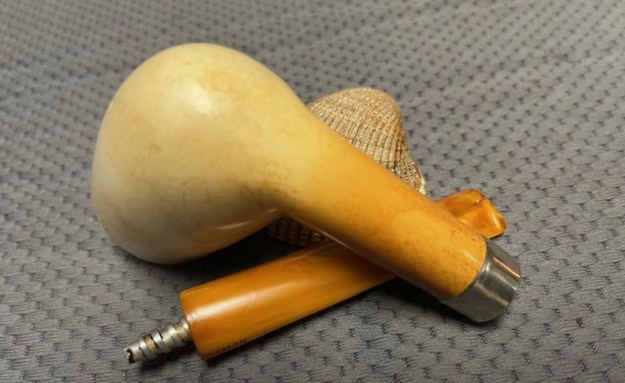
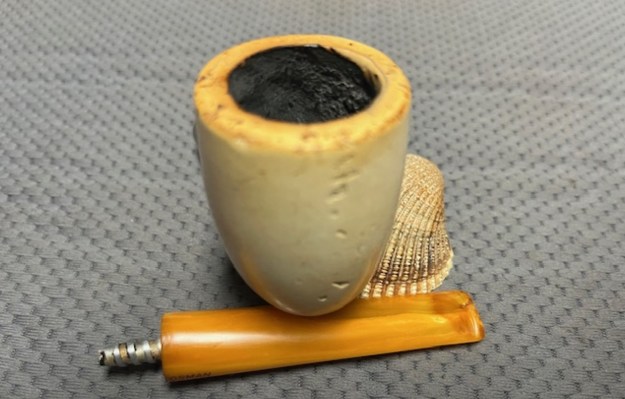
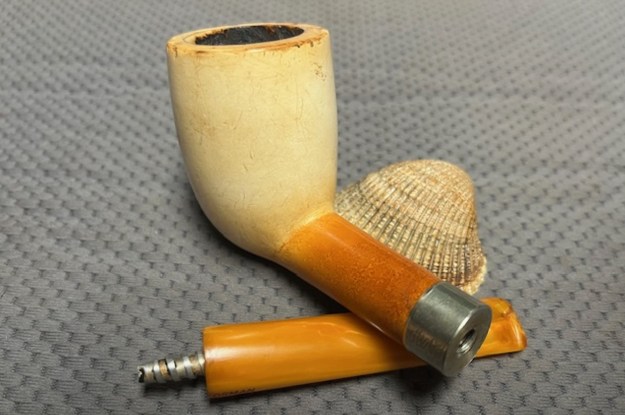
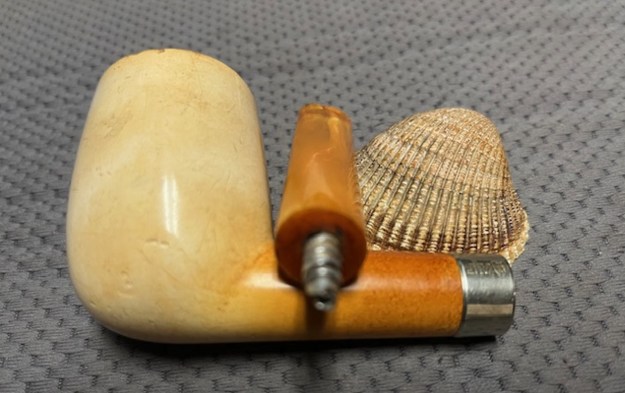
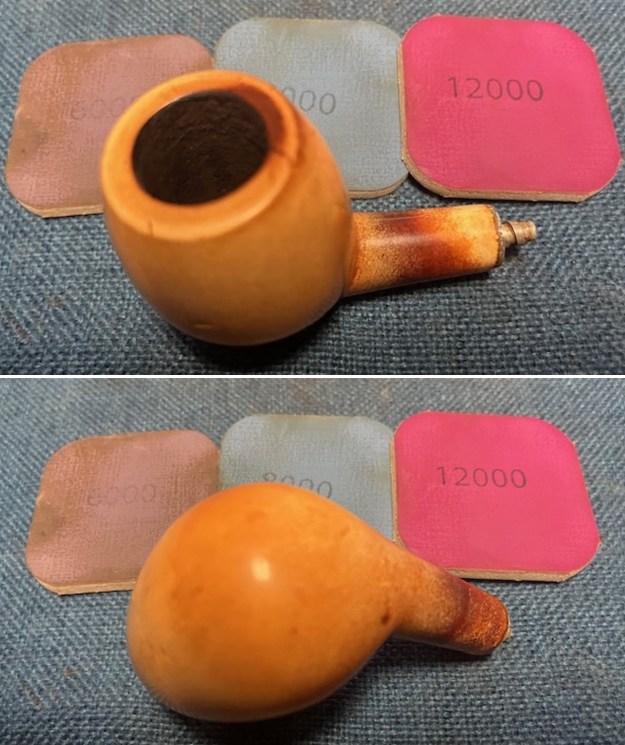
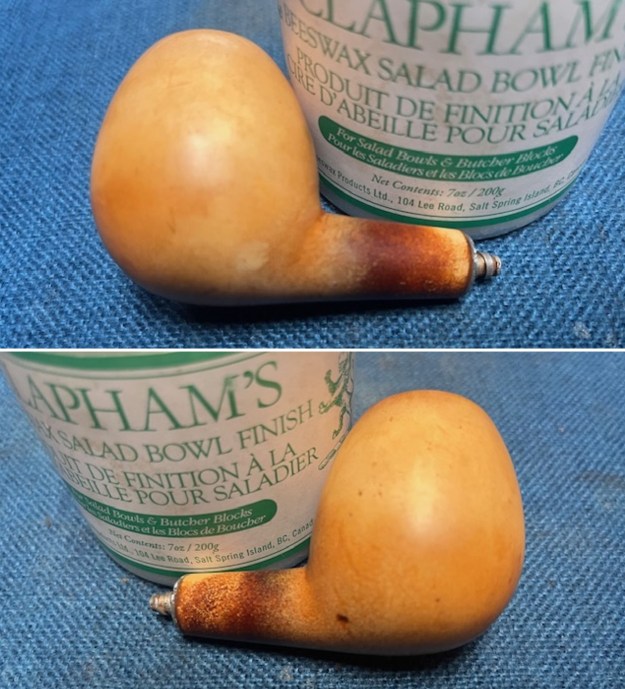
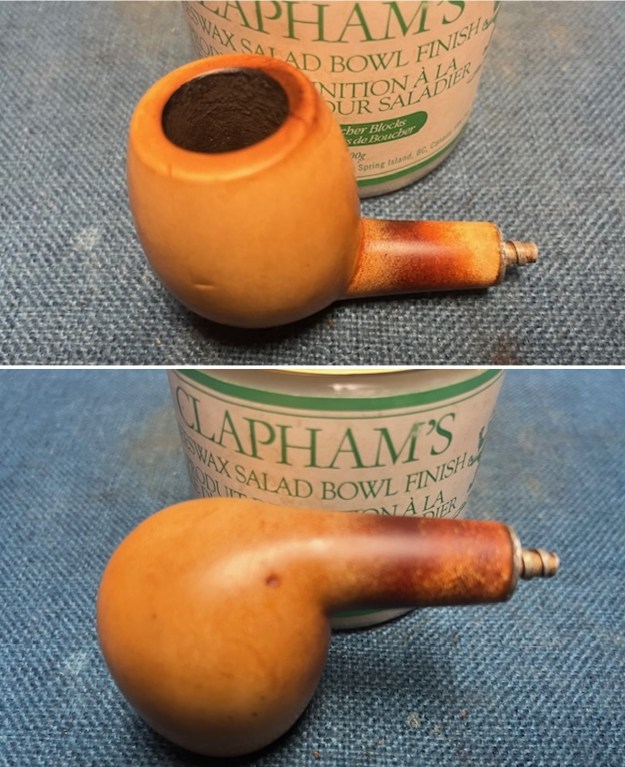
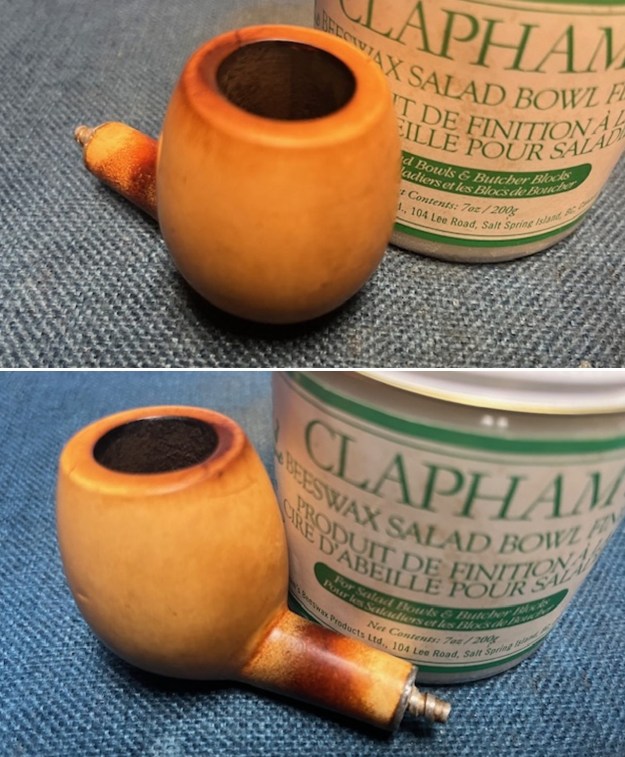
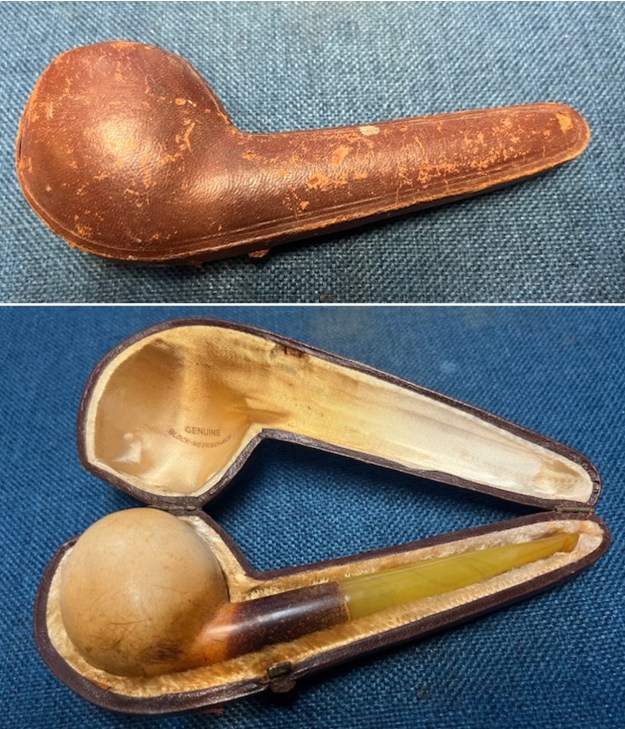
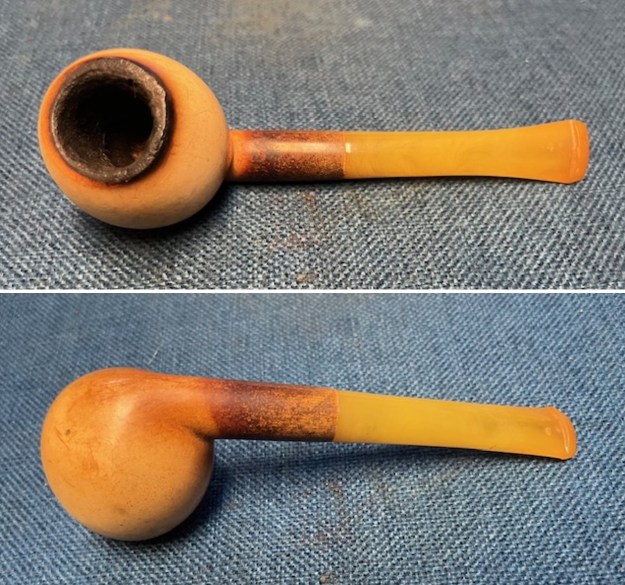
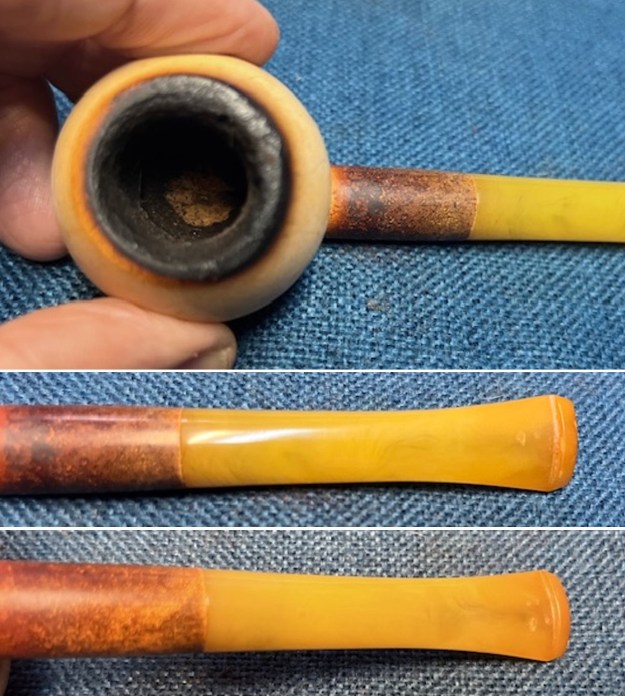
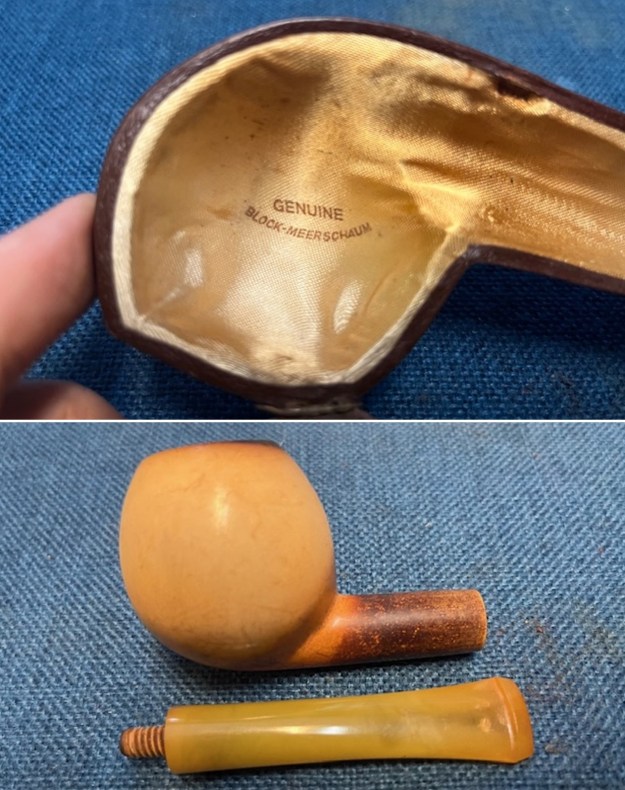
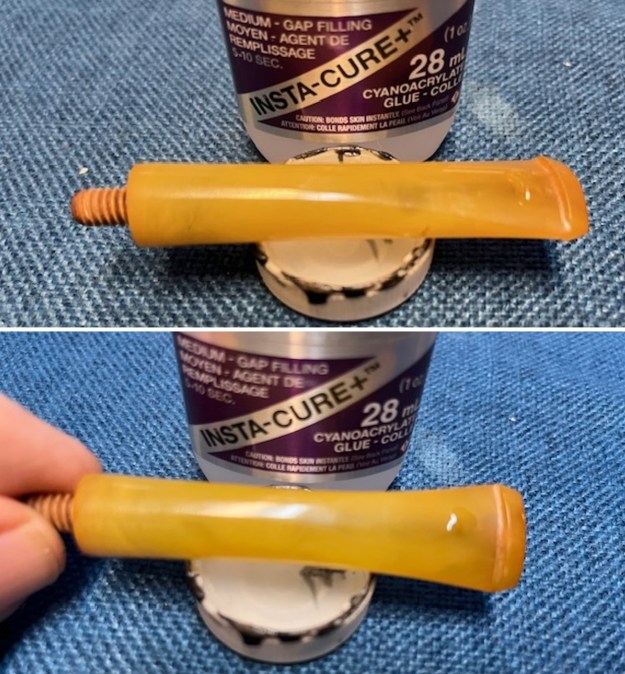
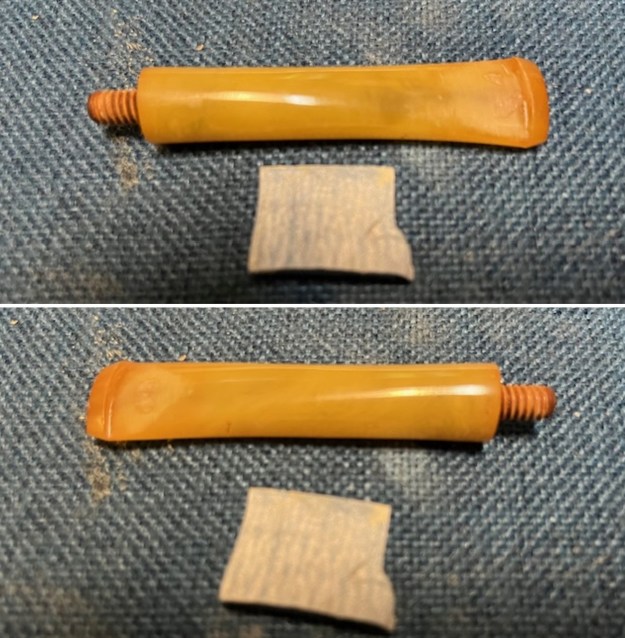
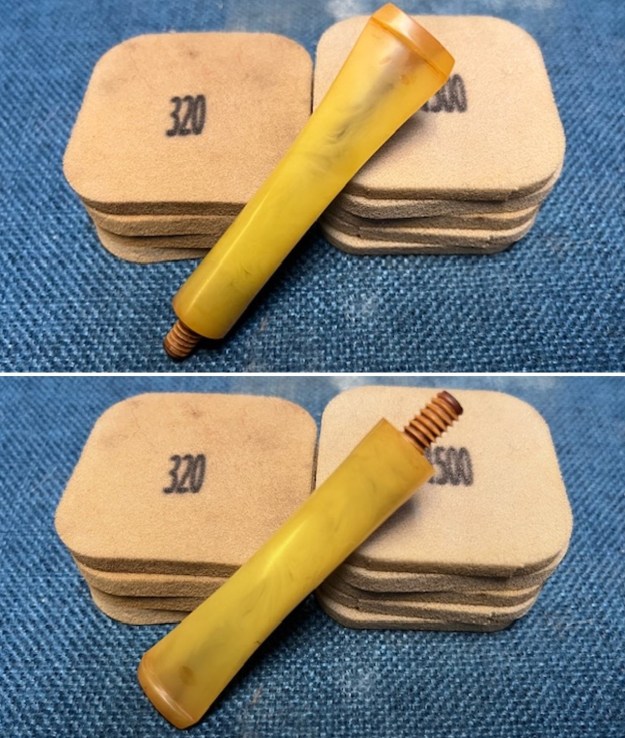
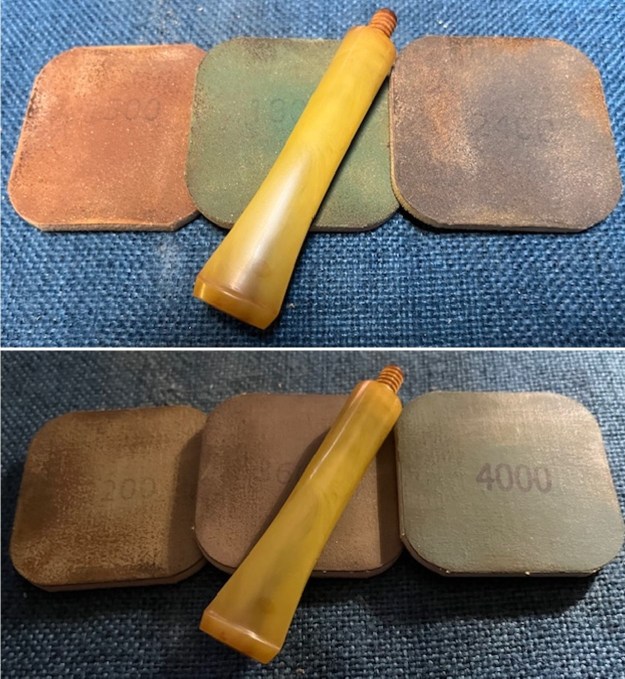
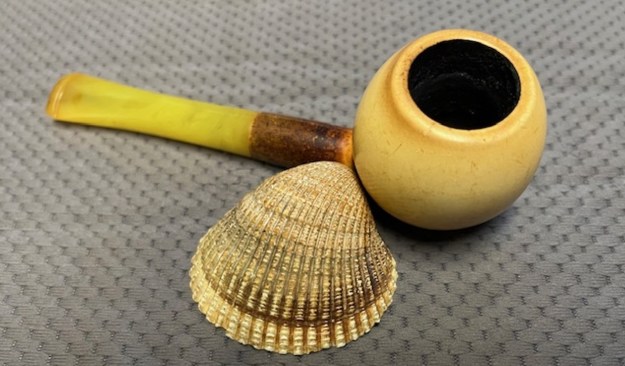
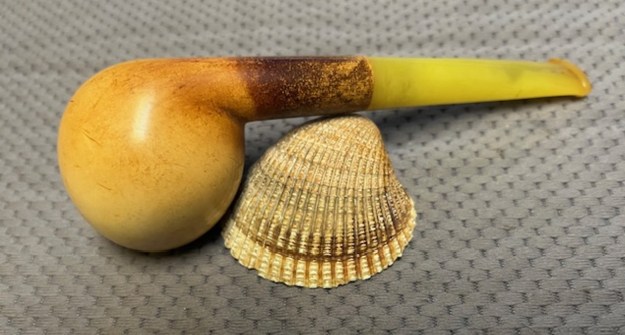
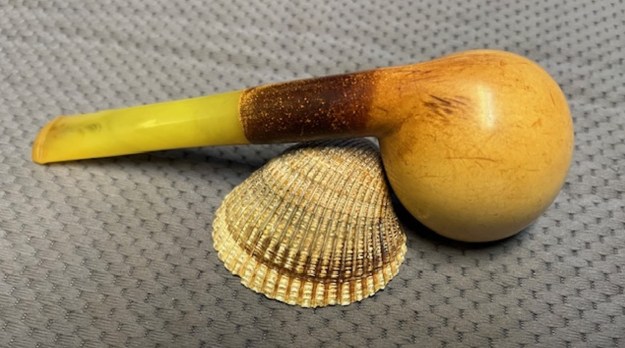
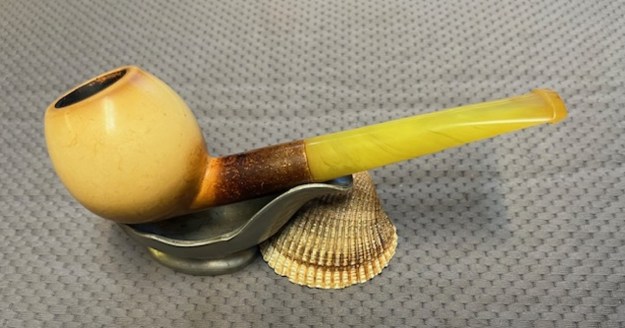
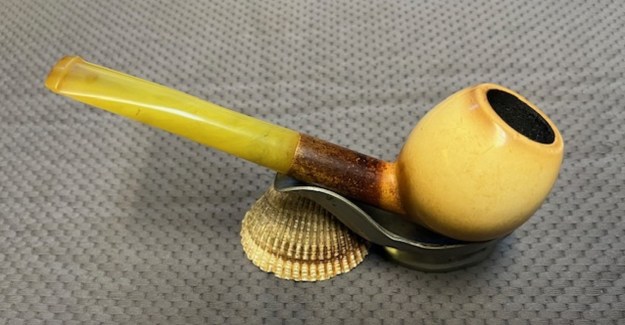
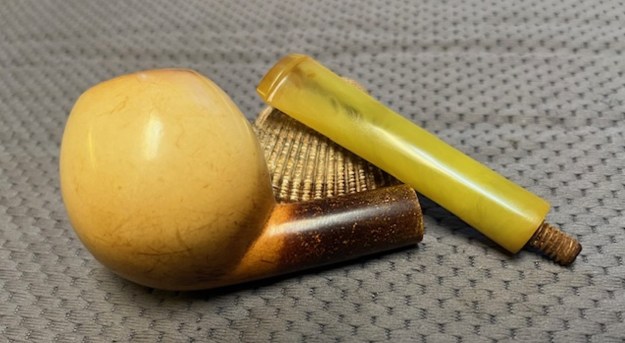
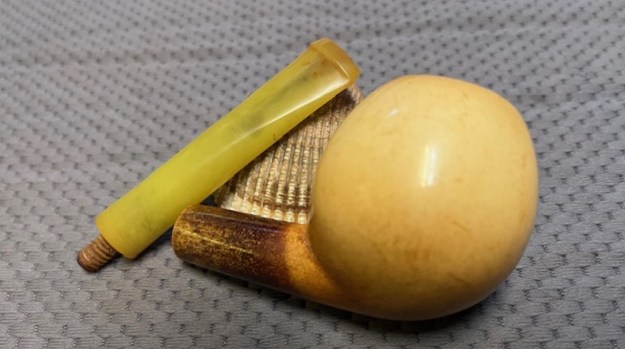
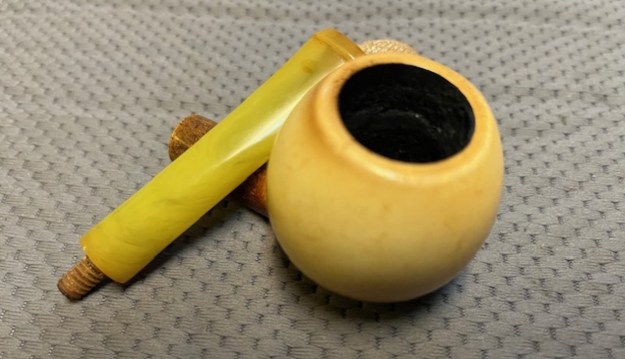
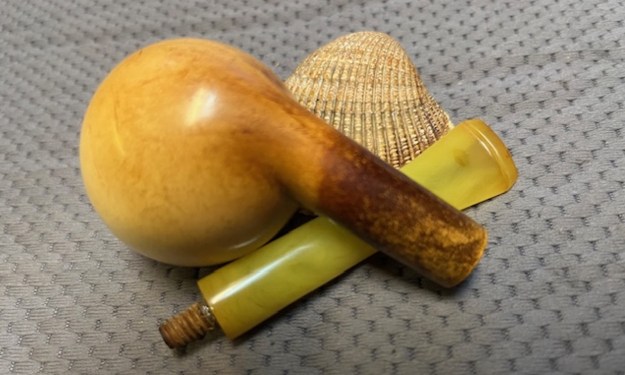
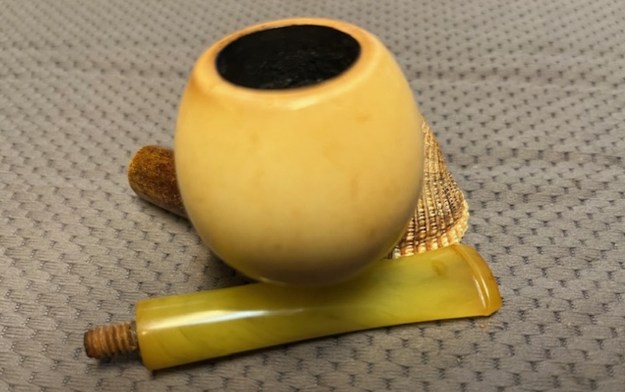
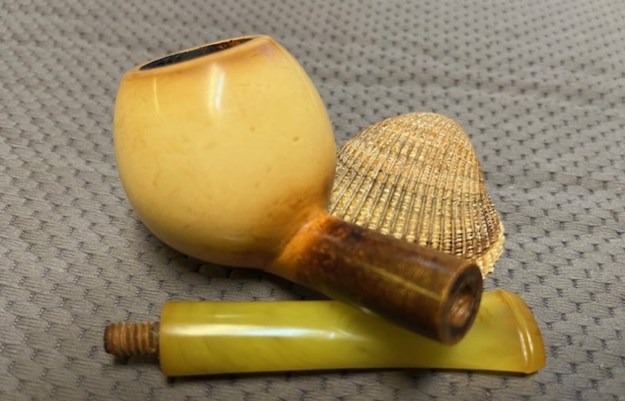
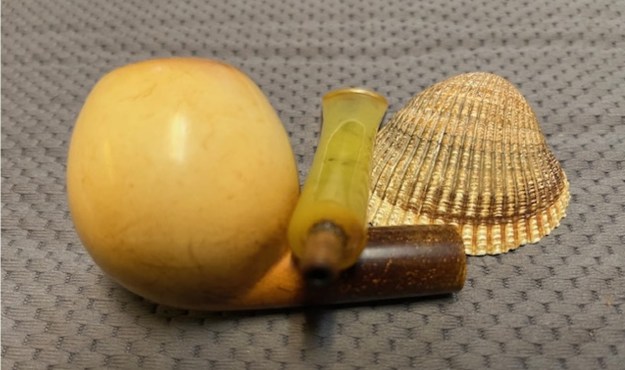
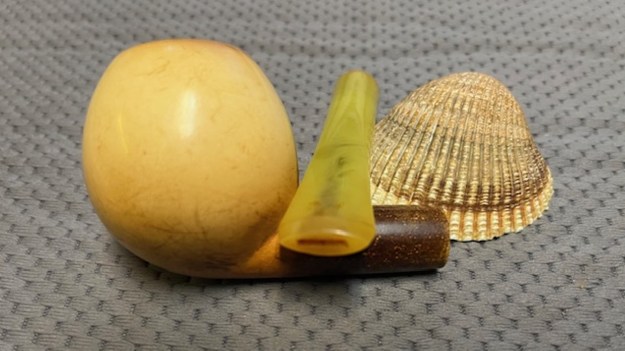
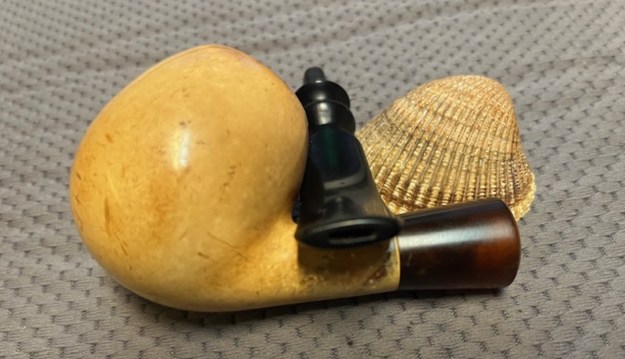
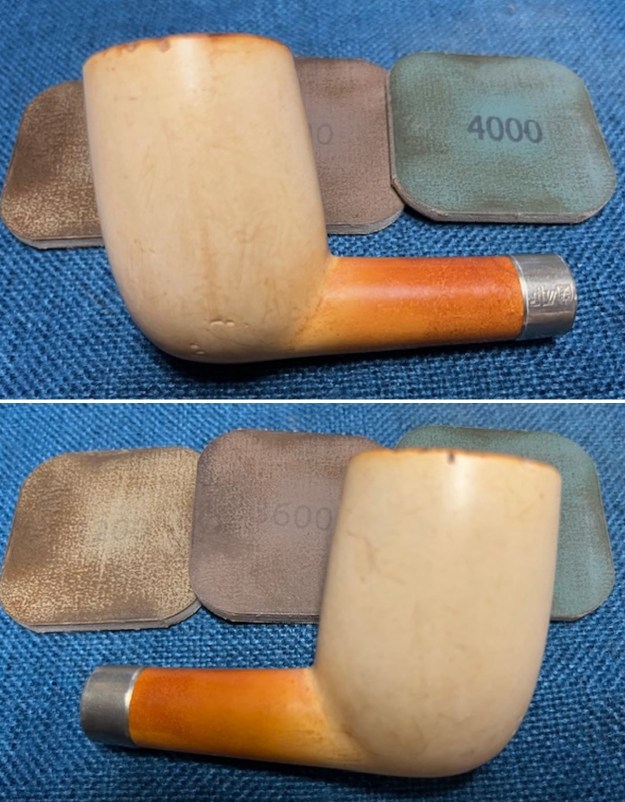
Last evening, I decided to work on another pipe that I no longer know where or when we purchased it. I have a large box of Meerschaum pipes that is sitting in my storage that I need to clean up and restore. I have honestly avoided them for years but now was the time to start my work on some of them. The one I chose was definitely an older ball or apple shaped smooth meerschaum with an yellow amber acrylic stem. It is a beautifully shaped meer with scratches from its journey and some nice patina developing around the shank and sides. The meer is dirty from use with a thick cake in the bowl and an overflow of lava on the inner edge and rim top. The stem fit well against the shank end and had a threaded tenon that aligned with the bowl and shank properly. There were no identifying logos on the bowl or shank, however, the inside of the brown case it came with was stamped Genuine [over] Block Meerschaum. I took photos of the pipe in and out of the case before I started my clean up work on it. I took photos of the rim top and the stem to show the condition of the pipe when I brought it to the worktable. You can see the cake in the bowl and the build up of lava and debris on the edge and top of the rim top. It is another dirty pipe but still a charmer. The yellow acrylic taper stem has light chatter and deep tooth marks on both sides near the button. I took a photo of the stamping on the inside of the case. It is clear and readable as noted above. I removed the stem from the shank and took a photo of the parts. I removed the stem from the shank and took a photo of the parts. I started my work on the bowl by reaming the thick cake out of the bowl. I started with a PipNet reamer and the 2nd and 3rd cutting heads to take back the cake to the walls of the bowl. I cleaned up the reaming with a Savinelli Fitsall Pipe Knife. I sanded the bowl walls with a piece of dowel wrapped with 220 grit sandpaper. Once finished it looked very good. I cleaned out the airway in the shank and mortise as well as in the new stem with pipe cleaners (both bristle and regular). It was much better.I scrubbed the exterior of the bowl with undiluted Murphy’s Oil Soap and a tooth brush to remove the grime. I rinsed it with warm water and repeated the process until the surface was clean. I dried it off with a soft cloth. It is greatly improved. Now it was time to work on the scratches on the bowl and rim top. I started my work by sanding with 320-3500 grit 2×2 inch sanding pads. It smoothed out the scratches and revealed more and more of the patina around the bowl and shank. It is a beautiful looking pipe. I polished the meerschaum with micromesh sanding pads – dry sanding with 1500-12000 grit pads. I wiped the bowl down after each pad with a damp cotton cloth. The bowl took on a shine by the last pads. I gave the bowl multiple coats of Clapham’s Wax that blends both carnauba and beeswax in a soft wax. I rubbed the wax on the bowl sides and the shank with my fingers and set it aside to dry. Once the wax cured I buffed the bowl with a clean buffing pad and then with a soft microfibre cloth. The bowl has a rich glow. I set the bowl aside and turned my attention to the stem. I filled in the tooth marks with some clear CA glue. When it cured I sanded it with 220 grit sandpaper to smooth it out. I continued sanding the stem surface with 320-3500 grit 2×2 inch sanding pads. I wiped the stem down after each pad with a damp pad to remove the debris. By the end it was quite shiny and ready for polishing.I polished the stem with micromesh sanding pads – wet sanding it 1500-12000 pads. I wiped it down with a damp cloth after each pad to protect it and preserve it. I polished it with Before After Pipe Polish – both Fine and Extra Fine. I am really happy with the way that this Older Meerschaum Apple turned out. It really is a beautiful looking pipe with a unique shape and smooth meerschaum bowl. The yellow amberlike acrylic taper stem are really nice. The rich patina on the meerschaum came alive with waxing and buffing. I put the stem back on the bowl and carefully buffed the pipe with Blue Diamond on the buffing wheel. I gave the bowl and the stem multiple coats of beeswax/carnauba wax and buffed the pipe with a clean buffing pad to raise the shine. I hand buffed the pipe with a microfiber cloth to deepen the shine. The finished Meerschaum Apple really is a beauty and feels great in the hand and looks very good. Give the finished pipe a look in the photos below. The dimensions of the pipe are Length: 5 ½ inches, Height: 1 ¾ inches, Outside diameter of the bowl: 1 ¼ inches, Chamber diameter: ¾ of an inch. The weight of the pipe is 40 grams/ 1.41 ounces. The pipe will be going on the rebornpipes store soon. It will be in the Ceramic and Meerschaum Pipes Section if you would like to add it to your collection. Thanks for reading this blog and my reflections on the pipe while I worked on it. It was a fun one to work on!
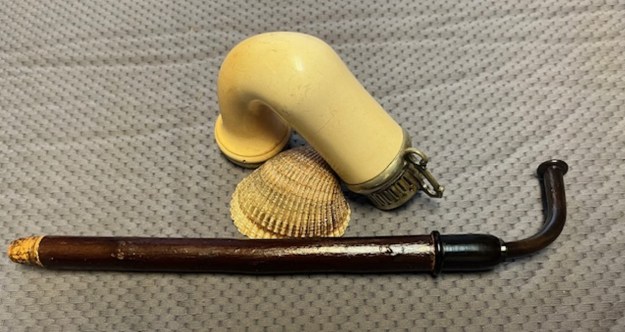
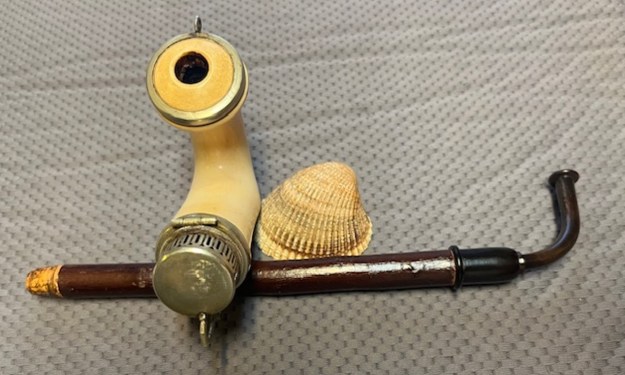
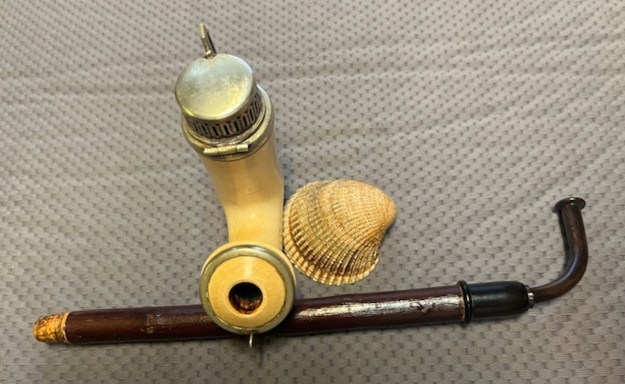
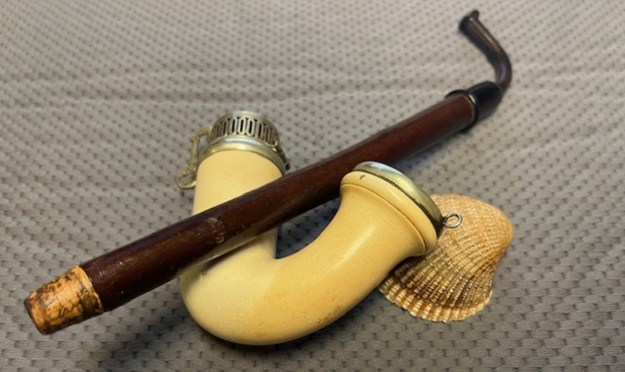
Restoring an old time Debrecen Meerschaum with Cherrywood Shank and Horn Stem


by Steve Laug

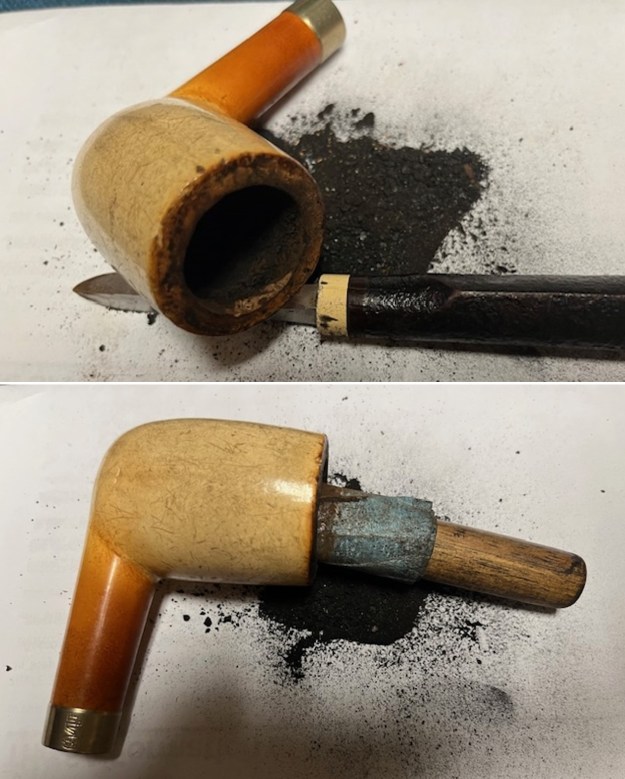
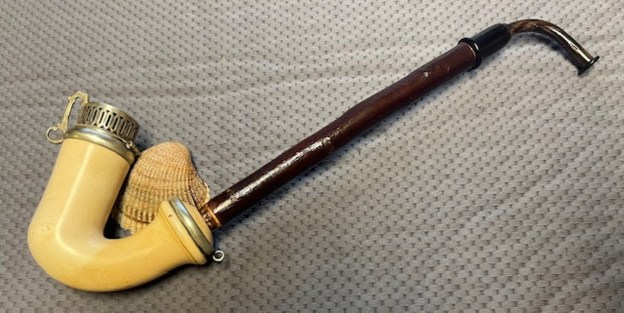
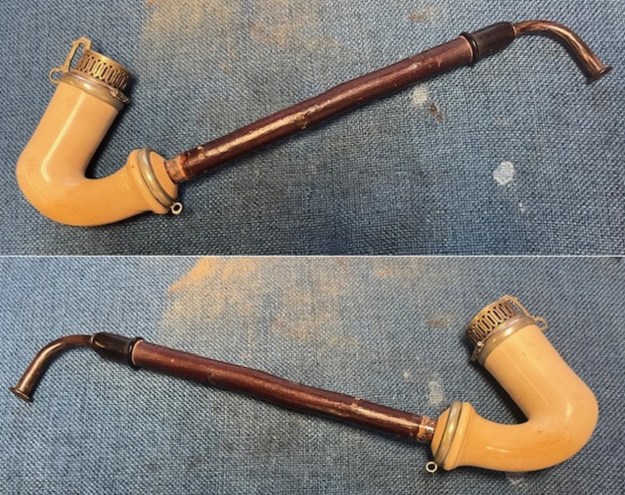
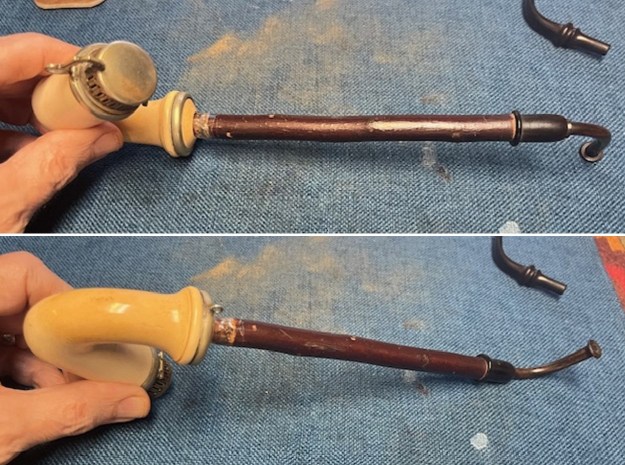
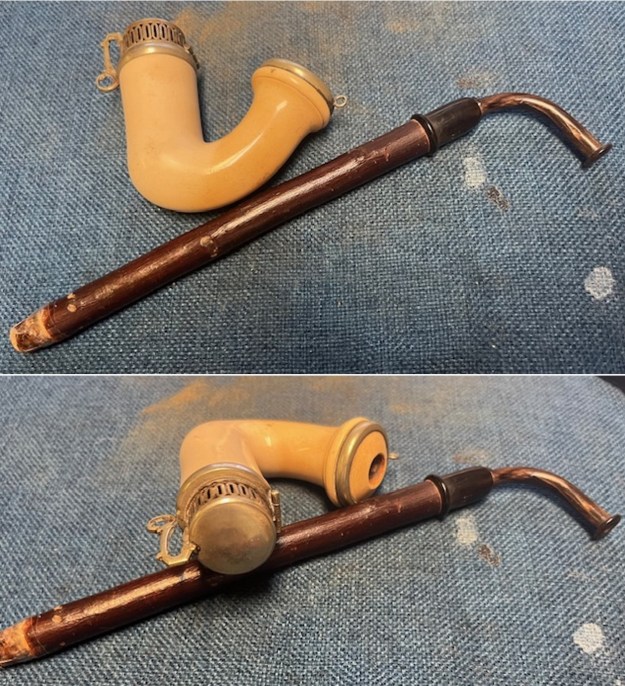
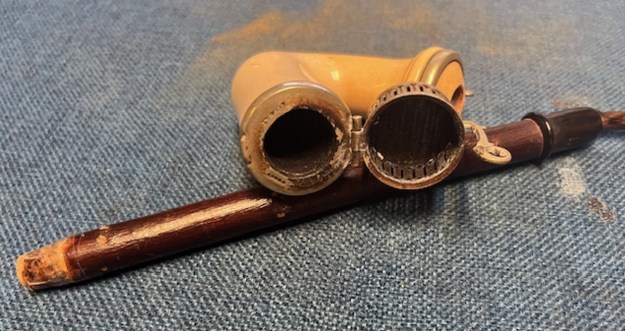
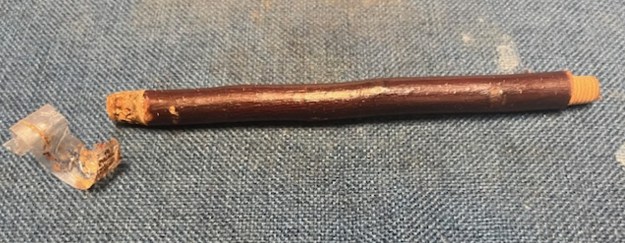
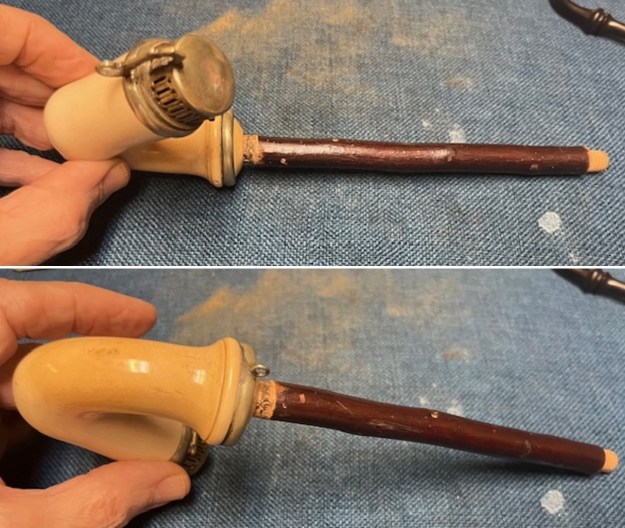
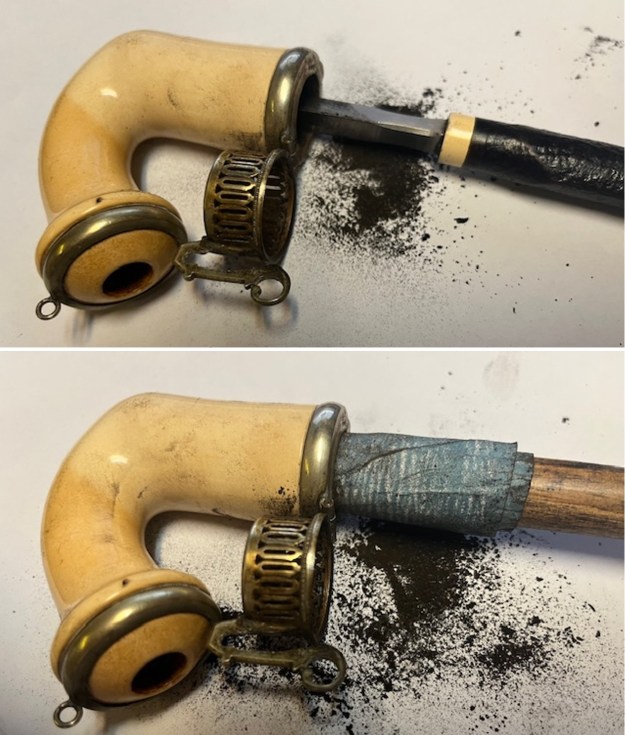
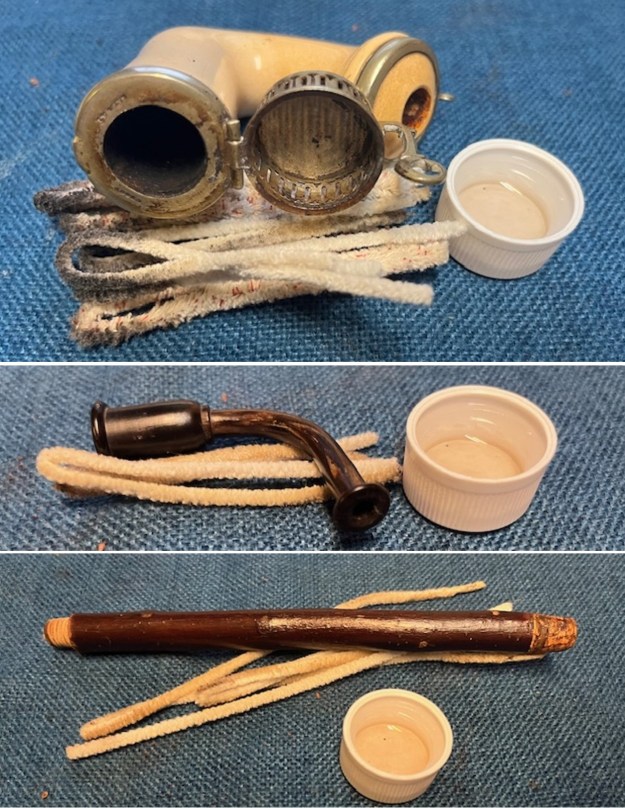
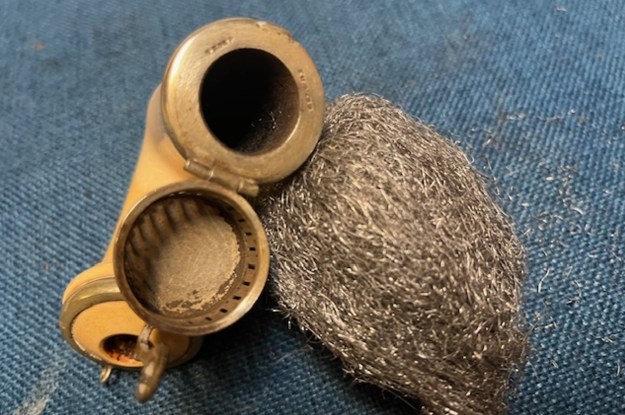
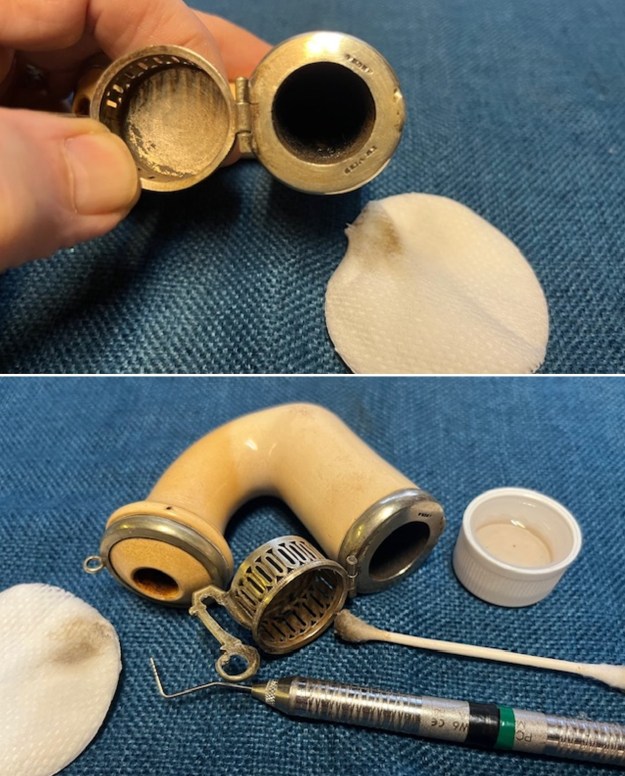
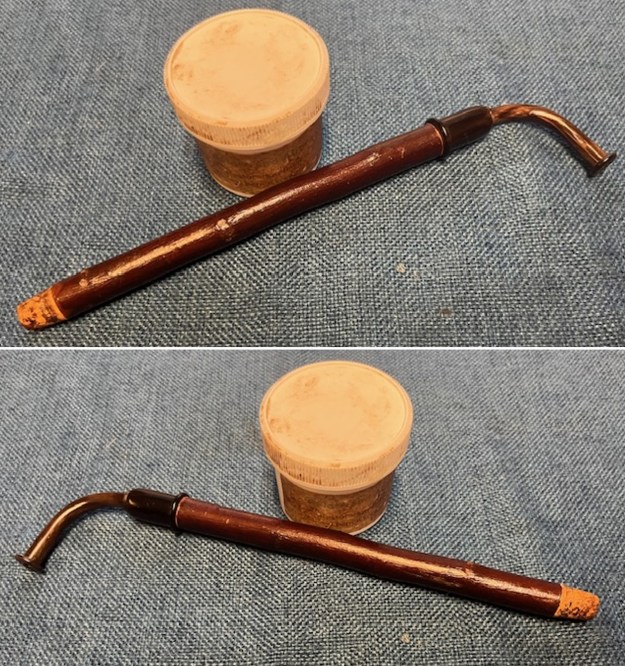
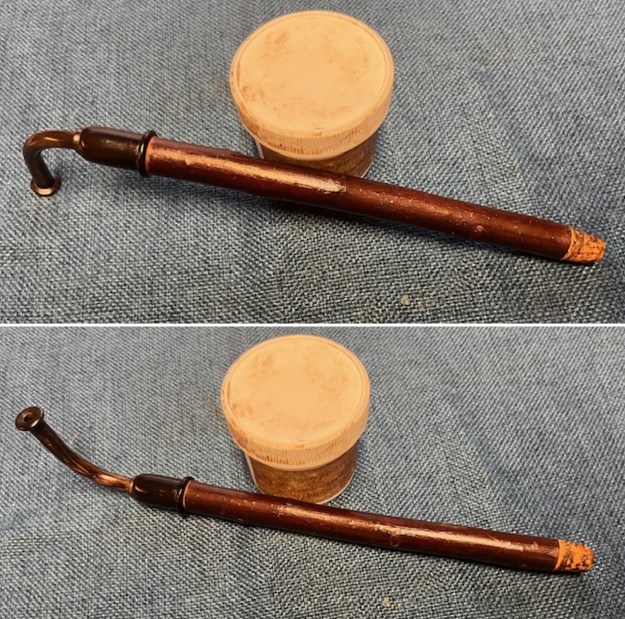
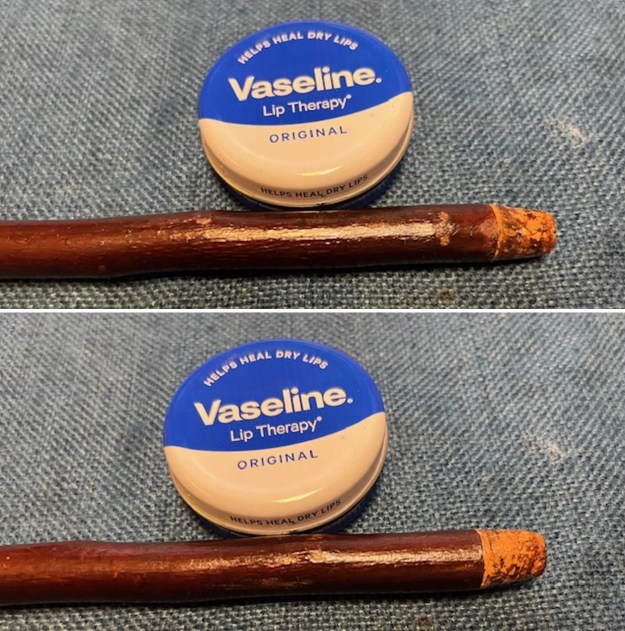
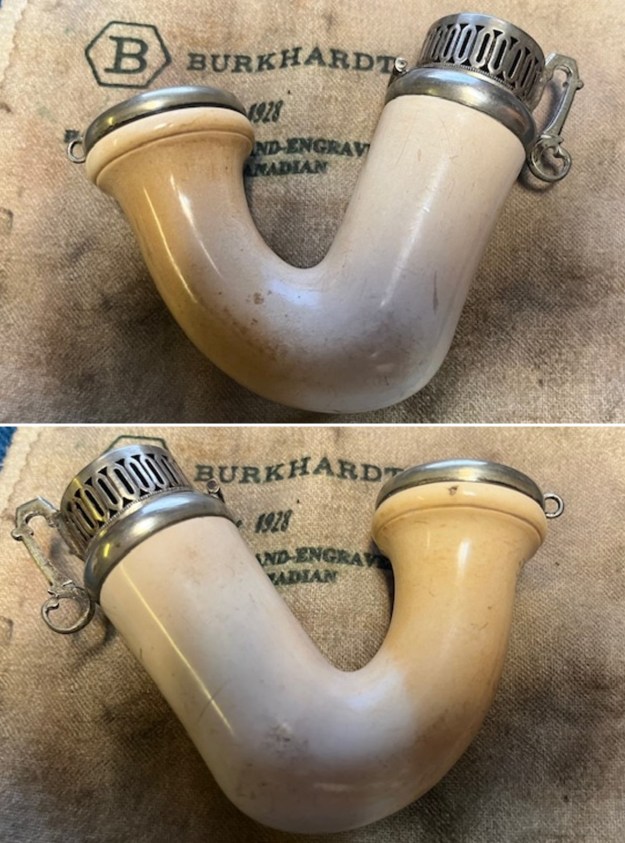
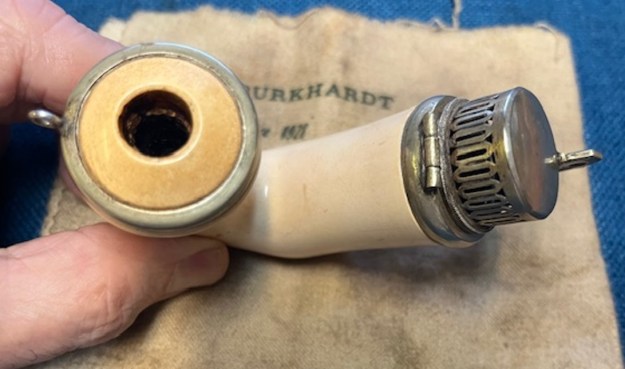
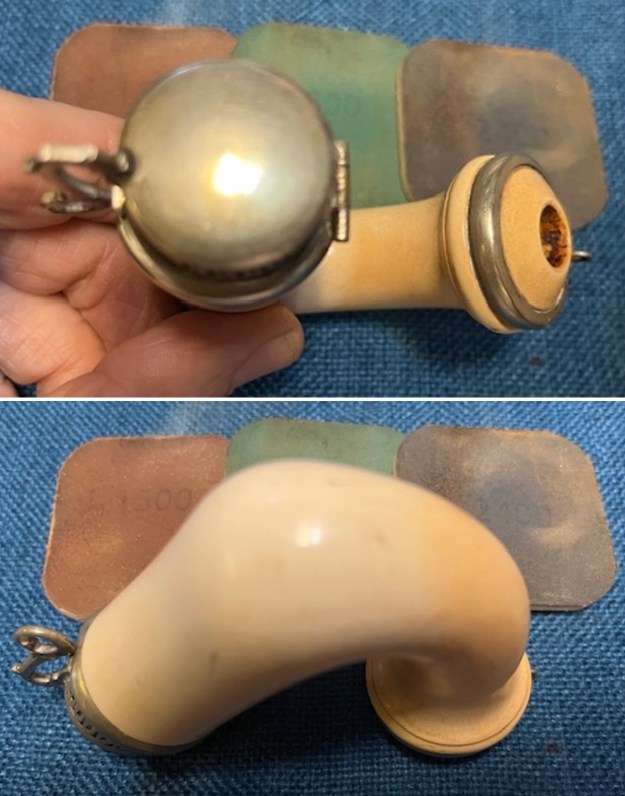
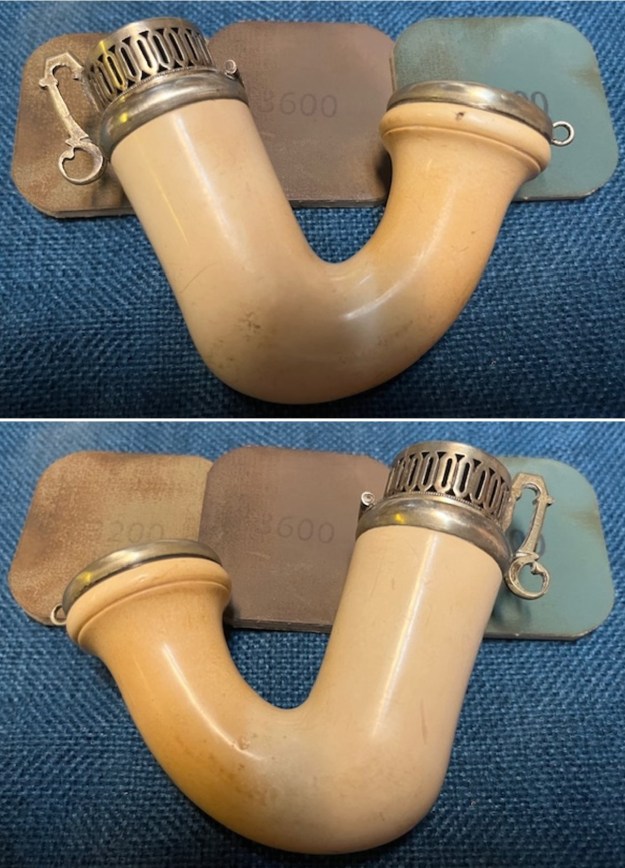
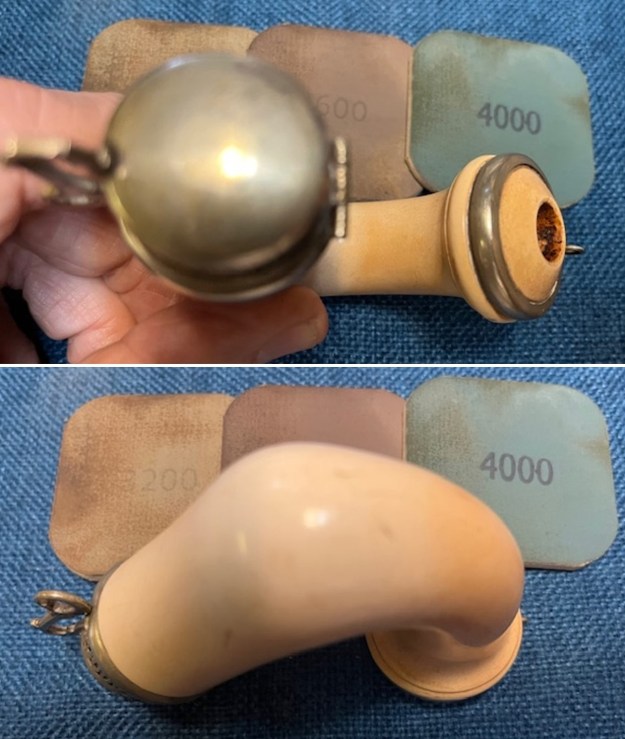
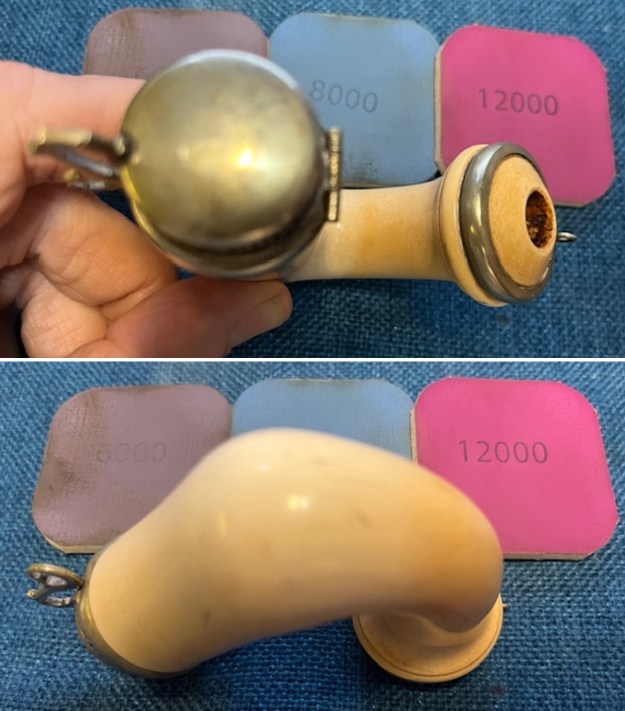
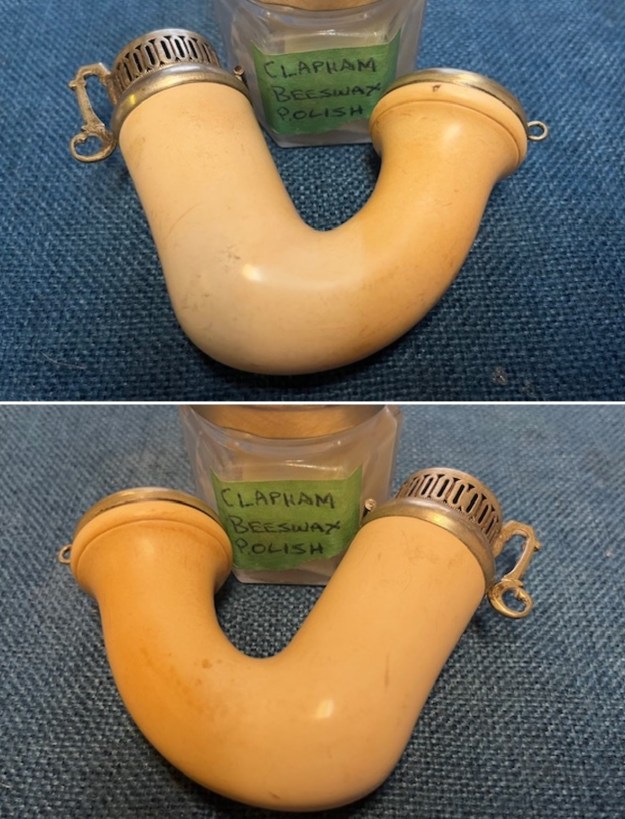
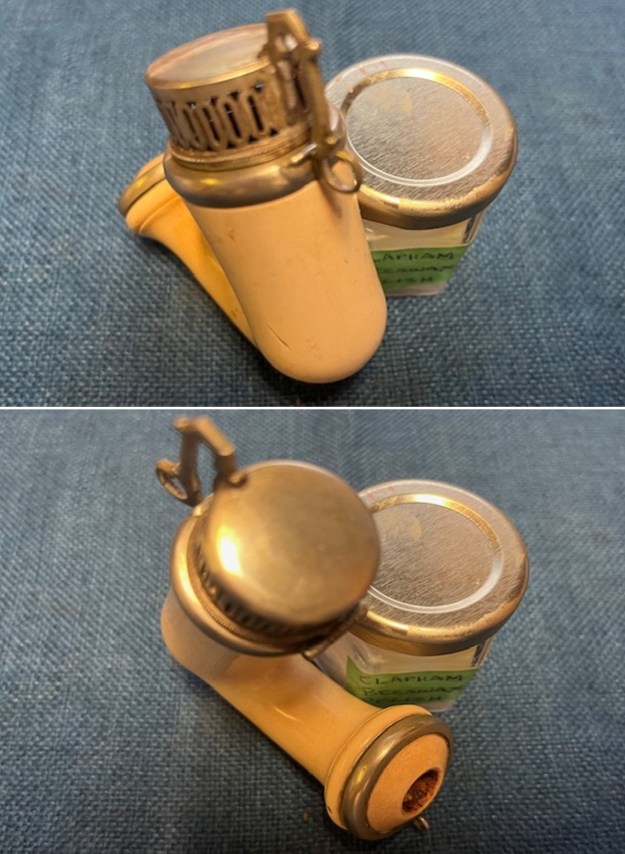
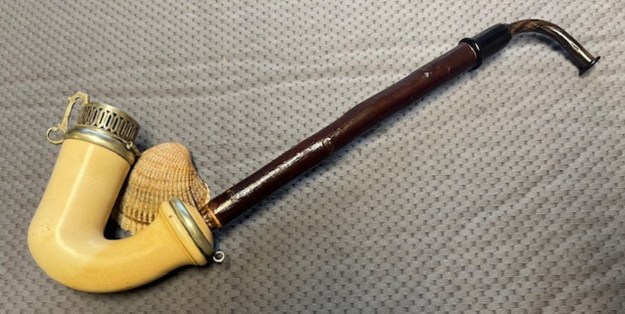
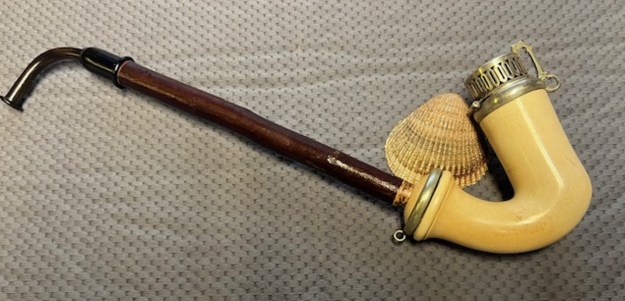
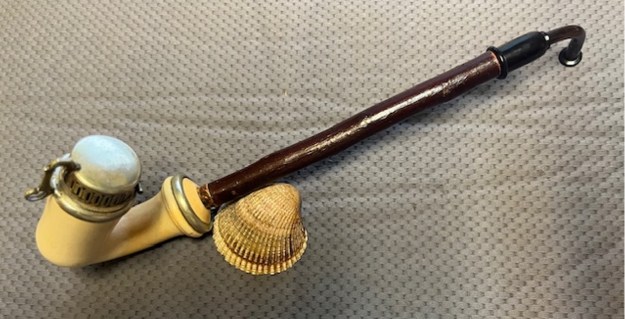
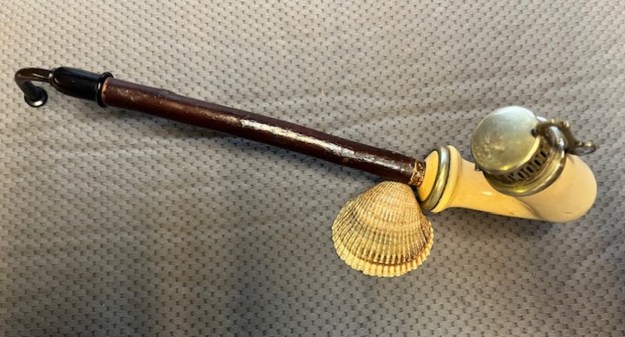
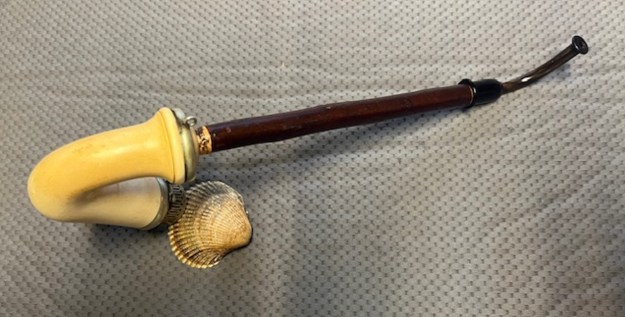
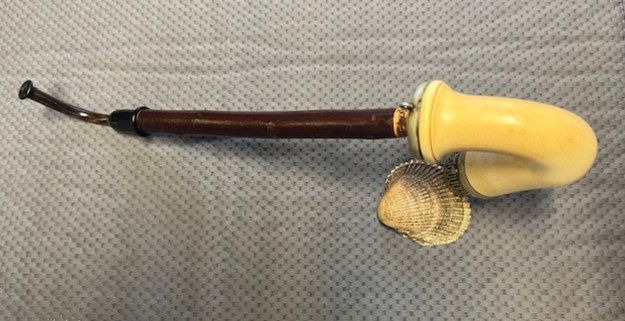
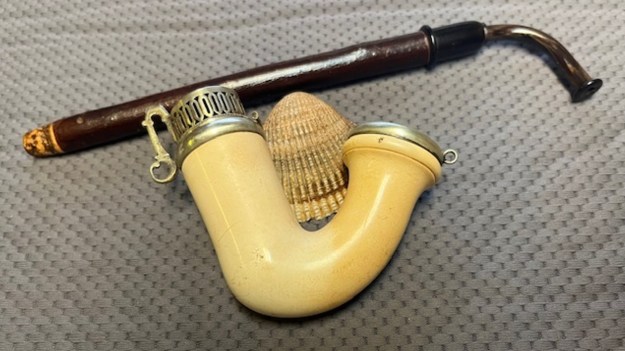
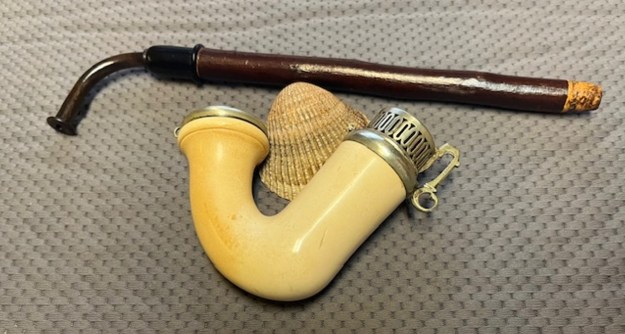
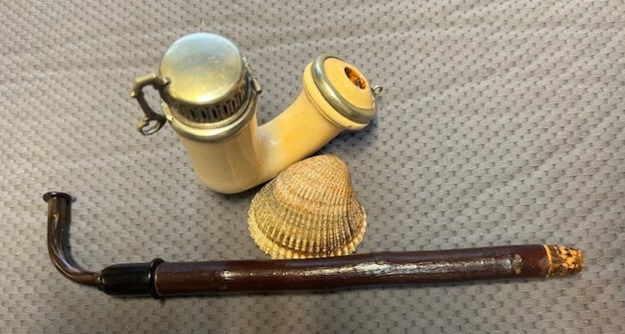
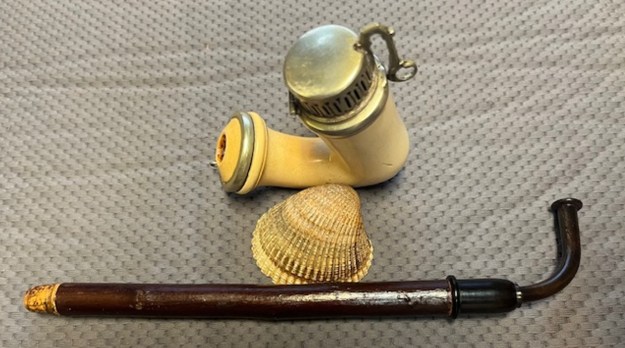
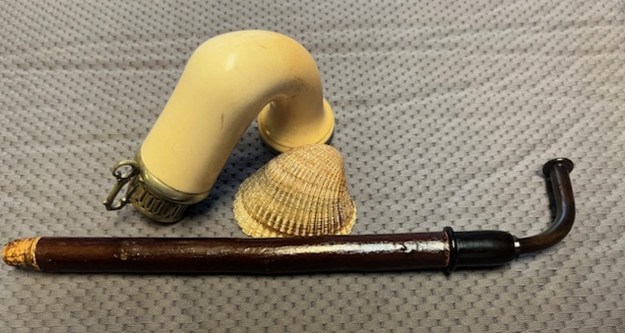
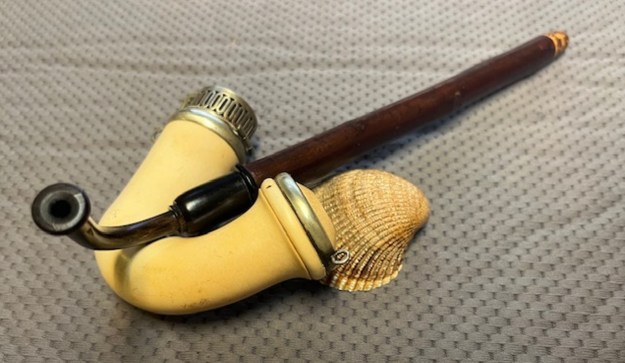
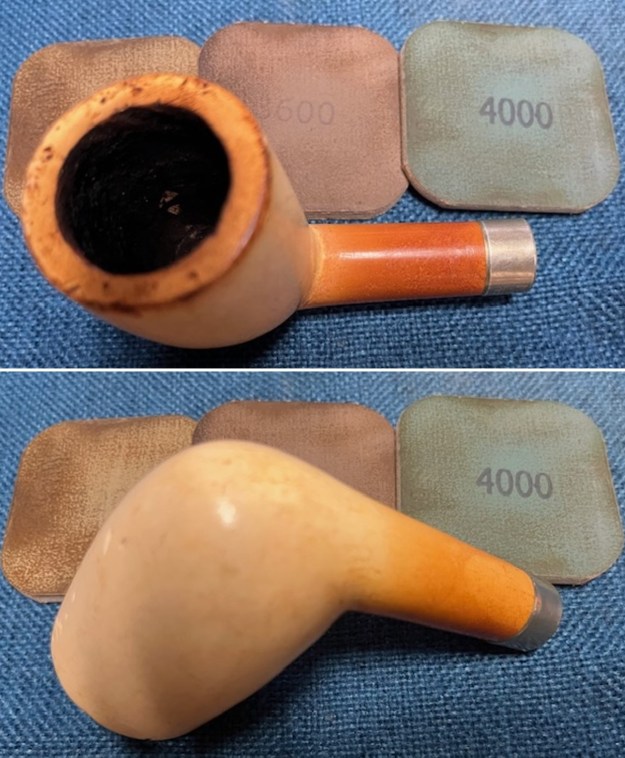
The next pipe on the worktable is an old timer. I am uncertain of what the shape is called. Perhaps it is a Debrecen but I am uncertain. I wrote Ben Rapaport for his help on the shape and he confirmed that it looks like a Debrecen to him. It has a tall meerschaum bowl with a gentle curve to the shank. The meer has taken on a nice patina particularly on the shank and other than being slightly dirty from sitting in a box for years is quite pretty. The rim top and shank end have sterling silver rings or caps. There is also a lattice, tall wind cap on the bowl that is quite stunning. It is hinged at the back and has a small catch that holds it closed. There is a small ring on the shank band that a cord could be attached to that links the shank to the bowl. The shank is cherrywood – basically a branch that has been drilled out with an airway. The mouthpiece is attached by a threaded cap on the end of the shank that it screws into. The shank cap and mouthpiece are both horn and quite nice. They are both in good condition. The bowl has a thick cake in it that lines the walls and carbon darkens the inside of the wind cap. The silver is all slightly oxidized and dirty. The stem is held I the shank with a cork in the shank. The previous owner had wrapped the end of the cherrywood shank with cellotape to hold it in place. I will have to remove that and see what I have to do to restore the cork. I have taken photos and included them below. I removed the long cherrywood shank from the bowl/shank unity. I took photos of the bowl and shank apart to give a sense of what the parts look like and give a sense of the size. The photos show the bowl from the side, the top and with the silver cap opened. You can see the dirtiness of the bowl and the carbon coat on the inside of the cap. There are some kind of hallmarks in the grime on the rim top once the cap is open. Once clean I may be able to discern what they say. It is a dirty pipe internally. Look closely at the shank end to see the tape wrapping on the end. I am uncertain what is under that. I removed the horn stem from the top end of the cherrywood and the cellotape from the bottom end of the cherrywood shank. The end is tapered to fit well in the meerschaum shank. Under the cellotape was still cork. It was dry but not crumbling. I gave it a rub down with Vaseline to soften and enliven the cork. I used a qtip to rub the cork down inside the meerschaum. Once it had absorbed some I rechecked the fit in the meerschaum and was pleased to see that the fit is snug. I set the cherrywood shank aside and turned my attention to the bowl. I carefully cleaned off the cake on the bowl walls and bottom with a Savinelli Fitsall Pipe Knife. It removed the cake well and left the walls quite smooth. Once finished I sanded the walls with a piece of dowel wrapped in 220 grit sandpaper. The walls were smooth so I could move to further cleaning.I cleaned out the internals of the bowl and the airway into the bowl as best as possible with pipe cleaners – normal and bristle and alcohol. I used the pipe cleaners and alcohol to also clean up the heavy carbon buildup on the inside of the wind cap. I cleaned the airway and threaded cap on the stem with pipe cleaners and alcohol and also cleaned out the inside of the cherrywood shank with the same. The pipe smelled clean.I used a piece of fine XXXX steel wool to carefully further clean the inside of the windcap and carefully work on the rim top. I wanted to clean up the hallmarks to see if I could read them.I further cleaned up the inside of the cap and the rim top around the hallmarks with a cotton pad and alcohol first. Then, I used a fine dental pick to try and remove more grime in the letters. I cleaned out that with a cotton swab and alcohol and was able to read the stamping a bit more. The pipe is definitely Weis pipe according to the stamping on the right side of the rim top. There appears to be a letter ahead of Weis and it is perhaps a C or possibly an L.W. I am unfamiliar with the maker so I will need to do some research on that further clarify the maker’s name. The other side has some letters which are a bit hard to discern but it appears to be stamped PROMP or something like that. Not sure on those are the are worn.Before continuing the clean up I thought it would be interesting to do a bit of digging online regarding the L.W. Weis company or carver. I googled and the first thing that came up was an AI link to a wiki on LW Weis Meerschaum pipes that connects the LW to a Carl Weis so perhaps it is LW that is stamped on the hallmark. I quote from that below.

AI Overview

LW Weis is a brand of antique meerschaum pipes, specifically known for those crafted by Carl Weis, a late 19th-century manufacturer. These pipes are made from the mineral sepiolite, commonly called meerschaum, and are highly valued for their intricate carvings and the way they change color with use. 

 Key Features of LW Weis Meerschaum Pipes:

Material: Made from meerschaum (sepiolite), a mineral known for its porousness and ability to absorb oils from tobacco smoke, leading to a unique color change over time. 

Carvings: Often feature elaborate carvings, showcasing the material’s suitability for detailed designs. 

 Color Change: The natural white color of meerschaum gradually transforms into a range of warm hues (browns, yellows, oranges, etc.) as it’s used, a characteristic highly prized by collectors. 

 Manufacturer: Carl Weis was a late 19th-century manufacturer with a retail store at 399 Broadway, NY, and factories at 69 Walker St., NY, and elsewhere. 

 To me it is interesting that the LW Weis pipes were done by Carl Weis, a late 19th century manufacturer who sold his pipes out of a retail store on Broadway in New York, NY. Now to dig further.

I turned to Pipedia and was also taken to the page for Carl Weis. The article there confirmed the information on the New York Store and Factory as well as clearly connecting it to manufacture in Vienna, Austria (https://pipedia.org/wiki/Carl_Weis_Meerschaum_Pipes). I quote article in full below.

Carl Weis – Late 19th century manufacturer of meerschaum pipes and smoking articles.

Retail store was at 399 Broadway St., NY; factories were at 69 Walker St., NY and in Vienna, Austria.

From the Internal Revenue Record and Customs Journal, Volume 26 (October 4, 1880):

1st Prize Medal Vienna, 1873 CARL WEIS, Manufacturer of Meerschaum Pies, and holders, Wholesale and Retail. Finest Goods at lowest prices. Send for circular. STORE – 399 Broadway, New York. Factories – 69 Walker St; and Vienna, Austria.

I also searched further and found an advertising piece on the First Prize Medal won at the Vienna Exhibition in 1878. Here is the link (https://www.etsy.com/ca/listing/1853287006/c-weis-pollak-co-meerschaum-pipes-vienna). The photo from the etsy shop is shown below.I also wanted to look up information on the Debrecen shape. It appears that the shape is Hungarian and is made in one of three famous workshops in Eger, Buda and Debrecen. In the early years of Hungarian production, three bowl shapes prevailed: Debrecen, Kalmasch, and Ragoczy. The Debrecen shape seems to have been carved in Debrecen, Hungary with the silver work being done in Vienna, Austria. The connection of the Austrian Hungarian Empire it seems is seen in the pipe. Thus, from what I can find the pipe is an 1890s (late 19th Century) pipe so it has some considerable age.

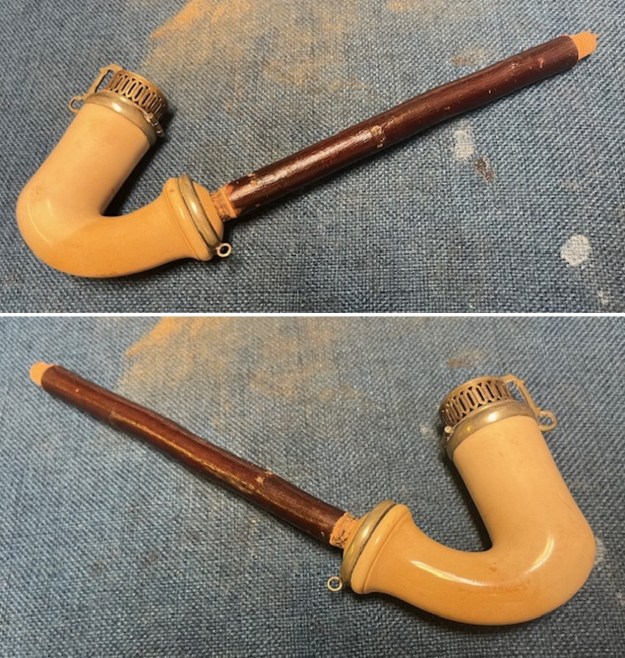
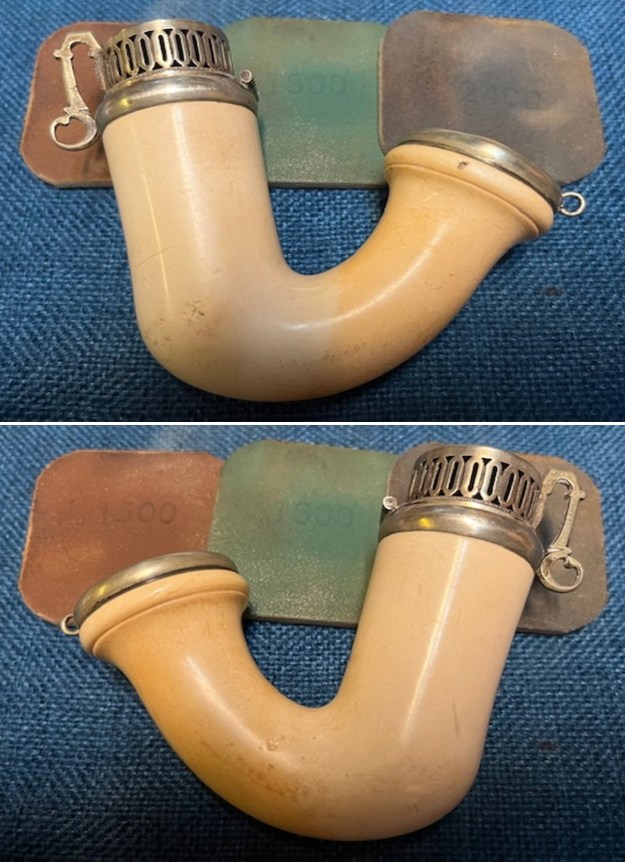
Now it was time to get back to the pipe. With the shank and stem cleaned I put them back together. The stem had no tooth marks or damage on it. The fitting to the cherrywood was perfect. I was missing the cord that would have held the bowl and shank together but I would keep and eye out for one. I rubbed the stem and shank down with Before & After Restoration Balm. I have found it works well not just on wood but also on horn. I rubbed it on with my fingertips and it works to deep clean, rejuvenate and restore the shine to wood and horn. It looked very good at this point. I rubbed the cork on the shank end with Vaseline and set it aside to have the cork absorb the product. It works to soften and preserve the cork making it more pliable when inserted in the shank. I set the cherrywood aside to let the Vaseline absorb in the cork and turned my attention to the bowl. I polished the silver on the rim top, shank end and rim cap with a jeweller’s cloth. It works to polish and protect the silver from oxidation. It looks very good. I polished the meerschaum with micromesh sanding pads – dry sanding with 1500-12000 grit pads. I wiped the bowl down after each pad with a damp cotton cloth. The bowl took on a shine by the last pads. I polished the bowl with Clapham’s Beeswax Polish. I rubbed it on the meerschaum and let it dry. Once dried I buffed it off with a clean buffing pad on my buffing wheel. I hand buffed the bowl with a microfibre cloth to deepen the shine. I am really happy with the way that this Late 19th Century Meerschaum Debrecen with Cherrywood shank and horn stem turned out. It really is a beautiful looking pipe with a unique shape and smooth meerschaum bowl, silver rim cap, windcap and shank band. The cherrywood shank and the horn stem are really nice. The patina on the meerschaum came alive with waxing and buffing. The rich patina on the finish gave the pipe a sense of depth with the polishing and waxing. I buffed the bowl with Blue Diamond and hand buffed it. I put the stem back on the bowl and carefully buffed the pipe with multiple coats of beeswax and buffed the pipe with a clean buffing pad to raise the shine. I hand buffed the pipe with a microfiber cloth to deepen the shine. The finished Old Time Meerschaum Debrecen really is a beauty and feels great in the hand and looks very good. Give the finished pipe a look in the photos below. The dimensions of the pipe are Length: 11 inches, Height: 3 inches, Outside diameter of the bowl: 1 ¼ inches, Chamber diameter: ¾ of an inch. The weight of the pipe is 79 grams/2.79 ounces. The pipe will be staying with me for awhile as it is a beauty that I will enjoy smoking one day soon. Thanks for reading this blog and my reflections on the pipe while I worked on it. It was a fun one to work on!
Restemming and Restoring a Meerschaum Apple


by Steve Laug

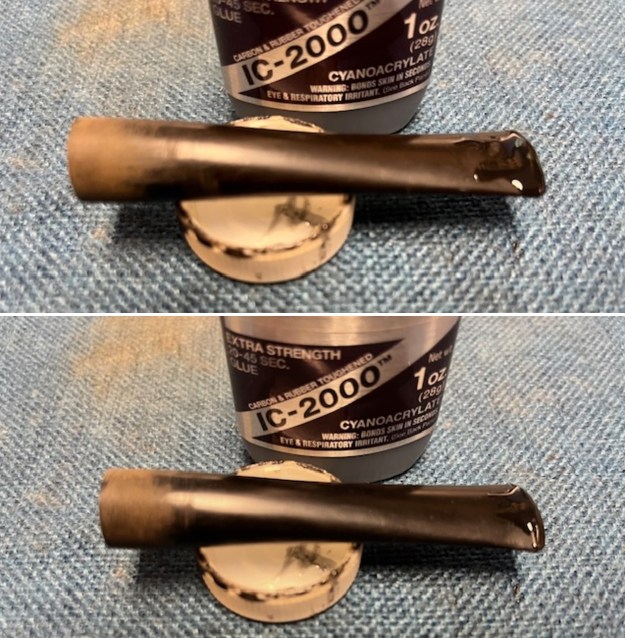
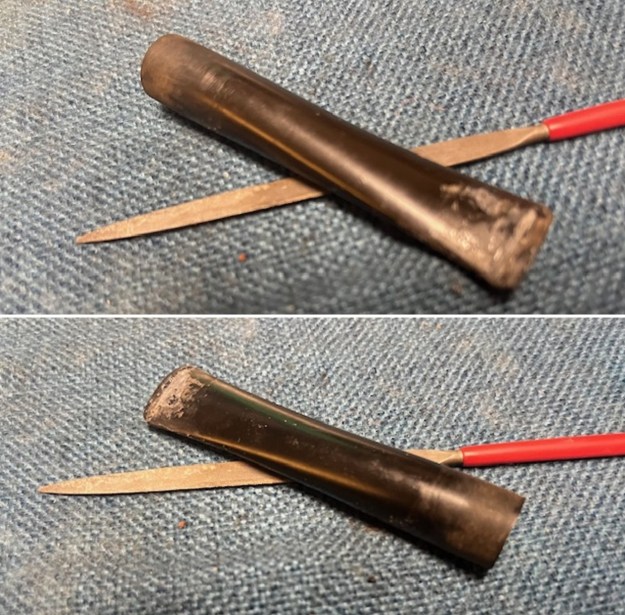
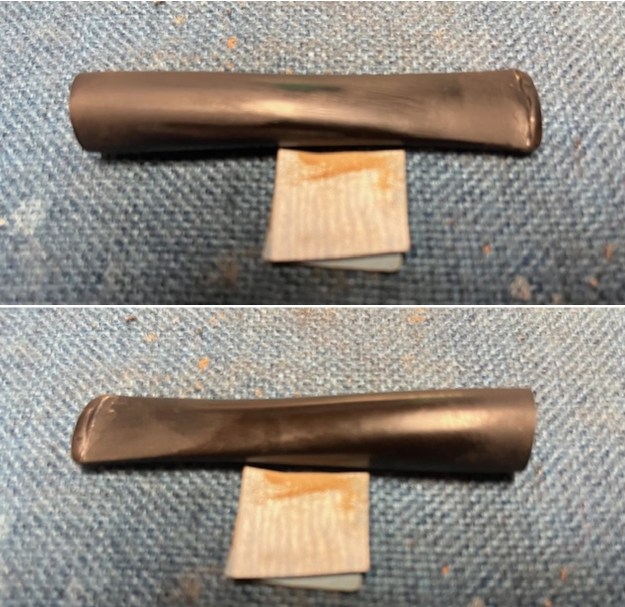
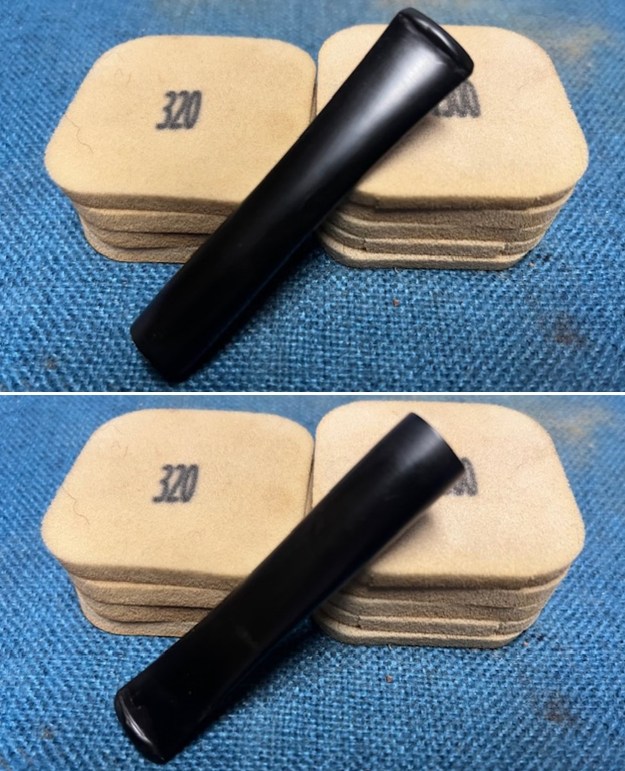
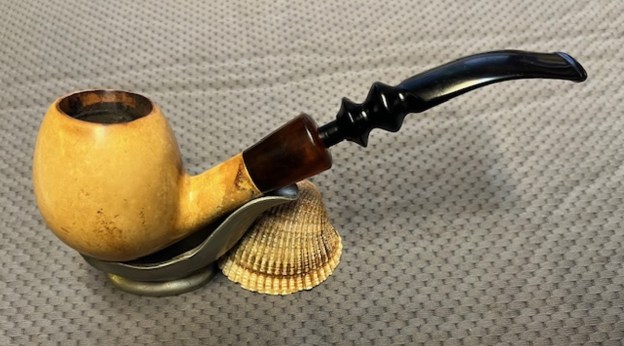
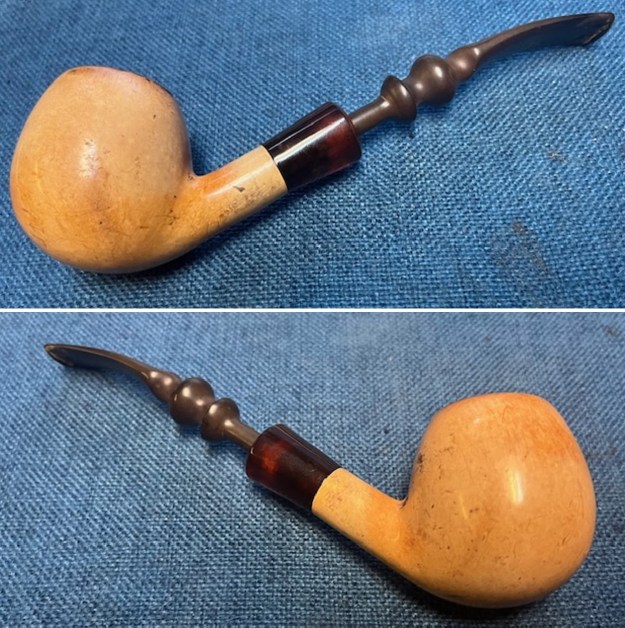
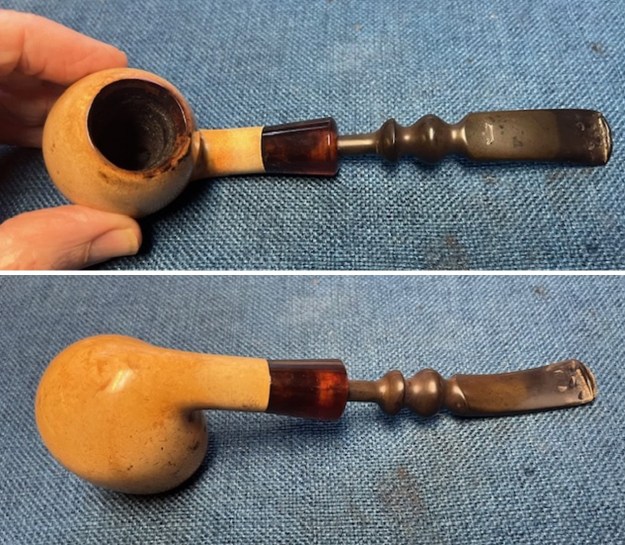
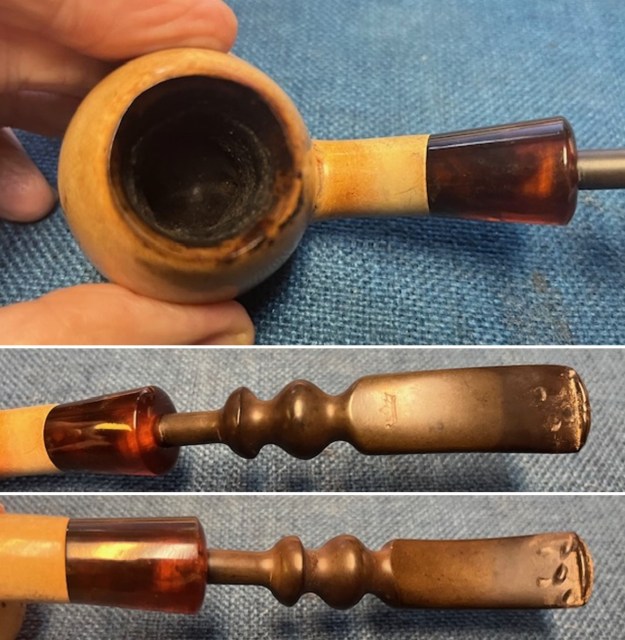
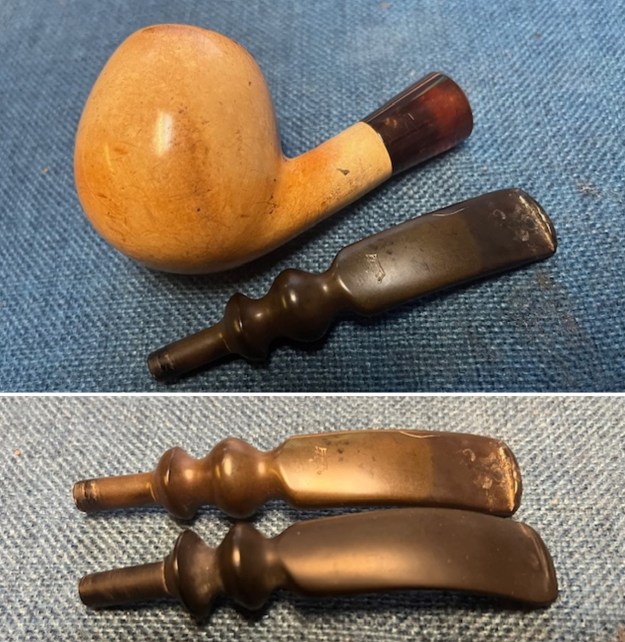
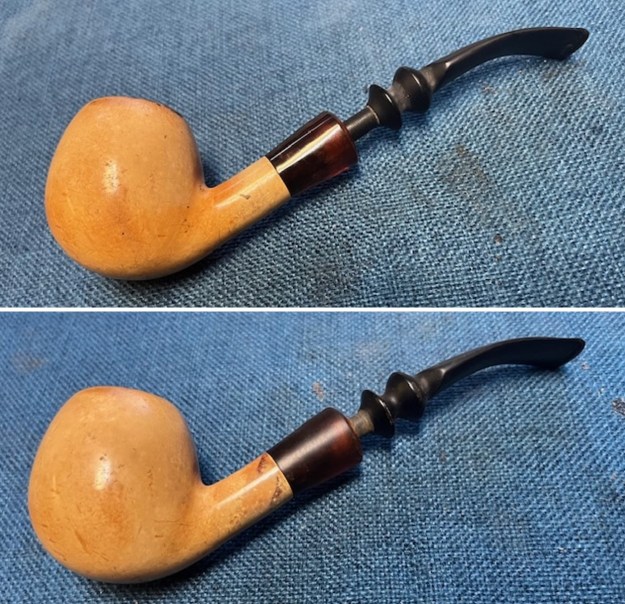
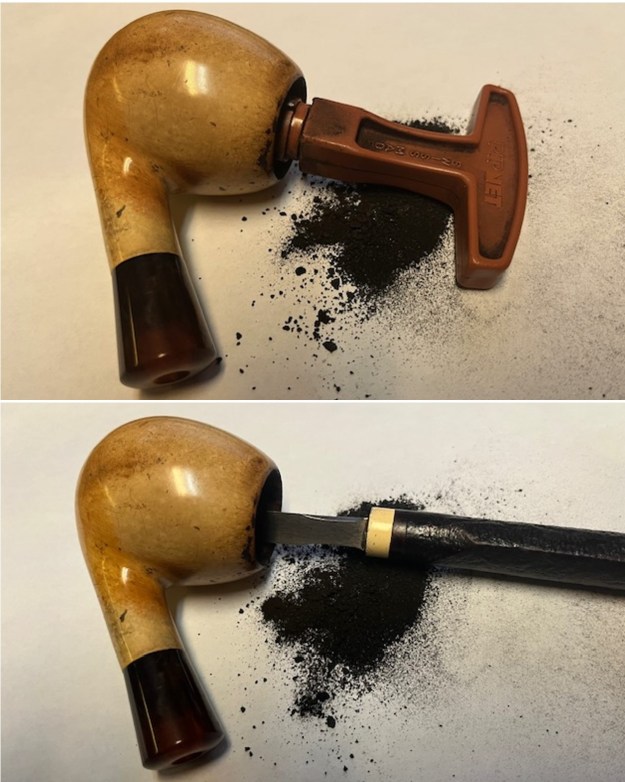
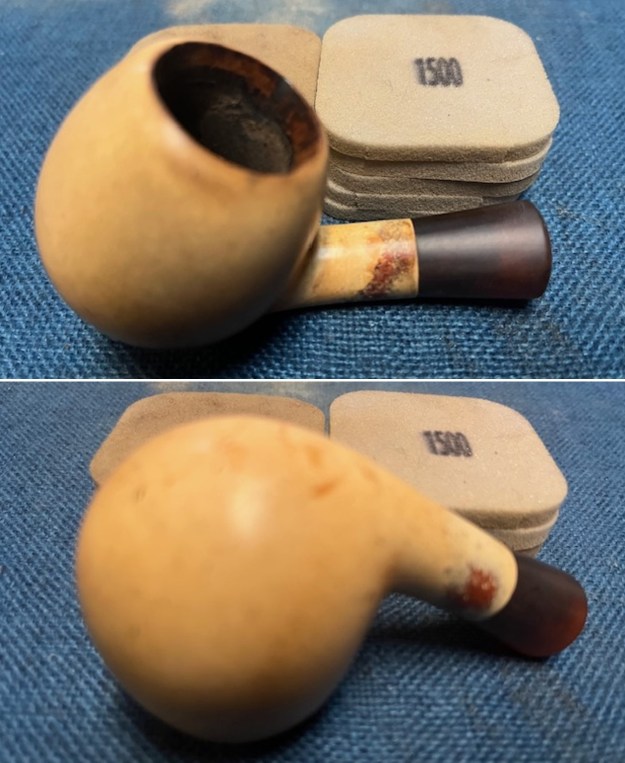
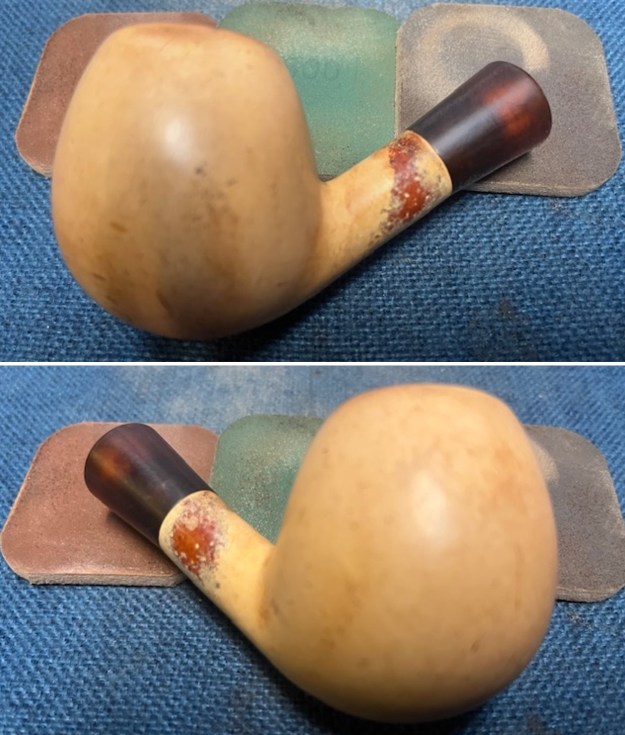
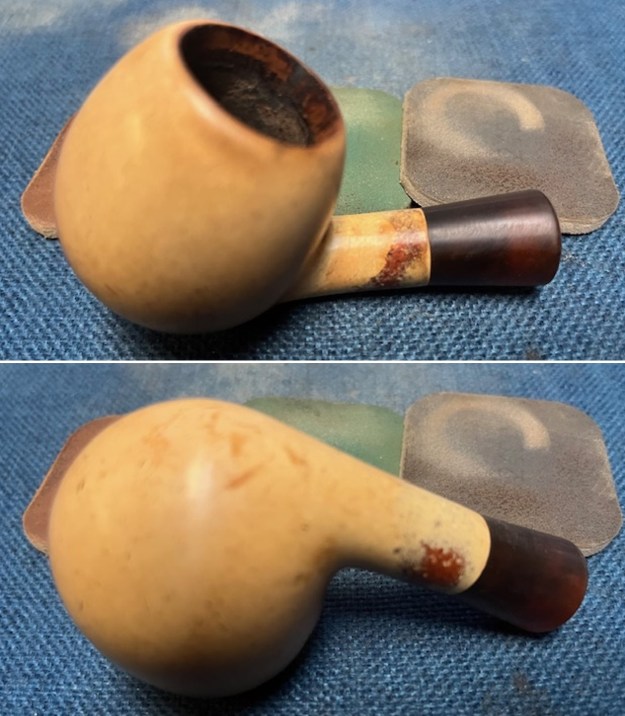
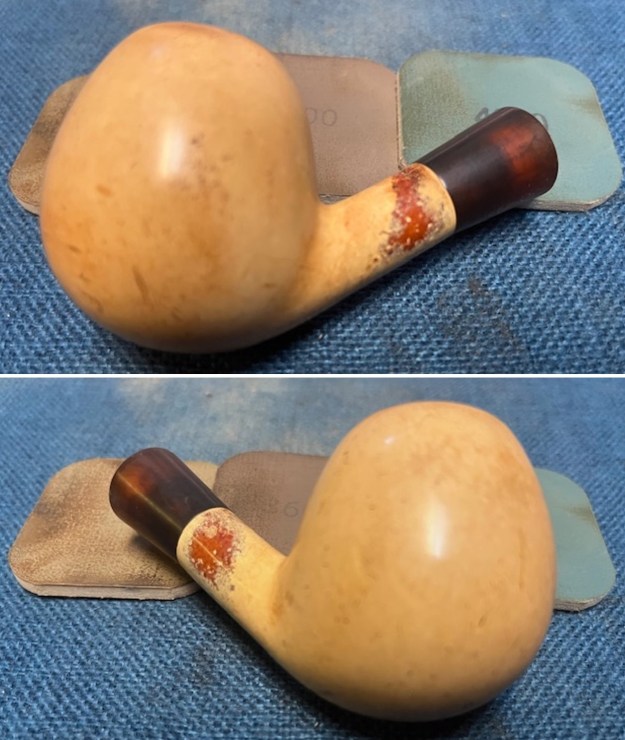
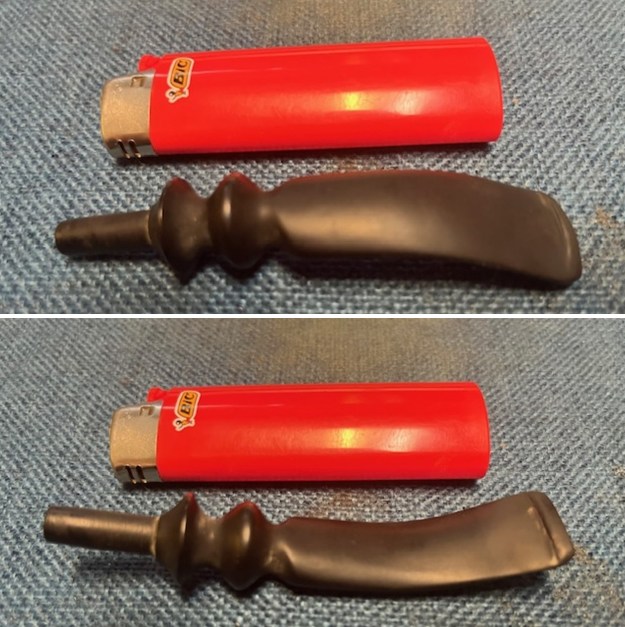
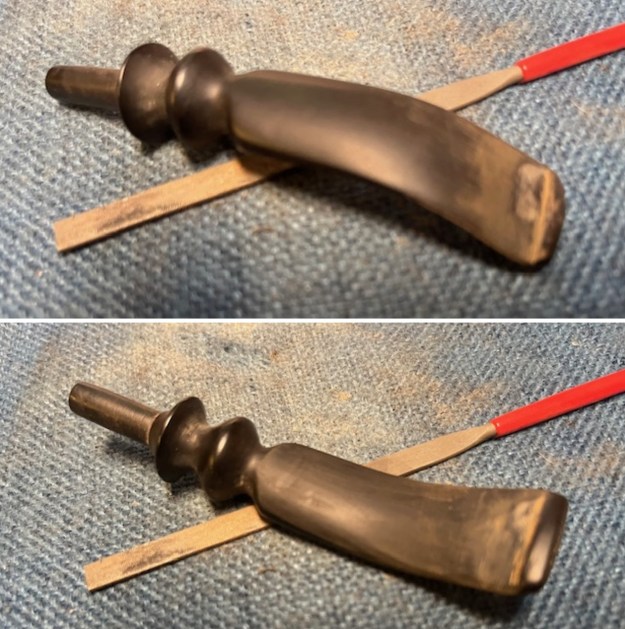
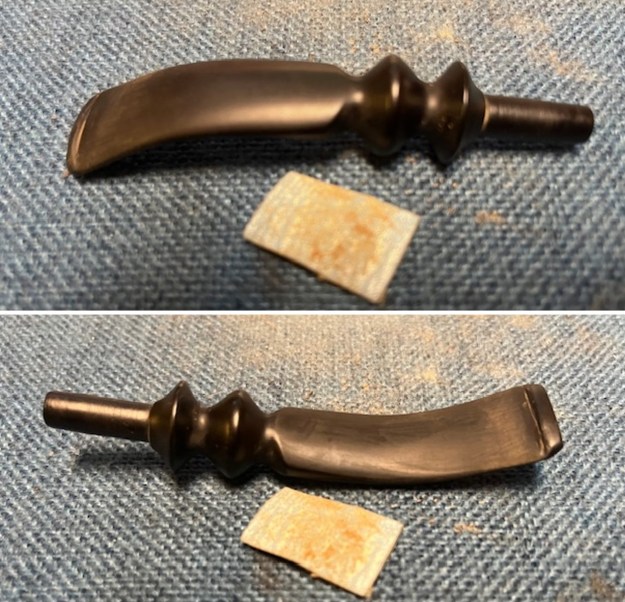
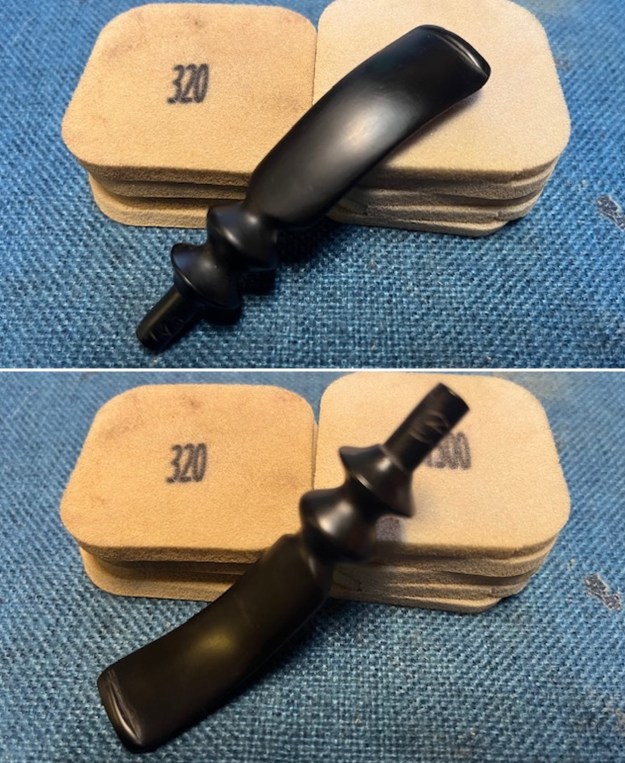
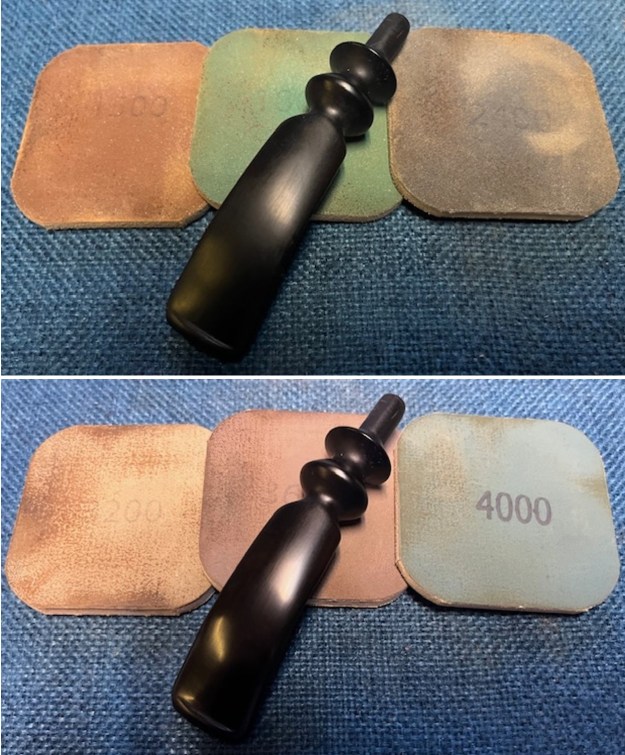
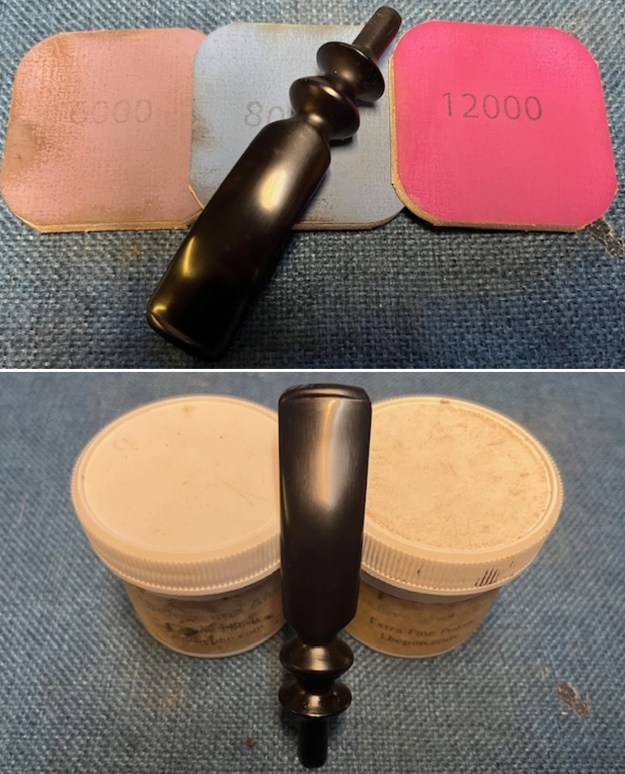
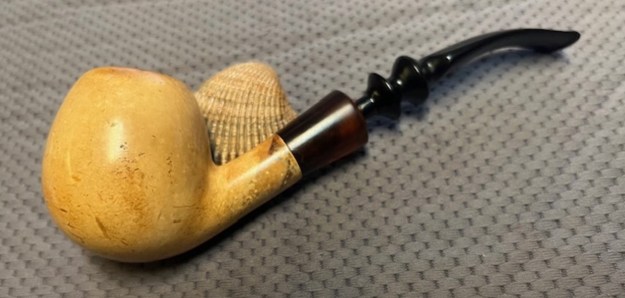
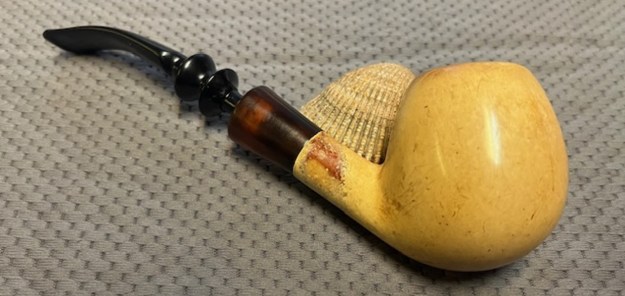
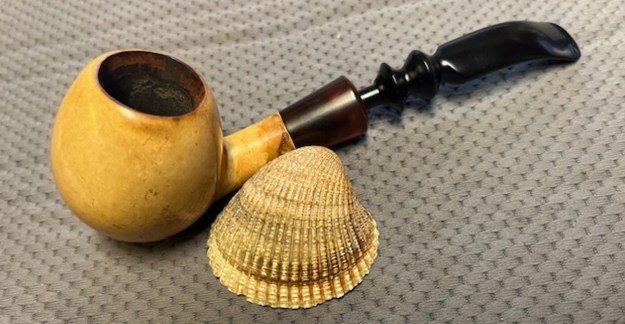
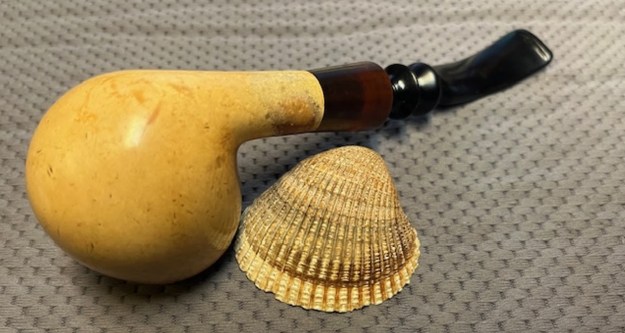
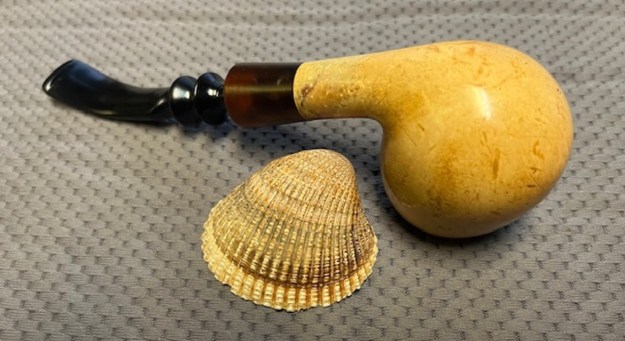
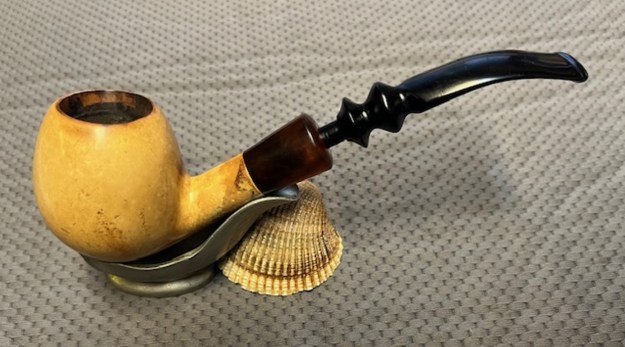
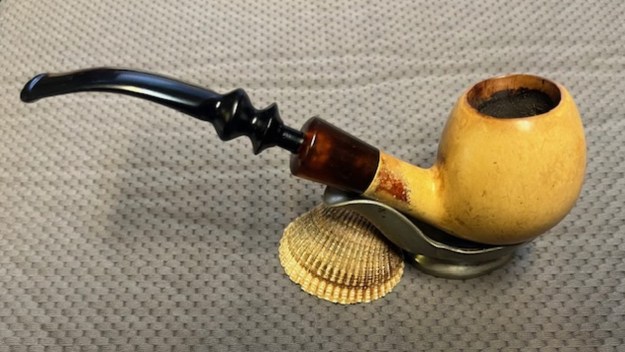
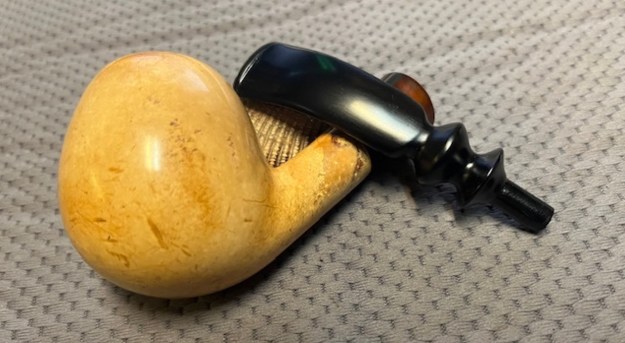
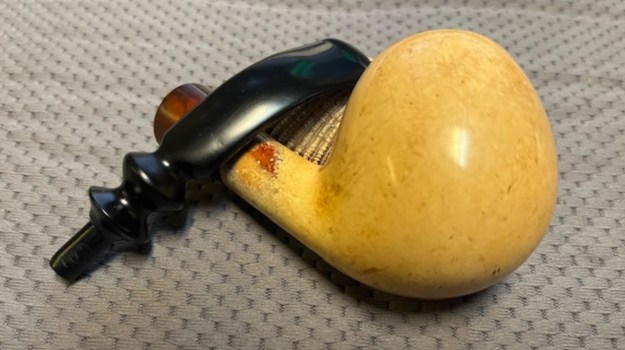
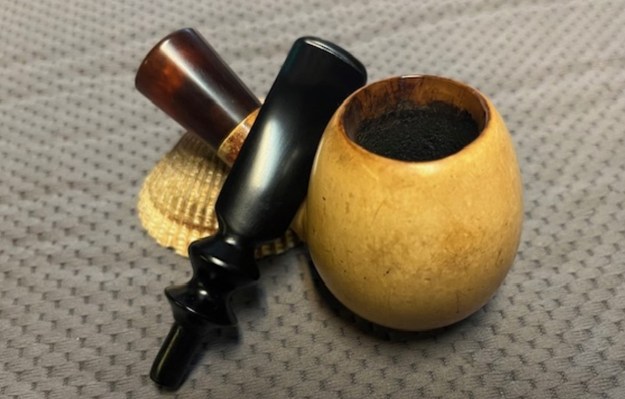
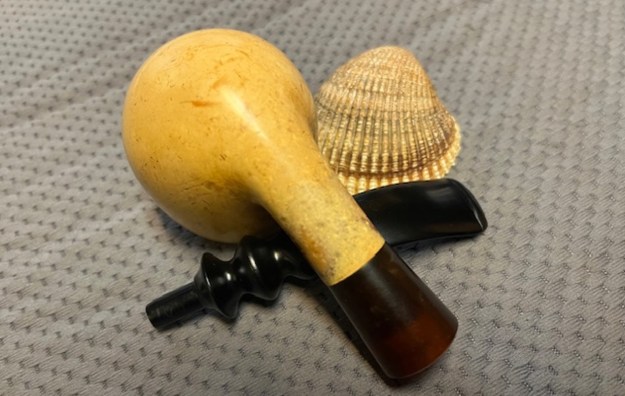
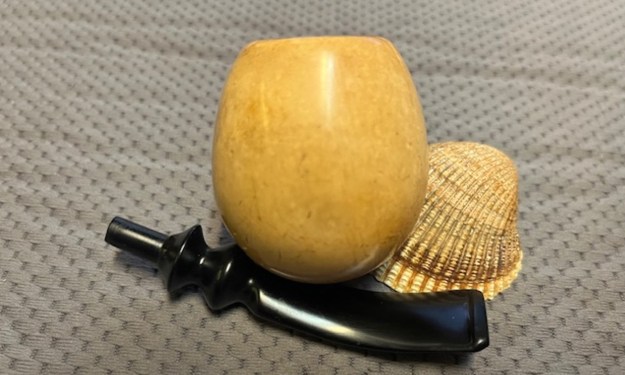
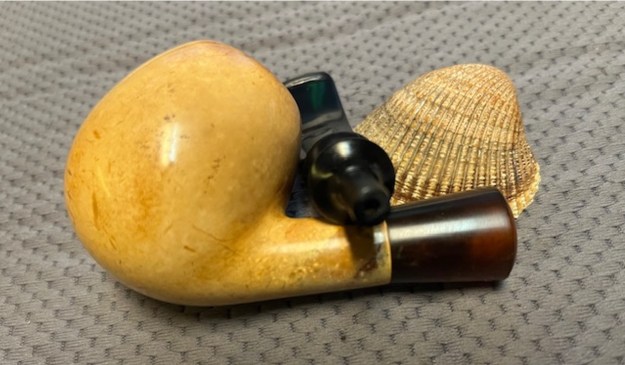
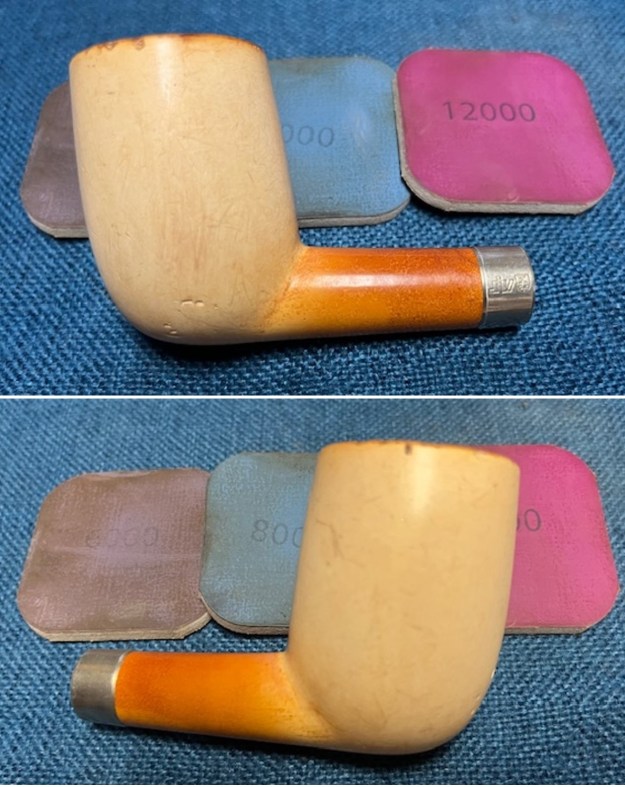
This afternoon I decided to work on the pipe that I no longer know where or when we purchase it. I have a large box of Meerschaum pipes that is sitting in my storage that I need to clean up and restore. I have honestly avoided them for years but now was the time to start my work on some of them. The first one I chose was definitely an older ball or apple shaped smooth meerschaum with a red acrylic shank extension. It is a beautifully shaped meer with scratches from its journey and some nice patina around the shank and sides. The meer is dirty from use with a thick cake in the bowl and a light overflow of lava on the inner edge and thin rim top. The acrylic shank extension was loose and would need to be cleaned. The stem fit well against the shank end however it was a Preben Holm vulcanite stem and it was too long. It would need to be replaced with a more fitting stem for the size of the pipe. There were no identifying logos on the bowl or shank. I took photos of the pipe before I started my clean up work on it. I took photos of the rim top and the stem to show the condition of the pipe when I brought it to the worktable. You can see the cake in the bowl and the build up of lava and debris on the edge and top of the thin rim top. It is another dirty pipe but still a charmer. The vulcanite stem has chatter and deep tooth marks on both sides near the button. It also has a Preben Holm crown on the top of the stem. It will be replaced so fortunately I will not need to deal with it.I removed the stem from the shank and took a photo of the parts. To me proportionally the stem is too long for this pipe. I went through my stems and found a stem that would work well. In the photos it looks the same length or longer but it is about an inch shorter and the blade is also wider and looks good. I took a photo of the pipe with the new stem. I shortened the tenon a bit to bring it closer to the shank extension. The second photo of the stem in the shank shows the new look. I reamed the thick cake out of the bowl. I started with a PipNet reamer and the 2nd and 3rd cutting heads to take back the cake to the walls of the bowl. I cleaned up the reaming with a Savinelli Fitsall Pipe Knife. I sanded the bowl walls with a piece of dowel wrapped with 220 grit sandpaper. Once finished it looked very good. I cleaned out the airway in the shank and mortise as well as in the new stem with pipe cleaners (both bristle and regular). It was much better.I cleaned up the rim top and edges of the bowl with a 320 grit sanding pad. I removed the darkening and damage and it looked better.The shank extension was held to the shank with a white Delrin tenon. The shank on the pipe was thread and the smooth end fit partially into the extension. When screwed into the shank it was a snug fit. I chose not to glue it but leave it unglued and removable.Now it was time to work on the bowl itself. I started my work by sanding with 320-3500 grit 2×2 inch sanding pads. It smoothed out the scratches and revealed more and more of the patina around the bowl and shank. It is a beautiful looking pipe. I polished the meerschaum with micromesh sanding pads – dry sanding with 1500-12000 grit pads. I wiped the bowl down after each pad with a damp cotton cloth. The bowl took on a shine by the last pads. I gave the bowl multiple coats of Clapham’s Wax that blends both carnauba and beeswax in a soft wax. I rubbed the wax on the bowl sides and the shank end with my fingers and set it aside to dry. Once the wax cured I buffed the bowl with a clean buffing pad and then with a soft microfibre cloth. The bowl has a rich glow. I set the bowl aside and turned my attention to the stem. I “painted” the surface of the stem with the flame of a lighter to lift the tooth marks on the surface. It lifted many of them. I filled in those that remained with some black, rubberized CA glue. When it cured I flattened out the repair with a small flat file and then sanded it with 220 grit sandpaper to smooth it out. I continued sanding the stem surface with 320-3500 grit 2×2 inch sanding pads. I wiped the stem down after each pad with a damp pad to remove the debris. By the end it was quite shiny and ready for polishing.I polished the stem with micromesh sanding pads – dry sanding it 1500-12000 pads. I wiped it down with a damp cloth after each pad to protect it and preserve it. I polished it with Before After Pipe Polish – both Fine and Extra Fine. I am really happy with the way that this Meerschaum Freehand Style Apple turned out. It really is a beautiful looking pipe with a unique shape and smooth meerschaum bowl. The acrylic shank extension and the fancy vulcanite saddle stem are really nice. The patina on the meerschaum came alive with waxing and buffing. The rich patina on the finish gave the pipe a sense of depth with the polishing and waxing. I put the stem back on the bowl and carefully buffed the pipe with Blue Diamond on the buffing wheel. I gave the bowl and the stem multiple coats of beeswax/carnauba wax and buffed the pipe with a clean buffing pad to raise the shine. I hand buffed the pipe with a microfiber cloth to deepen the shine. The finished Meerschaum style Freehand really is a beauty and feels great in the hand and looks very good. Give the finished pipe a look in the photos below. The dimensions of the pipe are Length: 6 inches, Height: 2 inches, Outside diameter of the bowl: 1 ¼ inches, Chamber diameter: 1 inch. The weight of the pipe is 66 grams/2.33 ounces. The pipe will be going on the rebornpipes store soon. It will be in the Ceramic and Meerschaum Pipes Section if you would like to add it to your collection. Thanks for reading this blog and my reflections on the pipe while I worked on it. It was a fun one to work on!