
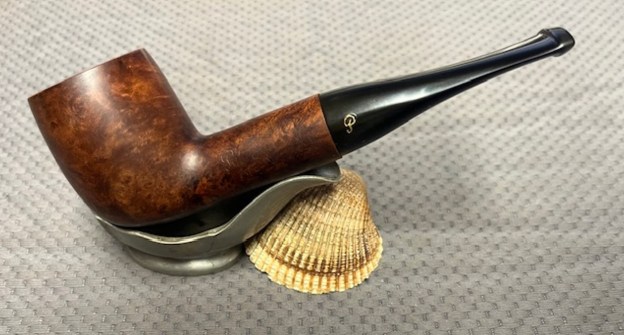
by Steve Laug
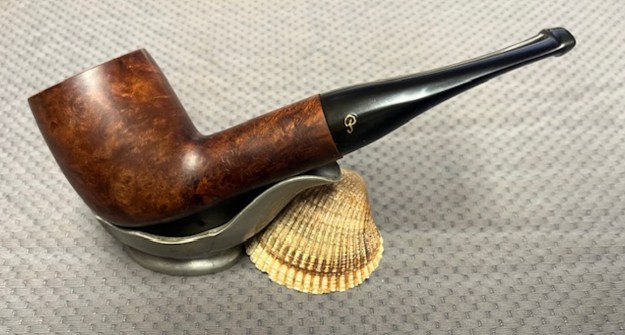
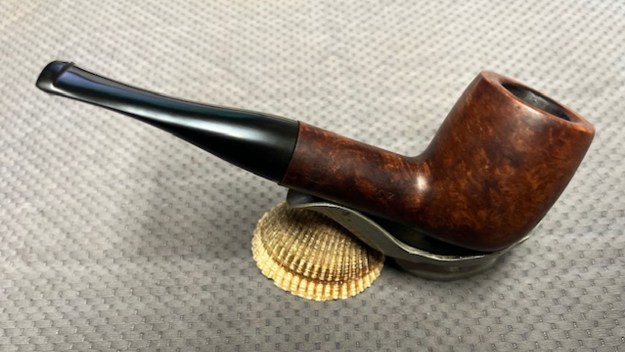
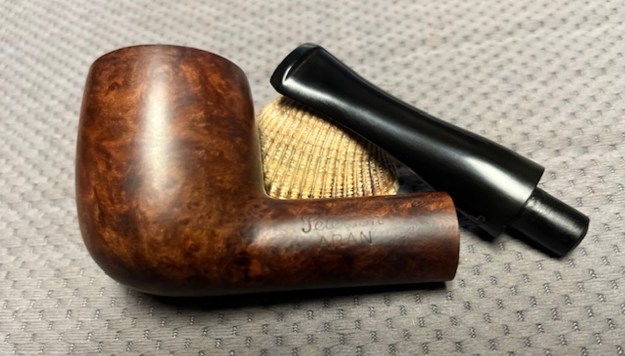
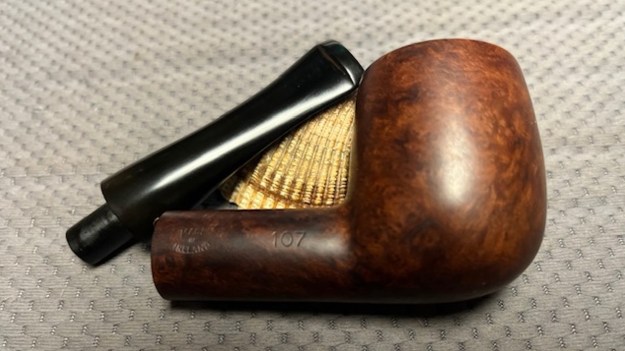
The next pipe I have chosen is a thick shank Peterson’s Billiard that was dropped by a local pipe shop for repair. The stem was loose and the pipe was extremely dirty. The grime was ground into the finish on the bowl sides. The contrast of the brown stains gave the grain a sense of depth. It was stamped on the left side of the shank and read Peterson’s [over] ARAN. The right side had an oval reading Made [arched over] in [in the centre] under that it was stamped Ireland [followed by] the shape number 107 stamped next to the bowl shank junction. There was a thick cake in the bowl and a heavy overflow of lava on the rim top and inner edge. There was some damage on the bevelled inner edge and rim top on the front left and the back right. The stem was oxidized, calcified and had light tooth marks, chatter and scratches on the top and underside on and near the button. I took photos of the pipe before I started my cleanup work. They tell the story and give a glimpse of the promise that I see in this pipe.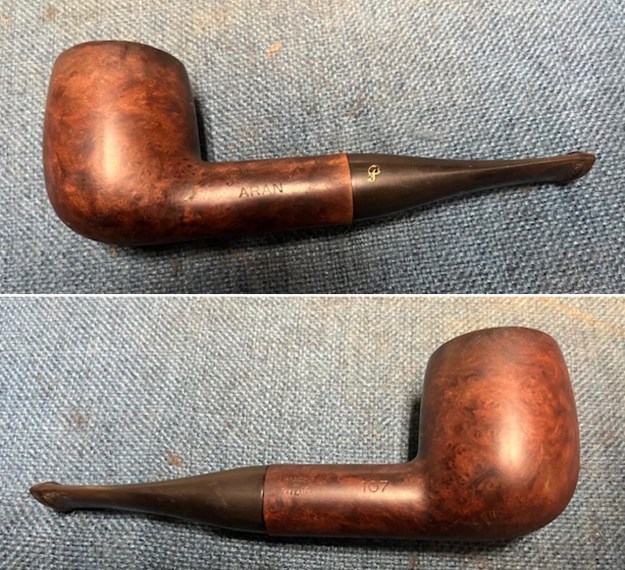
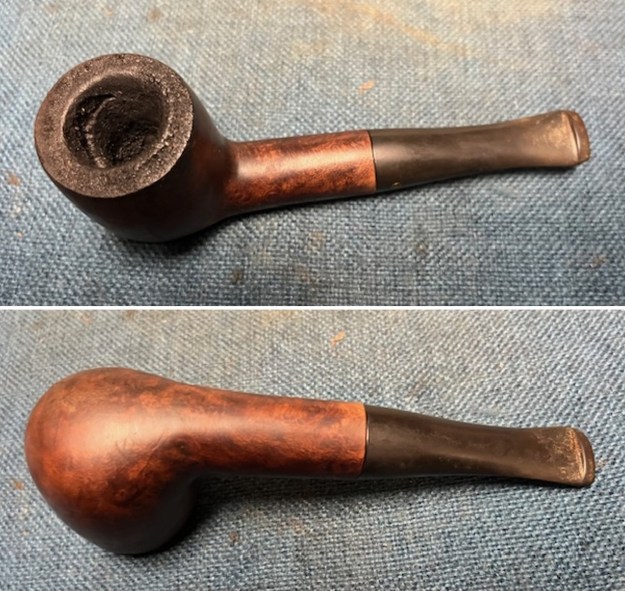 I took photos of the rim top and stem to show the general condition of the pipe. The bowl is heavily caked and the rim top and edges have a thick lava overflow. The photos of the stem show that it was oxidized and has light tooth marks on the top and underside near the button.
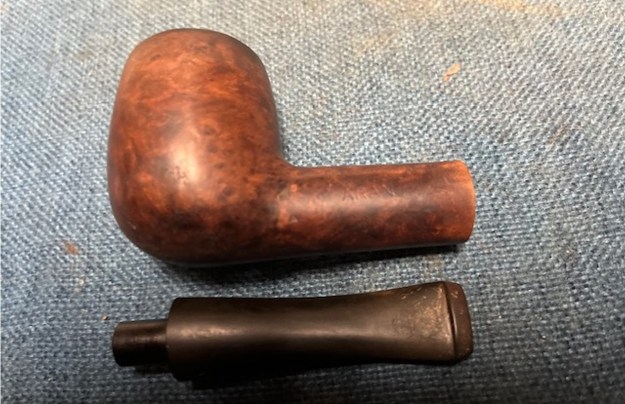
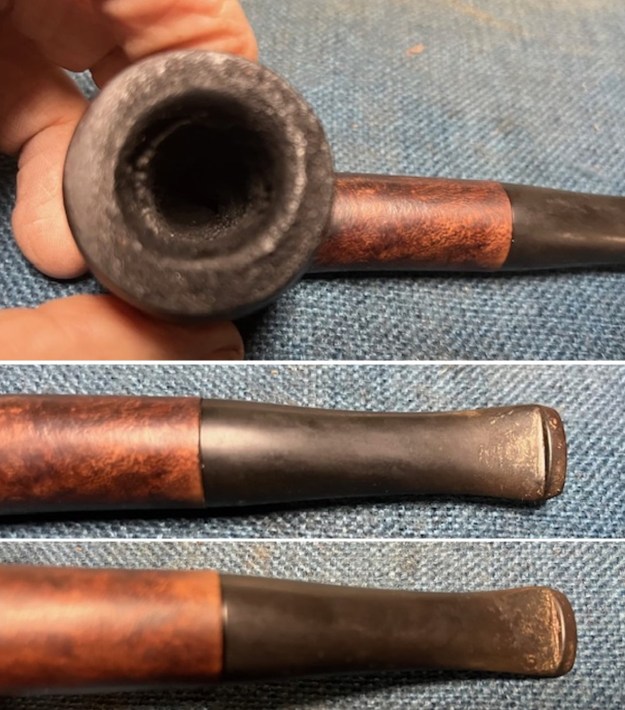 I took photos of the stamping on the sides of the shank. It is clear and readable and reads as noted above. There is also a gold P on the left side of the tapered vulcanite stem. I took a photo of the pipe without the stem to show the proportions of the bowl and stem.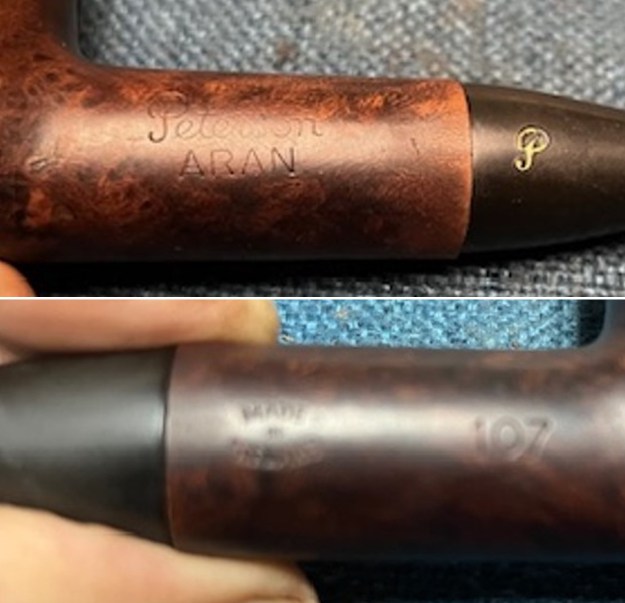
 I turned to “The Peterson Pipe” by Mark Irwin and Gary Malmberg to get some background on the Aran line. On page 294 it had the following information.
Aran (1965-) First issue of line described as “handhewn” (rusticated) with black semi-matte finish, in P-lip and fishtail mouthpiece. Second issue 1975, red sandblast, XL shapes. Third issue circa ’97, gold hot-foil P stamped on the mouthpiece, brown semi-matte smooth finish, no band. Fourth issue after 2010, with nickel band, no P stamped on the mouthpiece. Mounted and unmounted versions are available concurrently.
I knew that I was dealing with an Aran from the Third Issue of the Aran line that came out around 1997. It did not have a band and had a semi-matte smooth finish. It came with a fishtail vulcanite stem with the gold foil P on the left side of the shank. Now it was time to work on the pipe.
I reamed the bowl with a PipNet pipe reamer and the 2nd and 3rd cutting heads to remove the heavy cake. I took it back to bare briar and then cleaned up the reaming with a Savinelli Fitsall Pipe Knife. I sanded the bowl with a piece of dowel wrapped in 220 grit sandpaper.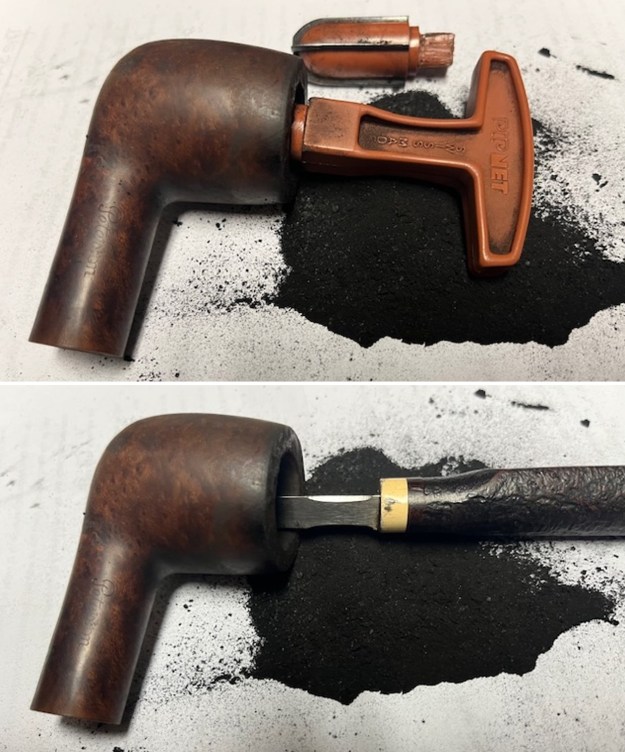
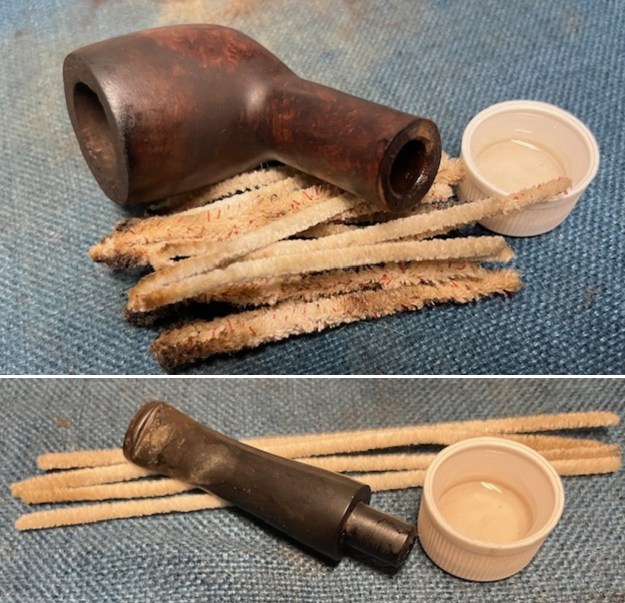
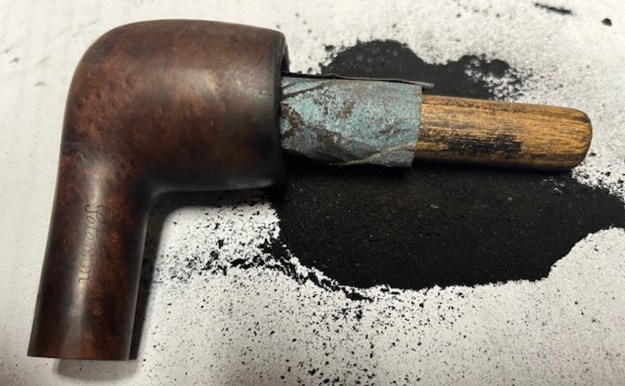 I cleaned out the mortise and airway in the shank as well as the airway in the stem with pipe cleaners, cotton swabs and alcohol. It was a dirty bowl and shank.
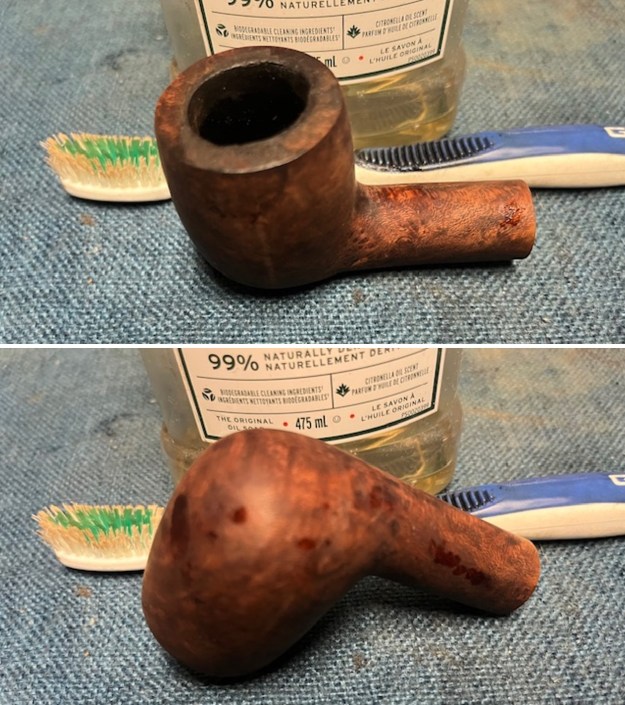
 I scrubbed the exterior of the bowl and shank with undiluted Murphy’s Oil Soap and a tooth brush. It took some scrubbing to clear off the debris on the rim top and the surface of the bowl and shank. I rinsed the bowl off with warm water to remove the grime and debris along with the soap on the pipe. It looked much better.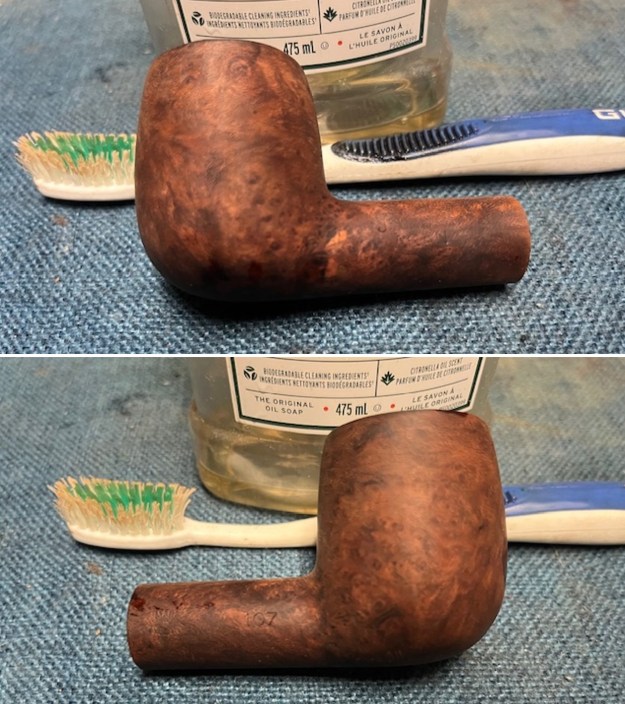
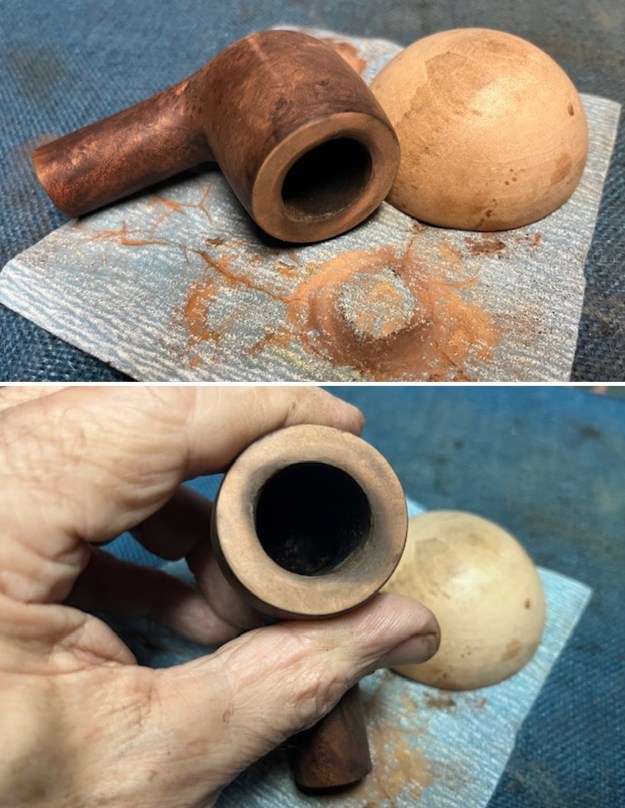
 To minimize the damage on the top and inner edge of the bowl I used a half sphere and a piece of 220 grit sandpaper to clean up the edge and bevel is slightly. It looks better though still far from flawless.
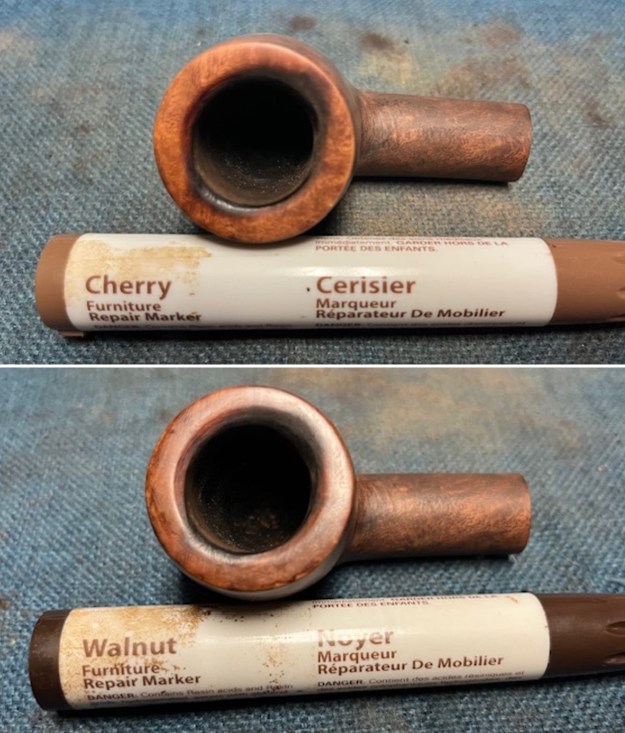
 I used a Cherry and a Walnut stain pen to restain the rim top and edges. I worked it into the surface and then sanded it lightly with 1500-2500 grit sanding pads.
  I sanded the bowl with 320-3500 grit 2×2 inch sanding pads. I wiped the briar down with a damp cloth to remove the sanding debris. By the final pad it was looking much better.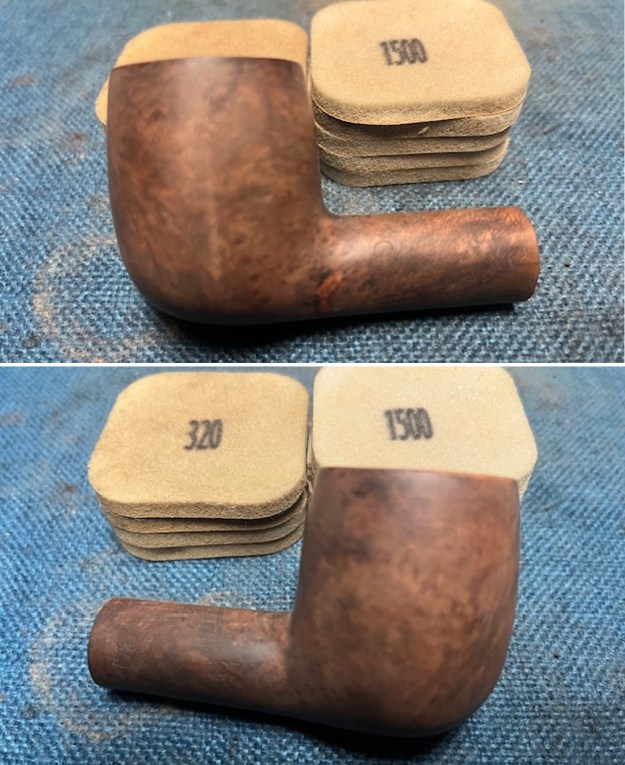
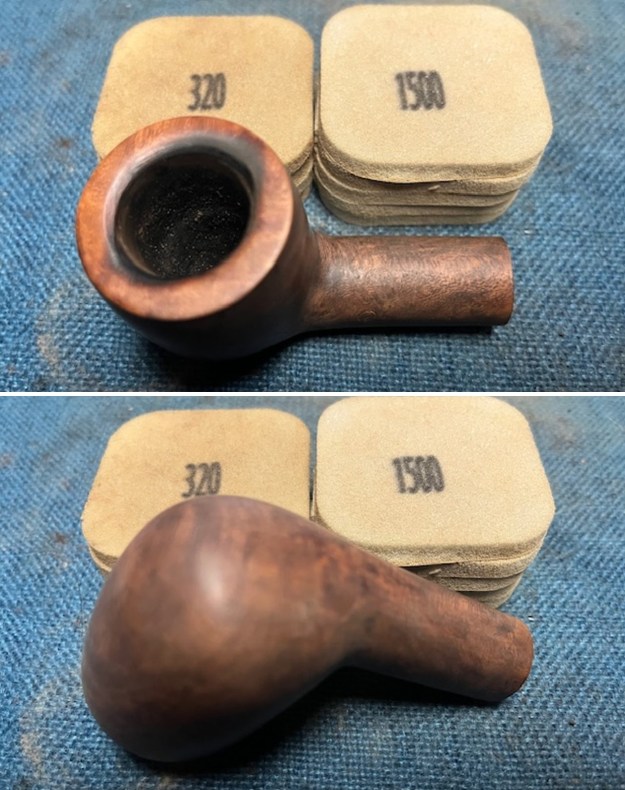 I polished the briar bowl and shank with micromesh sanding pads. I dry sanded it with 1500-12000 grit pads and wiped it down with a damp cloth after each pad.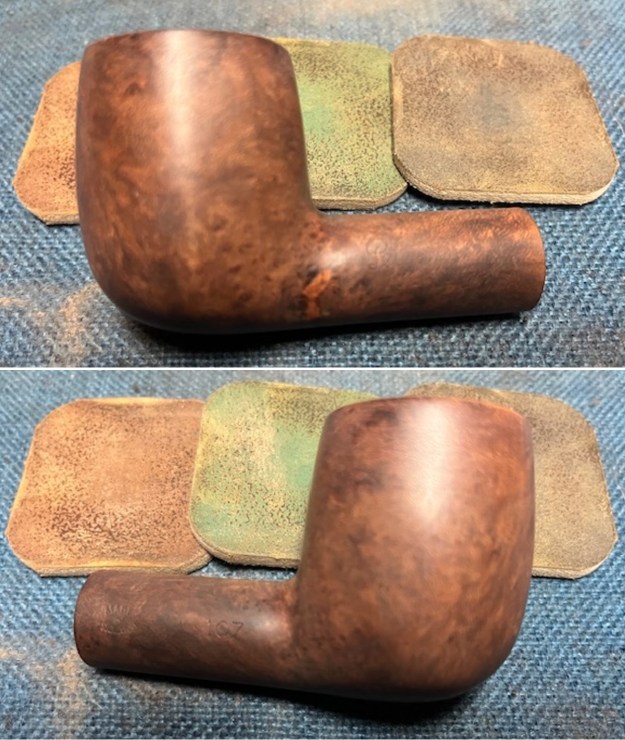
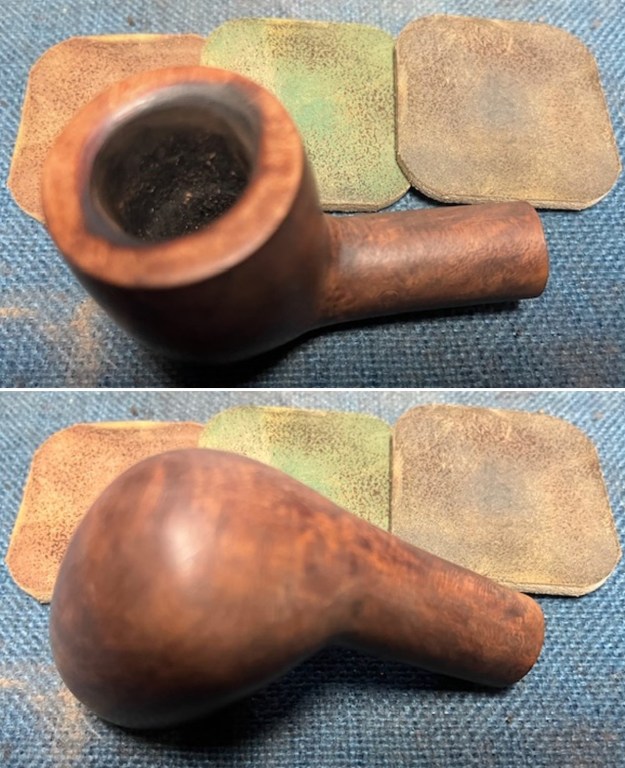
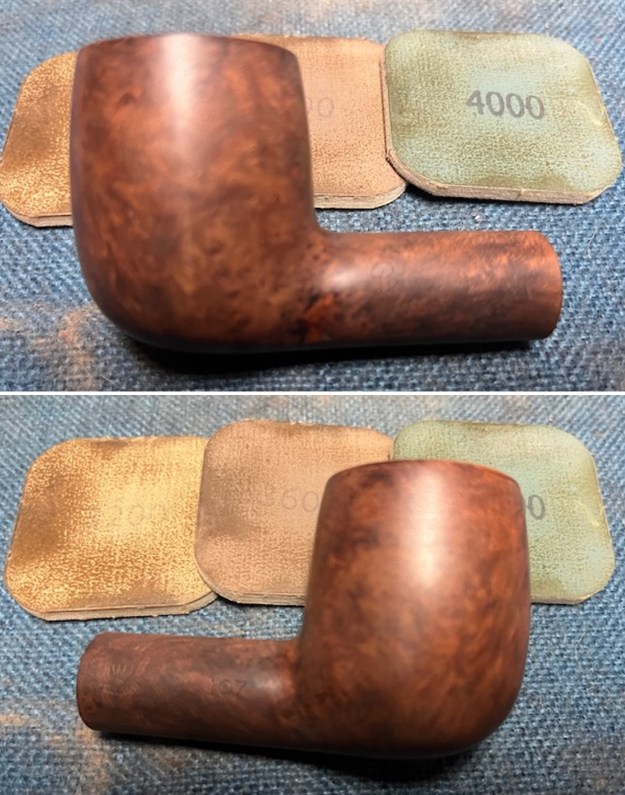
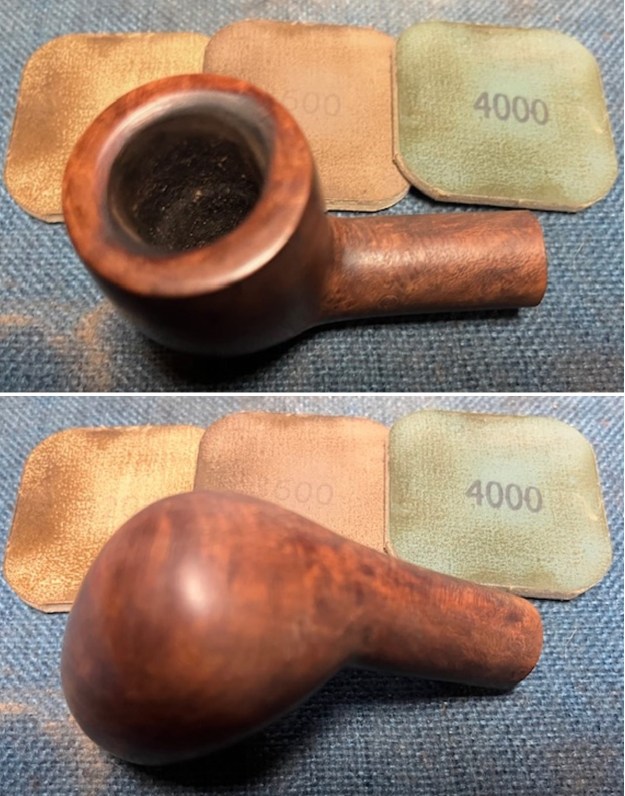
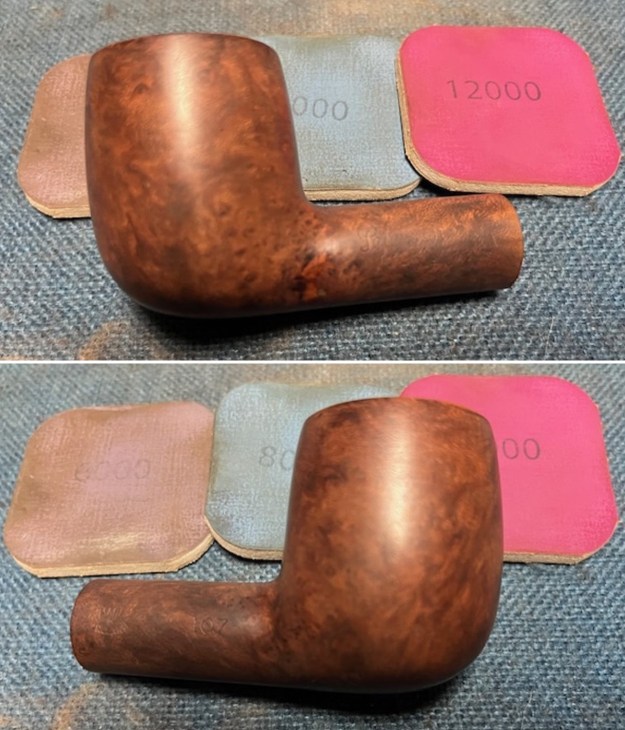
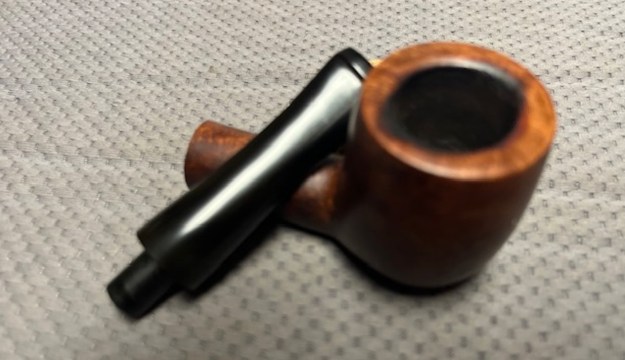
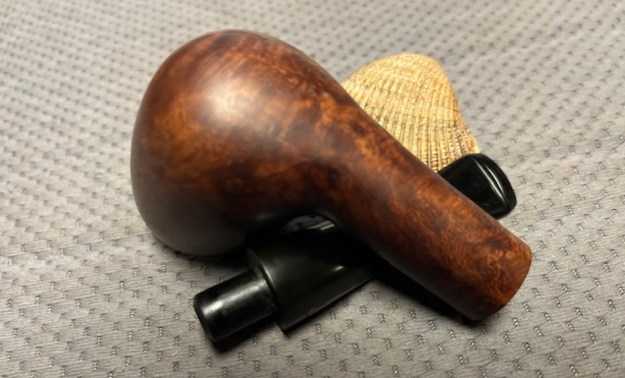
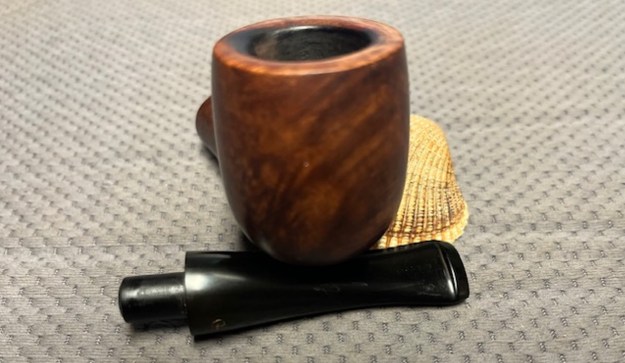
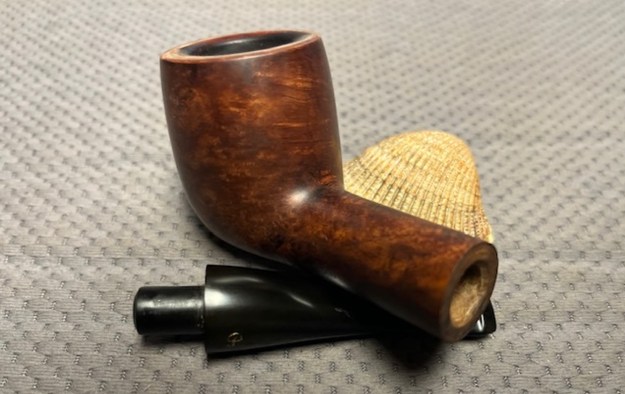
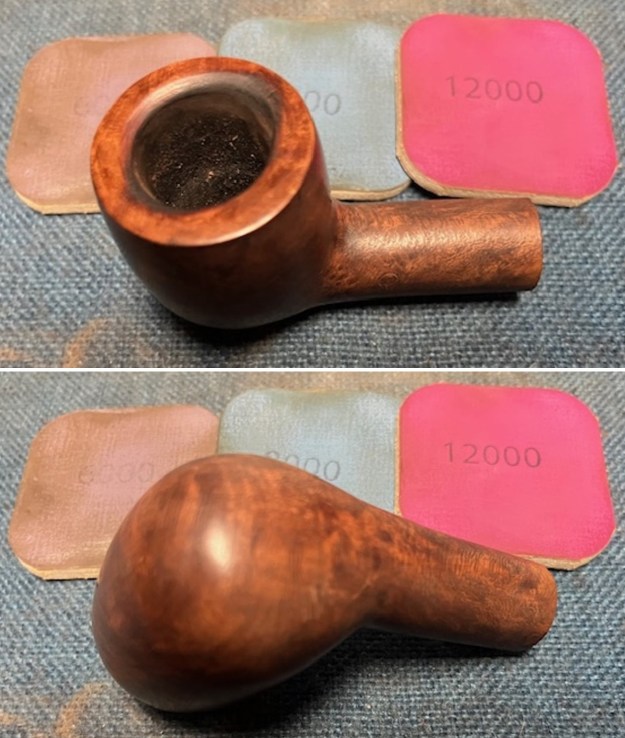 I worked some Before & After Restoration Balm into the surface of the briar with my fingertips to clean, enliven and protect the briar. I let the balm sit for 15 minutes and then buffed with a cotton cloth to raise the shine. The photos show the bowl at this point in the restoration process.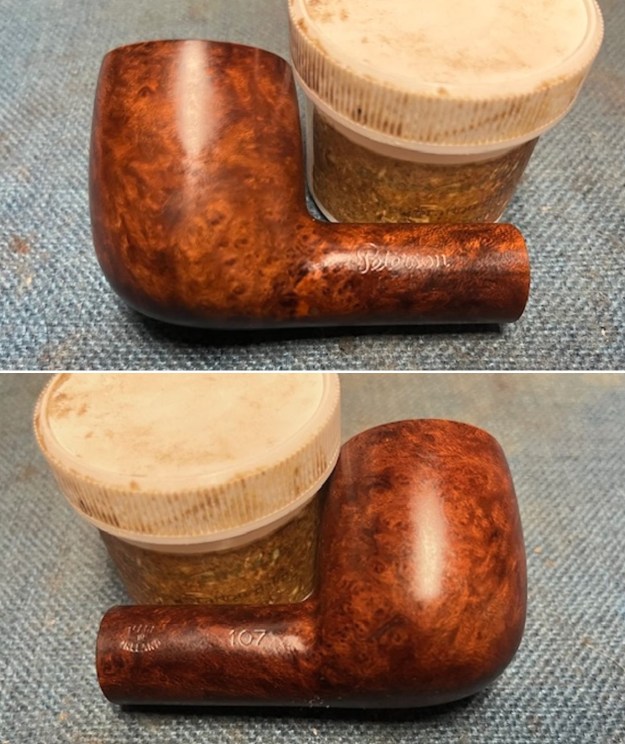
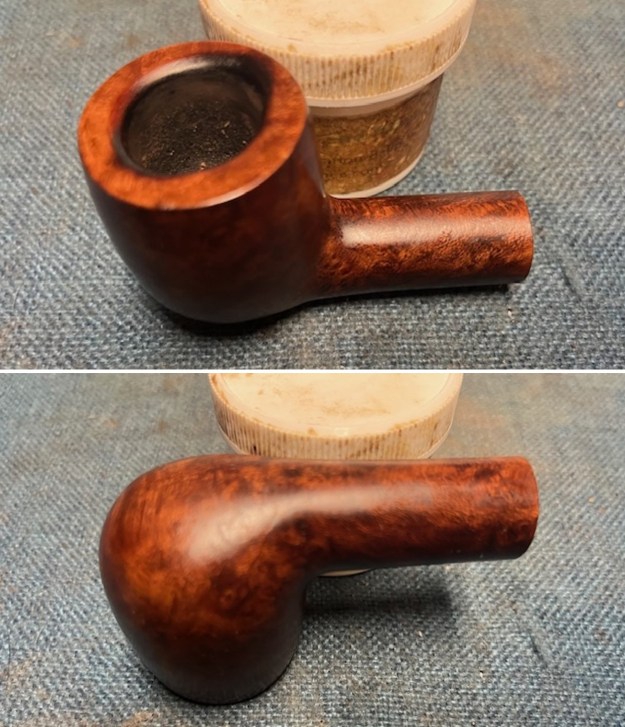
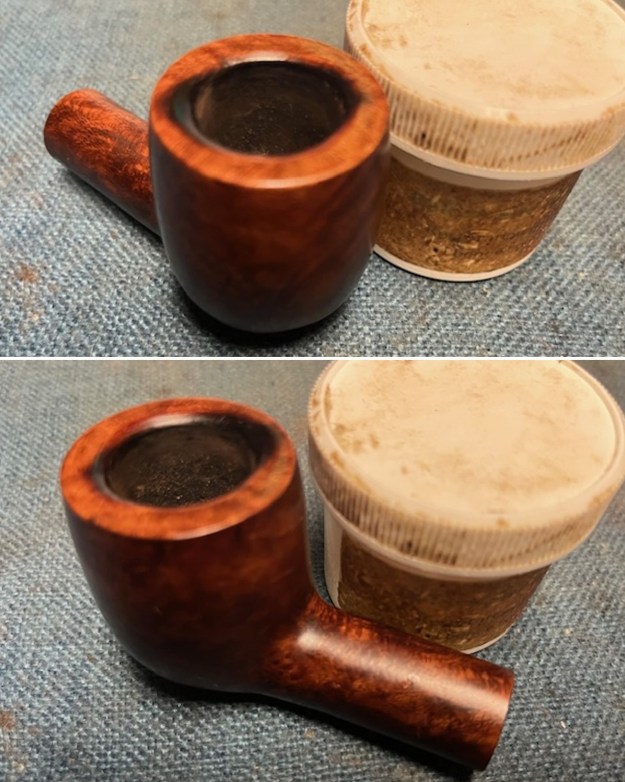 I set the bowl aside and turned my attention to the stem. I sanded the stem with 320-3500 grit 2×2 inch pads to further smooth out the surface and remove the light residual oxidation. I wiped the stem down after each pad with an Obsidian Oil cloth to remove the debris and further protect the stem.
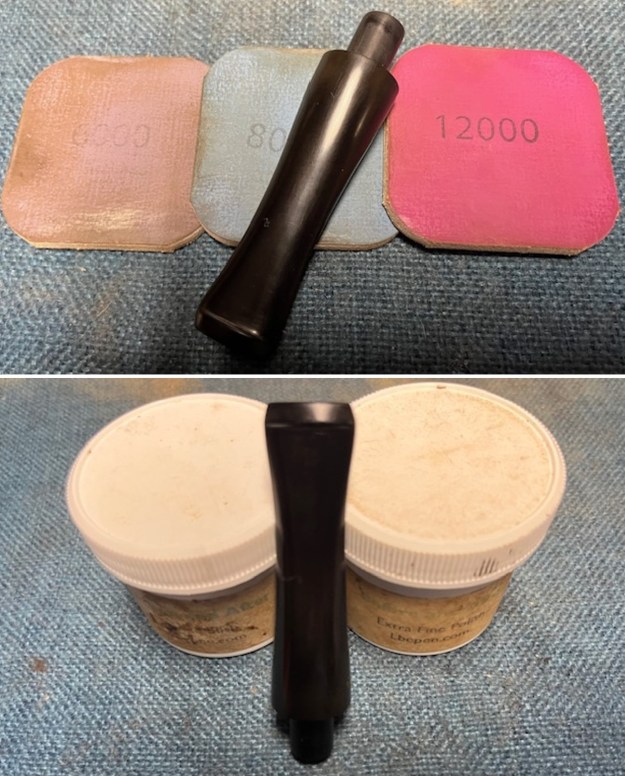
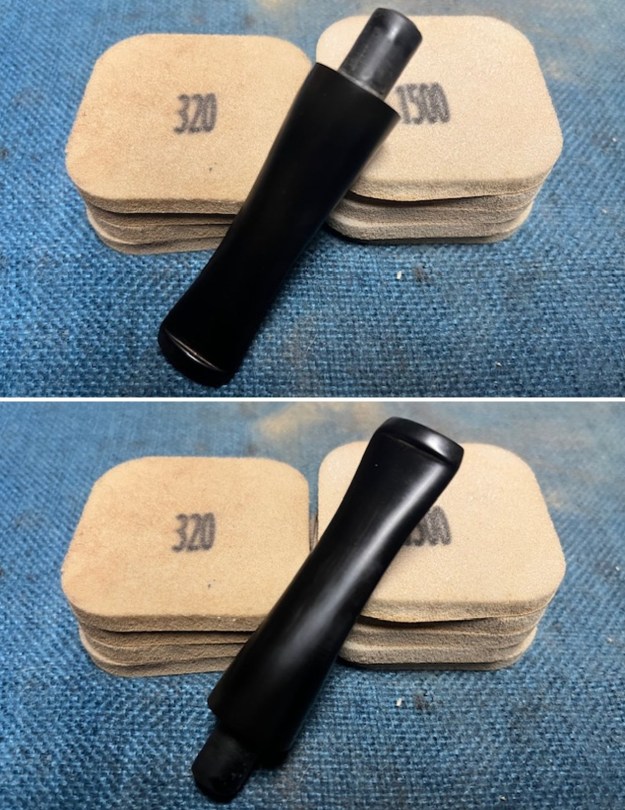 I polished the stem with micromesh sanding pads – wet sanding with 1500-12000 grit sanding pads. I wiped it down after each sanding pad with Obsidian Oil. I polished it with Before & After Pipe Stem Polish – both Fine and Extra Fine. I gave the stem a final coat of Obsidian Oil.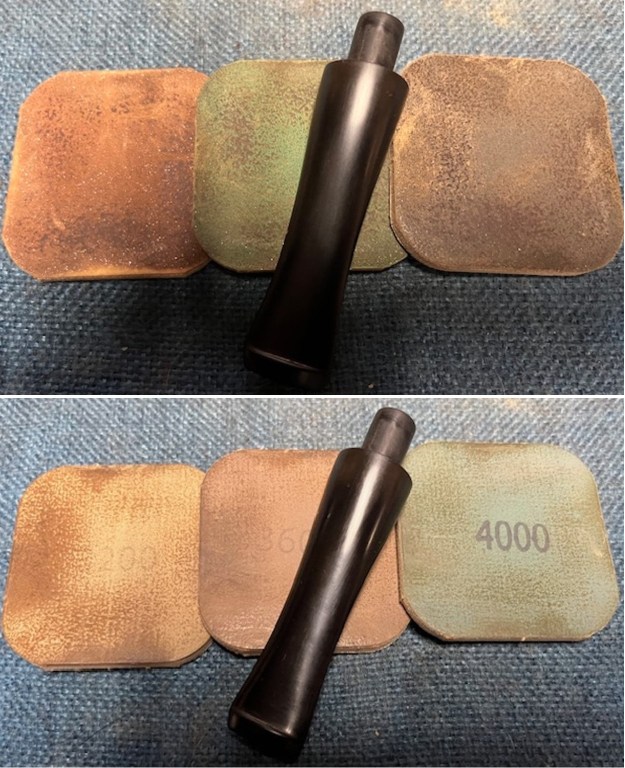
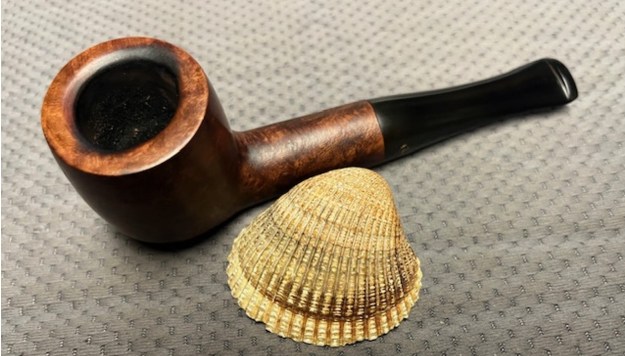
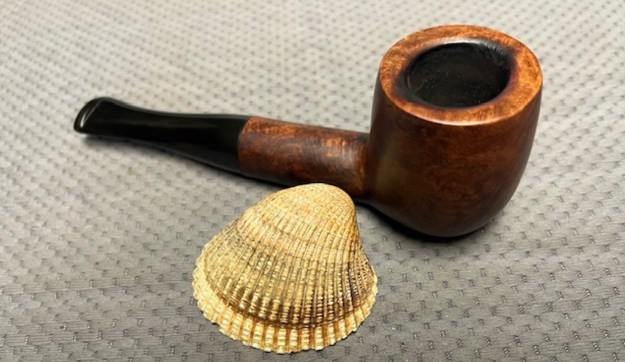
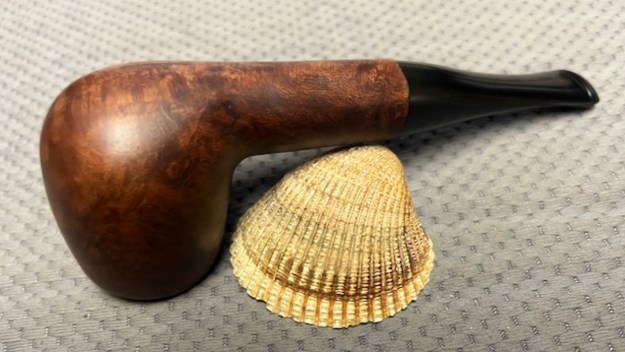
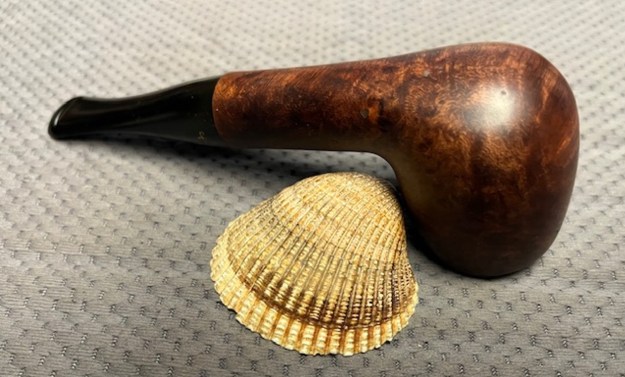
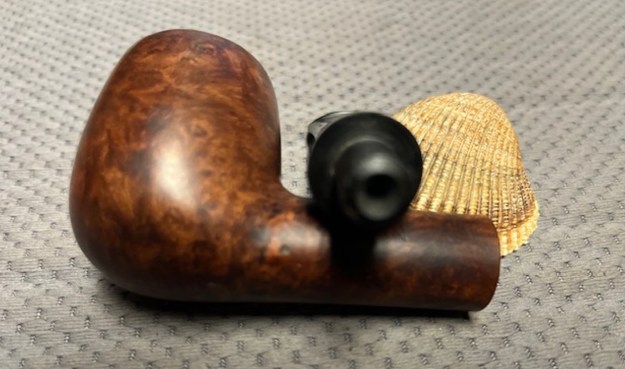
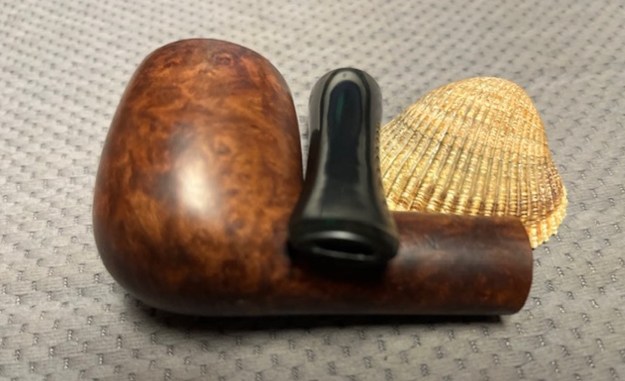
 I am happy to finish my work on this Peterson’s ARAN 107 Made in Ireland Billiard with a fishtail stem. I put the pipe back together and buffed it with Blue Diamond on the buffing wheel. I gave the bowl and stem multiple coats of carnauba wax. I hand buffed the pipe with a clean buffing pad to raise the shine and hand buffed it with a microfibre cloth to deepen the shine. It is fun to see what the polished bowl looks like with the polished black vulcanite stem. This Classic looking Thick Shanked Peterson’s ARAN 107 Billiard feels great in my hand. It is light and well balanced. Have a look at it with the photos below. The dimensions are Length: 5 ½ inches, Height: 2 inches, Outside diameter of the bowl: 1 ¼ inches, Chamber diameter: 7/8 of an inch. The weight of the pipe is 53 grams/1.87 ounces. It is a beautiful pipe and one that will be picked up by the local pipe shop for its customer. Thanks for walking through the restoration with me as I worked over this pipe. Thanks to each of you who are reading this blog.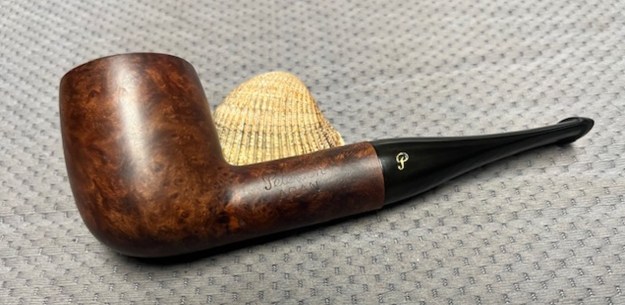

 rebornpipes