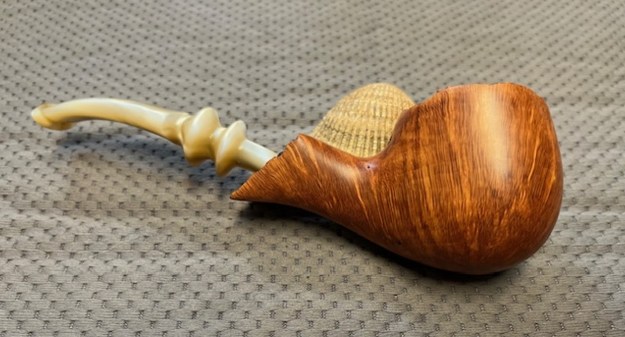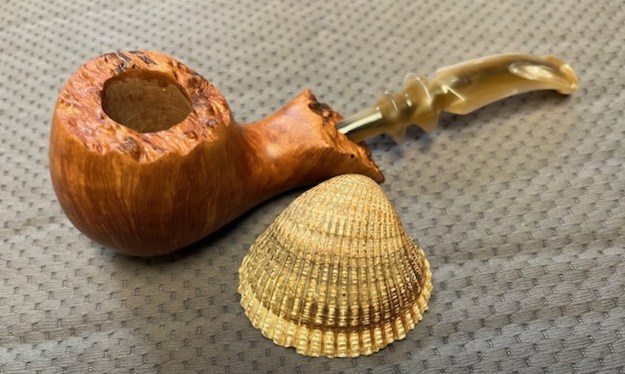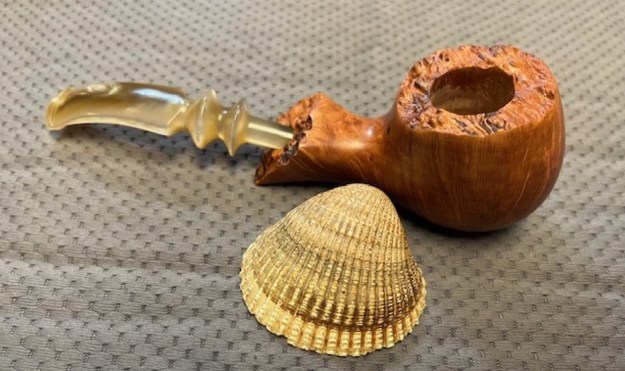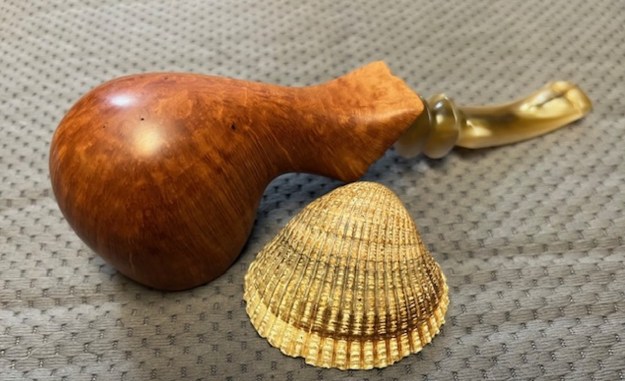
Tag Archives: Harwood Handmade Pipes Montana

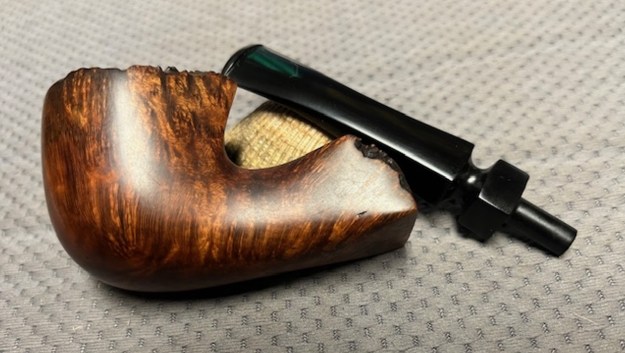
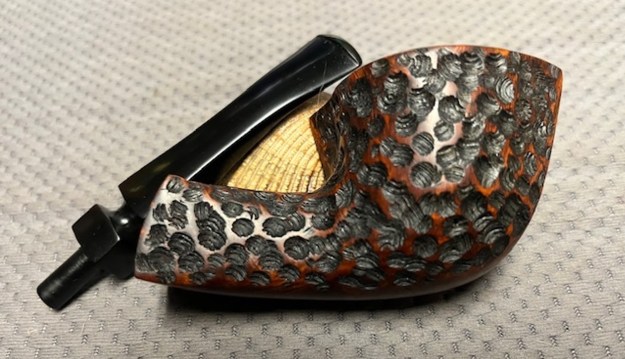
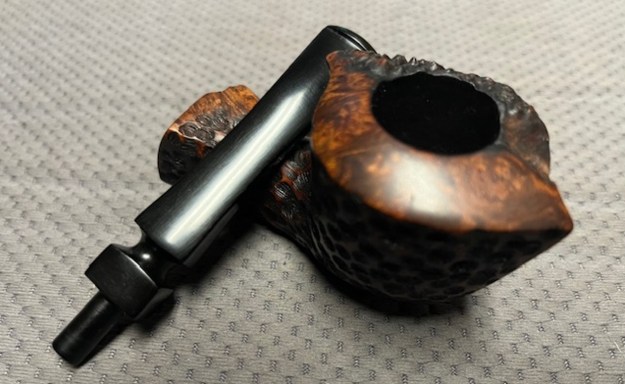
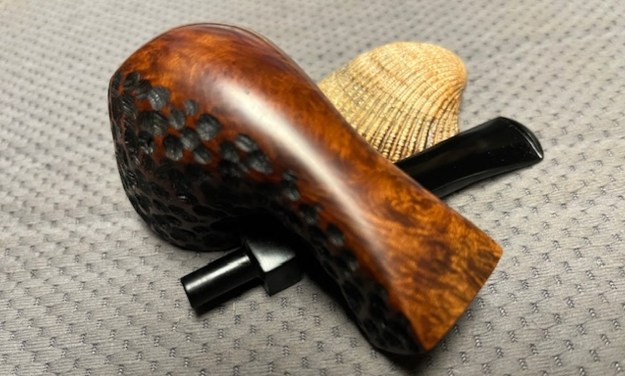
Cleaning up a unique Byron Harwood Cats Eye Freehand.


by Steve Laug

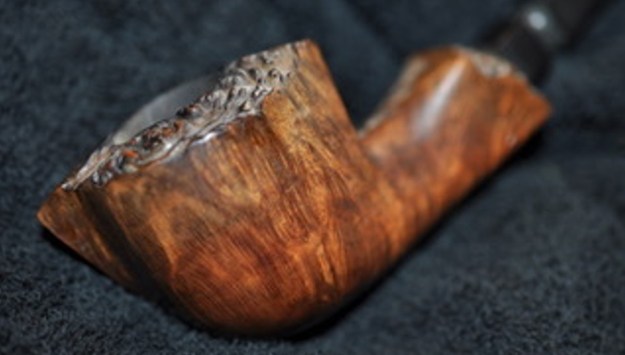
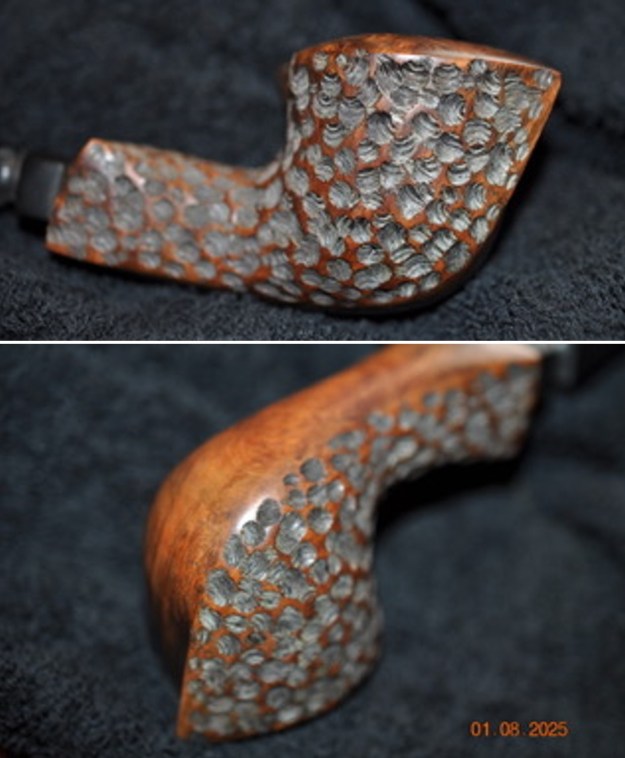
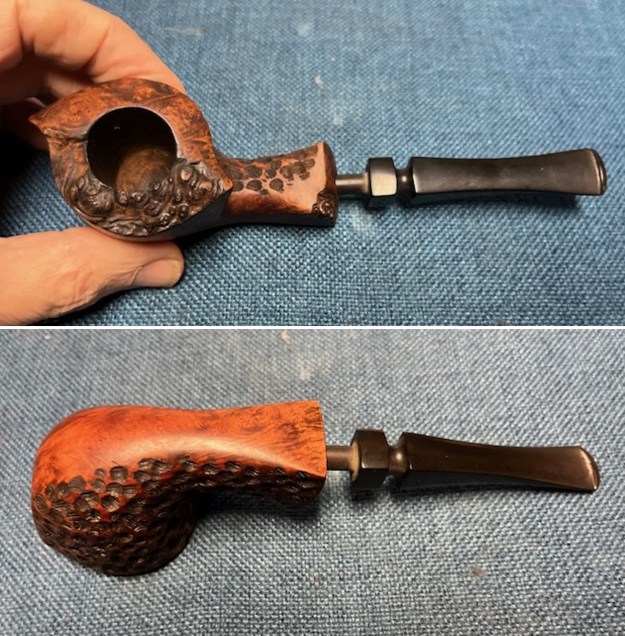
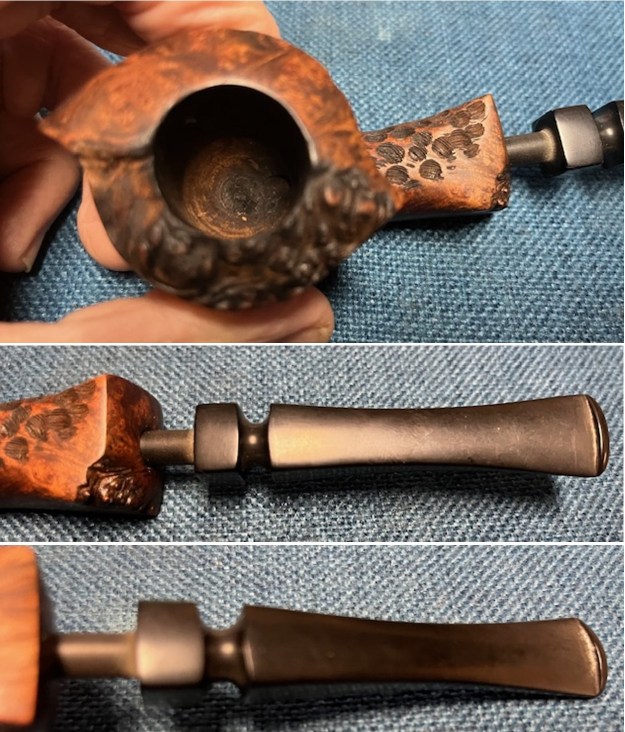
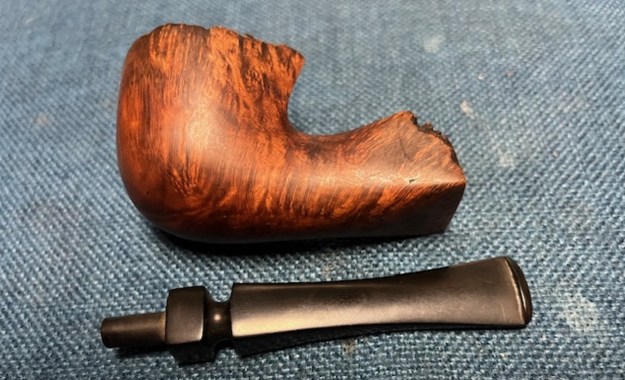
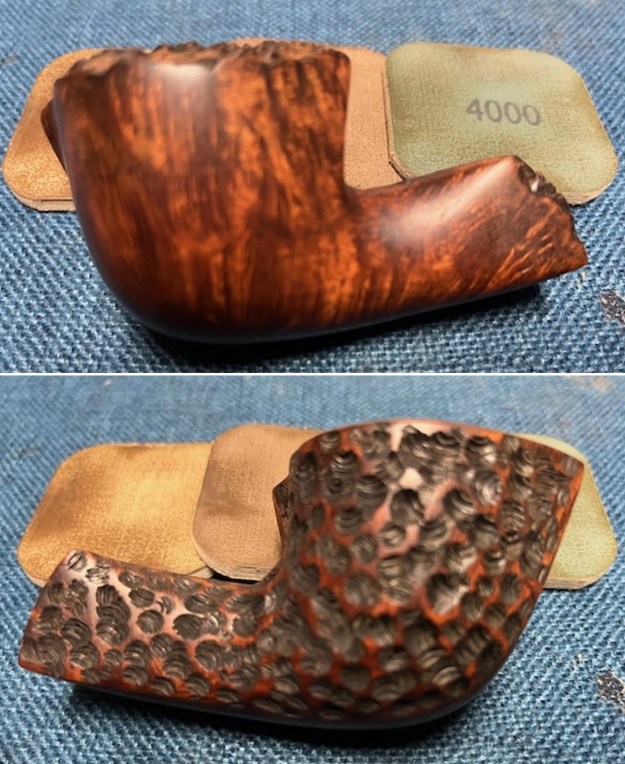
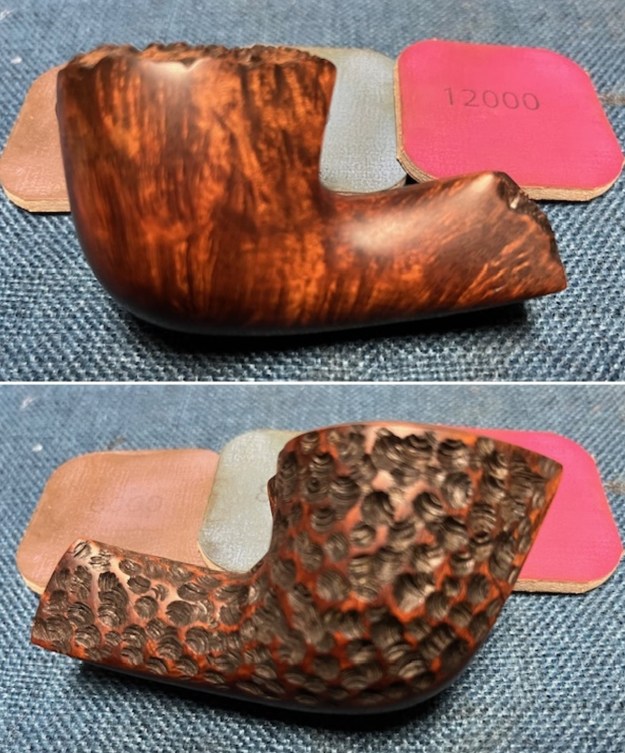
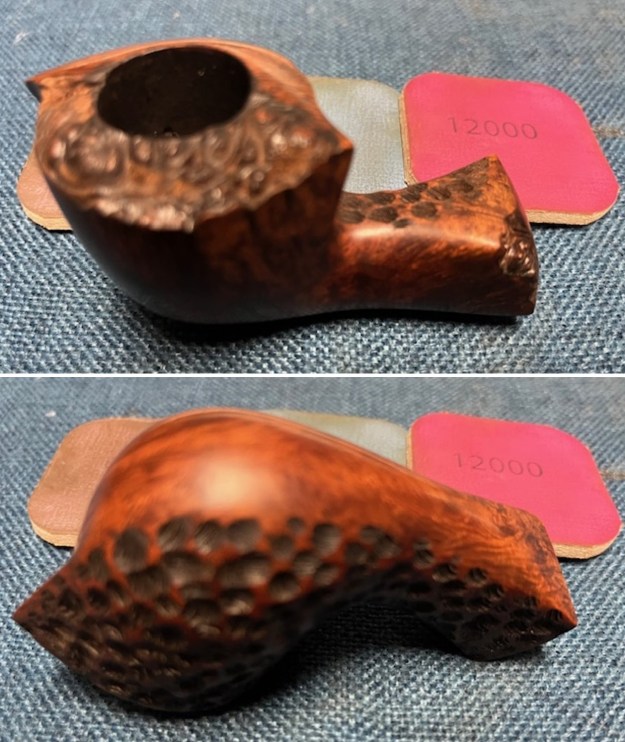
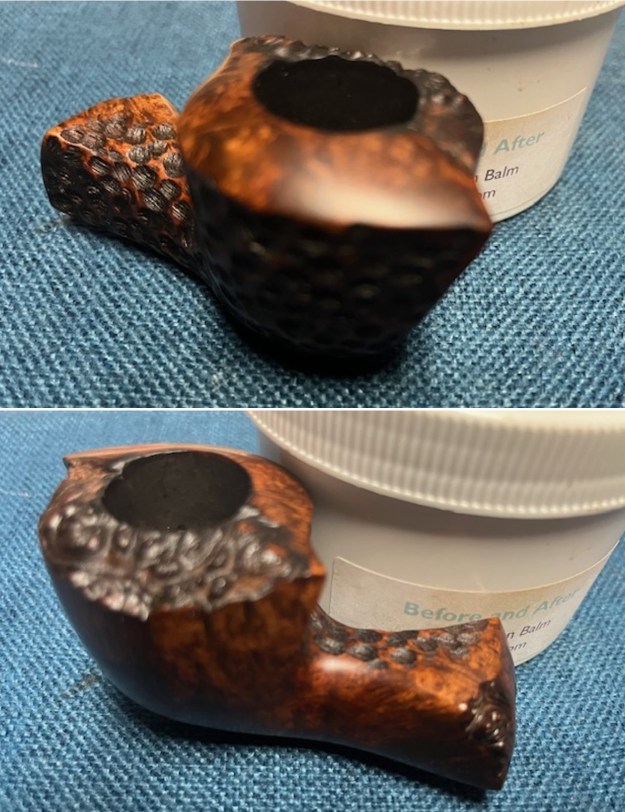
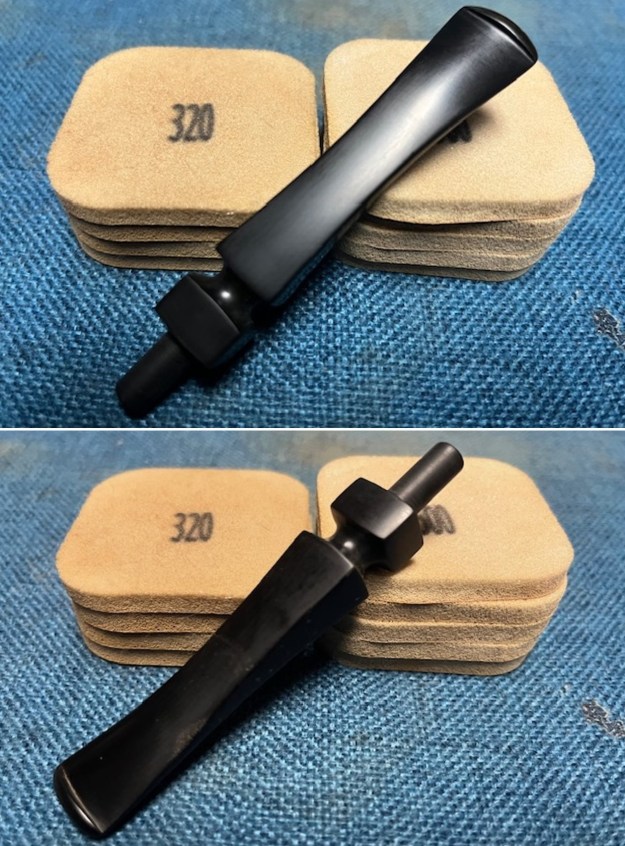
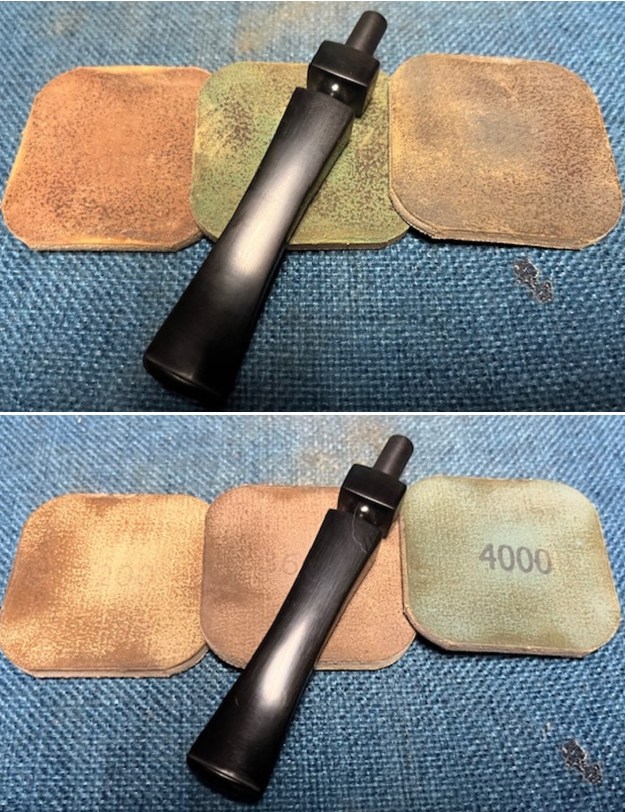
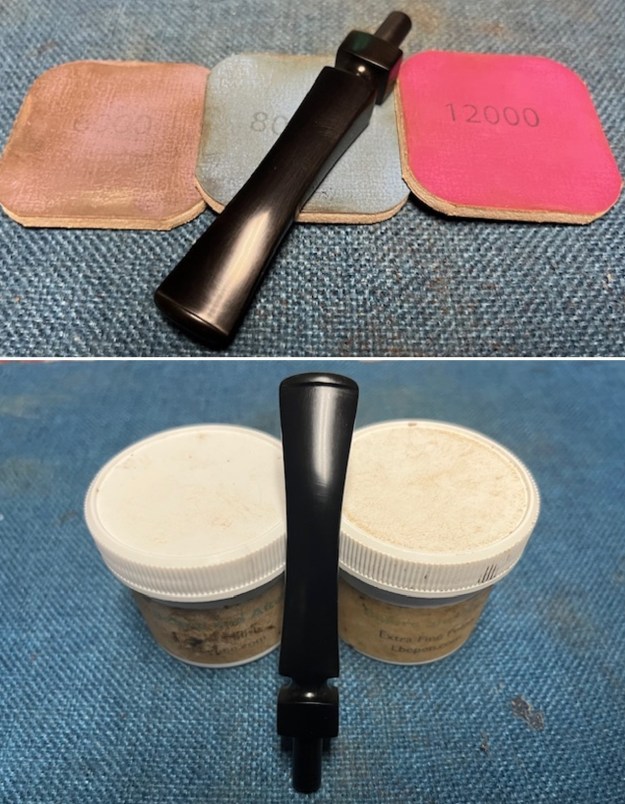
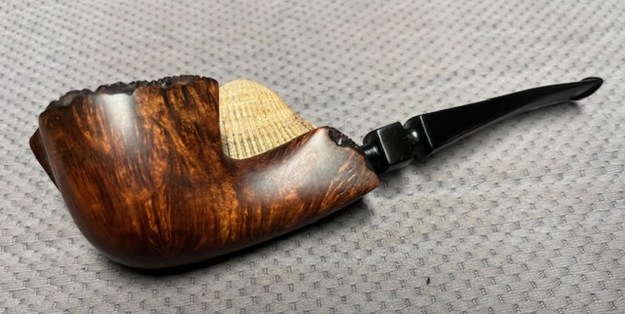
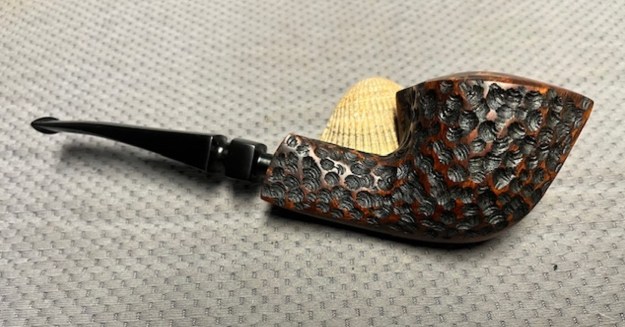
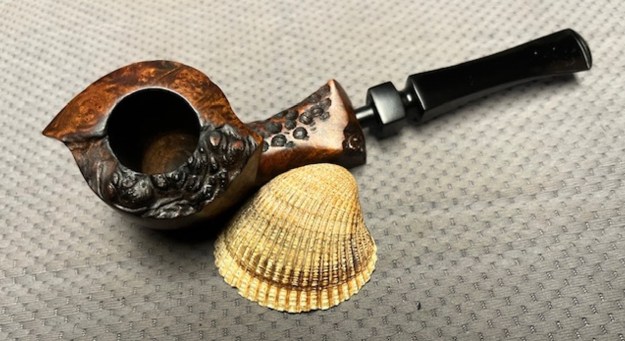
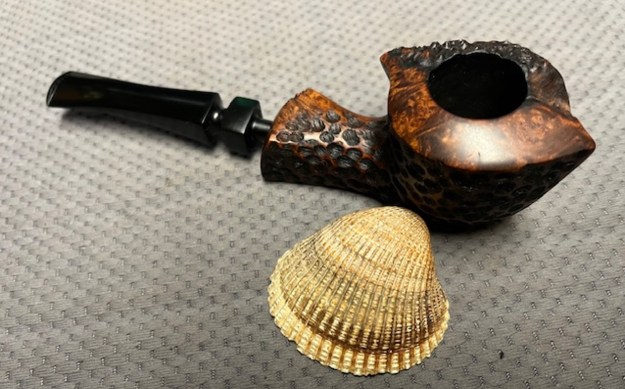
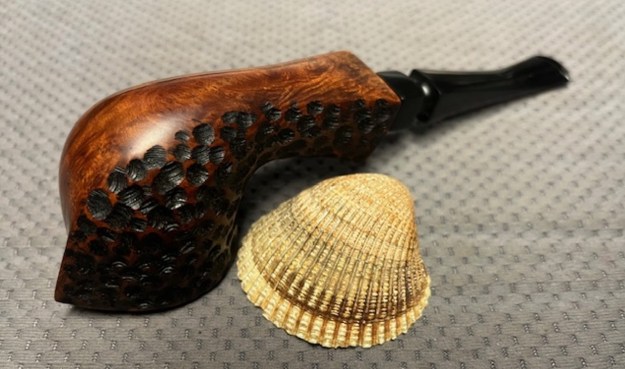
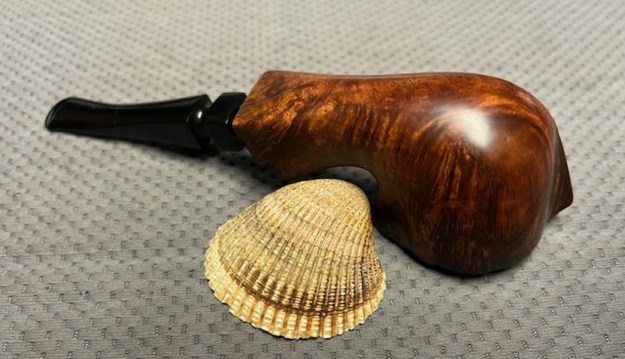
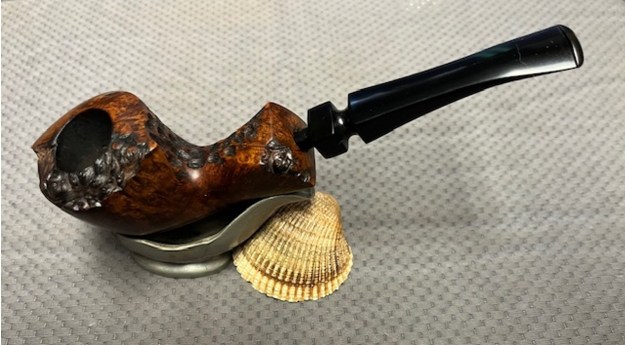
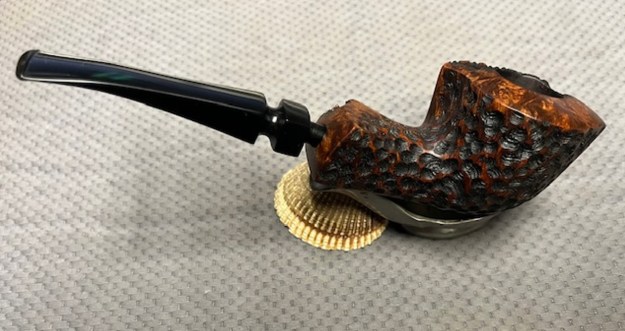
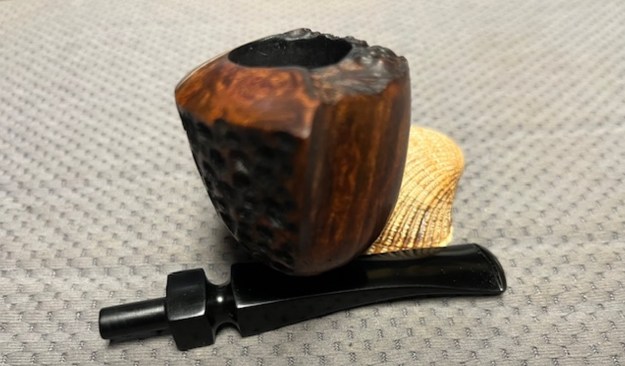
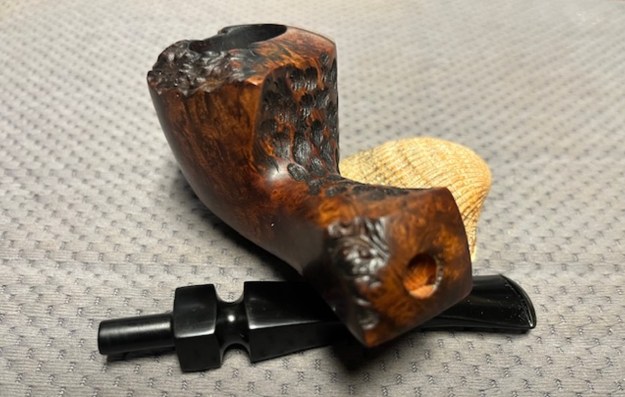
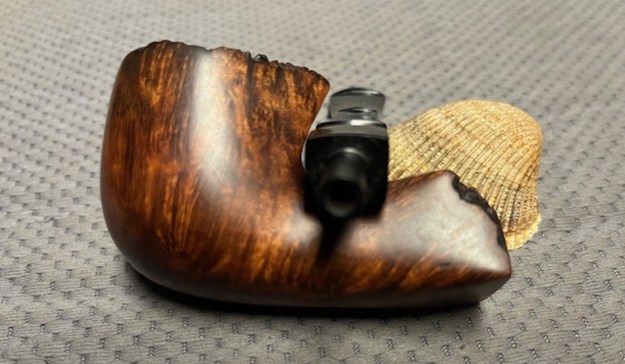
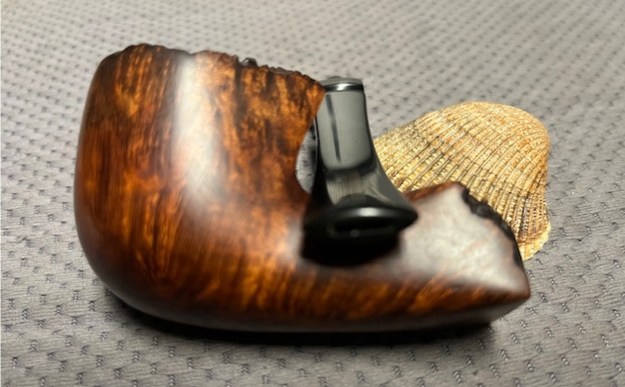
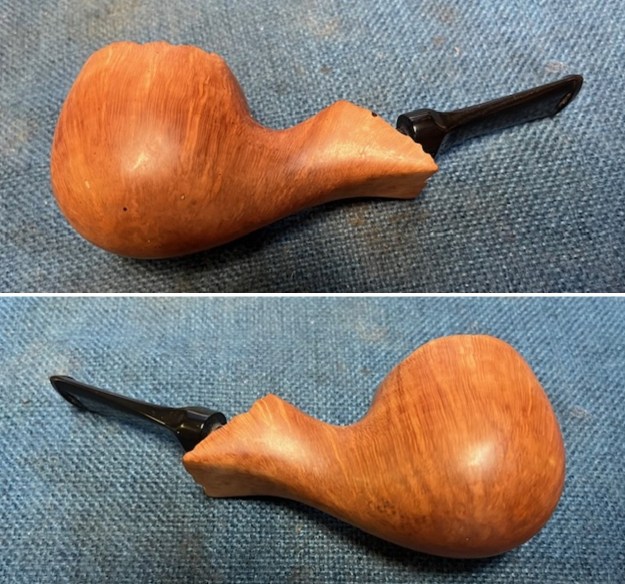
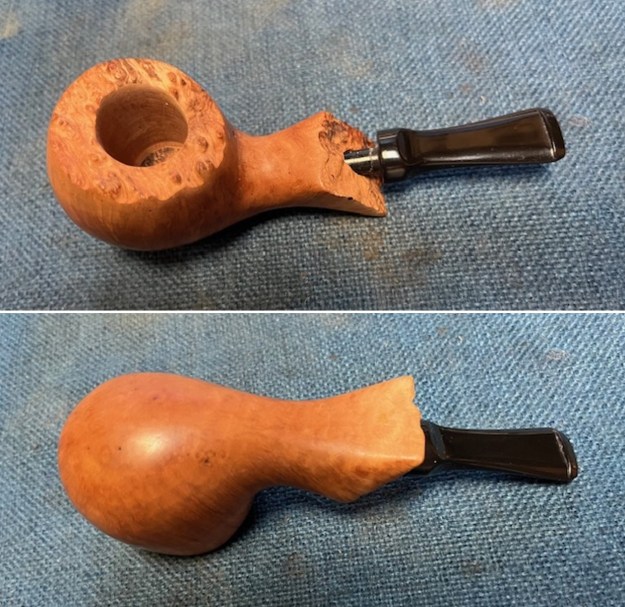
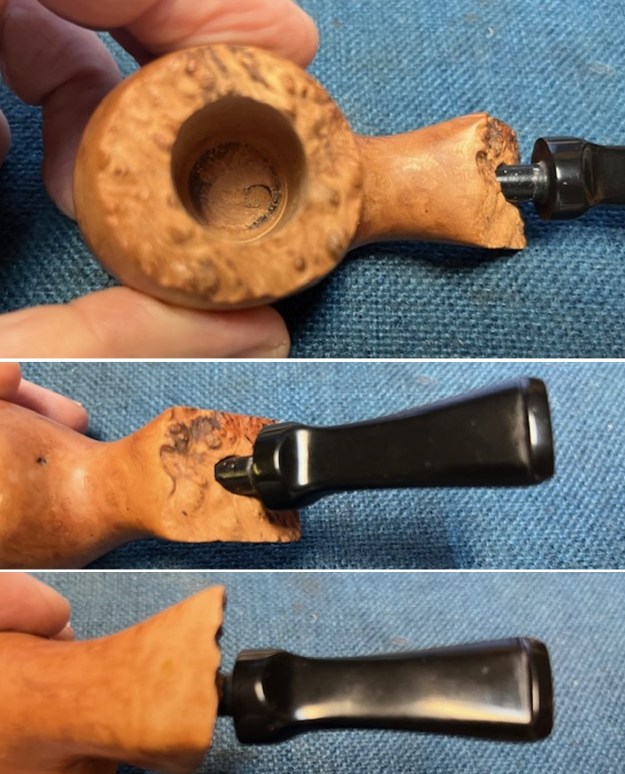
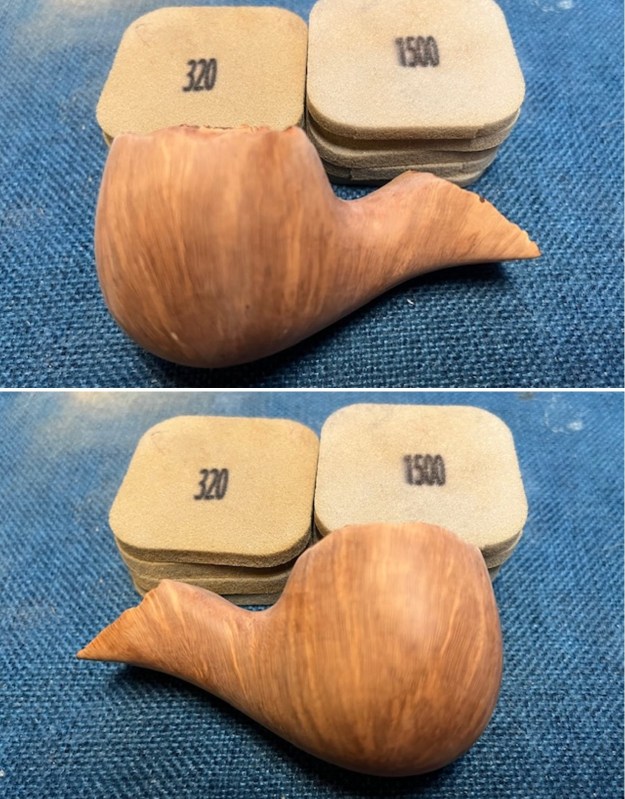
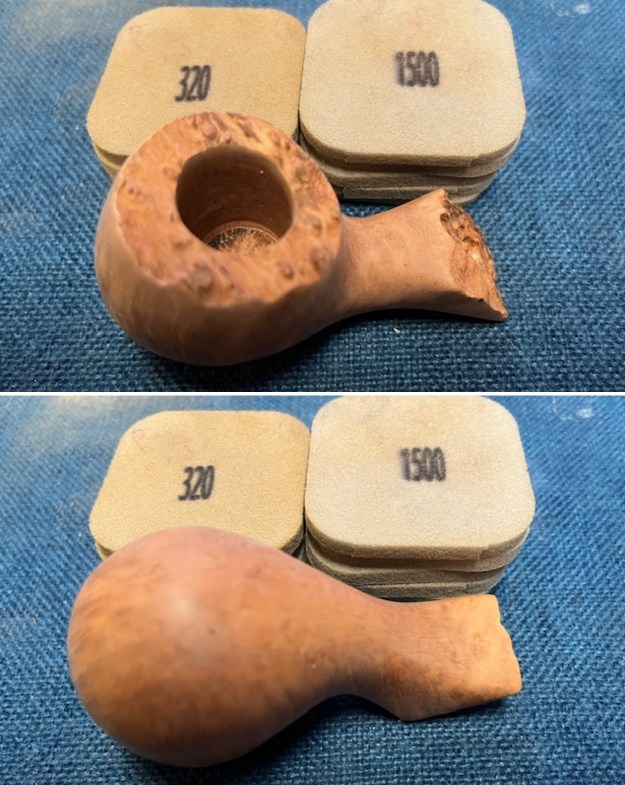
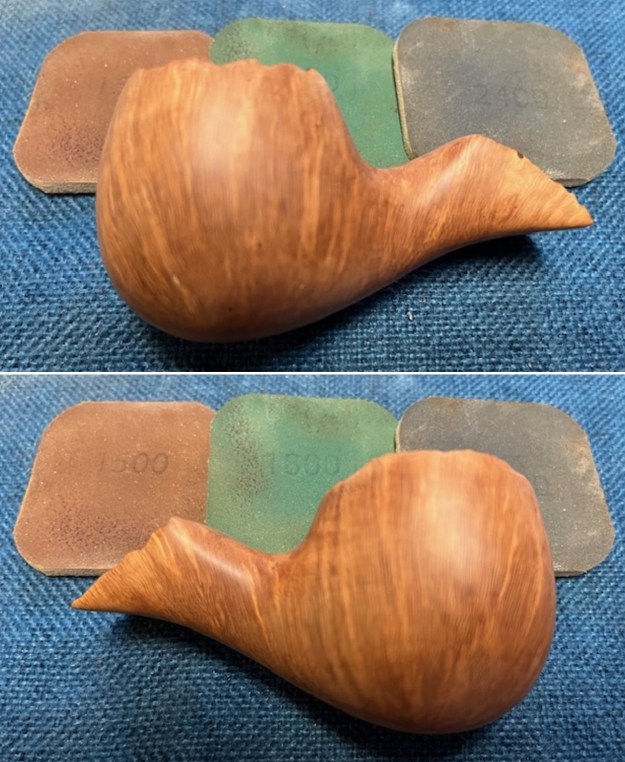
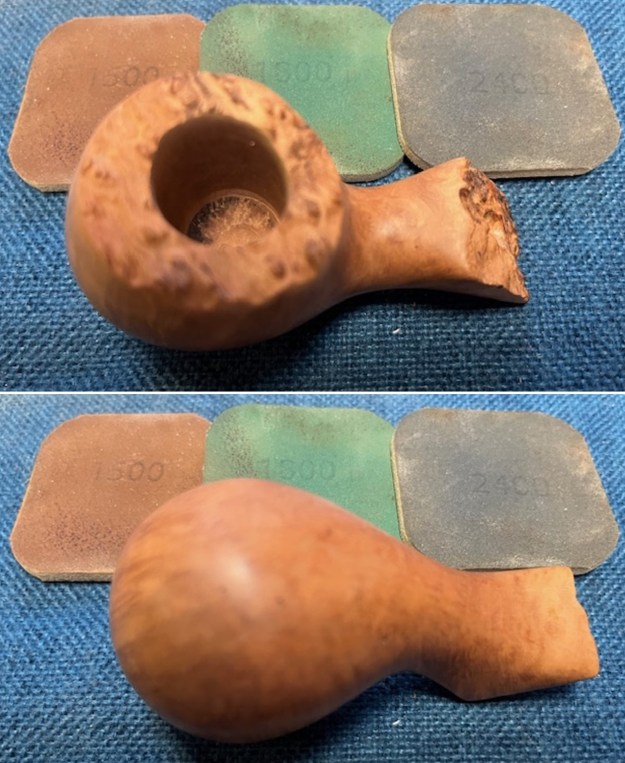
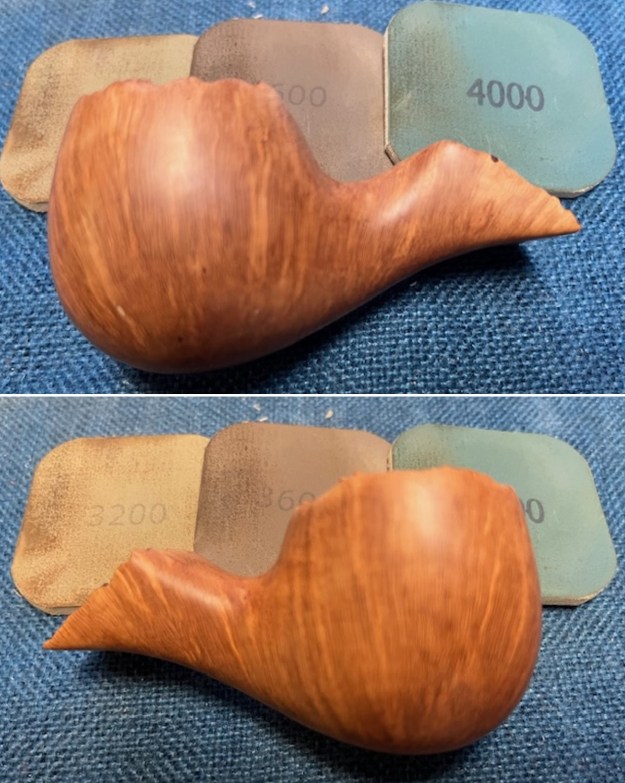
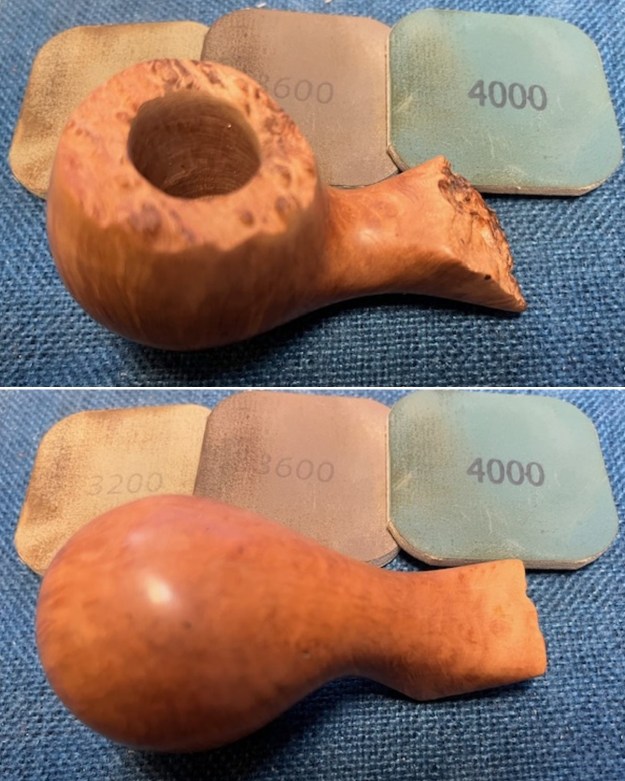
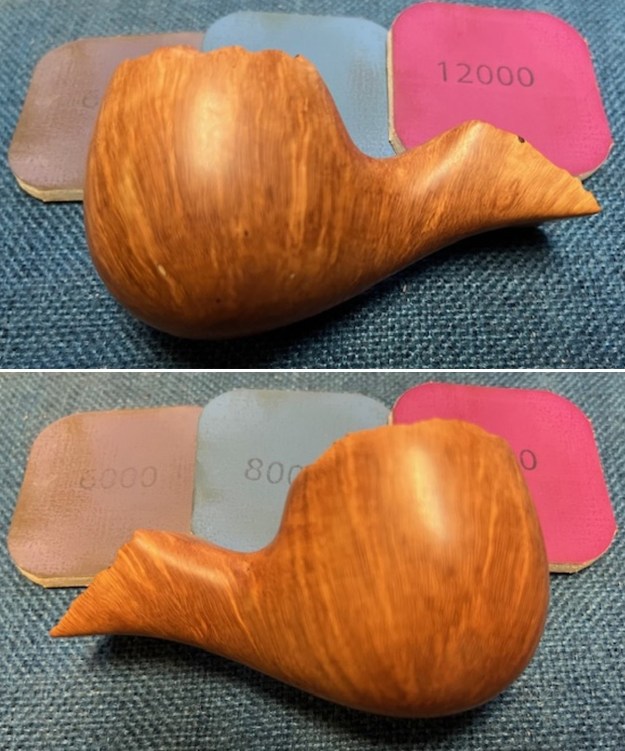
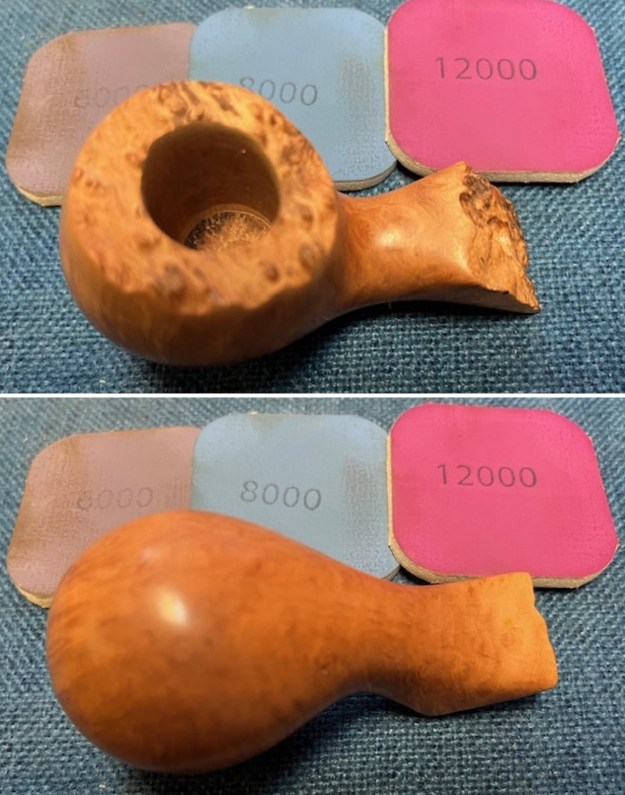
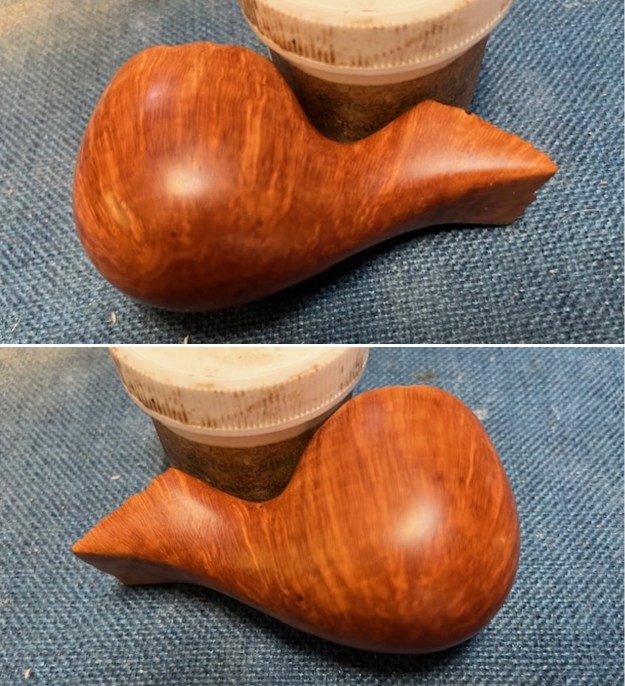
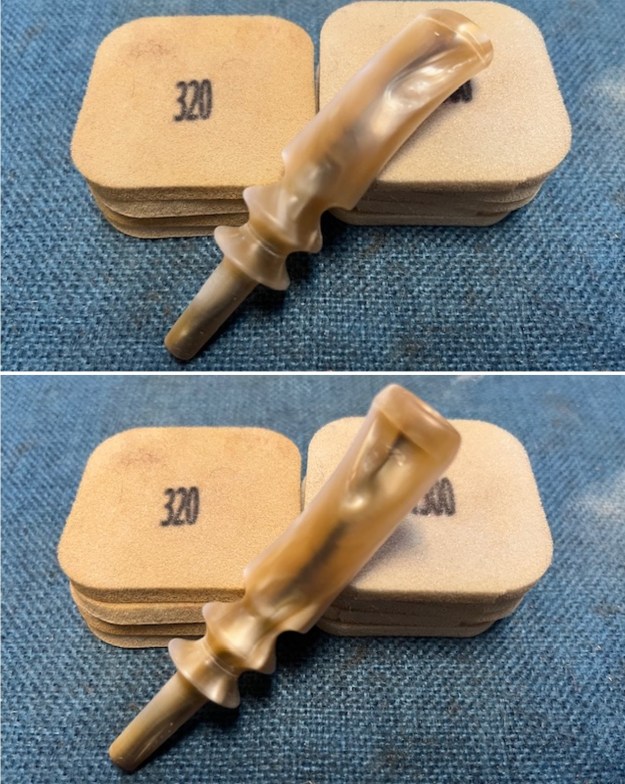
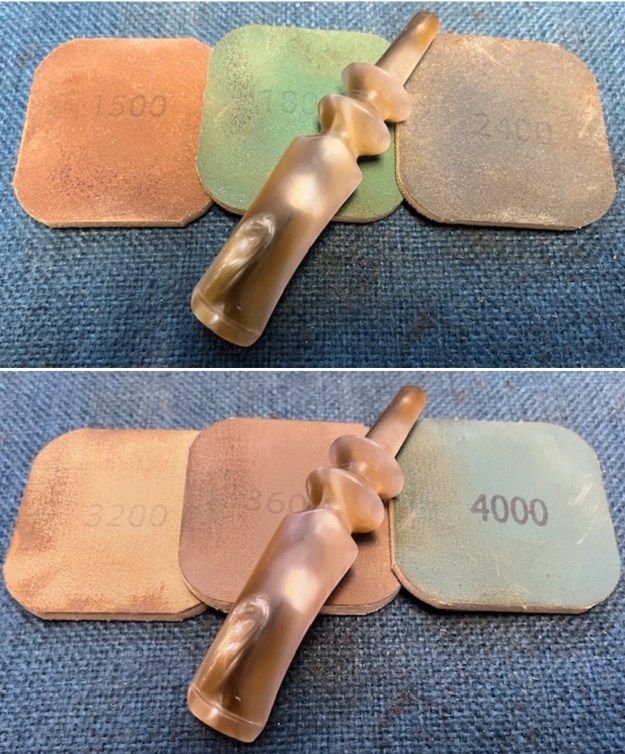
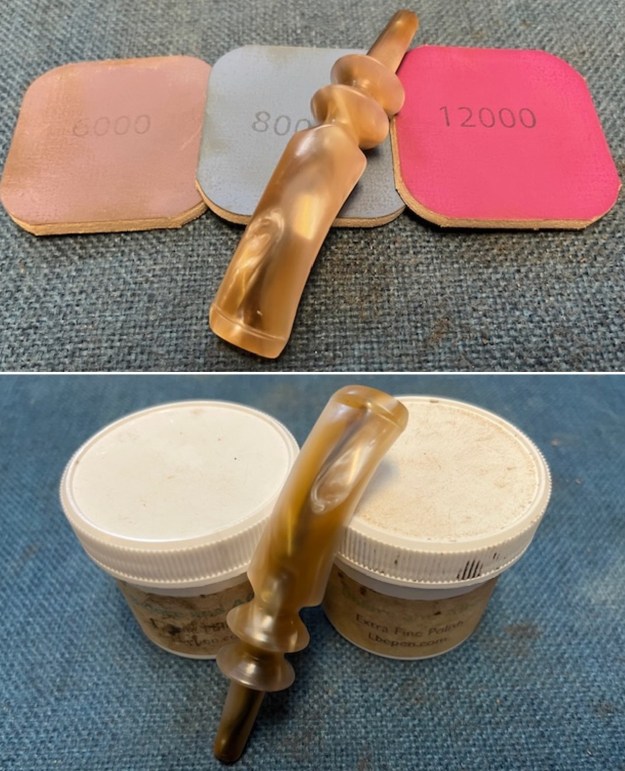
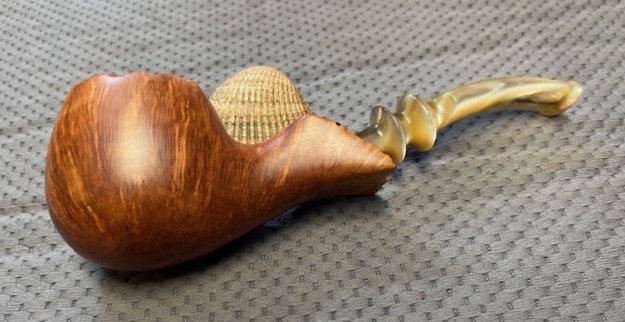
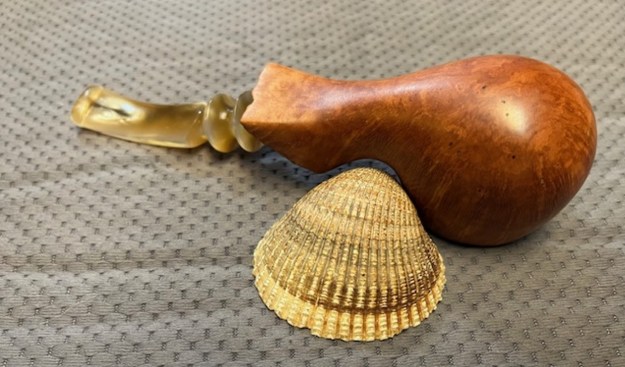
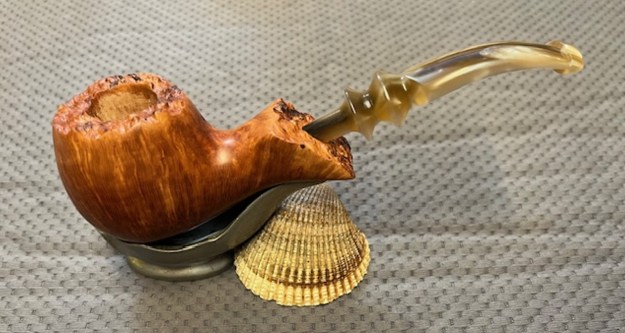
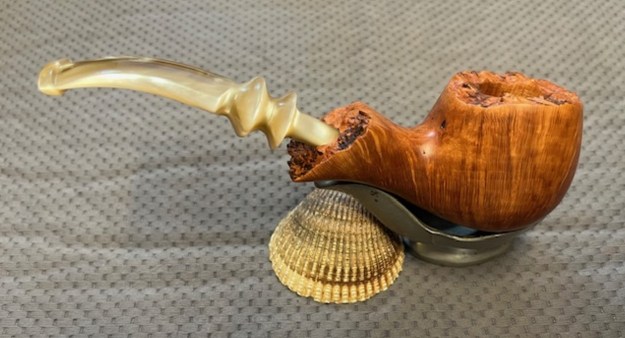
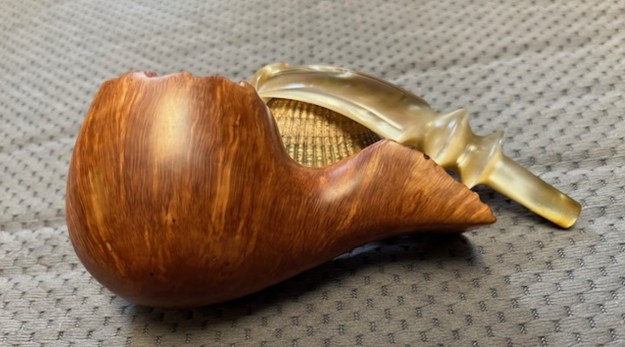
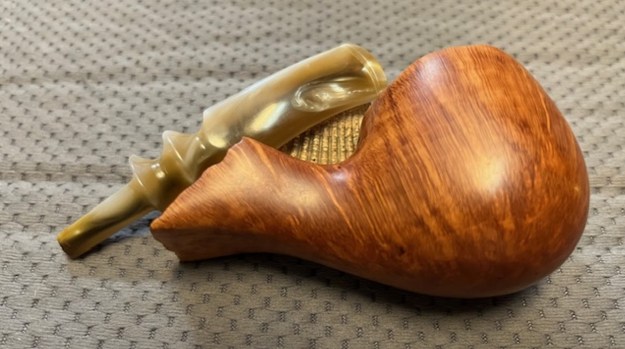
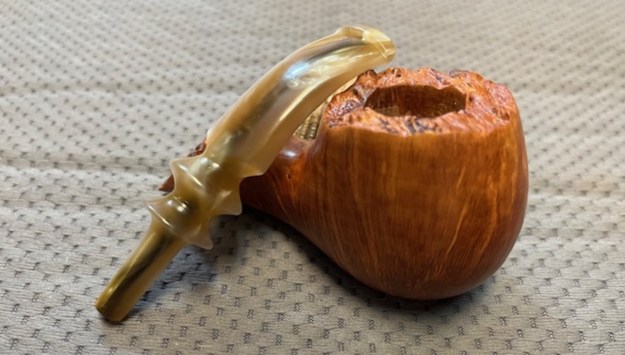
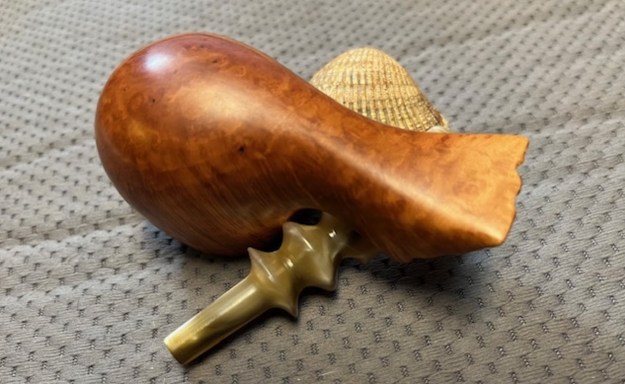
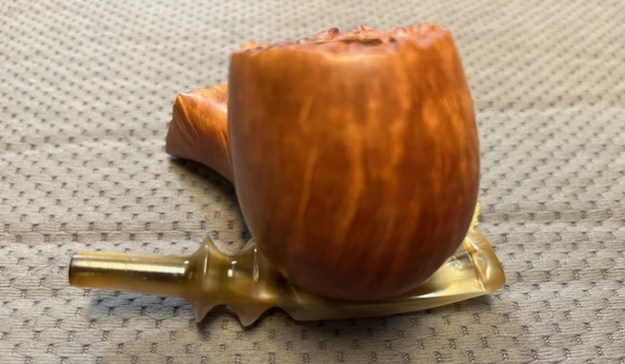
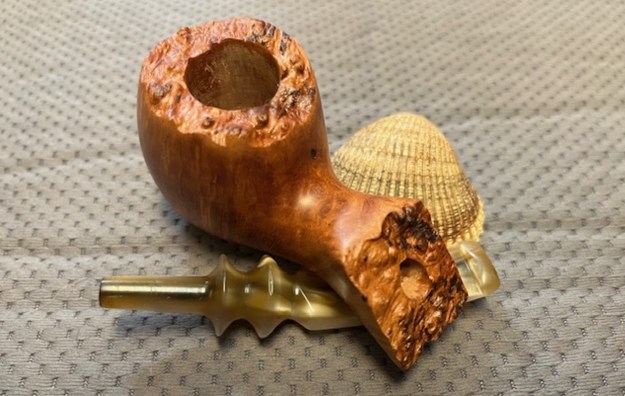
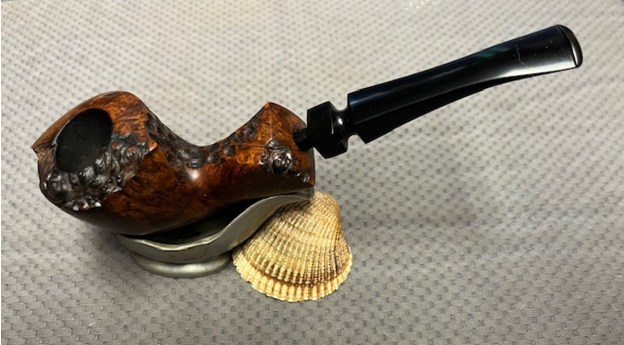
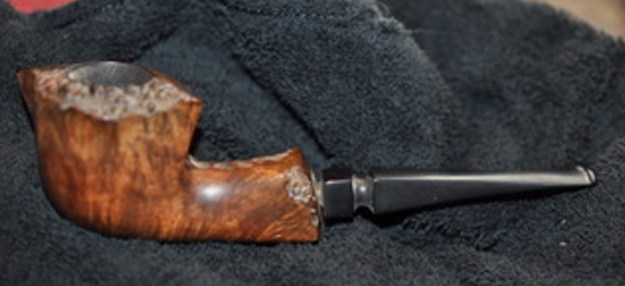
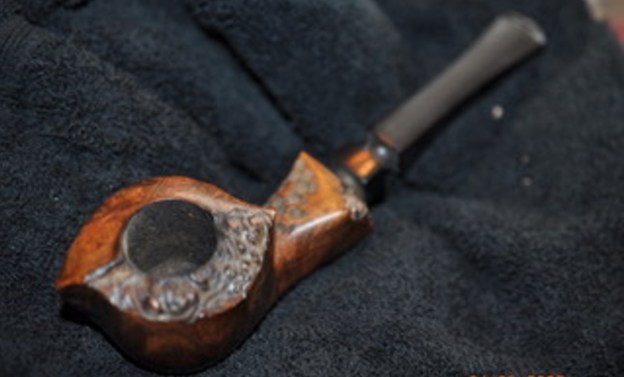
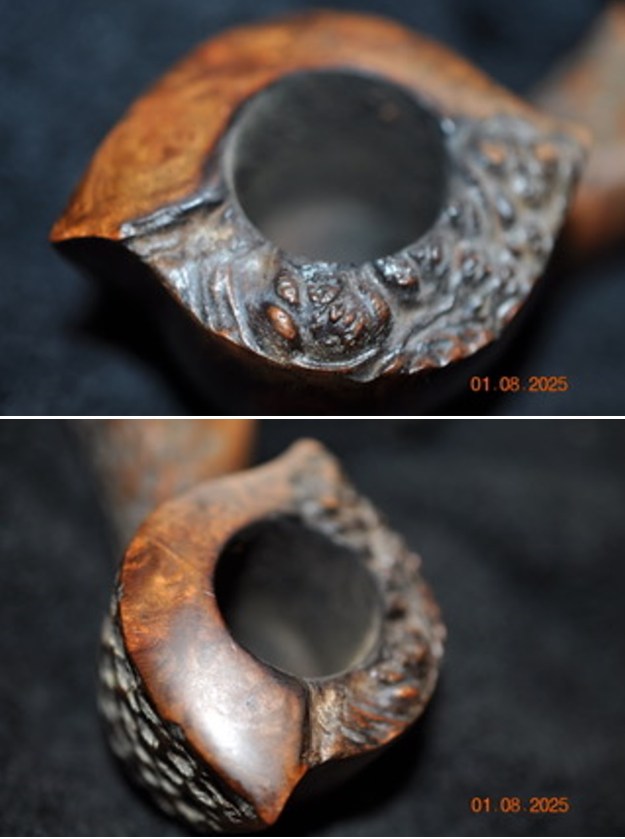
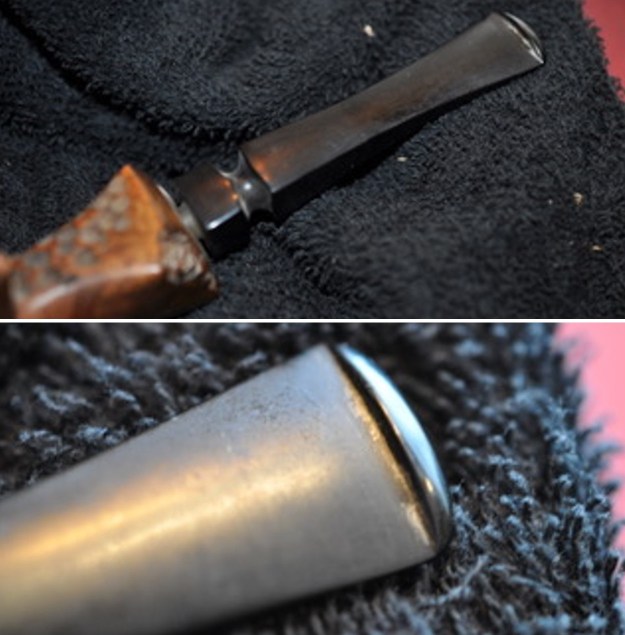
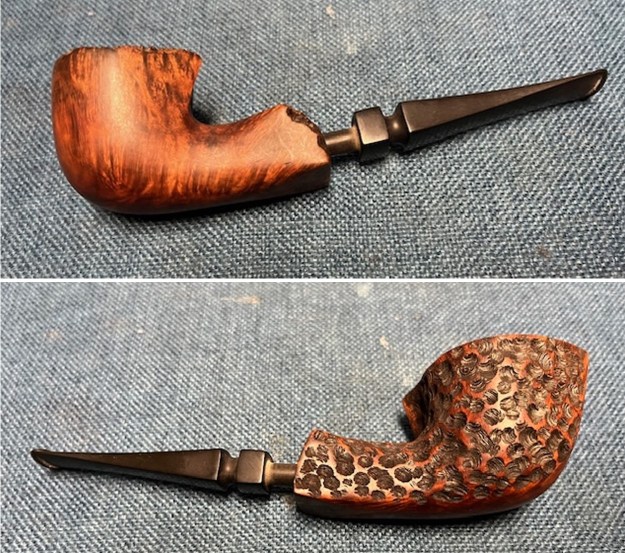
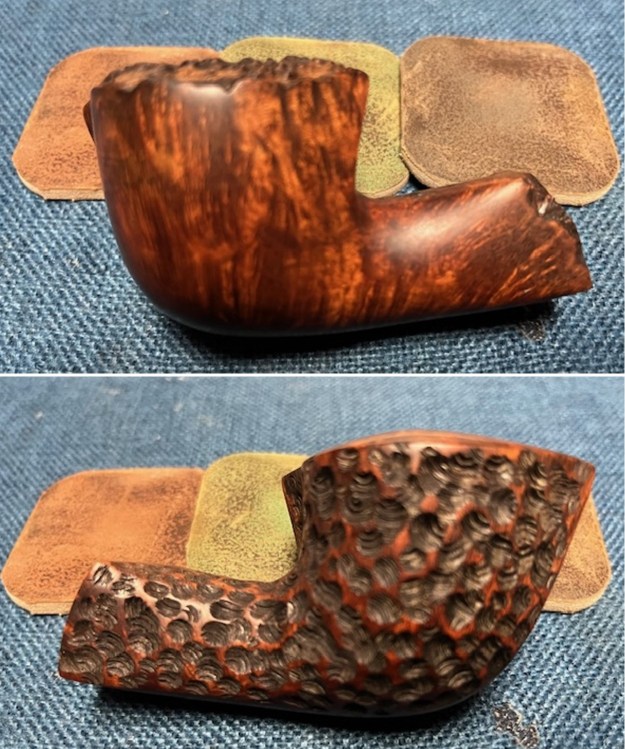
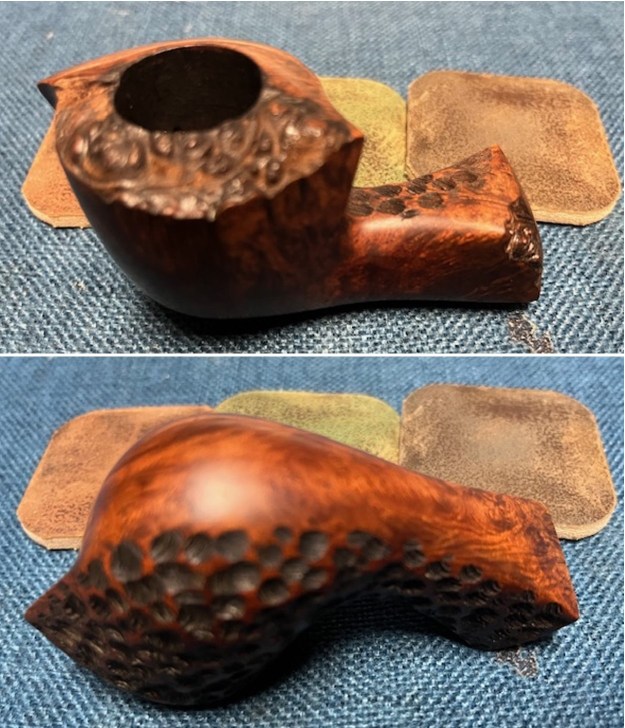
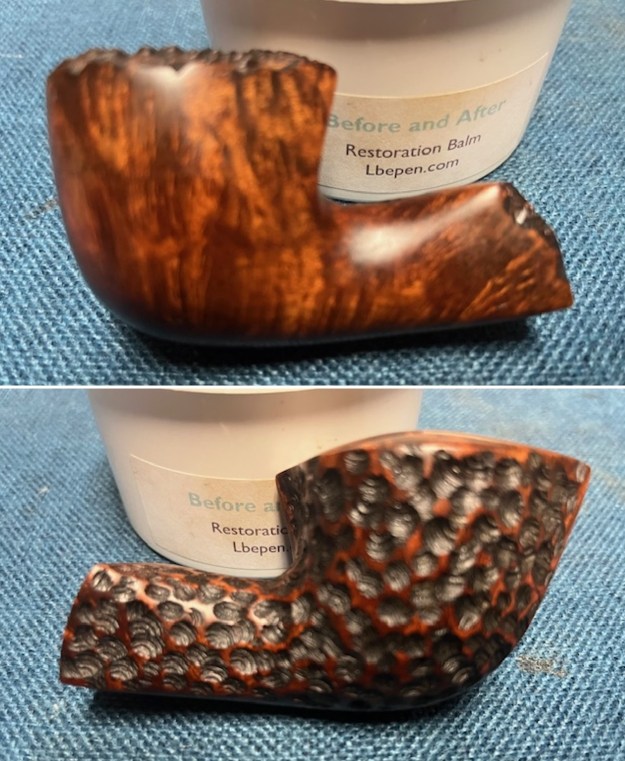
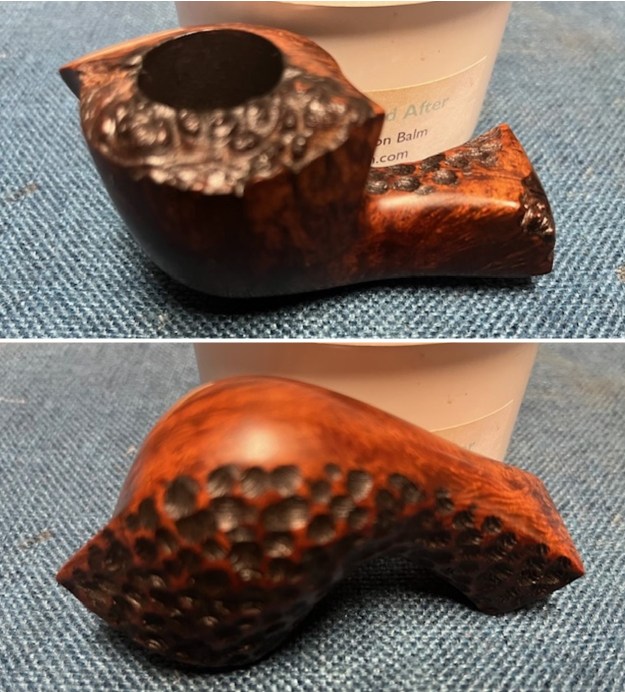
The next pipe I chose to work on was one that we purchased on 12/28/2024 from as part of an estate that belonged to a pipeman and carver, Byron Harwood from Missoula, Montana, USA. This uniquely shaped mixed finish Freehand was one of Byron’s own handmade pipes. As with the previous pipes of Byron’s that I have worked on, this one does not bear any stamping. It is a lovely piece of briar that cat’s eye shaped bowl with the rim top finished smooth on the right side and plateau on the left side to highlight the grain. There is a peak on the front and back of the bowl that gives it the unique eye shape. The finish on the bowl is smooth on the left side with a smattering of plateau on the shank end and hand rusticated on the right side with divots that bear rustication in each divot as well – you could say it was double rusticated, The airway in the mortise and shank are well executed and the draught is very good. The bowl had a moderate cake and there was some darkening and lava around the inner edge of the bowl and top. The saddle stem is rectangular shaped and quite nice. The button is well finished and the exit of the airway is slotted. The pipe fit well in the hand and was rustication was very tactile. There was a charm to it! Here is what it looked like when Jeff received it. He took some photos of the rim top and bowl from various angles to give me a clear picture of the shape of the bowl and rim and its condition. You can see the cake in the bowl and the darkening and light lava coat on the inner edge and rim top. He also took photos of the stem. It is dirty and has light tooth chatter on both sides ahead of the button. Jeff took some photos of the sides of the bowl to show the condition of the finish on the pipe. The photos shows the smooth finish on the left side of the bowl and shank, highlighting grain and the unique rustication on the right side. Under the dust it was a great Freehand. It is on pipes like this that I really appreciate Jeff’s thorough cleaning process. It gives me real freedom in dealing with pipes when they arrive here. He reamed it with a PipNet pipe reamer and got rid of the cake. He cleaned up the reaming with a Savinelli Fitsall Pipe Knife so that we could see the walls of the bowl and assess for damage. He cleaned the internals of the shank and stem with alcohol, pipe cleaners and alcohol. He scrubbed the exterior with undiluted Murphy’s Oil Soap and a tooth brush. He rinsed the pipe under warm water. He dried it off with a cloth and then let it air dry. The stem was scrubbed with undiluted Murphy’s Oil Soap and a tooth brush at the same time as the bowl. Once it was rinsed off, it came out looking very good. The finish on the bowl and the rim top cleaned up nicely. I took pictures of the pipe to show how it looked when I unpacked it. I took close-up photos of the bowl and rim top to show the condition after cleaning. It looked great. I also took photos of the stem surface to show the light chatter ahead of the button on both sides. I to a photo of the pipe with the stem removed to give a sense of size and perspective. I polished the smooth side of the bowl and shank as well as the smooth half of the rim top with micromesh sanding pads – dry sanding with 1500-12000 grit pads and wiping it down after each sanding pad with a damp cloth. I worked some Before & After Restoration Balm into the surface of the smooth briar with my finger tips and the plateau and rustication with a shoe brush. I let it sit on the bowl for 10 minutes and then buffed it off with a paper towel and soft cloth. The product is a great addition to the restoration work. It enlivens, enriches and protects the wood while giving it a deep glow. It is a product I use on every pipe I restore. I sanded the stem with 320-3500 grit 2×2 inch sanding pads. I wiped the briar down after each pad with a damp cloth to remove the sanding dust and debris. I wiped it down with an Obsidian Oil cloth. It began to look very good.I polished it with micromesh sanding pads – dry sanding with 1500-12000 grit sanding pads. I wiped it down after each sanding pad with Obsidian Oil. I polished it with Before & After Pipe Stem Polish – both Fine and Extra Fine. I buffed the stem with a soft cloth to raise the shine. I gave it a final wipe down with Obsidian Oil to protect it. I don’t know what it is about finishing a restoration but I have to tell you that it is my favourite part of the process. It is the moment when everything that I have worked on comes together. I can compare it to where I started and there is always satisfaction that it looks better than when we picked it up. As always, I put this Byron Harwood Mixed Finish Freehand back together and buffed it with Blue Diamond on the buffing wheel. I gave the bowl and the stem multiple coats of carnauba wax. I buffed the pipe with a clean buffing pad and hand buffed it to raise the shine. It is fun to see what the polished bowl looks like along with the polished the vulcanite saddle stem. This Byron Harwood Freehand is a great looking pipe and I am sure that it will be comfortable in hand when smoking as it is light and well balanced for a pipe of this size. Have a look at it with the photos below. The dimensions are Length: 7 inches, Height: 1 ¾ inches without the cap and 2 inches with the cap, Outside diameter of the bowl: 1 ¾ inches wide x 2 ¼ inches long, Chamber diameter: 7/8 of an inch. The weight of the pipe is 2.29 ounces/65 grams. It is another beautiful pipe and one that will be on the rebornpipes store soon. You can find it in the section of Pipes by American Pipe Makers. If you are interested in adding it to your collection let me know. Thanks for walking through the restoration with me as I worked over this pipe. Thanks to each of you who are reading this blog.
As always, I encourage your questions and comments as you read the blog. Thanks to each of you who are reading this blog. Remember we are not pipe owners; we are pipe men and women who hold our pipes in trust until they pass on into the trust of those who follow us.

Fitting a stem on an UNSMOKED Freehand bowl from the estate of Byron Harwood


by Steve Laug

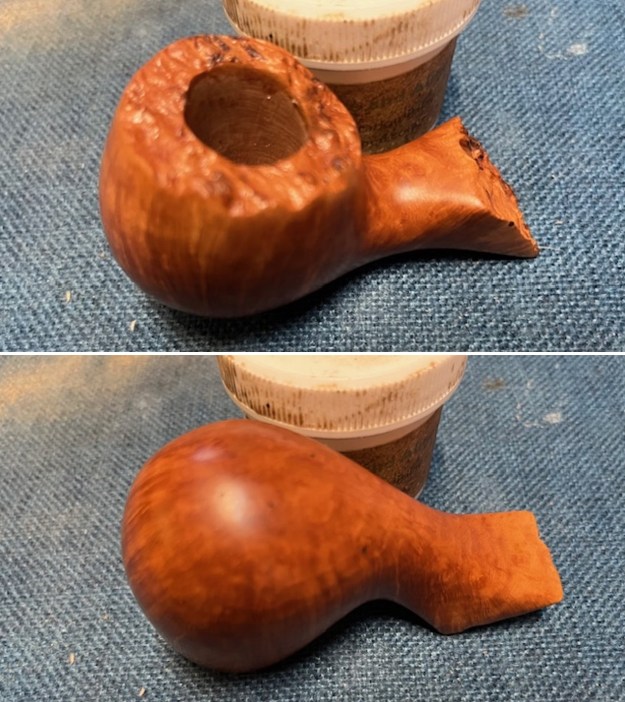
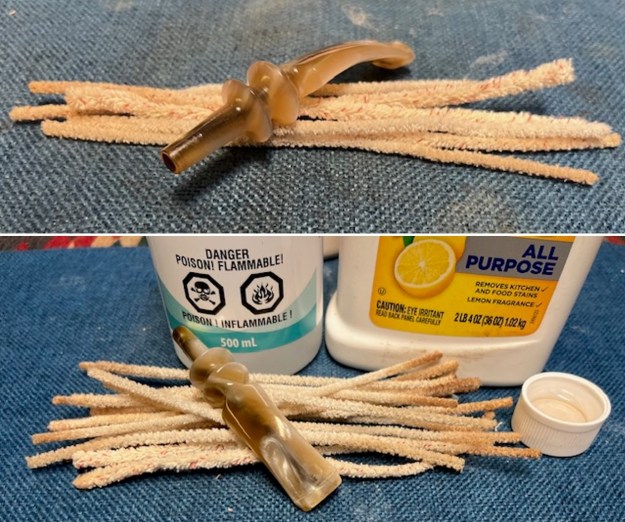
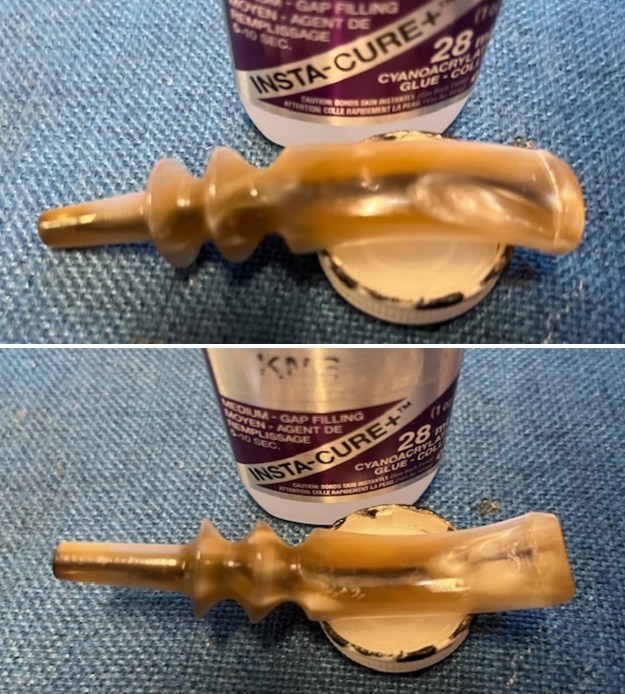
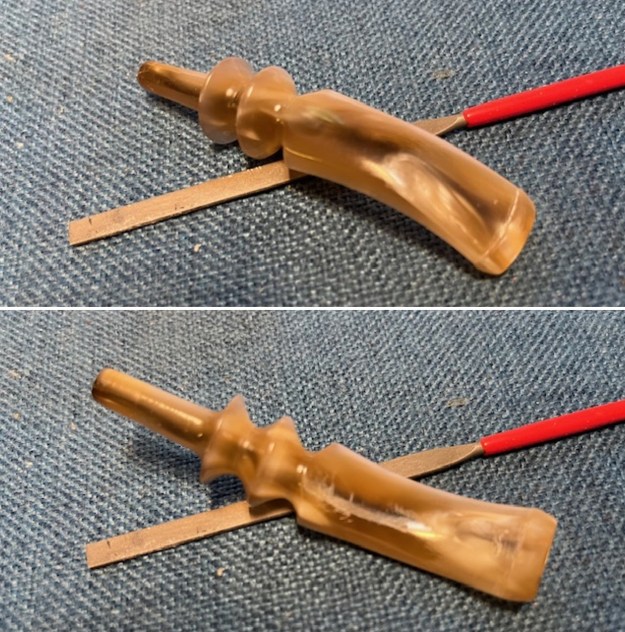
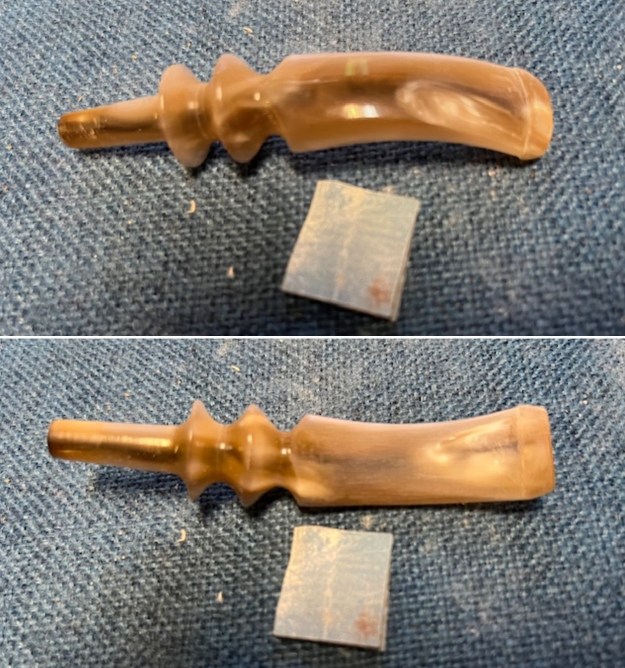
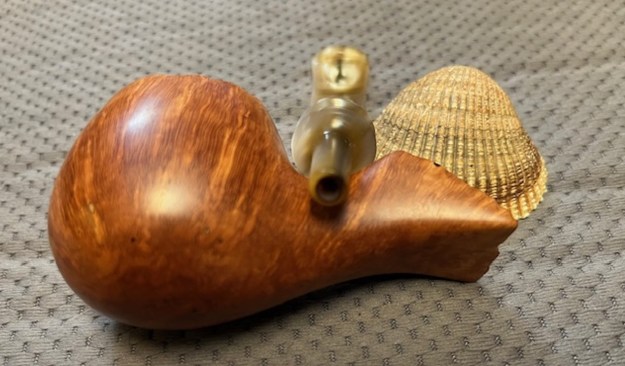
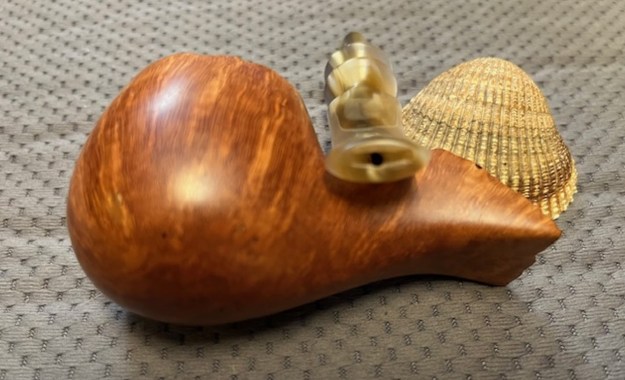
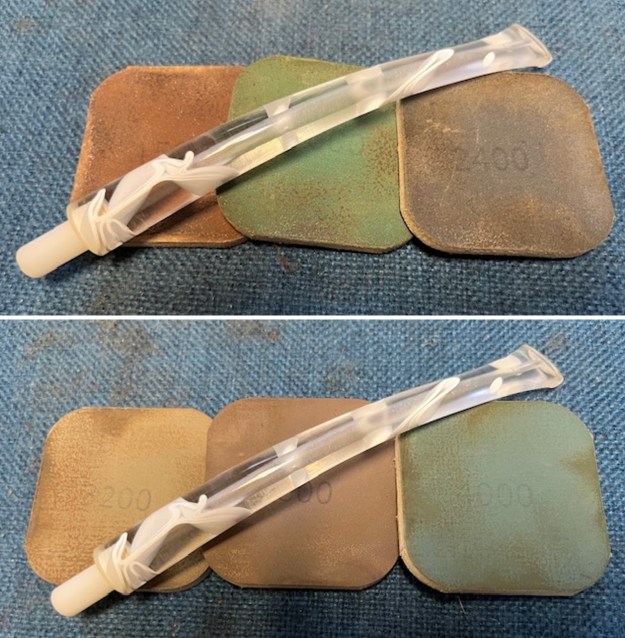
The next pipe I chose to work on was one that we purchased on 12/28/2024 from as part of an estate that belonged to a pipeman and carver, Byron Harwood from Missoula, Montana, USA. This Freehand was one of Byron’s own handmade pipes. It is a lovely piece of plateau briar (rim top and shank end) that was shaped with an apple bowl that highlighted the grain. The bowl and shank were smooth and highlighted some beautiful grain. The airway in the mortise and shank are well executed and the draught is very good. The bowl was unsmoked and other than dusty when we received it, the pipe was in excellent condition. The stem that came with it really did not fit – more of a Lovat style saddle stem on a midsized freehand. It looked like it had just been put in the shank before shipping. Everything about the stem said “restem me” to this repair guy. The pipe fit well in the hand and had a small bowl but there was a charm to it! Here is what it looked like when I brought it home from Jeff’s place. I took some photos of the rim top and bowl to give a clear picture of the condition of the rim top and bowl. You can see the drilling and the plateau. It is an unusual pipe. I also took photos of the stem to show its condition also the general look of it and why I don’t think it is a good fit.I sanded the briar bowl with 320-3500 sanding pads. I wiped the briar down with a damp cloth after each sanding pad. It began to look very good. I polished the bowl with micromesh sanding pads – wet sanding with 1500-12000 grit pads and wiping it down after each sanding pad with a damp cloth. The grain of the briar began to shine. I worked some Before & After Restoration Balm into the surface with my finger tips. I let it sit on the bowl for 10 minutes and then buffed it off with a paper towel and soft cloth. The product is a great addition to the restoration work. It enlivens, enriches and protects the wood while giving it a deep glow. It is a product I use on every pipe I restore. I went through my stems and found an acceptable acrylic saddle stem. It had been used for a short time and the airway was stained with dark tobacco stains. I would be able to remove some of the stain but not all. I took a photo of the two stems together. I put it in the shank of the bowl at hand and took a photo of the look with a new stem. The combination works very well.I cleaned the airway in the stem with alcohol and pipe cleaners – smooth and bristle. I followed up on that by cleaning it again with Soft Scrub cleanser. I gave it a quick rinse of alcohol to remove the residue of the cleanser and the swirls of tans, creams, ivory, browns and black look very good. There is some heavy darkening stain that I cannot remove but the stem is very clean.I set the bowl aside and worked on the stem. I filled in the tooth marks in the acrylic with clear CA glue. Once they cured I flattened the repairs with a small file and then sanded the repairs smooth with 220 grit sandpaper. I sanded out the light tooth marks and chatter with 320-3500 grit sanding pads. I wiped the stem down with an Obsidian Oil cloth after each sanding pad. The stem looked better at this point.I polished the stem with micromesh sanding pads – wet sanding with 1500-12000 grit sanding pads. I wiped it down after each sanding pad with Obsidian Oil. I polished it with Before & After Pipe Stem Polish – both Fine and Extra Fine. I buffed the stem with a soft cloth to raise the shine. I gave it a final wipe down with Obsidian Oil to add shine to the acrylic. I don’t know what it is about finishing a restoration but I have to tell you that it is my favourite part of the process. It is the moment when everything that I have worked on comes together. I can compare it to where I started and there is always satisfaction that it does indeed look better than when we picked it up. As always, I put this Byron Harwood Freehand Apple and new stem back together and buffed it with Blue Diamond on the buffing wheel. I gave the bowl and the stem multiple coats of carnauba wax. I buffed the pipe with a clean buffing pad and hand buffed it to raise the shine. It is fun to see what the polished bowl looks like along with the polished clear acrylic stem. This Byron Harwood Freehand Apple is a great looking pipe and I am sure that it will be comfortable in hand when smoking as it is light and well balanced for a pipe of this size. Have a look at it with the photos below. The dimensions are Length: 6 inches, Height: 2 inches, Outside diameter of the bowl: 1 ½ inches, Chamber diameter: ¾ of an inch. The weight of the pipe is 2.26 ounces/64 grams. It is another beautiful pipe and one that will be on the rebornpipes store soon. You can find it in the section of Pipes by American Pipe Makers. If you are interested in adding it to your collection let me know. Thanks for walking through the restoration with me as I worked over this pipe. Thanks to each of you who are reading this blog.

As always, I encourage your questions and comments as you read the blog. Thanks to each of you who are reading this blog. Remember we are not pipe owners; we are pipe men and women who hold our pipes in trust until they pass on into the trust of those who follow us.

Restoring a Byron Harwood All Briar Sandblast Capped Apple


by Steve Laug

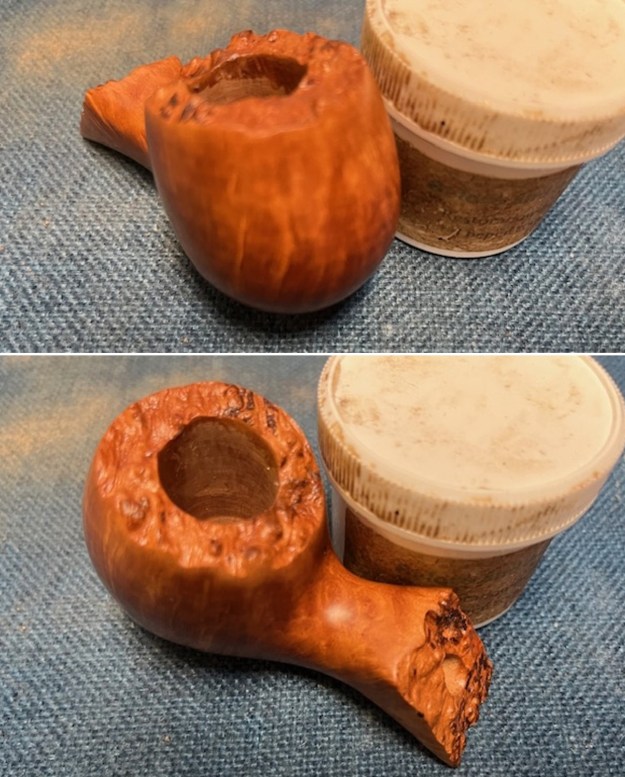
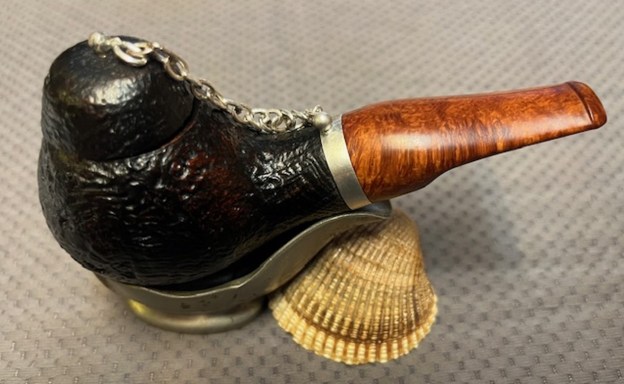
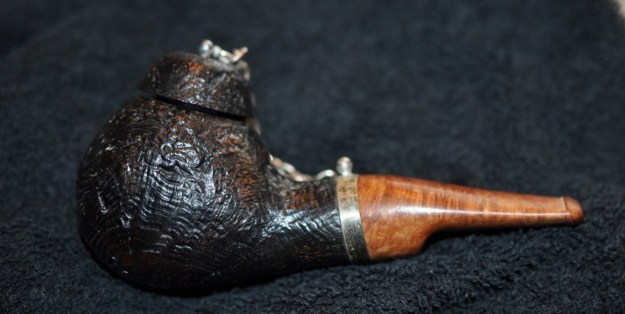
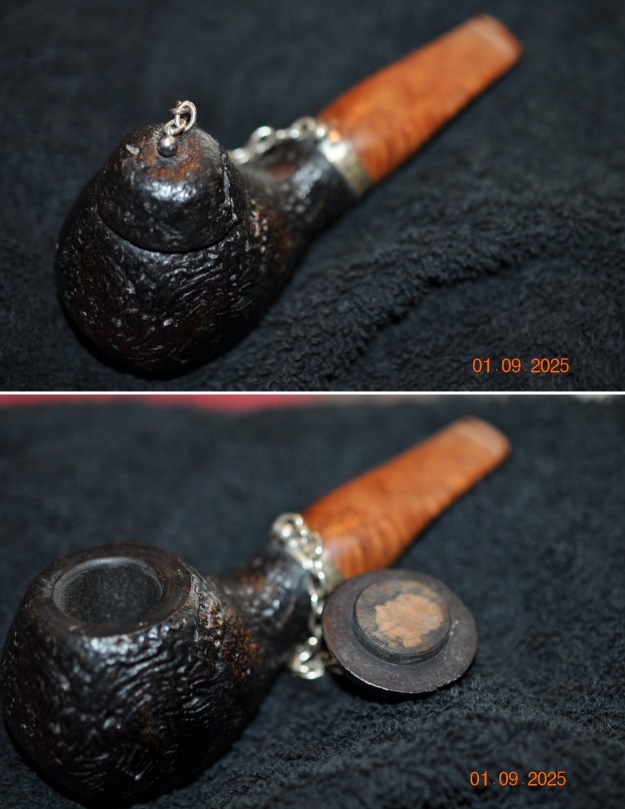
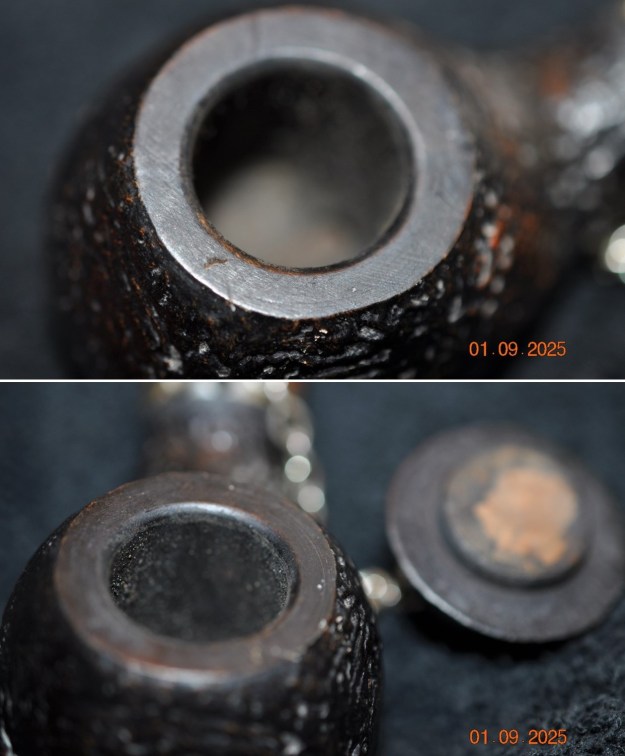
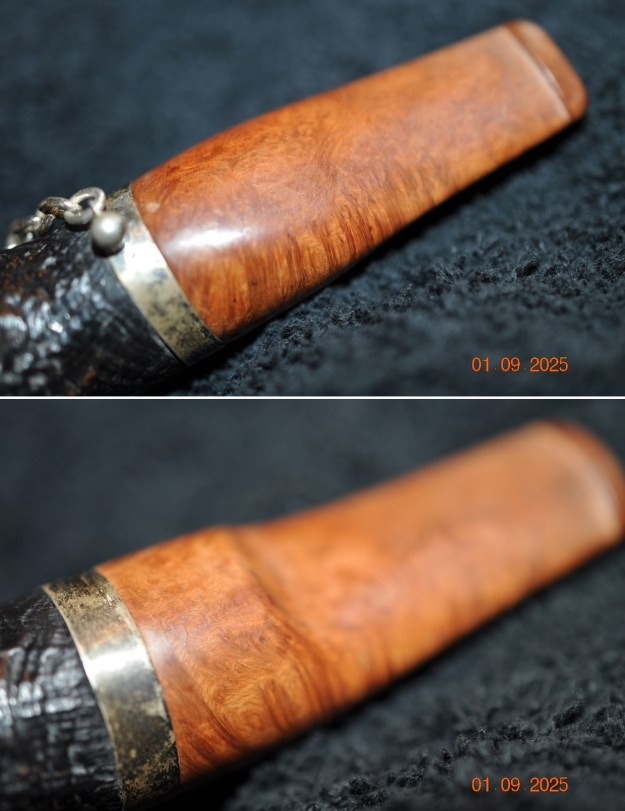
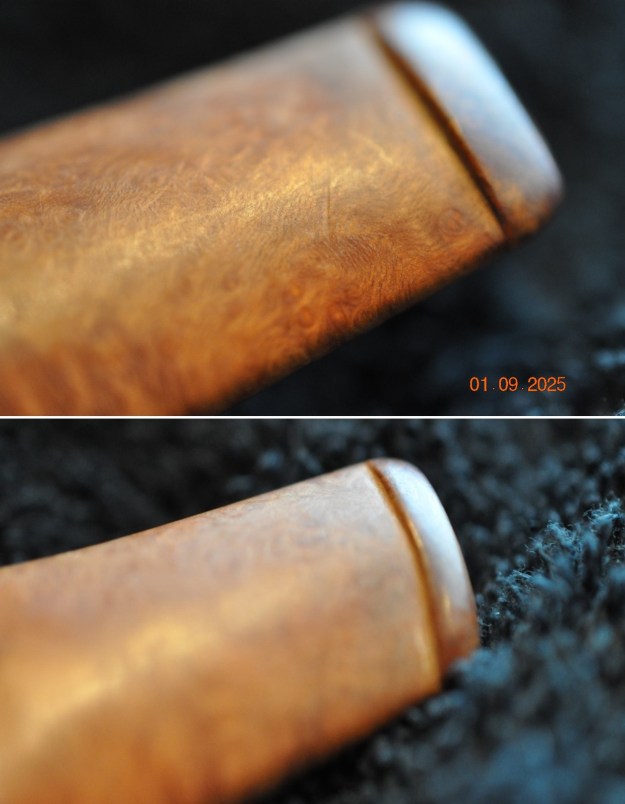
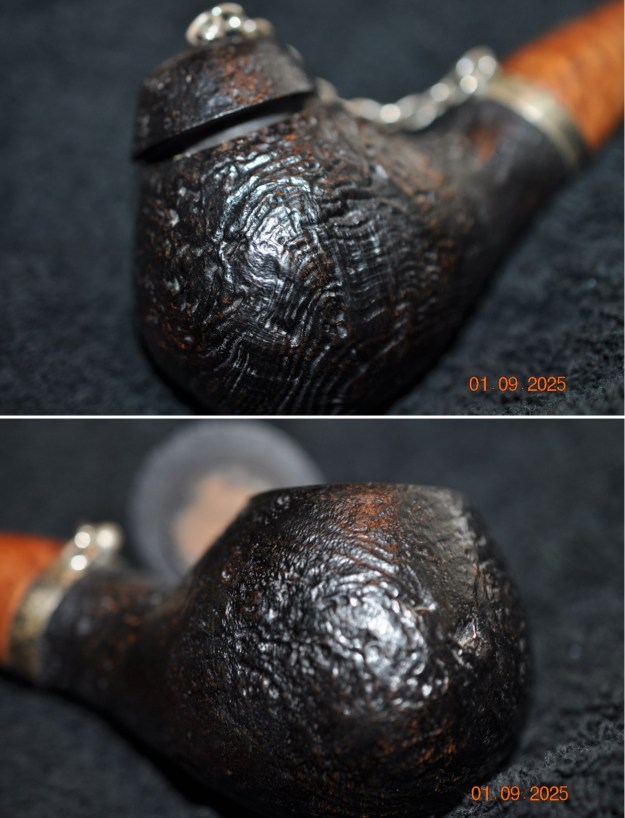
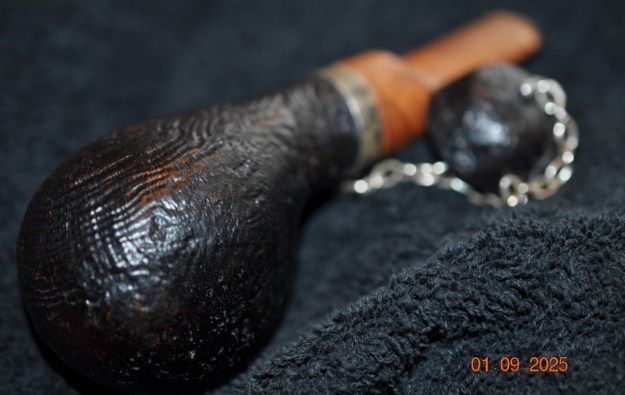
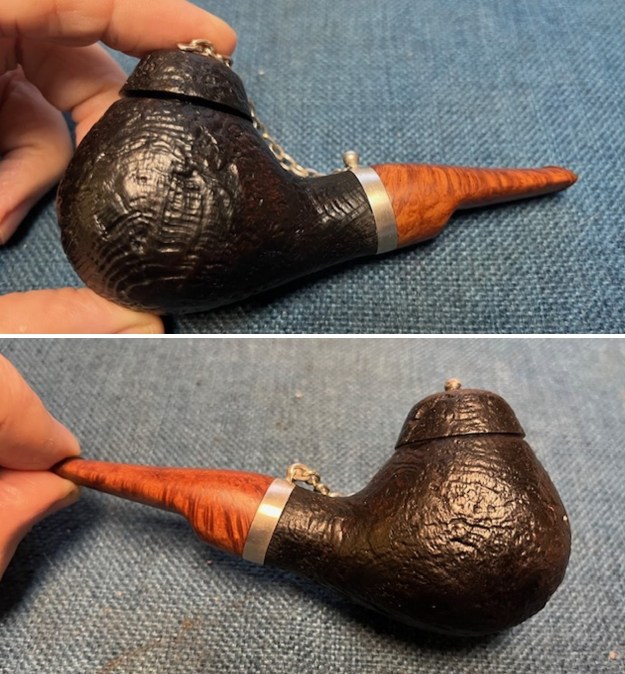
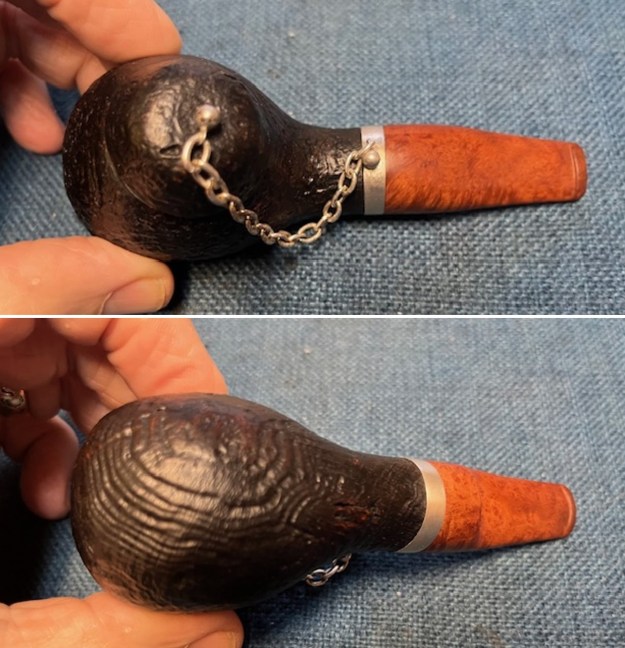
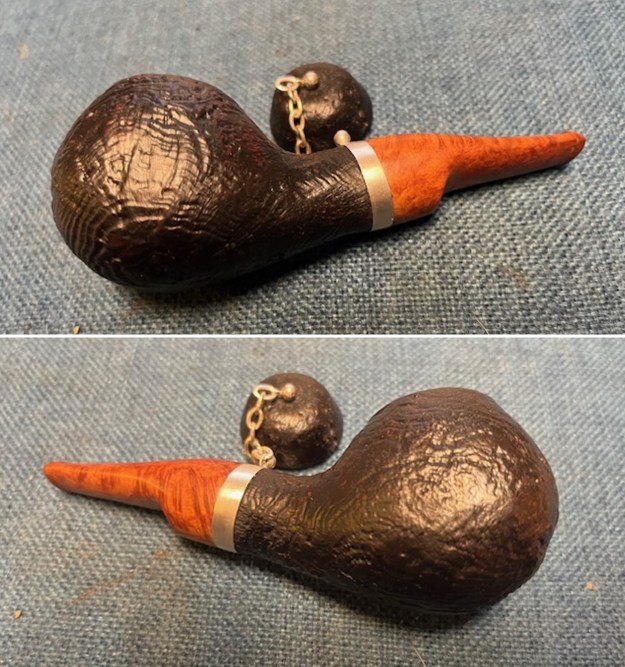
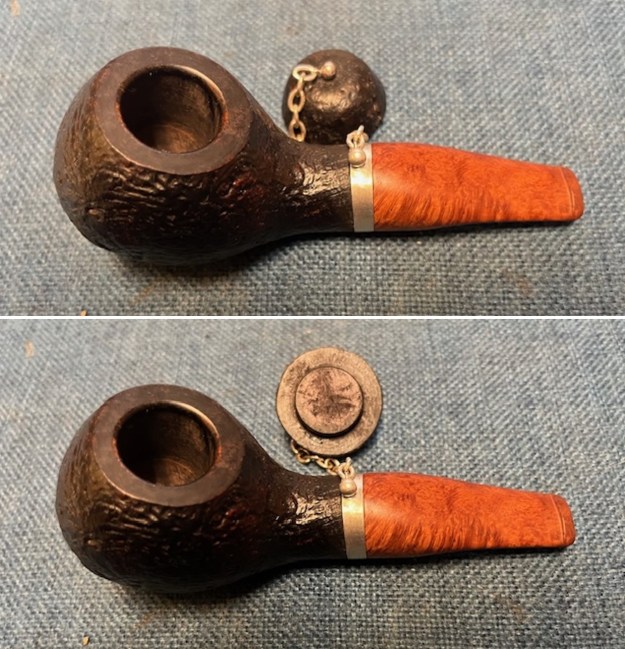
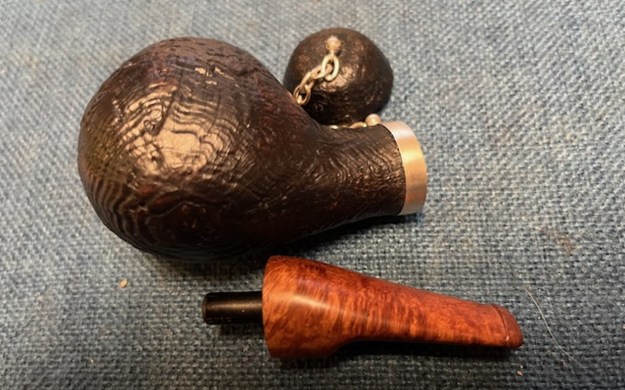
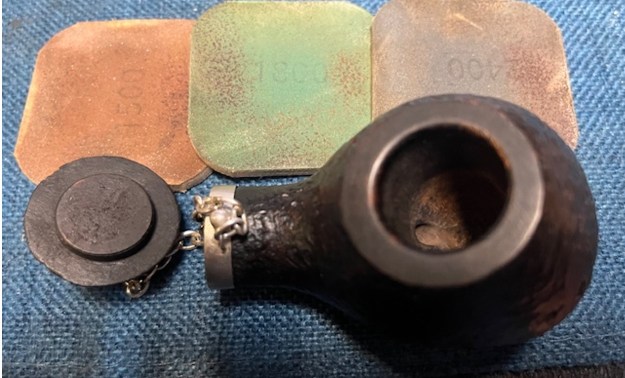
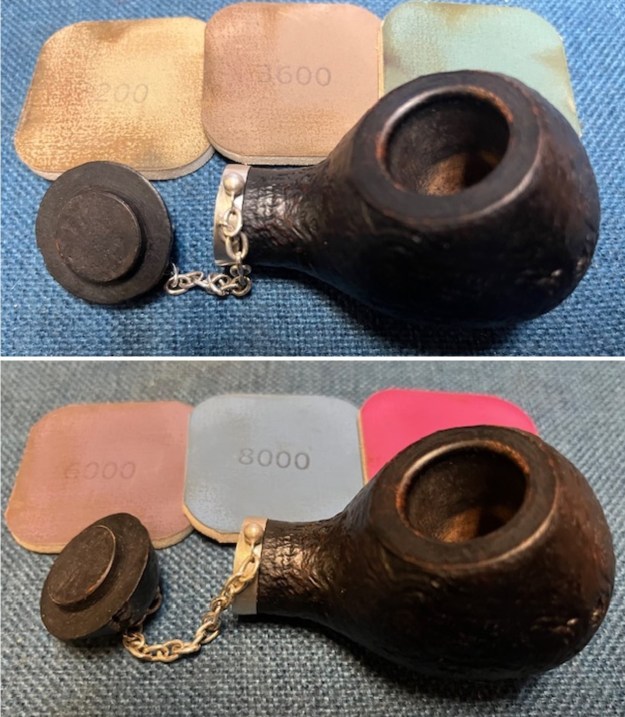
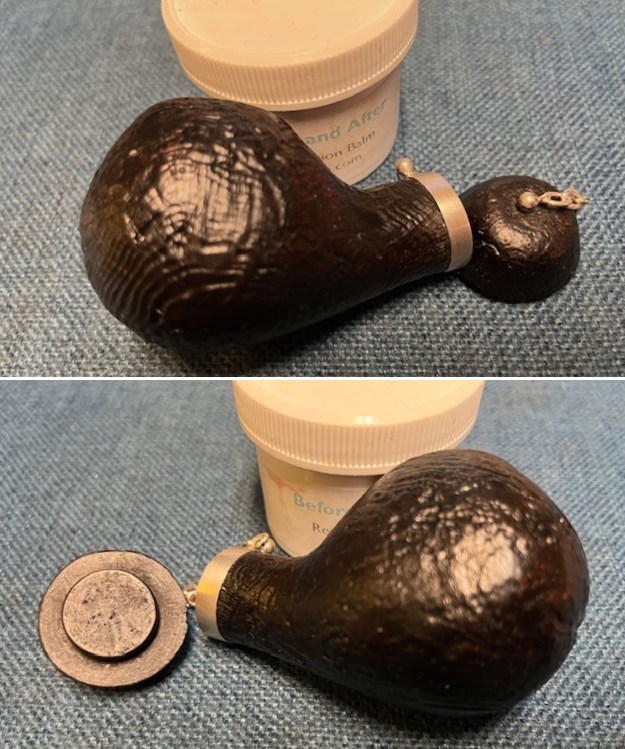
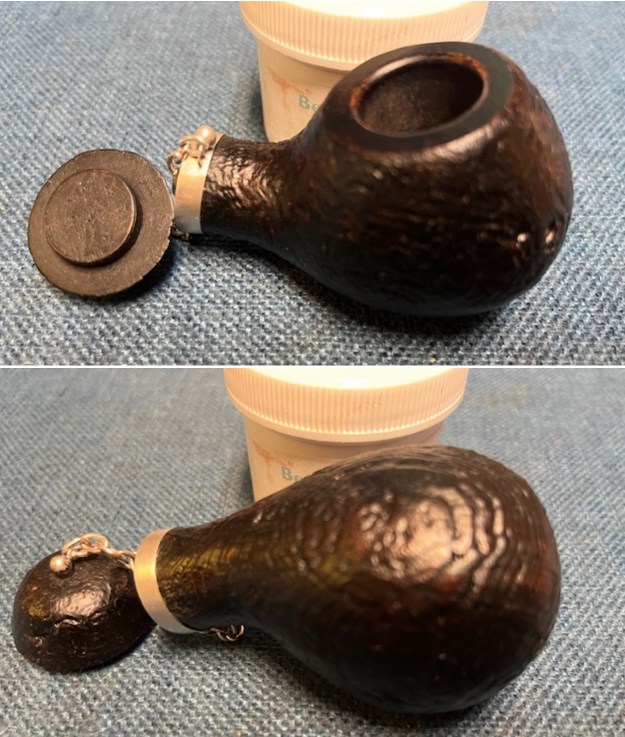
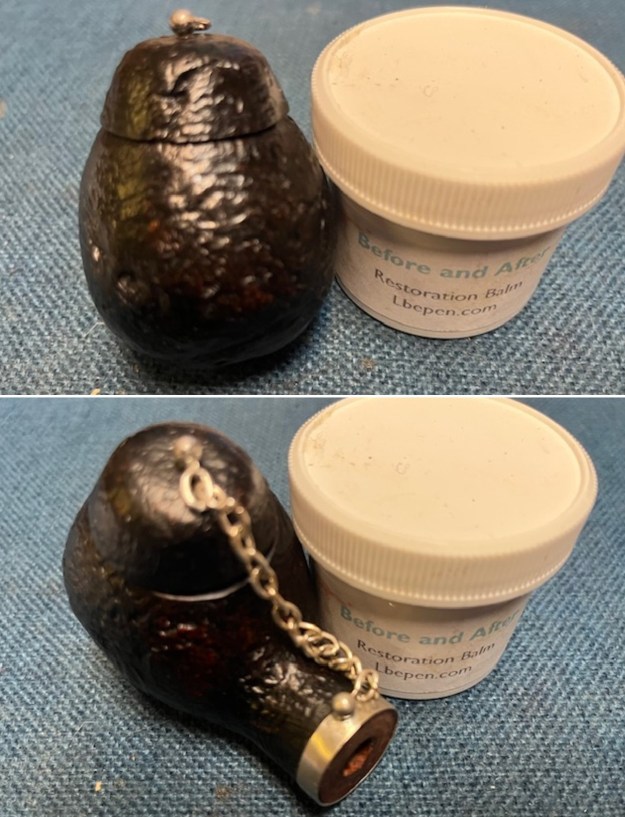
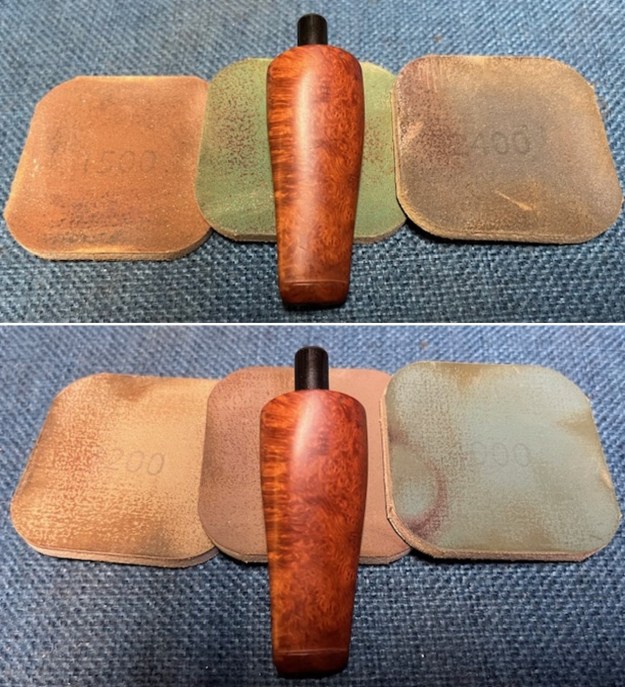
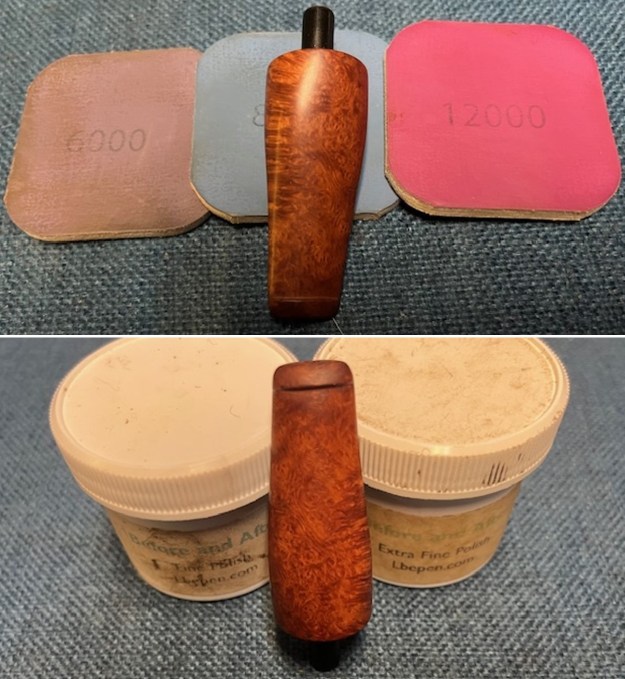
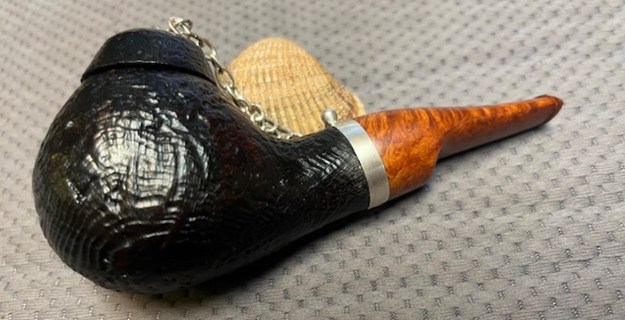
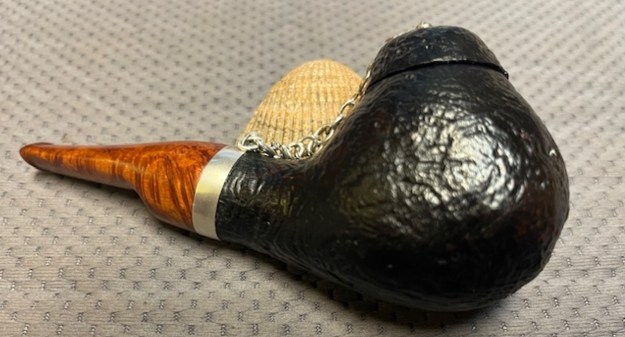
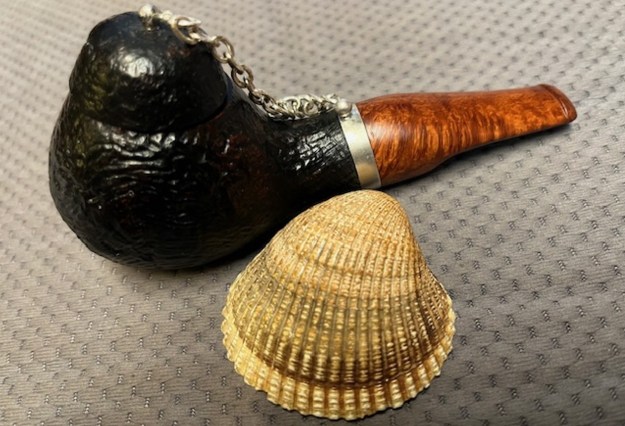
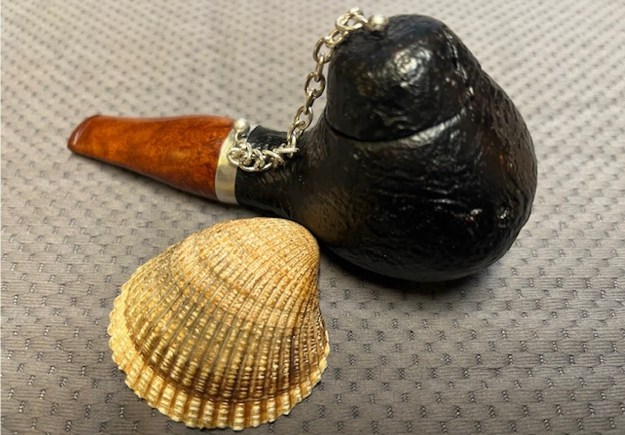
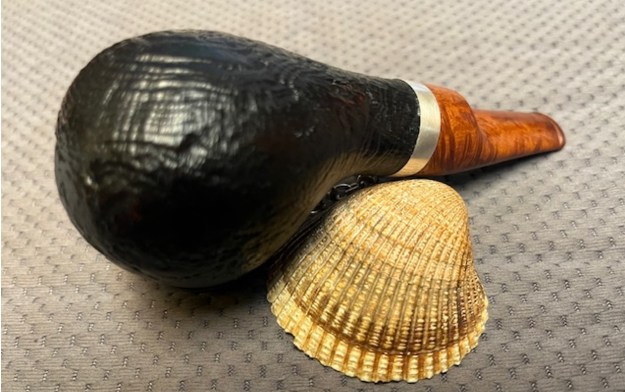
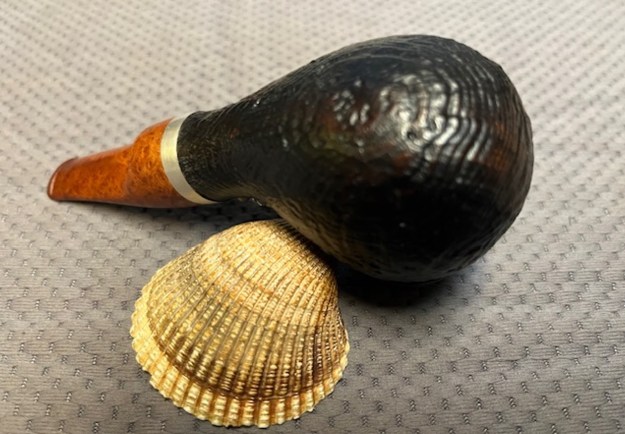
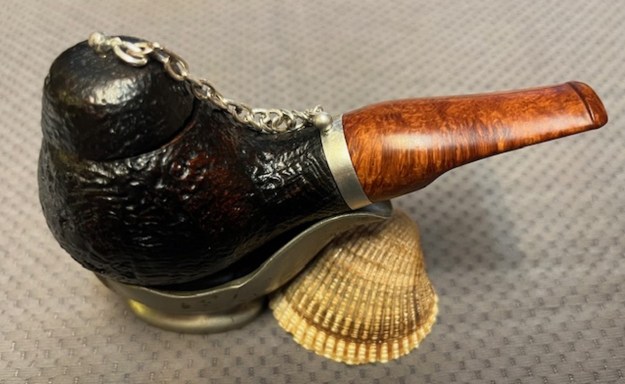
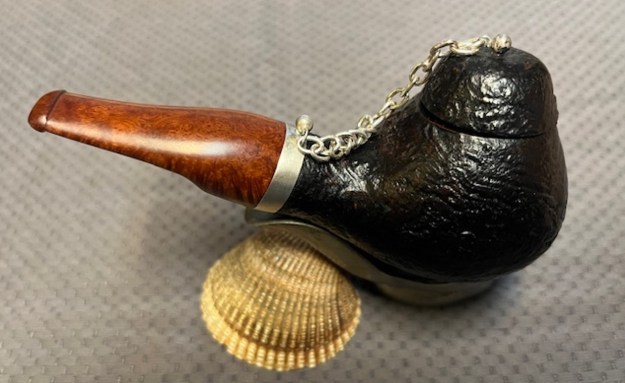
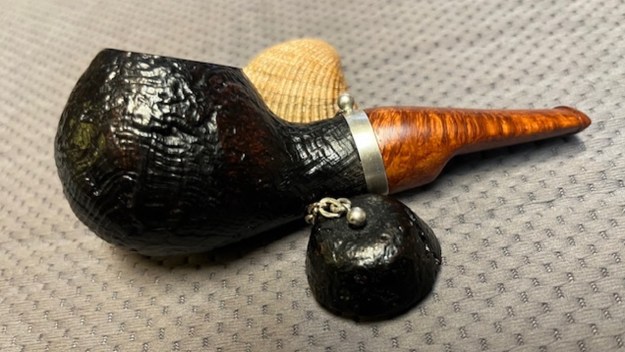
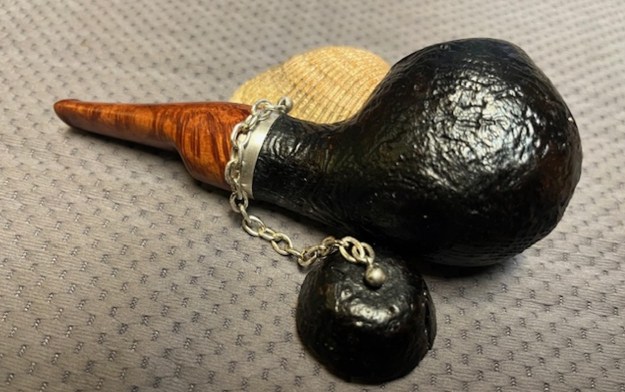
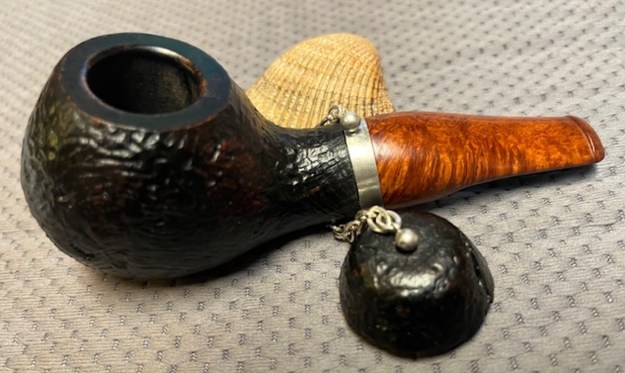
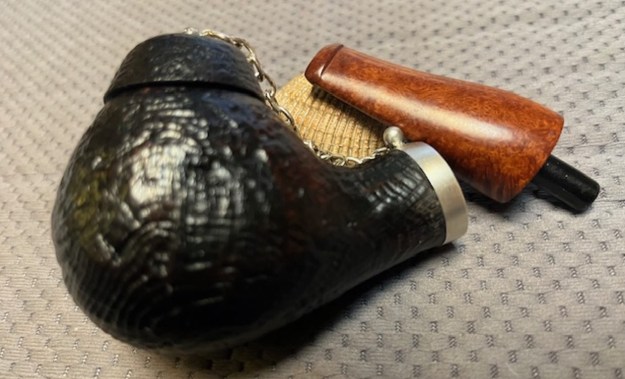
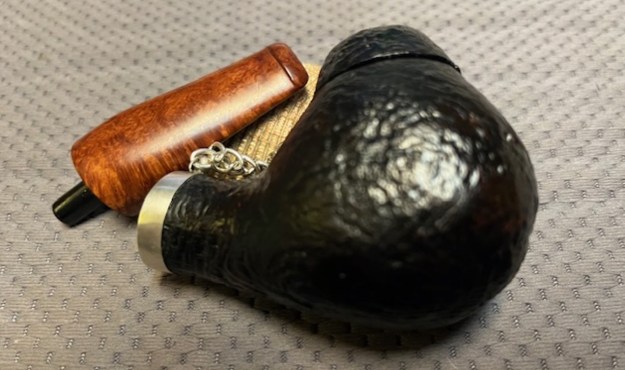
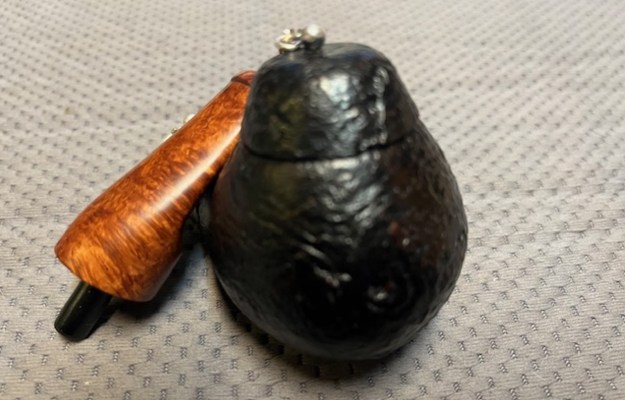
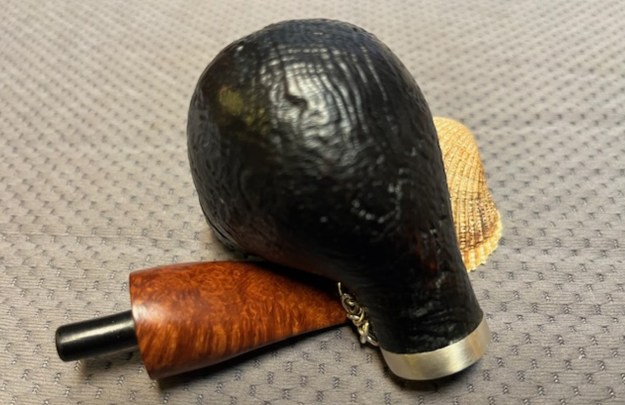
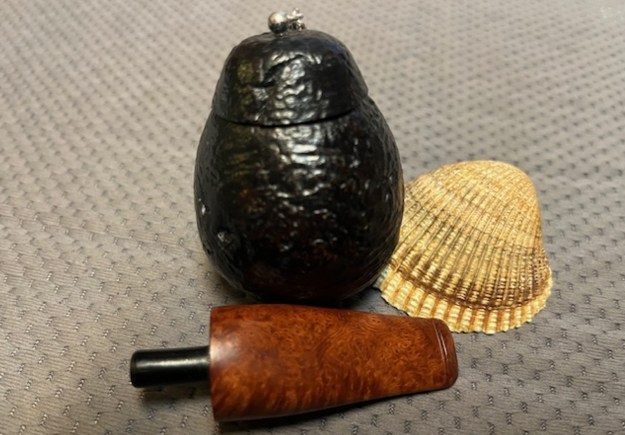
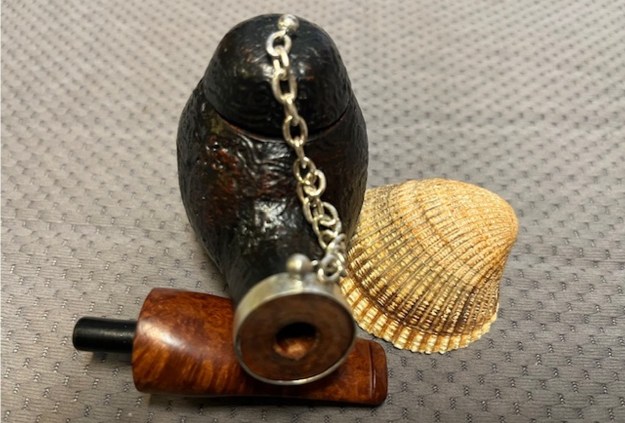
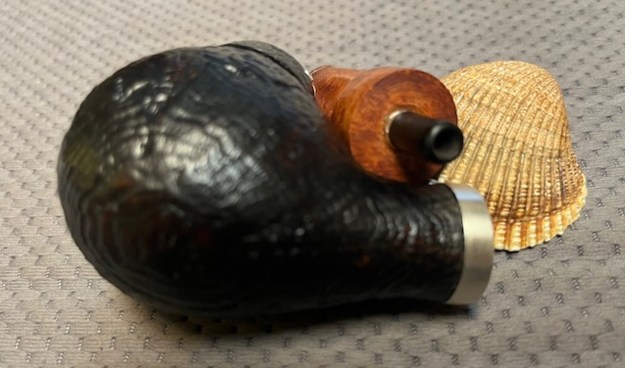
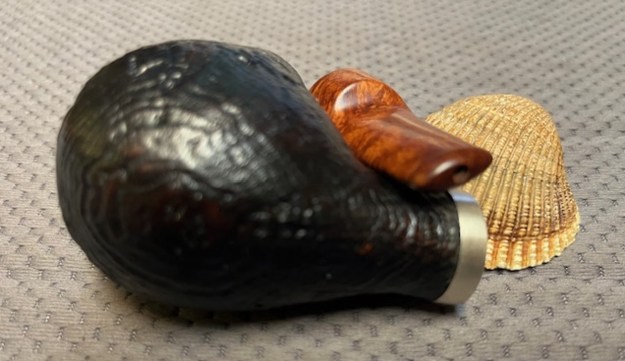
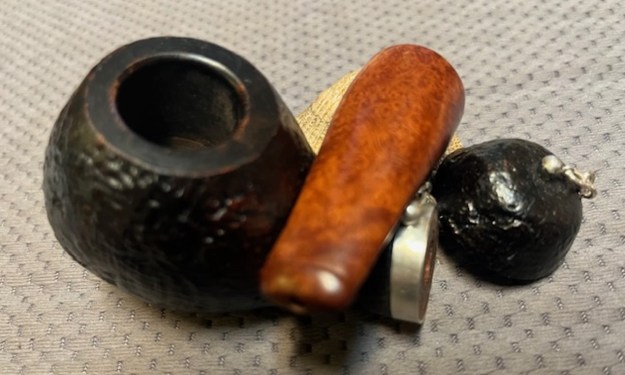
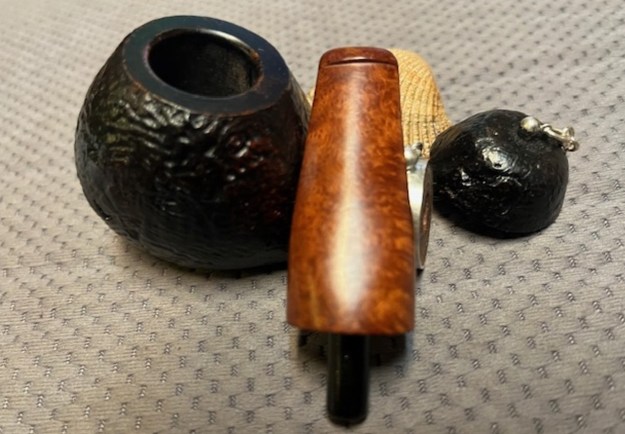
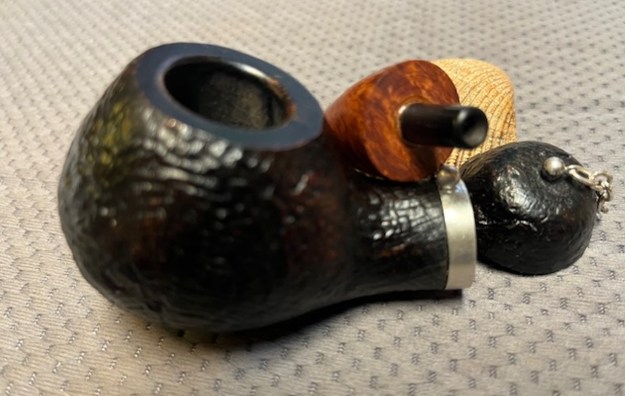
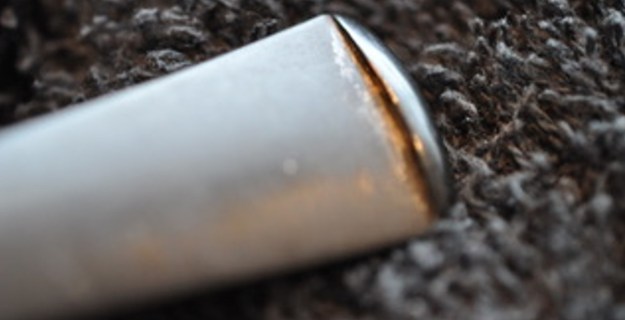
The next pipe I chose to work on was one that we purchased on 12/28/2024 from as part of an estate that belonged to a pipeman and carver, Byron Harwood from Missoula, Montana, USA. This unique, capped all briar pipe was one of Byron’s own handmade pipes. As with the previous pipe of Byron’s this one does not bear any stamping. It is a lovely piece of briar that was shaped with an apple bowl and sandblasted to highlight the grain. The airway in the mortise and shank are well executed and the draught is very good. The bowl had a moderated cake and there was some darkening and lava around the inner edge of the bowl and top. The cap on the bowl was pressure fit and attach to a shank band. It sealed the bowl so it would be a good pipe to load and carry in a pocket or bag for later use. It is not a wind cap. The chain and band are tarnished and are made of Sterling Silver. Smoking the pipe had removed the stain and finish on the inside of the cap. The stem is briar in a half saddle shape. It is smooth and nicely grained. It has been stained with a tan stain and has a great fit to the shank. The tenon is a black Delrin that is set in the stem. The button is well finished and the exit of the airway is orific or round rather than slotted. The pipe fit well in the hand and was short and stubby like a nose warmer. There was a charm to it! Here is what it looked like when Jeff received it. He took some photos of the rim top and bowl from various angles to give me a clear picture of the condition of the rim top and bowl. You can see the light cake in the bowl and the darkening and light lava coat on the inner edge and rim top. He also took photos of the all briar stem. It is dirty and has light tooth chatter on both sides ahead of the button. Jeff took some photos of the sides of the bowl to show the condition of the finish on the pipe. The photos showed rich sandblast, highlighting grain around the bowl sides. Under the dust it was a nice looking bowl and cap. It is a nose warmer sized pipe sandblasted briar cap. It is on pipes like this that I really appreciate Jeff’s thorough cleaning process. It gives me real freedom in dealing with pipes when they arrive here. He reamed it with a PipNet pipe reamer and got rid of the cake. He cleaned up the reaming with a Savinelli Fitsall Pipe Knife so that we could see the walls of the bowl and assess for damage. He cleaned the internals of the shank and stem with alcohol, pipe cleaners and alcohol. He scrubbed the exterior with undiluted Murphy’s Oil Soap and a tooth brush. He rinsed the pipe under warm water. He dried it off with a cloth and then let it air dry. The stem was scrubbed with Murphy’s Oil Soap and a tooth brush at the same time as the bowl. Once it was rinsed off, it came out looking very good. The finish on the bowl and the rim top and cap cleaned up nicely. I took pictures of the pipe to show how it looked when I unpacked it. The pictures show it with the cap in place on the top of the bowl and with it removed. I took a photo of the pipe with the briar stem removed to show the Delrin tenon and the look of the parts of the pipe to give a sense of size and perspective.I polished the bowl rim top and the inside of the bowl cap with micromesh sanding pads – dry sanding with 1500-12000 grit pads and wiping it down after each sanding pad with a damp cloth. I worked some Before & After Restoration Balm into the surface of the briar with my finger tips. I let it sit on the bowl for 10 minutes and then buffed it off with a paper towel and soft cloth. The product is a great addition to the restoration work. It enlivens, enriches and protects the wood while giving it a deep glow. It is a product I use on every pipe I restore. I set the bowl aside and turned to the all briar stem. I polished it with micromesh sanding pads – dry sanding with 1500-12000 grit sanding pads. I wiped it down after each sanding pad with Obsidian Oil. I polished it with Before & After Pipe Stem Polish – both Fine and Extra Fine. I buffed the stem with a soft cloth to raise the shine. I gave it a final wipe down with Obsidian Oil to protect it. I don’t know what it is about finishing a restoration but I have to tell you that it is my favourite part of the process. It is the moment when everything that I have worked on comes together. I can compare it to where I started and there is always satisfaction that it looks better than when we picked it up. As always, I put this Byron Harwood All Briar Nose Warmer back together and buffed it with Blue Diamond on the buffing wheel. I gave the bowl and the stem multiple coats of carnauba wax. I buffed the pipe with a clean buffing pad and hand buffed it to raise the shine. It is fun to see what the polished bowl looks like along with the polished All Briar stem. This Byron Harwood All Briar Capped Nose Warmer is a great looking pipe and I am sure that it will be comfortable in hand when smoking as it is light and well balanced for a pipe of this size. Have a look at it with the photos below. The dimensions are Length: 5 inches, Height: 1 ¾ inches without the cap and 2 ¼ inches with the cap, Outside diameter of the bowl: 1 ¼ inches, Chamber diameter: ¾ of an inch. The weight of the pipe is 2.79 ounces/78 grams. It is another beautiful pipe and one that will be on the rebornpipes store soon. You can find it in the section of Pipes by American Pipe Makers. If you are interested in adding it to your collection let me know. Thanks for walking through the restoration with me as I worked over this pipe. Thanks to each of you who are reading this blog.
As always, I encourage your questions and comments as you read the blog. Thanks to each of you who are reading this blog. Remember we are not pipe owners; we are pipe men and women who hold our pipes in trust until they pass on into the trust of those who follow us.

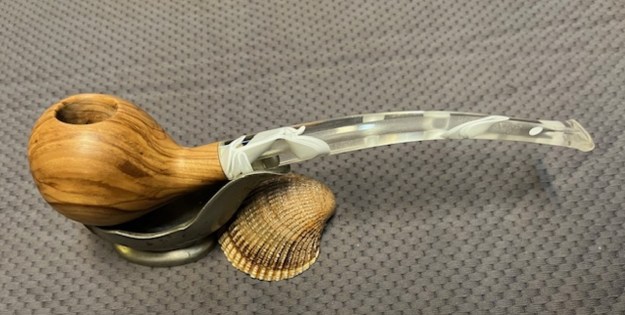
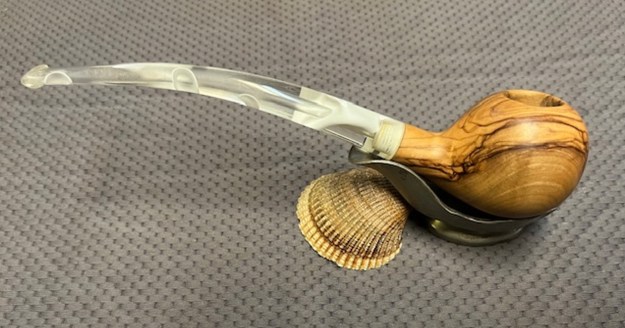
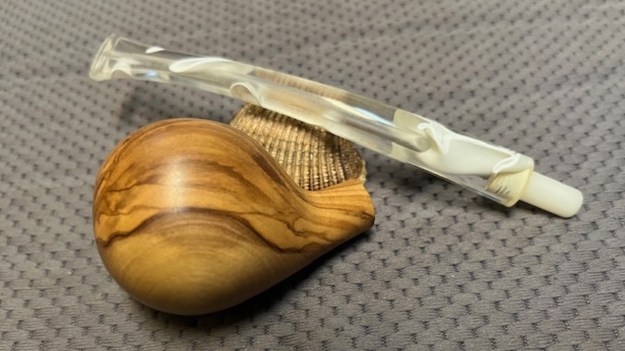
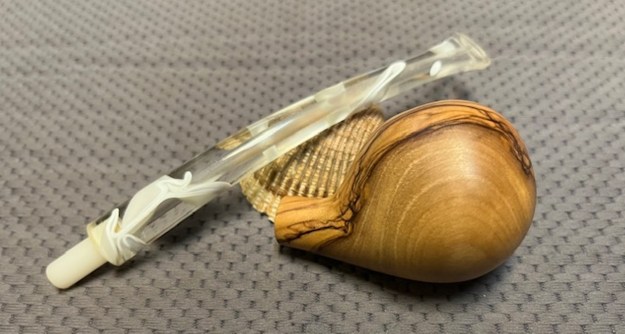
Restoring a Byron Harwood Olivewood Apple Shaped Churchwarden


by Steve Laug

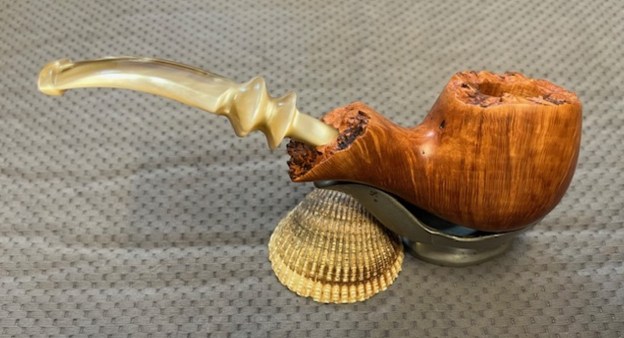
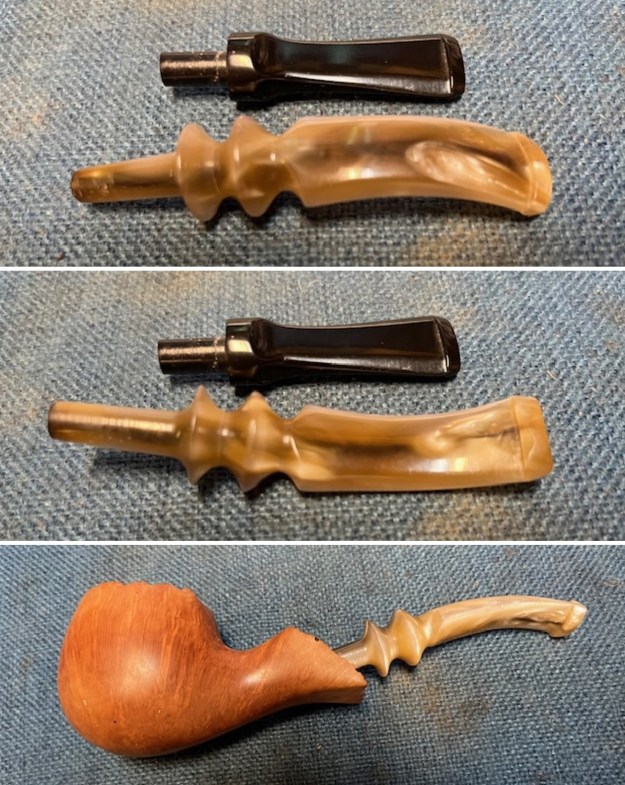
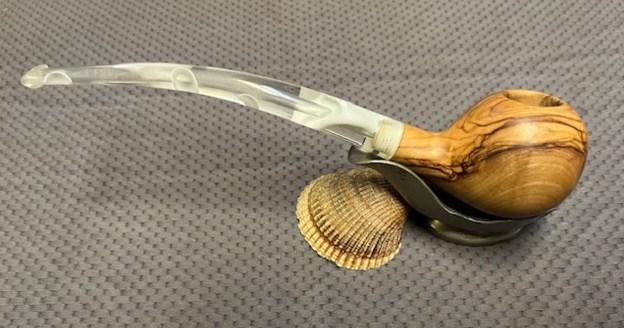
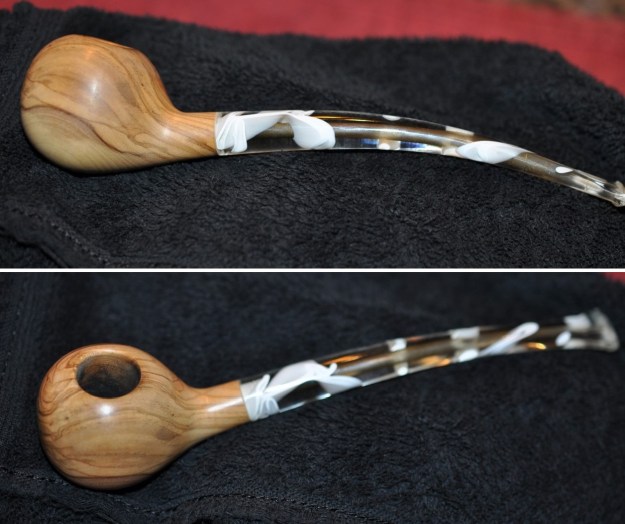
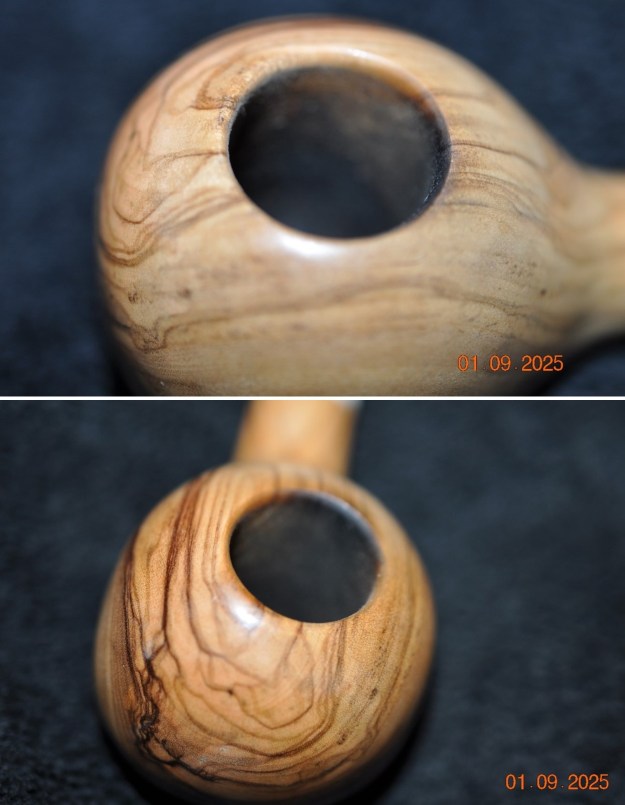
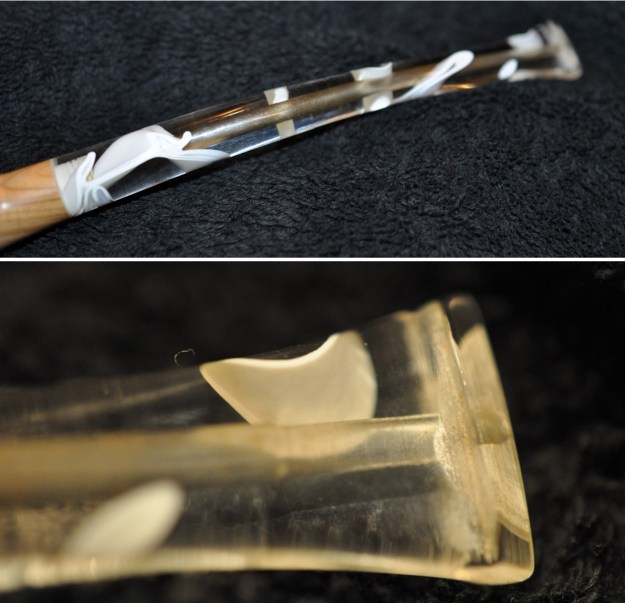
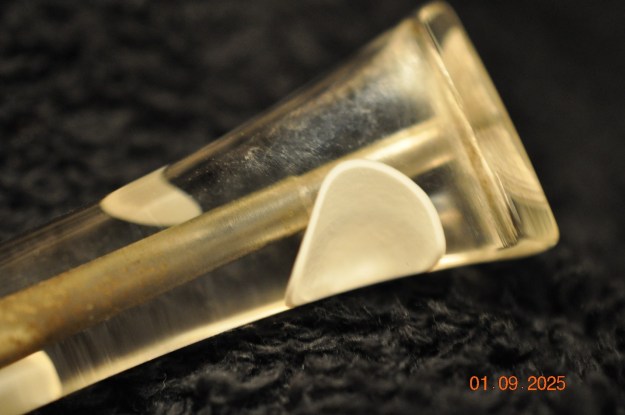
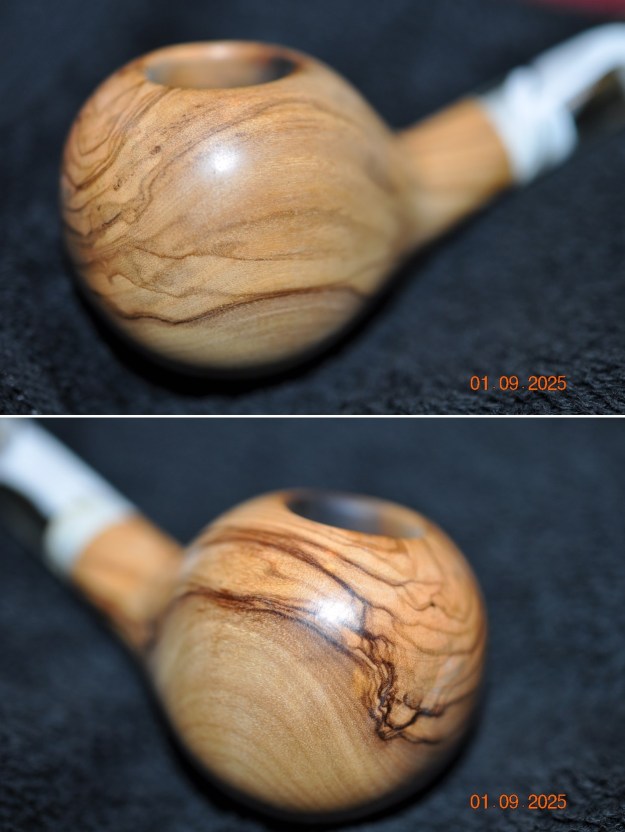
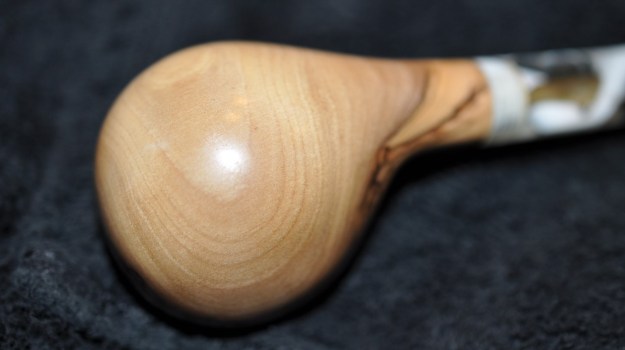
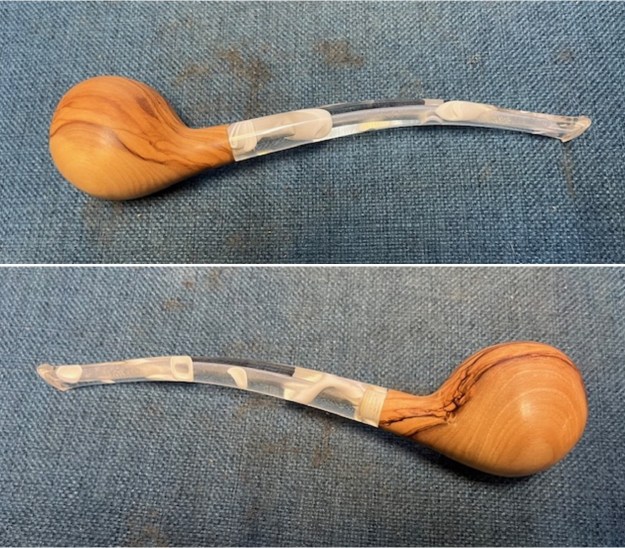
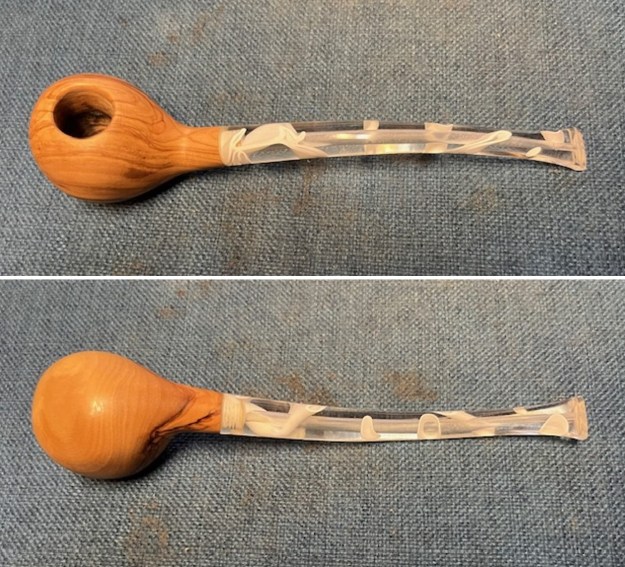
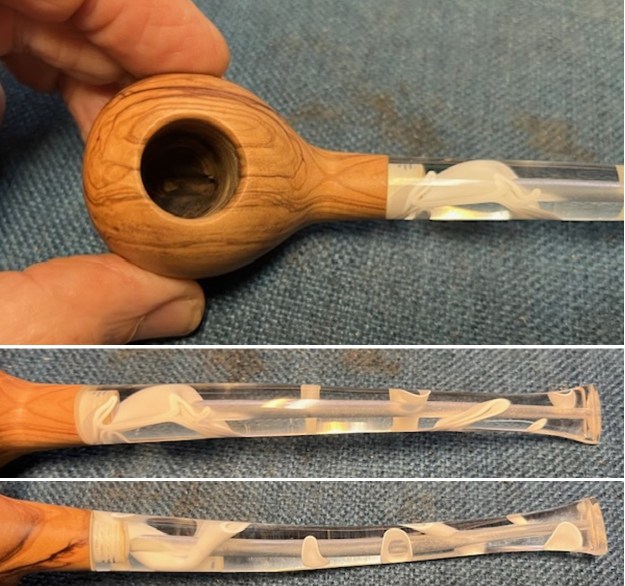
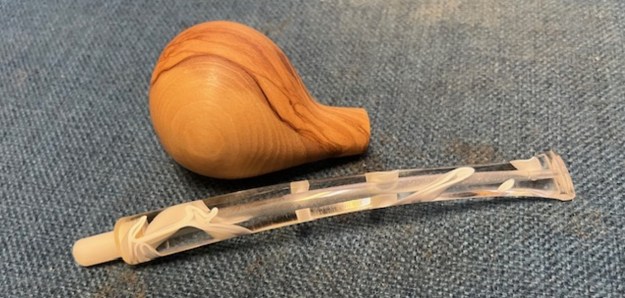
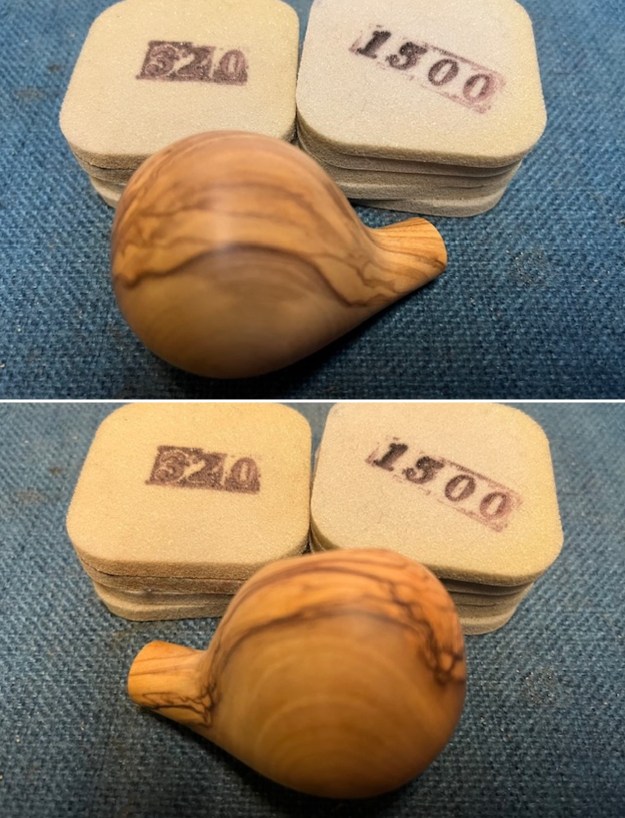
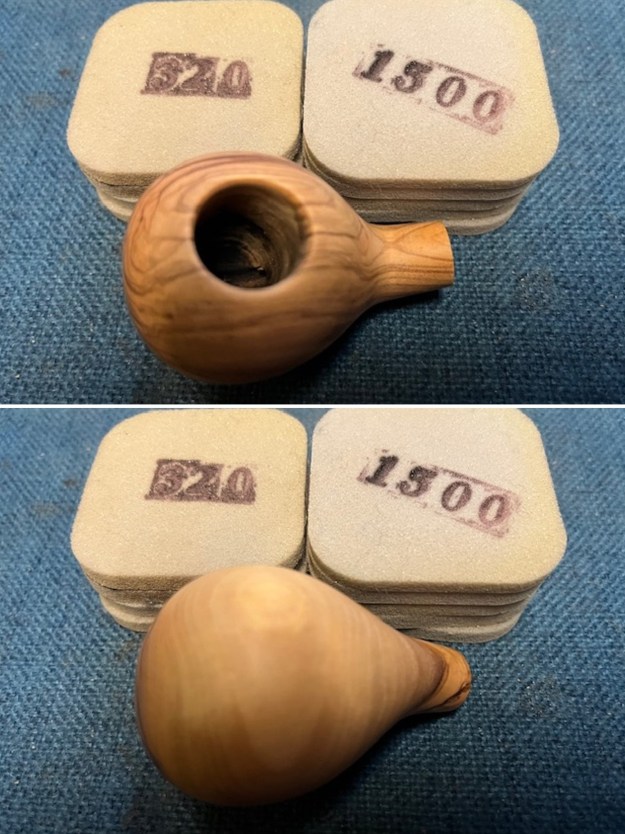
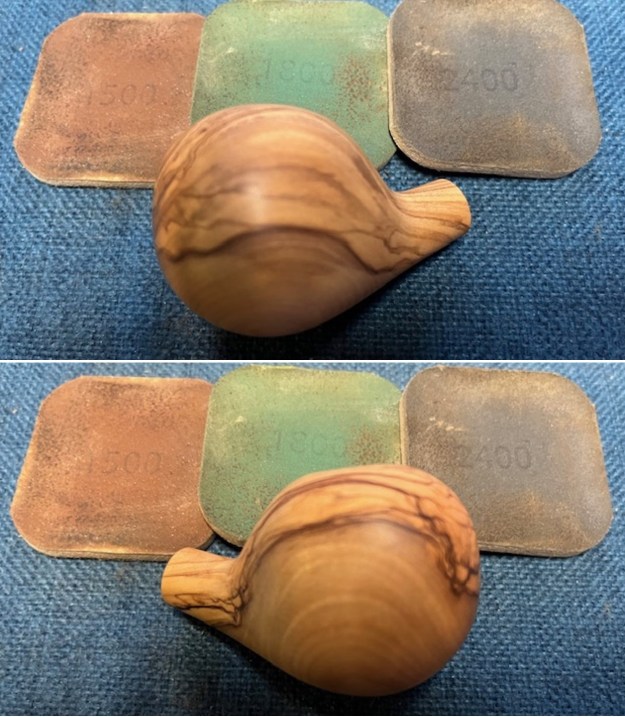
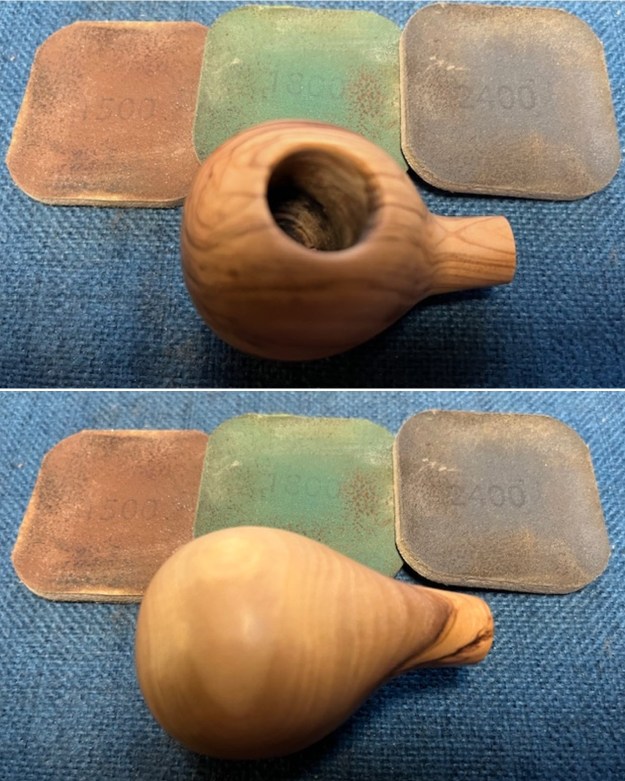
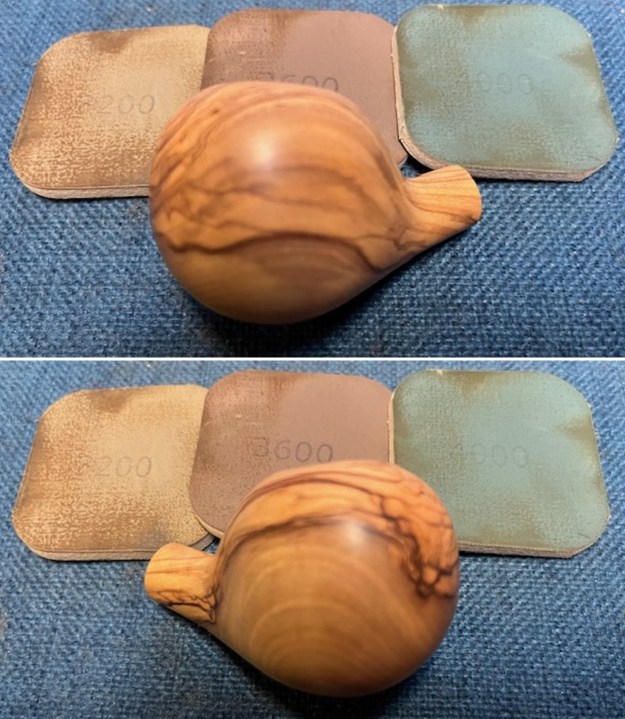
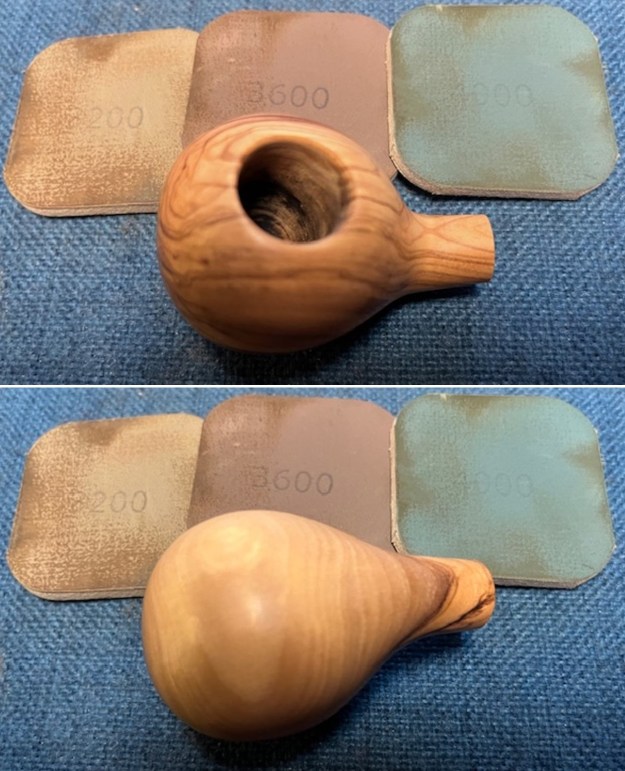
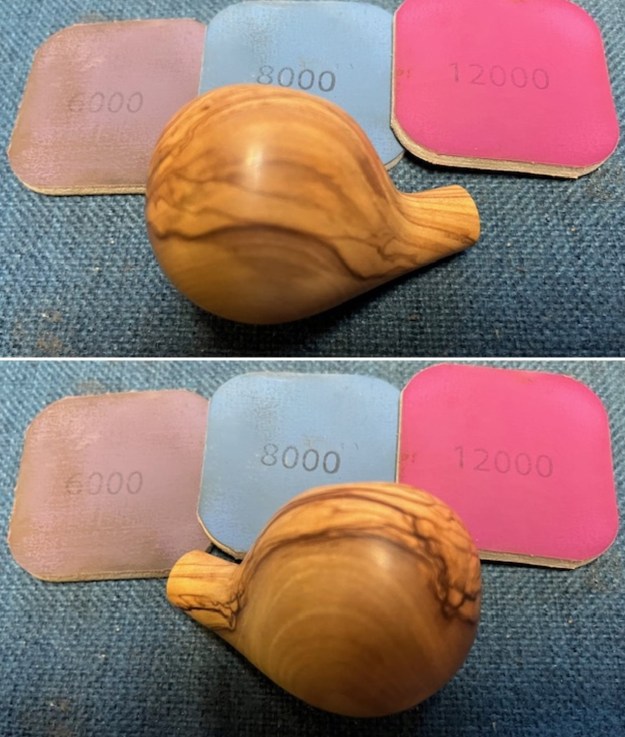
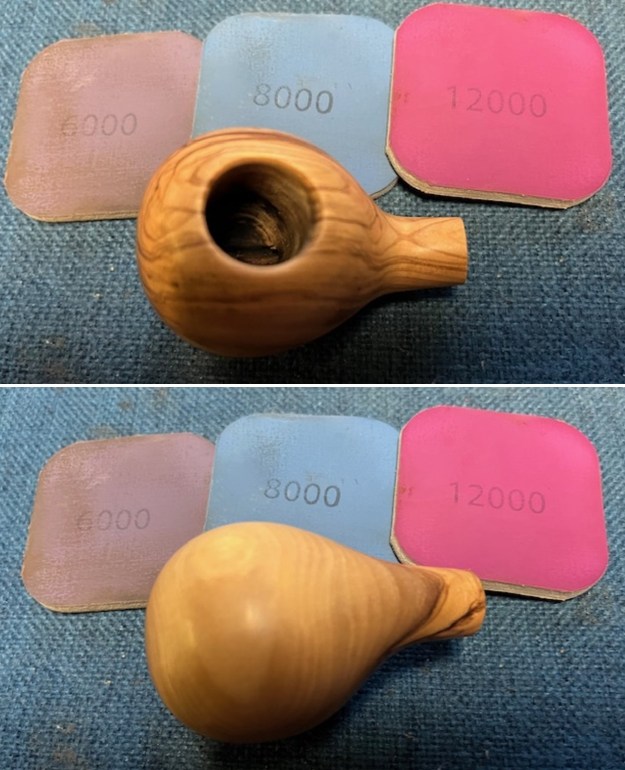
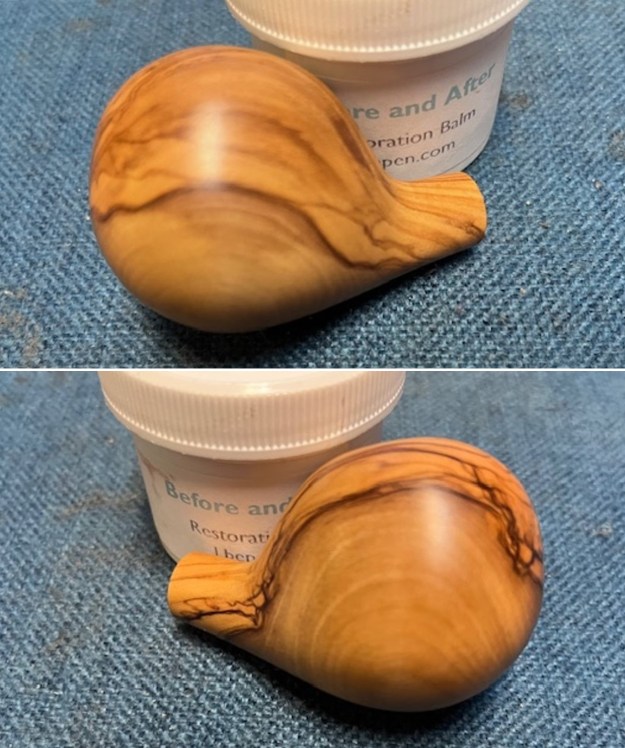
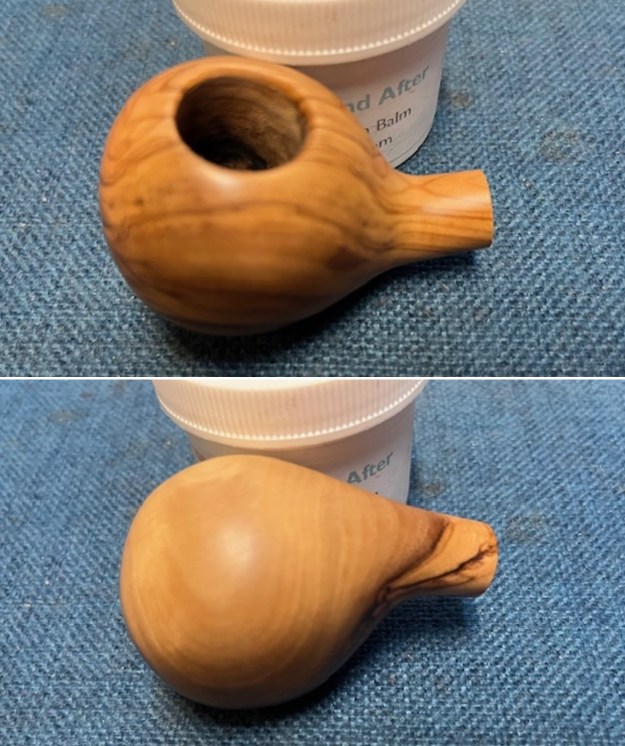
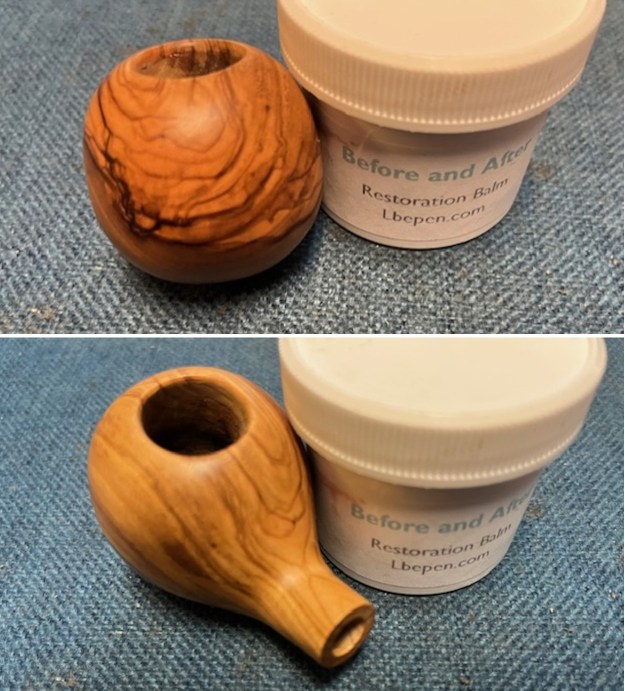
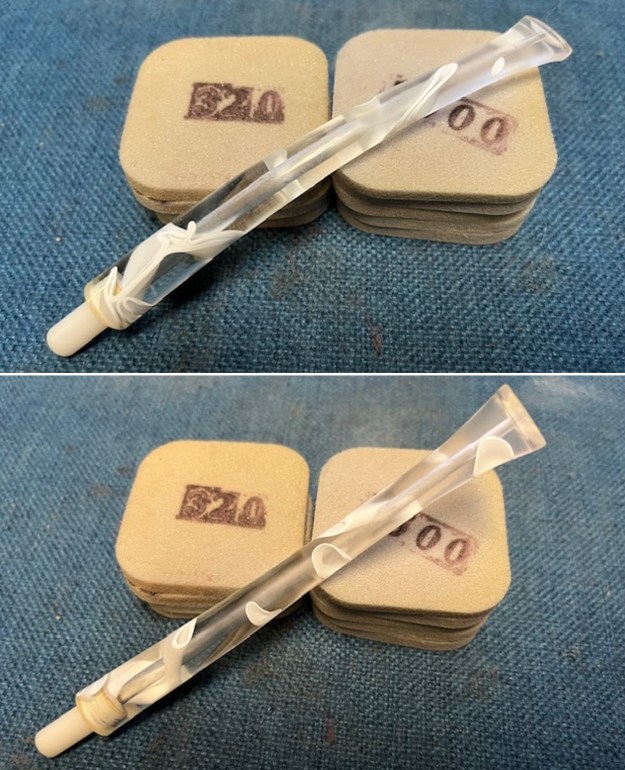
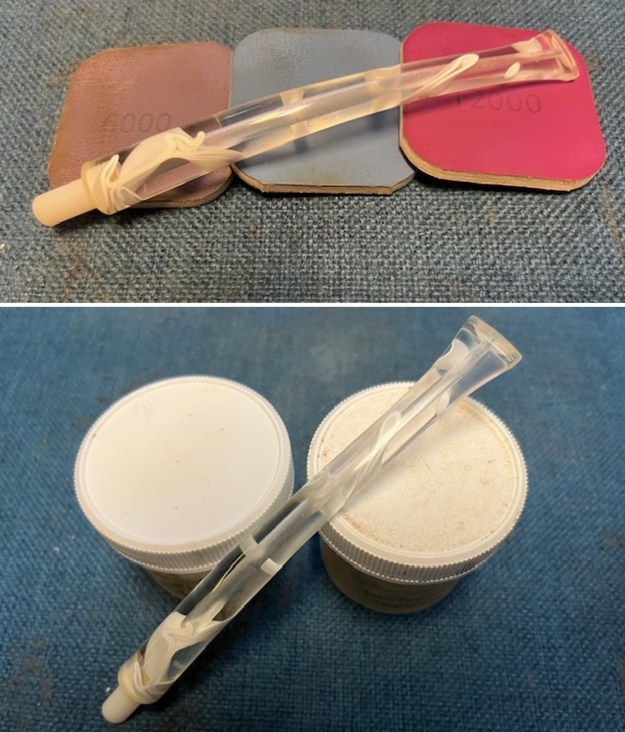
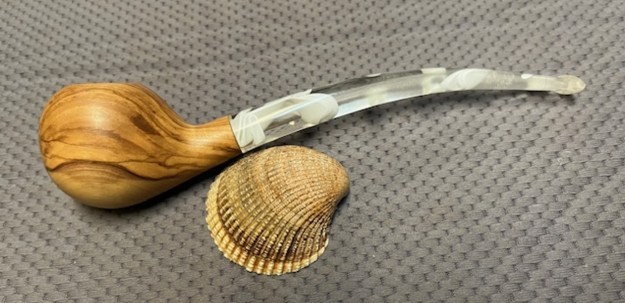
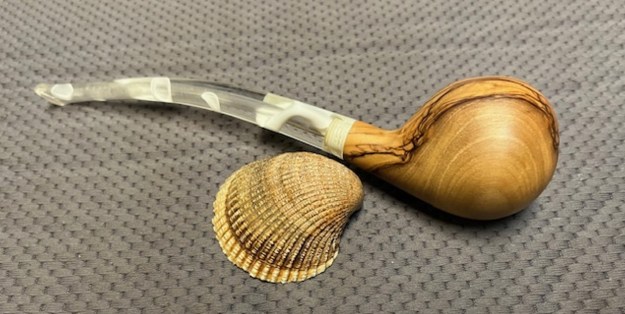
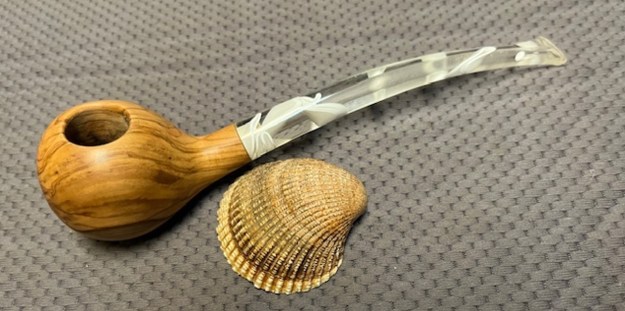
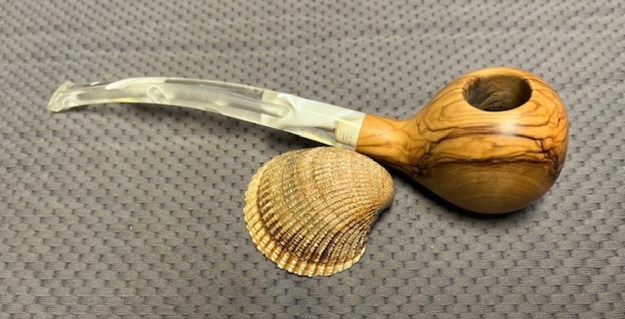
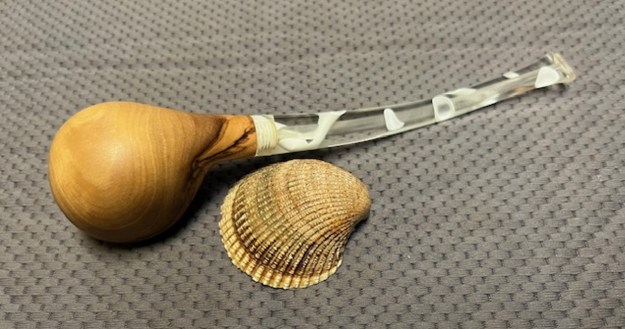
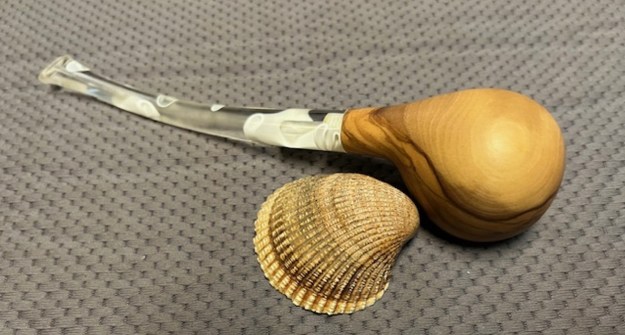
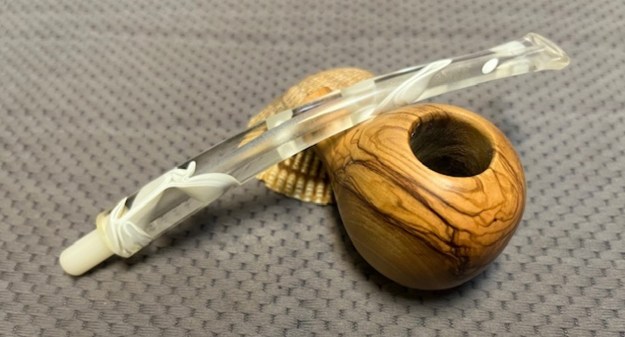
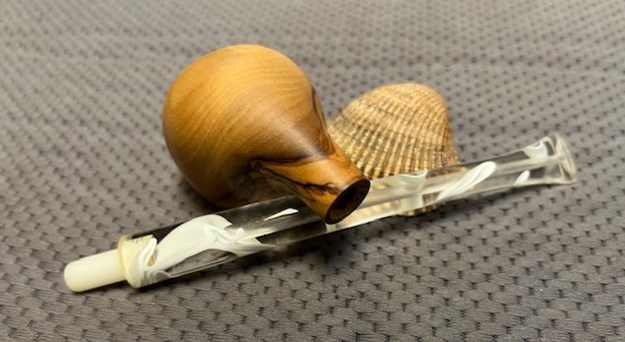
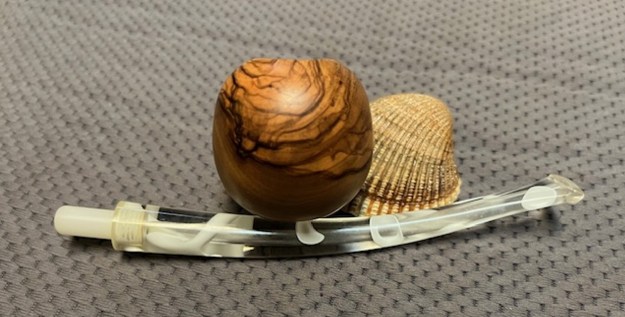
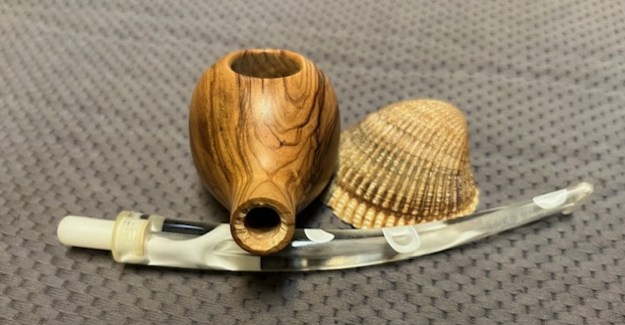
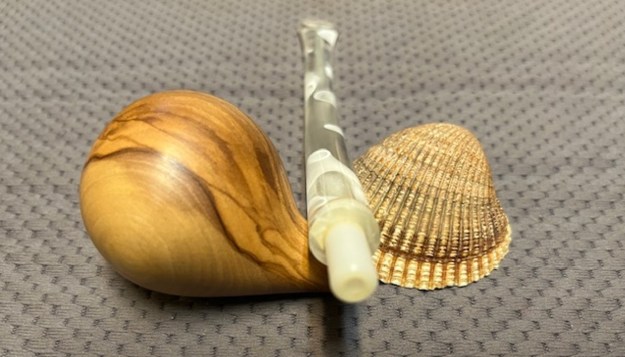
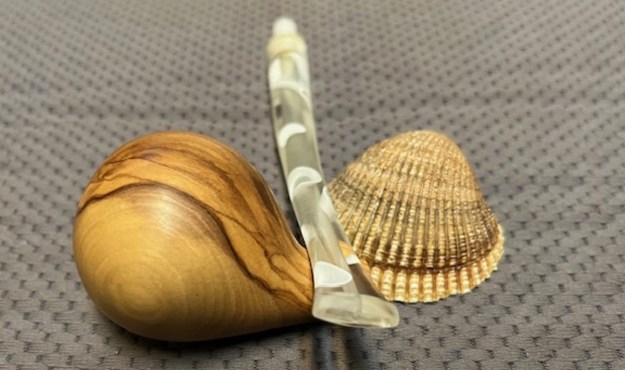
The next pipe I chose to work on was one that we purchased on 12/28/2024 from as part of an estate that belonged to a pipeman and carver, Byron Harwood from Missoula, Montana, USA. This Olivewood pipe was one of Byron’s own handmade pipes. It is a lovely piece of olivewood that was shaped with an apple bowl that highlighted the grain. The bowl and shank were smooth and highlighted some beautiful grain around the bowl sides and shank. The airway in the mortise and shank are well executed and the draught is very good. The bowl was lightly smoked and there was debris in the bowl. There was some darkening around the inner edge of the bowl and top. The stem is a clear acrylic with spots or bubbles of white that look quite intriguing. It has a great fit to the shank, has been bent to fit the angles of the pipe. The tenon is a white Delrin that is screwed into the stem. The button is fishtail and well finished. The pipe fit well in the hand and had a small bowl but there was a charm to it! Here is what it looked like when Jeff received it. He took some photos of the rim top and bowl from various angles to give me a clear picture of the condition of the rim top and bowl. You can see the light cake in the bowl and the darkening and light lava coat on the inner edge and rim top. He also took photos of the stem. It is dirty and has light tooth chatter on both sides at the button. Jeff took some photos of the sides of the bowl to show the condition of the finish on the pipe. The photos showed grain around the bowl sides. Under the oils and grime it was a nice looking bowl. It is a large pipe with a smooth rim top and heel. Jeff did his usual thorough job cleaning the pipe which I really appreciate because of the freedom it gives me in dealing with pipes. He reamed it with a PipNet pipe reamer and got rid of the cake. He cleaned up the reaming with a Savinelli Fitsall Pipe Knife so that we could see the walls of the bowl and assess for damage. He cleaned the internals of the shank and stem with alcohol, pipe cleaners and alcohol. He scrubbed the exterior with undiluted Murphy’s Oil Soap and a tooth brush. He rinsed the pipe under warm water. He dried it off with a cloth and then let it air dry. The stem was scrubbed with Soft Scrub and had a soak in Before & After Deoxidizer to remove the oxidation. One it was rinsed off, it came out looking very good. The finish on the bowl and the rim top cleaned up nicely. I took pictures of the pipe to show how it looked when I unpacked it. I took a close up photo of the bowl and rim top to show how clean the pipe was. The stem looked good just some light tooth chatter and marks near the button. Overall the pipe is a beautiful looking piece.I also removed the stem from the shank and took photos of the pipe to show the look of the parts. The stem is long but the pipe is mini Churchwarden.I sanded the olivewood bowl with 320-3500 sanding pads. I wiped the briar down with a damp cloth after each sanding pad. It began to look very good. I polished the bowl with micromesh sanding pads – wet sanding with 1500-12000 grit pads and wiping it down after each sanding pad with a damp cloth. The grain of the olivewood began to shine. I worked some Before & After Restoration Balm into the surface with my finger tips. I let it sit on the bowl for 10 minutes and then buffed it off with a paper towel and soft cloth. The product is a great addition to the restoration work. It enlivens, enriches and protects the wood while giving it a deep glow. It is a product I use on every pipe I restore. I set the bowl aside and worked on the stem. I sanded out the light tooth marks and chatter with 320-3500 grit sanding pads. I wiped the stem down with an Obsidian Oil cloth after each sanding pad. The stem looked better at this point. I polished the stem with micromesh sanding pads – wet sanding with 1500-12000 grit sanding pads. I wiped it down after each sanding pad with Obsidian Oil. I polished it with Before & After Pipe Stem Polish – both Fine and Extra Fine. I buffed the stem with a soft cloth to raise the shine. I gave it a final wipe down with Obsidian Oil to protect the stem from UV and slow down future oxidation. I don’t know what it is about finishing a restoration but I have to tell you that it is my favourite part of the process. It is the moment when everything that I have worked on comes together. I can compare it to where I started and there is always satisfaction that it does indeed look better than when we picked it up. As always, I put this Byron Harwood Olivewood Mini Churchwarden back together and buffed it with Blue Diamond on the buffing wheel. I gave the bowl and the stem multiple coats of carnauba wax. I buffed the pipe with a clean buffing pad and hand buffed it to raise the shine. It is fun to see what the polished bowl looks like along with the polished clear acrylic stem. This Byron Harwood Olivewood Churchwarden is a great looking pipe and I am sure that it will be comfortable in hand when smoking as it is light and well balanced for a pipe of this size. Have a look at it with the photos below. The dimensions are Length: 7 ½ inches, Height: 1 ¾ inches, Outside diameter of the bowl: 1 ½ inches, Chamber diameter: 5/8 of an inch. The weight of the pipe is 1.80 ounces/52 grams. It is another beautiful pipe and one that will be on the rebornpipes store soon. You can find it in the section of Pipes by American Pipe Makers. If you are interested in adding it to your collection let me know. Thanks for walking through the restoration with me as I worked over this pipe. Thanks to each of you who are reading this blog.
As always, I encourage your questions and comments as you read the blog. Thanks to each of you who are reading this blog. Remember we are not pipe owners; we are pipe men and women who hold our pipes in trust until they pass on into the trust of those who follow us.