Tag Archives: Dunhill

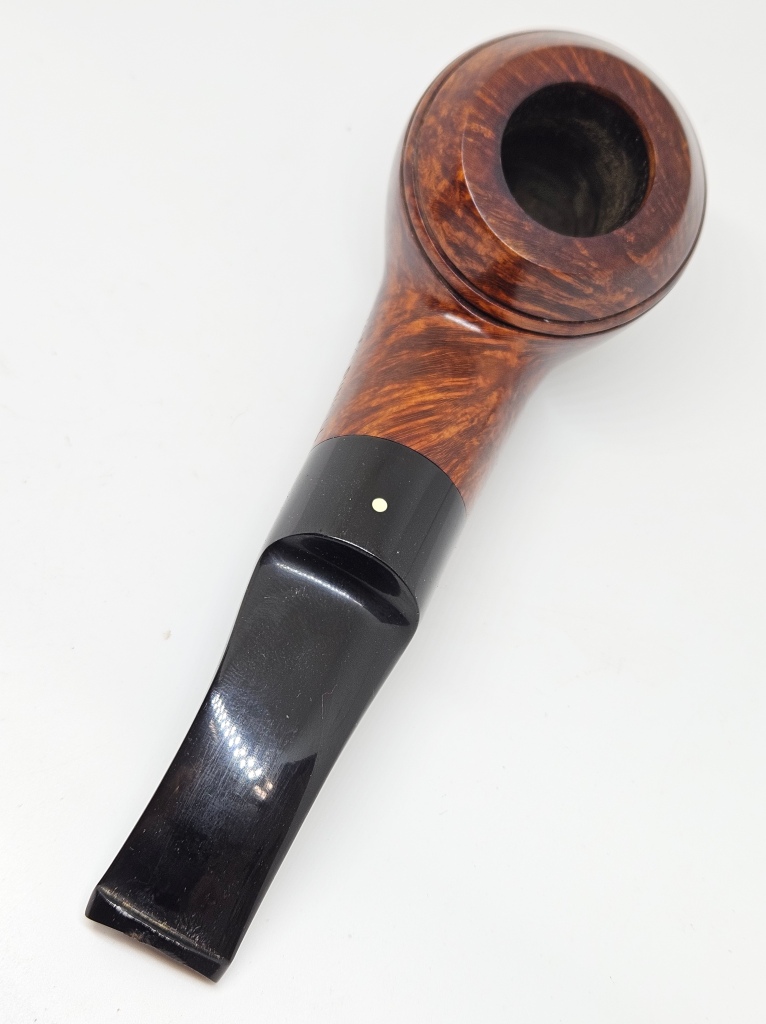
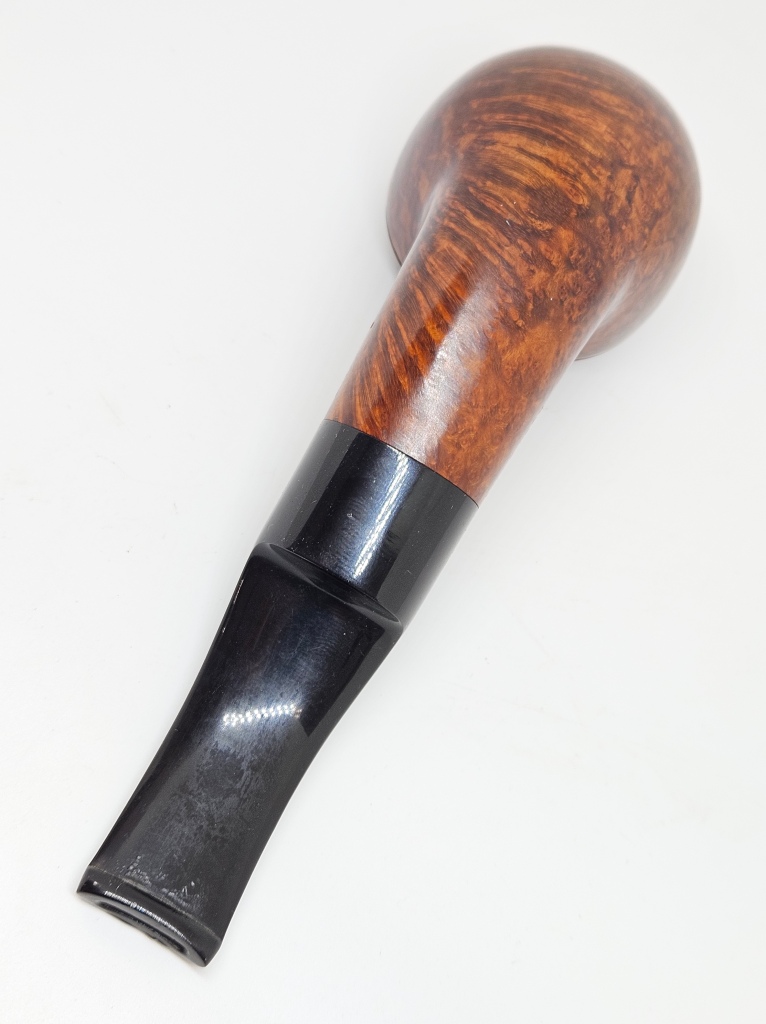
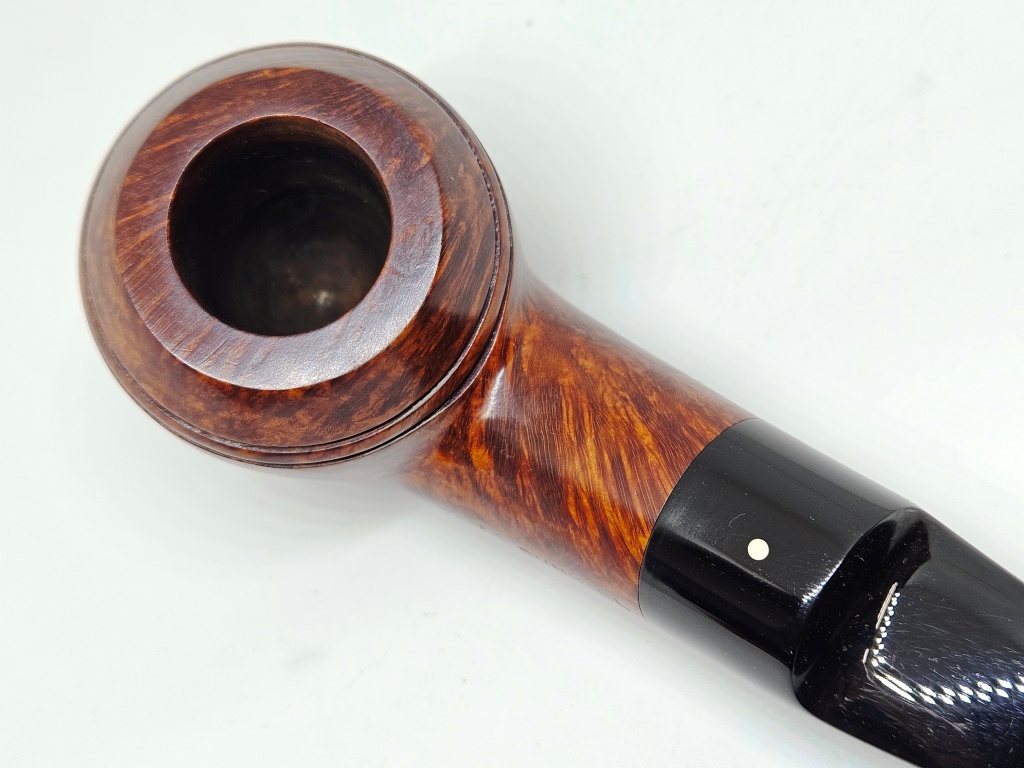
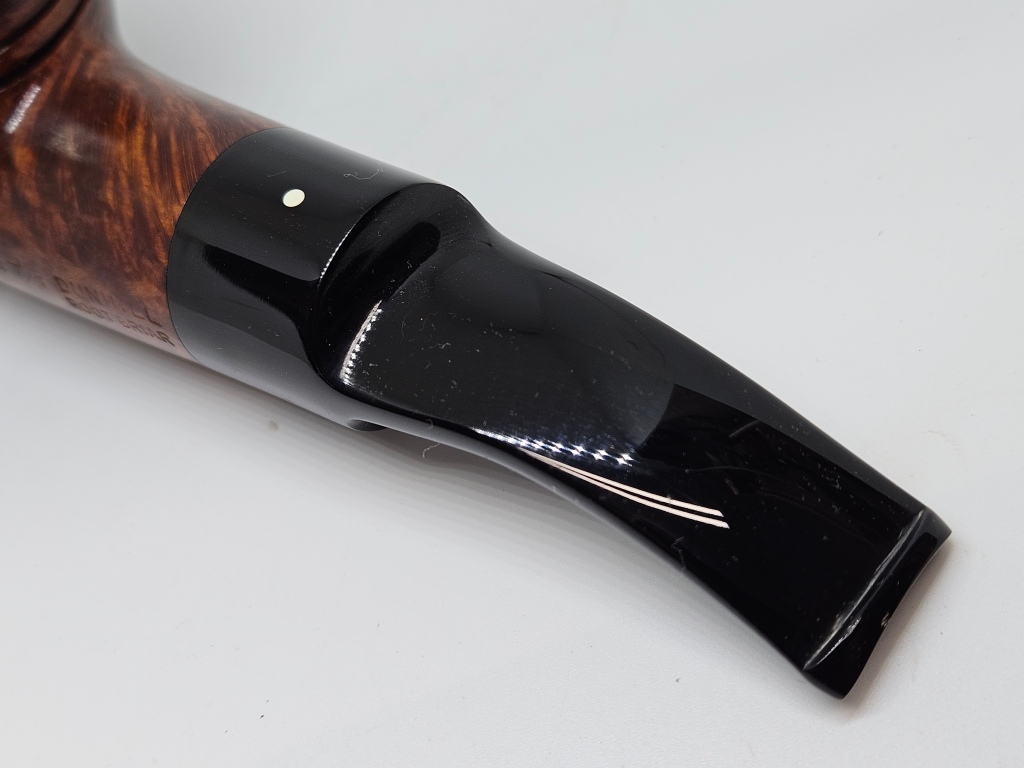
Grail List Addition – Dunhill Root Briar Rhodesian


By Al Jones

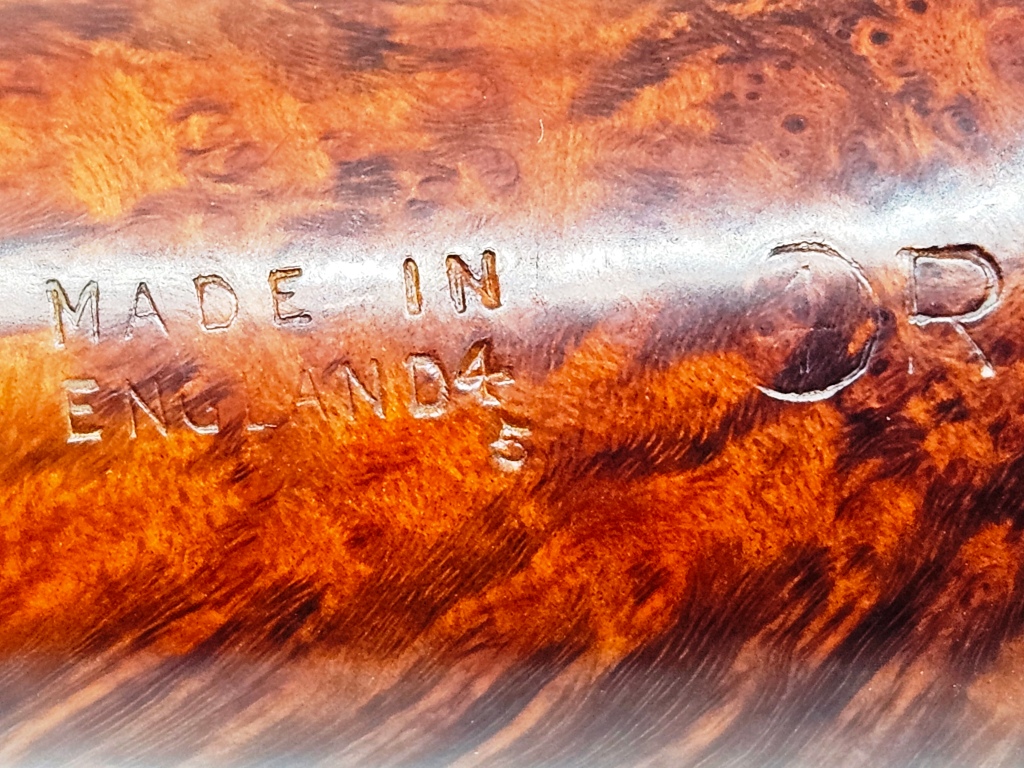
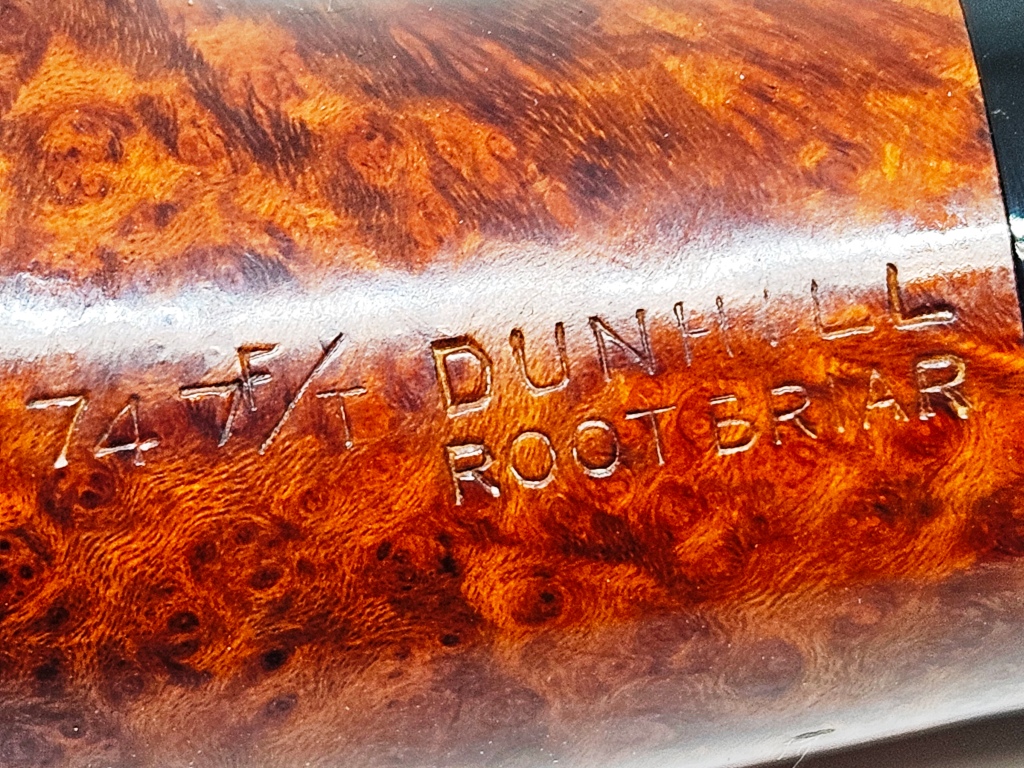
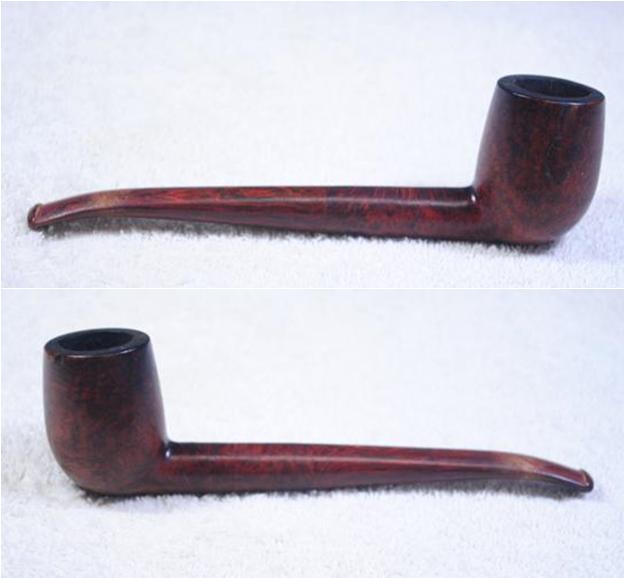
In 2010, I started smoking a pipe and by 2011, I knew my passion was with the classic British shapes and makers. I started a “Holy Grail” list of pipe makes and shapes I wanted to own. Around 2018, I completed the list, with one exception. In 2014 a pipe reseller listed a Dunhill 747, a saddle stemmed Rhodesian. Similar in shape to the GBD 9438, one of my all time favorite Rhodesians. It was way out of my price range comfort zone and it was quickly sold. I added the shape to my Holy Grail list. Jesse Silver, on the PipesMagazine forum always wisely advises folks who missed a bid on an exorbitantly priced pipe – and said another one will come along. I waited patiently, but by 2020, I still had not seen another example and I just removed it from my otherwise completed list. Then, last week, another one showed up on eBay, this one a Root Briar with what appeared to be a 1964 date stamp. The new to eBay sellers pictures were not great. A picture with the shape number was not shown at all. I requested additional pictures and the seller quickly complied and satisfied my answers. I waited until the final seconds to bid, with a bid only slightly over the starting bid. I was surprised to find I was the lone bidder.

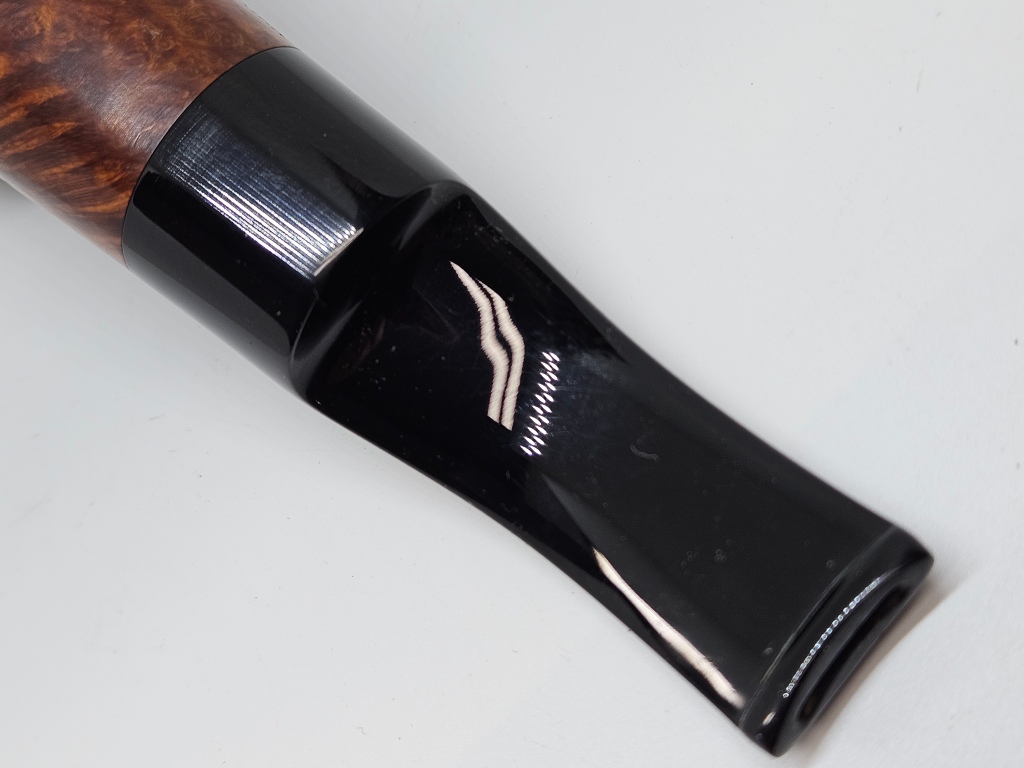
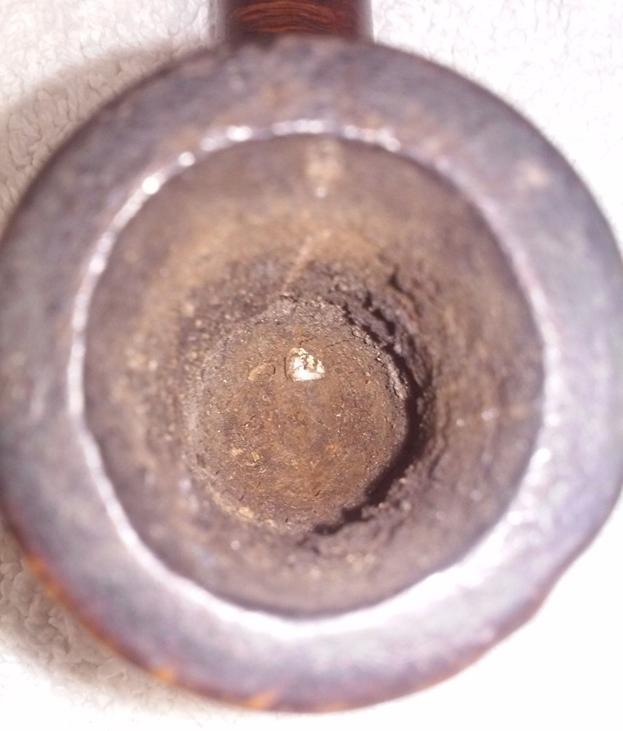
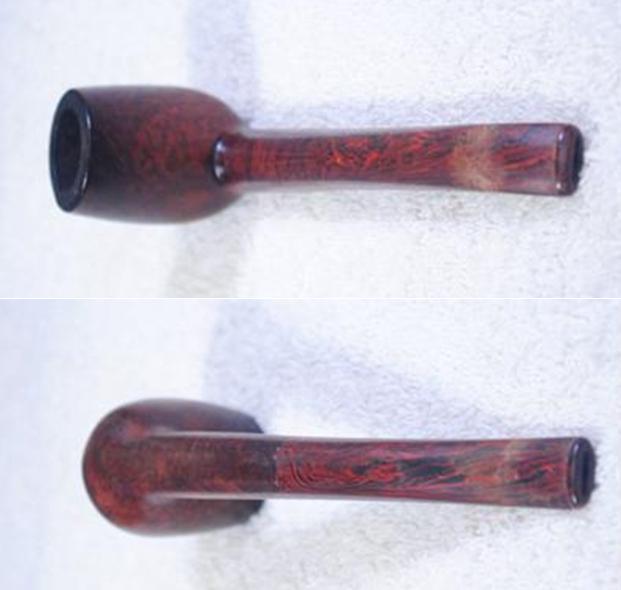
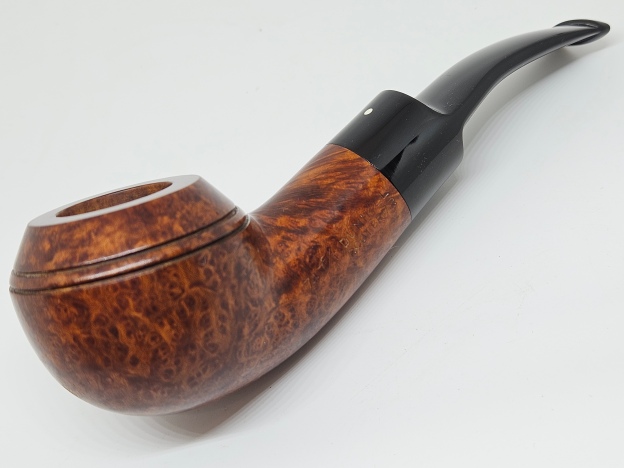
The pipe was delivered quickly and it was in very good condition. There were some minor teeth indentions and one nip out of the beautifully shaped Dunhill button. The bowl was in great shape with only some mild cake residue. The nomenclature was strong. The stem was slightly loose, but I knew smoking it would fix that issue. Dunhill Root Briar grain is never spectacular, but I feel this one was better than average for that grade. Below is the pipe as it was received, which included a nifty shaped and zippered velour pouch. The pipe is only slightly larger than the GBD 9438 and at 61 grams, weighs a few grams more.
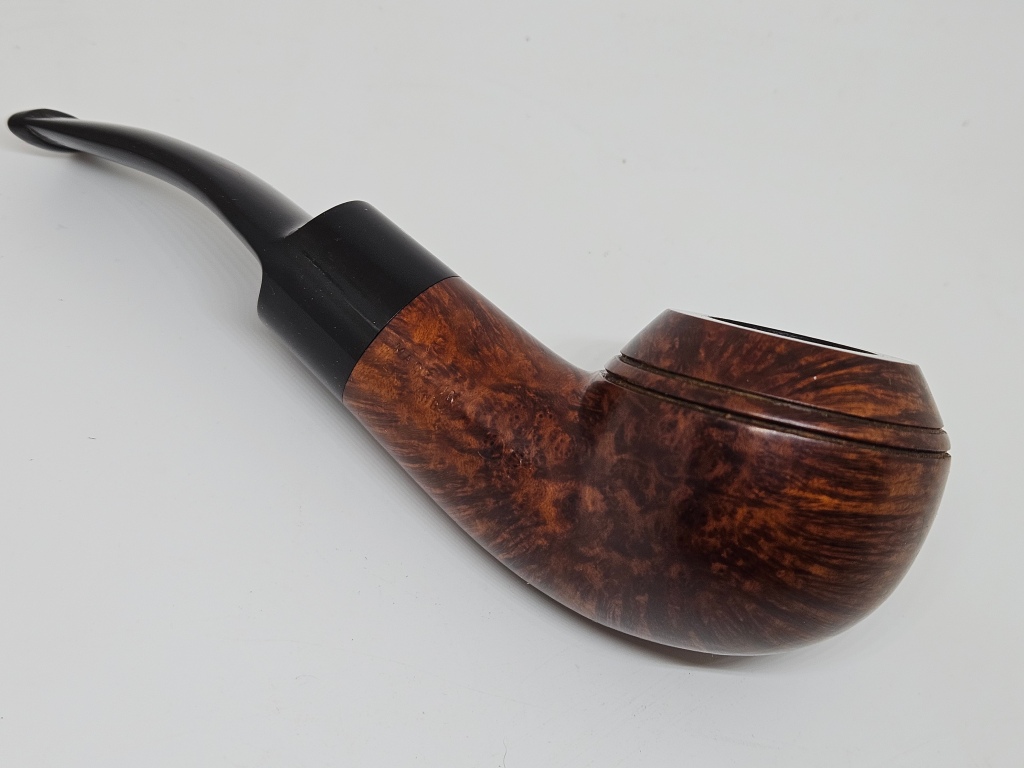
The cake was so mild, I only used a piece of 320 paper to remove the minor residue. I cleaned the shank with a bristle brush dipped in alcohol, but didn’t feel the need to soak this one with my normal practice of alcohol and sea salt.

A flame from a lighter nicely lifted the teeth indentions. I used wet sandpaper to remove the light oxidation, moving from 800 to 2000 and then 12,000 grade micromesh. The stem was then buffed with White Diamond and Meguiars Plastic Polish.

I polished bowl carefully with White Diamond rouge and then several coats of Carnuba wax.

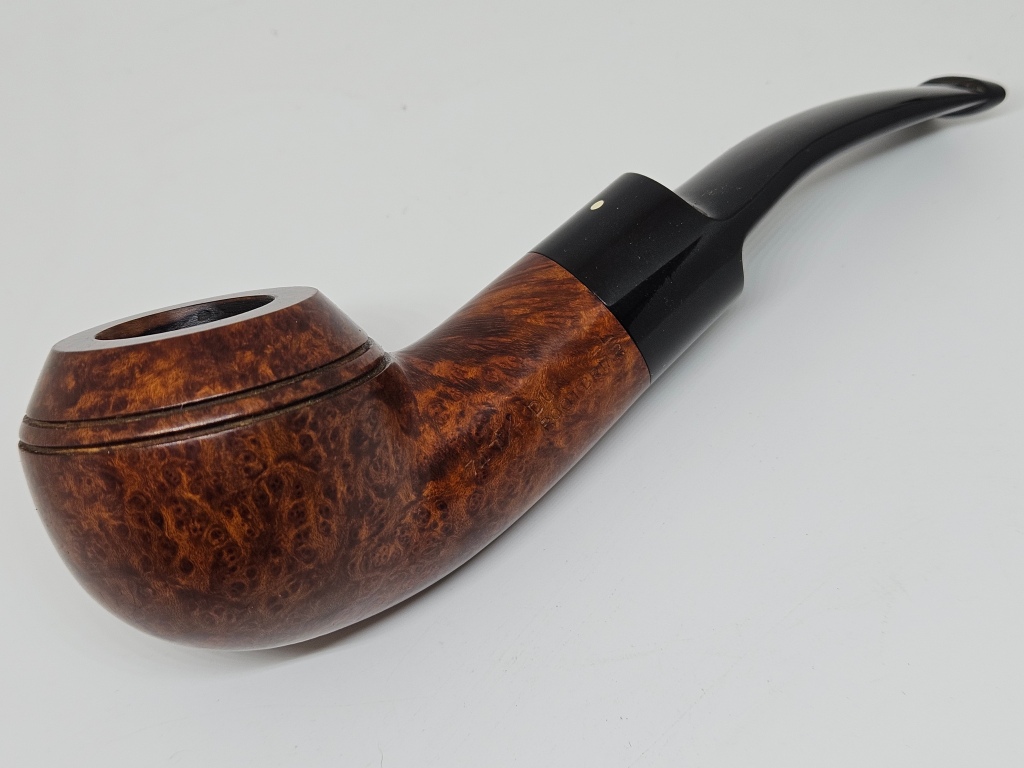
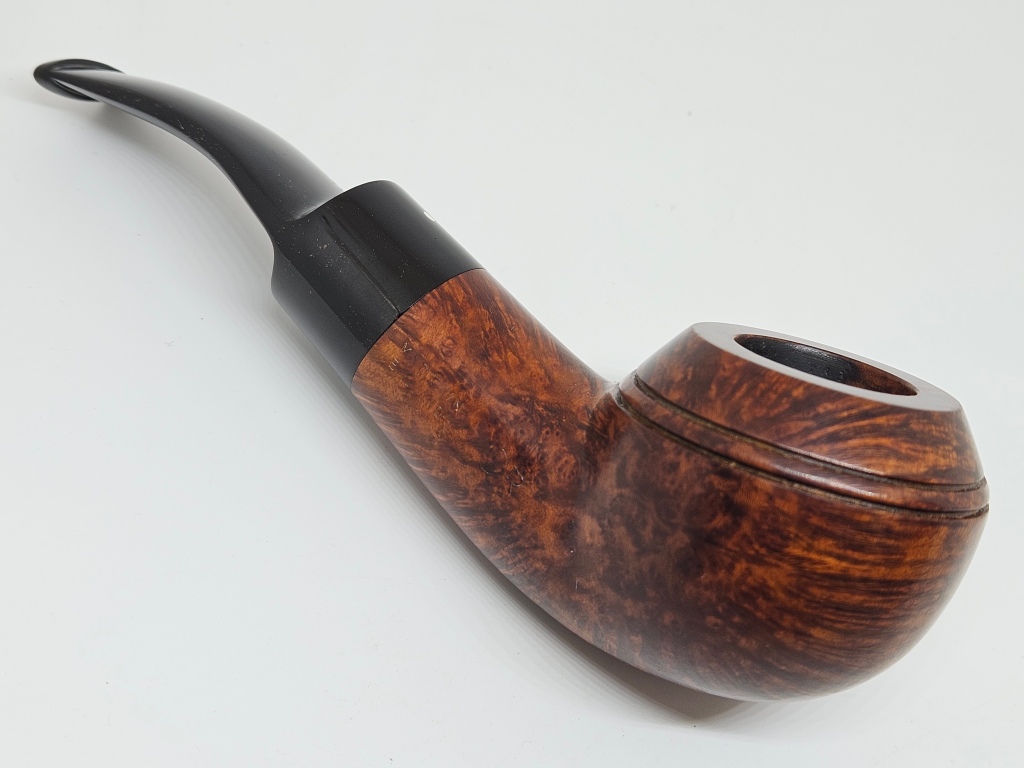
Below is the finished pipe, that I’m smoking while writing this blog entry. The stem did tighten nicely to its original fitment.

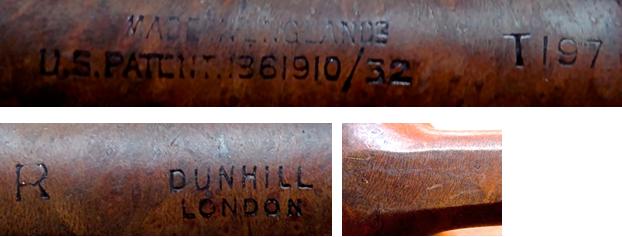
Dent Steaming a 1932 PATENT DUNHILL T197 Billiard with a VERNON STEM


Blog by Henry Ramirez

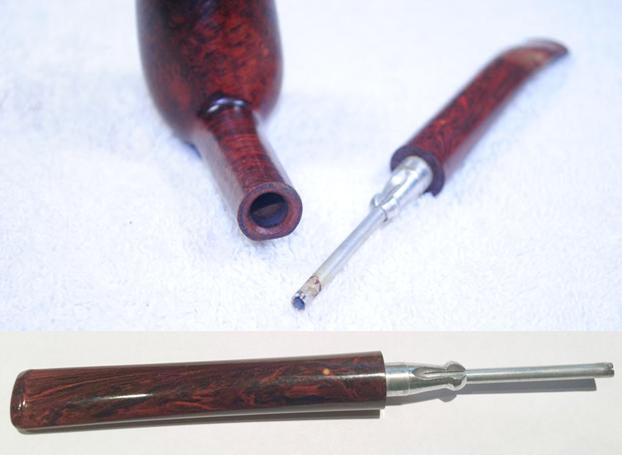
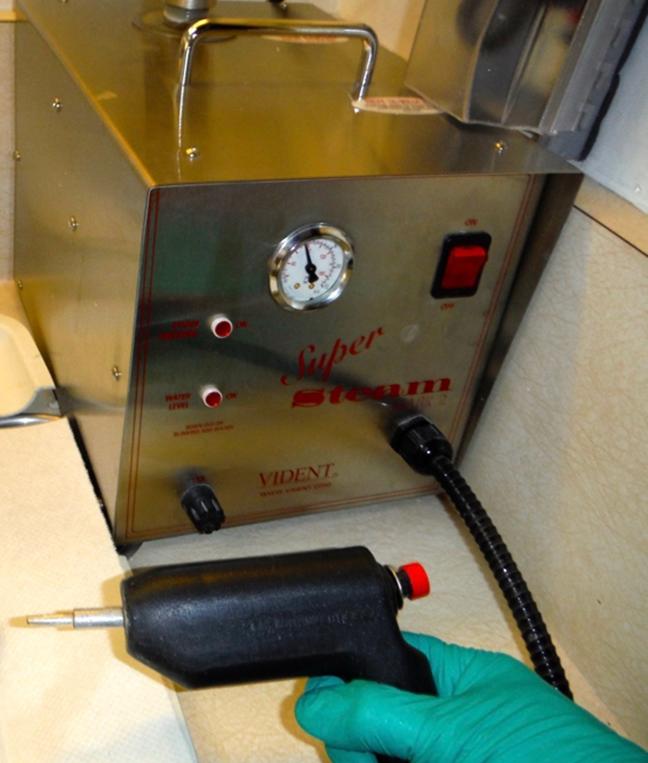
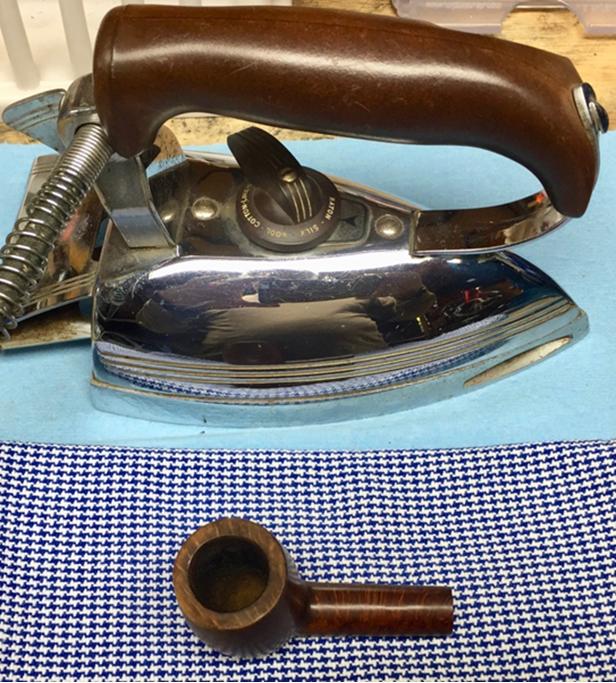
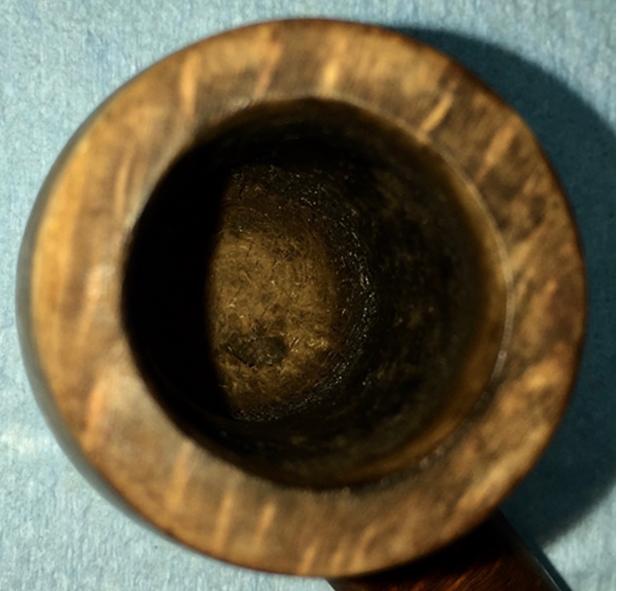
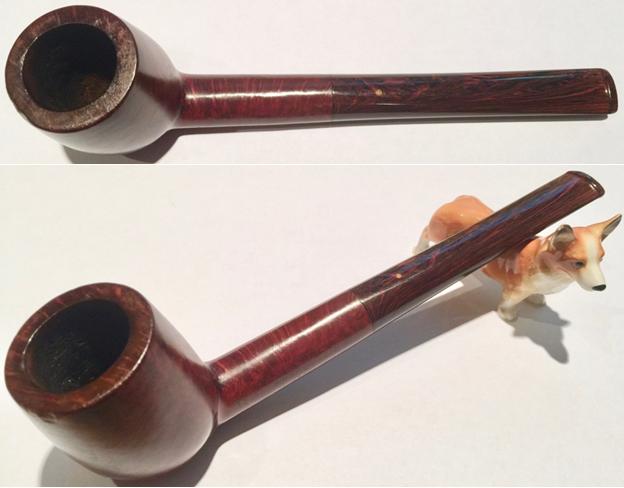
Saw this mousey looking pipe with a clicker stem on EBay.  Nobody seemed to want it so I took it home to practice my dent steaming.  The stem attaches with a loud click and some research told me it was named after Vernon Dunhill, who was responsible for the fitment’s design.  It was designed  to allow the stem to be separated from the bowl even when the pipe was hot from recent smoking.  It had the earlier square tip tube rather than the later angled tip. The stem had a funky downward cant before the button and it strongly resembled my Kaywoodie Allbriars.  Boy they nailed that briar stain to the oxidized Cumberland stem color! The bowl rim was dented/chipped and the surface scratched. The stem and the button were in fine shape so the usual soak in Oxyclean to remove the smegma followed by a trip to the oven to allow the stem to straighten itself.The metal tube is removable from the keeper which is part of the stem.  I have seen examples of the opposite where the keeper is integral to the shank.  These pipes seem to have been mostly billiard Cumberlands but some exceptions exist.  Both the tube and the keeper were polished with fine brass wool.  I did reface the tube with a carborundum disk.The shank stampings were crisp but there seemed to be personalized script on the bottom long polished off.The dent on the bowl’s rim was the major distracting feature.  I didn’t want to top the bowl and the briar dust/CA mixtures never seemed seamless to me.  So I tried to fatten up the cellulose fibers with hot steam using my hand held steamer.  This worked somewhat and had the advantage of pin pointing the area to be steamed. Not satisfied, I decided to fall back on the hot iron on a wet kitchen towel technique.  This did a better job, I think because it affected a larger area.  The problem then became one of restaining this larger area to match the rest of the pipe.

Restaining the pipe became somewhat of a chase your tail love’s labor, trying light brown, medium brown and the finally dark brown in various concentrations followed by isopropyl alcohol on a gauze sponge scrubbings.

So, I think I’m going to someday re-stain the whole pipe dark brown to try to better match the Cumberland stem while learning to love the residual dent on the rim.  The only home run here was the straightening of the stem to its original straight shape.  Thanks for looking, regards, Henry.

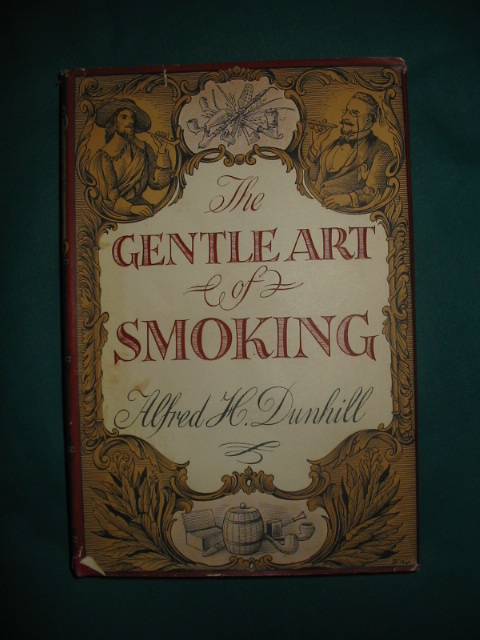
The Gentle Art of Smoking – Alfred H. Dunhill


Image

The Gentle Art of Smoking 

Alfred H. Dunhill

This book is quite different from Pipe Book by his father. Here Alfred H. Traces the history of smoking in all of its forms throughout history. He looks at it on the various continents and how it took form among the religious and the ordinary people. He looks at cigars, cigarettes, pipes and even snuff. Each is described from its inception to its ongoing development in the first chapter. In later chapters he develops each of the various smoking methods.

From the history of smoking a chapter is developed on the growing tobacco. There is some great material on the tobacco plant and the various layers of the plant from lugs, cutters to leaf and what each section is used for. He spends time explaining the cultivation of tobacco and the growing seasons in the various regions in which it is grown. Then he takes the reader through the process of harvesting, curing, grading, fermentation and marketing. The book then turns the preparation of tobacco from the harvest to transportation and the methodology used to create the various forms tobacco packaged. He does a great job going through the machinery for processing from the first to the last. The cigarette machines, that roll, pack and cut each cigarette and then package them in cartons or soft packs are described. Throughout the book sketches are used to depict the various sections of development.  He also looks at the way pipe tobacco and cigars are made.

The fourth chapter of the book picks up the history of pipes and to me this chapter is very reminiscent of is father’s book on pipes. He uses different but similar sketches to picture the pipes evolution but the text is very similar in my mind. There is nothing new or added in this section of the book that has not been covered by others.  From the history the author takes us to the making of the pipe. He addresses briar pipes first and of course gives a good picture of the process of making them from briar burl through finished product. In this section as in others there are also black and white plates that are really nicely done and lend illustration to the procedures that are being talked about. The section closes with a brief description of clay pipes and their manufacture and meerschaum and their development.

Chapter 6 looks at cigars and traces the rise and decline of cigar smoking throughout history. It also gives a good concise summary of the process of making, grading and packing cigars. Chapter 7 discusses the manufacture, history and use of snuff. There are some great plates in this section of antique snuff boxes, etc. Chapter 8 looks at the various methods of lighting tobacco products throughout history and gives some great historical development material on the discovery and manufacture of lighters. Again plates and sketches illustrate the variety of lighters used to bring fire to the weed.

The book closes with a section on the practice of smoking. The majority of the section deals with the choice, use and variety of pipes. It goes into the method to use in choosing shapes, stems and sizes. It also goes into a great description of the loading, smoking and after care of a pipe for the beginning smoker. Then the section turns to cigars. Here the choosing of a cigar is discussed with guidance on how to make that choice. Then directions are given for preparing and smoking the cigar you have chosen in order to get the most pleasure from the smoke. This chapter and the book closes with guidelines on the care and keeping of cigars.

Overall this is a great read; nothing new or profound but some very nice summaries of a variety of topics. The section on pipe smoking was by far one of the best sections in the book. It would make a great read for the new pipe smoker and a good review for those of us who have forgotten more than we remember about the great hobby that is ours.