
by Steve Laug
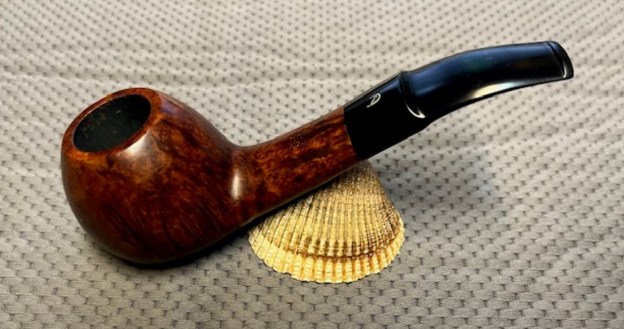
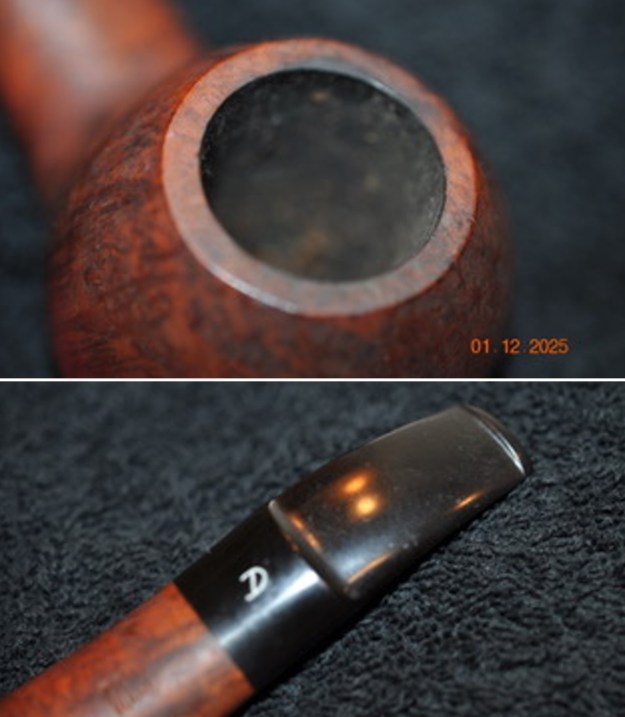
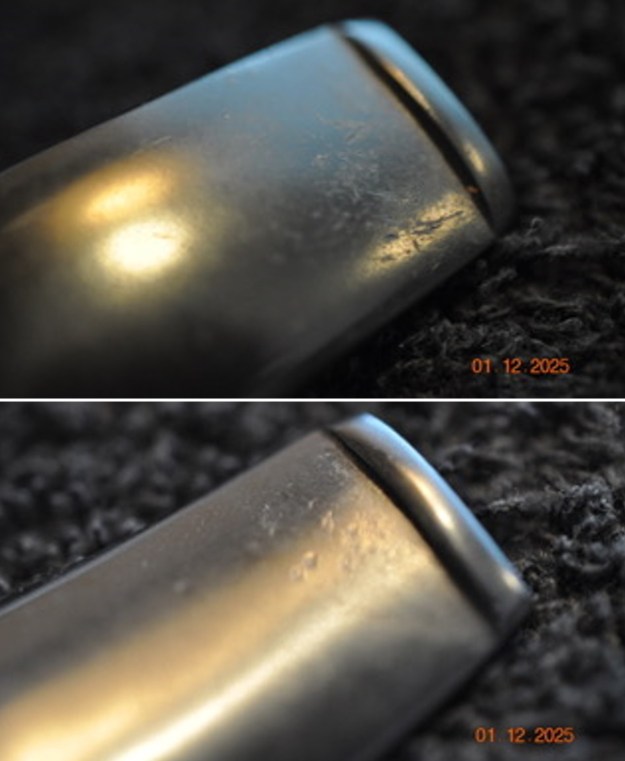
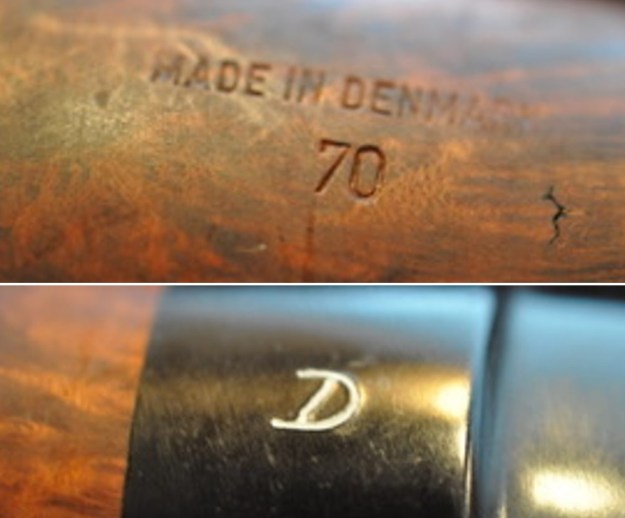
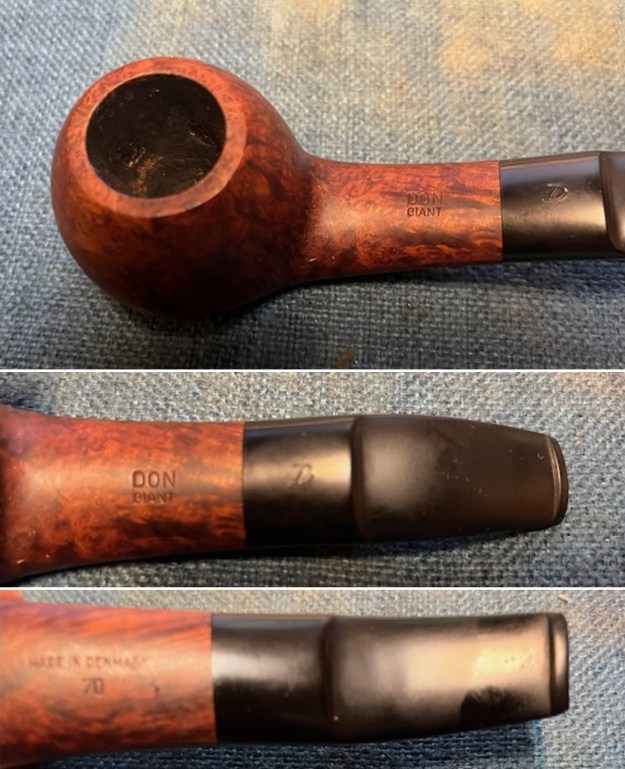
The next pipe on the table is one that we have no idea as to it acquisition date or place. Neither Jeff or I remember picking it up so we have how long it has been here. It is beautiful Danish take on a Banker. It is stamped on the top and the underside of the shank. The stamp on the top reads Don [over] Giante. On the underside it is stamped Made in Denmark followed by the shape number 70. The stamping is clear and readable as noted above. The pipe has some grime and oils ground into the smooth finish but underneath there is grain that the shape follows well. The bowl had a thick cake and there was lava on the rim top or edges. The edges looked to be undamaged and possibly protected by the lava. Cleaning would make that clear. The saddle stem was lightly oxidized, calcified, dirty and had scratches, tooth marks and chatter ahead of the button. There was a D logo on the top of the saddle. Jeff took photos of the pipe to show what it looked like before he started working on it.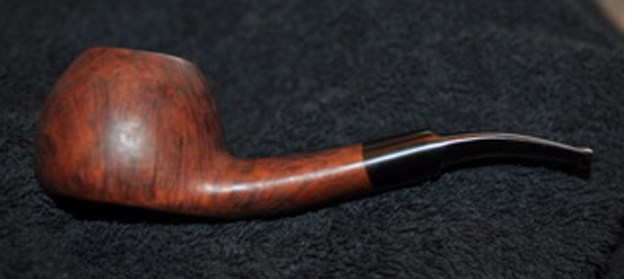
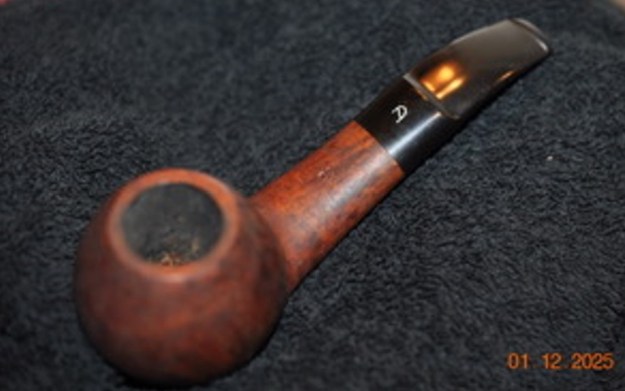 Jeff took photos of the bowl and rim top to show the cake in the bowl, lava overflow and the general condition of the pipe. The photos of the stem to show the condition of both sides of the stem as noted above.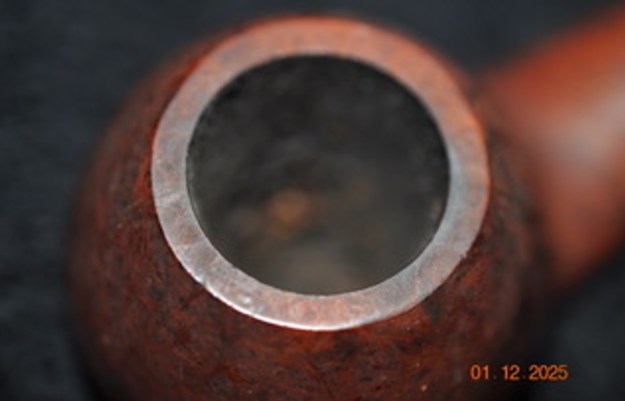
 He took photos of the sides of the bowl and the heel to show the beautiful grain around the bowl. It really is a beautiful piece of briar that has a shape that follows the grain. The finish is nice but it also dirty with dust ground into the finish.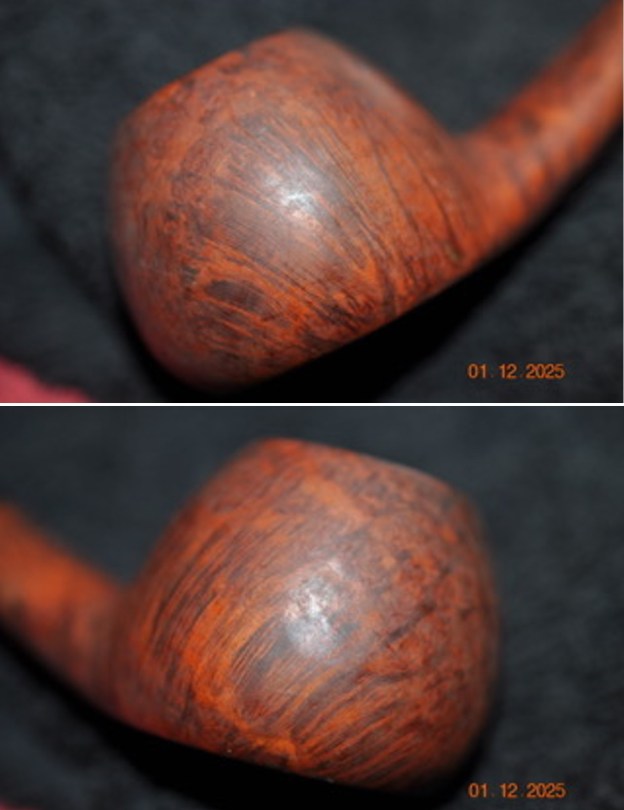
 Jeff took photos of the stamping on the top and underside of the shank. It is clear and readable as noted above. On the underside there is a small flaw in the briar to the right of the stamping.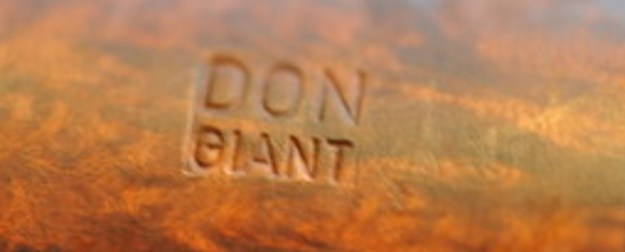
 One of the first things I like to do is to unpack the stamping and understand information on the maker of the pipe. I turned to Pipephil’s helpful site (http://www.pipephil.eu/logos/en/logo-d7.html).
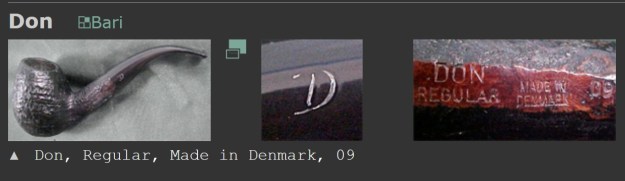 http://www.pipephil.eu/logos/en/logo-d7.html).From that site I learned that the pipe was made by Bari. I turned to the listing on Bari on Pipephil’s site to see further information (http://www.pipephil.eu/logos/en/logo-b1.html#bari). There was some interesting information in the sidebar regarding the tie between Bari and Don pipes. It also provided a link to the maker Viggo Nielson. I quote:
Brand founded by Viggo Nielsen in 1950 and sold to Van Eicken Tobaccos in 1978. At this time Age Bogelund managed Bari’s production. The company has been bought in 1993 by Helmer Thomsen. Bari’s second: Don, Proctus
I turned to Pipedia and found a listing for Don pipes (https://pipedia.org/wiki/DON_/_Don). I quote below:
DON is a Bari sub-brand. Some of them are apparently also marked Bari, as in the following example: (the layout of the stamping is the same as the one I was working on).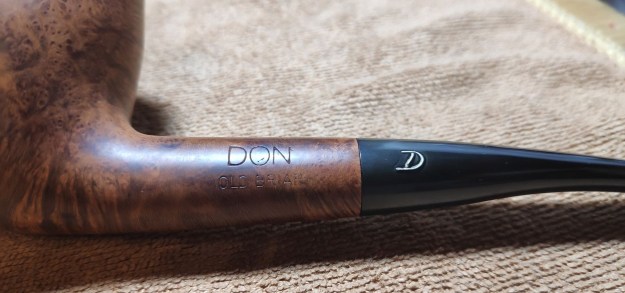 Armed with that information I turned to work on the pipe itself. Jeff had done a great job cleaning up the pipe as usual. He cleaned up the inside of the bowl with a PipNet reamer and a Savinelli Fitsall Pipe Knife. The bowl walls looked very good. He scrubbed the interior of the bowl and shank with pipe cleaners, shank brushes, cotton swabs and alcohol to remove the tars and oils. He scrubbed the exterior of the pipe with undiluted Murphy’s Oil Soap and a tooth brush to remove the grime from the finish. He worked on the rim top lava and darkening with the soap and tooth brush. He scrubbed the inside of the stem with alcohol and pipe cleaners. He scrubbed the exterior with Soft Scrub and then soaked it in Briarville’s Pipe Stem Deoxidizer. He washed it off with warm water to remove the deoxidizer. The pipe looked far better. I took photos of the pipe when I received it before I started working on it.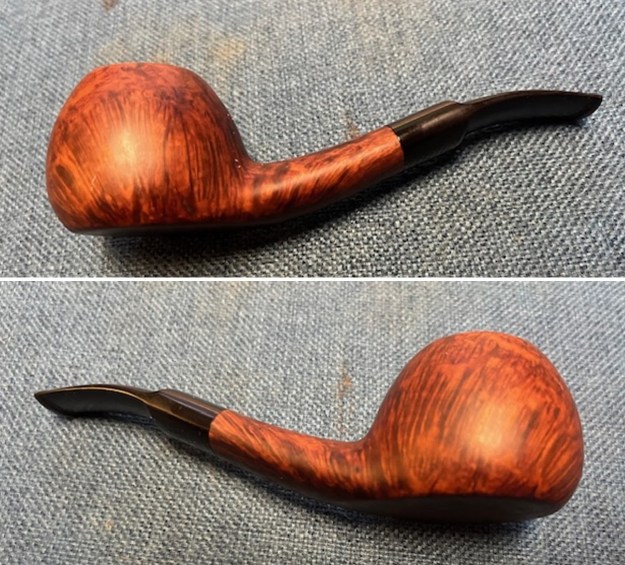
 I took photos of the bowl and rim top to show how clean it was. The top and the inner edge of the rim look very good. There is a little darkening on the top that I will address and see if I can lessen. The stem looks clean of debris and grime. There is light tooth chatter on the stem surface on both sides but otherwise it looks good.
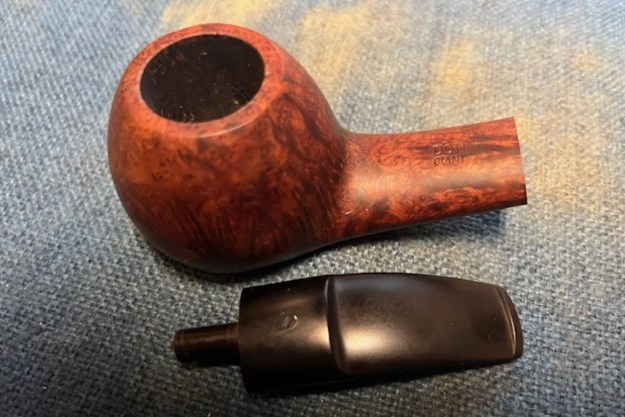
 I took photos of the stamping on the top and underside of the shank of the pipe. The stamping is clear and readable. The D logo on the top of the saddle stem was also clear. I took a photo of the pipe with the stem removed to show the overall look of stem, tenon and profile of the pipe.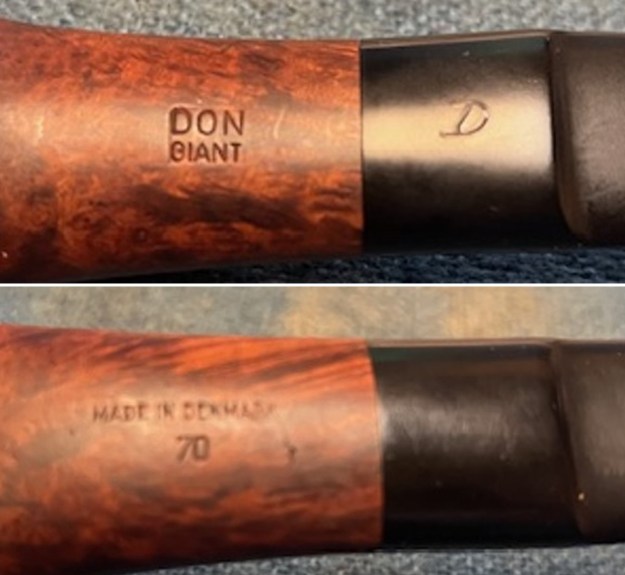
 I polished the briar with micromesh sanding pads – dry sanding with 1500-12000 grit sanding pads. I wiped it down after each pad with the cloth. The bowl continued to develop a deeper shine.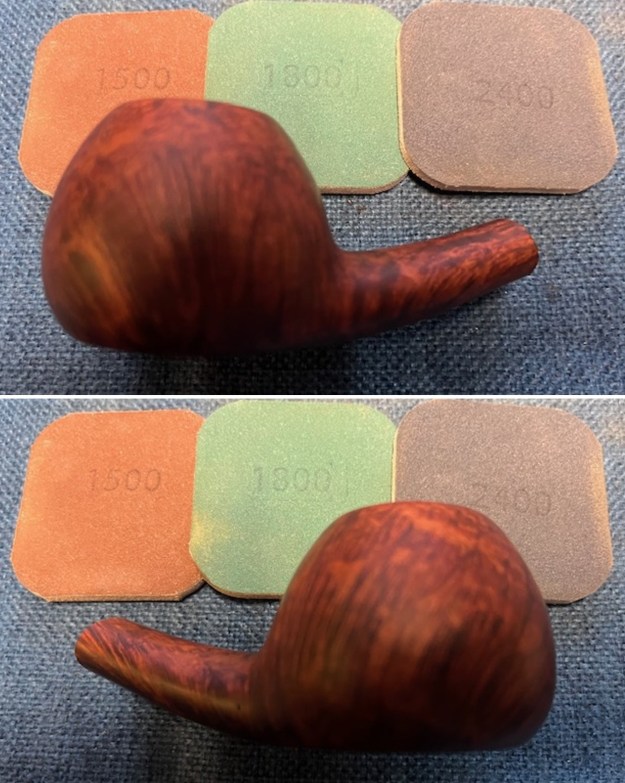
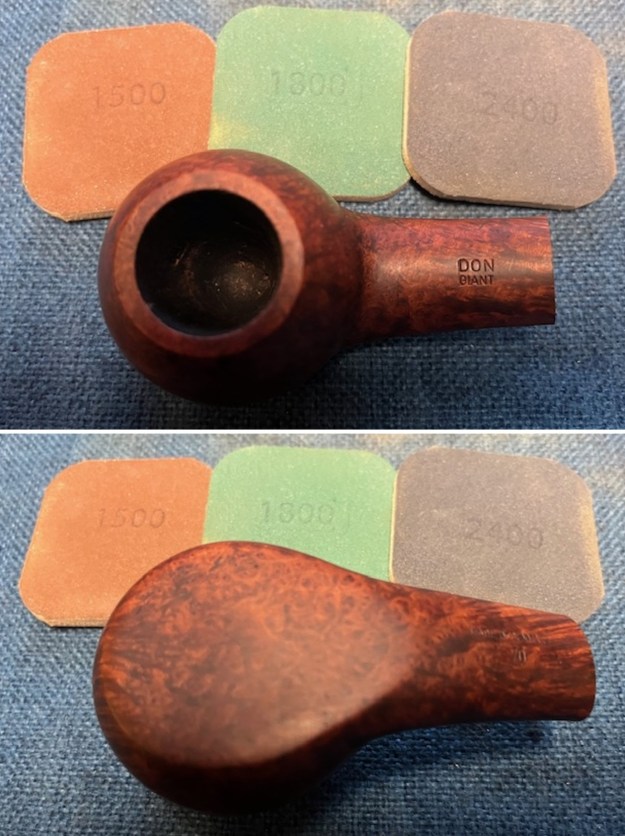
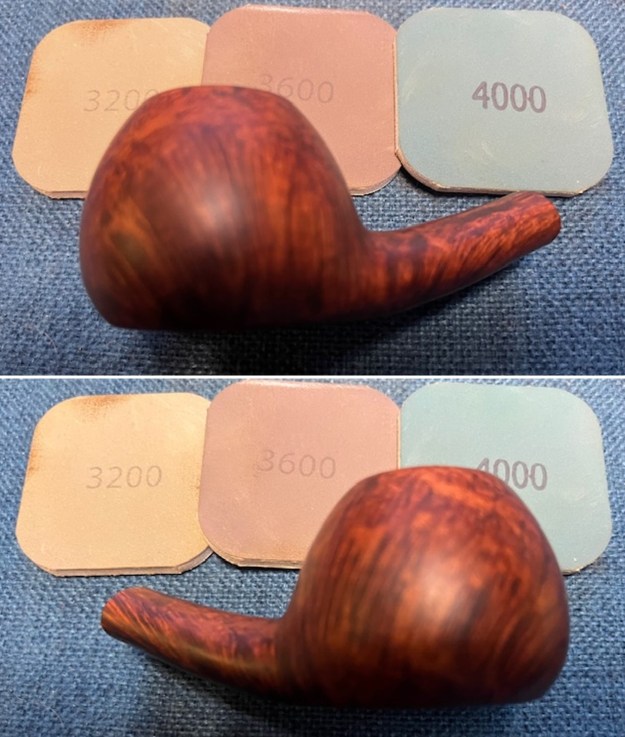
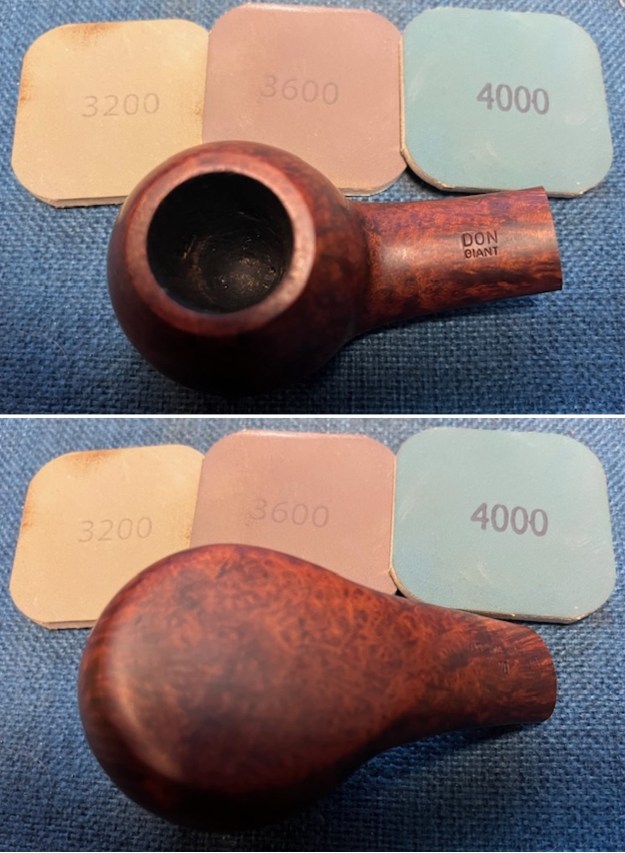
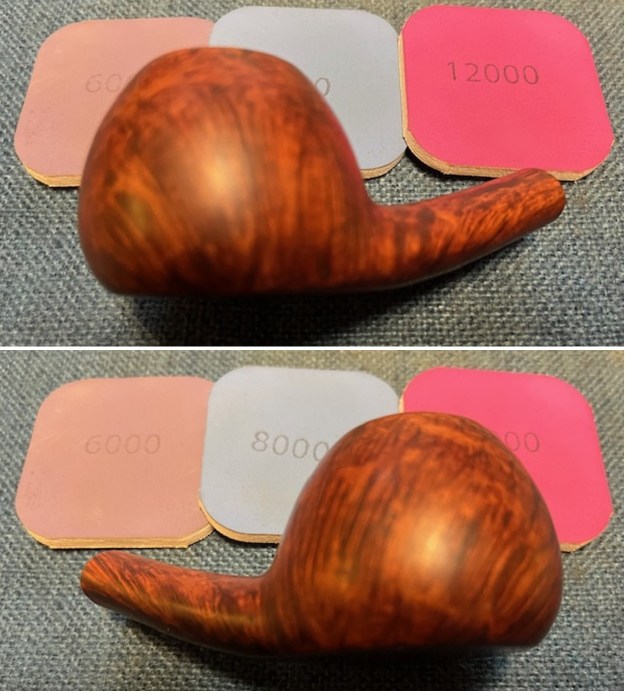
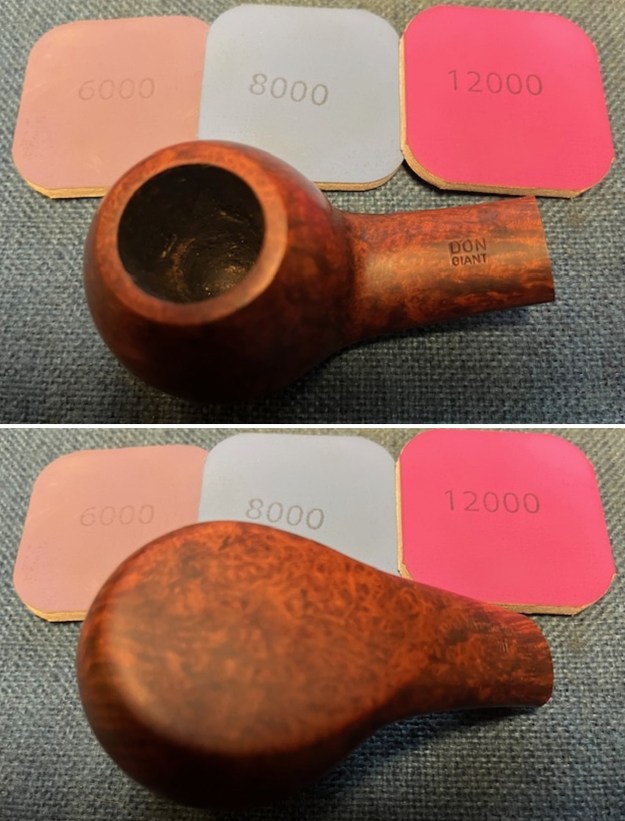 I worked some Before & After Restoration Balm into the briar with my finger tips. I let it sit on the bowl for 10 minutes and then buffed it off with a paper towel and soft cloth. The product is a great addition to the restoration work. It enlivens, enriches and protects the briar while giving it a deep glow. It is a product I use on every pipe I restore.

 I set the bowl aside and turned my attention to the stem. I touched up the D logo on the top of the saddle with white acrylic nail polish. I worked it into the stamp with a tooth pick. I scraped the excess off with my nail and sanded the excess off with a 1500 grit sanding pad. It looks very good.
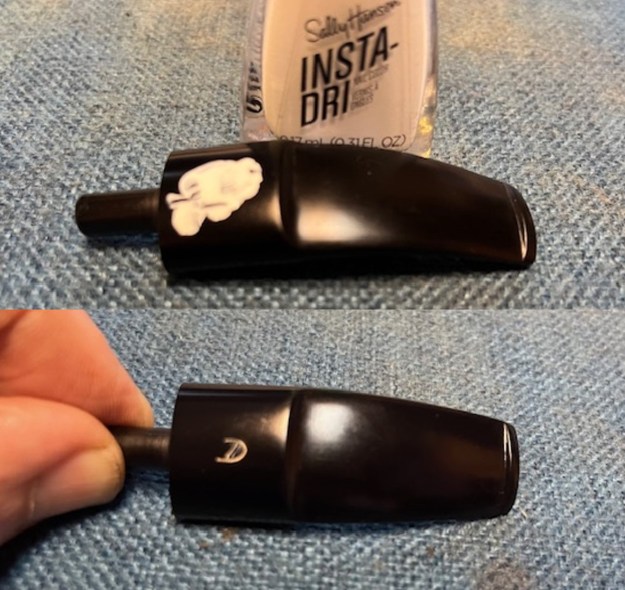 I polished the stem with micromesh sanding pads – dry sanding with 1500-12000 grit pads. Once again, I wiped it down between each pad with Obsidian Oil. I further polished it with Before and After Stem Polish – both Fine and Extra Fine. I gave it another rub down with Obsidian Oil. It looked very good.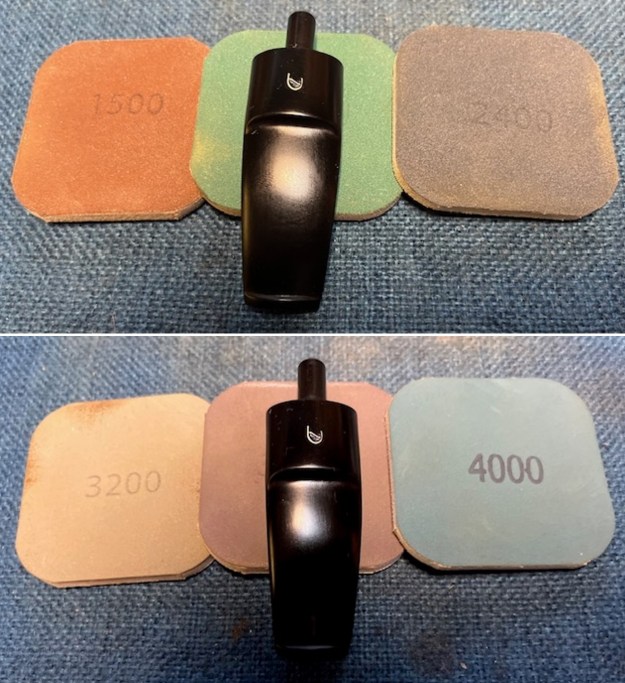
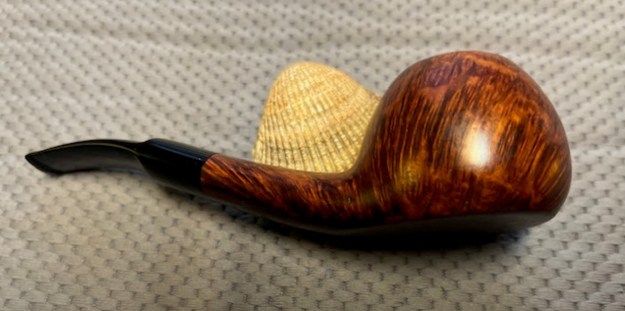
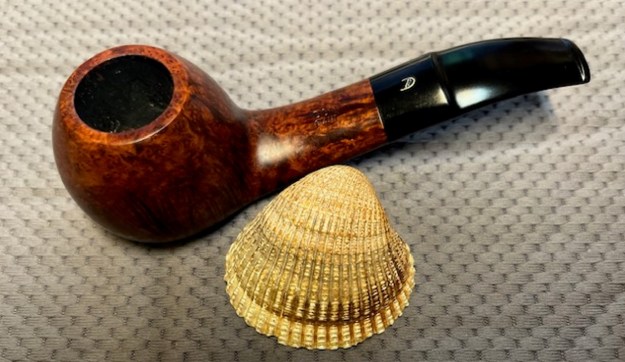
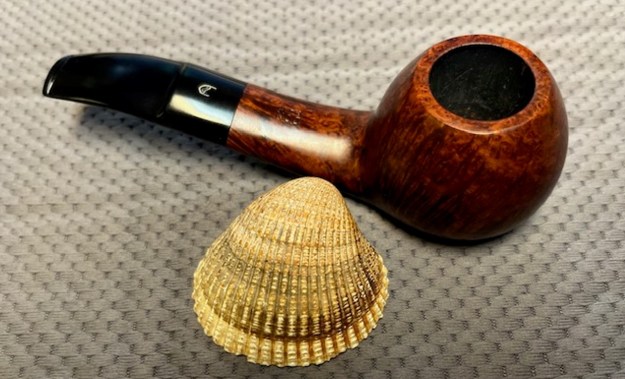
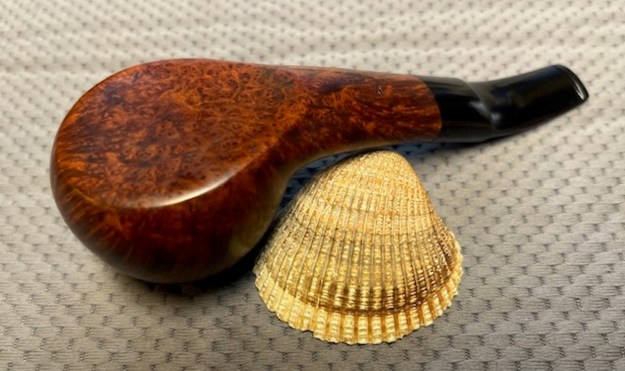
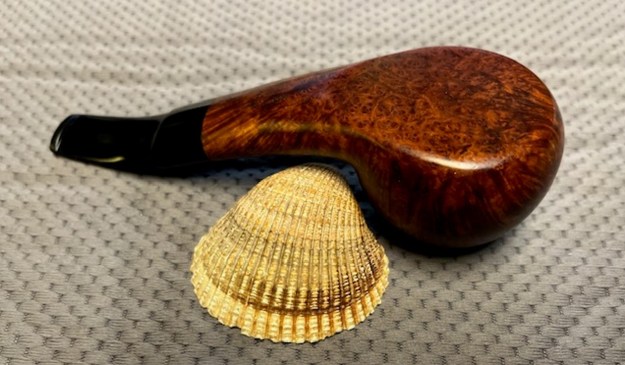
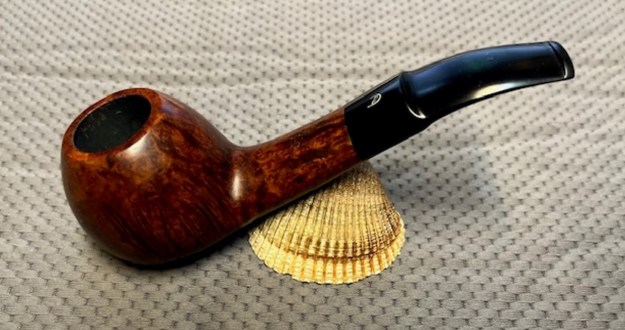
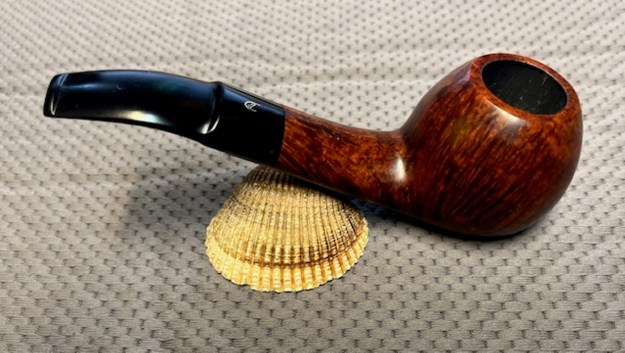
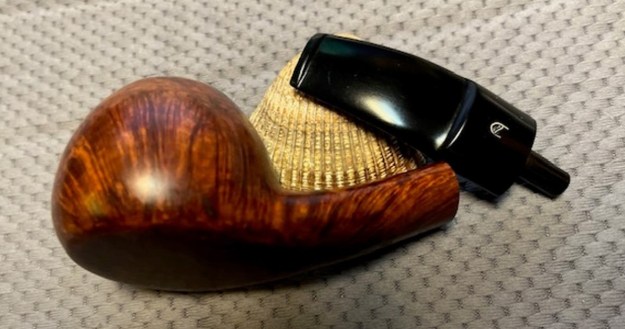
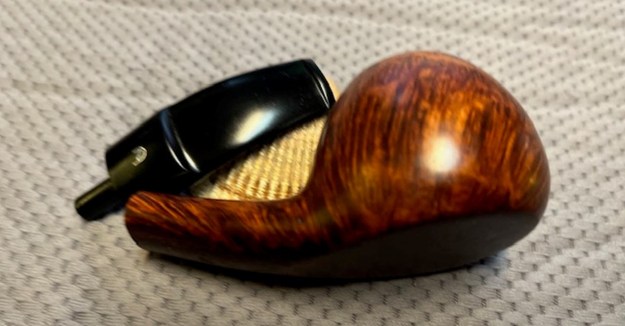
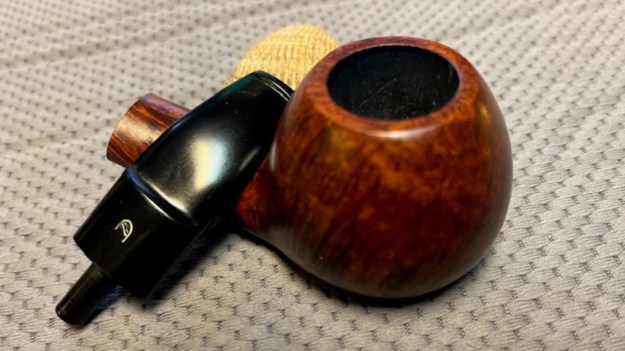
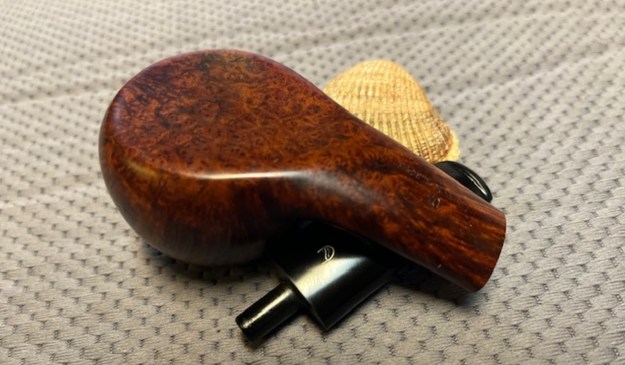
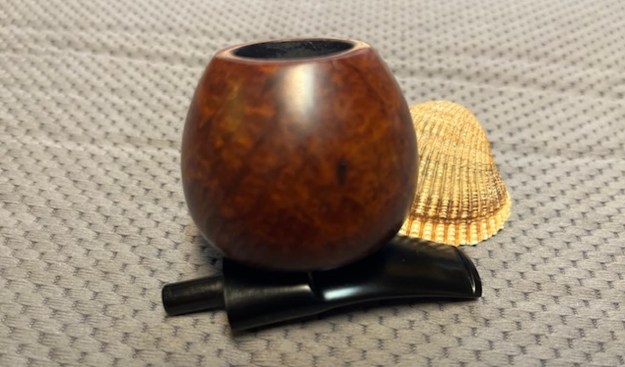
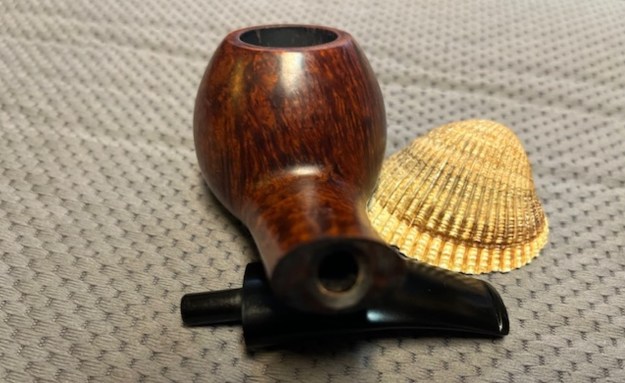
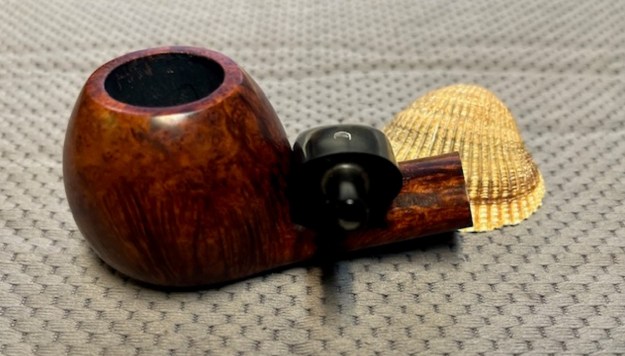
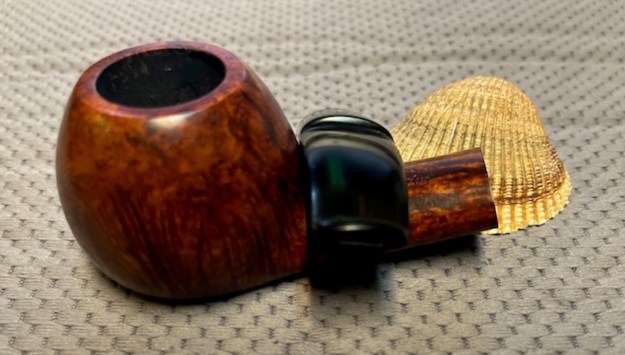
 I am really happy with the way that this Don Giante Made in Denmark 70 Banker turned out. It really is a beautiful looking pipe with a unique shape and combining a smooth bowl and a vulcanite saddle stem. The briar really came alive with the buffing. The rich brown stains of the finish gave the pipe a sense of depth with the polishing and waxing. I carefully buffed the pipe with Blue Diamond on the buffing wheel using a light touch on the briar. I gave the bowl and the stem multiple coats of carnauba wax on the buffing wheel. I buffed the pipe with a clean buffing pad to raise the shine. I hand buffed the pipe with a microfiber cloth to deepen the shine. The finished Don Giante 70 Banker really is a beauty and feels great in the hand and looks very good. Give the finished pipe a look in the photos below. The dimensions of the pipe are Length: 5 ½ inches, Height: 1 ¼ inches, Outside diameter of the bowl: 1 3/8 inches, Chamber diameter: 7/8 of an inch. The weight of the pipe is 65 grams/2.29 ounces. I will be putting the pipe on the rebornpipes store in the Danish Pipe Makers Section. If you would like to add it to your collection let me know. It should be a great smoking pipe.
As always, I encourage your questions and comments as you read the blog. Thanks to each of you who are reading this blog. Remember we are not pipe owners; we are pipe men and women who hold our pipes in trust until they pass on into the trust of those who come after us.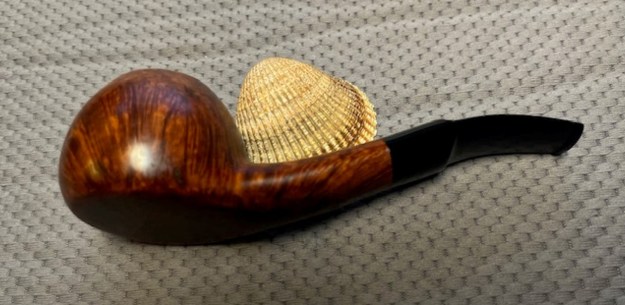
 rebornpipes