
by Kenneth Lieblich
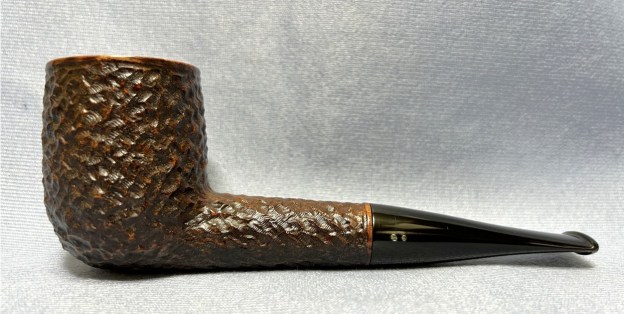
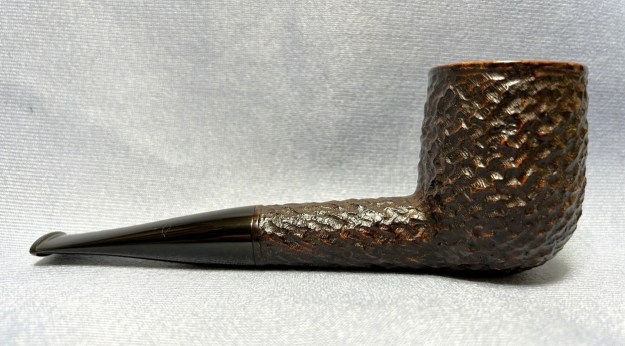
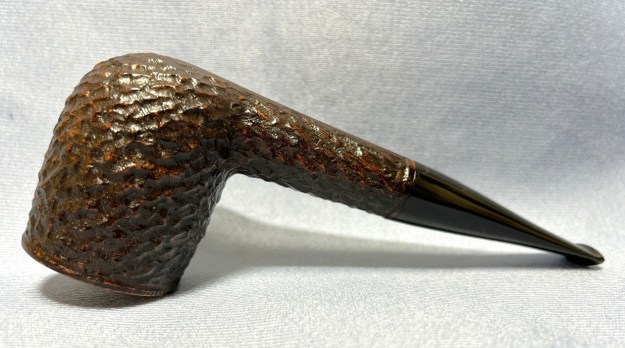
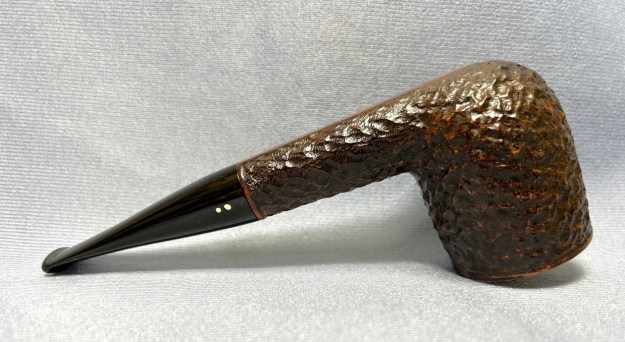
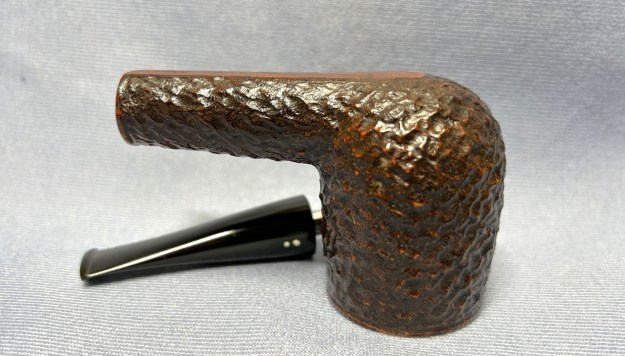
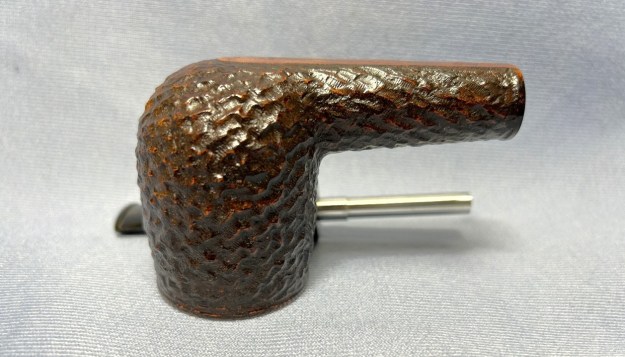
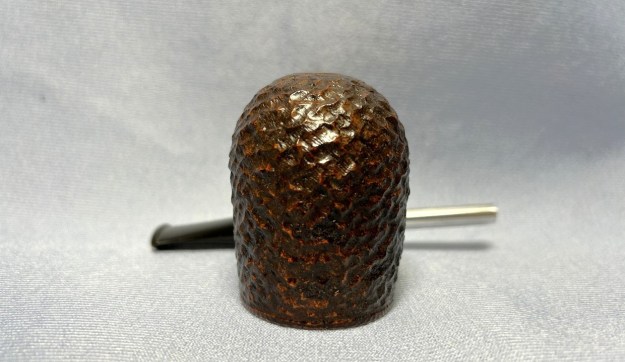
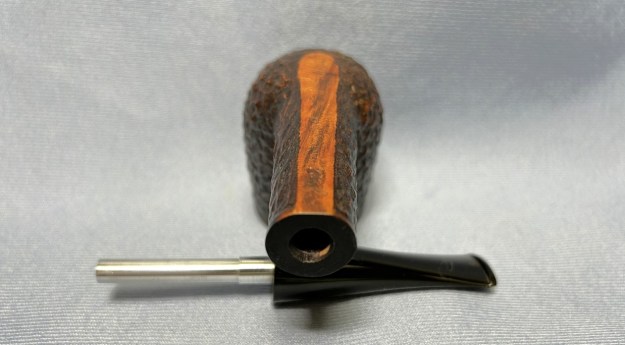
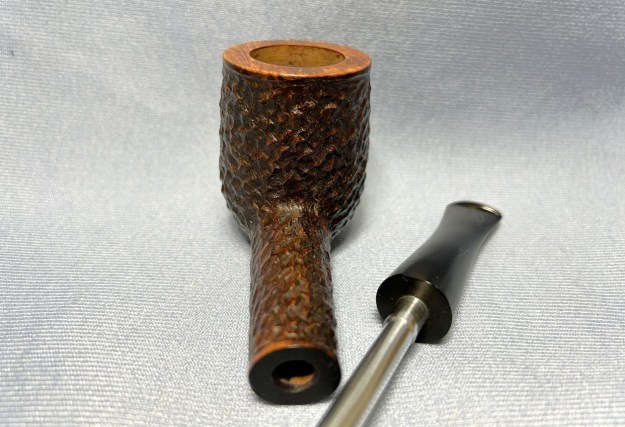
Here’s a terrific, rugged, and handsome pipe that I recently acquired from a local gentleman. I am pleased to report that he maintained his pipes very well and that makes my job easier. This particular pipe was no exception – in fact, I can’t imagine that this pipe was smoked more than a couple of times or so. This is an older Brigham 2044 XL system billiard – and what a monumental pipe it is!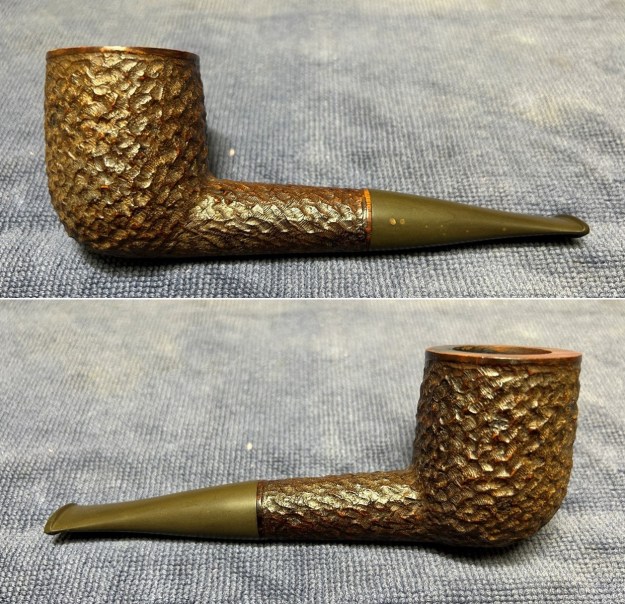
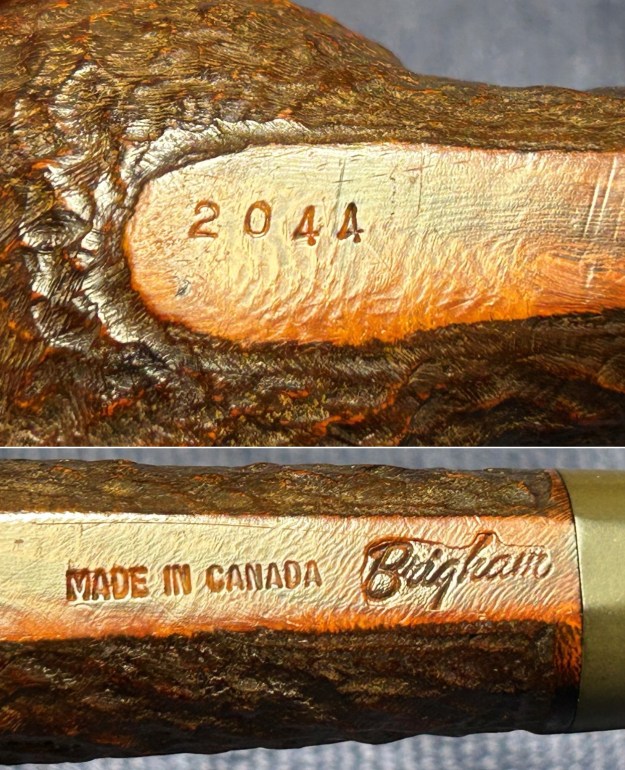
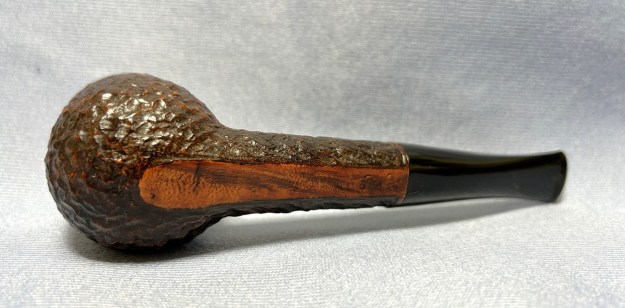
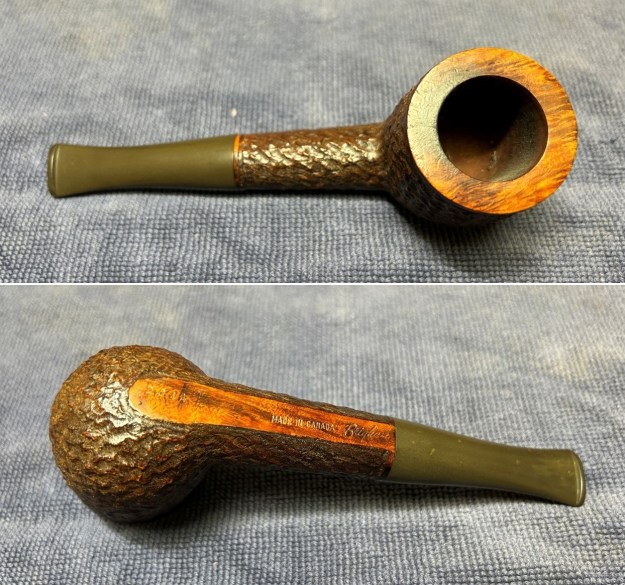 Let’s look at the markings. First, the stem has two brass pins – this is the classic way that Brigham identified their pipes. On the underside of the stummel, there is the shape number 2044. Then, off to the far right are the words Made in Canada and, next to that, Brigham.
 I was pretty sure I knew how old this pipe was, but felt it was best to check with Charles Lemon’s book, Brigham Pipes: A Century of Canadian Briar. I photographed a couple of pages and highlighted the relevant parts.
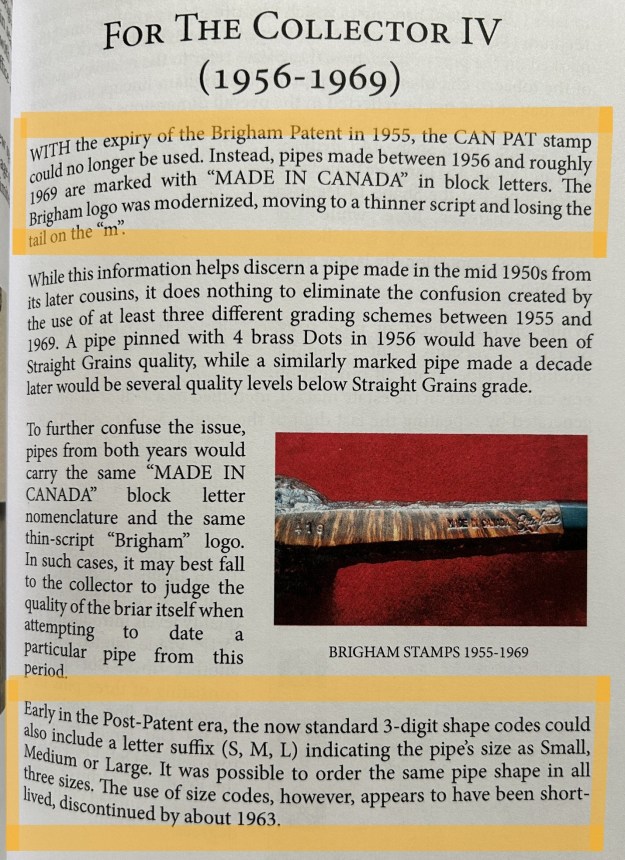 Given that this pipe doesn’t include a size letter (like L), I think it is fair to conclude that this pipe dates from approximately 1964–69.
 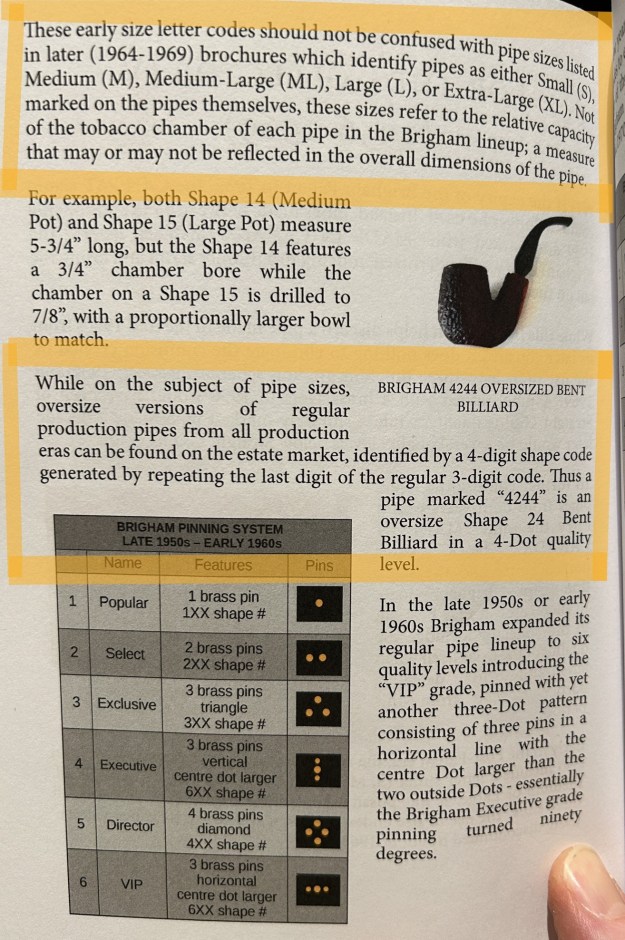 We can see that the code 2044 translates as follows: the “2” corresponds to the two pins on the stem, indicating the “Select” level of pipe. The “04” corresponds to the shape of the pipe, which is listed in Lemon’s book as “Large Straight Billiard, Round Taper Stem”. Finally, the terminal “4” –repeating the last digit of the regular code – indicates that this is an oversize pipe. And it certainly is!
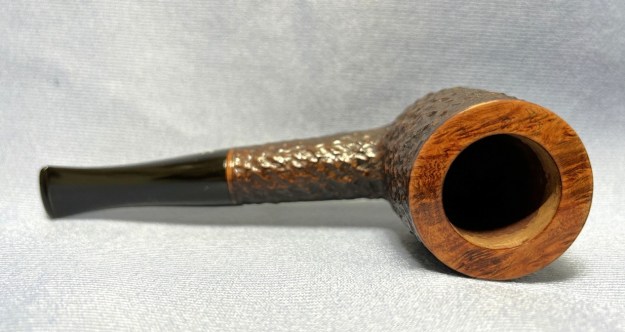
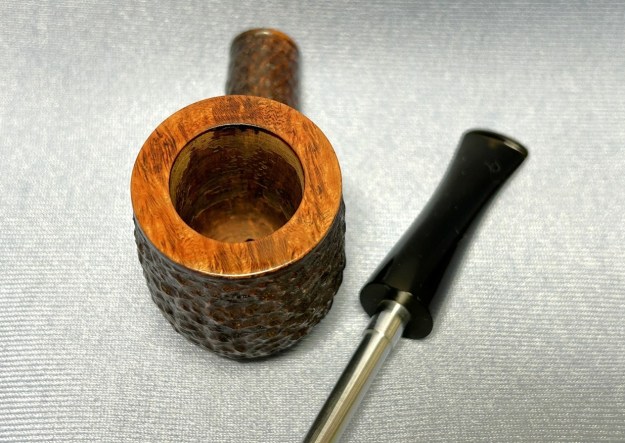
Anyway, both the stem and stummel were in very good condition. There were some minor tooth marks on the stem and a bit of oxidation. The rim of the stummel had what looked like a burn on it, but it turned out to be nothing of note. 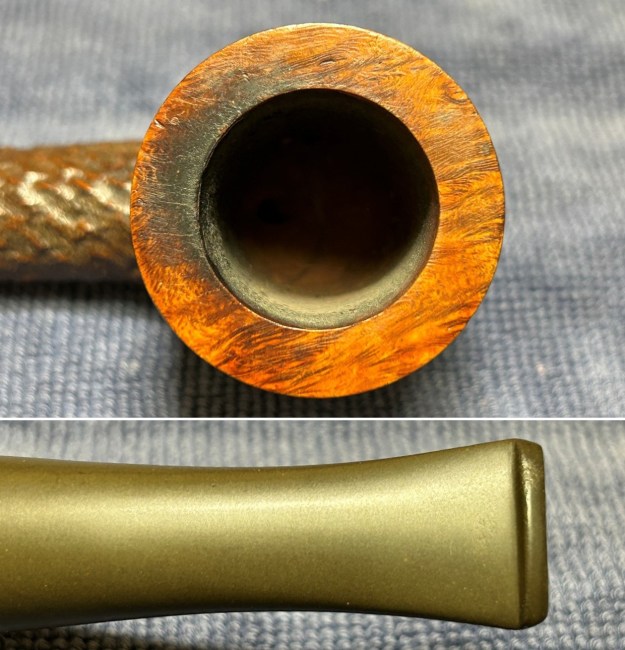
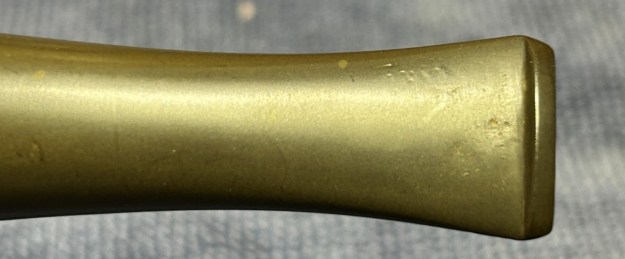 I used oil soap on a few cotton rounds and wiped the stem down to provide an initial cleaning before moving on. I cleaned the inside of the stem with both pipe cleaners and cotton swabs dipped in 99% lemon-infused isopropyl alcohol. I scrubbed thoroughly to make sure the interior was clean.
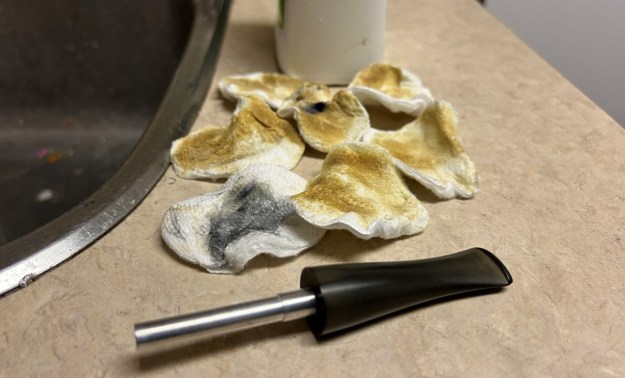
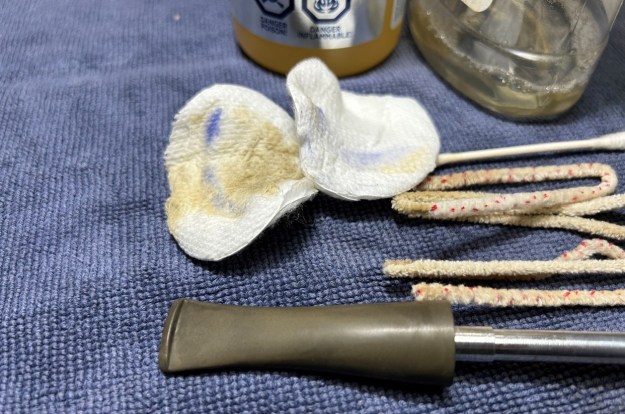 The goal of the next step is the removal (or minimization) of oxidation. Going to my sink, I used cream cleanser, cotton rounds, and a toothbrush, and scoured the stem to remove as much surface oxidation as possible. As the photos show, the result is a hideous brownish mess – but better off the stem than on it.
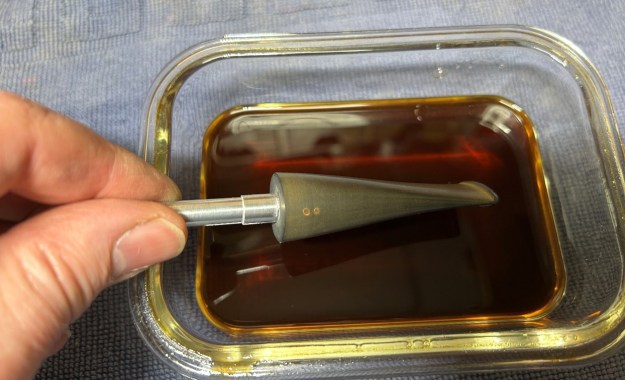
 Once the stem was reasonably clean, I soaked it overnight in some Briarville Stem Oxidation Remover. This solution works to draw oxidation in the stem to the surface. This is a major aid and an important step in ensuring a clean stem. The following day, I drew the stem out from its bath and scrubbed the lingering fluid with a toothbrush.
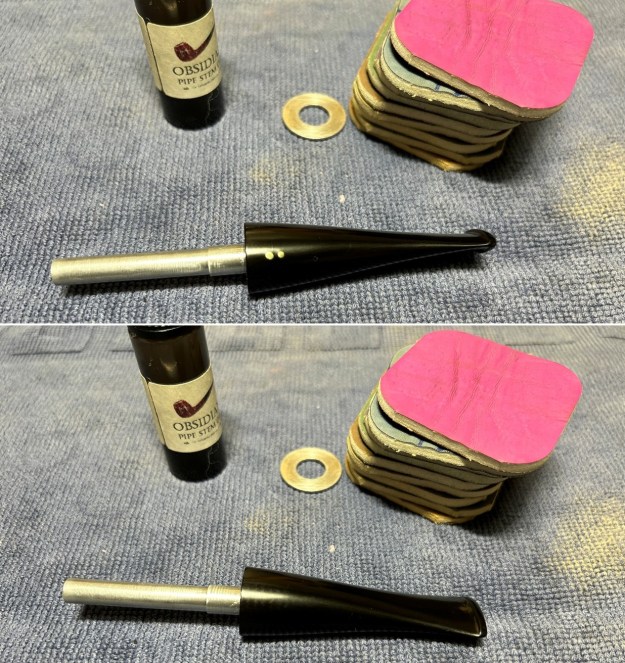
 Now that the stem is clean and dry, I set about fixing the marks and dents in the vulcanite. This is done by filling those divots with black cyanoacrylate adhesive, impregnated with carbon and rubber. I left this to cure and moved on. The penultimate step for the stem is sanding. First, with my set of needle files, I reduce the bulk of the cyanoacrylate repairs. I want to remove the excess adhesive as near to the surface as possible, without cutting into the vulcanite. Following that, I use all nine of the micromesh sanding pads (1,500 through 12,000 grit) to sand out flaws, even out the vulcanite, and provide gentle polishing of the finished surface. I also apply pipe-stem oil while using the last five micromesh pads. There was a wonderful, deep black shine to the stem when I was done.
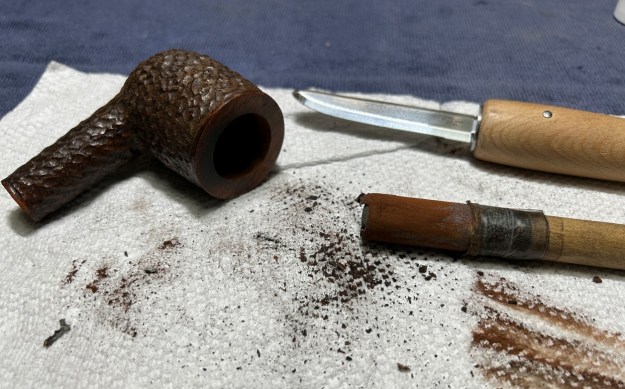
  Now that the stem is (nearly) complete, I can move on to the stummel. The first step for me is to ream out the bowl – that is to say, remove all the cake inside the bowl. This accomplishes a couple of things. First (and most obviously), it cleans the bowl and provides a refurbished chamber for future smoking. Second, when the old cake is removed, I can inspect the interior walls of the bowl and determine if there is damage or not. Not much to be removed from this pipe – it was pretty clean!
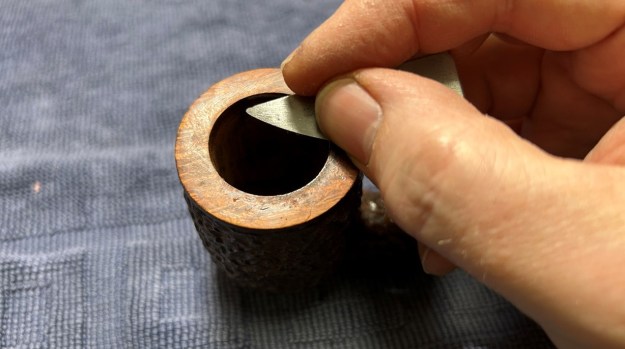
 My next step was to remove the so-called burn on the rim. For this, I took a piece of machine steel and gently scraped. The metal’s edge is sharp enough to remove what I need, but not so sharp that it damages the rim. This work revealed that the marks were on the surface only. There was no damage to the wood at all.
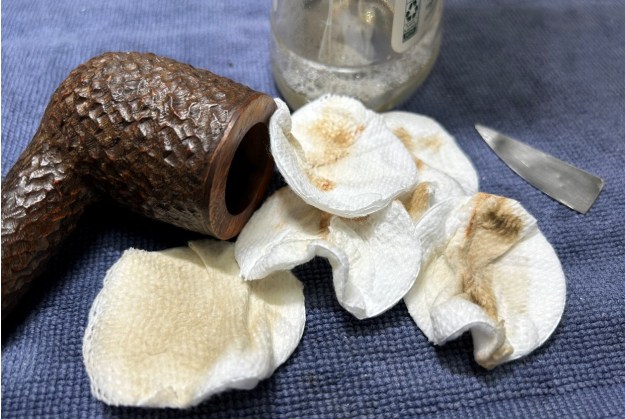
 Similar to the stem, I then cleaned the stummel with both pipe cleaners and cotton swabs dipped in 99% lemon-infused isopropyl alcohol. To tidy up the briar, I also wiped down the outside with some oil soap on cotton rounds (and a toothbrush). This does a good job of cleaning any latent dirt on the surface of the briar. The last step of the cleaning process is to scour the inside of the stummel with some soap and tube brushes.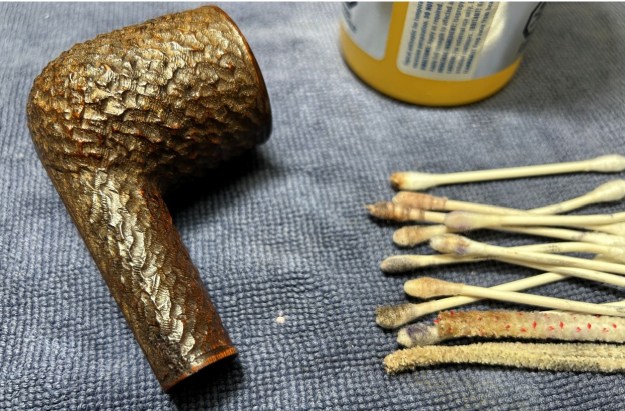
 I used all nine micromesh pads (1,500 through 12,000 grit) on the underside of the stummel and the rim to finish it off. This sanding minimizes flaws in the briar and provides a beautiful smoothness to the wood. I rubbed some Before & After Restoration Balm into the briar and let it sit for 25 minutes or so. The balm moisturizes the wood and gives a beautiful depth to the briar. I then buffed it with a microfibre cloth.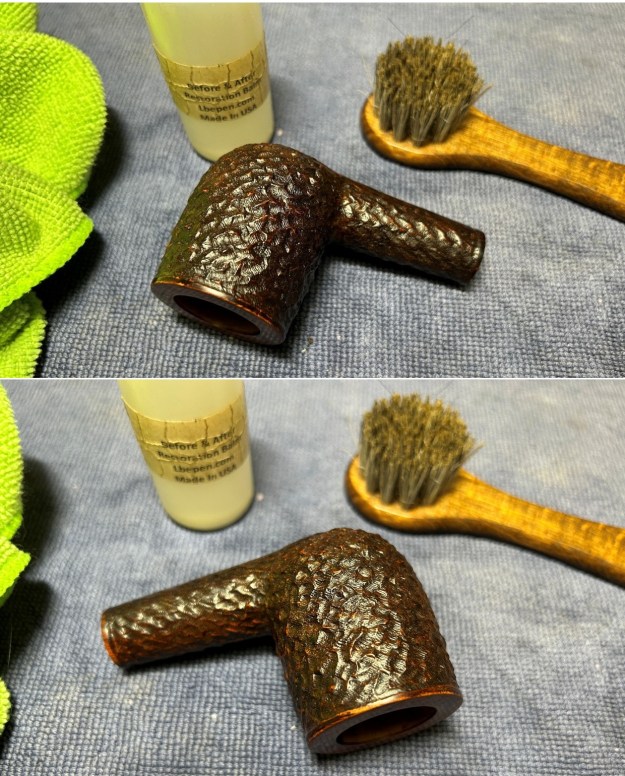
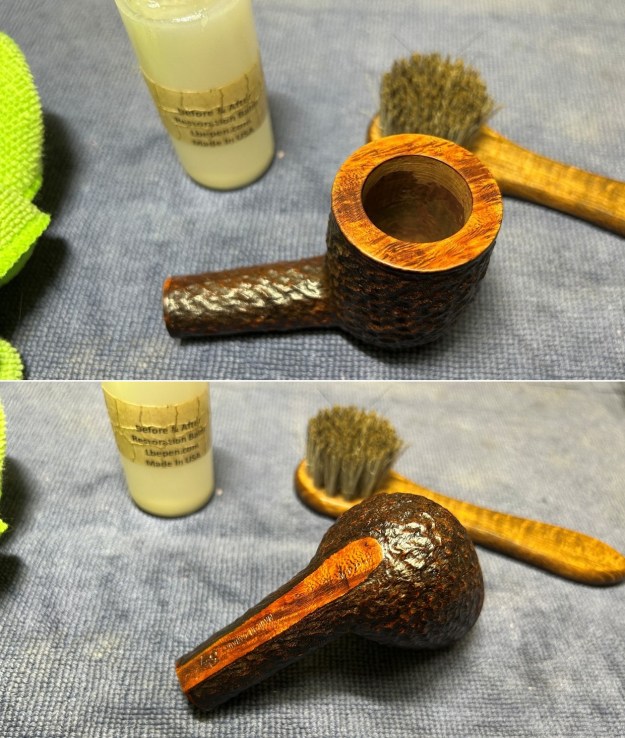
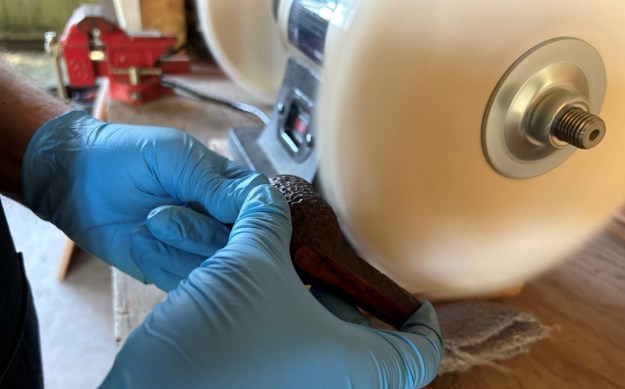
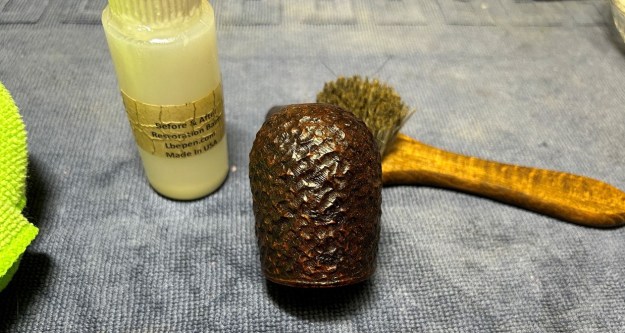 For the final step, I took the pipe to my bench buffer and carefully polished it with three coats of conservator’s wax. This procedure makes the pipe look its best – the stummel sings and the stem glows.
 All done! This Brigham 2044 XL billiard looks fantastic again and is ready to be enjoyed by its next owner. I am pleased to announce that this pipe is for sale! If you are interested in acquiring it for your collection, please have a look in the ‘Canadian’ section of the store here on Steve’s website. You can also email me directly at kenneth@knightsofthepipe.com. The approximate dimensions of the pipe are as follows: length 6⅛ in. (156 mm); height 2¼ in. (58 mm); bowl diameter 1¾ in. (44 mm); chamber diameter 1 in. (26 mm). The weight of the pipe is 2⅓ oz. (72 g). I hope you enjoyed reading the story of this pipe’s restoration as much as I enjoyed restoring it. If you are interested in more of my work, please follow me here on Steve’s website or send me an email. Thank you very much for reading and, as always, I welcome and encourage your comments.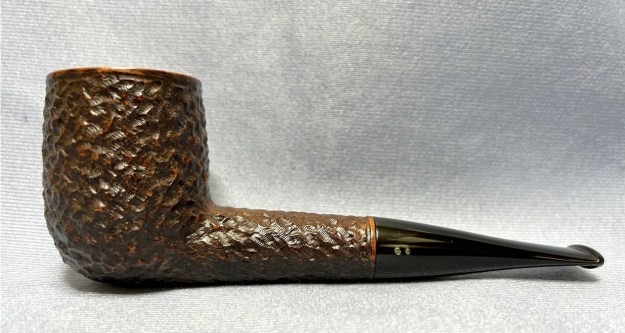
 rebornpipes